

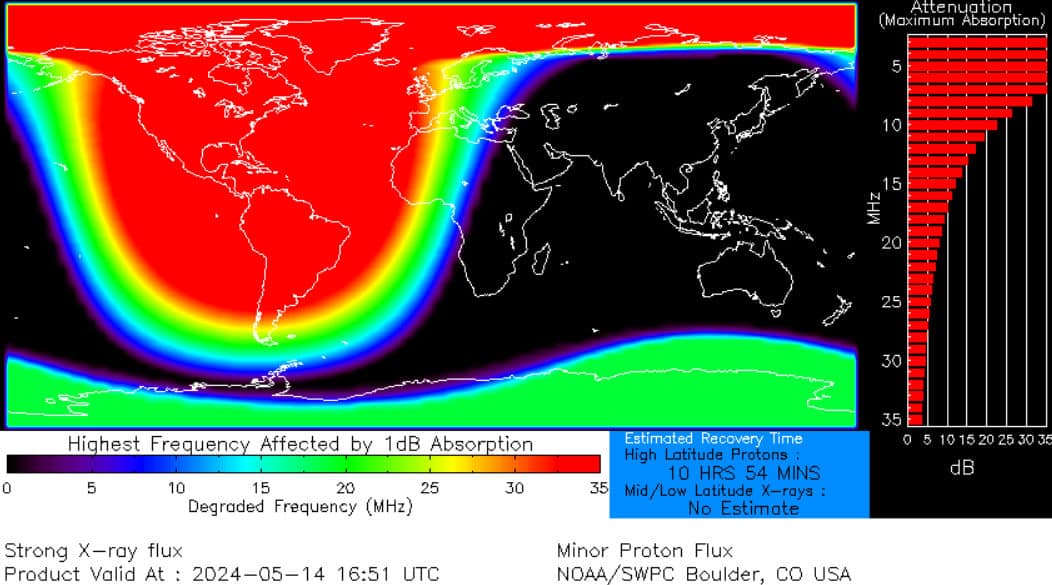
A massive solar flare that erupted from the sun is why some of you experienced a sudden lost signal while flying today. The flare affected aviators, ham radio operators and others using frequencies below 30 MHz.
Today’s flare is the strongest of the sun’s current solar cycle so far
The sun is incredibly active right now. That’s why we just experienced the strongest geomagnetic storm in 20 years. Multiple coronal mass ejections (CMEs) from the sun slammed Earth this past weekend, showering all of the United States in Northern Lights. Even Mexico and the Caribbean got a show.

That spectacular event did not cause any widespread or significant impacts to our communications, but such storms can. Another major solar flare just occurred today, and it’s being blamed for a deep shortwave blackout across half the planet.
Today’s flare is the strongest of the sun’s current solar cycle so far. The flare shot out extreme ultraviolet radiation which ionized Earth’s upper atmosphere.
Could last for days, with more flares and CMEs possible
It’s probably not over, either. The sunspot that unleashed the flare was behind the edge of the sun’s disk when it erupted. Any CME would have been shot away from Earth, so we won’t get another big Aurora storm this time.
However, the sunspot’s location actually makes it more dangerous, according to SpaceWeather.com, because it’s passing over a region that is magnetically connected to Earth.

More flares could be coming, as well as CMEs. The event may last several days. You can monitor it here via NOAA’s Space Weather Prediction Center.
That side of the sun will rotate back towards Earth in 2 weeks.
