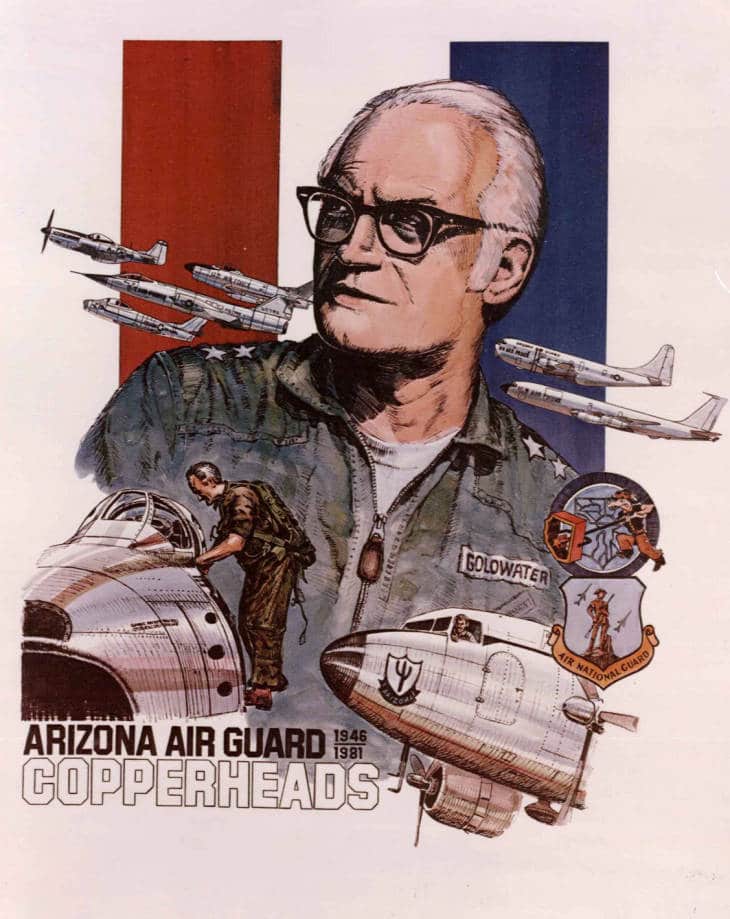

Rare Footage of the Senator from Arizona Flying the A-10B Night/Adverse Weather Prototype
Fairchild Republic’s A-10 Night/Adverse Weather (A-10 N/AW) was the company’s proposal for a two seater all-weather attack version of the A-10 Thunderbolt II knowns as the A-10B.
The company built just one of these jets. The idea was to incorporate an Electronic Warfare Office (EWO) in a second seat behind the pilot, who could operate the additional mission equipment required to make the aircraft as dangerous at night and in adverse weather as the standard Warthog (still) is during the day. This video of Senator Barry Goldwater going for a familiarization ride in the A-10B Warthog was uploaded to YouTube by Periscope Film. More about the aircraft after the video.
Building a Two-Place Thunderbolt II
The first preproduction Demonstration Testing and Evaluation (DT&E) Republic A-10A (SN 73-1664) was returned to the Fairchild Republic factory for conversion to a prototype two-place variant of the A-10 during March of 1979. In addition to reworking the forward fuselage to incorporate a second seat and dual controls, the canopy was changed from the standard clamshell type to a side-opening type with an A frame structure between the two cockpits. The ejection seats were changed to ACES-IIs designed to fire through the revised canopy.
A large rear cockpit instrument panel to house the additional displays for the Forward Looking InfraRed (FLIR), Low Light Level Television (LLLTV), Terrain Following Radar (TFR), Inertial Navigation System (INS), radar altimeter, laser range finding device, and an electronic moving map display was added.
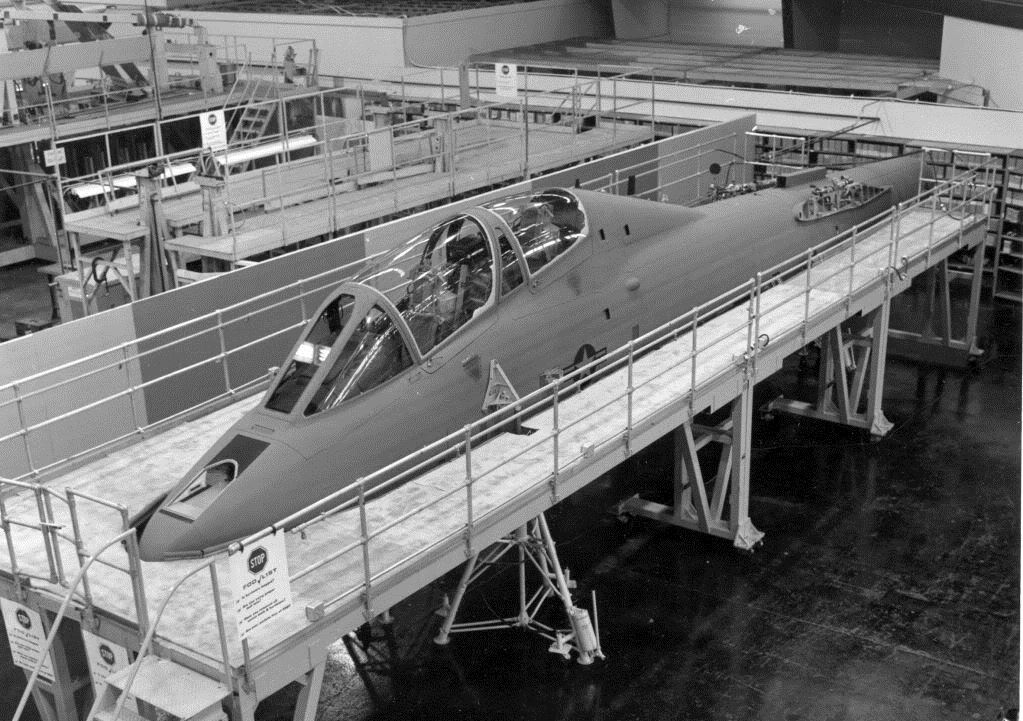
Packing a Passel of High-Tech Sensors in the A-10B Warthog
The FLIR and laser range finding device combination was housed in a single external pod mounted on the center fuselage station (pylon six). The TFR emitter/receiver was housed in another external pod mounted on the center wing station closest to the left main landing gear (station four).
The LLLTV replaced the Pave Penny pod usually carried on the pylon mounted on the starboard side of the forward fuselage. 20 inch extensions were bolted on to the vertical stabilizers. The GAU-8/A 30mm Gatling Gun was retained but a smaller ammunition drum with a capacity of 750 rounds (about 50% of normal capacity) was substituted. In all the modifications required about three months to complete.
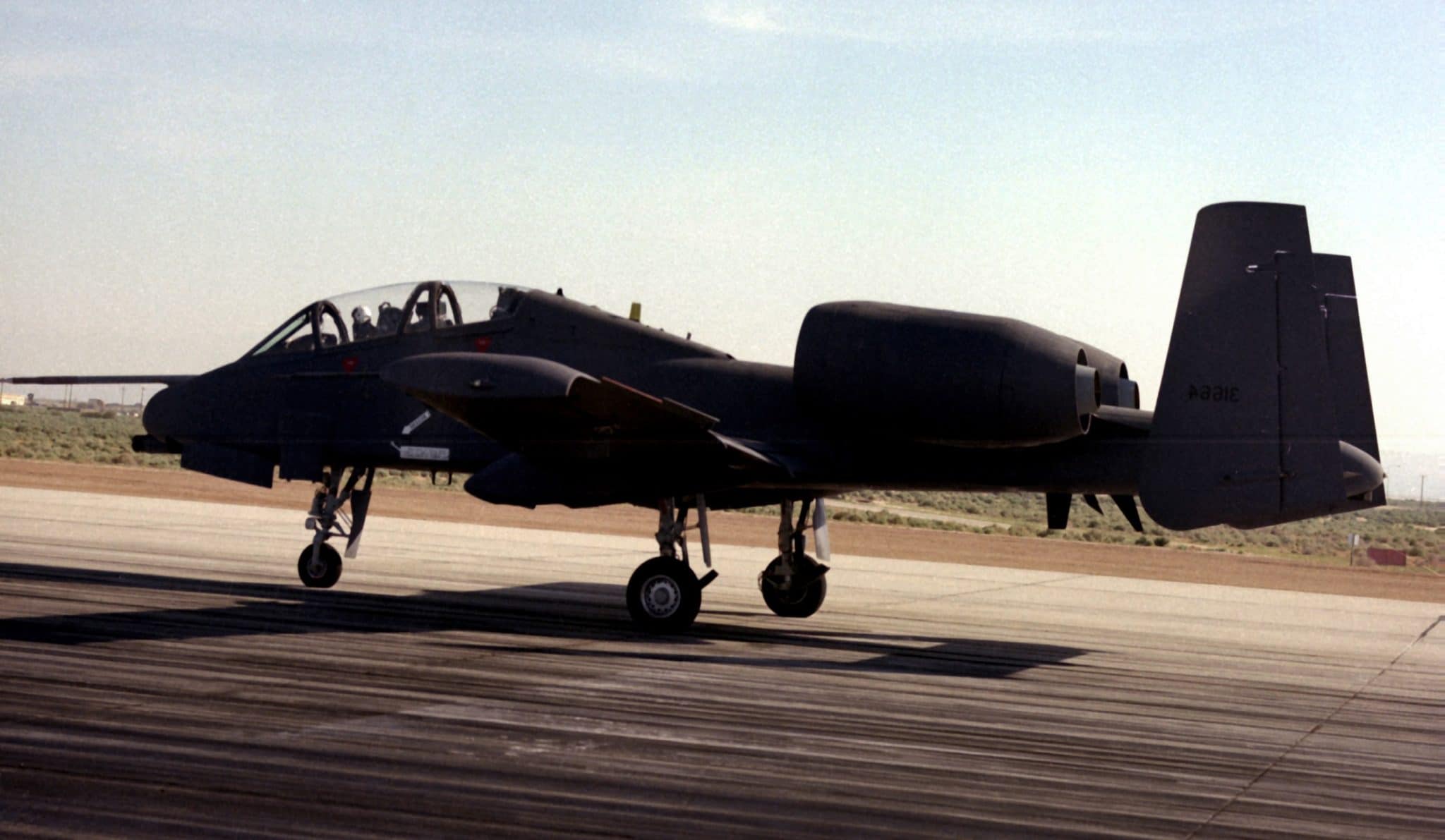
Why was the A-10B Warthog not successful?
On 23 October 1979 the Air Force Preliminary Flight Evaluation of the A-10 N/AW commenced, with flight testing of the aircraft performed by the Air Force Flight Test Center at Edwards Air Force Base (AFB) in California. There, over the next 42 days (and nights), the jet was flown for a total of 48.6 hours during 28 flights, with roughly one third of the flights being flown at night.
Even though the A-10 N/AW test program was successful, the program was canceled- primarily because of advancements in night attack equipment such as the Low Altitude Navigation and Targeting Infrared for Night (LANTIRN) pod system that could be, and still is, bolted on to many of the tactical aircraft already in the inventory.
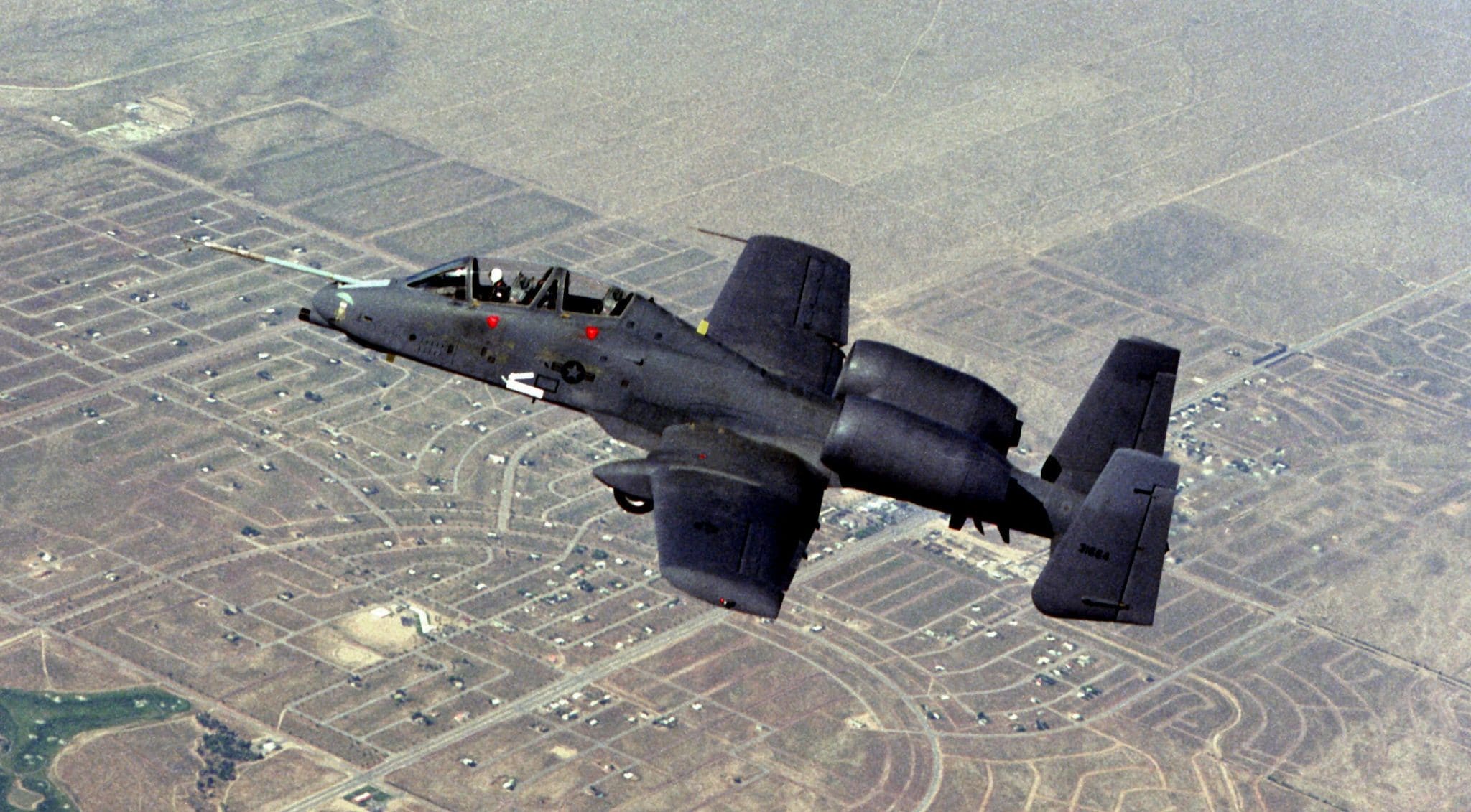
The Night/Adverse Weather Legacy
The A-10 N/AW was redesignated the YA-10B early in the 1980s. The Air Force looked at converting a small number of A-10As into two-place Warthog pilot training aircraft. These trainers would have been designated A-10B, but the program was canceled before any aircraft were modified. Today the singularly unique YA-10B can be seen at the Air Force Flight Test Center Museum at Edwards AFB.

The Senator With Stars on His Shoulders
The late Senator Barry Goldwater was a USAAF Ferry Command pilot flying Curtiss C-46 Commando and Douglas C-47 Skytrain transports from India over the “Hump” to China during World War II. After the war ended, Goldwater flew with the Arizona Air National Guard until 1952, after which he remained in the Air Force Reserve until 1967.
Goldwater wore Command Pilot wings, flew more 15,000 hours in more than 250 different aircraft, and attained the rank of Major General as a Reservist before becoming the Senator from Arizona in 1969. Goldwater passed away 29 May 1998.