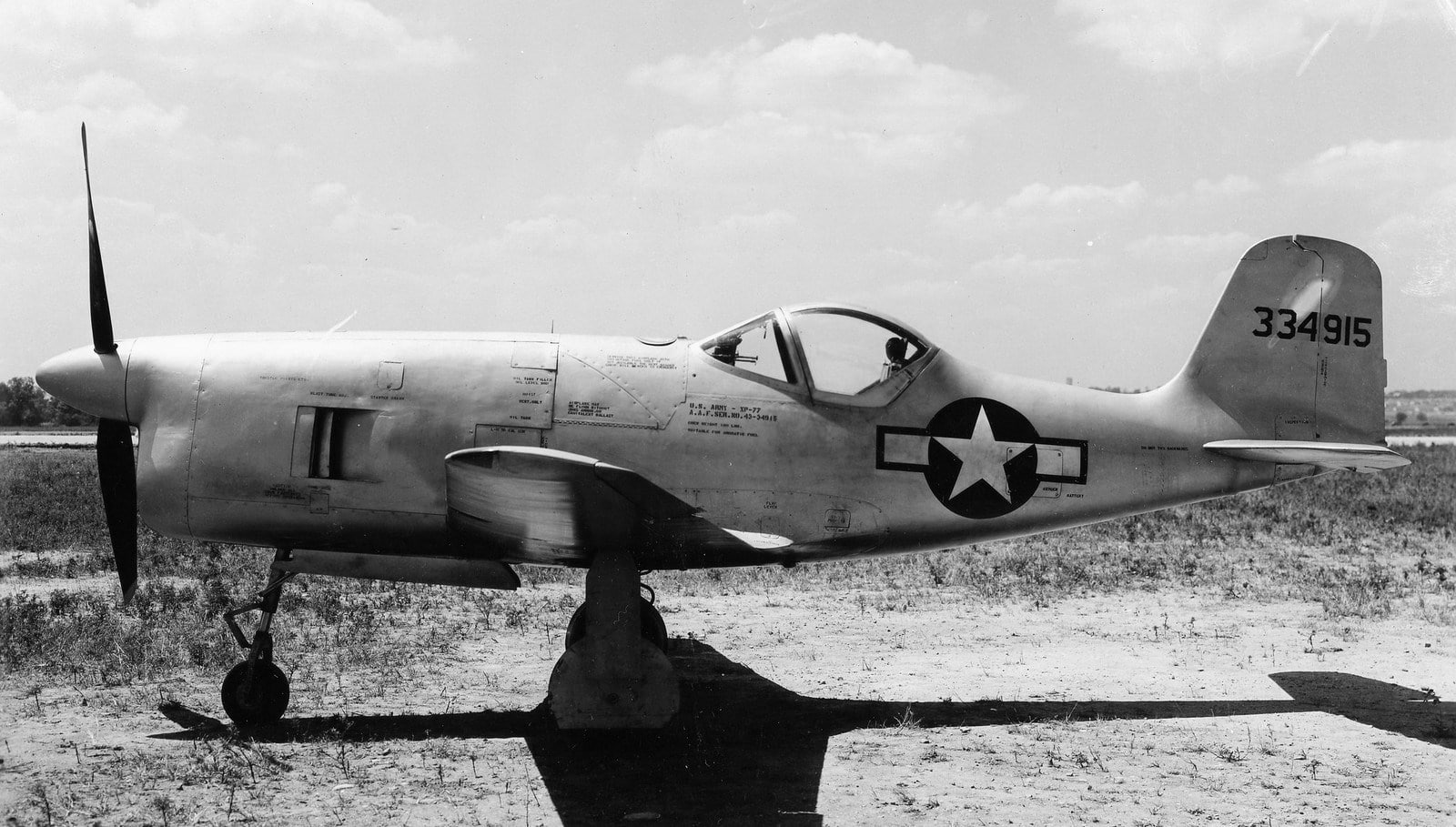

Challenges, Delays, and Shifting Priorities Doomed an Otherwise Interesting Concept known as the XP-77
Bell Aircraft has been around since 1935. The company built the much-maligned (in many ways unfairly) P-39 Airacrobra, the P-63 Kingcobra, the P-59 Airacomet, many of the early X planes, including the Mach meter-busting X-1, X-2, and X-5. During World War II the company also built 668 B-29A and B-29B Superfortress bombers under contract with Boeing. Later, the company branched off into helicopters, giving us the legendary UH-1 Iroquois (Huey) and AH-1 Cobra gunship among others. It would be wildly inaccurate to say that Bell’s designs were all winners, but several of them have made profound impacts on aviation. This story is about one Bell design that might have best been left on the drawing board.
A Request is Made Before the War Begins
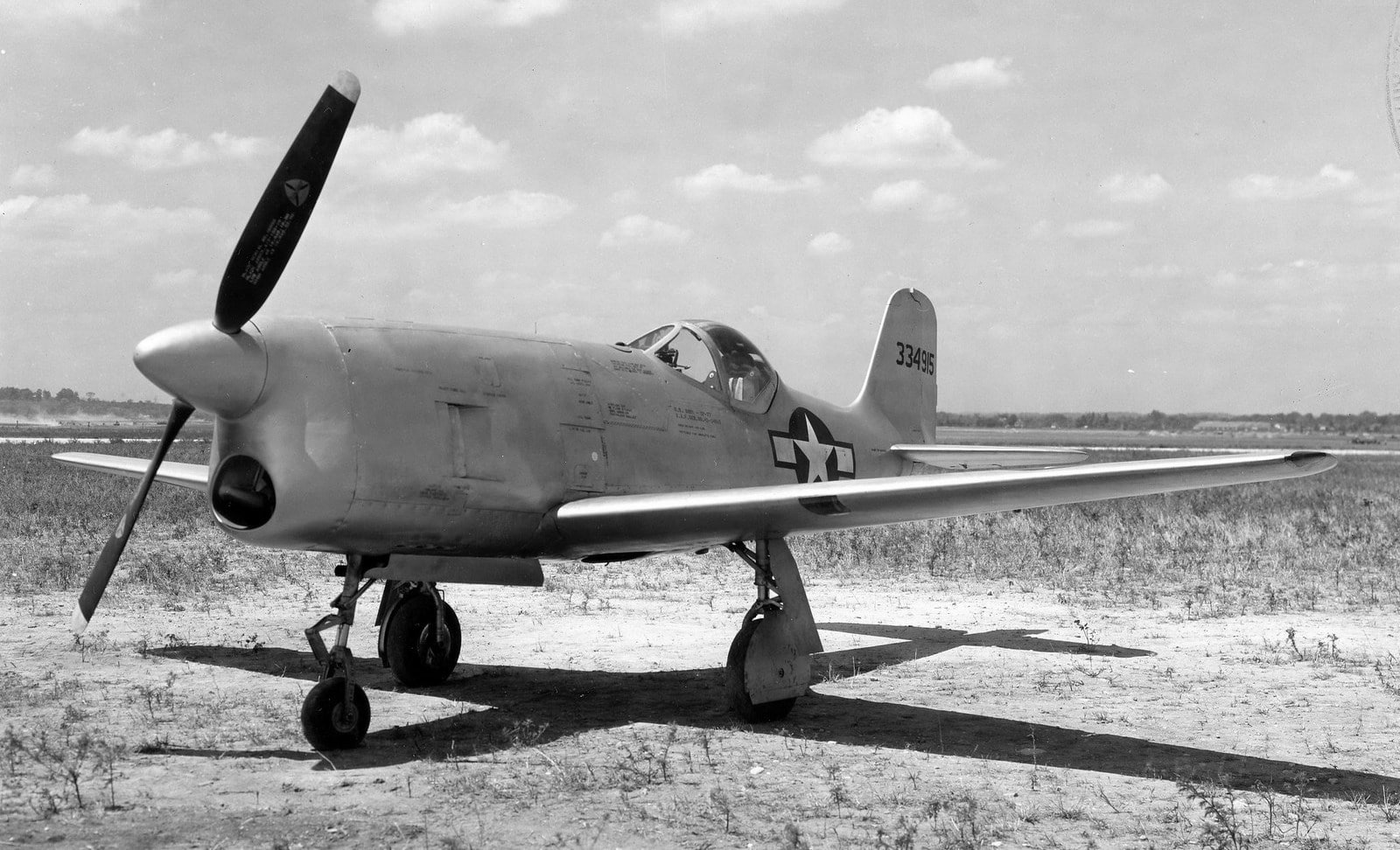
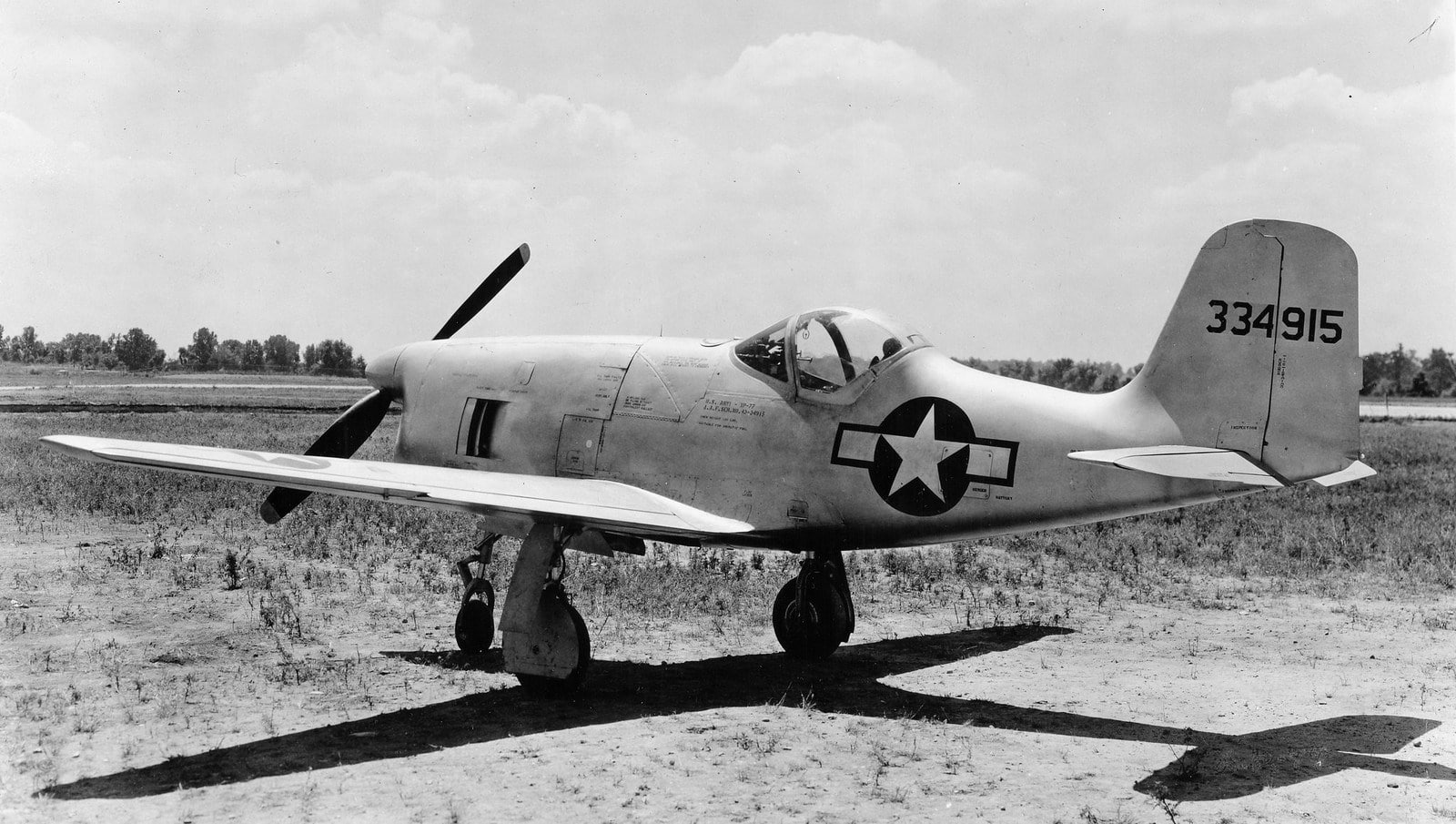
In October of 1941 the United States Army Air Corps (USAAC) approached Bell with a request. The pursuit aircraft of the time were all growing in size, weight, complexity, and cost. A smaller, lighter, more maneuverable (and faster) alternative was the goal of the inquiry. With remarkable prescience, the request also included a materials specification, as in the structure of the aircraft would need to utilize wood instead of “strategic” materials like aluminum. Bell designers drew up a low-wing monoplane made almost entirely of wood equipped with the Bell-trademark tricycle landing gear, a laminar-flow wing, conventional empennage, and a rear-mounted cockpit with a bubble canopy.

Designing a (supposed) Stellar Performer
Bell used a designation of Tri-4 for the new aircraft, which was engineer-speak for the 400 horsepower / 400 miles per hour / 4000 pound weight targets for the design. The plane was to be armed with a pair of .50 caliber M-2 machine guns (with only 200 rounds each) mounted in the forward fuselage and synchronized to fire through the propeller. A single 20 millimeter cannon, also forward mounted, was to be fired though the propeller hub in a manner similar to Bell’s P-39 and P-63. Power was to be provided by a Ranger XV-770-9 twelve-cylinder, inverted-V, air-cooled and supercharged engine capable of delivering 500 horsepower to the two-bladed propeller. It was thought that the aircraft would be capable of 410 miles per hour at 27,000 feet.
Teeny Tiny Wooden Wonder?
The Tri-4’s outer skin was resin-bonded, stressed plywood that was in turn bonded to the conventional wooden frames using resins, glues, and old-fashioned nails. The fuselage and wing were bonded together using the same methods, as was the engine to the forward fuselage- without a vibration-isolating engine mount. The fuel tank, with a capacity of only 56 gallons, was mounted forward of the pilot with a sealed bulkhead between it and the cockpit. The Tri-4 was only 22 feet 10 inches long and eight feet two inches high. Wingspan was 27 feet six inches with a wing area of 100 square feet. These dimensions made the Tri-4 unique for a fighter design.
A Mission and an Answer
The mission for the Tri-4 (later referred to as the D-6 and ultimately Design 32) was to be, in essence, point defense- a single-purpose, specialized weapon. The aircraft would be required to takeoff and climb to altitude quickly, and then intercept and engage enemy bombers raiding the installations under their protection. This assumed the enemy bombers would not be escorted by enemy fighters. Once the United States entered the war and the performance of Axis aircraft like the Mitsubishi A6M Zero-Sen came to light, the Tri-4 was considered to be a potential answer for lightly-built, highly-maneuverable foes.