

Alaska Airlines customers that want to accelerate check-in times are in luck. The airline is offering a permanent bag tag that will display electronic labels, which eliminates the need of printing a paper tag for each flight.
The electronic bag tags are available now on the Alaska Airlines official site for $89 each.
About the Alaska Airlines Bag Tag
Alaska Airlines is now selling electronic bag tags designed to speed-up the check-in process and reduce paper waste. The airline touts itself as the very first to offer such a tag to customers.
The bag tag product page explains how customers can use it to ‘fly through the airport’. First, the user accesses the Alaska Airlines mobile app to check him or herself in along with the luggage.
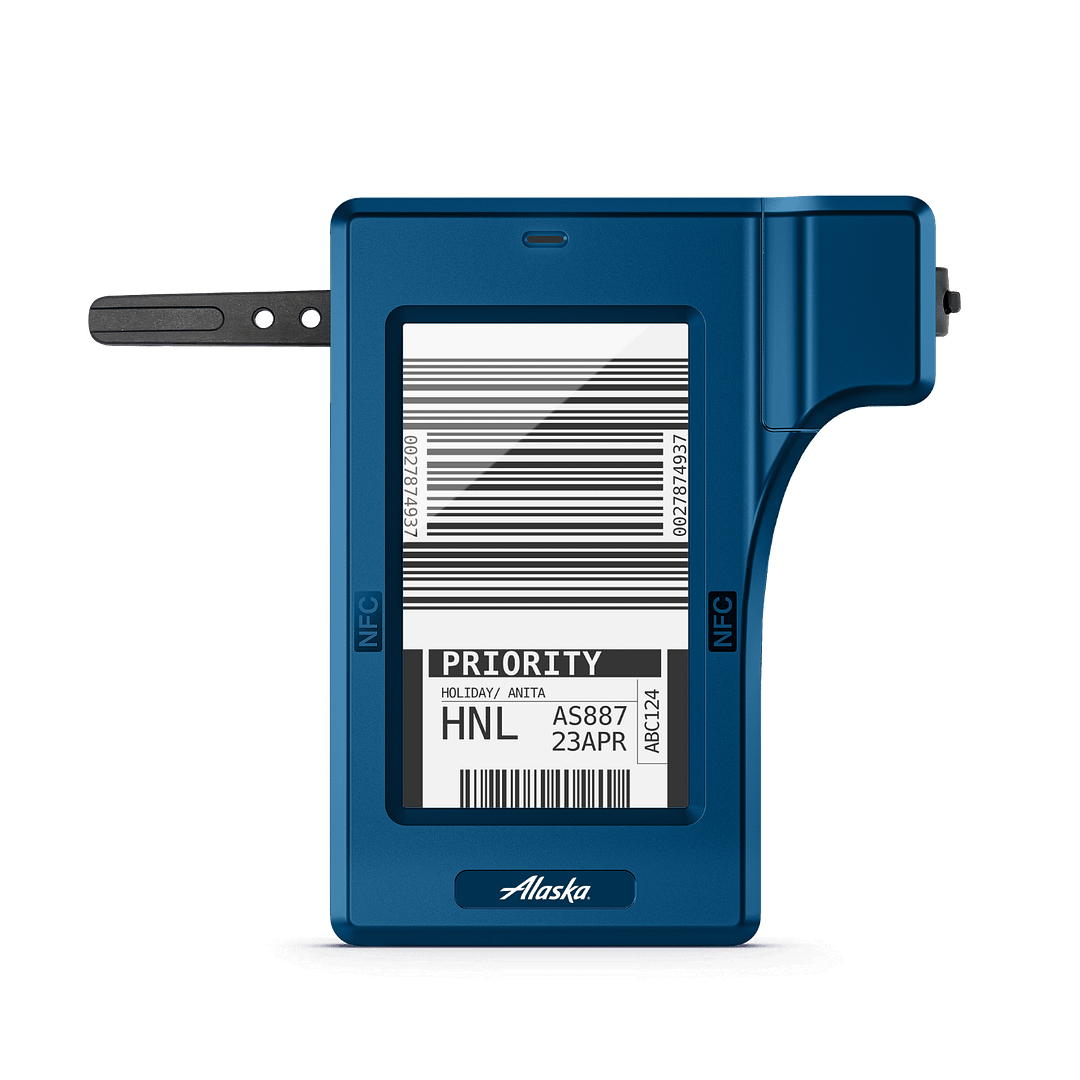
Next, the user uses the app to create a digital label that the electronic tag will also display. The user is then cleared to drop off the luggage at the airport self-service drop-off point.
The tag consists of a simple screen and a strap that can attach to any handle mechanism. The screen only turns on when it receives a digital tag. Interestingly, the tag never needs a battery as it requires very little power to display labels.
According to the official website, the tag can be used on Alaska Airlines, Horizon, or SkyWest flights. There is currently no word on if the tag can be used on Hawaiian flights, as the airline had recently joined the Alaska family.
The Alaska Airlines Bag Tag Timeline
Alaska Airlines had been working on an electronic bag tag as early back as 2015. Hundreds of users, including Alaska employees and loyal customers tested the tag out in its early stages. The press release describes an early description of the tag with many features of it still present with the new tags available:
“The tags are affixed to a suitcase like any other bag tag, using durable nylon cording, and are updated via the Alaska Airlines mobile app during the check-in process. They never need to be recharged during their two-year lifespan.”

It wasn’t until six years later when Alaska announced an electronic bag tag program. This program involved a larger-scale test of a later version of the tag. This time, 2,500 loyal Alaska members were able to try the tag’s technology and test the self-service drop-off area with the tags intact.
Late November marks the first time the bag tag became widely available for all customers. The first shipment of tags reportedly sold out in the first 12 hours of availability.
As of this writing, it’s not revealed how long the electronic tags will last before users need to replace them.