
After more than 80 years, a P-40 fighter pilot shot down in China in 1943 has finally returned home to South Carolina.
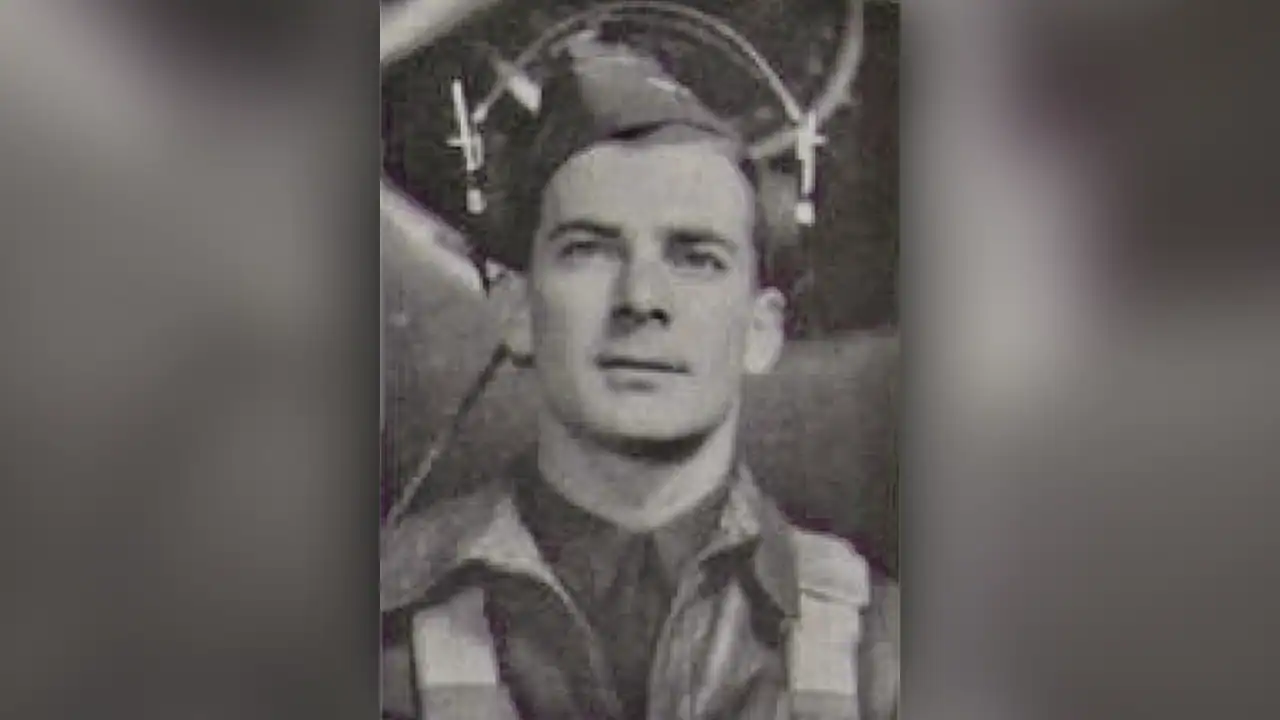
It wasn’t the first time 1st Lt. Morton Sher was shot down. At 22 years old he was escorting bombers for breakfast, and flying other hazardous combat missions for dinner in the China-Burma theatre with the 76th Fighter Squadron, 23rd Fighter Group, 14th Air Force. The same unit that carried on the legacy of the famed Flying Tigers.
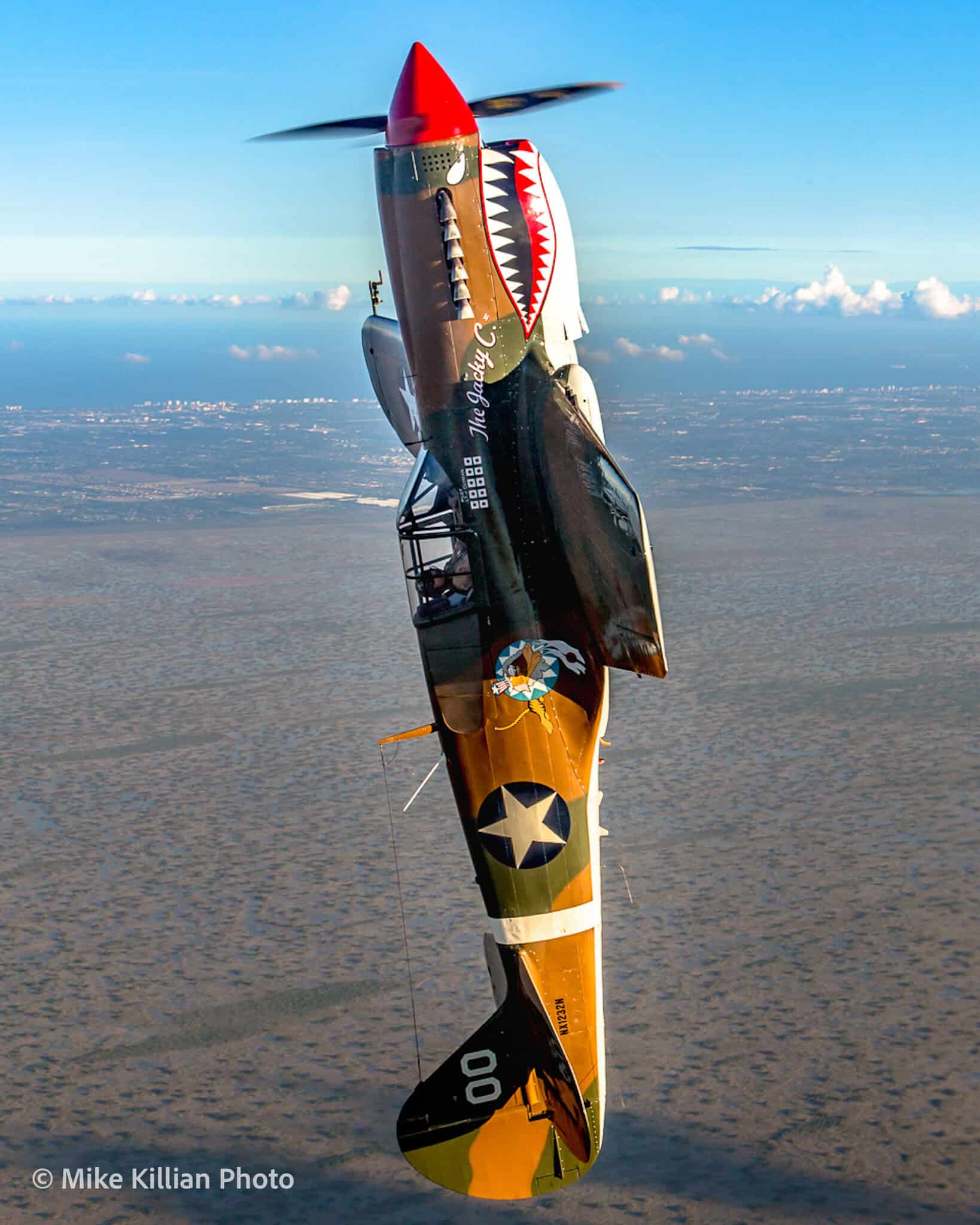
15,000 villagers helped him the first time he was shot down, showing him appreciation and respect for fighting for them. They honored Sher as a hero, fed him, protected him and escorted him through the mountains back to base.
Sher was offered to return home to become an Instructor Pilot. He chose to stay and fight instead.
When he was shot down again, they protected him again, preventing the Japanese from taking his remains after his P-40 went down in a rice field and became engulfed in flames.
Locals placed a memorial at the site, but his remains were considered destroyed in the fire. Sher was posthumously awarded the Purple Heart, and was classified as killed in action and unrecoverable.
New Photo Opens New Questions
The case was closed until 2012, when a private citizen contacted the Defense POW/MIA Accounting Agency (DPPA) with a photo of the memorial site. They opened an investigation and visited in 2019, but still found no remains.
Turns out, they were wrong. A more extensive investigation in 2024 found the wreckage, and his remains. The Chinese villagers in 1943 hid them to protect the remains from the Japanese. DNA testing using samples from Sher’s nephew confirmed the remains.
“This was through team effort,” said Col Brett Waring, 476th Fighter Group commander. “The teams that continue to scour the earth for our missing and KIA are beyond impressive. Morton fought for the Chinese people in that war and theater, and when he was shot down, the local populace protected him when he survived the first shootdown, and then prevented the enemy from taking his aircraft and body when he was killed in action. That speaks to the humanity that connects us all even when other circumstances point towards adversarial actions.”
“Sher spent just over a year in China during World War II,” says Mark Godwin, historian for the 23rd Wing at Moody AFB. “He racked up 3 aerial victories before his untimely death. The Flying Tigers used the Chinese phrase “Ding Hao” during World War II. It means, ‘Very Good, excellent.’ The 76th FS was excellent in World War II. Sher gave his life to protect his fellow Flying Tigers. He should forever be remembered for his courage and sacrifice. Ding Hao!”
After 80 Years, Welcome Home
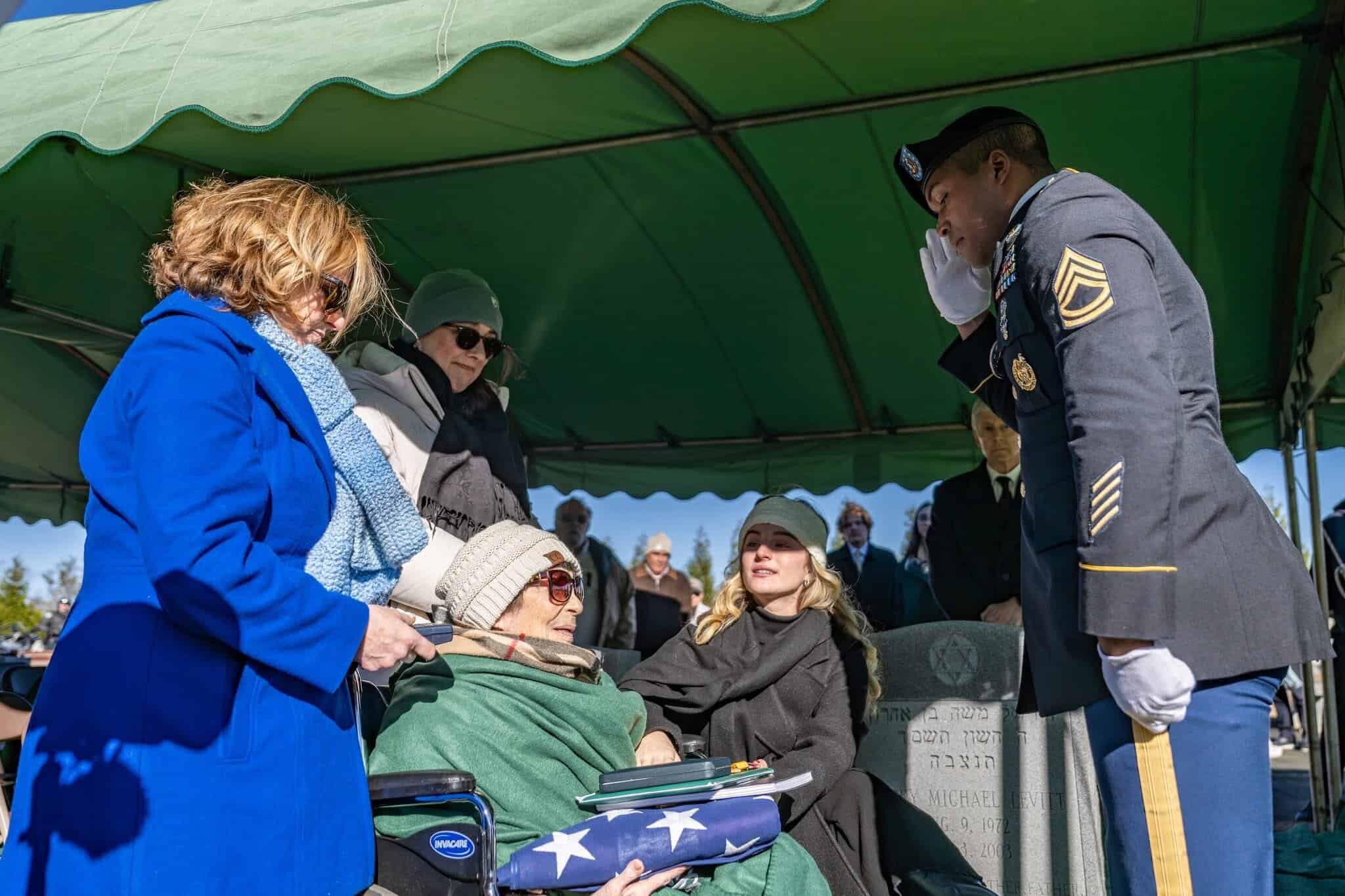
Sher’s family had no clue about the extensive investigation that was taking place, until Sher’s nephew received an email from DPAA requesting a DNA sample to confirm the remains.
“I’m just proud that our country cares enough about something like that,” said Bruce Fine, Sher’s nephew. “And they spring into action when they think there’s a lead. It’s made me more proud to be an American than ever before.”
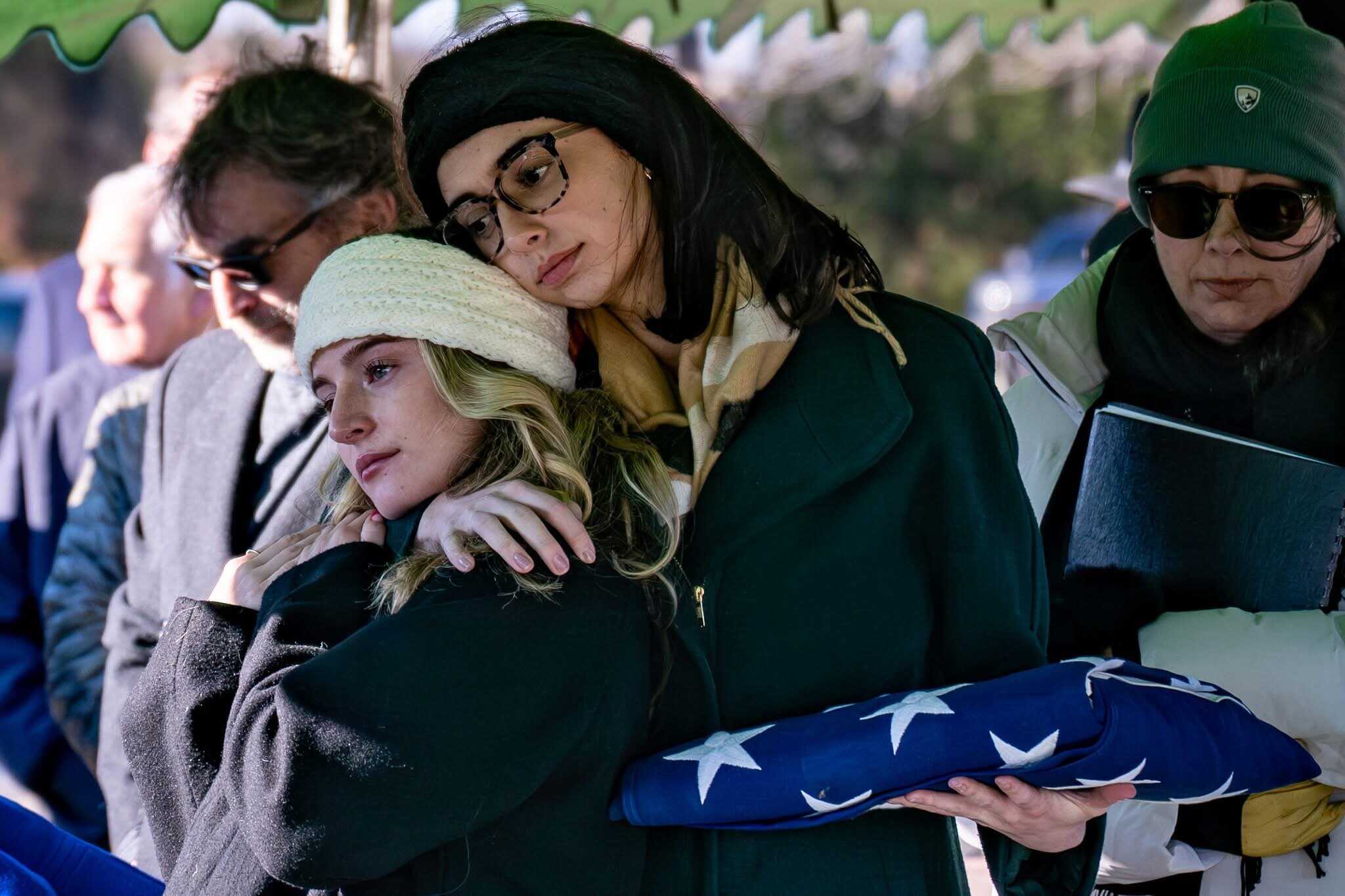
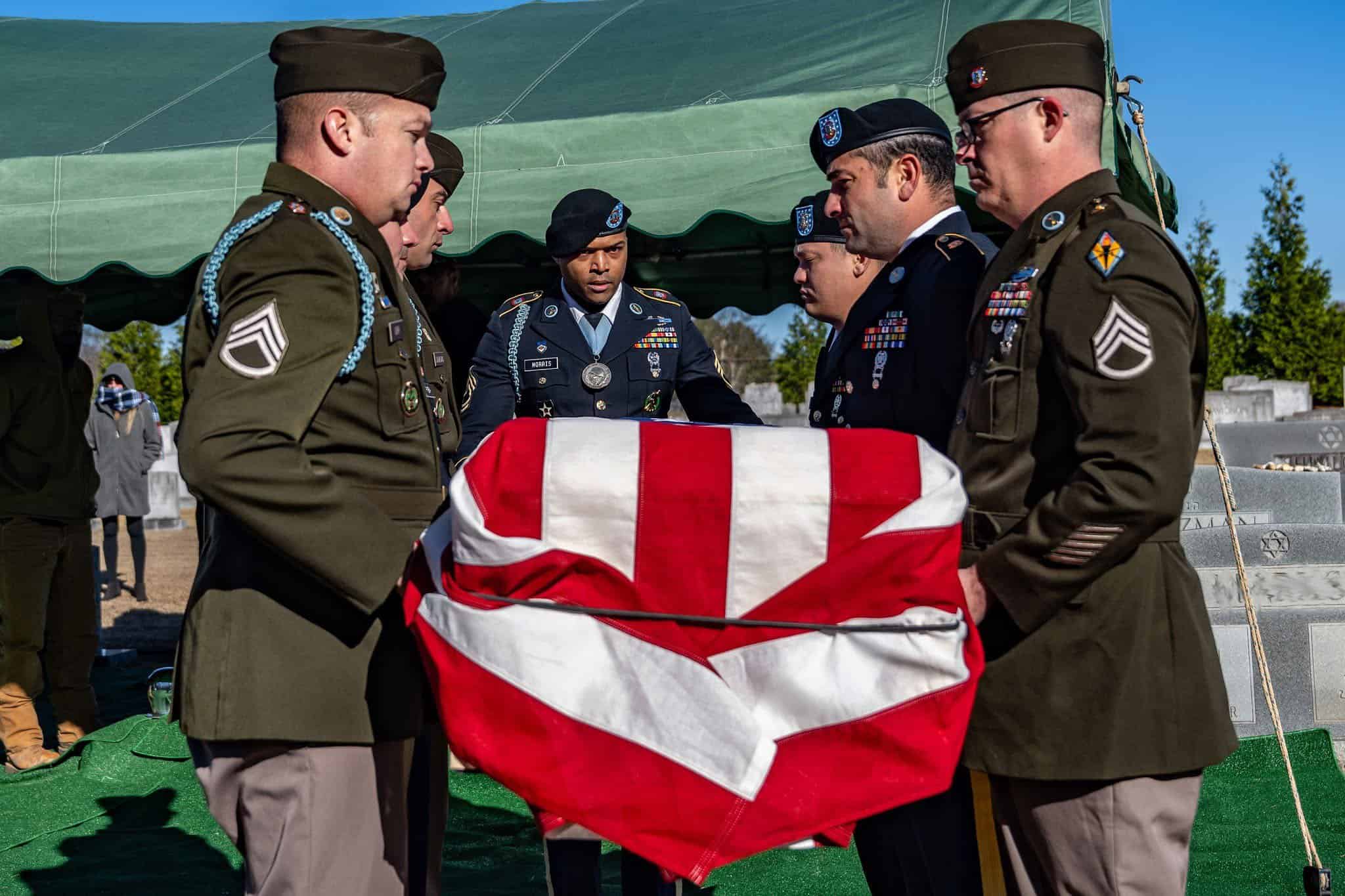
Sher’s remains were flown home to Greenville, South Carolina earlier this month. His family stood together as the honor guard transferred his coffin from the plane to a hearse.
Sher was given full military honors at his long-awaited homecoming on Dec 14. He was laid to rest at Beth Israel Cemetery. Two U.S. Air Force A-10s from the 476th Fighter Group honored him with a flyover too.
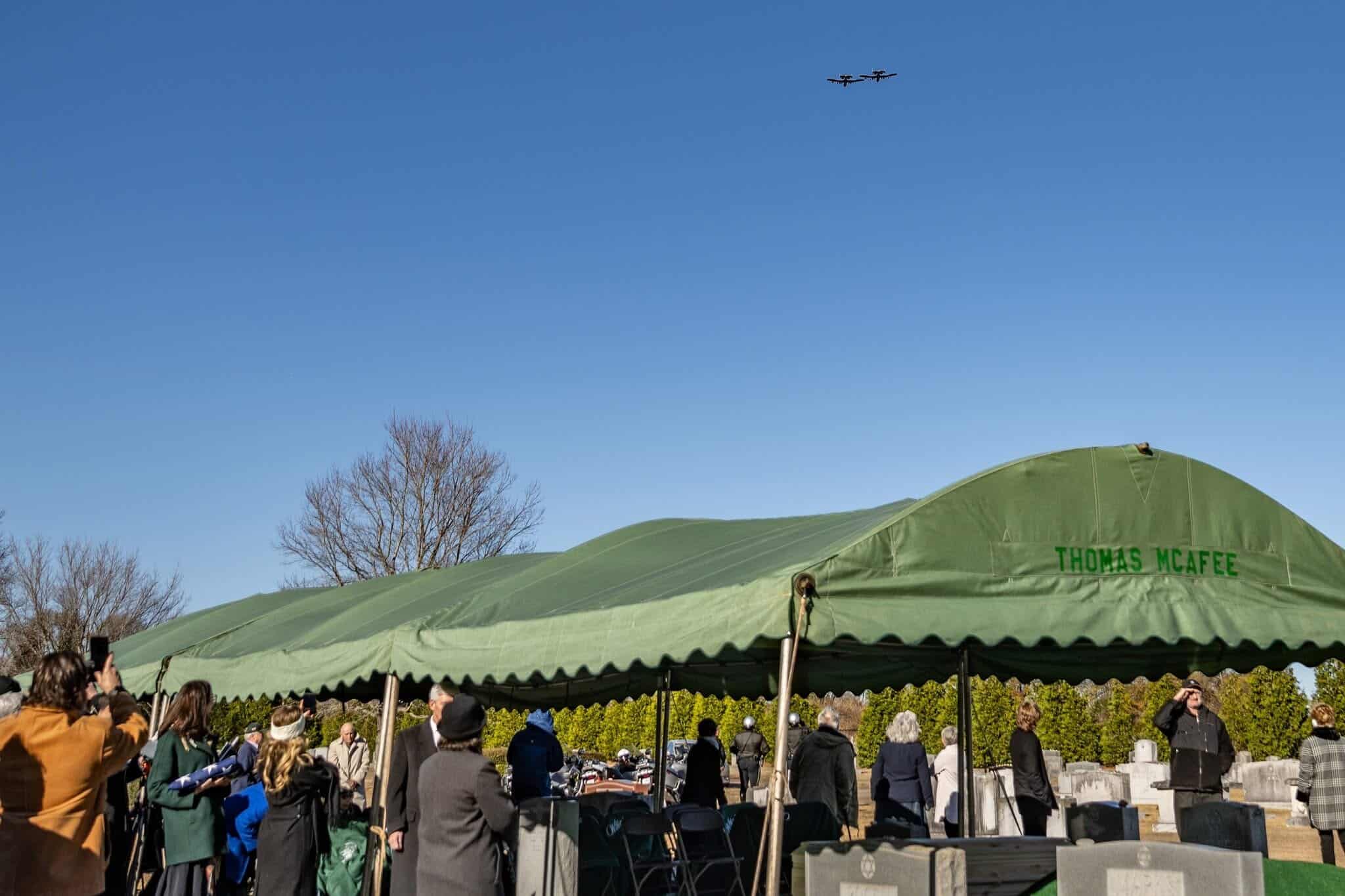
“The legacy that we’re honored to carry on today was started by that generation of warriors who left home to fight for another country in a cause that they absolutely believed in,” Waring said. “It was a level of commitment that we are challenged with maintaining. It’s a legacy that goes beyond painted teeth on an airplane or a patch on our shoulder. It’s history, it’s heritage and it’s a legacy that we’re proud to carry on through our generations.”
