

On 10 January 1990, the McDonnell Douglas MD-11 lifted off for the first time. Thirty-six years later, it remains one of the most polarizing widebody airliners ever built.
Loved by cargo operators, disliked by many passenger airlines, and endlessly debated by pilots, the MD-11’s story is one of ambition, compromise, and timing.
It was, and still is, the largest trijet ever built. And from the moment it entered service, it proved that bigger and more advanced did not always mean better.
A DC-10 Successor With Big Ambitions
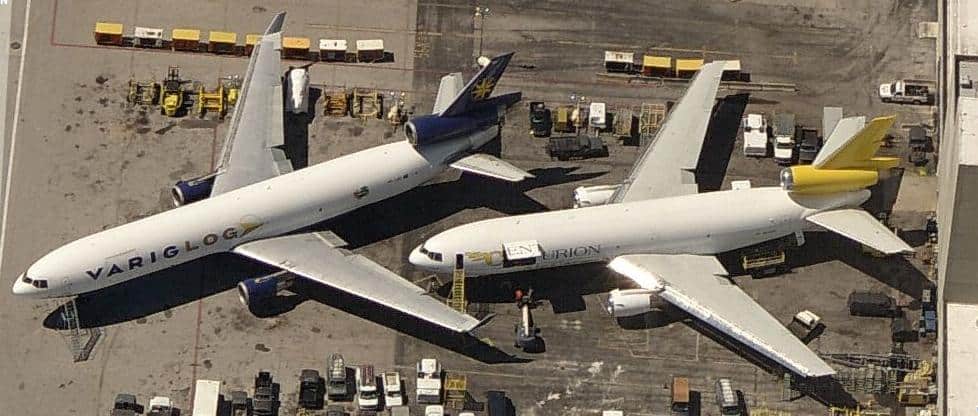
Although the MD-11 program was formally launched in 1986, McDonnell Douglas had been exploring an updated DC-10 as early as 1976. The goal was straightforward. Build a longer range, more efficient widebody that could compete with emerging twinjets like the Boeing 767 and Airbus A330, and the upcoming Boeing 777.
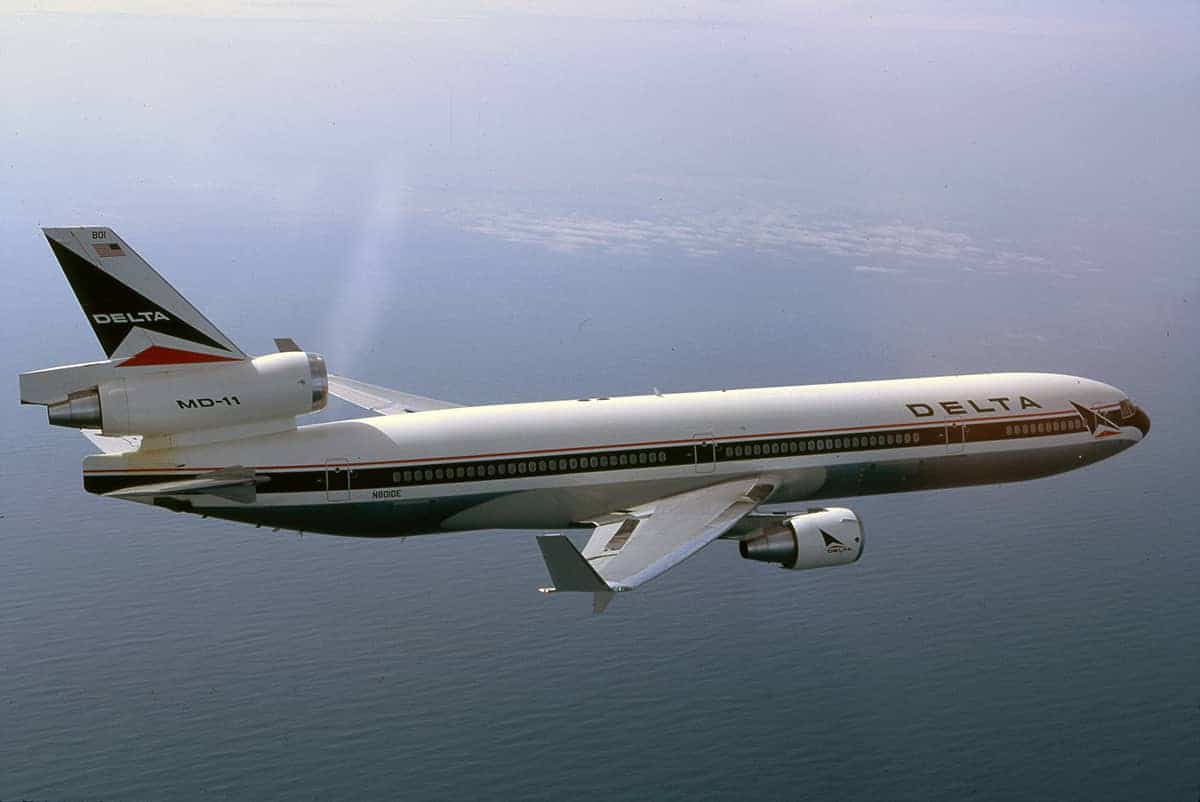
On paper, the MD-11 appeared to be a major step forward. It retained the DC-10’s basic trijet layout but introduced a larger wingspan with winglets, more powerful General Electric CF6-80C2 or Pratt and Whitney PW4000 engines, and a fully digital glass cockpit. That cockpit eliminated the need for a flight engineer, a key selling point at the time.
In a high-density, all-economy configuration, the MD-11 could seat up to 410 passengers in a 3x4x3 layout. Finnair signed on as the launch customer, and the aircraft entered service in December 1990. Delta Air Lines followed soon after, becoming the first US operator in 1991.
But almost immediately, reality began to diverge from the sales brochure.
Performance Shortfalls And A Difficult Personality
From the beginning, the MD-11 struggled to meet its promised range and fuel burn targets. Airlines that had planned long-haul missions found that the aircraft simply could not deliver the economics they had expected. As fuel prices fluctuated and twin-engine aircraft capabilities improved rapidly, that gap became harder to ignore.
Pilots, meanwhile, reported that the MD-11 was not the smoothest airplane to fly. Early on, a design flaw in the slat and flap lever made it too easy to bump accidentally, an issue that was corrected relatively quickly. More concerning were the deeper handling characteristics that could not be easily fixed.
To improve fuel efficiency, McDonnell Douglas designed the MD-11 with an unusually aft center of gravity during cruise. This was achieved using a fuel ballast tank in the horizontal stabilizer that would empty before landing, thereby shifting the center of gravity forward. The benefit was a significantly smaller horizontal stabilizer than the DC-10’s, which reduced drag and improved cruise efficiency.
The downside came during takeoff and landing.
The smaller tail reduced pitch stability, especially in the flare. The flight control system attempted to compensate, but that compensation could exaggerate pitch response. A small control input could produce a much larger reaction than pilots expected. In bounced landings, this sensitivity created a real risk of porpoising, where the nose pitches up and down violently. Several hard landings and landing gear failures were traced back to these characteristics.
The MD-11 also had one of the highest wing loadings of any commercial airliner. While this reduced drag and made the aircraft comfortable in cruise, it resulted in landing speeds 10 to 20 knots higher than those of comparable widebodies. That reduced the margin for error close to the ground.
Pilots often described the airplane as feeling “floaty” on final approach, with computers that sometimes seemed to fight them rather than help. Issues with pitch assist and automation behavior reinforced the perception that the airplane was trying to outthink its crew.
Too Late And Caught In The Middle
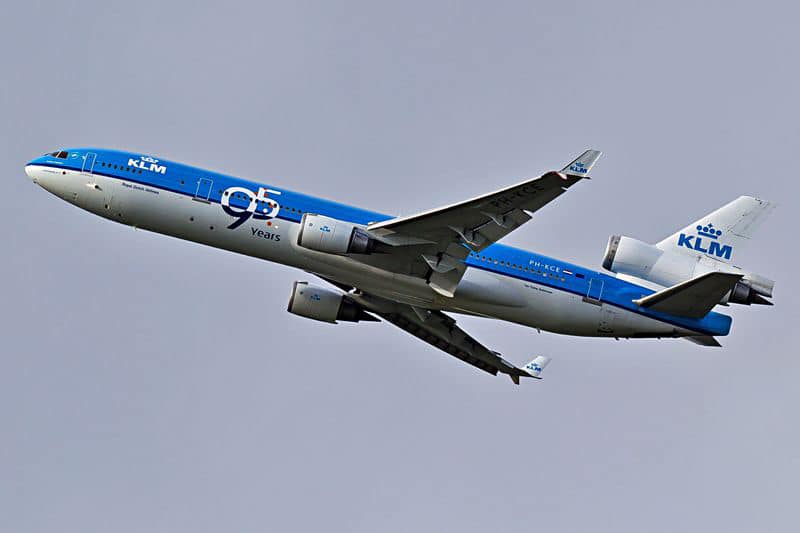
In 1990, McDonnell Douglas launched the Performance Improvement Program (PIP) in partnership with Pratt and Whitney, General Electric, and NASA’s Langley Research Center. The effort focused on reducing weight, increasing fuel capacity, improving engine performance, and refining aerodynamics. By 1995, some of the MD-11s’ lost range had been recovered.
But the timing could not have been worse.
By then, airlines had options. Twin-engine widebodies, such as the Boeing 767, Airbus A330, and later the Boeing 777, offered better fuel efficiency and simpler maintenance. Meanwhile, extended-range ETOPS operations became routine as regulators approved longer diversion times for twin-engine widebodies. In 1995, American Airlines sold its entire MD-11 fleet to FedEx after concluding that even upgraded aircraft could not reliably operate routes like Dallas to Hong Kong.
McDonnell Douglas’s own financial struggles limited further development. After the company merged with Boeing in 1997, the combined manufacturer saw little reason to continue pushing a trijet that competed internally with the 767 and 777. Passenger MD-11 production effectively ended in April 1998, with the final aircraft delivered to Sabena. Freighter production continued briefly, with the last aircraft assembled in 2000 and delivered to Lufthansa Cargo in early 2001.
McDonnell Douglas had once projected sales of more than 300 aircraft. In the end, only 200 were built.
A Second Life As A Freighter And An Uncertain Future
While passenger airlines moved on, cargo operators leaned in.
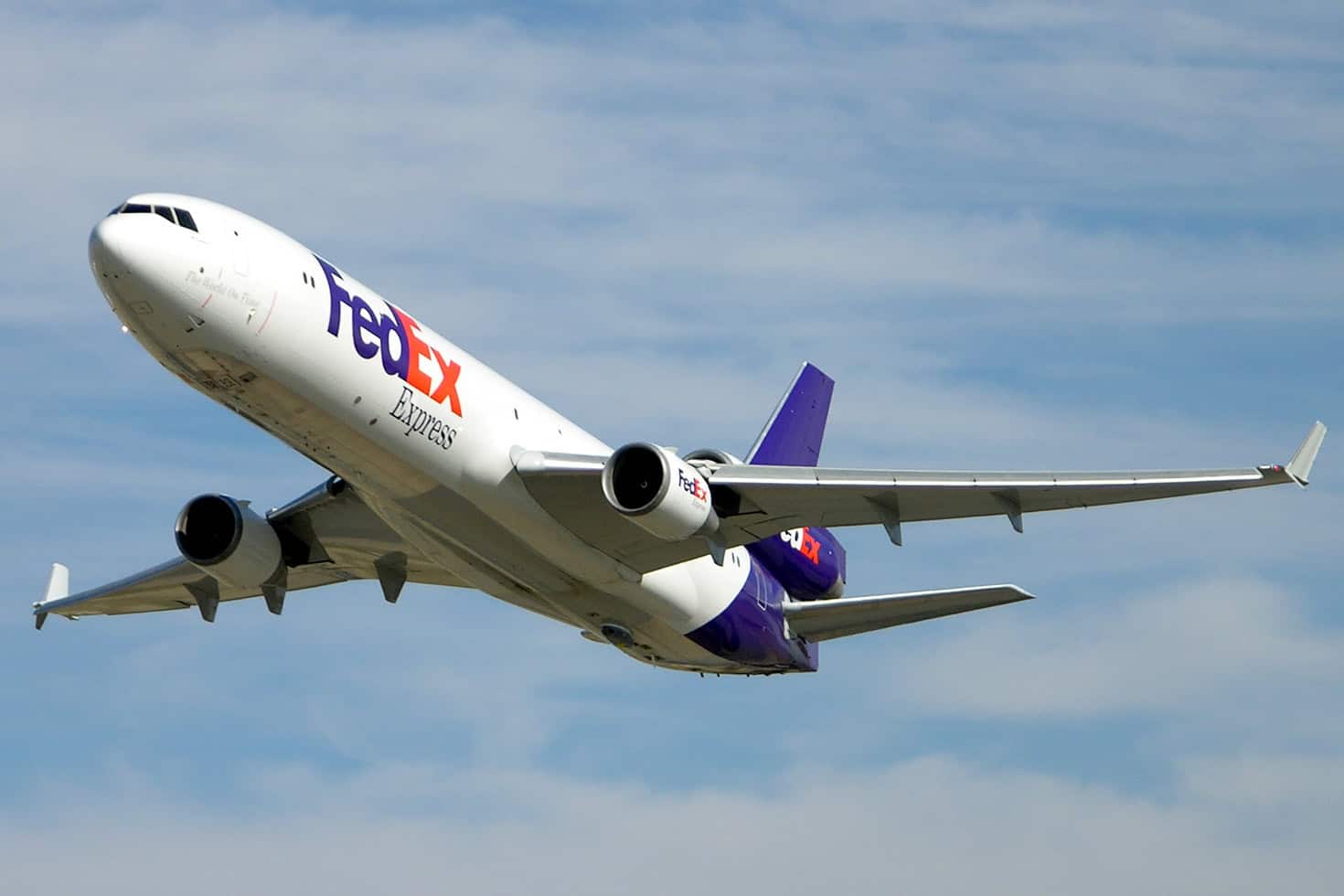
The MD-11’s long fuselage and large internal volume made it ideal for transporting lightweight, high-volume freight, such as express parcels and e-commerce shipments. Even with higher fuel burn per block hour, the aircraft could carry more revenue cargo on many routes than slimmer freighters. As passenger airlines retired the type, cargo operators acquired MD-11s at relatively low capital cost and converted them efficiently.
FedEx and UPS built large fleets around the MD-11, optimizing routes, maintenance, and training to match the aircraft’s strengths and quirks. For cargo, smooth landings and cabin comfort mattered far less than payload and turnaround time.
By 2025, only 71 of the 200 MD-11s built remained in service. Prior to the tragic crash of UPS Flight 2976 in Louisville, Kentucky, in November 2025, only three operators were flying the type: FedEx with 29 aircraft, UPS with 27, and Western Global Airlines with 15.
Days after that crash, the FAA issued an Emergency Airworthiness Directive grounding all MD-11s pending inspection and repair. The National Transportation Safety Board (NTSB) continues to investigate the accident. The MD-11 has been involved in 50 incidents over its lifetime, including 11 hull loss accidents and 261 fatalities, including passengers, crew, and people on the ground.
Despite the grounding, operators do not expect the story to end here. FedEx Chief Financial Officer John Dietrich has stated that the company expects the grounding to be lifted and the MD-11 to return to service in the fourth quarter of its fiscal year (which, for FedEx, runs from March through May). FedEx estimates a $176 million financial impact from the grounding, affecting roughly four percent of its fleet during the busiest season of the year.
Happy 36th birthday, MD-11. With a legacy that doesn’t quite feel finished, we hope to see you in the skies again soon.