

The idea of ‘government shutdown airport closures’ is no longer just a theory. Federal officials are now warning that smaller airports across the country could actually close as the funding lapse pushes TSA staffing to the breaking point.
Caught in the middle of the governmental dysfunction are tens of thousands of Transportation Security Officers, still reporting for duty, still securing the traveling public, and still doing it without pay.
A Warning the Industry Can’t Ignore
It was not framed as a possibility. It was framed as a reality that may be approaching fast.
In a 17 March interview on Fox & Friends, Acting Deputy TSA Administrator Adam Stahl issued one of the most direct warnings yet about the ongoing Department of Homeland Security (DHS) funding lapse.
“As the weeks continue, if this continues, it’s not hyperbole to suggest that we may have to quite literally shut down airports, particularly smaller ones, if callout rates go up,” Stahl said. “A lot of those officers can’t afford to come in.”
It’s not hyperbole to suggest that we may have to quite literally shut down airports.
Adam Stahl | Acting Deputy TSA Administrator
To understand the gravity of that warning, it helps to step back and look at the bigger picture.
The partial government shutdown began on 14 February 2026, after DHS funding expired amid a congressional stalemate over immigration policy and broader agency funding. More than 260,000 federal workers have been affected. Roughly 50,000 TSA officers, deemed essential, have been required to continue working without pay for over a month.
They received only a partial paycheck on 28 February and missed a full paycheck on 14 March.
This is the third time in under a year that TSA workers have gone without pay because of a shutdown.
And the consequences are no longer theoretical.
The Strain Is Showing at Checkpoints Nationwide
For years, TSA staffing has been a careful balancing act. Now, that balance is falling apart.
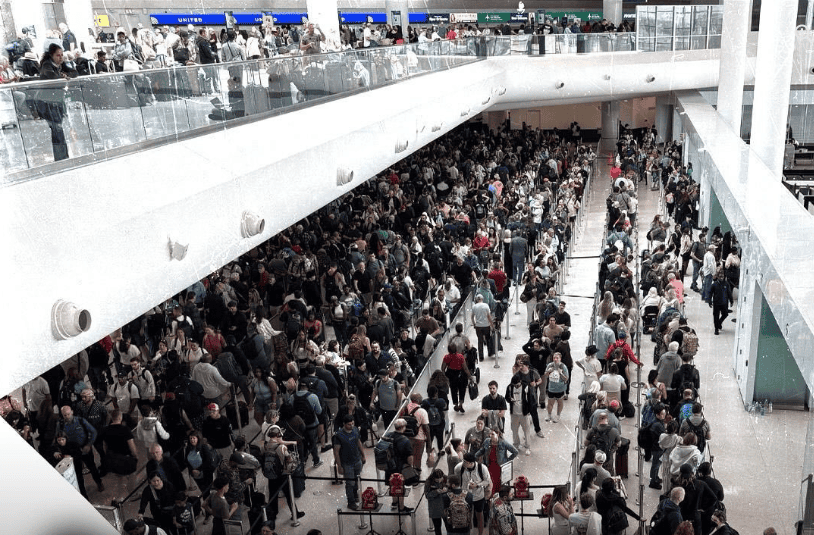
Normally, absentee rates are below 2%, but during the shutdown, they have jumped to over 10% nationwide. At big airports like Atlanta, New York JFK, and Houston, call-out rates have stayed around 20% since mid-February. Recently, Houston saw rates over 50%, and New Orleans and Atlanta have gone above 30%.
Meanwhile, between 300 and 366 TSA officers have left the agency since the shutdown started, according to DHS and Transportation Secretary Sean Duffy.
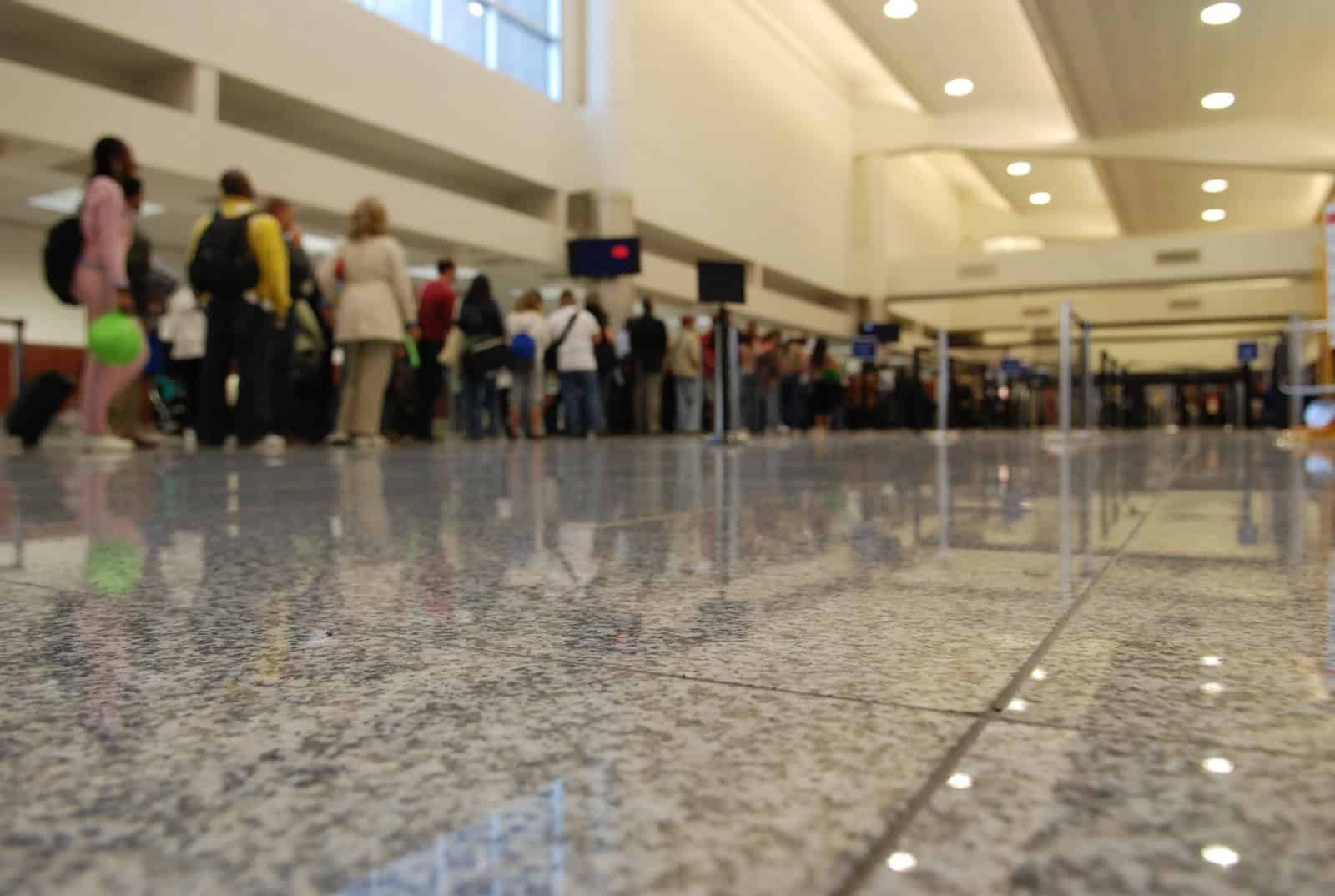
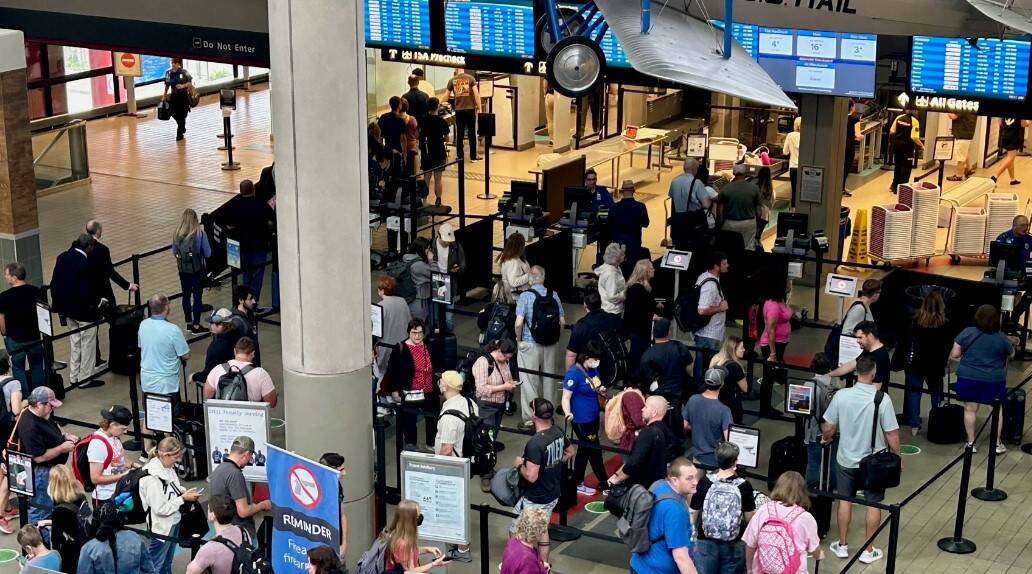
Anyone who has been to an airport lately can see the impact. Security lines stretch for hours. Passengers are told to arrive four or even five hours early. Some checkpoints are closed because there aren’t enough staff. Airports are doing everything they can to keep things running.
TSA tried to ease the strain by sending extra officers from its National Deployment Force to the hardest-hit airports. But now, that backup is used up.
“We’re doing absolutely everything we can,” Stahl said. “We have a national deployment office force, and we’ve fully depleted that. So, at this point, we’re fully stretched, and so frankly, there’s not much else we can do.”
The system has reached its limit and is running out of options.
And smaller airports, which often operate with minimal staffing to begin with, are the most vulnerable. Without enough officers to safely screen passengers, closure is not a dramatic scenario. It becomes the only option left.
The Human Cost Behind the Crisis
It’s easy to focus on the numbers, but it’s much harder to ignore what those numbers mean for real people.
Union leaders have warned that many TSA officers have exhausted all available financial options. Reports have surfaced of agents facing eviction notices, vehicle repossessions, empty refrigerators, and overdrawn bank accounts. Some have taken extreme measures just to stay afloat, including selling blood plasma. Others have been forced to sleep in their cars or struggle to afford care for their children.
These are the people responsible for securing the nation’s airports.
They are showing up to work without pay. They are standing at checkpoints, scanning bags, and watching over the traveling public while their own financial stability collapses.
And yes, some are calling out. Some are leaving.
That should not be surprising. It should be expected.
But here is the uncomfortable truth the aviation industry is now grappling with.
In what world is this acceptable?
Airport security is not optional. It is not a secondary function that can be paused or stretched indefinitely. It is a foundational layer of the entire aviation system. Without it, nothing moves.
Airlines have already begun sounding the alarm. With spring break travel underway and a projected 171 million passengers expected to fly in the coming weeks, executives are warning that the system is nearing a breaking point. House Speaker Mike Johnson acknowledged that airports are “reaching a breaking point,” while airline CEOs have called for immediate action to get TSA workers paid.
And yet, the stalemate continues as both sides of the aisle frustratingly play politics with the lives of those they have been elected to represent.
Democrats have pushed for partial funding measures that exclude certain DHS components without policy changes. Republicans have pushed for a full appropriations bill. Negotiations remain unresolved.
Meanwhile, the people holding the system together are working for free.
Where This Goes Next
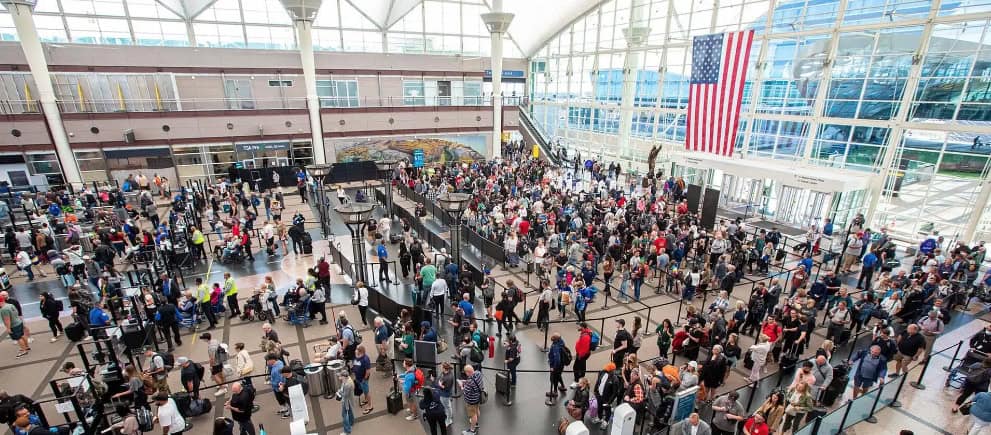
As of now, no airports have been closed due to TSA staffing shortages.
But the warning has been issued. Clearly. Publicly. Without ambiguity.
“It’s not hyperbole.”
That is not language the aviation world hears often from senior officials. And it should not be taken lightly.
If absentee rates continue to climb, if more officers walk away, if relief does not come soon, the idea of small airport closures will move from warning to reality.
And when that happens, it will not just be a TSA problem. It will be an aviation problem. A national problem.
Because once you start shutting down parts of the system, the ripple effects do not stay small.
They never do.
Enough is enough.