

Alaska Airlines Boeing order includes 105 737-10s and five 787 Dreamliners, signaling major fleet growth and long-haul expansion.
Alaska Airlines just made a big move, and it is a historic one.
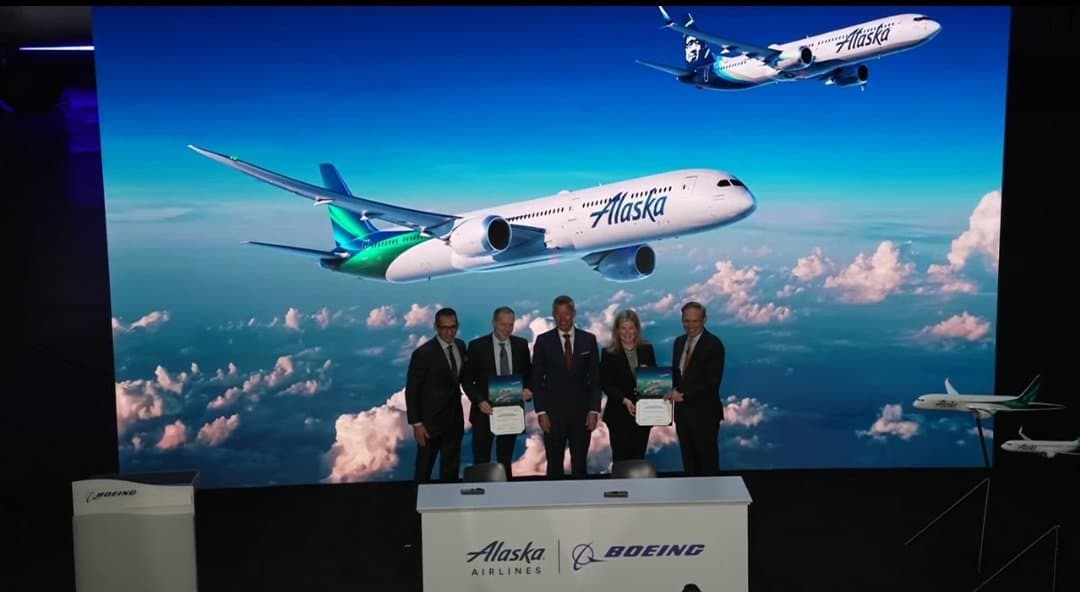
The Seattle-based carrier announced today that it has placed the largest fleet order in its history, committing to 105 Boeing 737-10 aircraft and five Boeing 787 Dreamliners. The deal also includes options for an additional 35 737-10s, locking in delivery slots that stretch well into the next decade, through 2035.
It is a clear signal not only of where the airline is headed, but also its confidence in Boeing as the OEM’s woes continue to fade.
These planes will fuel our expansion to more destinations across the globe and ensure our guests travel aboard the newest, most fuel-efficient, and state-of-the-art aircraft.
Ben Minicucci | CEO, Alaska Airlines
“This fleet investment builds on the strong foundation Alaska has created to support steady, scalable, and sustained growth,” said CEO Ben Minicucci. “These planes will fuel our expansion to more destinations across the globe and ensure our guests travel aboard the newest, most fuel-efficient, and state-of-the-art aircraft.”
A Massive 737-10 Commitment
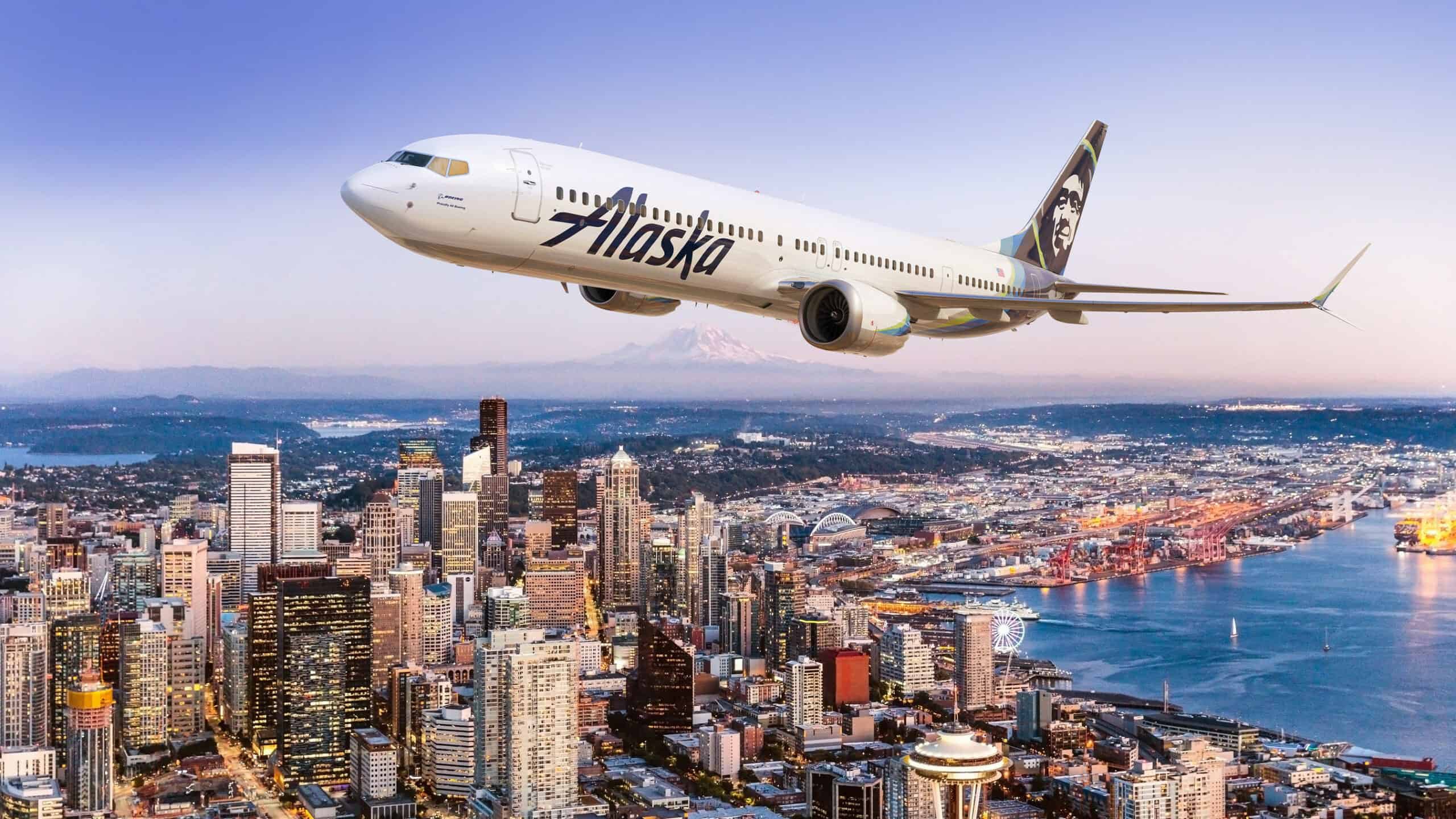
The announcement involved a massive order for the yet-to-be-certified 737-10. Alaska’s order for 105 aircraft, plus 35 options, brings its total Boeing orderbook to 245 airplanes. That figure is in addition to the 94 MAX aircraft already flying in Alaska colors today.
The 737-10s will serve a dual role. Some will support growth, while others will replace older 737s as the airline works to keep its fleet among the youngest and most fuel-efficient in the industry. Alaska already operates the 737-8 and 737-9, and while this order is specifically for the 737-10, the airline retains the flexibility to adjust variants as needed.
Dreamliners, Global Ambition, and a New Livery
The widebody portion of the order is just as significant. Alaska exercised all of its remaining 787 options, adding five more Dreamliners to its future fleet. The intention is for these aircraft to be delivered as the larger 787-10 variant.
Those jets will play a key role in Alaska’s Accelerate strategic plan, supporting long-haul growth from Seattle. By 2030, the airline expects to serve at least 12 international destinations across Europe and Asia. With this order, Alaska’s firm 787 fleet now stands at 17 aircraft, with five already in service.
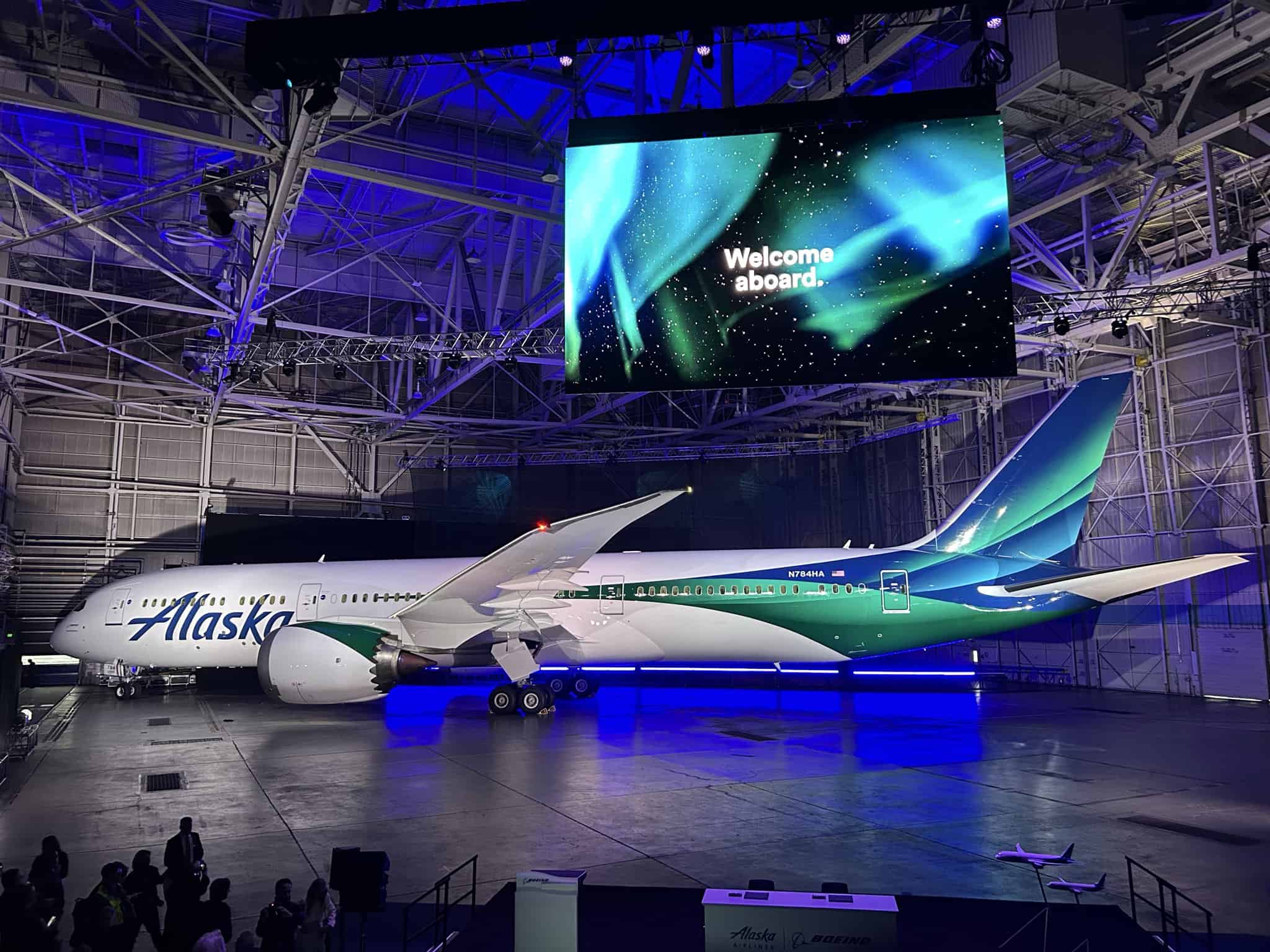
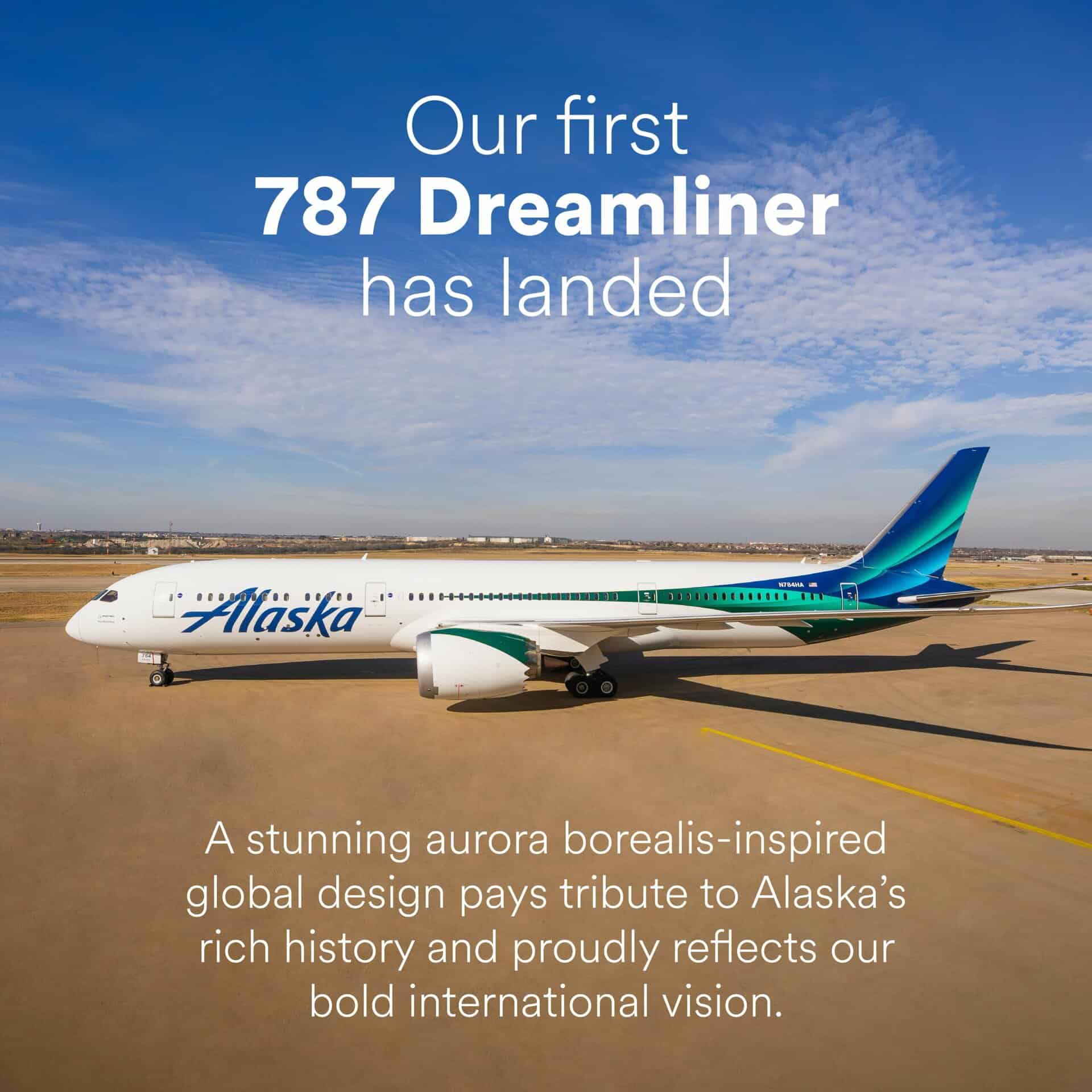
As Alaska celebrates this massive milestone, it is also celebrating the arrival of its very first Dreamliner. The Boeing 787-9 Dreamliner (reg. N784HA) arrived at Seattle’s Boeing Field (BFI) on 6 January. The aircraft, fresh from the paint shop at Fort Worth’s Meacham International Airport (FTW), features the airline’s new global livery design inspired by the aurora borealis that signals its growing international ambitions.
Growth Well Into the 2030s
Alaska Air Group currently operates a fleet of 413 aircraft across its carriers. With this order, that number is expected to grow to more than 475 aircraft by 2030 and exceed 550 by 2035.
For Boeing, the announcement marks another milestone in a relationship that now spans six decades. The partnership began with the delivery of a 727, and today Alaska operates hundreds of 737s while steadily building its Dreamliner fleet. And, as mentioned earlier, it signals Alaska’s confidence in the manufacturer as it navigates out of a decade full of highly publicized missteps.
This is a historic airplane order.
Stephanie Pope | President and CEO, Boeing Commercial Airplanes
“This is a historic airplane order,” said Stephanie Pope, president and CEO of Boeing Commercial Airplanes. “All of us at Boeing are proud of Alaska’s success and are honored they have placed their trust in our people and our 737 and 787 airplanes to help grow their airline.”
With new aircraft on the way, international routes in sight, and delivery slots secured well into the future, today’s announcement is a defining moment for Alaska Airlines and a clear statement that the airline is thinking long term and thinking big.
