

Hundreds of Warbird T-34 Mentors Are Still Going Strong
Beechcraft initially developed the T-34 Mentor (model 45) primary trainer from the popular Model 35 Bonanza as a private venture by Walter Beech.
The Mentor featured a single, horizontally opposed reciprocating engine driving a two-bladed propeller, a low-mounted wing, a standard tailplane design (the Bonanza’s V-tail was considered), a roomy tandem cockpit with dual controls under a bubble canopy affording excellent visibility, and retractable tricycle landing gear. The T-34 Mentor was the first American primary trainer aircraft to be equipped with tricycle landing gear.
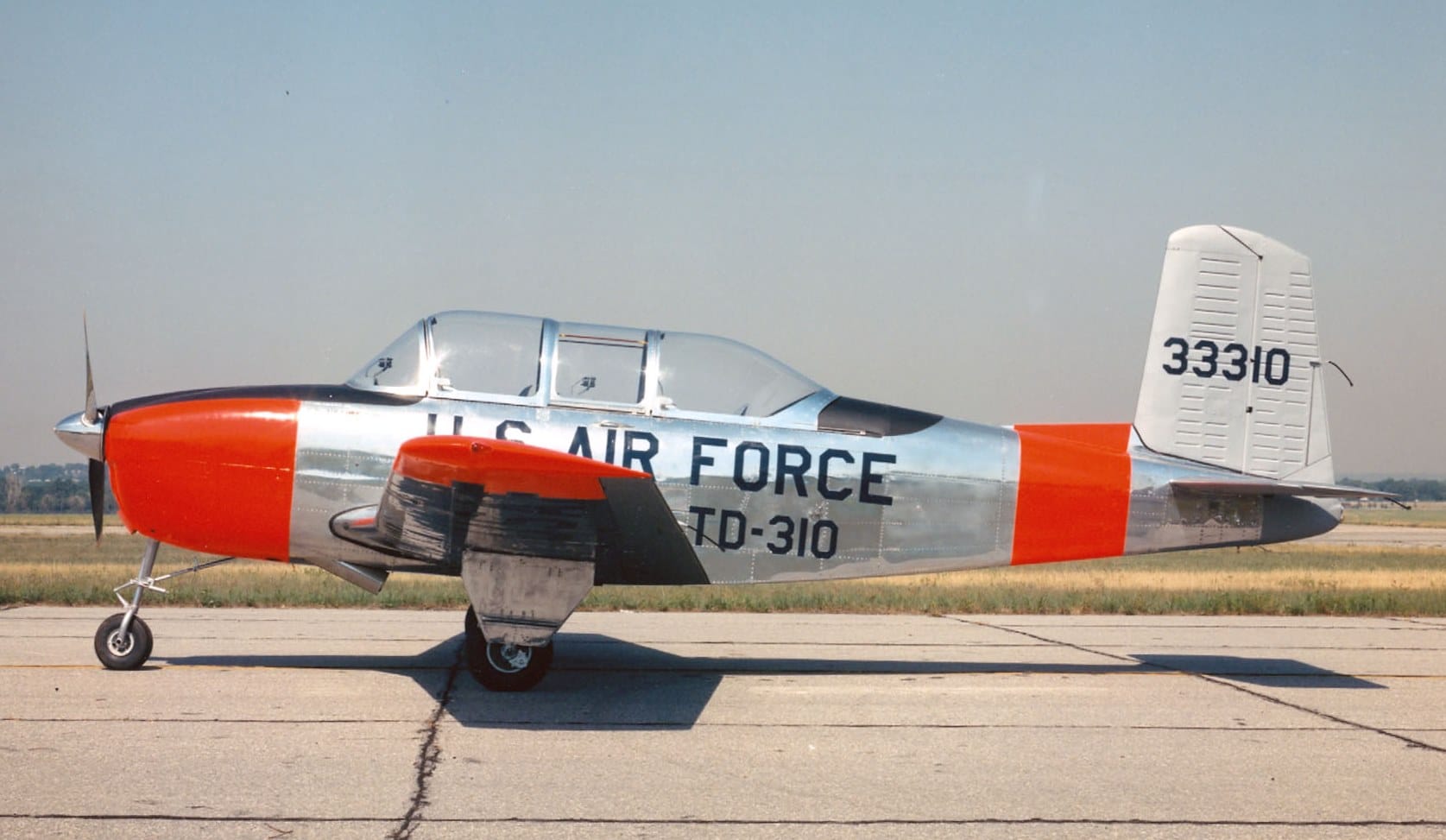
Built to Replace a Legendary Taildragger Trainer
T-34s were intended to replace the North American T-6/SNJ/Harvard taildragger primary trainers, which were still in widespread use when the first Mentor was flown in December 1948. Initially, the T-34 was locked out of the competition between two taildragger prototypes- the Temco T-35 Buckaroo (developed from Temco’s Swift) and the Fairchild XNQ/T-31.
Initially, the Fairchild design prevailed, but the government, as well as the competing armed services, were involved, and the contractors evidently compelled a second evaluation. This time around, Beechcraft walked off with the contracts, albeit for two slightly different versions of the same basic airframe.
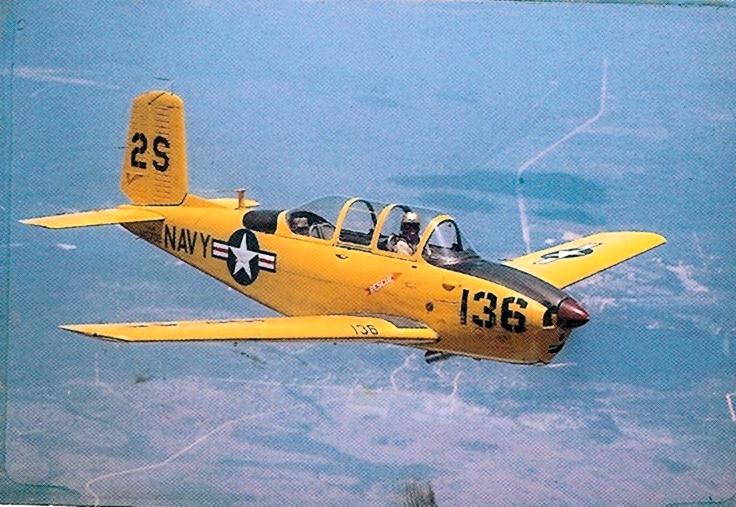
The USAF Flew a Slightly Different Model T-34 Than the Navy
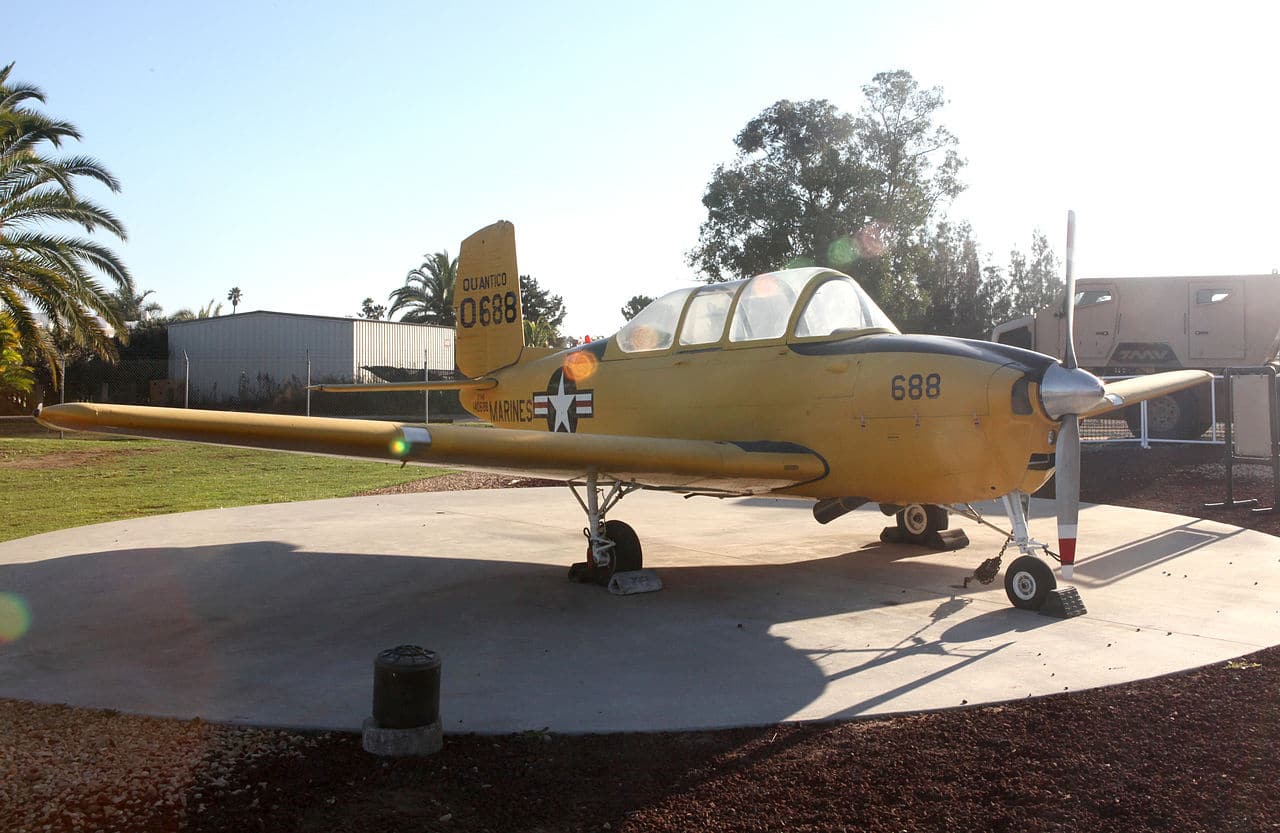
Entering service in 1953, the T-34A was built for the United States Air Force (USAF). T-34Bs were slated for United States Navy/Marine Corps (USN/USMC) service. The export model was based on the T-34A and designated as the B45.
The primary differences between the A and the B were adjustable rudder pedals, one additional degree of wing dihedral, and the lack of a steerable nose wheel on the B. The total production of the reciprocating engine-powered T-34/B45 was 1,904 aircraft, concluding in 1959.
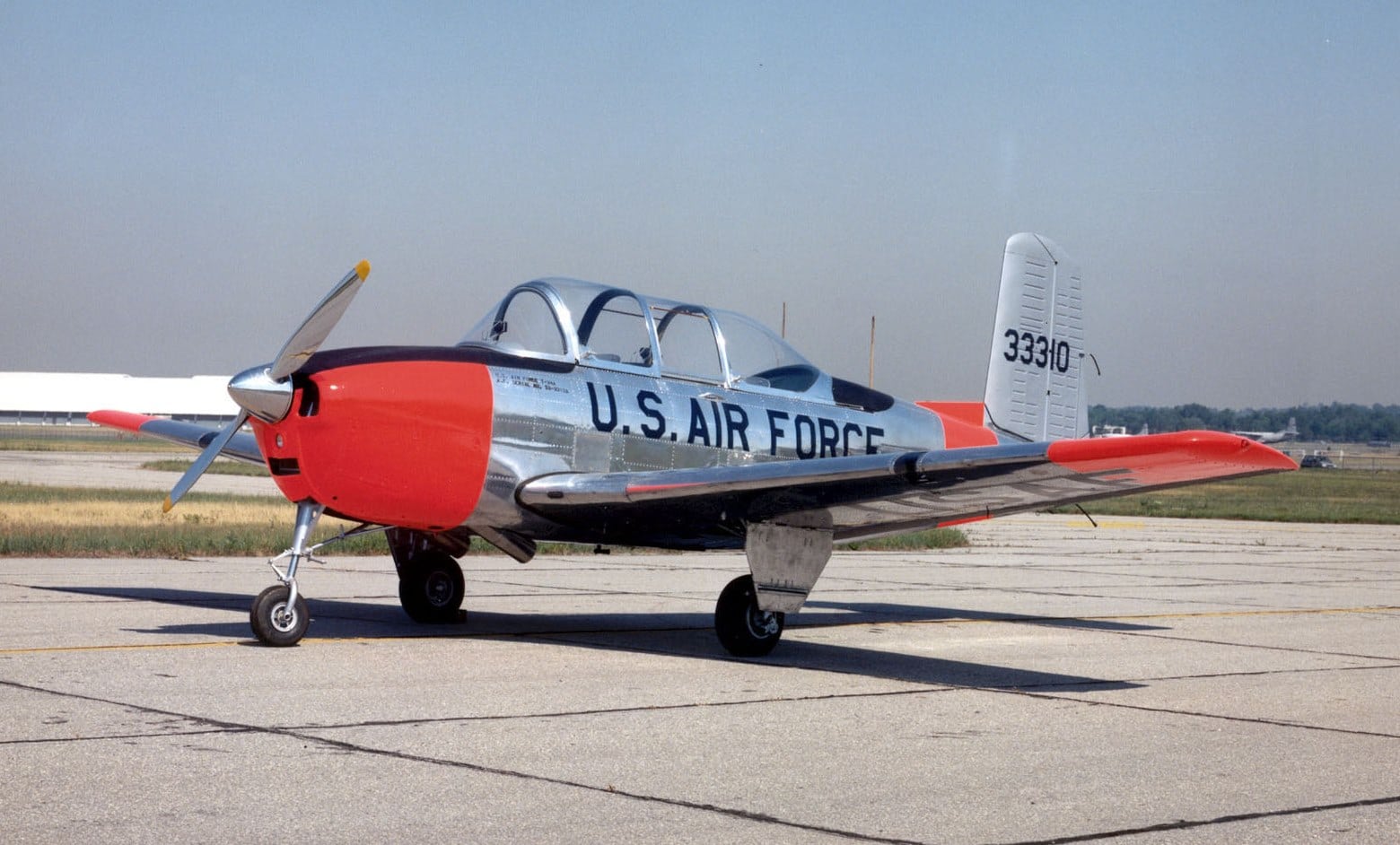
Beechcraft T-34 Mentor Trained Pilots in Air Force Blue
The USAF procured a total of 450 Mentors, using them as primary trainers at “contract” air training bases. These include Spence and Bainbridge Air Bases in Georgia, Moore and Hondo Air Bases in Texas, and Bartow and Graham Air Bases in Florida.
After completing Air Force primary training, students transitioned into the North American T-28A Trojan for their intermediate training syllabus. But when the Cessna T-37 Tweet entered service in 1957, it largely replaced both the T-34 and the T-28 propeller-driven trainers in USAF Air Training Command service. The last of the USAF Mentors left active training service during the early 1960s.
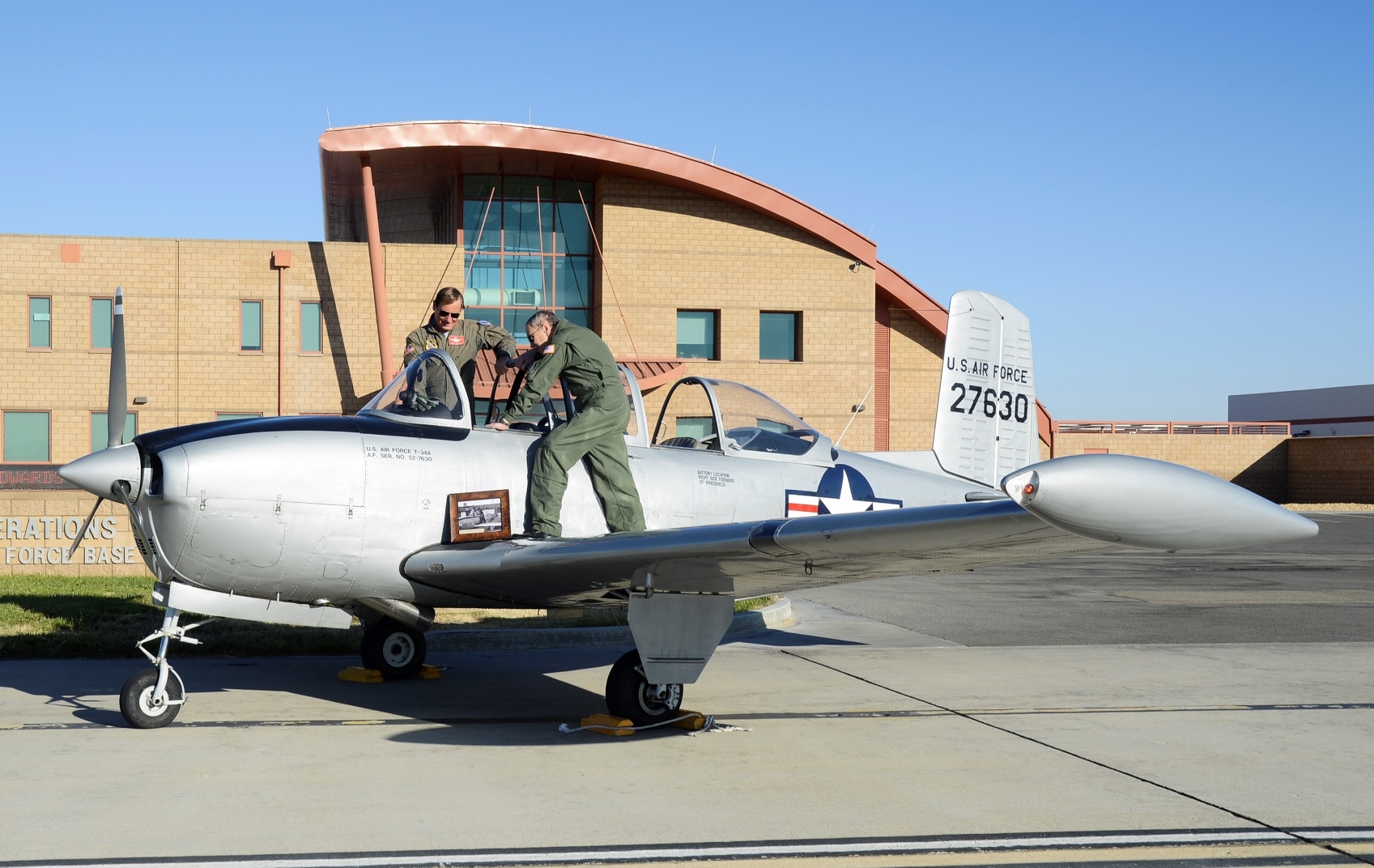
Continued Service at Bases and With CAP
The Air Force Auxiliary, AKA the Civil Air Patrol (CAP), operated T-34s both during and after the USAF used them for training. While many former USAF Beechcraft T-34 Mentors went to foreign operators, several T-34As equipped Air Base flying clubs for many years.
The CAP found that while the T-34 was not ideal for search and rescue work (because of the low-mounted wing) and maintenance issues became burdensome later during CAP service, they still operated their Mentors until retirement in 2003. We’ll get back to the maintenance issues later.

[…] to accommodate the new jets. Replaced in the USAF pilot training role by the combination of the piston-engine Beech T-34 Mentor and the jet-powered Cessna T-37 Tweet, Air Force T-28As were all but retired by the end of the […]
Still have the engine failure checklist etched in memory: 90 knots-gear-flaps–prop-mixture-find a field-trim canopy-boost-check-report! VT-1 Saufley Field. Pensacola 1966! And there were a number of failures!