

The Washington Post confirmed last week that the US Department of Homeland Security (DHS) plans to purchase six Boeing 737s for ICE Air operations.
A quick note: We are not here to debate the politics of deportation flights. There are plenty of places for that. Our focus is purely on the aviation side of the story, because that is what we do best.
The aircraft will be acquired through a nearly $140 million contract with Virginia-based Daedalus Aviation, marking a shift away from ICE Air Operations’ long reliance on chartered aircraft. DHS officials say that owning a dedicated fleet will enable more efficient scheduling and routing following a major funding increase from Congress.
With this news, several pressing questions came to mind immediately.
Buying transport category jetliners is not just about acquiring airplanes. It is about everything that comes with them. Crews, maintenance, FAA oversight, dispatch, training, and long-term planning all follow. At that point, you are not just buying aircraft. You are running an airline.
If the government owns the airplanes, how does it plan to operate them?
This initial question opens the door to eight more key areas to consider as this program unfolds.
1. Why Is DHS Buying Boeing 737s Instead of Chartering Flights?
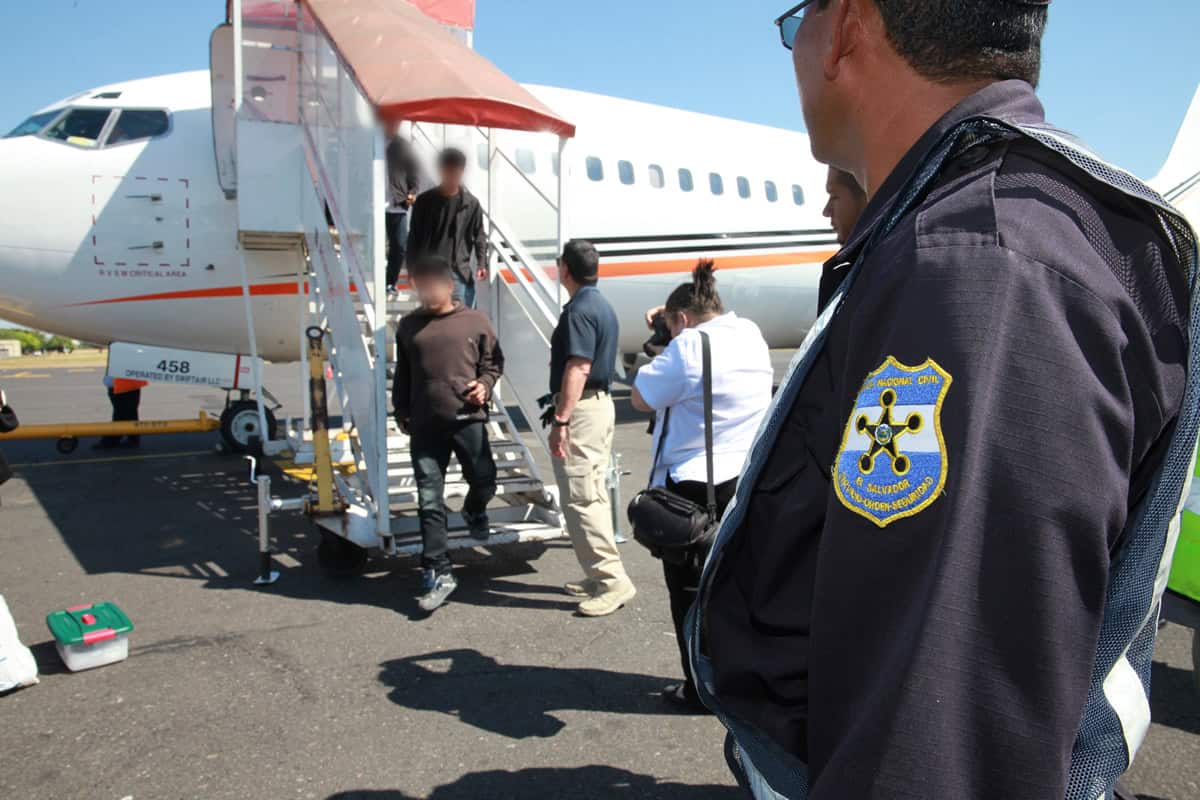
ICE Air Operations has historically relied on chartered aircraft to conduct deportation flights and domestic transfers. Those flights have been operated by commercial carriers, including GlobalX Air, Eastern Air Express, Avelo Airlines, World Atlantic Airlines (operating as Caribbean Sun), Omni Air International, Kaiser Air, and Key Lime Air.
We reported on ICE deportation flights earlier this year in this story.
MORE COVERAGE ON AVGEEKERY
Charter flying offers flexibility. Aircraft, crews, maintenance, and scheduling are handled by outside operators, allowing the government to scale flight activity up or down as needed.
Ownership changes that model.
DHS officials say purchasing these Boeing 737s for ICE Air operations will allow the agency to operate more efficiently by controlling routing, scheduling, and utilization. DHS spokesperson Tricia McLaughlin stated that the move is expected to save taxpayers $279 million over time due to increased efficiency, although the agency has not publicly released a detailed cost breakdown.
Viewed through an aviation lens, this change signals that DHS believes its flight volume now justifies the shift to ownership. Purchasing these Boeing 737s for ICE Air operations will undoubtedly impact multiple operational aspects.
2. Who Will Fly and Staff the Government’s Boeing 737 Fleet?
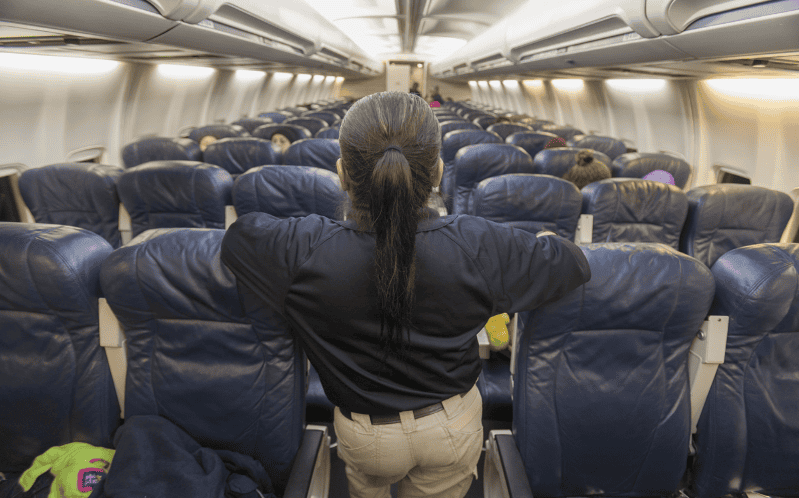
One of the most immediate questions we have involves crews.
It remains unclear whether pilots will be federal employees, civilian contractors, or a hybrid workforce. The same applies to flight attendants, dispatchers, and ground support personnel.
Most government aviation operations in the United States fall into well-defined categories. Military aircraft are flown by uniformed crews. Executive and VIP aircraft are operated by specialized military or government flight departments. Law enforcement aviation tends to focus on surveillance aircraft and rotorcraft.
A fleet of narrowbody jets conducting repetitive transport missions does not neatly fit any of those models.
How DHS staffs these aircraft will shape everything from training pipelines to operating costs.
3. Under What FAA Rules Would a Government Run Airline Operate?
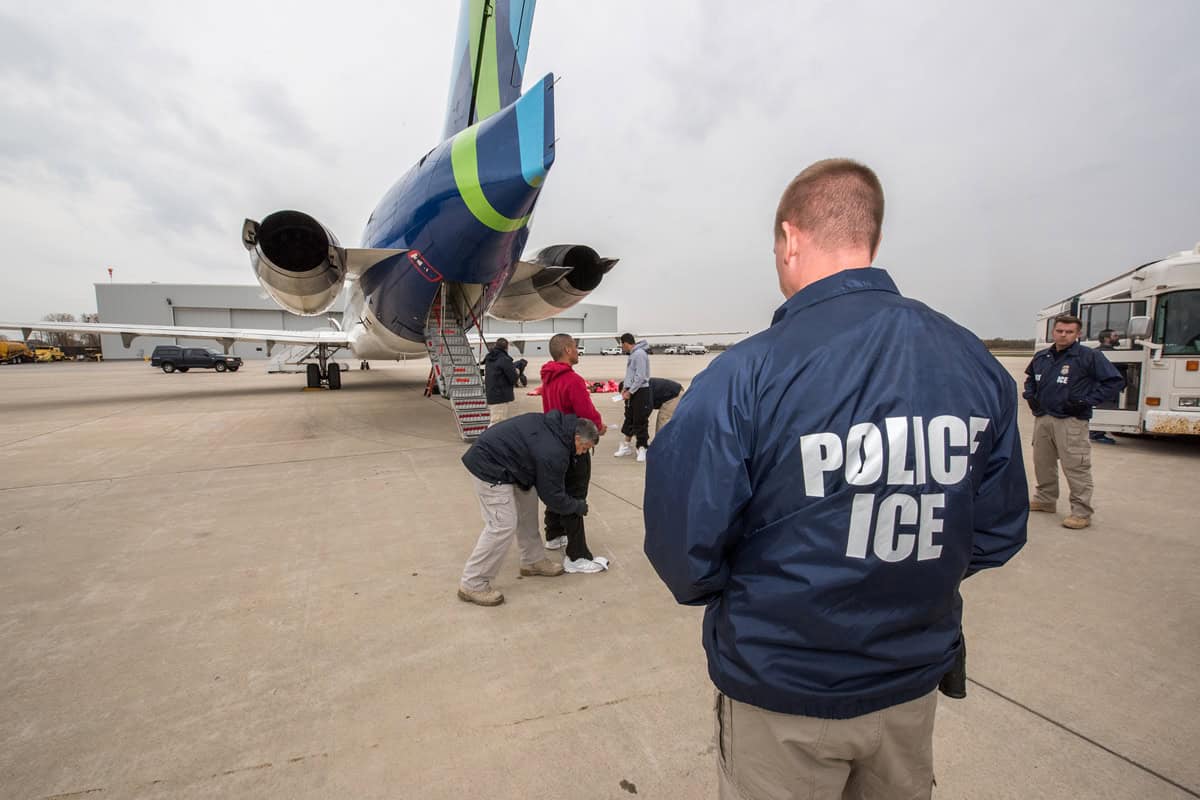
Another unresolved issue is regulatory oversight. Can the same entity that sets the rules impose the rules on itself?
Commercial airlines operate under FAA Part 121, while charter and on-demand operators typically fly under Part 135. Each framework carries different certification requirements, training standards, and levels of oversight.
The Boeing 737 is a transport category aircraft designed for Part 121 airline operations, but ownership alone does not dictate certification. DHS could operate under its own air operator certificate, contract operations to an existing certificate holder, or pursue a government-specific framework under FAA oversight.
Regardless of structure, civil-registered aircraft operating in US and international airspace must comply with FAA safety standards.
4. Who Maintains and Certifies Airworthiness for the Fleet?
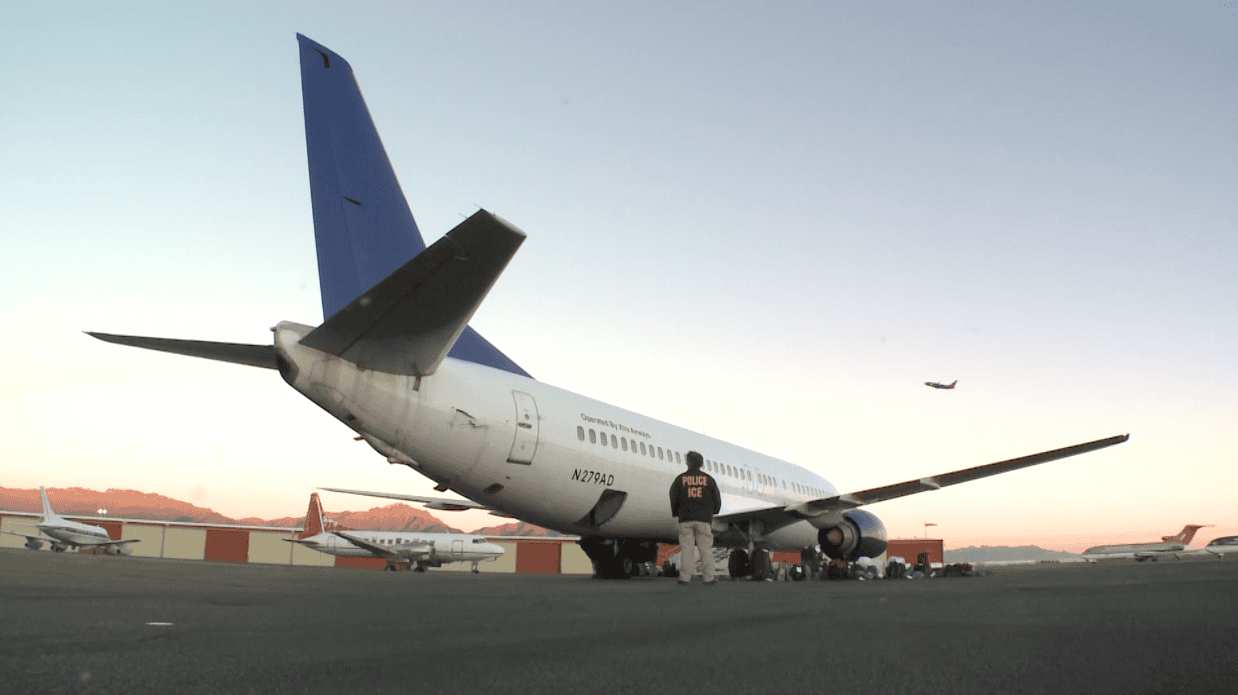
Maintenance is one of the most complex aspects of aircraft ownership.
Large airlines benefit from scale. They maintain extensive parts inventories, multiple maintenance bases, and redundant aircraft that can absorb downtime.
A six-aircraft fleet offers none of those advantages.
DHS will need to determine whether maintenance is handled internally or outsourced to FAA-certified repair stations. Line maintenance, heavy checks, parts provisioning, and aircraft on-ground recovery all become more challenging with a limited fleet size.
These logistical realities were cited by former DHS officials as reasons previous administrations ultimately decided against owning aircraft outright.
5. How Will the Boeing 737 Cabins Be Configured?
Cabin configuration is another aviation detail with significant operational implications.
Used Boeing 737s can be configured with high-density layouts approaching 200 seats, depending on the variant and interior design. Any cabin modifications require engineering approval and FAA certification, along with careful consideration of weight and balance.
Interior configuration affects turnaround times, cleaning procedures, maintenance cycles, and long-term operating costs. It also influences which missions the aircraft can support and how quickly they can be reconfigured if requirements change.
No interior details have been publicly disclosed, but the decisions made here will significantly impact how efficiently the aircraft can be utilized.
6. Who Plans, Dispatches, and Schedules the Flights?
Equally vital is the planning and execution of flight operations.
Behind every flight is a dispatch operation responsible for routing, fuel planning, weather analysis, alternates, and compliance with operational limits.
Owning aircraft means DHS must either build its own dispatch capability or contract that expertise externally. Scheduling also becomes more complex when aircraft must be positioned between missions, particularly for international flying.
According to ICE Flight Monitor data compiled by Human Rights First, ICE conducted 1,701 deportation flights to 77 countries between 20 January (Inauguration Day) and 31 October. The organization reported that ICE Air Operations carried out the vast majority of US immigration enforcement flights during that period.
Scaling that level of activity with owned aircraft requires airline-style planning and coordination.
7. Is There a Precedent for the US Government Running an Airline?
The United States has never operated a government-owned commercial passenger airline. Unlike many countries with state-owned flag carriers, US aviation has long emphasized private operation.
There are precedents that come close.
The Justice Prisoner and Alien Transportation System (JPATS), operated by the US Marshals Service, owns and operates a fleet of aircraft, including Boeing 737s, to transport prisoners and detainees. JPATS operates scheduled routes across a hub-and-spoke network using civilian-registered aircraft.
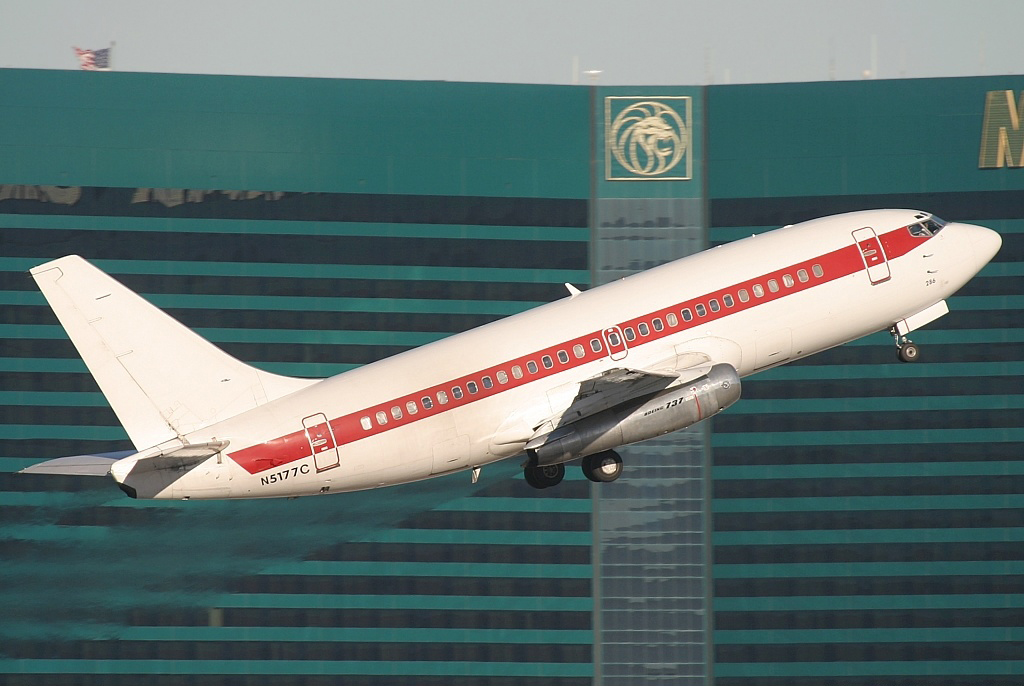
JANET, the highly classified unmarked Boeing 737 operation flying from Las Vegas to restricted sites in Nevada, is often cited as another example. However, JANET is contractor-operated, not run directly by the federal government, with civilian pilots flying under FAA oversight.
If DHS directly owns and operates these six Boeing 737s for ICE Air operations, it may represent the closest the US government has come to running a true airline-style operation outside of contracted services.
8. Why the Boeing 737, and What Happens Next?
From an aviation standpoint, the Boeing 737 is a logical choice.
Choosing Airbus over Boeing for a government fleet would be aviation’s version of putting Toyotas in the presidential motorcade.
The type is widely available on the secondary market, supported by a massive global maintenance ecosystem, and capable of operating efficiently on domestic and international routes throughout the Americas. Its range and payload make it suitable for nonstop flights to Central America, the Caribbean, and parts of South America.
Fleet commonality also leaves room for expansion, should DHS choose to add aircraft in the future.
What remains unclear is how long the aircraft will remain in service, how they will be utilized beyond the current administration, and whether six airplanes represent a starting point or a final number.
More Than Just Six Airplanes
At first glance, the purchase of six Boeing 737s for ICE Air operations looks like a routine equipment acquisition. In this case, it is anything but.
It signals a shift toward ownership, with all the operational complexity that comes with it. Crews, maintenance, dispatch, training, certification, and long-term fleet planning all become part of the equation.
Many of those details remain unanswered. What is clear is that DHS is stepping into a part of the aviation world it has rarely occupied before.
From a purely aviation perspective, six Boeing 737s raise a simple but far-reaching question.
When the government owns the airplanes, how close does it come to running an airline?