

China’s Luanniao “flying aircraft carrier” concept imagines warfare from the edge of space, though reality may be far behind the renders.
China’s state media has unveiled what may be one of the most ambitious military concepts ever rendered in glossy 3D animation. Or one of the most creative. Or possibly one of the most elaborate exercises in strategic trolling ever broadcast on China Central Television (CCTV).
The concept is a so-called flying aircraft carrier named Luanniao, revealed last week on CCTV. The craft is presented as part of a sweeping integrated air and space defense architecture known as the NanTianMen Project, which translates to the “South Heavenly Gate Project.” If that name sounds less like a weapons program and more like a fantasy novel chapter title, that may be the point.
According to Chinese state media, Luanniao would function as an orbital or near-space mothership, launching unmanned fighters and hypersonic weapons from the edge of Earth’s atmosphere. It is, on paper and in animation at least, gargantuan. It is also very likely not real in any practical sense. Still, the announcement has succeeded in doing exactly what it was probably meant to do: get attention.
A Mythical Name for a Mythical Machine
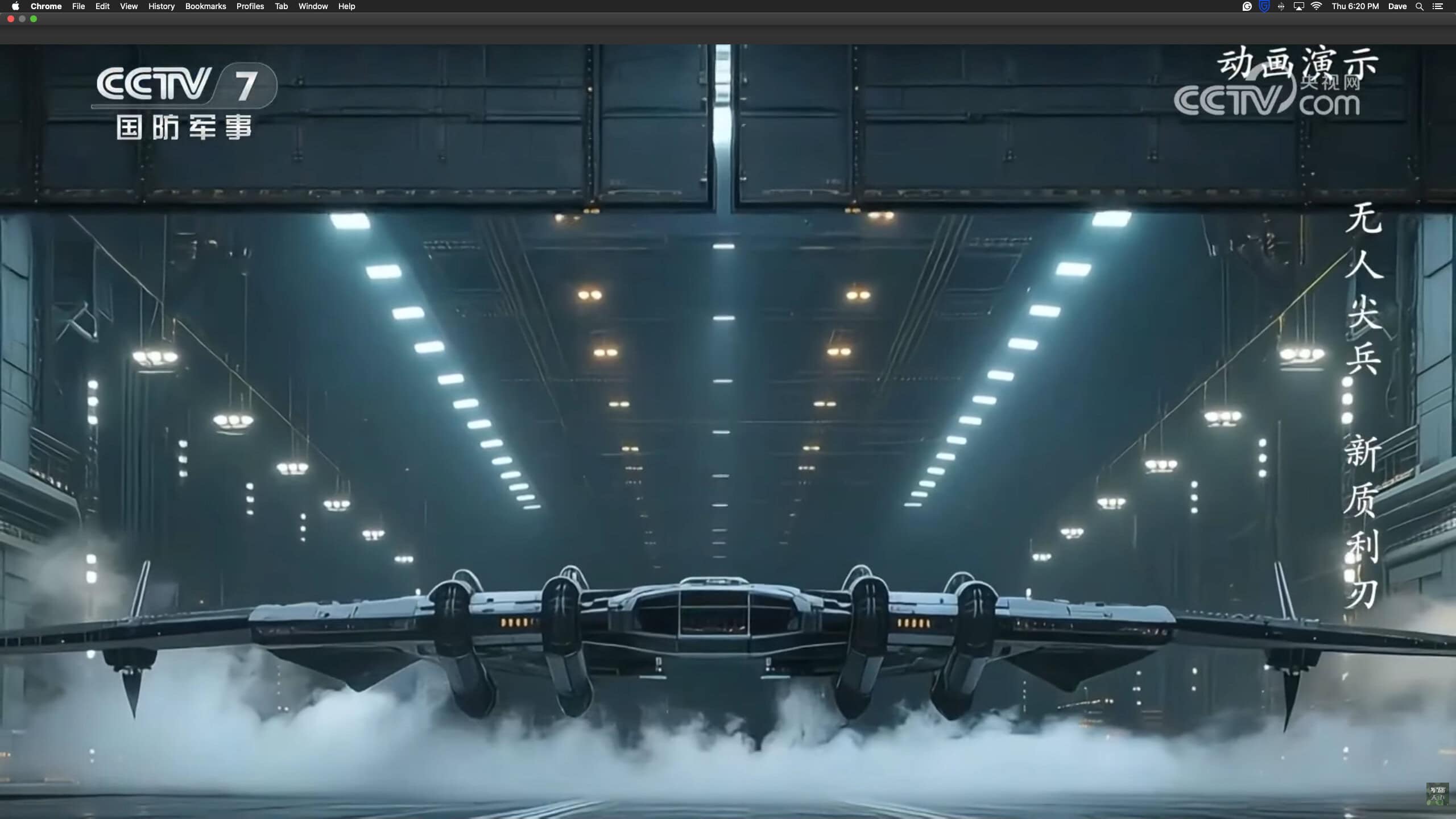
Luanniao translates loosely to “Luan bird,” a creature pulled straight from Chinese mythology. The luan is a divine or auspicious bird often associated with peace, harmony, and virtuous rule. It appears in ancient texts such as the Classic of Mountains and Seas and is sometimes described as closely related to the fenghuang, or Chinese phoenix.
It is an inspired name for something that currently exists only as a concept. Majestic, otherworldly, and firmly untethered from engineering constraints.
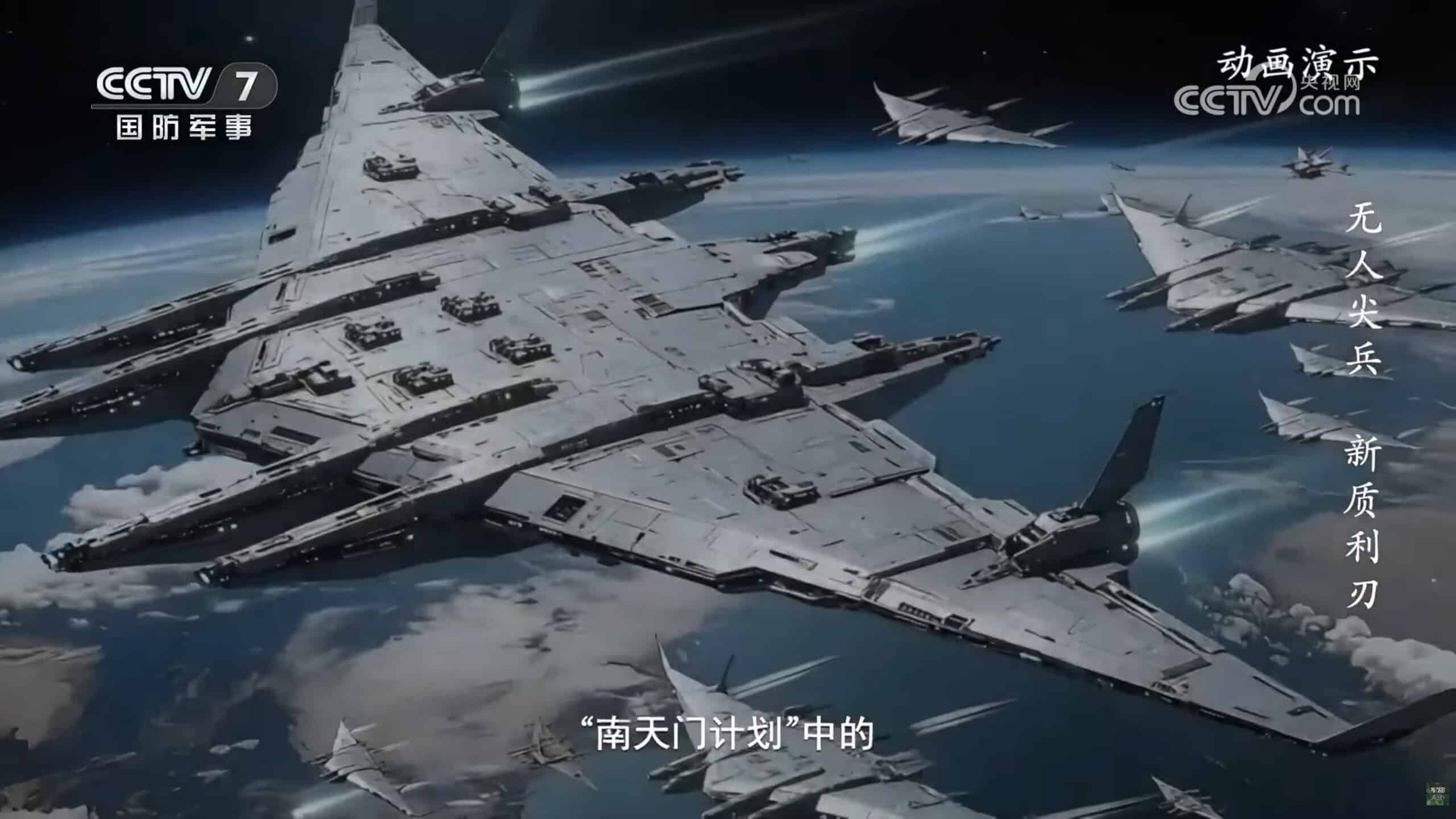
In official concept videos, the Luanniao appears as a massive triangular spacecraft designed to operate at the boundary between atmosphere and orbit. It would serve as the centerpiece of the South Heavenly Gate Project, a coordinated vision that aligns China’s aerospace, defense, and space ambitions under one very dramatic banner.
Western media has largely stuck with the pinyin name rather than translating it, usually noting that the vehicle is named after a mythical bird. That framing is absolutely appropriate because – let’s face it – myth is doing a lot of the heavy lifting here.
The Numbers Are Staggering, and Also Conveniently Inexact
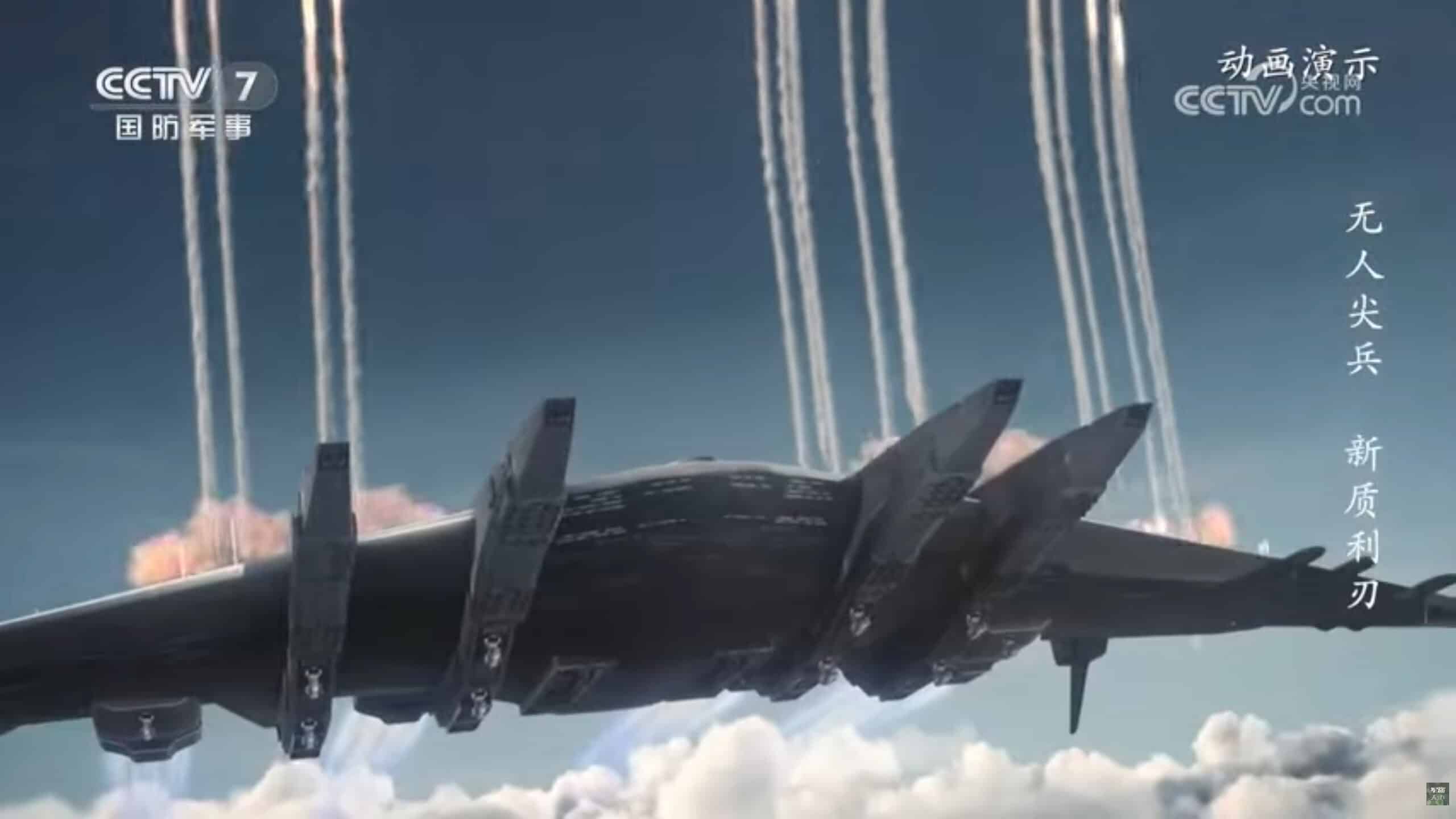
According to the specifications promoted by Chinese state media and cited by outlets such as the Telegraph, the Luanniao would be the largest military asset ever conceived by mass. The spacecraft is projected to have a maximum takeoff weight of roughly 120,000 metric tonnes (264 million pounds). That would make it about 20 percent heavier than a fully loaded USS Gerald R. Ford-class US Navy aircraft carrier.
The dimensions are even more eye-catching. The triangular platform is depicted as measuring approximately 242 meters (794 feet) in length with an immense wingspan of 684 meters (2,244 feet). For context, that wingspan would stretch more than seven (American) football fields end to end. Its total mass would be roughly equivalent to 300 fully loaded Boeing 747-400 jumbo jets.
These figures are, by admission, not precise. No firm technical documentation has been released, and no credible pathway has been outlined for how such a structure would be built, launched, or powered. The propulsion needed for something like this simply does not exist. Not even anything close. It seems, therefore, that the numbers function less as engineering targets and more as narrative devices. They are meant to convey scale, dominance, and inevitability.
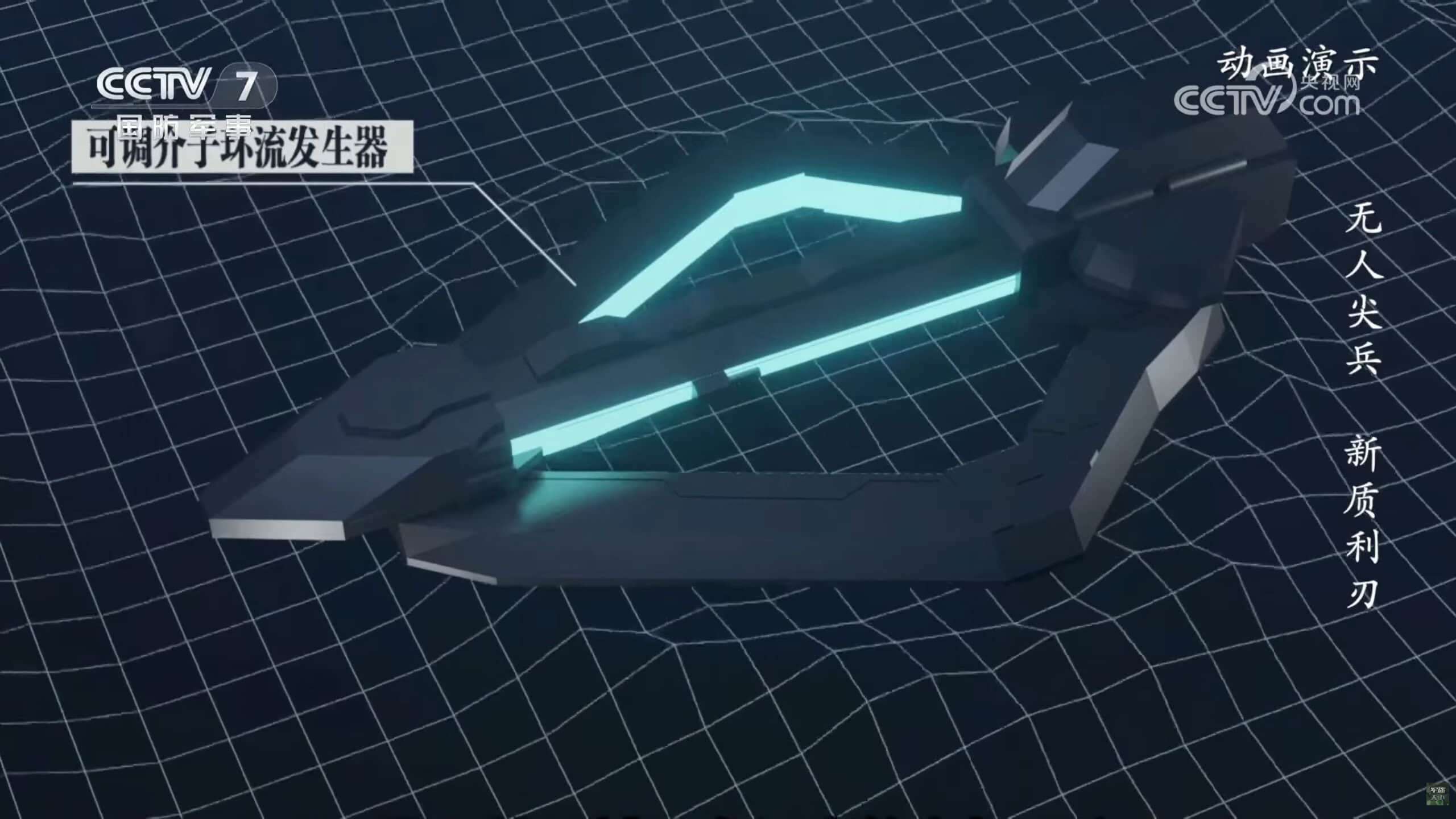
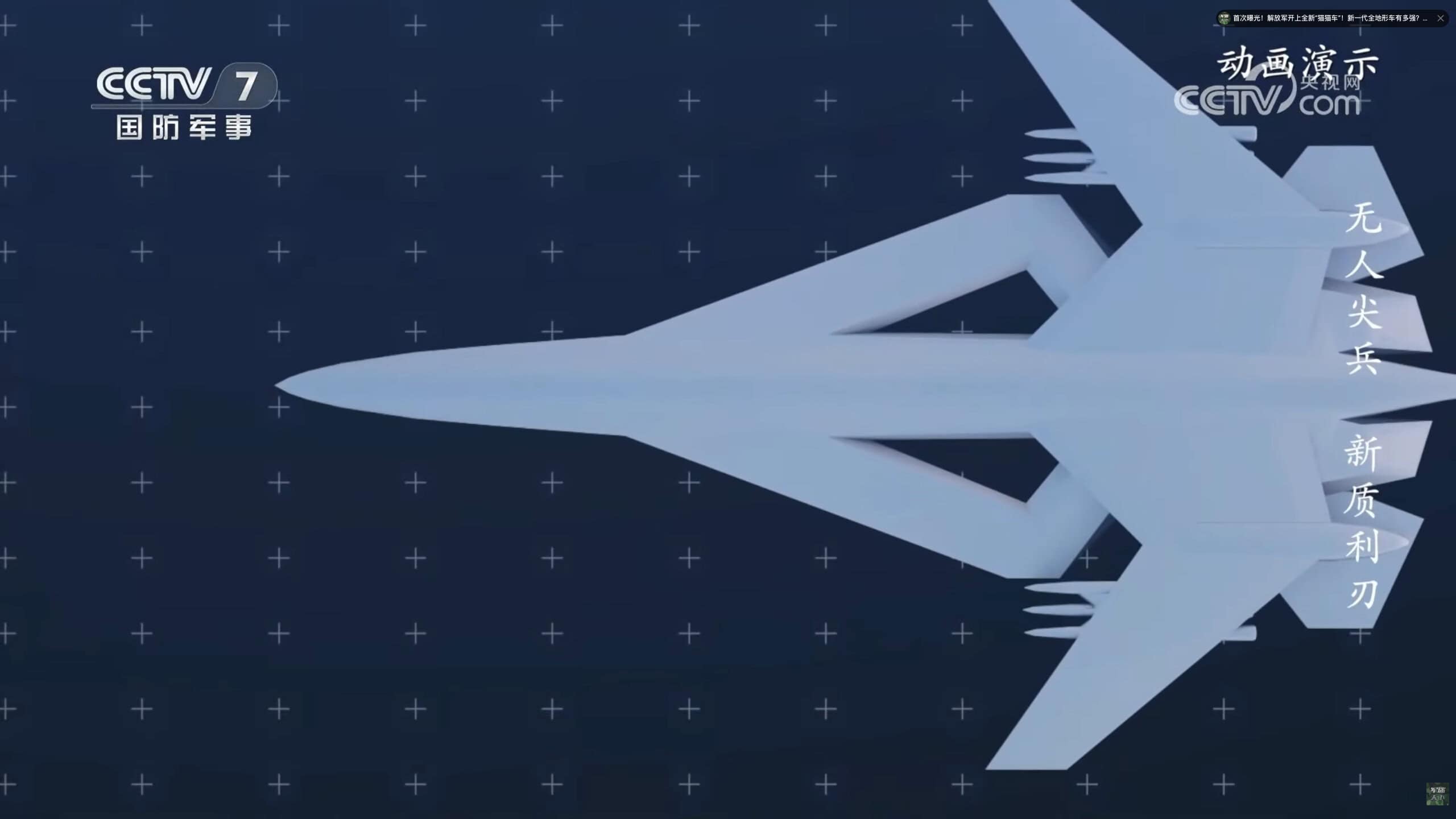
Once operational, the Luanniao is depicted as carrying up to 88 unmanned space fighters known as Xuannu. These autonomous craft are named after Jiutian Xuannü, a mythological goddess of war and strategy. The fighters are shown launching hypersonic or “hyper-ballistic” missiles and conducting operations in both atmospheric and orbital environments.
Like the mothership itself, the Xuannu fighters are conceptual. Variations of the design have appeared at Chinese aerospace exhibitions since at least 2019, often presented as sixth-generation systems intended to inspire students and engineers rather than be deployed anytime remotely soon.
Why Show This Now?
The timing is not subtle. Last weekend, a YouTube channel affiliated with CCTV released a video highlighting recent developments in Chinese autonomous aerial vehicles. Most of the footage featured real, operational platforms like the Wing Loong II long-range drone and the Lanying R6000 tiltrotor. Included as part of the presentation among them was the Luanniao concept, presented with the same visual confidence as systems that actually exist.
The result was predictable. Chinese social media lit up with excitement, including fictional stories set in a near future where fleets of Luanniao carriers patrol Earth’s orbit. American and other Western defense analysts took notice as well, even while acknowledging the extreme technical hurdles involved.
Peter Layton, a defense expert and fellow at Australia’s Griffith Asia Institute, told the Telegraph that if such a platform ever became real, it would outclass existing systems and allow China to deploy military power virtually anywhere on the planet, largely beyond the reach of weather and conventional defenses.
That is a big “if.” The energy required to launch and sustain a 132,000-ton spacecraft alone places the Luanniao firmly in the realm of science fiction for now. A target date of 2040 has been floated in Chinese reports, but there is no realistic pathway to achieving anything close to this capability by then.
Sci Fi, Psyop, or Something in Between?
Viewed through a Western lens, the Luanniao announcement looks very much like epic trolling. A flashy, cinematic concept designed to unsettle adversaries, dominate headlines, and provoke familiar anxieties about falling behind in space and defense technology.
And yet, dismissing it outright would be a mistake.
China has made no secret of its long-term ambitions in space and military technology. Beijing is investing heavily in orbital infrastructure, hypersonic weapons, autonomous systems, and counter-space capabilities. While a flying aircraft carrier may never leave the concept art stage, the thinking behind it is very real.
Every transformative military technology once sounded impossible. Until it wasn’t.
The Luanniao is unlikely to ever patrol Earth’s orbit, but it does offer a revealing glimpse into how Beijing wants to frame the future of warfare. Space as the ultimate high ground. Autonomy as the norm. Scale as a signal of power.
It is unlikely that this moment will mark the opening act of a new space race. However, it is only a matter of time until other nations attempt to challenge America’s space superiority. And this time, the rival will not be the Soviet Union of the past, but a technologically ambitious China with a long memory and a long timeline.
That is precisely why American leadership in space matters. Peaceful exploration, scientific discovery, and yes, the quiet missions the public will never hear about all serve the same purpose. They preserve hard-won capability, deter aggression, and ensure that the high ground above Earth remains stable.
Every mission, from Artemis II to programs still wrapped in classification, helps shape the balance of power beyond the atmosphere. Not through spectacle of mythmaking, but through sustained competence. And should the US enter into another space race in the decades to come, that may be the most decisive advantage of all.