

The Ship Was Heavily Damaged and Air Wing 17 Was Decimated
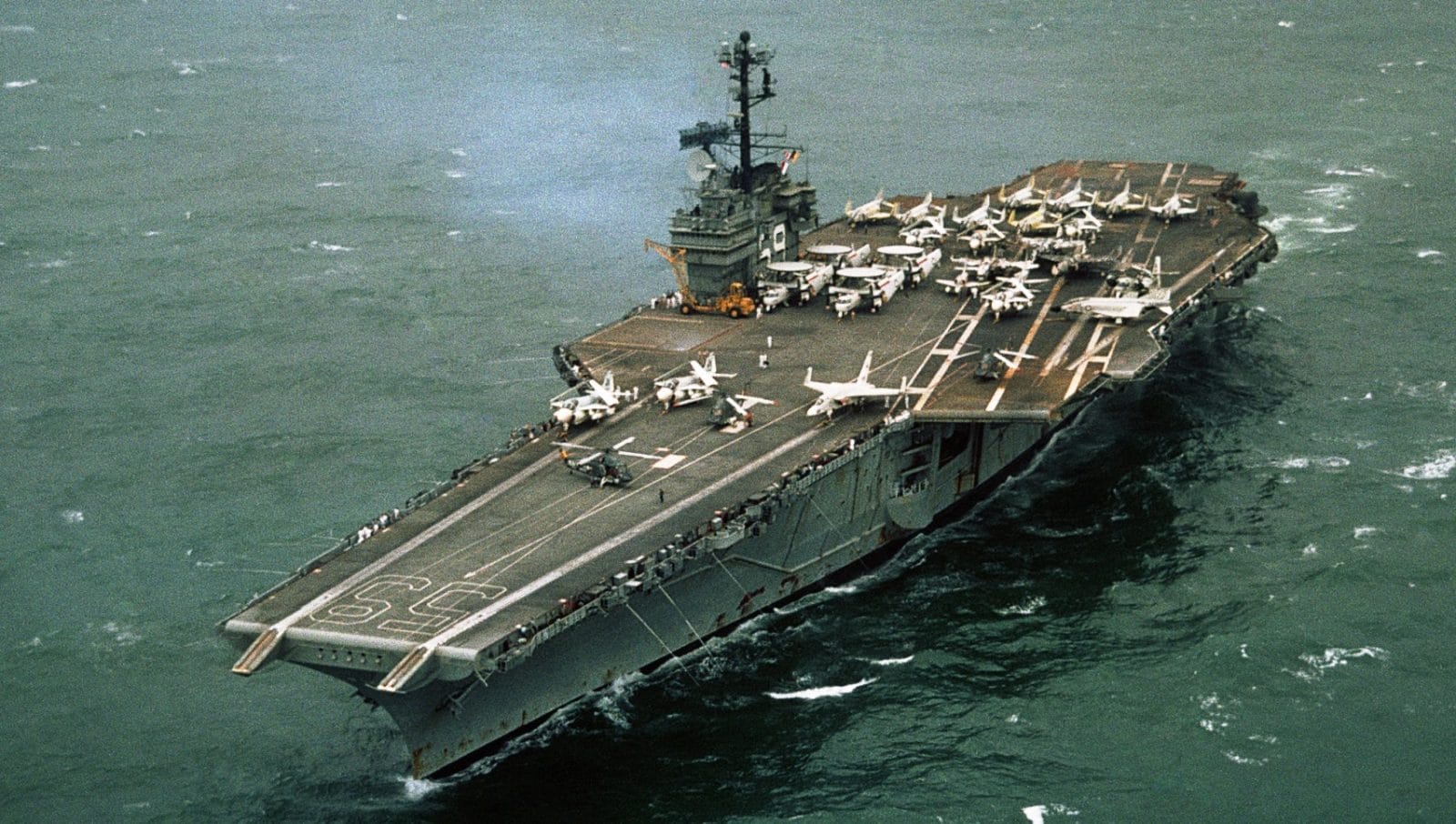
July 29th 1967 dawned like many others aboard the aircraft carrier USS Forrestal (CVA-59) on Yankee Station in the northern Gulf of Tonkin. The carrier had begun her first Western Pacific (WestPac) deployment on June 6th after having deployed to the North Atlantic or the Mediterranean seven times- usually with Carrier Air Wing EIGHT (CVW-8) embarked. CVW-17 was embarked aboard Forrestal that fateful July day. The film “Trial By Fire- A Carrier Fights For Life” was made to expose some of the mistakes made by the crew as a training tool using footage shot largely by pilot’s landing air television (PLAT) cameras. The film was uploaded to YouTube by PeriscopeFilm.
[youtube id=”AVgocdvcG0A” width=”800″ height=”454″ position=”left”]
The Sequence of Events
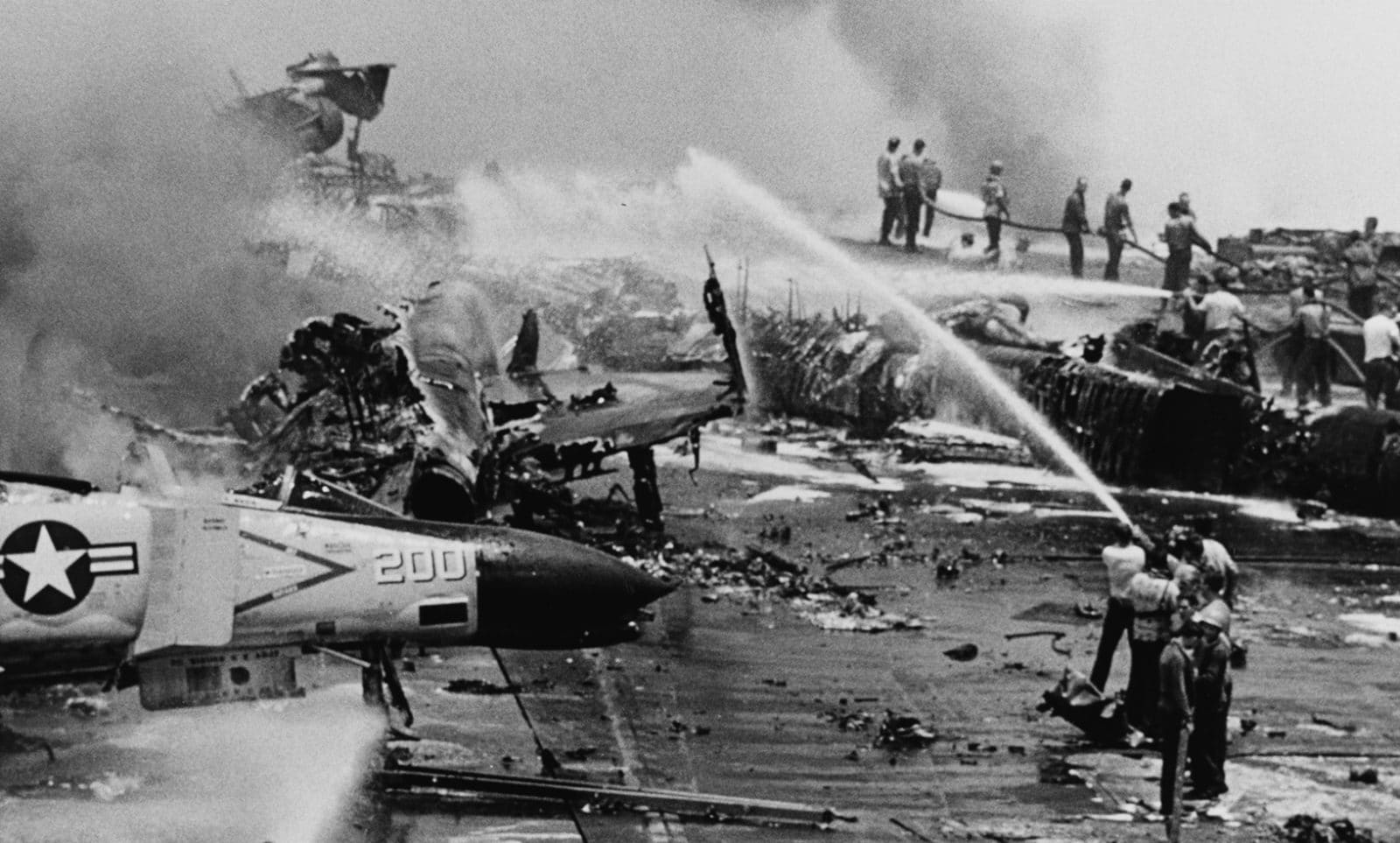
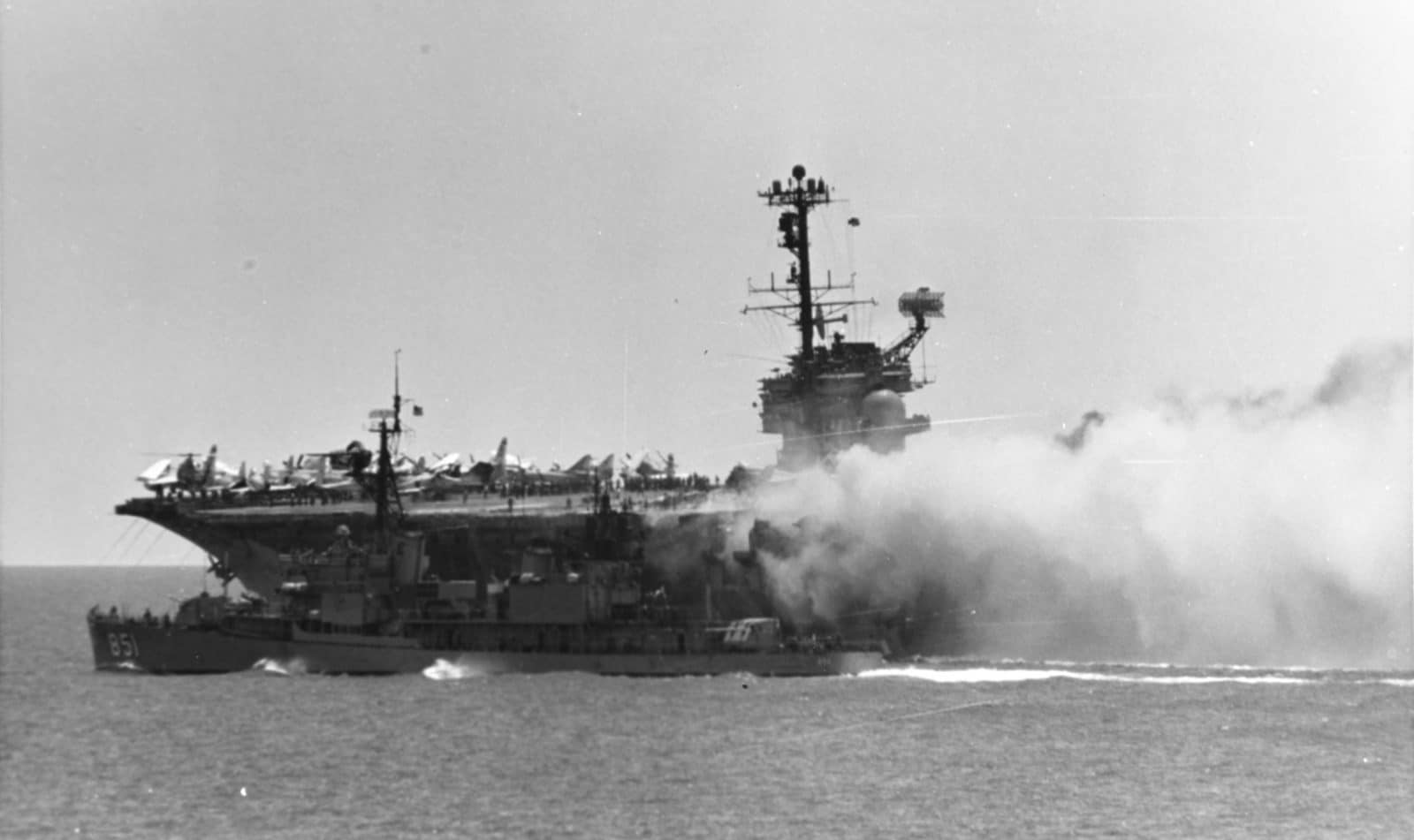
The fire began when a Mark 32 five inch Zuni unguided folding fin aerial rocket (FFAR) was accidentally fired from a LAU-10 four shot rocket pod due to an electrical power surge during the switch from external to internal power. The LAU-10 was mounted to a pylon under the wing of VF-11 Red Rippers F-4B Phantom II side number 110. The Zuni punched a hole in a full drop tank hung on A-4E Skyhawk side number 405 from VA-46 Clansmen. The Zuni rocket motor ignited the spilled fuel. From there the combination of burning fuel on deck and live ordnance hanging on fully fueled jet aircraft fed a nightmarish fire punctuated by bombs cooking off.
20/20 Hindsight
Over the years since this tragedy much has been made of the type and age of the bombs hung from the Forrestal’s strike package that day. The ship was supposed to receive recently manufactured 1,000 pound bombs but received 1950’s-vintage ordnance instead. The bombs were in bad condition and were believed to be potentially unstable if handled improperly. When the Zuni hit 405 two of the old bombs were dislodged and fell into the burning jet fuel. The first bomb cooked off less than two minutes later. Training (or the lack thereof) was also an issue. The Forrestal had been on Yankee Station just four days before the fire erupted on her flight deck aft. By the time the fire was finally extinguished nearly 14 hours later, 132 crewmen were dead, two were missing, and 162 were injured.
CVW-17 Aboard the Forrestal
CVW-17 at the time of the fire consisted of VF-11 Red Rippers and VF-74 Bedevilers flying the McDonnell Douglas F-4B Phantom II, VA-46 Clansmen and VA-106 Gladiators flying the Douglas A-4E Skyhawk, VA-65 Tigers flying the Grumman A-6A Intruder, RVAH-11 Checkertails flying the North American RA-5C Vigilante, VAW-123 Screwtops flying the Grumman E-2A Hawkeye, VAH-10 Vikings Detachment 59 flying the Douglas KA-3B Skywarrior, VAP-61 World Recorders Detachment 59 flying the RA-3B variant of the Skywarrior, and HC-2 Fleet Angels Detachment 59 flying the Kaman UH-2A Seasprite helicopter.
Heavy Losses and a Year on the Sidelines
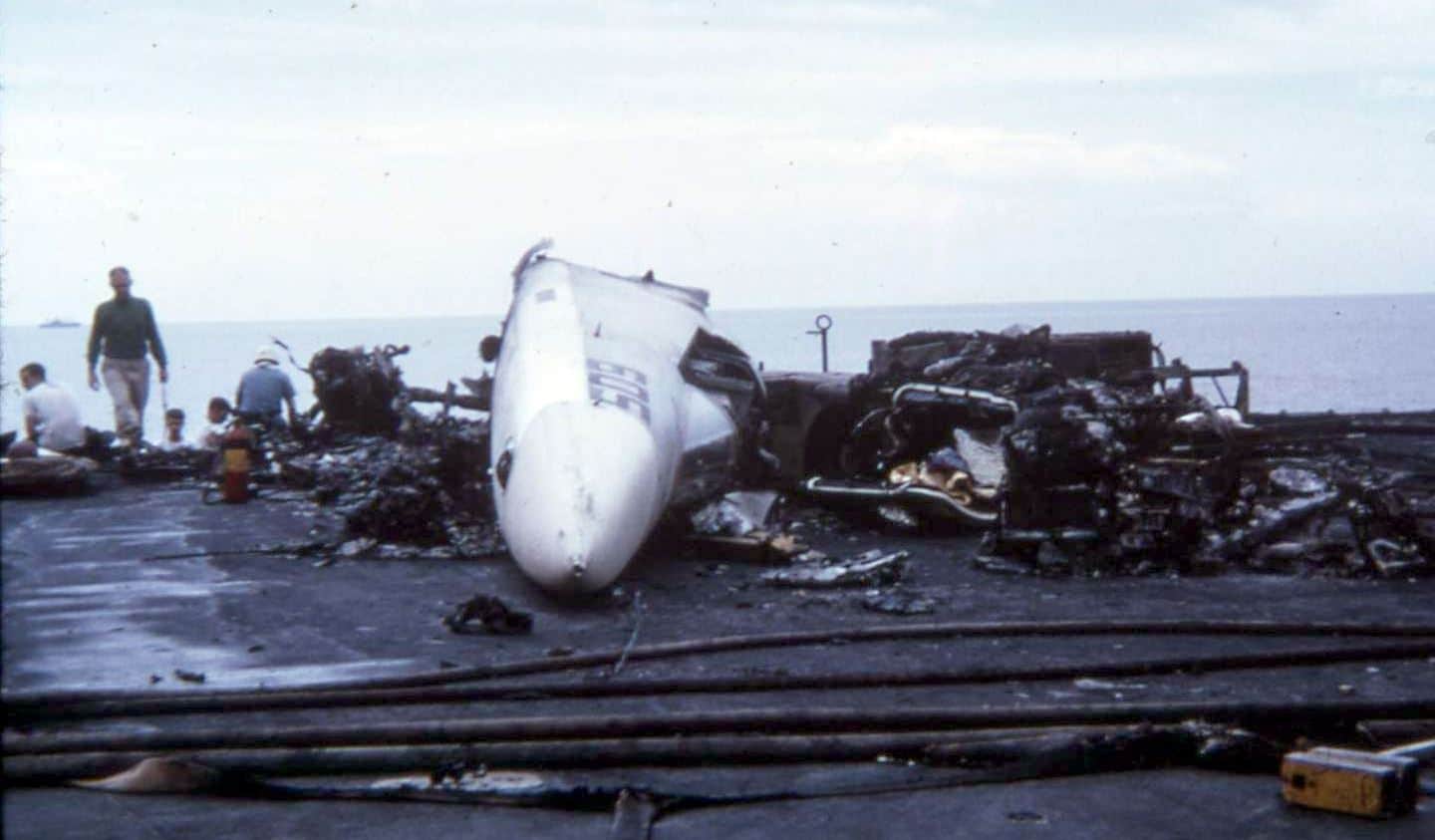
26 of CVW-17’s aircraft were destroyed or jettisoned, among them A-4E Bureau Numbers (BuNos) 149996, 150064, 150068, 150084, 150115, 150118, 150129, 152018, 152024, 152036, and 152040; F-4B BuNos 153046, 153054, 153060, 153061, 153066, 150069, and 150912; and RA-5C BuNos 148932, 149284, and 149305. As many as 40 additional CVW-17 aircraft were damaged. Forrestal put into Naval Air Station Cubi Point in the Philippines to make initial repairs and returned to the United State where the heavy damage to the carrier was repaired over 204 days in Norfolk. Forrestal made 14 more deployments (none to WestPac) before being retired in 1993.
Bonus: Print Two of Trial By Fire
This version of the film was also uploaded to YouTube by PeriscopeFilm. There r enough subtle differences to make this version worth a look.
[youtube id=”wHZmgqTgSgI” width=”800″ height=”454″ position=”left”]
Editor’s Note
This story, perhaps more than any other I’ve written for Avgeekery.com, always generates commentary that disagrees with, indeed often diametrically opposes, the historical facts. Here is a link to the first part of the official US Navy accident investigation report. The entire report (and many more accident investigation reports) can be reviewed at and downloaded from the US Navy Judge Advocate General’s Corps page.

Aboard the USS JFK in the early 70’s we were shown the flight deck cam watching this. You see the missile go off, the fire starts and, quickly a flight deck hose crew had water on the fire and were advancing on it. Then the camera went all wacky, after a few seconds it stabilized to show an empty flight deck, the hose crew simply vanished.