

Is Santa’s Sleigh the Most Reliable Airframe Ever Built? Spoiler: Yes. Yes, it is. And it’s not even close.
Every 24th of December, without fail, Santa launches the most ambitious overnight operation in aviation history. No test flights. No press conferences. No NOTAMs lighting up ForeFlight. Just wheels up, world covered, mission complete.
And perhaps the most impressive part of the whole thing is this. Santa does it every year with only minimal upgrades.
No stretched fuselage. No new engine variant. No midlife refresh program announced at Farnborough. Somehow, Santa’s sleigh just keeps flying.
So how does it work?
Pull up a chair by the fire. Let’s talk sleigh physics, North Pole navigation, and why Santa may quietly be the best operator in the business.
The Airframe: Lightweight, Timeless, and Shockingly Efficient

At first glance, Santa’s sleigh looks like a classic legacy platform. Open cockpit. Exposed structure. Zero regard for modern certification standards.
But look closer and the design philosophy becomes clear.
The sleigh is an ultra lightweight composite structure, likely wood infused with centuries of magical resin. Think of it as pre carbon fiber carbon fiber. Strong, flexible, and absurdly durable.
It does not corrode. It does not fatigue. It has never once failed a cold soak test.
And while most operators chase performance gains through heavier systems and newer materials, Santa went the other way. Keep it light. Keep it simple. Keep it flying.
Minimal upgrades. Maximum reliability.
Propulsion: Reindeer Thrust and the Rudolph Advantage
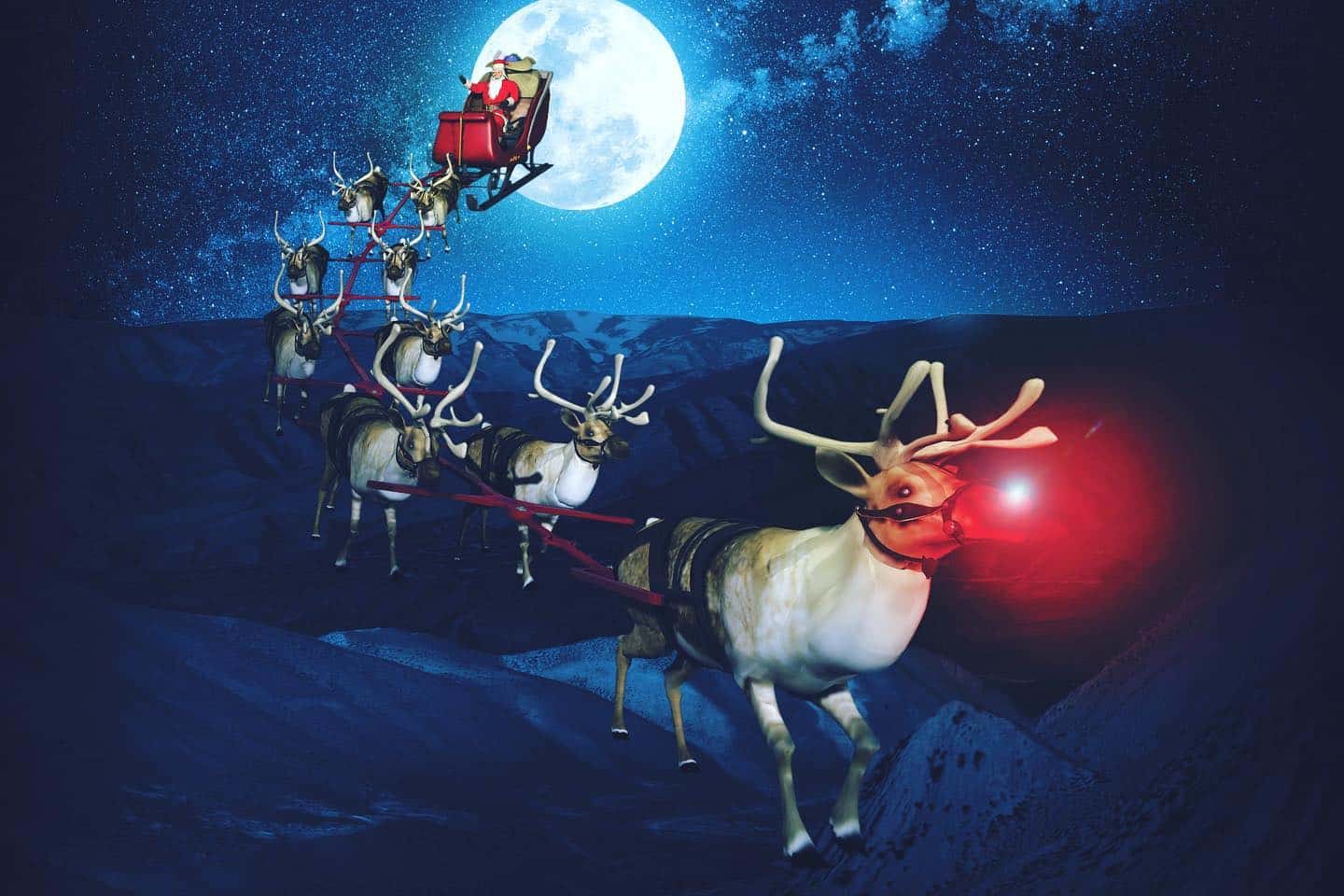
The propulsion system is where Santa truly broke the mold.
Eight reindeer provide distributed thrust, redundancy, and natural vector control. Lose one, and the rest compensate instantly. No asymmetric thrust checklist required.
Then there’s Rudolph.
Rudolph is not a gimmick. He is a certified all-weather sensor suite.
That glowing nose is a forward-looking navigation aid optimized for snow, fog, low visibility, and complete whiteout conditions. It cuts through weather that would ground most fleets and renders even the ugliest Christmas Eve forecast irrelevant.
Think of Rudolph as a living combination of radar, lidar, and synthetic vision. Only cuter.
The Physics Problem Everyone Always Asks About
Yes, we’ve all done the math. Payload capacity. Range. Time on task.
Here’s the thing.
Santa’s sleigh does not obey conventional physics. It obeys Christmas physics.
Time dilation plays a significant role. When the sleigh crosses into the upper atmosphere, the aircraft enters a temporal slipstream where time moves more slowly relative to the ground. This allows Santa to complete a global route while the rest of us are still arguing over which cookie to leave out.
It is not impossible. It is just festive.
Navigation: No GPS, No Problem

Santa does not rely on GPS, ground based navaids, or satellite augmentation.
He navigates visually, astronomically, and instinctively.
The North Star provides a fixed reference. City glow outlines metropolitan areas. Chimney density confirms residential zones. Tree lights act as low level approach lighting. It is a beautifully analog system that has never once dropped out due to a software update.
If it works, don’t digitize it.
ATC, Clearances, and That Whole Airspace Thing
Does Santa file a flight plan?
Officially, no.
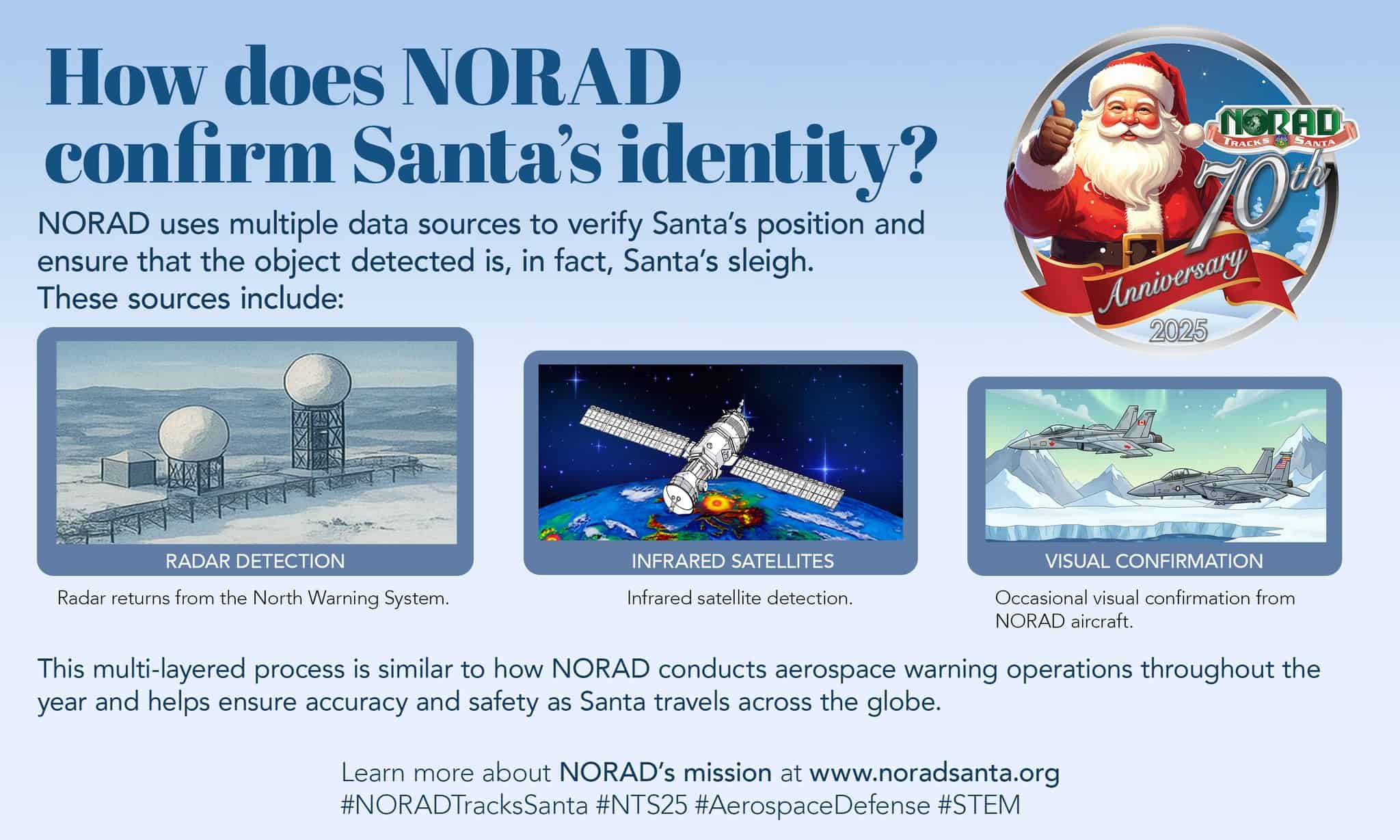
Unofficially, every controller knows exactly where he is. And, of course, NORAD is always on top of it, ensuring smooth sailing for Saint Nick.
Santa operates under a once a year global blanket clearance that supersedes all restricted airspace, temporary flight restrictions, and noise-abatement procedures (word on the street is Santa doesn’t have to obey John Wayne Airport’s Fly Friendly program we wrote about earlier). It is the ultimate waiver, renewed annually by universal goodwill.
Interception attempts have been rumored. None have succeeded. Most pilots report nothing more than a brief radar return, a flash of red light, and an inexplicable urge to go home and hug their families.
Maintenance Philosophy: Why the Sleigh Never Ages
Here’s the real secret.
Santa does not chase upgrades. He chases care.
The sleigh is meticulously inspected once a year by the elves, who may be small but are terrifyingly thorough. Every runner polished. Every joint checked. Every bell tested. If it does not spark joy, it does not fly.
That is how an aircraft lasts forever.
The Takeaway
In an industry obsessed with the next new thing, Santa reminds us of something important.
Sometimes the best platform is the one that already works.
Keep it light. Keep it simple. Respect the machine. Trust the crew. Fly it with purpose.
And once a year, believe in a little magic.
A Note of Gratitude

This Christmas, we just want to say thank you.
Thank you for choosing to spend a little bit of your time with us throughout the year as we share our love of all things aviation with you, our readers. Whether you’re here for the history, the headlines, the nostalgia, or the pure joy of flight, it means more to us than you know. We love sharing our passion of flight with you.
So, from all of us here at AvGeekery, Merry Christmas to you and yours. May your weather be smooth, your landings be gentle, and your sleigh always be ready for one more flight.