

JSX ATR 42 service is set to reshape how the public charter carrier reaches underserved airports. Is this the start of a turboprop comeback in the United States?
In an era when turboprops have all but disappeared from the US commercial landscape, JSX is doing something some might have questioned just a few years ago.
The semi-private, “hop-on” carrier has taken delivery of its very first ATR 42, a move that instantly turns heads and raises a deliciously retro question: is JSX about to spark a turboprop revival in a country that fell hard for regional jets and never looked back?
The timing is just as intriguing as the aircraft itself. JSX plans to launch its first ATR service from the legendary Santa Monica Airport (SMO), a storied general aviation field with roots that run deep into American aviation history, even as it marches toward its scheduled closure in 2028. The move is equal parts audacity, nostalgia, and strategic opportunism. It certainly has created plenty of controversy, to which JSX is no stranger.
A Pink Unicorn Lands in Dallas
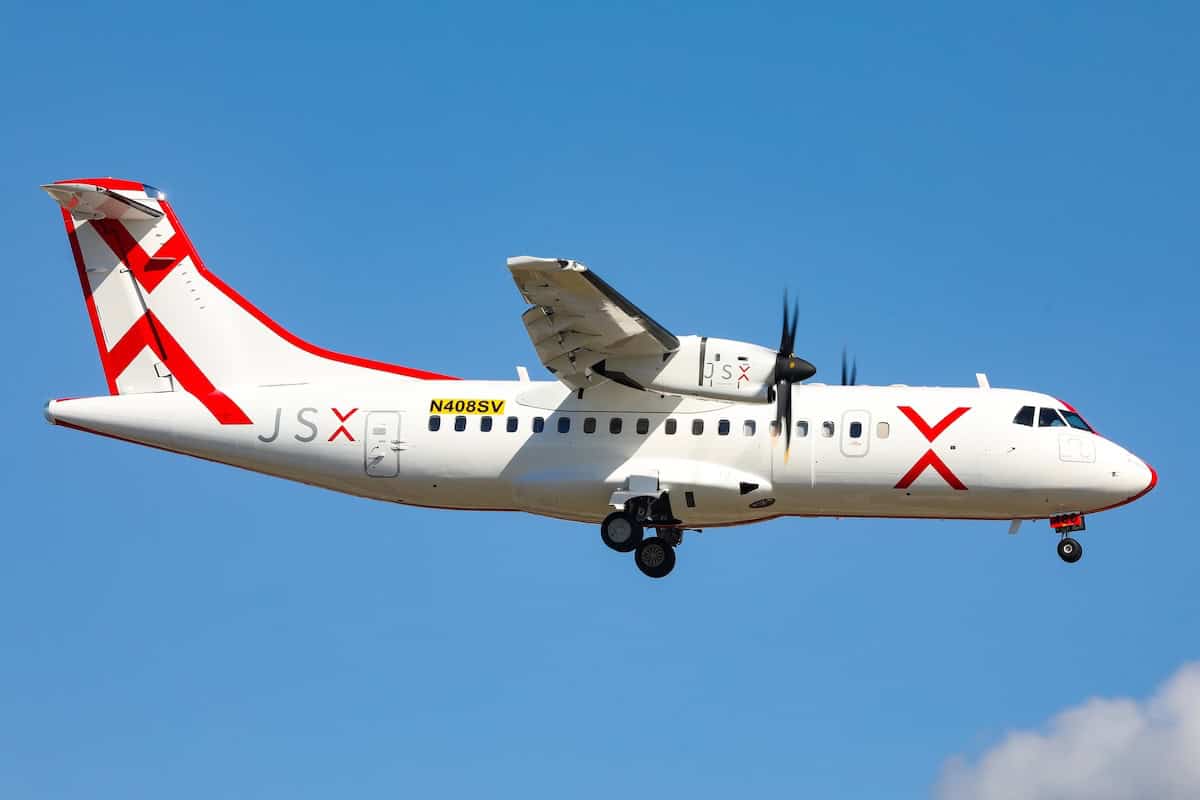
JSX took delivery of its first-ever turboprop on 13 November 2025. The ATR 42-600, registered as N408SV, touched down at the company’s Dallas headquarters at Love Field (DAL) after a ferry flight from Bar River Airport (YBE) in Ontario, with stops at Sault Ste. Marie Municipal Airport (ANJ) in Michigan, and Oklahoma City’s Will Rogers International Airport (OKC). The aircraft is the first of two ATR 42s the carrier will acquire by the end of 2025, with two more leased examples arriving in early 2026.
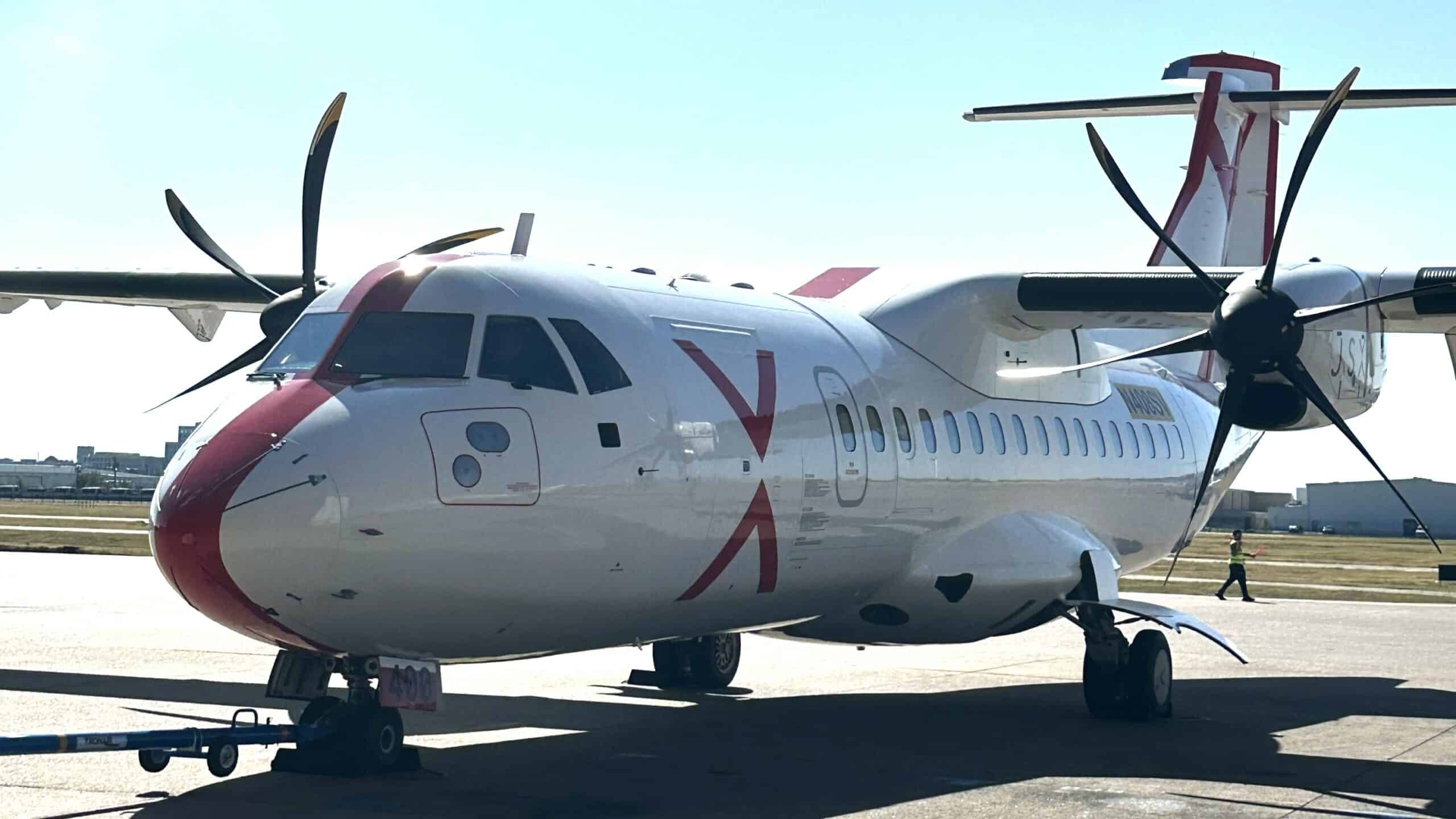
For most avgeeks, the registration should ring a bell. The aircraft previously flew for Silver Airways, delivered new to the now-defunct Florida-based carrier, in December 2021, and configured for 46 passengers. After being withdrawn from use in February 2025, the ATR sat dormant in storage until JSX swooped in. Now the aircraft has been retrofitted with 30 business-class-style seats and ATR’s HighLine interiors, bringing its cabin experience in line with the premium vibe JSX is known for.
Owned by lessor TrueNoord, the aircraft will eventually become N400JX.
Why Turboprops, and Why Now?

Because JSX has its eyes on airports most travelers never get to use.
According to the company, the ATRs unlock access to more than 1,000 airports across the United States, many of which currently serve private aviation only. This fits neatly into JSX’s niche as a Part 380 public charter operator flying under Part 135 rules, allowing it to offer scheduled flights from private terminals with an experience that feels semi-private.
Alex Wilcox, JSX Chief Executive Officer, put it this way. “The ATR 600 series will bring over 1,000 new airports into reach for JSX, expanding access to reliable public charter flights across the great United States. Many of these airports were, until now, reserved only for those who had the means to fly private. I am confident that our Customers will love the ATR product, not just for the variety of new routes it allows JSX to operate, but also for its quiet cabin and comfortable seating.”
JSX has bigger plans, too. At the 2025 Paris Air Show, the company signed a letter of intent (LOI) for up to 25 ATRs, including 15 firm and 10 options. These could be ATR 42-600s or ATR 72-600s, all configured with 30 seats.
The economics sweeten the deal even more. Turboprops burn roughly half the fuel of JSX’s Embraer jets and are about 30 percent cheaper to operate. For a carrier that already runs 50 ERJs, including ERJ-135s and ERJ-145s, the savings are significant.
With Horizon Air retiring the Dash 8-Q400 in 2023 and Silver Airways collapsing in 2025, turboprops have nearly vanished from the national stage. JSX is bringing them back, and doing it with style.
Santa Monica Airport Gets a New Chapter… For Now
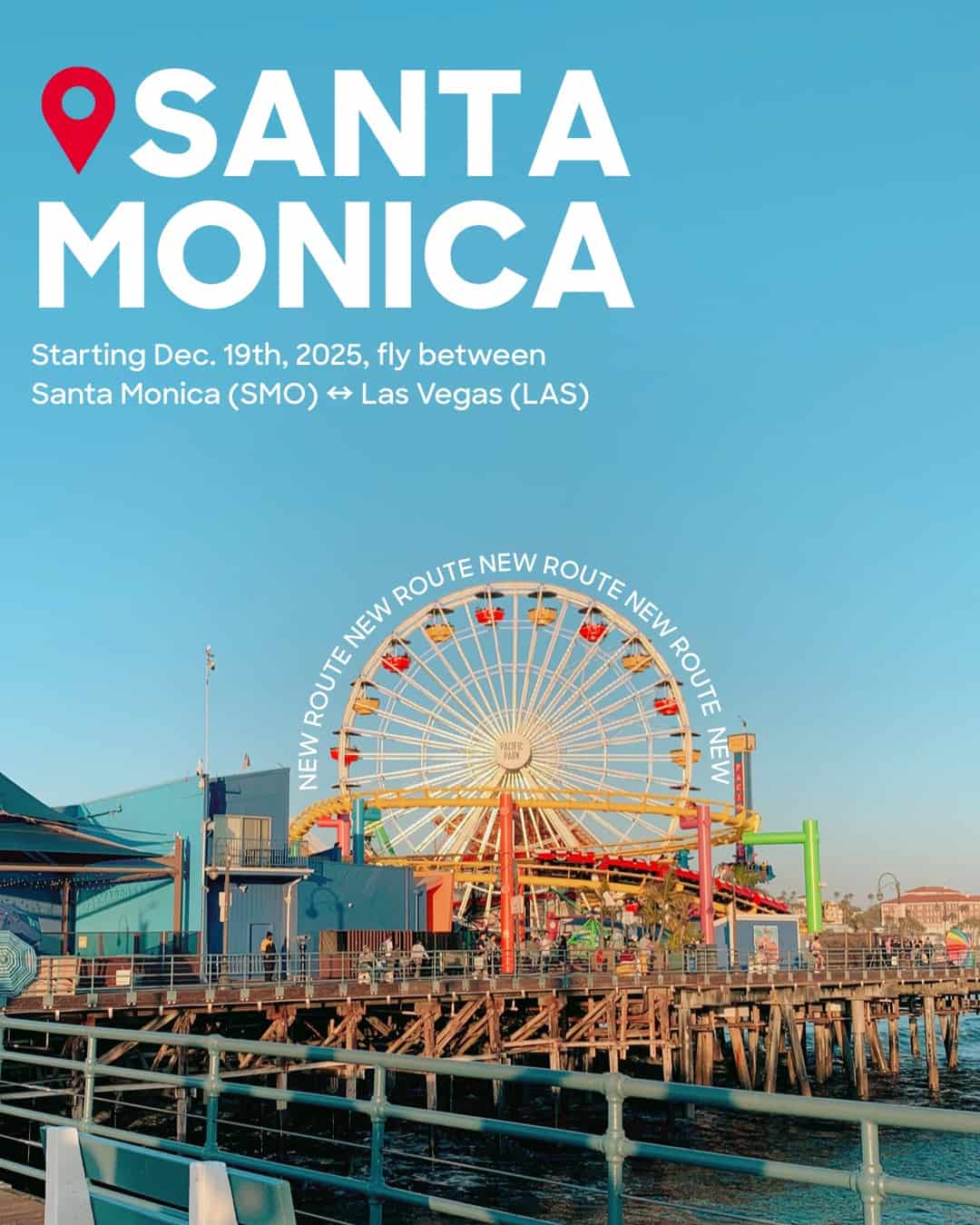
JSX’s first ATR route is set to begin on 19 December 2025 between Santa Monica Airport and Las Vegas. SMO will get a single daily departure at 1730 local time, landing in LAS at 1845. The return leaves LAS at 1145 and arrives back at SMO at 1300.
Marketed as a premium, stress-free alternative to the chaos of LAX, JSX is offering one way fares as low as $149, including taxes, cocktails, snacks, and two checked bags. That even covers golf clubs and skis, as well as planeside retrieval, which is part of the JSX appeal.
The real twist is the airport itself. Santa Monica has one of the richest aviation histories in the nation. It is among America’s oldest airports, the former home of Douglas Aircraft, birthplace of every piston-powered DC airliner, and once the busiest single-runway airport on Earth. Howard Hughes, Amelia Earhart, Wiley Post, and Wallace Beery all called it home. The first Powder Puff Derby launched from its field. It opened on 15 April 1923 and has been a general aviation legend ever since.
But the runway is shorter now. In 2017, the city cut it from 4,925 feet to 3,500 feet due to tensions with nearby residents. The airport is officially scheduled to close on 31 December 2028, ending a battle that dragged on for seven decades. Santa Monica city officials remain adamant that nothing about JSX changes that timeline.

“Santa Monica Airport will close at the end of 2028, and nothing about this process with JSX Air changes that fact,” said City Manager Oliver Chi.
Santa Monica Airport will close at the end of 2028, and nothing about this process with JSX Air changes that fact.
Oliver Chi | Santa Monica City Manager
Commercial airlines are barred from operating there, but this is where JSX’s clever structure comes into play. JSX is not classified as a Part 121 airline. Its public charter model gives it access while staying within the FAA’s rules. Critics have already filed lawsuits to stop the service before it starts, though JSX argues that the ATR’s quiet operation directly addresses long-standing noise concerns.
SMO’s days are numbered, but JSX appears determined to give it one last act.
What JSX Brings to the Table
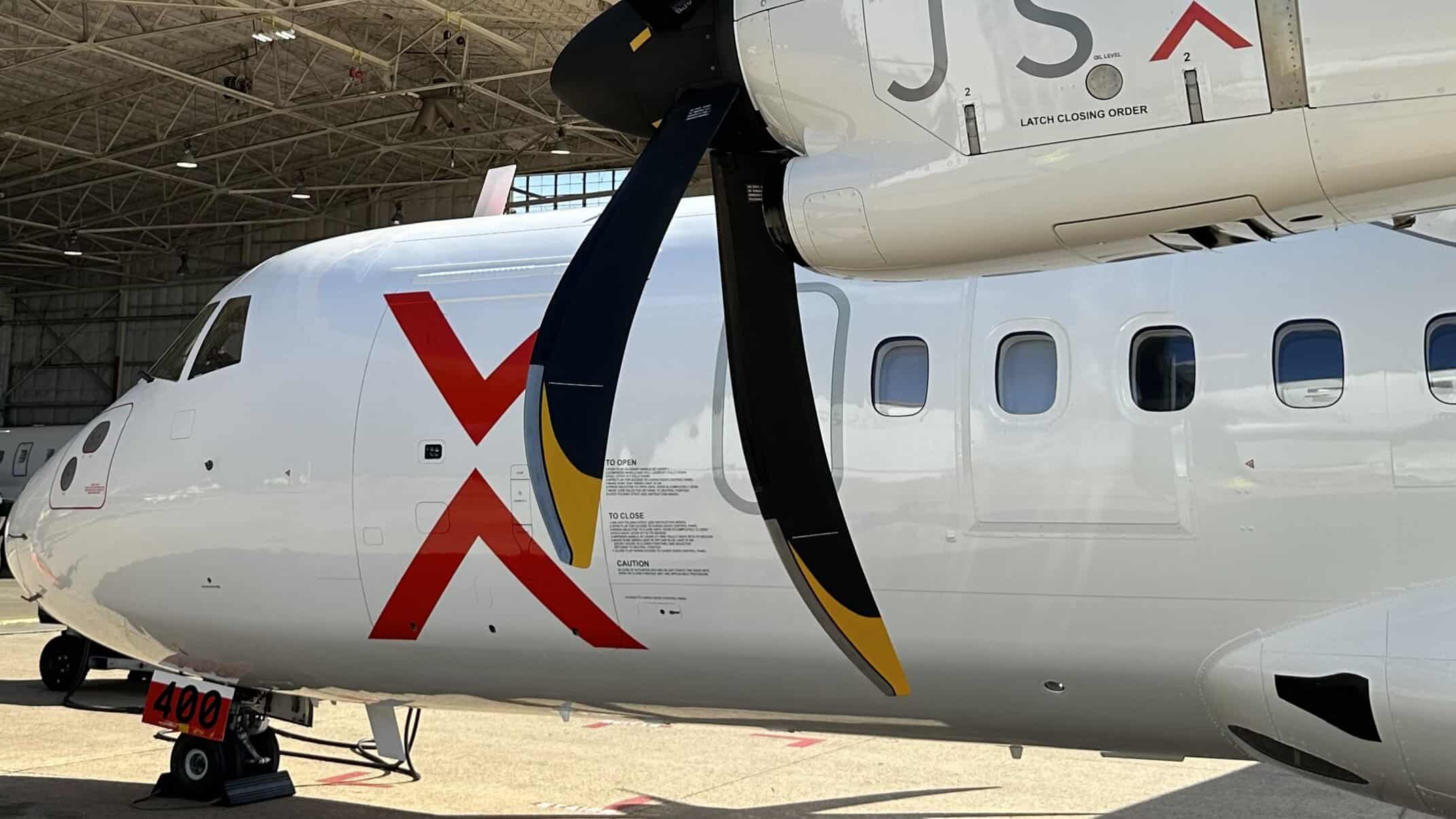
JSX is not your typical operator. Since launching in 2016 with flights between Burbank and Concord, the carrier has built a strong following for its streamlined, semi-private “hop-on” experience. It goes out of its way to ensure it is not called an “airline.”
Travelers can check in just 20 minutes before departure, skip long lines, use private terminals, enjoy bright 30-seat cabins with business class legroom, bring two checked bags at no charge, and retrieve them planeside within minutes of landing. Free cocktails help too.
The carrier was also the global launch customer for SpaceX’s Starlink inflight Wi-Fi and has offered it free since 2023. The ATRs are scheduled to receive Starlink capability in early 2026.
With up to 140 daily flights to 27 destinations across the Southwest, Mountain West, Texas, Florida, New York, and Mexico, JSX has carved out a space few competitors dare to enter.
In 2019, we profiled the carrier back in its JetSuiteX days, asking the question, “Will it last?” Well, not only has it lasted, it is thriving. In fact, the company reached another milestone earlier this year when it took delivery of its 50th Embraer jet.
Will America Warm Back Up to the Turboprop?
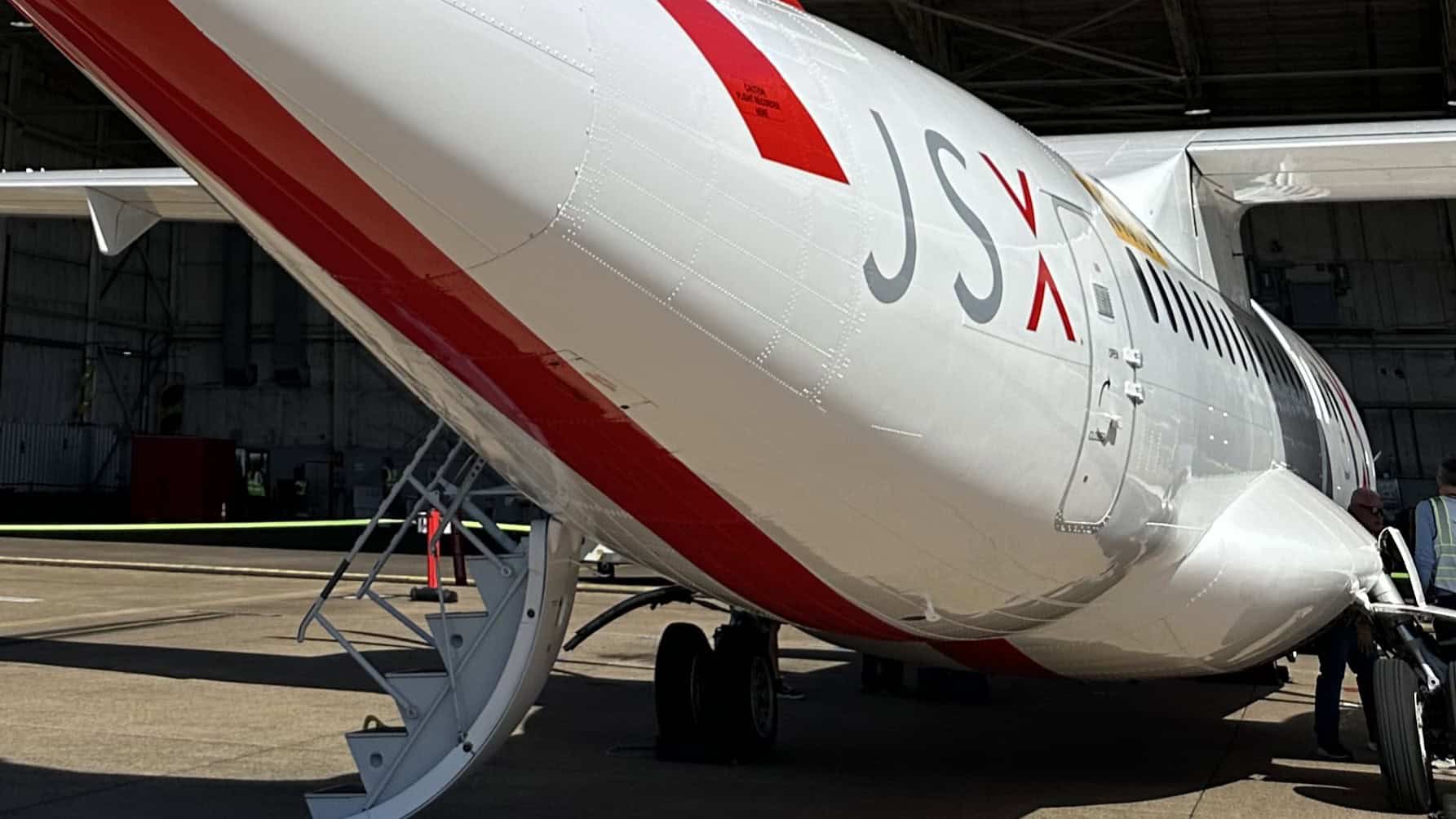
That is the big question. For many travelers, turboprops evoke memories of rattling ATRs, Dash 8s, and Saab 340s from the 1980s, 1990s, and early 2000s. But the ATR 42-600 is a different machine. It is quieter. It is smoother. It burns less fuel. And in JSX’s hands, it is dressed like a private jet.
JSX hopes that airports like Telluride Regional Airport (TEX) in Colorado and Truckee Tahoe Airport (TKF) in California, both underserved and altitude-challenged, will benefit from what turboprops do best: short runways, steep terrain, and high elevation performance. TKF is a perfect example of the type of airport JSX has its sights set on – underserved and void of any commercial service whatsoever.
Will customers embrace it? Will the turboprop mount a comeback? Or will JSX stand alone as a modern operator in a jet-obsessed market?
We will find out starting in December when the first SMO-LAS flights take wing.
One thing is certain. JSX is once again zigging where the rest of the industry zags, and that is exactly what makes this carrier fascinating to watch.