

Operation Absolute Resolve details the aviation-driven mission that brought over 150 aircraft together to support the capture of Nicolás Maduro and his wife in Caracas.
In the early hours of Saturday, 3 January 2026, an aviation-heavy U.S. military operation unfolded over and around Venezuela that culminated in the capture of President Nicolás Maduro and his wife, Cilia Flores.
The mission, known as Operation Absolute Resolve, relied on airpower, coordination, and timing on a scale rarely seen in the Western Hemisphere.
If the date feels familiar, it should. The last time a US operation of comparable scope occurred in the region was exactly 36 years earlier, when American forces captured Panamanian leader Manuel Noriega during Operation Just Cause on 3 January 1990.
A Hemisphere-Spanning Air Campaign
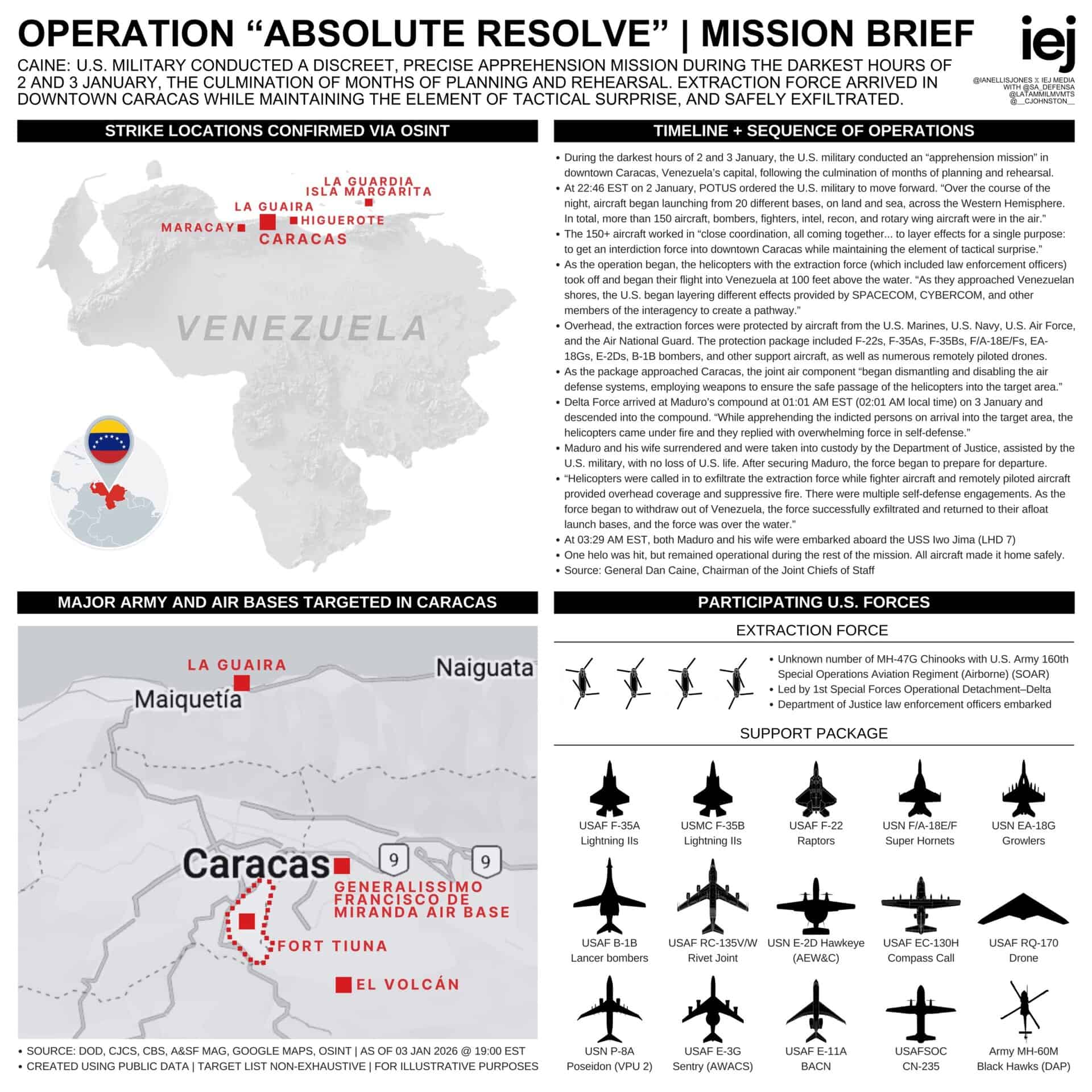
More than 150 aircraft were involved in the strike package that supported Operation Absolute Resolve. Fighters, bombers, surveillance platforms, refueling tankers, and drones launched from at least 20 bases across the Western Hemisphere after President Donald Trump authorized the operation on Friday, 2 January.
The president gave the order to proceed with the operation at approximately 2246 Washington time on 2 January.
Confirmed participants included assets from the US Air Force, US Navy, US Marine Corps, and the Air National Guard. US Army rotary-wing aircraft were also likely involved, though their participation has not yet been formally confirmed.
Open-source imagery indicates that F-22 Raptors were forward-positioned at Roosevelt Roads Naval Station in Puerto Rico, sharing the ramp with Vermont Air National Guard F-35As, US Marine Corps F-35Bs, and other US military aircraft. Naval forces were also active throughout the region, including the aircraft carrier USS Gerald R. Ford and the amphibious assault ship USS Iwo Jima, supported by a network of operating locations across Puerto Rico, the US Virgin Islands, El Salvador, the Dominican Republic, and bases within the continental United States.
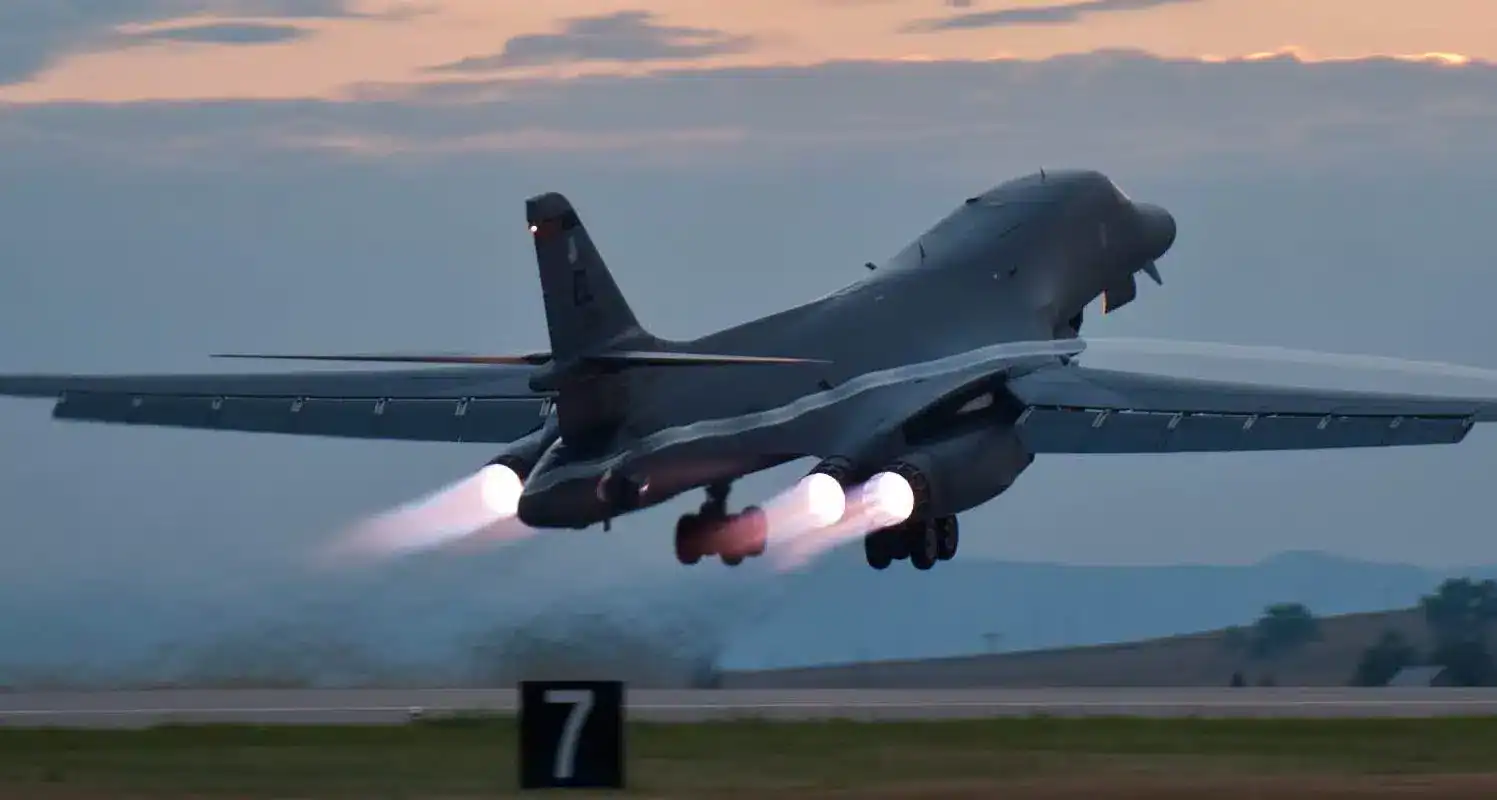
Independent analysts assessing publicly available data suggest that B-1B Lancer bombers launched from Dyess Air Force Base in Texas. In the days leading up to the operation, civilian flight-tracking platforms recorded both F-22s and B-1s heading south from their US home stations, activity that may have reflected training runs, diversionary movements, or missions postponed by unfavorable weather. Separately, videos shared online appeared to capture the presence of an RQ-170 Sentinel stealth reconnaissance drone over Venezuelan airspace.
Operation Absolute Resolve and the Fight for the Air Domain
Months in the making, Operation Absolute Resolve had reportedly been ready to execute since early December 2025. In the weeks leading up to the mission, intelligence-gathering efforts were conducted by agencies including the CIA, NSA, and the National Geospatial-Intelligence Agency (NGA).
On the night of 2–3 January, the weather conditions required for the operation finally materialized. President Trump ordered the operation to proceed. US Space Command and US Cyber Command, working alongside intelligence agencies, helped clear the path for an American rotary-wing interdiction force that approached Caracas at roughly 100 feet above the ocean. Simultaneously, US forces disrupted Venezuelan electrical infrastructure, plunging large parts of the capital into darkness.
Air Force Gen. Dan Caine, Chairman of the Joint Chiefs of Staff, acknowledged the complexity of the mission, saying, “The word integration does not explain the sheer complexity of such a mission, an extraction so precise it involved more than 150 aircraft launching across the western hemisphere in close coordination, all coming together in time and place to layer effects for a single purpose, to get an interdiction force into downtown Caracas while maintaining the element of tactical surprise. Failure of one component of this well-oiled machine would have endangered the entire mission.”
Caine noted that US servicemembers involved ranged in age from 20 to 49. “The goal of our air component is, was, and always will be, to protect the helicopters and the ground force and get them to the target and get them home,” he added.
Helicopters Over Caracas
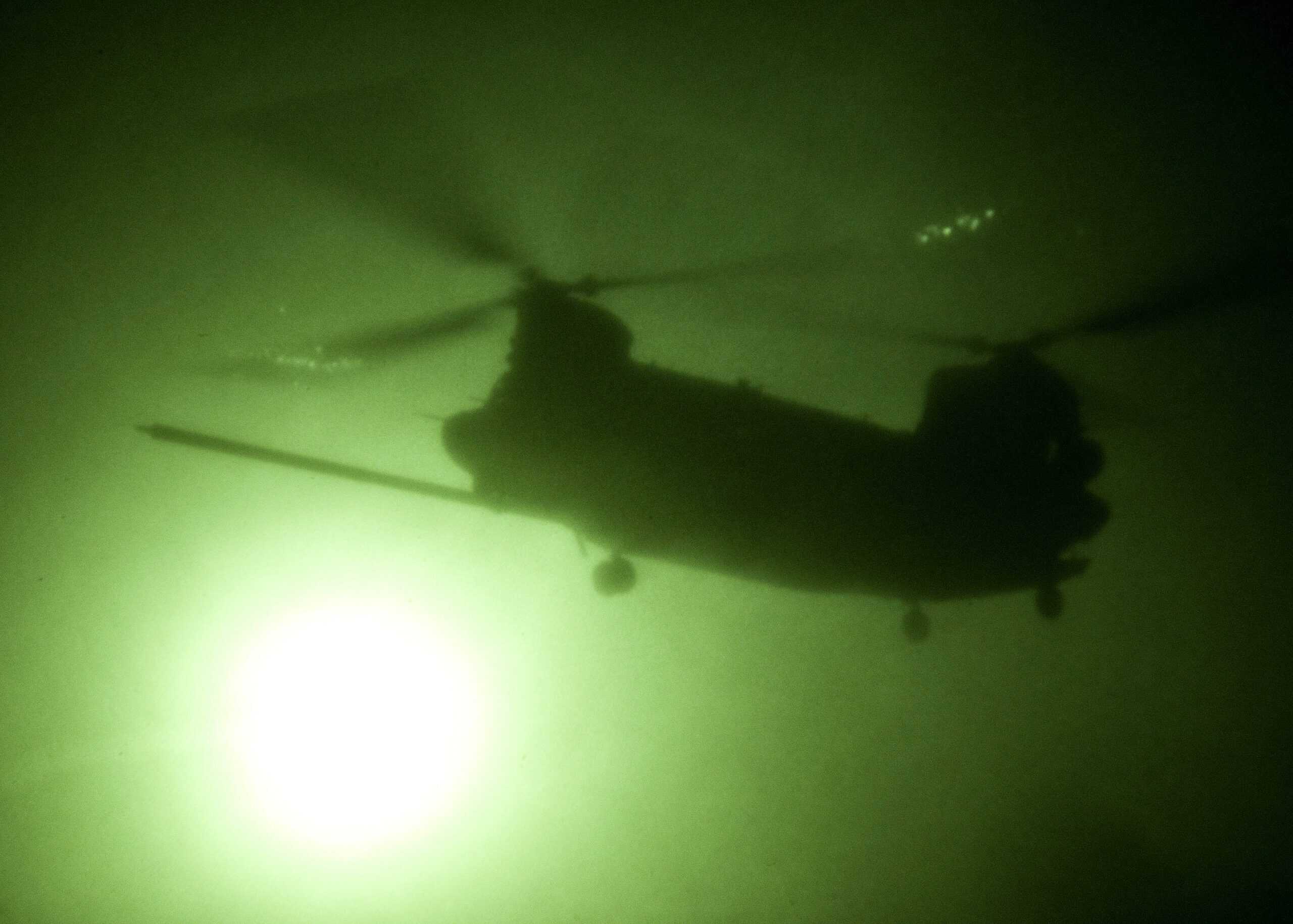
MH-47 Chinook and MH-60 Seahawk helicopters, likely but not yet confirmed to be from the US Army’s 160th Special Operations Aviation Regiment, were seen and heard over Caracas during the operation. Protected by fighters, bombers, and drones, the helicopters encountered no opposition en route to the city.
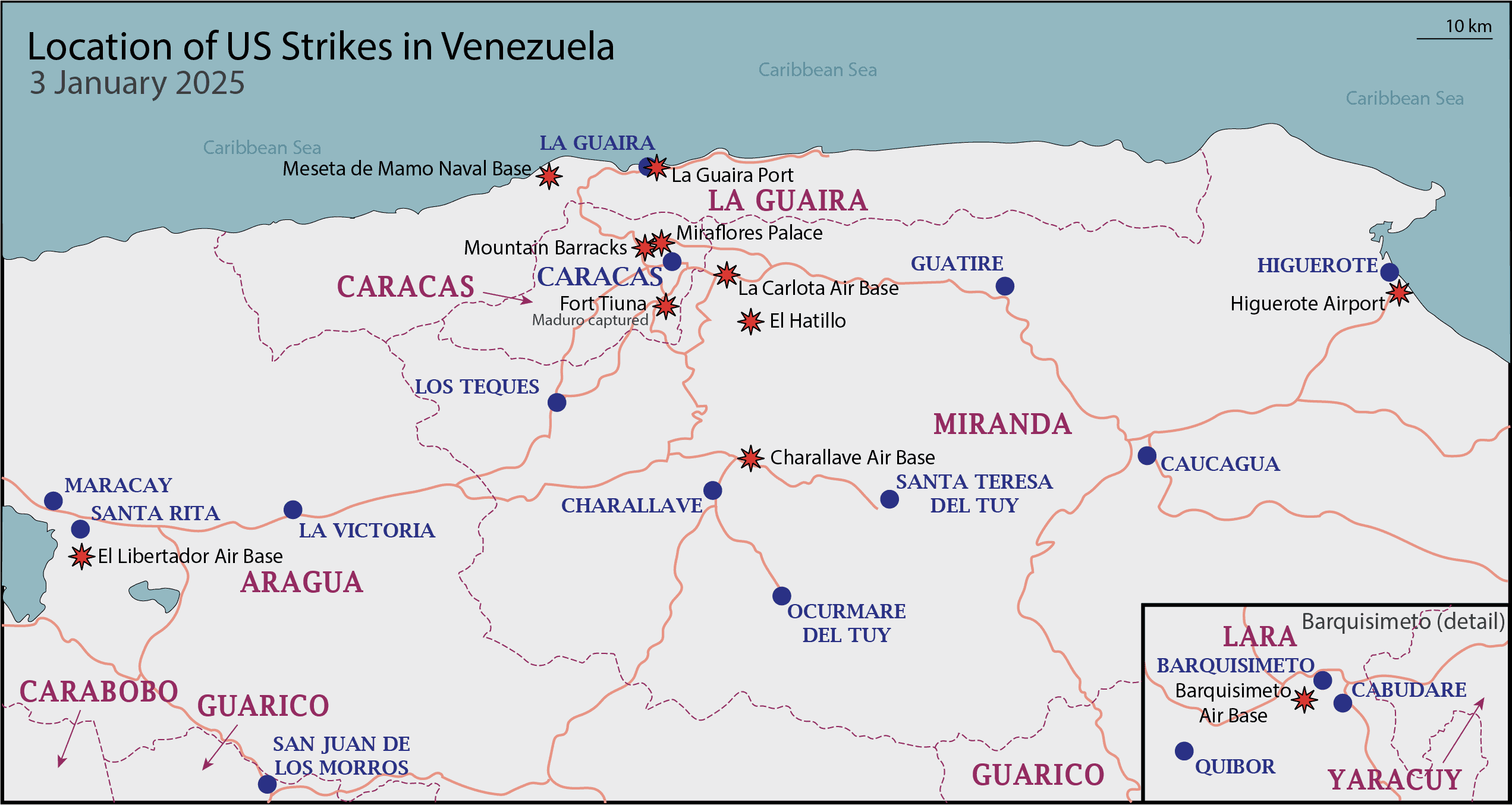
According to CBS News, members of Delta Force captured Nicolás Maduro and Cilia Flores at their home, which is located within the perimeter of the Fort Tiuna military installation. Prior to their arrival, US forces dismantled Venezuelan air defense systems. Weapons were also employed “to ensure the safe passage of the helicopters into the target area,” Caine said.
The helicopters reached the compound at 0101 Caracas time and did come under enemy fire over the premises. As US forces and the FBI took the couple into custody, the helicopters returned for extraction. During the withdrawal, Caine said there were “multiple self-defense engagements.” One American helicopter sustained damage but remained flyable and completed the mission.
President Trump confirmed that several US personnel were injured, though none fatally. US officials told CBS News and CNN that all injured servicemembers are in stable condition. Online sources indicate they were flown to Kelly Field in San Antonio, Texas.
Last night, the weather broke just enough, clearing a path that only the most skilled aviators in the world could maneuver through—ocean, mountain, low cloud ceilings.
Air Force Gen. Dan Caine, Chairman of the Joint Chiefs of Staff
Weather had delayed the operation for days. However, Friday night was different, and Caine said the opportunity had to be taken, saying, “Last night, the weather broke just enough, clearing a path that only the most skilled aviators in the world could maneuver through—ocean, mountain, low cloud ceilings.”
From the Caribbean to New York
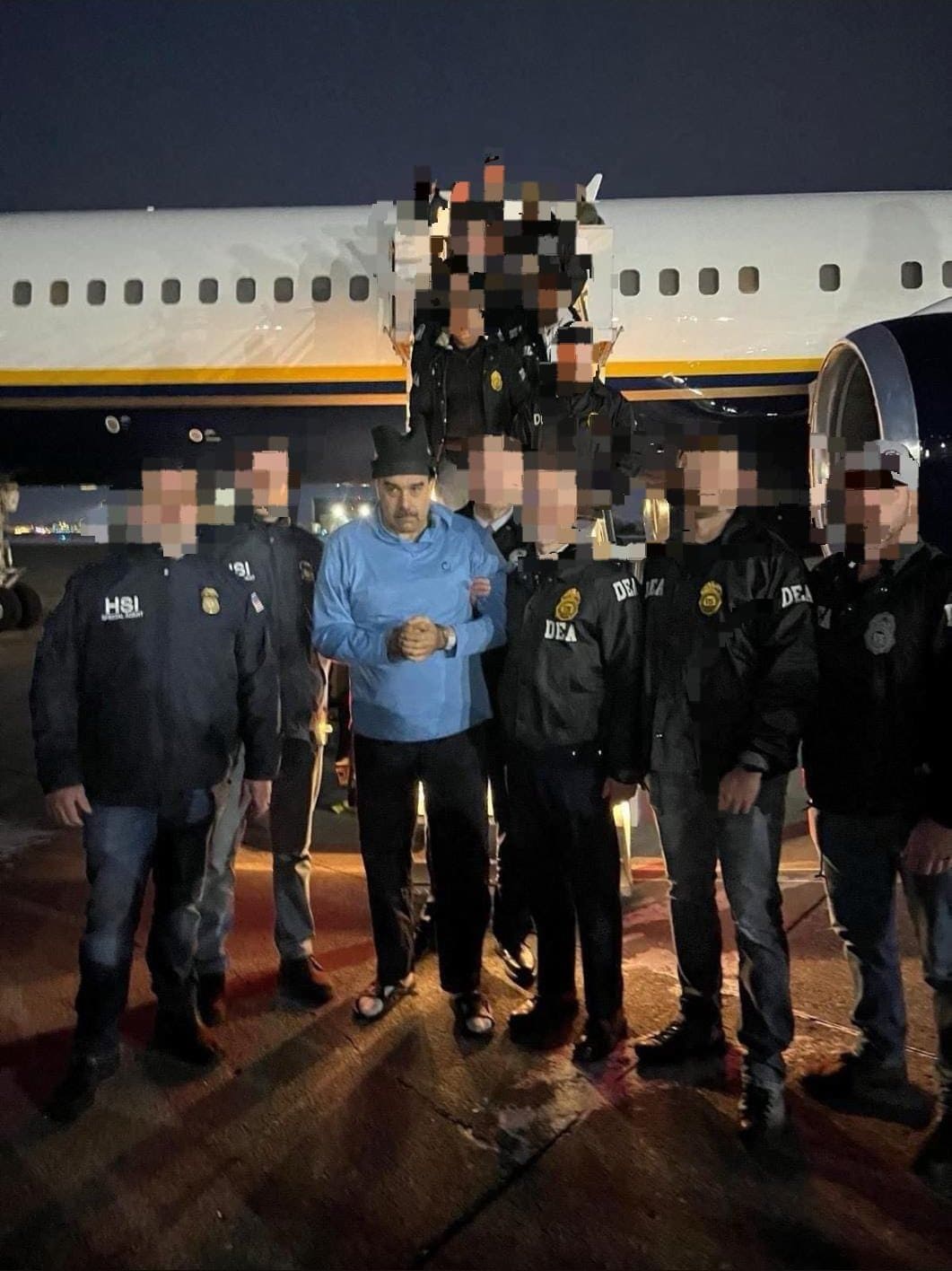
The operation essentially concluded at 0329 local time when the force was safely back over the water. Maduro and Flores were initially taken aboard the USS Iwo Jima, then transferred to Guantanamo Bay, Cuba.
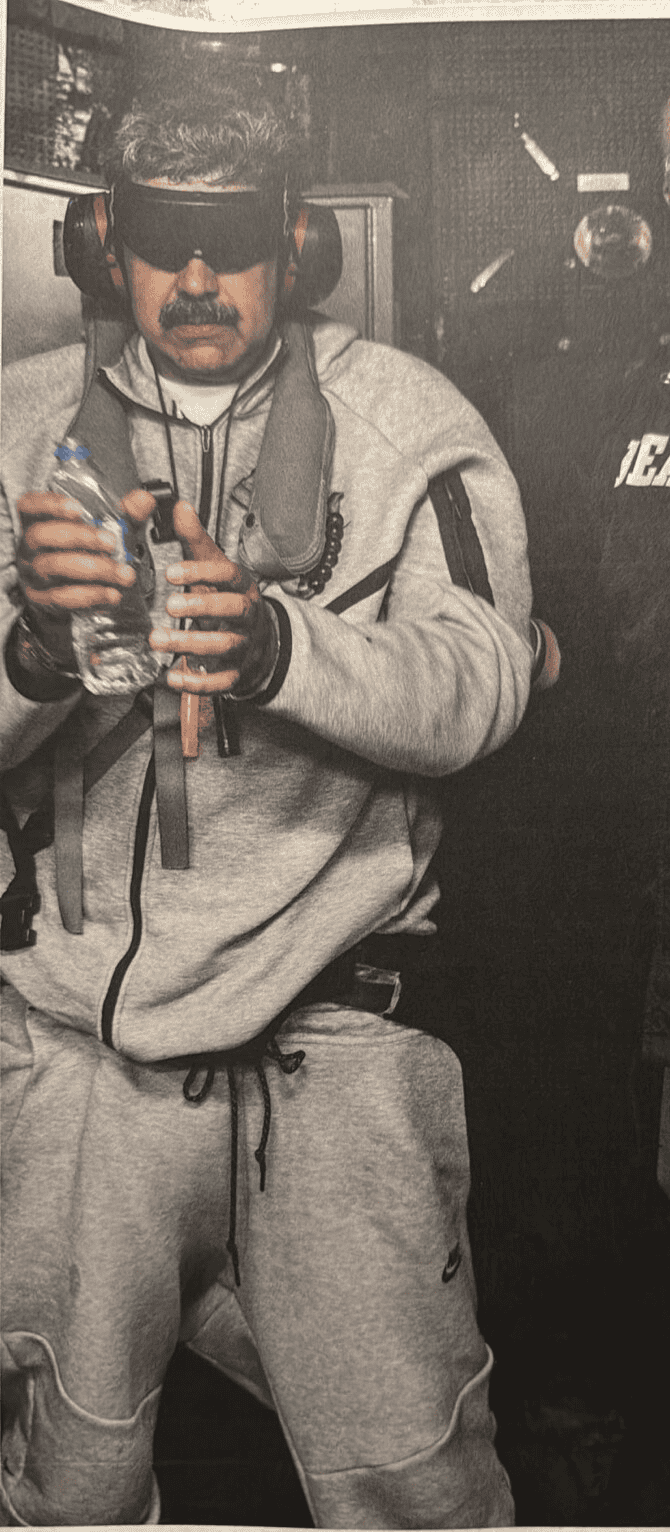
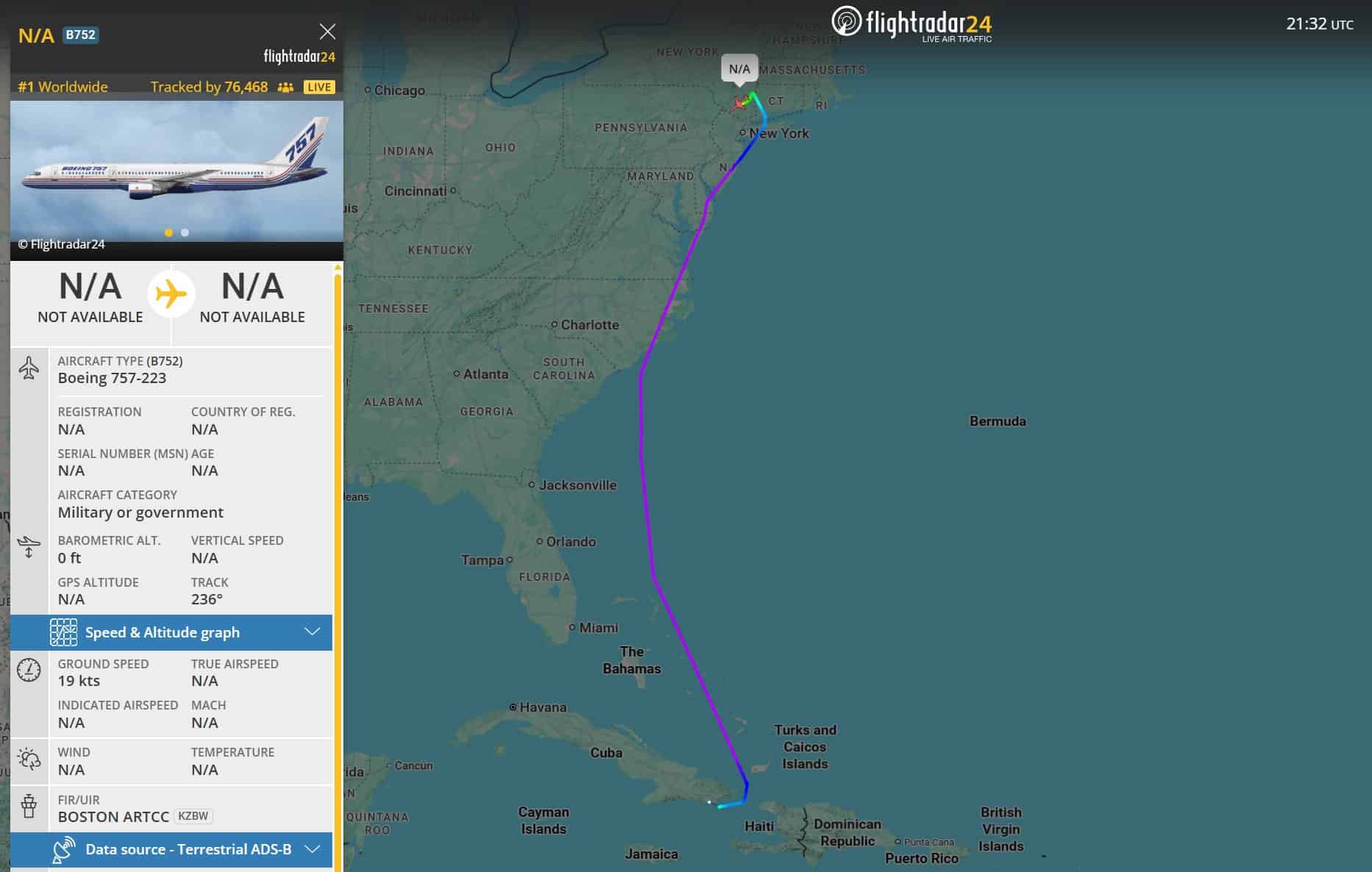
From there, they were flown to New York Stewart International Airport (SWF) aboard a Department of Justice Boeing 757, landing at 1632 local time Saturday afternoon, 3 January. Both will be tried in the Southern District of New York on narco-terrorism charges.
It is interesting to note that SWF is a public/military airport and home to the Stewart Air National Guard Base and the 105th Airlift Wing (105 AW). The facility was likely chosen as the US entry point for Maduro because the environment can be controlled, political theater can be minimized, a secure transfer of custody can occur, and it avoids the chaos of a JFK-style media circus. Additionally, as an ANG base, it obviously has secure ramps and hangars, controlled airspace, hardened perimeter security, and the ability to move high-profile detainees without public exposure.
Trump acknowledged the risks involved, noting that a second wave of US airpower had been standing by.
“This is an attack that could have gone very, very badly,” Trump said. “We could have lost a lot of people last night. We could have lost a lot of dignity. We could have lost a lot of equipment. We’re ready to go again if we have to,” he said.
Aircraft used throughout Operation Absolute Resolve included F-22 Raptors securing the airspace, F-35 Lightning II variants providing electronic warfare (EW) support, Navy F/A-18 Super Hornets for traditional air missions and close air support, E/A-18G Growlers jamming radar and communications, E-2D Hawkeyes managing the airborne battlespace, B-1B Lancers striking military infrastructure, and KC-135 Stratotankers enabling long-range operations. Numerous remotely piloted aircraft were also used, though US officials have not specified types.
What we’ve witnessed today is a powerful demonstration of America’s joint force. We think, we develop, we train, we rehearse, we debrief, we rehearse again and again, not to get it right, but to ensure that we cannot get it wrong.
Air Force Gen. Dan Caine, Chairman of the Joint Chiefs of Staff
Reflecting on the mission, Caine said, “What we’ve witnessed today is a powerful demonstration of America’s joint force. We think, we develop, we train, we rehearse, we debrief, we rehearse again and again, not to get it right, but to ensure that we cannot get it wrong.”
Ultimately, Operation Absolute Resolve shows the continued strength and reliability of American airpower. When precision, timing, and coordination matter most, the ability to assemble and employ a complex aviation force across vast distances remains a defining strength. When the mission demands it, the United States still possesses the aviation capability to act decisively, anywhere.
We here at AvGeekery salute the brave men and women involved in Operation Absolute Resolve.