

The story behind the Qatari 747 Air Force One conversion and the race to have the aircraft ready by summer.
A Boeing 747 donated by the Qatari government could soon be flying as Air Force One, potentially entering service as early as this coming summer, according to Air Force officials. The US Air Force has designated the aircraft as a VC-25 “bridge” aircraft, positioning it as an interim solution while the long-delayed replacement aircraft remain years from completion.
The jet was formally accepted by the US government in May 2025, with modification work beginning later in the year. According to Air Force statements, delivery is anticipated no later than summer 2026, with some indications that the aircraft could be available even sooner.
If the timeline holds, the bridge aircraft could enter service in time for peak summer travel and a period when high-visibility presidential operations are expected around the nation’s 250th anniversary celebrations this summer.
If deployed, the aircraft would supplement the existing presidential fleet and would be referred to as Air Force One only when the president is on board. Its role is not to permanently replace current aircraft, but to provide additional capacity during a period of strain on the presidential airlift system.
Converting a Luxury 747 Into a Presidential Aircraft
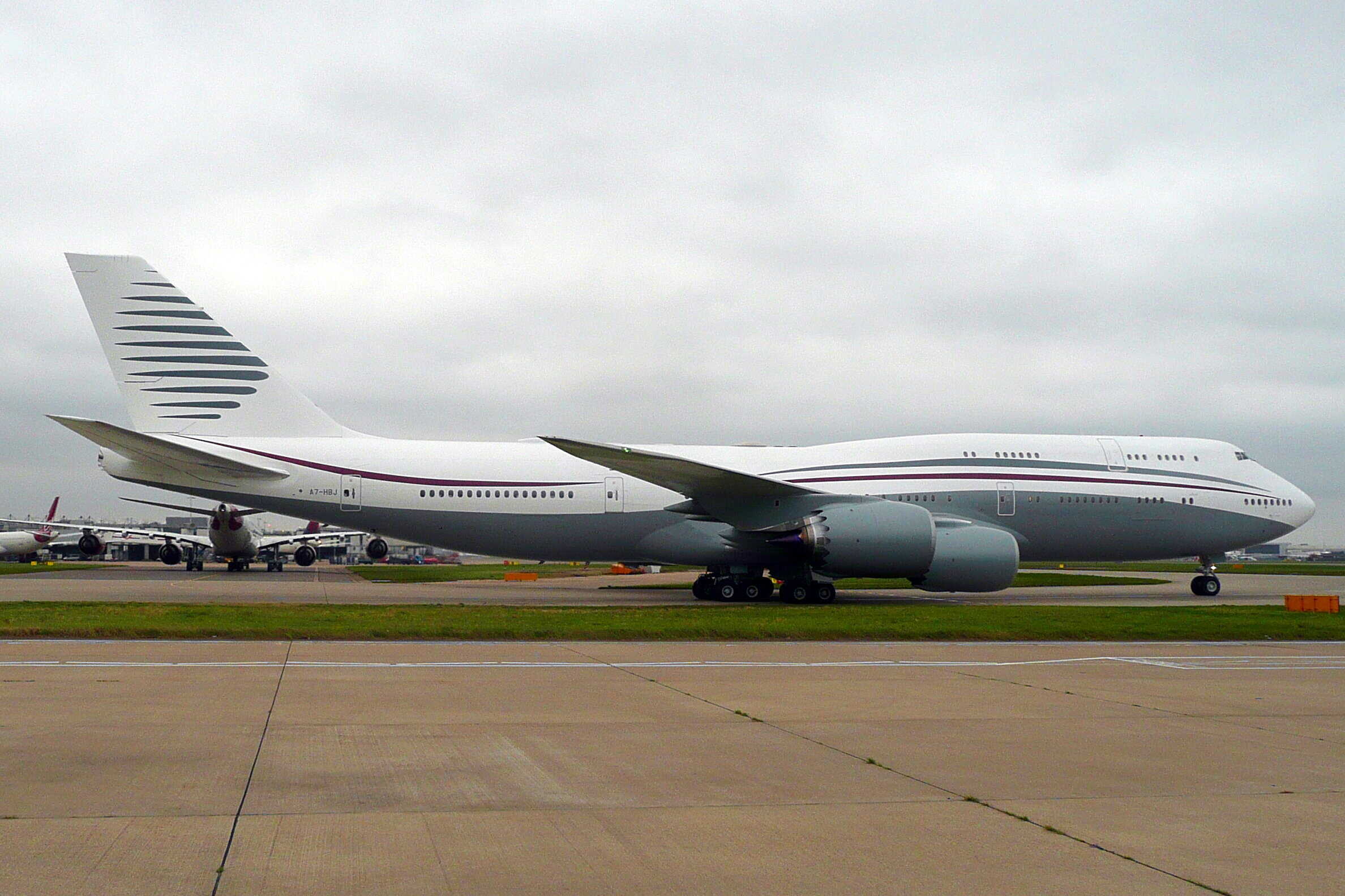
Turning a former luxury Boeing 747-8 BBJ into a presidential transport is not a simple undertaking. Air Force One aircraft are not merely executive airliners. They function as secure, airborne command platforms designed to operate during national emergencies.
The former Qatari VIP Boeing 747-8, a BBJ-configured jumbo built as MSN 37075 and previously registered as P4-HBJ (the nearly 14-year-old jet was originally delivered to the Qatari government in April 2012), was placed on the US civilian register as N7478D on 5 August 2025.
The Air Force has kept most details of the conversion classified, declining to specify which systems will be installed or how closely the bridge aircraft will match the capabilities of the current VC-25A fleet. Multiple reports indicate that Melbourne, Florida-based aerospace company L3Harris has been tasked with performing the conversion. The defense contractor has extensive experience with secure communications, avionics integration, and special-mission aircraft, including prior work on presidential and executive airlift platforms.
While neither the Air Force nor L3Harris has publicly detailed the scope of the work, the company’s role is understood to involve transforming the former luxury airliner into an aircraft capable of meeting presidential transport requirements, at least in an interim capacity.
Experts note that the accelerated timeline is likely to limit the scope of modifications. Full presidential aircraft typically require years of work to integrate hardened communications, defensive countermeasures, electromagnetic protection, and in-flight refueling capability. Whether the bridge aircraft will support all of these features remains unclear, raising questions about how it would be used operationally and under what circumstances.
The aircraft has been spotted at L3Harris facilities in Texas, where conversion and integration work is believed to be underway. Aviation observers have tracked the jet’s presence at locations associated with the company’s special-mission aircraft operations, reinforcing reports that L3Harris is leading the effort.
One such facility is located at TSTC Waco Airport (CNW). L3Harris’s Waco operation focuses on Intelligence, Surveillance, and Reconnaissance (ISR) missionization and large-aircraft retrofit work. The site has become a hub for major programs, including the OA-1K Skyraider II production line, and has supported other high-profile refurbishment and modification projects. Beyond mission systems integration, the facility’s capabilities include work typically associated with complex special-mission conversions, such as interior design and build-out, painting, and fabrication.
The Air Force has confirmed that it is working with “other government entities” to ensure proper security measures and mission requirements are addressed, but has declined to provide specifics on testing timelines or when the aircraft might become fully operational after delivery. Air Force Secretary Troy Meink has emphasized that security remains paramount, stating, “As we lay out the plan, we will make sure that we do what’s necessary to ensure security on the aircraft.”
Aging Aircraft and a Delayed Replacement Program
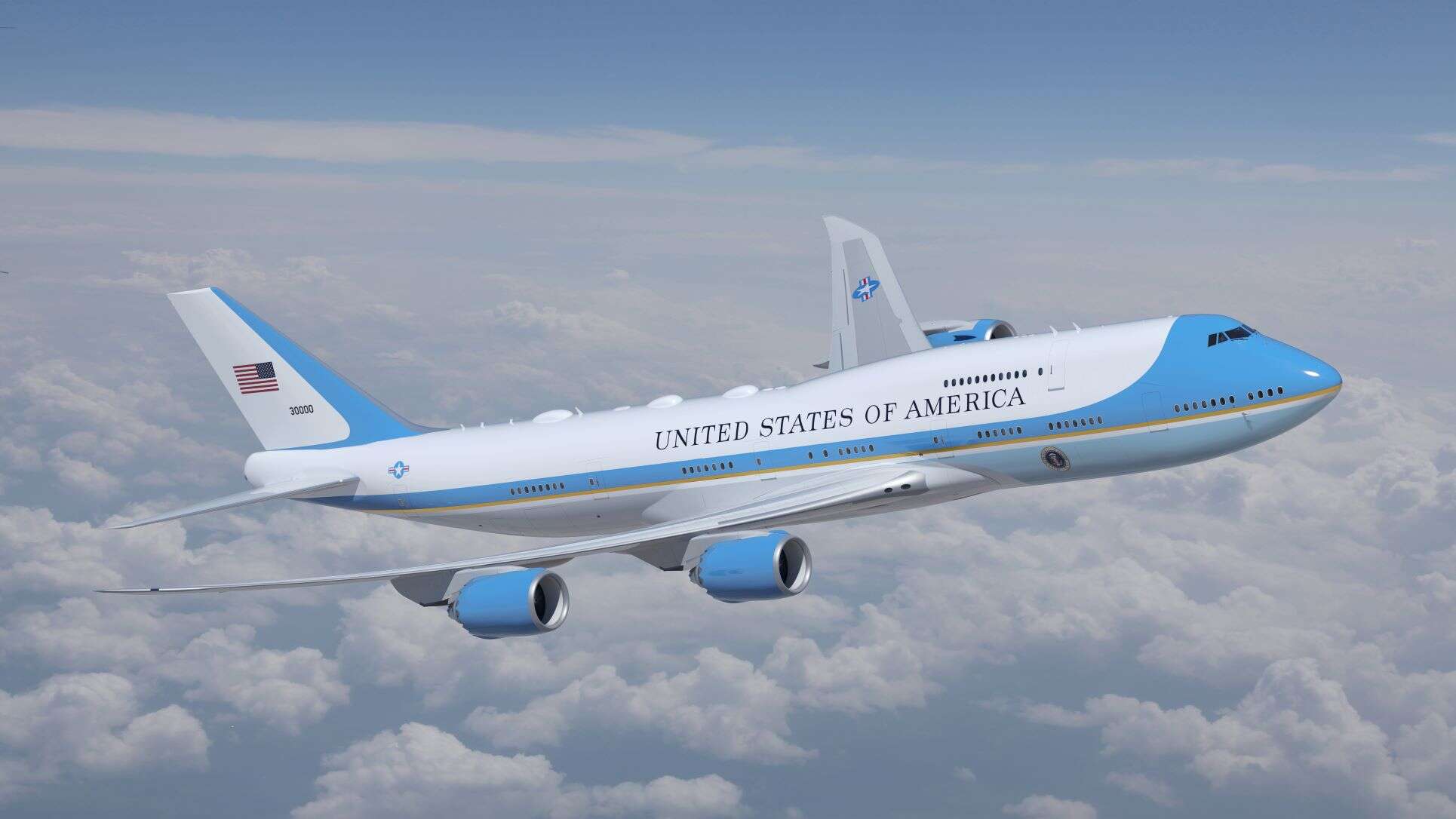
The need for an interim solution stems from two realities.
First, the current VC-25A aircraft have been flying since the early 1990s and are increasingly maintenance-intensive. That reality became visible again recently when the VC-25A carrying President Trump to the 2026 World Economic Forum in Davos, Switzerland, was forced to turn back to Washington due to an electrical issue, with the presidential party continuing the trip aboard a C-32, the Air Force’s 757-based executive transport.
Second, the official replacements remain far behind schedule. The Air Force now expects the first VC-25B delivery in mid-2028, roughly four years later than originally planned. President Trump has openly expressed frustration with those delays, which has helped drive the pursuit of a faster interim option.
At the same time, the Air Force is investing in long-term sustainment of the 747-8 platform, including plans to acquire two former Lufthansa 747-8 aircraft for training and spare parts to support the future VC-25B fleet.
Controversy, Cost, and Operational Implications
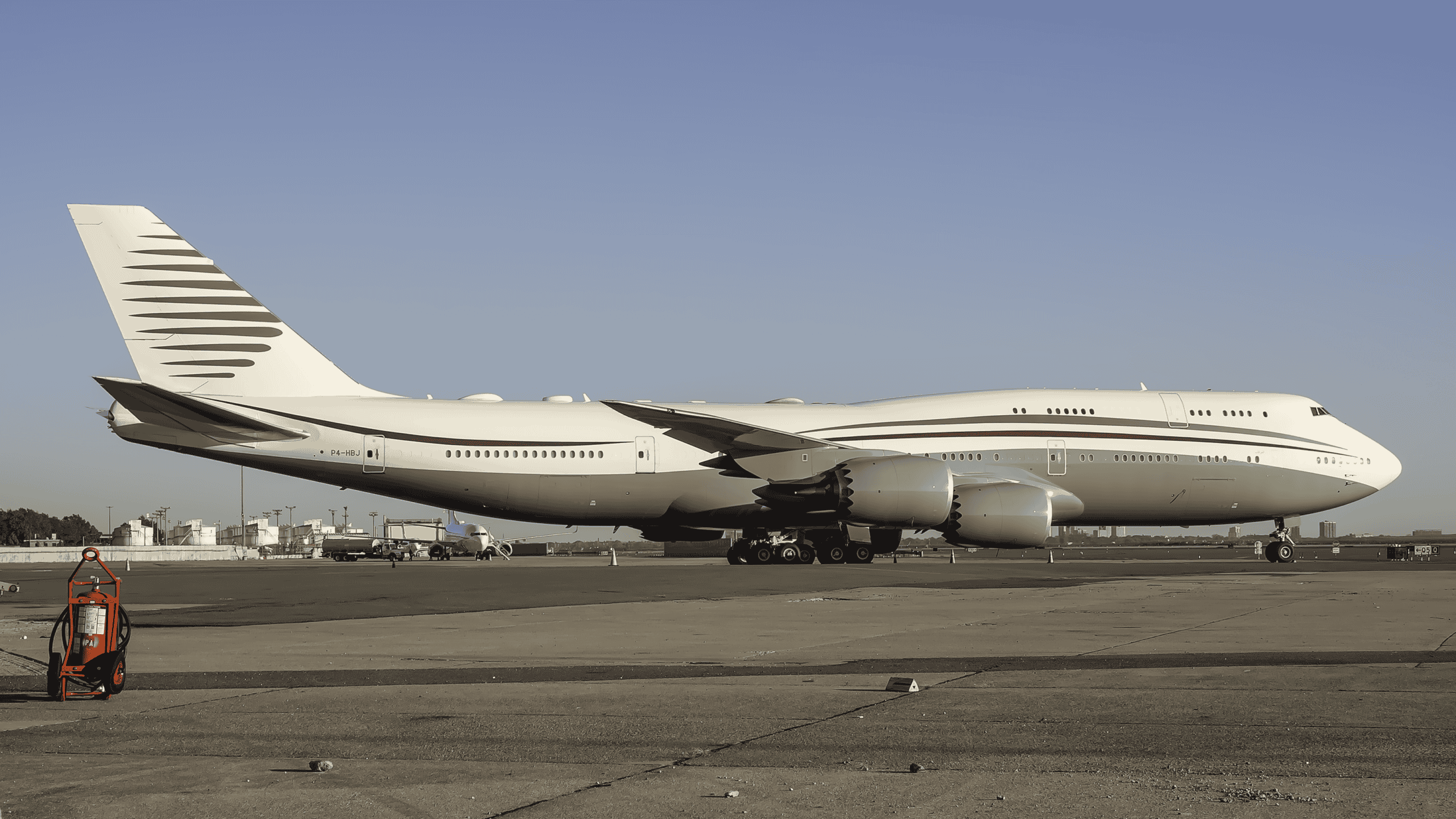
The acceptance of a foreign-donated aircraft for presidential airlift has drawn criticism and raised questions about security, cost, and precedent. While the aircraft itself was donated at no cost, the U.S. government is expected to spend hundreds of millions of dollars to modify it to meet mission requirements.
Air Force officials have stated that the conversion is projected to cost less than $400 million, significantly less than the multibillion-dollar VC-25B program. Critics argue that even with modifications, the aircraft may not achieve the full survivability and command capabilities traditionally associated with Air Force One.
There are also implications for how the aircraft would be used. If the bridge aircraft lacks certain capabilities, it may be restricted to lower-threat environments or domestic missions, serving primarily as a stopgap for capacity and reliability rather than a full replacement.
Still, from an aviation perspective, the effort highlights both the complexity of presidential airlift and the difficulty of replacing a platform as unique as Air Force One. Whether the VC-25 bridge aircraft serves briefly or becomes a regular sight during a milestone year for the nation, its rapid conversion represents one of the most unusual aircraft transitions ever undertaken by the US Air Force.