

It’s been over a decade since a former SAS Scandinavian Airlines DC-9 took to the skies over southern California for a skydiving mission.
But this past weekend, N127NK, a 55-year-old DC-9-21 “Hot Rod,” did just that. Multiple loads of jumpers had a chance to experience history aboard the 488th Long Beach-built Douglas DC-9. Skydive Perris, a skydiving facility just 50 minutes from downtown Los Angeles, hosted three “Jump the Jet” events.
An Event Four Years in the Making
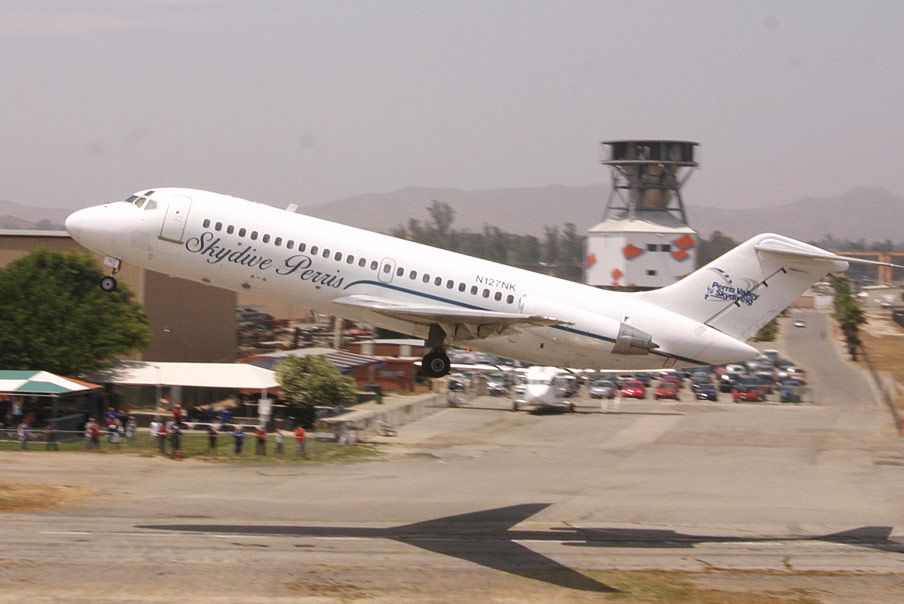
The “Jump the Jet” events have been in the works since 2020. Skydive Perris, a skydiving facility at Perris Valley Airport (L65) in Perris, Calif., made waves in late November 2020 by announcing the jet would soon return to service for the first time since 2013. According to its Facebook page, the facility, located just 50 minutes from downtown Los Angeles, hosted at least three jump runs this past weekend. The events followed a successful test flight on 7 May.
Event organizers said the events were only open to licensed jumpers, who paid $150 each for the opportunity. Observer seats and tandem jumpers were not permitted.
The Onboard Experience (Spoiler: There’s no Wi-Fi)
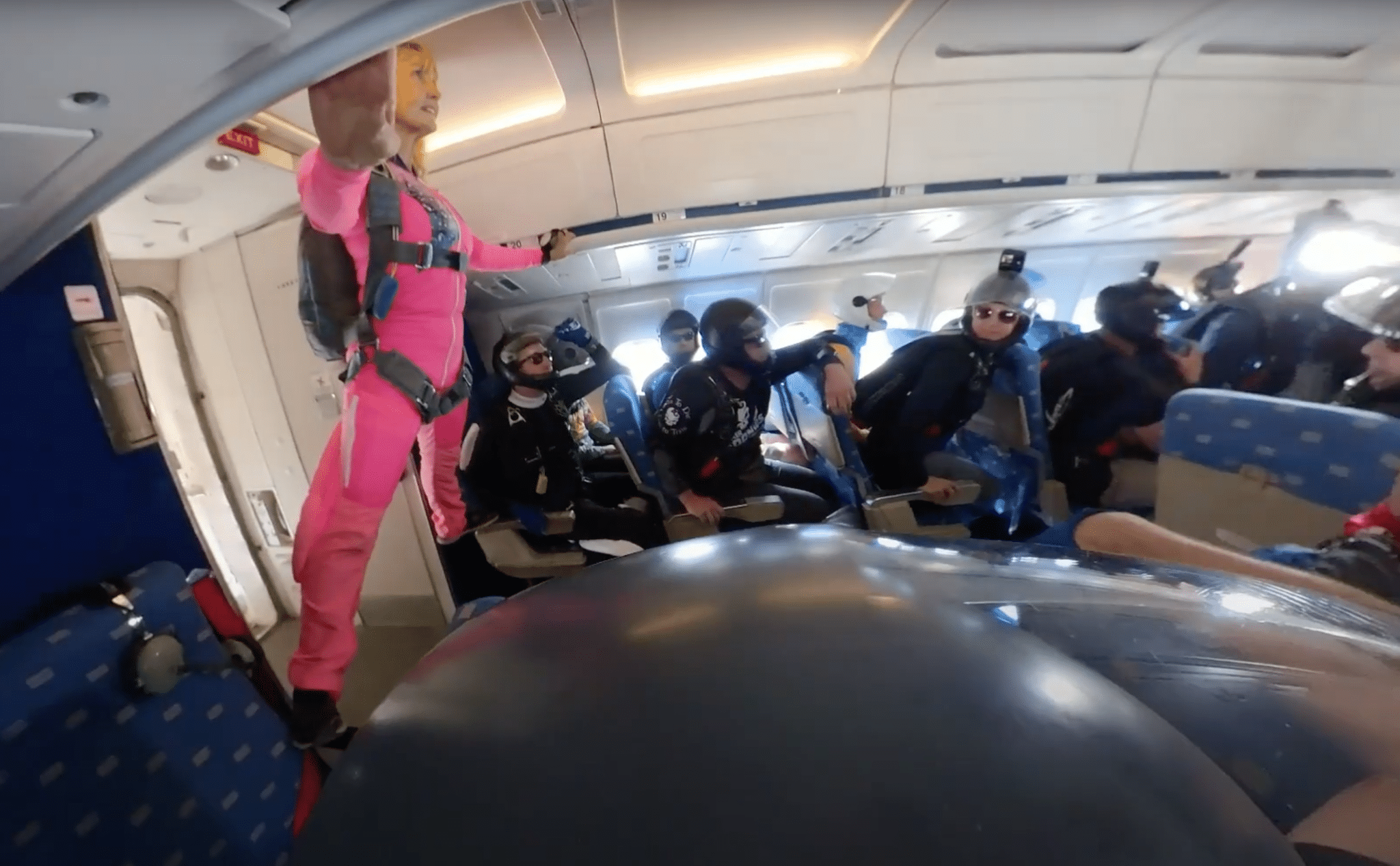
Although this aircraft is a privately owned skydiving jet, it still bears an FAA registration. Thus, once jumpers boarded the aircraft, they were subject to a standard FAA safety briefing by a specially trained Florida-based flight crew. Like passengers aboard a regular commercial flight, all passengers must be seated with seat belts fastened and tray tables and seats in full, upright, and locked positions.
Once airborne, this workhorse of a machine only takes four minutes to reach a jumping altitude of 13,500′ AGL. At altitude, the tail exit opens, and the jumpers begin their exhilarating dives back to earth.
One has to imagine that this particular skydiving aircraft isn’t the most efficient choice. Even with a light load, the slowest a DC-9 can fly is roughly 125 knots. This limitation, combined with a narrow single aisle and the small exit, makes it difficult for the process to be as efficient as more suitable skydiving aircraft options – particularly for formation jumpers. Nonetheless, the experience must have been pretty amazing – especially for avgeeks who love this historic workhorse of a bygone era.
After Decades at SAS, N127NK Became a Workhorse for the Burgeoning US Low-Cost Carrier Industry
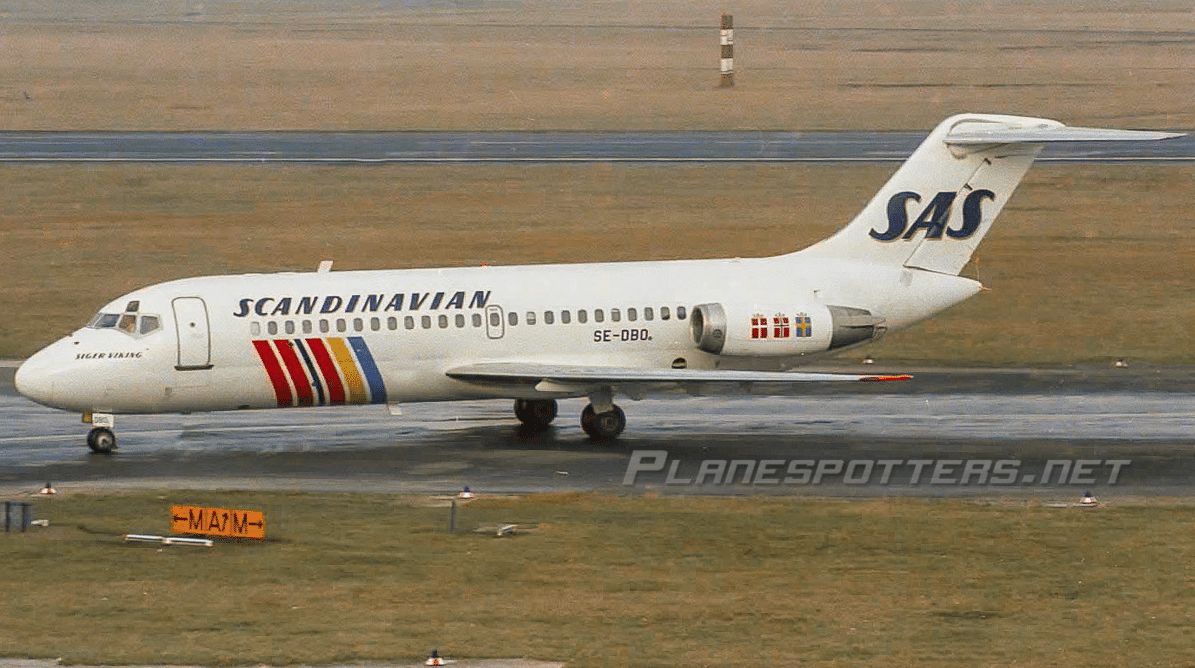
The history of N127NK stretches back over half a century. Initially registered as SE-DBO, she was delivered new to SAS Scandinavian Airlines on 1 May 1969. She would serve with SAS for over two decades, briefly changing hands with Swedish carrier Nordic East Airways from 1991 to 1992. She was one of just ten DC-9-20s ever built (all for SAS).
Her post-SAS career saw her serve with various airlines throughout the 1990s and into the new millennium. Under a new US registry, N127NK, she flew for low-cost US carriers Spirit, ValuJet, and Allegiant Air.
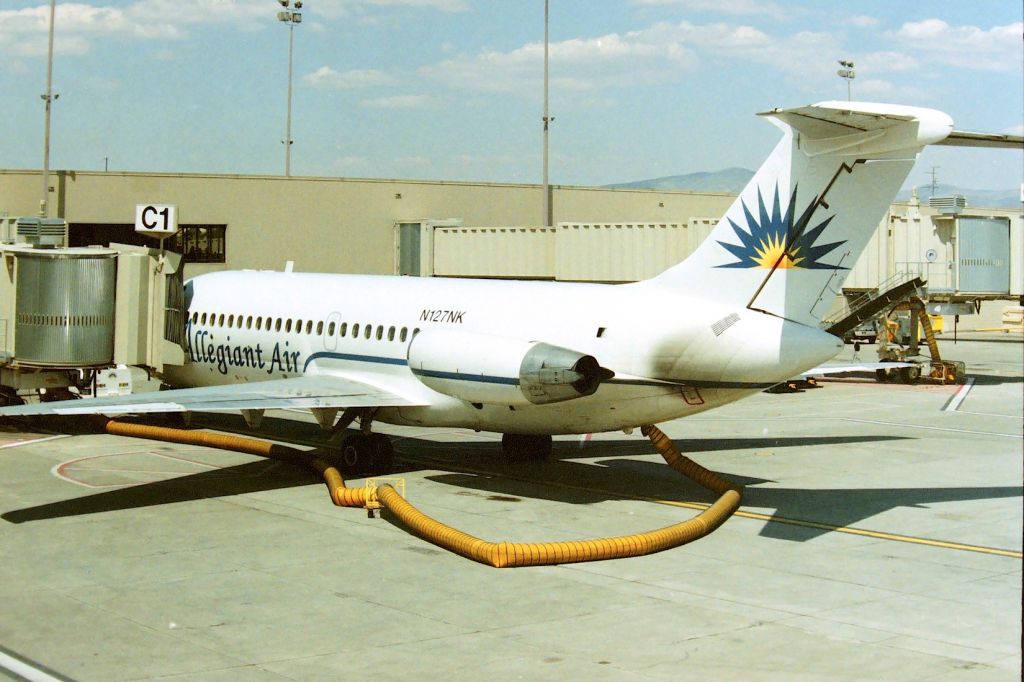
Allegiant parked the jet in 2002 at Victorville (VCV). However, her time at VCV was short, as she was purchased by Skydive Perris in 2003. Finally entering service again on 24 December 2006, her primary use besides skydiving was for film production for studios out of Hollywood.
She was out of commission from 2013 to 2024 while stored at Perris Valley Airport ahead of this past weekend’s triumphant return to the skies.
Living Aviation History
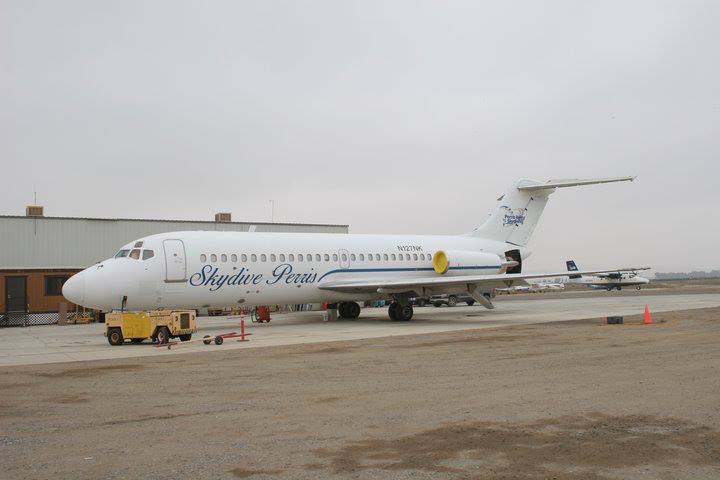
Seeing new life breathed into such a beautiful piece of aviation history is exciting. While officials at Skydive Perris indicate on Facebook that they don’t know when the next jump flights will be, one has to believe that the novelty won’t last long—especially considering the inefficiency of a DC-9 jump aircraft.
However, for those who would jump (pun intended) at the opportunity to be a part of the next “Jump the Jet” event, keep an eye on their Facebook page.
By the way, AvGeekery reached out to D.B. Cooper for comment, but at the time of writing, we have not yet heard back.