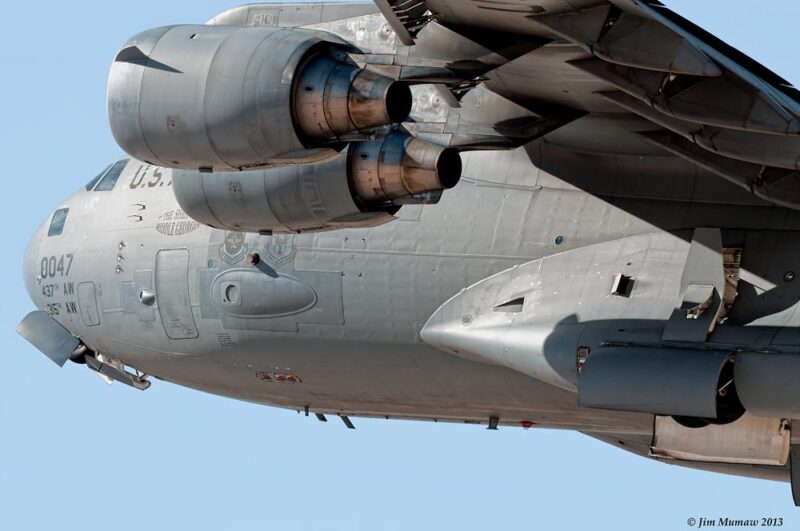
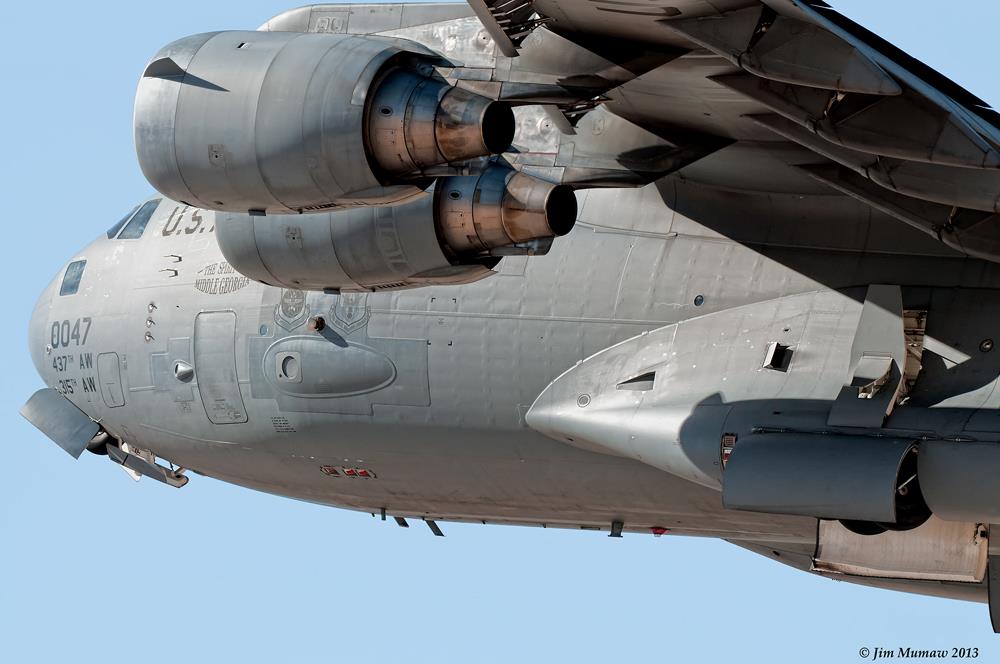
What a rush it must be to start the C-17 Globemaster. When you start the 575,000 pound airlifter, you are actually starting 4 engines capable of 160,000 lbs of thrust.
Here’s a clip out of Travis Air Force Base, California that shows a timelapse of the engine start sequence for the Boeing C-17A Globemaster III. The C-17 is powered by four Pratt and Whitney F117-PW-100 engines. Normally, C-17 pilots start each engine off of the Auxiliary Power Unit (APU) in order from 1 to 4. This clip shows that “standard” start sequence, where the Pilot (left seat) starts numbers 1 and 2, and the Copilot (right seat) starts numbers 3 and 4. While this video is condensed to just 17 seconds, a normal start sequence can take about 30 minutes (from getting in the seat to ready to taxi), depending on the crew experience and exact method chosen to start the engines.
If you are interested in seeing more amazing C-17 videos by the creator of this video, check out C17Jamie on Instagram.
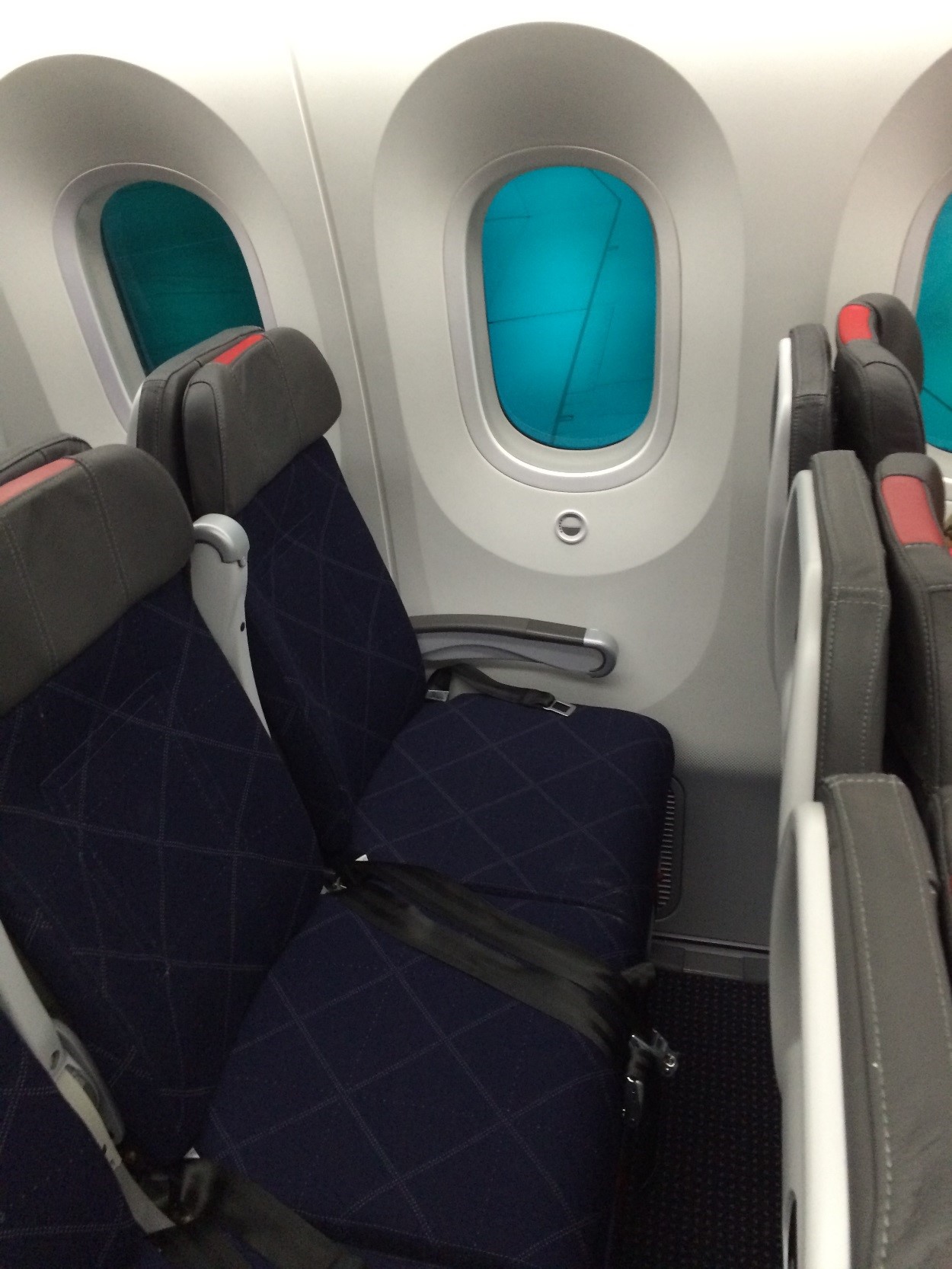
For the return to KDFW, I opted to sit in economy to get the full experience this airplane had to offer and get a good look at the wings and control devices on them. Even in economy, the 787 showed great improvements for passengers with cloth seats (cloth generally being softer and more forgiving on the behind during the long haul flights for which the 787 was intended), video screens in every seat, a roomy two cabin 3-3-3 configuration, and really generous recline. Large overhead bins provided room for even the most cumbersome carry-on bags (yes, Boeing addressed you Mary Poppins types out there).
As we settled in, the flight pushed back a bit late at 1228L. This time, sitting over the wing, I could clearly hear the start sequence as the boost pumps in the engines groaned to life vibrating the whole fuselage and awakening the beast. First, the port engine fired up, and then the starboard. The hydraulic system kicked in next, sounding not unlike the hydraulic system start-up of an Airbus (minus the barking sound addressed elsewhere in this fine website). The flaps and slats extended to the takeoff position (all carbon fiber), and we took our place in the usual queue of Chicago traffic. At approximately 1245L, we departed via runway 10L. Again, we climbed quickly through the weather and climbed only to flight level 280 due to turbulence reported at the higher altitudes. Right from the start this flight was not to travel as planned.
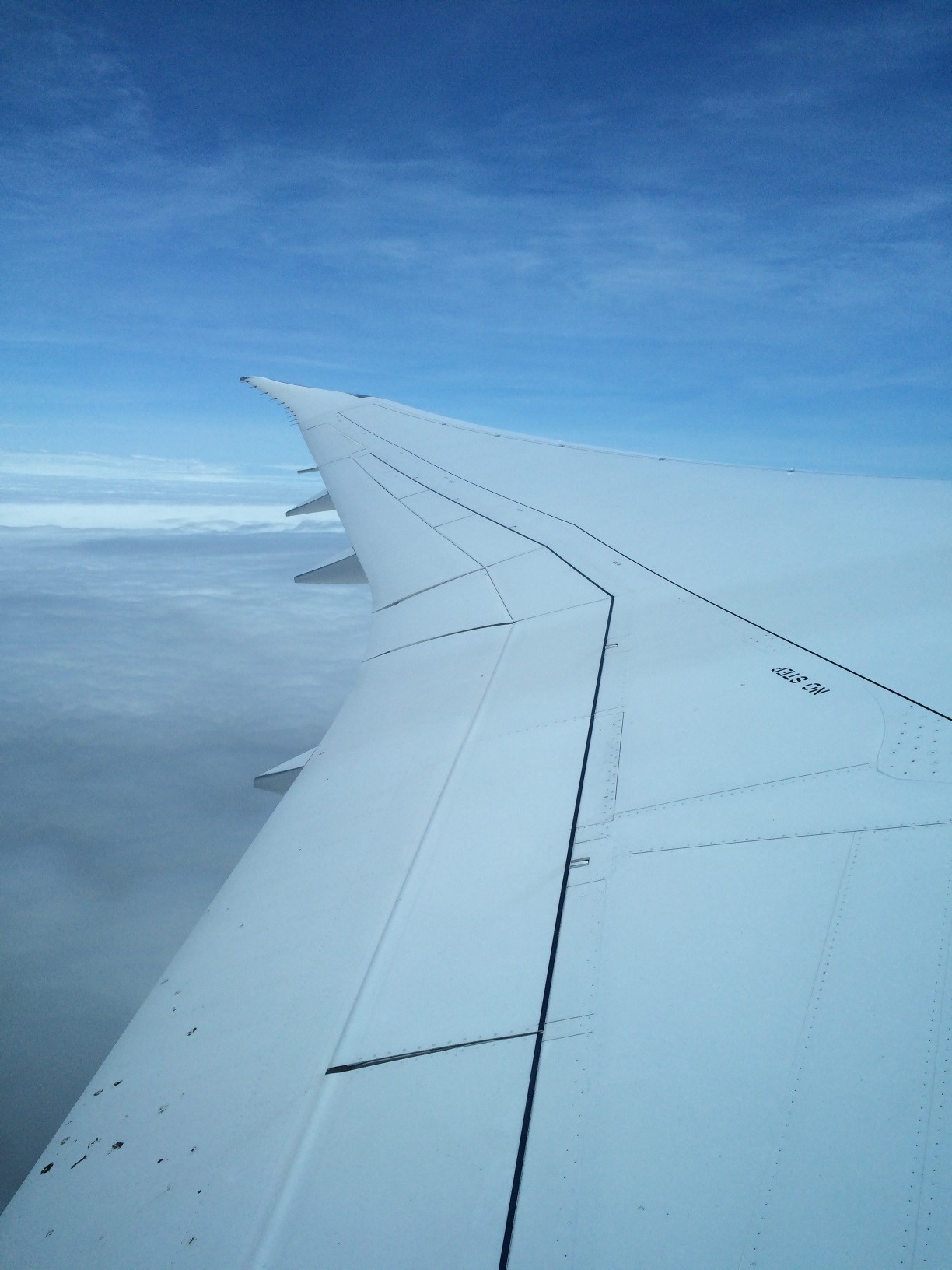
Row 16 with cloth seats and window tinted. Each seat offers generous recline with seat back entertainment.Massive wing on the 787, made entirely of carbon composites. Note the raked wingtip (instead of winglets) to reduce induced drag.
On this leg, I checked out the video system a bit more. If you’re a movie buff, then the AA 787 system is for you. I stopped counting after forty titles that included everything from old school favorites like Cool Hand Luke and Frank Sinatra flicks to recent releases like Interstellar. The GPS moving map feature performed at a level less than desired, as it could not be adjusted to show individual cities and towns you were passing over, as is available on American’s new Airbus in seat GPS products. The passenger seated next to me, a frequent flyer, spoke of the 787’s lower cabin altitude and how much of a difference it made on long haul flights. While not on American, he had flown the 787 to Europe on American’s competitor United (you can really thank Continental for those 787s at United), and noted he arrived feeling more refreshed and less dried out.
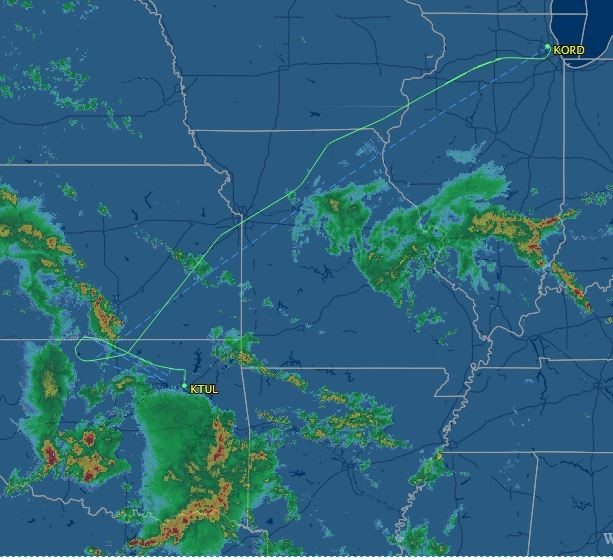
The GPS tool did come in handy when all of a sudden, my new friend discovered the time to destination had gone up by two hours! Sure enough weather in Oklahoma and the DFW area necessitated a diversion to Tulsa. While most passengers dreaded the thought, the avgeek in me became greatly excited at the prospect of yet another takeoff and landing in this fine airplane. Approximately twenty minutes later, the pilots brought ship 8AA down at Tulsa’s 18L.
Heavy storms over OK required a diversion to Tulsa for more fuel to bypass them. Source: flightaware.com
Once we landed at Tulsa, we taxied to a remote parking spot to refile our flight plan and obtain the needed fuel. Our time on the ground lasted approximately an hour and a half, but again, the 787 proved comfortable for that time. We took the skies again at 1601L from 18L with a flight plan carrying us into the panhandle of TX and then down around the weather. The Captain did an excellent job of keeping us all informed. He had the flight attendants keep their seats for that flight given the potential for turbulence. Here again, the 787 shined. We encountered a bumpy ride, but the design of the 787 with its flexible wings dampened the turbulence considerably. Both plane and crew got us safely back to KDFW at roughly 1700L.
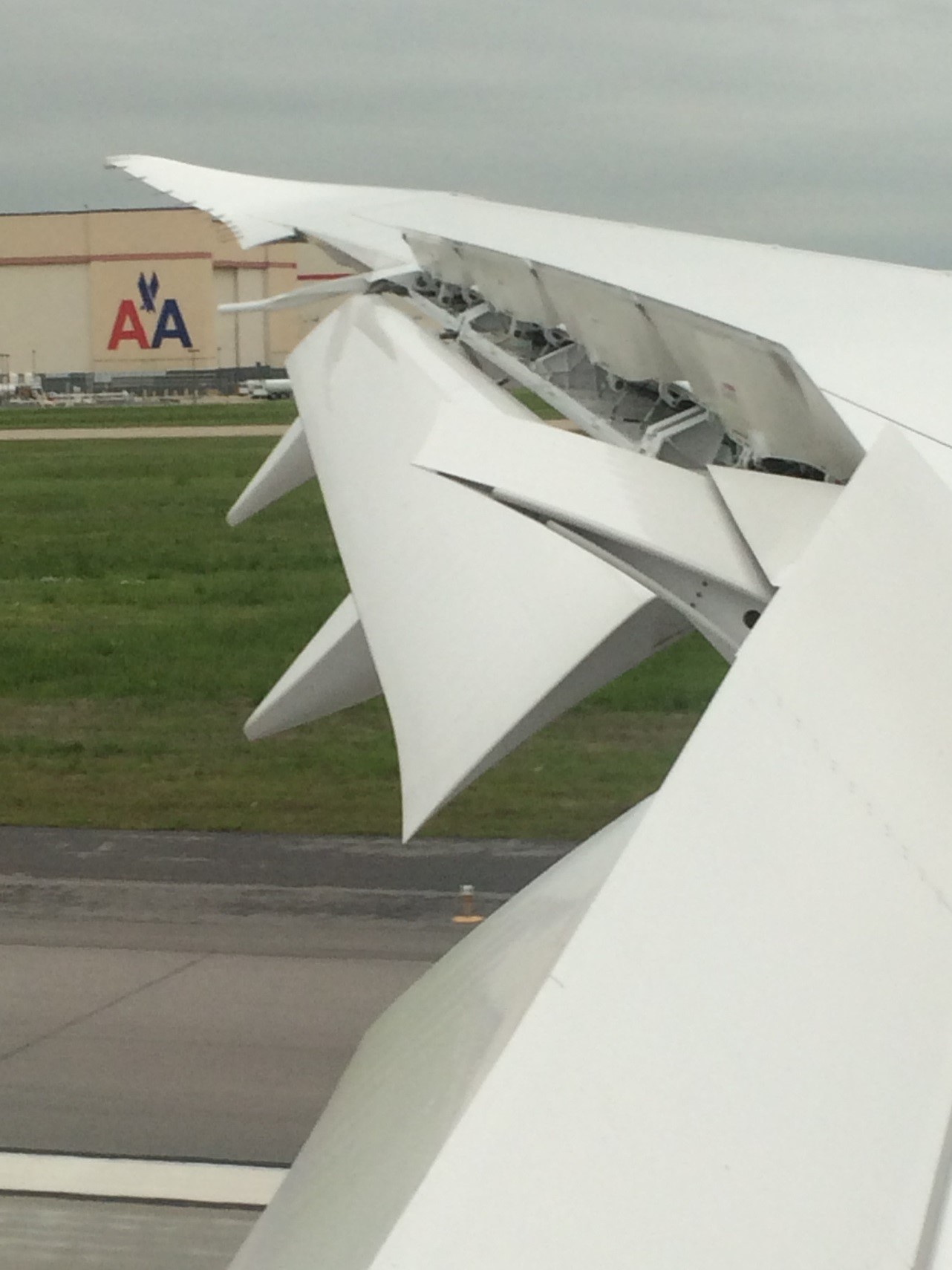
Arriving at KTUL, AA’s maintenance hub. Flaps and speed brakes fully extended.
Once again, I went up and talked to the pilots (same crew as the morning), and they were so proud of the 787 and what it could do. This new family member proved its mettle carrying us back through the stormy skies of the heartland. All throughout the day, I could tell how much each employee from the flight attendants to the ground crews (who gathered in droves just to watch it park) really loved this airplane. Moreover, it was great to see American employees really in love with their industry again. Just as a newborn brings great joy to a family, it was plain (pun intended) to see that the 787 had rekindled the love of flying in all of us.
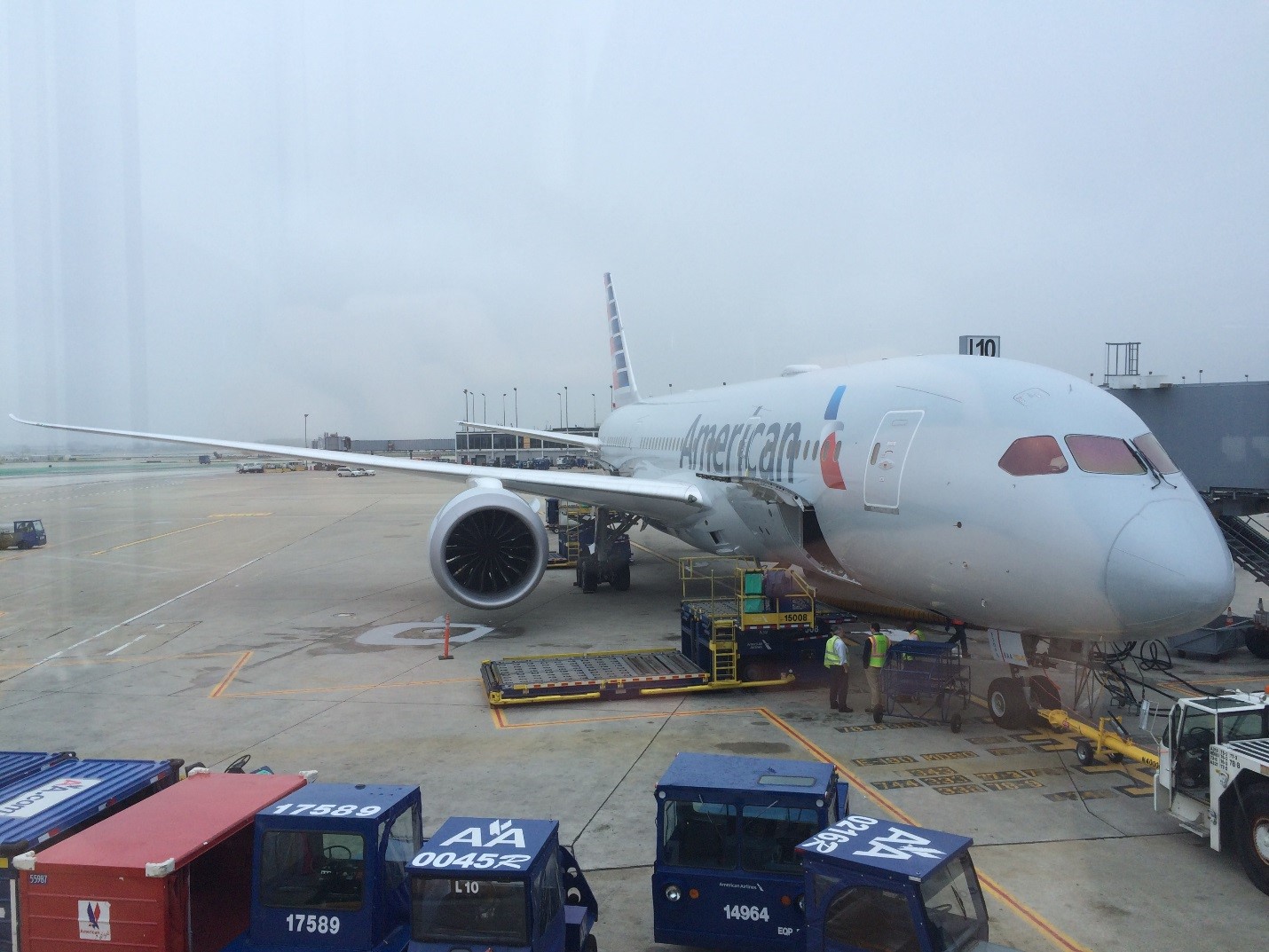
To the flying public, the Boeing 787 Dreamliner represents the future of aviation with composite materials, the most advanced avionics, and new levels of comfort for all passengers. Indeed, the 787 defines the cutting edge with these features, but to avgeeks such as myself, this new airplane is a new family member. My hometown airline, American Airlines, finally introduced this family member into service with much fanfare on May 7, 2015. Having grown up in DFW and being raised as an “AAvgeek” by American pilots in the neighborhood, I was eager to try this plane out and greet the newest member of our aviation family. While I could not fly on the inaugural service, this article documents travel on 9 May to KORD and back (one leg in business class and the other in economy) before this magnificent airplane begins service to its intended markets: Beijing, Buenos Aires, and Shanghai. Needless to say, the Dreamliner did not disappoint.
KDFW-KORD Flight: AA2320
Departure Time: 0710L
Departure Gate: A23
Registration: N800AN (American’s first 787)
Seat: 2L
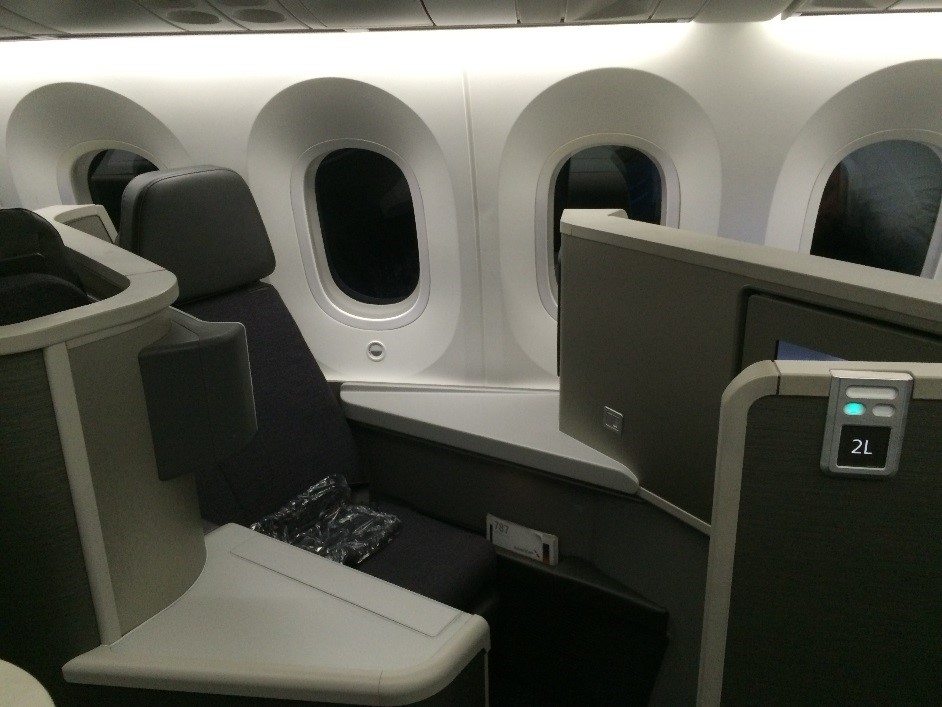
Rear facing business seat 2L with the window darkened.
Although the first passenger service occurred two days earlier, the atmosphere of excitement surrounding the 787 had anything but faded. In fact, I met another avgeek doing the same exact trip as myself (the massive camera gave him away while my Boeing 787 T-shirt made me anything but inconspicuous). Passengers on the flight included everyone from regular passengers just trying to get on with their day to frequent fliers and even a few American marketing executives checking out the plane for themselves. Upon entering the aircraft, that new plane smell greeted my nostrils. The flight attendants, usually glum these days, beamed with enthusiasm and pride for this new aircraft, a symbol of the new American. Indeed, American’s new look proved both very comfortable and refreshing. I got to my seat, 2L, and began soaking in the whole airplane. The business class had two sections (one forward of the 2L and 2R doors, and one aft). Each section had 4 lie flat seats across in a herringbone pattern with every other row facing backwards. The much talked about dimming windows were all set to the dark setting preventing any light from entering.
Before long it was time for departure out of a cloudy DFW. We pushed on time at 0710L and engines started not long after. Given the relatively light fuel and cargo load for the short hop to O’Hare, the airplane eased forward onto taxiway Kilo with no spool up of the engines. We taxied to runway 17R, and at 0725L, the General Electric engines roared to life in a sweet symphony.
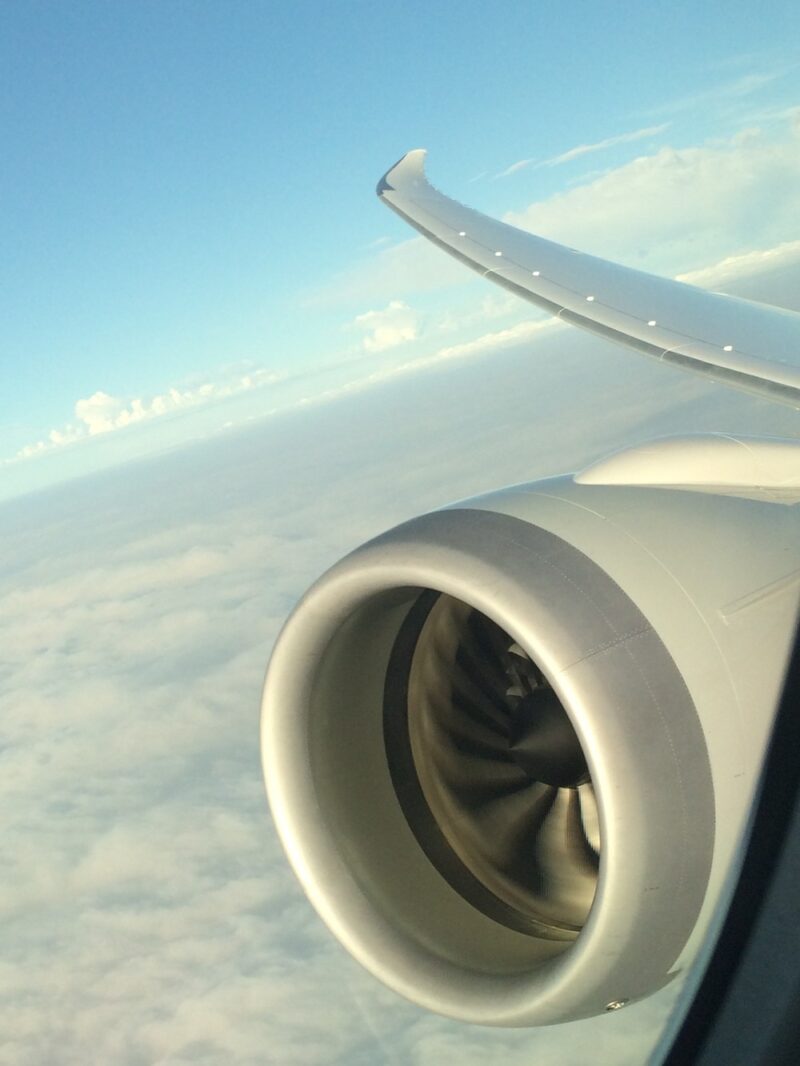
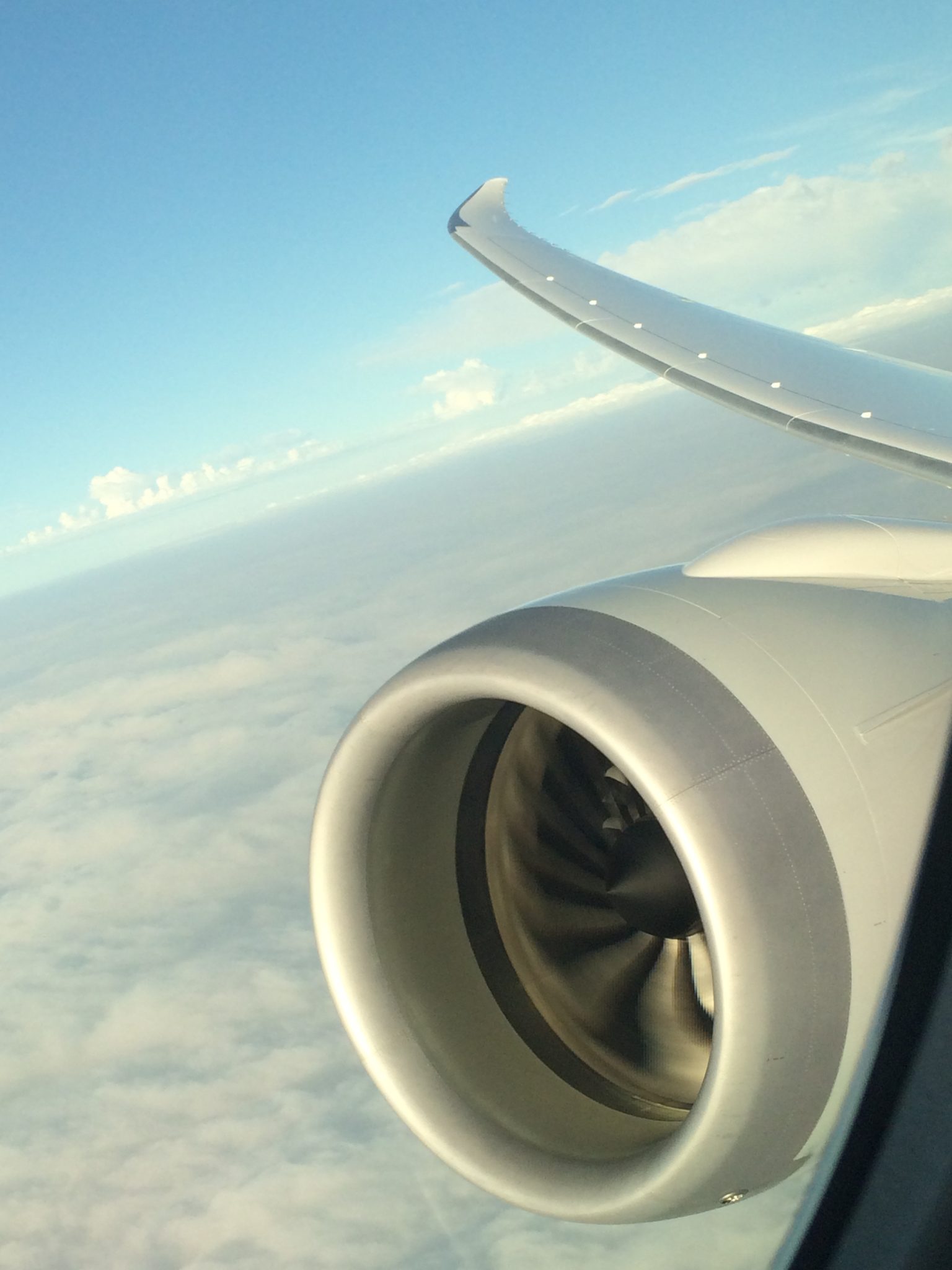
Sun hits the fan blades as we turn northeast towards KORD.
The aircraft lifted off quickly, the wings flexing as they bore the load of the airplane. Within a matter of minutes we reached our cruising altitude at flight level 410 and a speed of .88 mach or roughly 580 miles per hour. As advertised, the cabin remained quieter than older aircraft.
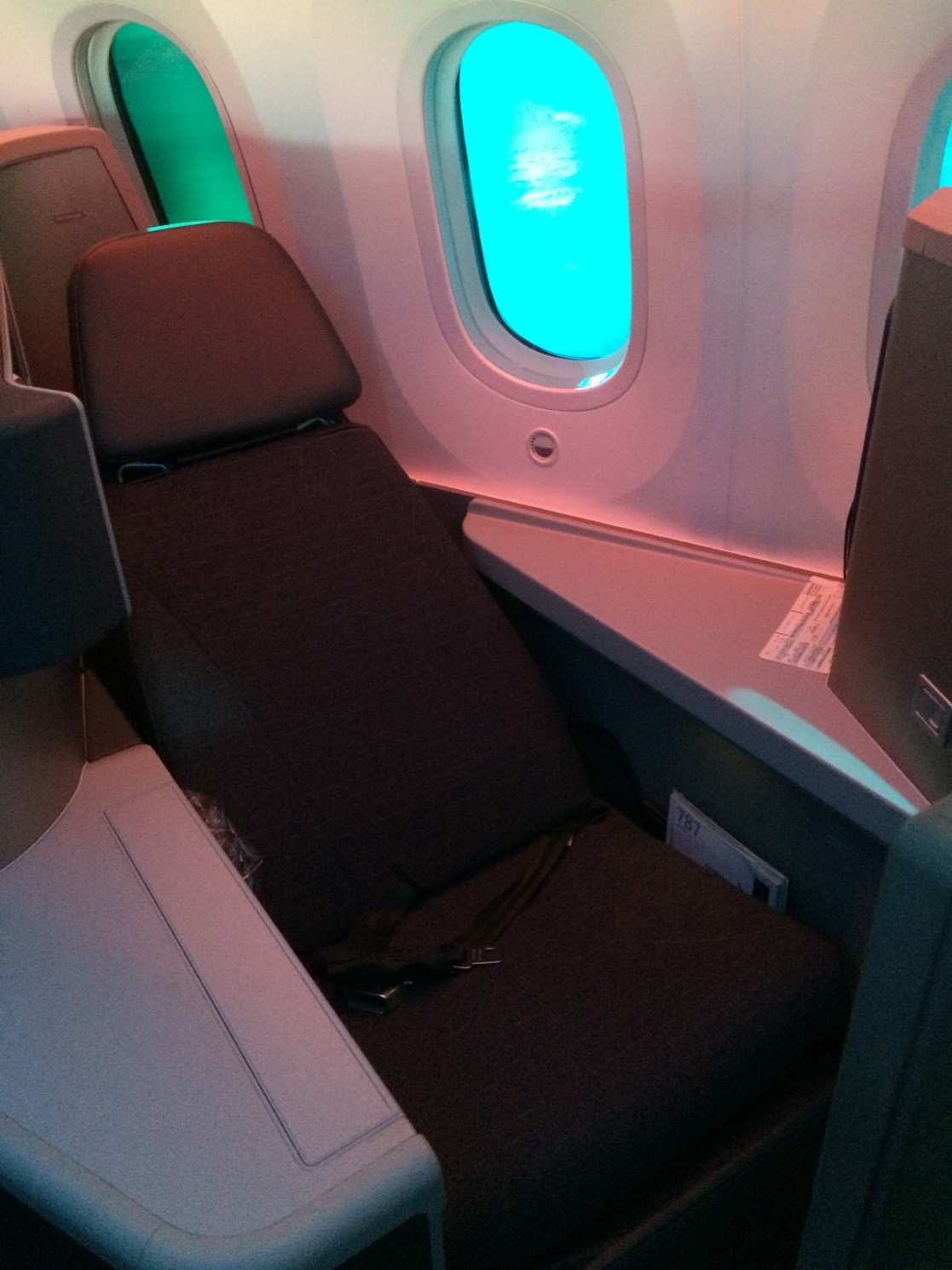
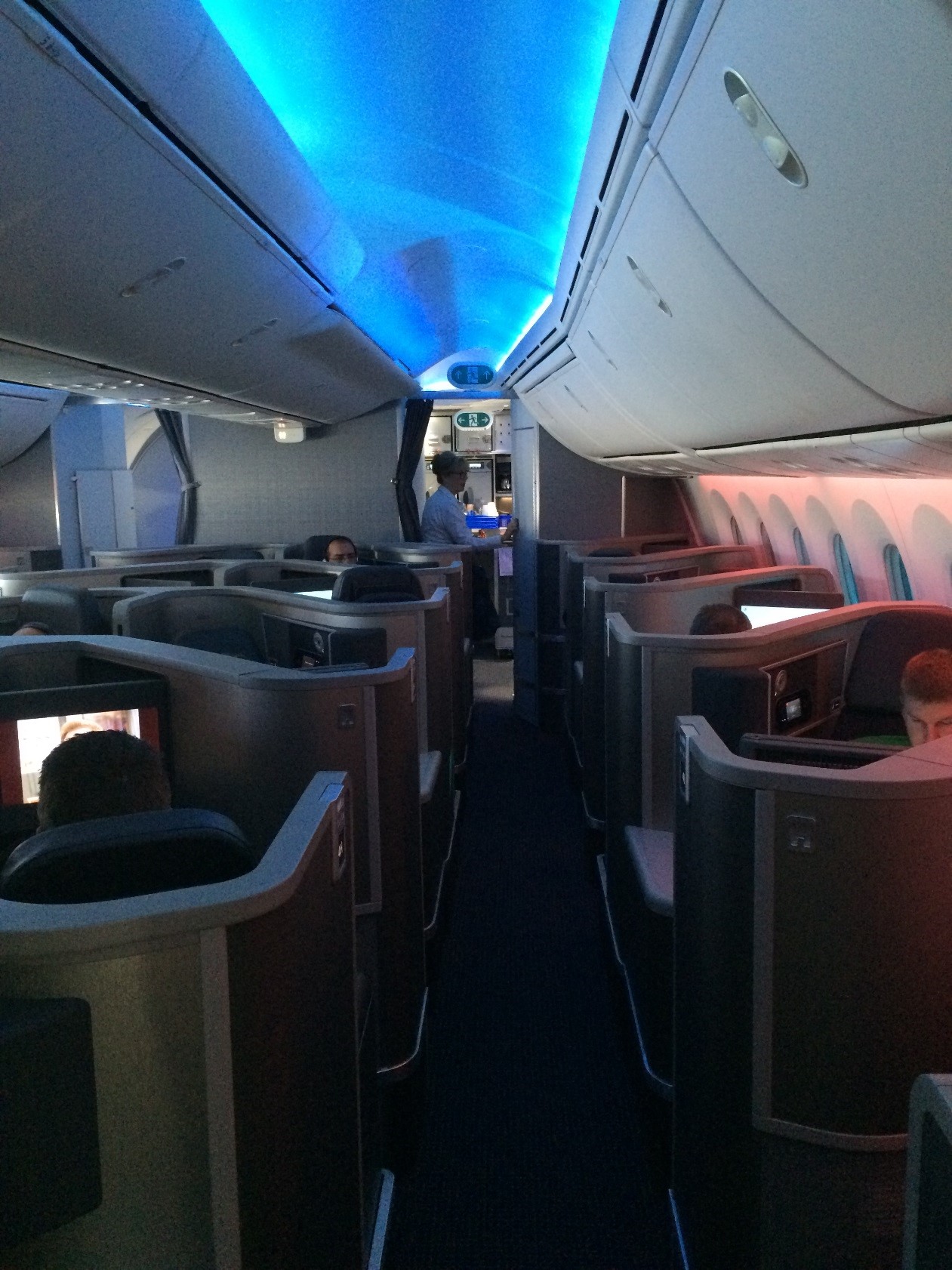
As we turned northeast towards Chicago, the flight attendants began preparing the inflight meal, leaving me some time to explore. Features of note included a standup bar between the two cabins, not yet stocked because of the brevity of these local familiarization flights, and a massive lavatory with a full size mirror (guess AA hopes you’ll dress up to fly the Dreamliner). Mood lighting was on full display in the dawn color scheme with soft reds and blues. With regard to the seating, the rear facing seats (according to myself and my fellow avgeek, non-scientific poll) offered the best exterior views as they were closer to the windows than the forward facing seats. Additionally, forward facing seats required the wear of a chest strap, akin to a car seatbelt, for takeoff and landing.
Seat reclined and mood lighting in full swing.
After approximately an hour and thirty five minutes, the Captain announced our descent into a cloudy and misty Chicago. To initiate the descent, the pilots had to not only pull the engines to idle, but also apply the speed brakes. Being such a smooth airplane, any sort of forward pitch caused the 787 to accelerate much more rapidly than older models. Coming down through the weather, we emerged about 1,000 ft AGL and landed smoothly on RWY 10C (formerly 10R). As we taxied to the gate, all eyes were on us, with some airport personnel stopping their cars to snap photos of the still new phenomenon that was AA 787 service.
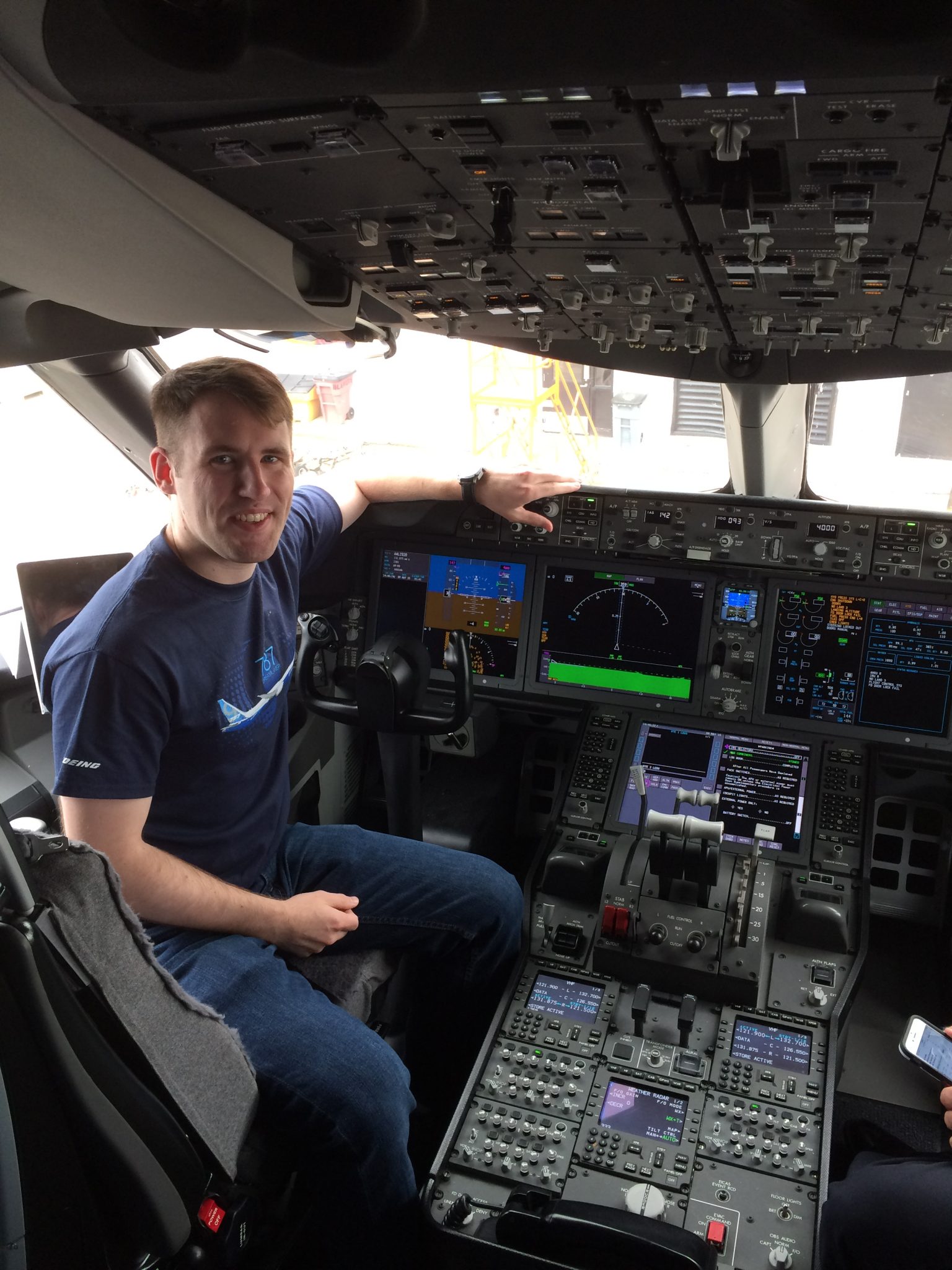
Upon arrival at the gate, I was able to hop up and explore the real heart of the 787, its flight deck. The flight deck was a pilot’s dream with enough LCD screens to fill a sports bar. Without delving too much into the techy details, the 787 was without a doubt designed with pilots in mind. One tool in particular that impressed me was a radar that could show all vertical obstructions within 5 miles either side of the course and up to 1,200 miles away! All that being said, both pilots loved the airplane and were, like the flight attendants, beaming with pride.
One hAAppy avgeek enjoying the best front office in the world. On the LCD screens (from viewer’s left to right) you can see the EADI (electronic attitude director indicator), the EHSI (electronic horizontal situation indicator) in arc mode, a backup EADI, and engine data display. Each pilot has a HUD (heads up display) that folds up.
Tomorrow, we’ll post a report by Alexander as he reports on his return from Chicago O’Hare to Dallas/Fort Worth International.
Do you have a trip report or interesting #avgeek story that you’d like to share? Send us a message on our Facebook page!
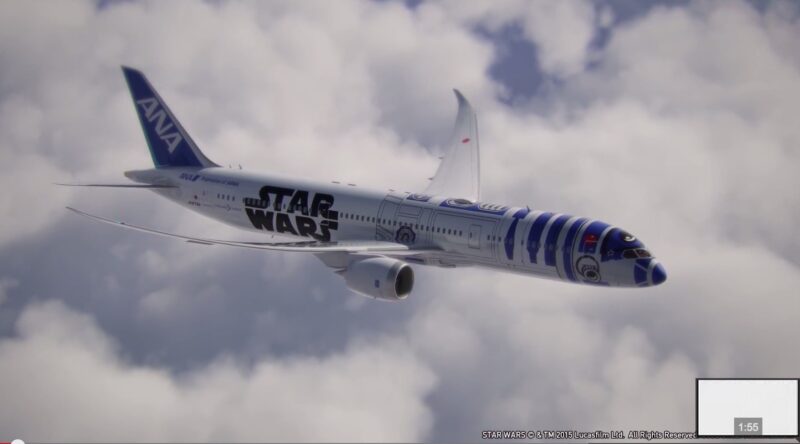
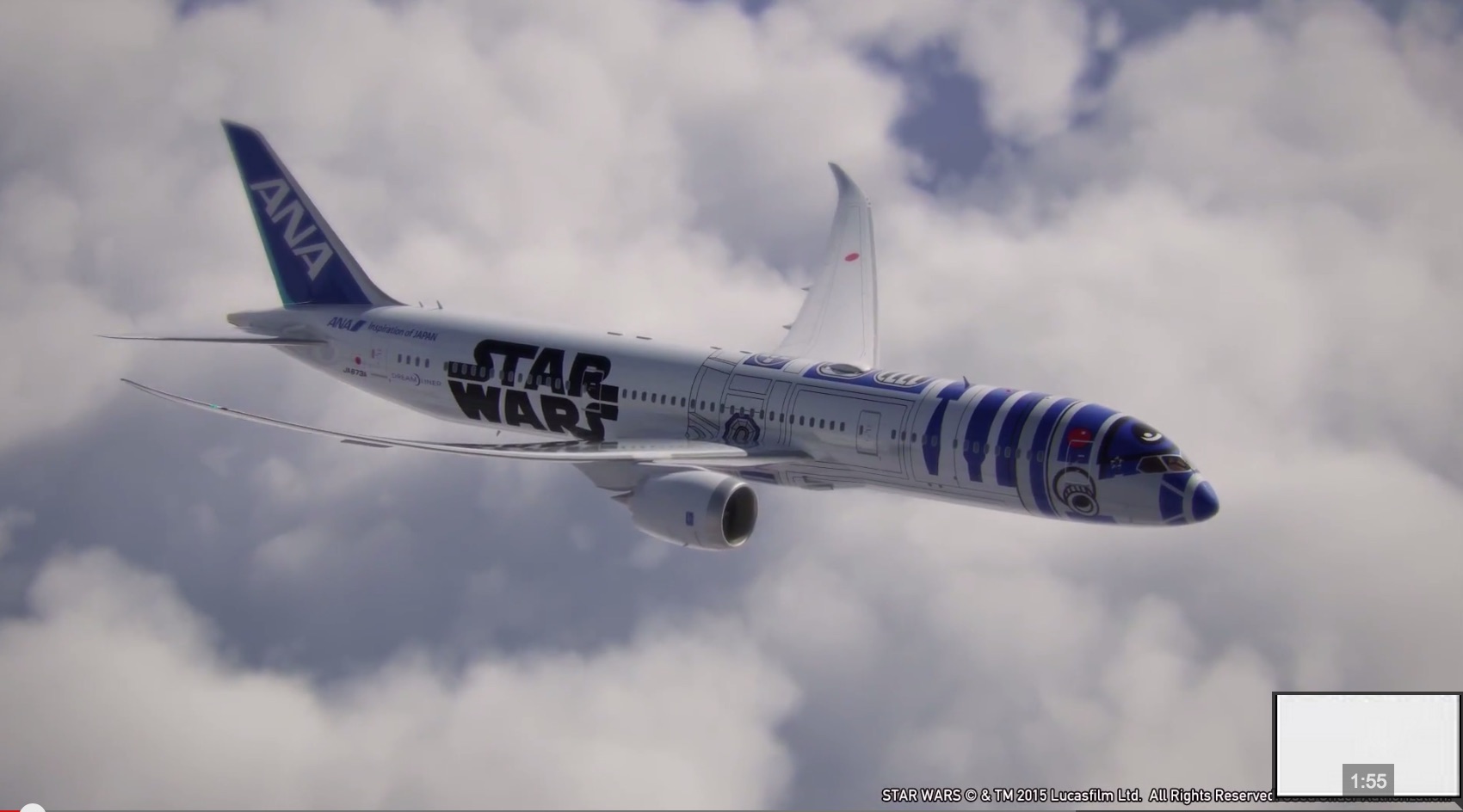
The 787 is already an #avgeek favorite. The sleek composite airplane might also become a favorite of Star Wars fans as well! ANA just unveiled that one of their latest 787s would feature a special paint scheme tied to the the much beloved Star Wars series. The aircraft features a stylized R2D2 motif with a large logo near the back 1/3 of the aircraft . The latest Star Wars movie will be released this December. No word on how long this aircraft will be painted in the special paint scheme.
A New York Times article was released this evening that raised the possibility that one of the pilots was locked out of the cockpit during a terrifying 8 1/2 minute descent. This fact raises the possibility that the crash was not caused by a catastrophic malfunction (like an explosive decompression) but instead could have been an intentional crash into terrain.
How could a pilot get locked out of his or her own cockpit?
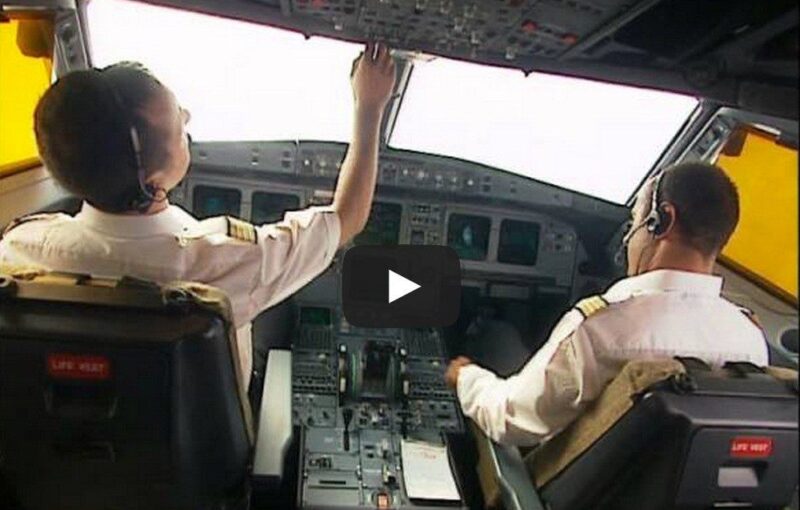
After 9/11, all airliner cockpit doors were required to be reinforced. Prior to 9/11, cockpit doors were weak and flimsy. The did not provide any protection in the event of a hijacking attempt. The upgraded doors that were installed after 9/11 could not be broken down by force. The upgraded doors also have a fairly advanced electronic security system to permit authorized access but prevent any unauthorized entry. The Airbus video below explains how the Airbus cockpit door is operated. Based on this Airbus instructional video posted on YouTube, it does appear to be possible to keep the door locked from inside the cockpit if the pilot at the controls was actively attempting to do so. While it is way too early to speculate on the exact cause, this latest information (if true) indicates that the cause of the crash could be much more sinister than mechanical.
Noted aviation historian Walter Boyne described Operation Ranch Hand as “a heart-rending example of how good airmen can be forced to do unpleasant work when it is determined that the war effort demands it.” There are few events in aviation history that evoke strong debates even to this day as those that surround the nine year use by the US military of the defoliant Agent Orange in Vietnam. The aerial spraying of herbicides was used initially in the United States for weed control but was on a strictly limited basis in the immediate post-war period. The first “military” use of aerial herbicide spraying came during the Communist insurgency in Malaysia during the 1950s when the British used it on a limited basis to keep communication lines through the jungle clear.
Early Use of Defoliants and Initial Approvals
The British use of air-delivered defoliants was cited by by proponents in 1961 in the proposal presented for President Kennedy’s consideration. Supported by the Secretary of Defense, Robert McNamara, the requisite approvals were also secured from not just the President but also President Ngo Dinh Diem and the government of South Vietnam. Some in the administration had raised the issue that use of the defoliants might be considered chemical warfare, but McNamara felt that operational necessity to reduce Viet Cong ambushes and hideouts in South Vietnam made the risk worthwhile. On 3 November 1961 McNamara authorized the use of defoliants in South Vietnam to combat the Viet Cong ambushes on US and ARVN units.
Implementation and Expansion of Operation Ranch Hand
The USAF already had a limited ability already present for the aerial spraying of defoliants as part of its public service work on mosquito-control projects in the southeastern United States. At the end of World War II, a Special Aerial Spray Flight (SASF) was established at Langley AFB in Virginia to undertake mosquito-control spraying.
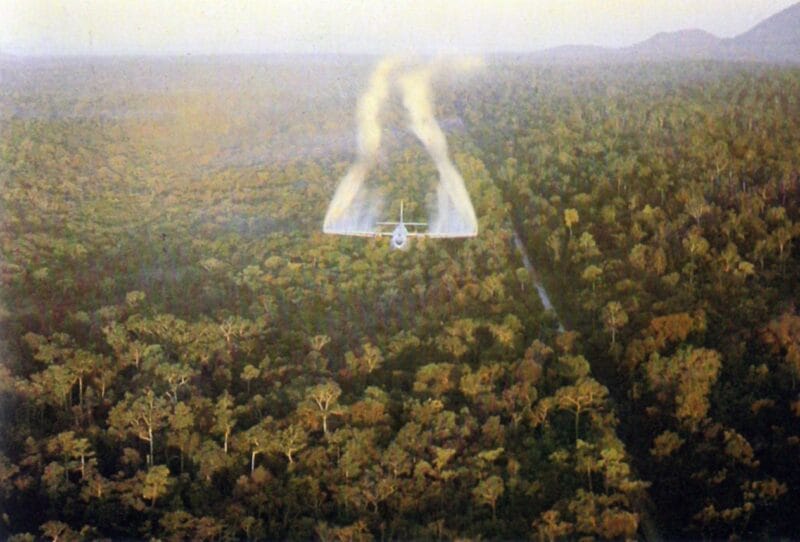
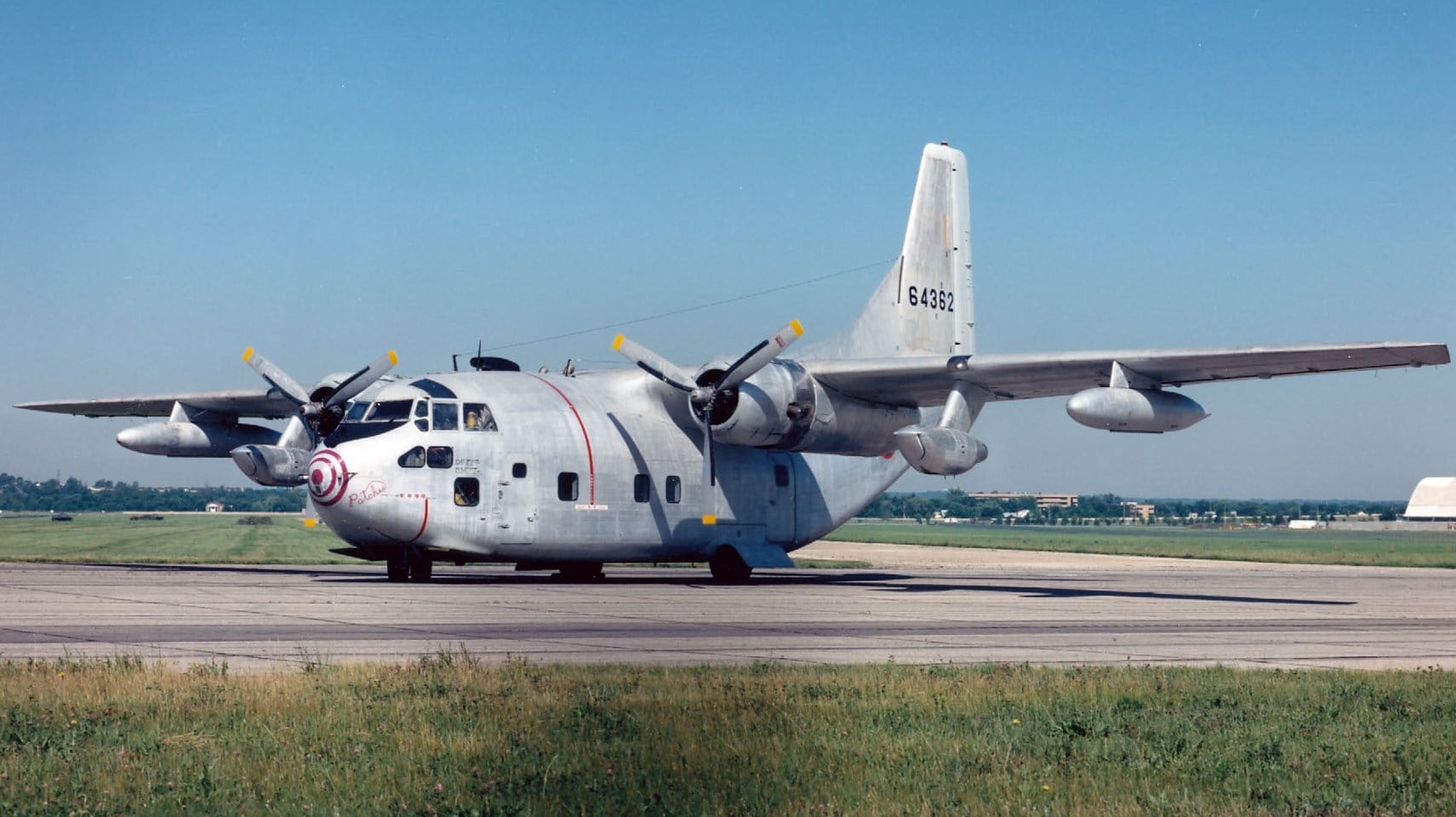
Activated in 1961 for Operation Ranch Hand, the SASF received six Fairchild C-123 Providers for modification into aerial sprayers. Inside the cargo hold of the Provider would be a 1,000 gallon tank connected to spray equipment mounted on the wings that could deliver the herbicides. To the surprise of the commander of the SASF, he found no shortage of volunteer pilots to fly the first Ranch Hand missions despite the proviso that they would wear civilian clothes, fly unmarked aircraft, be on temporary duty to Vietnam for extended periods of time and if shot down and captured, would not be acknowledged as USAF personnel.
Different Agents and Their Impact
There were several different herbicide options, each differing in the proportions of different chemicals present in the mix. Each option was given a color code name. Some of the options available included Agent White, Agent Blue, Agent Purple, but the most widely used option would become infamous- Agent Orange.
Effects and Expansion of Herbicide Use
Once the first six C-123 Providers were modified, they deployed to South Vietnam and arrived in-theater in January 1962. The aircraft fleet ebbed and flow with the war, peaking at 25 C-123s in 1969. Over 20 million gallons of Agent Orange would be sprayed over 6 million acres in South Vietnam. Unlike a lot of other military experiments in Vietnam that were failures, the use of Agent Orange did work in denying the Viet Cong jungle cover in strategic areas of the country.
Official US Air Force photograph
After a significant decrease in the number of ambushes on US Army/ARVN units in the first year of use, Defense Secretary McNamara authorized an expansion of Operation Ranch Hand to include areas of the Ho Chi Minh Trail used to infiltrate supplies and personnel into South Vietnam, and more significantly, to use Agent Orange for the destruction crops in Viet Cong strongholds to try and limit their food supplies.
Controversy and Termination of Operation Ranch Hand
The Ranch Hand effort expanded significantly in 1962 as a result as the C-123s wore South Vietnamese Air Force markings (and later in the war, full USAF markings). In fact, the first US aircraft shot down in Vietnam was a Ranch Hand C-123 on 2 February 1962, killing all three crew.
Health and Environmental Impact of Agent Orange
The first protests by North Vietnam were echoed by the Soviet Union and China in 1961 but met with a muted response by other nations. But criticism grew both in the United States and abroad as the program was expanded in 1962 to include crop destruction as the Viet Cong had successfully blended into the local population and as a result, the crops of many “friendly” South Vietnamese were also destroyed. By 1965 scientists in the United States were protesting the use of Agent Orange and the banner was subsequently picked up by the media and the anti-war movement of the day.
Long-Term Consequences and Legacy
Three years later, President Nguyen Van Thieu of South Vietnam felt that Operation Ranch Hand was counterproductive but his concerns were overridden by a 1969 report prepared by the American ambassador to South Vietnam with a committee he appointed that showed that the use of the three main herbicides, Agents Orange, Blue, and White, were not harmful. Ambassador Ellsworth Bunker’s report quite obviously had the opposite effect and further inflamed the controversy further. Finally, on 22 December 1970 Secretary of Defense Melvin Laird advised President Richard Nixon that any herbicide use should conform to delivery and use standards in place in the United States which effectively ended the use of Agent Orange in South Vietnam. The last Ranch Hand flight flew on 7 January 1971.
Since the end of Operation Ranch Hand, millions of dollars in claims have been paid out by the manufacturer of Agent Orange and the Veterans Administration for the deleterious health consequences of the widespread spraying of the herbicide for nine years. To this day health effects are still being seen in even in individuals a generation removed from those originally exposed to Agent Orange.
In fact, when the National Museum of the United States Air Force in Dayton, Ohio, was to put on display a C-123 Provider that had taken more battle damage than any other of its type, it was subject to a political and legal controversy by local environmentalists that resulted in the aircraft being sealed up for display despite the fact no traces of Agent Orange could be found in the airframe.
Similar in concept to the USSR’s shuttle-clone Buran, the US Space Shuttle went through many design iterations including a concept where jet engines could be attached to the space vehicle for ferry and/or powered approaches. The concept proved unfeasible and too costly. Avgeekery contributor JP Santiago tells us why.
As design work by various aerospace companies began on the Space Shuttle program in the late 1960s, it was a given that the Orbiter would have its own jet engines. Having its own air breathing engines offered three advantages- they would allow atmospheric flight testing much like any other aircraft was tested and pilots could practice landings in the run up to an orbital mission. The engines also facilitated ferry flights, repositioning the Orbiter amongst various facilities (landing, launch, overhaul, etc.). Having its own jet engine propulsion also gave the Orbiter cross range capability upon return from orbit. Some designers envisioned the Orbiter rendezvousing with a tanker for additional jet fuel. But in the ascent and in orbit, jet engines and fuel for those engines was dead weight that subtracted from potential payload. Even if designers went with an Orbiter design that was unpowered on its landing, the 1970 and 1971 design studies prominently featured a fully reusable two stage Space Shuttle with a big flyback booster that would have to have its own jet engines. Some of the designs for the flyback booster were massive with a need for as many as twelve jet engines. Soon the design of the flyback booster itself began to take on technical challenges that rivaled that of the Orbiter design itself. The weight of up to twelve jet engines and the necessary jet fuel cut into the payload of liquid hydrogen and liquid oxygen for the booster’s rocket engines. Many of the flyback booster designs would need approximately 150,000 lbs of jet fuel (for comparison, a Boeing 777-200ER has a fuel capacity of roughly 300,000 lbs). Consideration was then given to using liquid hydrogen as fuel for the jet engines which would cut out the need for jet fuel tanks. In June 1970, NASA issued contracts to GE to study the feasibility of using liquid hydrogen in the F101 engine being developed for the B-1 bomber. Pratt and Whitney also got a similar contract to study the use of liquid hydrogen fuel in the F401 engine, the planned naval derivative of the USAF’s F100 engine planned for the F-15 Eagle. Both companies showed that liquid hydrogen fueled jet engines saved about 2500 lbs of weight per jet engine compared to conventionally-fueled jet engines. The weight savings was modest at best.
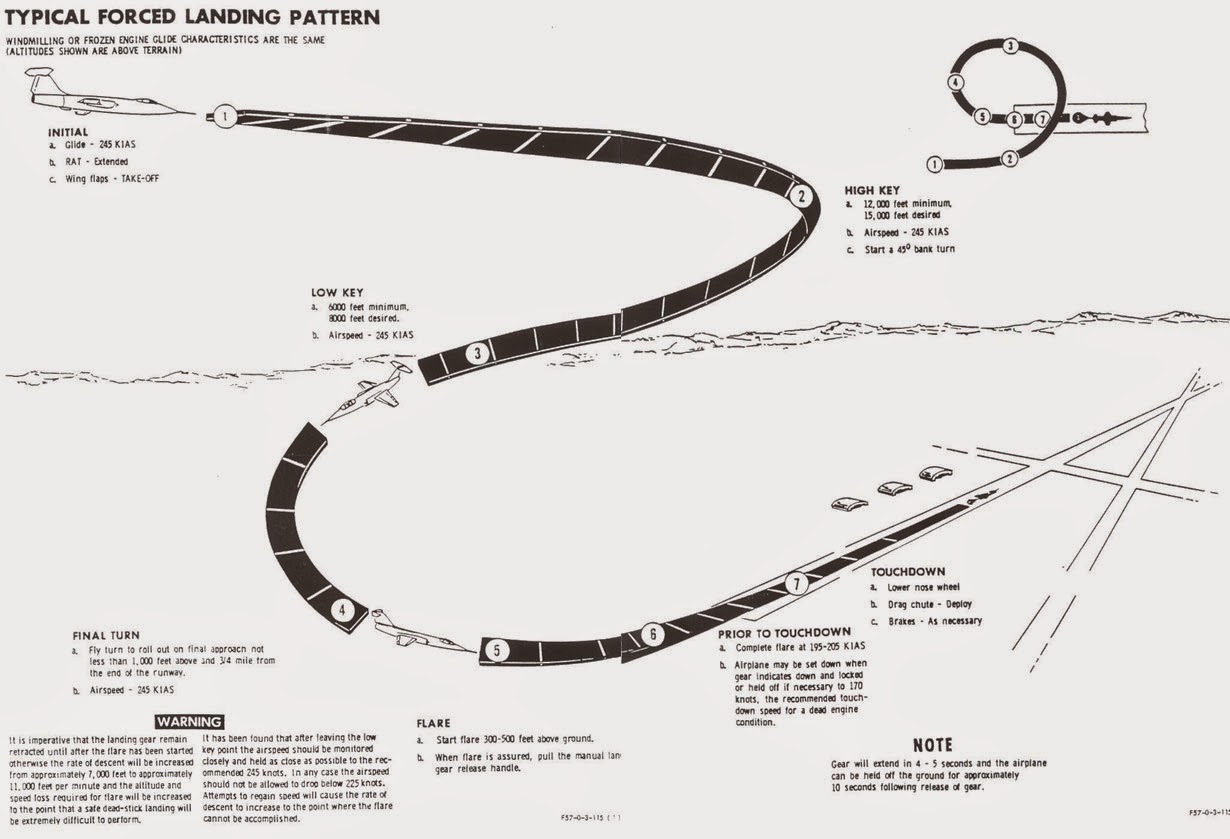
A typical high key pattern for an unpowered approach to landing.
At the same time these studies were going on on how to save weight with Orbiter and flyback booster-mounted jet engines, with NASA there was a group at the Flight Research Center at Edwards AFB where unpowered landings were routine for many high speed research aircraft going back to the X-1 (the X-15 program being the most recent one at the time) and the graduates of the co-located Aerospace Research Pilot School had as a requirement that students demonstrate proficiency in unpowered landings using the school’s Lockheed F-104 Starfighters which were throttled down to idle for the practice sessions. Even more demanding were the unpowered landings made by the lifting body program aircraft that lacked wings and derived their lift from their tubby fuselage designs. Regardless of what sort of aircraft was used, USAF test pilots and the NASA-FRC pilots used what was called “energy management” where they traded altitude for airspeed on the descent and used turns to bleed off speed in preparation for final approach. The first step in unpowered landings was the arrival at the “high key” which was high above the touchdown point. From the high key, a gradual 180 degree turn was made that allowed speed reduction and descent to the “low key” which was usually abeam the touchdown point. From the low key, the turn continued allowing more speed to bleed off and the descent to continue until lined up for final approach. If at any point the speed was excessive, speed brakes or gentle S-turns could be used to get down to the necessary airspeed. The lifting body pilots found that on final approach, diving at the runway touchdown point 15 degrees or more improved their accuracy as the speed improved the stability and the speedbrakes could be used to moderate the speed build up on final approach. An assessment by one of the experienced lifting body pilots in September 1970 showed that in 30 landings on a 10,000 foot runway from altitudes as high as 90,000 feet and speeds as high as Mach 2, the dispersion of the landing points was only 250 feet.
However, the astronaut office in Houston at the Manned Spaceflight Center headed by Deke Slayton felt that unpowered landings for the Orbiter were too risky. Slayton was concerned that the test pilots were more proficient at unpowered landings than his astronauts would be, especially if they were returning from a 7-10 day orbital mission. The astronauts’ views carried considerable weight for good reason and it took the USAF to swing the design work in favor of unpowered landings.
I had posted previously that the Space Shuttle program’s development phase was taking place during a period of budget austerity. One of the keys to navigating the budgetary climate of the day was to be sure to secure as much political support as possible since Congress determined the program budget. But in 1970 the program had some close calls, narrowly avoiding funding cuts in both the House and Senate. The Air Force offered to lend its support as it saw opportunity in the Shuttle program to launch heavy reconnaissance satellites. But NASA had baselined the Orbiter design at the time with a 25,000 lb payload to orbit. The USAF wanted to put its heavy reconnaissance satellites into polar orbit and the Orbiter needed a payload capacity of 40,000 lbs. That much payload weight into polar orbit (and unable to take advantage of the Earth’s rotation for additional boost) was equal to a 65,000 lb payload launched for the Kennedy Space Center. NASA informed the USAF that the payload had to be baselined at 25,000 lbs due to the weight of the jet engines and their fuel. But it was apparent from the Congressional battles that NASA needed a strong ally like the USAF, so the jet engines were dropped from the Orbiter design and that allowed the payload capacity to orbit to meet the USAF requirements.
The idea of onboard jet engines didn’t end, though. NASA shifted towards the idea of removable kit that could be used for flight testing, ferry flights, and for return from orbit if the payload wasn’t maxed out. This also coincided with the 1971-1972 time frame when the flyback booster was dropped as too much of a technical risk and the Space Shuttle began to look more like its final design- an Orbiter with an external tank and solid rocket boosters in what was called the TAOS configuration- Thrust Assisted Orbiter Shuttle. The significant weight savings by going to a TAOS configuration also helped cut development risk as there was a considerable amount of experience already with solid rocket boosters and large external tank structures to hold cryogenic fuels.
The test pilots at NASA-FRC persisted in their opinion that jet engines were completely unnecessary in the Orbiter design. They had their long experience of over 10,000 unpowered landings since the X-1 program as their proof, but the astronauts insisted that the Orbiter was a much bigger aircraft than many of the X-planes. Another round of tests then were held by NASA-FRC, this time using their B-52 Stratofortress carrier aircraft. Set up in a high drag configuration with the engines at idle, pilots successfully and accurately landed the B-52. NASA-FRC then got some lifting body pilots who had never flown anything as big as the B-52 and had them fly the bomber through a simulated unpowered landing using energy management. They were able to land successfully and when the same pilots were asked to land the B-52 using a conventional powered low angle approach, none of them were able to do so. The test pilots the FRC even brought into two United Airlines pilots to fly the B-52 in simulated unpowered landings and they had no issue doing so, reporting that such landings were much easier than conventional landings. The test pilots then followed up the B-52 tests with the same tests using NASA’s Convair 990 which could simulate the Orbiter aerodynamics on landing.
NASA finally got agreement to go to exclusively unpowered landings on return from orbit for the Shuttle Orbiter, but the jet engines still didn’t go away. At the time of Rockwell’s award in 1972, the Orbiter design featured two engines that deployed from the payload bay and two more engines that could be mounted on struts. Less than six months later, the Orbiter design dropped the internally mounted jet engines completely and they were to be mounted as a kit on the flat underside when needed for flight testing and ferry missions. It finally took the ferry range to kill the engines completely from the Orbiter design. The Orbiter was similar in size to a Douglas DC-9 but had twice the weight. It had a lot of drag since it wasn’t optimized for atmospheric flight and the delta wing was highly loaded. With five jet engines mounted in pods on the underside and tank of jet fuel in the payload bay, the Orbiter had a ferry range of only 500 miles. With Space Shuttle sites across the nation and contingency fields overseas, a 500 mile range was simply unacceptable. NASA looked at aerial refueling during ferry, but this added complexity to a design that was already experiencing cost overruns. In February 1974, NASA deleted the jet engine requirement completely. As a result, both for flight testing and ferry flights, the Orbiter would need a carrier aircraft, but fortunately that was a lot more straightforward a development process!
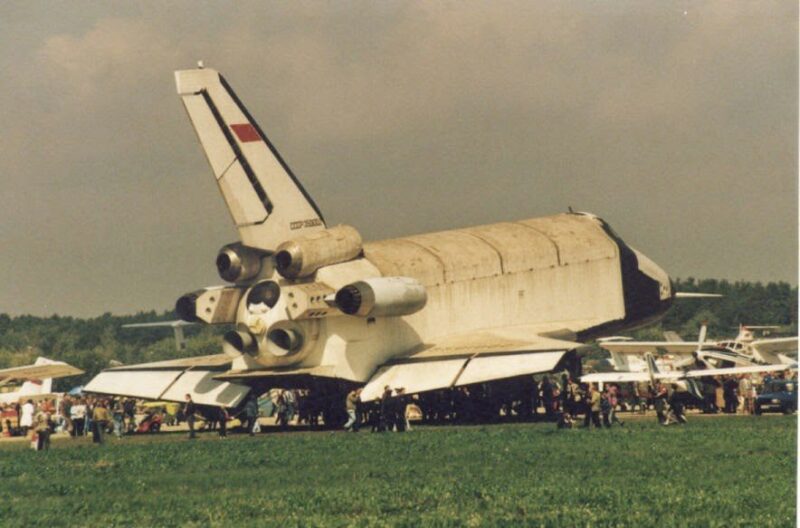
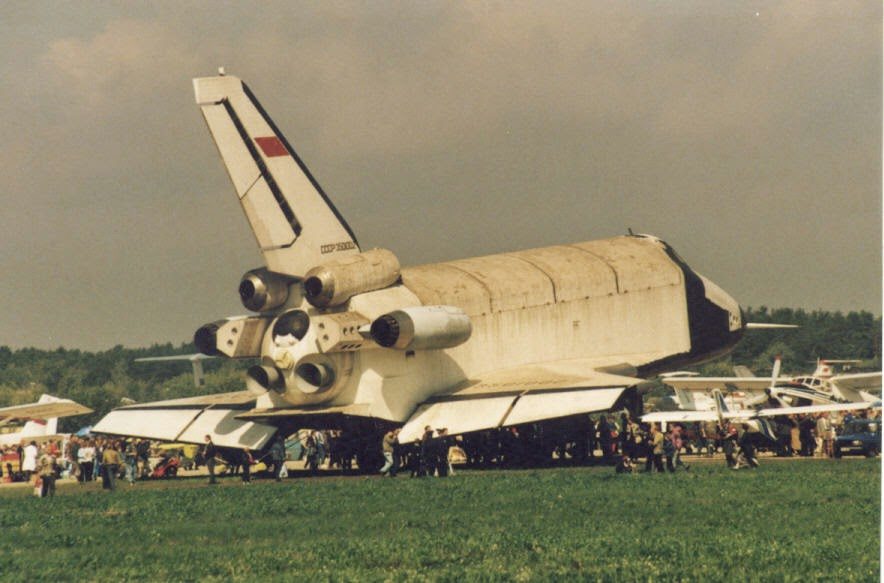
Interestingly in the Russian Buran Shuttle program, there was an aerodynamic test analog designed OK-GLI that made 25 atmospheric test flights with four Lyulka/Saturn AL-31 jet engines mounted in nacelles in the aft fuselage. A fuel tank sat in the payload bay. The AL-31 is the jet engine that is used on the Sukhoi Su-27 Flanker. Nine taxi tests and 25 test flights were made using the Buran analog from December 1984 to December 1989. The engines were used to takeoff and then were throttled back on the descent to landing. All of the flight testing took place at the Baikonur Cosmodrome. The operational Buran, however, would not have jet engines at all and the Antonov An-225 Myria was developed as the carrier aircraft to ferry the Buran orbiter.
JP Santiago is a proven #avgeek, artist, and an excellent writer. He regularly blogs on his site Tails Through Time. He also runs the aviation Facebook fan page The Chicken Works that showcases his artwork. We are honored to have him as a guest writer on our site.
If you are interested in writing for Avgeekery.com, please send us a message on our Facebook page.
When You Need the Very Best, You Call the Night Stalkers
Conventional wisdom in aviation history points to the tragic debacle at Desert One in Iran during the hostage rescue mission as the watershed moment that culminated in the formation of the US Special Forces Command (SOCOM). While I do think that the story of the failed 1980 Iranian hostage rescue mission should be held near and dear to every military leader of this nation, there was actually someone else who sounded the warning bells three years before that fateful day in 1980. His name is legendary among US special forces personnel to this day, but I’d bet hardly any of us enthusiasts had ever heard of his name: Mike Grimm.
night stalkers. image via DVIDS
Long before he would make his mark on the history of US special forces, Mike Grimm was already a decorated hero of the Vietnam War when as a second lieutenant in 1968, assumed command of his platoon and managed to fight off through the night two entire companies of Vietcong before they could be extracted by helicopter from the battle zone. He stayed on with the US Army after the end of US participation in the war in 1973, eventually becoming a helicopter pilot and stationed in Hawaii in 1975. But serving in Hawaii was boring for Grimm, when the most serious decision they ever had to make was whether he would fly clockwise or counter-clockwise around Oahu. In 1976, the world was electrified with the stunning Israeli raid at Entebbe, Uganda, to rescue the passengers of a hijacked Air France flight. In less than one hour, Israeli commandos stormed the Entebbe Airport, killed nearly all the terrorists, rescued nearly all the hostages and only losing one commando. And they also manged to destroy most of the MiGs of the Ugandan Air Force in the process.
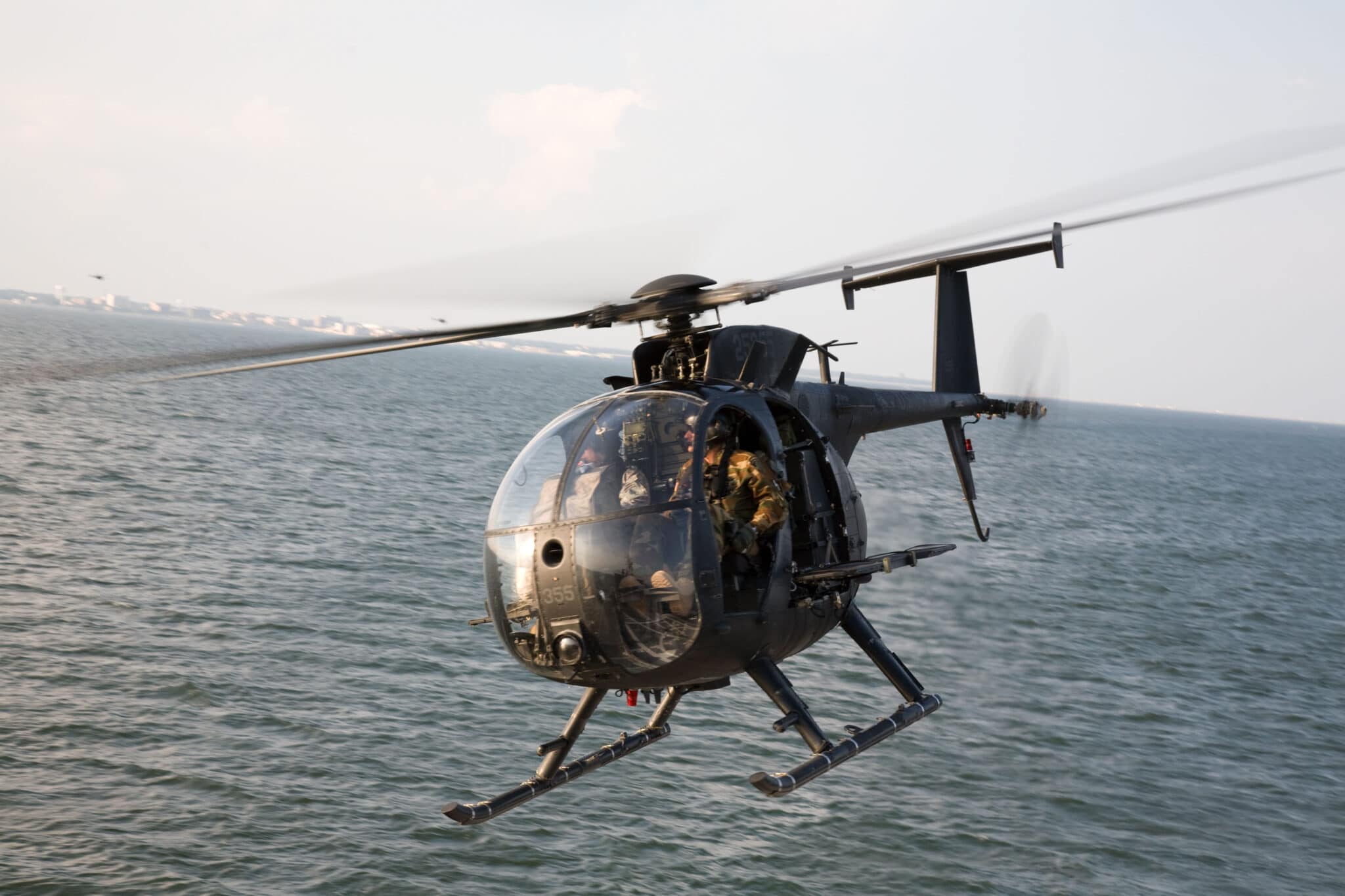
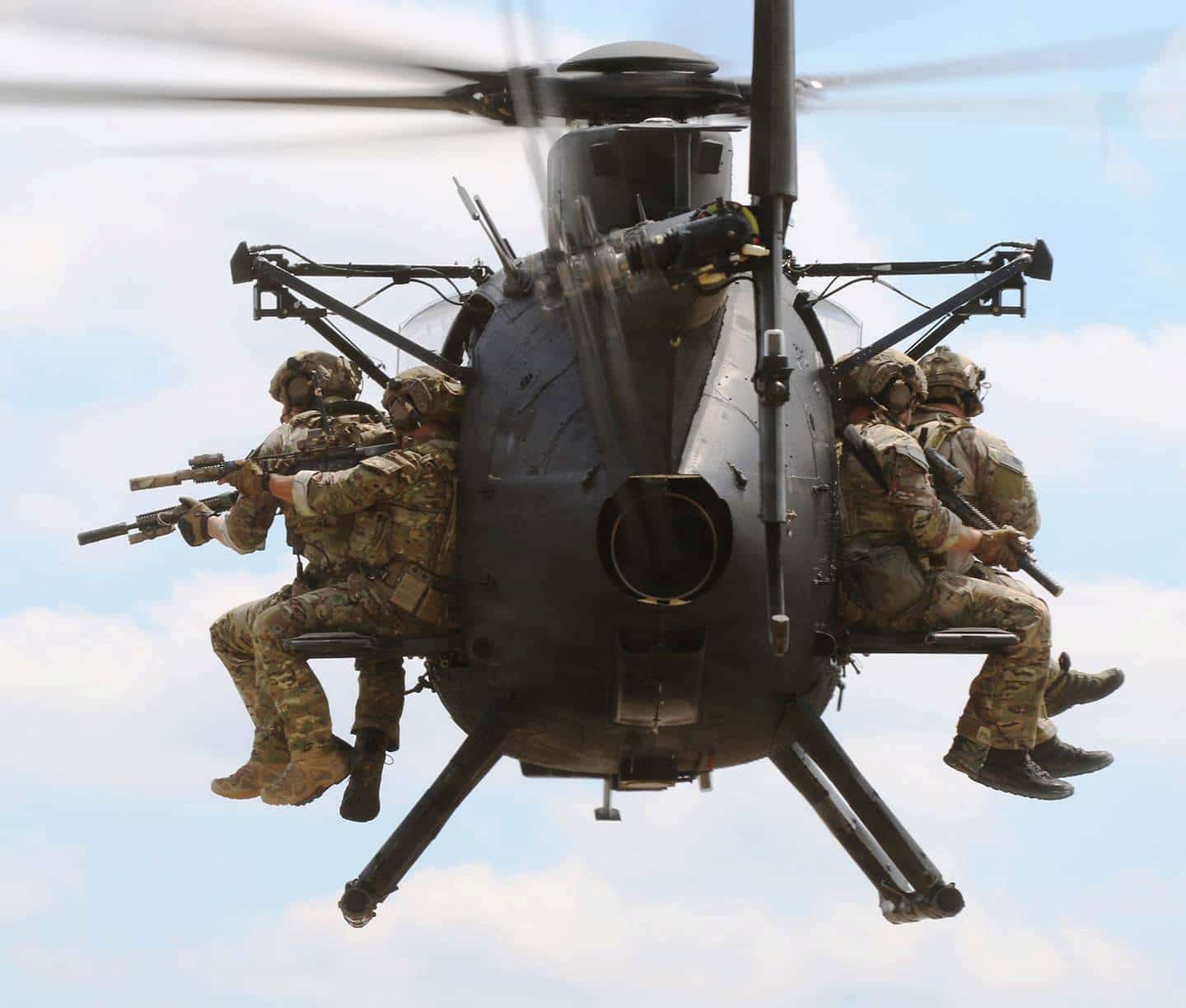
The MH-6 Little Bird, only found in the 160th Special Operations Aviation Regiment, is a light utility helicopter modified to externally transport several combat troops. With these quick, manueverable aircraft the Night Stalkers are capable of conducting infiltration, exfiltrations and combat assaults in virtually any type of terrain or environment. The versitility of the Little Birds also lend them to a variety of other missions, such as reconnaissance.
Mike Grimm realized that the United States lacked the capability to do what the Israelis managed to do- project power over 2,000 miles into hostile territory and effect a hostage rescue with minimal losses. Austerity was the key word in the post-Vietnam defense budget and even training exercises were canceled to save money. Once he had become the Divisional operations officer in 1977, he decided to use the Division’s entire budget for training on a single exercise. He called it an Emergency Deployment Readiness Exercise (EDRE) and in the training scenario, his men and pilots would have to fly 200 miles to the island of Hawaii where a select group of soldiers playing terrorists were holding hostages. Grimm’s men would have rescue those hostages with minimal losses. The tactics he developed for the exercise would be the blueprint for all future missions to come, even to this day.
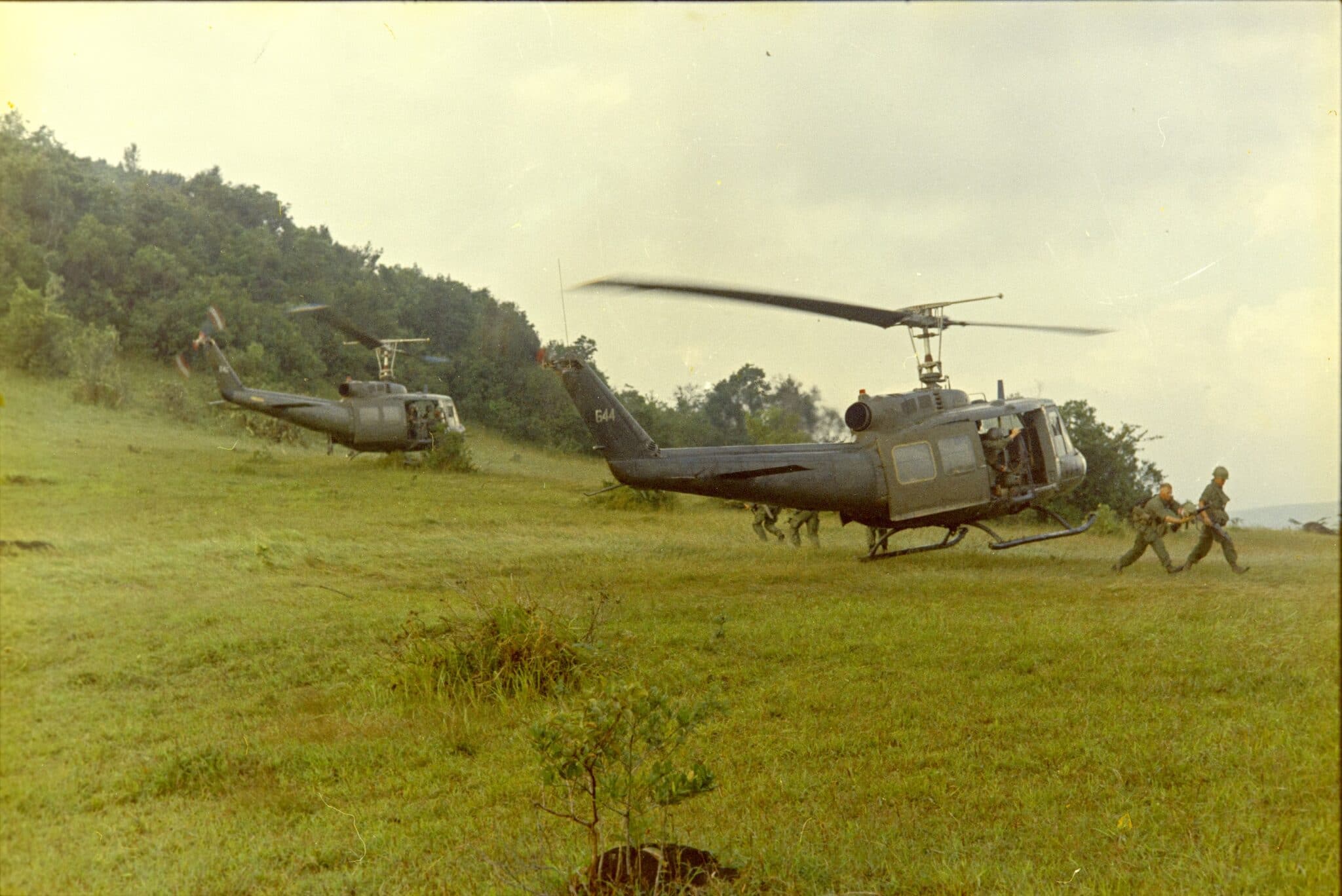
UH-1Ds in vietnam. image via national archives
Men from the First and Fifth Infantry Battalions at Schoefield Barracks on Oahu were selected to be the “raiders.” Their helicopter element consisted of 10 Bell UH-1H Hueys and two Bell AH-1G Cobra gunships from A Company of the 25th Aviation Battalion. After an alert and planning period, the men and their helicopters flew from Schofield Barracks to Hickam AFB to be loaded aboard USAF Lockheed C-141A Starlifters to simulate strategic deployment. The men were flown to Hilo Airport which would function as the “intermediate staging base” for the exercise. On 14 November they arrived in Hilo where the helicopters were readied for flight and they flew onward to Bradshaw AAF in the Pohaku Training Area in the center of Hawaii. This would be their “forward operating base” for the mission exercise.
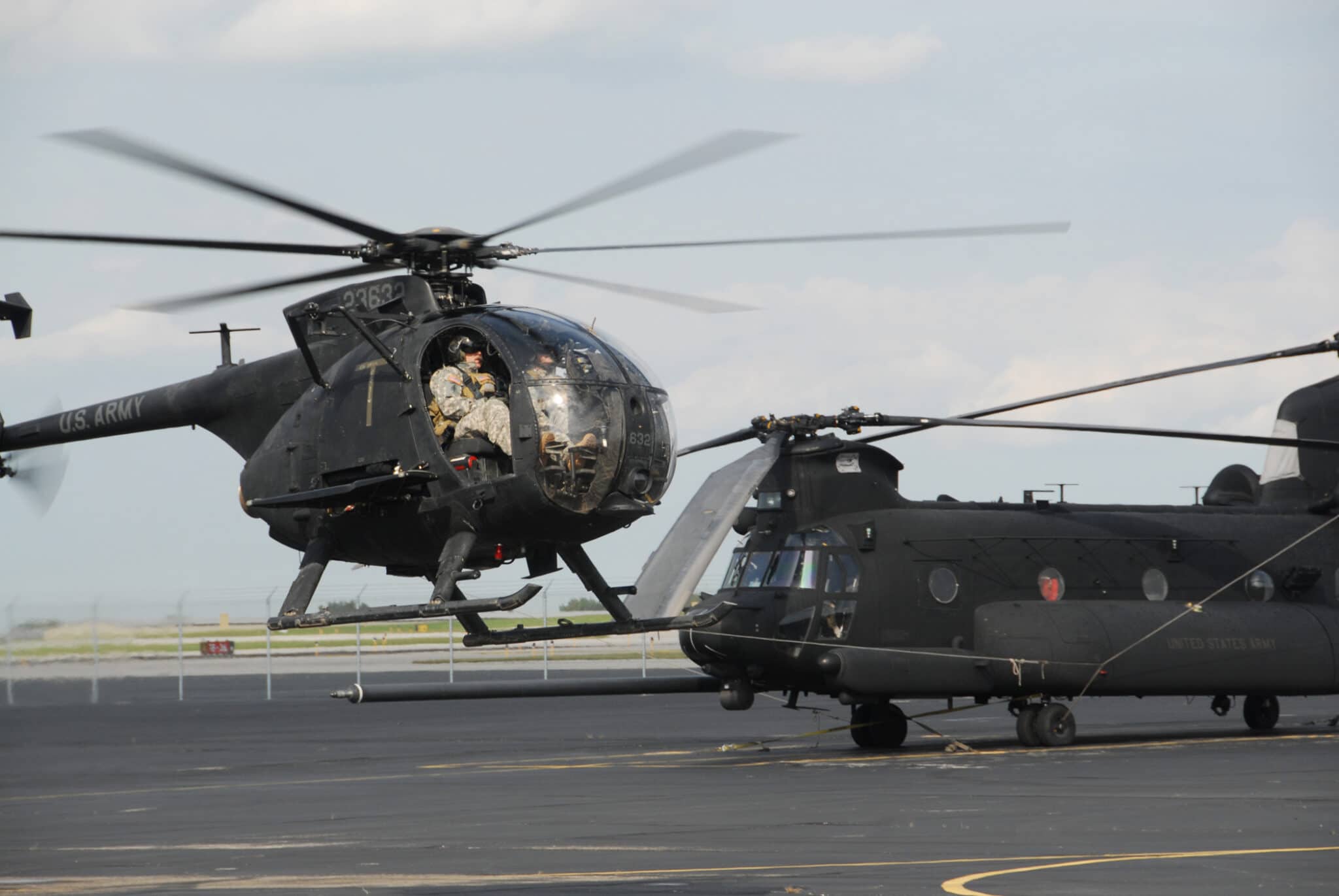
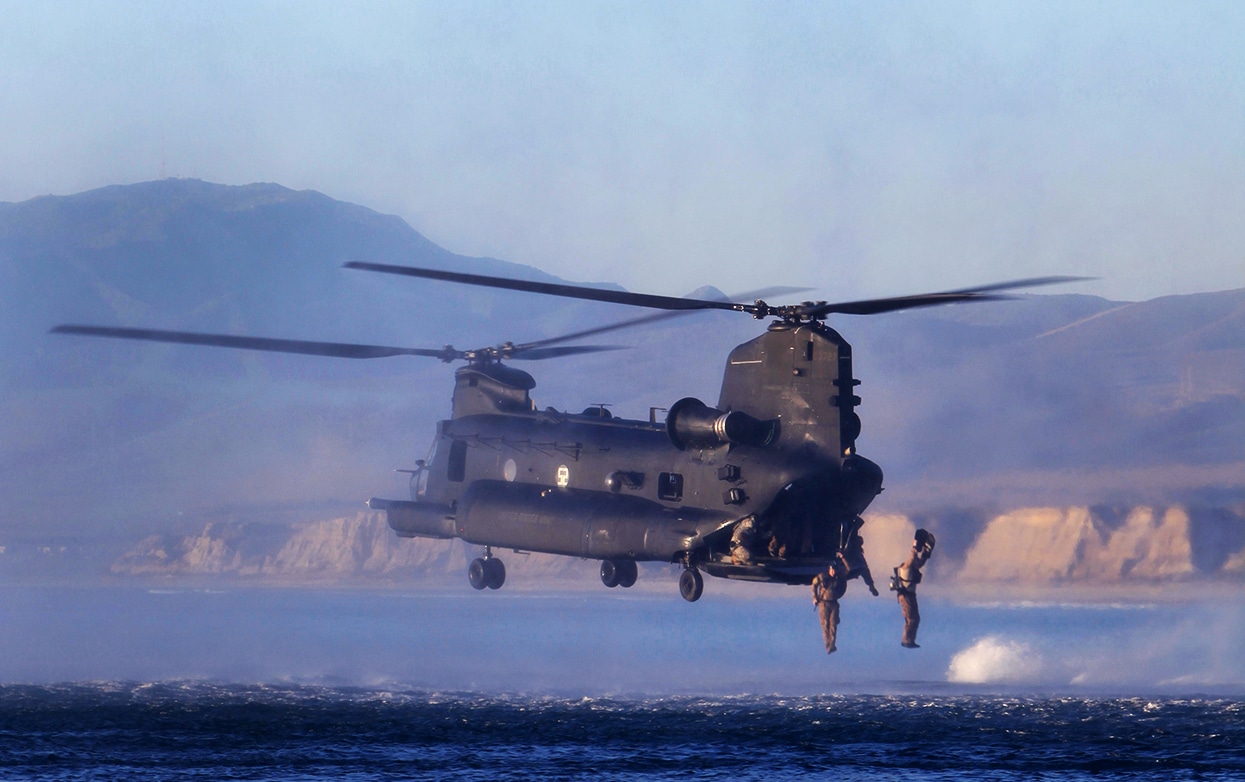
Marines with the 1st Marine Special Operations Battalion, U.S. Marine Corps Forces, Special Operations Command helocast from a CH-47 helicopter during Visit, Board, Search and Seizure (VBSS) training with the 160th Special Operations Aviation Regiment near Camp Pendleton, Calif. Dec. 11. VBSS, which consists of maritime vessel boarding and searching, is used to combat smuggling, drug trafficking, terrorism and piracy.
(U.S. Marine Corps photo by Cpl. Kyle McNally)
The “hostages” were being held in the fire station of Waimea-Kohala Airport just 30 miles north of their forward operating base. The raid would be carried out at dawn as no night vision equipment was available. At ten miles from the target, the “terrorists” heard the team coming and “executed” the hostages. When Grimm’s raiding force landed, they were wiped out to the last man.
The next day at Bradshaw AAF the After Action Review took place and everyone but Mike Grimm thought their Army careers were over when the Division commander, Lieutenant General Willard Scott arrived. He began the debriefing with the statement “This exercise was a really bad idea.” As he continued for several minutes on the inappropriateness of using helicopter-borne infantry on anti-terror operations. “Our Army will never enter into this area. This is NOT our role.“
At that moment, Mike Grimm stood up and interrupted his commander.
“Respectfully, sir, that is NOT correct.” Here he was, a newly minted major, holding a two-star general to task. “Not only do we need to create this capability, sir, but if we don’t, we are going to find ourselves at some point in our history embarrassed as a nation!“
Little bird with operators. image via dvids
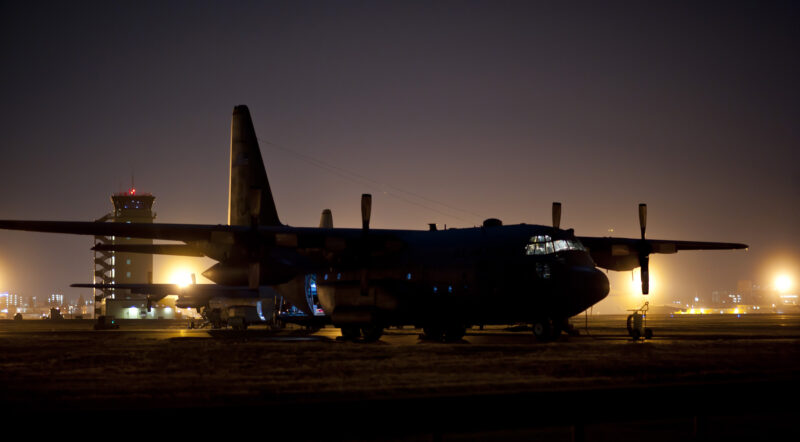
Three years later, on the morning of 25 April 1980, in the Iranian desert, that embarrassment took place. The wrecks of five Marine RH-53D Sea Stallions and one USAF C-130 Hercules lay smoldering in the desert with the bodies of eight American servicemen. That year Mike Grimm was the commander of A Company of the 229th Aviation Battalion of the 101st Airborne Division where he was working with a handpicked group of men to transform the Hughes OH-6 “Loach” into what would become the MH-6/AH-6 “Little Bird” for night time special forces missions. On the night of 7 October 1981, Mike Grimm was flying one of the unit’s MH-6s at low level over the Cumberland River when he hit the side of a power line tower and was killed instantly. One week later, in memorial to Mike Grimm, the new 160th Aviation Battalion uncased its colors. It was the birth of the Army Special Force’s aviation element (Special Operations Aviation Regiment, or SOAR), the “Night Stalkers”.
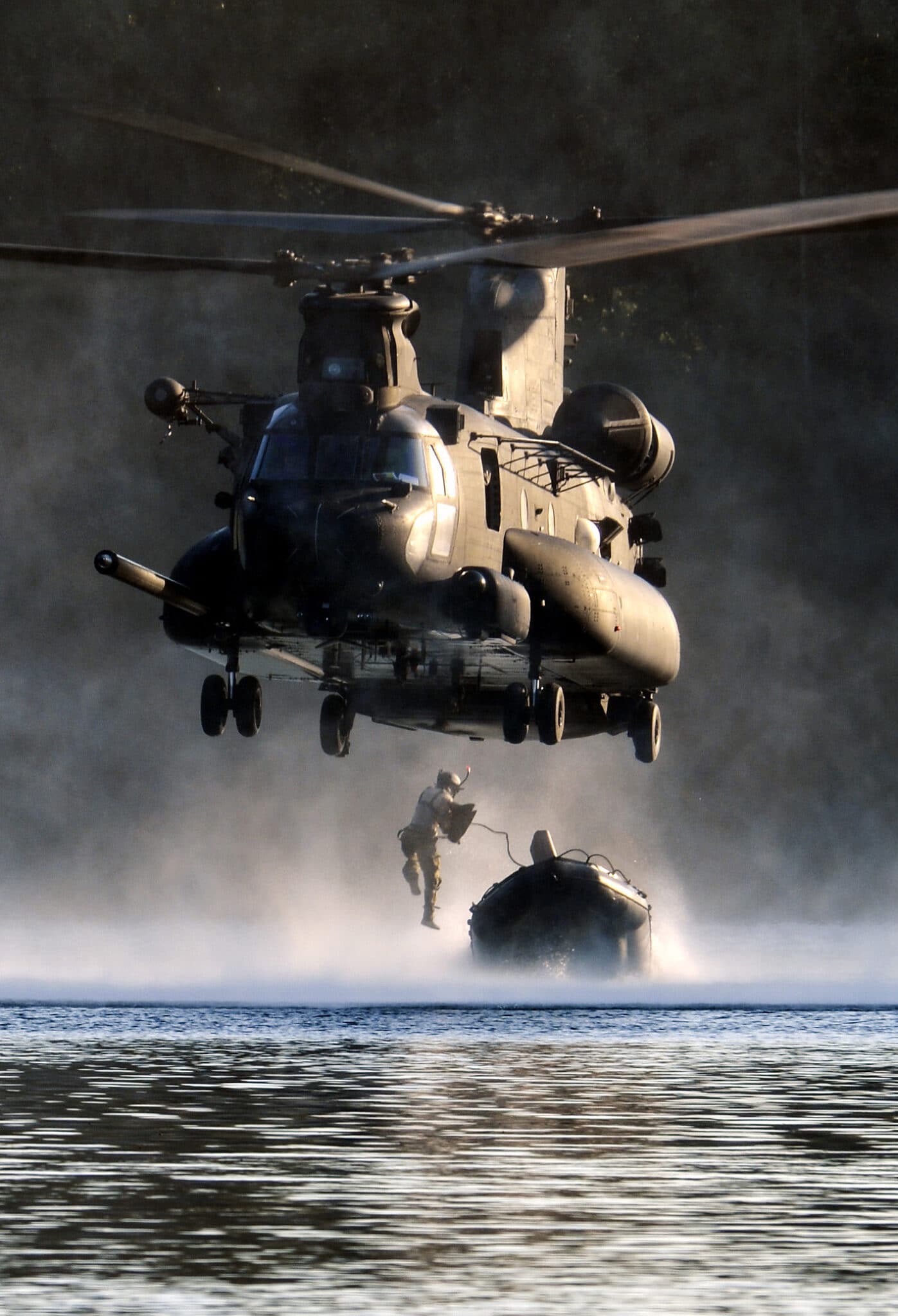
night stalkers MH-47 chinook. image via dvids
Source:The Night Stalkers: Top Secret Missions of the US Army’s Special Operations Aviation Regiment by Michael J. Durant and Steven Hartov. GP Putnam and Sons, 2006, p33-64.
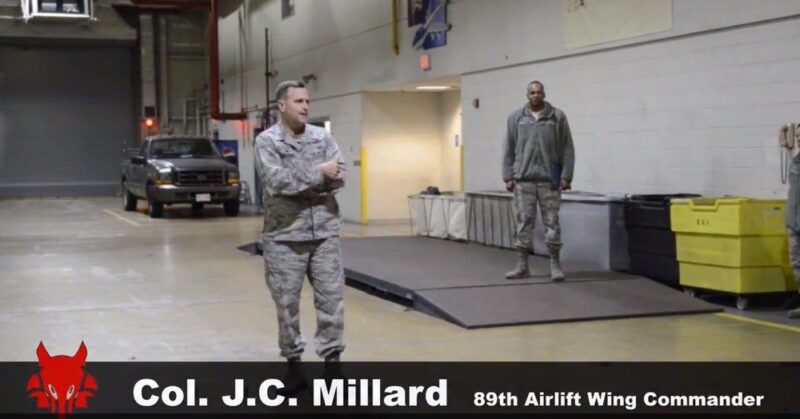
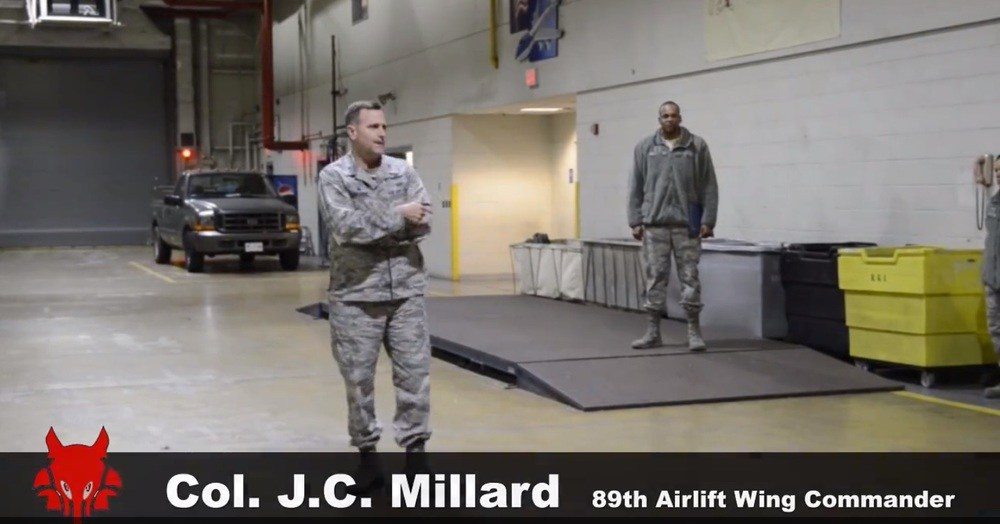
Col J.C. Millard is the commander of the 89th Airlift Wing at Andrews Air Force Base near Washington DC. His wing is home to Air Force One, the VC-25, along with the C-32, C-37, C-40 and other aircraft that fly VIP personnel. Recently, he went to a support squadron to recognize one of his high-performing airmen by presenting a coin. It is an Air Force tradition to present a coin to a subordinate as a way to recognize outstanding performance. After Col Millard spoke of SSgt Banks’ hard work to the assembled crowd, he reached in his pocket to give him a coin. Only Col Millard’s pockets were empty. SSgt Banks is stunned by what happens next…
Col. J.C. Millard goes out to coin a SSgt, yet forgets to bring along a coin …… see what happens next.
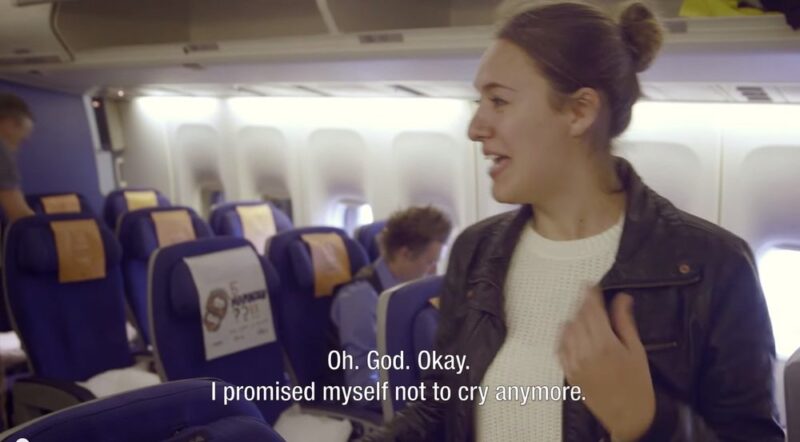
KLM has really mastered social media lately. This week they ran a very successful campaign called #happytohelp where they helped as many passengers as possible with various dilemmas. Earlier this year, they also posted a viral video of a dog (yep, a dog) who delivers lost goods to passengers. Last week’s video was a neat campaign to deliver love notes on the passenger’s assigned seat from family and friends when they board the airplane. It’s thoughtful and refreshing to see a creative campaign that humanizes air travel. Take a look.
It’s no secret that businesses have to evolve to meet new market challenges. The airline industry is no exception. Oil spikes, 9/11, security scares and industry consolidation have forced massive changes in how airlines do business. For the customer though, the experience usually just becomes crappier. Leg room shrinks, service takes a back seat to profit and the one-time promise of free bags (even free carry-on bags) is nearly extinct. We’ve searched the internets to find the Top 3 ironic airline commercials. You’ll soon realize that airlines flip flop on their policies nearly as often as politicians.
1.) JetBlue touts free baggage
Just this week JetBlue announced that they will join the rest of the airline industry (Southwest being the lone holdout) and begin charging for checked luggage. They also announced that they would shrink legroom and add up to 15 more seats per airplane. While it’s not unexpected, it’s ironic that they attempted to differentiate themselves in a 2011 commerical by mocking other airlines as actors said they ‘felt cheated’ by bag fees. Oh, have times changed.
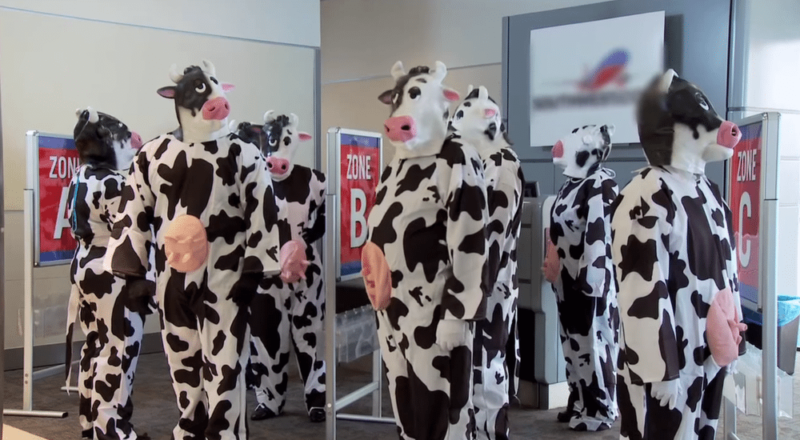
2.) AirTran mocks the Southwest ‘Cattle Call’
Back in 2010, AirTran and Southwest were engaged in a David vs Goliath battle to win over customers on the always competitive east coast routes. Southwest had made great inroads into territory that was typically the domain of discount carrier AirTran Airways. In an attempt to differentiate themselves, AirTran began a series of commercials aimed squarely at Southwest Airlines. They mocked the Southwest Airlines open boarding policy. Ironically, Southwest and AirTran announced a merger less than six months later. In just a few weeks from now, AirTran will disappear from the skies forever along with their much touted assigned seating and business class. The ‘cattle call’ remains.
3.) American removes seats to make passengers happy
Back in 1999, American Airlines was rolling in the dough. In an effort to make their product even better, they begin removing seats to make the cabin more comfortable for passengers. It was called “More Room Throughout Coach.” The concept was a failure. American couldn’t make money with that policy. Passengers weren’t willing to pay enough of a premium for the extra space. A couple of years later, American reversed its policy and added seats. Some jokingly called it ‘Less Room Throughout Coach”. American also started charging for checked bags, took away free food (even on long flights to Hawaii), added massive ticket change fees and cut salaries for workers. None of it worked. American eventually filed for bankruptcy in 2011 and later merged with US Airways. While some amenities have returned for high paying customers, coach passengers are about to get even more cramped as American announced that they will add even more seats to their main cabin by early next year.
Drones have always been both a mixed blessing. On one hand, they are amazing tool that can put cameras in places that ten years ago would have taken a helicopter or even a spy plane. They aren’t without risks though. There are serious concerns about the safety of drones, especially when operated over densely populated areas and near airports. Just this weekend, there was a news story about a drone flying too close to an ATR-72 on approach in England. It was close enough that the pilot felt threatened and filed a formal report to express his concerns.
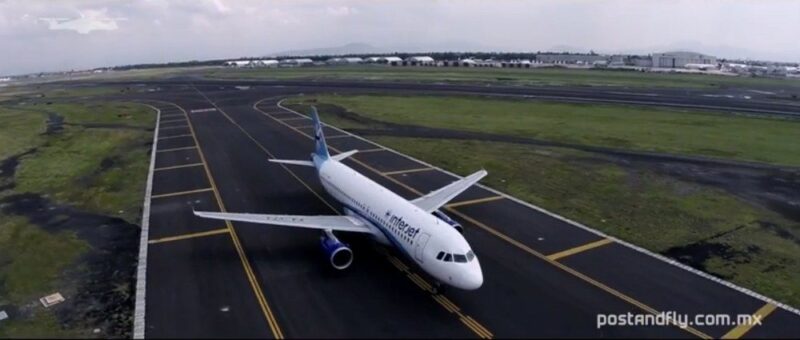
The video below is filmed at Mexico City International Airport. The video isn’t taken from a rogue drone that captured closeup video of jets near the airport though. Instead, it is a video made with the approval of the airport and applicable Mexican authorities. It is a stunner. It is beautiful. And it’s footage that would probably never be approved to be filmed in the US under current FAA restrictions on unmanned aircraft. What are your thoughts? Do you think this type of videography is safe near airports if its well coordinated? Or is it something that just isn’t worth the risk?