The Space Force introduced their official song today at the 2022 Air & Space Forces Association Air, Space and Cyber Conference in National Harbor, Maryland. The song titled “Sempra Supra” is named after the USSF motto adopted when the force was enacted back in 2019.
The song was commissioned at the onset of the Space Force. It was cowritten and produced by Gen John “Jay” Raymond and former Air Force band member James Teachenor.
The song makes reference to the Guardians, which like airmen in the Air Force, is what Space Force members refer to themselves as. It also alludes to the fact that they are “guardians beyond the blue”, a likely nod to the Air Force from which the service is still closely tied.
The full lyrics are below: We’re the mighty watchful eye, Guardians beyond the blue, The invisible front line, Warfighters brave and true. Boldly reaching into space, There’s no limit to our sky. Standing guard both night and day, We’re the Space Force from on high.
Britain and the world bid farewell to Queen Elizabeth II on Monday – a spectacular bookend to a 10-day period of mourning following her death.
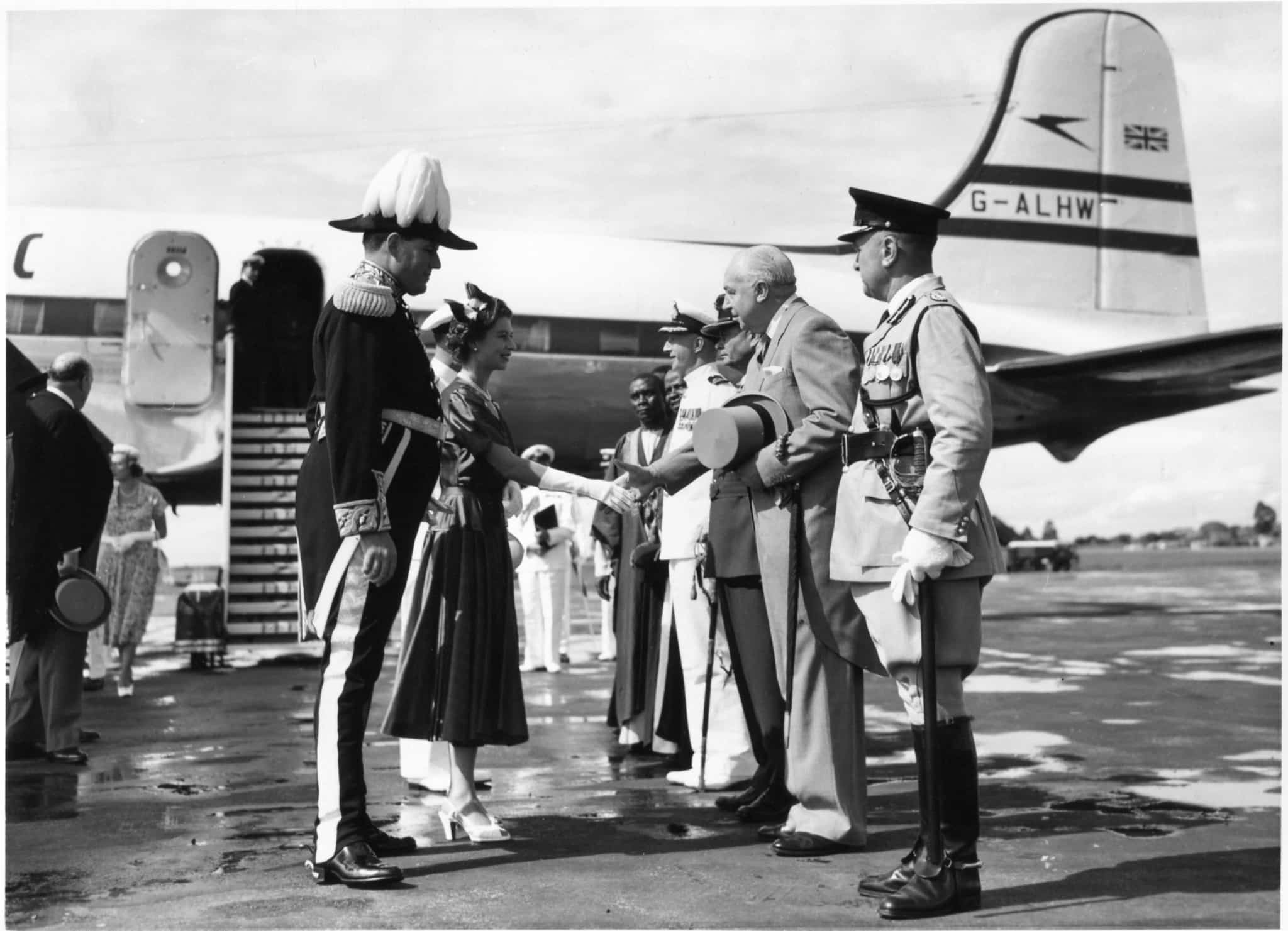
Amid the pageantry, remembrance, and majesty following The Queen’s death on 8 September, the aviation world has also felt the effects of the end of an era. A generation has passed since the world has witnessed a spectacle like this. Indeed, when young Princess Elizabeth acceded to the throne in 1952, air travel was still very much in its infancy.
A BOAC Canadair Argonaut | IMAGE: British Airways
As Queen, she witnessed Britain’s and the world’s remarkable transformation into the modern society we all live in today. In fact, when she took the throne in February 1952, the world hadn’t even seen its first commercial jet service.
However, it wasn’t long until commercial aviation entered the jet age. Not even three months after Elizabeth became Queen, the British Overseas Aircraft Corporation (BOAC) introduced the de Havilland Comet 1A. On 2 May 1952, the 44-seat Comet flew from London to Johannesburg, South Africa, thus becoming the world’s first passenger jet flight.
Queen Elizabeth’s Love of Concorde
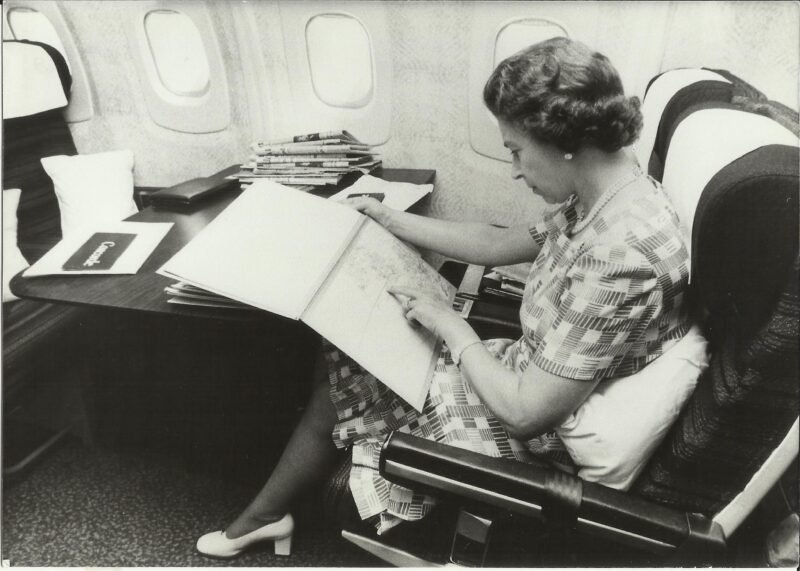
Through The Queen’s seven-decade reign, she witnessed (and experienced) remarkable advances in aviation technology and the way the world travels. None, however, could compare to what many would consider the pinnacle of British aviation – the Concorde.
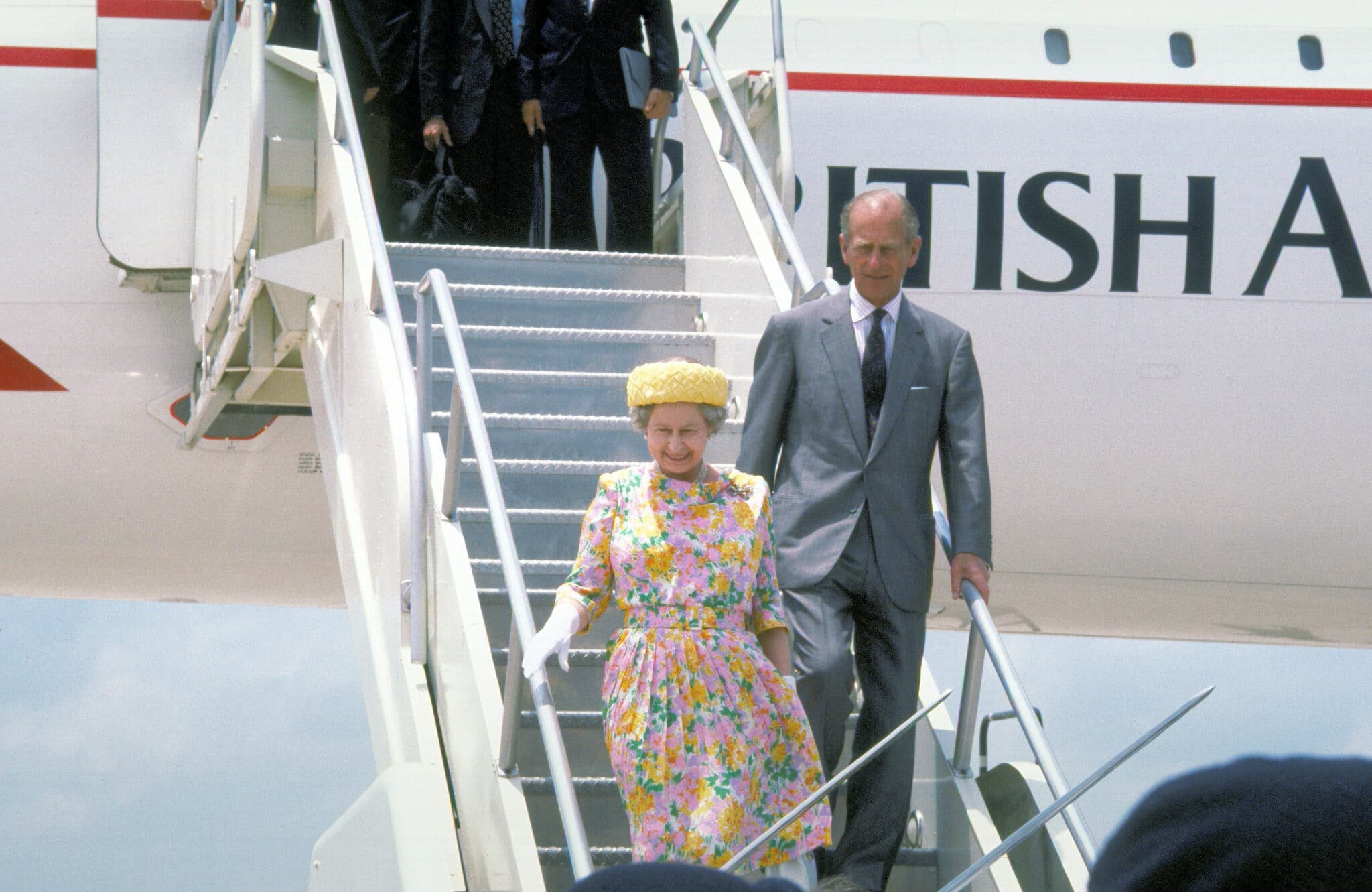
England’s Queen Elizabeth II and her husband, Prince Philip, Duke of Edinburgh, disembark from a British Airways Concorde supersonic transport aircraft upon their arrival for a royal visit to the United States in 1991 | IMAGE: United States Government
Queen Elizabeth flew Concorde for the first time on 2 November 1977 on a flight to London from Grantley Adams International Airport (BGI) in Barbados. The Queen flew multiple times on Concorde in the years that followed, including a visit to the United States in May 1991.
Because of her rigorous schedule and outreach that spanned the globe during her reign, Queen Elizabeth had no other choice but to utilize the miracle of aviation. Even after her death, she continues to have an impact on aviation.
Here are four interesting aviation tidbits that have happened as a result of the Queen’s death.
1. British Airways Waives Wi-Fi Fees for In-Flight Funeral Viewing
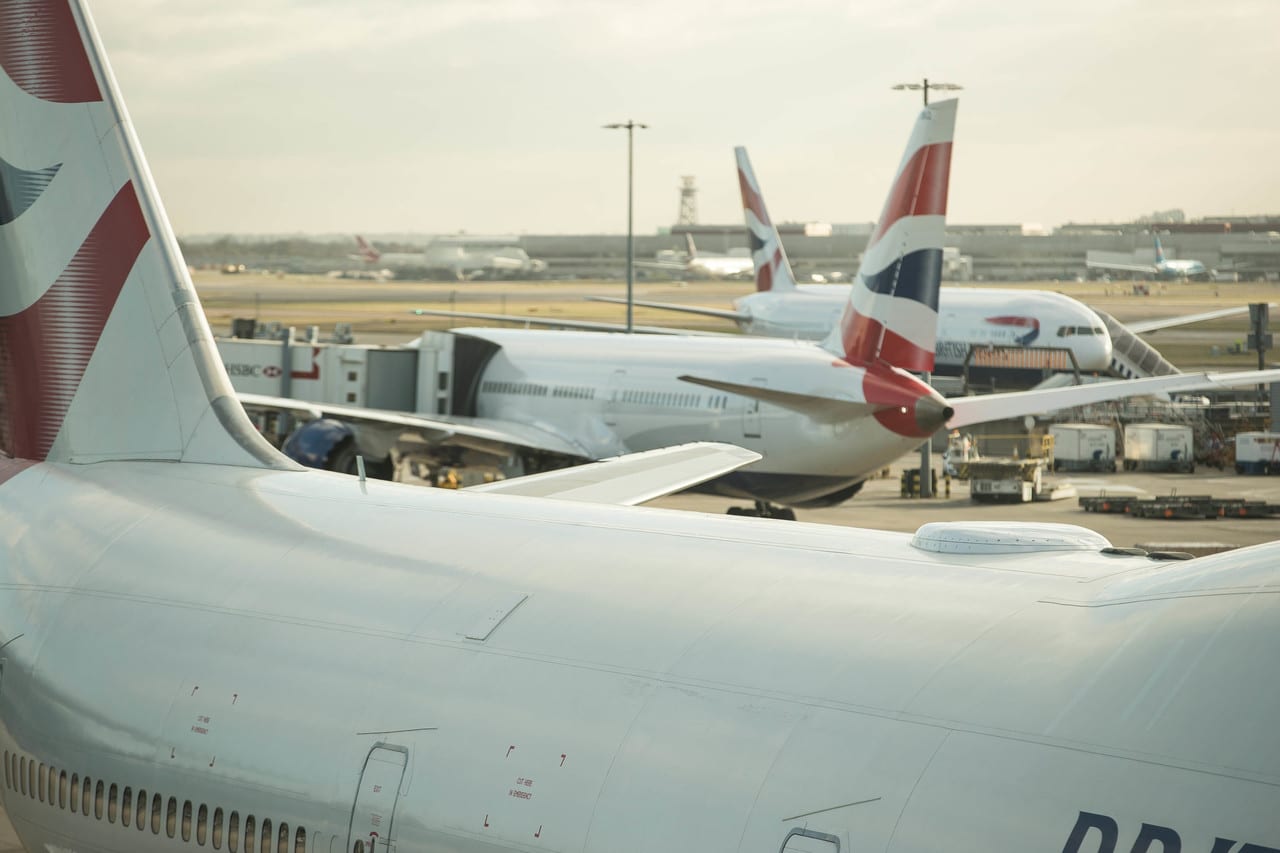
A Wi-Fi enabled British Airways aircraft | IMAGE: British Airways
British Airways (BA) on Monday provided free in-flight Wi-Fi to passengers so they could watch the funeral on their personal devices.
The carrier also observed two “Moments of National Reflection” that took place – one 1-minute moment on Sunday and a 2-minute moment coinciding with the end of the funeral on Monday. BA also suspended cabin service during the two-minute silence.
Aircraft in motion on the ground at London Heathrow (LHR) at the conclusion of the funeral came to a stop during the two-minute moment of silence. Additionally, arrivals and departures were not permitted during the silence.
2. More than 5 Million People tracked The Queen’s Final Flight
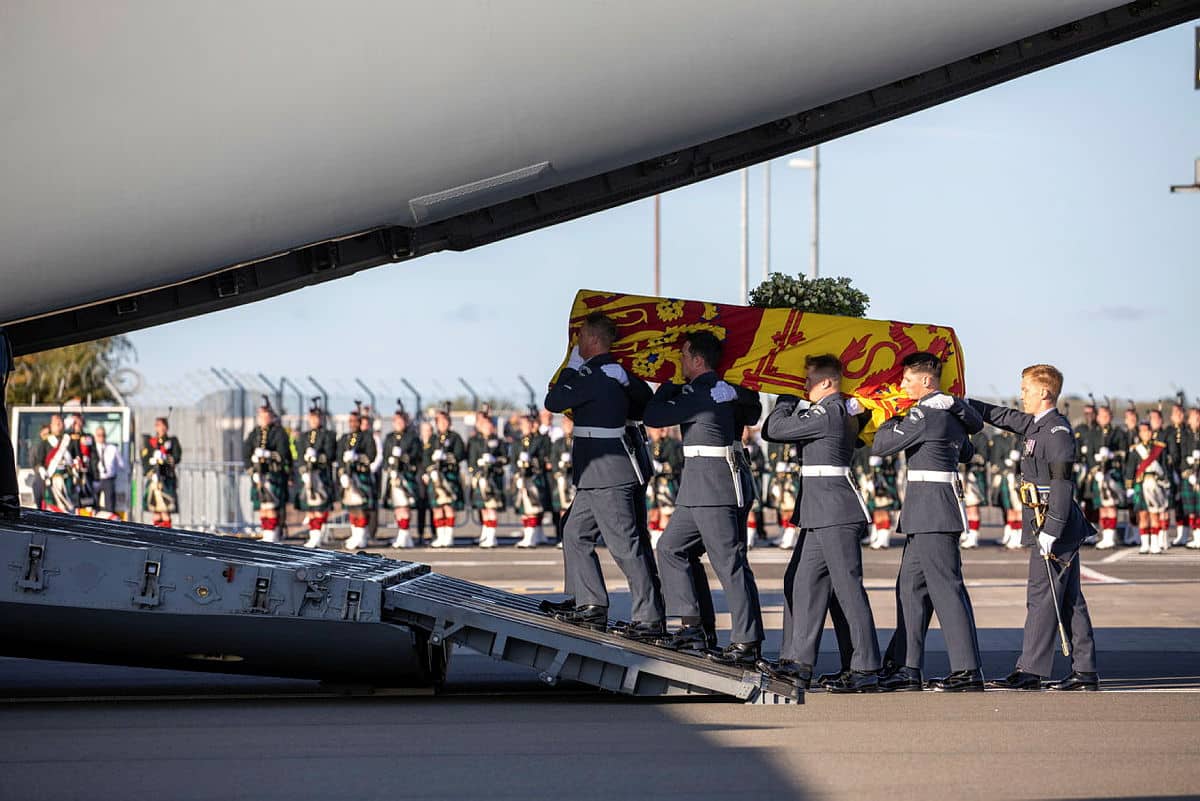
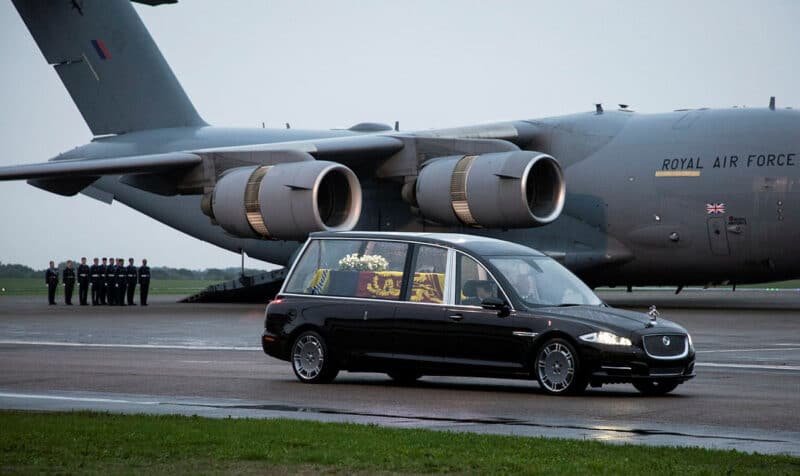
Queen Elizabeth’s coffin is carried on board a Royal Air Force C-17 Globemaster III ahead of her final flight to London on 13 September | IMAGE: RAF
As our Mike Killian reported last week, the Royal Air Force C-17 Globemaster III that transported The Queen’s coffin from Edinburgh, Scotland to RAF Northolt near London became the most tracked flight in history.
Her final flight was watched from beginning to end by an astonishing 4.79 million people.
London Heathrow Airport (LHR) | IMAGE: London Heathrow Airport on Facebook
To honor The Queen, British Airways and Heathrow Airport canceled 100 flights to ensure operational flexibility on Monday. Many additional flights were rescheduled.
No aircraft were permitted to land or take off at LHR for 30 minutes during the state funeral – which took place between 1140 and 1210 local time. Arrivals were also paused for 35 minutes beginning at 1345 local time for the procession of the Queen’s hearse to Windsor Castle.
Inside the airport, travelers and staff fell silent as the nation observed a two-minute moment of silence as the funeral ended. LHR was broadcasting the funeral throughout the terminals for travelers to watch.
Anyone who has been to London and was watching Monday’s events on television could very quickly notice the deafening silence at times. London airspace is notoriously congested and loud, so the magnitude of Monday’s operational undertaking was quite remarkable.
4. London Stansted Airport Becomes AvSpotter Heaven
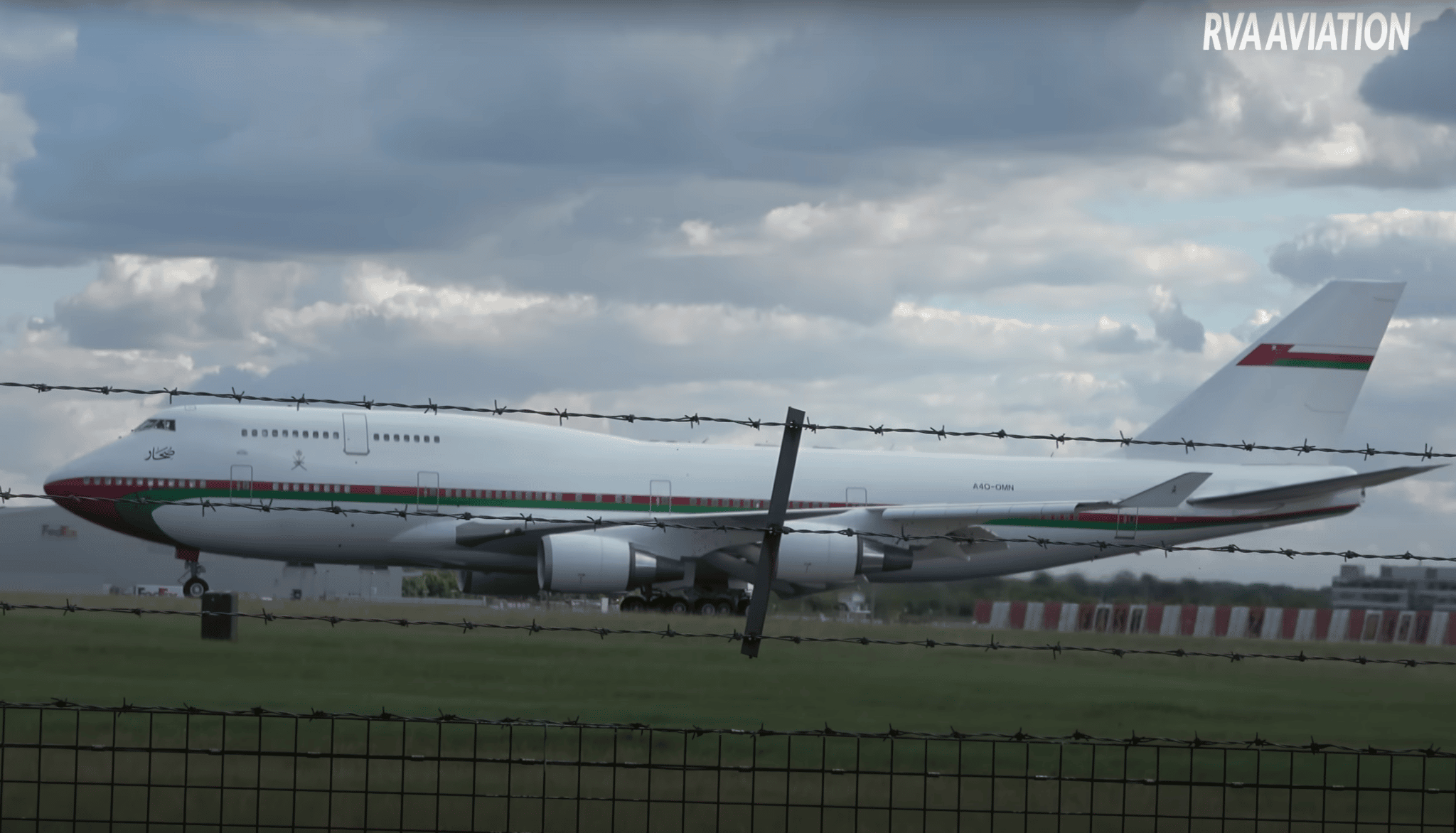
ROYAL FLIGHT OF OMAN | BOEING 747 – 400 | A40 – OMN at London Stansted Airport on 18 September 2022 | IMAGE: RVA AVIATION
More than 500 heads of state, including kings, queens, prime ministers, presidents, and emperors, traveled to London over the weekend to honor the late Queen – most, if not all, arriving by air.
As a mind-blowingly dazzling array of aircraft types from governments and dignitaries around the world descended on London last weekend, spotters had a field day. Luckily, spotters at Standsted caught many of the arrivals and departures on video.
YouTube channel RVA Aviation features three incredible videos of some of the world leaders arriving in London for The Queen’s funeral.
Some of the unique arrivals include a Royal Flight of Oman Boeing 747-400, a Kuwait government A340-500, a South Korean Air Force 747-800, the Brunei Sultan’s 747-800, a Ukrainian government A319, and of course, Air Force One.
Rarely – if ever – have so many heads of state been in one place at one time. The funeral of Queen Elizabeth II will go down in history as a generational event like few others in world history. The outpouring of love from around the world that these aircraft represent is something we may never witness again — at least in our lifetimes.
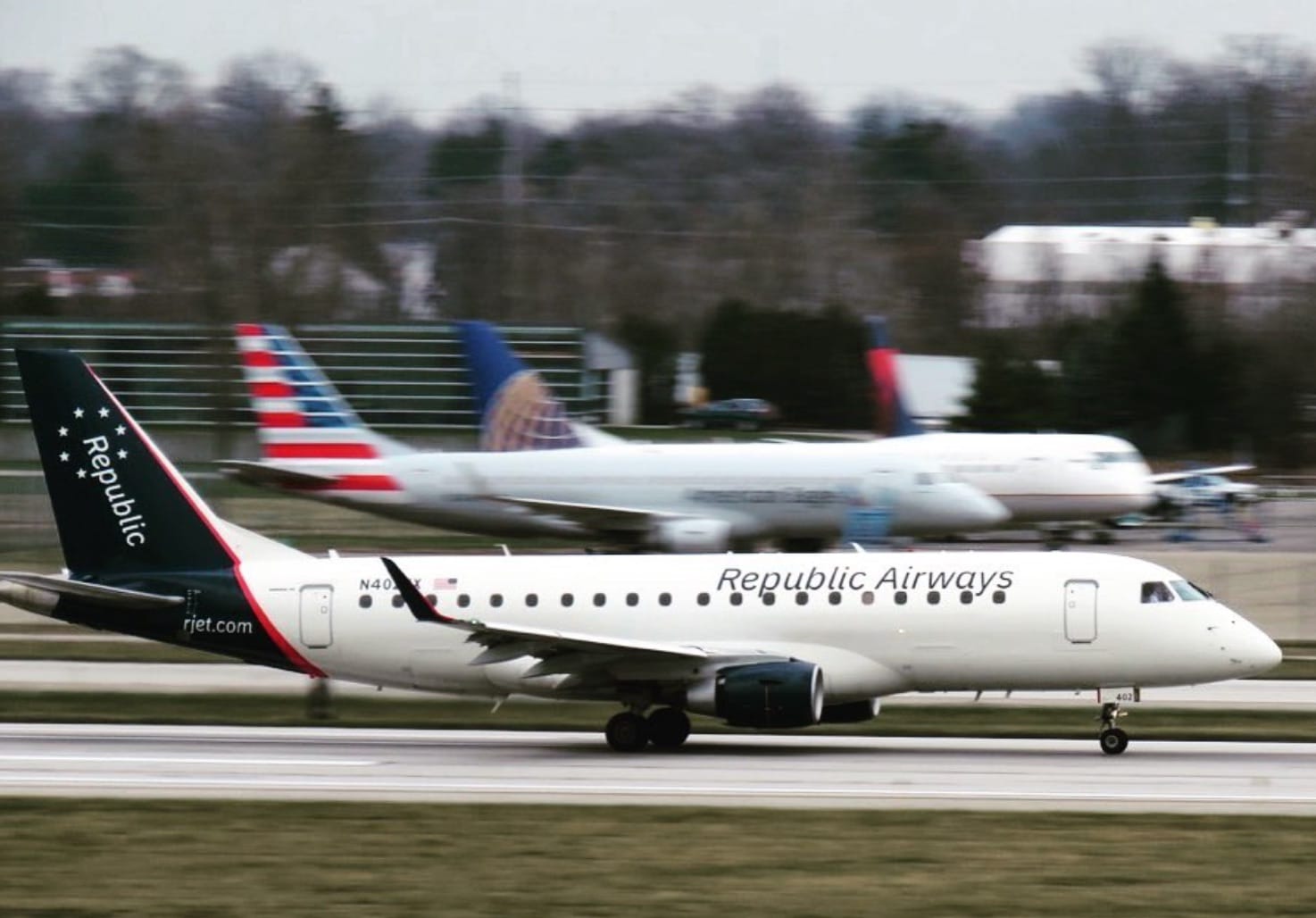
Earlier this year, Republic Airways (a regional carrier for American, Delta, and United Airlines) filed a petition with the FAA for an exemption to the ‘1,500 hour rule’ that required all airline pilots to have flown a minimum of 1,500 hours before being eligible to occupy a seat in an airliner. Today, the FAA denied that petition.
The rule was implemented by congress after a 2009 crash of Colgan Air flight 3407. The Dash-8-400 commuter aircraft’s crew lacked sufficient experience for the conditions and scenario at the time of the crash. In the wake of the crash, a push to increase the level of experience in the cockpit led to a number of changes that included the implementation of the 1,500 hour rule.
Republic Attempted to Side Step The Regulation With An In-House Training Program
Over the past decade, the demand for pilots has risen dramatically. At the same time, the increased training requirements, combined with a wave of early pilot retirement due to COVID has led to a drastic shortage of pilots. This problem is acutely affecting regional airlines like Republic as current regional pilots move up to the major carriers to fill vacant spots. Even massive payscale raises (as some regionals and startups have done lately) have not been enough to stem the losses.
Amongst that backdrop is where Republic proposed an exemption. In their proposal, they stated that they would start a flight school with military-like standards training for prospective pilots. In exchanged for the higher-level quality of training, they asked for relief from the 1,500 hour rule. Republic asked to reduce that number to 750 hours as part of the Lift Academy program.
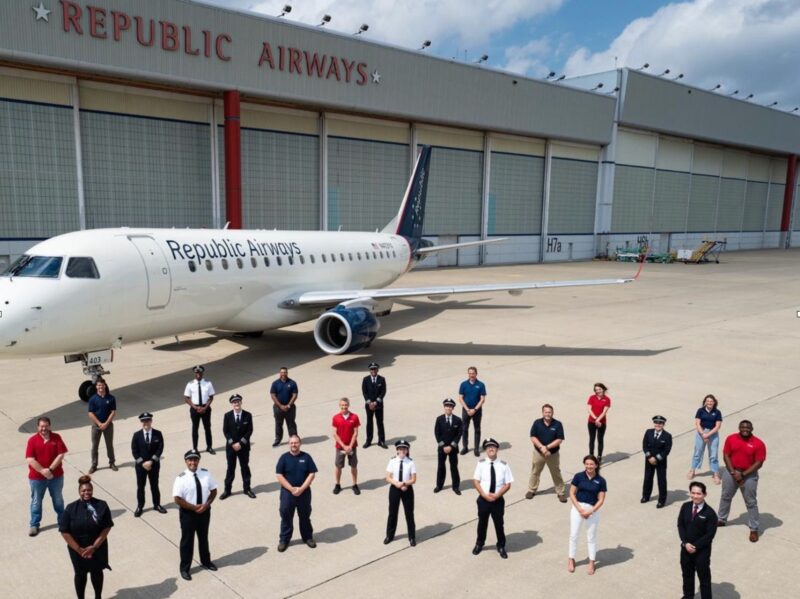
A Republic Airways Embraer 175 touches down. Photo: Republic Airways
In the denial released by the FAA, the agency said that “Republic’s exemption process is not the avenue to address the hiring difficulties of an operator that may result in service cuts to particular areas. The FAA continues to consider the greater public interest ensuring that the level of safety provided by the foundation of an integrated aviation education required by § 61.160 is maintained.”
This statement effectively means that Republic’s Lift Academy’s curriculum and plan are not sufficient to overcome the risks that the FAA (and thereby the traveling public) would undertake as a result of the exemption.
What The FAA Didn’t Address
The ruling is relatively narrow in scope but it also does not cite any clear path to solve the issue. The FAA did acknowledge that the 1,500 hour rule is not fool proof and that the quality of training within those 1,500 hours could vary. They also acknowledged the pilot shortage and the challenge that this rule has created.
However, they didn’t offer any alternative to the current rule or a direct way forward. This ruling is one to be celebrated by current airline pilots who are enjoying record demand for their services and thus increases in wages. Conversely, it is another roadblock to regional airlines who are looking for numerous ways to stem the outflow of pilots from their ranks.
The issues presented in the ruling are complex. And its an issue that isn’t likely to go away anytime soon barring a large economic downturn that crushes demand for travel. You can read the full 15 page ruling here.
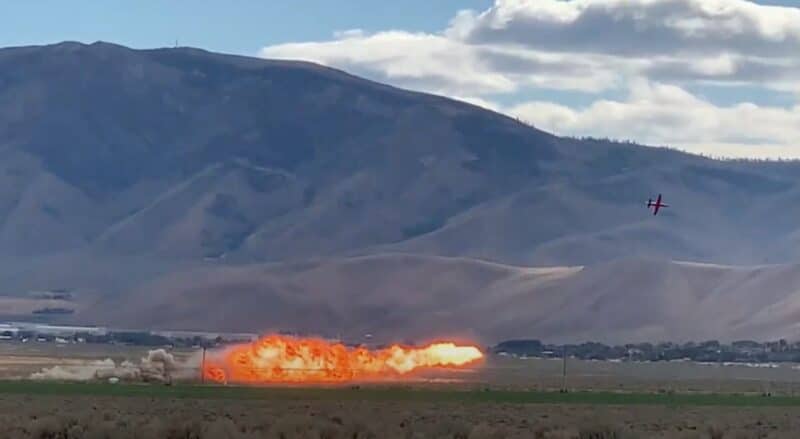
This week’s annual National Championship Air Races in Reno, Nevada ended tragically today, when an L-29 Super Delfin jet and its pilot crashed in a horrible accident during the Jet Gold Race.
Pilot Aaron Hogue, Race #29, did not survive. Hogue was the race’s Rookie of the Year in 2021. He was an experienced pilot of over 35 years.
Aaron Hogue and his Race jet
Accident under investigation
“At this time we are gathering information and confirming details of the incident that happened today during the Jet Gold Race,” says the Reno Air Racing Association. “We can confirm that only one plane was involved. The National Championship Air Races has suspended all operations for the 2022 event. We will provide an update as soon as it’s available. NTSB and FAA will be investigating the incident.”
Ejection seats are disabled for the races, as a safety measure being that the planes fly so close together on the course. The theory is that an ejection could lead to additional crashes during a race. Pilots are allowed to bailout of their jet though. It’s too early to know what went wrong to cause Hogue to crash.
The Reno Air Races is the only event in the world where aircraft race around pylons at altitudes between 50 and 250 feet, just feet from each other, while reaching speeds of 500 miles per hour. Pilots must be highly experienced and pass rigorous training requirements to receive an invitation to race.
Our sincere condolences to Hogue, his family, team, friends & colleagues.
UPDATE #1: Post by the Reno Air Races Association:
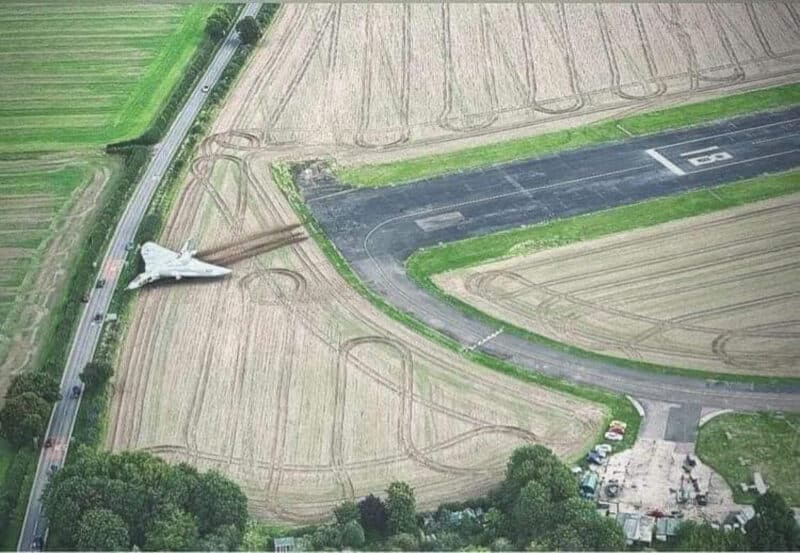
A Vulcan Bomber narrowly avoided what could have been a disaster yesterday (Sep 16), when it overshot a runway at Wellesbourne Mountford Airfield in Warwickshire (United Kingdom) and stopped just short of a busy public road with cars driving by.
The incident was reportedly caused by a malfunction, according to the caretakers of the retired Royal Air Force (RAF) plane at the XM655 Maintenance and Preservation Society. A small team of skilled and dedicated volunteers maintains and preserves the aircraft, many of whom are ex-RAF, (some even ex-V-Force personnel, one of whom actually worked on the plane while in RAF service).
Vulcan bomber overshoots the runway during a high speed taxi test at Wellesbourne airfield in the UK, coming to a stop before a road. The heritage aircraft is not airworthy and was due to taxi down the runway at a public event on Sunday. pic.twitter.com/no0jsW1x1y
“Due to a malfunction of a piece of equipment in the cockpit, the aircraft remained at full power for approximately two seconds longer than intended. This resulted in excessive speed and less distance in which to stop, and the aircraft passed beyond the end of the runway on to the agricultural area, stopping just before the airfield perimeter.”
“The failed equipment was an air speed indicator which had been tested and found satisfactory six days ago, and which started working normally before the end of the run,” they added. “The aircraft brakes worked properly, but were unable to bring things to a halt within the reduced space available.”
Oops. Vulcan bomber at Wellesbourne airfield has just overshot the runway during a hot taxi run. Almost made it to the road. pic.twitter.com/CMoIFSIinp
The cold war-era bomber was conducting a taxi run ahead of an air show planned for Sunday, which has since been cancelled considering what happened. The pilot is ok and no injuries were reported. All ticket holders for the event has since been issued full refunds.
“As far as we can see, the aircraft is largely undamaged, but in addition to the ongoing recovery work, we also have a lot of inspection work to carry out before we can consider any further live activity,” says the XM655 organization. “We will provide further updates when XM655 has been recovered and we have had chance to assess any damage.
View From The High Speed Taxi Test
Above, you can see an onboard view from a previous taxi run with the plane. It was the third from last of the Vulcan bombers produced for the Royal Air Force, being delivered in late 1964, and was part of the UK’s nuclear deterrent force throughout the 1960s and 1970s.
There are no flyable Vulcans in the world anymore, so even seeing one doing taxi runs at all is a special thing for any aviation enthusiast, which was the plan for Sunday, as such rare occurrences help raise funds for the organization preserving the bomber.
Two former adversaries in the airline world have announced a new codeshare agreement.
United Airlines and Emirates on Wednesday announced the new agreement designed to bolster each airline’s network in the United States and worldwide.
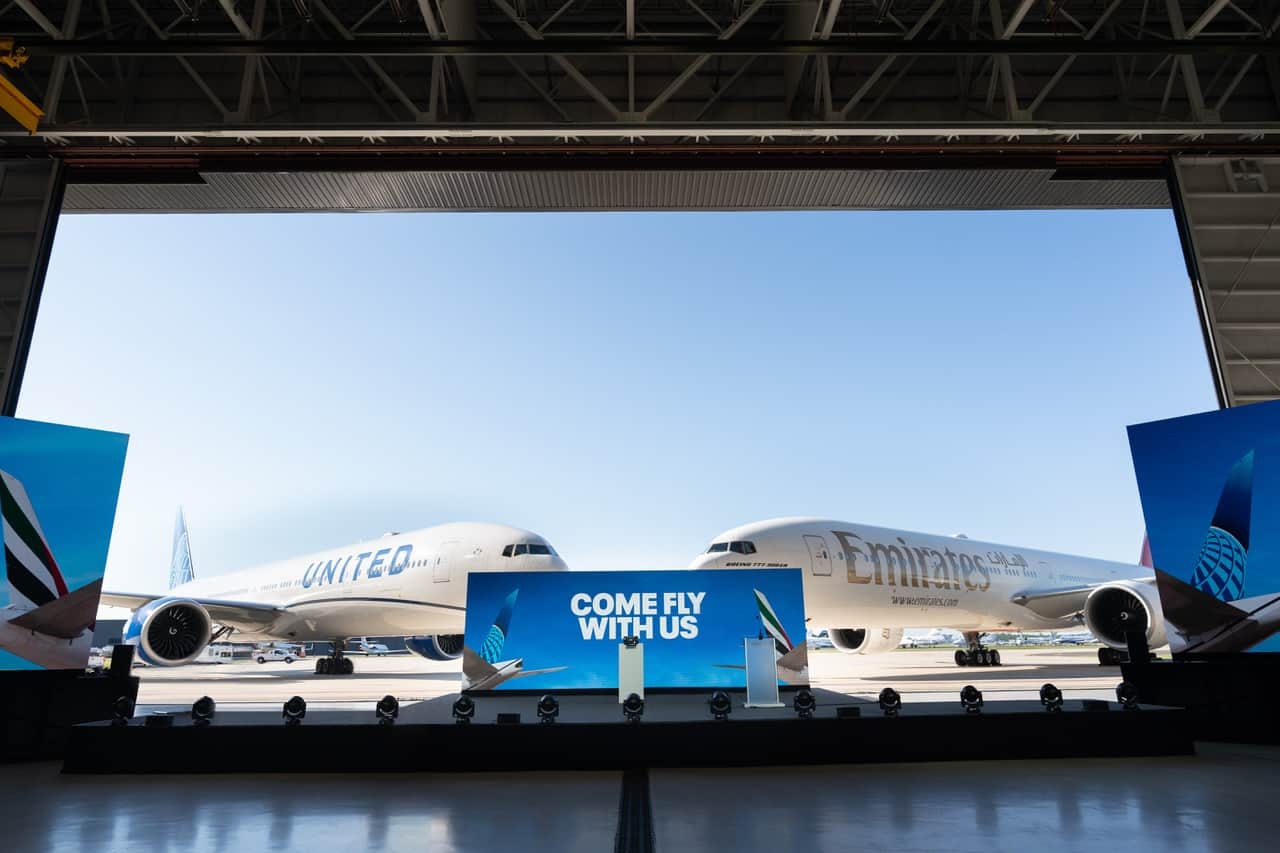
Details of the agreement were unveiled in a ceremony Wednesday morning at Washington Dulles International Airport (IAD) – a United hub. The event, hosted by United CEO Scott Kirby, Emirates President Sir Tim Clark, and attended by other representatives from each airline, took place in a United hangar at Dulles. Two Boeing 777-300ER aircraft – one from each airline – provided the backdrop for the ceremony.
Come fly with us! 🇺🇸 ✈️ 🇦🇪
A new United flight between New York/Newark and Dubai takes off in March.
A United Airlines hangar at Washington Dulles International Airport (IAD) is prepared for an event on 14 September 2022 | IMAGE: United Airlines
Beginning on 27 March 2023, United plans to launch service between Newark Liberty International Airport (EWR) and Dubai International Airport (DXB). Once in Dubai, customers will be able to seamlessly connect to more than 100 destinations via Emirates or flydubai, an Emirati government-owned low-cost carrier based at DXB.
UA164 will depart Newark Liberty at 2215 local time and arrive in Dubai at 1940 local time the following day. The scheduled flight time between EWR and DXB is 13 hours and 25-minutes. On the return trip, UA163 will depart Dubai at 0215 and arrive in Newark 14 hours and 50 minutes later at 0905, both times local.
United plans to deploy a Boeing 777-200ER on the new route.
Passengers can book connecting flights from Dubai on Emirates on the same ticket. Tickets for United’s new Dubai service are already for sale.
“This agreement unites two iconic, flag carrier airlines who share a common commitment to creating the best customer experience in the skies,” said United CEO Scott Kirby. “United’s new flight to Dubai and our complementary networks will make global travel easier for millions of our customers, helping boost local economies and strengthen cultural ties. This is a proud moment for both United and Emirates employees, and I look forward to our journey together.”
This flight was still subject to government approval at the time of writing.
What this Means for Emirates Customers
United and Emirates Expand Market Presence Through New Agreement | IMAGE: United Airlines
For Emirates customers, the benefits of the new agreement will begin several months earlier than those of United customers.
Beginning this November, Emirates customers flying into Chicago O’Hare (ORD), San Francisco (SFO), and Houston’s George Bush Intercontinental (IAH) will have the ability to connect to nearly 200 cities in United’s network.
Emirates customers flying into its other eight U.S. destinations – Washington Dulles (IAD), Boston (BOS), Los Angeles (LAX), Dallas/Ft.Worth (DFW), New York John F. Kennedy (JFK), Orlando (MCO), Miami (MIA), and Seattle (SEA) – will be able to take advantage of an interline agreement with both carriers.
“Two of the biggest, and best-known airlines in the world are joining hands to fly people better to more places, at a time when travel demand is rebounding with a vengeance. It’s a significant partnership that will unlock tremendous consumer benefit and bring the United Arab Emirates and the United States even closer,” said Emirates President Sir Tim Clark. “We welcome United’s return to Dubai next year, where our hub Dubai essentially becomes a gateway for United to reach Asia, Africa and the Middle East via the combined network of Emirates and flydubai. We look forward to developing our partnership with United for the long term.”
Besides the obvious advantages, such as more efficient check-in and luggage transfer options, United MileagePlus members will be able to earn and redeem miles on select connecting flights from Dubai. Emirates Skywards members will be able to earn and redeem miles, and enjoy the use of United lounges, when traveling on any United flight. Additionally, United customers will have access to Emirates lounges when connecting to and from United’s EWR-DXB flight.
Both carriers say additional announcements are forthcoming regarding benefits for customers in both loyalty programs.
Is the Timing Right This Time?
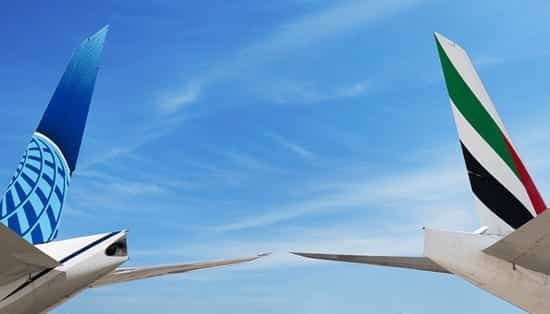
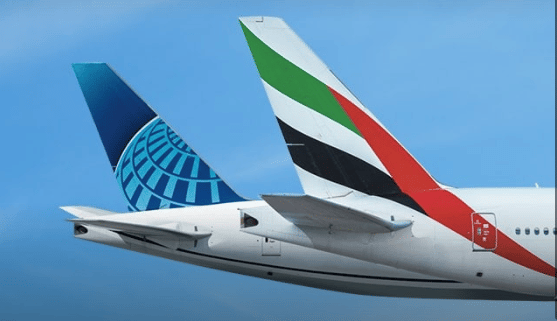
The tails of a United Boeing 777 and an Emirates Boeing 777 | IMAGE: Emirates
With the rebound in post-pandemic international travel, Wednesday’s announcement makes sense – despite years of tension between U.S. and Gulf carriers. It will also reintroduce United to one of the most highly sought-after destinations in the world.
United last served Dubai from Washington Dulles in 2016. The carrier discontinued the flight in January 2016, saying the introduction of subsidized carriers such as Emirates and Etihad at IAD “created an imbalance between supply and demand to the United Arab Emirates.”
As tensions continue to thaw and post-pandemic travel continues to soar, this new agreement opens up a new world of possibilities for customers of both United and Emirates. The news comes on the heels of recent announcements regarding similar agreements between Etihad and JetBlue, as well as Qatar and American.
Last month, we reported how users of the popular flight tracking website Flightradar24 flocked to watch Nancy Pelosi’s flight to Taiwan, as threats from China telling her to stay away made people obviously wonder if they would shoot her down.
It became the site’s most tracked flight ever, but it didn’t take long for that record to be shattered this week. Over 5 million people tracked a Royal Air Force C-17 Globemaster III as it flew Queen Elizabeth II on her final flight, transporting her coffin from Edinburgh to RAF Northolt near London.
Queen Elizabeth II’s coffin being carried by personnel from her Colour Squadron, 63 Squadron, Royal Air Force Regiment (RAF photo)
Personnel from the Queen’s Colour Squadron, 63 Squadron, Royal Air Force Regiment carried her coffin onto the plane, joined by a Guard of Honor from the Royal Regiment of Scotland.
“Within the first minute of the aircraft’s transponder activating, 6 million people attempted to click on the flight carrying the Queen,” said Flightradar24’s director of communications Ian Petchenik in a blog post. Some 4.79 million people followed the journey, with another 296,000 watching the flight’s path on a YouTube livestream.
“That put unprecedented strain on the Flightradar24 platform, far beyond even what we experienced when the US Speaker of House flew to Taiwan and 2.2 million people followed the flight.”
“In total we processed 76.2 million requests related to this flight alone,” he added. “That’s any action by a user, like clicking on the flight icon, clicking on the aircraft information in the left side box, or adjusting settings.”
Flight path of Her Majesty queen Elizabeth II’s final flight (credit Flightradar24)
Upon arriving at RAF Northolt, the Queen was transported to Buckingham Palace, and then on to Westminster Hall, where she will lie in state for the next 5 days as members of the public are allowed to go in and pay their respects.
Jeff Bezos’ space launch company Blue Origin has several crewed and un-crewed suborbital flights to the edge of space under its belt at this point, launching tourists for quick joy rides up and down as well as sending up experiments for various organizations.
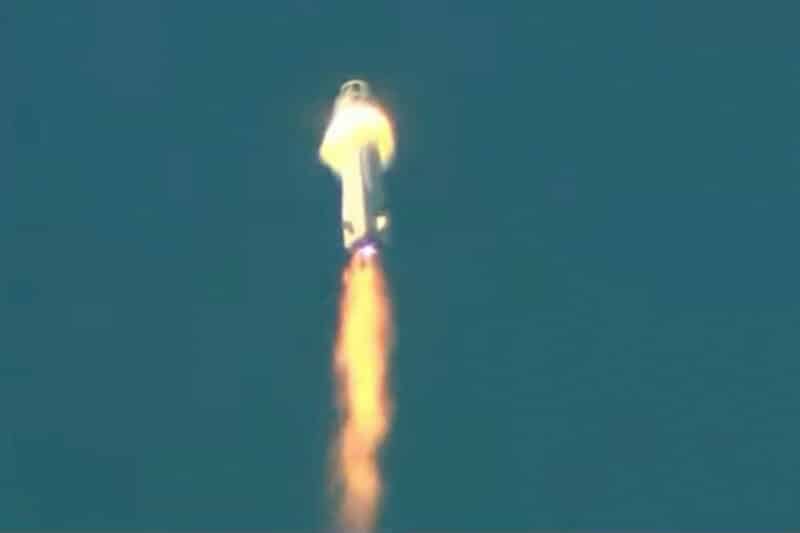
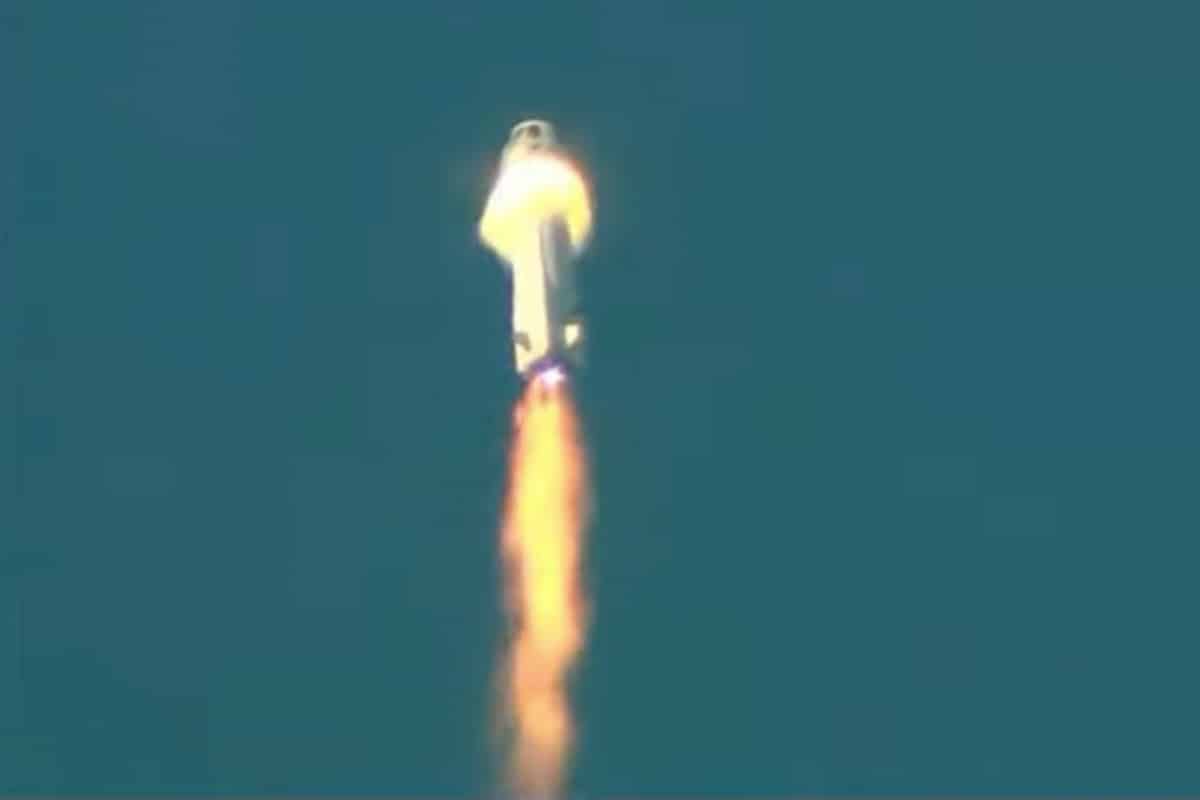
Being a capsule atop a rocket means there is a relatively reliable abort option, if ever needed, and today they proved it when their capsule safely aborted from its failing rocket just over 1:00 into flight.
Booster failure on today’s uncrewed flight. Escape system performed as designed. pic.twitter.com/xFDsUMONTh
The mission, named NS-23, had no crew onboard fortunately, and was instead supposed to send up 36 science and technology demonstration payloads for various schools and organizations.
The company has not released any details as to what happened, but in the video you can clearly see the rocket’s BE-3 engine flame out as the vehicle throttled through Max-Q, which is the point where there is maximum dynamic pressure on the rocket and capsule.
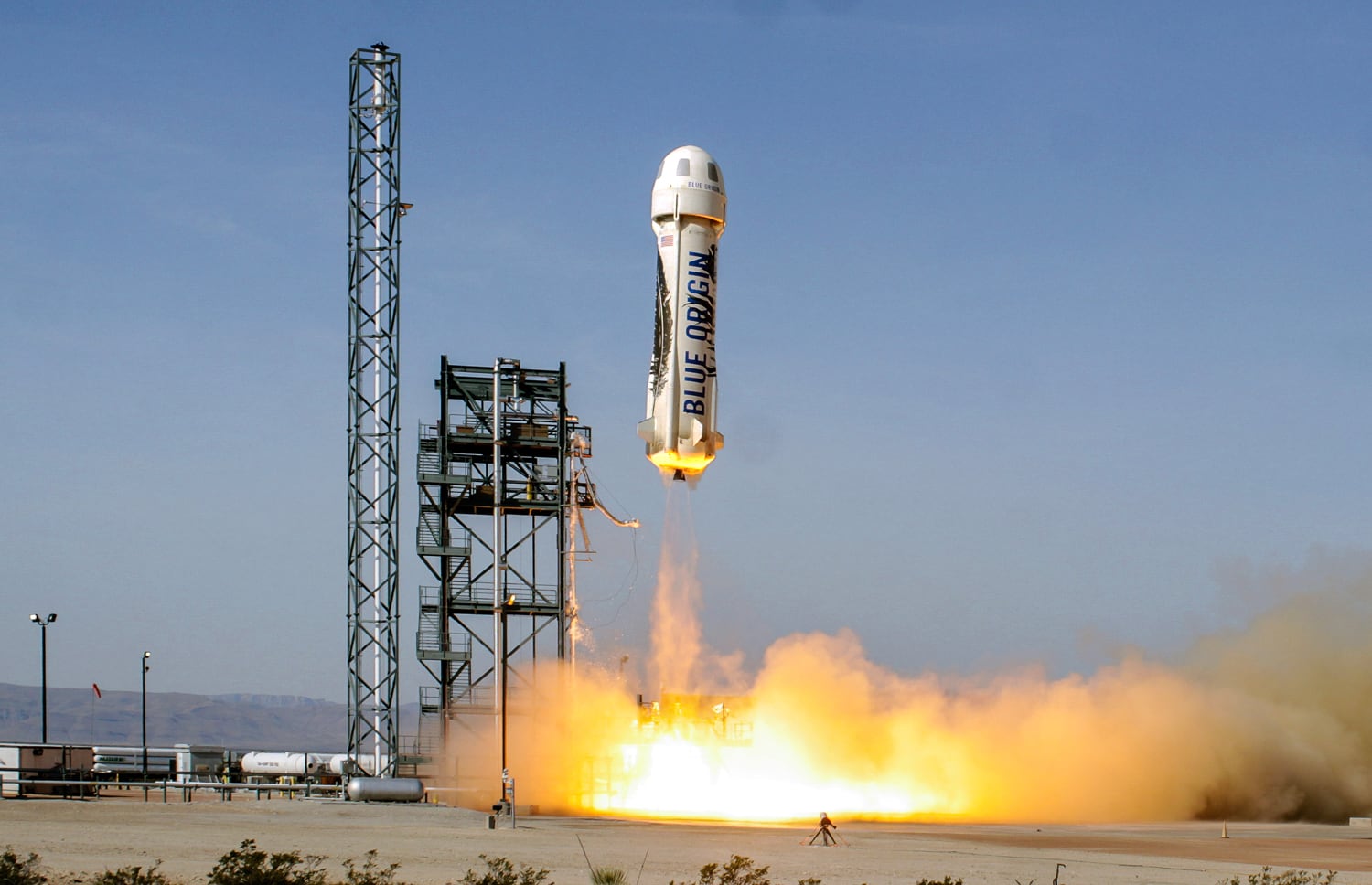
Launch of Blue Origin’s New Shepherd suborbital rocket and capsule June 19, 2016. Photo Credit: Blue Origin
Whatever the case, the capsule’s solid rocket motor launch escape (abort) system did its job, pulling it away from the failing rocket for a gentle parachute landing. It did exactly what it was supposed to, and had a crew been onboard, they would be alive and well.
Blue Origin Will Face Stop from the FAA
The FAA will lead the investigation, and Blue Origin will not be allowed to launch again until the FAA says so. “The FAA will determine whether any system, process, or procedure related to the mishap affected public safety,” noted the agency in a statement, adding “this is standard practice for all mishap investigations. The FAA is responsible for protecting the public during commercial space transportation launch and reentry operations.”
Blue Origin Capsule Safely Aborts Failed Rocket Launch 17
SpaceX uses capsules for crew and cargo missions as well, and so does NASA with their new Orion spacecraft, which is currently sitting atop the most powerful rocket in the world at Kennedy Space Center, awaiting launch on the Artemis-1 mission to the moon in the coming weeks.
Every person has a story of where they were and what they were doing on September 11th, 2001. It was a tragic day that we all remember and still reflect on each anniversary. Robert Burton was a pilot flying transatlantic on a Boeing 767 inbound to New York’s JFK International Airport. Here is his story:
Twenty-one years ago today, I was flying a Delta B-767 from Madrid to New York John F. Kennedy Airport.
The flight had three pilots on board, so each of the pilots took about a 3-hour break as we flew west bound.
It was the captain’s turn to take a break, I was a co-pilot and it was my leg meaning I was the pilot flying that day. I used an airplane system that’s kind of like a teletype to find out what the weather was at JFK, to start thinking about which runway I wanted to land on.
JFK Was Closed
The machine said that the weather at JFK that day was “clear and a million” meaning it was a beautiful day with no weather issues, but Kennedy was closed.
It was very odd for a major US airport such as Kennedy to just be closed, so I turned to the other co-pilot who was occupying the captain’s seat at the moment and wondered out loud “What’s going on at Kennedy?”
He responded theorizing that an airplane must have crashed which would have triggered the runways to be closed.
I tuned a radio frequency that all the airplanes flying over the North Atlantic use to communicate with each other and asked if anybody knew what was going on at Kennedy.
A British Airways pilot with a very precise English accent said, “Yeah mate, you need to check the BBC on 11095 upper,” which is a long range radio frequency.
So I tuned that radio up to the BBC to hear the announcer say, very excitedly, words that still send chills up and down my spine…..
“America under attack, World Trade Centers down, Pentagon hit.”
I quickly turned the other co-pilot and said dryly, “Wake the captain up.”
Until that moment, we had heard nothing of the attacks on the American Homeland, our Homeland.
Captain gets to the cockpit sleepy eyed and I told him what we knew, which was almost nothing.
A few moments later, we get a cryptic message from Delta telling us to secure the cockpit, with no explanation why. We came to learn later that they were afraid of more airplanes being hijacked.
We made contact with Gander Center on a short range radio, checked in, and started trying to get in touch with Delta on the same machine I had used to get the initial report of JFK’s closing
Quickly thereafter, a very calm and very professional sounding Canadian controller announces to all the aircraft on the frequency, “Gentlemen, the US authorities have closed all American Air Space. Tell me what you want to do.”
The Captain was an experienced former Navy pilot and knew his options without having to consult the books, but we did want to get in contact with our Delta dispatcher for his thoughts.
I’m not sure of the exact timing, but assuming that the general “Land Now” decision had been made by the FAA and broadcast by Air Traffic Control, I’m sure dispatch was flat out overwhelmed.
We were thinking Gander, or Saint John’s, with some thought about going to Bermuda as we had flown a southern route and Bermuda was closest.
The Captain ruled out Bermuda because it had such limited runways and ramp space. He decided on St John’s as it was closer than Gander.
Dispatch finally got back to stating the obvious that they were overwhelmed and that St John’s was a good divert station.
I started setting up for the approach, putting all thoughts about anything else so that I could concentrate on getting us on the ground safely.
It is a common psychological technique for pilots to put things in their heads away until they have time to think about them.
Pilots have all the same issues anyone else has: marriage, money, and children issues, but we sometimes don’t have the luxury to be able to think about those issues at the present moment. They go into a box not to be unlocked until the present task at hand is complete.
Never forget. Photo by: Kai Brinker / CC BY-SA (https://creativecommons.org/licenses/by-sa/2.0)
I’m descending fast, speed brakes out, and then we just landed like we had done hundreds of times before. And then enormous relief spread over me that lasted about a millisecond. I thought about my wife and children and wondered what they knew, if they were safe. Then, I thought about my sister and her husband, who worked in one of the towers.
St. Johns Was Filling Up With US-Bound Aircraft
The passenger terminal was full of airplanes that had gotten there before us. We had a long taxi to the freight ramp and ended up the first airplane on the throat of the runway that we had just landed on.
Once the engines were shut down, the Captain got on the PA and told the passengers that we had to divert because of something happening in America. We had so little information and didn’t want anyone to panic.
I called my wife and found out she had gotten my children. Before she got them, all they knew was that dad was in New York flying and that airplanes had crashed there. I’ll have to ask them if they knew early on if Delta was spared that day or if they knew that the airplanes were B-767’s, which I was flying at that time.
I then called to check on my sister and her husband. She told me that Lyman had led a group out of the second tower hit.
Years later, he died of brain cancer possibly caused by his inhalation of all the pollutants from the oil fires Sadam lit off when the Kuwait War was about over. He was a Navy Captain, and I retired an Air Force Colonel.
We had a friendly competition over the years to see who could get promoted first and we both volunteered at various times to deploy to the sandbox in the effort against Sadam, Al Queda, Isis and all the other nastiness in the Gulf.
Over the next ten hours or so, we watched every kind of airplane from every country and airline land at St John’s.
At some point, the airport authorities directed that we all start our engines and taxied closer to each other so that the airport could accommodate more airplanes.
Finally, a short runway was closed, and more airplanes were parked there.
The Canadians had obviously never encountered anything like this, and we were all making it up as we went.
There was a real concern that all the terrorist activities were not over and that bombs were still on airplanes.
The Captain was finally allowed off the airplane to get some information. I went back to talk to the passengers and calm things.
People were craving information. They lucky ones had cell phones to call their loved ones. One couple had a battery-powered short wave radio.
Finally Allowed To Depart
It’s been awhile, but I think it was over twenty-hour hours from takeoff to when we finally off the airplane. The airport authorities decided the best way to get the passengers off the airplane was the total number of passengers aboard. Since we had a fairly light load, we were one of the last airplanes to deplane.
We were transported separately from the passengers. Everyone had to go identify their bags and then wait while the luggage was thoroughly searched.
The people of Newfoundland, or Newfies, were unbelievably kind to us and our passengers. Someone, maybe Delta Air Lines, had found rooms for us at a golf club two hours from St John’s. I remember a large crew cramming into two cabs with all our luggage driving at night to the hotel.
It was six nights before we could leave St John’s. I think we and the whole country went into a depressed state. I remember the film of the towers being played nonstop till someone finally said, “Just turn the damned thing off.”
No one was partying, but when the crew would meet at night, a bottle would show up, and no one would leave until it was all gone.
Robert Burton is a retired Air Force Reserve KC-10 Instructor Pilot. Today, he is a Boeing 737 captain at Delta Air Lines nearing Retirement. Robert will continue to fly as a charter pilot post retirement. He lives in Rock Hill, SC.
On 31 March 2023, the end of an era arrives in Israel when a ban on four-engine aircraft takes effect in the country, the Israel Airports Authority (IAA) announced Thursday.
IAA officials have asked that the airlines of Ben Gurion Airport (TLV) – Israel’s main international airport, located 12 miles southeast of Tel Aviv – begin preparing now for the impending ban.
Currently, no passenger airlines utilize quadjets for service to Israel (El-Al retired its fleet of 747s in November 2019). Boeing 747 freighters still make an occasional appearance at TLV.
The ban will prevent any future Boeing 747, Airbus A340, or Airbus A380 service to the country. However, Israel’s National Aviation Administration says it will grant waivers in “exceptional cases.”
Why is Israel Banning Quadjets?
By Chris Hoare – Overflying Ben Gurion Airport, CC BY 2.0, https://commons.wikimedia.org/w/index.php?curid=48223598
According to IAA officials, the extraordinary directive is part of the authority’s sustainability plan “to improve the environmental climate and reduce aircraft noise in the communities affected by the airport’s operations.”
The impending ban could affect Emirates’ expansion plans at TLV. As reported by travel blog site DansDeals, rumors of an Emirates upgauge on its twice-daily Dubai-Tel Aviv route could be put to rest by the ban. Emirates currently serves TLV with the 777-300ER.
But does a ban on quadjets really help sustainability efforts? And will this be a trend in the years to come at airports around the world?
For now, IAA CEO Hagi Topolansky thinks a ban will benefit Israel in the long-run.
“An element of improving service is also the ability to improve the environmental climate,” said Topolansky. “The increase in passenger and aircraft traffic in the airport is an environmental challenge. I intend to lead the aviation world in environmental quality and sustainability. Stopping the landing of four-engine planes in Israel is the first step in a broader plan that is being formulated.”
Will Other Countries Follow Israel’s Lead?
Ben Gurion Airport (TLV) | IMAGE: @bengurionairport on Instagram
Israel’s national airline EL AL brought the Boeing 747 to Israel for the first time in 1971. Today, EL AL no longer operates the 747 and only a few cargo carriers occasionally bring in quadjets to TLV.
But Israel is far from the only country where spotting a quadjet is becoming less common. In an age where the chances of seeing a four-engine plane in the wild are rapidly diminishing, one could argue that Israel’s impending ban on four-engine aircraft is more bark than bite.
It will be interesting to see whether any other countries institute a similar plan in the name of environmental sustainability.
American Airlines officially retired their McDonnell Douglas MD-80s on 4 September 2019. They had a pretty incredible run. They flew in the iconic red, white, blue, and silver livery for over 36 years. At one time, American had 370 aircraft in the fleet. Towards the end, fewer than 30 were flying daily. The MD-80, affectionately known as the Mad Dog, is a plane like no other. It elicited a ton of emotion from avgeeks who either love the plane or despise it. Below are ten reasons why we’ll miss the ‘ole Mad Dog.
10.) Plush cushy seats, even in coach
Sure those seats might be old, but they are cush!
The American MD-80 seats were some of the last in the industry to have those big cushy seats. Sure they were old seats, and had about 30 years of farts in the cushions. But some of the modern seats in more modern jets are like sitting on a subway seat, just with less legroom. Our backs will miss the extra cushion.
9.) Plenty of space in the bathrooms
When trying to go to the bathroom in the newer planes like the A321NEO, it can be like trying to play Twister. But the MD-80s bathrooms are like palaces in comparison. They feature full size sinks and enough room that you can actually turn around to sit.
8.) The two by three seating
While it sounds like a 1980s marketing gimmick by McDonnell Douglas, it rang true. The MD-80s had significantly less middle seats than comparable 737s and A320s. It meant that there was a decent chance of only having one seat mate next to you.
7.) Near silence up front on departure
It’s almost eerie how quiet it is upfront on takeoff. With the exception of some bleed air noise and the sound of the tires on the pavement, it is quiet. That near silence is made possible by the engines almost 80 feet behind you and mounted on the tail. On departure, the pilots would rotate the aircraft up to 15 degrees nose high. With such little ambient noise, first class passengers were treated to a flying experience that actually felt a bit like a bird flying (really fast).
Although it was rarely used, the tail exit is a throwback to a different era. The tail was quite versatile. It served as a servicing door, alternative passenger entrance/exit, emergency exit, and a tail stand. On the rare opportunity to exit out the back, you had the opportunity to see the cables connecting the tail to the cockpit and those beautiful JT-8Ds up close. Like so many other things in the MD80, it was quirky but we loved it.
5.) First Class La-Z-Boys
The first class seats featured 38” of legroom and enough leather on them to make PETA protest. They were comfortable and luxurious. You felt like a bigwig every time you scored an upgrade on a flight from DFW to Tulsa.
4.) Twenty first class seats
Speaking of first class, we loved how many first class seats there actually were. When you flew an MD-80 there was always a decent chance to score an upgrade because 15% of the overall seats were those plush laz-yboy seats. By comparison the A319s that are replacing the MD80s only have 12 first class seats. That’s 40% less chance of an upgrade.
3.) The Mad Dog smell
We realize that this might prove to be a bit controversial. Some people probably think that the MD-80s smell bad but we love it. It’s a distinctive smell, kind of like a mix of hydraulic fluid, JetA, and your grandma’s basement. Some mechanics say that it is most noticeable when a bleed air sock needs to be replaced. Whatever it is, it smells like a real airplane. We love it.
2.) A ‘real’ pilot’s cockpit
The MD-80 is the last major airliner flying around without a full glass cockpit. The MD-80 featured a very 1980s hybrid of round dials and digital buttons that really just mapped to analog functions. The flight controls themselves are all cable and pulley. The controls are quirky too and ‘bitching Betty’ would squawk ‘stabilizer motion’ to pilots all day long. Yet we loved the McDonnell Douglas built bird.
1.) That beautiful silver bird livery
American’s silver livery looked fantastic on the MD-80. It was smart, timeless, and sophisticated. The maintenance teams up at Tulsa would buff the skin of the jets so shiny that you could see your face when you boarded. With the exception of the single 737-800 in the ‘heritage’ livery, the Silverbird livery from the 1960s will now disappear as the MD80s fly west to Roswell for retirement.
Three reasons we won’t miss the MD-80:
3.) Outdated passenger cabin
In this era of ultra modern passenger cabins, the Mad Dog’s shab interior is pretty spartan. It isn’t very visually appealing. There aren’t swooping arched ceilings or luggage bins so big that you could fit a small truck in them. The cabin is functional but decidedly more Atari than Playstation 4. Millennials had minimal entertainment options. While the American cabins had Gogo WiFi, it was ridiculously slow and often stopped working mid-flight.
2.) Smelly bathrooms
The MD-80 lacked a vacuum toilet system. When you flushed, it was just a bunch of blue juice that swirled around with nothing to evacuate the stink of the surrounding air. While most MD80 flights were less than three hours, someone always had to violate the code and take a dump in the plane. If you were seated anywhere near the bathroom, you had the pleasure of smelling their funk.
1.) So painfully loud, especially in the last 3 rows
In addition to the smell near the back of the jet, many passengers would complain about how loud the MD80 was. This was especially true if they sat in the last few rows of the aircraft. It was loud! That’s because passengers were sitting mere inches away from a very loud 1970s vintage engine. It meant that there was a decent chance that you’d miss most of the PA announcements and arrive at the destination with a bit of temporary hearing loss, about as bad as if you attended a rock concert.
The overall Mad Dog experience was much more positive than negative. Mad Dogs were a dependable fleet that powered American through the economic expansion of the 1980s and 90s. It sustained the airline through the tumultuous post 9/11 era and continued to serve the airline through bankruptcy and the merger between US Airways and American. So long Mad Dog. We’ll miss you!
As I became more comfortable with flying the Skyraider, my next challenge was to master the aircraft’s fairly complex weapons delivery system that included 15 external stations for hanging weapons and/or fuel tanks… so weapons employment did get complicated at times. I began my combat tour at NKP with just over 400 hours total flying time, about 60 of these getting checked out in the A-1 at Hurlburt Field.
“My Fighter Career” is a limited series of articles by Byron Hukee who flew everything from the F-100 to the F-16.
We did drop ordnance during our few ground attack missions there, but most of the time we were dropping training ordnance such as the 25 lb. BDU-33 and MK-106 practice bombs plus rockets from the LAU-68 7-tube dispenser along with 20mm from the two guns that were loaded with practice rounds. Now, we were flying with either ordnance or fuel tanks on every one of the 15 external stations (12 outer stations, 2 inboard stations, and the centerline station.)
A-1H Cockpot with Armament panel at Bottom of Instrument Panel
It was normal to have every station loaded so our lineup card that was strapped to our knee board had a diagram of every station and the store loaded on it.
Skyraider Weapons Employment: Tough But Doable
The weapons delivery problem became only slightly easier because we always carried a 300 gallon fuel tank on the Centerline Station and a 150 gallon fuel tank on the Right Inboard Station. In addition to adding 3,000 pounds of fuel, the asymmetric loading helped offset the tremendous amount of torque that was generated at high power settlings by adding drag on the right side resulting in the need for less left rudder on takeoff and other flight regimes.
Though referred to as drop tanks, unless there was an emergency requiring jettison of the external tanks, they were routinely returned with the aircraft to be refilled for the next sortie.
The following section will cover the technical details of the types of ordnance I employed during my one-year combat tour. I will cover which ordnance was used for what kind of targets in subsequent episodes.
The Ordnance I Deployed On My Tour:
Sandy Ordnance load 1972.
During my one-year combat four flying the A-1 Skyraider, I employed 32 different kinds of ordnance.
Guns 20mm – HEI (high explosive, incendiary) and APT (armor piercing, tracer) Four M-3 Cannons, 180 rounds each, fired in pairs, Inboards or outboards Rate of fire (per gun) 700 rounds per minute ( nominally 10 per second x 2) SUU-11 Minigun pod – 1,500 rounds of 7.62mm mix of AP and APT Rate of fire 6,000 rounds per minute, 100 rounds per second
Rockets 2.75” FFAR (folding fin aerial rocket) carried in either the 7-tube LAU-68 pod or the 19-tube LAU-3 pod
Rx Warheads M151 HE 8.7 lbs (normally carried in two LAU-3, 19-tube dispensers M229 HE 16.1 lbs (carried in two LAU-68, 7-tube dispensers) M156 WP (white phosphorus) (normally carried in two LAU-68, 7-tube dispensers) WDU-4/A Flechette warheads (each containing 2,200 20 grain flechettes (finned nails) 5” Zuni Rockets – carried in 2 LAU-10 dispensers, 4 rockets per dispenser HE warheads with proximity fuses
CBU CBU = Dispenser + bomblet (Both CBU-22 and CBU-25 used the 6-tube, aft dispensing SUU-14 dispenser that was jettisoned after dispensing the bomblets CBU-22 contained 72 (12 per tube) BLU-17 smoke bomblets/grenades used as incendiary weapons or to create a smoke screen CBU-25 contained 132 (22 per tube) “baseball sized” BLU-24/B fragmentation bomblets
Frag Cluster AN-M1A4 A 100 lb. Frag cluster bomb consisted of six 20 lb frag bombs banded together in a triangular arrangement. Once released, the retaining bands would loosen and the bombs would fall independently to the ground.
Bombs Mk-81 250 lb. Low-Drag, General Purpose (LDGP) bomb Mk-82 500 lb. Low-Drag, General Purpose (LDGP) bomb M-117 750 lb. General Purpose bomb AN-M47 A 100 lb white phosphorus filled bomb
Fire Bombs ( trade name Napalm) BLU-32/B 500 lb. (finned or unfinned)
The Switchology For Dropping Ordnance
My Fighter Career: Skyraider Weapons Employment 34
The 20 mm cannons and mini guns were set up to fire as soon as we crossed the “fence,” in this case, the Mekong River north of NKP which was the border between Thailand and Laos. All that was necessary to fire the guns was to select Inboard or Outboard for guns, place the ‘Master Arm’ switch to Arm and squeeze the trigger for the 20s or press the ‘Inner Stations’ release button (top button on the stick) for the minigun.
The rocket pods and CBU dispensers had a Single/Ripple switch that we checked during preflight to be in the single position. Our armament panel settings could still produce a ripple release with the appropriate pulse and interval settings.
Weapons passes on a “typical” mission: First pass – LAU-3 HE (high explosive) rockets, ripple fire both pods, total of 38 rockets, from stations 6-7 Second pass – CBU-25 pairs from stations 1-12 Third pass – AN-M1A4 frag clusters, pairs from stations 2-11 Fourth pass – AN-M1A4 frag clusters, pairs from stations 3-10 Fifth pass – LAU-68 WP (white phosphorus) rockets, ripple fire both pods, total 14 rockets, from stations 5-8 Sixth pass – M-47A4, white phosphorus bombs, pairs from stations 4-9
My Fighter Career: Skyraider Weapons Employment 35
Switchology for each pass listed above was: 1.) Master Arm Switch – Arm prior to first roll in. 2.) First pass, LAU-3 Rockets – Gun sight Reticle to appropriate setting; 3.) ‘Outer Stations’ selector switch, station 6-7; 4.) ‘Rockets/Bombs’ switch to Rockets; 5.) ‘Outer Stations Hold’ switch to Hold; 6.) ‘Intervalometer Selector Switch’ to Interval (single/ripple switch at rear of LAU-3 set to single); 7.) ‘Release per Second’ selector to 5.
After roll in, fire a few 20mm rounds (trigger) to keep the enemies’ heads down, fire a burst from the minigun (‘Inner Stations’ button on stick) to get a feel for where the rockets will go, press and hold the ‘Outer Station Release’ button on stick until the rockets stop firing. On pull off, reach down and move the ‘Rockets/Bombs’ switch to Bombs, and pickle once more to discard the now empty LAU-3 dispensers.
Second pass, CBU-25 Cluster Bombs Gun sight Reticle to appropriate setting; ‘Outer Stations’ selector switch, station 1-12; ‘Rockets/Bombs’ switch to Rockets; ‘ Outer Stations Hold’ switch to Hold; ‘Intervalometer Selector Switch’ to Interval (single/ripple switch at rear of SUU-14 dispenser set to single); ‘Release per Second’ selector to 5. After roll in, fire a few 20mm rounds (trigger) to keep the enemies’ heads down, press and hold the ‘Outer Station Release’ button on stick until the CBUs stop coming out. On pull off, reach down and move the ‘Rockets/Bombs’ switch to Bombs, and pickle once more to discard the now empty SUU-14 dispensers.
Third pass, AN-M1A4 Frag Clusters – Gun sight Reticle to appropriate setting; ‘Outer Stations’ selector switch, station 2-11; ‘Rockets/Bombs’ switch to Bombs; ‘Outer Stations Hold’ switch to Hold; and the ‘Intervalometer Selector Switch’ to Single Pulse . After roll in, fire a few 20mm rounds (trigger) to keep the enemies’ heads down, press and release the ‘Outer Station Release’ button on stick to release frag clusters.
Fourth pass, AN-M1A4 Frag Clusters – Gun sight Reticle to appropriate setting; ‘Outer Stations’ selector switch, station 3-10; ‘Rockets/Bombs’ switch to Bombs; ‘Outer Stations Hold’ switch to Hold; ‘Intervalometer Selector Switch’ to Single Pulse . After roll in, fire a few 20mm rounds (trigger) to keep the enemies’ heads down, press and release the ‘Outer Station Release’ button on stick to release frag clusters.
Fifth pass, LAU-68 Rockets – Gun sight Reticle to appropriate setting; ‘Outer Stations’ selector switch, station 5-8; ‘Rockets/Bombs’ switch to Rockets; ‘Outer Stations Hold’ switch to Hold; ‘Intervalometer Selector Switch’ to Interval (single/ripple switch at rear of LAU-3 set to single); ‘Release per Second’ selector to 5. After roll in, fire a burst from the minigun (‘Inner Stations’ button on stick) to get a feel for where the rockets will go, then press and hold the ‘Outer Station Release’ button on stick until the rockets stop firing. (NOTE: The LAU-68 pods were refillable so they were not bombed off on the pull off like the LAU-3 pods were)
Sixth (and last) pass, M-47A4 Smoke Bombs – Gun sight Reticle to appropriate setting; ‘Outer Stations’ selector switch, station 4-9; ‘Rockets/Bombs’ switch to Bombs; ‘Outer Stations Hold’ switch to Hold; and the ‘Intervalometer Selector Switch’ to Single Pulse . After roll in, fire a few 20mm rounds (trigger) to keep the enemies’ heads down, press and release the ‘Outer Station Release’ button on stick to release smoke bombs. It did get busy at times!
Sounds Easy Right? Errors Happened
Switchology errors were not uncommon, but could be disastrous. For example, leaving the Rockets/Bombs switch in the Bomb position for Pass One above would result in two full LAU-3 pods and 38 rockets falling to the ground unarmed and probably no where near the target.
The worst part was the fact that the enemy would have a clear shot at you since you are essentially making a dry pass over the target… definitely not good or conducive to longevity. The stakes were high so I forced my self to check and recheck switch positions before each pass.
A Brazilian low-cost airline has painted one of its Boeing 737 MAX 8 aircraft in the special livery as part of a marketing partnership with Universal Studios Resort in Orlando, Florida.
Rio de Janeiro-based GOL Linhas Aéreas (or GOL Intelligent Airlines) debuted the magical livery on one of its 737 MAX 8 aircraft (reg: PR-XMR) on Monday.
The livery, named “The Wizarding World of Harry Potter,” features several images of iconic landscapes depicted in the Harry Potter movies and at Universal Studios Orlando. Scenes featured on the fuselage include the Hogwarts Express, Hogwarts Castle, the Forbidden Forest, and the dragon from Gringotts Wizarding Bank on Diagon Alley.
The special livery is not limited to just the outside, however. On board the aircraft, passengers will experience a markedly unique atmosphere. Decorative maps of Hogsmeade and Diagon Alley, as well as images of characters such as Hagrid and Dumbledore, are featured on overhead baggage compartments and tray tables.
Interior view of the Harry Potter-themed GOL Linhas Aéreas Boeing 737 MAX 8 | IMAGE: GOL Linhas Aéreas on FacebookInterior view of the Harry Potter-themed GOL Linhas Aéreas Boeing 737 MAX 8 | IMAGE: GOL Linhas Aéreas via Facebook
Where Muggles Can View the Stunning Livery
The Harry Potter-themed GOL Linhas Aéreas Boeing 737 MAX 8 | IMAGE: GOL Linhas Aéreas on Facebook
The livery debuted on 29 August on a flight from Belo Horizonte (CNF) to Brazil’s capital city of Brasilia (BSB). It then continued on to Orlando (MCO) as flight G37602, arriving at 1710 local time.
GOL Linhas Aéreas FLIGHT G3 7602 arrives at orlando international airport (MCO) from Brasilia, Brazil (BSB) on 29 August 2022 | Courtesy: A S Barrett Aviation on Youtube
The Harry Potter-themed aircraft will operate primarily between Brasilia and Orlando. At seven hours and 50 minutes, the flight is the longest scheduled 737 MAX 8 flight in the world. It operates with 186 seats, including 12 GOL+ Comfort seats, 20 Premium Economy seats, and 154 in economy.
“We will offer a unique experience to customers boarding this aircraft,” said Luiz Teixeira, Commercial Director of International Markets for GOL. “We want this journey to be a moment of entertainment not only for the children but also for the adults. We want everyone to be delighted and happy during the flight and to arrive even more excited for the visits to Universal Parks and the Wizarding World of Harry Potter.”
Muggles rejoice! The special livery will remain on the sole 737 MAX 8 for up to 18 months.
GOL is a Low-Cost Carrier and Brazil’s Largest Domestic Airline
The Harry Potter-themed GOL Linhas Aéreas Boeing 737 MAX 8 | IMAGE: GOL Linhas Aéreas on Facebook
GOL, Portuguese for “goal,” is Brazil’s largest domestic and third-largest international airline. The airline’s first flight took place on 15 January 2001.
The airline operates three main hubs throughout Brazil.
The airline operates more than 900 flights per day to 76 destinations, mainly in South America. Additionally, GOL serves Orlando (MCO) and Miami (MIA), as well as Punta Cana, Dominican Republic (PUJ), and Cancun, Mexico (CUN). GOL’s fleet consists of 123 aircraft, including 10 Boeing 737 MAX 8s, 90 737-800s, and 23 737-700s.
If you’re lucky enough to spot the Harry Potter plane somewhere in your travels over the next year or so, send us a picture!
A detailed look at the interior and exterior of GOL Linhas Aéreas’ harry potter-themed Boeing 737 MAX 8 | AEROIN_br on Youtube
Turboprop airliners are not an uncommon sight at America’s airports. But the first turboprop transport to operate in the United States was a modern marvel, the Vickers Viscount. It bridged the gap between traditional propeller-driven piston engine types and the coming jet age.
The four-engine, 48-passenger Vickers Viscount was the world’s first successful turboprop airliner, and it was not an American product; it was British. Its engine design incorporated fewer parts than standard reciprocating engines and the absence of pistons pumping up and down eliminated vibration. In addition to benefiting passengers inside the aircraft, the lack of vibration created a lot less wear and tear on the airframe and instruments.
Although the engines were known for their distinctive high-pitched whine, the cabin of the Viscount was much quieter than its piston-engine counterparts due to the amount of fiberglass soundproofing installed in the sidewalls. Large oval windows – larger than the windows on any other airliner – gave Viscount passengers an excellent view of the world outside.
CAPITAL VISCOUNTS AT CHICAGO (MIDWAY). MEL LAWRENCE PHOTO VIA GEORGE HAMLIN
Tradition Is Broken – The Viscount Is Chosen
In 1953, Capital Airlines sent a 9-member team led by its president, aviation pioneer James H. “Slim” Carmichael, to England to study the Vickers Viscount. Within a few years, Capital was deploying 60 of the type throughout the eastern United States.
No U.S.-based airline had purchased a foreign-built aircraft before. Fokker types had been used by some carriers in the late 1920s and early ‘30s, but these had been designed and built by the Dutch firm’s American Division.
AN UNPRECEDENTED MEDIA CAMPAIGN INTRODUCED CAPITAL’S VISCOUNTS, WITH THEIR ROLLS-ROYCE TURBOPROP ENGINES, TO THE AMERICAN PUBLIC. DAVID H. STRINGER COLLECTION
Capital introduced its first Viscounts to passengers in July 1955.
With its fleet of brand-new Viscounts, Capital became the first airline in the U.S. to operate foreign-built aircraft and, thus, the first to operate turboprop airliners. As the result of a lavish advertising campaign introducing Capital’s new aircraft to the American public, the whistling jet-prop from England was firmly associated with Carmichael’s airline, and vice-versa.
Two other American carriers – Continental Airlines and Northeast Airlines – would eventually follow Capital’s lead and purchase Viscounts in 1958.
CAPITAL AIRLINES TIMETABLE ANNOUNCING THE IMMINENT INTRODUCTION OF THE VICKERS VISCOUNT. DAVID H. STRINGER COLLECTION
Jet Props: Precursor To The Jet Age
Referred to in advertising as a ‘jet-prop’, a turboprop airliner, in simplest terms, is an aircraft with propellers that are driven by jet engines.
In the summer of 1955, the true jet age for commercial airlines was still three years in the future when Pan American and BOAC would launch Boeing 707 and DeHavilland Comet 4 services, respectively, in October 1958.
TRANS-CANADA AIR LINES WAS THE FIRST CARRIER TO INAUGURATE VISCOUNT SERVICE IN NORTH AMERICA, THREE MONTHS BEFORE CAPITAL AIRLINES INTRODUCED THE TYPE ON U.S. DOMESTIC ROUTES. MEL LAWRENCE PHOTO VIA GEORGE HAMLIN.
The initial foray into commercial jet service with the Comet 1 had been suspended in 1954 after several accidents revealed the need to develop and incorporate design changes. With no jetliners in service between 1954 and 1958, and only piston-engine types serving the nation’s air carriers, the new-technology turboprop Viscount became the most advanced airliner in service. Consequently, for several years, Carmichael’s Capital was a step ahead of every other airline in the United States in its choice of flight equipment.
It should be noted that Trans-Canada Air Lines (TCA) held the distinction of operating the first Viscounts in North America, putting the type into service three months before Capital did. And a few other foreign carriers (Cubana, BWIA, TACA) brought their Viscounts to the shores of the U.S. between 1955 and 1957. In December of ’57, BOAC introduced the jet-prop Bristol Britannia on its London – New York route. But until 1958, Capital was the only carrier operating turboprop aircraft domestically within the U.S.
Capital’s Fleet Before The Viscount
Capital’s fleet in 1954 consisted of 12 older, first-generation Lockheed Constellations, 25 DC-3s and 25 DC-4s. The DC-3s and DC-4s were unpressurized. This was a bit of an embarrassment for the company that was now the fifth largest domestic airline in the United States in terms of passengers carried, surpassed only by the ‘Big Four’: American, Eastern, United, and TWA. Capital’s fleet needed a total makeover.
CAPITAL AIRLINES ROUTE MAP AS OF OCTOBER 1958. DAVID H. STRINGER COLLECTION
Well-Patronized Routes And Puddle-Jumper Flights
Capital’s needs were rather unique. Although it was the nation’s fifth largest airline, its network was concentrated east of the Mississippi River, so there were no transcontinental long-haul routes. The company’s average stage length was less than 300 miles. Capital’s busiest route at the time was its non-stop between Washington (National) and Chicago (Midway), a distance of 600 miles, but much of its revenue came from shorter hops in the industrial northeast (later known as the Rust Belt) between big city pairs like New York – Cleveland, Chicago – Detroit, and Washington – Pittsburgh. Added to that was a network of ‘puddle-jumper’ routes.
CAPITAL VISCOUNT AT NEW YORK (LA GUARDIA). JIM SHAUGHNESSY PHOTO VIA GEORGE HAMLIN
Capital was required to provide service to more than a dozen places, such as Clarksburg, West Virginia; Rocky Mount, North Carolina; and Williamsport, Pennsylvania, that would have been better suited for a local service carrier.
U.S. aircraft manufacturers Lockheed, Douglas, and Boeing were designing and building long-haul aircraft that were not suitable for Capital’s average stage length. That left the airline studying twin-engine, piston-powered products of Convair and Martin, which would not be competitive in Capital’s main markets where customers would expect to fly on a 4-engined airliner. So, the company looked overseas.
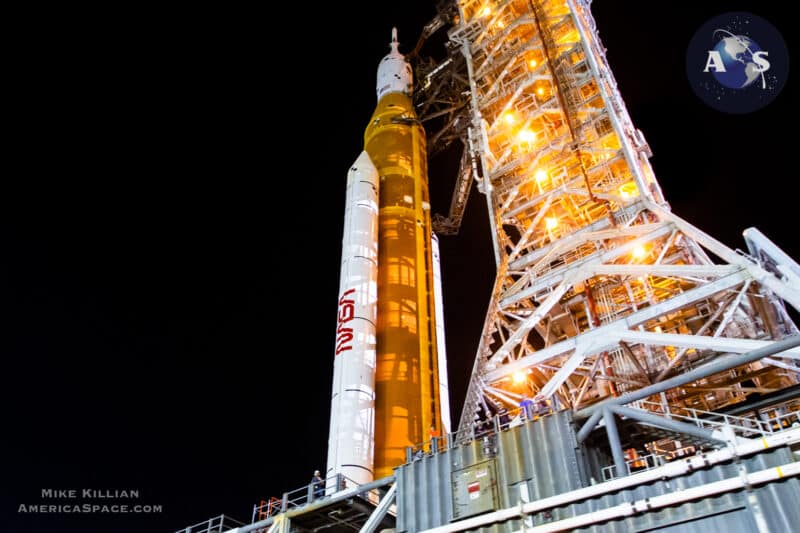
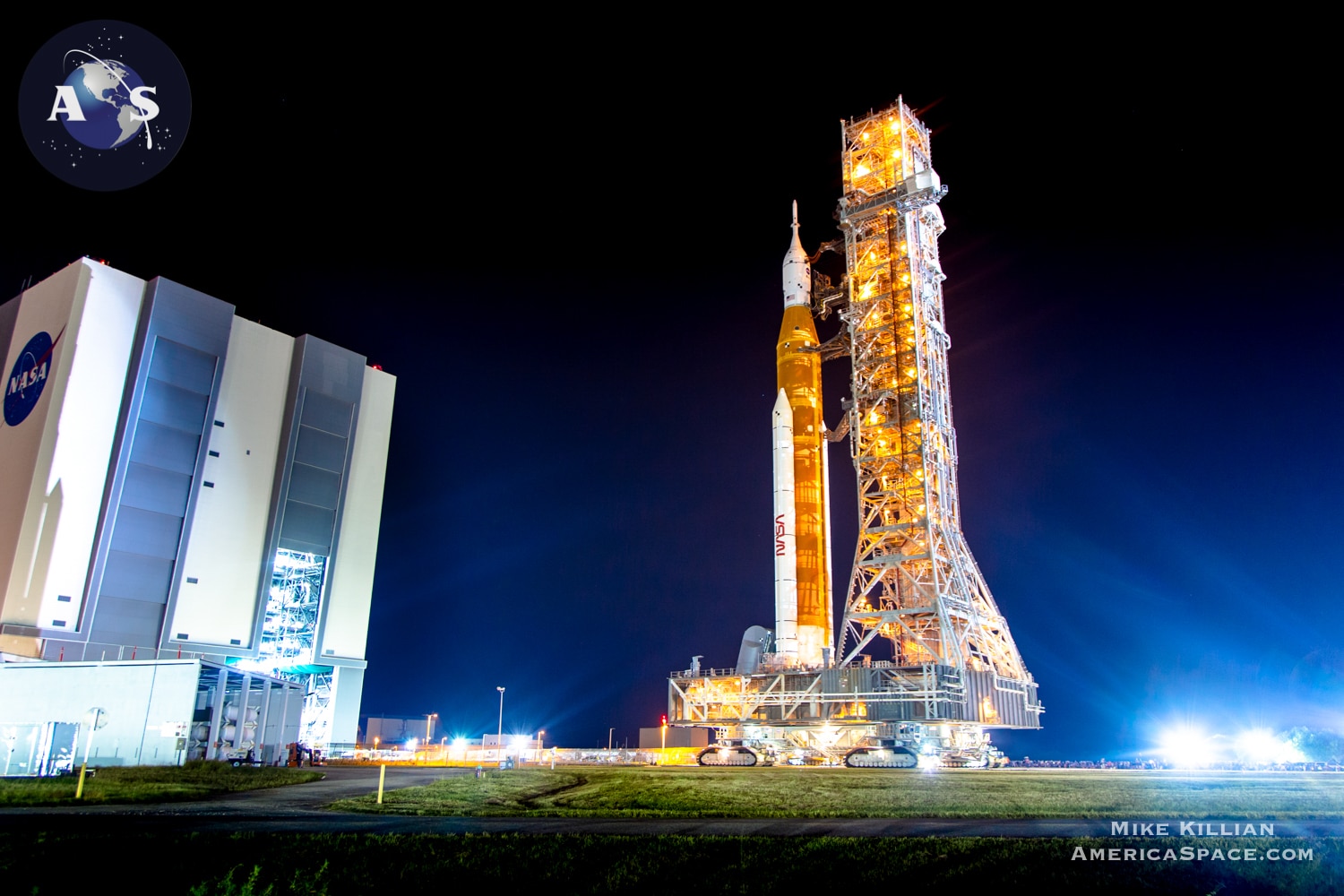
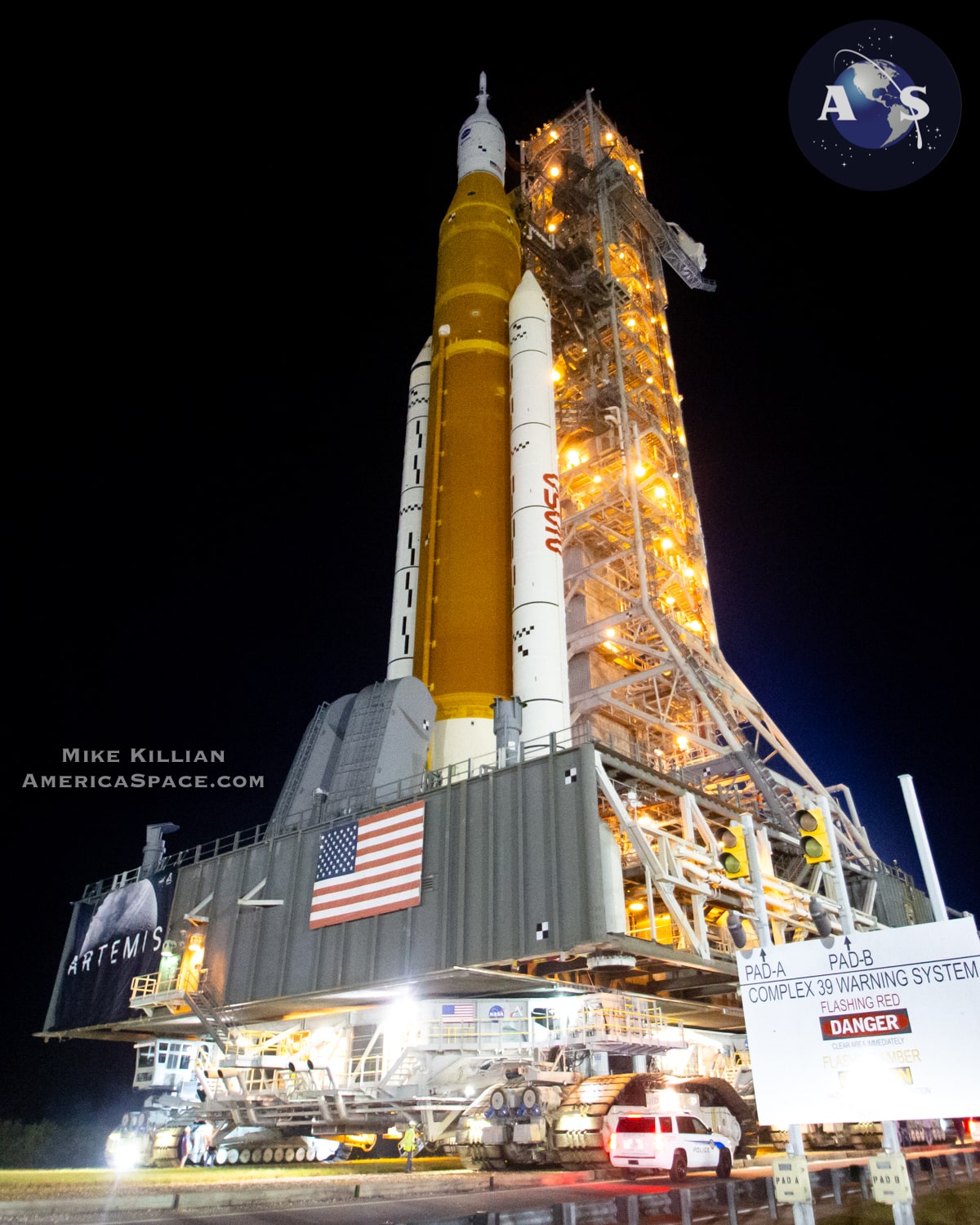
NASA is all systems GO at Kennedy Space Center in Florida tonight, as the countdown clock ticks towards a launch attempt at 8:33 a.m. EDT Monday morning with the maiden voyage of the Artemis-1 moon mission.
Artemis-1 will debut the most powerful rocket in the world, the Space Launch System (SLS), to send a new Orion Spacecraft on a 42-day uncrewed flight test to the moon and back.
Watch Artemis-1 Launch here:
live coverage of the launch
It’s a full mission of the entire integrated system, from the ground support, to launch, to checkouts of Orion, flight to lunar orbit, and return to Earth. NASA wants to validate that everything works as designed, and stress Orion beyond what it was designed for, before launching the first astronauts on Artemis-II.
The countdown started at 10:23 a.m. EDT on Aug. 27, when the launch team arrived at their stations in the control room, located 3 miles from the launch pad.
the moon rising behind artemis-1 As It Undergoes Final Checks Before Launch On Monday. (mike killian photo)
Unlike Apollo, Artemis aims to establish a permanent human lunar presence learning to live and work at the moon, much the same as we have done now for decades with the International Space Station. NASA wants to establish a base at the South Pole, and put a small space station called Gateway into lunar orbit that will allow docking of cargo, crew, landers and other spacecraft, as well as additional segments to grow the outpost from commercial and international partners.
Weather Looks Positive But Not Guaranteed
But first, NASA needs to fly Artemis-1. Thunderstorms have been prolific across Central Florida the last several days, with lightning even striking the launch complex (no damage), but the U.S. Space Force Space predicts an 80% change of good weather for launch at 8:33 a.m. Skies will, however, begin to deteriorate to 60% by the end of the launch window (10:33 a.m.).
We reported previously on the new SLS rocket and Orion Spacecraft, which you can read here. At liftoff, SLS will produce nearly 9 million lbs of thrust, 15% more than the Apollo Saturn V and more than 31 times the thrust of a 747 jumbo jet.
Once launched, Orion will fly some 280,000 miles from Earth and thousands of miles beyond the Moon, using a different orbit than Apollo. It will fly 62 miles above the surface, and then use the Moon’s gravity to propel it into a deep retrograde orbit 40,000 miles above the surface, where it will fly and test for 6 days. Orion will then descend back into a low orbit and brush past the surface again at 60 miles to perform its engine firing to break away from the moon’s gravity, and then head back to Earth.
Orion will stay in space longer than any ship for astronauts has ever done without docking to a space station, and will return home faster and hotter than any before it.
For now, all systems GO for launch at 8:33am EDT Aug 29.
Every once in a while, friends of Avgeekery send us a treat. Earlier today, we were sent a video by our friend Jim Mumaw. Jim is a long-time aviation photographer and certified avgeek. Jim lives near Edwards AFB. For many years, he’s graced us with amazing images. Over the years, Jim has built up relationships with the local community. He’s leveraged those relationships to get thousands of unique photos and videos. This latest video is essentially one from Jim’s vault. It’s a long-lost VHS tape of SR-71 operations at Edwards AFB.
SR-71 Taxiing
When Jim first shared the video, he said, “It was on VHS, shot by myself and sat on a shelf for 27 years. Didn’t hold up too well but hopefully you’ll get an idea about the Blackbird from this never before seen in public video.” Jim’s too humble. This video is amazing!
Details of the Video: SR-71s At Edward AFB
Jim shared the background of these series of videos that he uploaded to YouTube. He said it was a combination of videos filmed between 1990 and 1995. He said,” [the video] was many years ago at the Edwards Open House. They towed the plane over from the museum. By my not narrating it the sounds of the operations come through. The monitor I zoomed in on was at NASA Dryden. The pools of JP-7 can be seen under the jet as well as the green TEB flame igniting the fuel. As it passes while I was beside the runway at Plant 42, you can pick up a glitch in the recording heads as the camcorder vibrates with the resonance put out by the twin J-58 engines. This was truly power that was felt throughout a person’s body! “
The video features multiple takeoffs and landings of the SR-71 at Edwards AFB. It even features a closeup of the drogue chute deployment. That’s something we’ve never seen before close up!
Other Awesome NASA Planes In The Video
The NASA F-16XL Cranked Arrow Jet is in this video too! Jim said, “We were racing it back after landing with me hanging onto the back of the cart with one hand while filming with the other. Last thing of note just near the end is the crew taking off their spurs.”
SR-71 Was An Amazing Aircraft
The SR-71 was the world’s first and only production Mach 3+ jet. The Lockeed team designed the jet on a slide rule. Jim Kelly and team designed this jet with limited technology but maximum ingenuity. The jet was well ahead of its time. The SR-71 was able to outrun SAMs (surface to air missiles) and conduct reconnaissance over hostile territory.
The jet set a number of speed records included the fastest coast to coast flight. That flight occurred on the SR-71’s final flight. In that flight, Col Yieldling flew serial number 61-17972 from Los Angeles to Washington DC. He and a crew member landed just one hour, four minutes, and 20 seconds later at Dulles International Airport outside Washington DC. The last operational flight of the SR-71 set a new Los Angeles to Washington speed record averaging a scorching 2,124 miles per hour! The jet was donated to the Smithsonian at Dulles International Airport. You can view it today at the museum at the Steven F Udvar-Hazy Center at Dulles.
17-year-old British-Belgian pilot Mack Rutherford has become the youngest person ever to fly solo around the world.
Mack Rutherford’s Five-Month Journey Around the World
Mack Rutherford gives the camera a thumbs-up somewhere over southeast Asia on 24 July 2022 | IMAGE: MackSolo2022 / Facebook
On Wednesday, Mack’s Shark Ultralight (UL) touched down in Sofia, Bulgaria, after a five-month journey that spanned 30 countries, four continents, and nearly 30,000 miles.
He broke the record set just last year, when Travis Ludlow of Britain, 18, completed his solo journey around the world.
Mack now holds four Guinness World Records, including:
Youngest person to circumnavigate the world by aircraft solo
Youngest person to circumnavigate the world by aircraft solo (male)
Youngest person to circumnavigate the world by microlight solo (male)
Youngest person to circumnavigate the world by microlight solo
Circumnavigating the Earth in a Shark
Courtesy: MACKSOLO / YouTube
Mack, whose nickname is Mack Solo, was just 16 years old when he lifted off from Sofia West Airport (LBSW) on 23 March 2022. After stops in Italy and Greece, Mack’s route took him across northern and eastern Africa, southern Asia, Japan, across the Pacific via Alaska, down the West Coast of the U.S., Mexico, the eastern U.S., Canada, across the North Atlantic, the U.K., and Belgium.
After 142 days, Mack’s journey ended on Wednesday, 24 August, when he successfully landed his Shark back at Sofia West Airport at 1700 local time.
Mack flew in a specially modified Shark UL, a European high-performance ultralight aircraft. The Shark features retractable gear, a smaller wing, a variable-pitch propeller, and a maximum speed of 186mph.
Every Day was an Adventure
Pilot Mack Rutherford was forced to land his Shark in bad weather at Attu, an uninhabited island in Alaska | IMAGE: macksolo2022 / Facebook
Mack only flew during daylight hours. He encountered a few issues, such as sandstorms in Sudan, visa issues in Dubai, and a fuel bladder switch problem (that ended up correcting itself) after a stop in Egypt. The Russian invasion of Ukraine also led to navigational difficulties, as most around-the-world flights include overflying Russian airspace. Eventually, Japan agreed to grant Mack the use of their airspace, which allowed him to continue his journey.
The most hair-raising moment of his adventure came during a 10-hour leg between Japan and Alaska. While over the Aleutian Islands, Mack encountered a weather system that produced low clouds, rain, and unexpectedly strong headwinds. He was forced to land at a former Coast Guard airstrip on Attu, an uninhabited Alaskan island that was the site of the only World War II land battle fought in the United States.
“I stayed the night on a completely uninhabited island, which was pretty special,” Mack told the New York Times. “I found a shed on the side of the runway and stayed there for the night on a broken-down sofa.”
As for some of his favorite moments, Mack says seeing Kenya’s wildlife and New York City’s skyline were particularly exhilarating. He was surprised when New York air traffic controllers allowed him to make several passes around the Statue of Liberty.
Mack Rutherford’s Shark UL in flight | IMAGE: MackSolo / Facebook
Age when record was broken: 17 years, 2 months, and 2 days (breaking the record set by Travis Ludlow by 150 days)
Total Distance Flown: 33,632 miles
Total Time in the Air: 221 hours
Total Time of Circumnavigation: 142 days
Takeoffs/Landings: 68
Longest Flight: 10 hours (Japan to Alaska)
Highest Altitude: 12,500 ft. over Mexico
Highest Temperature: 118.4°F (48°C)
Lowest Temperature: 10.4°F (-12°C)
A Love of Aviation Runs in the Family
Mack Rutherford and his father Sam Rutherford | IMAGE: MacSolo2022 / Facebook
Mack is far from the first aviator in the family. His dad is a former British Army helicopter pilot and is now a ferry pilot. His mom is a recreational pilot. Even his great-great-grandmother was a pilot and one of the first South African women to learn how to fly.
Mack isn’t even the only one in his family to hold a world record. In January 2022, his sister Zara, 19, became the youngest woman to fly solo around the world.
Will Mack continue to build upon his family’s remarkable legacy in aviation? He is considering going into the air force, but right now, he is focused on his studies. As he enters his final year of high school, he says his focus is on catching up on the work he missed last year.
The world lost an engineering marvel in February 2022 when Russian forces attacked and destroyed the sole Antonov An-225 “Mriya” at Hostomel Airport (GML) near Kyiv, Ukraine. The company that chartered that jet for her last flight has released a moving short film dedicated to commemorating the final series of flights.
A Product of the Space Race
Antonov An-225 with Soviet space shuttle Buran on top | IMAGE: By Vasiliy Koba – http://spotters.net.ua/file/?id=11327&size=large, CC BY-SA 4.0, https://commons.wikimedia.org/w/index.php?curid=36873169
The massive aircraft was initially designed in the late 1980s by the Soviet Union for use in its space program. The aircraft was primarily used as a transport for the Buran space shuttle, the Soviet equivalent of the American space shuttle. The An-225 first flew on 21 December 1988.
At 275 feet long and a wingspan of 290 feet, the An-225 was the largest aircraft ever built. It had six engines — each capable of producing 51,6000 pounds of thrust at takeoff — and a landing gear system with 32 wheels. It was also the heaviest plane ever built, with a maximum takeoff weight of 710 tons.
The An-225 in a Post-Soviet World
The Antonov An-225 Mriya preparing to unload cargo at Billund, Denmark | IMAGE: 26AVIATION
When the Cold War ended in 1991 and the Soviet Union collapsed, the Soviet space program also collapsed. Thus, the An-225’s intended purpose was no longer relevant. A second An-225 was in production at the time but was never completed. To this day, the second An-225 remains unfinished in the hangar of a Ukrainian airfield.
From 1994 until 2001, Mriya sat in storage. After refurbishment, the aircraft was reintroduced as a cargo transport designed to carry oversized loads. In 2002, it returned to the skies under the banner of Antonov Airlines, which operated its base at Hostomel Airport near Kyiv.
Mriya completed many missions throughout her life, including supplying military aid to American, Canadian, and coalition forces in the Middle East, humanitarian relief missions around the world, and – most recently – providing medical supplies to countries throughout the COVID-19 pandemic.
Mriya’s Final Mission
The Antonov An-225 Mriya is preparing to unload cargo at Billund, Denmark | IMAGE: 26AVIATION
Prior to her destruction by Russian forces in February 2022, Mriya’s last mission involved the transport of nearly 320 tons of COVID-19 test kits from Tianjin, China (TSN) to Billund, Denmark (BLL) via Bishkek, Kyrgyzstan (FRU).
UK-based air charter company 26AVIATION was responsible for organizing Mriya’s final mission. Founded in 2021, 26AVIATION provided the logistics for what would become Mriya’s last mission before her demise.
The following tribute video, produced by 26AVIATION, is the final video ever captured of the mighty An-225 Mriya. It shows her arrival into Billund on the evening of 4 February 2022, the unloading of the cargo the next day, and her final ferry flight back to Hostomel.
She would be destroyed just three weeks later during the Battle of Antonov Airport on 24-25 February 2022.
On 27 February 2022, Mriya was destroyed by Russian forces at Hostomel Airport. Cargo inside of her at the time included windmill blades and COVID-19 test kits.
Ukraine Vows to Rebuild the An-225
The destroyed Antonov An-225 Mriya at Hostomel Airport, Ukraine | IMAGE: By Kyivcity.gov.ua, CC BY 4.0, https://commons.wikimedia.org/w/index.php?curid=116973885
Shortly after Mriya’s destruction, Ukrainian President Volodymyr Zelensky vowed that the An-225 would take to the skies again when the war ends. Zelensky, along with the Ukrainian people, views the aircraft as a symbol of national pride.
The task may be easier said than done, however, as returning the An-225 to the air would be an expensive undertaking – on the order of $3 billion USD or more.
Over its 34 years of service, the An-225 was a symbol of aviation ingenuity. The entire aviation community mourns the loss of one of the most iconic airplanes ever built.
A once mighty brand in the regional aviation world has filed for bankruptcy and ceased operations.
On Tuesday, College Park, Georgia-based ExpressJet Airlines announced it had filed for protection under Chapter 11 of the US bankruptcy code due to “a combination of market and economic conditions,” according to a message posted on its website.
The filing has also brought an abrupt end to Reno, Nevada-based aha! Airlines, the brand used by ExpressJet for flights in the western United States.
aha! Was Less than a Year Old
aha! Airlines Route Map | IMAGE: aha! Airlines via Facebook
Using ExpressJet’s fleet of three 50-passenger Embraer ERJ-145 aircraft, aha! provided service to 12 cities throughout California, Idaho, Oregon, Nevada, and Washington. All flights were operated out of the carrier’s base at Reno-Tahoe International Airport (RNO).
Aha!’s inaugural flight took place on 24 October 2021 from Reno to Tri-Cities Airport (PSC) in Pasco, Washington. aha!, an acronym for “air, hotel, adventure,” had plans to serve more than 20 cities from Reno.
ExpressJet Airlines’ Convoluted Journey from Boom to Bust
An ExpressJet Embraer ERJ-145 | IMAGE: ExpressJet Airlines
ExpressJet Airlines began operations in 1987 as a Continental Express carrier. It was acquired by Continental Airlines in 1996 and flew under the Continental Express banner through 2006. ExpressJet launched its own charter operation in 2006 and scheduled operations in 2007. High oil prices amid the financial crisis in 2008 led to the shutdown of the carrier in September of that year.
Meanwhile, ExpressJet also provided regional service for Delta Connection from June 2007 through September 2008. It also operated several short stints as a feeder for Frontier Airlines out of Denver (DEN), United Express out of Chicago O’Hare (ORD) and Washington Dulles (IAD), and Branson Air Express out of Branson, Missouri (BBG).
In 2010, ExpressJet was acquired by SkyWest Airlines and merged with Atlantic Southeast Airlines. At one point, the carrier operated more than 450 aircraft for United Express, American Eagle, and Delta Connection.
ExpressJet’s Last Breath
aha! Airlines ERJ-145 | IMAGE: aha! Airlines via Facebook
Amid the pandemic, United terminated its agreement with ExpressJet, effectively ending flying for the carrier. However, yet another brand resurrection occurred in 2021 when aha! began operations.
Today, the once mighty ExpressJet brand is officially no more. With the Chapter 11 filing and plans to liquidate assets, ExpressJet, along with aha!, appear to be on their way to becoming footnotes in the annals of aviation history.
There are faster ways to get to Hawaii, but it must have been an incredible adventure in a Cessna.
Imagine, if you will, the following scenario.
You’re on an 18-hour flight.
Your seat doesn’t recline.
There is no in-flight entertainment.
There is no in-flight service.
The cabin is not pressurized.
You can’t go to the bathroom – because there isn’t one.
And you’re the only passenger.
Oh…and you’re the pilot, too.
For Tom Lopes, this scenario played out in a very real way on Saturday. Lopes completed the 2,521-mile journey when he ferried a brand-new Cessna 172 G1000 NXi Skyhawk (reg. N490NW) from Merced Regional Airport (MCE) in Merced, California, to Daniel K. Inouye International Airport in Honolulu (HNL).
At a filed altitude of 6,000 feet and an average speed of 139mph, the flight was completed in 18 hours and five minutes. Lopes departed MCE at 0610 and arrived in HNL at 2115, both times local.
The Plane Was Delivered to a Flight School in Honolulu
IMAGE: FlightAware.com
The Cessna was delivered to George’s Aviation, a flight school located at HNL. In fact, less than 24 hours after the aircraft landed in Hawaii, it was already in the air providing flight training to students. According to George’s Aviation CEO George Hanzawa, it took just two hours to remove the modified fuel tanks and install the seats for use.
Hanzawa says the Cessna departed MCE with just over 200 gallons of fuel. Upon arrival in Honolulu, it had approximately 25 gallons left.
Lopes communicated with a temporary High-Frequency (HF) system installed on the aircraft. Additionally, FlightAware showed the Cessna flying at an altitude of 10,000 feet at times throughout the journey.
In a Facebook post created by Hanzawa, he said that he has arranged ferry flights from the mainland before. However, for some reason, this particular flight garnered an unusual amount of attention.
Upon arrival in Honolulu, Lopes was given a traditional Hawaiian welcome, with the adorning of a lei around the Cessna’s propeller hub and another around Tom’s neck.
“Yes, I ‘ve gotta go to the restroom.”
Pilot Tom Lopes emerges from a Cessna 172 at HNL | IMAGE: George’s Aviation via Facebook
The first words spoken by Lopes as he exited the aircraft?
“Yes, I’ve gotta go to the restroom.”
I would like to think he had an empty bottle or two, just in case — ya know — nature called. But maybe that’s just me.
In any case, flying solo halfway across the Pacific Ocean in a Cessna 172 is a remarkable accomplishment.
Hopefully, Tom was able to say “aloha” to a nice comfortable bed and get some well-deserved rest on Saturday night.
Watch the video below to see Lopes’ arrival at George’s Aviation.
Want to learn more about how Hawaiian Airlines 717 fly to the mainland for maintenance? Check this story out: