
Making the Most of the Deuce
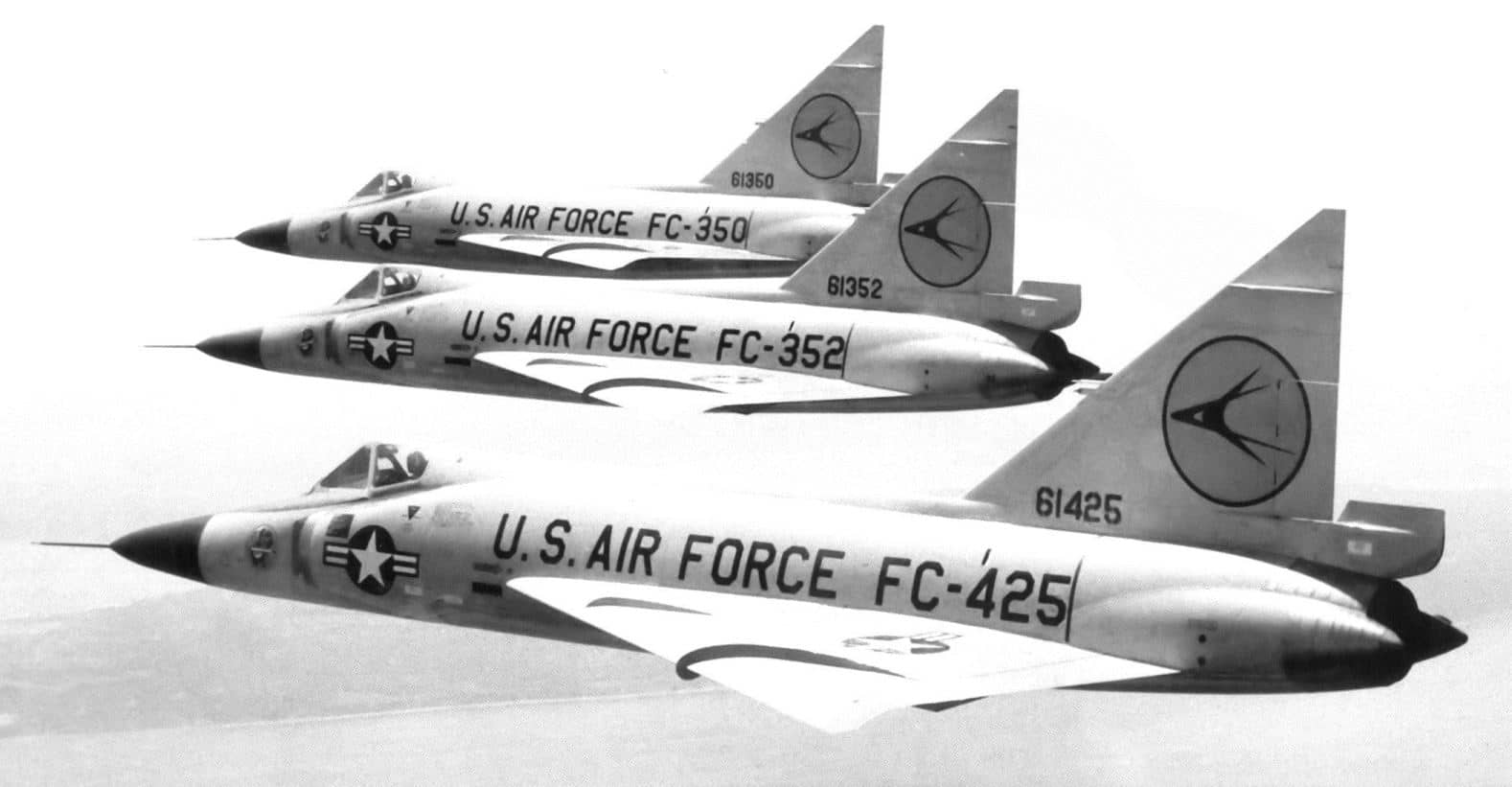
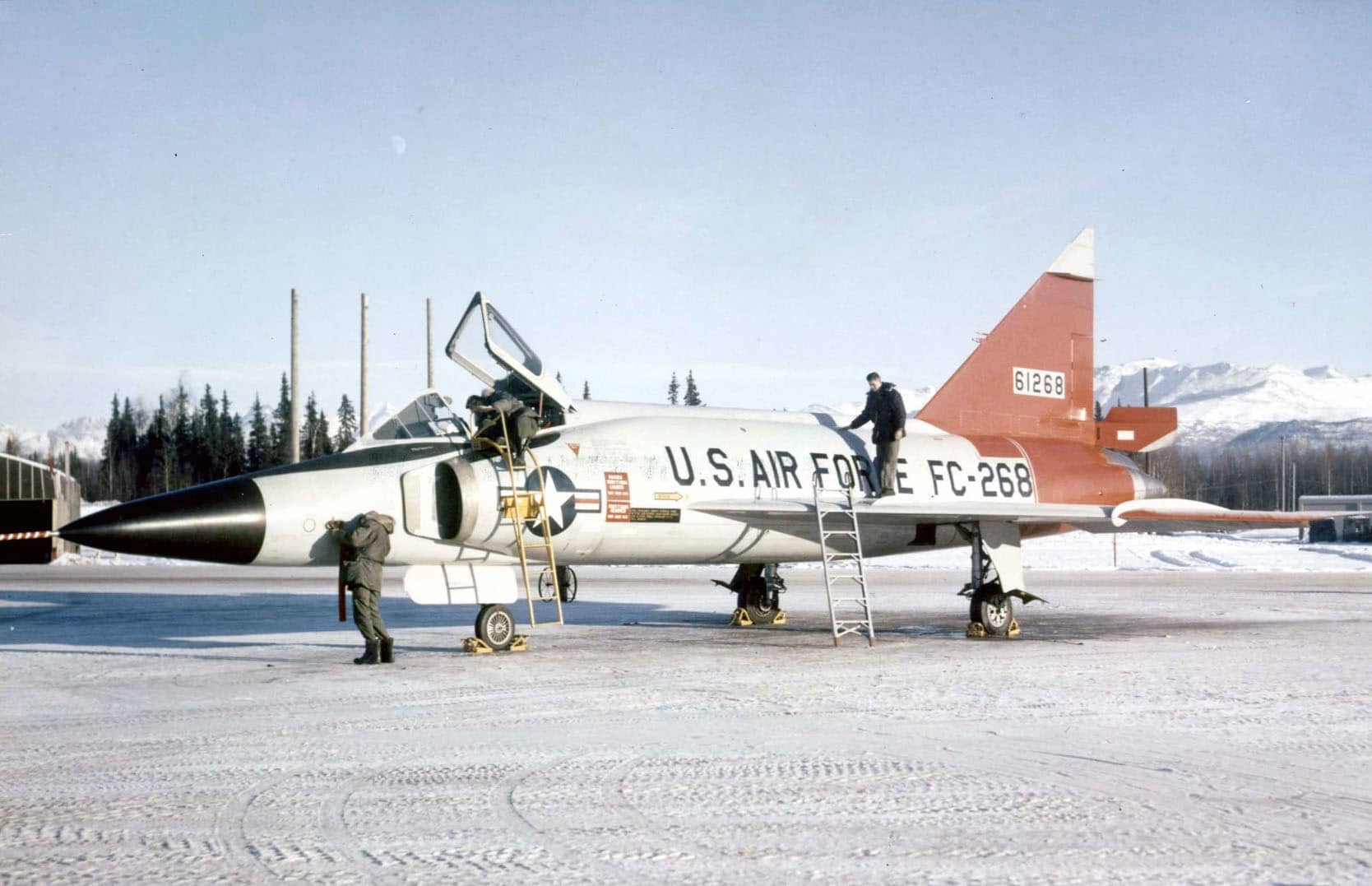
As the F-102A Deuce continued to serve with the ADC and ANG, several revised wing designs were evaluated to research the impact of increased conical camber on the wing shape. The wing design that was eventually selected had larger elevons, which resulted in lower takeoff speeds and a higher service ceiling of 56,000 feet.
The jets were also retrofitted with infrared search and tracking systems IRSTs), radar warning receivers (RWRs), backup artificial horizons, and additional transponders. Fire control systems were also incrementally improved- a critical need for an aircraft relying solely on missile systems for its offensive firepower.
The F-102A also received a runway arrestor hook, strengthened landing gear, and a removable inflight refueling probe used when transiting during overseas deployments.
The Ugliest Tubs of All
To train F-102A Deuce pilots, Convair took the basic airframe and widened the forward fuselage to accommodate two side-by-side seats. The resulting aircraft was the TF-102A. Though contracted to build 111 of them, Convair built a total of 63 of these trainers, somewhat unflatteringly dubbed The Tub. At the time, the side-by-side seating arrangement was in vogue with other trainer derivatives like the British Hawker Hunter T.7 and English Electric Lightning T.4, which looked a thousand percent better than The Tub. Though the TF-102As were slower than the F-102A, they, like the F-102A, saw combat in Vietnam.
Combat Deuces
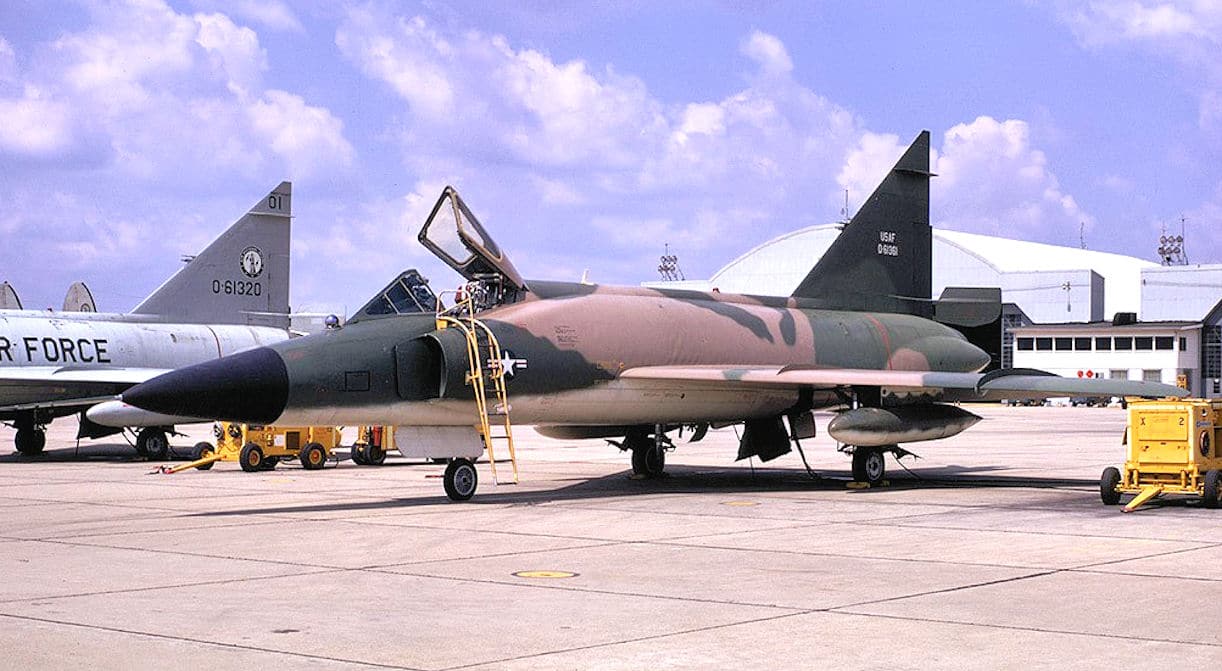
Things started slowly. F-102As actually began showing up in Southeast Asia in 1962 to counter what were thought to be North Vietnamese Ilyushin Il-28 Beagle bombers. Deuces were deployed to Thailand and other locations in Southeast Asia in order to potentially intercept the Beagles should they attack their neighbors to the South. F-102As flew escort missions for Boeing B-52 Stratofortresses flying Arc Light strikes over North Vietnam.
An unfortunate F-102A pilot was shot down by a North Vietnamese Mikoyan MiG-21 Fishbed during one of these escort missions. This was the only loss of an F-102A in air-to-air combat during the Vietnam War. Deuces were also used against ground targets. The 509th FIS of the 405th Fighter Interceptor Wing (FIW) moved from Clark AFB in the Philippines to Da Nang in August 1964. The 64th FIS also deployed to Southeast Asia.
Losses Mount But Not in the Air
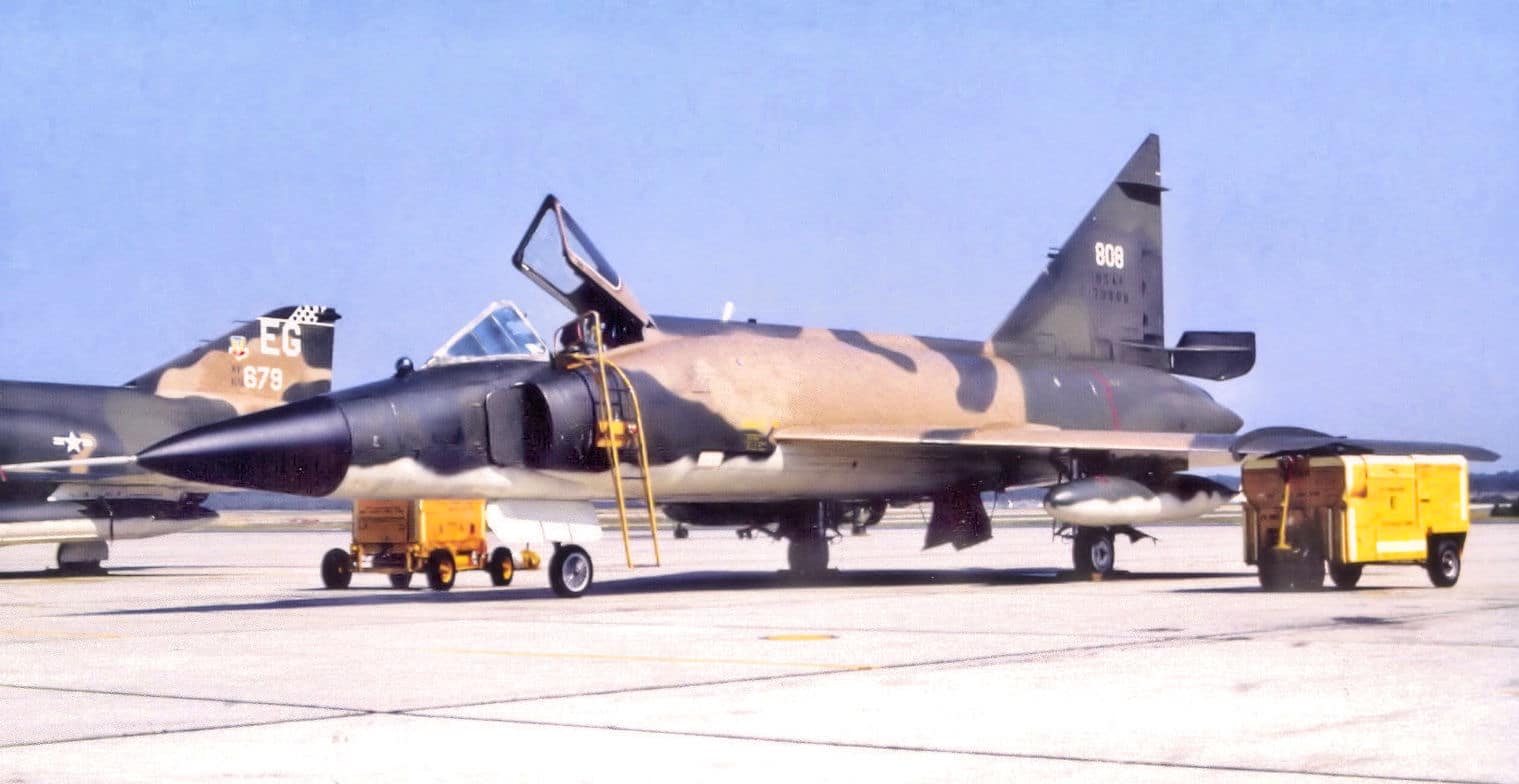
Because the F-102A could fire FFARs from the weapons bay doors, they were used as daylight ground attack aircraft, albeit with very limited success. They also flew night interdiction missions along the Ho Chi Minh Trail using the IRST sensor to detect targets and the Falcon missiles to attack them- albeit again with limited success.
The Air Force even used TF-102As as forward air control (FAC) aircraft for a time, taking advantage of the ability of the Tub to fire FFARs at ground targets. 14 F-102As were lost in Vietnam before the aircraft rotated back to CONUS- the majority of which were the result of operational accidents or sapper attacks on the ground.
World Interceptors Go ANG
F-102As served all over the world from bases in American, North Atlantic Treaty Organization (NATO), and South East Asia Treaty Organization (SEATO) allied nations. The McDonnell F-101 Voodoo, the McDonnell Douglas F-4 Phantom II, and Convair’s own derivative of the F-102A, the F-106 Delta Dart, steadily replaced F-102As in ADC service.
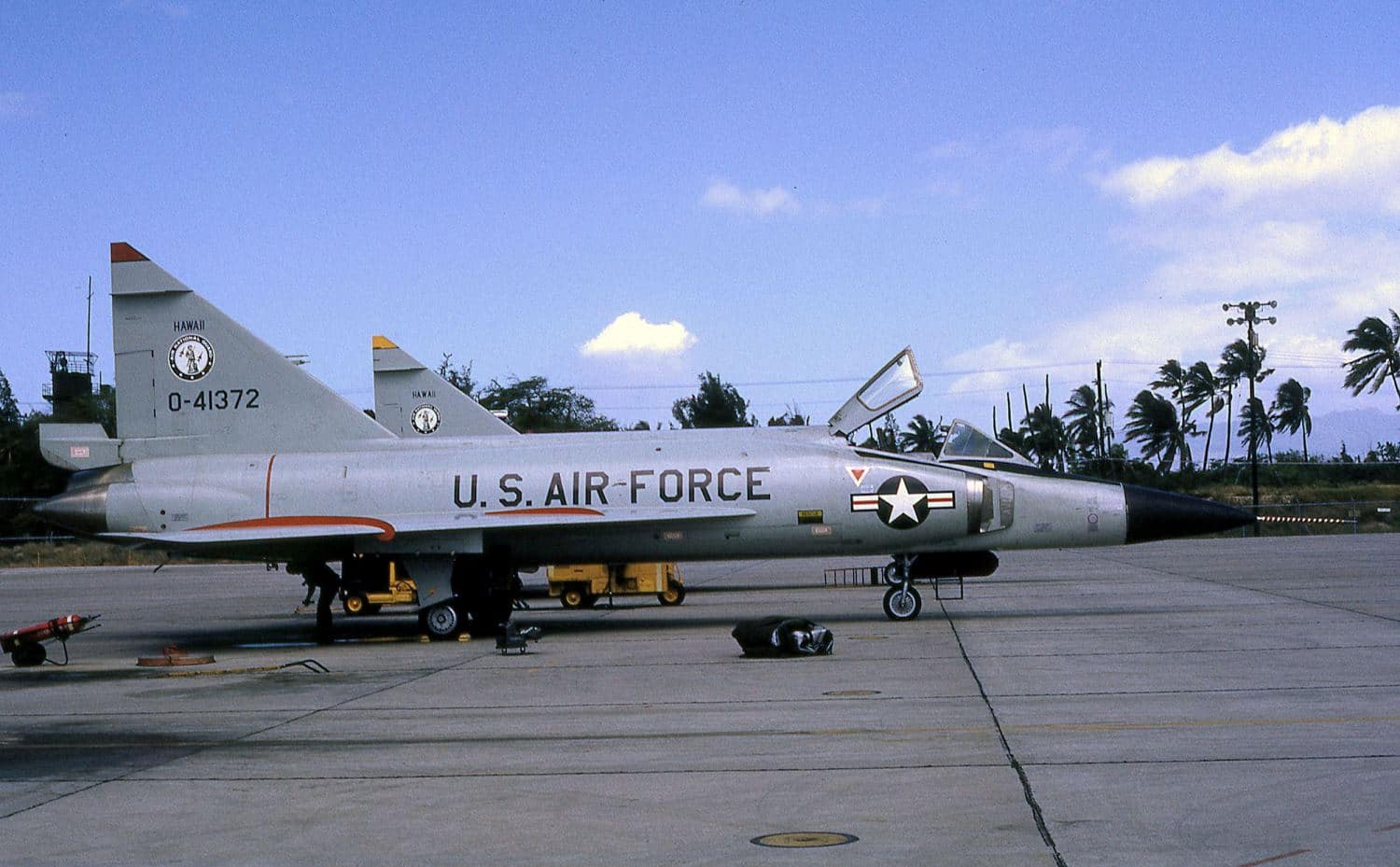
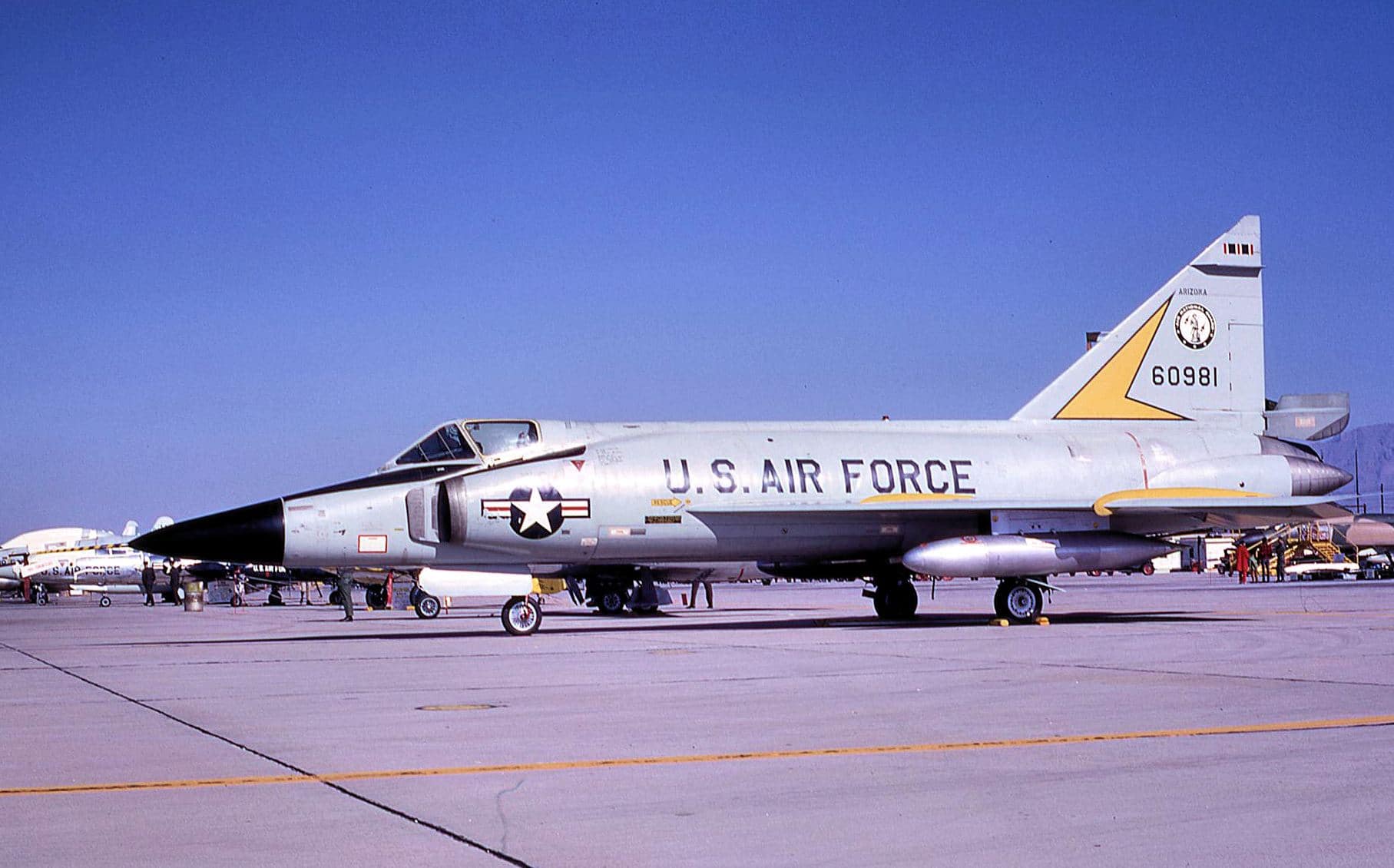
When the F-102A was finally retired from active-duty Air Force service by the 57th FIS after having equipped 25 ADC squadrons and a total of 43 USAF squadrons in 1973, the delta-winged Deuce kept flying with ANG units.
But all good aerospace things eventually come to an end. For the F-102A, the end occurred during October of 1976 when the 199th FIS Fighting Tikis, Hawaii ANG, flew the last operational F-102A sorties.
Another Way to Serve in Sacrifice
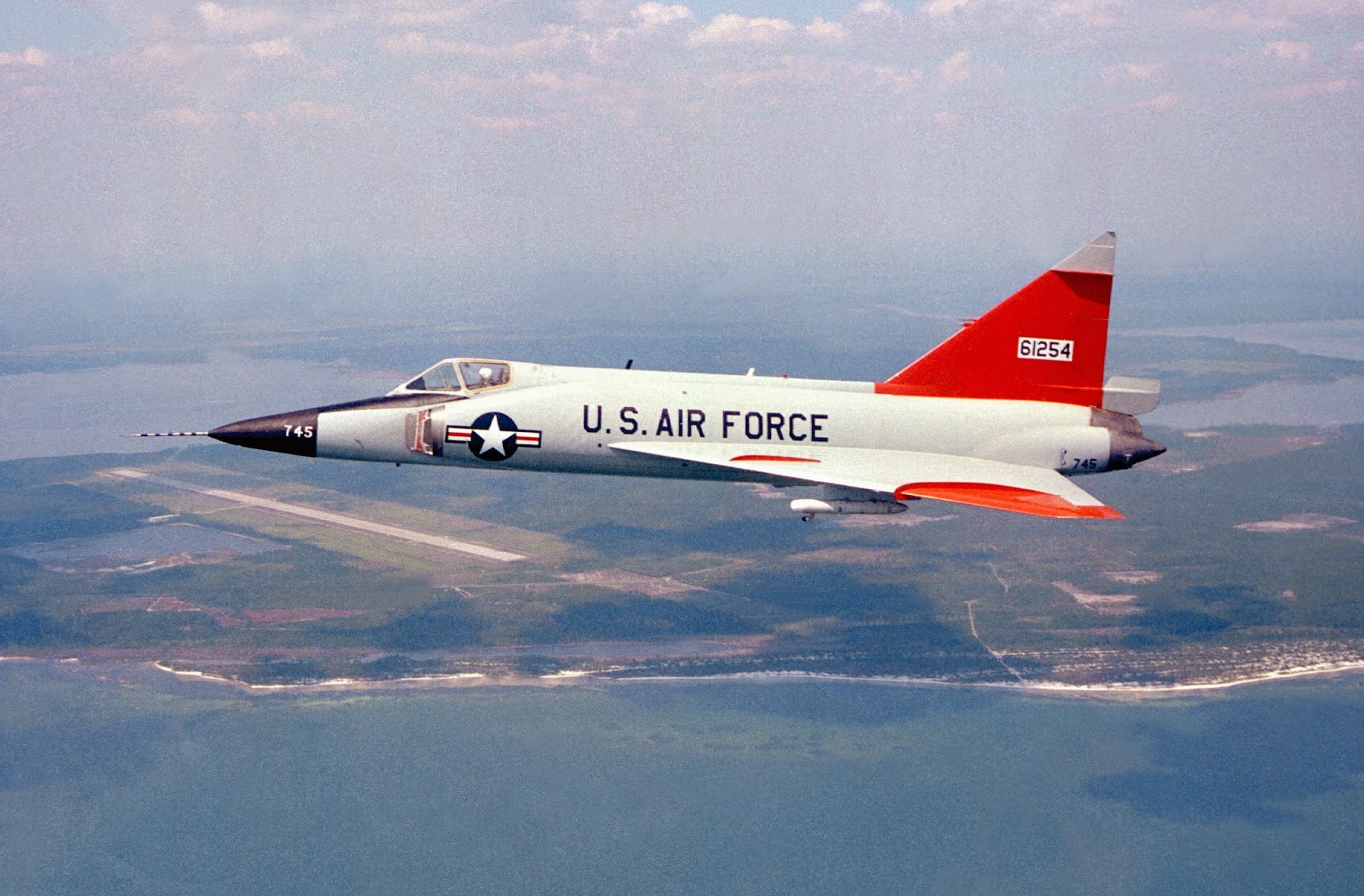
But that wasn’t quite the end for the Deuce. Hundreds of retired F-102As were converted to target drones- many under Project Pave Deuce as a part of the Full Scale Aerial Drone (FSAT) program. Designated as QF-102A, PQM-102A, and PQM-102B, these sacrificial jets were used to validate the weapons systems used on the next generations of fighter/interceptor aircraft and weapons systems such as the McDonnell Douglas F-15 Eagle and the Patriot surface-to-air missile system. The last of the F-102A drones was expended in 1986.
The Turks Finally Retire the Last Deuces
NATO allies Turkey and Greece also operated the F-102A and TF-102A. Ironically, the Turkish Air Force (Türk Hava Kuvvetleri) F-102As saw combat missions against the Hellenic Air Force (Polemikí Aeroporía) during the 1974 Turkish invasion of Cyprus, although not against HAF F-102As.
Rather, HAF Northrop F-5 Freedom Fighters mixed it up with the Turkish Deuces. Claims of aerial victories during these engagements are largely unsubstantiated, but neither country admits to aircraft losses. In any case, the last operational F-102As in the world were retired in 1979 by the Turks.