

The 1960s Saw the Birth of the Gunship
Essentially, all side-firing gunships utilize the same principle. An aircraft flying a fixed altitude banking turn around a point on the ground (read target) can deliver fairly accurate firepower to that target from side-mounted guns firing perpendicular to the line of flight. This concept was first proposed way back in 1926 and demonstrated the next year. However, the concept languished for many years but never completely disappeared. Several airmen later advanced the idea, but it didn’t come to fruition until the early 1960s with the Project Gunship I program.
Gunships Become De Rigueur
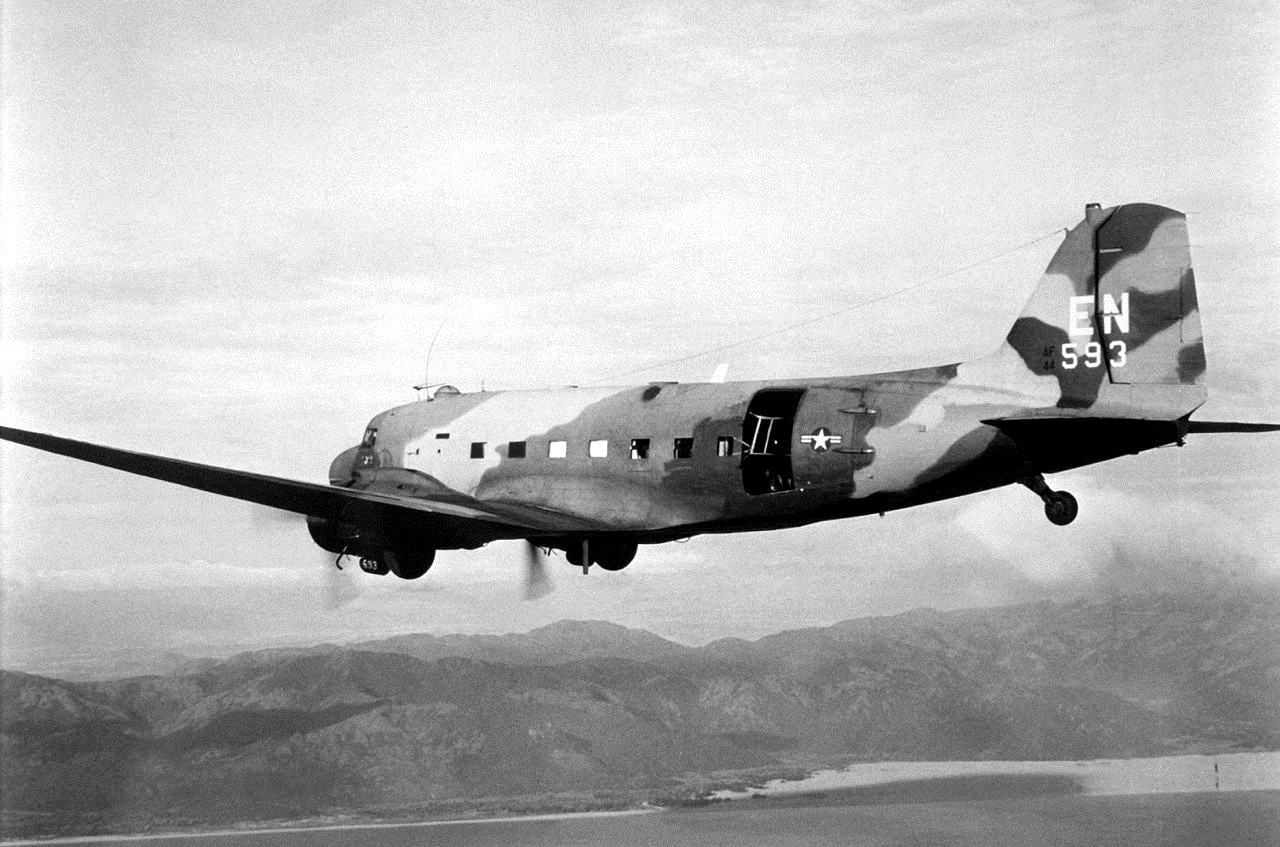
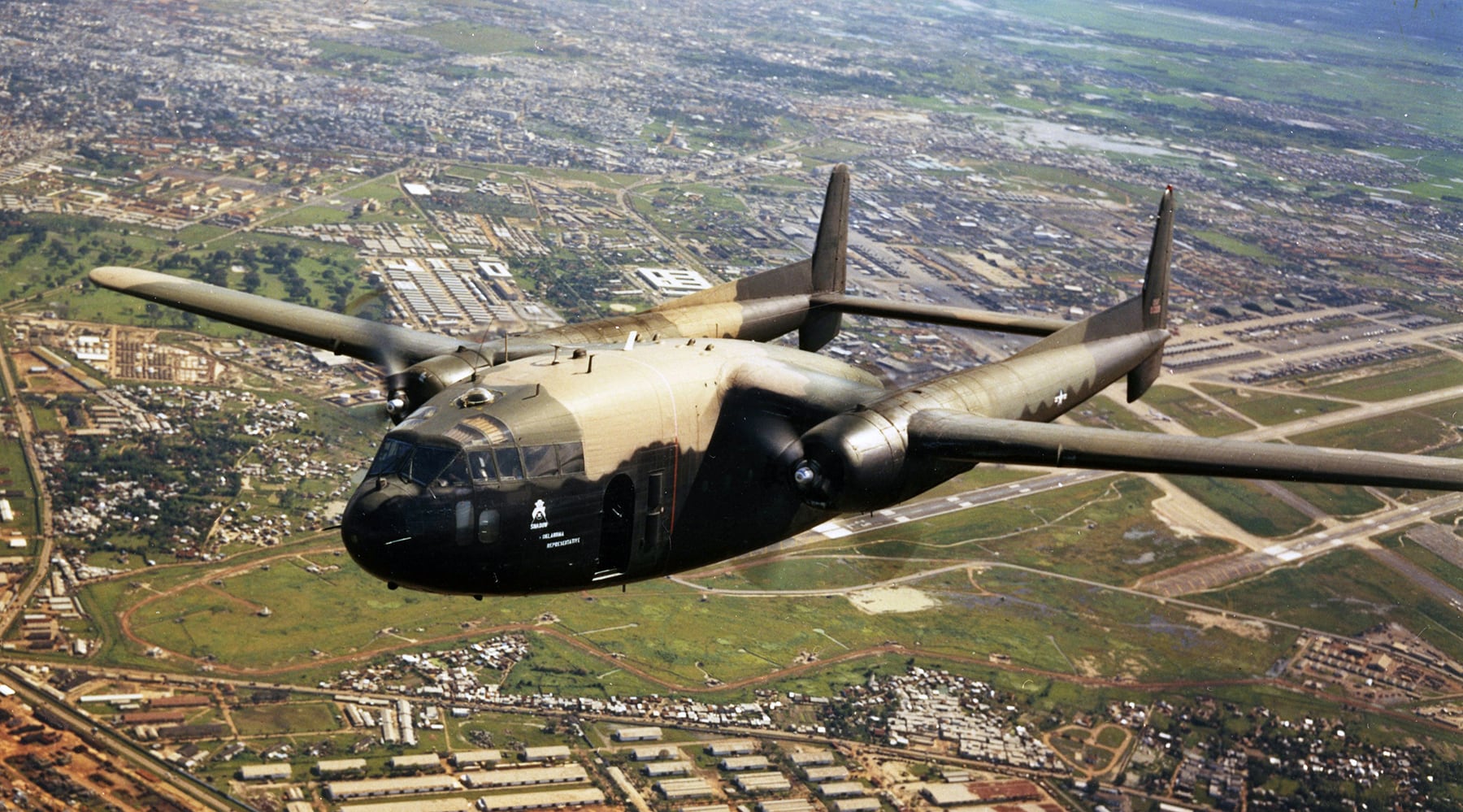
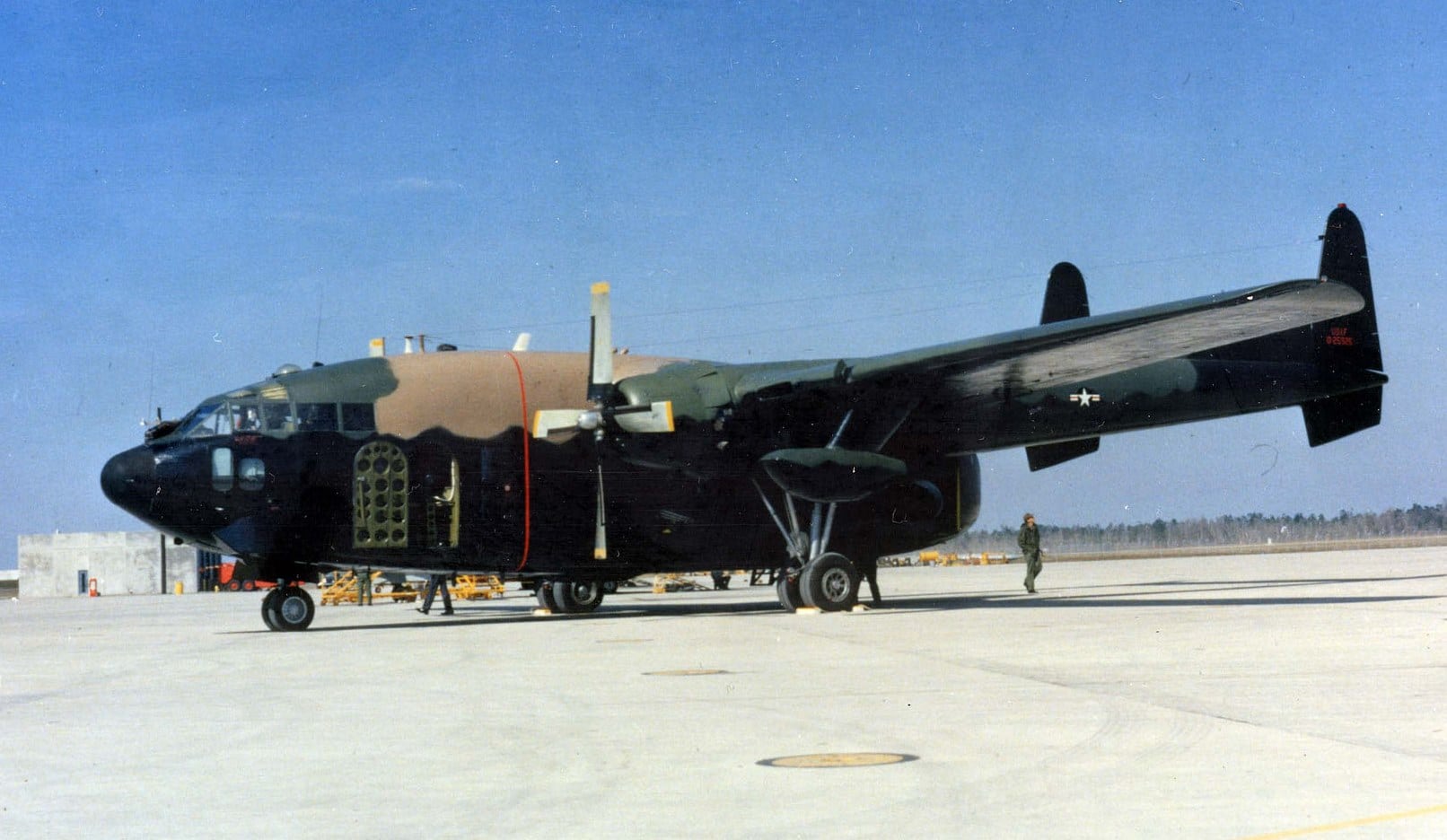
The Douglas AC-47D Spooky gunship, better known as Puff the Magic Dragon, proved its usefulness right from the beginning of its use in Vietnam during 1964. In late 1967, the development of the gunship continued with the Fairchild AC-119G Shadow and AC-119K Stinger– both developments of Fairchild’s C-119 Flying Boxcar tactical airlifter.
Filling a Critical Airlifter and Gunship Gap
The Project Gunship II Lockheed AC-130A Spectre was also in use at the time, but was in short supply due to the Air Force’s need for standard C-130 Hercules airlifters to support the war in Vietnam and meet worldwide airlift commitments. Therefore, the Wright R-3350-powered AC-119 was also selected for the gunship role. 26 of them were converted from Air Force Reserve C-119Gs to AC-119G standard, and heavily utilized in Southeast Asia beginning in 1968.
A Better Puff with More Dragon Magic
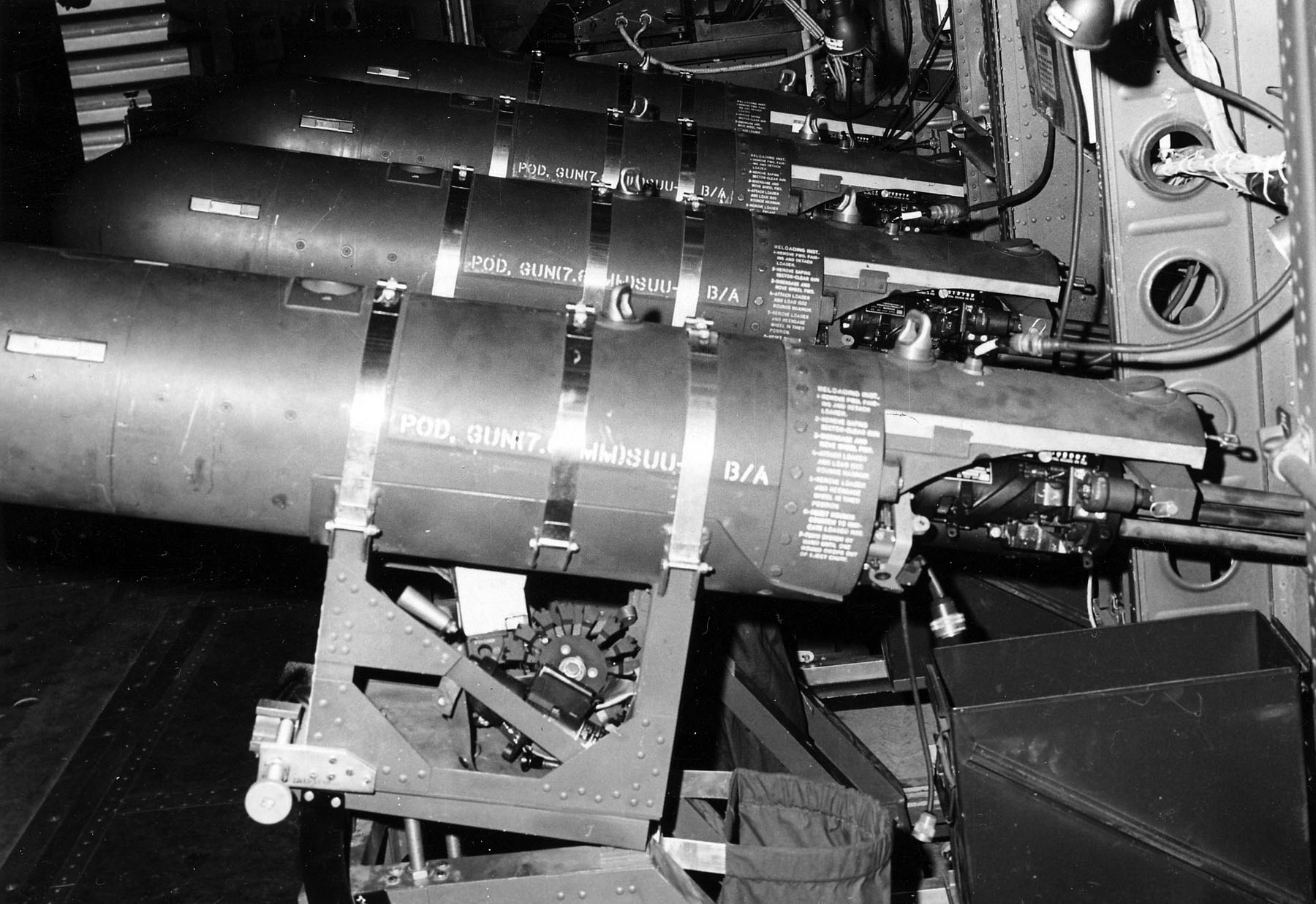
Project Gunship III AC-119Gs took over the combat role of the majority of the AC-47D Puff gunships, which were turned over to the South Vietnamese as they were replaced. A more advanced aircraft than the AC-47D to begin with, the more heavily armed AC-119G Shadow mounted four side-firing 7.62 millimeter six-barrel GAU-1/A miniguns as well as an AVQ-8 xenon light, night observation sighting equipment, and an automated LAU-74/A flare launcher. Shadows primarily provided support to troops in contact (TIC) and airborne base defense.
The Smart Gunship
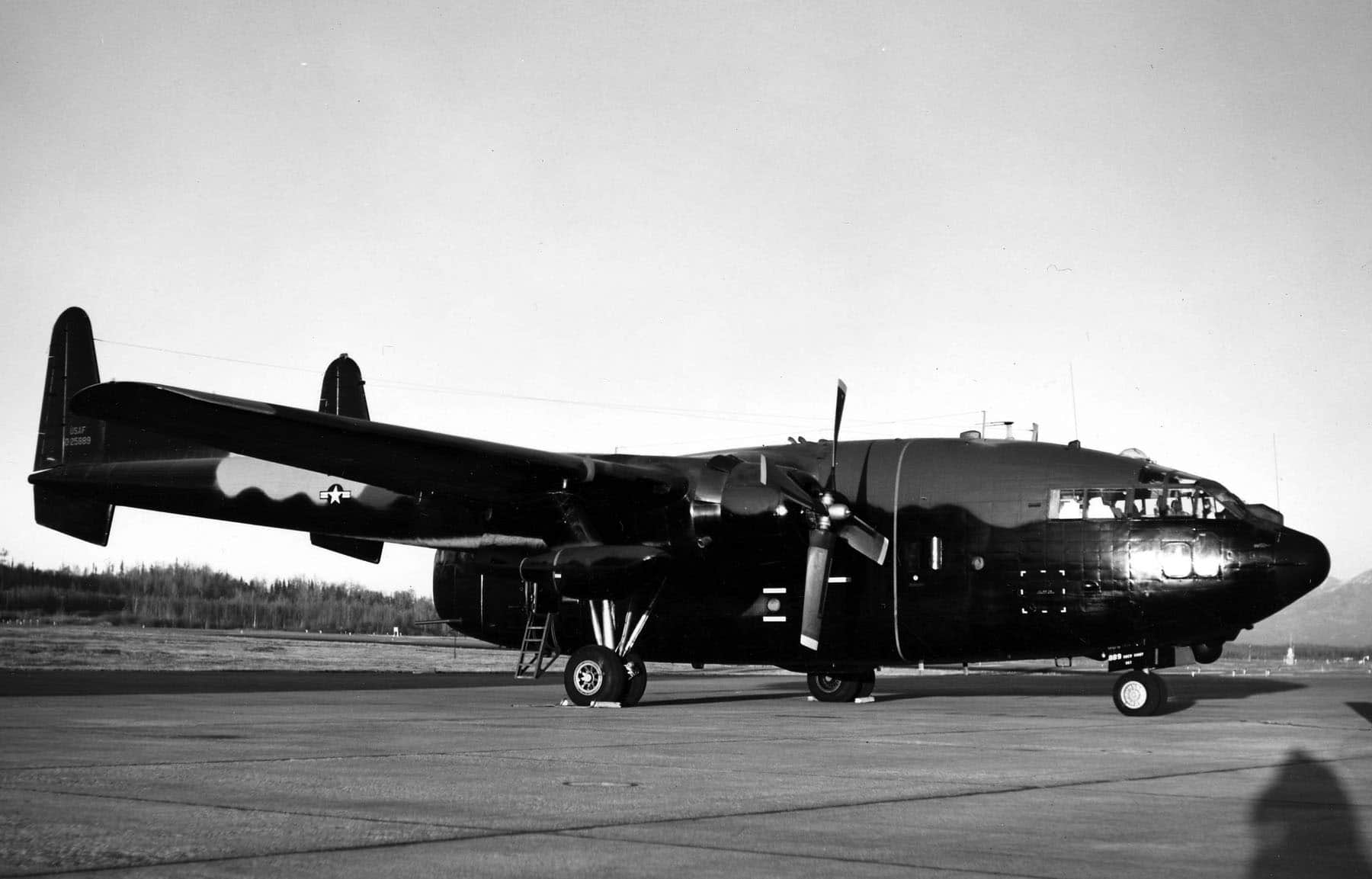
The AC-119G was also equipped with a General Precision fire control computer as well as a TRW fire control safety display to prevent friendly-fire accidents. Internal power for all the new equipment was supplied by a Garrett Industries 60 KVA auxiliary power unit (APU)- the same model used in the Boeing 727 commercial airliner. Ceramic armor was added, and APR-25 and APR-26 electronic countermeasures (ECM) gear were installed for enhanced crew survivability. The AC-119G carried 31,500 rounds of ammunition and 24 flares on a typical night interdiction mission.

I was stationed at March AFB in AFRES back is the mid 60’s Flying C-124’s There was a squadron of AFRES C-119’s stationed there, but the aircraft were recalled into active duty. No mention of these in your article, maybe they were not converted to gunships…
The 434th Troop Carrier Wing provided the C-119’s to be configured as gunships in St Augustine, Fla.
I was active duty and part of the cadre of RegAF personnel to fill out the ranks of the Reserves to complete the aircrew needs. I was with the 71st when we initially deployed to Nha Trang, VN.
My Dad was a command pilot on C-119’s out of Clinton County AFB in Ohio. Even though it was under powered, he loved that bird.
Great read. My father was a load master in the 434th. The unit was moved to Columbus Ohio when they were recalled to active duty