

A Lengthy But Shapely Design
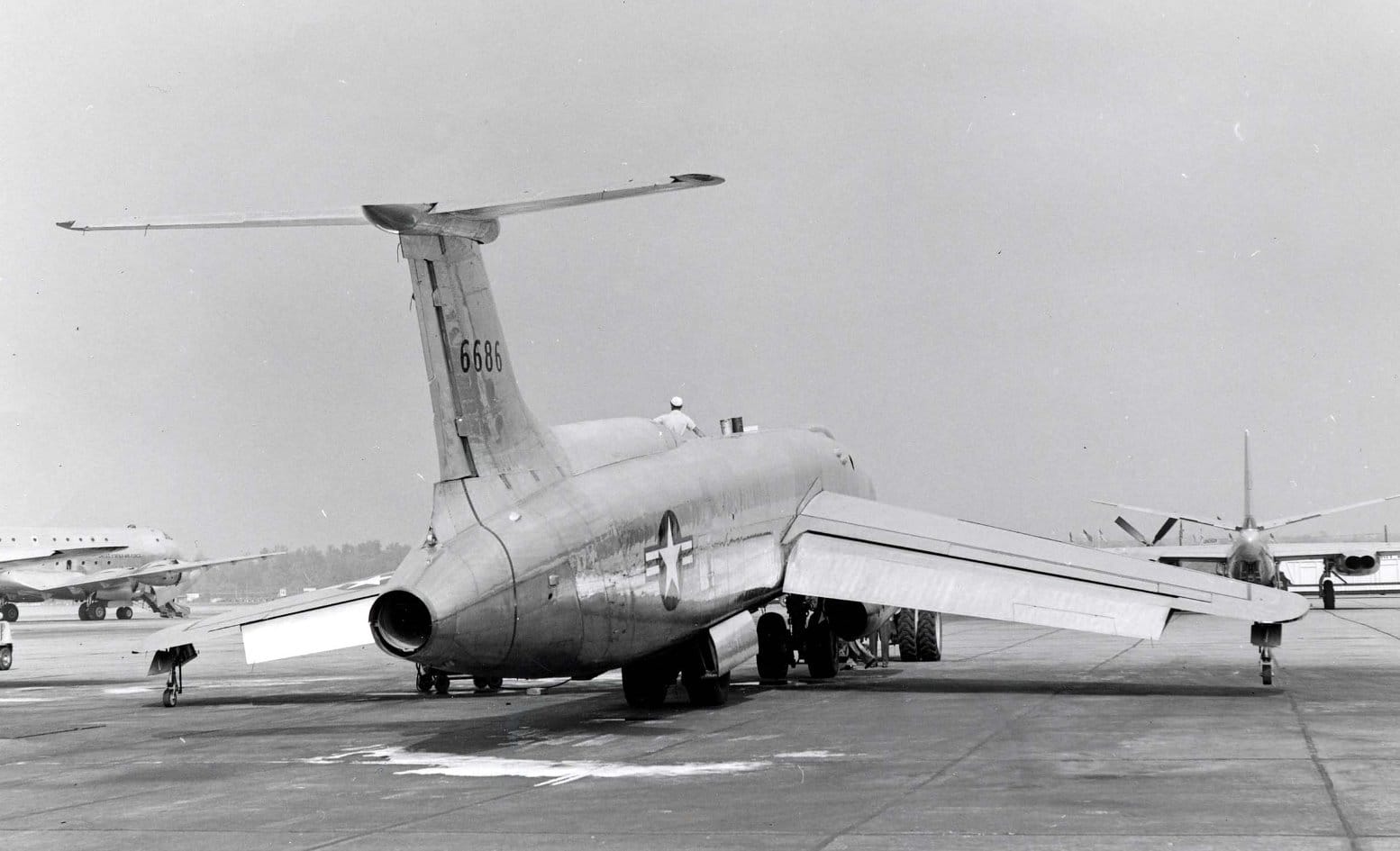
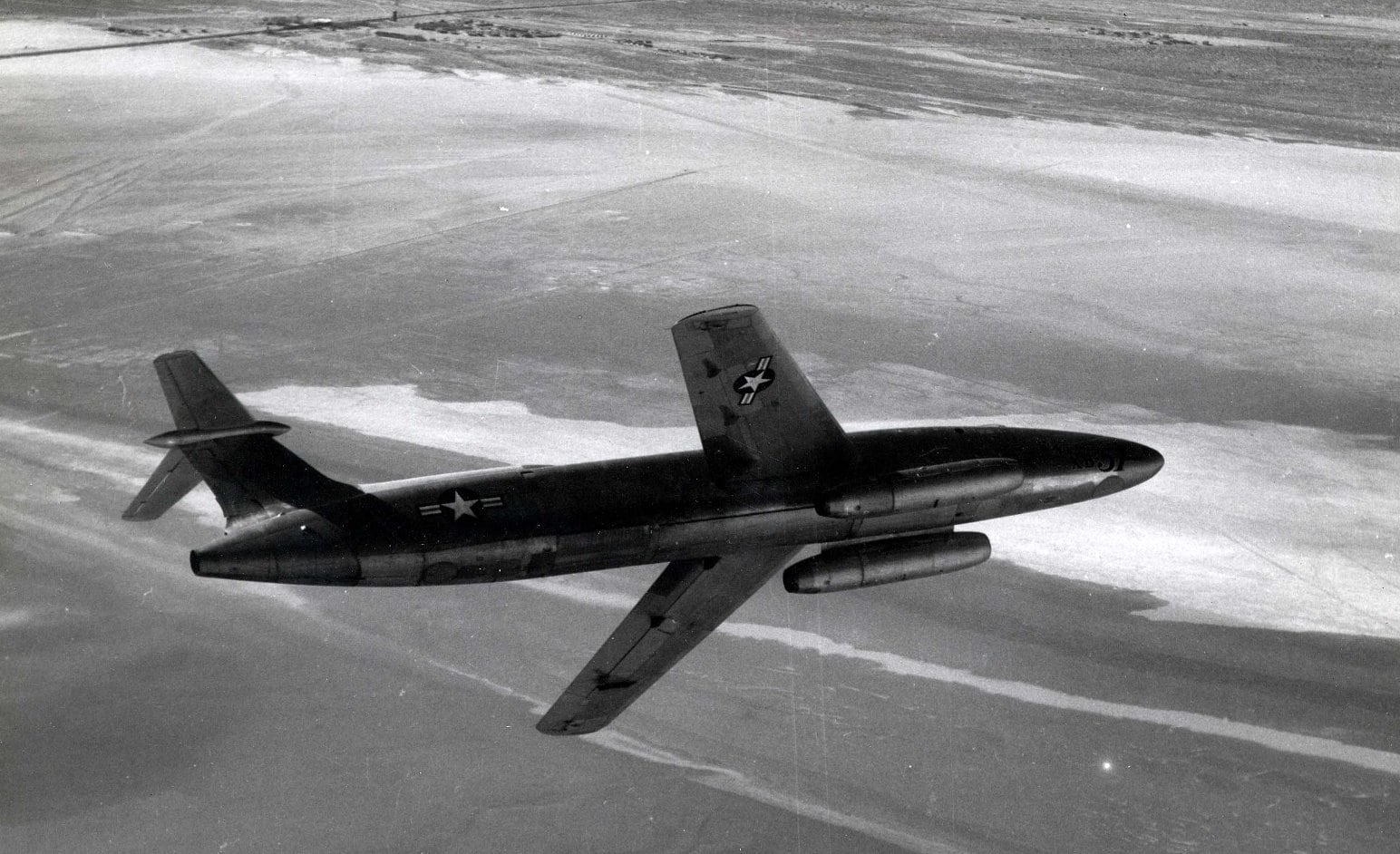
The XB-51 measured more than 85 feet in length with a wingspan of slightly more than 53 feet. Pictures of the jet from above or below highlight the length of the aircraft- perhaps contributing to the less than flattering nickname of “Flying Cigar.” The T-tail stood more than 17 feet off the ground. But weighing in at more than 57,000 pounds when loaded and still being capable of speeds just under the speed of sound made the aircraft an impressive specimen and garnered interest in the jet not just within the Air Force but around the world.
Crazy Advanced For Its Day
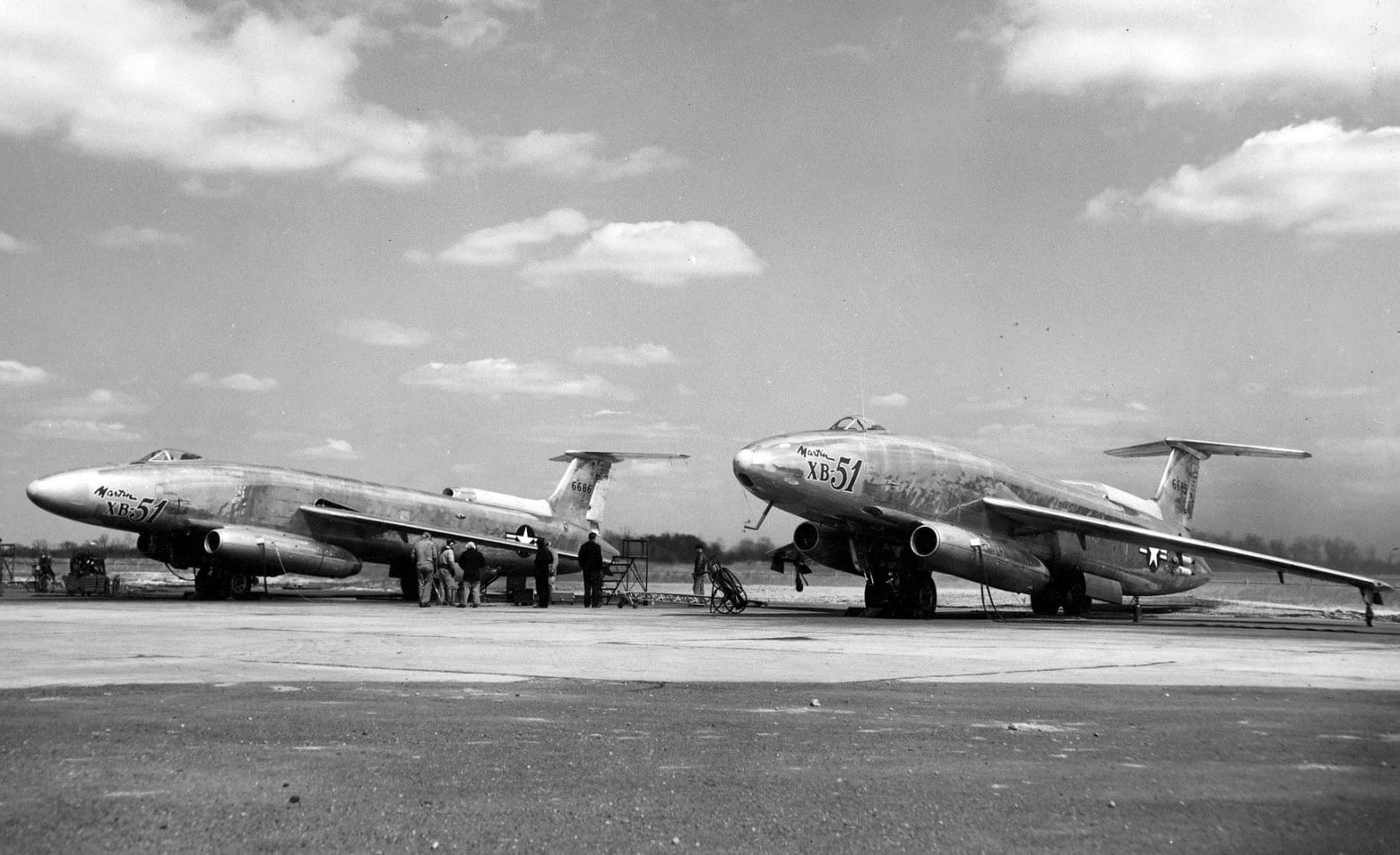
The first XB-51 prototype (Air Force serial number 46-0685) was rolled out of the Martin factory near Baltimore on 4 September 1949 and flew for the first time on 28 October 1949. Initial testing concluded at the end of March 1951, yielding few required modifications. Flight testing by Martin totaled 211 hours over 233 flights. United States Air Force (USAF) testing totaled 221 hours.
When the second XB-51 (serial 46-0686) took to the skies for the first time on 17 April 1950, it was armed with those eight 20-millimeter cannons in the nose. Later, it spent time at Edwards AFB, flown by several Air Force pilots, including Major Charles E. “Chuck” Yeager. But it wasn’t long before Korea forced a separation between testing and practical application.
In Competition
The Air Force determined a need for a B-26 Invader replacement in the night intruder role. The North American B-45 Tornado, the North American AJ-1 Savage, the Avro Canada CF-100 Canuck, the English Electric Canberra, and the XB-51 were considered. The CF-100 was eliminated early on, and the Tornado and Savage had other missions, but the Canberra and the XB-51 fought it out. The Canberra was a fine machine and a capable bomber. The XB-51 could easily outpace it.
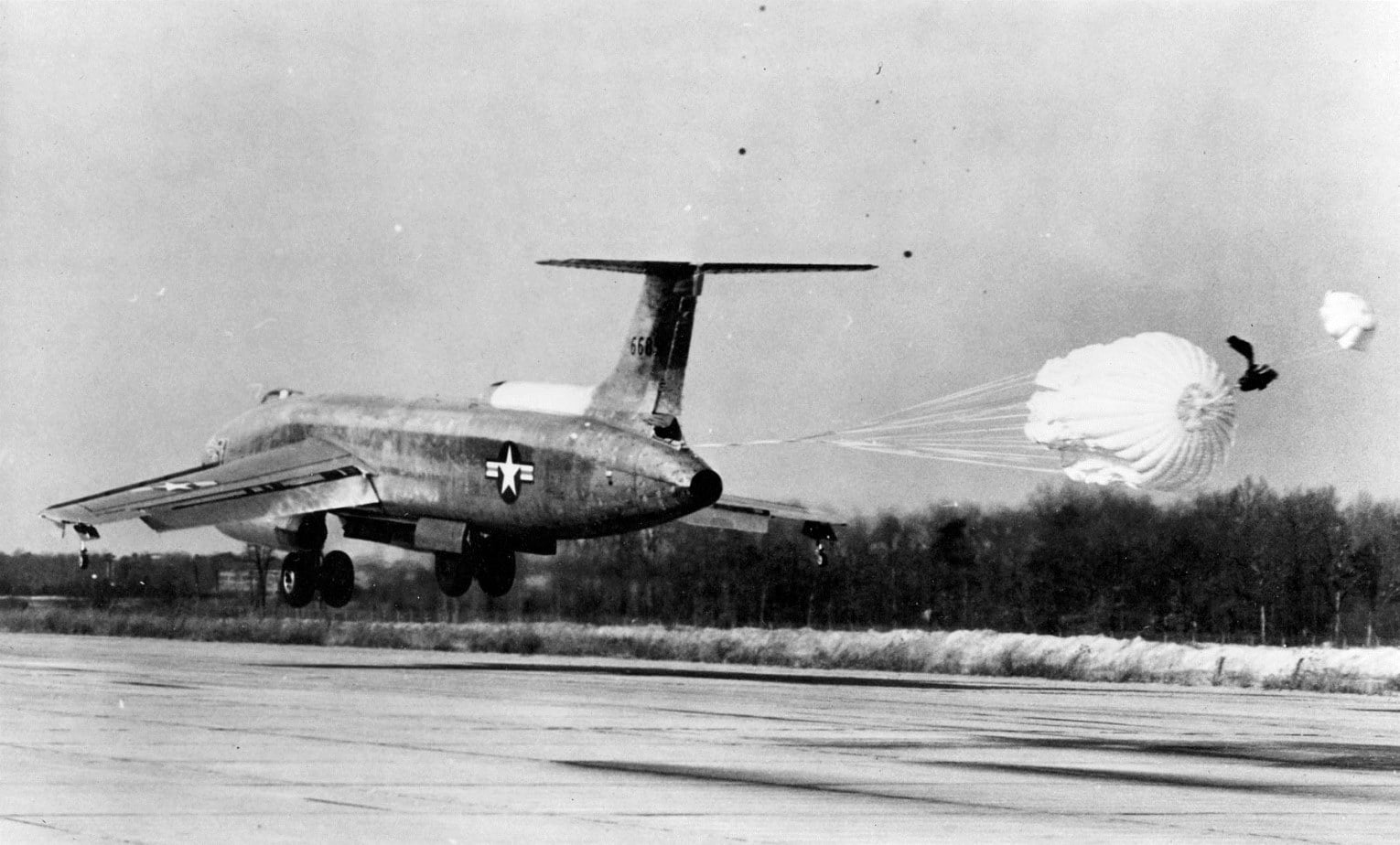
In fact, the XB-51 could outperform many of the jet fighters of its day- as long as it wasn’t asked to turn with them due to a low load-limiting factor of only 3.67 Gs. The XB-51’s landing gear was not suitable for austere forward airfields either. Loiter time over target pretty much settled it- the Canberra had it; the XB-51 didn’t.
And Then There Was Only One
The Air Force chose the Canberra as their new medium bomber. However, the Glenn L. Martin aircraft company was selected to build Canberras under license on 23 March 1951.
The Martin B-57A Canberras built for the USAF were equipped with the rotary bomb bay designed into the XB-51. The unique XB-51 prototypes continued to fly research flights even after the type’s cancellation. But 46-0686 crashed at Edwards AFB while performing low-level aerobatics on 9 May 1952, leaving 46-0685 as the sole XB-51.
The aircraft’s unique appearance no doubt helped it land the part of the Gilbert XF-120 in the 1956 Warner Brothers film “Toward the Unknown.” But after 46-0685 crashed on takeoff at El Paso International Airport on 25 March 1956 while en route to Eglin Air Force Base (AFB) to shoot footage for the movie, the XB-51s were no more.
At the End of the Day
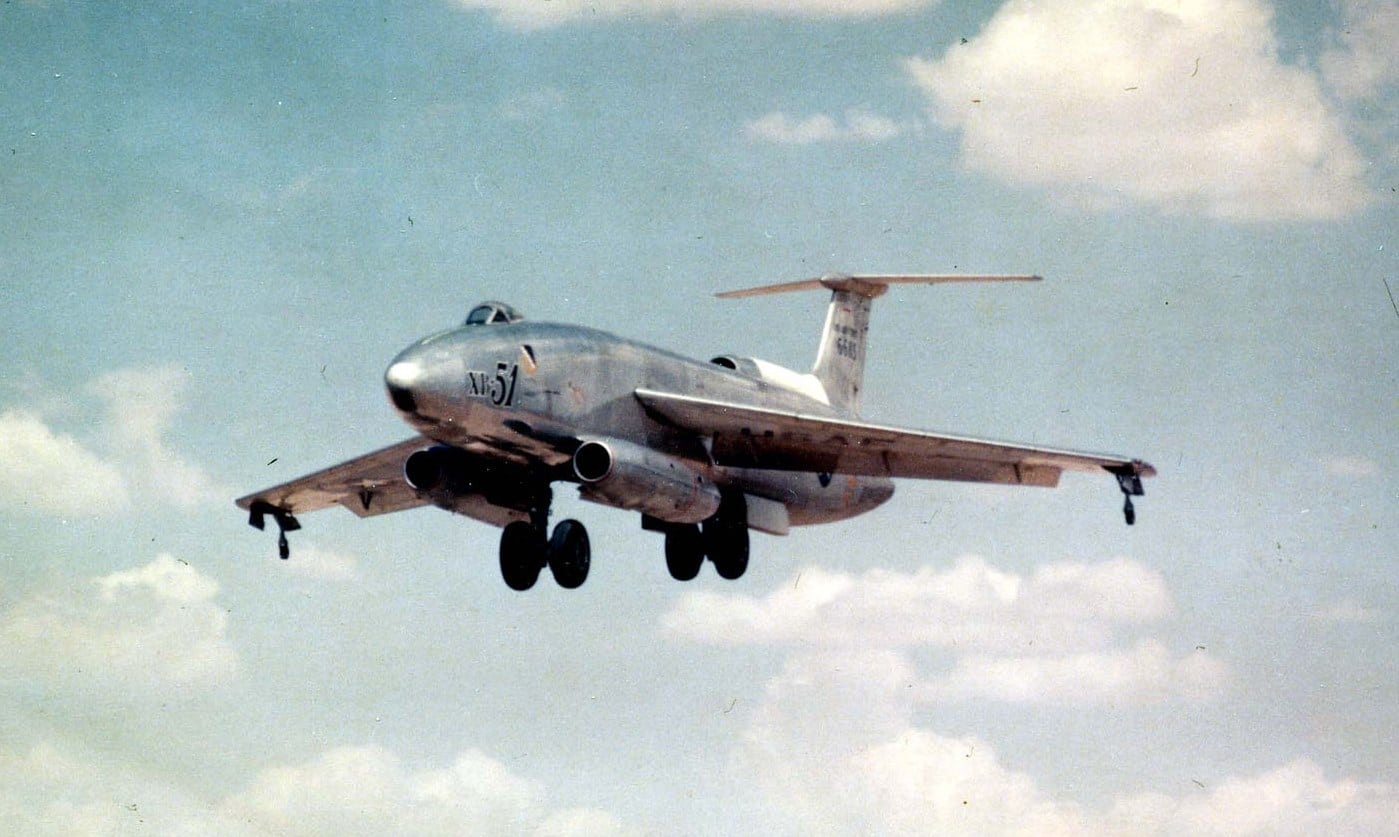
Speculation about the reasons for the decision to build the B-57A instead of the B-51 ranges from head scratching to passionate debate about the wondrous performance of the XB-51 and how great it would have been while equipping 15 or 20 Air Force bomb squadrons.
In the end, the Air Force probably made the right decision. The B-51 would not have been as adaptable and flexible as the B-57 turned out to be; it had no growth potential. The XB-51s had speed to burn, but were not very maneuverable, and their range and loiter time were inferior to the Canberra.
The bottom line is that we’ll never know what else the XB-51 was really capable of. They were radically advanced aircraft at a time when aerospace engineering was advancing just as fast as they were capable of flying.
But they sure were cool!

Enjoying your work very much, Bill. Thanks!
Excellent article and well researched!