

Made Famous Only on the Silver Screen
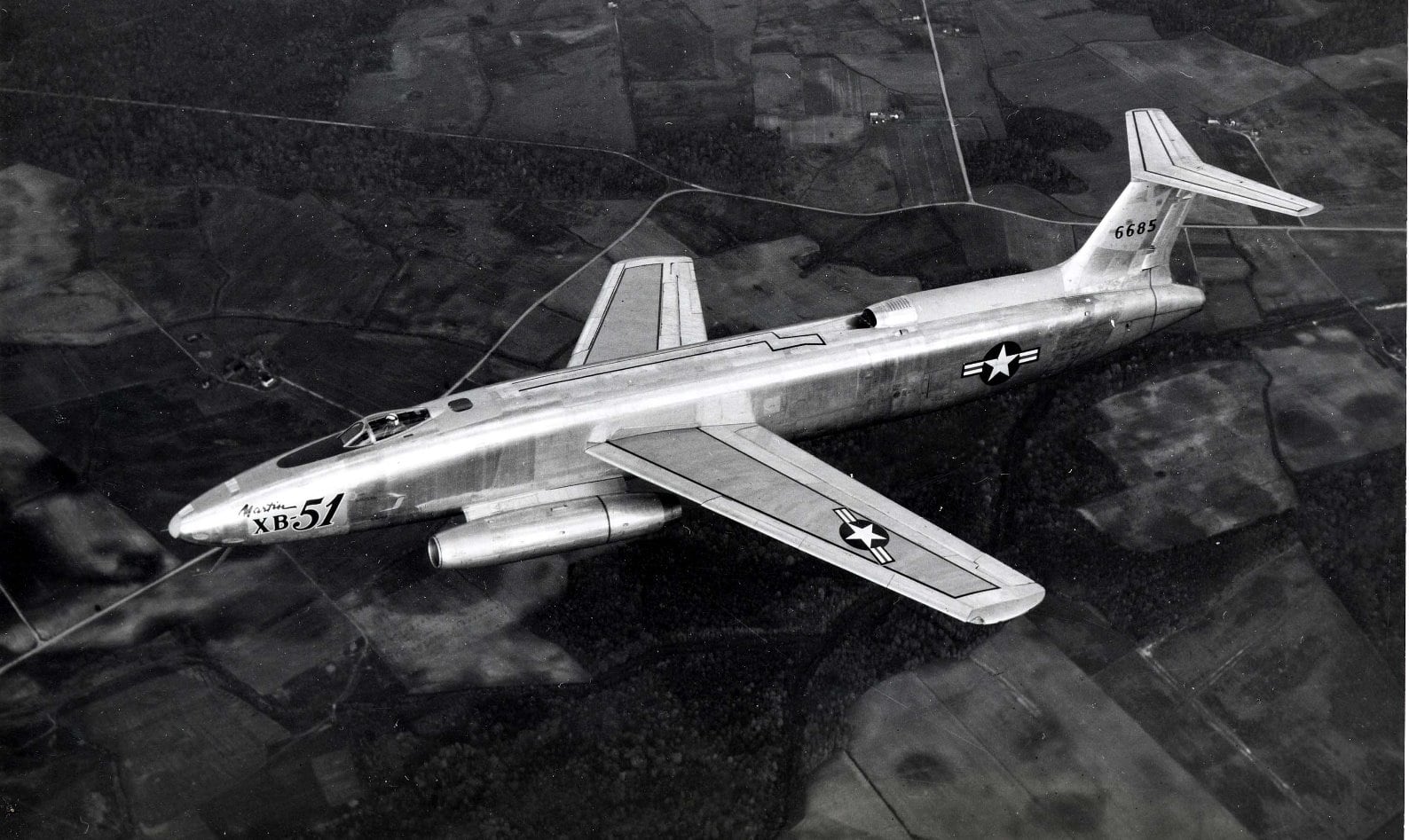
With their innovative XA-45 attack aircraft, Martin was building on the success of their B-26 Marauder medium bomber. Conceived in 1945 as Martin’s answer to a US Army Air Force (USAAF) requirement for a low-level bomber, the aircraft featured a number of ground-breaking design characteristics.
When the war ended and the USAAF did away with the A prefix for attack aircraft, the jet became the XB-51. Due to its unique design, the aircraft graced many a magazine cover during the 1950s and even starred in a movie. Nice work if you can get it. But when the chips went down, things cooled in a hurry.
Changing Missions = Changing Design
But I digress. At first, the XA-45 was designed with straight wings and was to be powered by a hybrid twin turboprop/twin turbojet installation. When the USAAF radically revised the requirements for the XA-45 in the spring of 1946, the aircraft’s mission changed to all-weather close-support bombing.
A higher-performance aircraft was needed.
At this point, the aircraft was redesignated as XB-51. The Air Force issued a contract for two XB-51s on 23 May 1946. As might be expected, their minds changed again in 1947- this time seeing the XB-51 as a low-altitude attack aircraft with a reduced combat radius. Once Martin assigned the project a model number (Model 234 in the case of the XB-51), things (finally) began to move forward.
Precursor to Modern Three-Engine Designs
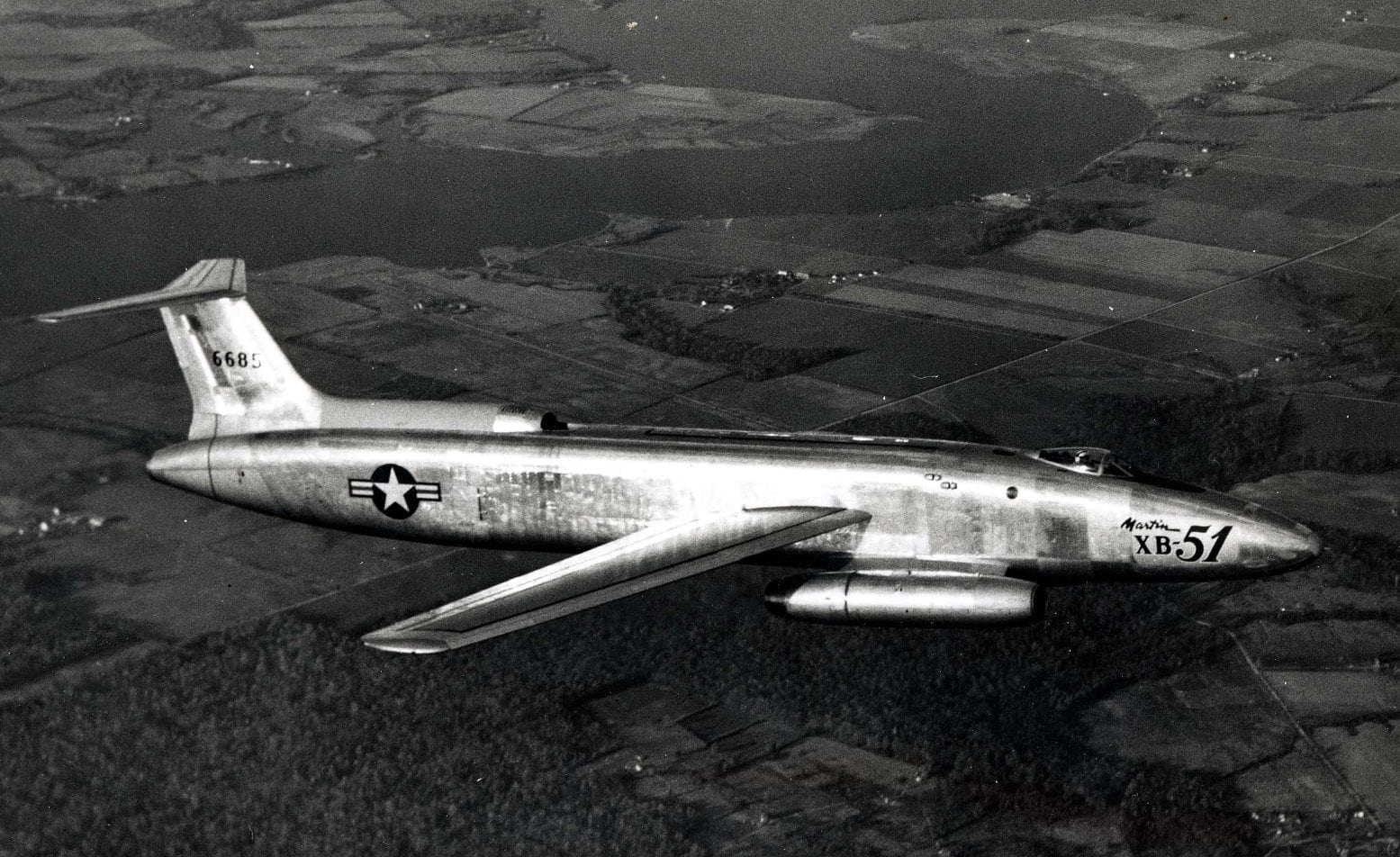
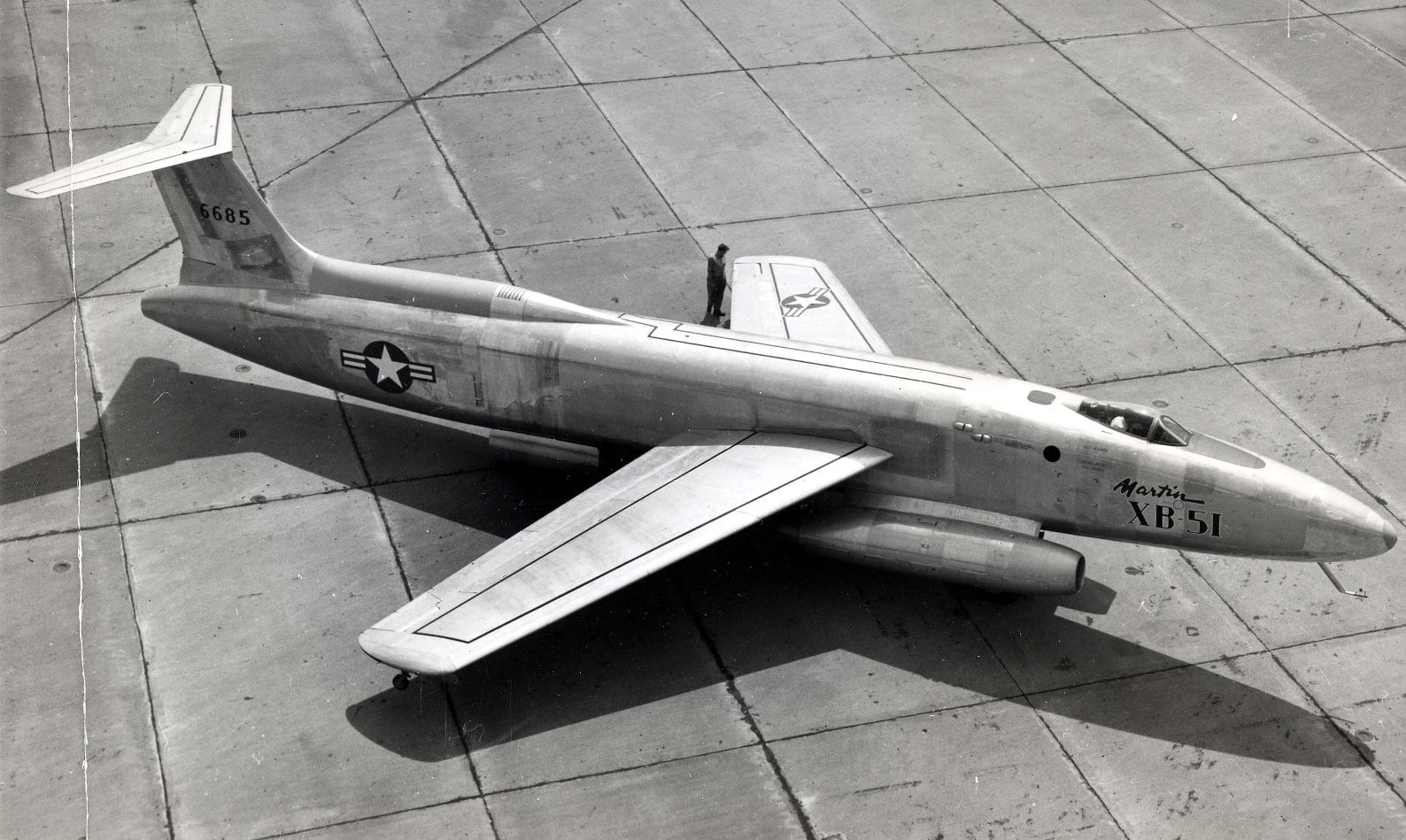
The Model 234 design featured variable-incidence wings swept at 35 degrees and a pronounced 6-degree anhedral. Full-span leading edge slats and trailing edge slotted flaps increased lift, resulting in shorter takeoffs. Spoilers and small ailerons were used for roll control. The empennage was configured as a swept T-tail.
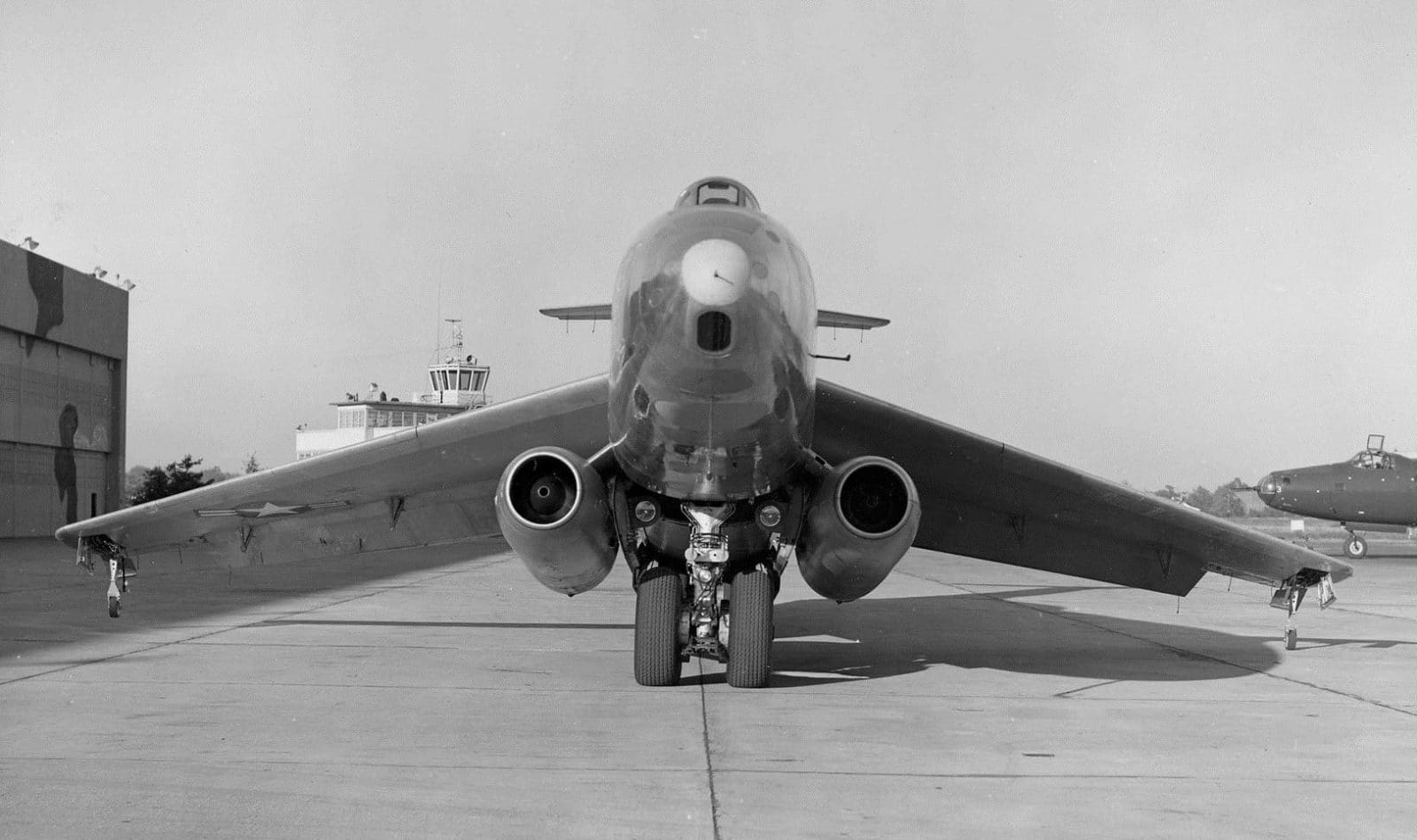
The most unique feature of the design had to be the choice of three General Electric J47-GE-13 axial-flow turbojet engines- two housed in low-mounted pods on either side of the forward fuselage and the third in the tail of the aircraft breathing via an intake located at the base of the vertical stabilizer.
Ahead of Its Time In Many Ways
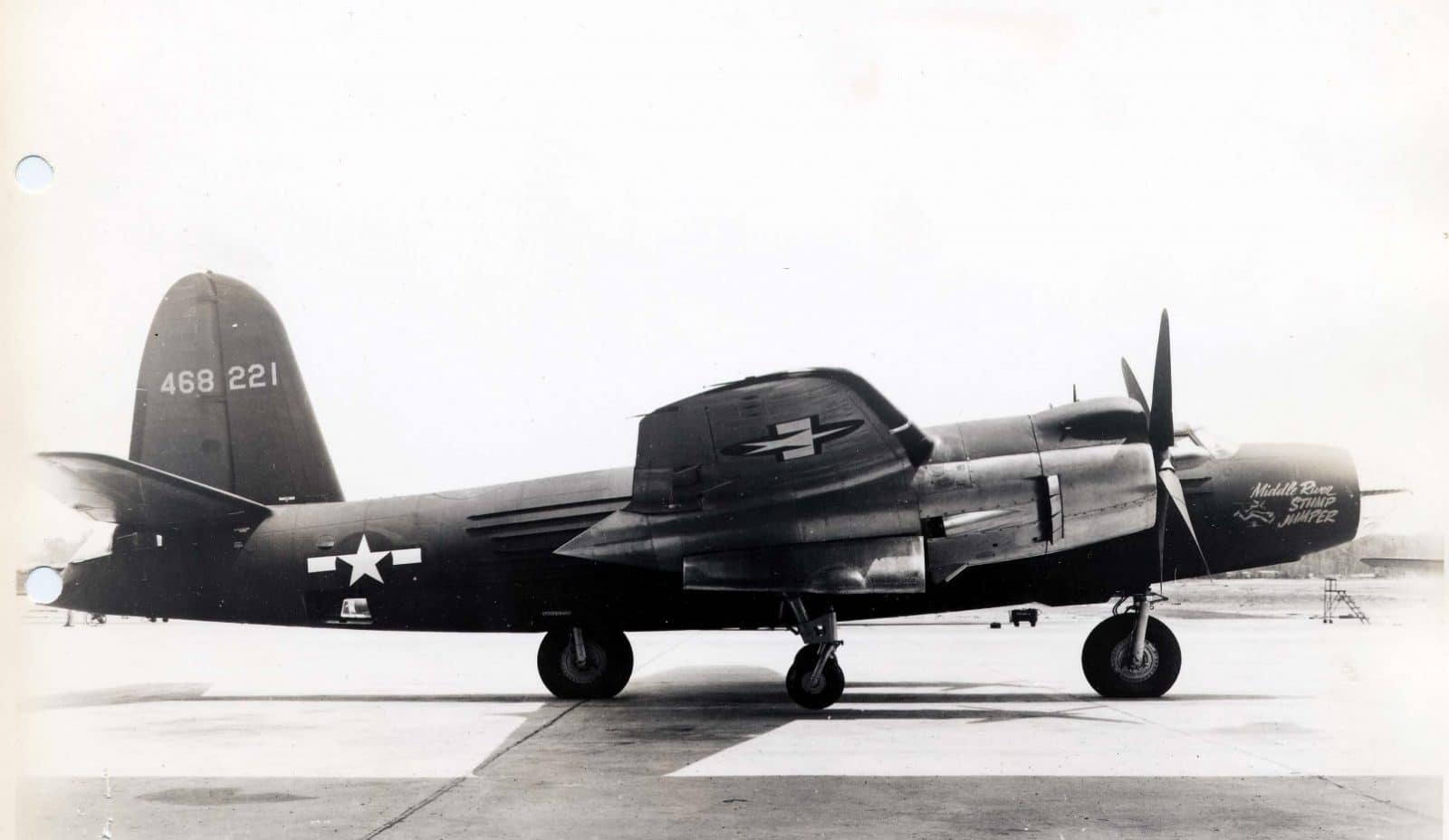
Four rocket-assisted takeoff (RATO) bottles supplied additional thrust for takeoff. The main landing gear wheels of the XB-51 were configured in tandem under the forward and mid fuselage with outrigger wheels mounted at the wingtips- similar to the Boeing B-47 and B-52. Martin tested this configuration on a modified B-26 nicknamed Middle River Stump Jumper.
Other design characteristics of the jet were the near-nose bubble canopy under which the pilot sat. The second crew member, a bombardier, was seated inside the pressurized and climate-controlled fuselage below and behind the pilot.
Exceeding Expectations
Both crew members were provided upward-firing Martin-designed ejection seats- a first for Martin aircraft. Other innovative features of the XB-51 were its rotary bomb bay (trademarked by Martin) and an external load capacity of 10,400 pounds. Also designed into the airframe were provisions for eight nose-mounted 20 millimeter cannons.
Performance of the jet was impressive, with a cruise speed of 532 miles per hour at altitude and a maximum speed of 645 miles per hour at sea level. The service ceiling was 40,500 feet and range was 1,075 miles- all exceeding the design requirements (which, remember, changed several times during development) by a fair margin.

Enjoying your work very much, Bill. Thanks!
Excellent article and well researched!