

There is the right way to deice a plane and many wrong ways.
Correctly deicing a plane is a critical preflight procedure. It’s not a tough concept.
The professional way is to spray a heated deicing solution onto the aircraft before departure. If frozen precipitation is still occurring, first deice the aircraft to remove accumulated ice and snow, then apply anti-icing fluid to prevent further buildup. Anti-ice provides the pilot just enough time to get airborne (and presumably above the frozen precipitation) without additional ice buildup on the aircraft’s critical surfaces.
For reference, this is what a proper deicing procedure looks like (courtesy of Southwest Airlines):
Why is Deicing Important?
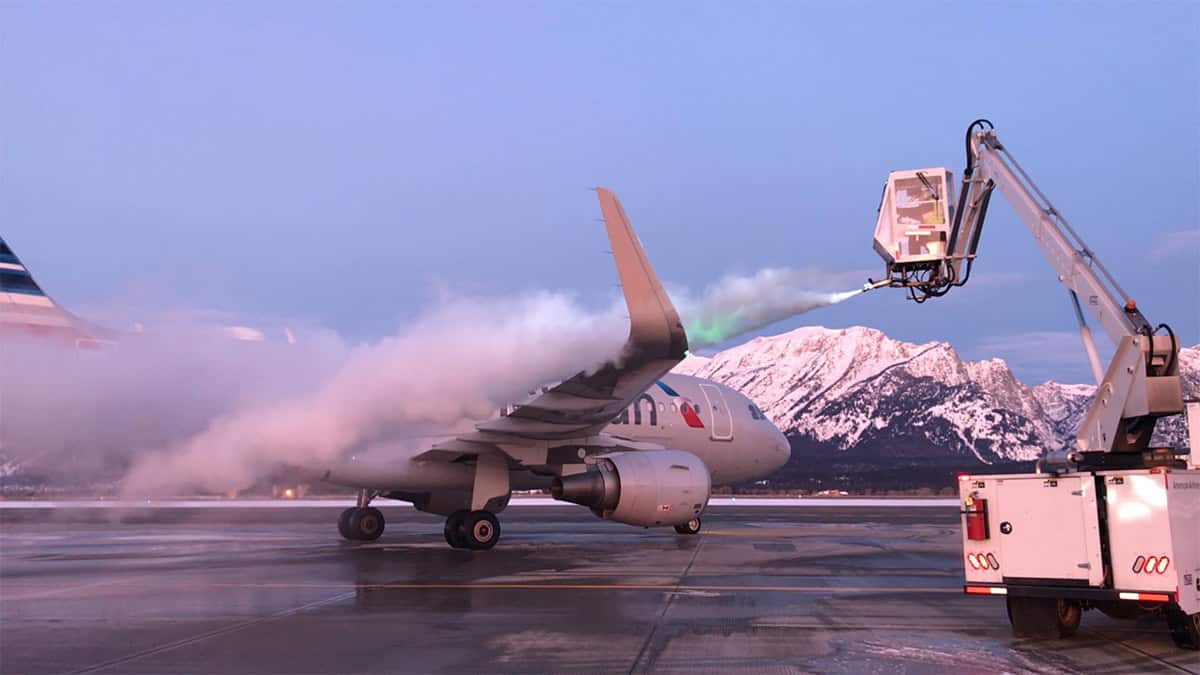
Regulations require every aircraft to depart in a “clean” condition, meaning no snow, ice, frost, or other contamination can be adhering to the airframe at takeoff.
When there is no active icing, meeting that standard is straightforward, and any existing contamination is simply removed. In active icing conditions, however, the aircraft must first be deiced and then protected from new accumulation.
Airplanes fly because the wings produce lift. Every take-off and landing calculation is based on the airplane’s wings being free of any debris and ice. Ice inhibits flight in two ways. Wings cannot produce the required amount of lift when the airflow is disturbed by ice buildup on the wings. Even a thin layer of frost with the thickness of sandpaper can produce so much drag that takeoff at typical speeds and runway lengths might be impossible. Additionally, ice is heavy. Ice can add thousands of pounds to an airliner’s weight.
Deicing and anti-icing are typically completed as a two-step process: heated Type I fluid, usually orange, is applied to remove existing contamination, followed by a cold, green Type IV anti-ice fluid that forms a thick coating, captures falling precipitation, and then shears off during the takeoff roll, carrying the contamination with it.
Both fluids have defined holdover times based on temperature and precipitation, but Type I protection is so short that a Type IV application is usually required to allow enough time to taxi and depart. Before takeoff, crews perform a cockpit “nose check” for visible contamination and, if the holdover time has expired, a more detailed “wing check” is required within five minutes of departure, either by trained ground staff or by a pilot from the cabin; if contamination is found, the aircraft must return for another deice.
In some conditions, such as freezing rain or very heavy snow, it may be impossible to keep the aircraft clean long enough to safely depart. During active icing, engines also require periodic runups because bleed air used to heat the inlets and pressure probes is insufficient at idle, and this requirement is separate from the fluid application itself. Much of the overall delay comes from waiting for deice crews during peak departure periods, as deicing becomes a bottleneck, although the actual spray process typically takes around ten minutes when a crew is immediately available.
Airports that regularly deal with winter weather tend to operate more efficiently, while those that deice only a few times a year often take longer due to limited real-world experience.
Top 3 non-standard ways to deice:
3.) Using a water cooler of water
We get it. There are probably rare situations in typically warm locations where ice on the wings might catch the ground crew and pilots by surprise. In these rare cases, you might see crews brushing the snow off of the wings or delaying departure until the sun melts the ice. What you don’t expect to see though is a ground crew haphazardly rolling a water cooler on the wing of a $50M passenger airliner. It’s not only minimally effective, it’s dumb.
2.) Standing on the tail with a garden sprinkler can
While it might be excusable to lack deicing gear at an airport in a tropical climate, it is super odd not to have it in Siberia. Isn’t Siberia the definition of cold? I guess they technically do have deicing gear there. They are called humans who are strapped to a crane with sprinkler cans and brooms.
While the means of deicing is super unusual. The aircraft was deiced this way because it was flown from a little used field for restoration. Video and title screenshot were posted by Linelinnn on YouTube.
1.) Just skip it altogether and pray you don’t die
If you really want to say “deuces” to established safety procedures (that have been written with blood), just skip deicing altogether. That’s what this Pegasus Airlines 737-800 decided to do after a snowfall. While the aircraft was able to take off safely in this case, it ranks among the dumbest things a pilot can do.
The pilot effectively became a test pilot, with a hundred-plus other test dummies on board his/her impromptu test. Death is a big risk to take for an on-time takeoff. If you ever see the wings on your jet look like this as you take the active runway, we recommend ringing your call button repeatedly.
1.16.17
