Home Blog Page 184

The Flying Boat Mothership Was An Attempt To Fly Passengers and Mail Across The Atlantic

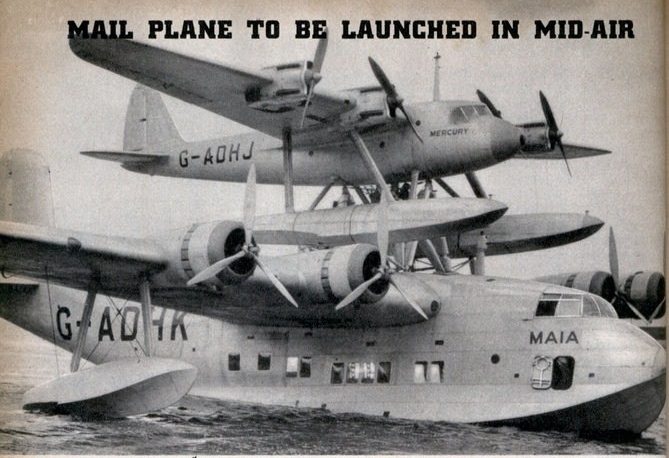
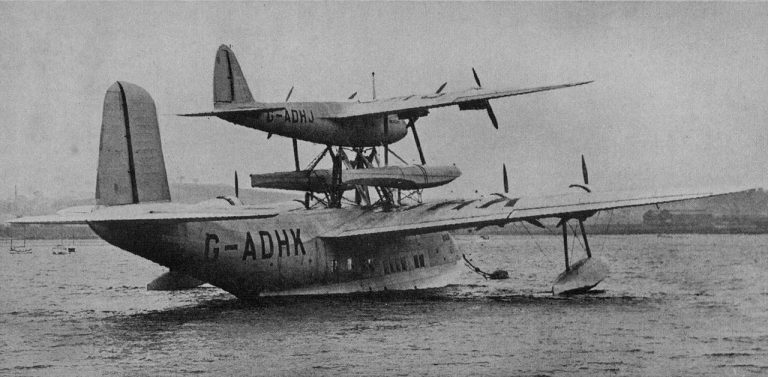
The Shorts-Mayo Combination was an attempt to cross the Atlantic with a useful load.

A recent article on “Mother Ships” prompted recollection of a much earlier pairing of two aircraft—a Shorts Empire Class flying boat and a smaller Shorts four-engine float plane.

In the 1930s, the challenge was to design an airplane that could make the Atlantic Crossing carrying revenue generating passengers or mail. The Shorts Empire Class flying boats, with a crew of five, could carry up to 18 passengers and more than 4,000 pounds of cargo and mail, and it was a profitable aircraft on the European side of the Atlantic. To make the crossing from Great Britain to North America, however, passengers and cargo had to be replaced with fuel.

Aircraft engineers knew that an airplane could maintain flight at greater weights than it could take off with. Major Robert H. Mayo, Technical General Manager at Imperial Airways proposed the Shorts-Mayo Composite with a smaller float plane, that carried 1000 pounds of mail, mounted on top of a modified version Shorts Empire class flying boat. The larger flying boat would lift the float plane to its cruising altitude, they would separate, and Mercury would proceed to North America.

The pair of aircraft consisted of a Shorts S.21 Empire Class flying boat, the “Maia,” fitted with a structure that supported the smaller Shorts S.20 “Mercury” float plane on top. The bottom of the fuselage/hull of the redesigned flying boat had a flared bottom making it wider than the rest of the fuselage. This provided more planing surface under the hull, necessary for the greater takeoff weight. Other design changes included larger control surfaces, a larger wing with the engines mounted farther from the hull to make room for Mercury’s floats.

Mercury was a smaller aircraft, crewed by a single pilot and a navigator. During takeoff, Mercury’s flight controls were locked in a neutral position. Only the trim tabs were operational. Mercury was attached to Maia at three points. The attaching mechanism allowed some movement so that the pitch of the float plane could be adjusted in flight. Three lights in the cockpit indicated when Mercury was in fore-to-aft balance.mm_short_mayo_composite_scan

Upon reaching Mercury’s separation altitude, the pilots first released two of the three attachments. The third attachment released automatically at 3000 pounds of force. When released, Mercury automatically climbed up and away and Maia dropped, providing safe separation.

The first flight test was made in February 1938, completing a successful separation. Additional tests were conducted over the next several months. The first operational flight with passengers in Maia and mail in Mercury was flown in July 1938. After separation, Mercury continued west to North America—a flight that took more than 20 hours. Meanwhile, Maia turned east toward Europe with 10 passengers and luggage.

This, the only Shorts-Mayo Composite built, continued to operate into December 1938. During this time, the Mayo Composite also launched Mercury on flights to Alexandria, Egypt and South Africa. By the end of 1938 longer range flying boats had been developed with more powerful engines and higher payloads, making the combination unnecessary.

The fates of both aircraft were determined by World War two. Maia was destroyed 1941 in a German bombing raid at her mooring in Poole Harbour, while Mercury was used as a reconnaissance aircraft. It was soon replaced by newer aircraft, after which it returned to Shorts factory where it was broken up to recycle the aluminum needed for the war effort.

[youtube id=”bYtazEBQ1K8″ width=”800″ height=”454″ position=”left”]

Resources:

A Century of Flight, Ray Bonds, Salamander Books Ltd, 2003

YouTube: https://www.youtube.com/watch?v=bYtazEBQ1K8


A Guy Tries To Buy a Harrier Jet With Pepsi Points. Then Sues Pepsi For The Jet.

0

Seven million points is quite alot of soda to consume.  That never phased John Leonard.  He was determined to get a free Harrier jet.

The Harrier Jet first devolved in the 1960’s as a joint project between the United States and the United Kingdom. The Harrier was later redesigned and produced by McDonnell Douglas. It had its faults but it brought about a new era of aviation with the ability to be a vertical takeoff and landing fighter jet. A Rolls Royce engine, the ability to take off vertically, the ability to carry several thousand pounds, and advanced equipment meant the jet fit a niche role in each nation’s defense. The jet isn’t cheap though. At $30M a copy, Harriers are national assets, definitely not a prize giveaway for a soda company…wait, what? Check this story.

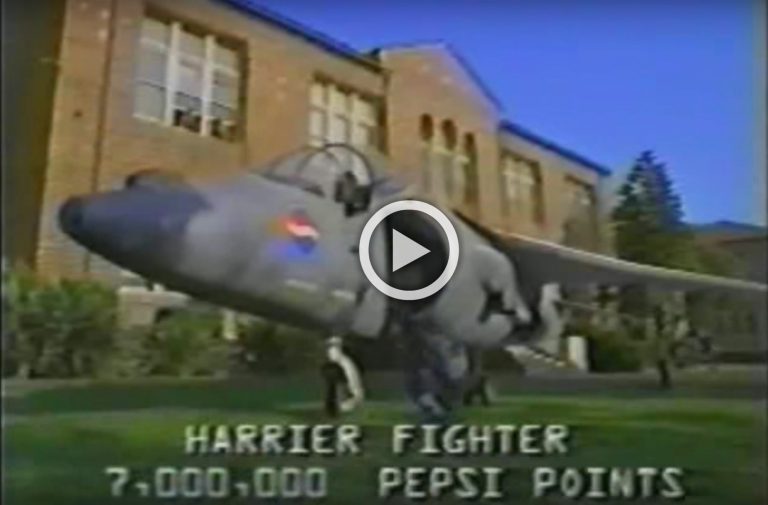
Back in the late 90s, Pepsi positioned itself as the ‘un-cola’. The cool, hip soda company tp counter the ‘lame’, stodgy, old-people Coca-Cola company. As part of their advertising campaign, Pepsi was touting a Harrier Jet in a commercial advertisement for their “Pepsi Points” program. It was shown that one could acquire the aircraft for 7 million points. That’s quite alot of soda to consume.  Here’s the commercial:

[youtube id=”ZdackF2H7Qc” width=”800″ height=”454″ position=”left”]

Enter John Leonard and your daily dose of aircraft humor. After some quick thinking and a little math, Leonard had intended to get himself a real Harrier jet. Unfortunately, it didn’t quite go as planned. Even after he got the points, Pepsi didn’t pay up. Leonard even took Pepsico to court. He lost the case. It certainly does make for a good story and a laugh today though. Take a look at the video and see how John Leonard attempted to acquire the aircraft. If only it could be that easy… and cheap.

[youtube id=”h7XliS0DYRo” width=”800″ height=”454″ position=”left”]

[shopify embed_type=”product” shop=”custom-model-planes.myshopify.com” product_handle=”av-8b-harrier-1-46-scale-mahogany-model” show=”all”][shopify embed_type=”product” shop=”custom-model-planes.myshopify.com” product_handle=”mcdonnell-douglas-av-8b-harrier-ii-usmc-1-48-scale-model” show=”all”]

This Fighter Instructor Is Crazy (And We Love It!)

0

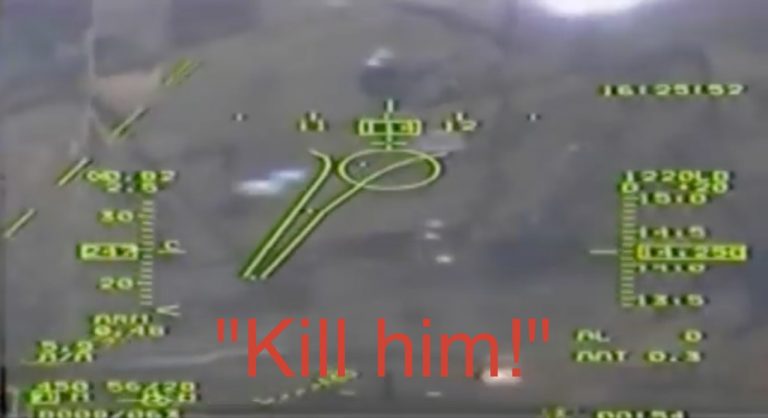
“Go Get Him! Kill him!”Like a rallying cry in Gladiator, this IFF (Introduction to Fighter Fundamentals) instructor emphasizes the importance of the kill instinct for fighter pilots.

There is no doubt that our world has become much more politically correct over the past few years. There are admittedly some good things that have come of it.  No one is a fan of blatant discrimination or sexism.  But many will say that the PC culture has gone too far.  Many lament the loss of fighter pilot culture as the squadron bar is renamed ‘the heritage room’. Posting a picture of a pretty girl on your desk could get you red dotted these days. Many in the Air Force forget that the goal is to be a lethal force–ready to make the enemy die for his country.

That’s why we love this video.  It’s good, ole’ school fighter pilot instruction right there.  You have an IP who is sceaming at his student to kill the other guy during a mock dog fight.  The student probably isn’t sure if the IP is joking or serious.  Odds are he’s stressed and anxious and having the time of his life too!  You know that the instructor has made a lasting impression though. If he is ever in that situation in real combat, the ghost of the IP’s voice will surely be reverberating in his head as he lines up for the kill.

IFF is a required program for newly graduated pilots from Air Force Undergraduate Pilot Training.  During the IFF program, pilots will learn about BFM (Basic Fighter Maneuvers) and build situational awareness for flying in a tactical environment (where the bad guy wants to kill you). They’ll fly it in an AT-38C. Passing this program is a requirement to continue onto a fighter training program in an actual fighter jet.

Today, we salute you Mr. Old-school IP.  You make the Air Force a slightly more fun place.

[youtube id=”JQORXWmGMGk” width=”800″ height=”454″ position=”left”]

[shopify embed_type=”product” shop=”custom-model-planes.myshopify.com” product_handle=”t-38-talon-customized-model-airplane” show=”all”]

Santa’s Getting a Checkride This Year

0

“You better watch out.  You better not cry.” His experimental craft and isolated North Pole location won’t prevent Santa from getting a ramp check.

Santa has a big job to do tonight.  He has to do what is seemingly impossible.  That is to deliver Christmas gifts to millions of toys to good little boys and girls all around the world in just one night.  But Santa’s big mission can’t be a reason to rush.  Safety is first.  And Santa’s not the type of guy that would put anyone’s life at risk just to cut a few corners and shave off a couple of minutes on his schedule.

As pilot in command, Santa has to be ready for the unexpected.  Even a no-notice checkride by the feds.  While spot checks might make a lesser pilot squirm, Santa is no newbie.  He’s a pro.  Like the airline pilots flying you to grandma’s this year, Santa has years of professional experience flying his sleigh. With deft precision, Santa does his walk-around, checks his performance calculations, and even is ready for the..ehem, unexpected.

Avgeekery is wishing you a joyous holiday season and a very Merry Christmas.  We thank you for being loyal readers of our blog.  Our site is a team of aviation professionals that volunteer their time to make this project a reality.  We love sharing our love of aviation and our expertise in this field with you on a regular basis.  Here’s to an amazing 2017!

[youtube id=”50vE47DGEy4″ width=”800″ height=”454″ position=”left”]

The Longest Flight With No Alternate Airports Requires Perfect Fuel Calculations

0

ETOPS_diagram

Making sure the fuel supplies are more than adequate is crucial when flying the longest route in the world with no alternate landing site.

Say you’re driving on an Interstate, probably somewhere in the Western United States where there are long stretches of highway and nothing else.

You notice the fuel warning light come on and you wonder where and how far to the nearest gas station. As you worry about running out of fuel, one thing you know – you’re safe on the ground, even if the engine coughs to death after exhausting the final fumes.

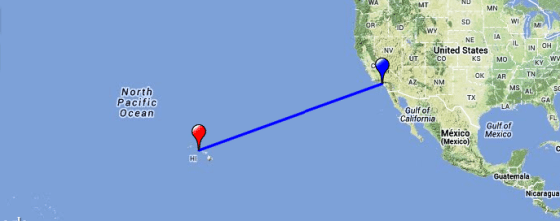
Now transfer the low fuel scenario to an airplane flying from the West Coast to Hawaii. That’s the longest stretch – nearly 2,500 miles – for a plane with no alternate landing options. Nothing but the blue sky above and the bluer Pacific below.

Even with commercial airlines moving to twin-engine aircraft, flying extended distances such has the mainland to Hawaii remains safe. Aviation rules call for aircraft and flights to be ready for emergencies if one of the engines becomes disabled. Running out of fuel with nothing but water for 360 degrees is not acceptable.

In April this year, a United Airlines flight bound for Honolulu from San Francisco had to pull a U-turn two hours into the flight. Stronger than expected headwinds influenced the pilots to make an overly cautious – and smart – decision to not risk a disaster.

“When the headwinds are greater than what were expected, and are going to be sustained for four or five hours of flight, you’re simply not going to be able to land with your legal minimum of fuel,” ABC aviation expert John Nance said. “It doesn’t mean you’re going to run out, but it means you’re not going to be legal. That’s when you have to turn around.”

Safety rules require commercial flights to have enough fuel to reach the intended destination, hold for 30 minutes and then have another 45 minutes of fuel to land at alternate airport. (If you’ve been on a flight diverted from your original destination, you know the drill.)

In 1989, a Trans World Airlines jumbo jet developed a fuel leak on a flight to Hawaii. The leak was discovered when it was too late to turn back. Instead of landing in Honolulu, the plane made it safely to the closest airport – Hilo International Airport on the island of Hawaii. The plane reportedly had four minutes of fuel remaining when its wheels hit the tarmac.

Check out this historical account of the harrowing and heroic early days of attempts to fly from the West Coast to Hawaii.


The F-101 Could’ve Been Legendary But It Had One Fatal Flaw

0

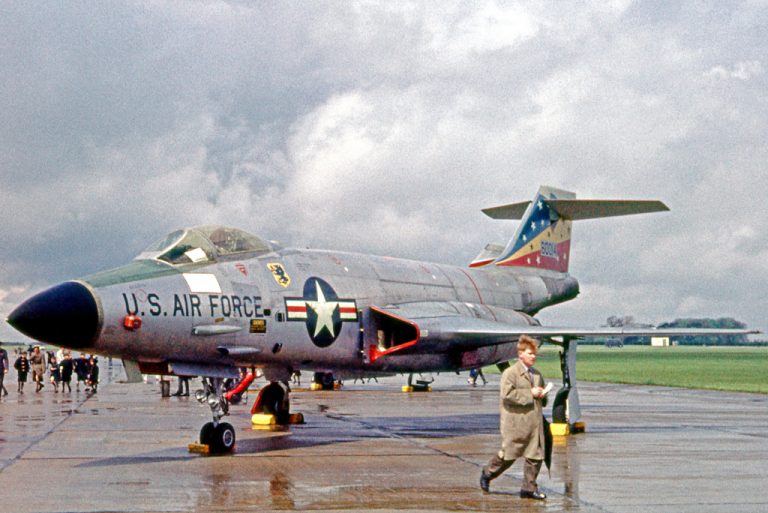
The F101 “Voodoo” was a lean mean supersonic jetfighter machine with a nasty pitch-up problem.

Designed by McDonnell in the 1950’s , the F-101 was used by the United States Airforce and the Canadian Royal Air Force. The F-101 saw many unique roles in its 20+ year career. Originally designed to be a fighter-bomber, the aircraft quickly moved on into reconnaissance and continued to serve as a “utility infielder” of sorts with interception duties and a training role. Unfortunately, despite some of its advanced capabilities and its speed (for the time), there was a nasty little aerodynamic issue which caused the aircraft had a serious “pitch-up” problem that while improved, was never fully fixed.

Pitch-up: What is it?

aoapitchup
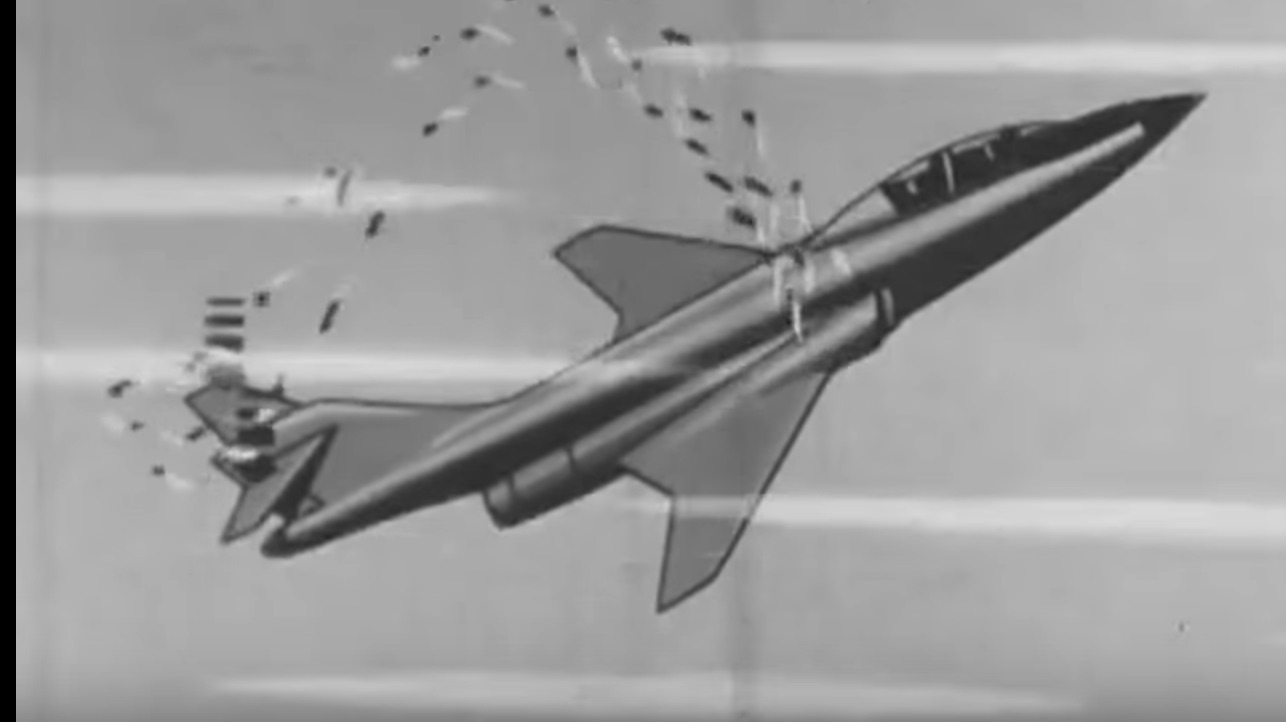
The F-101 (f101) had a terrible pitch up problem.

Pitch-up is a type of aggravated stall that commonly occurs in aircraft of this wing type. An aircraft can stall at any time if the AOA is exceeded.  In this case though, pitchup could occur and cause stability issues that actually would lead to a stall. The pitch-up was caused by downwash on the stabilizer during high AOA that causes both a pitch up from the downward force and a reduction in the effectiveness of the stabilizer itself.  Essentially, the jet would become unstable.

The pitch-up tendency was actual double wammy against stable flight. If uncorrected, this issue could cause departure from controlled flight. Luckily, the Air Force was aware of these problems and created training videos concerning what needed to be done to correct the issue mid-flight. This video was put together to train pilots how to avoid the envelope where pitch-up was most likely to occur.

Time Leads to Better Understanding of F-101 Characteristics

Now it’s easy to look back on these early training videos and think how boring it must have been to watch them.  But put yourself in the position of the crew for a moment. Here you were about to fly one of the most advanced fighters of the day and you were being told that if you exceed seemingly normal AOA’s, you could depart controlled flight and not be able to recover.  It would make me pay attention. That’s for sure!

The F-101 flew with the RCAF and the US Air National Guard until 1982.  Canada flew their jet until the F-18 replaced it in the late 1980s.

Whistling Death: F4U Corsair Is Proof You Can Recover From Setbacks

0

If You Fail at First, Try, Try Again. – F4U Corsair

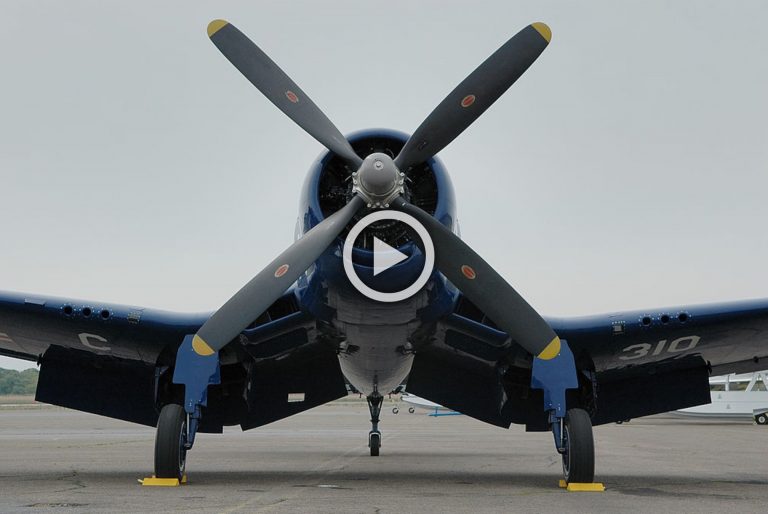
The F4U Corsair was a beefy, powerful fighter that played a significant role in both WWII and the Korean War. The original intent for the aircraft was that it would be used by the United States Navy as a carrier aircraft. Unfortunately, that vision was never realized due to several different issues that plagued the aircraft. The issues were significant and affected a number of aspects of the aircraft. Issues with the landing gear, stability, drag, and precision control on approaches all plagued what was supposed to be an amazing carrier fighter. The aircraft performed so poorly that the Navy could not utilize it. The project was almost canceled but the Corsair received a new chance at life with the Marine Corps who decided to make use of them as ground deployed aircraft.

With one of the largest Pratt & Whitney engines available at the time and a rather large prop, the Corsair did prove to be a useful addition to the Marines. Over time, the issues with the Corsair were corrected. The Navy eventually adopted the aircraft, the Royal Navy, and the New Zealand Royal Air Force followed.  The fighter evolved into an indispensable tool for both the Navy and the Marines.  The aircraft ended the war with an impressive 11:1 kill ratio.  Proof that early setbacks in life, war, and airplane design can be overcome.

This documentary-style video gives a unique look at those who flew the Corsair and the incredible versatility of this classic aircraft. There are still several actively flying F4U-1s around the United States.

[youtube id=”MQCBJOVTzLY” width=”800″ height=”454″ position=”left”]

The Horrific Crash That Made Your Airline Flight Safer

0

The Cali, Colombia Crash Resulted in Three Aviation Safety Improvements That Keep You Safer in the Air Today.

Any airplane crash is a tragedy, but in the investigation following a crash, it is always hoped that something can be learned which will aid in the prevention of a future crash. Commercial aviation is now one of the safest modes of transportation available, but it has only become this way through dogged investigation of aircraft accidents and the application of lessons learned. Such was the case of American 965.

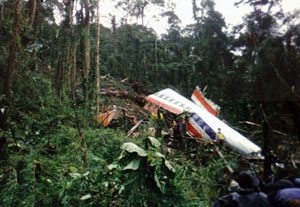
crash_site_1

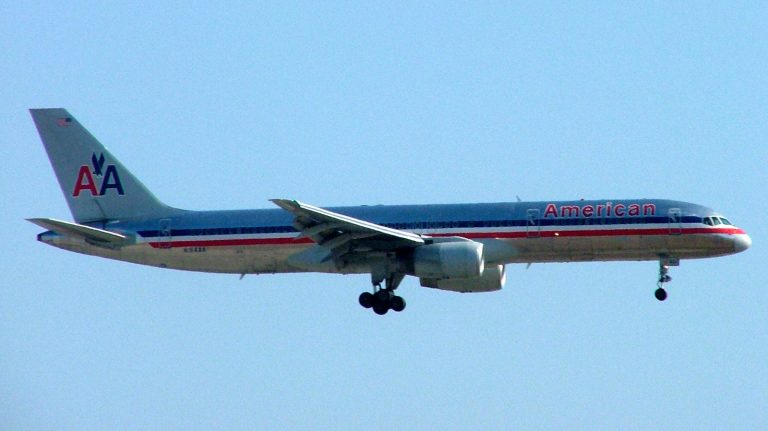
On December 20, 1995, American 965, a 757-200, crashed in the mountains of Colombia while enroute to Cali. 151 passengers and eight crew were killed while five passengers survived the impact. The investigation into the crash concluded that the primary cause was a navigational error made by the flight crew resulting in terrain impact.

There were, however, some unique aspects of this accident which highlighted contributing factors. One of these was found to be several errors in the aircraft’s navigational computer database which led the crew astray.  Also unique to this accident investigation was the method in which investigators were able to reconstruct the events which led to the crash. As it happened, one of the 757’s flight navigation computers was found in the wreckage with its internal battery and volatile memory still intact.

This allowed investigators to reconstruct electronically what the aircrew saw as they were descending through the mountainous terrain that night in Colombia. This finding revealed the true cause of the errors that were made by the flight crew which had until then eluded investigators. And this, in turn, directed investigators to the errors in the onboard database.

Increasing reliance on automation meant that aircrews were becoming more dependent on onboard electronic systems used for navigation rather than on the printed paper charts and radio beacons which had been the mainstay of airborne navigation since the dawn of aviation. Uncritical trust in this system, however, turned out to be deadly.

The aftermath of this crash resulted in new safety systems that are now installed on virtually all commercial airliners to aid in terrain avoidance as well as new procedures to be used with automated aircraft navigation systems.

Let’s take a closer look at the causes of this accident and some of the changes resulting from the investigation.

Where is it Taking Us?

Alfonso Bonilla Aragón International Airport, which serves Cali, lies in a valley with mountainous terrain rising to over 12,000 ft on either side of the north-south running Cauca Valley. The arrival path of AA965 had the aircraft descending through this valley to pass over the airport and then reverse course to land to the north.
At some point though, the controller, who had no operable radar due to terrorist activity, offered the crew a straight-in approach to land to the south on the north-south runway. The crew accepted this clearance but were now high on profile without the turn around to lose the excess altitude. Thus they were expediting their descent with the aircraft’s speed brakes being extended.

There was also some confusion in the instructions given to the crew by air traffic control with the aircrew finally asking to proceed directly to a radio beacon near the airport. This beacon, really just a radio transmitter, was named “Rozo NDB”. It is here where a database error and a lack of situational awareness caused problems.

The paper charts which the crew was using listed the Rozo beacon by its identifier as the letter “R”. That meant that typing that identifier into the computer should have caused the aircraft to fly to the Rozo beacon straight down the valley. The database installed in the aircraft, however, had an error and differed from the paper charts the crew was using, The identifier of the Rozo beacon in the electronic database was “ROZO” and not the letter “R” as the crew believed.

Thus when the crew typed in “R”, the aircraft turned left towards another beacon located 130 miles to the east in Bogota named “Romeo”. This beacon actually did have its identifier listed as “R” in the electronic database. This turn to the east took the aircraft directly into the mountains on the east side of the Cauca Valley.

Maintain Situational Awareness

If the above description is confusing for you to read, imagine what was going through the minds of those pilots as they tried to sort out where they were and why their airplane was mysteriously turning when it should’ve been going straight south to the runway. It took the crew about a minute to sort out that the airplane shouldn’t be turning and another minute to start a turn back to safety. But even though they eventually got terrain warnings and had started an emergency climb, they had descended too far into the mountains and hit a ridge at an elevation of about 8900 ft.

One of the prime directives of aviation, drilled into all pilots from the beginning of their careers, is to maintain situational awareness. This means knowing what is going on around you at all times. It is a fundamental skill in aviation. This crew was set up by a database error, but should have had an idea that any turn off their course down the valley was ill advised. They should also have known that they had descended below the altitude of the mountains bordering the valley.

One of the luxuries that US based airlines enjoy is a first rate air traffic control system which is unparalleled in not only maintaining traffic separation, which is their main objective, but also in providing terrain avoidance. They’re so good at it in fact, that it is easy for pilots to become complacent about the need to always be vigilant about terrain if for no other reason than they (and their passengers) will suffer the consequences of any such complacency.

The same, unfortunately, cannot be said for many countries without the superb infrastructure found in most first world countries. While most controllers are excellent at what they do, the Colombian controller had no radar with which to warn American 965 that they were in danger. It is the pilot’s’ sole responsibility to maintain awareness of any terrain clearance problems.

Not in Vain

The story does not end here. The fallout from this accident was wide ranging. The database error which led the pilots to make a wrong turn into the mountains prompted a thorough review of the navigational databases which are used by commercial aircraft, including safeguards to ensure that the information printed on charts matches that in navigation databases. Flight crew procedures were also changed to ensure that a “common sense” check of any computer commands were made before those commands were executed in the navigation computers.

It also became apparent that faster and more capable computers coupled with GPS receivers would be able to provide a whole new level of protection against controlled flight into terrain (CFIT). Ever since the crash of Eastern Airlines 401 into the Florida everglades in 1972, commercial aircraft have had a system installed that is known as the Ground Proximity Warning System (GPWS). Pronounced “jip whiz”, this system warns pilots of approaching terrain through a downward looking radio altimeter.

GPWS is the source of the electronically generated “PULL UP” command you may have heard in movies or when the system is tested at the gate. The limitation of this system is that there is no way to reliably warn pilots of very rapidly rising terrain as the system can only look straight down at what is directly below the airplane. In fact, the GPWS system on American 965 did warn the pilots of danger but not until it was too late.

Enhanced GPWS

A new system called Enhanced GPWS has since been designed to use a database of all the terrain an aircraft is expected to encounter either regionally or globally. When coupled with GPS location, this system can give pilots enough warning to avoid any possible terrain conflicts well in advance of encountering any high terrain. It generates a terrain map on the primary flight display. This display looks somewhat like an old fashioned topographic map but terrain is displayed in green, yellow, or red depending on the height of the terrain in relation to aircraft altitude.

The system is proactive and will also generate cautions and warnings based on the current aircraft trajectory and any terrain that may be a danger. Pilots are warned well in advance of any projected terrain encounters. The system finally gives pilots real time feedback on exactly where they are in relation to high terrain, a problem which has always plagued aviation.

Aviation is safer now than at any time in history but this is no accident. Many accidents are caused by carelessness or complacency on the part of crews or maintainers, but occasionally something is learned that materially affects the safety of the entire industry. American Airlines 965 was a tragedy for everyone aboard that fated airliner as well as for their friends and families, but at least in this one case, real changes were made which will make a recurrence of this accident much less likely.

The next airplane trip you take will also be safer because of lessons learned from the crash of American 965.

Addendum: Counterfeit Parts and Aircraft Design

Two other issues were brought to light in the aftermath of American 965. One that was highlighted was the existence of an international network of counterfeit aircraft parts as some of the parts from the wreckage began to show up on the black market. Aircraft parts are built to exacting and expensive standards, so an incentive exists for unscrupulous actors to sell counterfeit and stolen parts. Parts with serial numbers from AA 965 did make their way into this network.

A second issue was that of cockpit design. When the pilots realized that they were near the terrain, they initiated an emergency climb, but neglected to retract the speedbrakes which they had been using to descend. Because the aircraft hit the ridge only a few hundred feet below the summit, speculation was made as to whether the speed brakes should automatically retract when the throttles are pushed up and whether doing so would have saved the aircraft. Some aircraft have this feature while others do not, but highlighting the issue should make pilots aware of the potential problem.

Boeing’s T-X Takes Flight For The First Time

0

In less than 36 months, the supersonic trainer jet has transformed from idea to production version of jet.

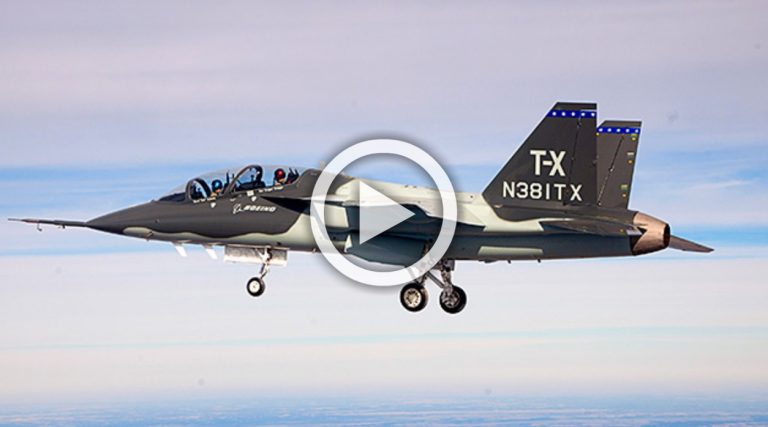
On December 20th, the Boeing T-X supersonic trainer took to the skies for the first time.  The jet took off from St. Louis International Airport for a 45 minutes inaugural flight.

The twin tailed, single-engine jet is designed to replace the T-38 Talon for advanced fighter training as part of the SUPT (Undergraduate Pilot Training) program.  The jet is designed to make it simpler for pilots to transition from training to 5th generation fighters.

Steve Schmidt was the test pilot for the first flight.  In a Boeing press release, he said, “The cockpit is intuitive, spacious and adjustable, so everything is within easy reach.”

The competition for the T-X trainer is crowded.  At least 5 companies are in the running to replace the T-38 jet.  The first jet is expected to replace the T-38 in 2024.

[youtube id=”0hVxFCI_hjg” width=”800″ height=”454″ position=”left”]

[shopify embed_type=”product” shop=”custom-model-planes.myshopify.com” product_handle=”t-6-texan-ii-customized-model-airplane-navy” show=”all”][shopify embed_type=”product” shop=”custom-model-planes.myshopify.com” product_handle=”t-6-texan-ii-customized-model-airplane” show=”all”][shopify embed_type=”product” shop=”custom-model-planes.myshopify.com” product_handle=”t-38-talon-customized-model-airplane” show=”all”]

Epic Battle Between F-4 Phantom and F-8 Crusader Was One For The Ages

0

This is a scene we’ll never see live ever again.

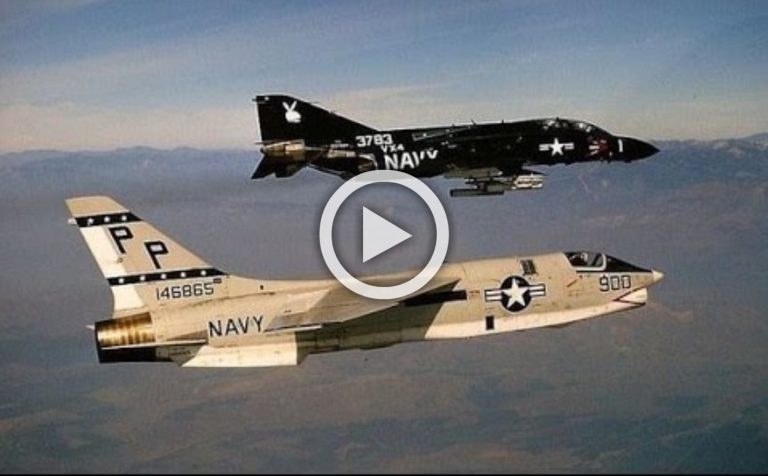
There is nothing quite like a dogfight between two great aircraft, and this video gives us just that. The F-8 Crusader and the F-4 Phantom, two absolute classics and greats, and a constant rivalry between pilots of each aircraft. This is an amazing back and forth video example when two kings of the sky meet.

The Vought created F-8 Crusader was used both within the United States Navy and Marine Corps in the 1950’s. Dubbed “The last of the gunfighters,” the crusader had the ability to travel at Mach 1.2 and a large Pratt & Whitney turbojet engine to run it all. Equipped with a 20 mm Cannon in later versions, there was also a decent fire power and the aircraft continued to operate over 40 years.

On the other hand, you have the F-4 Phantom was a late 1950’s creation and produced by McDonnell Douglas. The phantom was also used by the United States Navy and Marine Corps, but also by the United States Air Force. It could travel speeds greater than Mach 2. The fighter was finally retired from active USAF service on December 21, 2016.

Round one…fight!

When it comes down to it, both aircraft served their intended purposes well and were greats of their times. This certainly is an interesting video. We won’t spoil it for you. We’ll let you watch how it ends!

[youtube id=”QprQcfr45fk” width=”800″ height=”454″ position=”left”]

Holiday Delivery: The Time We Delivered The Christmas Turkey To Turkey

Troops don’t magically get food delivered to their bases.  It was done by crew dogs like us!

One of the missions my unit was regularly assigned to was to provide ration supply operations for United Air Forces Europe’s bases.  Families and service members stationed overseas depend on the base commissary system to provide the traditional comfort food we rely on to celebrate our national holidays. Amazing as it may sound, canned pumpkin, cranberry sauce, and frozen turkeys aren’t casually stocked in the local towns and villages near our overseas bases. They have to get there somehow!  We were that somehow.

The Turkey Trot

The Turkey Trot was one of the most desirable missions in the 37th Airlift Squadron. The trip was usually 2-3 days, included interesting stops on the Mediterranean Sea and access to “the alley” a much-storied strip of Turkish shops near the base. The Turkey Trot was a practically a squadron institution. Crew members would bring their leather jackets to a vendor that would offer new liners, pocket designs and sew flags into their coats. Another offered hundreds of morale patches or even custom designed patches that could be picked up by the next crew coming through. Many of us had custom suits tailor-made and then eagerly awaited the next mission to bring them home. The variety of offerings made us feel like Aladdin flying into an Arabian bazaar.

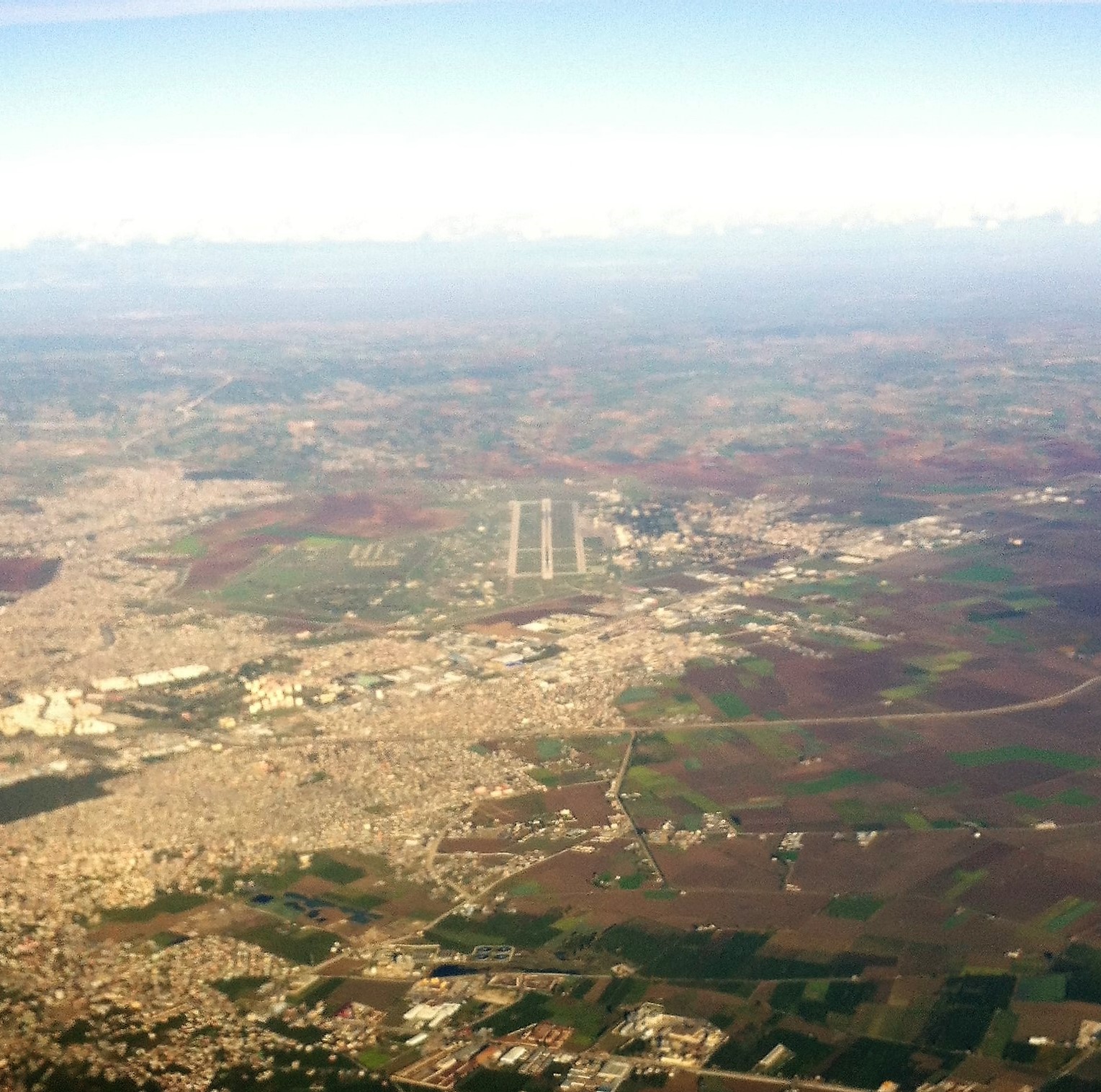
We departed Ramstein with our load for Aviano Air Base in Italy. After refueling, we continued our trek over the Adriatic and landed at Incirlik Air Base in Turkey. We off loaded our cargo at lightning speed, coordinated our departure time for the next morning, and then rallied to go off base to shop.ltag

The Fresh Meat Flights

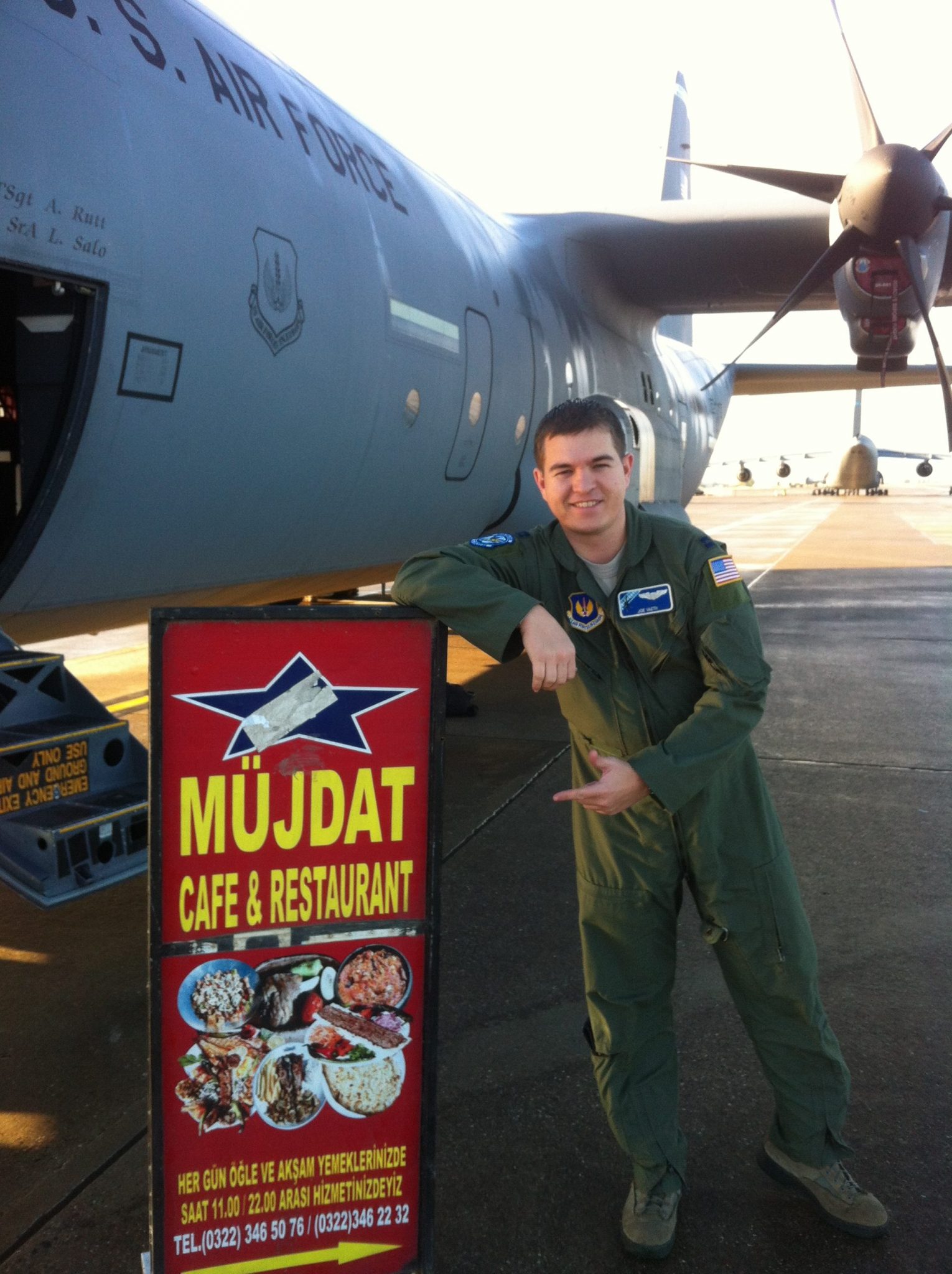
mudjatsBefore our flight home, we hit up the commissary for some lunch. There was a notice was posted conspicuously in the freezer section:

THE LAST FRESH MEAT FLIGHT BEFORE CHRISTMAS IS SCHEDULED TO ARRIVE DECEMBER 8TH.

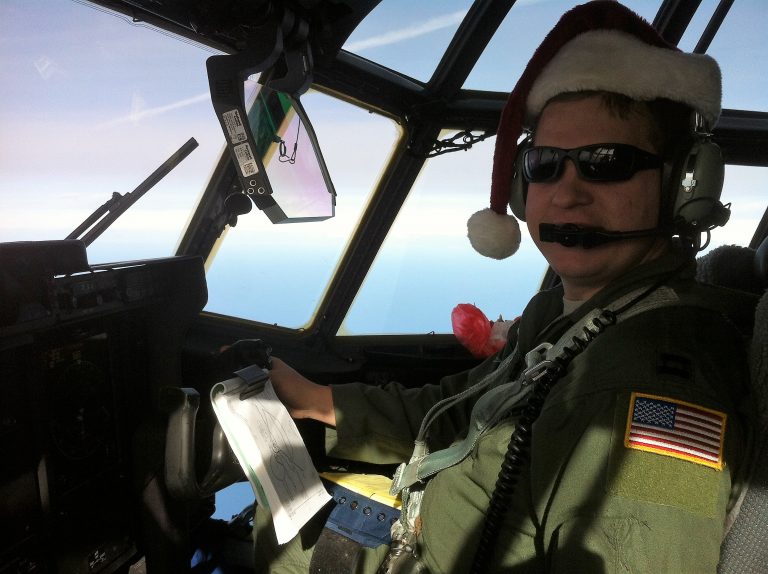
At that moment I realized the significance of the eight pallets of rations we had flown from Ramstein Germany to Incirlik Turkey. The documents authorizing the shipment indicated that we were flying a C-130J packed full of fresh fruits, vegetables & meat packaged in 600lb of dry-ice.

Our flight that day was the last ration supply mission before Christmas. And from the back of our C-130J we delivered the fruits, vegetables and the Christmas Turkey to Turkey through the ‘magic’ of airlift! It was one of those rare days when we got to see the direct impact of our airlift operation.

When I got home I shared my pictures with my kids and joked with them about it being a photo from inside Santa’s sleigh. Unfortunately, my kids became worried because they thought that all they were getting for Christmas was turkey.  They remained on their best behavior for the rest of the holiday season. Ho Ho Ho!

[shopify embed_type=”product” shop=”custom-model-planes.myshopify.com” product_handle=”c-130j-30-customized-model-airplane” show=”all”][shopify embed_type=”product” shop=”custom-model-planes.myshopify.com” product_handle=”lockheed-c-130-hercules-gunship-1-84-scale-mahogany-model” show=”all”]


This Average Looking Plane Was Literally Where The US Air Force Was Born

The Original Air Force One Was, known as Sacred Cow has a special place in US Air Force history.

In 1943, President Franklin D. Roosevelt became the first sitting US president to fly in an airplane. The aircraft was a Navy-owned, but civilian operated Boeing Clipper 314, the Dixie Clipper. General “Hap” Arnold, then commander of the US Army Air Force (USAAF), preferred that the president be flown by an Army Air Force’ aircraft and crew. The USAAF contracted with the Douglas Aircraft Company to build a military transport specifically for the special needs of the president.

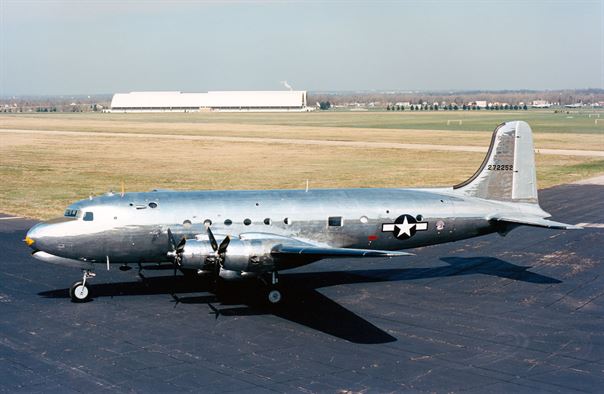
Douglas VC-54C built specifically for President F. D. Roosevelt. (2016, USAF Photo)

The “OG” Air Force One

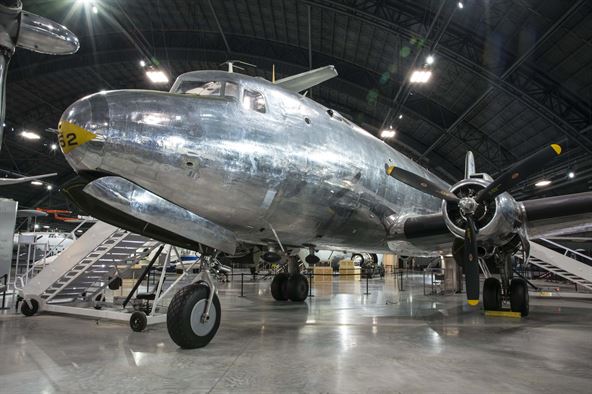
The Douglas VC-54C “Skymaster” was the first purpose-built presidential aircraft. The aircraft was officially designated “The Flying White House.” However, because the aircraft was heavily protected by security on the ground, ramp personnel often referred to the aircraft as the “sacred cow.” Overhearing the attendants working on the ramp, the name “Sacred Cow” was bestowed on the aircraft by the press.

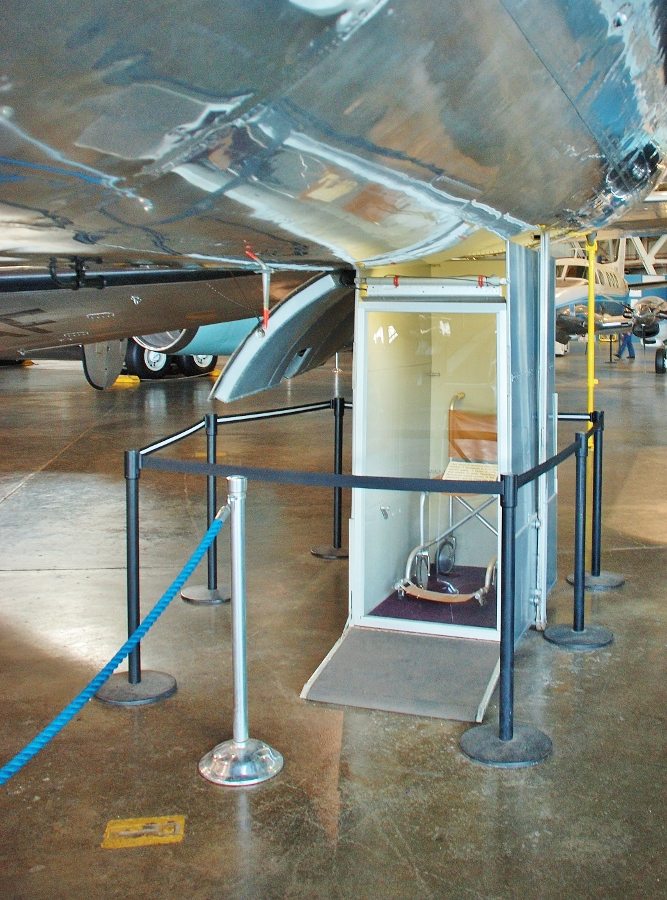
Modifications to the aircraft included a conference room with a large desk. One special feature is an elevator behind the passenger cabin to lift Roosevelt in his wheelchair into the airplane. The aircraft could accommodate 15 passengers. As a security measure, the original serial number (displayed on the aircraft) was changed prior the Roosevelt’s first flight.

Special elevator to lift President Roosevelt in his wheelchair into the aircraft (Photo: Jeff Richmond).

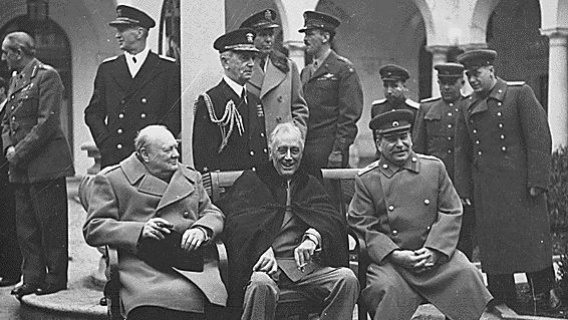
Roosevelt used the “Sacred Cow” only once—on his historic late-WWII trip to the Yalta Conference in the USSR to meet with British prime minister Winston Churchill and Soviet premier Joseph Stalin and in the USSR in February 1945. The trip to Yalta was Roosevelt’s only flight in the aircraft before he died two months later in April.

Post WWII meeting in Yalta, 1943. Left to right: Prime Minister Winston Churchill, President Roosevelt, and Premier Joseph Stalin.

The Sacred Cow remained in presidential service during the early years of President Truman’s Administration. In 1947, the “Sacred Cow” became the “birthplace” of the United States Air Force when, aboard the aircraft, Truman signed the National Security Act of 1947 that established the Air Force as an independent service.

The sacred cow only flew for a few years

In 1947 military officials ordered a modified DC-6 (military VC-118) to replace the VC-54C “Sacred Cow.” Nicknamed “Independence” for Truman’s hometown in Missouri, this VC-118 had state-of-the-art communications equipment, a presidential stateroom in the aft fuselage, plus seating for 24 passengers.

You can tour the plane today

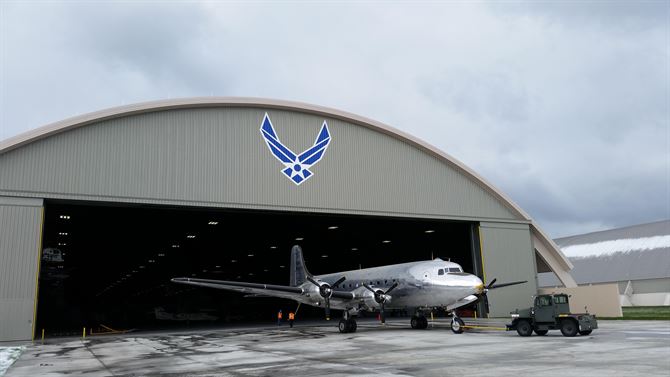
The “Sacred Cow” is on display and open for walk-throughs at the National Museum of the Air Force. It was recently transferred to the Presidential Collection in the new wing of the museum. Previously, the Presidential Collection had been crowded into a hangar at Wright-Patterson AFB.

President Roosevelt's VC-54 presidential aircraft being transferred to the new wing of the National Museum of the US Air Force in Dayton, Ohio. (2016, USAF Photo)
President Roosevelt’s VC-54 presidential aircraft being transferred to the new wing of the National Museum of the US Air Force in Dayton, Ohio. (2016, USAF Photo)

TECHNICAL NOTES:
Crew:
Seven (plus 15 passengers)
Engines: Four Pratt and Whitney R-2000 engines of 1,450 hp each
Maximum speed: 300 mph
Range: 3,900 miles
Ceiling: 22,300 feet
Weight: 80,000 lbs. (loaded)
Serial number: 42-107451 (displayed as 42-72252)

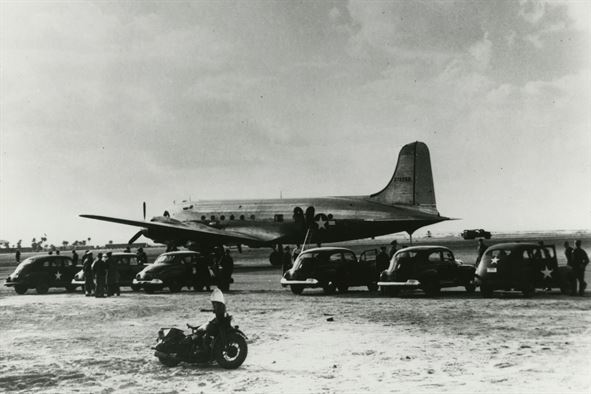
“The Flying White House,” a.k.a., the “Sacred Cow,” at Yalta, 1943.

[shopify embed_type=”product” shop=”custom-model-planes.myshopify.com” product_handle=”douglas-c-54-skymaster-1-72-scale-mahogany-model” show=”all”][shopify embed_type=”product” shop=”custom-model-planes.myshopify.com” product_handle=”boeing-vc-25-747-air-force-one-1-100-scale-model” show=”all”]