
Home Blog Page 205

Jets Used To Fly Feet Above The Hills Landing at Toncontin Airport

This airfield is one of the most challenging commercial airports to land at in the world.

Toncontín International Airport is located less than four miles from downtown Tegucigalpa, Honduras. The airport was known for challenging landings and some pretty amazing videos.

Why Was Landing at Toncontin Airport So Challenging?

The mountainous terrain creates two challenging factors for commercial pilots. First, the airport is located in a bowl of terrain. An approach requires a fast descent with a sharp final turn over a hill located just off the approach end of the most commonly used runway. The mountains also create wind gusts which require unexpected adjustments.

The largest commercial aircraft allowed to land at Toncontin is a Boeing 757. The video shows the small margin for error pilots have when making their approach. (Make sure to listen to the advice of one of the onlookers in the video.)

Once the wheels hit the tarmac, the fun isn’t over. The runways at this airport are shorter than normal so hitting the landing marks and riding the brakes are crucial factors. The most recent landing accident at this airport came in 2008 when an Airbus A320 overshot the runway due to pilot error.

Toncontin Airport Today

All international airlines moved service to Comayagua International Airport in 2021. Although the airport is still in use, it sees very little airline traffic today. Comayagua International Airport provides a much improved passenger experience and a safer, less challenging approach. The airport is located over 70 kilometers from the city, adding considerable travel time to and from the city center.


Landing At Chagual Airport in Peru requires guts and skill

With an elevation of almost 4,000 feet and soaring mountains on all sides, the approach into Chagual Airport in Peru is one of the most dangerous in the world.

Finding enough flat earth to build a runway in a mountainous area like Peru is challenging enough. But once you’ve built the air strip – which in this case looks more like a two-lane asphalt runway – you still have to have plenty of airspace for maneuvering aircraft for approaches to the field.

The high-altitude environment of Chagual Airport adds another layer of complexity for pilots. At nearly 4,000 feet, the thinner air reduces engine performance and lift, requiring precise calculations for takeoff and landing.

Pilots must also contend with unpredictable weather patterns, including sudden fog and strong crosswinds that can sweep through the Andes, making approaches even more treacherous. Specialized training and experience in high-altitude operations are essential for safely navigating this challenging airfield.

Despite its risks, Chagual Airport serves as a critical lifeline for the remote Pataz district. The airfield facilitates the transport of essential supplies, personnel, and equipment for Compania Minera Poderosa’s mining operations. It also provides a vital connection for local communities, enabling access to medical evacuations and emergency services that would otherwise be unreachable due to the rugged terrain and limited road infrastructure.

Where is Chagual Airport?

Chagual Airport is is located at nearly 4,000 feet in the Andes Mountains in Peru. It’s a private airfield owned by Compania Minera Poderosa. It’s the only airfield in the district of Pataz, so it’s a vital link to the region.

The airport primarily supports the mining company’s operations but also serves as a hub for small aircraft transporting goods and people to and from this isolated area. Due to its private status, access is restricted, and flights are typically coordinated by the company or approved operators.

The video of this approach and landing below is harrowing enough to watch. Hats off to the pilots who keep the surrounding areas safely supplied from the air.

Astronomer Has “Double Rainbow” Reaction When He Sees A Solar Eclipse On Alaska Air Flight

Alaska_Airlines_Solar_Eclipse_Flight__870_-_YouTube
Screenshot of video by Alaska Airlines

Last week, Alaska Airlines changed the scheduled departure time of a flight so that passengers could experience a total eclipse.

Combine the beauty and artistry of Mother Nature with the majesty of the moon passing in front of the sun and add in the enthusiastic commentary of an astronomer and you have … this video.

The alignment of the sun, moon and earth to create an eclipse is rare. Alaska Air began planning its “intercept mission” over a year ago. The idea was to time a flight from Anchorage to Honolulu so that passengers would have a sky-high view. At lower altitudes, the flight path was covered by clouds and that added to the view, creating a surreal picture.

Joe Rao is an associate astronomer at the American Museum of Natural History’s Hayden Planetarium. His research indicated that a flight between Alaska and Hawaii would  intersect the “path of totality” – the darkest shadow of the moon as it passes over the Earth. About a year ago, he contacted the airline to ask if the schedule for Flight 870 could coincide with the eclipse. The flight was rescheduled and departed 25 minutes later than usual.

On March 8, flying at 35,000 feet, Alaska Flight 870 intercepted the eclipse 695 miles north of Honolulu. Rao was one of about a dozen “eclipse chasers” on the flight. They were all thrilled with the rare view they experienced.

[youtube id=”YBoa81xEvNA” width=”800″ height=”454″ position=”left”]

Ed Force One Boeing 747 Suffers Damage, Show Will Go On

edforce1damage
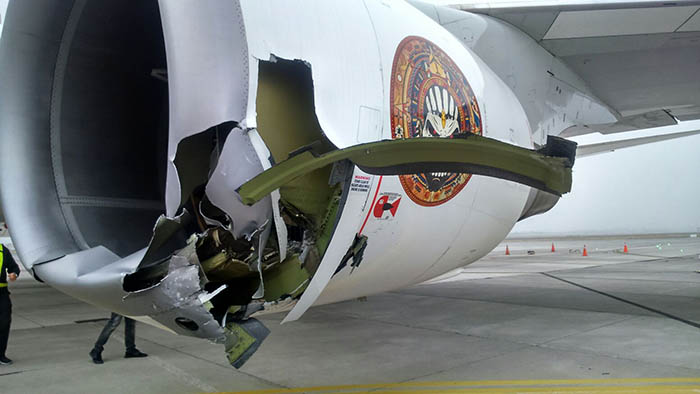
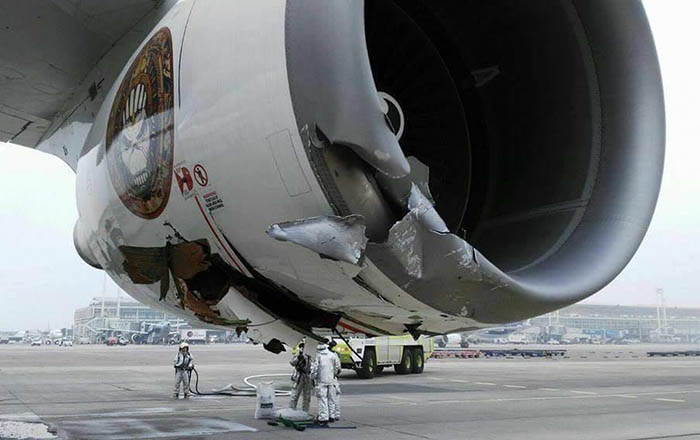
Towing Accident Damages Two Engines. Two airport employees were injured. No band members were onboard the aircraft.

After only two weeks on tour, the Boeing 747 suffered significant damage in a towing accident yesterday.  According to Iron Maiden’s website, the aircraft:

“was tethered to a tow truck to be taken for refueling prior to flying  over the Andes to Cordoba for the next show. On moving  the steering pin that is part of the mechanism that connects the ground tug to the aircraft  seemingly fell out. On making a turn the aircraft had no steering and collided with the ground tug badly damaging the undercarriage, two of the aircrafts engines and  injuring two ground tug operators, both of whom have been taken to hospital.”

edforceonedamage2
Two engines were severely damaged in the accident. The nose gear was also said to be damaged in the incident.

The website also said that the damage was significant requiring the possible replacement of two engines as well as repairs to the landing gear.

It was just two weeks ago that Avgeekery profiled the jumbo 747-400 aircraft that was painted in Ed Force One colors.  At the time, the band was very excited to travel the globe in such a large jet.  The jet had enough capacity to bring their ‘roadies’ as well as all the stage equipment.

Despite the damage, Iron Maiden has remarked that the show will go on even without the chartered jet. In their blog post they said,

We are currently making contingency arrangements to get to the show in Cordoba tomorrow with band, crew and equipment intact. Fortunately the 20 tons of equipment had not been loaded onto Ed Force One at the time of the accident, and none of the band or our road crew were onboard or near the airport. Although this is tragic for our beautiful plane we do not expect this to affect our concert schedule including the next 2 shows in Cordoba and Buenos Aires. And we hope to find a new Ed Force One to continue this adventure with us in the near future. We will keep everyone updated when we know more, so keep checking only on this site for official news.

Week In Review for March 12, 2016: Here’s What Happened On Avgeekery.com

0

b-52-3

How was your week? It was a good week at Avgeekery.com thanks to some great videos and stories. In case you missed any, here’s a look back.

NO PILOT REQUIRED: Here’s a story about an Air Force pilot who bailed out of a plane that was out of control and appeared to be headed for a crash. You’ll have trouble believing what happened next.

DRONE HUNTER: A company in England has developed a shoulder-mounted weapon that can safely capture drones that are violating air space or carrying lethal cargo.

B-2 … B, AS IN BEAUTY: Captured in flight, the B-2 bomber is as graceful as it is stealthy.

HEY, ISIS … DUCK: The Air Force announced its deploying three B-52s to Spain for “training.” ISIS might find out soon exactly what kind of “training” that will be. (And keep reading for a story about how B-52s are still ass kickers.)

THE VOICE (NOT THE SHOW): So who is Bitchin’ Betty? Meet the voice of the cockpit audio warning system that F-18 pilots know like a good friend.

TRIPLE SEVEN SWISS DEBUT: As Boeing’s 777 comes on line with more commercial airlines, there will be more maiden flights like this one – the inaugural revenue flight of Swiss’ 777-300ER.

SALUTE TO THE RESCUE CREWS: Put the technology of Go-Pro cameras along with a skilled editor and brave helicopter rescue crews and you’ve got a beautiful and educational video of training exercises.

B-52 STILL BUFF ENOUGH TO KICK BUTT: Even though it’s over 60 years old, the B-52 BUFF is still capable of kicking some serious ass.

STORIES OF TWO FLIGHT MYSTERIES: Ever since man saw birds soaring, there’s been a mystery to flight. Sometimes those mysteries involved tragedies that have incomplete explanations.

DON’T GET STRESSED; IT PASSED THE TEST: The average person probably doesn’t understand that most aircraft undergo tests that stress the structure far beyond expected limits. Here’s how the wing of a 777 held up to a high-stress test.


Crash Mysteries: Two Mysterious Air Tragedies That Claimed Sports Figures

Photo by: Laurent Errera

The two-year anniversary of the disappearance of Malaysia Airlines flight MH370 is a grim reminder that the wonder of flight sometimes turns into mystery.

From Amelia Earhart to MH370, Earth and its oceans can swallow aircraft and leave few clues. No matter the technology or how large the aircraft, it’s easy to get lost on this planet.

Earlier this week, the odd story of a pilot-less Air Force jet crash landing itself brought to mind two instances of aircraft with disabled pilots – and apparently on auto pilot – flying to their demise. Both tragedies involved sports figures.

Payne Stewart, winner of three majors – the 1989 PGA and the U.S. Open in 1991 and 1999 – died in October of 1999. Stewart was one of six people on a Learjet that was scheduled to fly from Orlando, Fla., to Houston with a stop in Dallas.

Just west of Gainesville, Fla., air traffic controllers received its last communication from the plane. The investigation concluded that a lack of cabin pressurization led to the occupants dying from hypoxia. The plane was escorted by F-16s, who observed the plane’s windows were frosted – another indication of depressurization. After nearly four hours of flight, the plane ran out of fuel. Its spiraling descent almost reached supersonic speed before it crashed in South Dakota.

Bo Rein was hired to coach LSU in late 1979. He had been a successful coach at North Carolina State and was taking over for legendary coach Charlie McLendon. Rein had been a noted athlete at Ohio State, starring in football and basketball.

His tenure lasted 42 days.

On Jan. 10, 1980, Rein and pilot Lewis Benscotter left Shreveport, La., for Baton Rouge in a Cessna 411 Conquest, a twin-turboprop. Soon after takeoff for what would have been a 40-minute flight, Benscotter was granted a course change to avoid a line of thunderstorms.

That was the last contact from the plane. Again, the speculation is that the plane lost pressure and the two occupants died of hypoxia. The planed climbed to 41,600 feet – 6,600 feet above its maximum ceiling. The plane continued to fly east, passing over Mississippi, Tennessee and North Carolina before crashing in the Atlantic Ocean. The Bodies of Rein and Benscotter were never recovered.

The spooky aspect of this tragedy is that the ill-fated flight path came within a few miles of passing over Raleigh, N.C., where Rein’s family was still living.

Seven Reasons Why The Super Old B-52 BUFF Still Kicks Ass

The B-52 has outlived its replacement. And its replacement’s replacement. And its replacement’s replacement’s replacement.

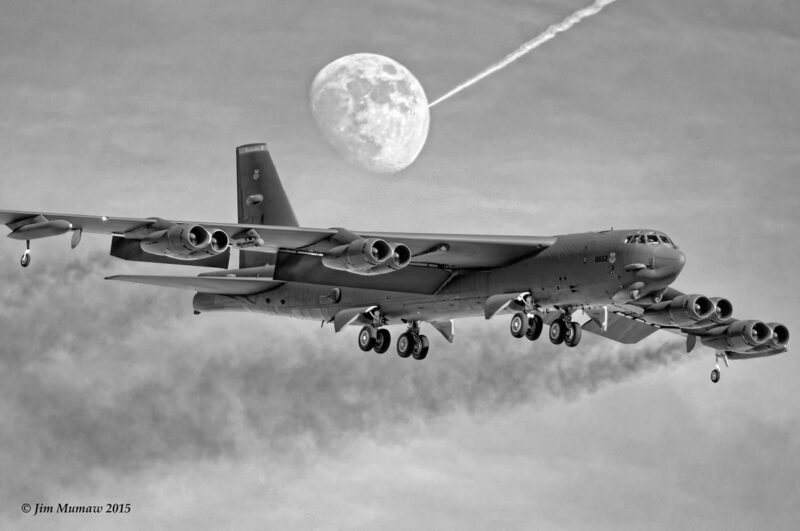
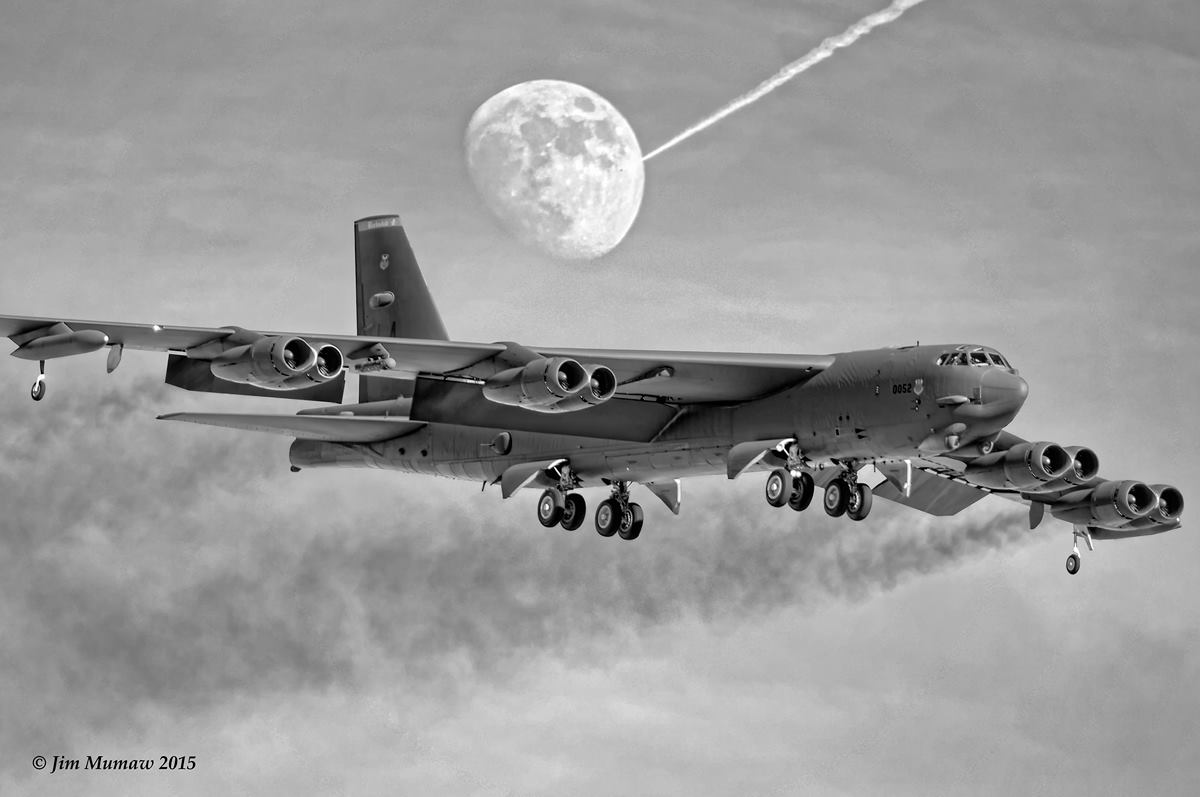
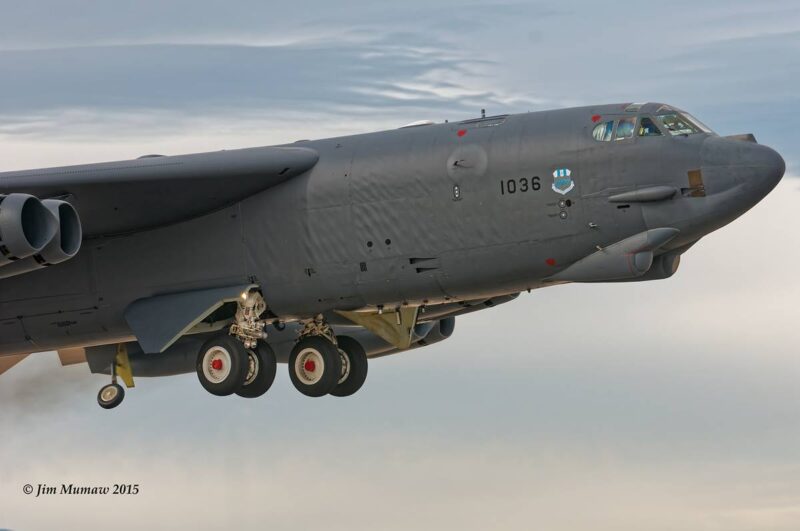
 One would be hard-pressed to find a war plane that has endured like the B-52 Stratofortress. Born over 60 years as a weapon to fight the Cold War, the B-52 was recently in the news with the word three of the long-range bombers had been deployed to Spain and will likely be flying sorties against ISIS.

Boeing began development shortly after World War II. The B-52’s heritage can be traced to the B-17 Flying Fortress and the B-29 Superfortress. The B-29 is the only bomber to deliver atomic weapons but the B-52 was specifically designed to be a nuclear deterrent. Until the end of the Cold War, it was part of the United States’ three-pronged arsenal of ICBMs and nuclear submarines.

Here are seven facts and reasons why the B-52 has endured and has endeared itself to the Air Force.

1.) Good genes

Perhaps the B-52’s continued use and adaptability was in the aircraft from birth. Boeing originally was designing a six-engine propeller bomber that would be an upgrade on the four-engine B-29. But the Air Force told the Boeing design team that Convair was developing a jet-powered bomber. The engineers, working over a weekend in Dayton, Ohio, adapted and up-scaled plans from another aircraft to come up with the B-52 design.

2.) Nickname

b-52-3

Officially called the Stratofortress, its unofficial moniker is BUFF. That’s short for Big Ugly Fat Fellow. We’re PG-rated here at Avgeekery.com. Those in the know realize that “fellow” is a substitute for a four-letter invective. Either way, the nickname is affectionate. It could also be called The Anti-Stealth Bomber.

3.) Versatility

Designed to carry atomic weapons (a mission which, thankfully, never had to be flown), the B-52 has survived and thrived. It started flying under the Strategic Air Command (SAC) which was disbanded in 1992. It then moved to the Air Combat Command (ACC) and in 2010 all B-52s were transferred to the Air Force Global Strike Command (AFGSC). The B-52’s performance at high sub-sonic speeds, its low operating costs and its ability to adapt to modern weaponry has kept the aircraft active. The Air Force expects it to serve for at least another 20 years.

4.) Payload

b-521

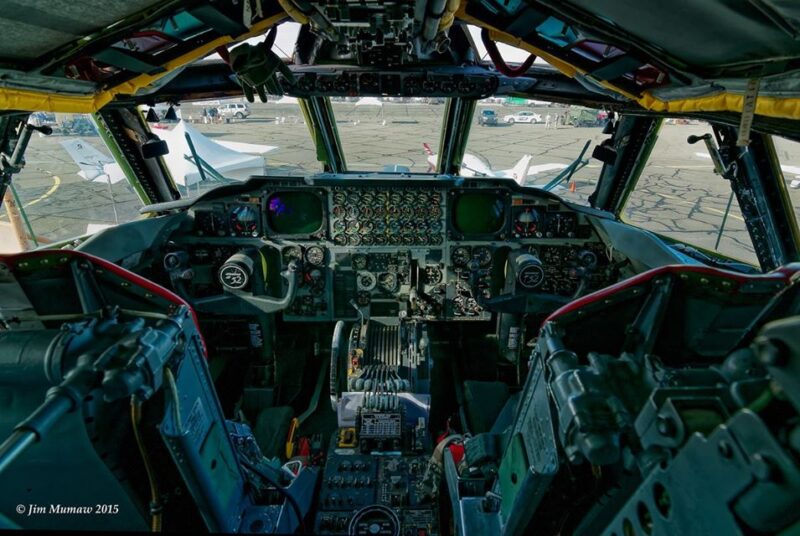
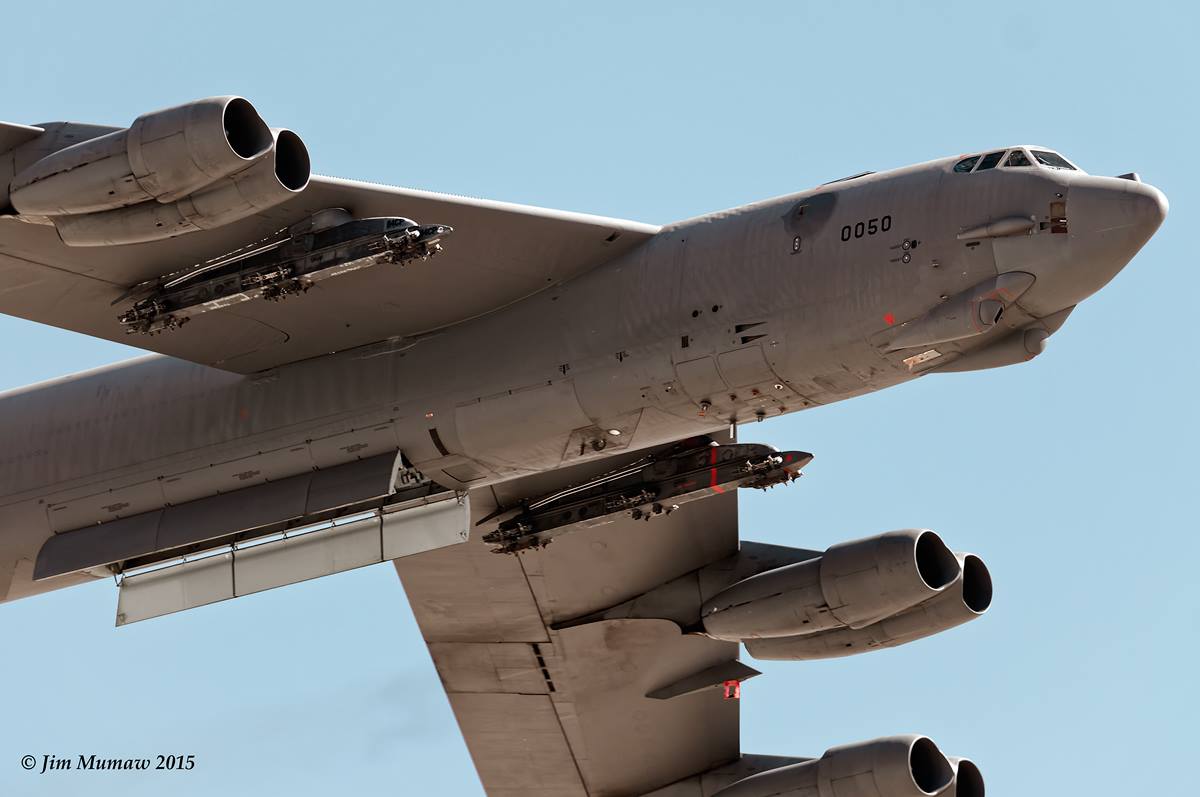
Recent upgrades to computer, communication and weapons systems have made B-52s a lethal weapon. The 1760 Internal Weapons Bay Upgrade moved some weapons from hard-point wing mounts. B-52s can carry 24 500-pound or 20 2,000-pound JDAMs and further upgrades will accommodate the JASSM and MALD family of missiles. The smart-bomb capabilities make the B-52 a heavyweight puncher with laser precision.

5.) Green machinesB-52Gs_taking_off_from_Barksdale_AFB_1986.JPEG

Military aircraft performance is rarely tied to environmental concerns. But about a decade ago B-52s became the first US military aircraft to fly using alternative fuel. A B-52 took off from Edwards Air Force Base using a 50/50 blend of Fischer-Tropsch process (FT) synthetic fuel and conventional JP-8 jet fuel. That was the start of the Department of Defense Assured Fuel Initiative designed to reduce crude oil usage.

6.) Tail gunner Joes

Photo by Mark.murphy
Wikipedia photo by Mark.murphy

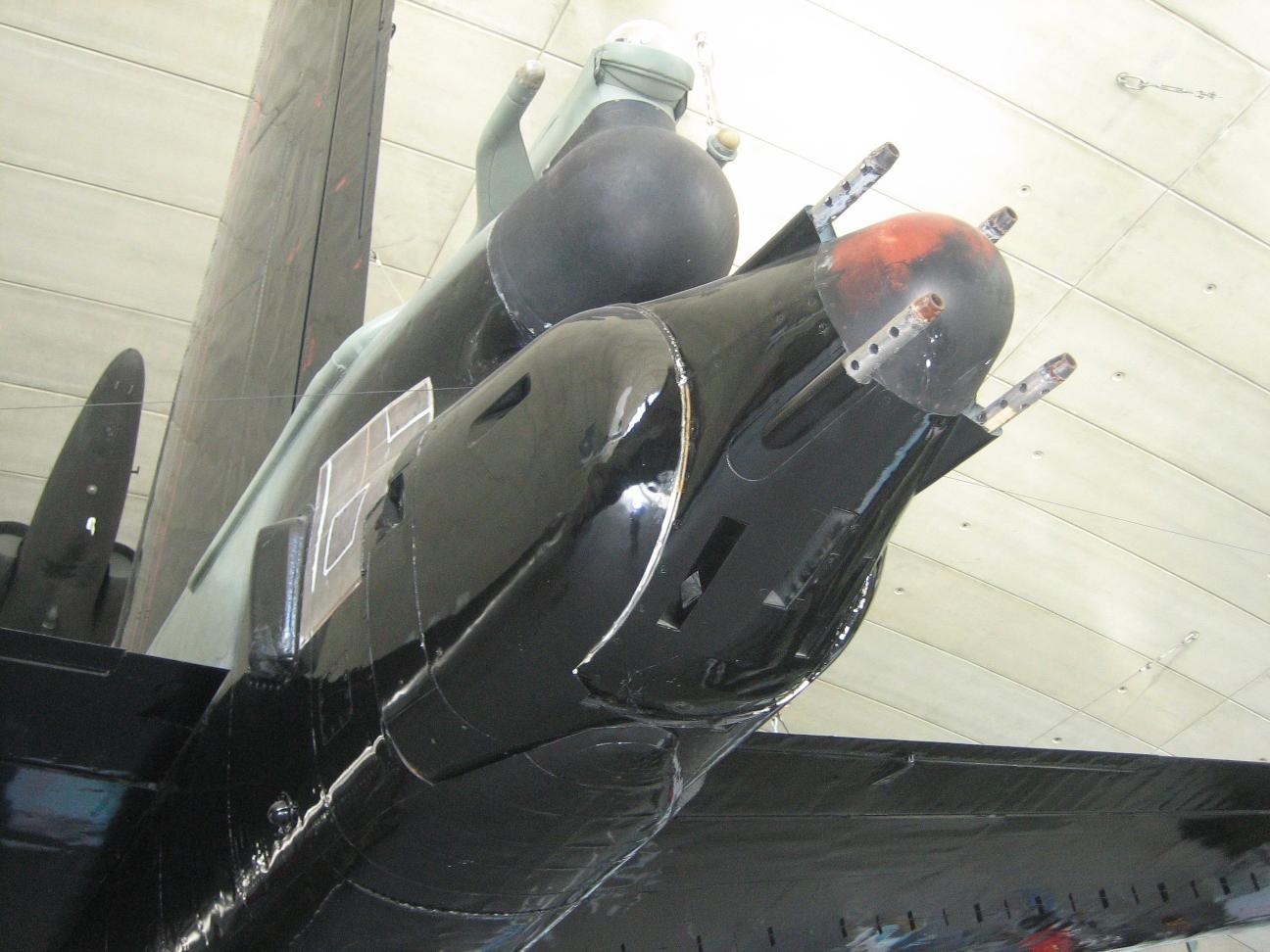
B-52s were heavily involved with bombing during the Vietnam War. And BUFF tail gunners twice shot down MiG-21s. Staff Sergeant Samuel O. Turner shot down a MiG in December of 1972 and about a week later Airman First Class Albert Moore used the B-52s quad .50 calibers to splash another MiG. His kill is believed to be the last time a bomber’s gunner shot down an enemy aircraft with machine guns.  There is no longer a gunner spot but just knowing that a plane still flies that used to have a tail gunner makes us love the BUFF even more.

7.) She’s a movie Star

b52drstrangelove

The B-52 was a key player in many Cold War movies – most famously “Dr. Strangelove.” The B-52’s, a new wave rock band that had a popular run in the early 1980s including the big hit “Love Shack.” Plus, if you want to get, um, well … bombed … try the B-52 cocktail.


This Rescue Squadron Highlight Reel Proves That Heroes Still Exist In Real Life


The people of the three rescue squadrons depicted in this video make superheroes look like mere mortals.

To praise the worthiness of this video requires recognizing the greatness of the GoPro camera. The hand-sized camera can go anywhere and record anything.

rescue

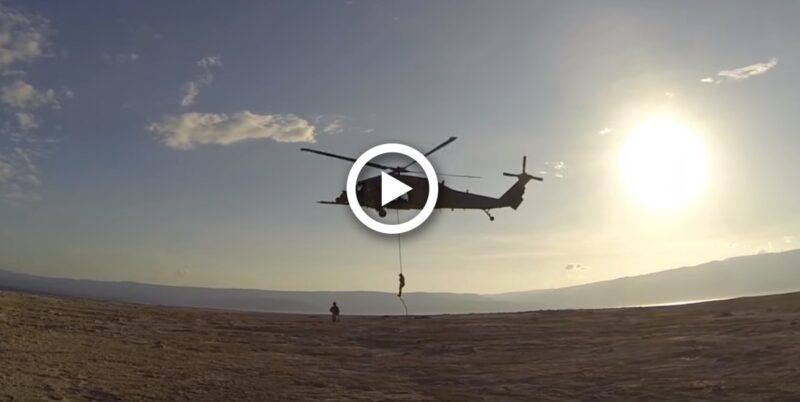
Which made it the perfect tool to give a “being there” account of the helicopter rescue squadrons whose motto is “anywhere, anytime.” The peaceful music and the beautiful video belies the dangerous work done by the men and women of the 303rd Rescue Squadron, the 81st Rescue Squadron and the 82nd Rescue Squadron.

Salute.

[youtube id=”IZWsej5mXhQ” width=”800″ height=”454″ position=”left”]

Swiss Welcomes the Boeing 777-300ER To The Fleet With This Beautiful Video | WATCH

swiss777

Swiss captures the first revenue flight from New York Kennedy Airport to Switzerland.

Boeing’s 777-300 ER is the latest in long-range luxury commercial airliners. Swiss recently debuted its first Triple Seven, which is equipped with state-of-the-art accommodations for the passengers in addition to the latest advances in avionics.

This “Welcome To The Fleet” video provides a glimpse of what it’s like for the crew to fly the 777 and what the passengers experience.

[youtube id=”n4N4bbIK2ls” width=”800″ height=”454″ position=”left”]

Bitchin’ Betty Says Goodbye: The Voice of the F-18 Retires

The voice of every F-18 jet signs off after a career of ‘yelling’ at pilots.

Those who have flown and will continue to fly the F-18 Super Hornet have heard “the voice” when a warning light wasn’t enough. The sound of “Bitchin’ Betty” imploring a maneuver – NOW – has helped many a flight crew avoid disaster.

Bitchin’ Betty Squawked In Every Pilot’s Ear

Leslie Shook, the woman behind the voice, is retiring, but she’s happy that her legacy lives on in F-18 cockpits. And she’s proud that the nickname given to her voice is one of affection and respect.

Longtime McDonnell Douglas and Boeing Employee

Leslie Shook was a longtime employee and McDonnell Douglas and Boeing. Her voice is featured not only on the F/A-18 Hornet but also in the cockpit of other products like the C-17 Globemaster III. Her work has saved many lives. This video may inspire pilots and aircrew to say, “it’s good to put a face to a voice.” Blue skies Leslie! Enjoy your well-earned retirement.

ISIS Better Get Ready. B-52 BUFFs Will Soon Be Flying Over Their Skies

US Air Force to deploy B-52 bombers to replace B-1s that recently departed the Middle East region.

At some point in the near future, Avgeekery.com will post a story singing the praises and recounting the history of the B-52 – a venerable Air Force bomber from a different era which is nonetheless still a useful weapon in the American arsenal.

That fact was underscored by the recent news that the United States has deployed three B-52s to Moron Airbase in Spain. The three bombers were joined by about 200 support personnel and various other aircraft.

From The Washington Post: “It is uncommon for the large bombers to deploy to mainland Europe, since they usually take off from the United States, refuel, and carry out their assigned duties before returning to their home stations. In previous bomber deployments to the region, the aircraft have often been temporarily stationed out of the Royal Air Force Base in Fairford, England.”

The transfer of the three B-52s coincided with the U.S. Air Force pulling B-1 bombers from flying missions against ISIS. The B-1 “Bone(s)” have been flying missions since August; the crews and the planes needed a break to rest and re-fit.

While one of the candidates for President may think that most B-52 missions against ISIS will involve making the sand glow from carpet bombing, us avgeeks know that precision bombing is the name of the game these days.  The B-52 has the ability to fire precision guided weapons at multiple targets with the ability to loiter for an extended time.

The B-52 Stratortress first went into service in 1954 as a long-range bomber designed to deliver nuclear weapons. With the resolution of the Cold War and advances in weapon systems, the eight-engine B-52s will are useful.

In May of last year, two B-52Hs flew a 30-hour, non-stop round trip mission from Barksdale Air Force Base in Louisiana to Wadi Shadiya. During the trip, the planes dropped strings of precision-guided Joint Direct Attack Munitions in a mock attack on a practice range. JDAMs are the weapons that have been deployed from the B-1s during missions over Iraq and Syria.

The B-52’s nickname is BUFF – for Big, Fat Ugly Fellow. When and if the B-52s deployed to Spain start dropping JDAMs onto ISIS positions, it would be interesting to know what names the ISIS fighters will be calling the BUFFs.

[youtube id=”V0FPqdsC8_Y” width=”800″ height=”454″ position=”left”]

Rare B-2 Bomber Footage Captures The Beauty of the Sleek Stealth Bomber

Rarely seen footage of the B-2 Spirit demonstrates the grace and beauty of America’s powerful and stealthy bomber

The B-2 Spirit Stealth bomber in flight is an inspiring sight, as this video proves (the accompanying music doesn’t hurt, either). The Spirit looks like a flying carpenter’s square or something Batman would fly. But its looks disguise the aircraft’s graceful moves in the air. And, considering it’s a stealth weapon, disguise is a fitting term.

The Spirit will soldier on alongside the B-52 and forthcoming B-21. It will outlive the B-1 Bone as that jet is scheduled to be retired as the new B-21 takes it place later this decade.

[youtube id=”7Vb7IKhVKu4″ width=”800″ height=”454″ position=”left”]