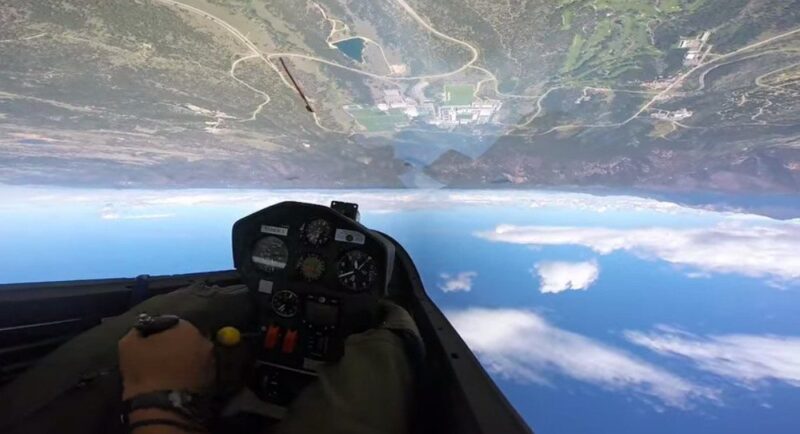
Roughly 70 cadets at the Air Force Academy in Colorado Springs are selected every year to become Instructor Pilots through a rigorous year-long upgrade program where they fly at least 80 training sorties. Five are then selected to become part of the USAFA Sailplane Aerobatics Demonstration Team. Since 1986, the USAF Aerobatic Demonstration Team has been performing aerobatic demonstrations at events worldwide.
In 1998, the team began to compete in the International Aerobatic Club (IAC) competitions and have been ranked nationally from 2001 to present. The team currently holds the national collegiate title and is preparing to defend it again this year. Enjoy this pre-season sneak peek of the 2014 USAFA Aerobatics Demonstration Team!
We’ve heard air traffic controllers say all kinds of things on the radio. From time to time, there are moments of levity on the radio. Controllers will sometimes make a joke or a pilot will tease a controller. But it’s very rare if not unheard of to hear a marriage proposal on the radio. One Canadian controller changed all that…
He proposed to his girlfriend who was flying on an Air Canada flight, seated in 25C to be exact. He did so by speaking to the pilots on the plane to first explain his odd request. After convincing the captain, he was put on the aircraft speakers and beamed his proposal to his fiancé. Fortunately, she said “Yes!” and the plane erupted in cheers. No word on the details of the wedding but we wouldn’t be surprised if somehow planes and aviation were incorporated into the big day!
Pilot training is awesome…your pilot training graduation video should be too!
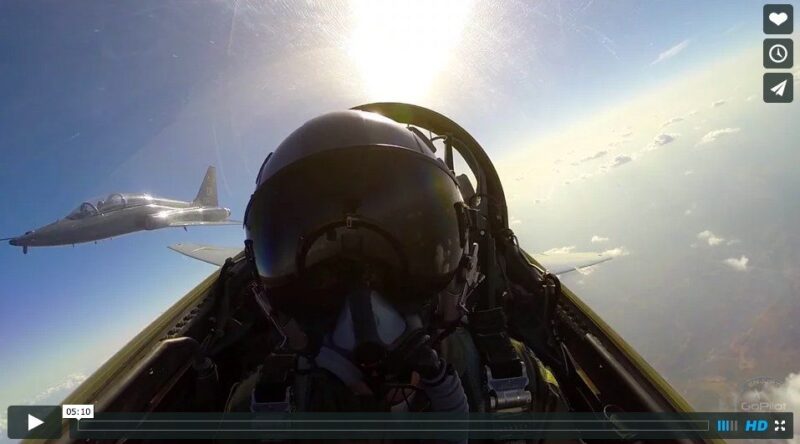
The US Air Force’s pilot training program is a tough 55 week program that challenges every student pilot to the max. It is full of testing, challenging flights, angry instructors and competition at every turn. It also might be the coolest job in the Air Force. Recent ENJJPT pilot training class 14-07 from Sheppard AFB got permission to film their pilot training experience with GoPro cameras. The results are stunning. In just 5 minutes, you’ll see the class progress from T-6 Texan II planes to the the venerable T-38 Talon trainer. Watch and prepare to be amazed.
If you call yourself an #avgeek, it is a requirement to have pulled your car over by an airport and spotted planes at least once. Spotting is a great way to share the love of aviation with family and friends. It’s also a way to impress a date with your aviation prowess. Here are our list of Top 5 locations to watch planes land in North America:
1.) St Maarten – Maho Beach
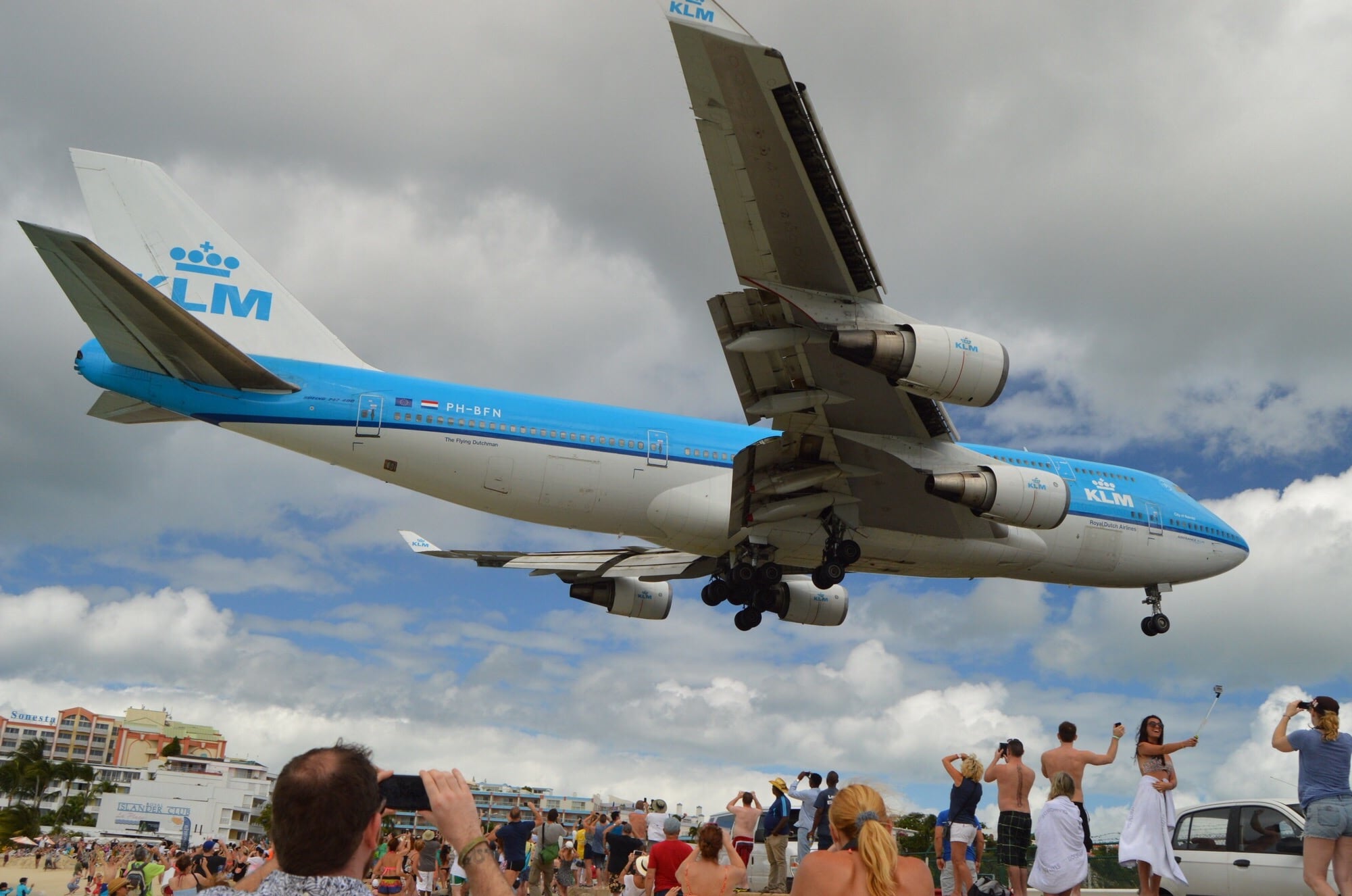
747-400 KLM arrival
St. Maarten airport is an avgeek paradise. Due to the small size of the island, the runway is built very close to the beach. On approach, airliners fly between 40 to 100 feet over the narrow beach called Maho Beach. Over time, the popularity of Maho Beach has grown significantly. Hundreds of beach goers now flock to the beach everyday to see the low flying planes. Some brave souls even attempt to ‘fence surf’ by holding on to the blast fence while getting pelted with sand ad hot air from the jet blast of departing aircraft. Sunset Bar and Grill is located just off the extended centerline of the runway. They post the day’s flying schedule right next to their beer lineup.
Top 5 airports for #avgeeks to watch planes land. @avgeekery – Tweet This
What better than the smell of burgers and jet fuel? The In and Out Burger located on the northeast side of the airport is the perfect date compromise for a foodie and an an avgeek. LAX sees its fair share of wide-body aircraft, mainly international flights from overseas. On a typical afternoon, you are likely to see arrivals from Aeroflot, Eva Air, Air France, Thai, Asiana, American, United, Delta and more. The spotting location is less than a quarter mile from the end of the runway.
Google Earth Image
3.) Chicago Midway – 55th and Cicero
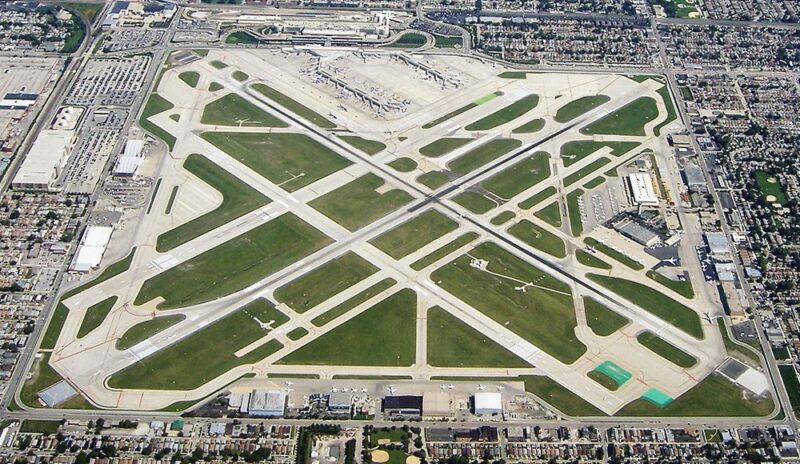
Some locals near Chicago Midway refer to the airport as a postage stamp. If you’ve ever flown over the field, you’ll understand why. Located in some of the densest suburbs just outside of Chicago, you’ll see a one mile by one mile square with 5 tightly packed intersecting runways. Every runway is less than 7,000 feet forcing all arriving traffic to carefully manage their energy on approach. For avgeeks, its a huge thrill to stand on the corner of 55th and Cicero or 63rd and Cicero (depending on the wind direction) while the arrival of mostly Southwest Airlines jets fly over your head at just 100-150 feet above the runway. It’s low enough that you can hear the vortices whipping noise over your head after the aircraft passes.
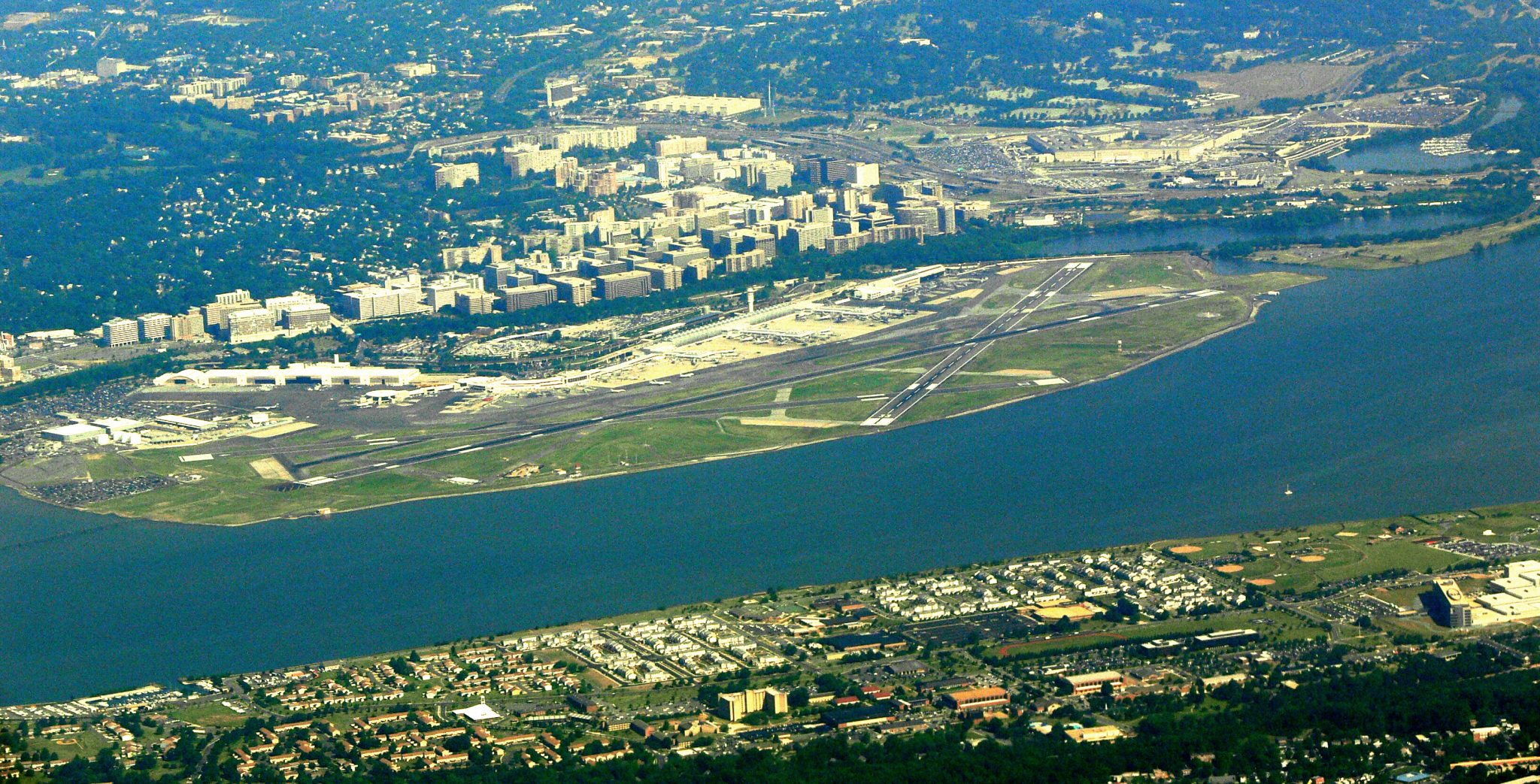
The Potomac river visual approach into DCA is both exhilarating for passengers and challenging for pilots. Gravely Point Park is your front seat to the action. The park is located adjacent to where planes make their final turn for the runway. With many different airlines at National, it makes for some great spotting of narrow-body aircraft.
Located on the northwest side of the airfield, Founder’s Plaza is a great place to observe the hustle and bustle of one of the nation’s busiest airports. The space is family and dog friendly with picnic tables, steel binocular posts and live ATC audio. Over the course of a couple hours you’ll see at least 40 aircraft land if the airfield is in a ‘south flow’. While American dominates the skies, the deck is located close to the UPS ramp and on the same side as the international terminal. A daily Qantas 747 (soon to be an A-380) and a smattering of international arrivals from Emirates, Qatar, Lufthansa and Korean Air are some of the highlights.
Do you have other places where you love to spot planes? Let us know in the comments below.
Alright #avgeeks, here’s the second clue. It’s a widened out photo of yesterdays image. Can you guess the plane now? Hint: Look at the placement of the antennas.
How much of an Avgeek are you? Can you name the plane? Bonus points if you can figure out the future owner. Hint: The picture was taken in the Pacific Time Zone. Photo by Sagar Pathak.
Much Respect to the Men and Women Who Make It Through One of the Toughest Flying Courses in the Air Force.
The F-22 Raptor pilot training program is a notoriously difficult course. Air Force aviators have to finish in the top of their UPT pilot training class. Once selected for the program, just to get the opportunity to fly the F-22. Raptor pilot candidates then have to endure challenging academics, a rigorous flying schedule, and 37 physically demanding sorties in the jet. That includes flying alongside evaluator pilots that sniff out any weaknesses, looking to washout weaker pilots. The pilots who succeed in the Raptor B class are truly the best of the best fighter pilots in the Air Force and most likely the world. This video shows us why.
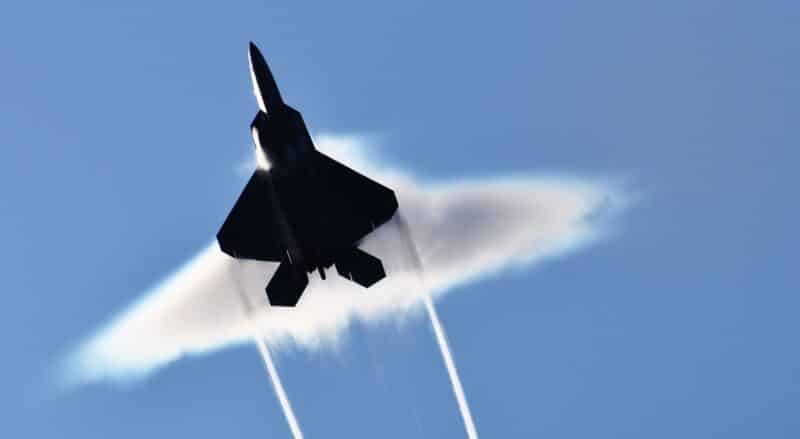
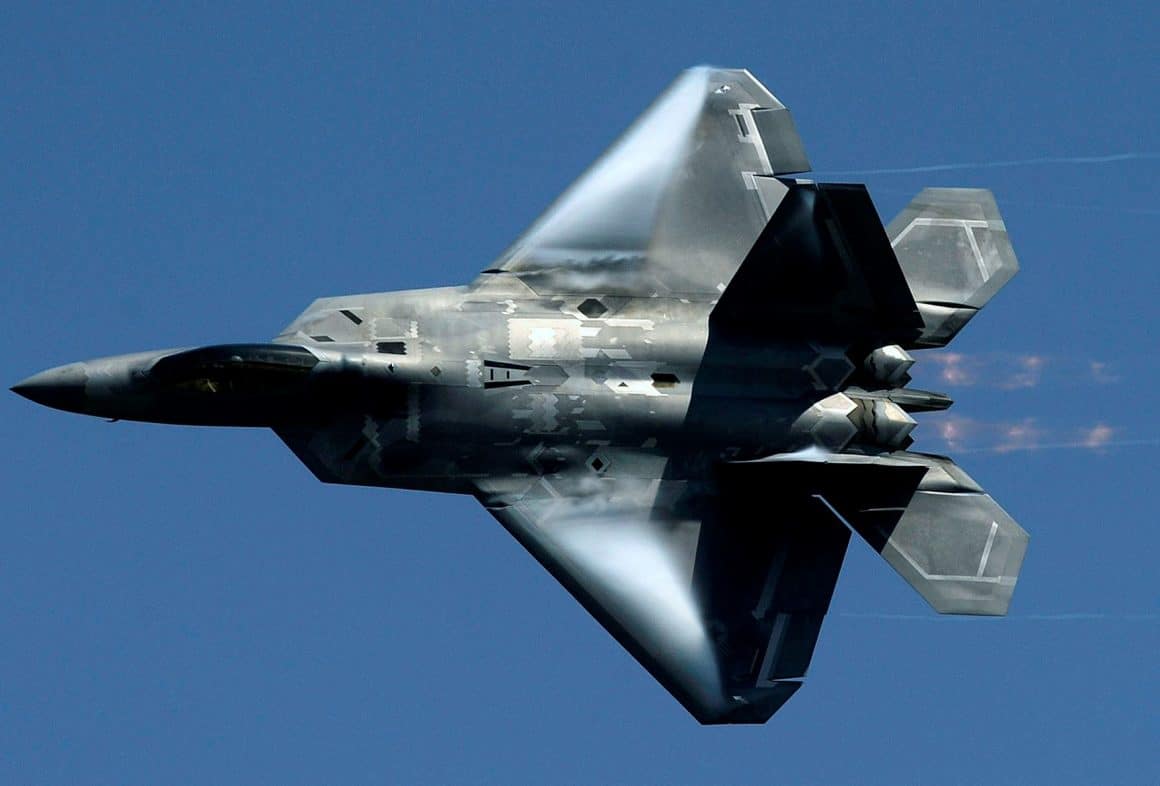
Maj. Dave Skalicky, an F-22 Raptor demonstration pilot, soars above the crowd April 26 during the Air Power over Hampton Roads air show at Langley Air Force Base, Va. This annual open house helps educate the public on Air Force capabilities and shows appreciation to the local community. (U.S. Air Force photo/Senior Airman Vernon Young)
An Emirates 777-300ER with registration A6-ECW landed at Boston yesterday afternoon. After rollout, a small fire appeared in the tailpipe of the #1 engine. According to the video posted on YouTube by ‘tbird209‘, a couple of very aware avgeek spotters called 911 and notified tower of what they were seeing. AvHerald reports that while there were no cockpit indications of a fire, the pilots noticed the fire on their external cameras, notified tower and shut down the engine. AvHerald also reported that a fuel leak was seen by emergency personnel. No injuries were reported. Video is Copyrighted by tbird209.
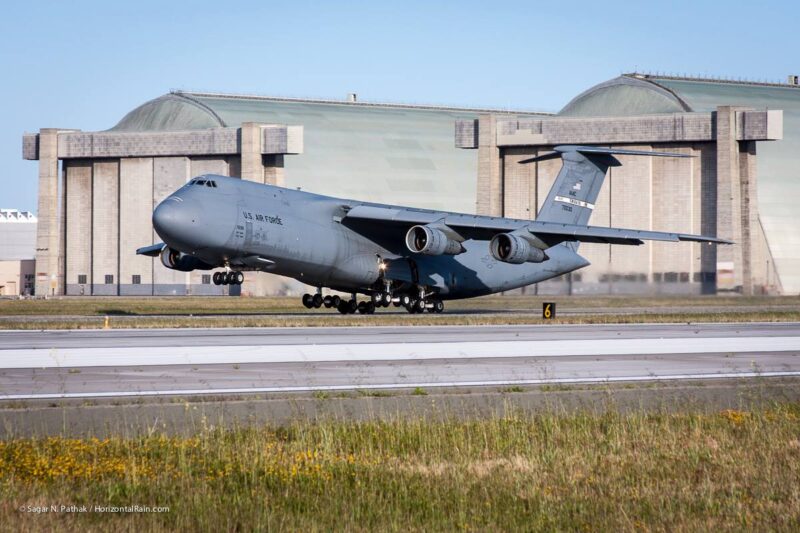
The C-5 is an amazing plane. It can carry almost anything. With 36 pallet positions and the ability to carry oversized and outsized cargo like tanks and satellites, it is a beast of an airplane. That is when it works. The C-5 is also known for always breaking down quite frequently. The C-5M modernization program has helped but aircrew still love to rag on ole’ FRED. Check out this video of the C-5’s version of “The Danger Zone”.
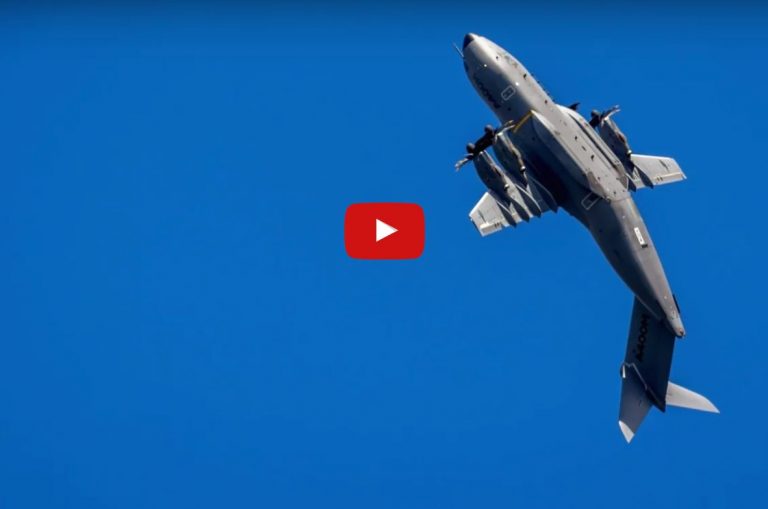
While it’s not unusual to see a Boeing C-17 or Lockheed Martin C-130J fly demanding profiles at air shows, you won’t see either plane be this aggressive. The Airbus A-400M is Europe’s first modern entry into the military transport category. The plane is larger than a C-130 but smaller than a C-17. While the program has been plagued by delays, the first deliveries to European customers have started. France recently took delivery of their third aircraft. The Royal Air Force expects their first A-400M delivery in September of this year.
At air shows, the A-400M is undoubtedly impressive. The aircraft performs a very complex routine with bank angles exceeding 90 degrees as part of a wingover demonstration. While the wingover maneuver is unique, there seems to be little purpose behind the heart-stopping act other than to demonstrate its maneuverability. Nonetheless, the A-400M impresses air show attendees year after year. It remains to be seen whether the day-to-day performance of the $20+ billion program will eventually elicit an equal amount of excitement by its military customers.
In the video above by YouTube videographer TopFelya, you’ll see the A-400M’s practice performance prior to the Farnborough Air Show in 2014.
It’s hard to believe that footage from 1991 is now considered vintage. But one look at this video and its easy to see how much things have changed at Chicago’s Midway Airport since this video was taken. In this short 7 minute clip by JetLuvr2000, you’ll see numerous Midway Airlines DC-9s and MD-80s. You’ll also see 2 Southwest Airlines 737-200s and even a Northwest Airlines ‘baby’ DC-9-10 series. One place with the registration N907ML was a new MD-80 that is still operated by Falcon Air Express today.
This MD-80 aircraft was originally operated by Midway Airlines. After Midway, it flew with Reno Air then American Airlines. After American, it bounced around to a number of carriers before ending up with Falcon Air Express. Source: https://www.flickr.com/photos/jackmcgo210/6849343997/
The video was taken only months before the demise of the original Midway Airlines in 1991. Burdened by high oil prices, over-expansion and a sluggard economy, Midway ceased operations after a failed bid to merge with Northwest Airlines. In the wake of failure, Southwest Airlines grabbed many of Midway’s gates and airport assets. At the time, Southwest had a relatively small presence. They had only been flying to Chicago for less than 6 years after inaugurating service in 1985. They eventually would grow to become Midway Airport’s dominant carrier. Today, Midway Airport is one of Southwest’s largest operations in their network.
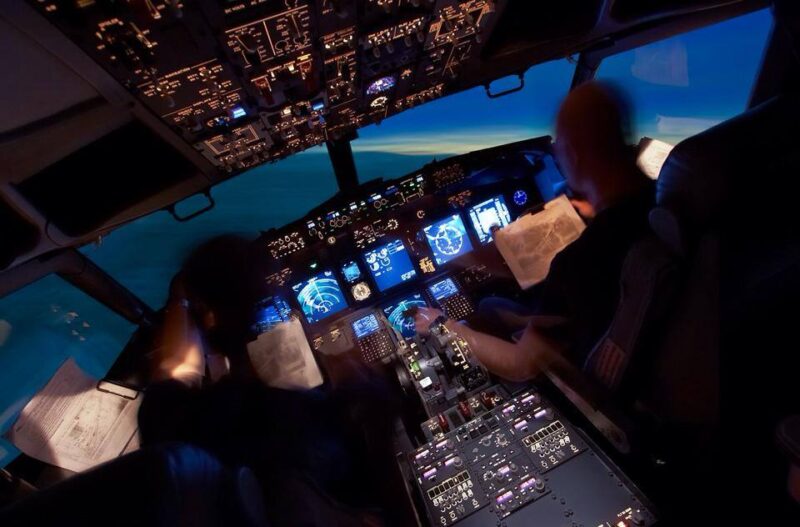
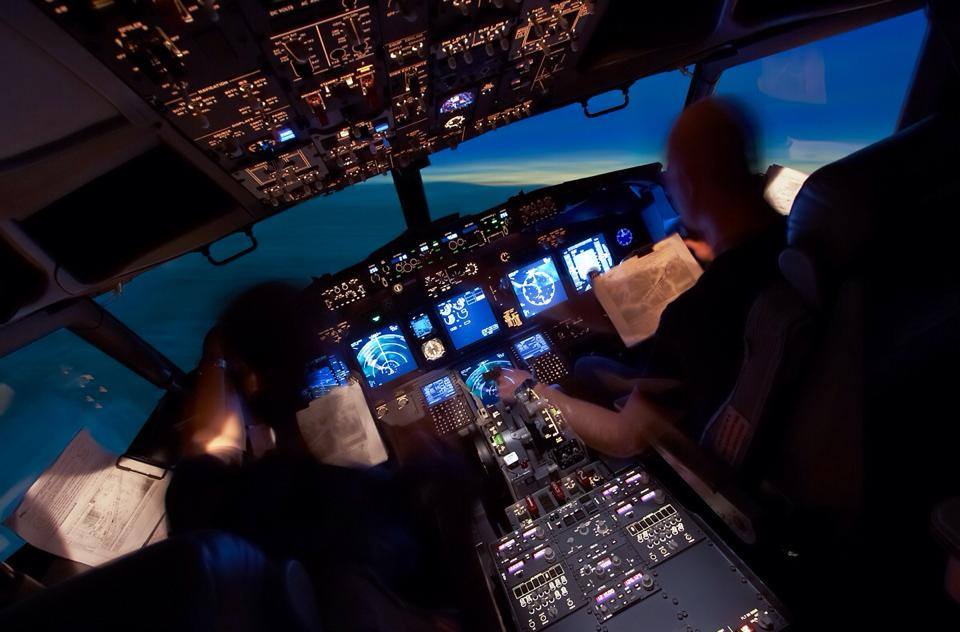
While a pilot is the most commonly known job in aviation, there are hundreds of other jobs that support the aviation industry. From caterers to maintenance personnel to gate agents, all play a role in the safe transportation of millions of people around the globe everyday. Recently, Avgeekery.com had the opportunity to profile a Boeing 737NG simulator instructor in the UK. Bradley Cranstone is an experienced sim instructor on the 737 Next Generation aircraft and a Private Pilot of Cessnas in his spare time. As part of the job he is required to be an expert on the 737’s technical systems and the operational limitations of the airplane. In his spare time, he also runs the popular Facebook page called “the Aviationist”. He recently took time out of his busy schedule to answer questions posed by our avgeekery.com fans.
1. Bradley, when did you first fall in love with aviation?
It happened at a young age. I always loved aviation. I started flying at 15 by piloting single engine Cessna airplanes. Even before flying, I had the manuals and books though way before actually getting in the plane! I studied them everyday in preparation for my first flight.
2. How would you describe being a sim instructor?
Sim instructing varies from day to day. It depends on who you are instructing and their skill level. Every individual is different. It is sometimes a challenge to instruct someone new on an airplane as complex as the 737. You have to have patience and help instill confidence as you build their flying skills.
3. In the simulator, what is the most difficult part of a flying profile?
I make everything in the simulator challenging! I would say engine failures after take off is probably the hardest part of a normal simulator ride. It demands most of the pilot’s skills and knowledge. They have to remain calm and apply the exact procedure correctly in a timely manner to ensure that the plane lands safely.
4. Are there certain emergencies that pilots struggle to handle in the simulator?
Again, in relation to the previous question, handling engine failures can be very challenging. An engine failure or fire is very demanding for a pilot. They can be especially difficult when you add in complicating factors like weather or other emergencies. Successfully completing the profile can take a lot of practice, determination and patience. Through my instruction, I make sure that they are ready to handle the real thing if it were ever to happen in the real aircraft. Knowing that pilots are so well trained should make passengers feel very comfortable.
5. What is the best part of your job as a simulator instructor?
The most fun part of my job is being in the aviation environment everyday. I love watching pilots progress and improve. I also love being in the simulator. With the new technology, it feels so real and lifelike!
6. Tell us a little bit about your Facebook page called “The Aviationist“.
The Aviationist was created to join a community of pilots, to share the same interests, goals and inspirations. What makes his page unique is how he unloads massive amounts of 737NG trivia, photos and insight to his page everyday. We have over 6,500 fans now and are growing everyday.
7. Last question, we’ve seen a number of Chemtrail buttons posted on Instagram lately. Is that now part of your curriculum?
The chemtrail button! Ha! I wish it was. I would feel very cool to have that button on the overhead panel!






 This MD-80 aircraft was originally operated by Midway Airlines. After Midway, it flew with Reno Air then American Airlines. After American, it bounced around to a number of carriers before ending up with Falcon Air Express. Source: https://www.flickr.com/photos/jackmcgo210/6849343997/