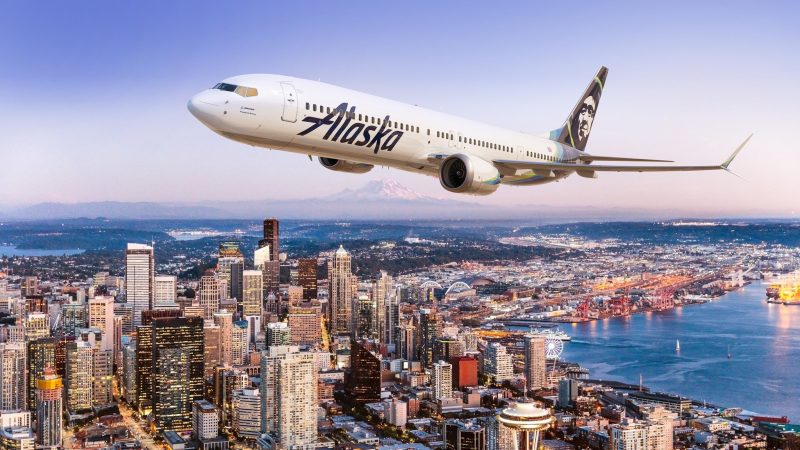
Alaska Airlines on Wednesday announced its largest aircraft order in the company’s 90-year history.
The Seattle-based carrier will exercise options to buy 52 Boeing 737 MAX aircraft, with deliveries set for 2024 through 2027. Alaska has also secured rights for an additional 105 aircraft through 2030.
With Wednesday’s order, Alaska will have 146 confirmed 737 MAX aircraft, up from 94 today. There are currently 35 Boeing 737-9 aircraft in Alaska’s fleet. 43 additional MAXs will arrive by the end of 2023 with a delivery rate of one aircraft every ten days.
Alaska Shows Boeing the Love
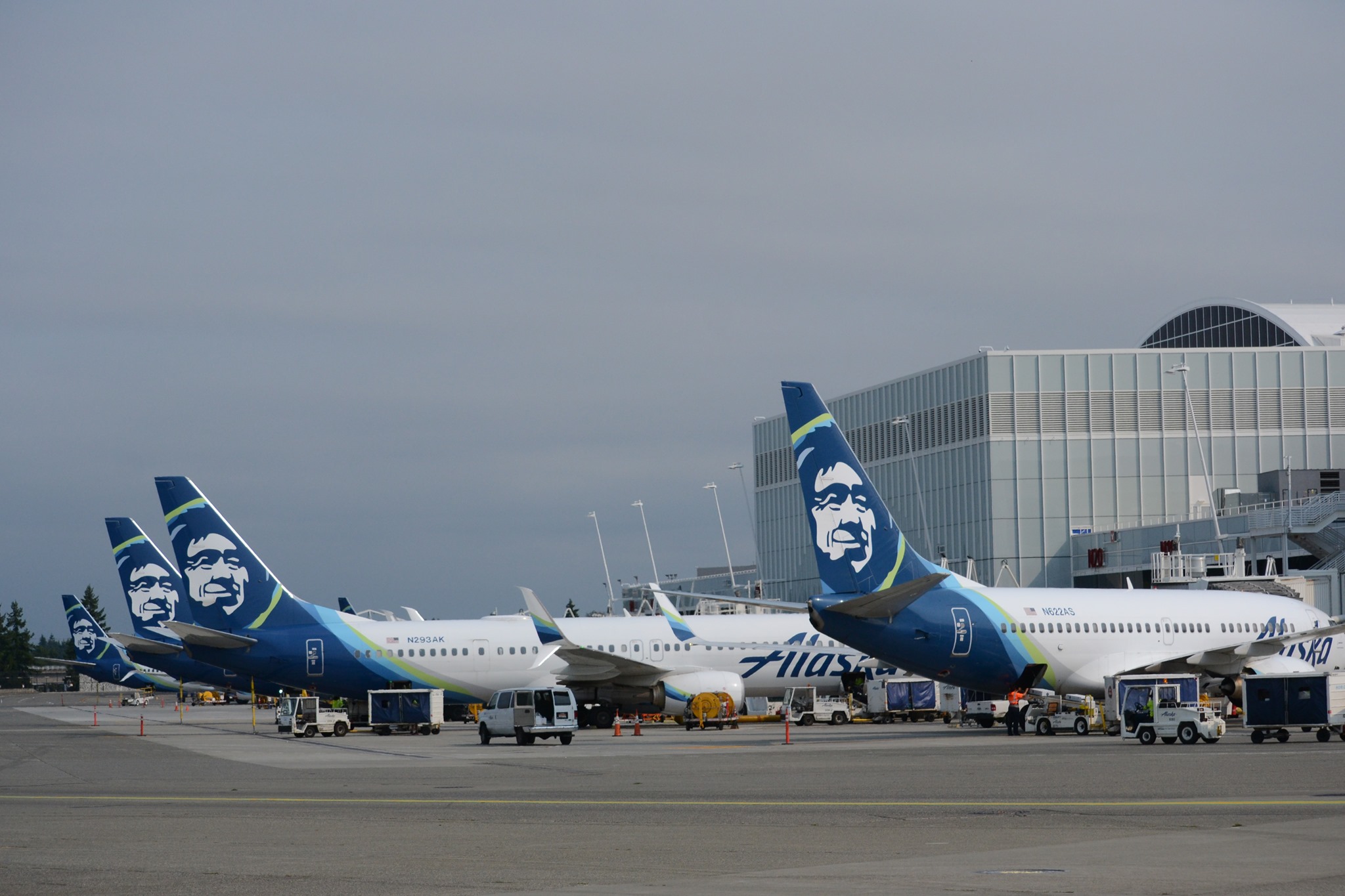
Alaska Airlines 737s line the gates at Seattle-Tacoma International Airport’s (SEA) new N Gates | IMAGE: SeaTac on Facebook
CEO of Alaska Airlines, Ben Minicucci, says Wednesday’s order positions his company on solid ground for the future.
“This investment secures aircraft to optimize our growth through the next decade, which we know will be a formidable competitive advantage,” said Minicucci. “We’re proud of the strong financial foundation that uniquely positions Alaska to make this commitment to our future and of the fantastic partnership we share with our hometown aircraft manufacturer at Boeing.
The order exercises options for 42 737-10 and ten 737-9 variants. They will be produced at Boeing’s Renton factory near Seattle. Alaska says it expects the 737-10 to be certified by 2024. However, it has the option to modify the order if necessary to account for any further certification delays.
Once the 43 additional MAX aircraft join Alaska’s fleet by the end of 2023, the carrier will become an all-Boeing fleet again. Alaska currently operates 31 Airbus aircraft it inherited when it acquired Virgin America in 2018, including 21 A320-200s and ten A321neos.
A Plane for All Market Conditions
An Alaska Airlines Boeing 737 MAX | IMAGE: Wikipedia
Alaska is exceptionally pleased with the 737-9, saying its performance has exceeded expectations on economics and fuel efficiency. In addition, Alaska says its guest satisfaction for the type is overwhelmingly positive.
So it makes sense that Alaska would continue to expand its fleet by adding more of the same to its already burgeoning Boeing fleet. In fact, the carrier is on track to operate more than 250 737 MAX series aircraft by 2030. The wide variety of MAX variants in the fleet will allow the carrier to match aircraft size and capability with various types of markets.
President and CEO of Boeing Commercial Airplanes Stan Deal says the 737 MAX series offers unparalleled flexibility.
“As Alaska Airlines sustainably grows its fleet, the 737 MAX family offers environmental performance and flexibility to expand service across its route network,” said Deal. “These airplanes will carry passengers to destinations for years to come.”
Alaska currently operates 192 Boeing 737s, including 11 -700s, 57 -800s, 12 -900s, 77 -900ERs, and 35 MAX 9s.
Founded in 1932, Alaska Airlines is America’s fifth-largest airline.
A Southwest Airlines flight made an emergency landing in Jacksonville, Florida, due to a mechanical problem on Tuesday.
The Boeing 737-700, operating as Flight 756, was en route to Indianapolis International Airport (IND) from Tampa International Airport (TPA).
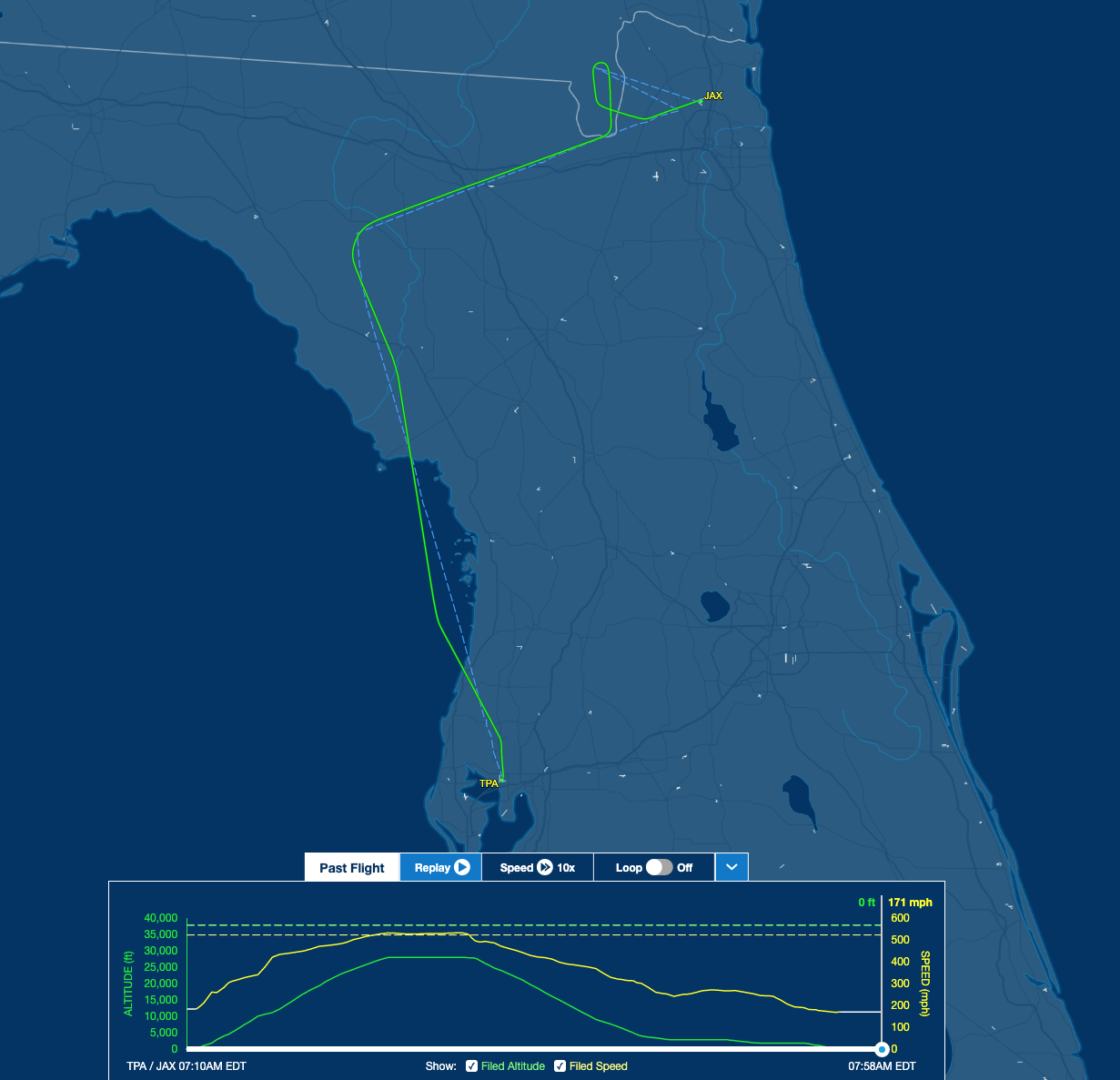
About 20 minutes after departure, while the plane was passing through 28,000 feet, the flight crew experienced a mechanical issue of some sort. The flight was then diverted to Jacksonville International Airport (JAX).
The flight departed TPA at 0710 and landed safely at JAX at 0758, both times local.
Reports of a Potential Fuel Leak
The flight path of Southwest Airlines flight 756 on 25 October 2022. The flight reported a midair emergency and was diverted to Jacksonville International Airport (JAX) | IMAGE: FlightAware
The diversion may have been caused by a fuel leak in one of the engines, according to media outlet News4JAX. The outlet reports that the pilots shut down the affected engine after discovering the fuel leak out of an abundance of caution. However, Southwest Airlines has not confirmed that report as of this writing.
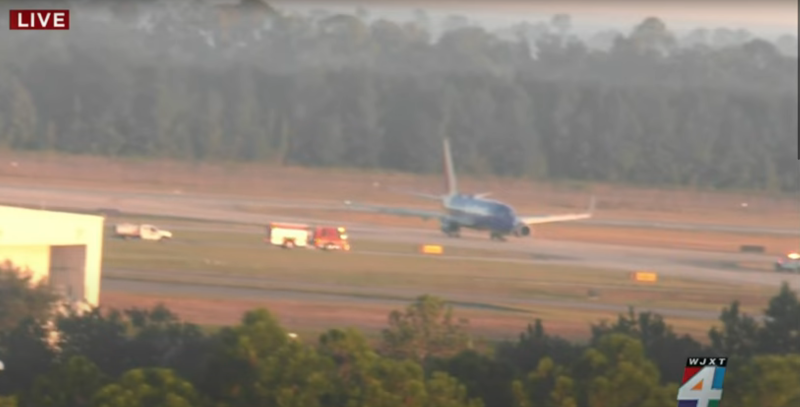
Video taken of the scene approximately ten minutes after the plane landed shows the Boeing 737 stopped on a runway at JAX with several emergency vehicles nearby.
The carrier says it is repositioning another aircraft to Jacksonville to take the affected passengers to Indianapolis.
A Southwest Airlines spokesperson issued the following statement to News4JAX.
“Flight 756 between Tampa and Indianapolis diverted to Jacksonville earlier today to check out a potential mechanical issue. The aircraft landed safely and is out of service while being reviewed by mechanics. A different aircraft is being brought in to continue the flight to Indianapolis. We appreciate our Customers’ patience as we work to get them to their destinations as quickly as possible.”
After eight right-seat combat rides in the Skyraider and a series of briefings covering subjects ranging from avoiding venereal disease to combat Rules of Engagement and everything in between, I was finally allowed to get into the left seat and begin my local area and combat checkout.
“My Fighter Career” is a limited series of articles by Byron Hukee, who flew everything from the F-100 to the F-16. Here are his previous installments of ‘Hook’s career:
With 10 right-seat rides under my belt, I began my combat checkout with just over 30 hours of combat time and 108 hours of Skyraider time. I finally was in the left seat of the A-1E to begin the final phase of my combat checkout. I will say for certain that I immediately felt more comfortable at the controls in the left seat than I did riding in the right seat with my life in someone else’s hands on every mission until now. There were four checkout rides, with the fourth being my check flight, which I passed with no problems.
Going it Alone
I was finally considered combat qualified. Although I was flying on the wing with a more experienced flight lead, I was on my own in the left seat of the A-1E. These were all missions under the squadron’s callsign of Hobo. They were close air support (CAS) missions under the control of an air forward air controller (FAC) to either northern Laos, referred to as the Barrel Roll, or southern Laos, known as Steel Tiger.
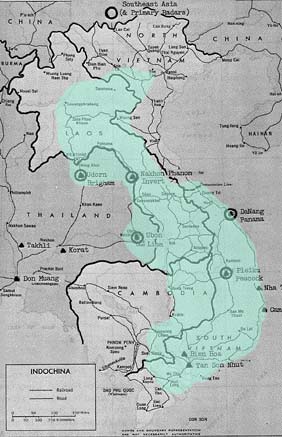
Each of these areas was approximately 100-120 nautical miles from our home base of Nakhon Phanom, Thailand. These missions lasted about 2.5 to 3.5 hours. I have written about of my Skyraider combat missions on my A-1 Skyraider Combat Journal website at https://a-1combatjournal.com.
This map of southeast Asia shows, highlighted in green, the areas I flew in during my one combat tour flying the A-1 Skyraider.
year tour at NKP
Checklists For The A-1 Skyraider
Just getting airborne and up to cruising altitude in the Skyraider was not the simplest of tasks. There were 18 steps in the Before Takeoff checklist and six more in the After Takeoff section.
We used 56 inches of MAP (manifold pressure) and 2800 RPM for takeoff. At our field elevation and pressure altitude, we typically were airborne after about 4,000 feet of roll. Once safely airborne with the gear and flaps up, we reduce the MAP to 46 inches and reduce RPM to 2600 for the rejoin and the slow climb to our cruising altitude of 10,000 feet.
Fuel selector — MAIN.
Fuel boost — ON.
Cowl flaps — OPEN.
Oil cooler door — AUTO.
Carb air — DIRECT.
Mixture — RICH.
Propeller — FULL INCREASE.
Supercharger — LOW BLOWER.
Flaps — AS DESIRED.
Trim — SET FOR TAKEOFF. a. Rudder — 5° right (No crosswind). b. Aileron — 0°. c. Elevator — 0°. 11 . Flight instruments — CHECKED.
Fit inst power sel — INVERTER 1.
Wings — SPREAD AND LOCKED.
Controls — FREE AND PROPER MOVEMENT.
Pitot head — CLIMATIC.
Navigation equipment — CHECKED AS REQUIRED.
Shoulder harness and safety belt — LOCKED AND ADJUSTED.
Anti-coil lights — ON.
Gear — UP.
Flaps — UP.
Power — ADJUST TO 46″ MAP/2600 RPM.
Cowl flaps — AS REQUIRED.
Flt inst power sel — INVERTER 2.
Fuel boost — OFF (1000 feet above ground).
Flying on the edge
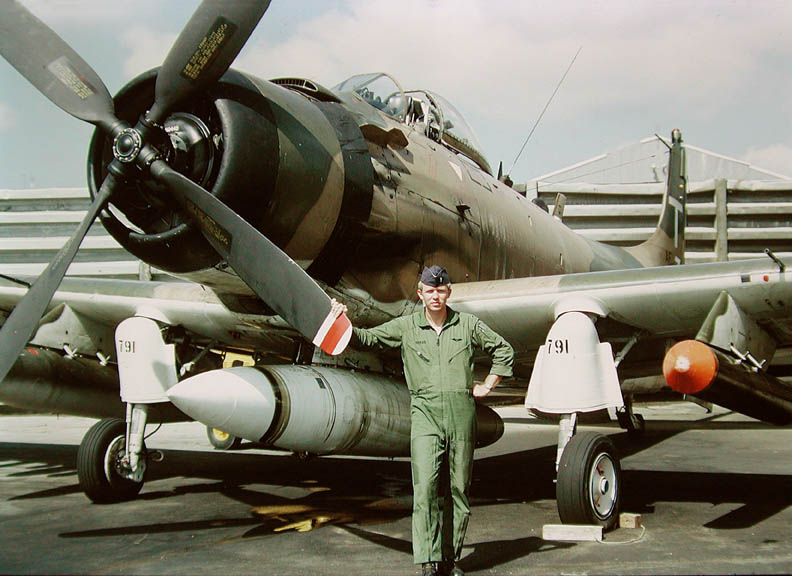
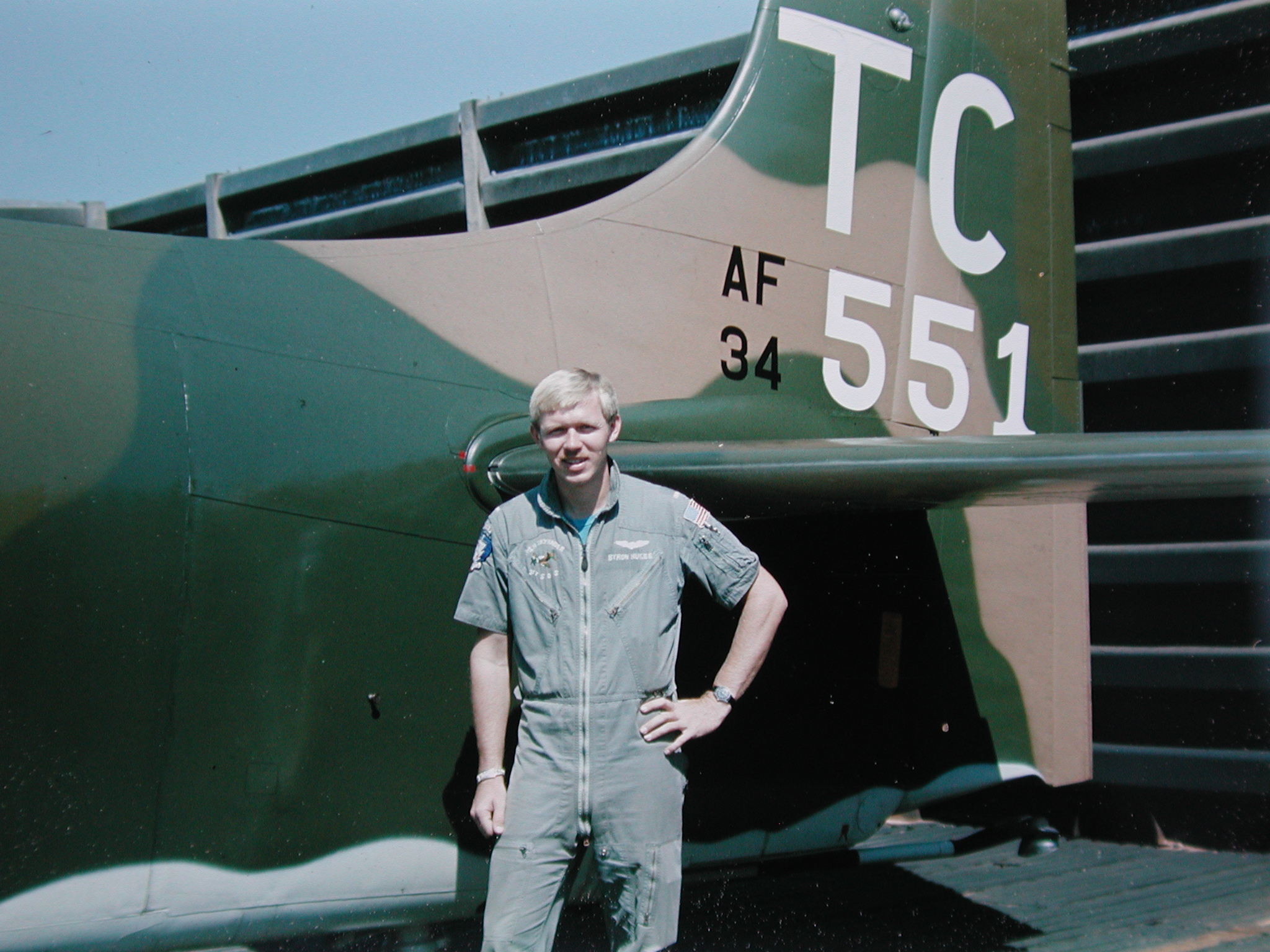
My Skyraider
Our normal cruise altitude was between 8,000 and 10,000 feet at a speed of approximately 120-140 knots. At our average gross weight of 22,500 lbs, that puts us pretty near the stall speed, and any maneuvering at all would necessitate either lowering the nose or increasing power, but probably both.
With two external fuel tanks and the main internal tank, we flew with about 5,000 lbs of fuel, and proper fuel management was critical. Once reaching our cruise altitude, we would switch the Fuel Selector lever from Main to RH-Ext for right-hand external. This would begin to draw fuel from the 150 Gallon tank on the right inboard station.
Sign up for a weekly recap of our stories. No spam, we promise.
A sputter meant it was time to switch tanks
Thus, depending on the power setting, fuel would last between 50 minutes and one hour. Even though there was an external fuel quantity gauge on the glare shield above the instrument panel, the gauge seldom was accurate, so when the engine began to sputter and surge, you would know the tank was running dry, and an immediate change was necessary.
When this occurred, the procedure was to place the Fuel Selector Lever to a tank with fuel, in this case, the Centerline Tank, then turn the Fuel Boost On. Once the engine resumed smooth operation, the Fuel Boost could be turned to Off. The first few times this happened, it definitely got my attention. This was especially true if you were busy navigating or talking on the radio. Before we entered the target area to commence an attack on the target, the Fuel Selector was turned to Main for the main fuel tank just behind the cockpit. If fuel remained in the external tanks, we would typically burn it off on the return flight to home base.
Normal Tactical Operations
We nearly always operated in two-ship flights. When cruising to or from the target area in enemy territory, we flew in a spread formation about 1,000 to 3,000 feet line abreast. This allowed each of us to check our 6 o’clock for enemy aircraft. Once over friendly territory (Thailand), we would close it up to no more than 1,000 abreast.
When I arrived at NKP, we had 28 Skyraiders, seven A-1Es of which three were A-1E-5 models with no right seat controls, two A-1G models (essentially the same as A-1E), 13 A-1H models, and six of the newest A-1J model Skyraiders. I flew all but two of these during my one-year tour at NKP. We lost nine aircraft due to enemy action, six were shot down, and three were crash-landed with gear-up landings and never flew again. Five of the six pilots shot down were able to extract and were rescued; only one was killed when his A-1E was shot down in southern Laos. More about him later.
The Skyraider “Supermarket” Load
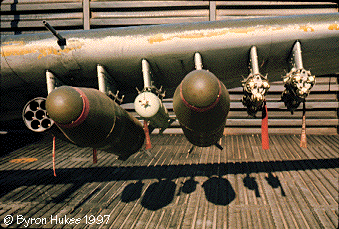
Our two ship flights were more than sufficient to deliver enough firepower on most any target we encountered. For example, we had one load that we called “the Supermarket Load” because of its varied ordnance that could be used on any kind of target. One version of this load carried had four M1-A4 Frag Clusters on Stations 1-2, 11-12, four BLU-32 Napalm on Stations 3, 5, 8, 10, two AN-M-47 white phosphorous bombs on Stations 4 and 7, and two LAU-68 rocket pods with seven HE rockets each on Stations 6 and 7. Of course, we also had nearly 800 rounds of 20mm for the four 20mm cannons and a SUU-11 minigun with 1,500 rounds of 7.62mm.
This load (mirror image on Right Wing) provides a mix of ordnance that can be effective against a wide range of target types (Photo: Byron Hukee)
Another version of this load had Mk-82 500 lb GP bombs instead of napalm. Multiply this ordnance by two and you get the picture, we had enough for most any type of target.
Delivering all this ordnance in a single target area took quite a long time, perhaps 30 to 45 minutes. But the longer we stayed on target and the more passes we made, the higher the risk level with each pass. For that reason, we always selected Pairs to drop off each wing that also kept the load symmetrical. In most cases, we limited our passes to fewer than ten, but we could do more if the enemy threat was not high.
On more than one occasion, we would be working a target, and the FAC would say,
“Hobos, we have a flight of F-4s that just checked in and are low on gas, but have time for two passes each on the target we are working. Can you hold to the west while I put them in on the target?”
– FAC
Our answer was almost always, “Sure, we can hold west. We’ll come back in to finish up where we left off.” And sure enough, we’d go back in and take care of what the F-4s missed!
After the strike mission, the flight lead would order a rejoin. First, the wingman would check the flight lead for any battle damage, and following a lead change, the leader would check the wingman for the same. Assuming both aircraft had no visible damage, we would settle in for the long, slow ride back home.
Hard vs. Soft Ordnance
We used the term hard and soft ordnance to indicate which ordnance could be dropped close to friendly forces, or a survivor we were trying to rescue from a downed aircraft. Many times, the enemy forces were too close to the friendlies to use “hard” ordnance such as an Mk-82 bomb.
The blast and frag pattern could be up to 800-1000 meters, so if the enemy is inside that distance, we would use “soft” ordnance that could be safely dropped well inside that distance, as close as 100 meters from friendlies. And with the slow speeds < 200 knots and low altitude ordnance releases of 100’ to 300’, we could safely drop CBU-25, for example, without fear of hitting the friendly… and we did this, time and again.
But if your target is trucks or tanks or a storage depot with no friendly forces in the area, then the best option would be to use hard ordnance such as GP bombs or napalm. More bang for the buck with a better chance of killing the target.
Since 2.75” rockets had relatively small warheads, you might think they could be used close to friendlies, but that is not true. The fins of the rockets have to extend after launch and it was not unusual for one or more of the rockets to go no where near the target you were aiming at, so unless we were marking a target with a single white phosphorus marking rocket, we would normally fire several rockets per pass to ensure adequate target area coverage and increase the chances of target destruction.
Mission Highlights
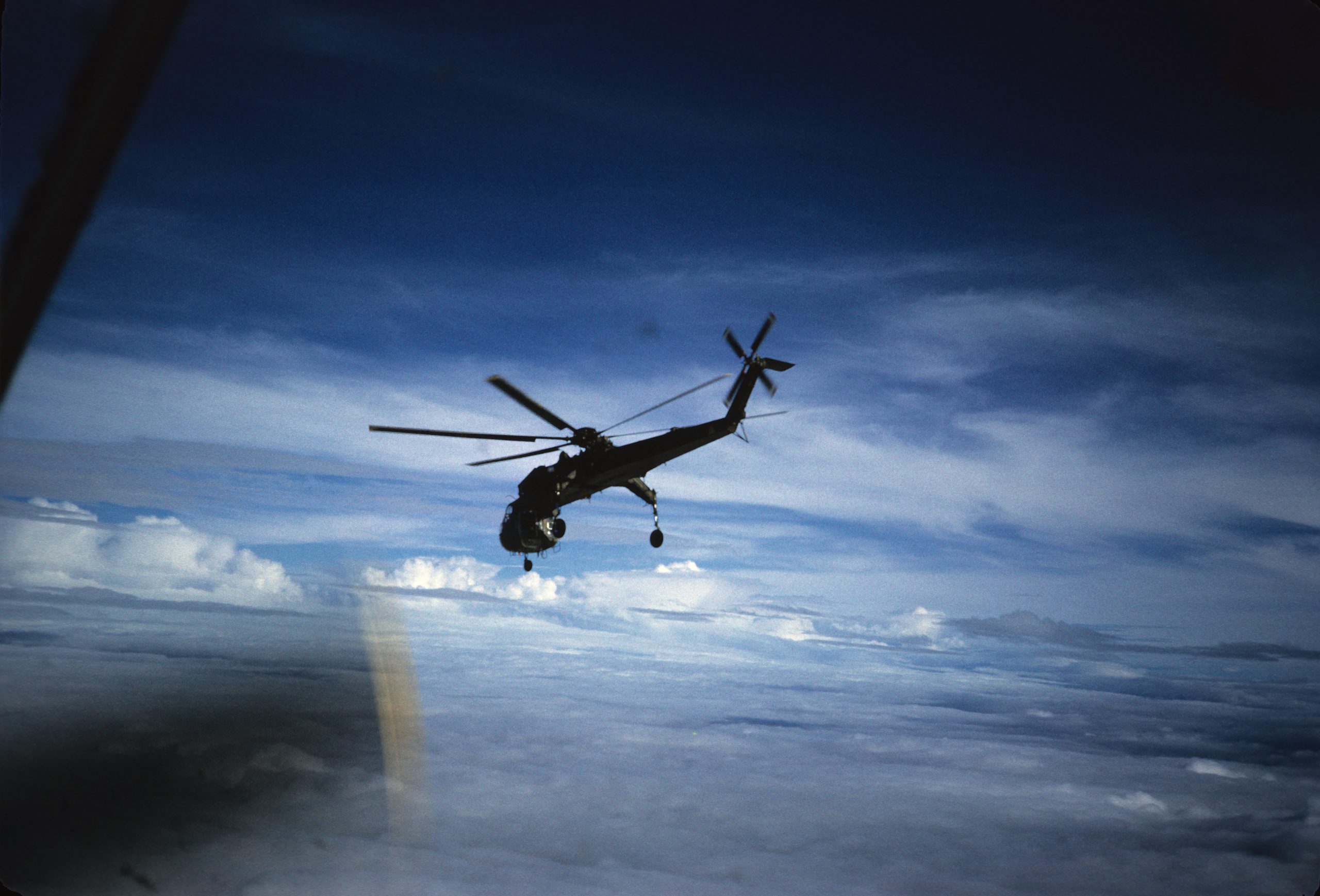
One mission we had that was different and challenging but seldom resulted in an air strike was the escort of the CH-54 Skycrane between Ubon RTAFB in Thailand and Camp Holloway near Pleiku AB, SVN. On 14 December 1971, I flew as wingman to our 1st SOS Squadron Commander, LtCol Martin Barbena, on such a mission. On this mission, the Skycrane was traveling from Ubon to Camp Holloway.
We were to “protect” the helicopter as it crossed over the Ho Chi Minh trail. The problem was that the CH-54 flew at about 12,000 feet and 80 knots airspeed. We could fly no slower than about 120 knots, so we set up a moving racetrack with our two A-1s at opposite ends of the pattern. We flew below them about 2,000 feet so we could stay above stall speed.
It went on for about one and a half hours before they felt safe over more friendly territory. It was a long, boring mission, and we did not have enough fuel to return all the way to NKP, so we stopped at Ubon AB for fuel. After a short flight back to NKP, I logged 6.3 hours total for these two missions.
Skycrane (Photo: Byron Hukee)
Another interesting mission occurred on 21 January 1972. Flew with one of our best flight leads, Capt John Lackey. We were sitting ground alert (Prairie Fire) at Ubon AB, Thailand. This mission was highly classified at the time, but it has since become declassified. We were on alert, should our SOG (Studies and Observation Group) team members need assistance either during their infiltration or exfiltration from enemy territory.
On this day, we were not scrambled, but were released to launch back to NKP, and if possible, get a target on the way home. You can read about it here in my A-1 Skyraider Combat Journal. We found a truck convoy in the trees and had our way with them. Very impressed with John Lackey’s ability to control our own strike, but also FAC in other fighters on the target.
Upgrade to Sandy Wingman
So far, all of my missions in the Skyraider were as a wingman, sometimes flying the A-1H or J but more often flying the two-seater A-1E or G. All of these missions were Hobo missions and all were CAS, supporting the Hmong troops either up in the Barrel Roll to the north or to Steel Tiger south and east of NKP.
On the 29th of January, I was checked out as a Sandy wingman, which meant I could now get on the Sandy flying schedule and begin to learn the Search and Rescue (SAR) business. This was my 35th combat mission, and I had amassed 109.9 hours of combat and 172.2 total Skyraider hours. I felt more than ready to move on to the next phase of my tour.
In addition, the Sandy schedule was flown with the single-seat A-1s, which was always better. For starters, being alone in the cockpit with no one else to distract you or “help” you was best. I had learned this earlier when flying the F-100 at Luke AFB. When I was alone, I always felt as though I had a sharper acuity and was more ‘in the game’ mentally. I knew if I messed up, I had no one to blame but myself, and similarly, if I did well, it gave me a satisfaction that was hard to top.
At this time of my tour, there were four A-1s on Sandy alert at NKP. All four Sandy pilots for the day would rise early, and using our dedicated Sandy Alert vehicle (a 1968 Chevy Suburban painted USAF blue), we would head to the squadron, get briefed by intel, and conduct our individual flight briefings. We had a ‘brick’, a radio device connected to the command post, with which we would get our scramble orders.
Off to the flight line
After the briefing, we would go to life support and get our flying gear, then head out to the flight line to our assigned aircraft. We would preflight the aircraft, then climb in and start the aircraft, and perform all the Before Taxi checks in the checklist. Sandy 1 would then conduct a radio check and determine if all four aircraft were ready to go. We would then shut down the aircraft and leave our flying gear, helmet, survival vest, and sidearm at the aircraft, and it would be “cocked” and ready to go.
Once scrambled, we had 15 minutes to be airborne, so we did not stray far from the flight line in our Sandy alert vehicle.
Typically, if there was no SAR scramble after about four hours, Sandy 1 and 2 would be cleared to launch and would fly two hours of airborne alert. If there were still no SAR customers, the Sandys would be released from alert and would be free to contact an FAC who might need air support. Once Sandy 01 and 02 launched, Sandy 03 and 04 would assume 15 15-minute alert. They, too, would repeat the process and take off at mid-afternoon, complete their alert commitment, then strike if there were no SAR.
We also had two Skyraiders and Sandy pilots on alert at two forward operating locations: Da Nang AB in South Vietnam and Ubon RTAFB in Thailand. These locations allowed faster access to aircraft shot down further east or south than NKP. Two pilots and planes spent six days at each location, during which time two other Sandys flew to each location to replace those who returned to NKP.
Some of my best missions as a Sandy pilot were from our deployed locations.
The Sandy Alert vehicle and the Sandy pilots for that day.
A “Good Deal” Mission
One of our “good deal” missions was to fly a Skyraider to Don Muang AB in Bangkok for intermediate-level maintenance. I got my chance to do this on 25 February 1972. The best part of this mission was that the aircraft pylons and guns were removed, as well as both external fuel tanks… the A-1H was as clean (drag-wise) as a whistle at a gross weight of around 12,000 pounds, a little more than half our combat load takeoff weight that I had been flying since I arrived at NKP 5 months earlier.
The takeoff was extraordinary! Although I did not need it, I used our normal takeoff power settings of 2800 RPM and 56” MAP. I smoothly pushed the throttle forward and applied a lot of left rudder to stay on the runway centerline. Then I raised the tail wheel and shortly thereafter, I leapt into the air after a run of less than 2,000 feet! I quickly raised the gear and flaps and kept the nose high to keep my airspeed reasonable. Pushing forward gently, I leveled off at about 10,000 feet and reduced my power to our normal cruise power settings. I looked at the airspeed indicator and was was doing 230 knots.
Checking out the maneuverability of my bird
Since I was on a VFR clearance, I decided to check out the maneuverability of this “different” aircraft. Halfway and on a direct line between NKP and Bangkok was Korat AB, home of the F-105G Wild Weasel wing. I contacted Korat Tower and asked for a straight-in low approach with a departure to the southwest.
I contacted Korat Tower and asked for a straight-in low approach with a departure to the southwest. This was approved, so I lowered the nose and once I saw 300 knots indicated, I leveled at about 100’ feet, and once abeam the tower, I keyed the mike and said, “Ba Boom”, my version of a sonic boom. The tower operated replied, “Nice one Sandy!”
Byron Hukee, Skyraider Pilot
The next day, I strapped on a seemingly showroom-new A-1H with a brand-new paint job and headed back to NKP. Once in the NKP area, I took about 15 minutes to check out the maneuverability of this lightweight Skyraider. I have never flown the P-51, but I felt like that was somehow similar to the Skyraider I was flying… but probably not even close.
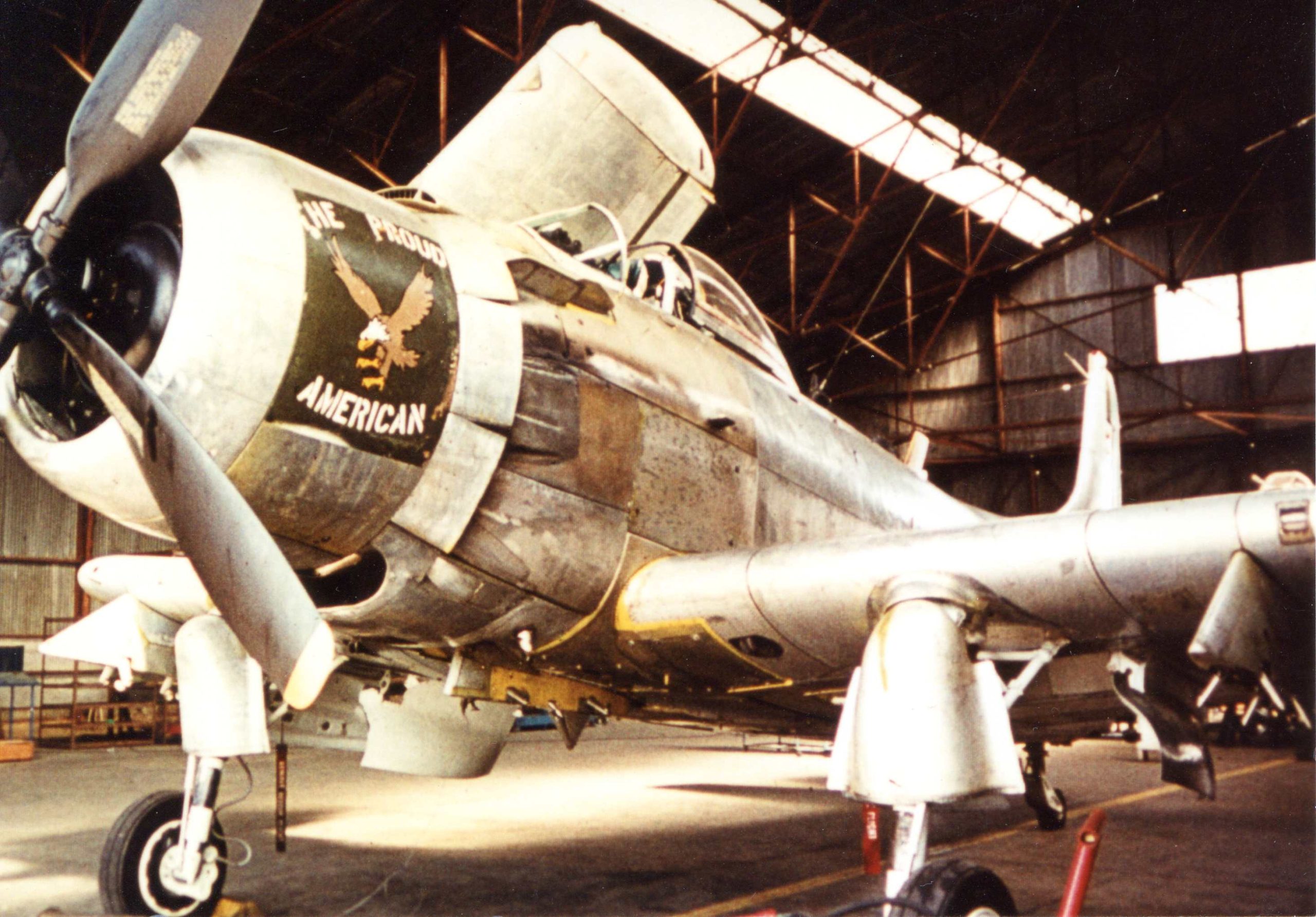
A-1H 139738 “The Proud American” in the midst of IRAN (Inspect and Repair as Necessary) mid-level maintenance at Don Muong Airport, 1972.
Canada Jetlines will acquire a second Airbus A320 and begin service to Vancouver (YVR) this December, according to a press release from the airline.
North America’s newest airline has signed a lease agreement with CCB Leasing for the 8.7-year-old ex-Pegasus Airbus A320-200 (MSN5995). Delivery is set for 30 November.
Additionally, Jetlines will begin twice-weekly flights to Vancouver, British Columbia (YVR) from Toronto Pearson International Airport (YYZ) beginning 09 December.
Canada Jetlines’ Inaugural Flight Was Just Under a Month Ago
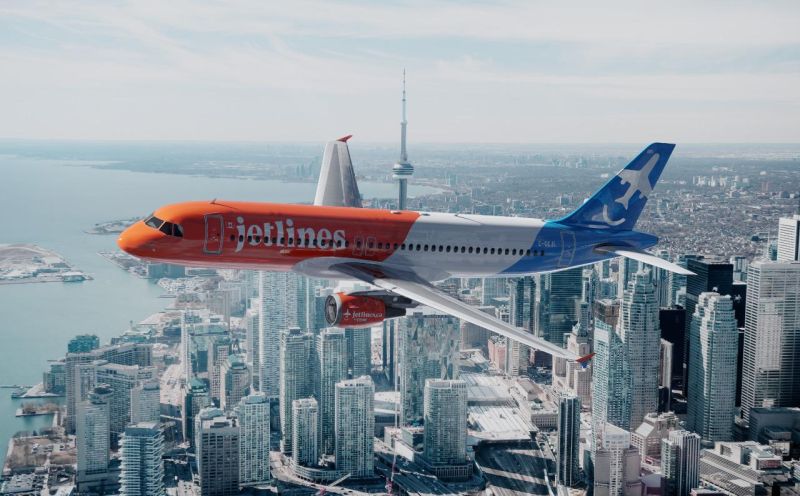
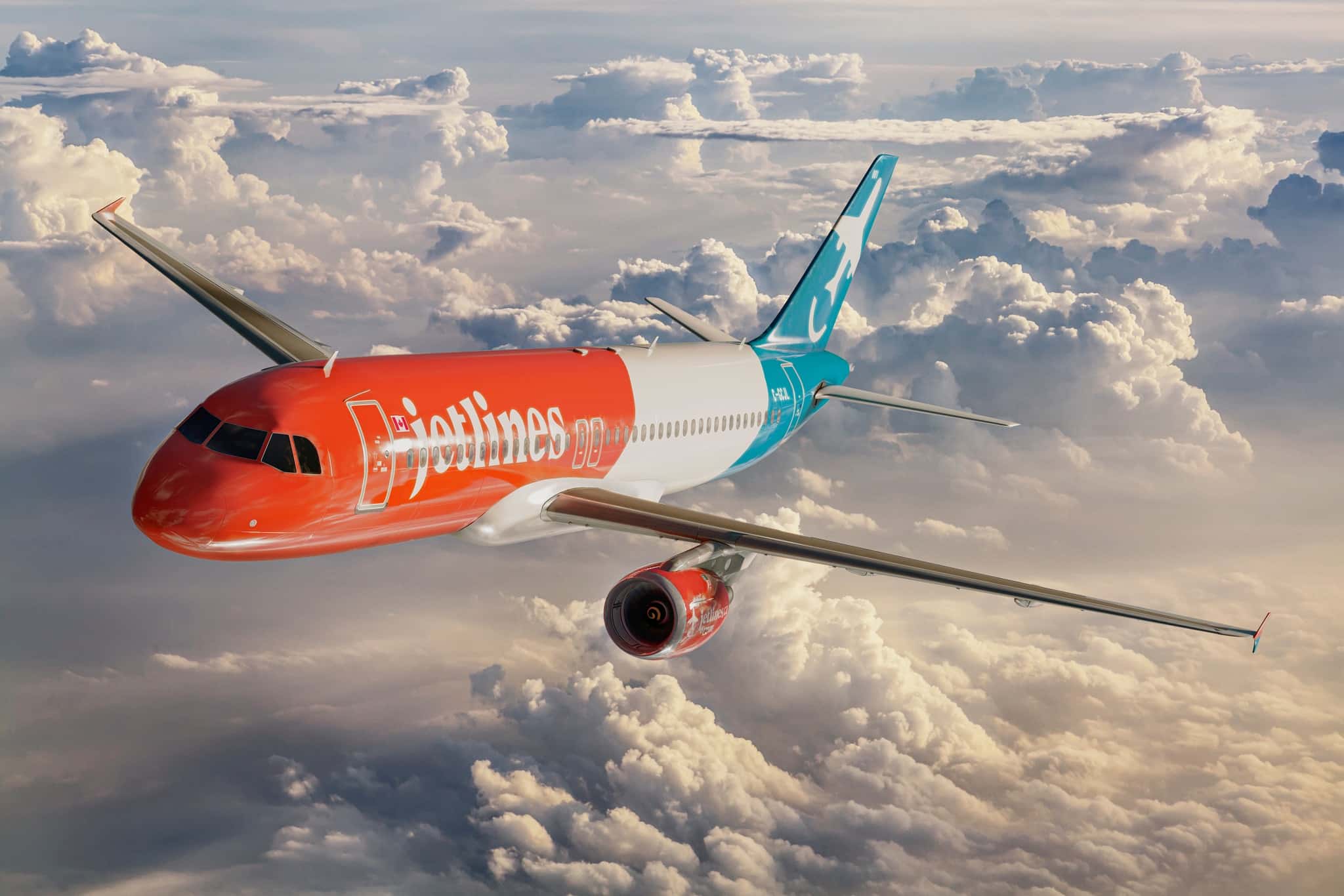
Artist rendering of a Canada Jetlines Airbus A320 over the Toronto skyline | IMAGE: Canada Jetlines
The news is a good sign for the Mississauga, Ontario-based carrier, which flew its inaugural flight just one month ago. Currently, Jetlines serves just two airports, Toronto Pearson International Airport (YYZ) and Calgary International Airport (YYC).
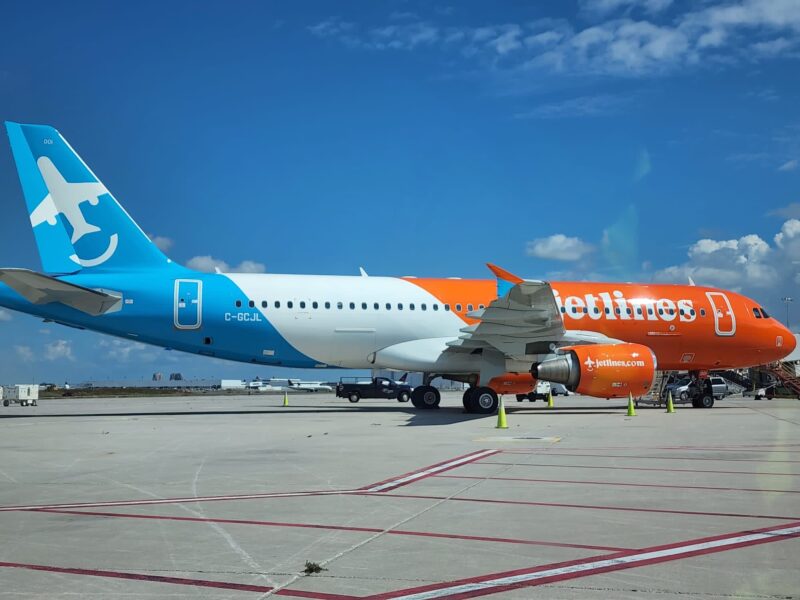
After navigating multiple setbacks ahead of its launch, Jetlines currently operates one Airbus A320-200 (reg. C-GCJL). At launch, the carrier said they would secure a second aircraft by the end of 2022 and 15 aircraft by 2025.
The New Airbus A320 Will Enable the Carrier to Expand
A Canada Jetlines A320 | IMAGE: Canada Jetlines
It appears the acquisition of a second A320 is already paying off.
The addition of Vancouver will bring the number of destinations Jetlines serves to three . The second A320 will open up further options for the young airline, according to Jetlines CEO Eddy Doyle.
“I am pleased that we have a definitive agreement for our second aircraft,” said Doyle. “The Airbus A320 is a fuel-efficient, narrow-body framework that supports a high-density seat configuration. [We] will be using the aircraft to expand its network in time for the upcoming winter travel season.”
Ultimately, the company plans to operate point-to-point service across Canada, the United States, Mexico, and the Caribbean.
Kevin Mi, Global Head of Aviation for CCB Leasing, says his company is excited to be part of a chapter of Canadian aviation.
“We are excited about our relationship with Canada Jetlines and the innovative offering which they are bringing to the Canadian aviation market,” said Mi.
Jetlines Plans to Expand Throughout Canada, the US, Mexico, and the Caribbean
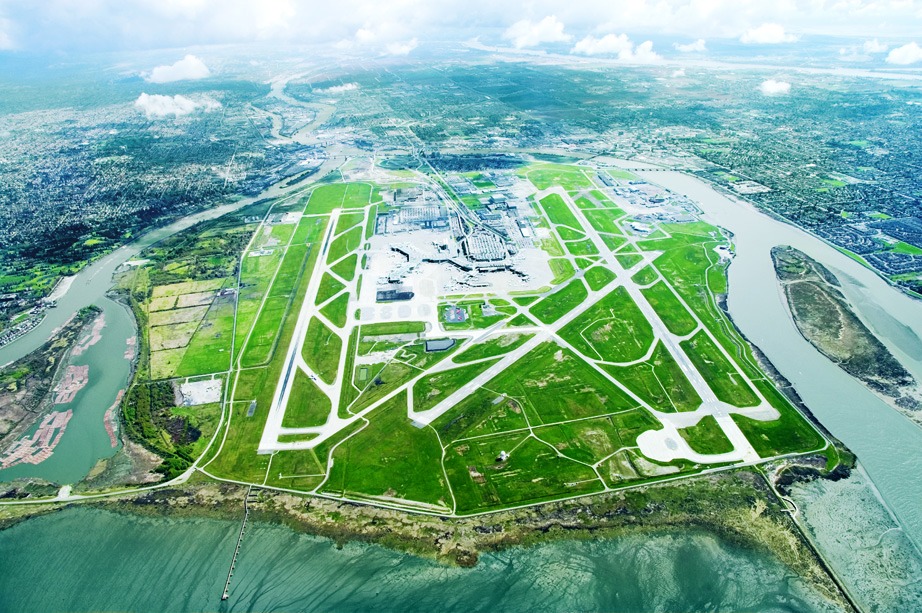
An aerial view of Vancouver International Airport (YVR), Canada’s second busiest airport | IMAGE: Vancouver International Airport on Facebook
The carrier’s twice-weekly Toronto-Vancouver flights will connect Canada’s first and third most populous metro areas. YVR is the second busiest airport in Canada, behind YYZ.
“Following the launch of a successful first route out of Toronto, we look forward to expanding our services into Vancouver ahead of the upcoming holiday travel season,” said Duncan Bureau, Chief Commercial Officer of Canada Jetlines. “We seek to provide Canadian travelers with more convenient travel options and look forward to bringing the country’s newest leisure airline to YVR.”
Jetlines operates twice-weekly flights between YYZ and YYC on Thursdays and Sundays. Previously, the airline indicated that the frequency between the two city pairs would increase to three flights per week ahead of the holiday season. However, a check of Jetlines’ website at the time of this writing shows twice-weekly flights continuing through at least September 2023.
Possible future destinations include Winnipeg (YWG), Kelowna (YLW), Montreal Saint-Hubert Longueuil Airport (YHU), Québec City (YQB), and Moncton (YQM) in Canada, as well as Puerto Vallarta (PVR), Los Cabos (SJD), Cancun (CUN) in Mexico, and several destinations in the Dominican Republic. Additionally, the airline plans to announce service to the United States within the next few months.
Flair, Lynx, Swoop, Jetlines – Oh My!
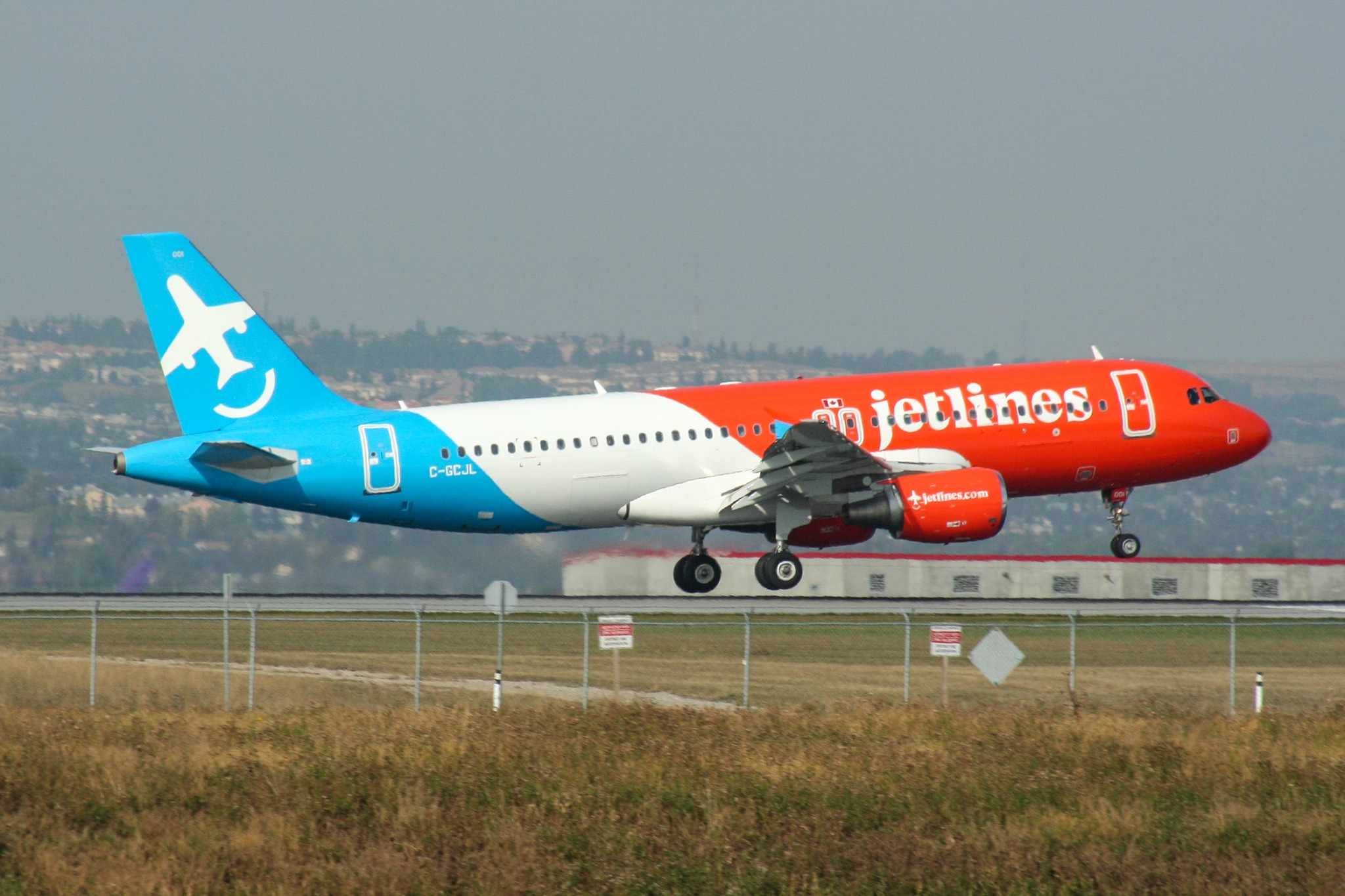
A Canada Jetlines Airbus A320 Touches Down at Calgary International Airport | IMAGE: YYC Calgary Airport Spotters on Facebook
Canada Jetlines’ Airbus A320s are powered by two CFM56-5B4/3 engines, and feature a cabin with new Recaro 3530 seats, in-seat USB power, and a device holder. Additionally, the airline offers in-flight entertainment via the Flymingo Box system on personal wireless devices.
Canada Jetlines is trying to break into the market at a competitive time. It faces new low-cost competitors, such as Flair Airlines, Lynx Air, and Swoop, which continue to expand their reach.
Air service will return to the First State early next year after an eight-month absence.
Avelo Airlines will begin service to Delaware’s Wilmington Airport (ILG) on 01 February 2023. The Houston-based ultra-low-cost carrier will offer service to five Florida cities, including Fort Lauderdale (FLL), Fort Myers (RSW), Orlando (MCO), Tampa (TPA), and West Palm Beach (PBI).
Not only will Avelo operate from Wilmington, but it will also be the location of the airline’s fourth crew base. Other bases are located at Hollywood Burbank Airport (BUR) in California, Tweed-New Haven Airport (HVN) in Connecticut, and Orlando International Airport (MCO).
Avelo’s plans for a crew base at Southwest Florida International Airport (RSW) are on hold due to the impact on the Fort Myers area from Hurricane Ian in September.
The carrier will deploy Boeing 737-700s on twice-weekly flights from ILG to Florida, with the exception of MCO, which will operate three times weekly.
ROUTE
SERVICE FREQUENCY
ILG-MCO
• Special inaugural flight on 01 February • Mon/Fri/Sat beginning 03 February
ILG-FLL
• Thu/Sun beginning 02 February
ILG-TPA
• Thu/Sun beginning 02 February
ILG-RSW
• Mon/Fri beginning 03 February
ILG-PBI
• Wed/Sat beginning 04 February
Delaware Has Historically Struggled to Retain Commercial Air Service
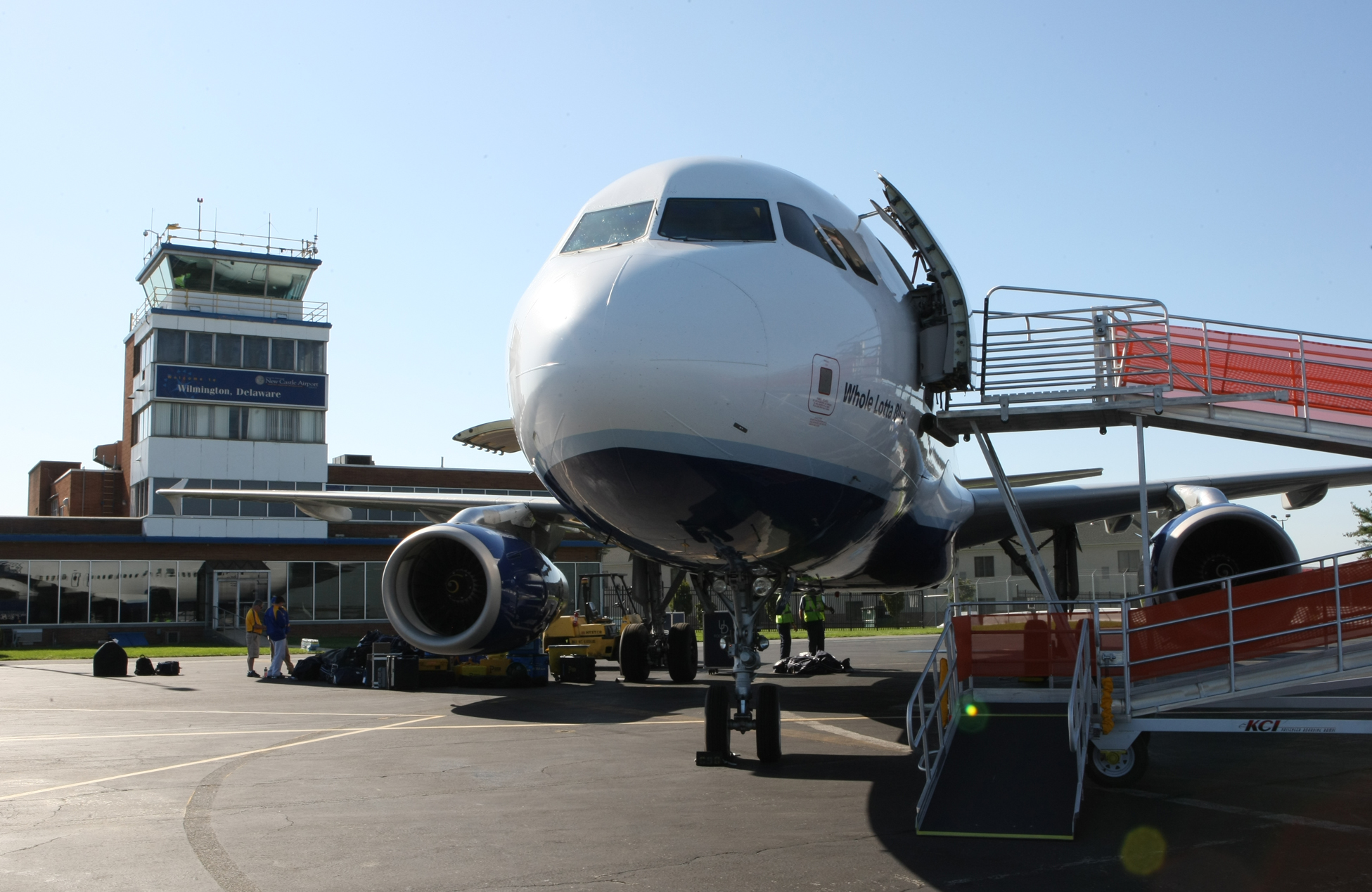
Wilmington Airport (ILG) in Wilmington, Delaware | IMAGE: FlyILG.com
The announcement of new air service into ILG is welcome news for the Delaware Valley and the state. Delaware is the only state in the country without commercial airline service.
Get a weekly highlight of aviation news and stories. No spam, we promise!
Sitting in the shadow of America’s 21st busiest airport – Philadelphia International (PHL) – ILG continually struggles to retain what spotty air service it has. PHL is the Northeast’s primary hub for American Airlines and offers service to over 130 cities by more than 20 airlines that offer nearly 500 daily flights. Such a wide array of options attracts many Delawareans, who endure the 30-mile distance between Wilmington and Philadelphia.
Most recently, Delta Connection operated regional jet flights to Hartsfield-Jackson International Airport (ATL) from 2006 to 2007. Aside from a very short stint by now-defunct carrier Skybus Airlines in 2008, Frontier Airlines has been the only airline to operate from ILG. Frontier served ILG from 2013 to 2015 and from 2021 to June 2022.
Avelo Airlines Is An Economic Boost for the Delaware Valley Region
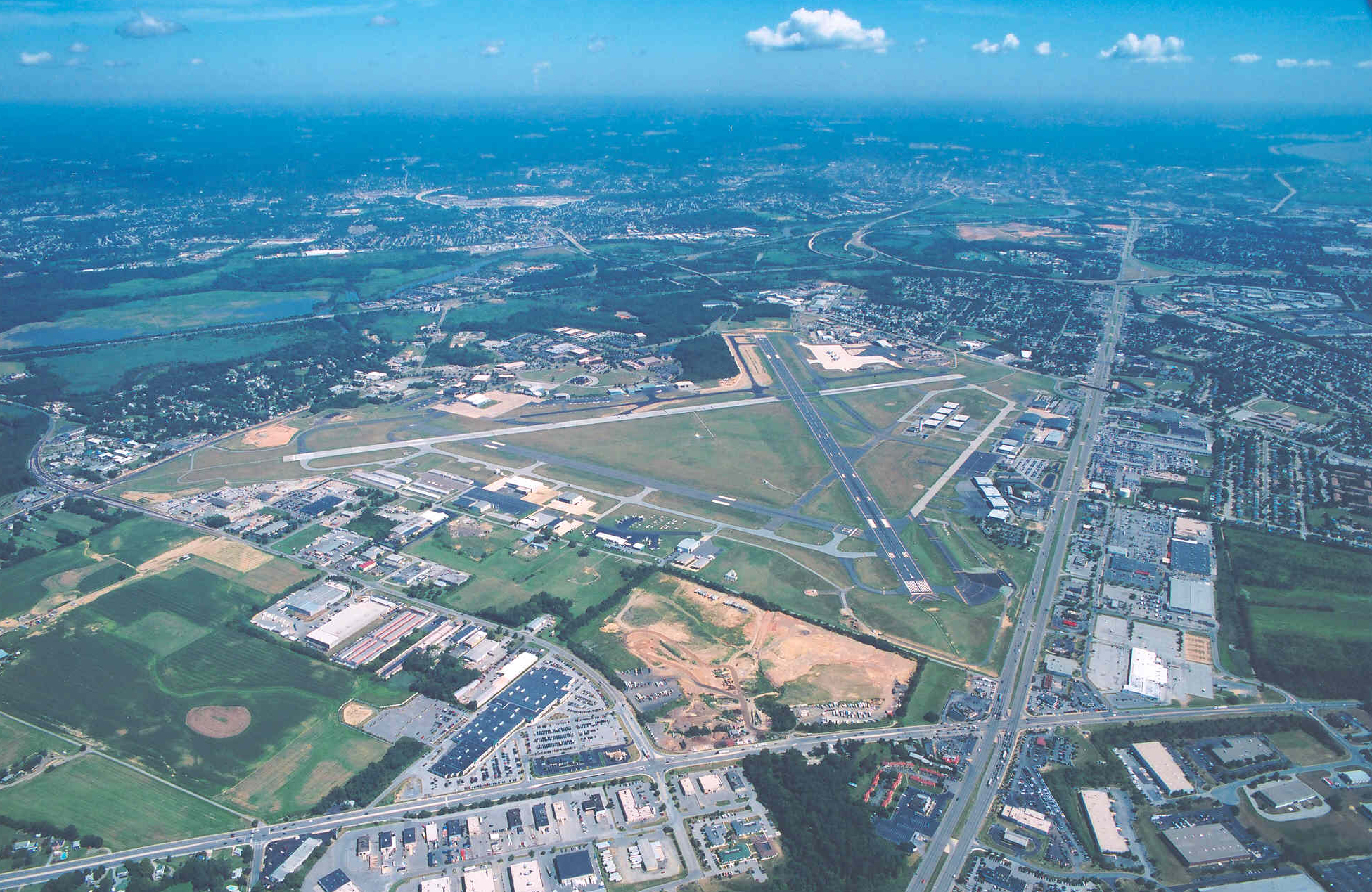
Wilmington Airport (ILG) is situated along the busy I-95 corridor | IMAGE: IflyILG.COM
Avelo estimates it will eventually serve “hundreds of thousands” of customers out of ILG. Those figures are music to the ears of state officials.
“We’ve made significant infrastructure investments across our state, and we’re pleased to have Avelo join us here in Delaware,” says Delaware Governor John Carney. “Avelo will provide Delawareans and visitors a convenient way to travel. Thank you to Avelo for choosing Delaware.”
To support the new base, Avelo Airlines will base one of its Boeing 737-700s at ILG. The carrier expects to initially create at least 35 new jobs, including crewmembers, airport support, and maintenance.
State and local officials announce Avelo Airlines will commence service at ILG on 01 February 2023 | IMAGE: Wilmington Airport/Facebook
Local officials are thrilled about the opportunity Avelo brings to the area.
“Wilmington Airport has tremendous potential to be an economic driver in our County,” says New Castle County Executive Matt Meyer. “We welcome Avelo to our community to provide reliable and fast service to our residents and look forward to further growth opportunities.”
The carrier has signed an initial five-year agreement with the Delaware River and Bay Authority (DRBA), the operator of Wilmington Airport.
Founder and CEO Andrew Levy says Avelo’s entry into ILG is something the region deserves.
“The Delaware Valley region wants and deserves more affordable, convenient, and reliable air travel,” says Levy. Avelo was founded with a simple purpose – to Inspire Travel. Our very low fares and nonstop flights to five sun-soaked Florida destinations coupled with the fast and seamless experience at Wilmington Airport will make traveling easier than ever. We look forward to welcoming everyone aboard Avelo’s first ILG flight in February.”
Avelo Airlines Continues Aggressive Expansion
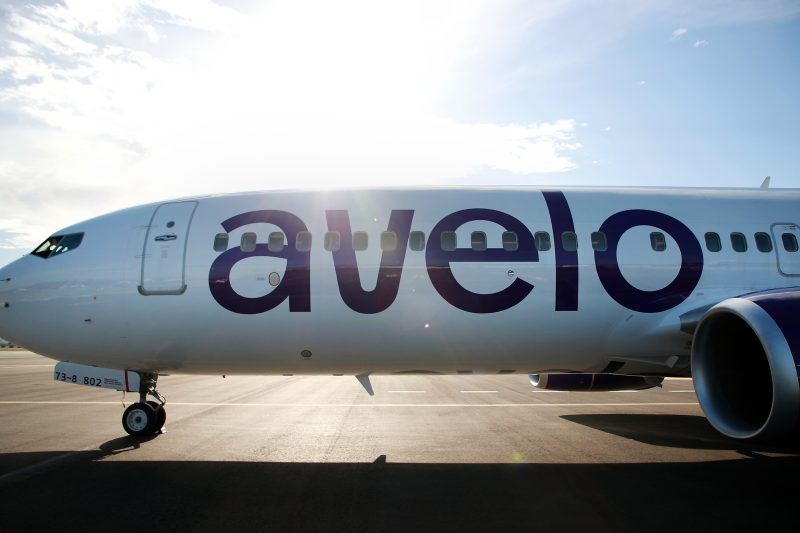
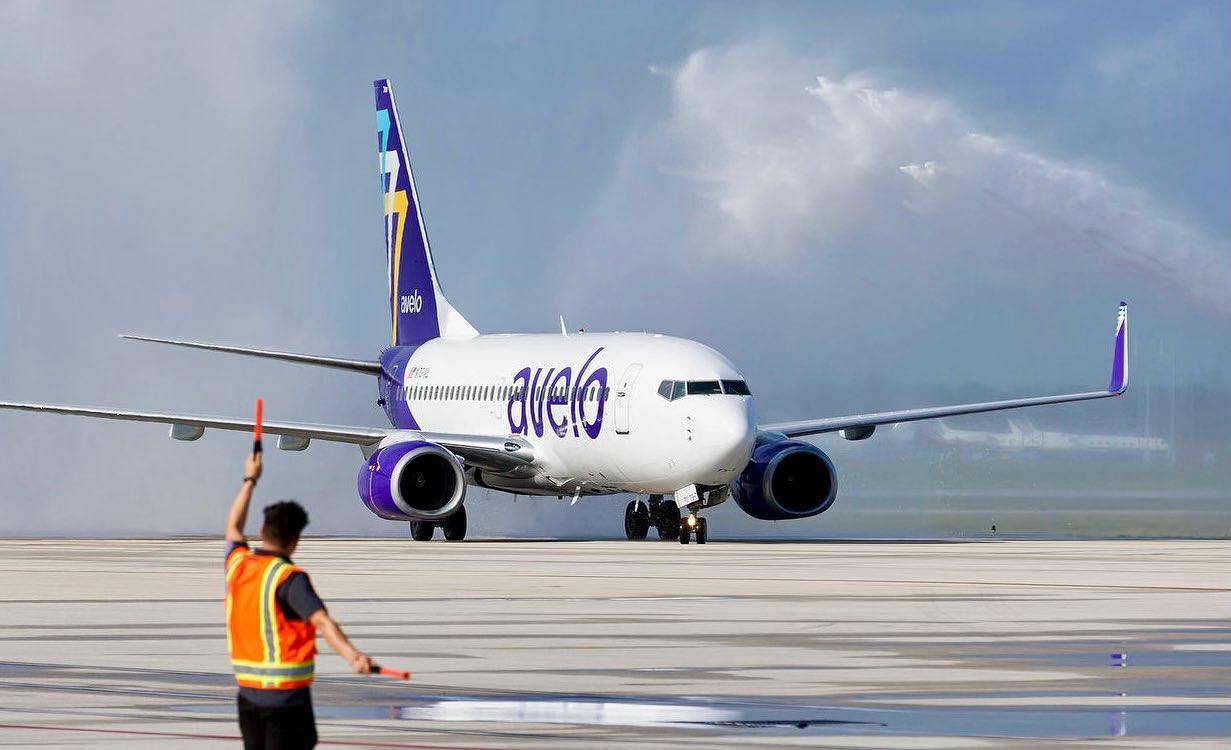
An Avelo Airlines Boeing 737-700 receives a water cannon salute | IMAGE: Avelo Airlines Facebook
On the heels of a summer of growth for Avelo Airlines, its entry into ILG adds to a long list of new destinations for the carrier. Avelo has – or will – begin flying to Lansing (LAN) and Kalamazoo (AZO), Michigan, Newport News, Virginia (PHF), Lexington, Kentucky (LEX), Binghamton, New York (BGM), and Palm Springs, California (PSP).
Avelo operates 11 Boeing 737 NG aircraft. The carrier operates six 737-700s featuring 147 seats in an all-economy configuration for its East Coast operations. For West Coast operations, it uses five 189-seat 737-800s. Avelo expects to have 14 Boeing 737s by the end of this year. By the end of March 2023, it expects to have 16.
Since the airline launched on 28 April 2021, Avelo has completed more than 10,000 flights and carried over 1.2 million customers. ILG will be Avelo’s 32nd destination.
The Fort Worth-based carrier is also forecasting a better-than-expected fourth-quarter profit, despite economic warning signs, including continued high fuel prices, higher airfares, and a possible recession.
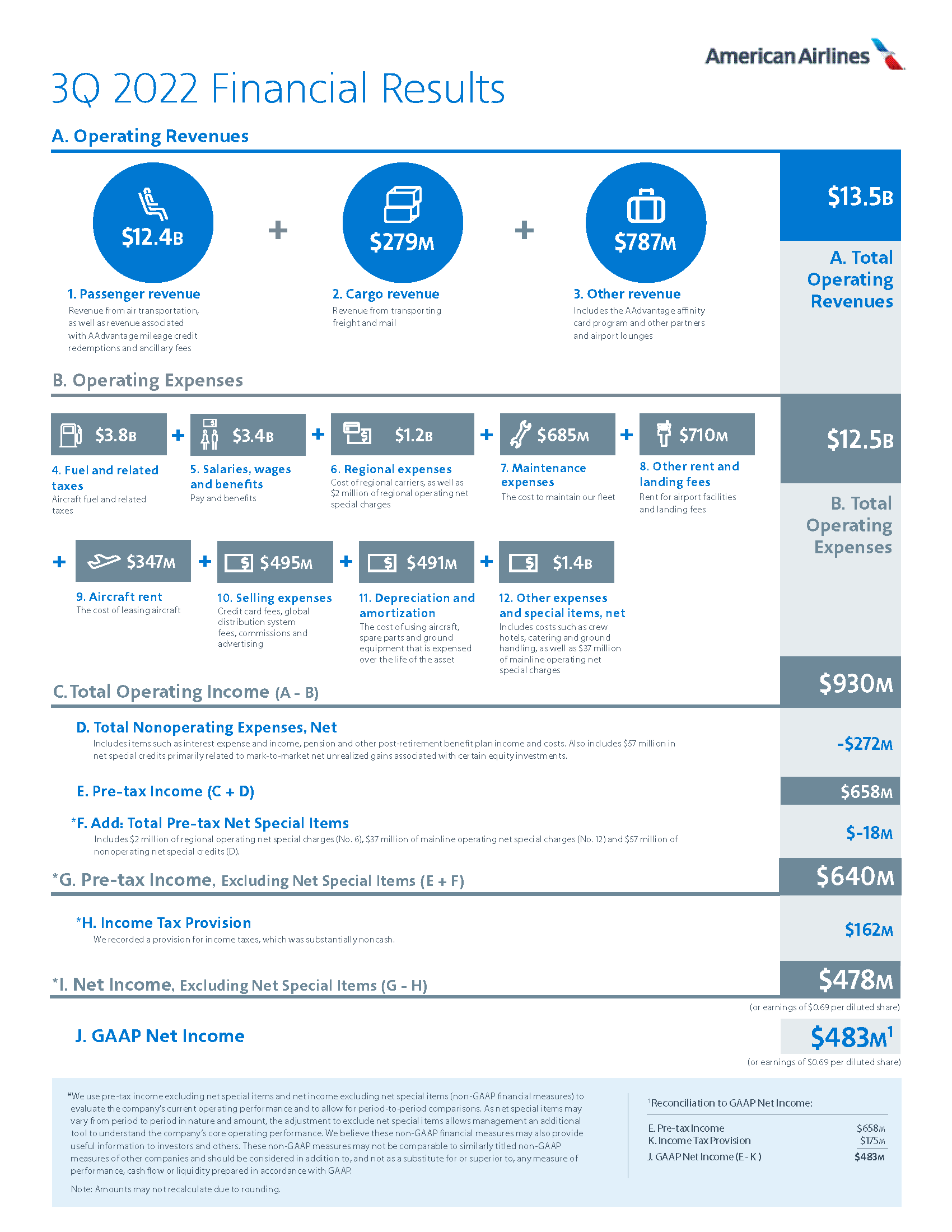
American Airlines Q3 2022 Financial Snapshot
Source: aa.com
Third-quarter net income of $483 million, or $0.69 per diluted share. Excluding net special items, third-quarter net income of $478 million, or $0.69 per diluted share.
Record quarterly revenue of $13.5 billion, representing a 13% increase over the same period in 2019, despite flying 9.6% less capacity.
Ended the third quarter with $14.3 billion of total available liquidity, more than double the total available liquidity at year-end 2019.
Company continues to execute on its plan to pay down approximately $15 billion of total debt by the end of 2025.
American Airlines CEO Robert Isom says the airline is well-positioned for the future as air travel continues to rebound from the pandemic.
“The American Airlines team continues to deliver on our goals of running a reliable operation and returning to profitability,” said Isom. “Demand remains strong, and it’s clear that customers in the U.S. and other parts of the world continue to value air travel and the ability to reconnect post-pandemic. American has the youngest, most fuel-efficient fleet among U.S. network carriers, and we are well-positioned for the future because of the incredible efforts of our team.”
Despite Some Challenges, American Airlines Continues its Road to Recovery
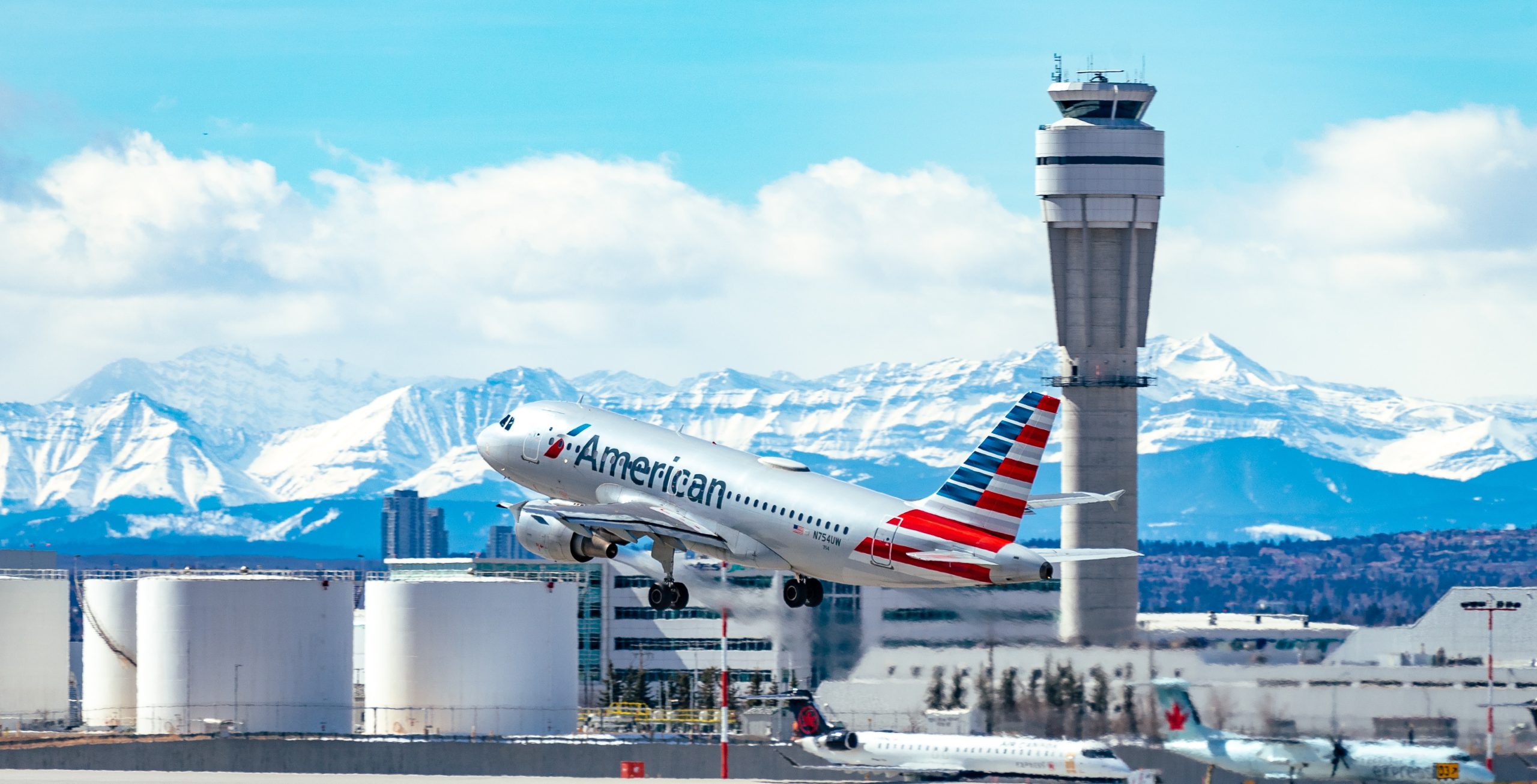
An American Airlines Airbus A319 departs Calgary International Airport (YYC) | IMAGE: Photo by Justin Hu on Unsplash
Hurricanes in the Caribbean and Florida and flooding in the Dallas-Forth Worth area created operational challenges for the carrier during Q3. Despite this, American operated a schedule over 25 percent larger than its nearest competitor.
With its regional partners, American completed more than half a million flights with an average load factor of 85.3 percent – 6.6 percent higher than Q3 2021.
American reports that its revenue set a quarterly record of $13.5 billion in Q3 2022 – a 13 percent increase compared to 2019. Additionally, American’s Q3 operating margin, excluding net special items, was 7.2 percent.
No Signs of a Slowdown in Demand
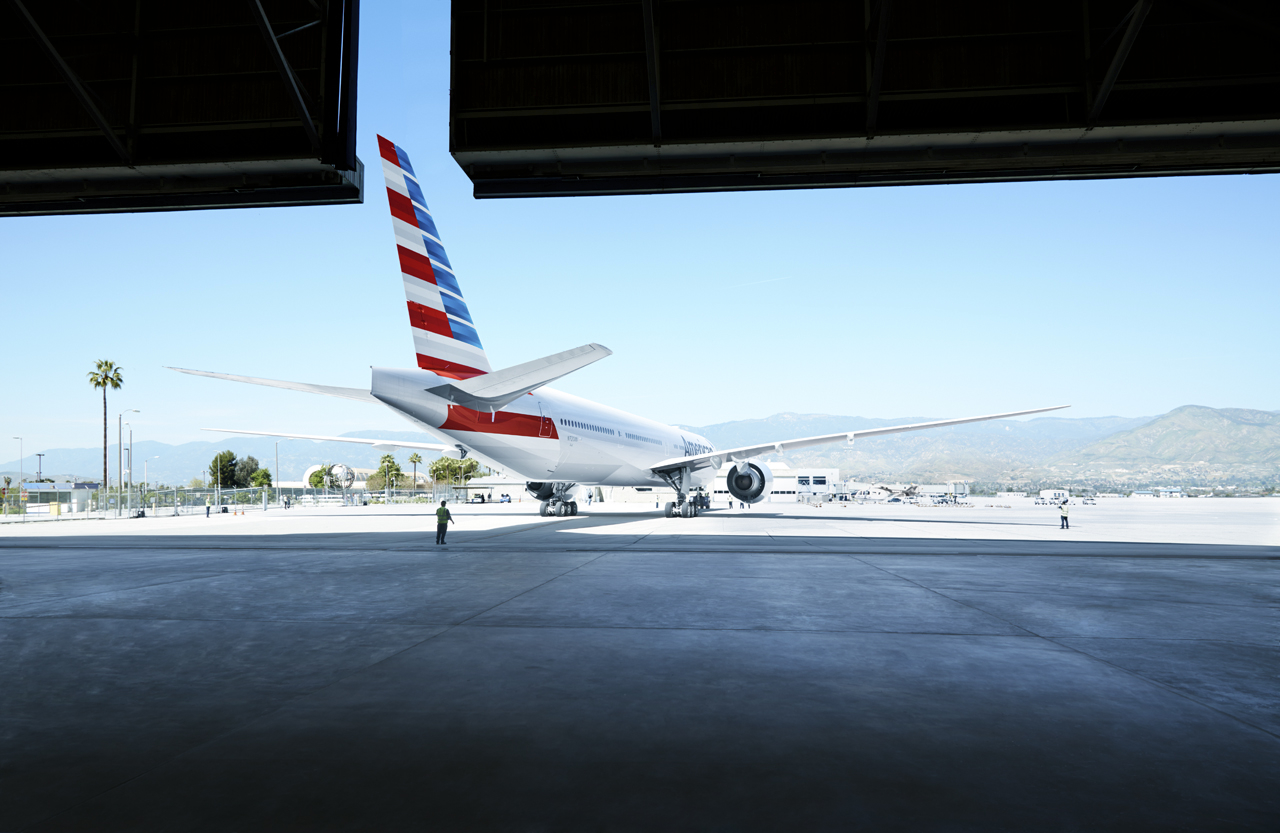
An AMerican Airlines Boeing 777-300 leaves the hangar | IMAGE: aa.com
American expects consumer demand to continue to increase over the next year. However, continued aircraft delivery delays and a shortage of regional pilots could affect the airline’s growth.
The outlook for long-haul travel is especially positive as countries around the world continue to lift pandemic restrictions.
American expects its fourth-quarter revenue to be 11 to 13 percent higher than Q4 2019 when capacity was nearly seven percent lower. It also expects a Q4 operating margin of between 5.5 and 7.5 percent. Forecast profit per diluted share is between 50 and 70 cents.
Debt reduction also continues to be a key focus for the company. As of 30 September 2022, American’s total debt was $5.6 billion lower than its highest point in 2Q 2021. The company expects to eliminate total debt by $15 billion by the end of 2025.
The company’s shares were down three percent at $13.55.
Podcast Covers Linebacker II – ending the Vietnam War and bringing the POWs home
Learning about the Vietnam War is like peeling a forty year old onion. One that keeps growing. And, many people don’t like onions. But anyone trying understand world politics today without at least knowing the basics of The Vietnam War is trying to make onion soup without…well, onions. The Vietnam War was that big of a deal — it challenged, changed and channeled so much of the world, it’s almost impossible to know when/where/why to begin.
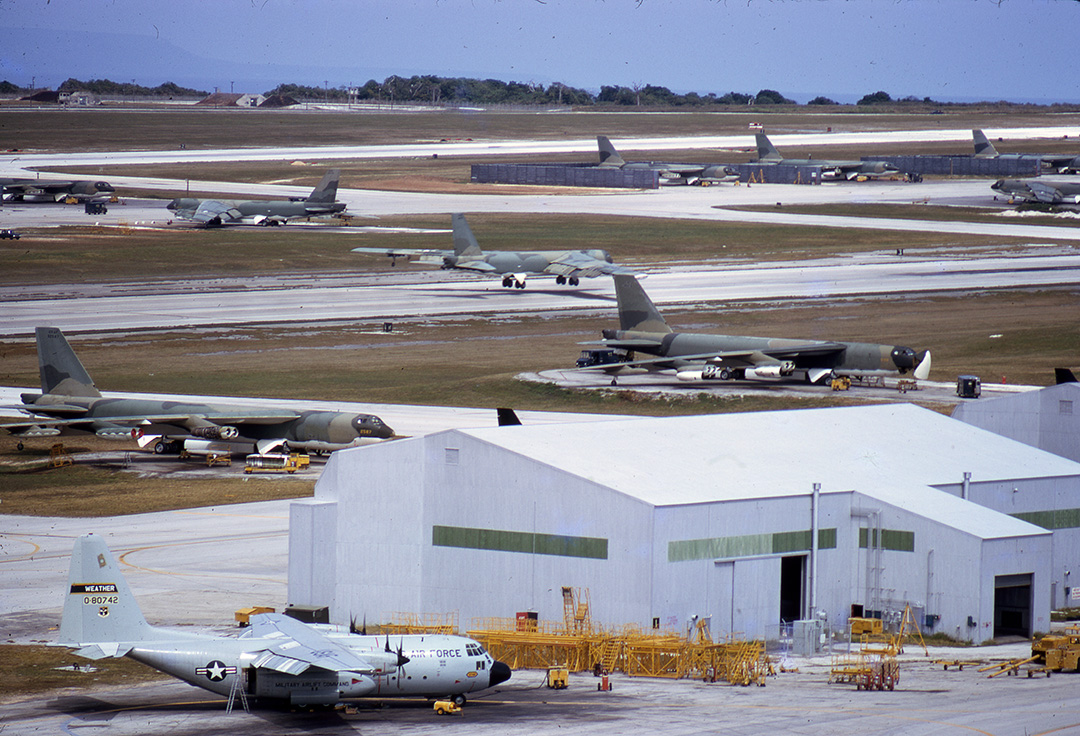
Ron Bartlett via John Mollison Andersen AFB with B-52G models and a C-130 in foreground
The Right Time To Study, Learn, and Heal
Nevertheless, now is a good time to start peeling as one of the top layers is about to be remembered by many — Operation Linebacker II of December, 1972. 2022 will see the moment’s fiftieth anniversary.
Like virtually all-things-Vietnam-War, the controversy starts immediately. To the Vietnamese, it’s the “Dien Bien Phu of the Air,” referring to the ridiculous defeat of the French at said site in 1954.
To their point, the United States lost twenty eight aircraft including fifteen of the moment’s iconic B-52s. Yet, in the words of five-year POW Gene Smith, “When we heard about the B-52s over Hanoi, we knew we were going HOME!”
Put another way, nothing unleashed hell like a fully laden B-52. Linebacker II saw 129 of them over Hanoi and Haiphong military targets on the first night alone. Indeed, it was the largest strategic bombing mission since WWII. Strong enough to convince the North Vietnamese leaders to abandon their successful strategy of diplomatic cat & mouse and agree to peace terms and give up their most precious game piece, the steadily accumulating rank of POWs languishing in their infamous prison system.
Break-Break: Why We Study The War
Ron Bartlett via John Mollison
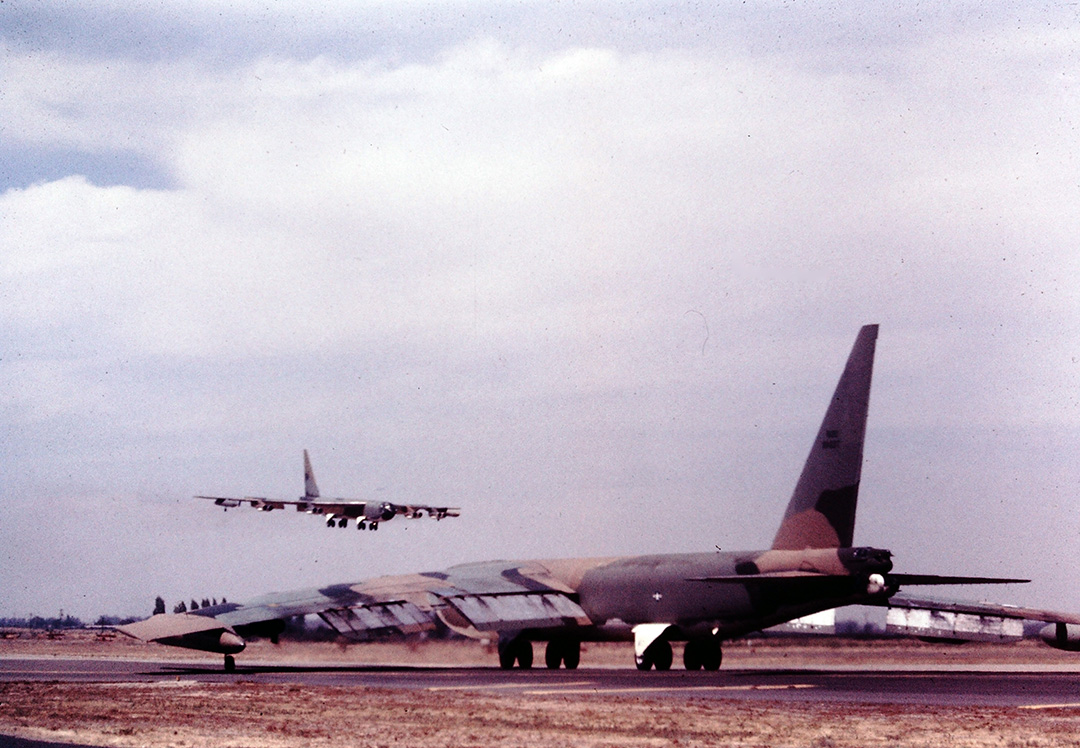
B-52Ds taxiing and taking off
There are many reasons why people get heartburn over the Vietnam War. But getting back to the many-layered onion analogy, it’s the one that makes most sense because ultimately, there just so much to digest. Giving the Vietnam War its due is continually challenging. The easy conclusions just aren’t there for minds used to watching a Hollywood movie for History Class.
But, for a little while yet, there are plenty of experts who can help the rest better understand what went wrong and what went right (there are plenty of those, btw) — veterans. From both sides. Linebacker II is a brilliant place to begin on account of its impact on the war as well as the fact that it lead to one of the greatest Happy Endings to any war, the return of the POWs (which was awarded its own operative name, Operation Homecoming).
Back to airplanes. And back to 1968.
President Johnson ordered a halt to bombing targets in “the North” on Halloween, 1968. In a nutshell, the goal of ceasing air strikes was an olive-branch of some sort to encourage peace negotiations between the North, the South and of course, the South’s great benefactor, The United States.
Sign up for Avgeekery’s Weekly E-mail with the latest aviation news:
Up until then, a three year combined-branch Operation called “Rolling Thunder” resulted in constant tactical pressure on North Vietnam. Over 300,000 sorties were flown, delivering 860,000-some tons of ordnance on target. Of course, war is expensive — during Rolling Thunder, the United States lost over 920 aircraft and 1,050-some casualties. And generated the majority of the 775-some POWs.
“… the United States would stop its bombardment of North Vietnam when that would lead promptly to productive discussions, and that we would assume that North Vietnam would not take military advantage of our restraint.”
Excerpt from President Johnson’s Address to the Nation, 3/31/68
It should be obvious that Operation Rolling Thunder was costly. It should also be obvious that stopping Operation Rolling Thunder didn’t quite work as four years later, the war was still going on and people were raging against it more than ever.
Why Didn’t The US Just Leave Vietnam?
The intention to extricate from Southeast Asia was a crucial campaign promise of President Johnson’s successor, President Richard Nixon. To those unfamiliar with politics, diplomacy and military operations, it is childishly simple to simple think, “Why didn’t the US just leave?” That particular onion/question is devilishly tearful. However, do yourself a favor and pick up the book, “Street Without Joy” by French journalist, Bernard Fall. It was published about the time the United States was just getting serious about a long-term presence in Southeast Asia and describes France’s quagmire, and the U.S.’s future challenges. It won’t answer the question but it will help with appreciation of the problems political leaders face.
Ron Bartlett via John Mollison
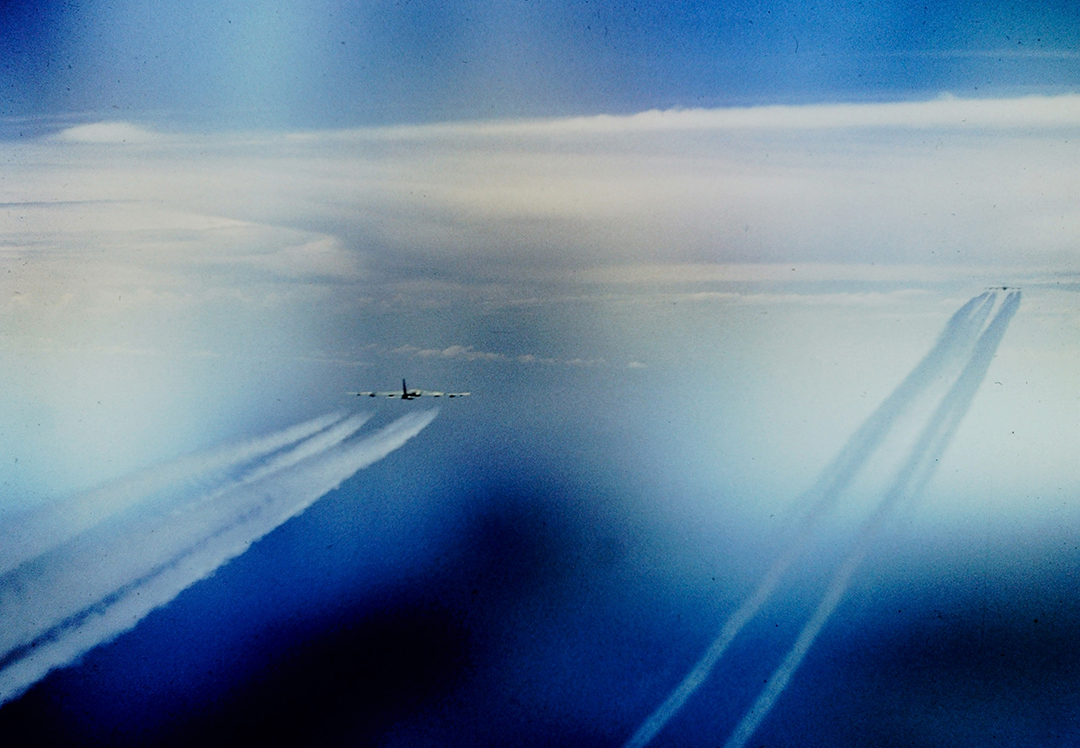
Two of Three of a B-52 cell (photo taken from #3 in cell)
Nevertheless, after three years of trying to find an elegant path out of Vietnam, Nixon decided that force was going to be more effective than diplomacy. In May of 1972, he authorized resumption of tactical strikes against North Vietnamese military targets with Operation Linebacker. The ostensible goal was to force the North Vietnamese to be conciliatory at intended Peace Talks sometime in the near future.
Linebacker I
8th Air Force (publication on Operation Linebacker)
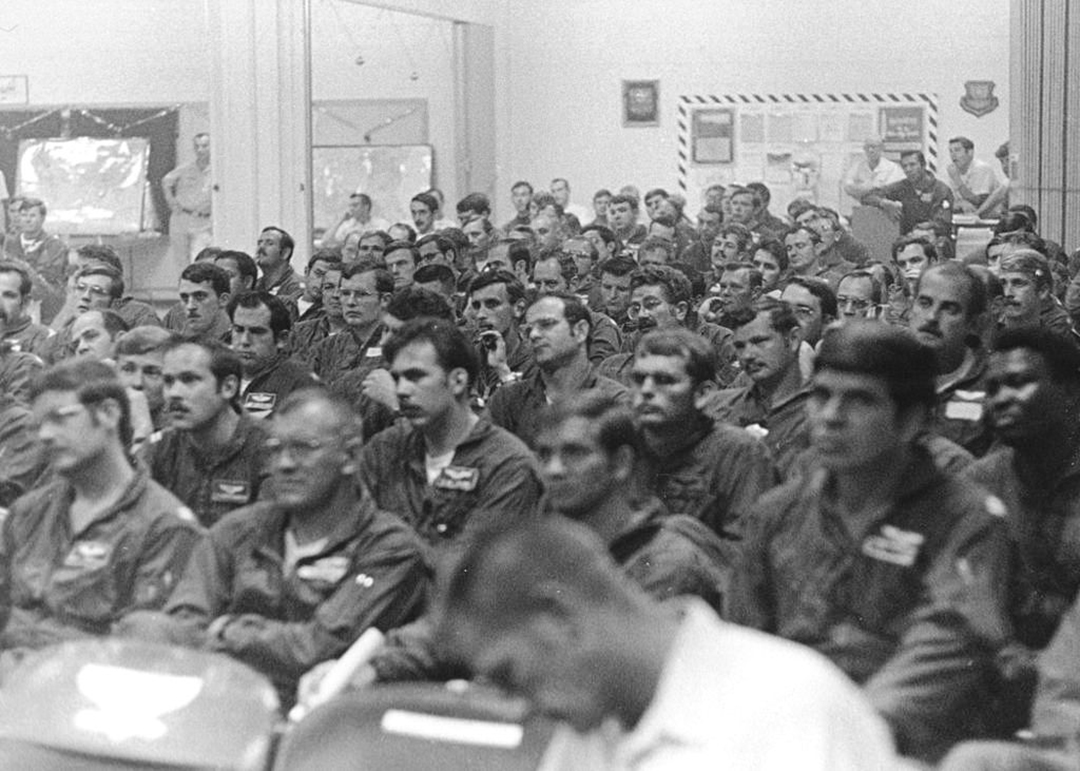
B-52 crew briefing, Andersen AFB
Linebacker was a full-on aerial drive down the field for a Peace Talk touchdown. Military targets such as power plants, bridges, transport hubs and supply depots were hit hard. Sixty-some North Vietnamese aircraft were destroyed (to a combat loss number of 104 American/South Vietnamese Air Force aircraft). But most importantly, the message was clearly made that the United States was deadly serious about forcing peace (irony alert). Largely, Operation Linebacker was a success, accomplishing much within its four months of operation, certainly eclipsing any real success that Operation Rolling Thunder might have garnered.
By the end of October, Nixon’s National Security Advisor, Henry Kissinger announced that “Peace was at hand.” But it wasn’t.
Manipulation Led To More War
The North Vietnamese had become utter masters at media and diplomatic manipulation (if you think today’s celebrity-centric tantrums are a product of 21st Century social media, look up “Hanoi Jane”). With campaign promises to fulfill and the return of an unfriendly Congress in January of 1973, Nixon had to act and quickly. On December 14, Henry Kissinger threw down the gauntlet that the North Vietnam had 72 hours to sign for peace; they didn’t. Thus, on 18 December, 129 B-52s became the blunt-force to traumatize the North Vietnamese into crying uncle and meaning it. For eleven more days — the final LBII missions flown on December 29 — Nixon made his point devastatingly clear.
The Paris Peace Accords (PPA) were signed on January 27, 1973.
The PPA signing alone is worthy of remembering Linebacker II. But to the POWs and their families, Linebacker II has far deeper, personal importance. Two weeks later, February 12 to be exact, three C-141 Starlifters were winging their way back to Hanoi as part of the Operation that everyone wanted all along, Operation Homecoming, the return of POWs to America. By April 4, the Operation was complete. Five hundred ninety-some POWs were returned. In this regard, Linebacker II may be America’s most successful game play of the Vietnam War. Linebacker II’s legacy is no mere field goal, it’s a touchdown.
Author note – “I Interview Old Guys And Draw Their Airplanes”
I have two mantras. The first is that “I interview old guys and draw their airplanes.” I’m no great aviation artist. Instead, my drawing is simply a way to experience the stories of people who’ve seen history up-close and personal including many from the Vietnam War.
Linebacker II has often been mentioned as a particular point of ‘closure’ for Vietnam veterans of all years, all branches. Thus, I’ve made mental note of how each airplane I’ve drawn connects to December 1972’s decisive moment.
For this article, I’ve selected three pieces:
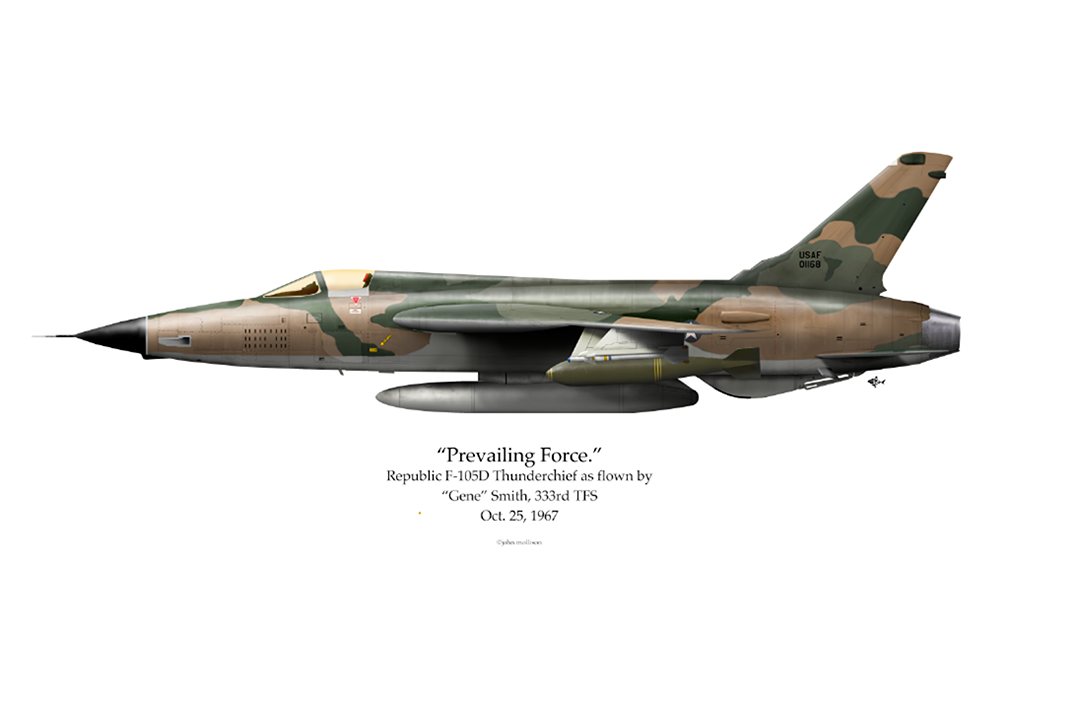
Gene Smith’s “Rolling Thunder” F-105
Artwork by John Mollison.
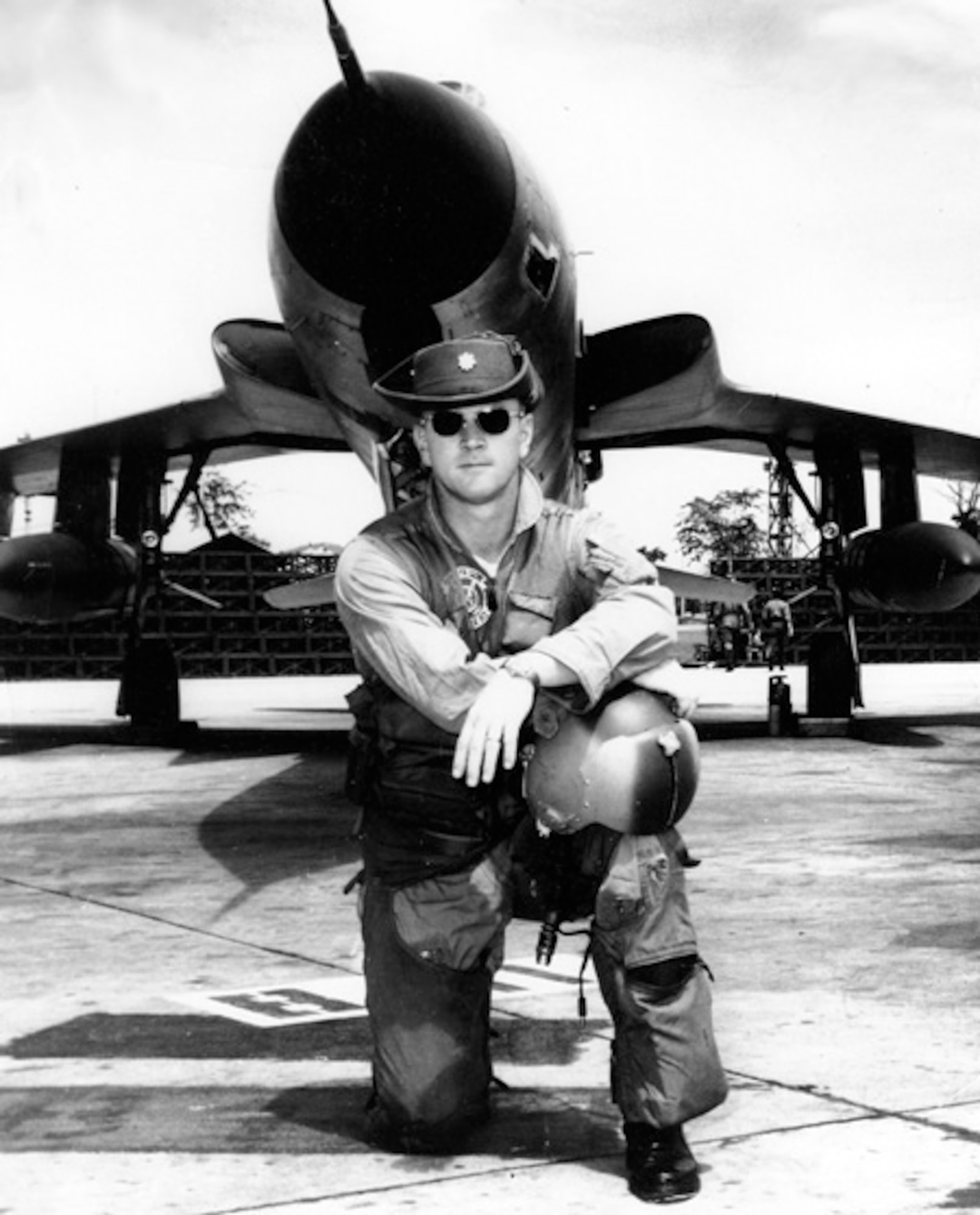
Gene Smith’s “Rolling Thunder” F-105 represents the aggressive tactical efforts against North Vietnam. That Gene became a POW in 1967 also represents the aggressive defense that the North Vietnamese offered in return.
Gene Smith via John Mollison
Gene Smith in front of his F-105 Thunderchief, c. 1966
The F-105 was the only aircraft to be pulled from combat on account of its loss rate — nearly half of all the 830-some F-105s were combat losses. Whenever I need a sense a bit of entitlement creeping into my psyche, I remember Gene and the F-105 “Thud drivers” and a bit of perspective comes to mind. Gene was released “from jail” and boarded his Operation Homecoming flight home on March 14, 1973.
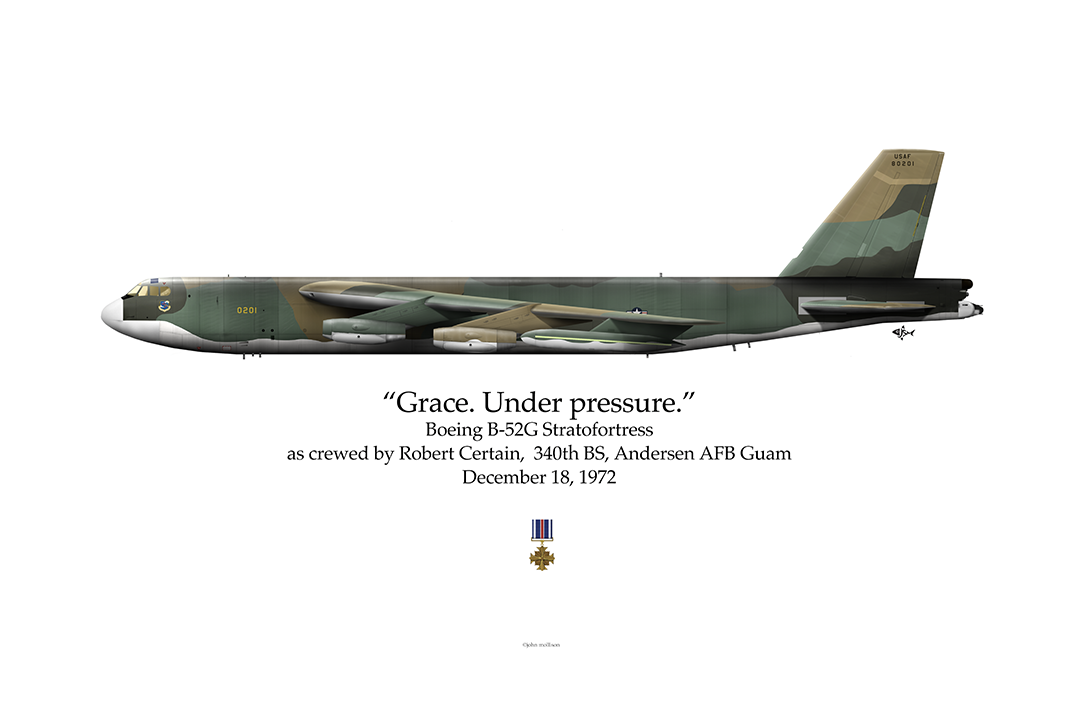
Robert Certain’s B-52G
Artwork by John Mollison
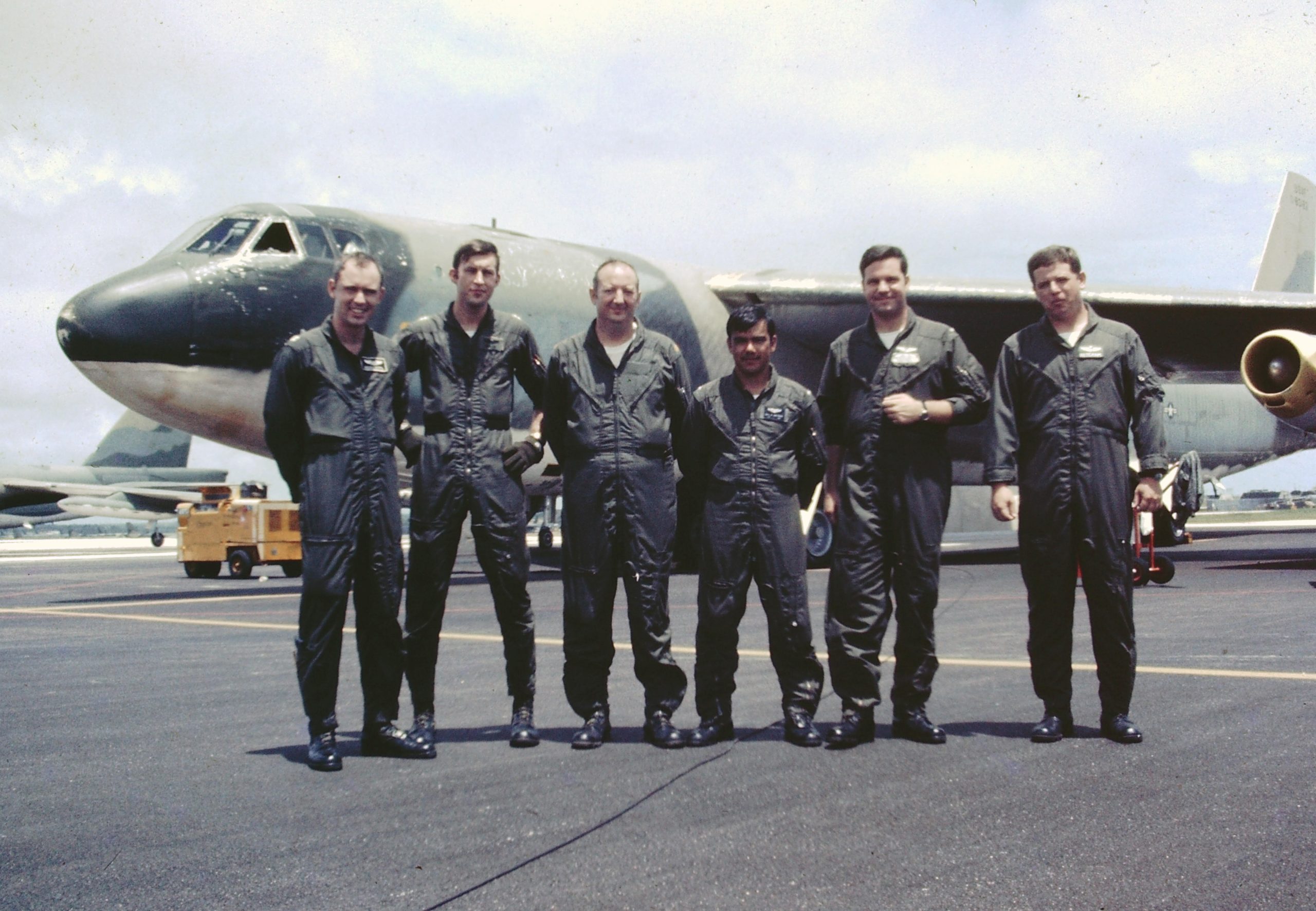
Robert Certain’s B-52G was the first combat loss of Operation Linebacker II. “Charcoal 01” – the call sign for Certain’s particular aircraft – also represents the operation’s first American deaths.
Left to right in front of B-52G on Andersen AFB, Guam – circa 1972:
Capt Jim Roberts, pilot
Capt Chuck Honea, co-pilot
Maj John Klemm, radar navigator (deceased)
1Lt Bill Baltazar, navigator
1Lt Ron Bartlett, electronic warfare officer
SSgt Clyde Ketcham, gunner
Pilot Donald Rossi, co-pilot Robert Thomas and gunner Walter Ferguson were killed. Electronic warfare officer Richard Simpson, radar navigator Richard Johnson and navigator Robert Certain became POWs. Ironically, Robert Thomas’ young son Derrick Thomas ended up becoming a star football player for the Kansas City Chiefs as a Linebacker. Bob’s Operation Homecoming flight left March 29, 1973.
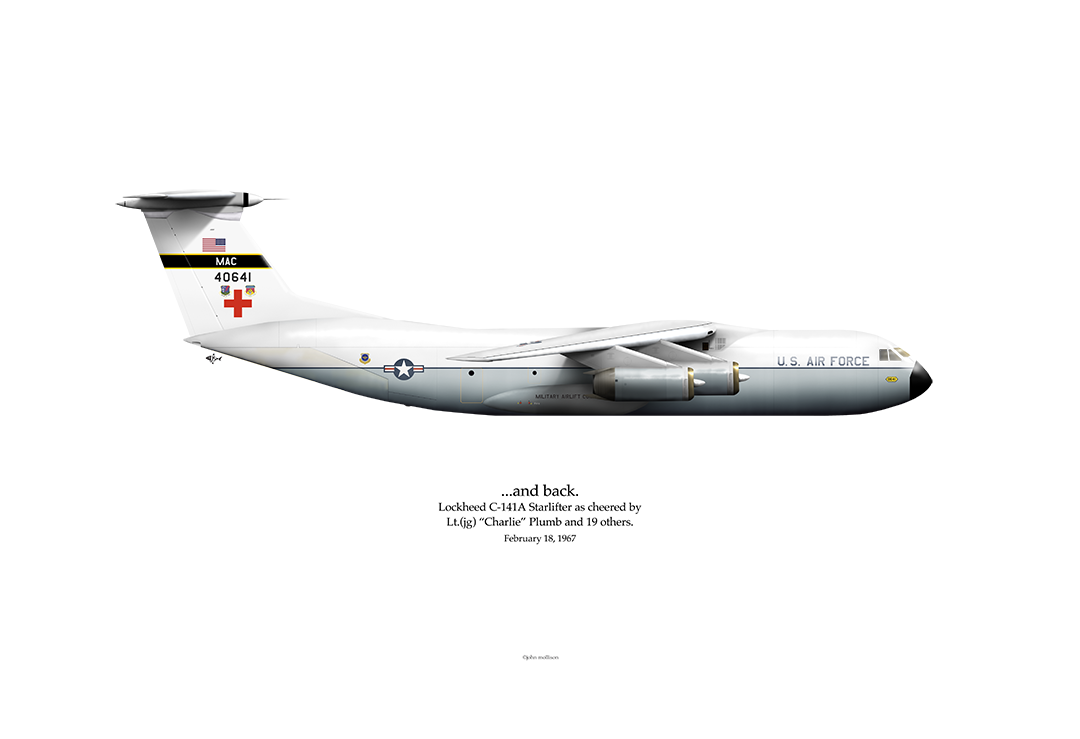
C-141 Starlifter, A “Hanoi Taxi” but this image is from a series I did as part of a project with POW Charlie Plumb (hence the “…and back” name). This airplane is a physical representation of hope as well as the POW code of ethic, “Return with honor.” Today, the remaining POWs exist as an extraordinarily close band of brothers. Their legacy of leadership and ancillary affects are at once reminders of the best humanity can accomplish and the worst it can endure.
A few years ago, I minted a slogan (at least I think I did), “History is nutritious. It feeds your brain.” Interviewing combat veterans has changed my life in brilliant ways. I’m not smart enough in history to draw great conclusions on anything except for knowing the utter importance of hearing a veteran/witness express themselves.
The Linebacker II Libraries podcast can be accessed on the website of the Distinguished Flying Cross Society. Each Podcast features a downloadable educator’s supplement featuring photos, maps and a glossary of some expressions veterans of the era might say. However, one remarkable feature of each podcast is that they begin and ends with short clips of Linebacker veterans and families recalling memories of the times. You can learn more about John’s work and efforts to preserve history at JohnMollison.com.
Russian leisure airline Nordwind Airlines has resumed flights to Cuba on a limited basis.
For the first time since the Russian invasion of Ukraine in late February, Nordwind is operating limited flights between Moscow and the Cuban resort destinations of Cayo Coco and Varadero. The resumption of flights is significant as it marks the first time Cuba and Russia have been connected since the invasion of Ukraine in late February.
Two Cuban Cities Welcome Back Nordwind’s Boeing 777s
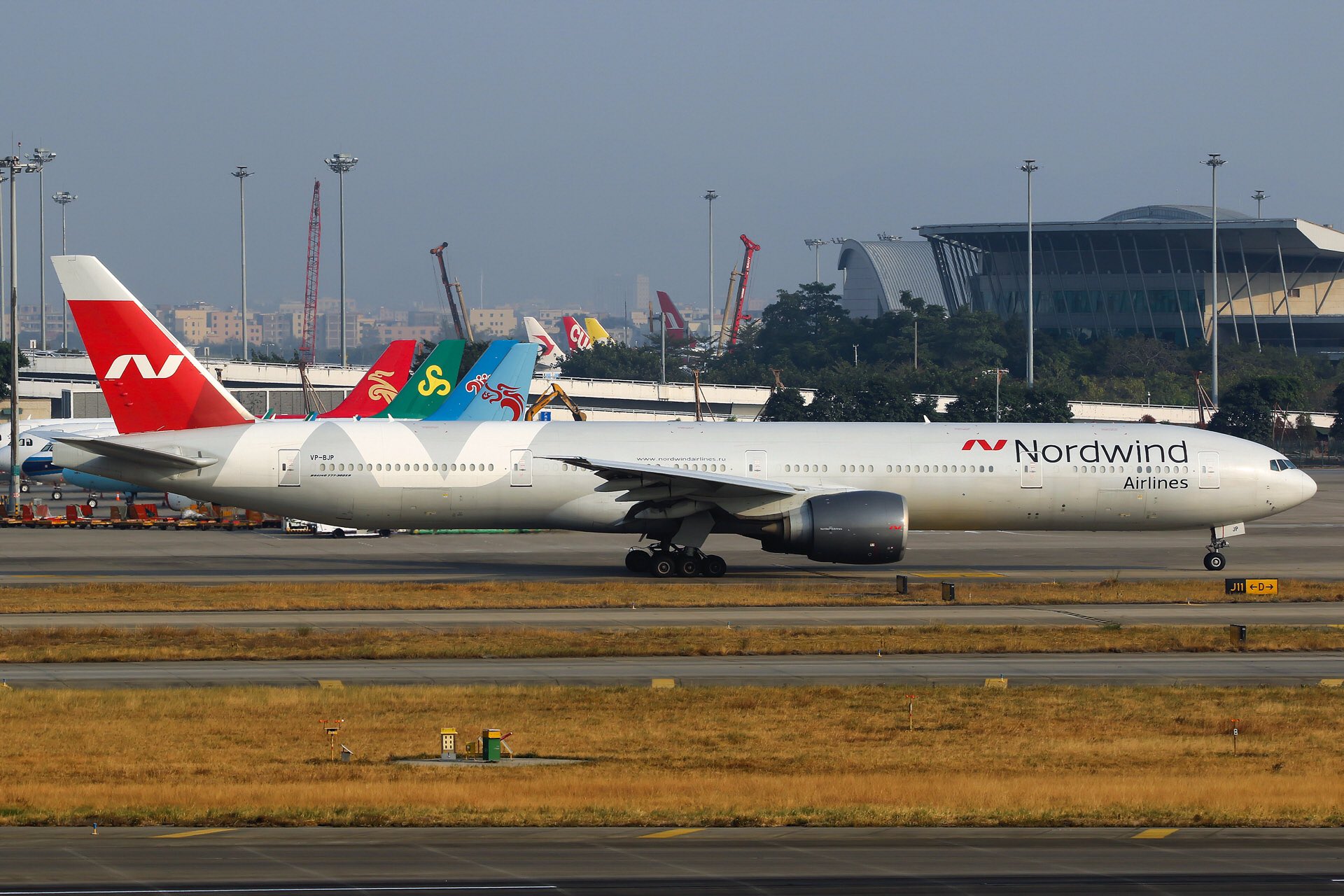
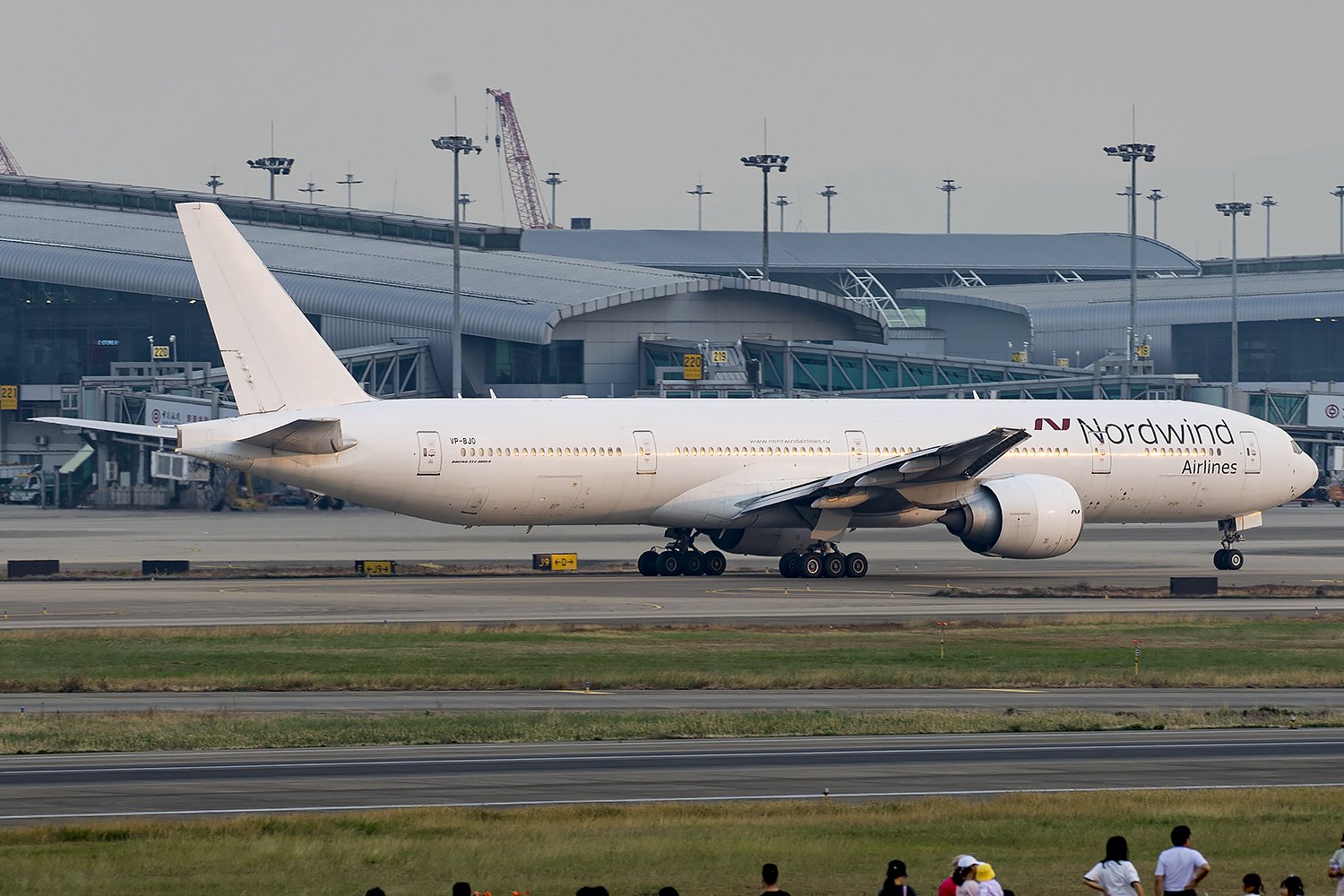
A Nordwind Airlines Boeing 777 at Guangzhou Baiyun International Airport | IMAGE: @pekyiran via Twitter
With Russian websites blocked from the West due to sanctions, a schedule for Nordwind flights is inaccessible at this time. However, flight tracking websites offer insight into how often the flights operate.
Nordwind operated a flight between Moscow Sheremetyevo International Airport (SVO) and Juan Gualberto Gomez International Airport (VRA) in Varadero, Cuba, on 04 October. The flight back to Moscow departed the next day.
The carrier also operated a flight between Moscow and Jardines del Rey Airport (CCC) on the island of Cayo Coco, Cuba – also on 04 October. That flight made the return trip to Moscow on 05 October. Nordwind also operated a flight from Moscow’s Vnukovo International Airport (VKO) to Cayo Coco on 14 October, returning the next day to SVO. Vnukovo – the third busiest of Moscow’s four major airports – is not served by Nordwind, and it is unclear why the flight to Cayo Coco originated there.
According to FlightAware, Varadero flights are operated by a Boeing 777-300ER, while Cayo Coco flights are operated by a 777-200. Both types feature a single-class configuration with either 440 (777-200) or 486 seats (777-300ER).
Getting to Cuba from Russia isn’t as Easy as it Once Was
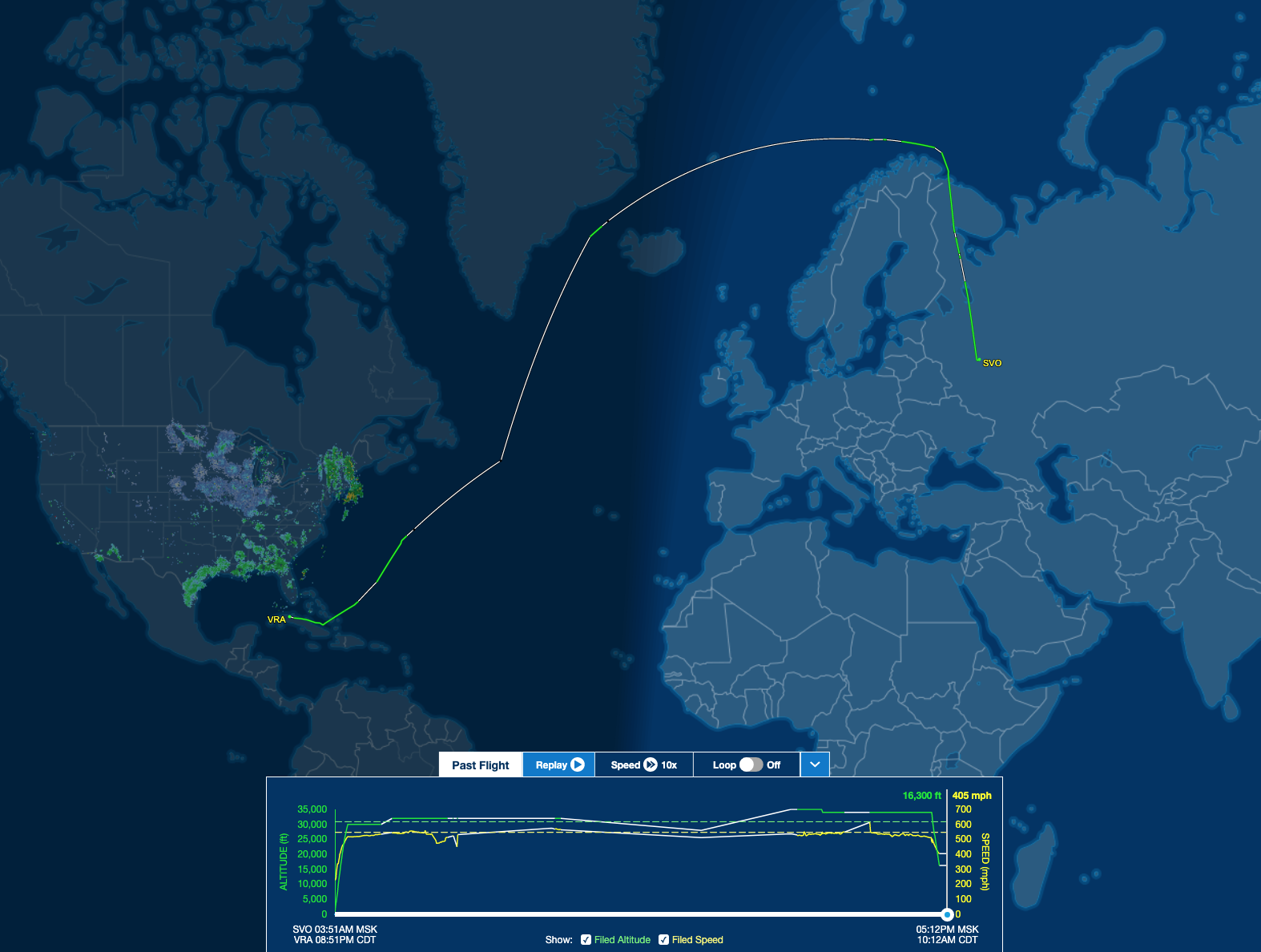
The routing of a recent Nordwind Airlines flight from Moscow to Varadero, Cuba | IMAGE: FlightAware
Following the Russian invasion of Ukraine, 33 countries blocked Russian aircraft from their airspace, including the United States, Canada, the United Kingdom, Albania, Norway, Switzerland, Iceland, and all 27 countries of the European Union (EU).
During peacetime, flights to Cuba from Moscow typically use European airspace as they travel toward the Atlantic Ocean. Since the war began, however, that routing is no longer an option. So Nordwind — and other Russian airlines — had to figure out a new way to get around the closed airspace.
According to data from FlightAware, Cuba flights now take off in a northerly direction towards the Barents Sea. The route then takes flights off the northern coast of Norway and then southwest between Greenland and Iceland. From there, flights stay far off the coast of North America before traversing the southern Bahamas as they begin their approach to either Varadero or Caya Coco, both on Cuba’s northern coast. The return trip follows roughly the same course, except for flying to the east of Iceland.
The new routing comes at a cost, however. Flying to the north and west of Europe adds just over 1,000 miles to the journey. A recent trip from SVO to VRA took 13 hours and 21 minutes, while the return trip to SVO took 12 hours and 55 minutes.
A Risky Move
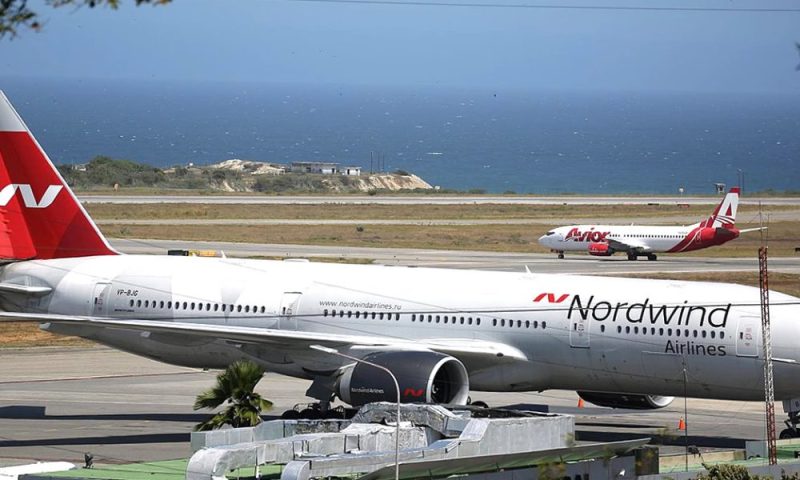
A Nordwind Airlines Boeing 777 | IMAGE: Nordwind Airlines on Facebook
With most of the 7,000 mile flight over water and far offshore from airspace that is unavailable to them, Nordwind’s Boeing 777s can easily handle the journey — so long as no problems arise. It would certainly be interesting to see what would happen if there was ever a need for a diversion.
If a problem required a diversion to Europe, Canada, or the United States, the aircraft would be at risk of seizure by authorities. Additionally, maintenance on the aircraft would be impossible to perform due to sanctions.
The diversion of a Cuba-bound Russian flight to the United States is not unprecedented, however. In January 2018, an Azur Air Boeing 767 developed an engine fuel leak over the Atlantic Ocean while en route to Cuba. The flight made an immediate diversion to Atlantic City International Airport (ACY) in New Jersey. Azur Air flew in a replacement aircraft to take the passengers to their original destination.
Nordwind Airlines Once Served 98 Cities
A Nordwind Airlines Boeing 777 | IMAGE: @TTabaoshab via Twitter
Founded in 2008, Nordwind Airlines has its main hub and headquarters at Moscow’s Sheremetyevo International Airport. Initially a Boeing 757 operator, the carrier now operates a fleet of 28 aircraft.
Of the 28, only 21 are currently in service, including four Airbus A321-200s, two A321neos, one Airbus A330-200, ten Boeing 737-800s, two 777-200s, and two 777-300ERs. The airline is a subsidiary of parent company Pegas Touristik, a Russian tour operator.
At one point, Nordwind served 98 cities in 28 countries, including 23 cities in Europe. It also served five cities in Cuba via seasonal charters.
Reports indicate that additional Russian airlines will relaunch Cuba service in the weeks and months ahead. For Cuba, the flights – and the tourist revenue they bring – will be most welcome. Cuba’s National Office of Statistics and Information estimated that more than 146,000 Russian citizens visited Cuba in 2021.
The 2022 Edwards AFB airshow was spectacular with quite a lineup. The show featured almost every aircraft in the US Air Force inventory along with aircraft from NASA, the Thunderbirds , and other well-known performers. There were many highlights. Ones that we’ll be sharing with you in the next few days in a series of recaps. One particularly stood out. A B-1B Bone went inverted and followed through with a roll after an airshow flyby as part of their routine. Our friends at AirShowStuff caught the moment.
Now a B-1 roll isn’t unprecedented. It’s been done before, particularly at previous Edwards AFB air shows. However, it’s still a unique sight to see. One that definitely wow’d the crowds who saw it live.
The B-1 bomber is highly maneuverable with the ability to conduct both low-level operations and high-altitude bombing campaigns. All crew members sit on an ejection seat too. Unfortunately, sights like these will become more rare over the next decade.
Get One Weekly E-mail with all our latest aviation news. Subscribe here:
The B-1’s days are limited. As the B-21 Raider comes online later this decade, the jet will be phased out leaving the B-21, B-2, and B-52 BUFF as America’s primary bomber force.
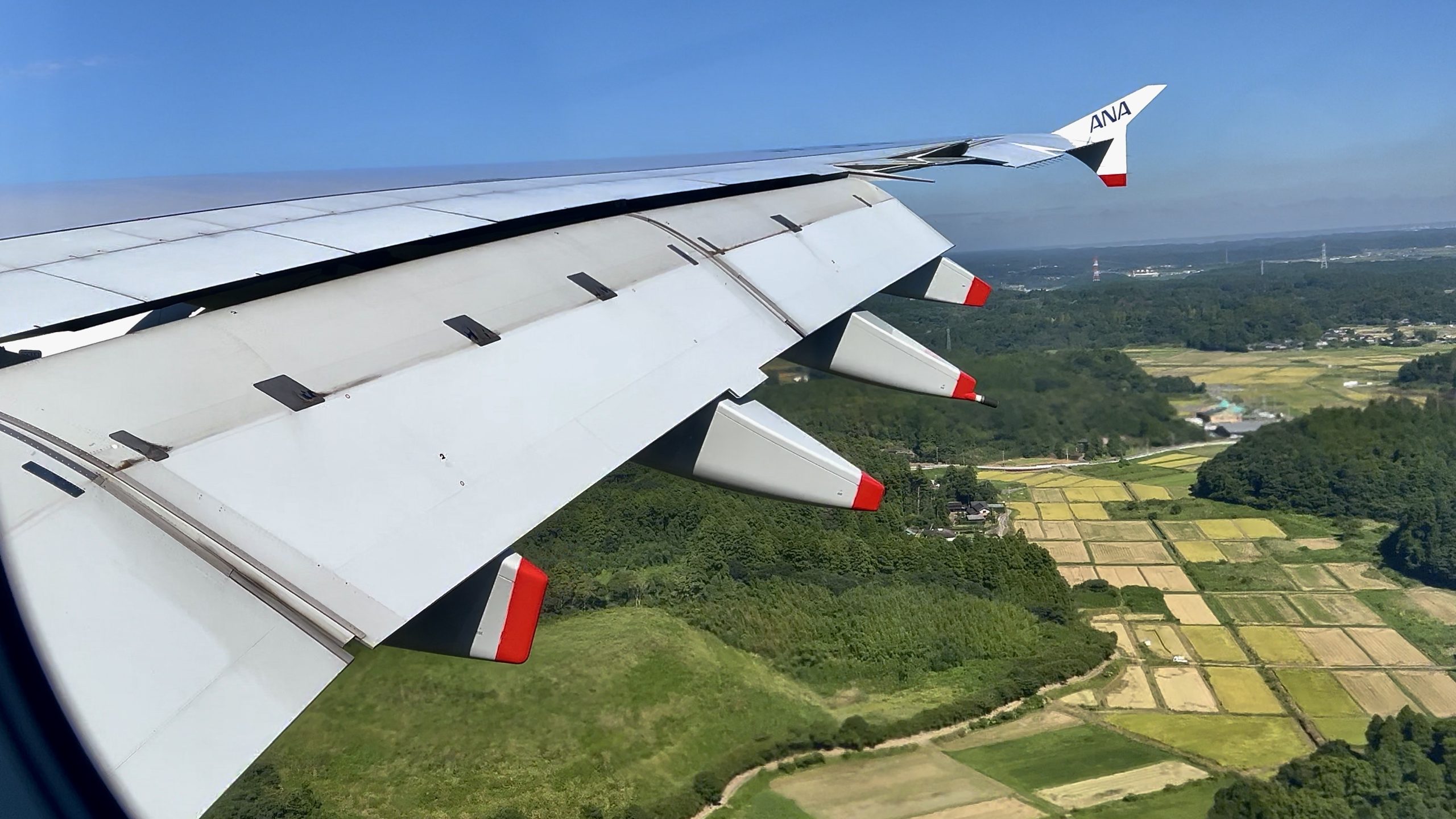
When most people travel to Honolulu, the aircraft or airline they are flying on is typically last thing on their mind. They’re more interested in their tropical vacation and can’t get away from the airport fast enough. That’s not the case for us avgeeks though! And when I recently flew to Honolulu, I had only one goal in mind, and it didn’t involve leaving the airport. I wanted to fly All Nippon Airways’ Airbus A380–the Flying Honu.
A Journey On The Mighty A380 Flying Honu
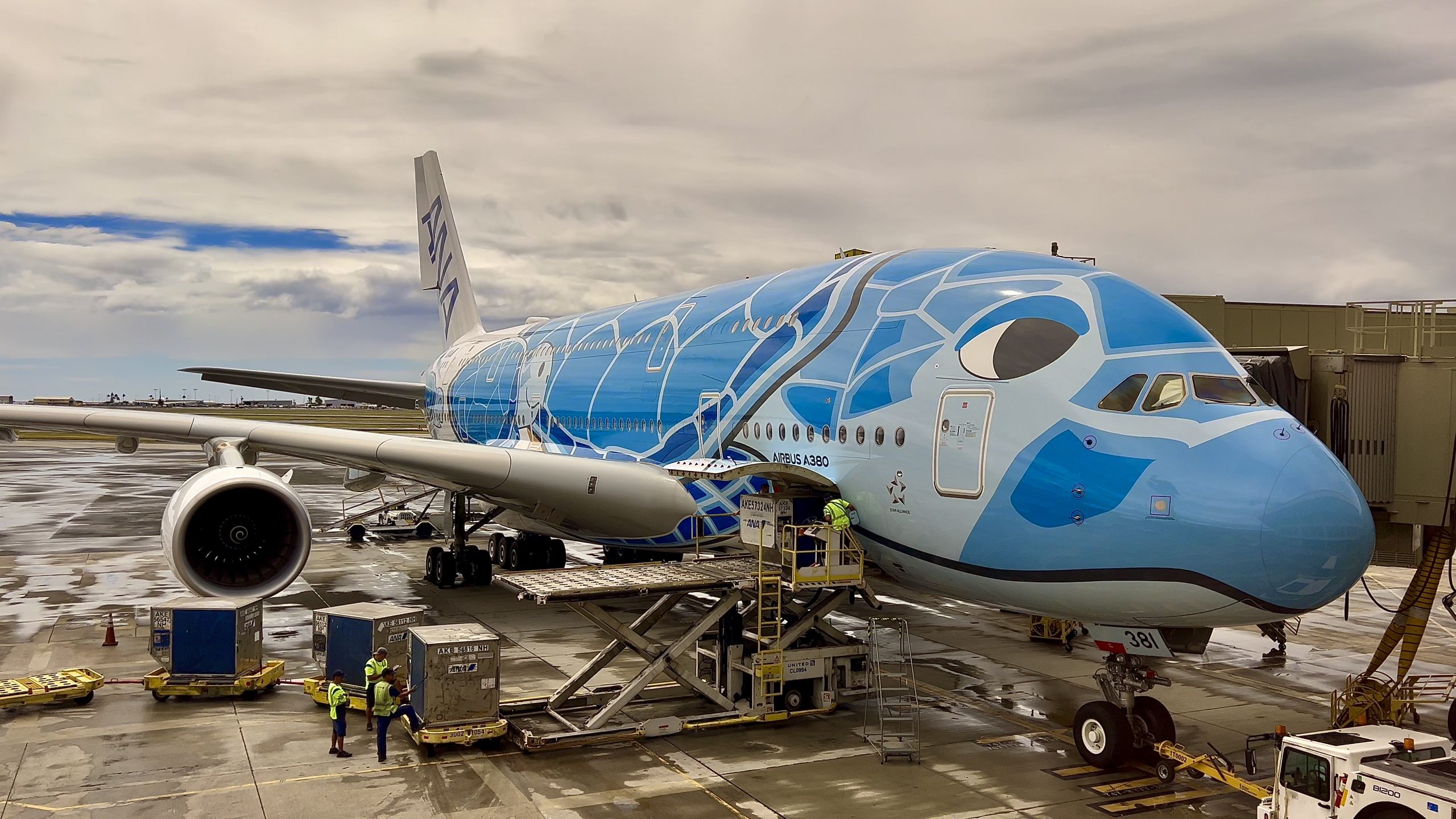
ANA’s Flying Honu–One of three A80s configured for Hawaii to Japan operations. (SkyliTE Productions)
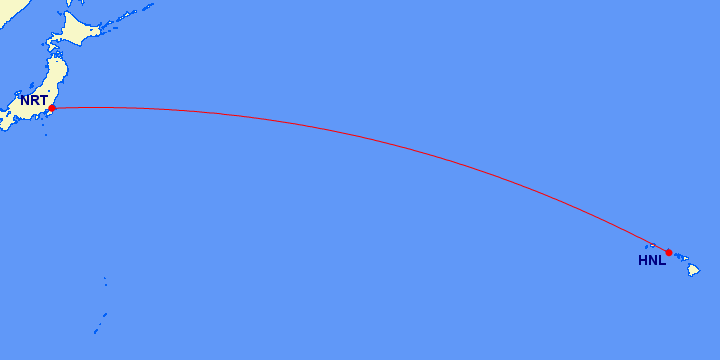
It’s often forgotten that All Nippon even operates the A380. After all, they were the smallest A380 customer, having ordered only three examples. They were also the last airline to take delivery of the type, not accepting their first A380 until 2019. Also, since the three aircraft were ordered specifically for their Tokyo to Honolulu route, which effectively saw a 100% passenger decline at the onset of the pandemic, they sat mostly idle for an extended period of time.
ANA only flies the A380 on one scheduled route. (SkyliTE Productions)
the “Flying Honu”, as All Nippon calls them, were recently re-introduced on the Tokyo to Honolulu route. I had my eyes set on flying one of them! First, before we get to the flight, I should explain why they’re called “Flying Honu.”
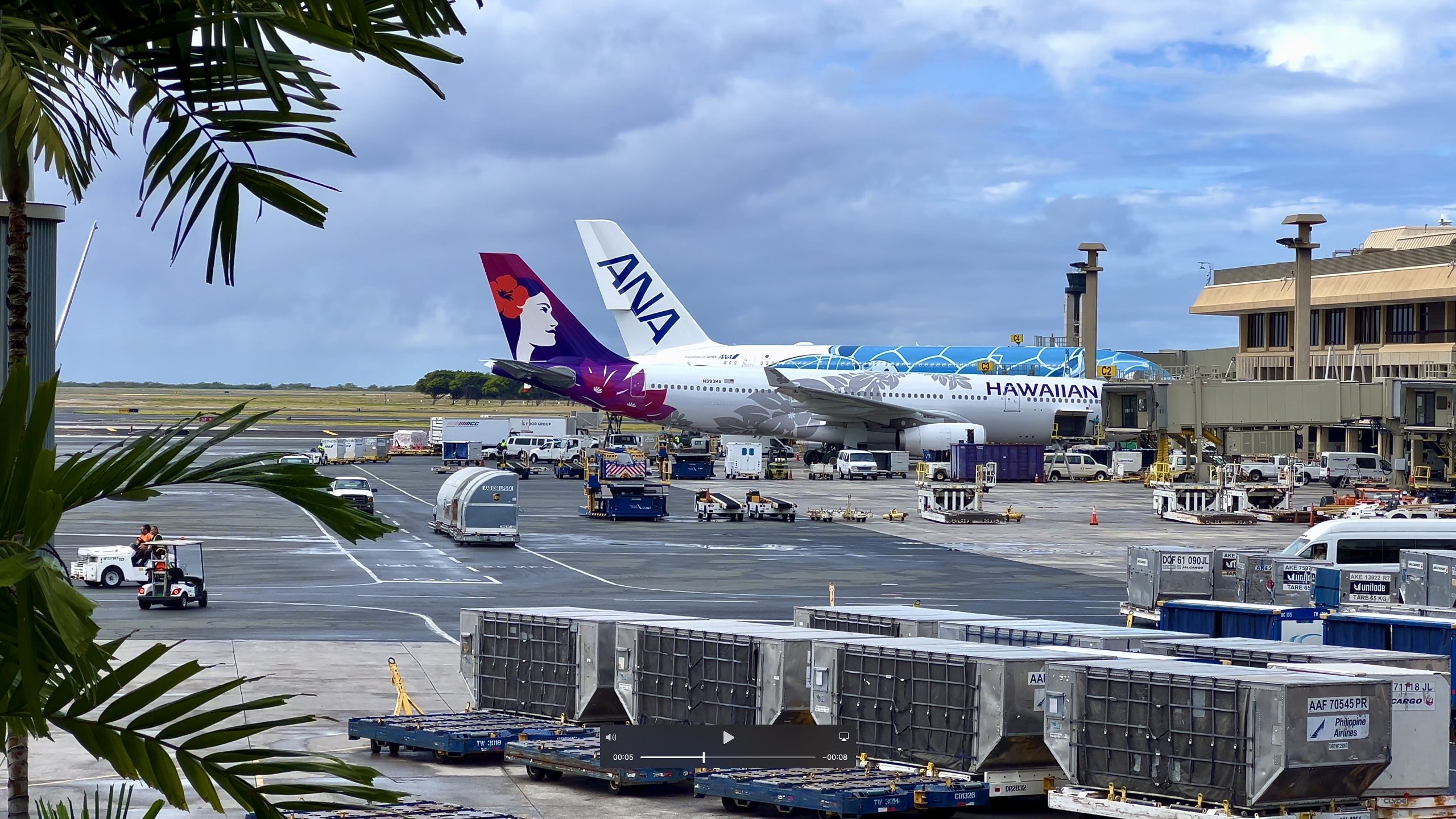
An A380 towers above a Hawaiian Airlines A330 at Honolulu International Airport (Skylight Productions)
ANA Specially Painted The Jets For Hawaiian Market
Since All Nippon intended to use these aircraft specifically on their Tokyo to Honolulu route, they chose to paint the aircraft in special sea turtle inspired liveries. Honu is the Hawaiian word for turtle and is more generally used to describe sea turtles. The three liveries are mostly identical with the only major difference being the primary colors used. Those three colors being blue, green, and orange.
My journey to Japan
Honolulu’s airport features outdoor gardens which offer respite from the busy international airport. (SkyliTE Productions)
On September 9, 2022, after arriving at Daniel K. Inouye International Airport onboard a United Airlines Boeing 777-200/ER, I made my way through the open-air corridors that Honolulu’s airport is famous for. Getting to a viewpoint overlooking the ramp just in time to see JA381A arrive at one of only two gates capable of handling the A380 at Honolulu.
Despite usually looking up what exact aircraft is scheduled to operate my flights, I had intentionally not looked to see which of the three A380’s would be operating this flight. So, this was the first time I was seeing the aircraft that would take me to Tokyo. JA381A is the blue Flying Honu and the first A380 delivered to All Nippon.
Enjoying the ANA Service In Row 67K!
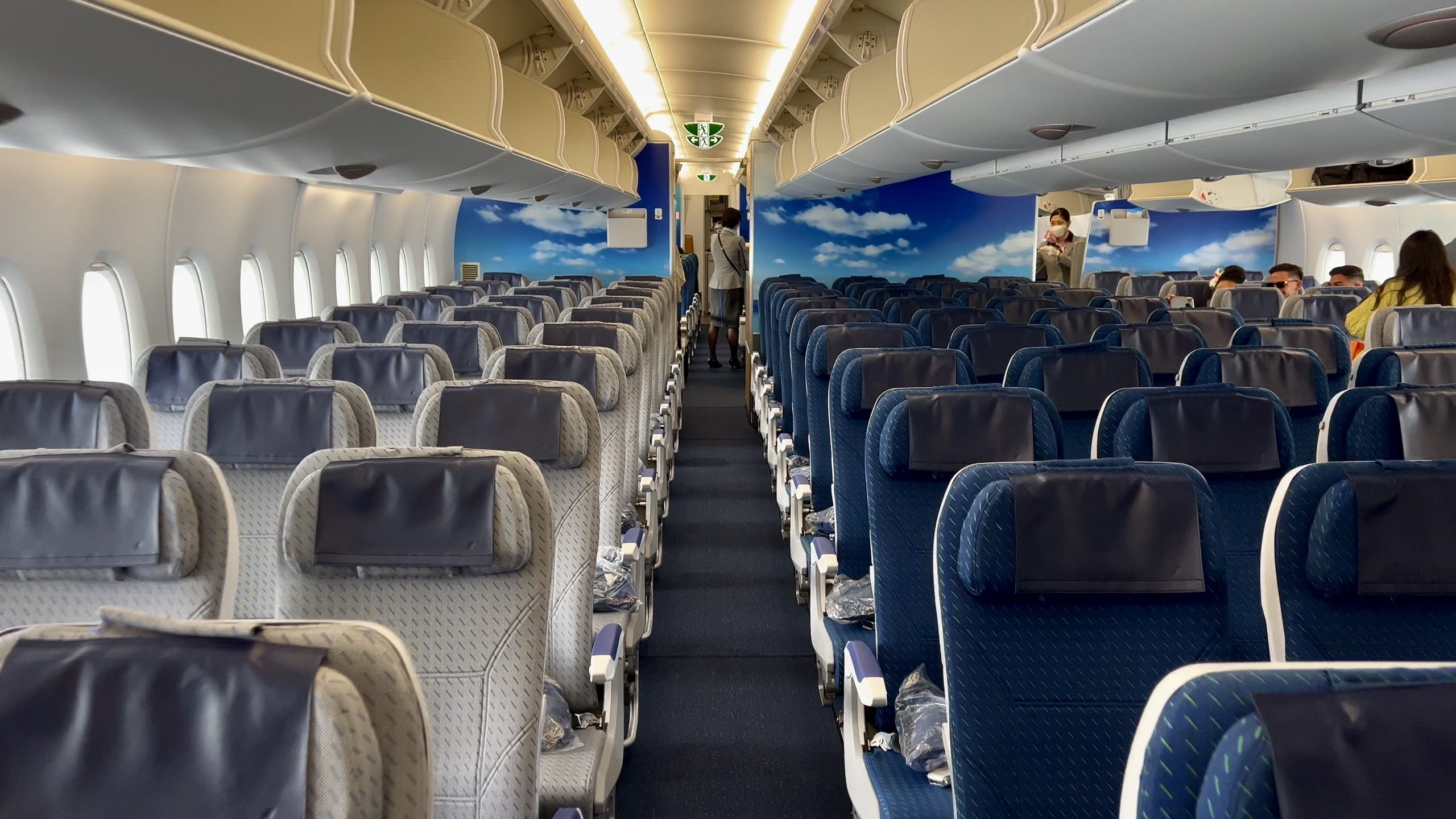
View of the main cabin on the massive ANA A380 (SkylitE Productions)
Boarding commenced on time, and I made my way to seat 67K. An economy seat, directly behind the wing, on the main deck of the aircraft. I never heard how full the flight was, but I estimate it was around 50% full. There was no one in the middle seat next to me and there were quite a few open seats throughout the section of cabin I was seated in. It’s worth mentioning, that at the time, All Nippon was only operating the A380 on the route two days per week. According to online scheduling that appears to have increased to three days per week now and it appears to increase again in December to five days per week.
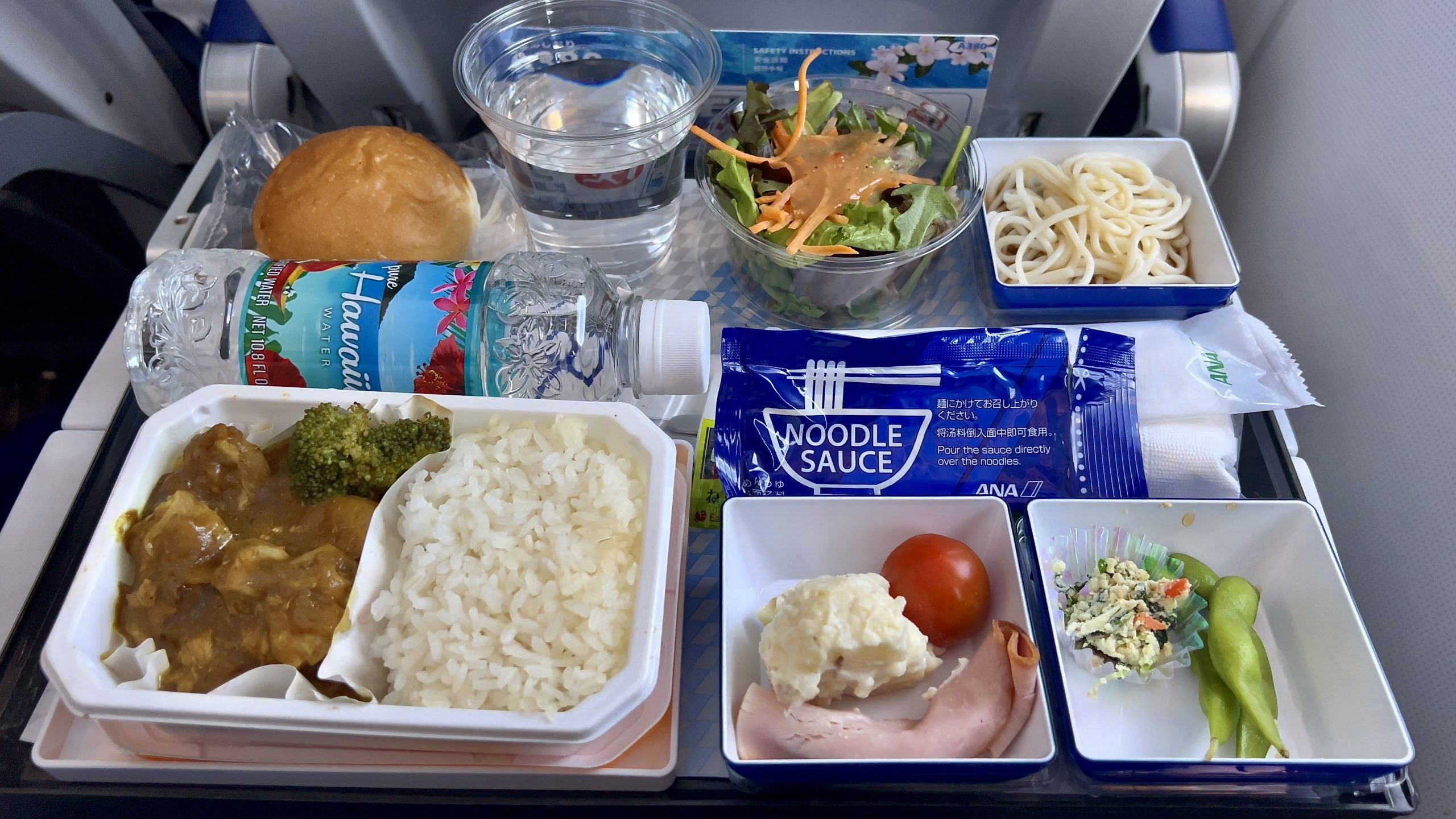
ANA Economy Meal Service was excellent. (Skylite Productions)
The onboard service from the flight attendants was excellent. the seat was very comfortable, and the food was great for an economy offering. Having never flown All Nippon before this flight, I now understand why they are consistently ranked as one of the top airlines in the world. Also, this flight reinforced that the A380 continues to be the most comfortable, passenger friendly aircraft to fly on. Nothing is more iconic than the 747, but even the 747 can’t beat the A380 in terms of passenger experience.
Avgeek Bucket List Item Checked–The ANA Airbus A380 Flying Honu
7 hours and 39 minutes after the door closed in Honolulu, and far too quickly for my liking, we slammed down in Tokyo. If you so choose, you can watch the entire flight from start to finish in the video accompanying this article and there you can see exactly what I mean by “slammed” down in Tokyo. Let’s just say, it wasn’t the most graceful landing of all time.
Landing in Tokyo on the A380 (Skylite Productions)
With Japan reopening to tourists soon, and there begin considerably less red tape than when I took this flight, maybe I’ll attempt to take this flight again in the future to try to catch the green or orange Flying Honu.
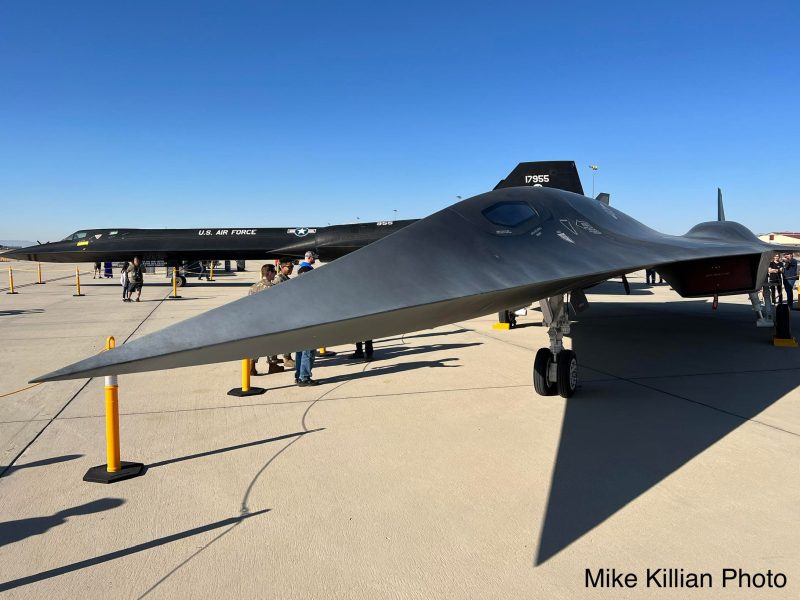
If you live in southern California and love aviation, this is the weekend for you! Edwards Air Force Base is hosting their first public air show in 13 years. As we profiled the lineup in an earlier story, this airshow will be a very unique, must-see event. Notably, Top Gun’s Mach 10+ Darkstar aircraft that was specially built by Lockheed Martin for the hit movie will be on display. It is the first time that the public will be able to see the aircraft.
First Video Walk Through Of The Hypersonic Movie Prop
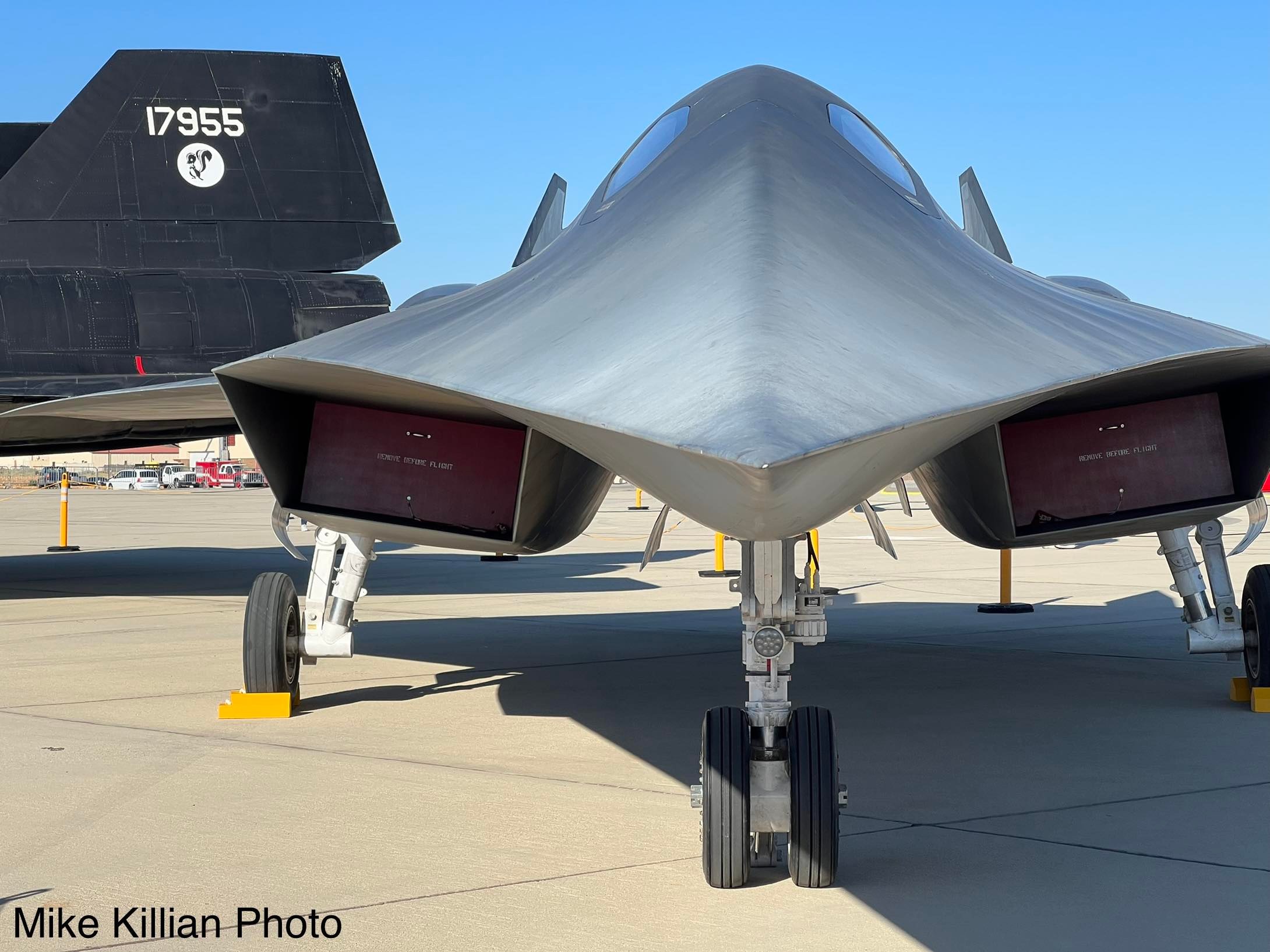
Our very own Mike Killian is on the ground at Edwards AFB reporting on the events this weekend. Darkstar is parked next to its other fast flying Lockheed cousin, the venerable SR-71. He was able to walk around the very realistic looking movie prop and shared it in an exclusive Avgeekery.com video.
While the Darkstar looks like a realistic hypersonic jet, it is really just an expensive non-flying movie prop for the mega-successful movie Top Gun: Maverick.
Top Gun: Maverick’s Darkstar as seen at Edwards Air Force Base. The movie prop is on display next to an SR-71 as part of the base’s first airshow in 13 years. Image: Mike Killian/Avgeekery
The aircraft was designed in partnership with Lockheed Martin. Without giving away spoilers, the jet flies at Mach 10+ in the movie. In reality, this prop will never fly but it does have a functional cockpit that was used as part of filming the movie. Lockheed Martin profiled their work in the video released last summer. You can see it below.
Even More Action Packed Events At Edwards AFB
The show will feature the first supersonic airshow in the US in over 13 years. Due to the location and mission of Edwards Air Force Base, sonic booms are authorized at this location. The Thunderbirds will be in attendance. It will also be your last chance to see NASA’s SOFIA Boeing 747SP flying before it is parked and retired (we’ll have more on this next week).
The world’s only flying Lockheed L-1011, Northrop’s Stargazer, will be on static display. Every tactical fighter in the USAF inventory will be present. B-1 and B-52 bombers will be part of the show.
Gregory “WIRED” Colyer from Ace Maker Airshows will be flying his famous T-33 demo.
The event is free to the public on both Saturday Oct 15th and Sunday October 16th. Gates will open at 8:30am on both days. The base will close when it hits capacity of 50,000 people. Premium VIP viewing options are available to purchase.
Along with military charters, sports teams are some of the most prolific users of large airline-sized charters in the industry. The teams use them to move the players, coaches, staff, and sometimes media for out of town events. Football (both American and Soccer), basketball, baseball, car racing, hockey, and other teams require the ability to move around the globe in rapid time, outside of the limitations of traditional airline schedules. Being able to travel privately also limits media and fan attention allowing players to focus on their performance without distractions.
Who Flies Sports Charters?
While a few teams have their own aircraft, most teams often rely on airlines to handle the chartering. It is also common for universities to charter aircraft for both the team and the fans, sometimes even offering discounted flights for students to attend out-of-town games.
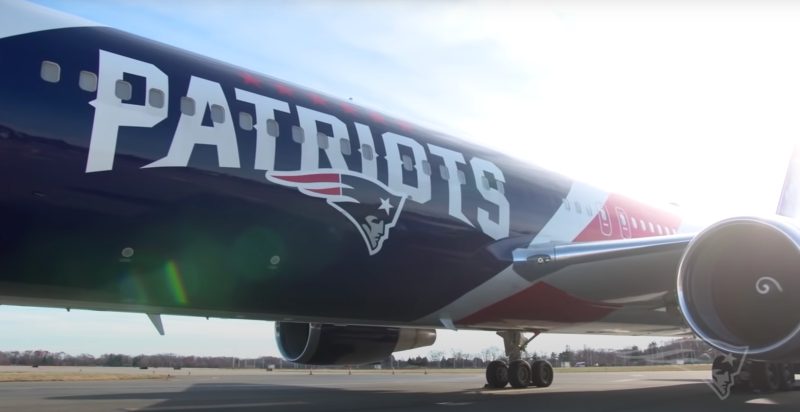
I have seen Allegiant, American, Atlas, Delta, Sun Country, United, and other airlines run these charters. Some airlines have specially retrofitted aircraft cabins designed for sports charters. This is particularly common with the NBA and NFL. Some teams like the New England Patriots even have their own aircraft owned by the team and operated by a charter airline. Other teams like the Detroit Tigers operate one of the only still-flying MD-81s.
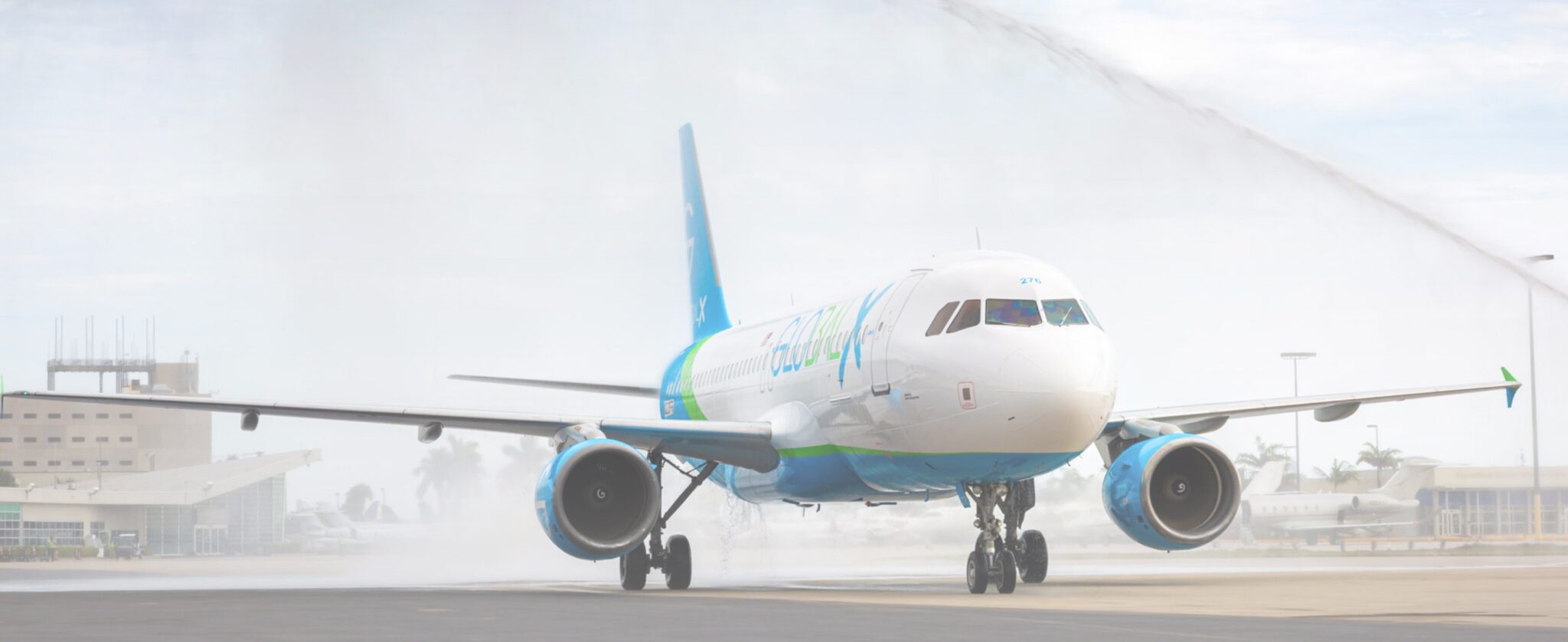
Global X A320 Image: Global X website
Airlines like Sun Country, Atlas Air, SwiftAir, and GlobalX also operate charters for college and professional sports teams.
What makes these charters unique?
Below is a video of very unique sub-fleet of Delta 757 that have been configured as a VIP transport with lots of comfort and room. Perfect for big and tall NBA and NFL players.
https://www.youtube.com/watch?v=uNsi50YrP14
The World of F1 Sports Charters
I am lucky enough to live in a city that has a Formula One (F1) track and in October we see a massive influx of aviation traffic. First, it starts with the cargo transports (747s) containing the F1 cars, tires and other gear. Next, the crew and drivers come in on commercial aviation or bizjets, followed by fans from all around the world, including one-off charters that bring interesting planes in (such as an Iberia A340). This is one of my favorite times of the year in Austin for plane spotting. We also have College Sports and a NASCAR race held here that brings in teams and fans. Some of these racing teams have multiple aircraft that are mostly in the bizjet family.
I will break down a list of sports and the known aircraft assigned to each of them.
NFL Football
Arizona Cardinals – 2002 Boeing 777-232(ER) N867DA (img)
New England Patriots – 1991 Boeing 767-323(ER) N36NE (img)
New England Patriots – 1991 Boeing 737-323(ER) N225NE (img)
Indianapolis Colts – 1999 Boeing 737-72U N101TD (img)
Stewart-Haas Racing (Car Racing) Bombardier CRJ-200LR N141SH (image), N60GH (image)
Penske Racing(Car Racing) N500PRRichard Childress Racing (Car Racing) N3RC (image)
College Sports
Alabama Crimson Tide Foundation N1UA
Aggies (Texas A&M University) N12AM
Arkansas Razorbacks (University of Arkansas) N41UA
Auburn Tigers (Auburn University) N10AU, N20AU
Clemson Tigers (University of Clemson) N934CT
Florida Gators (University of Florida) N100FG, N101FG
Gamecocks (University of South Carolina) N454GC
Ole Miss (University of Mississippi) N1UM
Vols (University of Tennessee Knoxville) N865UT, N794UT
Other Sports
Dallas Mavericks – 1992 Boeing 757-256 N801DM (img)
Houston Rockets – 1992 Boeing 767-322(ER) N625HR (img)
Las Vegas Golden Knights (NHL) – 2009 Gulfstream IV N622GK (img)
WWE – 2007 Bombardier BD-700 Global 5000 N247WE (img)
The data above is not exhaustive but does cover many aircraft used in sports aviation. There are planes as large as 767s and as small as (twin-engine turboprops) Beech 300s owned by these organizations.
Mary Wells Changed the Look of Commercial Aviation
Editors note: Mary Wells passed away on 11 May 2024. We remember her life and her industry changing designs in this article.
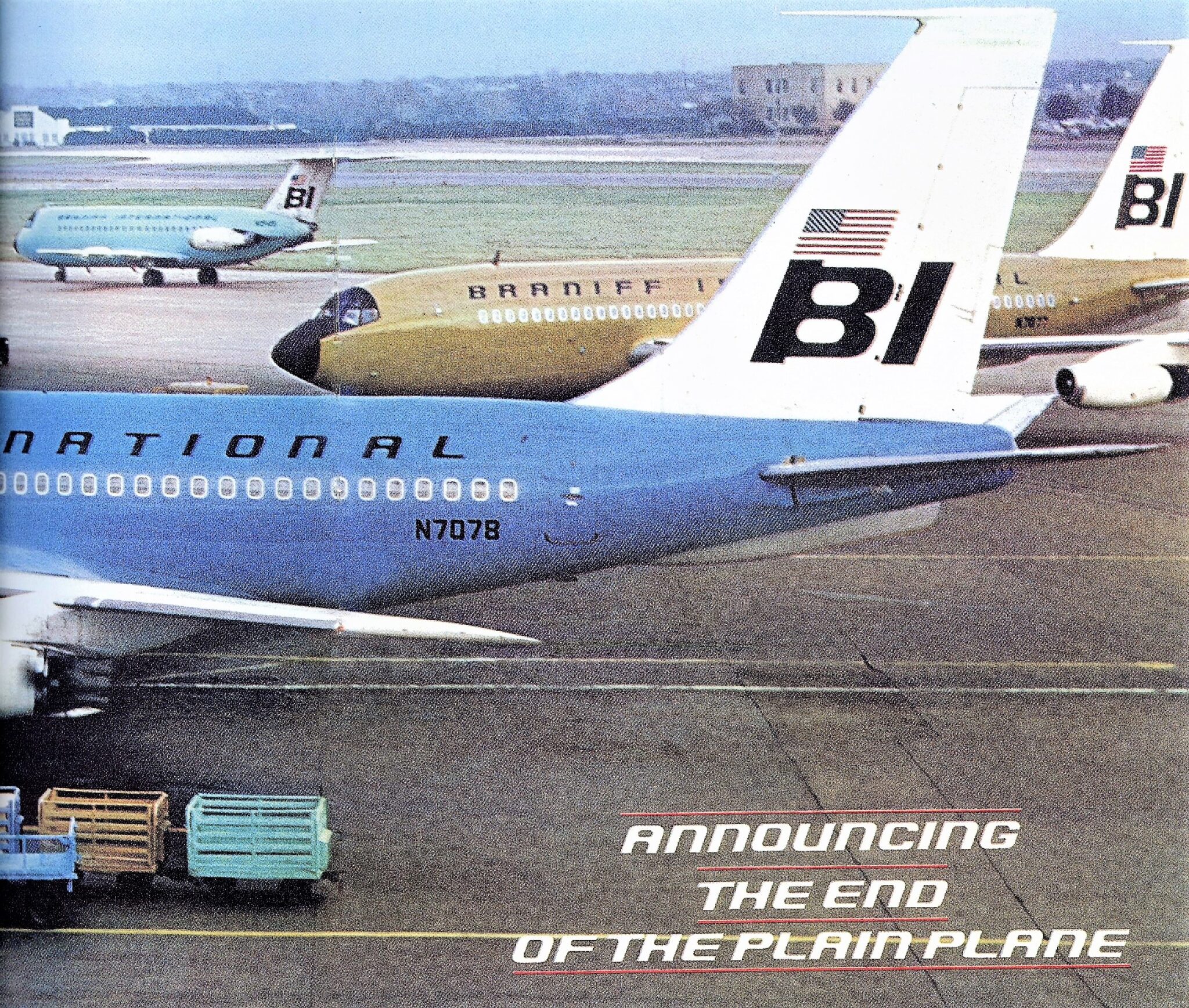
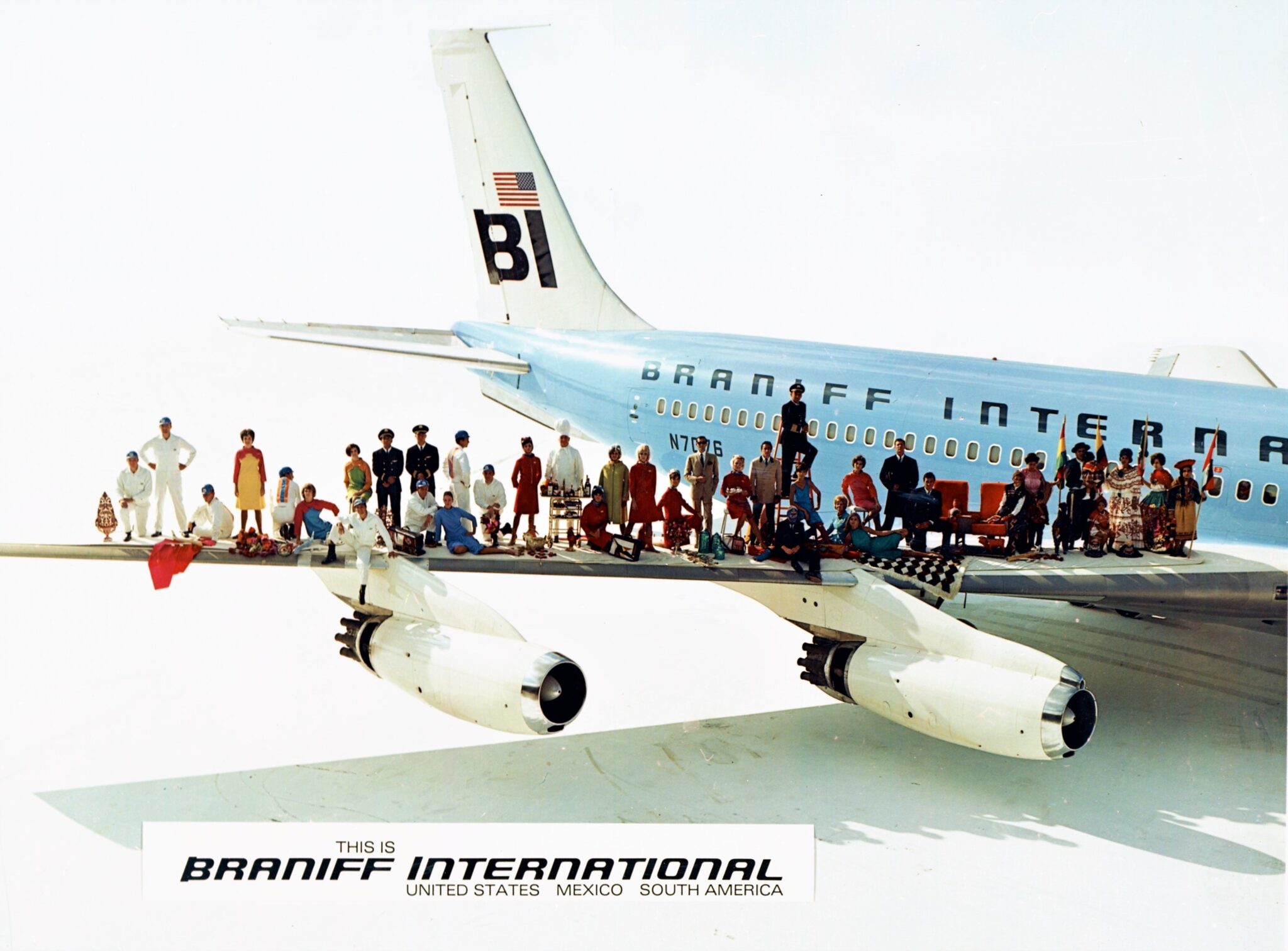
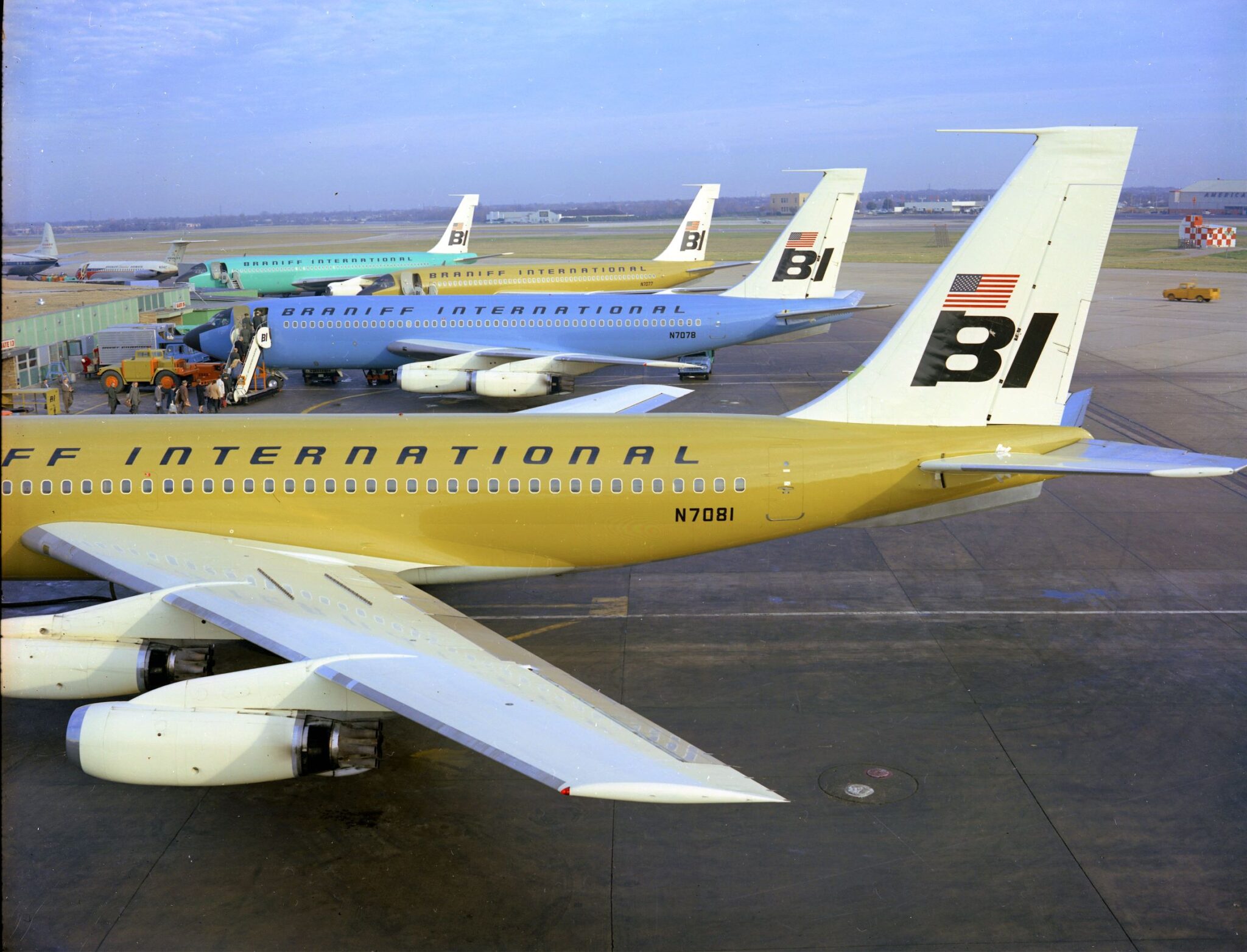
It was referred to as the most dramatic image overhaul in the history of commercial aviation and it was the brainchild of one woman. In 1965, Braniff International unveiled its ‘End of the Plain Plane’ campaign and introduced Braniff’s Flying Colors across the fleet. The industry would never be the same again.
Braniff’s History
Braniff Airways was founded in 1930 by brothers Tom and Paul Braniff. The airline grew first via an air mail contract granted by the Post Office Department in 1934, then through route awards made to it by the Civil Aeronautics Board (CAB).
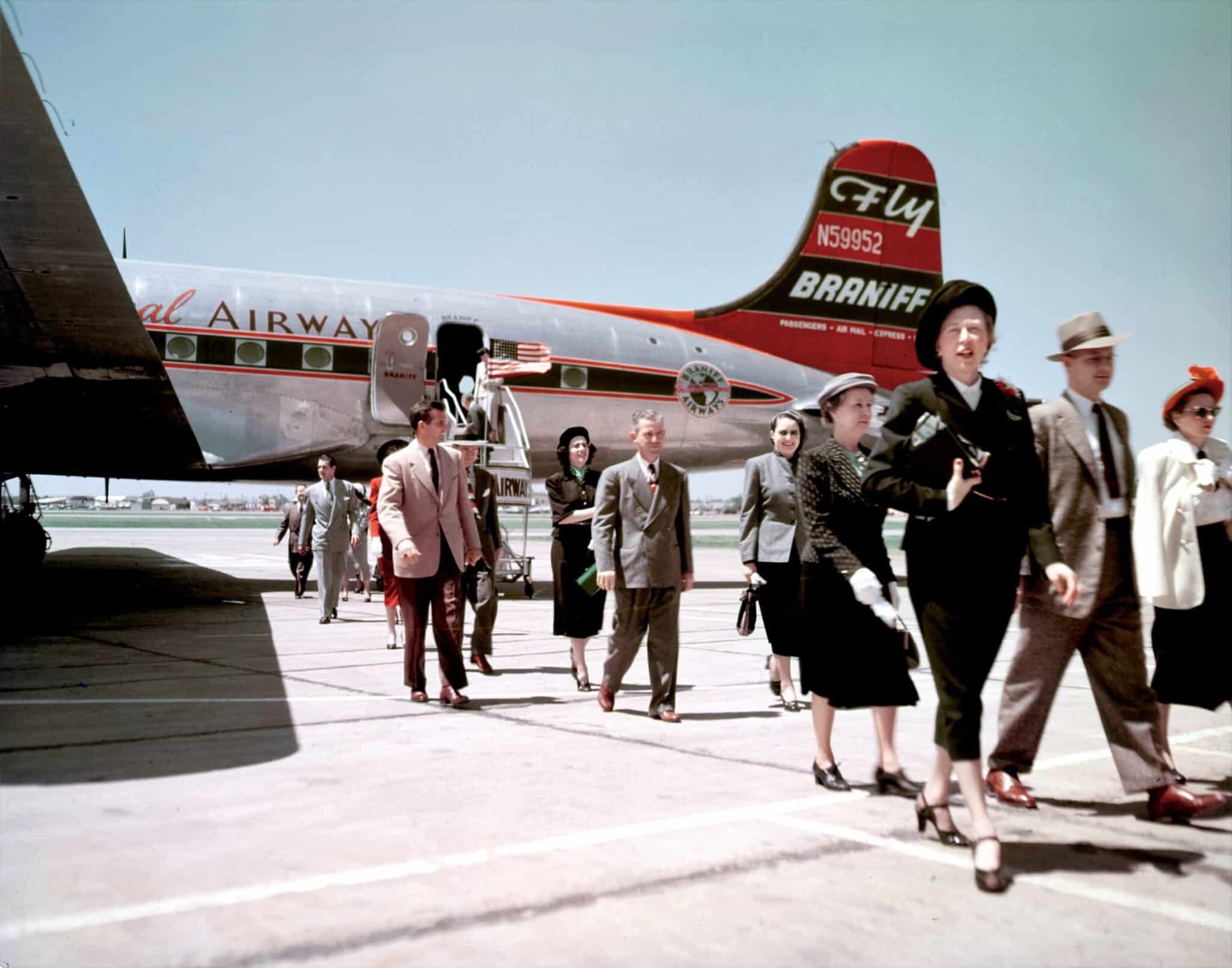
PASSENGERS DISEMBARK FROM A BRANIFF DC-4 IN THIS 1950 PUBLICITY PHOTO. PROCTOR/lIVESEY/THOMAS COLLECTION
After World War Two, Braniff added ‘International’ to the company name once it was granted approval for service to South America . By 1950, Dallas-based Braniff’s system stretched from Chicago to Buenos Aires.
In 1952, the airline grew even bigger when it absorbed Mid-Continent Airlines through merger and, later in the decade, began transporting customers in the lucrative market between the major cities of Texas and Washington, DC, and New York.
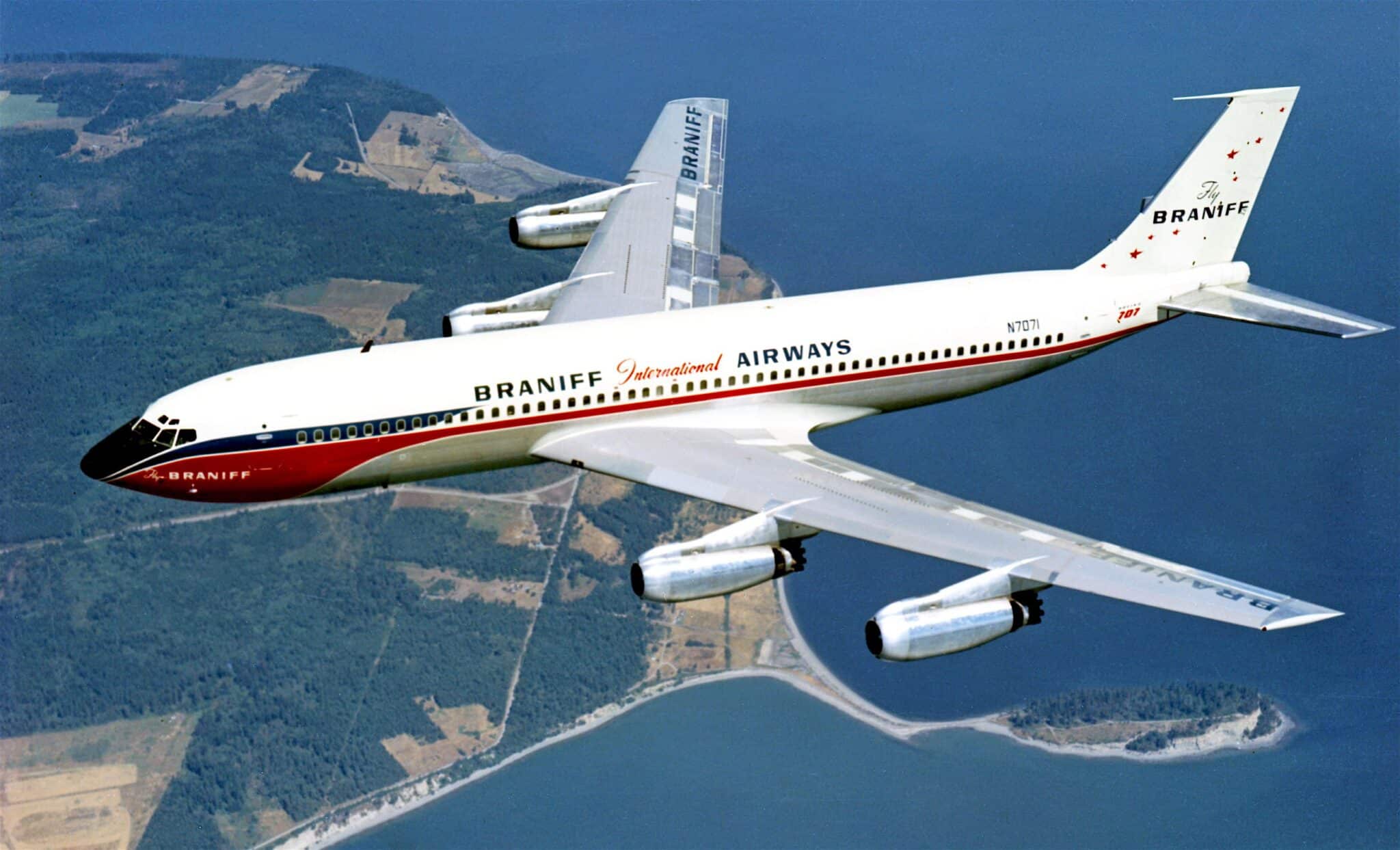
BRANIFF’S LIVERY PRIOR TO 1965, DISPLAYED on A Boeing 707, was typical of airline paint schemes at the time. BOEING COMPANY PHOTO FROM THE PROCTOR/LIVESEY/THOMAS COLLECTION
But Braniff was probably the biggest airline that no one out of its service area had never heard of. Its name did not carry the cachet of Pan Am, TWA, United, or American. The term ‘stodgy’ would not have been inappropriate when describing Braniff’s image. It was a conservative and profitable company flying modern aircraft emblazoned in traditional colors – red, white, and blue – with a livery typical of the day. The company name was written in full – Braniff International Airways – across the white crown of the fuselage while the words ‘Fly Braniff’ graced the aircraft tail.
A Change in Management For Braniff
In 1964, Greatamerica Corporation acquired 58% of Braniff’s outstanding stock. Troy Post, President of Greatamerica, recruited 44-year-old Harding Lawrence to run his newly purchased airline and, on April 5, 1965, Lawrence became Braniff’s new president.
Harding Lawrence had been a valuable asset to Robert Six, the president of Continental Air Lines, his former employer. When Troy Post brought him to Braniff, the idea was for Lawrence to shake things up and change the airline’s image from drab to eye-catching. The intention of the new management was to make Braniff’s name familiar around the world with an “imaginative approach to marketing”.
Mary Wells, the advertising executive behind Braniff’s makeover. PHOTO Copyright Braniff Airways, Inc. All rights reserved.
While he was at Continental, Harding Lawrence had met Mary Georgene Berg Wells, an advertising executive with the Jack Tinker and Partners Agency, who had been brought in to help Continental promote its planned purchase of Supersonic Transports. Continental’s SSTs never became a reality, but Mary Wells impressed Harding Lawrence. After moving to Braniff, he hired her and her agency to introduce “color, flair and surprise to air travel.”
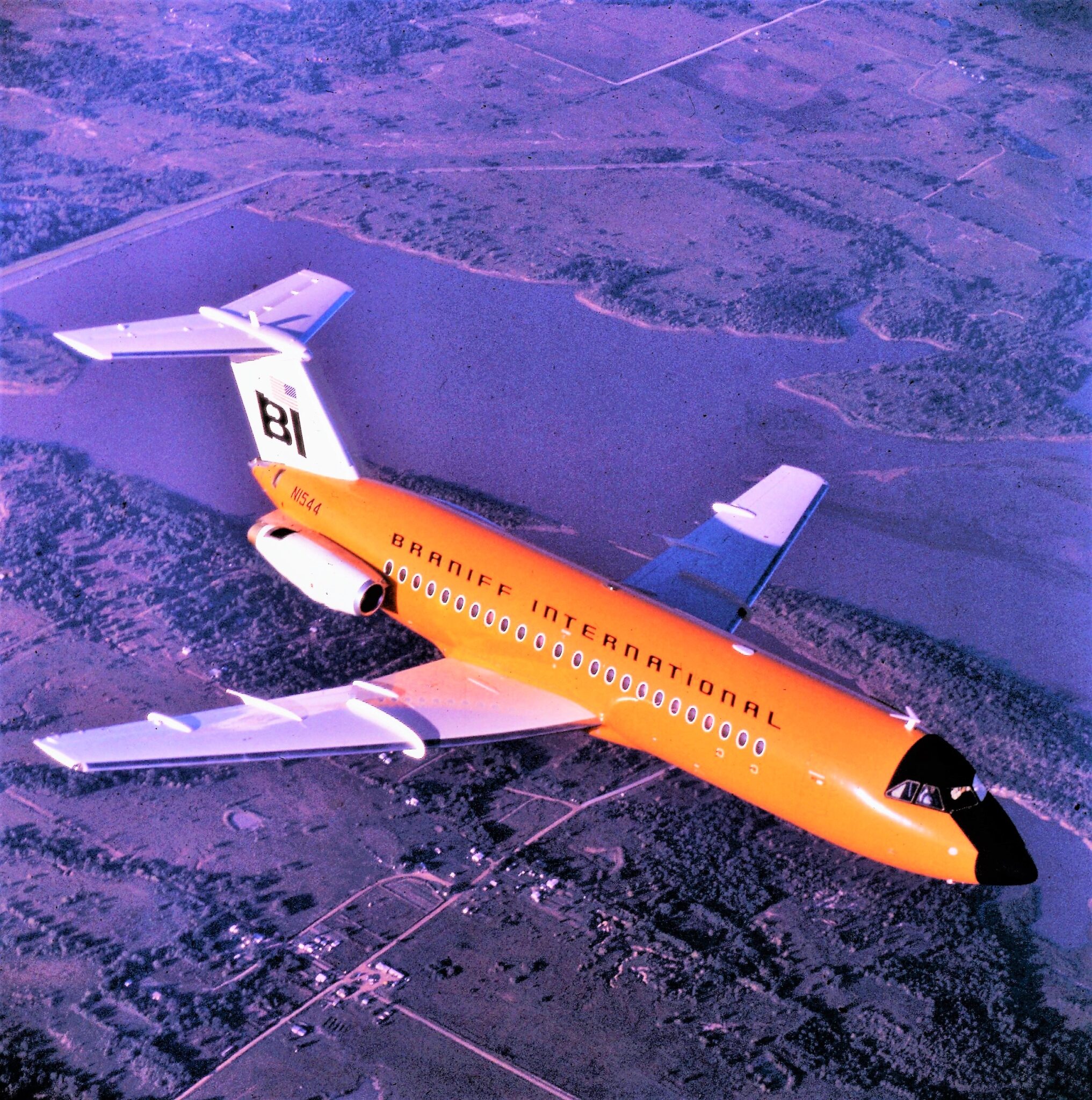
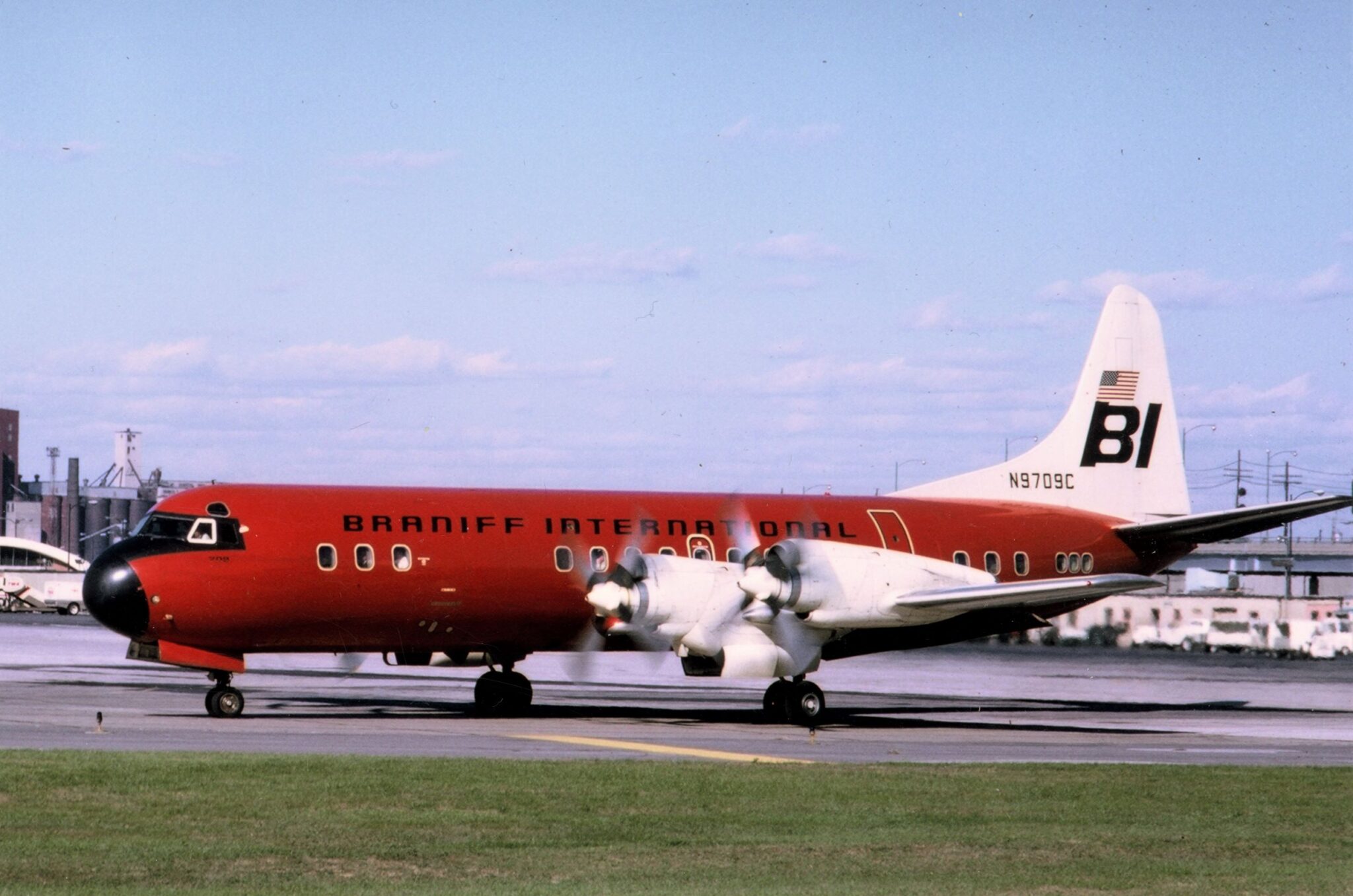
BRaniff’s new look was referred to as the ‘End of the Plain Plane’ campaign. Brochure from David H. stringer CollectionALEXANDER GIRARD was responsible for selecting the colors which would grace the aircraft in Braniff’s fleet. Here is a BAC ONE-ELEVEN wearing Girard’s orange Livery. Photo copyright Braniff Airways, Inc. All rights reserved.Lockheed L-188 Electra N9704c wears a Sky Blue version of the Girard livery. Mel Lawrence photo from the Proctor/Livesey/Thomas CollectionElectra N9709C displays a red paint scheme in this photo taken at Kansas City (MKC). Photo copyright Braniff Airways, Inc. All rights reserved.
The Birth of Braniff’s Flying Colors Because of Mary Wells
Braniff’s corporate identity was not unlike that of most other air carriers at the time – conventional, and some might say dull. But that was about to change.
The most famous transformation of an airline’s image ever to occur resulted from Wells’ collaboration with architect and artist Alexander Girard, and with fashion designer Emilio Pucci. The ‘new look’ that they created together for Braniff included elements never before seen in an airline’s portfolio.
On Point 1960s Fashion
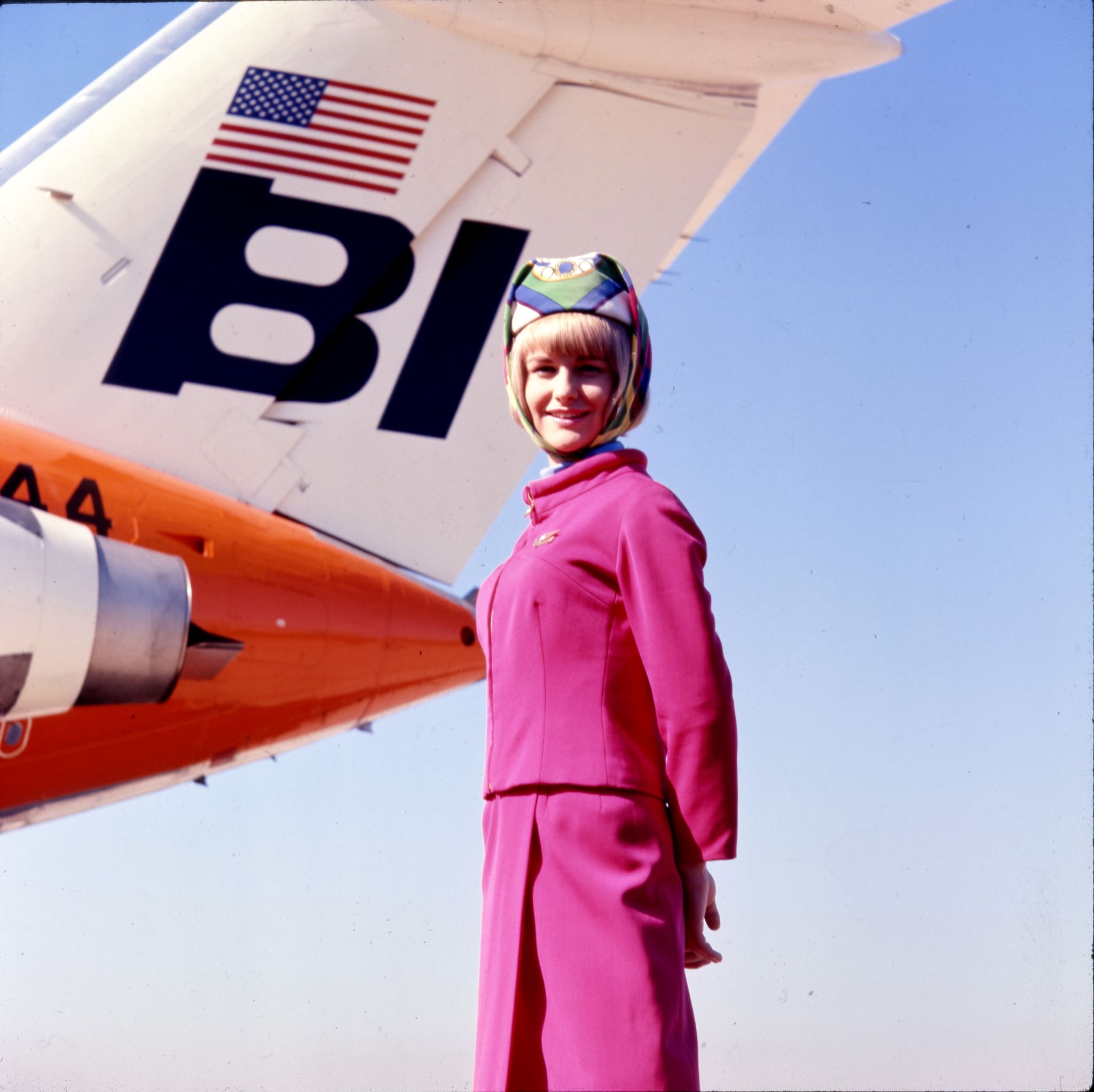
Aircraft were painted in bright Easter egg colors. Flight attendants dressed in uniforms that incorporated a plastic space bubble hat called the RainDome. The same uniform included several layers that could be removed in flight, which Braniff cleverly advertised as the ‘Air Strip’. Ground equipment and facilities were given a new look and even the mechanics donned redesigned uniforms.
Braniff’s new look included flight attendant uniforms designed by Emilio Pucci. Photo courtesy of Airways MagazineThe flight attendant uniform included a space bubble hat, called the Raindome, to protect against inclement weather. Photo courtesy of Airways MagazineThe flight attendant uniform included several layers that could be removed during flight, which Braniff cleverly referred to as the ‘Air Strip’. Seen here is the two-piece Gemini IV Raspberry Greeting Suit with Velveteen hat. Photo copyright Braniff Airways, Inc. All rights reserved.
Braniff dropped the word ‘Airways’ from the company’s informal title. The airline began marketing itself simply as Braniff International, or BI.
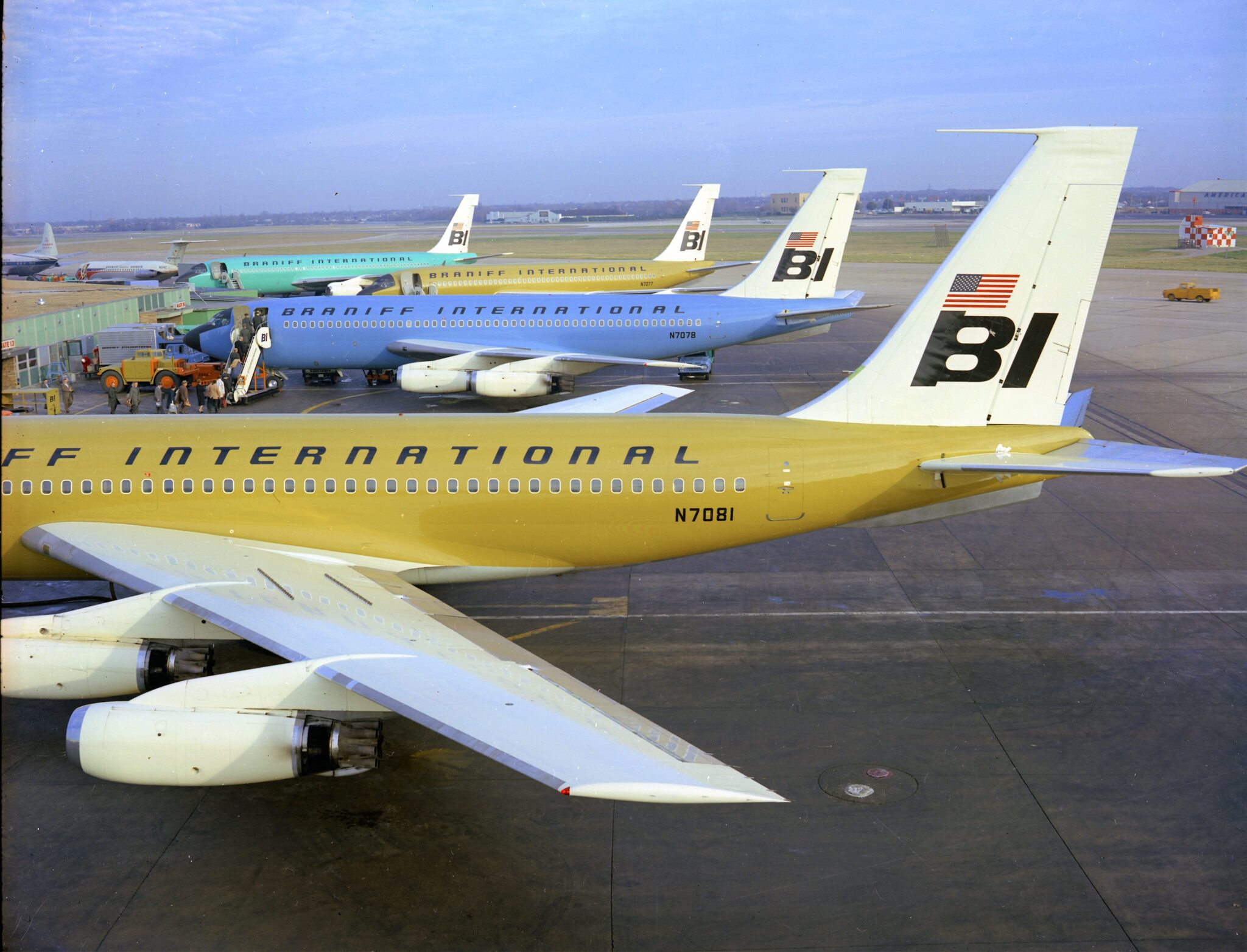
The entire makeover, introduced in November 1965, was referred to as the ‘End of the Plain Plane’ campaign. It served its purpose as Braniff’s name recognition increased worldwide. Even today, casual airline observers remember Braniff’s Flying Colors livery and fashion.
Braniff’s colorful makeover even included the company’s timetables. The word ‘Airways’ was dropped from public use and the company referred to itself simply as Braniff International, or B.I. Timetables: David H. Stringer Collection
Rapid Growth at Braniff
Braniff Airways had grown from a small Midwestern operation into one of America’s largest airlines but, before the end of the 1960s, the company would grow even bigger by absorbing its former rival on South American routes, Pan American-Grace Airways – PANAGRA.
Mary Wells Started an Ad Agency In the ‘Mad Men’ Era
Mary Wells started her own ad agency – Wells, Rich & Greene – in 1966, at the height of the male-dominated ‘Mad Men’ era of advertising firms. And, in fairy tale fashion, Harding Lawrence wound up marrying Mary Wells in 1967. Referred to as America’s corporate sweethearts, Lawrence and Wells stayed together until his death in 2002.
Harding Lawrence, President of Braniff, married Mary Wells in 1967, the year after she started her own advertising agency. Photo copyright Braniff Airways, Inc. All rights reserved.
Mary Wells Lawrence, now retired and in her nineties, left her mark on an industry where airline liveries and corporate identities would never be the same again. In 2020, she was awarded the Lion of St. Mark, a prize given to one person each year by the Cannes Lions International Festival of Creativity for outstanding contribution to the creative community.
A Braniff advertisement introducing the ‘End of the Plain Plane’. This photo was taken at Dallas Love Field in the summer of 1965, several months prior to the official unveiling of the company’s new look. Photo copyright Braniff Airways, Inc. All rights reserved.
Airline Deregulation and Braniff’s Demise
In 1982, Braniff International became the first significant casualty of airline deregulation when bankruptcy followed over-expansion and the company was forced to shut down. Two subsequent smaller incarnations of the airline both ended in similar failure over the next decade.
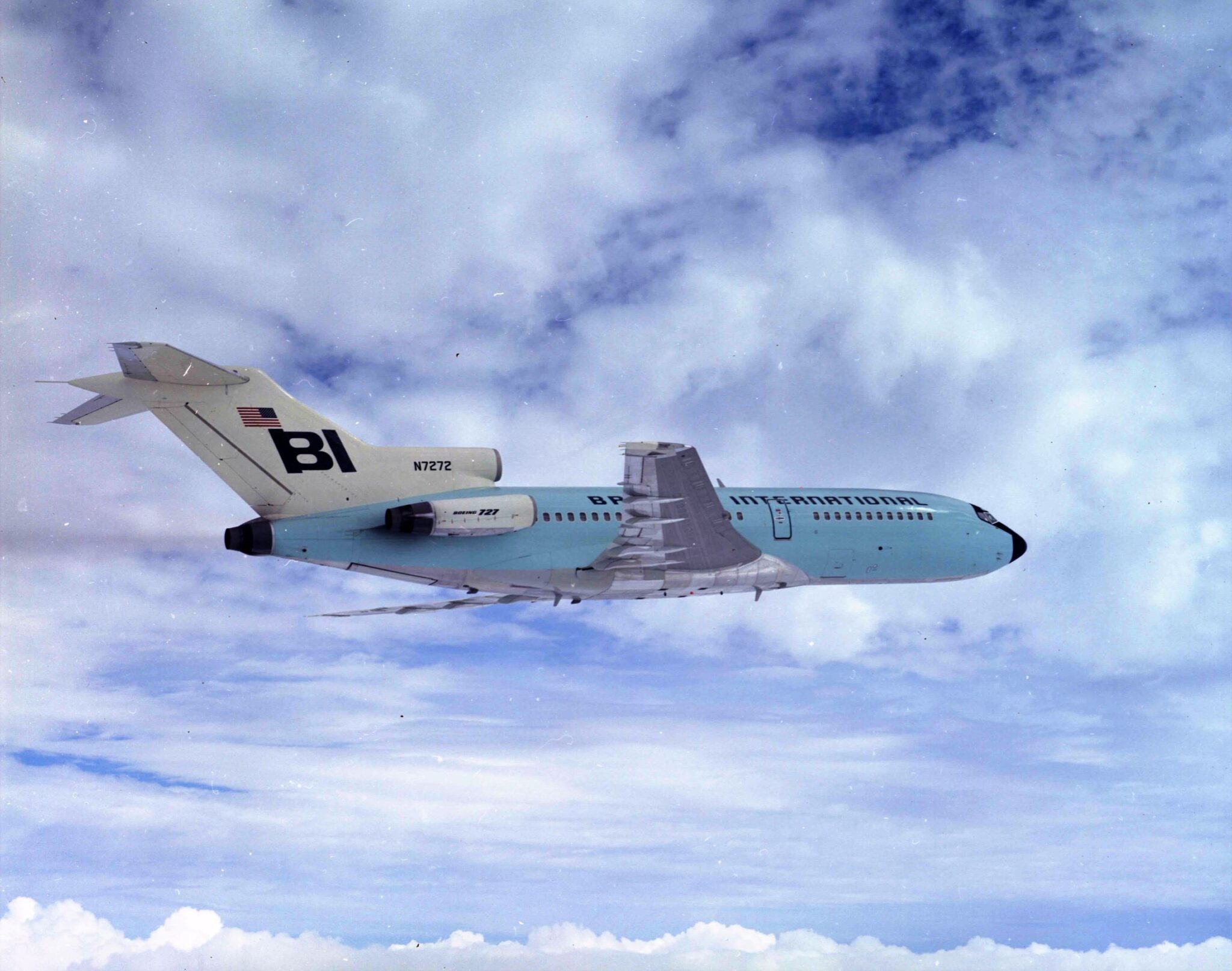
A group of Braniff Boeing 720s, wearing new look Easter egg colors, was photographed at Dallas Love Field. Note the Lockheed Electra and BAC One-Eleven at upper left still wearing the airline’s old livery. Photo copyright Braniff Airways, Inc. All rights reserved.Braniff added Boeing 727s to the fleet in 1966. This 727-027C wears a Sky Blue livery. Photo copyright Braniff Airways, Inc. All rights reserved.
A Note on Photo Credits and the Status of Braniff Today
The author wishes to thank Braniff Airways, Inc., for providing some of the images used in this article.
Braniff Airways, Incorporated, still exists today as a tour firm and hotelier, and manages a portfolio of licensing agreements worldwide that includes aircraft models, posters, high end furniture, textiles, etc.
The company operates its lucrative Braniff Boutique Online Retail store, braniffboutique.com, along with three brick and mortar stores. Braniff also administers its original Employee/Retiree Airline Pass Benefits Program, which offers current and former employees discount travel on partner airlines, cruise lines and hotels. Moreover, The company still assists former employees with pension matters. They also provide aid to Veterans that were exposed to Agent Orange during the Vietnam War.
Braniff Airways supports Braniff Airways Foundation, which is the official repository for Braniff’s historical corporate and employee records, photographs and negatives, and memorabilia. Over 20 million pages (more than half are now digitized) of Braniff corporate documents and 40,000 historical items are included in the Foundation’s Braniff International Heritage Archives, which are housed at three locations in Dallas, Texas.
Braniff Airways has created an endowment at The University of Texas at Dallas to support the Space Sciences Department. An additional endowment has been created to support the administration of Braniff International Heritage Archives.
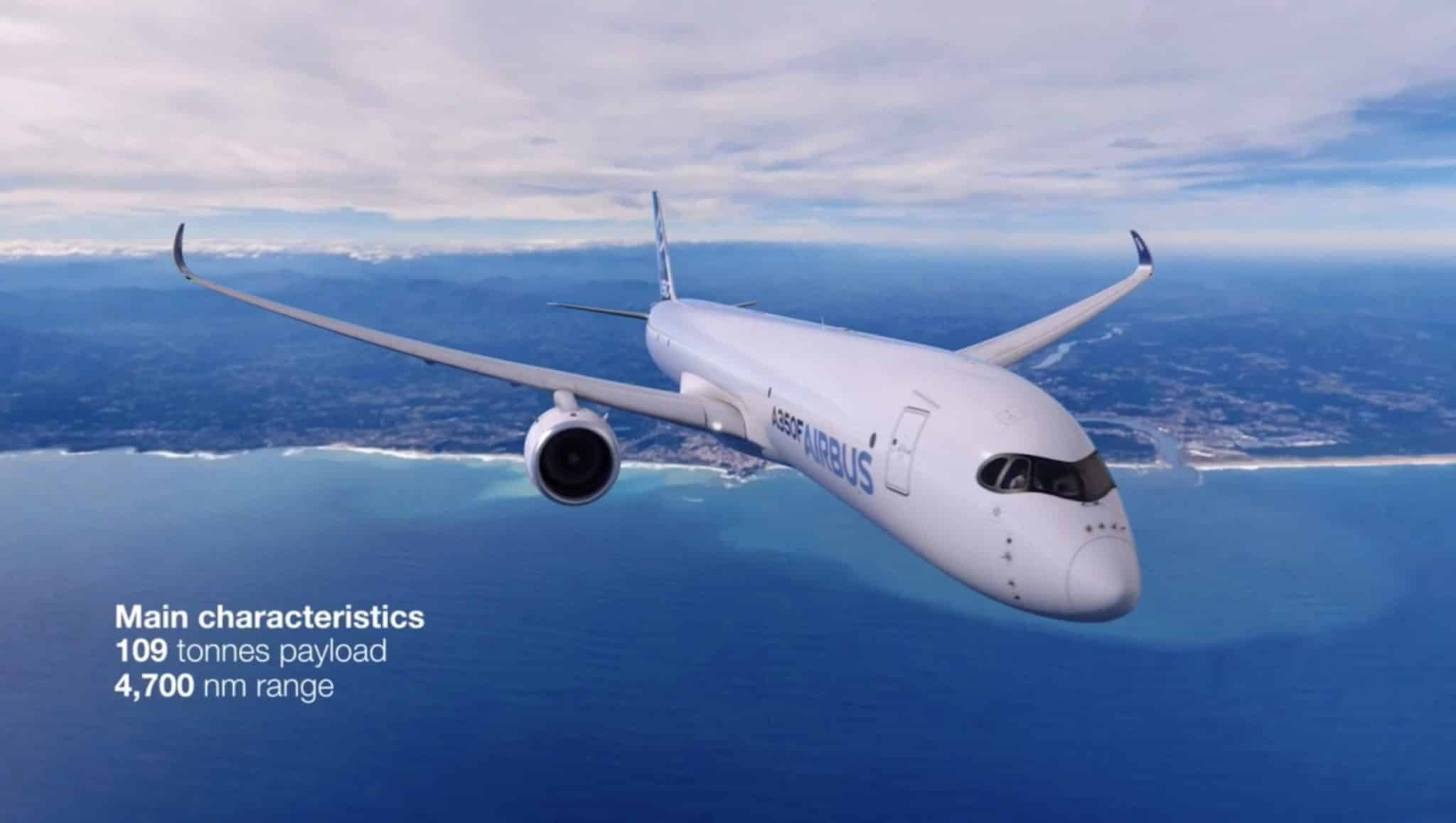
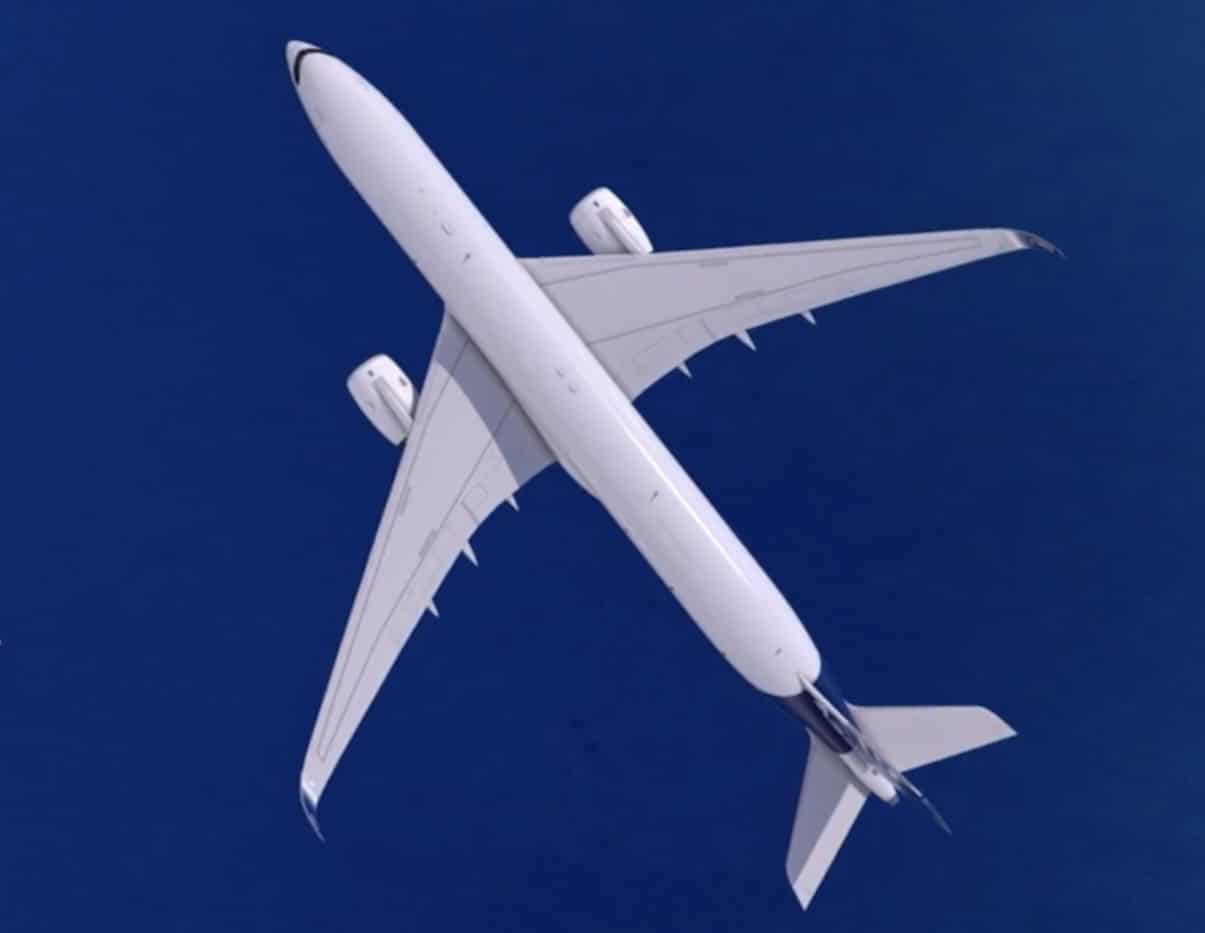
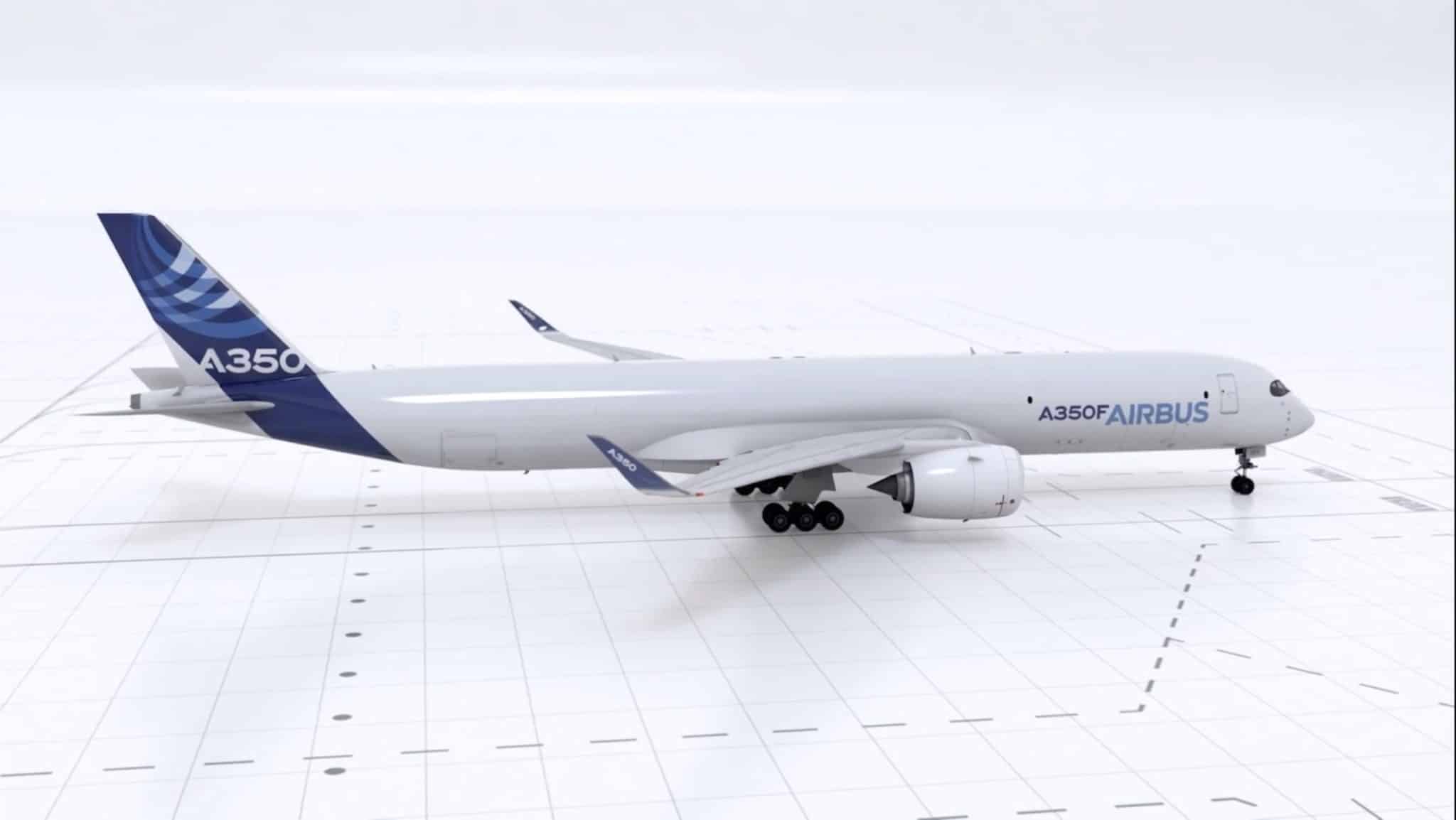
Airbus needs a purdy new livery for their A350F cargo freighter, and they are inviting the public to design it.
And it’s open to anyone in the world too, not just professional designers. If you have an idea, and any creative talent at all, then Airbus wants to see what you got. But you only have until Nov 28, 2022 to submit your design.
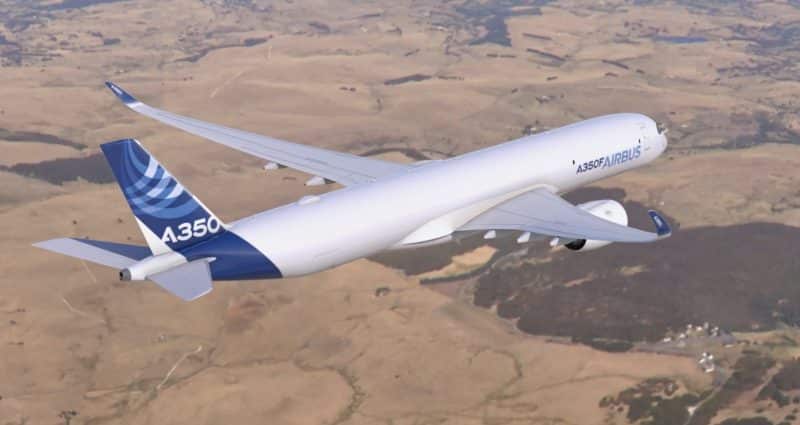
A350F (image: Airbus)
Guidelines for creating the new livery design
“It can be simple or detailed, hand drawn, painted or created using any medium you choose,” says Airbus. “Your creation should consider how this new generation, advanced, modern aircraft can benefit air freight operators and airlines from around the globe. It can be completely abstract or realistic, submitted in 1 or many colours.”
“If your idea is chosen, our design experts will work with you to produce the final livery design, perfectly adapted for the A350F,” adds the company. “It will be seen for the first time in the air on its first flight planned for 2024 and will be used to showcase the aircraft to operators and airlines around the world.”
The winning design will be unveiled at the 2023 Le Bourget Paris Airshow. The winner will get a scale model of the plane with the design, and be invited on a private factory tour to see their design come to life. And of course, to see it takeoff on its maiden voyage.
A350F topside render (image: Airbus)
Airbus does have a list of guidelines for artists to follow, in order for their design to be considered. You can go over that information on their website HERE.
A new cargo freighter for a new generation
The A350F is leveraging all the benefits of the A350, with up to 40% improved fuel efficiency and reduced carbon emissions. It’s a lot lighter too, with an airframe made of over 70% composites, titanium and modern aluminium alloys.
The company says it will also be more resistant to corrosion, and require much less maintenance. Considering all of the above, Airbus expects the A350F to save operators up to 40% on costs.
Image: Airbus
The A350F will have a range of 4,700 nm and be able to carry 109 tonnes of cargo, with 8 temperature zones to haul anything from live animals to pharmaceuticals and refrigerated / frozen goods and more.
The company also expects seamless integration by operators of other Airbus models. The A350F is same type rating as the A350 and common type rating with the A330 family.
United Airlines will add three international destinations to its 2023 summer schedule, the carrier announced Wednesday.
In addition, United will add six more flights to existing European destinations. Citing a 20 percent increase in demand for European travel this past summer compared to 2019, the airline says it will continue to focus on beefing up its transatlantic network.
United Expands in Europe and the Middle East
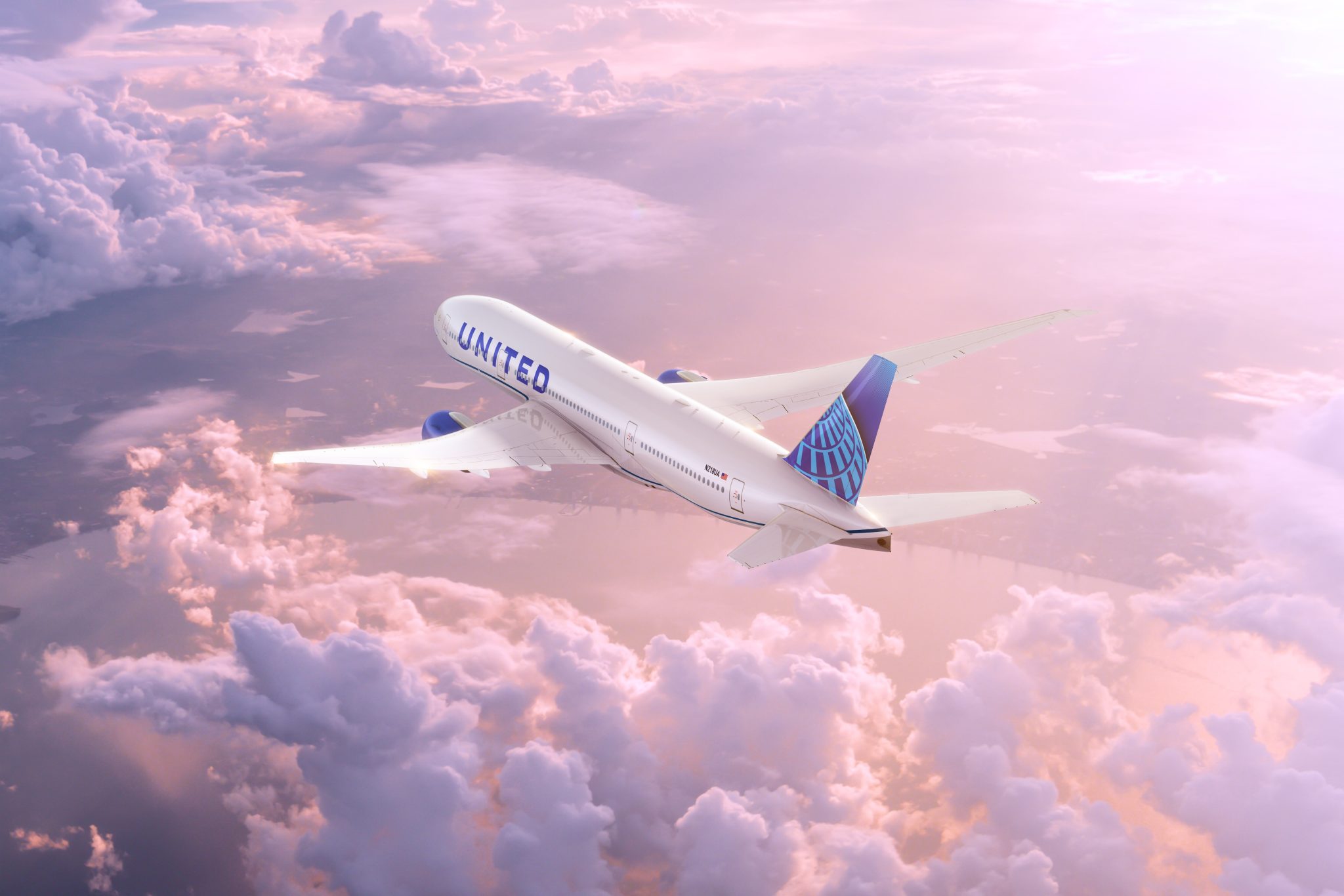
A United Airlines Boeing 777 | IMAGE: United Airlines
Summer 2023 will see United expand its service to three new destinations, including Málaga, Spain (AGP), Stockholm, Sweden (ARN), and Dubai, United Arab Emirates (DXB).
Málaga service will mark the first time United has flown to the resort city on Spain’s Costa del Sol (Coast of the Sun) on the Mediterranean Sea. It is the sixth-largest city in Spain.
Stockholm and Dubai will not be “new” destinations, per se. Rather, United will resume service in each city after an extended absence.
Last month, United announced plans to return to Dubai after a seven-year absence. The carrier last flew to Dubai from Washington Dulles (IAD) in 2016. The announcement was made in correlation with a new codeshare agreement between United and Emirates that will enable customers to have seamless access to each carrier’s network on a single ticket.
United is returning to Stockholm for the first time since 2019. Plans to return to the Swedish capital in 2021 were scuttled before flights even began.
Patrick Quayle, United’s senior vice president of global planning and alliances, says the airline is gearing up for another busy summer.
“Next summer United is offering the best of both worlds: we’re making it easier for our customers to visit the most popular cities in Europe, but we’re also expanding our reach to give travelers access to new places they haven’t yet experienced,” said Quayle. “We expect another busy summer for international travel and are proud to build on our industry-leading global network to offer our customers the widest range of destinations and most convenient travel options.”
Seasonal Flights to Europe Will Also Resume
A United Airlines Boeing 777 Departs Chicago O’Hare International Airport (ORD) | IMAGE: United Airlines
In addition to new service, United will expand its offerings to Rome, Italy (FCO), Paris, France (CDG), Barcelona, Spain (BCN), London Heathrow (LHR), Berlin, Germany (BER), and Shannon, Ireland (SNN). It will also resume nine seasonal routes flown last summer, including Newark (EWR) to Nice, France (NCE), Denver (DEN) to Munich, Germany (MUC), Boston (BOS) to Heathrow, and Chicago O’Hare (ORD) to both Zurich, Switzerland (ZRH) and Milan, Italy (MXP).
United says it will continue seasonal service to four destinations not served by any other North American airline, including Tenerife, Spain (TFN), Palma de Mallorca, Spain (PMI), Amman, Jordan (AMM), and Ponta Delgada Airport in the Azores, Portugal (PDL).
A Rundown of New Flights Offered by United in Summer 2023
EWR-AGP Begins: 31 May Equipment: Boeing 757-200 Frequency: 3x/week
EWR-DXB Begins: 25 March Equipment: Boeing 777-200ER Frequency: Daily
EWR-ARN Begins: 27 May Equipment: Boeing 757-200 Frequency: Daily
SFO – FCO Begins: 25 May Equipment: Boeing 777-200ER Frequency: Daily
ORD – SNN Begins: 25 May Equipment: Boeing 757-200 Frequency: Daily Notes: United offers seasonal service to SNN from EWR
IAD – BER Begins: 25 May Equipment: Boeing 767-400ER Frequency: Daily Notes: United also serves BER from EWR
ORD – BCN Begins: 25 May Equipment: Boeing 787-8 Dreamliner Frequency: Daily Notes: United already serves BCN from EWR and IAD
United will also add additional frequencies to London Heathrow (LHR) and Paris Charles de Gaulle (CDG).
LAX – LHR Second Daily Flight Begins: 25 May Equipment: Boeing 787-9 Dreamliner Frequency: 2x daily Notes: United provides service to LHR from EWR, SFO, DEN, and BOS
IAD – CDG Second Daily Flight Begins: 02 June Equipment: Boeing 787-8 Dreamliner Frequency: 2x daily Notes: United provides service to CDG from EWR, IAD, ORD, and SFO
Delta Air Lines on Tuesday announced a $60 million equity investment in eVTOL (electric vertical takeoff and landing) aircraft that – if realized – will transform home-to-airport transportation.
Delta will partner with Joby Aviation, a California-based company developing eVTOL aircraft designed to function as air taxis. Delta’s initial investment for the venture is $60 million but will expand the investment to $200 million as the partnership reaches significant milestones.
The Atlanta-based carrier now joins a growing list of airlines that have invested in eVTOL technology, including American and United.
Delta’s eVTOL Service Will Launch in New York and Los Angeles
Joby Aviation founder and CEO JoeBen Bevirt and Delta CEO Ed Bastian pose for a photo on 10 October 2022 | IMAGE: Delta Air Lines
Customers who book a flight with Delta will soon be able to reserve an air taxi that will take them from the city to the airport. The service, billed by Joby as “electric aerial ridesharing,” will initially launch in New York and Los Angeles.
The decision to launch the service in the two cities comes as Delta touts years of investments, including multi-billion dollar terminal upgrades at New York LaGuardia (LGA) and Los Angeles International (LAX). Delta officials say its eVTOL service will eventually expand to other markets in the United States and abroad.
The carrier says customers will be able to reserve seats on the Joby aircraft when booking their travel. The service will provide a seamless, premium experience that saves time and simplifies commuting.
“Delta always looks forward and embraces opportunities to lead the future, and we’ve found in Joby a partner that shares our pioneering spirit and commitment to delivering innovative, seamless experiences that are better for our customers, their journeys, and our world,” said Delta CEO Ed Bastian. “This is a groundbreaking opportunity for Delta to deliver a time-saving, uniquely premium home-to-airport solution for customers in key markets we’ve been investing and innovating in for many years.”
The partnership between Delta and Joby will be mutually exclusive for at least five years after commercial service begins. The option exists for the mutual agreement to be extended.
We’ve partnered with @Delta – the world's leading airline – to deliver a seamless, differentiated experience for Delta customers traveling to and from the airport, alongside our standard airport service. [1/2] pic.twitter.com/5g1WKnY0tX
A Joby Aviation eVTOL aircraft | IMAGE: Joby Aviation
The climate-friendly Joby eVTOL aircraft is powered by six ultra-quiet electric motors. It will carry one pilot and four passengers up to 150 miles on a single charge at a top speed of 200 mph. Joby estimates that customers will be able to fly from Manhattan to John F. Kennedy International Airport (JFK) in just seven minutes while avoiding congestion that typically plagues the hourlong journey by car. The aircraft will produce zero operating emissions.
The aircraft is nearly silent during flight and is reportedly 100 times quieter than a helicopter during takeoff and landing.
Having completed over 1,000 test flights over ten years, Joby has received a G-1 (Stage 4) Certification from the Federal Aviation Administration (FAA) – the first eVTOL company granted such a certification. Additionally, in May, Joby received a Part 135 Air Carrier Certificate from the FAA.
What’s Next for Joby Aviation
Joby Aviation’s eVTOL | IMAGE: JOBY AVIATION
Joby says its eVTOL could begin commercial service sometime in 2024. However, the company will not commit to a launch date. Much depends on the eventual certification of the aircraft and other factors beyond Joby’s control.
Joby Founder and CEO JoeBen Bevirt says his company is excited to partner with Delta.
“We share Delta’s unwavering commitment to delivering seamless and sustainable journeys to customers,” said Bevirt. “Their history of innovation, along with their vast operational expertise and leadership on climate change, make them incredible partners for Joby, and it’s an honor to be working alongside them.”
Founded in 2009, Joby is based in Santa Cruz, Calif., and has offices in San Carlos and Marina, Calif., Washington, DC, and Munich, Germany. The first full-scale eVTOL prototype first took to the skies in 2017. The company has partnered with NASA, Toyota, Garmin, and Uber. Additionally, in December 2020, Joby became the first eVTOL company to be granted airworthiness approval from the U.S. Air Force as part of its Agility Prime program.
A Boeing 747-400 Dreamlifter operated by Atlas Air lost a wheel from its main landing gear on takeoff today from Taranto, Italy. And plane spotters along the route captured imagery of the takeoff, flight, and landing.
The heavy lifter was taking off for Boeing’s 787 production facility in Charleston, South Carolina when its wheel began smoking and fell to the ground. The plane is used to haul 787 parts.
Plane continued on after wheel fell off
In the video the gear appears to have retracted properly, so the crew pushed on to their destination and probably dumped some fuel along the way to lighten up for landing with a wheel missing. Tho we’re unable to confirm that.
Photo via ITaliavola
Fortunately, nobody was hurt on the ground as the wheel fell from the sky. Airport personnel recovered the separated tire.
Twitter user @rjsphoto even captured the plane as it flew over Boston, en route to Charleston.
The plane landed without incident in Charleston, SC after its ocean crossing. Twitter user @stephen_bozek was there to capture the landing. The incident is under investigation. There’s no info available at this time about what caused the tire to separate from the gear’s bogey.
It’s not the first time an airliner has lost wheels, and it certainly won’t be the last. A Virgin Atlantic 747-400 landed safely at LGW in London back in 2014 after suffering a failure of its right outer main gear.
A Westjet 767 also lost a wheel on takeoff from Calgary back in 2017. That plane too landed safely back at the airport, after circling for 45 minutes. The tire was found embedded in a runway sign.
More than a dozen websites for American airports were knocked offline Monday morning by an apparent cyberattack originating in Russia, according to a report from the Associated Press.
The incident, which is being described as a “coordinated distributed denial-of-service (DDoS) attack,” did not disrupt any airport operations such as air traffic control, airlines, or security,, officials said.
Who is Behind the DDoS Attack
A Delta jet takes off from Hartsfield-Jackson Atlanta International Airport (ATL) | IMAGE: Facebook
Investigators say Monday’s DDoS attack was the work of a group called “Killnet,” a pro-Russia “hacktivist” group. The group has repeatedly targeted government institutions and private companies around the world since the Russian invasion of Ukraine in March.
The bark is worse than the bite, however. DDoS attacks aim to disrupt the traffic flow to a targeted server, service, or network by flooding them with fake requests. In turn, this renders websites inaccessible to regular users. Although psychologically concerning, DDoS attacks are typically superficial and do not leave any lasting damage.
49 Airports Targeted
St. Louis Lambert International Airport (STL) | IMAGE: Facebook
Word of the upcoming attack came at 0650 ET Monday morning via Killnet’s account on Telegram, a cloud-based instant messaging service. One hour later, the websites for Chicago O’Hare International Airport (ORD) and Chicago Midway (MDW) went offline.
Major airports targeted include Los Angeles International Airport (LAX), and Hartsfield-Jackson Atlanta International Airport (ATL). Additionally, Killnet mentioned airports in Alabama, Arizona, Arkansas, California, Colorado, Connecticut, Delaware, Florida, Georgia, Hawaii, Idaho, Illinois, Indiana, Iowa, Kansas, Kentucky, Louisiana, Maryland, Massachusetts, Michigan, Minnesota, Mississippi, and Missouri. Some of the other affected airports include:
Montgomery Regional Airport, Ala. (MGM)
Long Beach Airport, Calif. (LGB)
Delaware Coastal Airport (GED)
LaGuardia Airport (LGA)
Southwest Florida International Airport (RSW)
Des Moines International Airport (DSM)
Central Illinois Regional Airport at Bloomington-Normal (BMI)
Indianapolis International Airport (IND)
Jackson-Medgar Wiley Evers International Airport, Miss. (JAN)
St. Louis Lambert International Airport (STL)
The Killnet Telegram message provided a list of 49 domains in all. By Monday afternoon, service had largely been restored to affected sites.
No Lasting Damage – This Time
Russian Hackers Target US Airport Websites 72
Killnet has stated that one of its aims is to target America’s civilian network sector. It is part of a coordinated campaign to disrupt critical sectors in America and other NATO nations, likely as an act of retaliation to its involvement in the Russia-Ukraine war.
John Hultquist, Vice President of Threat Intelligence at Mandiant, a Virginia-based company that helps organizations defend against cybercrime, worries that this incident could be a prelude to future – more brazen – attacks.
“DDoS is typically superficial and short-lived but also highly visible,” Hultquist tweeted on Monday. “Their limited aim is to manipulate our perceptions. These are not the serious impacts that have kept us awake. My only concern here is that we may be entering a new phase of increased targeting in the US that might include more serious incidents. Time will tell.”
In addition to US airports, the hacktivist group has recently targeted a US Congress website and multiple state government websites.
Most of us take the gift of vision for granted, and find it hard to imagine life without it. Going blind is a terrifying thought for many people, especially pilots. But for 21-yr old Kaiya Armstrong it’s just another challenge, and she’s piloting a plane cross-country this week to inspire others in their own struggles.
Armstrong is flying a Cessna from Phoenix, Ariz. to Washington, DC as part of an event called Flight for Sight. It’s a “challenge event” by the Foundation for Blind Children (FBC) to raise awareness around vision loss, and inspire everyone to believe in themselves, whether they are blind or not.
No sight? No problem!
Blind 21-year-old Kaiya Armstrong took off from Falcon Field Airport today. She’ll land in Washington, D.C. next week.
— Foundation for Blind Children (@seeitourway) October 7, 2022
“We do a lot of these challenge events to give our kids a chance to prove to the world they can do anything,” said FBC CEO Marc Ashton.
Other FBC students have sailed the Caribbean, summited Mt. Kilimanjaro, and rafted the Grand Canyon.
Training to fly blind
She’s spent the last several months attending ground school and in-air flight training to prepare for her mission, using the same devices and tools as a sighted pilot, albeit differently, to accommodate her needs.
Kaiya Learning the layout of her cockpit in braille (photo: FBC)
Most students learning to fly a use a map of the cockpit to study the layout of a plane’s instruments and gauges at home. Armstrong’s map was transcribed in Braille, so she could memorize the layout of the cockpit same as any student pilot.
She identifies levers and buttons in the cockpit by touch. The handles are textured differently to help discern one similar handle from another. On takeoff, the sound or pitch of the plane tells her how high or low she’s flying.
Kaiya pilotIng on a training fliGht (photo: FBC)
And since she can’t see her compass, she’s learned to maintain direction by timing her turns. If, for example, she turns at 3 degrees per second, then she knows when she’s turned 180 degrees. And she’s been able to get it nearly spot on in training.
She also trained with a handsfree headset that magnifies near and far vision called Patriot Viewpoint. For Kaiya’s training it let her see the cockpit and better understand the layout. It even allowed her to see her mom’s face for the first time in years.
Kaiya also logged training time in a FAA certified Cessna simulator at Aerial Engagement in Scottsdale.
Kaiya in The sim (photo: FBC)
Armstrong lost her vision as a young teenager due to an autoimmune disease. She has no peripheral vision and can only see a couple inches in front of her. So she can’t see the plane’s instrument panel, but she says can see her favorite thing about flying; the earth’s colors below.
“This very last time we went, we flew over a little lake. I remember thinking how blue the water was,” she said after a recent training flight.
Co-pilot guide is flying along, with minimal assistance
Tyler Sinclair, a CFI from Leopard Aviation, is her guide flying along with her. He describes what is happening outside of the plane, relays the instrument readings and other key markers and gives her cues, but it’s her at the controls doing the taxing, takeoff, flying and landing.
“While Kaiya is piloting, I just help her navigate, helping her just keep the plane level,” Sinclair said. “She’s actually really good at it, I just give her some small verbal cues, but she does most of the flying herself.”
Kaiya and Tyler took off on their cross-country flight Oct 7, and have since traveled through Colorado Springs and Kansas City. They’ll stop again in Louisville, before pushing on to arrive in DC on Oct 13 for World Sight Day.
“The biggest message I want everyone – both sighted and blind – to take away from this is that the only limits we have are the ones we’ve given ourselves,” says Kaiya. “I want everybody to stop limiting themselves.”
Earlier this year, American Airlines sued the powerhouse media platform “The Points Guy“, best known for offering tips on how people can maximize their travel while minimizing their spending. But their niche is reporting on how to best gain and use airlines miles.
The company launched a new app in Sep 2021 that allows users to track their frequent flyer miles – from all carriers – in one place. It’s like a one-stop shop for users to track their airline, hotel and credit card miles and points all under one roof.
Photo: American Airlines
But AA claims the company is profiting off the airline’s proprietary data and violating their AAdvantage loyalty program’s trademark and customer service privacy. They also claim claim Points Guy is violating the Computer Fraud and Abuse Act.
Points Guy wants to establish that the public can legally manage their own miles / points / rewards via a third-party, if they wish. And when AA first sent them a cease and desist, it was Points Guy who sued first.
AA’s suit seeks a court order forcing Points Guy to remove all links and data they have stored about the airline’s AAdvantage member accounts. Points Guy, combined with its website, app and various social media, reaches over 10 million views a month.
The TPG team hard at work in New York City. (Photo by Ken Pao / The Points Guy)
Both sides had a chance to settle the matter. But their lawyers notified a federal judge in Fort Worth, Texas this week that the talks failed.
The case will now head to trial in Sep 2023 (American Airlines Inc. v. Red Ventures LLC, 22-cv-44, US District Court, Northern District of Texas).
“We launched The Points Guy App for free last year with the goal of allowing travelers to track all of their loyalty programs in one spot. We believe that this gives consumers the power to see how much value they actually have in loyalty points and frequent flyer miles so that they can travel the world,” said Brian Kelly, Founder of The Points Guy.
Brian KellY, founder of The Points Guy (pHoto: Points guy)
“We are choosing to fight back against American Airlines on behalf of travelers to protect their rights to access their points and miles so they can travel smarter. We’ll continue to advocate because we believe the consumer has the right to choose whether you share your loyalty balances with a third party app that will make your life easier.”
Ultimately, both parties want the same thing – monetized views on their apps and websites. And the app = less people on AA’s platforms. Funny enough, Points Guy still publishes positively about AA, and the AA PR machine still pitches Points Guy with stories to do.