The “endangerment finding” is the first step in the EPA process under the Clean Air Act to flex their authority to reduce lead pollution by aircraft.
AvGas is the only transportation fuel still used in America with lead
“When it comes to our children the science is clear, exposure to lead can cause irreversible and life-long health effects,” said EPA Administrator Michael S. Regan. “Aircraft that use leaded fuel are the dominant source of lead emissions to air in the country. Today’s proposal is an important step forward as we work to reduce lead exposure and protect children’s health.”
According to the EPA, aircraft that use leaded fuel are the largest remaining source of lead emissions into the air, contributing 70% of the lead according to government statistics.
Avgas is the only transportation fuel still used in America to contain lead. The most common and reliable is 100 octaneLL, which has an additive to prevent engine damage at higher power settings.
Their findings will undergo public notice and comment, and then be evaluated for a final finding next year. If finalized, the EPA would then propose regulatory standards for lead emissions on some 200,000 general aviation aircraft operating on leaded fuel.
The EAGLE Initiative is based on four pillars of action (image: FAA)
It’s an effort to establish policies and activities to transition piston-engine aircraft to unleaded fuel by the end of 2030, without adversely affecting the existing piston-engine fleet or compromising safety and the broader economic and public benefits of general aviation.
For the first time since 2009, the birthplace of supersonic flight is about to have an air show open to the public on-base. And considering the history of Edwards AFB and flight testing done there, the lineup and variety of aircraft will be quite unique from any other air show in the nation.
Taking place on Oct 15-16, the Aerospace Valley Open House, Air Show and STEM Expo has been in works now for 5 years, and will see the 412th Test Wing bring out all their toys. The show will celebrate the 75th anniversary of the USAF and breaking of the sound barrier for the first time on Oct 14, 1947 by then-Capt. Chuck Yeager.
Edwards flew a hybrid air show in 2020, but the public was not allowed on-base due to the Covid-19 pandemic. Instead, they brought the air show to the people by flying around the local county and broadcasting it live online.
The show will bring back Sonic Boom demos, an old Edwards air show tradition. It’s the only show in North America allowed to break the sound barrier. USAF and NASA jets will be “going full steam” to see who can break the sound barrier first. The altitude will be above 28,000 feet and the loudness of the booms will be based on weather conditions, but the crowd will hear and feel it.
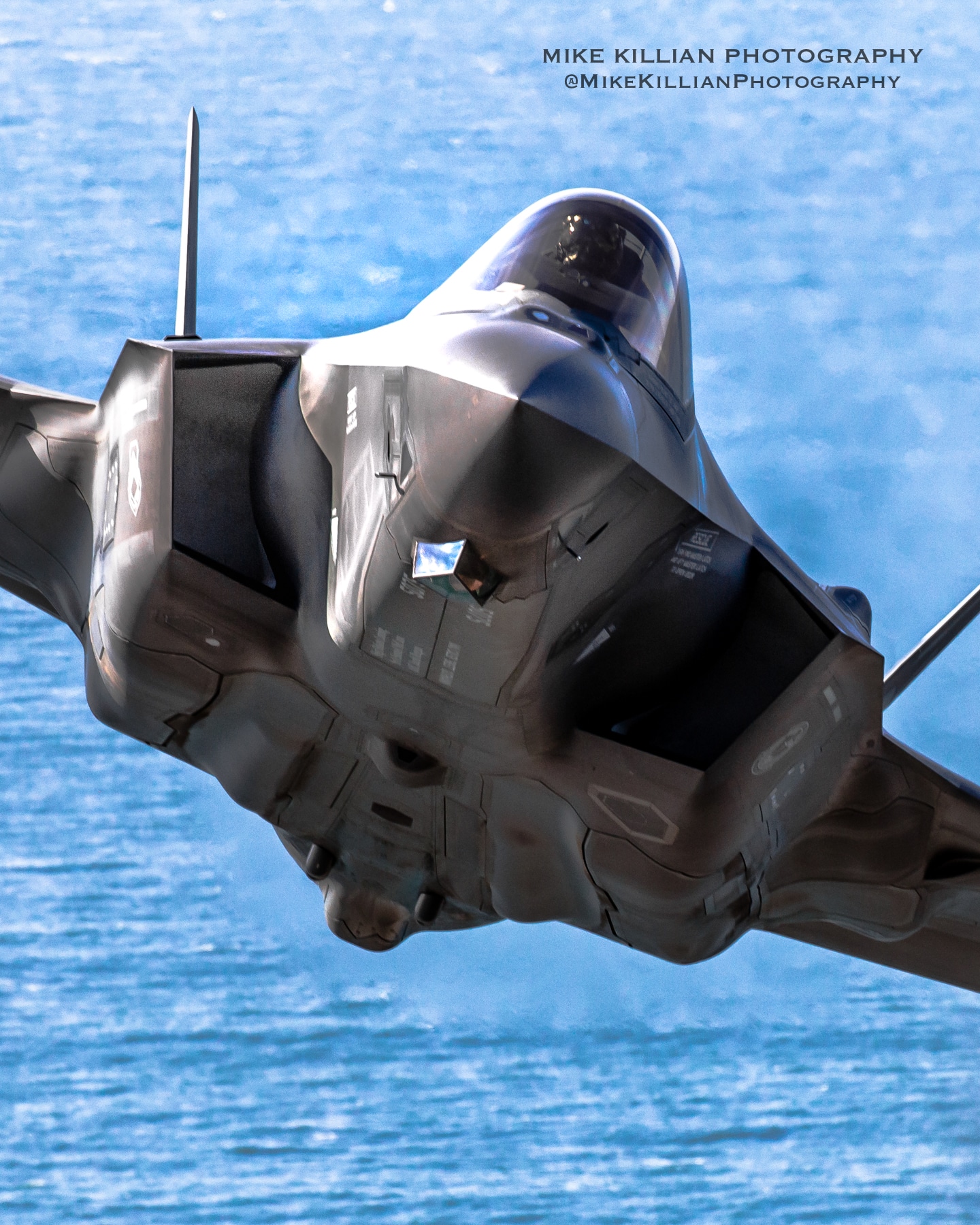
F-35s will be one of maNy Edwards jets raging in the skies for the air show oct 15-16, 2022 (photo: mike killian)
“We are working hard with our NASA Armstrong Flight Research Center partner to showcase a unique demonstration of sonic booms- past, present and future” says the show.
STEM will be a focus
It will also focus heavily on STEM, and include the largest STEM expo in USAF history. The iconic Hangar 1600 (seen in Captain Marvel) will be transformed into an “oasis of technology and exploration” says the show. Flight simulators and other tech and fun stuff will be available to the public from over 60 exhibitors.
One of several flight simulators that will be on exhibit for the public At the aerospace valley air show Oct 15-16, 2022 (photo Credit: AV air show)
“Being the center of the aerospace testing universe, and how we develop future technologies, we are uniquely positioned to put some of those technologies on display at a level that is accessible and interactive for the public,” says air show director USAF Major Samuel Freeland.
“Especially with the younger audience, when you’re out there and you watch a 5th gen fighter put on a demonstration, that is the foundation of what gets people there to make those technologies possible.”
Usaf thunderbirds in their signature delta formation (photo credit: mike killian)
Thunderbirds are headlining
The USAF Thunderbirds will headline the show. NASA will be showing off some of their unique aircraft too, including their 747 SOFIA flying telescope. SOFIA will arrive Sat during the show and be on static display after, and leave on Sunday (during or after the show). So it WILL be flying in the show, along with NASA’s DC-8 & jet fleet.
L1011 will be there too
The world’s only flying Lockheed L-1011, Northrop’s Stargazer, will be on static display. And so will a RQ-4 Global Hawk. Every tactical fighter in the USAF inventory will be present. B-1 and B-52 bombers will also roar through the sky.
Edwards AFB airshow promises more surprises
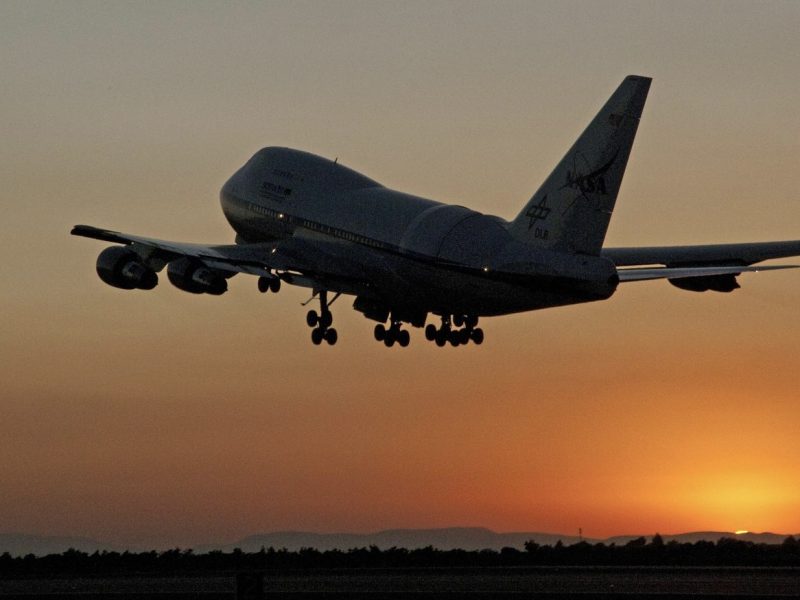
NASA’s 747 SOFIA flying telescope (now retired) will be open to the public and flying in the air show oct 15-16 (nasa photo)
Many surprises are in store too, as the show has been hinting at on their social media.
Lockheed’s Skunk Works will also be bringing out their Darkstar hypersonic jet prototype, featured in this summer’s movie Top Gun Maverick. The plane can’t fly, as it is just a movie prop, but the model does feature a functional working cockpit, and there’s no doubt that Skunk Works is working on the concept for a real plane.
The Chinese even saw Darkstar in satellite inages and thought it was real, which sent them into a panic.
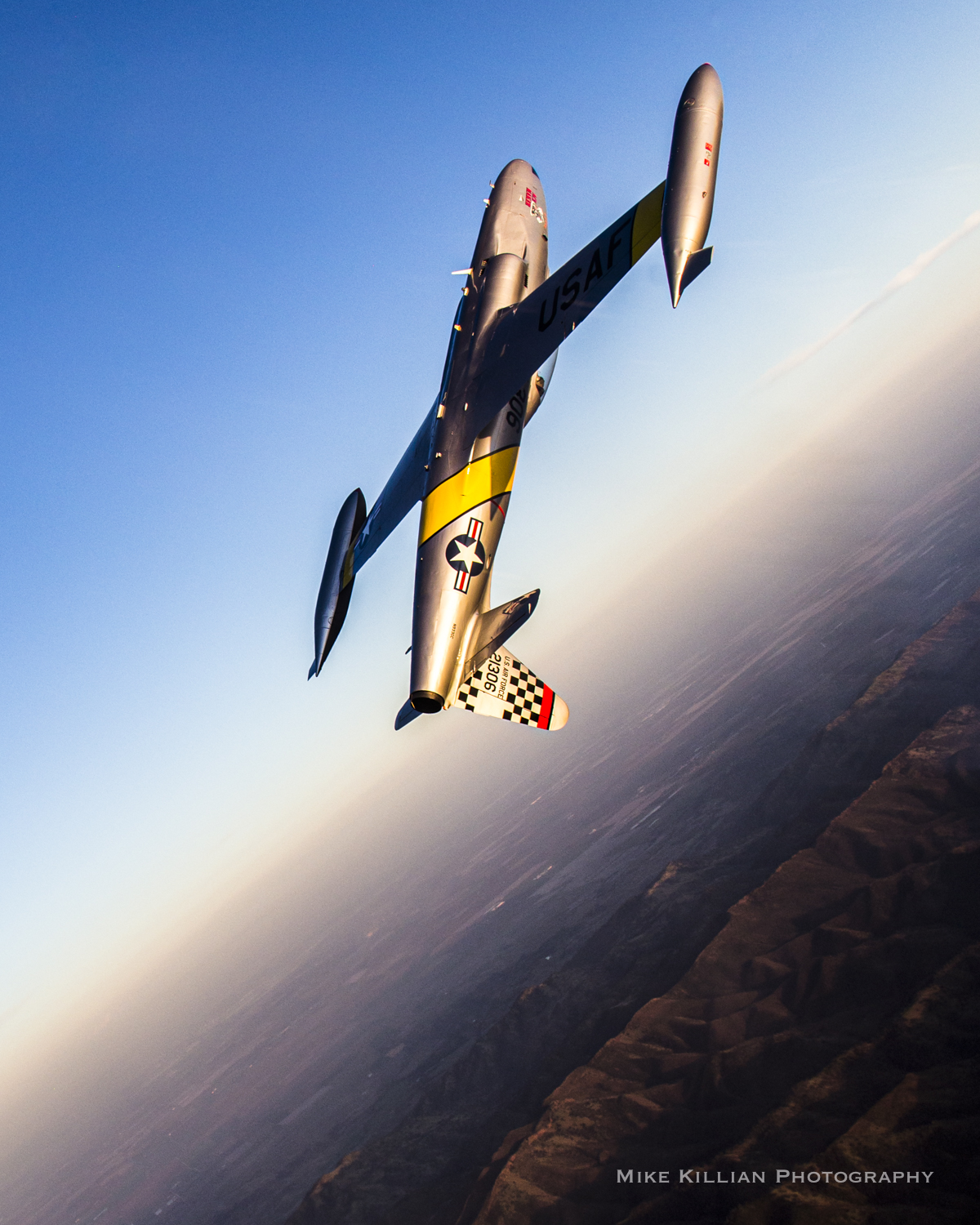
Gregory “WIRED” Colyer from Ace Maker Airshows will be flying his T-33 demo, showing off America’s first fighter jet trainer which helped usher in the jet age 75 years ago.
Gregory “wired” colyer will Be flying hIs ace maker t-33 demo at the air show, highlighting the USAF’s first jet trainer which paved the way for all the jets After. (photo credit: mike killian)
Edwards actually contracts Colyer as an instructor to support test pilot student training. He flies Qualitative Evaluation missions with the T-33 where students have to figure out a bunch of performance stuff, fly a set of test cards, record the data, then evaluate the jet and write a report.
Other civilian acts will be flying as well. Static displays of vintage aircraft will also be on hand from organizations such as the Golden Age Flight Museum.
A look back at some Of the 2009 open house air show flying at edwards, courtesy of sPencer hUghes
The event is free to the public. Gates will open at 8:30am on both days. The base will close when it hits capacity of 50,000 people. Premium VIP viewing options are available to purchase.
NASA has begun studying the potential for a privately-funded SpaceX mission to boost the Hubble Space Telescope’s orbit.
The engineering marvel has been delivering breathtaking views of the universe now for over 30 years, thanks in large part to 5 space shuttle missions that serviced it. The last, however, was in 2009, and Hubble’s orbit has been degrading ever since.
Nasa astronauts servicing hubble on the sts-103 space shUttle discovery mission (photo: nasa)
Those missions repaired and replaced hardware, upgraded the observatory, boosted its orbit, and extended its operating life and benefit to humanity by many years.
Hubble’s Remaining Time Is Limited
It’s now currently at 332 miles, and will fall faster and faster as time goes on. If nothing is done, it will burn up in the atmosphere in the mid 2030s.
Spacex launch from historic pad 39a at kennedy space center in floRida (photo: mike killian)
Billionaire Jared Issacman, who commanded the first all-civilian private SpaceX mission on Inspiration-4 last year, now wants to take another SpaceX mission to boost Hubble. He’s already training with a new crew for another all-private mission next year, called Polaris Dawn, and intends to command 2 other Polaris missions with SpaceX after that.
“Polaris is excited to assist in this study,” says Issacman. “Hopefully, it leads us down a path that ensures Hubble continues to service science for decades into the future.”
Issacman in orbit on the inspiration-4 mission with SpaceX
He even says the mission would come at no cost to the government or tax payer. Issacman self-funded Inspiration-4 and is doing the same with Polaris, and raising money for St Jude Children’s Hospital in the process.
Concept Presented To NASA
SpaceX has gained plenty of experience docking their Dragon spacecraft in orbit. They launch cargo and crew to the International Space Station for NASA regularly, and they think Isaacman’s idea could work. So together, he and SpaceX brought the idea to NASA.
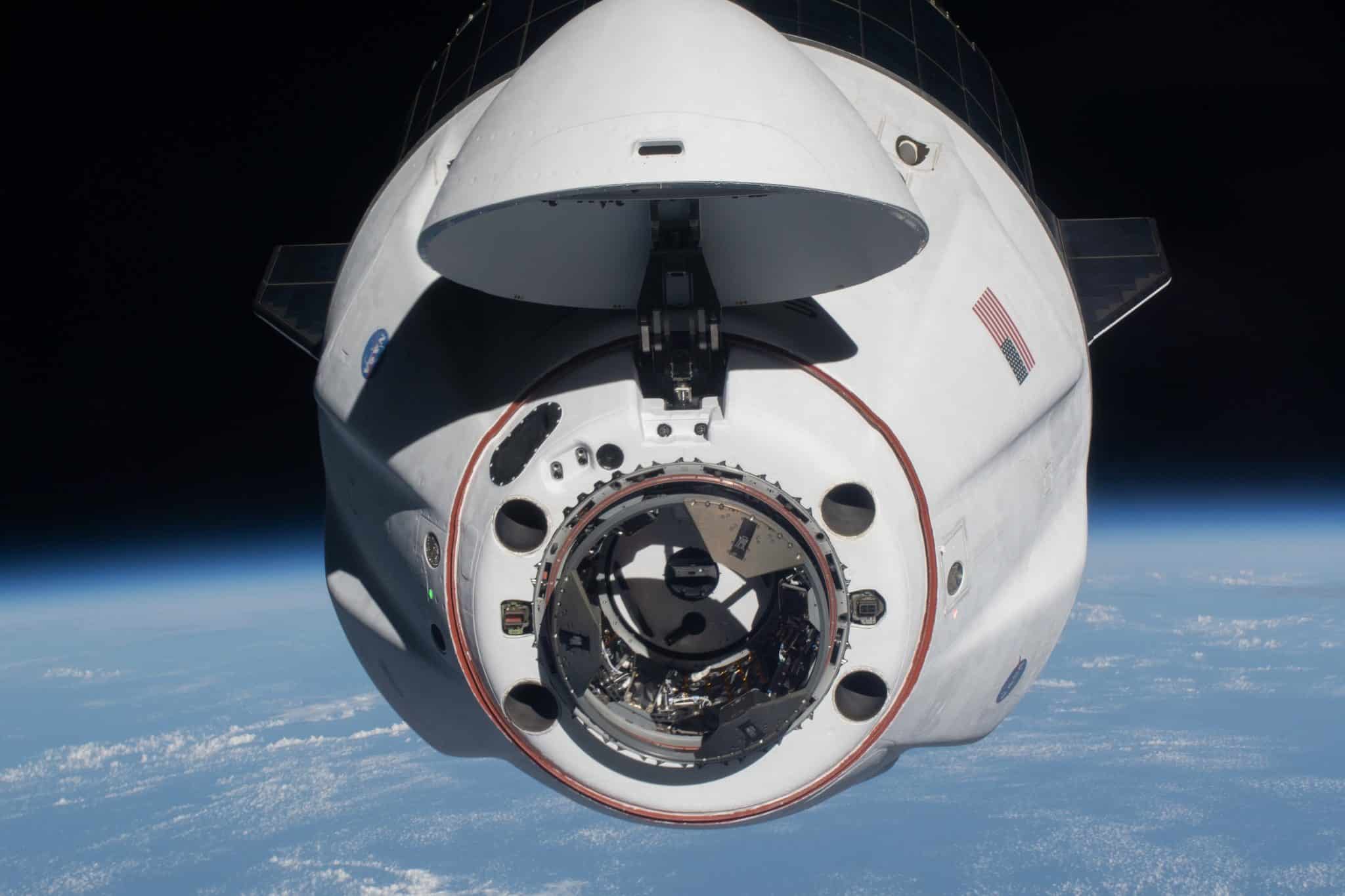
SpaceX Crew Dragon Endeavour as it approached the International Space Station (photo: nasa)
The space agency agrees it is worth at least looking into. They recently signed an unfunded Space Act Agreement to seriously study the idea.
“This study is an exciting example of the innovative approaches NASA is exploring through private-public partnerships,” said Thomas Zurbuchen, associate administrator for the Science Mission Directorate at NASA. “As our fleet grows, we want to explore a wide range of opportunities to support the most robust, superlative science missions possible.”
Not a Done Deal
If such a mission were to happen, it could give Hubble another 15-20 years of service. But NASA emphasizes that, for now, there are no plans to conduct or fund a servicing mission.
It’s also a non-exclusive study. Other companies can propose similar studies with different rockets or spacecraft as their model.
one of hubble’s moat famous inages, the Pillars of Creation, Which are a mind-blowing 5 light-years tall. The pillars are part of a small region of the Eagle Nebula, a vast star-forming region 6,500 light-years from Earth. (Photo: NASA, ESA, and the Hubble Heritage Team (STScI/AURA)
“SpaceX and the Polaris Program want to expand the boundaries of current technology and explore how commercial partnerships can creatively solve challenging, complex problems,” said Jessica Jensen, vice president of Customer Operations & Integration at SpaceX. “Missions such as servicing Hubble would help us expand space capabilities to ultimately help all of us achieve our goals of becoming a space-faring, multiplanetary civilization.”
Even if NASA decides against such a mission, they’ll probably have to launch a propulsion module to the telescope by the end the decade anyway, to ensure Hubble makes a controlled safe reentry over the Pacific Ocean. So if they have to launch that anyway, why not launch a mission to give it another 20 years of life instead?
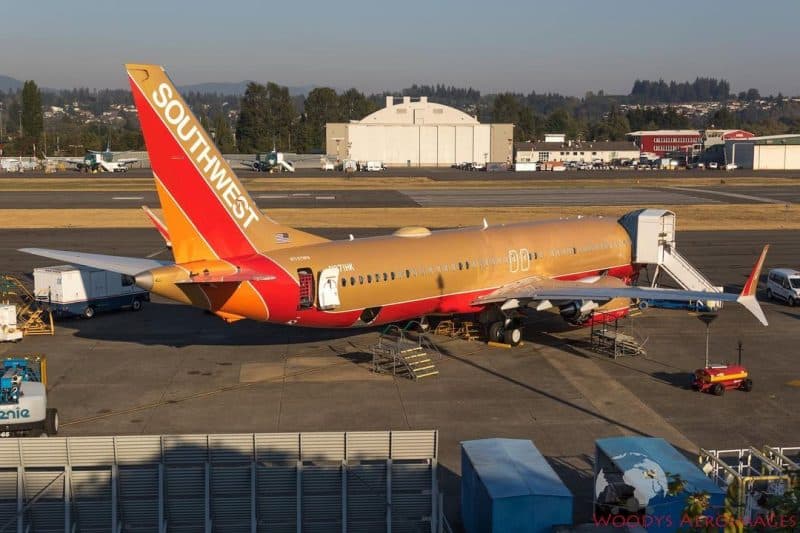
A few months back, we broke the news that Southwest was retiring their last Boeing 737-700 in the original ‘classic’ livery. At the time, Southwest shared the news that they also had plans to paint a new Boeing 737-MAX8 in the ‘classic’ scheme to replace the retiring jet. Thanks to spotter Chris Edwards, we have first photos of the forthcoming special livery jet.
Livery Harkens Back To Southwest’s First Paint Scheme
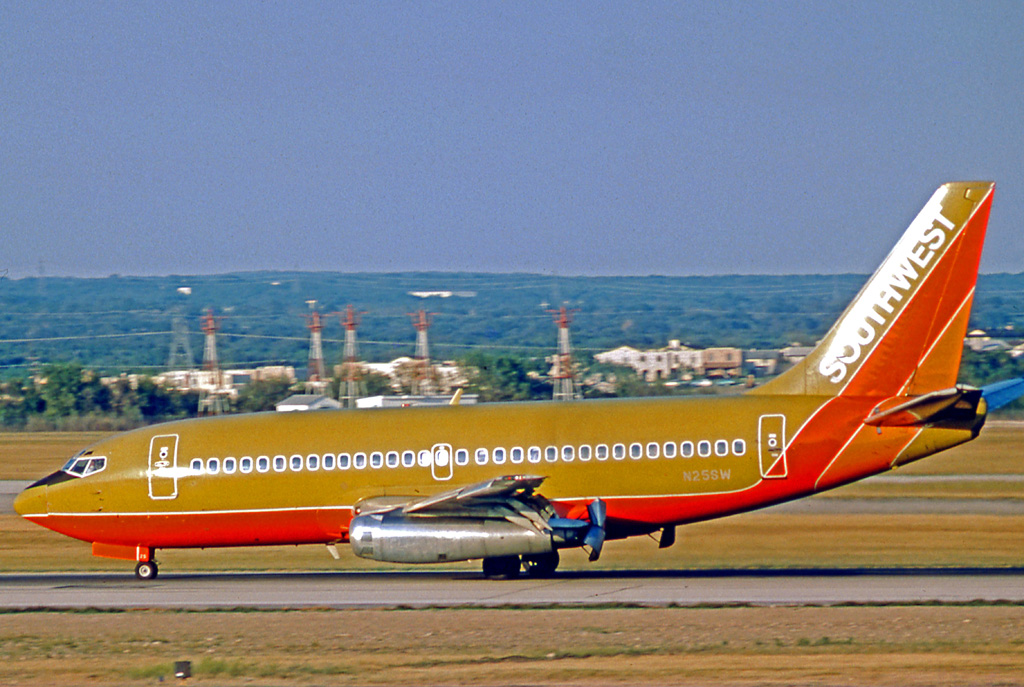
A Southwest 737-200 in the mustard ‘classic’ livery with passenger windows outlined in white.(Wikipedia Photo by: RuthAS)
The classic colors refer to Southwest’s original paint scheme. The 1970s era Boeing 737-200 jets featured the garish ‘mustard yellow’ paint scheme. This scheme became synonymous with Southwest’s quick turns, low fares, and open seating policy that become commonplace across the desert southwestern United States. (Note: If you are looking for a great breakdown of Southwest Airlines history, check out our profile we did on the fascinating early days of the pioneering airline by Avgeekery contributor David H. Stringer.)
Southwest later modified their colors to a more toned down but still distinctive desert brown before eventually refreshing their livery in 2001 to the Canyon Blue scheme.
As Southwest introduced the then new Canyon Blue scheme, they promised to keep three jets in the original scheme. Over time, that promise slipped to two aircraft named after its CEO and founder Herb Kelleher and its President-emeritus Colleen Barrett. Then over the past year, both remaining Boeing 737-700s were retired.
Previous Southwest schemes to appear on two new MAX jets
Southwest has plans to paint a single Boeing 737-MAX8 in the ‘classic’ scheme dedicated to Herb Kelleher. Southwest will also introduce another Boeing 737-MAX8 in the ‘Canyon Blue’ scheme dedicated to Colleen Barrett at a later date. We expect the official unveiling of the ‘classic’ jet should happen sometime around the end of the year.
For dedicated Southwest livery fans, an early look at this jet show that it retains the golden finish verses the more original brown paint that over 300 aircraft once wore. The jet does not look like the passenger windows will have a white outline like the original classic scheme but will instead mirror the previous special livery on the Boeing 737-700s where the white outline was deleted. There is no word yet whether this jet will feature any special nose art dedicated to Herb Kelleher. Also, we’ll be waiting to see if Southwest includes the heart decal that was so prominent on their jets back in the late 1990s. We’ll keep our eyes out for more information and keep you updated.
NASA’s Crew-5 astronauts arrived at the ISS today, after a 29-hour trip from Earth following launch yesterday from Kennedy Space Center.
Their SpaceX Crew Dragon spacecraft “Endurance” conducted a picture-perfect autonomous rendezvous & approach, docking to the station’s Harmony module forward port at 5:01pm EDT, about 260 miles above the west coast of Africa. Hatch opening occurred at 6:49pm EDT over the southern Atlantic Ocean.
The #Crew5 astronauts arrived at the space station at 5:01pm ET. The @SpaceX Dragon Endurance docked to the orbiting complex while the spacecraft was flying about 258 miles above the west coast of Africa. More.. https://t.co/CVvCiwmNU8pic.twitter.com/s6ZuwjryHE
— International Space Station (@Space_Station) October 6, 2022
Crew-5 Replacing Crew-4 on ISS
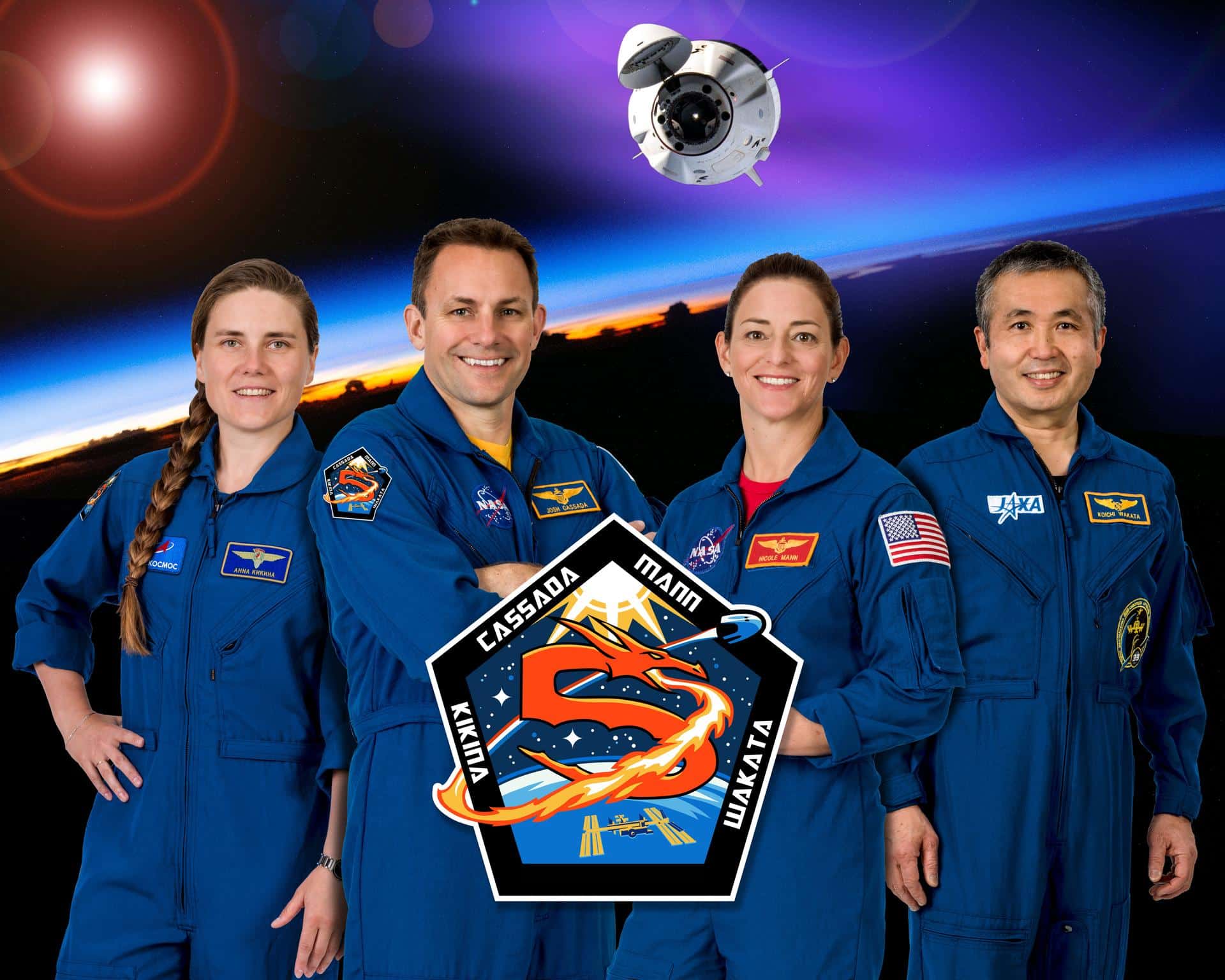
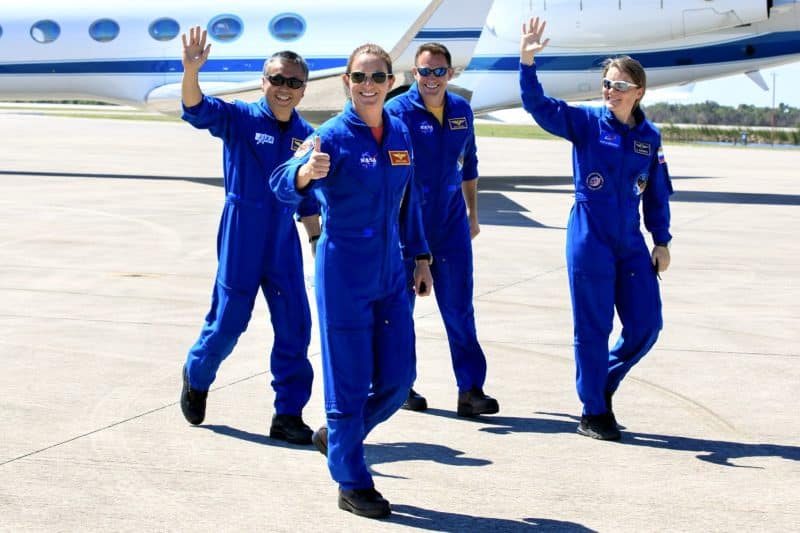
NASA astronauts Nicole Mann and Josh Cassada, JAXA (Japan Aerospace Exploration Agency) exited the Dragon to board station first. They were followed by Japanese astronaut Koichi Wakata and cosmonaut Anna Kikina. All were welcomed aboard with smiles and hugs by the space station’s Expedition 68 crew.
Crew-5 is replacing the current Crew-4 residents, who have been on station since last April. Crew-4 astronauts Bob Hines, Kjell Lindgren, Jessica Watkins and Europe’s Samantha Cristoforetti will spend the next week helping Crew-5 get adjusted, before returning to Earth on their own Dragon “Freedom” which is docked next to Endurance.
— International Space Station (@Space_Station) October 6, 2022
Also onboard are NASA astronaut Frank Rubio and cosmonauts Sergey Prokopyev and Dmitri Petelin, who recently launched on a Russian Soyuz.
Crew-5 settling for 6 months of work on ISS
11 souls are now living in space, until Crew-4 departs next week for a splashdown off the coast of Florida.
Over the next 6 months, Crew-5 will be busy conducting over 200 science experiments and technology demonstrations. They include studies on printing human organs in space and better understanding heart disease. You can read more about some of the work they’ll be doing HERE.
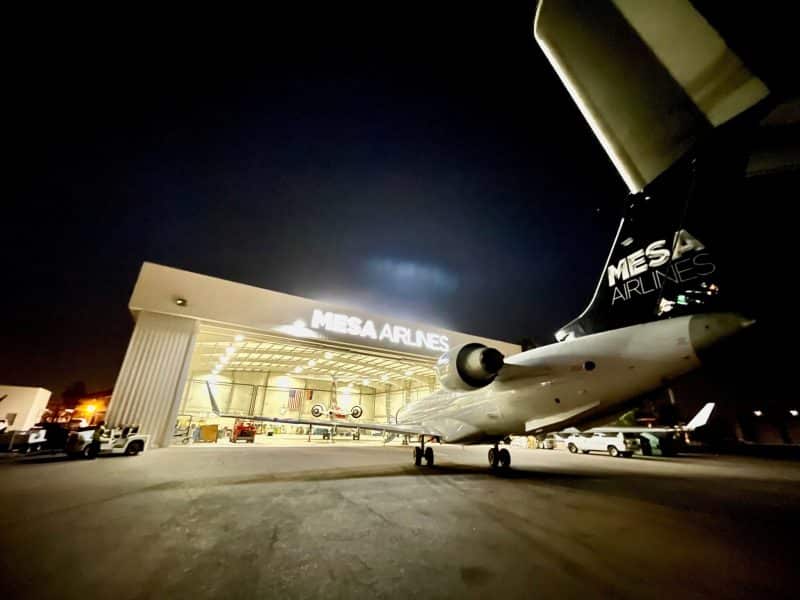
Late last month, Phoenix-based regional carrier Mesa Airlines announced the purchase of 29 Pipistrel Alpha Trainer Pro aircraft, with options for 75 more. The aircraft will be the workhorse of Mesa’s Pilot Development Program (MDP), a specialized training program designed to help pilots with a commercial license quickly – and cost-effectively – reach the FAA-mandated 1,500-hour minimum.
The Alpha Trainer is a two-seat, high-wing training aircraft. Designed with a carbon fiber fuselage, a Kevlar reinforced cabin, and a full airframe ballistic parachute, it is touted as a safe, efficient, and low-cost option for flight training and time building. Mesa plans to deploy the aircraft at Inverness Airport (INF) in Citrus County, Fla., this October. The program will eventually expand to Phoenix as additional Alpha Trainer Pros come online over the next year.
A Dire Need for Pilots
Mesa Airlines pilots | IMAGE: Mesa Airlines Facebook
Mesa’s Pilot Development Program aims to help combat the dire need for pilots while simultaneously providing cadets with a direct path to a long-term career.
AvGeekery spoke with Mesa Chairman and CEO Jonathan Ornstein, who offered a bleak assessment of the state of the industry.
“The pilot shortage could become a permanent feature of the airline industry if we don’t get more aviators into the system,” said Ornstein. “It is basic math. If there aren’t enough trained pilots, customers suffer from loss of service and high-ticket prices.”
Indeed, airlines have already been forced to raise ticket prices and eliminate or reduce service to many smaller cities. Government statistics paint a damning picture: 14,500 new pilots are needed annually. The US is producing just 6,335. More than 8,000 – or 56 percent – pilot jobs are currently unfilled.
Even unprecedented rises in regional pilot salaries have been unsuccessful in retention efforts. Mesa recently raised their first officer hourly rate to $100 per hour – an astonishing 118 percent jump.
However, Ornstein acknowledges it’s not really about the money.
“Some of the happiest pilots I know were those flying 19-seaters in the Rockies, and some of the unhappiest are flying 777s making $350K per year,” Ornstein said. “It’s not just about the money. I think there’s a lot more that goes into it.”
How Did We Get Here?
A Mesa Airlines CRJ | IMAGE: Mesa Airlines Facebook
A combination of factors has brought the industry to this point. More stringent training requirements and a wave of early pilot retirements due to COVID-19 have contributed to the pilot shortage. The crisis disproportionately affects regional airlines because their pilots are moving to the major carriers to fill vacancies there. And there are not enough incoming regional pilots to replace those that move on.
The unfortunate reality is that becoming a pilot in the United States is simply unattainable for some – particularly for minority and other disadvantaged communities. Becoming a pilot is already expensive. Then, add in 1,500 hours of flight time the Federal Aviation Administration (FAA) requires for pilots to earn their Airline Transport Pilot (ATP) certificate, and the cost becomes exorbitant.
It wasn’t always like this, though.
Following an investigation into the deadly 2009 Colgan Air commuter crash near Buffalo, New York, the FAA raised the minimum flight time from 250 to 1,500 hours. Although the cause of the accident was determined to be pilot error, the move to increase the minimum hours was controversial, especially considering both pilots in the crash had attained more than 1,500 hours of flight time.
More than a decade later, the United States is still the only country to have implemented such stringent requirements for ATP certification. The mandate remains controversial to this day. A recent attempt by Republic Airlines to persuade the government to reduce the 1,500-hour minimum to 750 failed.
Ornstein doesn’t mince words when it comes to the 1,500-hour rule.
“We strongly believe that 1,500 hours is unnecessary,” he told AvGeekery. “It’s no worse than flying a pipeline or towing a banner. If people get a commercial license, then they should fly commercially – just like Air France, JAL, and every other airline in the world. This is an hours-building exercise, not a training exercise.”
Ornstein believes politics are behind the mandate.
“It’s not justified and lacks data,” said Ornstein. “There’s not one shred of evidence that supports 1,500 hours has made it safer – especially considering the rest of the world requires so much less.”
As a 42-year-old regional carrier, Mesa Airlines has survived countless challenges. But, until recently, there has always been a fresh supply of pilots.
Seeing the writing on the wall, Mesa took matters into its own hands and launched the Pilot Development Program in an effort to produce great pilots quickly. It is a way to support new pilots and address the airline’s needs. New pilots will receive training in an expedited manner and with no out-of-pocket costs.
The program works like this: commercially-certified pilots can log up to 40 hours of flight time weekly at $25 per hour, fully financed with no interest. Once cadets reach the 1,500-hour threshold, cadets can take a position in one of Mesa’s regional jets or 737s. Pilots will then pay back their loans over three years while at Mesa. Starting pay at Mesa is an industry-high $100 per hour.
“I think long-term, this program will be very impactful,” said Ornstein. “We think we can create somewhere between 0.8 and one pilot per month, per airplane. With 100 planes, we can produce almost 1,000 pilots a year. If two or three other airlines did the same thing, that would go a long way towards solving the problem.”
Partnership With United For Follow-On, Pay Increases Seeing Early Positive Signs
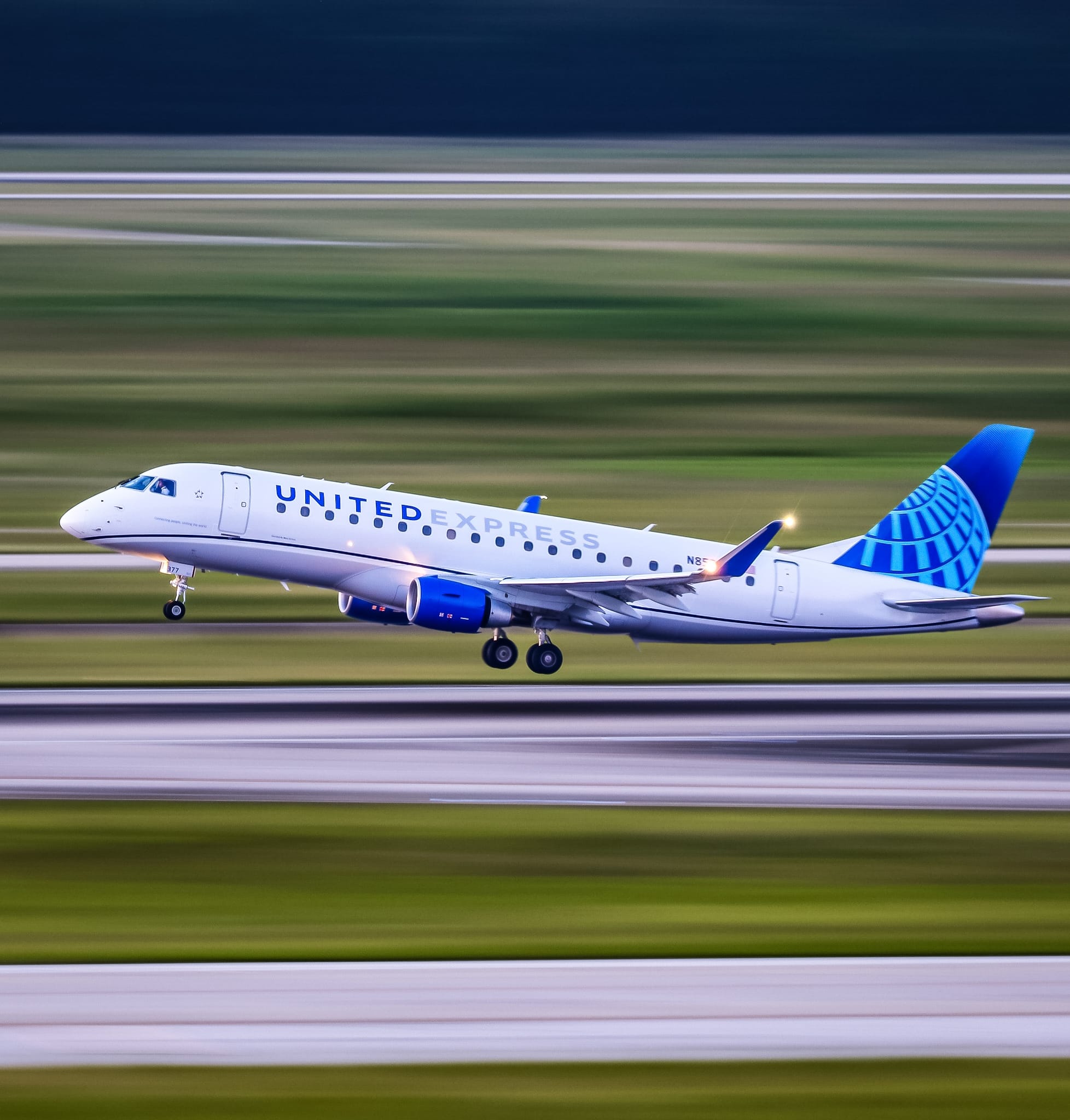
A United Express Embraer 175 takes off | IMAGE: Mesa Airlines Facebook
Mesa also partners with United Aviate, a fast-track career pathway to a United Airlines flight deck.
So far, Ornstein likes what he sees. The company has already seen a reduction in the number of Mesa pilots going to national carriers like JetBlue, Frontier, or Spirit that jumped ship to build their hours on their way to legacy carrier United. With the recent 118 percent increase, the salary at Mesa is comparable – or more in some cases – than that of other non-legacy national carriers. It also helps that they have a guaranteed spot waiting for them at United mainline.
“We’ve seen a fifth of the number of resignations we were seeing,” said Ornstein. “All the resignations, with the exception of one or two, were going to one of the national legacy carriers like United, American, Delta, Southwest, or cargo carriers like FedEx. We aren’t losing them to lower-paying carriers like we were before. Pilots understand that going to carrier XYZ, making the same or less, and then not having a guaranteed spot at United didn’t make sense. So from that respect, yes, the program is really working.”
The new structure helps retain pilots and gives them a guaranteed upgrade through a follow-on program.
“At Mesa, a five-year FO is a unicorn, a mythical creature,” said Ornstein. “So, you say to yourself, do you want to be the highest paid FO or the lowest paid captain? That’s a pretty easy decision. Now, our partners – particularly United – want us to retain people. Because, ultimately, they want them to end up there.”
The arrangement is beneficial for United, too, since Mesa has created a dependable pass-through program for pilots. Instead of training pilots who will most likely go on to other companies after flying for a regional for a set time, the MDP invests in the next generation of pilots for their company.
“This is invaluable for United,” said Ornstein. “United understands the value of this program because pilots are not going to their competition.”
An Effort To Develop Veteran Pilot Careers Too
RTAG Logo | IMAGE: RTAG Facebook
Additionally, Ornstein says Mesa’s MDP will benefit veterans seeking a career in aviation. Through RTAG, the Veteran to Aviation Charity, Mesa will help fulfill the charity’s mission of helping Veterans jumpstart their post-military career in the world of aviation.
“The results have been amazing,” says Ornstein. “For a lot of these men and women, building their time is also very valuable. It won’t help them get their commercial license, but it will help them generate the hours they need in order to be able to fly commercially.”
Ornstein adds that it is a relatively quick and cost-effective way for Veterans specifically to build their time.
While it’s still too early to quantify the results of the effort, Ornstein says he believes the state-of-the-art Alpha Trainers are the perfect aircraft to complement skills Veterans have already acquired while serving and is proud to be a leader in such an initiative.
An Uncertain Future for Regional Jets Too As Few Replacements On The Horizon
A Mesa CRJ-900 sits at the gate | IMAGE: Mesa AIrlines Facebook
Alleviating the pilot shortage is the most pressing need to help stabilize the industry. But another – and potentially more impactful – crisis is on the horizon.
The vast majority of smaller regional jets are approaching the end of their service life in the next decade. So where does this leave regional carriers? Without Bombardier in the picture, Embraer is essentially the only legitimate option for large-capacity regional airliners going forward right now.
Ornstein says he worries about a world in the not-so-distant-future where regional departures are cut in half once regional jets are parked forever. Considering that regional aviation currently makes up 60 percent of all departures in the United States, a move like that would disconnect dozens of cities from the transportation system and create an enormous problem for the airlines and the economy.
New technology is on the verge of reshaping the aviation industry, but it’s not yet ready. Emerging technology like eVTOL aircraft are currently in development and certification likely won’t happen for years. And even then, it remains to be seen just how useful they will be in the regional space. On the positive, eVTOLs offer possible a natural stepping stone for pilot development as a next step in Mesa’s pilot development program. Though, Ornstein acknowledges that such technology is still years away from being fielded at scale.
Embraer is betting on a next-gen turboprop (TPNG) to fill in the gap. The company is developing 50- and 90-seat variants of the TPNG, with a tentative launch date of 2028 at the earliest.
For airline industry leaders like Ornstein, the prospect – or lack thereof – of what will replace regional jets is a conundrum that must be solved.
“I am concerned,” said Ornstein. “Embraer is really the only player now that Bombardier is gone. It’s a big issue, and one that we’re going to have to contend with for sure.”
Let’s just hope we can solve the pilot shortage in the meantime.
For those itching to travel the world in a private jet while visiting some of the planet’s most incredible natural, manmade, and cultural wonders, National Geographic has just the adventure for you.
For the first time since the pandemic, National Geographic Expeditions is offering its stunning “Around the World by Private Jet” adventure. Snagging tickets may be a bit of a challenge, but for those who do, the expedition promises to be a once-in-a-lifetime experience.
Private Jet Luxury
IMAGE: National Geographic
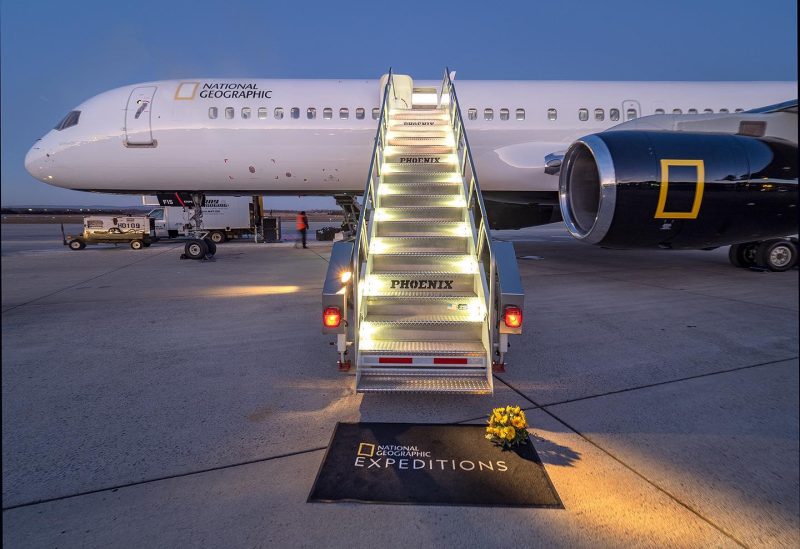
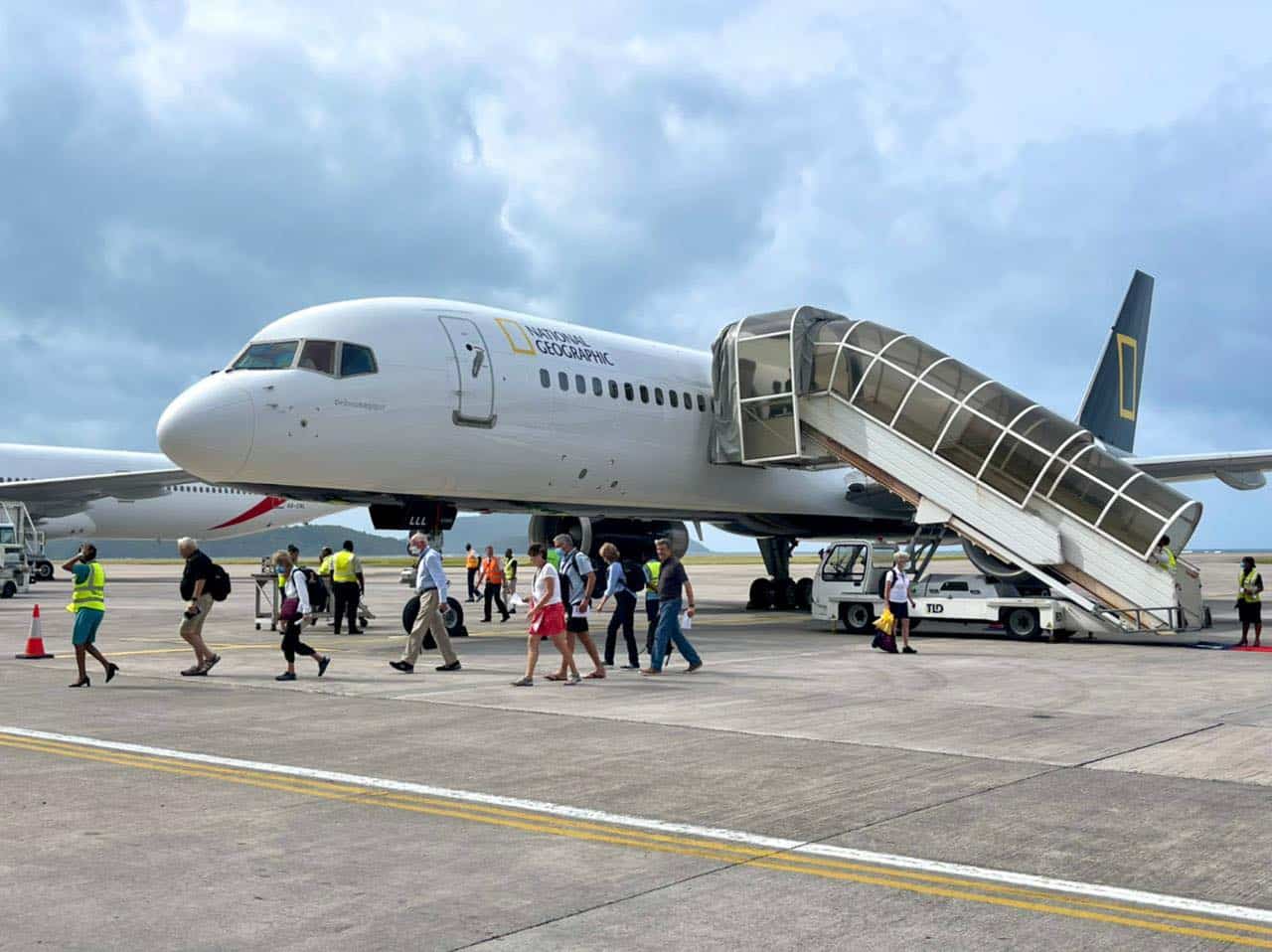
Travelers will experience luxury private jet travel aboard an Icelandair Boeing 757-200 (Reg: TF-LLL / MSN 29307). National Geographic is leasing the 757 from Iceland’s flag carrier.
Built in 2000, the jet features a fresh National Geographic livery and a specially-modified interior. Designed to carry 233 passengers, the modified 757 will feature just 80 seats in a 2×2 configuration. However, National Geographic is selling just 75 for each expedition. The VIP-style leather seats feature adjustable leg and headrests; although they aren’t lie-flat, they recline to a comfortable 45-degree angle.
Every passenger will have access to in-seat power outlets and ample storage space for computers, cameras, and other personal belongings.
The specially-trained flight crew includes three pilots, a chef, a catering officer, multiple flight attendants, an engineer, and a dedicated luggage handler. A physician will be available to travelers at all times – on air and land.
24-Days, Five Continents
IMAGE: National Geographic
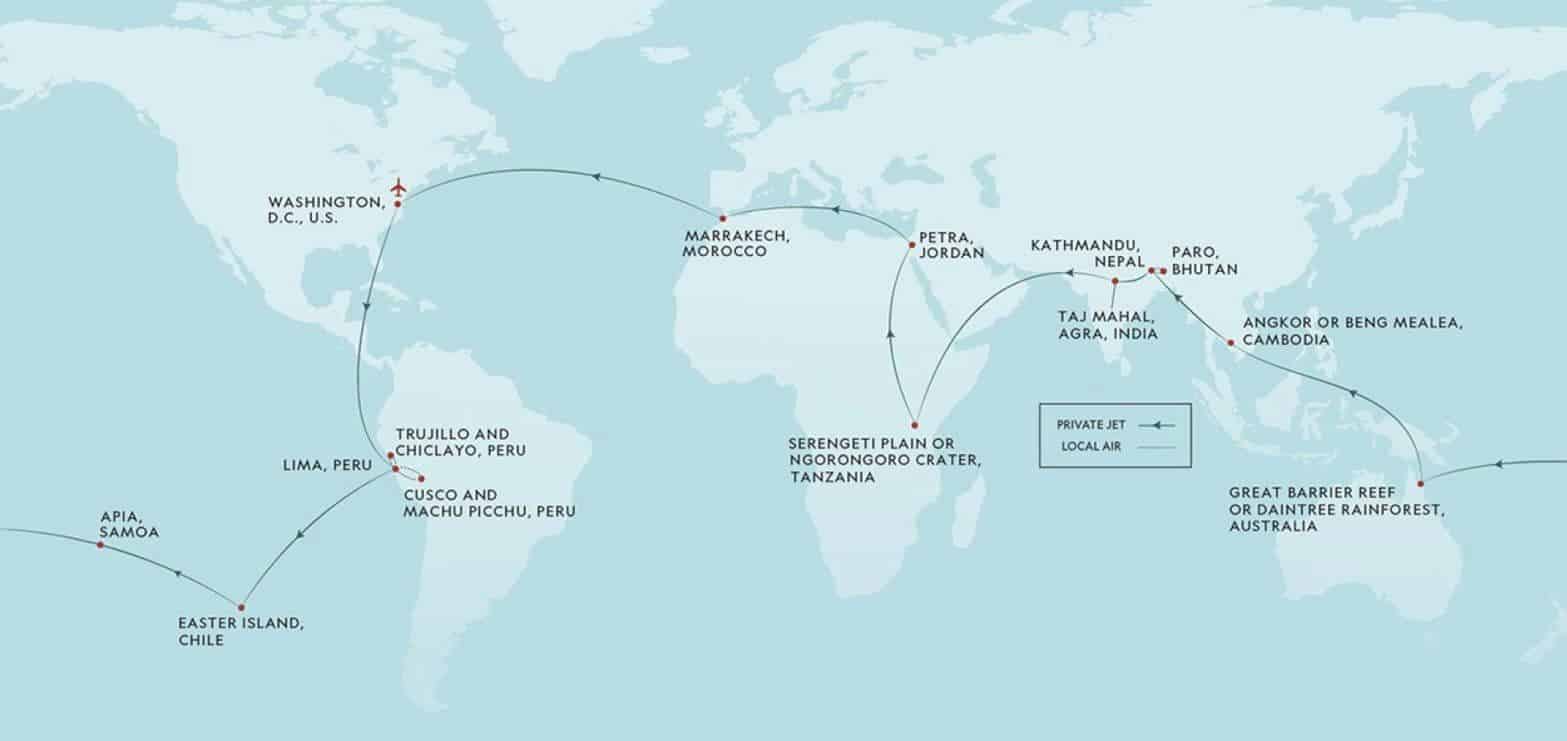
In a two-week span, National Geographic will whisk 75 passengers to five continents, where they will explore ten UNESCO World Heritage sites.
The adventure starts at Washington Dulles International Airport (IAD) in Virginia. From there, travelers will visit Peru, Chile, Samoa, Australia, Cambodia, India, Nepal, Bhutan, Tanzania, Jordan, and Morocco. Some of the incredible sites on the expedition include Easter Island, Machu Picchu, the Great Barrier Reef, the Taj Mahal, and the Serengeti Plain.
A map of National Geographic’s ‘Around the World by Private Jet’ Expedition | IMAGE: National Geographic
Also on the expedition will be a dedicated group of experts that will provide information and lectures throughout the trip. Some of the experts will include photographers, art historians, authors, anthropologists, biologists, archaeologists, and geographers.
Travelers will stay at “world-class accommodations” throughout the expedition.
This Could All Be Yours for the Low, Low Price of $100K
TF-LLL departs Santa Maria AIrport in the Azores on 23 Sep 2022 | IMAGE: Aeroporto de Santa Maria / LPAZ – SMA / Santa Maria Airport on Facebook
National Geographic Expeditions is offering nine more trips between now and 2024 (there is an ongoing expedition at the time of this writing).
The next trip begins on 29 December 2022 and ends on 21 January 2023. However, that trip is sold out (you can get on the waitlist here).
Additional trips include six departures in 2023 and two departures in 2024. Out of the nine trips listed on the website, only one has availability. Travelers can depart on 25 January 2023, arriving back in the US on 17 February.
How much, you ask? Well, let’s just say this adventure isn’t for everyone. 2023 dates have a going rate of $106,690 per person (based on single occupancy) and $96,995 per person (double occupancy). Those prices are a relative bargain, however, as they jump to $109,990 and $99,995 per person (double and single occupancy, respectively) in 2024.
Icelanders Love Adventure
Icelandair B752 TF-LLL | IMAGE: planespotters.net
Perhaps it’s in the genetic makeup of every Icelander, but adventure seems to be a way of life for the island country. Just a few months ago, an Icelandair 767-300 made a trip to Antarctica.
My guess is that there’s not much else to do in Iceland during the winter months when it’s dark 24 hours a day. You either step outside to watch the Northern Lights, or you plan your next adventure.
To watch the National Geographic 757 on flight monitoring websites, you can track TF-LLL or Icelandair 1239 (FI1239). As of 05 October, TF-LLL is en route to Australia from Tahiti’s Faa’a International Airport (PPT).
TF-LLL is one of 18 Boeing 757s that currently makes up Icelandair’s fleet. However, only 11 are in active service. The carrier also has two Boeing 757-300s.
It’s the first spaceflight for both NASA astronauts Nicole Mann (Cdr) and Josh Cassada (pilot). Joining them are veteran astronaut Koichi Wakata from Japan on his 5th spaceflight, and cosmonaut Anna Kikina, who is also making her first trip to space.
So far their Dragon spacecraft “Endurance” is operating nominally, with no reported issues thus far.
NASA Cree-5 astronauts nicole mann and Josh cassada on the spacex dragon as they reach space for the first time in their lives today (photo: nasa)Astronauts point of view foe the ride to orbit on The spacex dragon “endurance” (photo: NASA)
“We are living through a golden era of commercial space exploration. It’s a new era powered by the spirit of partnership, fueled by scientific ingenuity, and inspired by the quest for new discoveries,” said NASA Administrator Bill Nelson. “While our eyes are focused upward on the heavens, let us never forget these missions will also better life here on Earth.”
ISS Bound
The crew will be at the ISS for 6 months, replacing NASA’s Crew-4 who have been there since last April.
They’ll conduct more than 200 science experiments and technology demonstrations, including studies on printing human organs in space and better understanding heart disease. You can read more about some of the work they’ll be doing HERE.
Following launch, the Falcon 9 booster made a successful return to Earth, landing on a SpaceX barge in the ocean so the company can reuse the rocket.
Falcon 9’s first stage booster has landed on the Just Read the Instructions droneship pic.twitter.com/qKk3uk4J9B
The crew will take about 29 hours to arrive and dock to the ISS. Once aboard, Crew-4 will help their Crew-5 replacements adjust to life there, before handing the station over to Crew-5 and returning to Earth for a splashdown off the coast of Florida a week later.
“Thank you so much Falcon team, that was a smooth ride uphill,” said commander Mann upon reaching orbit. “We’ve got 3 rookies that are pretty happy to be floating in space right now, and one veteran astronaut who is pretty happy to be back as well.”
Crew-5 (photo: Nasa)
Docking is scheduled for around 4:57 p.m. EDT Thursday, Oct. 6. You can watch that below as it happens live, the camera views as it happens are incredible.
NASA also will broadcast the ceremony to welcome the crew onboard at about 8:15 p.m. EDT Thurs.
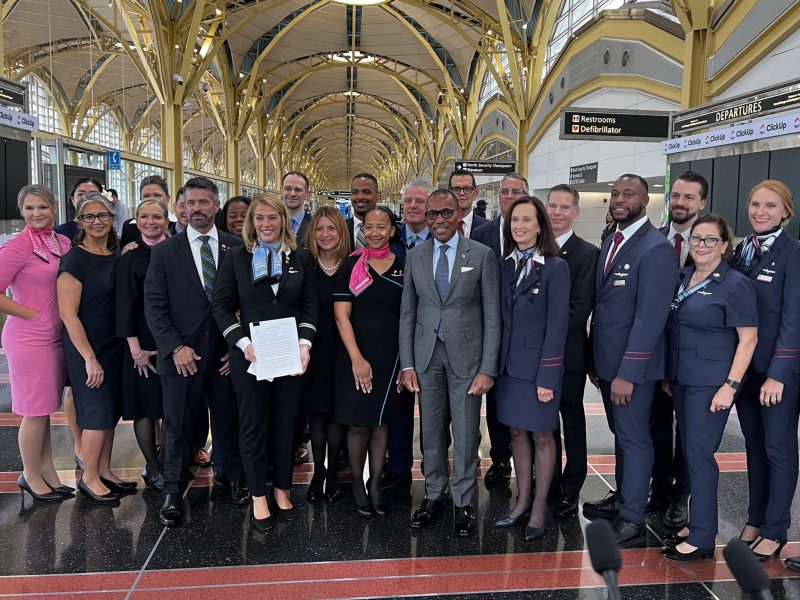
Flight attendants in the United States will now be guaranteed a 10-hour rest between duty periods, the Federal Aviation Administration (FAA) announced Thursday at a ceremony at Reagan National Airport (DCA) in Washington.
The updated requirements will apply to flight attendants scheduled to work 14 hours or less. Previously, the FAA required a minimum of nine consecutive hours of rest.
FAA Announces Longer Rest for Flight Attendants. New rule will require 10 hours of consecutive rest. https://t.co/aCPulxjVqN
U.S. Department of Transportation Secretary Pete Buttigieg says the legislation, which will take effect in 90 days, is all about safety.
“Flight attendants, like all essential transportation workers, work hard every day to keep the traveling public safe, and we owe them our full support,” said Buttigieg. “This new rule will make it easier for flight attendants to do their jobs, which, in turn, will keep all of us safe in the air.”
The law also prohibits a reduction in rest period time, no matter the circumstance. The current rule allows for a nine-hour rest period, with the option of eight hours if needed.
The Legislation Has Overwhelming Bipartisan Support
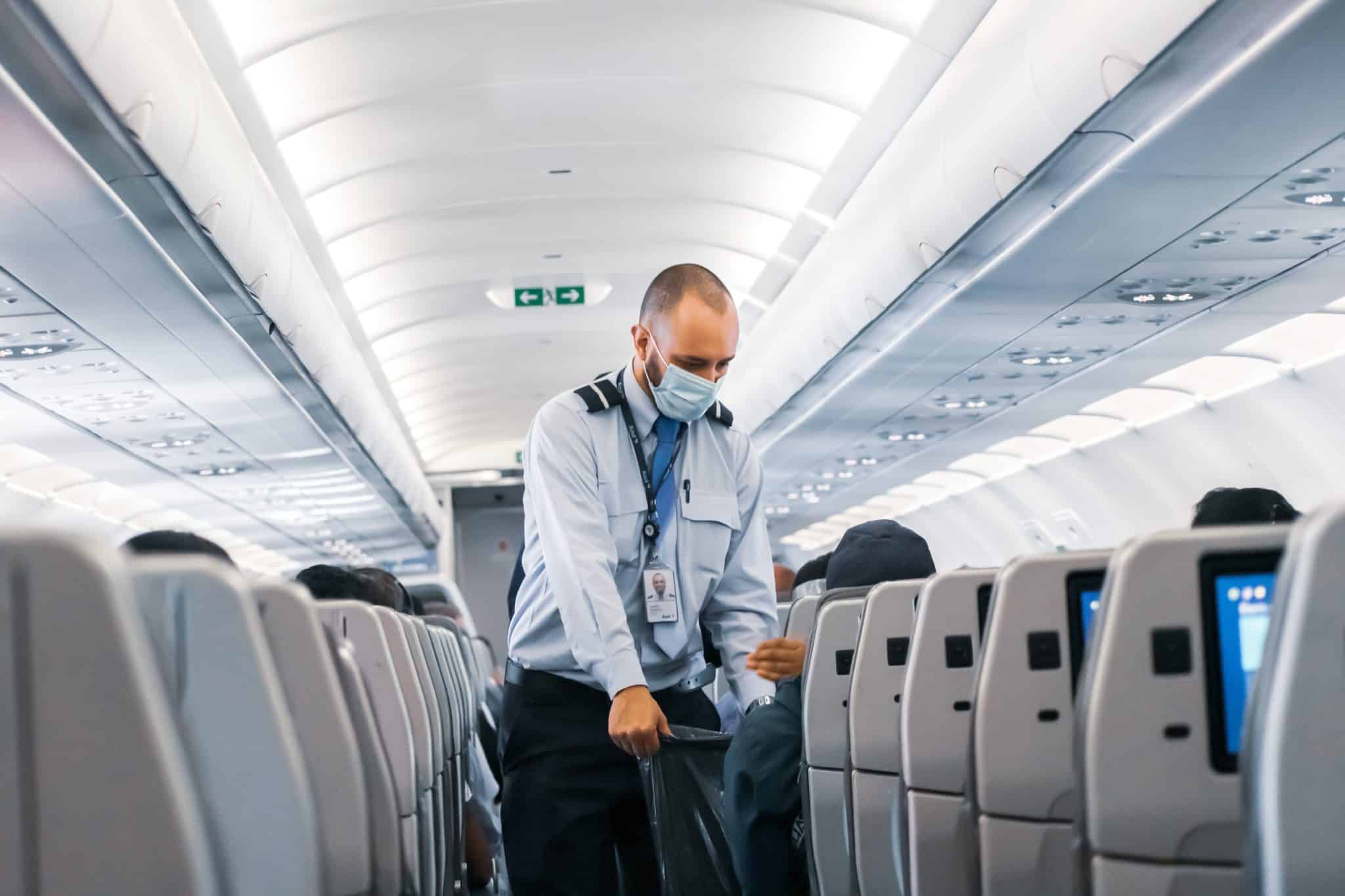
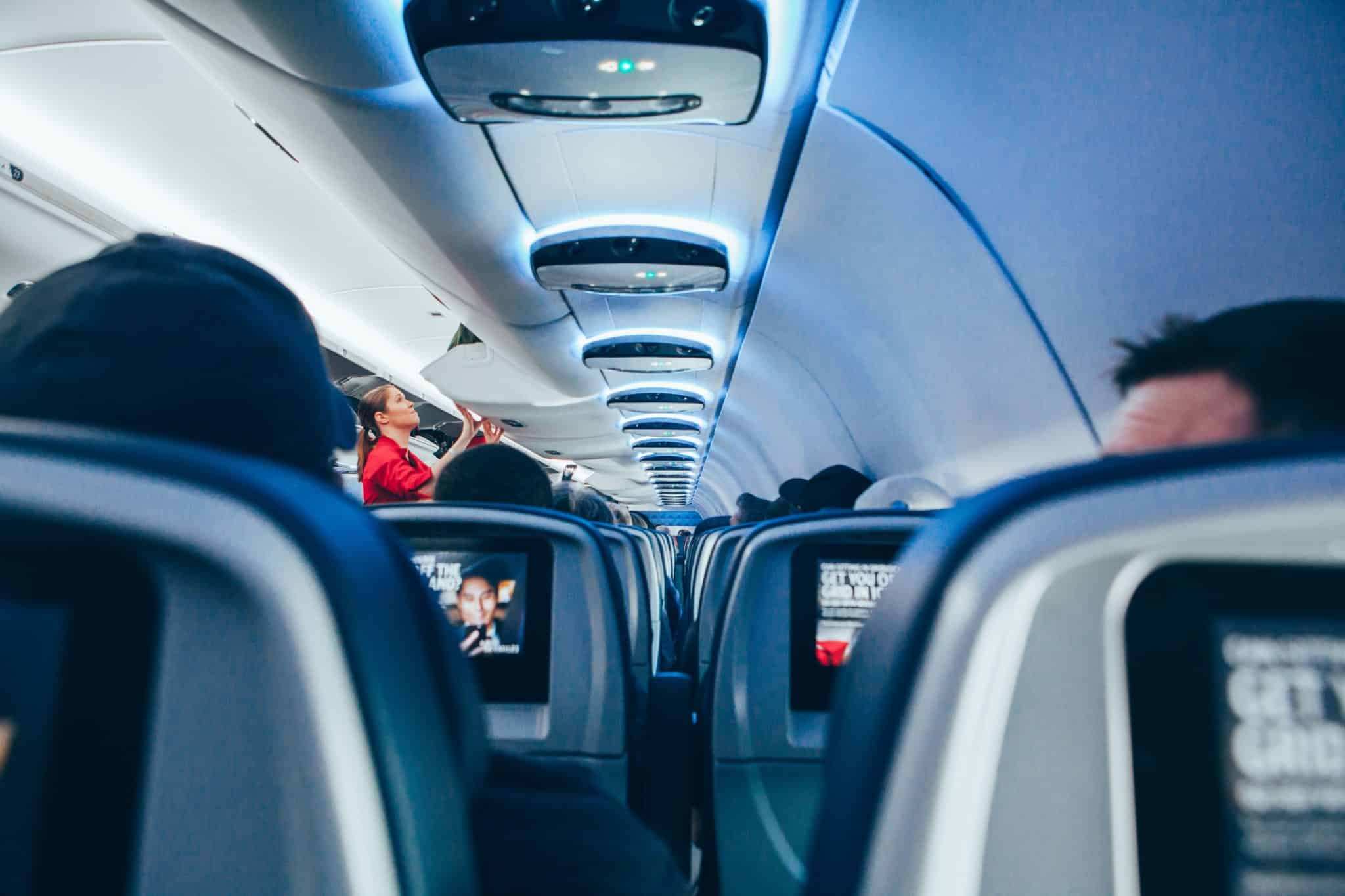
A flight attendant prepares the cabin for arrival | IMAGE: Lukas Souza on Unsplash
The new requirement is in response to the FAA Reauthorization Act of 2018, which calls for an increase in rest breaks. Despite overwhelmingly bipartisan Congressional approval, the legislation stalled during the Trump administration and left the 10-hour rest requirement unfulfilled. The FAA published the proposed rule in November 2021 after the Biden administration promised its support.
The increased rest requirement has plenty of support. However, there were some objections. Airlines for America (A4A), a trade group representing major airlines such as American, Delta, and United, objected to the change in its proposed form. A4A representatives say there are other ways to achieve the same results.
“Regulations should be limited to implementing only what is required by the statute,” A4A representatives said during a public commenting period. “The FAA could achieve the safety benefits of this regulation effectively and more efficiently through a risk-based rule in lieu of prescriptive hours-based requirements.”
The group represents 66 percent of all flight attendants in the United States.
A4A estimates the legislation will lead to nearly $790 million in additional costs for its members over the next ten years. The costs will stem from new hire turnover costs, training, scheduling software, and travel costs. Additionally, the group said the legislation could result in a loss of income for flight attendants. Reasons for reduced income could include reduced schedule flexibility, unpaid “idle” time away from home, and operational disruptions.
Safety Equity is Crucial for Flight Attendants, Pilots, Fliers
With this change, flight attendant rest times align more closely with pilot rest time mandates. Typically, pilots must rest for ten hours.
“We are here to make a change in aviation safety – one that’s been long overdue,” said acting FAA Administrator Billy Nolen. “The bottom line is that a rest period increase for flight attendants corrects a historical inequity.”
Some of the inequities stem from legislation passed following the crash of Colgan Air Flight 3407. Flight 3407 was a commuter flight that crashed outside of Buffalo, New York, in 2009. Some suggest a contributing factor to the accident was crew fatigue. However, the NTSB was never able to fully prove that was the case.
“When the Colgan crash happened, the pilot rest rules were changed – essentially overnight,” said Sara Nelson, president of the Association of Flight Attendants, CWA. “But flight attendants were essentially left on the cutting room floor.”
The increased rest rules come at a particularly vulnerable time for flight attendants. In the past couple of years, flight attendants have had to battle ta global pandemic, increasingly unruly passengers, and fatigue.
“Today, this is getting corrected,” said Nelson. “And we are going to see, by the new year, this implemented across the industry.”
SpaceX is set to launch NASA’s next astronauts on the Crew-5 mission to the International Space Station (ISS) on Wed, Oct 5.
Liftoff from Kennedy Space Center in Florida is scheduled for 12:00pm EDT. You can watch it LIVE below
Watch the launch live on oct 5 starting at 11:30am edt
With the international nature of the ISS, only two of the crew are actually NASA astronauts. And both of them, commander Nicole Mann and pilot Josh Cassada, will be going to space for the first time.
Joining them are veteran astronaut Koichi Wakata from Japan on his 5th flight to space, and cosmonaut Anna Kikina from Russia, who will also be making her first spaceflight.
Astronauts discuss their crew-5 mission
Together, the 4 astronauts will join ISS Expedition 68, living and working there for the next 6 months. They’ll be staying busy too, conducting over 200 science experiments, technology demonstrations and carrying out a wide range of other objectives. You can read about some of the work they’ll be doing HERE.
Weather also looks great for tomorrow, with a forecasted 90% chance of favorable conditions expected.
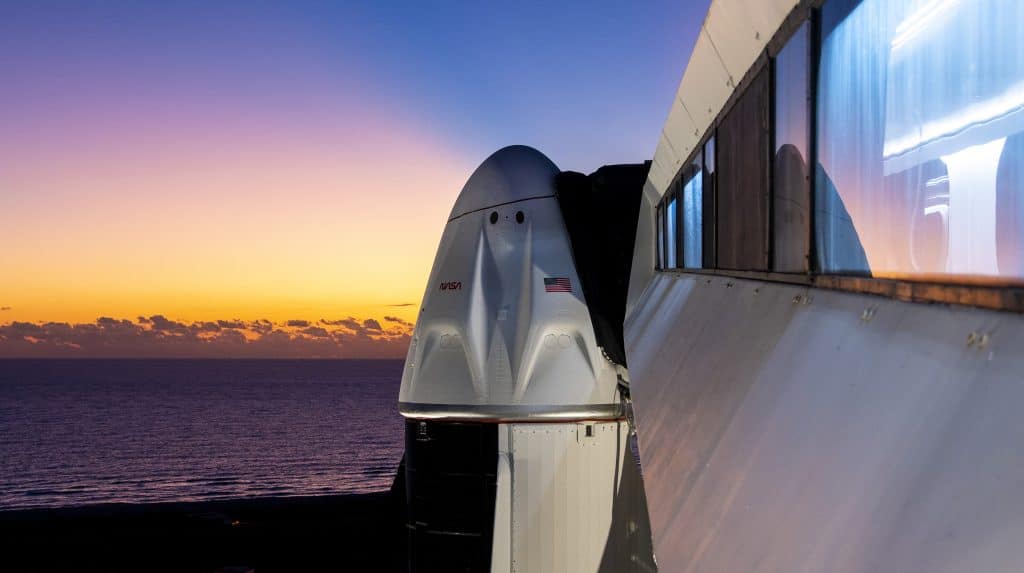
Spacex’s faLcon-9 rocket and crew dragon spacecraft “Endurance”, poised for launch of crew-5 atop pad 39A (photo: NASA)
Their Falcon 9 rocket and Crew Dragon capsule, named Endurance, was rolled out to Kennedy’s pad 39A on Oct 1. The crew arrived hours later from Ellington Field, near Johnson Space Center in Houston. SpaceX conducted a static test fire of the rocket on the launch pad Oct 2, which is standard for them before these launches. The crew, launch teams and various support personnel also conducted a launch day dress rehearsal.
“It’s time to get to work. Nobody does this alone, and we have thousands of people around the globe we need to thank for getting us to this spot,” said Cassada upon arriving at KSC for launch. “This is a remarkable opportunity for all of us. We have trained and prepared for years for this.”
Dragon “endurance”, ready to take crew-5 to the ISS (photo: NASA)
The crew will take about 29 hours to arrive and dock to the ISS. Once aboard, the current Crew-4 residents will help their Crew-5 replacements adjust to life there, before handing the station over to Crew-5 and returning to Earth for a splashdown off the coast of Florida a week later.
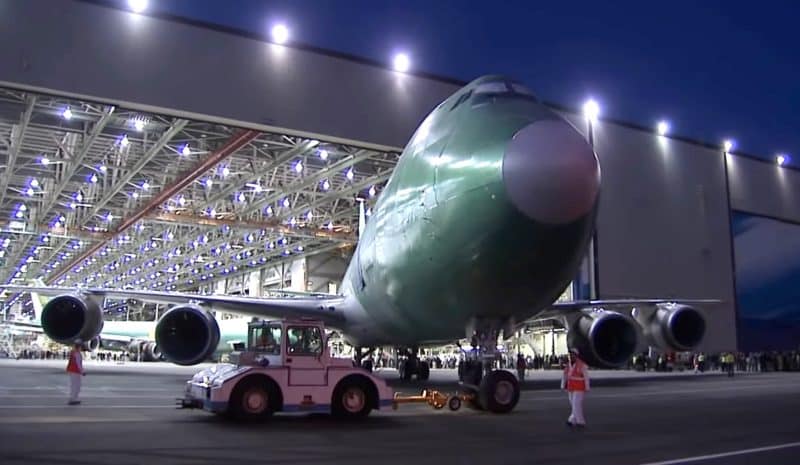
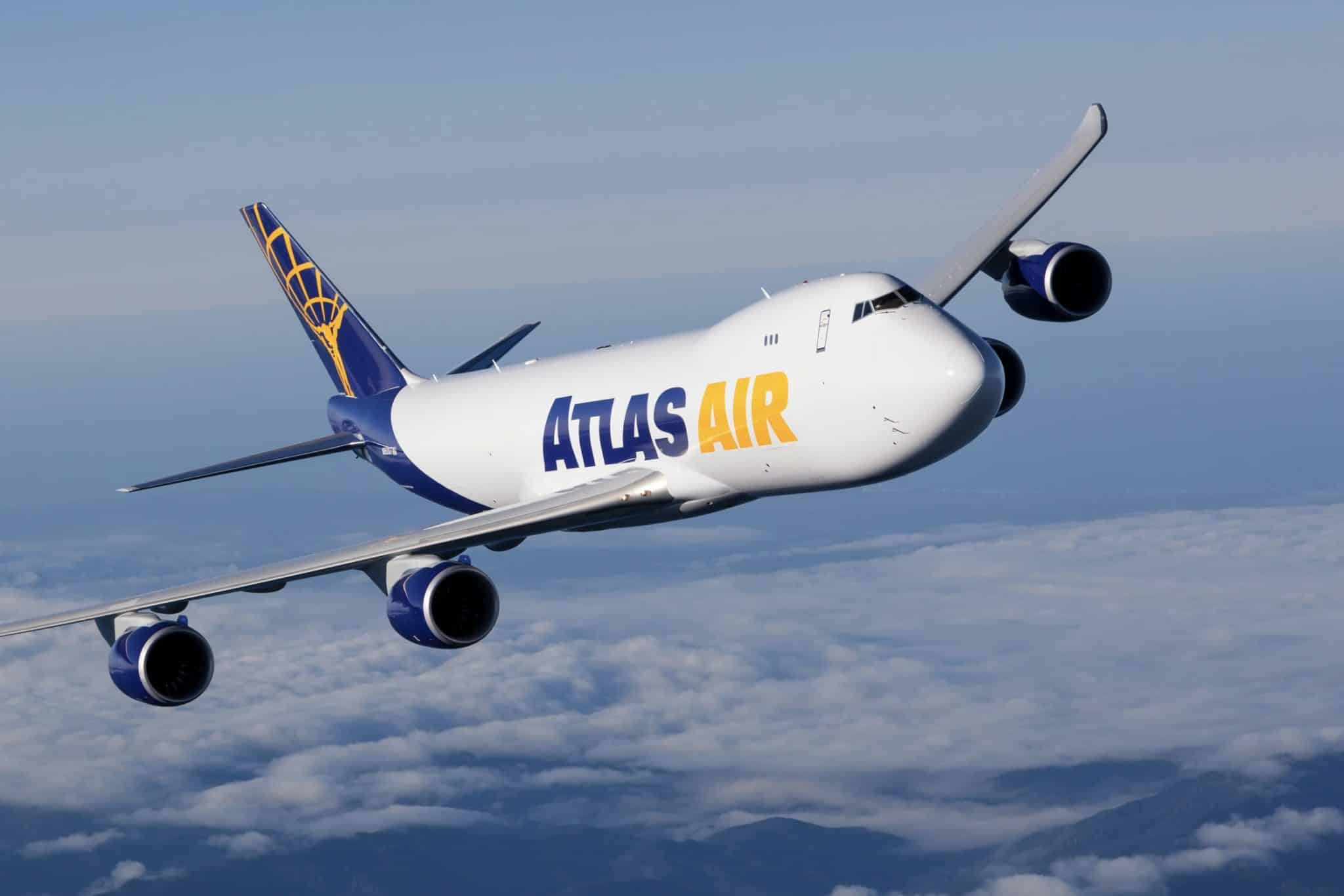
The second to last 747 to ever be produced has rolled out of Boeing’s factory at Paine Airport in Everett, WA.
Avgeek Matt Cawby was there to capture images of the 747-8F freighter (#1573, N862GT), as the penultimate rollout occurred. The final plane, #1574 (N863GT), entered final body join on Sep 29th.
747-8F N862GT rolled out of the factory tonight. The last 747, line 1574, entered final body join on September 29 pic.twitter.com/jWGt67LtOR
Altas Airlines actually took delivery of the third to last Queen of the Skies just yesterday, #861GT. Boeing is expected to deliver the final plane to Atlas, #1574, by the end of the year.
Production Is Ending But The 747 Will Continue To Fly On For Years, Mostly In A Cargo Role
The iconic plane, however, will still serve in the skies for many years to come, as major cargo carriers such as Atlas Air and UPS still use them extensively (both are the largest operators of the 747).
Atlas actually ordered the last three 747s, and they operate more 747s than anyone else (more than 50).
747 Was A Gamble That Paid Off
Boeing has been producing 747s for more than 54 years. The plane was developed at the request of Pan Am, who in 1966 asked Boeing for the biggest airliner ever. Boeing accepted the challenge, and it nearly bankrupt them.
But the gamble paid off. The first 747 flew its maiden voyage on February 9th, 1969. The first commercial flight with Pan Am took place a year later from New York to London, flown by Captain Robert M. Weeks, Captain John Noland and Flight Engineer August (“Mac”) McKinney. It ushered in a new age that revolutionized the industry by making international travel affordable for the every day person.
Pan am 747 over San Francisco (photo: Pan Am)
Other airlines followed with orders for 747s, and it became a staple of international travel. A company wasn’t even considered a major airline unless they had a 747.
747 Served In Many Roles
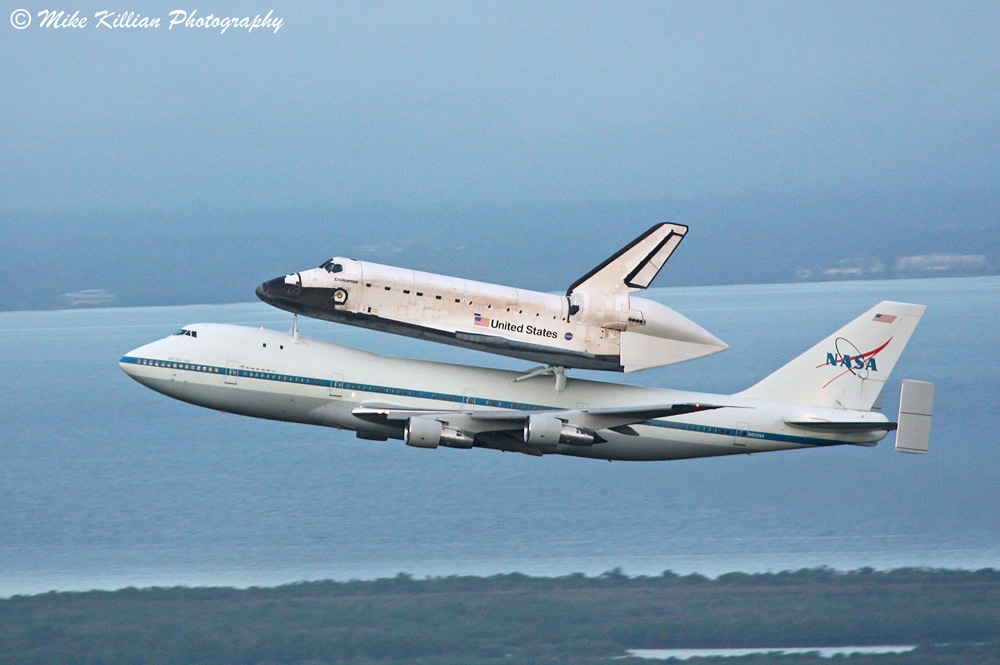
Even NASA found use for them, using a modified 747 to carry their space shuttle fleet piggyback on trips between California and Florida for over 30 years.
NASA’s 747 Shuttle Carrier Aircraft carrying space shUttle endeavour piggyback on a cross-country flight (photo: mike killian)
NASA also modified another 747 to carry a flying telescope to explore the universe in ways stationary telescopes on the ground could not. That plane just flew it’s last science mission last week, which we reported on HERE.
naSa’s 747 sofia flying telesCope (photo: NASA)
And of course, the jumbo jet has served as Air Force One, flying 6 Presidents over the years, and will continue doing so for many years to come. Boeing is currently working on two new 747 Air Force Ones to deliver to the Air Force, but they are modified 747s from already produced airframes.
Air forCe one 747 (photo: Mike Killian)
But times of course do change. Increasing fuel costs and newer plane types with better fuel efficiency and superior design tech have forced major airlines to move away from the 747.
Most now operate as cargo freighters. The global air cargo fleet is expected to grow by more than 60% over the next 20 years. But a few airlines still fly them for passenger travel. They include Asiana Airlines, Mahan Air, Lufthansa, Koren Air, Max Air and Air China.
Photo: Lufthansa
Atlas Air Is The Largest Remaining Operator
“The 747 will forever hold a special place in aviation history,” said Stan Deal, president and chief executive officer of Boeing Commercial Airplanes. “Atlas Air began operations 28 years ago with a single 747 and it is fitting that they should receive the last, ensuring that the ‘Queen of the Skies’ plays a significant role in the global air cargo market for decades to come.”
Photo: Atlas Air
“I can’t emphasize how big of a sense of employee pride there is with this airplane,” said Boeing’s head of communication for the 747, Brianna Jackson, during a media tour of the production facility earlier this year. “There are people here who have worked on this plane for 40 years — their entire career on the 747. They love this airplane and want to see it to the end.”
If you’ve ever wanted to display the cockpit escape rope of an Airbus A380 in your living room, you’re in luck.
Several hundred items from the iconic Airbus A380 will be available for the public to bid on during a three-day auction set to take place from 13-15 October in Toulouse, France.
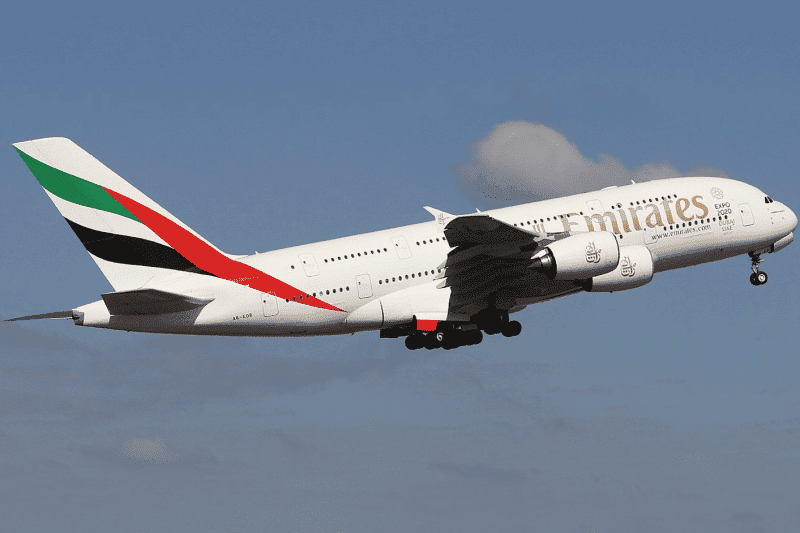
The vast majority of the parts are from an ex-Emirates A380 (MSN 13 / Reg: A6-EDB). However, various items from other A380s will also be up for auction.
Proceeds from the event will go to charity.
The A6-EDB Backstory
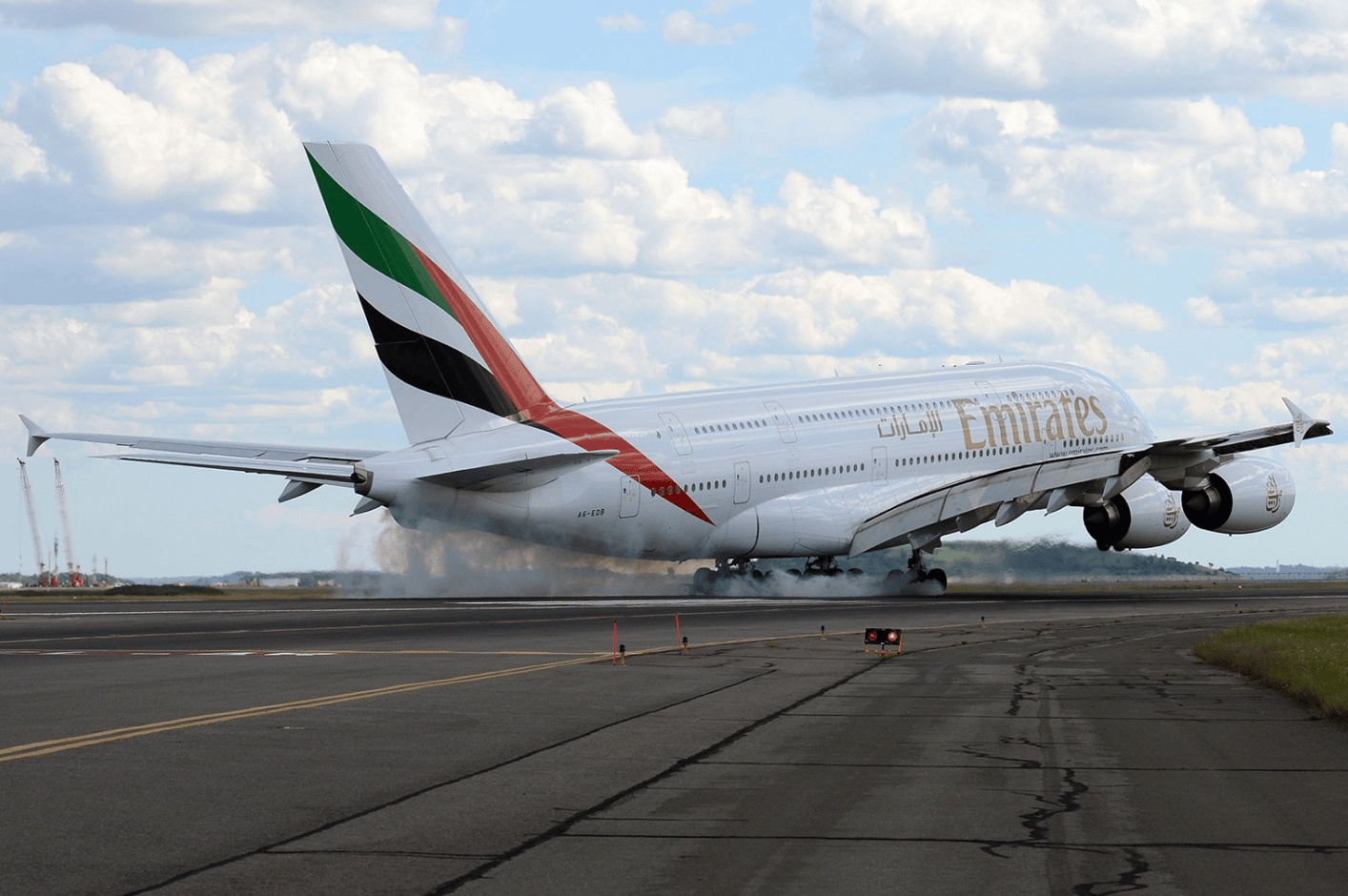
Emirates Airbus A380 (MSN13/Reg: A6-EDB) touches down at Boston Logan International Airport (BOS) on 08 August 2011 | IMAGE: Rudy Chiarello via AirFleets.net
A6-EDB, the 13th A380 built by Airbus, entered revenue service on 23 October 2008 with Dubai-based Emirates. It became the second A380 to join the Emirates fleet.
An early victim of the downturn in air travel amid the coronavirus pandemic, A6-EDB was parked in February 2020. Her last flight was a ferry flight from Dubai (DXB) to Tarbes, France (LDE) on 27 October 2020, according to FlightAware. It would then undergo decommissioning at Tarmac Aerosave, an aircraft maintenance center and Europe’s largest storage facility, located in southern France, roughly 100 miles southwest of where the aircraft was built in Toulouse.
What Kind of Items Will Be Up for Auction?
A faux marble sink from the first-class cabin will be up for auction | IMAGE: uk.drouot.com
Most of the items – divided into 380 lots – available for auction will be from A6-EDB’s cabin. Some items available for bidding include parts of the cabin itself, such as stairs, handrails, emergency exit signs (in English and Arabic), windows, lamps, seats, seatbelts, and even a bar. Other parts include beverage trolleys, baby bassinets, flashlights, and – yes – even a cockpit escape rope. Business class seats from a different A380 will also be up for auction at the event.
Various artists create artwork from pieces of Airbus A380 A6-EDB | IMAGE: Airbus
Additionally, thanks to a collaboration between Airbus and prominent street artists, you can bid on unique pieces of artwork created from different parts of the aircraft, such as engine blades and trolleys.
The auction will take place in Toulouse; however, anyone from anywhere in the world can bid online.
How Much Will I Have to Shell Out?
Emirates Airbus A380 (MSN13/A6-EDB) at Sydney Kingsford Smith Airport (SYD) on 29 November 2014 | IMAGE: Bill Mallinson via AirFleets.net
So, what are some of the estimates for these pieces? Bilingual emergency exit light panels start at around $80. A three-piece set of a side panel of the fuselage starts out at just under $400. How about a faux marble sink from the first-class cabin? It could be yours for just under $2,000.
If you would like to take part in this unique opportunity to own a piece of the world’s largest commercial airliner, you can do so beginning on 13 October by registering online.
LOT 1 – Bidding begins at 0800 ET on Thursday, 13 October
LOT 2 – Bidding begins at 0830 ET on Friday, 14 October
LOT 3 – Bidding begins at 0830 ET on Saturday, 15 October
Most of the proceeds will go to the Airbus Foundation, which “facilitates philanthropic initiatives worldwide,” according to the organization’s website. Some of the foundations’ recent missions include responses to the COVID-19 pandemic and natural disasters. Additional proceeds will be donated to the AIRitage Association, a French-based organization that works to preserve aviation heritage.
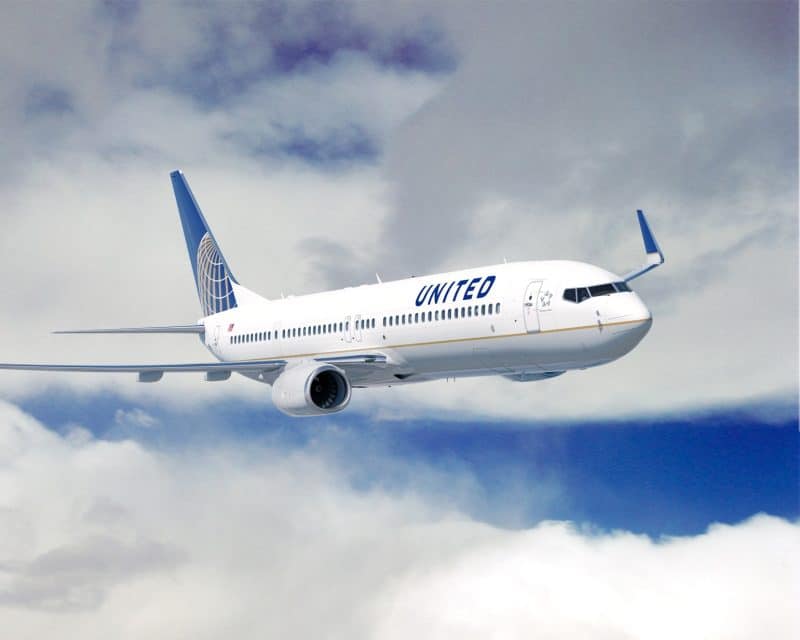
Chicago-based United is suspending service at JFK airport by the end of October.
In a memo sent to employees, the company blames the FAA, saying they have not given United enough slots to operate more flights. They also say they’ve been trying to get more permanent JFK slots from the FAA for over a year.
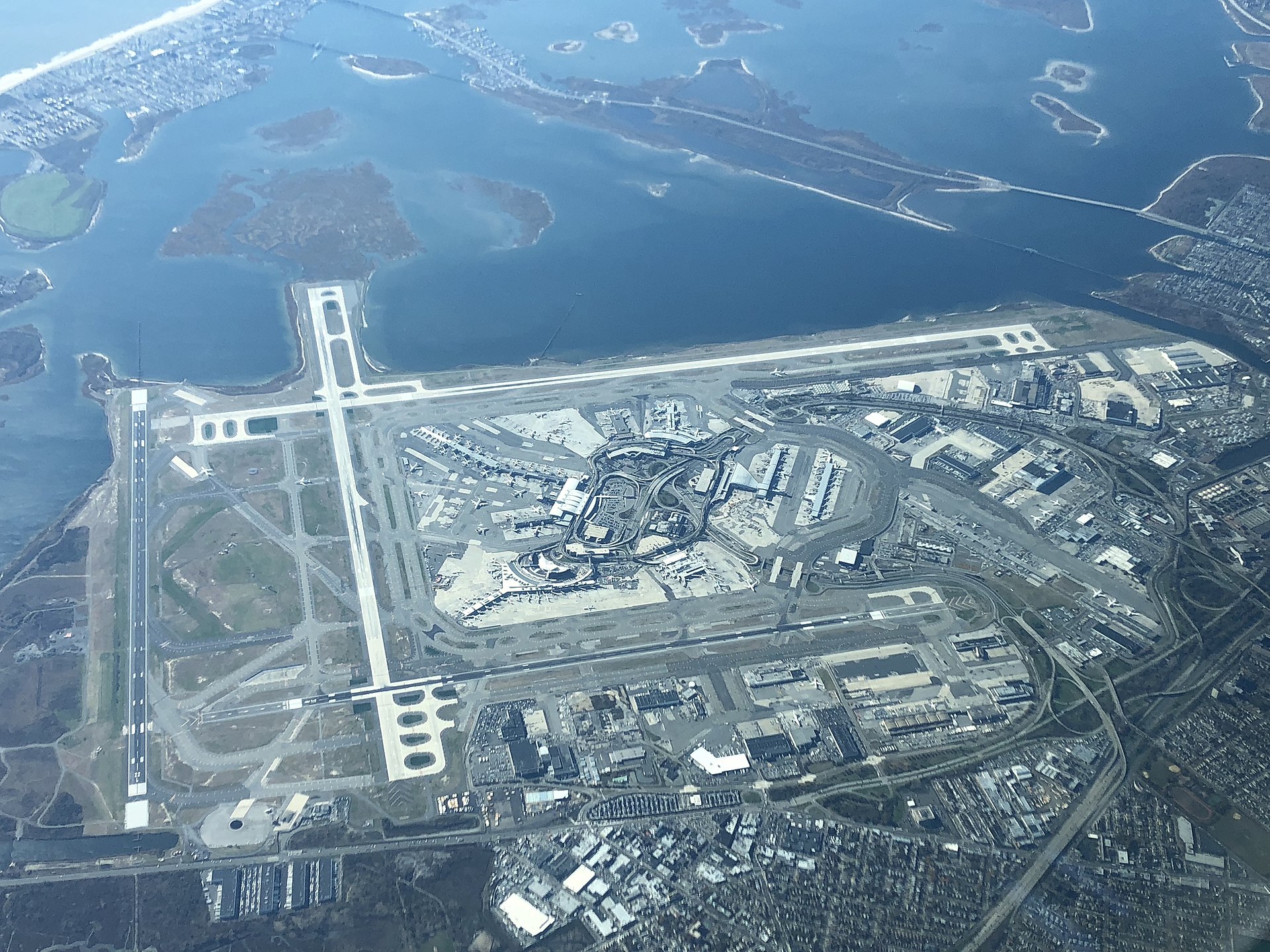
Aerial view of jfk (Photo: port authority nynj)
“Given our current, too-small-to-be-competitive schedule out of JFK – coupled with the start of the winter season where more airlines will operate their slots as they resume JFK flying – United has made the difficult decision to temporarily suspend service at JFK,” the memo reads.
Not a Huge Loss For JFK In Terms Of Flights
The company only does four flights a day there as it is, with two SFO and two LAX round-trips. That accounts for only 1% of JFK traffic. They also operate out of LaGuardia Airport and a hub in Newark, where they expect to operate 13,000 (combined) flights next month. United makes up for 70% of traffic at Newark.
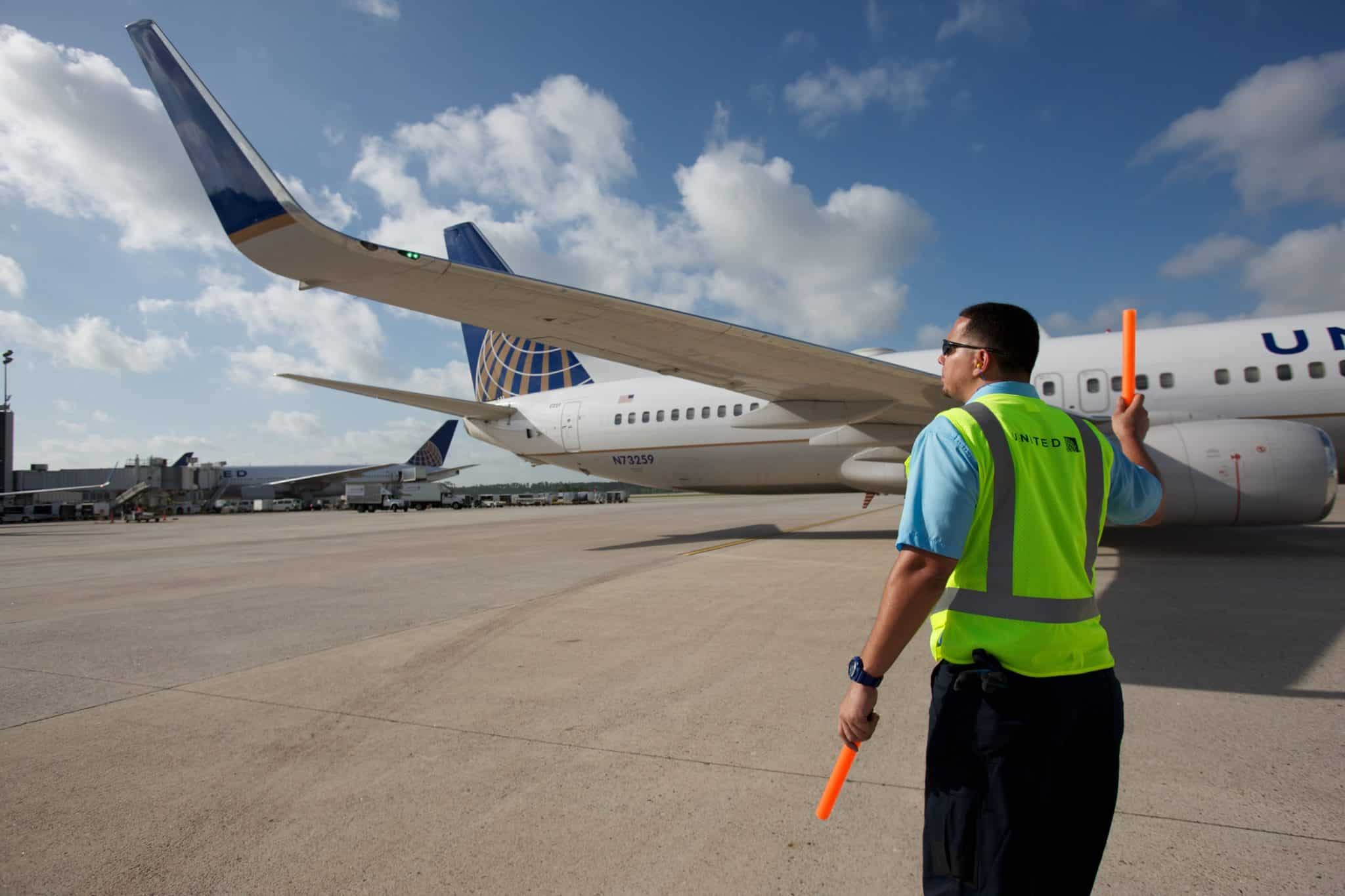
Photo: united
Their 100 employees at JFK will likely be transferred to those. United says nobody at JFK is losing their job.
They also say it is only temporary, but they have done this before at JFK, and did not return for 5 years. At the time, slots became available when other int’l carriers reduced ops because of Covid-19. But with travel bouncing back, those airlines have been taking their slots back.
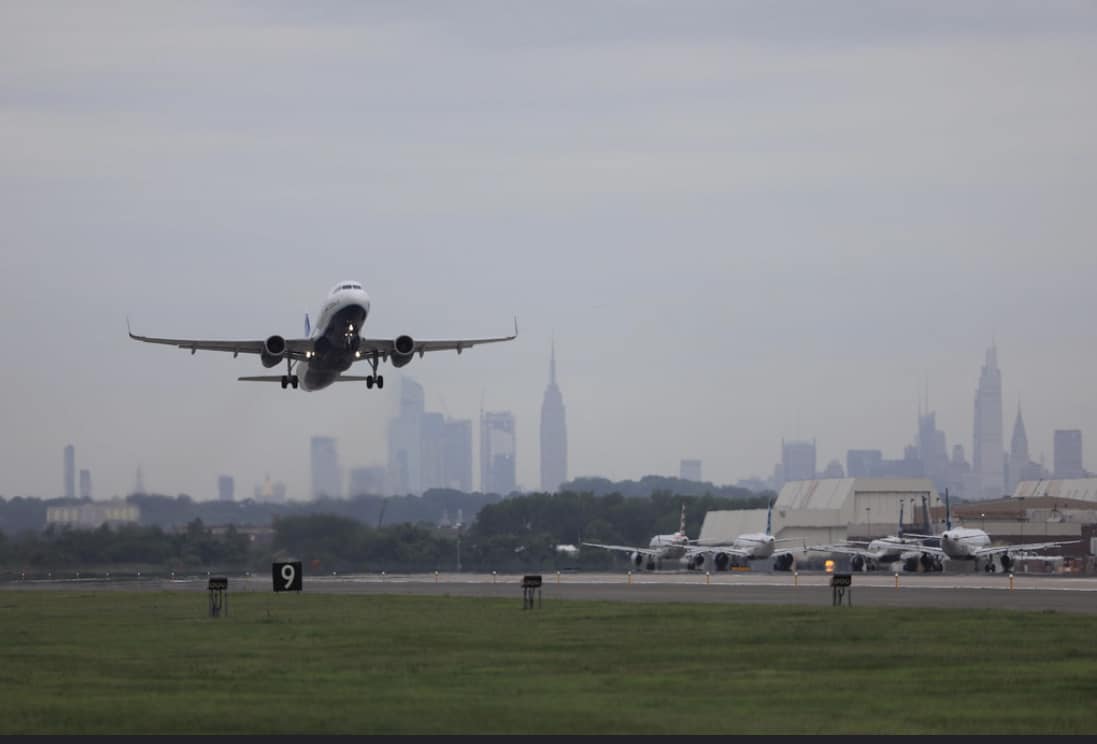
A plane taking off at JFK Airport.(Photo: port authority nynj)
Door Is Open For Another United Return
United says talks with the FAA have been “constructive”, but added that “the process will take some time.”
The FAA says they are “dedicated to doing its part to safely expand NYC airports and airspace capacity.” They added that they “will follow our fair and well-established process to award future slots to increase competition between airlines so passengers have more options.”
The public can see it fly one more time this month.
NASA’s one-of-a-kind 747 SOFIA flying telescope flew its final mission on Sep 28, wrapping up a career revealing mysteries of the universe that will keep astronomers busy for years to come.
Sure NASA has telescopes in space to observe different areas of the cosmos in different ways. And telescopes exist on top of hills and mountains to observe the night sky and various phenomenon across our own galaxy and others.
But space-based telescopes cost billions of dollars, and are made for deep-space observing. And land-based telescopes are restricted in 3 major ways. They can’t be moved to observe different areas or targets across the sky. They rely on good weather. And they stargaze through an atmosphere thick with water vapor, no matter how good the weather is. It’s like looking at an object at the bottom of a pool.
What was SOFIA?
So NASA decided to put a telescope on a plane to fly it wherever they want. They acquired a former Pan Am 747 passenger plane known as Clipper Lindbergh, and teamed up with the German Space Agency (DLR) to come up with the Stratospheric Observatory for Infrared Astronomy (SOFIA).
SOFIA with itS telescope door open (photo: nasa)
Engineers modified a Boeing 747SP to carry the DLR’s 38,000-pound, 100-inch reflective telescope. They also developed a “garage door” on the plane that rolled up to let the telescope work, as the plane flies above clouds and water vapor. SOFIA was also equipped with interchangeable instruments, to help the telescope make the right type of observations for a given mission.
It was one of the largest open ports ever flown on an aircraft, and the largest certified to fly at all altitudes and speeds with the door open. Pilots couldn’t even feel when the door was open. The stability of the telescope itself was equivalent to keeping a laser pointer steady on a penny from 10 miles away.
But how does a telescope on an airplane even work? Why doesn't the data jiggle jiggle?
SOFIA was fully operational for 8 years, and logged 732 nights of observing. It helped astronomers worldwide study a wide range of cosmic events and objects invisible to other telescopes.
SOFIA even intercepted Pluto’s shadow as it swept across the ocean at over 50,000 mph. It gave scientists an opportunity to record data on the planet’s makeup, as a star behind it illuminated the atmosphere.
Astronomers can identify elements in a planet’s atmosphere when this occurs, telling them what the world is made of. SOFIA was the only telescope able to be at that precise location for the event as it happened.
Our Milky way home and its galactic core rising over a deserted florida beach (photo: mike killian)
SOFIA studied cosmic magnetic fields, the structure and core of our Milky Way galaxy, and the origin of cosmic rays. The mission also discovered water on the sunlit side of the moon, and so much more.
End of an era
But as they say, all good things come to an end. SOFIA completed its primary 5-year mission in 2019. It was then granted a 3-year extension. But in the time since, it’s costs have been deemed no longer worth the benefit.
On the fLight deck of sofia (photo: nasa)
With the observatory now retired, NASA is exploring options for a permanent home for the special aircraft.
You can see it fly one more time
But before that happens, NASA will show off SOFIA to the public Oct 15-16 at Edwards AFB for the Aerospace Valley Air Show. And it won’t just be a static display either. NASA intends to fly it for everyone in attendance.
Surveillance video in a Fresno, CA neighborhood captured a helicopter crash in someone’s front yard yesterday.
Local police say the Bell 206B-3 JetRanger III was conducting a test flight from Fresno Yosemite Airport (FAT/KFAT), when the crew (a single pilot and passenger) suddenly heard a loud pop and began falling.
In the video captured by resident Barbara Lee, the helicopter appears to suffer an inflight loss of tail rotor authority. You can see the tail rotor is completely shot as it falls (thus the spinning), making the helo a falling brick.
The helicopter hit a palm tree as it crashed down, just feet from a house and a passing car. Fortunately there are no reports of anyone in the home or area being hurt.
Both the pilot and passenger were conscious and responsive when authorities arrived. People in the neighborhood also immediately responded to help the crew get out of the wreckage.
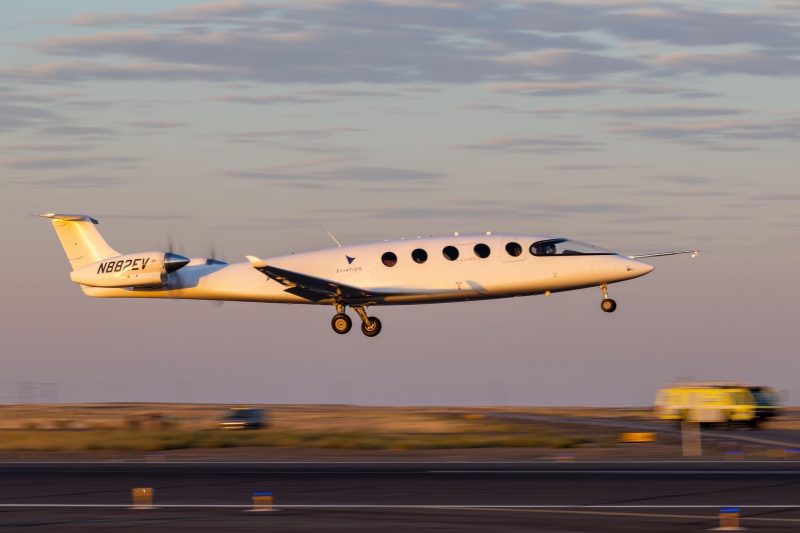
The world’s first all-electric commuter plane made its first flight earlier this week. Eviation’s Alice prototype flew for 8 minutes and ascended to 3,500 ft, before landing back at the company’s base in Moses Lake, Washington.
The flight came less than a month after a series of successful high-speed taxi tests were conducted, which we reported on here.
“Today’s first flight provided Eviation with invaluable data to further optimize the aircraft for commercial production,” said CEO and President Gregory Davis following the milestone on Sep 27. “We will review the flight data to understand how the performance of the aircraft matched our models.”
“It was wonderful,” said test pilot Steve Crane. “It handled just like we thought it would. Very responsive, very quick to the throttle, and it came on in for a wonderful landing. I couldn’t be happier.”
Alice test pilot Steve Crane shakes hands with Eviation CEO Gregory Davis after the first test flight on sep 27, 2022 (photo credit: eviation)
The first of many test flights
It was the first of a flight test program that will explore the aircraft’s limits in various conditions. Such testing will inform development of production prototypes for the company. Eviation is targeting 2025 for flight tests with production prototypes. With FAA approval, they hope to hit the market in 2027.
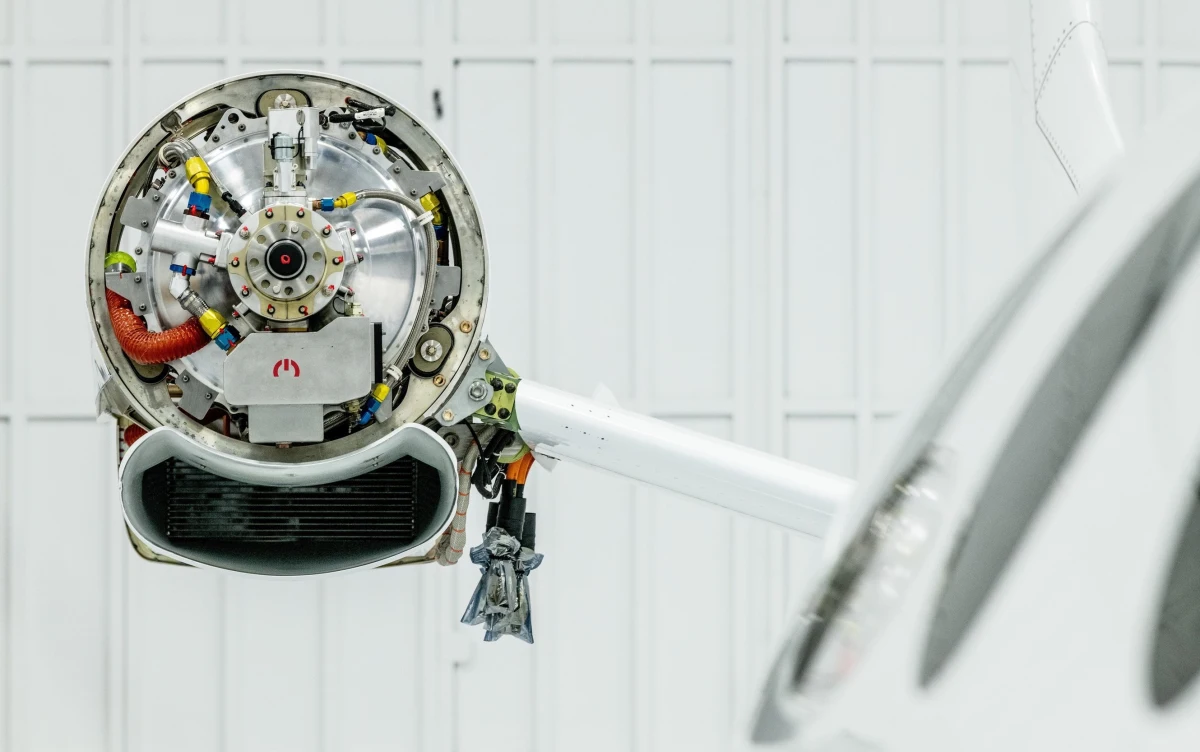
Alice is powered by an 8,000 lb battery, with twin engine props mounted near the tail powered by 640-kilowatt MagniX Electric Propulsion Unit (EPU) engines.
magniX Electric Propulsion Unit (EPU) engines on alice (photo credit: eviation)
Eviation wants to target the regional market, and hit smaller airports that typically serve cargo hauls and private plane owners. Shorter routes of 500 miles or less make up for nearly half the world’s air travel. Electric planes would be a lot quieter too, letting them service smaller hubs where flights are more restrictive due to noise.
Ultimately, they want to develop a regional all-electric plane that can charge in 30 minutes and fly 400-500 mile routes. A passenger version will be able to fly up to 9 passengers at a time. They also want to develop cargo and luxury / business executive versions.
Eviation’s All-Electric Plane Soars on First Flight Test 51
Part of a growing but untested industry
Like it or not, aerospace innovations are going greener. Eviation isn’t the only player in the game either. Wright Electric is developing a 100-passenger electric plane. United and Mesa Air are backing an aircraft by Heart Aerospace. Airbus and Boeing are both working on designs too.
They’ve secured some big orders already too, with companies such as GlobalX, DHL Express and Cape Air all showing interest with their dollars.
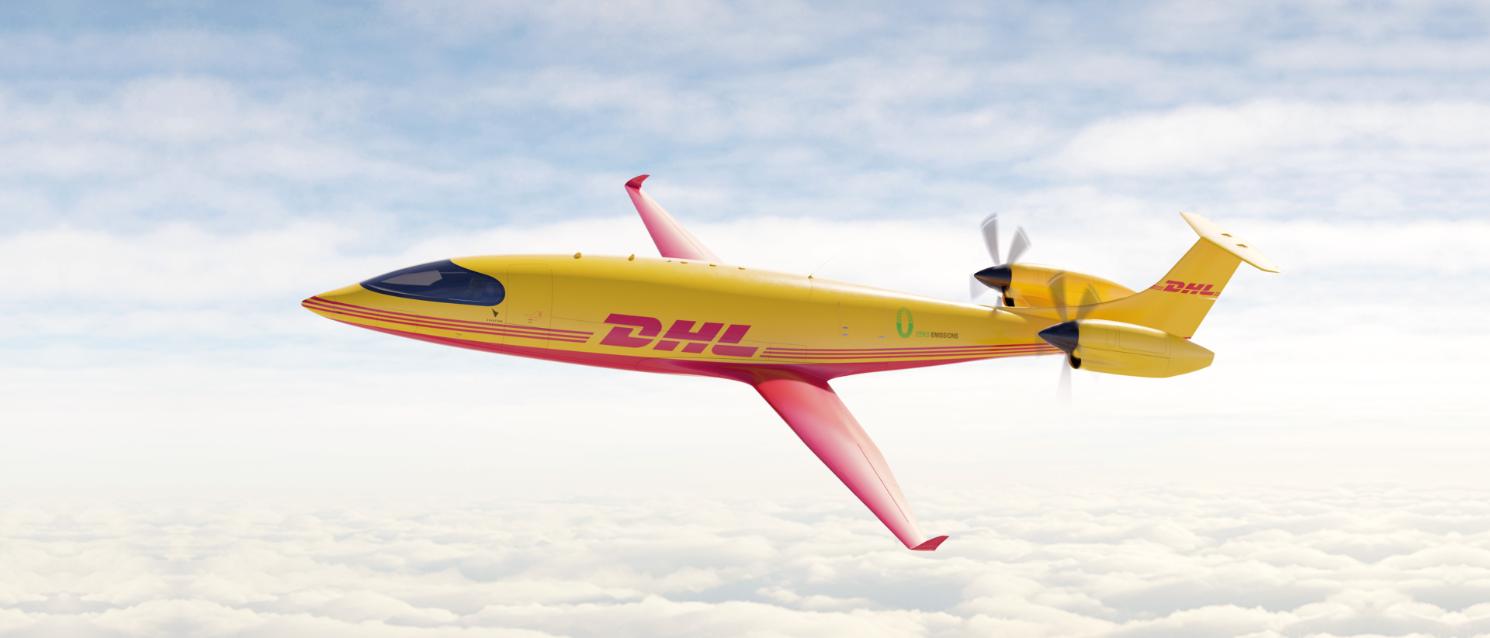
Alice e-cargo plane artist reNder (credit dHl express)
“Alice e-cargo planes will require less investment in station infrastructure. The quick charging times mean we can charge them while loading and unloading shipments,” says DHL. The company has ordered 12 cargo versions.
Yes, these planes can charge quickly
“Alice’s range and payload make it a unique, sustainable solution for our global aviation network, supporting our aspiration to make a substantial contribution to reducing our carbon footprint and ultimately achieving net-zero emissions by 2050,” says John Pearson, CEO of DHL Express. “This maiden flight confirms our belief that the era of sustainable aviation is here.”
Despite the predictable naysayers, it appears the theory and concept is solid. While a lot of work lies ahead, surely NASA, Airbus, United and other industry giants can’t all be wrong about the future of battery-powered air travel. They are all betting millions of dollars on it.
It’s been a long journey, but North America’s newest airline took to the skies last week.
Canada Jetlines, or simply Jetlines, completed its inaugural flight on 22 September from Toronto Pearson International Airport (YYZ) to Calgary International Airport (YYC).
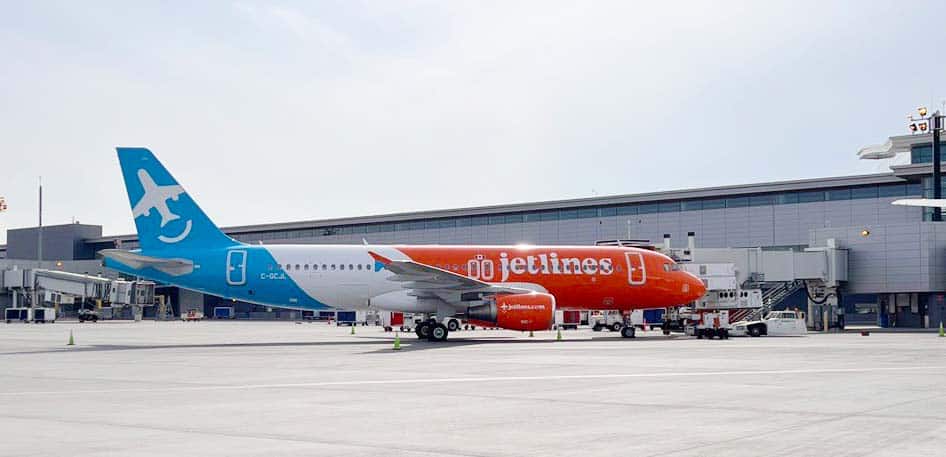
A Canada Jetlines Airbus A320 at the gate at Calgary International Airport (YYC) | IMAGE: YYC CALGARY INTERNATIONAL AIRPORT VIA FACEBOOK
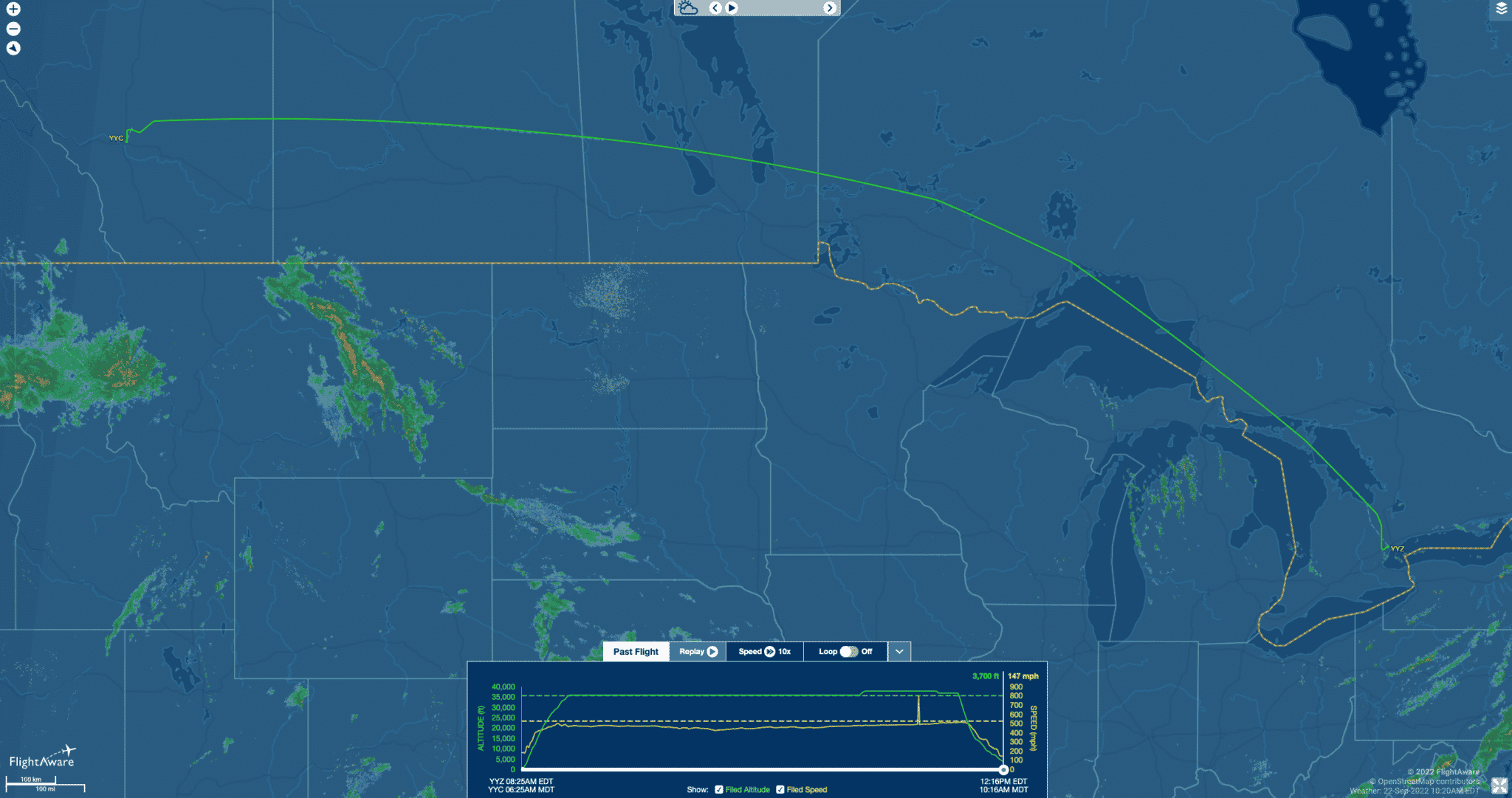
With mainly sunny skies in both Toronto and Calgary, AU120 departed YYZ thirty minutes behind schedule at 0825 ET Thursday morning. Three hours and 51 minutes later, the flight touched down at YYC at 1022 MT, just 12 minutes behind schedule.
Canda Jetlines successfully completed its inaugural flight between Toronto Pearson (YYZ) and Calgary (YYC) on 22 September | IMAGE:flightaware.com
Airline management and executives greeted the flight in Calgary with a celebration of the successful first flight.
The journey to today, however, has been anything but easy.
Nothing About the Original Plan is the Same
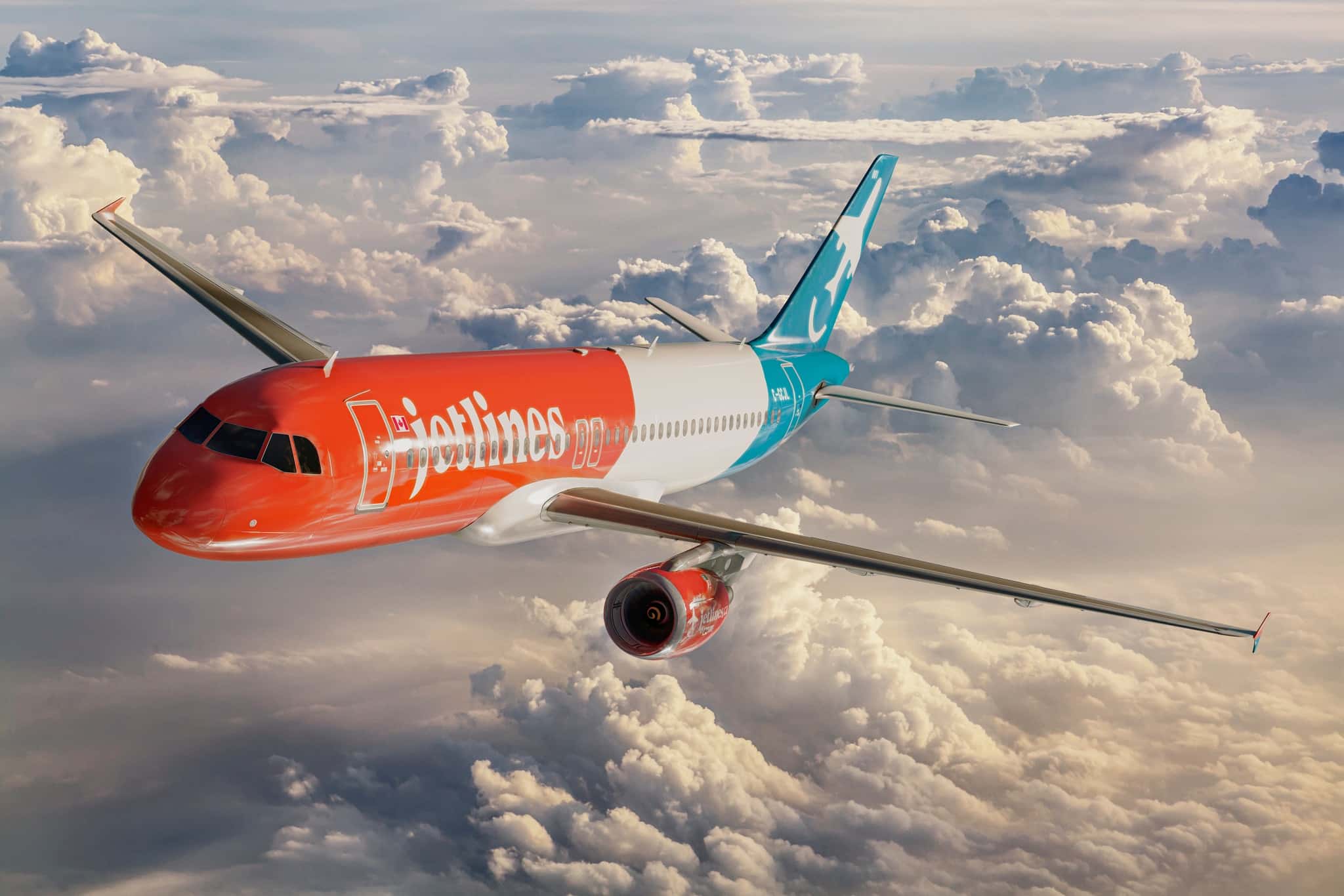
A Canada Jetlines A320 | IMAGE: Canada Jetlines
Canada Jetlines was first conceived in 2013 – a lifetime ago in the aviation world. Originally, the carrier was going to be based in Vancouver, British Columbia (YVR), and utilize Boeing 737-800s to fly to destinations throughout Canada, the United States, Mexico, and the Caribbean.
In the decade since, a series of setbacks have kept Jetlines grounded. Ahead of a planned Q4 2019 launch, the carrier decided to lease a pair of Airbus A320s and subsequently canceled plans to lease the Boeing 737s.
A launch date of 17 December 2019 came and went. Then, as the calendar turned to 2020 and the pandemic affected every aspect of aviation, plans for the inaugural flight were on hold indefinitely.
The Stars Aligned in 2022 for Canada Jetlines
The first Canada Jetlines Airbus A320 is unveiled in Toronto in March 2022 | IMAGE: Canada Jetlines
As the pandemic waned and air travel began to rebound, things finally started to look up for Jetlines. The carrier received its first Airbus A320 (registration C-GCJL) in February 2022.
Jetlines announced it would begin operations on 15 August with an inaugural flight between Toronto Pearson and Winnipeg Richardson International Airport (YWG) in Manitoba. Service to Greater Moncton (New Brunswick) Roméo LeBlanc International Airport (YQB) was also to begin on the same day.
However, the 15 August launch was postponed as the carrier still had not received approval to operate from the Canadian government. The launch was tentatively pushed back to 29 August. Finally, on 18 August, Jetlines received its Air Operating Certificate (AOC) from Transport Canada, followed by the issuance of airline licenses from the Canadian Transportation Agency (CTA) to operate domestic, non-scheduled, and scheduled international flights.
The saga of Jetlines’ launch was not over yet, though. The airline once again pushed back the start date – this time to 22 September.
Finally, the stars aligned, finances were in place, and licenses were in hand. After nearly a decade, Jetlines took to the air.
The interior of a Canada Jetlines Airbus A320 | IMAGE: Canada Jetlines
Canada Jetlines will join an ever-growing list of Canadian budget airline start-ups that have launched in recent years, such as Lynx, Flair, Porter, Sunwing, and Swoop.
Jetlines’ A320 features an all-economy product with 180 seats in a 3-3 configuration. Jetlines has said it plans to have two aircraft by the end of 2022 and 15 aircraft by 2025.
The carrier has just two destinations right now: Toronto and Calgary. However, Jetlines officials say they will announce additional destinations soon. The airline currently offers twice-weekly flights on Thursdays and Sundays.
“Canada Jetlines is proud to launch our initial flights between Toronto to Calgary,” said Canada Jetlines CEO Eddy Doyle. “The two cities represent cultural diversity, economic trade, and significant investment opportunities. We are encouraged to continue expanding our reach, with the goal of serving as Toronto’s preferred airline.”
Flight AU120, which blocks in at 4 hours and 15 minutes, will depart Toronto’s Terminal 3 at 0755 and arrive in Calgary at 1010. The return flight, AU121, will depart Calgary at 1140 and arrive in Toronto at 1720 (all times local).
Not unlike most low-cost carriers, onboard amenities are limited. However, customers have the option to purchase food and beverages. In addition, in-flight entertainment is available on passenger devices. Each seat features USB power outlets.
A Crowded Field
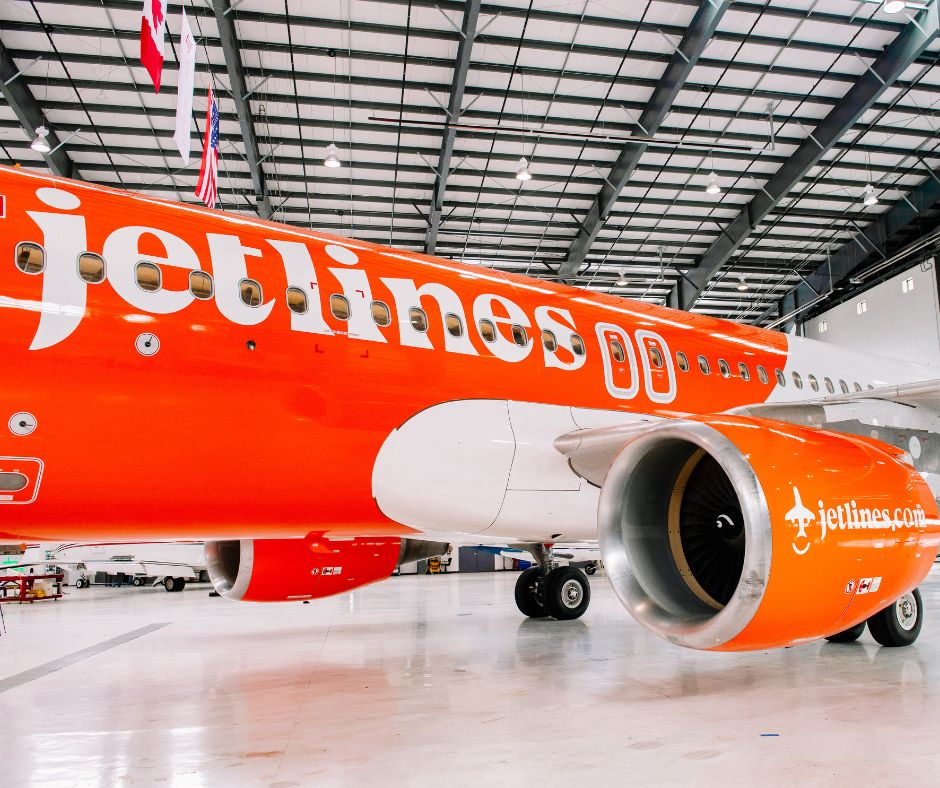
A Canada Jetlines Airbus A320 inside a hangar at Toronto Pearson International Airport (YYZ) | IMAGE: Canada Jetlines
Jetlines faces stiff competition in the skies over Canada. While post-pandemic travel continues to rebound, Jetlines has some headwinds with which to contend.
The carrier is launching at the beginning of the slower season for leisure travel — and without any sought-after “sun and fun” destinations. We hope Jetlines will announce more cities soon. Additionally, the fact that the airline is launching with just one airplane is less than ideal. If a weather or mechanical delay affects the sole Jetlines Airbus A320, there wouldn’t be much the airline could do to accommodate inconvenienced passengers.
Whichever way you look at it, Canada Jetlines has already faced a rocky road leading up to today’s first revenue flight. However, now that Jetlines’ successful inaugural flight is behind them, we wish them all the best and look forward to hearing about new planes and new routes soon.
Check out the video below for a detailed look at Canada Jetlines’ inaugural flight, thanks to Alex Praglowski Aviation on YouTube.
Major Hurricane Ian made landfall on Wednesday afternoon in southwest Florida near Cayo Costa as an extremely powerful category 4 storm.
As the monster storm makes its way across the Florida peninsula over the next 24-36 hours, airlines and airports across the Sunshine State continue to monitor its path and adjust their operational plans accordingly.
With maximum sustained winds of 150mph at landfall, Hurricane Ian is already impacting commerce and infrastructure in a “devastating to catastrophic” way, according to the National Weather Service office in Tampa.
Of course, a storm of this size and magnitude will undoubtedly wreak havoc on air travel in the Sunshine State in the hours and days ahead.
Hurricane Ian Airport Closures
Flight monitors at Orlando International Airport (MCO) ahead of Hurricane Ian on Wednesday, 28 September | IMAGE: Orlando International Airport on Facebook
In advance of the storm, many airports throughout south and central Florida have suspended operations for the duration of Ian’s onslaught. Once it is safe to do so, officials will assess the damage and open airports only when it is safe to do so.
Gulf Coast
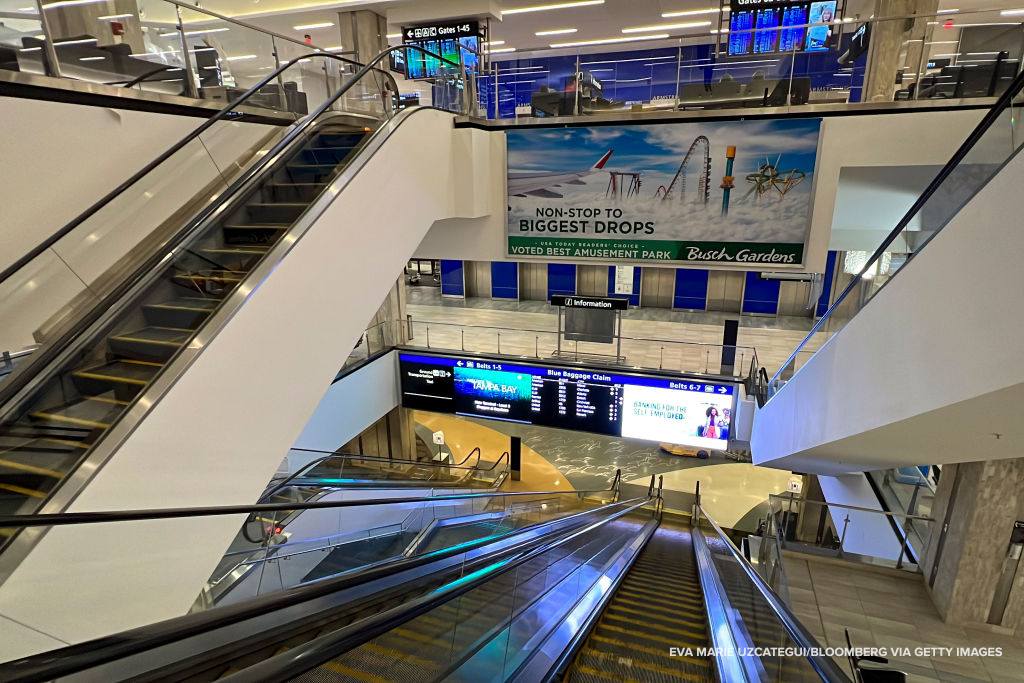
Tampa International Airport is eerily quiet ahead of Hurricane Ian’s arrival on Wednesday, 28 September | IMAGE: Eva Marie Uzcategui/Bloomberg via Getty Images
Tampa International Airport (TPA): Suspended operations at 1700 Tuesday. The airport will not reopen to passengers and visitors through Thursday. Some essential employees will remain on-site throughout the storm, according to the airport’s Twitter account @flytpa.
UPDATE: TPA remains closed to the public due to #HurricaneIan and there will be no departing flights through Thursday. Please check with your airline for the latest flight information. We will share a reopening date and time when it is determined. pic.twitter.com/22YP2FoNET
St. Pete-Clearwater International Airport (PIE): Suspended operations at 1300 Tuesday. PIE is in a mandatory evacuation zone and will not reopen until the evacuation order ends. The airport will provide updates via @iflypie on Twitter.
Sarasota Bradenton International Airport (SRQ): Operations were suspended as of 1800 Tuesday, and the airport remains closed today. Airport officials will provide updates via @SRQAirport on Twitter.
Sarasota Bradenton International Airport (SRQ) is all quiet before the arrival of Hurricane Ian on Wednesday, 28 September | IMAGE: SRQ on Facebook
Punta Gorda Airport (PGD): All flights have been canceled through Friday morning, 30 September. The airport will continue to provide updates via its website, flypgd.com.
Southwest Florida International Airport (RSW): Operations were suspended at 2100 Tuesday evening. RSW will not reopen before Friday. Airport officials will provide updates via its Facebook page.
Key West International Airport (EYW): Airport crews are busy preparing to reopen Thursday at 0730, according to a recent update. EYW experienced flooding as Hurricane Ian continues to move away from the Keys following a glancing blow overnight. The airport will provide updates through its website, eyw.com.
Central Florida
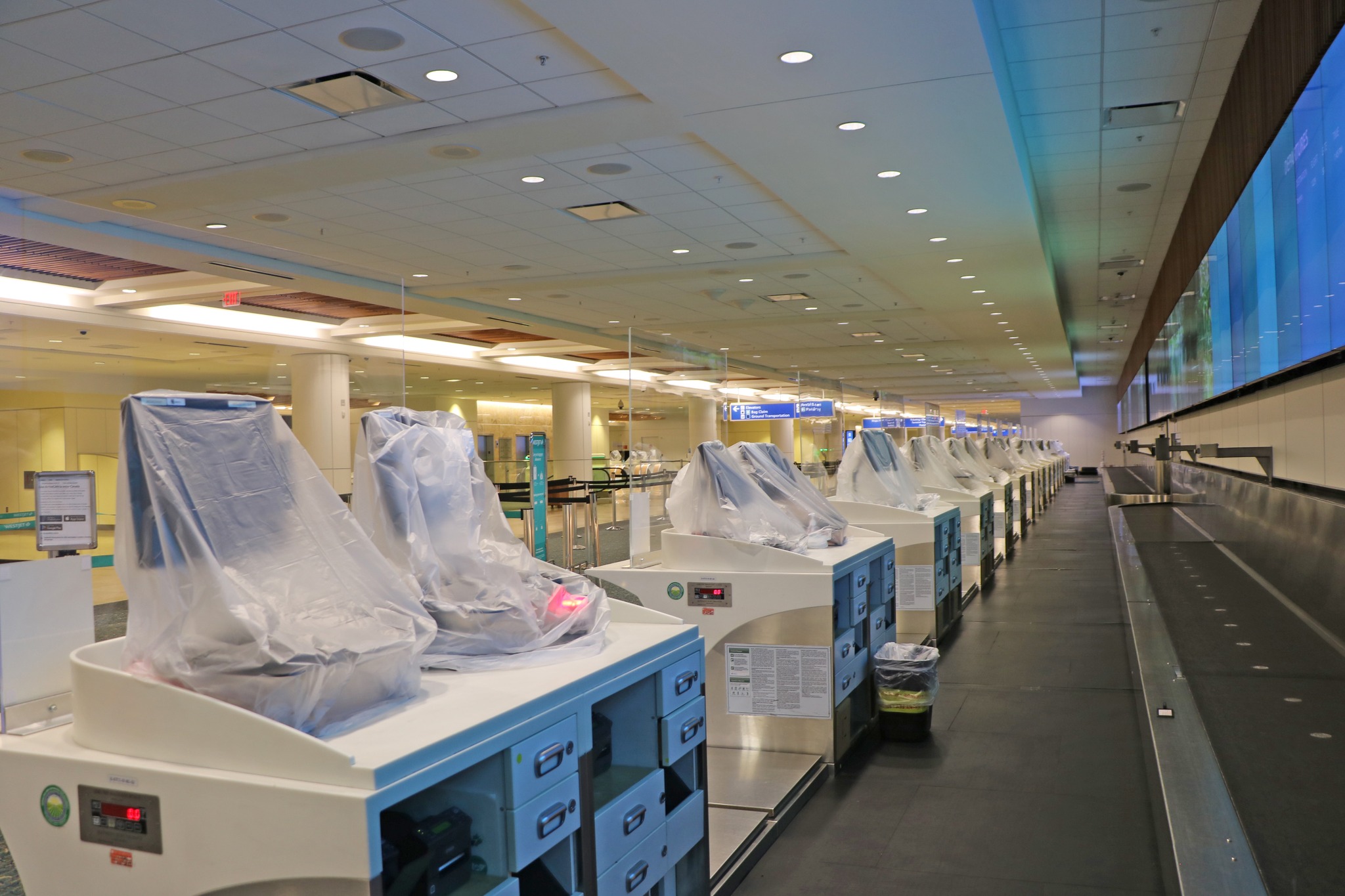
Orlando International Airport (MCO) prepares for Hurricane Ian on 28 September 2022 | IMAGE: Orlando International Airport on Facebook
Orlando International Airport (MCO): All operations were suspended on Wednesday morning at 1030. MCO officials say they expect flights to resume Friday, 30 September, provided it is safe to do so. Officials will provide updates via @mco on Twitter.
Operational Update – Hurricane Ian Our airport has now ceased commercial operations in anticipation of the arrival of Hurricane Ian. We ask you to please continue to work with your airline directly in regards to your travel plans. Stay safe. Details: https://t.co/pGiaBOseoBpic.twitter.com/czypD4fLDG
Orlando Sanford International Airport (SFB): All operations were suspended at 1700 Tuesday. Airport officials say they will not reopen before will provide updates via @FlySanford on Facebook.
Melbourne Orlando International Airport (MLB): Operations were suspended at 1400 Wednesday. MLB officials say they will reopen as quickly as possible once the storm passes and conditions are safe to do so. Officials will provide updates via @FlyMLB on Twitter.
Daytona Beach International Airport (DAB): Operations were suspended at 1235 Wednesday afternoon. All arrivals and departures are canceled for Wednesday and Thursday. Officials will provide updates via @FlyDAB on Twitter.
Elsewhere in Florida
Hurricane Ian’s forecast track as of 1700 ET Wednesday, 28 September | IMAGE: U.S. National Hurricane Center
As of late-afternoon Wednesday, normal operations continue at Miami International Airport (MIA), Fort Lauderdale-Hollywood International Airport (FLL), Palm Beach International Airport (PBI), and Jacksonville International Airport (JAX). However, all are experiencing flight delays and cancellations due to the storm.
In Broward County, an apparent tornado overnight caused damage to the North Perry Airport (HWO) near Fort Lauderdale. Footage from the airfield on Wednesday shows planes flipped over and damaged facilities. HWO is Broward County’s general aviation airport.
Most airlines are offering weather waivers for anyone traveling into or out of Florida throughout the next few days.
Some airlines, such as Southwest, are even extending travel waivers through Sunday, 2 October, for cities like Charleston, SC (CHS) and Savannah, GA (SAV) as Ian moves through the southeastern United States.
Airlines and airports across the Sunshine State are instituting operational contingency plans in preparation for Hurricane Ian.
On Tuesday afternoon, Hurricane Ian – a category 3 major hurricane – was slowly heading toward Florida after making landfall in western Cuba earlier in the day. Throughout the day, models were trending south and east with the storm, and a direct strike on the Tampa Bay area was not as sure as it was a day ago.
Whether or not Ian makes landfall in the Tampa Bay area or closer to Naples on Florida’s southwest Gulf coast, the impact on commerce and infrastructure will be “devastating to catastrophic,” according to the National Weather Service office in Tampa.
Ian is expected to make landfall between Tampa and Fort Myers sometime Wednesday afternoon or evening.
Hurricane Ian Airport Closures
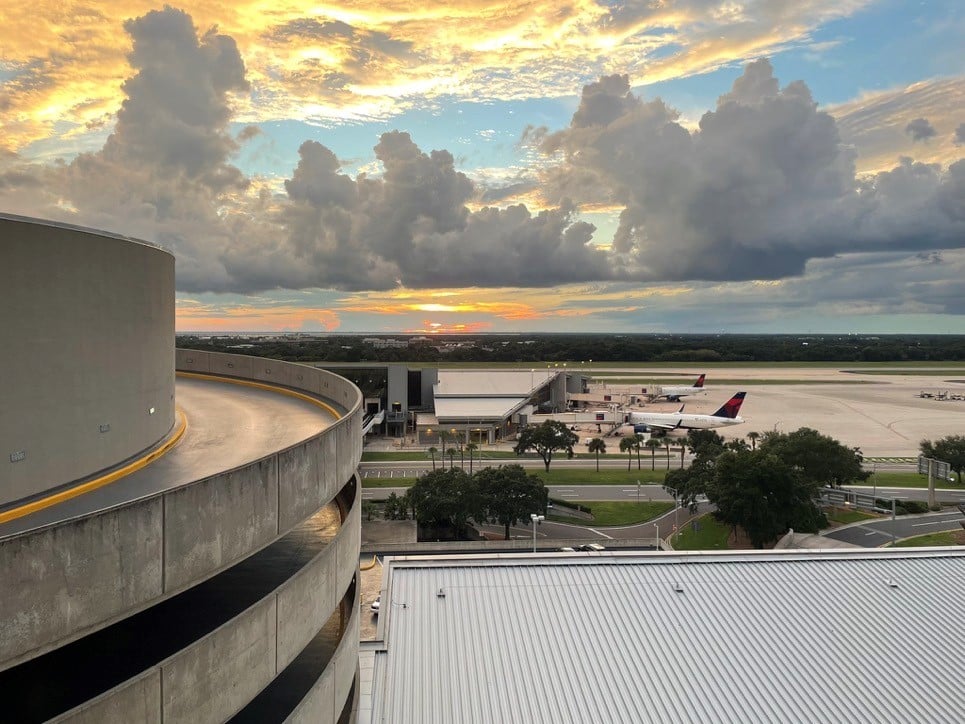
Tampa International Airport | IMAGE: TPA via Facebook
In advance of the storm, many airports throughout south and central Florida have suspended – or will suspend – operations for the duration of Ian’s rampage. Once it is safe to do so, officials will assess the damage and open airports only when it is safe to do so.
Gulf Coast
Sarasota Bradenton International Airport (SRQ) | IMAGE: SRQ on Facebook
Tampa International Airport (TPA): Suspended operations at 1700 Tuesday. The airport is closed to all passengers and visitors. Some essential employees will remain on-site throughout the storm, according to the airport’s Twitter account @flytpa.
St. Pete-Clearwater International Airport (PIE): Suspended operations at 1300 Tuesday. PIE is in a mandatory evacuation zone and will remain closed until the evacuation order ends. The airport will provide updates via @iflypie on Twitter.
Sarasota Bradenton International Airport (SRQ): Operations were suspended as of 1800 Tuesday. The airport will be closed to the public beginning at 2000 Tuesday. The airport will provide updates via @SRQAirport on Twitter.
Punta Gorda Airport (PGD): Airport officials say they plan to remain open “as long as operations are safe.” Aircraft and tower operations will be suspended if sustained winds greater than 45mph are observed. At present, only Allegiant Airlines serves PGD. Allegiant’s last outbound flight departed Tuesday at 1320. The carrier has canceled all flights for Wednesday, 28 September, and Thursday, 29 September. The airport will continue to provide updates via its website, flypgd.com.
Southwest Florida International Airport (RSW): Operations will be suspended at 2100 Tuesday evening. The airport will also close at that time. Airport officials will provide updates via its Facebook page.
Key West International Airport (EYW): The airport was closed on Tuesday and has not provided an update for operations on Wednesday, 28 September. As of late Tuesday afternoon, EYW is experiencing tropical storm force winds as Ian passes to the west. Once the storm passes, the airport will provide updates through its website, eyw.com.
Central Florida
Terminal C at Orlando International Airport (MCO) sits empty | IMAGE: Orlando International Airport on Facebook
Orlando International Airport (MCO): All operations will cease beginning Wednesday, 28 September, at 1030. Updates will be provided via @mco on Twitter.
Orlando Sanford International Airport (SFB): All operations were suspended at 1700 Tuesday. Additionally, all flights are canceled through at least Friday morning, 30 September. The airport will provide updates via @FlySanford on Facebook.
Melbourne Orlando International Airport (MLB): Operations will cease beginning at 1400 on Wednesday, 28 September. MLB officials say they will reopen as quickly as possible once the storm passes and conditions are safe enough. Updates will be provided via @FlyMLB on Twitter.
Daytona Beach International Airport (DAB): As of 1645 on Tuesday, 27 September, normal operations continue at DAB. However, American Airlines preemptively canceled the remaining arrivals on Tuesday evening, all flights on Wednesday, 28 September, and the first outbound departure on Thursday, 29 September. Updates will be provided via @FlyDAB on Twitter.
Elsewhere in Florida
As of Tuesday evening, normal operations continue at Miami International Airport (MIA), Fort Lauderdale-Hollywood International Airport (FLL), Palm Beach International Airport (PBI), and Jacksonville International Airport (JAX). However, each airport notes that individual airlines may decide to cancel flights even if the airports remain open.
Most airlines have announced weather waivers for anyone traveling into or out of Florida throughout the next few days.
Some airlines, such as Southwest, have even extended travel waivers through Sunday, 2 October for cities like Charleston, SC (CHS) and Savannah, GA (SAV) as the remnants of Ian move through the southeastern United States.
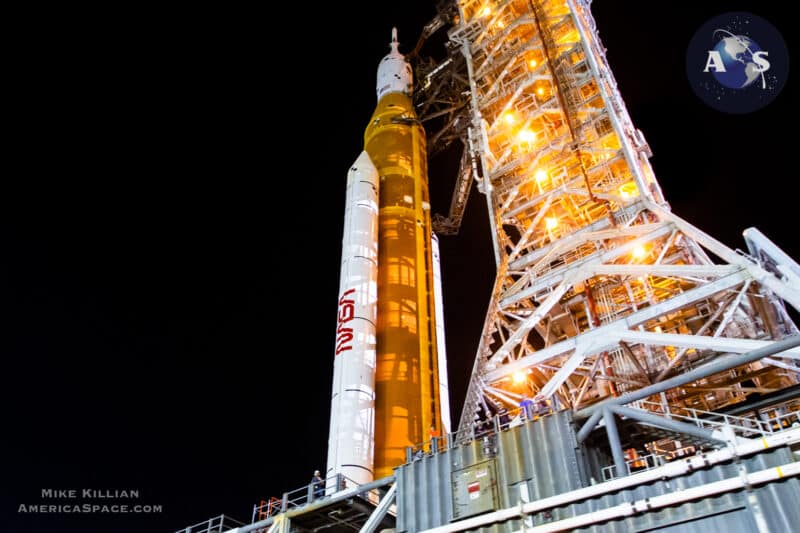
NASA officials on Tuesday also made the decision to roll back the Artemis-1 moon rocket to the Vehicular Assembly Building (VAB) at Kennedy Space Center ahead of Hurricane Ian.
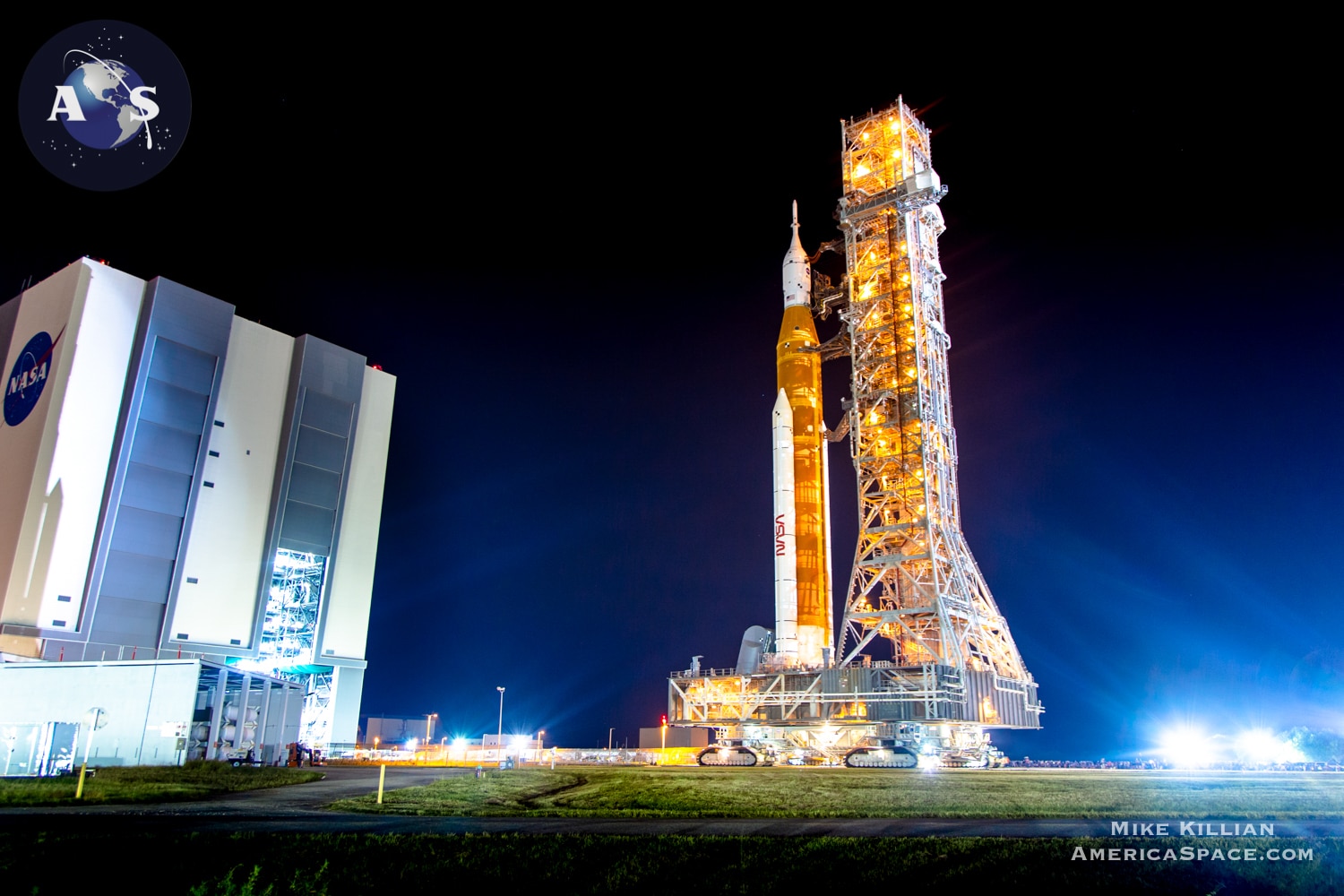
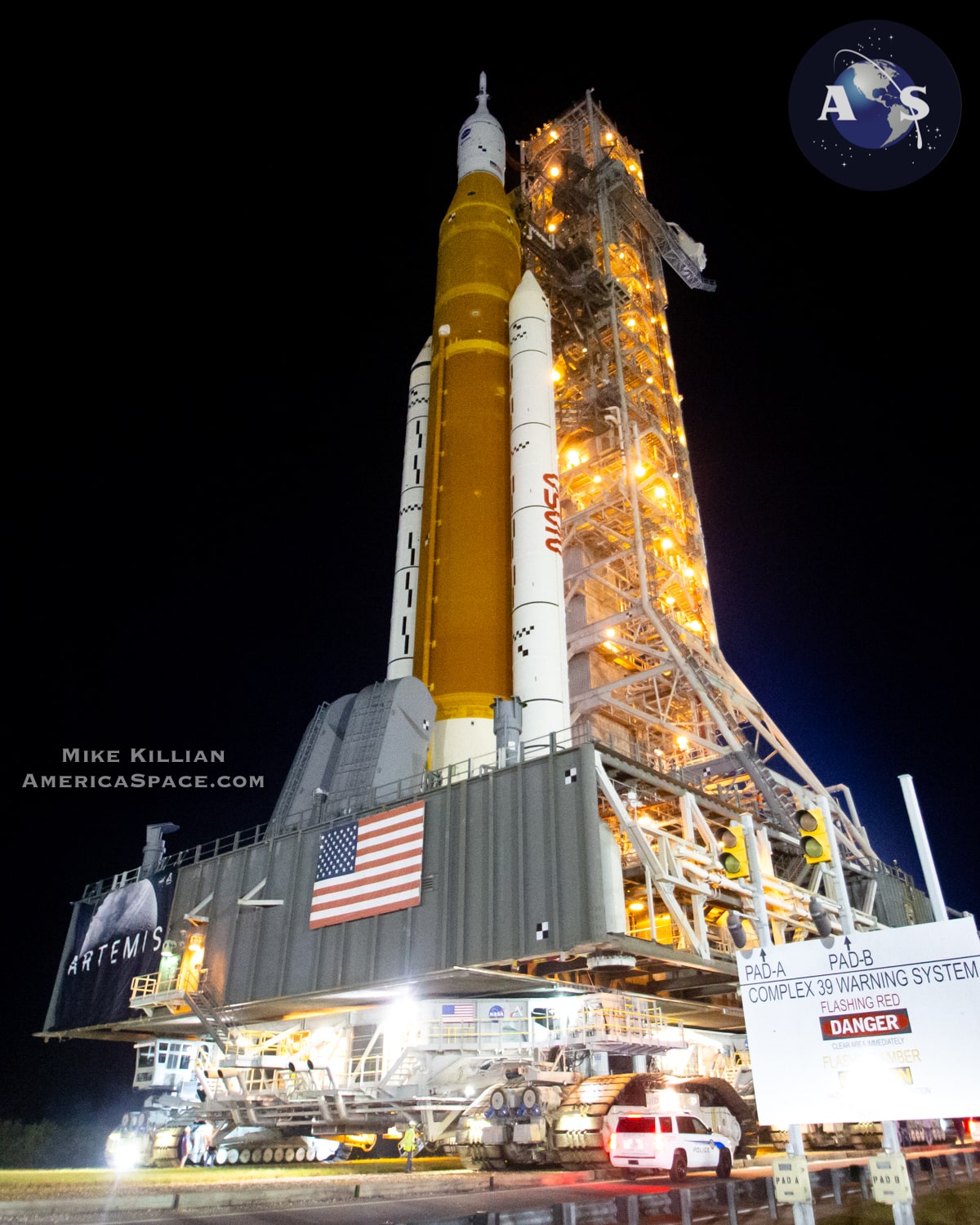
NASA will roll back Artemis-1 off its launch pad at Kennedy Space Center tonight, to protect the vehicle from Hurricane Ian.
First motion off the launch pad will start around 11:00pm EDT. It will take about 8-10 hours to arrive in the Vehicle Assembly Building a few miles away.
Artemis-1 rolling out from the Vehicle Assembly Building in Aug 2022. Photo: Mike Killian / AmericaSpace.com & AvGeekery.com
NASA was aiming for a launch attempt on Sep 27, after repairing a hydrogen leak that scrubbed the previous launch attempt on Sep 3. The decision to roll the rocket back was not made lightly, and comes after days of monitoring, discussion and preparations just in case.
NASA was hopeful that the hurricane’s track would trend west, away from the Florida peninsula. But that has not happened. The trends have instead been tracking east. The east-side of a hurricane is where a lot of the storm’s energy is, packing squall lines and tornados.
11:00am EDT update on the potential track of hurricane ian, projected to impact florida’s west coast as a major hurricane later this week. image from nhc
Risk is too great to keep craft on the launchpad
Additionally, NASA does not want to risk Ian possibly turning east more than the National Hurricane Center expects. It has happened before. That would bring hurricane force winds across all of Central Florida, including Kennedy.
“The decision allows time for employees to address the needs of their families and protect the integrated rocket and spacecraft system, said NASA in a blog post today. “The time of first motion also is based on the best predicted conditions for rollback to meet weather criteria for the move.”
artemis-1 on the move. photo: Mike Killian / AmericaSpace.com / AvGeekery.com
Next opportunities to launch would be late Oct into Nov.
Millions of people on the west coast of Florida, however, have a lot more to worry about. Ian will bring a major storm surge into Tampa Bay, whether it makes landfall there or not. Storm surge and flooding account for almost 90% of fatalities in a hurricane.
NOAA and USAF Hurricane Hunters are also hard at work, flying into the storm day and night to collect data and measurements that feed the NHC forecasts.
Voluntary evacuations are already underway around Tampa. Mandatory evacuations will soon follow for areas close to water.
All 67 counties in Florida are under a State of Emergency. President Biden has approved Florida Gov. Ron DeSantis’s request for an emergency declaration too, which authorizes FEMA to support Florida’s response efforts ahead of Ian. 2,500 National Guard members have called up to duty as well.