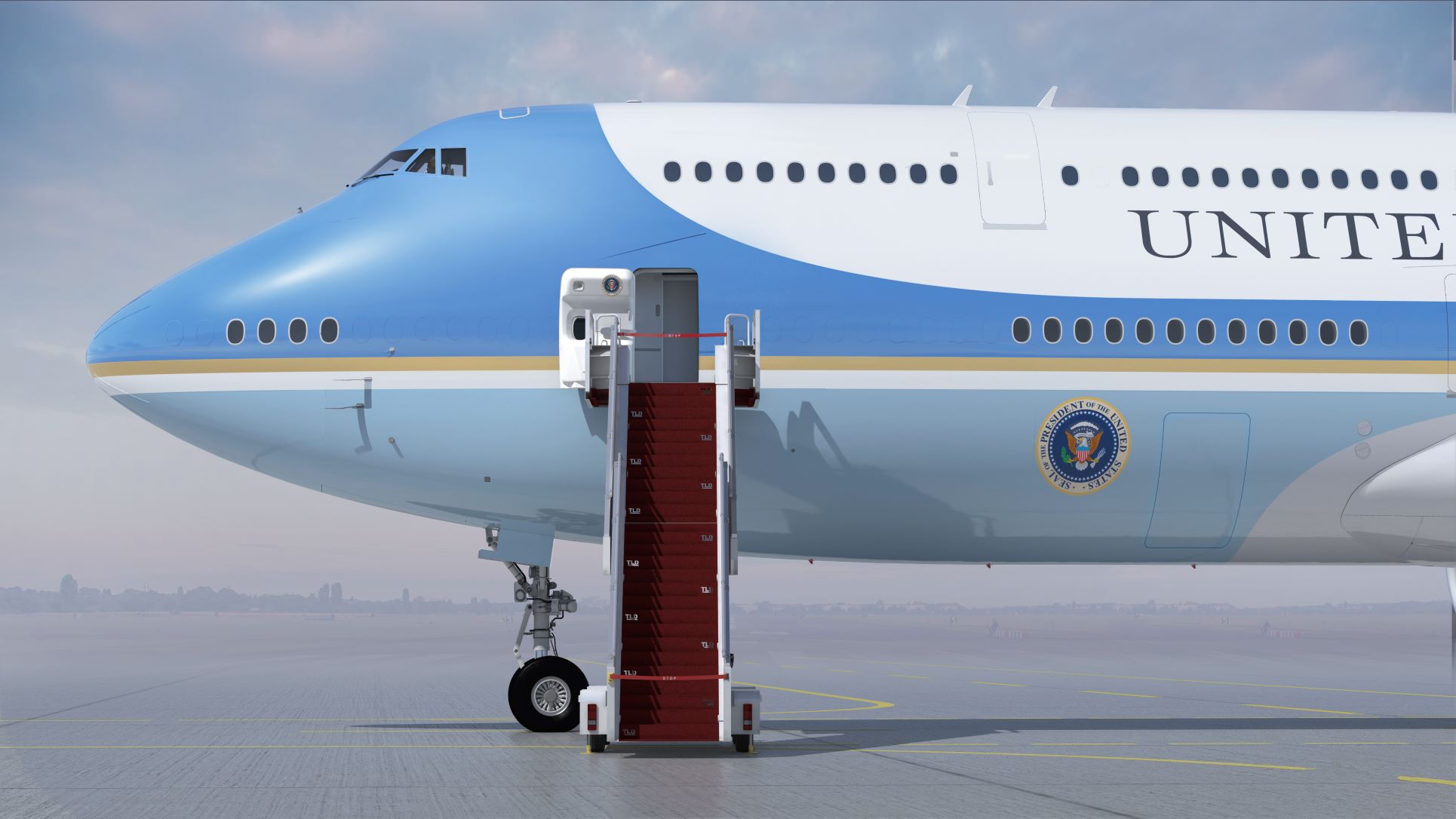
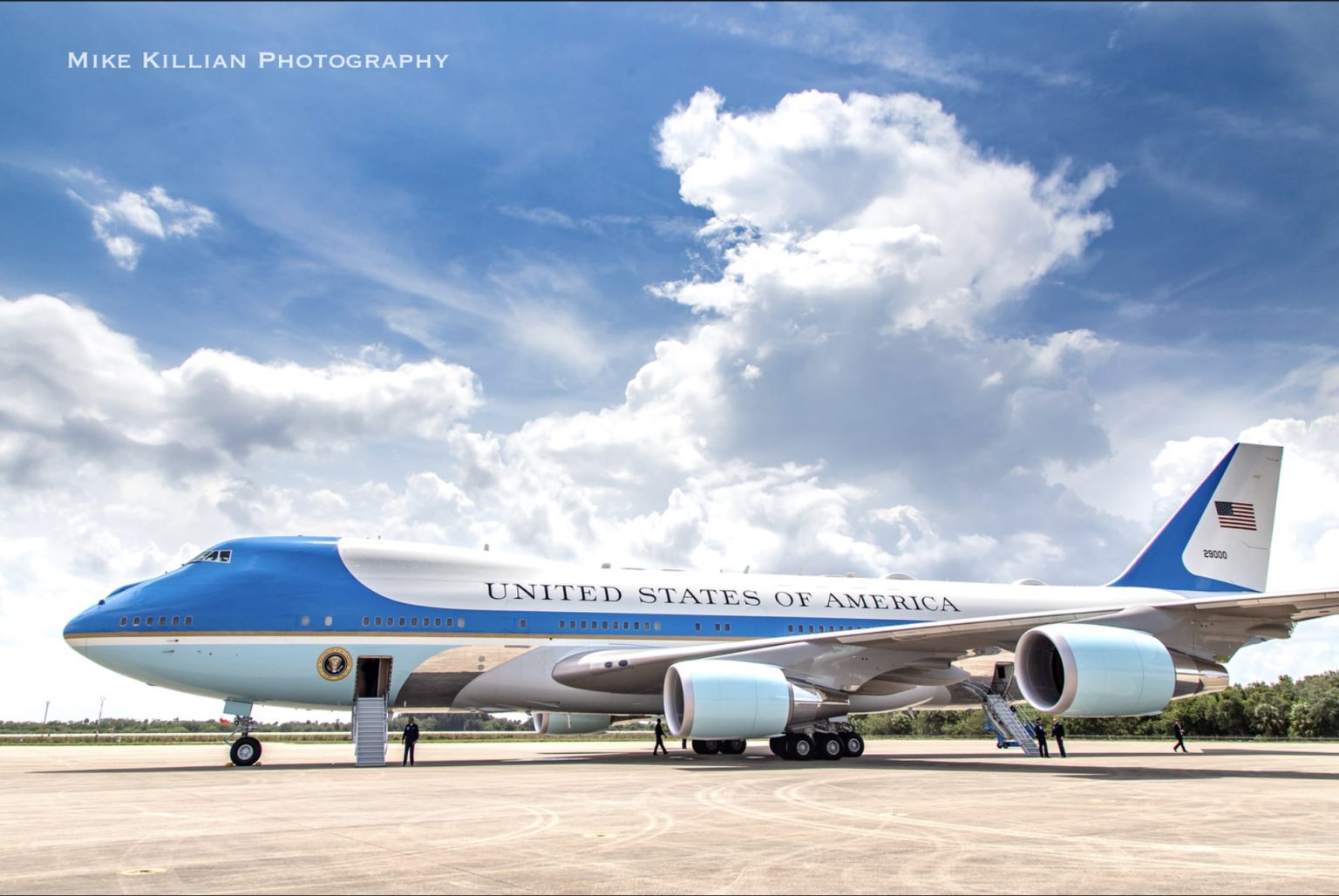
President Biden has selected a new paint design for the 747s that will fly as the “Next Air Force One,” VC-25B, which are currently being worked on by Boeing for delivery in 2027 and 2028.
The iconic 747 has flown for 6 U.S. Presidents, only designated as Air Force One once the President is onboard. The new livery however really doesn’t look much different from the current one for VC-25A. But there will by three primary differences.
President Joe Biden selected the livery design for the “Next Air Force One,” VC-25B, a design that will closely resemble the livery of the current Air Force One, VC-25A, while also modernizing for the 21st century (usaf image)
“The light blue on VC-25B is a slightly deeper, more modern tone than VC-25A’s robin’s egg blue,” says the Air Force. “Additionally, the VC-25B engines will use the darker blue from the cockpit area vice the VC-25A’s robin’s egg blue. Finally, there is no polished metal section on the VC-25B because modern commercial aircraft skin alloys don’t allow for it.”
A previous design selected under former President Trump’s administration in 2019 was later axed, after a thermal study found “the design would require additional Federal Aviation Administration qualification testing for several commercial components due to the added heat in certain environments,” says the Air Force.
the livery design for the “Next Air Force One,” VC-25B, will closely resemble the livery of the current Air Force One, VC-25A, while also modernizing for the 21st century. (Courtesy rendering)
Few details about upgrades for new 747s
Boeing recently delivered the last 747 they will ever produce. The two being modified for the VC-25B, the next “Air Force One” are already built airframes from a previous international sale that fell through.
According to the Air Force, the current VC-25A planes face capability gaps, rising maintenance costs, and parts obsolescence. The new VC-25B fleet will “feature electrical power upgrades, a mission communication system, a medical facility, an executive interior, a self-defense system, and autonomous ground operations capabilities.”
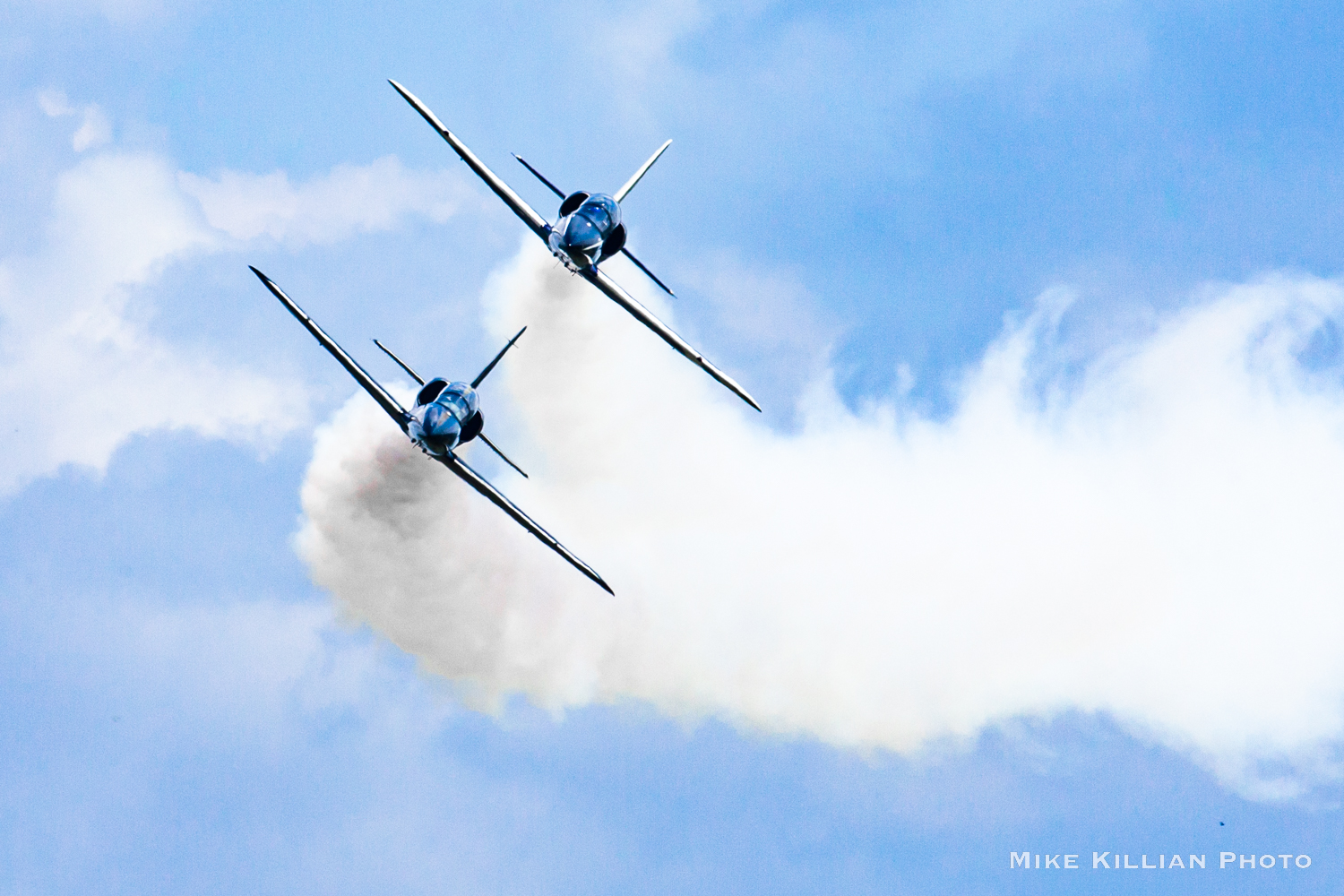
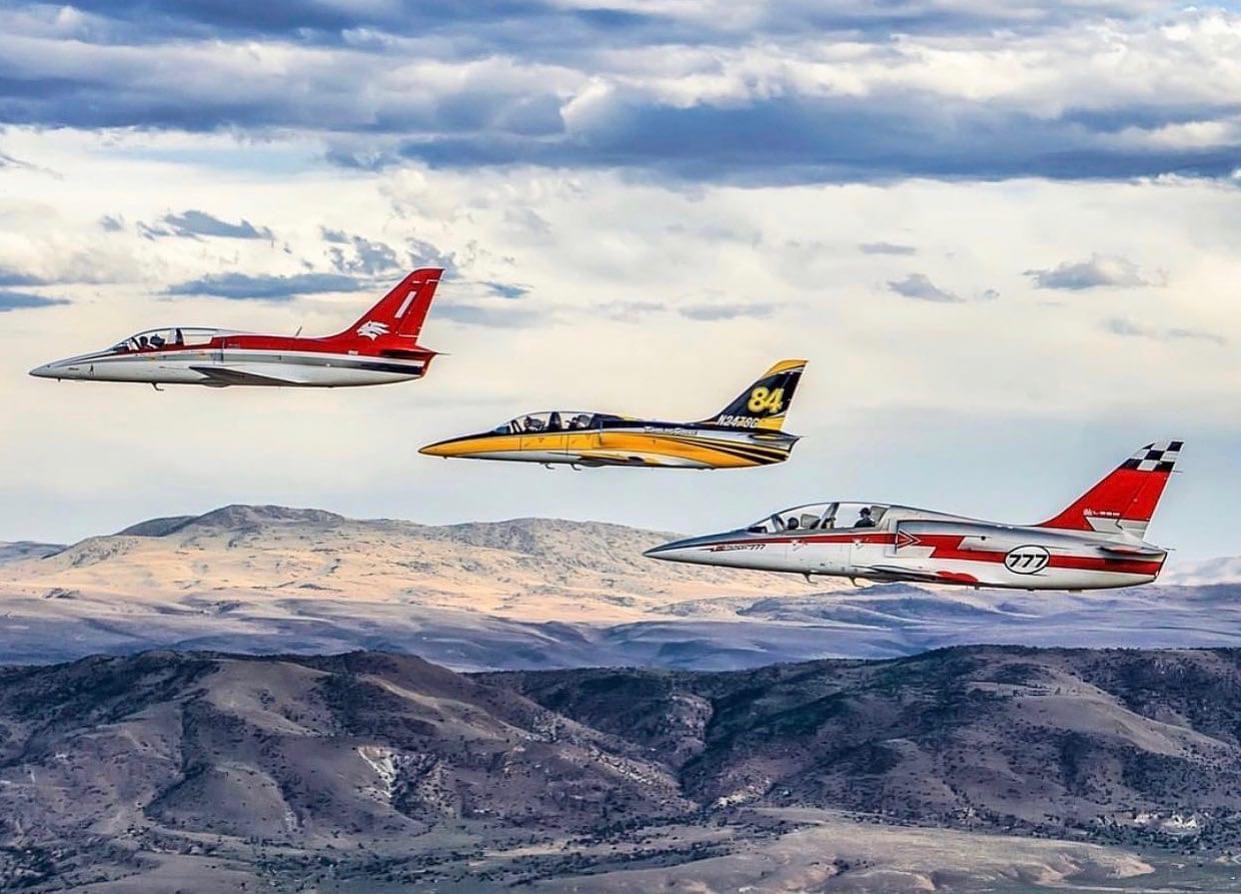
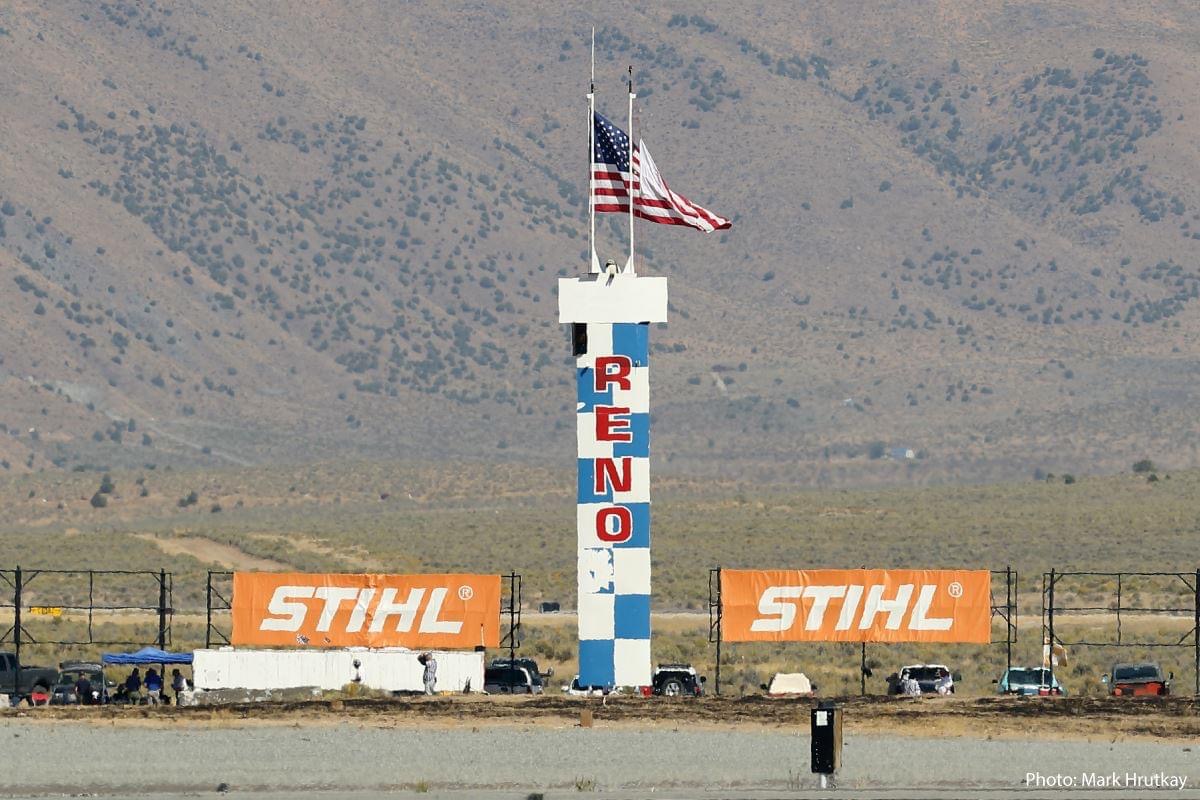
In a sad but not surprising announcement today, the Reno Air Racing Association (RARA) has confirmed that this will be the final year for the National Championship Air Races at the Reno-Stead Airport.
The annual air races have been held in northern Nevada for almost 60 years.
Pilot’s scott farnsworth and jerry “jive”kerby race eachother at 500 mph (photo: mike killian)
RARA says the Reno Tahoe Airport Authority decided to end the races for a number of reasons, including the region’s “significant growth”.
In a press release today, race organizers gave thanks to the region, communities and supporters who made Reno and air racing synonymous. And they are inviting aviation fans far and wide to one last Reno Air Races this fall, from Sep 13 to Sep 17.
RARA photo
Race organizers say they are confident that the races can continue elsewhere, and are currently exploring several options to host future races.
One last race in Reno
“While we discuss the future of the Air Races, we are grateful for our time at the Reno-Stead Airport and our partnership with the Reno Tahoe Airport Authority. Our event has generated hundreds of millions of dollars for the local economy, while instilling a love for flying in the community and becoming a valued partner to many charities and non-profits.”
Rara photo
“The 2023 event is set to return with more than 150 planes and pilots,” added RARA, “as well as several ‘hands-on’ displays and experiences including the GRADD-NVBAA STEM Education Discovery Zone, heritage displays, military demonstrations and static displays and more. The event will also mark the third year of competition for the STOL (Short Take-Off and Landing) Drag.”
It’s amazing the races even lasted this long. As they were always tarnished by accidents and fatalities, some of which even killed spectators. Even last year, a pilot was sadly killed. You can read the sobering list of fatalities put together by the Reno Gazette here.
How You Can Help Save Alaska’s Salmon-Thirty-Salmon
After 18 years, the Alaska Airlines “Salmon-Thirty-Salmon” livery will disappear, company officials said Monday.
The story behind the design stems from an unusual incident in the Alaskan panhandle nearly 36 years ago.
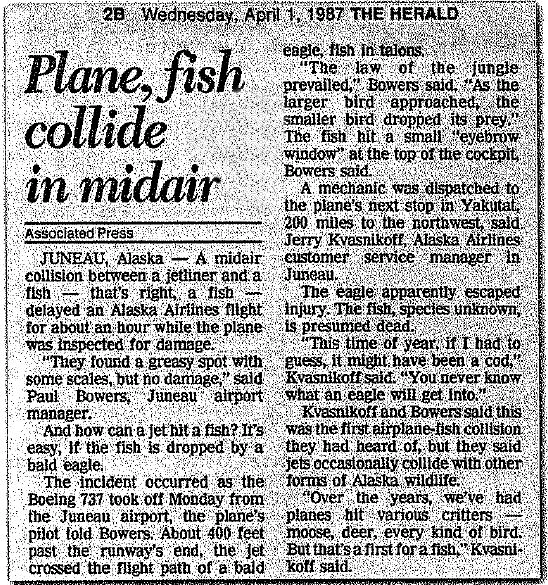
On 30 March 1987, an Alaska Airlines flight departed Juneau International Airport (JNU) when a bald eagle dropped a fish from its talons, hitting the windshield of the Boeing 737-200 as it passed through 400 feet.
A newspaper article from 01 April 1987 explaining the collision between an alaska Airlines Boeing 737-200 and a bald eagle | IMAGE: Alaska Airlines
Aside from some grease and scales on the windshield, the incident did not cause any damage to the aircraft. However, it left a lasting impression on the crew (pilot Bill Morin reportedly said, “Did we just hit what I think we hit?”), and sparked an idea that would eventually become the Seattle-based carrier’s iconic Salmon-Thirty-Salmon.
How the Salmon-Thirty-Salmon Came to Be
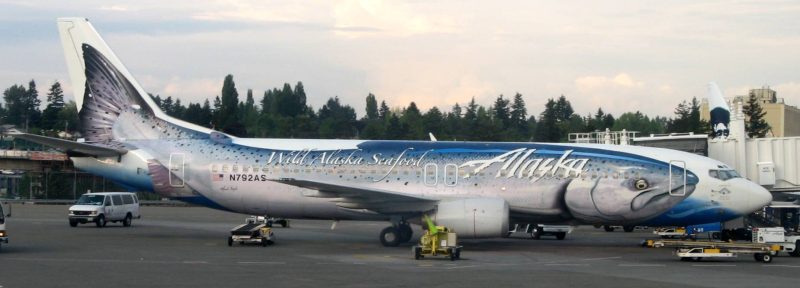
Alaska Airlines’ Salmon-Thirty-Salmon arrives at Los Angeles International Airport (LAX) in March 2008 | IMAGE: Andrew E. Cohen via Flickr
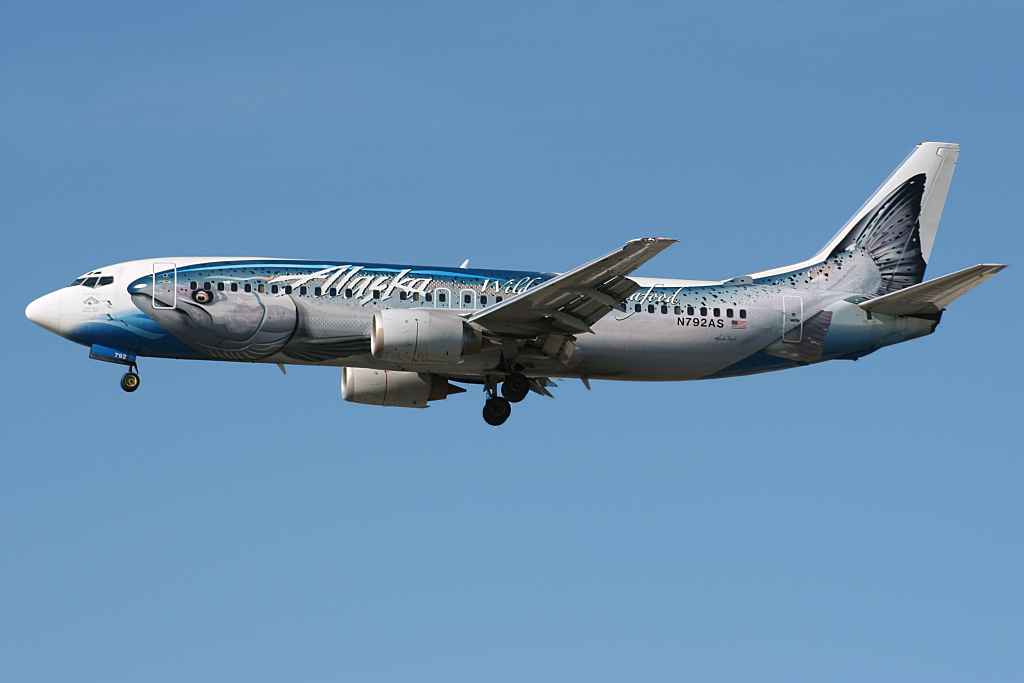
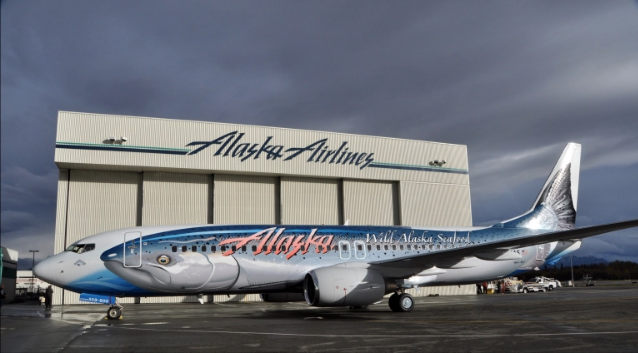
The Salmon-Thirty-Salmon livery took flight for the first time in 2005. It was part of a marketing campaign and partnership between Alaska Airlines and the Alaska Seafood Marketing Institute (ASMI) to promote Alaska’s abundant wild and sustainable seafood stock. The livery featured a 120-foot-long Alaska king salmon on a Boeing 737-400 (registration N792AS). The aircraft also featured the Alaska Airlines logo and the slogan” Wild Alaska Seafood” on the fuselage.
When the Salmon-Thirty-Salmon debuted in 2005, it was an instant hit with passengers and aviation enthusiasts alike. The aircraft quickly became one of the most recognizable symbols of Alaska Airlines and was featured in countless advertisements, promotional materials, and social media campaigns. The Salmon-Thirty-Salmon became so popular that it spawned a series of merchandise, including t-shirts, hats, and even plush toys.
In 2011, the carrier painted over the fish and replaced it with Alaska’s traditional Eskimo livery.
An Updated Salmon-Thirty-Salmon Livery Debuted in 2012
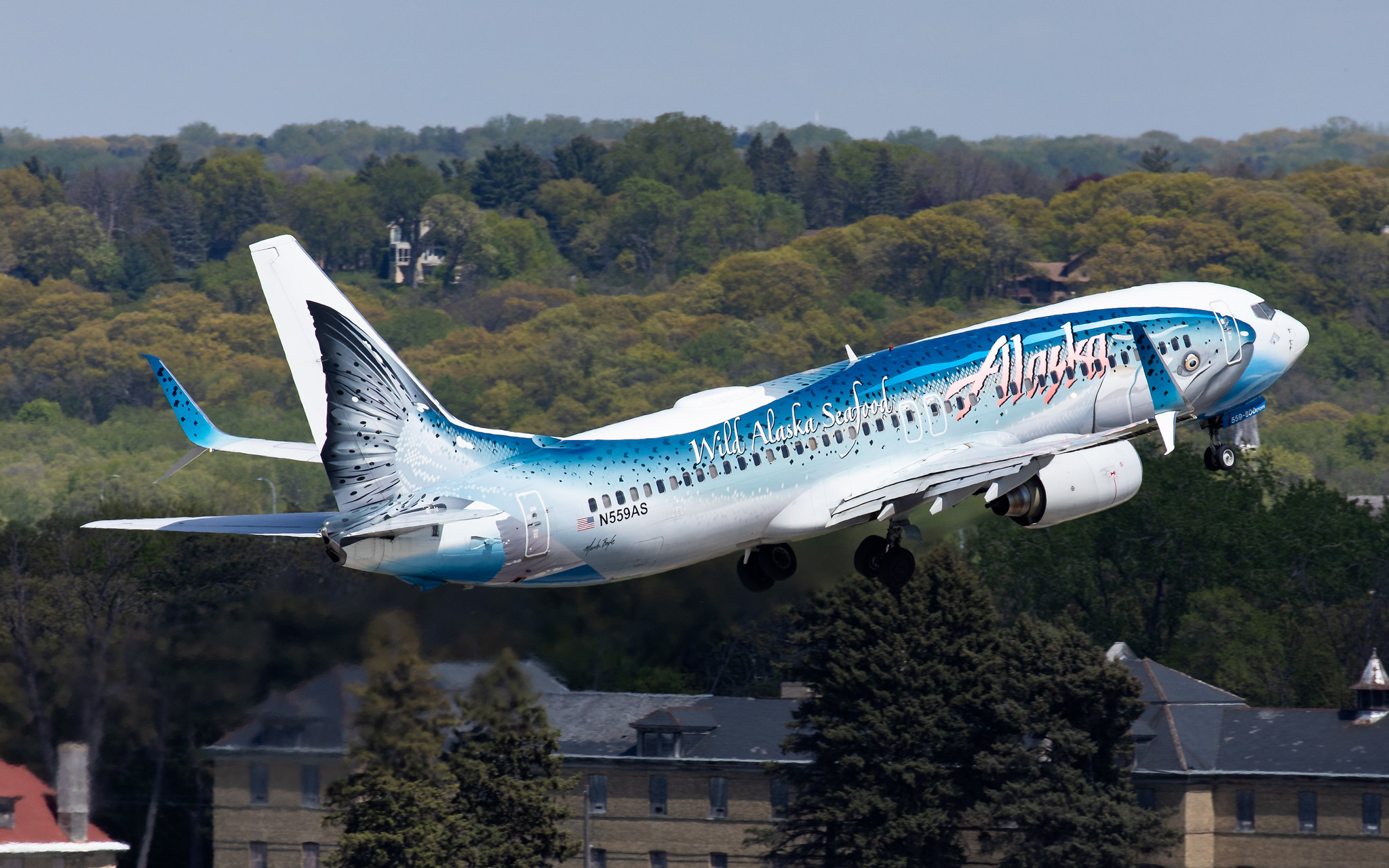
Alaska Airlines’ Salmon-Thirty-Salmon, Boeing 737-800 registered N559AS, departs Minneapolis-St.Paul International Airport (MSP) on 12 May 2021 | IMAGE: Chris Lundberg via Flickr
However, the livery proved so popular that in 2012, the company debuted an updated “Salmon-Thirty-Salmon II” livery on a newer Boeing 737-800 (registration N559AS).
The design process for the 129-foot-long Salmon-Thirty-Salmon II was a collaborative effort between the airline’s marketing team and the aircraft painting company Associated Painters, Inc. The team spent nearly a month refining the design and ensuring that every detail was perfect, including the color of the salmon’s 3,500 scales, the size of its fins, and the placement of its eyes. The design was the brainchild of Seattle artist Mark Boyle.
The Livery is Set to Disappear in April
Alaska Airlines Salmon-Three-Salmon Boeing 737-800 | IMAGE: Alaska Airlines
Sadly, the days of Alaska’s giant flying salmon may be coming to an end. Rumors circulating last month were confirmed on Monday when Alaska Airlines announced the livery’s final flight would take place on 17 April.
N559AS will operate Flight 65, one of the carrier’s infamous “Milk Runs.” Unique to Alaska Airlines, these flights serve as a lifeline to communities that may not otherwise have access to the outside world. Flight 65 departs from Seattle-Tacoma International Airport (SEA) and serves the Alaskan panhandle communities of Ketchikan (KTN), Wrangell (WRG), Petersburg (PSG), and Juneau (JNU) before ending in Anchorage (ANC).
The company has yet to say what will replace the fishy livery other than confirming that it would not be a third salmon.
Here is Your Chance to Save this One-of-a-Kind Livery
Alaska Airlines Salmon-Thirty-Salmon Boeing 737-800 on short final at Washington National Airport (DCA) on 15 Feb 2022 | IMAGE: John Boulin via Flickr
Of course, AvGeeks will not let this beautifully unique livery simply fly into the proverbial sunset. An online petition has been launched for those hoping the airline will reconsider replacing the iconic livery. The change.org petition has received more than 1,100 signatures at the time of this writing.
The story of the Salmon-Thirty-Salmon is more than just a marketing gimmick. It is a symbol of Alaska Airlines’ commitment to its customers, its community, and the environment. The airline has a long history of serving Alaska and the Pacific Northwest region. The Salmon-Thirty-Salmon is just one example of how the airline has tried to connect with its customers and celebrate the region’s natural resources.
Further, it is a testament to the power of creativity and innovation in marketing. The campaign’s success and the push to save this bit of aviation history reflect Alaska Airlines’ commitment to its customers, communities, and the environment.
2023 has been really good for Kansas City so far. First, a Super Bowl win. And on Tuesday, the city unveiled a brand new airport.
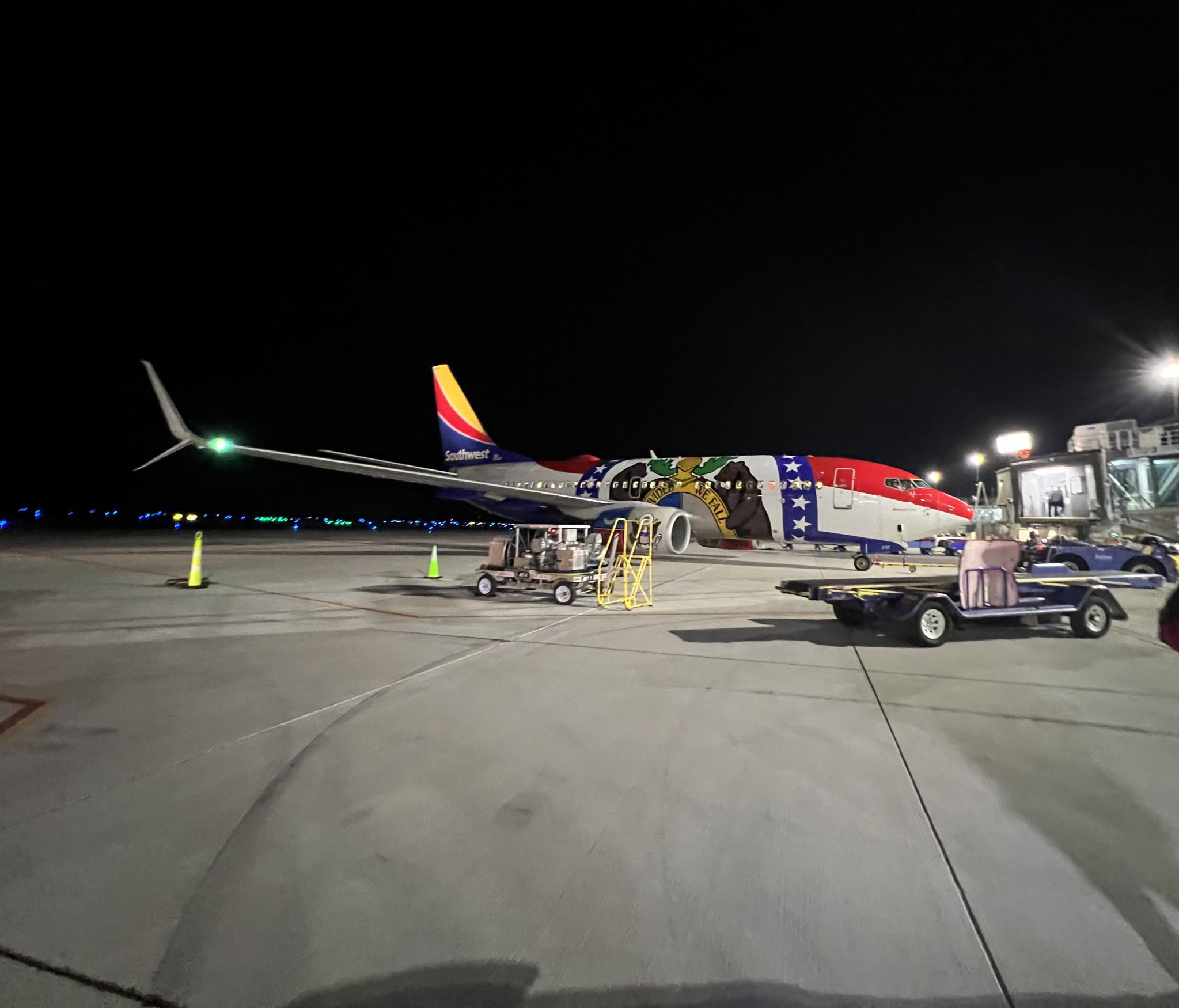
When Southwest Airlines Flight 904 lifted off from Kansas City International Airport (MCI) on Tuesday morning, it ushered in a new era in the history of Missouri aviation.
Southwest Airlines “Missouri One” prepares for departure at Kansas City International Airport (MCI) on 28 February 2023 | IMAGE: Southwest Airlines
The Chicago Midway (MDW)-bound flight left the gate right on time at 0500 local time Tuesday morning and was the first to depart from the airport’s brand-new, state-of-the-art terminal. It offers travelers a stunning range of amenities and features to enhance the overall travel experience.
Southwest Airlines check-in counter at Kansas City International Airport | IMAGE: Southwest Airlines
The footprint for KCI’s new terminal takes up just over one million square feet. It is the largest single infrastructure project in the history of Kansas City, something U.S. Transportation Secretary Pete Buttigieg noted during an advance ribbon-cutting ceremony on Monday.
“In so many ways, this airport is a model for similar efforts across the country. Not only did you deliver the largest infrastructure project this city has ever seen—you did it on time and on budget while supporting over 5,000 construction jobs and working with over a hundred women and minority-owned businesses,” said Buttigieg. “I’m grateful for the tireless work all the leaders here have put into making this project possible for Kansas City. And I look forward to continuing our work to transform airports around the country for the better.”
Federal, State, and local dignitaries, including U.S. Transportation Secretary Pete Buttigieg, cut the ribbon to Kansas City International Airport’s new terminal on 27 February 2023 | IMAGE: BuildKCI.com
The $1.5B Terminal Features 40 Gates
The B Concourse in Kansas City International Airport’s new terminal | IMAGE: BuildKCI.com
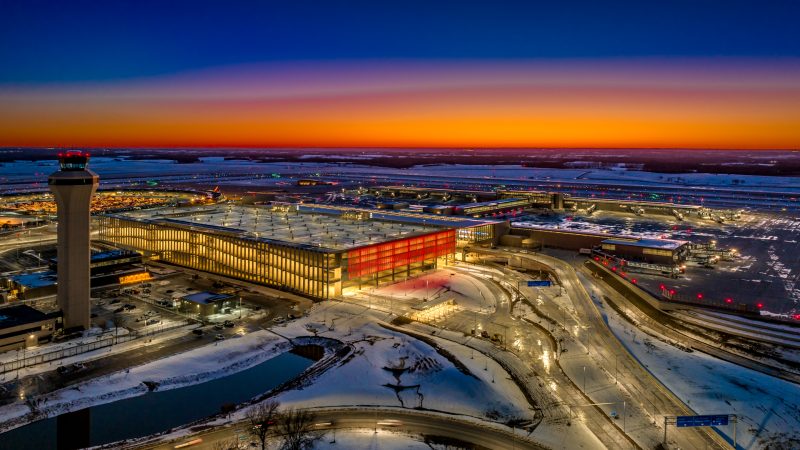
The new $1.5 billion terminal was designed to focus on convenience, efficiency, and sustainability. Featuring 40 gates – nine more than the old three-terminal airport – in two concourses, the facility also has the ability to expand up to 50 gates in the future. The new terminal also features a parking garage with more than 6,000 parking spaces connected to the terminal via a sky bridge. This feature alone will make it easier for passengers to park, access their vehicles, and make their way to the terminal without the need for shuttle services.
Outside the new terminal at Kansas City International Airport | IMAGE: BuildKCI.com
In addition to the parking garage, the new terminal has a dedicated multi-level curbside drop-off and pick-up area designed to accommodate private vehicles and ride-sharing services like Uber and Lyft. The new terminal also features an expanded security checkpoint area with up to 16 lanes and the latest technology, designed to streamline the screening process and reduce passenger wait times. These features will make it easier and more convenient for travelers to navigate the airport, whether arriving or departing.
KCI’s new terminal features a 16-lane security checkpoint | IMAGE: TSA Southeast on Twitter
Additionally, KCI is now one of 51 airports in the United States to feature an airport security process called CLEAR, which scans the retinas of those who pay for a $189 annual membership.
Built with the Future in Mind
New Terminal Debuts at Kansas City International 21
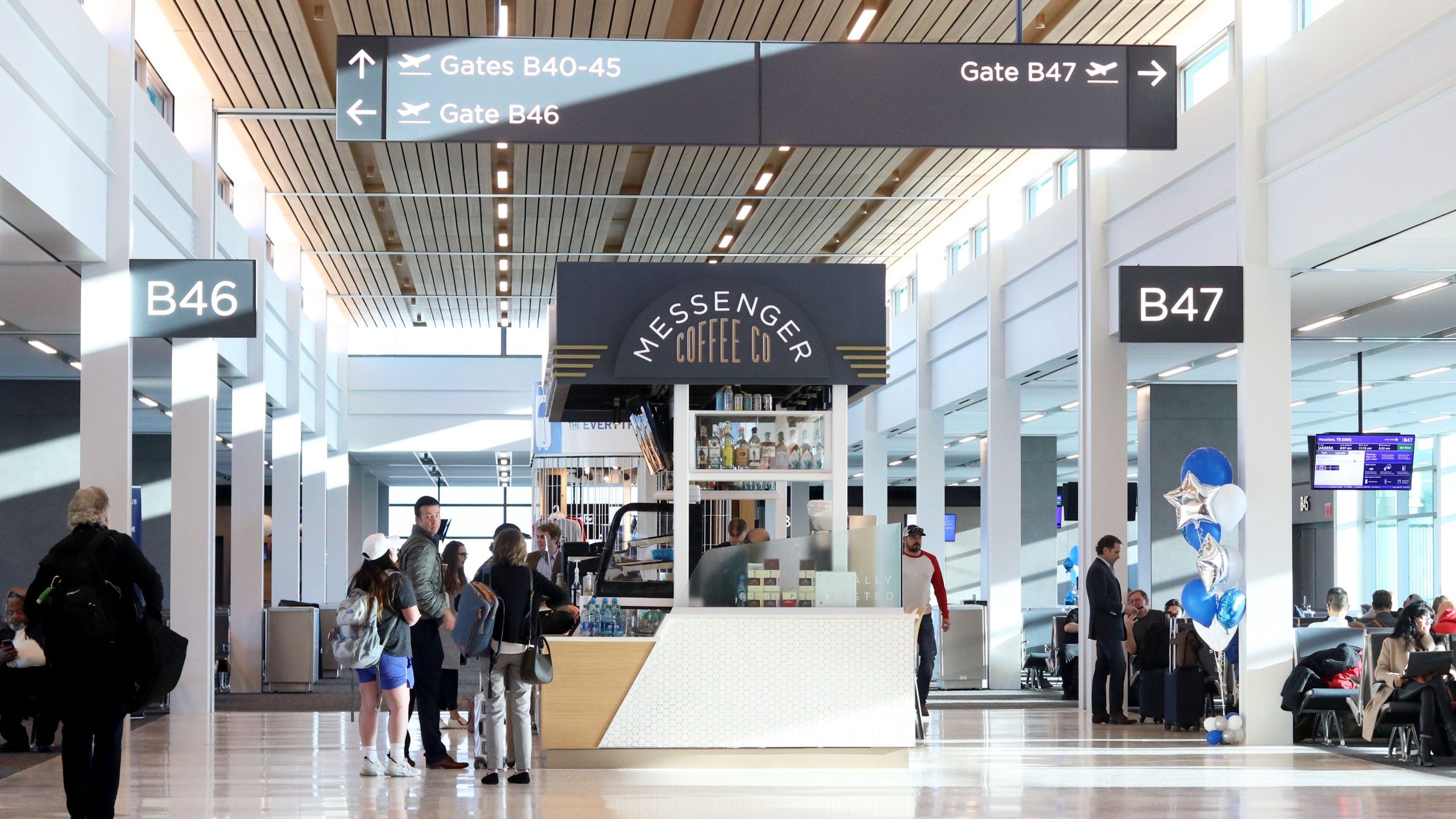
The new terminal at MCI also offers a dazzling array of dining, shopping, and entertainment options for passengers. The facility will feature a post-security food hall with more than 50 restaurants, cafes, and bars serving local and national favorites. The new terminal will also have a range of retail stores, including a duty-free shop where travelers can purchase gifts, souvenirs, and other items. Additionally, the new terminal will have a range of amenities, including visual paging boards for deaf and hard-of-hearing passengers, a children’s play area, a pet relief area, a sensory room, family restrooms, and ten nursing rooms.
KCI’s new airport also features the Kansas City Air Travel Experience, a simulator designed to calm fearful or neurodivergent flyers. The simulation takes a traveler from the parking lot to in-flight and features the check-in process, security screening, and the boarding of an actual portion of an Airbus A320 fuselage.
We can't wait to welcome our first travelers to the new terminal today. The journey begins! pic.twitter.com/Yl30s9fvXR
— Kansas City International Airport (@Fly_KansasCity) February 28, 2023
The design of the new terminal has been inspired by the region’s natural beauty, with large windows that offer panoramic views of the surrounding landscape and walls made from Missouri limestone. The terminal’s design has been optimized to take advantage of natural light, which will help reduce energy costs and make the space more comfortable for passengers. The terminal will also feature a range of sustainable features, such as energy-efficient lighting, water conservation systems, and the use of local materials, all designed to reduce the facility’s environmental impact.
The new terminal also boasts an impressively intentional collection of artwork from local, national, and international artists.
A Catalyst for Economic Growth
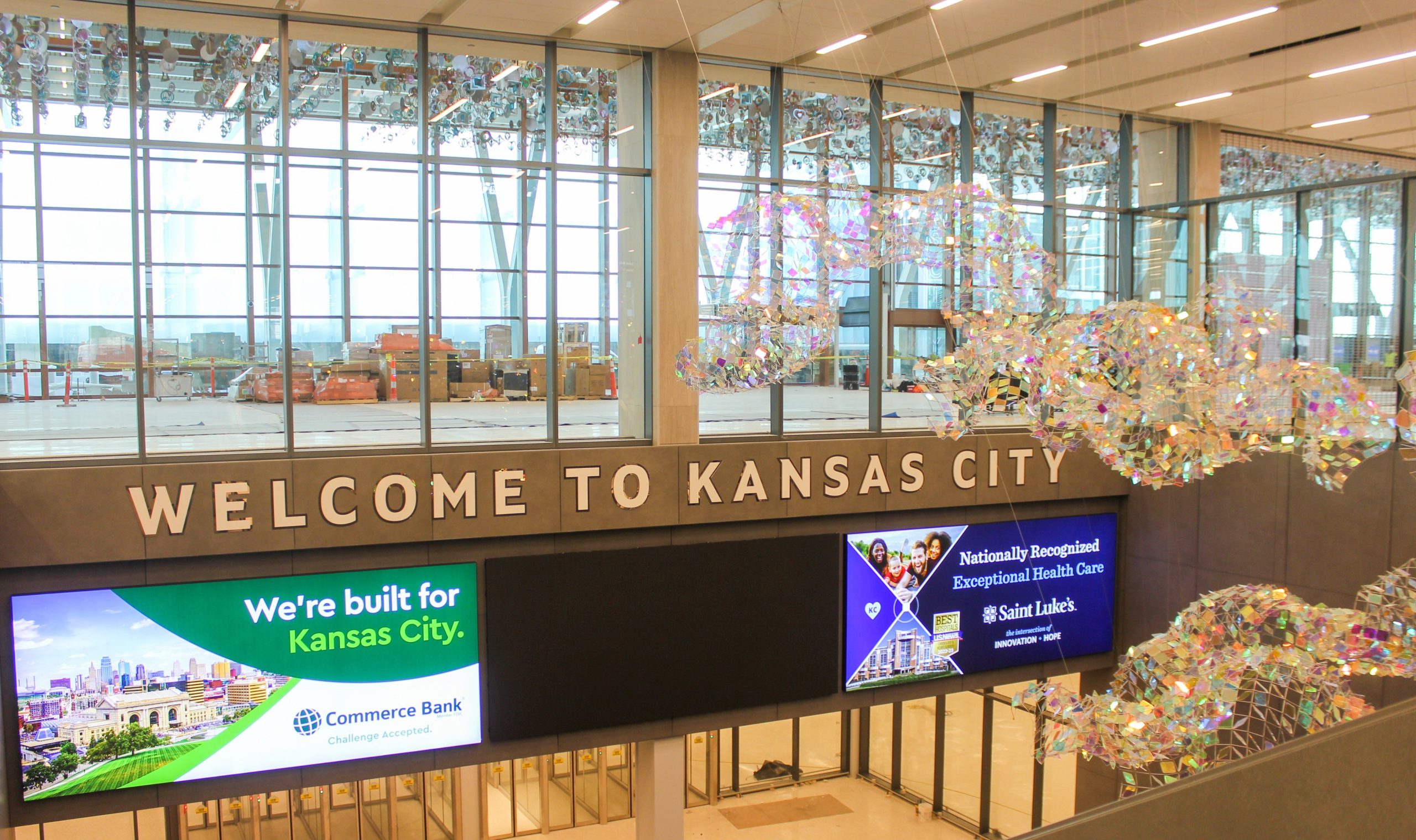
A sign welcomes travelers to Kansas City | IMAGE: BuildKCI.com
The construction of the new terminal was a significant undertaking involving various stakeholders, including the airport authority, construction firms, and local government. The project was funded through a combination of private and public funds, with the total cost estimated at $1.5 billion.
“This terminal is a new front door to the people of Kansas City, to everyone in our region, in Missouri and Kansas. We are on time, in fact a day early, and on budget,” said Kansas City Mayor Quinton Lucas. “Because of this project thousands of Missourians and Kansans have gotten jobs and built new careers. [This] project will bring millions, if not billions, of dollars in new economic development to Missouri and Kansas. Because of this project we will build generations more of exceptional memories here at KCI. This project is because of you.”
Kansas City International Boasts 150 Daily Departures
Inside the new terminal at Kansas City International Airport | IMAGE: BuildKCI.com
Historically, KCI served 10-12 million passengers annually until the COVID-19 pandemic decimated air travel in 2020. With 9.82 million passengers passing through KCI in 2022 (up from a 2020 low of just over four million), the new airport will be well-positioned for growth in the coming decades. Eleven airlines offer 150 daily departures to 51 destinations, including Air Canada, Alaska, Allegiant, American, Delta, Frontier, JetBlue, Southwest, Spirit, Sun Country (beginning in May), and United.
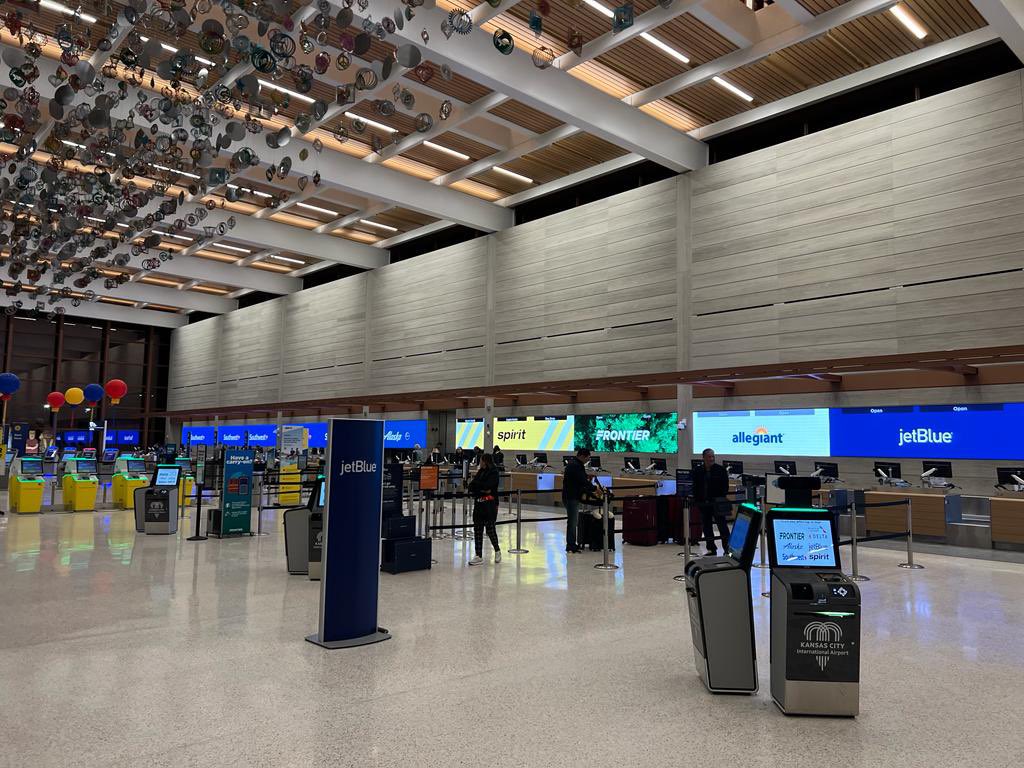
The check-in area at Kansas City International | IMAGE: BuildKCI.com
The new terminal is part of a larger renovation project at KCI, which includes demolishing the old terminals, constructing a new runway, and installing new air traffic control systems. Completing the new terminal marks a significant milestone in the airport’s history, offering travelers a modern and efficient facility that is fit for the 21st century and one of which every Kansas Citian should be proud.
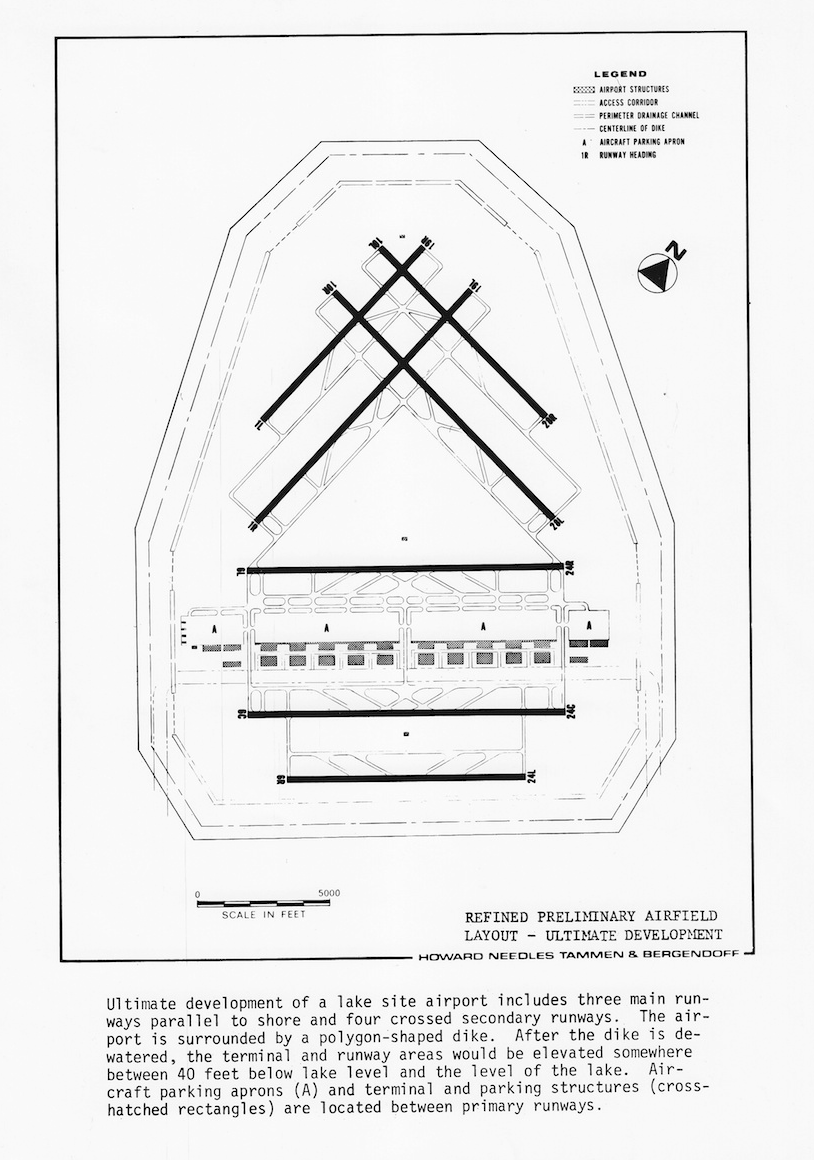
Nearly a half century ago, plans were in motion to construct one of the world’s largest airports on a manmade island in the middle of Lake Erie.
The massive new island airport, which would have replaced Cleveland Hopkins International Airport (CLE), took flight in the late 1960s and into the 1970s. Like many ideas in confident post-World War II America, the $1.2 billion proposed Cleveland Jetport, also known as the Lake Erie International Jetport, was intended to be an engineering marvel for the ages.
The Cleveland Jetport was the brainchild of Dr. Abe Silverstein. Considered one of the architects of America’s space program, he was an engineer at the Cleveland-based National Advisory Committee on Aeronautics (NACA). When NACA restructured in the late 1950s to become the National Aeronautics and Space Administration (NASA), Silverstein helped plan the Apollo, Ranger, Mariner, Surveyor, and Voyager missions. He was also responsible for naming the Apollo program.
Although Cleveland Mayor Ralph Locher first announced in 1966 that Cleveland would soon outgrow its airport, Silverstein envisioned transforming Cleveland into a global hub of commerce and transportation. He believed that Hopkins Airport was too small and outdated to meet the needs of a growing city and a rapidly expanding – yet still regulated – airline industry.
The Cleveland Jetport Terminal Would Have Been Ten Times the Size of the Pentagon
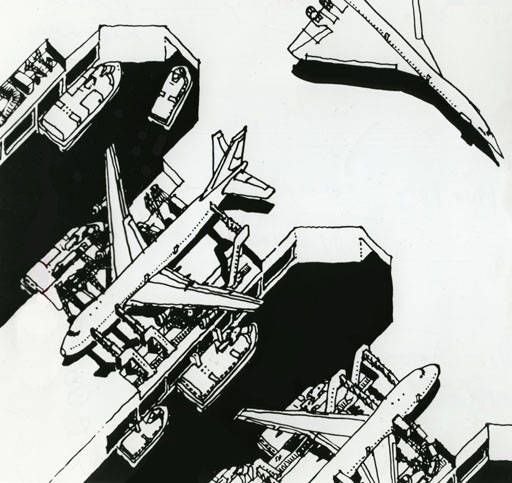
Plans for the Cleveland Jetport included access for every size jetliner conceivable – including supersonic transports | IMAGE: Cleveland press Collection
Silverstein’s solution was extraordinarily ambitious. He envisioned a sprawling complex constructed on an artificial island five miles off the coast of downtown Cleveland in the middle of Lake Erie. The new airport would feature multiple runways, a terminal ten times larger than the Pentagon, and state-of-the-art cargo and maintenance facilities. The Cleveland Jetport would be a hub for both commercial and private aviation, with ample space to accommodate the largest passenger planes, cargo jets, and smaller regional aircraft. The new airport would also feature accessibility for what was sure to become the next big thing in aviation – supersonic transport.
But the Cleveland Jetport was more than just a plan for a new airport. It was a grand vision for the future of Cleveland, a city that had fallen on hard times in the wake of deindustrialization and urban decay. Silverstein saw the Jetport as a way to revitalize Cleveland’s economy and bring new opportunities to a struggling city.
A Beacon of Hope for A Struggling Cleveland
Aerial View of Downtown Cleveland and adjacent Lake Erie | IMAGE: CLE on Facebook
The proposed island location for the Cleveland Jetport received much support, especially early on. The Boeing 747 was about to come online, supersonic transport was seemingly imminent, and noise pollution was becoming an issue at Cleveland Hopkins’ increasingly suburban location. Proponents of the new Jetport believed it would meet the needs of all these issues.
The Cleveland Jetport quickly became a topic of heated debate in the city. Supporters of the project saw it as a bold and visionary plan that would transform Cleveland into a significant player on the global stage. They argued that the new airport would bring in billions of dollars in revenue and create thousands of new jobs, both in construction and in the ongoing operation of the airport.
A Colossal Waste of Money and Resources
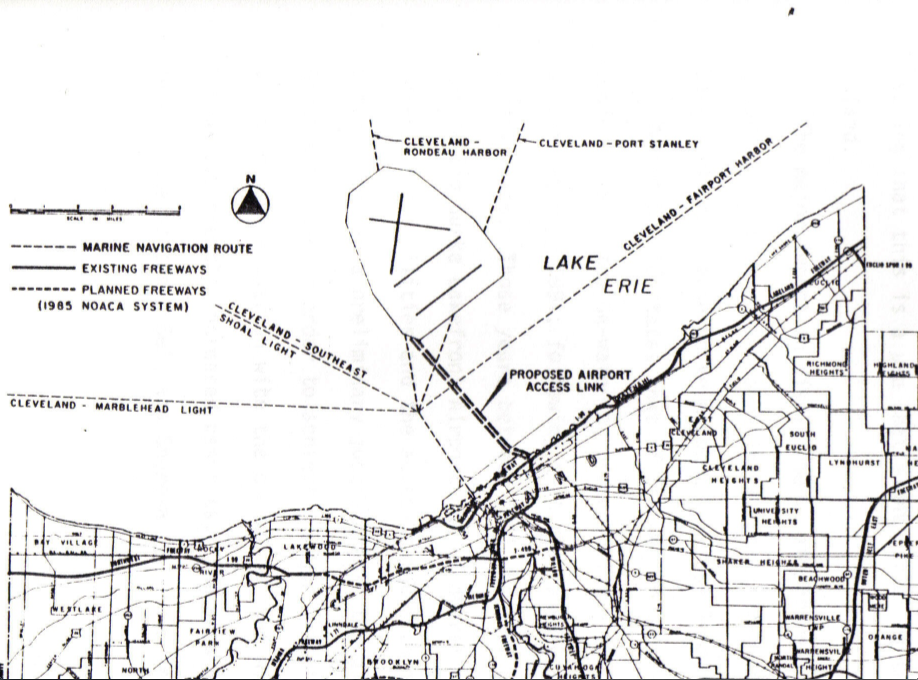
A map depicting the location and scope of the Cleveland Jetport project | IMAGE: Cuyahoga County Archives
Opponents of the project, however, saw it as a colossal waste of money and resources. They argued that the Cleveland Jetport was an extravagant and unnecessary project that would drain public funds and do little to improve the lives of Cleveland residents. They also raised concerns about the environmental impact of the airport, which would require extensive land clearance and could disrupt the fragile ecosystem of Lake Erie.
In the late 1960s, Lake Erie was in bad shape. Pollution was effectively killing the fourth-largest Great Lake. However, planners touted the environmental benefits of the island’s construction from sand and dirt from the bottom of Lake Erie. A 13-mile stone dike would surround the island to protect it from Lake Erie’s notoriously wild storms. A 13-lane causeway featuring auto, bus, truck, and train lanes would connect the Jetport to the mainland.
An Aeronautical Disneyland
IMAGE: Cleveland Press Collection
Despite the controversy, plans for the Cleveland Jetport moved forward. Officials poured more than $4 million into feasibility studies throughout the early-to-mid-1970s. Silverstein and Mayor Locher believed Hopkins – which opened in 1925 – would be woefully inadequate by the 1990s. In fact, they estimated that by the year 2000, more than 46 million passengers would be flying in and out of Cleveland. Politicians and citizens alike supported what became known as “Aeronautical Disneyland.”
But as the project moved closer to fruition, it became clear that the Cleveland Jetport would face insurmountable obstacles. In particular, the project ran afoul of the new Cleveland Mayor, Dennis Kucinich. A growing chorus of opponents also lambasted the project’s exorbitant cost (especially considering the economic uncertainties of the late 1970s), environmental risks to fragile Lake Erie and migratory bird routes, and extreme weather conditions routinely experienced on the lake.
Additionally, the Federal Aviation Administration (FAA), which had strict regulations in place for airport construction, raised concerns about the size and scope of the Cleveland Jetport, saying Hopkins would be sufficient for the region’s needs until at least the year 2000. Ultimately, the FAA refused to approve the now $2B project and, in 1978, pulled support for the endeavor. The Cleveland Jetport was dead in the water without the FAA’s blessing.
It Turns Out that Hopkins is Just Fine
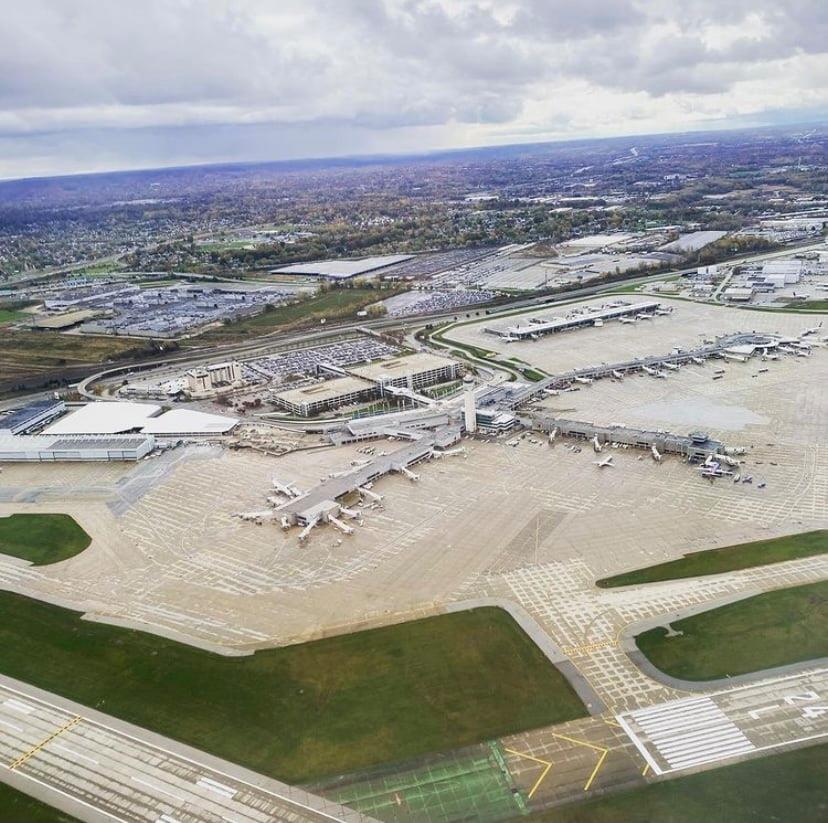
Aerial View of Cleveland Hopkins International Airport (CLE) | IMAGE: Cle on Facebook
Forty-five years later, Hopkins Airport continues to serve the residents of northeast Ohio. Despite a bold prediction of 46 million passengers by 2000, CLE saw just 13.28 million passengers that year.
The airport was once a hub for Continental Airlines, which, in 2010, merged with United Airlines. United officially dehubbed CLE in 2014, and passenger numbers have continued to fall since, with just under 8.7 million passengers recorded in 2022 (after plunging to 4.1 million amid the pandemic in 2020).
A Symbol of What Could Have Been
If built, the massive airport would have been visible from space | IMAGE: Cleveland State University. Michael Schwartz Library. Special Collections
Looking back on the Cleveland Jetport project, it’s easy to see both the proposal’s ambition and folly. On the one hand, Abe Silverstein’s vision for a massive new airport to bring new economic opportunities to Cleveland was undoubtedly bold and forward-thinking. On the other hand, the project was plagued by unrealistic expectations and logistical challenges that ultimately proved insurmountable.
Despite these challenges, the legacy of the Cleveland Jetport lives on in the imaginations of many Clevelanders. The project symbolized the city’s ambition and determination to reinvent itself in the face of economic adversity. Even though the airport itself was never more than an idea, the concept of a massive new transportation hub that could bring new life and vitality to the city continues to inspire Cleveland residents to this day.
In some ways, the story of the Cleveland Jetport is a cautionary tale about the perils of overambition and unrealistic expectations. While it’s important to dream big and pursue bold ideas, it’s also essential to be realistic about the practical challenges and limitations that any project will face. The Cleveland Jetport may have been a grand vision for the future of Cleveland, but ultimately, it was a project that was simply too big and too complex to become a reality.
These Two Giants Get In, Disgorge, and Get Out Fast – Takeoffs You Have to See to Believe
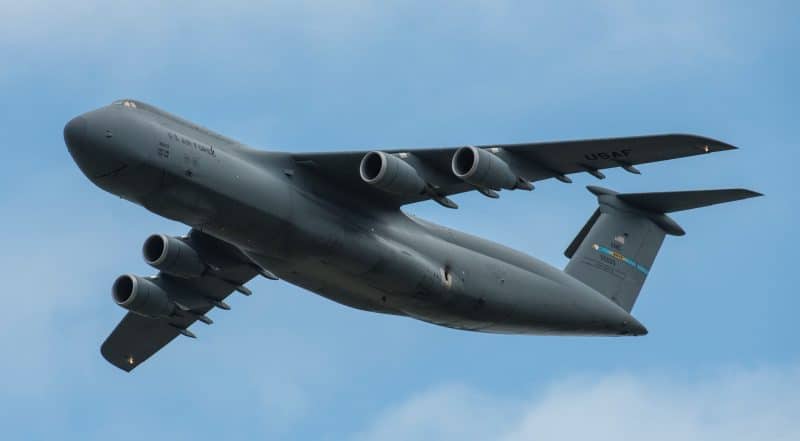
On 11 July 2018, a pair of Lockheed-Martin C-5M Super Galaxy airlifters descended upon Glasgow Prestwick (EGPK) airport. The two behemoths were supporting a Presidential visit to Scotland, and as such were carrying staff, support personnel, and vehicles for the visit. The aircraft both landed on runway 31.
The first C-5M to land is USAF serial 85-0008 from the 436th Military Airlift Wing (MAW) at Dover Air Force Base (AFB) in Delaware. “Balls 8” later departs bound for RAF Lakenheath. The second C-5M seen is USAF serial 86-0024 from the 60th Air Mobility Wing (AMW) at Travis AFB in California. “Balls 24” later departs bound for Ramstein Air Base.
Enjoy this impressive performance by a pair of larger-than-life haulers as uploaded to YouTube by Mraviationguy. Dig those vapes!
The US Air Force bases its current fleet of 52 C-5Ms spread out among a total of nine installations. The two active-duty Air Force Airlift Wings are based at Travis AFB (60th AMW) and Dover AFB (436th MAW). Air Force Reserve (AFRES) C-5M operators are based at Travis AFB (349th AMW), Dover AFB (512th MAW, Kelly/Lackland AFB in Texas (433rd MAW), and Westover AFB in Massachusetts (439th MAW).
The Air National Guard (ANG) previously operated Galaxies from Stewart ANGB in New York (105th MAW), Memphis in Tennessee (164th MAW), and Martinsburg in West Virginia (167th MAW).
Dover AFB-based C-5M Super Galaxy. image via USAF/DVIDS
A Little C-5 History
The C-5M weighs some 190 tons when empty. When fully loaded (maximum takeoff weight) the package can weigh as much as 460 tons. The original “legacy” C-5A Galaxy strategic airlifter went into service in 1970, replacing the Douglas C-133 Cargomaster in the heavyweight airlifter category.
Lockheed built a total of 131 C-5 airframes between the 81 original C-5As built between 1968 and 1973 and the 50 improved C-5Bs built between 1985 and 1989. The 52 C-5Ms in service today were upgraded from the 50 C-5B variants as well as the two previous specially modified C-5A(SCM- Space Cargo Modified) jets that were capable of transporting outsize cargo- primarily for Defense Department space programs and NASA.
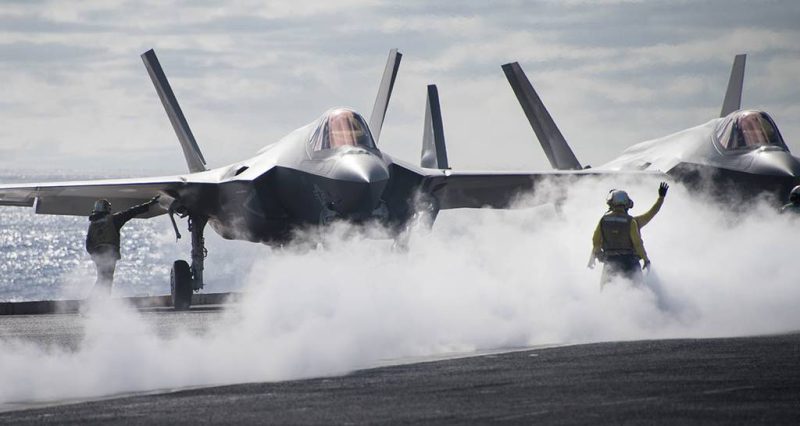
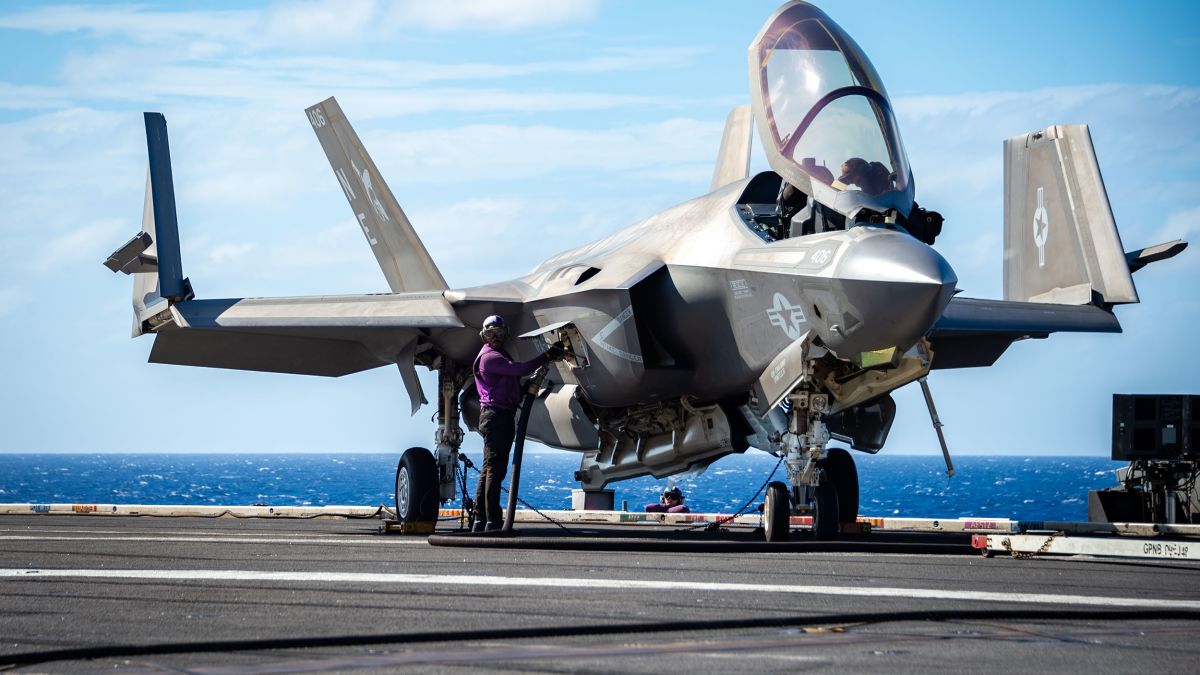
The U.S. Navy has ruled a fighter pilot’s mistake caused the crash of a $115 million F-35C stealth jet on the aircraft carrier USS Carl Vinson last year, which injured several sailors (including the pilot).
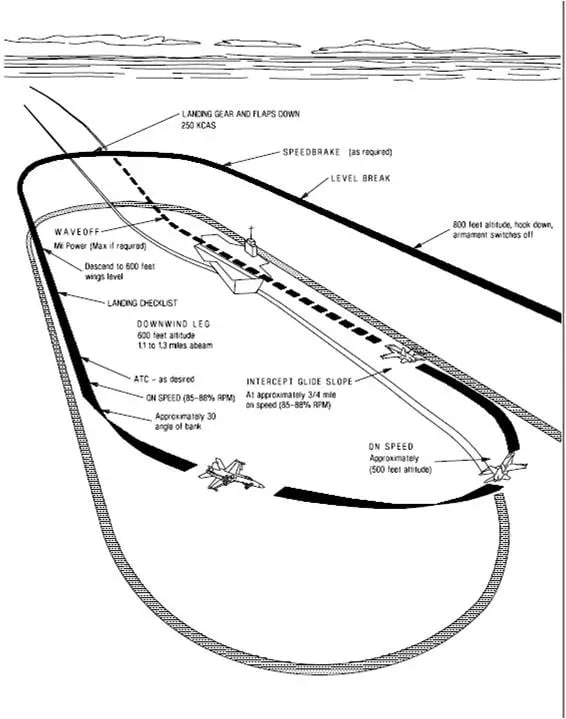
The incident occurred on Jan 24, 2022, when the pilot from the “Argonauts” of Strike Fighter Squadron (VFA) 147 was making a specialized landing approach for the first time called a Sierra Hotel or “Shit Hot” break, where the pilot uses G-forces to slow down through a 360-degree turn before dropping the gear to land.
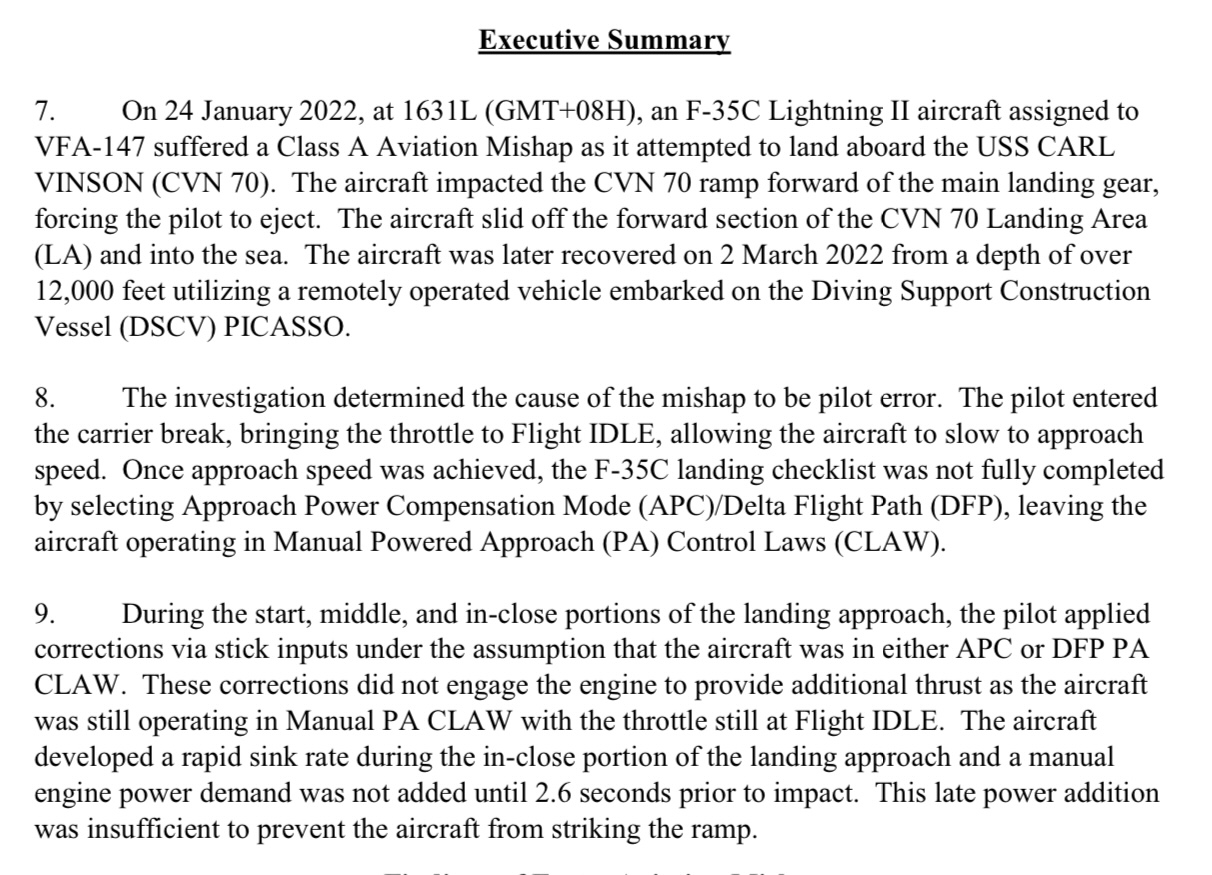
However, he approached the ship underpower, unaware that a built-in aid to help control the jet’s power during landing was turned off.
F-35C on the fliGht deck (navy photo)
And because it was his first time, he had reduced time to configure the jet and conduct landing checks, and missed the last check.
The report notes he “was in manual mode when he should have been (and thought he was) in an automated command mode, designed to reduce pilot workload during landings.”
Pilot Error Blamed for F-35 Crash on USS Carl Vinson Last Year 33
Once he realized the problem he pushed the throttle to full afterburner to climb, but it was too late. The jet slammed onto the carrier’s ramp, ripping the main landing gear off and skidding across the deck, throwing debris everywhere as the pilot ejected and the jet plunged 12,000 feet to the bottom of the South China Sea.
An EA-18G Growler jet was damaged in the accident, causing over $2.5 million in damage, in addition to another estimated $120,000 in damage to the ship’s flight deck.
Pilot Error Blamed for F-35 Crash on USS Carl Vinson Last Year 34
The report made it clear, that there was no reckless manner or malicious intent by the pilot, who was a top performing junior officers in Carrier Air Wing 2. He was on his first deployment, mentally fit, healthy, and had 650 total flight hours (370 in the F-35C). The jet itself had just over 1400 flight hours on it.
The Navy will be executing a number of the investigation’s recommendations, including internal and external indicators to tell pilots and ground crews (LSOs) that they are not in the flight mode that they might think they are.
The pilot is still in the Navy, but no longer flying.
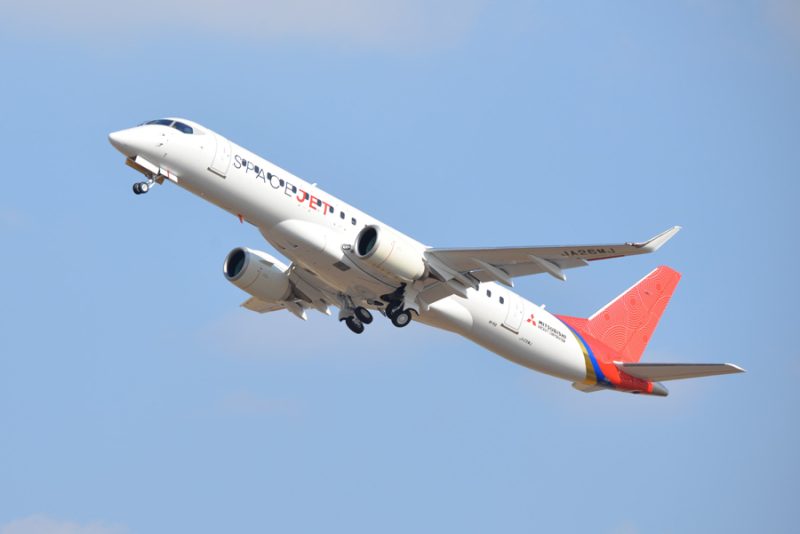
Mitsubishi Heavy Industries (MHI) has pulled the plug on its SpaceJet regional jet program.
The decision came after years of development, multiple delays, and the impact of the COVID-19 pandemic on the aviation industry. With the end of the SpaceJet program, the future of the regional jet industry looks highly uncertain, especially in the United States.
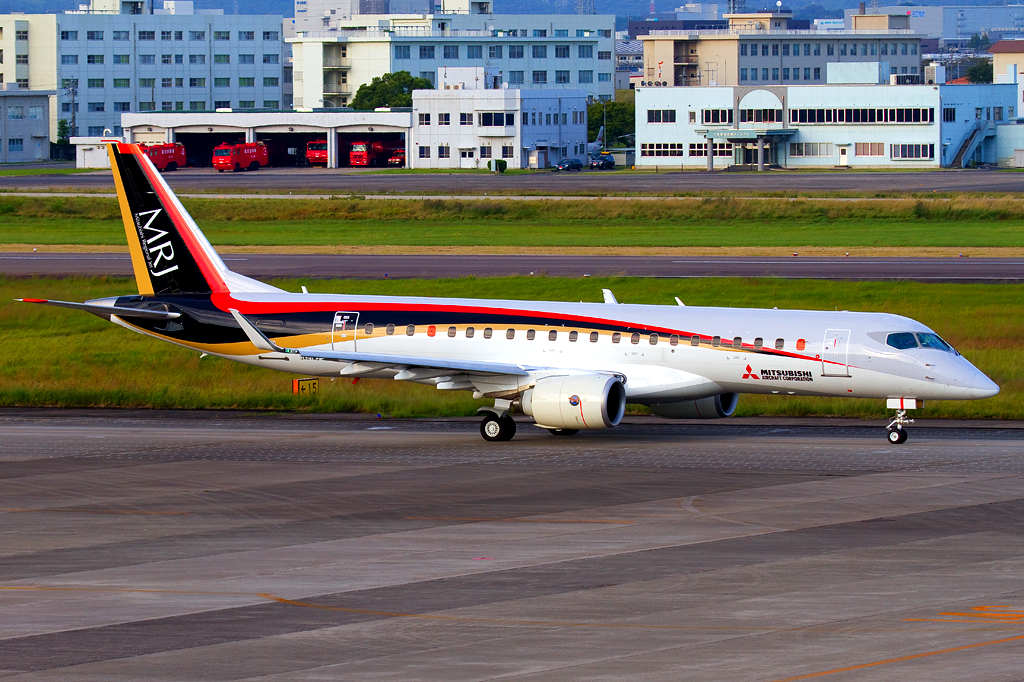
In 2008, Japanese manufacturer MHI unveiled the Mitsubishi Regional Jet (MRJ) program to develop a more fuel-efficient and technologically advanced regional jet to compete with regional jet juggernauts Embraer and Bombardier.
MHI developed two variants of the MRJ: the 90-seat MRJ90 and the 70-seat MRJ70. The type underwent flight testing mainly at Washington state’s Grant County International Airport (MWH). However, the development of the MRJ was fraught with delays and setbacks. After its initial rollout in 2014 and maiden flight in November 2015, the company paused the program to address issues with the aircraft’s design and development.
The Dawn of the SpaceJet
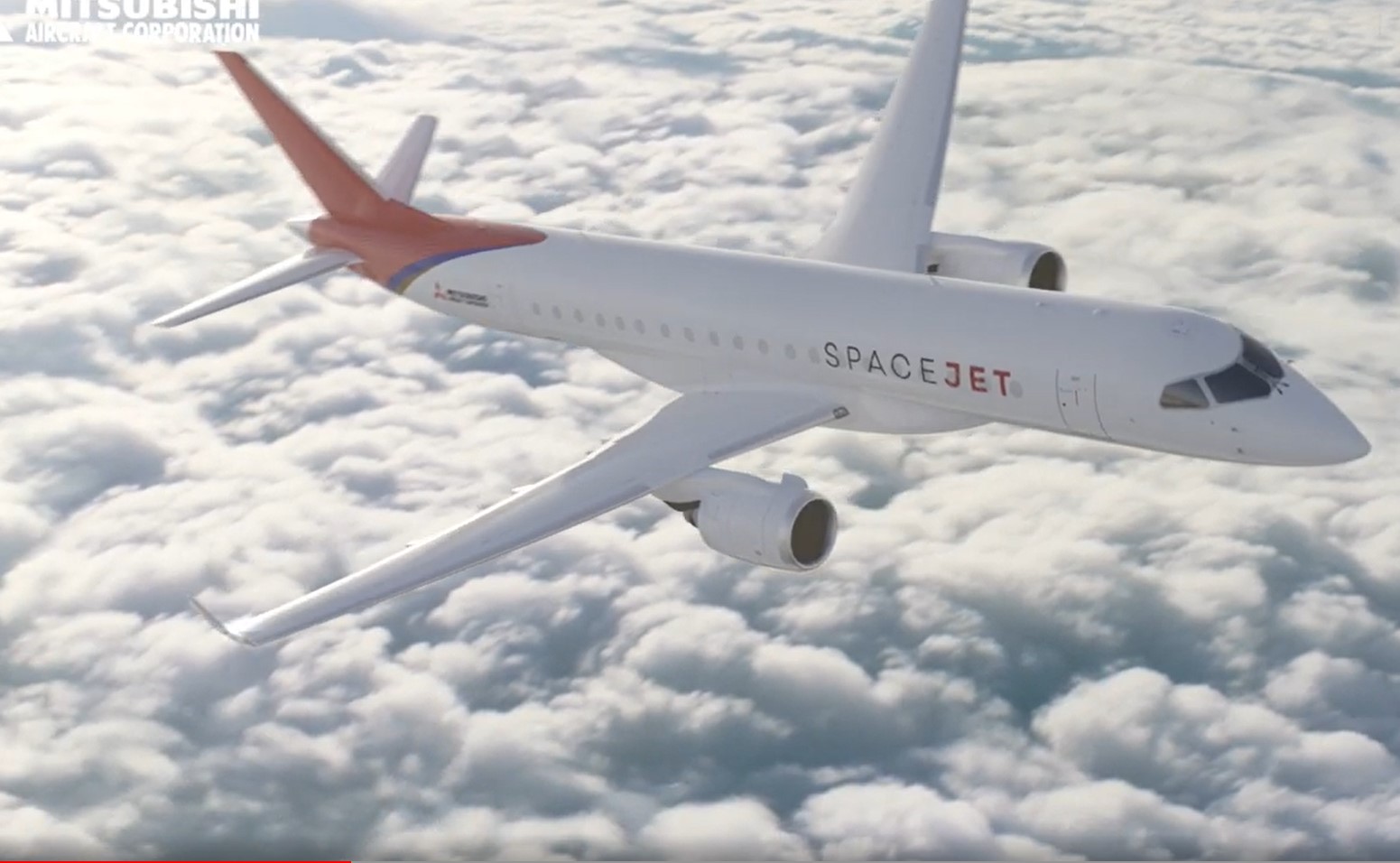
Mitsubishi SpaceJet Rendering | IMAGE: Mitsubishi Heavy Industries (MHI)
MHI resumed work on the program in 2019 under the new name SpaceJet. The MRJ90 became the SpaceJet M90, while the company ended development of the MRJ70 in favor of a new 76-seat variant called the SpaceJet M100, designed to meet unique pilot scope clauses in the United States, which caps regional aircraft at 76 pax and 86,000 lbs.
Mitsubishi also announced plans to purchase the CRJ program from Bombardier in the same year. The company was targeting a mid-2020 delivery date for the first SpaceJet (seven years later than initially planned). The launch customer was Japan’s All Nippon Airways (ANA). The onset of the COVID-19 pandemic caused further delays, and work halted on the program again in October 2020, prompting all flight testing in the United States to relocate back to Japan.
Despite remaining hopeful about restarting the program post-COVID, Mitsubishi ultimately decided to discontinue the SpaceJet program due to disappointing financial results in 2022 and uncertainty in the aviation market. At one point, the company had received 450 orders for the SpaceJet.
A $7.6B Project to Nowhere
IMAGE: Mitsubishi Heavy Industries (MHI)
As a result, MHI, the parent company of Mitsubishi Aircraft Corporation (MAC), decided to cut its losses and end the program altogether.
CEO of Mitsubishi Heavy Industries, Seiji Izumisawa, expressed his disappointment at a news conference announcing the project’s demise on 7 February.
“Many people had high hopes and supported the project, so it is very unfortunate that we came to the decision to end it,” Izumisawa said. “We didn’t have enough resources to continue the development over the long term as a private-firm project.”
Indeed, it was an expensive venture. The company reportedly spent $7.6 billion on the public-private project over 15 years.
Where Does the Regional Jet Industry Go From Here?
A Mitsubishi MRJ prototype taxies past a Fuji Dream Airlines Embraer 175 | IMAGE: By Grasshopper2015 – Own work, CC BY-SA 4.0, https://commons.wikimedia.org/w/index.php?curid=44659152
With the demise of the SpaceJet program, the failure of Bombardier, an unsuccessful merger attempt between Boeing and Embraer, and no other viable alternatives on the horizon, where does that leave the future of the regional jet industry?
First, one must determine what constitutes a “regional” jet. Typically, regional jets set between 50-100 passengers. However, the cap at 76 pax and 86,000 lbs in the United States severely limits options.
This article will consider the Embraer E2 as the only viable alternative. One could also consider the Airbus A220 as a quasi-regional jet, although it seats more than 100, making it unusable by regional carriers in the US. And while regional jet programs are under development in China and Russia, they will most likely never see the light of day in North American or European airspace, especially amid ongoing geopolitical turmoil.
The A220 was part of Bombardier’s CSeries program, which Airbus later acquired. The E2 is the latest iteration of Embraer’s E-Jet series. Both aircraft have been well-received by customers and are among the most fuel-efficient and technologically advanced regional jets on the market.
Comparing the Airbus A220 and the Embraer E2
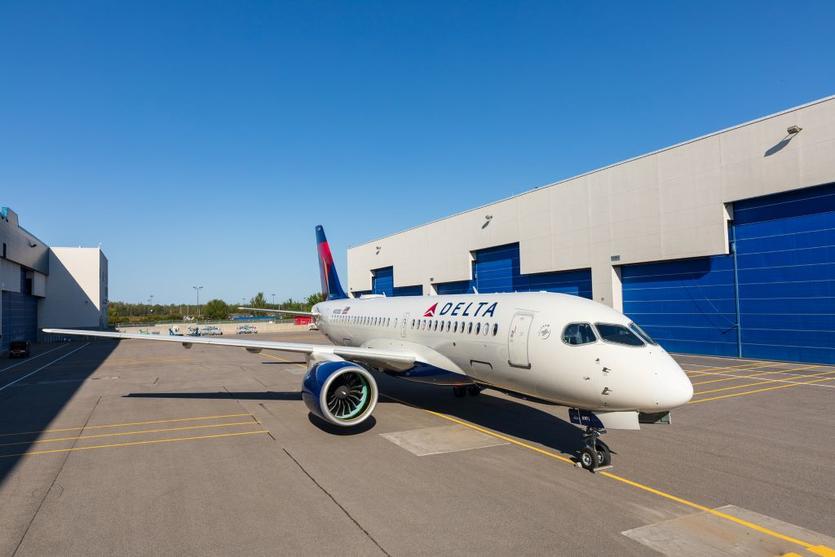
Airbus A220 Exterior | IMAGE: Delta Air Lines
The Airbus A220 has two variants: the A220-100 and the A220-300. The A220-100 can carry up to 135 passengers, while the A220-300 can carry up to 160. The aircraft features advanced aerodynamics, a state-of-the-art avionics system, and Pratt & Whitney geared turbofan engines, which reduce fuel consumption and noise. The A220 also has a range of roughly 4,000 miles, making it suitable for both short-haul and medium-haul routes.
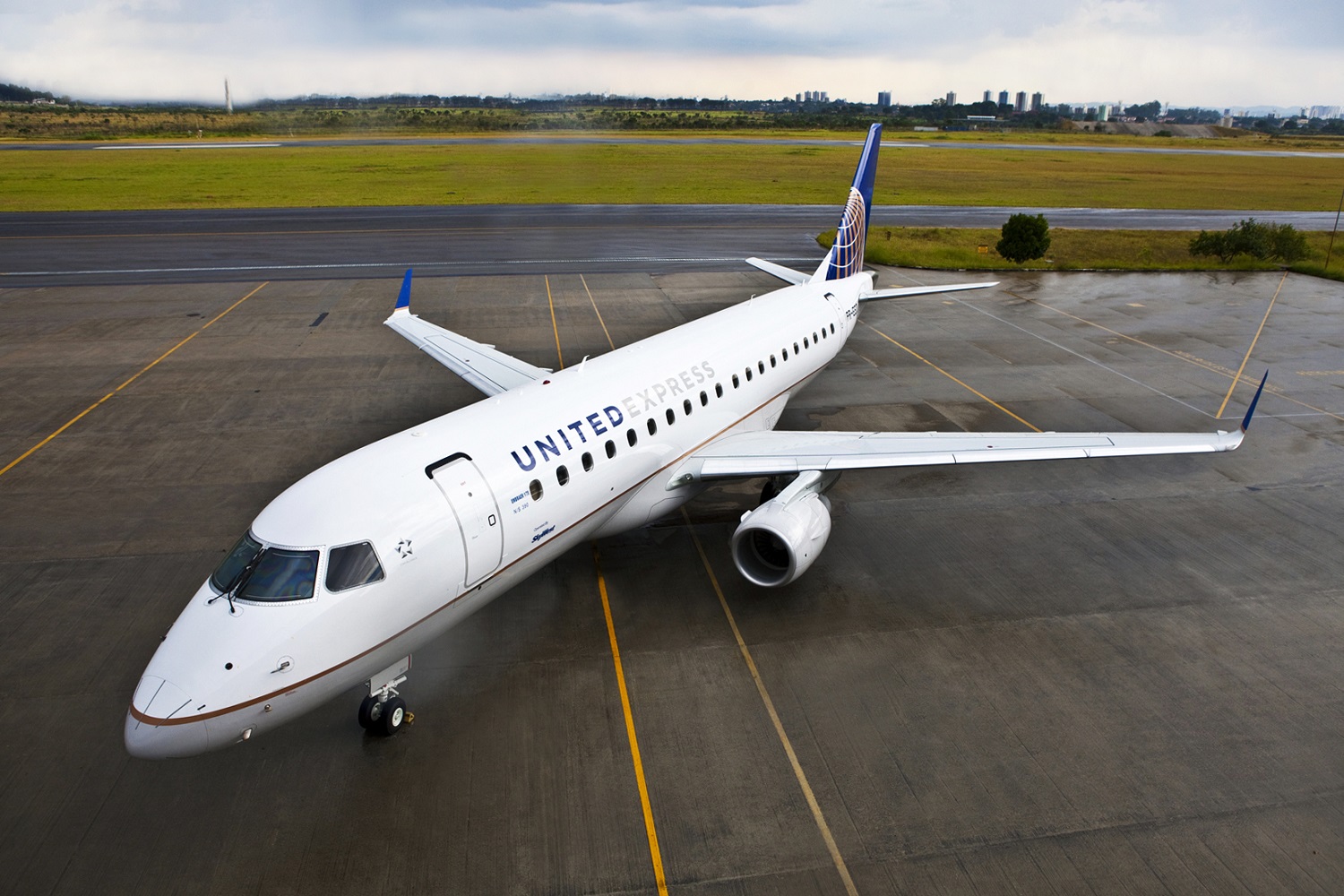
A United Express Embraer 175 operated by Skywest Airlines | IMAGE: United Airlines
The Embraer E2 is available in three variants: the E175-E2, the E190-E2, and the E195-E2. The E175-E2 can carry up to 90 passengers, while the E190-E2 and the E195-E2 can carry up to 114 and 146 passengers, respectively. The E2 features advanced aerodynamics, an all-new avionics suite, and Pratt & Whitney PurePower PW1000G engines. The E2 has a range of up to 3,000 miles.
Both the A220 and the E2 have been well-received by airlines and customers. Several major airlines operate the A220, including Delta Air Lines, Air France, and JetBlue. The E2 is also in service with several major airlines, including Porter Airlines, Azul Brazilian Airlines, and KLM Cityhopper. Both aircraft are among today’s most fuel-efficient and environmentally friendly regional jets. Environmental concerns are becoming an increasingly important factor for airlines as they look to reduce their carbon footprint and comply with emissions regulations.
So Where Does this Leave the US?
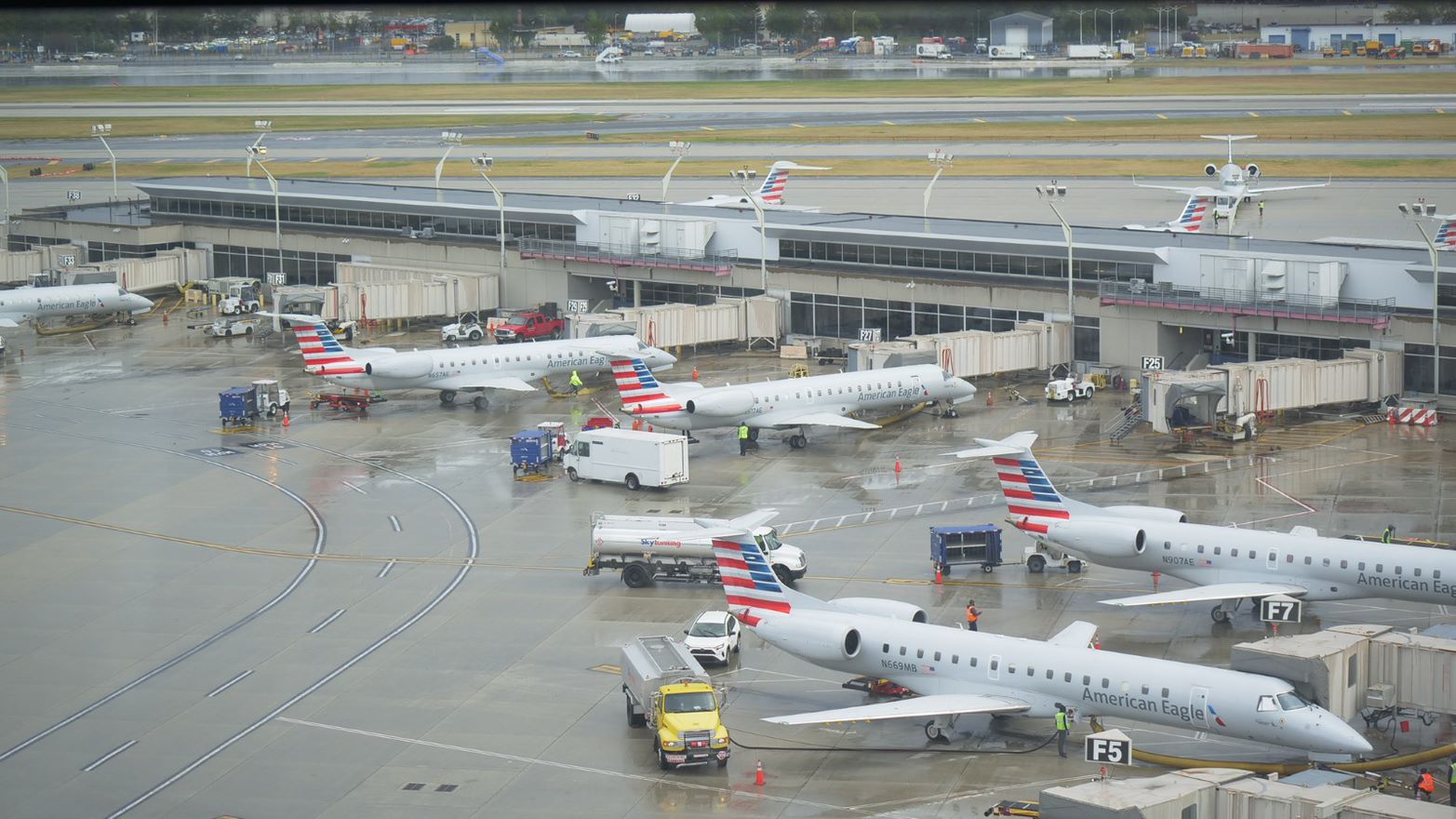
American Eagle/piedmont Airlines Embraer 145s on the ramp at Philadelphia International Airport (PHL) | IMAGE: Piedmont Airlines on Facebook
Although regional jets are still a common site at American airports, they are showing their age. And they certainly have lost their customer appeal. Early models are now more than 30 years old, and there is nothing to replace them with besides the first-generation Embraer 175.
The end of the regional jet does not bode well for scores of small airports across the country that rely on them to connect their cities to the global travel network.
Will we see carriers turn to turboprops once again? Will this create opportunities for carriers like Southern Airways Express or Silver Airways? Or will more cities see a resumption of mainline service as more A220s come online?
One thing is sure: with restrictions due to pilot scope clauses, the US is unlikely to see its carriers turn to the E2.
The SpaceJet’s Demise is a Reminder that Developing New Aircraft is Not Without Risk
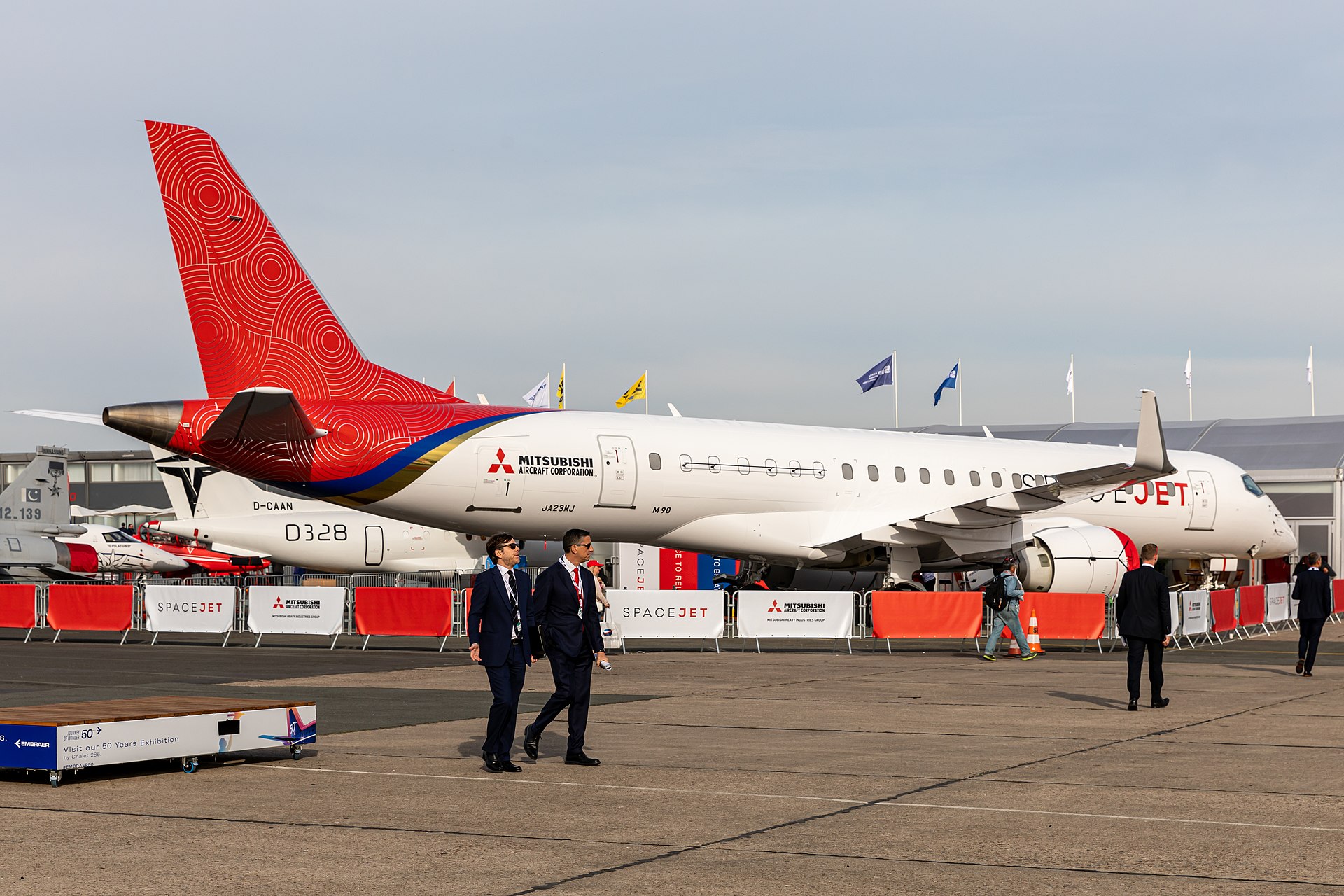
A Mitsubishi SpaceJet on the ramp at the 2019 Paris Air Show | IMAGE: Matti Blume, CC BY-SA 4.0 , via Wikimedia Commons
The end of the SpaceJet program is a significant blow for MHI and the Japanese aviation industry. The development of the SpaceJet was a significant initiative for Japan, and the government invested heavily in the program. The SpaceJet was seen as a way for Japan to enter the regional jet market and compete with other major aircraft manufacturers. However, the program’s failure has raised questions about Japan’s ability to compete in the global aviation market.
The SpaceJet’s demise also highlights the challenges of developing new aircraft. Aircraft development is a long and expensive process with many uncertainties and risks. Even major aircraft manufacturers like Boeing and Airbus have faced significant setbacks in developing new aircraft, such as the Boeing 737 MAX and the Airbus A380.
The failure of the SpaceJet program is a reminder that even well-funded and technologically advanced programs can fail.
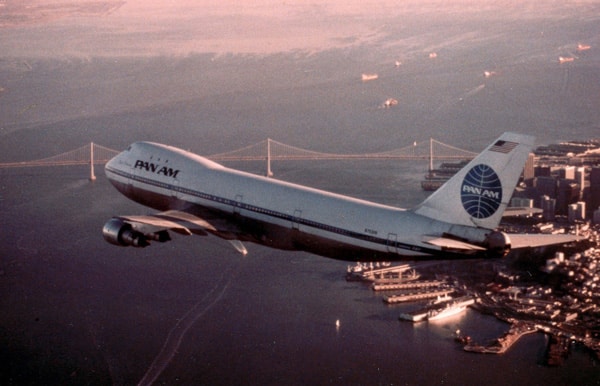
There are only about 40 passenger 747s still flying worldwide, as many airline operators have been retiring the jumbo jet over the last several years. Most airlines just can’t afford it anymore, since newer more fuel-efficient planes are now available.
Those still operating passenger 747s include Asiana Airlines, Mahan Air, Korean Air, Air China and Lufthansa.
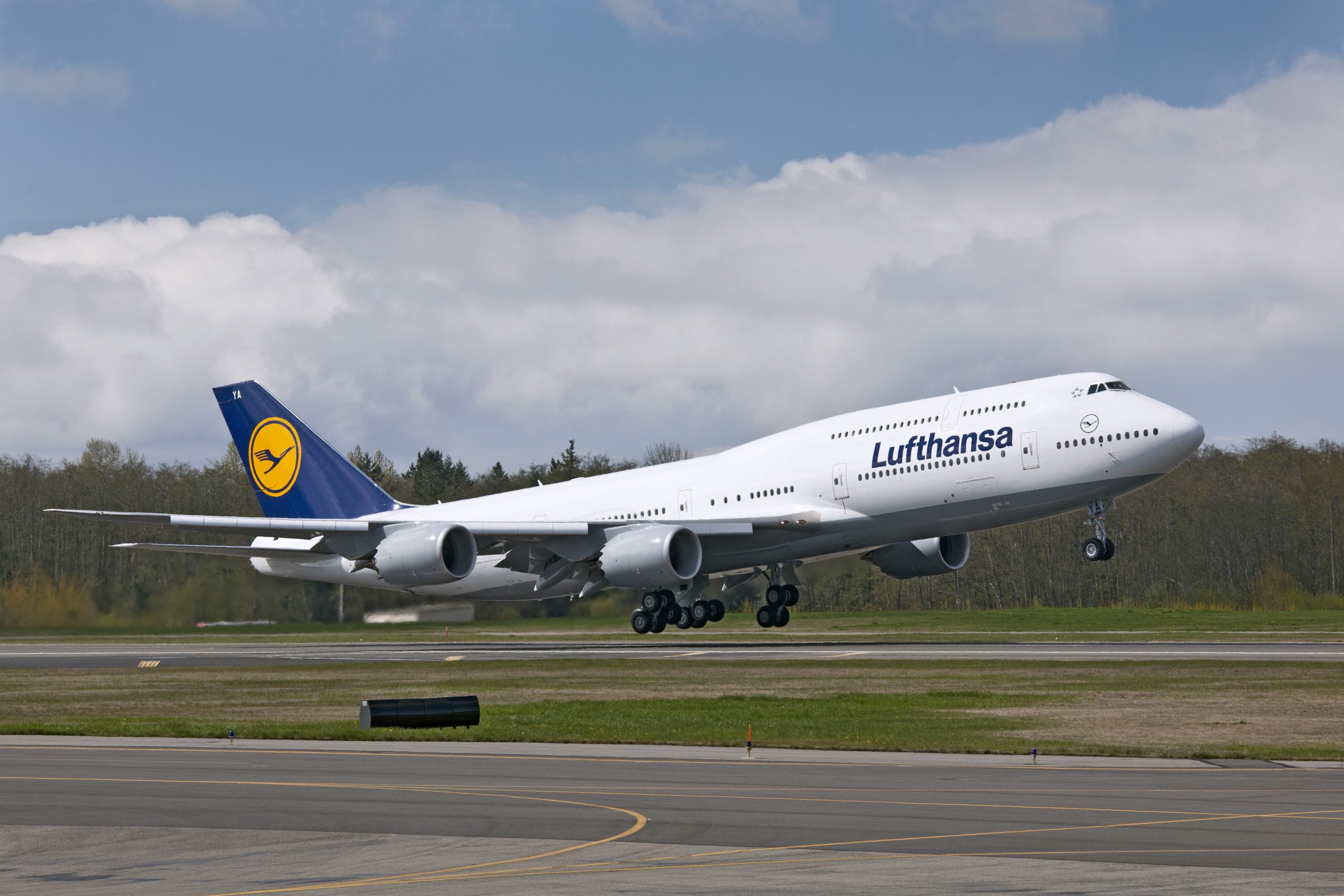
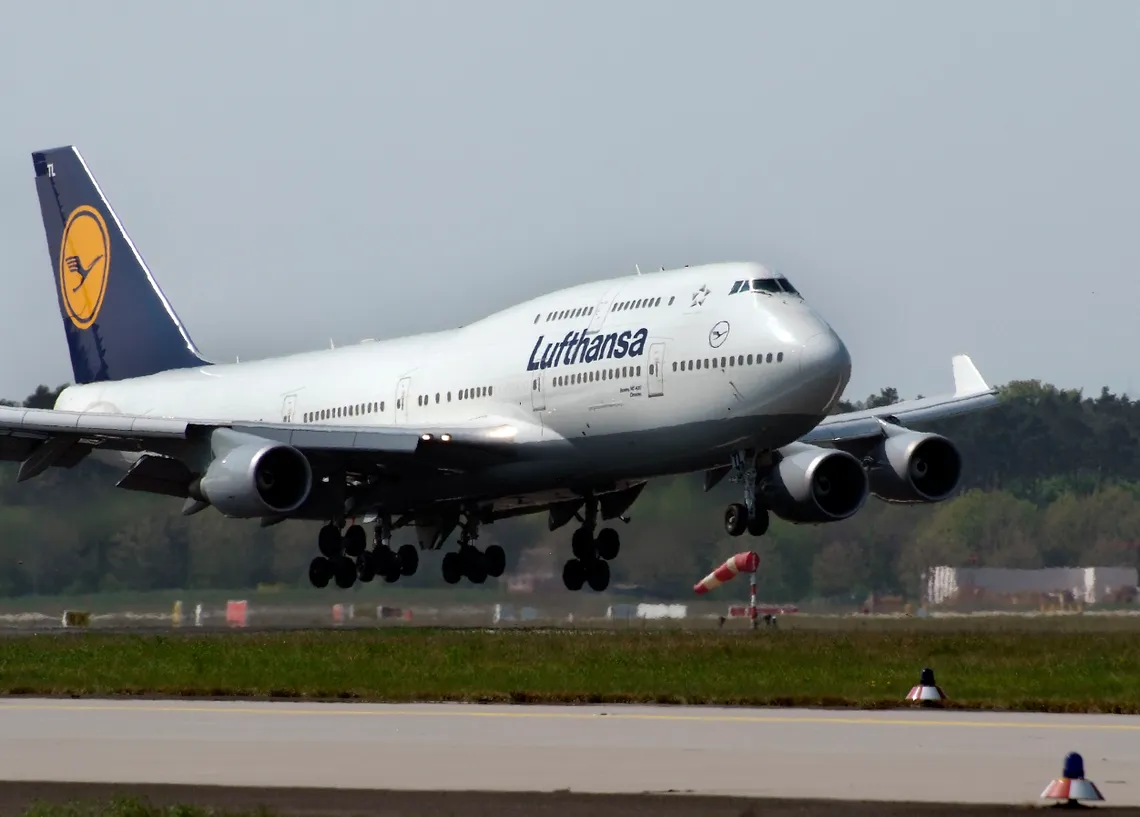
Boeing Delivers the First Lufthansa 747-8 Intercontinental (credit: Boeing)
Lufthansa is actually the largest operator of the 747-8, with 19 in its current fleet, and potential commitments to keep them flying for years to come. Most of them are under 10 years old.
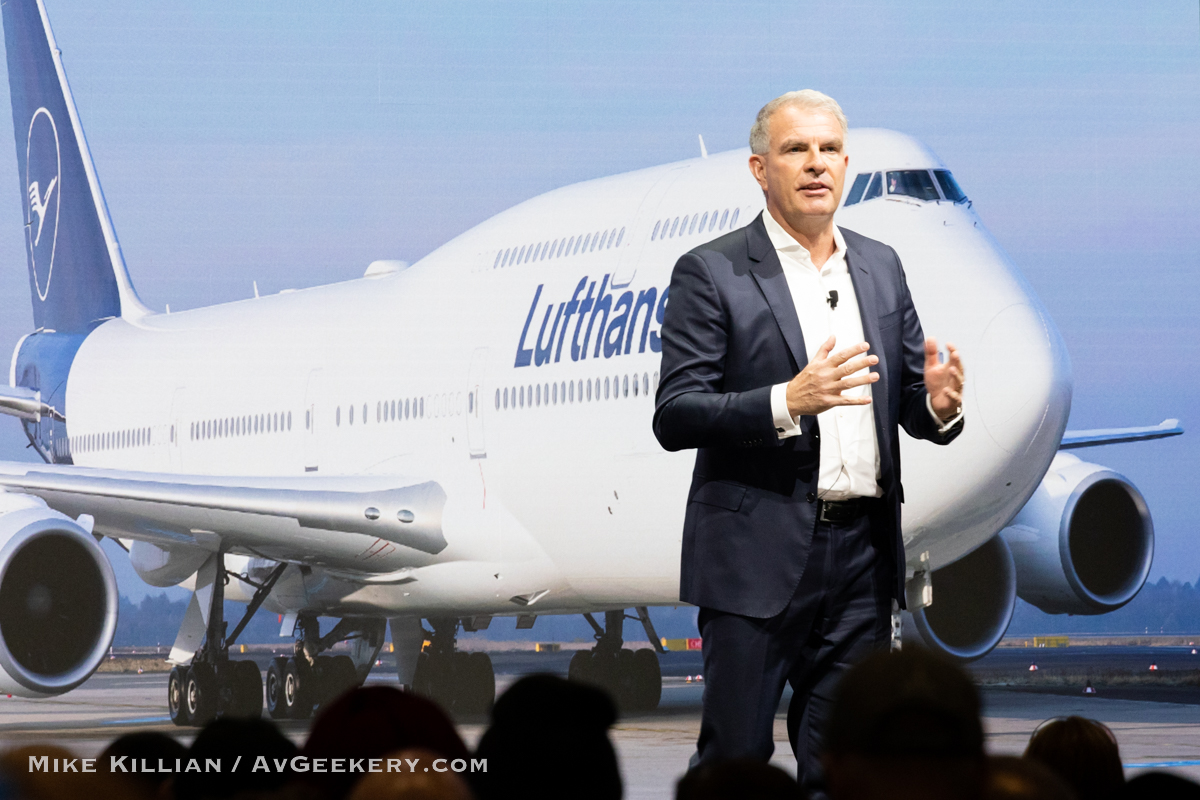
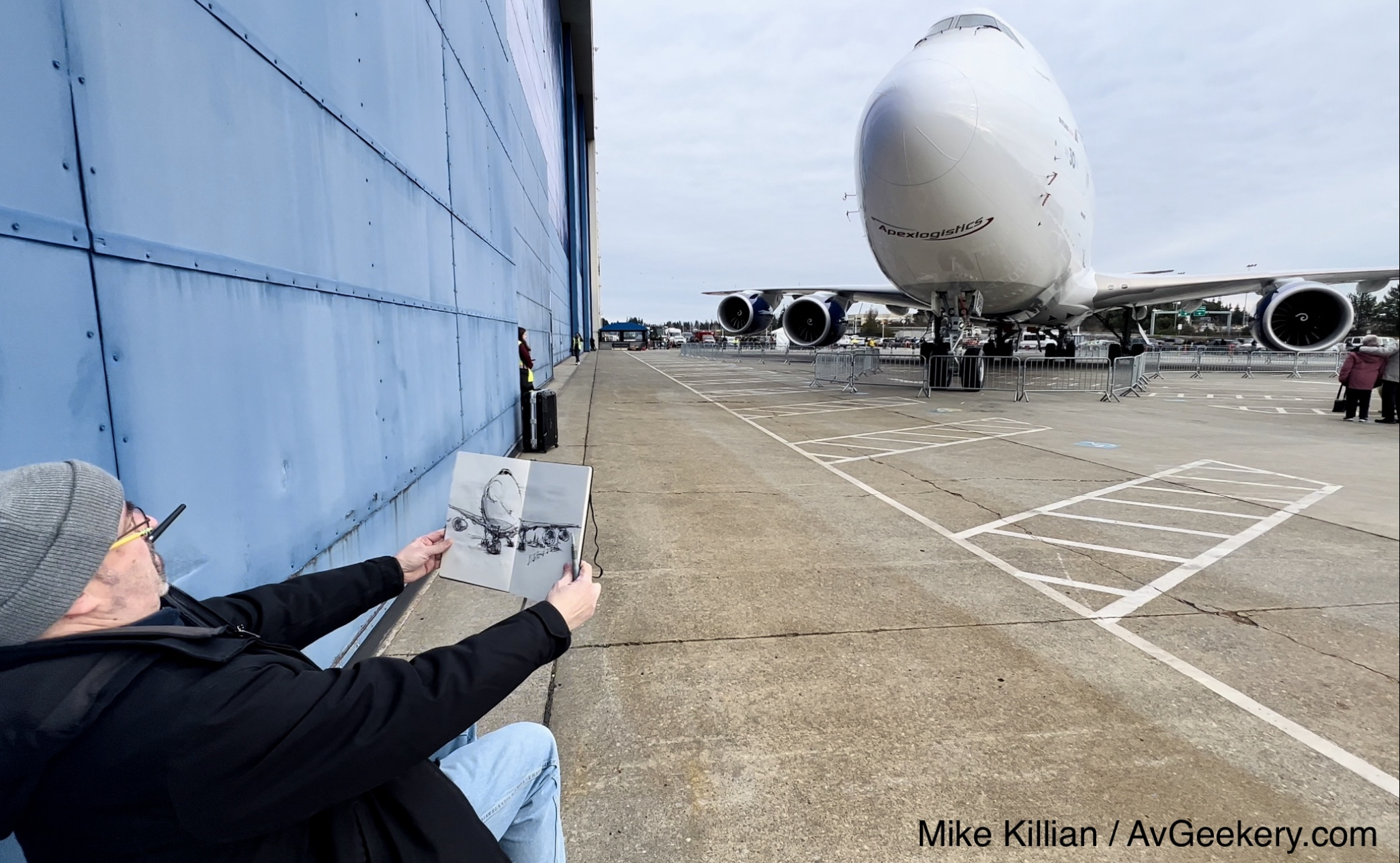
Boeing recently delivered the last 747 they will ever make, which we reported about from the company’s 747 factory in Everett, WA (read about that here). And one of the guests there to celebrate was Lufthansa’s CEO, Carsten Spohr, who made it clear that the company’s 747s will not only fly into the next decade, but will also be upgraded in all passenger classes.
Lufthansa Wants to Upgrade Their Passenger 747s 46
An investment in the future of Lufthansa’s fleet
“Our crews love the 747, our passengers love it, even plane spotters and photographers love it,” said Spohr. “It’s just so good looking! And that’s why we at Lufthansa are currently looking into another upgrade for our 747-8 in all classes, to fly this airplane way into the next decade. It’s something we are proud of, to represent this amazing airplane for many more years.”
The majority of 747s still flying today are for cargo, with over 300 freighters in operation.
Lufthansa does still operate a smaller fleet of 747-400s, but those won’t be flying for many years longer. So they won’t undergo any upgrades like the 747-8s.
lufthansa photo
It’s unclear however what exactly Lufthansa will do with reconfiguring new cabins, nor have they given a timeline. One Mile at a Time goes into it in a more detail.
Whatever the case, when Lufthansa gives more details we will let you know. But, it’s good to know that they intend to keep providing passengers the experience of flying on the “Queen of the Skies” well into the 2030s.
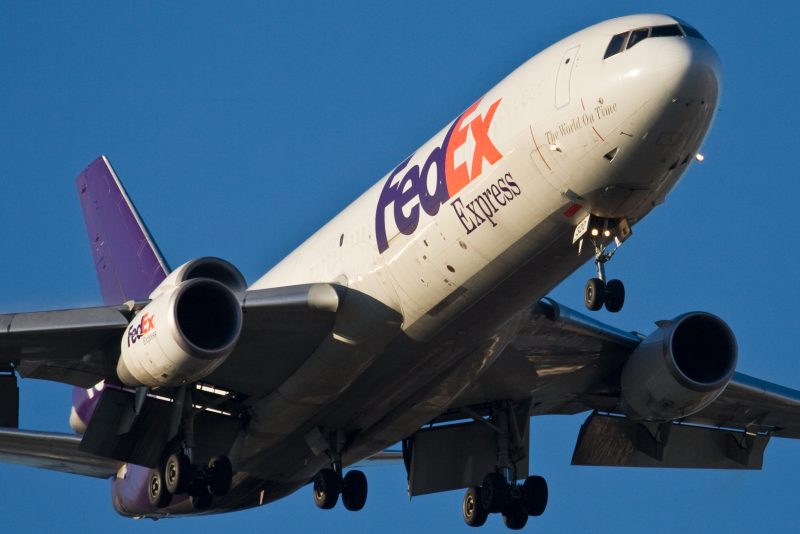
When FedEx Flight 147 touched down at Memphis International Airport (MEM) on 31 December 2022, it marked the end of an era for the DC-10.
The flight, which originated at Toronto Pearson International Airport (YYZ), was the final revenue flight of a FedEx MD-10-30F, one of the most iconic and recognizable commercial airliners in aviation history.
The MD-10 was a mainstay of the fleet of Memphis-based FedEx Express for more than three decades. Its retirement marks the end of an era for FedEx and the aviation industry as a whole.
The Boeing MD-10, of course, is the updated iteration of the McDonnell Douglas DC-10, brought about by FedEx’s request. The update included the integration of a glass cockpit and the elimination of the flight engineer position.
Many of the DC-10s operating at the time underwent MD-10 conversion. Not to be confused with the MD-11, the MD-10 allowed for a common two person cockpit between both types of jets. The larger MD-11 will still soldier on in the FedEx fleet.
The Storied but Controversial History of the McDonnell Douglas DC-10
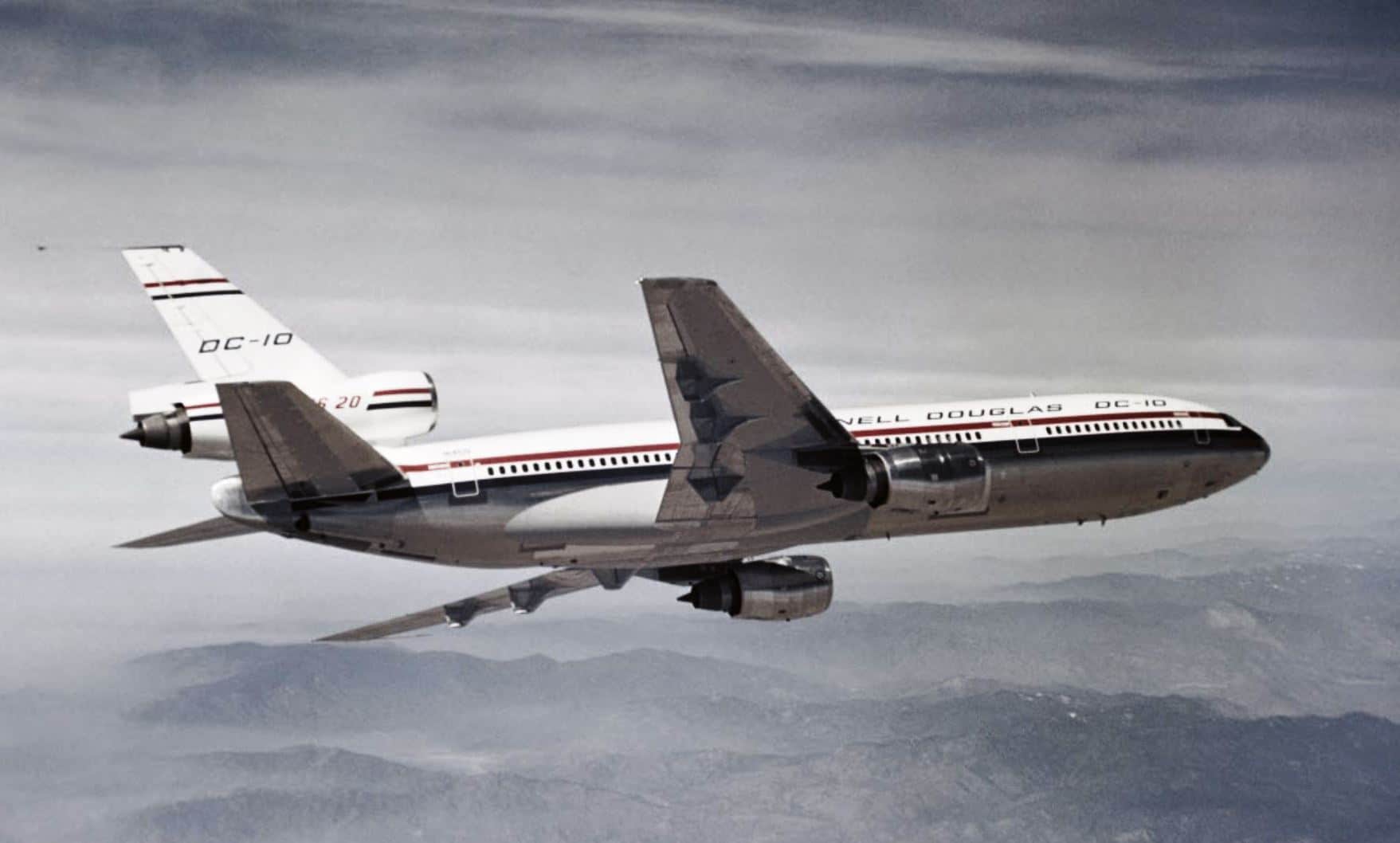
DC-10-20 prototype in flight. Image via McDonnell Douglas/Boeing in public domain.
The DC-10 was introduced in 1970 by McDonnell Douglas, the now-defunct American aerospace manufacturer, as a successor to the older DC-8. The aircraft was designed as a wide-body, tri-jet airliner and was initially intended to compete with Boeing’s 747 jumbo jet.
The DC-10 was well received by airlines and passengers alike, offering a spacious and comfortable cabin and a range of up to 5,800 miles. The aircraft became a popular choice for both passenger and cargo airlines and was used by many of the world’s leading carriers.
However, the DC-10 was not without its share of controversy. In the early 1970s, a series of high-profile accidents involving the aircraft raised concerns about its safety and reliability.
The most notable was the crash of American Airlines Flight 191 in Chicago in 1979, which resulted in 273 deaths. Despite these incidents, the DC-10 continued to be operated by many airlines throughout the 1980s and 1990s. The type was eventually retired from passenger service in 2014.
Ultimately, 446 McDonnell Douglas DC-10s were built between 1970 and 1989. The DC-10 far outsold Lockheed’s L-1011 TriStar, its only direct competitor. By comparison, just 249 TriStars were manufactured between 1971 and 1985.
FedEx and the DC-10
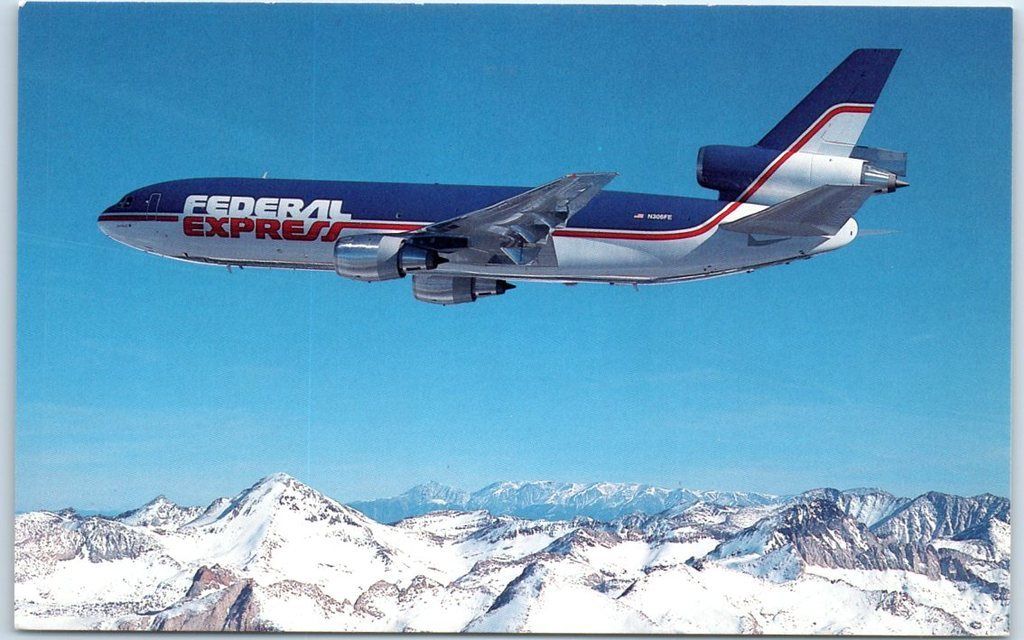
A Vintage Postcard spotlighting a federal express mcdonnell douglas dc-10 | IMAGE: hippostcard.com
For FedEx, the DC/MD-10 was a mainstay of its fleet for more than three decades. The carrier took delivery of its first DC-10 in January 1986. It was a workhorse for FedEx, with the cargo airline relying on a total of 113 of the type for its reliability and long-range capabilities.
In recent years, however, FedEx has been transitioning its fleet to more modern and fuel-efficient aircraft, including the Boeing 767 and 777 and the MD-11.
Are there any DC-10s Still Flying?
With the MD-10 no longer operating for FedEx, it is interesting to note that there are only two remaining MD-10s operating worldwide as of February 2023 – both of which are the cargo MD-10-30F variant.
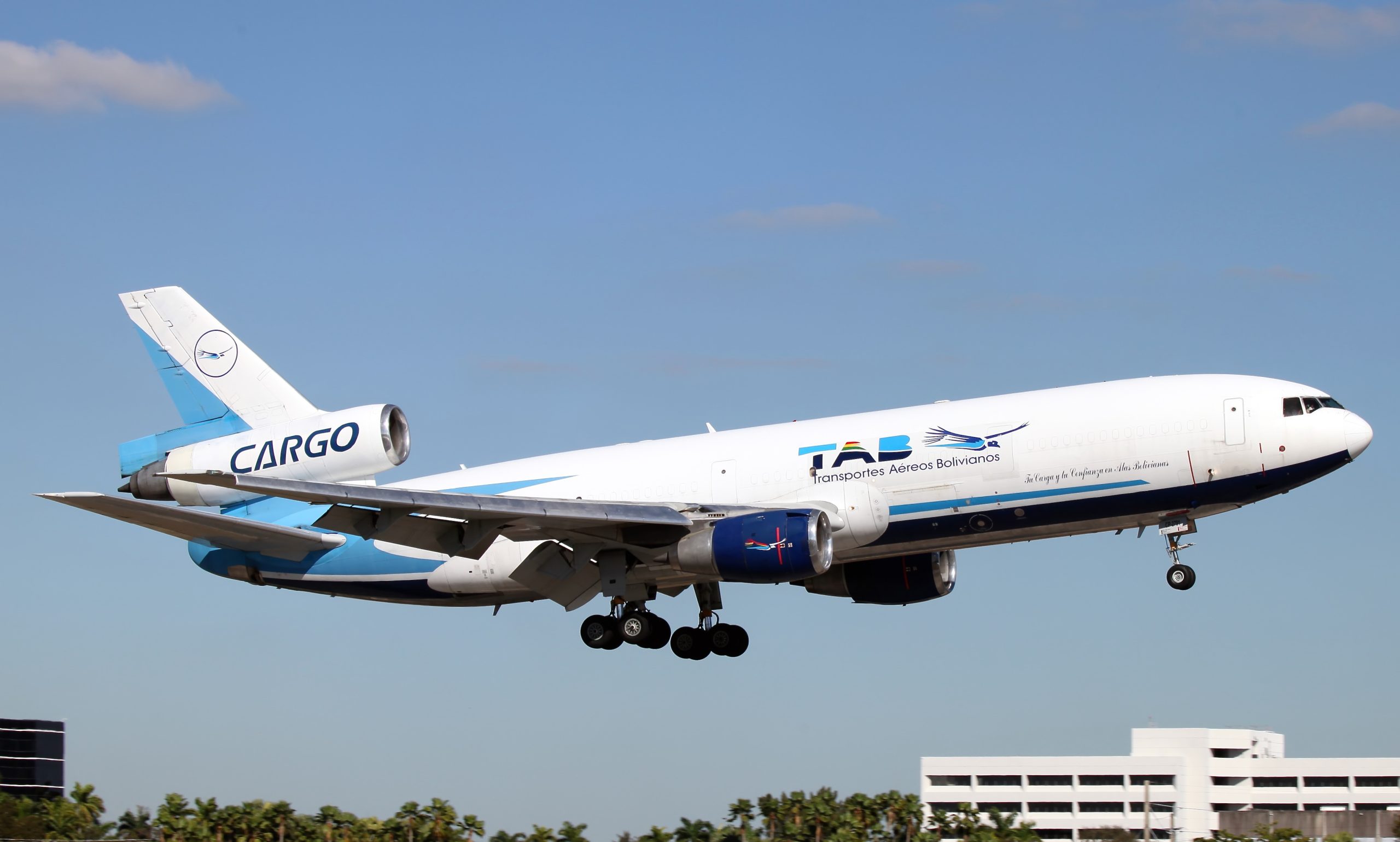
CP-2791, operated by Transportes Aéreos Bolivianos (TAB) Cargo, delivered new to Federal Express in August 1988 as N314FE. Received by TAB in July 2013. The jet occasionally does traverse Miami International Airport.
CP-2791 McDonnell Douglas MD-10-30F TAB Transportes Aéreos Bolivianos arrives at Miami International Airport on 17 Jan 2023 | IMAGE: Colin Cooke Photo via Flickr
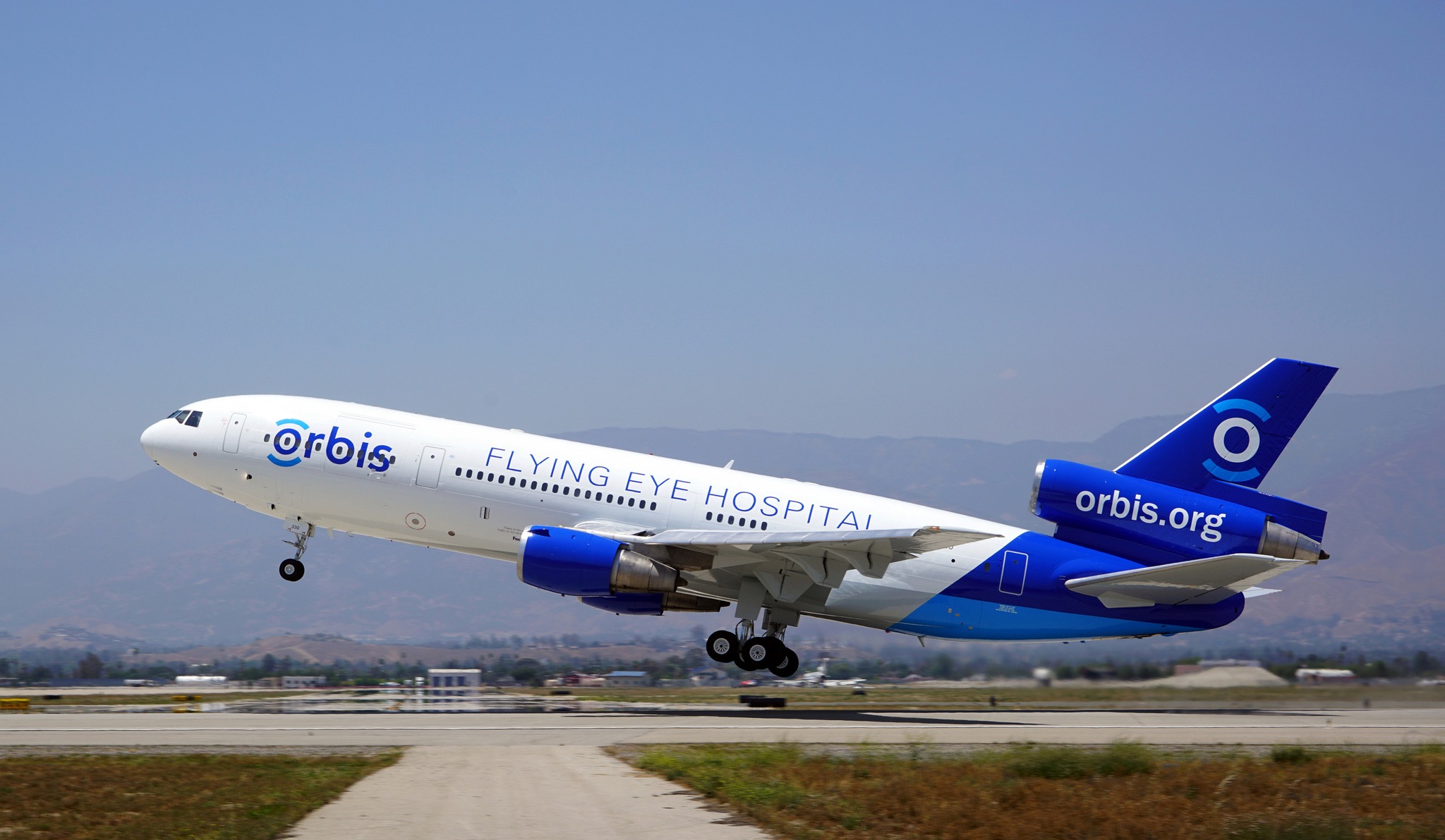
N330AU, operated as the Orbis Flying Eye Hospital. At nearly 50 years old, it was delivered new to Trans International Airlines in April 1973 as N101TV. It would then go on to operate as a cargo/passenger combi with Transamerica Airlines from October 1979 through April 1984. While operating for Transamerica, N101TV was leased to Nigeria Airways and Air Florida in 1979 and 1981, respectively. It was transferred to Federal Express as N301FE in April 1984, where it operated until the company donated the aircraft to Project Orbis in April 2011.
McDonnell Douglas MD-10-30F N330AU operating as the Project Orbis Flying Eye Hospital | IMAGE: Orbis on Facebook
As for the eight remaining FedEx MD-10s, all but three have made their way to the scrapyard. N311FE, N313FE, N316FE, N318FE, and N319FE have all been transferred to Victorville, California (VCV). Meanwhile, N306FE, N307FE, and N321FE are still on the ground in Memphis as of mid-February 2023.
A few other DC-10s remain:
There are four McDonnell Douglas DC-10 tankers serving in fire fighting capacity, based on the West Coast. Those flights are obviously not scheduled but do fly on demand and for training.
The Strange History of N306FE
N306FE, a Federal Express DC-10, at Amsterdam Schiphol (AMS) in June 1986 | IMAGE: Peter Bakema via Wikimedia Commons
The last revenue flight of a FedEx MD-10 was operated with N306FE, the first DC-10 built specifically for FedEx. It began operation with the carrier on 24 January 1986.
It underwent MD-10 conversion after the Boeing merger and operated FedEx’s final DC/MD-10 flight on 31 December 2022.
N306FE was also the aircraft involved in one of the most bizarre aviation incidents in history. On 07 April 1994, N306FE was operating Flight 705 on a flight from Memphis to San Jose, California (SJC). A deadheading employee attempted to overpower the cockpit crew and hijack the airplane. Although the attempt was unsuccessful, the attacker severely injured the flight crew.
Additionally, the aircraft underwent extreme stress as the injured crewmembers tried to disorient the attacker by rolling and inverting the DC-10 far beyond its design limits. For more information on this incident, watch this episode of Mayday: Air Disaster featuring the story of Flight 705.
Because of its history, efforts are underway to save N306FE from the graveyard. A petition on change.org is quickly gaining traction, as it is close to obtaining 10,000 signatures. Organizers hope to preserve the aircraft in an aviation museum in tribute to the bravery demonstrated by the flight crew of Flight 705.
Although the DC/MD-10 will no longer grace the world’s skies, except for the two MD-10s still in operation (and military KC-10 tankers), its memory will live on in the hearts and memories of aviators everywhere. The DC-10 will always hold a special place in the history of aviation.
The DC-10 retirement from FedEx’s fleet marks the end of an era. Still, its legacy will live on as a reminder of the aviation industry’s innovative spirit and engineering prowess.
It’s that time of year again, as 100 million people prepare to watch the Philadelphia Eagles battle the Kansas City Chiefs in Super Bowl LVII tonight. And while flyovers of such highly televised games are common, they are nonetheless important and unifying, and arguably the best 5 seconds in football.
Even many players and coaches agree, flyovers are arguably the best part of the game, and everyone has their own reasons why.
Super Bowl 2023 Flyovers, the Best 5 Seconds in Football 56
Click HERE to watch the above film, courtesy of NFL Films.
Tonight’s flyover by the U.S. Navy will be a little more special.
First All-Female Navy Crew to Conduct Tonight’s Big Flyover
Three U.S. Navy tactical squadrons are assigned to the flyover, aiming for an impressive 4-ship time-on-target display as the National Anthem comes to an end. And for the first time in history, the Navy flight crew are all women, as the Navy commemorates the 50th anniversary since a group of trailblazing women were first allowed to become naval aviators.
The fly-over team for Super Bowl LVII (left to right) – Lt. Arielle Ash of Abilene, Texas; Lt. Margaret Dente of North Salem, New York; Lt. Naomi Ngalle of Springfield, Virginia; Lt. Jacqueline Drew of Waltham, Massachusetts; Lt. Suzelle Thomas of Birmingham, Alabama; and, Lt. Kathryn Martinez, also of Springfield, Virginia (US Navy photos)
The 7 ladies will be flying two F/A-18F Super Hornets from the “Flying Eagles” of VFA-122, and a F-35C Lightning II from the “Warhawks” of VFA-97. They will be joined by an EA-18G Growler from the “Vikings” of VAQ-129.
Not only that, but all of the officers and most of the personnel who maintain the jets are women as well.
In 1973, eight women were first allowed to enter flight school. Six earned their wings, and Rosemary Mariner became the first woman to become a U.S. Navy fighter pilot.
Navy Captain Rosemary Marine, the first woman to officially become a U.S. Navy fighter pilot (Naby photo)
Today, women make up about 15% of the Navy’s pilots.
“It’s not lost on me how special it is that I get to do what I’m doing today because they did it first,” said Lt. Peggy Dente, who will lead the flyover.
With the Retirement of the Peacemaker, the US Air Force Became an All-Jet Bomber Fleet.
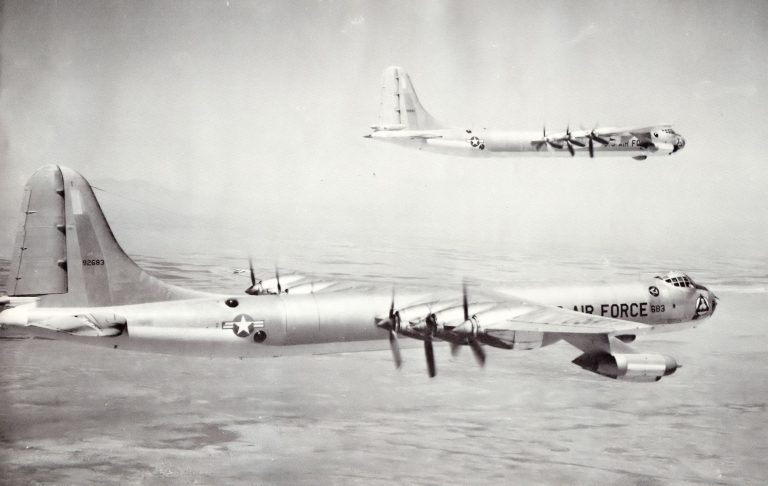
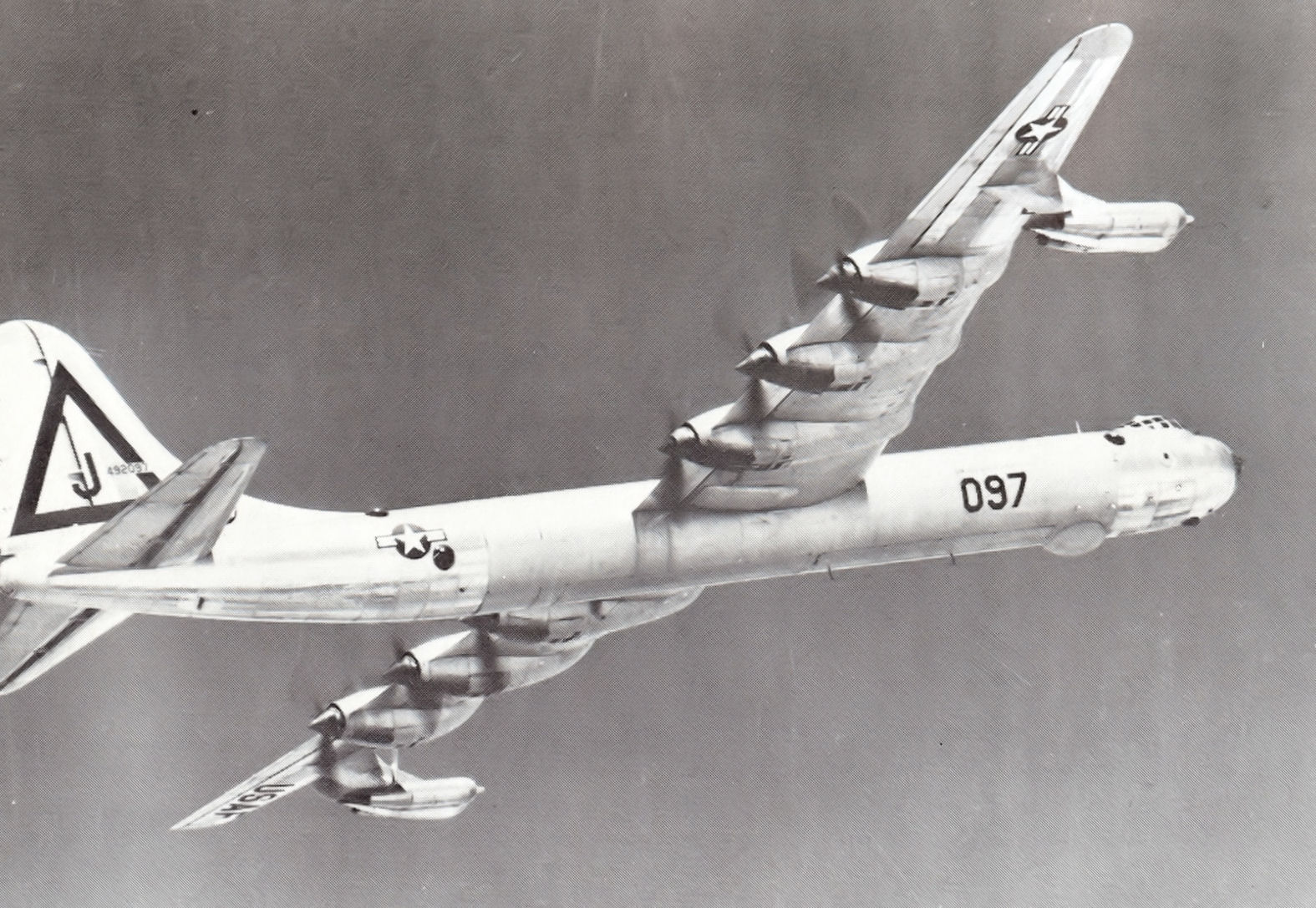
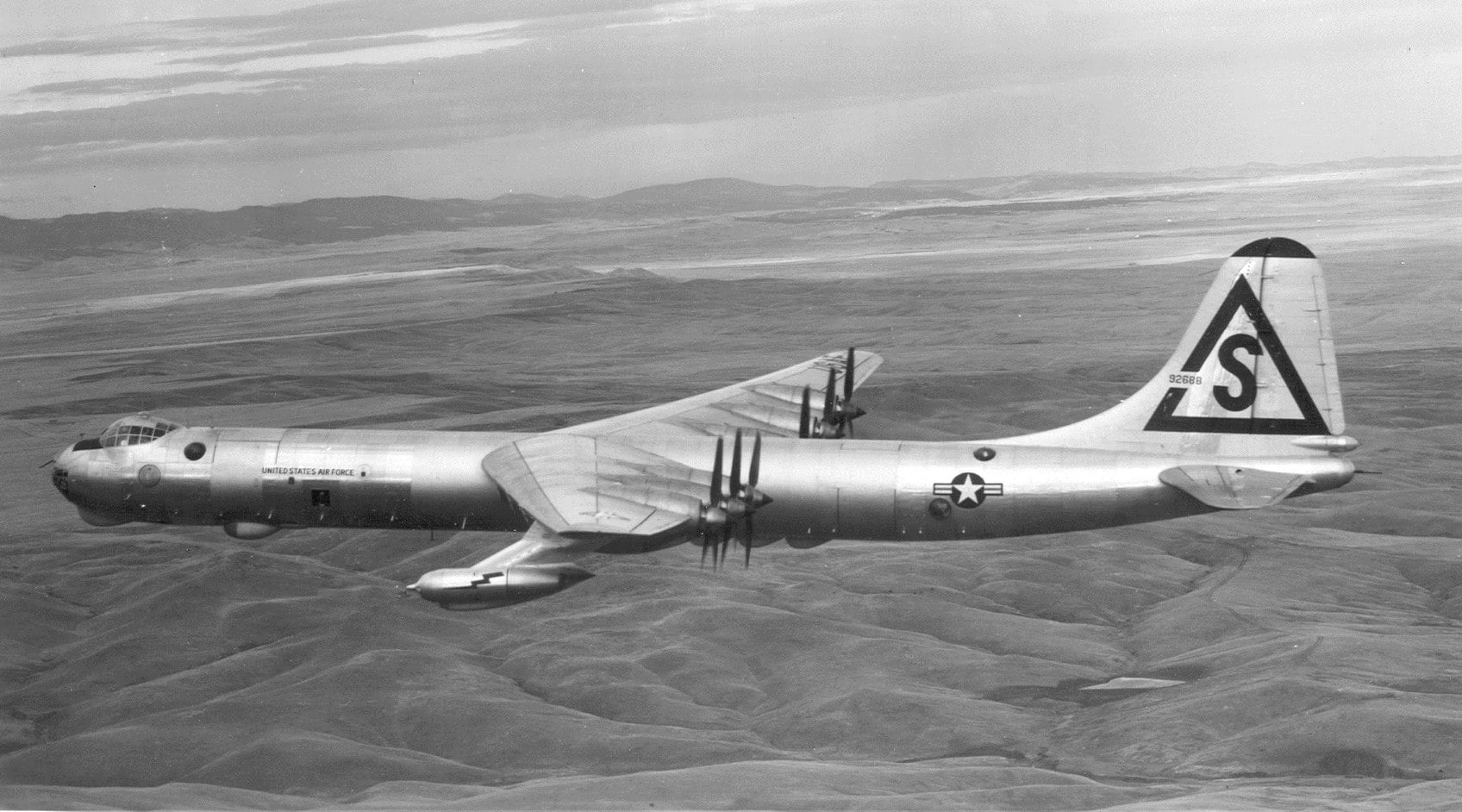
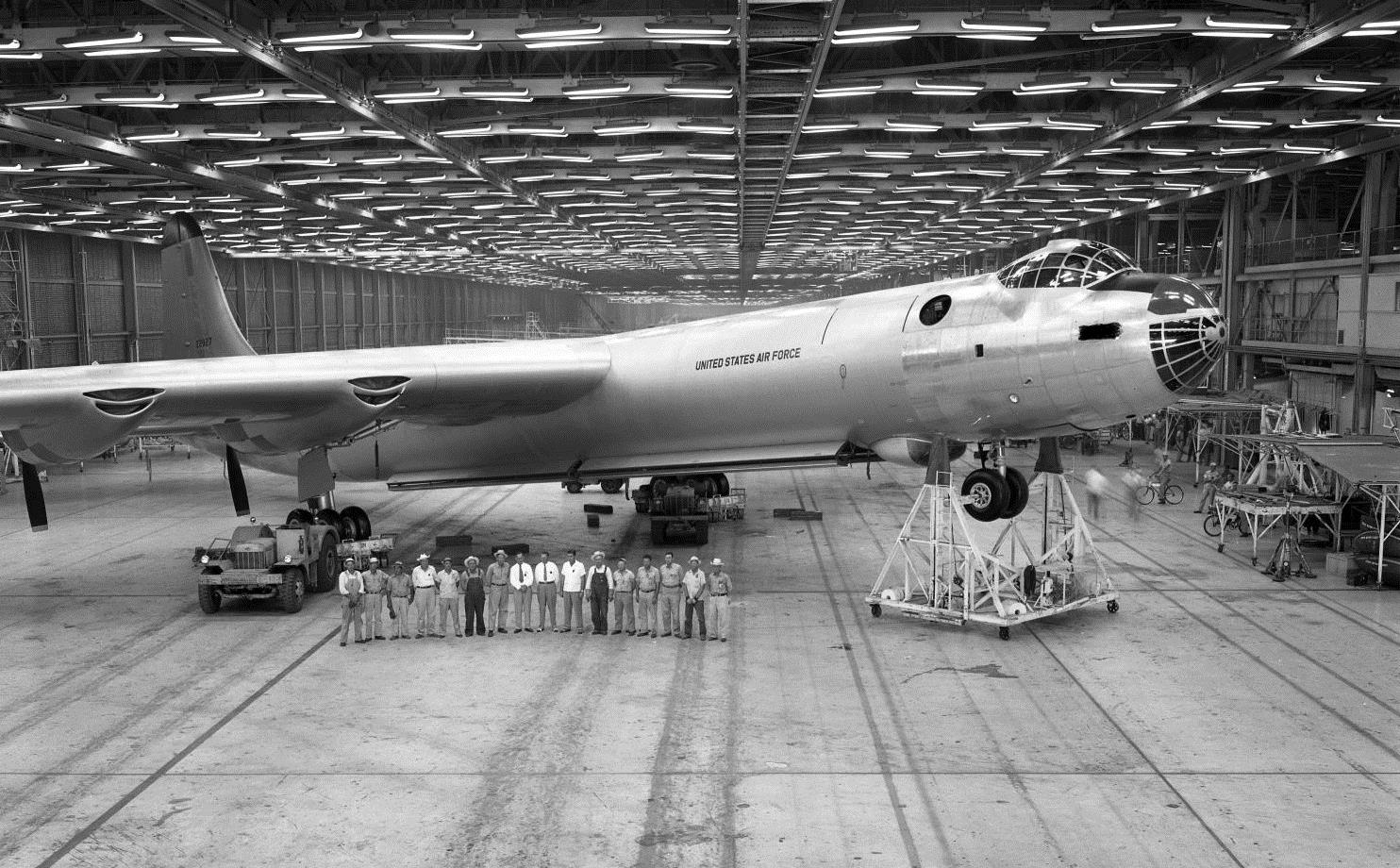
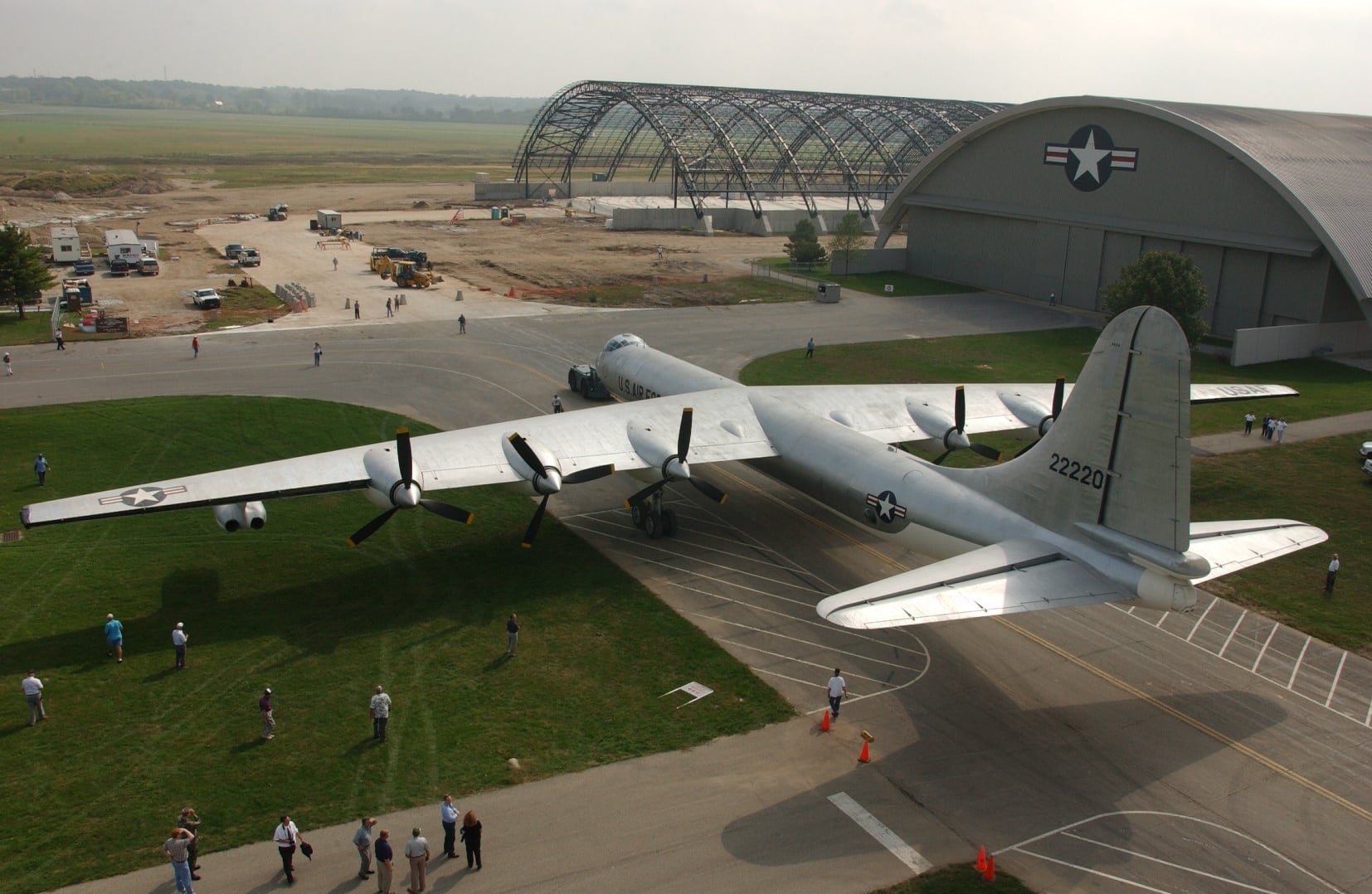
On 12 February 1959, the last B-36J “Peacemaker” built, Air Force serial number 52-2827, departed Biggs Air Force Base, Texas, where it had been operational with the 95th Heavy Bombardment Wing. The aircraft was flown to Amon Carter Field in Fort Worth, Texas, where it was put on display. With the retirement of this last operational B-36, the United States Air Force Strategic Air Command was henceforth equipped with an all-jet bomber fleet.
Image via USAF
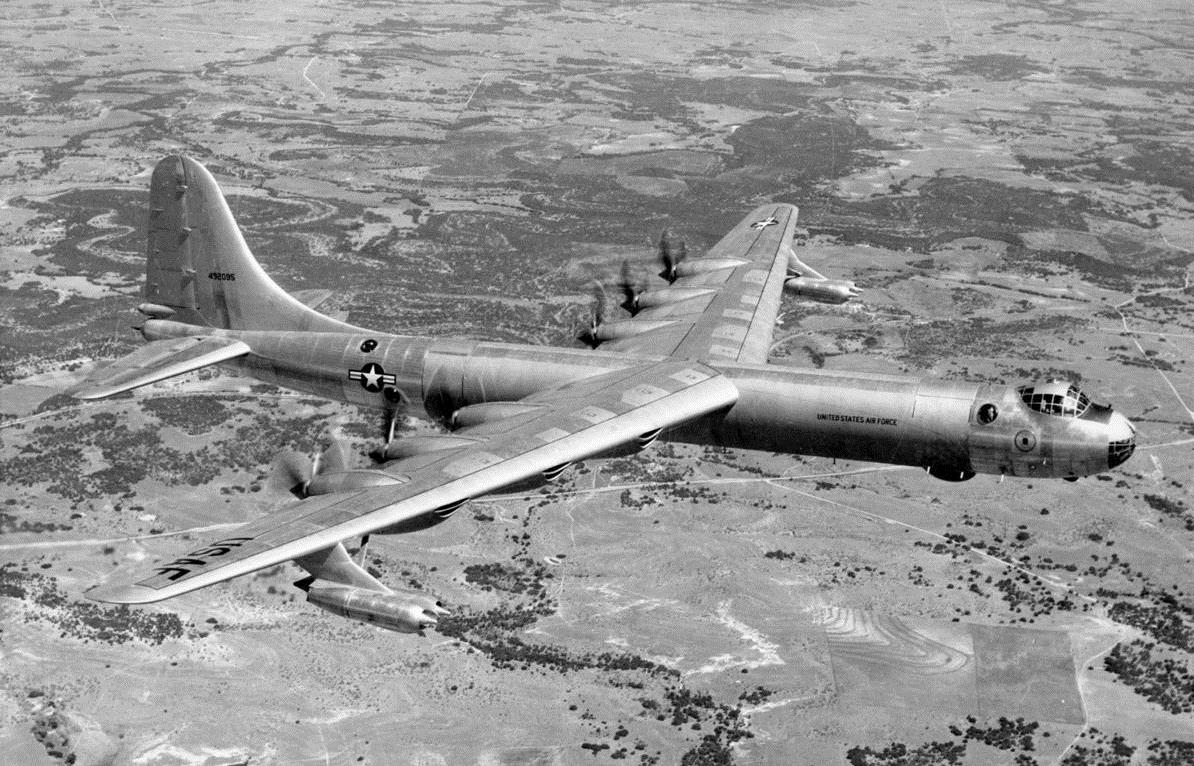
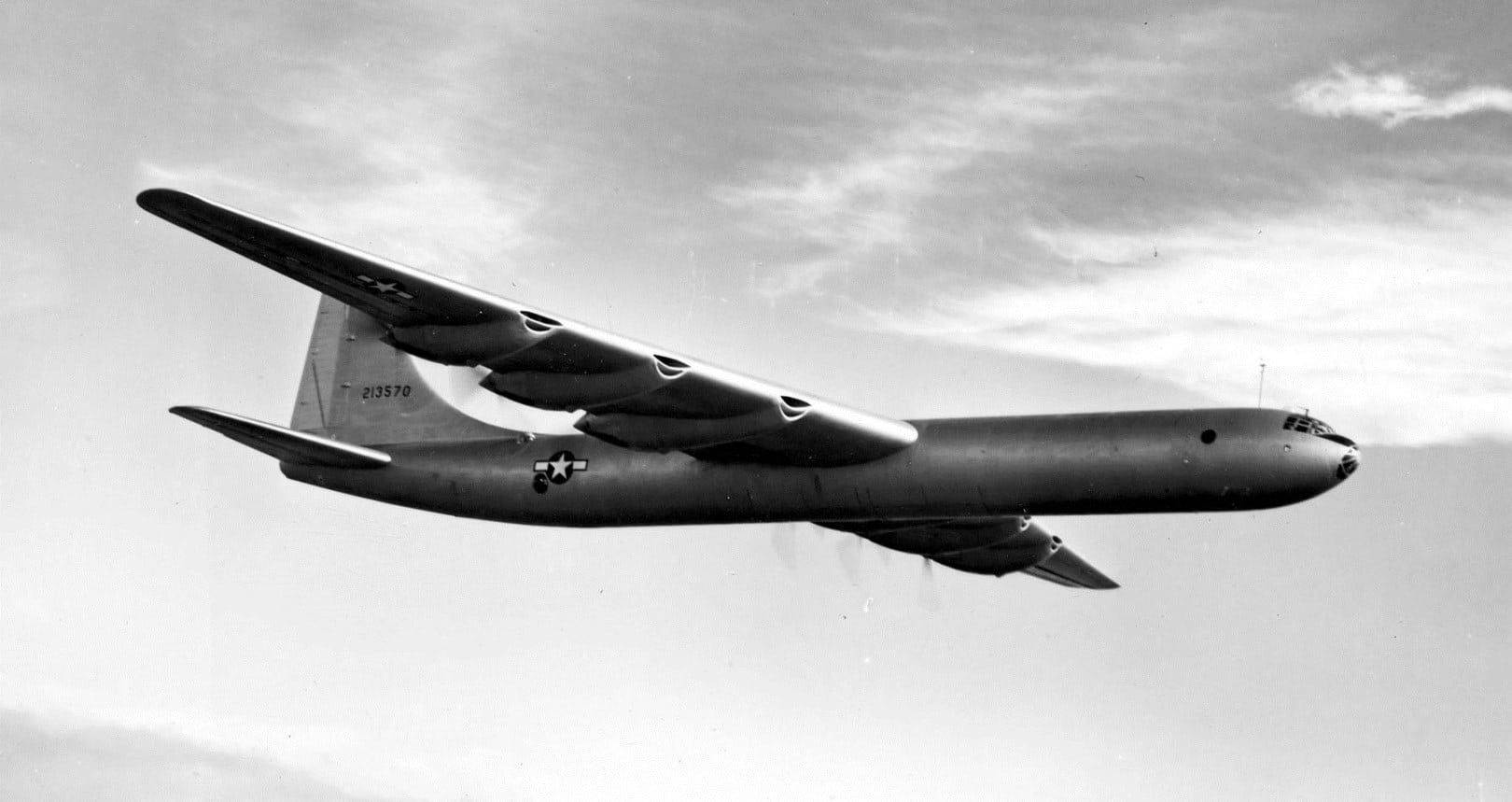
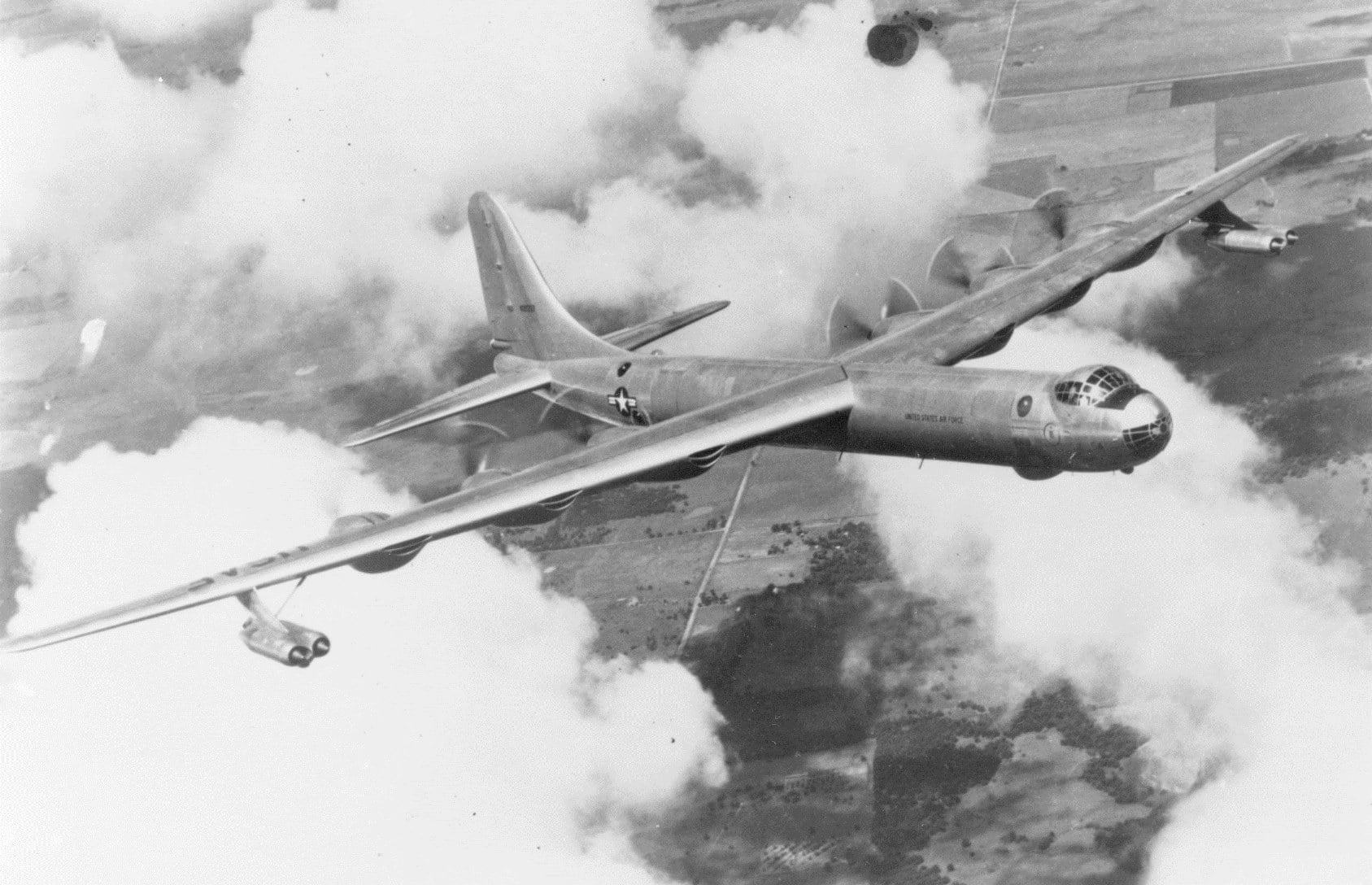
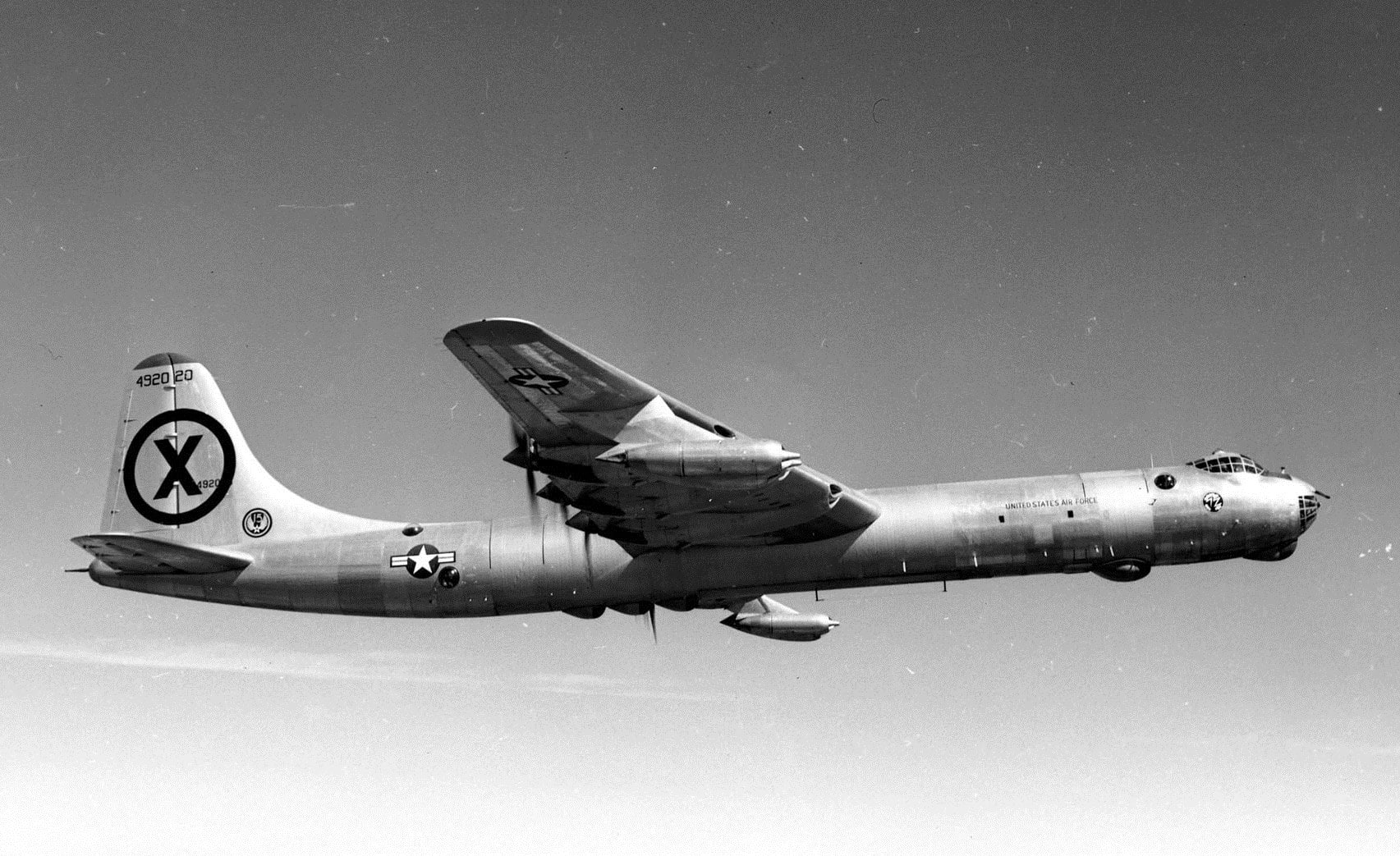
The United States Air Force operated several versions of the Convair B-36 “Peacemaker” from 1949 to 1959. Unique in design, size, capability, and configuration, the B-36 is still the largest mass-produced piston-engine aircraft ever built. With a wingspan of 230 feet the B-36 had the longest wingspan of any combat aircraft ever built. With a range of 10,000 miles and a maximum payload of more than 43 tons, B-36 was capable of intercontinental flight without refueling.
The B-36 had an unsurpassed cruising altitude for a piston-driven aircraft, over 40,000 feet, made possible by its huge wing area and six 28-cylinder engines. The B-36 “featherweight’ configuration resulted in a top speed of 423 miles per hour at 50,000 feet altitude with the ability to fly at 55,000 feet for short periods.
Image via USAF
Until the B-52 became operational, the B-36 was the only means of delivering the first generation Mark-17 hydrogen bomb. The Mark-17 was 25 feet long, 5 feet in diameter, and weighed a whopping 42,000 pounds, making it the heaviest and bulkiest American aerial thermonuclear device ever. Carrying this massive weapon required merging two adjacent bomb bays. The B-36 was the only aircraft designed to carry the T-12 “Cloudmaker,” a gravity bomb weighing 43,600 pounds and designed to produce an earthquake bomb effect.
The B-36’s maximum payload was more than four times that of the World War II-developed B-29, and actually exceeded the payload of the B-52. The B-36’s four bomb bays could carry up to 86,000 pounds of bombs, more than 10 times the load carried by the Boeing B-17 Flying Fortress, and substantially more than the entire B-17’s gross weight. Only more than ten years after the B-36’s retirement were American aircraft capable of carrying larger payloads than the B-36 when the Boeing 747 and Lockheed C-5 Galaxy went into production
Image via USAF
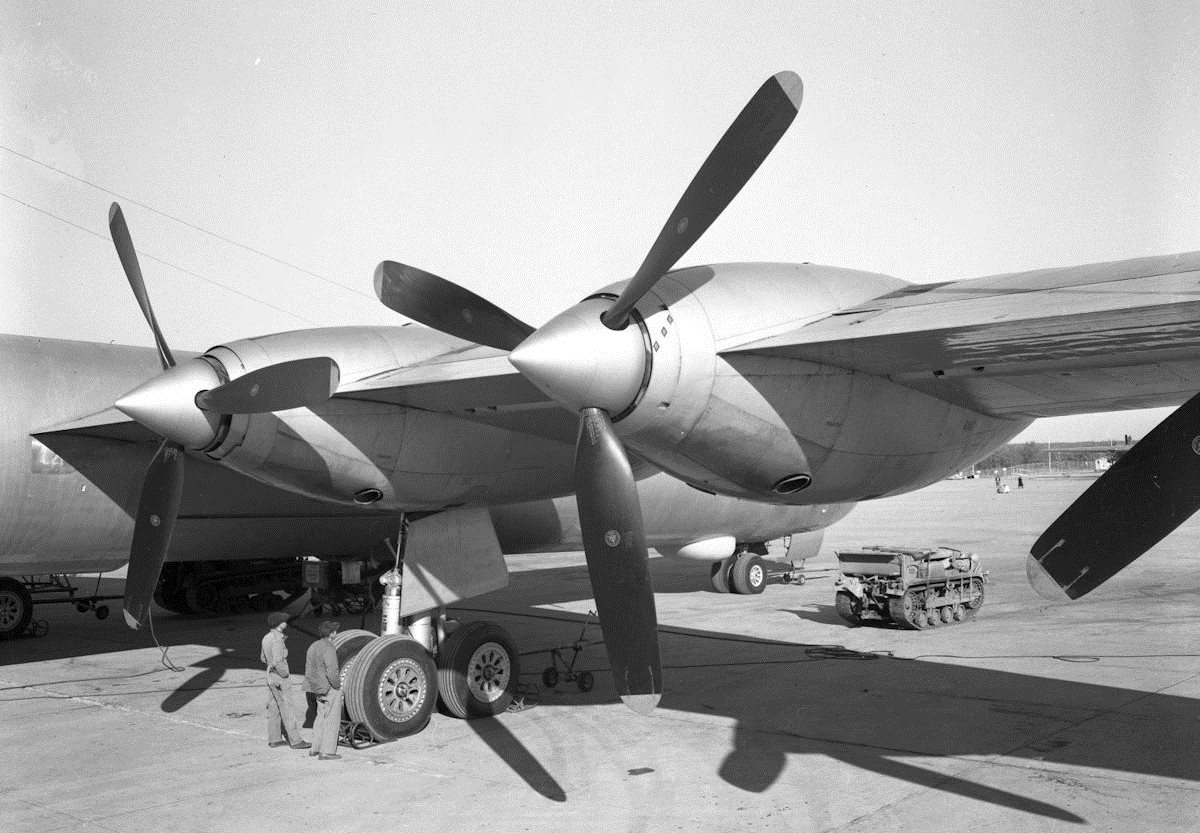
Each B-36 piston engine drove a 19 foot three-bladed propeller in a pusher configuration. These were the second-largest diameter propellers ever used to power a piston-engine aircraft. B-36 maintenance was as large an effort as the airplane itself. There were a total of 336 spark plugs in the six engines. At 7 feet, the wing roots were thick enough for a flight engineer to access the engines and landing gear during flight by crawling through the wings.
Similar to the B-29 and B-50, the pressurized flight deck and crew compartment were linked to the rear compartment by a pressurized tunnel through the bomb bay. In the B-36, movement through the tunnel was on a wheeled trolley, pulling on a rope. The rear compartment featured six bunks and a dining galley, aft of which was the tail turret.
Image via USAF
The NB-36H was modified to carry a 1 megawatt air-cooled nuclear reactor in the aft bomb bay, with a four-ton lead disc shield installed in the middle of the aircraft between the reactor and the cockpit. The highly modified cockpit was encased in lead and rubber, with a 1 foot thick leaded glass windshield to protect the crew from radiation.
Image via USAF
The lineage of the B-36 can be traced to early 1941. Concerned that the United States would be forced into the war and not have the ability to base aircraft in Europe, the United States Army Air Corps (USAAC) would need a new class of bomber which could reach Europe and return to bases in North America, necessitating a combat range of at least 5,700 miles, equal to a Gander, Newfoundland to Berlin round-trip flight.
Image via USAF
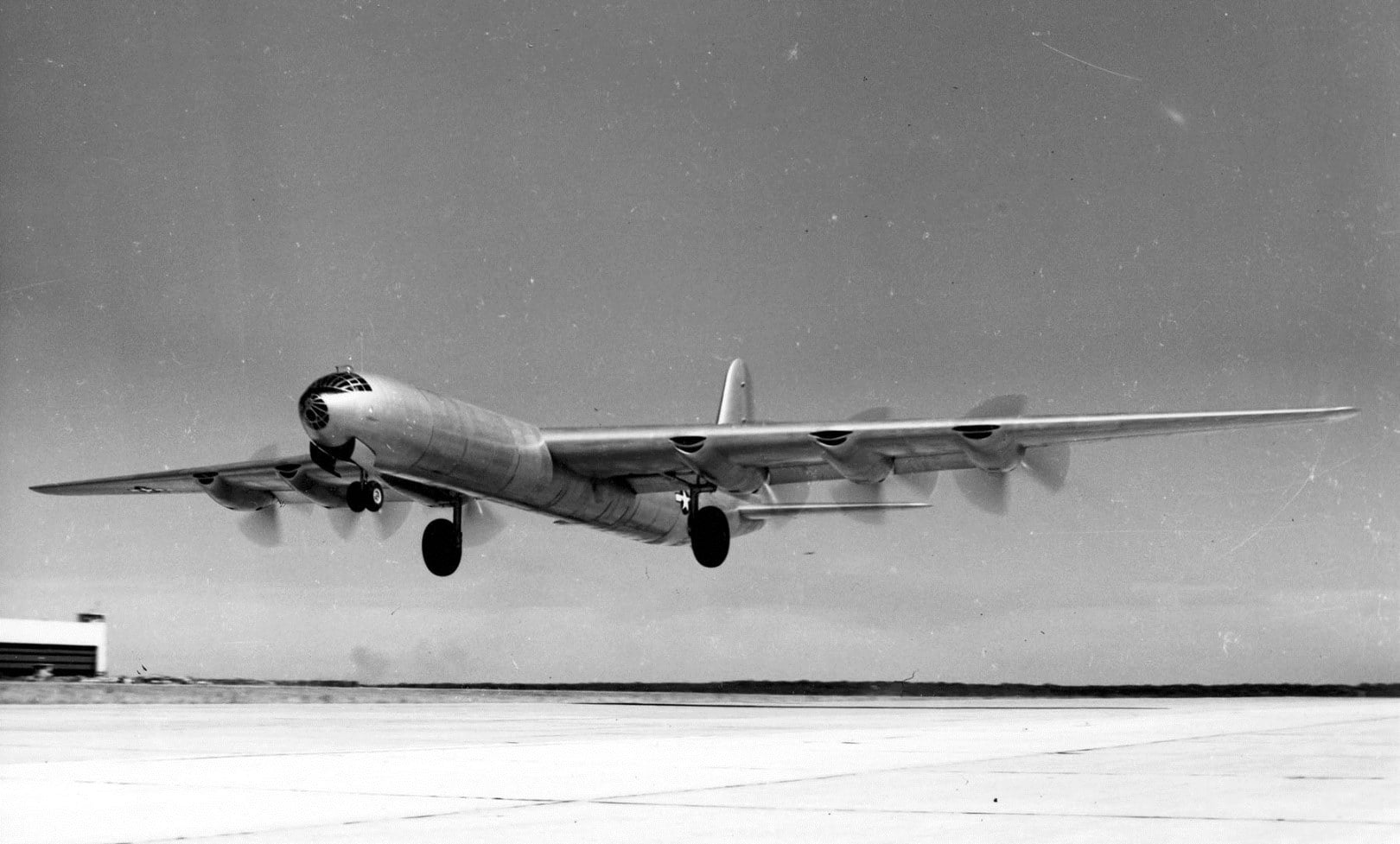
The Army Air Corps realized early in 1943 it needed a bomber capable of reaching Japan from its bases in Hawaii, and the development of the B-36 then resumed in earnest. The USAAF submitted a letter of intent to Convair, ordering an initial production run of 100 B-36s before the completion and testing of the two prototypes. The first delivery was planned for August 1945 and the last delivery in October 1946. Consolidated (by this time renamed Convair after merging with Vultee Aircraft in 1943) delayed the delivery schedule. The B-36 was rolled out on August 20th 1945, and flew for the first time on August 8th 1946.
Image via USAF
After the United States Air Force was born in 1947, strategists sought bombers capable of delivering the very large and heavy first-generation atomic bombs. The B-36 was the only American aircraft with the range and payload to carry the bombs from airfields on American soil to targets in the USSR. The modification to allow the use of the larger atomic weapons on the B-36 was called the “Grand Slam Installation.”
Image via USAF
Convair referred to the B-36 as the “aluminum overcast”. While General Curtis LeMay headed Strategic Air Command from 1949 to 1957, he turned the B-36 fleet into an effective nuclear weapon delivery force through intense training and development. The B-36 formed the heart of the Strategic Air Command as its so-called “long rifle.”
“Six Turning, Four Burning”
Beginning with the B-36D, Convair added a total of four General Electric J47-19 jet engines. These were dual-mounted in pods outboard of the piston engines. The existing B-36 fleet was retrofitted to include the jet engines. Thus the classic B-36 slogan of “six turning and four burning” was born. The B-36 had more engines than any other mass-produced aircraft. The jet engines were primarily used during takeoff and for added speed over the target.
Image via USAF
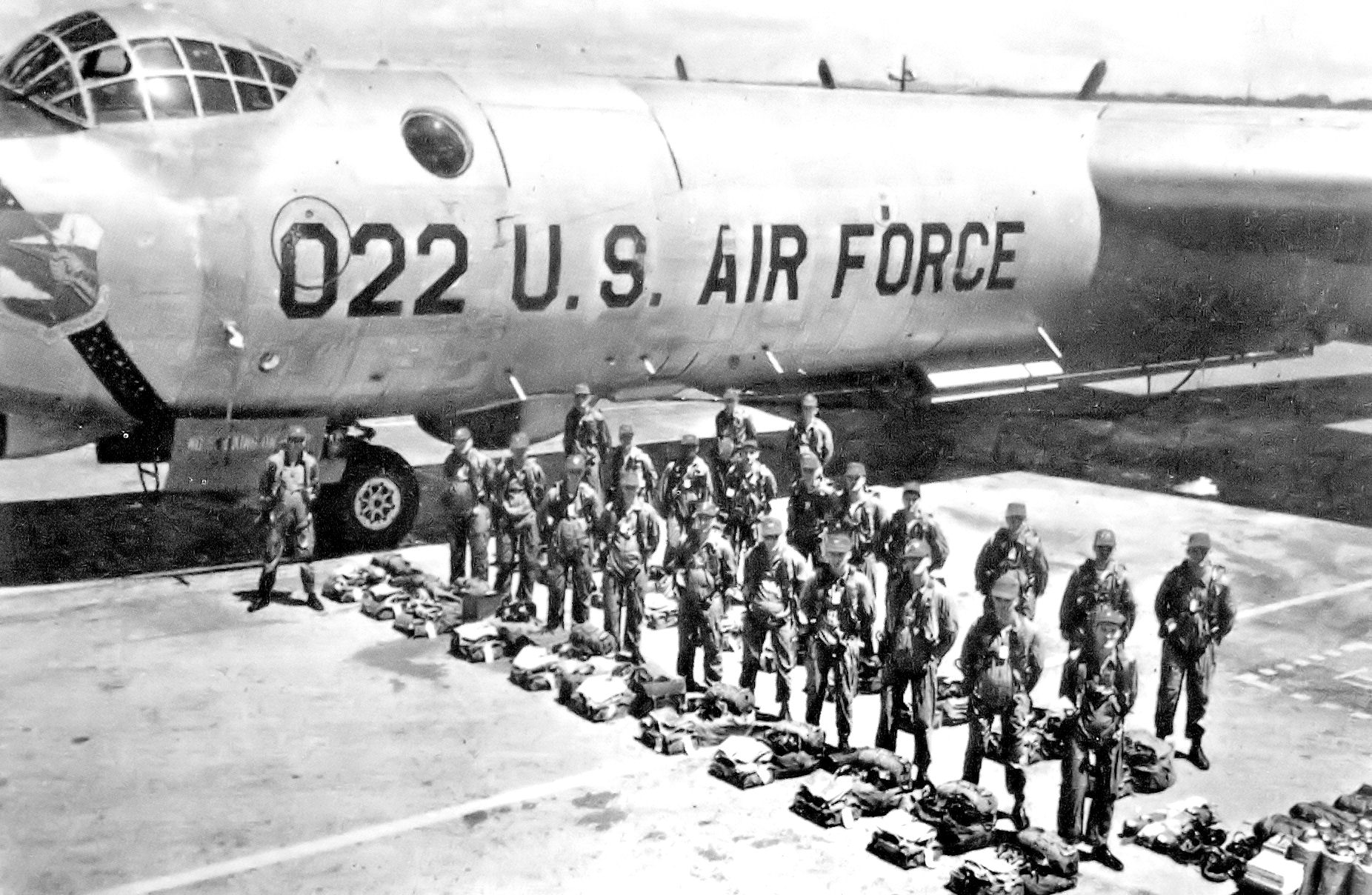
The RB-36D was developed as a specialized photographic-reconnaissance version of the B-36D. The RB carried a crew of 22 rather than 15, the additional crew members flying along to operate and maintain the photographic reconnaissance equipment that was carried. The bomber’s forward bomb bay was replaced by a pressurized manned compartment carrying the cameras and a small darkroom. The second bomb bay contained photoflash bombs. The third bomb bay could carry an extra 3000 gallons (11,000 liters) of fuel in a droppable tank, which increased mission endurance to 50 hours. The fourth bomb bay carried electronic countermeasures (ECM) equipment.
The RB-36D had an operational ceiling of 50,000 feet. Later, a lightweight version of this aircraft, the RB-36-III, could reach 58,000 feet. When the RB-36 was developed, it was the only American aircraft having enough range to fly over the Eurasian land mass from bases in the United States, and size enough to carry the bulky high-resolution cameras in use at the time. More than a third of all B-36 models were reconnaissance models.
Image via USAF
RB-36Ds began probing the boundaries of the Soviet Arctic in 1951. RB-36 aircraft operating from RAF Sculthorpe in England flew overflights of most of the Soviet Arctic bases, including the recently completed nuclear weapons test complex at Novaya Zemlya. RB-36s also performed a great number of rarely acknowledged (read SECRET) penetration reconnaissance missions into Chinese and Soviet airspace under the direct direction of Strategic Air Command General Curtis LeMay himself.
Last B-36. Image via USAF
Even though no B-36 ever dropped a single bomb on an enemy target, the airplane set the stage for the development of the aircraft and weapons systems that were to come online and eventually replace it during the 50s and 60s. Once the final B-36 was retired in 1959, Strategic Air Command utilized the Boeing B-47 Stratojet and B-52 Stratofortress. The Convair B-58 Hustler and the Rockwell B-1 Lancer were also Strategic Air Command jets when they came into service in 1960 and 1986 respectively.
B-26 at USAF Museum. Image via USAF
Enjoy this B-36 feature uploaded to YouTube by Mark Nobles.
When NATO Aircraft Practiced Their Driving Skills on West German Autobahns
Our quest for awesome aviation footage to share with Avgeekery Nation never ends. We’ve discovered some classic 1980s footage featuring NATO aircraft operating from, of all places, West German autobahns (highways). Now be advised that the audio (and the subtitles) are auf Deutsch, but don’t let that stop you from enjoying the landings, servicing, support equipment, and personnel arming the jets, and takeoffs from Autobahn A29 near Ahlhorn in 1988. The video was uploaded to YouTube by Bundeswehr.
Featured in the film are Luftwaffe F-4F Phantom IIs, Transall C-160 airlifters, Dassault/Dornier Alpha Jets, and Panavia Tornados. Royal Air Force Jaguars, Koninklijke Luchtmacht (Netherlands Air Force) General Dynamics F-16Bs, and US Air Force A-10 Warthogs (“Panzerknackers”) and McDonnell Douglas F-15A Eagles. At the ‘Highway Airfield’ are a mobile tower and radar systems as well as anti-aircraft missiles and gun tracks.
C-130 landing on highway strip autobahn A29. image via department of defense
These strips are usually 2 to 3.5 kilometer-long (1.2 to 2.2 mile) straight sections of the highway built with removable crash barriers instead of medians. Some strips are also equipped with taxiways and ramps. The roadways are reinforced and pre-positioned temporary airport facilities, such as mobile radar and control towers, are often co-located with the strips. Overpasses close to the strips are adorned with warning panels. We’ve featured the way the Swedes operate their tactical jets from roads.
Other countries who have utilized road surfaces as runways include Argentina, Armenia, Australia, Bulgaria, Chile, China, Cuba, Cyprus, Czech Republic, Estonia, Finland, France, India, Iran, Iraq, Israel, Japan, Jordan, Lithuania, North Korea, Pakistan, Poland, Singapore, Slovakia, South Korea, Sri Lanka, Switzerland, Taiwan, and the former USSR.
The claim that the American Interstate highway system was intended, built, or adapted for use as aircraft runways is an urban legend…as is the claim that the German autobahns were originally built for anything other than transporting supplies and war material- they were only adapted for use as airfields later.
highway strip on autobahn a29. image via department of defense
Did you have “spy balloon sparks international incident” on your 2023 Bingo card? We definitely did not.
However, in proving that truth is sometimes stranger than fiction, a spy balloon from China did just that as it drifted across the continental United States last week.
First spotted by a resident of Billings, Montana, on 01 February, the balloon set off a cacophony of theories as to what it was doing, who it belonged to, what it was carrying, and even whether it could be nefarious. Ultimately, the craft was shot down over the Atlantic Ocean by the United States military on 04 February as it exited off the coast of Myrtle Beach, South Carolina.
The incident led to a ground stop at several airports in the eastern Carolinas in what the U.S. Department of Defense called a “national security effort.”
Of course, the shootdown of the balloon on Saturday has not stopped rampant speculation over the exact nature of what China called a “civilian meteorological research mission.”
Yeah. Okay.
Anyway, we will let the authorities and pundits debate the unanswered questions as the investigation continues.
For now, let us take a trip back in time and explore the surprisingly fascinating history of spy balloons.
Spy Balloons During the Civil War
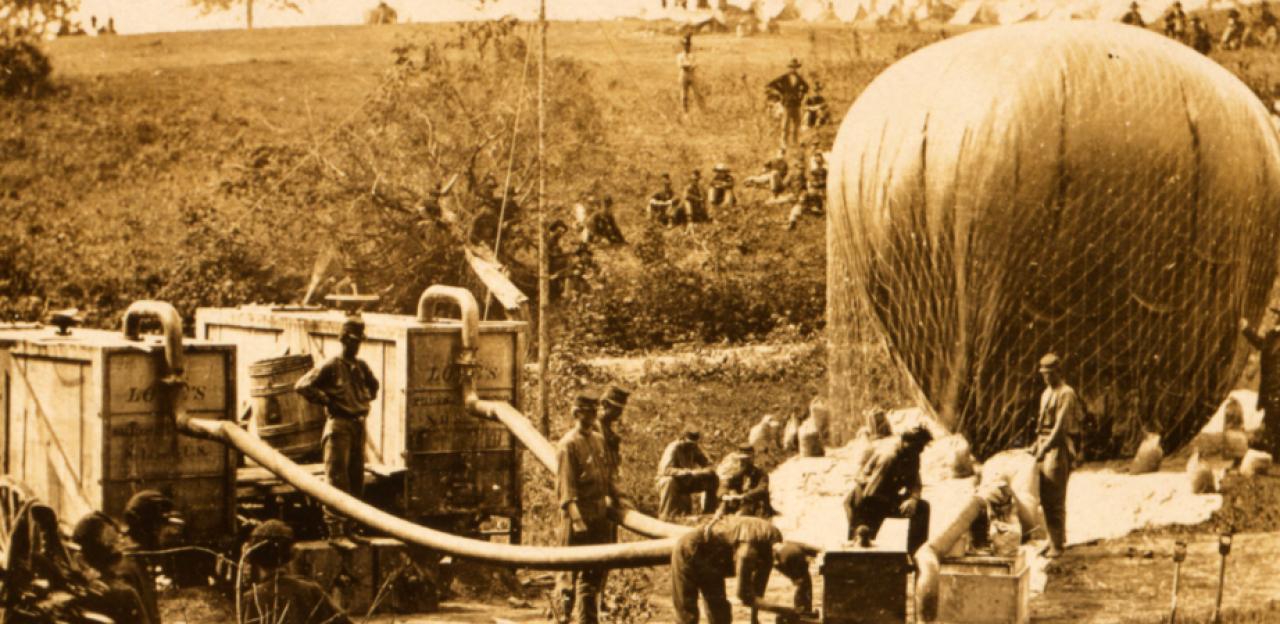
The Union Army Corps balloon Intrepid is filled with hydrogen at the Lowe Balloon Camp in Virginia | IMAGE: Library of Congress
Spy balloons are a relatively secretive aspect of military intelligence gathering, but they have a long and storied history dating back to the American Civil War. The use of balloons for military reconnaissance dates back to the 1790s, but it wasn’t until the mid-19th century that militaries began to realize their value as a tool for spying.
The first recorded use of a spy balloon was during the Civil War when both Union and Confederate forces used them to gather information on enemy positions and movements. Balloons were lifted into the air and equipped with telescopes or cameras to collect images and information from above. This data provided military commanders with a bird’s-eye view of the battlefield, allowing them to make better strategic decisions and coordinate their forces more effectively.
Leader of the Union Army Balloon Corps, Thaddeus Lowe, rises in the Intrepid on 31 May 1862 near Fair Oaks, VA | IMAGE: Library of Congress
Spy Balloon Technology Advances During the World Wars
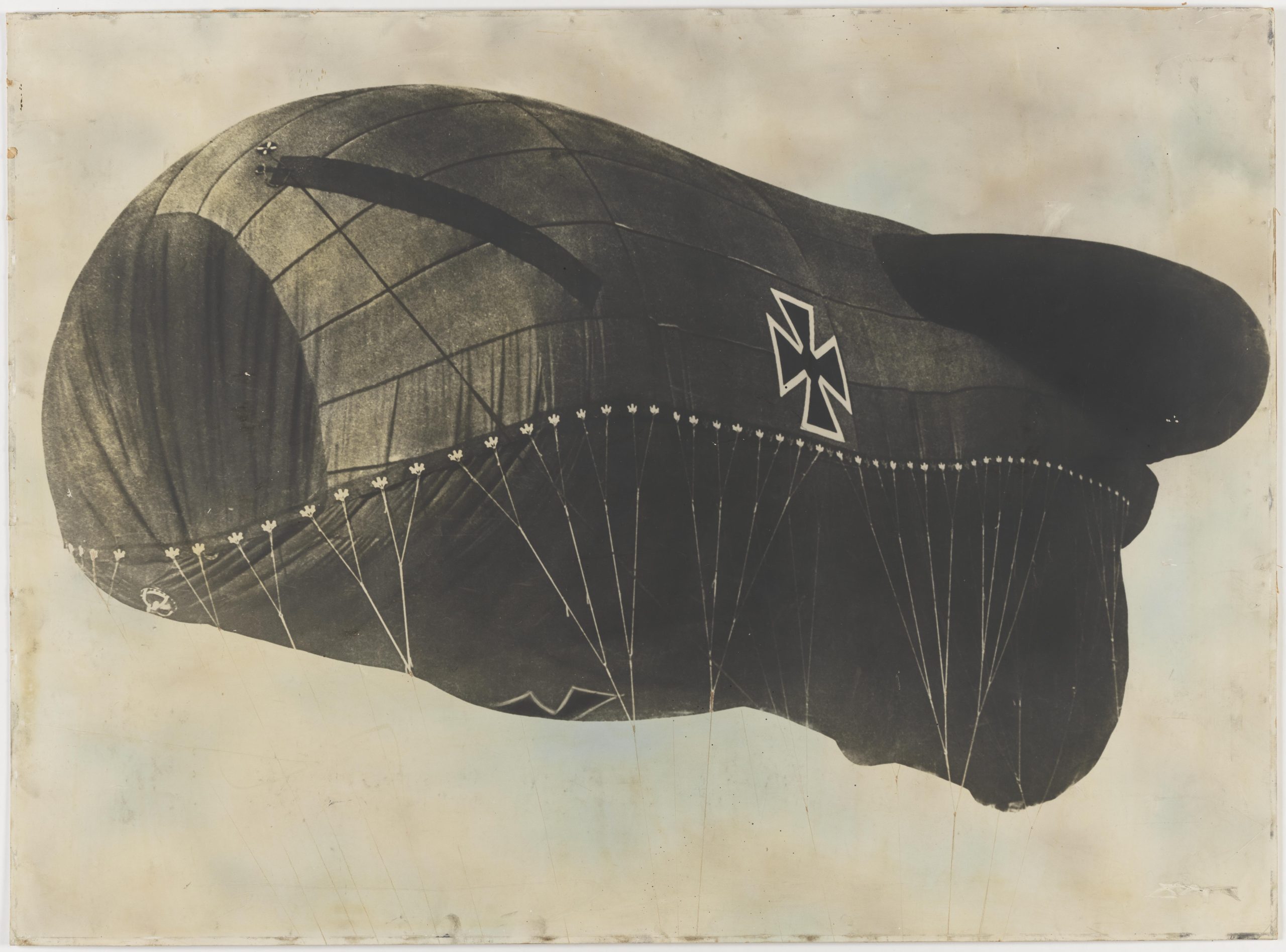
A World War II German Observation Balloon | IMAGE: State Library of New South Wales
During World War I, the use of spy balloons became more widespread and sophisticated. The German army, for example, used balloons equipped with cameras to gather intelligence on Allied forces, while the British used balloons to monitor enemy troop movements and report on the effectiveness of their own artillery. Observers would often man the balloons, who would radio back the information they gathered to the ground, where it would be analyzed and used to plan operations.
In the interwar period, the development of lighter-than-air aircraft like blimps and dirigibles made spy balloons largely obsolete. However, they remained a valuable tool for military intelligence during World War II, particularly for the Allies. The British and American intelligence services used balloons to monitor the movements of German and Japanese forces, as well as to gather information on enemy infrastructure and supplies. The balloons, often fitted with cameras and other surveillance equipment, were designed to fly at high altitudes to avoid detection.
Spy Balloons Were Vital in Winning the Cold War
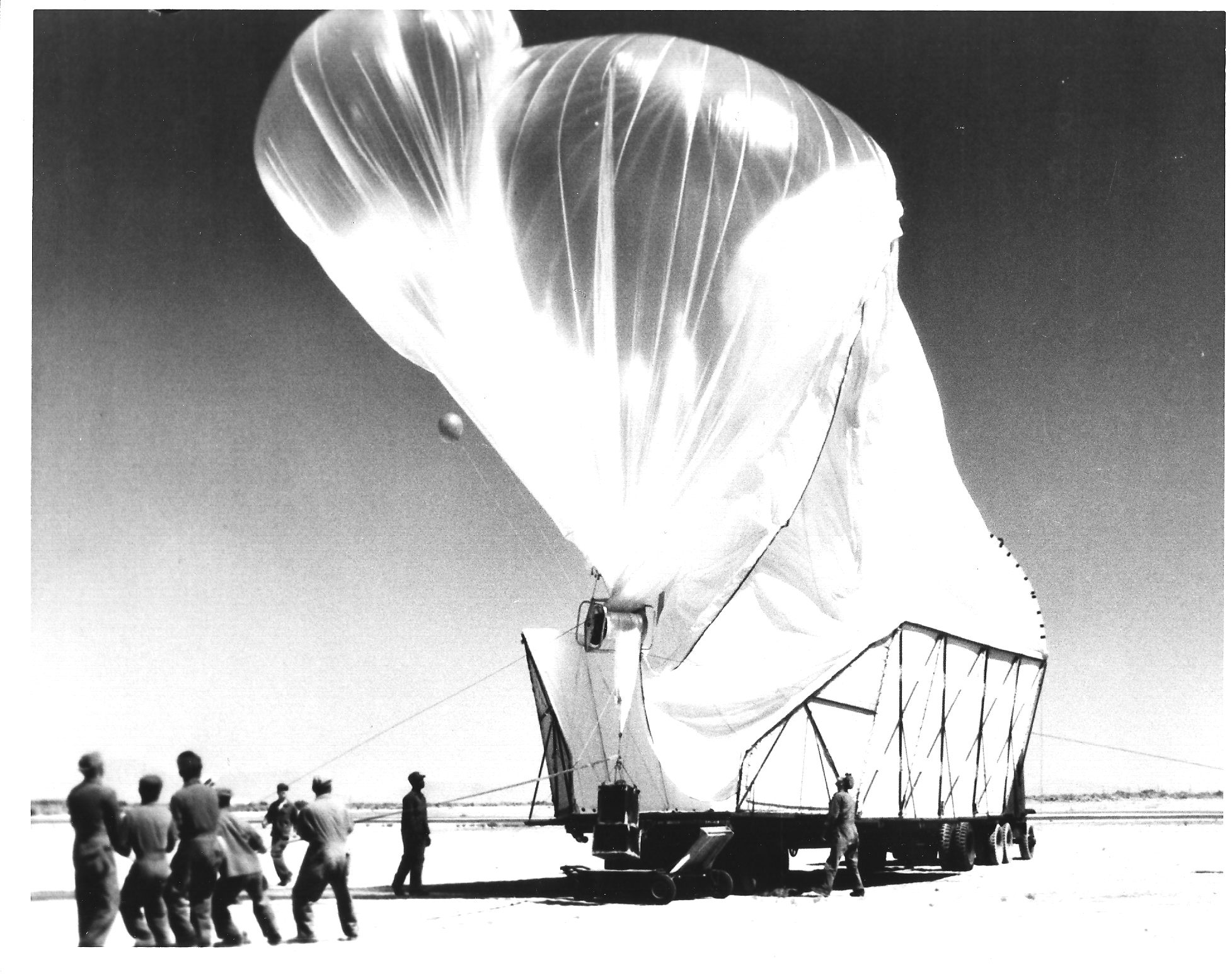
Launch of a Project MOBY DICK balloon at Holloman Air Force Base, New Mexico, circa 1955 | IMAGE: Public Domain
The United States used spy balloons during the Cold War to gather intelligence on the Soviet Union and its allies. The U.S. would launch the balloons into the air from super-remote locations. They would then float high above the Earth, transmitting data back to the U.S. for analysis.
The use of spy balloons was a response to the increasing threat posed by the Soviet Union during the Cold War. The U.S. government was concerned about the development of nuclear weapons and other military capabilities by the Soviet Union and sought to gather as much information as possible about the country’s activities. Spy balloons provided a cost-effective and relatively low-risk way of gathering this information, as they could launch from remote locations and were difficult to detect.
One of the most notable examples of a spy balloon mission was Project Moby Dick, which took place in the mid-1950s. This operation involved launching hundreds of balloons over the Soviet Union, each carrying a variety of sensors and cameras. The balloons flew at exceptionally high altitudes, where they were beyond the reach of Soviet anti-aircraft defenses.
Although the use of spy balloons was effective in gathering intelligence, it was not without its challenges. The balloons were vulnerable to high winds, which could cause them to crash or drift off course. Additionally, the Soviet Union developed countermeasures to detect and shoot down the balloons, making it more difficult for the U.S. to gather information.
Despite these challenges, the use of spy balloons remained a vital part of the U.S. intelligence-gathering efforts during the Cold War. Today, many of the technologies and techniques developed during this period continue to benefit modern surveillance and reconnaissance systems.
Spy Balloons in the Modern Era
BLAST (the Balloon-borne Large Aperture Sub-millimetre Telescope) on the ‘flightline’ at Esrange, Sweden on 12 July 2005 | IMAGE: No machine-readable author provided. Mtruch assumed (based on copyright claims)., CC BY-SA 3.0 , via Wikimedia Commons
Since the Cold War, the use of spy balloons declined as more advanced technologies like satellites and unmanned aerial vehicles (UAVs) became available. However, they have continued to be used for intelligence gathering in certain situations, particularly where satellites and UAVs are not practical or feasible. For example, spy balloons have been used in recent years to monitor border areas and gather information on natural disasters and other events.
One of the most interesting uses of spy balloons in recent years has been for environmental monitoring. Balloons equipped with sensors gather information on atmospheric conditions, such as temperature, pressure, and humidity, as well as monitor air quality and the presence of pollutants. This information is crucial for understanding the Earth’s atmosphere and how it is changing, and it has helped to inform environmental policy and decision-making.
The Future of Lighter-than-Air Aerial Espionage
The Geostationary Balloon Satellite floats at about 65,000 feet and receives data from a parabolic antenna base station. It rains down cellular data and can capture aerial video and imagery | IMAGE: Kcida10 (talk) (Uploads)., CC0, via Wikimedia Commons
In the years to come, the importance of spy balloons will only continue to increase as the demand for surveillance and reconnaissance capabilities evolve in an ever-more complex and interconnected world.
With the rise of terrorism, cybercrime, and other security threats, organizations and governments are seeking new and innovative ways to gather intelligence and protect their citizens. Spy balloons offer a cost-effective and relatively low-risk solution to these challenges, as they have launch capabilities from remote locations and are difficult to detect. Additionally, their ability to gather information from above and to operate in areas where other technologies are not feasible makes them valuable tools in a wide range of scenarios.
Despite these advantages, ethical challenges remain. For example, governments will need to address privacy and security issues, as spy balloons can collect sensitive information about individuals and organizations. Additionally, the development of countermeasures by potential adversaries will continue to threaten the effective use of spy balloons.
From the Civil War to the China Spy Balloon Crisis of 2023, spy balloons have a rich and fascinating history. From their use on the battlefield to their role in environmental monitoring, these lightweight and versatile aircraft have provided valuable information and insights in countless situations. While their use has declined in recent years with the advent of more advanced technologies, spy balloons will no doubt continue to play an important role in military intelligence and scientific research in the decades to come.
In the meantime, enjoy this hilarious collection of memes about the Chinese spy balloon.
A Coulson Aviation Boeing 737-300 tanker crashed on Monday during a firefighting mission in Western Australia.
According to a statement from the company, the two pilots on board the aircraft sustained minor injuries and were able to free themselves from the wreckage.
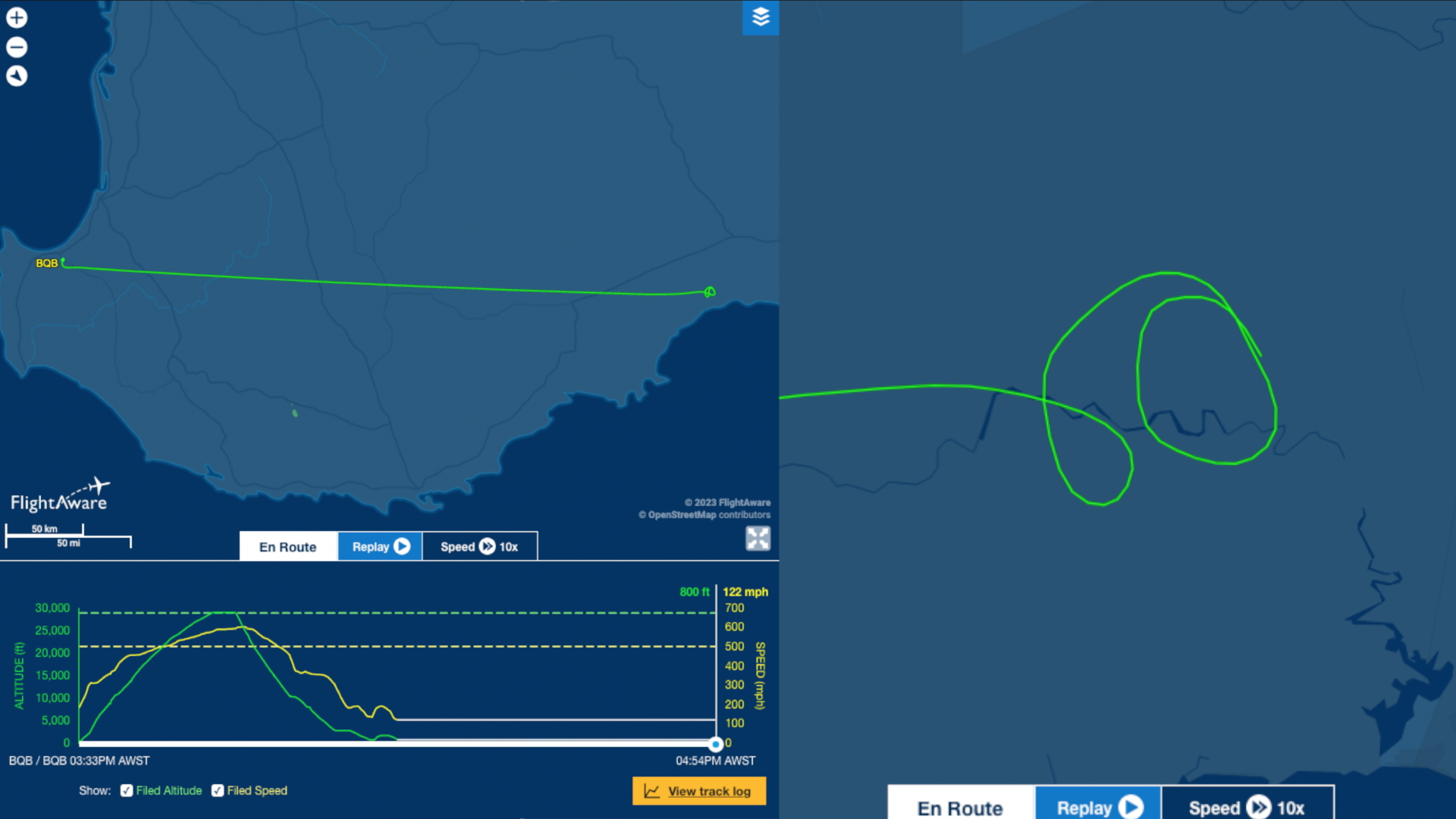
The Boeing 737-300 Fireliner (Registration: N619SW / MSN 28035) departed Busselton-Margaret River Regional Airport (BQB) in Busselton, Western Australia, at 1533 local time on Monday, 06 February. The aircraft was responding to a wildfire in the Fitzgerald River National Park when it went down around 1615 local time.
Fitzgerald River National Park is located on Australia’s southern coast. It is located approximately 285 miles southeast of Perth and 1,800 miles due west of Sydney.
Flight track of Coulson Aviation Tanker 139 on 06 February 2023 | IMAGE: FlightAware
Any Landing You Can Walk Away From is a Good Landing
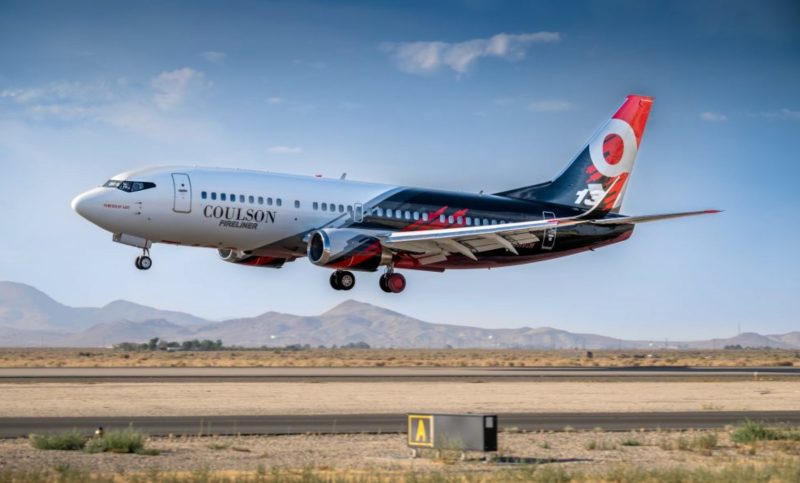
Coulson Aviation Tanker 139 on the ramp | IMAGE: COULSON AVIATION
Local media reports indicate the two pilots were flown from the accident scene by helicopter to a hospital for assessment.
“Both pilots walked away from the crash and have been medically assessed,” Coulson CEO Wayne Coulson said in a social media post on Monday. “Our thoughts and our immediate concern are for those team members and their families. We’re very grateful the two team members on Tanker 139 are safe. We are offering all the support we can to our local and international crews. We’re also grateful for the support being provided by our firefighting and aviation industry colleagues in Western Australia.”
One of our 737 FireLiners, Tanker 139, operating in Western Australia was involved in an accident while tasked to a fire Monday, 6 February 2023. Both pilots walked away from the crash. More here: https://t.co/PsObuOuDOr
A Coulson Aviation Boeing 737-300 drops retardant on a wildfire | IMAGE: Coulson Aviation
There is no word on the cause of the accident. However, Tim Collins, owner of Perth-based Upstream Aviation, explained the hazardous nature of aerial firefighting to local media.
“The logistics of flying a large aircraft close to the ground in those kinds of conditions is extremely challenging,” Collins told WAtoday. “You’re flying at a fairly low speed; you can’t fly too fast; otherwise, the fire retardant will disappear out the back, and you get severe temperature updrafts and downdrafts and wind shear.”
Collins also added that if the tanker were experiencing a stall, it would have been challenging to recover due to the low speed and altitude of the aircraft.
The Aircraft was on its Third Mission of the Day
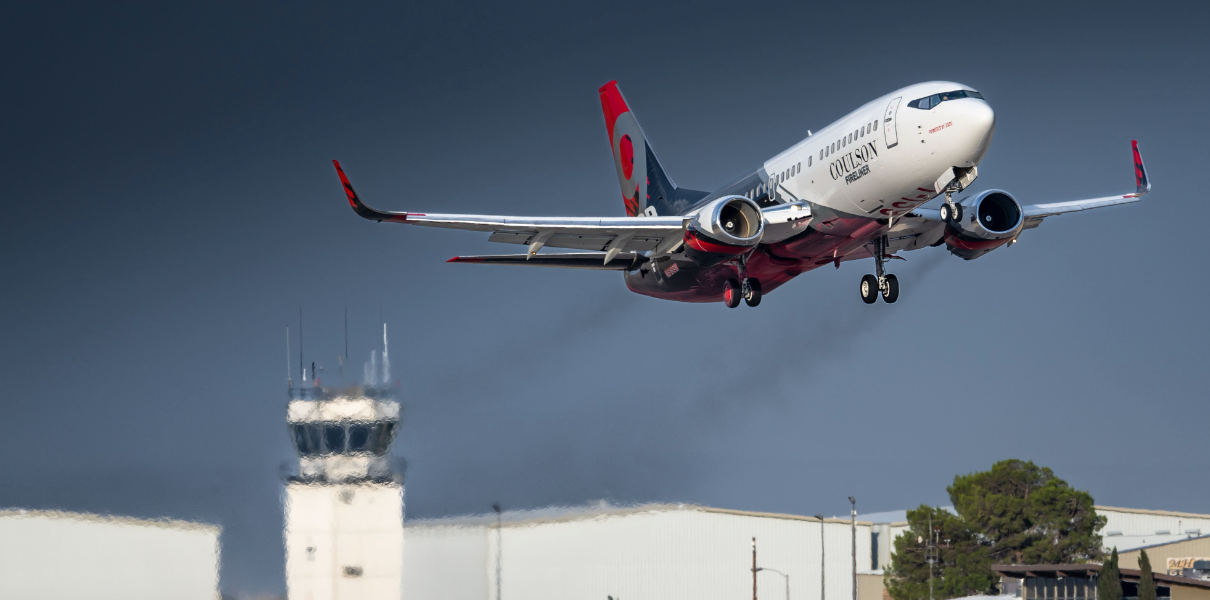
This Coulson Aviation Boeing 737-300 Fireliner was lost in an accident on 06 February 2023 | IMAGE: Coulson Aviation
According to FlightAware, the last transmitted altitude before crashing was 825 feet, with a speed of 106 knots. It was the tanker’s third mission of the day.
Coluson’s Boeing 737-300 Fireliner is a multi-use aircraft with a load capacity of 4,000 gallons of retardant or up to 72 passengers.
Southwest Airlines took delivery of N619SW in 1995. She would operate at Southwest until 2017 when she began service with Coulson Aviation.
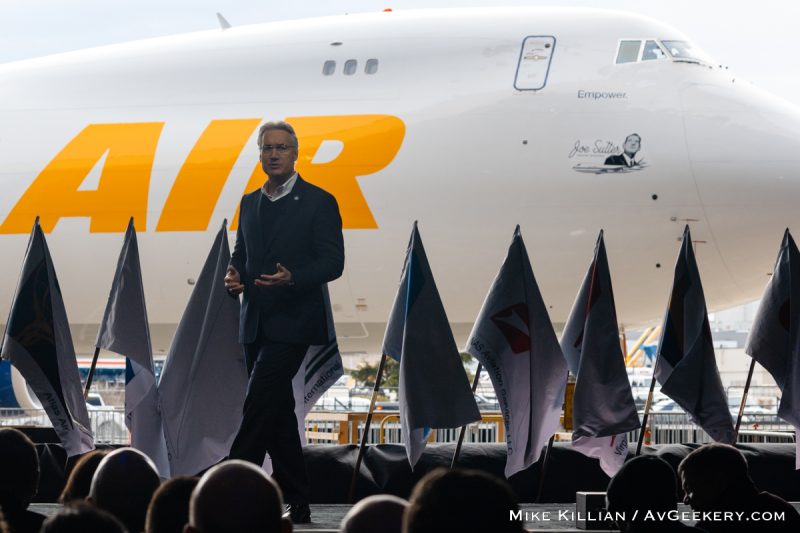
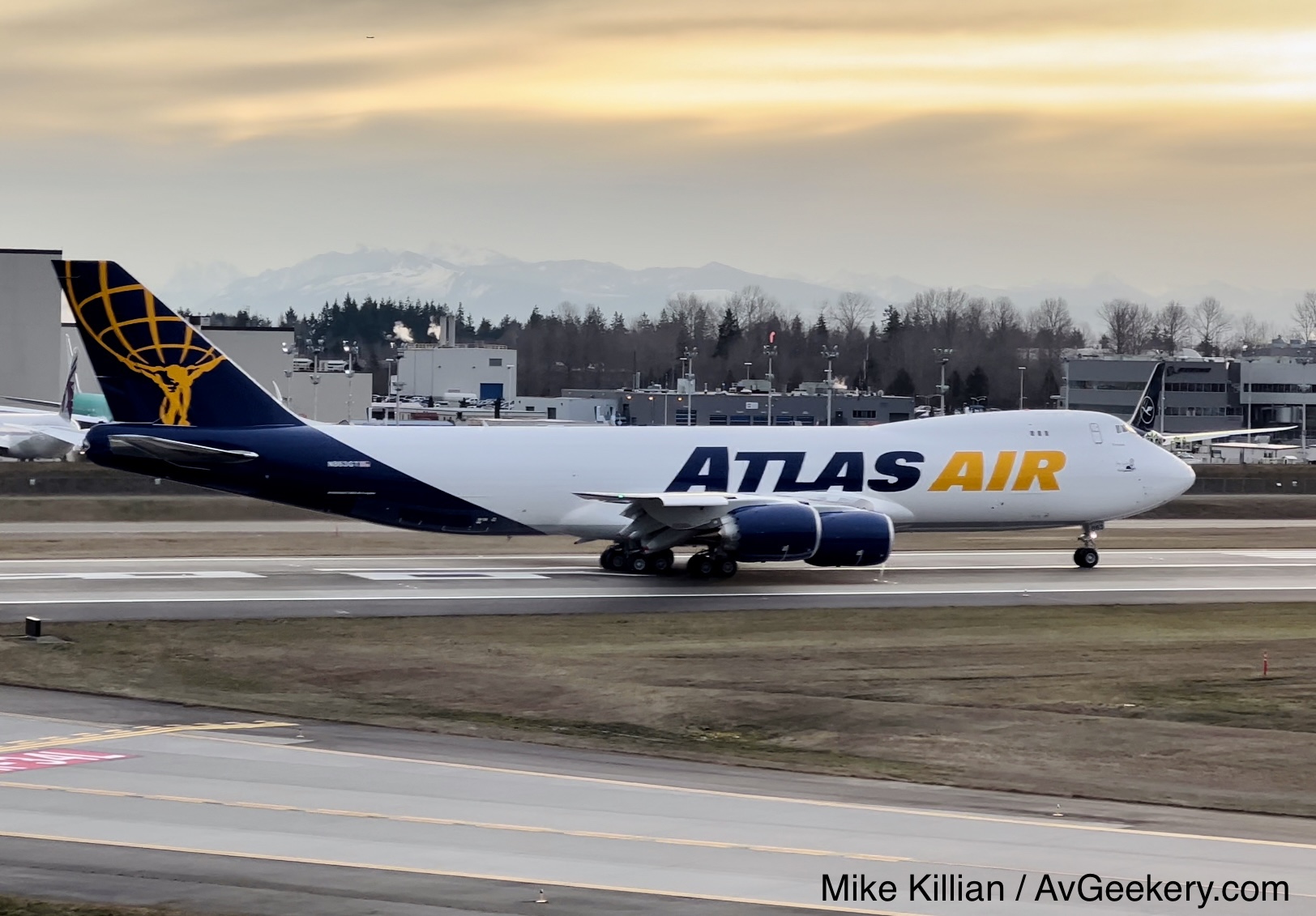
Yesterday (Feb 1), Atlas Air Cargo took off from Boeing’s factory in Everett, WA with the very last 747 that will ever be made. But there was some interesting artwork painted below the cockpit.
It’s a tribute to Joe Sutter, known as the Father of the 747. He led the engineering team at Boeing that made the “Queen of the Skies” nearly 60 years ago.
Boeing, Atlas Air Paint Special Tribute on Last Built 747 85
Forever Incredible
Sutter and the thousands of folks on his team delivered a plane that would forever change history. And they did it in record time, for what was then the biggest plane in the world – 29 months from concept to rollout.
Sutter and his team became known as “The Incredibles” for the astounding job they did, the first to build and work on the 747. They didn’t even have a building to build the first plane in when they started! At times they would build the plane in snowstorms, while the building was being constructed around them.
Joe sutter, father of the 747 (boeing photo)
Sutter was the right guy for the job too, and had a hand in other commercial airline projects like the Dash 80, 707 and the 737.
He passed away in 2016, as many of The Incredibles have over the years. But their gift to the world is felt every single day by millions of people, directly or indirectly, and their example continues inspiring others.
One of the incredibles who worked under joe sutter and built the first 747s (photo: mike killian / avgeekery.com)
Some of The Incredibles were at the ceremony with Boeing this week in Everett, as the company honored them and their legacy. We had an opportunity to speak with some of them too, and will have a story up about that soon.
This summer, Icelandair will begin service to its newest North American destination: Detroit, Michigan.
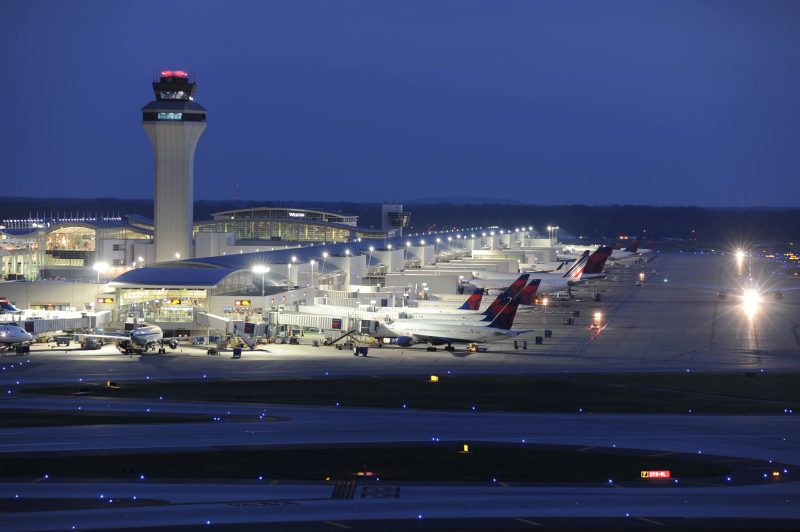
Of course, Detroit Metropolitan Wayne County Airport (DTW) is a Delta fortress hub. So, naturally, it wasn’t long before the Atlanta-based carrier announced it would launch nearly identical service between the two cities.
Icelandair Will Operate Four Weekly Flights to Detroit
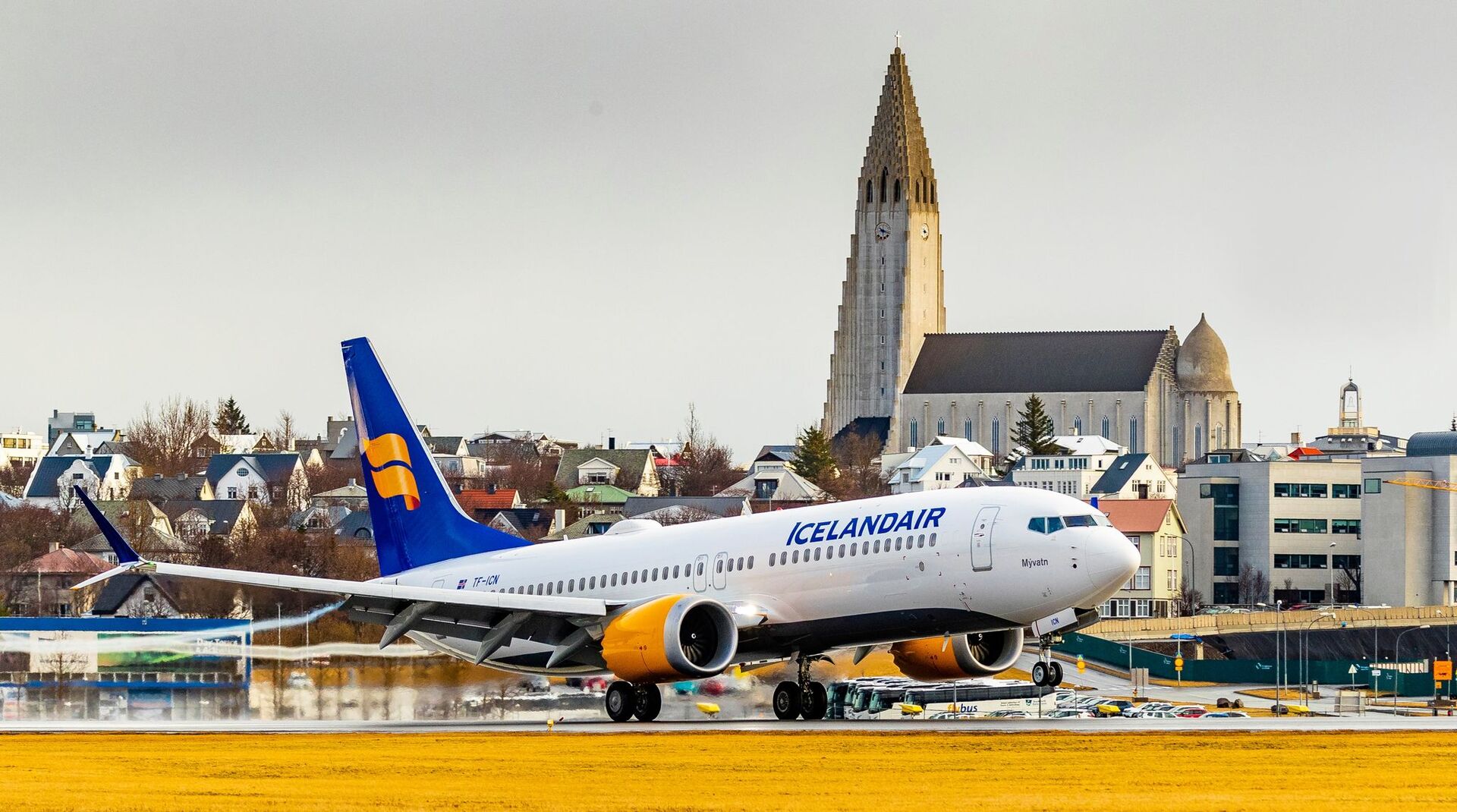
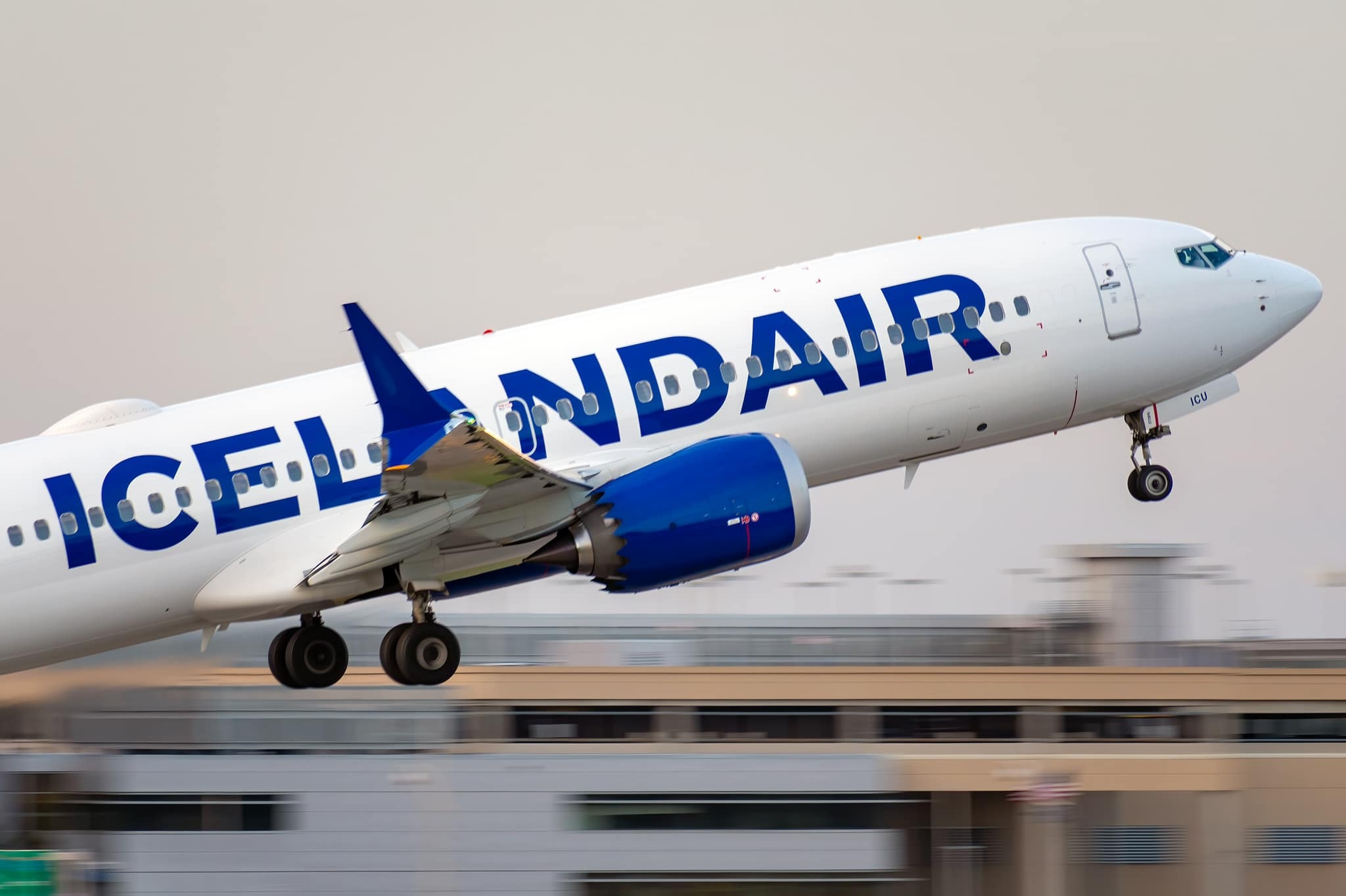
An Icelandair Boeing 737 MAX 8 departs Keflavik International Airport (KEF) | IMAGE: Icelandair Group
Icelandair will begin flights between Detroit and Keflavik International Airport (KEF) near Reykjavík, Iceland, on 18 May 2023, according to a press release from Icelandair Group.
The carrier will operate four weekly flights during the summer 2023 travel season, ending 30 October. Icelandair will deploy a 160-seat Boeing 737 MAX 8 on the route.
The westbound flight departs KEF as FI873 at 1655 on Mondays, Tuesdays, Thursdays, and Fridays, arriving in DTW at 1920, both times local. Flight time will be approximately six hours and 25 minutes.
Icelandair’s return flight will depart DTW as FI872 at 2030 and arrive at KEF the following day at 0630. The return flight has a block of six hours.
Once at Icelandair’s Keflavik hub, passengers can continue on to more than 25 destinations in Iceland, Greenland, the UK, and Europe. The carrier also allows customers to take advantage of its Stopover deal, which allows up to seven nights in Iceland at no additional airfare before continuing to their final destination.
Icelandair’s Boeing 737 MAX aircraft features 16 Saga Premium and 144 economy seats.
“Icelandair is pleased to offer Detroit a refreshing new choice when traveling to Iceland and beyond. Icelandair’s DTW service will allow passengers to travel to and from Europe in new, fuel-efficient planes with modern amenities, including gate-to-gate Wi-Fi and inflight entertainment available for all passengers,” said Icelandair chief executive Bogi Nils Bogason. “These new flights will not only help meet the demands of a growing Detroit but also offer more options for Midwestern business and leisure travelers connecting from the Midwest region. We look forward to welcoming Detroit aboard.”
Delta Defends its Turf
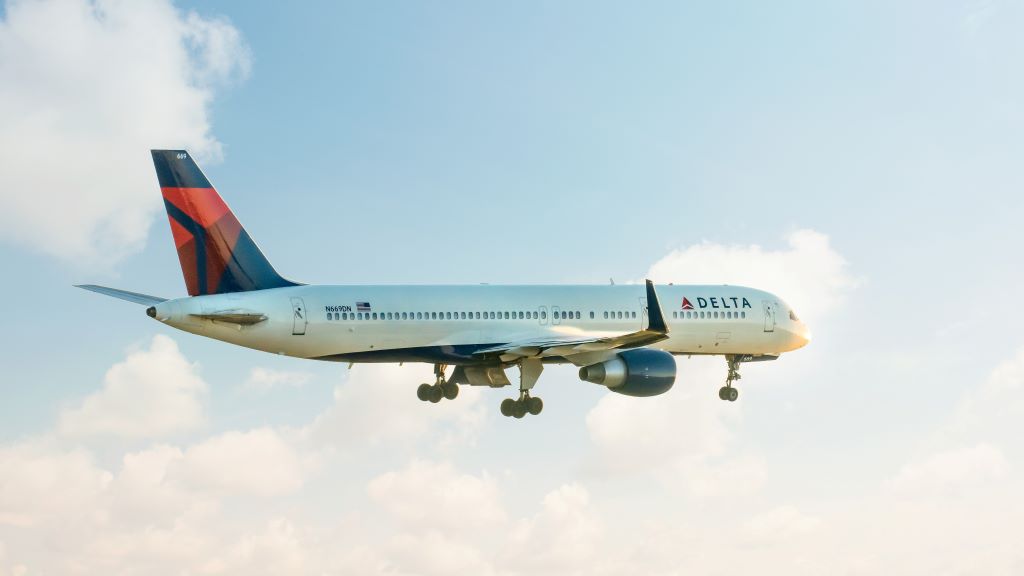
A Delta Air Lines Boeing 757-200 | IMAGE: Delta Air Lines
The dust had barely settled from Icelandair’s DTW announcement when Delta Air Lines unveiled their newest route: DTW to KEF.
Like Icelandair, Delta will fly four times weekly between Detroit and Reykjavík beginning on 15 May. The carrier will deploy a 193-seat Boeing 757-200 on the route, departing DTW as DL236 at 1955 on Mondays, Wednesdays, Thursdays, and Sundays, arriving at KEF at 0620 the following day, both times local.
Delta’s westbound flight will depart KEF as DL237 on Mondays, Tuesdays, Thursdays, and Fridays at 0805, arriving at DTW at 1055, both times local.
Delta will suspend its seasonal service on 27 October.
“Delta is excited to further connect the United States and Iceland with new service to our hub in Detroit,” a Delta Air Lines spokesperson said. “Launching in summer 2023, this route will bring the total number of flights between the countries to 36 weekly.”
Delta’s Boeing 757-200 features 193 seats, including 20 in first class, 41 in Comfort Plus, and 132 in economy.
Is there Room for Both Airlines?
An Icelandair Boeing 737 MAX 8 | IMAGE: Icelandair via Facebook
Although Iceland remains a tourist hotspot for North American travelers, it is unusual, to say the least, that two airlines would go head to head on a route like DTW-KEF.
The move by Delta was likely the carrier defending its turf as it tends to do in situations like this.
Delta already serves KEF via New York John F. Kennedy International Airport (JFK), Boston Logan International Airport (BOS), and Minneapolis-Saint Paul International Airport (MSP). Icelandair competes with Delta in all three cities.
The new service also does not mark the first time Delta has connected the two cities. The carrier last flew between DTW and KEF in 2003. Detroit is a brand-new destination for Icelandair.
Additionally, Detroit and Reykjavík were connected for a short time in the late 2010s by Wow Air, an Icelandic ultra low-cost carrier that operated between 2012 and 2019.
Whether or not there will be room for both airlines in Detroit remains to be seen. However, customers will surely benefit as the two carriers will likely slash fares to undercut one another.
To check fares or to book a flight, visit icelandair.com.
Frontier Airlines this week announced a new unlimited flight pass: for a flat fee of $399 per person, travelers can buy access to an all-you-can-fly fare.
The GoWild! Summer Pass, which applies to any domestic or international destination Frontier serves, offers significant savings to customers. The $399 pass is a limited-time introductory offer available only through flyfrontier.com for an unlimited number of flights between 02 May and 30 September 2023.
The announcement is welcome news for budget travelers as they face yet another summer of high gas prices and rising airfares.
According to the Denver-based airline’s website, customers wishing to utilize the pass can book and confirm domestic travel the day before departure. Customers can book and confirm their flight for international travel ten days before departure. It is ideal for business travelers and vacationers alike, who can easily book one-way weekend trips to visit friends and family, spur-of-the-moment trips to take a break from the office, or longer trips with multiple stops.
“Everyone loves summer vacation and, with the new GoWild! Summer Pass, you can enjoy even more of what you love,” said Daniel Shurz, senior vice president of commercial, Frontier Airlines. “For people with flexible schedules, this is a terrific opportunity to have a truly epic summer and then some, soaking up rays on the beach, exploring national parks, and visiting new cities.”
Each flight will cost $0.01 in airfare, plus applicable taxes, fees, and charges at booking. Customers will still be responsible for baggage fees, advance seat assignments, and other flight options.
Frontier CEO: A “Leader in Low-Cost Travel”
A Frontier Airlines A320 in Texas | IMAGE: Frontier Airlines
Frontier CEO Barry Biffle has expressed his confidence in the plan, calling Frontier “a leader in low-cost travel” and noting that the company’s array of deals will give customers “more flexibility and better incentives” when it comes to airfare.
In a statement, Biffle said, “At Frontier, we strive to provide our customers with options that suit their budget and lifestyle. The $399 all-you-can-fly pass is a great deal for those who love to travel and explore the world. We have a special place in our hearts for our customers, and this pass is a reflection of that.”
Any flights booked through the GoWild! Summer Pass will not be eligible to accrue FRONTIER Miles. However, the flights will count as activity and will extend the expiration date for those in the frequent flyer program. Additionally, flights will be subject to blackout dates.
Frontier Bets on Puerto Rico
San Juan Luis Muñoz International Airport | IMAGE: San Juan Airport
In other Frontier news, the carrier this week announced a major expansion to the U.S. territory of Puerto Rico. The expansion includes five new nonstop routes to San Juan, as well as service to two new cities: Aguadilla and Ponce.
New routes to San Juan’s Luis Muñoz International Airport (SJU) include flights from:
Additionally, Frontier will launch nonstop service to Aguadilla’s Rafael Hernández International Airport (BQN) from Tampa International Airport (TPA) and to Ponce’s Mercedita International Airport (PSE) from Orlando International Airport (MCO). Aguadilla and Ponce flights will operate 3x/week beginning 04 May.
Once service begins in May, Frontier will have 19 nonstop routes to Puerto Rico – more than any other carrier.
“Puerto Rico is a hugely popular destination for leisure travelers as well as the large population of Puerto Ricans residing in the U.S. who enjoy returning to the island to visit friends and family,” said Shurz. “It is a fantastic vacation destination with stunning beaches, historical sites, and the one-of-a-kind El Yunque National Forest. For those with family and friends on the island, we’re offering more options than ever to fly affordably and conveniently between a multitude of major cities and Puerto Rico.”
San Juan is enjoying a post-pandemic boom, with the number of passengers passing through SJU exceeding 10 million for the first time since 2007.
The last 747 that Boeing will ever make took off this morning with Atlas Air, flying from Paine Field, WA (flight number 5Y747, tail N863GT) and headed for Cincinnati, OH.
On the way, they wanted to honor the legendary Queen of the Skies and all who built, flew and worked with her for the last 50+ years. So they drew a giant queen’s crown with “747” underneath, over central Washington.
Atlas Air Draws Queen’s Crown in the Sky For Boeing’s Last 747 98
Nice touch, Atlas Air.
As we reported yesterday, the 747 program changed the travel and airline industries, and in doing so changed the world over the course of more than 50 years. Production is now history, but the queens still in service will be flying for decades (mainly the new ones flown by cargo airlines, such as Atlas and UPS).
BOEING EMPLOYEE JEFF BARLOW CAPTURING THE HISTORIC LAST 747 ON ITS LAST DAY WITH BOEING. PHOTO: MIKE KILLIAN / AVGEEKERY.COM
The plane is arguably the most beloved ever made. Even people who are not avgeeks usually know the 747. And for decades, an airline wasn’t even considered a serious contender by the public unless they had 747s.
747 was a huge gamble for Boeing, and paid off big time
In the beginning it was a make or break gamble for Boeing, and it nearly bankrupt them. But in the end, it all worked out, thanks in large part to “The Incredibles”, the mechanics who built the first 747s. Pan Am said if Boeing build it they’ll buy it, and they did, and so did nearly everyone else after.
PAN AM 747 OVER SAN FRANCISCO (PAN AM PHOTO)
Even NASA used modified 747s, taking space shuttles piggyback cross-country and even installing a flying telescope on another 747, called SOFIA. Both of those planes are in museums, at Johnson Space Center in Houston, TX, and Pima Air and Space Museum in Arizona.
SPACE SHUTTLE ENDEAVOUR HITCHING A PIGGYBACK RIDE CROSS-COUNTRY ON A MODIFIED NASA 747 SHUTTLE CARRIER AIRCRAFT (PHOTO: MIKE KILLIAN)
The jumbo jet has also served as Air Force One for years, flying 6 Presidents, and will continue doing so for many years to come.
Boeing is currently working on two new 747 Air Force Ones to deliver to the Air Force, but they are modified 747s from already produced airframes.
AIR FORCE ONCE 747 (MIKE KILLIAN PHOTO)
Production is over, but the 747 will fly on for years
Times of course change. Increasing fuel costs and newer plane types with better fuel efficiency and superior design tech have forced major airlines to move away from the 747.
Most now operate as cargo freighters. The global air cargo fleet is expected to grow by more than 60% over the next 20 years. But a few airlines still fly them for passenger travel. They include Asiana Airlines, Mahan Air, Lufthansa, Koren Air, Max Air and Air China.
Atlas air takes boeing’s taking Off with the last 747 boeing will ever make. Photo: Mike Killian / AvGeekery.com
“The 747 will forever hold a special place in aviation history,” said Stan Deal, president and chief executive officer of Boeing Commercial Airplanes. “Atlas Air began operations 28 years ago with a single 747 and it is fitting that they should receive the last, ensuring that the ‘Queen of the Skies’ plays a significant role in the global air cargo market for decades to come.”
Looking outside my window at 36,000 feet above the Brazilian countryside, my eyes were fixed on the bank of tall, billowing clouds that were getting closer by the second.
My heart began to race as I saw a couple of flashes of lightning in the clouds ahead of us.
A couple of bumps began to shake the plane very lightly.
Just then, the captain’s voice came over the PA system.
“Ladies and gentlemen,” he began, “please ensure your seat belts are securely fastened.”
For someone who analyzes every little word, action, and facial expression of a flight crew during a flight, I breathed a momentary sigh of relief since I could not detect any concern in the pilot’s voice.
“Flight attendants, please take your seats immediately,” the pilot added.
With those seven words, I immediately developed a cold sweat and a lump in my throat. After all, in all my flying experiences, it’s never a good thing when the pilots ask the flight attendants to take their seats mid-flight.
The flight attendants had been seated for just a few seconds when the plane entered the cloud bank and began to violently lurch in every direction.
Left, right, up, down…it was like we were riding a roller coaster. Only, I wasn’t lifting my hands in joy as we went down the hills. In fact, I gripped the seat in front of me so tight that I was surprised my fingers weren’t bleeding.
The shaking continued. Flashes of lightning illuminated the cabin of the well-worn VASP Boeing 737-200. Claps of thunder vibrated my seat.
Suddenly, the plane dropped so hard and fast that almost all of the overhead bins flew open, their contents strewn about the cabin like little toys. Everyone on board let out audible gasps and screams.
I could hear food, drinks, and dishes falling in the galley a few rows behind my seat.
I was sure this was the end. There would be no way we could recover from turbulence this bad. Surely the wings have been ripped off of this airplane, I thought to myself.
And then, after what seemed like three hours (in actuality, it was less than 60 seconds) of terror, we emerged from the clouds.
The shaking stopped and the plane leveled out.
Sunshine blasted through the windows into the cabin.
A few seconds later, the fasten seatbelt sign was turned off and the flight attendants cleaned up the cabin, closed the overhead bins, and continued their food and drink service as if nothing had happened.
For Nervous Fliers, Aerophobia Is a Very Real Issue
To most people on board that plane, that’s exactly what did happen.
But for some – like me – this incident took what was a slight anxiety about flying into a full-fledged fear. Paralysis, even.
Although that fateful flight was 24 years ago, I still deal with the effects of that minute of my life every time I fly. Every single time.
In fact, it was years before I was able to even set foot on an airplane again.
It wasn’t until I faced my fear that I could once again entertain the idea of flying.
For me, and more than 25 million other Americans, the fear of flying – or aerophobia – can be very frustrating. For some, it goes beyond frustration and can actually become utterly paralyzing.
Those who face extreme aerophobia do everything in their power to avoid having to fly for business or leisure. This affects their quality of life and can even affect their job, depending on how much travel it requires.
As an avid traveler, I decided I no longer wanted this fear to keep me from doing what I love.
Here are five ways that have helped me fly again with confidence.
1. Know Before You Go
A map showing pilot reports (PIREPS) of turbulence across the United States | IMAGE: turbulenceforecast.com
If you’re anything like me, the prospect of even a little bit of turbulence while flying is enough to send shudders through your body and make nervous fliers seriously consider taking Amtrak or Greyhound instead.
That’s why I spend a few hours before my flight researching flight conditions along my route.
Will there be high winds at my destination? Will thunderstorms affect my departure? What about clear air turbulence while cruising?
A plethora of resources exist online to obtain any type of weather information you desire before your next flight.
Find out what your route will look like by entering your flight information on a flight tracking website such as flightaware.com. This site will provide you with your flight plan from takeoff to landing, including planned altitude and time en route.
Check out the turbulence forecast on turbulenceforecast.com. Here, you can see future turbulence forecasts along your route – at any altitude – and even get real-time pilot reports (PIREPS) of turbulence.
Get a free, personalized turbulence outlook specific to your flight via turbli.com.
Get the forecast for your departure, connecting, and destination cities via the National Weather Service at weather.gov. And, if you want to get technical, explore their aviation weather forecasting tools here. For international flights, most countries have similar services available through their government weather bureau websites.
Check current and future radars via your favorite weather app right before departure time. Then, when you notice you’re flying straight toward a towering line of cumulonimbus clouds, you won’t be caught off guard. You’ll be expecting them.
Imagine being empowered with the knowledge of expected weather problems and turbulence forecasts before you board your flight.
Being mentally prepared for what lies ahead is an invaluable tool to help calm the nerves of nervous fliers when they step on board their next flight.
I’m pretty sure humans weren’t meant to hurl through the sky at hundreds of miles per hour nearly eight miles above the earth.
But here we are.
And while that may seem like the stuff of science fiction, even in our modern age, it is worth noting that flying is – by far – the safest mode of transportation.
I mean, just in the hour I have been writing this piece, roughly 831 car accidents occurred within the United States. That’s nearly 20,000 accidents per day.
On average, 102 people die every day in car accidents in the United States, according to the National Highway Traffic Safety Administration (NHTSA).
Compare that to the tens of thousands of flights covering millions upon millions of miles that were safely completed today alone.
Nervous fliers should also take solace in the fact that nearly 22 million jet flights were completed globally in 2021. Out of those 22 million flights, only one accident led to the loss of life.
The last time anyone died in a commercial airline crash in the United States was in 2009.
Statistically, the data is crystal clear. Flying is incredibly safe.
Before your next flight, take some time to remind yourself of that.
Flying is already stressful enough, even for those who aren’t nervous fliers.
Crowds. Security checkpoints. Children crying. People running. Emotions flaring. Airports are not exactly havens of zen and relaxation.
That’s why I recommend eliminating as many controllable stressors as possible ahead of your flight.
Choose your seat assignment as soon as you can to ensure you get the best seat for your needs. Do you like the roominess of an aisle seat? Do you need to look out the window at all times (like I do) to know exactly what’s going on? Do you fear the dreaded middle seat? Avoid the worry and pick your seat early, even if you have to pay for it. You can even check to see if there are any available upgrades to snag a more comfortable seat in premium economy or first class. If you care about where you will sit on your flight, don’t show up to the airport without a seat assignment. That just creates unnecessary stress for nervous fliers.
PRO TIP: Check out seatguru.com, where you can find out precisely what your flight’s seating arrangement will look like and even get tips and reviews from other fliers as to what the best seats are.
Check in to your flight from home. Most airlines will let you check in up to 24 hours in advance. Print out your boarding pass(es) or download them to your phone.
Research luggage fees for your airline ahead of time, and pay for checked luggage and/or carryons from home before you leave for the airport. Learning about an unexpected expense in the middle of an already high-stress situation is less than ideal.
Give yourself plenty of time. The last thing a nervous flier needs to be doing before a flight is running around the airport freaking out about the possibility of missing their flight. So what if you arrive at your gate an hour early. Use that hour to breathe, relax, and find your zen.
Let’s face it: air travel in 2023 is not fun. Even the most seasoned of travelers dread the stress of airport life.
For nervous fliers, removing unnecessary stressors will help keep anxiety and fear in check.
What you put into your body before and during your flight can wreak havoc on your already frayed nerves and crippling anxiety.
Nervous fliers should avoid caffeine, drugs, alcohol, and anything with high sugar and/or sodium content. Any substance that is designed to cause a bodily reaction is a bad idea when you’re stressed out and anxious.
I even go so far as to recommend that you refrain from eating before your flight, especially if you have a sensitive stomach.
You may be tempted by the countless (and delicious) dining options in today’s modern airports, but it is my recommendation that you just hold off until you get to your destination. Believe me – it’s safer that way.
Remember to pack a protein bar or two if you do end up getting hungry. It’s also important to stay hydrated, so don’t forget to buy that $10 bottle of water (post security, of course).
When I tell people that I am a nervous flier, the first thing they usually suggest is medication.
At first, I tried that.
I tried sleeping pills. My doctor has even prescribed Valium to me in the past.
While those solutions may work for some people, they did not work for me. The only thing they did was make me more nervous, anxious, AND incredibly groggy.
For someone like me, who has a less than zero percent chance of EVER falling asleep on an airplane, I have found it best to stay away from medicating myself before a flight. It just makes me feel gross.
If you want to dive into the science and attack the source of the problem, perhaps you may consider psychotherapy.
Therapists treat aerophobia in a variety of different ways, including cognitive behavioral therapy (CBT) and exposure therapy.
If the fear of flying is truly paralyzing, talk to your health care provider about one of these options. But be aware that while some people may experience success with treatment, your aerophobia may not ever be completely cured.
Everything I mentioned today is something I have personally experienced.
I long for the days when I could fly without a feeling of dread. But one terrifying experience took that possibility away from me many years ago.
I let that experience keep me from my love of flying and traveling for four years. It derailed my lifelong dream of becoming an airline pilot.
But I refused to let it define me. Much like getting back on the proverbial horse after falling, I decided to face my fears and begin flying again.
It wasn’t easy.
I have accepted that it may never be easy for me again.
But I have found things that soothe my nerves and anxiety when I fly, and I encourage you to try them too. They may not be perfect solutions, but I can honestly say that my fear no longer paralyzes me.
Something powerful happens when you control your fear rather than letting your fear control you. And while that fear may still be there, it no longer reigns supreme.
That is my sincere hope for you.
I wish you much success in your journey to an aerophobia-free life.