In 1991, United took their in-flight offerings to the next level for kids through a partnership with McDonalds. We didn’t know it at the time but the 1990s were a great time to be alive. Faced with intense competition and a sagging market, airlines went out of their way to gain your loyalty. Seats were large and comfortable. There was plenty of leg room and (even though we complained about it) nearly every flight had complimentary snacks and meals.
United Airlines ad from 1991.
Happy Meal For United’s Happy Travelers
United introduced the McDonald’s “Friendly Skies Meals” for kids. Some kids today might call it a Happy Meal “taken to the heights.” Each meal included either a cheeseburger or macaroni and cheese, apple sauce, raisins, and McDonald’s milk and cookies for dessert plus the all important Happy Meal toy. As a kid, I remember trying one of these meals out on a trip. The burger tasted decent, similar to buying a McDonald’s cheeseburger at the airport and eating it 45 minutes later. It wasn’t cold but it wasn’t super fresh either.
The airline originally tested the option on flights to and from Orlando. They eventually expanded the offering nationwide for a time. In order to receive a meal, you had to reserve one at least six hours in advance. With no internet, it meant that you either had to reserve the meal when you booked your flight or call the 1-800 number and wait on hold before you arrived at the airport.
The Toys Are Still Collectables Today
Although United dropped the Happy Meal option just a few years later, there is one enduring aspect of this promotion. There are many people who collect Happy Meal toys and a number of online reviews of the cartoonish 747 toys that accompanied the meals. You can pick one up on Ebay for $5 to $30.
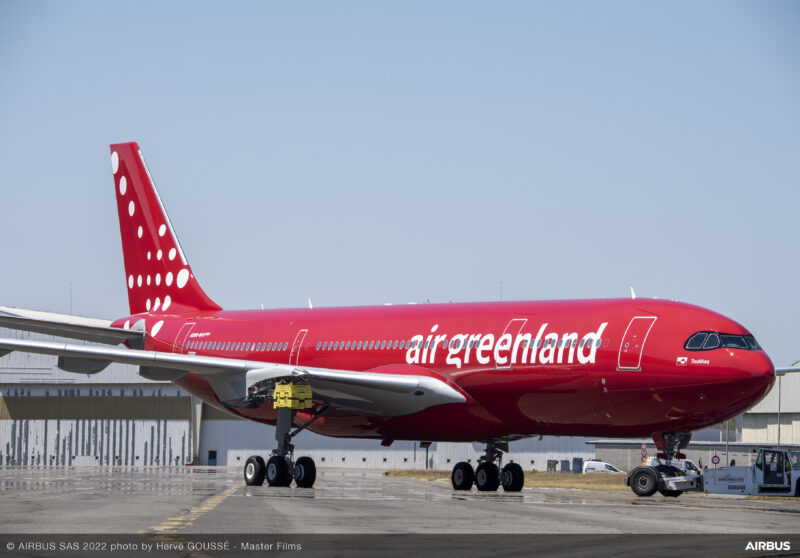
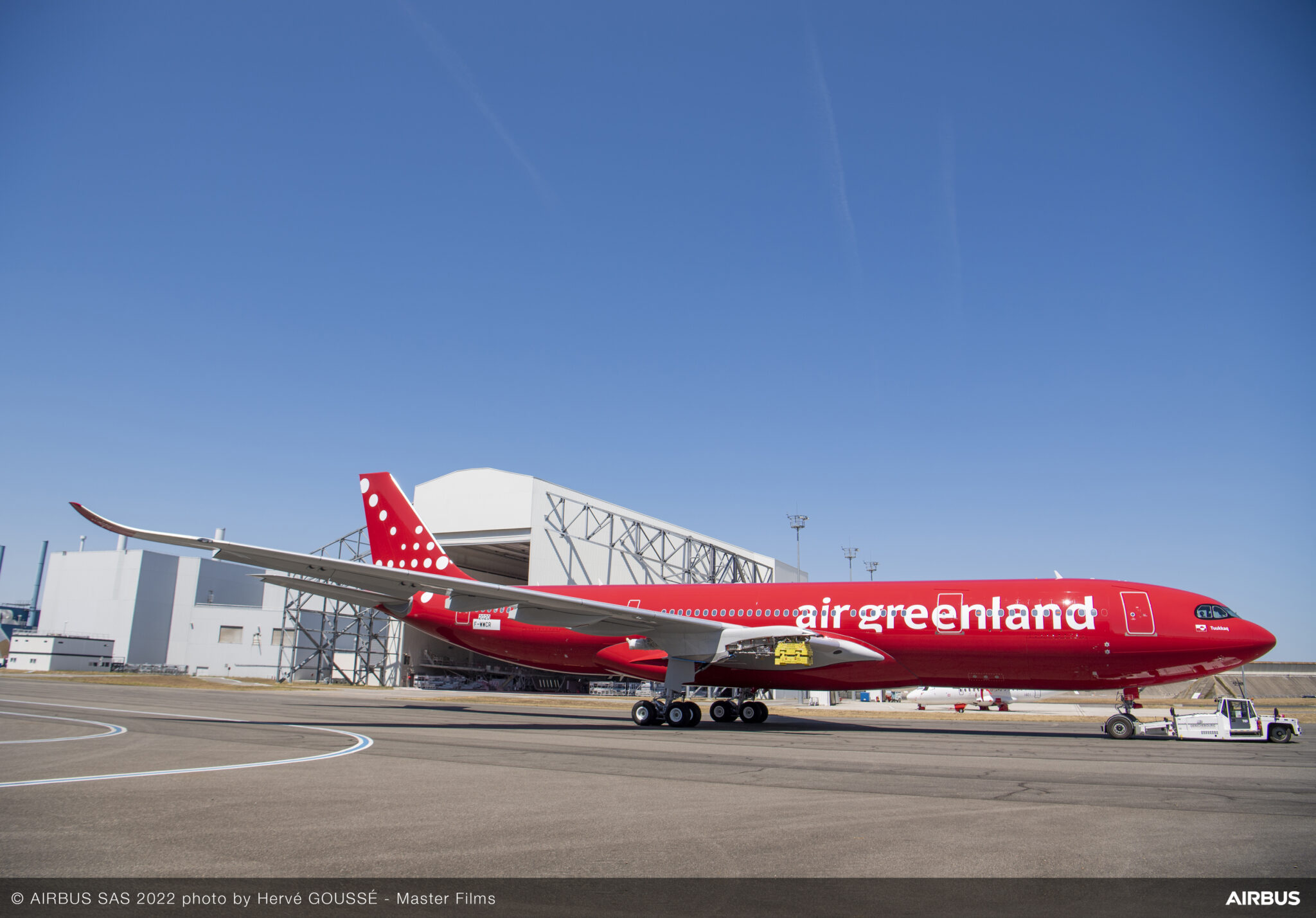
Air Greenland has unveiled the first images of its brand new fully-painted Airbus A330-800neo – and it’s stunning. The carrier released the photos on Wednesday via its Instagram account @air_greenland_official. Airbus also shared the images via the company’s official Twitter account.
Fresh from the paintshop! Take a look at #AirGreenland's #A330neo in its incREDibly beautiful livery. It will be the airline's new flagship, comfortably and efficiently flying passengers – as well as cargo – to/from Greenland. pic.twitter.com/pqmPmw8s8c
Airbus unveils Air Greenland’s New A330-800neo on 3 August 2022 | @Airbus on Twitter
Greenland’s national airline placed the Airbus widebody order in 2019. After slowdowns caused by the COVID-19 pandemic, delivery is tentatively set for sometime in late 2022, with revenue service beginning in early 2023. The $260 million Airbus A330-800neo will be Air Greenland’s first-ever purchase of a brand new aircraft.
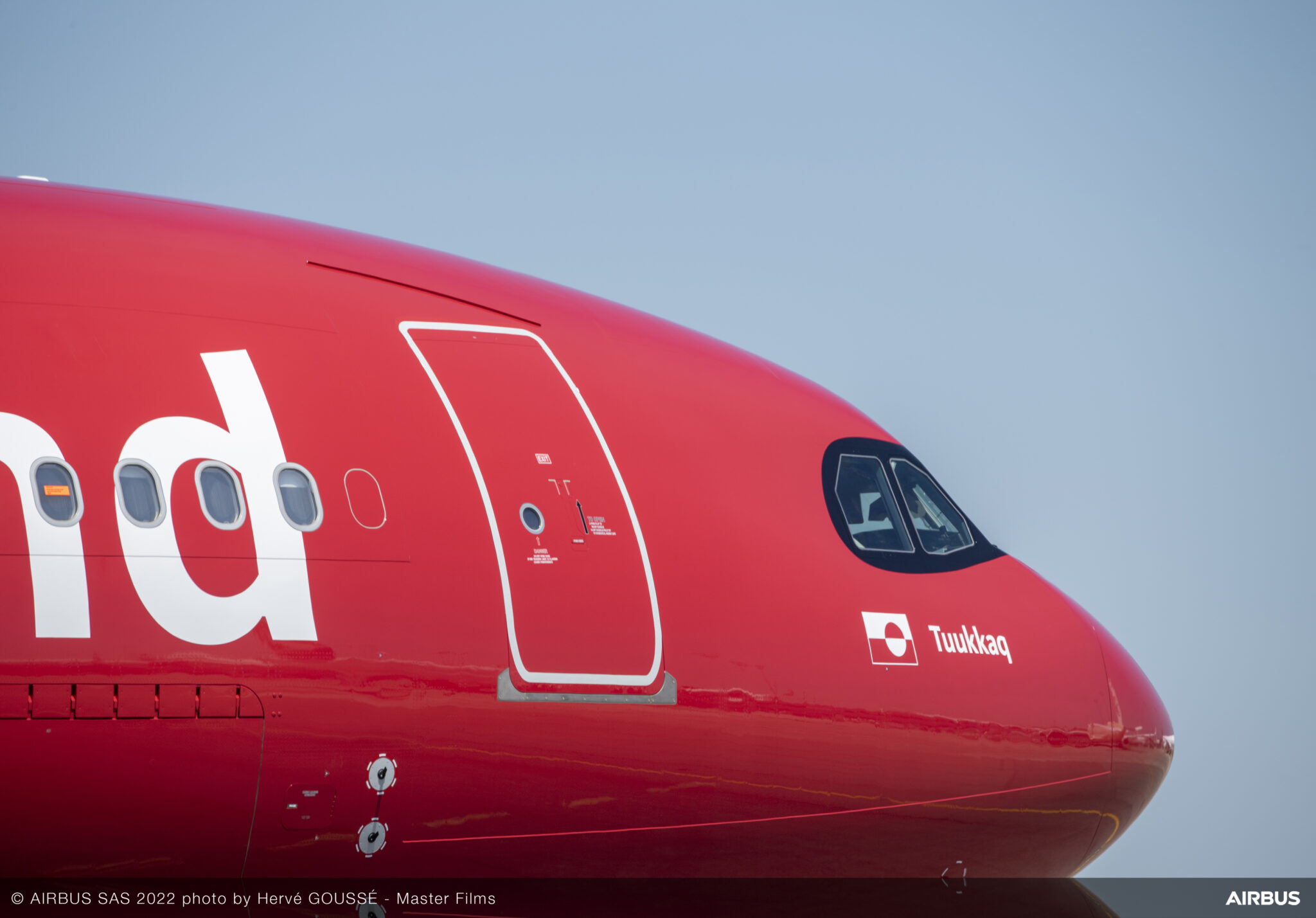
The aircraft, named Tuukkaq (Inuit for harpoon tip), will replace Air Greenland’s sole A330-200. Originally delivered to Belgian airline Sabena in 1998, Air Greenland acquired the plane in 2002. It has utilized the A330-200 for long-haul flights to and from Copenhagen, Denmark (CPH). Greenland is its own country, but also an autonomous territory that is part of Denmark.
The airline served the United States with a Boeing 757-200 for a short stint during the 2007 summer season. Unfortunately, Air Greenland announced they would drop the route from Kangerlussuaq (SFJ) to Baltimore/Washington International Airport (BWI) before the 2008 summer season began.
Why Air Greenland Chose the A330-800neo
Airbus unveils Air Greenland’s New A330-800neo on 3 August 2022 in Toulouse, France | IMAGE: Airbus
Sustainability is one of the driving factors behind the decision to purchase the A330neo. Compared to the A330-200, the new A330neo will be significantly more fuel efficient and emit at least 25 percent less CO2 per seat, according to Air Greenland. It will also be able to utilize sustainable aviation fuel (SAF), a biofuel made with an alternative feedstock (the raw material used in fuel production) to crude oil.
Tuukkaq will feature 305 seats, including 42 in its business class cabin and 263 in economy – a nearly 10 percent increase in seating capacity over the 278-seat A330-200. Every seat will feature the latest in in-flight entertainment technology.
The Airbus A330-800neo is powered by two Rolls-Royce Trent 7000 engines and features a larger wing with ‘Sharklets,’ similar to the A350.
Air Greenland Joins a Unique Club
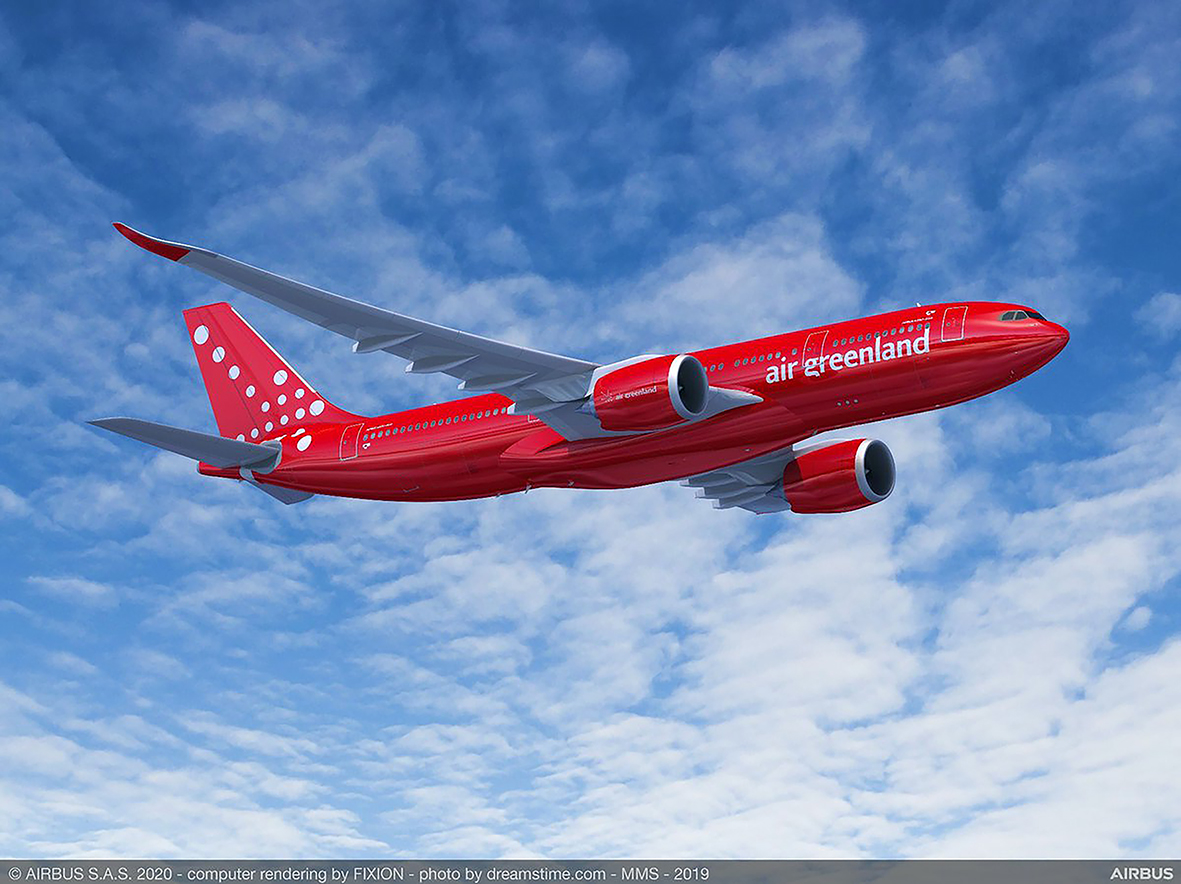
Rendering of Air Greenland’s new Airbus A330-800NEO | IMAGE: AIRBUS
Surprisingly few orders have been placed for the A330-800neo. Air Greenland joins just three other airlines (Garuda Indonesia, Kuwait Airways, and Uganda Airlines) that have either ordered or taken delivery of the aircraft. Only Kuwait Airlines and Uganda Airlines currently have the type in service.
The A330-800neo has a range of 9,300 miles, which is more than sufficient for the 4.5 hour jaunt to Copenhagen. There are currently no plans for Air Greenland to use the aircraft for service to North America, though the range would also be more than sufficient for the 5.5 hour flight to New York City. As of August 2022, Air Greenland’s only international routes are to Copenhagen and Reykjavik-Keflavik, Iceland (KEF).
Greenland’s Aviation Challenges
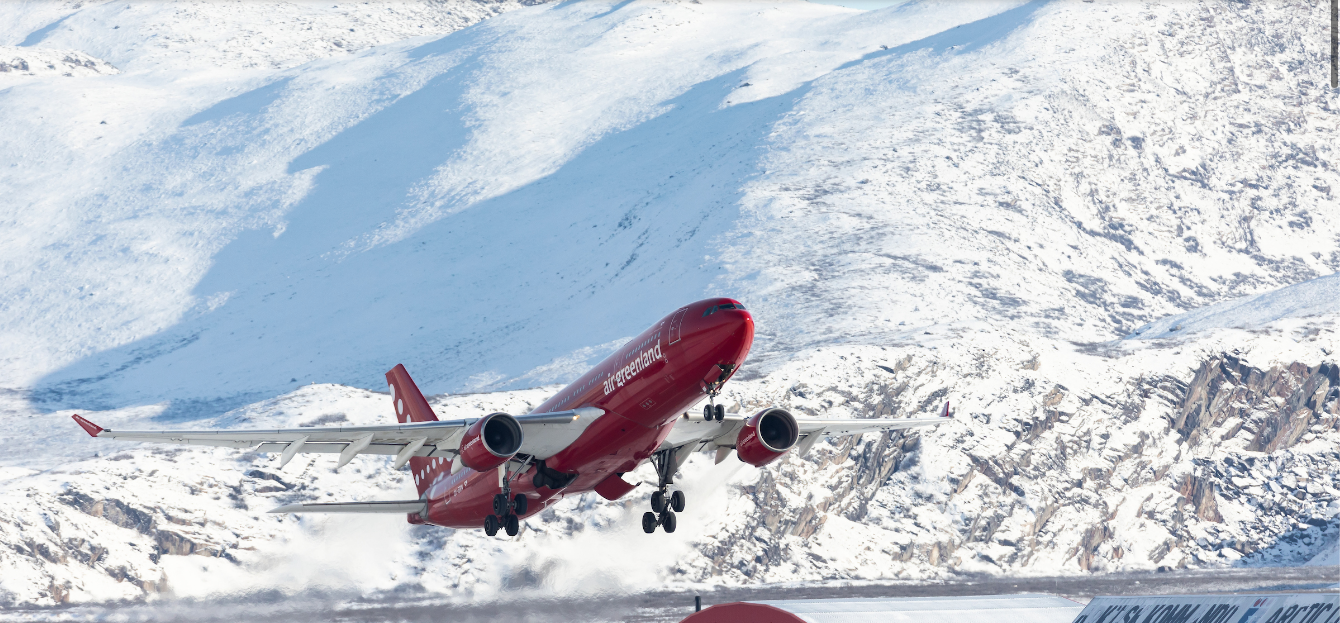
AN AIr Greenland Airbus A330-200 takes off from Kangerlussuaq | Image: airgreenland.com
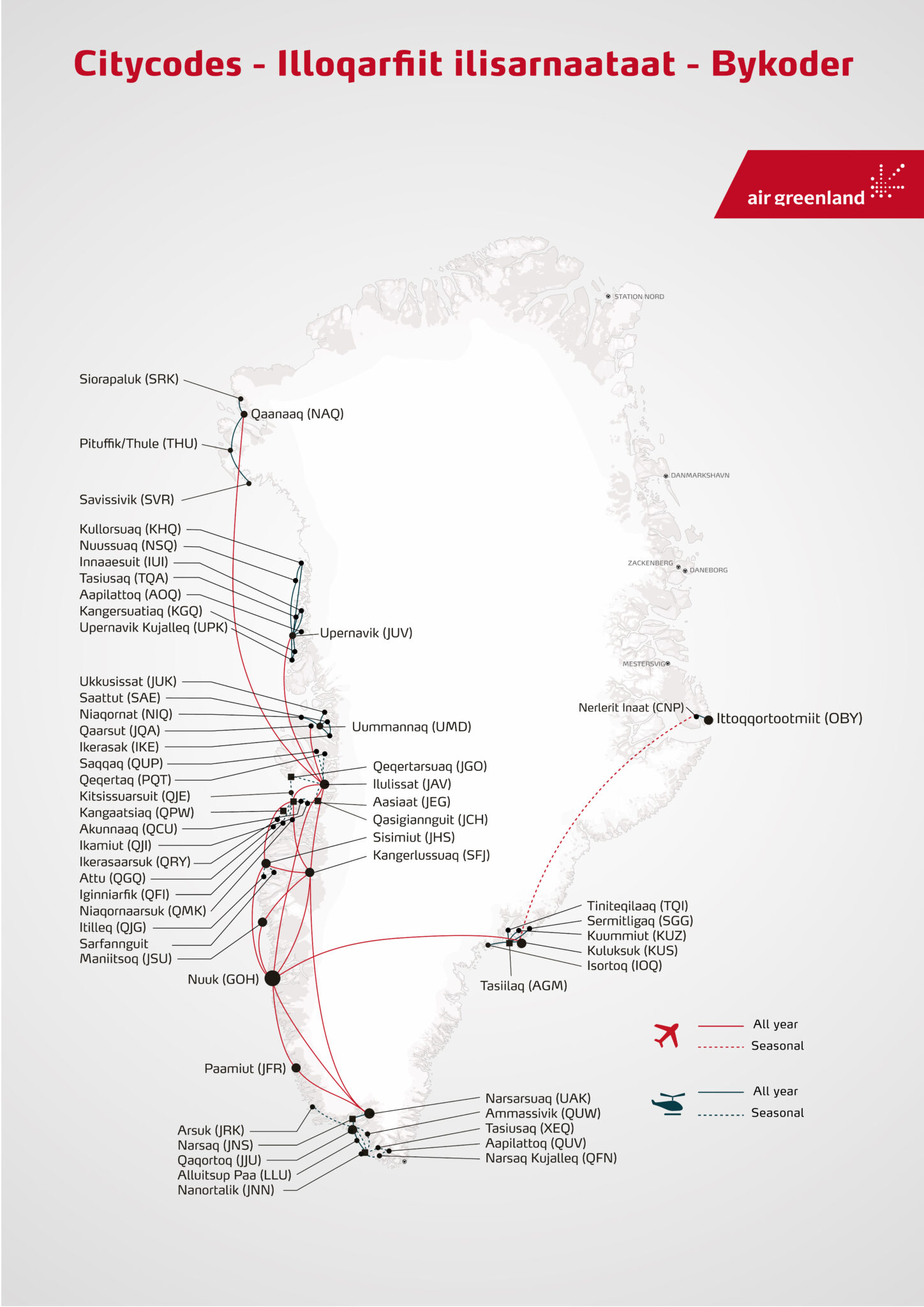
Greenland’s unique – and often challenging – geography and climate create many hazards for aviation. In fact, only Kangerlussuaq (SFJ) and Narsarsuaq (UAK) – both originally constructed as U.S. Air Force bases during World War II – have runways long enough to accept commercial jetliners.
Air Greenland domestic route map | August 2022 | IMAGE: airgreenland.com
With a runway length of 9,219 feet, Kangerlussuaq serves as the primary hub for Air Greenland. Passengers wishing to visit Nuuk, Greenland’s capital city, must connect via Kangerlussuaq. Nuuk Airport (GOH) is served by Air Greenland’s seven 37-passenger Dash 8-200s, and various types of helicopters. The carrier also operates a Beechcraft B200 King Air as an air ambulance.
Will it Get Any Easier to Fly to Greenland?
Airbus unveils Air Greenland’s New A330-800neo on 3 August 2022 in Toulouse, France | IMAGE: Airbus
Much like its eastern island neighbor Iceland, Greenland is experiencing an increase in tourism – albeit on a much smaller scale. Greenlandic officials hope to capitalize on tourism by welcoming more people to the world’s largest island. As such, the country’s aviation infrastructure is undergoing modernization.
In 2020, Greenlandic officials announced a project to extend runways at Nuuk and Ilulissat (JAV). Once the projects – which are now underway – are completed, both airports will feature 7,200’ runways. This length is more than sufficient to open up these airports to larger aircraft like the A330-800neo.
Could we one day be able to fly directly from the United States to Greenland without stopping in Denmark or Iceland? With a visit to Greenland at the top of this author’s bucket list, I certainly hope the answer to that question is yes.
It’s not every day that a commercial jetliner touches down in the most remote place on Earth. But, last January, on a beautiful sunny day in the middle of the southern hemisphere summer, a Boeing 767 made the rare and unique trek to the bottom of the world.
The flight, operated by Icelandair’s charter-flight subsidiary Loftleiðir, carried a team of 21 Norweigian scientists and provisions to Troll Airfield (QAT) in Princess Martha Coast, Queen Maud Land, Antarctica.
The airfield is owned by the Norwegian Polar Institute (NPI), an agency of Norway’s Ministry of Climate and Environment that conducts scientific research and mapping and monitors environmental conditions. NPI has facilities in both the Arctic and the Antarctic.
Flying to the Bottom of the World
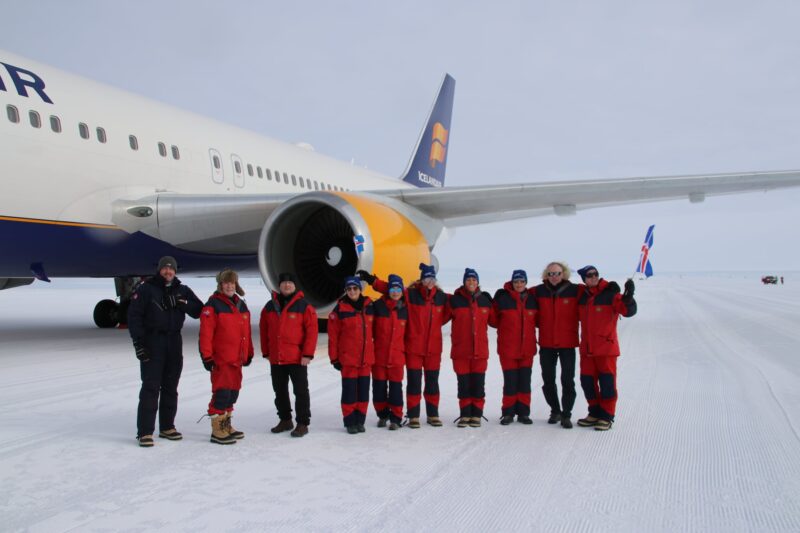
An Icelandair Boeing 767-300ER arrives at the Troll Research Station in Antarctica in January 2022 | IMAGE: icelandair.com
Originating at Reykjavik-Keflavik Airport in Iceland (KEF), the Icelandair 767-300ER (TF-ISN) flew to Oslo, Norway (OSL) to pick up the research team. The flight then continued on to Troll via a 13-hour flight to Cape Town, South Africa (CPT).
In Cape Town, the aircraft fueled up and picked up a new crew. The aircraft then left Cape Town for the nearly 2,700-mile flight to Troll. Five hours and 43 minutes later, the Icelandair crew executed a flawless landing on a perfectly smooth 9,927-foot-long glacial blue ice runway in Troll.
Despite an earlier forecast calling for low clouds at the time of landing, conditions actually ended up being perfect. Bright sunshine and light westerly winds made for an uneventful, but beautiful, VFR approach into Troll. The 24-hour midsummer Antarctic sun had warmed the air to a relatively balmy 21ºF.
Although the weather cooperated in the end, the flight crew received an in-flight message from Troll saying they had found a hole in the runway. According to co-pilot Bjartmar Örn Arnarson, the staff at Troll Airfield was able to perform a temporary fix on the hole. Thankfully, the 767 was able to land without issue (WATCH BELOW).
Why is Icelandair Flying to Antarctica?
An Icelandair Boeing 767-300ER Arrives at Troll Airfield in Antarctica in January 2022 | IMAGE: icelandair.com
The primary mission of the flight was to take the 21 scientists to Troll where they would serve through the following winter. After a two-hour layover, another team of Norweigian scientists – some of whom had been in Antarctica for 16 months – boarded the return flight to Oslo via Cape Town.
By this time, the temperature had dropped to 5ºF, but with clear skies and a light northeasterly breeze, conditions were still very favorable for departure. Ironically, the crew noted that the worst weather of the entire journey was upon arrival back into Keflavik.
Deicing is unusually unnecessary in Antarctica because of the continent’s dry climate. In the rare case that deicing would become necessary, Troll Airfield utilizes a heater and – wait for it – brooms.
Though quite rare, this was not the first time a commercial jet had touched down in Antarctica. The first commercial flight – also operated by Icelandair – to Antarctica took place in 2015. Several flights to the research station in Troll have occurred in the years since.
Take a moment to watch this flawless landing and takeoff at Troll. Entitled “Icelandair B767 Landing and Takeoff in Antarctica 2022,” this video was uploaded to YouTube by Extreme Aviation Iceland.
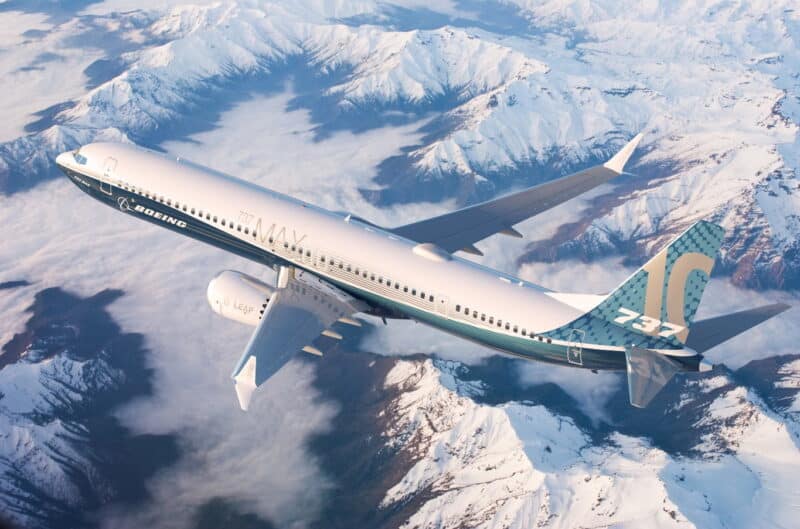
The Boeing 737 MAX fleet is starting to hit its stride but the 737 MAX 10 is still awaiting certification with time running out.
The Boeing 737 MAX has had its share of difficulty over the years. The MAX was born as an answer to the fuel-efficient Airbus A320neo released in 2014. The stated fuel-burn for the MAX would be 14% less than the 737NG series. Since fuel savings is one place where operators can reduce spending and increase profits, this airplane was needed.
MAX is One of the Most Discussed Airliners
If you research the history of the MAX you will find no shortage of articles, reports, opinions, and documentaries describing the arduous journey Boeing took to get the 737 MAX certified and re-certified. There were corners cut and lessons learned to get the jet delivered to customers around the world wanting to get their hands on this new airplane. Boeing produced both the 737 NG (next generation) and 737 MAX aircraft at their Renton, Washington location. The first MAX rolled off the Renton line on December 8, 2015, with the first flight following on January 29, 2016. There were some problems with engines, parts acquisition, and other issues but the 737 MAX 8 was certified by the FAA on March 8, 2017, with EASA certifying the MAX later in the same month.
After gaining certification the MAX 8 was introduced to the world on May 22, 2017, with Malindo Air as the launch customer. As a side note, Southwest Airlines was originally slated to be the MAX launch customer but due to multiple obstacles with the airline, they delayed delivery until July 2017. I was lucky enough to be on the (October 1, 2017) inaugural Southwest Airlines flight #1 from DAL to HOU with the CEO Gary Kelly, reporters, and many other airline geeks. The energy on board was amazing and people were excited to see this modern airliner take flight. Little did we know how things would change in just another year.
The Crashes and Groundings Of The MAX
Just a little over a year after Malindo Air got their first 737 MAX 8 the world would be shaken by a horrible event on October 28, 2018. Lion Air 601 would crash shortly after takeoff killing all 189 people on board. There was no quick answer to what happened and investigators started going through evidence in an attempt to uncover the cause. Then on March 10, 2019, another brand new MAX 8 operated by Ethiopian Airlines would crash claiming the lives of another 157 passengers and crew. The death toll of 346 people would expedite the process of grounding all 737 MAX planes around the globe.
China would be the first country to ground the MAX, just 1 day after the Ethiopian #302 crash. Other countries around the world would follow, with the United States taking longer but finally grounding all MAXs on March 15th. The MAX was grounded by the FAA for 1 year and 8 months, costing Boeing a fortune in undelivered planes and a tarnished reputation.
(Re-)Certification
These crashes kicked off a series of steps that would be the foundation of the delay of the certification of the MAX 10 (as well as the recertification of the MAX 7). I will not go into the topics of MCAS (Maneuvering Characteristics Augmentation System), simulator and type training, AoA (Angle of Attack) sensors, etc, but I do want to talk about the main reasons for the delay in 737 MAX certification.
Self-Certification of the MAX
In the past, during the certification process, the FAA delegated many evaluations to Boeing which allowed the manufacturer to review their own product. It is widely reported that Boeing pushed to expedite approval of the 737 MAX to compete with the Airbus A320neo, which hit the market nine months ahead of Boeing’s MAX. This resulted in putting profit ahead of safety. There were internal employees at Boeing that tried to raise the flag but were ignored by management that had expedited delivery as their focus.
One selling point of the MAX was the crew training, which to be a success would need to be a snap-in for other operators flying non-MAX 737s. Crew training is expensive and airlines wanted to avoid this so Boeing delivered a product they said would require minimal training.
Crew Alerting In The Cockpit Regulation
In 2020 (after congress met with experts on the topic) the Aircraft Safety and Certification Reform Act was established. There are many parts to this ruling but one that will affect the MAX 10 deals with crew alerting. This rule states that any new planes certified from 2023 onward must comply with the latest crew alerting regulations mandated by the FAA. The 737 MAX design does not include this technology since it has many elements from its ancestor which was first designed in the 1960s.
If Boeing can’t get the MAX 10 certified by the end of 2022, it will be required to add this “costly” modification to the MAX 10. Boeing has said it might entirely scrap the MAX 10 program if the U.S. Congress does not offer them an exemption, but others in the industry think Boeing is bluffing to get around this requirement. Personally, I think this would be too costly for Boeing (to not deliver the MAX 10) and a solution will be found in time.
Regulation Updates Are Made For Good Reason
After we learned the causes of the Lion and Ethiopian (MAX 8) crashes, changes were made to prevent this from happening again. No longer would the FAA allow Boeing to do their own internal evaluations. Many countries lost faith in Boeing and now want to recertify their registered 737 MAXs using their own processes. These two things mean that the airliner will be queried on all aspects of the plane certification. As a result of Boeing’s past behavior along with enhanced processes, it is uncertain if the MAX 10 will be certified by the end of 2022.
Many airlines are eagerly waiting for a larger single-aisle option by Boeing and time is ticking. There is a big demand for both Boeing and Airbus to meet this need. Like the MAX 8, the MAX 10 was envisioned to compete with Airbus, specifically the Airbus A321neo with superior range and the capacity to carry up to 220 passengers. Currently, United is expected to be the launch customer of the 737 MAX 10. Ryanair has also shown interest in a 230-passenger version of the MAX 10. There are currently 600 orders for the MAX 10.
Hope for the MAX -10?
At the recent Farnborough Air Show, Delta announced a large order for the Boeing 737 MAX 10 which indicates confidence in this version. Other likely customers are waiting in the wings to see what happens with certification of the largest version of a Boeing ever built. The future of the MAX 10 is uncertain but the MAX 8 and MAX 9s are hard at work flying many passengers to different places around the world.
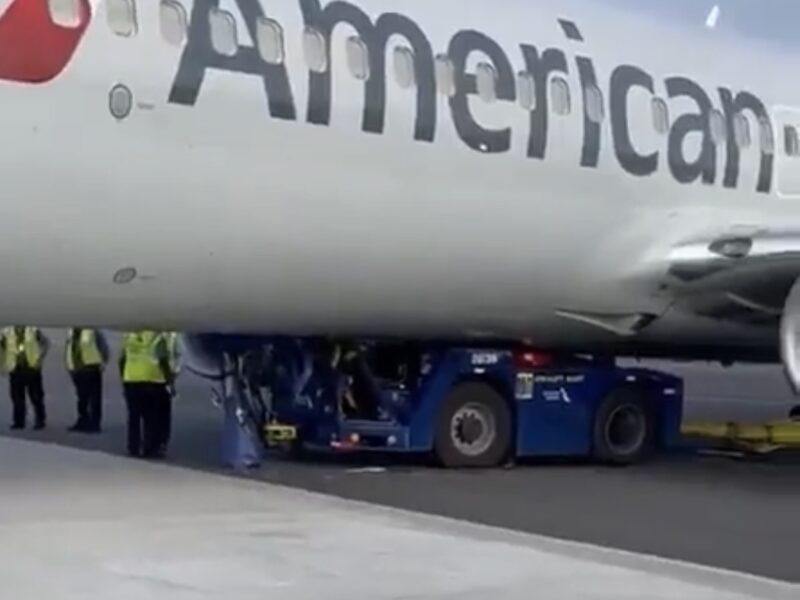
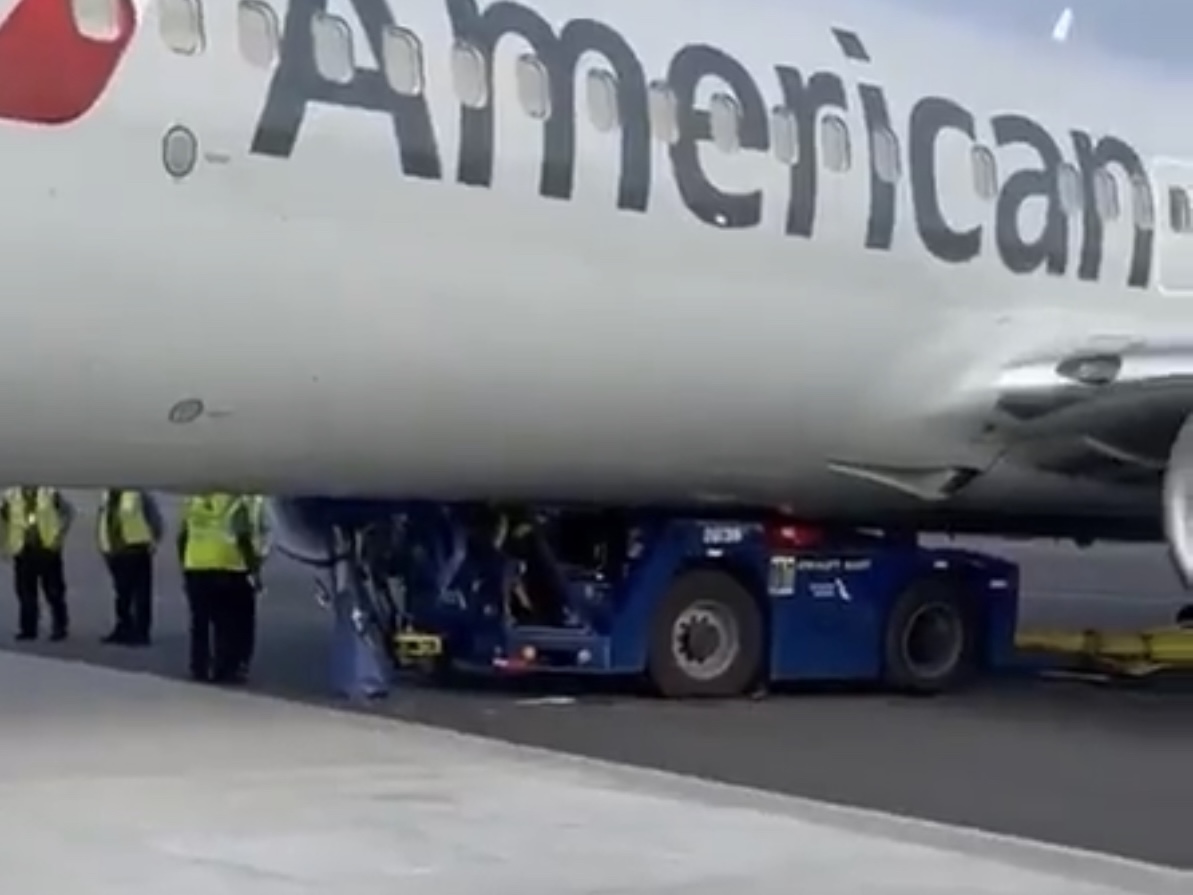
A tug driver is counting his blessings this week after his super tug was ran over and crushed by an American Airlines 737 at LaGuardia Airport on Aug 2.
The tug driver was moving the 91,000 pound airliner from a hangar to a departure gate, but when he made a sharp turn to pull the plane up to the gate the plane rolled right over him, crushing the cab.
The driver ducked as it happened, and it saved his life. He wasn’t even injured according to officials, but was sent to a local hospital anyway for evaluation and as a precaution. After all, it isn’t every day someone walks away from being ran over by an airplane.
A TuG driver is ok after his tug Was ran over by an american airlines 737 at laguardia airport (photo via @whatisny via twitter)
The plane itself (AA aircraft N949NN) was empty when the incident occurred. It was sent to a hangar for inspection and repairs of any damage to the underside, while waiting passengers in the terminal were put on another plane.
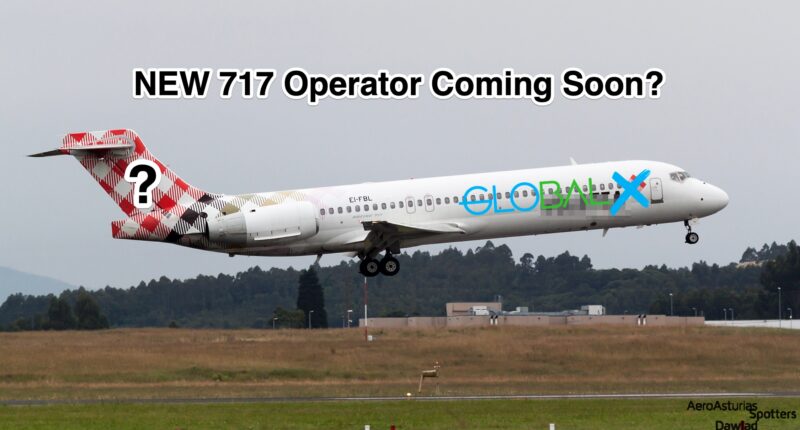
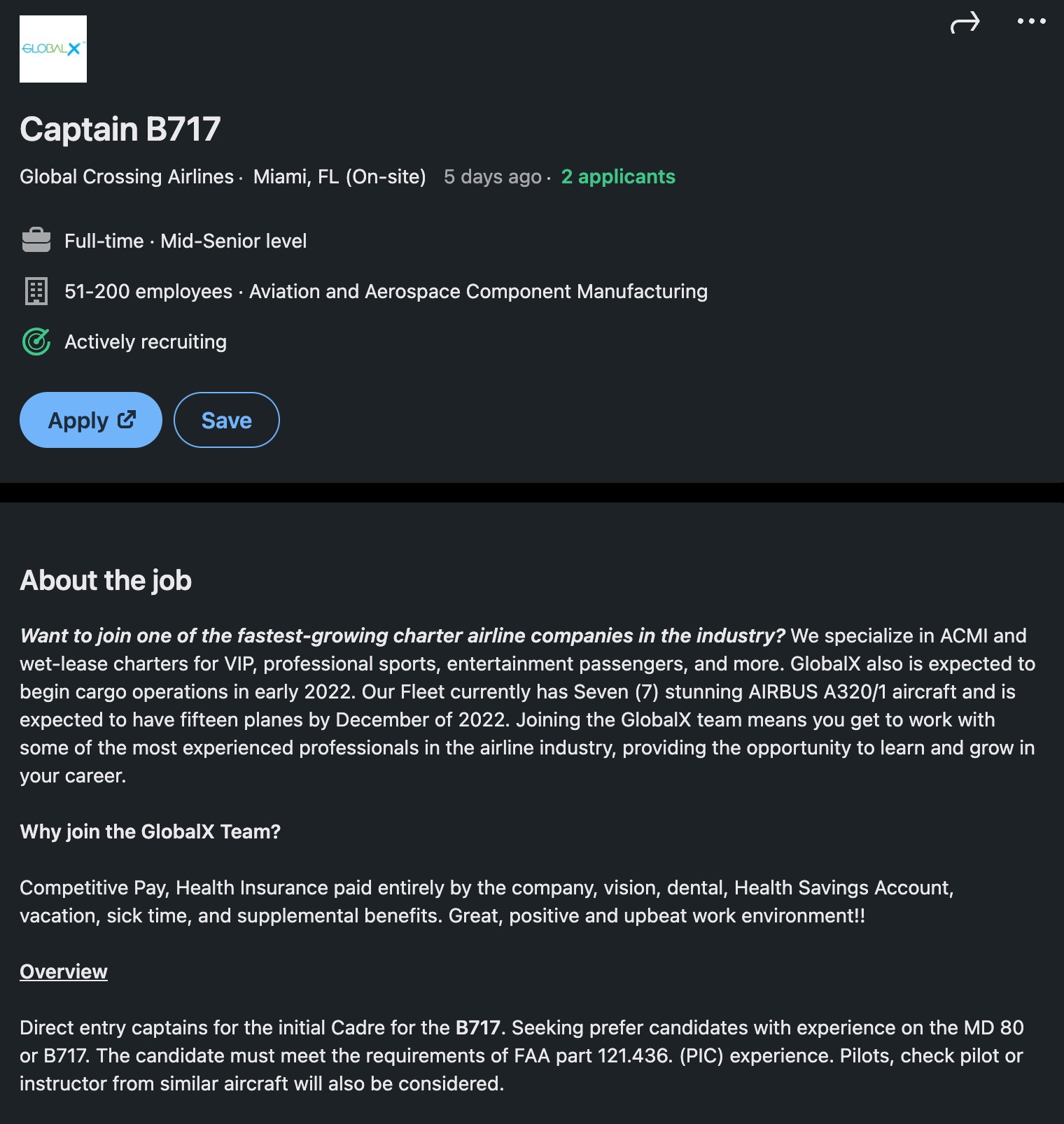
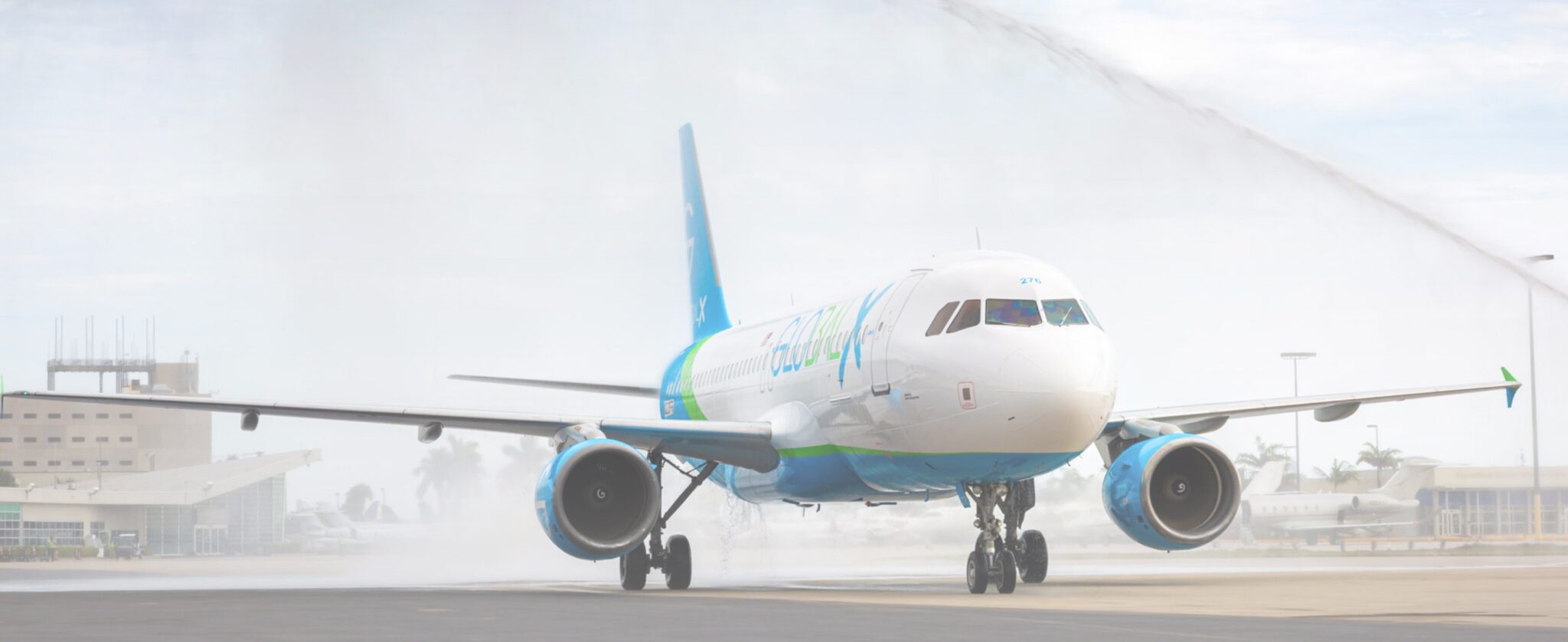
Chalk this one up as an interesting rumor. We recently saw that Global X Airlines (aka Global Crossing Airlines) posted a job online for a Boeing 717 captain on LinkedIn. The interesting thing is, that Global X currently does not operate the Boeing 717.
Source: LinkedIn
Who is Global X Airlines?
Image: Global X website
Global X currently operates a small fleet of Airbus A320 and an A321. The airline specializes in charter services. They provide service to sports teams, backup support for airlines, and have been spotted flying migrant and repatriation flights. The job post also says that the airline expects to have a fleet of 15 Airbii soon.
A Look Back At The Boeing 717
The Boeing 717 is a derivative of the DC-9 and MD-80. The jet first flew in 1998. After Boeing’s merger with McDonnell Douglass, the company decided to continue to build the aircraft. It was originally known as the MD-95. Boeing renamed it the Boeing 717. After some attempts to market the jet, Boeing decided to focus all resources towards the Boeing 737NG line of single-aisle jets. The 737 offered coast to coast capability, a family of various sized aircraft, and global support. The line was shut down in 2006 after the final delivery to AirTran Airways (now merged into Southwest Airlines). Only 156 were ever built. Now the Long Beach factory is open space for a future commercial development.
A new 717 operator would be pretty unique
The Boeing 717 has always been a bit of an orphan. The jet features a cockpit that lacks commonality with the larger (and now mostly retired) MD-80 or any other jet besides the MD-11 and MD-90. When McDonnell Douglas disappeared, supported remained for the aircraft through Boeing but airlines began to dispose of their aircraft. Notably, Volotea retired their fleet back in 2021. Turkmenistan’s jets were trashed (they were already trash from lack of record keeping). Midwest, Olympic, TWA, and MexicanaClick failed. Southwest leased/sold their acquired fleet from the AirTran merger to Delta. Today, only Delta, Hawaiian, and QantasLink operate the remaining Boeing 717s in the world. Global X would be the fourth. Global X would likely pick up Volotea’s retired aircraft. They are currently owned by Boeing Capital.
It’s been more than four years since Hawaiian Airlines announced it would add the Boeing 787-9 Dreamliner to its fleet. The deal, worth $2.82 billion in 2018, includes a firm order of ten 787-9s. Hawaiian also has purchase rights for ten additional Dreamliners.
At the time, Hawaiian President and CEO Peter Ingram said that the Dreamliner was a “terrific” airplane that would be well-suited for continued growth in the Asia-Pacific region.
“We’re really looking forward to the opportunity to expand that as we bring the 787 on at the beginning of the next decade,” Ingram said in a CNBC interview in March 2018.
Now, more than halfway through 2022, Hawaiian has yet to receive any of its Dreamliners. So, when will they take delivery of their brand new flagship product?
The short answer is that no one really knows for sure.
Problems at Boeing
Boeing [NYSE:BA] and Hawaiian Airlines announced today that the carrier has selected the market-leading 787 Dreamliner as its flagship airplane for medium to long-haul flights. This infographic highlights some of the airplane’s features. (PRNewsfoto/Boeing)
A lot has changed since 2018. Like many industries, aviation has been hit particularly hard by the events of the past few years.
Amid the pandemic travel slump, the delivery date of Hawaiian’s first Dreamliner was initially delayed until early 2023.
In addition to the pandemic-induced travel downturn, well-publicized production issues have plagued Boeing.
Following two fatal crashes of the 737 MAX in 2018 and 2019, Federal Aviation Administration (FAA) officials announced they would revamp the aircraft certification process at Boeing.
787 Line Gets Additional Scrutiny
In September 2020, the FAA began investigating reports of production flaws in the 787. A defect had been discovered that led to small gaps forming between panels on the Dreamliner’s carbon-composite fuselage. Boeing officials determined the flaw could be present in more than 1,000 Dreamliners but said was not an immediate safety issue. However, if not addressed, the problem could lead to premature aging of the aircraft. This led to a five-month suspension of deliveries. Then, in May 2021, just months after resuming, 787 deliveries were halted once again following increased FAA scrutiny over changes in Boeing’s planned inspection methods.
These production issues have caused a reported backlog of nearly 600 Dreamliners, including 120 that have already been built and are currently in storage.
These issues may be coming to an end, however. Reuters reported on 29 July that the FAA has given its blessing to Boeing to resume 787 deliveries – possibly as soon as this month.
According to Reuters, Boeing Chief Financial Officer Brian West says Boeing is “making progress” in preparing the stored 787s for delivery and will begin additional production soon – albeit slowly at first.
What This Means for Hawaiian’s Dreamliners
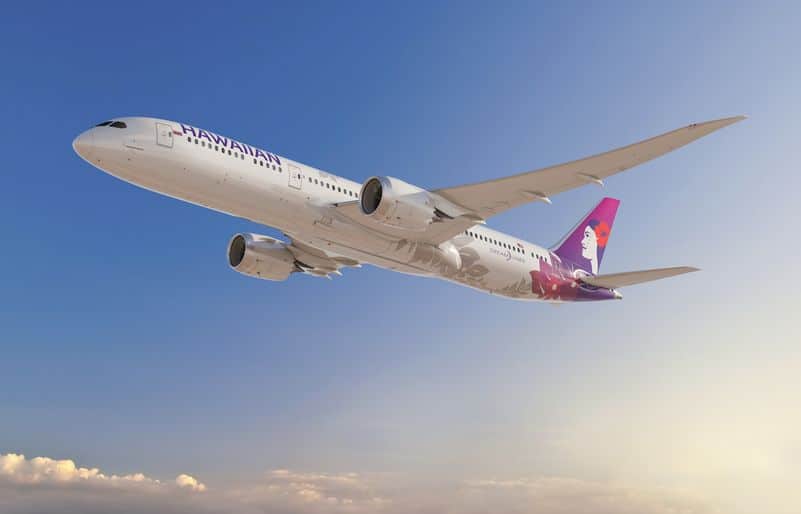
Boeing [NYSE:BA] and Hawaiian Airlines announced today that the carrier has selected the market-leading 787 Dreamliner as its flagship airplane for medium to long-haul flights. This rendering shows the airplane in Hawaiian’s livery. (PRNewsfoto/Boeing)
Although 787 production is expected to resume as soon as this month, you shouldn’t expect to see any Hawaiian Dreamliners in the skies anytime soon.
The 787 production shutdown has undoubtedly affected many carriers, not just Hawaiian. Until things are back to normal again at Boeing’s North Charleston, S.C. facility, it’s hard to put a time frame on any potential delivery dates.
However, Ingram isn’t optimistic that Hawaiian will take delivery of any of its new Dreamliners before 2024. During a Hawaiian Holdings Q2 2022 earnings call on 26 July, Ingram said the 787 “isn’t going to be a huge contributor to our fleet over the next couple of years – but obviously will be going forward.”
A Hawaiian Airlines 787-9 at Boeing’s facility in Charleston, SC | SOURCE: @JetPhotos
When Hawaiian Airlines chose the 787-9 over the Airbus A330-800neo in 2018, nobody knew how much the world would change over the next few years.
But the extended wait for Hawaiian’s new flagship aircraft promises to be worth it.
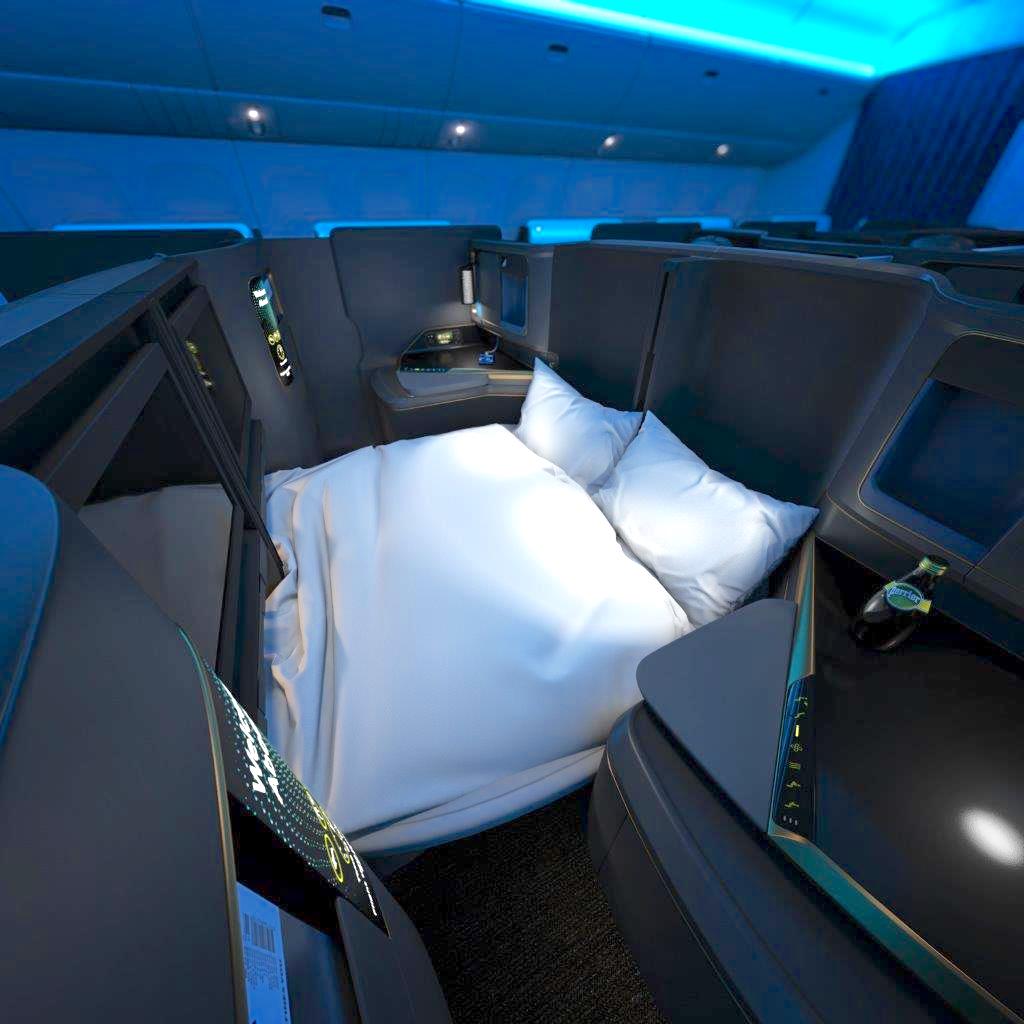
Hawaiian Airlines will be the launch customer of the new Ascent Business Class Suite by Adient Aerospace | IMAGE: Adient Aerospace
The airline will roll out its brand new business class product on its Dreamliners. Passengers will experience the Ascent Seating System by Adient Aerospace. Each seat will feature modular premium lie-flat pods and double suites that are customizable for single, double, or family travelers. Passengers in Hawaiian’s premium economy seating will have full, touch-screen HD monitors. Onboard entertainment will be plentiful. Passengers will experience a smart entertainment system providing passengers with movies, television, music, and games to pass the time. Economy passengers will also see an upgraded product with roomier seats and an updated personal entertainment system.
Hawaiian Airlines will be the launch customer of the new Ascent Business Class Suite by Adient Aerospace | IMAGE: Adient Aerospace
All of Hawaiian’s Dreamliners will have power outlets and in-seat USB ports. The jets will also feature optimized humidity, lower cabin pressure, and enhanced entertainment options, including touch screens. Hawaiian’s 787-9s will offer (along with their Airbus A330 and A321neos) equipped with complimentary high-speed Wi-Fi through SpaceX’s Starlink. Hawaiian is the first major airline to announce a partnership with Starlink.
Looking Forward To 787 Service
Mananalu Selects | IMAGE: HawaiianAirlines.com
Hawaiian Airlines’ Dreamliners may yet be two or three years away from taking to the skies. Still, from everything we know about the product, it promises to be spectacular – much like the legendary service Hawaiian Airlines provides.
As 787 production ramps back up in Charleston, we look forward to saying “aloha” to Hawaiian’s beautiful livery on a Dreamliner one day in the not-so-distant future.
The Flight of SPAR19 Also Generates a Formation of Hilarious Memes, But Concerns About Tensions in the Region Are a Serious Matter
Aviation spotters around the world almost crashed the popular flight-tracking website Flightradar24 today, as they monitored a U.S. Air Force plane flying to Taiwan with U.S. House Speaker Nancy Pelosi onboard.
China has made it very clear their opposition to any such visits, even warning of serious consequences for doing so. They see Taiwan as their territory, but Taiwan sees itself as a self-governed democracy and independent state. China wants to retake Taiwan, whether by cooperation or force, while President Biden has stated several times that America will intervene to support Taiwan if China invades.
Pelosi arrives in Taiwan
China’s foreign ministry spokesman Zhao Lijian warned of “firm and resolute measures” if Pelosi visited Taiwan (see video above of her arrival), stating “the U.S. will be responsible for all of the serious consequences.” Chinese ministry of defense spokesman, Colonel Tan Kefei, threatened “strong measures to thwart any external interference and separatist attempts for Taiwan independence,” while the government’s leading propagandist Hu Xijin said the nation’s military might shoot her down, along with any fighter jet escort accompanying her.
“If Speaker Pelosi visits Taiwan, the move will seriously violate the one-China principle and the provisions in the three China-U.S. joint communiques,” said Chinese Ministry of Defense spokesperson Tan Kefei, adding that a visit would “severely endanger China’s sovereignty and territorial integrity.”
Pelosi called their bluff and flew to Taiwan, and over 700,000 users on Flightradar24 watched to see what might happen to the plane, call sign SPAR19. By the time she landed, it was the most tracked live flight in history, according to the website. The overwhelming traffic forced the site to kick some users off, while others were met with screen prompts telling them their wait times were over 20 hours.
“Our teams immediately began efforts to maintain the stability of our services,” said Ian Petchenik, Flightradar24’s Director of Communications. “Due to the volume of users, it was necessary to deploy our waiting room functionality, which meters access for non-subscribers. Shortly after SPAR19 landed, normal access for all users was restored quickly. We continue to make improvements to our systems to provide additional capacity for flights of extreme interest.”
Because of unprecedented sustained tracking interest in SPAR19, Flightradar24 services are under extremely heavy load. Some users may currently experience issues accessing the site, our teams are working on restoring full functionality to all users as quickly as possible. pic.twitter.com/dsFrlQ67zr
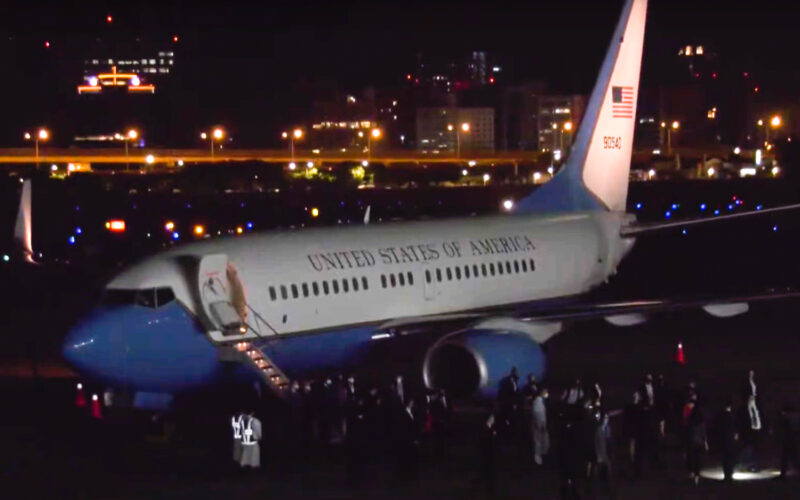
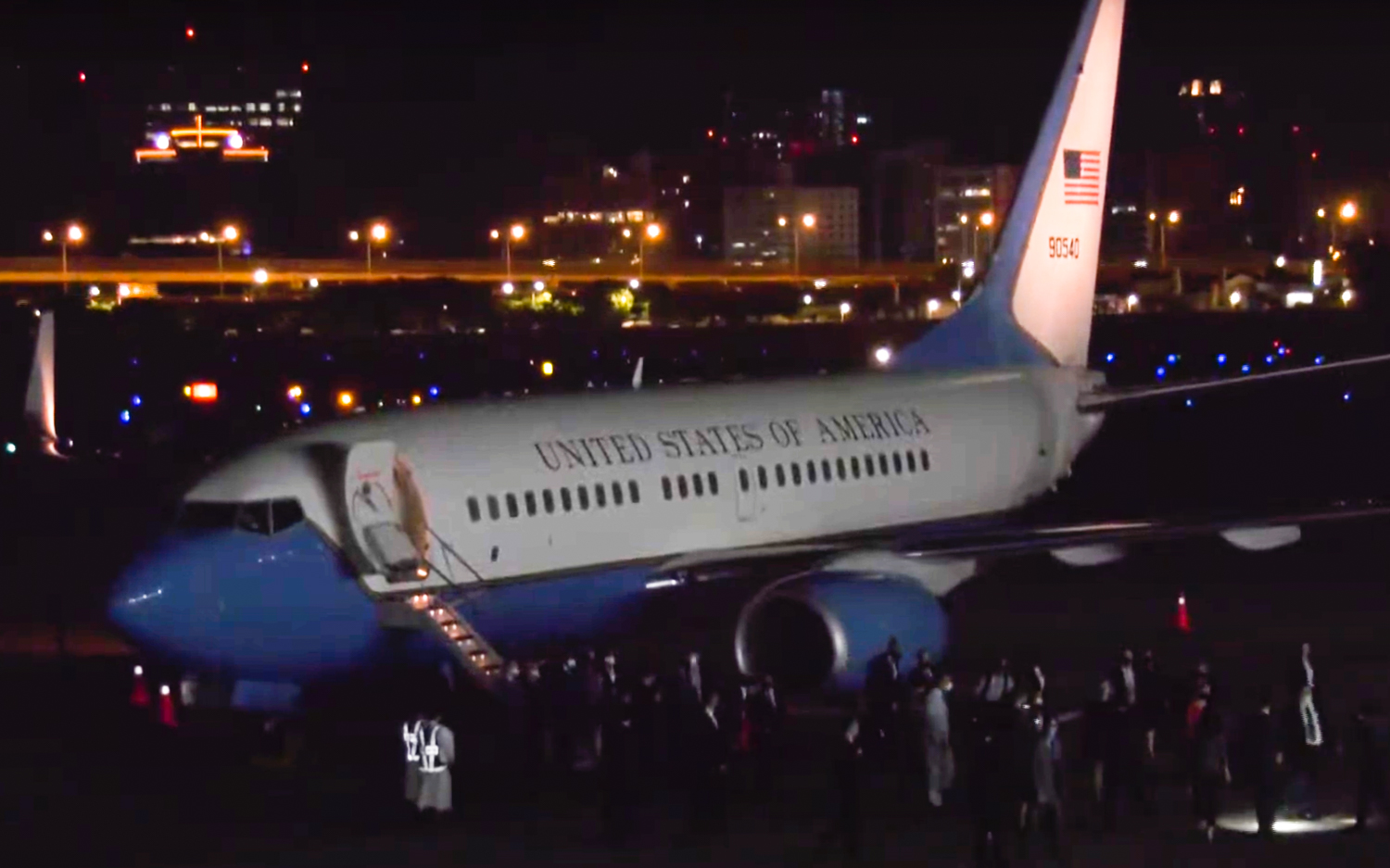
The plane landed at Songshan Airport (TSA) under cover of darkness and without incident (see video above), after flying a circuitous route over Indonesia and up the eastern side of the Philippines to avoid the South China Sea.
China conducted live-fire military exercises near Taiwan last week, after learning of a potential visit by Pelosi.
photo via @Speakerpelosi on twitter
America’s solidarity with the 23 million people of Taiwan is more important today than ever, as the world faces a choice between autocracy and democracy.
Pelosi’s visit was never confirmed prior to her arrival. Her visit makes her the highest ranking U.S. government official to visit Taiwan in 25 years. If something ever happened to the President or Vice-President, the U.S. House Speaker is next in line to take over as President.
President Biden has not yet given his support for Pelosi’s visit, only stating that “the Department of Defense thinks it’s not a good idea.”
A US Air Force Boeing C-40C arrives in Taipei, Taiwan on Aug 2, 2022 with U.S. House Speaker Nancy Pelosi onboard photo credit: Ministry of Foreign Affairs, ROC (Taiwan)
More American cities are saying “hello” to Avelo as the Houston-based carrier continues an aggressive expansion along the East Coast.
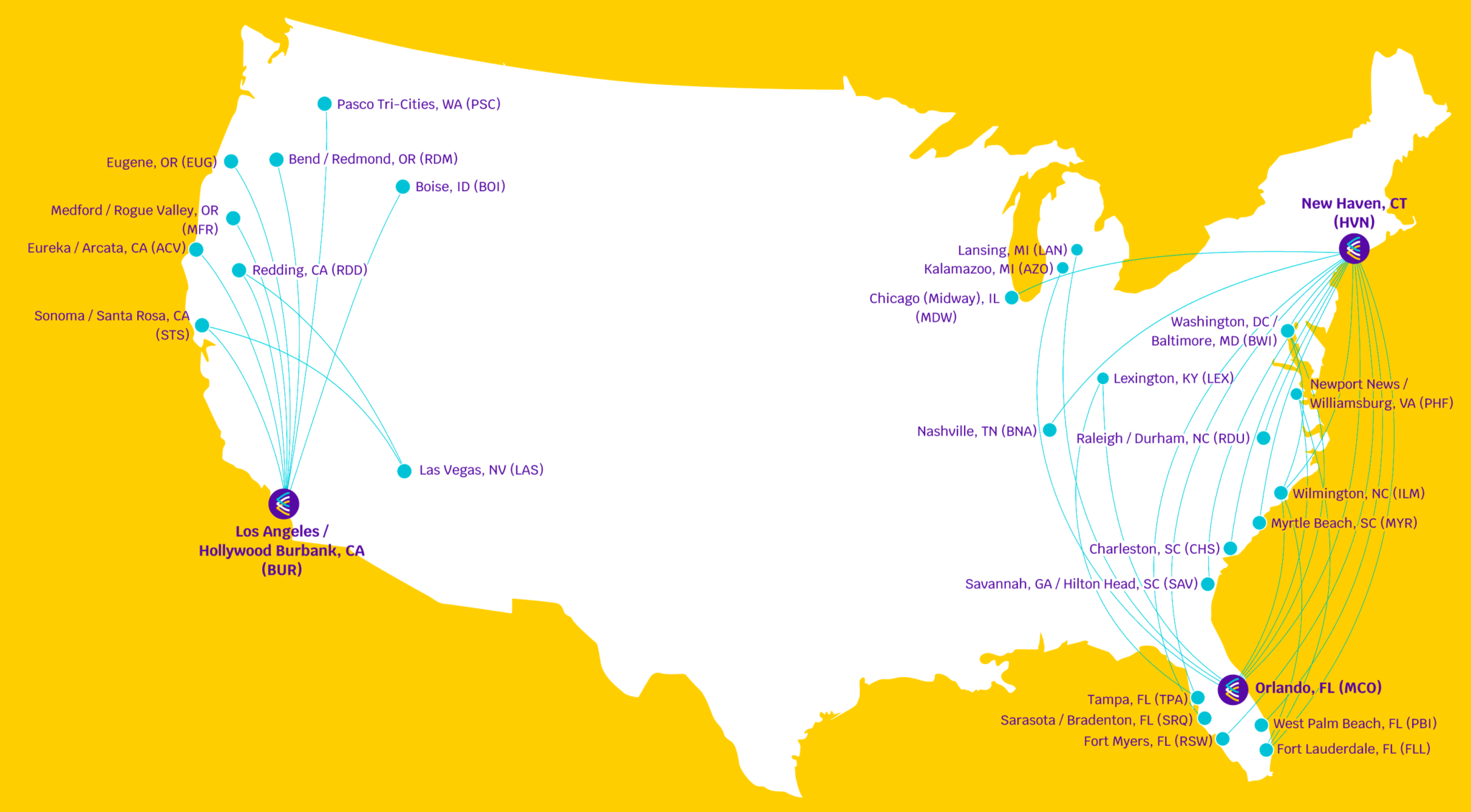
In just the past seven days, Avelo announced four new cities and seven new routes. The new flights, set to launch this fall, will add the following cities to Avelo’s expanding route map:
Capital Region International Airport – Lansing, Michigan (LAN)
Kalamazoo/Battle Creek International Airport, Michigan (AZO)
Newport News/Williamsburg International Airport, Virginia (PHF)
Blue Grass Airport – Lexington, Kentucky (LEX)
The airline is also beefing up its presence in Wilmington, North Carolina (ILM), with new service to Fort Lauderdale (FLL) set to begin in November. Fort Lauderdale will be the fourth destination Avelo serves out of Wilmington, which already has service to Orlando (MCO), Baltimore/Washington (BWI), and Tweed New Haven Airport (HVN) in Connecticut.
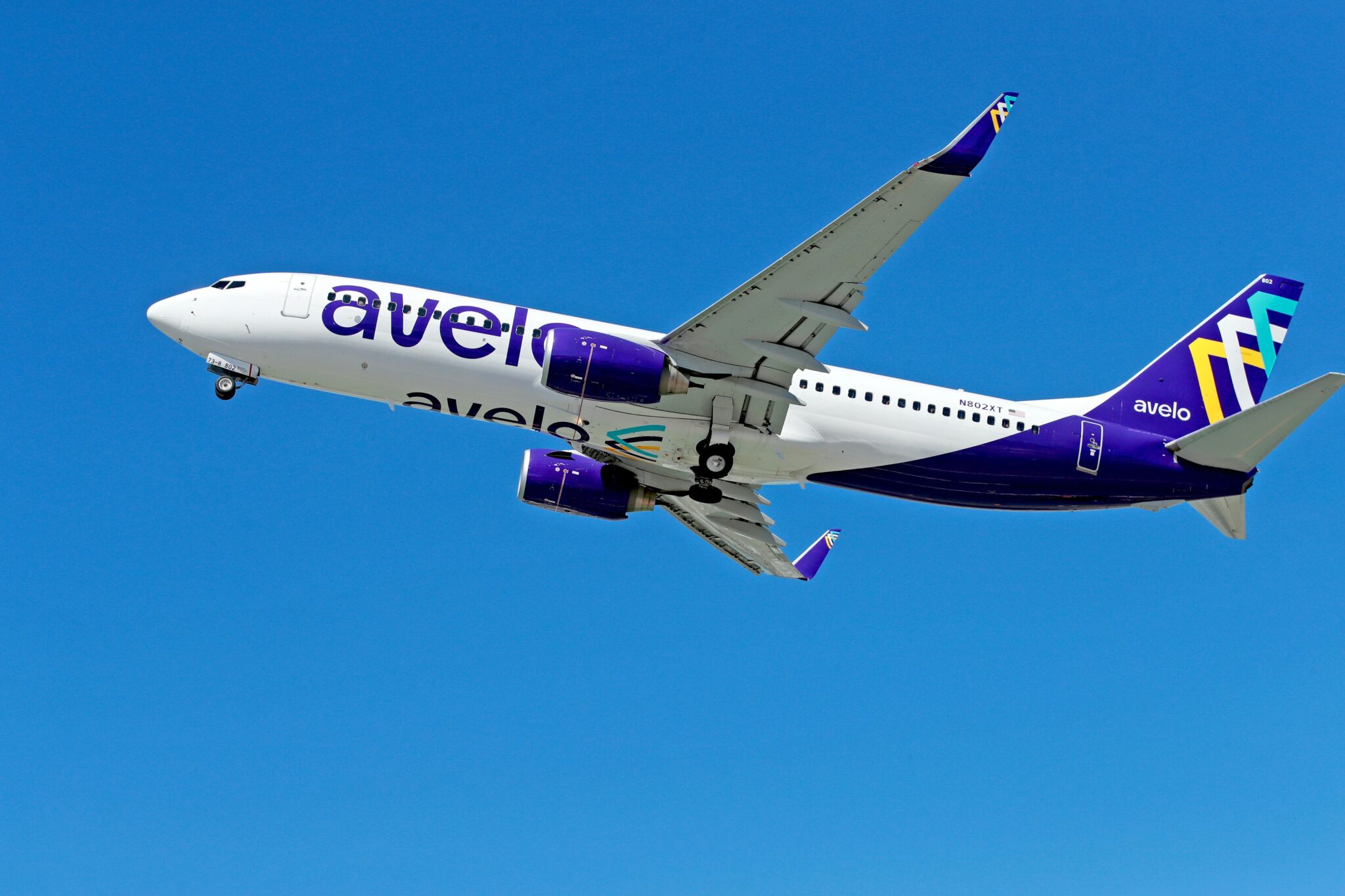
BURBANK, CALIFORNIA – APRIL 28: Avelo Airlines takes off with first flight between Burbank and Santa Rosa at Hollywood Burbank Airport on April 28, 2021 in Burbank, California. (Photo by Joe Scarnici/Getty Images for Avelo Air)
Betting Heavily on the Sunshine State
Of the seven new routes announced last week, all are for flights to and from Florida.
ROUTE
SERVICE FREQUENCY
PHF-MCO
• Thu/Sun beginning 19 October • Tue/Thu/Sun beginning 10 November
PHF-FLL
• Thu/Sun beginning 20 October • Tue/Thu/Sun beginning 10 November
LAN-MCO
• Thu/Sun beginning 26 October
ILM-FLL
• Mon/Fri beginning 11 November
LEX-MCO
• Thu/Sun beginning 19 October • Wed/Sat beginning 26 October
LEX-TPA
• Wed/Sat beginning 12 November
The Florida expansion comes on the heels of the June opening of Avelo’s newest base at MCO. Orlando is Avelo’s third base, with the others located at southern Connecticut’s Tweed New Haven Airport (HVN) on the East Coast and Hollywood Burbank Airport (BUR), just outside Los Angeles on the West Coast.
Avelo’s CEO is bullish on growth even in the midst of a recession
Avelo Airlines Chairman and CEO Andrew Levy says the new Orlando base will lead to a significant economic impact in Central Florida. The airline expects to create 150 jobs at MCO over the next year. As new routes and aircraft are added over the next five years, Avelo says it expects that number to increase to 500.
Avelo is also moving its pilot and flight attendant training to Orlando. Avenger Flight Group (AFG), the world’s largest privately owned commercial aviation training and simulation company, will train crewmembers at a new facility currently under construction at MCO. The training center is on track to be fully open by next spring.
The addition of LAN, PHF, AZO, and LEX to Avelo’s Orlando flight schedule this fall will complement existing service to three cities: New Haven, Connecticut (HVN), Baltimore/Washington International Thurgood Marshall Airport (BWI), and Wilmington, North Carolina (ILM). By summer 2023, Avelo says it plans to serve 15 destinations from MCO and as many as 50 destinations by 2027.
In addition to Orlando, Tampa, and Fort Lauderdale, Avelo also serves Sarasota/Bradenton (SRQ), Fort Myers (RSW), and West Palm Beach (PBI).
Northeast Success
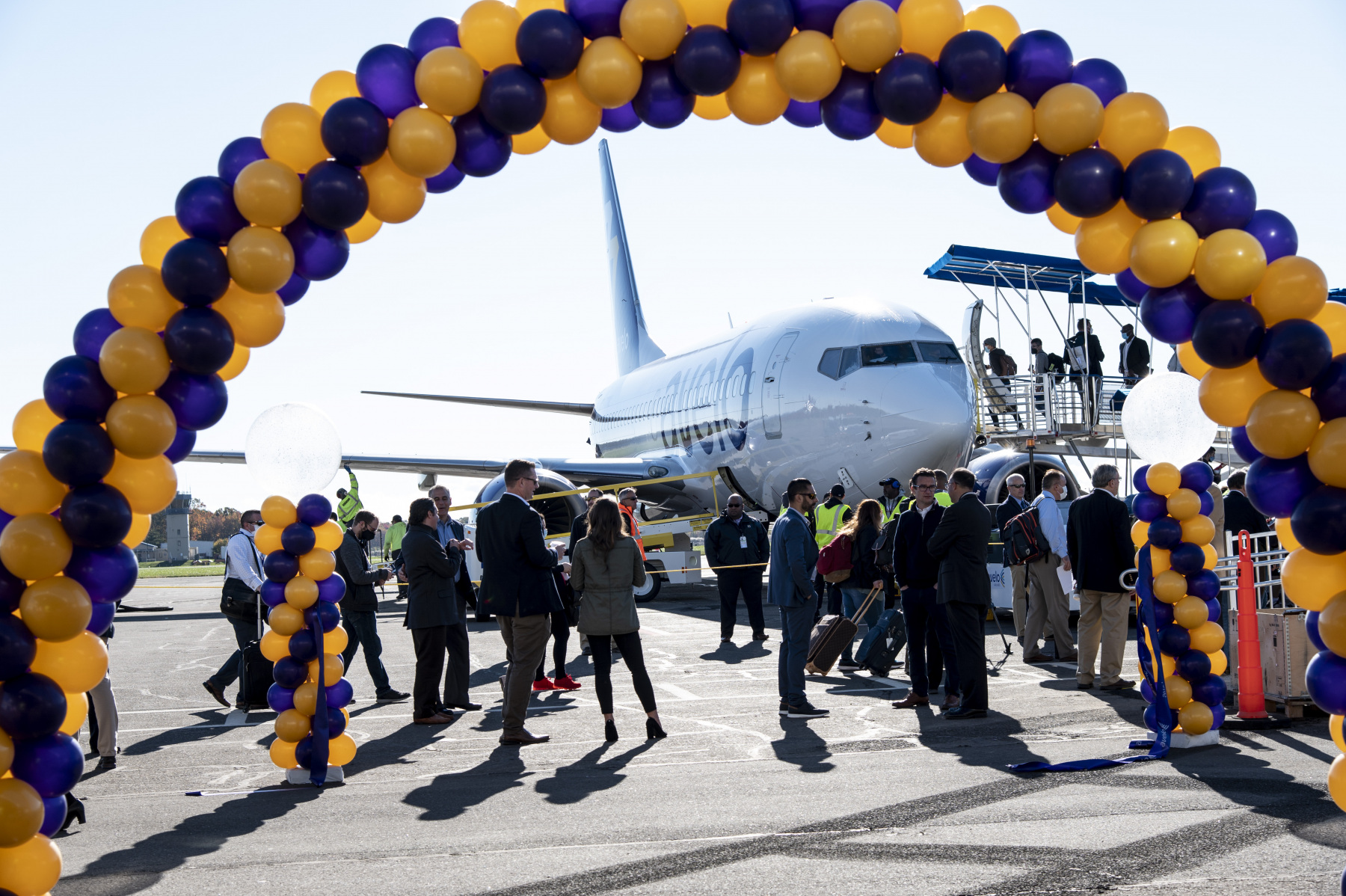
Celebrating the inaugural Avelo Airlines flight from HVN on 3 November 2021 | IMAGE: AVELOAIR.COM
Tweed New Haven Airport, located in southern Connecticut about an hour south of Hartford’s Bradley International Airport, and just over two hours northeast of Manhattan, is also experiencing sustained growth.
Avelo currently serves 14 destinations from HVN, which is rather remarkable considering the airport was left without any scheduled airline service in September 2021 after American Eagle suspended service to Philadelphia (PHL).
The inaugural flight from New Haven took off to Orlando – with much fanfare – on 3 November 2021. Shortly after HVN-MCO service began, Avelo launched service to five other Florida cities including Fort Lauderdale (FLL), Fort Myers (RSW), West Palm Beach (PBI), Sarasota/Bradenton (SRQ), and Tampa (TPA).
In addition to the Florida destinations, Avelo now offers nonstop flights from New Haven to the following cities:
Chicago Midway (MDW)
Nashville (BNA)
Raleigh/Durham (RDU)
Charleston, SC (CHS)
Myrtle Beach (MYR)
Savannah/Hilton Head (SAV)
Baltimore/Washington (BWI)
Wilmington, NC (ILM)
The airline says 150 crewmembers and five Boeing 737-700 aircraft are currently based at HVN. The airport is also undergoing a $70 million expansion project due largely to the success of Avelo.
Burbank Works it Out
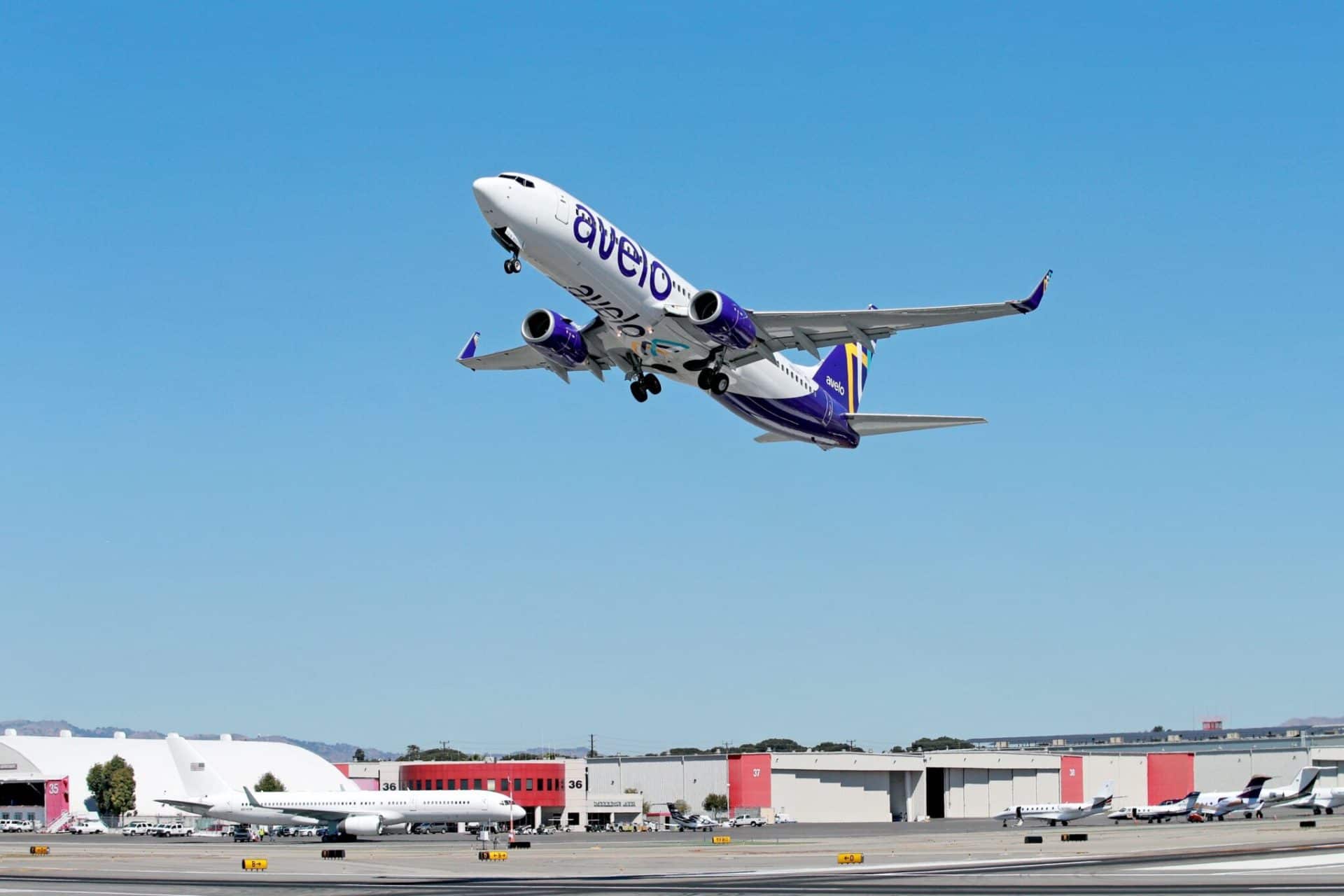
BURBANK, CALIFORNIA – APRIL 28: Avelo Airlines takes off with first flight between Burbank and Santa Rosa at Hollywood Burbank Airport on April 28, 2021 in Burbank, California. (Photo by Joe Scarnici/Getty Images for Avelo Air)
Avelo Airlines’ first base – Hollywood Burbank Airport (BUR), located 16 miles northwest of downtown Los Angeles – continues to fine-tune its operation.
At launch, Avelo offered service from Burbank to eleven cities, including:
Arcata/Eureka, California (ACV)
Bend/Redmond, Oregon (RDM)
Bozeman, Montana (BZN)
Eugene, Oregon (EUG)
Grand Junction, Colorado (GJT)
Medford, Oregon (MFR)
Mesa/Phoenix, Arizona (AZA)
Ogden, Utah (OGD)
Pasco, Washington (PSC)
Redding, California (RDD)
Santa Rosa, California (STS)
Three months after the inaugural flight from Burbank to Santa Rosa on 28 April 2021, Avelo announced three new cities: Monterey, California (MRY), St. George (SGU) and Provo (PVU), Utah, and Fort Collins-Loveland, Colorado (FNL).
Things then began to get a bit turbulent for the new carrier.
Monterey, St. George, and Provo flights were suspended before they even began. Around the same time, Avelo pulled out of Mesa/Phoenix, Grand Junction, and Bozeman. A second attempt into Arizona – this time to Tuscon (TUS) – was halted after just one month of service. Fort Collins-Loveland flights ended in June of this year.
It wasn’t all bad news for Avelo, as the airline added flights from Burbank to Boise, Idaho (BOI) in May.
Avelo currently flies to eight cities from Burbank.
Interestingly, Avelo also flies to Las Vegas (LAS) from Santa Rosa and Redding. These are the only flights in Avelo’s western operation that don’t go through Burbank.
A Unique Business Model
BURBANK, CALIFORNIA – APRIL 07: The Avelo aircraft is seen at Hollywood Burbank Airport on April 07, 2021 in Burbank, California. (Photo by Joe Scarnici/Getty Images for Avelo)
Like other ultra low-cost carriers (ULCC), Avelo Airlines offers no-frills service at exceedingly low fares. Customers will not find amenities such as seatback TVs, Wi-Fi, or power outlets. A fee model similar to other ULCC’s enables customers to pay for the services they would like, including priority boarding ($15) and preferred seating ($11+, window/aisle/seats with additional leg room). Both carry-ons and checked baggage will cost you $40 each at the time of booking ($50 at the airport).
Despite the fees many ULCC flyers have become accustomed to, Avelo’s relatively simple operation does have some unique advantages. The airline serves primarily underserved small markets and bypasses huge hubs, leading to fewer delays and cancellations compared to traditional hub-and-spoke carriers. Another advantage of not having to connect via a hub airport is that the chance of a bag getting lost or delayed is drastically reduced.
Crewmembers also appreciate the non-hub setup. All of Avelo’s flights begin and end the day at one of its three bases. This means crews can go home at the end of each day, and overnight hotel stays are not required.
While aircraft are parked at the bases overnight, Avelo’s maintenance crew can address any mechanical issues on the modern, all-Boeing fleet. Avelo has ten aircraft in its fleet, including six 147-seat 737-700s and four 189-seat 737-800s. Five more aircraft will join the fleet by early 2023.
Avelo boasts an impressive performance track record with enviable on-time reliability. Fewer than one percent of its flights have been canceled (not including weather or air traffic control delays).
A Bright Future
Avelo Airlines route map as of 28 July 2022 | Image: AveloAir.COM
When Avelo Airlines launched last year, it was the first new U.S. airline to take the skies since Virgin America in 2007. Ironically, not even a month after Avelo’s first flight, Breeze Airways’ inaugural flight took off from Tampa.
With the looming merger of JetBlue and Spirit, does Avelo have what it takes to fill the void that will be left by ULCC competitor Spirit Airlines? Only time will tell.
Like any fledgling business, startup airlines often take time to find their footing. Avelo Airlines is no exception.
However, if the aggressive expansion rate over the last few weeks indicates where Avelo is headed, it seems they have a very bright future indeed.
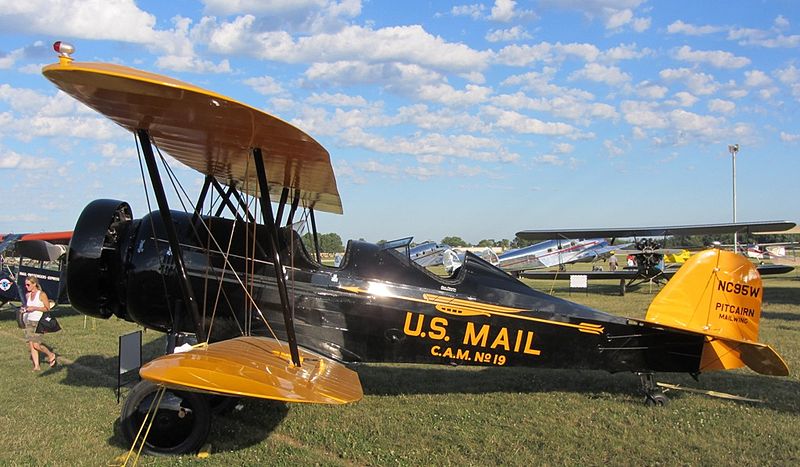
The original Eastern Airlines (EAL/EA) operated for 65 years from 1926 to 1991 and flew 23 different types of planes. Throughout these years Eastern grew to fly 830+ planes which all started with a single engine Pitcairn Mailwing with service from New York to Atlanta.
Pitcairn Mailwing PA-7S – First Plane that Flew with EASTERN
Over the years the airline grew and became more of a household name. The airline focused mainly on North and South American but also ventured into Europe. The Eastern name remained true since the majority of their routes were in the eastern-half of the United States. During these years of growth Eastern built hubs in Miami, Atlanta and New York. But unfortunately due to mis-managment and labor issues the airline shut its doors on January 19th, 1991.
Since 1991 there have been two spinoffs of Eastern, including: Eastern Air Lines (2015-2017) and Eastern Airlines, LLC (rebranded from Dynamic Airways) after Eastern obtained intellectual rights to the brand. Like many large airlines of the past there are still a handful of the original Eastern planes still flying or preserved so you can see them.
Through extensive research we were able to find 11 of the original Eastern Airlines planes that are still flying. Starting back in the late 1930’s we found three DC-3s that are still in service.
There Are Still More Questions Than Answers After This Unusual Accident
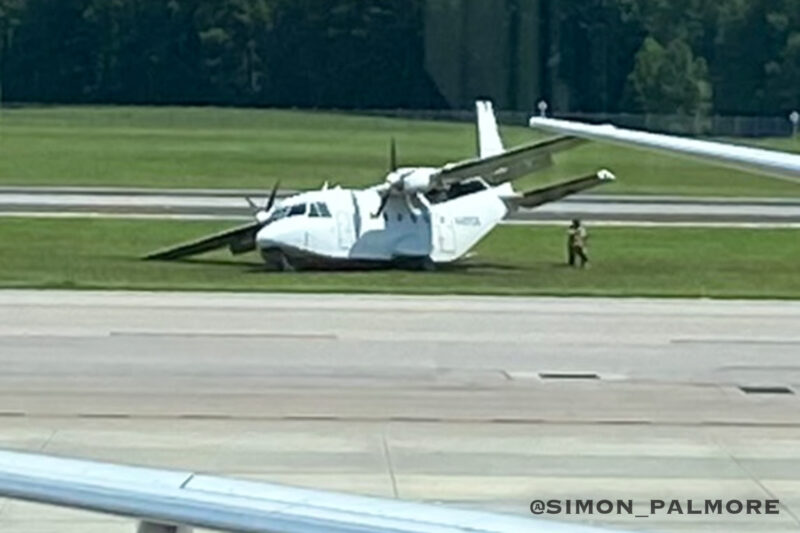
A man is dead following an incident yesterday (July 29, 2022) where he fell from a twin-engine CASA CN-212 Aviocar as it approached Raleigh-Durham International Airport in North Carolina.
The aircraft was making an emergency landing after losing its right wheel. Two souls were onboard, but while approaching RDU the co-pilot fell from the aircraft, which at the time was about 15 miles to the southwest of the airport over the town of Fuquay-Varina.
The local police department identified the man as 23 year old Charles Hew Crooks (next of kin were notified first). His body was located in someone’s backyard after a resident flagged down first responders already searching the area, reporting that they heard an unusual noise and saw broken tree branches.
In a press conference last night, authorities said Crooks fell from around 3,500 feet and landed 30-40 feet away from a house. He was not wearing a parachute.
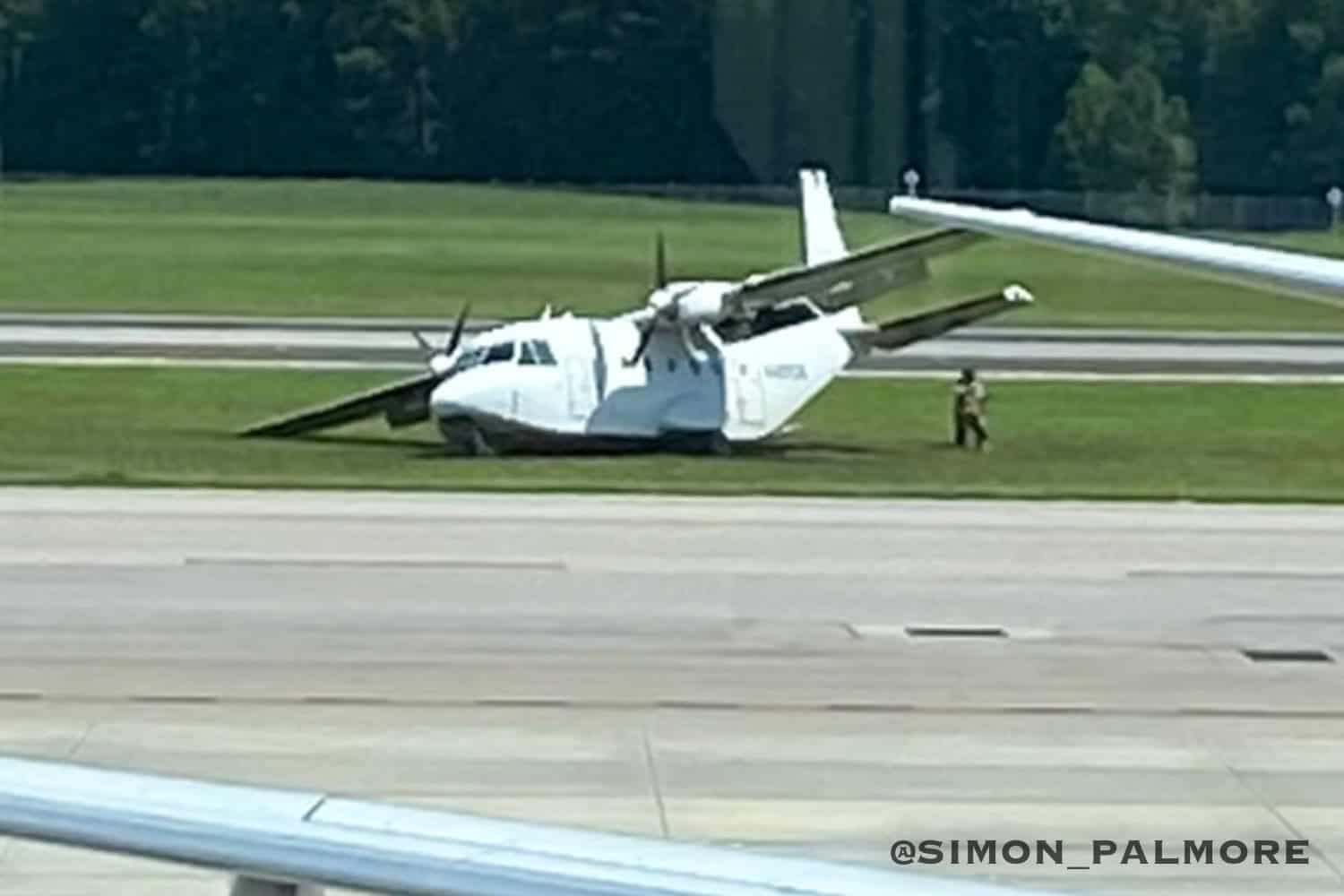
a twin-engine CASA CN-212 Aviocar at Raleigh-Durham International Airport on july 29, 2022 after making an emergency landing. photo credit: @Simon_Palmore via Twitter (used with permission)
The pilot, who has not been identified, landed the plane at RDU before skidding onto some grass and partially spinning to a stop, suffering only minor injuries.
The National Transportation Safety Board (NTSB) and FAA are leading the investigation, and expected to question the pilot today since he was released from a local hospital last night. It is unclear if Crooks jumped from the plane, fell out by accident (perhaps trying to visually confirm the tire working or not), or was the victim of a criminal act.
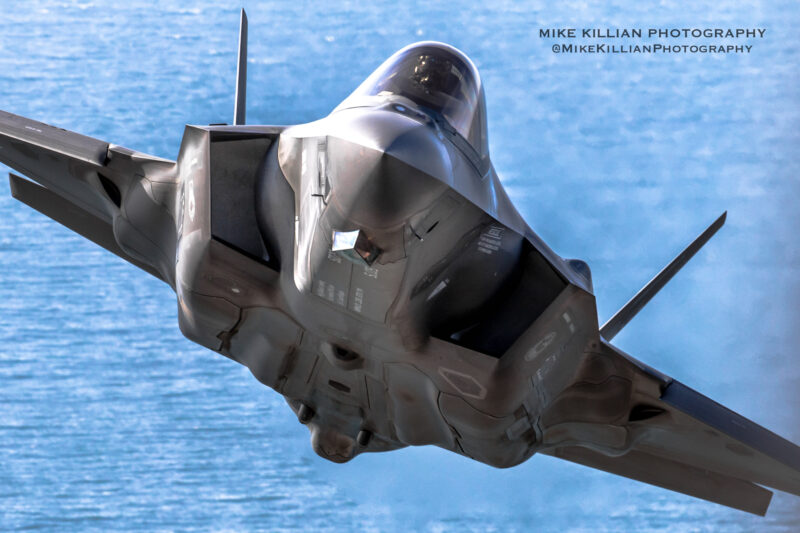
The U.S. Air Force is standing-down and inspecting their F-35A Lightning II stealth fighters over concerns about a defect in the jet’s explosive ejection seat cartridges, following a discovery of the problem by the manufacturer, Martin-Baker.
Air Combat Command (ACC) spokeswoman Alexi Worley confirmed the stand-down in response to inquiries by Breaking Defense, who first broke the story.
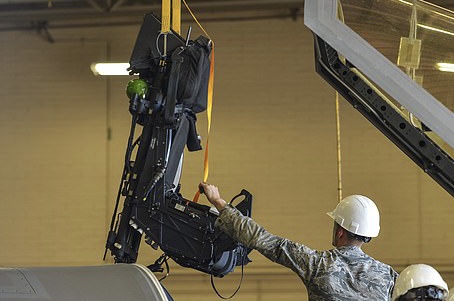
A F-35A Martin-Baker ejection seat (photo credit: USAF)
According to Worley via Breaking Defense, ACC began a Time Compliance Technical Directive on July 19 to inspect all of the cartridges on the ejection seats within 90 days, and started the stand-down of the F-35A fleet today to expedite the inspection process.
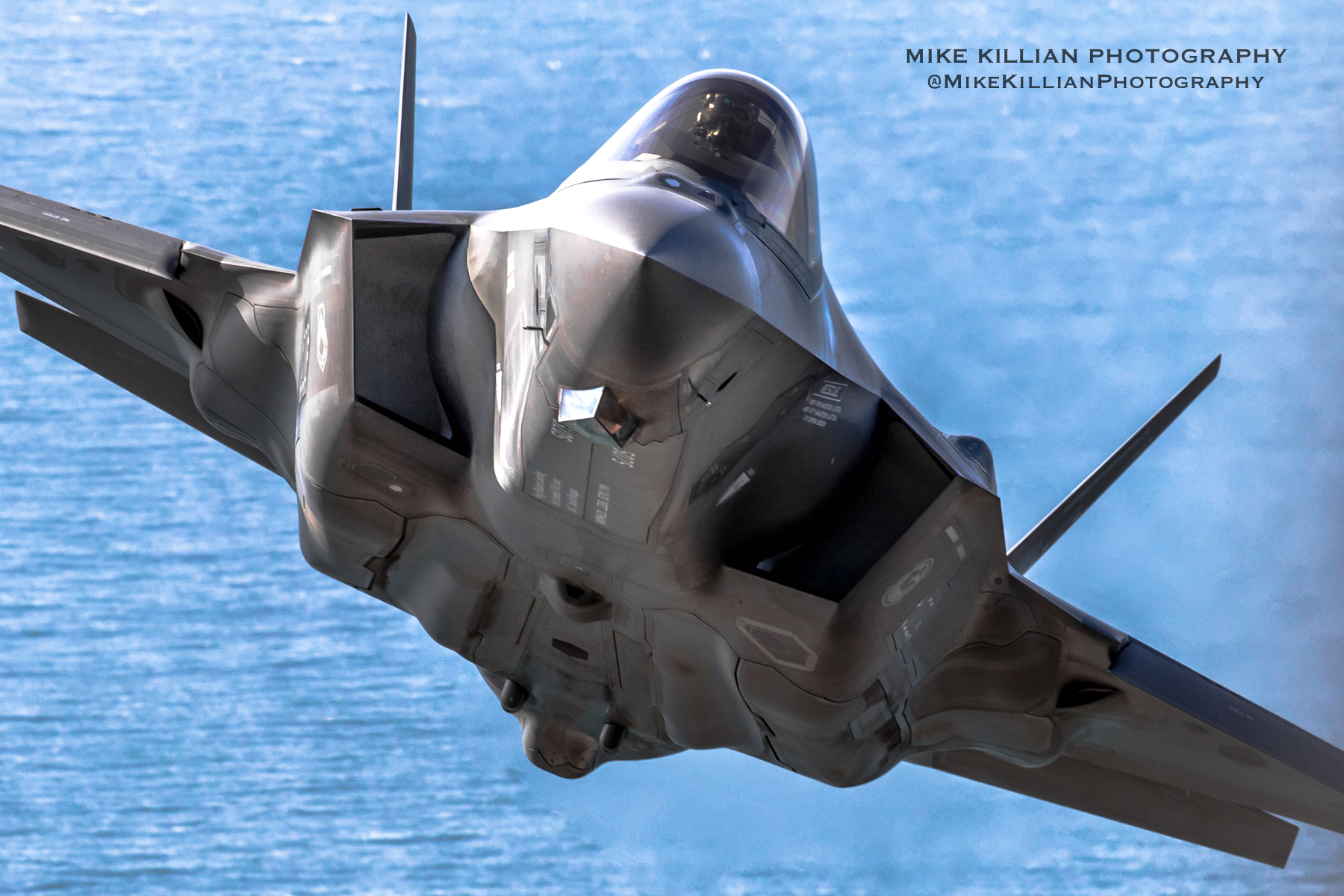
U.S. Air Force F-35A Lightning II (photo credit: Mike Killian / AvGeekery.com)
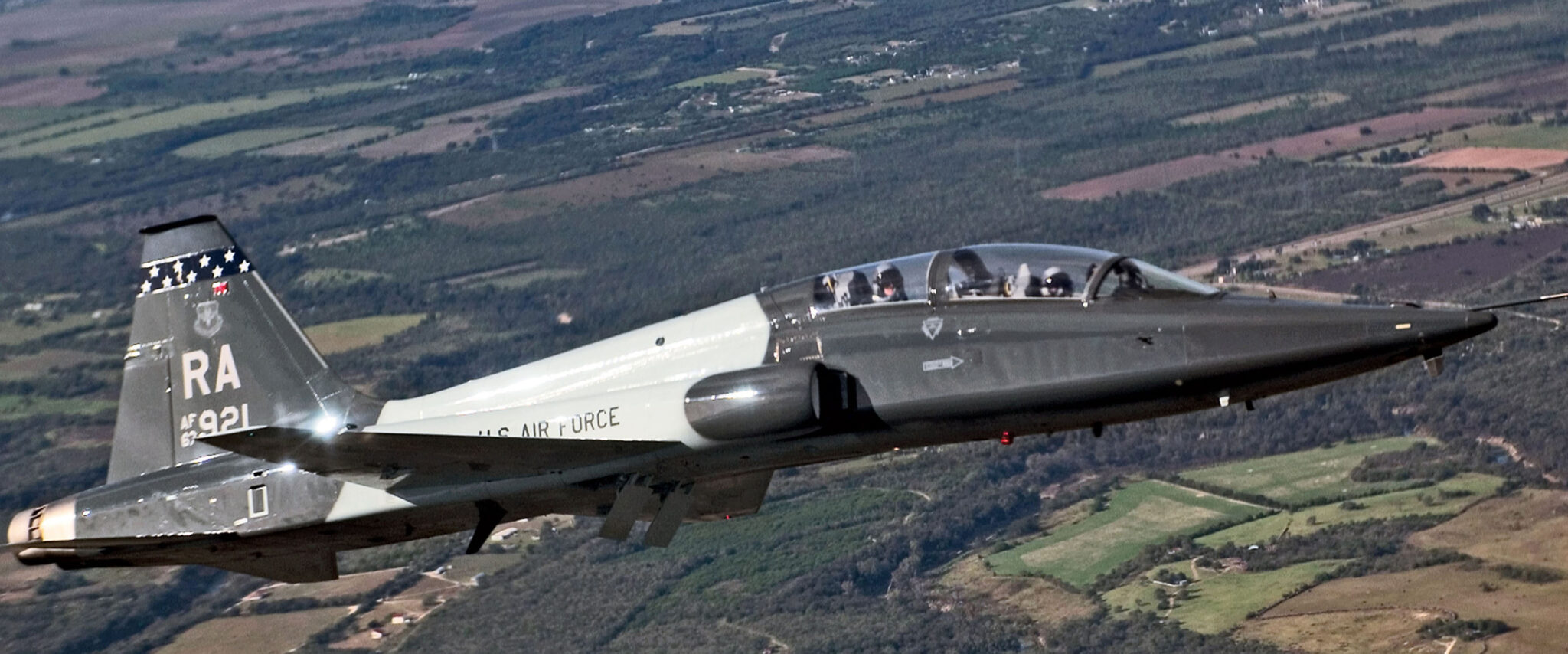
Air Force Air Education and Training Command has also grounded some 300 jet trainers for the same concerns and inspections, which include T-38Cs and T-6 Texan IIs (ACC T-38s use A and B models with different ejection seats, so they are unaffected).
Specific aircraft will return to service as maintainers confirm their ejection seats are fully functional, or replace any defective cartridge actuated devices that they find. The devices are used to launch a pilot out of the aircraft in case of an emergency.
T-38C TRainer (photo credit: USAF)
The U.S. Navy has been doing the same with an undisclosed number of their jets as well, grounding F/A-18 Hornets, Super Hornets, E/A-18G Growlers, and T-45 Goshawk, and F-5 Tiger II trainers.
According to a press release by Naval Air Systems Command, the problem “only affects aircraft equipped with [cartridge actuated devices] within a limited range of lot numbers.”
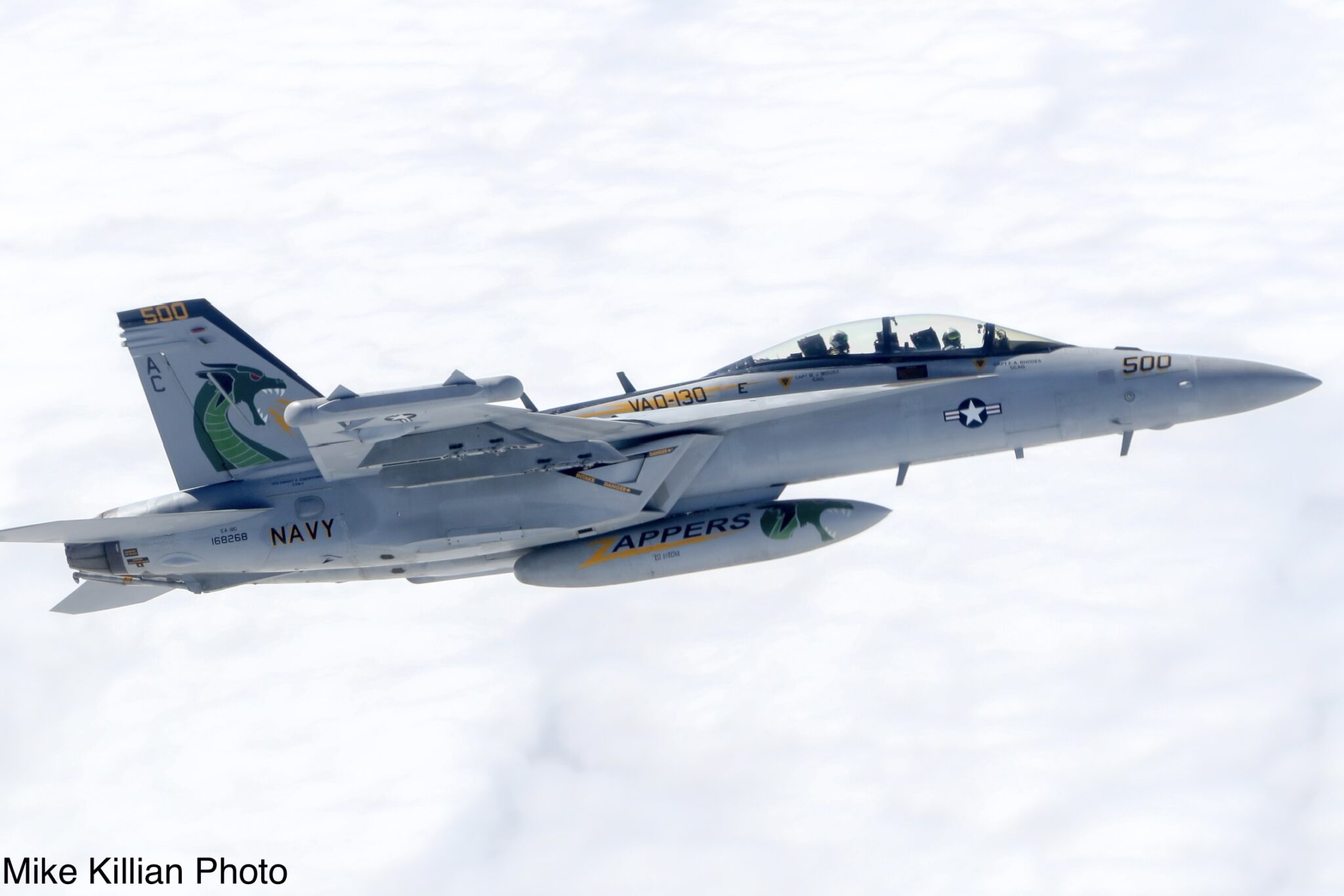
U.S. Navy E/A-18G Growler from electronic attack squadron vaq-130 (photo credit: Mike Killian / AVGeekery.com)
The Navy will not elaborate on numbers of aircraft standing-down, due to operational security reasons.
The Naval Surface Warfare Center Indian Head Division (NSWC IHD) supplies the part in question to the Army, Navy, USMC and USAF, and are using “validated radiography procedures” to scan their inventory for properly manufactured parts to send to fleet maintenance centers.
“My Fighter Career” is a limited series of articles by Byron Hukee. He’s a humble, bad ass, retired USAF pilot who flew everything from the F-100 to the F-16. You can read his previous posts here:
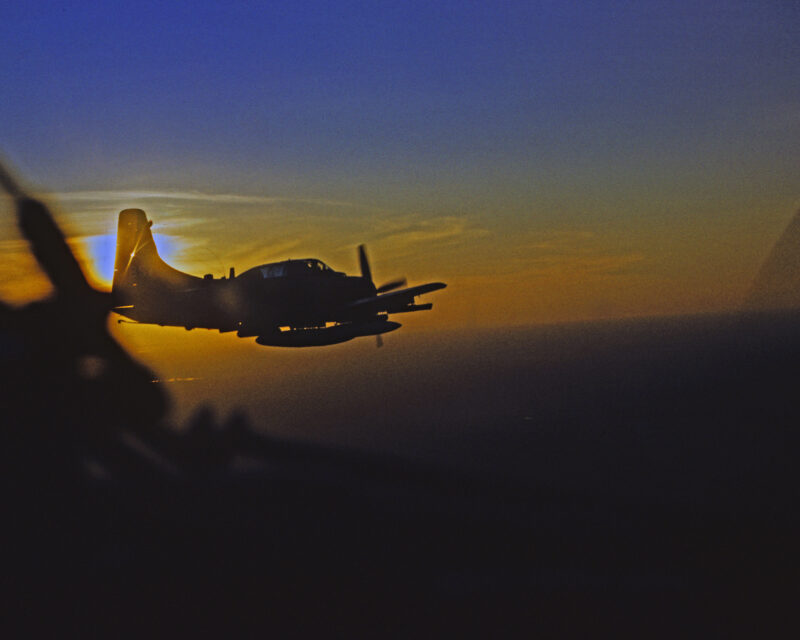
After getting my wife and small son settled in Minnesota in a small town not too far from my parents, I was off to Southeast Asia (SEA) for my Skyraider combat tour. I would be assigned to the last remaining A-1 squadron at Nakhon Phanom (NKP) Royal Thai Air Force Base in Thailand. The squadron was the 1st Special Operations Squadron (SOS) and coincidentally it was also the first USAF A-1 squadron. In 1964 it was the 1st Air Commando Squadron and its initial role was to provide training to the fledgling Vietnamese Air Force (VNAF). The first USAF Skyraiders had VNAF markings since thy were ostensibly providing training for young VNAF pilots. It wasn’t long before the markings were changed to the red, white, and blue of the USA.
Departure Date Looms
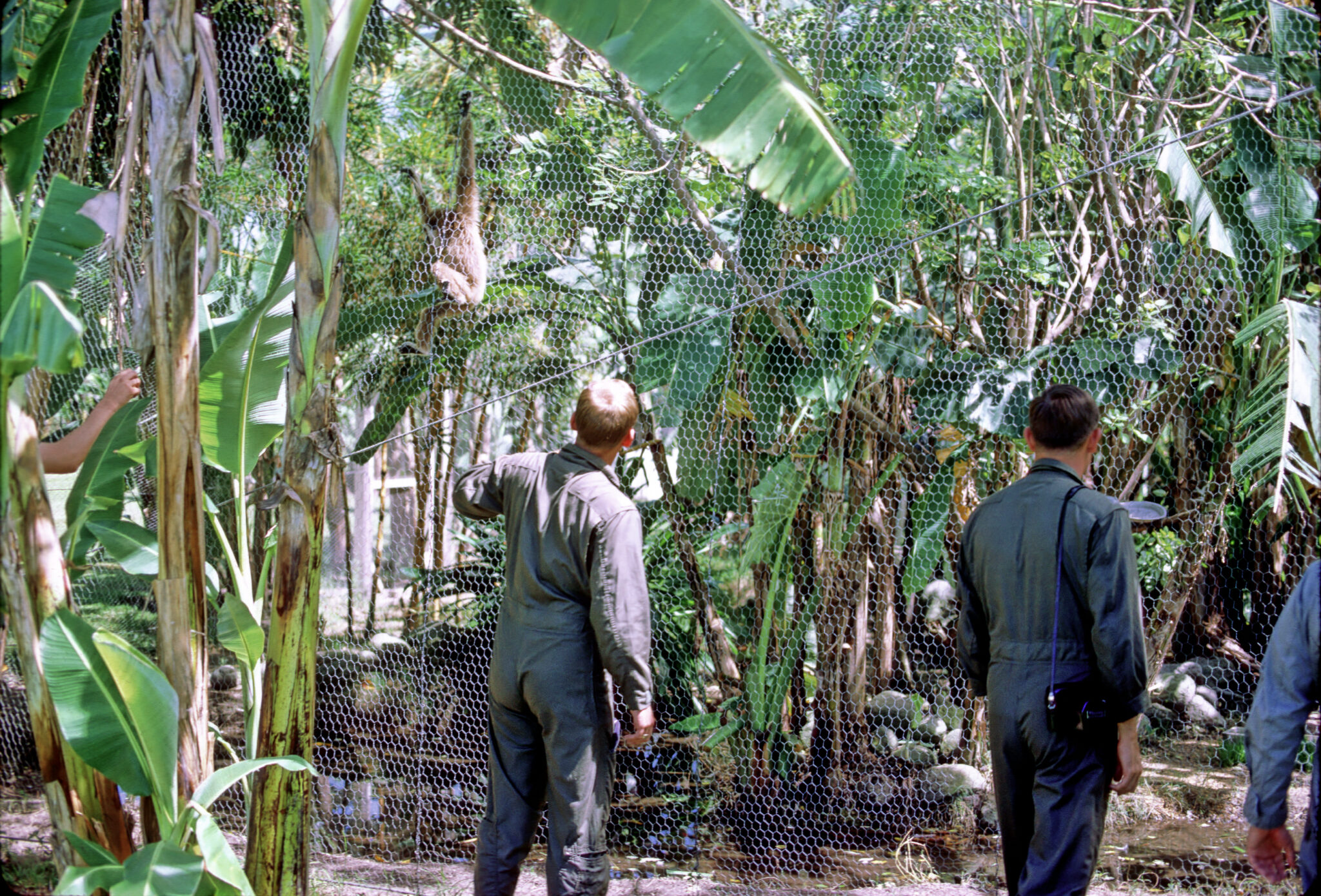
Petting Zoo at USAF Jungle Survival School
My port call was on 13 October 1971 and I departed from Travis AFB on a World Airways contract charter Boeing 707. Traveling with me in addition to the several other GIs headed for the war were three other Skyraider pilots I had trained with, one of whom was also in my pilot training class at Webb AFB and in my F-100 training class at Luke, Captain Ross “Buck” Buchanan. Buck was a “retread” nav who had already spent time in SEA on both the C-130 and the KC-135. The others I knew were two OV-10 pilots who also had trained at Hurlburt. Both were also in my F-100 class at Luke. After a refueling stop at Hickam AFB in Hawaii, we continued on to land at our first destination of Clark AB in the Philippines.
My overnight accommodations in the Philippine jungle
Our task there was to complete the USAF Jungle Survival Training course in the jungles in the vicinity of Clark AB. After a couple of days of classroom training and a visit to the “petting zoo” where we were introduced to all the caged creatures in the jungle that wanted to eat you, we were taken outdoors to learn how to survive in the jungle. Our graduation exercise was to play hide and seek with the local Negrito villagers. We were all given a chit that we had to surrender to the hunters when were found. Their reward for every chit they collected was the equivalent of about two days of food that they normally had to harvest or catch, so they were motivated to say the least.
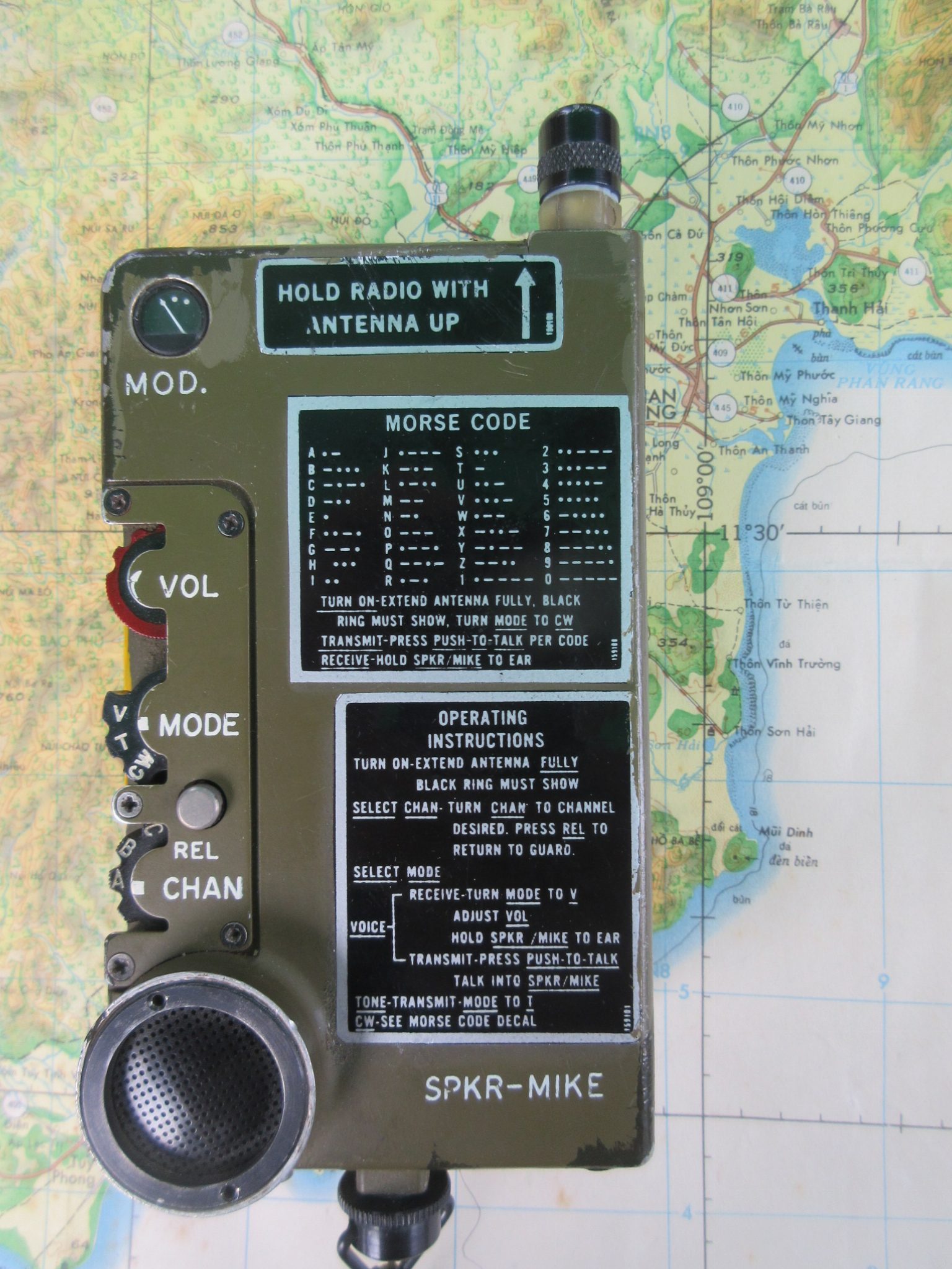
The 4-channel URC-64 was the survival radio carried by all aircrew in SEA
Survival training was difficult to say the least
For most of us, it was indeed when we were found, not if we were found. We were given about 10 minutes to disperse and find a place to hide before an air horn sounded meaning the hunt was on. Based on my training at Hurlburt and getting “indoctrinated” about what to do if we were forced to extract from our Skyraider, I knew the stakes were high once we “arrived” in the jungle via a “nylon letdown.”
Large snake at petting zoo
I put away my innate fear of snakes and decided I would not be found. a mass of vines and jungle vegetation just beside one of the trails looked like it would work to keep me hidden. I cleared my tracks from the trail and moved cautiously to the side of the entangled vines and spotted a small opening that I crawled into. There, I was able to conceal my entry point with vegetation and moved further into the thicket. Then I tried to relax and listen. When other students were found, a whistle would be sounded. I heard several nearby and some further in the distance. I could hear barefooted footsteps not so far away, but they went right on by. After the prearranged period of time, the airhorn sounded again and I eased my way out of my hide and walked back to our muster point and handed my chit to one of the instructors. I believe I was one of three others out of about 50 students who were not found!
1Lt Hukee at end of Jungle Survival school San Miguel and diploma in hand
The Long, Slow (And Somewhat Fun) Ride To Combat
The next day we were loaded on a C-130 and headed to Bangkok. I checked in with our new squadron and were told to “chill” in Bangkok and to enjoy ourselves. We checked into the Siam Intercontinental Hotel and did indeed enjoy our selves! We all were anxious to get to NKP and renew acquaintances with some other pilots who had already arrived at NKP. While at Luke AFB during F-100 training, I met two other pilots who also were switched to Skyraiders when their F-100 assignments to Vietnam were also changed to A-1s. Capt Ramsay Vincent and Maj Esequiel Encinas were a class ahead of me at Luke and had arrived in Vietnam in mid September. It would be great to meet up with them again.
The U.S. Air Force has deployed an Alaska-based squadron of the most lethal fighter jets in the world to Poland, in an obvious signal to Russia following threats of tougher actions if the western world continues arming Ukraine.
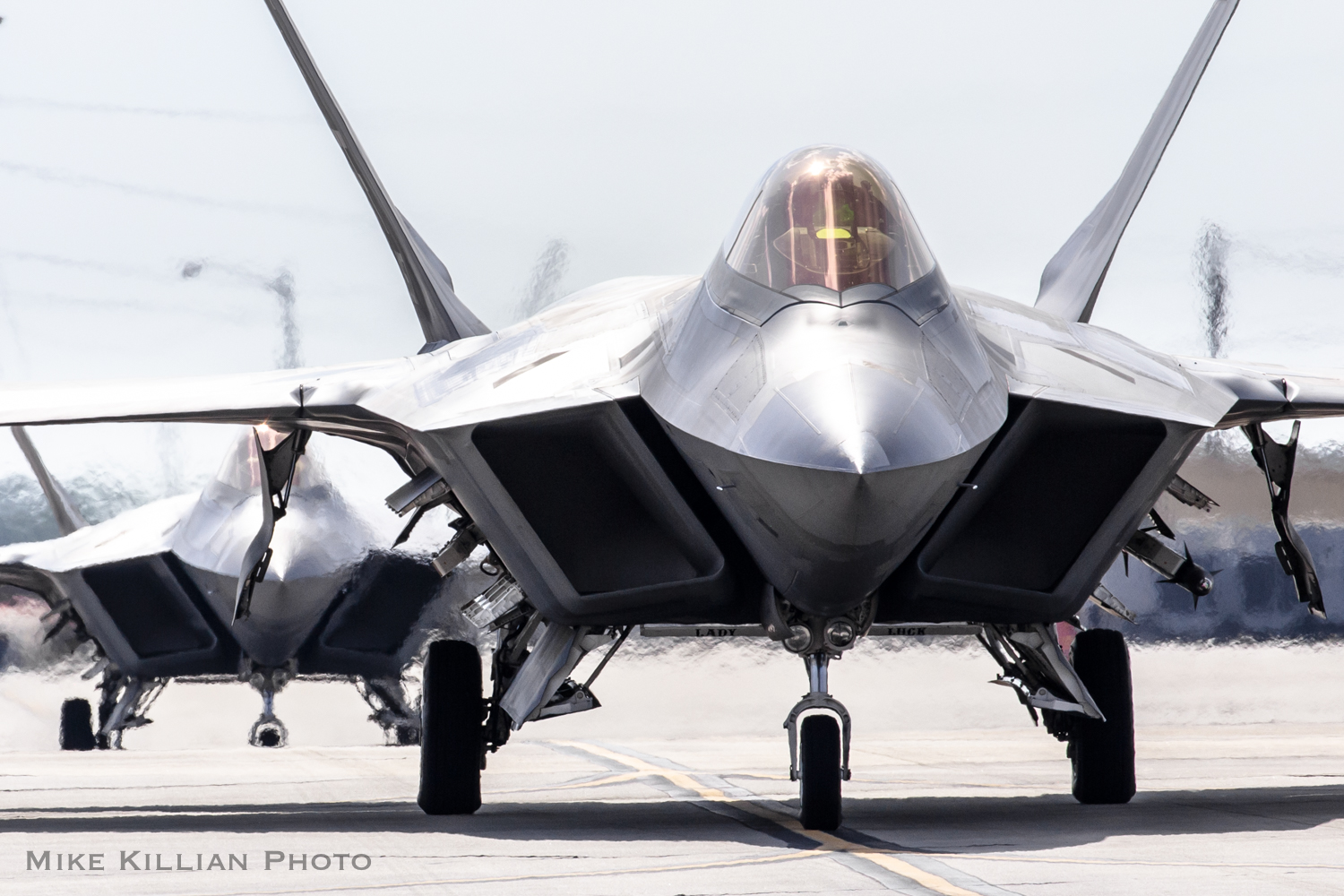
f-22 raptors taxi on the flight line for a training mission (photo: mike killian / avgeekery.com)
F-22 Raptors from Joint Base Elmendorf-Richardson’s 90th Fighter Squadron, 3rd Wing, have been sent to the 32nd Tactical Air Base in Łask, Poland to support NATO Air Shielding missions across Eastern Europe, according to a press release issued on July 27.
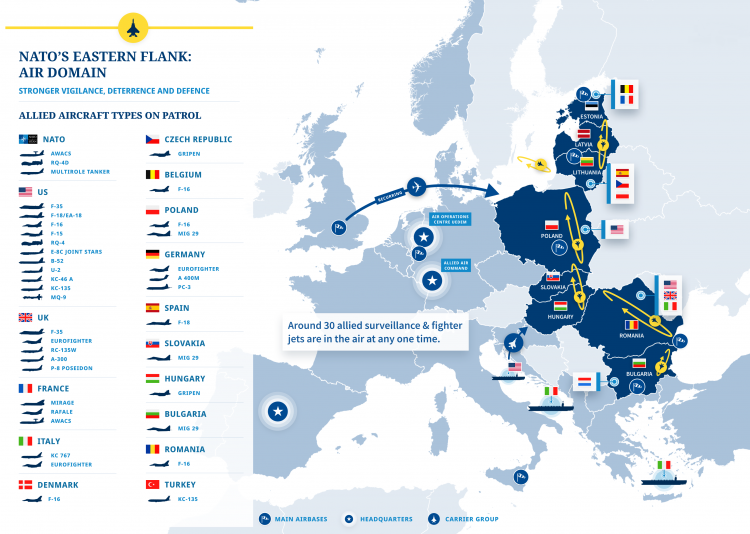
map of nato aircraft supporting europe’s eastern flank against russia (credit: nato hq)
“The NATO Air Shielding mission integrates Allied Air and Surface Based Air and Missile Defence units into the NATO Integrated Air and Missile Defence system under NATO Command and Control,” says the USAF. “It will provide a near seamless shield, ensuring NATO Allies are better able to safeguard and protect Alliance territory, populations and forces from air and missile threat.“
The Raptors will now operate as the 90th Expeditionary Fighter Squadron, joining other U.S. military aircraft and allied nations in patrolling the region’s skies 24/7 to deter and protect NATO against any Russian aggression.
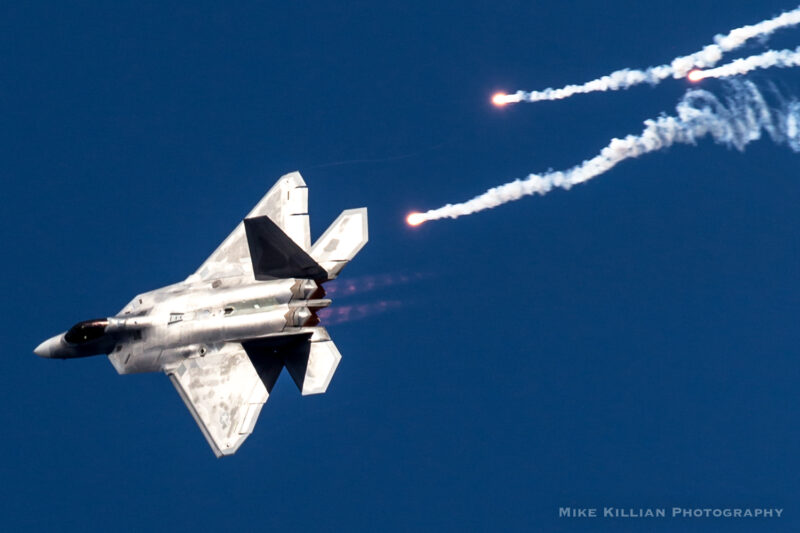
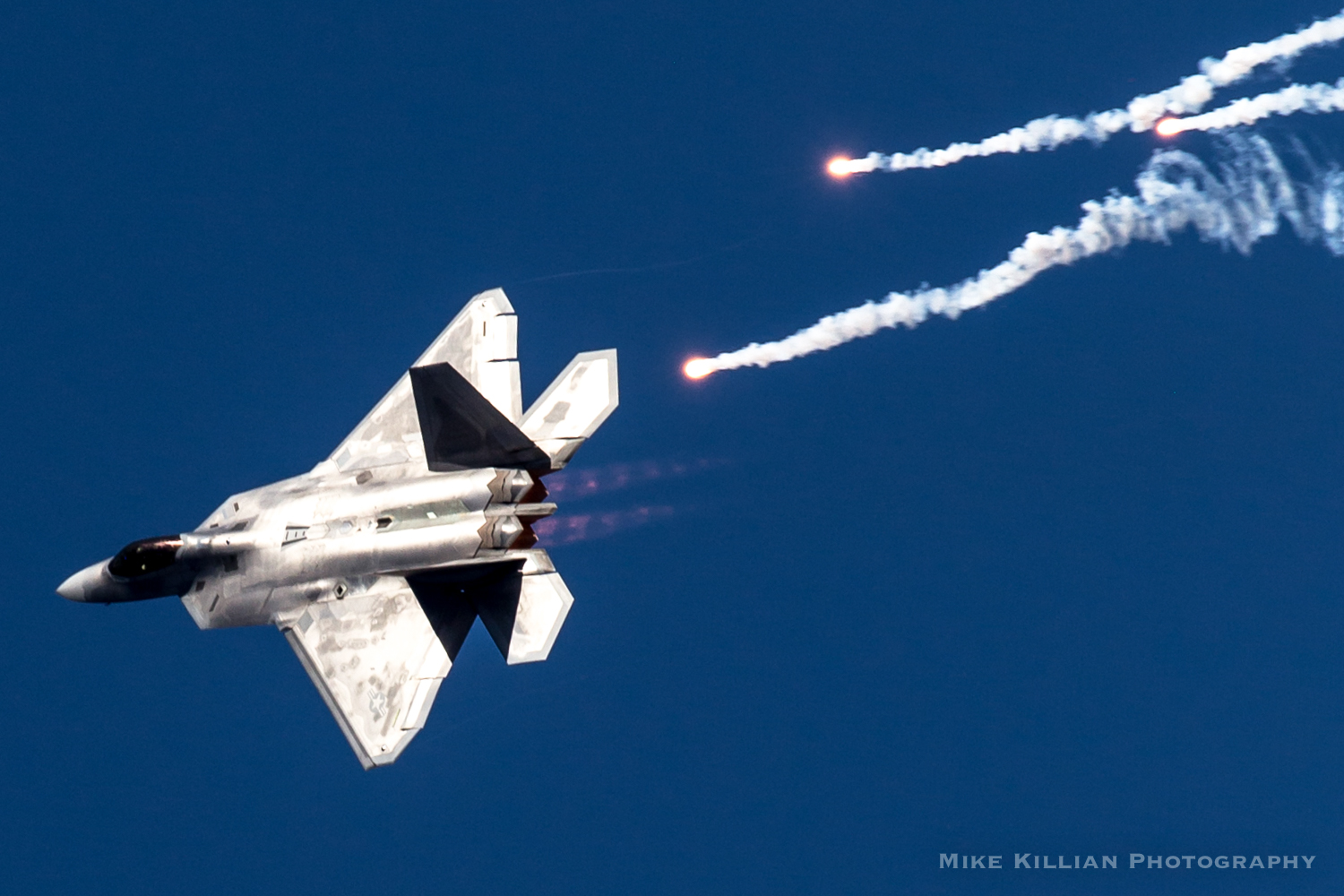
a usaf f-22 raptor popping flares as counter-measures against enemy fire (photo: mike killian / avgeekery.com)
F-22s not only employ stealth design and technology, but can also execute both air-to-air and air-to-ground attacks. Simply put, they can wipe an adversary out of existence without even being noticed, and their vector-thrust engines means they can maneuver and fly in ways that most other aircraft cannot (especially with the best trained pilots in the world at the controls).
“The Raptor is a critical component of the global strike Task Force, and designed to project air dominance, rapidly and at great distances to defeat threats,” says the USAF. “It cannot be matched by any known or projected fighter aircraft.This is a clear expression of NATO’s commitment to readiness which promotes regional security and stability.”
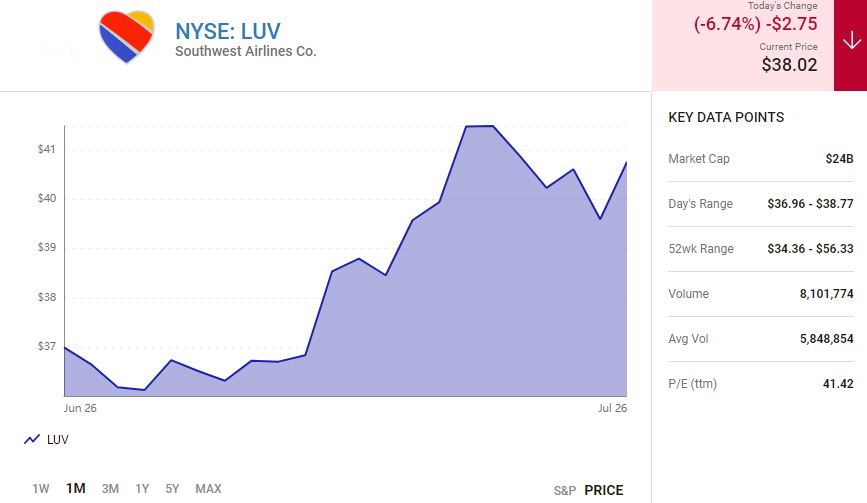
Southwest Airlines reported record quarterly net income today. Second-quarter earnings exceeded analyst consensus. However, second-half guidance was a disappointment to investors due to rising cost expectations, sending shares down 8%.
Southwest Q2 2022 Earnings at a Glance
BREAKING: Southwest Airlines Shares Down 8% in Spite of Record Quarterly Income 43
Record quarterly net income (excluding special items) of $825 million
Record quarterly operating revenue of $6.7 billion
Q2 2022 adjusted earnings of $1.30 per share
Capacity for Q3 is expected to be in a similar range as pre-pandemic levels reported in Q3 2019
Forecast for Q3 revenue is up 8% to 12%
Non-fuel costs are expected to increase by 12% to 15% amidst unstable fuel costs
CEO Bob Jordan said the record results are a significant milestone for Southwest in the airline’s pandemic recovery. Southwest has historically been very stable and has been resilient throughout the pandemic. But, like other airlines, it faces headwinds because of the macroeconomic environment which led to today’s downward tick.
For more than a year, air travel was drastically down and although the summer travel season was robust, the possibility of an economic recession and higher costs are expected to take a toll on profitability heading into the third quarter. The main factors affecting profitability include:
Higher Fuel Costs—Even though they’ve moderated somewhat recently, higher jet fuel prices have plagued the entire industry. But to counter this, Southwest has a massive fuel hedge that provides protection against unstable prices.
Aircraft Delivery Delays—Sixty-six deliveries are expected in 2022 versus the 114 that were previously expected. The delays are due to Boeing’s supply chain shortages. During today’s earnings conference call, Jordan said the aircraft will be delivered in 2023 and despite the delays, he’s confident that Southwest will keep flight schedules on plan.
Hiring—The airline plans to continue to hire pilots and will hire about 2,200 pilots next year, according to Jordan. In other departments, staffing levels were intentionally ramped up ahead of demand but hiring will moderate in those departments for the foreseeable future to tamp down costs and return to historical efficiency.
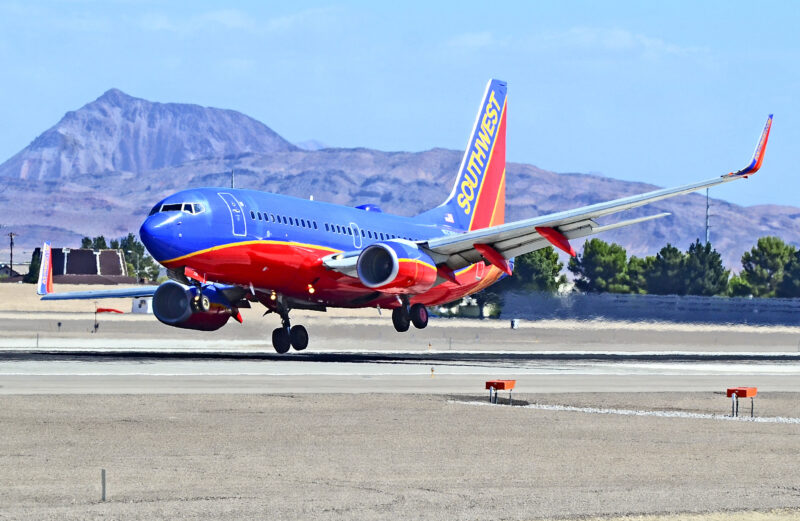
image via tomas del coro
Southwest Recovery Plans Continue
Southwest’s recovery strategy includes more investment into the Southwest Customer Experience. A new program, ‘flight credits don’t expire,’ has been launched. Customers are looking for more flexibility and the program is expected to increase customer loyalty, according to Southwest Chief Marketing Officer Ryan Green. The program is expected to have a one-time negative financial impact on earnings in Q3.
Southwest has also been expanding routes. In 2021, a major expansion in Hawaii with three new gateways and 15 new routes has proven to be a successful strategy. More route expansions are planned as a way to boost revenue.
At the end of the day, most industry watchers say long-term shareholders shouldn’t panic even though the short-term horizon could get somewhat choppy, depending on macro conditions.
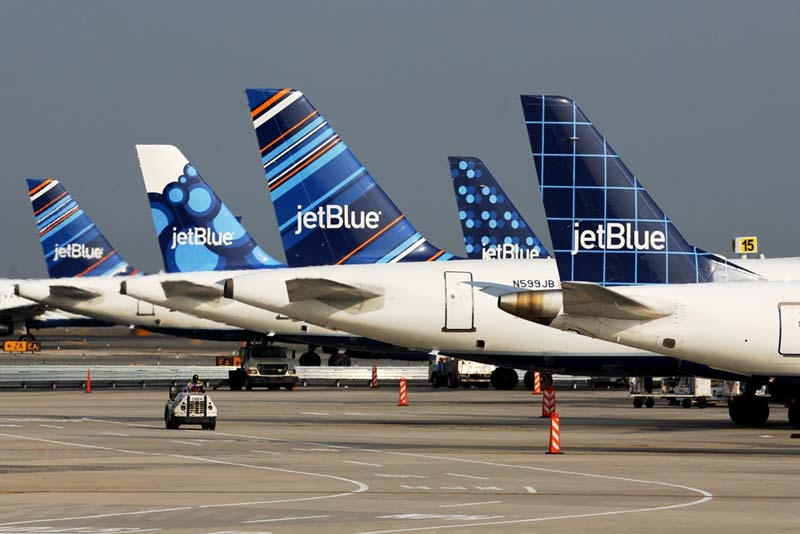
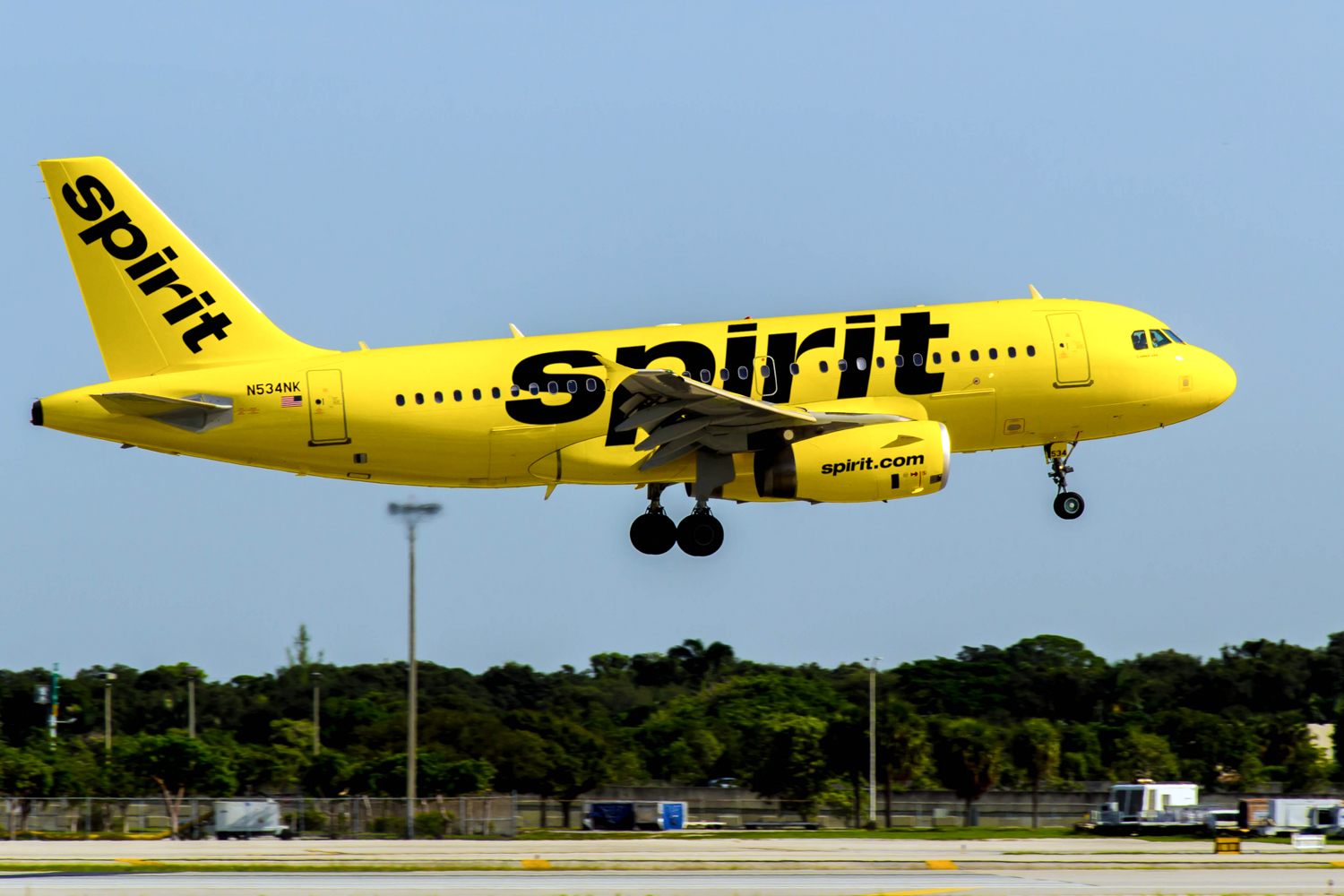
If you like flying with the two companies who ranked last in The Wall Street Journal’s annual ranking of U.S. airlines last year, then you’ll be happy to know they are now merging together. JetBlue is buying Spirit in a $3.8 billion deal announced today, just hours after Spirit shareholders voted against merging with Frontier airlines for a billion dollars less.
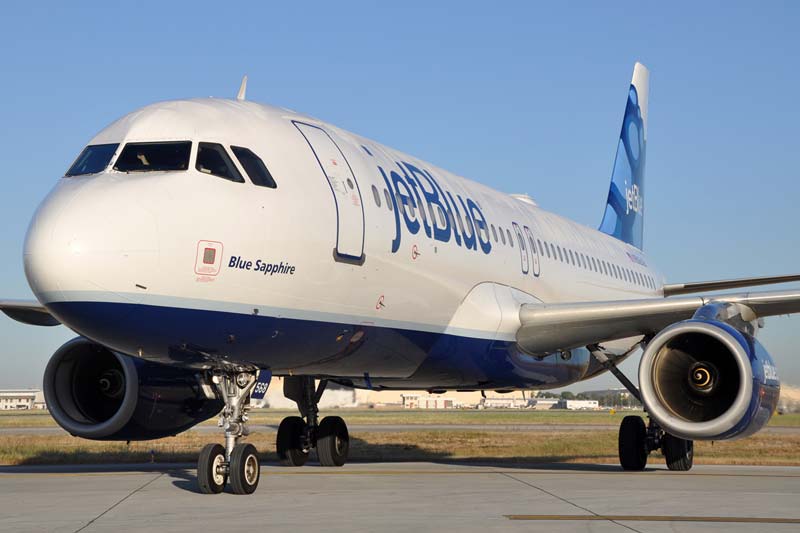
photo: jetblue
“We are excited to deliver this compelling combination that turbocharges our strategic growth, enabling JetBlue to bring our unique blend of low fares and exceptional service to more customers, on more routes,” said Robin Hayes, JetBlue’s chief executive officer, in a press release. “We look forward to creating a customer-centric, fifth-largest carrier in the United States. Spirit and JetBlue will continue to advance our shared goal of disrupting the industry to bring down fares from the Big Four airlines. This combination is an exciting opportunity to diversify and expand our network, add jobs and new possibilities for Crewmembers, and expand our platform for profitable growth.”
photo credit: spirit
The merger is still subject to regulatory approval in Washington D.C., but expected to close by early 2024. Both airlines will keep operating independently until the merger is officially closed. Assuming the deal is approved, JetBlue’s fleet will grow to 458 aircraft, flying to more than 125 destinations in 30 countries and giving them a stronger foothold in key markets like Orlando and Fort Lauderdale, where JetBlue will retain a support center.
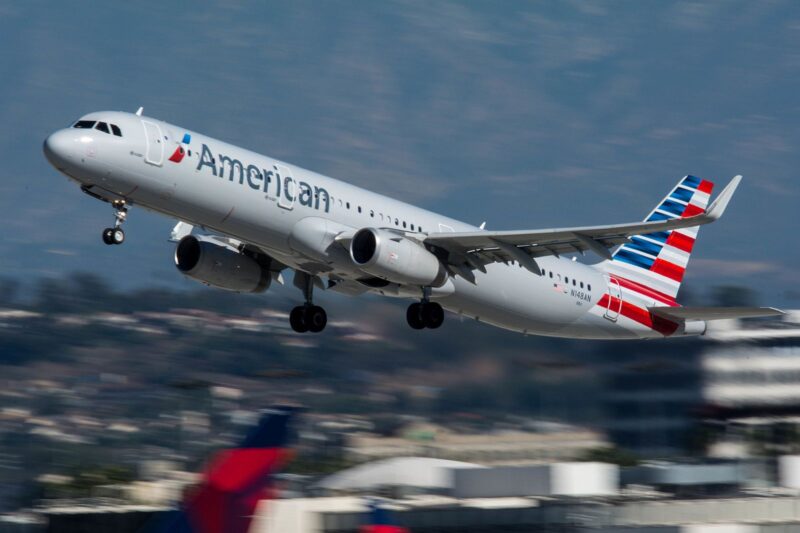
The Spirit brand would disappear, while the new JetBlue remains headquartered in New York. It would become America’s 5th-largest airline after American, Delta, United and Southwest, who control 80% of the domestic market.
photo: jetblue
“We are thrilled to unite with JetBlue through our improved agreement to create the most compelling national low-fare challenger to the dominant U.S. carriers, and we look forward to working with JetBlue to complete the transaction,” says Spirit’s president and chief executive officer, Ted Christie. “Bringing our two airlines together will be a game changer, and we are confident that JetBlue will deliver opportunities for our Guests and Team Members with JetBlue’s unique blend of low fares and award-winning service.”
Learning From a Close Call that Could Have Been Avoided
On April 10, 2019 an American Airlines A321T registered as N114NN was substantially damaged following a wingtip strike during takeoff from New York City’s JFK airport. Though no one was injured, the five year-old aircraft would ultimately be deemed a total loss after the struck wing was found permanently deformed.
In the aftermath, the crew – both highly experienced with a combined total of almost 5000 hours in the Airbus A320 series – reported surprise at the sudden left roll during rotation. Initial speculation focused on the Airbus’s fly-by-wire (FBW) flight controls, but the recently released NTSB final report would ultimately reveal a much more simple cause. The event is a model study on human factors.
Fly-by-Wire Primer
In an Airbus A321, the primary flight controls are managed by a series of seven redundant flight control computers, all operating under multiple sets of “laws” depending on the phase of flight. The FBW system takes pilot or autopilot requests – such as moving a side stick aft to climb – and produces appropriate flight control responses to achieve the end result. Though the ailerons and elevators feature no physical connections to their side stick controllers, the rudder pedals are mechanically linked with the rudder itself. While the architecture may be complicated, the end result for pilots is identical to a traditional airplane, with full control authority combined with built in protections.
Crosswind Takeoff That Should Have Been Fairly Routine
During the takeoff roll, a 15 knot crosswind from the right of the aircraft was present. Like any airplane, this would require the flying pilot (the Captain, on this leg) to utilize left rudder to track straight down the runway. Airbus specifically cautions against using any unnecessary aileron into the wind. During the takeoff, the rudder pedal input varied from neutral to about half left input, but as the aircraft reached its 156 knot rotation speed the Captain increased rudder input to its maximum left deflection. As the aircraft rotated the Captain input side stick commands for roll, first right, then left, then right again. The right wing left the ground first, and both pilots applied full right side stick leading to an aural “dual input” alert. The left wingtip struck the ground before the rudder was alternated to the right then released to neutral as the crew stabilized the aircraft and climbed away. They returned to JFK about 30 minutes later, with the First Officer flying the wounded Airbus.
#breaking New pictures obtained by @CBSNewYork show some of the damage to @AmericanAir flt 300 including what was described as a runway “edge light” embedded in the damaged wing. The plane flew for 28 minutes with that light stuck in the wing! More on the @CBSEveningNews tonight pic.twitter.com/owL4peOxgv
Like all Transport Category aircraft, the A321 is certified to be fully controllable with an engine inoperative and the remaining engine at maximum thrust. Doing this requires a powerful rudder, with a large surface area and substantial deflection. Comparatively, the ailerons are small surfaces with relatively little power of their own, assisted by roll control spoilers on top of the wing.
Looking back to Private Pilot aircraft training, we all learned that providing a yaw input with the rudder will cause one wing to ‘lead’ the other, producing a rolling moment alongside the yaw. In the case of the accident Airbus, the large amount of rudder deflection alone may have been managed on the ground, but as the aircraft rotated and lift increased, it allowed the right wing to leave the runway first and ultimately caused the left wingtip to strike the runway surface.
Human Factors Were At Play
As mentioned above, the crew was very well qualified in the Airbus series. However, we are able to see a breakdown in basic airmanship with the over-controlling of the rudder followed by wild side stick inputs including full nose up as well as full roll deflection alternating between left and right.
Finally, during the initial roll to the left both pilots input full right sidestick, leading to the “dual input” aural alert. While it is understandable that the pilots would provide a quick resolution to an unexpected roll, there is no situation that calls for two pilots to be flying at once. The Airbus flight control logic uses a sum of the inputs in a “dual input” situation, so if the First Officer was providing the proper full right aileron and the Captain applied full left, the airplane would sum those as zero deflection, allowing the rudder to continue the yawing and rolling unabated.
It was dark at the time of the accident, so it’s unlikely the First Officer could see the rudder pedals near his feet. However, the Airbus has a takeover button on both side sticks, allowing a pilot to take control at any time. While it’s easy to say with 20/20 hindsight, standard operating procedure in this case would be for the pilot monitoring to state “I have control,” press their takeover button for the side stick, and manually take rudder and thrust control.
The Big Picture: It Took Time to Fully Understand What Happened
In the aftermath of the accident, American Airlines did a data study of 13 months of company A321 takeoffs (totaling 270,000 flights). In these flights, no other departure exhibited the same amount of rudder deflection or duration of deflection during takeoff rotation.
Though the Airbus is deservedly celebrated for its flight control architecture and the protections it’s fly-by-wire system provides, this accident unfortunately came down to a simple bit of aerodynamics, certification standards, and human factors.
In the end, a few seconds of over-controlling on a relatively light wind day ultimately led to the loss of a nearly hundred million dollar airplane. Fortunately, the human cost was zero and the interaction between pilot and aircraft is a situation we can all learn from.
The word ‘recession’ surfaces in conversation and one’s initial thoughts are doom and gloom reside on the horizon. That depends. Is the U.S. economy looking at a mild recession or a replay of the Global Recession in 2008 when the world fell apart?
The headwinds and pressures that were prevalent in 2008 are not around en masse as the world saunters into the second half of 2022. Now, terms, such as, ‘supply chain disruption,’ ‘pandemic,’ ‘new normal,’ and ‘the great resignation’ abound. As ominous as those words have been over the past two-years the economy is still in a much better position as compared to 2008 – not as many ugly credit derivative swaps lingering now.
What Does All of This Talk of a Recession Mean for Aviation?
Let’s start with what constitutes a recession. According to the gold old reliable Oxford Dictionary a recession is two consecutive quarters of a fall in Gross Domestic Product (GDP). However, the National Bureau of Economic Research states it “involves a significant decline in economic activity that is spread across the economy and last more than a few months.” Where does the economy stand now?
According to Dr. Bill Conerly, economist and Forbes contributor, Real GDP dropped 1.6% in 1Q 2022 and the Atlanta Fed is calling for a 1.7% decline for 2Q 2022, so that would meet the two-quarter drop definition. Now…back to the aviation conundrum. A recession as the economy is moving would not detrimentally shock aviation.
Why Would Aviation Not Suffer?
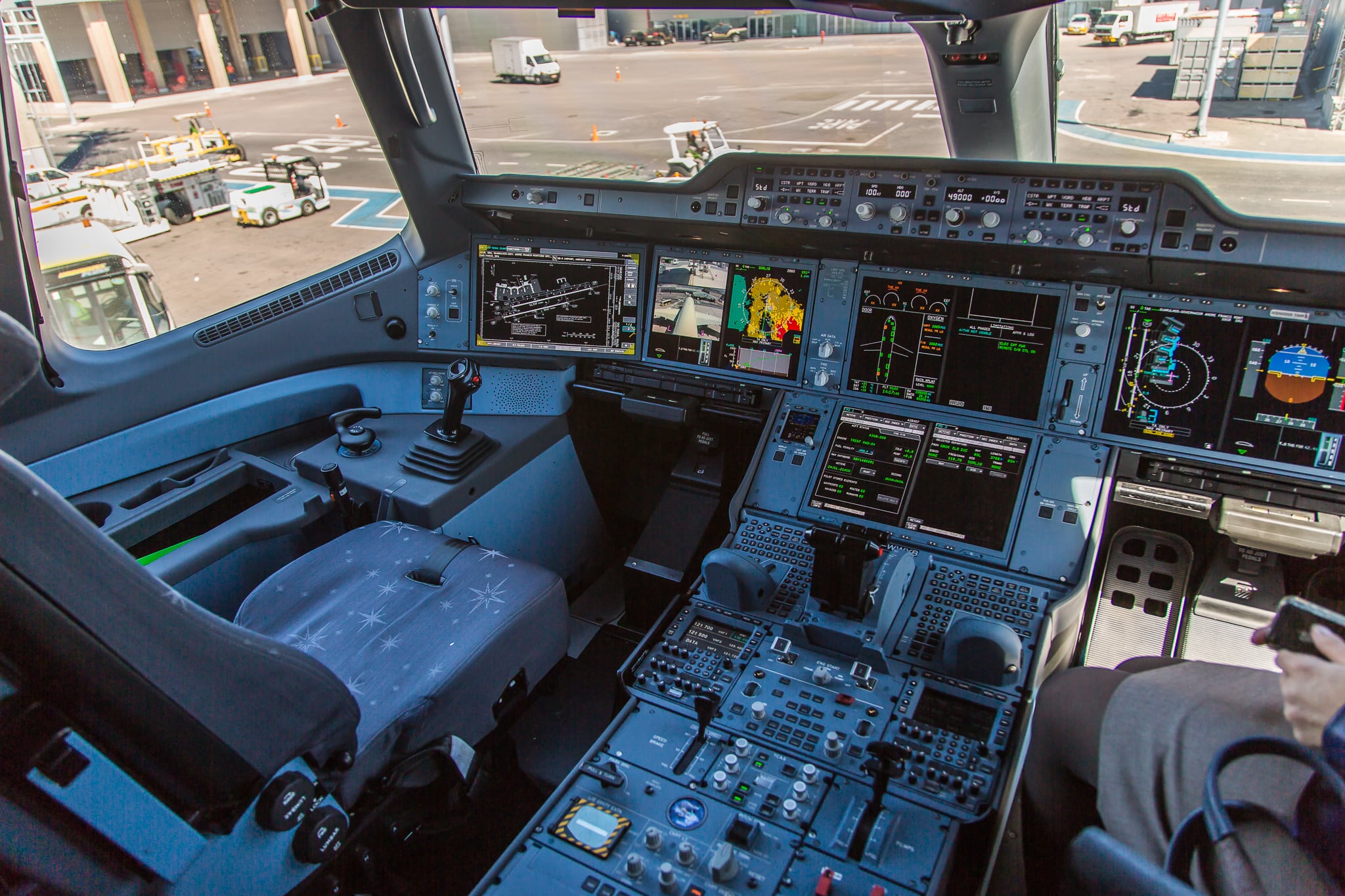
Airbus A350 cockpit (Photo by Joao Carlos Medau).
After all interest rates continue to rise, thus, it will be more expensive to conduct business, and inflation is as high as it’s been in some decades. And, in the event you may have been isolating in a cave the past two and half years the airlines still cannot hire enough pilots, which was a pervasive quandary prior to the pandemic. In fact, previously mentioned quandary has only exacerbated since the late 2000 teens.
To put the pilot shortage into perspective Auburn University School of Aviation Assistant Professor and Chair, Aviation Management Program stated “about 50% of all Air Transport Pilot (ATP) certificate holders will reach the mandatory retirement age of 65 within 15 years, meaning half of the current pilot workforce will need to be replaced over the next 15 years.
Again, Why Would Aviation Not Suffer During a Recession?
Read this next statistic, read it again because the numbers are astronomical, and spend a brief moment pondering the implications. In an interview with The Harvard Gazette on May 11 of this year Jason Furman, Aetna Professor of the Practice of Economic Policy at Harvard Kennedy School said “I’m relatively unworried about a recession over the next year because consumer spending has continued to be very strong, and consumers have about $2.3 trillion of excess saving that they accumulated during the pandemic that could still spend over the next couple of years.”
Wow. That is a metric boat ton of money, and metric boat ton is an official measurement, so go look it up. No, don’t go look it up. This author made it up, but one gets the point. Savings are plentiful, the world is opening up, and people are ready to fly the coop…literally. So, go travel and do not be afraid to ask the Flight Attendant for the full can of Coke on your next flight.
Could there be an unseen economic shock lurking over the horizon that makes matters worse? Sure there could. It will be fun watching how the economy shakes loose in the next 12 to 18 months.
Disney is synonymous with magical experiences and unforgettable adventures. True to form, the company is offering what is perhaps its most over-the-top and unique adventure yet.
Next summer, the mouse-centric entertainment company will offer a once-in-a-lifetime opportunity for 75 people to fly around the world on a quest to visit all 12 of its theme parks. The Disney Parks Around the World – A Private Jet Adventure promises to wow its guests and provide them with a luxury experience that only Disney can dream up.
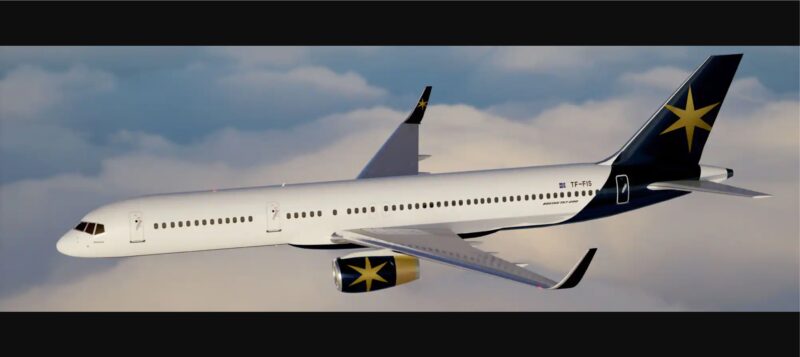
A VIP-configured Boeing 757-200, operated by Icelandair, will transport guests from continent to continent in style. The trip will include stops in six countries, all 12 Disney theme parks, and special excursions to three of the world’s most iconic landmarks: the Taj Mahal, the Pyramids of Giza, and the Eiffel Tower.
Where You’ll Fly If You Pony Up Over $100k
The adventure begins in Southern California, where guests will spend three days enjoying VIP tours of Walt Disney Studios, Disneyland, and Disney California Adventure Park. Next, guests will fly to the Bay Area, where they will visit the Walt Disney Family Museum, take a VIP tour of the Lucasfilm campus, and stay overnight at the Summit Skywalker Ranch. Additional stops on the adventure include Tokyo, Shanghai, Agra (India), Cairo, Paris, and Orlando.
The onboard experience promises to be every bit as spectacular as the sights and attractions along the journey.
A Disney Luxury Jet 757 Awaits You
The specially-configured Boeing 757-200’s extended-range capabilities will allow direct flights between stops. According to Disney, this feature will enable guests to maximize their time at each destination.
On board, guests will enjoy a customized interior with 75 spacious leather seats in a 2 x 2 configuration. Each seat will have a footrest, a USB port, and a standard U.S. power outlet.
The flight crew will include a lead captain, a second captain, a first officer, eight flight attendants, a chef, an assistant chef, and a flight engineer. Guests will also have access to a physician. Additionally, Disney will have several experts on board to provide information before each stop. An audiovisual system will be available on board the aircraft for presentations. The Disney crew will include three adventure guides, Disney VIPs, Imagineers, and cultural experts.
Here’s The Proposed Itinerary
Image: Wally Gobetz (CC 2.0 from Flickr)
Guests will arrive in Los Angeles for their globetrotting adventure on July 9, 2023. The flight itinerary includes the following segments:
Orange County (SNA) – Oakland (OAK)
OAK – Tokyo Narita (NRT) via Anchorage (ANC)
NRT – Shanghai (PVG)
PVG – Shenzhen, China (SZX)
SZX – Agra, India (AGR)
AGR – Giza, Egypt (SPX)
SPX – Paris (CDG)
CDG – Orlando (MCO) via Halifax, Canada (YHZ)
If you’re wondering what something like this may cost, it will undoubtedly come as no surprise that this luxury experience carries a luxury price tag. Fares start at $109,995 (USD) and include:
Airport transfers at arrival and departure
Flights
VIP accommodations
All 68 meals
Daily activities, excursions, options, and special events
Admission to all 12 Disney parks
All beverages, including alcohol
$50,000 (USD) medical evacuation insurance and services of the onboard physician
Gratuities
Laundry service
If you’re contemplating dropping nearly $110K on this adventure of a lifetime, you can hold on to your money – for now. According to the Adventures by Disney website, the flight is completely sold out.
Perhaps those Magic Kingdom ticket prices don’t look so bad, after all.
The Proposal is Meant to Increase Pilot Availability During the Current Shortage
In an effort to help ease the airline pilot shortage and keep healthy experienced pilots in the cockpit, U.S. Senator Lindsey Graham (R-South Carolina) and Representative Chip Roy (R-Texas) introduced legislation yesterday (July 25) to raise the mandatory commercial pilot retirement age from 65 to 67 years old.
“In the next two years, 5,000 pilots will be aged out, and over the next five years 14,000 pilots are going to be taken out of the cockpit because they turn 65. Not because they’re unsafe, but just simply because they reached 65,” said Graham in a press conference about his proposal.
watch the full press conference
“The last time we adjusted the age was in 2007. The sky did not fall while adjusting the age from 60 to 65, and it won’t fall by going to 67,” said Graham. “What will happen is we’ll give an opportunity to thousands of pilots if they choose to stay in the cockpit which makes it better for all of us depending on air travel.”
Other Senators backing the proposal include John Thune (R-South Dakota), Deb Fischer (R-Nebraska), Chuck Grassley (R-Iowa), Cynthia Lummis (R-Wyoming), and Marsha Blackburn (R-Tennessee). House cosponsors include Reps Clay Higgins (LA), Dusty Johnson (SD), Mary Miller (IL), Adrian Smith (NE), and Lauren Boebert (CO).
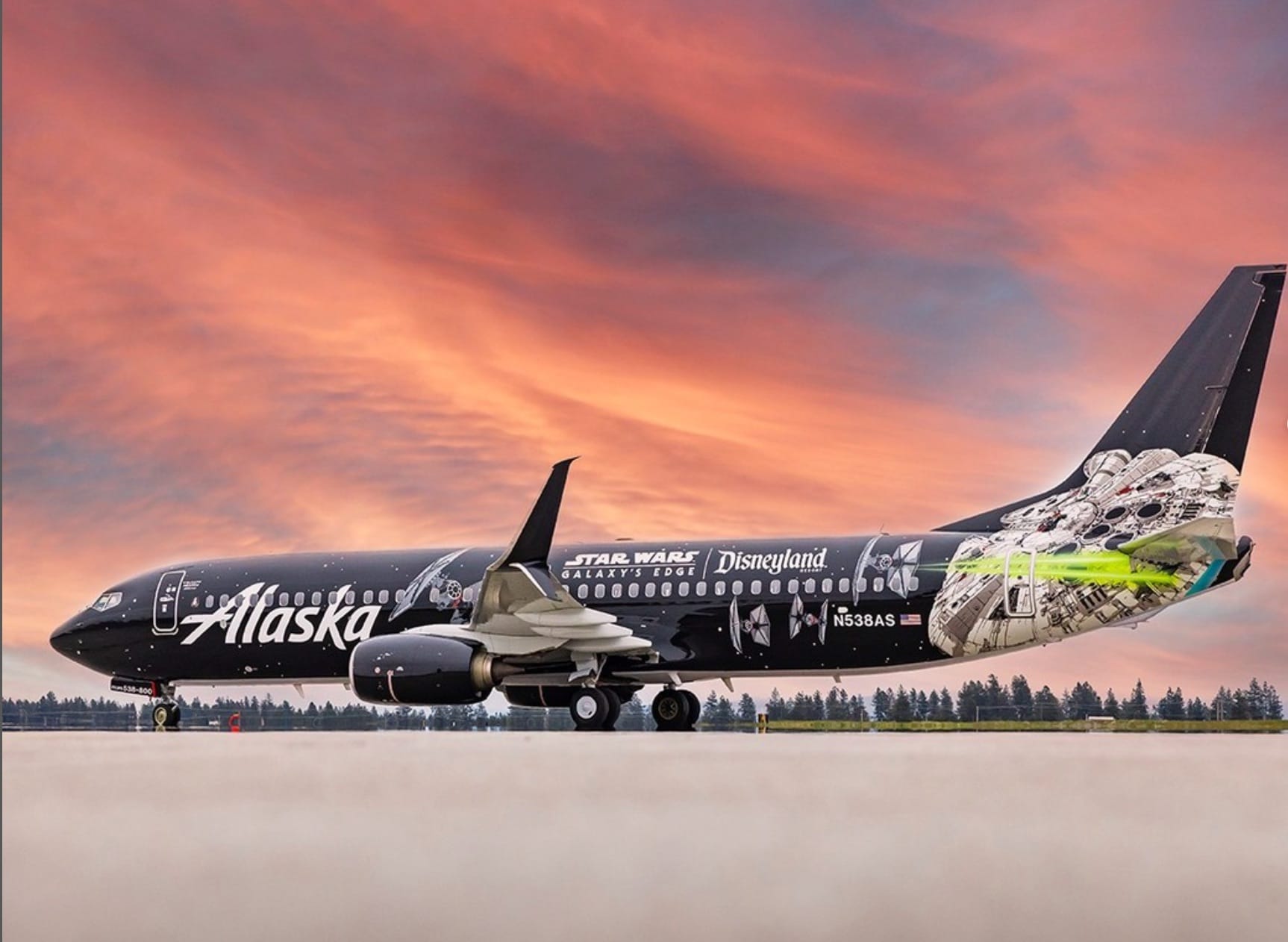
Photo: Alaska Airlines
Transportation Secretary Pete Buttigieg, however, is opposed to the new idea due to safety concerns, along with pilot unions. Organizations such as the National Air Carrier Association, the Regional Airline Association, and the San Antonio International Airport however support new legislation.
“Americans are now experiencing flight delays and cancellations on an unacceptable scale due to a worsening pilot shortage,” says Rep. Roy. “A key factor is a government-mandated retirement age that forces out thousands of our most qualified pilots every year.”
Rep. Roy is expected to introduce the House bill in Congress today, which you can see HERE.
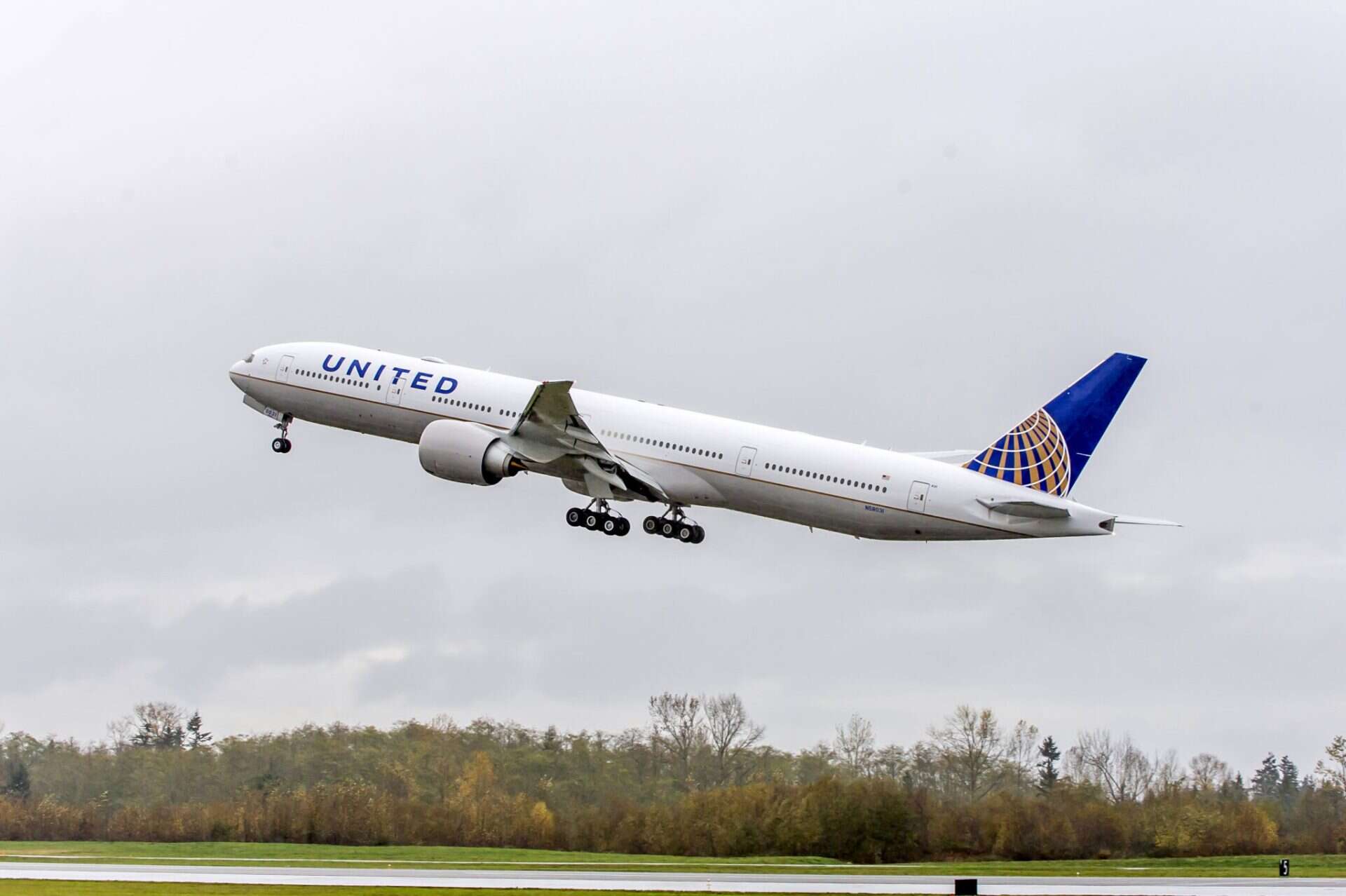
777-300ER (credit: United Airlines)
Some key points in the legislation:
Requires that pilots over the age of 65 maintain a first-class medical certification, which must be renewed every six months.
Requires air carriers to continue using pilot training and qualification programs approved by the Federal Aviation Administration (FAA).
Does not change or alter any other qualification – beyond age – to become a commercial airline pilot.
The airlines themselves have been taking their own avenues to address the growing pilot shortage, such as offering more pay and bonuses and eliminating mandatory requirements for 4-year degrees. Others are offering scholarships for flight training, or even teaching student pilots themselves and helping financially as they progress (costs are the most prohibitive reason why people don’t train to be career pilots).
Others, like Republic Airways, have even petitioned the federal government to let them hire pilots with only 750 flight hours, half what is required now, if those pilots go through the company’s own training program.
“The traveling public deserves better than what they are currently getting,” says Sen. Graham. “Our bill moves the needle in the right direction. Without this change, it (the pilot shortage and cancellations because of it) is only going to get worse.”