We Avgeeks all know how simply awesome the A-10 Warthog is. Here are some things you might not know about the Fairchild-Republic A-10 Thunderbolt II.
Official US Air Force photograph
One
The Development of the Lockheed AH-56 Cheyenne attack helicopter actually helped to expose the need for a dedicated ground attack aircraft for the Air Force. That first and still only dedicated designed and built for purpose ground attack aircraft became the Fairchild Republic A-10 Thunderbolt II.
Two
The design of the A-10 was developed during the time that the Cessna A-37 Dragonfly was replacing Douglas A-1 Skyraiders as the Air Force’s primary CSAR support and counter insurgency (COIN) platform. The Warthog, while obviously a much more capable close air support (CAS) aircraft than the Super Tweet, owes at least some of its design influences to the tiny but capable A-37.
Official US Air Force photograph
Three
Republic Aircraft of Farmingdale, Long Island, New York, built the two YA-10 prototypes at their factory. The first flight of the YA-10 took place on 10 May 1972 at Republic’s airfield on Long Island. However, production of every one of the 715 A-10s built took place at Fairchild’s factory in outside Baltimore in Hagerstown in Maryland.
Four
The A-10’s General Electric GAU-8/A Avenger 30 millimeter rotary cannon is mounted in the fuselage of the Hog in such a way that the barrel firing is aligned with the centerline of the aircraft. This ensures that when the weapon is fired it does not cause the aircraft to yaw. This is also why the nose gear of the aircraft is offset to the starboard (right) side.
Official US Air Force photograph
Five
When the GAU-8/A is removed from the Warthog for maintenance or replacement, the tail of the aircraft must be supported or it will come to rest on the ground when the jet’s nose tilts up.
Six
The PGU-14/B shells fired by the GAU-8 are only slightly radioactive, no more than most other stones or dirt, but the sub-caliber high-density penetrator inside is extremely dense- adding to the kinetic energy expended when one of the projectiles hits, and usually shreds, its target.
Official US Air Force photograph
Seven
The General Electric TF-34-GE-100 high-bypass turbofan engines that power the A-10 have only been used on one other operational military aircraft- the Lockheed S-3 Viking carrier-based sub-hunter.
Eight
Those engines are mounted where they are on the airframe for two very good reasons- to protect them from debris raised from the ground during taxi, takeoff, and landing, and to place them above the horizontal tail surfaces, thereby better shielding them from infrared (IR) seeking weapons fired from the ground.
Official US Air Force photograph
Nine
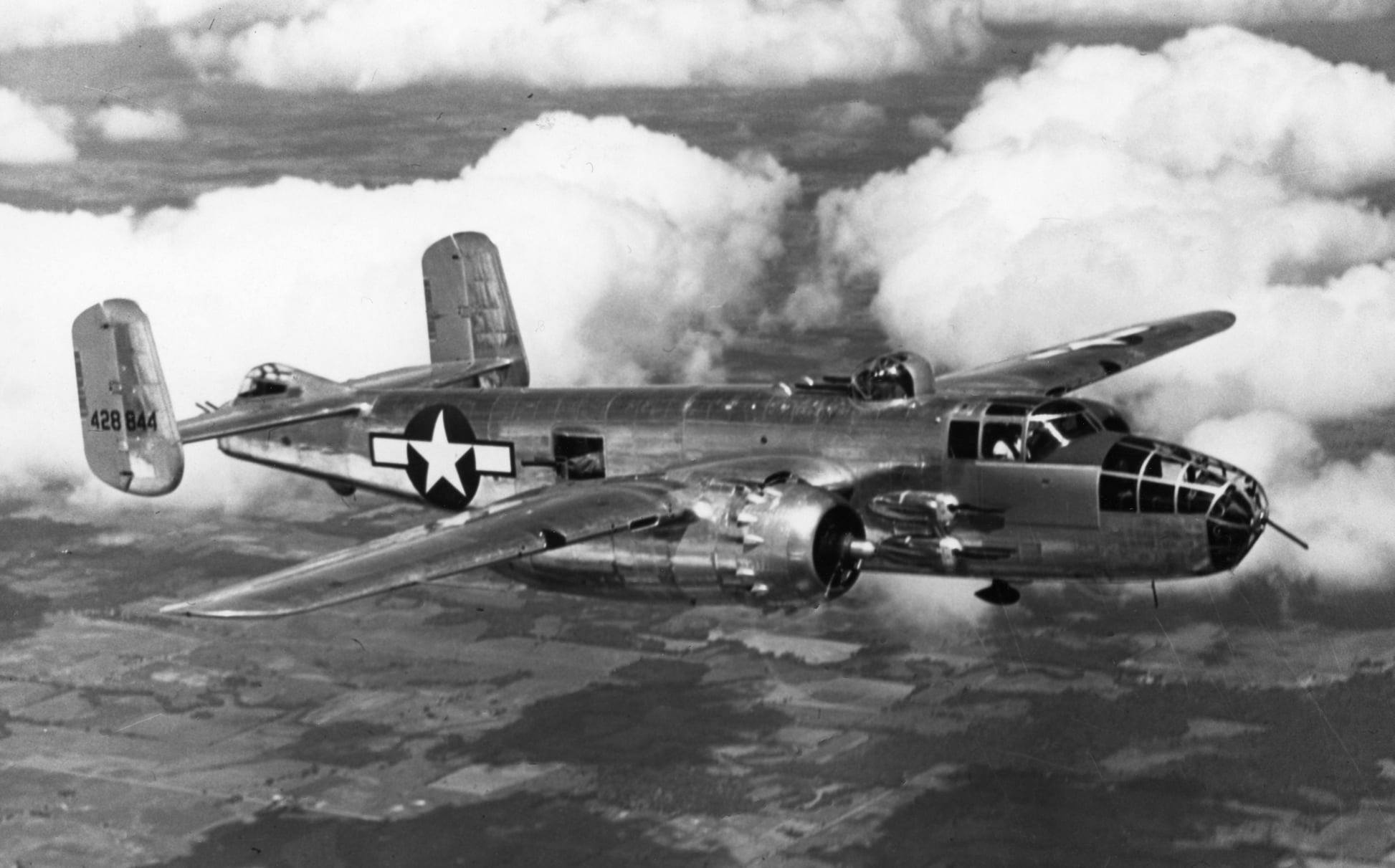
Although the A-10 is a close air support (CAS) star, it is not as fast as you might think. With a loaded never exceed speed (VNE) of 450 knots (518 miles per hour) at altitude the Warthog is not going to produce any sonic booms. A cleanly-configured A-10 can reach 381 knots (439 miles per hour) at sea level. Several World War II-era warbirds are just about capable of keeping up.
Ten
The roughly 220 A-10Cs still operational today (as of 2024) were originally A-10As built by Fairchild-Republic, maintained by Grumman after 1987, upgraded by Lockheed-Martin, and many of the A-10Cs in service have been re-winged by Boeing.
This weekend, the aviation world mourns the loss of a pioneer in the industry. Remembering USAF Lt Col (ret) Dick Rutan, an aviation legend and decorated combat veteran.
Rutan passed away on May 3, while battling a severe lung infection. Close friend Bill Whittle said Rutan died on “his own terms when he decided against enduring a second night on oxygen.” Rutan passed away surrounded by friends and family in Idaho.
It all started at an air show
Dick rutan (photo via rutan family)
Like many youngsters, the seed for a life of aviation was planted young when Rutan’s mother brought him to an air show. What really caught his attention was an F-100 Super Sabre, and the pilots who flew it.
“I looked up at the pilot, as a little kid and I thought, man, I would really like to be that, but there would be no fine way I could ever do that,” recalled Rutan during a speech in 2010. “Fighter pilots, they’re a different species.”
He always credited his mother for supporting his dreams and goals. “She admonished me when I said that there wasn’t any way I could become a fighter pilot,” he recalled. “She taught us that if you can dream it, you can do it, and the only way to fail is if you quit.”
Rutan always wanted to be a fighter pilot, so that’s what he did
Richard Glenn Rutan was plane-crazy from that moment on. He earned his private on his 16th birthday, and his driver license (yes he got them the same day). His dream plane to fly, was the F-100 Super Sabre.
So, he joined the USAF Aviation Cadet Program. Rutan became a second lieutenant, earned his navigator wings, and was deployed to Iceland to fly Northrop’s F-89 Scorpion. He then flew the Douglas C-124 Globemaster.
After accumulating 1,900 flight hours as a navigator, he entered pilot training and graduated at the top of his class in 1967.
Lt col (ret) dick rutan with one of the super sabres he flew in vietnam (photo credit national museum of the usaf)
He got his dream jet too, the F-100. However, it would also mean he was being sent to combat in South Vietnam. He started flying ground attack missions, but soon became a forward air controller (FAC) in the Commando Sabre program, more commonly known as the the secretive MISTY program.
Rutan survived being shot down and was highly decorated
Rutan was responsible for loitering over enemy positions ahead of strike packages as “Misty Four-Zero”, marking targets for the strike aircraft to attack.
Photo via Dick Rutan family
Great interview with Dick Rutan
He was shot down on such a mission too, his 325th flight during his third tour. It wouldn’t be his only emergency ejection either. He later had to punch out of another Super Sabre in England when it suffered an engine malfunction.
He received many awards in his time serving, including the Silver Star and the Purple Heart. Rutan was also awarded 16 Air Medals and five Distinguished Flying Crosses.
Rutan’s jet over vietnam in 1968 (top). Painted as it appeared in March 1968 (below), the jet was flown by Rutan & is on display at the National Museum of the Air Force in Dayton, OH (usaf photos)
One of the Super Sabres he flew is now on display at the National Museum of the USAF in Dayton, OH.
Rutan retired and became a test pilot
After retiring from the USAF in 1978, Rutan became a Production Manager and Chief Test Pilot for his brother Burt’s company, Rutan Aircraft Factory.
Photo via rutan family
Dick flew the test flight development programs for several military and civilian experimental aircraft. He also flew air show demos.
However, Rutan still had an itch that needed scratching.
Dick Rutan joined Jeana Yeager to set the last great aviation record to date
He met Jeana Yeager in 1980, and together began pursuing a goal to fly nonstop, around-the-world, without refueling. He resigned from his brother’s company in 1981, and founded Voyager Aircraft, Inc.
Jeana Yeager and Dick Rutan are all smiles after completing a test flight over Mojave in December 1985 (photo via rutan family)
Together they flew the Voyager over 26,000 miles, taking off and returning to Edwards AFB. The plane was designed by his famous brother, Burt.
Dreams however take money, and aviation dreams take a LOT of money. To fund their idea, and bring publicity, Rutan decided to set several aircraft speed and endurance records before his big round the world flight. In 1981 he set a distance record of 4,563 statute miles for an aircraft weighing less than 1,000 kilograms. Soon after, he set a closed-course speed record for both 500 and 2,000 kilometers.
rutan and yeager leaving california on voyager, followed by a chase plane (photo via rutan family)
Rutan was a hot air balloon pilot, too
It would seem that, if it could fly, Rutan wanted to fly it. He earned his balloon pilot’s license in 1995 (Commercial free air balloon; helium and hot air). Of course, he had a record setting vision for hot-air balloons, too.
He attempted the first ever flight around the world flight in a balloon in 1998. He didn’t get very far. The mission ended three hours after takeoff when his balloon’s helium cell ruptured at 30,000 feet. Rutan and his crew bailed out safely at 6,000 ft, before the balloon crashed to the ground and burst into flames.
He vowed to try again, and built a new balloon and capsule for it. Another team, however, beat him to the record in 1998.
Dick Rutan was rescued from the North Pole after his plane fell through ice
No stranger to adventure, Dick Rutan decided to sightsee the North Pole on an airplane trek in 2000. The season however was unusually warm.
Flying a Russian AN-2 Antonov, they landed on what appeared to be good ice. However, it was too thin, and before they could takeoff to find a different location, the plane had already started sinking into the frozen abyss.
Photos via rutan family
The plane was sinking nose first into the water, but its wings held it above the surface long enough for the crew to escape with their survival equipment. Rutan and co were stranded at the top of the world for 12 hours, before being rescued.
More awards and records
While his flight around the world is what Dick Rutan will be most remembered for, his list of accomplishments would continue.
He was awarded a Presidential Citizens Medal, the Collier Trophy, the Order of Daedalians Distinguished Achievement Award, and was inducted into the National Aviation Hall of Fame in 2002.
Dick Rutan conducted the “shortest long-distance flight” ever in 2005, when he broke a world record for the longest distance in a ground-launched rocket-powered aircraft (called the EZ rocket). He flew it about 10 miles.
Rutan was honored with the Howard Hughes Memorial Award in 2021.
“He played an airplane like someone plays a grand piano.” – Burt Rutan
You’ll get fired up watching this Super Constellation’s exhaust flames as it takes off at twilight.
Flames on an airplane are usually the signal of impending doom. The combustion must remain internal and contained within the engines. But Lockheed’s Super Constellation, the L-1049, was a four-engine aircraft that became a major component in commercial aviation fleets in the 1950s.
Before jet-powered aircraft like the Boeing 707 took over, the Super Constellation was a go-to aircraft. In particular, it became a signature plane for Trans World Airlines.
The “Super Connie” is considered one of the most elegant aircraft ever built. From its sloping dolphin-like nose to its distinctive triple tail, the plane looked sleek and unique.
The accompanying video was taken at the perfect time. The dusk takeoff of this Super Connie shows the four flames being emitted from the four engines.
Why Does The Connie Spit So Much Fire?
Fire spits out of the Lockheed L-1049 Super Constellation during departure | IMAGE: YMML Spotting Team via YouTube
Based on this video, you could nickname the Connie, the Spitfire! (We’re kidding, of course)
The L-1049 went through numerous changes and adjustments, but for the most part, the aircraft’s four 18-cylinder radial engines remained the same – versions of the Wright R series.
Most of the Super Connies were powered by R-3350-972-TC18DA-1 turbo-compound engines, which featured Recovery Turbines that allowed each engine’s exhaust gas to flow through three turbines. That boosted horsepower by 550. The drawback was the visible flame from the exhaust pipes.
To prevent the flames from causing catastrophes, two-inch armor plating was placed under the stack. Problem solved. But the flames remained, and that added to the spectacle of seeing a Super Constellation in flight.
Xfinity Ad Shows Pilots Reminiscing On Their Flying Career
A new short film from Xfinity has been released to honor Military Appreciation Month. We have to admit, it’s a good one. This new Xfinity ad reuniting old fighter pilots will bring a tear to your eye.
The veterans served in Vietnam on the USS Saratoga. It was the first time commander Jack RAZOR Gillett, former lieutenant Jim ZEKE Lloyd, and former lieutenant Bill OFFENDER Moir had been face-to-face in 16 years.
New Xfinity Ad Reuniting Old Pilots Will Bring a Tear to Your Eye 24
They were joined by Elester HOLLYWOOD Latham, who was as a Marine sergeant during the Tet Offensive and became a USAF major.
Zeke was shot down in enemy territory. Razor and Offender Came to Save Him
Zeke was actually shot down on a mission, surviving his way down into enemy territory. He was able to evade the enemy for 6 hours, before fellow pilots Razor and Offender showed up to help rescue him.
Uss saratoga (navy photo)
He was offered the chance to go home. Instead, he stayed where he felt he belonged.
“When I got back to the safety of the fleet, I learned what the Navy did for me,” Zeke said. “So many risked their futures to help secure mine. When I learned that, I couldn’t go home. So, I continued flying until the war ended. The Navy tried to give me easier flights, but we were a northern carrier flying deep in the north, so that didn’t work all the time.”
A granddaughter helps her veteran grandfather and friends to fly again
New Xfinity Ad Reuniting Old Pilots Will Bring a Tear to Your Eye 25
In the film above, a grandfather shares old tales with his granddaughter about flying the A-4 Skyhawk, as they get ready to reunite with his old friends. He shows her his flight gear and photos and belongings from his days flying. Scenes flash back and forth between his past and present, as he takes her on a trip down memory lane.
Anyway, in the film the grandfather wishes he could take his granddaughter flying with him. Inspired by his life, and wanting to fly with him, she decides to surprise them all with VR headsets to help them fly again. Using Xfinity internet.
“The aviators” (xfinity)
“Besides our veterans’ reunion, there’s another connection story happening here. This experience brings them closer together,” said Jim Elliott, executive creative director at GS&P. Elliot was inspired to create the film when he witnessed his sons showing his USAF veteran 90-year old father-in-law how to fly again with a VR headset.
“The truth is, these sorts of miraculous, intergenerational moments of connection are happening every day across the country, thanks to Xfinity,” he added.
An Oscar-winning Director, Cinematographer and Production Crew
“The aviators” (xfinity)
The film was made by a crew of Oscar-winners. It’s directed by Kathryn Bigelow (“The Hurt Locker,” “Zero Dark Thirty”), who brought on two-time Oscar-winning cinematographer DP Greig Fraser.
Three-time Oscar-winning sound designer Paul N.J. Ottosson (“The Hurt Locker,” “Zero Dark Thirty,” “Fury”) also joined, along with the legendary Hanz Zimmer, a two-time Oscar-winning composer.
“It’s a real honor to work with our nation’s veterans,” Bigelow said in a behind-the-scenes documentary (watch above). “They’re special people, who’ve devoted their lives to our security. I feel like it’s my opportunity to give back.”
Xfinity Ad Highlights Pilots, It is also a leading employer of veterans in the country
Xfinity is a leading employer of veterans in the country. Parent company Comcast NBCUniversal was the nation’s No. 1 telecommunications company for veterans in 2022. They claim to have hired 21,000 veterans and National Guard and reserve service members, as well as military spouses, since 2015, gathering more than 9,000 employees in its Veterans Network employee resource group.
VSF-1 A-4C. US Navy photograph
Comcast is launching a new military benefits program for discounts. They are also donating $1 million to nonprofits serving the military community and working toward digital equity for this group.
“We’re a proud military-ready company that honors and celebrates what those who serve, those who’ve served, and their loved ones have done to defend the freedoms we enjoy,” said Mona Dexter, VP of military and veteran affairs at Comcast, a military spouse for over 25 years and a military mother. “Reunions like the kind depicted in the film represent the life-long devotion veterans have toward one another. It’s our company’s privilege to play a part in how these incredible men and women stay connected through technology.”
An F-16 Fighting Falcon from Holloman AFB has crashed in New Mexico this afternoon.
The incident occurred near White Sands National Park just before noon local time, according to a statement from the 49th Wing.
The pilot survived, but the cause of the crash is unknown
F-16s and MQ-9 Reapers from the 49th Wing line up on the runway during an elephant walk at Holloman Air Force Base. (U.S. Air Force photo by Tech. Sgt. Victor J. Caputo)
The pilot was able to eject and survived. They were then transported by ambulance for medical care. It’s unknown whether or not the pilot was injured.
Certain area of White Sands National Park are currently closed, to allow emergency crews to do their jobs and protect the public from potential exposure to hazardous chemicals.
White sands national park, new mexico (national park service photo)
“An investigation conducted by a board of qualified officers is underway to determine the cause of the incident,” said the 49th Wing. “Additional details will be released as they become available.”
The 49th Wing is the Air Force’s largest F-16 and MQ-9 formal training unit
The 49th Wing is responsible for training and providing combat-ready F-16 and MQ-9 Reaper pilots and sensor operators. They also deliver Air Transportable Clinics and Basic Expeditionary Airfield Resources, supporting more than 21,000 military and civilian personnel.
Two U.S. Air Force F-16 Fighting Falcons (U.S. Air Force photo by Senior Airman Taylor Crul)
They can deploy worldwide whenever called upon, to support peacetime and wartime contingencies.
Holloman is also home to the world’s longest and fastest (approaching 10,000 feet per second, or Mach 9) test track. The 846th Test Squadron set the world land speed record there for a railed vehicle at 6,453 mph (Mach 8.5).
Today’s incident was the first F-16 crash in the United States since March of 2022, when an Oklahoma Air National Guard F-16 crashed in Louisiana. That pilot also ejected and survived.
Tower Air Provided Poor Service Long Before It Became The Norm In The Airline Industry
Tower Air – If you haven’t heard of that airline before, then consider yourself lucky. Though it may not be the worst airline to ever exist, it is definitely in contention. They’re widely considered to be more of an infamous airline than a true success.
Tower Air proved to be an enigma in the aviation industry. They employed only one type of aircraft: the Queen of the Skies herself, the Boeing 747.
That might sound pretty cool at first, but once it comes to light that they operated some of the rattiest and most beat up 747s, had horrific maintenance practices, and were better known for making customers mad than successfully leaving on time, you realize that this might not have been the best idea.
Foreshadowing
Since the COVID-19 Pandemic has been relaxing regulations (woohoo, no masks!), there has been a massive increase in flying. The downside was the lack of personnel and equipment.
This led to operational meltdowns and crew, along with all the guests, stranded for days in airports. Similar meltdowns were relatively regular for Tower Air.
image via aero icarus
Tower Air Benefitted From Timing
The only thing Tower Air had going for them was the lack of social media and cameras on cell phones to capture the pandemonium. Instead, their disastrous operation was documented on forums, review boards, and by the news channels and newspapers.
Tower Air was essentially a replacement airline for Flying Tigers. Once Flying Tiger Line ceased commercial passenger charters, the president of the passenger portion of the airline Morris Nachtomi met with the Tower Travel Corporation (a travel company that dealt primarily with trips to Israel, the home country of Nachtomi) owner Zev Melamid and got him to buy into the idea of creating an airline to serve the travel company’s primary destination.
The pair then brought on Mordechai Gil and Sam Fondlier to round out the shareholders.
Nachtomi was the lead of the group and was named the CEO since he had 30 years of experience working with El Al and wanted to serve his home country. They officially opened service in November of 1983.
image via aero icarus
Operating a ‘Terminal’ from a Hangar at JFK
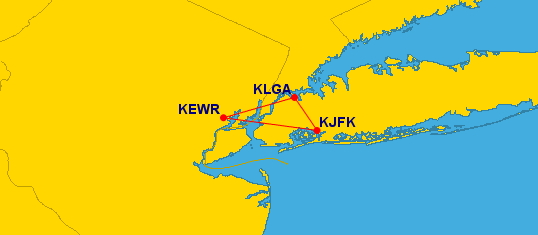
Tower Air was based out of John F. Kennedy International Airport in Jamaica, New York. The airline even had its own terminal at the peak of its operation, which was a former Pan Am admin maintenance facility. The operations began working out of Hangar 17 at JFK Airport as their headquarters.
Not Much of a Route Tree
The primary market served was to compete with El Al and British Airways by focusing on the U.S./Israel market. Their main route was New York – Brussels – Tel Aviv. Tower Air then added some charter flights from New York to Frankfurt, Zurich, Rome, and Athens.
They were able to add a New York to Los Angeles route after acquiring a Boeing 747-100 from Avianca.
There’s More to the Story. Bang NEXT PAGE Below for Tower Air’s Demise
This giant RC Concorde is the largest RC plane in the world
The replica is a 1:6 scale model of the real iconic Concorde, with a 6 ft tall tail and wingspan of 13 ft. It’s powered by four JetCat 300 Pro engines. Fully fueled, the plane weighs nearly 330 pounds.
It has pneumatic gears, a fuel tank capacity of 4 x 6 liters, and an air tank capacity of 30 liters. It was designed and built by Steven and Matthew Bishop.
Above, watch a longer video of the incredible RC Concorde in action! Brings a tear to me eye.
The attention to detail and engineering behind the RC plane is really amazing. You can see it in action at various events around Europe.
See a real Concorde on display
While we will never see a Concorde fly again, you can visit some in museums.
Mike killian / avgeekery.com
My personal favorite is the one in Duxford, England, at the Imperial War Museum. Designated Concorde G-AXDN, it was a pre-production model used for the testing and refinement of Concorde. It flew faster than any other Concorde! Its nose still works too! They actually do a nose-lowering demo on the last Sunday of every month.
You’re free to walk below, around, even above the aircraft. Visitors are welcome to go onboard as well. Here’s a video I shot visiting her.
The first Concorde to ever fly is on display at the Museum of Air and Space in Le Bourget, France. Another is on display at the Fleet Air Arm Museum in Yeovilton, UK. More below:
Musée Delta at Orly Airport, Paris, France
Airbus has one in Toulouse, France
Weybridge’s Brooklands Museum in the English county of Surrey
Manchester Airport
Smithsonian National Air and Space Museum
simultaneous landing of Air France & British Airways Concordes in Orlando, Florida. Photo: Orlando International Airport (MCO)
Museum of Flight in East Lothian, Scotland
Sinsheim Auto & Technik Museum in Speyer, Germany.
U.S. Transportation Secretary Pete Buttigieg has announced new rules against airlines to protect consumers who constantly feel ripped off by cancellations, delays & fees.
“The rules are part of the Biden-Harris Administration’s work to lower costs for consumers and take on corporate rip-offs,” says the DOT. The new rules follow an Executive Order on Promoting Competition in 2021 that encouraged DOT to take steps to “promote fairer, more transparent, and competitive markets.”
watch Buttigieg outline the new rules
First new rule requires airlines to issue automatic refunds
“This is a big day for America’s flying public,” said Buttigieg. “It represents the latest step – two steps – to deliver the biggest expansion of passenger rights in the Department’s history. Too often, the things we have heard aren’t just irritating inconveniences. They are significant harms, and violations of passengers’ rights. We are here to do something about that.”
The first new rule forces airline who cancel or significantly delay your flight to automatically refund you within 7 days to the credit card used for booking. Additionally, it must be in cash by default unless a passenger actively chooses another form of compensation.
Hartsfield-Jackson Atlanta International Airport once again is the busiest airport in the world in 2023 | IMAGE: Hartsfield-Jackson Atlanta International Airport on Facebook
“No more defaulting to vouchers or credits when consumers may not even realize they are entitled to cash,” said Buttigieg.
Protecting passengers from surprise fees
The second new rule is expected to save Americans over half-billion dollars annually. Airlines will have to be up front about additional costs. No longer can they surprise consumers with fees for things like checked bags, carry-on bags, change fees and cancellation fees.
“Healthy competition requires that as a consumer you can comparison shop, which means knowing the real price of a trip before and not after you buy,” said Buttigieg. “If something does go wrong and your flight is canceled, the DOT has your back.”
DOT has also launched flightrights.gov, to give passengers easy-to-interpret visuals that lay out what each airline has committed to providing, if they cause a cancellation or delay.
Stepped-up enforcement
Photo credit southwest airlines
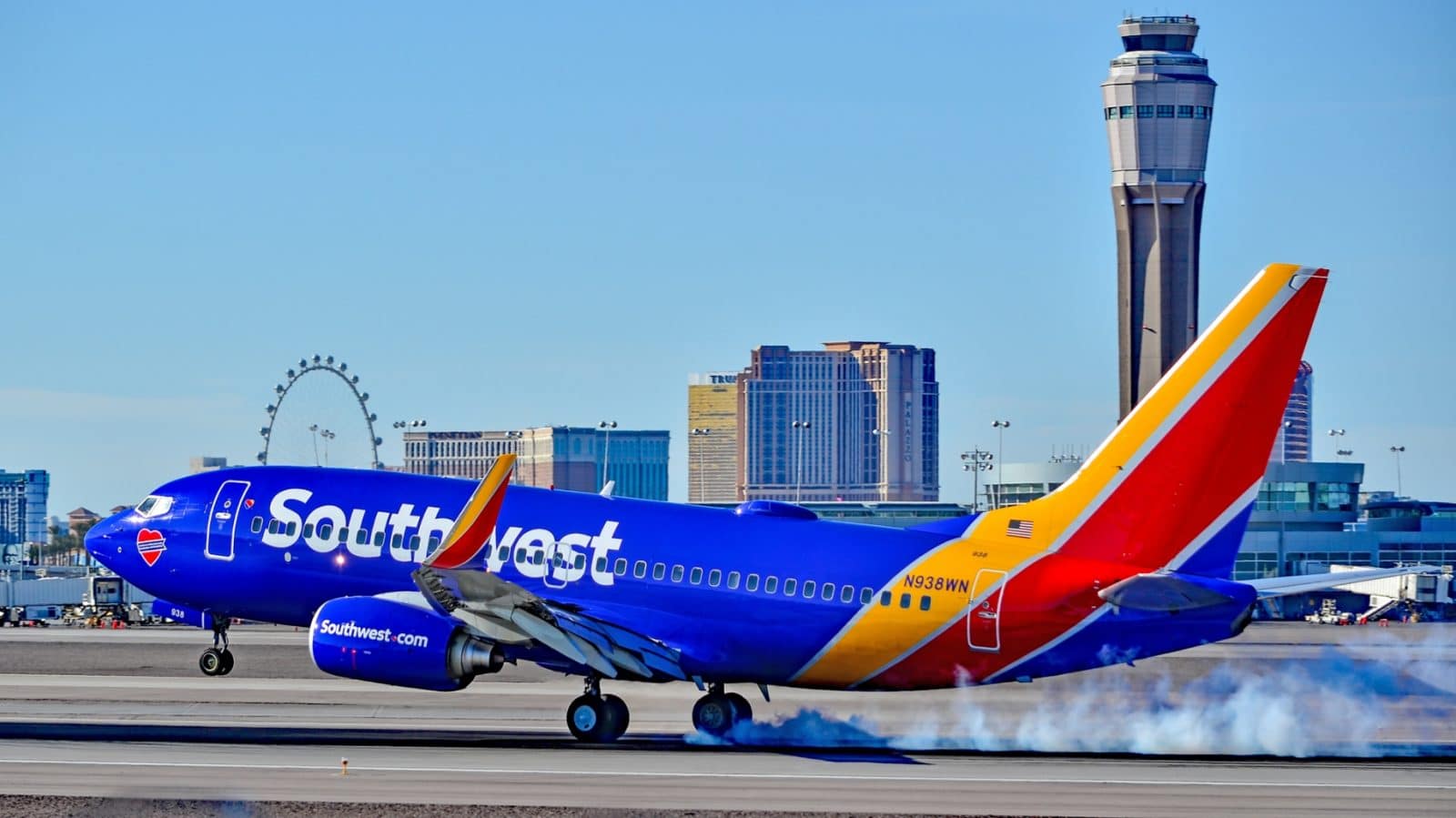
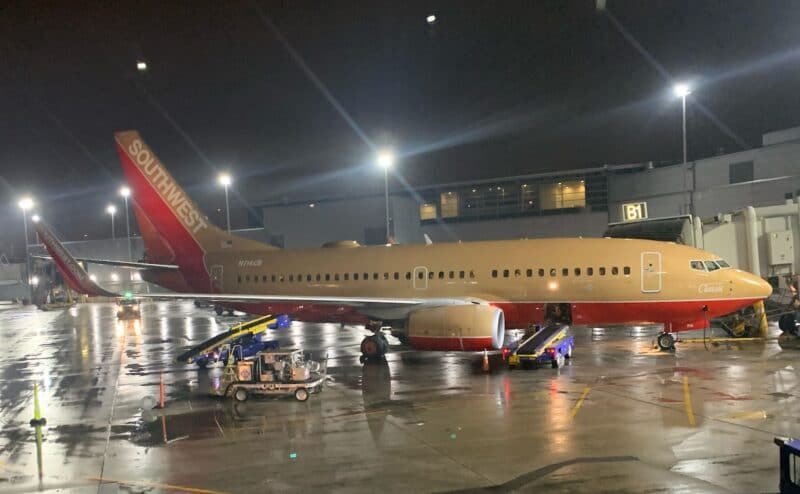
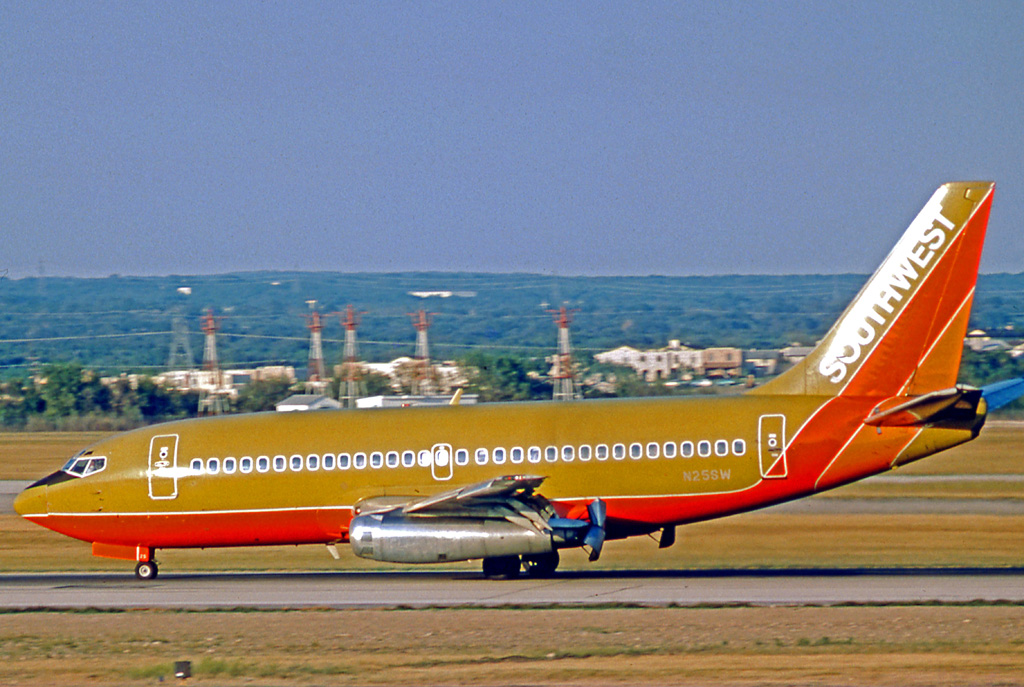
Under Biden’s DOT, stiff fines and tough penalties have been dealt to airlines who don’t play nice. Southwest Airlines was hit with a $140 million enforcement action for their 2022 holiday meltdown. That’s nearly double the total amount of penalties in the two decades prior.
Thus far, Biden’s DOT has seen airlines issue over $3 billion in refunds and reimbursements. DOT has also secured partnerships with 18 state attorney generals to help investigate aviation consumer complaints and get passengers results.
photo: mike killian / avgeekery.com
“The level of toughness reflected in the Southwest enforcement is not an exception,” noted Buttigieg. “It’s a new standard for our Department’s enforcement.”
“We want the airline sector to thrive. It’s why we put so much into helping them survive the pandemic, and why we’re being so rigorous on passenger protection,” he added. “This will build confidence in air travel, when airlines need to do more to secure passengers’ trust. This approach of collaborating where appropriate, pushing hard where called for, is working.”
More rules coming
A United Airlines Boeing 787 Dreamliner | IMAGE: United
Buttigieg and Biden’s DOT are not done yet. More rules are in works. The first would expand rights to protect the safety and dignity of passengers who use wheelchairs.
Another rule in works aims to ban airlines from charging junk fees to sit together as a family.
The Fascinating Story of How the Last British Airliner Clawed Its Way to Success
Avgeekery contributor Brian Wiklem has released a riveting new book that tells the entire story about the BAe 146. The book tells the story behind the people who designed, built, and flew the original regional jet. It is available from LaJetee Press at https://www.lajeteepress.com.
These days, four-engine jetliners are a rarity at local airports. Sure, the Queen of the Skies, the Boeing 747, is still flying and relevant today, along with the Airbus A380 and even the Airbus A340. Those days are quickly coming to an end. But it’s no surprise flying two engines is less expensive than four, with engine and aerodynamic technology continuing to push the limits while requiring less fuel and less maintenance. So why on earth would an aircraft manufacturer begin designing and pitching a four-engine short-haul airliner? It’s complicated.
The Inside Story How BAe 146 Started the Regional Jet Revolution 41
Developing a Viable Four-Engine Short-Haul Airliner
Hawker Siddeley, competing against not only Fokker, Boeing, and McDonnell Douglas but also homegrown manufacturer British Aircraft Corporation, was looking to develop the next generation of short-haul aircraft. For nearly twenty years, many different ideas and iterations of short-haul aircraft bounced around internally, ultimately settling on what would become the HS146, now known as the British Aerospace (BAe) 146 series of aircraft. Hawker Siddeley was working on an aircraft that would appeal to state-owned carriers operating in less than ideal conditions, such as unpaved fields and more rural areas. But rather than a prop aircraft, it was working on a short-haul jetliner.
Image via BAe Systems
The Advantages of Four Burning
This aircraft could operate entirely independently of ground service vehicles. Baggage compartments were waist high for ground crew, and the aircraft could be equipped with airstairs, eliminating the need for additional vehicles and complexity, and operating from remote fields fully contained. And, with four jet engines, a loss of an engine wouldn’t mean an immediate return trip to the airport, nor the concern that a two-engine aircraft (with a loss of engine) would have only 50% power remaining. With four engines, a loss would be mitigated to only 25%.
There was only one problem: these state-owned carriers often didn’t have the financial ability to support buying not only a jet aircraft but a brand-new one. A second problem would burst onto the scene and shut down any airline’s ability to consider a four-engine jet: The oil crisis of 1973.
Oil Crisis Creates a Need For More Efficient Jets
By 1974, the crisis was in full swing because of the support Israel was getting from the United States due to the Yom Kippur War. A barrel of oil tripled in cost by the end of the year, and there was no sign of it slowing down. This was the worst possible time to launch a four-engine jetliner.
Between homegrown political battles to keep the project alive and the manufacturers’ insistence that it be terminated, ultimately, Hawker Siddeley won, and the HS146 was terminated. But in the long run, this came back and bit Britain’s aviation industry hard, with the government fed up with bailing out various aerospace manufacturers, including Rolls-Royce with the RB211 and the Concorde debacle.
Turmoil in the British Aviation Industry
The Queen’s BAE 146.
By 1977, the British government nationalized the aerospace industry under the 1977 Aircraft and Shipbuilding Industries Act in an attempt to save Britain from losing these industries. Enter the newly formed British Aerospace, where the government would fund and ultimately divest itself of its shares, concluding by 1985 its complete divestiture of British Aerospace, which would become a publicly owned and traded entity.
1977 saw the new board of directors argue about restarting the HS146 or continuing with the BAC Two-Eleven. Political considerations at play ensured the HS146 would continue on, and the BAC Two-Eleven would never make it off the drawing board. With the company moving forward with full-scale development and manufacturing, the world would change again, starting in the United States. Enter deregulation, where airlines were now free to fly and charge whatever they wanted.
The Industry Transforms Itself
Over the next ten years, the aviation industry worldwide would begin to shift away from state-owned carriers and move towards a free market, with airlines having to live and die by their own choices, pricing, and quality of service. The very market the HS146 was predicated on was disappearing quickly. Once the BAe 146 took its first flight, it began a tour to the two primary markets originally envisioned and viewed as its golden goose: The Far East (Japan, India, Thailand, Australia, Indonesia, and more), as well as a tour in Africa to numerous countries. These were the countries that BAe and originally Hawker Siddeley saw as customers, with state-owned carriers, rural operating conditions, and the need for a self-contained aircraft that desired jet service.
It was not to be. Not a single order came from the Far East (and it would be nearly eight years before an Australian and a Thailand-based carrier ordered the 146), and only one order came from Africa for a single aircraft. This was far from a sales success.
There’s More to This Story. Bang NEXT PAGE Below for More
There Wasn’t Much the Soviets Couldn’t Hang From This Versatile Bomber.
On 27 April 1952, Soviet test pilot N.S. Rybko flew the prototype that would eventually become the Tupelov Tu-16 Badger for the first time. The Tupelov Design Bureau had been drawing bombers since the 1920s. Old Andrei Tupelov (1888-1972) got his start working from designs penned by noted German designer Hugo Junkers. In fact, Tupelov’s first facility started life as a secret Junkers facility outside Moscow in 1925. Tupelov’s early designs were said to be influenced by Junkers, but it didn’t take long for Tupelov to begin work on some of the Soviet Union’s finest bomber aircraft.
Building a Better Bomber
By June of 1950 the Soviet Union needed a bigger and more advanced jet bomber beyond the Ilyushin Il-28 Beagle. Tupelov’s design, the basis for the Tu-16, was initially designated Tu-88. The aircraft had swept wings and tail surfaces, was powered by two turbojet engines mounted in the wing roots, and boasted high-subsonic speed with 5,000-mile range and 11,000 pounds of payload. Defensive armament included 23 millimeter cannon twin-mounted in ventral, dorsal, and tail turrets. During State trials Tupelov received approval for full production of the bomber, now designated Tu-16.
Based on the B-29?
Although the initial Tu-16 prototype was an impressive aircraft, it was the second prototype that more closely met the design parameters. When first flown on 6 April 1953, again by the noted Soviet test pilot Rybko, the airframe was lighter, the nose was longer, fuel capacity had been increased, and defensive armament had been installed. Trials commenced and were completed a year later, with service acceptance another month after that. Tupelov’s design bureau had produced the Tu-4 Bull, a reverse-engineered version of the Boeing B-29 Superfortress. Observers believed the long, thin fuselage of the Tu-16 might have had its origins in the Superfort.
Seeing the Light of Soviet Days
On 29 October 1953, the first production Tu-16 was rolled out at Tupelov’s Kazan factory. Nine Tu-16s flew over the May Day parade in Moscow on 1 May 1954. 40 Badgers flew over the Tsushino Air Show in August of the same year. Once NATO became aware of the new Soviet bomber, it was assigned the NATO reporting name “Badger.” Thus began 40 years of service by the Tu-16 series to the Soviet Union, and later to its individual former states after the end of the Cold War. Including the Tu-104 civilian airliner version, the Tupelov design was adapted into some 30 separate variants.
Jacks-of-All-Trades
A total of 1,507 Badgers were built at three Tupelov factories between 1953 and 1963. Tu-16s became missile carriers, torpedo bombers, inflight refueling tankers, electronic countermeasures (ECM) aircraft, antisubmarine warfare (ASW) aircraft, reconnaissance and maritime surveillance aircraft, and search and rescue (SAR) aircraft. And of course bombers as well. Many of the Badgers built were reworked to perform other or additional roles as their service lives went on. Several Tu-16s were used as experimental testing aircraft and for systems and weapons trials. By the early 1960s the advent of the intercontinental ballistic missile (ICBM) forced many of the Soviet Badgers into early retirement or career changes.
Equipped as Tasked
The bomber version of the Badger carried a six man crew: The pilot, co-pilot, radar navigator/bombardier, and navigator/gunner flew in the forward fuselage.
The radio operator/gunner and tail gunner flew in the rear fuselage and tail. Badger bombers were used extensively during the Soviet war in Afghanistan. But Soviet bombers had to have range. They developed a way to extend range using inflight refueling, but the implementation was quirky. The tanker aircraft would trail a fuel hose off its starboard side wingtip. The thirsty Badger would try to link up with a receiver in its port wingtip.
The Soviets attempted the American hose-and-drogue method but were unable to make it work at first. They eventually got their own system ironed out, and every Badger was equipped to receive fuel while airborne using the wingtip method. Later, Badger tankers mounted a probe-and-drogue “basket” for refueling probe-equipped Soviet aircraft.
Not Your Father’s Orion
The Soviet navy developed the anachronistic Tu-16T torpedo bomber version of the Badger. Obsolete even before its introduction, most of them were reworked into the first versions of the Badger anti-submarine warfare (ASW) aircraft. Equipped with primitive sonobuoy data processing systems and aerial depth charges, these aircraft eventually carried anti-submarine torpedoes. The Badger made an excellent ASW platform, but the Soviets committed more Tu-95 Bear airframes to ASW than they did Badgers.
Missileers
Many Badgers were used as missile carriers. The early Soviet missiles were large and heavy, requiring a bomber the size of the Badger to get them close enough to their targets (often American aircraft carriers) for them to be effective. The Badger could carry two of the AS-1 Kennel missile, which was a truly huge weapon. Badgers were modified to add radar in the nose and radio antennae to the vertical stabilizer. Use of the Kennel also required another crew member, who rode in a dedicated bomb bay mission pod.
The U.S. Navy has awarded Electra a contract to begin exploring using ship-based eSTOL logistics aircraft in contested environments, to transport supplies and people.
Electra is developing a hybrid-electric, ultra-short takeoff and landing (eSTOL) aircraft to get in and out of small spaces quietly and safely, while flying fast enough to cover long distances. It combines the operational flexibility of a helicopter with the safety and economics of a fixed wing aircraft. Hybrid-electric power provides long ranges without the need for ground-based charging stations.
Filling a unique next-generation capability gap
Electra estol tech demonstrator (credit electra)
The Navy knows they need to address next-generation aviation logistics challenges. The Pentagon also wants options for U.S. forces that can respond to new threats and challenges, while reducing carbon output from flight operations.
Electra’s eSTOL aircraft may be the solution to filling unique Navy capability gaps. Electra will work with Navy stakeholders to define specific contested logistics use cases and conduct a conceptual design study to evaluate how its plane can address those gaps.
“With our differentiated combination of hybrid-electric propulsion and a blown fixed wing, we can offer Pacific theater-relevant payloads and ranges, and the ability to operate from rough soccer field-sized spaces as well as many naval vessels and adjacent assets, all from day one,” says Ben Marchionna, Electra’s Director of Technology and Innovation.
Credit electra
“Beyond boilerplate tactical logistics use cases, we also see this as an enabler for expeditionary power generation, mesh networking, and an essential node for Joint All-Domain Command and Control (JADC2) employment,” added Marchionna. “These are all game-changers for force modernization initiatives within the Navy and Marine Corps.”
A plane that can takeoff and land in 1/10 the space required of a conventional aircraft, to access locations only a helicopter can, at a fraction of the energy required
Navy is Exploring Using Ship-Based eSTOL Aircraft 54
The company’s eSTOL plane uses a special “blown lift” aerodynamic technique. It employs 8 electric motors to significantly increase wing lift. This multiplies lift so the plane can takeoff and land at just 35mph.
It only needs a 300ft X 100ft area to takeoff & land, and only produces 75 dBA at 300ft. So it’s very quiet, and can access places most aircraft can’t. It can carry up to 9 passengers, each with a 50 pound bag, and cover 500 miles (with 45 minute reserve).
Electra’s technology demonstrator aircraft is already conducting flight tests
Electra’s technology demonstrator aircraft took to the skies for the first time for an all-electric test flight on November 11, 2023. It was followed by a hybrid-electric flight November 19. The first flight lasted 23 minutes and reached 3,200 feet, flying approximately 30 miles. The tests were conducted at Manassas airport in Virginia.
Electra says their plane will deliver 2.5x the payload and 10X longer range, with 70% lower operating costs than vertical takeoff alternatives. With far less certification risk.
Ongoing flight testing of Electra’s 2-seat eSTOL technology demonstrator aircraft showcases its capability to operate as a contested logistics platform with ground rolls as short as 150 feet. Electra’s production aircraft will carry 9 passengers or 2,500 pounds of cargo up to 500 miles. (Credit: Electra)
The Army and Air Force are also interested in Electra’s eSTOL aircraft.
And yes, it’s a fixed-wing. There’s no tilting of the wing or rotors for operation. So, it can be operated with a standard fixed wing pilot’s license.
Electra expects to start flight testing a full-scale prototype in 2026. They hope to bring the new plane to market by 2028, after achieving type certification under FAA’s Part 23 rules.
The C-82A Packet was a groundbreaking transport, but in the end, it just couldn’t hack it.
When Fairchild began the development of what would become their C-82 Packet to meet a 1941 requirement for a heavy-lift cargo aircraft, they referred to the design as the F-78. Initially, the aircraft was to be built using non-critical materials like plywood and steel (see the Bell XP-77 fighter) instead of aluminum. Fortunately, by 1943, the design specs changed, and the airlifter became an all-metal design. After a mockup of the design was approved in 1942, the Army Air Forces awarded a contract for a single prototype, which was then designated XC-82.
XC-82 “Packet” | Image via National Museum of the US Air Force
The Design Was Definitely Different
Fairchild’s design incorporated a high-mounted wing but with a center-mounted ground-accessible fuselage. Attached to the wings were twin booms, each extending aft and ending in a vertical stabilizer and rudder with a horizontal stabilizer and elevator mounted between the two vertical stabilizers. The wings had a pronounced anhedral angle between the fuselage and the inner booms to allow for manageable landing gear geometry. Power for the airlifter was provided by two 2,100 horsepower Pratt & Whitney R-2800-34 Double Wasp 18-cylinder radial engines mounted to the wings in leading-edge nacelles opposite the tail booms. The aircraft resembled nothing else as much as a squared-off up-sized Lockheed P-38 Lightning.
C-82 Packet | Image via National Museum of the US Air Force
Roomy and Accessible
The fuselage of the XC-82 was roomy- far roomier and easier to access than either the Curtiss C-46 Commando or the Douglas C-47 Skytrain- the workhorses of the USAAF’s Air Transport Command at the time.
The aircraft was equipped with removable clamshell doors at the rear of the cargo hold, which allowed wheeled or tracked vehicles to be driven under the high-mounted empennage straight onto the aircraft via ramps. Personnel capacities were 42 fully-equipped paratroopers, 34 stretchers, or 78 persons in an emergency evacuation configuration.
The flight deck was roomy, too, capable of accommodating a flight crew of five with room to spare- but with no standing headroom. The aircraft was supported by heavy-duty retractable tricycle landing gear.
C-82 Packet | Image via National Archives
Flexible But Flawed
Envisioned as a multi-use airlifter built to execute cargo carrying, troop transport, paratrooper transport/drop, medical evacuation, and even glider towing missions, the Fairchild design was a groundbreaking design method.
Other airlifter designs were in development, but none were more capable or flexible (on paper) than the one from Fairchild. Paratroopers could simultaneously exit the aircraft on both sides of the rear cargo hold. But because the aircraft was conceived, designed, approved, and initially flown during wartime, some inadequacies were bound to be discovered.
And, indeed, some were.
Image via National Museum of the US Air Force
First Flight and First Problems
The prototype XC-82A flew for the first time on 10 September 1944. Fairchild began delivering C-82A production models built at their Hagerstown, Maryland assembly plant in June of 1945, but few were delivered before the war ended.
Once the aircraft entered service, those inadequacies became serious problems. The R-2800 engines, famous for powering several of the aircraft that helped win World War II, didn’t provide enough power for the C-82A. Inadequate, too, was the basic structural design of the airframe, especially for the loads it was expected to carry.
Image via National Archives
Best for Large But Lighter Loads
Fairchild named the C-82A the Packet after the small sailing ships that carried cargo between coastal seaports. During their relatively short operational service with Tactical Air Command Troop Carrier squadrons and the Military Air Transport Service, C-82s were used for transporting troops and cargo along with paratrooper deliveries and glider towing.
However, perhaps the C-82’s best contribution was as an outsized cargo hauler flying disassembled trucks and specialized airfield equipment into the Zone during the Berlin Airlift. Four C-82As working the Airlift were fitted with specialized delivery equipment and redesignated as JC-82As. Fairchild only delivered 220 C-82A Packets, all of which were retired by the Air Force by 1954. Although Fairchild’s airlifter saw a short career with the US Air Force, they served in other roles for many years.
Image via National Museum of the US Air Force
For the Rest of the Packet Story Bang NEXT PAGE Below