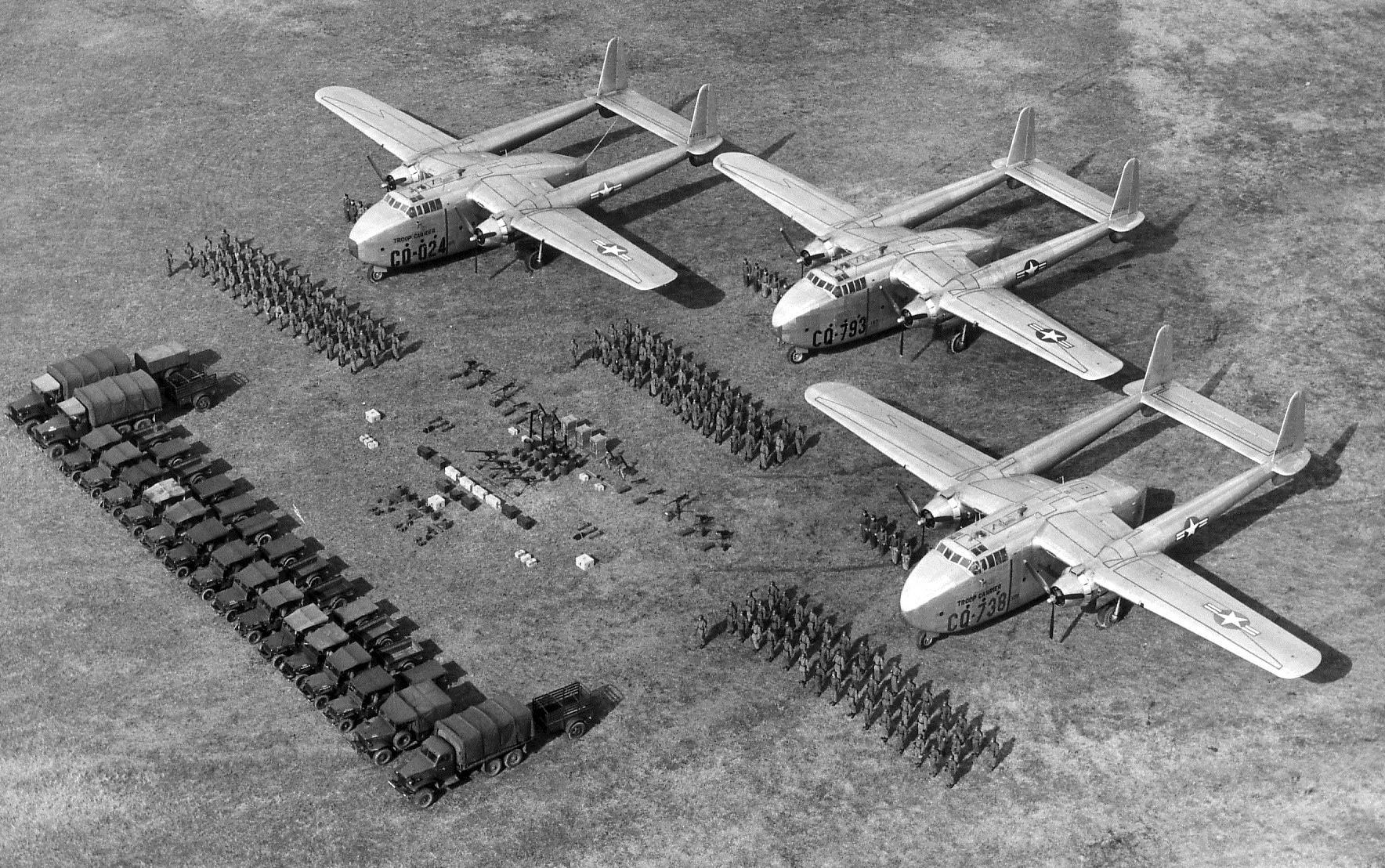

The C-82A Packet was a groundbreaking transport, but in the end, it just couldn’t hack it.
When Fairchild began the development of what would become their C-82 Packet to meet a 1941 requirement for a heavy-lift cargo aircraft, they referred to the design as the F-78. Initially, the aircraft was to be built using non-critical materials like plywood and steel (see the Bell XP-77 fighter) instead of aluminum. Fortunately, by 1943, the design specs changed, and the airlifter became an all-metal design. After a mockup of the design was approved in 1942, the Army Air Forces awarded a contract for a single prototype, which was then designated XC-82.
The Design Was Definitely Different
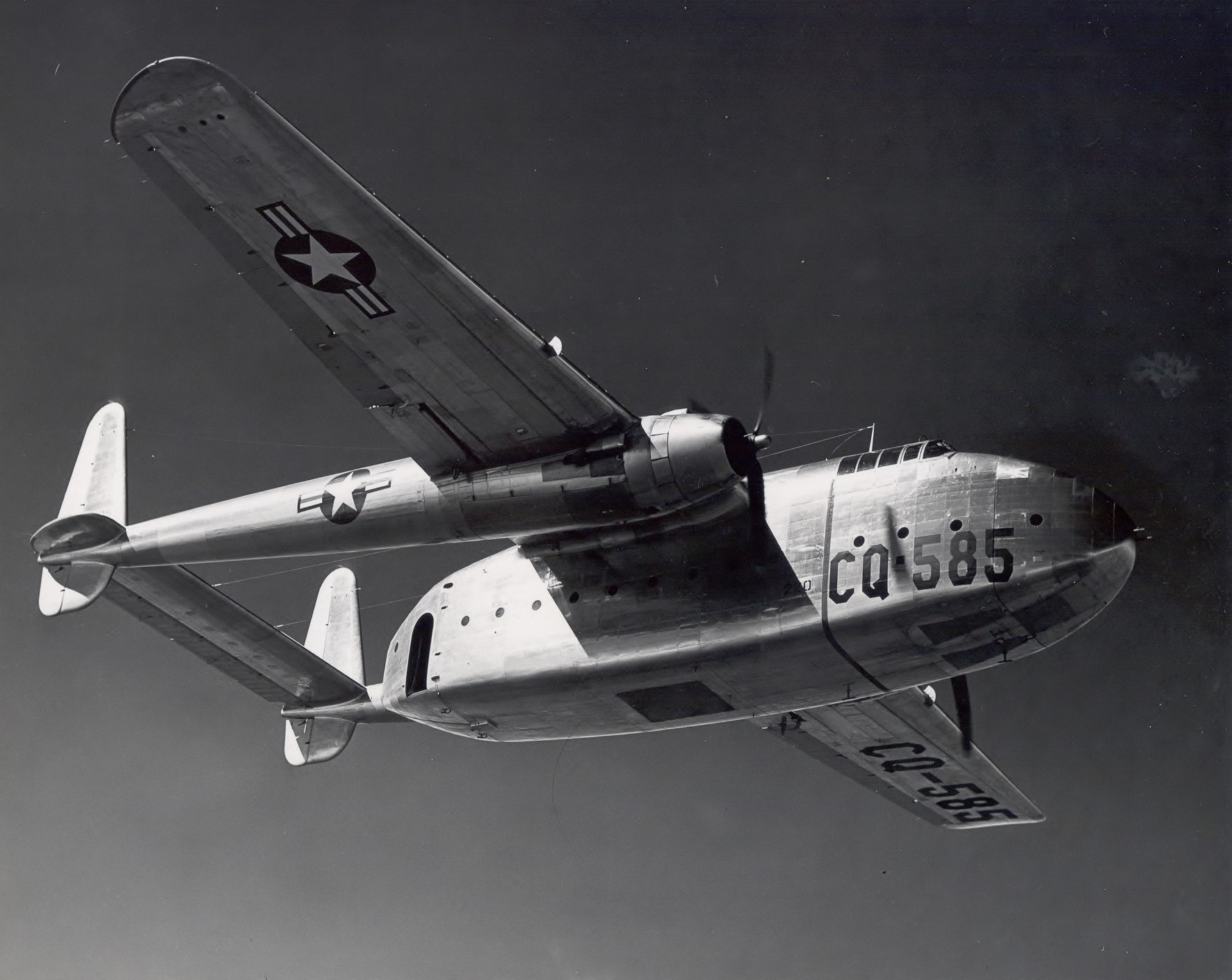
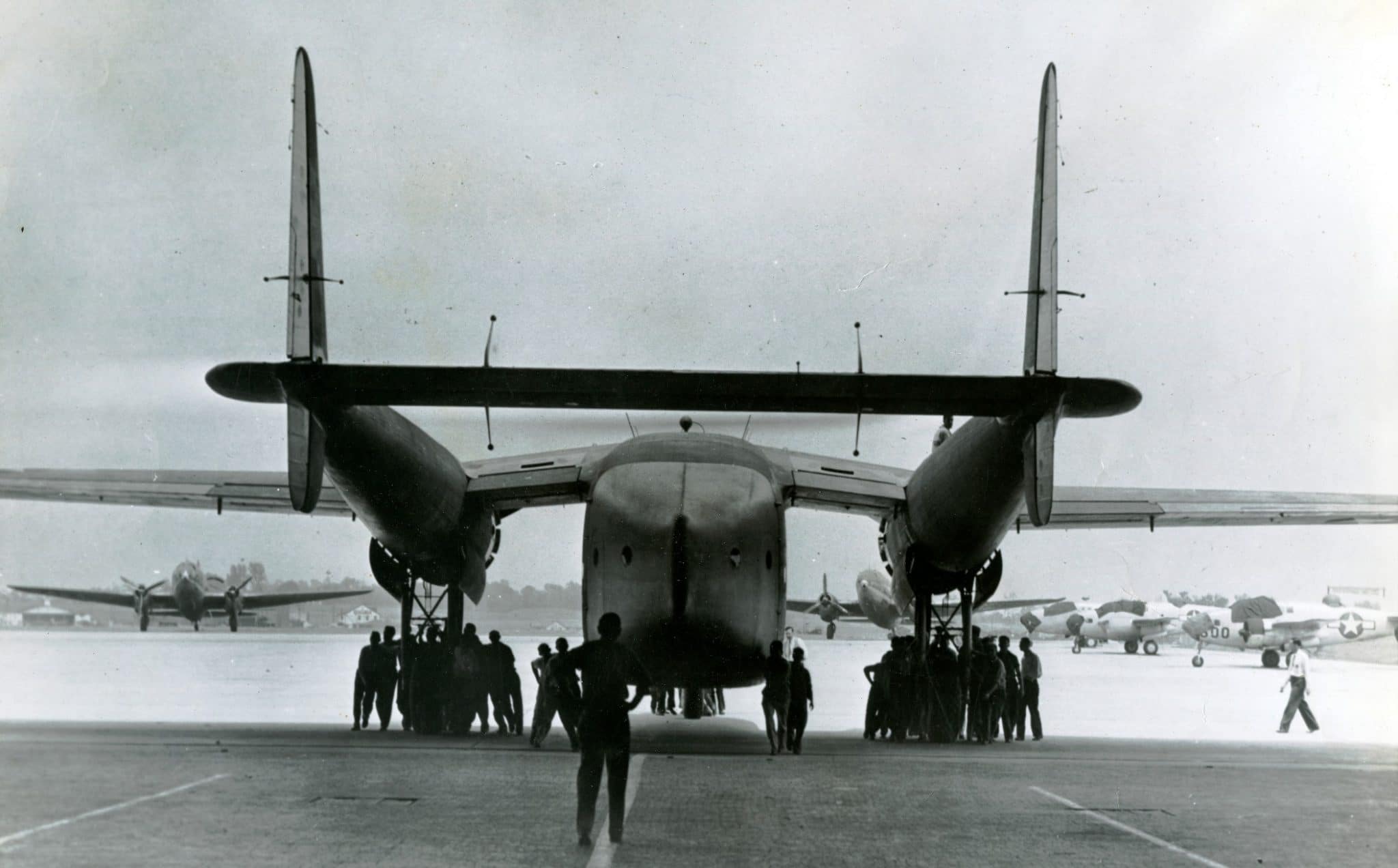
Fairchild’s design incorporated a high-mounted wing but with a center-mounted ground-accessible fuselage. Attached to the wings were twin booms, each extending aft and ending in a vertical stabilizer and rudder with a horizontal stabilizer and elevator mounted between the two vertical stabilizers. The wings had a pronounced anhedral angle between the fuselage and the inner booms to allow for manageable landing gear geometry. Power for the airlifter was provided by two 2,100 horsepower Pratt & Whitney R-2800-34 Double Wasp 18-cylinder radial engines mounted to the wings in leading-edge nacelles opposite the tail booms. The aircraft resembled nothing else as much as a squared-off up-sized Lockheed P-38 Lightning.
Roomy and Accessible
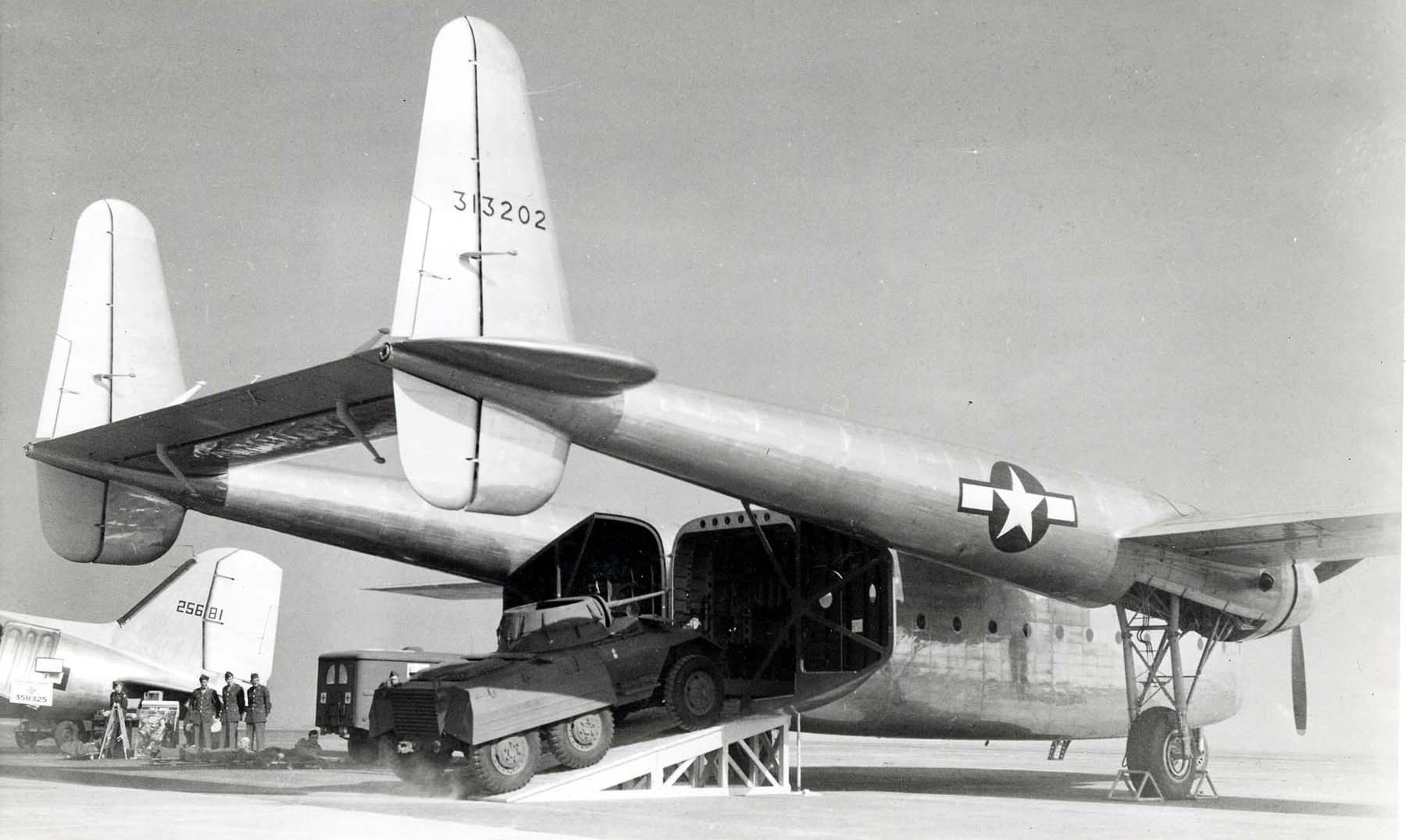
The fuselage of the XC-82 was roomy- far roomier and easier to access than either the Curtiss C-46 Commando or the Douglas C-47 Skytrain- the workhorses of the USAAF’s Air Transport Command at the time.
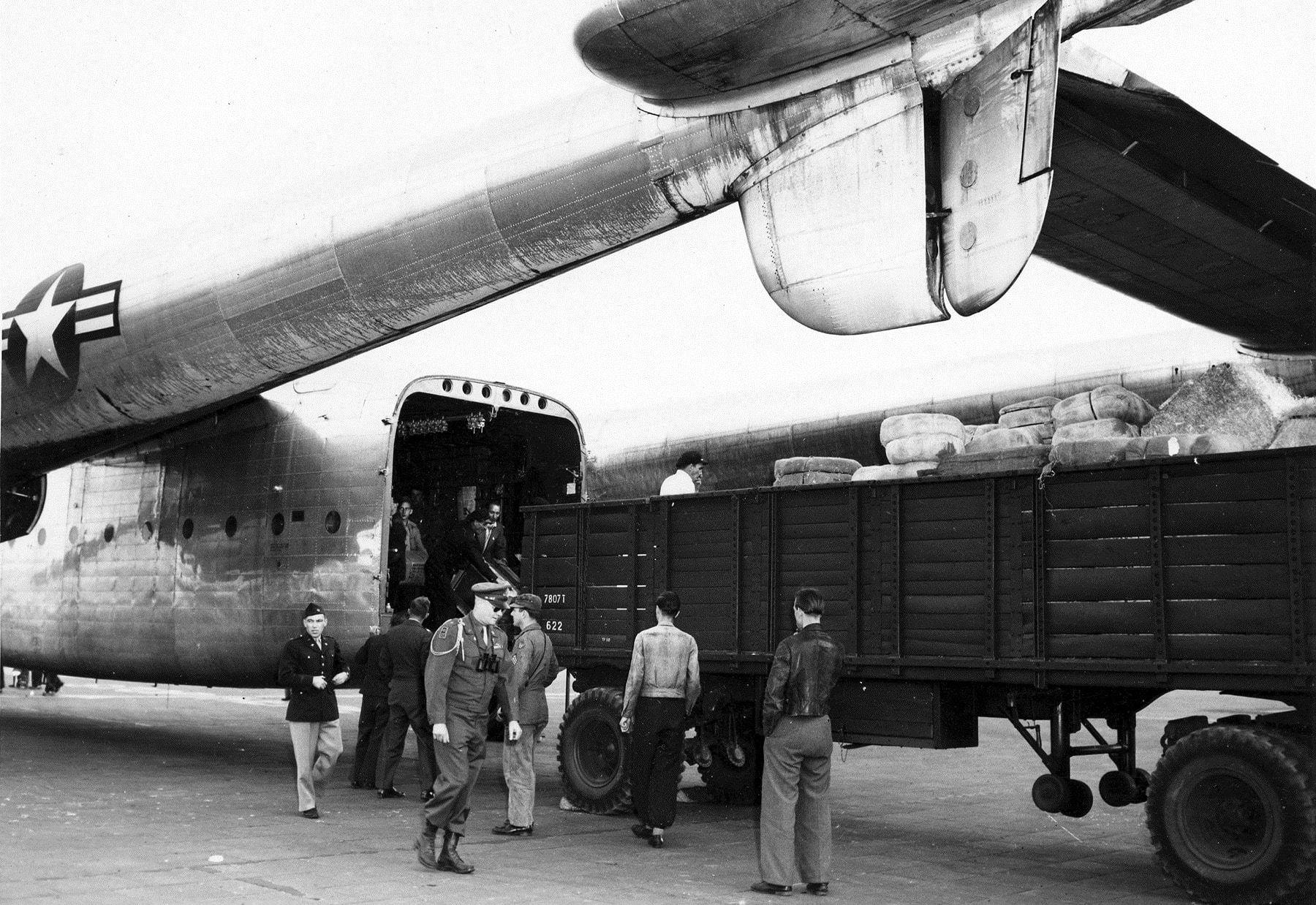
The aircraft was equipped with removable clamshell doors at the rear of the cargo hold, which allowed wheeled or tracked vehicles to be driven under the high-mounted empennage straight onto the aircraft via ramps. Personnel capacities were 42 fully-equipped paratroopers, 34 stretchers, or 78 persons in an emergency evacuation configuration.
The flight deck was roomy, too, capable of accommodating a flight crew of five with room to spare- but with no standing headroom. The aircraft was supported by heavy-duty retractable tricycle landing gear.
Flexible But Flawed
Envisioned as a multi-use airlifter built to execute cargo carrying, troop transport, paratrooper transport/drop, medical evacuation, and even glider towing missions, the Fairchild design was a groundbreaking design method.
Other airlifter designs were in development, but none were more capable or flexible (on paper) than the one from Fairchild. Paratroopers could simultaneously exit the aircraft on both sides of the rear cargo hold. But because the aircraft was conceived, designed, approved, and initially flown during wartime, some inadequacies were bound to be discovered.
And, indeed, some were.
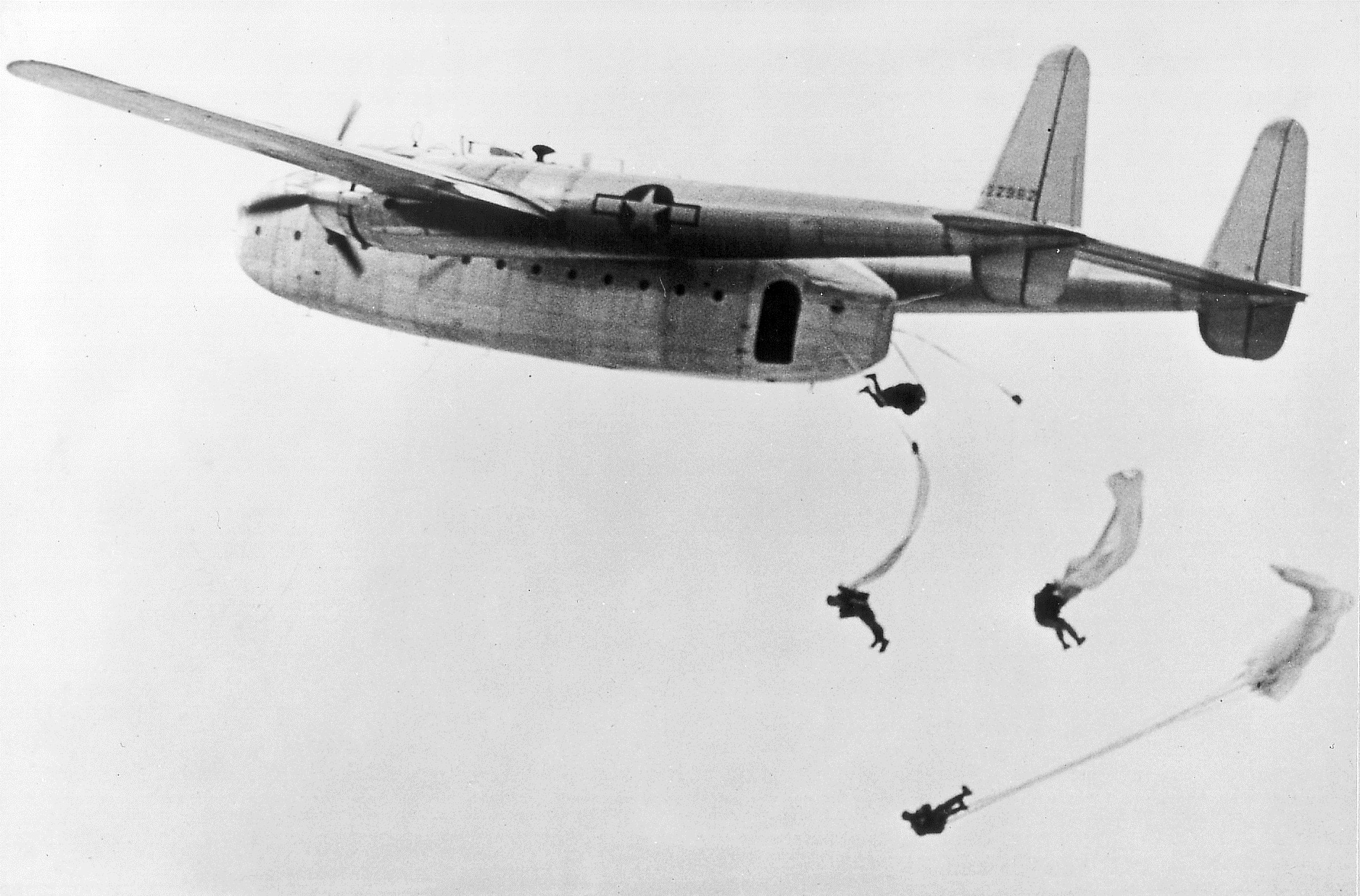
First Flight and First Problems
The prototype XC-82A flew for the first time on 10 September 1944. Fairchild began delivering C-82A production models built at their Hagerstown, Maryland assembly plant in June of 1945, but few were delivered before the war ended.
Once the aircraft entered service, those inadequacies became serious problems. The R-2800 engines, famous for powering several of the aircraft that helped win World War II, didn’t provide enough power for the C-82A. Inadequate, too, was the basic structural design of the airframe, especially for the loads it was expected to carry.
Best for Large But Lighter Loads
Fairchild named the C-82A the Packet after the small sailing ships that carried cargo between coastal seaports. During their relatively short operational service with Tactical Air Command Troop Carrier squadrons and the Military Air Transport Service, C-82s were used for transporting troops and cargo along with paratrooper deliveries and glider towing.
However, perhaps the C-82’s best contribution was as an outsized cargo hauler flying disassembled trucks and specialized airfield equipment into the Zone during the Berlin Airlift. Four C-82As working the Airlift were fitted with specialized delivery equipment and redesignated as JC-82As. Fairchild only delivered 220 C-82A Packets, all of which were retired by the Air Force by 1954. Although Fairchild’s airlifter saw a short career with the US Air Force, they served in other roles for many years.