

NASA’s enormous 212 ft-tall Space Launch System (SLS) core stage for Artemis-2 has arrived at Kennedy Space Center.
It spent the last week traveling 900 miles on a barge from Michoud Assembly Facility in New Orleans, where it was made and assembled.

The next step in returning people to the moon next year
It’s a major milestone in the processing flow for Artemis-2, which will fly the first humans back to the moon in over half a century.
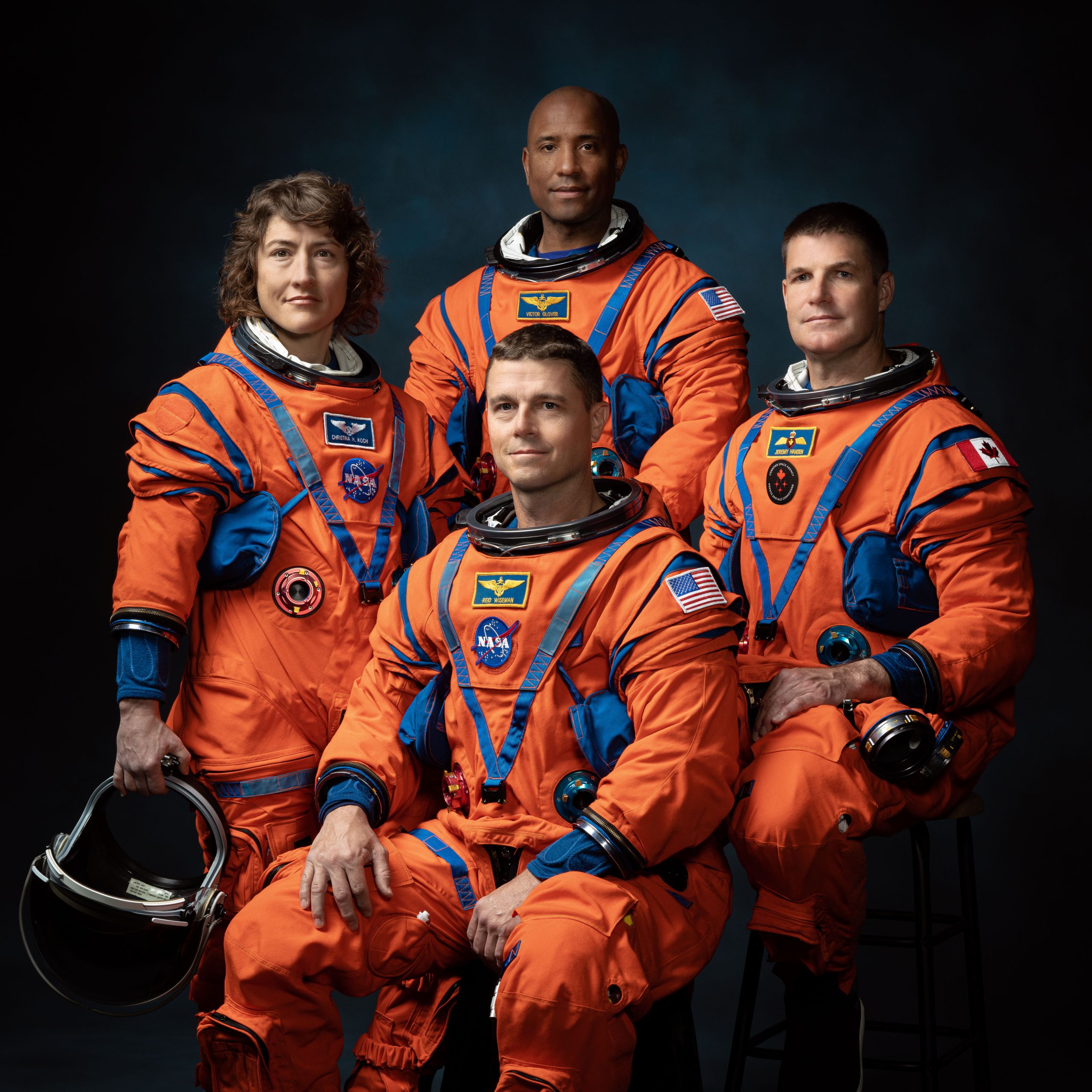
NASA astronauts Reid Wiseman, Victor Glover, Christina Koch and Canadian astronaut Jeremy Hansen will launch atop the core stage on the historic Apollo-8-like mission as soon as Sep 2025.
Both Wiseman and Hansen were at Michoud to see their rocket off, as it set sail for their launch site in Florida.
“It was pretty awesome”, said mission commander Wiseman. It was a nice break from their mission training, which is full speed ahead.

“On Wed, Jeremy and I had an S-band malfunctions class, where we looked at our communication and telemetry system on Orion, and we can identify failures in that system that would prevent us communicating or passing telemetry back and forth with Mission Control in Houston.”
With a dizzying heat and thick humidity in the air at KSC today, NASA teams transferred the 188,000 pound empty stage from the barge onto a self-propelled transporter, and slowly rolled the moon rocket into NASA’s iconic Vehicle Assembly Building (VAB). The short move took about 3 hours.


NASA will hold a status review in Sep, before stacking and integrating the giant vehicle’s components for launch
With the mammoth stage now safe inside the VAB, engineers will soon begin processing it for stacking operations in the coming months.
NASA will conduct a status review of Artemis-2 in September, to determine if ops can proceed with stacking the core, twin SRBs and spacecraft for Artemis II. The SLS Launch Vehicle Stage Adapter (LVSA) and the Orion Stage Adapter (OSA) will be sent to KSC soon.

When that occurs, the giant core stage will be lifted off the floor, raised to a “standing” position, and be gently lowered into a high bay between its twin solid rocket boosters onto a Mobile Launch Platform (MLP).
The orange stage has been ready for quite some time. NASA put the core stage hardware and software through a series of Integrated Functional Tests last January.
Orion spacecraft is the critical path towards a solid launch date right now
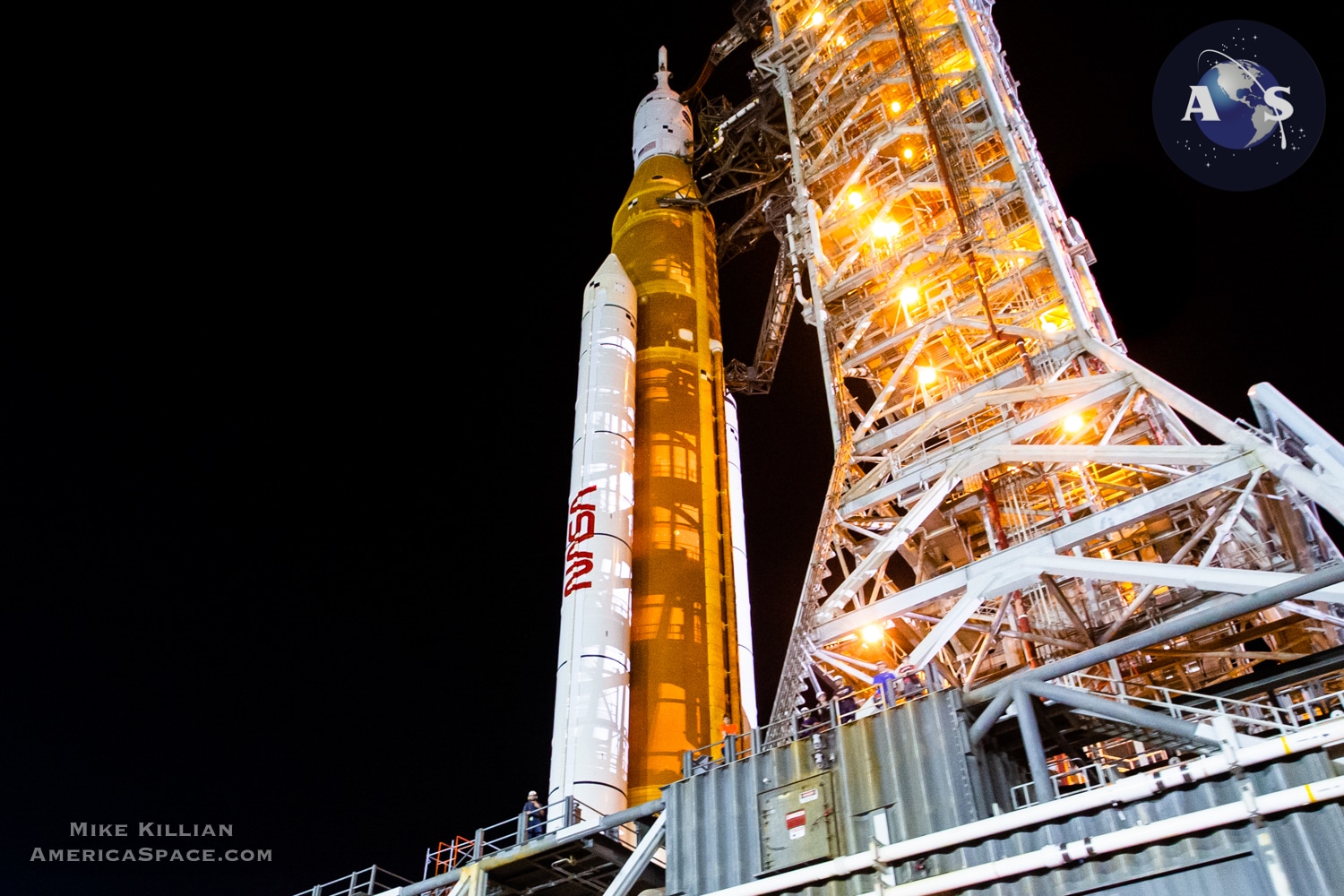
It passed with flying colors, and was then placed into storage while NASA announced a 10-month delay to the Artemis 2 mission due to issues with the Orion spacecraft’s heat shield, life support system, and batteries. NASA decided that it was preferable to store it at Michoud, rather than inside KSC’s VAB.
Orion is the critical path in the scheduling for Artemis-2 launch processing at this point. The spacecraft was recently put through vacuum testing at KSC. An independent review is still ongoing about the re-entry performance of the heat shield on Artemis-1, and corrective actions that may follow for Artemis-2 and on.

The 10 segments of the twin SRBs have been at KSC since Sep 2023, and will soon be integrated atop the MLP, forming the giant 17-story-tall cigarette-looking white boosters that will flank each side of the SLS rocket.
Together, the twin boosters will produce more than 75% of the total thrust at liftoff, to send Artemis-2 and her 4 astronauts to the Moon.

Two of the four RS-25 engines on the Artemis-2 core stage are space shuttle veterans. One was used on 15 flights and was taken from Endeavour.
Another flew 5 missions and was taken from Atlantis. The remaining two engines were built from scratch to support the Artemis program.

Together, the SLS rocket’s twin boosters and the core stage’s four RS-25 engines will produce almost 9 million pounds of thrust on liftoff.
