

UPDATE | 10PM EDT | 14 MAR 2026: The Department of War has released the names of the six United States Air Force Airmen who were killed in Thursday’s midair collision over western Iraq while supporting Operation Epic Fury.
Assigned to the 6th Air Refueling Wing, MacDill Air Force Base, Florida:
Maj. John A. Klinner, 33, of Auburn, AL; Capt. Ariana G. Savino, 31, of Covington, WA; and Tech. Sgt. Ashley B. Pruitt, 34, of Bardstown, KY.
Assigned to the 121st Air Refueling Wing at Rickenbacker Air National Guard Base, Ohio:
Capt. Seth R. Koval, 38, of Mooresville, IN; Capt. Curtis J. Angst, 30, of Wilmington, OH; and Tech. Sgt. Tyler H. Simmons, 28, of Columbus, OH.
They were tanker Airmen. The ones who quietly extend the reach of every mission and every aircraft flying in defense of freedom. Today, we pause to remember six patriots who answered the call, took to the sky, and gave everything in service to their country.
The original story is below.
A KC-135 crash in western Iraq after an apparent midair collision has killed six US Airmen, US Central Command (CENTCOM) confirmed Friday. Investigators are now examining what happened.
Six American service members were killed Thursday, 12 March 2026, after a US Air Force (USAF) KC-135 Stratotanker crashed in western Iraq following an incident involving another aircraft, according to the US military. The crash occurred during operations connected to the ongoing US and Israeli campaign against Iran, known as Operation Epic Fury.
US Central Command (CENTCOM), which oversees American military operations in the Middle East, confirmed on Friday that all six crew members on board had died. Earlier, reports mentioned four deaths while rescue teams searched for the other two. By early Friday morning, however, officials confirmed that all six had died.
“The circumstances of the incident are under investigation,” CENTCOM said in a statement. “However, the loss of the aircraft was not due to hostile fire or friendly fire.”
The military said the incident occurred in “friendly airspace” and involved two aircraft during Operation Epic Fury. One aircraft crashed in western Iraq, while the other was able to land safely.
The aircraft that went down has been identified as Boeing KC-135R Stratotanker (62-3556). The tanker was historically assigned to the Air Force Reserve’s 459th Air Refueling Wing at Joint Base Andrews, Maryland.
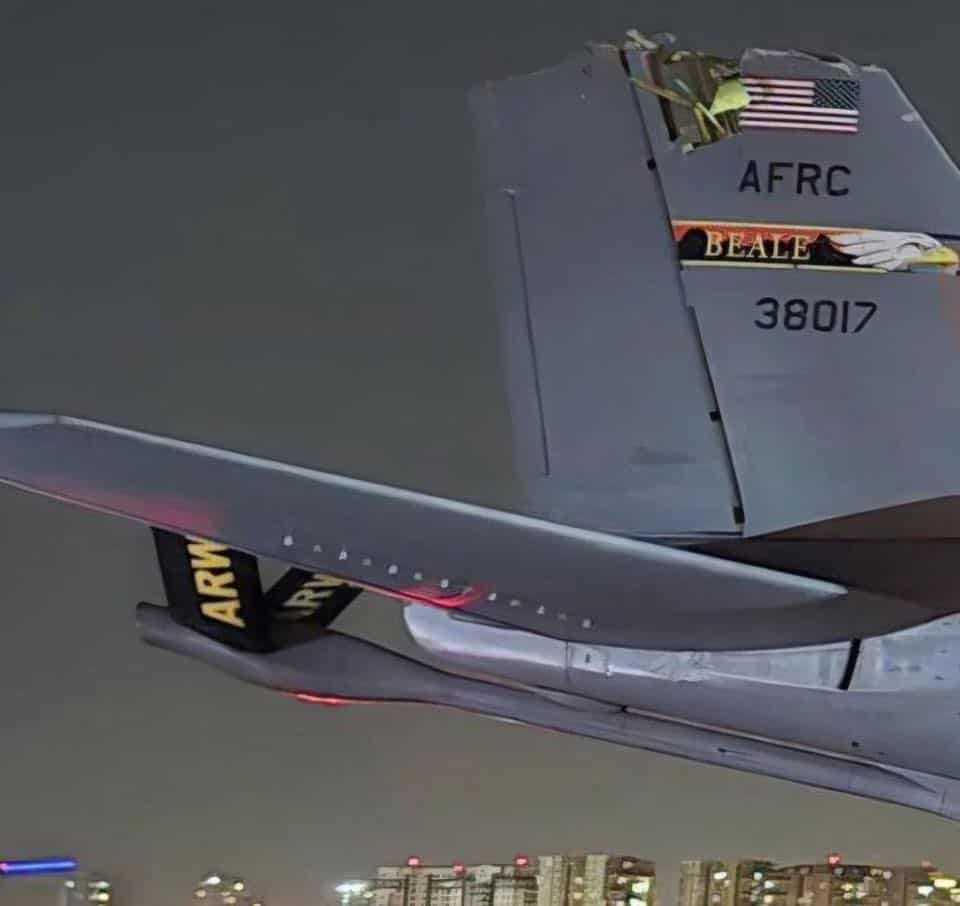
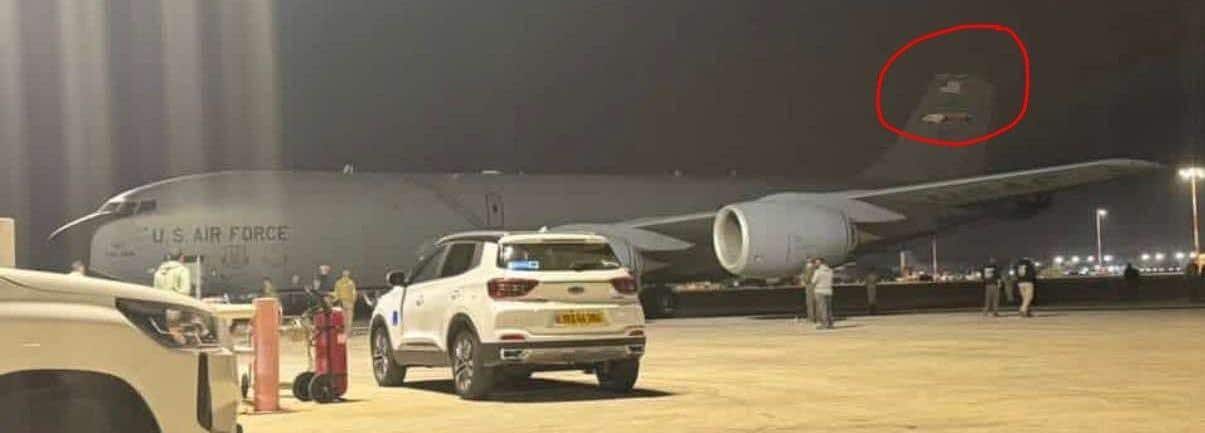
A US official familiar with the incident said the second aircraft involved was also a KC-135. Military officials later identified it as KC-135R (63-8017), an airframe delivered in 1963. The tanker reportedly suffered damage to its tail during the incident but remained controllable and landed safely. Reports indicate the aircraft diverted to Tel Aviv, where it landed safely. Israeli Ambassador to the United States Yechiel Leiter wrote on X that the aircraft had landed safely in Israel.
Photographs of the surviving aircraft show markings associated with the 940th Operations Group at Beale Air Force Base in California, part of the 940th Air Refueling Wing. The unit operates a small fleet of KC-135 Stratotankers and received its first aircraft of the type in December 1976.
According to CENTCOM, this crash raises the number of US service members killed in the current conflict with Iran to at least 13.
An Aging Fleet Essential to the Success of Epic Fury
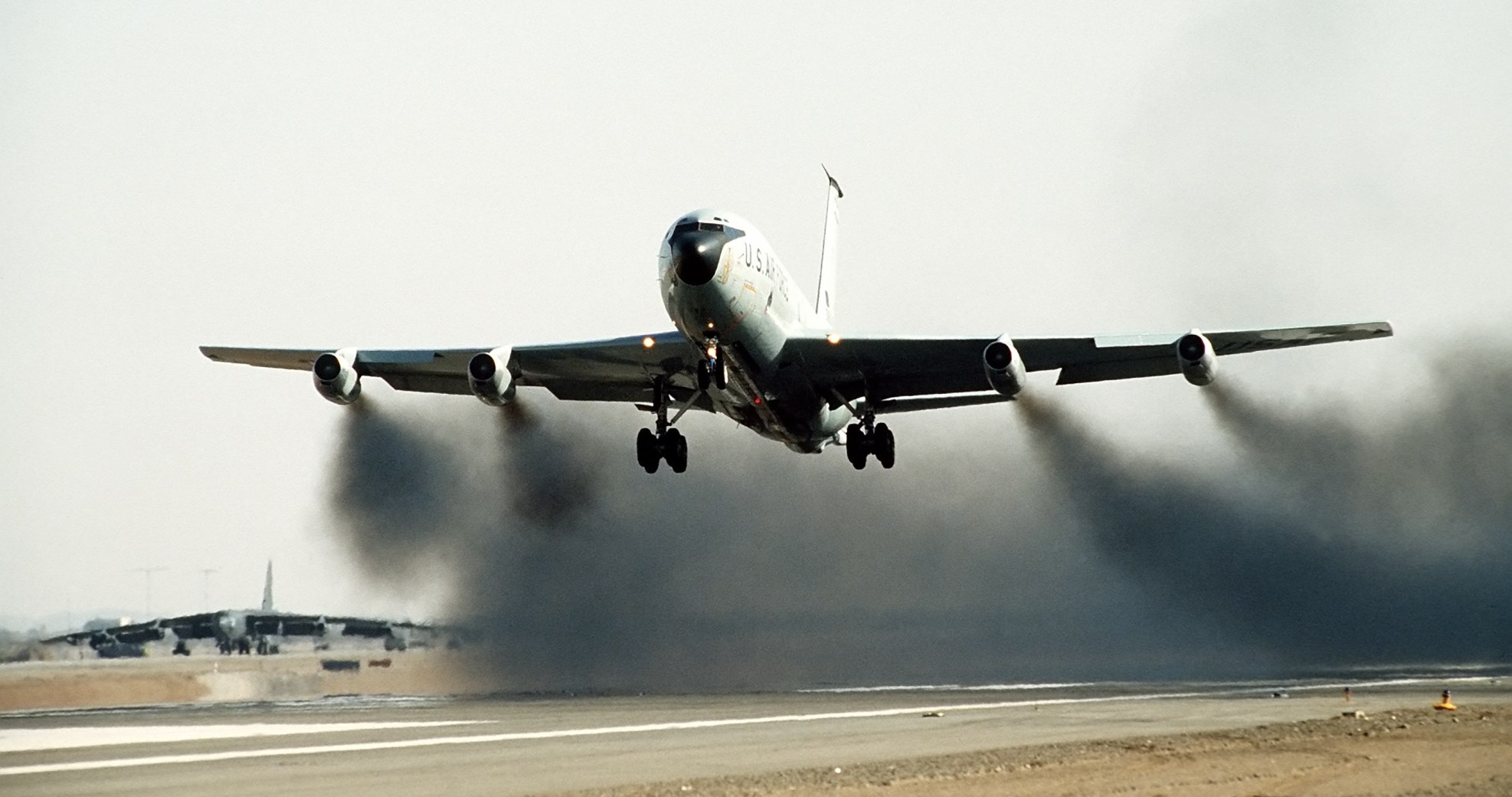
The KC-135 Stratotanker, the aircraft involved in the crash, has been a key part of the US military’s aerial refueling fleet for decades. Based on the Boeing 707 airliner, it entered service in the late 1950s and early 1960s and still plays an important role in helping military aircraft fly longer distances.
The KC-135 lets fighter jets, bombers, surveillance planes, and cargo aircraft refuel in midair. This helps them stay in the air longer and operate far from their bases. Some versions can also carry cargo or passengers, and the aircraft can support aeromedical evacuation missions.
A standard KC-135 crew usually consists of three people: a pilot, a co-pilot, and a boom operator. The boom operator manages the refueling boom, which extends from the back of the tanker and connects to other aircraft during refueling. On many KC-135s, the operator does this while lying face down and watching the process through a window on the bottom of the fuselage.
Some missions require additional crew members, which was the case here.
The Congressional Research Service reports that as of last year, the Air Force had 376 KC-135 aircraft. Of these, 151 were with active duty units, 163 with the Air National Guard, and 62 with the Air Force Reserve.
Even with upgrades, the age of the KC-135 has been a concern for defense analysts. The Air Force’s switch to the newer KC-46A Pegasus tanker is also taking longer than planned.
Even with the KC-46 coming into service, officials expect the Stratotanker to keep flying for many years. Some estimates say it could stay in use into the 2040s or later.
Refueling tankers have become particularly important during the current conflict, analysts say, as US aircraft may be required to conduct longer missions across the region.
Investigation Underway as (Many) Questions Remain
Military officials still do not know exactly what caused Thursday’s crash. Investigators are looking into what happened between the two aircraft before the KC-135 went down.
Air-to-air refueling operations are routine for the US military, but they require precise coordination between aircraft flying in close proximity at high altitude. Mishaps are rare, but investigators believe a midair collision may have played a role in the incident, according to reports citing officials familiar with the early stages of the investigation.
The crash happened in a remote desert area of western Iraq near the Jordanian border. US aircraft often fly through this region while supporting operations in the Middle East.
This is the fourth US aircraft crash made public since Operation Epic Fury started in late February. Earlier, three US Air Force F-15E Strike Eagles were accidentally shot down by Kuwaiti F/A-18s in a friendly fire incident. All the pilots ejected safely.
KC-135 aircraft have had several fatal accidents over the years, but these are still uncommon. The last fatal crash before Thursday was on 3 May 2013, when a KC-135R crashed soon after takeoff from Manas Air Base in Kyrgyzstan during operations in Afghanistan, killing all three crew members. A later Air Force investigation found the plane had a rudder malfunction before the tail broke off in flight.
Right now, investigators are trying to find out what happened over western Iraq. Military officials say they will review flight data, communication records, and other evidence to determine how the crash occurred.
As recovery efforts continue, the US military has promised to honor the six airmen who died. War Secretary Pete Hegseth called them “heroes” during a briefing after the incident and said they will be brought back to the United States with a dignified transfer at Dover Air Force Base.
The AvGeekery team offers sincere condolences to the families of the heroes who lost their lives in this tragedy. These warriors made the ultimate sacrifice for freedom and will always be remembered.