

At 0200 EST on Saturday, 28 February 2026, the United States and Israel launched coordinated strikes on Iran in what is being called Operation Epic Fury.
Within hours, the effects could be seen both on the ground and in the air.
Flight tracking maps showed almost empty skies over Iran, Iraq, Kuwait, Israel, and Bahrain after the strikes began and Iran responded with missiles. One of the world’s busiest air corridors quickly emptied.
Witnesses told Reuters they heard explosions in cities across the Gulf, such as Doha, Abu Dhabi, and Dubai. As military activity increased, governments in the region started closing their airspace to civilian flights.
This led to a series of aviation shutdowns across the region.
Airspace Closures Spread Across the Region
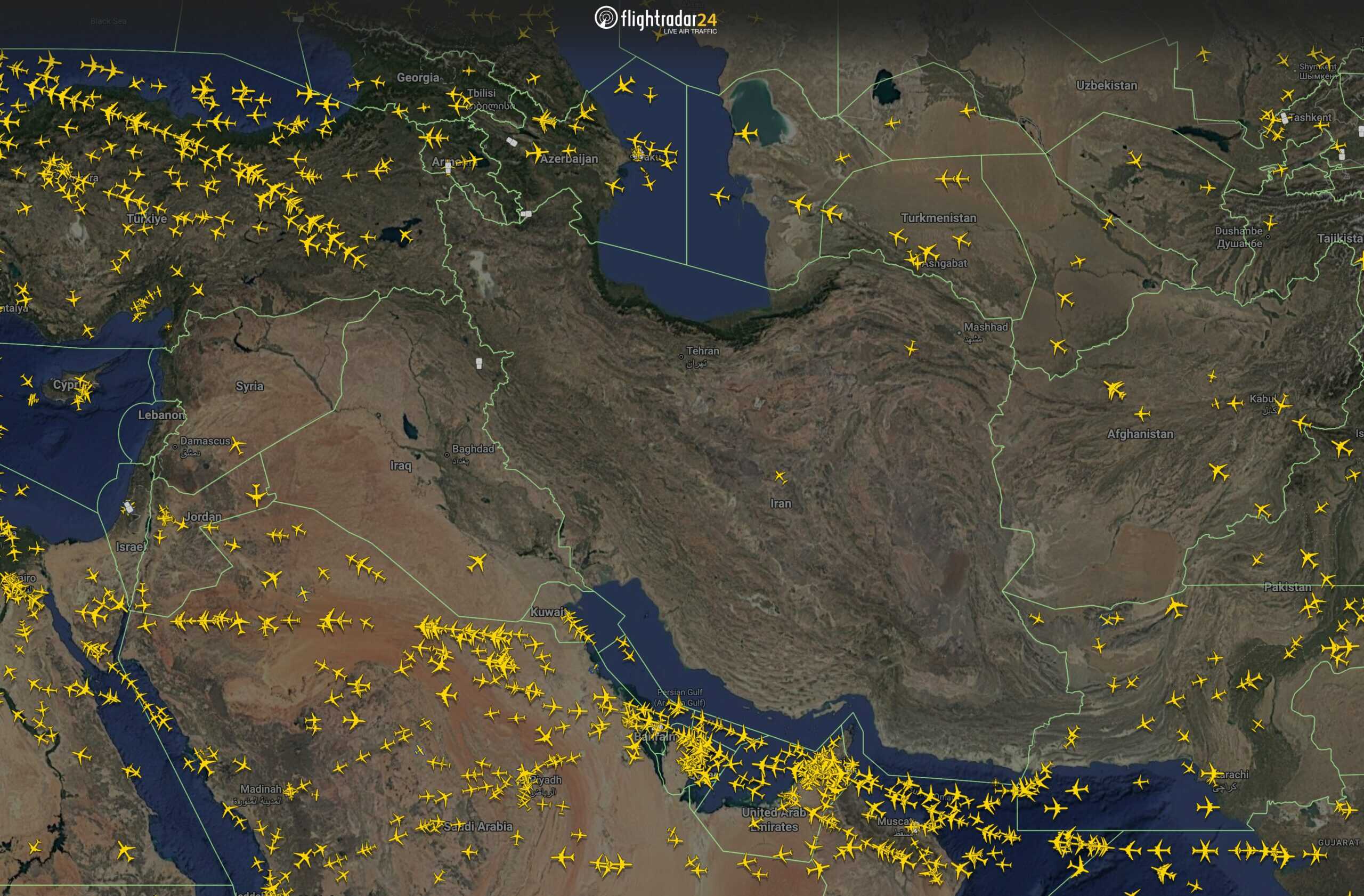
By midday Saturday, much of the Middle East had either closed or heavily restricted civilian flights.
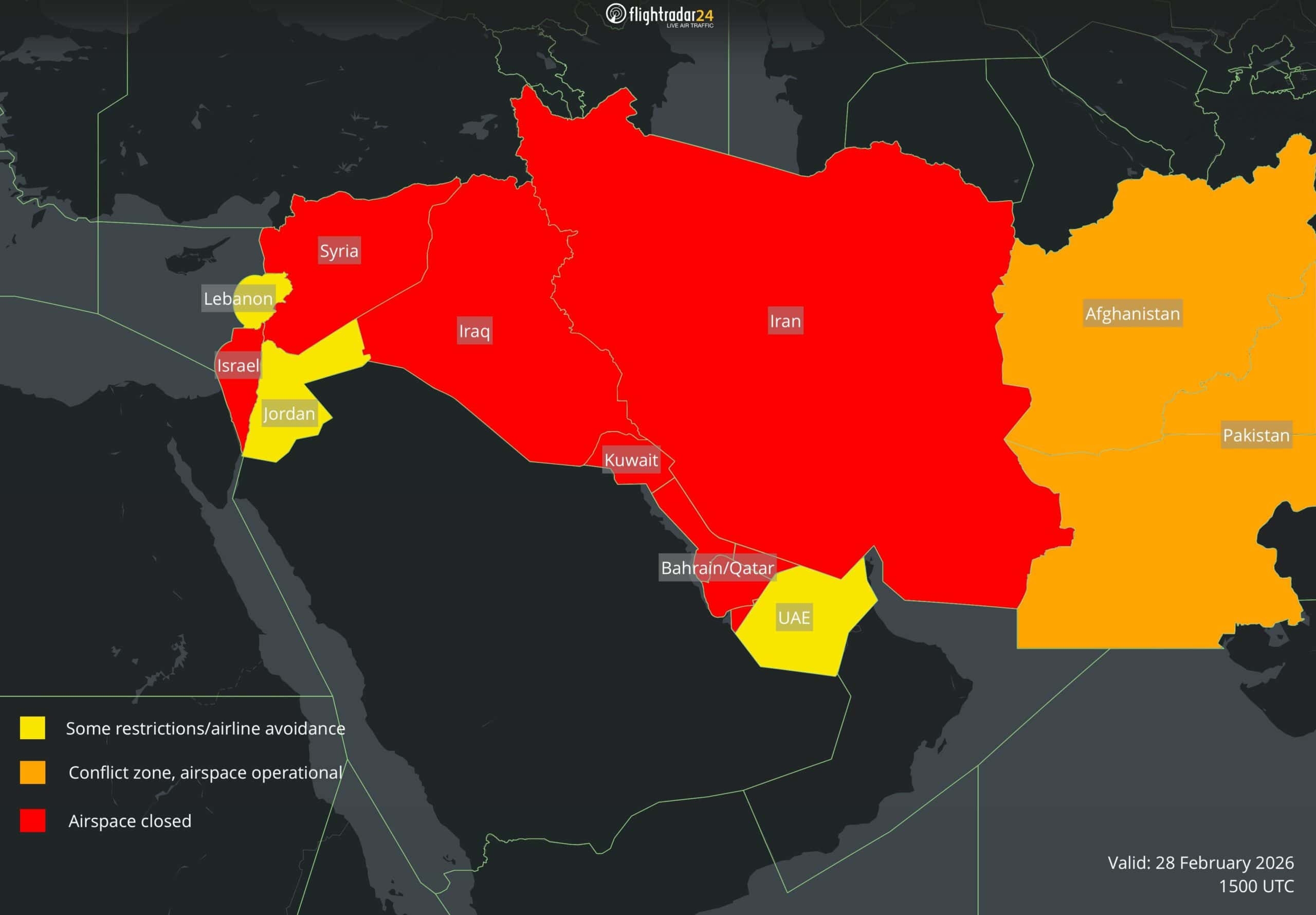
Countries that have fully closed their airspace:
- Iran
- Israel
- Iraq
- Kuwait
- Bahrain
- Qatar
- Jordan
Countries reporting restrictions or partial closures:
- United Arab Emirates
- Syria (southern corridors)
- Oman
The European Union Aviation Safety Agency (EASA) advised airlines to avoid flying in several affected areas because of the risks from ongoing military operations.
Flight tracking services showed a quick and dramatic change, as flights that usually crossed the Gulf were forced to detour far north or south. The normal flow of long-haul jets between Europe and Asia vanished from the map.
Gulf Megahubs Grind to a Halt
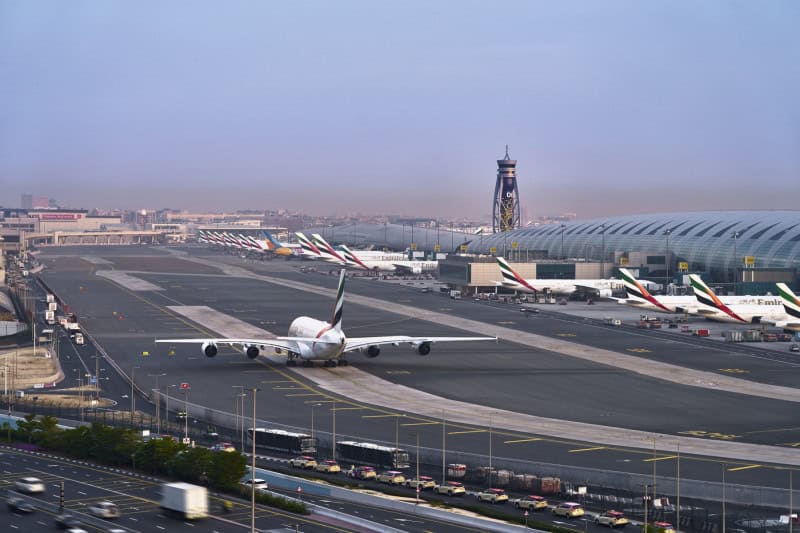
The closure of major Gulf airports had the biggest impact.
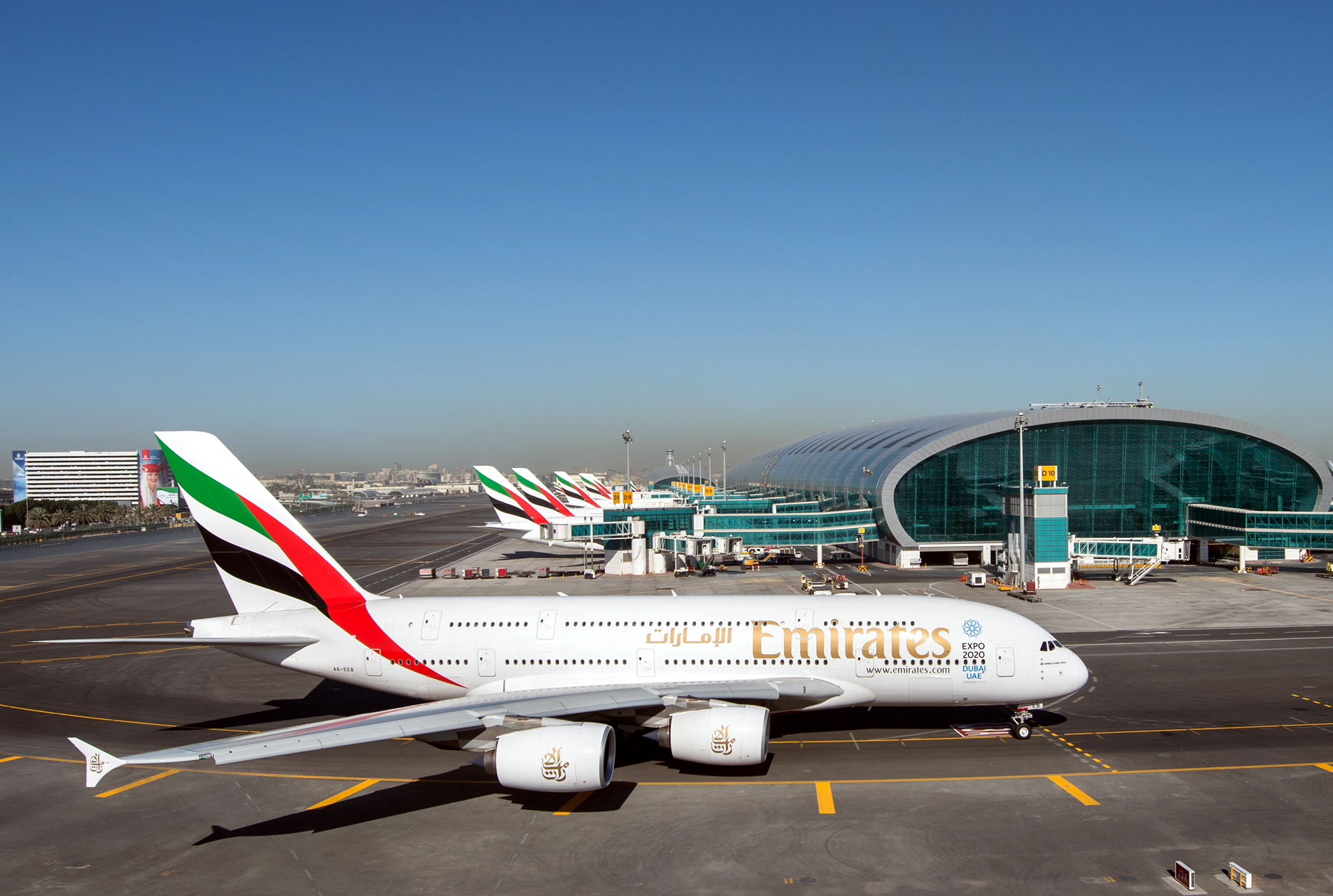
Dubai International Airport (DXB), the world’s busiest for international travel, suspended all flights “until further notice,” along with Al Maktoum International Airport (DWC). In a statement, Dubai Airports told passengers not to come to the airport and to contact their airlines directly.
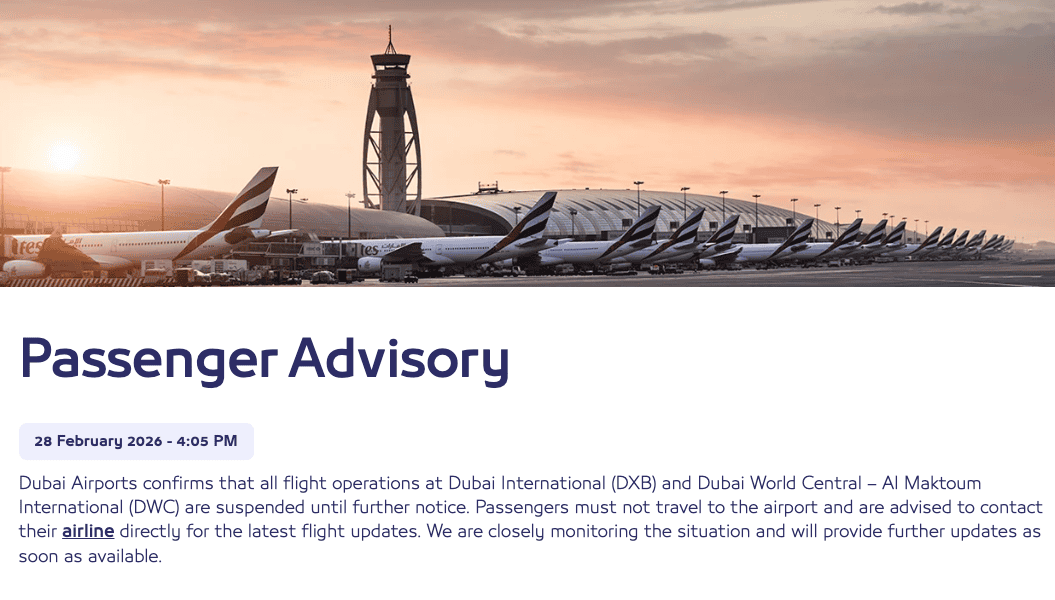
Dubai International handled nearly 100 million passengers last year, according to Reuters. On Saturday, most departures were canceled.
At Doha’s Hamad International Airport (DOH), gates were almost empty as stranded passengers waited to rebook flights or find hotel rooms, according to a Reuters witness.
Kuwait International Airport (KWI) was also impacted. Authorities said an Iranian drone strike caused some damage to a passenger terminal and minor injuries, leading to the postponement of all arrivals and departures.
Etihad Airways suspended departures from Abu Dhabi’s Zayed International Airport (AUH) until at least 1000 GMT Sunday. Emirates and flydubai also suspended flights to and from Dubai because of the airspace closures. The airlines told crew members to check their schedules for changes and let stranded staff use company phones to contact family.
“You have crews, planes, and passengers stranded all over the world. It’s a massive logistical nightmare,” a Gulf airline spokesperson told Reuters.
Airlines Suspend, Reroute, Cancel
The disruption soon affected areas outside the Middle East as well.
Preliminary data from Cirium, reported by Reuters, showed that about 24 percent of flights to the Middle East were cancelled on 28 February. About half of flights to Qatar and Israel were canceled, and about 28 percent of flights to Kuwait were canceled.
You have crews, planes, and passengers stranded all over the world. It’s a massive logistical nightmare.
A Gulf airline source via Reuters
Major airlines announcing suspensions or cancellations include:
- Lufthansa: Suspending Dubai flights for the weekend and halting Tel Aviv, Beirut, and Oman routes until 7 March
- British Airways: Canceling Tel Aviv and Bahrain flights until 3 March
- Air France and KLM: Cancelling Tel Aviv and Beirut services
- Wizz Air: Suspending Israel, Dubai, Abu Dhabi, and Amman routes
- Russian carriers: Suspending flights to Iran and Israel
- Virgin Atlantic: Avoiding Iraqi airspace and rerouting flights
In the United States, Delta Air Lines and United Airlines suspended flights to Ben Gurion Airport (TLV) in Tel Aviv and DXB. American Airlines’ Doha flights were affected. All three carriers issued waivers allowing customers to rebook without change fees through 5 March.
A Growing Global Ripple Effect
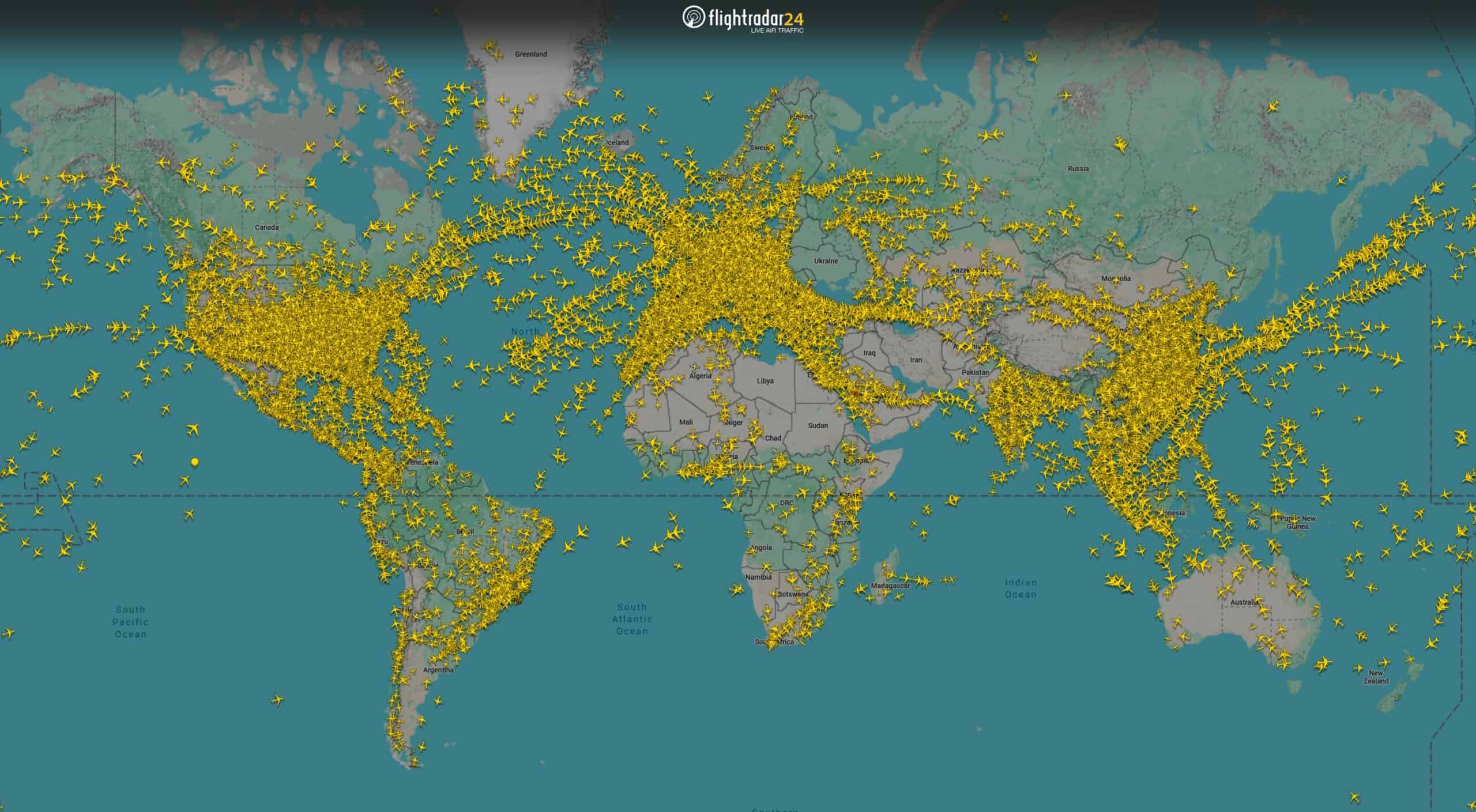
The Middle East is an important link between Europe and Asia. When this route is closed, the effects reach far beyond the region and can be felt worldwide.
Flights now have to take longer routes around restricted airspace, which adds hours to travel time and uses more fuel. Aircraft and crews are not where they need to be. Cargo shipments are delayed, and there are growing concerns about insurance and security.
The region became even more important for east-west flights after airlines began avoiding Russian and Ukrainian airspace due to the conflict. Losing another vital corridor makes global air traffic even more crowded.
Security experts warn that these airspace closures could continue for some time.
“Passengers and airlines can expect airspace to be shut for quite some time in the region. The impact on regional aviation is immediate and highly fluid,” Eric Schouten, head of aviation security advisory Dyami, told Reuters.
As of Saturday evening, there was no timeline for reopening major Gulf airports. Military operations and retaliatory strikes remain ongoing.