

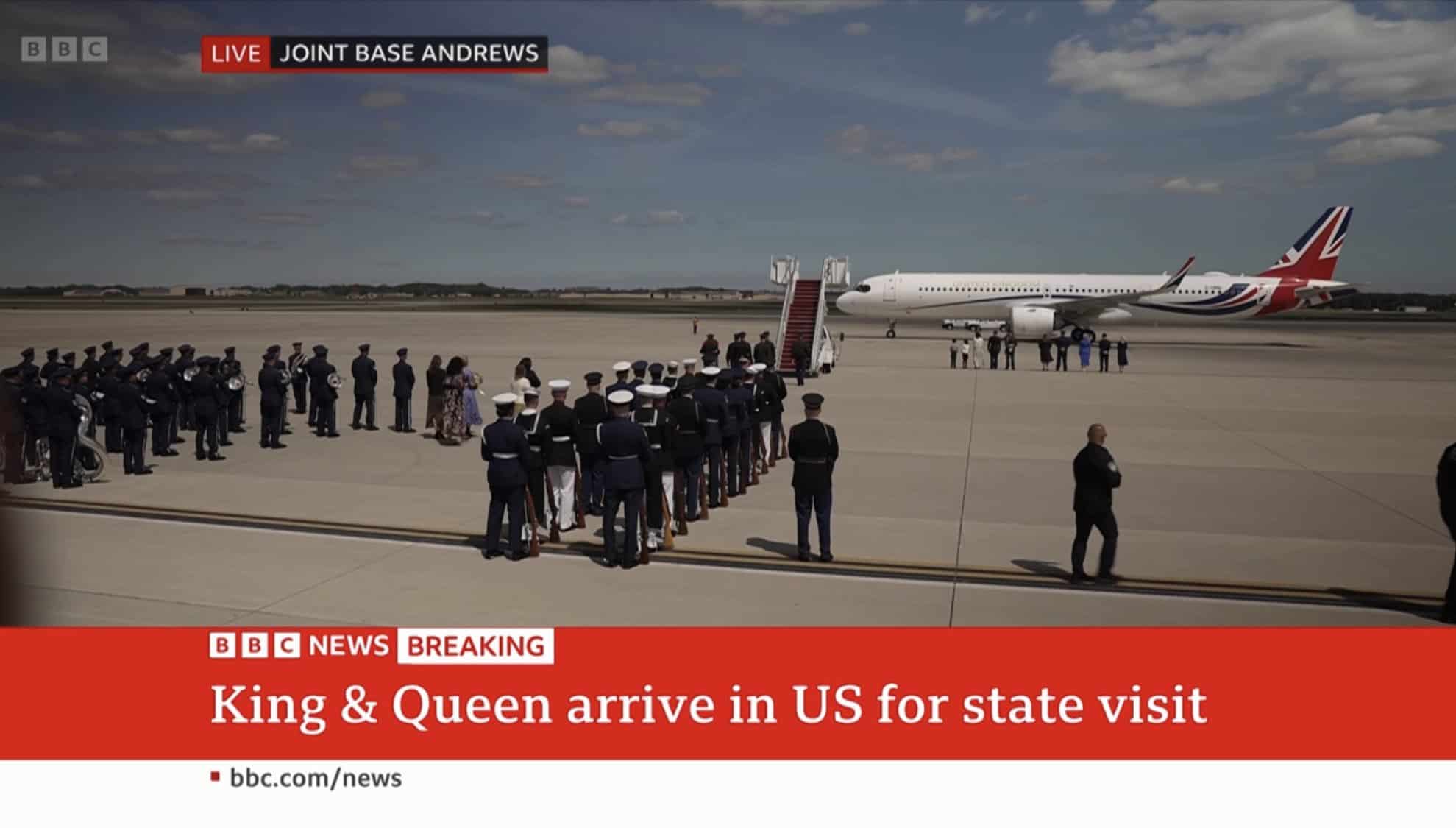
The Royal British Airbus A321neo made a high-profile arrival at Joint Base Andrews on Monday for King Charles III’s America 250 state visit.
When King Charles III and Queen Camilla arrived in Washington, D.C. today, the occasion was bound to make headlines. Their state visit will undoubtedly be a historic event, celebrating America’s 250th year of independence and the America 250 festivities. For avgeeks, though, the real highlight was the United Kingdom government’s VIP Airbus A321neo parked at Joint Base Andrews.
The aircraft, registered as G-GBNI, is one of the most recognizable narrowbody VIP planes used by any government. Titan Airways operates it for the UK government, and it often appears on important ministerial and royal trips. On this transatlantic journey, the King and Queen flew from RAF Brize Norton to Washington, D.C., using a royal flight callsign.
Flight tracking shows G-GBNI left RAF Brize Norton (BZZ) at 1147 local time and landed at Joint Base Andrews (ADW) at 1432 local, making the trip in about 7 hours and 45 minutes. This flight is notable not just for its passengers, but also for what it reveals about the use of long-range narrowbody jets in VIP travel today.
A Long-Range Narrowbody With a Royal Mission
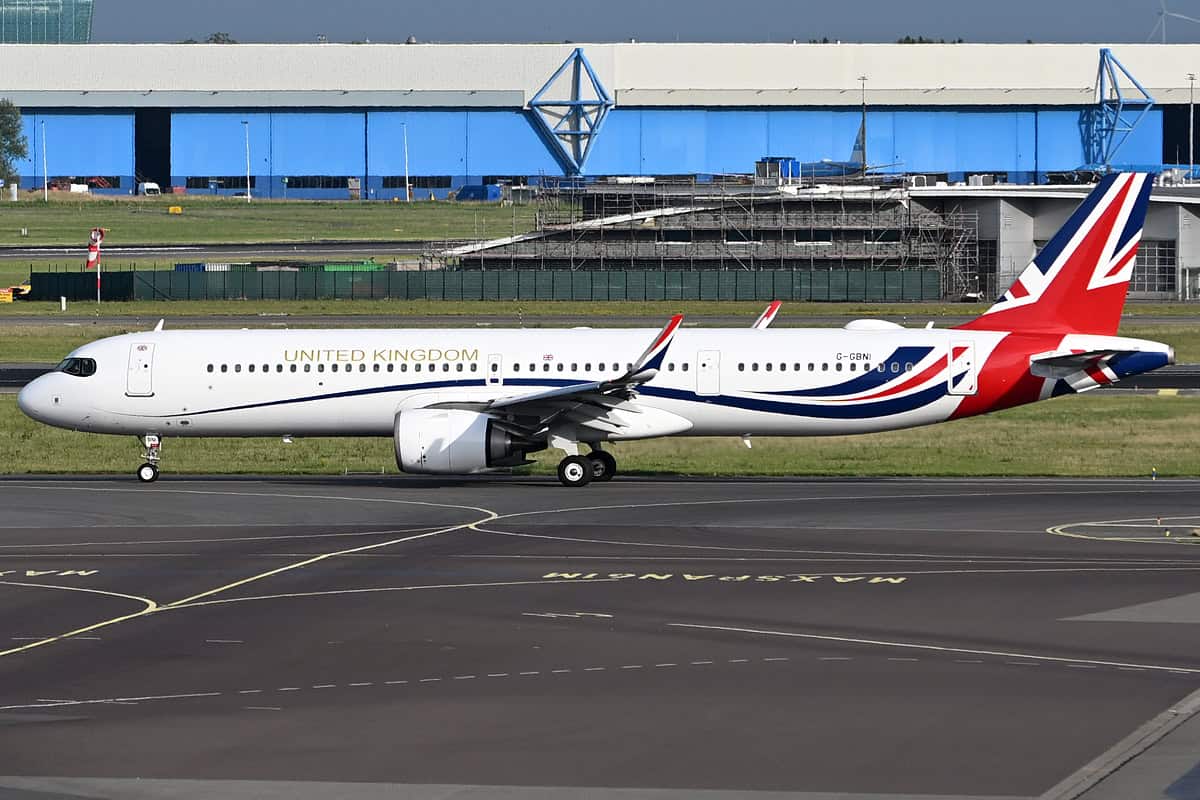
G-GBNI is an Airbus A321-251NX from the A321neo family, set up for long-range VIP missions. Public records show it is MSN 8830 and has two CFM International LEAP-1A32 engines. The plane first flew in 2019 and joined the UK government’s VIP fleet after serving with other operators.
Most people think of the A321neo as a regular commercial jet, but it is now playing a bigger role in long-range premium travel. Its longer range, lower costs compared to larger jets, and ability to use many airports make it an attractive choice for government and VIP flights.
This was clear during today’s flight, when the plane flew nonstop from the UK to Washington, covering about 4,500 nautical miles depending on routing. For a single-aisle jet, this is exactly the kind of trip the long-range A321neo was built for.
This A321neo is set up differently from standard models. Public sources say G-GBNI has a low-density VIP layout with lie-flat seats, meeting areas, high-speed internet, secure communications, and other features needed for official trips. The exact interior is not shared for security reasons, but it is used by the Prime Minister, Cabinet ministers, senior officials, and the Royal Family.
From Airliner to Government Transport
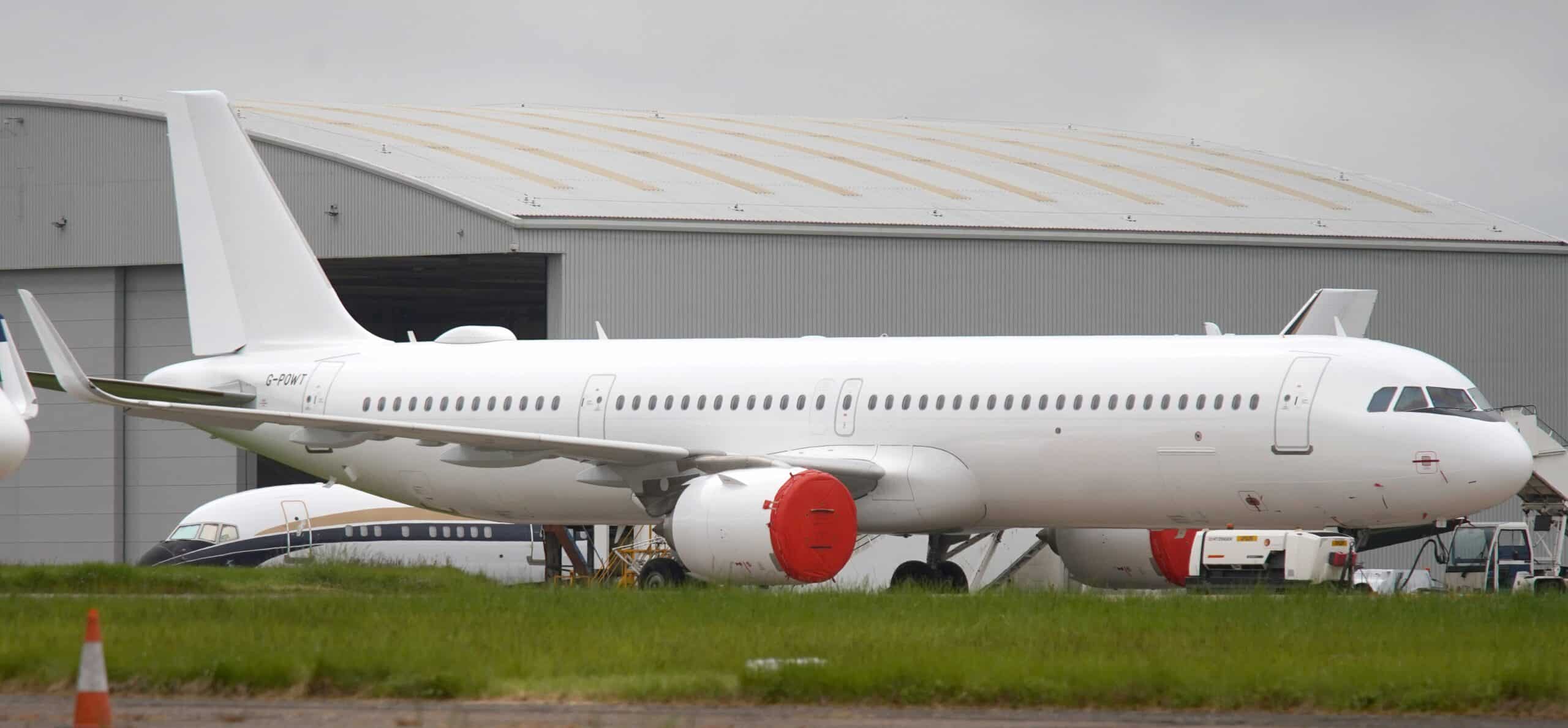
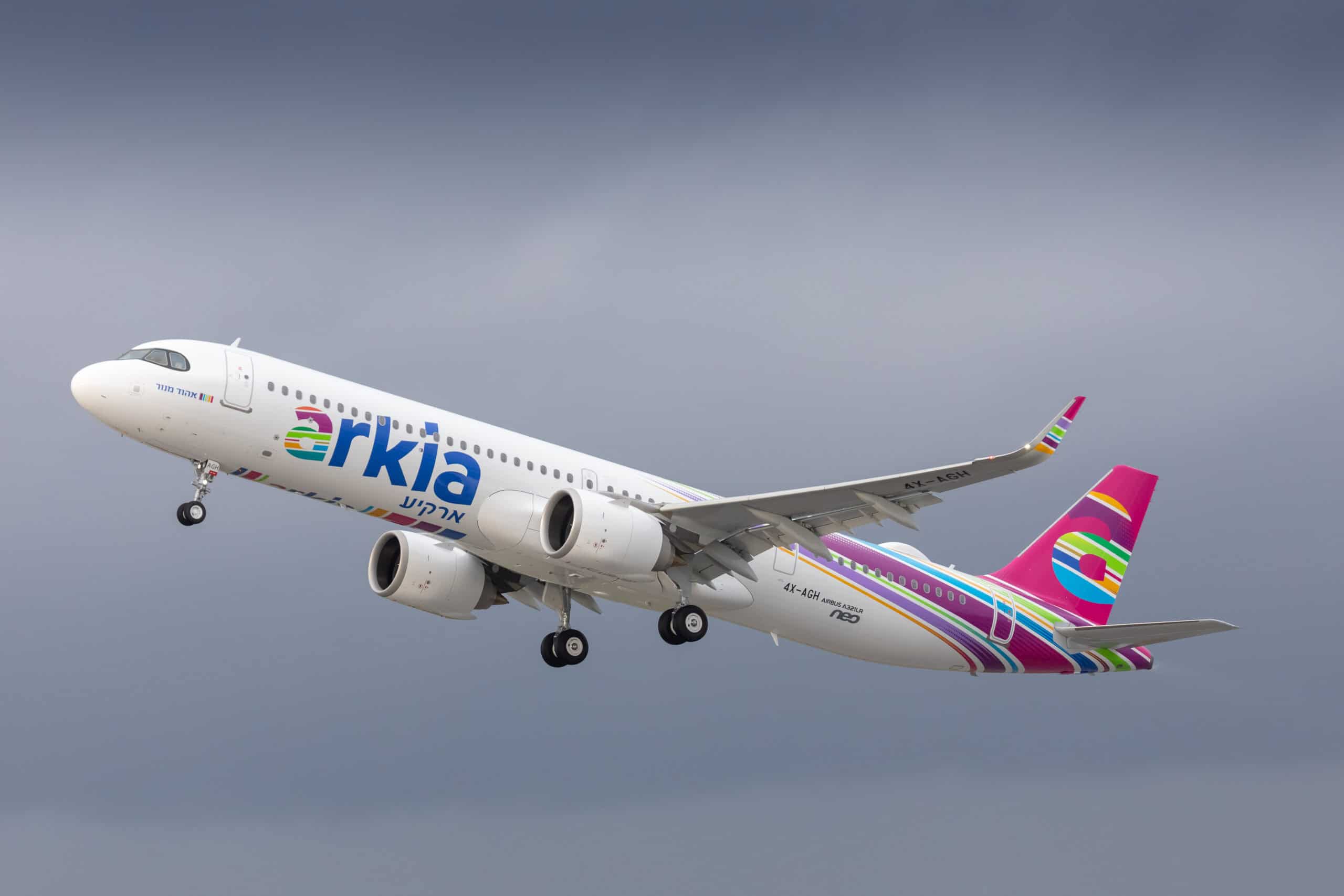
The current G-GBNI has a more complex past than its VIP role suggests. It was first delivered to Arkia Israeli Airlines in 2019, then stored and re-registered. Titan Airways received it in 2022 as G-POWT and re-registered it as G-GBNI in 2023.
This is important because G-GBNI is not just a new plane with a new registration. According to records, this is the second airframe to use the G-GBNI registration. The previous A321neo with this registration became G-OATW, and the current plane took over the registration, livery, and VIP duties.
This history makes the plane especially interesting for planespotters. It serves as a government aircraft, is operated by a civilian company, and was originally an airline jet. This mix shows how modern VIP transport is more complex than the old idea of a military jet with a flag on the tail.
Titan Airways, a British charter and ACMI company with experience in special flights, operates the aircraft. When used by the government, G-GBNI uses royal and official callsigns, such as KRH/Sparrowhawk for royal trips and AWC/Zap for government flights.
A fun bit of aviation trivia: the registration G-GBNI is a nod to the country’s official name, the United Kingdom of Great Britain and Northern Ireland. In other words, GBNI. And now you know.
The “Global Britain” Look
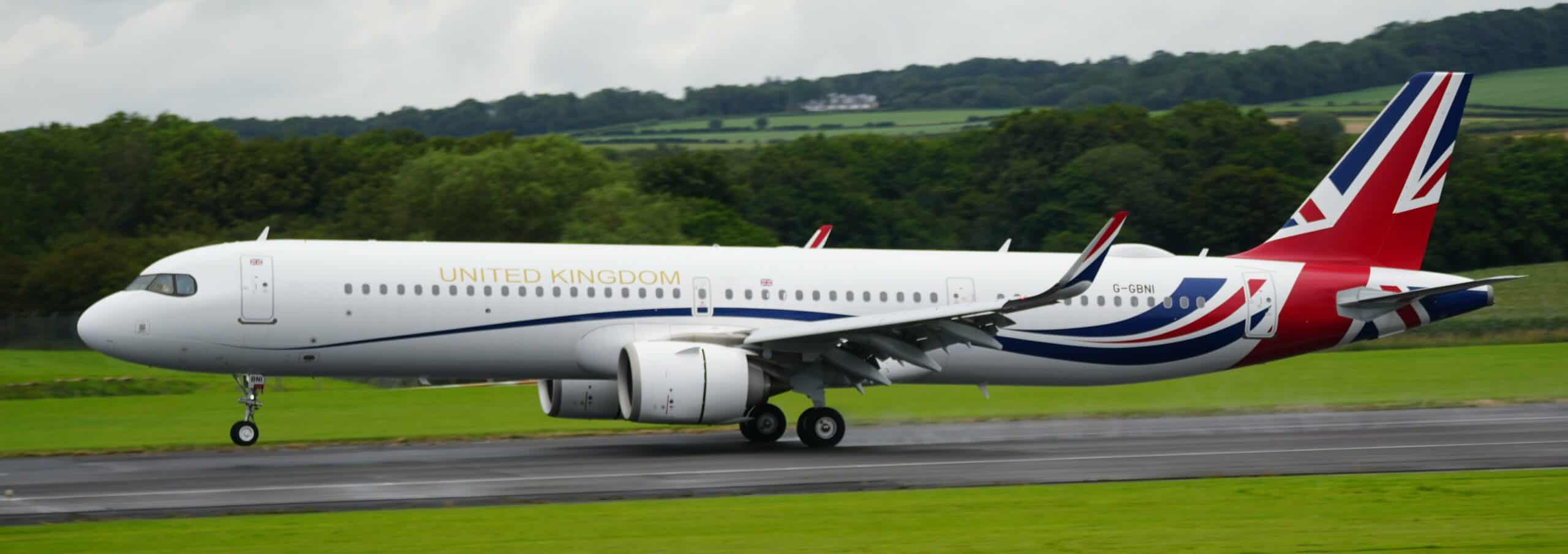
G-GBNI stands out thanks to its bold look. It features the UK government’s Global Britain livery, with Union Flag colors on the fuselage and tail. This design is also used on the RAF Voyager KC3 VIP jet, giving the UK’s transport fleet a more unified and visible identity.
On a normal commercial A321neo, the fuselage is often a clean canvas for airline branding. On G-GBNI, the aircraft’s livery turns the narrowbody into a flying diplomatic symbol. That is especially fitting for a mission like this, where the aircraft was transporting the King and Queen to the United States during a major anniversary year.
The aircraft’s arrival at Joint Base Andrews also put it in rare company. This is the kind of ramp more often associated with presidential aircraft, military transports, and high-level diplomatic arrivals. So for avgeeks, seeing a single-aisle Airbus in that setting was part of the fun. It was also a reminder of just how far the A321neo has stretched the role of the narrowbody. With the right cabin and range, an aircraft many travelers associate with airline service can also carry heads of state, royalty, and senior officials across the Atlantic.
A Royal Flight During America 250
The visit itself carries major historical significance. The White House said President Donald Trump and First Lady Melania Trump would welcome King Charles III and Queen Camilla for a state visit from 27 April through 30 April 2026, coinciding with commemorations marking the 250th anniversary of American independence.
Most people will pay attention to the ceremonies, meetings, and symbolism surrounding a British monarch’s visit to the United States during America 250. But the flight itself also shows the important role of aircraft in state visits. Before the motorcades and photo ops, it all starts with the plane.
This time, the aircraft was not a jumbo jet or military plane. Instead, it was a VIP Airbus A321neo, a model many travelers know from regular airline service. G-GBNI’s arrival showed how this type of plane can be turned into a long-range government jet fit for royalty.
Why This Flight Stood Out

There is something especially avgeek-worthy about a state visit carried out aboard a narrowbody Airbus. The A321neo family has already changed airline route planning by making thinner long-haul routes more practical. VIP service offers many of the same advantages: range, efficiency, airport flexibility, and enough cabin space for a specialized interior.
G-GBNI’s arrival in Washington showed all these qualities at once. It was a royal flight, a diplomatic event, and a great example of how much single-aisle planes have advanced.
For aviation fans, the main point is clear. While the King and Queen’s visit made the news, the plane that brought them is worth attention too. G-GBNI is more than just a way to travel—it is a modern government flagship, and this was one of its biggest missions so far.