

That Nose! That beautiful long nose!
The F-111’s long nose was integral to its design, enhancing aerodynamic stability and allowing for superior performance during low-altitude missions. This unique feature, combined with the advanced terrain-following radar, positioned the aircraft as a formidable force during its operational tenure.
The innovative swing-wing design further contributed to its versatility and effectiveness in various combat scenarios. Such advancements solidified the F-111’s reputation as a groundbreaking asset in the USAF arsenal.
A Tough Time the First Time Out
The first use of the F-111 in combat was during the Vietnam War. In March of 1968, a detachment of six F-111As was sent to Southeast Asia under the Combat Lancer program.
Three of the six aircraft were lost during just over a month in-country. It was later determined that a design fault in the horizontal stabilizer had caused the losses, which delayed the full operational use of the jet until 1971. In 1972, the F-111 returned to Southeast Asia and racked up 4,000 combat sorties with only six losses directly attributable to enemy action.
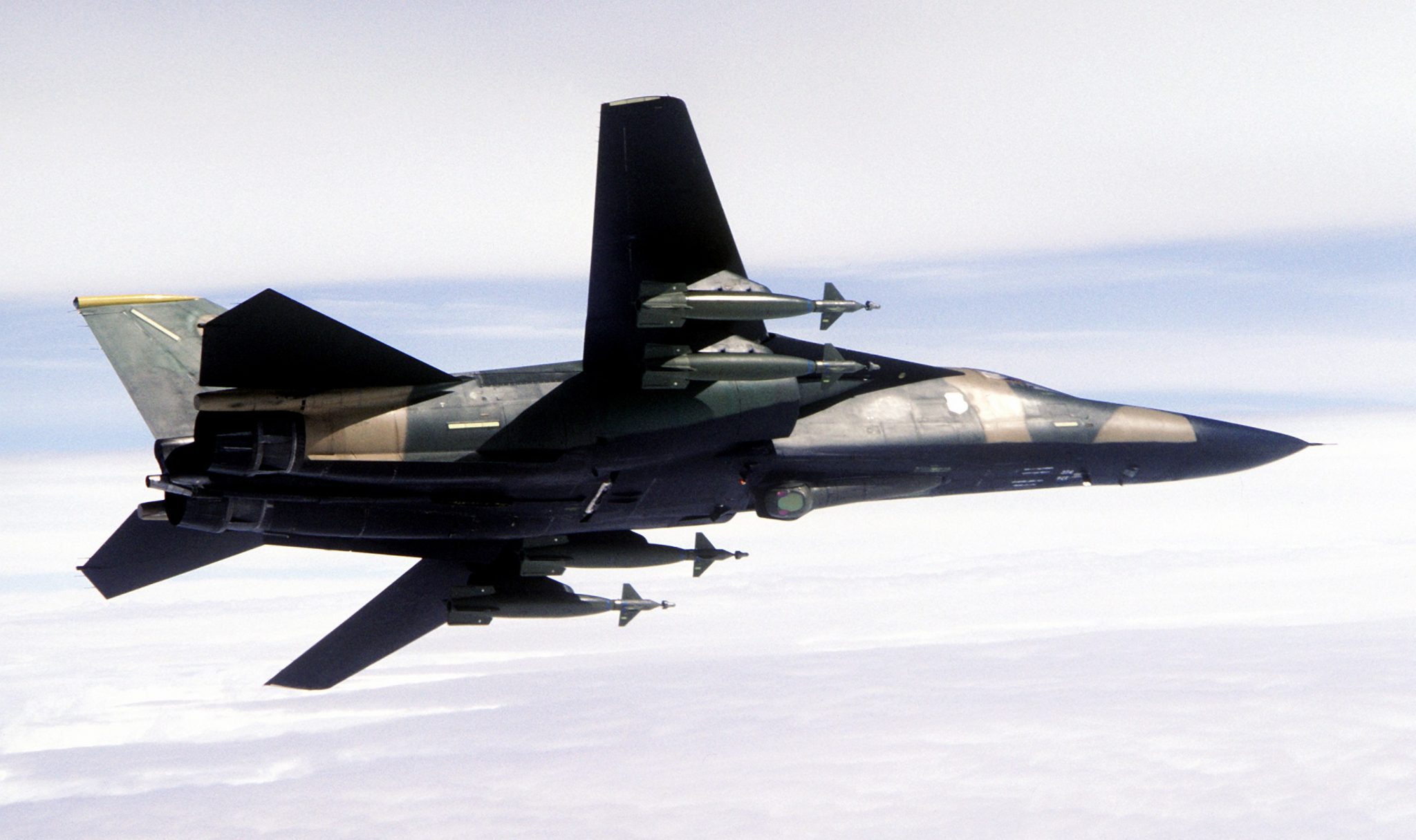
Dropping The F-111s Long Nose In the X Ring
Throughout the remainder of the Vark’s service life, it was a key player in nearly all military operations. When, in 1986, it became necessary to strike Libya, the F-111 was the only jet capable of pulling off the long-range precision strikes needed to execute the Air Force’s tasking for Operation El Dorado Canyon.
During Operation Desert Storm in 1991, the F-111Fs that dropped 80% of the laser-guided bombs were developed from those A models that had first worn Air Force colors twenty years earlier. After Desert Storm, the F-111s didn’t stick around for long. Just five years later, the Air Force retired its last bomber, the Varks, and the dedicated electronic attack EF-111 Spark Varks followed a couple of years after that.
Additional stories on the F-111 from Avgeekery:
The Aardvark: The F-111 Changed The Strike Game – A comprehensive look at every F-111 variant, from the troubled F-111B Navy fighter to the Australian “Pigs” that flew until 2010.
El Dorado Canyon: President Reagan Sent the Whole Shooting Match After Gaddafi in 1986 – When the F-111 was the only aircraft capable of executing long-range precision strikes against Libya, the Aardvark delivered.
External reading on the F-111 Ardvark:
- National Museum of the USAF: F-111F Aardvark – Official fact sheet from the Air Force’s premier aviation museum.
- Interview with F-111 Weapon System Officer Jim Rotramel – First-person account of flying and fighting in the Aardvark.
- IWM Duxford: The F-111 “Flying Pig” – The Imperial War Museum’s look at their Desert Storm veteran F-111.
- The F-111 Was Faster Than You Think – Accounts of Aardvarks reportedly reaching Mach 3+ during functional check flights.

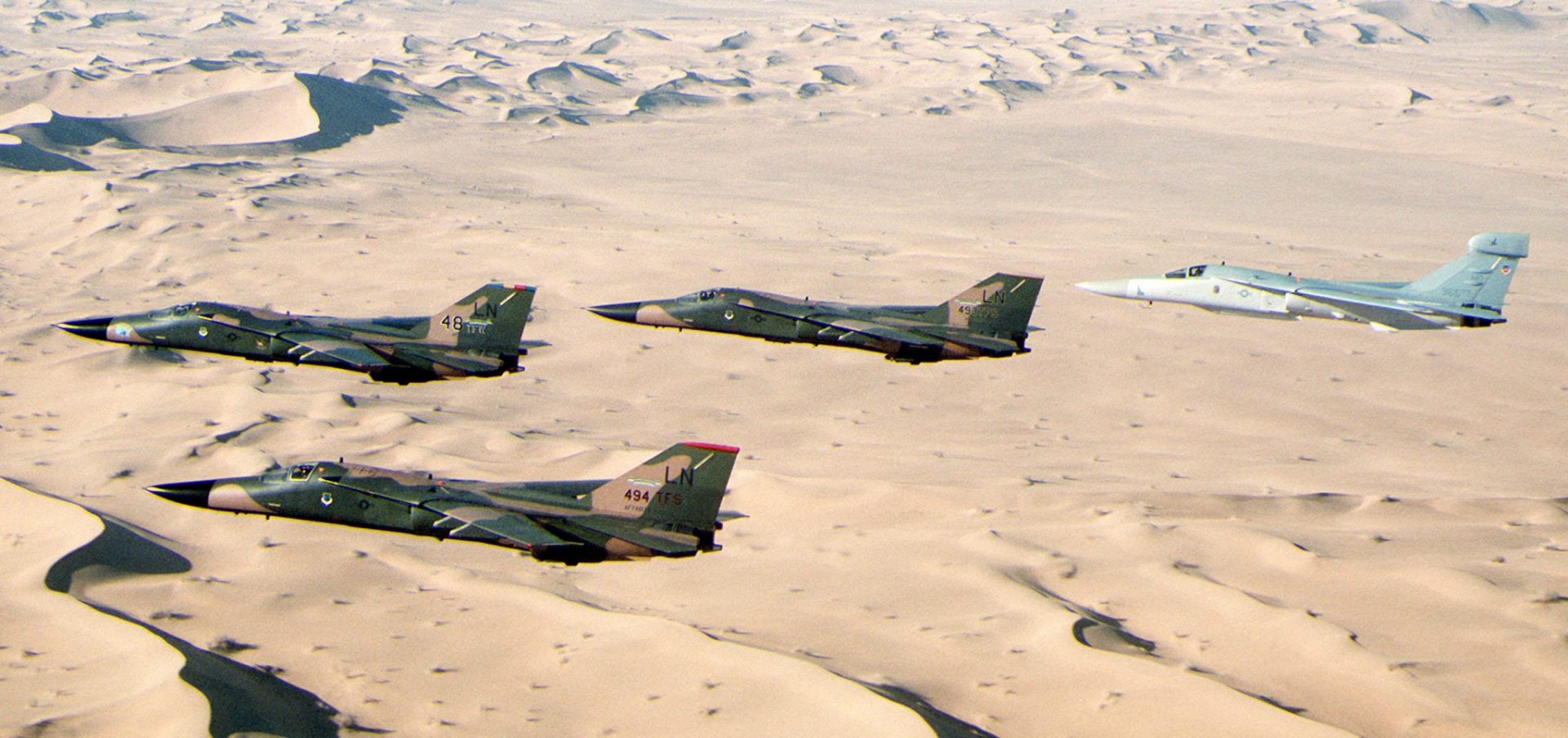
We had a large copy of this photo hanging in the 494 TFS Maintenance Unit at RAF Lakenheath, UK. The photo came home with me and was donated to he 8th Air Force at Barksdale AFB, LA about 1998 – 2000.
I’m not sure that is correct. The RAAF retired them much later than 1996.