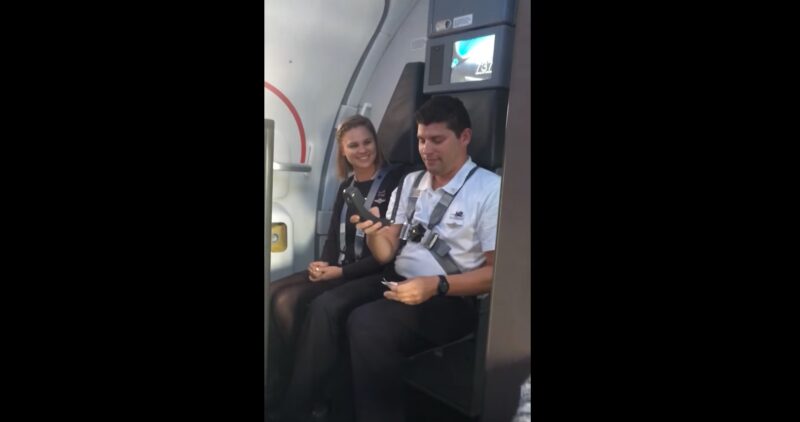
Southwest Airlines flight attendant Zach Haumesser is a man that obviously enjoys his job. Instead of going through the motions, he put his heart and soul into his duties. On a recent flight into Chicago Midway, Zach is captured on video making a very unique arrival message to passengers. He did the entire announcement as if the entire Looney Tunes gang was onboard the jet. The impersonation is quite good…scary good.
Southwest Airlines is known for a lighthearted attitude. This isn’t the first humorous Southwest flight attendant. Back in 2015, we posted a flight attendant whose pre-departure safety message also went viral. Kudos to Zach for making the fly experience a little more fun. That is unless you probably happen to be a flight attendant who has to do a three day trip with him. Then that schtick would get annoying!
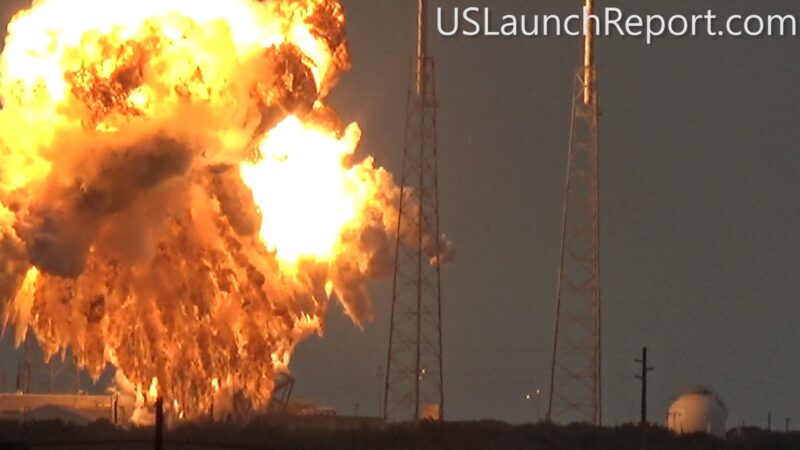
On Thursday, September 1st, the Space X Dragon rocket was preparing to undergo a routine pre-launch test firing. The rocket and payload were destroyed in the explosion.
The rocket was supposed to carry a communications satellite to orbit. The satellite was built by an Israeli firm and contracted for Facebook. The estimated cost of the payload was $200M. Future SpaceX launches will be paused while an investigation into the cause will take place. This is not the first incident for Elon Musk’s company. Last year, another SpaceX rocket exploded during ascent.
The video was posted by USLaunchReport.com. The explosion begins at 1:10 into the video.
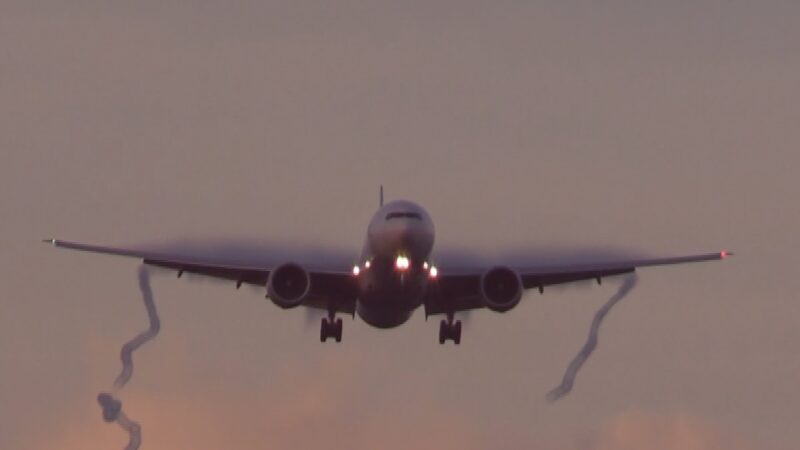
Visible wingtip vortices make for one amazing approach into Frankfurt, Germany.
This video footage features a Boeing 777 from Singapore Airlines making an approach to Frankfurt Airport in Germany, on a drizzling early evening. The sky looks like an impressionist painting. Note those amazing, huge wing vortices. Those vortices are beautiful but they also can be dangerous.
Vortices create what is known as wake turbulence. They are effectively horizontal tornadoes coming off the “dirty” wing configured with full flaps for the approach. The vortices are so strong that they could flip an aircraft. The Boeing 777 is considered a heavy aircraft. Controllers ensure at least 3 minutes of separation between the arriving aircraft and those that follow it.
About the Boeing 777
The Boeing 777 (also known as “the Triple Seven”) is a long range, wide body, twin engine jet that has quite a few variants. These include the 777-200, the 777-200ER, the 777-200LR, the 777-300, and the 777-300ER. These jets are basically different lengths and hold different numbers of passengers.
The Boeing 777 is the world’s largest twin jet, with twelve wheel landing gear (six wheels underneath each side of the plane) and a seating capacity of anywhere from 350 to 450 passengers. Its powerful turbofan engine has the largest diameter of any commercial aircraft. The Boeing 787 Dreamliner shares some of the same design features with the Boeing 777.
The 777 was designed to replace older wide body airliners. It flew its maiden voyage on June 12th of 1994, and was introduced with United Airlines on June 7th of 1995. It is considered a relatively fuel efficient alternative to other wide body jets. Its primary users are United Airlines, Cathay Pacific, Emirates and Air France. As of July of 2016, there have been 1,417 Boeing 777s manufactured. Despite that the unit cost ranges from 260 million to 300 million dollars, the Boeing 777 has received more orders than any other wide body airliner.
The Boeing 777 also holds the record for the longest distance flown non stop by a commercial aircraft.
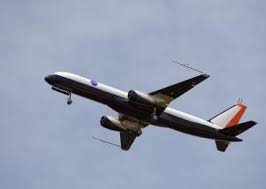
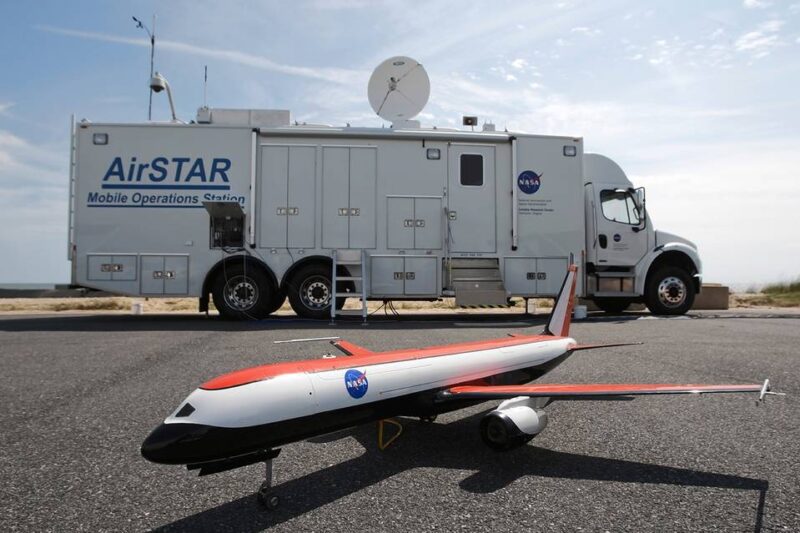
T-1 a 5.5% scale aircraft that is testing self-awareness capabilities for NASA.
NASA Makes Strides toward Self-Aware Aircraft
What would it take for an aircraft to be fully autonomous, to the point that you could step into an aircraft—like a taxi—and tell it where you needed to go, then simply sit back, relax, and, in a reasonable time, arrive at your destination, safe, sound, and unruffled?
NASA, working with partners like Boeing, Honeywell, and General Atomics Aeronautical Systems, is making baby-steps toward that goal.
The key word in this process is “self-aware.” This concept may eventually allow unmanned aircraft (i.e., no pilot at the controls, even remotely) to routinely fly in the nation’s airspace—sharing it with piloted airlines and the rest of us who want to do our own flying.
To be “self-aware,” the aircraft must be able to autonomously “sense and respond.”
A basic flight element that all pilots are familiar with are aerodynamic stalls. From their first lessons, pilots are taught to recognize and avoid or recover from stalls. Most aircraft have some form of stall warning—a horn, angle-of-attack indicator, or stick shaker, etc. In a self-aware, autonomous aircraft, it would not only detect an impending stall, but react immediately to prevent the stall. (Actually, it would never let the aircraft get into a situation even approaching a stall.)
NASA’s GTM-T2 In Flight
This technology has been demonstrated by NASA as part of their Unmanned Aircraft Systems Integration into the National Airspace system (UAS-NAS) project. In a series of tests, NASA and its partner, Boeing built and tested 5.5% scale model of what could be a Boeing 757—they call it the GTM-T2. The T2 flyable model was equipped with a digital system to prevent stalls and other un-flyable states. Using remote controls, pilots tried to make the aircraft stall or otherwise make the aircraft lose control. The system was consistently able augment the pilot’s control and maintain stable flight. Through a variety of sensors, the aircraft was able to autonomously determine that the aircraft was approaching an unsafe flight condition, analyze the condition, and autonomously react with the proper responses, including deflection of flight controls, to recover and maintain stability.
Irene Gregory, senior technologist for advanced control theory and application at the National Aeronautics and Space Administration, was quoted in the Wall Street Journal saying that eventually aircraft would be “smart enough that people will be able to get around in on-demand self-flying taxis.”
While that day is probably far into the future, she also suggested that a system like the one demonstrated on the GTM-T2 model could be approved for use in the next generation of all-new airliners as a safety backup; if approved by the FAA.
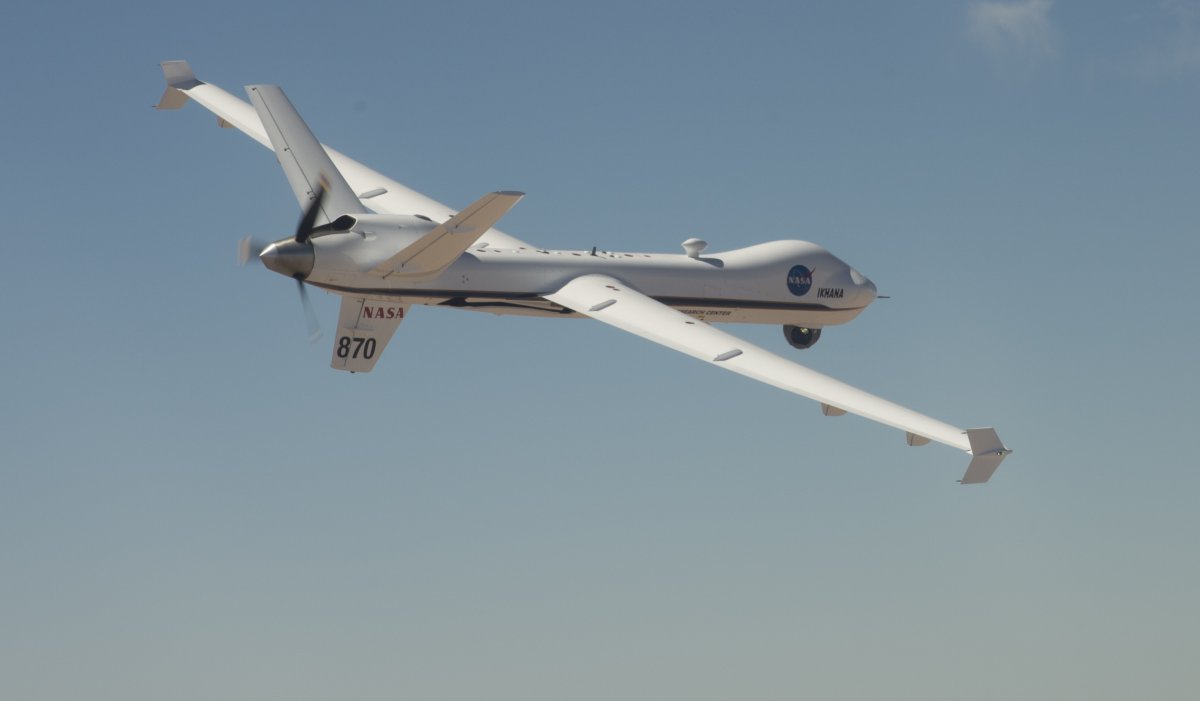
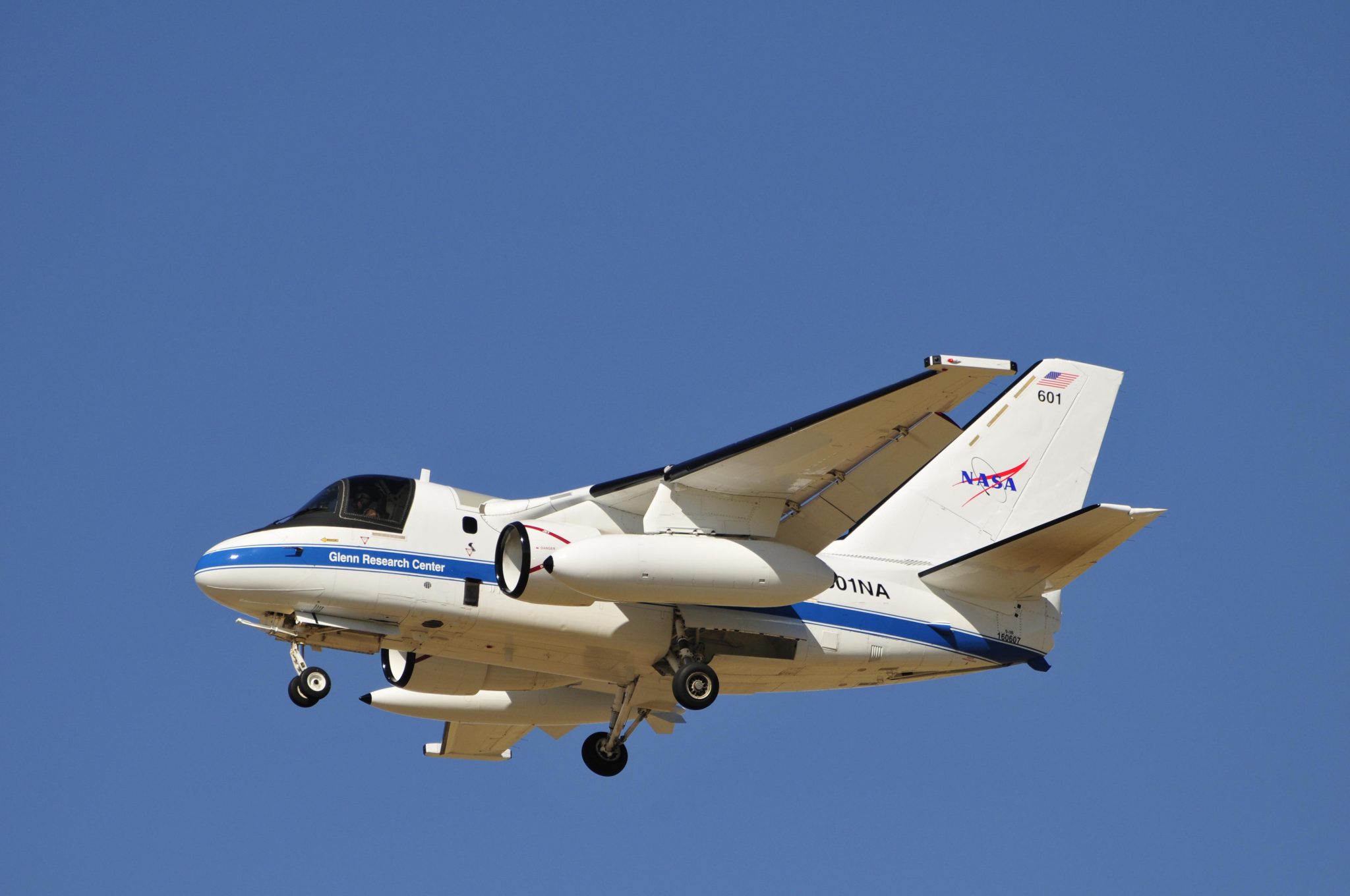
Another, critical capability of a self-aware aircraft is the ability to sense and avoid other aircraft. NASA has sponsored at least two different test programs in this area. For test aircraft, NASA used an unmanned Ikhana (an unarmed version of the Predator UAV) and a remotely piloted S-3B and. The S-3B will carry a safety pilot, but the pilot will not be flying the aircraft during the tests but could assume control if the situation required.
An Ikhana is an Unmanned Aerial System (UAS) being used to demonstrate various autonomous operating systems.
These aircraft were equipped with sense-and-avoid sensors and software. The aircraft are flown along a predetermined route. Manned aircraft were deliberately flown into the path of the test aircraft, simulating what might happen if two aircraft were converging with insufficient separation. After 40 flight tests, the Ikhana autonomous test aircraft demonstrated the ability to successfully and safely maneuver to avoid the conflicting aircraft traffic and safely return to course after every encounter. A total of 200 such encounters were planned for this phase of testing.
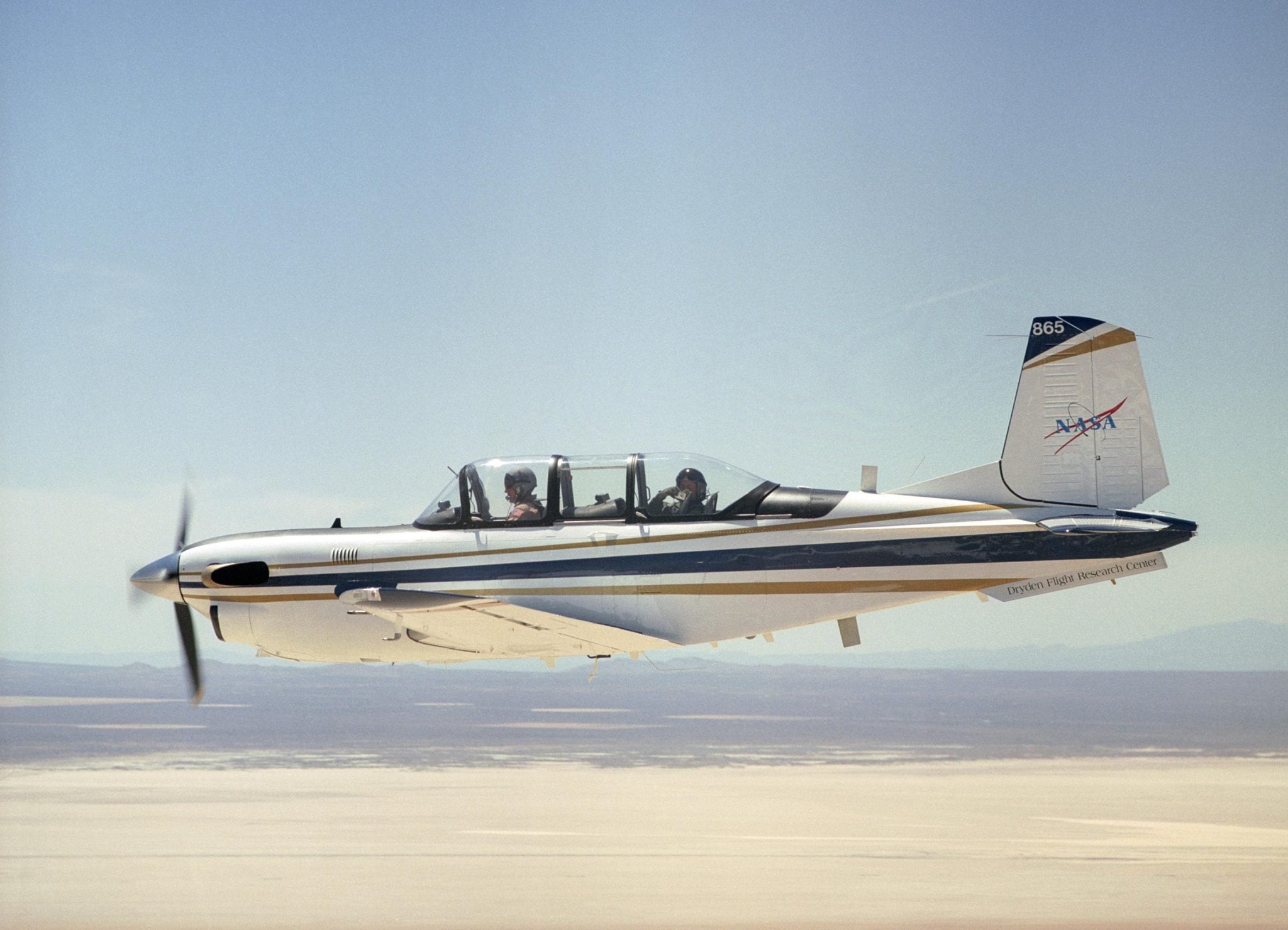
A NASA T-34, similar to the one shown, will be equipped with autonomous operating systems to fly, navigate, and avoid other aircraft. A safety pilot will be aboard.NASA S-B3 similar to one to be used to test autonomous sense-and-avoid technology.
A follow-on test will use a T-34 plane equipped with a proof-of-concept control and communications system to test how well the digital systems control the aircraft, interact with air traffic controllers and remain well clear of other aircraft while executing a planned mission. With a safety pilot onboard, the aircraft will fly a typical mission complying with air traffic control and safely avoiding other air traffic.
These are only two elements for a fully autonomous “air taxi.” A complete flight will require the aircraft to plan the route, check for adverse weather, file a flight plan, communicate with and follow Air Traffic Control instructions, perform a safe flight, etc.—the same requirements a pilot would follow when conducting a flight. So, while NASA and the aerospace community are making significant progress in autonomous flight, there is still much work to be done.
For now, taxicabs will operate on four wheels with an occasional surly driver. A least an air taxi autonomous pilot will not expect a tip!
Engines usually work well but when they stop working, they can make a big mess.
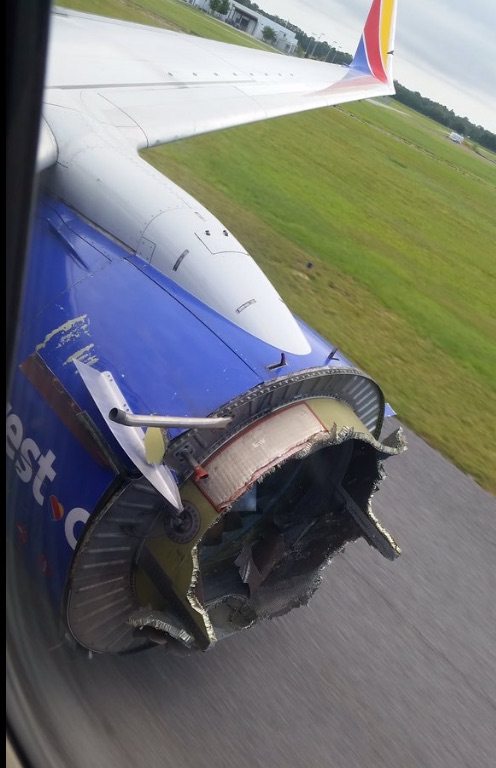
This past week a Southwest Airlines 737 suffered a very dramatic engine failure while on a flight from New Orleans to Orlando. It appeared as if the entire front of the engine came off judging from pictures taken from inside the cabin. The aircraft also suffered a rapid decompression which was most likely due to debris from the engine striking and puncturing a hole in the fuselage. Considering that the time of useful consciousness (TUC) at 31,000 feet is only one to two minutes, the crew did an outstanding job of prioritizing their emergency action responses and safely recovering the aircraft into Pensacola.
On September 8th last year a British Airways 777 aborted its takeoff from Las Vegas after its left engine failed and burst into flames. The entire left side of the aircraft was engulfed in flames by the time emergency responders were able to put the fire out. Again, thankfully, no one was injured. The aircraft was later repaired and returned to service.
So in these two high profile incidents, jet engine failures caused very dramatic and potentially life threatening damage to commercial airline flights. But how do jet engines work in the first place and what would make one blow up? Is there any way to make engines safer or are these types of mechanical failures just something with which we’ll have to learn to live?
Suck Squeeze Boom Blow
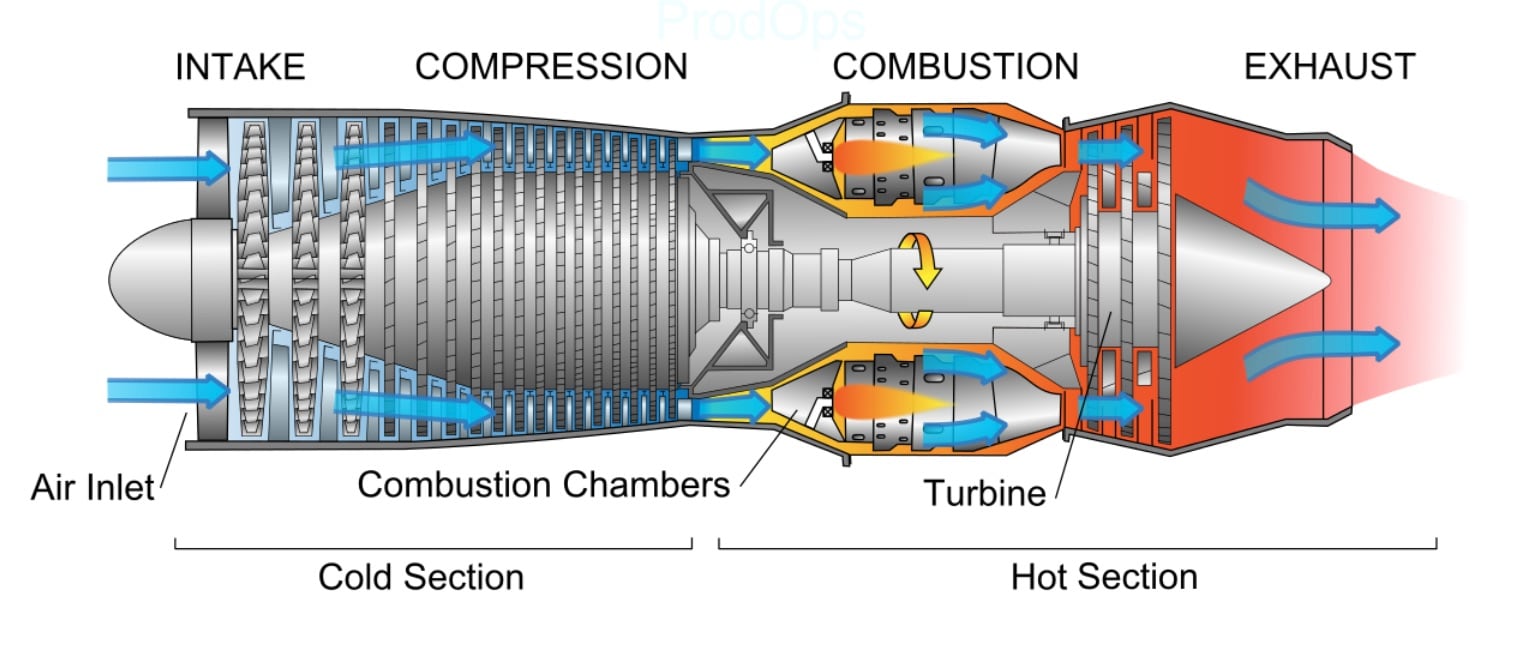
Modern turbine aircraft engines are simultaneously simple in operation, yet highly complex precision machines. Their operation, which can be simplified into the title of this paragraph, consists of four elements. Air is first drawn into the front of the engine and is next compressed by a series of blades rotating on a center spool.
This compressed air is then combined with fuel sprayed into the combustion chamber and ignited. The resulting flow of hot expanding gas flows over turbine blades also connected to the center spool and then exits at high speed providing thrust. The turbine blades provide power for the compressor blades and the process repeats.
The earliest jet engines were known as “pure turbine” engines where all the air from the inlet went through the hot section. Since then, large fans have been employed where only some of the air goes into the hot section but most of the thrust is created by the fan and bypassed around the core of the engine. High bypass engines are now the standard on airliners though pure turbines are still used on military aircraft.
And that’s it. Conceptually quite simple and very few moving parts.
What Could Go Wrong?
The truth is that because jet engines have so few moving parts in comparison to other types of engines, there is very little actually to go wrong. The problem is that when things on a jet engine do go south, they can make a big mess as seen in the two above mentioned incidents.
As far as the central operation of the compressor-turbine assembly is concerned, metal fatigue and subsequent failure are the primary culprits. Investigation of the BA 777 incident revealed that the spool in the high pressure section of the compressor had failed and parts of the compressor spool and blades were subsequently thrown through the engine case and cowling.
A similar metal failure was implicated in the crash of United 232 back in 1989 which claimed 111 lives. Thankfully, advanced metallurgy and inspection technologies make these types of problems quite rare.
The speculation of what caused the failure of the Southwest Airlines engine ranges from mechanical failure of the fasteners which keep the structure attached to possible failures of the engine anti-icing system which is located in that area. An NTSB investigation is ongoing,
Simple and Yet Complex
While the operating principles of jet engines are simple, many of the technologies used to make them work are quite complex. The metallurgy used in building the fan and compressor blades is state of the art. These structures are mostly made of titanium which while being extremely strong and flexible is notoriously difficult to cast. Titanium castings are required to be forged in a vacuum as any air can induce impurities resulting in cracks in the metal.
The tolerances required inside the fan and compressors of jet engines are extremely fine. Modern jet engines even have what is known as an ablative coating around the primary fan which is designed to wear away as the fan blades expand through heating. This keeps the gap between the fan and its housing as small as possible for efficiency.
As you might imagine, any solid object which is ingested by a jet engine can cause havoc. Any damage to the compressor section of a modern jet engine can cause what is known as a compressor stall which is a major disruption in airflow. When the airflow is disrupted, the fire can go out or be severely restricted. This is how Sully and his passengers ended up in the Hudson river courtesy of a flock of Canadian geese.
I should add a note about all the auxiliary components that, while not central to the operation of a jet engine, are attached to the engine in what is known as an accessory drive unit. It is located either beneath or on the side of the engine yet inside the cowling. Things like hydraulic pumps for the flight controls, generators and fuel control units are driven through a drive shaft powered by the main turbine. Problems with these components may or may not result in engine failure depending on the affected component and the nature of the failure.
In Conclusion
Modern turbine engines are models of efficiency and simplicity. They are highly reliable power plants and yet, like any machine, subject to occasional failure. That they fail so infrequently given the extreme conditions in which they operate is a testament to their design and upkeep.
We at Avgeekery love St. Maarten. We were pretty sure we’ve seen every avgeek video about St. Maarten…well except this one.
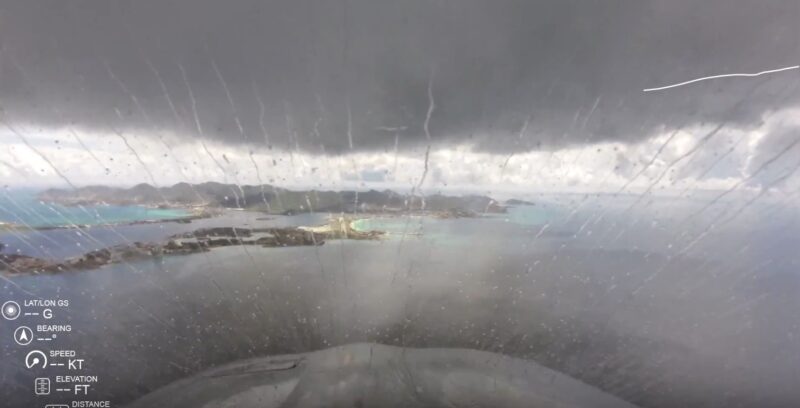
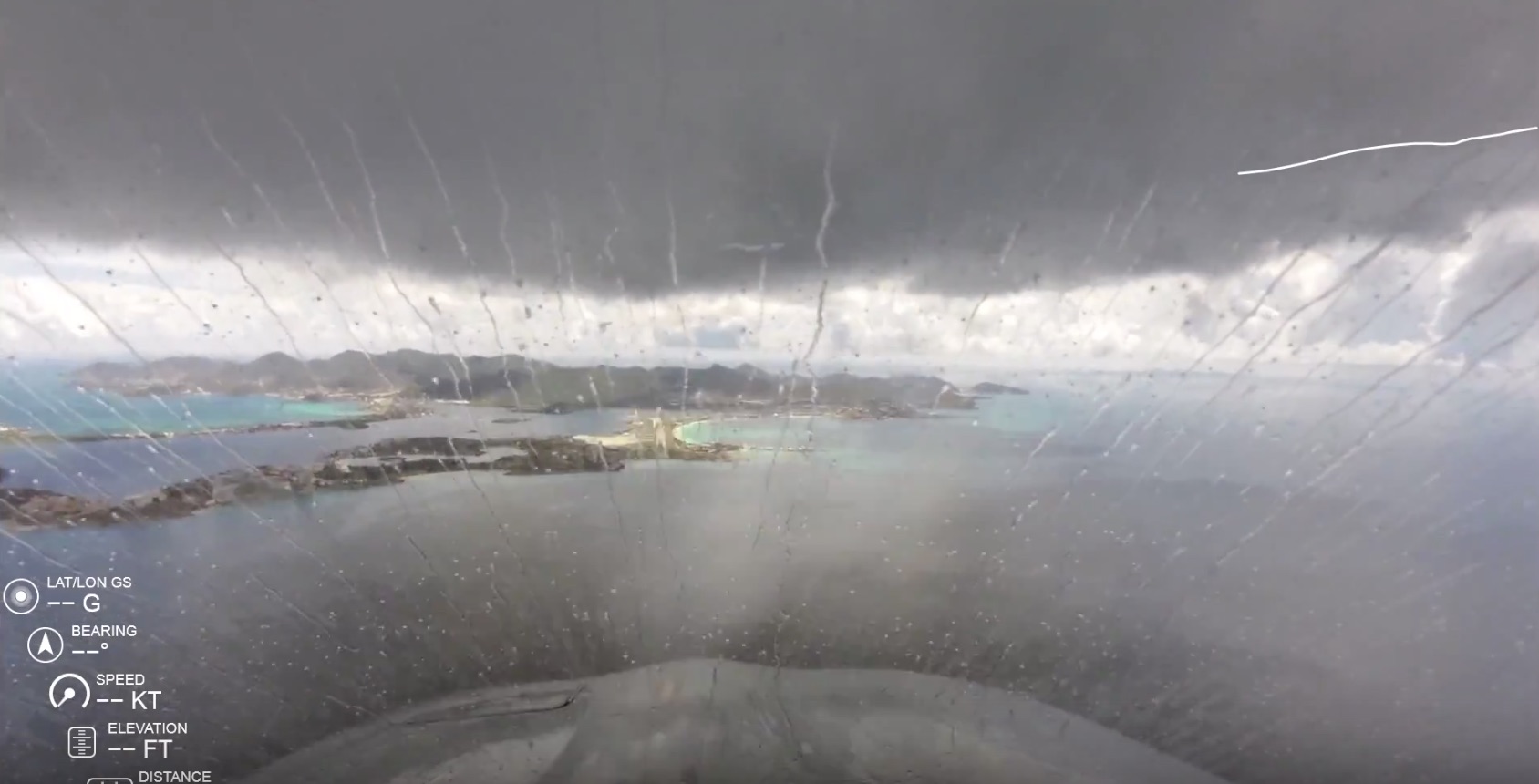
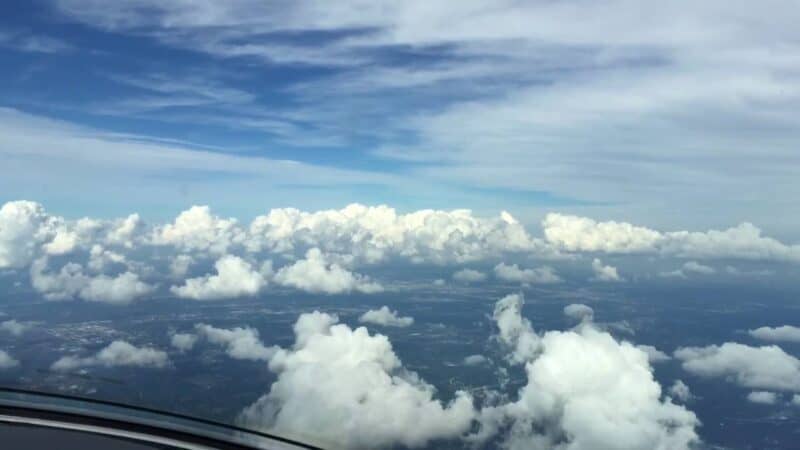
This video footage features a pilot’s perspective of an approach to St. Maarten in instrument conditions (aka IFR). The pilot flies a Cirrus SR-22. We’re pretty sure he felt like the luckiest guy in the world on this approach.
The pilot does not see anything other than grey clouds until about four minutes and twelve seconds into the footage. He’s in the soup. At about four minutes and forty seconds, ground begin to appear, as raindrops hit the plane’s windshield. At around the five minute mark, the pilot can spot the runway. He’s ‘visual’. As the pilot approaches the runway, he has to see the crowd below him, disappointed that it’s just a ‘prop job’ and not a giant airliner like the 747. Nonetheless, the plane comes in for a gentle landing.
About the Cirrus SR-22
The Cirrus SR-22 is a lightweight, single engine aircraft with four or five seats. It is a civil utility aircraft that has been in production since 2001. The Cirrus SR22 is manufactured by Cirrus Aircraft of Duluth, Minnesota. Since 2004, the SR22 is the world’s best selling single engine, four seater aircraft. This could be due to the SR22’s built in emergency parachute system. In fact, the SR22 has become known as “the plane with the parachute.”
As of 2013, there have been 4,365 Cirrus SR-22 aircraft manufactured. The per unit cost of the SR-22 is about half a million dollars.
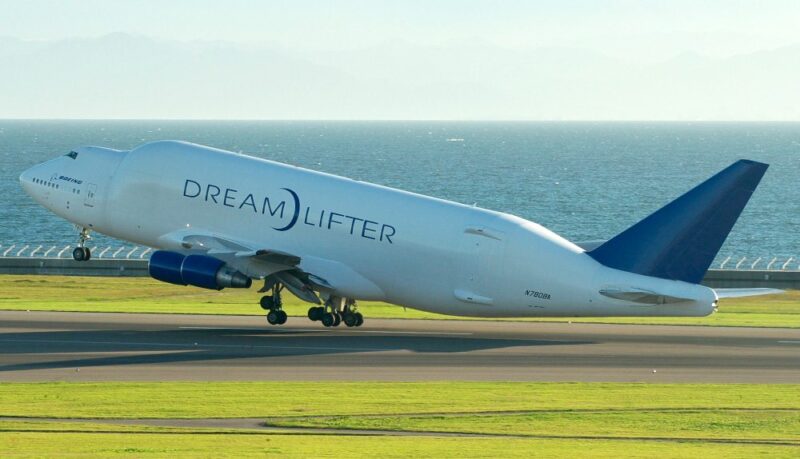
Boeing’s largest aircraft, the Dreamlifter (by volume), keeps the 787 program humming
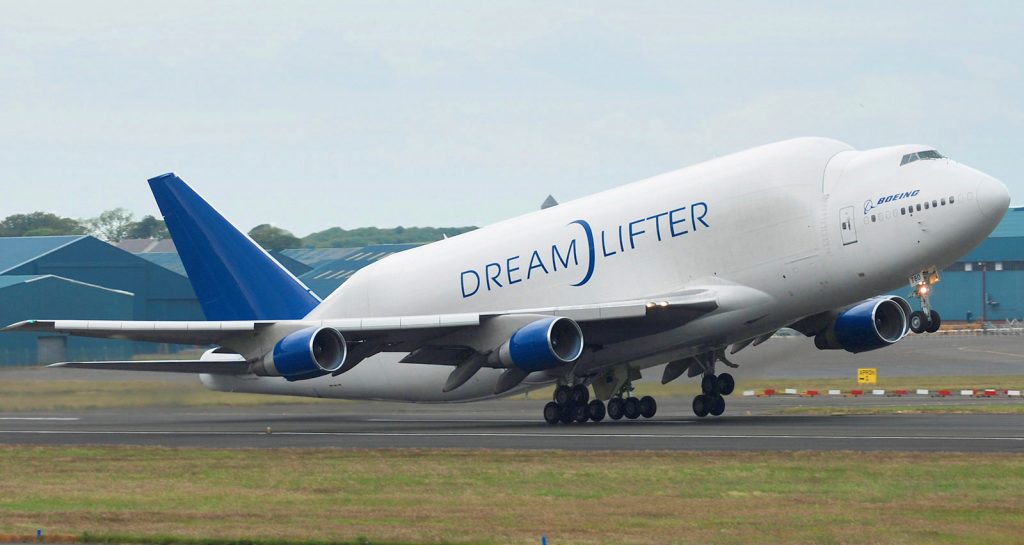
The Boeing 747 Dreamlifter is a modified wide-body cargo aircraft from the Boeing 747-400. Its unusual shape resembles the Oscar Meyer Weiner mobile or a beluga whale. The Dreamlifter boasts the world’s largest cargo hold at 65,000 cubic feet. It uses the world’s longest cargo loader to receive cargo. Boeing uses it exclusively to transport 787 Dreamliner parts to assembly plants. The Dreamlifter plays a crucial role in Boeing’s global supply chain.
Introduced in 2007, the Dreamlifter carries oversized cargo for the 787 program. Boeing has manufactured four Dreamlifters, all converted from 747-400s. The swing-fuselage allows removal of large 787 parts in one piece. This unique feature sets the Dreamlifter apart from other cargo planes. The aircraft’s massive size enables efficient transport of bulky components. Boeing’s innovative design has revolutionized aerospace logistics. The Dreamlifter continues to support Boeing’s manufacturing processes worldwide.
Dreamlifter is a Frankenstein of engineering
Massive Dreamlifter 747 Keeps 787 Program Running 10
The Boeing 747 Dreamlifter was conceived when it was realized the the shipping of airplane parts is time consuming, especially when large pieces like wings and fuselages have to travel between Japan, Italy, and America’s east and west coasts. With the new aircraft, the time it takes to get airplane parts of the Boeing 787 Dreamliner from Japan to America is reduced from 30 days to just 8 hours.
Between its first flight in 2006 and its FAA certification, the Dreamlifter aircraft completed 437 hours of flight testing, and 639 hours of ground testing. The Boeing 747 Dreamlifter LCF was granted FAA certification on June 2nd of 2007.
The aircraft now flies regularly between Japan, Italy and the US to deliver parts. You can commonly see the aircraft at US airports near Seattle, Charleston, S.C and Wichita, Kansas.
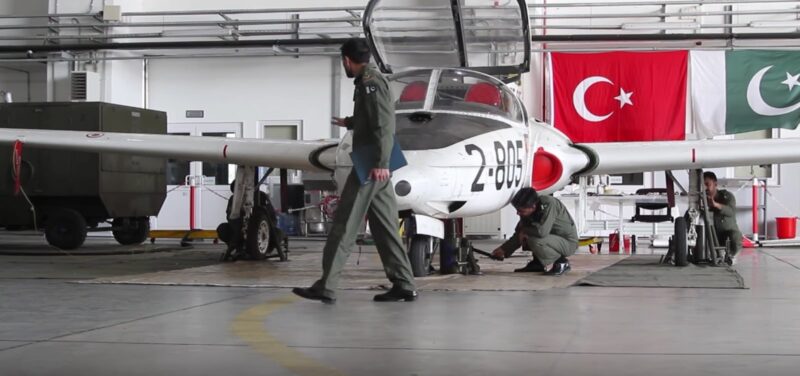
Ever since the creation of Pakistan, the Paks and the Turks have been BFFs. This video features a shining example of the fact. This documentary exemplifies the friendship between nations, and how it is stronger than ever. In October of 2015, Pakistan acquired a number of Cessna T-37 Tweet aircrafts from the Turkish government.
In the spring of 1952, the United States Air Force (USAF) called for a lightweight, two seater aircraft that could be used for training purposes for cadets at air force bases. Cessna responded with the Cessna T-37 Tweet, a small, economical trainer aircraft. The Tweet took its first flight in October of 1954, and was introduced for service in 1957. It flew for more than fifty years in the United States Air Force, as well as in the Royal Moroccan Air Force, the Colombian Air Force, and the Turkish Air Force. The T-37 was retired by the Unites States Air Force in 2009, but is still in service.
About the T-37 Tweet:
The T-37 jet is a twin engine jet aircraft with side by side seating. The Tweet is characterized by a low, straight wing, with the engines tucked underneath the wings, and a “clam shell” canopy, hinged to open toward the rear. The plane also features ejection seats and tricycle landing gear. The control panel of the T-37 was made similar to control panels of other USAF aircraft of the era.
There were 1,269 Cessna T-37 trainer jets manufactured between 1955 and 1975. However, these jets are new to the people of Pakistan.
It’s Always Exciting to See Airliners Get Down in the Weeds
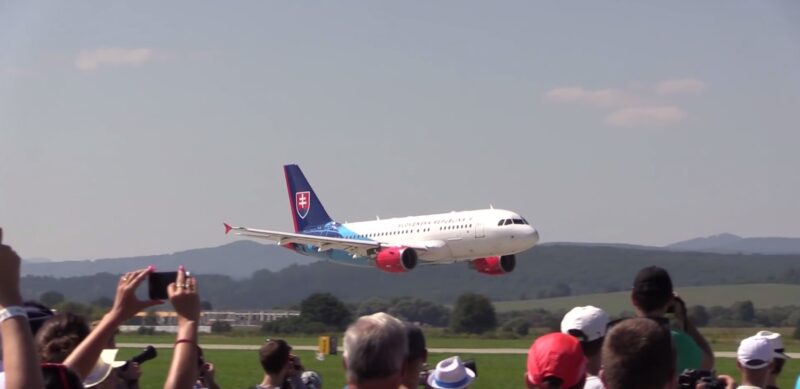
Low passes of big airliners are the stuff of legends. Who can forget WestJet’s fabulous 737-200 flyby before its retirement back in 2006? Occasionally, we’ll see a low pass of a military version of a commercial jet like Royal NewZealand’s Air Force’s 757. But we know that these amazing feats are pretty rare and for good reason. They really don’t have much of a purpose besides showing off the jet. While they usually happen without incident, low passes in large jets have proven dangerous in the past too. Most airshows these days shy away from this type of display.
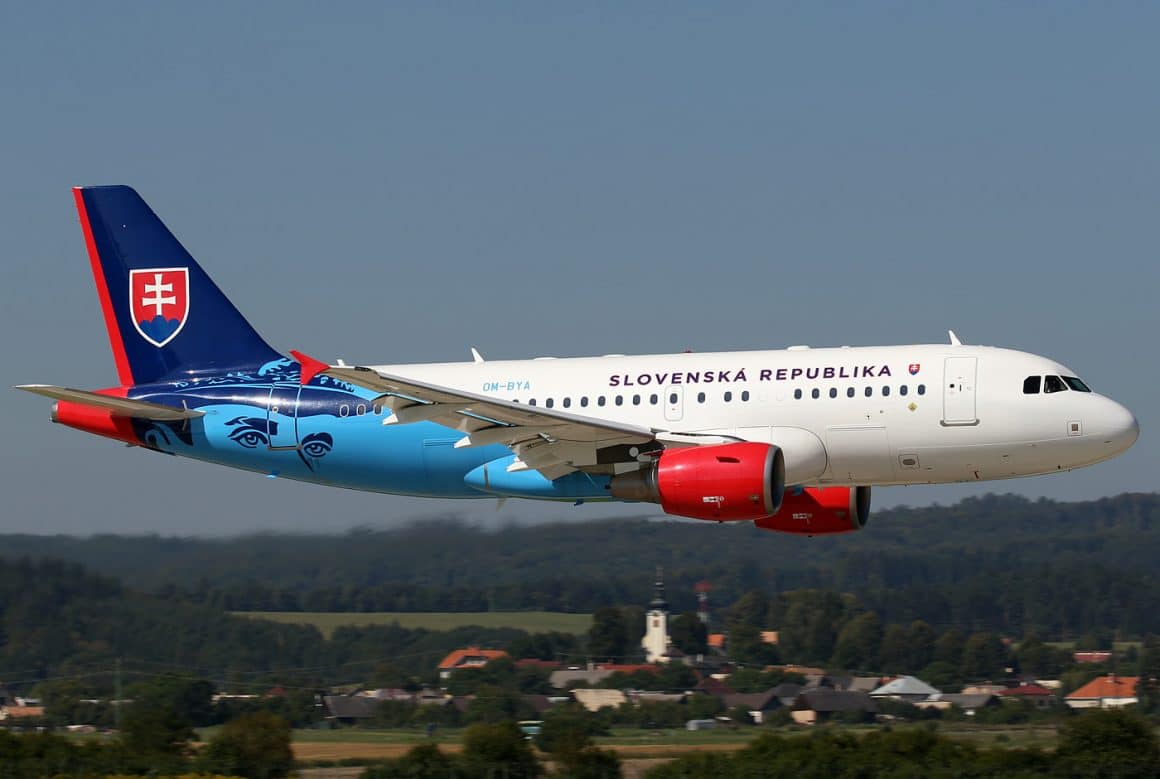
That’s why when we saw this low pass of the Slovakian Republic’s A319 business jet, we had to post it. It’s true avgeekery! While we’re pretty sure that the jet’s warning systems were squawking, it didn’t seem to bother the pilots. The fly-by-wire jet is steady as a rock as it flies about 50 feet above the runway in a clean configuration to the delight of crowd at the airshow.
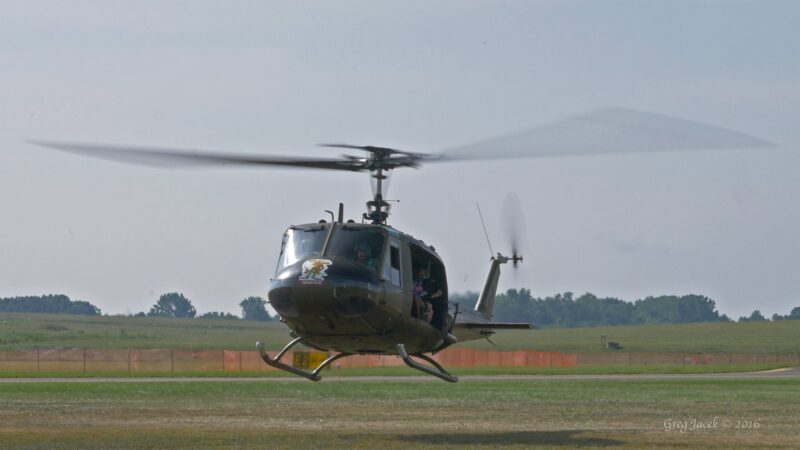
The Bell UH-1 Iroquois helicopter remains as strong and innovative as it did back in its early years at its first launch. Most common known as the “Huey,” the aircraft is known for its slim, distinct, twin blade main and tail rotor design. The first generation UH-1 Huey provided service for commercial and military purposes. The Bell Huey II took the place of the initial, Vietnam-era sibling, and now poses a wide array of capabilities, performing for HEMS (Helicopter Emergency Medical Services), search and rescue operations, a troop transport for the military, and Parapublic missions. The modern version has a spacious 220 cubic foot cabin volume, an amount accommodating to seat for up to 14 people, and can lift up to nearly 5,000 pounds, making and proving new grounds so the “Bell Huey provides a flexible, economical, high performance medium helicopter solution”. (www.bellhelicopter.com)
This video features the Bell UH-1H Huey starting its turbo shaft engine at Willow Run Airport’s Thunder Over Michigan. The audio has been mixed the into 5.1 Surround Sound for your listening enjoyment! Prepare to hear the rumble of the Huey’s turbo shaft engine as the helicopter begins its descent and landing at 1:50. For best results with 5.1 audio, use Surround Headphones or playback on a Home Theater system!
Southwest 737 flight makes safe emergency landing. No injuries reported.
A Southwest Boeing 737-700 made a safe emergency landing at Pensacola after experiencing an uncontained engine fire. Flight 3472 was enroute from New Orleans to Orlando when the incident occurred. 99 passengers and 5 crew members were onboard. No one was hurt.
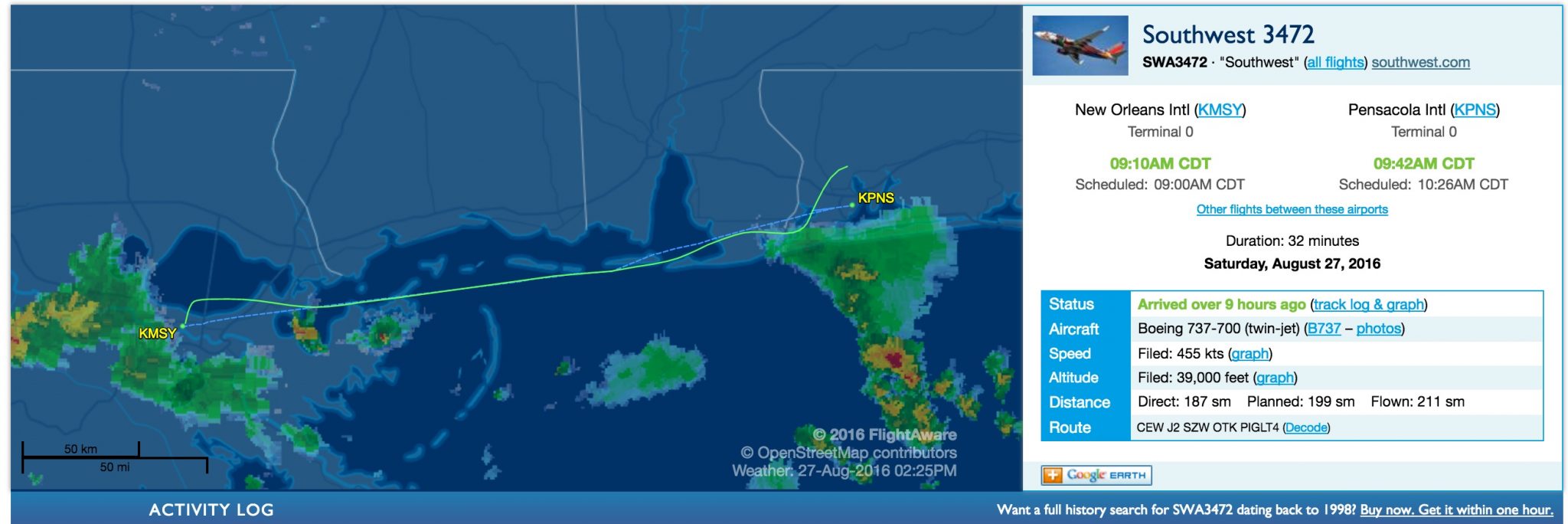
A screenshot of Flightaware.com shows the course of Southwest Flight 3472 that made an emergency landing at Pensacola International Airport this morning.
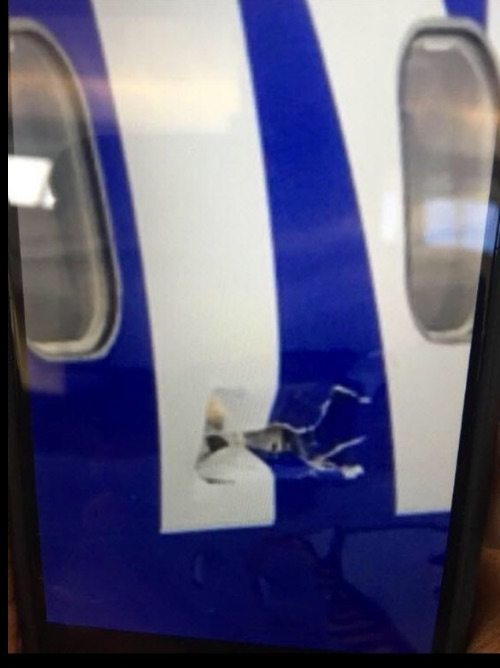
An approximately footlong gash in the fuselage caused by the engine failure.
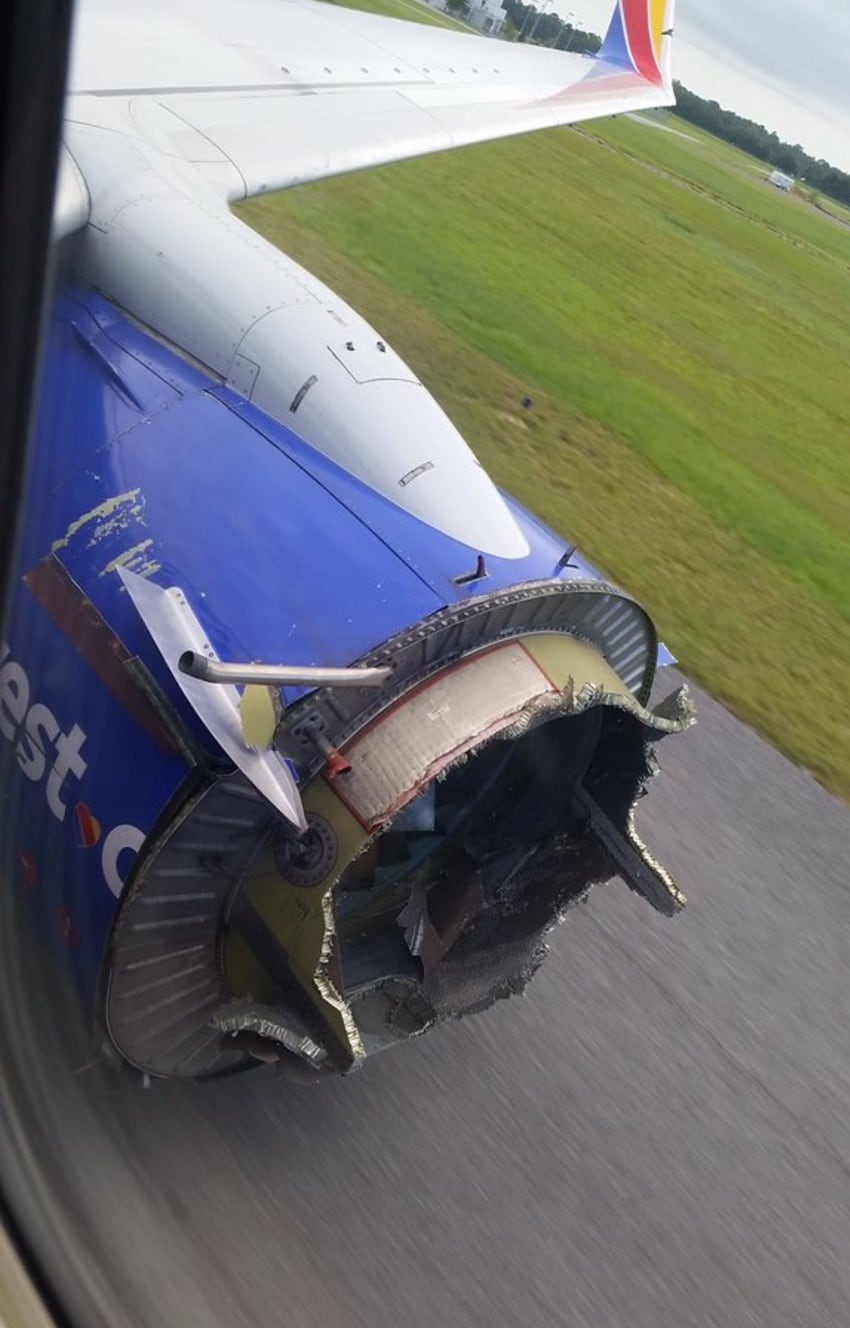
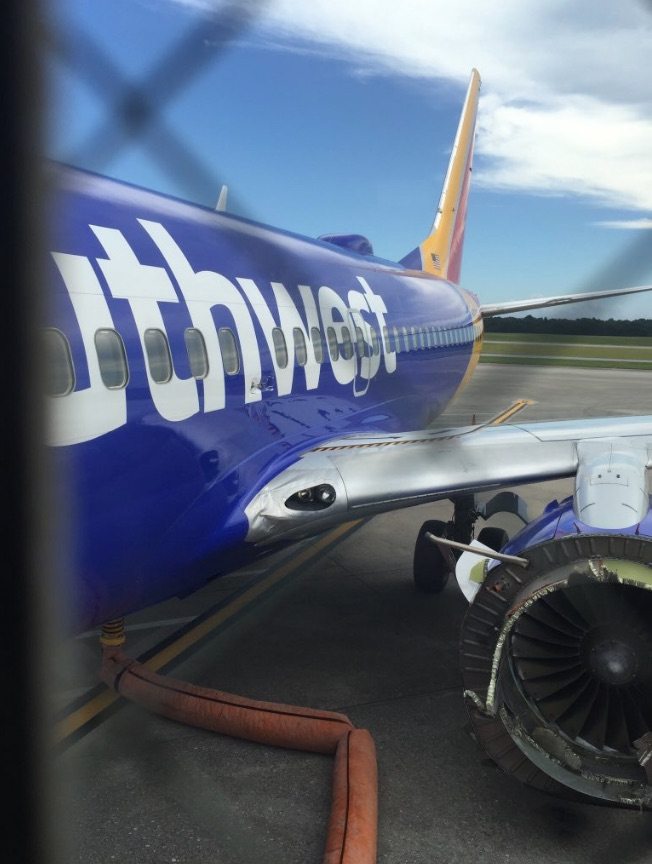
In addition to the damaged #1 engine, the leading edge of the wing near the landing light and the fuselage (near the ‘h’ in Southwest) also showed damage.
Photos provided to Avgeekery by Twitter user @smillerddd3 showed the number one engine with significant damage. The cowling was missing. There was also a gash near the over wing emergency exit window. Damage also was visible on the leading edge of the wing and the leading edge of the horizontal stabilizer. During the incident, the flight also suffered a cabin decompression, presumably caused by damage to the fuselage that occurred as a result of the engine failure. A few passengers posted selfies with their oxygen masks on.
In a statement on the incident, Southwest posted:
Today, the Captain of Flight #3472 from New Orleans to Orlando made the decision to divert to Pensacola due to a mechanical issue with the number one engine. The flight landed safely without incident at Pensacola International Airport at 9:40 a.m. central time. Initial reports indicate there were no injuries among the 99 passengers and five crew members onboard. We have notified the NTSB, and when authorized, we will be inspecting the aircraft to assess the damage. The aircraft is out of service, and we will work to accommodate the passengers to Orlando or their final destination as soon as possible.
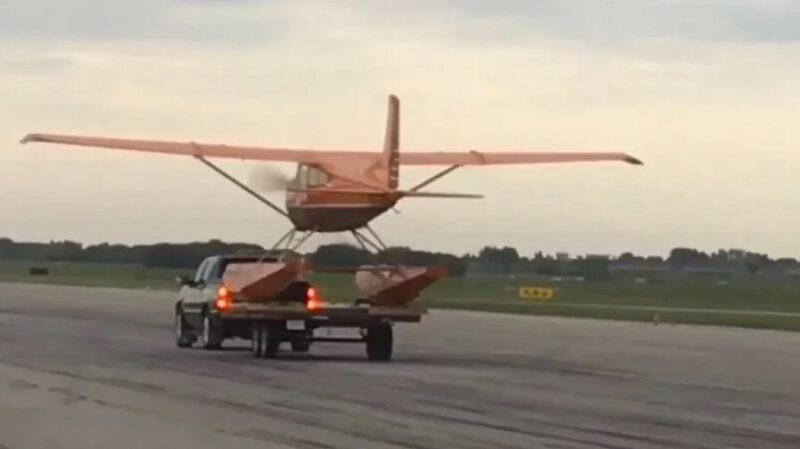
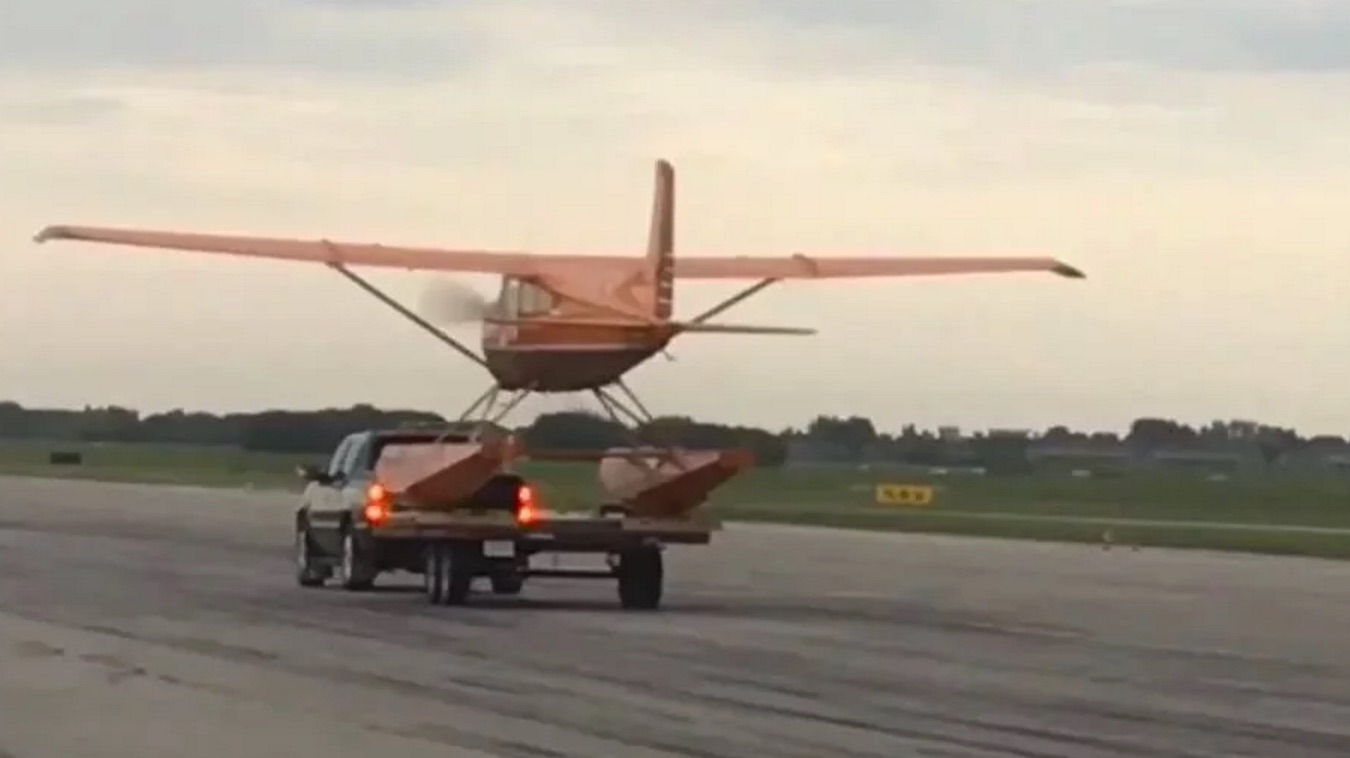
How do you launch a float plane with no landing gear from a concrete runway? Hitched to a truck that is speeding down a concrete runway, of course!
In this case, the truck essentially gives the float plane a running start, in the same way a kid might throw a paper airplane, and by the same laws of aerodynamics. The plane releases from the truck, and rises skyward.
A float plane, which is also known as a pontoon plane, is a type of seaplane, with one or more pontoons (floats) mounted under the fuselage. Derived from land bound aircraft, a float plane flies similar to
A seaplane may or may not also have gear suitable for landing on hard ground. A seaplane with retractable landing gear and dual landing capability is called an amphibious plane.
Military seaplanes have not been used much since WWII, due to the inventions of newer small aircraft with better design features, such as helicopters, for instance. However, there are still several aircraft manufacturers who build float planes from scratch. The float plane is good for transportation to lakes and remote areas, as well as to small islands that don’t have anything to call an airstrip.
You can buy a float plane on ebay for as little as $25,000. Better floatplanes can cost you well over $100k.
Mistakes like this occasionally happen in airplanes but usually its a pilot with 8 hours in a Cessna 150, definitely not a Boeing 737.
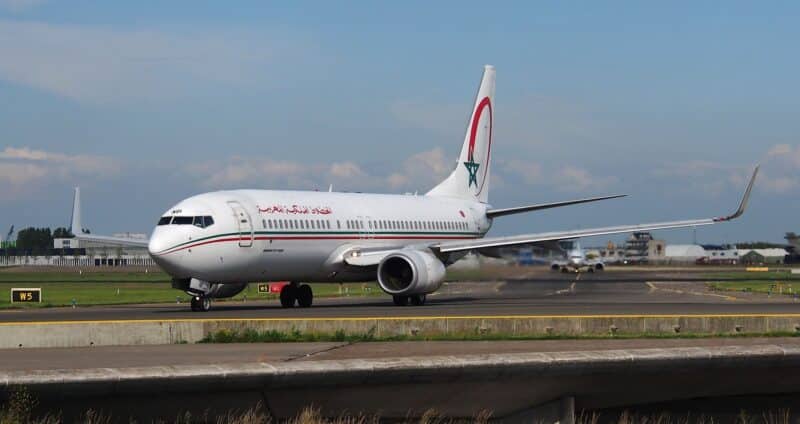
In the video, you’ll see a Royal Air Maroc Boeing 737NG attempt to rotate way too early. Early rotations are dangerous as the high angle of attack at too low of speeds mean that the aircraft will fail to get airborne. The wing is stalled. The instinct of an inexperienced pilot is usually to pull back harder. That can induce a tail strike too. Boeing manuals warn against just such a situation during the takeoff roll. Did the pilot have a brain fart or did they forget to run the takeoff and landing data (TOLD)? What about flaps? They look like there is a flap setting selected but it could be the incorrect setting for the weight and conditions.
The situation in the video though is pretty egregious. Best case scenario, early rotations drastically increase the takeoff roll. The worst case scenario is a severe tail strike or that the aircraft would fail to get airborne in the remaining runway. Those pilots and passengers were very lucky. I don’t think you’ll see me on a Royal Air Maroc flight anytime soon.
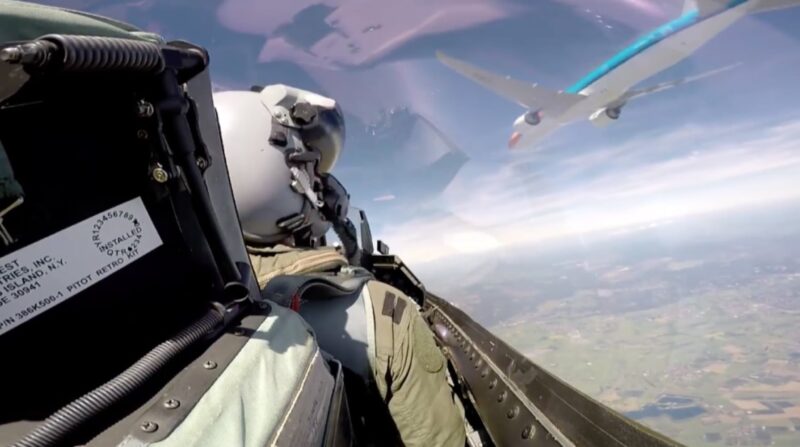
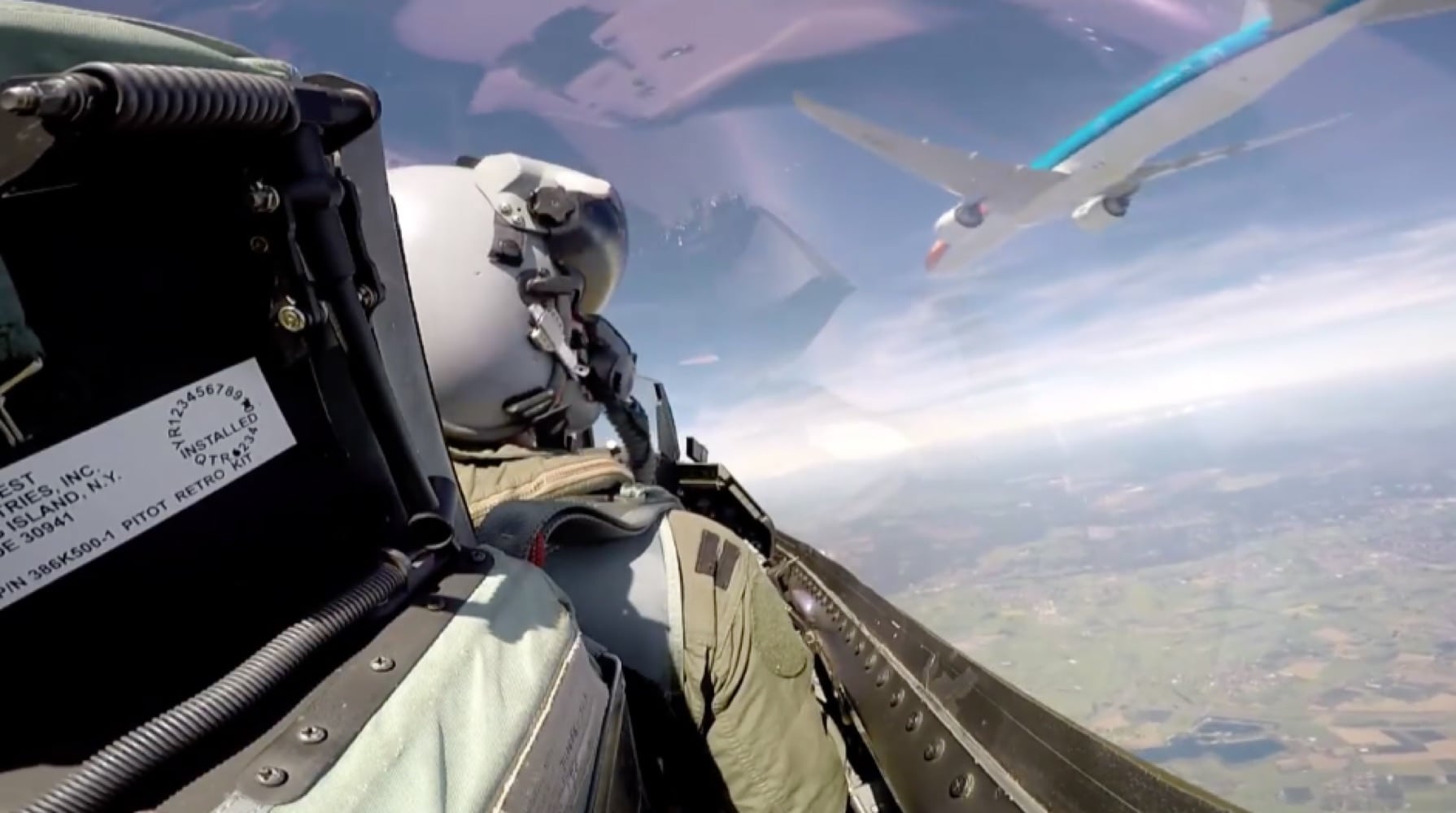
The Royal Netherlands Air Force sure know how to celebrate in style. Olympians returning on a specially painted orange Boeing 777-300ER KLM jet were met at the border upon their return by two special airborne guests. Two Dutch F-16s flew wingman for the massive Boeing jet within Netherlands airspace. The fighters provided escort all the way to short final before breaking off just before the 777 landed. It was a very classy move by a proud and very skilled Air Force.
Once the 777 landed, the jet was greeted by a firefighter’s arc of water to celebrate the return of the olympians. The Netherlands won eight golds, seven silvers and four bronze medals at the Olympics in Rio. They finished with a total 19 medals, resulting in an 11th place finish.
The video was originally uploaded by the Royal Netherlands Air Force. You can see their original post here.
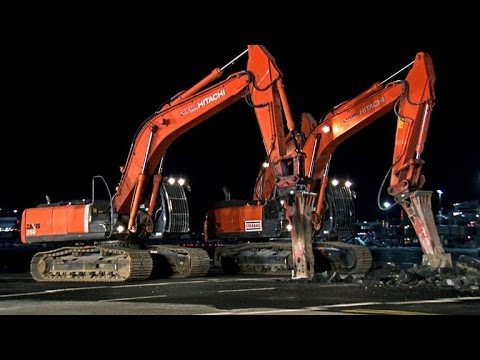
If you think building a taxiway is hard, just multiply the difficulty by two and you’re mentally getting closer to imagining how difficult it actually is. It is one of the most grueling, painstaking, and precise construction jobs ever.
First, the construction crew has to jackhammer the existing asphalt over an area about the size of two tennis courts. Then, they have to remove a 20-inch depth of old tarmac. And that’s just getting started.
Meanwhile, the crew manager knows that the first plane will touch down at 6 o’clock am. He also knows that he has to start laying the asphalt six hours in advance of the first plane’s arrival, so the runway will be hard enough for the plane to land on. So he uses a type of asphalt that cools and sets at twice the rate of your average highway asphalt.
The workers know they have only about eight hours to complete this gigantic job. The work must be done with great speed but not haste. About 375 tons of gravel has to be placed, to prevent water damage through the soil. Then the gravel has to be smoothed perfectly flat. Then the asphalt has to be poured. As the asphalt sets, the workers call in the heavy duty roller trucks to finish the job. Then the asphalt still needs one more hour to set.
This crew has finished in six hours a job that would take most road crews six months to complete. (I kid!)
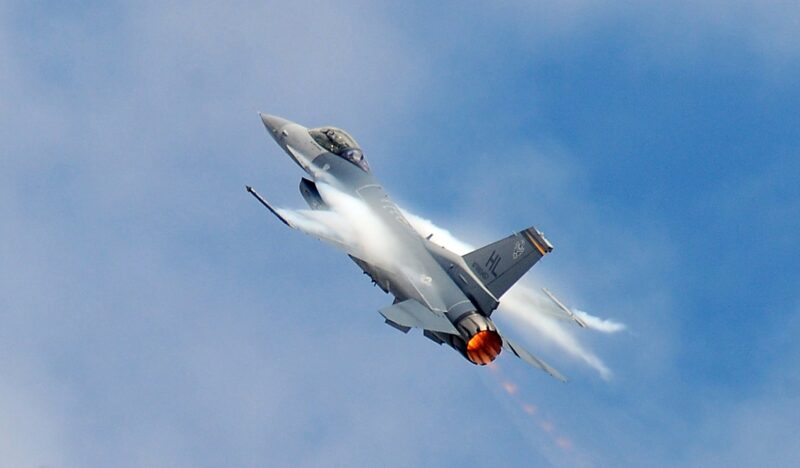
Quick thinking and creativity of a F-16 pilot saved allied lives during Operation Iraqi Freedom.
Ten days into Operation Iraqi Freedom, two F-16 aircraft cruised into the airspace. One was flown by Lt. Colonel Edward Lynch. They got a call to fly somewhere north of where they were, and got there as fast as they could. Ten minutes later, they witnessed about 50 British forces surrounded by about 500 Iraqi troops. The pilot asks for a strobe, as they were wearing night vision goggles, which require illumination. Unfortunately it was a moonless, starless night. So Lynch would not be able to drop a bomb. “I have no strobe,” said Lynch from the cockpit. “I can’t help you if I can’t see you.”
Lynch and his wing man realized that they had to think of something, as things on the ground were fast getting worse. Lynch developed a plan that relied on the power of the F-16’s engine. Like every supersonic jet, of the F-16 flies fast enough, it creates a supersonic boom. Lynch planned to use the supersonic boom as a weapon.
Lynch hoped the Iraqis would think the sound was a weapon, which would give the troops time to escape. During Lynch’s attempt, he dodged a surface to air missile through some effective maneuvering.
When Lynch finally had time to inquire about the success of his endeavor, he was told that the supersonic boom of his F-16 had worked. Boom!
Radio discipline isn’t guaranteed when you make a mistake this big.
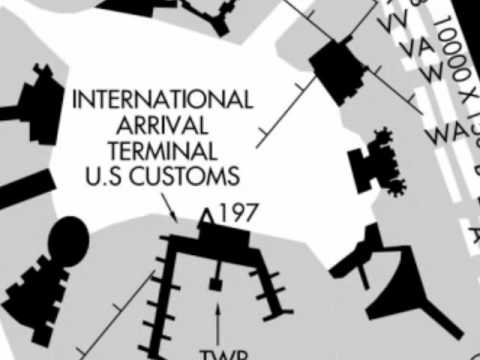
It doesn’t even matter so much that nothing offensive was said. The pilot was trying to tell his passengers, “Welcome to New York!” when he accidentally broadcasted over tower frequency. Right after is welcome, another pilot chimes in,“Don’t let him get away with that!” It could have been so much worse, I guess. This was New York City, after all. The point is that the pilot left the intercom on. For that, he will be shamed like a middle schooler in a boys’ locker room who forgot his jock strap. His colleagues will hang him out to dry. He will soon die of embarrassment…ok,not really. We’re kidding.
The Air Traffic Controller (ATC) in this clip is said to be Stephen Abraham aka “Kennedy Steve”, a former Wall Street exec who thrives on stressful situations. Air Traffic controllers are responsible for thousands of lives. They direct taxiing aircraft, and they decide which routes the planes will fly. An ATC may direct as many as 100 planes an hour. There is usually little time for light banter, especially at an airport as busy as JFK.
On occasion though, some very amusing conversations take place between pilots and air traffic controllers. These include arguments, strange comments, profanities, and incongruous gestures of every type. One pilot ordered coffee and wings before making an emergency landing. Then there was the pilot on Southwest who spewed profanities over the intercom before being relieved of his job. One angry ATC actually told someone to shut up too.
Pilots learn in flight training to think before you speak. Maybe they should also learn to check their ‘wafer’ too.
The clip was originally uploaded to LiveATC.net and posted by Jumpstartstation on YouTube.
You either tolerate O’Hare or you really hate it. But somehow everyone ends up flying through that field.
This time lapse video shows a flight coming into O’Hare International Airport, whose taxiways are littered with more planes than there are cars parked at malls after Thanksgiving.
Chicago O’Hare International Airport, commonly known as O’Hare, is a public airport owned and operated by the City of Chicago. O’Hare is the primary airport service for the Chicago area. It is located on the far northwest side of Chicago, with Midway Airport being Chicago’s secondary airport. O’Hare is a hub for United Airlines, American Airlines, and a focus city for most other major US Airlines.
In terms of the number of take offs and landings, O’Hare was the busiest airport in the world in 2014, finally beating out Atlanta International Airport, which had held the busiest airport title from 2005 to 2013. In fact, O’Hare lost the title back to Atlanta the following year. As of 2015, O’Hare is the fourth busiest airport in the world in terms of passenger traffic. O’Hare also has the most runways (9) of any international airport.
As of September 2014, O’Hare has direct service to 210 destinations (153 domestic and 57 international). Roughly 585 flights take off from O’Hare every day.
For ten years, O’Hare has been voted the “Best Airport in North America” by two separate sources, Business Traveler Magazine and Global Traveler Magazine. We really aren’t sure who votes in those reviews. We don’t know anyone who loves O’Hare. In contrast, Chicago’s airport system was voted 2nd worst in terms of cancelled flights and plane delays, with New York’s airports coming in first in that sad category. Roughly 20 percent of America’s flight cancellations and delays happen at O’Hare.
Besa might be the youngest airline pilot in the world.
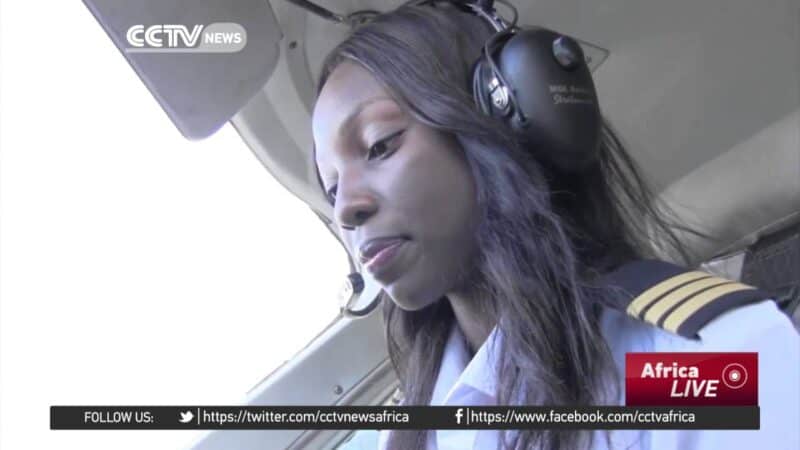
Besa Mumba, at the age of 19, is one of the world’s youngest commercial pilots flying for an airline.
Born in Lusaka in 1996, Besa breezed through her school years at all levels. She started her flight training late in high school. After receiving her 12th grade results in 2011, she applied and was accepted to the South African Flight Training Academy. Two years down the road in 2013, she attained her commercial pilot’s license.
“When I first flew alone,” says Besa (as reported by DailyMail), “that was just the best feeling ever.”
Besa has now landed her dream job. She is Zambia’s youngest ever commercial pilot. She flies various kinds of jets as a commercial pilot for the nation’s scheduled airline, Proflight Zambia. She has already flown domestic routes alongside the Captain of the Caravan aircraft.
In so doing, she gives hope to other women who wish to break the stereotype that pilots are men, in order to enter the overwhelmingly male dominated flight industry. “Where you have passion,” she says, “your work will speak for itself.” Her actions serve as encouragement for women to follow their dreams. Mumba certainly is active, ambitious, and driven to succeed. If you google “Besa Mumba pilot,” you will find numerous articles, images, and videos featuring her.
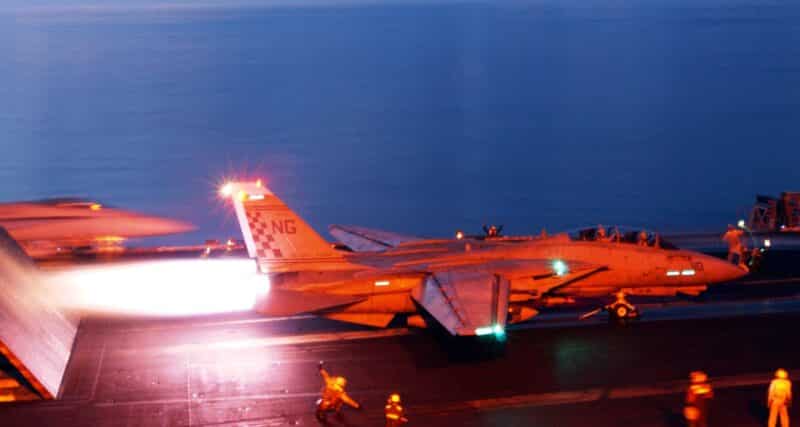
These HD F-14 Clips Are So Good They’ll Make You Wax Nostalgic for the Fleet Defender
I don’t know about you, but I sure miss the F-14 Tomcat. It’s a shame that they only nation flying them today is Iran. With its many beautiful lines and curves, the F-14 Tomcat is arguably one of the most visually appealing aircrafts ever designed. This footage helps us avgeeks remember the good ‘ole days of Naval aviation.
The Tomcat was manufactured by Grumman Aerospace Corporation in 1970 for the Viet Nam war. The F-14 first flew in December of 1970. The aircraft was introduced to the U.S. Navy in 1974. The F-14 has also also participated in the war between Iran and Iraq. Production was discontinued in 1991, with a total of 712 units built, at a unit cost (as of 1998) of 38 million dollars per aircraft. The F-14 was retired by the United States Navy in 2006.
The F-14 Tomcat is a supersonic twin engine, two seater fighter aircraft. The cockpit has two tandem style seats. The flight controls themselves are a hybrid of analog and digital devices, making for a bulky avionics system. The aircraft also has a bubble canopy for 360 degree viewing. Plus, it has variable geometry wings that swing automatically during flight to change speed. The F-14 was designed to combat the highly maneuverable aircraft of the Soviet Air Force and Navy.

![AV-AA027_SMARTP_J_20160706182344[1]](https://avgeekery.com/wp-content/uploads/2016/09/AV-AA027_SMARTP_J_201607061823441.jpg "Better than Autopilot: NASA Makes Strides toward Self-Aware Aircraft 1")