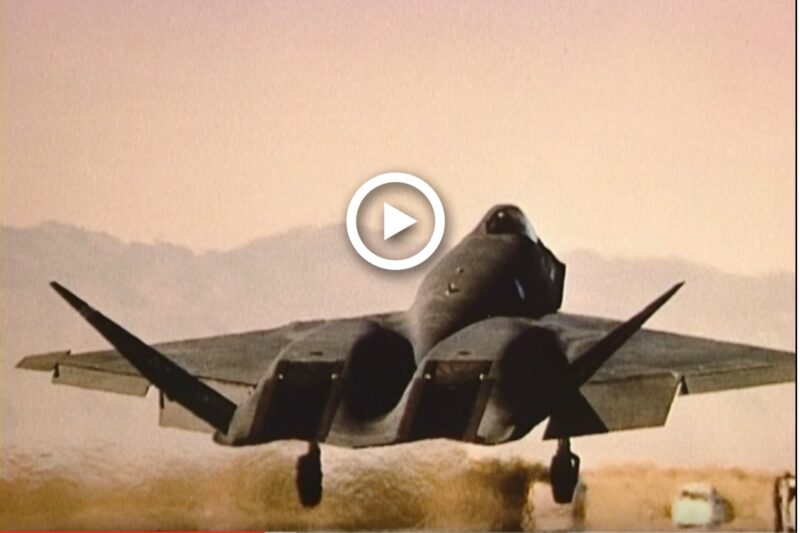
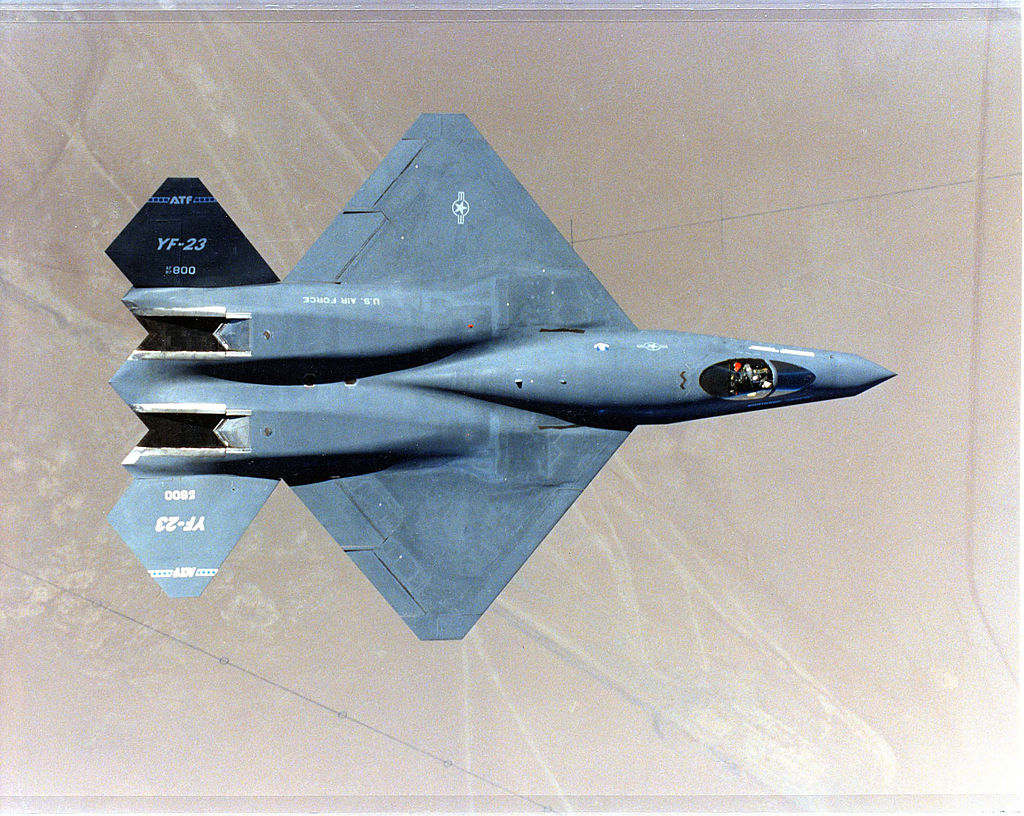
If the YF-23 Black Widow II was the superior prototype, did Northrup and McDonnell Douglas get robbed in the selection process?
The mission was to make the world’s fastest, smartest fighter plane and also make it invisible via stealth technology. All that makes it sound like the YF-23 woulda shoulda coulda become the world’s most lethal fighter jet.
So, what happened?
The YF-23 was in competition with the YF-22 that eventually became the F-22 Raptor. Northrop teamed with McDonnell Douglas to develop the YF-23 while Lockheed Martin was developing the competing prototype that eventually was chosen for production.
The Department of Defense was seeking next-generation fighters that could compete with the Soviets’ Su-27 and MiG-29 fighter prototypes that reconnaissance satellites had spotted in the late 1970s.
The U.S. Air Force wanted an Advanced Tactical Fighter that had the requirements of survivability, super cruise (prolonged supersonic flight without afterburners), stealth, and ease of maintenance.
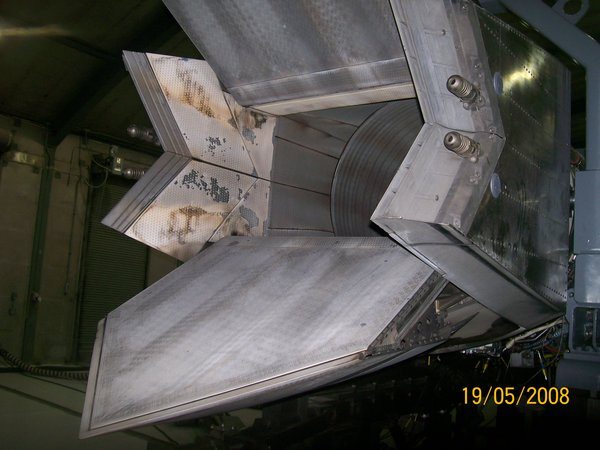
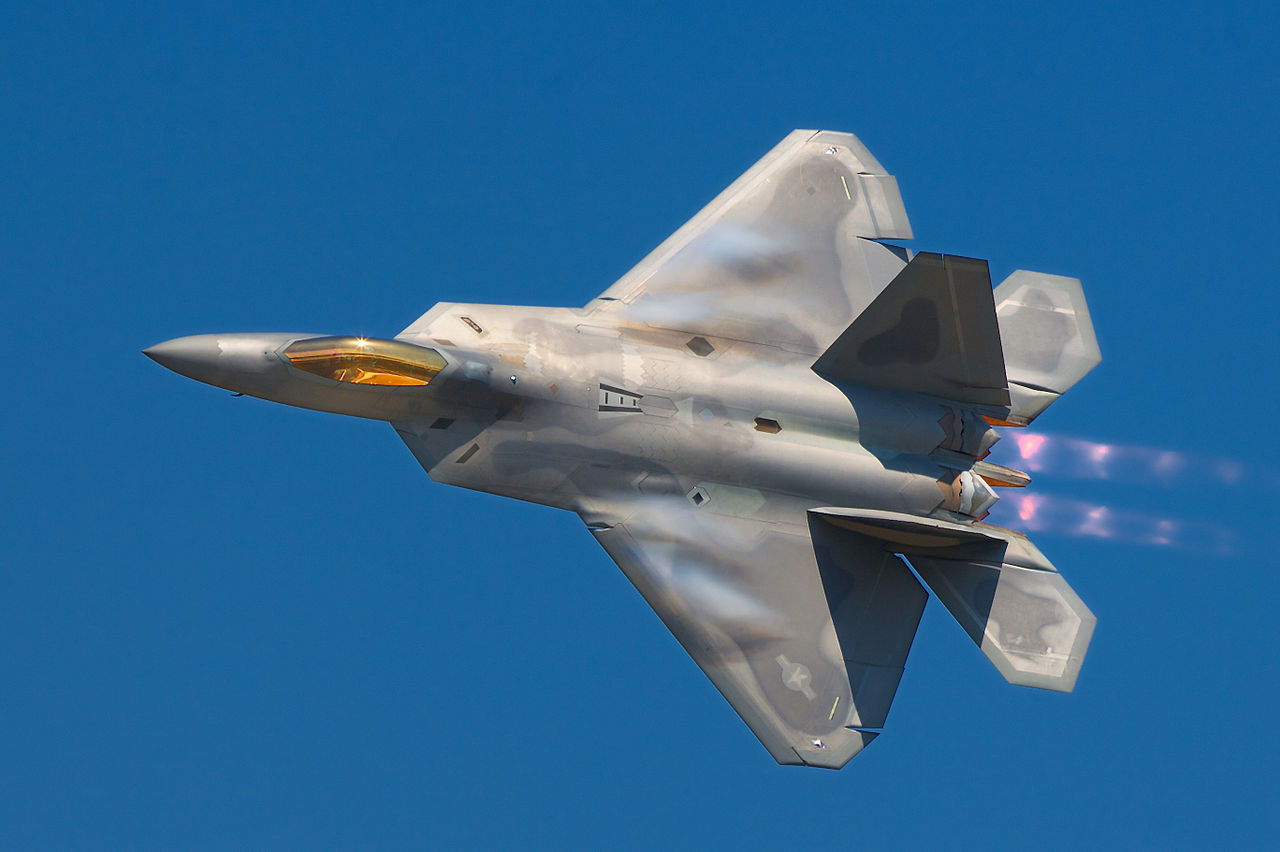
The YF-23 is one of the more uniquely designed planes with a distinctive look. Diamond-shaped wings and a V-tail gave it angles rarely scene. It had incredible climbing and vertical speed and its stealth capabilities made it nearly undetectable.
The YF-23 never reached the weapons-testing stage but it was designed to carry at least a 20mm Vulcan cannon, four AMRAAM medium-range air-to-air missiles, and a pair of Sidewinder short-range air-to-air missiles.
After nearly a decade of development, the YF-23 and YF-22 went head to head in 1990. In April of 1991 – with the Cold War finished and the threat of Soviet fighter development lessened – Secretary of the Air Force Donald Rice announced that the YF-22 had won the competition. It was more agile than the YF-23 and that became the determining factor.
The engineers who worked on the YF-23, who were free to discuss the project after it was declassified, are convinced that their aircraft was the better choice. And considering the ongoing issues faced by the F-22 Raptor, their arguments would appear valid.
The two YF-23s had nicknames based on their paint schemes. One was charcoal gray and nicknamed “Black Widow II.” The other was painted in two shades of gray and called “Gray Ghost.” Both were transferred to NASA’s Dryden Flight Research Center at Edwards Air Force Base.
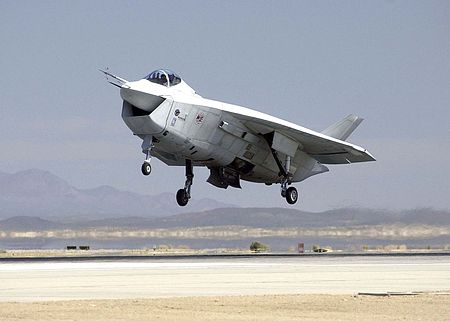
A question with no answer: Would Boeing’s X-32 have been the better choice for the Joint Strike Fighter program?
As the Joint Strike Fighter concept developed over a decade ago, Lockheed and Boeing each developed their own prototype. Lockheed’s X-35 won the competition but the Lightning has faced and continues to face technical issues that has delayed development and forced massive cost overruns.
Considering the challenges that has hexed the F-35, perhaps Boeing was better off finishing second. The program to develop a do-it-all fifth-generation aircraft can be considered for a “bridge too far” designation.
It’s entrant in the competition was designated as the X-32 – “x” is the typical designation for experimental but in this case “x” also stood for x’ed-out.
In October of 2001, the Department of Defense awarded the $200 billion contract to Lockheed Martin and hindsight makes one wonder if the right choice was made.
What was wrong with the X-32? Would it have been a better choice?
Like hindsight on the F-35, predicting that the X-32 would have ultimately been the better choice is mostly guess work. And considering the F-35’s issues, it’s easier to say the wrong choice was made.
The marching orders from the Defense Department for the JSF program were idealistic. The goal was to produce a jack-of-all-trades aircraft, a Swiss Army knife. Putting all the prerequisites in one plane led to what one would expect by a project designed by a committee.
Boeing’s approach was to produce two prototypes – the X32A for conventional takeoff and supersonic demonstration and X-32B for VTOL. Boeing’s plan was to then turn two prototypes into one.
That promise was a tough sell for the Department of Defense to believe.
Performance wise, the X-32 fell short of the promised X-35 performance, particularly in its ability to hover.
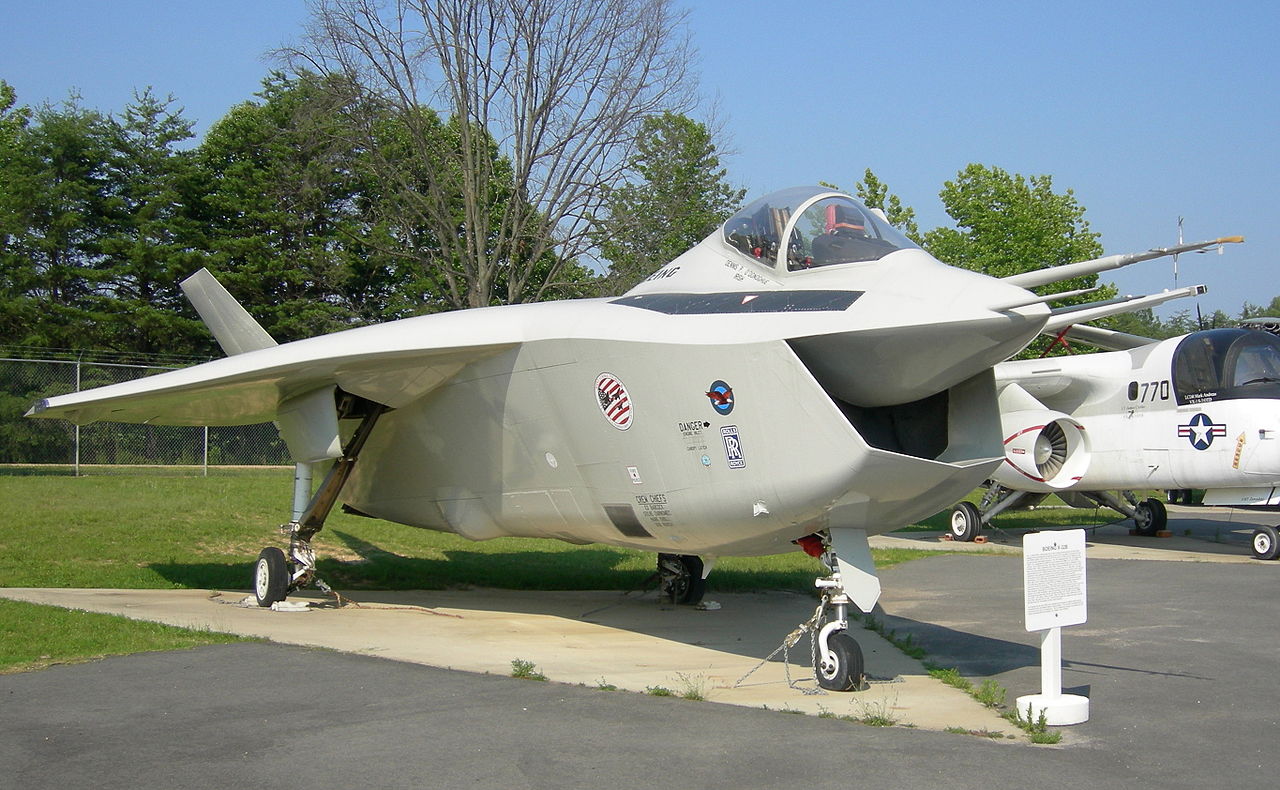
While from functional and airworthiness aspects the X-32 might have met the requirements, putting all of the systems into one plane produced an ugly duckling. If it were a beauty contest, the X-32 would have finished a distant third in a competition of two. The high-set the carbon fiber delta wing along with the bulky air-intake system required that its landing gear be exceptionally long. So during takeoffs and landings and even when airborne, the X-32 looked more awkward than sleek.
With the Department of Defense making its choice, Boeing’s two test aircraft became museum relics. The X-32A is at the National Museum of the United States Air Force while the X-32B is at the Patuxent River Naval Air Museum.
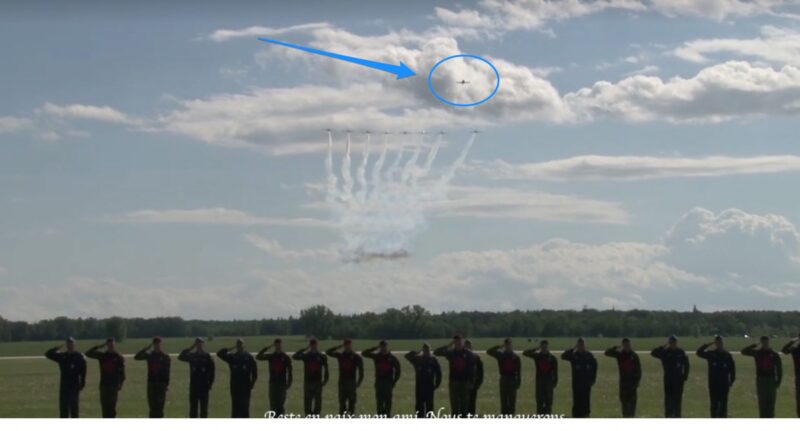
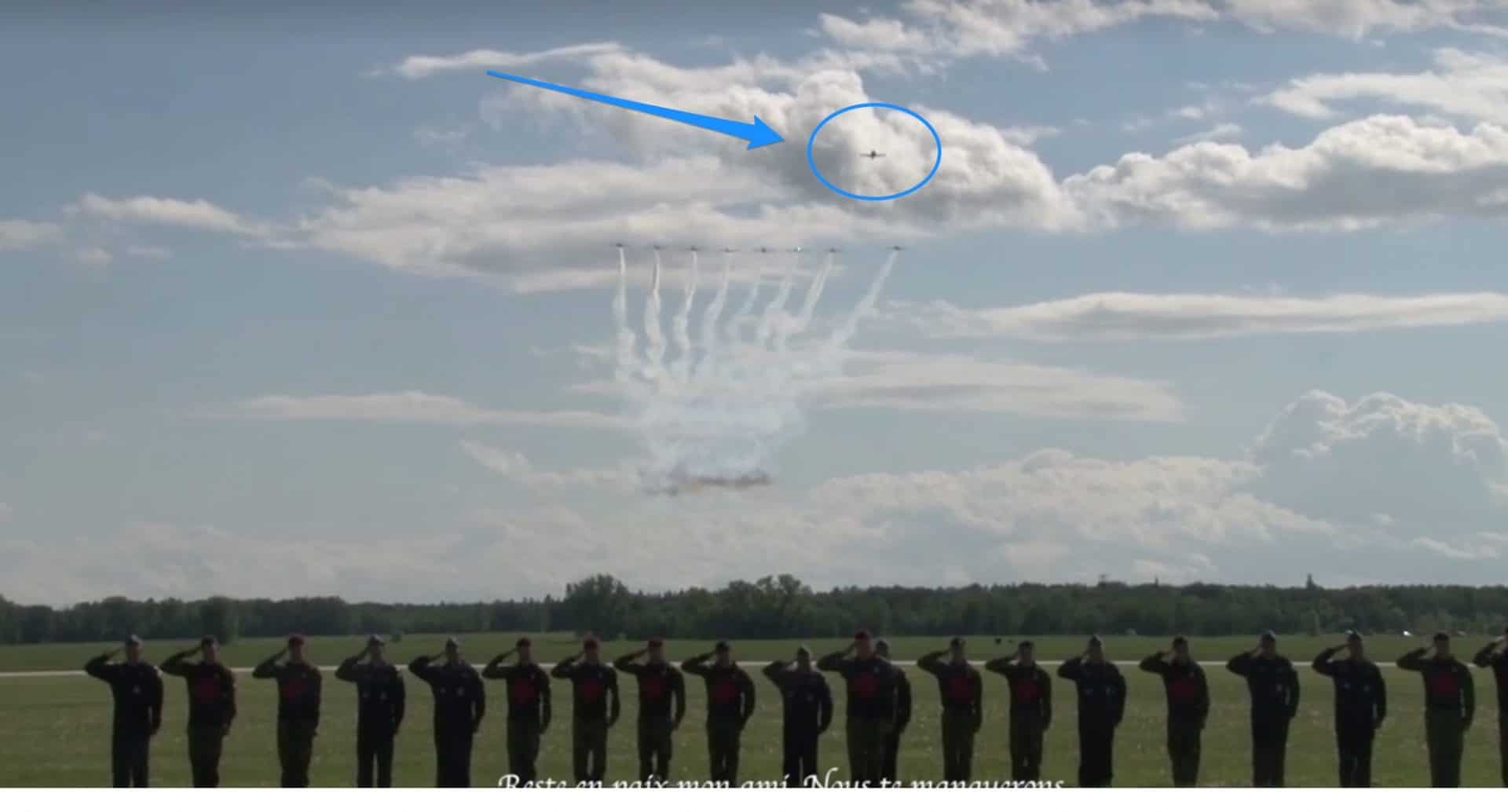
Snowbirds open performance with missing man formation in honor of Capt Jeff Kuss.
This week was a bad week for the US Military. In addition to 9 soldiers who died in a ground training accident, the Air Force Thunderbirds and the Blue Angels both lost aircraft in separate accidents all on a single day. The Air Force Thunderbird pilot successfully ejected. Tragically though, the Blue Angels pilot did not eject before impact. Capt Jeff Kuss, the pilot of Blue Angels #6, left behind a wife and two children. The loss hit Blue Angels fans especially hard. Thoughts and prayers poured in from all over the world. Many Facebook pages and profiles showed the Blue Angels graphic with a bar placed over the crest. A GoFundMe page for the family raised over $100,000 in just one day.
The famed Canadian Forces Snowbirds dedicated their show on Saturday to Capt Kuss and the Blue Angels. Our neighbors to the north demonstrated their show of support with a very touching flyover. The demo team opened the performance at the Manitoba Air Show with a very emotional missing man formation.
The Snowbirds and Blue Angels share a long friendship. They are a staple of the air circuit across North America. They even flew together last summer at an airshow in Evansville, Indiana. In a statement posted on Facebook on June 2nd, the Snowbirds said:
Our hearts go out to the men and women of the United States Air Force Thunderbirds and United States Navy Blue Angels. We offer our support and solidarity during this difficult time. We, the men and women of the Snowbirds grieve with you.
The US is blessed to have such great neighbors who are steadfast allies and friends in tough times.
Delta becomes the only US airline to offer completely free inflight entertainment.
The past 15 years of commercial aviation have been enormously frustrating for passengers. Airlines have focused on unbundling–adding fees to services that were previously included in the cost of a ticket. The flying experience has become noticeably more frustrating as airlines crammed more seats into planes, piles on fees and charged for luggage and food.
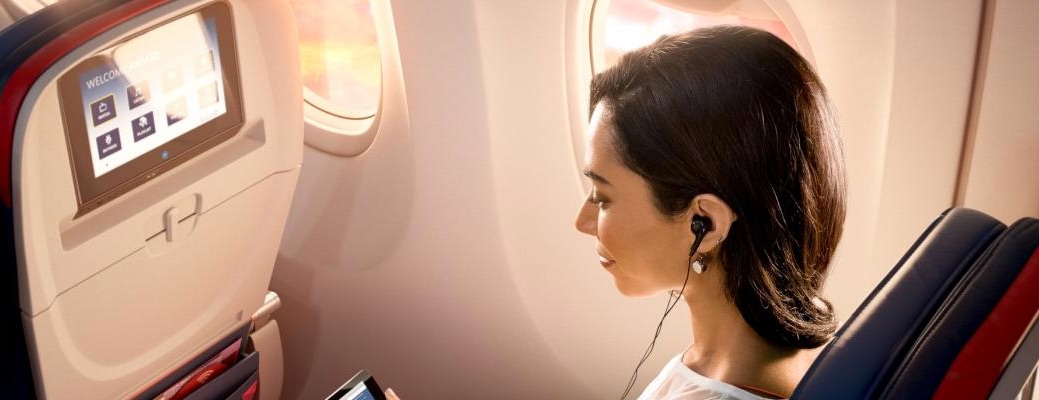
The tide towards crappier experiences with increasing fees might be changing though. This week, Delta Air Lines announced that all of their in-flight entertainment (known as Delta Studio) would be free by Jul 1, 2016. This means that watching live TV, movies and episodes will now be available to all passengers free of charge. Delta Studio offers up to 300 movies, 750 TV shows, 100 foreign film titles, 2,400 songs, 18 channels of live satellite TV on select aircraft and a selection of games on aircraft with seat-back entertainment systems. While all media will now be gratis on Delta, the company will still charge for wifi onboard its aircraft.
In a statement, Tim Maples, Delta’s Senior Vice President and Chief Marketing Officer, said,“the only thing better than operating the world’s largest in-flight entertainment-equipped fleet is providing it free to all our guests. Our commitment is to provide Delta customers with the industry’s best on-board services – period.”
Will other airlines follow suit and offer free entertainment? No word yet from United or American Airlines. Southwest and JetBlue offer free live TV but charge for on-demand content and wifi.
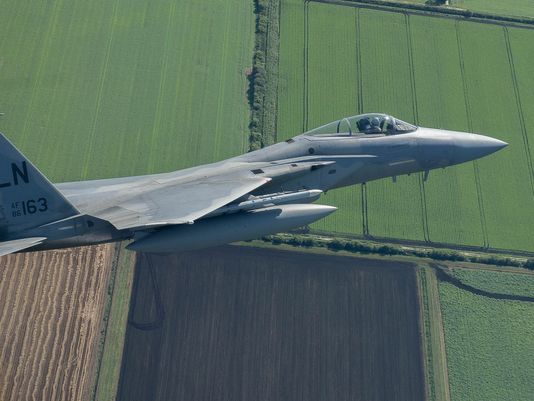
Boeing has a plan and a vision to upgrade the F-15 Eagle that will keep it lethal and operating for the next two decades.
Time waits for no man nor for any aircraft. That’s true even for the F-15 Eagle, whose track record as a fighter is stellar. Clocks tick and calendars flip and there are always defense contractors trying to re-invent the wheel.
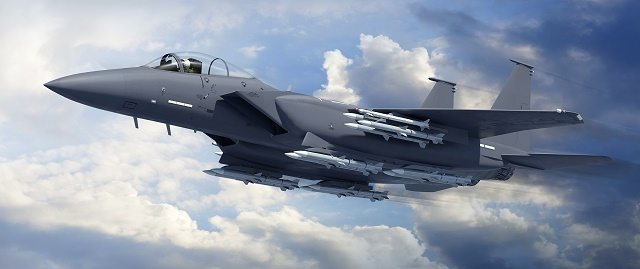
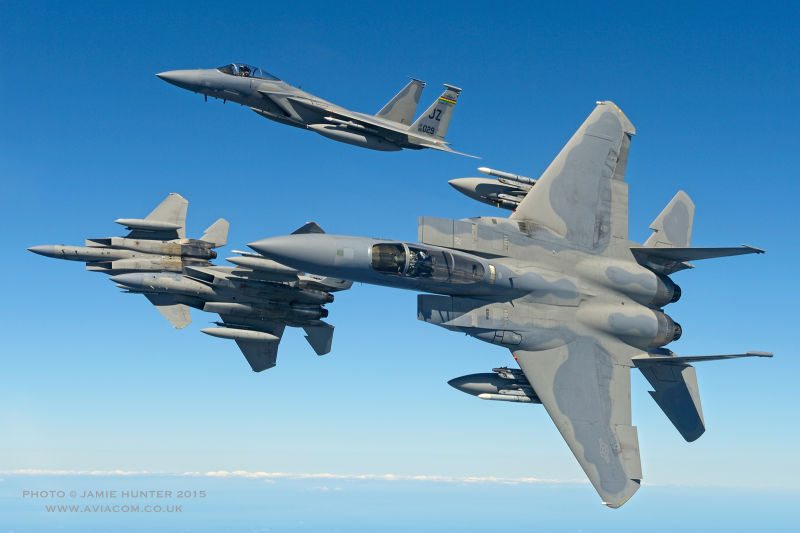
Boeing though is looking to the future with the F-15C and recently unveiled an “up-gunned” version of the Eagle which is designed to make it lethal and operational at least through 2040 – and that’s the reason for the “2040C” designation for the new version of the Eagle.
In the accompanying promotional video, the modernized F-15 has the appearance of something Bruce Wayne would climb into after turning into Batman.
But this is no CGI fantasy. The 2040C features:
“Quad pack” munitions racks that will double the air-to-air missing payload to 16.
Conformal fuel tanks for extended range.
A communications system that will link the Eagle to Lockheed Martin’s F-22 Raptor.
Improved survivability with the latest radar and infrared tracking sensors that give the 2040C “first sight, first shot, first kill” air-to-air combat capabilities.
With the Pentagon capping F-22 production at 187 aircraft, the need for improved F-15C has increased. Boeing envisions that there will be demand for 200 of improved Eagle versions. The upgrades would be part of a service-life-extension program (SLEP).
Boeing’s upgrade plan is crucial. With F-22 production ended and the F-35 struggling, the possibility of a “fighter gap” increases. The 2040C program for the F-15C would not only ensure that gap doesn’t grow but it would link the Eagle and the Raptor as aerial teammates.
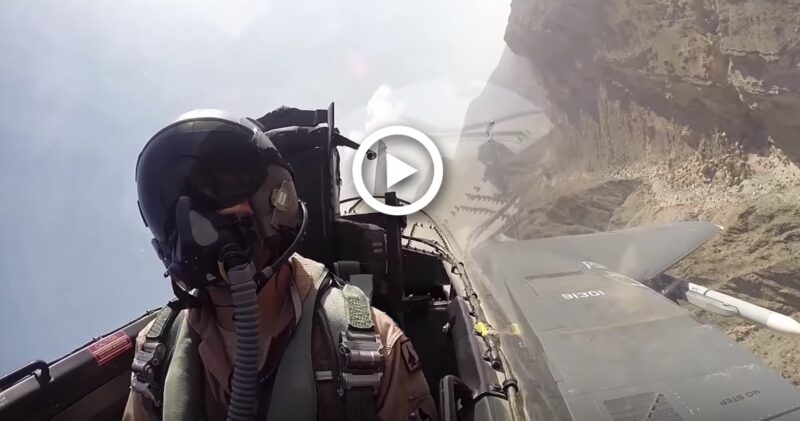
A “you-are-there” view of a low-level canyon run by an F-15 Eagle features a spooky image reflected in the canopy.
In our most recent post on Avgeekery.com we wrote about the F-15 Eagle and directed you to a National Geographic documentary about the aircraft’s background, development and success.
This video puts you in the cockpit of an F-15 as it makes a low-level run through an unidentified canyon. And if the “being-there” view wasn’t enough, notice the image reflected in the glass of the cockpit provided by the forward-viewing camera.
As Dana Carvey’s Church Lady character might ask, “Hmmmm … could it be … satan?”
Jet Blast is dangerous. You shouldn’t walk or drive a car behind a powered up jet.
Jet engines are really powerful. Hurricane force winds can extend up to 600 feet behind the jet. The blast behind the engines can be so powerful that it can lift cars, buses, and definitely people. NASA put together a great safety guide on how to operate in congested ground areas with jet aircraft. If you are too lazy to read it, here’s the short version: stay away from the ass end of a jet engine.
A couple of years ago, the boys at Top Gear decided to see just how dangerous jet blast actually is. They proved that driving behind a jet engine might kill you. It’s not a smart idea!
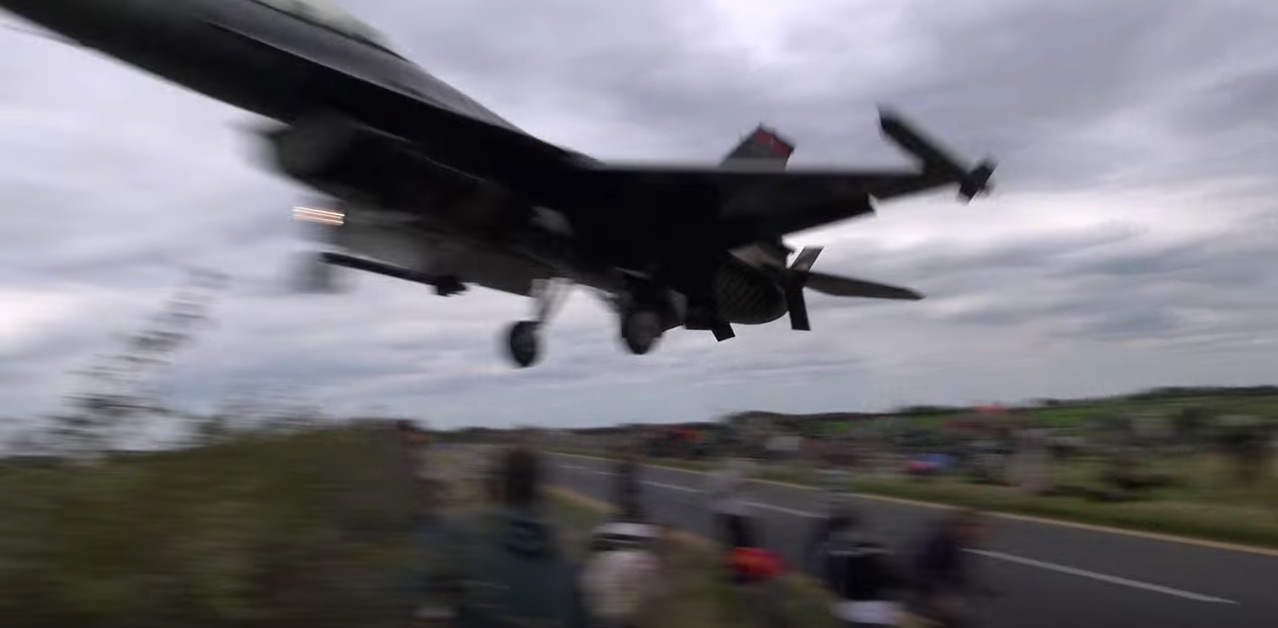
This Turkish F-16 decided to give some #avgeek spotters a show. For him, the glide slope was just a recommendation.
Most fighter pilots love their job. They also love to show off their capabilities. Turkish Air Force Captain Yusuf Kurt decided to showboat as he approached the field after a sortie. He dropped below the typical approach glide slope and buzzed above them less than 20 feet above the assembled crowd.
Was it dangerous? Or was he just trying to utilize the most runway possible? What do you think?
“Oh, My Lord!” The combination of a relatively short runway, isolated location, and warm temps make for impressive takeoffs in front wide eyed tourists.
St. Maarten is an incredible airport for Avgeeks. Situated in the Caribbean, the island features beautiful beaches and a great climate all year round. It is a popular tourist destinations for Europeans and folks from North America.
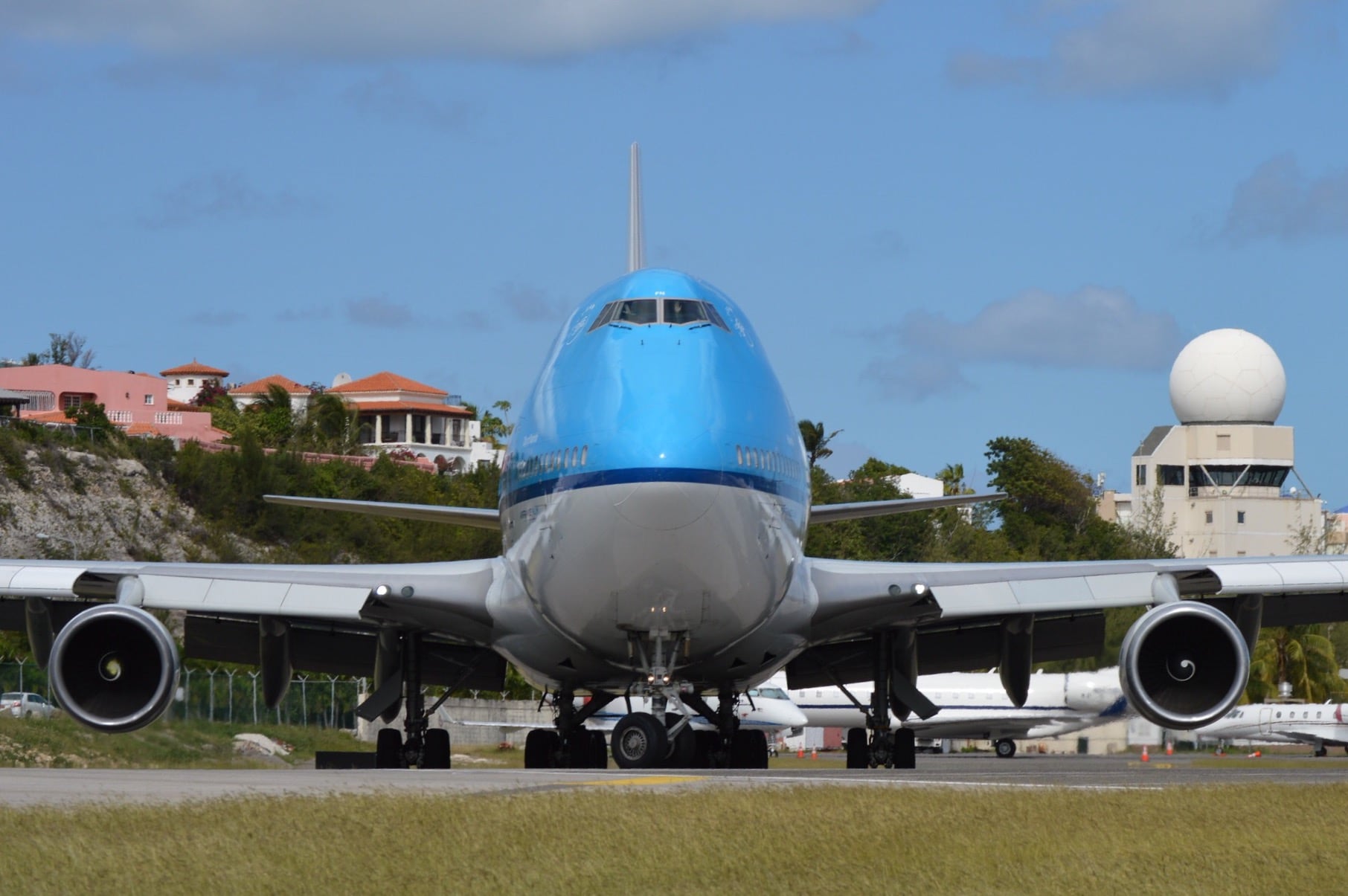
Because of the island’s popularity and distance from Europe, Air France and KLM both utilize heavy aircraft on their routes. From time to time, the combination of heavy aircraft operating weights, high temperature, and relatively short runway make for impressive (and sometimes scary) departures.
Before takeoff, pilots compute TOLD data to ensure that they have the required distance for takeoffs. On long haul flights, the calculations can be pretty tight. This KLM 747-400 utilized the entire runway for a departure. The guy filming the video says “Oh my Lord!” as an 800,000+ lb heavy Boeing barrels towards him at over 150 kts.
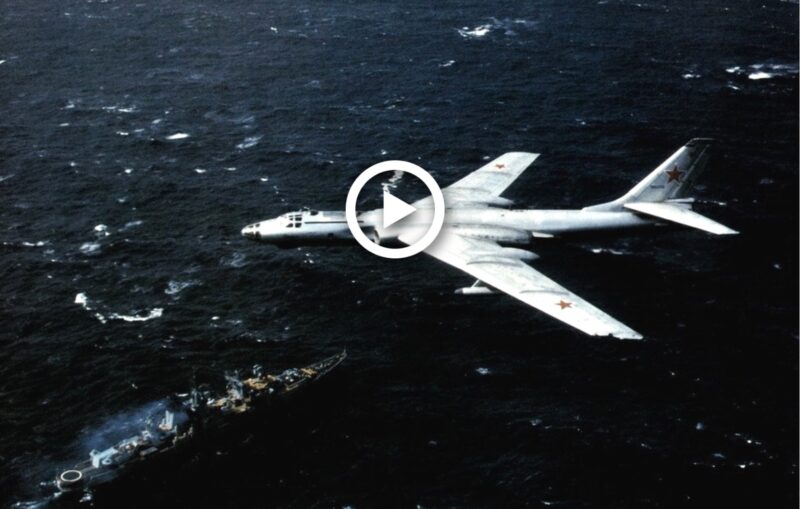
Incidents between the U.S. and Russian forces – the Americans are typically involved in air-to-air close encounters – have been plentiful over the last 70 years. Most have been harmless. The vast majority of Americans never even know about lots of them.
WATCH: That Time a Russian Badger Augered In After Buzzing a US Navy Carrier 15
Bad Day for a Badger in the Med
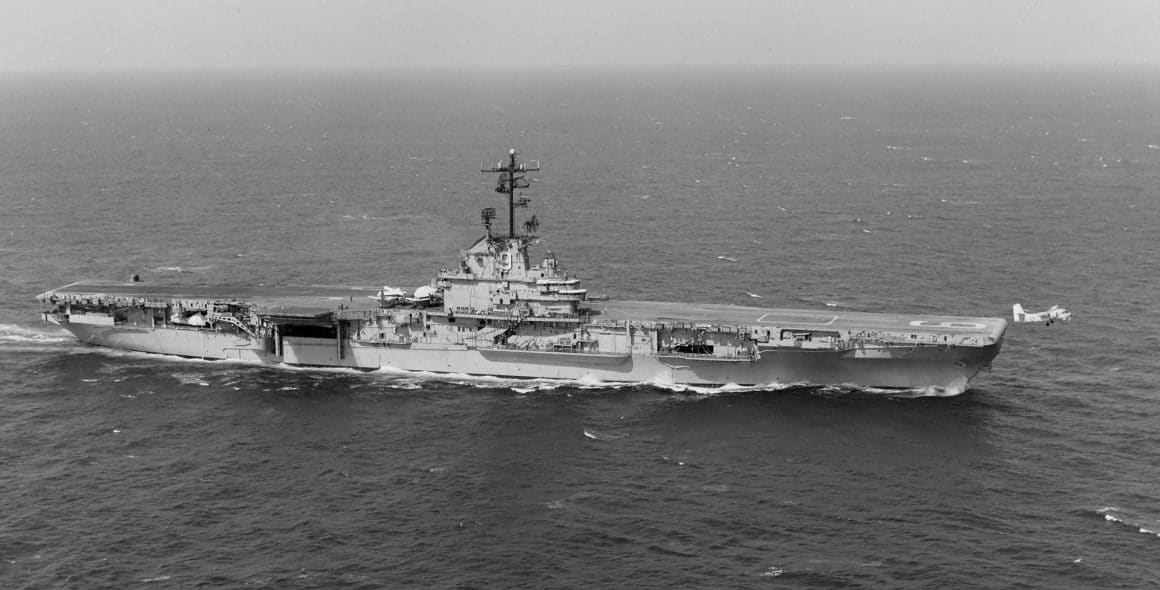
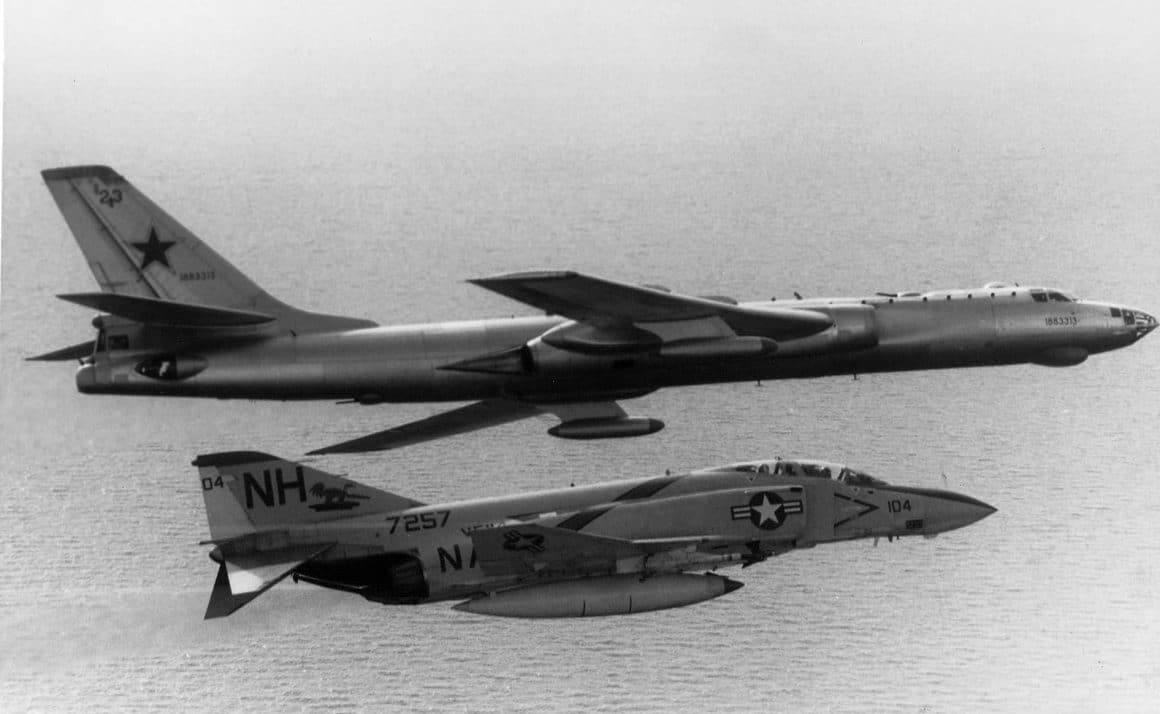
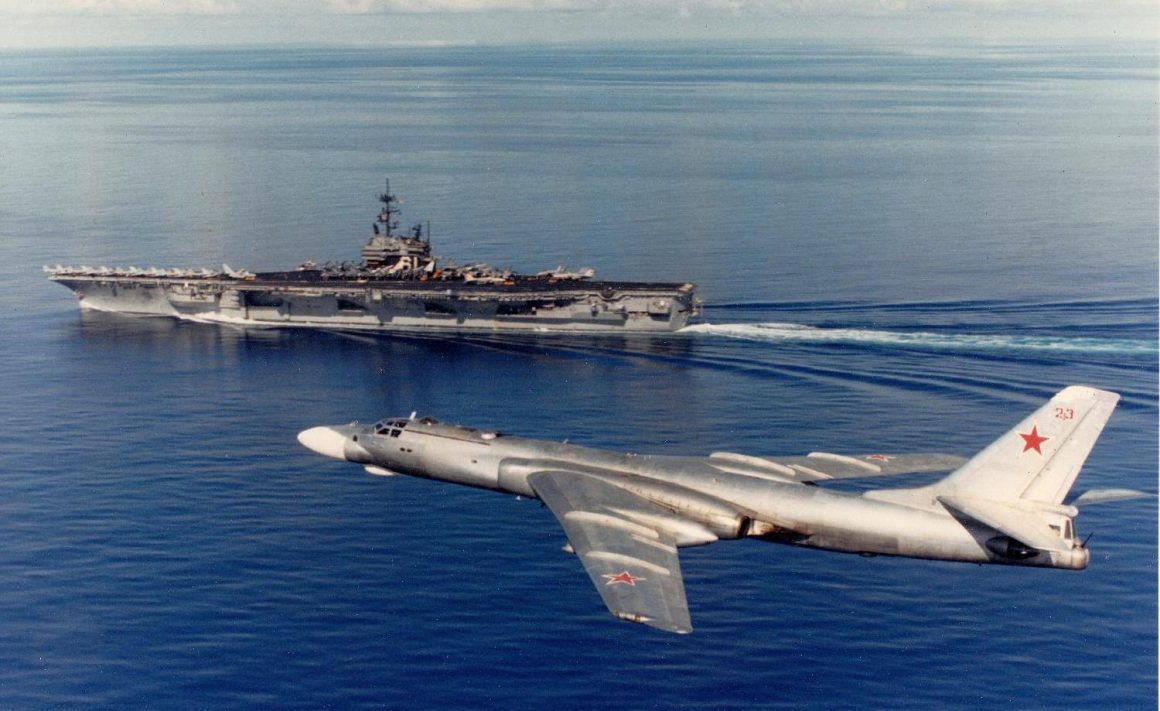
But on May 25, 1968, a Russian Tupolev Tu-16 Badger reconnaissance plane crashed in the Mediterranean about five miles off the port bow of the USS Essex (CVS-9- a World War II era aircraft carrier converted for use as an anti-submarine carrier, pictured above). The plane had made several low-level passes over the Essex before augering in within sight of the carrier and the personnel on the carrier’s “roof.” Here’s the video (the audio is in Russian. Comrade.)
A Truly Dangerous Game
Russian pilots apparently loved to prove their testosterone edge with these figurative middle finger passes. But during the height of the Cold War – this incident was just five years after the Cuban Missile Crisis – it’s unfathomable that this kind of brinksmanship was being practiced. Imagine if whatever caused this Tu-16 to crash – a mechanical failure, perhaps – had occurred when it buzzed the carrier. Even if unintentional, a “kamikaze” crash of a Russian plane into a U.S. aircraft carrier could have led to war.
image via national archives
Smile Yankees- You’re on Comrade Camera
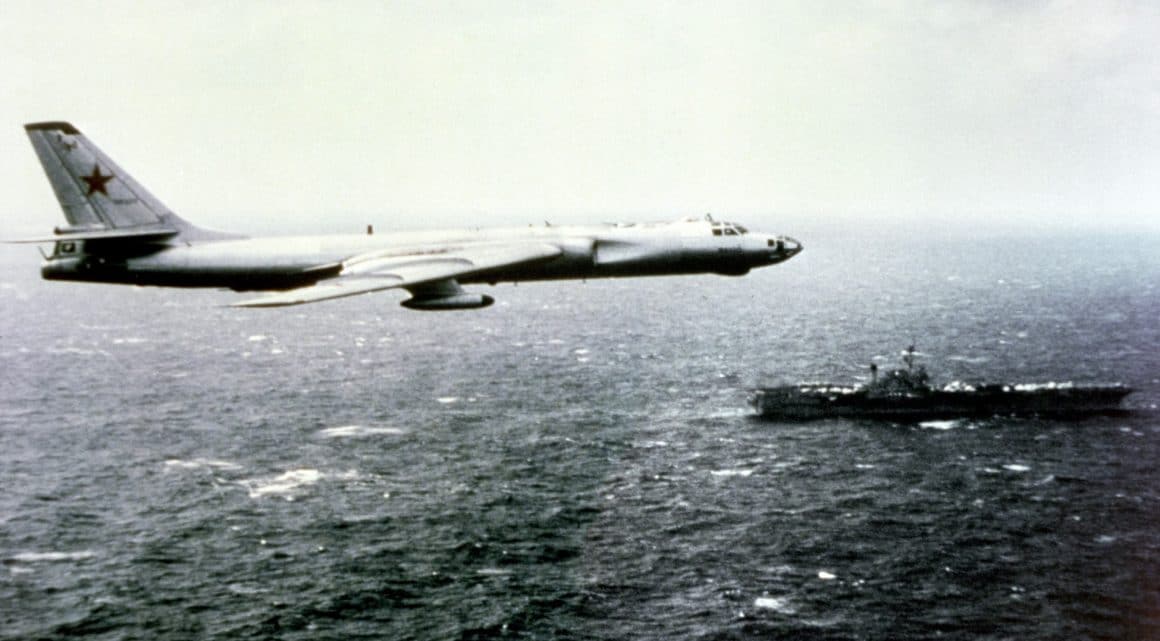
In the 1970s and into the early 1980s, the Soviets challenged the presence of the U.S. Sixth Fleet in the Mediterranean. The Russians often dispatched two aircraft – one to make 100-feet-off-the-deck passes while the other took photographs that could be displayed in military HQs in Mother Russia.
image via national archives
Brushes and Bumps
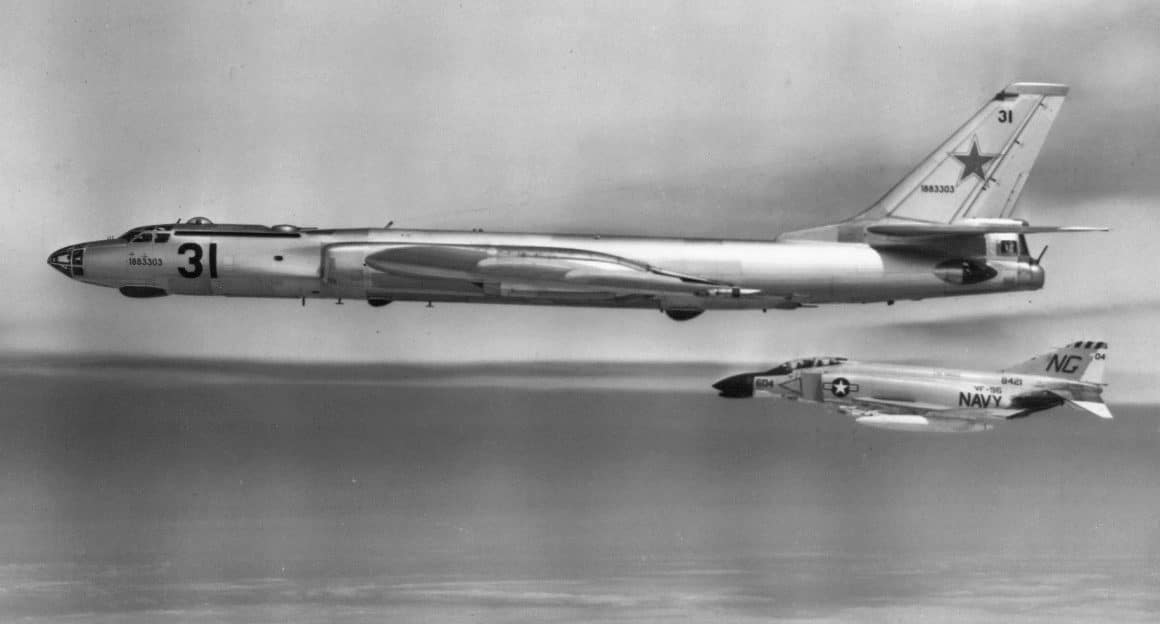
A Soviet reconnaissance jet and an American F-4 Phantom collided over the Mediterranean in March of 1970. It was a mid-air fender bender – the Phantom suffered some scraped paint while the Russian plane came away with a bent wingtip.
image via national naval aviation museum
The Russians Still Play Their Games
While the Russians like to display their machismo by buzzing warships, aerial encounters with U.S. pilots tend to be more mutual respect and jovial. One U.S. pilot displayed the latest Playboy Playmate of the Month during a close encounter with a Russian pilot while on another occasion a Soviet pilot saluted his American counterpart and held up what appeared to be a bottle of vodka.
image via national naval aviation museum
What typically happens after such an incident is that the U.S. military attaché in Moscow visits his Russian counterpart to “express a level of concern.” Once that is done, case closed.
A volunteer, non-profit organization – the Commemorative Air Force – works to restore World War II aircraft to flying shape in order to keep history alive.
The Commemorative Air Force started nearly 60 years ago with one aircraft. A group of ex-service pilots pooled their resources to purchase a P-51 Mustang. From there, the organization has grown to more than 165 aircraft and has members in all 50 states and 28 foreign countries. There are CAF “wings” in 28 states and four foreign countries.
Why? The non-profit organization has grown over the years and continues to raise funds to restore historic aircraft because of this mission statement: “Education, such that generations of Americans will value and support the contributions of military aviation in assuring our nation’s freedom.”
We at Avgeekery.com salute the CAF and as our Flashback Friday feature offer this story written by Pia Bergqvist and appeared in FlyingMag.com.
Drivers, motorcyclists, bikers and pedestrians craned their heads to the skies as military trainers, combat fighters, bombers and reconnaissance aircraft made their way over the city in a series of formations, commemorating the 70th anniversary of V-E Day (victory in Europe).
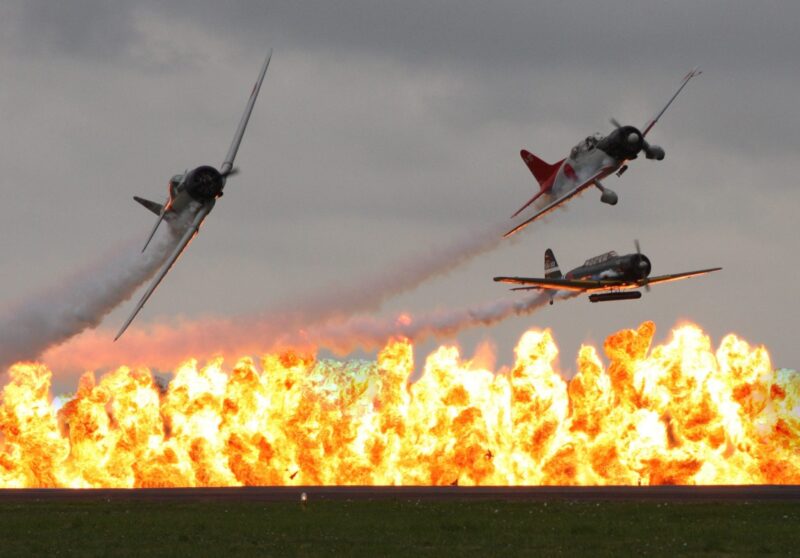
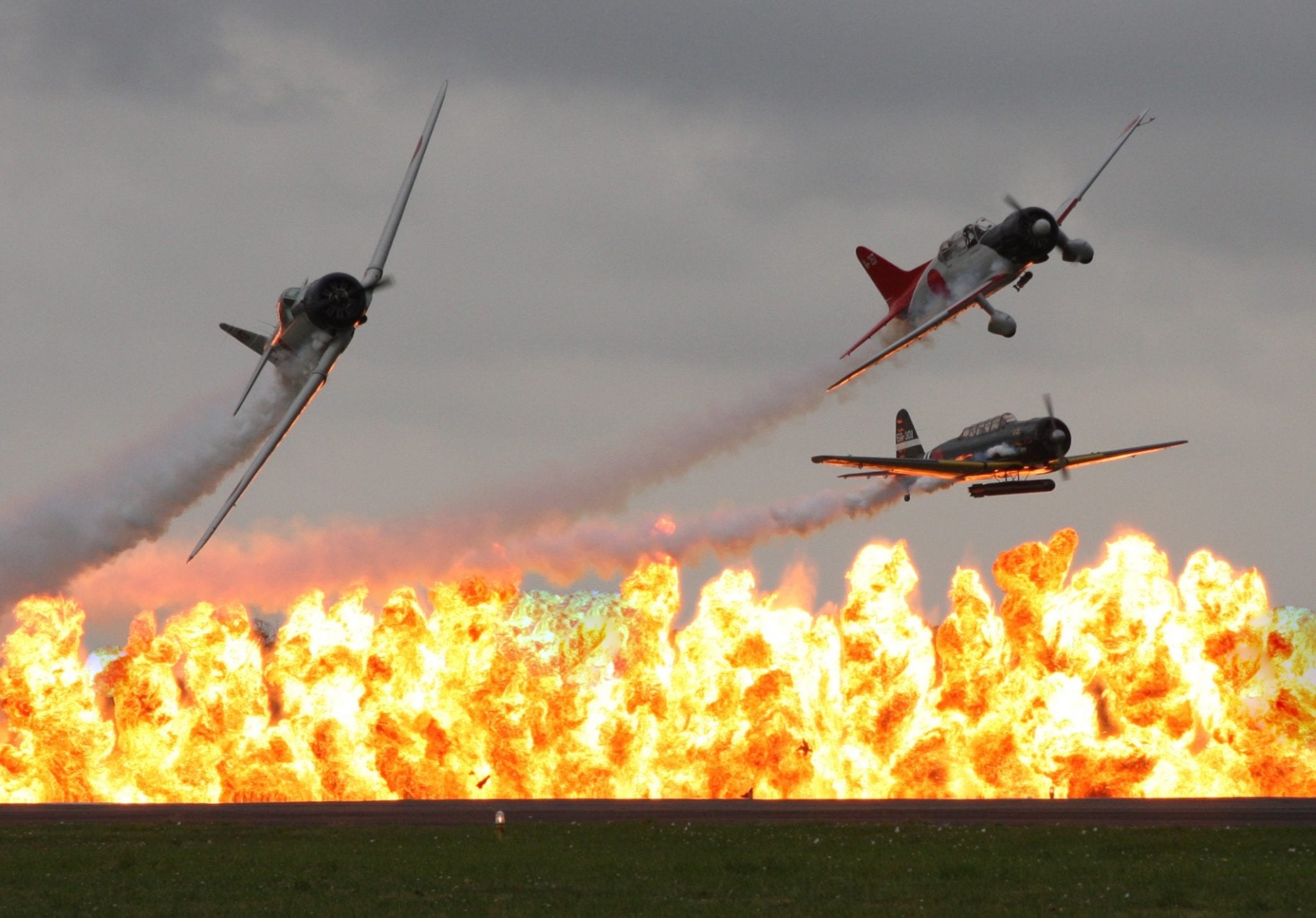
Tora! Tora! Tora! Gang flying a Zero, Val, and Kate, break over wall of fire created by the Tora Bomb Squad. (Ebdon – Own work)
World War II was a special era in the history of aviation, the likes of which we will probably never see again. People from all walks of life got their hands dirty building, flying and maintaining airplanes to support the war effort. With the help of the masses, aircraft manufacturers were cranking out warbirds by the thousands, and engineers were busy maximizing the speed and agility of the airplanes.
When the war ended, the government swiftly canceled its pending orders, and thousands of airplanes that today would be considered rare and beautiful treasures were destroyed for scrap metal. Were it not for organizations such as the Commemorative Air Force, many of these historical machines would be confined to the ash heap of history. CAF alone has taken more than 165 of these historic airplanes of more than 60 different types under its wing.
Unlike many warbird museums, CAF’s main mission is to restore and maintain warbirds in flying condition. It all began with the one airplane that still to this day has been hailed as one of the most victorious and stunning ever to roll out of an aircraft factory — the North American P-51 Mustang.
A man by the name of Lloyd Nolen brought a group of former service pilots together to purchase one of these beautiful performers in 1957 in Rio Grande Valley, Texas. The group ponied up a total of $2,500, bought a Mustang and named it Old Red Nose — the airplane was recently restored to pristine condition and is actively flying. Soon after its P-51 purchase, the group added two Grumman F8F Bearcats to its fleet.
Out of around 300,000 warbirds built in the United States during World War II, only a small number remained by 1960. Concerned that these historic treasures would eventually be destroyed, the group worked swiftly with the ultimate goal of saving at least one of each warbird model from that era. In 1961, CAF, then named the Confederate Air Force, was formed as a nonprofit organization, and by the end of that year, the number of airplanes had grown to nine. “The membership voted to change the name in 2001 due to the fact that it did not accurately reflect our mission and was becoming a distraction to this mission,” explains Steve Brown, CAF’s president and CEO.
The first official CAF museum was opened at Rebel Field in Mercedes, Texas, in 1965, with one 26,000-square-foot building. Three years later, the organization had outgrown that facility and moved, taking the airport name with it to a new location in Harlingen, Texas, where CAF occupied three large buildings. Later, for many years, the organization was housed in Midland, Texas. But in 2015, its headquarters were moved to the Dallas Executive Airport right smack in the Dallas metropolitan area to be closer to a larger population of people, Brown says.
CAF has big plans for its new location, which will become the CAF National Airbase. “We’re going to build an aviation attraction unlike any other in the world,” Brown says. “What gives us that ability is that our airplanes fly. You may see an airplane inside on display, and later that day, you may see that same airplane outside of the building, loading up passengers to fly.”
“‘Everyone flies’ will be the mantra when you come to visit the National Airbase, whether it is a kid in a pedal plane, a teenager in a flight simulator or an adult loading up to take flight in the only flyable B-29 Superfortress in the world,” Brown says. The new location will also be accessible to faraway travelers, with Dallas serving as a top international and domestic airline hub.
But the headquarters is just one of many locations where you can experience CAF warbirds. The organization has what it calls “units” — wings, squadrons, detachments and airbases. There are currently 79 units in 25 states, each one started by local CAF members.
There are times when an airplane has already been donated directly to the new unit. If not, the CAF headquarters does its best to find an airplane for the unit. In most cases it may be something fairly simple, such as a North American T-6 Texan or SNJ. But the Southern California Wing, which formed 35 years ago and is based at the Camarillo Airport, was offered a Curtiss C-46F Commando — a heavy transport airplane — named China Doll.
The SoCal Wing was both dedicated and fortunate, says Pat Brown, one of the wing’s founding members who, today, serves as its public information officer. A member who was qualified to fly the massive airplane donated the funding required to get its two engines running. A team of mechanics went to Texas every weekend until the C-46 was ready to fly to California. China Doll became a huge draw at airshows, and the SoCal Wing had no trouble fundraising to keep the C-46F flying and growing its fleet.
Today, the SoCal Wing’s three hangars house 12 aircraft, including a P-51, Fairchild P-19A Cornell and Grumman F8F-2 Bearcat, as well as non-U.S. WWII examples, like its Supermarine Spitfire MK XIV and an original Mitsubishi A6M3 Zero. There is also a North American PBJ-1J B-25 Mitchell bomber that has been in restoration since 1993 and recently made its first flight in 23 years. With an extensive museum and gift shop, a brand-new 33,000-square-foot hangar and big plans for the future, the SoCal Wing is on its way to becoming an airbase, a status attained by only one other unit — CAF Airbase Arizona located at Falcon Field Airport in Mesa, Arizona.
So how did all of the airplanes and memorabilia at the SoCal Wing arrive? “It all just came to us,” Pat Brown says. “We had no idea. We thought we would support one airplane.” And once word spread of the bustling museum, donations and offers to take over the collections from other museums rolled in.
Airplanes maintained at the remote units belong mostly to CAF, with the exception of a few that are on loan. In cases where warbird owners or surviving family members can no longer fly and maintain their airplanes, CAF is there to help. In many cases, the airplanes are eventually donated to CAF.
Steve Brown’s goal with CAF is to allow these historic airplanes to impact all Americans, not just the aviation crowd. In addition to CAF units and the airplanes’ attendance at airshows, CAF’s Airpower History Tour flies the famous B-29 bomber FIFI along with five or six other warbirds around the country to teach people about World War II history and allow them to interact with the airplanes. “It’s like a traveling circus,” he says. “We take the airshow out on the road to places that may not have the wherewithal or the size to create an actual airshow.”
Airpower History Tour visitors can also experience warbirds in flight. Anyone can book a ride through airpowersquadron.org, with costs ranging from $75 to $1,795 depending on the platform.
Another educational program is the Rise Above Traveling Exhibit. The current exhibit is a fully contained movie theater that uses the example of the Tuskegee Airmen to educate visitors and inspire children to rise above any challenge to achieve their dreams, Brown says. More Rise Above exhibits are planned for the future.
Today, CAF supports about 13,000 members through several levels of membership ranging from $45 per year for students to $300 for a full supporting member.
However, membership dues only put a slight dent in the cost of restoring, maintaining and flying these historic airplanes, so fundraising is a major component of CAF’s operations. The units fundraise by bringing their airplanes to local airshows, charging admission for museum displays, hosting events and more.
CAF took to a new fundraising effort with its latest large restoration That’s All,Brother — a Douglas C-47 (known in the civilian world as the DC-3). A hugely successful Kickstarter campaign brought in $328,736 to date, and the project is currently going through a heavy engineering phase, removing corrosion and restoring the airframe — a project expected to take 3,000 man-hours to complete. CAF hopes to bring the C-47 to Europe for a celebration of the 75th anniversary of D-Day in 2019.
If it is your dream to take the controls of a warbird, you can. All you need to do is become a CAF Colonel (a $200 annual commitment), join a local unit and put in some volunteer hours. The return on investment — the ability to literally experience history — is well worth it.
“Many memberships will give you discounts on rental cars and all kinds of stuff,” Brown says. “But if you join us, your membership gets you the opportunity to give more of your time, effort and money to keep these airplanes flying.”
If you love warbirds and want to see them continue flying for the benefit of future generations, it’s a priceless investment.
The purr leading up to the whine of jet engines preparing to takeoff is evident as this F-22 Raptor gets ready to perform at an air show.
Preparing to fly a $150 million state-of-the-art fighter is not like jumping in the family SUV to head to the grocery store. You don’t just jump in, start it and drive/fly.
During an air show in 2008, Major “Max” Moga was about to pilot an F-22 Raptor on a demonstration flight. The pre-flight check list continued after Moga fired up the twin Pratt & Whitney F119-PW-100 pitch thrust vectoring turbofan engines.
Making sure that the control services are in working order and letting both engines get completely warmed up is just a bit of the common sense and preparation that goes into making sure that an aircraft like the Raptor is ready to roar down the runway. The observant ground crew watches for anything the pilot can’t see.
The F-22 is an amazing plane. It’s a shame that only 187 were ever produced. Unfortunately, cost overruns and overseas contingency operations (OIF/OEF) cut in to the budget. Still, the Raptor roars just not in as big of numbers as originally planned. Enjoy.
Max out your credit card – well, OK, a few credit cards – and buy yourself a 747-400 air frame.
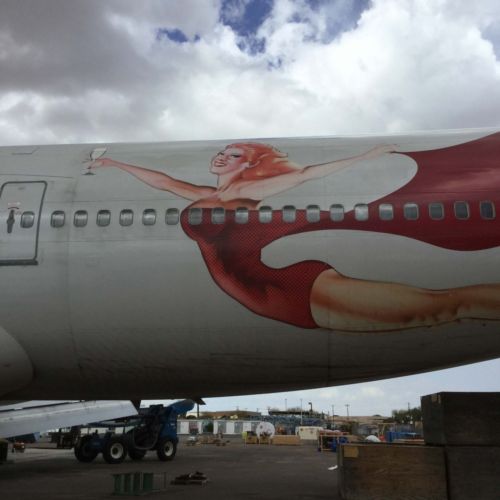
If you’ve got an extra $900,000 of disposable cash, you can buy Lady Penelope.
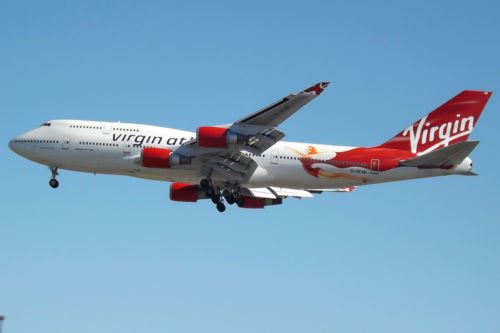
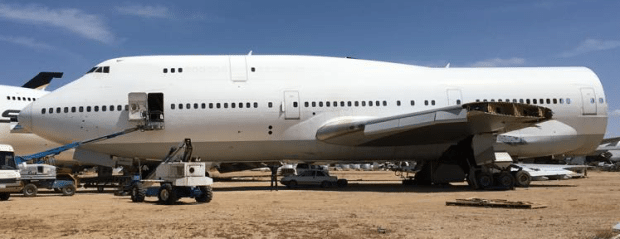
Now, before the human trafficking police start an investigation, here’s the deal: There’s an offer on E-bay to purchase a retired Virgin Atlantic 747-400 air frame for $900,000 (the starting bid is $299,000).
During its 25 years of service in the Virgin Atlantic fleet, the plane was known as “Lady Penelope.”
The engines have been removed and the seller is ready to accept an offer and move the air frame to the buyer. The air frame is also offered in sections – fuselage, cockpit – and the remaining parts are also available for sale. Shipping or engines to power this Queen of the Skies is not included.
A rare view of one of the last Space Shuttle launches and a look back at the history of the most unique aerospace program.
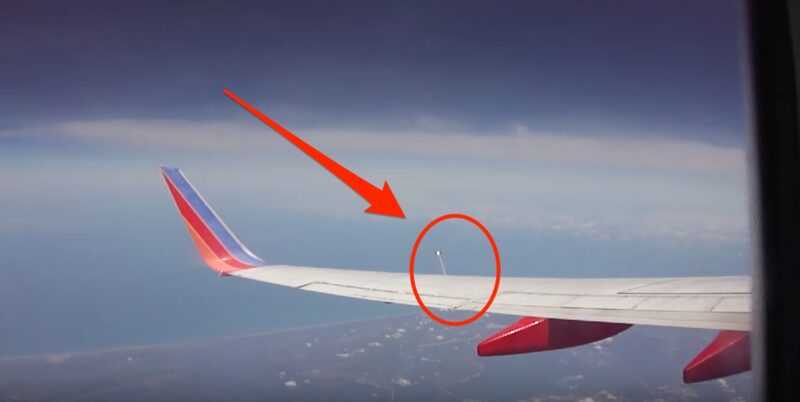
We’re approaching the five-year anniversary of the completion of the final Space Shuttle mission. The video that accompanies this story was shot from the window of Southwest Flight 0921 on May 14, 2010, captures the launch from Cape Canaveral, FL., of one of the final missions.
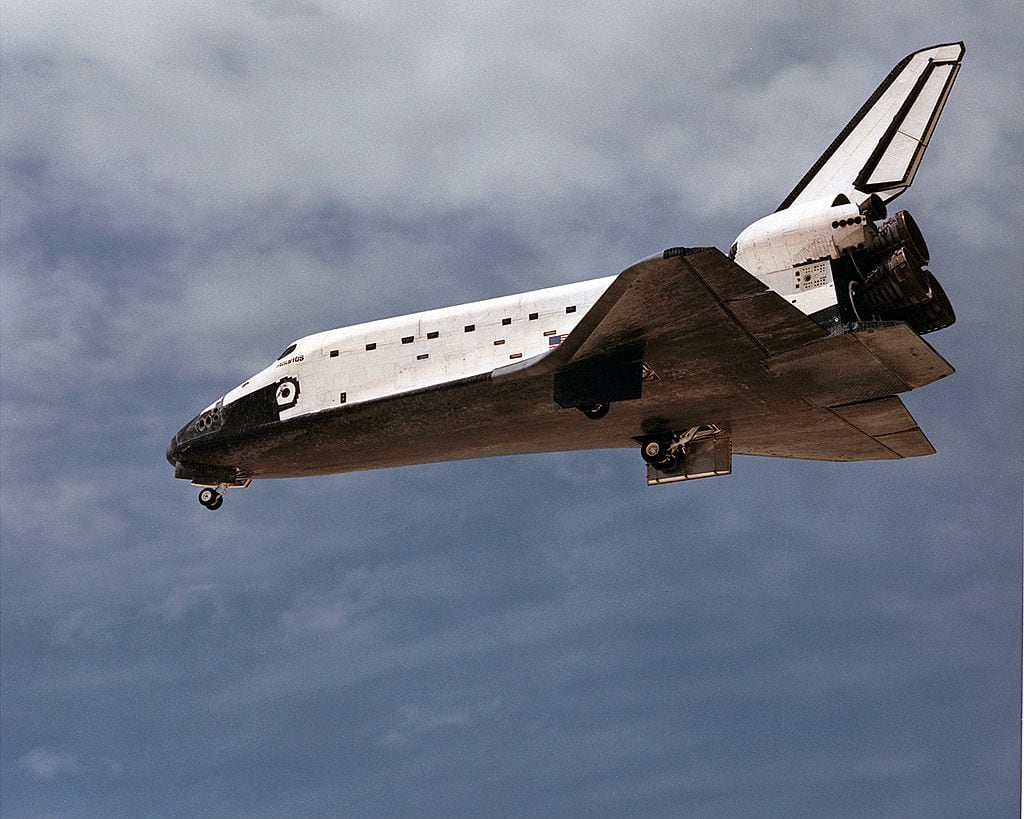
For two decades, NASA’s Space Shuttle program once again proved that the United States could be a leader in space exploration. The first mission was launched on April 21, 1981 and the last flight touched down at Kennedy Space Center on July 21, 2011.
The first flight was a bit of a gamble and has been called “the boldest test flight in history.”
“On a long list of firsts one stunning fact stands out,” a NASA official said at the time. “It was the first time in history a new spacecraft was launched on its maiden voyage with a crew aboard.”
And John Young, who commanded that first flight that included only pilot Robert Crippen, summed it up this way: “Anyone who sits on top of the largest hydrogen-oxygen fueled system in the world; knowing they’re going to light the bottom and doesn’t get a little worried does not fully understand the situation.”
Some facts and figures of the Space Shuttle program:
The Shuttle fleet’s total mission time was 1322 days, 19 hours, 21 minutes and 23 seconds.
Shuttles participated in 135 missions, launching satellites, interplanetary probes, the Hubble Space Telescope and helped construct and service the International Space Station.
The total cost of the program was an estimated $209 billion.
The cost of each launch/mission ranged from $405 million to $1.5 billion.
Five Shuttles were built and sent into orbit around the Earth: Columbia, Challenger, Discovery, Atlantis and Endeavour.
Tragically, two of those shuttles were lost before they could complete missions.
On Jan. 28, 1986, Challenger exploded 73 seconds after launch due to the failure of the right SRB. The incident was particularly tragic because one of the seven astronauts who died, Christa McAuliffe, was to be the first teacher in space. Hundreds of classrooms around the country witnessed the disaster on television via live coverage of the loss.
Columbia disintegrated during re-entry on Feb. 1, 2003 and all seven crew members perished. An investigation concluded that the leading edge of a wing had been punctured during launch. The heat of re-entry penetrated the wing and led to Columbia breaking up over the Southwestern United States.
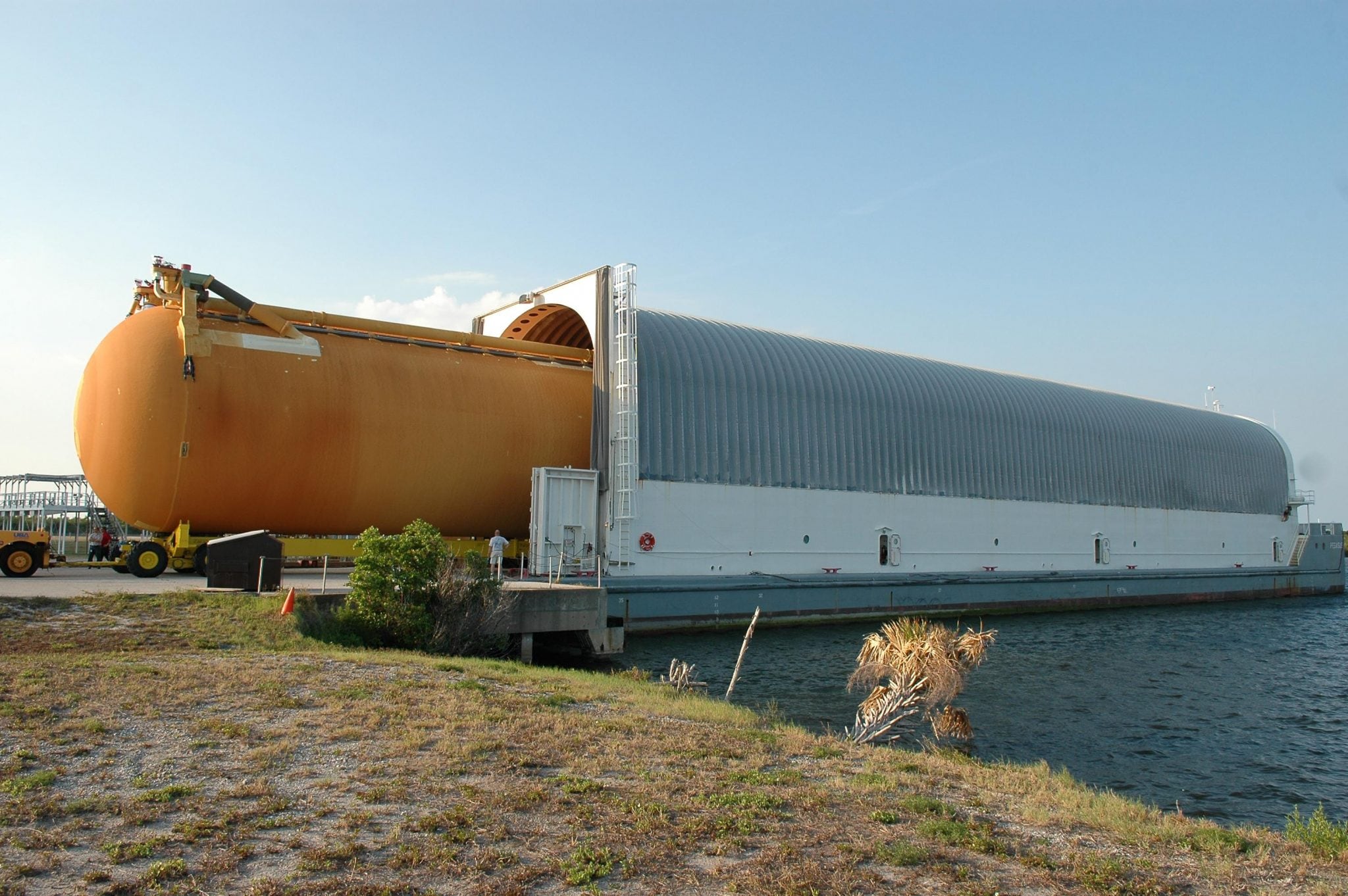
Endeavour, which was built to replace Challenger, will be on display at the Samuel Oschin Air and Space Center, which is in its construction phase. Recently, folks in Los Angeles were treated to the only remaining flight-qualified external tank from the Space Shuttle program being ground-transported to join Endeavour and be part of the eventual display. The fuel tank was donated by NASA.
The transporting of that fuel tank will likely be one of the last times that a part of a Space Shuttle moves more than a few feet.
Discovery is displayed at the Udvar-Hazy Smithsonian Museum at Dulles. Atlantis is on display at the Kennedy Space Center
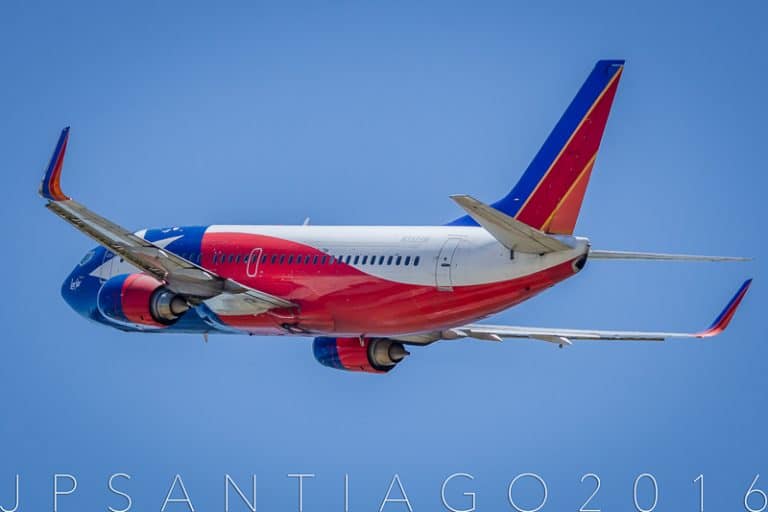
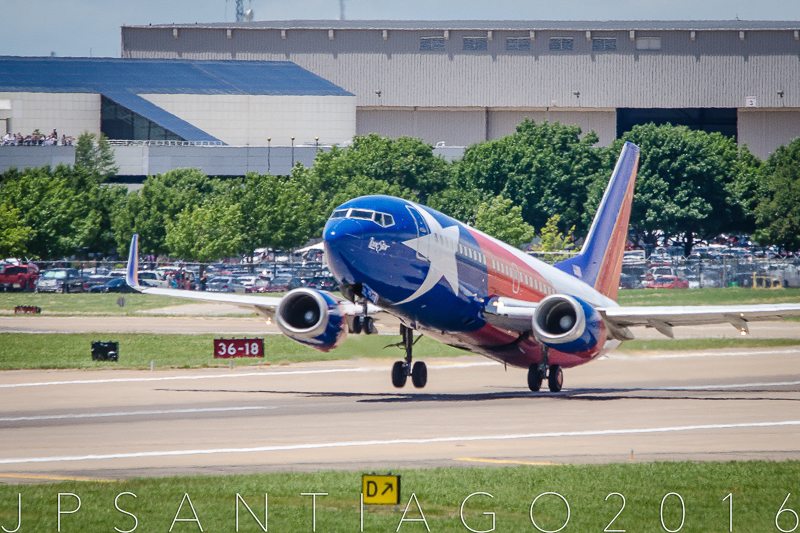
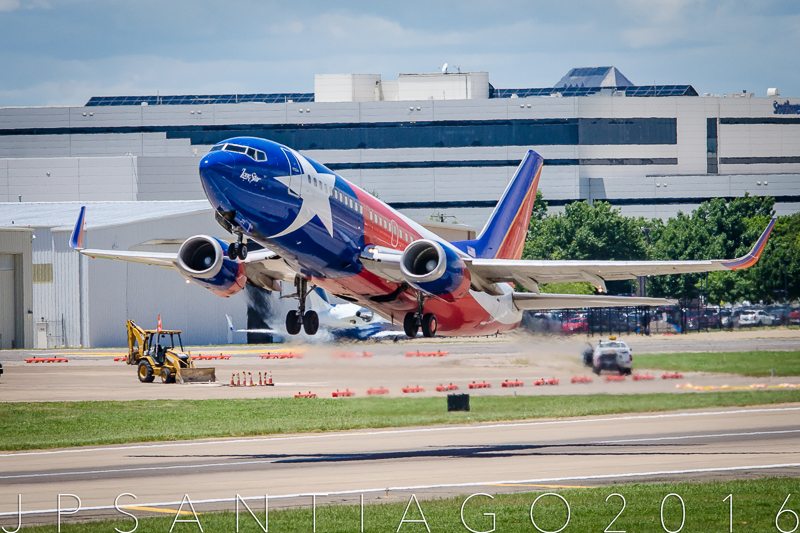
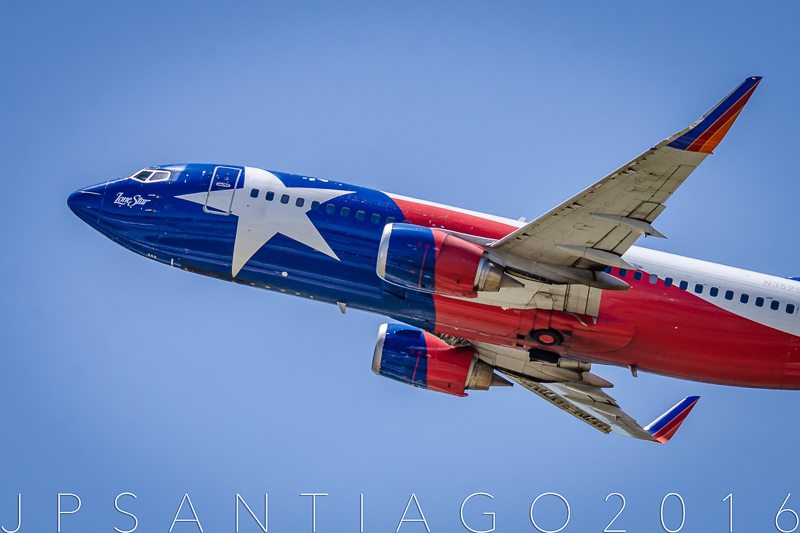
Lift off from 13R at Dallas Love Field. Note all the Southwest employees in the parking lot and open deck of the airline’s headquarters building.
I went out to Dallas Love Field last week on 17 May 2016 to catch Lone Star One, N352SW, departing on her last flight out to the desert.
She retired the evening prior from passenger service with the last revenue flight from Houston Hobby (HOU) to Dallas Love Field (DAL). She was the oldest active factory-delivered 737-300 in the Southwest fleet and the airline’s first state-themed plane, unveiled in 1990 for Southwest’s 20th anniversary in 1991. Lone Star One was always my favorite of the Southwest fleet to see and photograph. A reporter with a major Texas newspaper (I think it was the Houston Chronicle) once said “You don’t move to Texas, it moves into you.” There is a lot of affection for Lone Star One both within the Southwest family and with aviation enthusiasts across the state- many considered her the flagship of the Southwest fleet and as the first of the state planes, she was definitely the matriarch of the state plane fleet. Southwest was born an underdog in 1971 flying the “Texas Triangle” between Dallas Love Field, Houston Hobby, and San Antonio, so for many folks, the plane is a symbol of the airline’s Texas roots and humble beginnings.
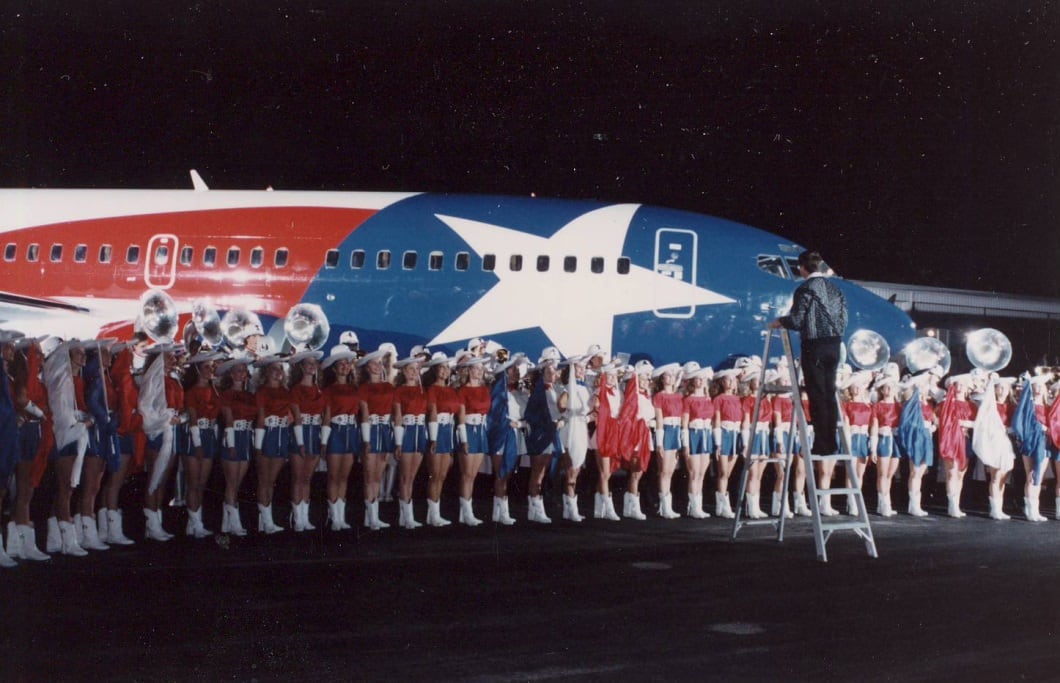
Southwest’s long time advertising agency GSD&M in Austin has a relationship with the airline that goes back to its earliest days and the state themed planes were one of the results of that long fruitful relationship between the airline and the ad agency. During its nascent years when Southwest was trying to eke out its existence in an intrastate market that was dominated by Braniff International, American Airlines and Texas International, the airline quite unusually spent over 10% of its working capital on a style of advertising that was a departure from what was the norm from airlines of the day. Southwest set the tone early on with ad campaigns that projected an unconventional approach that made them unique in their early days and laid the roots for their internal culture. Lone Star One was introduced on 7 November 1990, the day after her delivery from Boeing. GSD&M hired songwriters and musicians for years to do jingles for Southwest’s TV commercials and the introduction of Lone Star One was no different with songs composed just for the Lone Star One ad campaign. There’s no questioning the song’s mushiness, but the song worked well in Texas and as anyone knows, we Texans from all persuasions get sentimental and mushy when we talk about our home state!
*Trivia: GSD&M’s main office in Austin, Texas, has long been a no-smoking facility. However, Southwest chairman emeritus Herb Kelleher is allowed to smoke to his heart’s content when visiting.
Lone Star One’s unveiling back in 1990 at Dallas Love Field. (Southwest Airlines photo)
“We staked our claim in Texas. We’ve grown together, flown together, Danced among the clouds. We owe it all to Texas Together now for 20 years. It sure does make us proud.”
“(Narrator) On this our 20th anniversary, Southwest Airlines proudly unfurls Lone Star One, a high-flying tribute to the indomitable spirit that makes Texas a true state of mind.”
“And the Lone Star is flying high! Proud and undefeated, Right where it belongs, shining in the Texas sky, The Lone Star is flying high.”
Waving the Texas flag one last time for all of us here in North Texas.
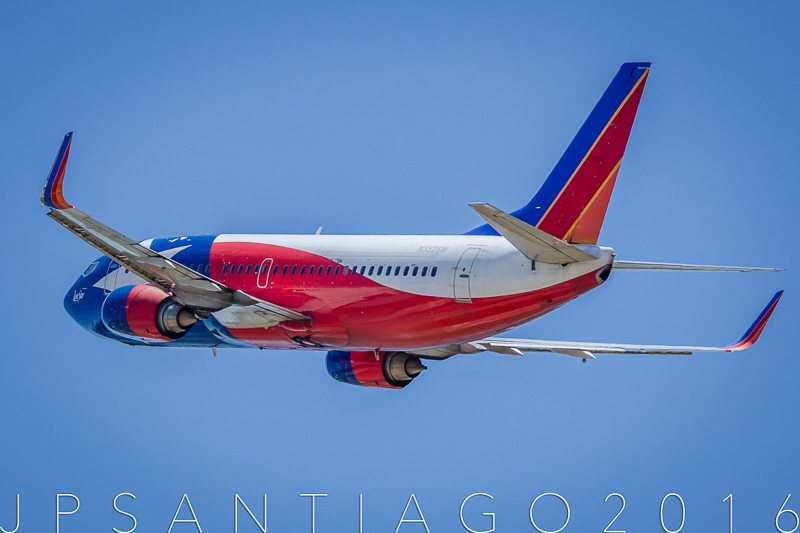
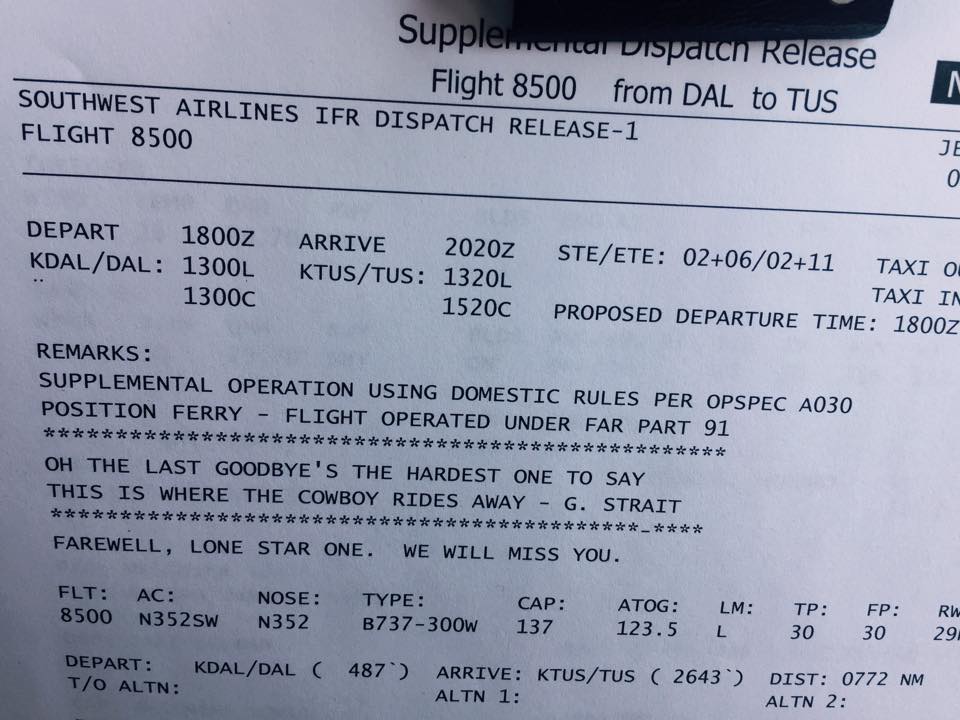
She was headed to Tucson as Southwest Flight 8500 for scrapping, so this was not just Lone Star One’s last departure but last takeoff, ever. Her first flight was 17 October 1990, delivered to Southwest on 6 November 1990. She was really lightly loaded, only needing fuel to get the crew to Tucson, and shot off 13R like a homesick angel using only half the runway of a regular passenger -300.
You can see 13R reflected on the blue part of the under fuselage. In some ways still pristine, but you see chipped paint, staining and patch doublers befitting N352SW’s age and career of intensive flying.
This was the first time I’ve had the chance to photograph an airliner heading out to its scrapping. There’s something different to see an airliner takeoff for the very last time and for that to be an aircraft as iconic as Lone Star One, it’s bittersweet. Someone once joked to me that “Texas only exists at full volume!” It’s a feeling of home that transcends the cesspool of politics in this state. I have friends who span the political spectrum and we all have a love of Texas. I started flying Southwest regularly when I was in college. Used to do the Southwest shuffle even before there was through ticketing and baggage check in. I still remember when the Rapid Rewards frequent flyer program was called the Company Club, it was based on legs flown. With the Wright Amendment in full force, I’d rack up free flights easily which was as good as gold as a student. In the early 1990s when I was in college at the University of Dallas, there was no such thing as online booking. You called up the airline and booked a flight over the phone- but if you told the agent on the other end of the line you want to fly from Dallas to anywhere else outside of the Wright Amendment perimeter state, they’d apologize and tell you that they don’t fly that route.
However, if you called the reservations number and wanted to get around the Wright Amendment, the conversation would go something like this:
“Yeah, hi, I’d like to book a flight on Southwest from Dallas Love Field to Baltimore-Washington and I already know about the Wright Amendment restrictions.”
“Oh, okay, you must be one of our regulars out of Love Field! So you know already I’ll have to set you up for two separate flights with a change over in an adjacent state then, right?”
“I always do the Southwest Shuffle with a smile, ma’am.”
And that’s how it was back in those days and they’d mail me two tickets. One from Dallas Love Field to an adjacent state (usually Oklahoma City, Little Rock, New Orleans or Houston Hobby was the most common when I was heading to the East Coast) where I’d deplane, go get my bags, and then check back in for my final destination, hence the name “Southwest Shuffle”. Thankfully in those days the security hassles we have today weren’t present. The reservations agents always tried to make sure you had enough time at the intermediate stop to pick up your luggage and check it back in again.
“Southwest 8500, contact Departure…….”
Back in 2011, a new FAA rule became effective that required setting of limits of an aircraft’s operational viability called an LOV, limits of validity. In order to prevent problems with fatigue, any aircraft past its LOV can’t fly within the FAA’s jurisdiction. That means aircraft now have an “expiration date”. Older aircraft have LOVs sooner than later, obviously. For N352SW, the mandated LOV is 75,000 cycles/100,000 hours. Late build -300s have LOVs of 85,000 cycles. (For reference, the last -300 rolled out December 1999 and went to Air New Zealand) The most recent data I can find for Lone Star One is from the end of March when it had 68317 cycles/80473 hours. For any commercial jetliner these days to get close to 70,000 cycles is impressive. If anyone knows what its final cycles/hours was when it landed in Tucson, let me know, I’d love that information. Lone Star One was the oldest factory delivered -300 at Southwest, that honor now falls to N354SW. From what I have been told, the 737-300s should all be gone by the end of 2017, I’m guessing they’re all coming up close on their LOV numbers.
Photo of the dispatch release with the very apropos George Strait quote. Southwest dispatcher Jake Zelman added the message in the remarks (photo courtesy of Mahala Ahearn)
I’ve never worked for Southwest, but they always got me going places when I had a tight budget and they did it with fun and style in my book, even if it meant picking up my bags and checking them in again in a Wright Amendment perimeter state. Lone Star One always encapsulated all that in a single symbol. Childhood memories, my college and beyond years, what home means to me, trips with my wife in my younger days on tight budget, family vacations now and memories to come. They have long been my preferred airline to fly and are still the airline we try to fly when we go on family trips. I have seen them go the extra mile for passengers and they’ve done that for us on several occasions as well. Lone Star One was unveiled just a year after I moved here to Texas, so its service to the airline covers a time of my life going from a young cocky college student to a middle aged guy with a family with four kids and a wonderful career in medicine.
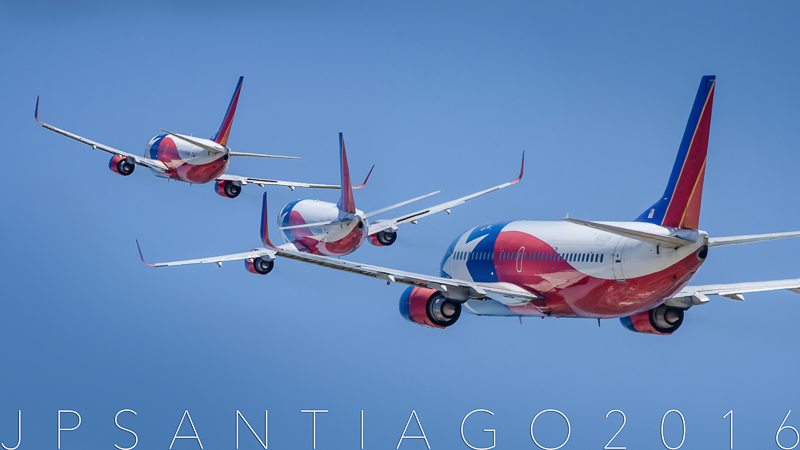
Multiple exposure photo I did to show the flight crew rocking Lone Star One’s wings on her final departure.
On the final climb out from Dallas Love Field, the flight crew capped off the departure by rocking Lone Star One’s wings. It was a fitting farewell for the matriarch and flagship of the Southwest fleet leaving home for the last time. But Lone Star One will return- this July, the Boeing 737-700 N931WN will be repainted as the new Lone Star One.
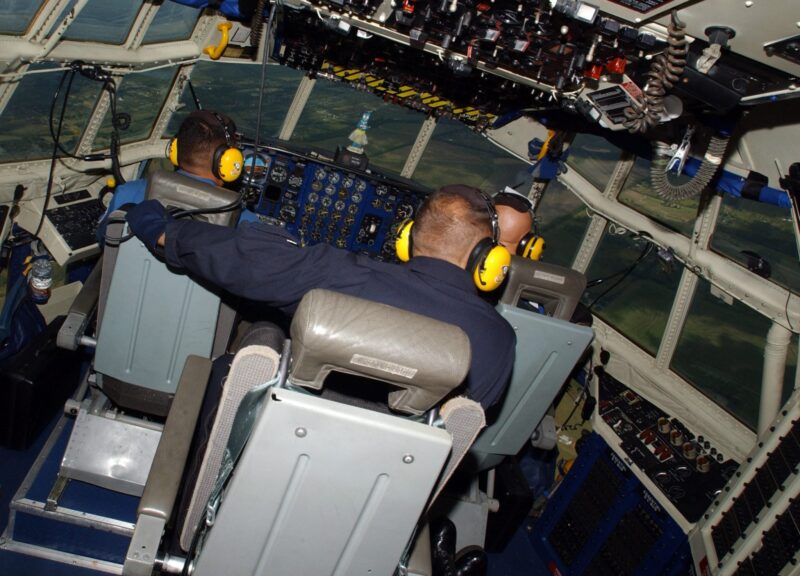
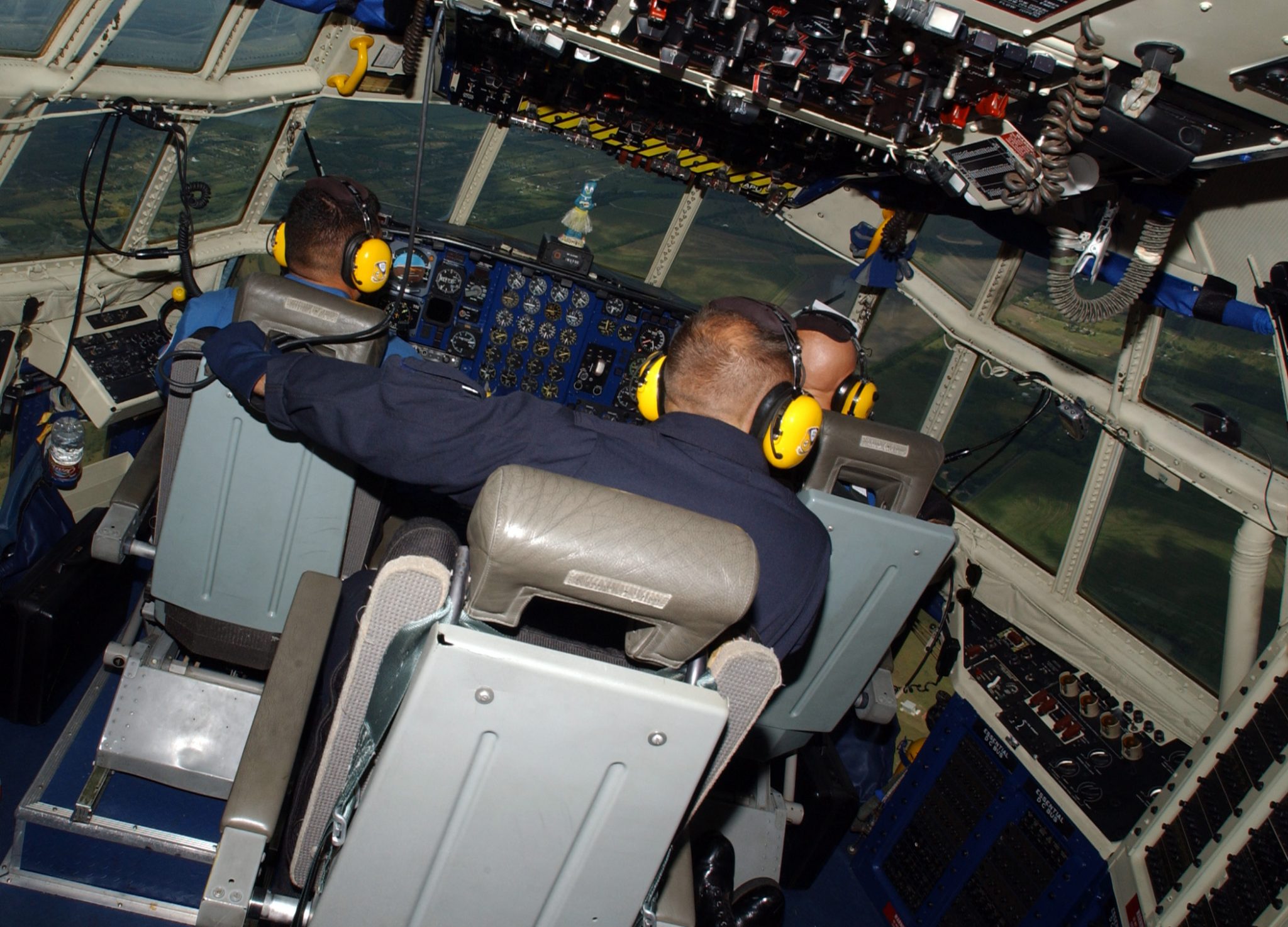
Houston, Texas (Sept. 24, 2004) Fat Albert, the Blue Angels’ C-130 Hercules transport aircraft, banks-in in preparation for final over Houston, Texas. Fat Albert, home based at Naval Air Station Pensacola, Fla., has been flying relief missions into Pensacola following the devastation of Hurricane Ivan. On this mission, Fat Albert ferried pilots and maintenance personnel from Pensacola based Training Air Wing Six (VT-6), to their evacuated aircraft in Houston, Texas. U.S. Navy photo by Photographer’s Mate 2nd Class Saul McSween (RELEASED)
Hey, hey, hey. The Blue Angels’ “Fat Albert,” the demonstration group’s support transport, puts on a solo show.
The Blue Angels flight demonstration team, made up of Navy and Marine pilots, have been performing since 1946. Here’s a “bet you didn’t know” fact about the Blue Angels – in addition to the F/A-18 Hornets flown for the precise maneuvers, there’s a C-130T Hercules that also performs.
Nicknamed “Fat Albert,” the C-130’s primary assignment is transporting spare parts, equipment and support personnel between performances. Flown by an all-Marine flight crew of three officers and five enlisted personnel, Fat Albert puts on a solo demonstration including low-level runs and breath-taking banking moves.
When it first started putting on demonstrations in 1975, the C-130 was used for Jet Assisted Take Offs. However, that was eliminated in 2009 because of a dwindling supply of rockets.
You can check out the cockpit video of Fat Albert in action at a recent air show and here’s a link to what it looked like from the ground.
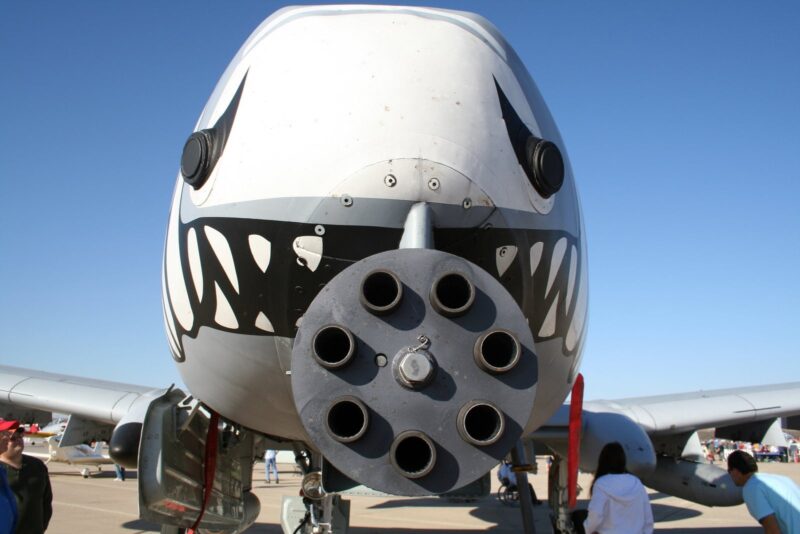
The A-10 is always a popular topic with the Avgeekery.com crowd. A few weeks ago, we wrote about the Warthog’s main weapon, the General Electric GAU 8 Avenger Gatling gun and its distinctive 2-second “brrrrrt.”
That gun is one of the most powerful aerial weapons in existence, capable of delivering 70 rounds of 30 mm ammo in one second. A two-second burst – the “brrrrrt” – can deliver a kill shot on a heavily-armored vehicle – just ask the Iraqui army.
While the pilots who fly the A-10 get to pull the trigger for those two-second bursts, the ground crew members who maintain the gun and load the two ammo cans play just as big a role.
And when those guys in the hangar and on the runway get word of how effective an A-10 was in supporting ground troops, they move around with a bit more zip in their doodah.
Experience this scary crash landing – the pilot and 17 skydiver passengers walked away.
The question that skydivers are often asked: “Why would you want to jump out of a perfectly good aircraft?”
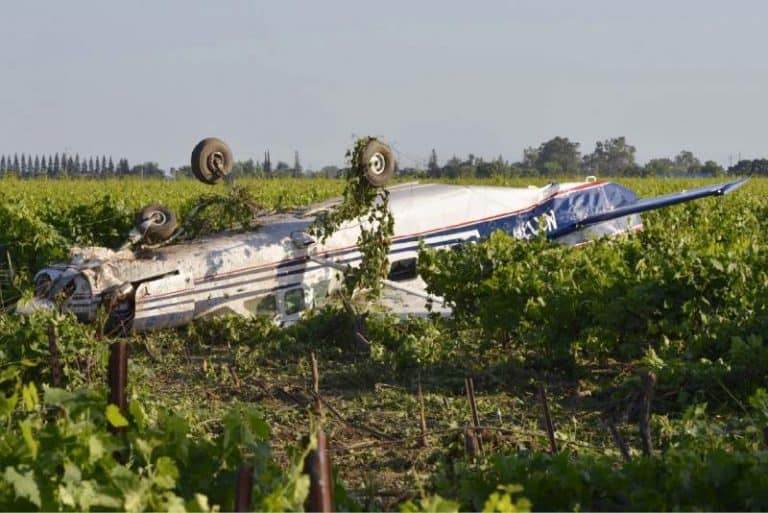
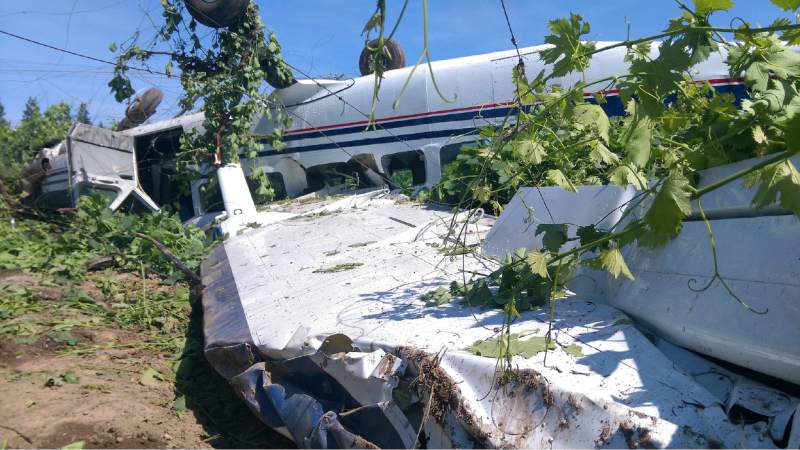
A group of parachutists never got to jump out of the airplane that was carrying them. When its engine quit soon after takeoff, its pilot was skilled enough to execute a crash landing that allowed everyone to survive (the pilot walked away with a bloody noise.
This incident occurred last Saturday in Lodi, Calif. The single-engine Cessna 208 from the Parachute Center Skydiving School was carrying 17 skydivers when the plane “experienced trouble shortly after taking off.”
The pilot attempted to return to the airport but had to settle for a crash landing in a vineyard. He was able to fly under power lines but the plane’s tail apparently clipped a pickup truck and that caused the plane to flip belly up upon landing. The pilot also was able to avoid a house that is located next to the vineyard.
When you watch the video, be advised there are some curse words uttered shortly after landing, so this is NSFW. But after expecting to skydive out of the plane, you can’t blame some of the passengers for some salty language after surviving a crash landing.
The Jumbo Jet re-imagined as a rolling art gallery.
We’ve written several times about 747s are being re-purposed for uses other than carrying passengers. Most recently, we reported on a story of a company who has converted a Jumbo Jet into the world’s largest firefighting aircraft.
But now we’ve come upon perhaps the most unique use for a 747 – even if it has nothing to do with flight.
The Big Imagination Foundation of Venice, Calif., is converting a 747-300 – or part of one – into “the biggest art car in the history of Burning Man.” That event which takes place in a temporary community built in Nevada’s Black Rock Desert is a perfect place for a Jumbo Jet converted into a rolling art exhibit.
Here are the three phases of the conversion (Phase One has been completed):
Phase One: Clean out, and cut off the tail and wings.
Phase Two: Reconstruct the upper deck and refinish the cockpit, cut the upper section of the fuselage, and prep the upper fuselage for transport.
Phase Three: Reconstruct the lower deck interior, install the decks over the wings and upper deck canopies, unbolt the wings/landing gear and prep for lower fuselage transport.
When completed, the fuselage will be 132-feet long, 24-feet wide, and 20-feet tall. The moving team will consist of a semi with 12-axle trailer, five highway patrol officers, two bucket trucks, two pilot vehicles, a transportation captain, and a documentary film crew.
The trip to Nevada for Burning Man, which runs from Aug. 28 through Sept. 5, should be a spectacle for the drivers sharing the road with half a 747 on wheels.
The Big Imagination Foundation is accepting donations to help fund the project. You can visit the website to donate and to learn more about it.
Climbers planning to scale Mt. Everest first have to get past landing at the world’s most dangerous airport.
Two months ago we published a week-long series on some of the world’s most dangerous landing strips (the links to those posts can be found in this roundup.)
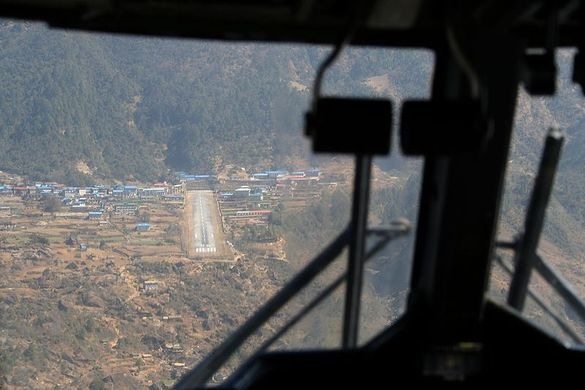
So what is considered the world’s scariest/dangerous airport? The strip of asphalt in Lukla, Nepal – which also happens to be the gateway to Mt. Everest, one of the world’s most challenging mountain climbs.
This “airport” is at an elevation of 9,100 feet. The tarmac is 65 feet wide by 1,500 feet long. At the southern end, there’s a 2,000-foot drop into a valley. At the opposite end, the runway ends in a stone wall and a hairpin turn. Pilots have to hit their mark when landing.
The runway has a gradient of 12 percent, sloping down toward the valley. That upward slope helps slow planes on landing to the north but creates even more excitement on takeoffs as planes are angling down – toward the valley – when they’re supposed to be heading up.
The video below of this Twin Otter of Tara Air shows a rare “go-around.” On final approach an aircraft has to be stable. That means that they are lined up with the centerline, at the correct airspeed and have a descent rate that is within tolerances. In any approach, a go-around is a challenging maneuver. At Lukla, a late go around could easily result in CFIT or Controlled Flight Into Terrain. In this video of an aborted landing at Lukla, the pilot chose to bank left. He veered off into the valley, below the horizon. He dropped off-camera (which led to a heart-in-the-throat feeling for viewers like us) until the plane reappears for a (successful) landing.
Trivia note: The official name of this landing strip is Tenzing-Hillary. In 2008, the airport was renamed for Sir Edmund Hillary, not the two time presidential candidate.In January 2008 the airport was renamed in honor of Sherpa Tenzing Norgay and Sir Edmund Hillary, the first people to reach the summit of Mount Everest in 1953. Their climbing adventure/accomplishment didn’t include landing at the airport, which had yet to be built.