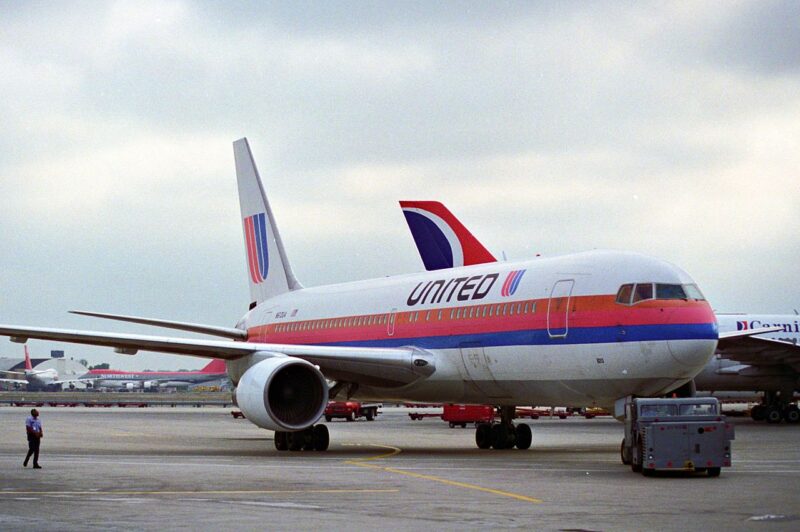
Throughout aviation history, countless impostors and scammers have forged fraudulent pilot licenses to get free flights, lounge access, and other privileges. But one man, Thomas Salme of Stockholm, Sweden, went as far as flying for nearly 15 years before getting caught.
So what happened with Salme’s tenure flying? Did he make any mistakes? Was his punishment harsh? Here’s the story of Thomas Salme, the fraud pilot who successfully flew without a license.
Salme’s Stockholm Roots
Thomas Henry Salme was born on 18 February 1969 in Jordbro, Sweden, near Stockholm. Salme pursued a career in flying because his father was an aviation enthusiast and photographer. Because of financial restrictions surrounding the family, Salme never had any formal pilot training but obtained a private pilot’s license for small planes after his mom died of cancer, and he received an inheritance.
The license he obtained later expired and would have never been good enough to fly a commercial jet. Undeterred, Salme got a job at Scandinavian Airlines (SAS) as a maintenance engineer. He built rapport with colleagues and convinced them to give him access to a Boeing 737 flight simulator at Stockholm Arlanda Airport (ARN).
Salme used the simulator in private for over 18 months. He logged up to 60 hours on it, studied technical manuals, and practiced flight procedures.
‘I’d train there for two or three hours at a time – at least 15 to 20 times over one and a half years,’ Salme recalled.
Salme’s Shortcut
In 1997, Salme photocopied a fraudulent pilot license with his picture and logos. The license, which was made of paper and wasn’t laminated, had a fake ID number. He had also used a false resumé and other paperwork to apply as a pilot in Europe. One of the airlines on his resumé was ‘Aladdin Airlines,’ which didn’t exist.
Salme got hired as a co-pilot for Air One in Italy. As a prerequisite for the job, Salme passed a simulator test in Dublin, impressing examiners despite his nerves. His first real flight, a domestic route to Naples with 148 passengers, was his first time piloting a commercial jet outside a simulator. Salme believed flying the real Boeing was easier than the simulator.
He was later promoted to captain in 1999 and flew with the low-cost Italian carrier until 2006. Reports suggest that Salme may have been fired after the airline found out he was a fraud pilot and that his license wasn’t real, but that is unconfirmed.
After working at Air One, he joined Corendon Airlines from Turkey (now Türkiye). He worked there for a year before being offered a pilot job at low-cost British airline Jet2.
Thomas Salme flew for Turkish carrier Corendon | Image: By Oyoyoy from Wikimedia Commons
Salme worked at Jet2 for only ten months before deciding to return to Corendon. Between the three airlines, Salme accumulated 10,000 hours in flight without valid commercial pilot credentials.
Salme appeared to be a very skillful pilot, having no accidents, and at one point, managed to land a jet with one working engine following a bird strike.
The Fun Stops for Salme
Swedish authorities later caught on to Salme’s sketchy flight past. On 2 March 2010, Salme was about to pilot a Boeing with 101 passengers out of Schiphol Airport (AMS) in Amsterdam, Netherlands, on the way to Ankara, Turkey. Authorities boarded the plane and escorted Salme right out of the cockpit. Salme then confessed that his license was forged.
The fraud pilot story made international headlines, and Salme refused to attend his hearing the following month due to the media attention he received. According to his defense attorney, his career flying was the only way forward for him financially in order to handle divorce and take care of his children and his ailing father.
Salme originally faced three months in jail and a large fine, but he ultimately served no jail time and was only hit with a penalty of $2,700 (€2,000). He would also be banned from flying for one year, but he was welcome to fly commercially again if he obtained a commercial license.
Thomas Salme, however, had no plans to fly again. He now works as a photographer in Milan, Italy. He later wrote a book called Confessions of a Fraud Pilot and was the subject of a documentary titled This is Your Captain Speaking.
When we talk about the heroes of World War II, we often think of the battles, the generals, the troops who stormed beaches and held the line.
But there’s another kind of hero—one whose legacy took decades to be fully recognized. One who soared thousands of feet above the front lines, ferrying bombers, training other pilots, and doing it all without fanfare or military status.
Shirley Slade was one of them.
A Different Kind of Battlefield
A class of WASP Pilots attend graduation ceremonies at Avenger Field in Texas | IMAGE: Public Domain
Born on 4 April 1921 in Chicago, Shirley Slade (later Shirley Slade Teer) grew up in a world where girls weren’t supposed to dream of flying planes—especially not military aircraft. But she did.
And when the United States entered World War II and faced a desperate shortage of pilots, Shirley didn’t hesitate.
Like more than 25,000 American women, she answered the call to fly. Only 1,830 were accepted into the Women Airforce Service Pilots (WASP) program, and just 1,074 completed the intense training, which lasted anywhere between 21 and 27 weeks.
Shirley was one of them.
She joined Class 43-5, training at Dodge City Army Airfield in Kansas, Harlingen Army Airfield in Texas, and Love Field in Dallas. She learned to fly some of the most challenging aircraft of the era, including the Bell P-39 Airacobra and the Martin B-26 Marauder—a bomber so dangerous it earned the nickname “Widowmaker.”
But Shirley wasn’t intimidated. In fact, she was one of only 25 women handpicked by WASP Director Jacqueline Cochran—at the request of General Henry “Hap” Arnold—to prove that the B-26, a plane many men refused to fly due to its safety record, could be flown safely. And prove it she did.
With grit, precision, and unwavering focus, she showed the world it could be done. After all, lives depended on it.
She proved it with grit, precision, and unwavering focus—because lives depended on it.
A Face for the Future
Shirley Slade appeared on the cover of LIFE Magazine’s 19 July 1943 issue | IMAGE: LIFE Magazine
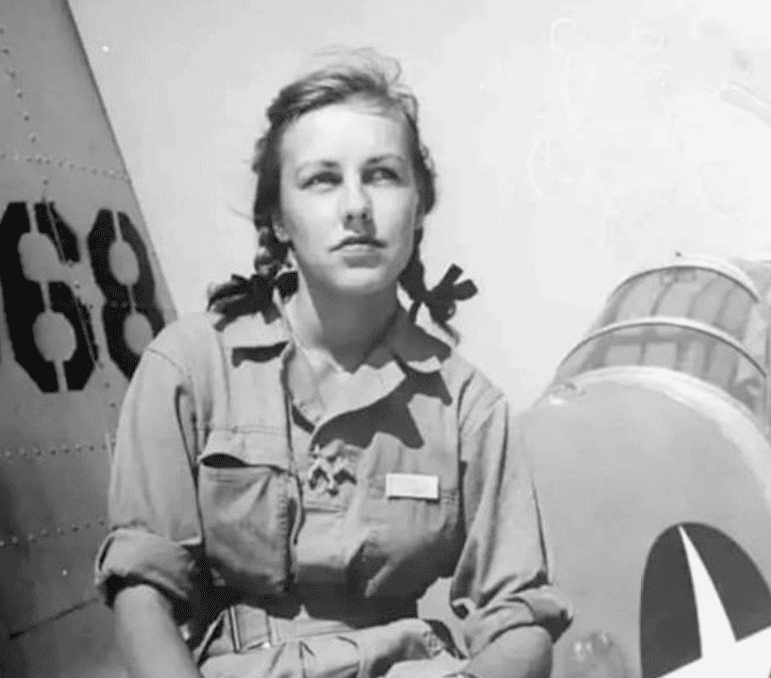
On 19 July 1943, Shirley’s story—and her face—reached the nation when she appeared on the cover of LIFE Magazine. In the now-iconic photo, she stands tall on the wing of a military aircraft, flight suit on, wind in her hair, eyes steady. Her expression is calm but determined. The cover headline: “Girl Pilots.” In small letters on the lower left-hand corner of the magazine cover, it said “Air Force Pilot.”
She wasn’t just representing herself. She represented every woman who had been told “no” and flew anyway.
That cover was a quiet revolution. It said: Look what women can do.
Flying with Purpose
WASPs on flight line at Laredo AAF, Texas, 22 January 1944. (U.S. Air Force photo)
The WASP program was as grueling as it was groundbreaking. Candidates had to be between 21 and 35 years old, over 5’4″, and high school graduates. They paid for their own training and travel. They studied meteorology, Morse code, military law, physics, navigation, and aircraft mechanics. They logged 560 hours of ground school and 210 hours of flight training. And then they went to work.
WASPs ferried more than 12,600 aircraft, often flying solo from factories to staging points across the country before the transatlantic hop. They logged over 60 million miles. They transported cargo, including parts for the atomic bomb. They towed targets for live anti-aircraft gun practice, flew simulated strafing missions, and tested brand-new aircraft.
They did everything male pilots did except fly in combat.
And they did it without rank, without benefits, and without recognition.
Invisible Sacrifice
WASPs prepare for a training flight | IMAGE: Public Domain
When the WASP program ended on 20 December 1944, 38 women had lost their lives in service. There were no military funerals. No Gold Stars. No veterans’ benefits for the families they left behind. Families weren’t even allowed to drape a flag over the coffins.
Shirley Slade and her fellow WASPs went home quietly, their uniforms packed away, their stories largely forgotten. Their contributions were classified and hidden from public view for decades—a shameful reminder of how women’s service was often dismissed or erased.
Recognition, at Last
It took more than 30 years for that to start to change.
In 1977, President Jimmy Carter signed legislation granting the WASPs veteran status. And in 2009—65 years after the program was shut down—Congress awarded the surviving WASPs the Congressional Gold Medal. Only about 200 were still alive to receive it.
Shirley wasn’t among them. She passed away on 26 April 2000, at age 79, in Texas. She never got to hear a nation say “thank you.”
But her legacy lives on.
More Than a Pilot
Shirley Slade wasn’t just a pilot. She was a pioneer. A patriot. A woman who saw a barrier and flew straight through it.
Her story—like so many others in the WASP program—isn’t just about planes or war. It’s about the quiet strength it takes to show up when no one expects you to. It’s about standing on the wing of a bomber and looking toward a future you’re helping shape. It’s about believing that courage has no gender.
A Tribute, and a Promise
WASP Shirley Slade | IMAGE: Public Domain
Today, when we honor the Armed Forces and the sacrifices so many have made for the freedoms we hold dear, we remember women like Shirley Slade, who flew not for glory or recognition but out of a deep love for their country. They showed us that strength comes in many forms and that heroes aren’t always the ones with medals.
Sometimes, they’re the ones whose names we’re only just beginning to learn.
We owe it to them and future generations to keep telling their stories.
Because Shirley Slade didn’t just help win a war. She helped open the skies.
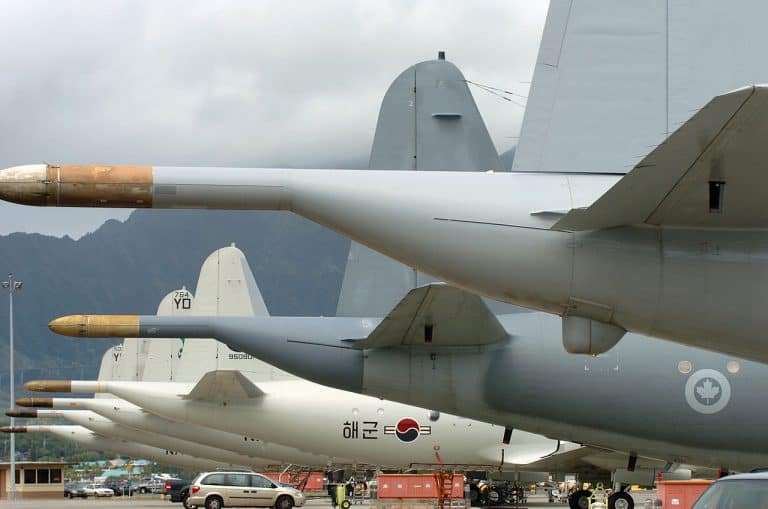
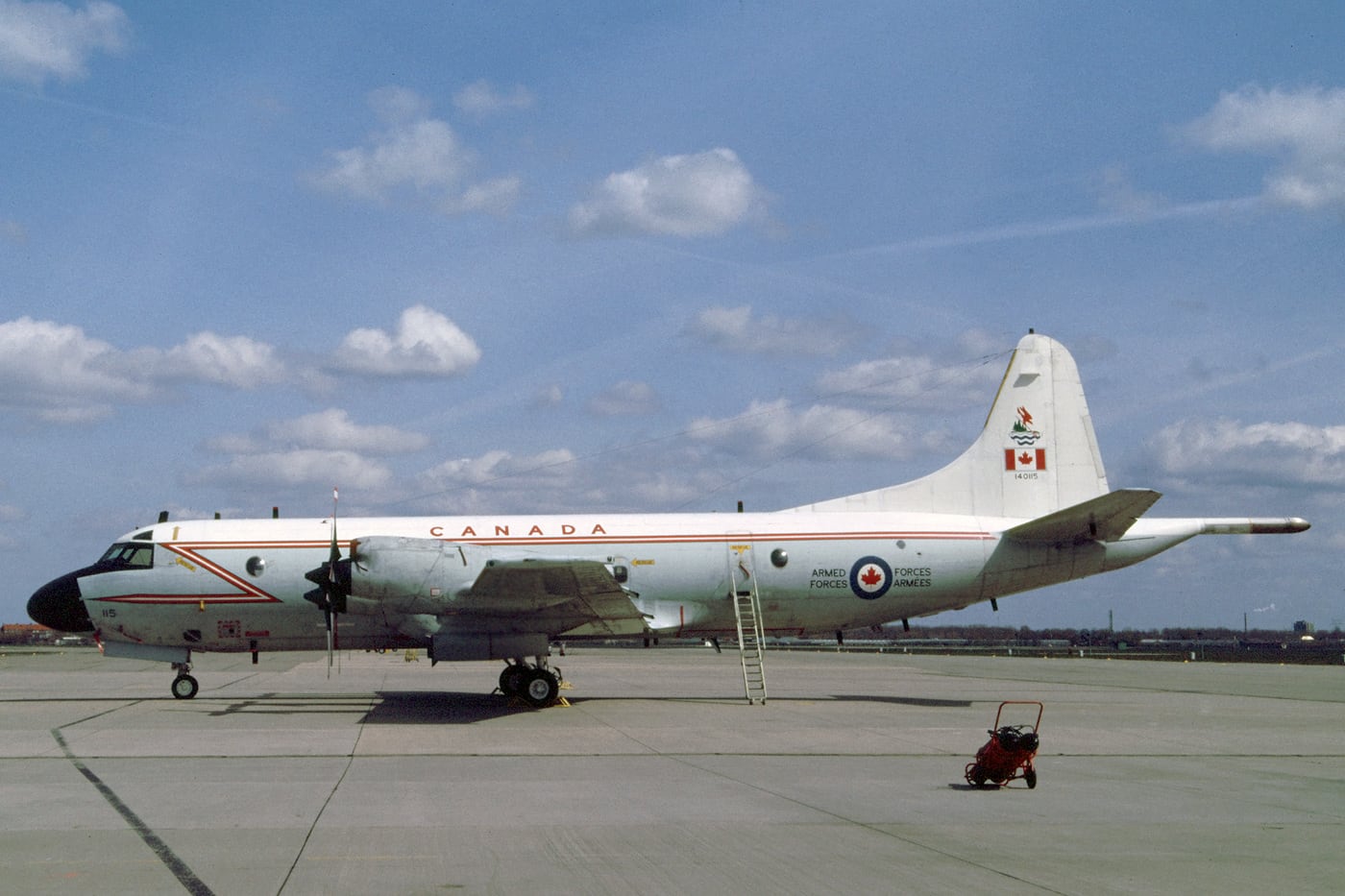
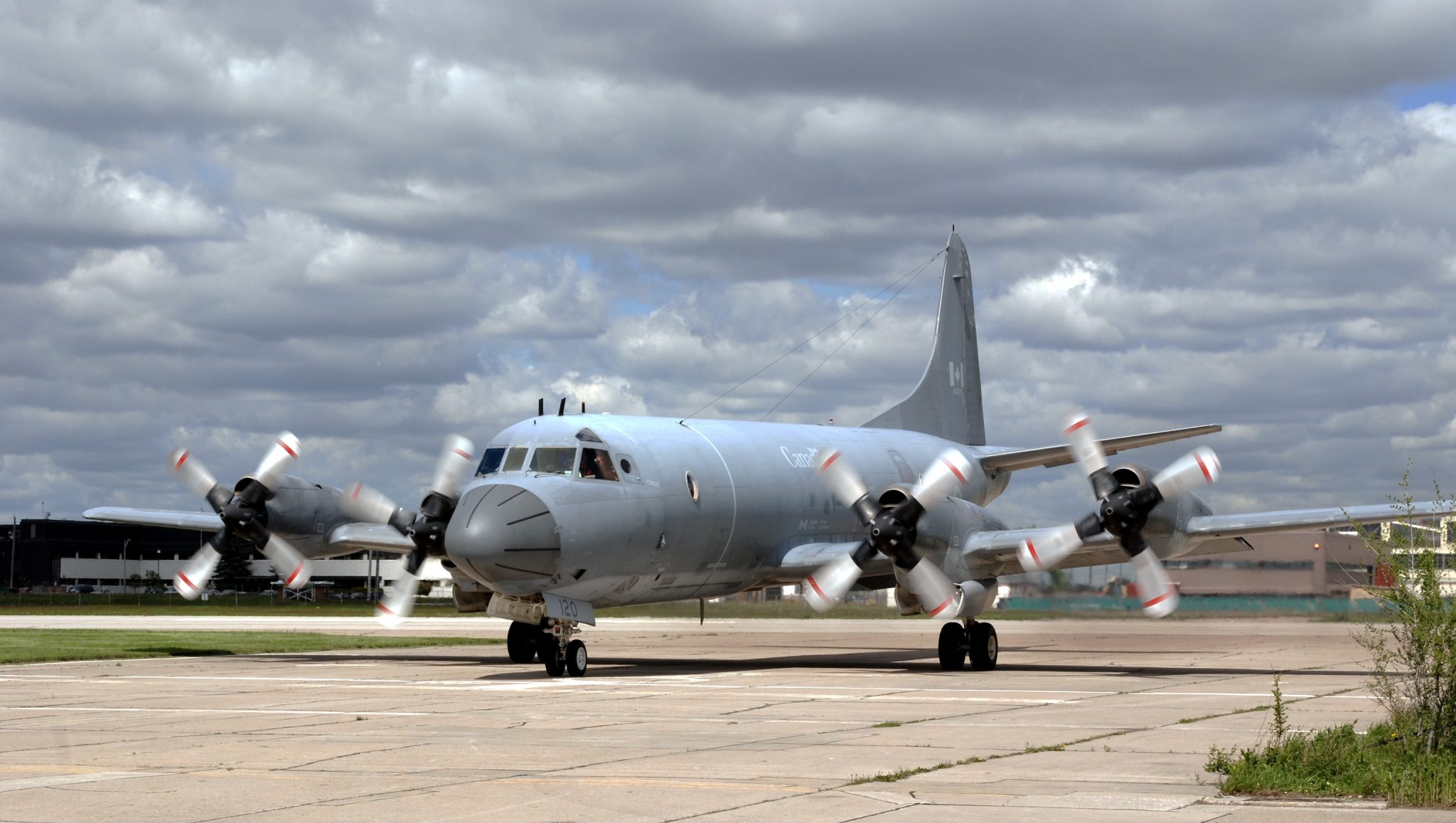
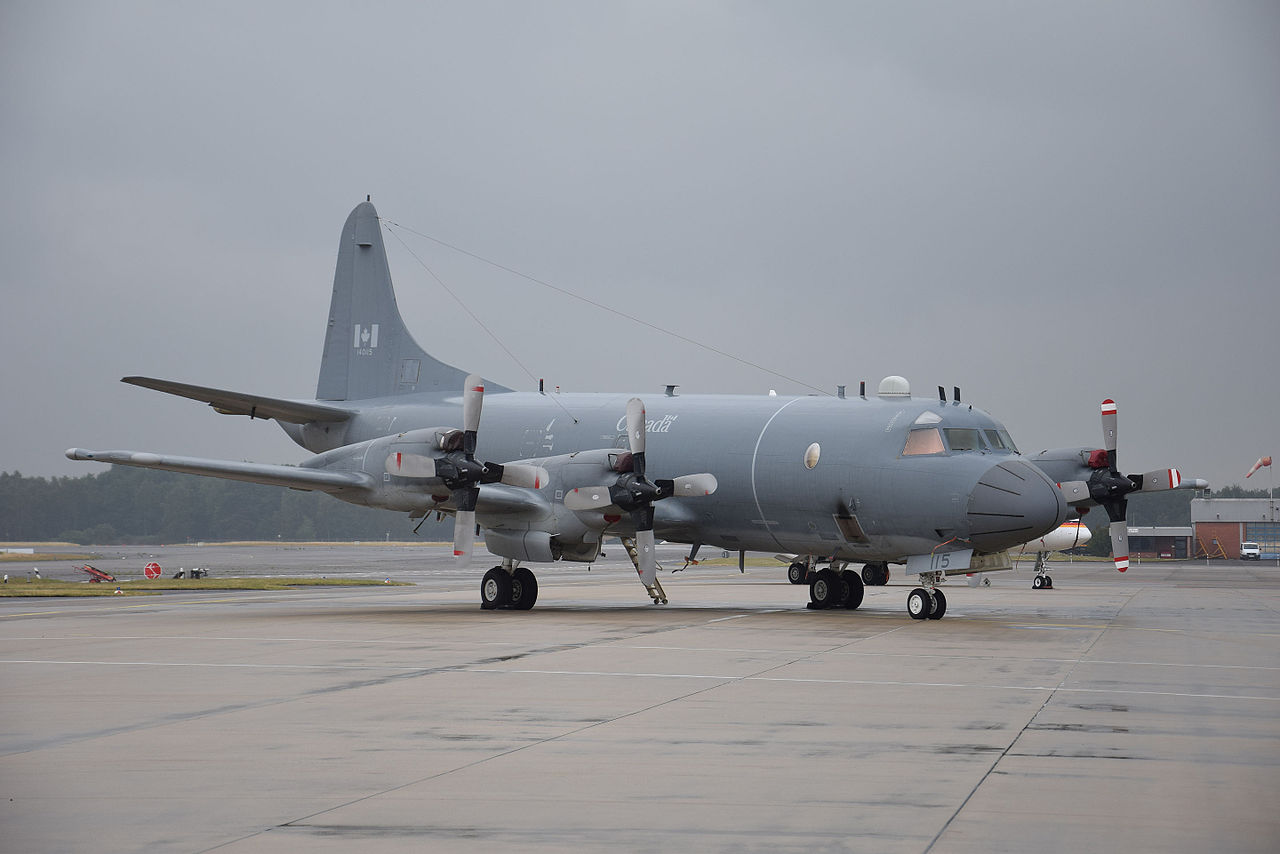
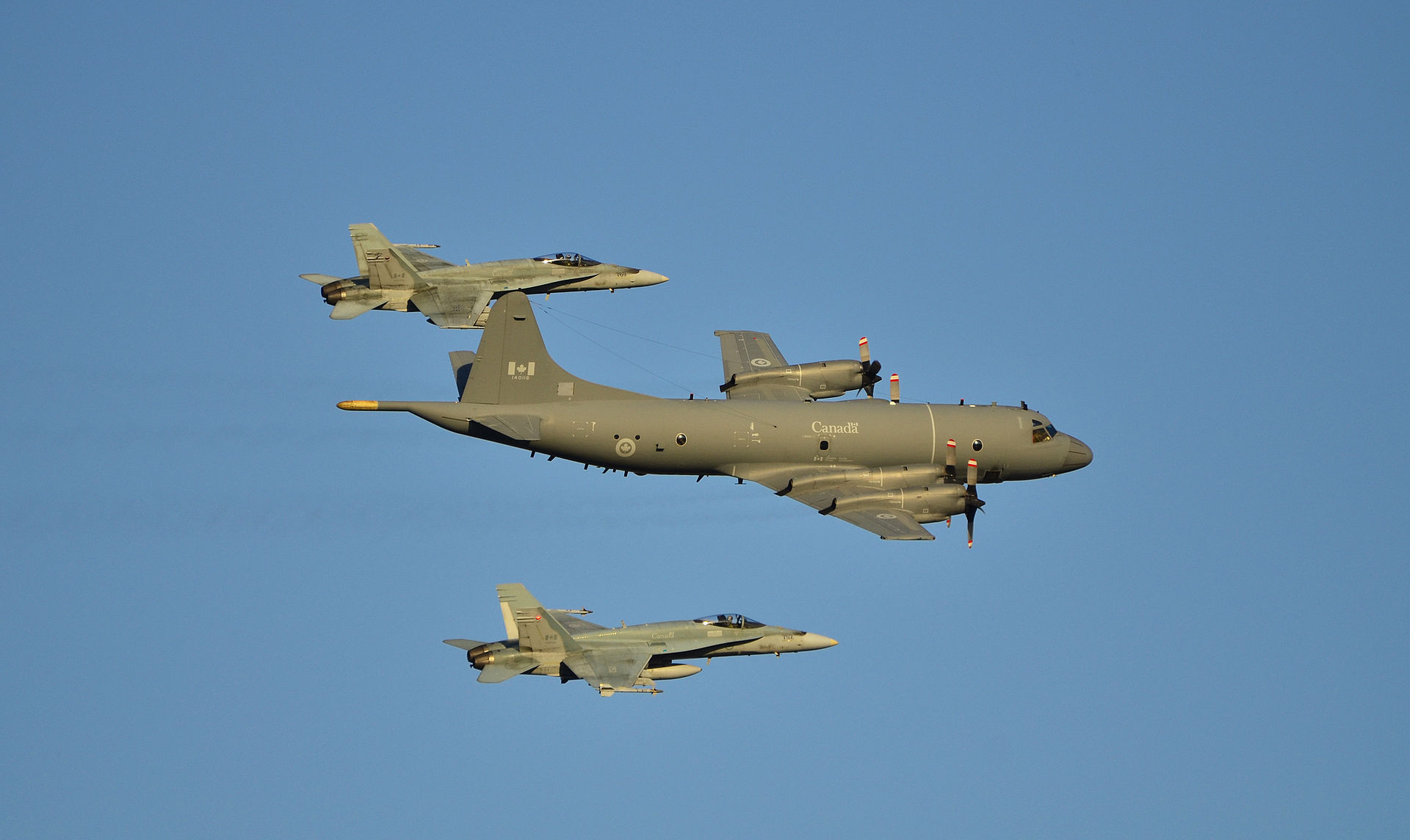
The CP-140 is the Canadian Do-It-All Version of the Lockheed P-3 Maritime Patrol Platform
On 22 March 1979, the prototype Lockheed CP-140 Aurora took to the skies for the first time. While the Aurora is built on Lockheed’s P-3 Orion airframe, the CP-140 has an entirely different sensor suite than the Orion.
Now operating in its 47th year, the CP-140 is the Royal Canadian Air Force’s (RCAF) primary platform for maritime and overland intelligence, surveillance, and reconnaissance (ISR), strike coordination, anti-surface warfare, and search and rescue (SAR) missions. The Aurora also combats illegal immigration, fishing, pollution, and drug trafficking in Canada.
Photo credit: Rob Schleiffert
A Multi-Mission Platform
As Canada’s primary anti-submarine warfare (ASW) platform, the CP-140 can also detect and destroy the latest generation of submarines with improved quieting. In combination, these capabilities enable the Aurora to detect, deter, and control illegal or hostile activity across Canada’s maritime approaches and remote regions. The CP-140 can also perform rescue work using its air-droppable survival pods.
Photo Credit: Ken Mist
Replacing a Local Legend
The Aurora became necessary when Canada needed a replacement for their aging fleet of Canadair CP-107 Argus anti-submarine warfare aircraft. Developed from the Bristol Britannia transport, the Argus was powered by Wright R-3350 radial engines. While a fine and immensely capable aircraft in its day, by the late 1970s, it was showing its age, and parts for the older aircraft systems were becoming increasingly difficult to obtain.
Photo Credit: Airwolfhound
Better Than the Sum of Its Black Boxes
The Canadians examined the Lockheed products of the day and selected the best assets from each. The obvious external resemblance to the P-3 Orion belies the important differences inside the Aurora. CP-140s utilize two of the sensor suites and processing systems used in the then-cutting-edge, but now-retired, carrier-based Lockheed S-3 Viking, also an ASW aircraft of some note.
Photo Credit: Korona Lacasse
Combining Sensors With a New Gadget
At the heart of the Aurora sensor suite is the digital processor. Essentially, it is an airborne computer capable of simultaneously processing and displaying inputs from the sea-search radar, forward-looking infrared (FLIR) imager, electronic support measures (ESM) emitter location system, and the tail-mounted magnetic anomaly detector (MAD), as well as other mission equipment. By comparison, each system on board the P-3 Orion is operated individually, and its data is displayed separately.
Photo Credit: Rob Schleiffert
Inter-Service Cooperation Up North
Canadian CP-140s not only perform ASW missions but also conduct long-range search and rescue and strategic intelligence and surveillance work for various Canadian government agencies, including the Royal Canadian Mounted Police (RCMP), Canadian Special Operations Forces Command (CSOFC), Canada Command, and Canadian Joint Operations Command (CJOC).
Photo Credit: Korona Lacasse
Those Globe-Trotting Canadians
Auroras have deployed to Naval Air Station (NAS) Adak in Alaska and NAS Kaneohe Bay in Hawaii. Foreign deployments have taken Auroras to Andoya Air Base in Norway, NAS Keflavik in Iceland, RAF Saint Mawgan in England, and RAF Kinloss in Scotland, as well as other even more exotic and out-of-the-way locales.
Photo Credit: Filterkaffe
Differing Kinds of Combat
Specific missions assigned to CP-140s have included counter-narcotic patrols in the Gulf of Mexico and the Pacific, maritime surveillance during Operation Sharp Guard (the blockade of Yugoslavia), Operation Sirius and Operation Active Endeavour (anti-terrorism patrols in the Mediterranean), Operation Apollo (the Canadian component of the war in Afghanistan), and maritime patrol missions in Libyan waters to assist with enforcement of the no-fly zones during Operation Odyssey Dawn and Operation Unified Protector.
Photo Credit: Antoine Letart
Keeping The Cutting Edge Sharp
For decades, Canada’s CP-140 Auroras have soldiered on—modernized repeatedly with new avionics, flight controls, and mission systems to keep pace with the times. But even the most steadfast sentinels must eventually stand down. After years of near-replacements and program delays, the Aurora’s long watch is finally ending. Canada has committed to Boeing’s P-8A Poseidon, with the first aircraft slated to arrive later in 2026 and full operational rollout by 2033.
Vought’s F7U Cutlass Was an Advanced Design But Was Stuck With the Underwhelming Powerplants of Its Day
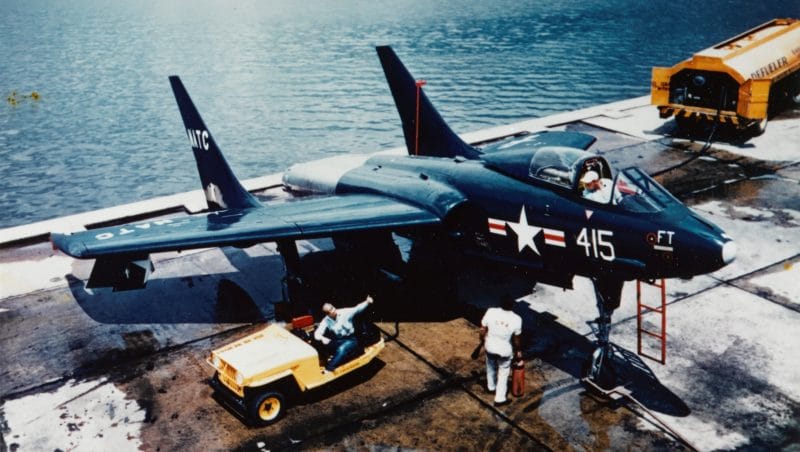
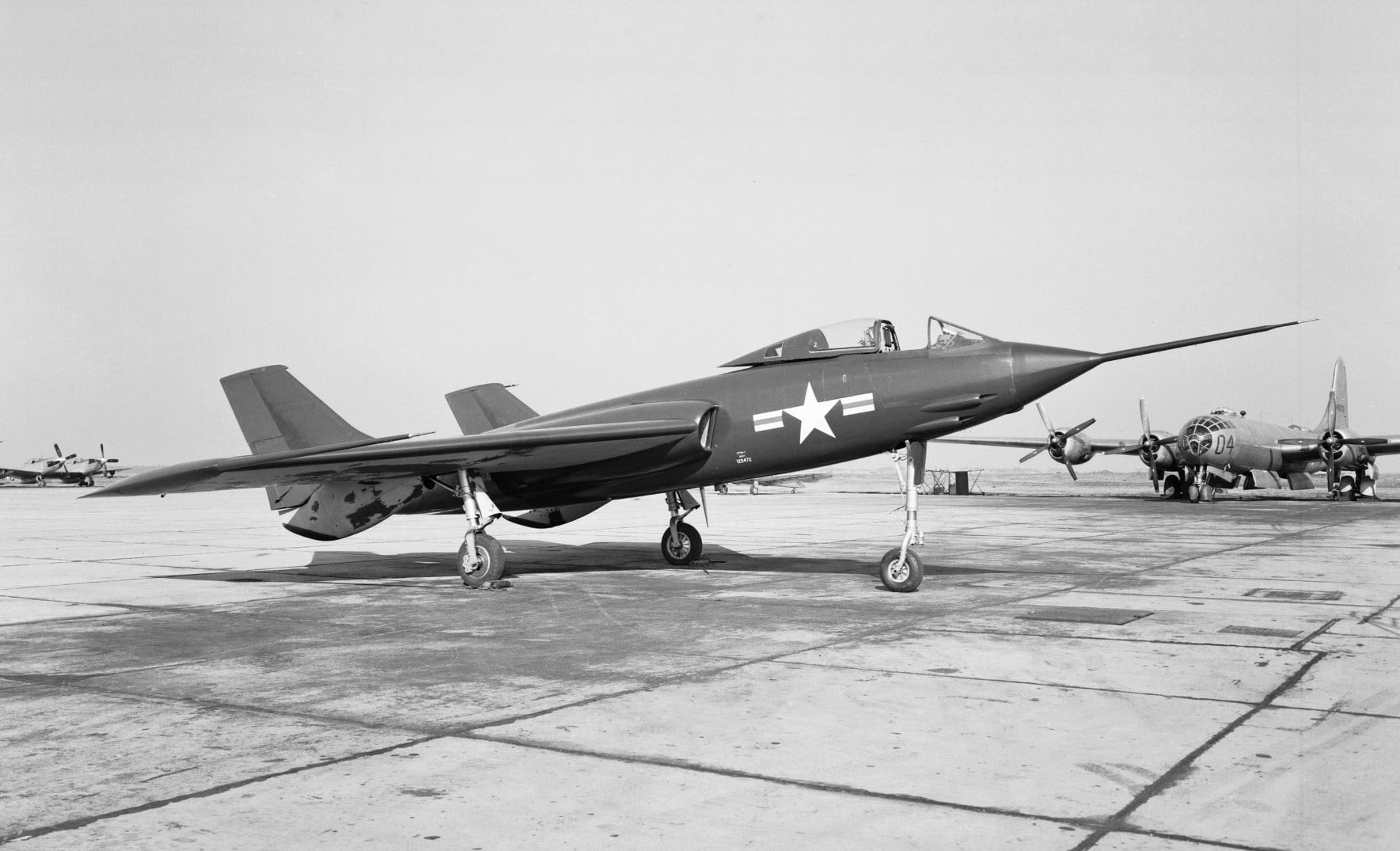
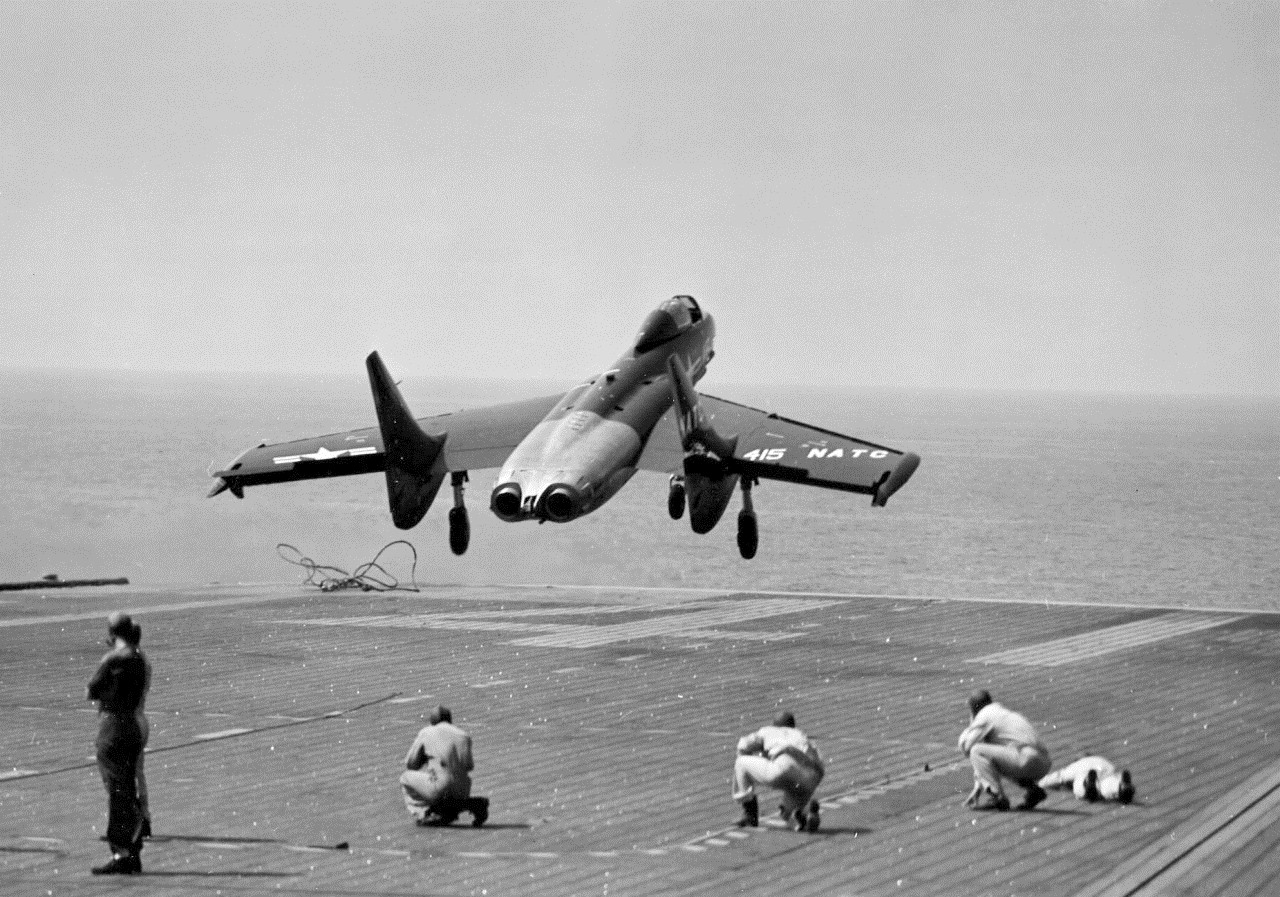
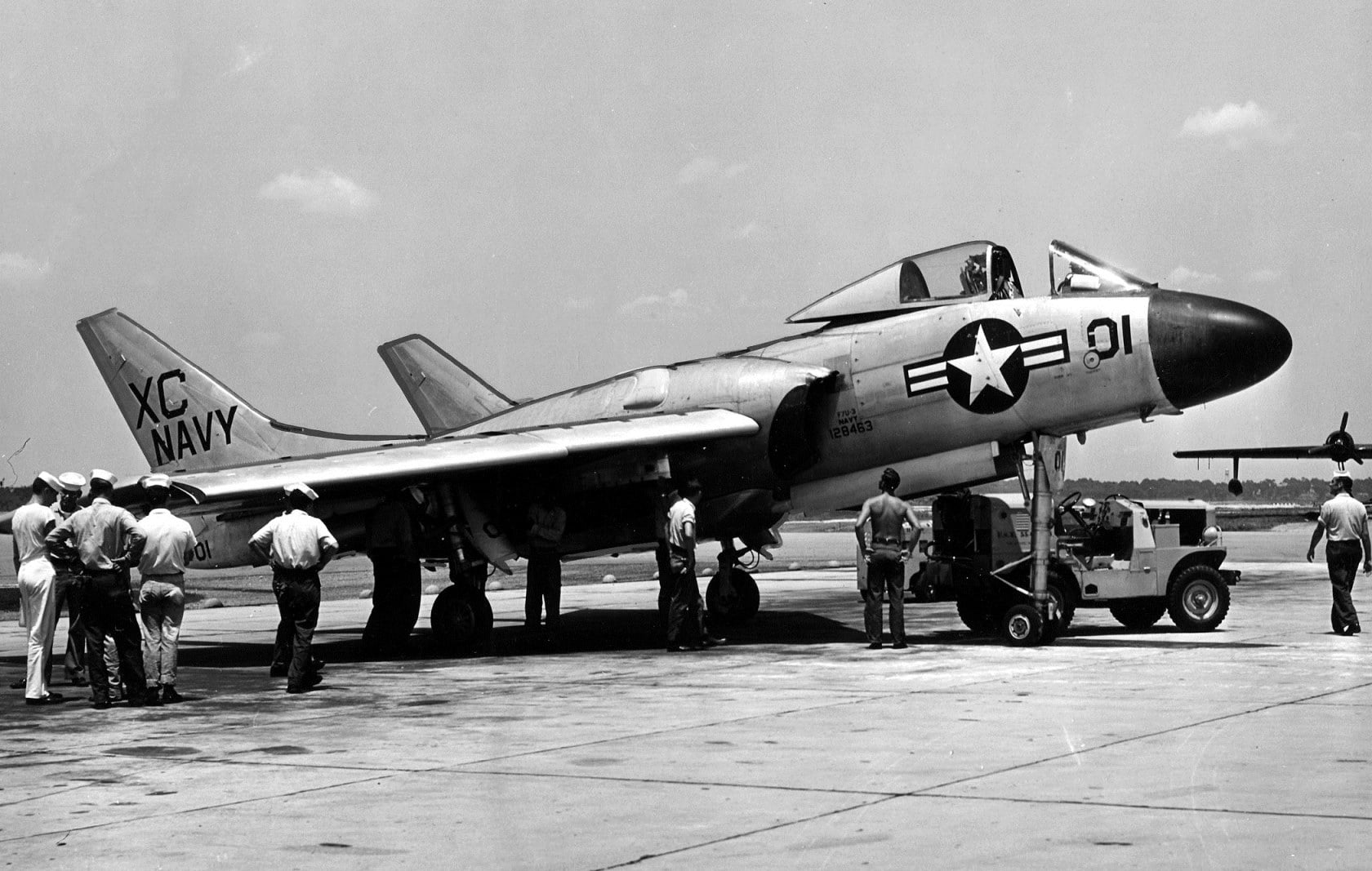
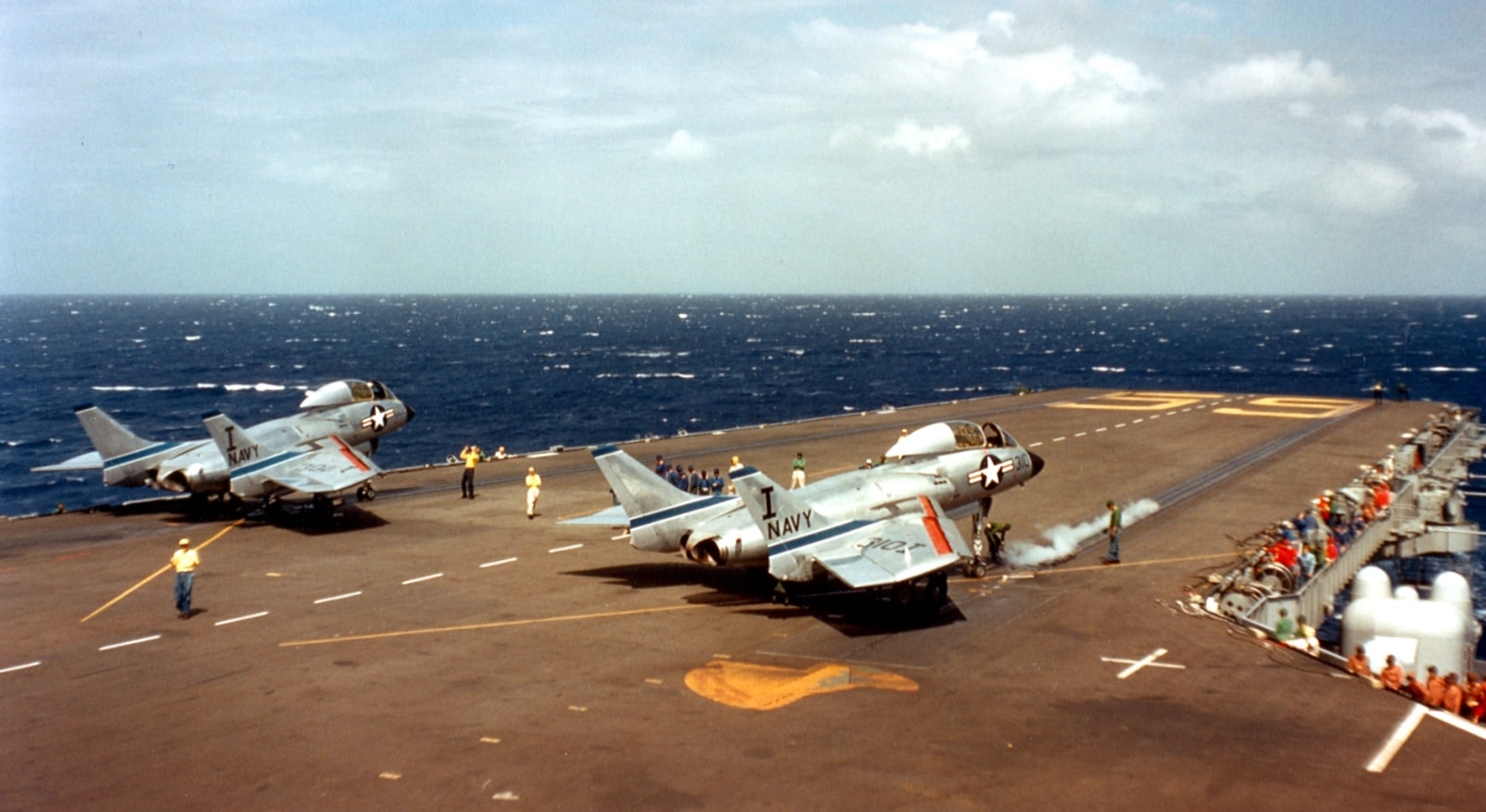
The Vought F7U Cutlass carrier-based jet fighter was one of the most unusual designs ever produced for the United States Navy (USN). Designed as the company’s entry in a 1945 carrier-based jet fighter design competition, the aircraft required the capability to fly at 600 miles per hour at 40,000 feet. It featured broad-chord, low aspect ratio, swept wings, with a wing-mounted tail fin on either side of a short fuselage, resulting in a semi-tailless twin-engine jet. The cockpit was positioned as far forward as possible to maximize pilot visibility.
Official US Navy photograph
Experience Should Have Helped
How did Vought arrive at such a novel design? German engineering. That’s right. Although at the time Vought denied any influence or even access to German aerodynamic engineers or their data, Messerschmitt and Arado engineers provided design inputs based on their experience with tailless German aircraft during the waning days of World War II.
The F7U Cutlass was the last design overseen by Vought’s Rex Beisel, who designed the first Navy-specific fighter aircraft (the Curtiss/Naval Aircraft Factory TS-1 in 1922) as well as the Vought F4U Corsair.
Official US Navy photograph
Nosebleed Section
High-pressure hydraulically actuated elevons (Vought dubbed them “ailevators”) were utilized for pitch and roll control. The wings had full span leading edge slats. The nose landing gear strut, easily the longest ever used on a Navy carrier-based aircraft, was both required for high angle of attack takeoffs and recoveries and sufficiently sturdy to accomplish its job.
However, support structures such as down-locks were not up to the task, and the high stresses of carrier operations caused nose gear failures, which also often caused spinal injuries to the pilots who were 14 feet up in the air when sitting on the deck.
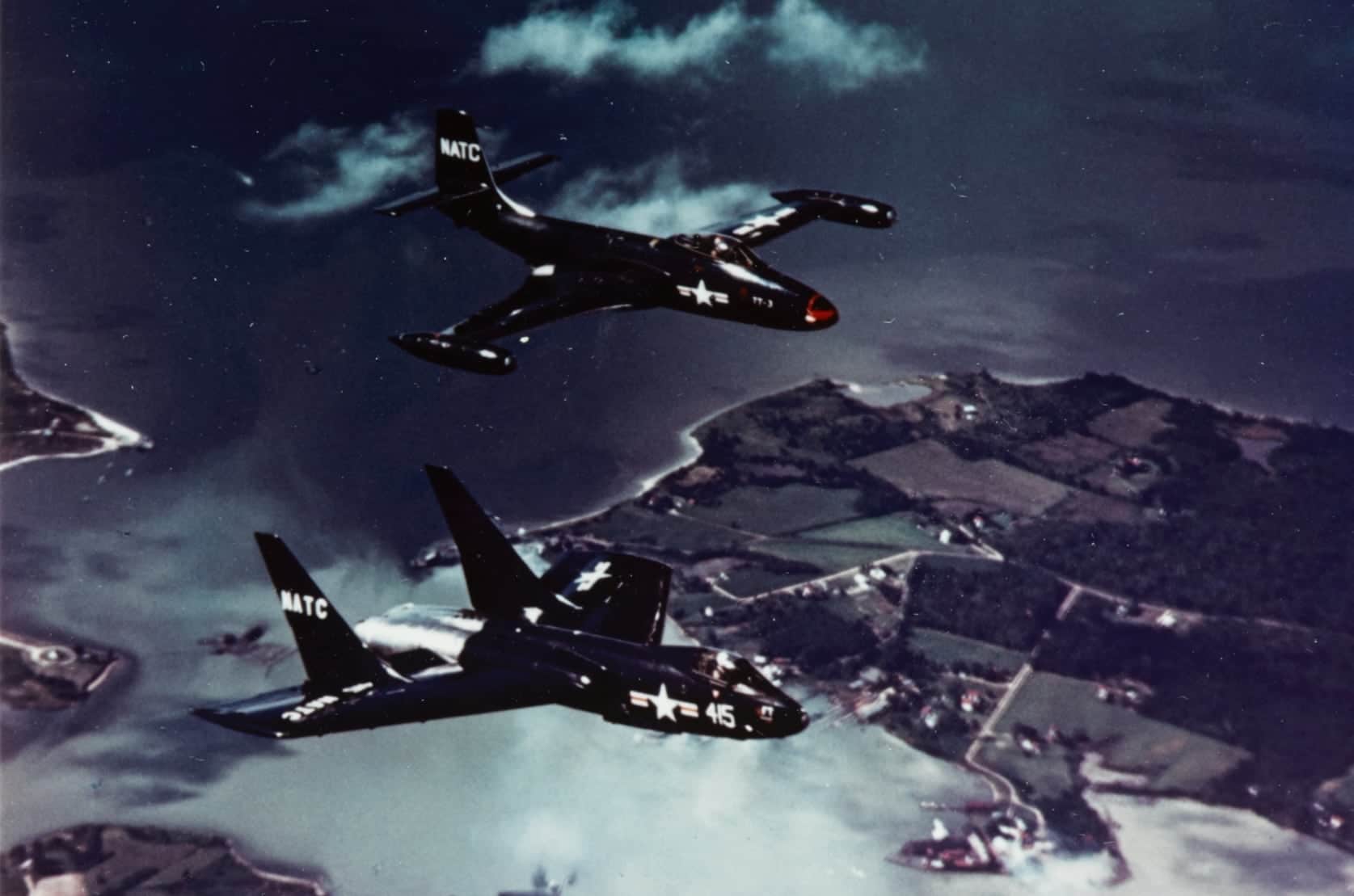
Vought F7U Cutlass flying with a McDonnell F2H Banshee. Official US Navy photograph
Early Power Deficiencies For F7U Cutlass
The Navy’s Bureau of Aeronautics (BuAer) ordered three XF7U prototypes in 1946. The first one flew for the first time from Naval Air Station (NAS) Patuxent River in Maryland on 29 September 1948 with Vought’s chief test pilot, J. Robert Baker, at the controls.
The specifications for the production F7U-1s were similar to those of the prototypes. However, further testing and development of the 19 Westinghouse J34-WE-32 turbojet-powered F7U-1s built by Vought resulted in the revised F7U-2 and the F7U-3 variants. Both would be equipped with more powerful engines.
Official US Navy photograph
A Better Airframe But Still Lacking Thrust
At least that was the plan. At the end of the day, the F7U-2 never got off the drafting board because of engine development problems. However, the F7U-3 would incorporate as many improvements identified during the F7U-1’s flight hours as possible, resulting in a longer and stronger airframe. The first 16 F7U-3s built by Vought had non-afterburning Allison J35-A-29 engines.
The remaining -3s, powered by Westinghouse J46-WE-8B afterburning turbojets, became the production standard. But that didn’t necessarily mean thrust the Cutlass pilots could trust.
Official US Navy photograph
Wicked Shimmies and Other Challenges
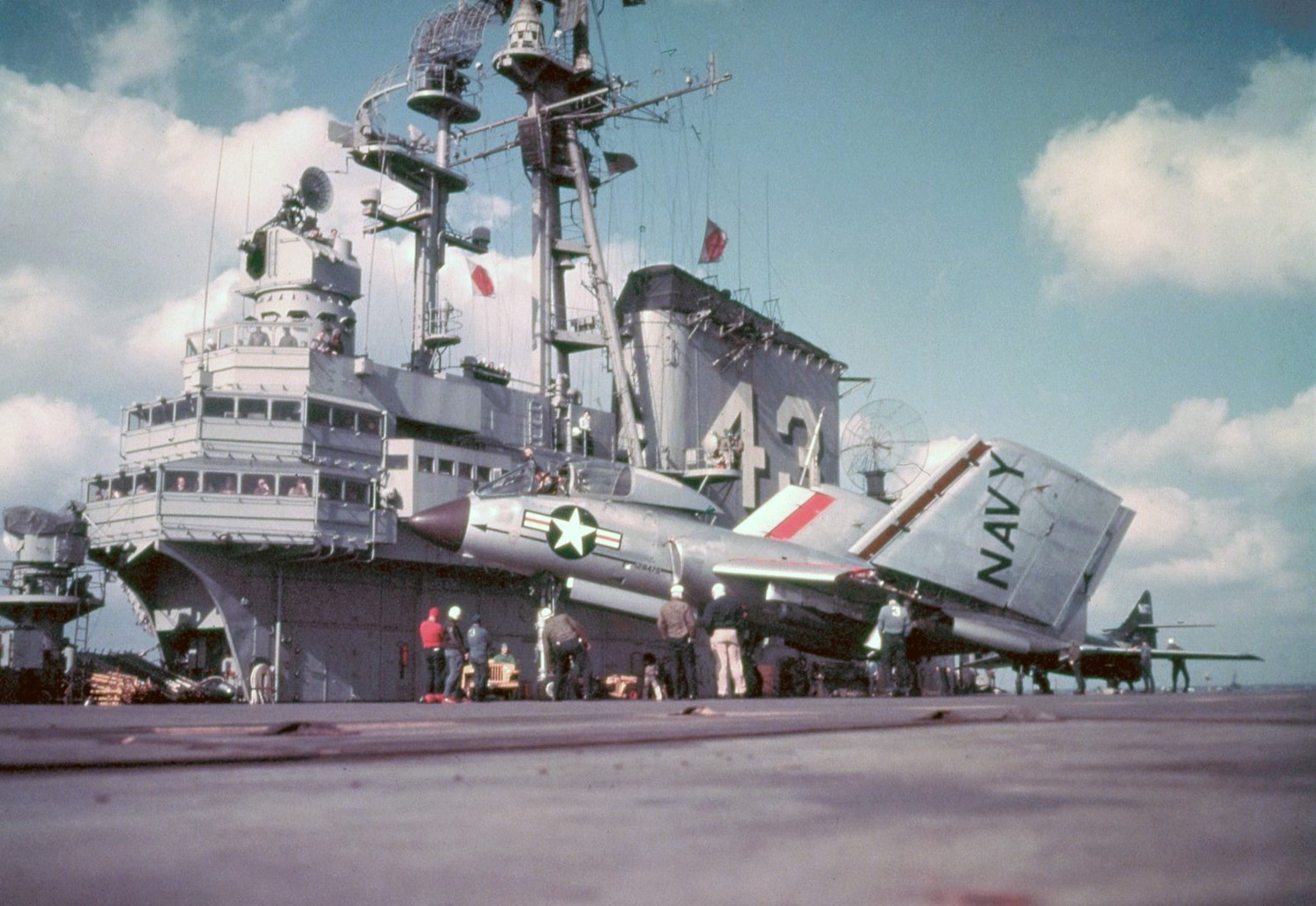
The F7U-3 Cutlass entered operational service with the US Navy with VA-66 Waldos (soon to become VF-81) in April of 1954. Eventually, 13 squadrons would be equipped with Cutlasses. But operational problems were many and varied. The F7Us were all underpowered. The high-pressure hydraulic system constantly leaked. Landing gear doors had a tendency to fall off the jet.
Takeoff and carrier approach performance were poor, and to make matters worse, the J35 engines had a tendency to flame out when flying in rain. There were “wicked shimmies”- unpredictable, crash-causing post-stall gyrations. The aircraft quickly picked up unflattering sobriquets such as “Gutless Cutlass”, “Ensign Eliminator”, and “Praying Mantis.”
Official US Navy photograph
For the rest of the Gutless F7U Cutlass saga, bang NEXT PAGE below
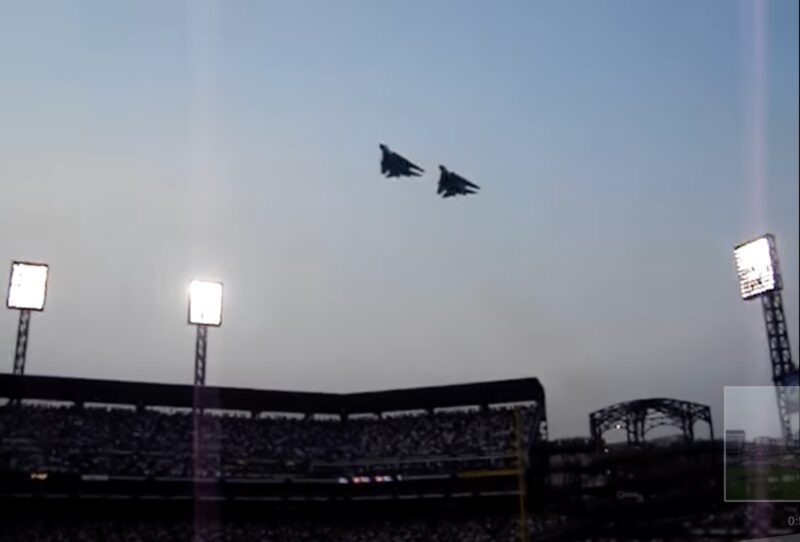
Shortly before the Navy retired the F-14 Tomcat in 2006, the venerable fighter jet made a final appearance in a final F-14 flyover of PNC Park in Pittsburgh, Pennsylvania.
Flyovers are always a tremendously unique event. The crowd is already amped up for the start of a game. The Star Spangled Banner plays and then it happens. Aircraft buzz the crowd as part of a grand finale. It’s about as American as it gets.
Flyovers at airshows and sporting events always wow the crowds
Today, there are many more rules about flyovers though. Most occur at least 1,000 feet AGL (above ground level). While every flyover is impressive, the ones today are noticeably more muted and less heart pounding as they are well above the crowds.
The Reaction To This F-14 Flyover Makes This Video Totally Worth It
The video took place back in 2006 at the Major League Baseball Home Run Derby, before many of these rules were in place and/or in force. In the video, you’ll see two F-14s roar past overhead at less than 500 feet.
The fan videoing the impromptu air show yells, “Those are -14s, dude! Tomcats! Swept-back!” He and the rest of the crowd saw something we will never again see in our lifetime. The F-14 Tomcat was retired shortly after the flyby.
Today, the only place to see an F-14 flyover is in Iran
In 2025, only Iran operates a small fleet of aging Tomcats. They keep the fleet flying by cannibalizing jets from their fleet purchased before the Iranian revolution in the late 1970s.
The concept of a flying submarine or a submersible aircraft sounds like something from science fiction or a James Bond Film. Regardless of its name, people have been thinking about this and working on designs for just such a vehicle for over 100 years.
First Designs Appeared More Than 100 Years Ago
Perhaps the first mention of a flying submarine came in 1918 when inventor Felix Longobardi applied for and received a patent for his “Combination Vehicle.” The text of his application stated, “This invention relates more particularly to a vehicle or apparatus which may be described generally as a submersible or submarine boat which is provided with means whereby it may run on the land and may also fly. The objects of this invention are to provide a vehicle or apparatus of the character indicated which is adapted to operate underwater, on land, or in the air and which will be comparatively simple in construction as well as durable and efficient in operation.”
Image from patent application for Combination Vehicle. | Image: https://patentimages.storage.googleapis.com/
This plan included specific details for components that would permit travel underwater, on the surface, and in the air. The design showed how the wings would extend out horizontally for flight and fold up when it would submerge. The concept was also a military design with portholes for guns on the sides of and on the deck for “anti-aircraft purposes.” There is no evidence that Longobardi ever built his vehicle, but more plans for something similar in concept came in 1920.
Plans for a Submersible Biplane
On 24 January 1920, the “Illustrated London News” published concept art for a submersible biplane. It may have come from the Royal Navy, although the newspaper only claimed it was “designed by a leading aircraft company.” The vehicle had the name “Tessaurian.” There were no written details, but drawings show telescopic wings that would retract when underwater, a periscope, and an inlet for water tanks for submerging. As with the Longobardi design, there were no reports of anyone building an actual vehicle based on the design. It wasn’t long before there were more designs for a similar craft.
Artist’s drawing of Tessaurian submersible biplane. | Image: Public Domain
Flying Underwater Boat
In 1934, Boris Petrovich Ushakov, a student at the Naval Engineering Institute in Russia, drew up a design for a flying underwater boat. It featured three engines, the ability to flood its fuselage, submerge it, and wait underwater for enemy ships, and torpedoes. Ushakov submitted his design to senior officials, but after showing some initial interest, they felt the vehicle would be too heavy and did not proceed with it.
Drawing of Ushakov flying underwater boat. | Image: https://www.flitetest.com/
During the following decades, nations tried ways to combine aircraft with submarines. Before the Second World War, the U.K. tried adding a small hangar to a class 2 submarine. This only caused the sub to sink. The French then considered carrying foldable planes inside submarines. Then, in the 1950s, the United States studied building an AN1 Submarine that could carry eight fighters inside its hull. While none of these ideas was for a true submersible aircraft, they showed continued interest in combining aircraft and submarines.
Cold War Designs Appear
The Cold War created a need for new, more effective military vehicles and weapons. In 1962, Donald Reid, an engineer at aircraft manufacturer North American Aviation, produced a design for a flying submarine. He built his Reid Flying Submarine (RFS-1) from parts salvaged from other aircraft in his spare time.
Reid Flying Submarine (RFS-1) | Image: Public Domain
It worked as a float plane and was submersible to ten to twelve feet during testing. It did get into the air, but due to its weight, it could only make short hops of about 75 feet. The RFS-1 had a 65-horsepower engine for flying and a one-horsepower electric motor when underwater.
It was also no simple matter to transition from aircraft to submarine. The pilot had to remove the propeller and install a rubber cover over the engine to keep it dry. The submarine was also not pressurized or sealed underwater; the pilot had to use a scuba tank to breathe. While the RFS-1 proved that such a design was feasible, it did not perform very well underwater or in the air. Eventually, the Navy decided not to fund it after 1965.
First Truly Feasible Design
This was not the only US Navy interest in developing a flying submarine, and in 1964, it awarded a development contract to the Convair aircraft company. The Navy’s criteria for the design were that it have a two-man crew, a single turbojet engine for takeoffs, and twin turbofans for cruising. It also had to be sealable for undersea operations. The Convair submersible seaplane was also to have a Cold War mission of attacking Soviet shipping.
Drawing with details on Convair Sub-Plane. | Image: British boys’ Eagle magazine
Convair built several scale models, and the Navy began water and wind tunnel testing. Convair reported that their design worked. In the end, however, the project did not make it past the testing stage when Congress decided not to fund it any longer and canceled it.
DARPA Expresses Interest in Flying Submarine
The most recent attempt to develop a submersible aircraft came in 2008 when the Defense Advanced Research Projects Agency (DARPA) requested a vehicle that could fly and travel underwater. DARPA’s requirements were that it have an in-flight range of at least 400 miles and an underwater range of at least 12 miles.
Its basic purpose would be to carry SEALS or other special operations troops to a location where they would perform a mission. The SEALS would leave the vehicle and go ashore to conduct their mission. While the SEALS would be gone, the vehicle would have to remain submerged for up to 72 hours without refueling. After bringing the SEALS back on board, the vehicle could exit the area underwater and then through the air.
U.S. Navy design diagram for both design variants for submersible aircraft. | Image: Sandboxx
In 2010, the Navy began its own study for a flying submarine, and the Navy Special Warfare Center and Office of Naval Research began it with DARPA’s original requirements. The study initially determined that a blended wing would be the best design for the vehicle.
U.S. Navy Produces Two Design Variants for Carrying SEALs
The Navy produced two design variants for it. Both had two pilots and carried six SEALS and their gear. In both designs, the cockpit would be sealed and pressurized, and the special operators would be exposed to the water and breathe from the vehicle’s air system. The two variants were similar in size and weight. The first one had a 92-foot wingspan and weighed 37,000 pounds. The second variant had a 109-foot wingspan and weighed 39,000 pounds.
After testing scale models of both versions, the Navy concluded that both were feasible and could be produced using existing technology and materials. As far as the public knows, the program ended with these two variants because the Navy has not mentioned anything further about them. However, the Navy has never officially canceled the project either, so the flying submarines or submersible aircraft may still be undergoing testing or even in use today.
The Brooklyn Dodgers were the first Major League Baseball (MLB) team to own their own plane for team travel, marking a major milestone in both baseball and aviation history. This move earned them the distinction of being the first MLB team airplane owners, ushering in a new era of sports travel.
But the honor of being the first team to fly to a game belongs to the Cincinnati Reds. On 8 June 1934, 19 Reds players boarded two American Airlines–chartered Ford Tri-Motors, while six teammates chose to travel by train. Reds General Manager Larry McPhail believed flying would give the team more time to rest between games.
Soon after, teams like the New York Yankees began chartering planes more frequently throughout the season. But it was the Dodgers who took the next leap by acquiring their own aircraft, becoming the first true MLB team airplane operators.
Fly Me Out to the Ball Game
In the 1940s, trains were the primary method of transportation for teams. However, Brooklyn Dodgers President Branch Rickey had his own Beechcraft, which seated five. Rickey had a business partner named Bud Holman, who worked at Eastern Airlines from Vero Beach, Florida. The two would fly between New York and Florida in the Beechcraft.
In 1948, the Dodgers were considered an elite team. However, they had 84 wins and 70 losses, a 10-win setback from the previous year, and lost the National League pennant to the 91-win Boston Braves. There was no playoff tournament at the time, and the American and National League leaders met at the World Series.
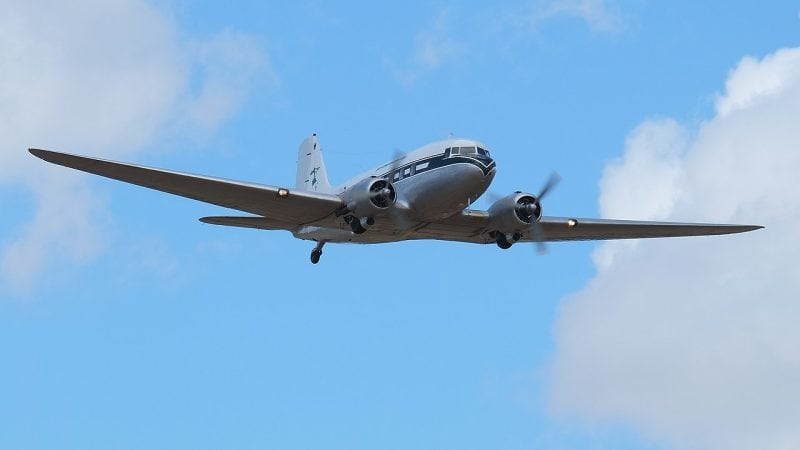
Brooklyn Dodgers Owner Walter O’Malley became interested in purchasing a plane for the team. He met with Holman about the possibility of buying a plane. Holman offered O’Malley a used Douglas DC-3 for free that O’Malley claimed he ‘won in a crap game.’ O’Malley quickly accepted the deal, only having to pay for new engines for the aircraft.
Thus, the DC-3 became the very first MLB team airplane in history.
The ‘Bump’ Brooklyn Needed
The Brooklyn Dodgers’ Douglas DC-3, acquired from Eastern. It was the first MLB team airplane in aviation history. | IMAGE: Museum of Flying
The Dodgers’ DC-3 had 20 seats, so with a 40-player roster, each trip required two flights. Despite the logistical challenge, this MLB team airplane strategy paid off. The team saw more wins and greater flexibility in scheduling—even if they didn’t always clinch the pennant.
In 1949, they won 97 games and lost to the New York Yankees in the World Series. The following year, the Dodgers won 89 games, two shy of winning the National League pennant. In 1951, the Dodgers tied the New York Giants for the best record but lost in a best-of-three series to advance to the World Series. 1952 saw the Dodgers return to the World Series with 86 wins but came up short to the Yankees in seven games.
During this time, the Dodgers employed several former Eastern Airlines pilots to fly the team.
In 1953, however, Holman’s son, Harry, also known as ‘Bump,’ graduated from Florida Southern College. Bump became the Dodgers’ chief pilot at the age of 21. As a teenager, Bump was flying crop dusters and later co-piloted during commercial flights at 18.
Bump went on to fly the Dodgers for 11 seasons, in which they won the World Series in 1955, 1959, and 1963.
Brooklyn Dodgers’ Convair 440 | IMAGE: San Diego Air & Space Museum
The Dodgers also upgraded their plane to a Convair 440 in 1957.
O’Malley would become good friends with Eastern Airlines president and World War I pilot Eddie Rickenbacker. Rickenbacker ordered the 440 as part of a 20-plane bundle for the airline to save money on the plane. Rickenbacker then sold the 440 to the Dodgers for only $700,000.
The Dodgers moved to Los Angeles the following year.
The Holmans After Baseball
In 1964, Bud Holman passed away from a heart attack. The tragedy prompted Bump to leave the Dodgers to take over his father’s business ventures. The Dodgers won an additional championship the following year.
Bump would later become a Quiet Birdmen member, a Seacoast Bank director, and the CEO of Sun Aviation. On 17 January 2021, he passed away under hospice care in Vero Beach at the age of 89.
JetZero is developing a new blended wing aircraft suitable for passenger, military, and cargo missions. The project has attracted support from government agencies and civilian airlines. While this new design has great potential and advantages over typical aircraft, JetZero is learning that it must overcome several key disadvantages before beginning production.
JetZero Blended Wing Aircraft to Have Some Similarities to Current Aircraft
The JetZero Z4 Will Have Standard Pratt & Whitney Engines. | Image: JetZero
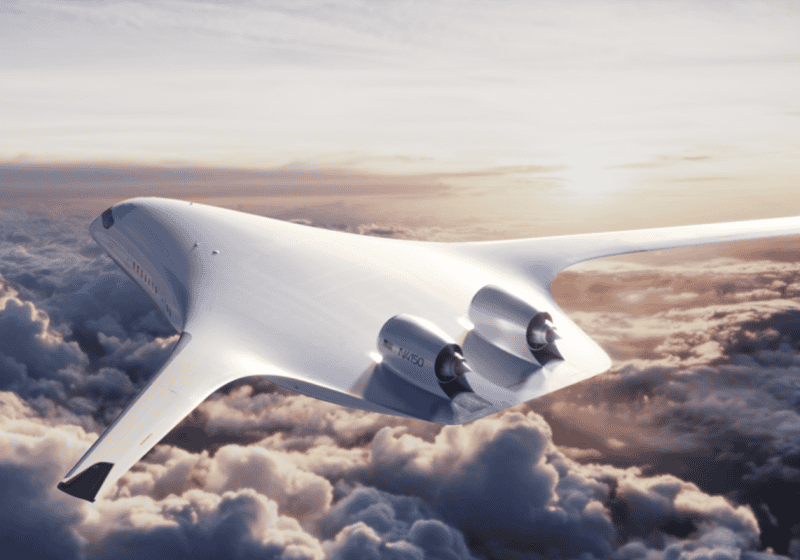
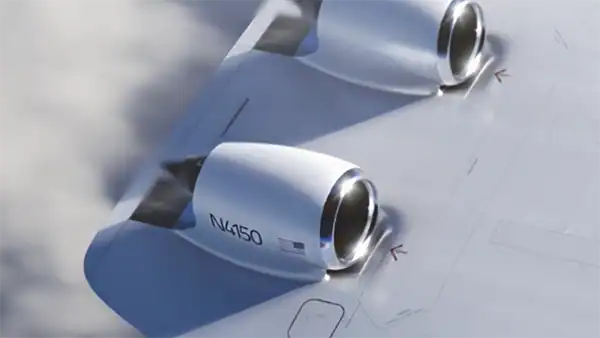
JetZero has designed its new blended wing aircraft, the Z4, to carry 250 passengers, similar to the capacity of the Boeing 757. In some ways, it will be quite similar to aircraft flying today. The Z4 can use conventional jet fuel and does not require new engine technologies. The current plans are to power the aircraft with Pratt & Whitney PW2040 engines from the same engine family used in the 757 and the US Air Force C-17 Globemaster.
The Z4 Blended Wing Aircraft Fuselage Will Have Less Drag and More Lift Than Current Designs. | Image: JetZero
Better Fuel Efficiency Due to Less Drag and More Lift
The shape of the Z4 fuselage is probably the main difference between the aircraft flying today. As the entire fuselage forms a wing, the aircraft creates less drag and has more lift from the entire wingspan. This feature leads to its most important advantage: better fuel efficiency.
JetZero estimates its blended wing design will result in as much as 50% less fuel use per passenger mile than conventional jets of similar size. For example, a Z4 flight from New York to Palma de Mallorca, Spain, would use 45% less fuel than aircraft currently flying that route.
JetZero Also Expecting Less Emissions From Blended Wing Design
Besides the Z4’s fuel savings, the JetZero blended wing design produces fewer emissions. Part of this is from being more efficient, but they also plan for it to use sustainable aviation fuel (SAF). SAF is manufactured from sustainable feedstocks like used cooking oil, animal waste fat, and solid waste such as packaging materials, paper, textiles, and food scraps. It can also come from forestry scraps like waste wood and energy crops like algae and fast-growing plants.
Both United and Delta Are Interested in SAF and Reaching Net-Zero Emission Levels. | Image: JetZero
British Petroleum (BP) is working on SAF. They report that it can be blended 50-50 with other jet fuels and that aircraft require no modifications for commercial use. Some key advantages of using SAF include lowering carbon emissions, reducing particulate emissions by about 90%, and practically eliminating sulfur emissions.
Due to higher production costs, SAF is more expensive than regular fuels. However, several airlines, like United and Delta, aim to become more efficient and achieve net-zero emissions and are willing to move to SAF anyway. While the Z4 can fly with regular fuels, its overall efficiency will improve even more with SAF.
The JetZero blended wing aircraft has attracted strong interest from United and Delta. On 24 April 2025, United announced that it is investing in JetZero and plans to buy 200 Z4s. The deal will require JetZero to reach several development goals, including flying a full-scale demonstration model in 2027.
New Aircraft Must Fit Into Existing Airport Infrastructure
United also wants to ensure that the Z4 blended wing aircraft will fit into existing infrastructure like runways, taxiways, and passenger bridges. JetZero has mentioned this, but has not provided any specific details to confirm it.
Delta also has big plans for the Z4. On 05 March 2025, it announced a partnership with JetZero.
“Working with JetZero to realize an entirely new airframe and experience for customers and employees is bold and important work to advance the airline industry’s fuel-saving initiatives and innovation goals,” said Amelia DeLuca, Delta’s Chief Sustainability Officer.
With its Engines on Top of the Wing, The JetZero Blended Wing Aircraft Will be Quieter Than Current Passenger Jets. | Image: JetZero
Another advantage of the Z4 design is that it will be quieter than conventional passenger jets. JetZero’s design has the engines mounted above the wings, which they expect will result in less noise.
A Better Passenger Experience
The company also expects the Z4 to provide a different but better customer experience. The most noticeable difference will be that longer rows will extend across the winged fuselage instead of the several narrow columns from front to back on typical tube-shaped designs. The aircraft might have 15 to 20 rows across the cabin. This layout will allow for larger seats, more dedicated overhead space for belongings, and even a wider main door, making embarkation and debarkation easier.
The Z4 Will Have Wider Seats and More Space For Personal Belongings. | Image: JetZero
Pressurization Biggest Hurdle For JetZero
Despite these advantages, JetZero faces several serious obstacles in developing its blended wing aircraft. The most challenging of these involves pressurization. On a typical passenger jet, the pressure is evenly distributed throughout the length and consistent width of the fuselage.
With its irregular interior shape, a blended wing aircraft finds it more challenging to distribute and maintain equal pressure in the cabin. JetZero states it will overcome this with new composite materials.
Patents May Indicate JetZero Solved Pressure Concerns
It also claims it has intellectual property that addresses the pressurization issue but has not provided any details. This possible solution might include several patents it recently received, one for a mold for aircraft components and another for carbon fiber materials and manufacturing processes.
JetZero has several other engineering challenges to overcome. These include issues with low-speed handling on takeoffs and landings and working with an overall more complex design.
US Air Force Makes Big Investment in JetZero Blended Wing Aircraft.
The hope is that the Z4 blended wing aircraft will not be limited to commercial travel. In 2023, the US Air Force invested $235 million in the aircraft. Besides the obvious fuel efficiency, the service also cited the potential for the design to be used for tanker and cargo missions.
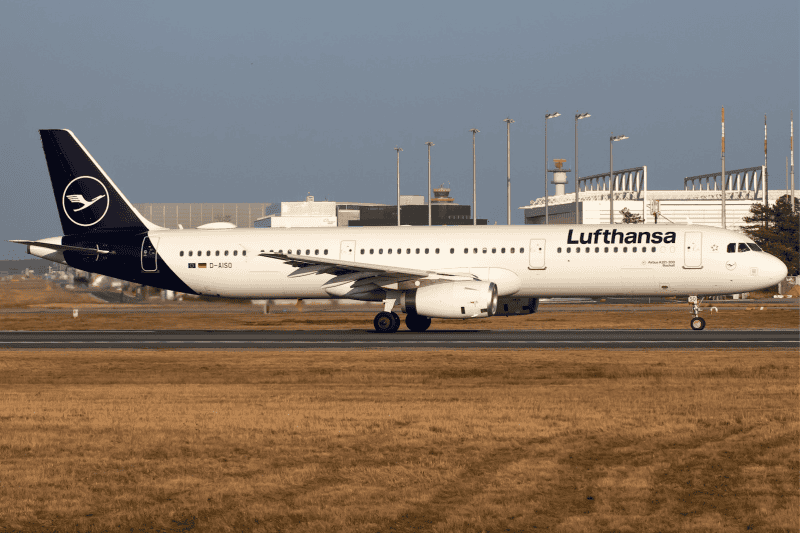
On 17 February 2024, a Lufthansa Airbus A321 bound from Frankfurt, Germany, to Seville, Spain, was briefly left without a conscious pilot at the controls after the first officer (FO) became incapacitated and the captain was locked out of the cockpit during a routine lavatory break.
For roughly 10 minutes, 199 passengers and six crew members were aboard an aircraft being flown solely by automation.
Though resolved without injury or incident, the episode raises red flags within the aviation community. It draws uncomfortable parallels to the Germanwings Flight 9525 tragedy in 2015 and reignites the debate surrounding cockpit security protocols and single-pilot operation (SPO) proposals.
Although this incident occurred more than a year ago, information about it was not released publicly until May 2025.
The 2024 Lufthansa Incident: Autopilot in Command
A Lufthansa Airbus A321 on short final at FRA | IMAGE: By Raimund Stehmann – https://commons.wikimedia.org/w/index.php?curid=28500020
On a routine early afternoon flight from Frankfurt (FRA) to Seville (SVQ), a Lufthansa Airbus A321-231, operating with the callsign LH77X, was cruising with the autopilot engaged when the 43-year-old captain stepped out for a restroom break, leaving the 38-year-old FO at the controls.
Approximately 30 minutes from landing, the FO suffered a sudden medical emergency and fainted while alone in the cockpit, leaving the aircraft without a pilot at the controls. The captain, locked out due to post-9/11 cockpit security measures, attempted to re-enter using the standard door code, which triggers a chime for the other pilot to unlock the door manually. After five unsuccessful attempts and a failed effort by a flight attendant to contact the FO via the onboard telephone, the captain resorted to an emergency override code.
Just as the door was about to open automatically, the FO, despite being ill, managed to unlock it from inside. Once the captain regained entry to the cockpit, it was evident that his FO was experiencing a debilitating medical emergency. According to an investigation by Spain’s Civil Aviation Accident and Incident Investigation Commission (Comisión de Investigación de Accidentes e Incidentes de Aviación Civil, CIAIAC), the FO was “pale, sweating, and moving strangely.”
The captain immediately summoned help from the flight crew, who were able to locate a doctor on board to administer care to the FO. The captain then chose to divert to the nearest suitable airport, which in this case was Adolfo Suárez Madrid–Barajas Airport (MAD), about 88 nautical miles southwest of their location. Once on the ground in Madrid, the FO was met by a waiting ambulance and received medical attention.
Aerial view of Adolfo Suárez Madrid International Airport, Madrid (Spain) | IMAGE: By Michiel1972 – Own work, CC BY-SA 3.0, https://commons.wikimedia.org/w/index.php?curid=14644813
According to the investigation, the FO experienced a “sudden and severe incapacitation [that] was the symptom of a neurological condition that had not been detected either by the affected person himself or in the previous aeronautical medical examinations.” Although the FO survived, his medical certificate was suspended as a precaution until it was determined what caused the emergency.
Stabilized by its autopilot, the A321 flew without incident at FL350 during the emergency. The CIAIAC report noted that the co-pilot’s unintentional inputs on the controls did not disrupt the autopilot’s operation, averting a potential catastrophe. Nevertheless, for 10 minutes, the flight was without an able pilot in command, posing an unacceptable risk by industry standards.
Eerie Parallels Between the Lufthansa Incident and Germanwings Flight 9525
Airbus A320 (D-AIPX) of Germanwings on final approach at Barcelona Airport. This aircraft crashed on 24 March 2015 in the French Alps as Germanwings Flight 9525 | IMAGE: SEBASTIEN MORTIER, CC BY-SA 2.0 , via Wikimedia Commons
The Lufthansa incident is uncomfortably reminiscent of the Germanwings Flight 9525 crash on 24 March 2015. In that tragedy, FO Andreas Lubitz deliberately locked the captain, Patrick Sondenheimer, out of the cockpit after the latter left for a break.
Lubitz, who had a history of untreated mental health issues, including suicidal tendencies, set the Airbus A320’s autopilot to descend to 100 feet, intentionally crashing the plane into the French Alps and killing all 150 people on board.
That tragedy, also involving a Lufthansa Group carrier, prompted a wave of procedural changes across global aviation, including cockpit access reforms and temporary two-person cockpit mandates in Europe.
The Lufthansa incident from 2024 may have had no malicious intent, but the mechanical factors–the locked-out captain, unresponsive FO, and reliance on autopilot–closely mirror conditions that preceded the Germanwings disaster.
The contrast in outcomes does little to ease the implications: both events exposed a common point of vulnerability that continues to exist nearly a decade later. Further, both events expose the inherent risk of even temporary single-pilot scenarios.
Cockpit Security: A Double-Edged Sword
IMAGE: ALPA
The reinforced cockpit doors central to both incidents were mandated after the 11 September 2001 terrorist attacks to prevent unauthorized access. Today, they are ICAO-standard across most jurisdictions.
These doors, typically bulletproof with time-delayed emergency override features, are designed to prevent unlawful interference. However, as seen in both incidents, they can inadvertently obstruct legitimate reentry during critical situations.
The emergency access system requires several seconds before unlocking, during which a conscious pilot inside the cockpit may override and block the entry. This safeguard worked against Captain Sondenheimer in 2015 and nearly delayed intervention in 2024. In the Lufthansa case, the FO was too incapacitated to block entry, which may have averted a far worse outcome.
The “Two-in-the-Cockpit” Debate Resurfaces
An image highlighting the “Safety Starts with 2” media campaign | IMAGE: safetystartswith2.com
Following the Germanwings incident, Lufthansa and other European carriers briefly implemented a two-person cockpit rule, requiring a cabin crew member to enter when one pilot steps out. This rule ensures no pilot is left alone, mitigating risks from medical emergencies or intentional acts.
In the US, the Federal Aviation Administration (FAA) has enforced such a policy since the 9/11 attacks. However, the European Aviation Safety Agency (EASA) repealed it in 2017, citing inconclusive evidence of its effectiveness and increased complexity in operations. Lufthansa discontinued the requirement, which was in line with EASA’s guidance. The absence of a second person in the cockpit in the Lufthansa incident is therefore legally compliant, but operationally questionable.
Given the circumstances, renewed scrutiny of the two-person rule is likely. Posts from industry figures, including CNN aviation correspondent Richard Quest, have reignited debate about Lufthansa’s policy decisions and the value of redundancy in flight deck staffing.
A @lufthansa plane flew 10 mins without pilot after capt went to loo and copilot fainted. Hang on – what about a 2 person cockpit rule introduced after Germanwings crash? Well.. 1 year later regulators decided said airlines could go back to old rule if satisfied risk ok. Hmm
Automation and SPO Are Not Substitutes for Human Redundancy
An ad from the Air Line Pilots Association (ALPA) depicting its stance against single-pilot operations | IMAGE: ALPA
The 2024 Lufthansa incident highlights the dangers of single-pilot operations, even in a two-pilot crew on a long-haul flight when one pilot is temporarily absent. Modern airliners rely heavily on automation, such as autopilots, to maintain stable flight, but unexpected events, such as medical emergencies, technical failures, or intentional acts, require immediate human intervention.
In the 2024 incident, the autopilot maintained control, but an unconscious pilot could not respond to air traffic control, monitor systems, or handle contingencies like turbulence or system alerts. Long-range flights, where pilot fatigue and restroom breaks are inevitable, amplify the risk of a single pilot becoming incapacitated. The Germanwings crash exposed an even graver risk: a pilot with malicious intent exploiting a moment of sole control.
Proposals for single-pilot operations on long-haul flights, driven by cost-cutting and advancements in automation, have been debated in the industry. However, both incidents underscore that even with two pilots, temporary single-pilot scenarios can arise, and full single-pilot operations could exacerbate these risks.
These scenarios underscore a key flaw in SPO logic: while systems can fly a plane, they can’t decide how to respond to the unknown.
While systems can fly a plane, they can’t decide how to respond to the unknown.
The Australian and International Pilots Association (AIPA) has pointed out that having a second crew member in the cockpit provides limited benefits beyond door access. While not trained to fly, a flight attendant can quickly alert other crew or unlock doors when necessary, potentially compressing response times in an emergency.
How Many Wake-Up Calls Will It Take?
Mass grave in Le Vernet cemetery for the unidentifiable remains of the victims. The names of all 149 victims of the Germanwings Flight 9525 tragedy are engraved on the cemetery wall | IMAGE: Elke Wetzig, CC BY-SA 4.0, via Wikimedia Commons
The 2024 Lufthansa incident was another wake-up call to the aviation industry: its safety hinges on robust human and systemic redundancies. The Germanwings tragedy prompted changes, including EASA’s temporary two-person cockpit rule and calls for improved mental health screenings. But gaps remain. Politics gets in the way. Rules are loosened. Further, in the case of the Lufthansa incident, there are lingering inconsistencies in how lessons are applied.
To fortify flight desk security and accessibility, the industry might consider:
Reinforce the Two-Person Rule: Especially during phases when one pilot temporarily leaves the flight deck. This is a simple procedural layer that restores immediate situational awareness.
Enhance Medical Screenings: Particularly for neurological and cardiovascular conditions. Improved screening frequency and expanded authority for reporting risk factors without overstepping privacy could prevent undetected conditions.
Improve Cockpit Access Protocols: Developing faster emergency access methods, such as biometric overrides or shorter delay times, could reduce response times without compromising security.
Invest in Automation Safeguards: While automation saved the Lufthansa flight, advanced systems, such as artificial intelligence or cockpit-based physiological monitoring that detect pilot incapacitation, could alert flight or ground crew before loss of situational control.
The aviation industry must balance security, cost, and safety. The Lufthansa incident, though resolved – thankfully – without loss of life, echoes the Germanwings tragedy in exposing vulnerabilities when a single pilot is left in control, whether by circumstance or design.
As discussions about single-pilot operations continue, these incidents argue strongly for maintaining multiple layers of human oversight to ensure the safety of passengers and crew.
While automation and reinforced cockpit doors are critical, they cannot fully replace the presence of a second pilot or crew member. Procedural compliance will never replace operational vigilance.
For an industry that prides itself on redundancy, these events underscore the need for rigorous policies, consistent enforcement, and ongoing scrutiny of single-pilot risks. We cannot afford to allow gaps in the system. As we all know all too well, in aviation, a single point of failure is one too many.
USGlobal Airways remains a curious outlier in aviation history—an airline that, despite existing for over 30 years, never operated one commercial flight.
Many airlines fade into obscurity without operating a single flight, but USGlobal, formerly known as Baltia Air Lines, managed to continue onwards from 1989 through aircraft acquisitions and interactions with governing bodies. Here’s the story of USGlobal Airways—so far.
Greetings from the Soviet Union
Baltia Air Lines was founded in August 1989 by Latvian pilot Igor Dmitrowsky. The airline’s main appeal was its ability to connect many different cities in the Soviet Union to John F. Kennedy International Airport (JFK) in New York City.
Dmitrowsky proposed nonstop service from the United States to what is now Russia, which was billed as one of the primary means of connecting the two nations after the Cold War.
In 1991, the U.S. Department of Transportation (DOT) granted Baltia authority to operate flights from New York to Leningrad (now St. Petersburg) and Riga. Baltia also wanted routes connecting Kyiv, Minsk, and Tbilisi, but the Soviet Union collapsed on 26 December 1991, liberating each destination.
Image: USGlobal Airways
Despite the DOT’s approval, Baltia didn’t have an aircraft to its name yet. Once it acquired a Boeing 747-200 from Cathay Pacific, the DOT revoked its route authority as the airline didn’t have the capital to fly.
Boeing After Boeing of False Starts
Undeterred, Baltia secured new capital in 2007 and regained DOT approval in 2008. The airline now had the right to fly from St. Petersburg to New York. However, the airline sold or scrapped its 747 at some point prior.
Baltia purchased another Boeing 747 from Pakistan International Airlines in 2009, though it didn’t have its engines. The airline gave it to Sultan Abdul Aziz Shah Airport in Malaysia, where it would ultimately be scrapped.
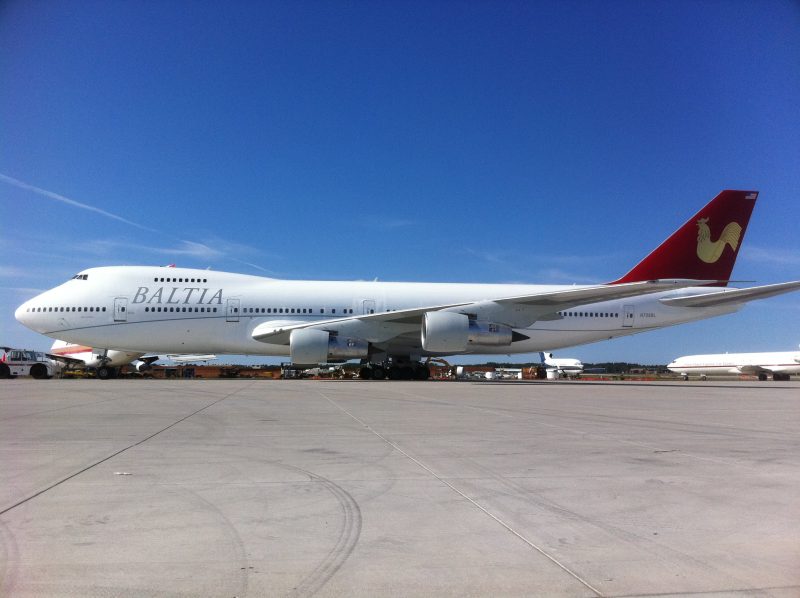
Dmitrowsky acquired another 747 from Northwest Airlines. This time, it was painted in Baltia’s livery. Despite being able to fly, this aircraft, too, never got approval from the DOT.
To save on operational costs, Baltia moved to Willow Run Airport (YIP), a small airport in Ypsilanti, Michigan. This airport was primarily for private jets and other small aircraft. The Boeing had to be parked outside, attracting much attention from locals.
The Boeing was on display at the Willow Run Thunder Over Michigan Airshow in 2014, attended by over 100,000 aviation enthusiasts. However, the airline had to sell this jet two years later.
Dmitrowsky passed away on 4 January 2016. Vice President Anthony Koulouris took over as the airline’s new CEO.
Failure to Launch
In 2017, reports stated that Baltia racked up $119 million in debt. The airline sold shares on the New York Stock Exchange to continue funding the business.
Once again, without a jet, Baltia relocated to Stewart International Airport in New Windsor, New York. Koulouris then renamed the airline to USGlobal Airways. In 2018, the new CEO shared the company’s aspirations to fly from New York to Tel Aviv, Israel, and Paris, France.
USGlobal signed a letter of intent to lease a Boeing 767-300ER from Kalitta Air and attempted to acquire Songbird Airways’ operating certificate, but both plans fizzled. The Federal Aviation Administration (FAA) revoked USGlobal’s Certificate of Public Convenience in 2018.
Coupled with the U.S. Securities and Exchange Commission (SEC) suspending the airline’s stock trading after failing to release a financial report in two years, the airline has never given an update since.
While United Airlines has had its ups and downs in terms of service and profitability, one area where the airline has always led is that it is an early adopter of the latest Boeing and Airbus aircraft. The Boeing 767-200 was no exception.
United Airlines was the launch customer for the Boeing 767-200, which launched at about the same time as its smaller twin, the Boeing 757-200. The Boeing 767-200’s first flight took place on 26 September 1981. Just under a year later, on 8 September 1982, the type entered service with United Airlines.
The Boeing 767-200 was very fuel-efficient for its time
In 1982, United didn’t miss a beat in highlighting its new fuel-efficient twin-jet. In this now very retro ad, United touted the advanced technology of the wide-body aircraft. The Boeing 767 was pretty groundbreaking. It had one of the first commercial cockpits with CRT technology (also known as a glass cockpit). The Boeing 767 shared commonality with the Boeing 757, allowing for a common type rating. United’s Boeing 767 also had ‘larger’ bins (tiny by today’s standards) for carry-ons and a more modern cabin. While United retired the 767-200 series in 2005. They still fly both the Boeing 767-300ER (34 in service as of September 2025) and -400ER (16 in service) today.
Imagine a cockpit where critical flight data doesn’t require a downward glance—where altitude, airspeed, terrain alerts, and traffic data appear directly in your line of sight, even in poor visibility.
Imagine a world where solo pilots can access virtual support that enhances decision-making and reduces workload.
No bulky HUDs, no shifting your gaze to the instrument panel. Just critical flight data, highlighted directly in your field of view.
That’s the promise of augmented reality (AR) in aviation, and thanks to cutting-edge technology companies like ZEISS, it’s moving from concept to reality.
This technology was unveiled publicly at the Aircraft Interiors Expo (AIX) in Hamburg, Germany, in April 2025. ZEISS, the German optics powerhouse known for supplying NASA and the European Space Agency with precision glass components for missions like Apollo and the James Webb Space Telescope, is currently developing it.
Now, ZEISS is bringing that same aerospace-grade innovation to the cockpit with its Multifunctional Smart Glass.
Discover the cockpit of the future! 🛫 With augmented reality, we're giving pilots more insights than ever. What does this mean for the cockpit of the future? Find out. ⤵️#Innovation#Mobilitypic.twitter.com/B79lVxQLex
Here are five incredible ways ZEISS’s Multifunctional Smart Glass is set to revolutionizethe pilot experience:
1. Enhanced Situational Awareness–Even in the Worst Conditions
An aircraft navigates through fog and low clouds on final approach | IMAGE: S0820A, CC BY-SA 4.0 , via Wikimedia Commons
The technology is centered around a touch-free Holographic Human-Machine Interface (HMI).
At the core of the system is its Advanced Augmented Reality Head-Up Display (HUD). Unlike traditional HUDs that rely on bulky displays, ZEISS uses holographic micro-optical structures to project real-time flight data onto the cockpit windshield.
This tech offers a massive upgrade in situational awareness in emergencies and low-visibility conditions like fog, snow, or night flying. Terrain, obstacles, and traffic are overlaid right into your line of sight, so you stay focused on flying, not flipping through instruments or checklists.
Environmental data from infrared and microwave sensors is integrated into the display, allowing pilots to “see” beyond fog, darkness, or precipitation. The benefits for situational awareness, especially during challenging approaches or low-vis departures, are obvious.
2. A Viable HUD Option for Small Cockpits
Artist rendering of an augmented reality cockpit with HUD | IMAGE: ZEISS
One of the longstanding challenges with HUD technology has been size. Due to space constraints, full-scale HUD systems have traditionally been impractical for many business jets and general aviation aircraft. ZEISS’s design addresses this by dramatically reducing the system’s footprint, making it viable for aircraft that previously had to forgo such enhancements.
“Until now, these systems were too bulky for single-pilot cockpits,” explains Dr. Dennis Lehr, Head of ZEISS Microoptics. “We’ve worked to reduce the size and complexity while improving the performance.”
This opens up opportunities for safer flight in smaller aircraft, where workload is high and backup is often limited.
3. A Safety Net for Single-Pilot Operations
Augmented reality use in avionics with HUD | IMAGE: ZEISS
Smart Glass could act as a kind of digital co-pilot for solo pilots, especially those flying IFR or in congested airspace. By visualizing checklists, alerting the pilot to forgotten tasks, and flagging navigational hazards in real time, it provides an extra layer of vigilance—something sorely needed in a sector where human error remains a leading factor in accidents.
Test pilots involved in early evaluations report notable improvements in clarity, usability, and contrast compared to previous-generation HUDs. One commercial pilot noted that “contrast, glare, visibility, and operation are significantly improved,” suggesting the technology could serve as an extension of traditional instruments and a platform for entirely new display modes.
Augmented Reality technology is also an important consideration when considering the prospect of future single-pilot operations (SPO), where workload management is paramount.
“Particularly when there’s only one pilot in the cockpit, there’s a lack of redundancy,” says a commercial airline pilot tester quoted on ZEISS’s website. “HUDs can make a major contribution to overcoming these challenges.”
Incorrectly, or non-, completed checklists remain a leading cause of aviation accidents, and this technology could provide real-time guidance to prevent such errors.
4. A Lighter Aircraft, A Lower Carbon Footprint
Holographic Transparent Displays integrated into cabin dividers based on ZEISS Multifunctional Smart Glass technology project interactive content, providing passengers with personalized information while maintaining an unobstucted view. | IMAGE: ZEISS
The benefits of augmented reality technology extend beyond safety.
Replacing heavy display units and traditional cabin dividers with lightweight smart glass panels reduces aircraft weight, leading to better fuel efficiency, lower emissions, and slashed operating costs.
More than just a tech upgrade—augmented reality an operational win for commercial airlines and cost-conscious general aviation operators alike.
Airlines save on fuel. General aviation operators save on maintenance. This advantage is hard to ignore in an era of ever-increasing environmental and cost pressures.
5. A Glimpse Into the Future of Cockpit Interaction
ZEISS Holographic Transparent Display technology integrated into aircraft windows project dynamic content directly into the passengers’ field of view, enhancing their experience with real-time information while preserving the clear view outside. | IMAGE: ZEISS
ZEISS also envisions a future involving hands-free interaction in the cockpit through voice control and gesture recognition. In future iterations, entire cockpit windows may become dynamic, immersive HUDs, responding to voice commands and offering real-time recommendations based on the aircraft’s surroundings and current flight conditions.
While certainly aesthetically pleasing, the idea isn’t just about modernizing the cockpit’s (or cabin’s) look. Ultimately, it’s about fundamentally changing how pilots manage information, make decisions, and interact with systems.
While pilots stand to gain the most, passengers aren’t left behind.
ZEISS Smart Glass can turn cabin windows into interactive surfaces that display flight paths, real-time maps, or landmark information—all powered by touch-free, holographic controls activated via ultraviolet and infrared sensors.
No smudges. No buttons. Just clean, intuitive interaction—and a cabin design as flexible and futuristic as the tech that powers it.
Clearing the Hurdles: The Path to Adoption
Pilots Linda Kotzur and Tino Janke discuss augmented reality technology with ZEISS Head of Operations Dr. Dennis Lehr | IMAGE: ZEISS
Despite its potential, ZEISS’s Smart Glass system is not yet commercially available. But why?
The biggest barriers remain cost and integration, although both are becoming more manageable as the technology matures.
The change in power and size makes the technology viable for business jets and general aviation aircraft, not just airliners.
Our vision is to make this technology accessible to all pilots, from commercial to private. We want to ensure a safe flying experience in all visibility conditions, from takeoff to landing.
Dr. Dennis Lehr, Head of ZEISS Microoptics
Lehr envisions a future where size and cost are no longer factors in AR technology.
“Our vision is to make this technology accessible to all pilots, from commercial to private,” says Lehr. “We want to ensure a safe flying experience in all visibility conditions, from takeoff to landing.”
According to ZEISS, the system is currently in its testing phase and has a realistic path toward market availability within the next three years.
As airspace becomes more crowded, with drones, air taxis, and autonomous aircraft entering the mix in the years and decades ahead, tools that enhance pilot awareness and reduce workload will be essential.
Whether you fly a Cessna or a Dreamliner, augmented reality may soon become an integral part of your cockpit.
It’s fair to say that the aviation industry has changed quite a bit since 1995 when the Boeing 777 was introduced. Back then, jurassic DC-10s and 747-100s still plied the skies. Over the past 30 years, the classic jumbo jets were slowly replaced by 747-400s, 757, 767s, 777s, and the A380. Then COVID-19 happened and the ‘modern’ twins of 757s, 767s along with the A340s and many A380s were sidelined.
Now, the Boeing 777 turns 30 years old. The venerable jet continues to be a mainstay of airline fleets globally.
If there is one thing that is certain, change in the aviation industry is a constant. That’s why as avgeeks it can be fun to look back into old commercial debuts of popular aircraft, including a jet that made twin-engined international flights the norm.
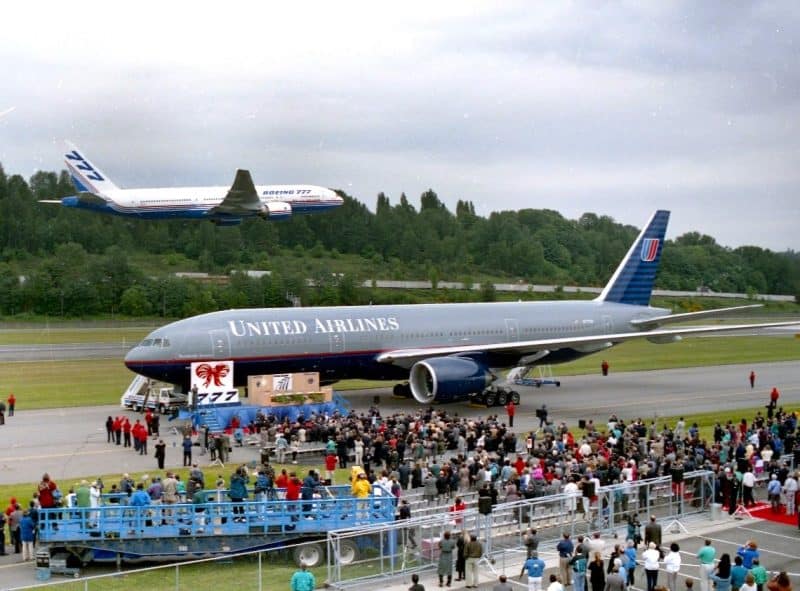
United Introduced the Boeing 777 in 1995 to Great Fanfare
United Airlines Boeing 777 taking off at Schiphol Airport, Photo by Solitude (wikimedia commons)
The Boeing 777 was one of the most impressive development cycles of a major airliner program ever. Built entirely with computer aided design (CAD), the airliner set a new standard for aircraft development in both speed and quality.
The 777 program was the first airliner to utilize the giant GE90 engine which permitted DC-10, A340, and MD-11 capacity and range with only two engines.
United Airlines was the launch customer for the 777-200. The airline (along with other customers) partnered with Boeing to influence the development of the new twin-engined airliner. The airliner was Boeing’s first fly-by-wire jet and the first twin-engined airliner that was certified with 180 minute ETOPS right from day one.
It featured passenger comforts like large overhead bins, personal TVs, and upgraded first class accommodations. The jet itself was built to be more reliable with onboard diagnostics, improved avionics, and lighter structure which translated into lower fuel costs relative to competing jets.
United’s First Commercial Featured Bigfoot?
United Airlines highly touted their new Boeing. The 777 would allow the airline to replace their aging DC-10 fleet and could comfortably connect routes from Chicago to Europe. As the launch customer, they featured the new jet heavily in advertisements.
One of their first commercials was humorous, if a bit odd. It featured Sasquatch–the fabled bigfoot-like character of lore from in the Pacific Northwest. In the commercial Sasquatch spotted the new Boeing 777 and took a self guided tour of the new jet. He even poured himself some champagne as he made himself at home in the giant aircraft.
Boeing 777’s Legacy Still Being Written
The lighthearted ad by United captured the 777’s appeal—a DC-10 sized jet that felt like a luxury jet, even to a mythical forest creature.
Thirty years later, the Triple Seven continues to be Boeing’s last commercial reveal that wasn’t plagued by controversy. It was both a testament to Boeing’s engineering first culture back then and a sad fact that shows how many challenges that Boeing has faced since.
To date, 1,729 Boeing 777s have been delivered, with around 1,400 still in service across 62 airlines, hauling passengers and cargo from Dubai to Dallas. Emirates leads the pack with 148, mostly 777-300ERs, while United still flies some of the originals.
The oldest active 777, United’s N774UA, a -200 registered in July 1994, is 31 years young, still logging flights with nearly 100,000 hours.
Meanwhile, the next generation, the 777X, is stuck in a holding pattern. Engine woes and structural hiccups have pushed its debut to 2026, six years late, leaving carriers like Lufthansa waiting for their fleet. When the new 777x fleet finally does arrive, with GE9X engines and folding wingtips, it’ll carry on a legacy that started with Bigfoot and made two-engined intercontinental jet travel commonplace.
BONUS: Video of a United 777 Proving Flight
Flight attendant Steve Scott filmed a proving flight for the Boeing 777 just one week before United’s first official flight on June 7, 1995. Check out the video linked below!
In the early 1990s, England’s flagship carrier, British Airways, attempted to orchestrate one of the most heinous PR scandals in air travel history: the ‘Dirty Tricks’ campaign, which targeted Virgin Atlantic.
This covert operation, driven by competitive paranoia and unethical tactics, aimed to undermine Virgin’s growth. This plan, however, backfired spectacularly, costing BA millions and cementing Virgin’s underdog status. Here’s the story of the ‘Dirty Tricks’ campaign.
A ‘Virgin’ in the Airline Industry
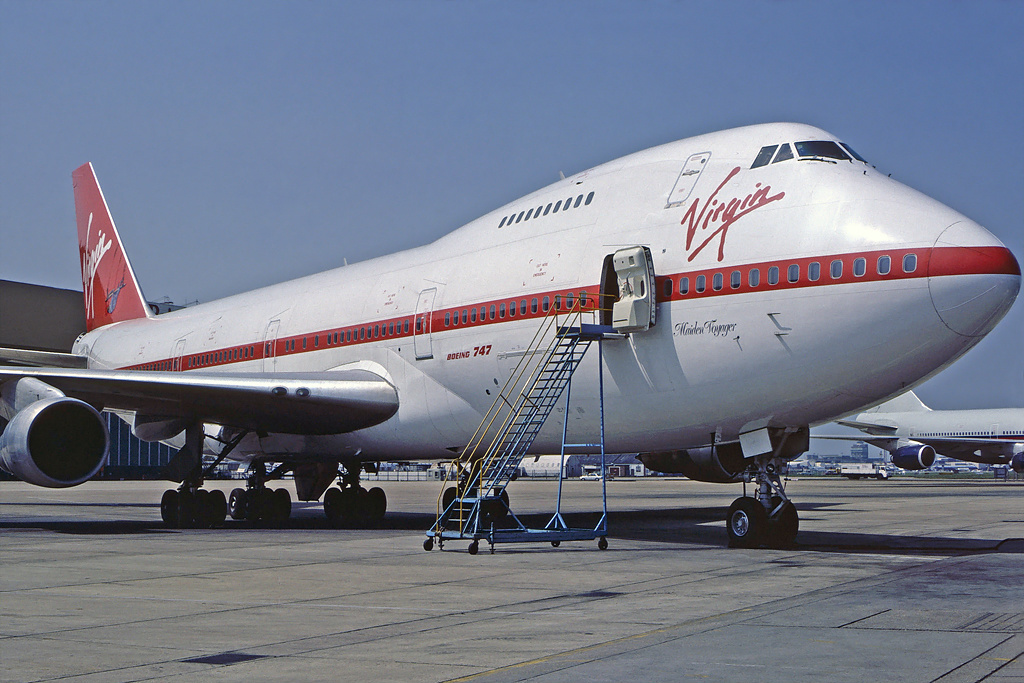
In the early 1980s, entrepreneur Sir Richard Branson founded Virgin Atlantic during a ‘boom time’ in the UK, where the average customer had much more wealth to their name, allowing them to afford flights. Virgin’s first flight was on 22 June 1984 on a Boeing 747-200 from London Gatwick (LGW) to Newark (EWR).
The airline quickly won over many travelers, which looked ominous for British Airways’ (BA) market share, thanks to Virgin being among the first airlines to offer in-flight entertainment and Branson’s eccentric personality.
Recently privatized and compelled to keep its position in European air travel, BA saw Virgin not as a minor nuisance but as a major player set out to affect BA’s bottom line. This competition set the stage for a campaign that would unravel into a public relations nightmare.
Virgin Atlantic G-VIRG by Steve Fitzgerald.
Behind closed doors, BA started ‘Dirty Tricks,’ also known as ‘Operation Covert Garden,’ in the Summer of 1990. British Airways tried to gain intel from Virgin by having its employees work with or for the newer airline, dressing as Virgin employees to gain access to its headquarters. BA employees allegedly hacked into Virgin’s computer servers to obtain information about passengers and bookings.
Impersonating Virgin, BA would then call or write to these customers to tell them their flights had been canceled and urge them to rebook with BA. BA also spread rumors about Virgin’s financials to the media, painting the airline as an untrustworthy airline and Branson as an erratic showman.
This plan was hatched by BA executives, with the airline’s marketing and sales teams also involved. Only a select few knew of the scheme’s full scope.
Virgin Fires Back at BA
Virgin and Branson eventually discovered Operation Covert Garden in 1991 after receiving suspicious customer complaints. Branson also received intel from BA whistleblowers outside but learned about several instances of BA personnel attempting to undermine Virgin.
Branson wrote an open letter to Virgin accusing them of ‘sharp business practices.’ BA executives dismissed his accusations, stating Branson was just looking for more attention. He later shared his evidence with investigating journalists.
In 1992, Thames Television’s This Week aired a documentary called Dirty Tricks, which exposed BA’s plan to sabotage Virgin to the public for the first time. Following the broadcast, Virgin filed a lawsuit against BA for libel, unfair competition, and corporate espionage.
British Airways Tried to Pivot
In January 1993, BA settled the lawsuit with Virgin. BA paid Branson, Virgin, and courts of up to £3,000,000. Altogether, BA lost $4.8 million ($10.8 million in 2025) from Operation Covert Garden. At the time, this was the largest libel payout in England’s history. Branson used the payout to expand the airline and award his employees.
British Airways issued a formal apology for the scheme. Chairman Lord John King admitted the scheme was ‘regrettable,’ but the damage was done, and the airline’s public trust and goodwill also went to Virgin. King stepped down from his position in June 1993 but remained president emeritus.
‘I’m not so sure they shouldn’t be put behind bars here,’ Branson told the Independent.
A former BA customer service specialist also revealed that BA targeted Dan Air and Europe Air.
The two airlines have moved on from the fiasco but remain fierce competitors to this day. Both offer the same routes from London-Heathrow Airport (LHR) and transatlantic flights to and from North America.
British Airways currently has over 200 global destinations spanning six continents. BA operates at least 12 flights daily between London and New York City. Virgin remains the smaller of the two airlines at only 32 global destinations, with Delta Air Lines owning a 49% stake in the airline today.
Rumors of a nuclear bomb from Broken Arrow still in swamp
Airmen stationed at Seymour Johnson AFB (SJAFB) in North Carolina have often heard a rumor that a B-52 carrying a nuclear bomb once crashed in a swamp near the base and that the weapon was buried so deep that officials had to leave it there.
While the rumor was not completely accurate, the Broken Arrow event really did happen, and there is more truth to the story than wrong details.
On 4 January 1961, a B-52G from SJAFB was flying about 12 miles north of the base near the small town of Faro, North Carolina, when it developed a fuel leak in its starboard wing.
The pilot, Major Walter Scott Tulloch, contacted the base, which instructed them to remain in a holding pattern off the coast until the aircraft burned enough fuel. Shortly, however, Tulloch radioed that the bomber had lost 37000 pounds of fuel and was told to return to the base.
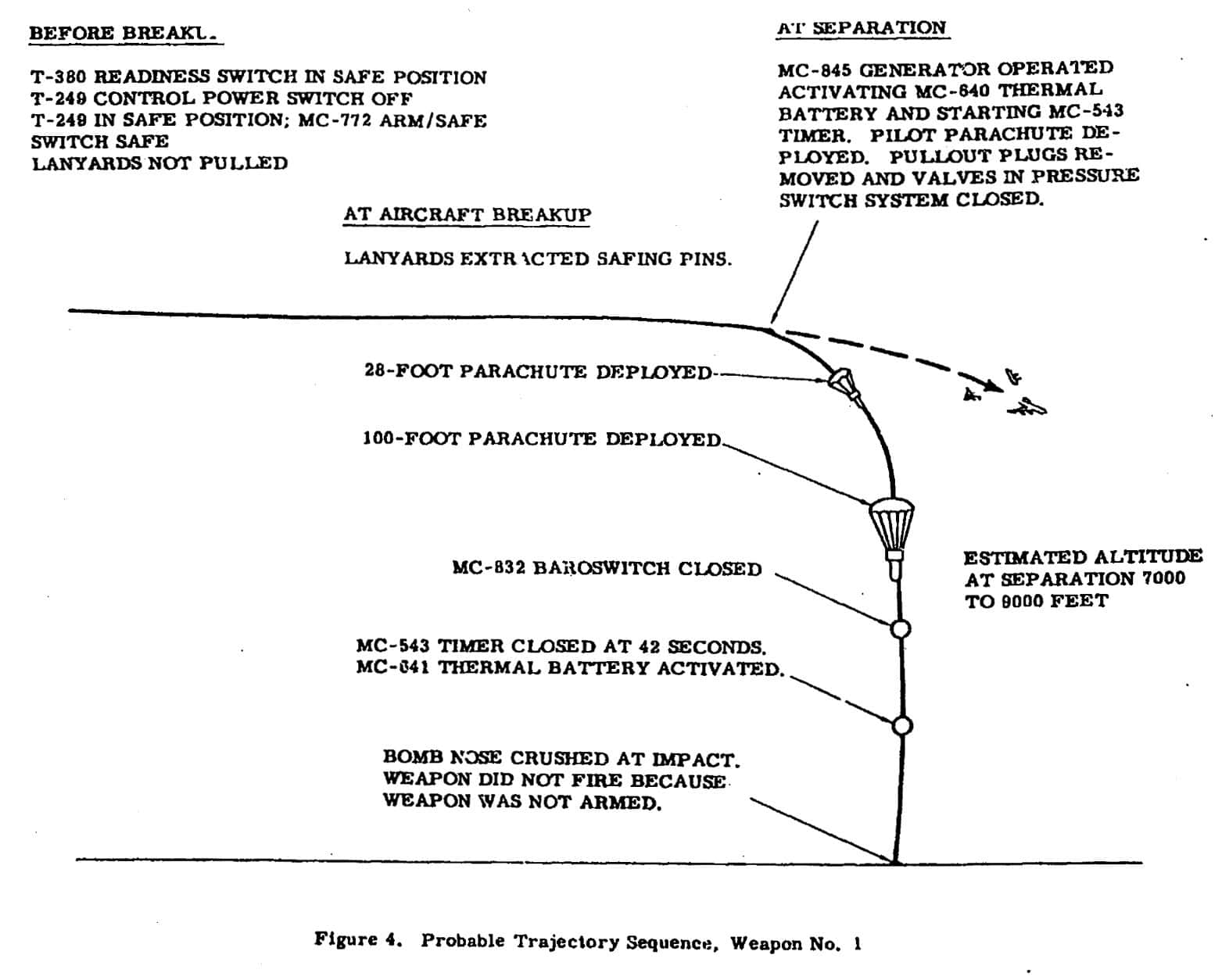
“Analysis of the Safety Aspects of the MK 39 MOD 2 Bombs Involved in B-52G Crash Near [Goldsboro], North Carolina.” | Public Domain Image
The bomber then lost the entire wing, and Tulloch ordered his crew to eject. Three of the eight crew members lost their lives while attempting to bail out of the aircraft.
The massive bomber broke apart as it descended and struck the field at approximately 700 miles per hour, erupting into flames that cast a bright glare on nearby farmhouses.
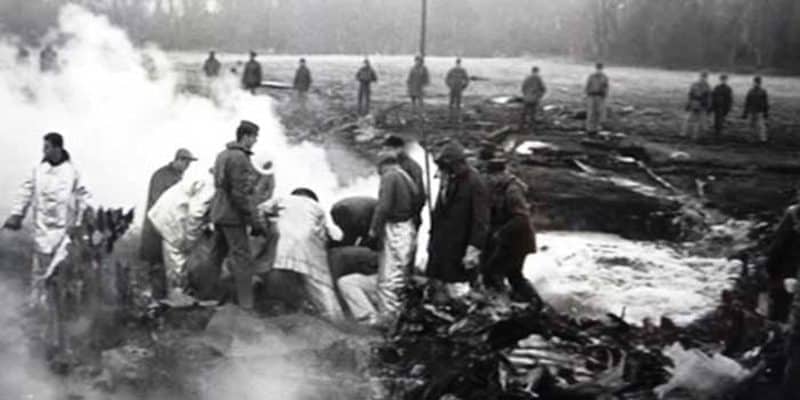
Emergency crews arrived on the scene, and once they put out the fires, they began a critical salvage operation. The airmen on the scene began searching for the two 3-4 megaton MK-39 thermonuclear bombs the B-52 was carrying.
Recovery Focused on Finding Two Nuclear Bombs
The B-52 had been flying on alert status, and during those days of the Cold War, it was a standard practice for them to fly with live bombs. The process of detonating these weapons included multiple steps to ensure they were as safe as possible until the moment of detonation.
Unfortunately, the crash damaged the safety mechanisms during this incident, and both weapons began the fusing or arming sequence.
Weapon Began Arming Sequence
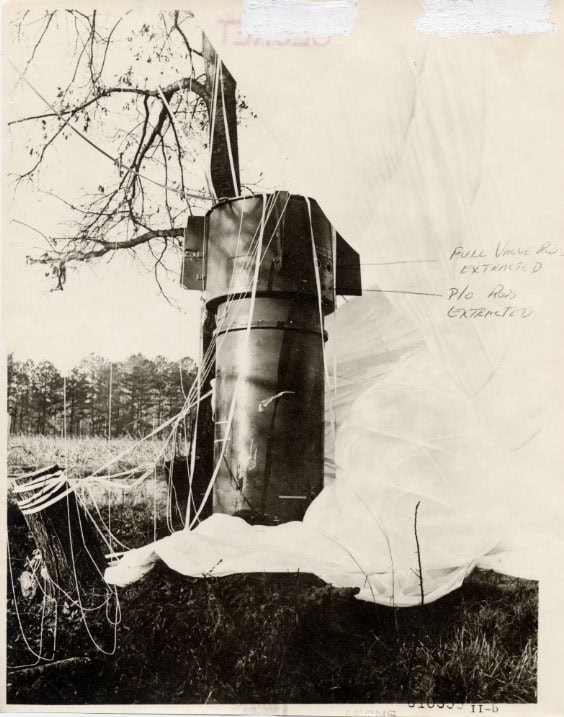
Crews found the first thermonuclear weapon several hundred yards from the main crash site. Its parachute deployed when it left the aircraft and got tangled in a tree before hitting the ground.
The nose of the nuclear bomb embedded itself about 18 inches in the ground. According to a document titled “New Details on the 1961 Goldsboro Nuclear Accident,” in a security archive called the Nuclear Vault at George Washington University, “The two-stage Mark 39, which contained highly-enriched uranium in its primary, came dangerously close to denotation.”
More specifically, the crash pulled out lanyards that released saving pins from the weapon. This feature allowed the arming process to continue until the final step, which requires a human to operate the T-249 Arm/Safe switch. Still, “the incident deeply worried Secretary of Defense McNamara.”
Second Nuclear Bomb from Broken Arrow Buried Deep in the Ground
Condition of first weapon after crash. “New Details on the 1961 Goldsboro Nuclear Accident” | Public Domain Image
The second nuclear weapon presented the recovery crews with different problems.
It broke apart at the moment of impact about 500 yards from where the main part of the fuselage struck. The weapon created a crater about six feet deep and eight in diameter. It partially armed but did not complete the sequence.
The soil in the field was very wet, and components of the weapon penetrated deep into the ground. Its tail went about 22 feet down. Crews began trying to dig up the bomb, but a combination of freezing temperatures, rising water in the crater, and the possibility of unexploded High-Explosive (HE) materials slowed their efforts.
Air Force Crews find parts from the second MK-39 nuclear weapon in the crater. “10 Devastating Nuclear Events and Accidents” | Public Domain Image
The crews dug eight feet down on 24 January and 12 feet the next day. They reached 15 feet on 26 January, where they found the parachute, part of the nose, and pieces of the device called the “primary.” They recovered more by 28 January, including the arm/safe switches, which they discovered in the “armed” position.
MC-772 Arm/Safe switch-same type used in MK-39 nuclear bombs. Screenshot from Sandia National Laboratories (2010) “Always/Never: The Quest for Safety, Control, and Survivability – Part 2″ | public domain image
Crews Abandon Search for Weapon
The work continued, and by 7 February, the excavation crews had enlarged the crater to 42 feet deep, 50 feet wide, and 70 feet long. Digging continued for several months until it finally stopped on 25 May.
During that time, the crater continued to fill with water, and 14 pumps were deployed around its perimeter, removing 60,000 gallons per hour, which could not control the flooding.
The Air Force did not release any details about the plutonium or hazards from the Broken Arrow accident, but it did take several actions that strongly hint at the seriousness of the situation. After the accident, the Air Force purchased an easement for $1000 from C. T. Davis, the owner of the field where the weapon was buried.
The easement covered an area in the field 400 feet in diameter and prevented Davis and his heirs from digging or drilling more than five feet deep, although they were allowed to use it for crops, timber, or as a pasture.
Additional evidence of the potential danger is that the North Carolina Division of Radiation Protection tests groundwater near the crash site annually. While they have found no radiation levels beyond what naturally occurs, the Air Force does not intend to stop checking the soil.
Other Broken Arrow Incidents Involving Lost Nuclear Bomb Components
Unfortunately, the Goldsboro crash was not an isolated incident. Similar accidents involving B-52s carrying thermonuclear weapons have occurred, one near Palomares, Spain, and another near Thule, Greenland. The Thule incident, which occurred in 1968, was especially serious.
A B-52 crashed onto sea ice near Thule, and a radioactive cylinder separated from the weapon. It contained uranium and may have dropped through the ice. Salvage crews never found it. However, scientists from Denmark tested the water there for years and found low contamination levels.
Following these accidents, the Sandia National Laboratories studied their causes and began working on new designs to reduce the possibility of radioactive contamination occurring in the future.
Despite this, an earlier report from the Sandia Corporation, “A Survey of Nuclear Weapon Safety Problems and the Possibilities for Increasing Safety in Bomb and Warhead Design,” from 1959, mentions what may be the stark truth about this topic.
In the report, Carl Carlson stated that he “believed that military readiness requirements meant that absolute safety was impossible and that it was necessary to ‘play the percentages’ as ‘uncomfortable’ as that was.”
The Lockheed C-141 Starlifter made strategic airlift common and gave the United States unique capabilities of jet-powered airdrop, austere landings, and intercontinental airlift via air refueling.
It’s hard to believe that the C-141 Starlifter was first flown over 60 years ago. The robust capabilities of the Starlifter and the extensive modifications made it seem like the jet could fly forever, just like the venerable C-47. Unfortunately, extensive overuse of the fleet, evolving needs, and wear and tear forced the US Air Force to abandon the platform.
First flight of the C-141
The C-141 first flew on 17 December 1963. At the time, the nascent US Air Force relied on the C-133 Cargomaster and C-124 Globemaster II for airlift capabilities. However, those aircraft were slow and had limited airlift capabilities. The C-141 represented a giant leap forward in capability.
The early 1960s brought great promise with the introduction of turbojet and later turbofan engines. At the time, Lockheed was at its prime as an efficient and forward-thinking aircraft manufacturer. They had recently produced the U-2 and C-130. While developing the C-141, they were also working on advanced aircraft, such as the SR-71, and had begun designing the C-5 Galaxy as well.
The C-141 utilized the best technology of the 1960s jet era. With modern jet engines, cargo could travel at airline-like speeds. The aircraft had advanced systems that allowed for the loading of equipment, vehicles, and troops through the rear cargo doors. Its instruments and pilot panel were very advanced for its time.
The beefy structure could carry up to 90,000 lbs of cargo or up to 154 passengers in a troop configuration. The promise of putting troops and cargo anywhere in the world within an extended duty day was revolutionary for its time. The C-141 Starlifter would etch its name in air mobility history.
Hanoi Taxi. Photo by Jeff Gilmore.
The C-141 Starlifter had quite a career. It was the workhorse of Vietnam and Desert Storm. The jet served on every continent including Antarctica. It was involved in every conflict from Vietnam through Afghanistan. Most notably, the C-141 flew the first POWs back from North Vietnam. That aircraft, tail 66-0177, became known as the Hanoi Taxi.
Revolution then an evolution
The C-141 Starlifter had three versions over the course of its career. Most of the original A models were converted to the B models in the late 1970s to early 1980s. This conversion gave the C-141 the ability to air refuel and also added additional cargo capacity to the jet via lengthening of the fuselage. In the 1990s, 60 of the B models were then upgraded to C models with more advanced avionics and a glass cockpit.
C-141 Starlifter is given an ‘early’ retirement
A C-141 Starlifter aircraft, better known as the Hanoi Taxi, flies over its soon-to-be new home at the National Museum of the US Air Force adjacent to Wright-Patterson AFB, Ohio, on 13 Dec 2005. This particular aircraft gained fame when it was used to return American prisoners of war back home at the end of the Viet Nam War. As the last operational C-141 in Air Force Reserve Command’s 445 Airlift Wing, the historic aircraft will spend the rest of her days at the museum. | IMAGE: By John Rossino (photo), Lt. Col. Robert Thompson (text) – http://www.445aw.afrc.af.mil/library/factsheets/factsheet.asp?id=3396,direct link, Public Domain, https://commons.wikimedia.org/w/index.php?curid=762481
The C-141 retirement was planned but the date was slowly moved forward by structural issues with the jet from intense usage over its career. The jet was replaced by the C-17 Globemaster III.
The C-141 took its last flight on 6 May 2006, with the Hanoi Taxi being delivered to the National Museum of the Air Force. Today, you can walk through the jet at the museum in Dayton, Ohio.
Below is a video of the retirement ceremony.
All Good Things Come To an End
The C-141 Starlifter Was replaced By the C-17 Globemaster III beginning in 1993. While the C-17 became a much more capable platform, it took over a decade to produce enough aircraft to replace the capabilities of the C-141.
The C-141 Starlifter was an incredibly capable aircraft that evolved over time to meet the needs of the United States. Although none are flying today, you can still see examples of the accomplished airlifter at museums across the country.
Many probably think the dogfights among biplanes in World War I were the first use of aircraft in combat, but nations used balloon aviation in earlier conflicts.
A few might have read about the Union Army using balloons during the Civil War.
Still, the history of balloon aviation in warfare and other purposes goes back to at least the 1700s and possibly much further than that.
Balloon Aviation Used Extensively in the Civil War
During the Civil War, the Union Army deployed balloons during the Peninsula Campaign in 1862. Union forces were approaching Richmond from the east and raised balloons to observe the placements and movements of Confederate troops and to direct artillery fire. During the western campaign, they also used balloons to support efforts around Chancellorsville and Fredericksburg in the east and along the Mississippi. The Confederates also used balloons around Richmond for similar purposes.
The Union Army used the balloon “Intrepid” during the Civil War. | Image: U.S. National Park Service
These balloons could carry three people and rise to about 1000 feet, tethered to the ground by ropes. The balloon operators would use signal flags or lower messages on the ropes to communicate with ground troops. They filled the balloons with hydrogen gas, which they produced by mixing sulfuric acid with iron filings.
France Develops Hydrogen and Hot Air War Balloons
France was developing war balloons long before the Civil War. Brothers Jacques and Joseph Montgolfier conducted early experiments and launched their first hot air balloon, covered with paper and cloth, on 19 September 1783. They used a burning combination of straw, chopped wool, and dried horse manure underneath the balloon to heat the air and inflate it. They found this helpful as it kept the flame low, reducing the risk of setting the balloon on fire, although it did create a lot of smoke.
A Sheep, a Duck, and a Rooster Were the First Balloon Pilots
According to the story, the brothers were afraid to go up on that first flight, so they sent a sheep, a duck, and a rooster to see how it would affect them. The balloon safely landed after eight minutes, and its passengers were unharmed.
Early French balloon designs. | Image: Library of Congress
Another Frenchman, Jacques Alexander Cesar Charles, also worked on balloon aviation development. He came up with the idea of using ballast, valves for the gas, and a net to enclose balloons. He worked with two other men, Antoine Lavoisier, and Guyton Morveau, to create portable hydrogen generators for troops to use in the field. This became a problem when sulfur became scarce because France also needed it to produce gunpowder. Lavoisier then developed a system to generate hydrogen by passing steam over red-hot iron.
Illustration of early balloon flight 21 November 1783 in Paris. | Image: Library of Congress
World’s First Air Force Flew Balloons – Not Planes
Following these developments, in 1794 France’s Committee of Public Safety established a balloon unit, the “Compagnie d’Aerostiers.” It was the world’s first air force. The unit had about 30 men and their own uniforms. Andre Giroud was on that first flight and realized the potential of balloons for military purposes, stating they could be “valuable for observing the movements of armies.”
Image of Battle of Fleurus with observation balloon in upper right corner. | Image: Library of Congress
Several months later, France used balloons for observation purposes in the French Revolutionary and Napoleonic Wars during sieges at Maubeuge and Charleroi and a major battle at Fleurus. Napoleon later used balloons during action in Egypt. Many paintings from the period, especially of Fleurus, show balloons over the battlefield.
Another view of the Battle of Fleurus demonstrating balloon aviation. | Image: Library of Congress
Balloon Reports from Russia, Portugal, Mexico, and China
There are also earlier mentions of other nations using balloons for military purposes. In a story from Russia in 1731, a military officer named Kria Kutnoi launched a balloon from Ryazan, a small town about 120 miles south of Moscow. The balloon supposedly crashed into a church tower, upsetting local residents who complained the balloon was made of hides and “filled with evil-smelling smoke.”
Several researchers have suggested that the Nazca Indians of Peru could have used hot air balloons to create the Nazca Line Drawings from 700 B.C. to 200 A.D. There is no general agreement on this, but the story does seem plausible, as there are no mountain peaks overlooking the area from which they could have made the drawings
Sky Sheep and Evil Smoke: A Surprisingly True History of Balloon Aviation 66
Mysterious Nazca Lines in Peru. Could people have used balloons to make them? | Image: Alexander Schimmeck
President Trump arrived earlier today in Abu Dhabi as part of his first overseas diplomatic trip of his second term. His visit previously included stops in Saudi Arabia and Qatar. After arriving in the United Arab Emirates, the President disembarked in a rather unusual way — Air Force One used a jet bridge!
To our knowledge, this is the first time that we’ve seen Air Force One utilize a jet bridge while the president was aboard. Air Force One, the Boeing VC-25A, is a modified Boeing 747-200. While airlines no longer utilize the variant, most wide-body jet bridges can accommodate the type.
Associated Press video shows President Trump’s arrival to the VVIP terminal. In the video below you can see the entrance door of Air Force One at the end of the luxurious jet bridge. The telescoping jet bridge opens up directly into the luxury terminal reserved for the Royal Family’s use.
The Use of Jet Bridges For Air Force One Is Rare
Presidents typically board and disembark from Air Force One either via carpeted air stairs from the L1 door or via a smaller built-in set of stairs below the main deck. At Avgeekery, we’ve never seen Air Force One use a jetway before.
Our search online returned zero photos of such an occurrence before. This makes sense as US president’s aircraft typically park on a military ramp, remote FBO parking spot, or at an isolated ramp at an international airport.
Luxury terminals with jet bridges are very rare. Only a few locations, primarily in the Middle East, feature VVIP terminals with jet bridges. With extreme temperatures in the region and large fleets of large private jets, such a feature is a luxury but it also makes sense.
It Wasn’t Any Typical Jet Bridge or Your Typical Terminal
Air Force One arrived at the Presidential Flight Guest Reception Terminal at Abu Dhabi International Airport. The terminal was built specifically for the Royal Family of Abu Dhabi. Unlike your typical terminal, this jet bridge doesn’t host a gate at the end of it. Instead, it features a luxurious reception hall that very few people will ever see.
Air Force One Used A Jet Bridge In The UAE. Here's Why That's Very Rare 68
Luxury Terminal Features Jet Bridges and Plenty of Ammenities For VVIPs
The 10,000 square meter terminal features space for reception, gala space, meeting space, dining, and rest facilities for distinguished guests. It also has a telescoping jet bridge so that Royal Family can board and disembark from the terminal while avoiding the intense desert heat.
In addition to the luxurious airport accommodations, the terminal also hosts less exotic features like a baggage system, kitchen, staff accomodations, and covered parking.
Air Force One Also Received Fighter Escort From Three Different Nations
This trip was also notable for another avgeek reason. On each leg of the tour, Air Force One received fighter escort from each of the host nations. Saudi Arabia first escorted the venerable Boeing VC-25A into Riyadh with a flight of F-15SA’s.
President Trump’s latest stop aboard Air Force One’s to Abu Dhabi in the UAE was escorted by Emirate F-16s and Mirage fighter jets.
🚨 ⚡️ #Urgent | Les F-16 émiratis et les jets Mirage sont dans les airs, fournissant une escorte honorifique à Air Force One de Trump en route vers Abu Dhabi. pic.twitter.com/MjnsmRvPmG
— Le Monde Multipolaire (@Bilow_Media) May 15, 2025
An honorary fighter escort for Air Force One by a host nation is extremely rare but visually stunning way to recognize a visiting head of state. This is the first documented honorary fighter escort of Air Force One in the Middle East region since President Nixon received a fighter escort in 1974 during his visit to Syria. While some media have reported that President Reagan received such an honor, there are no confirmed stories or pictures of the event.
Phoenix, Arizona is the fifth-most populated city in America, so it would only make sense for the city to start its own major airline. That it certainly did around the mid-20th century.
The company had quite a pioneer on its hands for a while, until the late 1960s when competition swallowed it up when it was still growing.
Bonanza Air Lines was known for being the first airline in America to comprise its entire fleet of jets in 1960. Bonanza also expanded its network to include smaller cities in the West, providing more options for consumers than rival airlines at the time.
Here is the story of Bonanza Air Lines.
(Vegas) Aces High
Bonanza Air Service was created in Las Vegas, Nevada, by former Navy Lieutenant Commander Edmund Converse and charter pilot Charles Keene.
Its first year in business was 1945 when it operated as a charter service with a lone Cessna four-seater. A year later, it added another plane, the Douglas C-47, and began conducting intrastate flights between Reno and Las Vegas, Nevada.
The year 1949 saw Bonanza’s first major flight expansion by making its first out-of-state destination to Phoenix. The Civil Aeronautics Board (CAB) approved Bonanza for airline certification to make this route possible. Along the way, the plane would make stops in various towns and cities in Nevada and Arizona.
Bonanza’s route map grew throughout the 1950s, with the airline now offering flights to and from Los Angeles, California, and Salt Lake City, Utah. Bonanza’s fleet also received new modern additions, the Douglas DC-9 and Fairchild F-27.
In 1962, Bonanza was looking to add more impressive additions to its fleet, this time from across the pond. The airline ordered BAC One-Eleven jets from the British Aircraft Corporation. However, BAC blocked this transaction. Bonanza then stuck with American aircraft and ordered the new Douglas DC-9 series 10.
Deadly Crash of Bonanza Air Lines Flight 114 and Merger
The airline experienced a horrific accident in 1964. On 15 November, BAL Flight 114 failed to land at McCarran International Airport, flying into a mountainside during stormy weather. The crash killed all 26 passengers and three crew members on board. Flight 114 was the only catastrophe in the airline’s history.
Bonanza officially relocated its headquarters two years later to Phoenix Sky Harbor International Airport (PHX). The City of Phoenix allowed the airline to build a larger headquarters and an upgraded hangar at the Sky Harbor. The new facilities opened on 25 June of that year.
By 1968, Bonanza officially went international, with a route connecting Phoenix to Puerto Vallarta, Mexico. The flight would also make stops in Mazatlan and La Paz, Mexico, in addition to Tucson, Arizona.
Despite the airline’s fascinating growth, Bonanza’s brass agreed to merge with Pacific Air Lines and West Coast Airlines. The three carriers became Air West on 17 April 1968.
In 1970, Hollywood film producer Howard Hughes purchased Air West for $90 million and later renamed it Hughes Airwest. By 1980, Hughes Airwest faced a strike, citing that agents and office workers had been working without contracts.
The strike was resolved, but it wasn’t much longer until Hughes Airwest would be absorbed by Republic Airlines. The deal was worth $38.5 million. Two more mergers occurred throughout history, leading the remnants of Bonanza to be found under the Delta portfolio in 2010.
During World War II, Great Britain and Germany deployed powerful 24-cylinder engines for their aircraft.
Both nations began working on the engines before the war started. Ultimately, the British proved more successful with their Napier Sabre engine over the German Junkers Jumo 222.
British Napier Sabre 24-Cylinder Engine
Great Britain first considered developing the 24-cylinder Napier Sabre engine in 1937. The Napier & Son manufacturer had been making engines since 1917, during The First World War, when they produced the Napier Lion, a 12-cylinder motor they produced until 1943. Engine designer Frank Hord theorized that an engine with more, smaller cylinders would be more powerful than one with fewer, larger cylinders.
The Napier Sabre 24-cylinder engine on a test stand. | Image: Oldmachinepress.com
Following the successful 100-hour testing of the 24-cylinder engine, the British rushed it into production at the beginning of the war. They installed it into the Hawker Tempest V, Typhoon 1, and 1B fighters and the Folland Fo. 108 fighter.
The Napier Sabre Engine powered the Hawker Typhoon Fighter. | Image: Image: Oldmachinepress.com
The powerful engine gave the fighters outstanding low-altitude performance. The Napier Sabre was the fastest Allied engine, giving aircraft more speed than the 12-cylinder engines in British Spitfire fighters.
Manufacturing and Performance Problems with Napier Sabre
Image Demonstrating the Size of the Massive British Engine. | Image: Oldmachinepress.com
Although the engine was effective at low altitudes, it was not strong enough above 20,000 feet. In 1942, Napier started working on a supercharger to provide better high-altitude performance. However, the company was sold to English Electric. They gave up on the supercharger but improved the engine’s reliability, extending its time between overhauls from 25 to 250 hours.
Another problem occurred in 1944 during operations at Normandy. The 24-cylinder engines were sucking airborne sand, which grounded the planes until new air filters could arrive more than a week later.
Napier Sabre 24-Cylinder Engines Effective in Combat
The Napier Sabre 24-cylinder engine was effective against German aircraft throughout the war. The Typhoons became the fastest low-altitude aircraft and were especially successful at attacking German V1 bombs.
Another view of the Napier Sabre Engine. | Image: airandspace.si.edu
As the war progressed, the British wanted to increase the power of their engines. Napier considered using water and methane injection to raise the Sabre’s output to 3000 horsepower. They even experimented with a 32-cylinder version, which they hoped would produce 4000 horsepower. It did not make it into production.
German Jumo-222 24-Cylinder Engine
Before and during World War II, the Germans worked on their own 24-cylinder engine, the Junkers Jumo 222. In 1936, the German Air Ministry (RLM) decided they needed an 1800-horsepower engine for the bombers in development. Ferdinand Brandner joined Junkers and took charge of the project. He set an initial goal to build a new 2000-horsepower engine and named it Jumo 222. They finalized the initial design in 1937.
Side View of the Junkers Jumo 222 24-Cylinder Engine. | Image: Oldmachinepress.com
The plan was for the Jumo 222 to power the Junkers Ju 88 bomber. During the Second World War, Junkers was the only Axis company building both aircraft and engines, something that would contribute to its eventual failure.
The Jumo 222 was a liquid-cooled, radial, 24-cylinder engine. It had six-cylinder banks with four cylinders each, positioned around the crankcase in a hexagonal pattern. As the months progressed, the Germans continually increased their requirements for power output from the Jumo 222.
Germans Planned to Use Jumo 222 Engine in New Bomber
Along with the Ju 88 bomber, the Germans were developing a new high-speed medium bomber, the “Bomber B.” They expected it to carry a 4410-pound bomb load, 2,237 miles, at about 373 miles per hour. They eventually tested the Jumo 222 in 11 different aircraft, including the bombers: a Focke-Wulf Fw 191 and aHeinkel He 219 Uhu (“Eagle-Owl”).
In 1940, following weight increases to the JU 288 from adding a crew member and new equipment, the Germans raised the power requirements for the 222 to 2500 horsepower. The next version of the 24-cylinder Juno 222, the C/D, came in 1941 with a 2500-3000 horsepower requirement for high altitudes. This was initially just a goal until 1945 when the RLM determined they “desperately” needed a 3000-horsepower engine.
While the Jumo 222 did well in testing, problems interfered with its development. Allied bombing in 1943 and 1944 caused shortages and began to affect German industry. This forced the RLM to choose which aircraft and engines to produce.
Closeup Showing the Tight Fit of the Large Jumo 222 Engine. | Image: oldmachinepress.com
Ferdinand Brandner, one of the 24-cylinder engine’s designers, said, “The tragedy of this engine development lay in the continual demands for performance increases that came from the airframe development side, which, because of continually increasing weight excesses, could not attain the calculated flying performance. The Jumo 222 was developed to death.”
Frequent Design Changes Possibly Used to Prevent Improvements
According to some reports, Erhard Milch, Air Inspector General of the Luftwaffe and in charge of aircraft production, wanted the program to fail. Milch announced he was concerned that Junkers would monopolize engines and aircraft. Some felt he was altering production requirements “just as they were about to be met by Junkers.” Regardless of the reason, Junkers could never keep up with all the changes.
The Germans saw an eventual need for more powerful powerplants than the Jumo 222 24-cylinder engine. In 1937, they started planning for a Jumo 255. This would have 36 cylinders, and they forecasted it to produce 3500-4000 horsepower. Germany never actually built the Jumo 225.
British Napier Sabre More Successful Than German Jumo-222
Both the Napier Sabre and German Jumo 222 engines had problems throughout their development. However, the Napier Sabre was clearly more successful in the war effort.
The proof is in the numbers: Great Britain produced about 5,000 Napier Sabres, while Germany only produced 289 Jumo 222s.