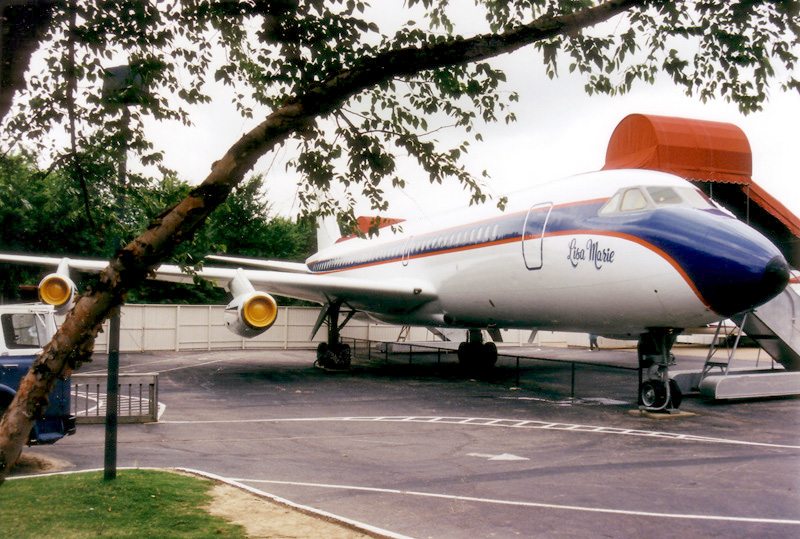
Global Airlines, a fresh face in transatlantic travel, is set to take off this May. The airline has opened ticket sales for its inaugural flights to a limited group of online users, with plans to expand the offer to the general public soon.
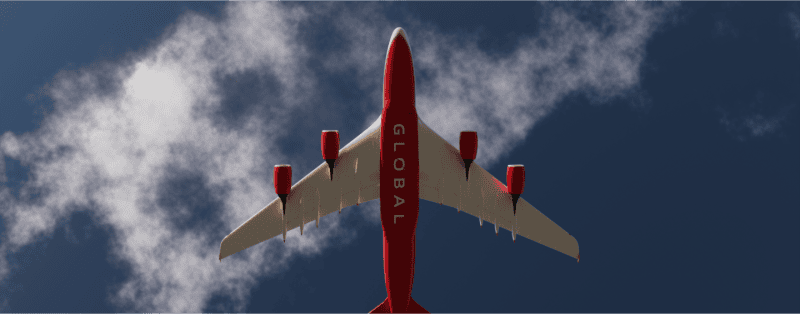
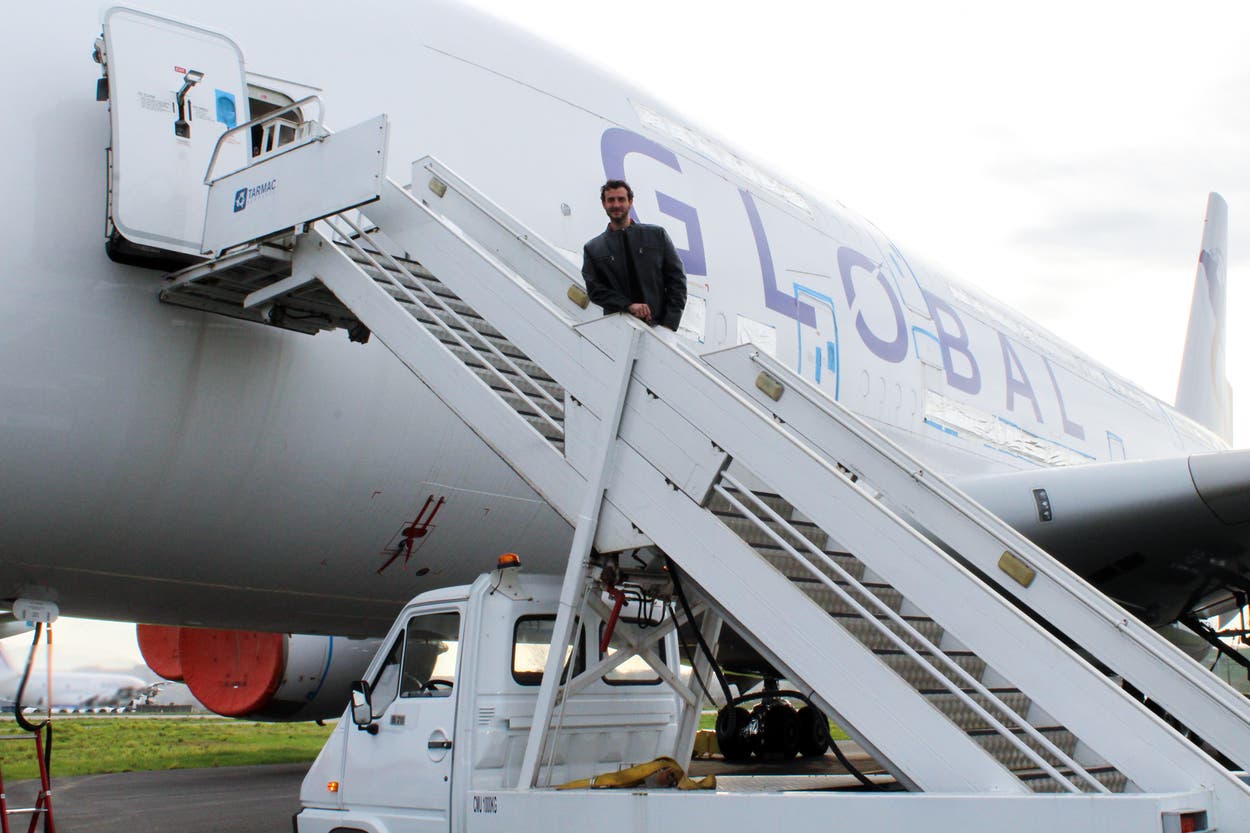
The London-based airline is launching with the world’s largest passenger jet: the Airbus A380, the biggest passenger plane in the world. James Asquith, the airline’s Founder and CEO, is confident that travelers are eager to fill the 550 seats on Global Airlines’ A380-800s.
‘We’re Leading With a Product’
Startup airline Global Airlines is slated to begin operations on 15 May 2025. Utilizing one of two Airbus A380s, the flight will depart Glasgow Airport (GLA) in Scotland at 1100 local time and make its way to New York’s John F. Kennedy International Airport (JFK).
The first two flights will operate as charter flights rather than scheduled operations. The A380 will return to Scotland four days later, on 19 May. The second A380 will depart Manchester Airport (MAN) on 21 May to JFK, then return on 25 May.
Tickets for the new airline are currently available to select early-bird members. Economy fare seats cost around $900 (£700) per passenger. Promotional materials advertise special amenity kits and gourmet meals for passengers.
While the airline previously promised an established route from London to New York, a schedule for this route has yet to be revealed.
The first flights will occur with the assistance of charter airline Hi Fly Malta. The airline needs the Civil Aviation Authority’s (CAA) Air Operator Certificate (AOC) before it can operate and sell tickets independently. As such, tickets will be available only through TravelOpedia Ltd to start.
‘I’ve Risked Everything’
Global Airlines was founded in 2021 by 36-year-old entrepreneur and travel mogul James Asquith. The ’40 Under 40′ businessman set a Guinness World Record by visiting 196 countries by the age of 24. Asquith is also the CEO and founder of the Airbnb-inspired travel site Holiday Swap.
The Independent interviewed Asquith about the upcoming airline and the pressure that comes with maintaining it:
‘It’s been a long road to get here. It’s those crazy kind of last couple of days and weeks looking to enter into service, and it has certainly not been easy…We knew it would be massively challenging. But we persevered, and here we are.’
Aviation experts have criticized Global Airlines’ launching with A380s, noting that British Airways has regularly faced costly problems keeping up with its fleet of 12.
‘No one’s started an airline by owning their aircraft and having the largest aircraft in the world…Everyone said it was impossible. We’ve done every milestone that people said was impossible.’
Asquith believes the high-capacity A380s will be very attractive to travelers, but also added that he has ‘sold and risked everything’ to launch this airline.
‘We’ve got a lot of people that want to fly on what we’re doing at Global. People can be critical, but you’ve got a good bunch of people trying to do something for good reasons here, and we’re almost there.’
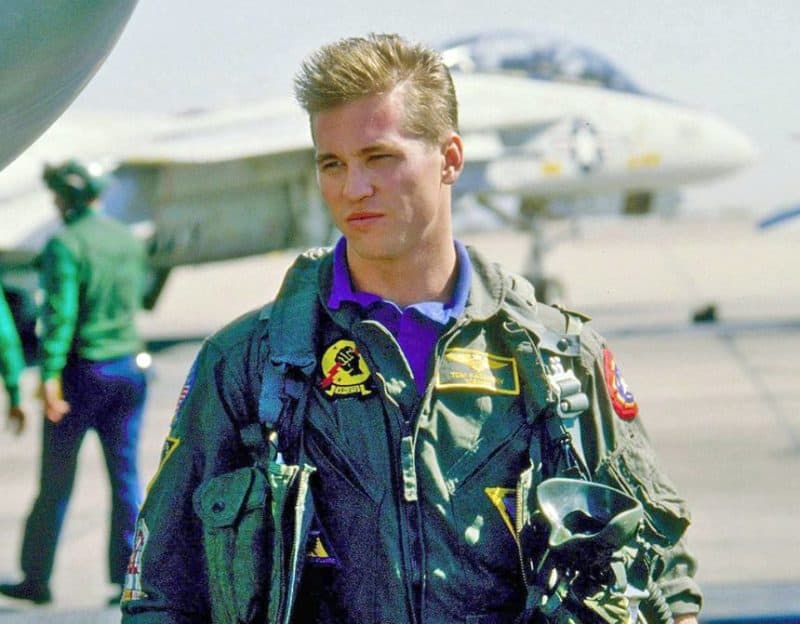
Iceman Val Kilmer, who we all know and love from the Top Gun movies, has passed away at age 65.
The last film he ever made actually was ‘Top Gun: Maverick’ in 2022, a final goodbye between Tom ‘Iceman’ Kazansky and Maverick (Tom Cruise).
Iceman Val Kilmer Has Passed Away at Age 65 6
Kilmer died of pneumonia
Kilmer’s daughter, Mercedes Kilmer, says he passed away due to pneumonia in Los Angeles, where the actor was born and raised.
Kilmer was diagnosed with throat cancer in 2015, but was able to recover. By the time Top Gun Maverick was filmed, he was using a breathing tube following a tracheostomy. That is why he wore a scarf to cover his throat in the film.
His health may have been in decline, but the chemistry between he and Maverick was still there like it was 1986 all over again (the original Top Gun).
Filming Together One Last Time in Top Gun Maverick was Emotional for Both Cruise and Kilmer
“It was like no time had passed at all,” said Kilmer about it in an interview with Entertainment Weekly. “We blew a lot of takes laughing so much. It was really fun. Special…”
“I was crying,” said Tom Cruise in an interview on “Jimmy Kimmel Live!” in 2023. “I got emotional. He’s such a brilliant actor, and I love his work. I’ve known Val for decades, and for him to come back and play that character — he’s such a powerful actor that he instantly became that character again. You’re looking at Iceman.”
Iceman and Maverick, Top Gun 1986
“I was very moved the first time I saw it. Almost 40 years is a long time for a reunion,” Kilmer told USA Today in 2022. “We laughed all day. Tom is great.”
Kilmer never actually wanted to do Top Gun
Life is funny isn’t it? Kilmer’s biggest role ever was arguably Iceman. As big as Top Gun was for his career, he initially did not want to do it. He had to.
Iceman Val Kilmer Has Passed Away at Age 65 7
Kilmer did not like the theme or story when he was presented with the film, but was legally obligated to do it. He reflected on that huge decision in his 2021 documentary, called “Val”.
“I thought the script was silly, and I disliked warmongering in films. But I was under contract with the studio, so I didn’t really have a choice,” said Iceman.
Kilmer had a legendary career
While many of us AvGeeks love Iceman the most for obvious reasons, Kilmer had an impressive resume of big hits. Personally, some of this writer’s favorites were Heat and Tombstone.
Iceman Val Kilmer Has Passed Away at Age 65 8
Blue Skies Iceman, and thank you for the memories and inspiration.
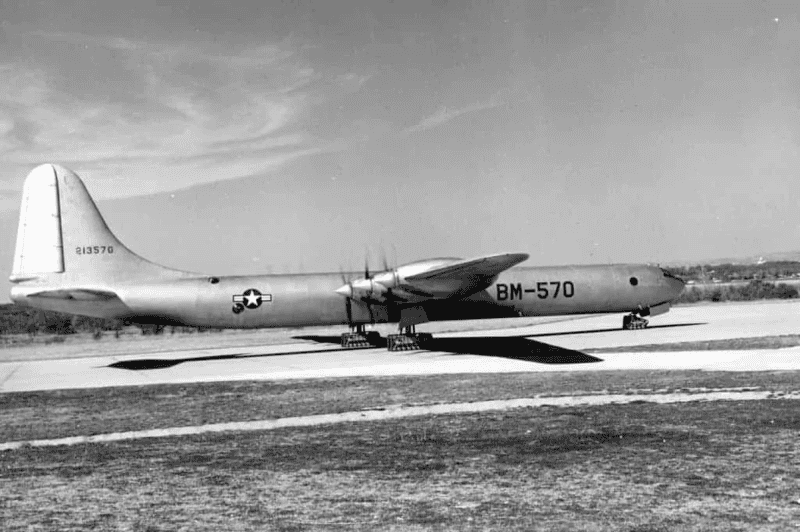
On 26 March 1950, a U.S. Air Force Convair B-36 bomber took off with tank-style tracks instead of tires for its landing gear.
Military planners were concerned that the B-36, at that time the heaviest aircraft in the U.S. inventory, was too heavy to operate from most airfields. The U.S. Air Force also tested tracks on several other aircraft. However, after a long series of failures, the Pentagon abandoned the idea.
Landing Gear Track System Installed on B-36 Bomber
The B-36 was designed during WWII. The Air Force considered it a potentially valuable asset as the U.S. entered the Cold War. Massive, with a maximum takeoff weight of 409,996 pounds, the B-36 could sink into the concrete of a flightline if it sat for too long. There were also very few runways in the United States that could hold up under the aircraft’s takeoff run.
Tracks installed on main landing gear of B-36 bomber. | Image: U.S. Air Force
The test program began with a maximum aircraft weight of 250,000 pounds. The Air Force first tested its ability to taxi and then decided to conduct a flight test. The B-36, with tracks, managed to take off for its first and only flight on 26 March 1950. The flight crew later said the takeoff was “very rough and noisy.” It landed after a brief flight. However, it left “a trail of parts” behind it on the runway.
The Air Force Tested Track Systems on Other Aircraft
The Air Force eventually decided the track system was “unfit for such a heavyweight aircraft” and abandoned the project. While it ultimately failed, the concept first appeared much earlier than 1950. In November 1939, J.W. Christie, inventor of the Christie tank and representatives of the Dowty Equipment Corporation, approached the Army Air Corps. They met with General H.H. Arnold in 1939 and presented an idea to use track landing gear systems for flotation.
Track landing gear system on A-20 Havoc aircraft. | Image: U.S. Air Force
In February 1942, the Air Force passed the design to the Goodyear Tire & Rubber Company to manufacture the A-20 track landing gear system. Under this arrangement, Goodyear, Dowty, and Firestone all produced components. They installed the rubber belted track system on a Stearman P-17, then on a Fairchild PT-19, and finally on the A-20. Initial testing proved that the system worked.
Breaking Belts and Excessive Weight
The A-20’s system was not retractable and had a conventional nose gear. Ground testing was somewhat successful, although one of the belts did fail. Another problem was that the system weighed almost twice that of the conventional landing gear. Its weight also required a 15% longer takeoff roll distance.
The track system was not successful on the P-40 fighter. | Image: Public Domain
The Air Force continued to examine track landing gear systems. One attempt was in 1943 on the Curtis P-40 fighter for operations from beaches. Testing in 1944 resulted in the track system becoming clogged with sod, mud, and snow, which stretched the belt. They also found the tracks did not enable the fighter to travel over ditches and other obstacles.
The Air Force gave up on using tracks on the P-40 but did test them, although with no success, on the C-82 and B-50. In 1948, the gear on the C-82 experienced structural failure during testing in sand, and the main gear track belt fell off. On the B-50, engineers discovered the track interfered with the defensive gun system. Goodyear, tasked to produce the belts, had trouble making them strong enough for the aircraft. They found they could not use the belts above 70 miles per hour.
The Air Force tested tracks on the C-82 landing gear. | Image: Public Domain
Eventually, during flight testing, the tracks had bearing failures, and the system had maintenance difficulties. The Air Force did not continue testing the tracks on the B-50.
Modernization of Airfields Eliminated Need for Tracks
The Air Force then considered using tracks on the B-36, but equipment failures were not the only thing that led to its ultimate abandonment. In the years following World War II, airfields capable of handling heavier aircraft were being developed, so tracks would not be necessary.
Curtis and the Air Force also changed the B-36’s design to a four-wheel landing gear setup instead of the original single-tire configuration.
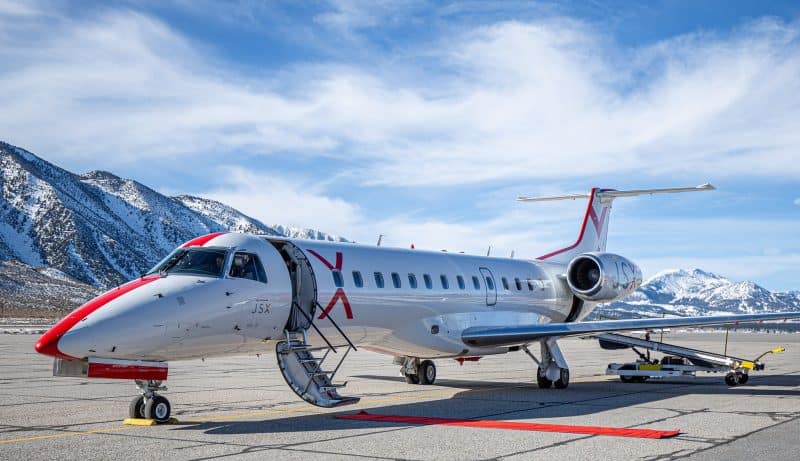
Not even a decade after its first flight, JSX has emerged as a fascinating anomaly in the U.S. aviation landscape.
Officially JetSuiteX (the company rebranded in 2019 to simply JSX), the carrier’s inaugural flight launched on 19 April 2016 between the California cities of Burbank (BUR) and Concord (CCR).
Headquartered in Dallas, Texas, and led by CEO Alex Wilcox, JSX operates as a Part 380 public charter jet service (not an “airline,” per corporate branding) under FAA Part 135 regulations. The carrier offers what it calls “hop-on jet service” that promises the allure of private aviation at a fraction of the cost.
Wilcox, who helped establish JetBlue and the short-lived Indian carrier Kingfisher Airlines, envisioned JSX as a solution to a gap in the market: delivering a private jet-like experience at commercial airline prices while sidestepping the hassles of typical airport travel.
As of March 2025, JSX has carved out an intriguing niche in American aviation with a fleet of 47 Embraer regional jets serving 22 destinations across the United States and Mexico. We first spotlighted the carrier at its launch, pondering whether its unconventional approach could endure.
Now, nearly ten years on, JSX has weathered industry storms—including a global pandemic—to survive and thrive, proving doubters wrong and reshaping perceptions.
Yet, JSX’s journey has not come without controversy.
Here are five ways this unique U.S. regional air carrier is redefining the semi-private niche.
1. A Clever Regulatory Play Defines the JSX Identity
Passengers wait for their flight inside a hangar | IMAGE: JSX
At the heart of JSX’s operation is a regulatory structure that sets it apart from traditional airlines. It operates as a Part 380 public charter, chartering aircraft from its subsidiary, Delux Public Charter, LLC (dba JSX Air or Taos Air), which flies under Part 135 rules.
JSX itself does not operate aircraft; instead, it resells seats on these chartered flights to the public. This distinction allows JSX to offer a published flight schedule–currently around 120 daily public charter flights–without being classified as a scheduled airline under the FAA’s more stringent Part 121 regulations.
Part 135 governs on-demand and commuter operations with aircraft up to 30 seats, imposing lighter requirements than Part 121. For instance, Part 121 mandates a 1,500-hour minimum for pilots and a retirement age of 65. JSX sets its own standards: 800 hours for First Officers and 1,500 for Captains, aligning with private jet standards but falling short of commercial airline mandates.
Because Part 135 operations face less stringent TSA requirements, JSX uses private fixed-based operator (FBO) terminals, offering a streamlined, private-jet-like experience with minimal security hassles. There’s no TSA security rigamarole—screening involves TSA-approved background checks, bag swabs for explosives, and the Evolv Express system, a discreet crowd-scanning technology.
However, this “public charter loophole” has drawn scrutiny from competitors and regulators, a point we’ll revisit later.
For aviation insiders, this is a masterclass in regulatory arbitrage. JSX’s CEO, Alex Wilcox, spent months dissecting FAA rules to craft this model, proving that innovation in aviation isn’t just about technology—it’s about working the system.
2. JSX Operates Retrofitted Regional Jets with a Twist
A trio of JSX Embraer regional jets on the ramp | IMAGE: JSX
JSX operates 47 aircraft: 15 Embraer ERJ-135s and 32 ERJ-145s, both regional jets sourced from the secondary market and retrofitted to seat 30 passengers–down from their original capacities of 37 and 50, respectively–to comply with Part 135 limits.
The ERJ-135s feature a 1×2 seating configuration, while the 145s offer a spacious 1×1 layout, with a single seat per side of the aisle. Overhead bins are removed for an open cabin feel. Seats provide a generous 35-36 inches of pitch and in-row power. Additionally, every JSX flight features a full flight attendant service.
The open cabin of a JSX Embraer ERJ-145 features 30 spacious seats in a 1×1 configuration | IMAGE: JSX
The ERJs’ range of around 2,000 miles suits JSX’s regional focus, and their commonality ensures manageable maintenance costs. These aren’t new airframes–the average fleet age is just under 24 years. Some passengers note that the aircraft show wear–especially the 135s–but retrofitting keeps capital expenses low.
In a recent Forbes interview, Wilcox revealed plans to add 20 more jets over the next two to three years, signaling fleet expansion to match growing demand.
3. The JSX Passenger Experience Redefines Convenience
Passengers board a JSX Embraer ERJ-145 | IMAGE: JSX
If you’ve ever dreamed of skipping the chaos of a major airport, JSX delivers. By operating out of FBOs at both small regional airports and larger hubs, JSX passengers need only arrive 20 minutes (not a typo) before departure.
You park, check in, and walk across the tarmac to board. Upon landing, you’re curbside in minutes.
Once on board, passengers enjoy complimentary gourmet snacks and drinks, including beer, wine, and cocktails. Every JSX flight features free Starlink Wi-Fi.
Two fare types cater to travelers: “Hop On,” with two free checked bags, and the premium “All In,” with three. Both accrue JetBlue TrueBlue points and United MileagePlus miles, a nod to JSX’s airline partnerships.
This efficiency is JSX’s biggest selling point. A flight from Burbank (BUR) to Las Vegas (LAS) might cost $219 (one-way fare for 28 April 2025 as listed on 31 March 2025)—competitive with Southwest—without baggage fees or the two-hour airport slog.
Routes span over 20 destinations, mostly in the western U.S., plus Cabo San Lucas, Mexico.
According to its website, the carrier serves 27 destinations as of 27 March 2025, including:
While some of the routes JSX offers are seasonal, the carrier boasts an average of around 120 daily flights.
The schedule isn’t as dense as a major carrier’s—750 weekly flights versus thousands—but it’s tailored for business travelers and leisure seekers who value time over frequency.
Frequent travelers will appreciate the trade-offs. The FBO model limits scalability, and parking and lounge amenities are sparse compared to main terminals. Yet, for short-haul flights (most under three hours), the time savings and relaxed vibe are hard to beat.
4. Success Breeds Contention
To commemorate its recognition as Travel+Leisure’s “No. 1 Domestic Airline,” JSX painted one of its E145s with the names of all its crew members, accompanied by the slogan “This is how we fly.” | IMAGE: JSX
JSX continues on a trajectory of steady growth. With nearly 1,000 employees, the carrier flew just over 36,000 flights in 2024 while continuing to score coveted industry accolades. And while it does not publicly release financial information, it’s safe to say JSX is on track to cross the ten-figure threshold in annual revenue within a few years, assuming current regulations hold.
But success has bred contention. Major airlines like Southwest and American, alongside unions like ALPA and AFA-CWA, argue that JSX’s model skirts safety and fairness. They claim its scheduled flights mimic Part 121 operations without equivalent oversight—laxer pilot rest rules, no 1,500-hour minimum, and lighter security. Southwest’s 2023 FAA filing cited a 9000% rise in sub-30-seat public charter flights since 2008, demanding uniform standards. Unions highlight post-9/11 security gaps, fearing a loophole ripe for exploitation.
JSX defends its record—zero incidents—and exceeds Part 135 requirements with voluntary measures. Indeed, JSX’s website notes the carrier’s deployment of airline-quality Flight Operations Quality Assurance (FOQA) programs, saying it utilizes “pilot and mechanic training, and other operating tools and safety assurance mechanisms not required by regulation.”
Spurred by these concerns, the FAA could force a Part 121 reclassification, threatening JSX’s business model. More than 70,000 public comments on the proposed rule changes have been received by the FAA–the overwhelming majority in support of JSX.
However, the verdict still looms as of this writing (New York Congressman Nick Langworthy reintroduced the Safer Skies Act last week). JSX believes this is a classic David vs. Goliath tale. Its success hinges on defending its regulatory edge, but the industry’s old guard isn’t backing down.
5. Bold Plans for a Hybrid-Electric Future
Artist rendering of a JSX ES-30 | IMAGE: Heart Aerospace
JSX’s vision extends far beyond its current footprint. In late 2023, the carrier announced plans to purchase up to 332 hybrid-electric aircraft. The potential aircraft options include:
Up to 82 Electra eSTOLs: A 9-seat hybrid-electric aircraft from Virginia-based Electra, requiring just 150 feet for takeoff and landing–roughly the size of a soccer field. It’s designed for very short-range routes like Dallas to Houston or San Diego to Los Angeles.
Up to 150 Aura Aero ERAs: A 19-seat Electric Regional Aircraft from French manufacturer Aura Aero. With 19 seats, it’s the smallest configuration not requiring a flight attendant, suited for short-range flights like Los Angeles to Las Vegas.
Up to 100 Heart Aerospace ES-30s: A 30-seat hybrid-electric aircraft from Sweden’s Heart Aerospace, tailored for medium-range markets under 500 miles. It’s a direct replacement for JSX’s current 30-seat jets on routes of similar distance.
Artist rendering of an Electra eSTOL 9-seat hybrid electric aircraft | IMAGE: Electra
The ES-30s will replace the ERJs on mid-range routes, while the ERJs stay for longer flights like NYC-Florida or Dallas to the coasts. These aircraft promise sustainability and access to tiny airports, though cost and certification remain hurdles.
Artist rendering of an Aura Aero Era 19-seat hybrid electric aircraft | IMAGE: Aura Aero
Is JSX the Future of Air Travel?
Three thumbs up from this JSX flight crew | IMAGE: JSX
JSX isn’t poised to replace Delta or United—it’s a regional player with a ceiling. Its 47 aircraft and limited routes pale next to the majors’ fleets and networks. The ERJs’ range limits it to short hops, ruling out transcontinental ambitions for now.
Yet, its impact resonates beyond size. JSX challenges the status quo, proving there’s demand for a hybrid between commercial and private aviation. Its fares—starting at $249 but often $300-$700 (one-way)—aren’t always cheaper than Southwest’s $49 specials, but the value lies in time and comfort, not rock-bottom prices.
The broader implication? JSX exposes cracks in the regulatory framework. If it thrives, others may follow, pressuring the FAA to rethink Part 135/121 boundaries. If it falls, the “public charter loophole” could close, stifling innovation.
Consequently, the saga of JSX should be viewed as a litmus test. Can a small operator redefine air travel without upending safety? Will hybrid-electric plans materialize, or will regulatory headwinds ground them? As of now, JSX flies on, a bold experiment in an industry resistant to change.
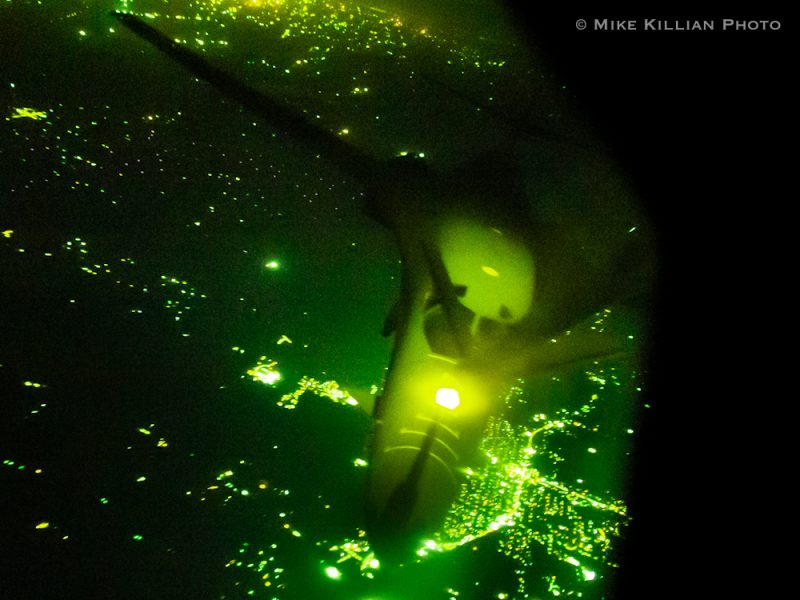
Recently, AvGeekery was invited to fly with the 22nd Air Refueling Wing on an amazing nighttime mission. Watch as B-1 bombers do aerial refueling training under a dark moonless night, captured in night vision at 20,000 ft!
Our KC-135 was scheduled for a sunset takeoff out of Wichita, with the 350th Air Refueling Squadron “Red Falcons”. The B-1s we were flying to meet were coming from the 7th Bomb Wing at Dyess AFB, TX. The mission was a collaborative effort between Mike Killian and Forbes, whose journalist went flying in a B-1 that day. You can read about it HERE.
Late night refueling training at 20,000 ft
Once in the air our tanker headed for the rendezvous. With the last light of sunset on the horizon the bombers came on the radio, informing us of their upcoming arrival.
While the pilots enjoyed the view and put the tanker in position, the boom operator and I transitioned to the refueling station at the rear of the plane to prepare.
Watch B-1 Bombers do Aerial Refueling in Night Vision 29Watch B-1 Bombers do Aerial Refueling in Night Vision 30
With a twilight horizon a B-1 finally appeared, call sign CROOK 1, slowly trailing us and creeping closer inch by inch. It all looks very graceful, even though both aircraft are flying at 300 mph.
Lights on the refueling boom connecting to the bomber help give both the pilots and book operator a descent visual. However, once the bomber disconnected it virtually vanished. Even feet away you could barely see it in the darkness. Just a black silhouette against a black background or city lights far below.
Watch B-1 Bombers do Aerial Refueling in Night Vision 31
One of the bombers was actually conducting a check-ride, so they did not actually take any fuel. Rather, the crew was training, connecting and disconnecting numerous times over the course of an hour as we flew high over Kansas.
Bomber gave us an afterburner as a thank you
With the refueling training done, the tanker informed the bomber that I was onboard to capture visuals. With gas to spare, CROOK 1 happily agreed to give us an impressive sendoff. You can watch it in the video above too.
Watch B-1 Bombers do Aerial Refueling in Night Vision 32
They pulled alongside our tanker, with only a wingtip light visible to us. Once I aligned the shot and confirmed the B-1 was in position, the bomber lot up all four of its afterburners and raced ahead, falling away and vanishing into the night back to Texas.
Mission accomplished. We headed home to McConnell, landing at midnight.
Just another day for our warfighters
While it was a huge privilege to join, and an experience that never gets old, these crews make it look easy. They do this work every day in service to our country, regardless of the noise happening constantly in news media and politics.
Watch B-1 Bombers do Aerial Refueling in Night Vision 33Watch B-1 Bombers do Aerial Refueling in Night Vision 34
Aerial refueling is a critical aspect of America leading the world in air dominance. As the saying goes, there’s no kicking as* without tanker gas.
We flew with the 22nd ARW late last year too, to refuel the Thunderbirds cross-country. It was an amazing experience, check that out HERE!
We also toured a KC-46 Pegasus at McConnell, America’s newest refueling tanker. Check that out HERE.
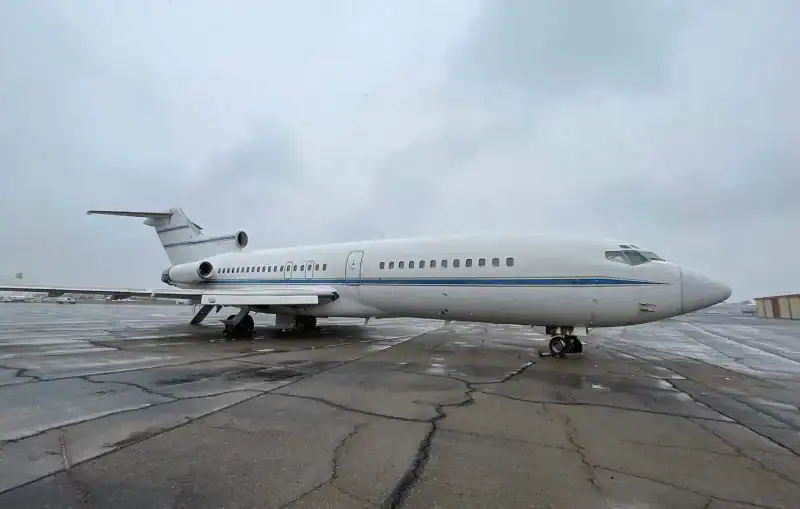
When you hear about a commercial Boeing aircraft being sold for cheap, you’re sure to expect some caveats. That much is true involving a Boeing abandoned at El Paso International Airport (ELP) for over 20 years.
Before the Boeing 727 ended up in El Paso, Texas, it was first owned by the U.S. Marshals Service. Here’s the story about the abandoned Boeing jet and what the new owner is considering doing with it.
Under the El Paso Sun
Boeing started production of the 727 in the early 1960s. The aircraft was more suited for smaller airports and had a unique feature: a set of stairs that opened from the rear underbelly. The 727s could carry up to 129 passengers and fly up to 2,590 miles on a tank of gas.
While this particular 727 was made in 1966 for Lufthansa, it was eventually owned by the U.S. Marshals Service. Designated for the Service’s Justice Prisoner and Alien Transportation System, or ‘Con Air’ system, officials used the jet to transport prisoners over long distances. The program opened in 1995.
Records reveal the jet was acquired by the Blue Falcon Corporation (BFC) in July 2005 during a government auction. BFC President David Tokoph was also the co-founder of Aero Zambia and Interair South Africa with his brother Gary and holds the distinction of being the first and only pilot to fly from Russia directly to El Paso.
No records indicate that Tokoph or one of his businesses had ever used the aircraft. To public knowledge, Tokoph had the Boeing grounded at El Paso Airport and was paying to leave it there indefinitely.
On 14 August 2015, Tokoph was involved in a horrific crash piloting a vintage Navy airplane near Las Cruces International Airport in New Mexico. He was transported via helicopter to University Medical Center in El Paso but died four days later. He was 64.
El Paso Passes Ownership of the Boeing 727
Due to Tokoph’s death, the El Paso airport stopped receiving payments to keep the Boeing 727 on its property. The City of El Paso commenced legal proceedings in 2021 to take ownership of the jet as abandoned property.
During that time, airport employees gutted the jet for parts. The city then decided to auction the plane off online in 2022, with the auction finally getting underway in December 2024.
The auction explicitly stated that the Boeing was inoperable and required more money than it was worth to refurbish. The initial bid on 16 December 2024 was only $1,000. Fifty-five additional bids were received before the auction closed on 6 January 2025.
The winning bidder was a local educator and entrepreneur named Ismael Lara, 40. He and his brother John paid $10,132, including taxes, to own the jet.
While the City of El Paso ordered the plane off the lot by February, it was reportedly still there in March when Lara went with El Paso Matters to take a closer look at it.
El Paso International Airport Director Tony Nevarez shared his thoughts on the sale of the Boeing to the local residents.
‘I’m kind of excited to see what the new owner does with it…Retired aircraft like this one often get turned into homes, bars, or even other creative spaces.‘
Lara, however, has been indecisive on what to do with the Boeing since purchasing it:
‘I have a ton of ideas, but at the end of the day, it’s going to come down to how much is it going to cost?’ Lara said.
Lara acknowledged that his followers also gave him many suggestions on social media.
The Lara brothers own some land on Red Sands in East El Paso, where they intend to move the Boeing. However, they could spend up to $250,000 — almost 25 times the cost at auction — to haul the plane out of the airport.
With the stated goal of achieving perpetual flight, Skydweller Aero Inc. is developing its autonomous Skydweller aircraft. It will feature advanced design features and technologies and meet various mission needs for governments and organizations worldwide. This unique aircraft will operate on solar power and initially be able to remain airborne for 30 – 90 days or more.
Solar-Powered Flight Across the Pacific
In 2015, the Solar Impulse 2 set the world record for the longest non-stop solo flight. Pilot André Borschberg flew from Japan to Hawaii, taking five days to complete the 5,095-mile flight.
Solar impulse 2 completed circumnavigation of earth under solar power. | Image: Skydweller Aero, Inc.
Several months later, Borschberg joined pilot Bertrand Piccard on the Solar Impulse 2 and began the first circumnavigation without fuel. The 24,854-mile trip began in Abu Dhabi and moved eastward over India, Myanmar, China, Japan, the United States, Europe, and back to Abu Dhabi.
Pilots André Borschberg and Bertrand Picard with the Solar Impulse 2 behind them. | Image: Skydweller Aero Inc.
Spanish-American Company Skydweller Aero Inc. Begins Autonomous Flights
In 2019, the Spanish-American company Skydweller Aero Inc. bought the Solar Impulse 2 to convert it to an unmanned drone. The initial plan was for it to be able to fly for months at a time while carrying heavy payloads. The company states its goal is to achieve perpetual flights.
After completing modifications, the Solar Impulse 2 flew with its new name, “Skydweller,” in November 2020. One key modification was adding a fly-by-wire control system to give it an autonomous control ability. Skydweller had a test pilot on the flight, but he flew from takeoff to landing without touching the controls.
Close-up image of Skydweller autonomous aircraft. | Image: Skydweller Aero Inc.
Self-Healing Software Key to Aircraft Reliability
One feature that allowed this was a system Skydweller calls “advanced self-healing algorithms” in the aircraft’s Vehicle Management System (VMS), which “enables a failed string to be autonomously shut down, fixed, and resurrected during flight to return the aircraft to quadruple redundancy.”
Self-healing systems, or code, provide automatic error detection, diagnosis, and software repair without human involvement. However, this system is far from the only advanced feature of the Skydweller.
Skydweller Boasts the Wingspan of a 747 and Weight of a Pickup Truck
The aircraft has a thin carbon fiber body, which gives it strength and durability and makes it very lightweight. Skydweller’s wingspan is 236 feet, which is longer than the wingspan of a Boeing 747. Its maximum weight is 5620 pounds, about the weight of a standard pickup truck, including a 220-pound payload capacity. It also has 2900 square feet of solar cells. More than 1400 pounds of batteries provide power during darkness.
Skydweller solar-powered aircraft flying at dusk. | Image: Skydweller Aero Inc.
Skydweller designed the aircraft to fly at 115 mph at about 46,000 feet–significantly lower than other solar-powered aircraft that fly much higher, between 60,000 and 75,000 feet.
Skydweller Maintains Perfect Safety Record
Skydweller continues to enjoy a spotless safety record.
“We describe ourselves as a ‘geoplane’ rather than a HAPS (high-altitude pseudo satellite, or platform station),” said Skydweller Aero CEO Robert Miller. “We operate in the medium-altitude range where most of today’s surveillance aircraft operate, but we deal with the limitations of weather and wind effectively through our mission planning and the robustness of our aircraft. It’s why we are the size we are and able to carry the meaningful payload that we can. This gives us a lot more operational flexibility than [HAPS operators] – we were flying over the Gulf of Mexico during the hurricane season. We have over 1,350 hours on the aircraft with a perfect safety record.”
Solar-Powered Airbus Zephyr Almost Sets Endurance Flight Record
Image showing light, thin airframe of Zephyr. | Image: Aaltohaps.com
One of the HAPS aircraft is the Airbus AALTO Zephyr. Weighing 165 pounds with an 82-foot wingspan, the Zephyr, like the Skydweller, is also solar-powered. It has completed a near-record 64-day flight, traveling more than 34,000 miles. On 18 August 2022, it was hours away from breaking the flight endurance record when it encountered strong winds over Arizona, broke up, and crashed. The 2022 incident marked the third Zephyr to crash, making Skydweller’s safety record even more impressive.
Unmanned Zephyr high-altitude platform station takes off. | Image: Aaltohaps.com
This development reflects a growing worldwide interest in using Solar UAV aircraft. Groups have proposed using them in Europe for missions, including monitoring nautical approaches to southern Europe to help detect and prevent illegal activities such as drug smuggling, illegal fishing, and unlawful immigration.
Spain has mentioned using them in the Canary Islands to monitor for drugs and human trafficking. The United States has shown the same interest in the Caribbean, as the French in Martinique, Guadeloupe, and French Guyana. There are also discussions about deploying the aircraft in Russia, South Africa, and throughout the Middle East.
Autonomous Skydweller in flight. | Image: Skydweller Aero Inc.
Microsoft is looking to make some strides with Japan Airlines onboard customer service. The two companies will work together to make writing reports simpler and quicker with the help of a Microsoft small language model (SLM).
While some incident reports can take flight attendants up to an hour to write up, the new technology will reduce the time it takes by ‘up to two-thirds.’
Speedy Reporting Like the Shinkansen
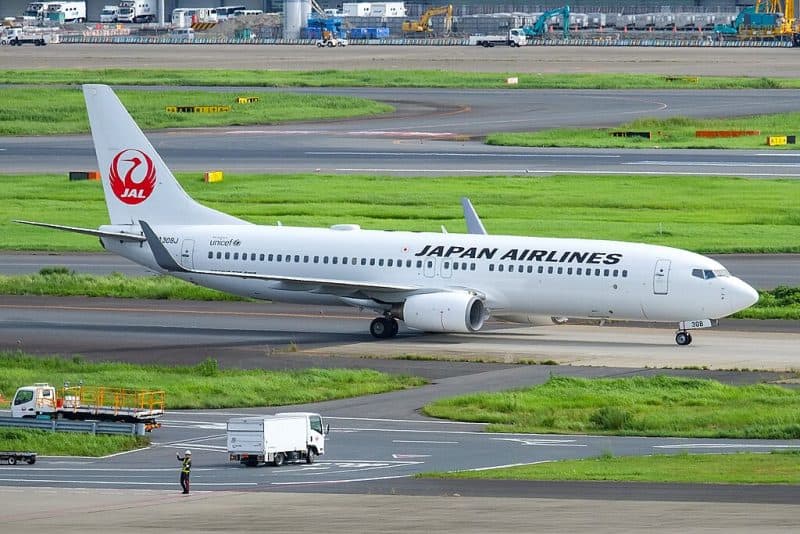
Japan Airlines and Microsoft have announced the development of a new mobile app for flight attendants, ‘JAL-AI Report.’ The app will use Microsoft’s Phi‑4 SLM and be powered by artificial intelligence (AI).
Using JAL-AI Report, flight attendants can complete reports in a fraction of the time it takes without using AI. The press release suggests an hour-long report can take 20 minutes to write with the app.
The airline chose Phi‑4 SLM as the app’s model because it can work with limited or no connectivity, so the app will work anywhere offline. Another main appeal of Phi-4 is that it requires less computing power than large language models (LLMs).
Microsoft uploaded a two-minute video that discusses the impact of JAL-AI Report and shows a visual demonstration.
JAL-AI Report’s Other Neat Features
Japan Airlines is currently working to add audio recording functionality to the app. This way, the app can record speech from other crew members or passengers and convert it into data for AI-generated reports.
Using Phi-4, attendants can automatically convert reports from Japanese to English with one on-screen button. This task will be crucial on international flights and will especially work to save time.
Headwaters AI engineer Ryuto Ikeuchi also added that JAL-AI Report can refine previously written reports that were either too detailed or not detailed enough.
Japan Airlines Senior Vice President of Technology Keisuke Suzuki shared comments during the Microsoft press release:
‘JAL-AI Report makes our cabin attendants’ jobs more productive. They can spend more time on customer service instead of doing administrative work…We are excited to have the AI and humans work together.‘
Japan Airlines has been collaborating with Microsoft on new tech development for many years. In 2016, Japan Airlines switched from Google Glass to Microsoft HoloLens for flight and inspection training.
A nuclear-powered rocket may sound like something from science fiction, but it might be the key to future commercial, military, and research missions to space. Some believe it will be essential for a successful mission to Mars. Recently, NASA and the Defense Advanced Research Projects Agency (DARPA) have taken several major steps toward making this happen.
NASA and DARPA Form Partnership on New Rocket Propulsion System
In January 2023, NASA and DARPA agreed to establish a partnership to develop and demonstrate that a nuclear-powered rocket could potentially take astronauts to Mars. The two agencies split the initial $499 million cost for the program.
The project’s goal is to design and demonstrate the world’s first in-orbit nuclear thermal rocket (NTR) under DARPA’s Demonstration Rocket for Agile Cislunar Operations (DRACO) program. Cislunar refers to an object between the Earth and the moon.
Lockheed Martin image of experimental vehicle with nuclear thermal rocket. | Image: Lockheed Martin
“With the help of this new technology, astronauts could journey to and from deep space faster than ever – a major capability to prepare for crewed missions to Mars,” said NASA Administrator Bill Nelson.
U.S. Space Force to Provide Initial Lift for Nuclear Rocket System
NASA, DARPA, and The U.S. Space Force will head the U.S. Government portions of the program. NASA’s Space Technology Mission Directorate will oversee the technical development of the nuclear thermal engine. DARPA is the contracting authority for the rocket stage and engine, including the nuclear reactor. The Space Force will provide the launch vehicle for the mission.
Safety is one of the project’s most critical aspects, leading to the need for the Space Force launch vehicle. As a safety measure, initial plans are to launch the NTR into orbit on a conventional, chemical-powered rocket and then start its nuclear rocket engine once it is a safe distance from the surface.
Lockheed Martin and BWX Technologies Collaborating on Launch Vehicle and Engine
Some advantages of this type of system are that it is lighter and more efficient than the chemical-based engines NASA currently uses. The NTR will use hydrogen gas because of its light weight. Chemical rockets make water vapor, which is heavier than hydrogen. This results in a rocket that can travel farther into space on less fuel.
Another advantage of using nuclear-powered rockets is that they will produce more power than current engines. The U.S. Department of Energy states that these engines will give rockets more speed, possibly reducing the travel time to Mars by 25%. Another expected advantage is that these faster rockets will be safer for astronauts as they will limit the time they are exposed to radiation during missions.
Infographic with details on nuclear-powered rocket engines. | Image: U.S. Office of Nuclear Energy
Work on Nuclear-Powered Rocket Began in 1955
The idea of developing a nuclear-powered rocket is not new. In 1955, the United States began research at the Los Alamos Scientific Laboratory on just such a concept with Project Rover. From 1959 to 1962, they began testing reactor designs and fuels. Then, in 1965, NASA joined with the Atomic Energy Commission to develop a nuclear-powered rocket for both long-range missions to Mars and to possibly use it as an upper stage for Apollo rockets.
Safety Concerns Put DRACO Plans on Potentially Long Hold
The initial goal for the DRACO program was to conduct a test launch in 2027, and plans seemed to be moving forward. However, in Jan. 2025, the DARPA-NASA management team in charge of the project announced they were placing it on “on indefinite hold.”
The announcement mentioned that Lockheed Martin and BWXT had run into problems designing an engine that they could safely test on the ground. DARPA explained the decision.
Sambora added that one of the program’s goals is still to conduct an in-orbit demonstration of the design, and that the problems they face are not “undoable” but rather “difficult.”
Safety Criteria Were Less Strict in the 1950s and 1960s
Jim Shoemaker, DARPA’s second DRACO program manager, referred to the early work on projects Rover and NERVA as “the time before safety was invented.”
He also said that scientists working on Rover and NERVA performed six open air ground tests of radioactive reactors between 1964 and 1969, “which we could never get approved to do today.”
Along with problems with testing safety, DRACO faces other challenges, such as storing hydrogen for the system once it reaches space. It does not appear that will happen in the next several years.
While today’s travelers dream of flying into Disneyland on electric vertical takeoff and landing (eVTOL) vehicles, flying into the park was once possible with a helicopter.
For over a decade, the Compton, California park welcomed visitors via helicopter from Los Angeles International Airport (LAX). The concept, however, proved it was way ahead of its time.
Los Angeles Airways Starts the Party
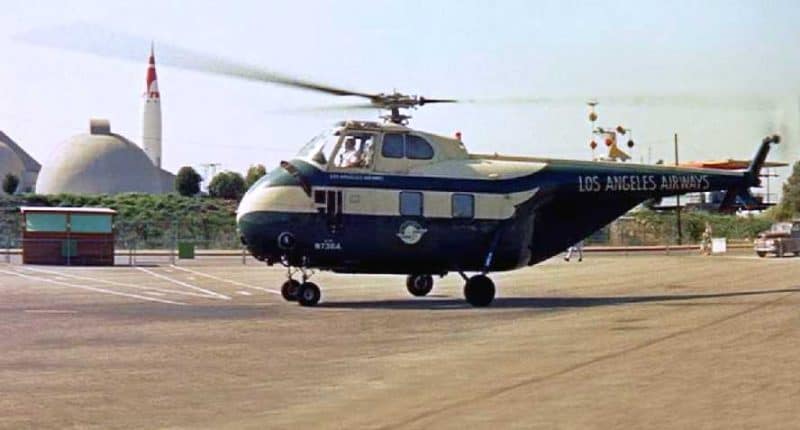
Los Angeles Airways (LAA) was founded on 1 October 1947. At the time, the cargo-only airline offered priority mail deliveries utilizing six new Bell 47D helicopters.
Soon after, the carrier obtained Sikorsky S-51s, which made rooftop mail deliveries and, later, human transportation possible. The company was considered the ‘world’s first helicopter airline.’
The airline frequently flew to and from Los Angeles International Airport (LAX) to deliver mail. In the early 50s, LAA formed a network connecting various metropolitan areas in Los Angeles and other parts of Southern California.
In 1956, Disneyland became the airline’s latest destination just one year after the park’s grand opening. From there, the carrier established a route that whisked vacationers from LAX to the park entrance in a mere 20 minutes. The new route allowed travelers to ride a helicopter from the airport into Disneyland without the hectic LA traffic in between. The park named its new heliport ‘Anaheim-Disneyland Heliport’.
Around this time, the airline had several S-55s, which could carry up to 12 passengers at a time. Disneyland operated four flights daily to and from the park.
The heliport was located right next to the newly built Disneyland Hotel. The route was advertised in magazines and travel guides as ‘the fast, convenient way to Disneyland in only 20 minutes.’
Unfortunately, the heliport made needed expansion at Disneyland almost impossible. Disney would build a new heliport in 1957, then another in 1960.
In 1962, LAA upgraded its fleet with four $650,000 Sikorsky S-61s. These new helicopters came with 28 seats, safety features, and capabilities for rainy or windy flights. These vessels could also travel up to 100 miles per hour and carry almost double the load capacity of the S-55.
Even though the Heliport was widely popular, a former Disneyland employee on TikTok claimed the venture was only profitable due to government subsidiaries and the deal with LAA.
A Pair of Tragedies Shuts the Airline Down
On the evening of 22 May 1968, one of the LAA S-61 helicopters crashed in Paramount, California, en route from Disneyland to LAX, killing all 20 passengers and three crew members on board.
The National Transportation Safety Board (NTSB) summarized that one of the blades hit the fuselage during flight, causing the crash. This malfunction proved fatal, causing the helicopter to break apart midair and plummet onto a dairy farm.
The Los Angeles Times at the time reported that a Berkeley Professor, a Hunt-Wesson Foods executive, and the Mayor of Red Bluff, California, were among the casualties.
A second crash occurred on 14 August 1968. This tragedy claimed 21 lives, including three crew members. Like the crash less than three months earlier, this accident happened during the early evening hours. However, the route for this flight was LAX to Disneyland.
The NTSB confirmed that the crash occurred due to a ‘fatigue failure’ in one of the helicopter’s blades. This blade detached from the spindle, causing the helicopter to lose control and plummet to the ground.
Scrutiny from the dual S-61 crashes caused the public to shun the airline. Along with ongoing costs and competition from ground-based services, LAA closed its doors in 1971.
Disneyland revived the helicopter routes in 1972, this time with Golden West Airlines. The endeavor only lasted five months before the idea was nixed for good. A couple of factors contributed to this service’s lack of popularity: the increase in fares from $4 to $16, noise complaints from nearby areas, and negative experiences from passengers.
A Cessna 172 holds the record for the longest endurance flight in history: 64 days, 22 hours, and 19 minutes from 4 December 1958 to 23 January 1959. Flying over Nevada and California, pilots Robert Timm and John Cook took turns at the controls while the other rested. During their world-record flight, Timm and Cook flew 150,000 miles nonstop, the equivalent of six trips around the world. To complete the endurance flight, they used some innovative modifications and methods.
Cessna introduced the 172, a single-engine, high-wing four-seat plane, in 1956. The standard engine was a six-cylinder Continental O-300 that produced 145 horsepower and handled a maximum takeoff weight of 2,450 pounds. The 172’s normal range was about 736 miles at 140 miles per hour.
Pilot Robert Timm Requested a Special Engine
The aircraft Timm and Cook used had about 1500 hours on the airframe and about 450 hours on the engine. Timm decided early on to replace the engine. He contacted Continental Motors and told them about the plans for the long flight. He asked if they would provide a “special engine,” and they agreed.
It wasn’t until years after the flight that one of the mechanics working on the 172, Irv Kuenzi, found out just how special the new engine was. According to Kuenzi, Continental’s sales manager worried that if they built and donated a special engine, others would soon be asking for the same thing. The manager then told a fellow worker to go to the production floor and pick the new engine she liked best. Continental sent this “special” engine to Timm and Cook.
Innovative Ideas for Combustion Chamber, Oil, and Spark Plugs
Another issue was maintaining the engine oil and spark plugs while airborne. Oil changes typically occur every 50 to 100 hours, so that would not be possible in flight. To address this, Timm and Cook designed an electric pump system to circulate fresh oil from a reserve tank while draining the used oil into another tank.
One of the pilots performing in-flight maintenance. | Image: Planehistoria.com
They realized spark plugs would probably need to be replaced. To this end, they carried spares and tools and installed access panels over the engine cowling. Timm and Cook could open these panels and change spark plugs while the engine was running. After this, they still needed to modify the plane’s interior.
Interior Modifications Made Space for Sleeping and Supplies
The modifications included removing all furnishings except for the pilot’s seat. They put in a foam mattress and storage for food, water, and other supplies. They added a small stainless-steel sink for washing in the aft of the plane. Yet another modification was to replace the co-pilot’s door with a folding door and a small platform or step to make it easier to bring supplies onboard.
That left the question of fuel. Timm and Cook installed a 95-gallon belly tank to supplement the 47 gallons the plane carried in its wings. Adding the tank required attaching an electric pump to transfer the fuel in the lower tank to the wings. Of course, this was not enough fuel for what they hoped would be the longest endurance flight ever.
A Unique Ground-to-Air Refueling Method
Initially, Timm and Cook considered using air refueling from other aircraft but ultimately decided that would be too expensive and complicated. So, instead, they chose to rely on a ground-to-air system. For this, they fitted a truck with a fuel reservoir, a fuel pump, and a hose. The pilots would lower a winch from the Cessna to grab the hose and pull it up to a connection on the belly tank. The pump would fill the belly tank in about three minutes.
Ground-to-air refueling during world record endurance flight | Image: Pilots of America
While this happened, the truck needed to be on a long, straight stretch of road. The plane and truck also had to be at identical speeds, which required skillful drivers and close coordination. The Cessna 172 cruised at 140 mph and would stall at 54 mph. During the flight, they refueled the plane twice daily and 128 times in total.
Different angle showing low-level refueling operation | Image: Disciplesofflight.com
The pilots needed other support besides fuel. They lowered a bucket tied to a rope, and ground crews would fill it with food, water, and other supplies.
Flight Stayed Mostly Over Desert Areas of Southwest U.S.
Timm and Cook took off from McCarran Field (now Harry Reid International Airport) in Las Vegas on 4 December 1958. They mostly stayed over open desert areas between Las Vegas and Blythe, California, during the flight.
Timm and Cook during their historic flight | Image: Howard W. Cannon Aviation Museum
Each Pilot Took Turns Flying and Resting During the Flight
They established a schedule of flying and resting on four-hour shifts. The plane also had blankets, pillows, and a foldable camp toilet. With this schedule, it was no surprise that they suffered from fatigue, which almost led to disaster. Before dawn on 9 January 1959, the 36th day, Timm fell asleep at the controls. Luckily, they were at 4000 feet at the time, and the wing-leveler autopilot on the plane kept it steady.
Finally, on 23 January 1959, as maintenance issues became too critical, Timm and Cook decided to land. By then, the autopilot had cut out, and the generator, tachometer, cabin heater, landing and taxi lights, belly tank fuel gauge, electrical fuel pump, and winch had all stopped working.
The Record-Setting Endurance Flight was a Success for the Pilots, Plane, and Sponsor
They touched down at McCarran after setting a record for endurance flight that still exists. In every way, the flight was a success. The pilots were safe, and the mission proved the reliability of the Cessna 172. It was also a successful promotion for the Hacienda Hotel in Las Vegas.
Its owner, Warren “Doc” Bailey, had viewed the flight as an opportunity for good publicity, and he agreed to sponsor it. This covered costs for the modifications, fuel, and other supplies. During the flight, the hotel’s cooks provided meals for the pilots. Bailey did ask that “Hacienda” be painted in large letters on each side of the fuselage.
Record-setting Cessna 172 on display at Harry Reid International Airport. | Image: Harry Reid International Airport
The hotel also rewarded Timm and Cook well for their successful mission. They received $1000 for each day of the flight and an additional $10,000 for breaking the endurance flight record. Their Cessna 172 is now on display inside the baggage claim area at Las Vegas Harry Reid International Airport.
You’ve heard of TV shows getting canceled after one episode, but what about an airline that got canceled after just one flight? According to a book titled Commuter Airlines of the United States by R.E.G. Davies and I.E. Quastler, one Florida airline has this dubious honor.
While many airlines today go by ‘Sun Air,’ a regional airline known as ‘Sunair’ lasted less than 24 hours. This airline was slated to provide plenty of air travel throughout Florida. Unfortunately, several financial setbacks stopped the airline dead in its tracks.
Sunair Rises and Sets
Sunair was founded in 1980 by a Fort Lauderdale accountant named A. Wayne Lackey. At the start of the decade, Florida had already been bustling with regional airlines such as Air Florida, Florida Airlines, Southern Airways, Provincetown-Boston Airline, and Shawnee Airlines.
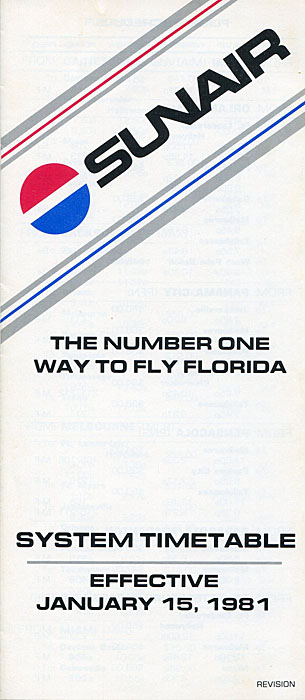
Still, Lackey insisted that his airline would be a hit with state travelers. The airline launched a marketing campaign featuring a Pepsi-esque logo and the tagline ‘The Number One Way to Fly Florida.’
The founder took out television and newspaper ads to promote the airline and its vast network of 15 key locations. These included the base of Fort Lauderdale (FLL), Miami (MIA), Tampa (TPA), Jacksonville (JAX), Pensacola (PNS), and Orlando (MCO).
This commercial was even created by Bo Gehring and Associates and was found inside a company demo reel from 1983.
A marketing pamphlet also advertised the airline’s launch date of 15 January 1981. Unfortunately, this did not happen.
Lackey Wasn’t So Lucky
Despite the Florida airline’s lofty ambitions, Lackey didn’t have the proper planning or finances to live up to them. Before even buying a single plane, Lackey had hired over 400 employees to manage flights.
Sunair was reportedly in talks with Swearingen to order four Metroliners in December 1980. However, something happened on SunAir’s end that left the airline empty-handed.
‘We don’t know why Sunair didn’t want to pay for them,’ a Swearingen spokesperson told local paper Florida Today dated 27 February 1981.
By the time the anticipated start date came around, the airline reportedly still had no aircraft to its name. According to the same article from Florida Today, Lackey stated he declined to purchase the aircraft because Swearingen only had two aircraft ready when it promised four. Lackey ‘hoped to have one aircraft’ by the following week.
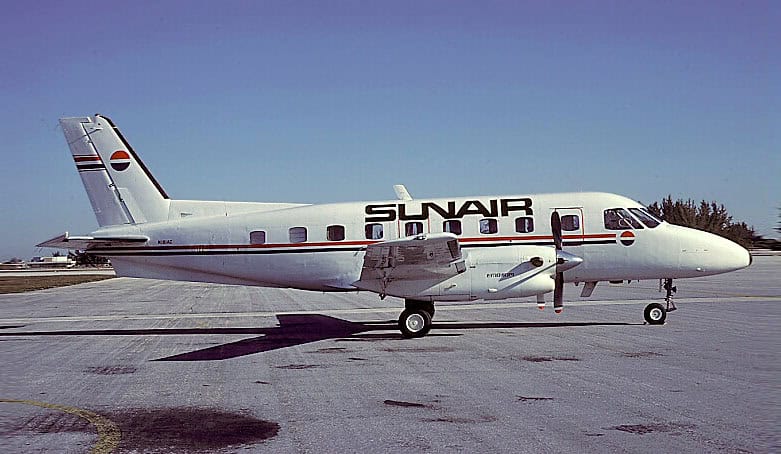
While Lackey was counting on having a fleet of brand new Metroliners, he could only cobble together money to lease one Embraer EMB 110 Bandeirante, which was reportedly much slower in comparison. The Embraer came from Charlie Hammonds Flying Service in Louisiana.
‘Fly Until the Money Runs Out’
Sunair’s only day of service was 17 March 1981. The airline took just one flight from Fort Myers to Miami. Prior to the flight, Lackey reportedly gave the pilot a stack of cash and told him, ‘Fly until the money ran out.’
The airline closed down immediately afterward. While Sunair reportedly had hundreds of customers booked for flights, they all had to be canceled as the company had debts of over a million dollars.
Ten days later, Sunair filed for bankruptcy protection. Lackey insisted he could persevere and help Sunair through bankruptcy, but alas, the airline did not live to see another day.
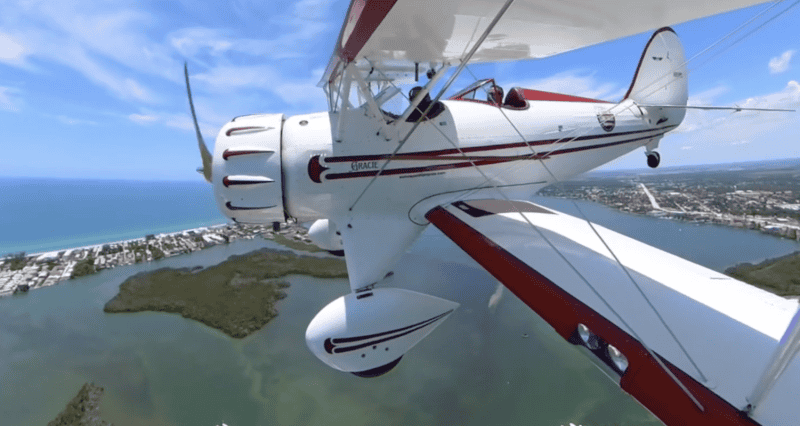
A unique opportunity to fly in a 1930s design WACO YMF-5 biplane awaits tourists and residents of Southwest Florida. Suncoast Biplanes operates their YMF-5C Super, nicknamed “Gracie,” flying guests over local towns and waterways. Gracie was actually built in 2000 and gives Suncoast’s customers the experience of flying at less than 1,000 feet in an open cockpit.
Waco YMF-5 Biplane was Originally Built in 1932
The Weaver Aircraft Company began manufacturing and testing aircraft in 1919. They built them by hand, which continues to this day. The YMF-5 launched in 1932, with production continuing on the type until 1947. Following WWII, the company lost business and closed down.
View of the tail of Suncoast Biplanes YMF-5 WACO biplane, “Gracie”. | Image: Bill Lindner
In 1986, the Classic Aircraft Company in Lansing, Michigan, resumed production of the YMF-5 aircraft. At that time, a number of these planes were still in operation. Although some original YMF-5s remained airworthy, the company opted to manufacture new ones. They utilized the original 1935 type certificate and obtained FAA approval to restart production.
Each Waco YMF-5 is Handmade, Requiring Over 6,000 Labor Hours
The company, now known as WACO Aircraft Corporation, currently produces 15 YMF-5 biplanes annually. Each aircraft is entirely handmade and requires 6,000 labor hours and 5,000 parts to build. These are new aircraft built to the original specifications but with some key improvements.
While using the original design, the newer YMF-5s included more than 300 engineering changes, redesigns to over 1400 drawings, and the development of new tooling for production. Perhaps the most significant modification was to replace the original mild steel tubing in the fuselage frame with high-strength 4130 steel. This lighter steel receives an internal corrosion-resistant treatment and external epoxy coating.
Polyester Skin Material Replaces Cotton and Linen
Another key modification was to replace the original cotton or linen fabric covering on the wings with a modern polyester material called Ceconite. This material is stronger, more durable, and easier to work with.
Sitka Spruce Still Used for Internal Wing Spars
One thing that didn’t change was the material for the wing spars. Waco uses Sitka spruce, the same wood used in the original YMF-5s and other aircraft in the 1930s. It is both light and strong. It also has a clear, straight grain and is resistant to rotting. The wing ribs are wood truss structures with gussets, glue, and staples fastening the components.
Sitka spruce internal wing components still used in new Waco YMF-5 biplanes. | Image: Suncoast Biplanes
The YMF-5 is a two-seat aircraft, with the pilot in the rear cockpit. With a small tailwheel and two landing gear forward, it is impossible for the pilot to see forward while taxiing in a straight line. Therefore, they have to taxi in a broad S pattern which lets the pilot see forward along the left and right of the fuselage.
Rear cockpit of the Waco YMF-5 biplane “Gracie” at Suncoast Biplanes. | Image: Bill Lindner
Dr. Gareth Williams is the primary pilot and owner of Suncoast Biplanes. He and his wife, Joy, opened the business in June 2024. Gracie is a 2000 model, which they purchased from an owner in northern Florida. As the aircraft was still relatively new and in good condition, Williams only made one major modification–replacing the engine. The original YMF-5s had Jacobs R775 seven-cylinder radial engines rated at 225 hp. Versions of these engines appeared in other aircraft from the 1930s until 1959 when Jacobs stopped making them.
2000-Built “Gracie”: A Handcrafted Revival of the Original YMF-5
The modern iteration of the WACO YMF-5 biplane offers two variants of the Jacobs R755 radial engine. Gracie, a meticulously restored example, is equipped with a refurbished R755 B2-M featuring a carburetor. New production aircraft from WACO, however, incorporate a fuel-injected version of the same powerplant.
Williams sourced his overhauled 7-cylinder Jacobs R755 from Air Repair, a respected radial engine specialist based in Cleveland, Mississippi. Installation was completed by a technician at Suncoast Biplanes’ facility at Punta Gorda Airport. Producing 275 horsepower, the engine delivers a climb rate of 770 feet per minute and a cruising speed of 110 mph.
Closeup of engine cylinders on Jacobs R755 engine on Suncoast Biplanes Waco YMF-5 biplane. | Image: Bill Lindner
The YMF-5’s biplane configuration enhances lift, enabling Gracie to maintain controlled flight at speeds as low as 85 mph. During passenger flights, Williams typically operates between 500 and 1,000 feet.
Originally from the United Kingdom, Williams began flying at 17 with the Air Training Corps (ATC), logging his first flight in a glider. Now a certified flight instructor with experience across numerous aircraft types, he bought his first biplane–a 1942 Stearman–in 2010.
Gareth Williams Launched a Nonprofit Operating Flights for Grieving Families
In 2013, after a career in management consulting within the biotechnology and pharmaceutical sectors, Williams transitioned to aviation full-time. The following year, he established Fly Hope Dream, a non-profit providing flights for families of children with life-threatening illnesses, those mourning a child’s loss, and survivors of natural disasters. His cross-country missions stretched from Pennsylvania to California.
Suncoast Biplanes Offers Tour Packages in Southwest Florida
“Gracie” banking over Charlotte Harbor | Photo: Suncoast Biplanes
Suncoast Biplanes operates out of Punta Gorda Airport (PGD) in Southwest Florida, where Williams is joined by pilot and A&P mechanic John Manchester, who oversees much of Gracie’s maintenance. The outfit offers year-round flights along the coastal regions near Punta Gorda, with tour options extending up to 90 minutes and showcasing harbors and beaches.
Gracie accommodates two passengers, having carried adventure-seekers from 6 to 86. Williams also provides an aerobatic experience, guiding Gracie through loops, rolls, and hammerhead maneuvers.
Image from forward cockpit of Waco YMF-5 biplane just after takeoff from Punta Gorda Airport. | Image: Bill Lindner
On Tuesday, 18 March 2025, I arrived at 1430 local time for a flight with Suncoast Biplanes. Williams and his wife, Joy, gave me a very friendly greeting and talked with me about their YMF-5 and their business. Following a safety briefing, we headed to the ramp, where Gracie’s beautiful white and red livery distinguished her from the muted tones of neighboring aircraft.
Williams took me through a detailed preflight inspection, emphasizing aspects unique to a classic biplane. He checked the tension on the struts and wires connecting the wings and the movement of the flight controls.
Wooden Dowels Reduce Vibration on Wing Support Wires
A notable design feature of the YMF-5 biplane is its use of wire stays to reduce vibration. These are wooden dowels notched to secure flying and landing wires, reducing vibration and wire fatigue.
The inspection extended to the airframe to check for damage on the wing and fuselage skins, tire wear, or oil leaks. Opting to top off the fuel, Williams summoned a truck, climbed atop the wing, and filled the tanks via overwing caps. Once the tanks were full, we climbed into Gracie and strapped into the seat and shoulder belts.
Jacobs R755-B2M Engine Provides Plenty of Power
With Williams in the rear cockpit, I was unable to see him. So, communication relied on headsets. He started the engine. The Jacobs R755 roared to life, and after a brief warm-up, we taxied to the runway. With a smooth application of power, Gracie accelerated briskly, lifting off after a short roll. Sitting just behind the rumbling radial engine was much different than being inside a pressurized jet.
Fun Flying Over the Coastline at 500 feet in an Open Cockpit
Clear view of the Gasparillia Lighthouse from 500 feet over Boca Grande. | Image: Bill Lindner
We banked west over Punta Gorda and the northern end of Charlotte Harbor. Cruising at 100 mph and 1,000 feet, the water’s details were vivid. Descending to 500 feet along Boca Grande’s coastline, we had a very close view of the sprawling homes and resorts along the beaches.
Flying at just under 1000 feet provides excellent views of the Florida coastline. | Image: Bill Lindner
The route continued south to Pine Island, then east across Charlotte Harbor, before returning north to the airport. The landing was seamless, the open cockpit amplifying the rush of air as we decelerated.
As it was the day’s final flight, Williams taxied Gracie back to the Suncoast hangar and we called it a day.
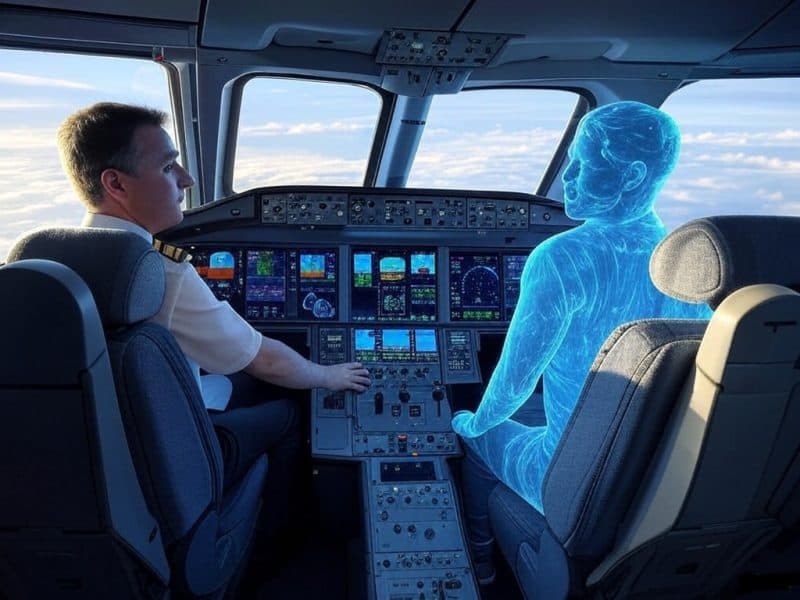
The aviation industry teeters on the edge of a profound change: Single-Pilot Operations (SPO).
SPO (or SiPO) is the concept of operating commercial flights with only one pilot instead of the current standard of two.
Commercial aviation has relied on a minimum of two pilots in the flight deck in recent decades–a standard borne from necessity and refined by technological advances.
Propelled by technological strides and economic urgency, SPO ignites a debate transcending mere innovation. Is it a feasible, safe, and publicly acceptable alternative?
If history is any indication, SPO represents a fundamental shift that could redefine aviation, like the introduction of jet engines, fly-by-wire technology, GPS navigation, paperless flight decks, and composite materials. However, unlike those advancements, which improved safety and efficiency, SPO raises critical concerns about redundancy, risk mitigation, and public trust.
Proponents see it as an inevitable evolution. Corporations see it as a money saver. Airlines see it as a way to reduce costs and mitigate chronic pilot shortages.
Opponents call it a reckless gamble with safety.
So, how close are we to seeing single-pilot commercial operations? Let’s examine how we got here.
A Historical Perspective: From Crowded Cockpits to the Two-Pilot Norm of Today
The flight deck of a Pan Am Boeing 314 Clipper, circa early 1940s | IMAGE: Airliners History on Facebook
SPO isn’t the first radical idea to challenge aviation norms. In the 1950s, it was common for commercial flights to have up to five crew members on the flight deck: captain, first officer, flight engineer, navigator, and radio operator.
With the advent of new technology, some crew roles became obsolete. Flight engineers began disappearing with the launch of the Boeing 737. The transition continued for the next two decades as glass cockpits–such as those on the Boeing 767 and the Airbus A300–entered the scene in the 1980s.
These shifts weren’t seamless; they demanded rigorous testing, regulatory nods, and pilot retraining, but they stuck.
Automation has become the unsung hero of modern aviation–yet it’s not flawless. Human pilots step in when systems falter, proving their worth in split-second decisions and complex crises.
Now, SPO proponents propose cutting that human presence in half. With an ongoing pilot shortage and rising costs, they see the concept as a lifeline to trim costs and crew needs.
But at what price?
The Push for Single-Pilot Airliners
Rendering of a single-pilot flight deck in the future | IMAGE: Airbus
Europe’s leading the charge. Airbus is forging ahead with its extended Minimum Crew Operations (eMCO) concept. This controversial plan would allow single-pilot operations during cruise. Airbus is eyeing its new A350F freighter, due for delivery to Singapore Airlines and Cathay Pacific beginning in 2027, as a proving ground for the concept.
Meanwhile, the European Union Aviation Safety Agency, or EASA (the European equivalent to the FAA), is crafting a safety-risk assessment framework under its eMCO-SiPO project. Though, regulatory green lights won’t flash before 2027.
Cargo flights could test the waters by the early 2030s, says the Royal Aeronautical Society, but the timeline for passenger jets is at least a decade away–probably more.
IMAGE: European Cockpit Asssociation (ECA)
This drive stems from economic pressures: rising costs and pilot scarcity are squeezing airlines. Boeing’s 2024 forecast of 674,000 new pilots needed over two decades underscores this issue.
Additionally, technological advancements, like Airbus’s Project Morgan, propose AI-driven cockpits and ground-based support to replace the second pilot. However, pilot unions–like the Air Line Pilots Association (ALPA), the European Cockpit Association (ECA), and Britain’s BALPA– are sounding the alarm, accusing industry giants of chasing profits over passenger safety.
SPO in the Wild: Real-World Trials
A U.S. Air Force KC-46 Pegasus from McConnell Air Force Base’s 22nd Air Refueling Wing (U.S. Air Force photo/ Staff Sgt. Devin Rumbaugh)
Reduced crew operations (RCO) have already taken flight in controlled settings. In 2020, Airbus marked a milestone in aviation history with the A350-1000, completing a fully autonomous flight–takeoff to landing. The experiment relied on advanced automation and onboard vision systems, sans human intervention.
On this side of the Atlantic, the United States Air Force pushed boundaries in 2022, flying a KC-46 tanker without a co-pilot, leveraging cutting-edge tech to execute a mission solo.
These feats spotlight automation’s potential, yet they remain outliers–military and test scenarios far removed from the complexities of commercial passenger service. Still, they fuel the case for SPO and RCO, offering glimpses of a future where machines shoulder more of the load.
Can AI-Driven SPO Match the Two-Pilot Gold Standard?
Transaero Boeing 777-212ER cockpit – aircraft is landing at Sharm-el-Sheikh Airport in Egypt | Wikimedia Commons
At the heart of the SPO debate lies an underlying truth: safety is non-negotiable.
Modern airliners are engineered for two-pilot crews, with redundancy as a cornerstone–dual engines, hydraulics, and human oversight. Removing one pilot dismantles this critical backup and greatly amplifies risk. Much like driving automated driving vehicles, SPO introduces two categories of potential peril.
First, an AI system malfunction could overwhelm a lone pilot, forcing them to simultaneously control the aircraft and diagnose the failure without human assistance–a daunting, if not impossible, task. Second, untested scenarios, such as a bird strike shredding a leading edge, thrust the aircraft into a test-pilot realm where AI’s response remains unknown.
Decades of NASA and FAA research, reinforced by a 2024 ALPA white paper, reveal that single-pilot simulations strain workload to unsustainable levels, eroding performance in emergencies. EASA’s eMCO-SiPO framework aspires to “equivalent safety” through advanced automation and remote assistance, yet its blueprint lacks clarity.
Beyond technical risks, human discretion remains irreplaceable. Complex emergencies often demand pilots deviate from standard checklists, drawing on deep knowledge and experience to improvise. After all, no two emergencies, such as engine fires or sudden structural failures, are the same. Can AI muster the same seasoned judgment to avert a crisis? Does it possess the requisite strength, power, or energy to wrestle an aircraft through chaos?
Unions argue two pilots provide irreplaceable benefits: cross-checking to reduce errors, workload sharing, better decision-making, and a safety net for incapacitation. ALPA emphasizes that pilots learn from each other, adapt to unexpected situations, and offer versatility that automation can’t match. Cybersecurity risks—such as hacking of automated systems—add another layer of concern.
Redundancy is There for a Reason
On 10 June 1990, British Airways Flight 5390, a BAC 1-11, suffered a dramatic decompression when a cockpit windscreen panel blew out at 17,300 feet, partially sucking the captain out of the aircraft, though he survived the ordeal thanks to the crew’s quick actions.
History bears witness–real-world examples of redundancy’s value abound: the explosive decompression and windshield blowout of British Airways Flight 5390 in 1990, Southwest Flight 6013‘s 2023 mid-flight medical emergency, and Alaska Airlines Flight 1282’s 2024 door plug incident. Every one of these incidents hinged on crew synergy.
ALPA President Jason Ambrosi didn’t mince words when referencing a 2023 near-collision in Austin, Texas, between a FedEx Boeing 767 and a Southwest Boeing 737, averted only by the FedEx crew’s quick decision to go around.
“Some manufacturers and foreign airlines are actually working to design flight decks that replace the very safety features that averted these disasters,” Ambrosi warned in a 2024 speech. “They plan to replace pilots with automation. Of course that’s insane.”
They plan to replace pilots with automation. Of course that’s insane.
ALPA President Jason Ambrosi
Beyond emergencies, opponents also draw parallels to aircraft design. Modern planes feature redundant systems—dual engines, generators, hydraulics—for a reason. If one fails, another takes over. Pilots, they argue, are no different. A single pilot risks lower situational awareness, heightened workload, decision-making overload, and no backup for emergencies like engine fires, medical events, or even a bathroom break. (Although there’s a solution in the works! Introducing the cockpit potty!)
Security threats, unruly passengers, and operational challenges like weather or equipment malfunctions further complicate the picture.
Opponents liken pilots to redundant systems: lose one, and the margin for error vanishes.
Public Perception: Will Passengers Board a Single-Pilot Flight?
Rear-facing seats on an old Southwest jet | IMAGE: Southwest Airlines on X
History offers a cautionary tale.
At one time, it was not uncommon for commercial aircraft to have rear-facing seats and front-facing seats. A 1957 United States Air Force study showed that rear-facing passenger seats had a survival rate ten times higher than forward-facing ones in crashes. Yet, passengers overwhelmingly preferred facing forward. They felt safer despite the data. By the 1970s, manufacturers scrapped them as forward-facing seats sold out first on mixed-configuration planes.
Similarly, the Boeing 737’s three-person cockpit (pilot, co-pilot, flight engineer) in 1967 shrank to two with the Airbus A310’s debut in 1982, thanks to automation like GPS and autopilot. Passengers balked initially, fearing less human oversight, but adapted as safety records held.
The Resistance: Toxify the Idea of SPO
An ad from the Air Line Pilots Association (ALPA) depicting its stance against single-pilot operations | IMAGE: ALPA
Today, SPO faces a similar hurdle. An ALPA study found that 80 percent of U.S. adults agreed that “two pilots working together is the best option when it comes to problem-solving while operating an aircraft.” In addition, 81 percent said they would never feel comfortable flying with just one pilot.
The resistance isn’t surprising. Aviation safety is a public good, and passengers equate crew presence with security. Unions seize this sentiment with campaigns like the ECA’s “One Means None,” BALPA’s “Safety Starts with 2,” and the Spanish Air Line Pilots Association (SEPLA)’s “United for Your Safety.” These campaigns amplify this sentiment, framing SPO as a risk too far. Their strategy: make SPO so toxic that no airline dares become the first adopter, stalling manufacturers’ plans.
If airlines push forward, they’ll need to overcome technical barriers and a skeptical populace–a challenge no technology can fully address. Currently, not a single airline worldwide has publicly endorsed SPO, likely wary of potential backlash.
History suggests acceptance hinges on trust, not just technology. As such, the public’s confidence in two-pilot crews runs deep, and shaking it could be an uphill battle.
The European Experiment
Ad for European Cockpit Association’s (ECA) “One Means None” campaign | IMAGE: One Means None
EASA’s eMCO study tackles concerns head-on. The study examines physiological issues like fatigue, sleep inertia, and incapacitation alongside practical questions like lavatory use.
The goal is to have a knowledgeable base to assess SPO feasibility. If optimistic timelines hold, eMCO could roll out by 2030, with SPO to follow. But critics, like Ambrosi, see it as a Trojan horse–a vague term deliberately avoiding the words “single pilot” to downplay the endgame.
For now, SPO remains theoretical, but its fate rests on this European experiment.
The European Cockpit Association vows to do “whatever is necessary” to stop it. The union accuses manufacturers and airlines or prioritizing profits over safety.
“Manufacturers and airlines will always pursue their financial interest,” the ECA stated in a 2023 press release. “But the regulator must preserve safety.”
Even if SPO becomes something closer to being seriously considered, U.S. regulators, under pressure from ALPA and public sentiment, may resist importing the concept, setting up a transatlantic divide.
ALPA President Jason Ambrosi addressed the European experiment and said all parties must unite to stop SPO.
“To prevent this risk to safety from reaching our country, we must work together with aviation regulators and stakeholders to discourage it across the globe,” said Ambrosi. “We cannot allow foreign regulators to grease the skids for their manufacturers, trying to force our hand to undermine safety in our country.”
He calls the push to SPO a “gamble with safety” and a “gamble with people’s lives.”
Oof.
The Bigger Picture: Profit vs. Safety
IMAGE: European Cockpit Association (ECA)
SPO crystallizes a profound tension: Should aviation bend to the fiscal ambitions of manufacturers and airlines, or should safety chart the course?
Airlines and manufacturers see dollar signs; pilots and safety experts see red flags. For them, the answer is clear. The push for SPO may promise efficiency, but it risks eroding the human element that has kept flying the safest mode of travel.
As EASA’s study nears its conclusion, aviation faces a defining question: Is this an evolution worth embracing?
ALPA might have said it best in its campaign against SPO and reduced crew operations.
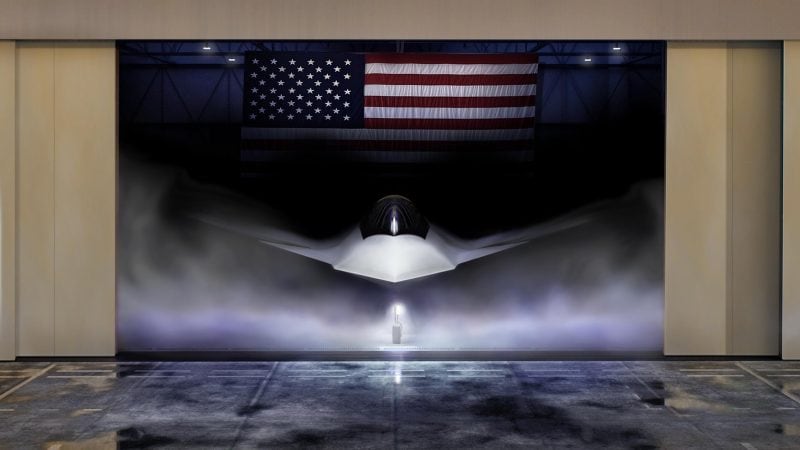
Boeing will design and manufacture the Next Generation Air Dominance (NGAD) fighter, the Department of the Air Force announced on Friday.
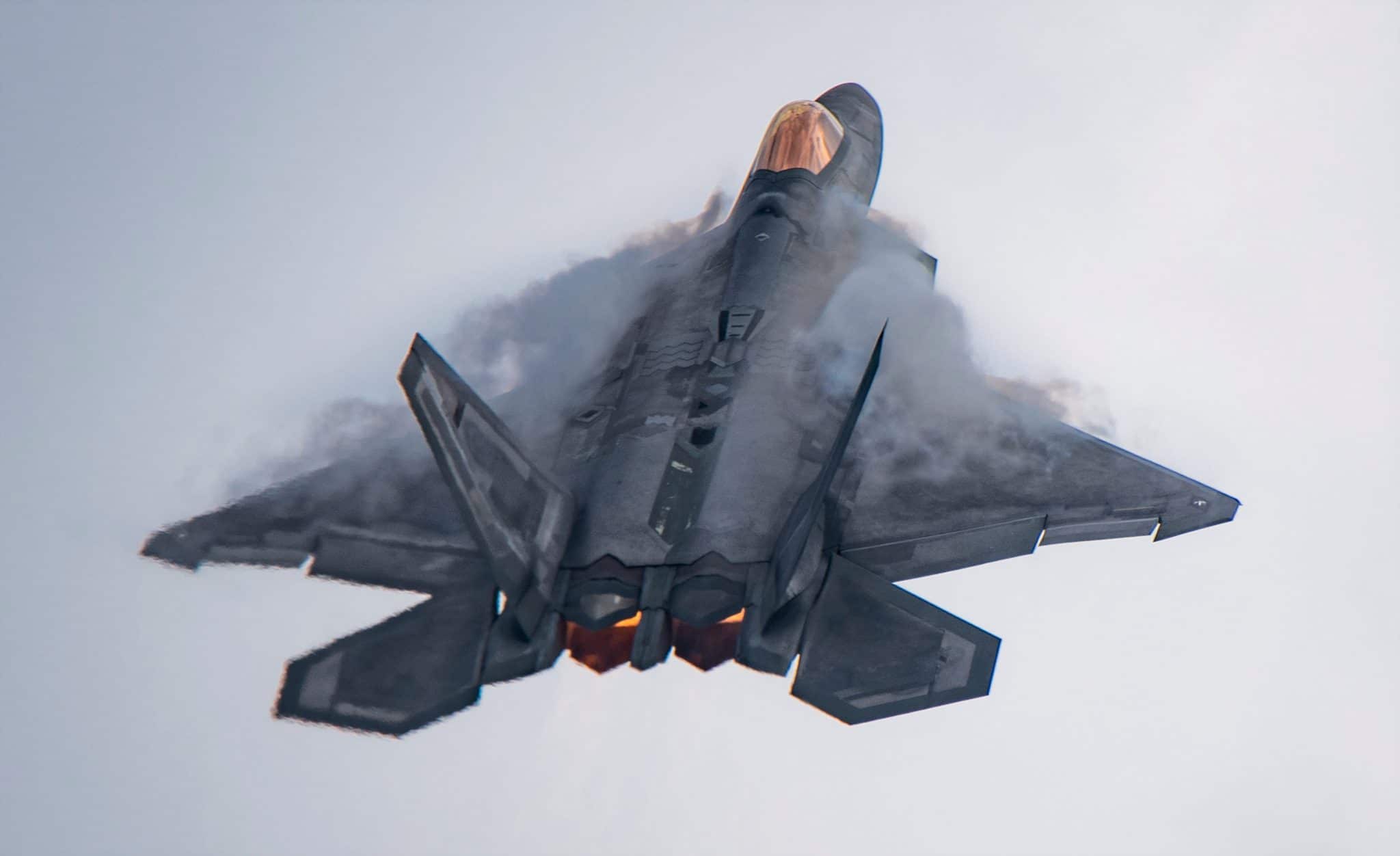
Officially designated the F-47, the jet marks a milestone in military aviation. It heralds the arrival of the world’s first sixth-generation fighter jet—a machine poised to redefine air superiority and replace the venerable F-22 Raptor as the U.S. Air Force’s tip of the spear.
A New Era in Air Superiority
Shown is a graphical artist rendering of the Next Generation Air Dominance (NGAD) Platform. The rendering highlights the Air Force’s sixth generation fighter, the F-47. The NGAD Platform will bring lethal, next-generation technologies to ensure air superiority for the Joint Force in any conflict | IMAGE: U.S. Air Force
The F-47 isn’t just an incremental upgrade; it’s a generational shift. With a fleet of 180 F-22s currently upholding U.S. air dominance, the Air Force has long recognized the need for a successor capable of countering the evolving threats of the 21st century.
The F-47 promises to deliver, integrating next-generation stealth, sensor fusion, and long-range strike capabilities into a platform designed to operate in the most contested environments.
President Trump, speaking from the Oval Office on Friday, underscored its significance.
“Nothing in the world comes even close to it, and it’ll be known as the F-47,” said Trump.
Dominate the Skies
Get your first look at what will be the most advanced, lethal, & adaptable fighter ever developed… the U.S. Air Force's F-47. pic.twitter.com/ca1CeBABb5
Flanked by military brass, including Secretary of Defense Pete Hegseth, the President touted the jet’s speed, maneuverability, and payload capacity—attributes that hint at a design pushing the boundaries of aerodynamic and systems engineering.
What sets the F-47 apart is its role as a force multiplier. It will fly alongside collaborative combat aircraft (CCA)—autonomous drone wingmen—enhancing its situational awareness and lethality. This system-of-systems approach, coupled with a modular and adaptable airframe, ensures the F-47 can integrate emerging technologies over its service life, a critical feature for maintaining relevance in an era of rapid technological flux.
The Road to the F-47: A Competitive Journey
Air Force F-22A Raptor Demo Team officially welcomed their new commander and pilot on Tuesday, Maj. Josh Gunderson. (USAF)
Boeing’s victory in the NGAD competition wasn’t a foregone conclusion. The Air Force conducted a rigorous source selection process, pitting Boeing against Lockheed Martin after Northrop Grumman bowed out in 2023.
According to the Air Force’s Friday press release, Boeing’s proposal emerged as the “most capable and cost-effective solution” to meet the demands of an increasingly complex global threat environment. While the F-22 carried a unit cost of $143 million, the F-47’s price tag remains under wraps—a point of intrigue for analysts tracking the program’s fiscal footprint.
The NGAD effort has been underway for a while. Initiated over five years ago, the program leveraged X-plane testbeds to refine stealth, range, autonomy, and survivability. But a mid-2024 pause raised eyebrows as the Air Force reassessed the project’s trajectory amid cost concerns. The reboot, however, doubled down on innovation, with cutting-edge digital engineering and a government-owned architecture accelerating the timeline.
While our X-planes were flying in the shadows, we were cementing our air dominance.
U.S. Air Force Chief of Staff Gen. David Allvin
Speaking alongside the President on Friday, Air Force Chief of Staff Gen. David Allvin framed it as a triumph of foresight. “While our X-planes were flying in the shadows, we were cementing our air dominance—proving that we can field this capability faster than ever before.”
Technical Prowess and Strategic Messaging
President Donald Trump and Defense Secretary Pete Hegseth announce on 21 March 2025 that Boeing will build America’s next generation fighter | IMAGE: The White House
The F-47’s technical bona fides are tantalizing if still partially veiled. Next-gen stealth will likely build on the F-22’s low-observable legacy, while advanced sensor fusion could rival or exceed the F-35’s data integration wizardry. Long-range strike capabilities suggest a platform optimized for air-to-air supremacy and deep-penetration missions, potentially blurring the lines between fighter and bomber roles. CCA drones point to a networked battlespace where the F-47 serves as a command node, orchestrating unmanned assets with precision.
Secretary Hegseth didn’t hold back regarding its geopolitical implications.
“The F-47 will send a very direct, clear message to our allies that we’re not going anywhere and to our enemies that we can project power around the globe, unimpeded, for generations to come,” Hegseth said.
This rhetoric and Trump’s assertion that the jet will ensure U.S. sky dominance underscores the F-47’s role as both a warfighting tool and a strategic signal.
Operationally, the F-47 promises efficiency. Requiring less manpower and infrastructure than its predecessors could streamline deployment cycles—a boon for rapid response in distributed theaters. Gen. Allvin, calling it a “generational leap forward,” predicted initial operational capability by 2029, aligning with the end of Trump’s second term. If that timeline holds, it will owe much to Boeing’s engineering muscle and the Air Force’s embrace of digital design techniques.
Boeing’s Legacy and the Path Ahead
F-15s with the 142nd Fighter Wing, the REDHAWKS. Photo: USAF
For Boeing, the NGAD win is a feather in the cap of a storied combat aircraft lineage. The aerospace giant is responsible for such combat aircraft as the P-51 Mustang, F-4 Phantom, F-15 Eagle, F/A-18 Hornet, and EA-18G Growler.
As interim president of Boeing Defense, Space & Security, Steve Parker emphasized the company’s readiness.
“We made the most significant investment in the history of our defense business, and we are ready to provide the most advanced and innovative NGAD aircraft,” Parker said in Boeing’s F-47 announcement.
The contract greenlights the engineering and manufacturing development phase, with prototypes slated for testing and options for low-rate initial production on the table.
The Air Force remains coy about basing decisions and full-scale deployment plans, promising updates as the program matures. What’s clear is that the F-47 isn’t just a fighter—it’s a statement of intent, blending cutting-edge tech with a renewed “warrior ethos,” as Hegseth put it. For aviation aficionados and defense watchers alike, the F-47’s journey from X-plane shadows to operational reality will be a saga worth tracking.
Artificial intelligence (AI) makes it possible to create a fun video game such as a flight simulator in just a few hours. With the help of an AI code builder, one influencer has already made thousands of dollars monthly, yet it’s completely free for all and consists of one concise HTML file.
Fly with Pieter on Any Web Browser
Dutch entrepreneur Pieter Levels has launched a completely free flight simulator, known as Fly Pieter. Those that wish to play must simply enter their name and they can start flying in no time.
Fly Pieter was made possible with the Cursor AI code builder, ThreeJS Javascript library, and Grok 3-generated server code.
According to Pieter and colleagues, he has already made $38,000 from the game after ten days being online. A handful of players even purchased very expensive in-game aircraft for thousands of dollars.
As of this writing, a total of 17 websites have ads playing during the AI flight simulator. Those ads are netting Levels around $5,000 monthly.
As of today, Levels has recorded a peak player count of 17,000 concurrent players.
When the game launched on 26 February, X owner Elon Musk praised footage of the game and had encouraging words about the future of AI.
Upon exploring Cursor in late February, Levels posted on X regarding his game idea:
‘Today I thought what if I ask Cursor to build a flight simulator So I asked “make a 3d flying game in browser with skyscrapers”‘
Levels said he is continuing to make updates to the game and has shared various additions to the project on X.
The entrepreneur has since added live multiplayer modes, collision detection, purchasable ad space in the form of blimps and hot air balloons, and other features.
All pilots have made mistakes, but one Northwest pilot in 1995 flew his passengers to the wrong country. To make matters worse, the crew realized they were not flying to the right airport until the last minute, but landed anyway.
This story is always a cautionary tale for on-board crew as a reminder to ensure your flight information is accurate before taking off and to not lose focus during communications.
A Brussels Reshuffle
On 5 September, 1995, a Northwest Airlines McDonnell-Douglas DC-10 carrying 241 passengers departed Detroit, Michigan and was headed for Frankfurt, Germany. It felt like an ordinary flight, until the pilot noticed something was wrong upon landing.
Towards the end of the flight, the crew contacted the ATC at the airport they were approaching with the intention of landing. But even as they referred to the airport as ‘Frankfurt’, the ATC didn’t seem to be confused.
The pilot was seemingly familiar with Frankfurt Airport and was expected to see white concrete runways upon landing. Instead, the runways were made of black asphalt.
Immediately, he realized he was not in the right location. But for the safety of the passengers on board, the crew decided to land anyway and figure things out on the ground.
That’s when they found out that despite following data on the console, that they landed in Brussels, Belgium, about 250 miles away from Frankfurt.
Flight attendants and passengers knew something was wrong upon landing as the live map display was indicating that a ‘detour’ was taking place.
Who Was to Blame?
Aviation experts were quick to blame the flight crew on Flight 52 with the words ‘The only people on that plane who didn’t know where they were were the three guys up front’. As a result of landing at the wrong airport, Northwest suspended the three pilots in charge of the flight. The captain was allegedly a 30-year veteran at the time of the flight with a ‘spotless record’.
The Irish Aviation Authority acknowledged the flight traveled towards Frankfurt, and it denied changing the flight information in any way. This was the last such group to have information on the flight before it was supposedly going to Frankfurt.
Maastricht Air Traffic Control (MUAC) was the entity that communicated the flight crew to land. Originally for a flight from Northern United States to Germany, crews would fly directly over Belgium to reach it. However, something from this communication must have happened to cause the crew to land prematurely and at the wrong airport.
Northwest flew to Brussels regularly in addition to Frankfurt, so the ATC wasn’t unfamiliar with Northwest jets. It also didn’t help matters that the ATC didn’t correct Northwest when the crew mentioned Frankfurt. Doing so likely would have averted the pilot from landing in the wrong country altogether.
It wasn’t known if the MUAC disciplined the ATC for his or her role in the landing mix-up.
Northwest continued to fly until 31 January 2010 when the company merged with Delta Air Lines. This move allowed Delta to become the world’s largest airline, surpassing United and American.
NASA’s Boeing test crew has finally returned home with SpaceX from the International Space Station (ISS). They were left there 9 months ago, when their planned week-long test flight of Boeing’s Starliner spacecraft suffered problems.
A SpaceX Dragon has been at the ISS docked for a while, however NASA wanted to keep the two astronauts in space until the next SpaceX mission could launch NASA’s next crew to replace them. That launch (named Crew-10) occurred just days ago.
With a new crew now on ISS, Butch Wilmore and Suni Williams joined the trip home on the “Crew-9” SpaceX Dragon with fellow NASA astronaut Nick Hague and Roscosmos cosmonaut Aleksandr Gorbunov. They blazed a trail of fire through the atmospheres over the Gulf of America, followed by nominal chute deployments and splash-down under beautiful conditions off the coast of the Florida panhandle. NASA’s coverage (above) even had a drone flying around they splashed-down.
A week-long test flight turned into 9 months in space
Wilmore and Williams launched on Boeing’s Starliner June 5, 2024, atop a ULA Atlas V rocket. It was the first crewed flight test for the spacecraft, to validate and certify it for operational missions for NASA. SpaceX had to prove themselves the same several years ago, before being certified by NASA to fly NASA crews to and from space.
Following Starliner’s launch, however, numerous worrying helium leaks and thruster problems occurred. A mission that was supposed to last a week turned into weeks, and into months, while Boeing and NASA engineers got to work trying to understand the root cause and reproduce the same issues with predictability.
Starliner returned to Earth just fine, however Boeing has work to do before NASA has confidence in Starliner for another crew. There has been no update since the end of that mission in Sep 2024.
NASA astronauts Burch Wilmore (top) and Suni Williams (bottom). Both are retired US Navy Captains and flew the first Boeing crewed flight test in June 2024. NASA photo
Impressive resumes – even for an astronaut
Wilmore and Williams were chosen to fly Starliner’s first crewed flight test last year in large part due to their extensive spaceflight experience. With her latest adventure now complete, Williams has racked up 9 career spacewalks and flown on 4 different spacecraft – Space Shuttle, Soyuz, Starliner and Dragon. She has spent 675 days in space, the most of any American woman.
Wilmore too has now flown in space on 4 different spacecraft, all the same as Williams. He has conducted 5 spacewalks totaling 21 hours, and flown 3 missions.
Both astronauts are also retired US Navy Captains.
From high operating costs and narrow cabins to poor timing against Boeing and Douglas, the Convair 880 never had the opportunity to make its mark in aviation.
Back in the 1960s, as commercial aviation was expanding thanks to jet aircraft, it turned out that airlines realized they didn’t need to go “Top Gun.” There wasn’t a need for speed. Convair, a division of General Dynamics, got in the game by designing the Convair 880, which was developed to compete with the Boeing 707 and the Douglas DC-8. Here are five reasons why the 880 couldn’t compete and didn’t last.
Economy Trumps Speed
The 880 could zip along at 600-plus mph, which was great when you considered passengers who wanted to get from Point A to Point B as fast as possible. But that speed came with a cost in terms of fuel consumption. That cost had to be passed along to passengers who realized that getting to their destination 15 to 30 minutes later wasn’t worth the higher cost of the ticket.
Bad Timing, Part One
Convair was a distant third in the commercial aviation market. Boeing and Douglas were well-established with the airlines. General Dynamics, which eventually switched to producing military aircraft.
Bad Timing, Part Two
Convair 880 flight deck | IMAGE: By Thomas R Machnitzki (thomasmachnitzki.com) – Own work, CC BY 3.0, https://commons.wikimedia.org/w/index.php?curid=25399407
In the 1960s when commercial air travel was growing in popularity, most airlines served major cities/large airports and flew longer routes. The 880 lacked the range for a coast-to-coast trip. It would have served as a regional carrier, but at that time the airlines weren’t serving mid-size cities and airports.
It’s What’s Inside That Counts
A TWA Convair 880 interior lounge | IMAGE: Public Domain
While the 880 looked great on the outside, its interior design didn’t thrill airlines. A narrow body airplane, it’s 2-3 seat alignment wasn’t popular and it limited passenger capacity to just 110. Again, that limited amount of butts in seats didn’t equate to making money.
Good Looks Aren’t Enough
The Convair was a good-looking plane, it flew well and it was whisper quiet. Its four engines were slung below swept-back wings and nose-to-tail the 880 was sleek. But airlines were – and still are – more interested in the bottom line than the design lines of their aircraft.
Epilogue
Elvis Presley’s Convair 880, which he named Lisa Marie after his daughter, on display at Graceland | IMAGE: By Nilsman – Own work, CC BY 3.0, https://commons.wikimedia.org/w/index.php?curid=7457434
Only 65 Convair 880s were produced before General Dynamics ceased production in 1962. A total of 65 were built and most in the United States were operated by Delta and TWA. The last aircraft was withdrawn from commercial service by major operators in 1975. There are few of the airframes still in existence and the only one properly preserved has a musical history. On display at Graceland in Memphis is the Convair 880 owned by Elvis Presley and named after his daughter, Lisa Marie.
America’s budget carriers are ushering in 2025 with a wave of route additions and changes.
Dozens of new routes and destinations are set to begin, as ULCCs strengthen their foothold in the U.S. and beyond.
Avelo, Breeze, Frontier, Spirit, and Allegiant all plan significant additions to connect more cities. Notably, Spirit’s significant expansion comes amid its ongoing Chapter 11 bankruptcy restructuring. Here’s a comprehensive look at the latest developments driving this expansion surge.
Avelo Airlines: 13 New Routes, International Push
BURBANK, CALIFORNIA – APRIL 28: Avelo Airlines takes off with first flight between Burbank and Santa Rosa at Hollywood Burbank Airport on April 28, 2021 in Burbank, California. (Photo by Joe Scarnici/Getty Images for Avelo Air)
Avelo Airlines starts off the list, announcing 13 new routes and three new cities, including Nassau, Bahamas—its fourth international destination alongside Jamaica, Mexico, and the Dominican Republic. The carrier begins service to Nassau’s Lynden Pindling International Airport on 11 June.
New routes include:
Wilmington (NC) International Airport (ILM): Flights to Detroit (DTW) begin on 12 June, Houston Hobby (HOU) and Washington Dulles (IAD) start on 13 June, and Long Island MacArthur (ISP) launches on 12 June—all twice weekly. Avelo now serves 15 destinations from ILM.
Raleigh-Durham International Airport (RDU): Nassau (NAS) starts 11 June, Grand Rapids (GRR) begins 23 May, and Wilmington (ILG) launches 22 May, all twice weekly. RDU connects to 10 destinations.
Lakeland (FL) Linder International Airport (LAL): Grand Rapids (GRR) begins on 13 June, and Long Island (ISP) starts on 12 June, both twice weekly. LAL links to nine cities.
Charlotte/Concord Padgett Regional Airport (USA): Detroit (DTW) launches on 13 June, Washington Dulles (IAD) starts on 23 May, and Long Island (ISP) begins on 22 May, all twice weekly. Avelo serves 11 destinations from Concord.
Wilmington (DE) Airport (ILG): Jacksonville (JAX) begins on 23 May twice weekly, bringing Avelo’s total destinations from ILG to 14.
It’s not all good news for Avelo, though. The carrier cut ILG-USA and ILG-ATL on 27 February and will end BDL-ILM and BDL-USA by 30 March. With its focus on Tweed-New Haven (HVN) 50 miles to the south, and Breeze Airways’ focus on Providence (PVD), one has to wonder if Avelo’s push into Hartford was a wise decision.
Since its debut on 28 April 2021, Avelo has grown to serve 56 destinations. The carrier operates a fleet of 20 Boeing 737s (eight -700s and 12 -800s).
Breeze Airways: Key West Becomes 70th Destination
A Breeze Airways Airbus A220-300 rotates | IMAGE: Breeze Airways
Breeze Airways unveiled its 70th destination, Key West (EYW), on 11 March. Flights from Orlando (MCO) and Tampa (TPA) commence on 12 June, operating four times weekly on the Airbus A220-300.
The 240-mile EYW-TPA route marks Breeze’s shortest. Key West joins Rochester (ROC), Albany (ALB), and Memphis (MEM) as the airline’s fourth new city of 2025, bringing its Florida total to 10 and overall destinations to 33 since early 2024.
Breeze also launches twice weekly flights from Greensboro (GSO) to Hartford (BDL) and Orlando (MCO) starting 6 June. Launched in May 2021, Breeze serves 70 cities with 34 A220-300s and 12 Embraer ERJ-190s. However, the latter type is slated for phase-out next month.
Frontier Airlines: West Coast and Caribbean Additions
Image: By MarcelX42 form Wikimedia Commons
Seattle’s Paine Field International Airport (PAE) is Frontier’s newest city.
The carrier will launch thrice-weekly flights from Denver (DEN), Las Vegas (LAS), and Phoenix (PHX) to PAE on 2 June. The carrier already serves DEN, LAS, and PHX from just down the street at Seattle-Tacoma International Airport (SEA). In addition to those cities, Frontier operates flights to Dallas (DFW), Los Angeles (LAX), and Ontario (ONT) from SEA.
Paine Field has enjoyed commercial service since March 2019. Frontier will be the second carrier at the airport, which is approximately 40 miles north of SEA. United axed PAE during the coronavirus pandemic, never to return.
Additionally, Frontier begins service to San Pedro Sula, Honduras (SAP) from Atlanta (ATL), starting on 12 June. and revived Aruba (AUA) from ATL after a multi-year break. ATL expands further with new routes to Columbus (CMH), Fort Myers (RSW), Jacksonville (JAX), Kansas City (MCI), Oklahoma City (OKC), St. Louis (STL), and West Palm Beach (PBI).
Fresh Out of Bankruptcy, Spirit Announces Over 20 New Routes, Also Axes Five Cities
IMAGE: Spirit Airlines via Facebook
Spirit Airlines rolled out a significant expansion last week, adding over 20 new and returning routes. Flights begin in May, even as the carrier navigates a questionable post-bankruptcy journey.
Spirit filed for bankruptcy in late 2024. At the time, the company said it would be a quick restructuring. And that proved to be accurate, as the carrier announced the completion of its financial restructuring on Wednesday 12 March.
Presumably, the carrier aims to boost profitability and axe unprofitable routes while targeting high-demand markets.
Highlights include:
Raleigh-Durham (RDU): Baltimore (BWI), Detroit (DTW), Newark (EWR), New Orleans (MSY), and Dallas (DFW) begin May 8-9, ranging from twice to five times weekly.
Indianapolis (IND): Los Angeles (LAX), Dallas (DFW), and Charlotte (CLT) launch on 8-9 May, all twice weekly.
Nashville (BNA): Milwaukee (MKE), Kansas City (MCI), San Antonio (SAT), Chicago (ORD), Baltimore (BWI), Myrtle Beach (MYR), and Cleveland (CLE) start 8-9 May, mostly twice weekly.
Detroit (DTW): San Antonio (SAT), Memphis (MEM), and Charlotte (CLT) begin 8-9 May, up to four times weekly.
Baltimore (BWI): Chicago (ORD) and Charlotte (CLT) launch on 8 May, up to four times weekly.
New York LaGuardia (LGA): Richmond (RIC) and Norfolk (ORF) begin on 7-8 May, four times weekly.
Additional route additions include Philadelphia (PHL) to Charlotte (CLT), Latrobe (LBE) to Fort Lauderdale (FLL), and Los Angeles (LAX) to Milwaukee (MKE).
Earlier this month, Spirit added Columbia, SC (CAE), and Chattanooga, TN (CHA), with flights to Newark (EWR), Orlando (MCO), and Fort Lauderdale (FLL) from 4-5 June. Meanwhile, it will drop five cities—Aguadilla, Puerto Rico (BQN), Ponce, Puerto Rico (PSE), Puerto Vallarta, Mexico (PVR), Los Cabos, Mexico (SJD), and Manchester, NH (MHT)—to sharpen its focus.
Spirit Announces Dismal 2024 Financials
A Spirit Airlines Airbus A320neo waits at the gate | IMAGE: Spirit Airlines via Facebook
With Spirit out of bankruptcy, it’s hard to imagine a future where it could remain an independent carrier. While bankruptcy allowed the carrier to convert nearly $800 million in debt into equity, its 2024 financial results were bleak–to say the least. The company also “received a $350 million equity investment from existing investors to support Spirit’s future initiatives,” company officials said.
The Dania Beach, Fla.-based carrier posted an operating revenue of $4.9 billion in 2024. Coupled with an operating loss of $1.1 billion, this led to a staggering negative operating margin of 22.5 percent.
We won’t be surprised if Spirit continues to announce route cuts and additions as they attempt to find their footing–independently or not–post-Chapter 11.
Allegiant Air: Scaling Back LAX, Adding Elsewhere
A new Allegiant Boeing 737 MAX 8 over the Florida coast | IMAGE: Allegiant
For Allegiant, the news this week was the opposite of expansion.
Allegiant Air is eliminating its Los Angeles (LAX) base, canceling routes to Billings, Mont. (BIL), Des Moines, Iowa (DSM), Kalispell, Mont. (FCA), Laredo, Texas (LRD), Medford, Ore. (MFR), Memphis (MEM), Pasco, Wash. (PSC), Rapid City, S.D. (RAP), and Rockford, Ill. (RFD).
Still, the Las Vegas-based airline continues to ride the coattails of its November 2024 announcement of 44 new nonstop routes and three new cities. Unveiled just days after Spirit’s bankruptcy filing, this move marks Allegiant’s most significant expansion in its 28-year history.
ULCCs Connect the Dots in the American Aviation System
A Breeze Airways A220-300 taxies to the gate at Orlando International Airport (MCO) | IMAGE: Orlando International Airport via Facebook
From Avelo’s international ventures to Breeze’s Florida focus, Frontier’s western and Caribbean push, Spirit’s bankruptcy-fueled recalibration, and Allegiant’s strategic shifts, ULCCs are reshaping options for traveling Americans.
It will be interesting to revisit this story in a year to see what routes have survived. Conversely, it will also be interesting to see how these carriers continue to further connect the dots in the American aviation network. With their focus on historically underserved communities, the significance of ULCCs in the United States cannot be understated.