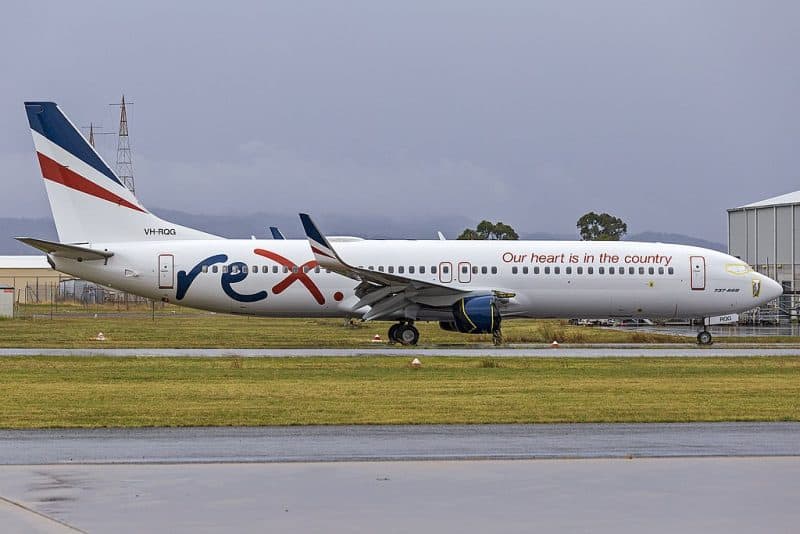
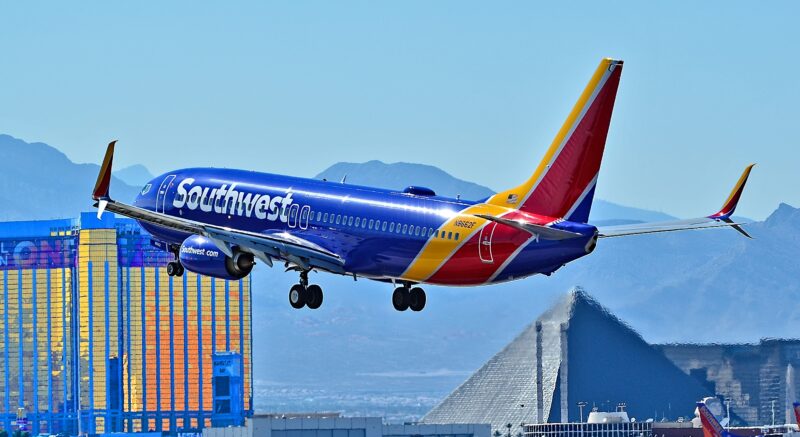
Australia discount airline REX has entered voluntary administration. The airline flies a fleet of Boeing 737-800 aircraft for Austrialian domestic routes and Saab 340s on regional routes.
All flights that operated the Boeing 737 are cancelled. Regional routes will however continue as scheduled for the time being.
Virgin Australia will step in to help REX customers
On 30 July 2024, REX announced the suspension of Boeing 737 services across Australia. The move will impact thousands of customers who had scheduled travel with the airline.
Fortunately, REX coordinated travel options with Virgin Australia prior to entering administration. In a Facebook post, Virgin Australia states that all tickets on REX can be rebooked as long as the move is made by 14 August.
Virgin Australia further announced that they will seek to transfer three REX Boeing 737 aircraft into Virgin Australia’s fleet in order to handle the anticipated need to replace REX’ service and capacity.
REX previously had 8 737-800 aircraft in their fleet. The additional three jets would mean that Virgin Australia’s fleet would expand to a total of 92 Boeing 737 aircraft.
About REX
REX AIrlines is Australia’s largest regional carrier. They “arose from the ashes of the collapse of the Ansett Group when two of its regional airlines , Hazelton and Kendell Airlines, were rescued to form Rex in August 2002.” In 2021, the airlines began flying Boeing 737 aircraft on domestic routes throughout Australia.
The combination of intense competition, a new fleet type, and challenging economic conditions proved to be too much for the airline. REX is not the only airline to fail recently. Earlier this year, Bonza also entered administration and stopped flying. The airline operated a fleet of Boeing 737 NG and MAX aircraft as well.
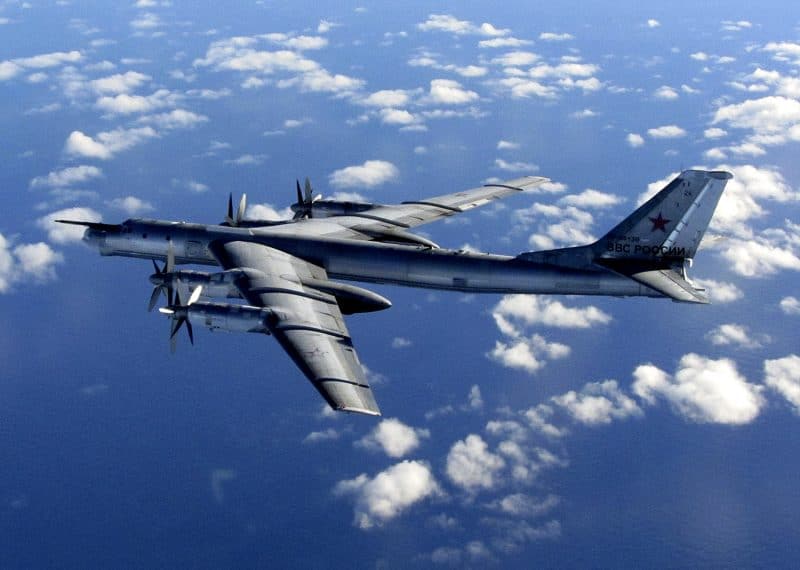
Your author grew up in the 1980s, during the latter half of the Cold War. As a fledgling wingnut who craved imagery, some of the most fascinating photos he came across showed Tupolev Tu-95 Bear intercepts.
There was just something about seeing those big, lumbering, yet majestic bombers mingling with sleek jet fighters that caught the imagination.
With the end of the Cold War and fall of the Soviet Union, the Russkies got outta the harassment business. So intercepts came with less frequency, then seemed to stop altogether, and your author’s air-mindedness turned elsewhere.
The past decade and a half have seen a resurgence of long-range ‘combat patrols’, as the Russians call them. The Tupelov Tu-95 came back to the forefront of my mind, and I began to wonder: how many Bears are still flying?
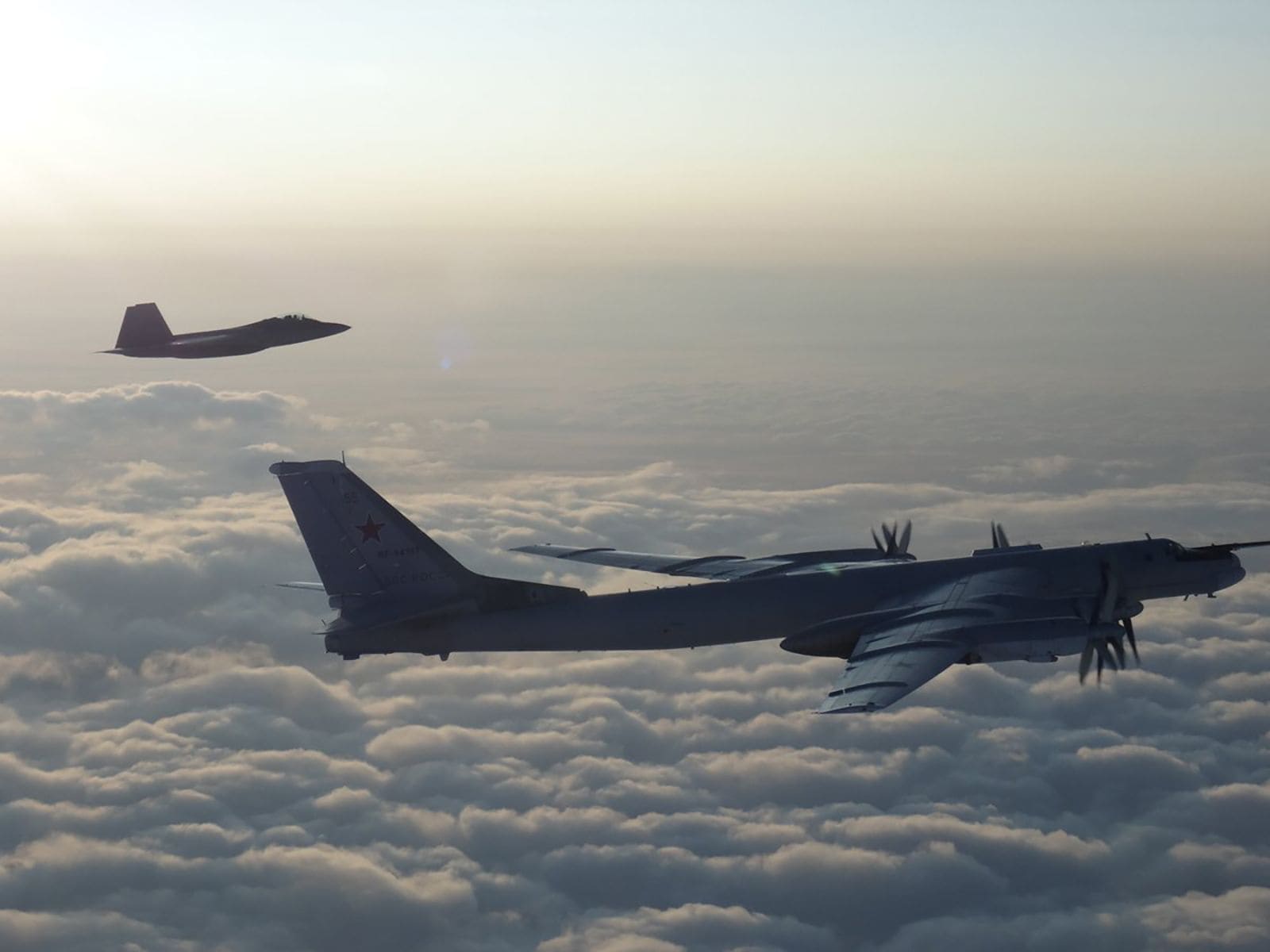
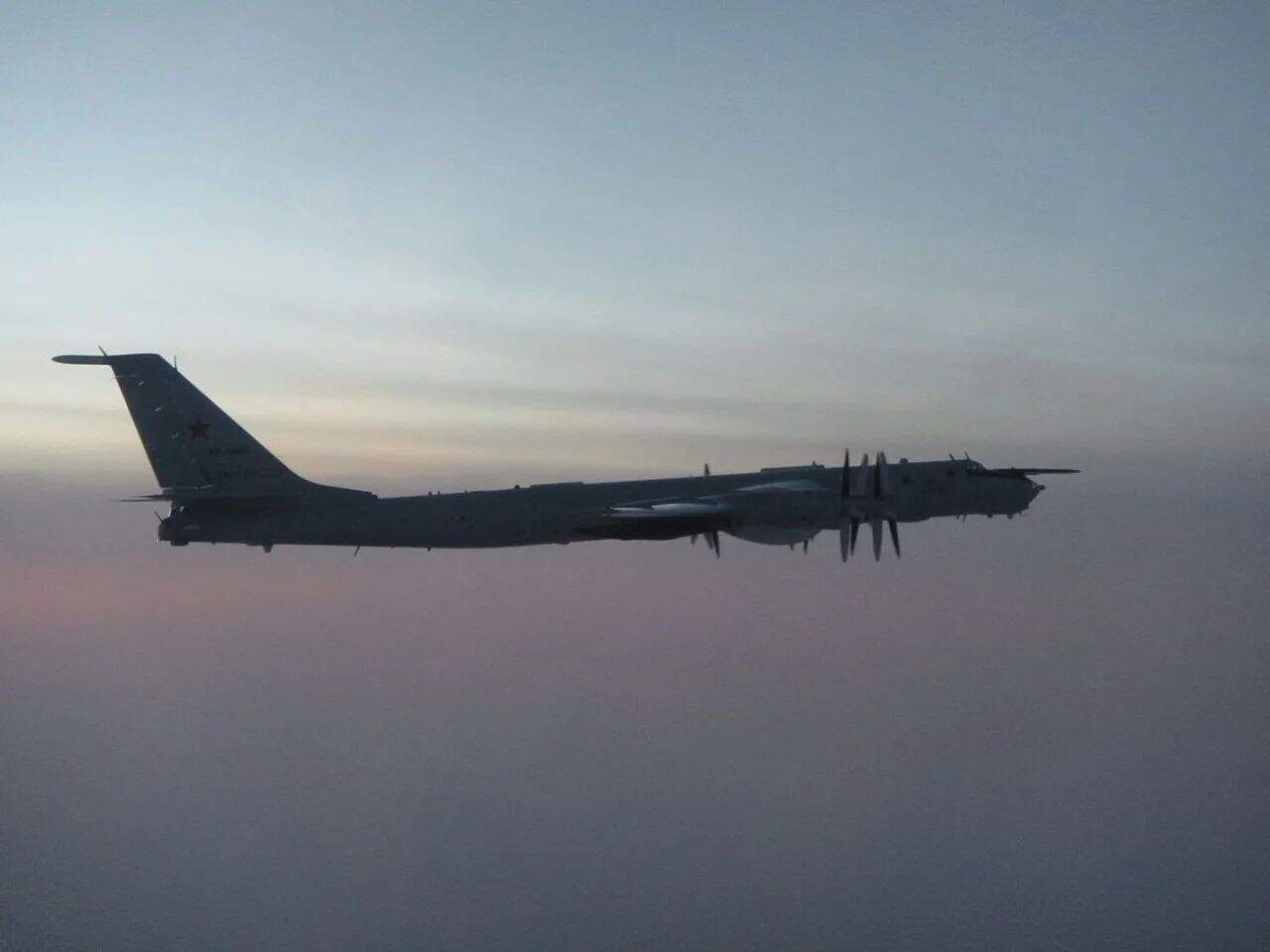
A Tupolev Tu-95 strategic bomber being intercepted by a US F-22 in 2019 | IMAGE: NORAD
Eagles and Bears Playing Cat and Mouse
The USA and the former Soviet Union were constantly probing each other’s airspace, testing and evaluating the other’s defenses. Soviet aircraft also routinely shadowed US Navy assets across the globe.
A US Navy F-14 Tomcat escorts a Russian Tupolev Tu-95 | IMAGE: US Navy
On the Soviet side, there were numerous types involved in this aerial game of cat and mouse over the decades. Among them were the Tupolev Tu-16 ‘Badger’ and Tu-95/Tu-142 ‘Bear’, Ilyushin Il-38 ‘May’, and Myasishchev M-4 ‘Bison’.
In the myriad intercept photos I’d come across during the 1980s, ’twas the Bear which appeared more than any other. And it’s the same today.
The Tupolev Tu-95 Bear’s Combat Debut
Russia and the former Soviet Union have been involved in numerous conflicts since the Tu-95 came into service. And it probably was flying in support of some or all of them.
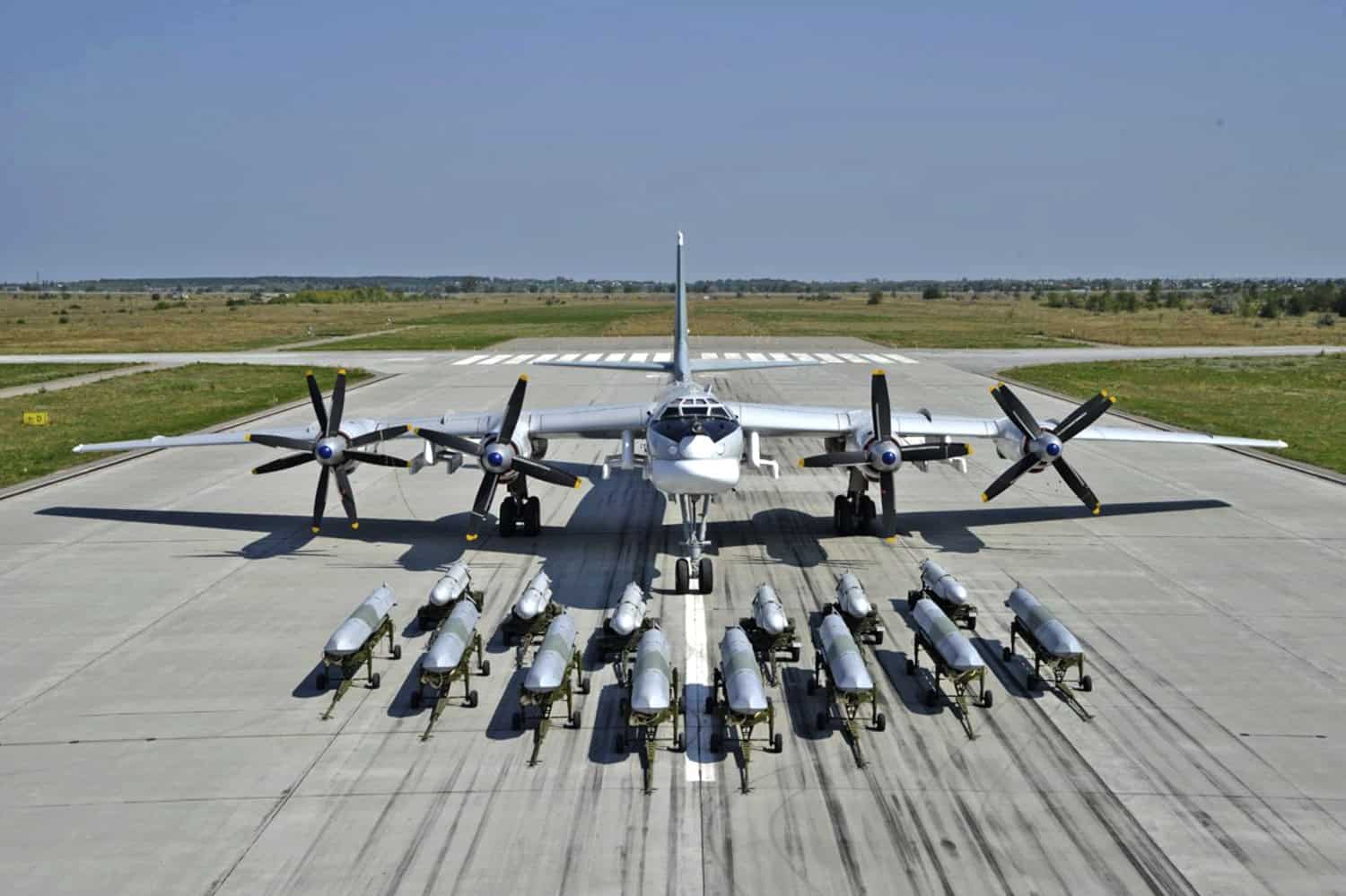
Tupolev Tu-95 on display with weaponry | IMAGE: Russian Ministry of Defense
It’s interesting to note that the Tu-95’s combat debut didn’t come until the war in Syria began in 2015. Along with the Tu-160 Blackjack, the Tu-95 has flown hundreds of sorties, launching cruise missiles at ISIL targets.
How Many Bears Were Built?
Since the Tu-95 first flew back in 1952, apparently more than 500 have been constructed, though I’m unaware of the exact number. Production ran for four decades, coming to an end in 1993.
Most Bears were Tu-95s of various description. The majority were missile carriers, while others filled the reconnaissance and electronic warfare/surveillance roles.
The Tu-142 was a maritime reconnaissance variant that doubled as a sub-hunter. If you’re a Tom Clancy fan, this variant was portrayed in the film adaptation of The Hunt for Red October. About 100 Tu-142s were built.
Tu-142 – Royal Air Force Photo
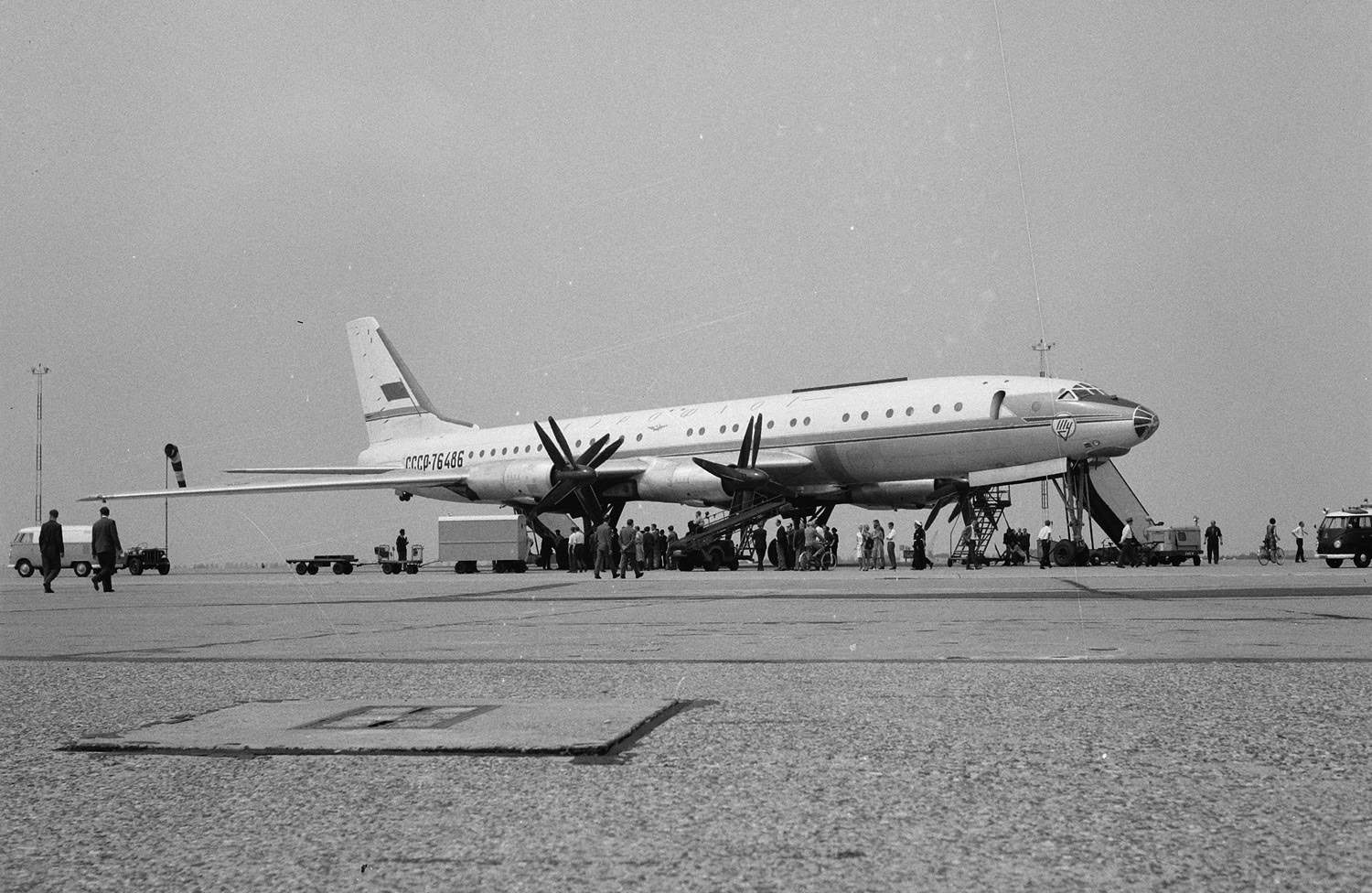
In the late 1950s, an airliner derivative of the Bear was developed as the Tu-114, with 32 being constructed. Most were used by Aeroflot, but all had been retired by 1991.
Two Tu-95s were also converted to carry passengers concurrently with the Tu-114. These were designated Tu-116.
Tu-114 – Hugo van Gelderen photo – Nationaal Archief (Dutch National Archives)
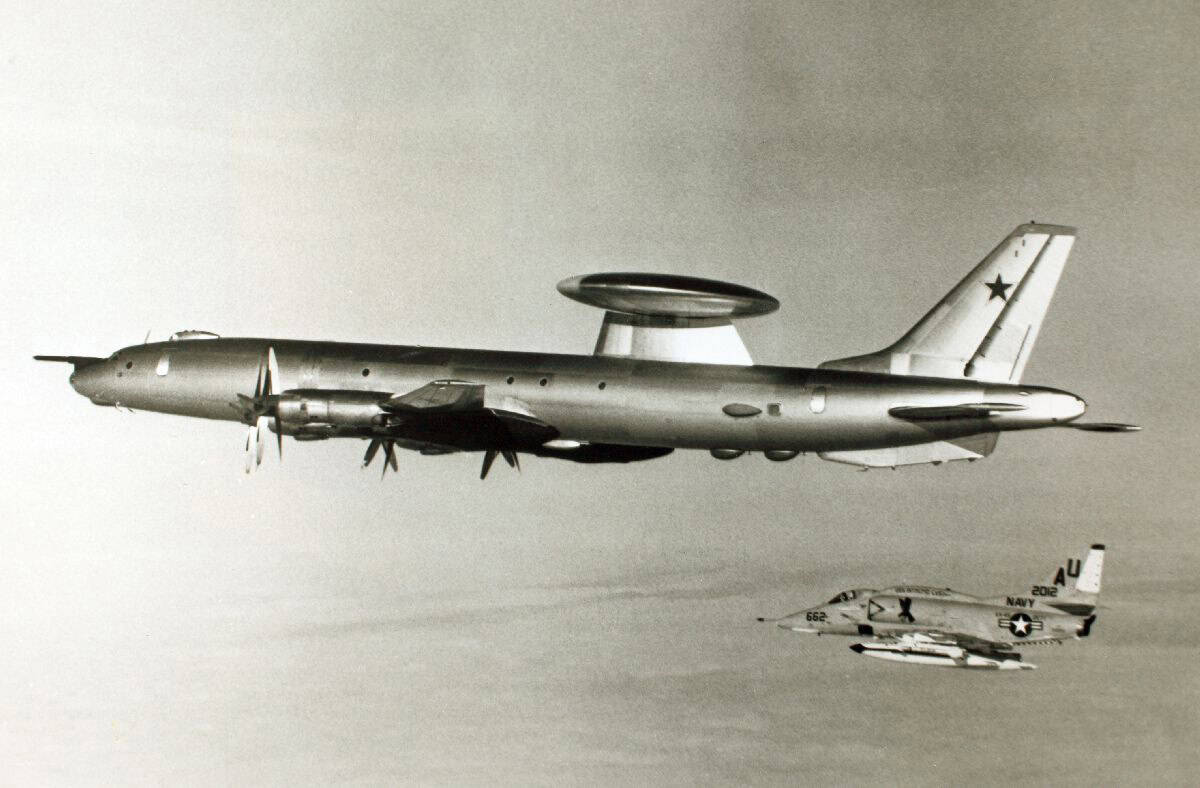
Rounding out the Bear family is the Tu-126 ‘Moss’, an air early warning (AEW) variant based on the Tu-114. Twelve of these were constructed in the 1960s, and the last was retired in 1984.
Tu-126 – San Diego Air & Space Museum
So, How Many Bears Are Still Flying?
As of this writing in July of 2024, I dunno exactly how many Bears are still in the air. But the figures that I keep coming across are:
55 in 2020 60 in 2023
That includes some Tu-142s, as there have been a few intercepts of those made by the Brits over the last few years. The most recent was in August of 2023.
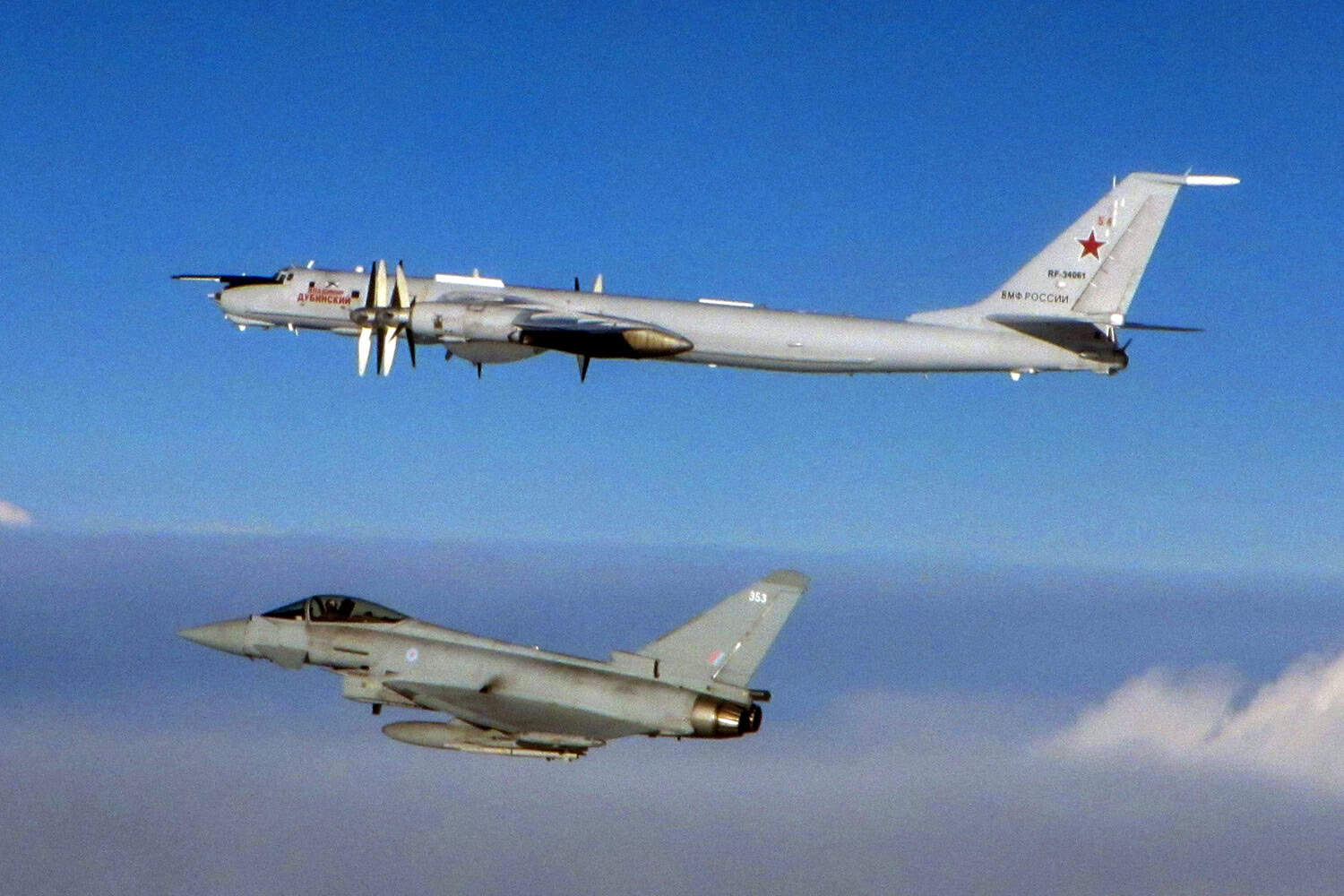
A Tupolev Tu-95 strategic bomber being intercepted by a Eurofighter Typhoon | IMAGE: Royal Air Force
Since the Russian invasion of Ukraine began in February of 2022, at least one Tu-95 has been destroyed by a Ukrainian drone attack. At least three others were damaged, all at Engels Airbase near Saratov, Russia.
Sergey Krivchikov photo
If current plans hold, the Tu-95 will remain in service with the Russian Air Force into the 2040s. Though how many will still be flying at that time is anyone’s guess.
Editor’s Note (Updated November 2025): Recent assessments of Russia’s Tu-95 Bear fleet must now account for significant losses from Ukraine’s Operation Spider’s Web, a sophisticated long-range drone strike orchestrated by the Security Service of Ukraine (SBU). The operation, which involved smuggling over 100 UAVs into Russia and launching them from concealed positions near key airbases, destroyed four Tu-95s at Olenya airbase in Murmansk Oblast and three or four more at Belaya airbase in Irkutsk Oblast on 1 June 2025. These strikes, totaling seven to eight confirmed losses, represent a substantial reduction in Russia’s operational strategic bomber force and further complicate efforts to determine how many airworthy Tu-95s remain in service today.
Built to replace Grumman’s venerable S-2 Tracker antisubmarine aircraft, the Lockheed S-3A Viking entered service on 20 February 1974 with Air Antisubmarine Squadron FOUR ONE (VS-41) Shamrocks.
The first operational deployment of a Viking-equipped squadron took place when VS-21 Fighting Redtails went to sea with Carrier Air Wing ONE (CVW-1) aboard the modified Kitty Hawk-class carrier USS John F. Kennedy in 1975.
The Viking would go on to serve for 42 years.
Sixteen of them were modified for the electronic warfare role as ES-3A Shadows. Six of them became long-range carrier on-board delivery (COD) US-3As. However, the majority of fleet Vikings, or “Hoovers”, spent most of those years either finding things that needed finding or passing gas that needed passing. This is the story of one of those fleet Vikings.
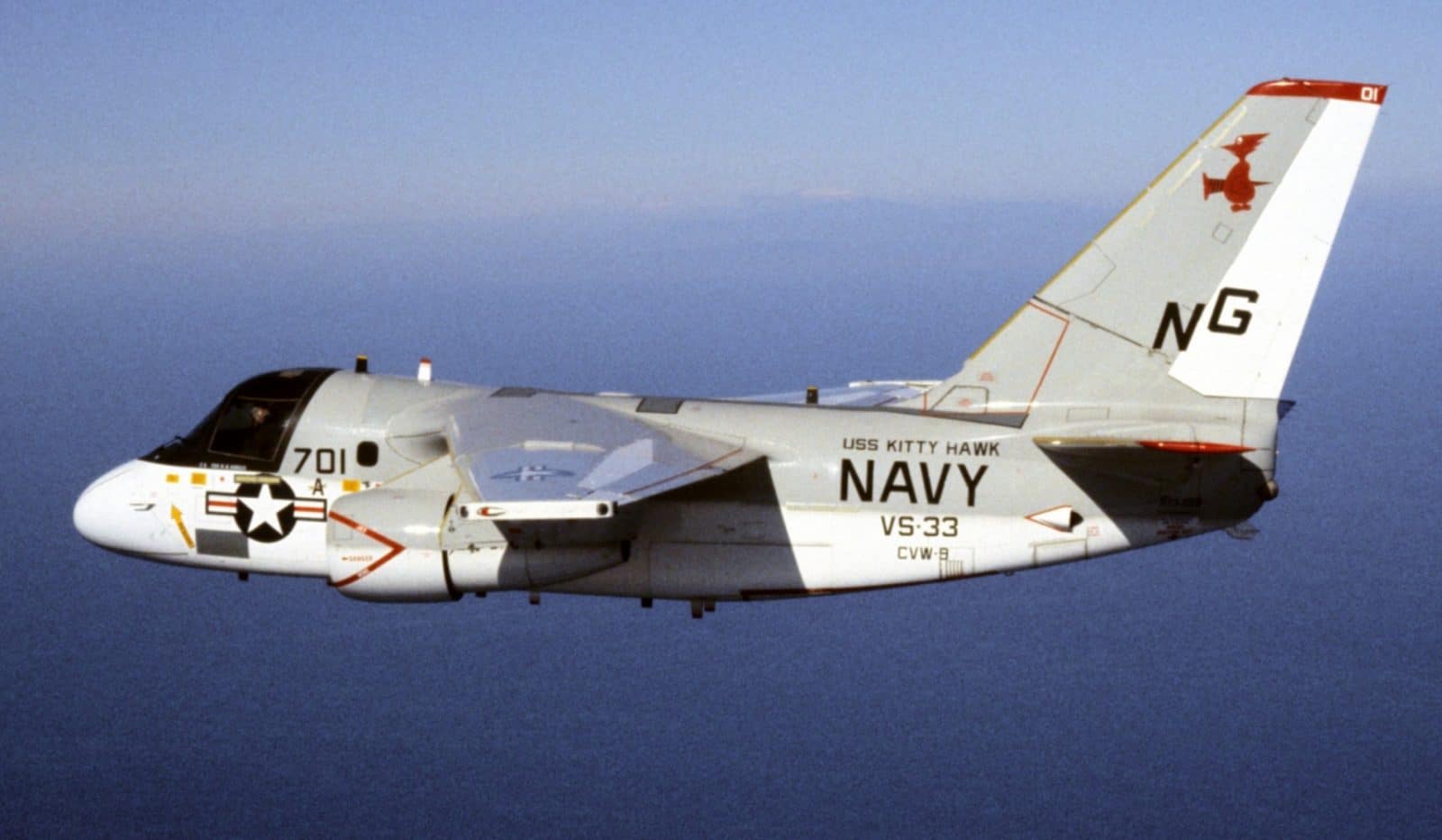
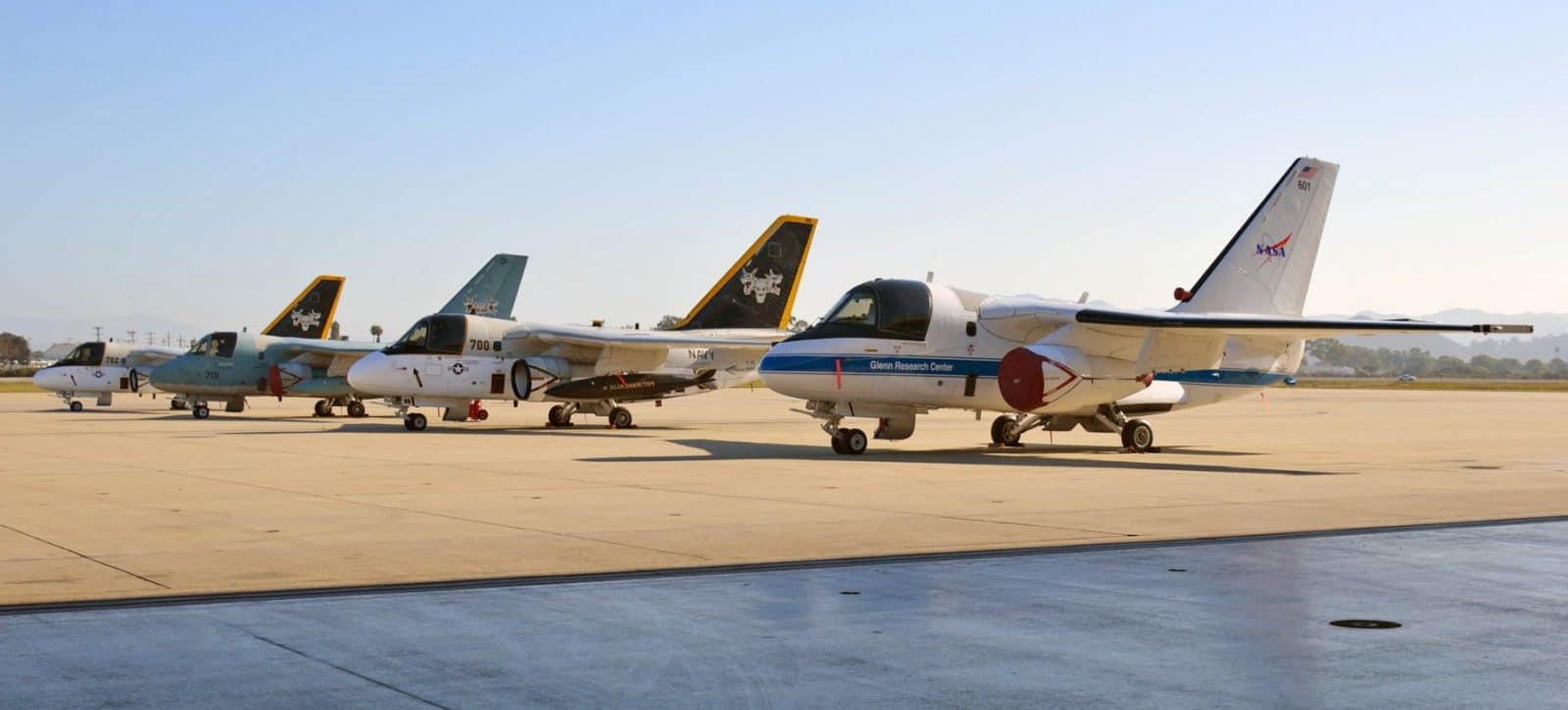
VS-33 S-3A. Image by US Navy
The Last S-3A Viking Built
Is it proper to say the last of the last? In the case of this particular aircraft, perhaps.
The very last of 186 S-3A Vikings built by Lockheed for the US Navy rolled off the company’s Burbank production line during August of 1978. That aircraft, S-3A Bureau Number (BuNo) 160607 (CN 394A-1187), was accepted by the Navy that same year and was assigned to VS-22 Checkmates.
The Checkmates were part of Carrier Air Wing THREE (CVW-3) back then, and 160607 deployed seven times, at least some of them as side number 707, with VS-22 and CVW-3 aboard the Forrestal-class carrier USS Saratoga (CVA-60) and the USS John F. Kennedy (CVA-67).
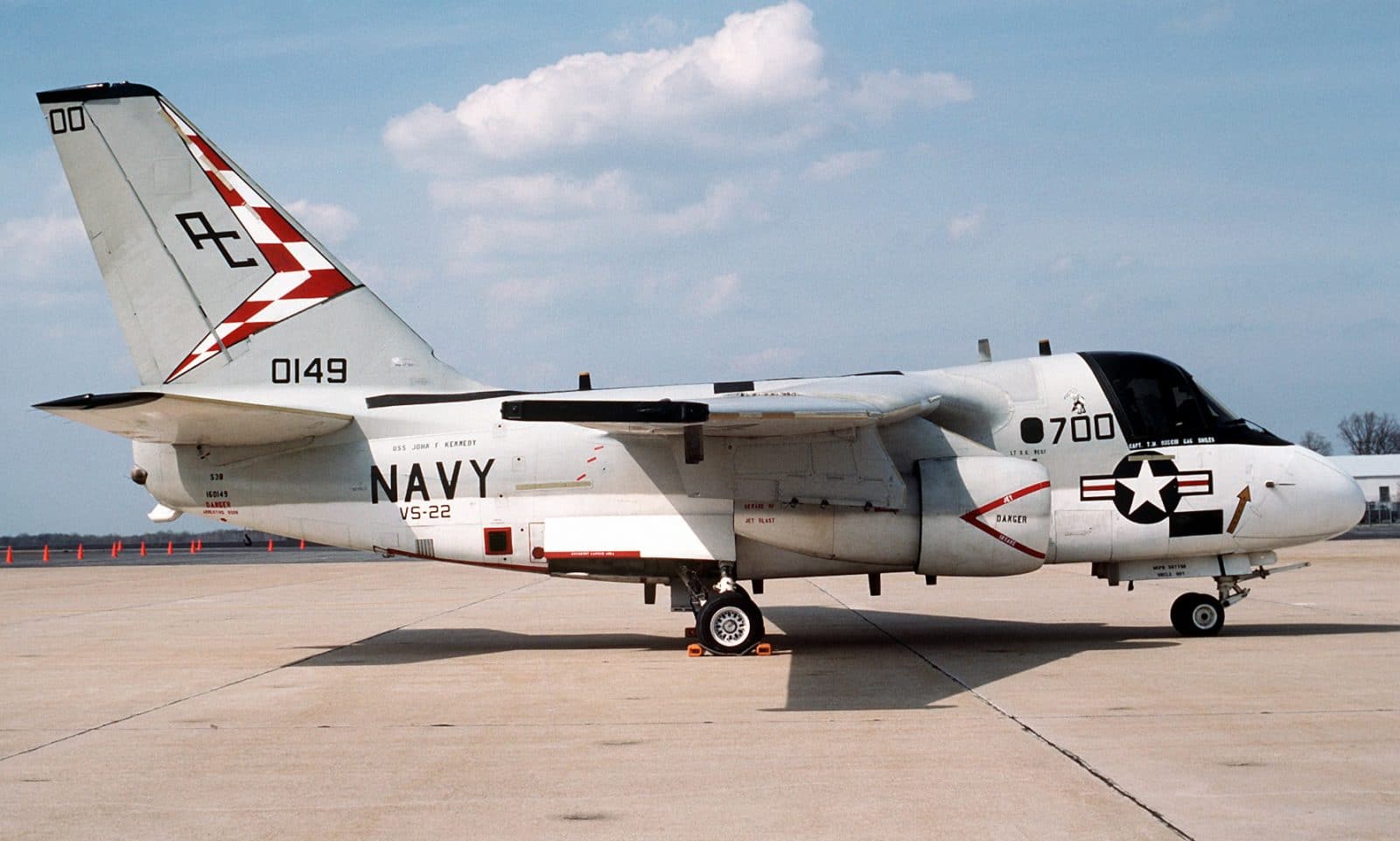
VS-22 S-3A. Image by US Navy
In 1988, S-3A BuNo 160607 was converted to the S-3B specification by Lockheed, which added a number of new sensors, avionics, and weapons systems, including the capability to launch the McDonnell Douglas AGM-84 Harpoon anti-ship missile. The S-3B could also be fitted with a buddy store refueling pod for passing gas to other refueling probe-equipped aircraft.
After becoming an S-3B, BuNo 160607 went to a new squadron: VS-28 Gamblers. The Gamblers were part of CVW-6 at that time and the jet deployed four times, at least some of them as side number 702, with VS-28 and CVW-6 aboard the carrier USS Forrestal (CVA-59) before Forrestal was retired. VS-28 was disestablished on 1 October 1992.
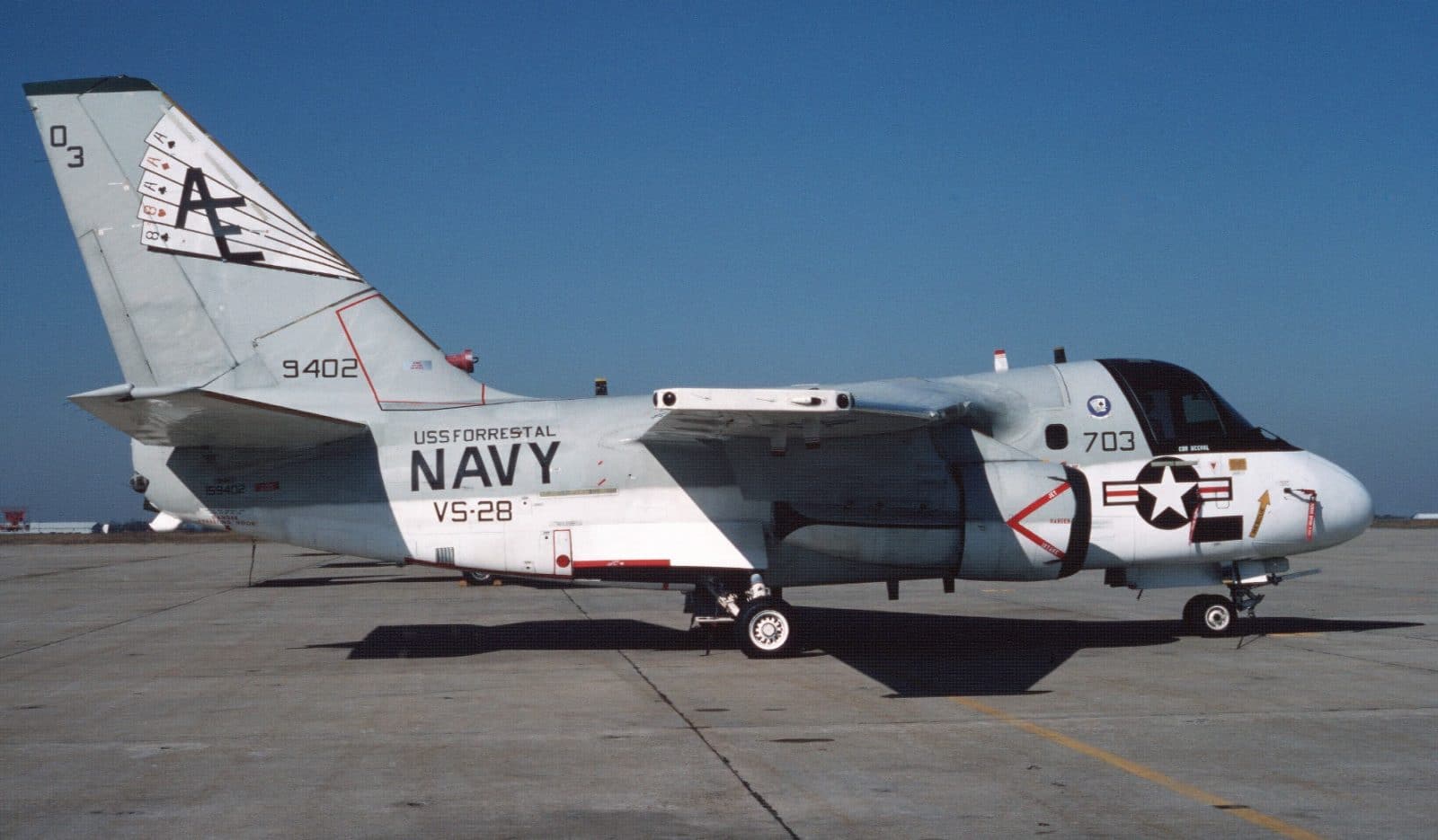
VS-28 S-3B. Image by US Navy
From Pax River to NASA: The Final Viking Flying
After VS-28 was disestablished, the last Viking was re-assigned to the Naval Air Warfare Center (NAWC)- Aircraft Division at Naval Air Station (NAS) Patuxent River in Maryland. The jet served as a test platform and research aircraft at NAWC Pax River until she was retired in 2005.
The National Aeronautics and Space Administration (NASA) acquired her for research soon thereafter.
Today the last Viking built wears registration number N601NA and NASA tail number 601. Since then the remaining “War Hoover” S-3B Vikings in Naval service have all been retired- the last of them in 2016. N601NA is literally the very last S-3B Viking. BuNo 160607/N601NA may be the only aircraft that was both the last one of its kind built and the last one of its kind to be airworthy.
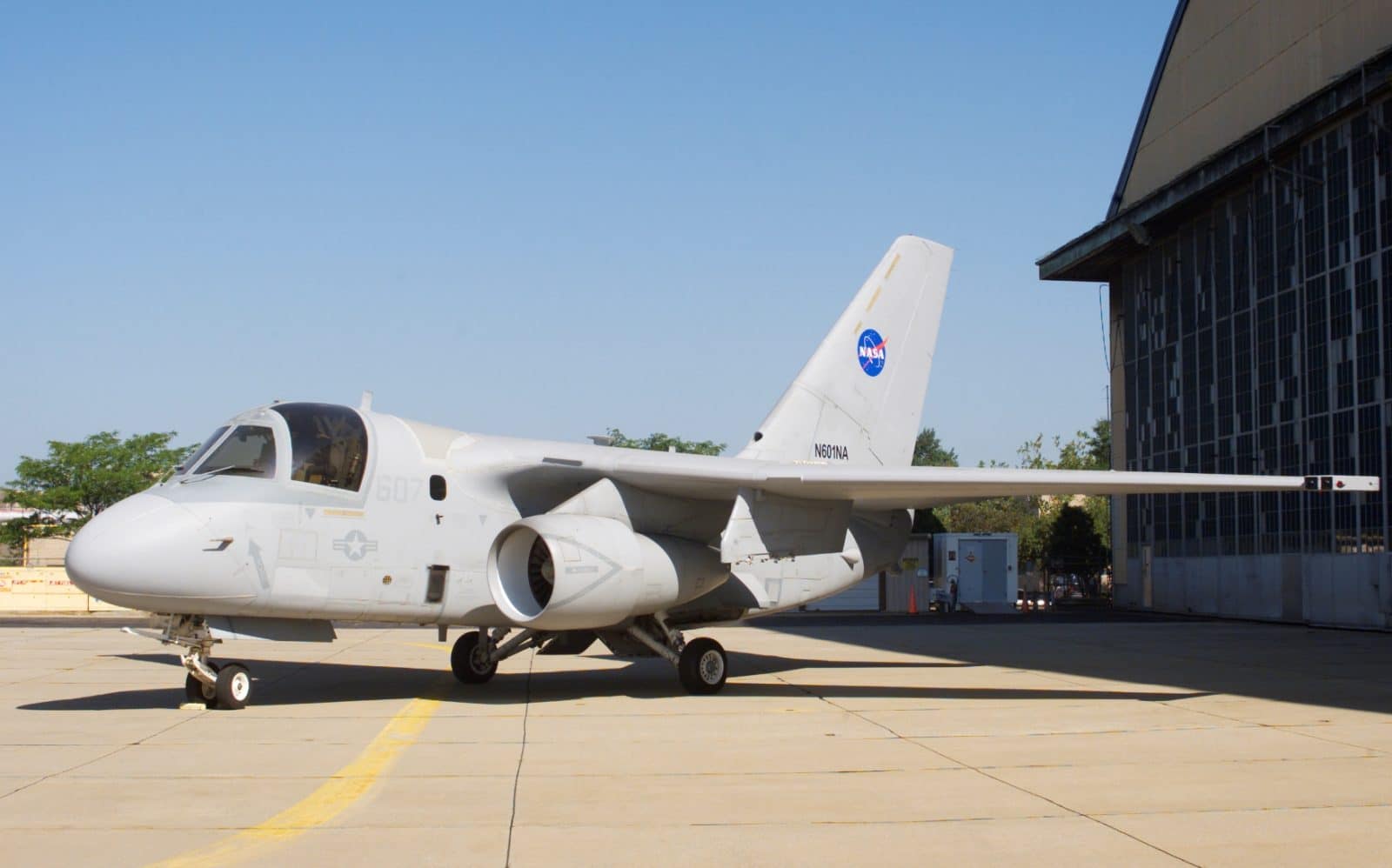
N601NA soon after acquisition by NASA. Image by NASA
NASA used the jet to study the effects of ice accretion on aircraft wings and tail surfaces, as well as to evaluate and validate anti-icing systems. Early research flights operated out of Aguadilla, Puerto Rico, where the aircraft was used to characterize icing conditions within the atmosphere’s tropical convective layer.
From 2015 through 2021, the last Viking was based at NASA’s Glenn Research Center alongside Cleveland Hopkins International Airport (KCLE) in Cleveland, Ohio. The aircraft was retired by NASA on 13 July 2021, following its final research flight, and today serves as a static display at the San Diego Air & Space Museum in California, bringing the operational flight era of the S-3 Viking to a close.
This video of the last Viking in flight at EAA AirVenture 2018 was uploaded to YouTube by AirshowStuffVideos.
N601NA visits the last three operational Navy S-3Bs at NAS Point Mugu in 2014. Image by US Navy
A Lubbock, Texas overnight might not be high on everybody’s list, but for me it always provides a chance to catch up with my niece, a Texas Tech grad, now the mother of three active boys, and married to a Lubbock firefighter.
We finished our dinner together and Lindsay said, “I better get you back to the hotel. We’re expecting a big dust storm later tonight.” With a hug goodbye, I headed up to the 6th (top) floor of the downtown Elegante Hotel and got ready for bed, knowing I’d get up at 0500 for the first flight to Dallas Love Field.
The Dust Storm Arrived
As predicted, late in the night I woke up to howling winds buffeting the hotel windows. I got out of bed and pulled back the curtains to see an obstructed, hazy view of the street below. The street lights cast an eerie yellow-brown glow, as though trying to see underwater in a pool full of ice tea.
Lubbuck Duststorm 2011. Image: Fredlyfish4, CC BY-SA 4.0 , via Wikimedia Commons
The dust storm was so thick that I couldn’t make out the buildings across the street. I was standing in a dust cloud of Texas dirt, listening to the angry wind trying to break into my hotel room from the outside.
I backed away, closing the curtain and only then was aware of the complete silence surrounding me and looked around the room to realize that the clock and air conditioning were off. Hmmm. The hotel had lost power. Heading back to bed, I reset my alarm for another 15 minutes earlier, thinking it might be hard getting ready to leave in a dark room.
O’ Dark Thirty Wake Up
At 0445, my alarm went off and, using my cell phone flashlight, I headed to the bathroom for a quick shower and shave. After getting dressed, I thought I’d head down early to see if the flight attendants needed help carrying their luggage down the six flights of stairs.
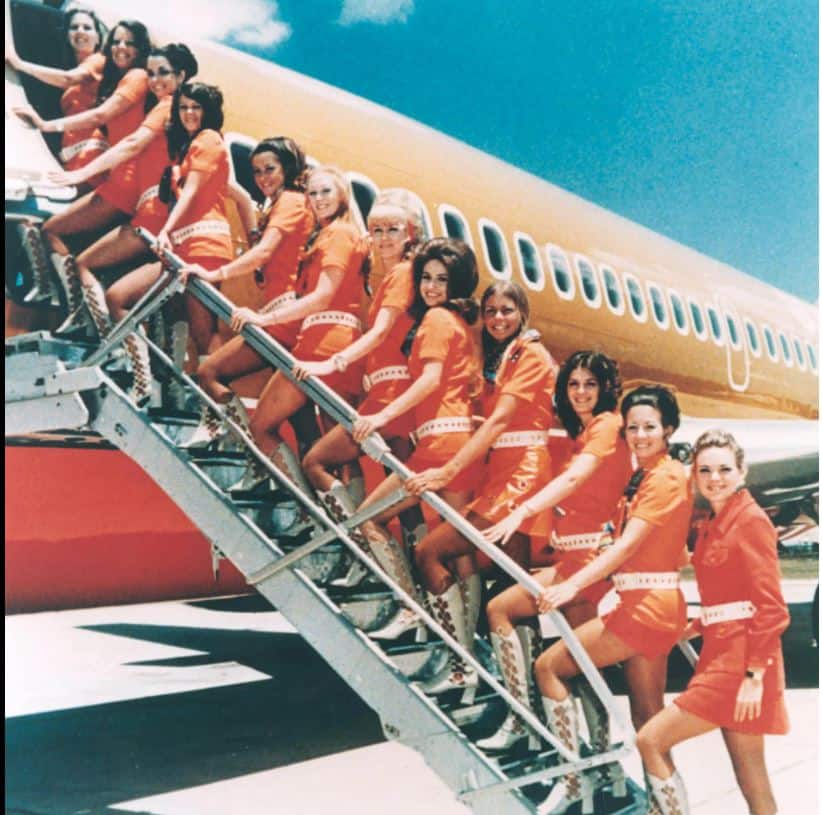
Original Southwest Airlines Flight Attendants. Image: Southwest Airlines
Carrying my suitcase and flight bag, I entered the darkened lobby, dimly lit by only two emergency lights behind the hotel desk clerk. From a dark corner I heard the laughing and cackling of three Dallas-based flight attendants sitting in a dark corner. These 40-year veterans of our airline were affectionately referred to as “senior mamas”, some of the original “stewardesses” of our 1970’s airline.
“Do y’all need help with your luggage?” I asked. “Oh no, Darlin’, we got our things down here just fine,” one replied. I told them, “It’s so dark in here I can’t hardly see y’all.”
The ringleader laughed, “Honey, you don’t wanna see me. I ain’t got my makeup on!” And the others laughed in agreement.
“Is the Captain down here yet?” I asked, not sure if he had made the trip down or was in another dark corner.
“Oh yes. He’s across the street getting some coffee,” a Dallas senior mama told me.
In a strange twist, our block had the power outage, but the Quick Track convenience store across the street had their lights on. Right at that moment, our captain, Bryan Knight, walked through the front door with two trays of six cups of coffee.
Not only was he taking care of his crew of five, but Bryan handed one to the frazzled young lady behind the desk.
An early morning coffee fresh from the Captain
No sooner had the clerk thanked him for the appreciated early morning coffee, when the stairwell door opened and two pilots in dark blazers walked toward the desk, empty-handed. Tossing his keys on the hotel desk, the pilot demanded, “Y’all need to send someone up to get our bags.”
I was struck by the different attitudes of two groups of airline employees in the same predicament. One crew is laughing and sharing coffee together, wondering how we can help each other.
The other is demanding service from a lone hotel employee, standing helplessly in the glow of emergency lights. I knew I had come to the right airline.
It’s All About The Attitude
A mantra I heard early in my tenure is that anyone, pilot or flight attendant, can do our job, but during our interview process, our airline strove to Hire for Attitude and Train for Aptitude. It makes all the difference!
Old Shakey Was In Trouble and Two Mark 5 Atomic Bombs Had to Go
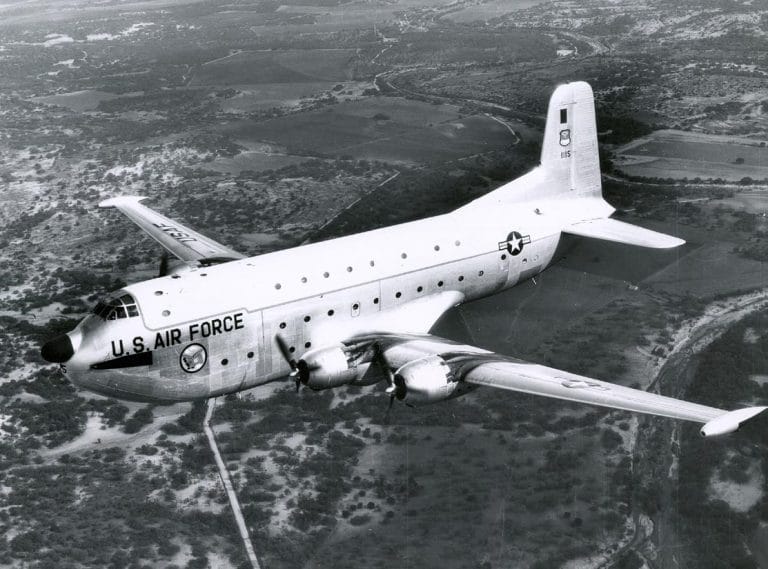
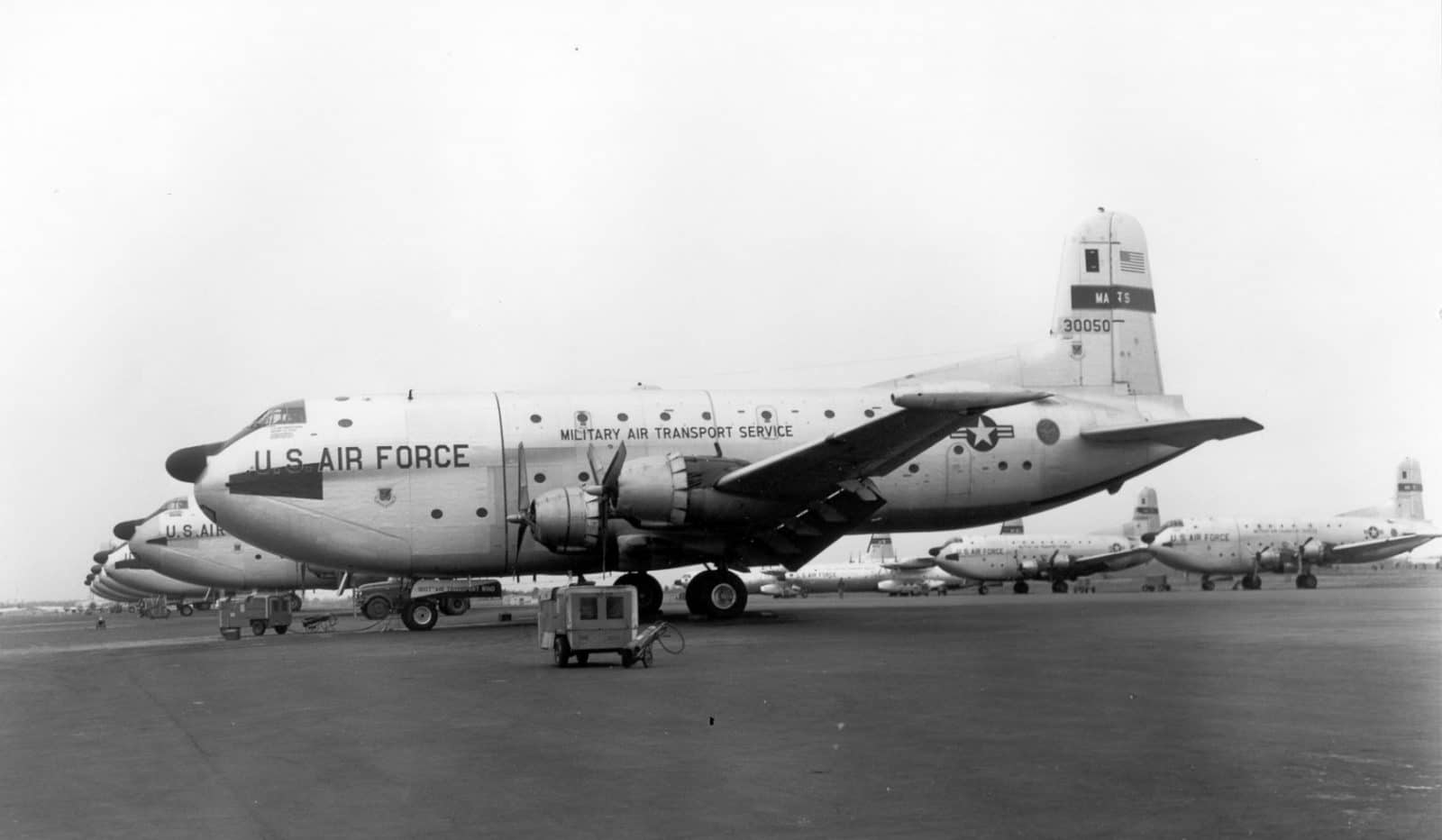
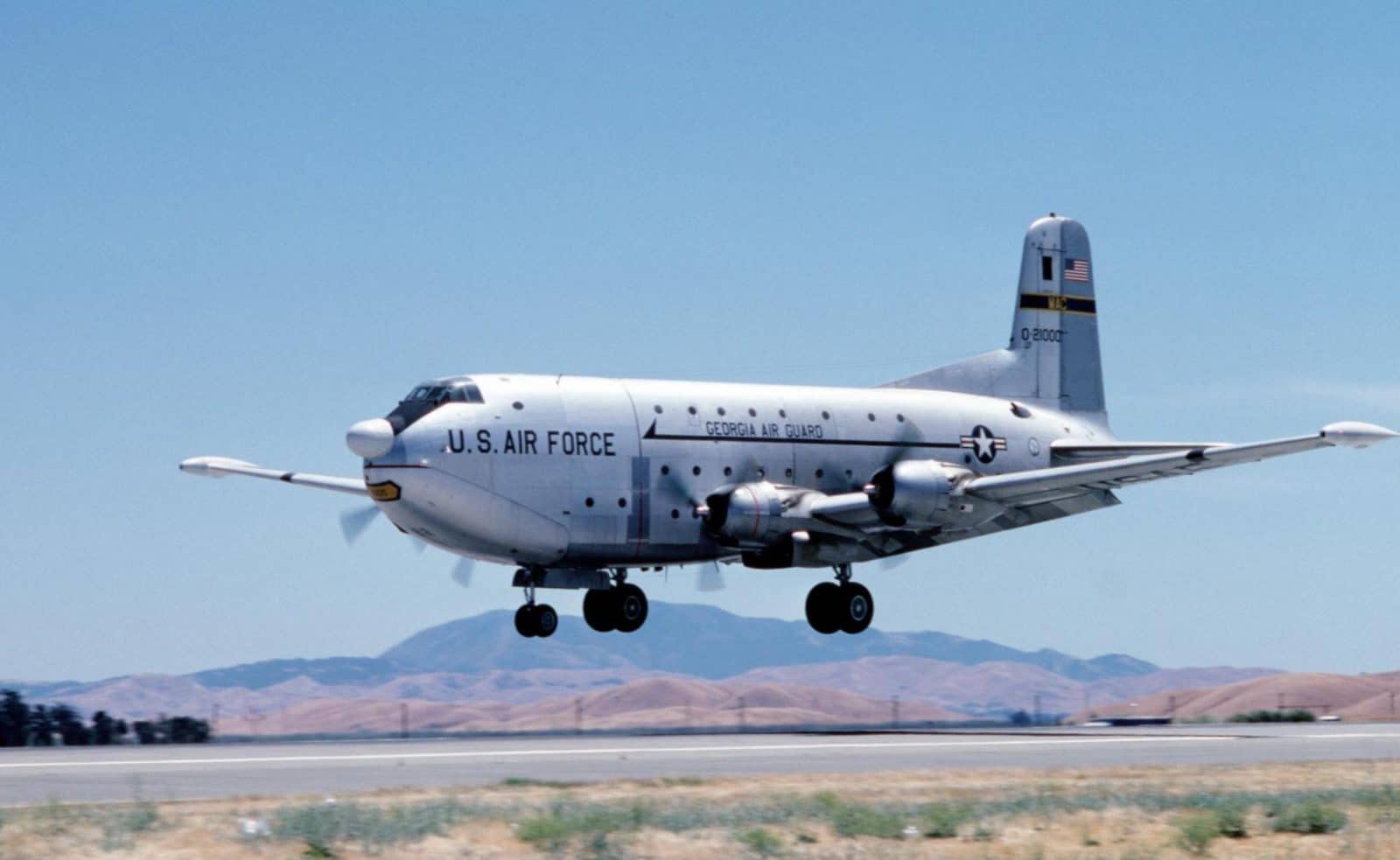
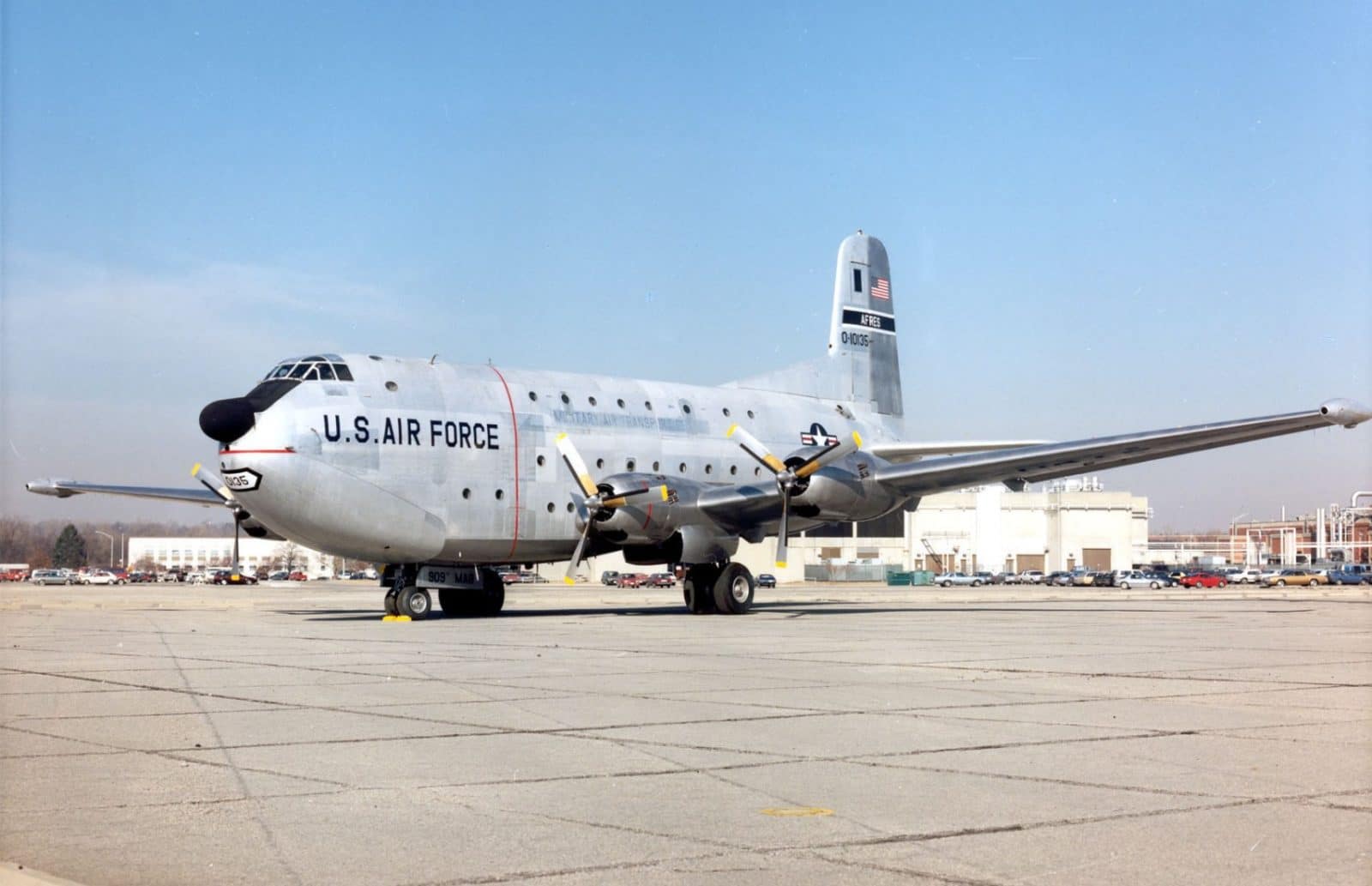
Broken Arrow – the very phrase sets off alarms everywhere. On 28 July 1957, a Douglas C-124A Globemaster II airlifter departed Dover Air Force Base (AFB) in Delaware bound for Europe via the Azores. The C-124A was carrying three Mark 5 atomic bombs and a single nuclear capsule. The Mark 5s were in Complete Assembly for Ferry (CAF) condition– meaning no nuclear components were installed in the weapons. The power supplies were installed in the weapons, but not connected.
However, the Mark 5s did contain most of the high explosives used to implode the composite uranium/plutonium fissile material core, or the pit. Weather forecasts were favorable, and the C-124A took off from Dover on time. But the C-124 would not be carrying everything it took off with when it landed in New Jersey.
C-124s on Dover AFB flight line – the aircraft involved in the 1957 Broken Arrow incident | IMAGE: US Air Force
Two Engines Out on the Same Wing
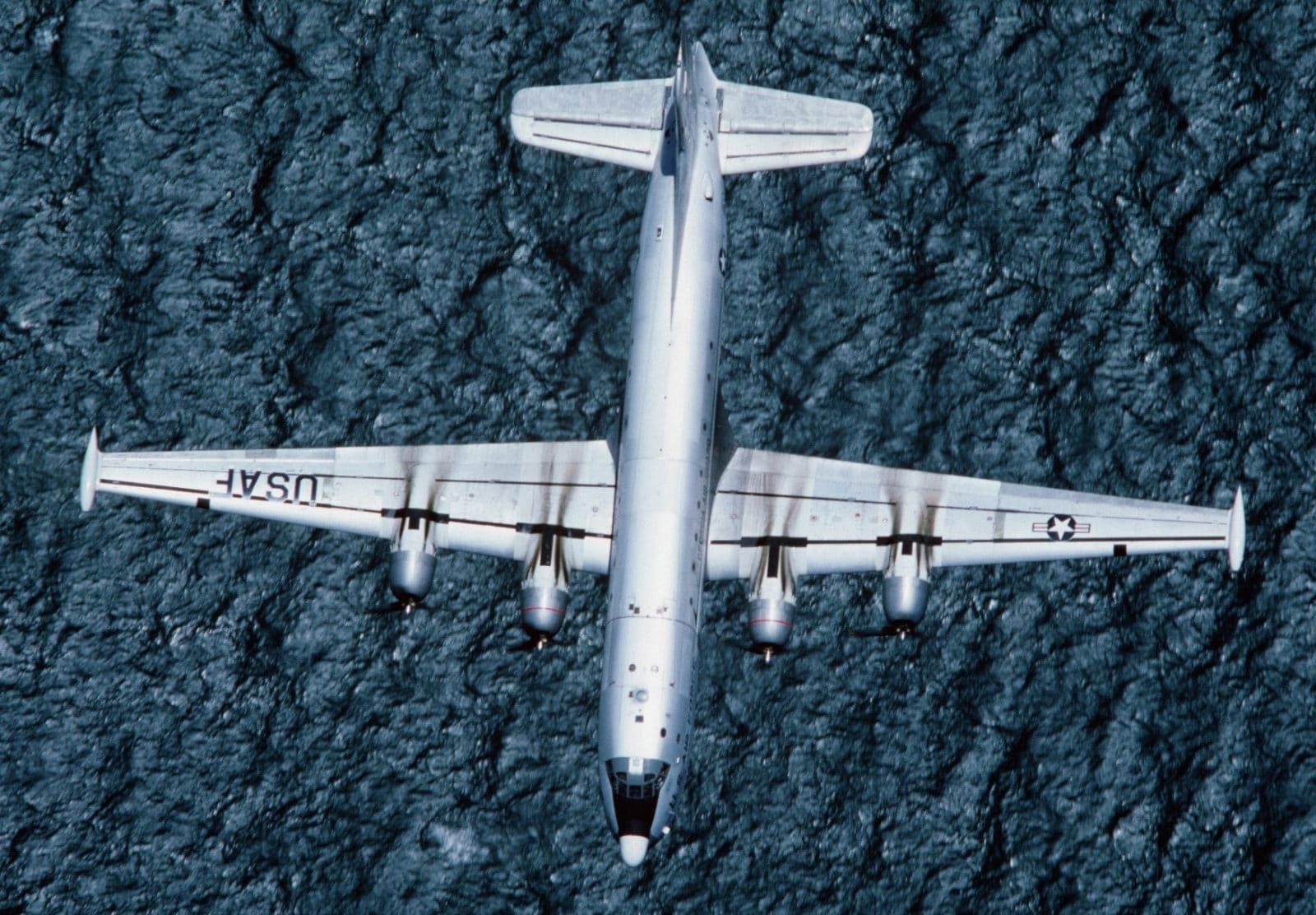
The C-124A got into trouble off Cape May in southern New Jersey. Both port side Pratt & Whitney R-4360-63A Wasp Major radial engines lost power and had to be shut down; their propellers feathered. The crew attempted to compensate using increased power from the starboard engines, but could not maintain controlled flight, and the aircraft began losing altitude.
Under those conditions, the C-124A would not stay aloft for long. Fuel required for the long overwater trip to the Azores was probably at least partially dumped, but it wasn’t enough to keep the C-124A aloft.
C-124. US Air Force photograph
First One and Then Both Gadgets Are Deep-Sixed
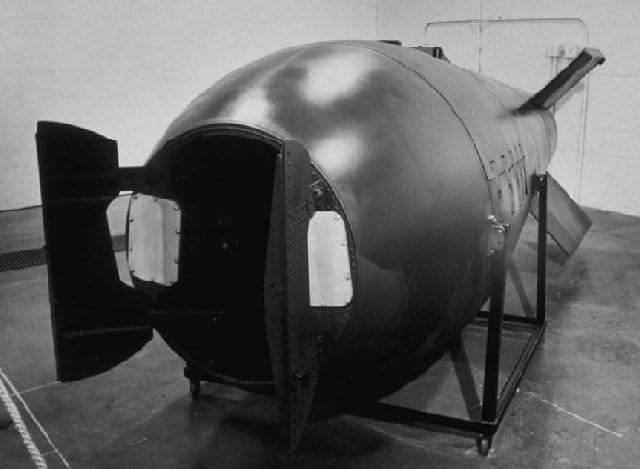
The closest suitable recovery airfield was Naval Air Station (NAS) Atlantic City, inland from the coastal resort town on the mainland in Egg Harbor. The crew was forced to lighten their airlifter to get there on two engines. They jettisoned a single Mark 5 device from an altitude of 4,500 feet, roughly 75 miles off the New Jersey coast. The Globemaster II continued to lose altitude, and a second Mark 5 device was jettisoned into the Atlantic from an altitude of 2,500 feet, roughly 50 miles from the Garden State coastline. Very roughly.
Mark 5 atomic bomb. US Air Force photograph
The Atlantic Ocean’s a Pretty Good Hiding Place
Thus lightened, the C-124A was able to successfully recover at NAS Atlantic City, which was no small feat on only two mills. Neither of the jettisoned devices were seen or heard exploding on contact with the ocean, but both were presumed destroyed by initial impact with the water anyway. However, this would still be considered a broken arrow event.
A search for the weapons commenced almost immediately, but no trace of either of the bombs was found over three months of high-effort searching, or during the nearly 70 years since they were deposited in the drink south or southeast of Atlantic City on the Jersey shore. They’re probably on the continental shelf, and definitely much closer than anybody who lives there would prefer!
But here’s the really strange part: No public announcement of this incident was made at the time it happened. Perhaps that was to be expected, what with the Cold War raging and all. The incident was finally acknowledged as a Broken Arrow in 1980- a lost and still unrecovered atomic weapon, not by a public announcement, but by inclusion on a newly published government list.
And those two Mark 5s? They’re still out there – two of a total of six (or 9, or 11, depending on the source) lost, but never found, atomic weapons.
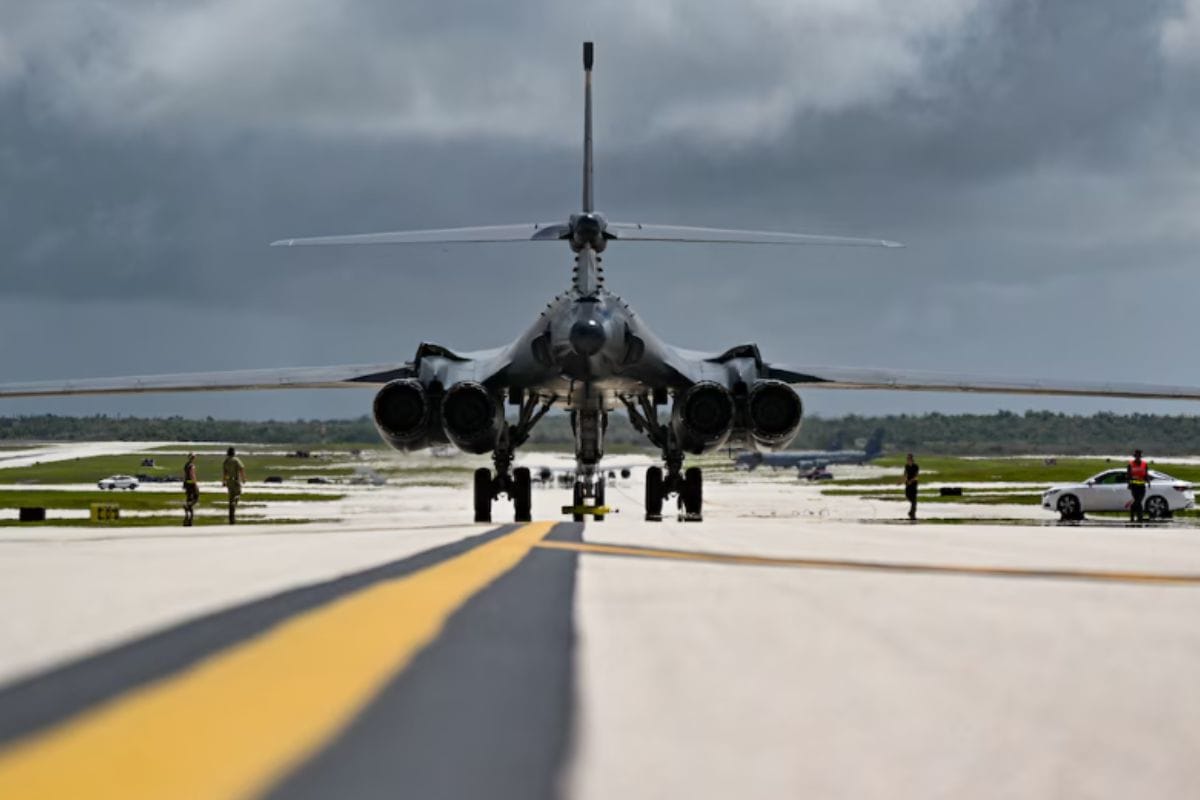
The 1960s gave birth to an incredible aircraft—a military aircraft to replace the best strategic bombers to date. It was so well designed that it could fly faster and carry a payload greater than the famous B-52 bomber.
The B-1 Bomber was originally the brainchild of the North American Rockwell company. Born on 23 December 1974, the B-1A took to the sky for the very first time. This prototype could fly at speeds of Mach 2.2 at high altitudes. She could fly longer distances at lower altitudes, boasting a cruise speed of Mach 0.85.
During its operational life, this aircraft earned its wings by delivering the highest volume of ordnance ever recorded for a single bomber. She still holds the record today with a payload capacity of 94,000 pounds.
THE EVOLUTION OF THE B-1 BOMBER
The Carter Administration canceled the B-1 program in 1977 due to high costs and economic struggles at the time. However, this amazing aircraft’s death was short-lived. In 1981, President Ronald Reagan breathed life back into the program.
The B-1 had found life due to a hole in our strategic capabilities. With the B-2 not yet available and the B-52 too slow, the B-1’s capabilities were needed. It was the time of the Cold War with Russia, and their anti-aircraft missiles had significantly improved. The B-1 Lancer was our answer to the problem.
Boeing purchased ownership of the B1-A from Rockwell in 1981. Due to operational requirement changes, Boeing had to redesign the B1-A. The result was an aircraft that could reach a slower Mach 1.2 at higher altitudes but a faster speed of Mach 0.96 at lower altitudes.
B-1B Lancer: A Legacy Of Power 27
The new B-1 bomber was nicknamed “The Bone. “Deliveries of the new B-1B began in 1985. Less than a year later, she entered service with SAC (Strategic Air Command) as a nuclear bomber.
In 1992, SAC was dissolved and incorporated into the ACC (Air Combat Command). When the ACC acquired command of the B-1B, it was decommissioned as a nuclear-carrying aircraft. Her larger bomb bays were converted to hold regular ordinance.
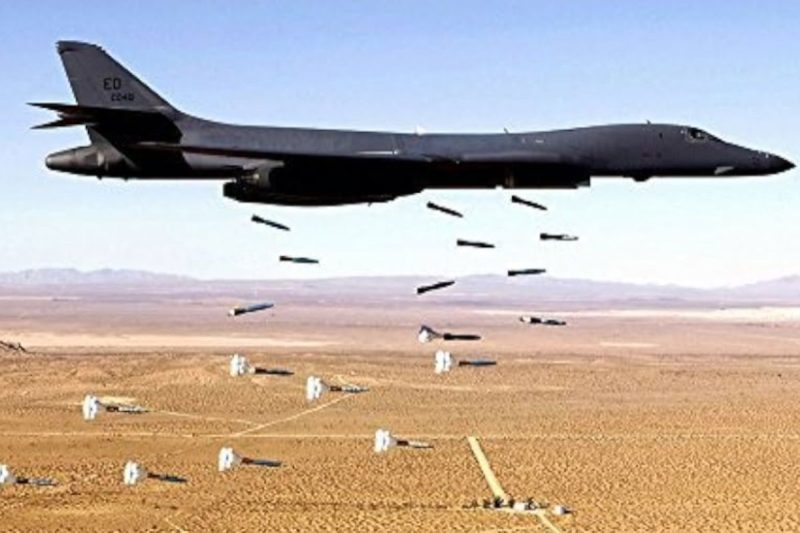
Each B-1B could now carry a payload of 94,000 pounds during missions. A B-1B can carry a payload of 84 MK-82 bombs, weighing 500 pounds each. The MK-82 was the perfect bomb for optimal damage in an individual sortie. Unfortunately, the total number of sorties flown by the B-1B in combat is still classified.
OPERATIONAL HISTORY OF THE B-1 LANCER
Having been outfitted for conventional bombing, it reentered service during Operation Desert Fox in 1998. This four-day campaign, which occurred in December, was the B-1B’s first combat deployment. Her mission was to degrade Iraq’s military infrastructure.
The B-1B would next see action in 1999 during the NATO action in Kosovo. Operation Allied Forces started on 24 March 1999 and lasted 78 days. The B-1B was used to conduct a bombing campaign against the Federal Republic of Yugoslavia. The primary goal was to halt the ethnic cleansing of Albanians in Kosovo by Serbian forces.
B-1B Lancer: A Legacy Of Power 28
The B-1B would next see action during Operation Enduring Freedom. This campaign started in Afghanistan as a result of the 9/11 attacks on the United States. The goal was to oust Islamic extremists from power. That campaign lasted until 2021, making it the longest period of war for the United States.
The next theater of operations for the B-1 was Operation Desert Fox. Operation Desert Fox was conducted by the United States and the United Kingdom from 16 December through the 19th of 1998. The mission was to punish the Iraqi Government for repeatedly violating International Law on Nuclear and Biological warfare weapons development.
The B-1B was used to disable Iraqi military infrastructure and disrupt its weapons development programs. Targets included command and control centers, intelligence facilities, and air defense systems. The B1’s operations inflicted significant damage on Iraqi military capabilities.
B-1B Lancer: A Legacy Of Power 29
WHAT DOES THE FUTURE HOLD FOR THE B-1 LANCER?
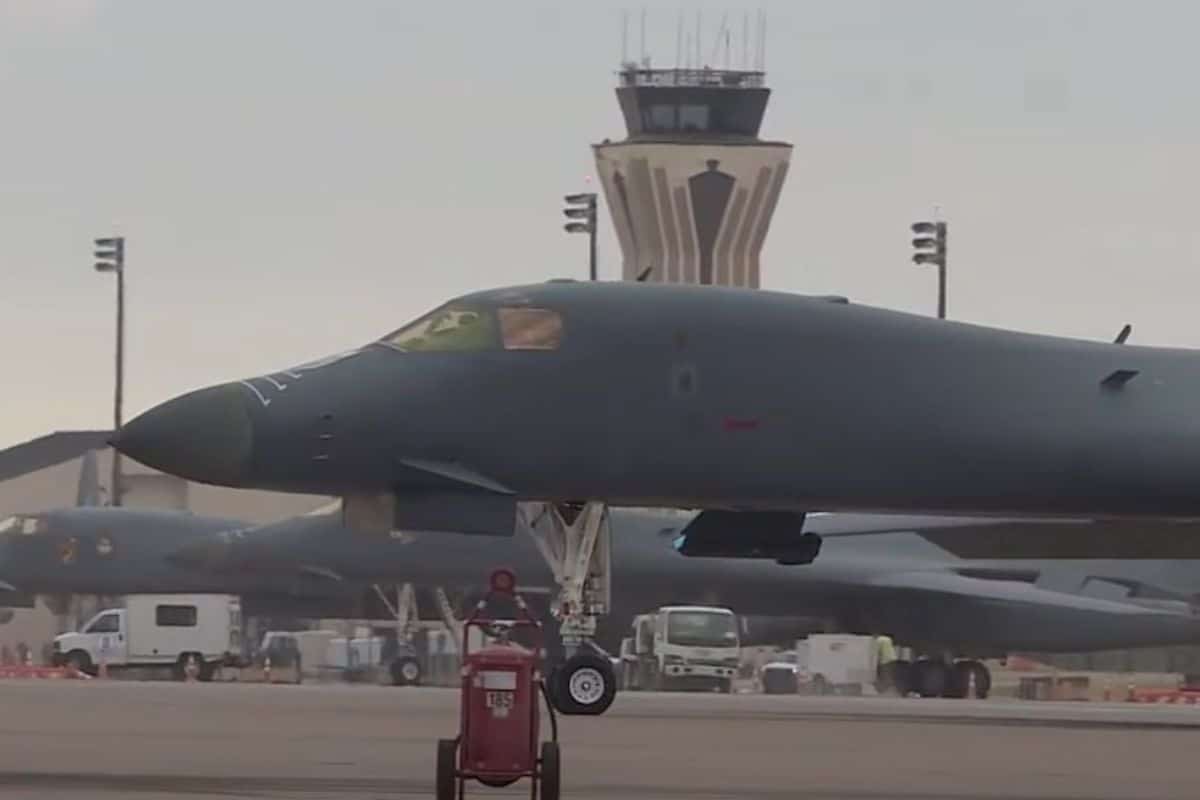
To this day, the B-1 Lancer is still in operation. Overall, an estimated 45 of the original 100 aircraft delivered are still flying. These aircraft are based at either Ellsworth Air Force Base in South Dakota or Dyess Air Force Base in Texas. The B-1B Lancer is still being used as a deterrent against countries of aggression.
But where will the B-1B Lancer end up? The remaining fleet is expected to be in operation until at least the 2030s, when the new B-21 Raider will replace it. Like her brothers and sisters of the past, she will be doomed to storage at the Davis-Monthan Air Force base in Arizona. There, the 309th Aerospace Maintenance and Regeneration Group (AMARG) will either scrap her or cannibalize her for parts.
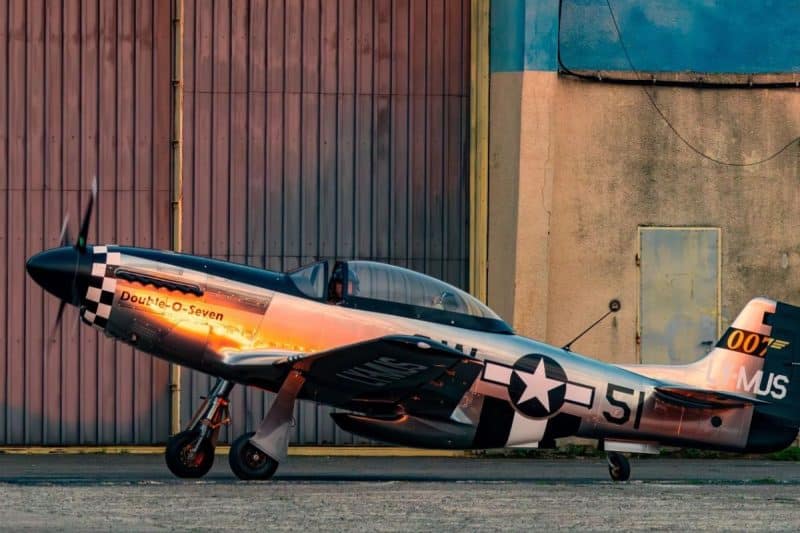
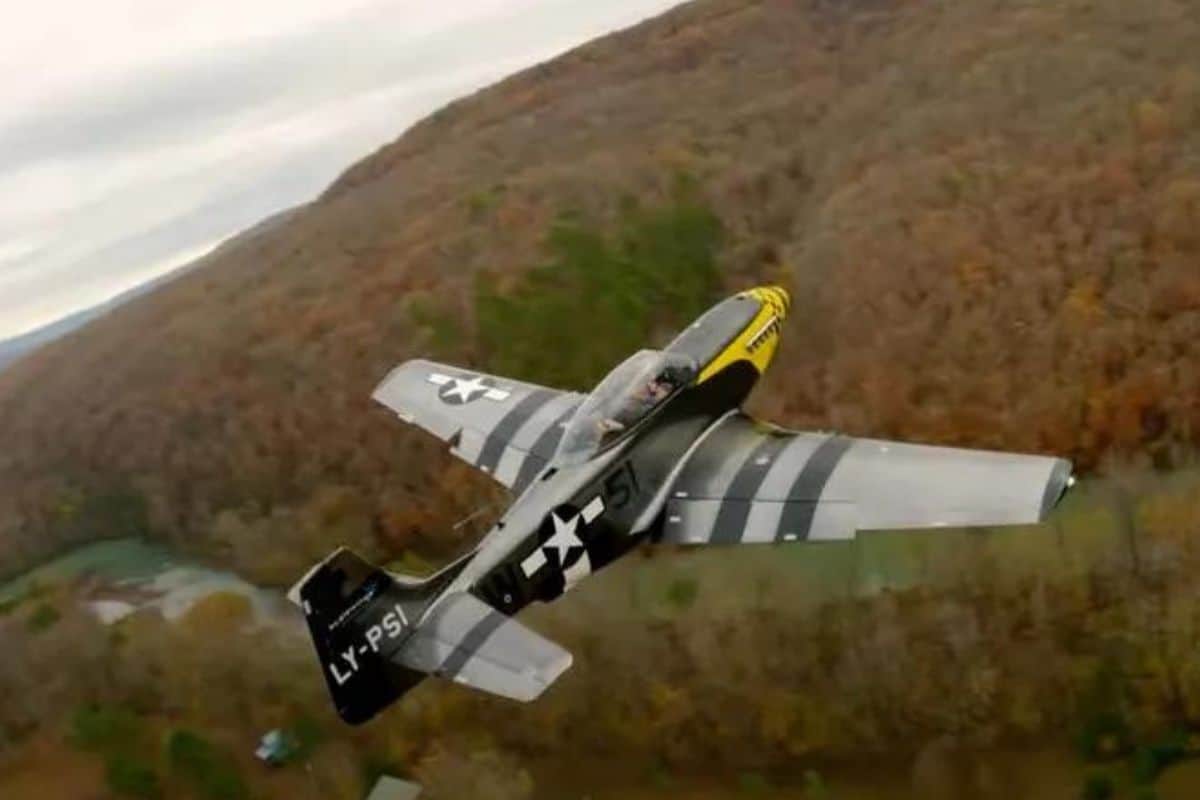
While the original P-51 stands alone, the 3/4 Scale SW51 replica is ‘better’ for your budget and still looks and flies like the real WWII fighter.
Have you ever dreamed of flying a real war bird? How about owning one? Well guess what aviation fans, there’s a new P-51 Mustang replica in town, the SW51. Not only does she look and sound like the original, but she flies like one too. While it’s not an original, it’s the next best thing. And it’s ‘better’ for your budget.
Welcome to the world of replica aviation. For years many have tried to create a true to life P-51 Mustang kit. Now a German company, Scale Wings has a kit of their own. The Scale Wings SW-51 is a 70% scale carbon fiber master piece.
Carbon Fiber can be stronger than aircraft metals. Not to mention that it is so much easier to shape. The result is a lighter weight aircraft that becomes dangerously close to looking like the real thing. Can you imagine flying over your neighborhood in an old war bird?
WHAT THE SW51 HAS TO OFFER
Scale Wings SW51 Is The Next Best Thing To Owning A Real P-51 35
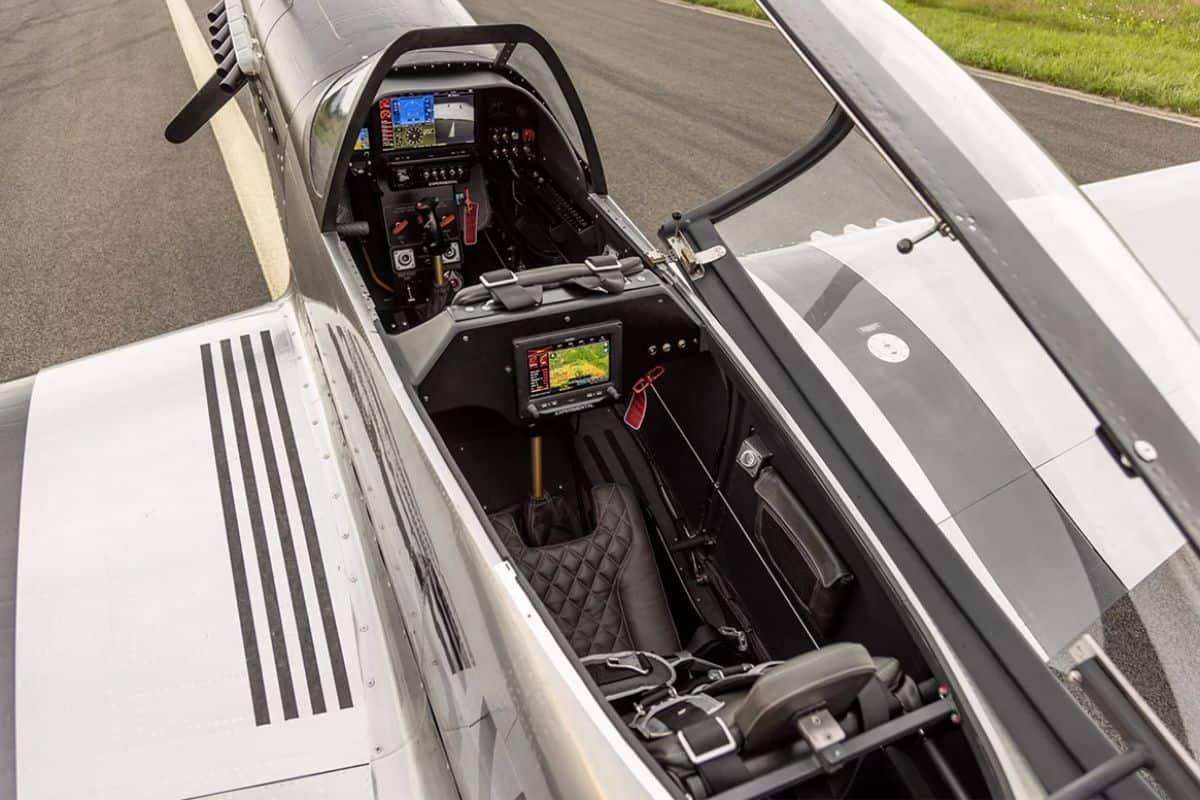
The SW51 features such amenities as fully retractable landing gear, a ballistic parachute and a canopy that not only slides, but it also flips open from the side. This allows easy access for your passenger in the rear seat. That’s right! She’s a two seater!
The cockpit measures 23 inches wide and is designed for pilots up to 6.5 in height. Each seat is rated for up to 220 lbs and comes with a headset connector for communications. The seats are made of high quality military brown leather. These seats can also have custom designs sewn into them such as logos or Call-Signs.
SW51 in flight. Image: Scalewings
In addition the seats feature a five point restraint system. Talk about class and reliability. For additional safety features there’s an optional GRS Ballistic parachute and spring loaded landing gear, which lower during power loss situations.
The SW51 features a full Carbon Fiber body. This allows for amazing details to be captured accurately. There are over 100,000 fabricated false rivets built into the skin of this airplane. With such exacting detail, this feature makes her look just like the original!
THE SW51 IS LIGHT STUNT RATED
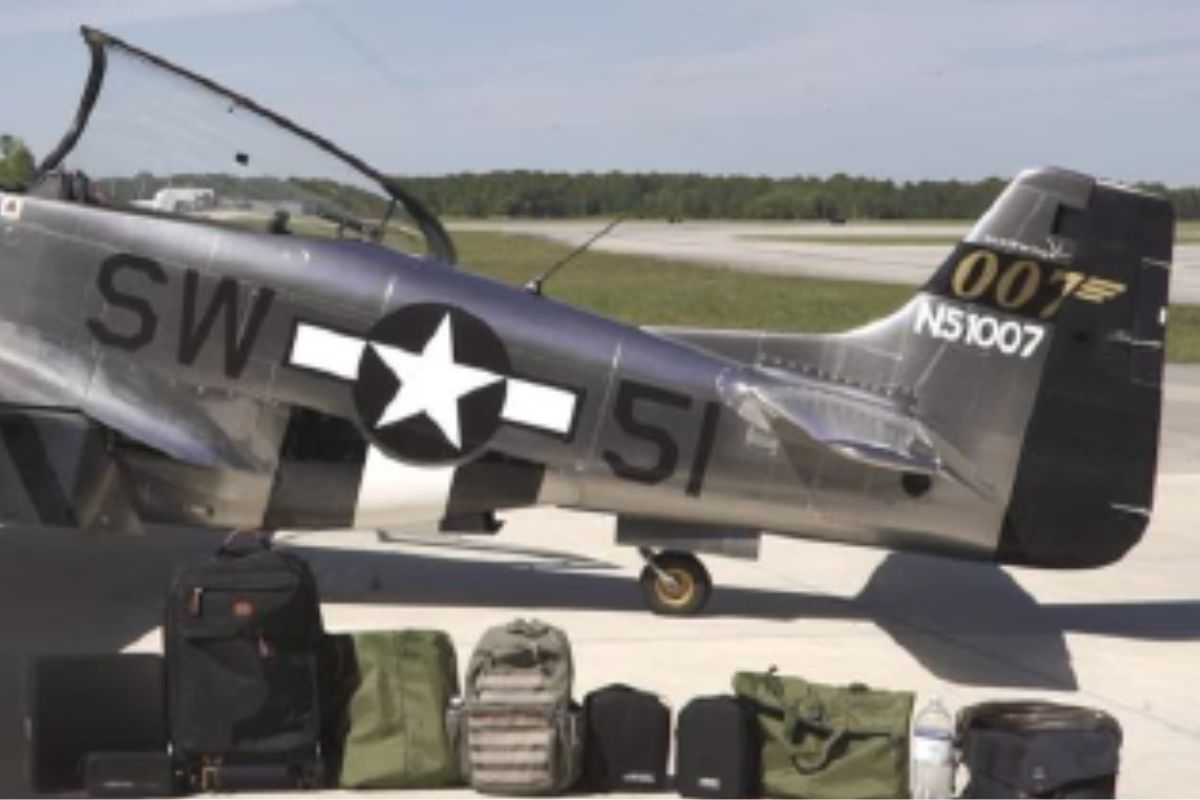
Luggage area of the SW51. Image: Scalewings
Yes, you can do light stunts in her. This war bird does loops and barrel rolls. Who would want a P51D Mustang replica that couldn’t? She is a very stable light weight airplane. Those who have flown her say there is very little flutter with this particular aircraft.
The Rotax 915-IS Turbo puts out an easy 141+ horsepower. This gives the SW51 over a 2,000 foot per minute climb out rate. The combination of Carbon Fiber body and the Rotax engine translates to positive 6 and minus 4G capabilities
The SW51 is 8.9 feet in height and has a span of 25.9 feet. She also has a 22″ X 22″ X 22″ luggage storage area. The SW51 sports a weight of 1,278 empty, with a max capacity of 1,873 lbs. That’s a useful load of 650 lbs.
In her current configuration, the SW51 carries two forty-eight gallon internal wing tanks. She consumes approximately 7–9 gallons per hour at a cruise speed of 155 knots. She has a range of 1,000 miles and can fly approximately three hours.
The SW51 requires approximately 950 feet of runway for take off. She also requires approximately 1,150 feet for landing. She has a performance ceiling of around 50,000 feet, where she can obtain a cruise speed of 185 knots. Not bad for a Rotax 915-IS Turbo engine.
THE SW51 CAN EASILY HANDLE CROSS WINDS
According to several pilots, the SW51 is a dream to land during cross winds. At a 1,873 Lbs max capacity, she’s a lighter aircraft. But the locking tail wheel holds her steady on the runway. This is a safety feature even the most seasoned tail draggers will enjoy.
Landing gear safety is not an issue with the SW51. Unlike the original P-51 Mustang, the SW51 uses electric motors instead of hydraulics. The SW51 also features a double locking gear system. Once they are down, you would literally have to break the air frame to experience a gear failure.
Fail Safe Landing Gear Too
The landing gear of the SW51. Image; Scalewings
Want to talk about safety? Scale Wings has created a winding spring system within the main gear. When the gear is raised by it’s motors, it automatically winds a release spring. One flip of a switch, and the spring unwinds, deploying the landing gear.
THE SW51 KIT PLANE IS AFFORDABLE
Now let’s take a look at what you get in your SW51 build kit. Basically the plane comes much like the model kits of the 1980’s. It takes an estimated 1,500 hours to build this kit if you are a beginner. The kit costs $158,000.
Completing the build will cost you approximately $300,000. A full scale mustang is a million dollar adventure. It also costs $800.00 per hour to operate! Now you can fly the SW51 for a fraction of that cost. Picture yourself rolling down the runway in this beautiful war bird replica.
Scale Wings SW51 Is The Next Best Thing To Owning A Real P-51 36
WHAT THE KIT INCLUDES
As you can see above, the SW51 Kit includes quite a lot. It’s quite reminiscent of the model airplane kits from the 1980’s. The main fuselage comes fully assembled from the fire wall to the tail. The main wings come in several pieces. The canopy and air intake scoop also come fully assembled.
The only things the basic kit doesn’t include is the Power Plant, Avionics, the GRS Ballistic chute and the optional cock pit and leading wing edge heating systems. With easy to build form, an experienced kit builder can have her together in under 900 hours.
At the end of the day, the SW51 is the answer to your WWII fighter plane dreams. It looks, feels and sounds like a famous fighter plane. The costs of owning one is even cheaper. Yet you get to enjoy the safety and security it provides. We have provided a link for further information on the SW51 kit.
An Impressive List of Firsts Along With Capabilities to Match-That Was the Vark
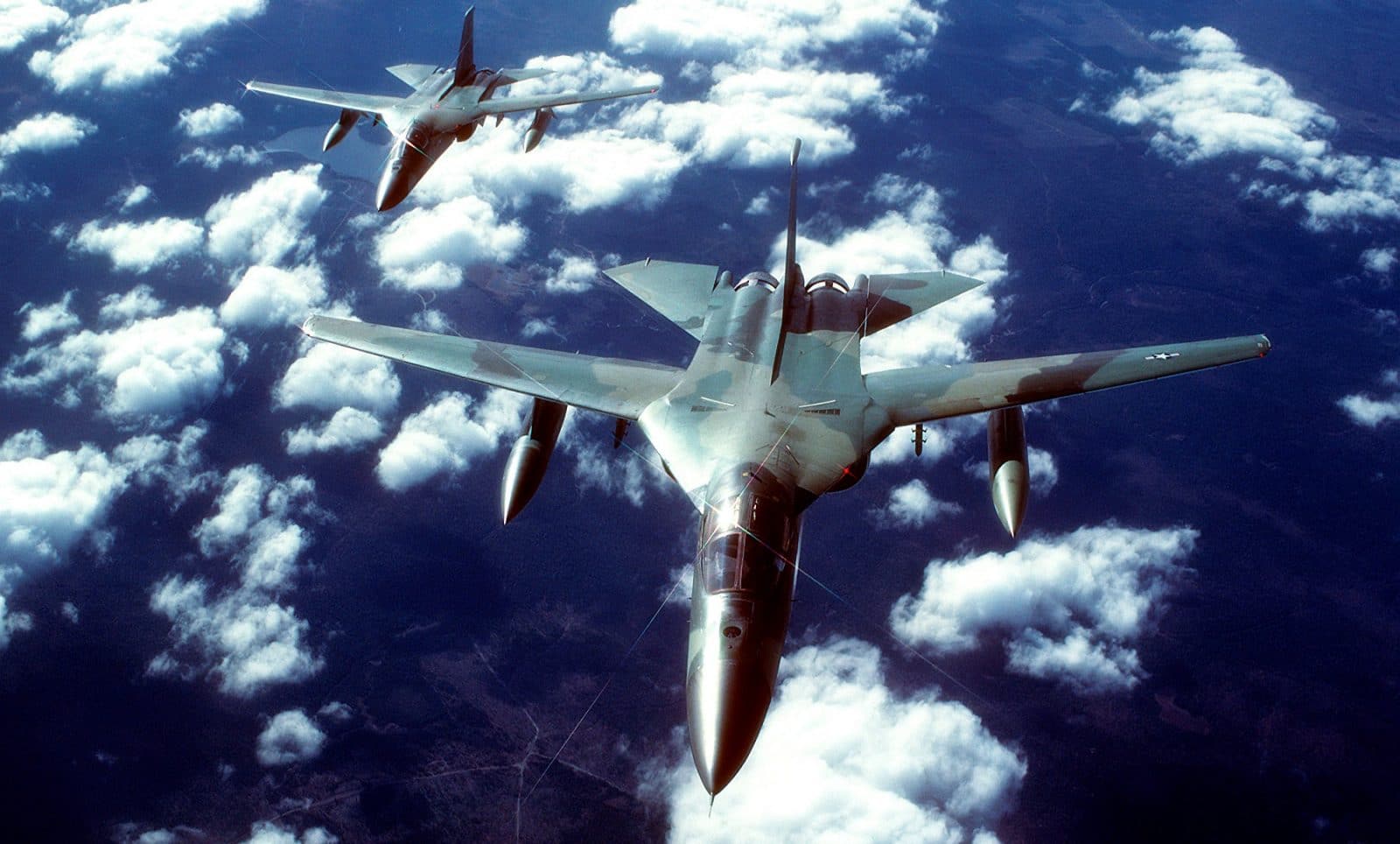
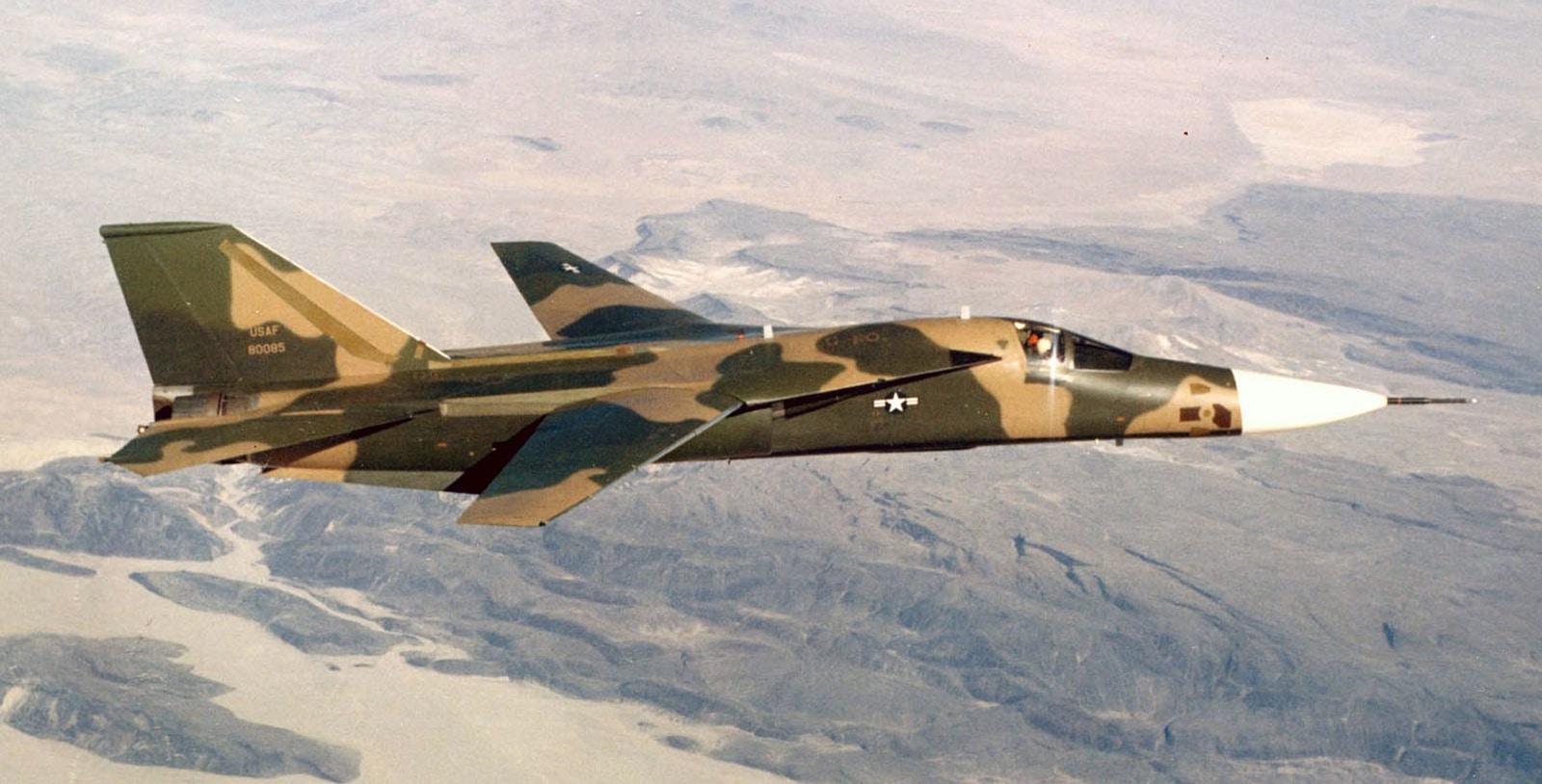
The General Dynamics F-111 Aardvark first entered service with the 428th Tactical Fighter Squadron (TFS) at Nellis Air Force Base (AFB) on 28 April 1968. When the 428th sent F-111As to Vietnam for the Combat Lancer program, the squadron was still in training at Nellis. Three of those initial six F-111As were lost in Vietnam- all due to horizontal stabilizer malfunctions and not due to enemy action.
F-111A. US Air Force photograph
Pioneering Spirit
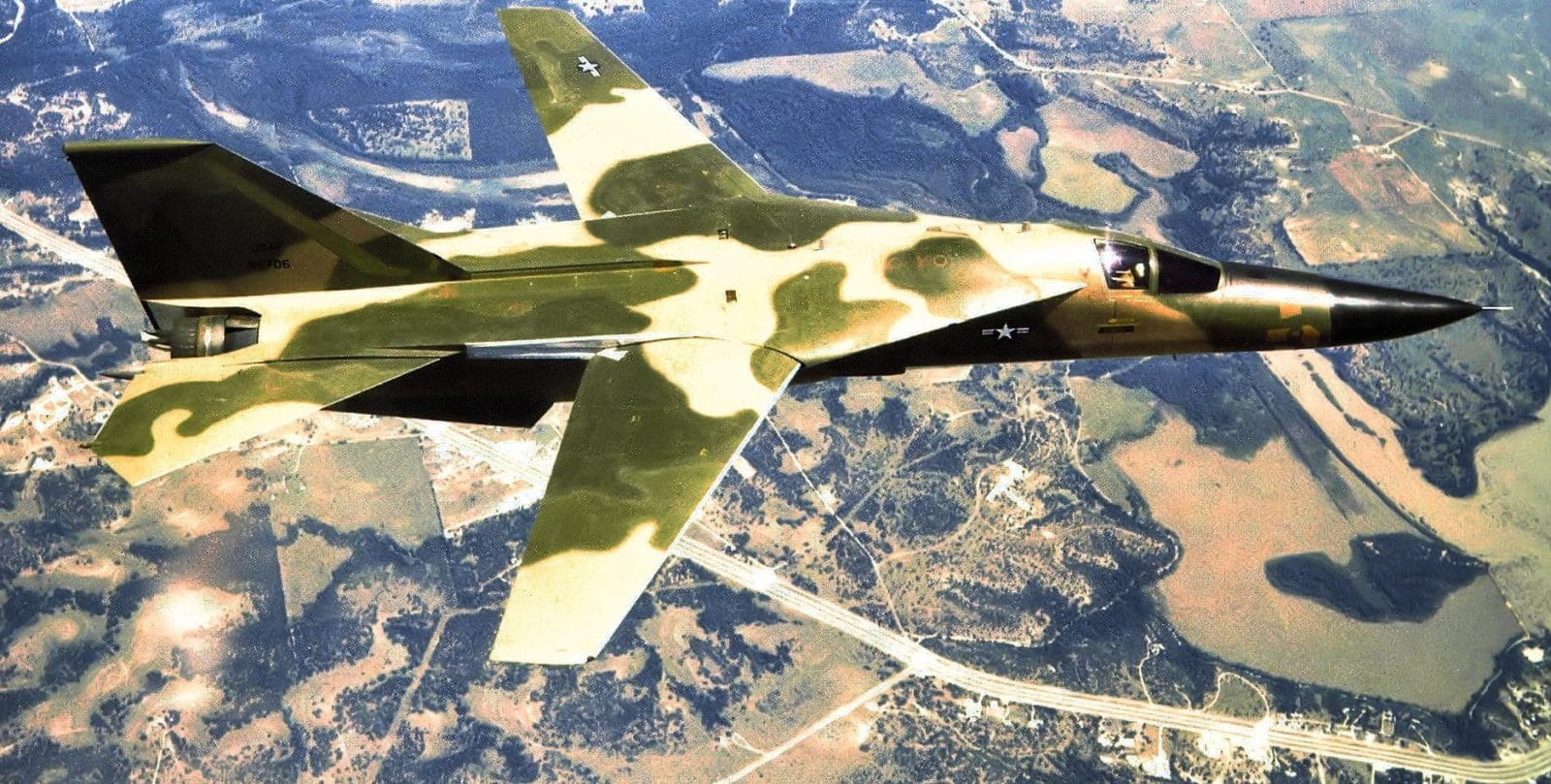
The F-111A was the first production aircraft to incorporate variable-sweep wings into its design. Many more similar designs would follow. The F-111 was powered by the first afterburning turbofan engines.
Those engines, the Pratt & Whitney TF30 turbofans, would power only two other American aircraft: The Grumman F-14A Tomcat (with afterburner) and the Vought A-7A/B/C Corsair II (without afterburner).
US Air Force photograph
One Hell of a Ride
Another ground-breaking feature of the F-111A crew escape module. Rather than traditional ejection seats, the F-111A was designed with a jettisonable cabin. The cabin was designed to be separated from the jet by rocket thrust.
The cabin would then descend under a large parachute. Airbags were used to cushion the landing and would float the module if it came down in water.
US Air Force photograph
How to Haul an Impressive Payload
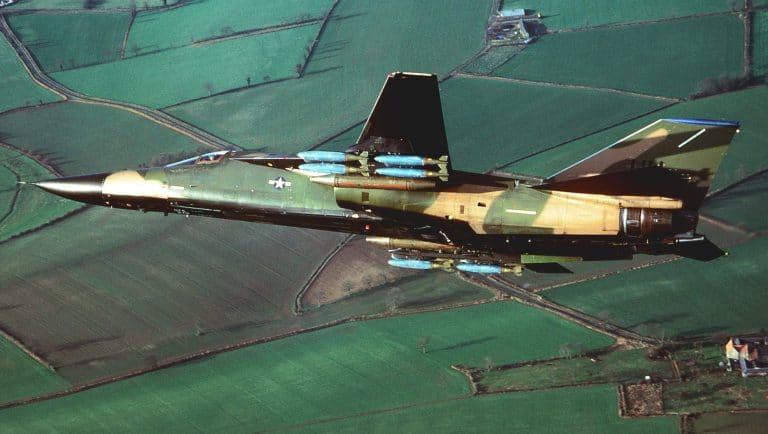
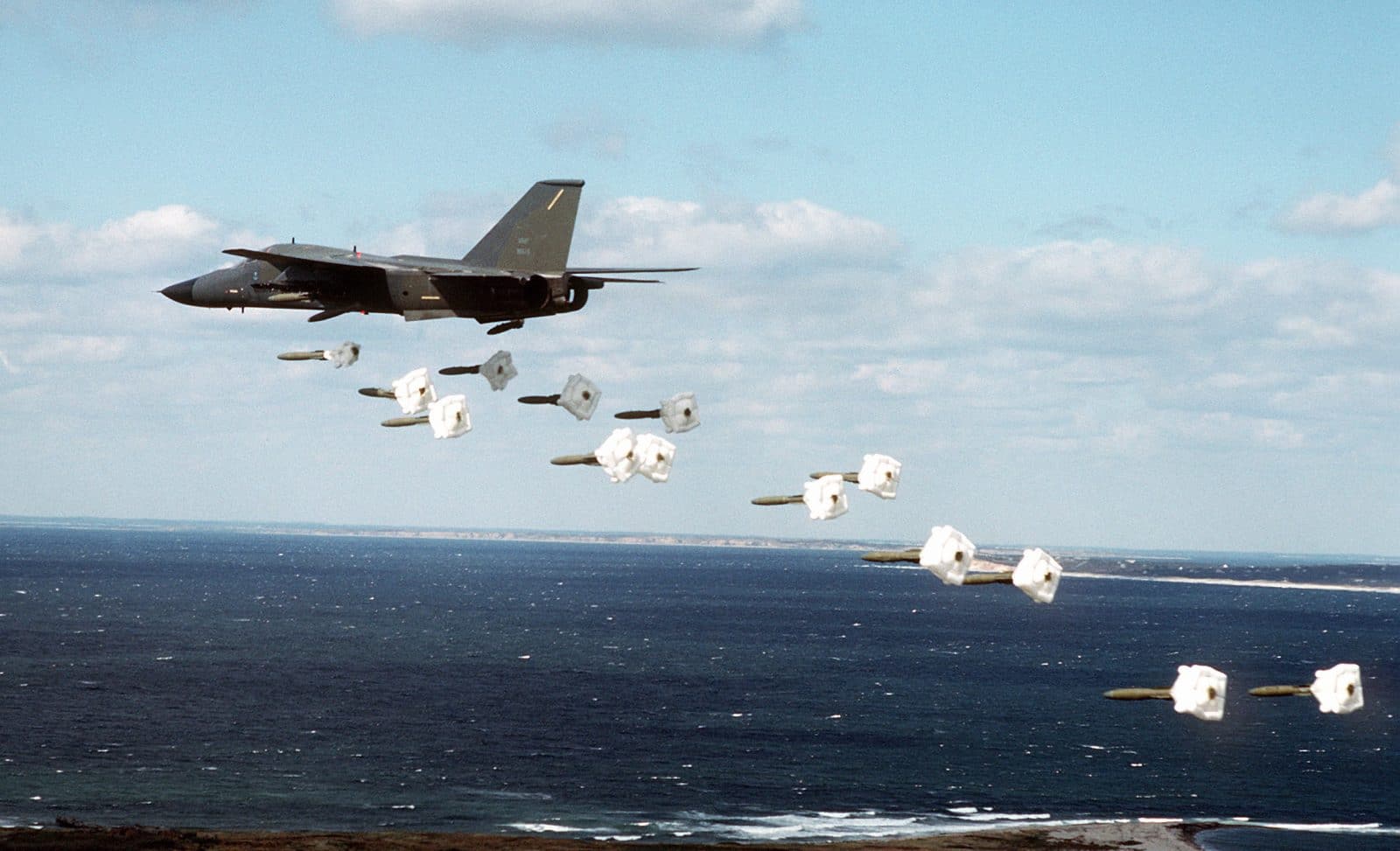
The F-111A was designed with an internal weapons bay that could carry bombs, auxiliary fuel tanks, or an M61 Vulcan 20 millimeter rotary cannon. Though the gun was seldom mounted, it gave the F-111A a fearsome ground attack weapon.
Much more commonly carried were the auxiliary fuel tanks. External ordnance was carried on four underwing pylons. The inside pylons were capable of swiveling to remain lined up with the fuselage when the wings’ sweep was changed. The outer pylons were fixed.
US Air Force photograph
Black Boxes and That Magic Nose
The F-111A’s ability to penetrate low and fast was provided by a new generation of avionics. The General Electric AN/APQ-113 attack radar was connected to a Texas Instruments AN/APQ-110 terrain following radar, both in that distinctive nose, and a Litton AJQ-20 inertial navigation and navigation attack system. These black boxes gave the F-111A its hands-free low-level flight capability.
F-111B. US Navy photograph
The B
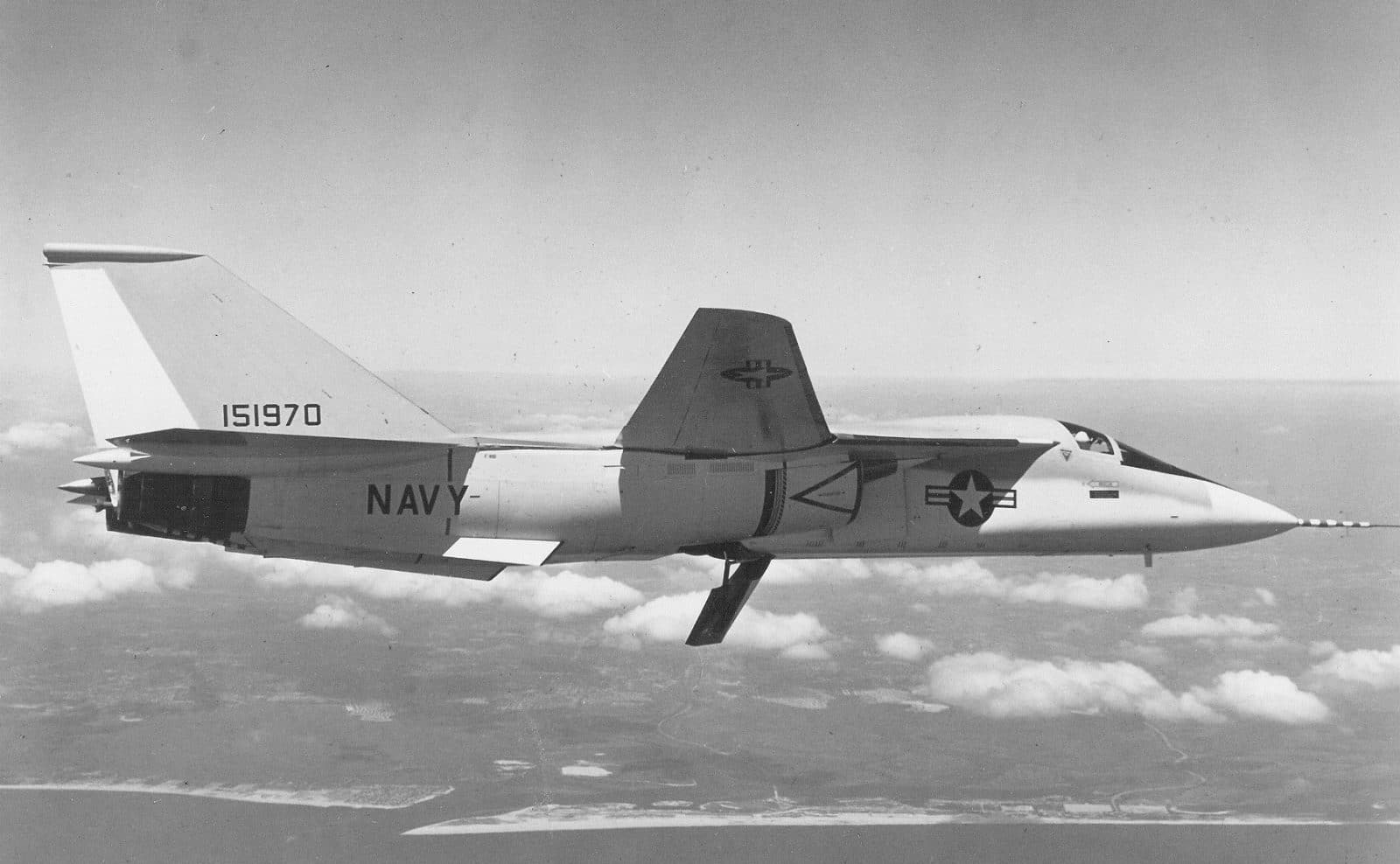
The F-111B was to be the Navy’s fleet air defense fighter aircraft. General Dynamics teamed with Grumman to adapt the F-111A for the Navy’s needs. Sporting a shorter nose and an arresting hook, the B was plagued by development problems and was never going to be able to operate in the harsh world of carrier aviation.
Then the Navy changed its requirements for the new fighter, particularly those governing maneuverability. In the end, the Navy ended up with a TF30-powered, swing-wing fighter anyway…the F-14A Tomcat.
F-111C. US Air Force photograph
Those Pigs Down Under
F-111 development continued. The next major variant of the design was the F-111C for the Royal Australian Air Force (RAAF). The F-111C was basically an A with longer B wings and strengthened landing gear.
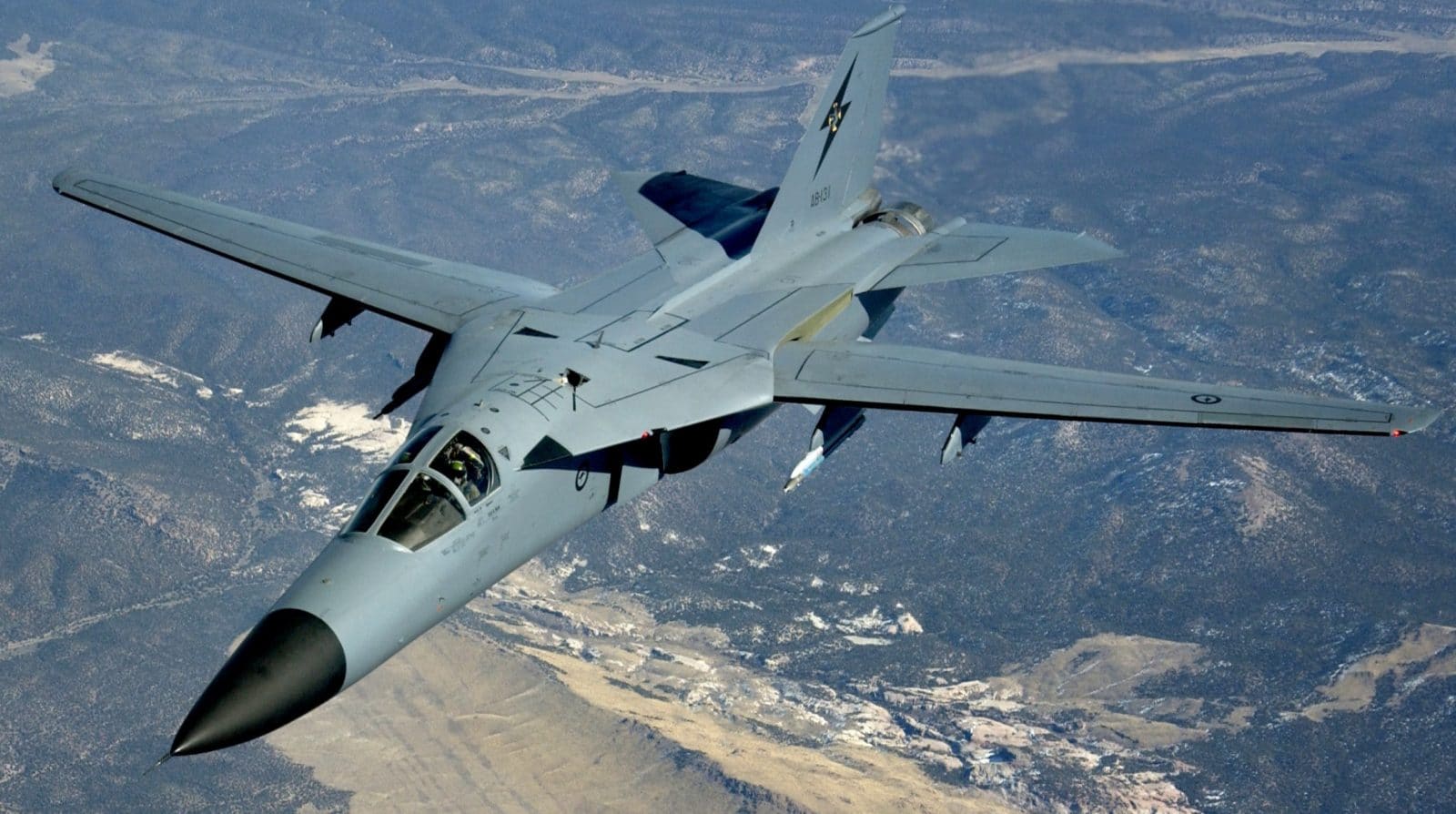
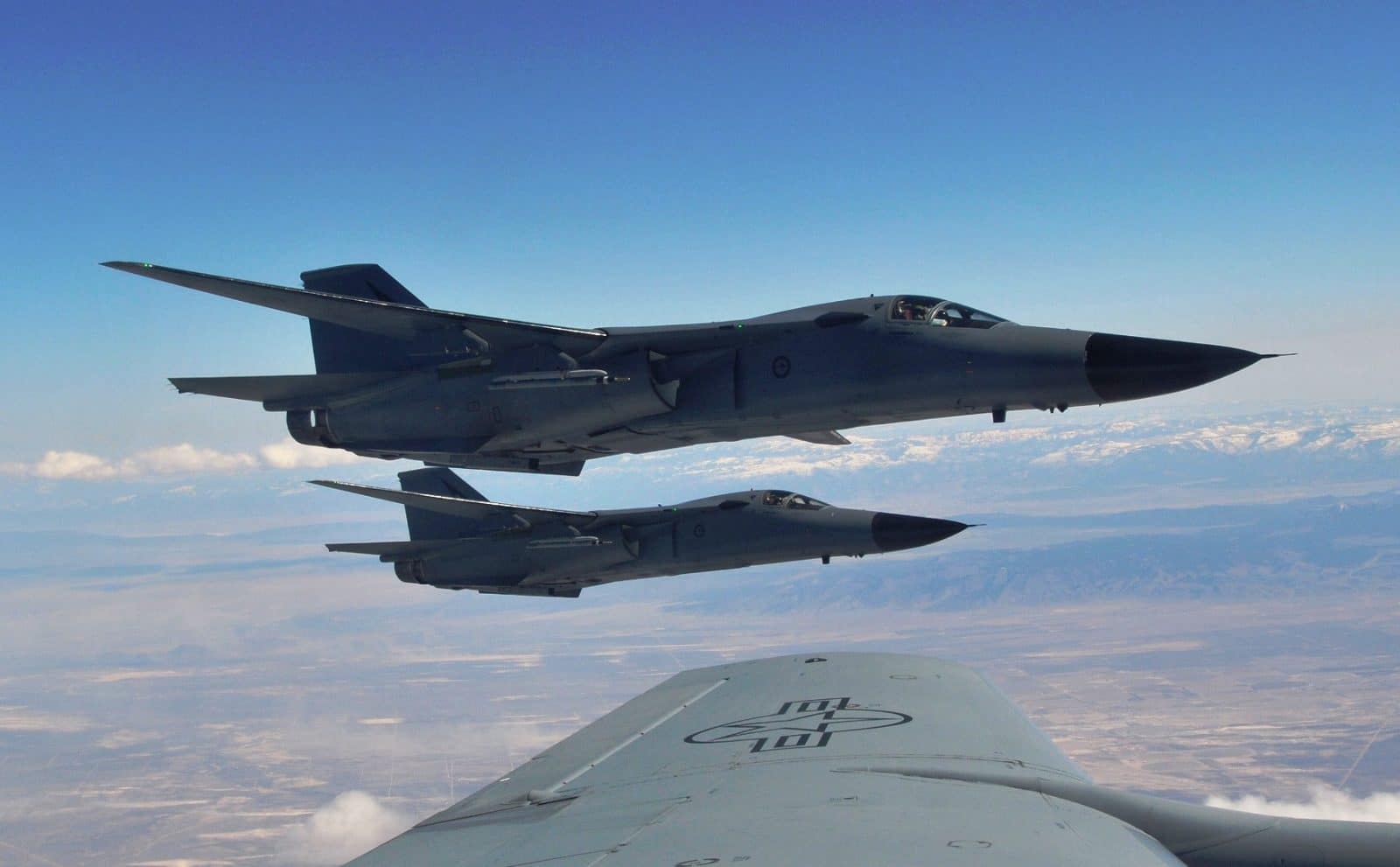
The Aussies flew 24 F-111Cs, calling them Pigs, between 1973 and 2010. They also operated an additional 15 F-111G models between 1993 and 2007. The RAAF replaced their F-111s with Boeing F/A-18F Super Hornets. When the Pigs were retired at the end of 2010, the RAAF simply buried them in a landfill.
F-111Cs. US Air Force photograph
For More of the Aardvark Story Bang NEXT PAGE Below.
A supersonic DC-8?! In 1961, high above the Nevada desert, pilot William Magruder made a unique mark on aviation history.
The Douglas DC-8 is an old narrowbody, heavy-lift airliner from the late 1950s, a contemporary of the Boeing 707. Some aviation enthusiasts today may not have heard of the type, and of those who have, some may not know what made the DC-8 unique among civilian airliners.
Daredevils and Researchers
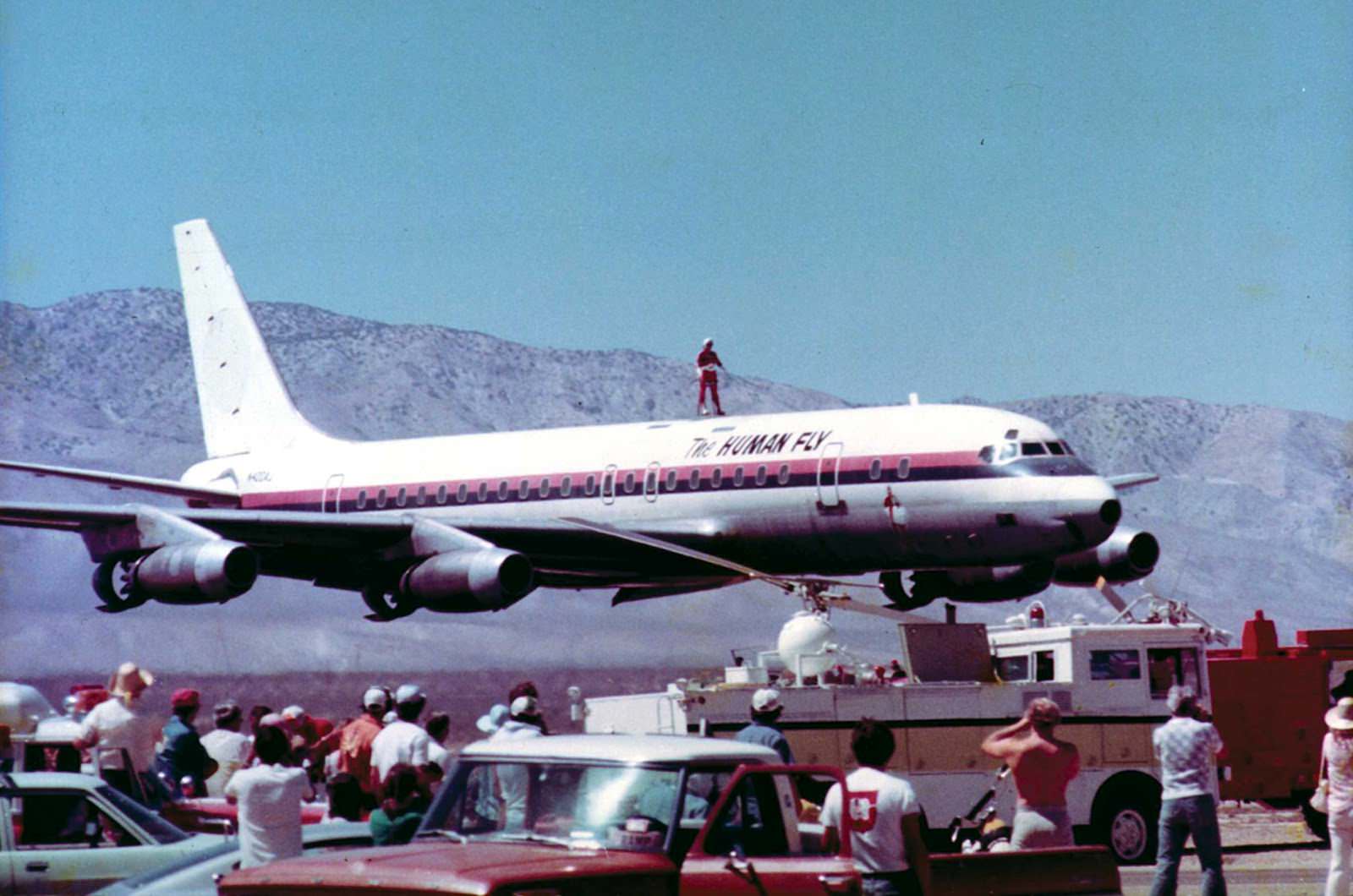
Some of you may recall a guy known as ‘The Human Fly‘ who did a ‘wing-walking’ routine atop a DC-8 back in the 1970s. Rick Rojatt was a Canadian stuntman who billed himself as a real-life superhero. Rojatt’s ‘Human Fly’ routine inspired a Marvel Comics character of the same name.
To the best of your author’s knowledge, Rojatt was the only person to perform such a routine with such a large aircraft. Though singular, and not a bit wacky, this is not what made the DC-8 unique.
Airport Journals
There’s something else that’s earned the DC-8 its place in aviation history. The type has long been retired from mainline service, with only one still flying today–a passenger/cargo combi aircraft operated by humanitarian organization Samaritan’s Purse. This example will be retired by the end of 2025, when it will be replaced with a Boeing 767.
IMAGE: Courtesy of Samaritan’s Purse
The DC-8’s long-range and heavy-lift capabilities make it uniquely suitable for facilitating cargo missions to far-flung corners of the globe.
However, though this is highly interesting and unique in itself, it is not what makes the DC-8 truly unique.
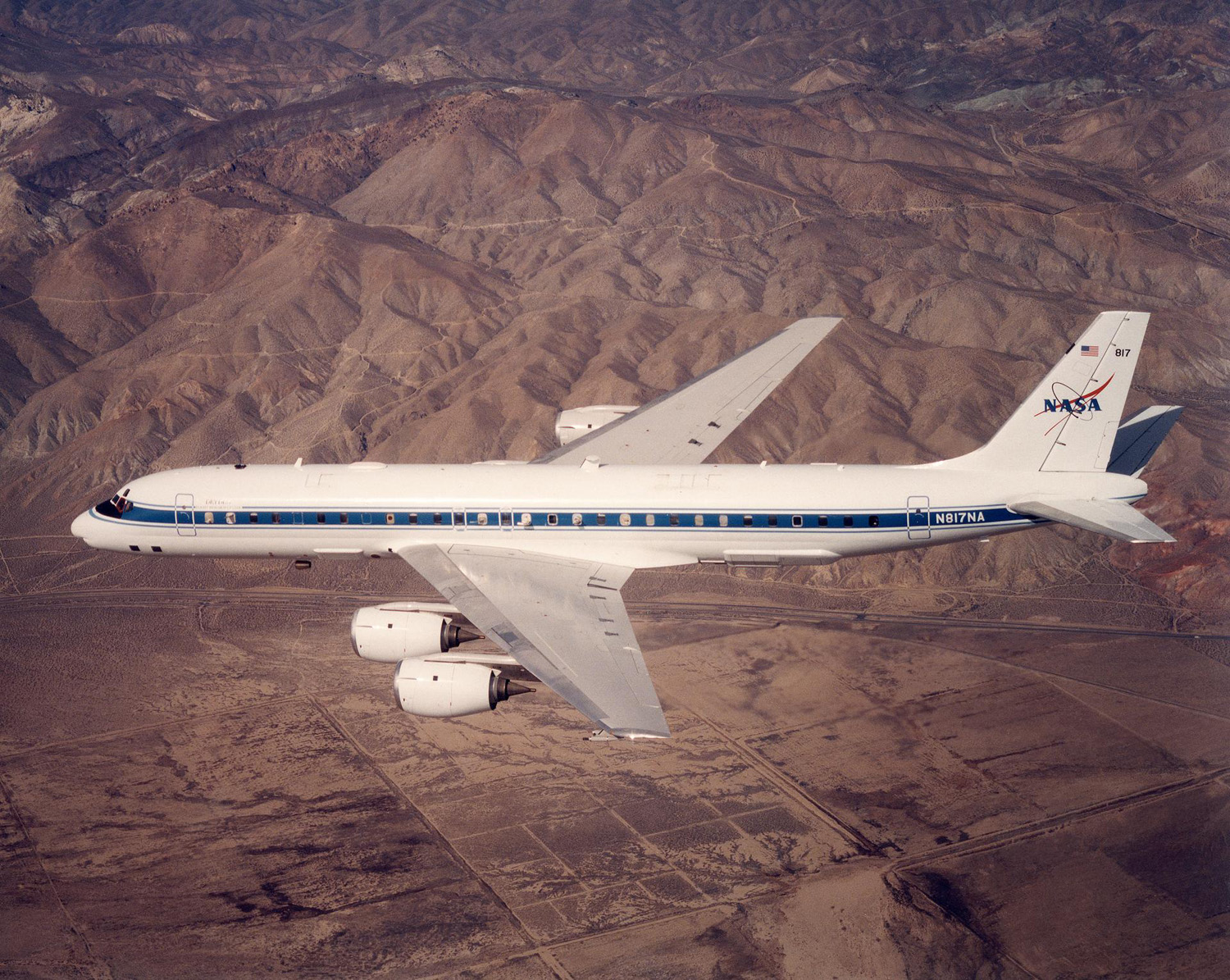
NASA Photo
A supersonic DC-8? Well, yes, for a few seconds
When thinking of supersonic travel… civilian travel… the first thing that comes to mind is the Concorde SST. Then maybe the Tupolev Tu-144, which was the Russian answer to the Concorde.
Surely, those are the only civil airliners to have pierced the sound barrier, yes?
No.
On 21 August 1961, Douglas test pilot William Magruder lifted DC-8 N9604Z off the runway at Edwards AFB. He then began a long, slow climb up to about 52,000 feet.
(Or 50,000, depending on which source you believe. Either way, this was a record in itself.)
From there, he made a half-G pushover and put the big bird into a dive. While passing through 45,000 feet, the jetliner cracked the sound barrier, maintaining Mach 1.01 for about 16 seconds.
A Scary Moment – And Quick Thinking
Recovery was a bit hairy. Magruder attempted to pull out of the dive but found the elevators ineffective. The stabilizers, too, would not work; their motors could not overcome the heavy loads that had built up in the pull-out.
Magruder then pushed over a bit more, and that lessened the load enough to allow the stabilizers to do their thing.
He was finally able to recover at about 35,000 feet and headed back down to a landing at Edwards. There, a slight bit of pomp and ceremony awaited him.
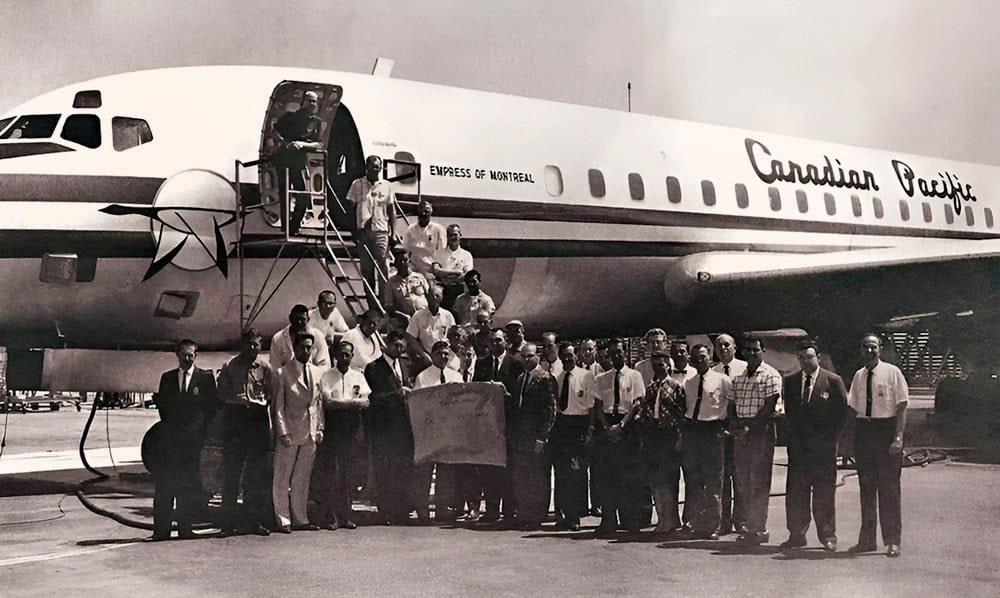
Richard Edwards via Hist’Aero
The Jet That Made the DC-8 Unique
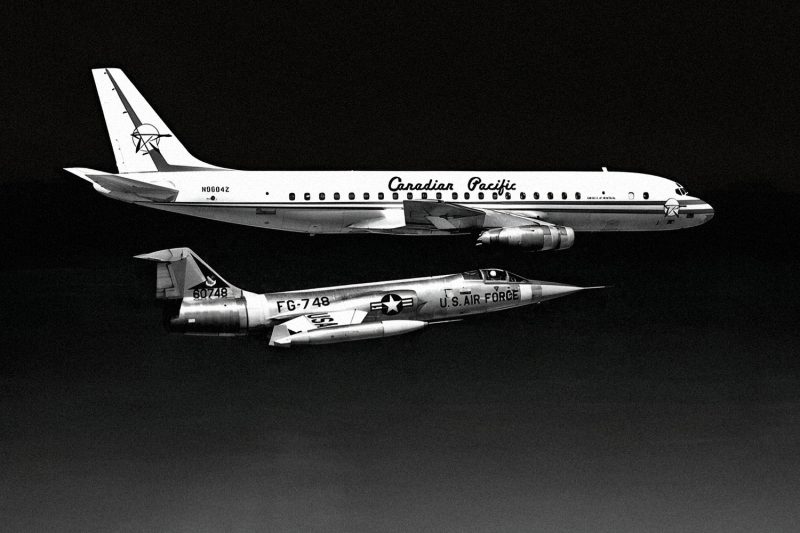
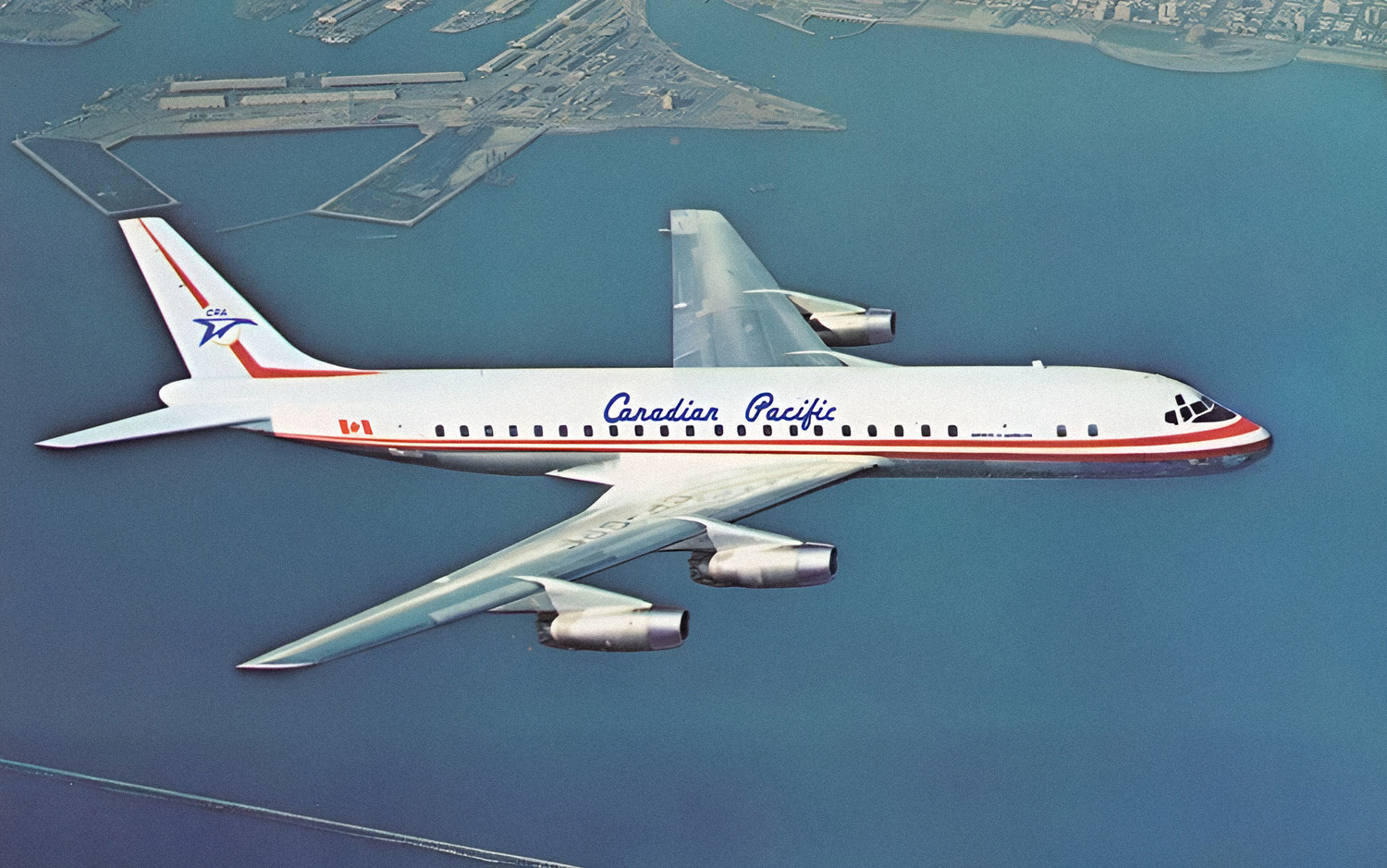
The aircraft used for the record-setting flight was a DC-8-43 built for Canadian Pacific Airlines and dubbed Empress of Montreal.
While flown in the USA prior to delivery, the jet carried the US civil registration N9604Z. However, she was given the Canadian registration CF-CPG upon delivery to Canadian Pacific.
The jet went on to serve with Canadian Pacific (later renamed CP Air) until 1974. After that, she was passed to another couple’a outfits, and finally sold for scrap in 1980.
The supersonic DC-8, shown in Canadian Pacific colors | IMAGE: Canadian Pacific Postcard
A Unique Achievement, all in the Name of Marketing
The whole thing was basically a glorified publicity stunt. Douglas was competing with Boeing in the civil jet airliner market, pitting the DC-8 against the 707.
During testing, the DC-8 achieved .97 Mach, and Magruder figured they could go past Mach 1 without a problem.
Why not, right? In any sort of competition, you want to demonstrate superiority over your competitors. Even if only for bragging rights.
So the objective of this flight was to demonstrate that “the airplane can survive this and not fall apart,” as Magruder’s flight engineer Richard Edwards put it.
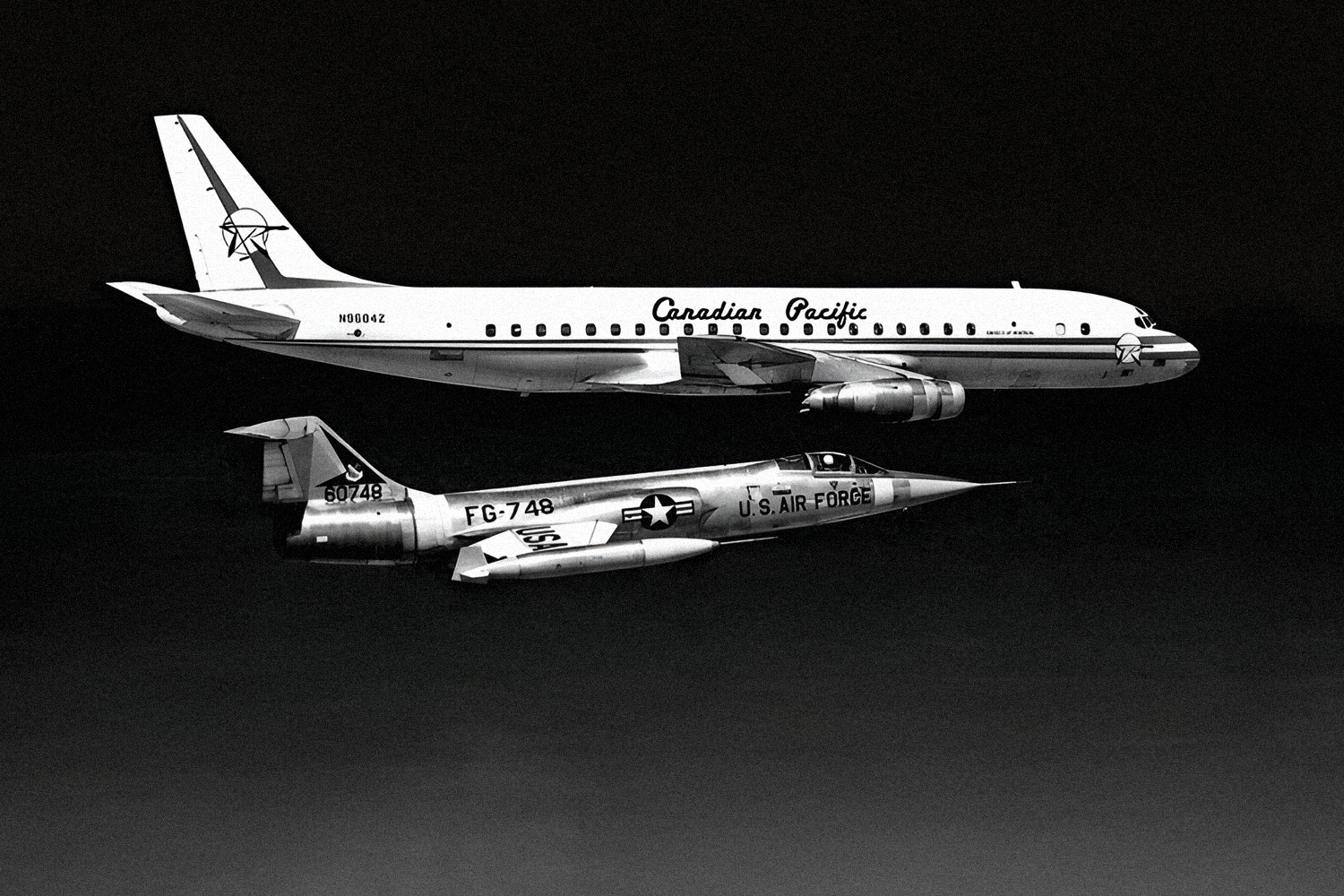
The supersonic DC-8 | Project 914 Archives
A couple’a chase planes escorted the DC-8, as was and still is standard practice during most experimental test flights. They are there to observe the test and communicate their observations to the test crew.
In this instance, the chasers were both USAF jets: a Lockheed F-104A and a North American F-100F. The F-104 is seen with Empress of Montreal in the photo above, painted against the ‘black’ sky so often seen at higher altitudes.
Behind the stick of the F-104 was none other than Colonel Charles E. Yeager, the first man to break the sound barrier. (In level flight.) Kinda fitting, and his presence added just a little extra spice to the supersonic stew, so to speak.
Boeing’s graceful and spectacular 747 series–the original Jumbo Jet–has a long and storied history with several successful design configurations.
For an airplane with such a storied tradition, one of the more exciting things about the 747 is the number of design variations that never were put into production: an extraordinary tri-motor design to compete with the DC-10 and L-1011, a very science-fiction-esque prop fan variant, and then the more traditional versions which never made the cut.
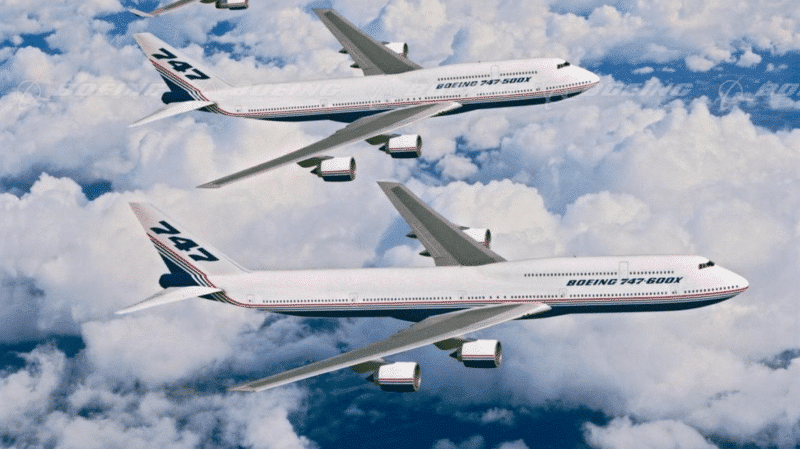
Today, we are going to look at the 747-500X and 747-600X variants that never made it off the drawing board. The 747-500X and 747-600X were a tandem proposal that would have catered to the ultra-long-haul market but was honestly just a little too late or maybe a bit too much airplane…or both.
The B747 Lineage
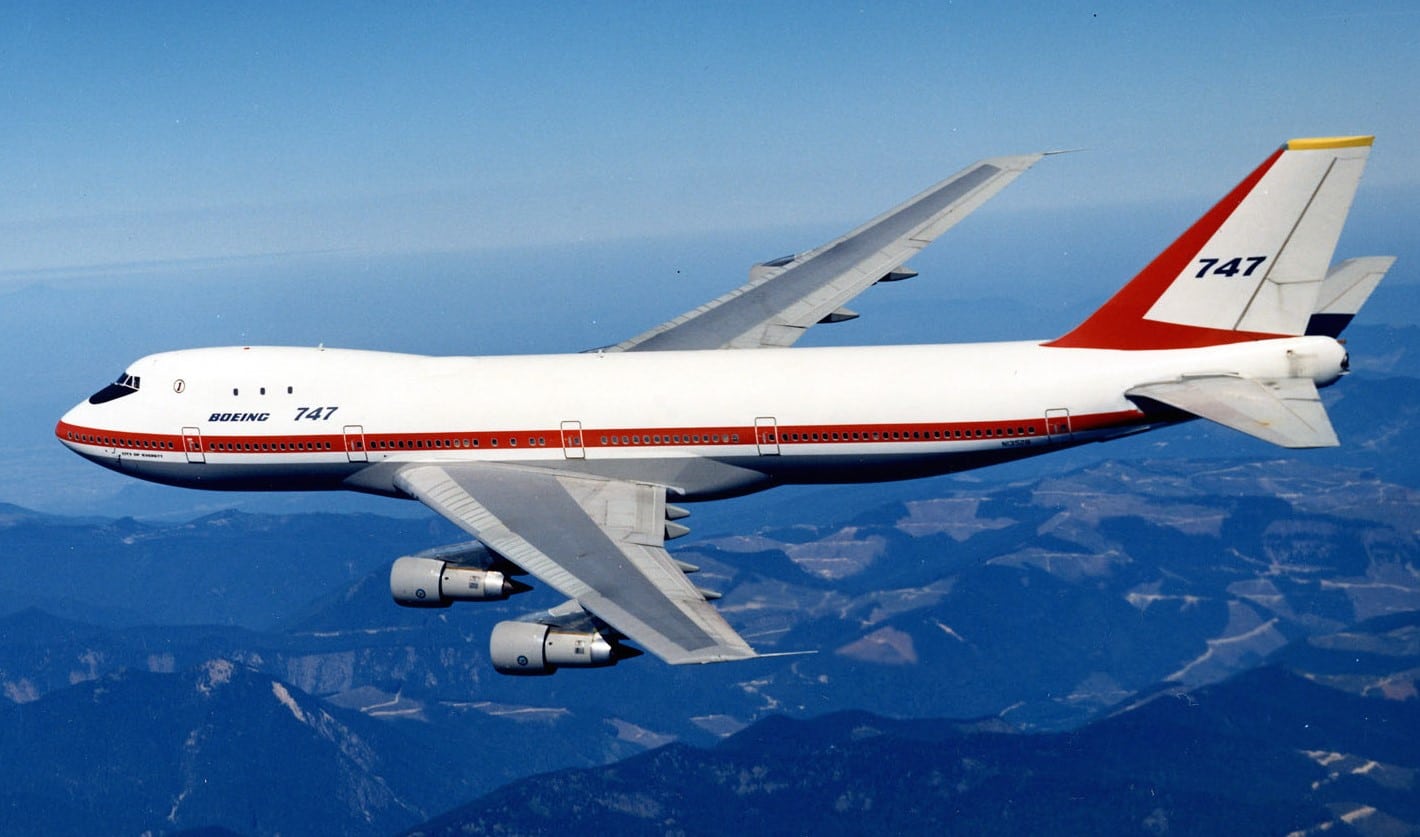
The impetus for a jumbo jet was a proposal by the U.S. Air Force (USAF) for an ultra-heavy, long-range freighter. The Lockheed C-141 had recently been adopted into service by the USAF, but it never was a heavy-lift cargo aircraft. The USAF proposal sought an aircraft powered by engine technology that had yet to be developed; they wanted a plane with a range of nearly 8,000 nautical miles without stopping.
While the proposal looked different than the 747, the inspiration for a jet that size was seeded and eventually became the 747 we all know and love. The Pratt & Whitney JT9D, which powered the 747-100 series, was a high-bypass-ratio turbofan designed for use in a widebody jet aircraft. This engine design would become the benchmark standard for all transport aircraft.
Image via Boeing
B747-400
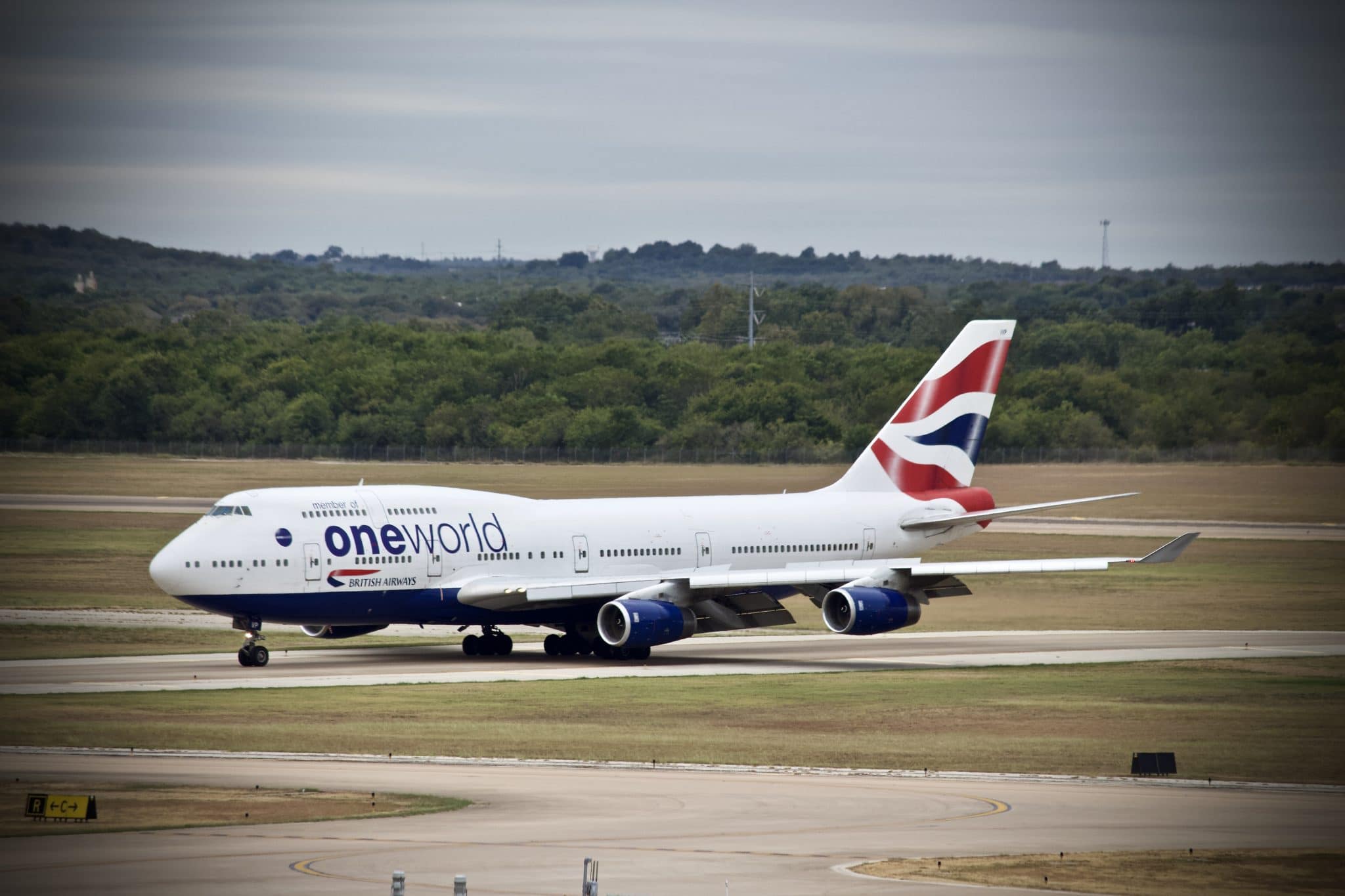
The -400 was released in 1988, with the first models being delivered in 1989. It was a much more refined jet than the earlier classic models with greater capacity and range than the -300s. More composites and aluminum alloys were used in the wings, so even though the wingspan was extended, the overall wing weight was reduced. The -400 wings were six feet longer than the -300, with winglets included.
The -400 was a solid seller, offering three available engine options: the P&W PW4000, the CF6-80C2, and the Rolls-Royce RB211-524G. Overall, 694 -400s were delivered in a production line that lasted for two decades and was their best-selling 747 variant. Nevertheless, Boeing had been on a constant quest for innovation, and their version of Skunk Works was always on the hunt for an ultra hauler that could carry more and fly further. Enter, the -500X, -600X, and -700X series.
Boeing 747-500X and 747-600X: Queens of the Skies that Never Were 54
Ultra-long hauls: The 747-500X and 747-600X
The top-selling -400 was only a scant seven years young when Boeing pitched a serious long-range contender at the world-famous 1996 Farnborough airshow. The three proposed designs boasted some serious numbers to ponder:
The -500X proposed to stretch the fuselage to a total length of 250’ and was targeted to provide service for routes up to 8,700nm for up to 462 passengers. This boss of a jumbo jet was slated to tip the scales at over 1.0 million pounds. That’s not a misprint, folks.
The -600X was an even longer stretch to a total length of 279’. The range was shorter than the -500X at a mere 7,700nm, but it accommodated an additional 86 passengers, giving the -600X a total of 548 seats. This absolute monster would have weighed in at 1.2 million pounds.
The third proposal in the concept, which was never fully developed, was the -700X, which would borrow the wing from the -600X but widen the fuselage to accommodate a full complement of 650 passengers. Due to a change in fuselage structure and a lack of commonality with other models, this version was the least likely to ever enter service.
These numbers are incredible. The proposed -700X was designed to carry 650 passengers with the same range as the classic -400, which carries 416 passengers over 7,285 nmi.
The Boeing 747-400 with renderings of what the Boeing 747-500X and 747-600X might have looked like | Image: Boeing
Common Threads
The 747-500X and 747-600X were designed, to a certain extent, using a hybrid concept. The wing was derived from the B777 program, and the engines were cutting-edge for their time. The flight deck was designed to incorporate advances from the 777 program while maintaining commonality with the 747.
Unfortunately, a stagnating economy, tepid interest from the airlines, and the expense of developing a new aircraft prevented Boeing from launching the new variants.
Was the 747-X just a test balloon for the 747-8?
The X-series never got beyond the concept phase for one reason: money. The wing design alone was going to run in the ballpark of $5 billion. Boeing believed that a commitment of just 30 aircraft would be sufficient to offset the R&D costs, but even that level of interest wasn’t present. By the late 1990s, the appeal of the Jumbo Jet was waning somewhat.
The extended range variants of the B767 and B777 were already established and had gained significant traction. Boeing forecasted a movement towards point-to-point service instead of hub-to-hub flying. This meant that the market for a super jumbo would be limited. Boeing wasn’t wrong.
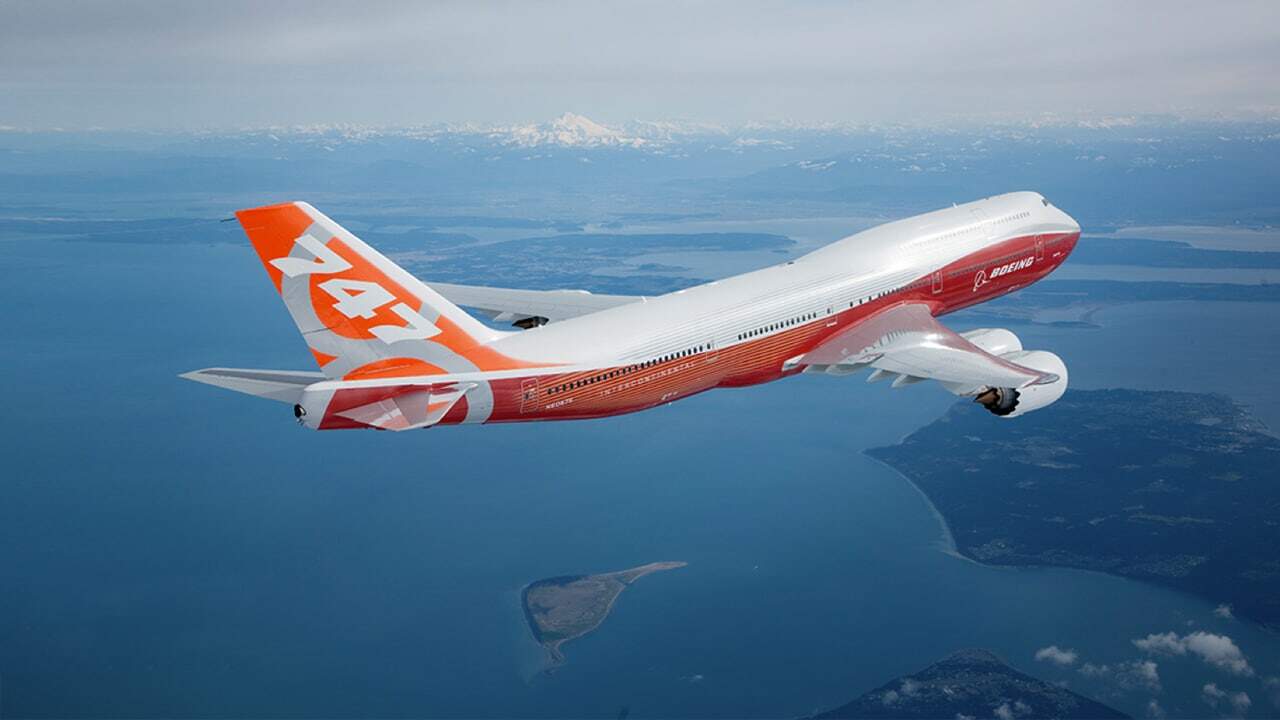
In the subsequent years, Airbus launched their A380 Super Jumbo to great fanfare. Boeing eventually responded with the launch of the 747-8 to limit Airbus’ market share. Neither jet sold particularly well.
Today, the era of large four-engine jets has faded, as a significant number of legacy airlines have retired their B747-400 and A380 fleets to focus on point-to-point long-haul operations with the 787, 777-300ER, A330, and A350 now dominating the long-haul skies. COVID-19 accelerated the retirement of most of the remaining 747-400s in a passenger configuration.
Commercial appeal for quad-engine jumbo jets was fading by the time Boeing would have built the 747-500X and 747-600X | Image Courtesy Boeing Commercial Airplane Company
Conclusion
The Queen of the Skies has enjoyed a significant number of successes, and there have been a few design modifications that we would have loved to see in real life (and a few we could swipe left). The -500X, -600X, and -700X were incredible concepts, much larger than what airlines were looking for at the time. It is still pretty cool to look back at what might have been for the Queen.
Microsoft Flight Simulator 2024 is almost here, and it is gearing up to be a game-changer for flight enthusiasts and avgeeks.
As we inch closer to its release, anticipation is building for what promises to be the most immersive and technologically advanced flight simulator ever created. Here’s everything we know about the upcoming release.
All I Want for Christmas is YouMicrosoft Flight Simulator 2024
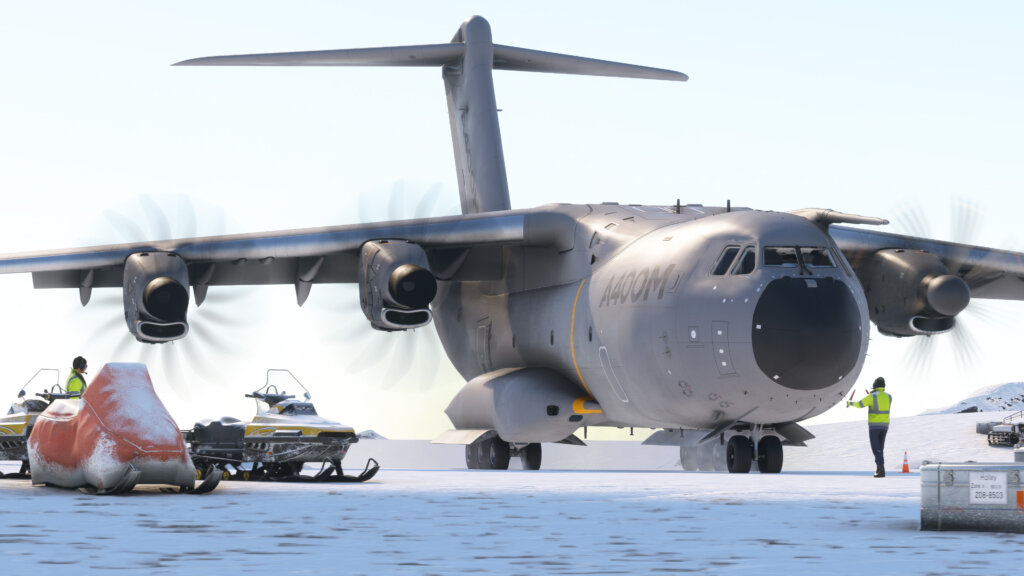
An Airbus A400M arrives at an Antarctic outpost in Microsoft Flight Simulator 2024 | IMAGE: Microsoft/Xbox
MSFS24 will hit the shelves on 19 November 2024, just in time for the upcoming holiday season. The game will be available exclusively on Windows PC, Xbox Series X|S, and Xbox Cloud Gaming. In addition, Xbox Game Pass subscribers will have immediate access to it.
Because it is a Microsoft release, MSFS24 will not be available on Apple, Nintendo, or Playstation platforms.
Magnificent Graphics and Mind-Blowing Performance
Screen grab of a blimp over mountains from Microsoft Flight Simulator 2024 | IMAGE: Microsoft/Xbox
One of the standout features of Microsoft Flight Simulator 2024 (MSFS24) is its undeniably breathtaking graphics. Leveraging the latest in gaming technology and powered by French video game developer Asobo Studio, the simulator promises hyper-realistic visuals that push the boundaries of what’s possible.
The game world will be rendered in stunning detail using satellite data and Azure AI, from bustling cityscapes to serene rural landscapes. The powerful technology will dynamically simulate weather effects, day-night cycles, and seasonal changes, adding unprecedented realism.
Check out the graphics in these two trailers:
Hyper-Realistic Aircraft and Flight Dynamics
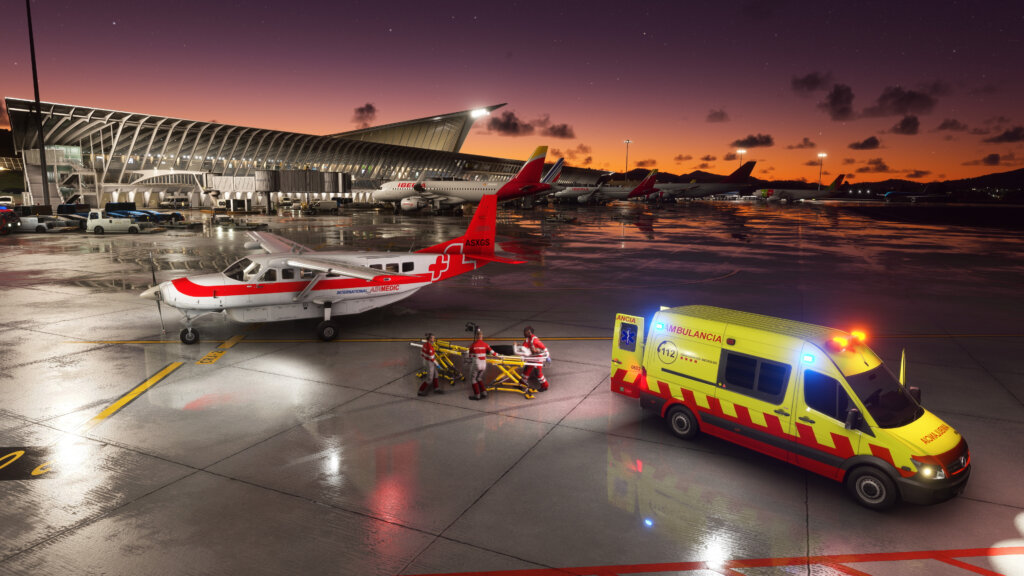
Screen grab of an airport emergency from MSFS24 | IMAGE: Microsoft/Xbox
The 2024 edition will introduce a plethora of new aircraft, ranging from light general aviation planes to massive commercial airliners. Each aircraft will be meticulously detailed, both externally and internally, with accurate cockpits and flight dynamics. Microsoft has worked closely with aviation experts and pilots to ensure that each plane behaves as it would in the real world, offering a true-to-life flying experience.
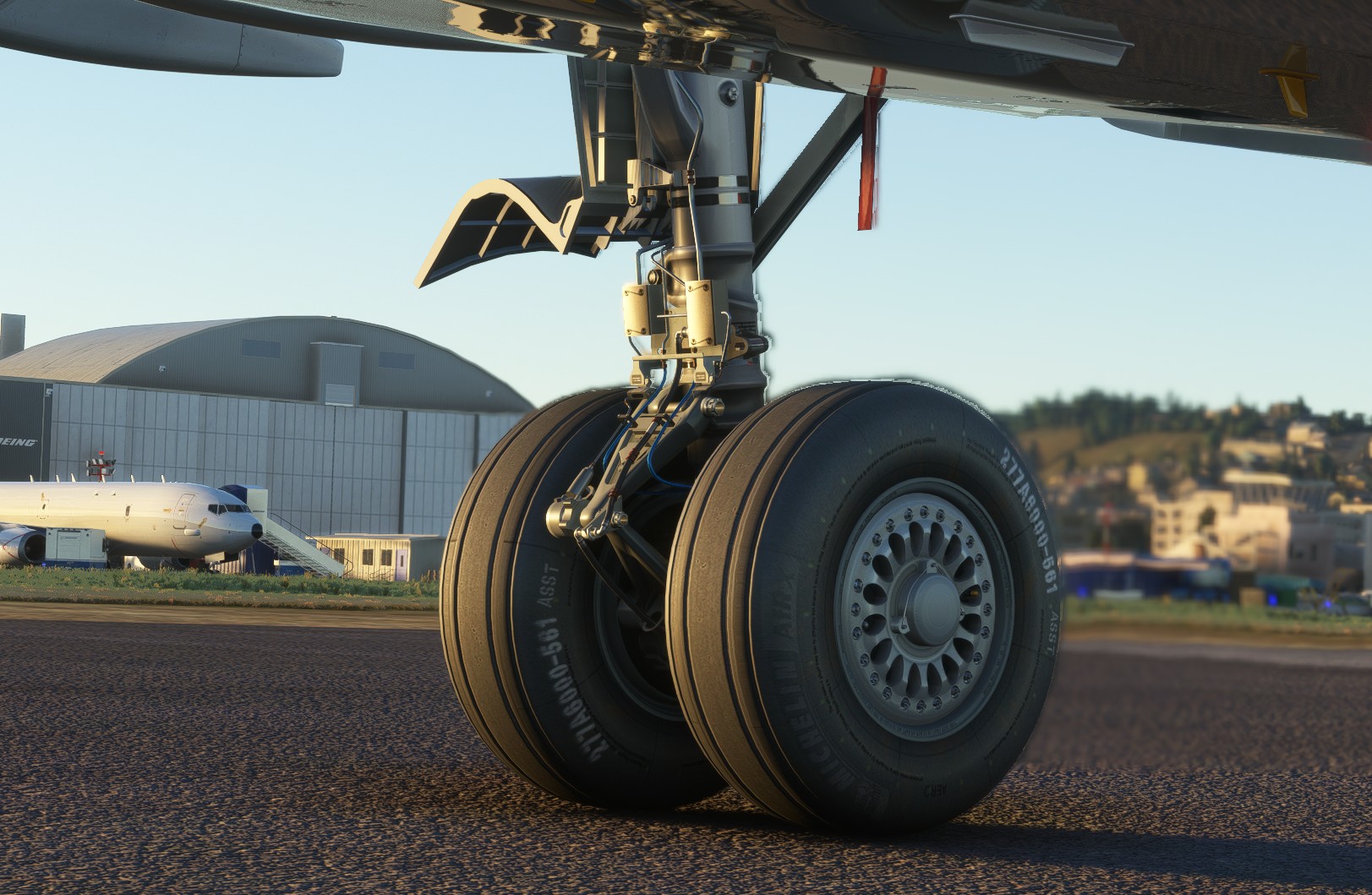
Detailed screenshot of Boeing 737 MAX 8 nose gear | IMAGE: iFly
While a complete list of new aircraft has not yet dropped, Microsoft says players should get excited:
“We have not yet announced the full list of aircraft available in Microsoft Flight Simulator 2024, but it will include several new airliners. We are certain that players will be very excited when they see the full list of available aircraft.”
More Planes, More Fun
Eagle-eyed viewers of the two MSFS24 trailers released so far will notice a plethora of new aircraft, including:
Airbus A330-200 and -300
Airbus A400M
Airbus BelugaXL
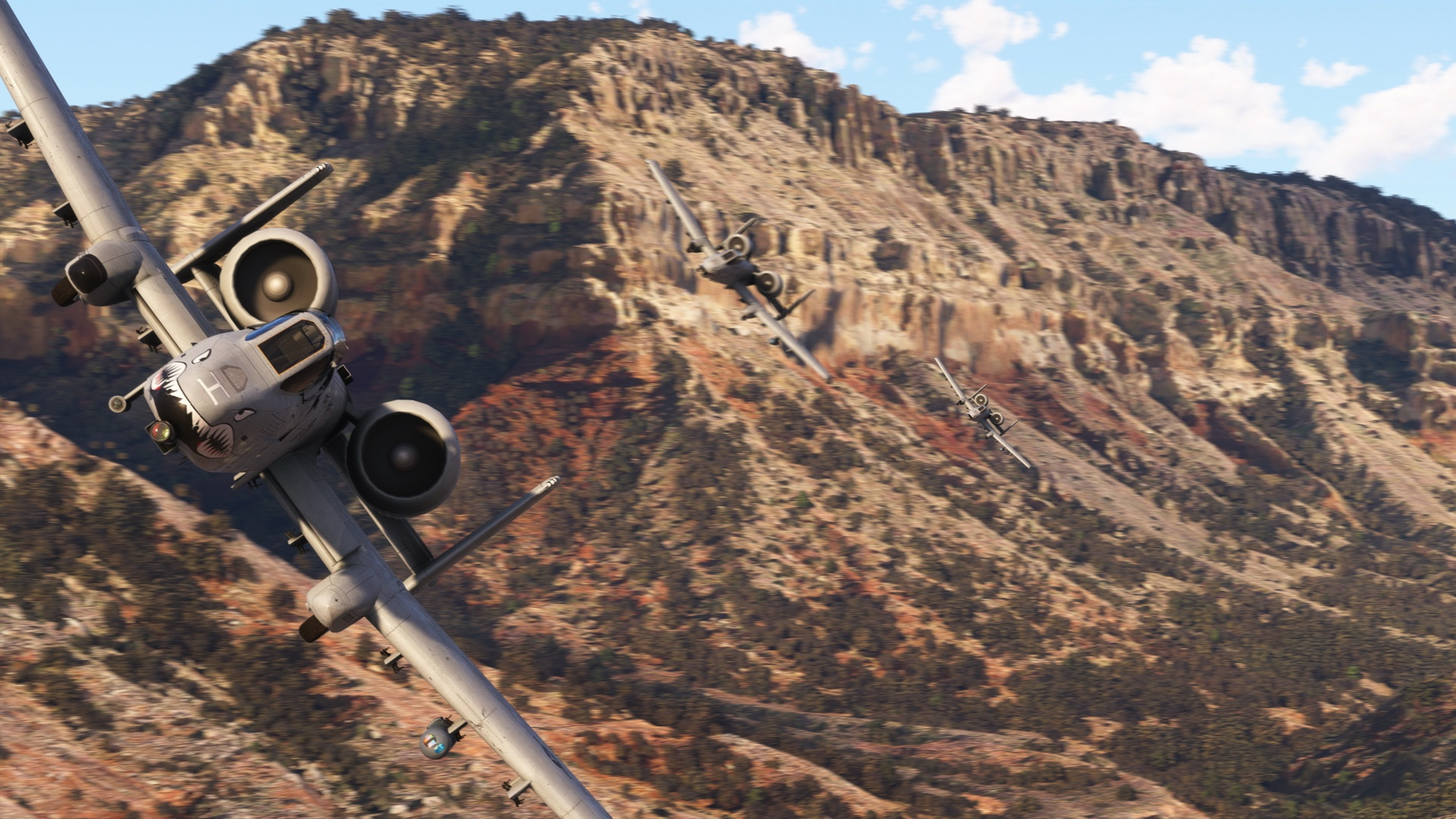
A-10 Thunderbolt
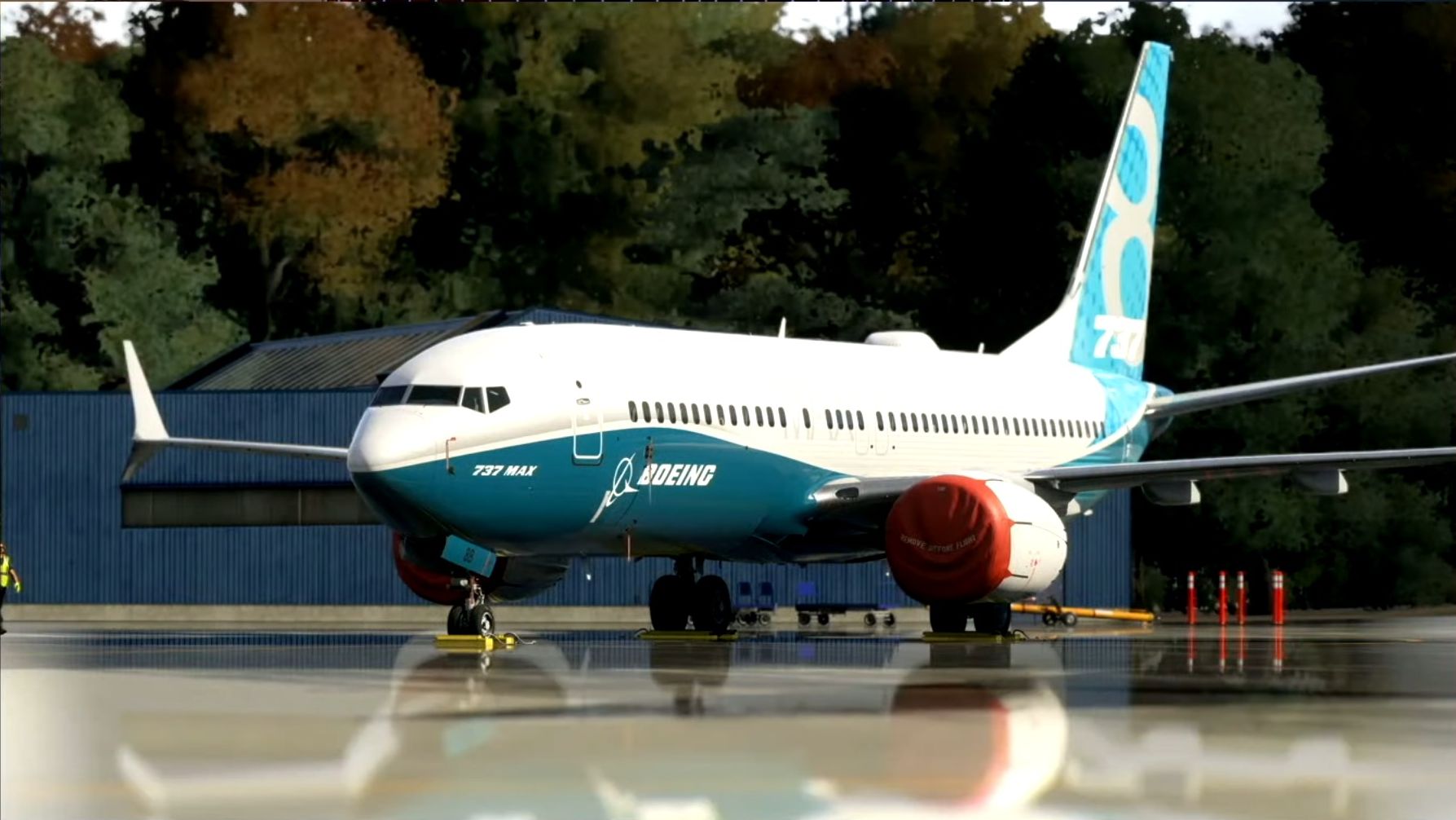
Boeing 737 MAX 8
de Havilland Canada DHC-6 Twin Otter
Cirrus SF50 Vision Jet
Pilatus PC-12 NGX
Plus, hot air balloons, crop dusters, EVTOL aircraft, a blimp, ultralights, helicopters, and much more.
Screen grab of a Boeing 737 MAX 8, which will be one of the new aircraft types in MSFS24 | IMAGE: Microsoft/Xbox
Areas of improved flight performance and simulator technology include accelerated download, load, and installation times, enhanced aircraft electrical, fuel, pneumatic, and hydraulic systems, improved avionics, and enhanced multithreading.
IMAGE: Microsof/Xbox
Although MSFS24 is a standalone sequel to MicrosoftFlight Simulator 2020, Microsoft promises that“virtually all” aircraft, airports, and Marketplace add-ons will work withit. Also, those still using the 2020 version will be supported even after MSFS24 launches.
Flying in a Virtual World Unlike Any Other
Screen grab of hot air balloons over the Serengeti in Microsoft Flight Simulator 2024 | IMAGE: Microsoft/Xbox
The global map in Microsoft Flight Simulator 2024 will cover virtually every corner of the Earth. From the desolate outposts of Antarctica to the sprawling metropolises of Europe, players will have the opportunity to explore like never before. Major landmarks, natural wonders, and even the smallest local airports will be recreated – right down to 3D tessellated dirt, stones, trees, and grass.
In addition, Microsoft says one of the most significant upgrades to MSFS24 is to “improve the simulator’s data management.” This version will use Cloud streaming, prioritizing textures, map data, and meshes needed at any location and moment. Thus, users will not have to compromise bandwidth and disk space for optimal performance.
MSFS24 will also continue improving maritime traffic dynamics on the world’s waterways, enhancing both looks and performance. Also, users can expect to see marked improvements in vertical obstacles (such as towers, smokestacks, and powerlines), oil rigs, glider airports, and heliports.
Multiplayer and Virtual Reality Integration
Screenshot of air races over the American West | IMAGE: Microsoft/Xbox
Community engagement has always been a significant aspect of flight simulators, and Microsoft Flight Simulator 2024 is no exception. The game will offer robust multiplayer options, allowing pilots to fly together in real time. Whether co-piloting a commercial jet or participating in global flying events, users will have plenty of opportunities to engage with other players around the globe. And for those who play MSFS 2020, any improved multiplayer support will be most welcome.
Enhanced virtual reality (VR) support is another exciting feature of MSFS24. Although details are scarce, a recent developer stream confirmed improved VR integration.
MSFS24 Will Introduce New Missions and Scenarios
IMAGE: Microsoft/Xbox
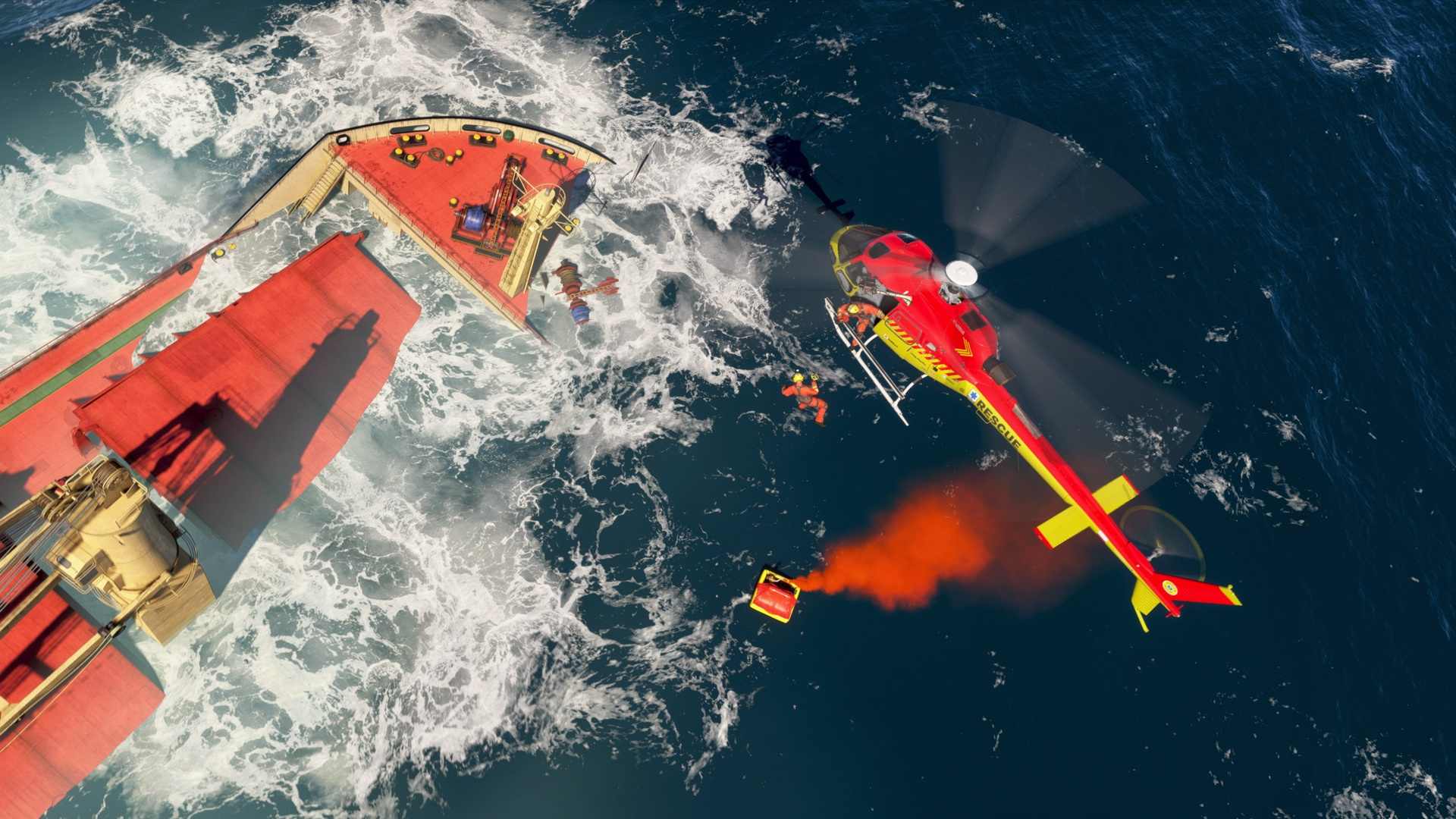
Microsoft Flight Simulator 2024 will include many new and authentic aviation missions. Developers have teased some of them, including aerial firefighting, search and rescue ops, coast guard missions, helicopter cargo hook missions, air ambulance, skydiving, VIP air charters, air racing, and more.
The career mode–a main focus of MSFS24–offers a structured path with missions and objectives that simulate a professional pilot’s journey. This mode will include various challenges, such as emergencies, complex flight plans, more realistic failures, and problems with aircraft wear and tear.
Users will notice a massive improvement in the flight management system in MSFS24. Filing flight plans will be much more intuitive, allowing users to file on their web browser, phone, in the game menu, or directly in the cockpit.
MSFS24 will also introduce an electronic flight bag, pilot walkarounds, and detailed pre-flight inspections.
Fly to Iceland to See the Northern Lights
Screen grab of flying into the aurora borealis on Microsoft Flight Simulator 2024 | IMAGE: Microsoft/Xbox
One of Microsoft Flight Simulator 2024’s most compelling features is its dynamic world. The game will utilize real-world data to simulate hyper-realistic weather patterns, live air traffic (with models and liveries), and environmental changes.
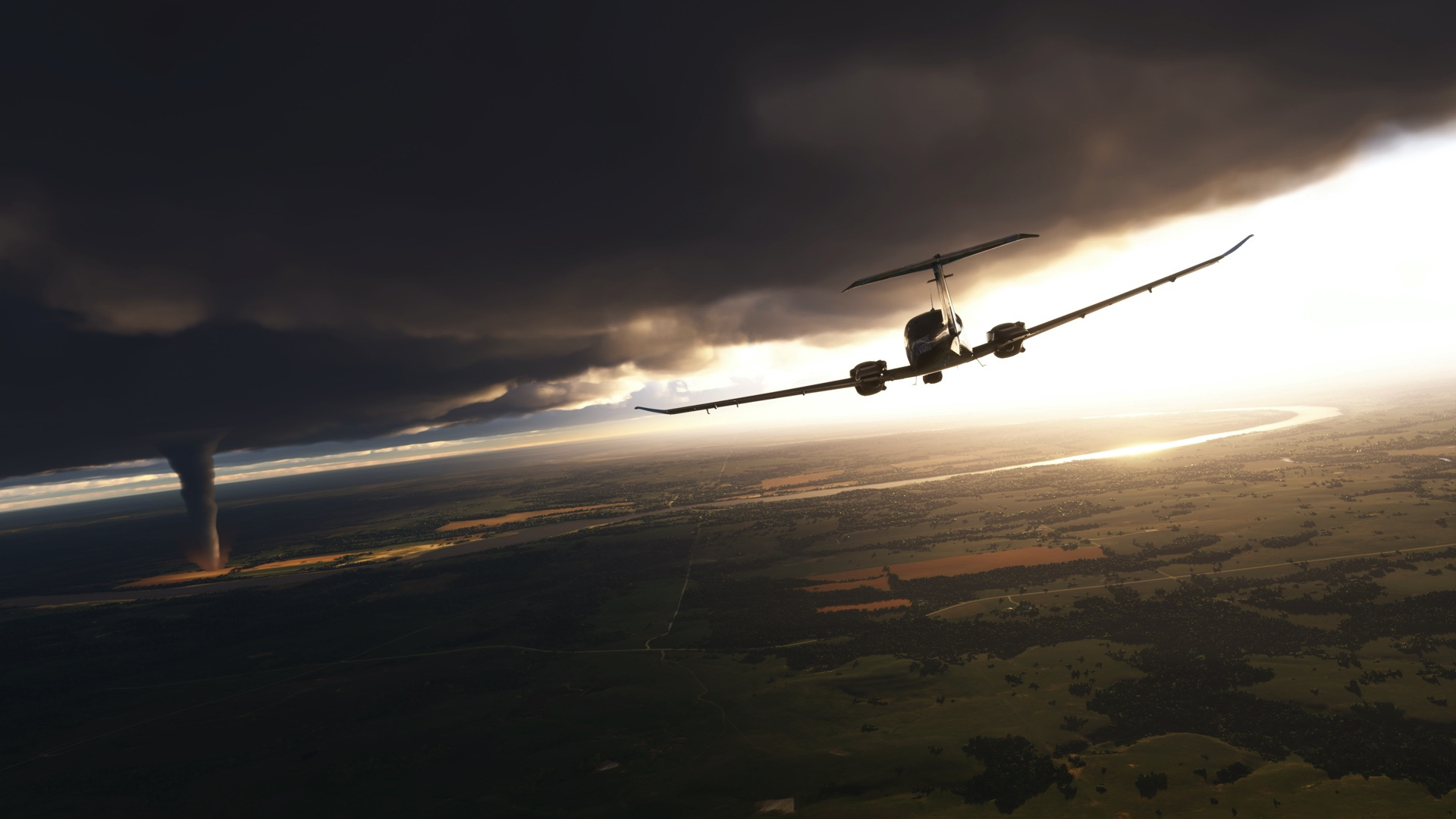
MSFS24 features breathtaking new natural phenomena such as full seasonal transitions, the Northern (and Southern) Lights, tornadoes, hurricanes, and other severe storms.
Screen grab of tornado in Microsoft Flight Simulator 2024 | IMAGE: Microsoft/Xbox
On the ground, players will see migrating herds of animals and more realistic vehicular traffic on highways around the world.
WillMSFS24 Bog Down Your System?
Screen grab of helicopter rescue at sea in MSFS24 | IMAGE: Microsoft/Xbox
Due to the the advanced technology and graphics, Microsoft Flight Simulator 2024 will require robust hardware to run smoothly. Minimum and recommended system requirements will be released closer to the launch date.
However, Microsoft assures that if MSFS 2020 ran smoothly on your system, MSFS24 likely will as well. That’s because improvements to the data management system and Cloud streaming should keep the specs for MSFS24 similar to those for MSFS 2020—great news for those who may not want to (or can’t) upgrade their entire setup.
Assuming similar specs to MSFS 2020, users will need a minimum of 150GB of storage space for MSFS24.
This Isn’t Your Father’s Flight Simulator
IMAGE: Microsoft/Xbox
Perhaps I am aging myself here, but I vividly remember days when I would stay home sick from school, turn on my Amiga computer, and lift off from Runway 27R at KOAK into a virtual sky on Sublogic’s Flight Simulator II.
Those days are long gone.
With each subsequent release, the realism and technology dramatically improved. And following each release, we think, “How can it possibly get any better than this?”
And yet, it does. In fact, with all we know about MSFS24 so far, it’s clear that this game will set incredible new standards for what’s possible in the world of flight simulation.
With an astonishing 15 million unique users, Microsoft knows it needs to deliver a masterpiece.
Southwest Airlines announced today that they are ditching open seating in favor of assigned seats. In a press release, the airline stated, “After listening carefully to Customers and conducting extensive research, Southwest decided it will assign seats and offer premium seating options on all flights.
The airline has been known for its unique open seating model for more than 50 years, but preferences have evolved with more Customers taking longer flights where a seat assignment is preferred. Additionally, Southwest conducted robust operational testing that included live and over 8 million simulation-based boarding trials. The airline is confident that these Customer enhancements will meet expectations and not compromise the airline’s operational efficiency.”
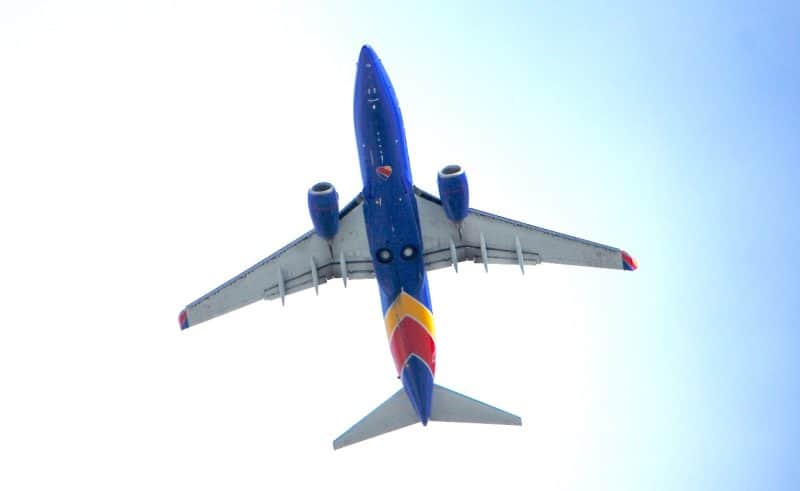
A Southwest 737-700 arrives at San Jose International Airport. Photo: Avgeekery
Southwest’s Open Seating No Longer Preferred By Most Customers
Southwest stated, “The research is clear and indicates that 80% of Southwest Customers, and 86% of potential Customers, prefer an assigned seat. When a Customer elects to stop flying with Southwest and chooses a competitor, open seating is cited as the number one reason for the change. By moving to an assigned seating model, Southwest expects to broaden its appeal and attract more flying from its current and future Customers.”
Southwest Classic Winglet
Southwest will also add more legroom for certain seats
Per the press release, “In addition to assigning seats, Southwest will offer a premium, extended legroom portion of the cabin that research shows many Customers strongly prefer. While specific cabin layout details are still in design, Southwest expects roughly one-third of seats across the fleet to offer extended legroom, in line with that offered by industry peers on narrowbody aircraft.”
Red Eye Flights Coming Too
In addition to assigned seats and extended legroom, Southwest also announced a Red Eye or overnight flights. In the same press release, Southwest announced, “Southwest also announced it is adding 24-hour operation capabilities with the introduction of overnight, redeye flights. Booking on initial routes is available today through Southwest.com, with the first overnight flights landing on Valentine’s Day 2025 in five initial nonstop markets: Las Vegas to Baltimore and Orlando; Los Angeles to Baltimore and Nashville; and Phoenix to Baltimore. Southwest plans to phase in additional redeye flying in the carrier’s coming schedules as part of its multi-year transformation to a 24-hour operation.”
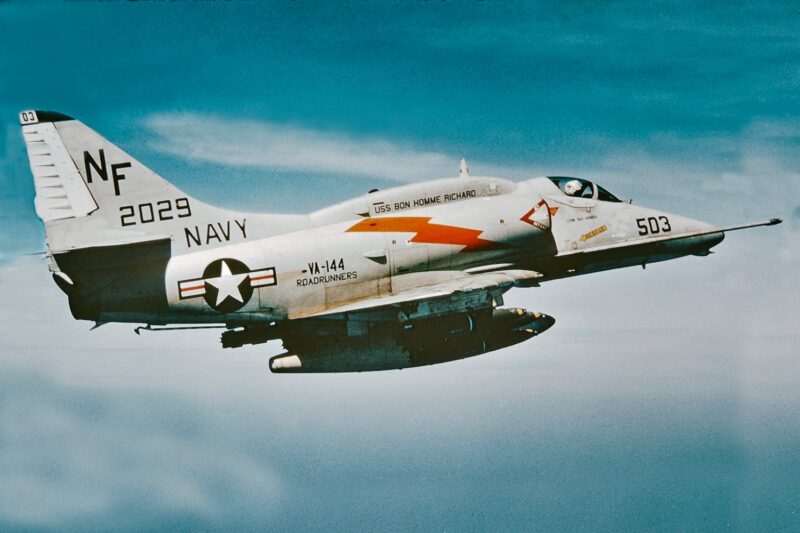
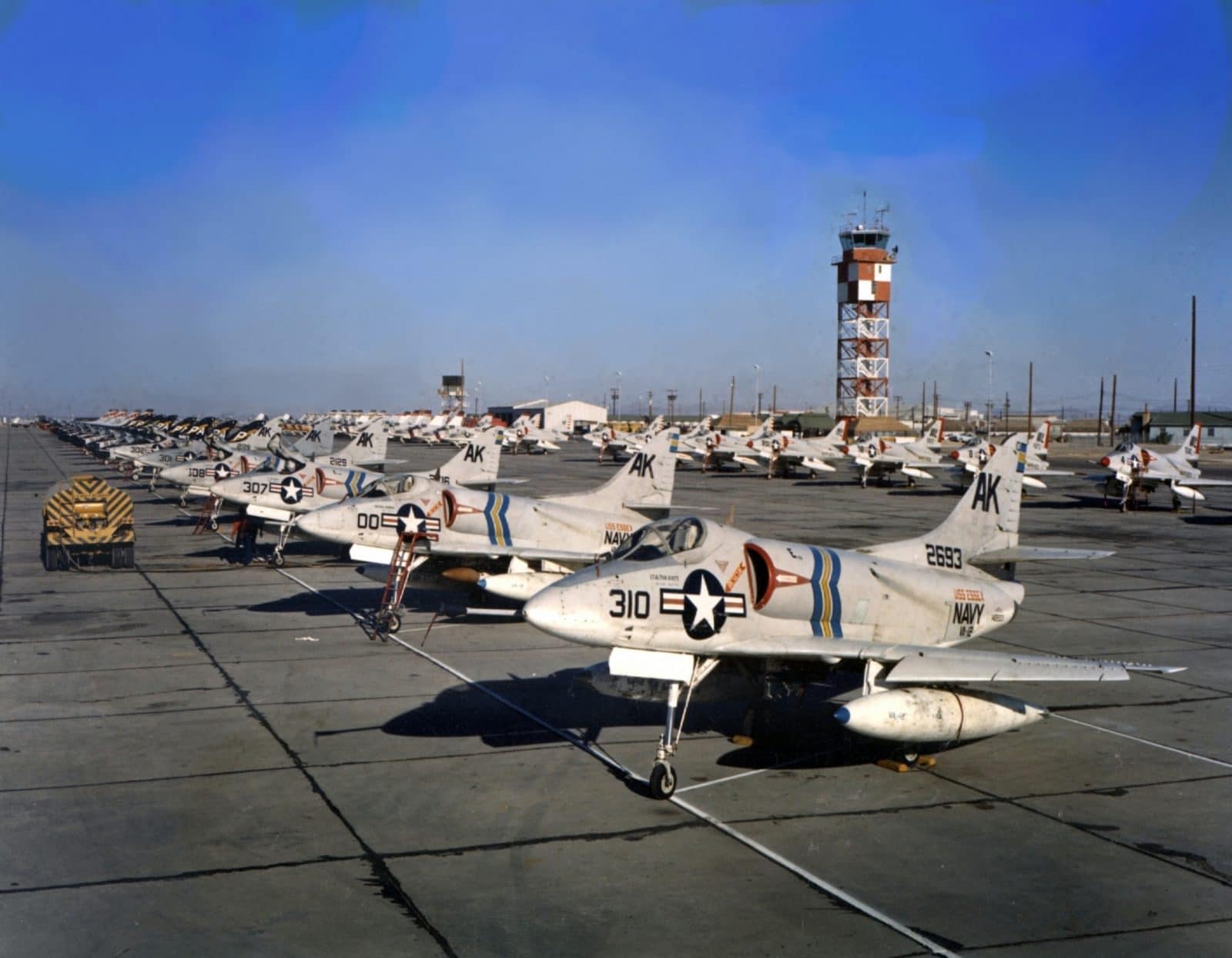
Heinemann’s Hot Rod Was Diminutive in Stature But Still Hugely Capable
Author’s note: This is the first of a multiple-part series on the Douglas A-4 Skyhawk. This piece focuses on the American utilization of the Scooter. A second piece will highlight the many foreign users. Skyhawks forever!
Small For a Good Reason
When renowned aerospace designer Ed Heinemann of Douglas drew the Skyhawk, he would be replacing one of the largest single-engine propeller-driven fighter-bombers ever built with what turned out to be one of the smallest, lightest attack jets ever. Designed for reduced weight and complexity, his Hot Rod ended up with a delta wingspan so small (just a shade over 26 feet) that the A-4 never needed folding wings.
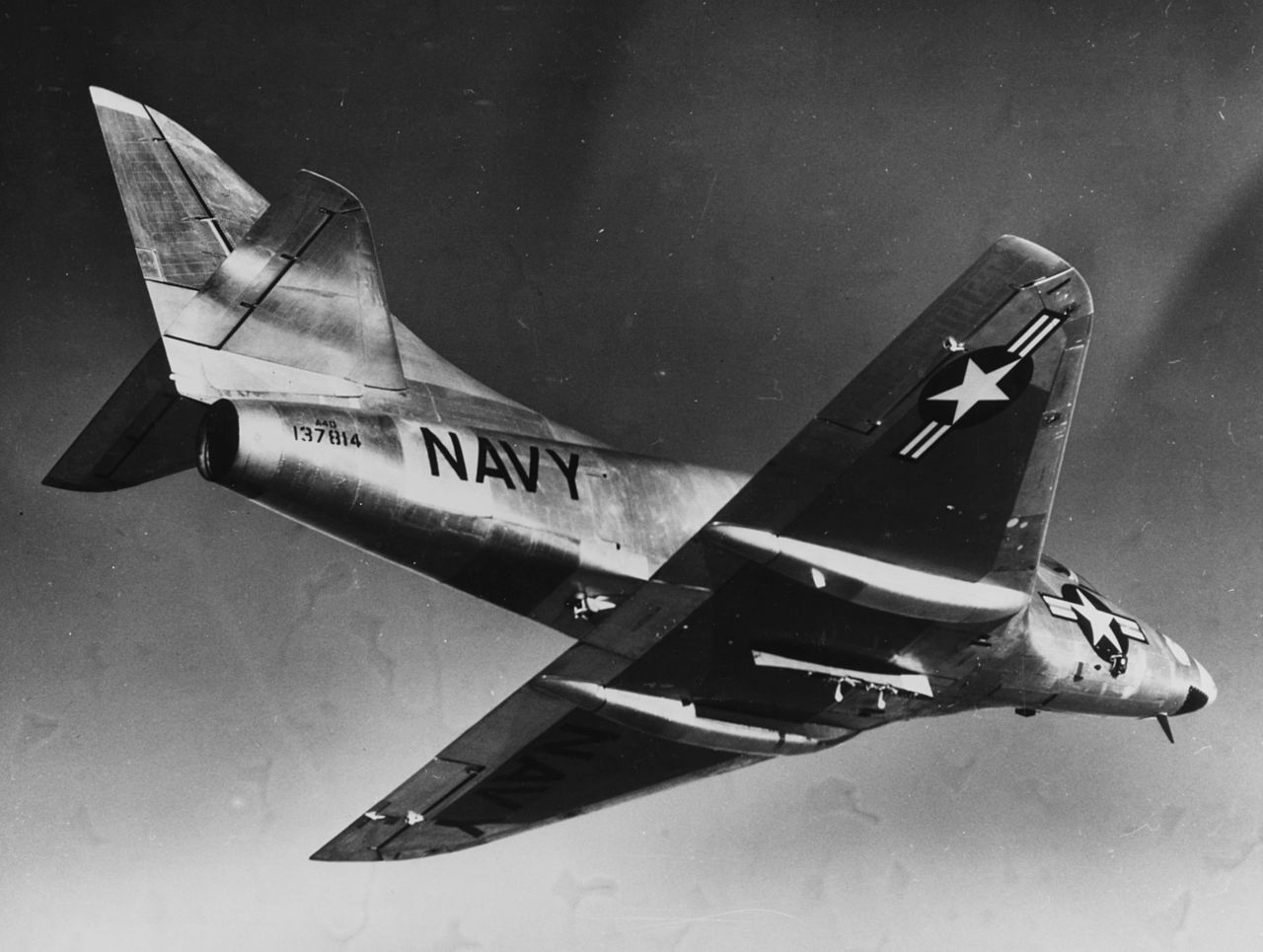
Early production A4D-1. Official US Navy photograph
First to Fly
The first A-4s to enter service with the United States Navy were designated A4D-1 (later A-4A) and went to Attack Squadron SEVEN TWO (VA-72) Blue Hawks at Naval Air Station (NAS) Quonset Point in Rhode Island on 26 September 1956. Soon thereafter, All Weather Fighter Squadron THREE (VF[AW]-3) Blue Nemesis at NAS Moffett Field took delivery of the first west coast A-4As. The first Marine Corps outfit to fly A-4As was Marine Attack Squadron TWO TWO FOUR (VMA-224) Bengals at Marine Corps Air Station (MCAS) El Toro in California.
A4D-2 Skyhawks at MCAS Yuma. Official US Navy photograph
Sometimes a B is Better Than an A
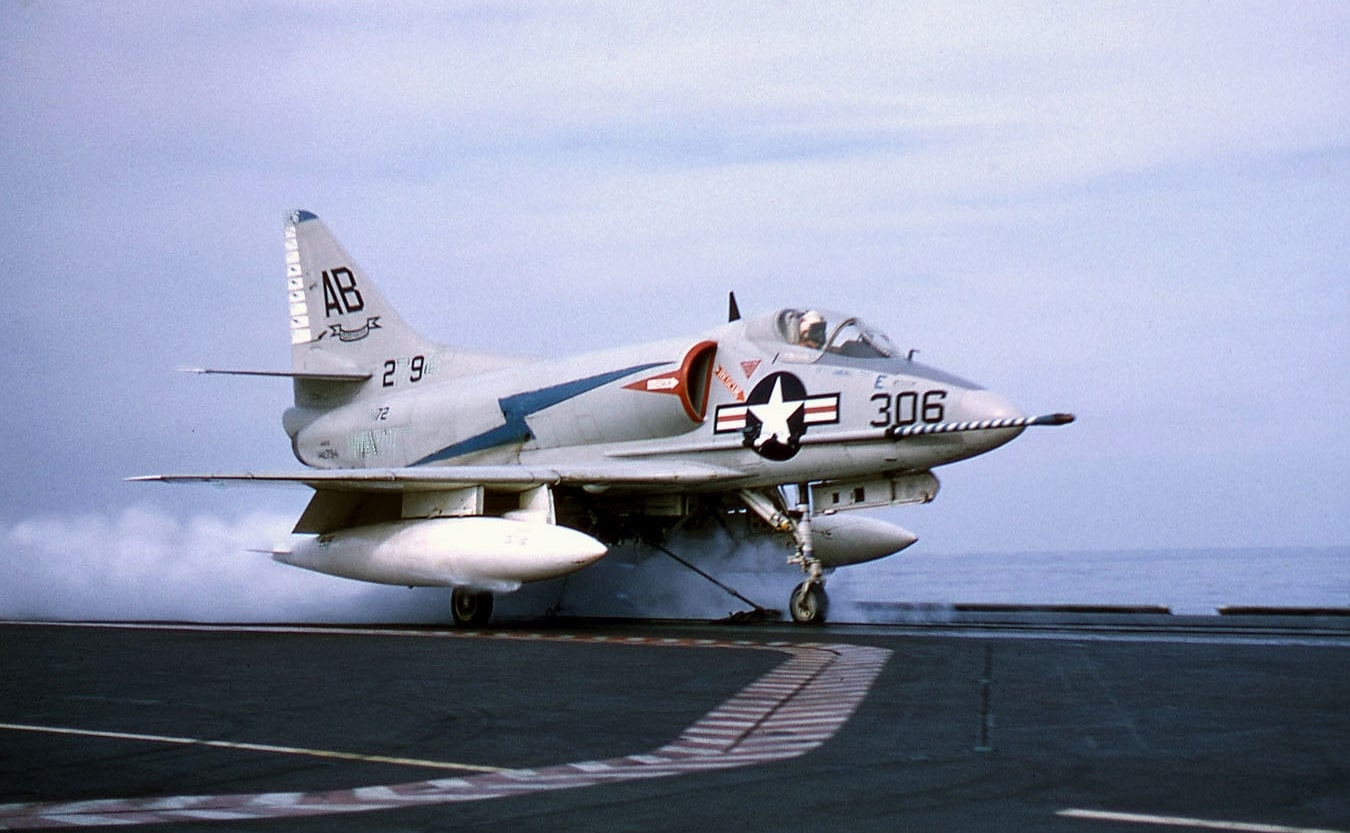
The A4D-2 (later A-4B) entered the fleet starting in 1957. It featured a stronger, externally braced rudder design, which alleviated some flutter issues with the A4D-1’s rudder. Other improvements to the second-generation Tinker Toy jet included strengthened landing gear, a probe for air-to-air refueling, the ability to carry external fuel tanks and a buddy refueling pod, additional navigation equipment, and a radar altimeter. The ordnance delivery systems were also improved.
VA-72 A4D-2 launching from USS Franklin D Roosevelt. Official US Navy photograph
Building a Better Scooter
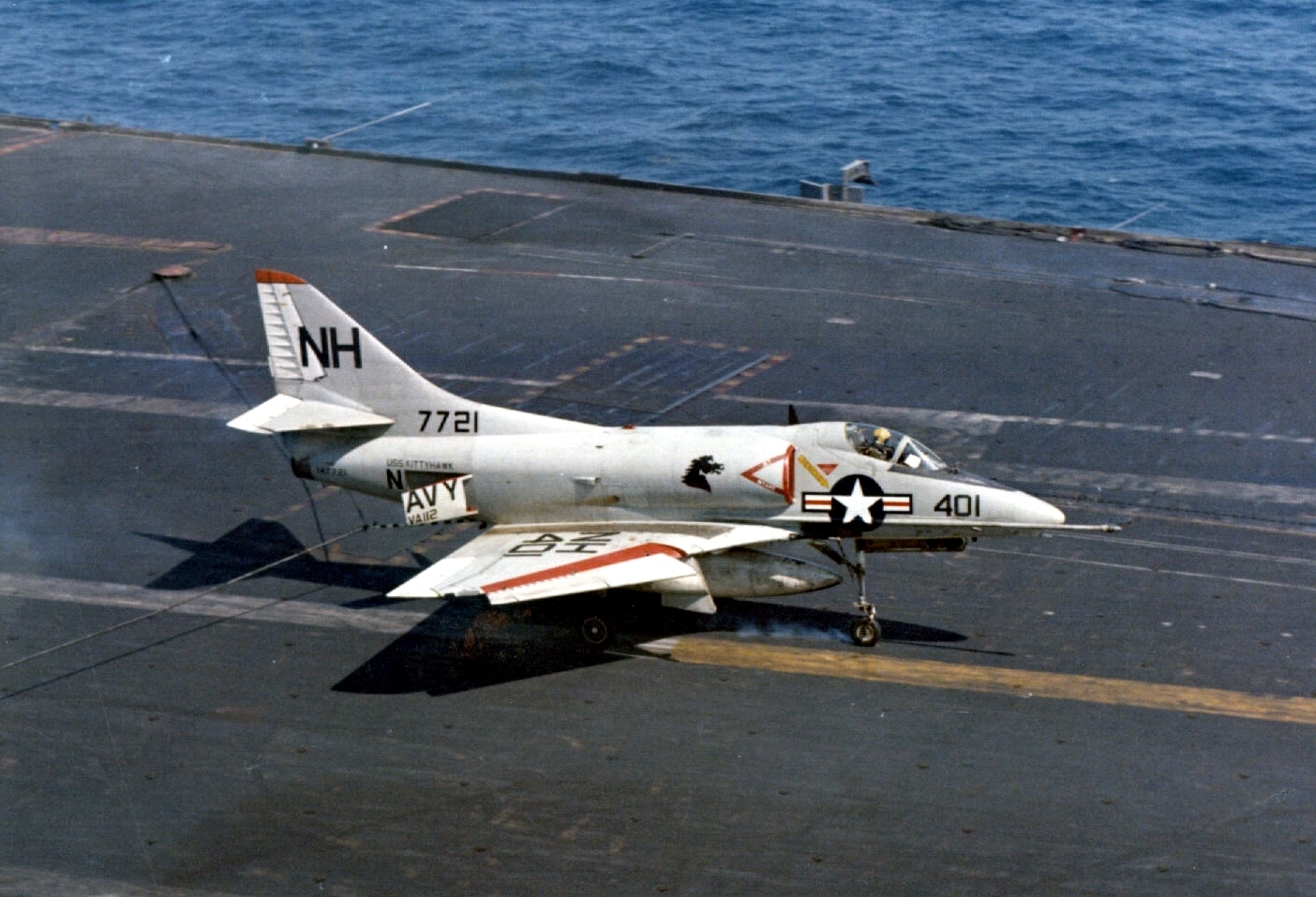
Entering service with VMA-225 Vagabonds in February 1960, the A4D-2N (later A-4C) was intended to receive a more powerful and economical engine; however, the budget didn’t support this upgrade. Instead, the third-generation Skyhawk received an autopilot and all-attitude gyro system, an angle of attack (AOA) indexer, terrain clearance radar, and a revised nose in which to mount them, along with a low-altitude bombing system. Many A-4Cs were upgraded later to A-4L specifications and flown primarily by Naval Reserve units.
A VA-112 A-4C trapping aboard USS Kitty Hawk. Official US Navy photograph
The Scooter That Never Was
In 1958, Douglas proposed the A4D-4. Essentially, the design was a significantly enlarged A-4C with revised (conventional) swept wings and empennage and a bubble canopy. This Skyhawk variant was envisioned as a dedicated long-range, all-weather jet capable of delivering “special weapons” from seven underwing hardpoints at low altitude and high speed. The A4D-4 would have required folding wings, and the design incorporated drag-reducing anti-shock pods. The design never got off the drawing board.
A-4C of VA-113 trapping aboard USS Kitty Hawk. Official US Navy photograph
An Even Better Scooter
When the A-4E (briefly designated A4D-5) variants began reaching fleet units in January 1963, Douglas had added two additional underwing hardpoints for carrying ordnance, bringing the total to five. It also included a Doppler navigation radar, a targeting computer, and a more powerful Pratt & Whitney J52-P6A turbojet engine. A-4E intakes were enlarged and modified for better airflow to the engine.
The newest Skyhawk variant was also equipped to deliver the latest guided weapons then entering service, such as the Martin Marietta AGM-12 Bullpup air-to-ground missile and the Naval Weapons Center AGM-45 Shrike antiradar missile for suppression of enemy air defenses (SEAD).
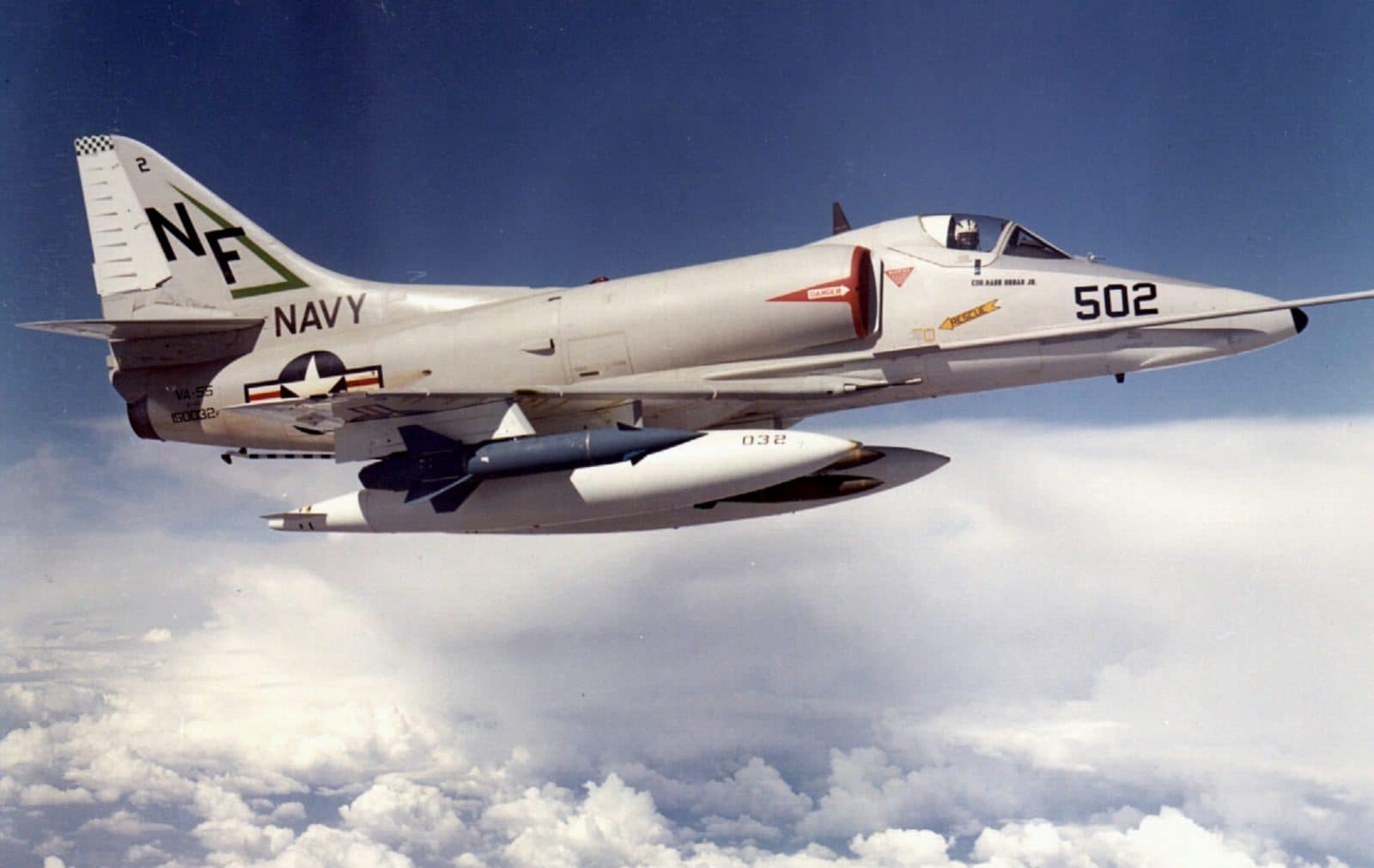
VA-55 A-4E. Official US Navy photograph
The Scooter That Never Was Redux
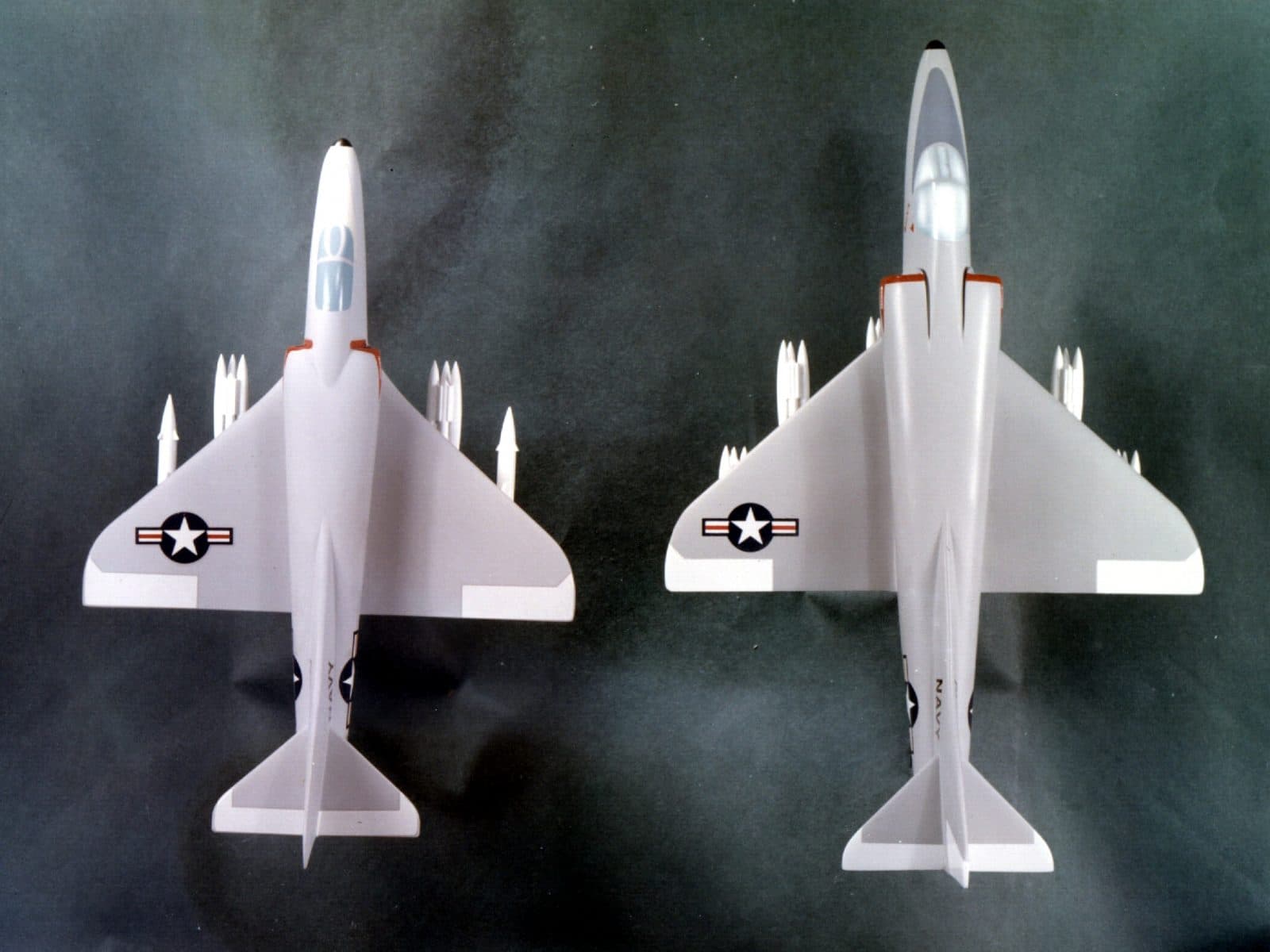
The A4D-6 was a 1963 Douglas proposal for an enlarged/upscaled and considerably more powerful Skyhawk built around the Pratt & Whitney TF30 turbofan engine. Yes…the same engine as would initially power the F-14 Tomcat. Overall, airframe improvements were designed to enable the jet to carry a heavier payload over a longer range. This was another design that never left the drawing board. However, Douglas did revise the proposal to compete for the new light attack or VAL competition (which was eventually won by Vought’s A-7 Corsair II).
A4D-5 (A-4E) on the left and A4D-6 on the right size comparison. Official US Navy photograph
The First Humpbacked Scooter
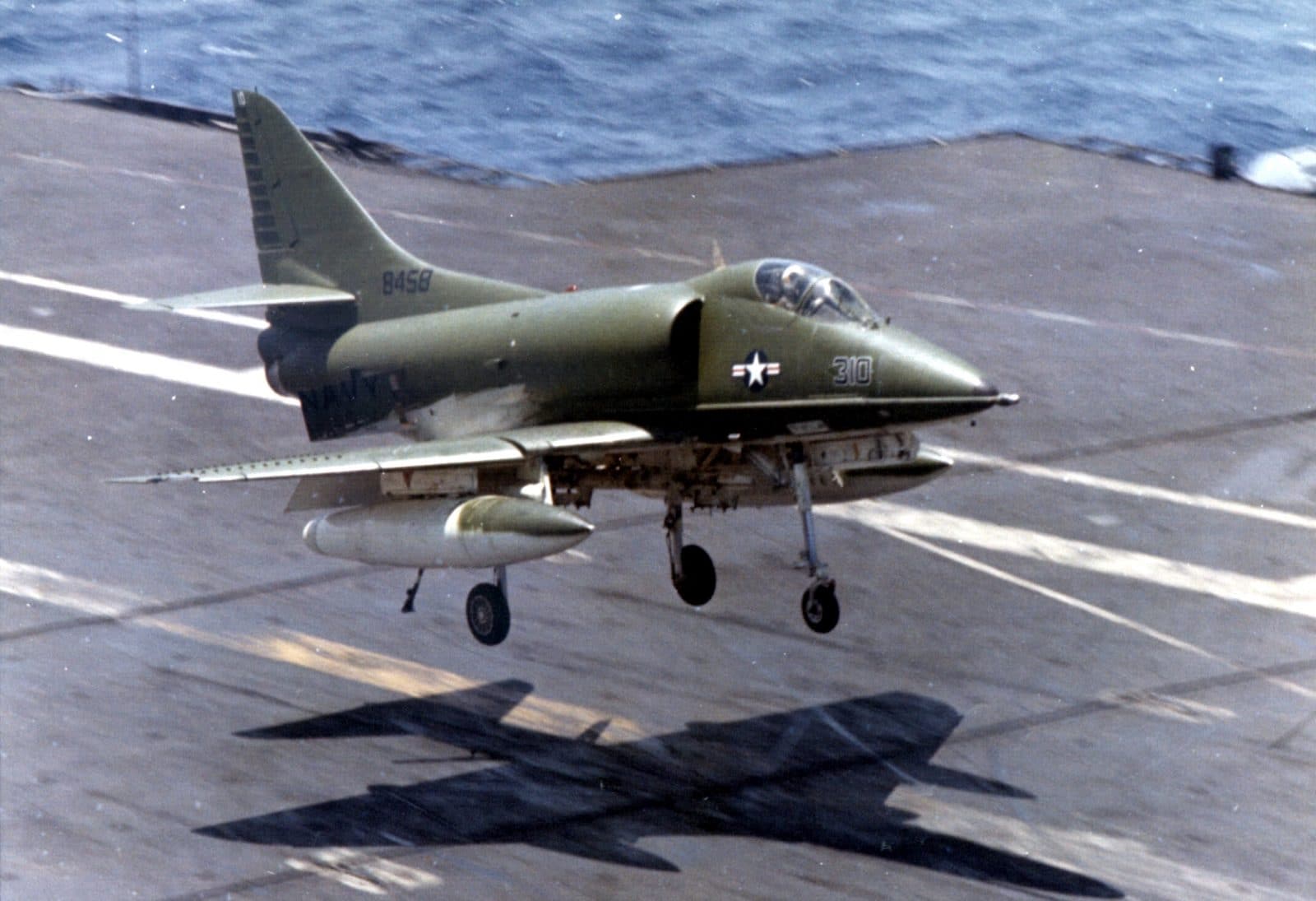
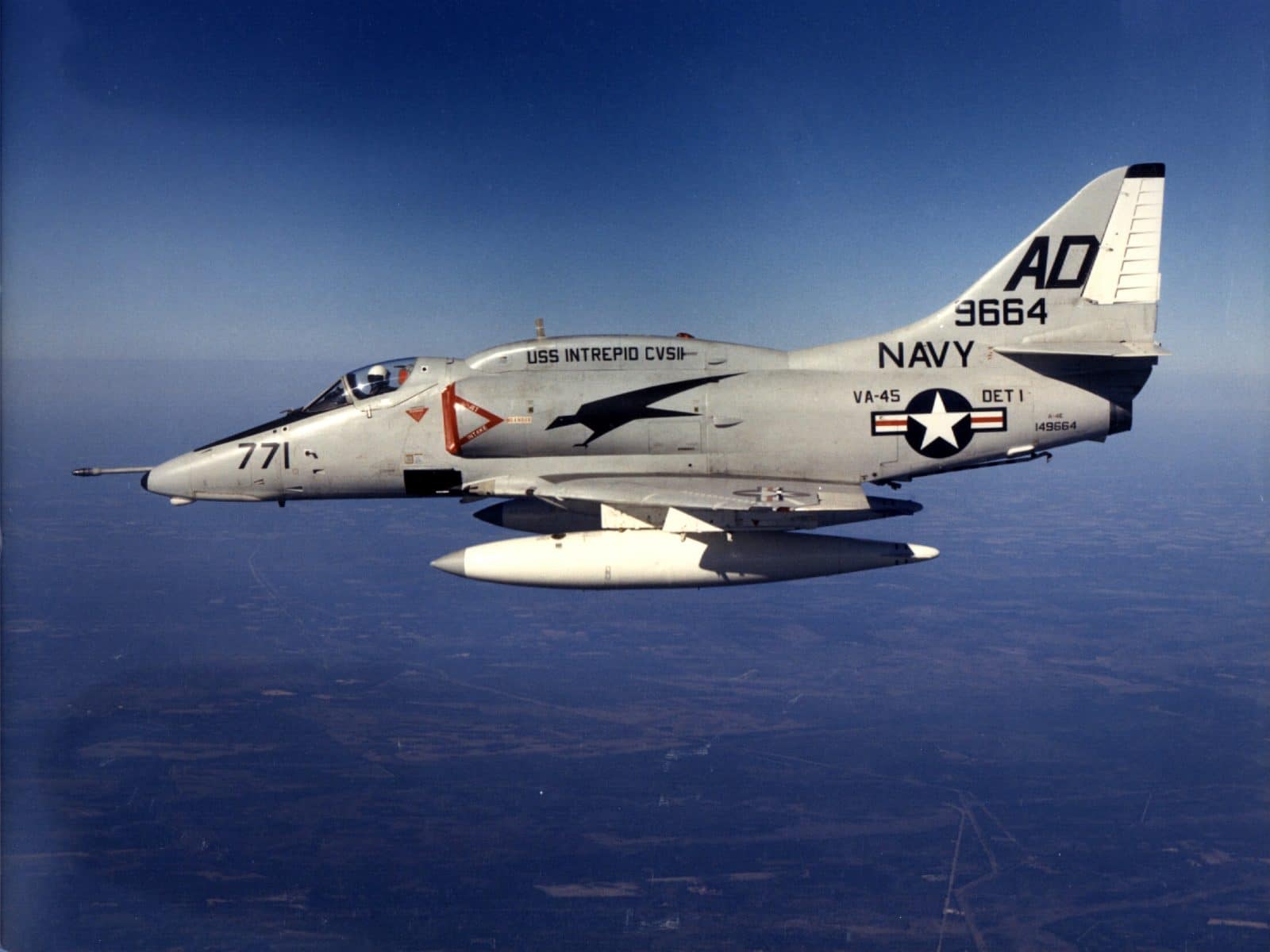
The new A-4F began serving with fleet units in 1967. The A-4E and A-4F were externally and internally similar, with a couple of early deltas. The avionics humpback was initially unique to the Foxtrot but was often retrofitted to the Echo and A-4Ls as well. The A-4F did receive nosewheel steering, lift-improving wing spoilers, and an upgraded ejection seat. A J52-P8A/P8B engine provided an incremental power increase. The refueling probes on the A-4Fs were revised to place the plug further outboard, away from nose-mounted radar. A-4Es were also retrofitted with the curved probe. The Blue Angels flew slightly modified A-4Fs from 1974 to 1986.
VA-45 A-4F. Official US Navy photograph
The Scooter as a Fighter?
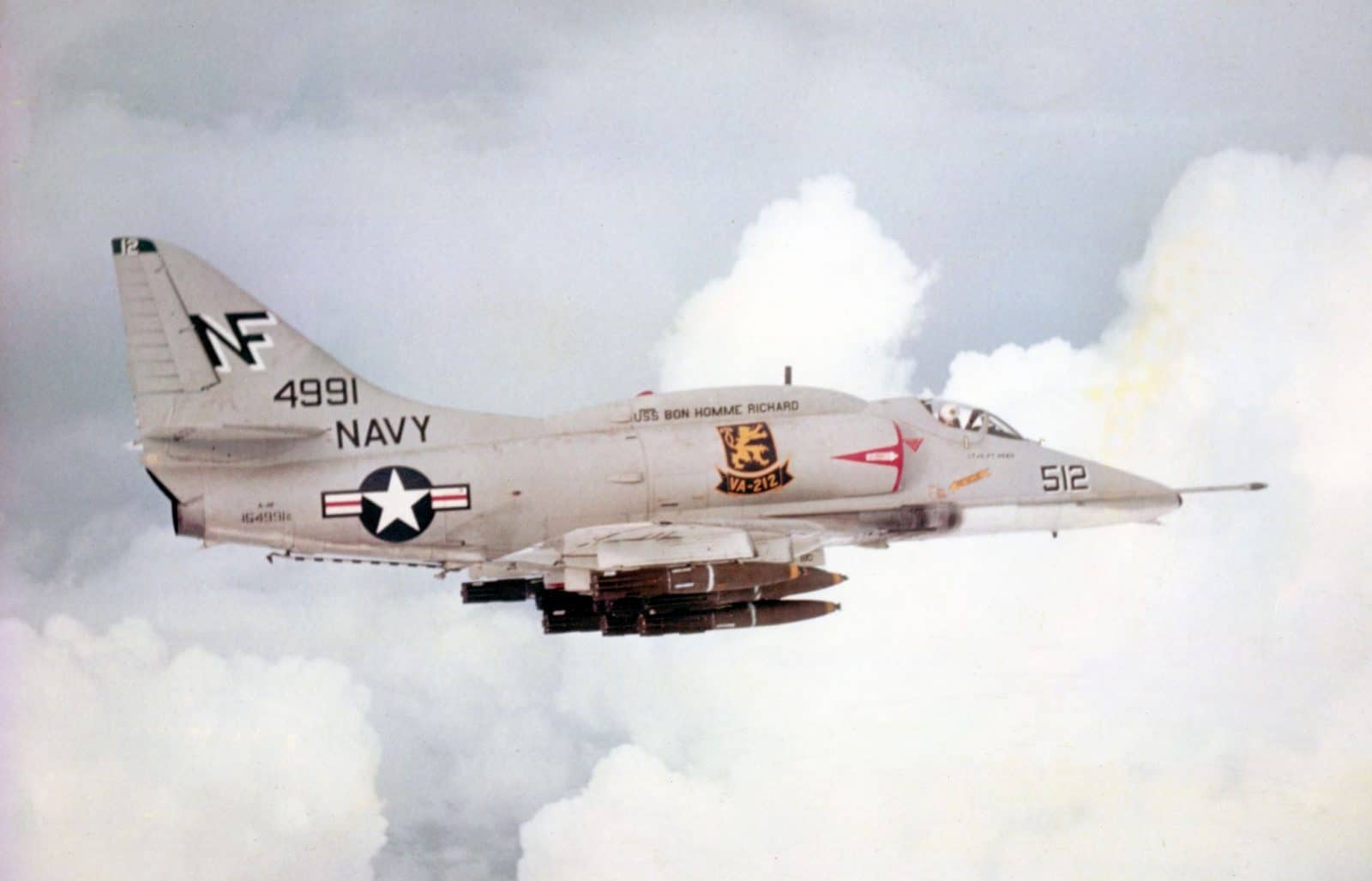
In the skies over Vietnam, A-4s often sighted North Vietnamese MiG-17s. On paper, the MiG-17 and the A-4 were in general similar in many respects. Even so, the rules of engagement and primary focus on attack work, as opposed to fighter work, meant that few A-4 pilots ever saw MiGs in their sights. Several A-4s fell to the marauding MiGs, but on 1 May 1967, VA-76 Spirits pilot Lieutenant Commander Theodore Swartz was attacking Kep airfield and managed to shoot down a MiG-17…with a 5-inch Zuni unguided rocket!
VA-212 A-4F. Official US Navy photograph
For the Rest of the Tinkertoy Story Bang NEXT PAGE Below.
Old Navy Helicopters Don’t Usually Become Famous, But Old 66 Did
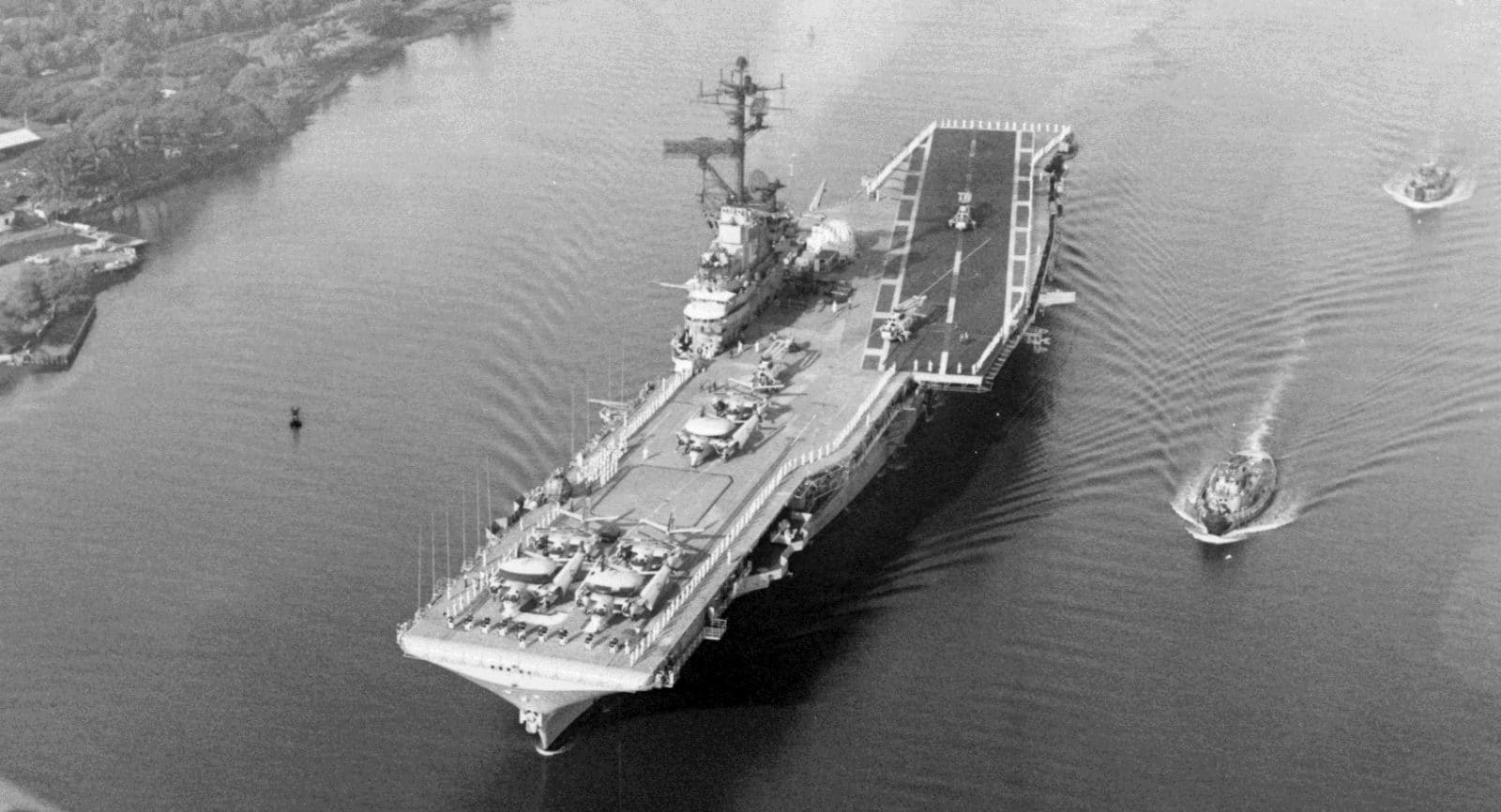
At 0550 local time on 24 July 1969, Apollo 11 splashed down in the Pacific Ocean south of Johnston Atoll and 920 miles southwest of Honolulu in Hawaii. Assigned as the primary recovery ship for Apollo 11, the Essex-class aircraft carrier USS Hornet (CVS-12) had recently returned from her final WestPac deployment with Carrier Anti-Submarine Air Group FIVE SEVEN (CVSG-57) embarked. During that deployment, CVSG-57 consisted of Air Anti-Submarine Squadron THREE FIVE (VS-35) Boomerangers and VS-37 Sawbucks flying the Grumman S-2E Tracker, Airborne Early Warning Squadron ONE ONE ONE (VAW-111) Grey Berets Detachment 12 flying the Grumman E-1B Tracer, and Helicopter Anti-submarine Warfare Squadron TWO (HS-2) Golden Falcons flying the Sikorsky SH-3A Sea King helicopter.
Hornet pulls into Pearl via US Navy
The Recovery Business
When Hornet put into Pearl, she traded some of the squadrons from CVSG-57 for a more specialized group. Aboard the Hornet for the Apollo 11 recovery from CVSG-59 were HS-4 Black Knights flying the SH-3D variant of the Sea King, along with a detachment from VAW-111 Grey Berets still flying their Grumman E-1B Tracers, and a detachment from Fleet Logistics Support Squadron THREE ZERO (VR-30) Providers flying the Grumman C-1A Trader. Also embarked were Underwater Demolition Teams Eleven (UDT-11) and Twelve (UDT-12). Aboard the Hornet when she pulled out of Pearl and headed southwest toward the recovery area was one particular SH-3D Sea King helicopter- one that would become perhaps the most famous Sea King ever.
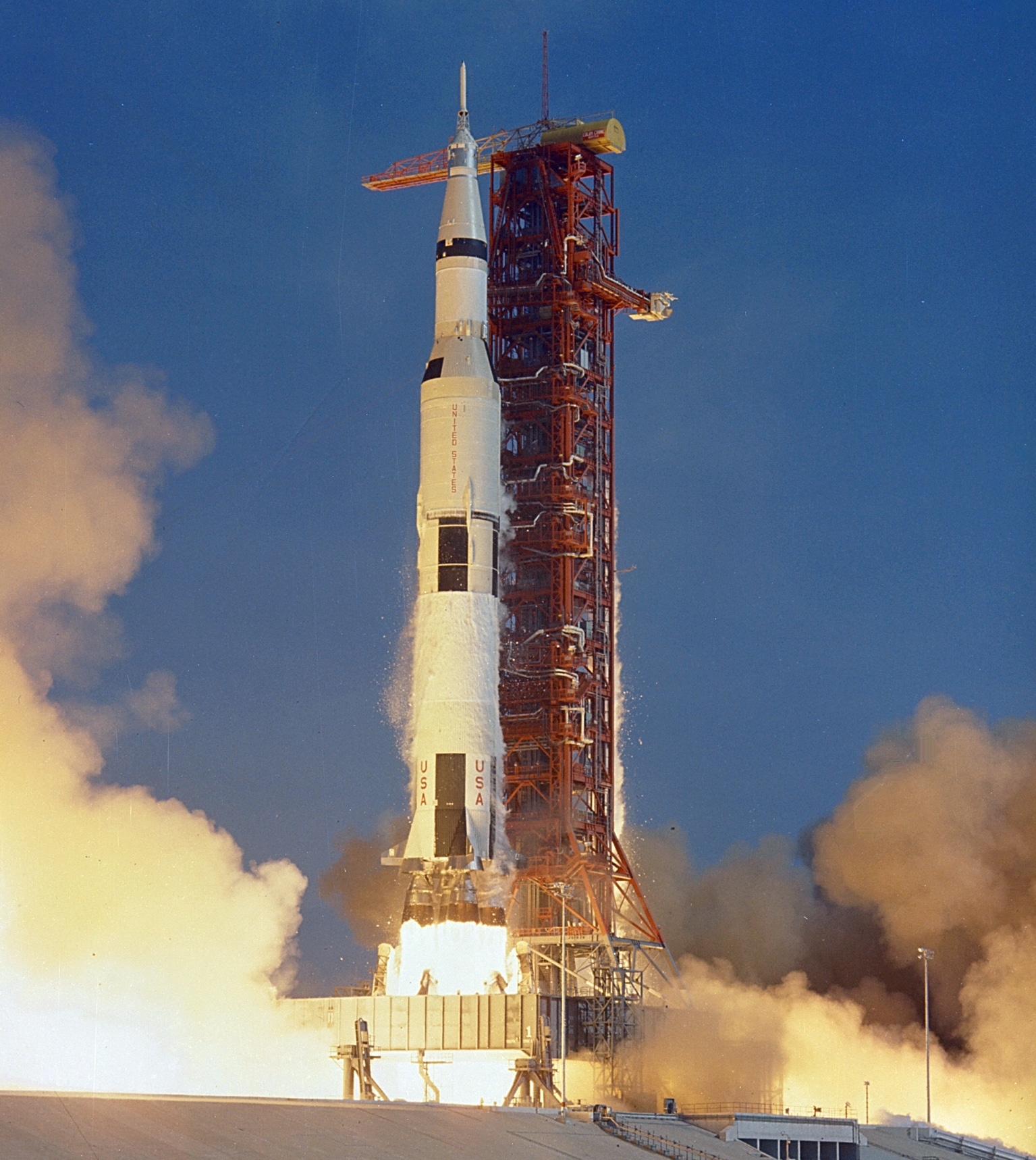
Apollo 11 launch via NASA
Those Oft-Quoted First Words on the Moon
Apollo 11 had blasted off from Kennedy Space Center in Florida eight days earlier. The famous transmissions from the moon had thrilled the world; the landing on the moon in the lunar module and the iconic “Houston, Tranquility Base here – the Eagle has landed” call crackling over the airwaves. Then the first steps on the dusty surface and Neil Armstrong’s famous line: “That’s one small step for a man, one giant leap for mankind.” It was an awesome time to be alive and recognize the accomplishments of Armstrong, Aldrin, and Collins that summer. But if they couldn’t be expediently fished out of the Pacific then the story would certainly not have ended anywhere near as well as it did!
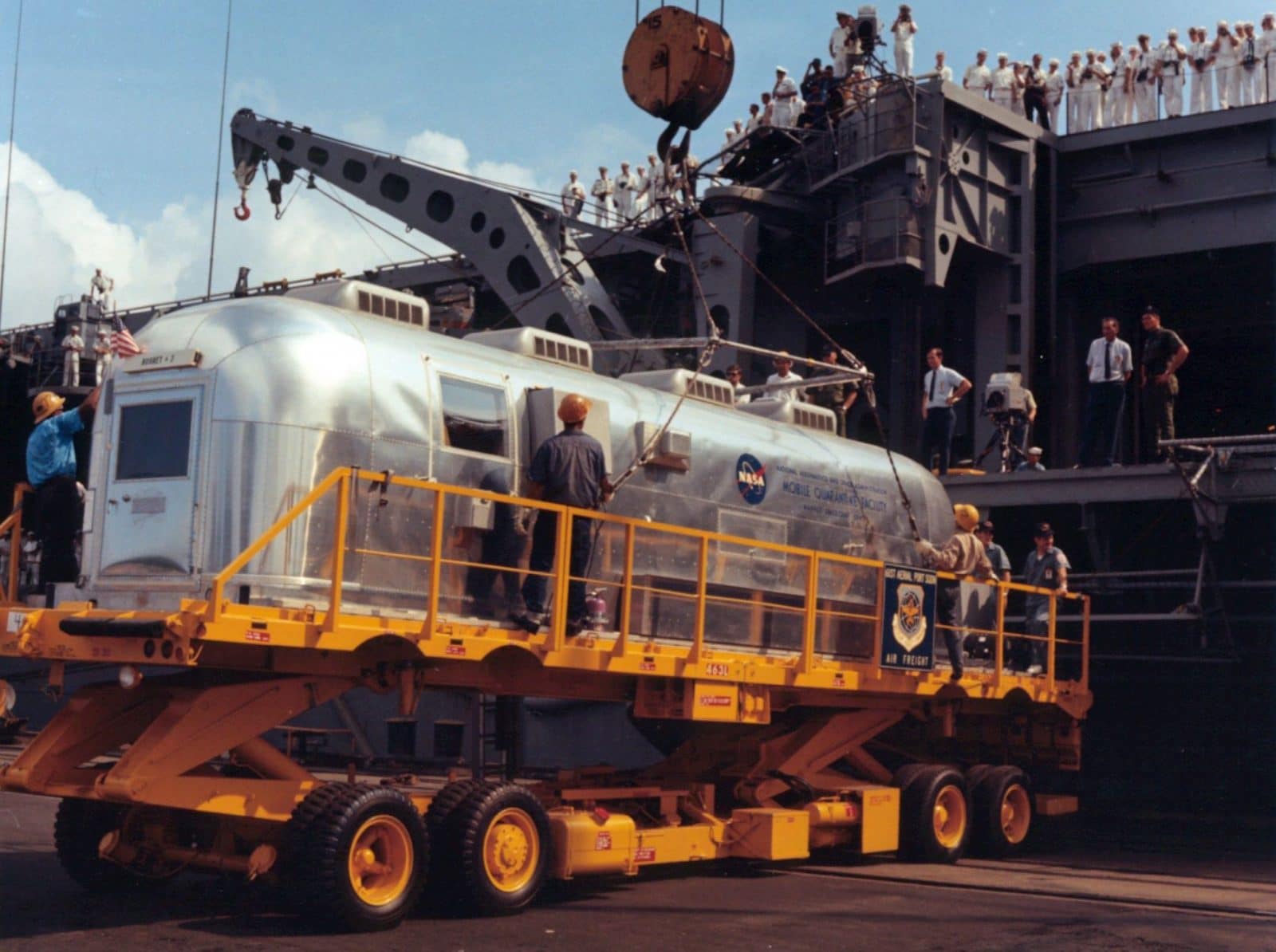
MQF arriving via US Navy
Practically a Bullseye Splashdown
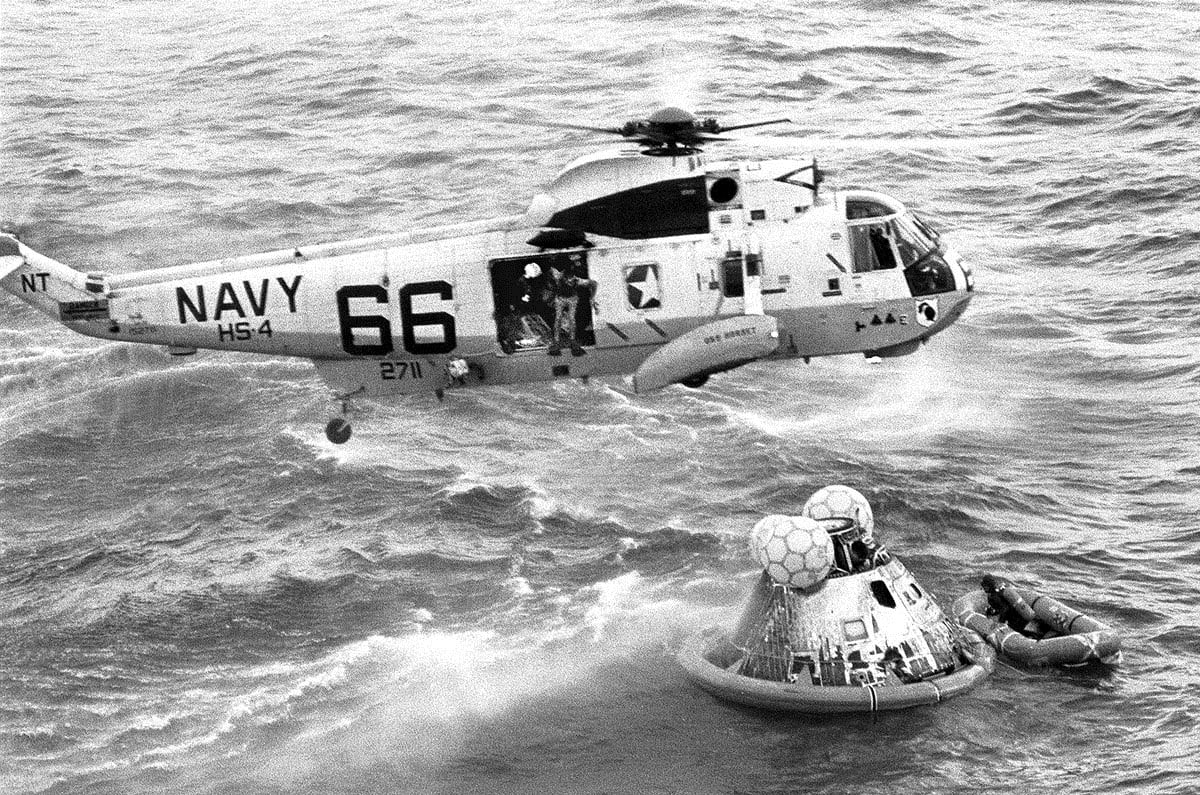
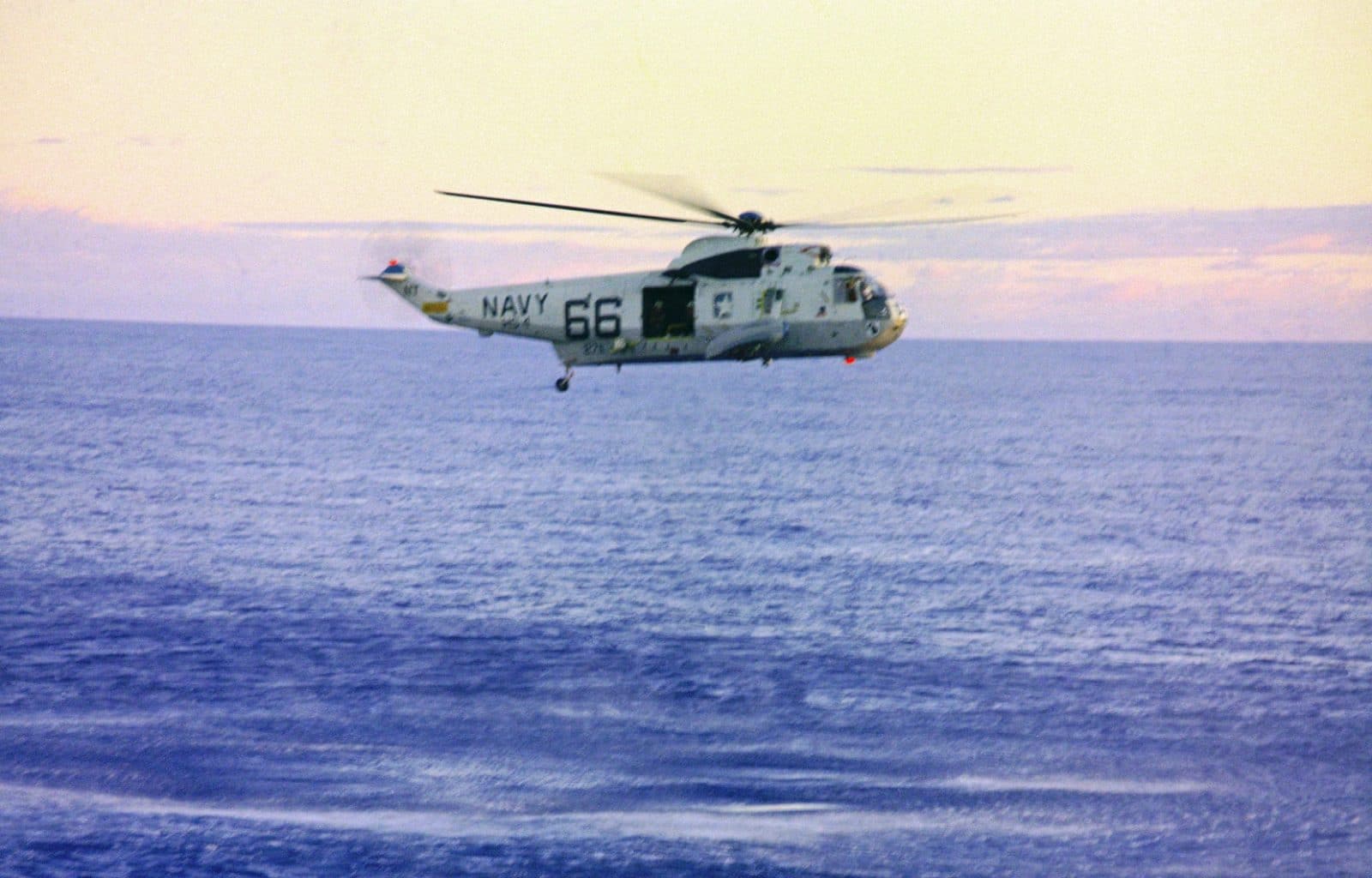
They got a good start by splashing down only 13 miles from the Hornet. Nearly 20 practice recoveries were made during the days leading up to the splashdown of Columbia, as the command module was named. Weather concerns forced the Hornet to relocate 250 miles eastward. President Richard M. Nixon, Admiral John S. McCain (CINCPAC), and several other VIPs arrived and were aboard the Hornet that day. But a helicopter would upstage them all. Sikorsky SH-3D Sea King, Bureau Number (BuNo) 152711 and side number 66 (Old 66), assigned to HS-4 Black Knights, would become the most famous and photographed SH-3D ever.
Apollo 11 recovery via US Navy
Lots of Rotorcraft on Call
There were actually four HS-4 helos in the air that morning. One SH-3D was stationed a few miles astern of the carrier; another would remain on station the same distance ahead of the ship. The primary recovery helo and a photography helo circled the ship at a distance of about a mile. Word was passed that the Hornet had detected the descending Columbia on radar. The primary and photo helos set out toward the splashdown area. When they arrived just before dawn, Columbia was floating upside down in calm seas. The astronauts inflated the three large flotation balloons, which righted the command module. Then the recovery began in earnest.
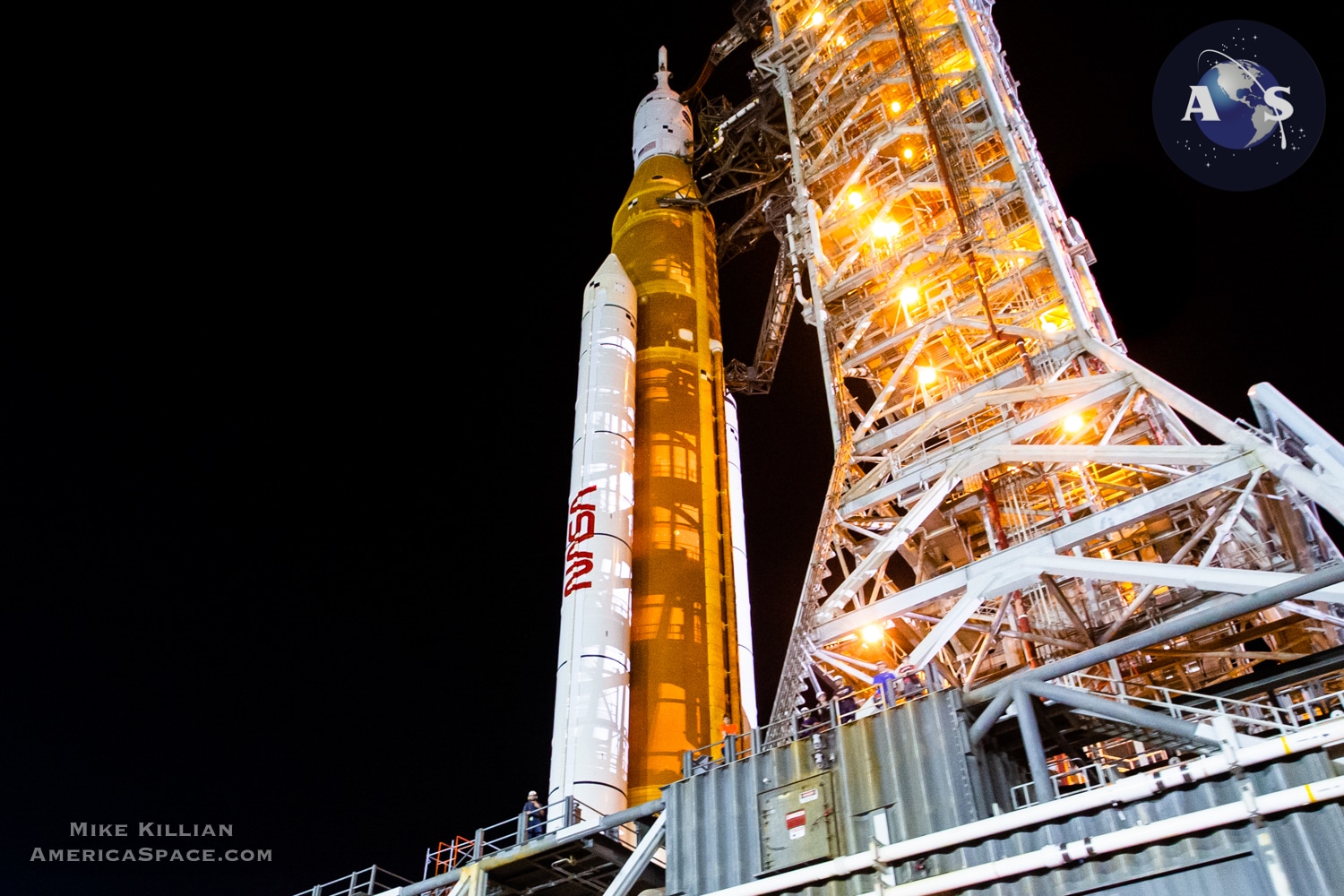
NASA’s enormous 212 ft-tall Space Launch System (SLS) core stage for Artemis-2 has arrived at Kennedy Space Center.
It spent the last week traveling 900 miles on a barge from Michoud Assembly Facility in New Orleans, where it was made and assembled.
Nasa’s sls rocket core stage arrives in port canaveral, fl, nestled safely inside NASA’s pegasus barge on its final leg to nearby kennedy space center (mike killian photo)
The next step in returning people to the moon next year
It’s a major milestone in the processing flow for Artemis-2, which will fly the first humans back to the moon in over half a century.
NASA astronauts Reid Wiseman, Victor Glover, Christina Koch and Canadian astronaut Jeremy Hansen will launch atop the core stage on the historic Apollo-8-like mission as soon as Sep 2025.
Nasa’s artemis-2 crew. from left: NASA Astronauts Christina Koch, Victor Glover, Reid Wiseman, Canadian Space Agency Astronaut Jeremy Hansen (nasa photo)
Both Wiseman and Hansen were at Michoud to see their rocket off, as it set sail for their launch site in Florida.
“It was pretty awesome”, said mission commander Wiseman. It was a nice break from their mission training, which is full speed ahead.
Wiseman in a training simulation going over his pre-launch timeline, same as he will on lauch day to the moon next year (nasa photo)
“On Wed, Jeremy and I had an S-band malfunctions class, where we looked at our communication and telemetry system on Orion, and we can identify failures in that system that would prevent us communicating or passing telemetry back and forth with Mission Control in Houston.”
With a dizzying heat and thick humidity in the air at KSC today, NASA teams transferred the 188,000 pound empty stage from the barge onto a self-propelled transporter, and slowly rolled the moon rocket into NASA’s iconic Vehicle Assembly Building (VAB). The short move took about 3 hours.
NASA’s Artemis-2 Moon Rocket Arrives at Kennedy Space Center 94nasa photos
NASA will hold a status review in Sep, before stacking and integrating the giant vehicle’s components for launch
With the mammoth stage now safe inside the VAB, engineers will soon begin processing it for stacking operations in the coming months.
NASA will conduct a status review of Artemis-2 in September, to determine if ops can proceed with stacking the core, twin SRBs and spacecraft for Artemis II. The SLS Launch Vehicle Stage Adapter (LVSA) and the Orion Stage Adapter (OSA) will be sent to KSC soon.
The sls core stage for artemis-2 inside nasa’s iconic vehicle assembly building, where it will be integrated with its solid rocket boosters and orion spacecraft for launch (nasa photo)
When that occurs, the giant core stage will be lifted off the floor, raised to a “standing” position, and be gently lowered into a high bay between its twin solid rocket boosters onto a Mobile Launch Platform (MLP).
The orange stage has been ready for quite some time. NASA put the core stage hardware and software through a series of Integrated Functional Tests last January.
Orion spacecraft is the critical path towards a solid launch date right now
Artemis-1 (Photo: Mike Killian / AmericaSpace)
It passed with flying colors, and was then placed into storage while NASA announced a 10-month delay to the Artemis 2 mission due to issues with the Orion spacecraft’s heat shield, life support system, and batteries. NASA decided that it was preferable to store it at Michoud, rather than inside KSC’s VAB.
Orion is the critical path in the scheduling for Artemis-2 launch processing at this point. The spacecraft was recently put through vacuum testing at KSC. An independent review is still ongoing about the re-entry performance of the heat shield on Artemis-1, and corrective actions that may follow for Artemis-2 and on.
Nasa’s orion spacecraft which will fly the crew of artemis-2 to the moon for 10 days, and bring them safely back to earth (nasa photo)
The 10 segments of the twin SRBs have been at KSC since Sep 2023, and will soon be integrated atop the MLP, forming the giant 17-story-tall cigarette-looking white boosters that will flank each side of the SLS rocket.
Together, the twin boosters will produce more than 75% of the total thrust at liftoff, to send Artemis-2 and her 4 astronauts to the Moon.
Artemis aft solid rocket boosters segments for the sls (nasa photo)
Two of the four RS-25 engines on the Artemis-2 core stage are space shuttle veterans. One was used on 15 flights and was taken from Endeavour.
When the movie TOP GUN was released in 1986, your author was a fourteen-year-old freshman in high school. I’d been a nut for things with wings for right around four years, and was eager to see the flick. Needless to say, after first taking it in, I was blown away.
TOP GUN cemented my interest in Naval Aviation and increased my fascination with the Grumman F-14 Tomcat. Almost to the point of obsession.
I wanted to know as much about the Tomcat as possible. So I began to seek answers to all the questions, including: what is the F-14’s Top Speed?
Do You Feel the Need?
Nowadays I watch that movie while wearing a couple’a different hats. The serious military aviation enthusiast in me cringes at certain points of the story. But the fourteen-year-old is still inside, somewhere. Both he and the serious guy gaze wide-eyed, and marvel at the stunning aerial cinematography.
We both revel in the overall atmosphere of awesome embodied in the film. And the high school kid still gets a kick outta the silly but witty banter. (Truth be told, so does the serious guy.)
Of all the the one-liners and catch-phrases to come outta that flick, one soars high above the rest. Or maybe I should say, it speeds further ahead of the rest. Yeah, you know which one I’m thinkin’ of. And that leads me back to the topic of this-here little ramble.
Screengrab from TOP GUN
What Was the F-14’s Top Speed?
As with many such questions, the answer is, “it depends.”
An aircraft’s performance, specifically that of its power plant, can change in varying atmospheric conditions, especially with changes in temperature. Barometric pressure and humidity are also factors.
The F-14 family utilized two different engines: the F-14A was powered by two Pratt & Whitney TF30s. The F-14A+/F-14B, and F-14D were each powered by a pair of General Electric F110s.
Less quirky and more reliable than the TF30, the F110 also had a good bit more ‘oompf’; more thrust. But the key advantages of this increased thrust lay more within the regime of acceleration than of top-end speed. The F110-powered jets may have been slightly faster, but it didn’t really matter, as will become evident a bit later.
So, Grumman’s advertised top speed for all F-14s was Mach 2.34 at 40,000 feet; that’s 1342 knots, or 1,544 mph. At sea level, the max speed was given as Mach 1.2, which works out to 792 knots or 912 mph.
But was Mach 2.34 really the F-14’s Top Speed?
Nope. It wasn’t.
A fella named Charlie Brown was a test pilot for Grumman, and worked on the F-14 program. He served both as a pilot and as part of the design team. From an article titled ‘Tales of the F-14’ from the September 2006 ish of Air & Space Magazine, he is quoted:
“The [Navy] specs called for Mach 2.34. We actually tested the airplane for Mach 2.5. I flew it 2.5 a couple times.”
Project 914 Archives (S.Donacik collection)
And there you have it. Words from someone who had ‘been there and done that’. ‘Tis anecdotal proof, sure… which I know that some are inclined to take with a dose of salt.
So, if you don’t wanna take Charlie’s word for it alone, how about Dave Andersen? He was a Radar Intercept Officer (RIO) in Tomcats from 1983 to 1992. Sometime back, Dave made a comment on a post on Quora describing his time as a career GIB (Guy In Back) in F-14s. Here’s a relevant excerpt from that comment where Dave relates what happened during a test flight:
“That jet accelerated like it was blasted out of a cannon. In maybe 50 seconds we went from about 400 knots and reached the advertised top speed of Mach 2.34, and the jet was still accelerating. I’m sure she would’ve gone past 2.5 Mach if we’d let her, but backed off at that point because we were getting close to “bingo” fuel state.”
U.S. Navy photo by Lieutenant Commander David Baranek
Was Speed the Top Priority?
Dave Andersen’s comment indirectly brings up a good point about flying fast in a gas-guzzling jet fighter. And that is that there’s a price to pay, and an inevitable tradeoff between speed and endurance.
Dave indicated that the main reason they did not keep going was because they were ‘bingo’ fuel. Flying fast in an F-14, or any other similar jet, requires use of the afterburners, and that means markedly increased fuel consumption.
Ward Carroll, another F-14 RIO, addresses this in one of his YouTube videos:
“Generally, during tactical intercepts we’d be flying around at 350-400 knots. So the fuel flow at that air speed, at, say 25,000 feet, would be 4,000, 4,500 max pounds per hour. So that’s 9,000 pounds per hour in a jet that can hold 16,200 pounds without tanks and 20,000 pounds with tanks. Now, as soon as you go into afterburner, now you’re consuming gas at a rate of 4,000 or 5,000 pounds per MINUTE. You will run out of gas fast; you have to be very judicious about your use of afterburner.”
What all’a that means is that the top speed of the F-14, or comparable jets, doesn’t really matter much. Such high speeds are of relatively limited use in most combat situations, and flying that fast burns too much gas.
So, What Exactly WAS the F-14’s Top Speed?
How many times have you read or heard a pilot or aircrew say something similar to what Dave Andersen did? “We probably could’a gotten more outta the bird.”
U.S. Navy photo by Photographer’s Mate Airman Justin S. Osborne
All aircraft have their stated limits; limits that can often times be exceeded. If Charlie Brown’s claim is to be believed, then the F-14’s top speed was at least Mach 2.5. Dave Andersen’s claim certainly seems to support that.
It will likely never be known how fast an F-14 could truly fly. But it’s this guy’s opinion that the Tomcat’s top speed was a good bit more than Mach 2.5.
I’ll end with this; and it’s the fourteen-year-old in me that’s tappin’ the keyboard right now. All practical considerations aside, ‘Charlie’ in TOP GUN summarized things very nicely when she said, “You’re not going to be happy unless you’re going Mach 2 with your hair on fire”.
The incident resulted from improper procedures, incorrect fuel load conversion, deferred maintenance, and bad luck.
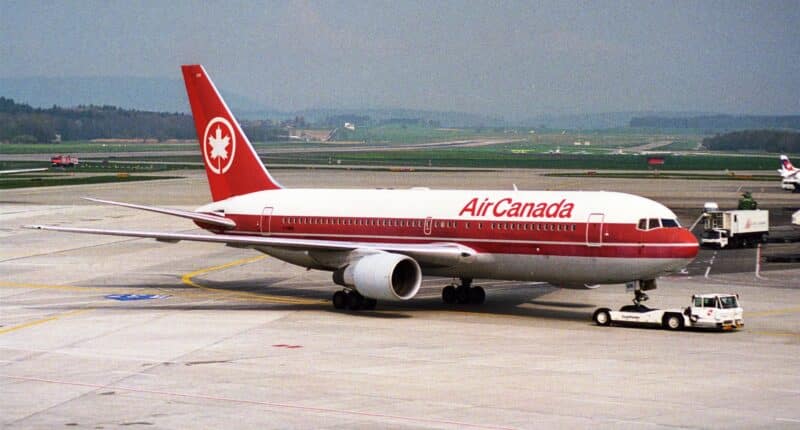
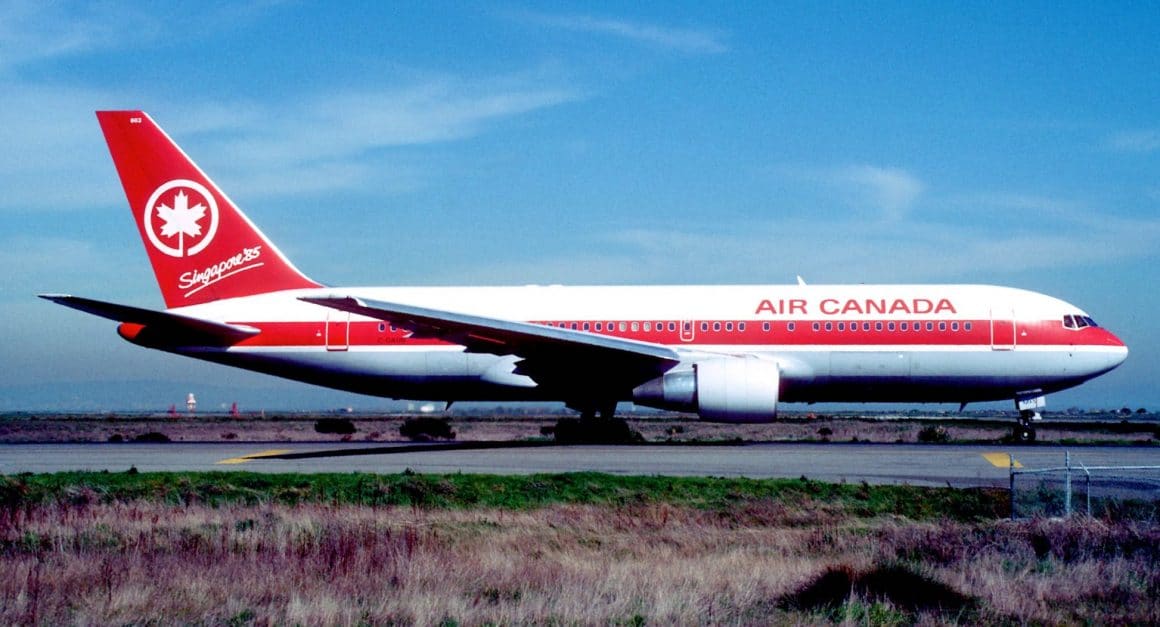
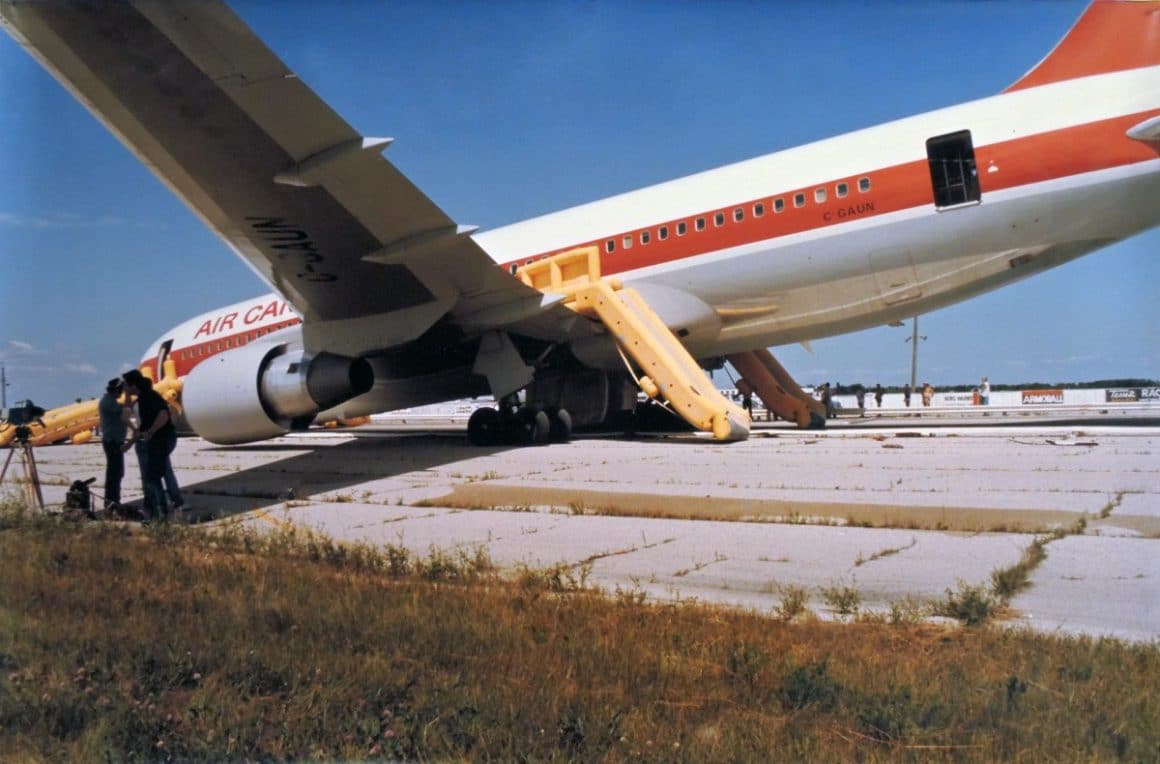
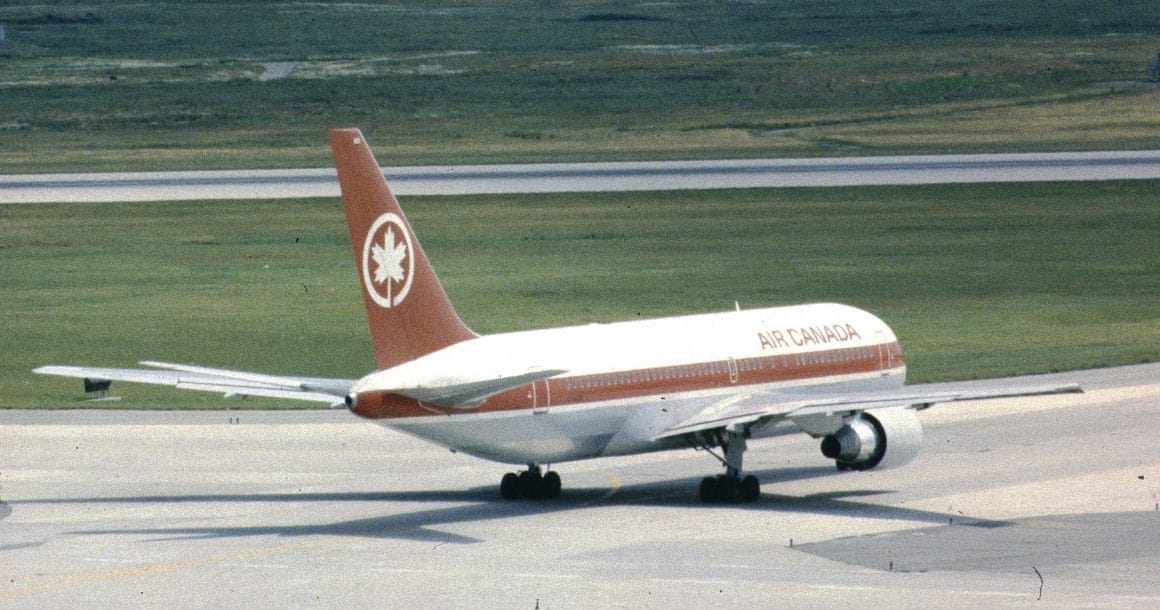
Air Canada Flight 143 departed from Montréal–Dorval International Airport (YUL) on 23 July 1983. The new 767-200 climbed to 41,000 feet to fly above the strong jet stream. Halfway through its flight, a number of fuel warnings started to chime in the cockpit. At first, the warnings were thought to be caused by a faulty pump. But when one, and then the other, engine failed, it became apparent that the jet had somehow run out of fuel. Here’s a video about the Gimli Glider uploaded to YouTube by CBC News: The National
Air Canada Flight 143, the Gimli Glider | IMAGE: Public Domain
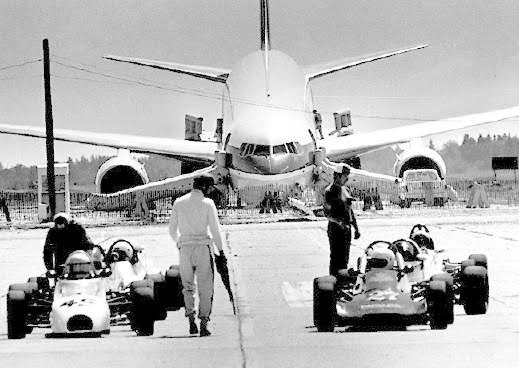
Captain Pearson established the jet at the optimal glide speed. Being an experienced glider pilot, the captain made mental calculations that he could not make the emergency divert field of Winnipeg. Knowing the area, he queried the distances to other fields in the area. He remembered that the old Gimli Air Force base was located nearby. After querying the controller, the crew determined that the closed field was within gliding distance. With expert skill, including slipping the jet, the captain landed the jet on the former airstrip turned drag strip. It was an unprecedented feat. All 61 passengers survived.
As dedicated avgeeks, we’ve searched high and low across the United States and beyond to identify 14 awesome places to watch planes land that should be on your bucket list.
Whether you’re trying to impress your date or show your children the wonders of aviation, going to watch airplanes land is a time-honored tradition. The key is to know where to go!
Our list is focused on places that is safe for the whole family, regularly have unique aircraft, fun viewing locations, and dedicated areas that are friendly to spotters.
What other places do you recommend? Share your favorite places in the comments below.
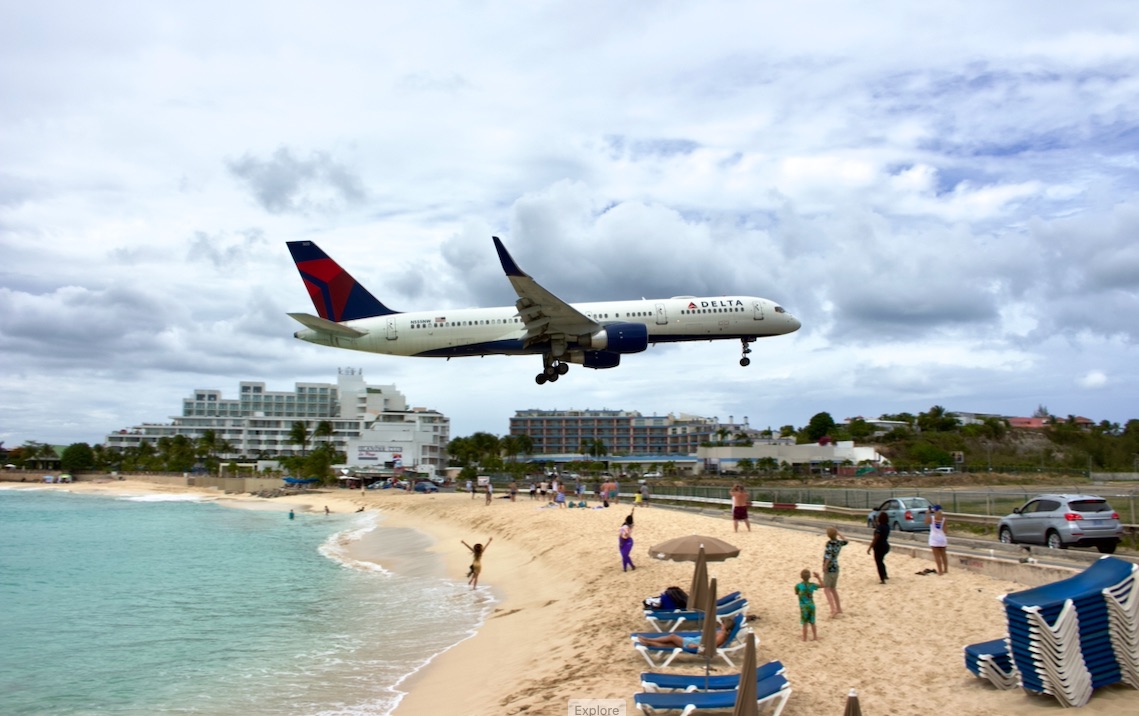
1.) Sunset Beach, St. Maarten
Delta 757 Landing at Maho Beach. Image: Avgeekery
This might be one of the holy grails of planespotting. With a runway located just off the beach near St. Maarten Princess Juliana International Airport, the views and the variety of aircraft landing doesn’t get much better than this. Even better, there are two bars located on each side of the approach end of the runway.
2.) In-N-Out Burger near Runway 24R at LAX Airport
In-N-Out Burger located just a few hundred feet from the 24R approach at LAX. Image: Avgeekery
3.) Shep’s Mound at Sydney International Airport, Australia
14 Awesome Places To Watch Planes Land 108
Are you sensing a theme yet? Bring a picnic basket to watch arrivals and departures. The recently renovated park has picnic tables and a grassy area. It is located right by the air traffic control tower.
4.) London Heathrow
An American Airlines 777-300ER experienced a challenging landing at London’s Heathrow airport. It was caught on film by BigJetTV.com
This airport is a paradise for plane spotting even if the weather isn’t always cooperative. There are so many locations to spot unique jets and challenging approaches around the airport too. From hotels with a great view of the runways, to Myrtle Avenue, to observation decks, to meeting YouTube stars like BigJet.tv, you can’t go wrong.
5.) Gravelly Point Park near Washington-Reagan International Airport, Washington DC
A popular weekend hangout, this crowded park sits just off the approach end of runway 19 at DCA. Due to the curvilinear approach of airliners landing on the river visual, the planes almost appear to circle around the park as the fly less than 200 feet above your head. See this excellent video by “Chinda My Family Times” to see what I’m talking about.
6.) Narita International Observation Deck, Japan
14 Awesome Places To Watch Planes Land 109
Narita gets such a unique array of international arrivals. This observation deck is a perfect place to meet other avgeeks and bond over our love of airplanes and aviation photography.
Located on the northwest side of DFW airport, this observation deck has a great view of arrivals and airport operations. Like American Airlines? This is your spot!
But wait…there’s more Awesome Places To Watch Planes Land! See the rest of our list by clicking on “Next Page” below.
In the early 1950s, a team of designers thought it would be a good idea to not only design but actually build the wacky contraption called the de Lackner HZ-1 Aerocycle. Why would they build it?
Developed in response to an idea for the development of one-man flying platforms, the HZ-1 was envisioned as a highly mobile military recon and transport vehicle for use on the then-much-anticipated ‘atomic battlefield’.
A Dangerous Looking Idea
NASA photo
The HZ-1’s design incorporated a unique control system. Or maybe more accurately put, a control method, based on a then-novel concept known as ‘kinesthetic control’. ‘Twas thought up by Charles H. Zimmerman, an aeronautical engineer with the National Advisory Committee for Aeronautics (NACA).
If Zimmerman’s name sounds familiar to you, then you’re probably a Vought fan. Or maybe you just like really weird things with wings. He designed the Vought XF5U ‘Flying Flapjack’ and its predecessor, the V-173 ‘Flying Pancake’ for the U.S. Navy during the early 1940s.
Great, now I’m hungry and gotta head to IHOP…
Zimmerman’s concept of ‘kinesthetic control’, well… if you want an in-depth explanation, you should google it because I ain’t smart enough to write about stuff like that. In a nutshell, though, it’s all about using the natural physical inclinations of the human body as a flight control system.
This is where the word ‘crackpot’ came to mind for some folks back then.
Screwy Idea, But Simple… Right?
U.S. Army Transportation Museum
The HZ-1 Aerocycle was propelled by 15-foot twin contra-rotating rotors driven by a 40-ish horsepower Mercury Marine outboard engine. It had a twist-throttle on handlebars, similar to that which you would find on a motorcycle.
The landing gear consisted of five rubber airbags. That is four small bags attached to the ends of booms arranged in an ‘X’ configuration and extending out horizontally from the main structure of the vehicle, with a fifth, larger bag directly underneath the main structure.
It Could Even Land On Water…Probably Once
The bags doubled as flotation devices, allowing the HZ-1 to land on water, though likely only in calm sea states. The bags were later replaced with a skid setup as used on many helicopters.
Mere Inches Above A Spinning Blade
The pilot stood on a tiny platform mounted right next to the engine and directly above the rotors. his body loosely secured to the main structure of the vehicle by a safety tether and his feet held in place by straps.
Here’s where that kinesthetic stuff comes in: the vehicle’s primary means of maneuvering was the shifting of weight distribution. Consider the body’s natural senses that provide us with good balance and equilibrium. It was thought they would also provide an HZ-1 pilot the ability to maintain effective directional control of the vehicle.
So, if the operator leaned forward, the vehicle would dip slightly at the front, and the rotors would push the machine forward. Lean to the left, move to the left. To the right…
Pretty simple, yeah?
UNITED STATES – JANUARY 16: Army Sgt. Herman Stern pilots the Aerocycle. (Photo by Joe Petrella/NY Daily News Archive via Getty Images)
Having been designed with this whole kinesthetic thing in mind, the HZ-1 was intended for use by inexperienced infantrymen who had received a bare minimum of training in its operation… like… half an hour or so.
So, combat conditions.
Under fire.
Bullets whizzing past your head.
The human body’s natural response to said bullets’a-whizzin’ is often involuntary, jerky movements.
Meat-grinder rotor blades whirling below.
Yeah. What could possibly go wrong?
Rearing a Next Generation Foal
U.S. Army Transportation Museum
Humor aside, the notion that the HZ-1 represented a logical next step in continuing the evolution of the archaic horse cavalry is inescapable. First we replaced our equine friends with motorcycles, then moved on to light tanks and other armored fighting vehicles. Why not advance further, up into the air with something akin to a mechanical flying horse?
The original prototype, called the DH-4 Helivector, was designed by Lewis C. McCarty Jr. of de Lackner Helicopters Inc. in Mount Vernon, New York. The DH-4 flew for the first time in November of 1954. A second prototype, designated DH-5, first flew in January of 1955 at the Brooklyn Army Terminal (BAT), New York.
In addition to the pilot, the Aerocycle could carry 120 pounds of cargo, and could achieve a maximum speed of 75mph. It had a range of about 15 miles, and could stay airborne for roughly 45 minutes. The reported maximum ceiling was 5,000 feet, but… well… why anyone would wanna take this thing up that high is beyond me.
During initial testing at BAT, the Aerocycle seemed somewhat promising, and the Army ordered twelve examples for further evaluation, under the designation YHO-1 (soon to be re-designated HZ-1). Testing continued at BAT and other nearby locations before the program moved to Felker Army Airfield at Fort Eustis, Virginia in 1956.
Like Trying to Break a Bronco
U.S. Army Transportation Museum
Further testing brought certain flaws to light, most notably problems with the HZ-1’s operability. Chief test pilot at Fort Eustis was Captain Selmer Sundby, an experienced helicopter pilot who found the HZ-1 to be considerably more difficult to control than had been suggested.
Flights of the HZ-1 were rarely uneventful, filled with bumps and bounces, as well as both jerky and hesitant maneuvering. Control input was crucial, and versatility in technique was required. One had to be both subtle and aggressive, depending on the situation.
Sundby had doubts as to whether or not inexperienced infantrymen who’d never flown anything before could operate the Aerocycle safely at all, never mind after a mere half-hour’s worth of instruction. As it turns out, others had similar doubts. This included some within the media, as evidenced by this news clipping from 1956:
Aside from the hazards that such control difficulties could add to an already highly dangerous combat situation, there were also significant safety issues stemming from the vehicle’s very design.
At least two accidents occurred during testing, caused by an inter-meshing of the type’s dual contra-rotating rotors. Your author is not certain which ‘oopsie’ is shown in the photo above, but in both instances the rotors flexed, struck one another, and shattered, resulting in the inevitable crash and a brief but highly undesirable transition of flight mode for the pilot. One incident occurred at an altitude of forty feet, and Capt. Sundby suffered a broken leg.
Throwing Riders
Here’s a news clipping that provides details of another incident in 1957. On this flight, the pilot was Professor Edward Seckel from the Department of Aeronautical Engineering at Princeton University, New Jersey.
After much investigation and testing in the full-scale wind tunnel at Langley Research Center, Virginia, other flaws, including stability issues, were identified. But the root cause of the rotor-strike problem could not be determined, and the program was ultimately abandoned.
Win, Place, or Show? No Bet.
Another reason for its demise was that the HZ-1 Aerocycle was proving far less useful than had been hoped. Helicopters had matured considerably since the early egg-beaters of the previous decade, and were now emerging as a much more efficient and effective means of providing aerial battlefield mobility.
Cue footage showing droves of Bell UH-1 Hueys dropping green-camo-clad, M16-toting grunts into a hot LZ in the middle of the lush greenery of a Southeast Asian landscape, accompanied by the soundtrack of rotor blades thumping, cracking small arms fire, barely intelligible radio comms burning through static, and the Stones’ ‘Paint it Black’ playing in the background.
U.S. Army Transportation Museum
The days of the one-man flying platform were over, having run their course in less than a decade. The HZ-1 Aerocycle simply turned out to be an impractical idea that progressed as far as it did largely because of its novelty and man’s necessary curiosity.
Many a road to success is paved over a footpath of failure. And in the end, the Aerocycle was swept aside to make way for greater things.
The HZ-1 Aerocycle Still Has Its Place In History
in all, fourteen Aerocycles were built, and just two survive today: one in the collection of the U.S. Army Transportation Museum at Fort Eustis and another at the Evergreen Aviation & Space Museum in McMinnville, Oregon.
U.S. Army Transportation Museum
Think of these two survivors as reminders that, though genius is often coupled with more than a bit of madness, in the end, this particular crazy idea turned out to be just that – freakin’ nuts.
It’s Hard To Believe the Thud Was Ever Brand New But Here’s Proof
The 1960 Republic-produced film “Mach of the Thunderchief” was made to promote the company’s new (at the time) F-105 Thunderchief jet. The film features the process of designing and testing the Thud and includes a great deal of information about how Republic Aviation built 833 of them at their Farmingdale plant on Long Island in New York. Although they entered service with the United States Air Force (USAF) Tactical Air Command (TAC)’s 335th Tactical Fighter Squadron (TFS) of the 4th Tactical Fighter Wing (TFW) in August 1958, F-105Bs did not become fully operational until 1959. The film was shot only a year after that. Enjoy “Mach of the Thunderchief”!
Designed initially as a high-speed low-altitude penetrator carrying a single nuclear weapon internally, the Thud was adapted to become one of the primary USAF attack aircraft of the Vietnam War. Thuds flew more than 20,000 sorties, but close to half (nearly 48 percent) of the total number of Thuds built were lost (to all causes) during their service in Southeast Asia. F-105Gs were also adapted to serve in the dangerous suppression of enemy air defenses (SEAD) Wild Weasel role. The Thud became a legend in Vietnam, and tales of the heroic missions flown by Thud pilots are still told in officer’s clubs, ready rooms, and on flight lines today.
Official US Air Force Photograph
The F-105 was the largest and heaviest single-seat, single-engine combat aircraft in history, weighing in at about 25 tons fully loaded with 7 tons of ordnance. At sea level, the Thud could fly faster than Mach 1; at altitude, Mach 2 was well within its capabilities. When it became apparent that Thud losses in Vietnam might well exceed more than 50 percent of the total number of airframes built, the Air Force replaced the F-105 with several different aircraft- primarily the McDonnell Douglas F-4 Phantom II and later the General Dynamics F-111.
The F-105G Wild Weasels remained in service until 1984, when they too were replaced by mission-dedicated F-4G Wild Weasel variants of the Phantom II. Thanks go to PeriscopeFilm for uploading this excellent film.