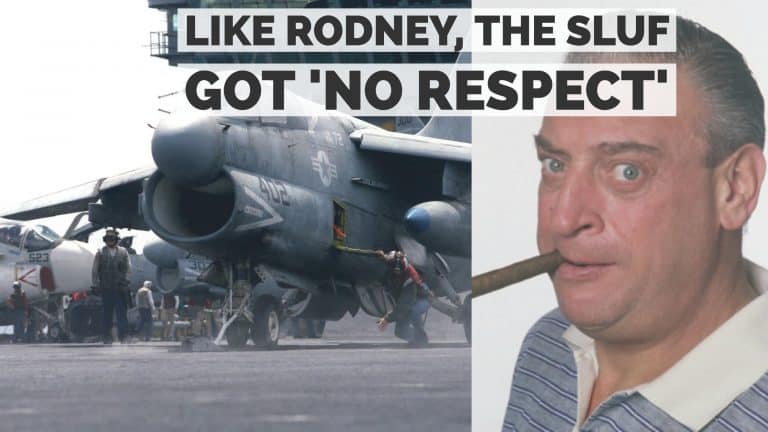
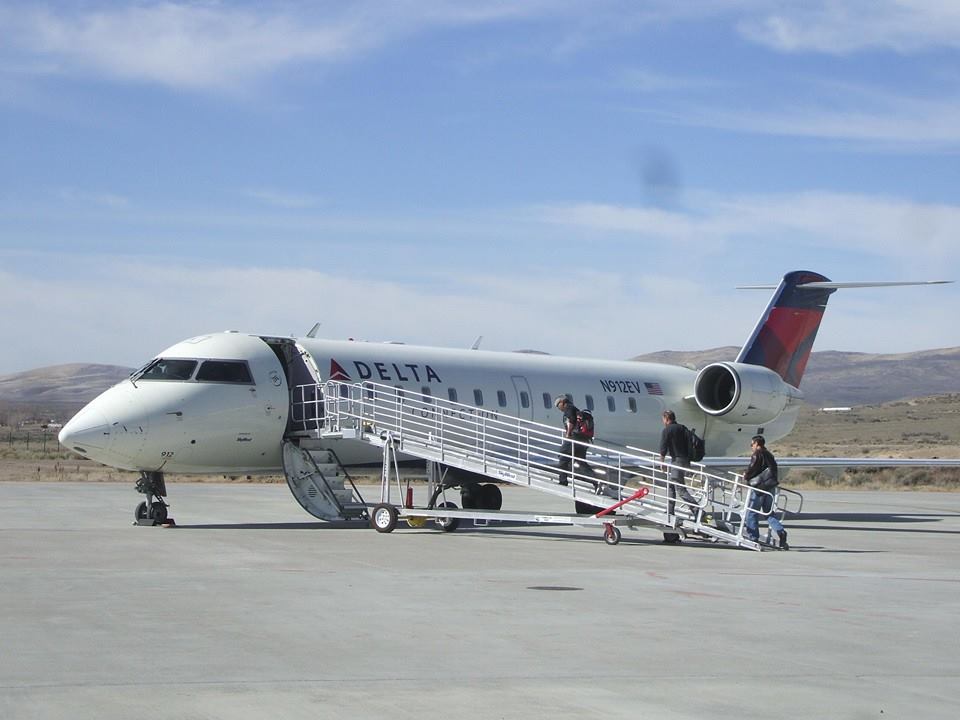
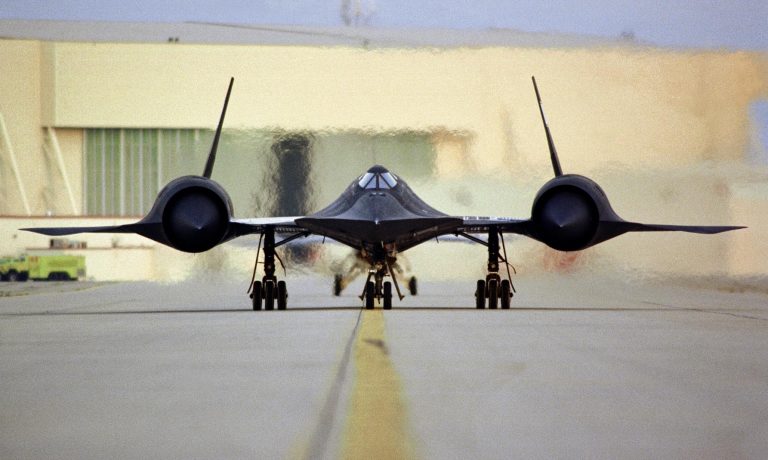
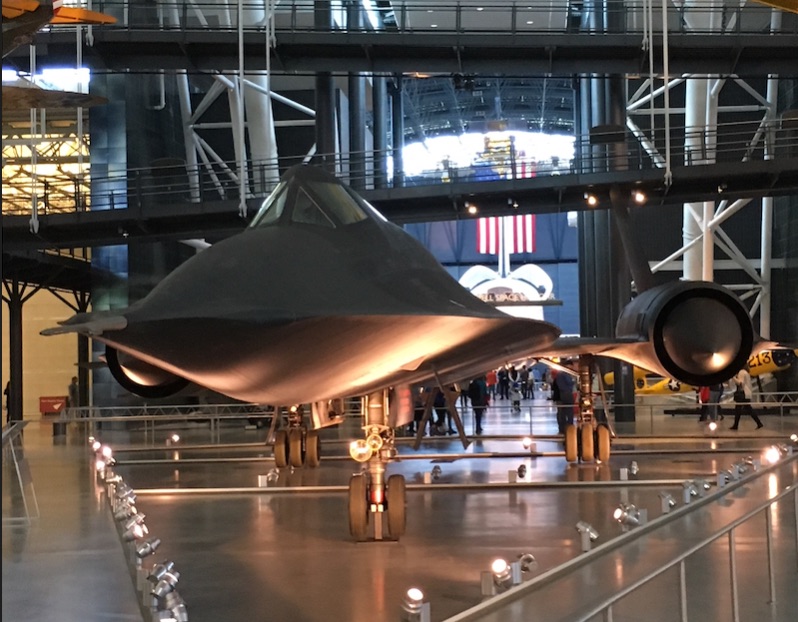
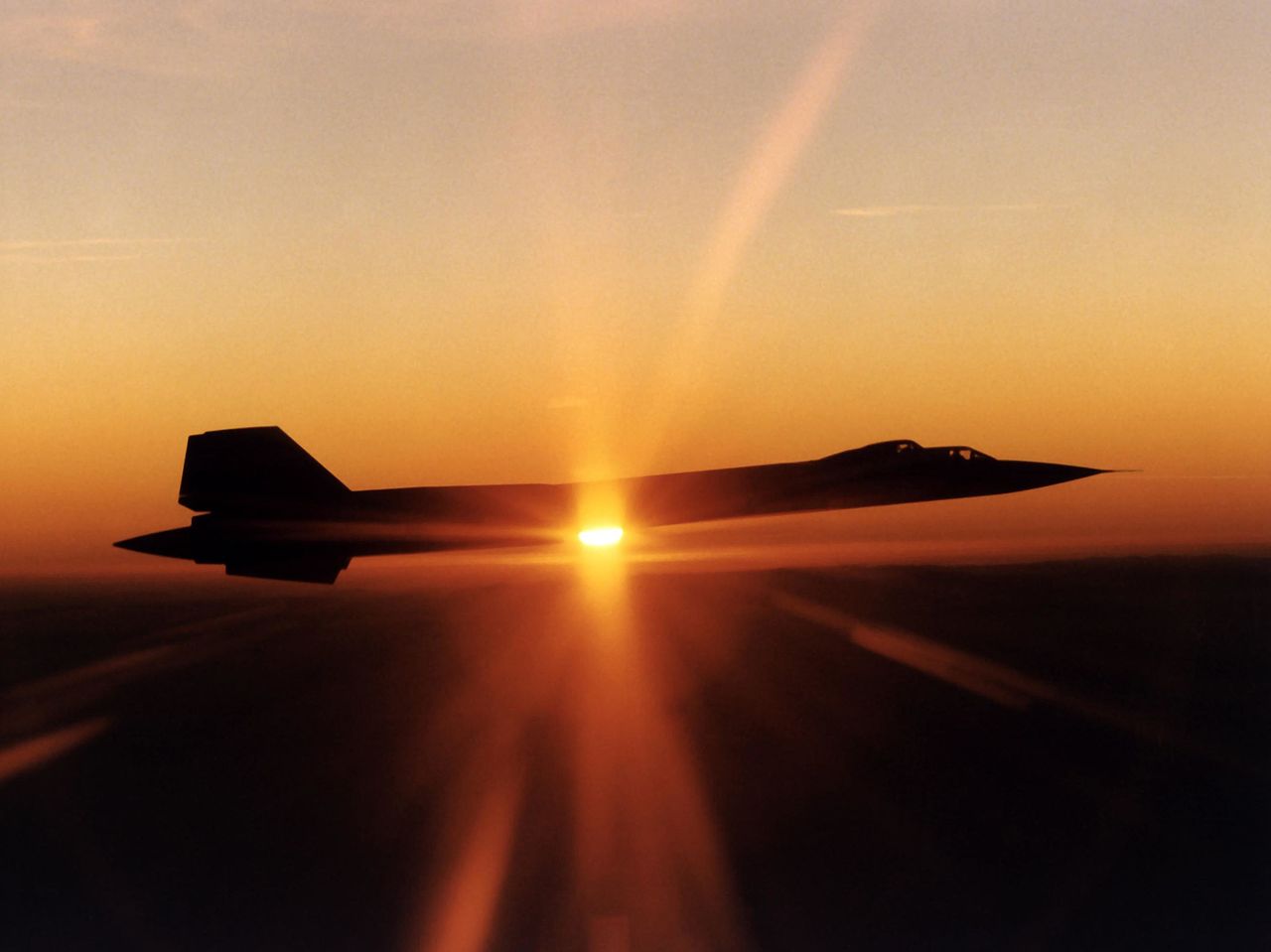
The 1975 Ling-Temco-Vought (LTV)-produced promotional film “The A-7 Attack Fighter” features both the Navy’s A-7E and the Air Force’s A-7D Corsair II tactical jets.
Produced in five basic models and several more mission-specific variants, 1,569 Corsair IIs were built by LTV at its plant in Dallas, Texas. The first flight of the prototype YA-7A took place on 27 September 1965.
The SLUF incorporated the basic high-wing design layout of the company’s F-8 but lacked the variable incidence wing in a shorter and stouter fuselage.
It was powered by the same Pratt & Whitney TF-30 turbofan engine as the General Dynamics F-111 Aardvark and the Grumman F-14 Tomcat, albeit without the afterburner. The A-7 was equipped with advanced weapons delivery avionics and was the first jet to incorporate the now-standard head-up display (HUD).
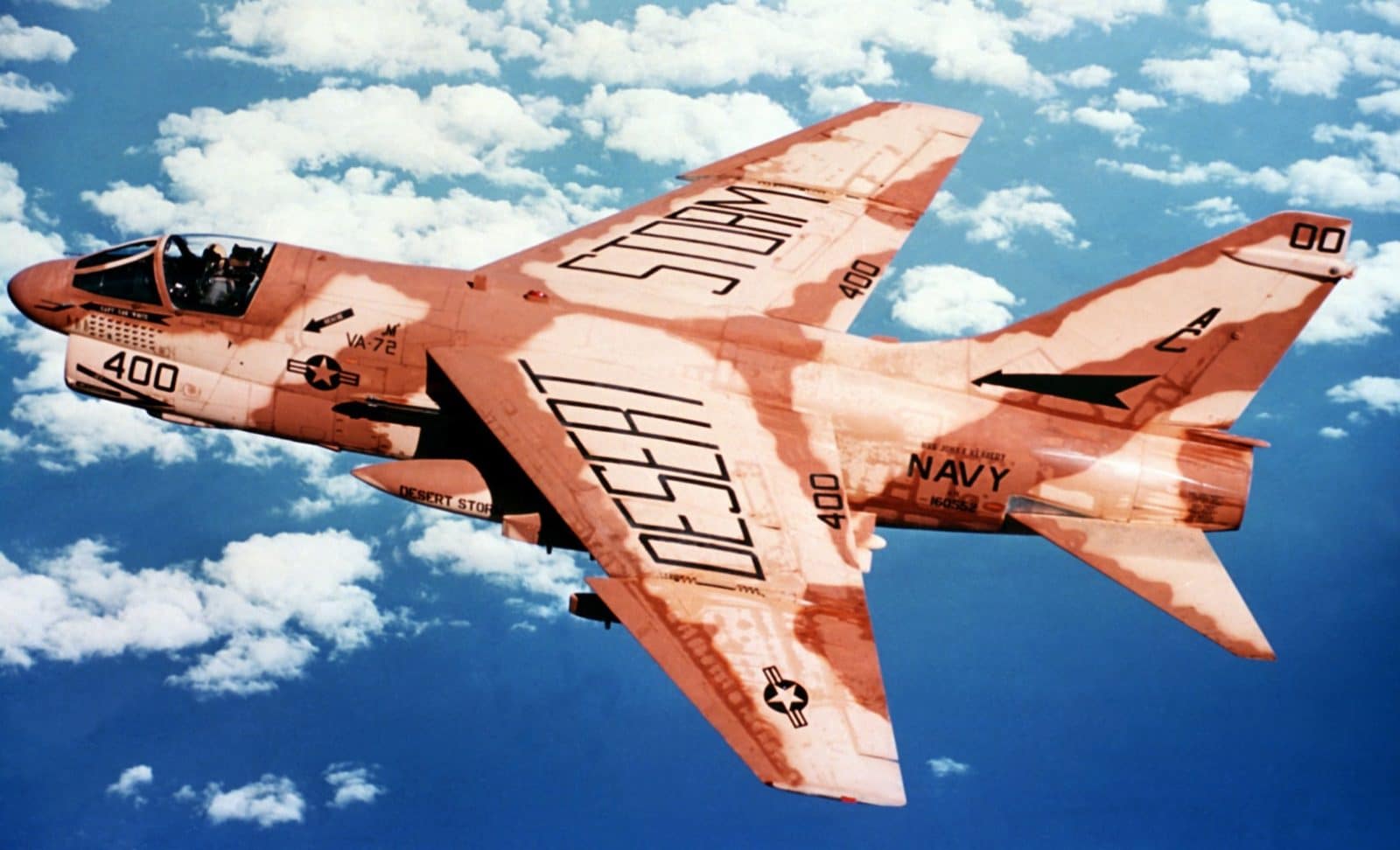
VA-72 A-7E in 1991. Image via US Navy
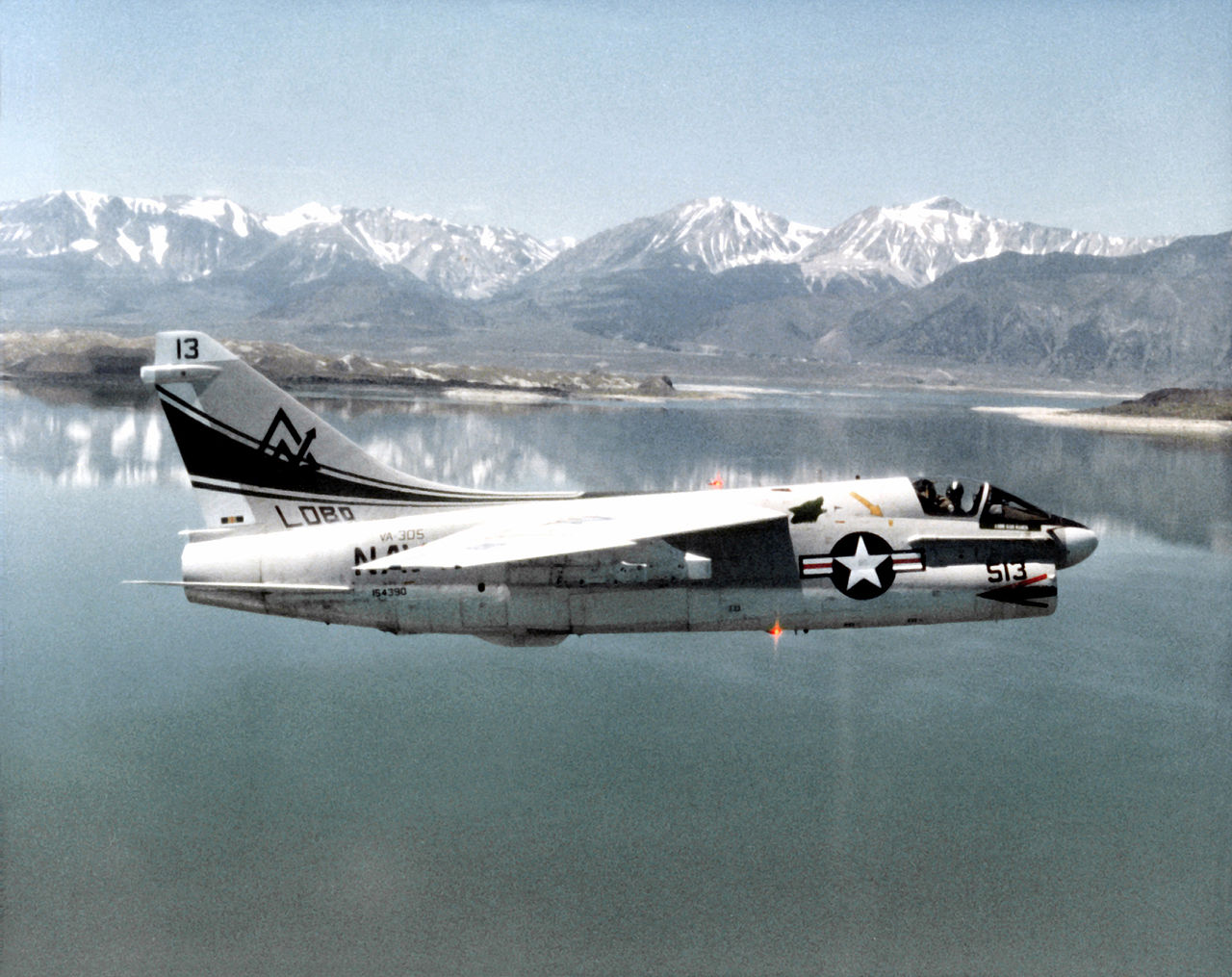
Navy initial operational capability was achieved in early 1967, and A-7As began flying missions from Tonkin Gulf Yacht Club carriers later that same year. The Navy lost a total of 98 Corsair IIs (all models / all causes) in Vietnam.
Navy SLUFs participated in every American military operation after Vietnam through Desert Storm. Navy A-7Es retired after Desert Storm in 1991, replaced in most cases by McDonnell Douglas (Boeing) F/A-18 Hornets.
Some mission-dedicated A-7 variants (EA-7Ls) remained in Navy use through 1998.
Official US Navy Photograph
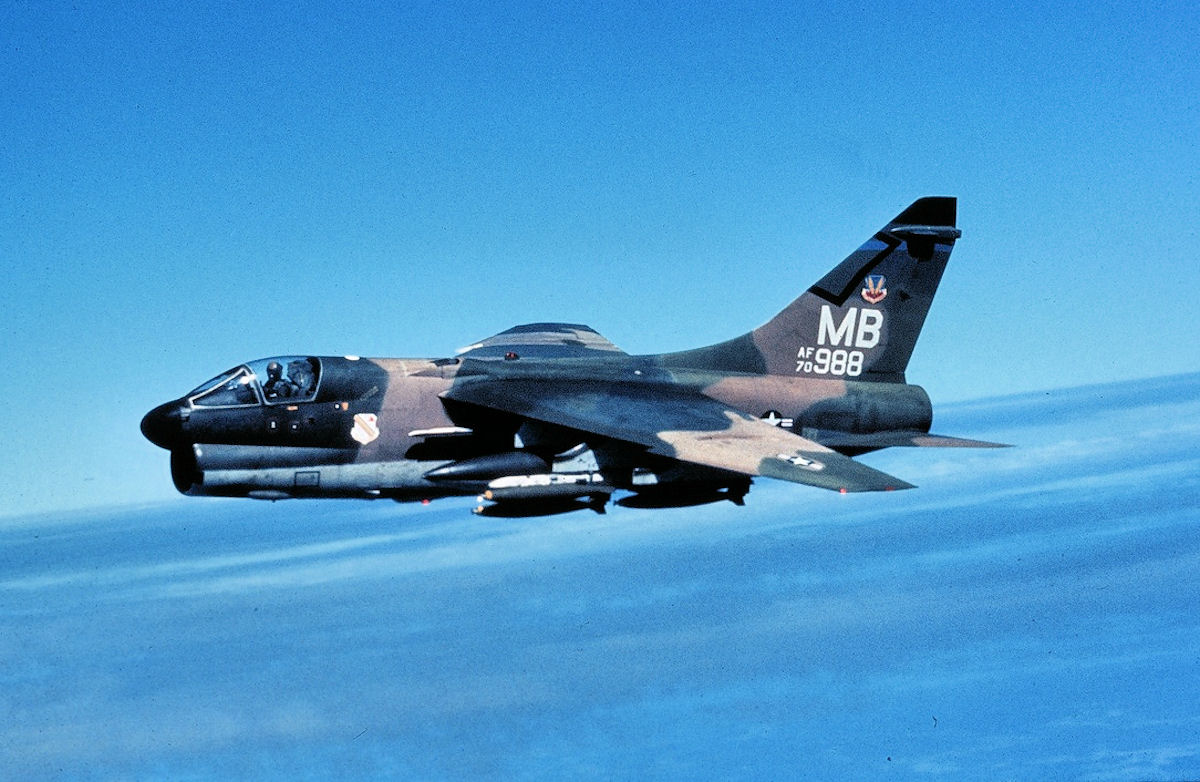
The US Air Force operated A-7Ds and later two-seated A-7Ks, both powered by Allison TF41-A-1 turbofan engines, from 1970 until 1993. In Vietnam, Air Force A-7Ds flew 12,930 sorties with only six losses, continuing to fly missions through the very end of American involvement in Southeast Asia.
Air National Guard (ANG) units based at Des Moines ANG Base in Iowa, Tulsa ANGB in Oklahoma, and Springfield and Rickenbacker ANGBs in Ohio were the last operators of Air Force SLUFs, which were later replaced in many cases by A-10 Warthogs.
A-7s were operated by Greece, Portugal, Thailand, the US Navy, and the US Air Force. Greece retired the last of its long-serving A-7H models in 2014, ending 49 years of Corsair II service. Thanks to YouTuber Mat Garretson for uploading the film.
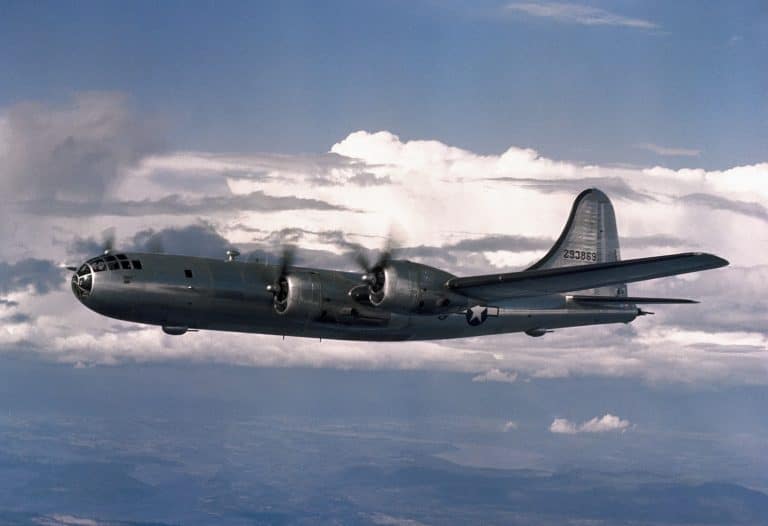
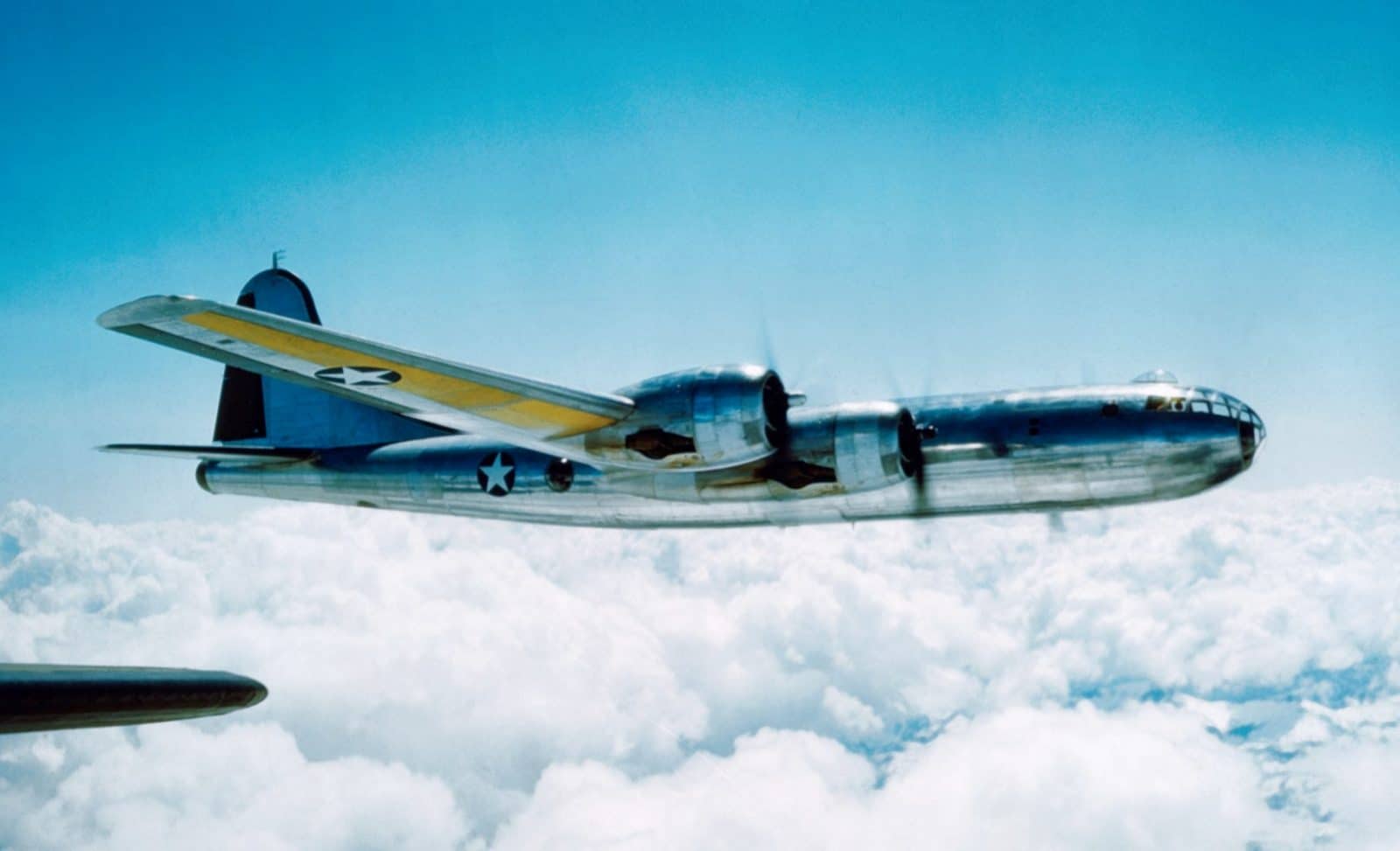
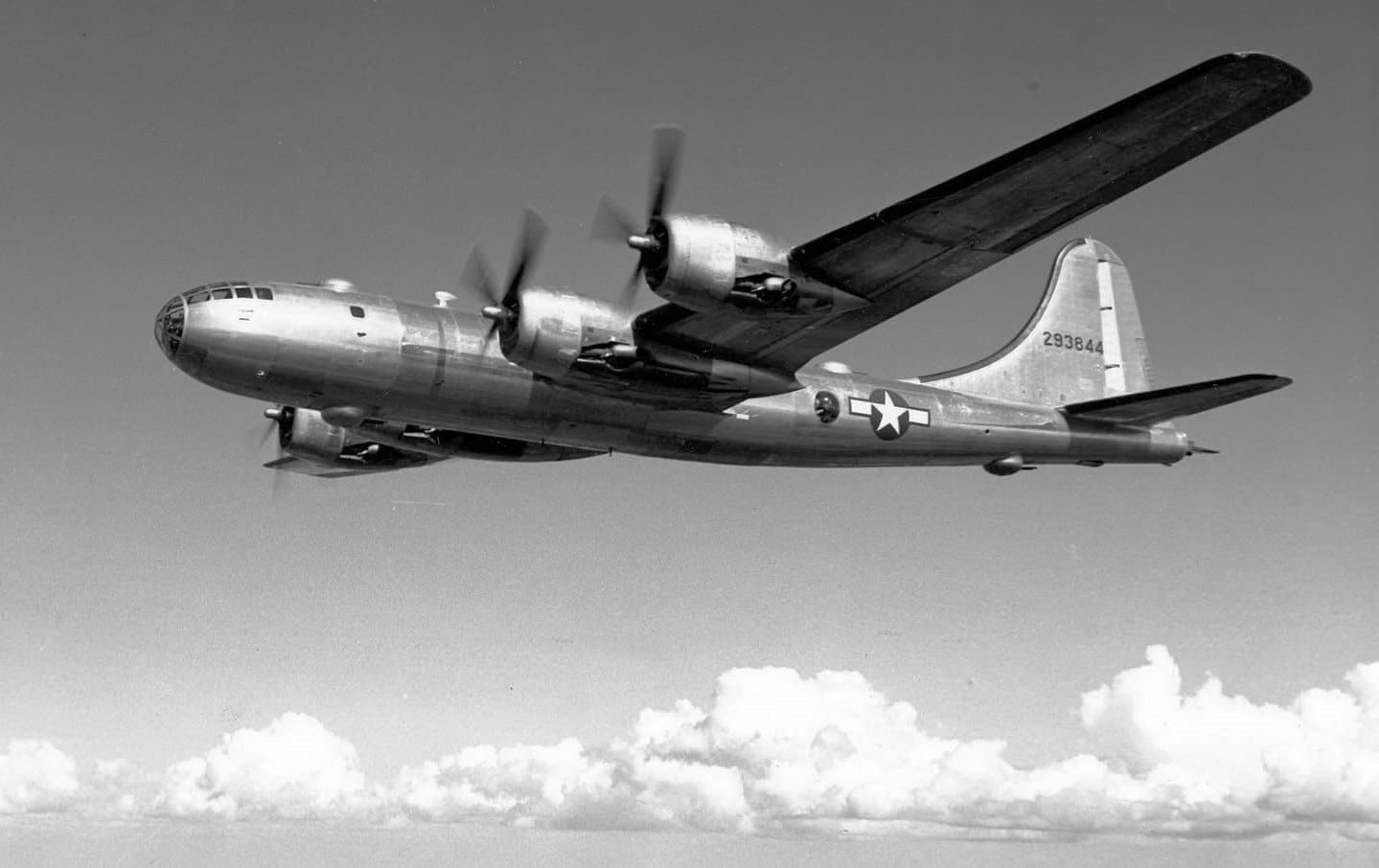
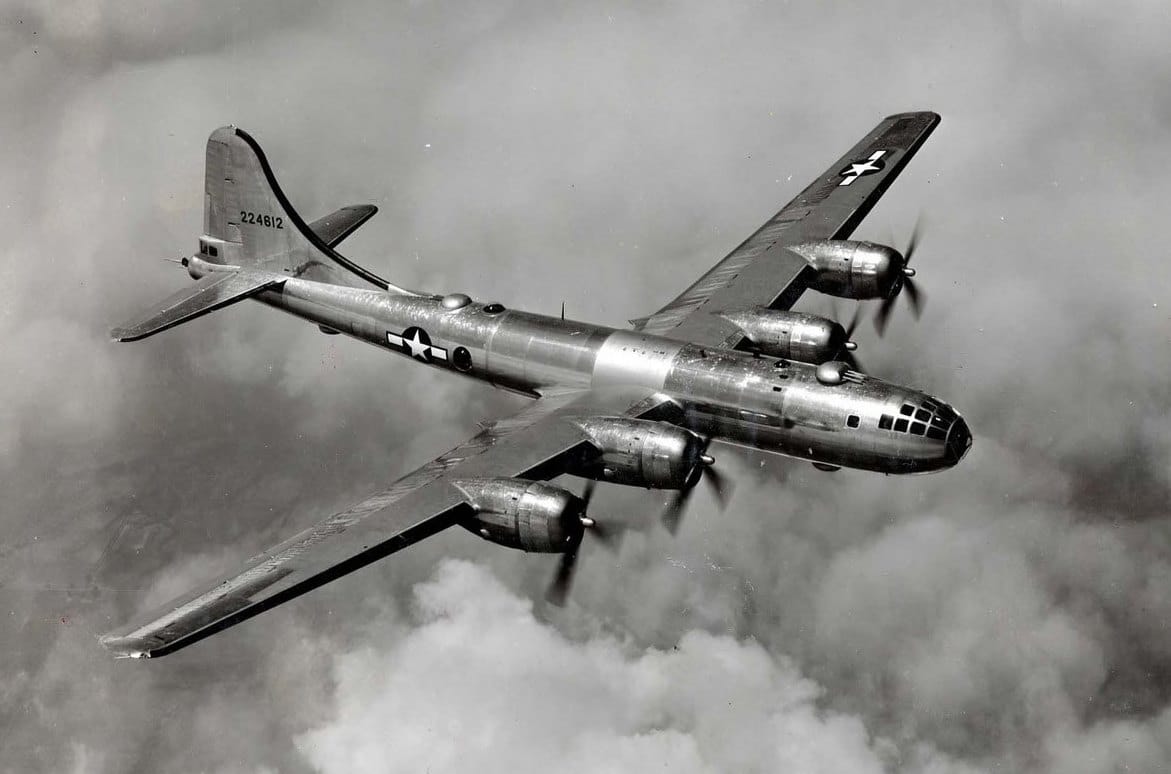
Many B-29 airframes were modified to create long-range, high-altitude photo reconnaissance aircraft. Designated first as F-13 and later as RB-29, these recon Superfort variants flew reconnaissance, research, and test missions all over the world during the 1940s and 1950s. This story is about one of them.
Early B-29 via US Air Force
A Post-War Beginning
B-29-100-BW Superfortress Air Force serial number 45-21847 entered service with the United States Army Air Force (USAAF) on 13 September 1945. Not long thereafter, the bomber was modified to F-13 specifications at the Oklahoma City Air Depot at Tinker Army Air Field (AAF).
45-21847 served the remainder of 1945 based out of Chino AAF and then Victorville AAF. From there, 45-21847 went to Warner Robins Air Depot at Robins AAF in Georgia to be modified for cold weather operations and was redesignated B-29F during April of 1946.
B-29 via US Air Force
Becoming the RB-29
By June 1946, the aircraft was assigned to Fairchild AAF in Washington. In April 1947, the aircraft was assigned to Muroc Flight Test Base (later Edwards Air Force Base [AFB]) in California. From there, the Superfort went to the Sacramento Air Depot at McClellan AAF in California to undergo modification to RB-29 standards. Once the mods were complete, which included the stripping of all her guns, 45-21847 was sent to the Naval Ordnance Test Station (NOTS) at Naval Air Weapons Station (NAWS) Inyokern (now China Lake).
B-29 via US Air Force
Fateful Flight
At Inyokern, the RB-29 was fitted with an experimental sensor system called Sun Tracker. The device was intended for intercontinental ballistic missile (ICBM) guidance using navigation by the sun. The RB-29 was also used for upper air research in conjunction with rocket flights being fired from White Sands Missile Range in New Mexico.
The Sun Tracker mission profile required a climb to 35,000 feet or so, and then a steep dive down to low altitude–in this case, as low above the surface of Lake Mead on the Arizona/Nevada border as possible. On 21 July 1948, pilot Captain Robert M. Madison and his crew of four were flying a Sun Tracker mission when the aircraft went too low and hit the lake’s surface going 250 miles per hour. Then the RB-29 did its best imitation of a skipping stone until coming to rest and taking on water. Fast.
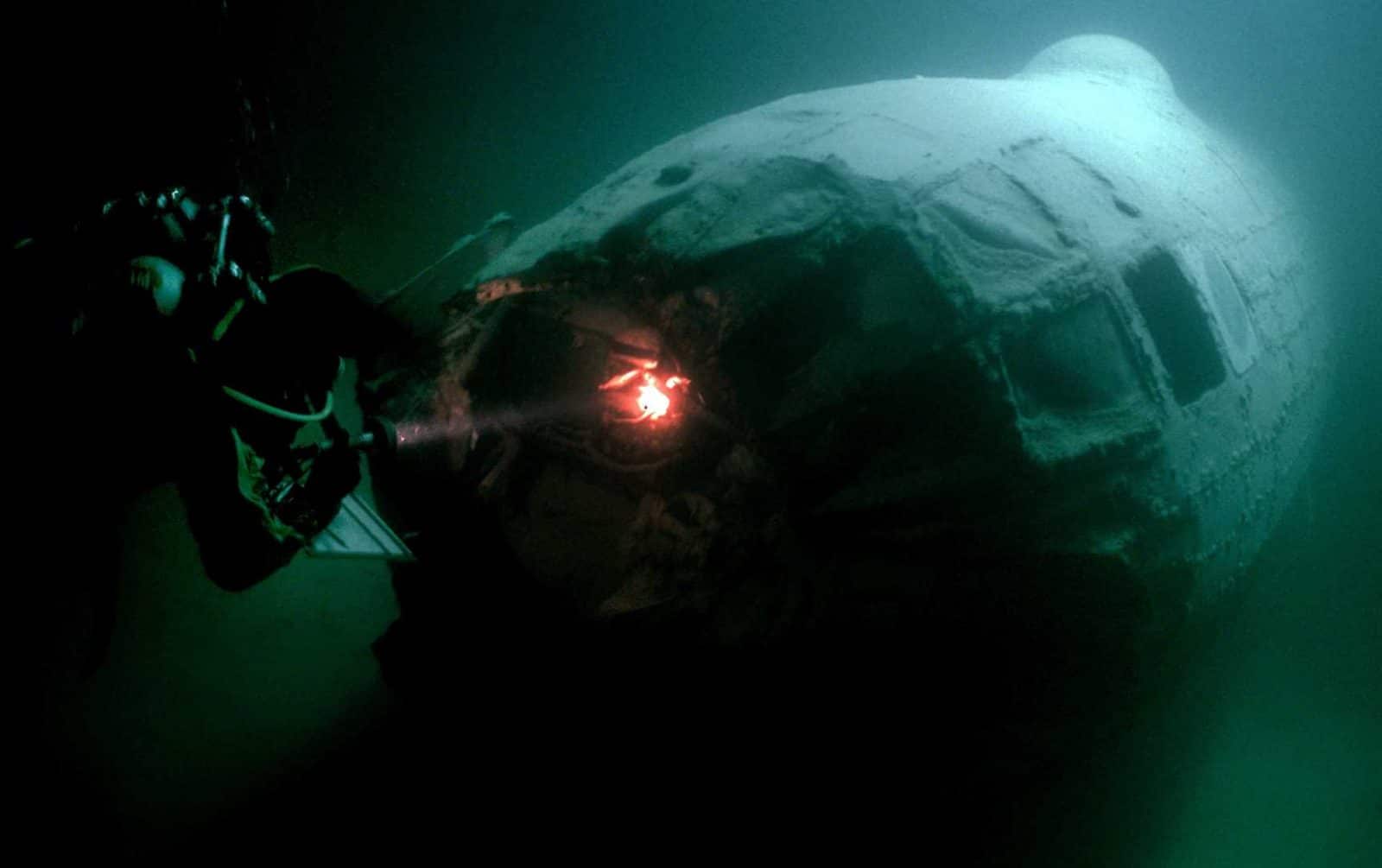
By Lake Mead NRA Public Affairs (B-29 Superfortress Submerged in Lake Mead) [CC BY-SA 2.0 (https://creativecommons.org/licenses/by-sa/2.0)], via Wikimedia Commons
Secret Mission = Secret Results
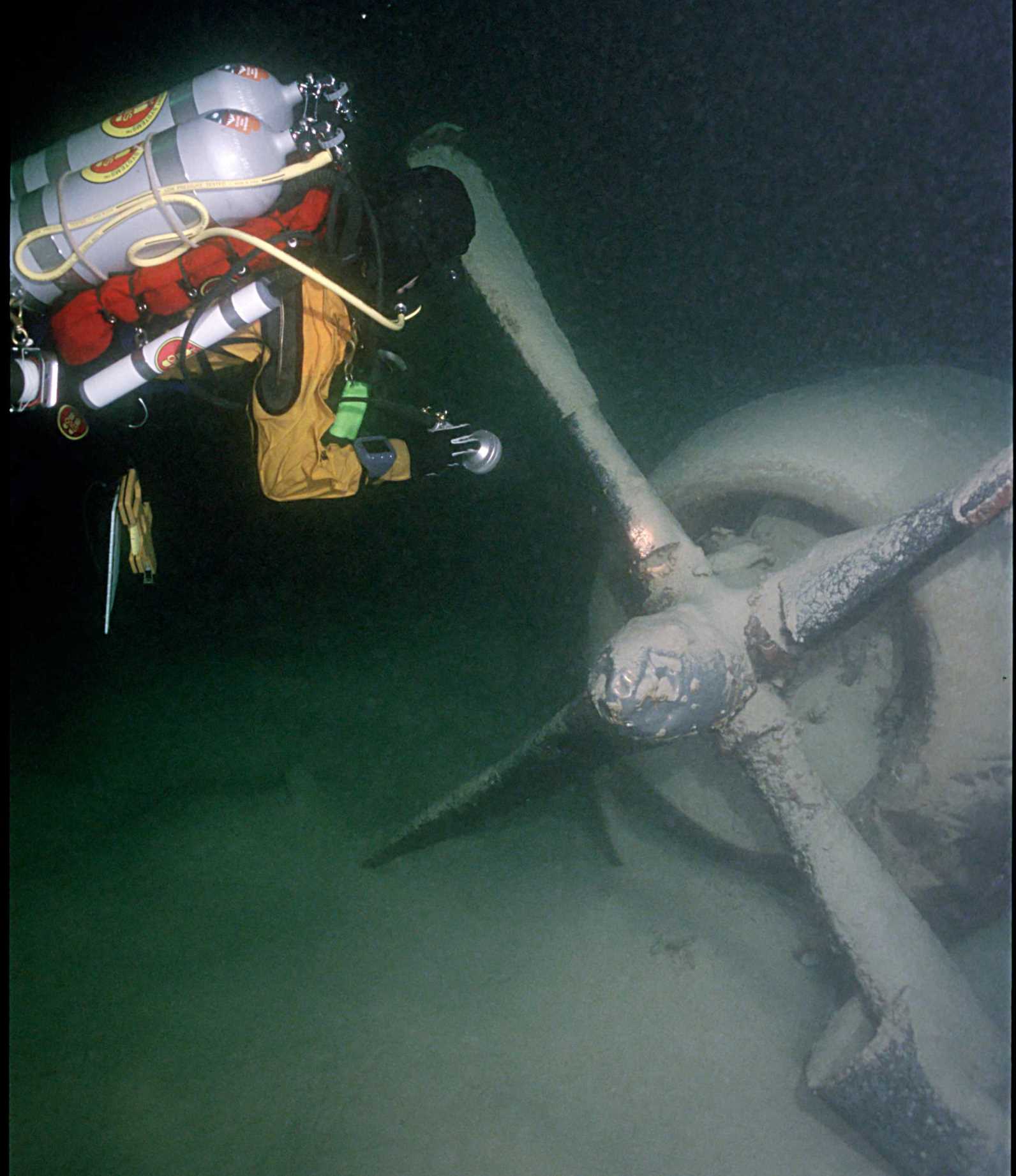
The impact with the surface of the lake had torn three of the four Wright R-3350-23 Duplex-Cyclone turbo-supercharged radial engines from the Superfort’s wings, leaving only engine #1. When the aircraft finally came to a stop, the crew was able to take to life rafts before the RB-29 sank beneath the surface of Lake Mead. The crew was rescued from the lake after six hours in their rafts.
They were admonished about disclosing any details regarding the flight, their mission, or the aircraft’s loss. Thanks to the classification of the Sun Tracker program, details were not made available until 50 years after 45-21847 sank.
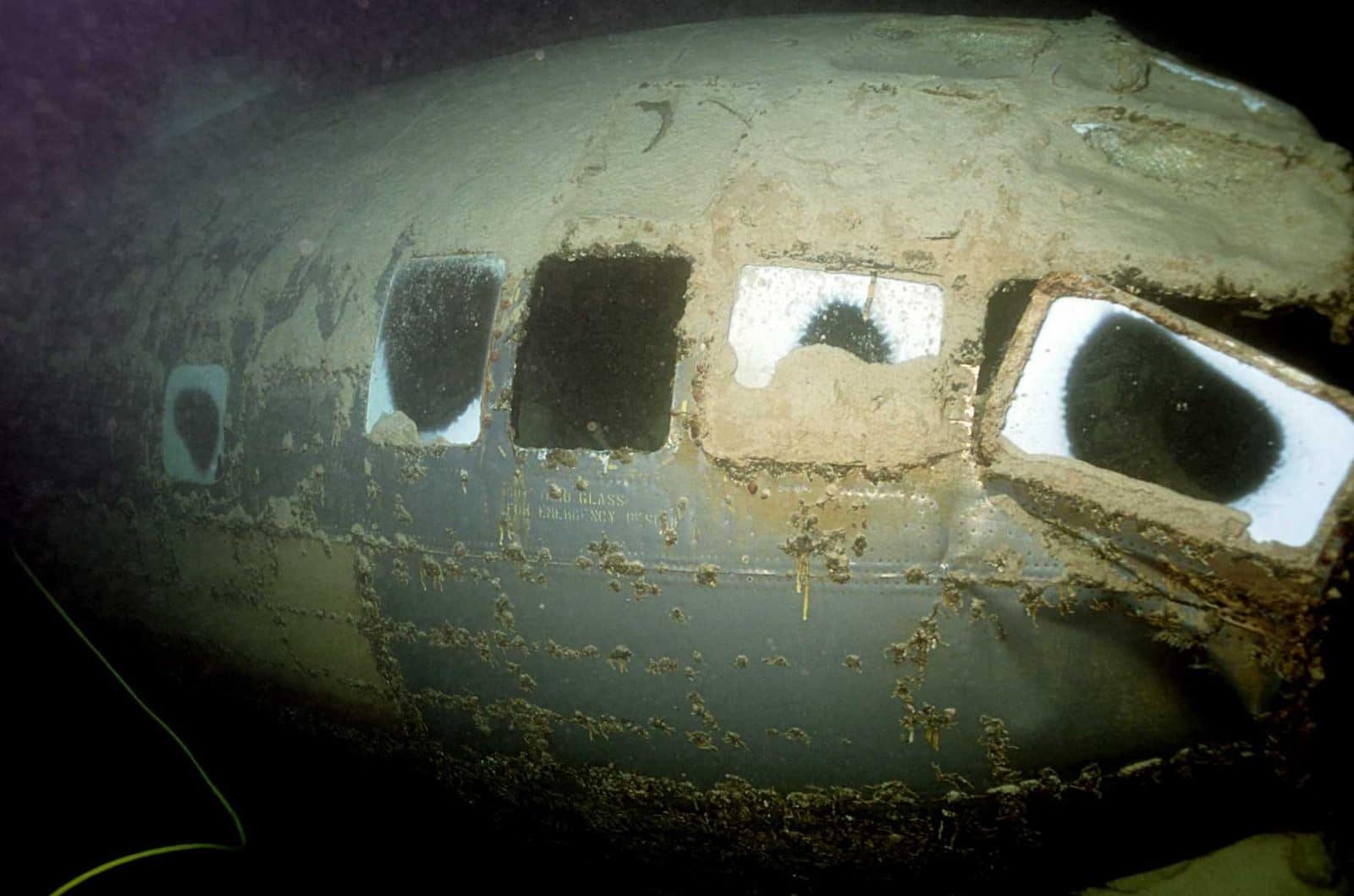
By Lake Mead NRA Public Affairs (B-29 Superfortress Submerged in Lake Mead) [CC BY-SA 2.0 (https://creativecommons.org/licenses/by-sa/2.0)], via Wikimedia Commons
Lost…and Found
A private dive team using side-scan sonar found the RB-29 wreck in the Overton Arm of Lake Mead in 2001. The wreck’s location dictates that the National Park Service (NPS) has custody of it. The Lady, as the Superfort is now called, is listed on the National Register of Historic Places.
Dives on the RB-29 wreck have been an on-again-off-again affair since it was discovered, thanks in part to variations in lake water depths due to drought in the region. The NPS is (quite justifiably) concerned about conserving the wreck, so dive ops to the site have been limited. But what 45-21847 did and how she got there is a much better story than the back-and-forth about diving the wreck.
By Lake Mead NRA Public Affairs (B-29 Superfortress Submerged in Lake Mead) [CC BY-SA 2.0 (https://creativecommons.org/licenses/by-sa/2.0)], via Wikimedia Commons
Bonus Video
Here’s a nice HD video produced by Lake Mead NRA Public Affairs about The Lady. It was uploaded to YouTube by Lake Mead. Enjoy.
The Pilot Figured the RAF Wasn’t Doing Enough to Celebrate Their 50th Anniversary
With the 100th anniversary of the Royal Air Force (RAF) being celebrated all over the UK, this look at a 50th anniversary “celebration” seems in order. In early April of 1968, RAF Flight Lieutenant Alan Pollock was frustrated with the state of the RAF. The British aircraft industry had become a shell of its former self. Gone were the days of innovative designs equipping a powerful air British arm and the research and development to deliver more of them. The British government refused to sponsor any public celebrations of the RAF’s 50th anniversary. Even a fancy dinner at the Lancaster House with the Queen was cancelled. This interview with Pollock was uploaded to YouTube by ITV News
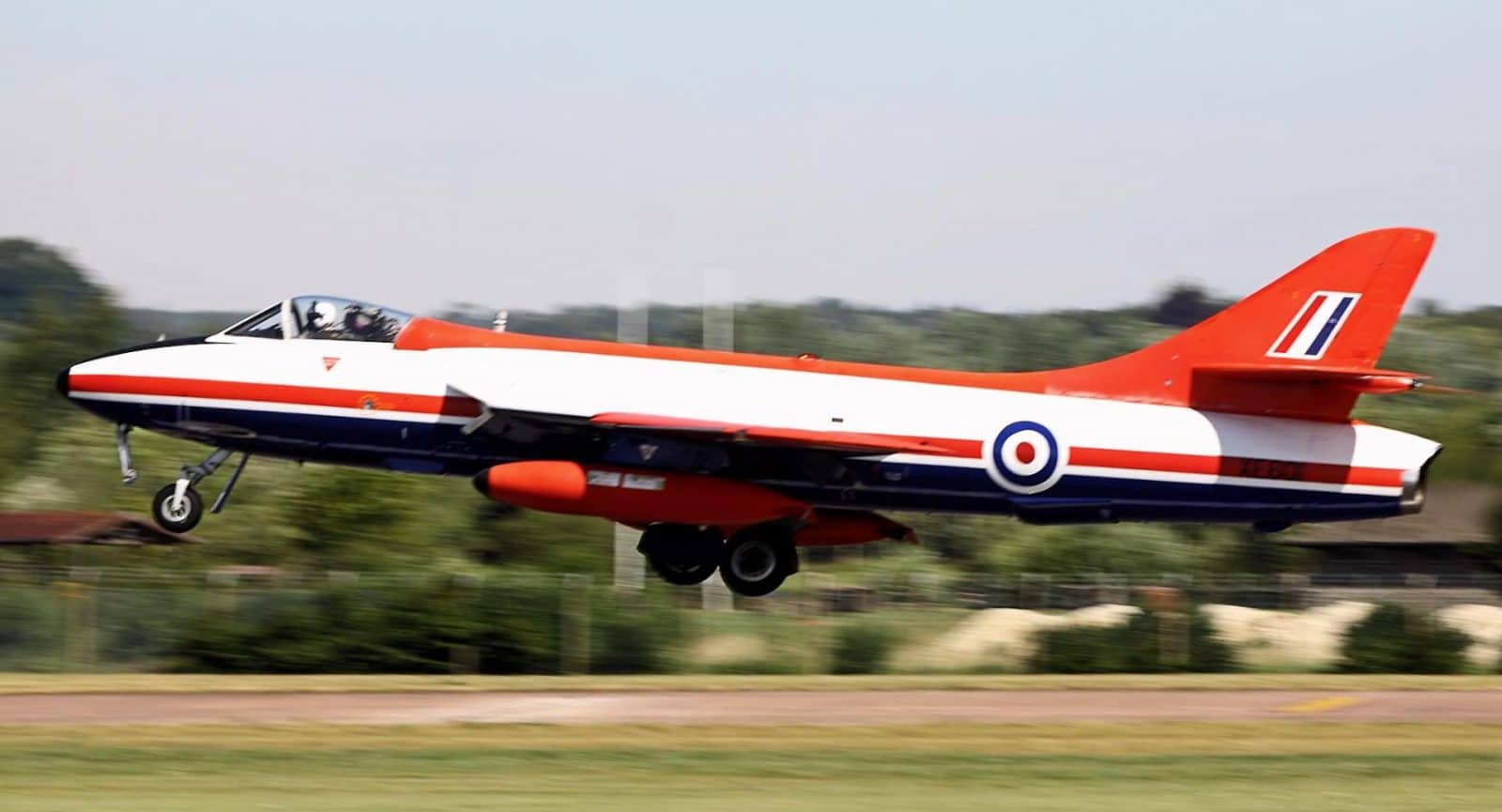
On April 5th Pollock was flying with Number 1 (Fighter) Squadron, Number 38 Group out of RAF West Raynham in Norfolk. He was assigned to fly Hawker Hunter FGA.9 XF442 as one in a flight of four Hawker Hunter jets tasked with several military (not open to the public) flying displays as part of an RAF 50th anniversary celebration. Earlier in the month Pollock had taken part in 50th anniversary leaflet raids on other RAF stations. On April 4th Pollock performed an anniversary display at RAF Tangmere in West Sussex. But there were still no displays planned for the “commoners.”
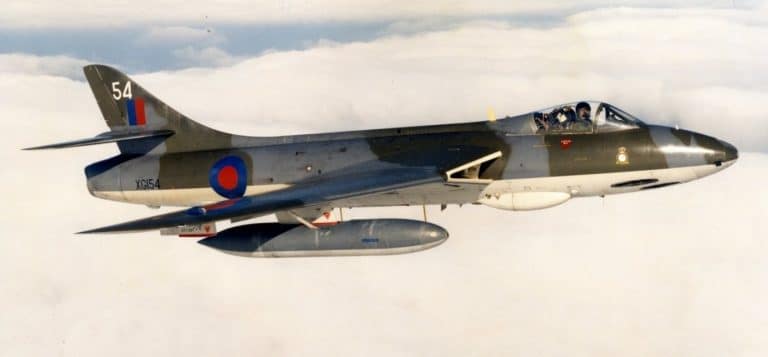
Hunter FGA.9 by Tim Felce (Airwolfhound) (Hunter – RIAT 2010) [CC BY-SA 2.0 (https://creativecommons.org/licenses/by-sa/2.0)], via Wikimedia Commons
The Perfect Mix of Frustration and Abandon
Pollock’s return flight path to West Raynham took him close to London. Perhaps it was the meds he was taking for a case of pneumonia. Perhaps it was overall low morale and disdain for the lackluster anniversary events. The fact that historic RAF Tangmere was going to be closed down wasn’t helping his mindset. The fact that no flying displays had been planned for the public was almost certainly a factor. That cancelled dinner with the Queen maybe? But whatever the cause, the effect was sensational. Pollock and his squadron mates took off from RAF Tangmere and set course for RAF West Raynham, but soon after takeoff they were no longer a flight of four.
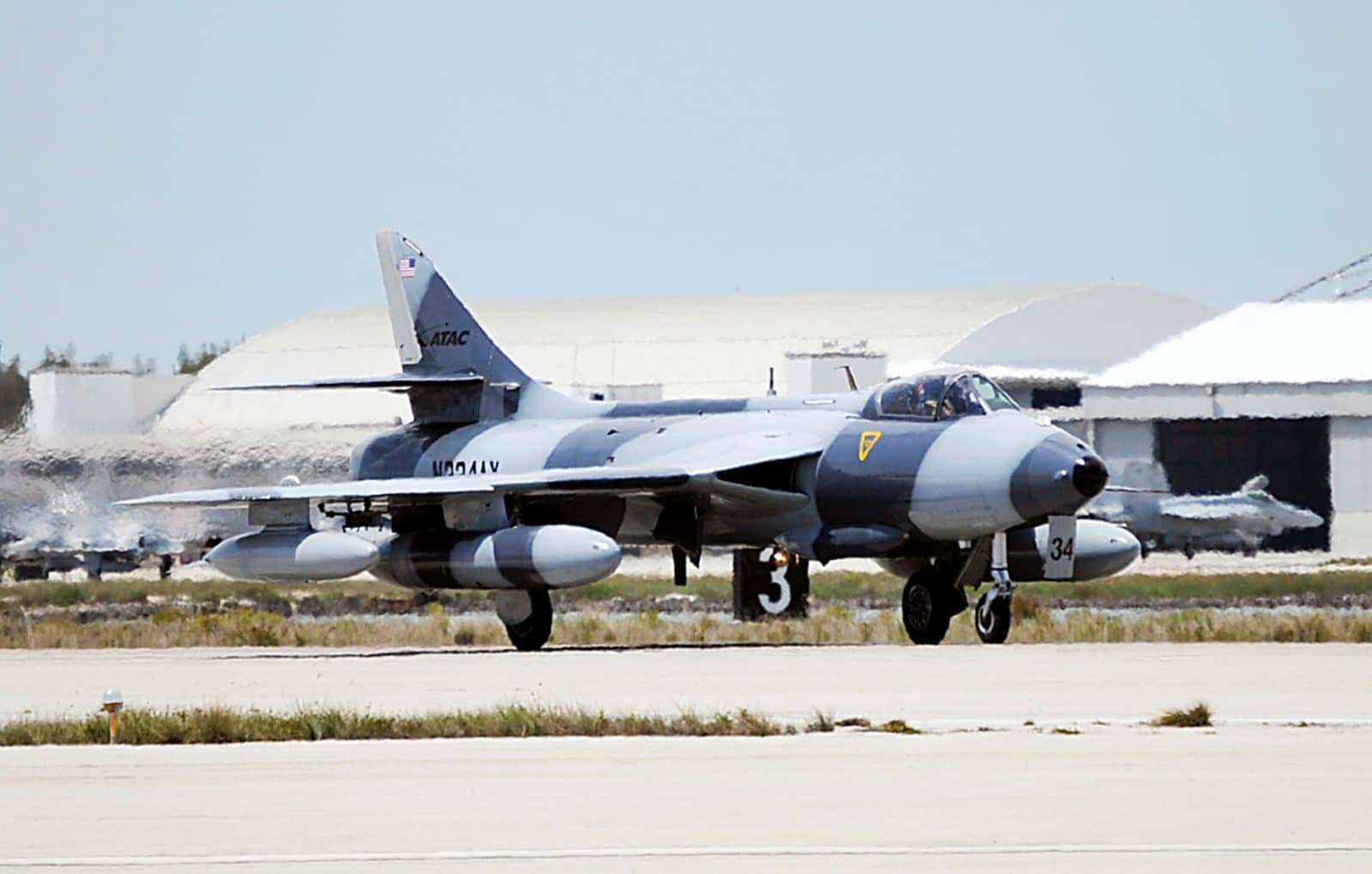
Hunter flying as adversary with ATAC via US Navy
Low and Fast All Over Town…and Then!
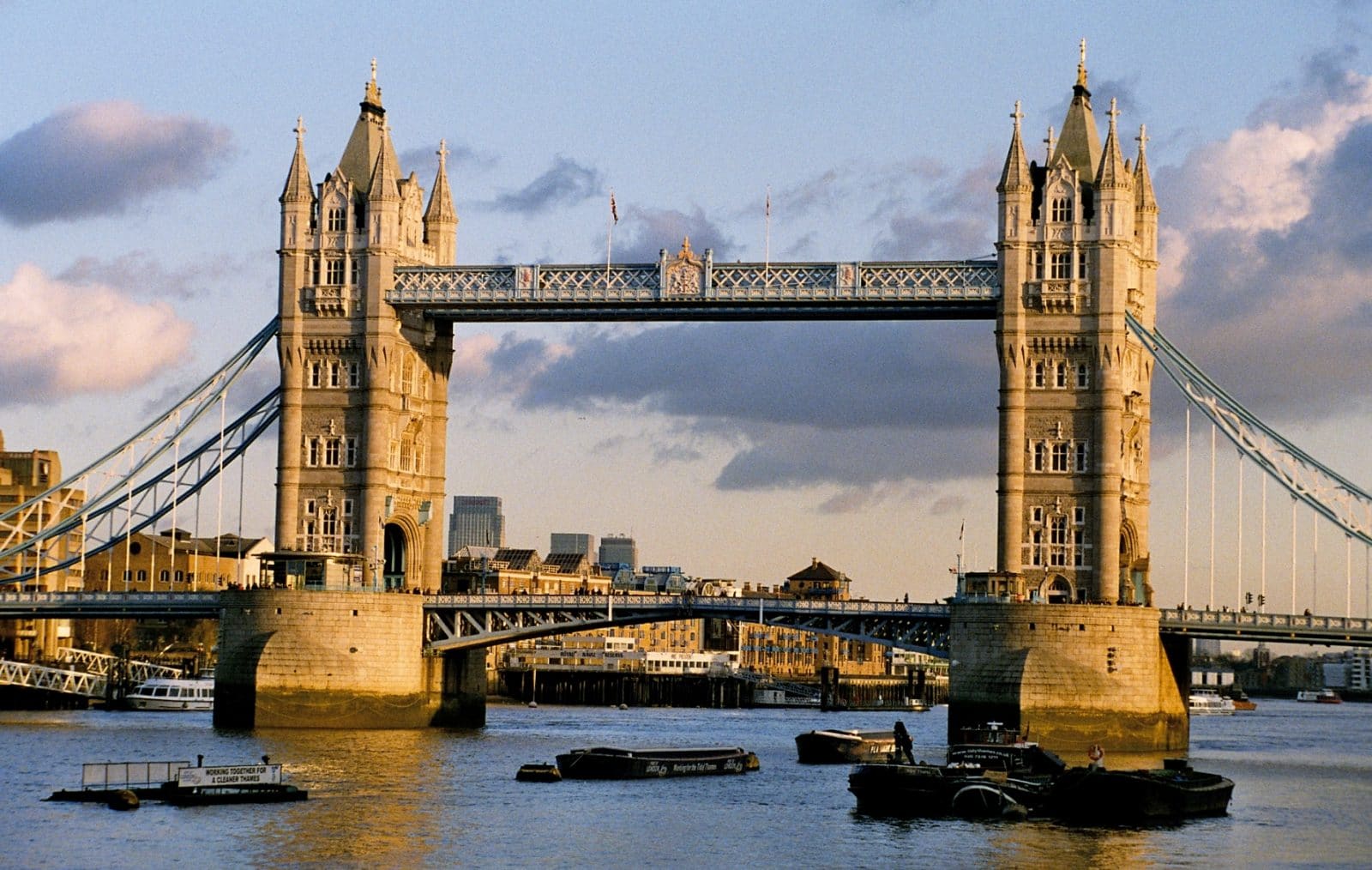
Pollock first made low and fast passes over RAF Dunsfold and then made his way to London. Pollock made low and fast passes over several parts of London, including three passes over the Houses of Parliament. He then dipped his wings in salute over the Royal Air Force Memorial. Suddenly he found himself facing the famous Tower Bridge. Unable to resist the temptation to fly between the upper and lower spans of the old bridge, he rang up more than 350 knots and did just that- while avoiding one of the ubiquitous double-decker London buses. Pollock said his years of low-level attack training made the decision to fly through the bridge simple. He became the only pilot to fly a jet through the bridge.
Tower Bridge in London via public domain
Because He Was…Inverted
On his way back to West Raynham, Pollock proceeded to fly over RAF Wattisham, RAF Lakenheath, and RAF Marham. At 400 knots. At 200 feet. Inverted. When Pollock landed back at RAF West Raynham he was promptly arrested by Flying Officer Roger Gilpin and grounded. Number 1 (Fighter) Squadron, RAF, was soon deployed to North Africa without Pollock. The RAF considered court martialing Pollock, but no charges were filed against him by the London police and his actions were not exactly universally frowned upon. Many in the RAF actually supported Pollock’s sentiment if not his expression thereof. The RAF ended up discharging the 32 year old father of four on medical grounds instead. Pollock cleared his name in 1982, having already become a successful businessman in the UK.
We’ve all seen the images on The Weather Channel. When a hurricane is barreling toward the United States, harrowing (yet amazing) images from Hurricane Hunter aircraft inside the eye beam into our living rooms via our television screens.
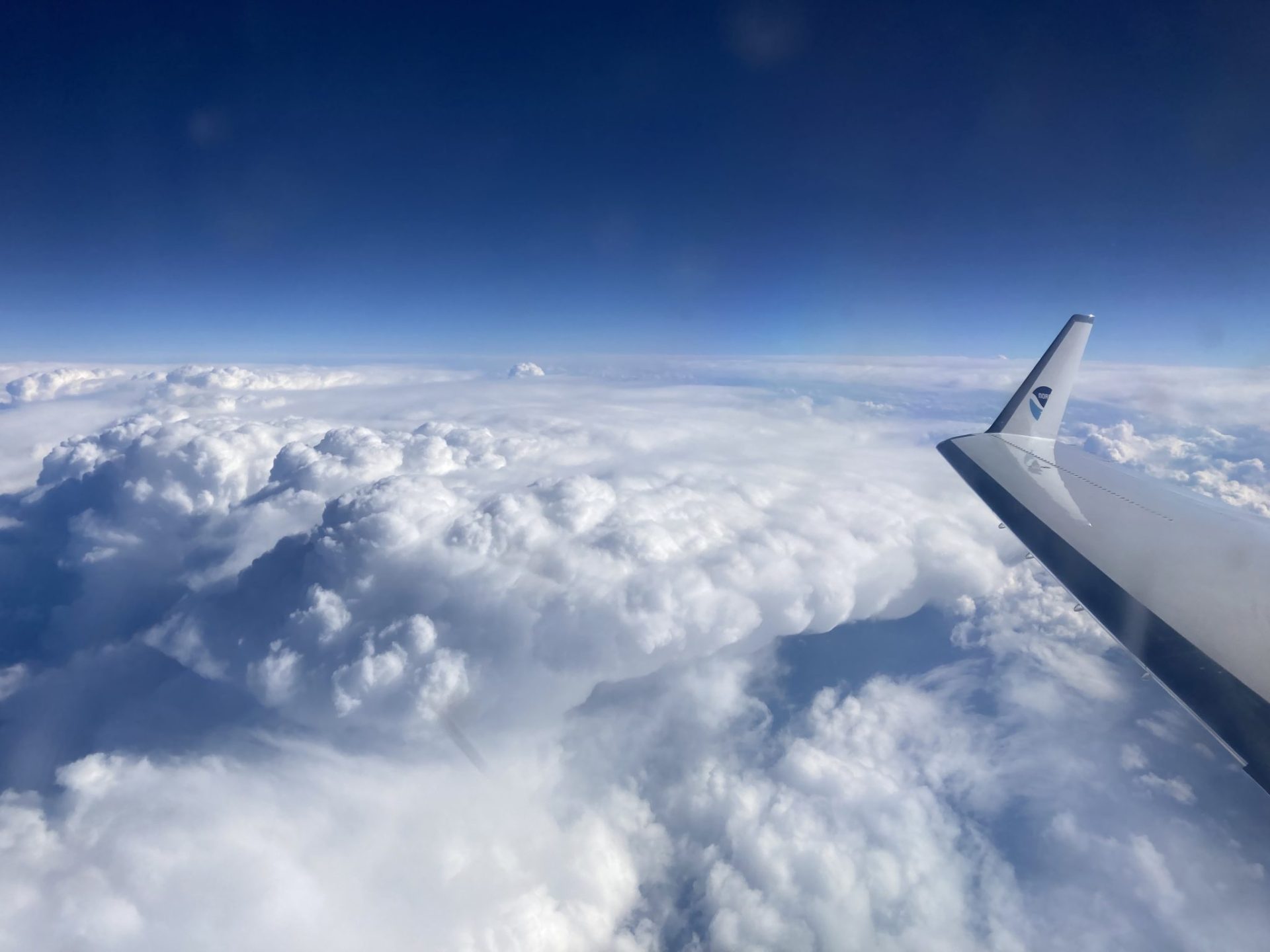
While Hurricane Hunter aircraft have been around for decades, the National Oceanic and Atmospheric Administration (NOAA) thinks it’s time for another upgrade.
A second high-altitude jet will be joining NOAA’s Hurricane Hunter fleet, the agency announced this week.
— NOAA Aircraft Operations Center (@NOAA_HurrHunter) July 16, 2024
NOAA’s G550s Will Replace the Older Gulfstream IV-SP
A NOAA Gulfstream IV-SP takes off from Lakeland Linder International Airport (LAL) | IMAGE: NOAA
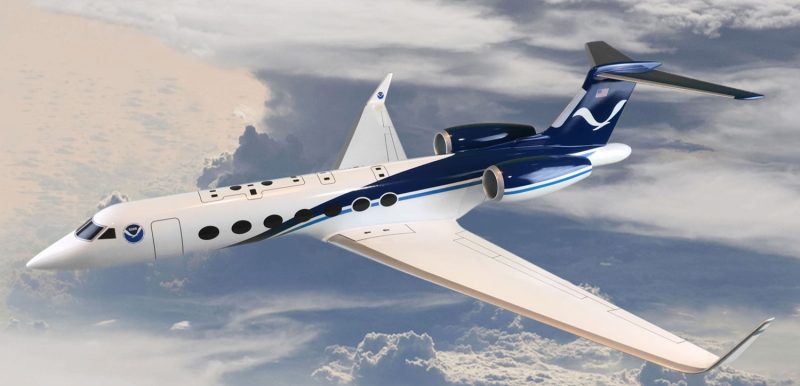
NOAA’s new fleet addition is a heavily modified Gulfstream G550, which was awarded the contract to Savannah, Ga.-based Gulfstream Aerospace Corporation. The bipartisan Inflation Reduction Act, signed into law by President Biden in 2022, largely funded the $106 million deal.
NOAA says the new G550 will join the fleet in 2028.
NOAA’s first G550, ordered in 2019, will be delivered early next year, just in time for the 2025 hurricane season. This aircraft will replace the agency’s aging Gulfstream IV-SP, which has been an integral part of the Hurricane Hunter fleet since 1996. The addition of the second G550 will significantly bolster NOAA’s capabilities in hurricane and tropical storm forecasting, atmospheric research, and other critical missions.
Gulfstream Aerospace president Mark Burns says his company has been providing aircraft to the U.S. Government for more than 50 years.
“We are proud to continue the partnership with NOAA’s G550,” Burns said in 2019. “Our aircraft platforms provide government and military customers with the flexibility, range, and altitude capabilities perfect for demanding missions.”
Flying High Above the Storm
NOAA Gulfstream IV-SP flying high above an atmospheric River system | IMAGE: NOAA
The G550s are not ordinary corporate jets; they are specially modified with advanced systems designed to enhance the accuracy of weather forecasts. A significant feature of these aircraft is the tail-mounted Doppler radar system, which is crucial in collecting high-resolution data. This system, combined with other onboard instruments, allows the G550 to provide data essential for improving the accuracy of tropical storm and hurricane forecasting.
The Gulfstream G550 boasts impressive specifications, including a range of over 4,000 nautical miles and a maximum altitude of 51,000 feet. With a maximum mission length of approximately 14.5 hours when fully fueled, the G550 can undertake extensive research missions, flying high above weather systems to gather vital data.
The G550s will Complement Low-Altitude Missions
A Gulfstream G550 Hurricane Hunter on the assembly line at the Gulfstream facility in Savannah, Ga. | IMAGE: NOAA
While the G550s will operate at high altitudes, providing a top-down view of weather systems, NOAA’s two quad-engine Lockheed WP-3D Orion turboprop aircraft will continue their low-altitude missions. The WP-3D Orions fly directly into storms, collecting data from within the turbulent environments of hurricanes and tropical storms.
This complementary approach ensures a comprehensive collection of data from the upper reaches of the atmosphere, through the eyewall, and even down to the temperature of the ocean surface.
The data collected by the G550s will significantly improve hurricane track and intensity forecasts. According to NOAA, this enhanced forecasting capability will save lives by providing more lead time for tropical forecasts, allowing communities to better prepare for impending storms.
NOAA Will Base the G550s in Lakeland
NOAA Aircraft Operations Center (AOC) Hangar at Lakeland Linder International Airport (LAL) in Lakeland, Fla. | IMAGE: NOAA
The new G550 will be based at the NOAA Aircraft Operations Center (AOC) at Lakeland Linder International Airport (LAL) in Lakeland, Florida. The AOC has been in Lakeland since 2017 when it moved from MacDill Air Force Base in Tampa.
The AOC in Lakeland is a hub of activity during hurricane season, coordinating the efforts of NOAA’s fleet of hurricane hunters. The addition of the second G550 will enhance the center’s operational capabilities, allowing for more comprehensive and accurate data collection during critical missions in the Atlantic, Pacific, Caribbean, and Gulf of Mexico.
In addition to the Lakeland AOC, NOAA’s Hurricane Hunter fleet works with the U.S. Air Force Reserve’s 53rd Weather Reconnaissance Squadron (WRS), based at Keesler Air Force Base in Biloxi, Miss.
Ten WC-130J “Super Hercules” Hurricane Hunter aircraft make up the fleet of the 53rd WRS.
Hurricane Hunter Missions Began in 1946
The eye of Hurricane Ida on NOAA WP-3D Orion N43RF Miss Piggy on the morning of 28 August 2021 | IMAGE: NOAA
The first time a crewed mission flew into a hurricane was in 1943. Three years later, Hurricane Hunter missions officially commenced.
Since then, NOAA and the 53rd WRS have flown thousands of missions into some of the fiercest storms on Earth. The data collected on these missions has saved an untold number of lives.
Those of us in aviation know weather forecasting remains an imperfect science. However, the new G550s will bolster forecasting accuracy and undoubtedly save even more lives.
When This First KC-135A Rolled Out, the last KC-97 Was Waiting to Welcome It
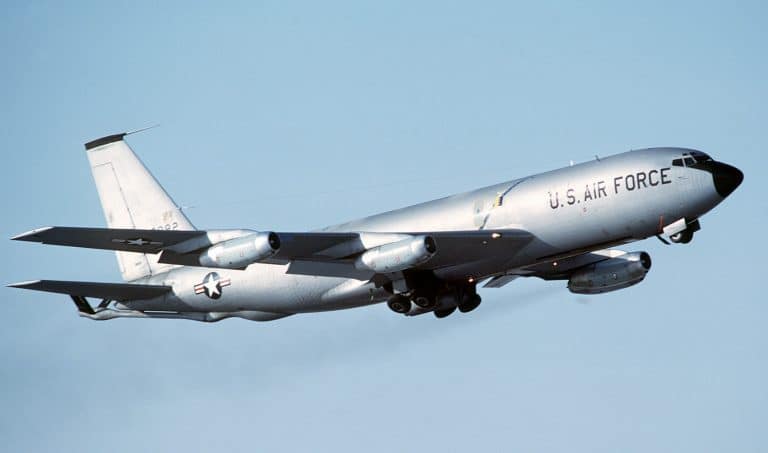
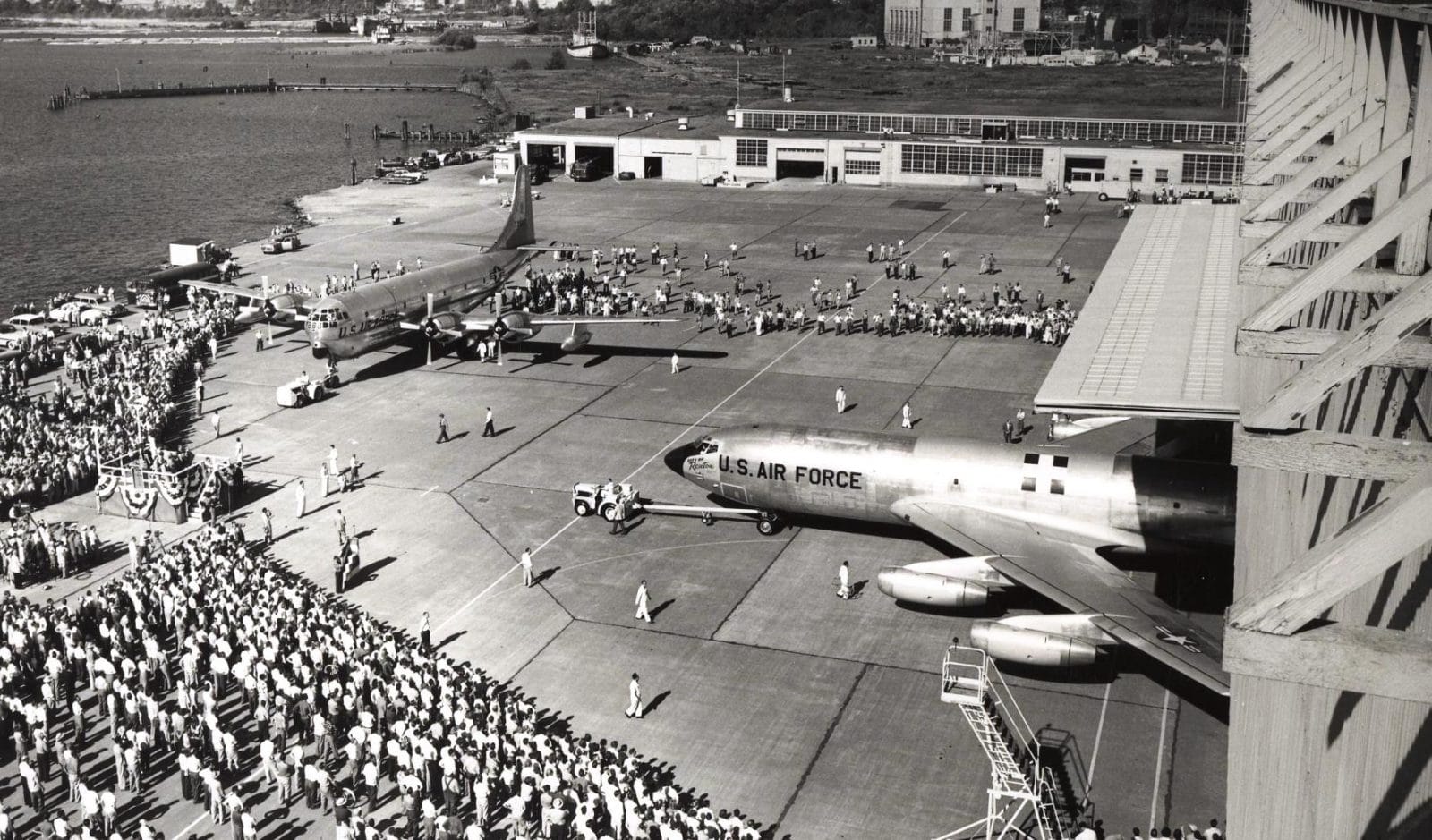
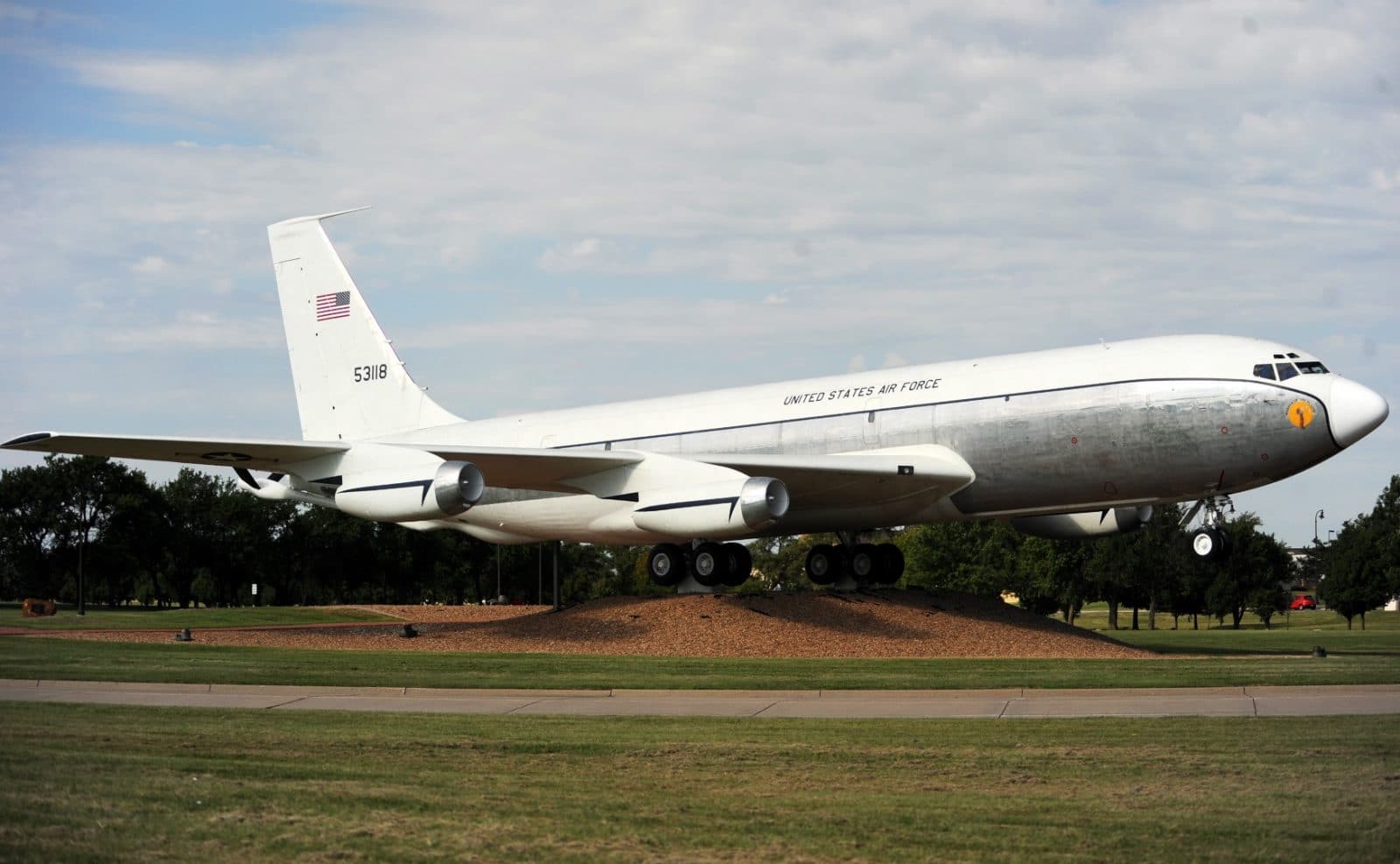
On 18 July 1955, the first Boeing KC-135A-BN Stratotanker (AF serial 55-3118/CN 17234) dubbed “The City of Renton” rolled off the assembly line at Boeing. Boeing would go on to build another 731 of them for the US Air Force, but 55-3118 was a special aircraft with a special history.
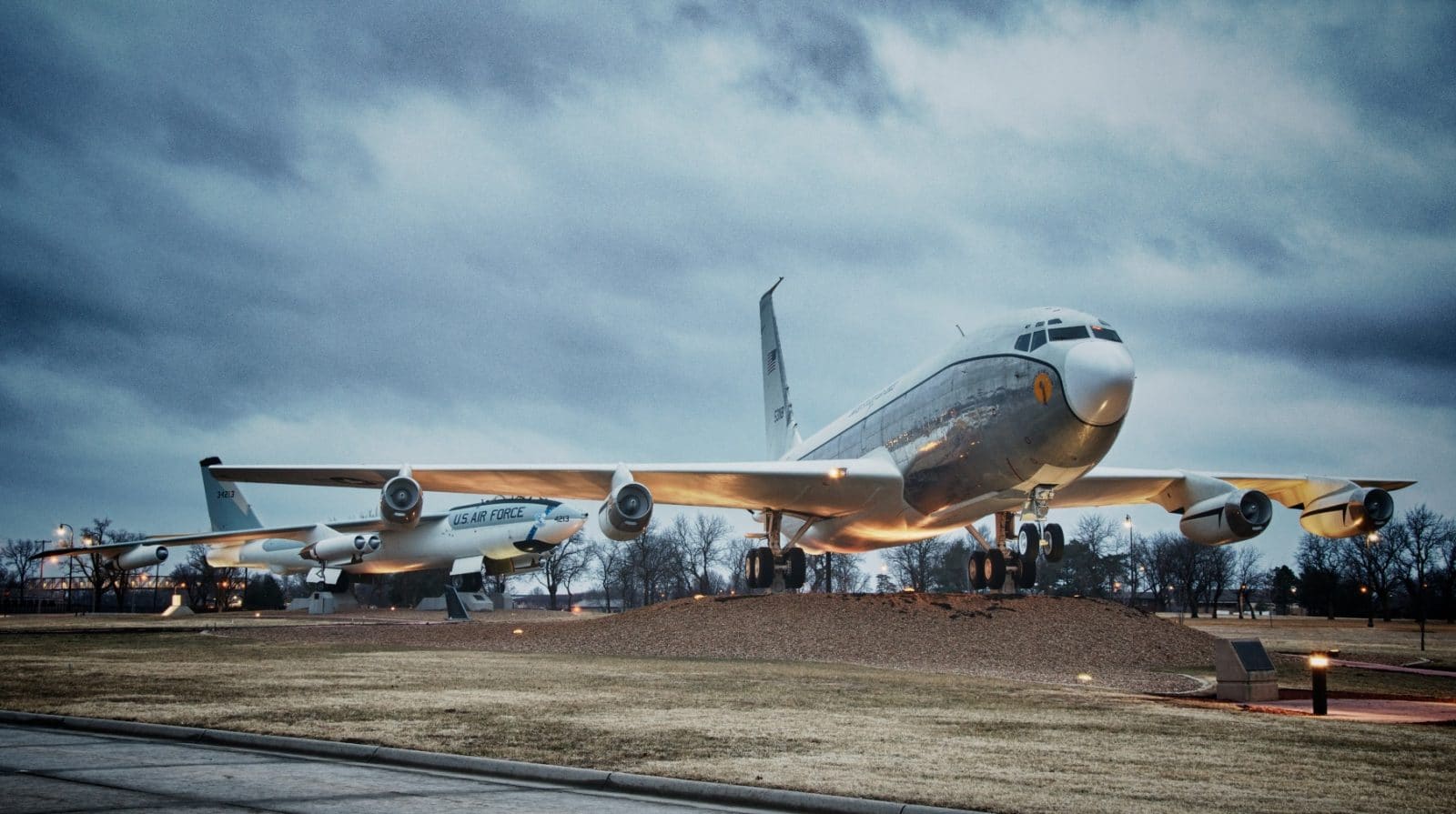
Ironically, when 55-3118 was rolled out of the factory, the last Boeing KC-97L Stratofreighter (AF serial 53-3816/CN 17149) was there next to it. The jet is now on display at McConnell Air Force Base (AFB) near Wichita, Kansas, alongside a Boeing B-47 Stratojet bomber, since its retirement in 1998. 55-3118- the very first KC-135A Stratotanker, never flew a refueling mission! Bet you didn’t see that one coming.
Rollout of 55-3118 the first KC-135A via US Air Force
A Career in Evaluation and Testing
After 55-3118 took to the skies for the first time on 31 August 1956, the jet was accepted by the Air Force on 24 January 1957. The aircraft then spent nearly a year at Edwards AFB in California, undergoing USAF acceptance testing.
In early 1958, the Air Force loaned 55-3118 back to Boeing for testing with the airframe to improve the KC-135s being built as quickly as Boeing could rivet, bolt, and screw them together. 55-3118 helped improve every other KC-135 that followed the first Stratotanker rollout.
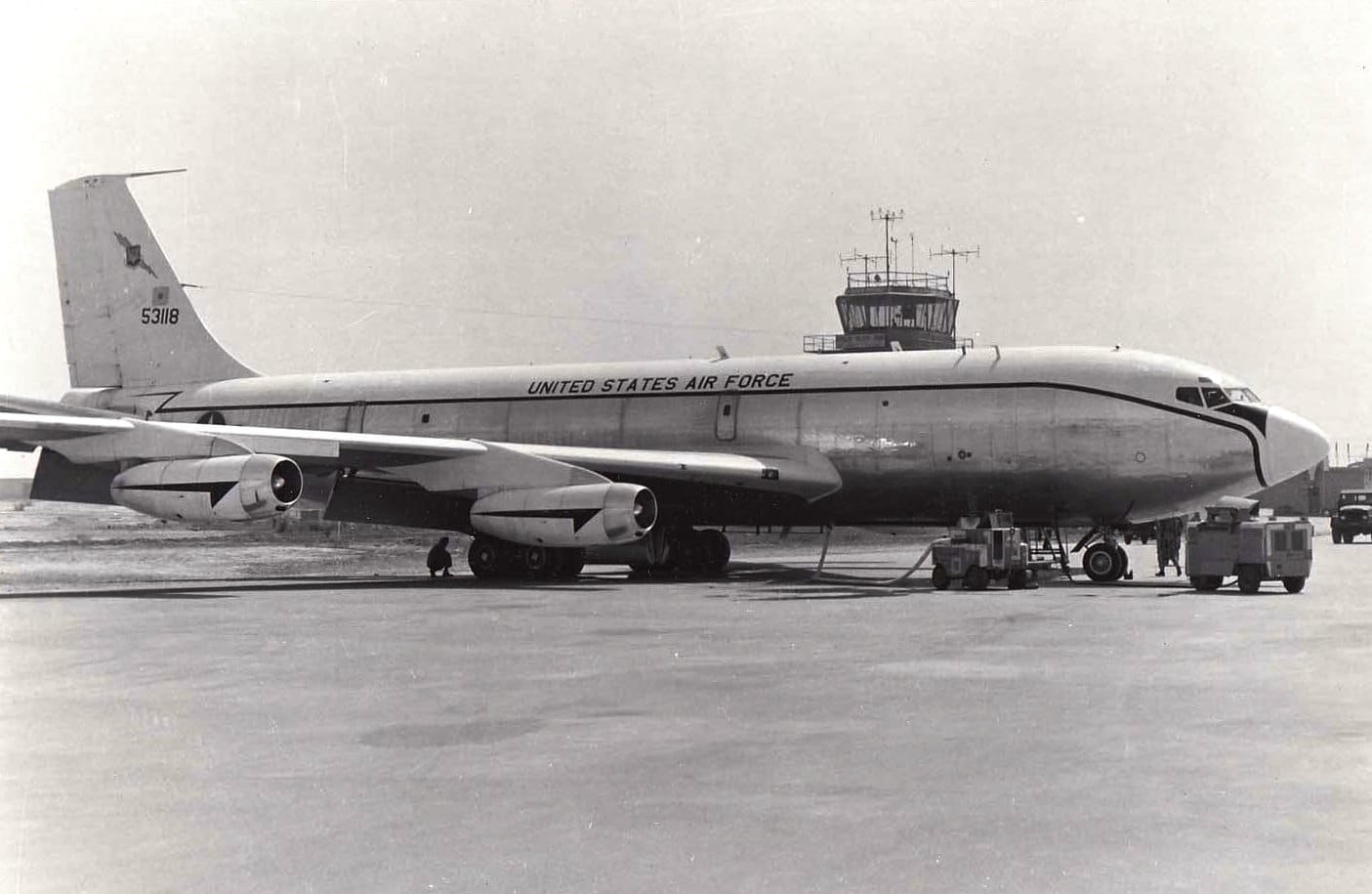
EC-135K 55-3118 while serving with TAC via US Air Force
Still Testing After All Those Years
Between 1958 and 1960 55-3118 flew test flights for Boeing. Then during July of 1960 the jet was transferred to Tinker AFB in Oklahoma for re-installation of its military equipment post-Boeing test. From there it was on to Wright-Patterson AFB in Ohio for duty with the Air Force Flight Test Division.
55-3118 was transferred to Tactical Air Command (TAC) on 21 January 1961, and was promptly modified to the EC-135K specification in 1962. The jet spent the next 16 years with the 18th Airborne Command and Control Squadron (ACCS) at Seymour Johnson AFB in North Carolina, serving as the personal transport for the TAC commander. 55-3118 supported TAC deployments all over the world between 1962 and 1978.
55-3118 on display at McConnell AFB via US Air Force
The General’s Personal Transport
During those years with the 18th ACCS, 55-3118 did something unique. In 1971 the jet flew Secretary of State Henry Kissinger to China on a secret mission to prepare for President Richard Nixon’s historic first visit. It was Kissinger who made the first personal diplomatic contact with China since the Cold War began.
Between 1978 and 1996, the aircraft served with the 8th Tactical Deployment Squadron of the 552nd Air Control Wing out of Tinker AFB in Oklahoma. In 1982, 53-3118 received TF33-PW-103 turbofan engines at Tinker AFB. In 1996, the aircraft was transferred to the 89th Airlift Wing at Andrews AFB in Maryland. 55-3118 was converted back to standard KC-135A specifications before being placed on display as a gate guardian at McConnell in 1998.
55-3118 on display at McConnell AFB via US Air Force
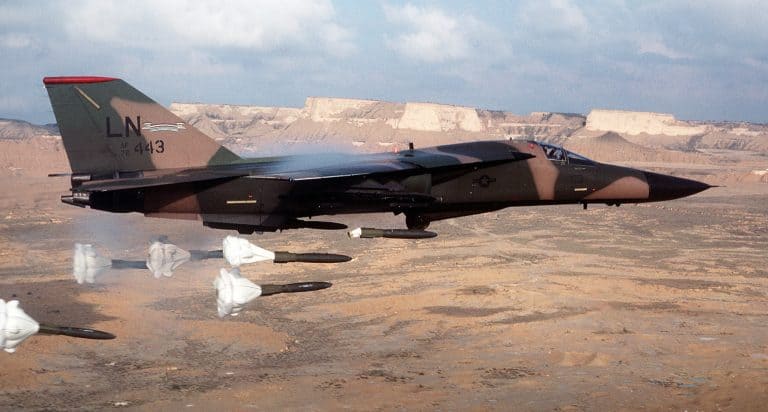
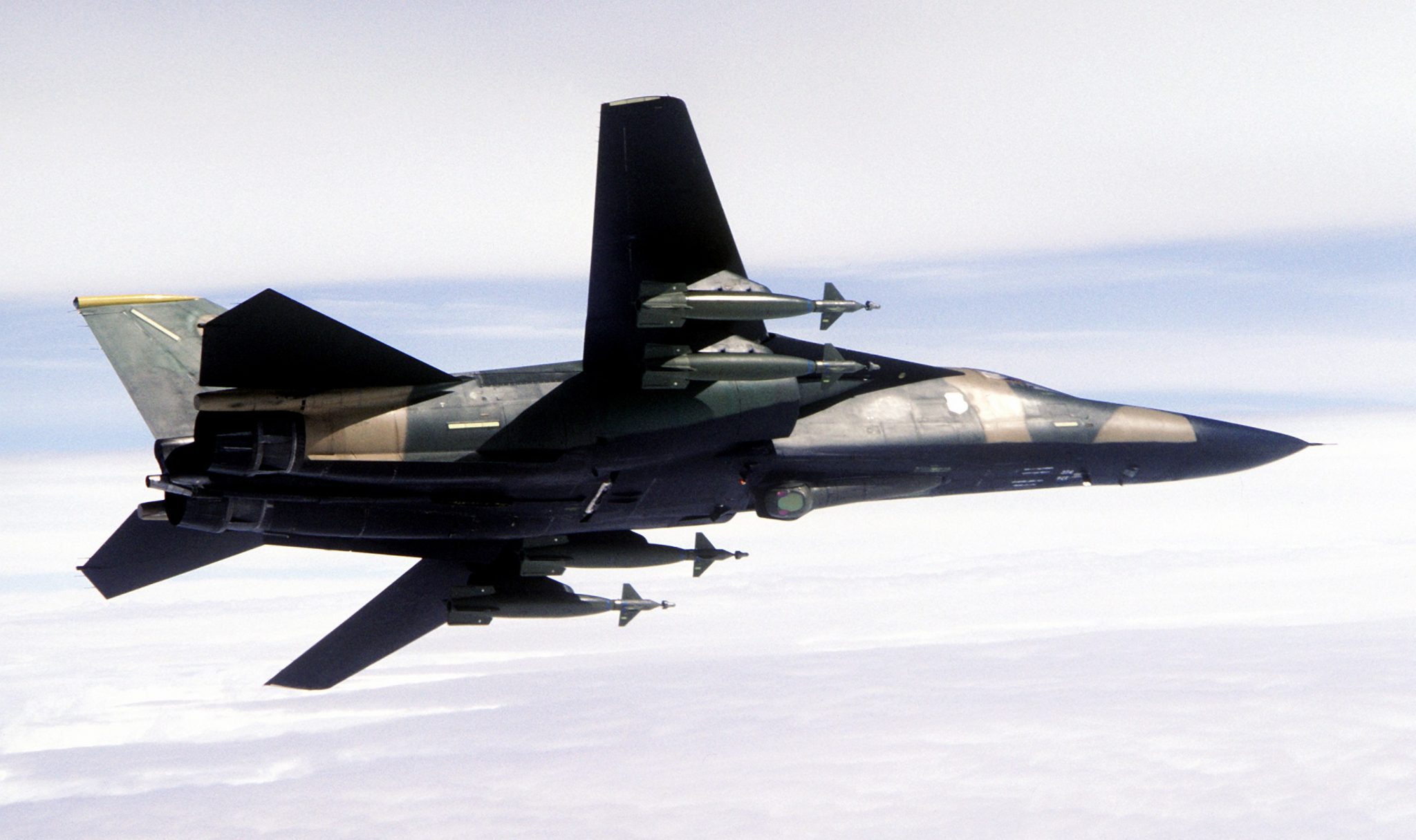
The F-111’s long nose was integral to its design, enhancing aerodynamic stability and allowing for superior performance during low-altitude missions. This unique feature, combined with the advanced terrain-following radar, positioned the aircraft as a formidable force during its operational tenure.
The innovative swing-wing design further contributed to its versatility and effectiveness in various combat scenarios. Such advancements solidified the F-111’s reputation as a groundbreaking asset in the USAF arsenal.
A Tough Time the First Time Out
The first use of the F-111 in combat was during the Vietnam War. In March of 1968, a detachment of six F-111As was sent to Southeast Asia under the Combat Lancer program.
Three of the six aircraft were lost during just over a month in-country. It was later determined that a design fault in the horizontal stabilizer had caused the losses, which delayed the full operational use of the jet until 1971. In 1972, the F-111 returned to Southeast Asia and racked up 4,000 combat sorties with only six losses directly attributable to enemy action.
Official US Air Force Photograph
Dropping The F-111s Long Nose In the X Ring
Throughout the remainder of the Vark’s service life, it was a key player in nearly all military operations. When, in 1986, it became necessary to strike Libya, the F-111 was the only jet capable of pulling off the long-range precision strikes needed to execute the Air Force’s tasking for Operation El Dorado Canyon.
During Operation Desert Storm in 1991, the F-111Fs that dropped 80% of the laser-guided bombs were developed from those A models that had first worn Air Force colors twenty years earlier. After Desert Storm, the F-111s didn’t stick around for long. Just five years later, the Air Force retired its last bomber, the Varks, and the dedicated electronic attack EF-111 Spark Varks followed a couple of years after that.
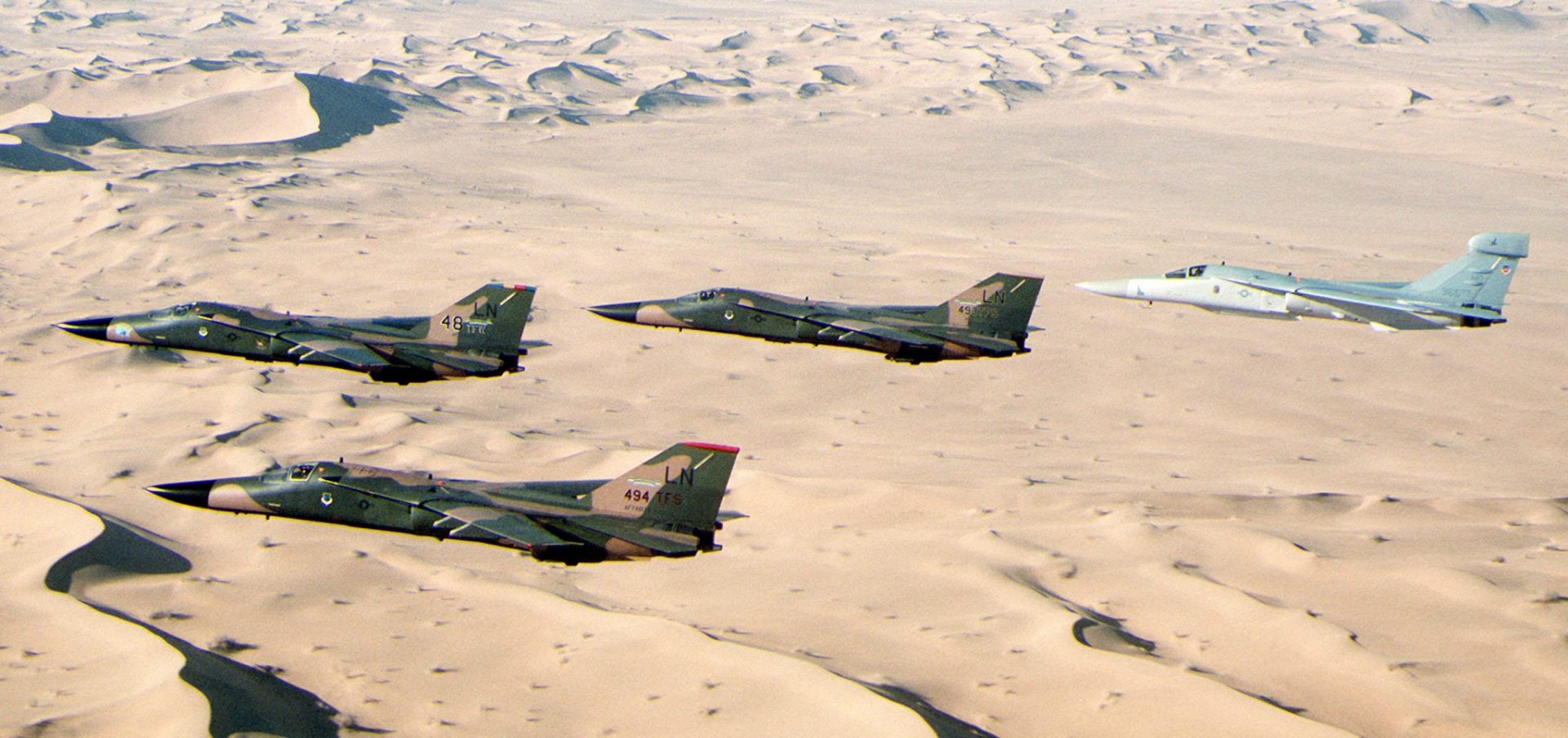
Three F-111F Varks and a single EF-111 Spark Vark flying together somewhere hot and sandy. Official US Air Force Photograph.
The Boeing 717 was McDonnell Douglas’ last ‘new’ aircraft that they designed before being acquired by Boeing in 1997.
Originally called the MD-95, the jet was tailor built as a replacement for the venerable DC-9 that was beginning to age out of service at major US and European airlines.
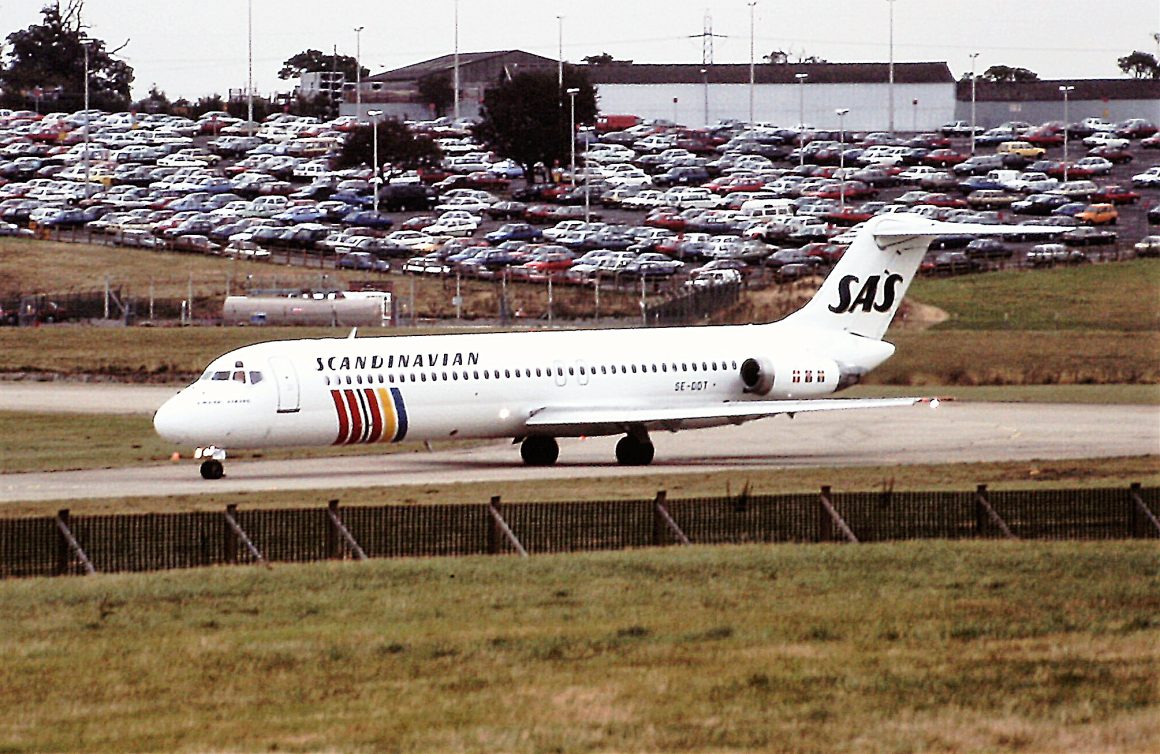
SAS DC-9, CC 2.0
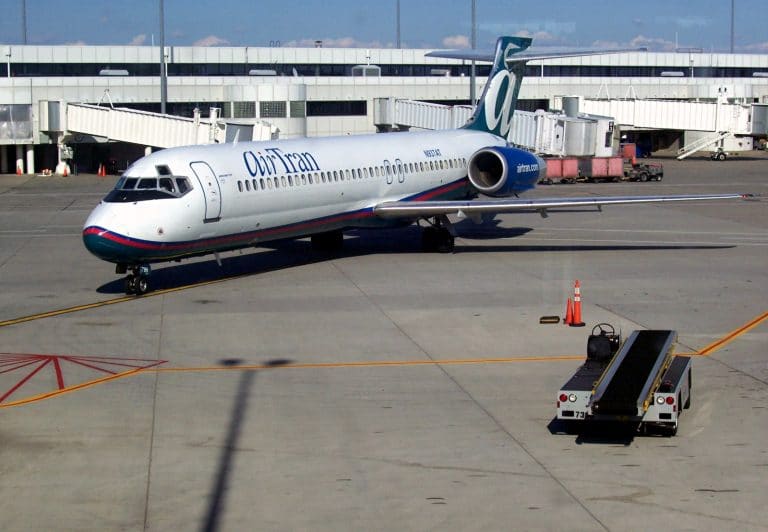
Major airlines at the time like Northwest, ValuJet (later AirTran), TWA, and SAS all had a sizable fleet of smaller mainline jets, like the DC-9, 737-200, and Fokker 100. McDonnell Douglas (MCD) viewed the MD-95 program as an opportunity to capture this market.
MCD designed a jet that took the best features of the MD-80 and MD-90 programs and fit it into a roughly DC-9-40 sized platform. The jet featured efficient Rolls Royce/BMW BR-715 engines similar to the engines powering Gulfstream’s largest jets at the time and a glass cockpit.
One weak point of this new offering was that MCD decided not to spend the money on a new wing for the jet. This decision limited both the max altitude and range of the jet.
Was the 717 designed to be a one off DC-9-30 replacement?
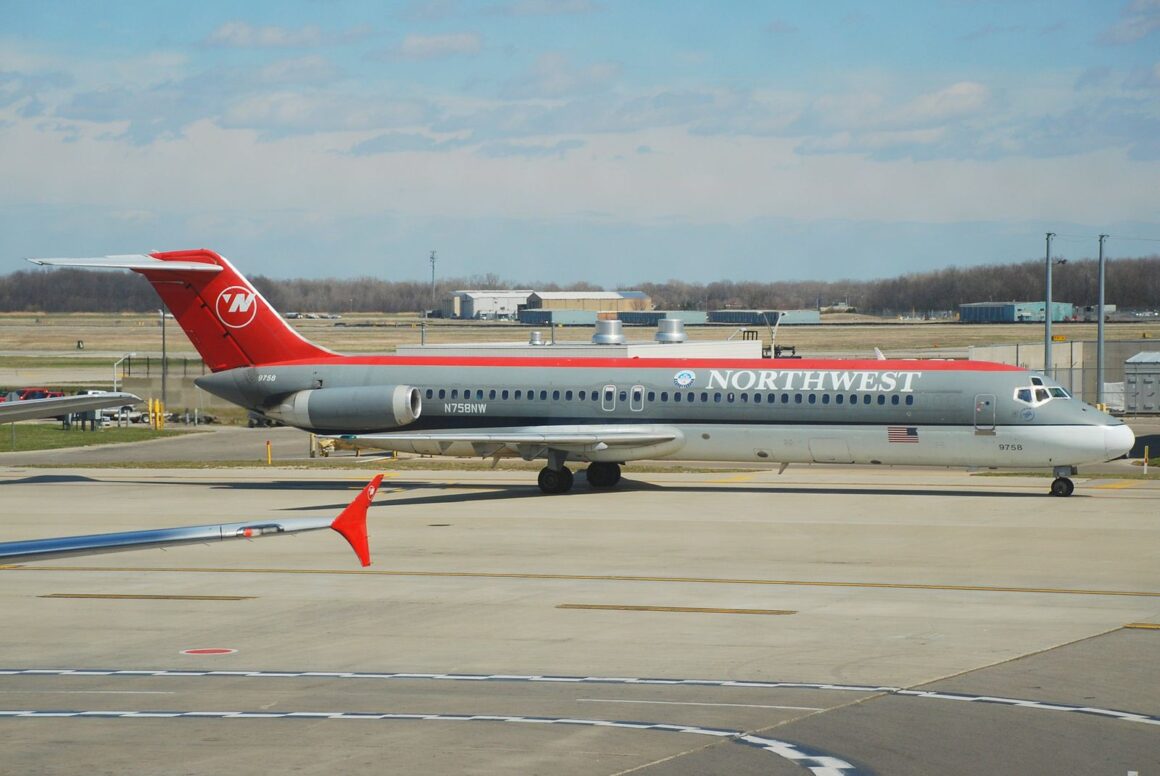
A Northwest DC-9 in the famous “bowling shoe” livery. Photo: AeroIcarus (CC 2.0)
Not really. MCD had plans to offer multiple versions/sizes of the MD-95 family. They first planned to release the MD-95-30 (which became the Boeing 717).
The hope was that the DC-9-30ish size of the jet would spur enough orders from major customers and power a push for additional variants of the 717 family.
Their plan wasn’t crazy. Airlines were also interested in a larger MD-80 sized version of the MD-95. Unfortunately, the merger with Boeing limited the potential success of the MD-95.
What killed the Boeing 717?
After MCD’s merger with Boeing, Boeing publicly committed to building the MD-95. They later renamed it the Boeing 717-200. Boeing also stated that they intended to fulfill all existing orders initially but also market the aircraft for new orders too.
Photo FRED (CC BY-SA 3.0)
Unfortunately for the 717, the timing wasn’t right. Many airlines were knee deep in debt after the tragic events of September 11th and couldn’t afford new aircraft.
Boeing also had a competitor in their own lineup, the Boeing 737-600. The next gen guppy filled a similar niche but offered a ready made family with the larger -700 and -800. All next generation 737s had coast to coast capability, something that the Boeing 717 lacked.
The Boeing 717-300 had an interested buyer though
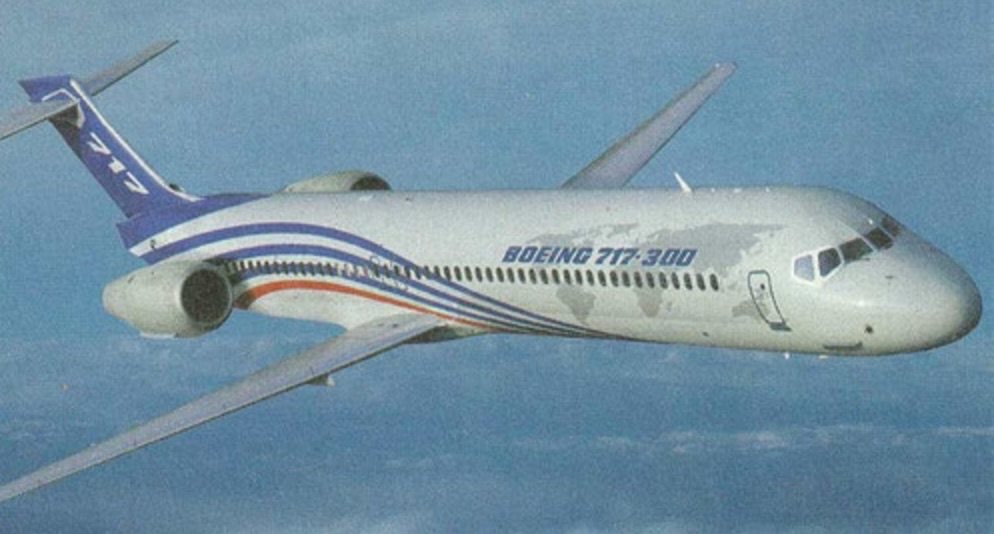
Proposed Boeing 717-300, image: Boeing via MD80.net
It was rumored that AirTran was seriously kicking the tires on a larger Boeing 717-300 that would have offered longer range in an MD-80 sized jet. However, it was said that Boeing pushed the company towards a 737-700 purchase instead.
Boeing was also said to offer the Boeing 717-100 to various airlines. However, more tailor-made regional jets already in production by other manufacturers precluded development of the potential Boeing 717 shrink.
The end for the 717
The last Boeing 717 rolled off the assembly line in April of 2006. It was McDonnell Douglas’ last commercial jet ever built. In total, only 156 jets were produced over the length of the program.
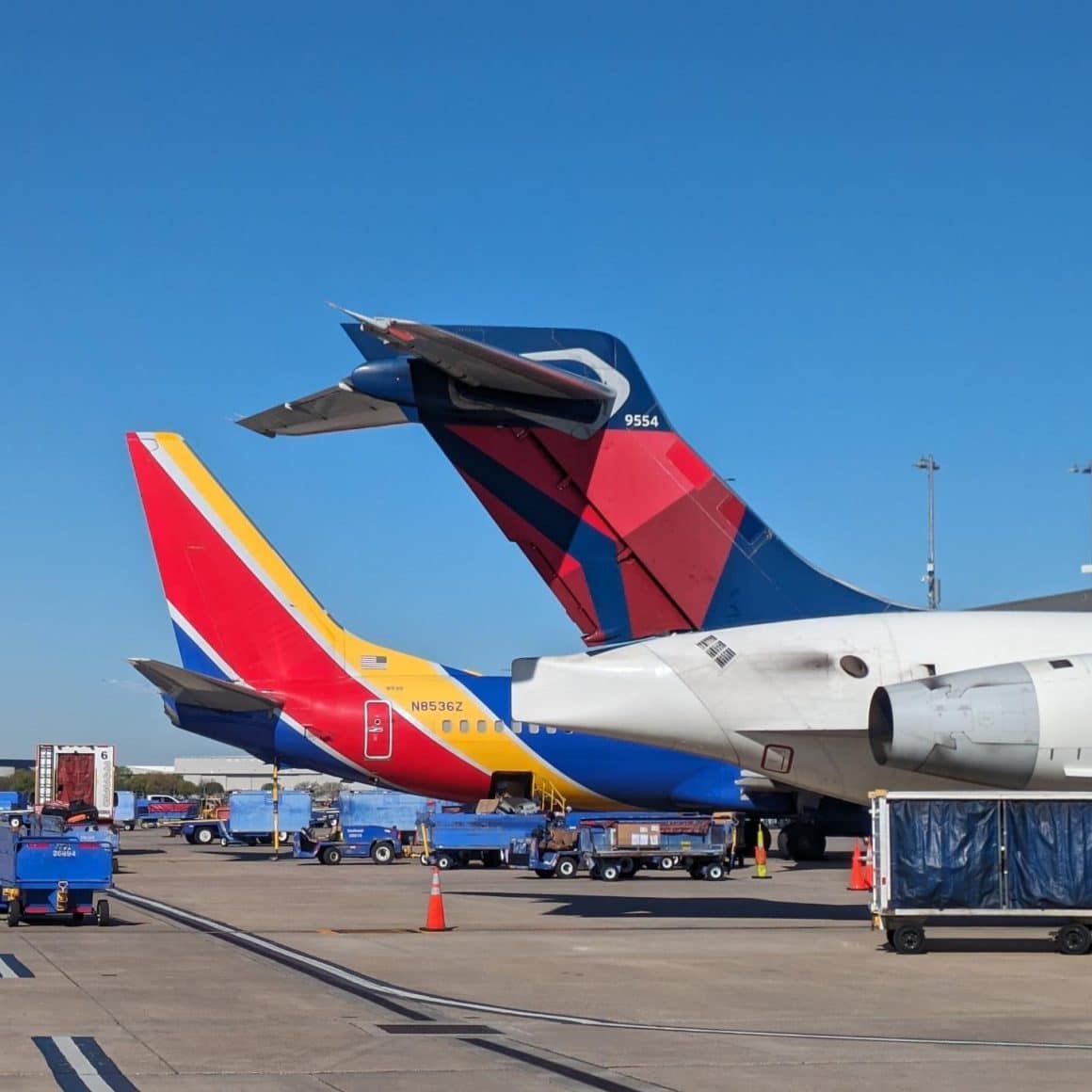
A Delta Boeing 717 and a Southwest Boeing 737-800 on the ramp at Dallas Love Field (DAL) | IMAGE: Dallas Love Field on Facebook
In the mid-2010s, the 717 did have a bit of a renaissance. Delta acquired a fleet of 717s from Southwest Airlines. The jets proved a great fit for Delta to bring mainline service back to markets that were growing in terms of demand. It was also the perfect jet for customers who were growing tired of regional jets lack of amenities.
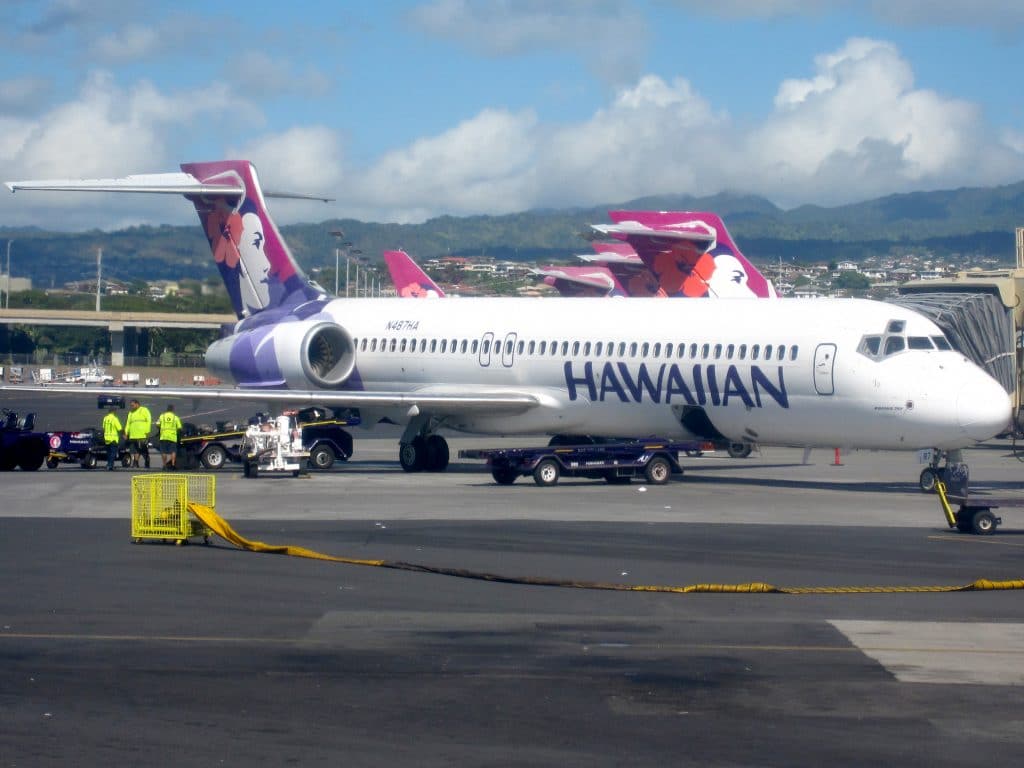
The 717 is expected to continue service at airlines like Delta and Hawaiian for at least the next 3-4 years before the limited supply of replacement parts for the jets dry up and make continued service uneconomical.
SpaceX and X (formerly Twitter) CEO Elon Musk announced today that he is moving his companies’ headquarters from California to Texas.
SpaceX was originally founded in 2002 by Musk with a goal to reduce the cost of space transportation via reusable spacecraft. It has since evolved into a multibillion dollar business that has evolved into a company that provides launch services for NASA, the US government, military, and commercial companies. The company also operates Starlink, offering internet globally via a constellation of small satellites.
In a post on X today, Musk said that “Because of this law and the many others that preceded it, attacking both families and companies, SpaceX will now move its HQ from Hawthorne, California, to Starbase, Texas.”
This is the final straw.
Because of this law and the many others that preceded it, attacking both families and companies, SpaceX will now move its HQ from Hawthorne, California, to Starbase, Texas. https://t.co/cpWUDgBWFe
Musk is referring to California’s new law AB1955 which addresses the topic of LGBT youth. Most controversial for Musk, part of the bill prevents public schools from making rules that require them to notify a parent if a child identifies as transgender. In a follow up message, Musk added, “I did make it clear to Governor Newsom about a year ago that laws of this nature would force families and companies to leave California to protect their children.”
Musk stated that he will also move X headquarters to Austin, Texas in response to the bill becoming law..
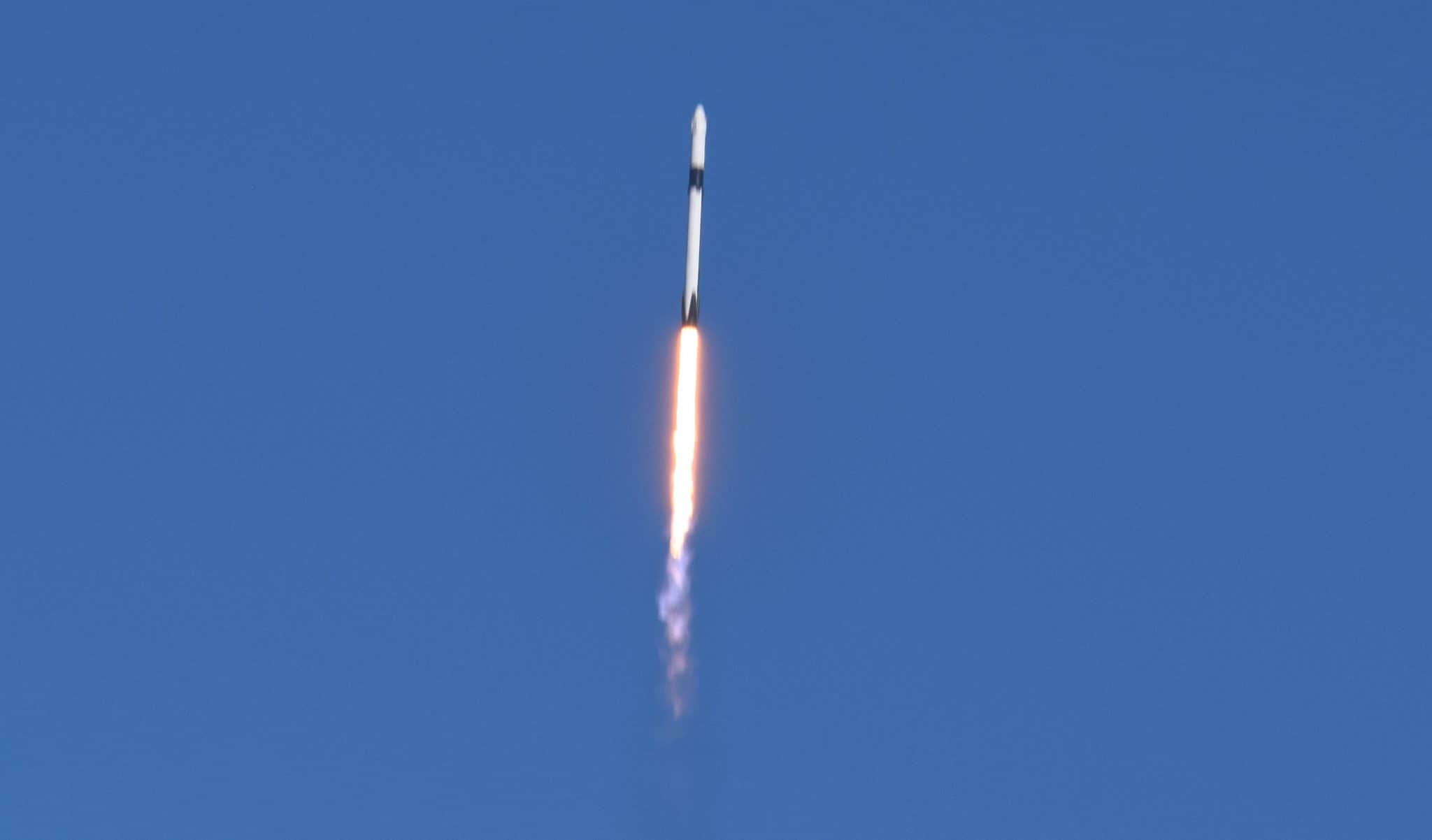
SpaceX Falcon 9 thunders away from Cape Canaveral, sending supplies to Space Station. (Charles Atkeison)
Where is Starbase, Texas?
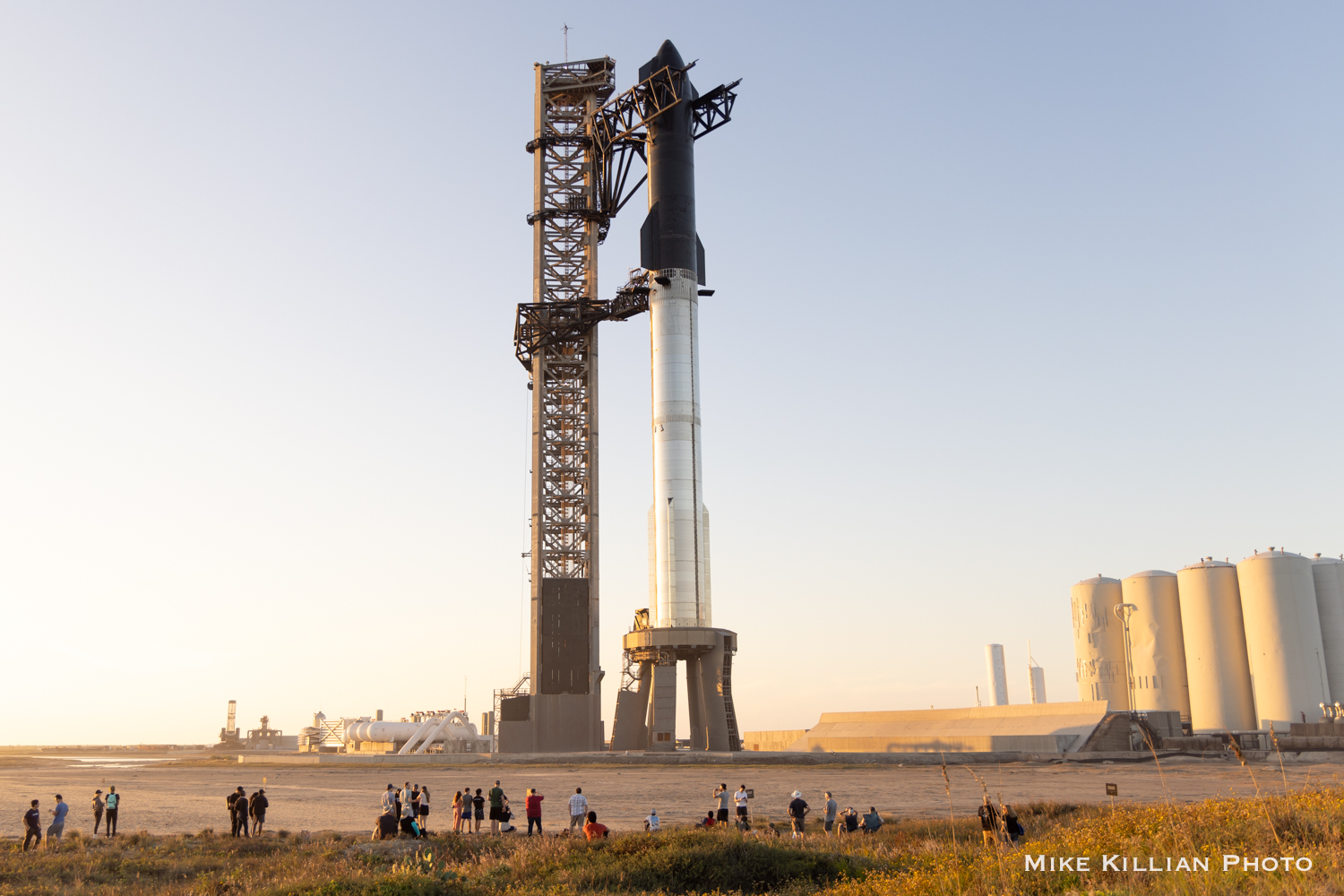
Starbase, Texas is located in South Texas near the Texas/Mexico border, just outside of Brownsville. It is home to one of SpaceX’s large launch facility. The site has so far launched four Starship test vehicles with additional launches planned later this year. Starship is a massive spacecraft. At nearly 400 ft tall. the vehicle is powered by 33 of the company’s Raptor engines that generate 17 million pounds of thrust at launch.
Starship on the launch pad at Starbase, Texas. Photo: Mike Killian
This is not the first time that Musk has moved one of his companies headquarters. He previously moved Tesla from Freemont, California to Austin, Texas. He later moved his engineering headquarters back to Palo Alto, California in an effort to recruit additional engineering talent.
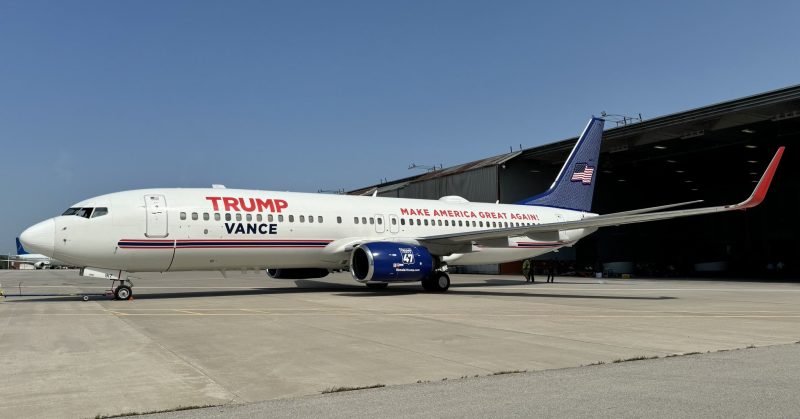
Campaign unveils new Trump Vance Plane, a Boeing 737-800
President Trump now has a second aircraft for his presidential campaign. It will be used by his vice presidential running partner for campaign events.
A new VP running mate and an additional Boeing for the Trump campaign
It’s been an unprecedented week for the former president. On Saturday, President Trump survived an assassination attempt in Pennsylvania. Then on Monday, felony charges were dismissed in his classified documents case.
Later in the afternoon, the former President unveiled his Vice Presidential running mate, Senator JD Vance, just prior to the start of the Republican National Convention in Milwaukee. Senator Vance currently serves as the junior senator from Ohio.
Now, a images of a second jet to join President Trump’s Boeing 757, sometimes referred to as Trump Force One, have appeared.
The plane has a “Trump/Vance” decal on the side
Photo via @danscavino on x
The Boeing 737 jet was flown to Kansas City International on July 14th . Kansas City is home to a maintenance facility operated by Eastern. Just today, the jet emerged with a temporary livery for the campaign season. The livery features a stylized American flag on the tail with the newly minted Trump/Vance logo on the forward section of the jet.
N917XA is a 2002 Boeing 737-800 originally operated by AirBerlin. The jet was last operated by the now defunct iAero Airways before being purchased by Eastern earlier this year.
First spotted by expert-tracker Jack Sweeney
“The Trump Vance plane looks to be N917XA which is at MCI airport, says Jack Sweeney. Sweeney became famous tracking billionaire Elon Musk’s private jets. Today he unveiled some aircraft sleuthing to identify the location and tail number of the jet. This was solid work because some flight tracker websites showed that the aircraft was still in Miami with a planned flight to Havana, Cuba. Whether that was a technical error or an intentional effort to throw off flight tracker enthusiasts is unknown.
“Clues: rust on the top of outside hangars is the same, as pictured. 917 matches door number. Eastern airlines logo pictured on the lift,” added Sweeney on X, formerly Twitter.
No Details on Configuration for Trump Vance Plane
No details have been released yet about the configuration of the jet. Typically, candidate’s aircraft have a mixed configuration of first class seats up front along with a couch/lounge for meetings. The aft section of the aircraft is configured with coach seats for staffers and media.
The High Rollers Had Themselves a Great Time Just Doing a Little Showing Off
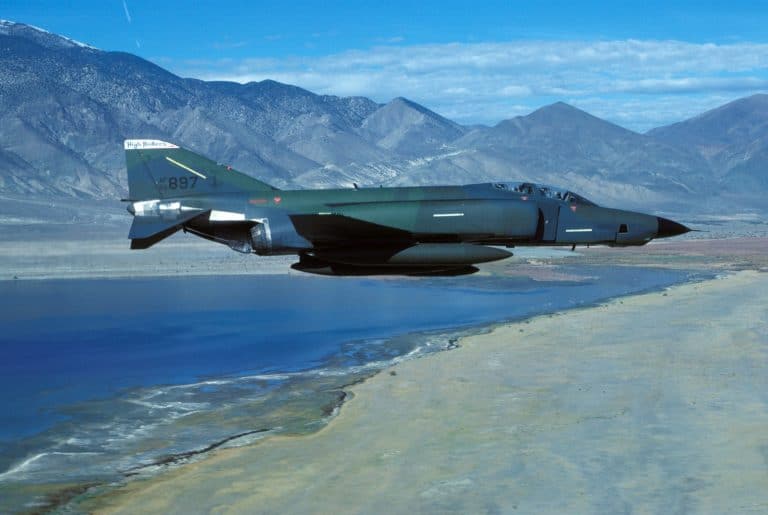
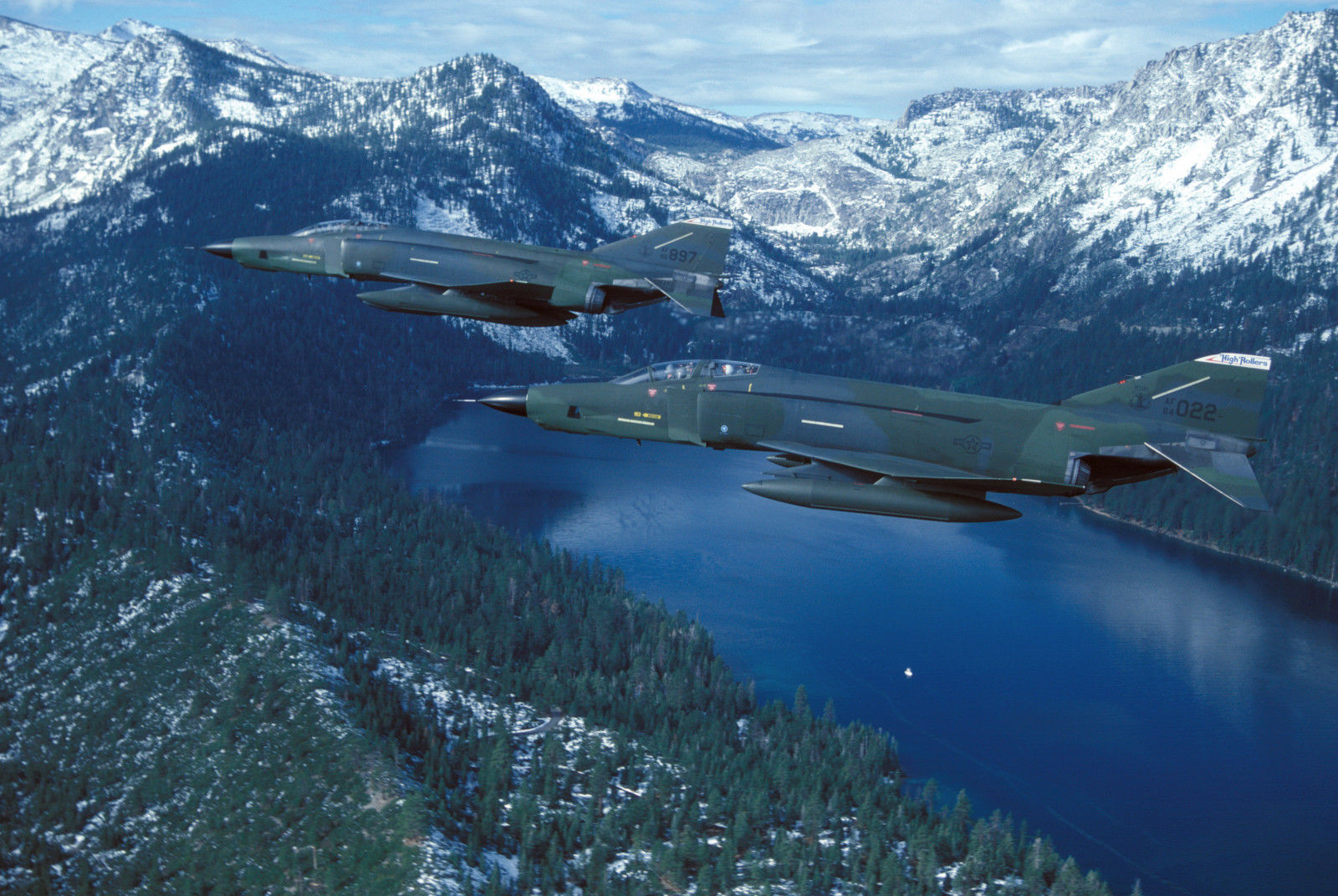
The 192nd Tactical Reconnaissance Squadron (TRS) High Rollers of the Nevada Air National Guard (ANG) stood up and became operational in 1961. Originally equipped with Martin RB-57G Canberras, the High Rollers provided tactical reconnaissance for 34 years. They were placed on alert during the 1961 Berlin Crisis and 1962 Cuban Missile Crisis, but not deployed. In 1965, the squadron received their first McDonnell RF-101 Voodoos, which they would fly for the next ten years. In 1968, the High Rollers were called up and deployed in support of the surge that occurred as a result of the Pueblo Crisis.
image via national archives
Vagabond Unit Earns Outstanding Unit Award
The 192nd rolled up some frequent flyer miles during their year of active duty, deploying to Korea, Japan, Vietnam, Thailand, the Philippines, North Africa and some 18 Air Force Bases (AFBs) within the United States. As a result of their outstanding efforts, the High Rollers became only the second unit awarded the 5th Air Force Outstanding Unit Award.
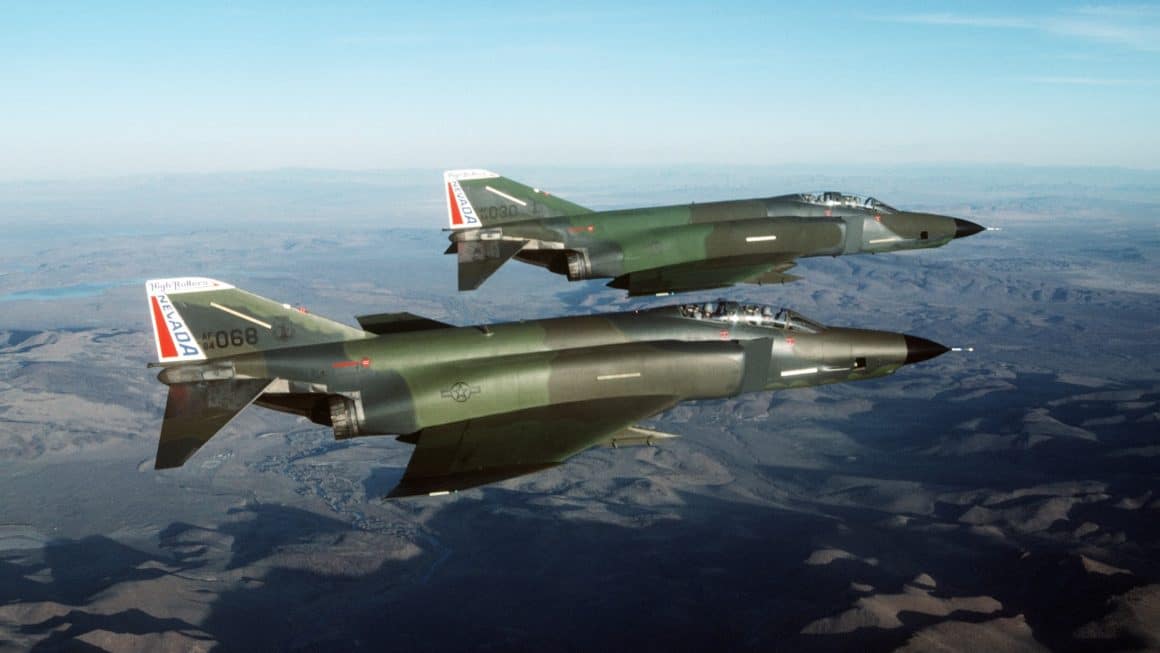
The 192nd TRS began operating the RF-4C Phantom II in 1975. The 192nd operated the Photo Phantom for the next twenty years. During this period, the High Rollers deployed to the Gulf in support of Operations Desert Shield and Desert Storm. The squadron was based out of Doha International Airport in Qatar and flew 350 combat sorties totaling more than 1000 combat hours with no losses. The 192nd was instrumental in the determination of locations and dispositions of the Iraqi Republican Guard units in the desert. Baghdad was also a frequent destination where the cameras sought out chemical weapons plants, rocket fuel plants, and command and communications centers.
Official US Air Force Photograph
Later, the RF-4Cs of the High Rollers were tasked with Scud hunting as the Iraqis began lobbing the missiles from remote, hidden, or temporary sites all over western Iraq. The Desert Storm take from the 192nd totaled over 19,000 prints from 300,000 feet of exposed film. After Desert Storm concluded, the 192nd TRS came home and was slowly but steadily retired from ANG service.
The last four High Rollers RF-4C Phantom IIs, combat veterans all, and the last operational RF-4Cs in the entire Air Force, were flown from their Reno Air National Guard Base facility at Reno-Tahoe International Airport to the 309th Aerospace Maintenance and Regeneration Group (AMARG) boneyard at Davis-Monthan AFB in Arizona during September of 1995. Thanks go to YouTuber F4Flys for uploading the videos.
Dude Perfect, one of the top YouTube group of creators with over 60M followers, has outdone itself with its latest video. The group is known for unique viral videos and also for their continuous support of the men and women in the US Military. The group of 5 former college roommates from Texas A&M partnered with the Air Force recently to play a few games using the mighty C-17. They called it a competition. The prize for this game using a $200 million dollar airlifter? A janky Pontiac Aztec. Heh! The full video is linked at the bottom of this story.
First up, Darts from a C-17
Dude Perfect prepping to drop darts from a dartboard. Image: Dude Perfect Video screenshot.
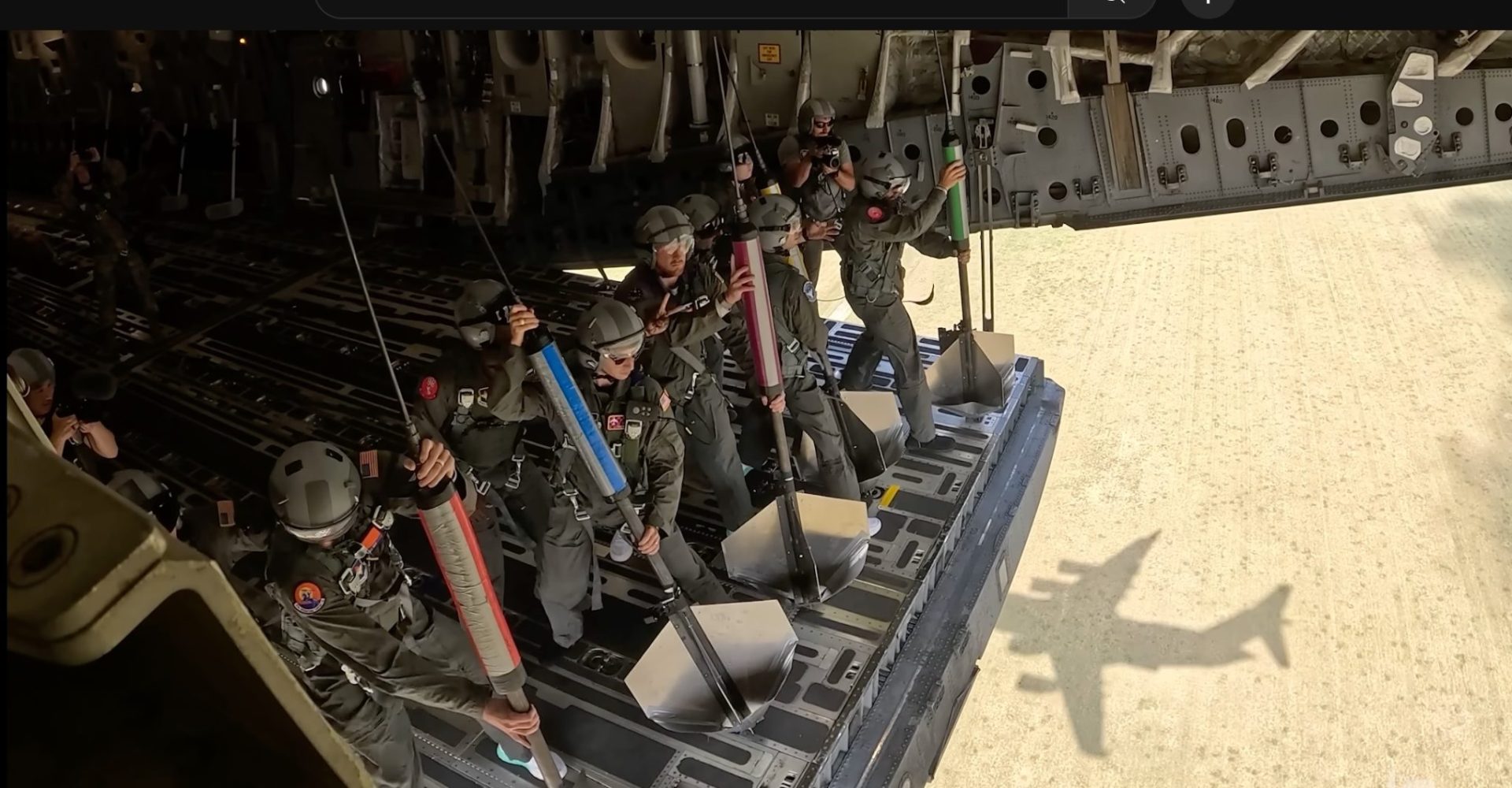
The guys from Dude Perfect came along on a C-17 training mission at Altus AFB. There they saw what it takes to plan and launch a C-17 airdrop mission. Pretty standard, right? From that point on, the mission became anything but standard. First up was a friendly game of darts. These weren’t any darts though, these were oversized metal darts that were about the size of a broomstick with weighted tails. Once the crew was over the drop zone, they gave the green light for a drop. The first drop was way too late. The darts missed by quite a few feet. The second drop was better but still wide of the dart board…er, target. The last drop, we’ll you’ll have to see for yourself.
Next up, Dude Perfect plays golf from a C-17
After a short intermission , the crew then set up for another drop. Below was an oversized golf green. The Dude Perfect crew then teed off with an oversized golf club and volleyballs that acted as golf balls. None of the balls were hit very close to the target. You might say that they shanked their balls into the rough. Once they landed, they played out the hole.
Final Challenge: Dropping 1000 basketballs 1,000 feet above the basket from a C-17
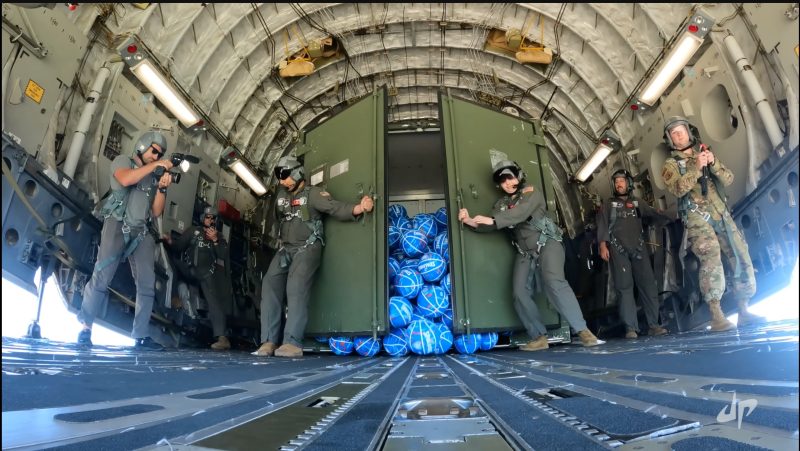
The final challenge was the most impressive visually at least. They set up on a final pass to drop 1,000 basketballs over a number of basketball goals set up on the drop zone. In order to determine if a ball went into the basket, they taped each net. They also set up a number of cameras to watch the action. While the drop was visually impressive, no balls actually hit their, um, target.
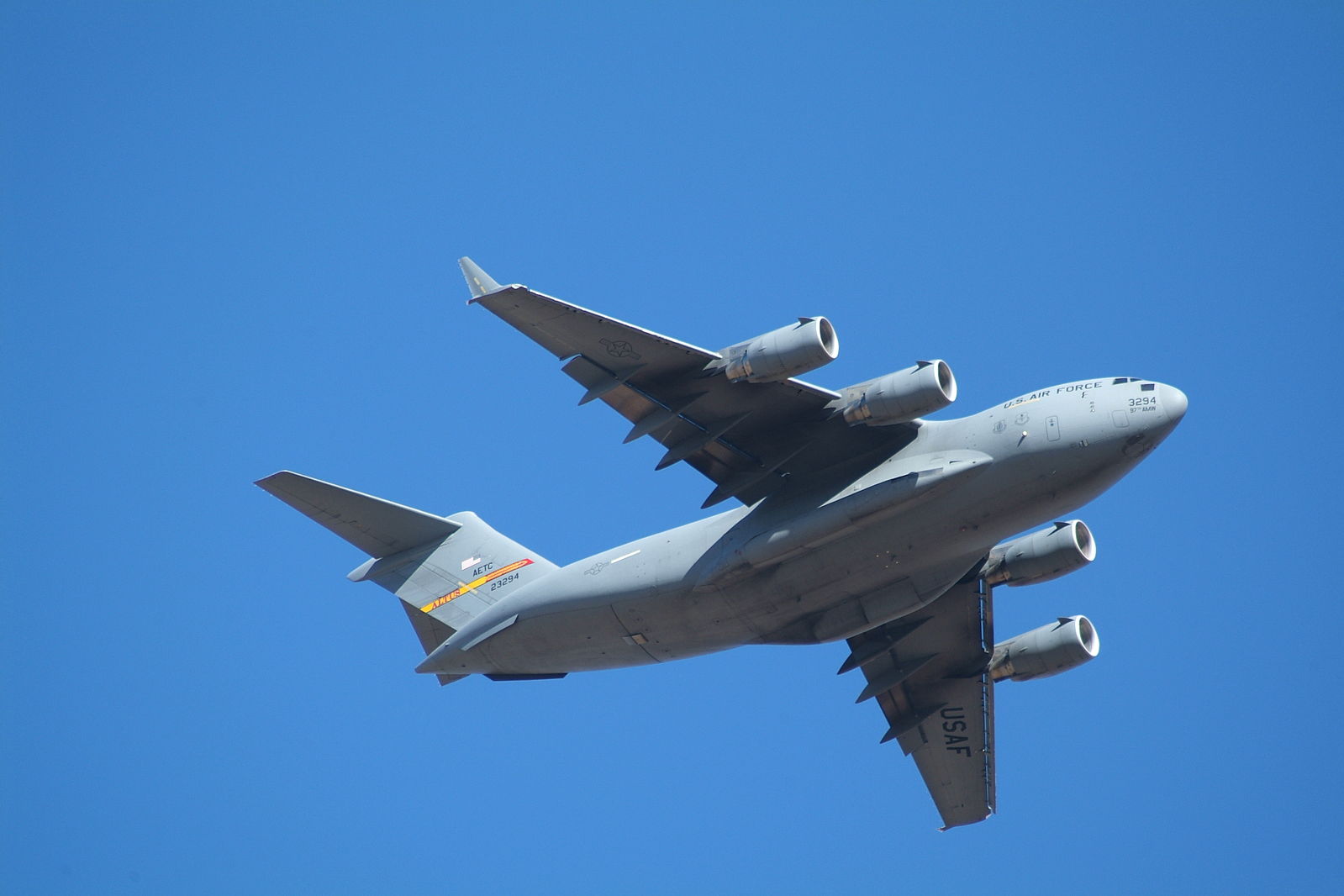
Altus AFB C-17. Image: Jerry Gunner from Lincoln, UK, CC BY 2.0 , via Wikimedia Commons
All and all, it was impressive to see the airdrop abilities of the C-17. Behind this social media outreach effort was significant airdrop planning, route coordination, and skill necessary by the airdrop crew to arrive on target with such precision. Kudos to the 58th Airlift Squadron at Altus AFB for their effort.
You (Might Not) Know These Fascinating Facts About the P-61 Black Widow
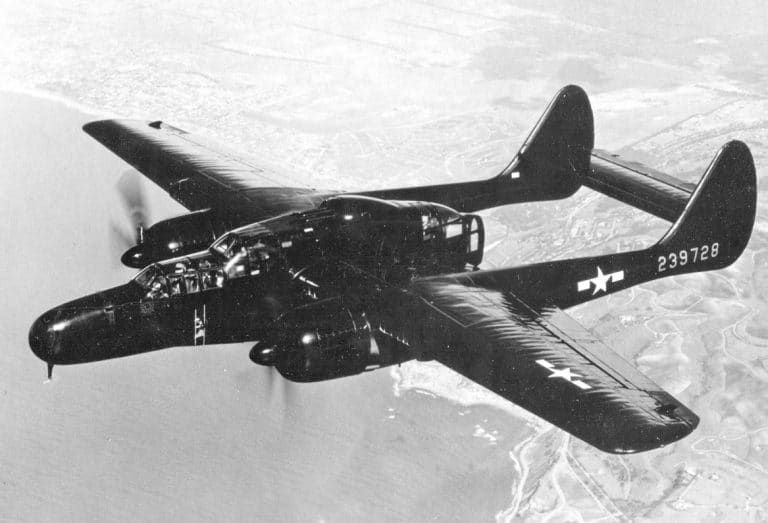
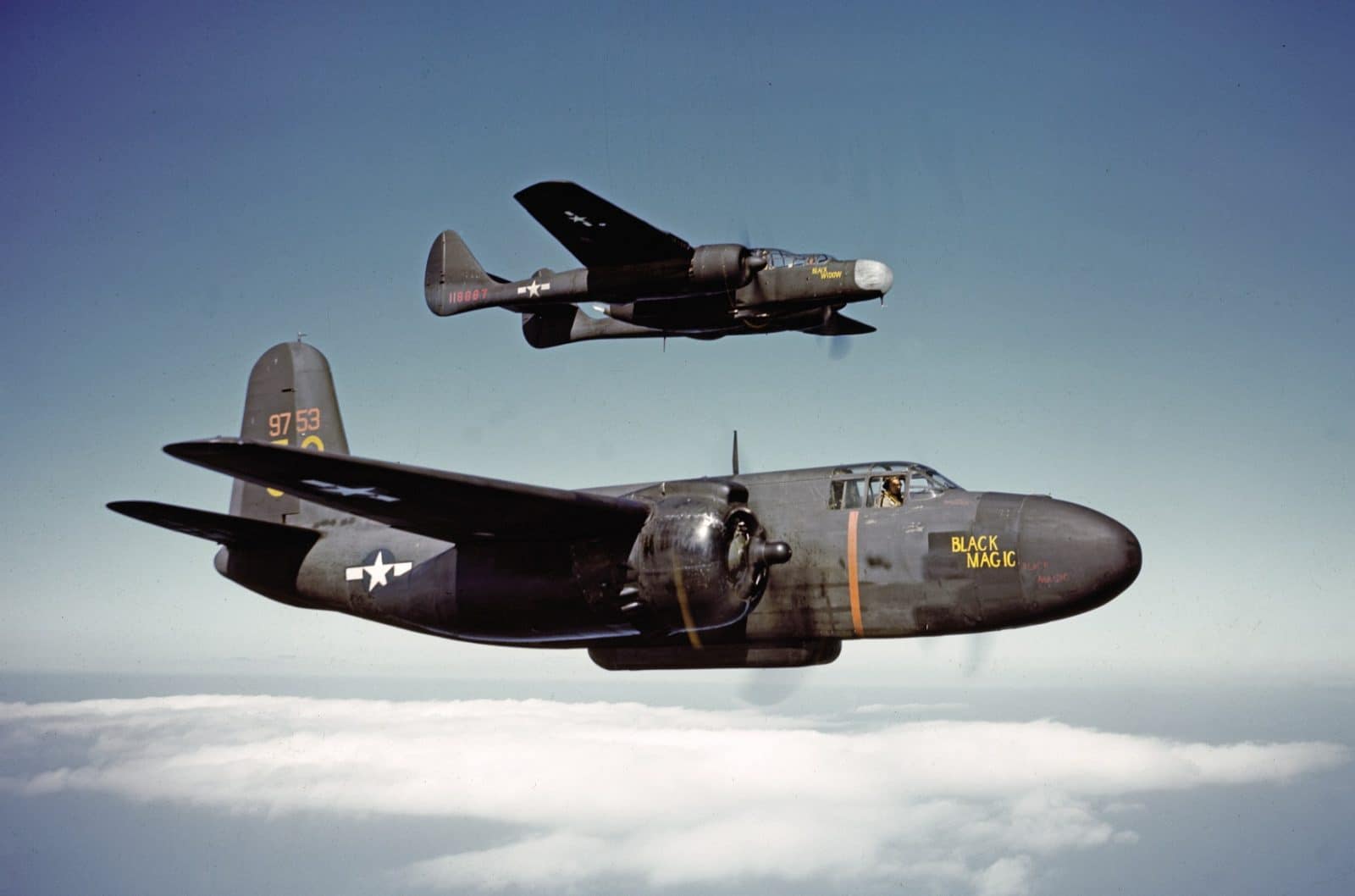
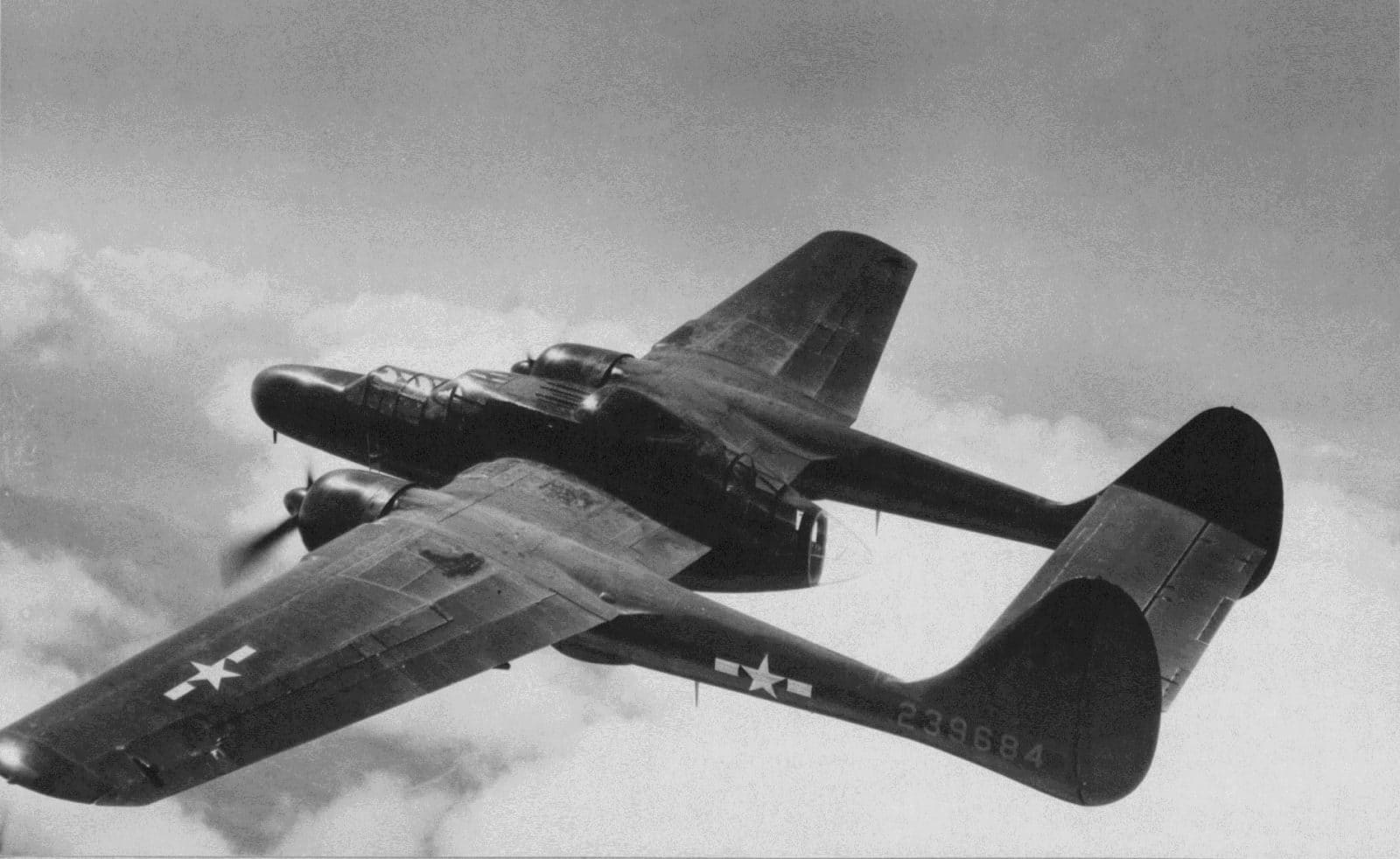
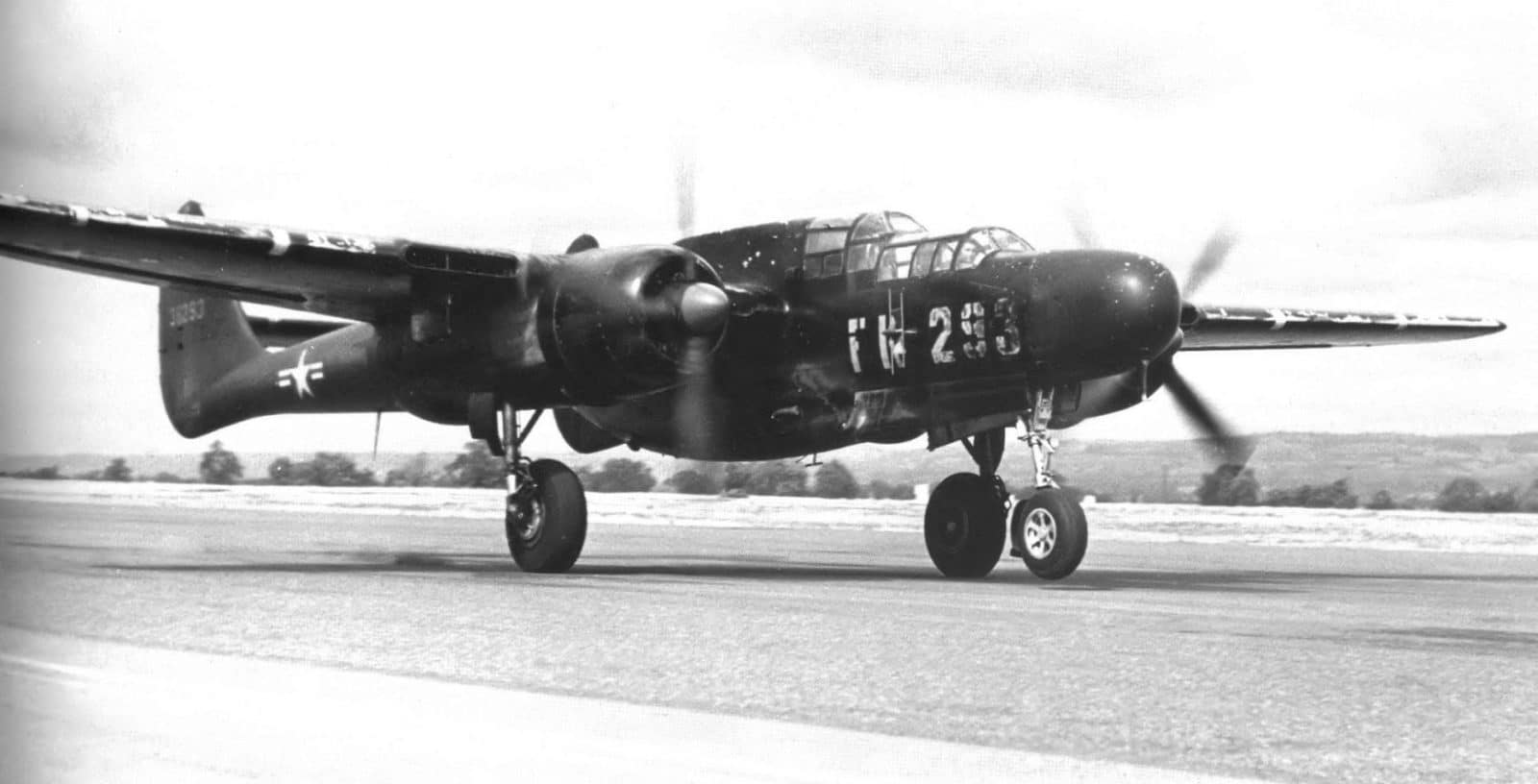
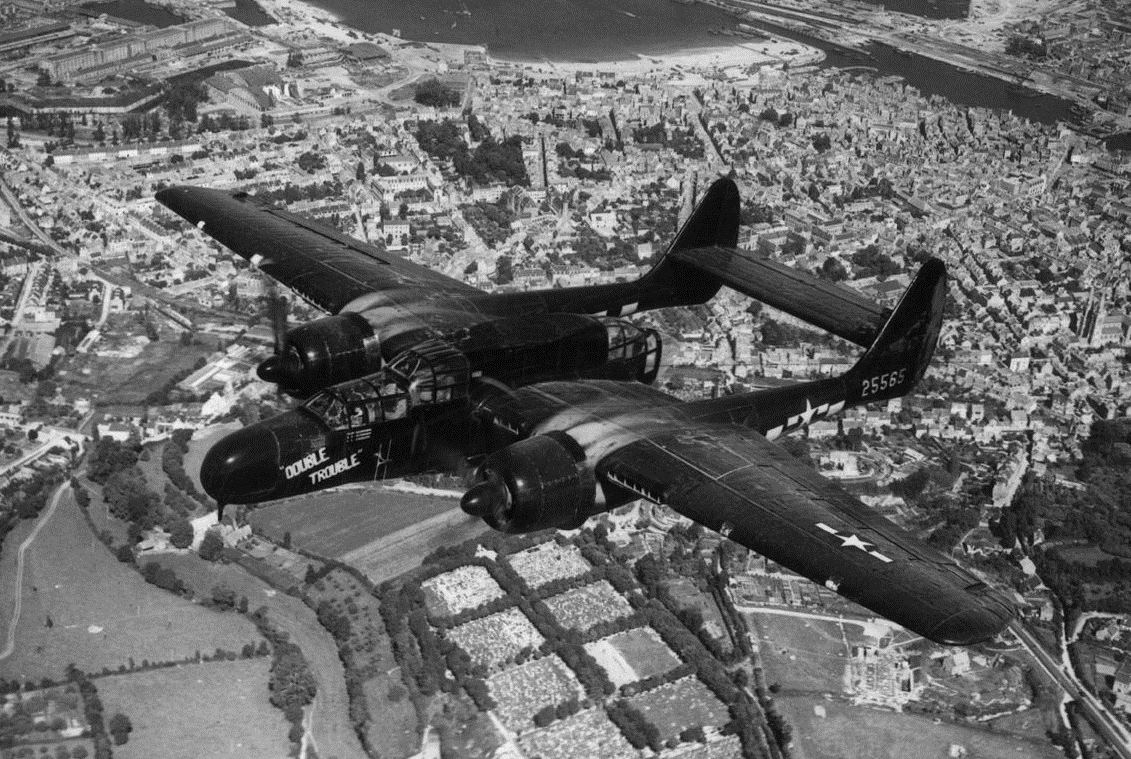
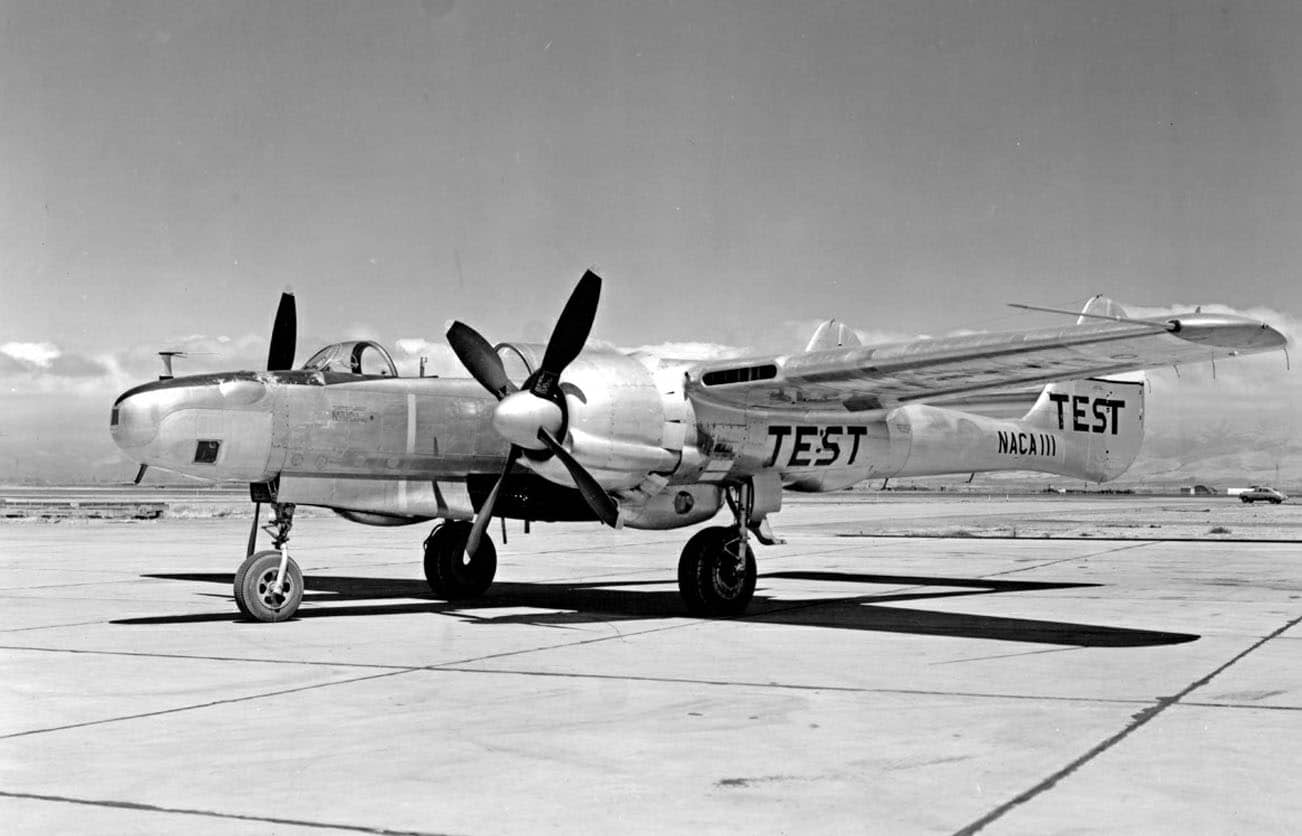
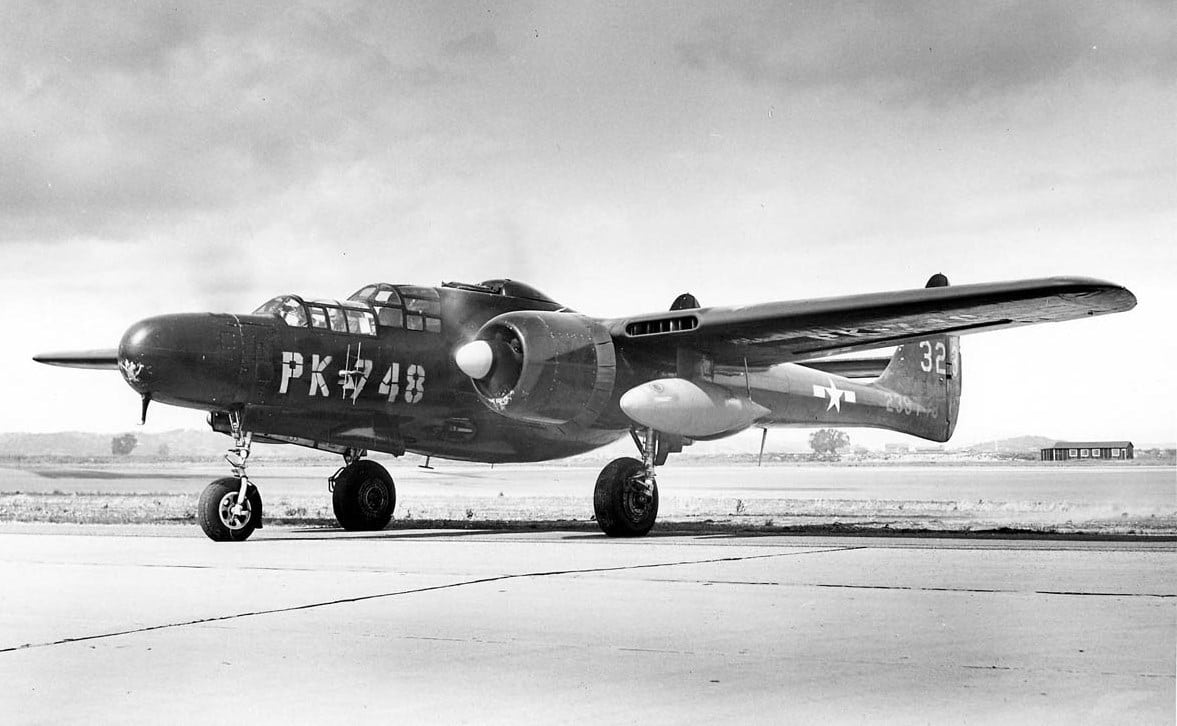
The distinctive Northrop P-61 Black Widow was the first operational American warplane designed from the ground up to serve as a night fighter and to be equipped with a nose-mounted radar. However, the aircraft was actually first conceived in 1940 as an answer to a plea from the Royal Air Force for an effective night fighter to combat the Luftwaffe running rampant over England by night.
P-61A (background) flying with a Douglas P-70 (foreground). Official US Air Force photograph
Firepower Built In
Black Widows were originally armed with four forward-firing Hispano M-2 20-millimeter cannons mounted in the lower central fuselage and four Browning M2 .50-caliber machine guns mounted in a remotely controlled central dorsal turret, similar to those found on the Boeing B-29 Superfortress. In fact, some P-61s did not receive their dorsal turrets because they were diverted to B-29 production.
Official US Air Force photograph
Getting It Right Took Time
The design and evaluation process involved several armament-location configurations before settling on the final production setup. The dorsal turret could be aimed and fired by the gunner or the radar operator. Because the turret caused buffeting of the tail control surfaces, many Black Widows had their dorsal turrets removed in actual squadron use. Some were removed to save weight and increase fuel capacity.
P-61B. Official US Air Force photograph
Size Matters
The P-61 was a very large aircraft- at more than 45 feet long and with a 66-foot wingspan, tilting the scales at more than 22,000 pounds empty, the Black Widow was far larger than any other fighter aircraft to enter Allied service and nearly as large as the medium bombers then in service.
P-61B. Official US Air Force photograph
The Photo Flash
The F-15A Reporter was an unarmed photo reconnaissance version of the P-61C. A distinctive bubble canopy replaced the stepped-up birdcage arrangement found on the P-61. Uprated Pratt & Whitney R-2800 Double Wasp engines turning paddle-bladed propellers powered the F-15A.
F-15 Reporter. Official US Air Force photograph
Wait…a Marine Corps Black Widow?
The Marine Corps intended to use the P-61 but backed out and chose the Grumman F7F Tigercat instead. That didn’t stop the Marines from using about a dozen P-61s (designated F2T-1N) as radar-trainer airframes for a couple of years until Tigercats became available to them in quantity.
P-61B. Official US Air Force photograph
Aces and the Competition
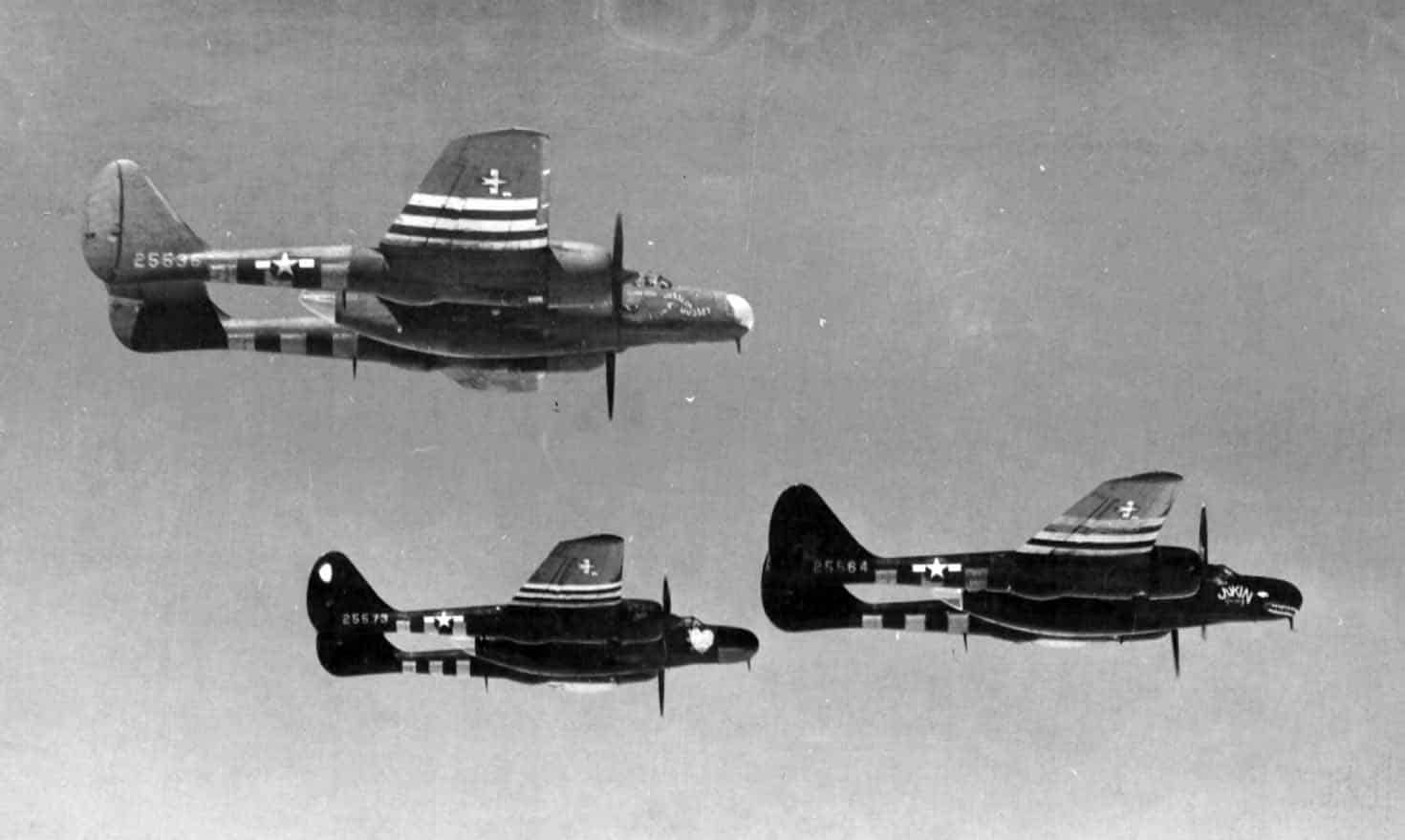
After much back-and-forth with the RAF and comparisons between the P-61 and the de Havilland Mosquito Mk XVII night fighter variant, P-61s began flying operational missions in the European Theater of Operations (ETO) on 15 July 1944. The first Black Widow to score an aerial victory was a 422nd Night Fighter Squadron (NFS) Green Bats P-61 which shot down a German V-1 buzz bomb. Three ETO crews achieved ace status in P-61s.
P-61s wearing invasion stripes after D-Day. Official US Air Force photograph
For the Rest of the Black Widow Story Bang NEXT PAGE Below.
Over the past decade, airline safety presentations have mostly moved from live demonstrations to video. As a ploy to make people pay attention to the videos, airlines have introduced more zany versions. From fashionable videos like Air France, to Virgin America’s catchy pre-flight video, these creative shorts definitely had their day. Some airlines continue to have unique videos to this day.
Take a look at a few of the trendsetters:
Virgin America Safety Video
This video kicked off a trend that many airlines adopted. Virgin America’s diddy was so popular that people sung the song on Virgin America’s last flight back in 2018.
Air France Safety Video
The Air France safety video from 2015 has a focus on fashion as well as buckling your seat belt.
American Airlines Safety Video
The American Airlines video seems to be a Virgin America-redux with less dancing but very little focus on an in-aircraft safety presentation. Instead, much of the demonstration takes place on a soundstage.
Emirates Continues To Buck The Trend
Emirates has never really been part of this trend though. They have always kept their videos professional. Emirates introduced a much more straight forward and formal safety video. This video clearly demonstrates how to operate safety equipment and how to find the nearest exit in case of evacuation. While some people might say that the new video is boring, conveying the important aspects of safety before a flight is a lifesaving endeavor. Incidents like the Japan Airlines evacuation last year show the importance of evacuating efficiently once the call to do so is given. Kudos to Emirates for keeping the focus where it should be.
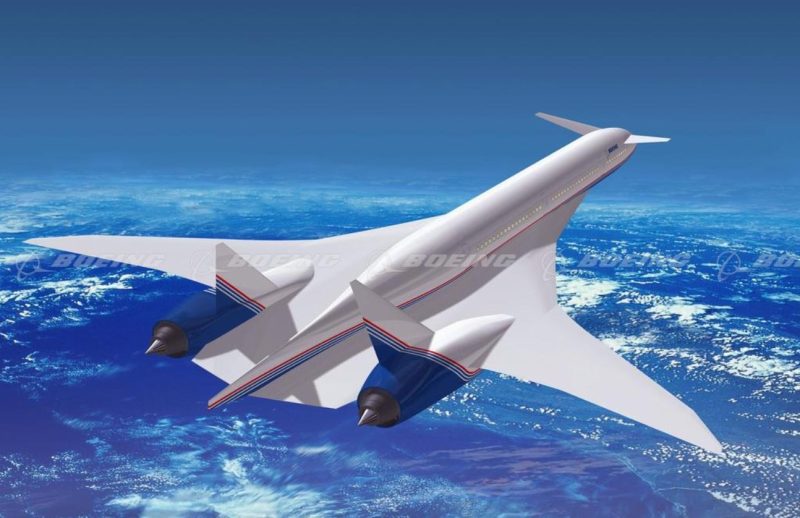
The Boeing Sonic Cruiser, a concept aircraft that never left the drawing board, has been the subject of much speculation in the aviation industry. Proposed in the early 2000s, this futuristic design promised to revolutionize air travel with its ability to cruise at near-sonic speeds. However, the true motives behind Boeing’s promotion of this aircraft remain a topic of debate.
Sonic Cruiser Could Have Been A Strategic Head Fake
One prevailing theory suggests that the Sonic Cruiser was a strategic move by Boeing to distract its main competitor, Airbus, from Boeing’s 787 program. According to this perspective, Boeing may have knowingly promoted the Sonic Cruiser to encourage Airbus to invest heavily in the A380 superjumbo jet program. If true, this strategy appears to have been successful, as Airbus poured billions into the A380, which has since faced declining demand.
Boeing executives initially made bold claims about the Sonic Cruiser’s viability. Alan Mulally, Boeing’s commercial airline executive at the time, confidently stated that the aircraft could be built economically and would be the right choice for travelers worldwide. The company argued that customers would be willing to pay a premium for speed, though they provided no data to support this assertion.
Timing Was Questionable
However, the timing of the Sonic Cruiser’s proposal and subsequent cancellation raises questions. Boeing ended the project a few months after Airbus began production of the A380, shifting focus to the more fuel-efficient but slower 787 Dreamliner. This move coincided with the post-9/11 economic downturn in the airline industry, when cost-cutting and fuel efficiency became a priority for carriers.
Critics of the strategic distraction theory point out some inconsistencies. The Sonic Cruiser and A380 were designed for different market segments, making it unclear why one would directly influence the other. Additionally, Boeing’s later introduction of the 747-8, another large aircraft competing in the superjumbo market, seems to contradict the idea that Boeing believed this sector was doomed to fail.
Publicity Stunt? Sonic Cruiser Was The Ultimate Paper Airplane
Image of Boeing Sonic Cruiser. Image: Boeing
An alternative explanation is that the Sonic Cruiser was simply a publicity stunt to generate media attention for Boeing at a time when it was losing ground to Airbus. The reveal did generate significant interest. Even if much of the attention was negative. Aviation fans lauded the unique design but many industry analysts panned the excessive fuel usage and questioned whether a jet could truly be efficient in the upper transonic region of flight.
Ultimately, the true reasons behind Boeing’s proposal of the paper airplane remain unclear. Both Boeing and Airbus executives never commented on the matter. Whether it was a cunning strategic move, a genuine attempt at innovation, or a marketing ploy, the Sonic Cruiser undeniably left its mark on the industry’s history without ever becoming more than marketing fodder and a few unique models in aviation enthusiasts collections.
Ok, we’ll admit it, the photo might look like click-bait. But I don’t know any other way to describe this video than miraculous. The pilot and passengers in the Cessna are very lucky to have survived this incident.
It appears that the Cessna was attempting a mountain crossing in the Colorado Rockies. When they determined that they could not gain enough altitude to cross the ridge, the aircraft made an abrupt turn and appeared to stall. Somehow though, they were able to regain control of the aircraft just feet above the ground. It highlights the importance of every pilot fully understanding the effects of aircraft performance and density altitude and only flying in areas where there is a viable escape option.
Account from the eye witness on the Cessna’s Flight
Jason Dunn posted the following video and pictures on Facebook this past week. In describing the incident, Jason said, “Crazy thing happened today while hiking up to Devil’s Thumb in Grand County. While sitting in the saddle on the ridge at the top (the Continental Divide), a plane came up the valley from the opposite (Boulder) side. It was clear the plane was struggling trying to clear the saddle. It was coming straight at us, and as a former licensed pilot, I was worried it would go into an aerodynamic stall. Then it either did, or the pilot made a last ditch effort to turn the plane around in a dead end valley before crashing into the mountain (or us). My son was further up the ridge line and caught most of it on video. As you can see, he made it by less than a couple of feet. If anyone has connection to Boulder municipal airport, you might send. I’m guessing he was coming from there and would love to have the video.”
Mountain Crossings In Single Engine Aircraft Require Great Skill And Planning, Even Then Things Can Go Wrong
Flying any aircraft in mountainous terrain requires preparation and route study. Flying a single engine aircraft in mountainous terrain can be done safely but requires even more preparation and contingency planning. The reduced air density at higher elevations affects aircraft performance. This can severely limit the ability for an aircraft to climb or maneuver. Additionally, mountains have dynamic weather patterns that can change quickly. Every pilot who needs/wants to fly in mountainous terrain must carefully calculate performance with the actual payload and fuel. They also need to carefully observe the weather forecasts, and plot egress points in the event that the weather deteriorates unexpectedly. It is recommended that inexperienced pilots first fly with other pilots who are familiar with the terrain to gain confidence and experience.
Familiarity with terrain and divert options are vital. Routes with box canyons should be avoided as much as possible, particularly when the crossing altitude is anywhere close to operational limits of the aircraft for a set of weather and density altitude conditions.
The combination of technical flying skills, thorough preflight planning, and continuous situational awareness makes mountain crossings in single-engine aircraft one of the most challenging and respected feats in general aviation.
We’re just glad these folks were safe and lived to fly another day.
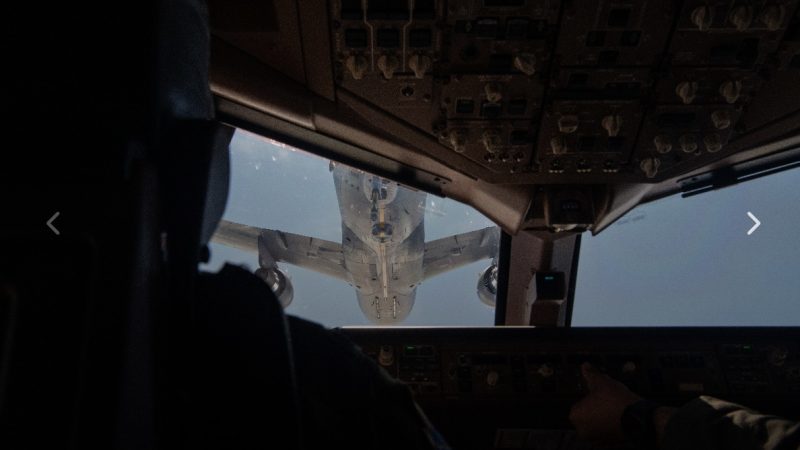
A KC-46 from the 22nd Air Refueling Wing accomplished something no 767 or KC-46 has ever done before. On June 29th, the jet took off from McConnell Air Force base and flew west. It landed 45 hours later back at McConnell completing an around the world journey.
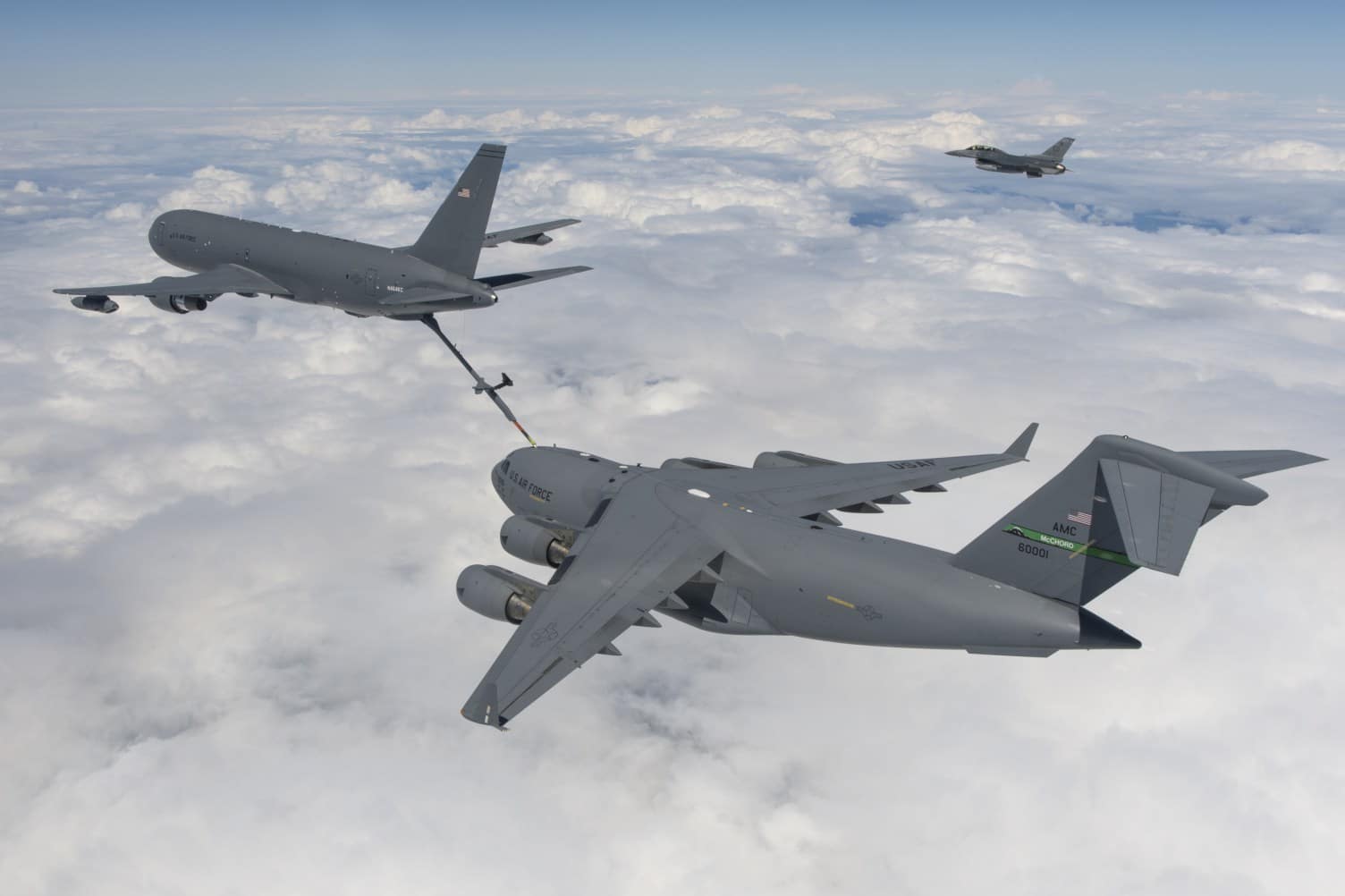
Along the way, the Pegasus also air refueled various aircraft including the C-17 Globemaster III, multiple B-2 bombers, F-15E Strike Eagles, and an other KC-46.
How the KC-46 around the world trip was accomplished
In order to accomplish such a feat and join the likes of other aircraft that have accomplished a similar feat, the jet also needed to be refueled along the journey. Two KC-46 jets were sent to Guam in advance of the record setting flight. A KC-135 from McConnell was sent to RAF Mildenhall. An additional Stratotanker was sent to the Middle East. There were additional backup aircraft available in case of contingency.
A KC-46 refuels a C-17 Globemaster III. Photo: Boeing
Crew Flew a super-augmented 48 hour day!
In order to accomplish the mission, the KC-46 crew compliment consisted of 4 experienced pilots, two boom operators, a flight surgeon, and two flying crew chiefs. The crewmembers took shifts, alternating between operating the jet and resting as the jet continued around the world.
While this super-augmented 48-hour day might not become the norm, the article released by Air Mobility Command did seem to indicate that this could be an option available in the future for mission planners. Brig Gen Donahue, Director of Operation for Strategic and Nuclear Integration at Air Mobility Command said, “Not only is the duration of this sortie notable, but we are completing it with just two basic crews. Previously, three pilots were able to fly as an ‘augmented’ crew for up to 24 hours. Going forward, AMC is looking to have a crew of four pilots operating for up to 48 hours.”
Not the first aircraft to accomplish the feat
Flying around the world nonstop is still a fairly rare occurrence. The KC-46 is not the first aircraft to make the journey nonstop. Back in 1949, a B-50 named Lucky Lady II, made the first around the world trip non-stop in 94 hours. The Rutan Voyager also accomplished the feat in 1986 without any refueling.
KC-46 Flies Around The World Nonstop 48
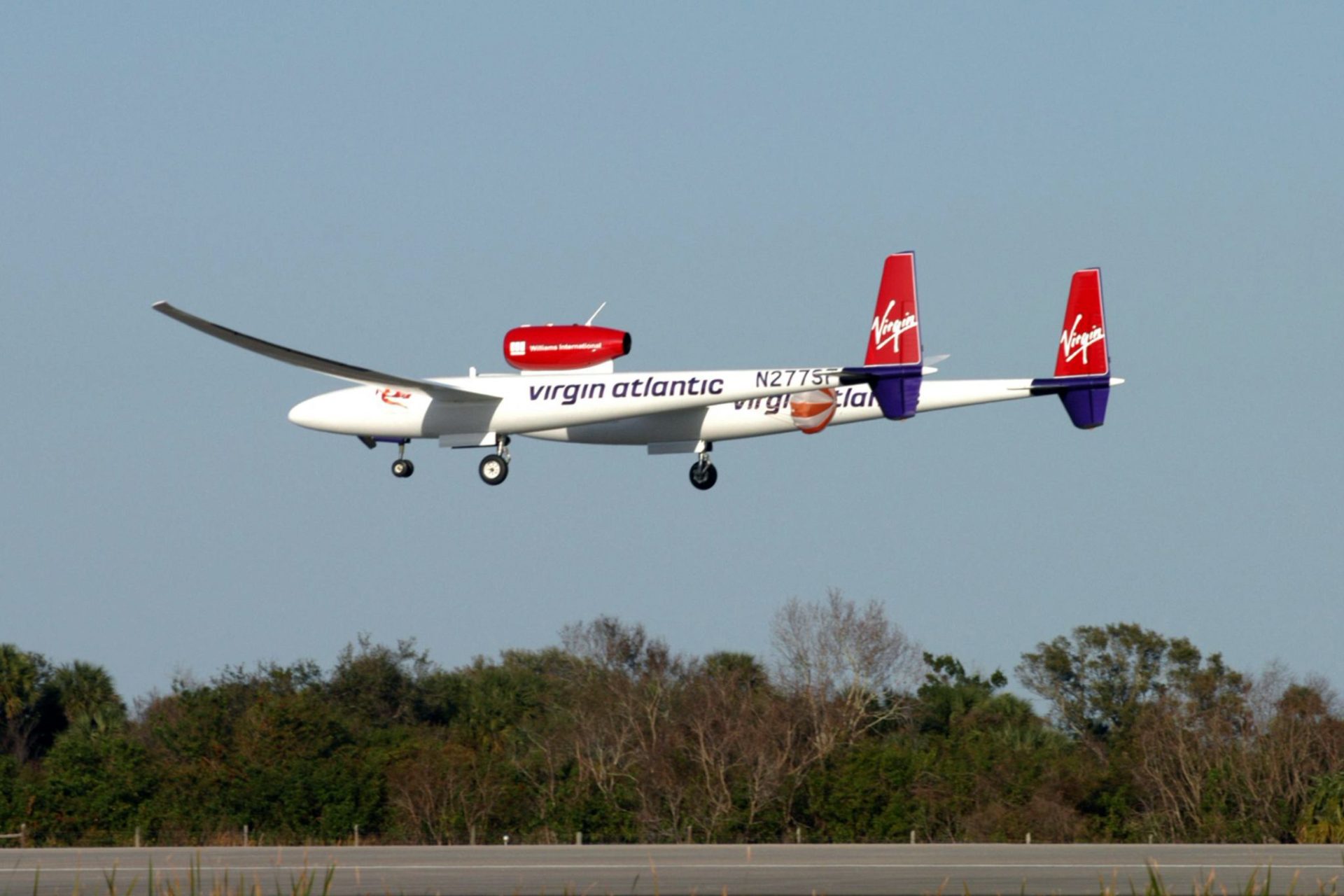
Virgin’s Global Flyer also accomplished the feat in 2005 with Steve Fosset at the controls. He was the first person to circumnavigate the solo globe nonstop.
Sadly Blue on Blue Sometimes Happens, But There’s More to This Story
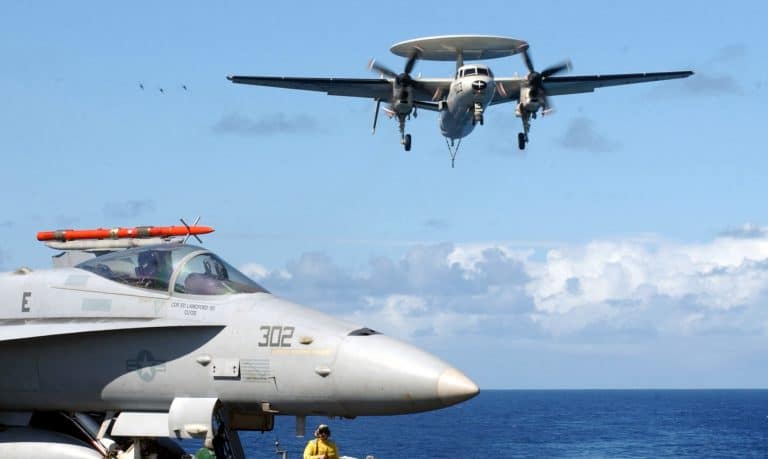
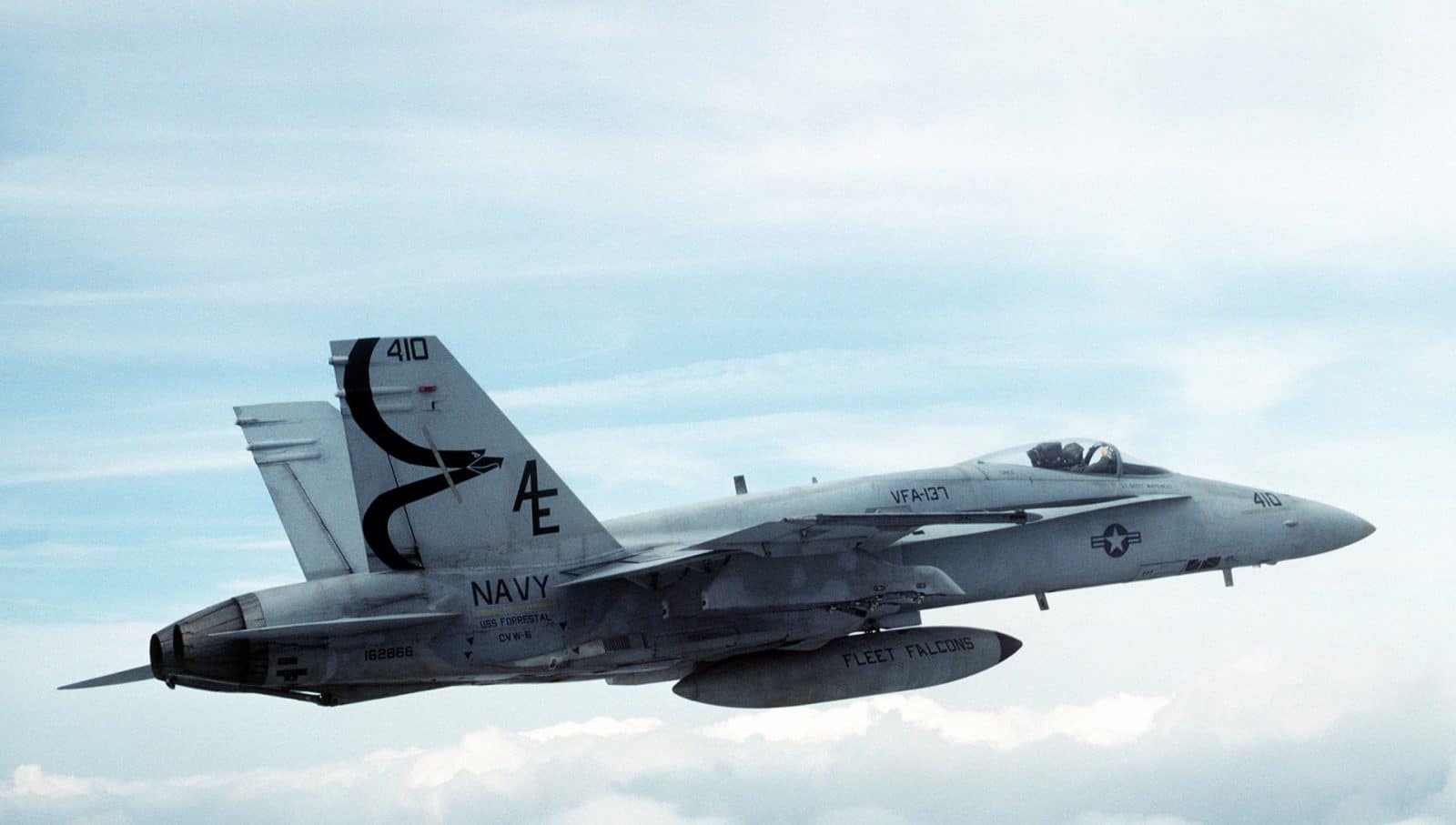
On 8 July 1991, a US Navy Grumman E-2C Hawkeye early warning and control aircraft was shot down by a US Navy McDonnell Douglas F/A-18C Hornet approximately 40 miles southeast of Cyprus in the eastern Mediterranean Sea. The Hornet utilized its M61A1 20 millimeter Vulcan cannon to splash the Hawkeye. There were no casualties. This was not a blue-on-blue mishap. Because this shoot-down was not an accident.
VFA-137 F/A-18C. Official US Navy photograph
When Do You Have to Sink Your Own?
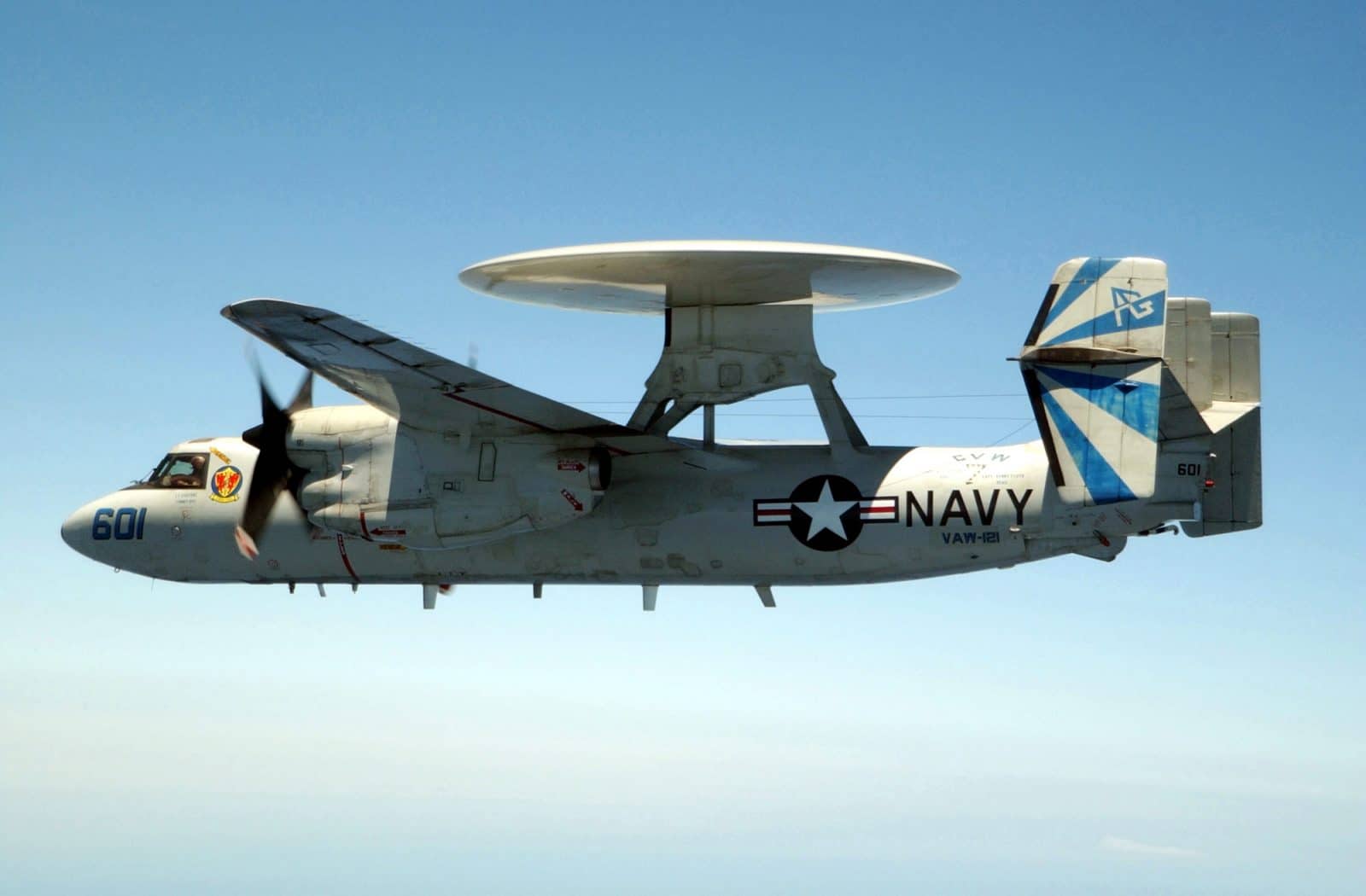
The Hawkeye, belonging to Carrier Early Warning Squadron ONE TWO TWO (VAW-122) Steeljaws, experienced an inflight fire in its starboard side Allison T-56-A427 turboprop engine nacelle during a routine monitoring mission while assigned to Carrier Air Wing SIX (CVW-6) aboard the aircraft carrier USS Forrestal (CVA-59). Forrestal was in the area as part of the forces committed to Operation Provide Comfort. The aircraft’s onboard fire suppression systems were unable to extinguish the fire. With few options available to them and the Hawkeyes’ crew in grave danger, a decision had to be made quickly.
VAW-121 E-2C. Official US Navy photograph
A Harrowing Experience That Ended Safely for the Crew
The Hawkeye, AKA Hummer, carried a crew of five- pilot LCDR John M. Yurchak, co-pilot LT Vincent C. Bowhers, Jr., and systems operators/controllers LTJG Robert A. Forwalder, LTJG John S. Lemmon, and LTJG Terry S. Morris. Knowing that the aircraft was not recoverable and fearing that the E-2C might fly into a populated area before coming down on its own, the aircraft commander ordered the crew to exit the aircraft and they did so via parachute. Then LT William “Maggot” Reilly, flying a VFA-132 Privateers F/A-18C Hornet, gunned the Hawkeye down.
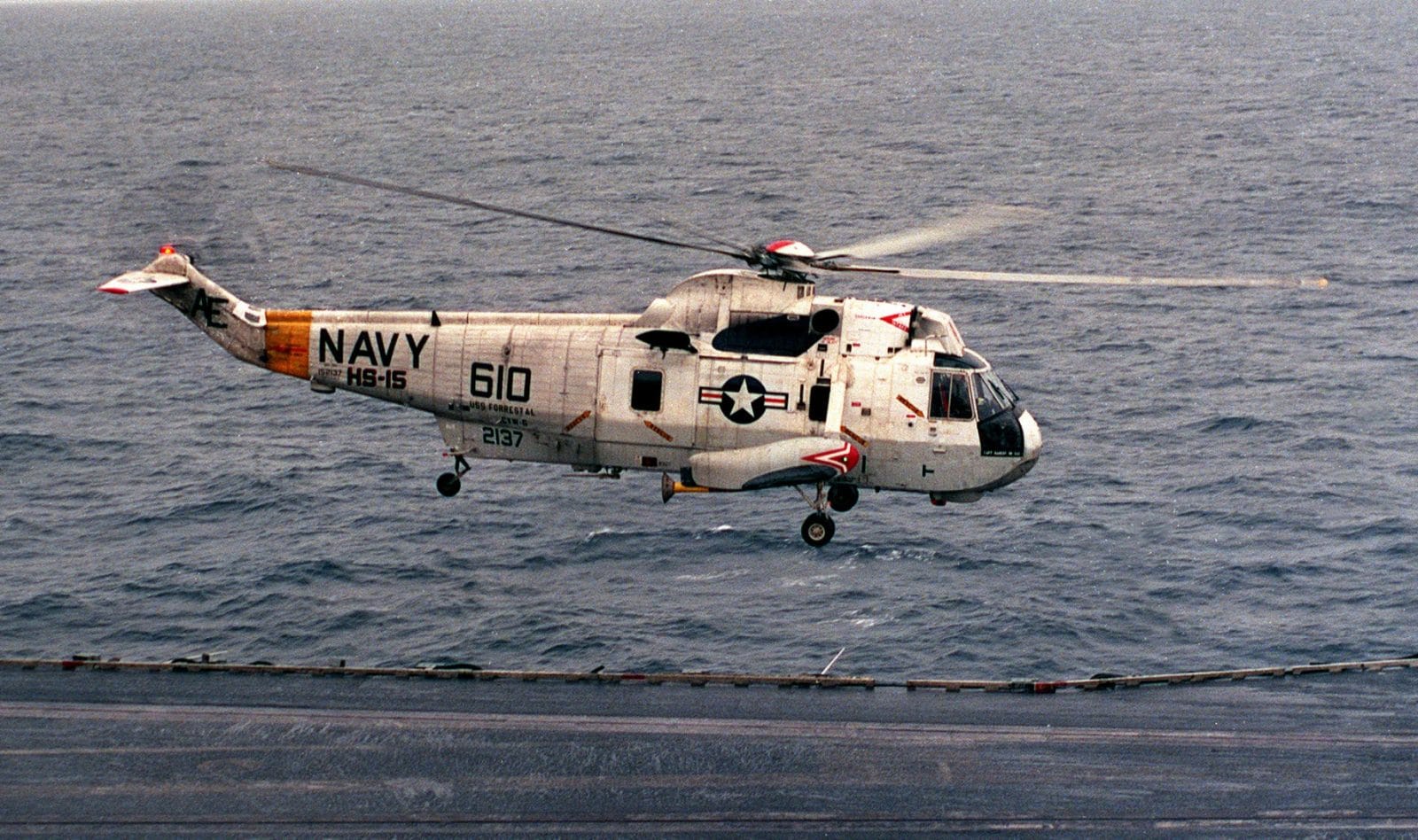
Ironically, “Maggot” scored the Forrestal’s first aerial victory during this “engagement.” All five Steeljaws crew members were rescued with no significant injuries by HS-15 Red Lions Sikorsky SH-3H Sea King helos from the Forrestal and by the Ticonderoga-class guided missile cruiser USS Yorktown (CG-48).
HS-15 SH-3H. Official US Navy photograph
CVW-6 Lineup Aboard the Forrestal in the Med
During this, Forrestal’s final combat deployment, CVW-6 consisted of VF-11 Red Rippers and VF-31 Tomcatters flying the Grumman F-14A Tomcat, VFA-132 Privateers and VFA-137 Kestrels flying the McDonnell Douglas F/A-18C Hornet, VA-176 Thunderbolts flying the Grumman A-6E Intruder, VAW-122 Steeljaws flying the Grumman E-2C Hawkeye, VAQ-133 Wizards flying the Grumman EA-6B Prowler, VS-28 Gamblers flying the Lockheed S-3B Viking, and HS-15 Red Lions flying the Sikorsky SH-3H Sea King. The deployment began on 30 May 1991 and concluded on 21 December 1991.
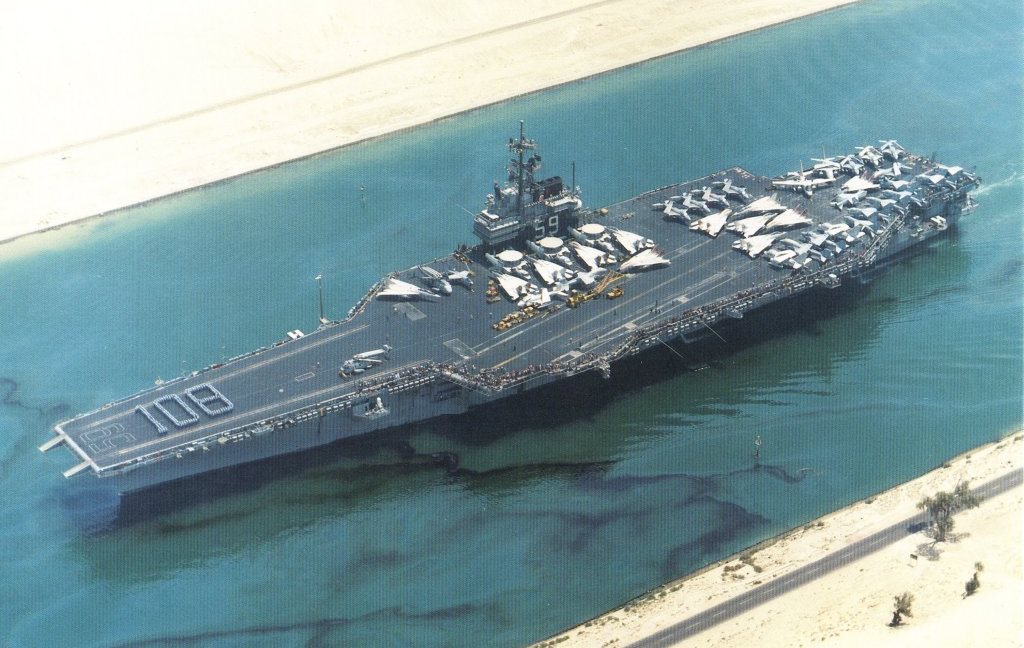
USS Forrestal marking 108 days at sea. Official US Navy photograph
As we slog our way through midsummer heat and humidity, we often hear the question: How hot is too hot for airlines to operate?
It’s summertime, so you know it’s typically going to be hot this time of year. If you are living in parts of Southern California, Nevada, or Arizona, temperatures can get obscenely hot this time of year. High temperatures in the 100s (F) are common.
Just last year, in 2024, those areas saw temperatures soar even higher than usual. Palm Springs reached a new all-time record high of 124 degrees Fahrenheit or 51.1 degrees Celsius. Las Vegas topped out at 120 degrees Fahrenheit, breaking a record high for a city used to hot summers. When is it too hot for airlines to continue operations?
The answer lies in both aircraft and human performance
Phoenix Sky Harbor International Airport (PHX) | IMAGE: Photo by John Cameron on Unsplash
Both aircraft and the people who support operations are affected by the heat. The aircraft itself is affected by increasing temperatures. Aircraft performance is affected by what pilots call density altitude. As air temperature increases, the density of the air decreases, which increases density altitude. Confused?
Density altitude is just a number, measured in feet. This means that an aircraft’s wing and engine performance are negatively affected because the aircraft performs as if it is operating at a higher altitude than the actual altitude (height above sea level) of the aircraft in which it is operating.
Due to the less dense air at the higher temperature, the wings generate less lift at the same airspeed than they would at a lower temperature or altitude. Aircraft engines are also less efficient at higher temperatures.
This translates into longer takeoff distances required for a given aircraft weight. The video below by YouTube creator Speedbird283 shows an Airbus A321 with a long (but totally safe) departure roll out of Phoenix during the summer.
It’s all about the density altitude
With such extreme operating temperatures, even modern airliners have limitations. The takeoff distance required increases as density altitude increases. This means that an airliner will need both a longer runway and a higher takeoff speed to carry a similar payload than if it were operating at an airport with a lower density altitude.
Planes are also limited by their max tire speed. In some cases, the aircraft could technically accelerate to a certain speed and liftoff in the required runway. However, it would exceed a limitation of the tire’s maximum speed meaning that the tire could destruct if operated at a higher ground speed than its limitation.
Prior to departure, operators also have to factor in climb performance after takeoff. Even if an aircraft can safely takeoff in the available runway distance, they have to be able to climb at a certain gradient to avoid terrain, buildings, and other obstacles. Even more limiting, regulations require that carriers ensure that aircraft can safely out climb obstacles after takeoff even if the aircraft loses an engine.
How do airlines adjust when it is so hot?
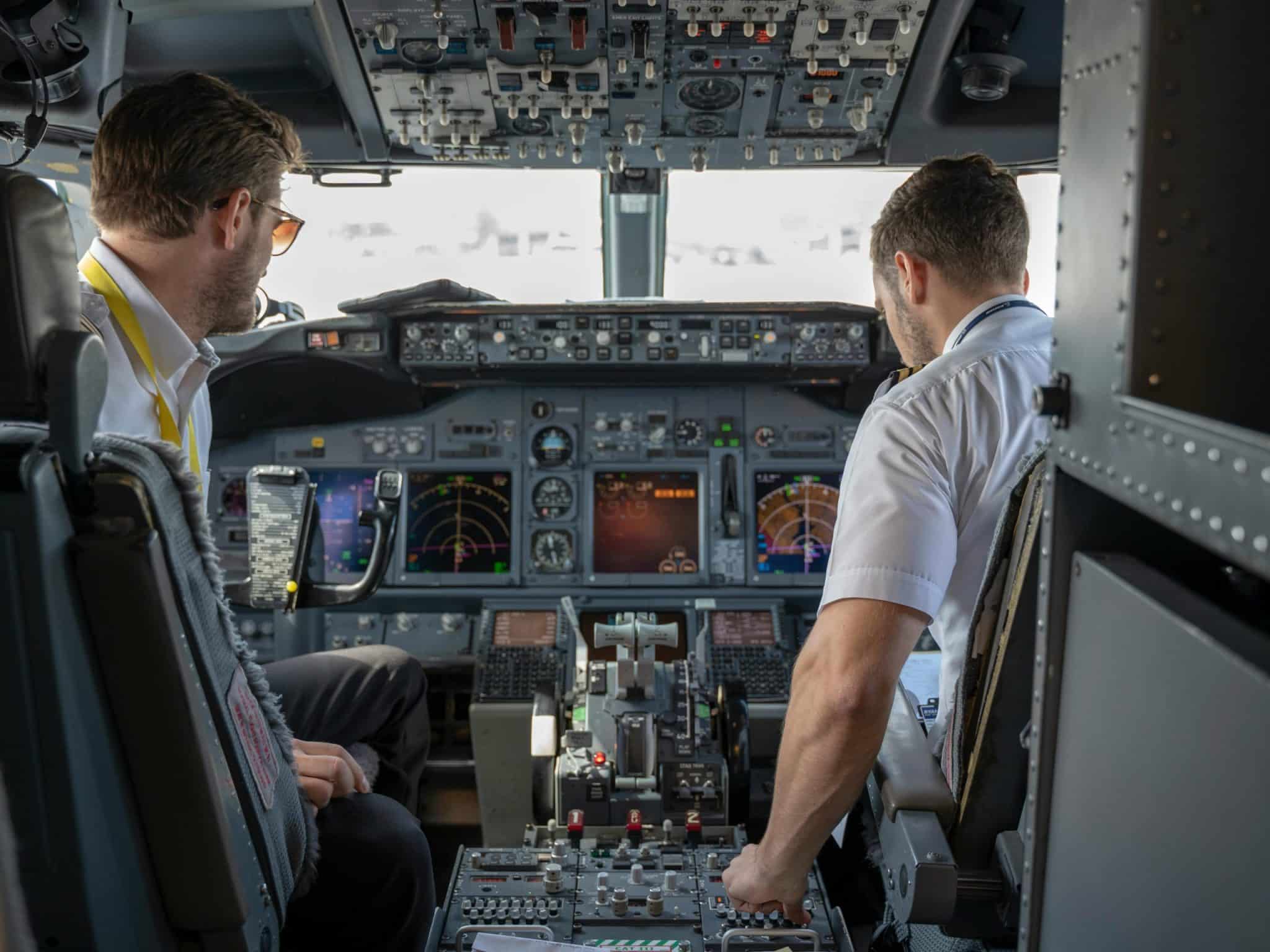
Two pilots in the cockpit | IMAGE: Photo by Rafael Cosquiere via pexels.com
Airlines have a multiple options to deal with aircraft performance issues. It starts with the airlines scheduling their most capable aircraft in areas where they are likely to encounter hot weather. That is why you will see plenty of 757s and less CRJ-200s at ‘high and hot’ airports like Phoenix, Las Vegas, and Palm Springs.
Airlines will also proactively adjust their schedule by season so that flights likely to have performance limitations(due to longer stage length, more payload) depart in the morning or evening when its cooler. If that is not possible, then airlines will be forced to reduce payload. They will typically defer less time-sensitive cargo first, followed by non-revenue passengers.
If performance limitations are still too great, the airline will seek volunteers to lessen the load. Less preferable, airlines will take off with less fuel by planning a fuel stop at an intermediate location. This option is least preferred because it disrupts the flying schedule. Delays induced by a fuel stop are an inconvenience for aircrews, schedulers, and passengers alike.
Heat can also affect landing performance. In ‘high and hot’ conditions, landing distances are lengthened as higher landing speeds are required for a given length. This results in longer brake cooling times that limit the speed at which an aircraft can be turned around for its next flight. In rare conditions, aircraft might not even be able to fly an approach to a runway because their performance in the event of a missed approach might be too limited.
It’s not just aircraft performance, people are affected by the heat too
We all know that high temperatures and humidity affect people, too. The heat negatively affects ramp personnel, provisioning, fuelers, and operations.
As the temperature rises, these workers must be given more frequent breaks to avoid heat stress and even heat stroke. And if you’ve ever mowed your yard on a hot day, you know that oppressive heat negatively affects how fast and efficiently you can complete the job. These breaks and delays must be factored into airline schedules as well.
Additionally, passenger comfort is also a concern. APUs and ground air do not cool as well in such high heat conditions. This can make aircraft passenger cabins unbearable even if the airplane itself can safely operate in the conditions.
Back to the original question, how hot is too hot for airlines?
Like most questions, the answer depends. A Boeing 737 can technically operate at temperatures as high as 54 degrees Celsius or 129 degrees Fahrenheit. However, the max fuel temperature is limited to 49 degrees Celsius. Additionally, many airlines only have performance information up to 50 degrees.
A Delta Connection CRJ-200, operated by Skywest Airlines, on the ramp at Elko Regional Airport (EKO) | IMAGE: Elko Regional Airport on Facebook
Smaller airlines like the/infamous CRJ-200 (you know…the Nickelback of the skies) are even more limited. They can only depart with a maximum temperature of ISA+35 degrees Celsius or around 118 degrees Fahrenheit.
The bottom line? When it gets hot, almost all people tasked with operating an airline become concerned and review aircraft performance, operations, and passenger comfort more closely. Who is already looking forward to cooler temperatures this fall?
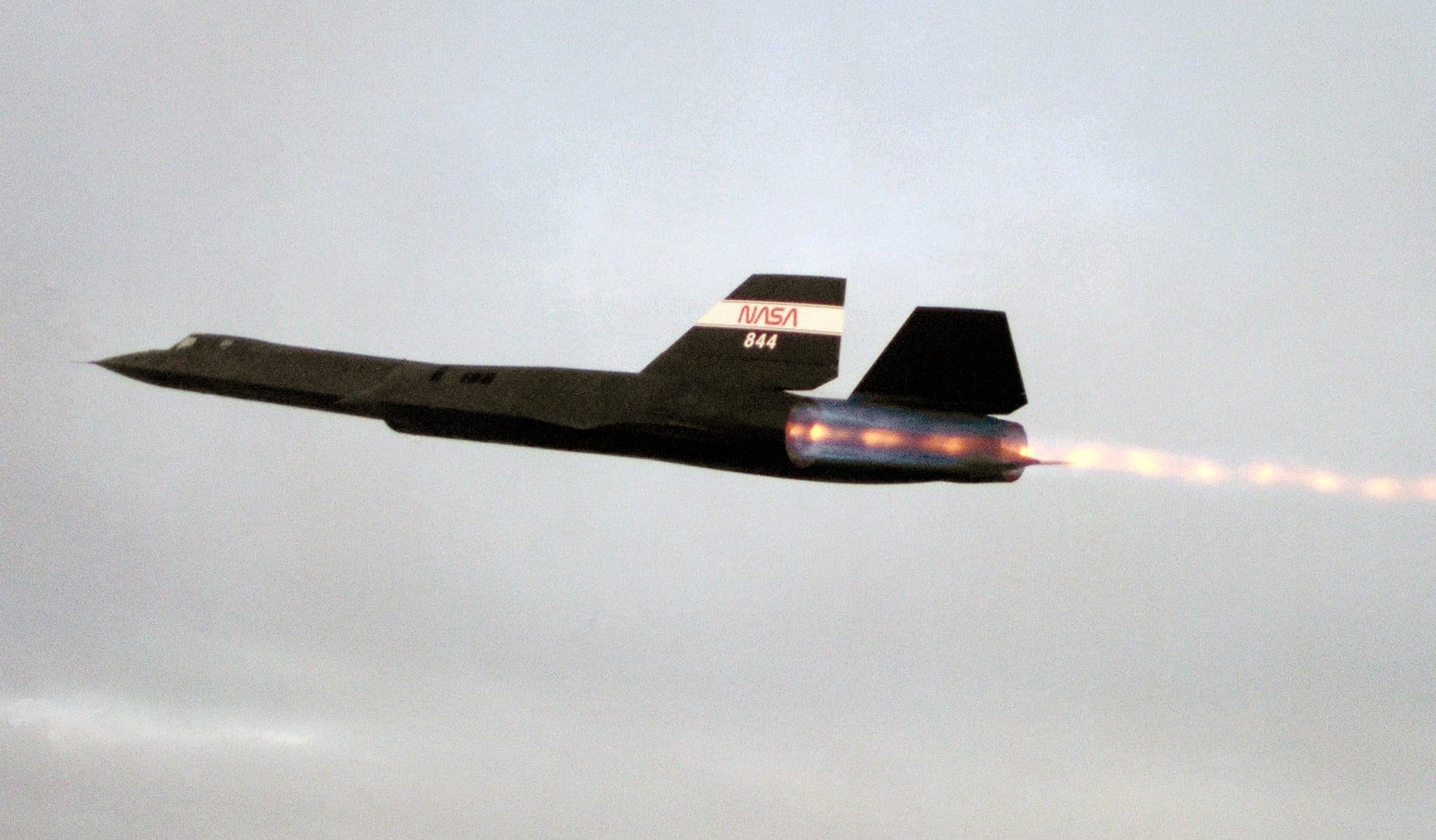
When thinking about the fastest aircraft in history, the SR-71 top speed is always at the top of an avgeek’s mind. This long-range strategic reconnaissance aircraft, developed in the 1960s using slide rules, models, and wind tunnels, continues to captivate aviation enthusiasts, young and old, with its unparalleled speed and performance.
SR-71 Blackbird Top Speed: Breaking Records
The SR-71 Blackbird top speed set several records during its operational lifetime. On 28 July 1976, it achieved an absolute speed record for a jet-powered, air-breathing aircraft, reaching a staggering 2,193.167 mph. This record, showcasing the true SR-71 Blackbird top speed, still stands today.
Coast-to-Coast Demonstration of SR-71 Blackbird Top Speed
The SR-71 is located at the Udvar-Hazy Smithsonian Museum at Dulles International Airport. Image: Avgeekery
The SR-71 top speed allowed it to fly from Los Angeles to Washington, D.C. in just 64 minutes and 20 seconds, averaging 2,144.8 mph! This journey usually takes about 5 hours and 30 minutes for most mere mortals! What’s even more impressive is that this feat was accomplished on its final mission, a fini-flight to the Smithsonian Museum at Dulles International Airport (IAD), where you can see it on display.
SR-71 Top Speed Untouchable Even In Combat
SR-71 at Sunset. Image: USAF
Despite numerous missions over hostile territory, no SR-71 was ever shot down by enemy fire. The SR-71 Blackbird top speed, combined with its ability to fly above 80,000 feet, made it nearly impossible for adversaries to shoot down. When enemy missiles were launched, the standard evasive action was simply to accelerate, showcasing the ability of the SR-71 Blackbird’s top speed.
Refueling Required to Achieve SR-71 Blackbird Top Speed
To achieve its remarkable top speed, the SR-71 needed aerial refueling shortly after takeoff. The aircraft’s fuel tanks leaked on the ground, allowing for thermal expansion at high temperatures during flight. This unique feature was crucial for the Blackbird to be able to achieve its long-distance spy missions.
Landing Speed Was High, Too
The SR-71 Top Speed: Incredible Records Still Stand 60
Even when landing, the SR-71 was faster than most jets on approach. Final approach was typically around 170 knots or about 195 mph. While not as fast as the Space Shuttle, it still required tires that could withstand the high speed and forces upon landing.
The SR-71 top speed made it a fan favorite. The jet was one of the few planes that could outrun its enemies. Its futuristic shape and materials set it apart from other jets of its era. Even today, it still looks futuristic. Over 60 years after it first took to the skies, it still holds some of the most distinguished aviation records. It’s a testament to the vision, creativity, and tenacity of Lockheed’s Skunk Works team from that era.
It’s a question I, and other pilots, have heard through the years. Early on in our flight training and aviation careers, situations arise that might be startling at first. But once we see that situation time and again (gusty winds, icy runways, an amber light on our panel indicating a malfunction) we no longer are startled and calmly take it in stride.
Being A Pilot Is More Than Just Hand Flying Skills
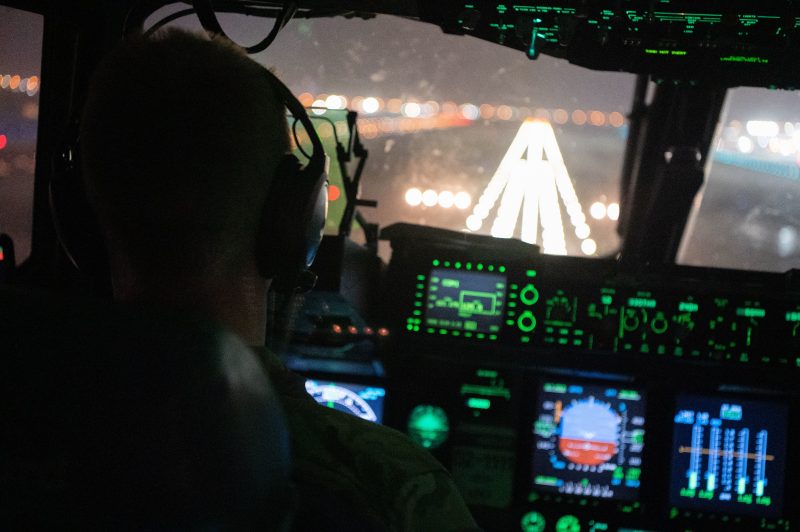
Besides just hand-flying skills, pilots learn about positive and negative behaviors and their effects in aviation. In addition to actual flying lessons, pilots are taught to avoid distractions and channelization, which is focusing on one item at the expense of many others. We strive not to fixate on any one instrument but to scan the cockpit continuously to ensure everything; our heading, altitude, airspeed, and the engine performance, remain as they should.
Throughout training, we learn to remain steady under pressure and not become distracted or a hothead. Crew members who tend to become overly excited, or “ping” during a flight are known as Pingers. One is such person was a KC-10 flight engineer with the last name of McClary. In our squadron, he was known as Scary McClary for his tendency to fly off the handle. One morning, I was taxiing the KC-10 onto the runway for takeoff. As I started to push the throttles up, Flight Engineer McClary started yelling, “Shit! Shit! Shit!”
I yanked the throttles to idle, whipped my head around and asked, “What’s wrong?!”
McClary yelled, “I dropped my damn pen!”
I couldn’t believe it. That was not the time or place for his meaningless outburst.
Read all of David Dale’s stories here in his new book:
Ok, So I might have lost my cool every once in a while
I’ll admit I’ve lost my cool occasionally, but for the most part friends remark about how even-keeled I remain in various situations. One particular time that I got upset was during Desert Storm as a KC-10 copilot during an air refueling mission. My job was to monitor up to four different radios simultaneously: VHF, UHF, and HF (Very High Frequency, Ultra High Frequency , and High Frequency, respectively). The KC-10 had two civilian-style VHF radios, which airliners use daily to talk to Air Traffic Control. One of our two radios was set to an emergency broadcast frequency, for potential critical information or an unscheduled air refueling request from a desperate fighter. The primary VHF radio enabled us to talk to the E-3 AWACS for traffic separation in the combat arena and a military UHF radio was used for air refueling purposes with our receiver aircraft.
During the combat operations the frequencies could be jammed or interfered with by the enemy. On this day, there was static and a loud squeal coming through my headset from the VHF and UHF frequencies. After over two hours of all this constant static and a piercing squeal in my headphones I finally yelled, “Goddamn these fucking radios!”
The cockpit got very quiet for a bit after that. Our flight engineer, Sgt. Mike McKittrick, told me after the flight, “I’ve never seen you get mad before.”
Compartmentalization is key in the cockpit
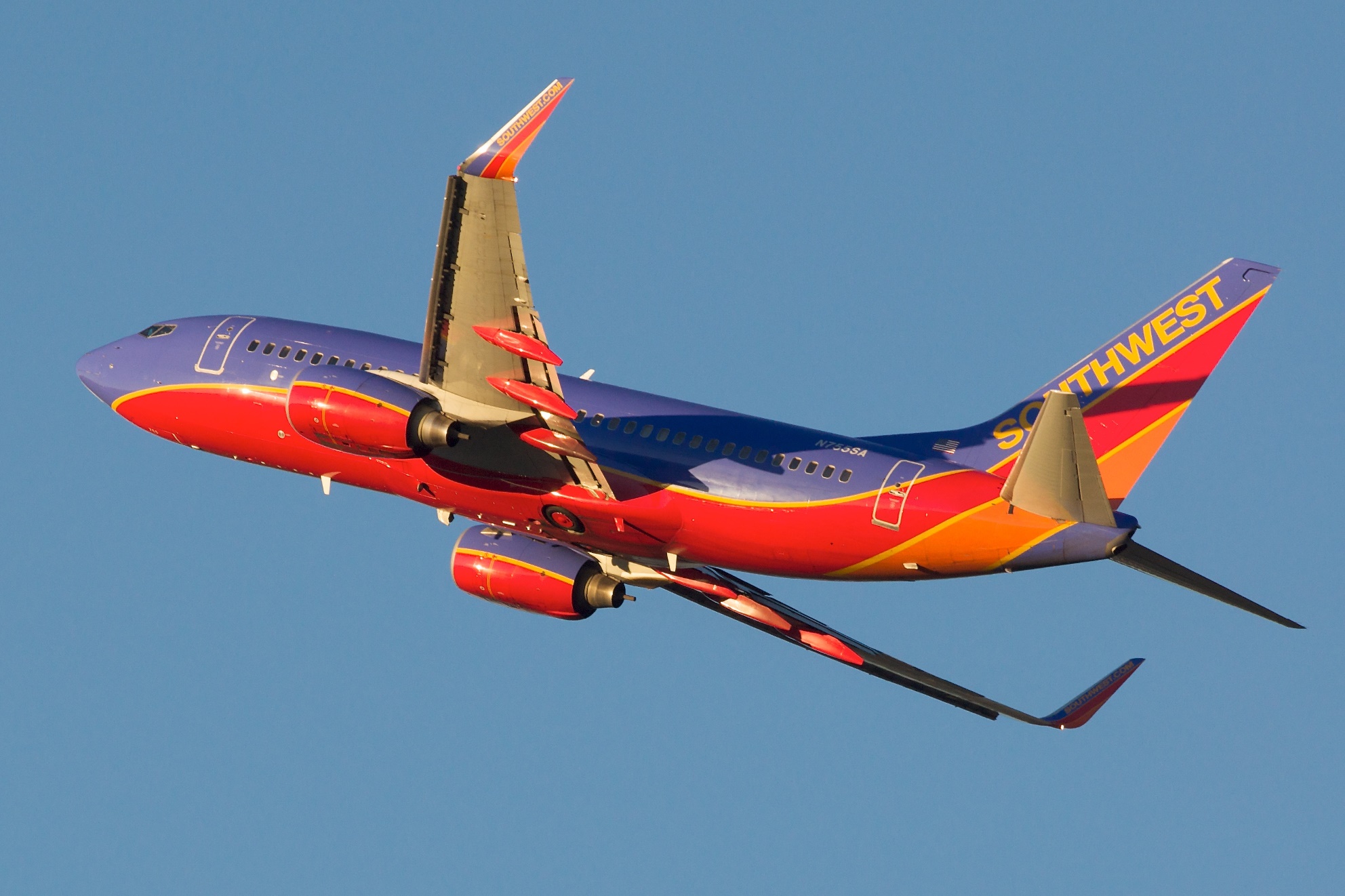
Southwest 737-700 image via BRIYYZ
Aviators try to compartmentalize our feelings during a flight. We are taught to leave our problems on the ground. Our job is to focus on the mission at hand and not be distracted by what may be going on with our family or friends back home. As we share stories with non-aviators, some may wonder about our feelings during a given situation. While we aren’t robots, we may tend to be a bit emotionally dead about concerns for others or whether a situation should make us freak out. Panic doesn’t do anybody any good.
Do I get nervous? Definitely. I don’t want to make a mistake or be the cause of an accident. But I remain focused on the mission.
At the end of the day, we are just mission oriented people
The military knows that there is a spectrum of focusing on the mission versus focusing on people. We have to balance which comes first; are we Mission-oriented, or People-oriented? I’m a Mission-oriented person, which may strike some as being callus. As the saying goes, there is a time and place for everything, and I joined the military to carry out their missions. Thankfully, I was surrounded by likeminded team members who enjoyed the satisfaction of getting the job done.
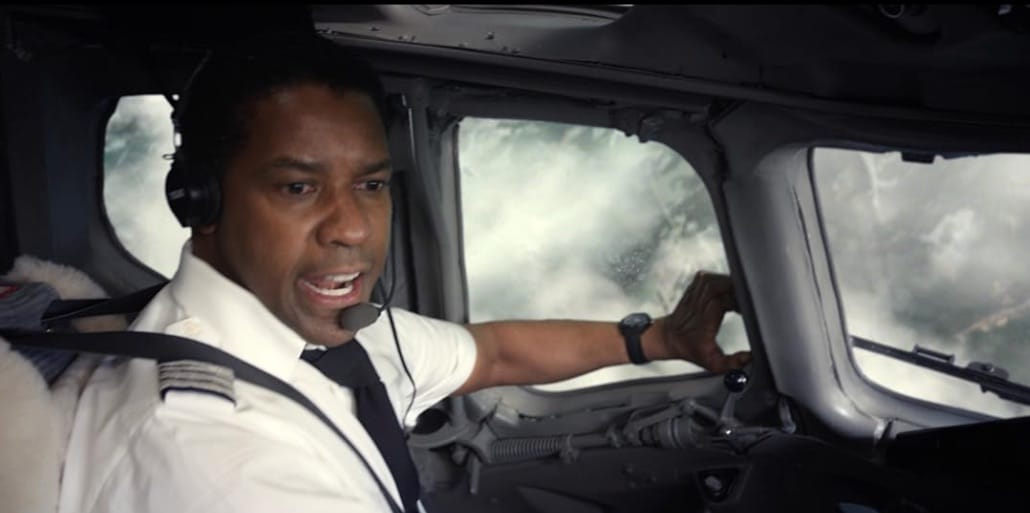
Denzel Washington in the movie Flight. Image: Flight, the movie
Hollywood likes to overdramatize any situation and depict emergencies with a lot of yelling and excitement. In reality, as the evening news plays the audio tapes from any aircraft incident, people are often struck at how calm the flight crew sounds over the radio. A lot of that is the result of our simulator training. We’ve seen these emergency situations before. Now we need to take the correct actions and hope we sound cool on the radios.