Air Force Plans To Retire The KC-10 Refueler Later This Year
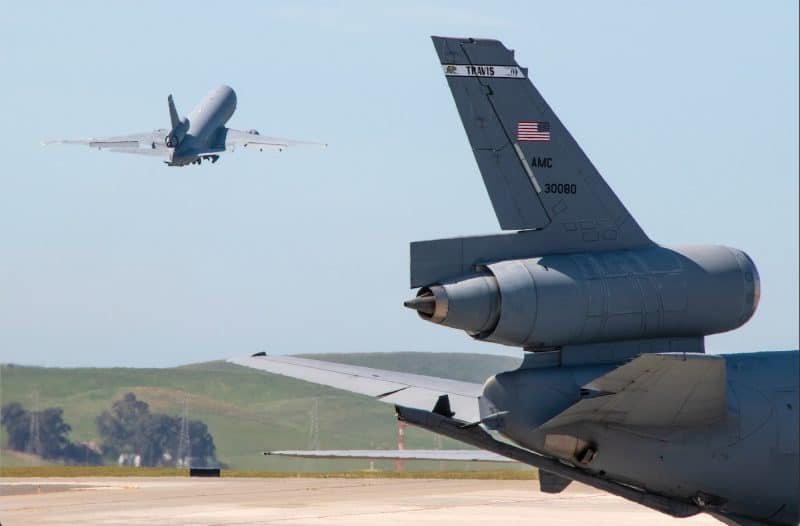
Last week, maintenance airmen at Travis Air Force Base completed their final A-Check inspection. It marks the end of an era for the McDonnell Douglas made trijet. The Air Force plans to retire the fleet at the end of the fiscal year in September.
The weeklong inspection ensures that the aircraft is airworthy and operational. Over the course of the week, they looked over every system and made necessary repairs to address any wear and tear on the aircraft. Even with the aircraft retiring in a few months, the inspection is still required for airworthiness.
Final KC-10 Maintenance Check Completed as Retirement Looms 2
Mixed Feelings About Retirement
The KC-10 was first introduced into the Air Force fleet back in 1981. The jet has served the Air Force well during every conflict from Panama, Yugoslavia, Gulf War, Post 9/11 support, Iraq, and Afghanistan.
“It’s a bummer that the KC-10 is leaving,” said Senior Airman Thomas Mihalyi, 60th Aircraft Maintenance Squadron inspection section team member. “We are moving to a whole new era of aircraft. We have already done four or five A-checks on the KC-46, and we are all learning.”
The KC-46 will replace the KC-10 at Travis Air Force base. With only two engines, the converted and upgraded Boeing 767 will slip in to most of the KC-10 missions.
While the KC-46 Pegasus continues to grow in its mission capabilities, it has not yet earned the adulation that the KC-10 received during its 40 years of service. Over the course of its operation it received two nicknames from its crews, “Big Sexy” and “Gucci”. Big Sexy referring to its sleek lines and attractive profile, Gucci referring to its features and crew/passenger comforts that were unheard of in a refueler before its arrival.
One KC-10 Will Be Preserved
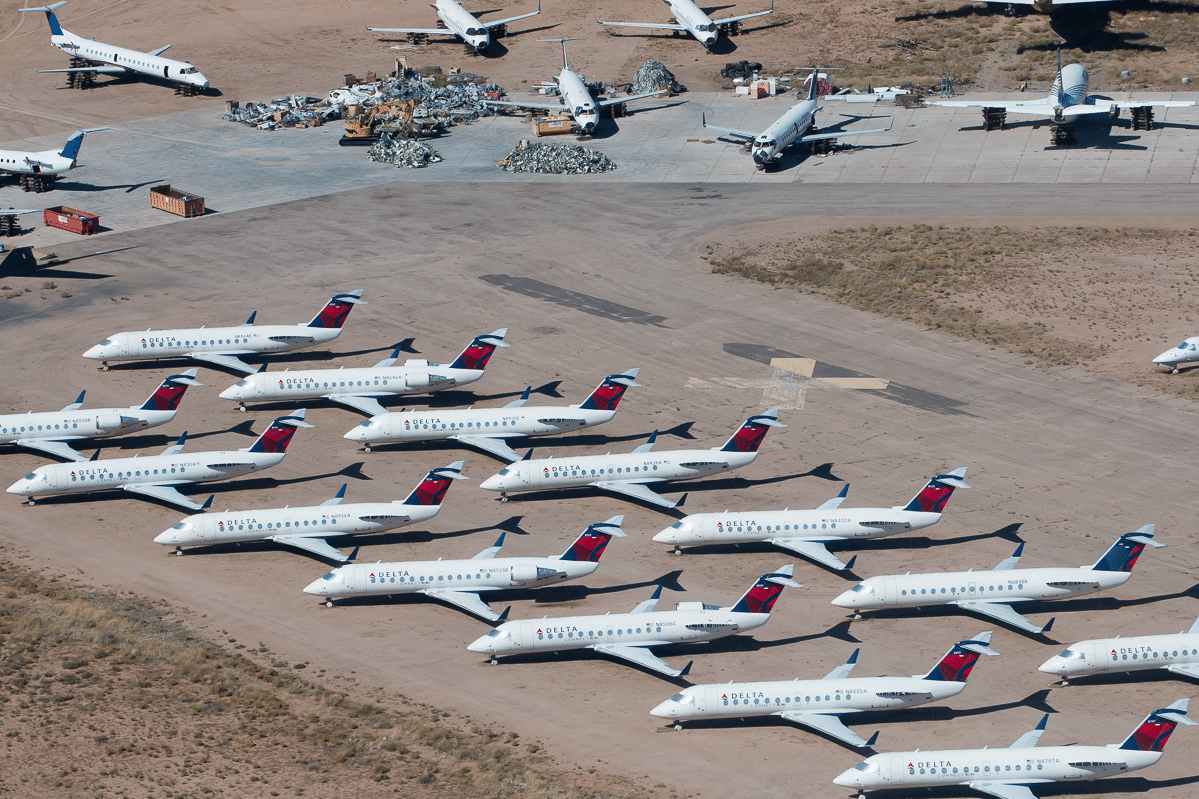
While most of the jets will be stored at Davis Monthan AFB, one lucky jet will be preserved at the National Museum of the Air Force near Dayton AFB in Ohio. The Travis-based jet was delivered to the museum this past April for a future exhibit.
Fokker was a Dutch aircraft manufacturing company in the 20th century. At one point, it was the world’s largest aircraft manufacturer. After 86 years, it ceased operations. How did one of the world’s largest aircraft manufacturing company in the 1920s and 1930s eventually fold? What lessons can we learn from it?
How Fokker Began
Fokker was founded in 1912 by Anthony Fokker, an aircraft engineer who was said to have worked in the aviation sector all his life and was at the time a twenty-year-old studying in Germany. After a successful but brief career of partnering with another aircraft engineer named Hugo Junkers, to build aircraft for the German Air Force during the First World War, Anthony Fokker returned to the Netherlands where he was from started his own aircraft company which he christened his last name – Fokker.
In no time, due to the innovative prowess of the company, the company extended beyond the Netherlands and soon had branches in the United States. Fokker continued to build aircraft for military purposes, some of which were used in the Second World War, but the company majorly built civil aircraft for commercial purposes.
Fokker experienced its most successful period in the 1920s and 1930s. It was at the time the largest aircraft manufacturing company in the world. The company was still succeeding when the founder, Anthony Fokker died after surgery for an infection.
After and during the Second World War, Fokker experienced certain setbacks and the company filed for bankruptcy before finally ceasing operations in 1996.
Initial Success aka – Fokker’s Golden Age
Fokker’s most successful period was in the 1920s and 1930s. It was at that time, the largest aircraft manufacturing company in the world, owning factories both in the Netherlands and in the United States.
The company made a lot of profit from producing military aircraft that were used by several countries in the First and Second World Wars. One of Fokker’s military aircraft, produced in 1935, was called Fokker D.XXI, a fighter aircraft
How Fokker's Aviation Empire Crumbled 5
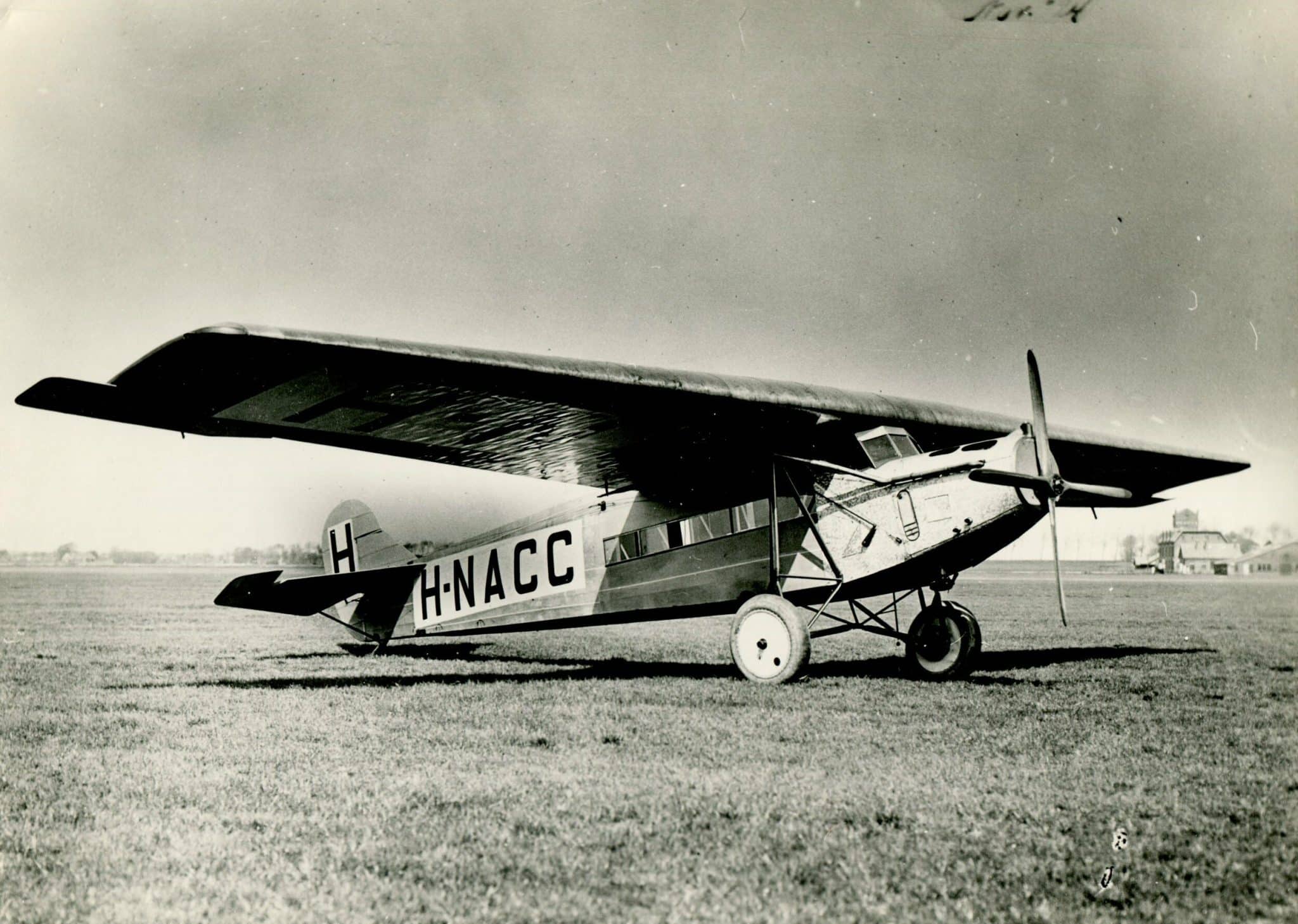
Fokker also established itself as an aircraft manufacturing company that made regular technological innovations in the aviation industry. One such innovation was the Fokker F.VII Trimotor. It operated both as a passenger and cargo airport and was popular in the 1920s and 1930s.
The Fokker F.VII aircraft was also a huge achievement of Fokker in the 1920s and 1930s. It was a popular aircraft at the time and flew long-distance including transatlantic routes. Compared to its competitors at the time, the Fokker F.VII was more comfortable to travel in.
Another achievement of Fokker was surviving the death of its founder. When the founder of Fokker, Anthony Fokker died in 1939, he left behind a company that had grown to be renowned and maintained its position as a world-leading aircraft manufacturing company for some years after his death.
Fokker’s Many Challenges
Despite Fokker’s early achievements, the aircraft manufacturer had an equal number of challenges.
During World War II, Fokker faced severe challenges. Its factories in the Netherlands were taken over by the Germans, and production was forcibly redirected to serve German military needs. Some facilities were damaged by bombings during the war.
After the war, Fokker struggled to recover from these setbacks. However, the company managed to rebuild and adapt to the changing aviation landscape. In the 1950s and 1960s, Fokker found success with aircraft like the F27 Friendship and F28 Fellowship.
Fokker Turns a Corner
Fokker’s true renaissance came in the 1980s and early 1990s with the introduction of three new aircraft that represented a significant comeback attempt for the company:
1.) The Fokker 50, a turboprop airliner that was an updated version of the F27 Friendship. Fokker sold a total of 213 Fokker 50 aircraft.
How Fokker's Aviation Empire Crumbled 6
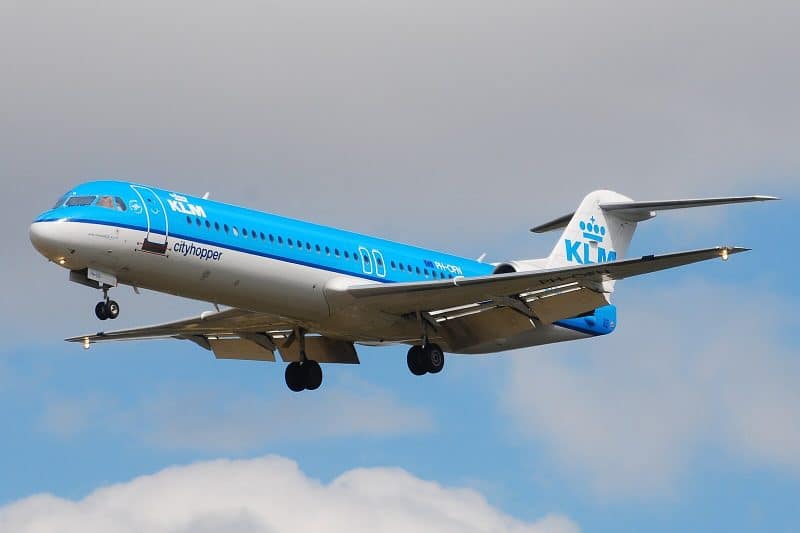
2.) The Fokker 100, a medium-sized jet airliner launched in 1988. It became quite popular with major airlines on regional routes, selling a total of 278 aircraft. (Seen below in a great video by Matt’s Aviation Channel.)
The Fokker 70, a shorter version of the Fokker 100, introduced in 1993. It was not nearly as successful as the Fokker 100, only selling 47.
For a time, it seemed that Fokker had successfully modernized its product line and secured its place in the evolving aviation industry.
However, despite this renaissance, Fokker faced mounting challenges. The development costs for the new aircraft were substantial, and the company struggled as the Fokker 100 sales trailed off. Additionally, the Fokker 70 sales never materialized, limited by the high cost of operation just as scope clauses in the United States limited operations. Additionally, Fokker faced intense competition from other aircraft manufacturers, especially larger companies with greater resources.
The company also went through multiple changes in ownership and restructuring attempts to stay afloat. These constant changes led to instability and uncertainty in the company’s direction. This turned off potential customers.
Fokker Folds
Ultimately, despite the success of its new aircraft models, Fokker’s financial struggles proved insurmountable. The combination of high development costs, tough competition, and changes in the aviation market led to the company’s bankruptcy in 1996.
While Fokker’s journey ended in 1996, the legacy of its later aircraft continues. The Fokker 50, 70, and 100 remained in service with various airlines for many years after the company’s demise, a testament to the quality and durability of Fokker’s final generation of aircraft.
Fokker’s assets were sold off. These assets included manufacturing facilities, aircraft designs, and intellectual property.
Fokker lives on today…sorta
Fokker’s demise had a significant negative impact on the Dutch aerospace industry. Its demise resulted in job losses for former employees and also caused a shift in the company’s aviation industry.
To this day, some Fokker aircraft are still in operation, primarily on niche routes in developing regions around the world.
There are many reasons why I feel fortunate to have grown up in the 80s and 90s.
We were the last generation to experience life without the Internet and social media. Today’s kids will never know what it’s like to spend the entire day outside – parents unaware of your whereabouts – only to come inside once the street lights turned on. Going out with friends meant great music, $1/gallon gas, and a Big Mac value meal that cost $2.59.
While all that was great, what stands out the most for this avgeek is the quality of planespotting back then. It didn’t matter if you were at a mid-size airport or a major hub – chances are, you’d see a varied display of metal. Gone are the days when something other than narrowbody Boeings and Airbuses dominated the skies.
That’s why I was thrilled to visit one of the world’s most amazing places to watch planes – the famous In-N-Out Burger near LAX. During a recent trip to California, I had some time to kill, and I just knew I had to visit this renowned avgeek paradise.
The LAX In-N-Out is Mere Feet from the End of Runway 24R
A Qantas A380-800 from Sydney (SYD) arriving at Los Angeles (LAX) on 22 June 2024 | IMAGE: Dave Hartland
Nestled just a stone’s throw away from the eastern end of Runway 24R at Los Angeles International Airport (LAX), this spot offers a level of planespotting that few places in the world can match.
I was excited to spend a few hours on a busy Saturday afternoon watching a neverending flow of jetliners of all sizes arriving and departing. In typical Southern California style, the weather was stunning. Sunny with a light westerly breeze, visibility over ten miles, and a temperature of 76 degrees F. Perfection! Off the western end of the airport property, I could make out the stubborn marine layer that had recently completed its daily retreat back to the Pacific after a cloudy morning.
Getting There
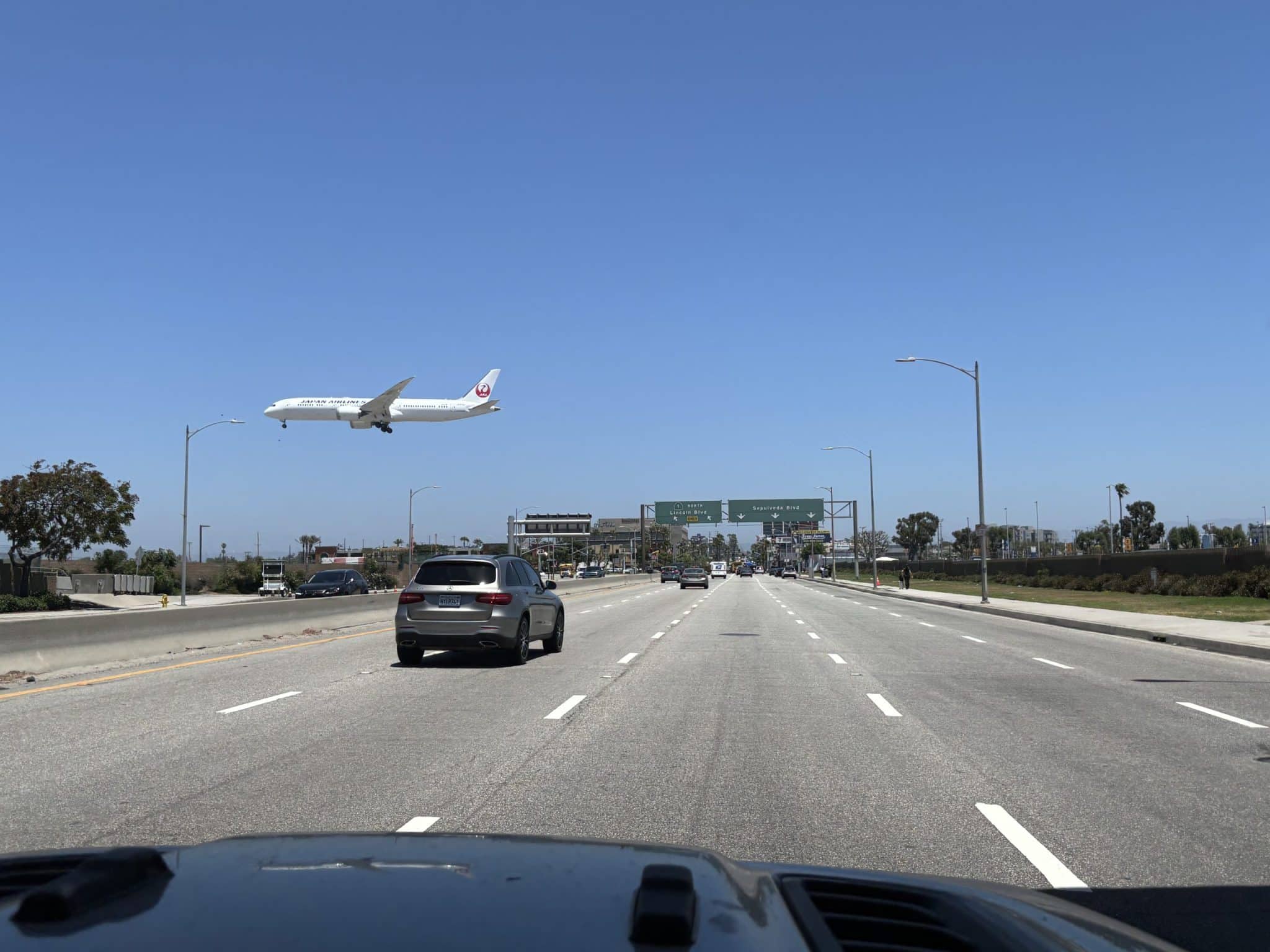
A Japan Airlines Boeing 787-9 from Osaka (KIX) lands at Los Angeles (LAX) on 22 June 2024 | IMAGE: Dave Hartland
Getting to the LAX In-N-Out was relatively easy on a Saturday afternoon. Traffic wasn’t horrible, and I found a fantastic parking spot right in the restaurant lot.
You’ll find the restaurant at 9149 South Sepulveda Blvd. in Los Angeles. I approached from the south via the 405 and the 105, offering great views of the sprawling airfield. To my right were the cargo ramps for Korean Air, Singapore Airlines, FedEx, Lufthansa, Delta Air Lines, DHL, China Airlines, and Air France. The 105 led me to Highway 1, which then took me underneath Runways 25L and 25R – the two southernmost runways at LAX. (Sidenote: If you were to continue straight on the 105, it turns into E. Imperial Ave. Clutters Park is on the southwest side of LAX along E. Imperial Ave. in El Segundo. It is another excellent spot to watch planes with an unobstructed airfield view. It can get crowded, so be sure to secure your spot early in the day!)
Enjoy a Burger and Unbelievable Views
A British Airways Boeing 777-300ER on short final for Runway 24R at LAX | IMAGE: Dave Hartland
After I found my premium parking spot, I scoped out the landscape while my wife ordered us lunch (a Double Double for me – no mustard – and a Diet Coke). The restaurant was packed. But I wasn’t interested in being inside. Outside, there is ample seating, including bench seats and umbrellas. We secured a seat and enjoyed our lunch while watching the planes land. However, I wanted to be even closer to the action. Across W. 92nd St. from the In-N-Out is a nicely maintained city park full of grass, sidewalks, and beautiful trees. Best of all, you get unimaginably close views of arriving aircraft as they are mere seconds from touching down.
The LAX In-N-Out and the city park across W.92nd St. next to Runway 24R | IMAGE: Dave Hartland
A Diverse List of Arrivals
One of the things that I love about this particular spot is the diversity of equipment that LAX receives. It is truly a sight to behold. Sure, airports like Hartsfield, DFW, and O’Hare are consistently busy and have many spotting opportunities. But the quality of metal you see coming into LAX simply cannot be surpassed.
From narrowbody Boeing 737s and Airbus A220s to massive behemoths such as Boeing 747s and Airbus A380s, I am pretty sure I saw every type of equipment in the three hours I spent here.
The most frequent visitors were Delta and Southwest narrowbodies. However, peppered between WN and DL arrivals were heavies from the world over. Some of the arrivals included:
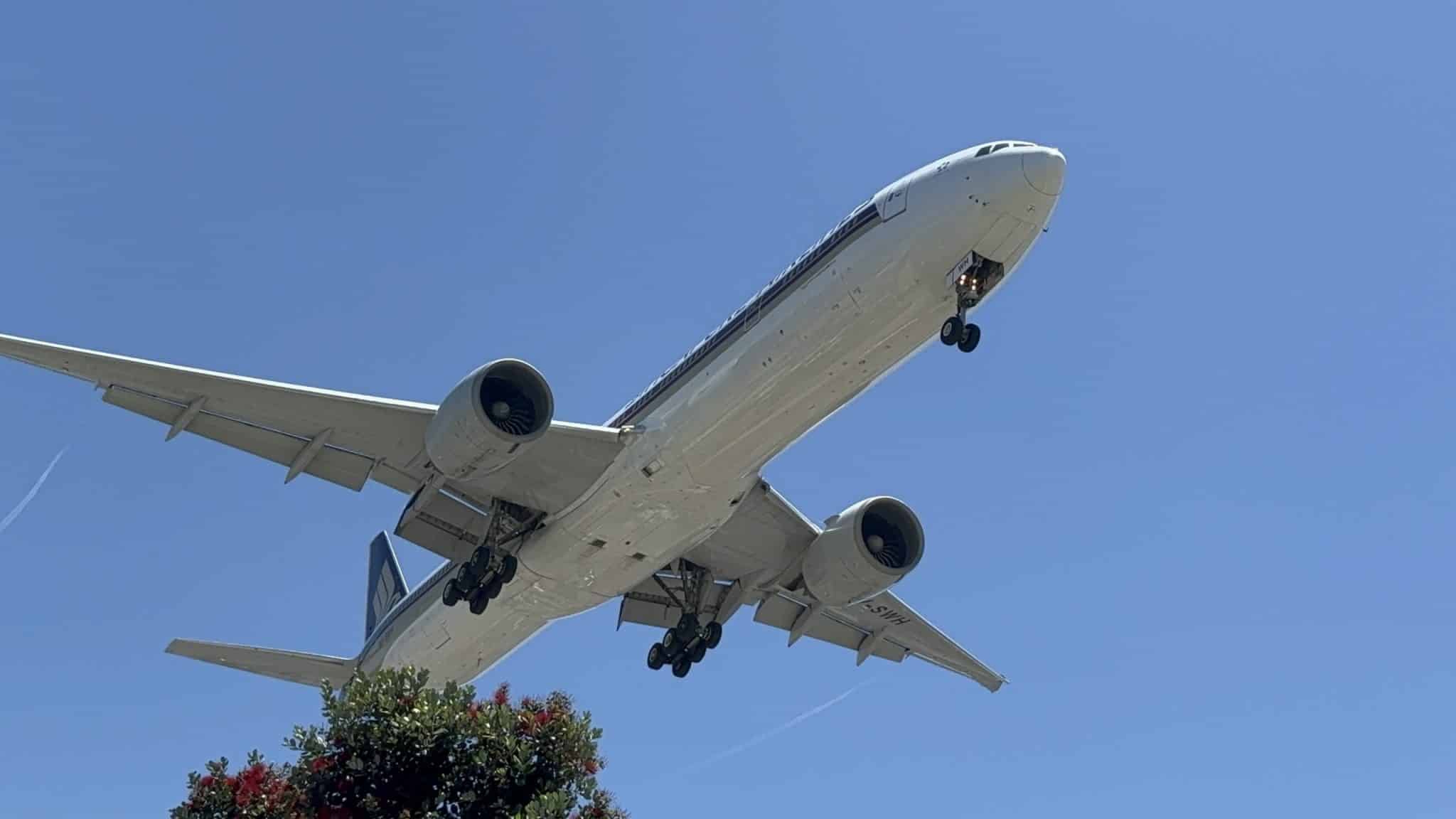
Singapore Airlines | Boeing 777-300ER | Origin: Tokyo Narita (NRT)
A Singapore Airlines Boeing 777-300ER from Tokyo Narita (NRT) landing at Los Angeles (LAX) | IMAGE: Dave Hartland
Air France | Boeing 777-300ER | Paris Charles de Gaulle (CDG)
An Air France Boeing 777-300ER from Paris (CDG) landing at LAX | IMAGE: Dave Hartland
American Airlines | Boeing 787-8 | Tokyo Haneda (HND)
An American Airlines Boeing 787-9 from Tokyo Haneda (HND) on short final for Runway 24R at LAX | IMAGE: Dave Hartland
British Airways | Boeing 777-300ER | London Heathrow (LHR)
A British Airways Boeing 777-300ER from London Heathrow (LHR) on short final to Runway 24R at LAX | IMAGE: Dave Hartland
Lufthansa | Boeing 747-8 | Frankfurt (FRA)
A Lufthansa Boeing 747-8 from Frankfurt (FRA) lands at LAX on 22 June 2024 | IMAGE: Dave Hartland
Qatar Airways | Airbus A350-1000 | Doha (DOH)
A Qatar Airways A350-1000 from Doha (DOH) moments from touchdown at LAX | IMAGE: Dave Hartland
SAS | Airbus A350-900 | Copenhagen (CPH)
An SAS Airbus A350-1000 from Copenhagen (CPH) on short final to Runway 24R at LAX | IMAGE: Dave Hartland
Qantas | Airbus A380-800 | Sydney (SYD)
A Qantas Airbus A380-800 from Sydney (SYD) on short final to LAX | IMAGE: Dave Hartland
LOT Polish Airlines | Boeing 787-9 | Warsaw (WAW)
A LOT Polish Airlines Boeing 787-9 from Warsaw (WAW) seconds from landing at LAX | IMAGE: Dave Hartland
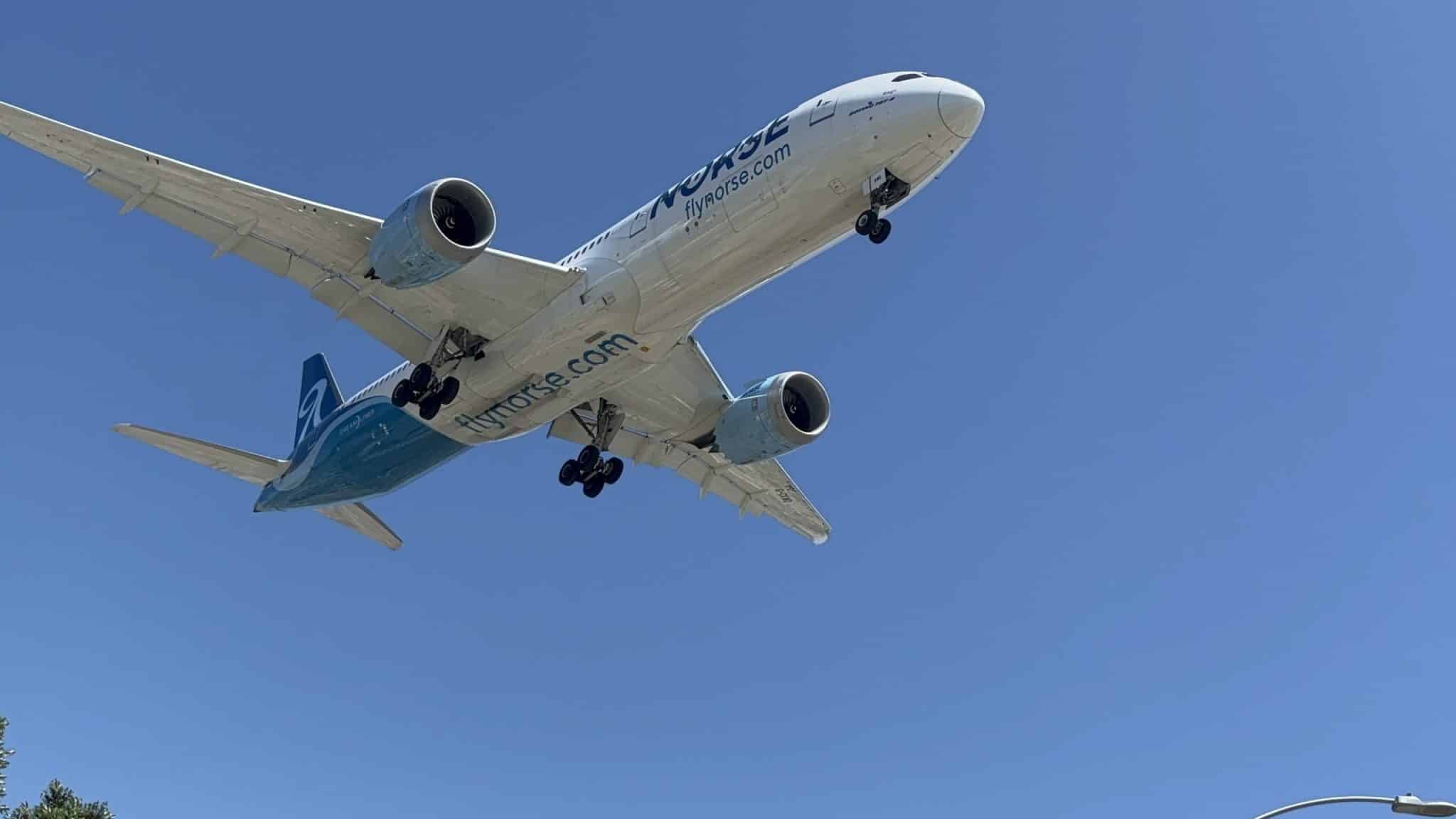
Norse Atlantic | Boeing 787-9 | London Gatwick (LGW)
A Norse Atlantic Boeing 787-9 from London Gatwick (LGW) on short final to Runway 24R at LAX | IMAGE: Dave Hartland
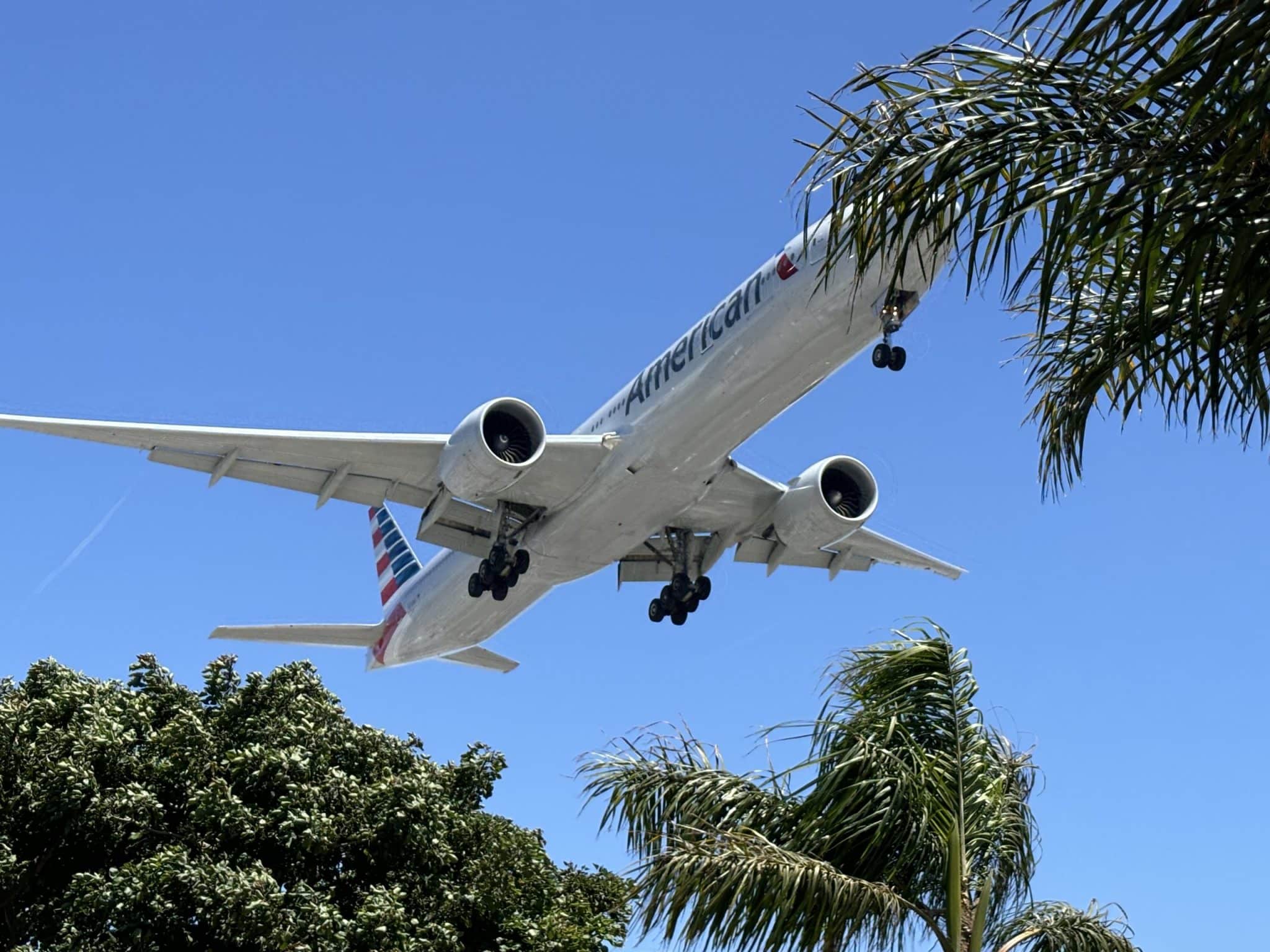
American Airlines | Boeing 777-300ER | London Heathrow (LHR)
An American Airlines Boeing 777-300ER from London Heathrow (LHR) on short final to Runway 24R at LAX | IMAGE: Dave Hartland
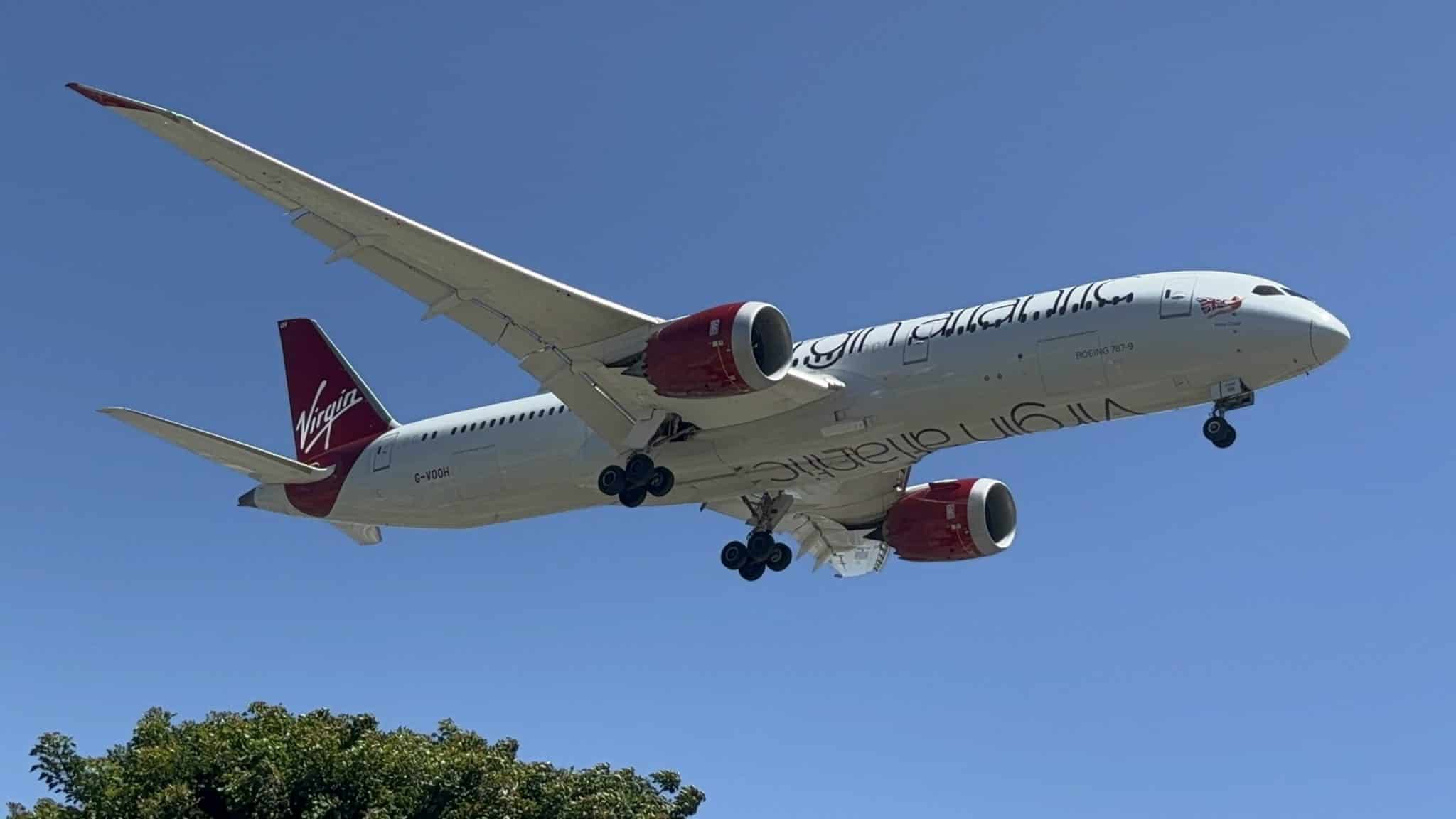
Virgin Atlantic | Boeing 787-9 | London Heathrow (LHR)
A Virgin Atlantic Boeing 787-9 from London Heathrow (LHR) lands at LAX on 22 June 2024 | IMAGE: Dave Hartland
Emirates | Airbus A380-800 | Dubai (DXB)
An Emirates Airbus A380-800 from Dubai (DXB) on short final to Runway 24R at LAX on 22 June 2024 | IMAGE: Dave Hartland
Calling it a Day
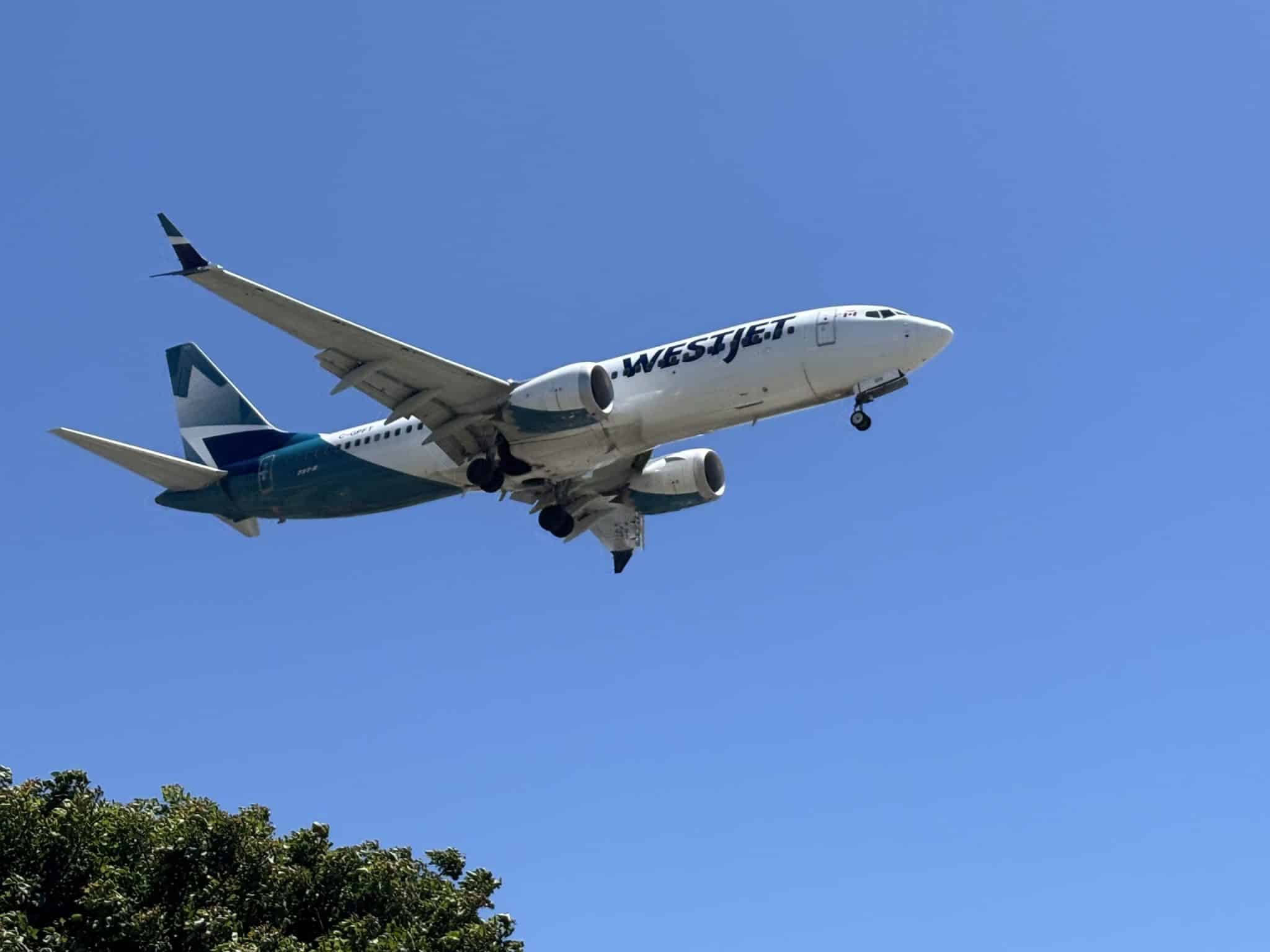
A WestJet Boeing 737-8 MAX from Toronto Pearson (YYZ) lands at Los Angeles (LAX) on 22 June 2024 | IMAGE: Dave Hartland
As plane after plane flew in, it was hard to know when to call it a day. Further complicating my decision, my flight tracking app showed hours upon hours of scheduled heavy arrivals, which I would love to see. It was indeed a conundrum for the ages.
My wife, who had returned to the car for a snooze by now, said we could hang out here all day if I wanted. However, I knew this was wifespeak for “I don’t want to stay too long.”
Despite visually confirming several heavies on the downwind for 24R, I had to bite the bullet and walk back to the car.
As I did so, I felt grateful for the opportunity to cross such a significant item off of my avgeek bucket list. Spending an afternoon gawking over these beautiful engineering marvels is 100% my idea of a good time. I was especially thankful (and I may have gotten a tear in my eye) to see the ever-more-rare Queen of the Skies—the Boeing 747. That aircraft represents everything I love about aviation and takes me back to a nostalgic longing for a time when the world was just…simpler.
A Lufthansa Boeing 747-8 seconds away from touchdown on Runway 24R at LAX | IMAGE: Dave Hartland
The Best Time to Visit the LAX In-N-Out
To make the most of your planespotting experience, timing can be crucial. Here are some tips to help you plan your visit:
Peak Hours: LAX is one of the busiest airports in the world, with a constant flow of aircraft. However, peak hours for activity typically occur in the late morning and early afternoon. During these times, you can expect to see various aircraft types, from small regional jets (a rarity nowadays) to massive international airliners.
Arrive Early: Arriving early can help you secure a good spot, especially during peak hours when the area can get crowded.
Weather Conditions: Clear skies and good weather enhance the viewing experience. Southern California is known for its sunny climate, but it’s always a good idea to check the weather forecast before heading out. Luckily, the prevailing westerlies coming off the Pacific are pretty consistent, thus ensuring the almost constant use of Runway 24R. However, if there is an easterly breeze, consider visiting Clutters Park.
Special Events: Occasionally, LAX hosts special events or receives visits from rare or unique aircraft. Keeping an eye on aviation forums and social media can help you stay informed about upcoming events that might interest you.
A Word About Photography
A photographer takes photos of an approaching Airbus A380 at LAX on 22 June 2024 | IMAGE: Dave Hartland
For those interested in photography, be aware that it is a challenge to capture the perfect shot here because you are simply too close to the aircraft. That said, it is not impossible.
Equipment: A good DSLR or mirrorless camera with a telephoto lens will allow you to capture detailed shots of planes as they take off and land. However, even a smartphone can yield impressive results with the proper technique (I shot all the photos seen here on an iPhone 15).
Angles and Composition: Experiment with different angles and compositions to create dynamic and interesting photos. The low altitude of the planes provides a unique perspective, and the iconic In-N-Out sign can add a distinctive element to your shots. Unfortunately, backlighting is an issue for most of the day. You may need to play around with your settings or during editing for the proper lighting.
Timing: Patience is key. Wait for the right moment when the plane is perfectly aligned with the runway or the background to capture the most dramatic images.
Planespotting at the LAX In-N-Out is a Must-Do Experience for Every Avgeek
An American Airlines Boeing 777-300ER approaching Runway 24R at LAX | IMAGE: Dave Hartland
As a kid, I remember visiting airports around me, including Cleveland Hopkins (CLE), Buffalo-Niagara International (BUF), Pittsburgh International (PIT), and Toronto Pearson (YYZ). It wasn’t unusual to see all sorts of varied equipment types at those airports, especially at Pearson. But as fleets have become more vanilla in the new century – particularly post-COVID – planespotting just isn’t what it used to be.
At the LAX In-N-Out Burger, it is. It is like stepping back in time when planespotting used to be something glorious.
So, if whiffing jet fuel and enjoying the thunderous roar of jet engines while ingesting a delicious Double Double sounds like a fantastic way to spend a sunny SoCal afternoon, do yourself a favor and do it. It is a sensory experience unlike any other, and I firmly believe that no avgeek should go to their grave without having had this experience.
In the 1960s, the development of high-performance reconnaissance cameras offered greater resolution, but at a price.
Many of these systems were large and heavy, and the current high-altitude spyplane of the time, the first-generation variants of the Lockheed U-2, were unable to carry them. One of the premier recon optical systems developed at this time was the General Dynamics HIAC-1- a long-range, oblique camera with a focal length of 66 inches that allowed stand-off reconnaissance from high altitudes.
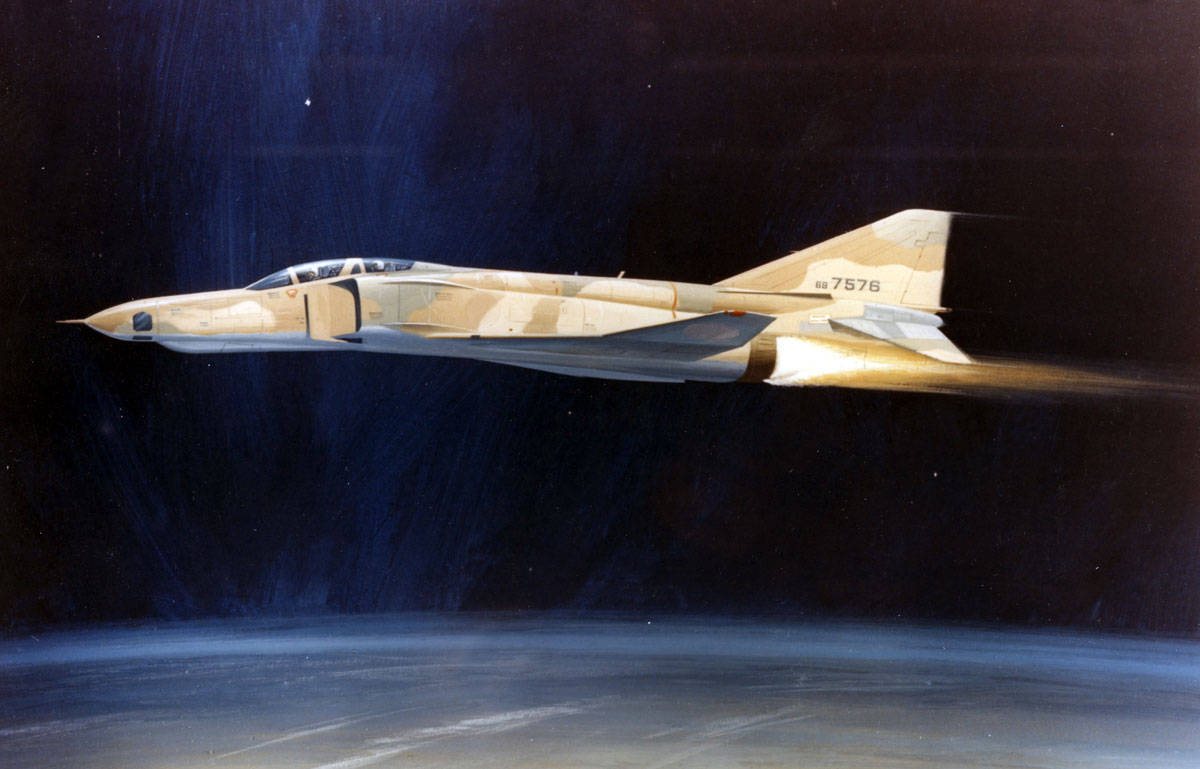
Artist rendition of RF-4X in flight. Image via General Dynamics
First camera attempts were too heavy
The first examples of HIAC-1 were heavy- the prototype camera system weighed over 3,500 lbs, much more than any other camera system in use at the time (excepting the very big Boston Camera carried by the B-36 and C-97 in the 1950s that weighed 3 tons and had a focal length of 240 inches). The only aircraft in the USAF inventory that could carry the HIAC-1 was the RB-57F, a modification of the Martin B-57 Canberra.
In 1962, General Dynamics in Fort Worth, Texas, had the contract to maintain the RB-57D fleet, which suffered from wing spar fatigue. Since General Dynamics had acquired quite a bit of experience in working on the long-span RB-57Ds, they were asked by the Air Force for an evolved version of the D that could fly higher, carry a heavier load (like the HIAC-1), and not have the same wing spar problems that plagued the RB-57D.
The RB-57F was the result- with a longer wing, more powerful TF33 turbofan engines, and auxiliary J60 turbojets, it was what the USAF needed until the later generation of U-2 spyplanes entered service. In fact, NASA still uses three RB-57Fs today.
Over the course of the RB-57F’s operational career, Israel had repeatedly requested to obtain the RB-57F and the HIAC-1 for its own reconnaissance needs. Still, the requests were always denied by the US State Department and the Defense Department because the technology used in the RB-57F would upset the strategic balance in the Middle East.
However, a compromise was reached- by 1971, the HIAC-1 had been steadily improved and lightened to the point that it weighed just under 1,500 lbs, and that a pod-mounted HIAC-1 carried by the McDonnell Douglas F-4E Phantom, already in the Israeli inventory, would be permissible.
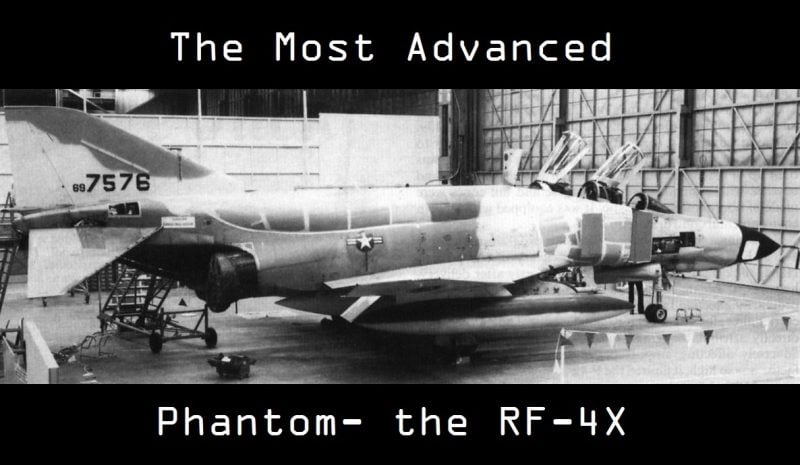
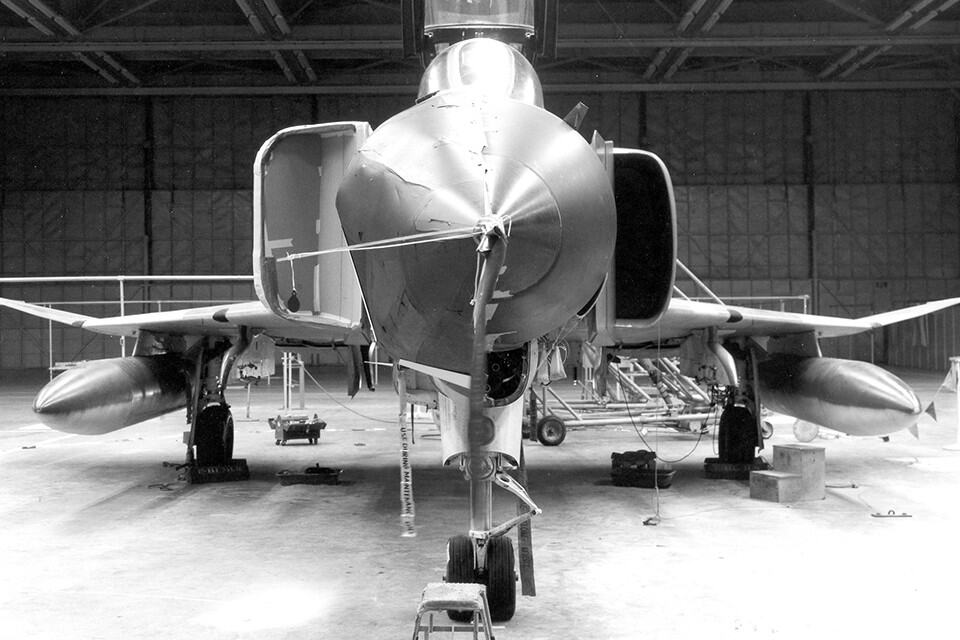
RF-4X mockup. Image via General Dynamics
Improvements were slow but sure
Also developed by General Dynamics, the pod-mounted HIAC-1 was designated G-139 and underwent an intensive flight test program with a USAF RF-4C aircraft and the first G-139 pods were delivered to Israel in October 1971.
The Israelis found the G-139/HIAC-1 system useful as it allowed the Phantoms to get imagery of Egyptian defenses along the Suez Canal without having to enter the SAM umbrella. But there was a significant issue: the pod was still a heavy store, and it generated a significant amount of drag- it limited the Phantoms to a maximum speed of Mach 1.5 and a maximum altitude just under 50,000 feet, not to mention the challenge of handling a G-139-laden F-4E at high altitude.
As a result, the special projects division of General Dynamics began work in January 1972 on ways to improve the F-4E’s performance to offset the burden of carrying the pod.
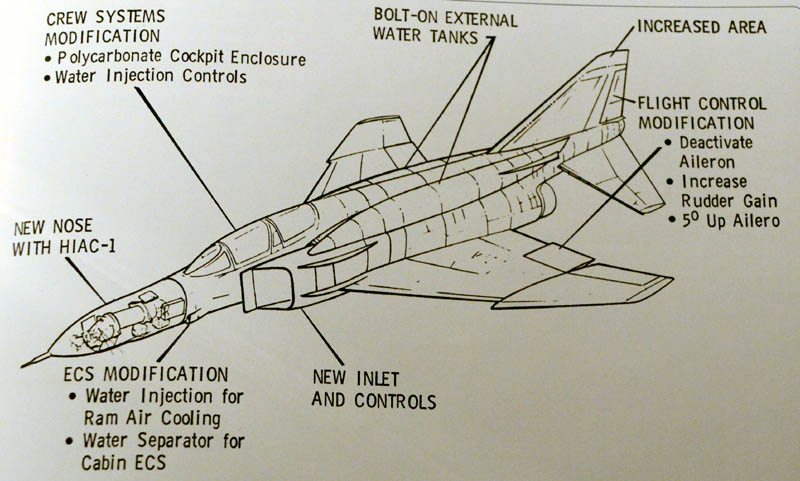
Overview of the modifications to make the Phantom Mach 3-capable.
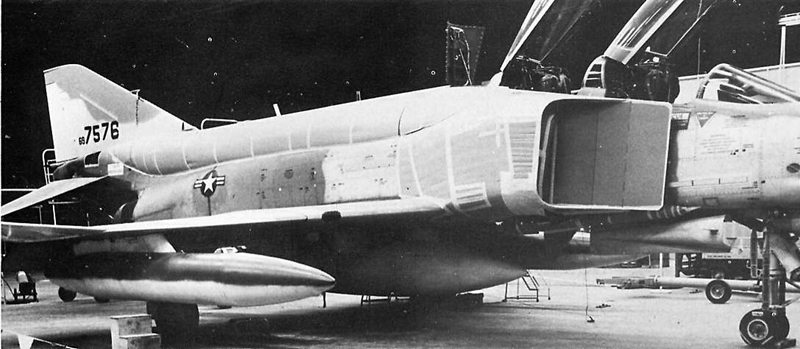
The first improvements came with getting the most out of the Phantom’s J79 engines. Engineers found that the Phantom’s intakes were limiting the performance possible from the J79. A new inlet was designed that was not only larger than the standard F-4 inlet, but it featured a new shape that better managed the airflow to the engines with a series of new variable-geometry ramps. The standard Phantom inlet did have a variable geometry ramp. Still, it was much simpler than the General Dynamics design, which featured a large bypass door downstream from the inlet to help manage the internal shockwaves that helped slow the air down before reaching the engines.
Aerodynamic improvements made through testing
A series of vortex generators down the inlet also helped improve engine performance. The second improvement was based on 1950s research done by NASA’s predecessor agency, NACA, called pre-compressor cooling (PCC). PCC was a form of water injection, but used the water to cool the inlet air before it reached the engines. By reducing the inlet air temperature, it increased the mass of the air, akin to taking off on a cold day- engine air flow and thereby thrust would be increased. At high altitudes, PCC would boost engine performance starting at Mach 1.4 as the inlet air started to heat up due to friction.
USAF RF-4C with the large G-139 pod.
General Electric, the manufacturer of the J79, was less than enthused about General Dynamics’ work on PCC, but did provide some consultations. Work had already been done with PCC on another of General Dynamics’ products, the Convair F-106 Delta Dart, but it was never incorporated into the design. In addition, the USAF’s Arnold Engineering Development Center in Tennessee had tested PCC in engine test cells with both the J57 and J75 engines.
One J75 engine was run at maximum afterburner for 40 hours with PCC! It had also been looked at by Vought for the aborted F8U-3 Crusader III design (though never flown), and McDonnell had used a rudimentary PCC system in 1962 to break several world speed records with the pre-production F-4 Phantom.
Based on all this body of work, General Dynamics refined the PCC system so that the water droplets were very fine at 10 microns to cool the air without having any pooling of water in the engine. Two large water tanks were installed on external blisters along the sides of the F-4E, each blister with three tanks. Each blister could carry 2,500 lbs of demineralized water- since the interior of the Phantom was pretty packed as it was, scabbing these blisters on the fuselage eased the modification and engineering process.
More Refinements became the F-4X
General Dynamics’ modifications led to this version of the Phantom being unofficially designated the F-4X- at this point still carrying the large G-139/HIAC-1 pod underneath on the centerline station. With Israeli funding supplementing internal corporate, work on the F-4X continued through 1972 and refinements to the PCC system and inlets led to a calculated increase in the J79 thrust at high altitude well over 150 percent!
On 12 April 1973, the company formally submitted the F-4X proposal to the USAF. The USAF then provided additional funding for more work. The USAF was using the podded HIAC-1 system for stand-off reconnaissance in Korea and encountered the same issues the Israelis were having using standard Phantoms with the large camera pod.
The following year, the design was further refined, but with the Israelis continuing to have misgivings about using the HIAC-1 in a pod, the design leap was made to incorporate the HIAC-1 into F-4X’s nose. With the latest HIAC-1 versions getting even lighter than the 1,500 lb version used in the G-139 pod, integrating the camera into the nose improved performance by eliminating the drag-inducing pod.
GD wind tunnel model of the RF-4X.
The F-4 Speed Demon Was Born
Designated RF-4X, this version of the Phantom was now capable of cruising at Mach 2.4 at high altitude with burst capability to Mach 3.2. This level of performance now began to alarm the US State Department- up to this point Mach 3+ aircraft we
It was the sole purview of the United States and the Soviet Union, and in some diplomatic circles, there were concerns about the Israelis integrating nuclear weapons delivery with the RF-4X. General Dynamics removed the AN/APQ-120 radar from the nose to allay the State Department’s concerns, which would now only house the HIAC-1 and its associated environmental control systems. Permission to sell the RF-4X to the Israelis was approved, and in November 1974, an Israeli F-4E was flown to General Dynamics in Fort Worth for a mock-up study.
For five months, engineers used the F-4E as the basis of a full-scale mock-up created with cardboard and tape- both the Mach 3 intakes and the PCC water tanks were mocked up on the Phantom on one side, as well as the modified nose housing for the HIAC-1 camera.
Israeli F-4E with the PCC and intake mock-up on one side.
F-4X Could Have Been Faster Than An F-15
By 1975 several factors were now working against the RF-4X, the biggest of which was time. The Israeli Air Force wanted the system as soon as possible but it was clear that the integration of the camera, intakes and PCC system was going to take more time than originally estimated.
With the McDonnell Douglas F-15 winding up its flight test program and soon to become operational in the following year to replace the Phantom in USAF service, it was politically unpalatable to keep funding the RF-4X, which offered a level of performance that exceeded that of the Eagle in some flight regimes.
The USAF insisted upon further studies of the PCC system even though there were already nearly 20 years of data on pre-compressor cooling, some of which was done by the USAF itself. Compounded with the engineering delays, Israel and the RF-4X proponents in the USAF lost interest, and it was quietly canceled later that year.
Canceled!
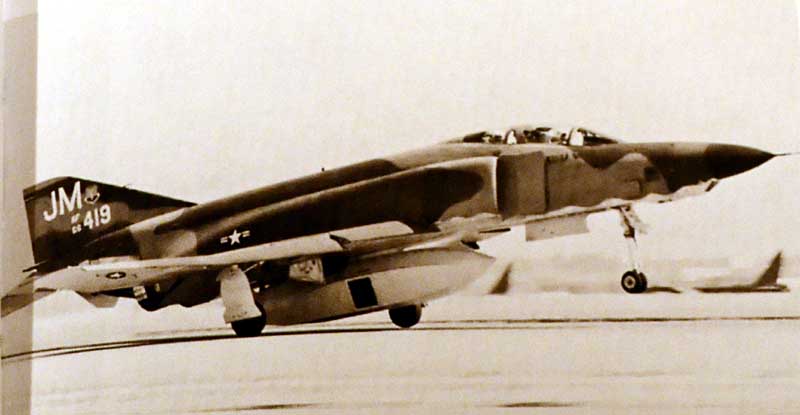
Despite the cancellation of the RF-4X, General Dynamics did continue work on just the nose-mounted HIAC-1 component of the design for Israel. Three F-4E Phantoms were modified as F-4E(S) aircraft and delivered to the Israeli Air Force from late 1975 to early 1976. It turned out that the Israelis were unable to fund the RF-4X in its entirety and were only able to afford the HIAC-1 component.
As a result, the three F-4E(S) aircraft had standard J79 engines. In IDF service, the HIAC-1 was code-named “Shablul”, the Hebrew word for “snail”. The first operational flights began in 1976, with the aircraft capable of flying at 60,000 feet at Mach 1.9. The pilot and systems officer wore full pressure suits from the David Clark Company, which also made the pressure suits used by USAF U-2 and SR-71 crews and Space Shuttle crews.
Many of the missions flown remain classified, but it is known that Iraq was a frequent target through the 1980s. One of the aircraft is now on public display at the Israeli Air Force Museum.
Source/Photos:Israeli Phantoms- The ‘Kurnass’ in IDF/AF Service 1989 Until Today by Andreas Klein and Shlomo Aloni. Double Ugly Books/AirDOC, 2009, p44-70.
The headline reads like an April Fools joke, but there is actually a real announcement by a travel agency to bring back PanAm for a limited time in 2025. The goal is to provide an exclusive experience recreating their transatlantic routes in pure luxury for 50 lucky and well-heeled customers.
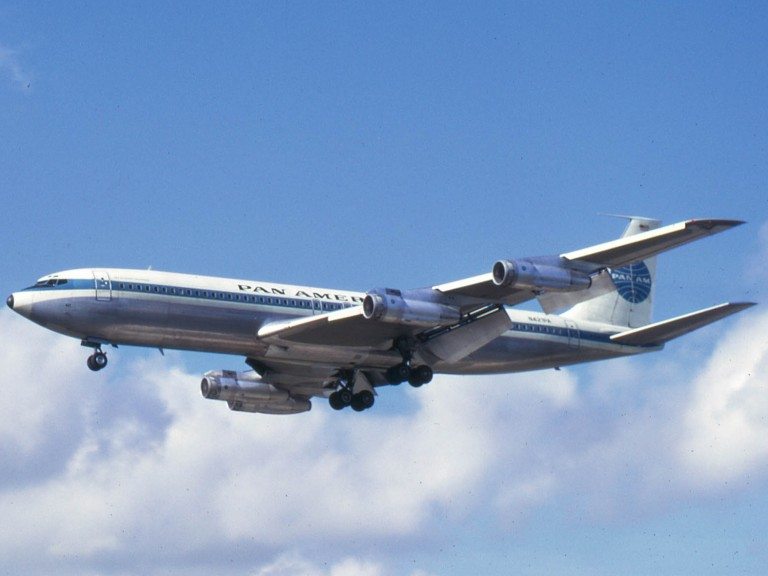
PanAm was once seen as the pinnacle international carrier. Their flying boats defined the early era of long distance airline flying. PanAm was also the first to fly the jumbo jet. Over time though, much of their luster faded. The airline faced greater competition and was forced to sell their lucrative rights to Pacific flying, eventually leading to the collapse of the original airline. Two additional restart attempts of PanAm also failed.
Is Pan Am Really Coming Back?
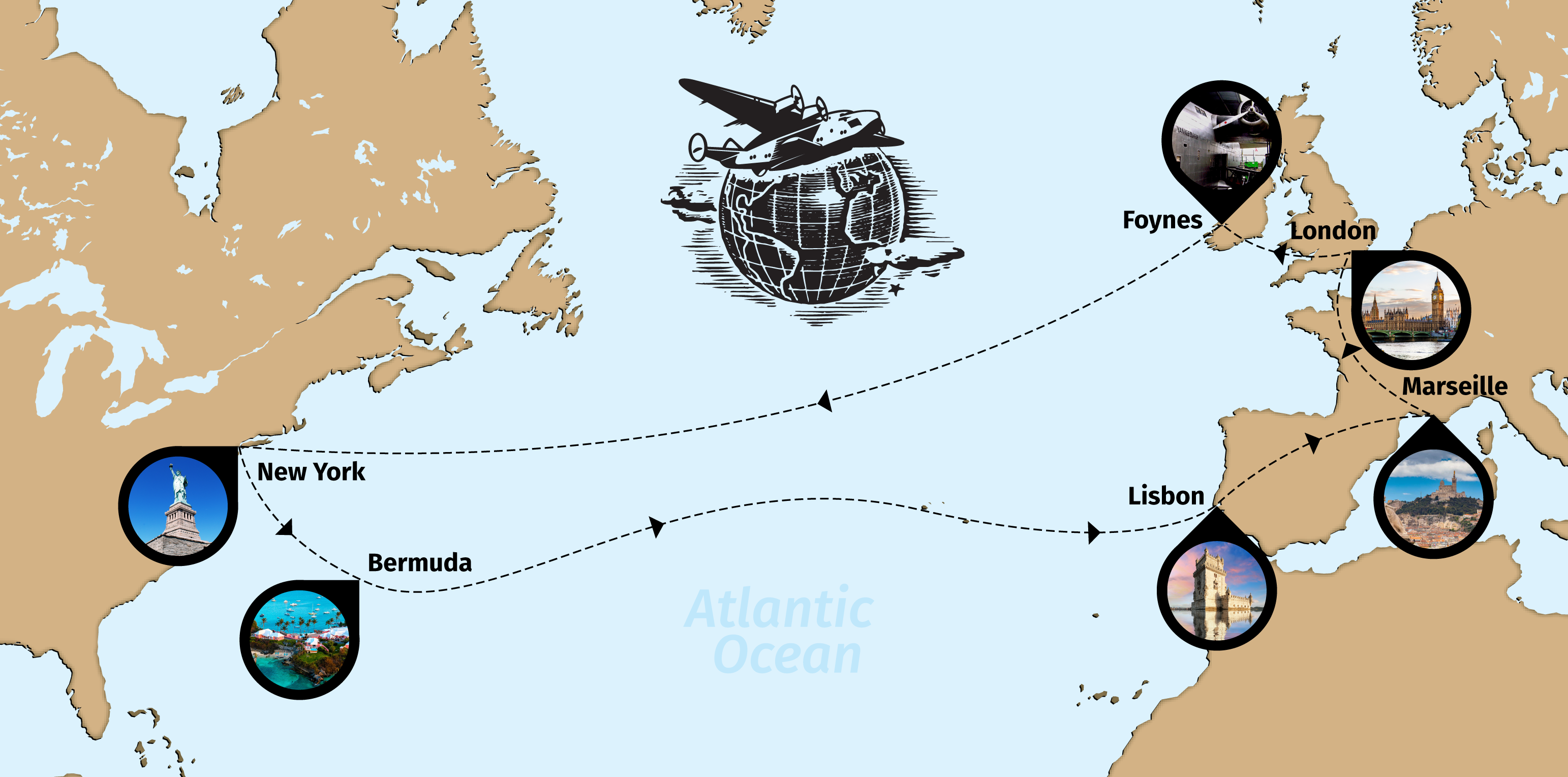
Instead of resurrecting a dead airline, a company called Centurion Travel is bringing back the Pan Am name, logo, and experience for a limited event. The travel company says “As we are becoming more accustomed to travel being a commodity, usually a way to get from point A to point B at the most economical price, we offer a reminder of the Golden Age of travel. A time when the travel itself was a glamorous experience, and when the journey was as important and special as the destination.”
PanAm To Return For A Limited Time Only 35
The plan is to set up a multi-city excursion with luxury stops on both sides of the Atlantic from 27 June through 9 July, 2025. Along the way, you’ll be pampered with lie flat business suite accommodations in a specially outfitted Boeing 757 that features a throwback Pan Am experience. At each stop, you’ll dine at the finest restaurants and stay in luxury accommodations as well. For avgeeks with such exquisite tastes, the experience with set you back $65,500. If you bring a partner, you’ll both save a bit as long as you don’t mind sharing a room. Prices for couples are $59,950 each. You better hurry though, this limited engagement only has 50 seats. The new adventure is led by Craig Carter who is now known as the CEO of Pan American World Airways LLC. The LLC has licensed the Pan Am logo and brand for the experience.
Will the PanAm 757 Feature A PanAm Livery?
Unfortunately, there is no word yet if the leased/chartered 757 will feature a PanAm billboard livery. There also has been no confirmation of what company will be providing a charter. Notably, PanAm never operated the 757 during any of the three iterations of the airline.
It is rumored though that New Pacific Airlines plans to outfit their jets with business class seats for charter operations after they ceased scheduled service earlier this year. However, there is no word yet on whether the company will be providing travel for this limited engagement. We’ll keep this story updated as we learn more.
It’s a sad era for Boeing, and their current Starliner crew flight test (CFT) for NASA is the latest example. It isn’t just aviation. Boeing had a decade to get their spacecraft right, and over $4 billion to do it, and flown 2 previous uncrewed tests because the first failed. Boeing’s woes now continue with the currently problematic Starliner crew test Mission.
Predictably, both NASA and Boeing are downplaying it, with the “space is hard” narrative. Capsules are nothing new, and neither was the workhorse Atlas V rocket that was given to them. SpaceX has been flying their Dragon spacecraft just fine on many missions for a few years. The new kids on the block became pros. So what’s Boeing’s excuse?
Helium leaks and thruster problems
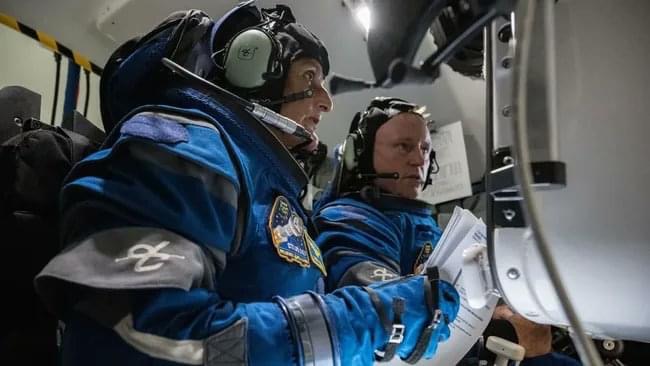
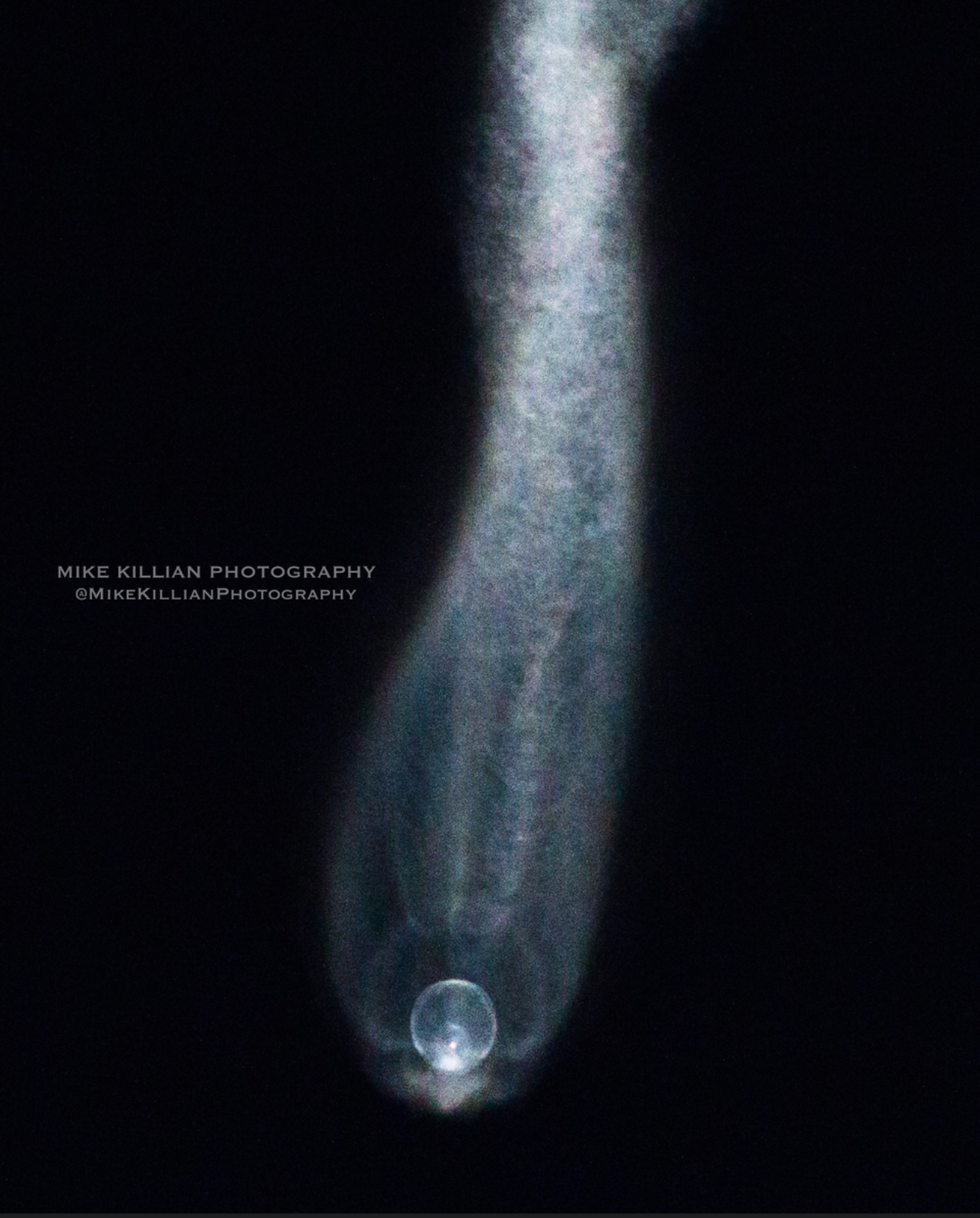
NASA astronauts Butch Wilmore and Suni Williams launch atop a ula atlas-v rocket on the first crewed flight of the Boeing starliner june 5, 2024. Ula photo
The current CFT mission is Starliner’s third flight test, but first with crew. Sure, you have to conduct flight tests to iron out any issues that can only be discovered in flight. However, even after two previous tests, the capsule has had another problematic mission, forcing the crew to stay at the International Space Station (ISS) until the problems are figured out and both NASA and Boeing are confident that Starliner can return safely. No return date has been announced yet as of the publication of this story.
NASA astronauts Butch Wilmore and Suni Williams launched June 5 from Cape Canaveral Space Force Station. It wasn’t long, however, before issues started popping up.
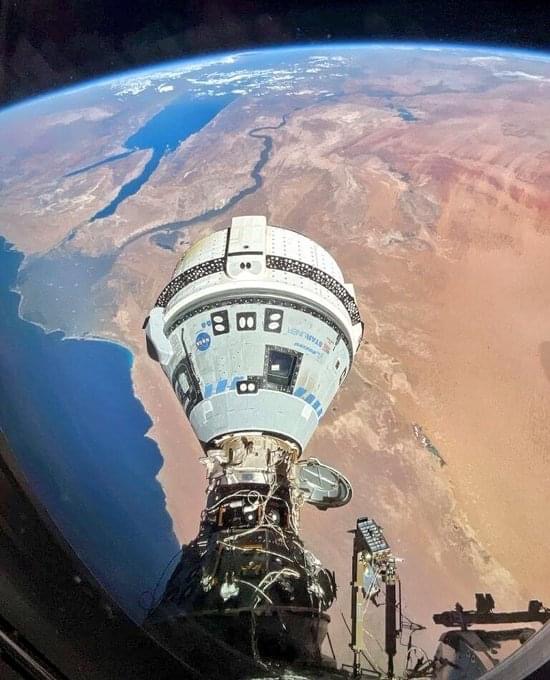
starliner cft approaching the iss (nasa photo)
Five separate leaks were detected in the helium system that pressurizes the spacecraft’s propulsion system. Five of Starliner’s 28 reaction control system (RCS) thrusters failed too, when the crew were attempting ISS rendezvous for docking.
After some troubleshooting, four of the RCS thrusters were brought back online, and they were able to safely dock, but it leaves many questions, and worries, about a safe return home. It also begs to question why an establishment aerospace giant like Boeing still can’t get it right after all this time, and money.
Nasa photo of starliner cft docked to the iss
Extended stay in space while Boeing and NASA analyze data
The control systems are needed to safely undock and maneuver away from the ISS. They are also needed for a de-orbit burn, separating the crew capsule from the service module for re-entry, and then successfully fly the re-entry.
The mission was scheduled to undock and return to Earth June 14. Engineers and mission leaders however have called off several opportunities to return, citing a need to analyze more data. Now, they won’t return until after some unrelated previously scheduled spacewalks are conducted, in early July.
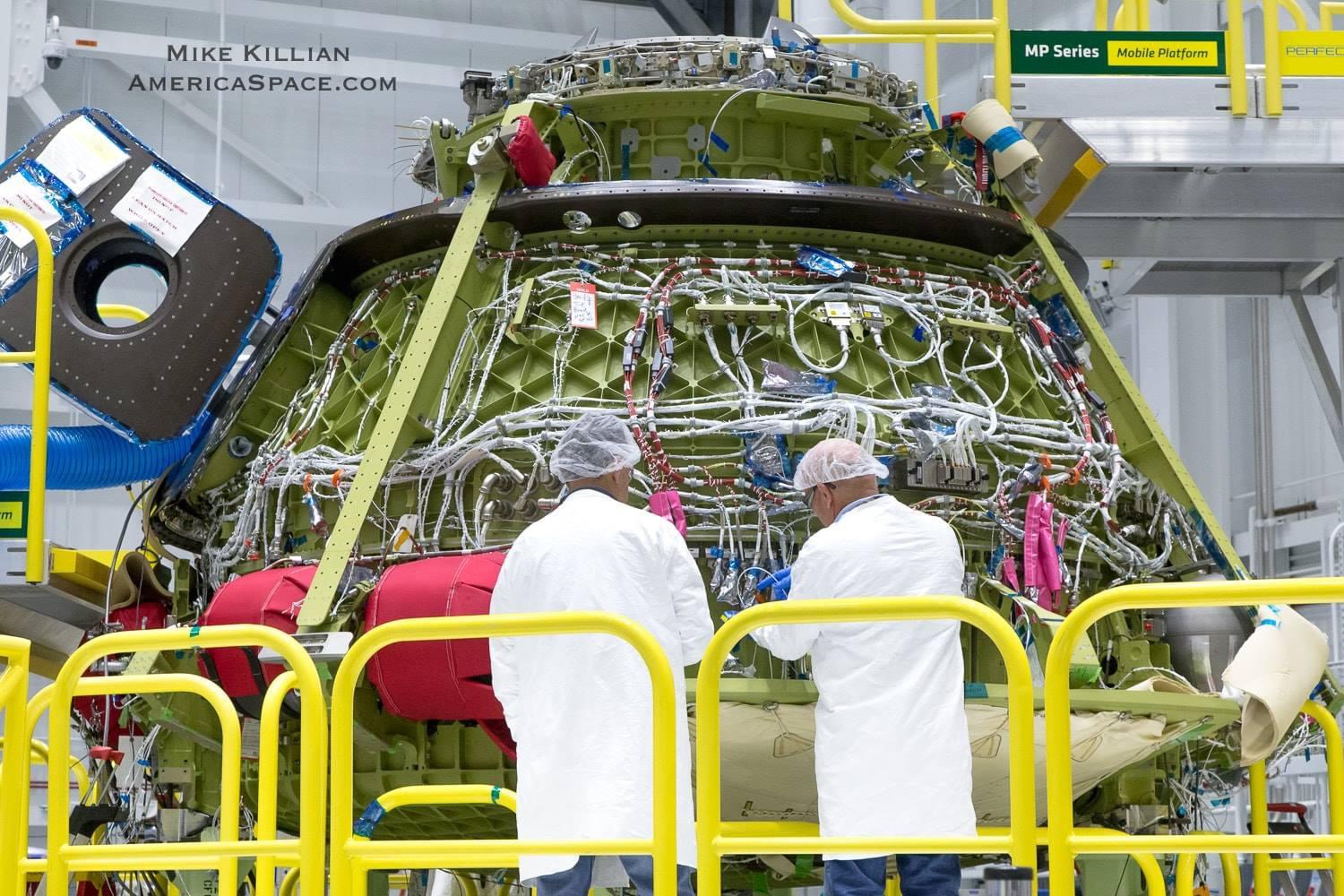
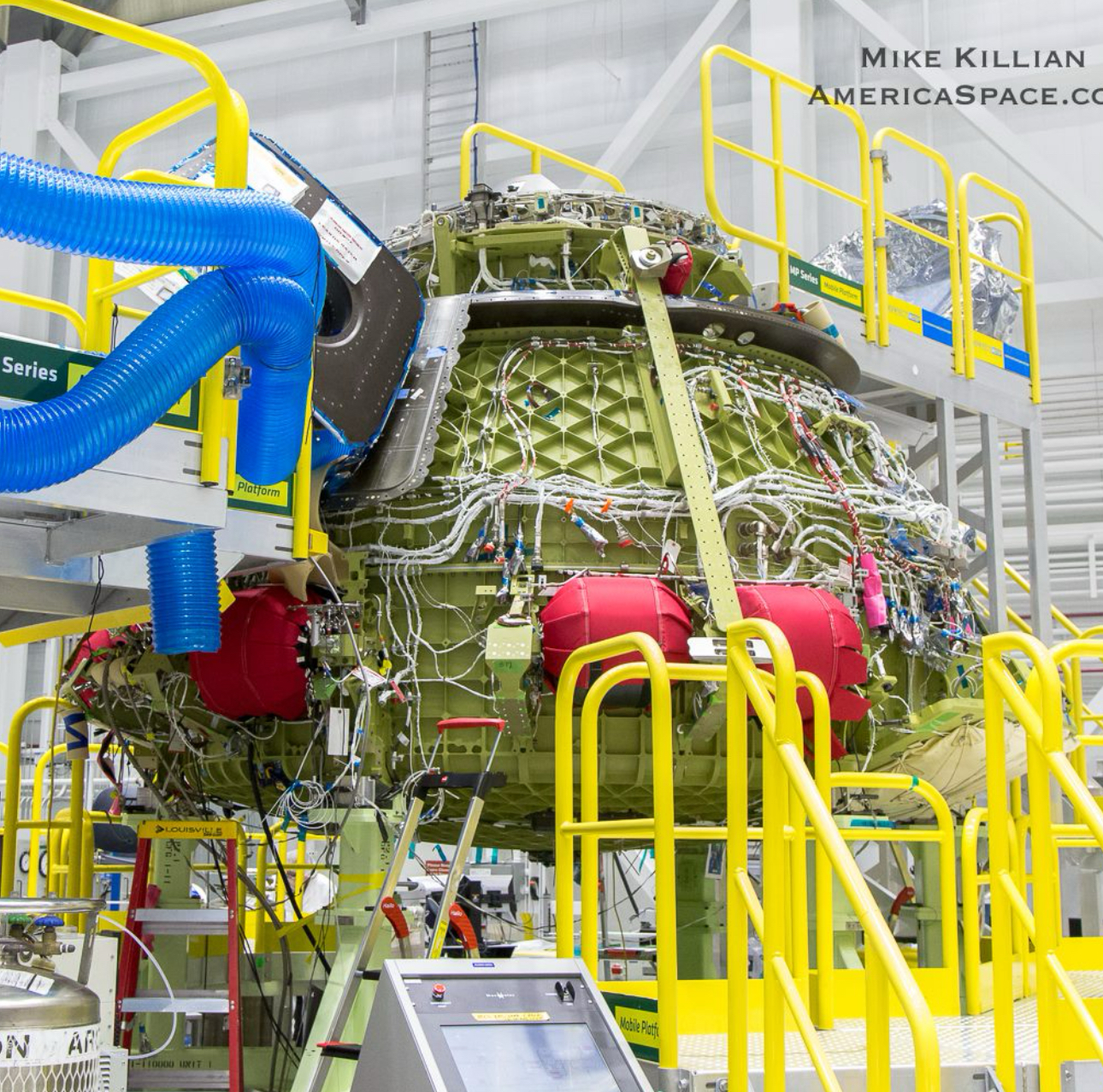
Boeing engineers working in starliner (mike killian photo / americaspace.com)
NASA claims the crew can return to Earth in Starliner in an emergency. Well, if that were true, why haven’t they returned yet?
NASA and Boeing insist that the crew can leave at any time in an emergency. They claim Starliner is staying at the ISS so engineers can study the service module Helium system because they cannot study it on the ground since the service module burns up on re-entry.
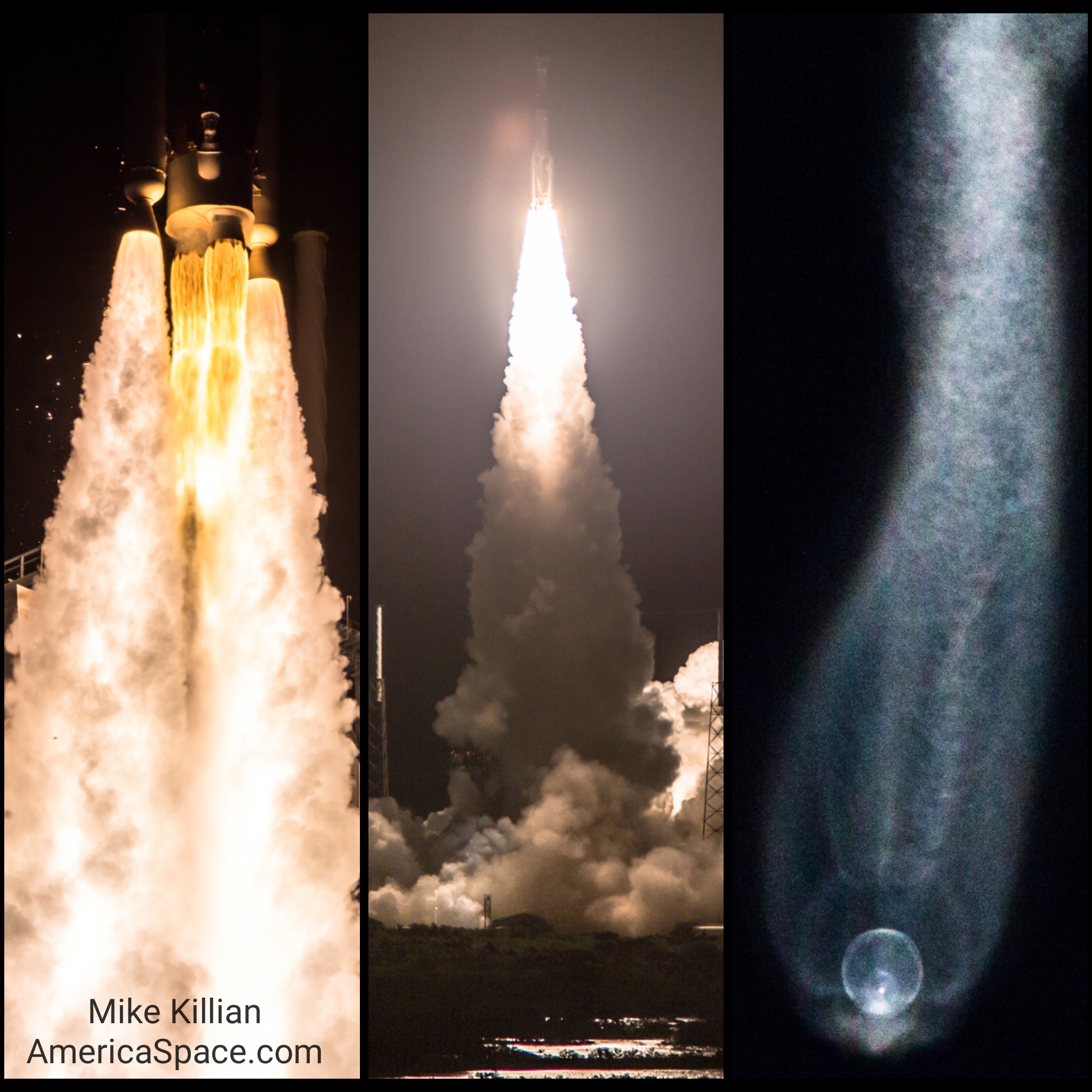
Starliner heading to orbit on the second stage atlas centaur (oft-1). Mike killian photo
Of course, nobody wants to see another crew perish. If needed, the Starliner crew could stay on the ISS for some time, and return home on another spacecraft.
The Starliner CFT however, is only rated for 45 days at the ISS. Future spacecraft could stay up to 6 months.
NASA awarded billions to develop Starliner & Dragon. SpaceX is flying their 8th long duration crew mission. Starliner still has none
When NASA’s Space Shuttle fleet retired in 2011, Congress ordered the agency to foster commercial development to take over crew and cargo missions to the ISS. They even allow them to sell their services with the new vehicles to private customers. SpaceX is already doing that. Boeing says they have no plans to. In the meantime, NASA turned their focus to the SLS / Artemis, and returning to the moon to establish a long-term human presence.
The Bush administration ordered the retirement of the shuttle fleet after the loss of Columbia STS-107. Under the Obama administration, NASA was ordered to foster private development, and started the commercial crew program.
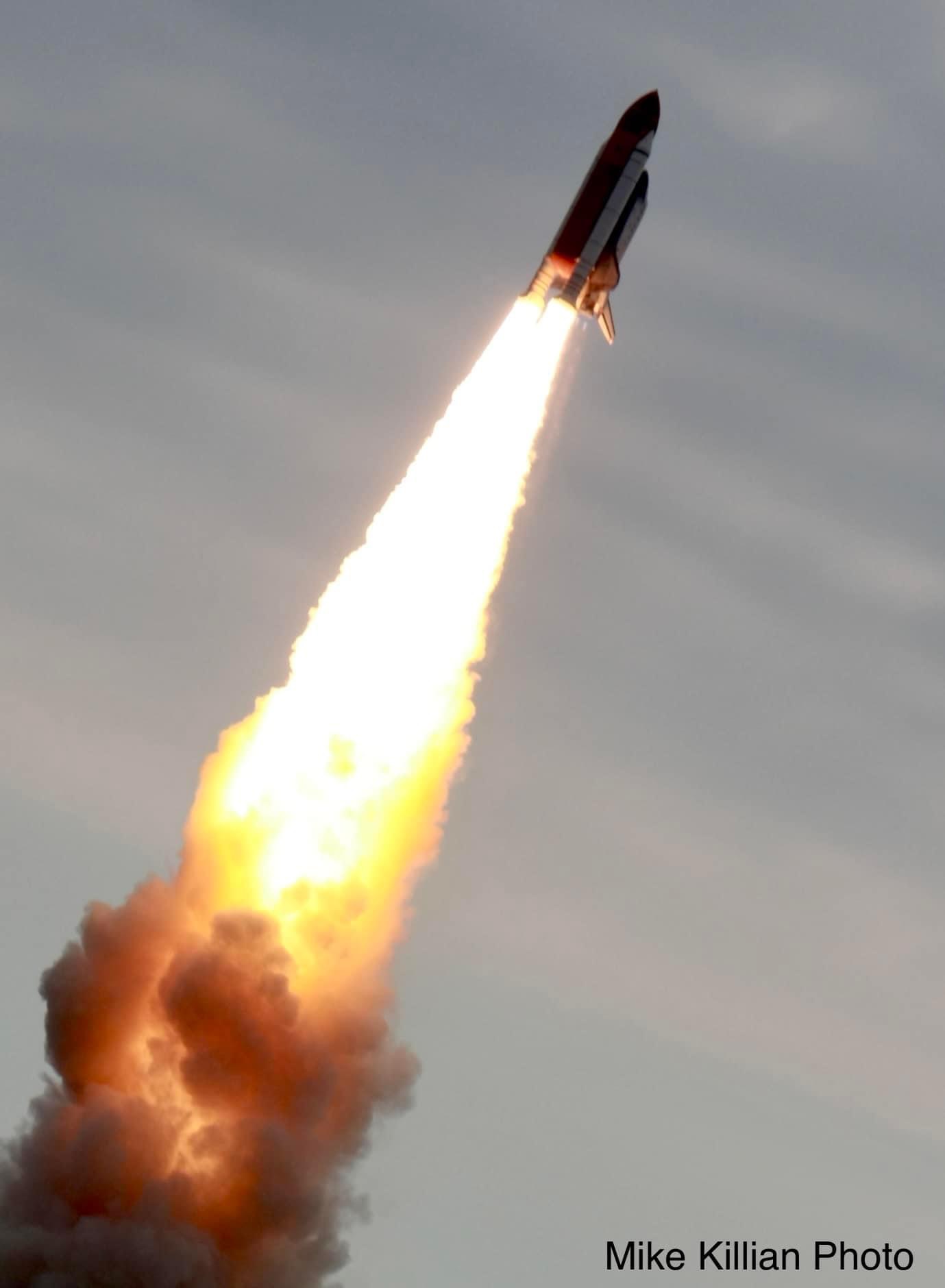
Mike killian photo. Shuttle endeavour sts-134
After shuttle Atlantis landed on STS-135, America became 100% reliant on Russia to fly NASA astronauts to and from the ISS. For a gross $70 million per seat, American astronauts rode in the best 1960s technology that money could buy.
In the meantime, NASA awarded contracts to Boeing and SpaceX in 2014 to begin developing vehicles to return human orbital spaceflight to American soil.
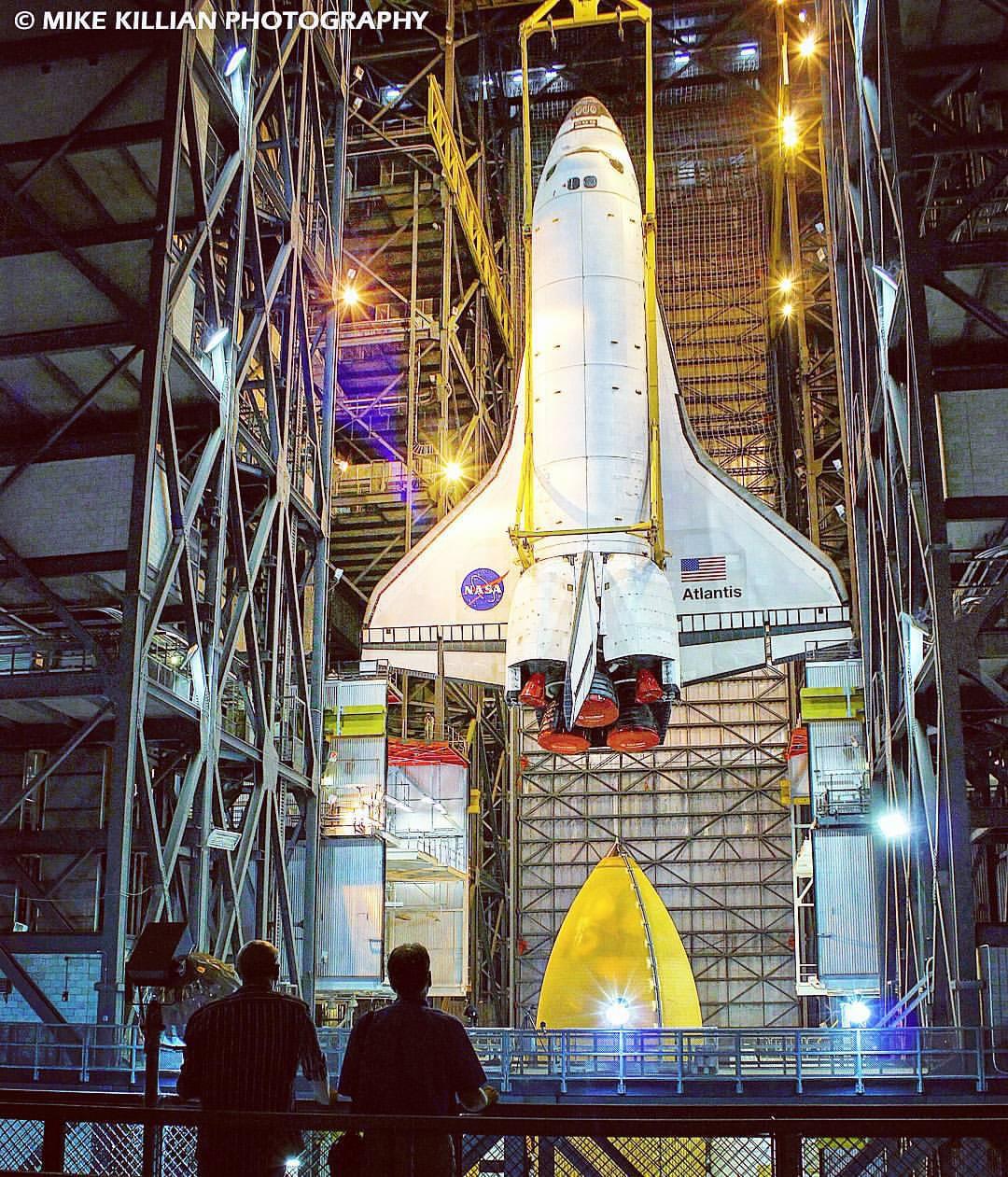
The final space shuttle to fly, atlantis, is seen here during mating operations to its solid rocket boosters and external Fuel tank at kennedy space center’s iconic vehicle assembly building. Photo by Mike Killian
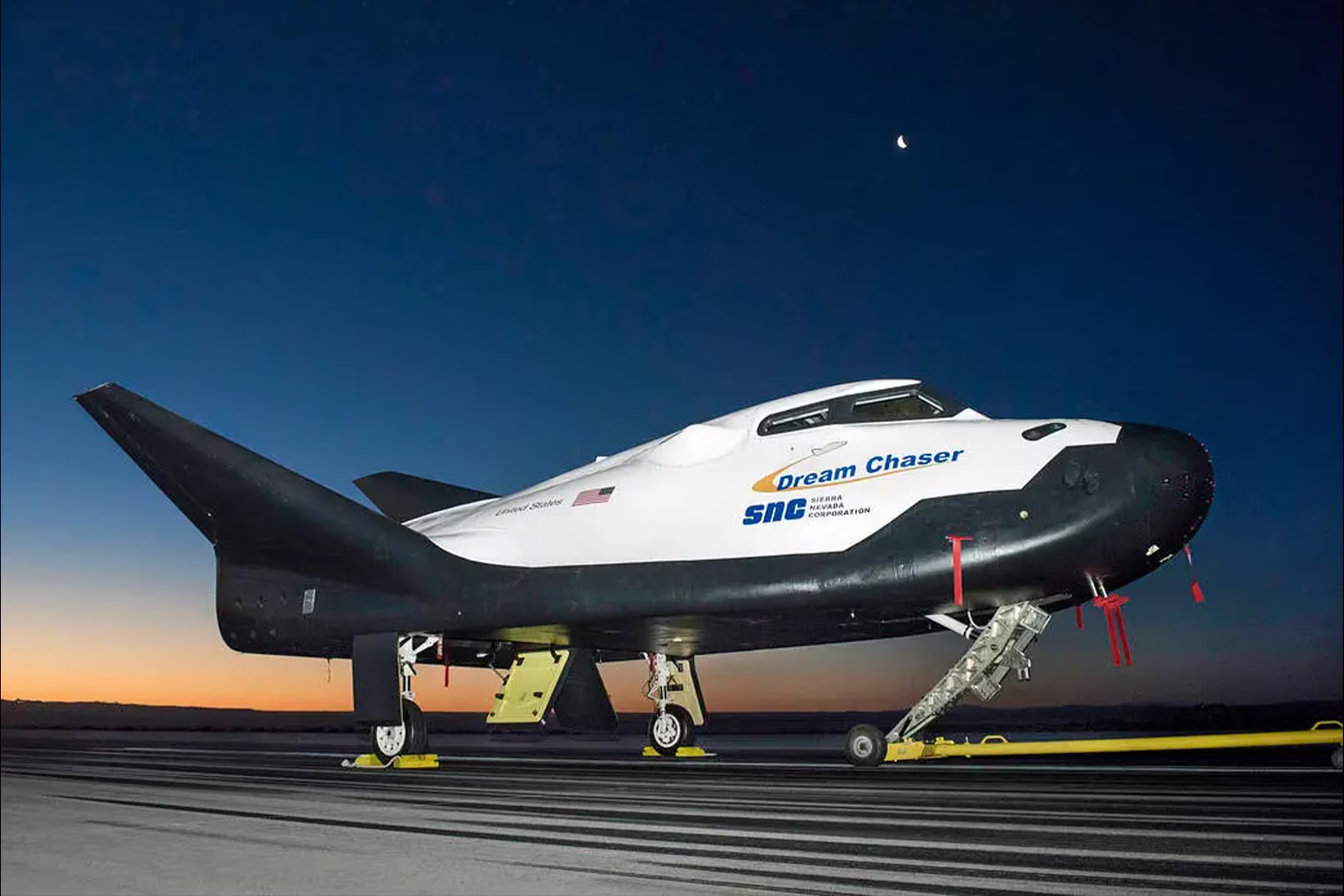
NASA passed on contracting a very promising “mini space shuttle” from Sierra Nevada, called Dream Chaser, which could land on almost any runway nationwide. It was the favorite along with SpaceX. Boeing, being in bed with NASA and the government, got the contract instead.
NASA eventually did give Dream Chaser a cargo-only contract, but they should have got the crew contract in 2014 instead. The first cargo Dream Chaser will launch later this year from Florida.
Sierra nevada’s dream chaser spaceplane. Nasa passed on this in 2014, instead contracting two capsule designs with boeing and spacex (photo credit sierra nevada)
Having two providers would give America redundancy, should a spacecraft suffer an accident or go offline for a while. This would mean another spacecraft is still available, instead of having to rely on the Russian Soyuz if one of America’s spacecraft have to stop flying.
Boeing being already in bed with NASA was awarded $4.6 billion. The Atlas V rocket was already a proven workhorse, but needed work to be crew-rated. Boeing had a launch pad and rocket given to them, minus a crew access tower, which had to be constructed.
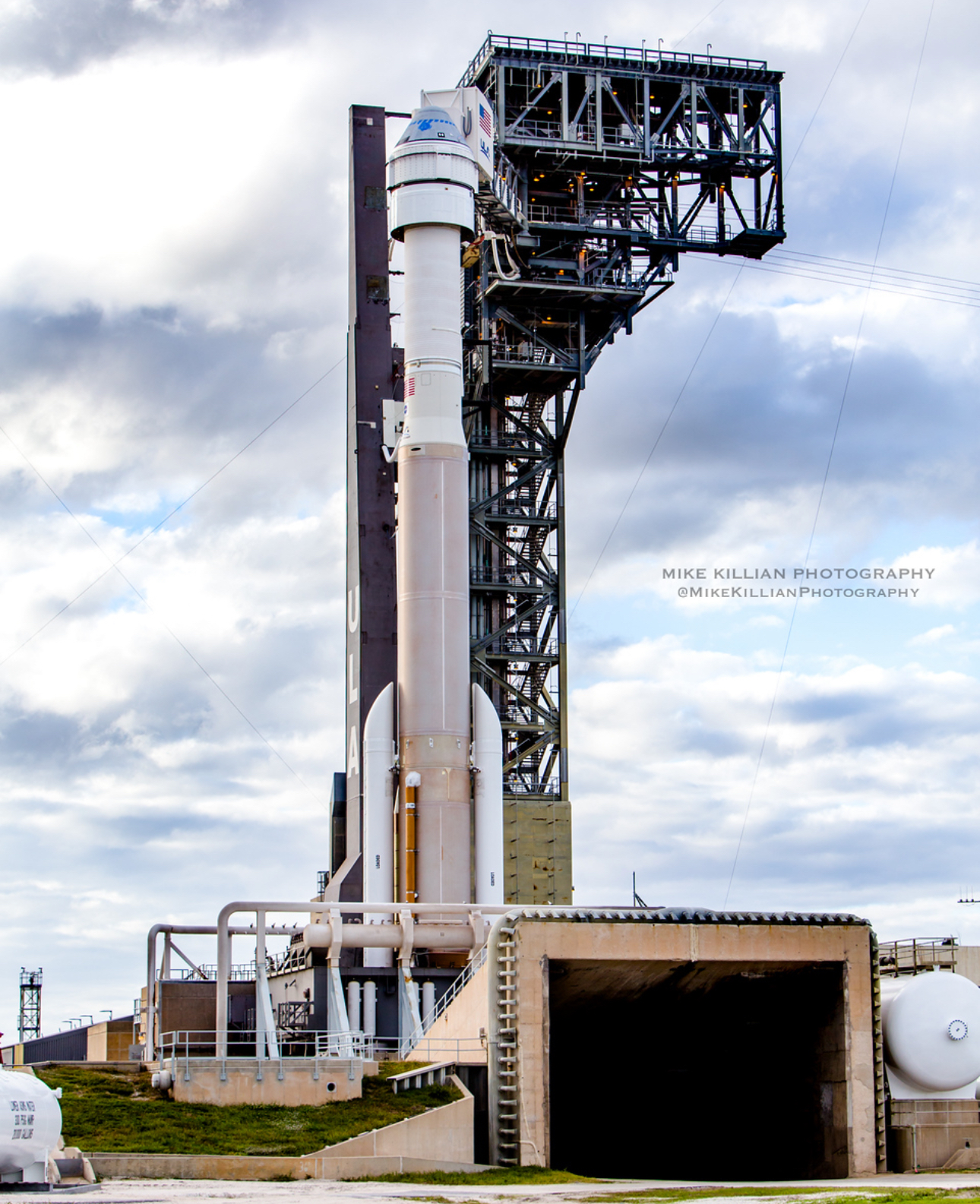
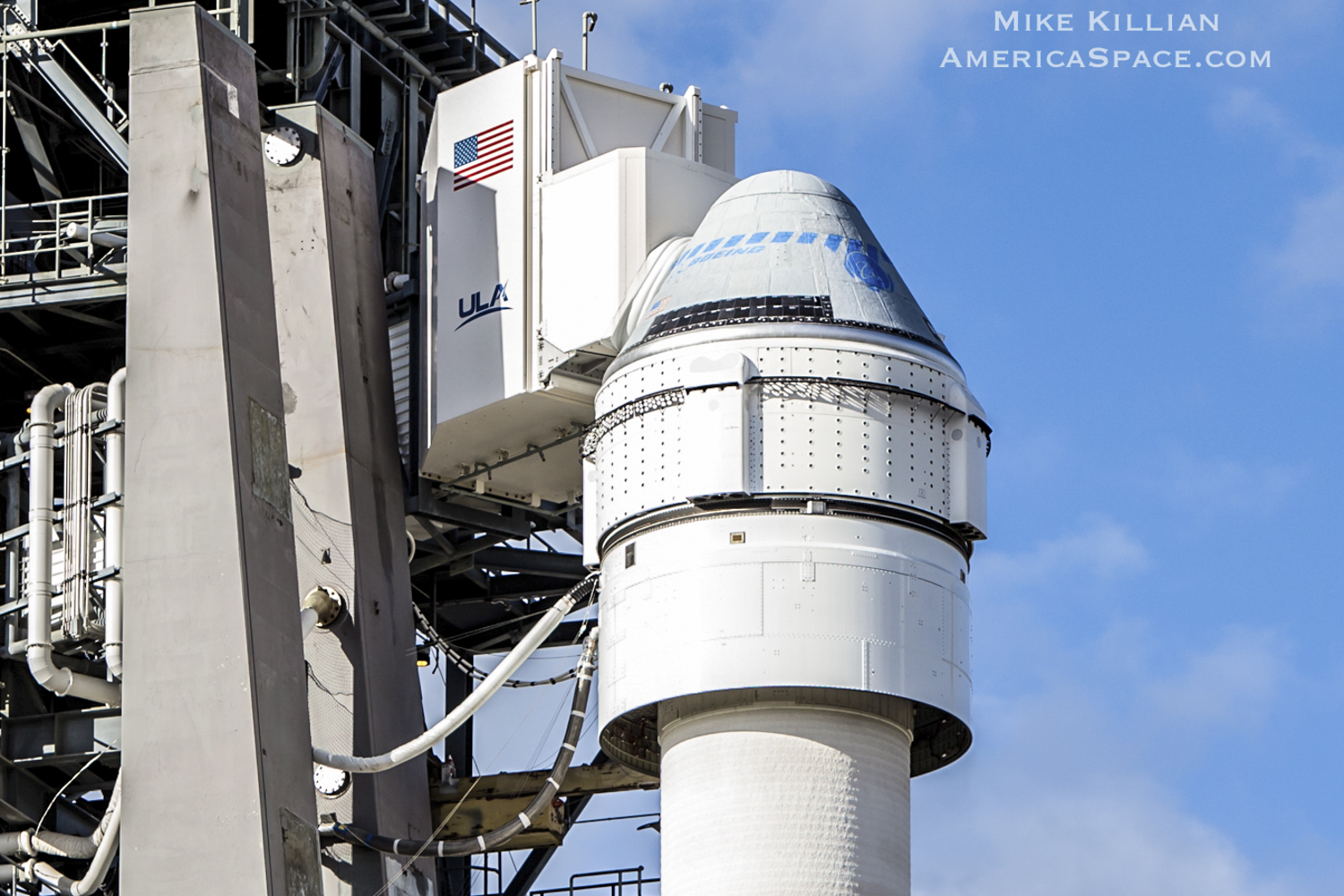
Starliner atop its atlas v rocket at cape canaveral space force station (mike killian photo / americaspace.com)
SpaceX was awarded half that amount, $2.6 billion, and had to prove their new Falcon 9 rocket worthy over several years. NASA knew SpaceX had to do a lot more work, being new in the game.
Guess who returned crew flight to American soil first? SpaceX accomplished this years ahead of Boeing, flying the first crewed test flight for NASA in 2020.
Problems with Starliner are nothing new
Starliner in processing at kennedy space center (mike killian photo / americaspace.com)
Starliner launched on an uncrewed orbital flight test in Dec 2019, and it didn’t go well at all. Shortly after it achieved orbit Starliner suffered an automated timing issue. Flight controllers called off its ISS docking, and instead put Starliner in an unplanned stable orbit to save other critical mission test objectives, including de-orbit, re-entry and landing. It returned to Earth two days later.
NASA wasn’t convinced, despite Boeing painting it as a good test flight. Boeing offered to do it again at their own expense. In March 2020, a joint NASA/Boeing Independent Review Team found three principal anomalies—two software coding errors and an unexpected loss of Space-to-Ground Communications were the culprits. They ordered over 80 recommendations spanning testing and simulation, Change Board documentation and safety culture, before the redo flight test could launch.
The first uncrewed orbital flight test of starliner (oft-1). The mission ended soon after for technical problems and was returned to earth safely (mike killian photos / americaspace.com)
Leading up to that second launch, more issues started popping up with Starliner. While on the launch pad, some valves linked to Starliner’s abort and maneuvering thrusters failed to open as designed during the countdown, leading to a scrub.
Boeing decided to replace the OFT-2 Service Module with one previously slated for the CFT mission, which is the vehicle currently on orbit experiencing several issues.
Mike killian photo / americaspace.com
OFT-2 finally launched in May 2022, and while some minor issues were encountered, the mission met its remaining test objectives from OFT-1, and was a success.
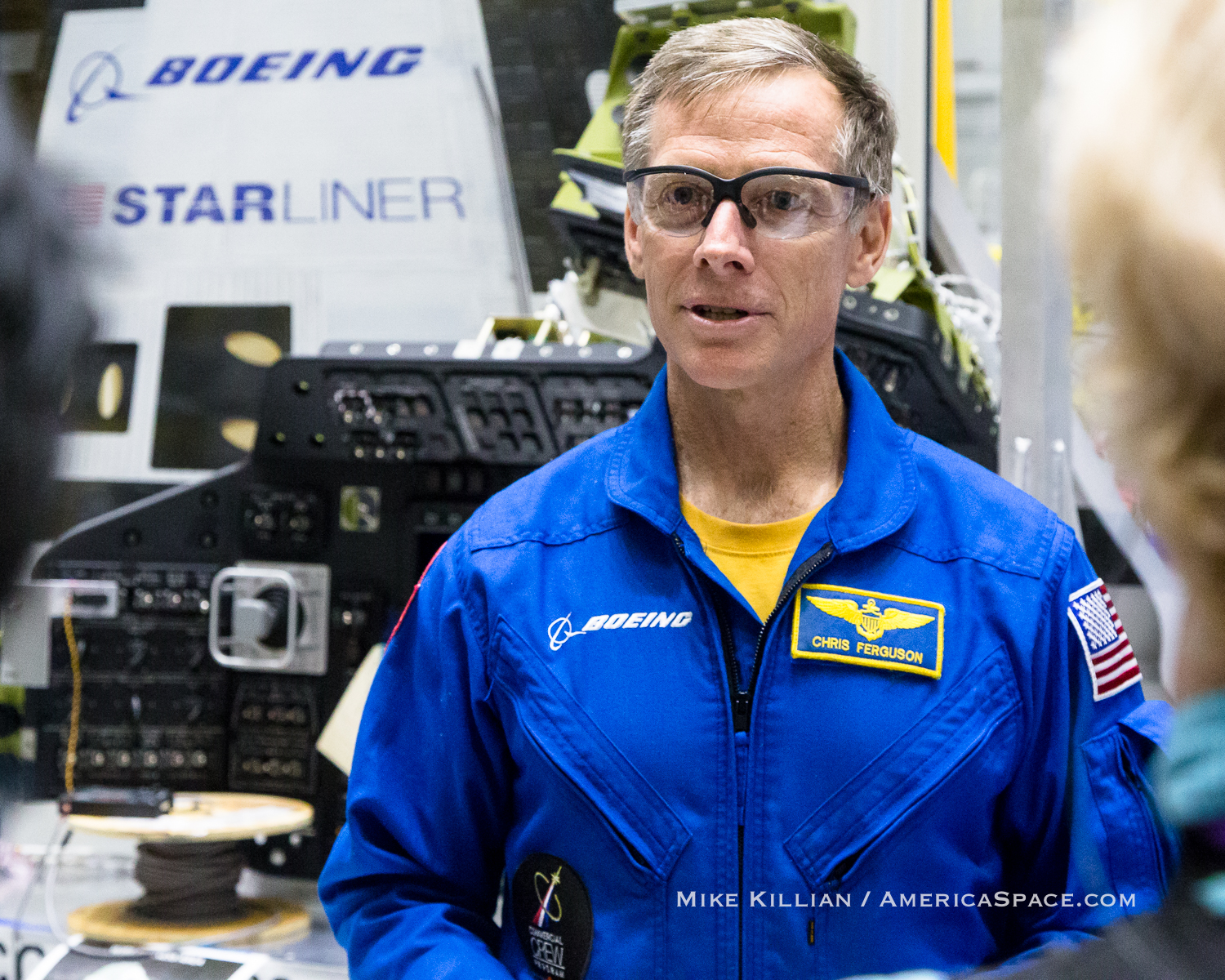
Retired shuttle astronaut Chris Ferguson was slated to command the first Starliner test, then he stepped down
Retired NASA astronaut Chris Ferguson commanded STS-135. He then joined Boeing to command the first Starliner CFT mission. However, he later withdrew himself from the flight, citing family commitments in the year ahead. That’s his public excuse and he has stuck to it.
Retired nasa shuttle astronaut chris ferguson, who withdrew himself from commanding the first starliner crew flight test (mike killian / americaspace.com)
Ferguson did however stay involved in the Starliner program, becoming Director of crew and mission operations. “I’ll also have the ancillary role of being the eyes and the ears of the CFT crew,” he said. That work will include following the spacecraft during testing and “making sure we give reasonable attention to issues that will need to be addressed.”
Looking ahead
Although it has been a rough road for Boeing and Starliner, they are close to the finish line for NASA certification to start flying operational missions. As of today, the mission has completed 77 of its 87 prescribed flight test objectives, with the remaining ten scheduled to occur during undocking, re-entry and landing.
“We are strategically using the extra time to clear a path for some critical station activities while completing readiness for Butch and Suni’s return on Starliner and gaining valuable insight into the system upgrades we will want to make for post-certification missions,” said Steve Stitch, NASA’s Commercial Crew Program Manager.
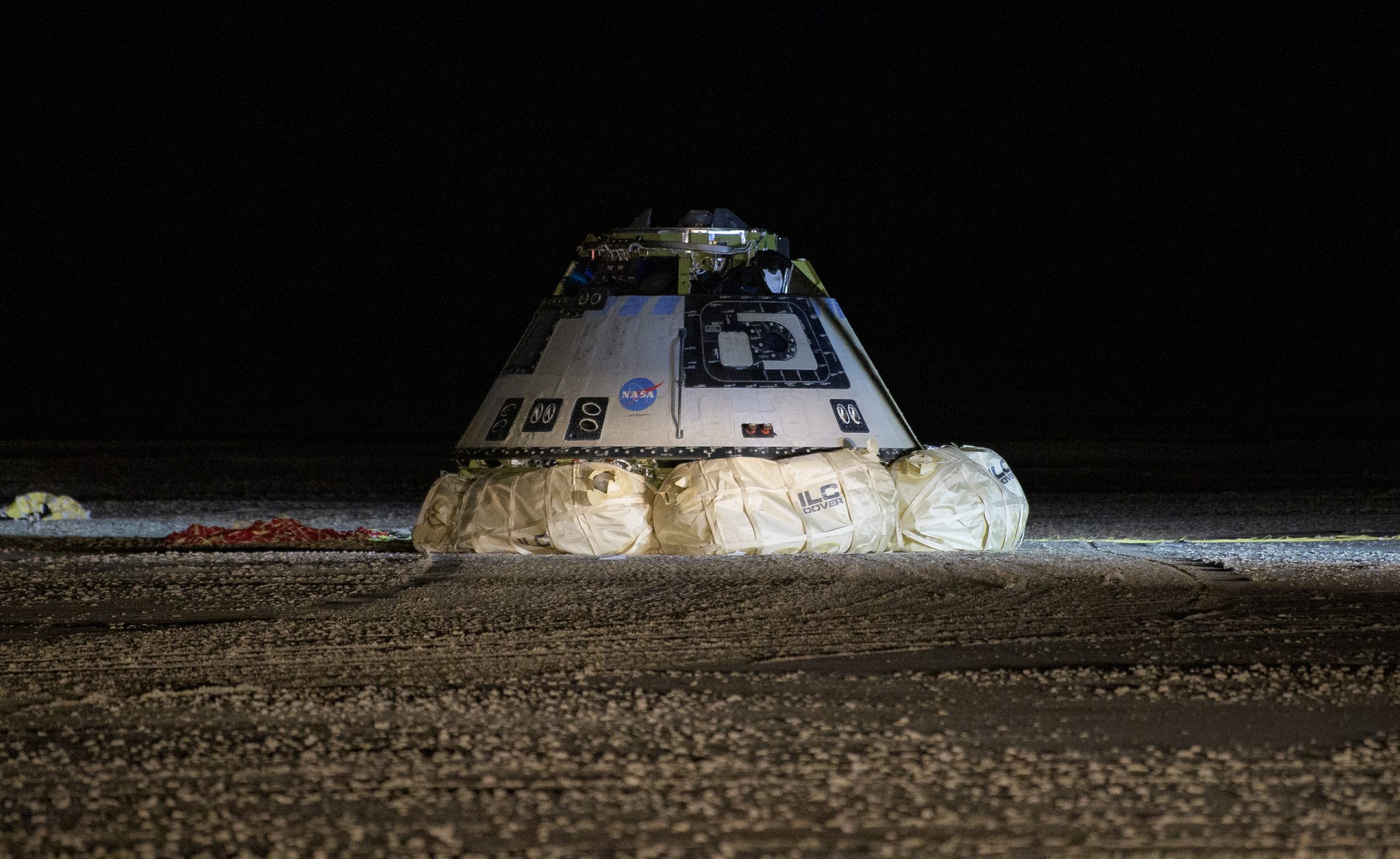
Starliner has 3 locations available to land once undocking from the ISS. White Sands Space Harbor (WSSH), N.M., Wilcox Playa, AZ., and Dugway Proving Grounds, UT.
Previous starliner after returning from an uncrewed flight test. Photo – NASA/Bill Ingalls)
The crew will then be taken by helicopter to Johnson Space Center in Houston, while the spacecraft gets sent elsewhere for engineers to look over.
Once Starliner completes the test programs successfully and earns NASA certification, Boeing will fly at least two, and as many as six, crewed missions to the ISS for NASA. Giving America redundancy with multiple operators for low-Earth orbit human spaceflight.
Avgeekery’s Mike Killian has extensive experience reporting on NASA covering America’s space program on-scene full-time since 2009. He has watched the program develop from the end of the shuttle era and birth of the commercial crew program, and has covered every major development milestone since the contracts with Boeing and SpaceX were signed 10 years ago.
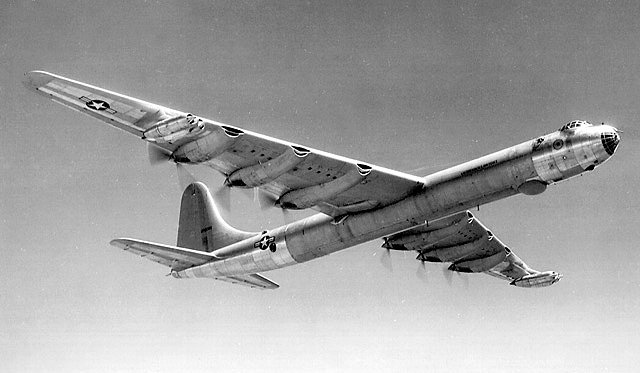
The B-36 Peacemaker was a giant aircraft for its day. It was a six-to-10-engined aircraft with the longest wingspan of any combat aircraft ever built—just massive at over 230 feet! It was a unique design for its day, or any day for that matter. The engines were attached as pushers, mounted on the back of the wing to push the aircraft forward. It had the capability of delivering all of the nuclear weapons in the U.S. arsenal from its four bomb bays and had a range of 10,000 miles.
Six Turning, Four Burning, But Why?
Due to the emerging requirements of the Cold War, the aircraft needed the ability to project power (ie-bombs) on target while flying massive distances from the US to both Russia and Asia. The design included wings with a 7.5ft thick wing, big enough for aircrew to crawl in the wings during the flight for servicing! The massive engines were mounted in the rear of the wing due to potential airflow disruption issues if they were mounted forward. The B-36 Peacemaker produced a unique sound that you can hear in the video below, posted by Stephen Douglas.
The aircraft weighed in at a massive 410,000 pounds. That’s twice the weight of a B-1 bomber and about the equivalent weight of a fully loaded Boeing 767-300. At these weights, six massive and powerful Pratt & Whitney R-4360 Wasp Major engines could provide adequate power with 18,000 horsepower on each engine. That’s the equivalent of 25 diesel freight engines of power. While powerful, the reciprocating engines were prone to issues like overheating and engine fires.
Even with all this power, the B-36 Peacemaker’s takeoff roll was painfully long, and performance issues were noted from the beginning. The decision was made to add 4 General Electric J47-19 engines to the giant wing. Thus, one of the few 10-engined aircraft was born. This version of the B-36 received a ‘D’ designation. The engines were utilized for departure, along with some phases of cruise flight. The aircraft could cruise at 50,000+ feet with this unique combination. The crew could intentionally shut down during flight to conserve fuel while in cruise. The updated configuration provided better takeoff performance and cruise capability. Some might call it the first ‘hybrid’ propulsion aircraft with both jet and radial engines powering the bomber.
The Peacemaker’s Glory Days Didn’t Last Long
The Peacemaker became operational in 1949, and it was soon obsolete. When the Korean War started in 1950, the U.S. first encountered the Soviet MiG-15 fighter. Jet fighters versus propeller-driven bombers was a mismatch of epic proportions. The development of more powerful jet engines made the B-36 an unnecessarily large target that was slow, expensive to operate, and challenging to maintain. With better bombers on the horizon like the B-52 BUFF, the B-36 began leaving the Air Force fleet in 1956 and was fully retired by 1959.
Where can I see a B-36 Peacemaker Today?
There are still five B-36 Peacemaker aircraft on display at museums around the country. You can see one up close at:
National Museum of the Air Force, Dayton, Ohio (video below)
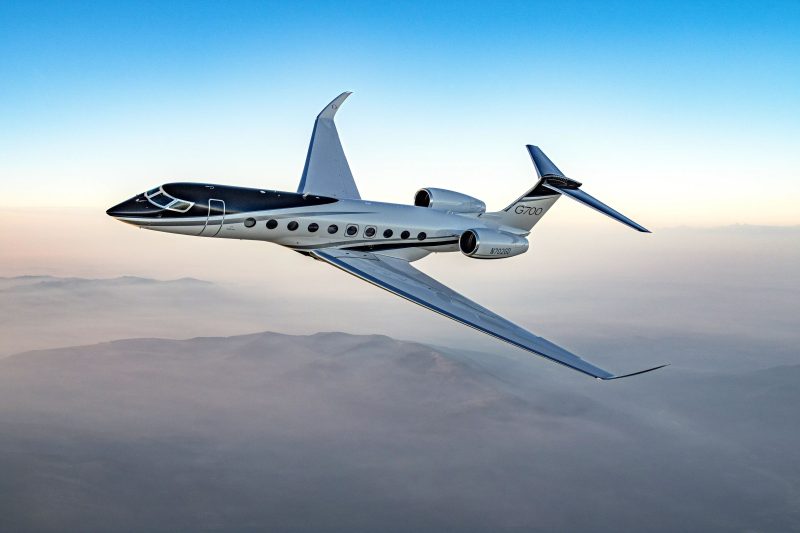
Gulfstream V is so Two Thousand And Late, G700 Is The Cool Jet To Have Now
If you are a mega wealthy member of the global community, there are a number of essentials. You have to have multiple mansions in desirable spots. You have to have a yacht. And you have to have a Gulfstream. Back in the early 2000s, buying a Gulfstream V was a status symbol. Then a G-6(50) was what Black Eyed Peas said was cool. Now there’s a new jet out there to prove your exuberance. The new and mighty Gulfstream G700.
What is the Gulfstream G700, You Ask?
It’s the new flagship jet built by the luxury aircraft builder. The Gulfstream G700 is the largest, fastest, and one of the longest range aircraft. It features up to five living areas, can comfortably fly 19 passengers in luxury accommodations and can sleep up to 13 passengers at any one time.
How far can it fly?
The jet can fly up to 7,750 nautical miles without a fuel stop. That’s enough to fly between the west coast of the US and all of Europe along with New York and Dubai. To be clear, it is not the longest range business jet in the world. That title belongs to the Global 7500 for a bit. The Gulfstream G800 also has a slightly longer range of 8,000nm. These standard bearers will eventually be bested by the massive Boeing 777x business jet when it enters service later this decade. That said, the G700 still has plenty of range to fly from business meetings to parties anywhere in the world.
How fast can it fly?
The G700’s is a speed demon. It’s top speed is M.935, besting its Global 7500 competitor by .01 mach. Long range cruise at M.85 is required to achieve its max range. At M.9, it can still fly over 6,000 nm.
How big is it?
The G700 is the largest jet Gulfstream has ever built. It measures 99.8 feet long, about as long as Boeing’s 737-200. It’s wingspan is 99.7 feet, just a few feet shorter than the venerable MD-80 wingspan of 107 feet.
But is it nice inside?
Do you even have to ask this question? Of course, this plane is built for billionaires. The jet features ten very large oval windows on each side of the jet. Inside the air is ultra purified with the cabin refreshing every 2-3 minutes. The spacious cabin features up to five separate cabins that can be customized to include a master bedroom, exercise suite, shower, and conference room along with high speed internet and as many high-def screens as you desire. If you don’t believe us, check out this video by Gulfstream.
How much does it cost?
Aircraft Cost Calculator estimates that the G700 costs $75 million dollars. If you fly 450 hours a year, it will set you back just over $4.1 million dollars a year with an average operating cost of just over $9,000 an hour. It’ll be difficult to get your hands on one of these jets though. Gulstream just began deliveries in April of 2024. So far only two are flying for their owners.
If you want to attend the next event, it will be held Sep 27-29. Join this private Facebook group, where organizers will update details all about it
Thom Richard – warbird pilot extraordinaire
Thom richard and one of his children, potato, at the american dream skyranch photo shootout. Photo credit randy jennings
The American Dream Skyranch is a little slice of heaven that world-renowned warbird pilot and flight instructor Thom Richard calls home.
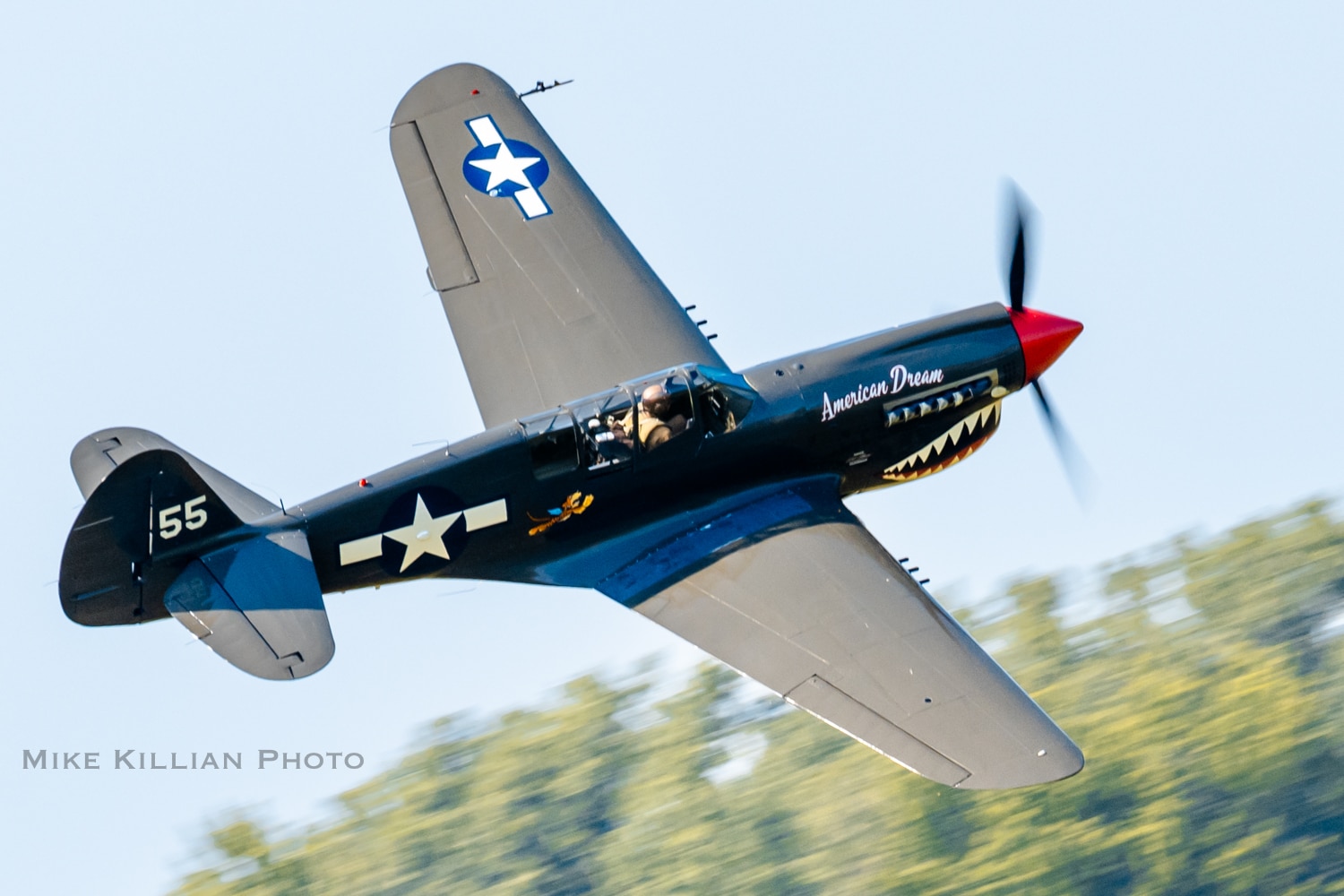
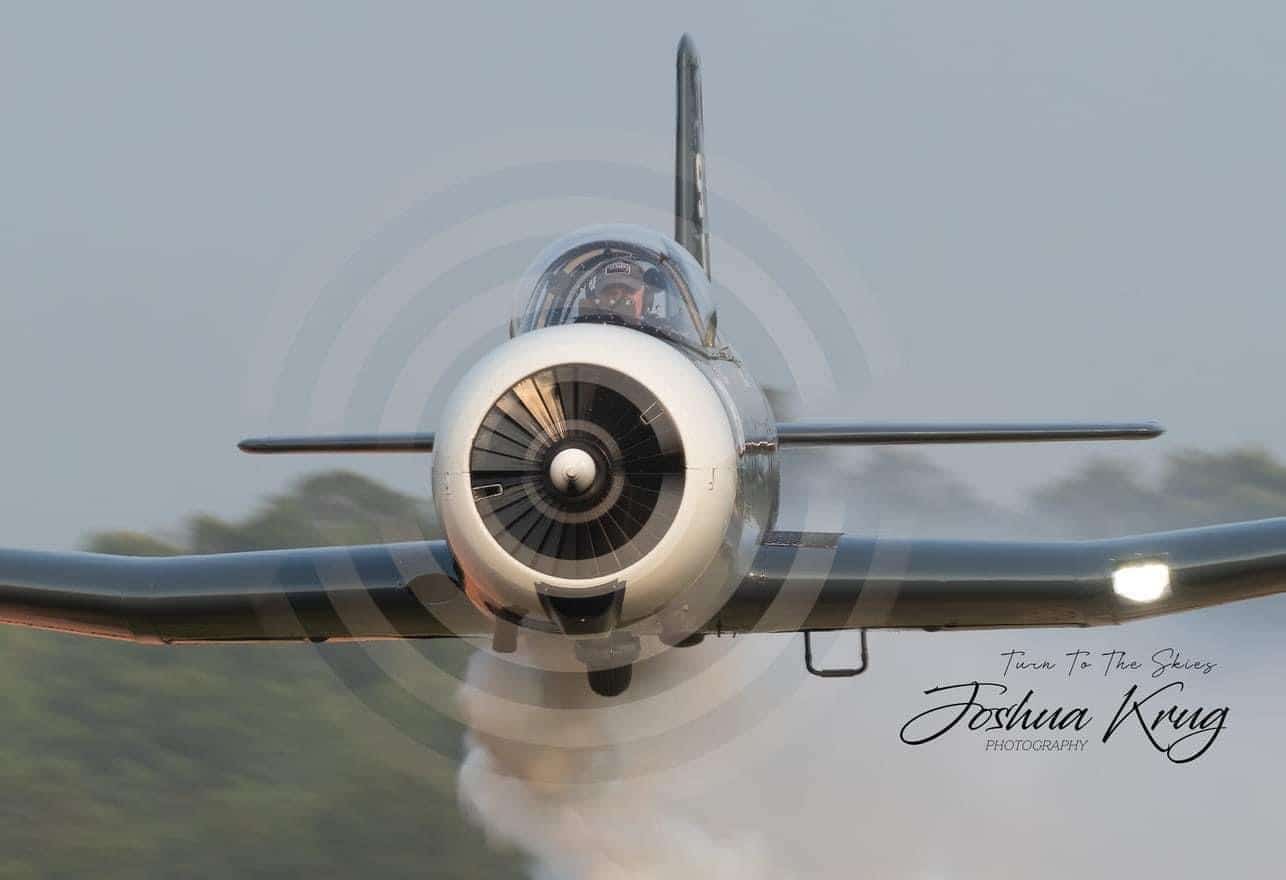
He’s one of the most skilled and experienced warbird pilots in the world, performing at air shows around the eastern half of the U.S. every year. He owns several aircraft, including WWII T-6 trainers and a true WWII combat veteran P-40 Warhawk (restored into a 2-seater with dual controls).
Richard also understands the value of producing quality content, to help promote aviation and keep history alive. How many of you were inspired by photos and videos as kids? Or even today? I sure was, and I’ve made a whole career doing it.
Epic view from the june 2024 american dream skyranch photo shootout. Photo credit aaron haase
More people see the content than attendance at air shows nationwide combined. Content creators directly drive air show ticket sales, and donations to various museums and non-profits. A single social media post or YouTube video may get millions of views.
A photo event for photographers, by photographers
Photo by samantha bryantEach day starts with briefings for both photographers and pilots (photo by ricardo von puttkammer)
After working together for many years, Richard approached me with an idea to host a photo event, to give photographers from all backgrounds and experience an opportunity to photograph warbirds in ways most air shows can’t.
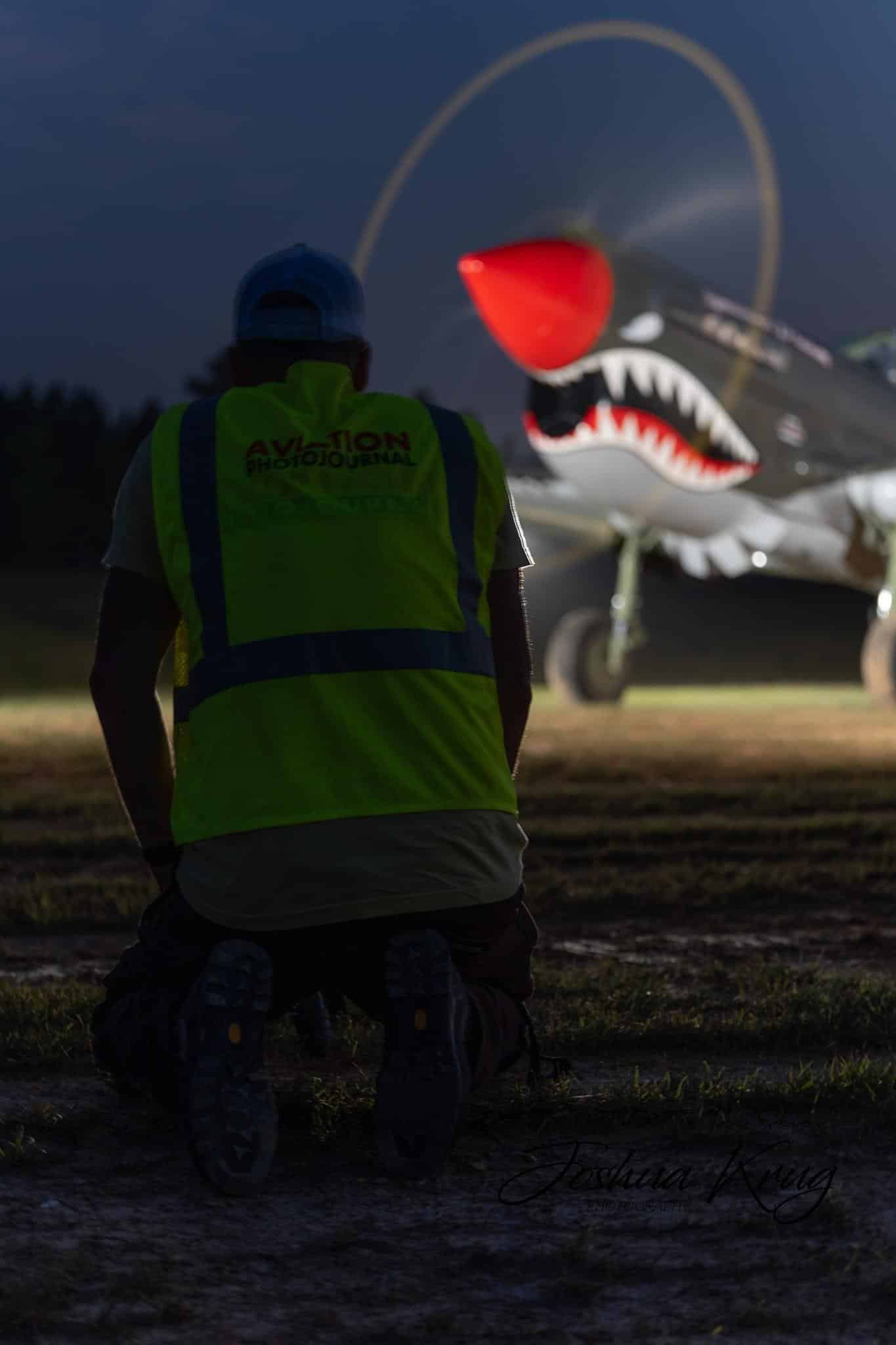
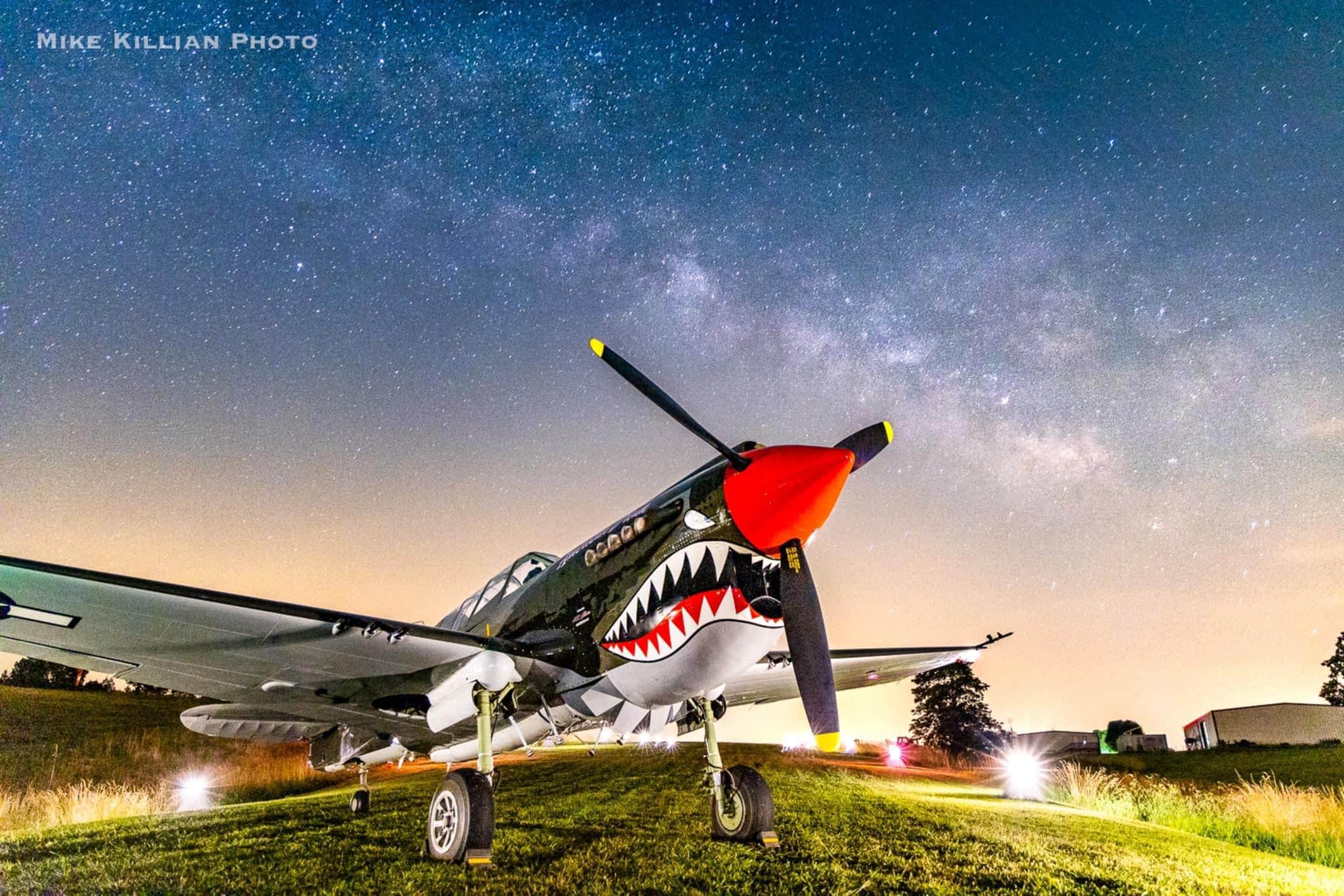
twilight engine run with a P-40 (photo by joshua krug)P-40 reflections for a night engine run photo-op. Photo by mike killian
Working with fellow aviation photographer pro Ricardo Von Puttkammer, the three of us began planning, and held our first 3-day photo event in 2023.
To say it was a success is an understatement. A year later attendees were still talking about it. It’s much more than unique photo ops on private property with airspace waivers.
This Photo Event at the American Dream Skyranch is Incredible 77
Family-friendly experience that offers a LOT more than cool photo ops
Attendees can stay at local hotels, or camp in shaded tents, or even bring their RVs and campers. Pilots are allowed to fly-in as well, as long as Richard gives the ok (not all planes can safely land on the grass runway).
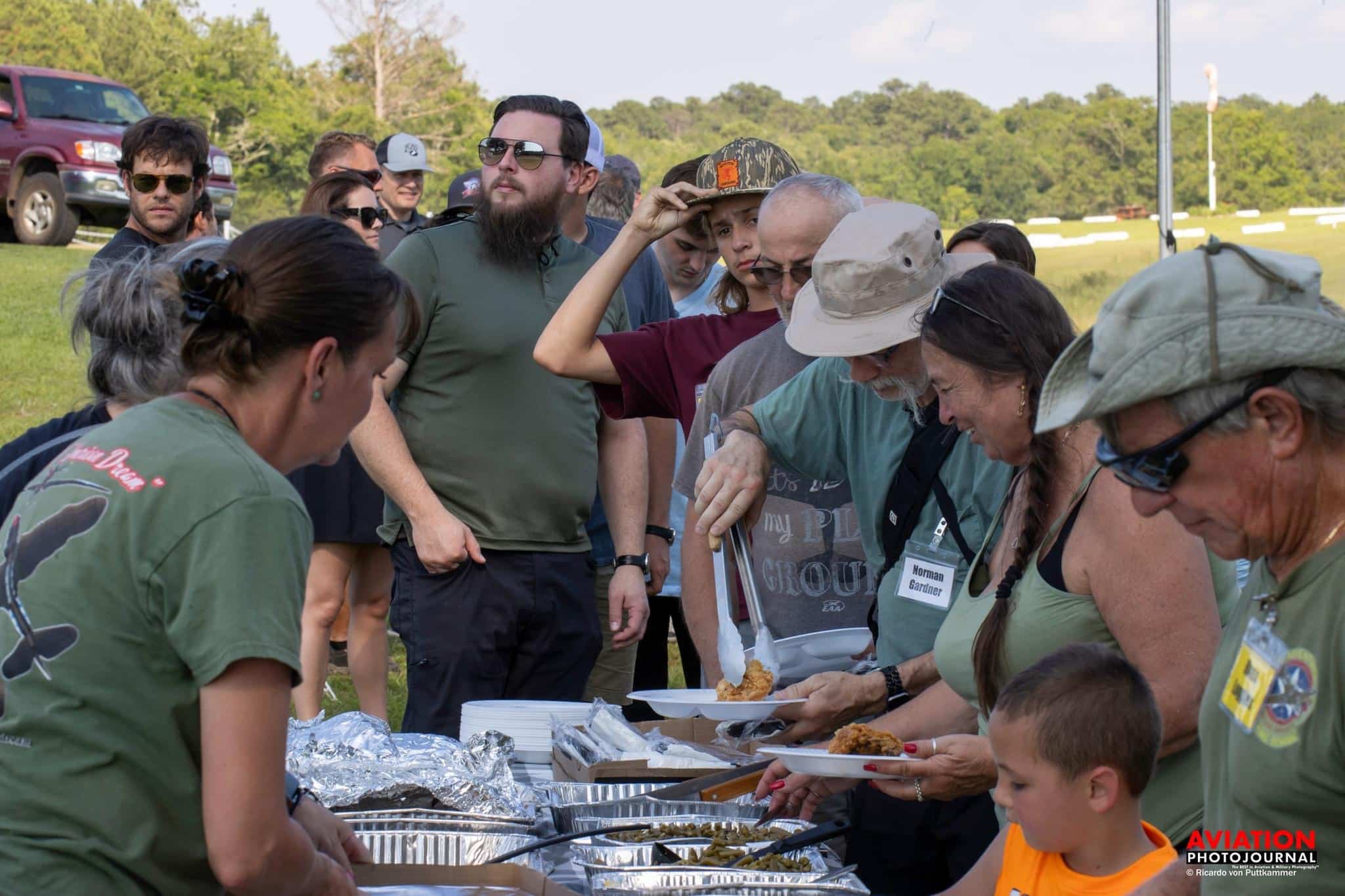
People can bring their families and dogs, go fishing, swimming, exploring, and enjoy food, campfires, drinks, games, music, make new friends and more.
in between the flying there is plenty to do to relax, including swimming and playing with the dogs (photo by ricardo von puttkammer / aviation photojournal)
The networking opportunities alone are worth their weight in gold. There is also a gun range, and attendees are free to bring their off road vehicles.
Aerobrew Coffee kept everyone fueled. A huge thanks to them for supporting the event and all involved. Definitely check them out and place your orders!
Mike killian photo
Dinner is catered on the main day, which is always day 2, with singing by Theresa Eaman. It’s the perfect way to relax after a long hot busy day, and recharge for a night of more photography ahead. Hire her for your events!
Photo by ricardo von puttkammerPhoto by ricardo von puttkammer
The flying and photography, up-close and personal
In between all of it is, of course, epic flying. The photographers are brought into the box, under expert guidance, with flying done just for them. It’s all up-close and personal.
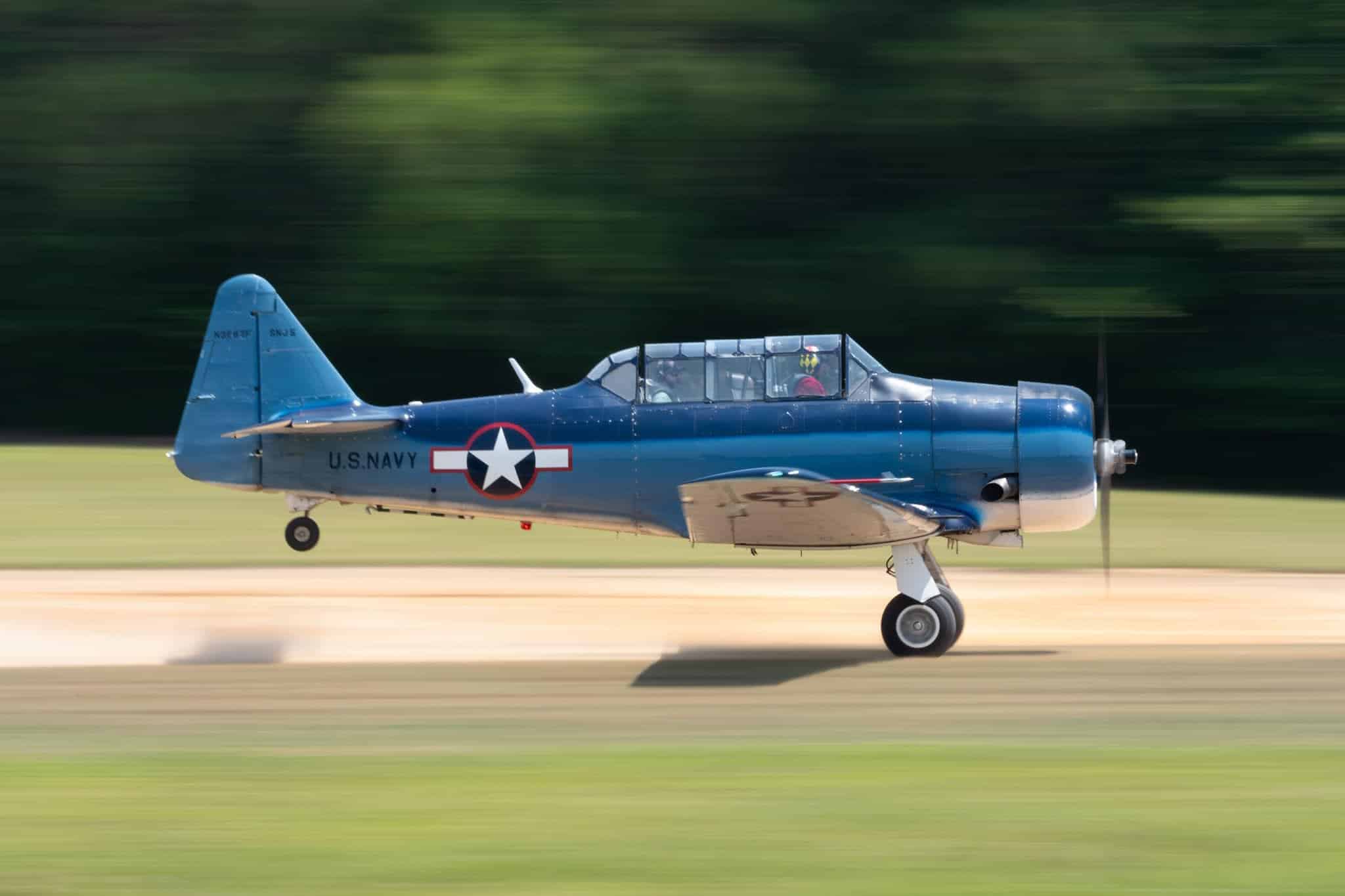
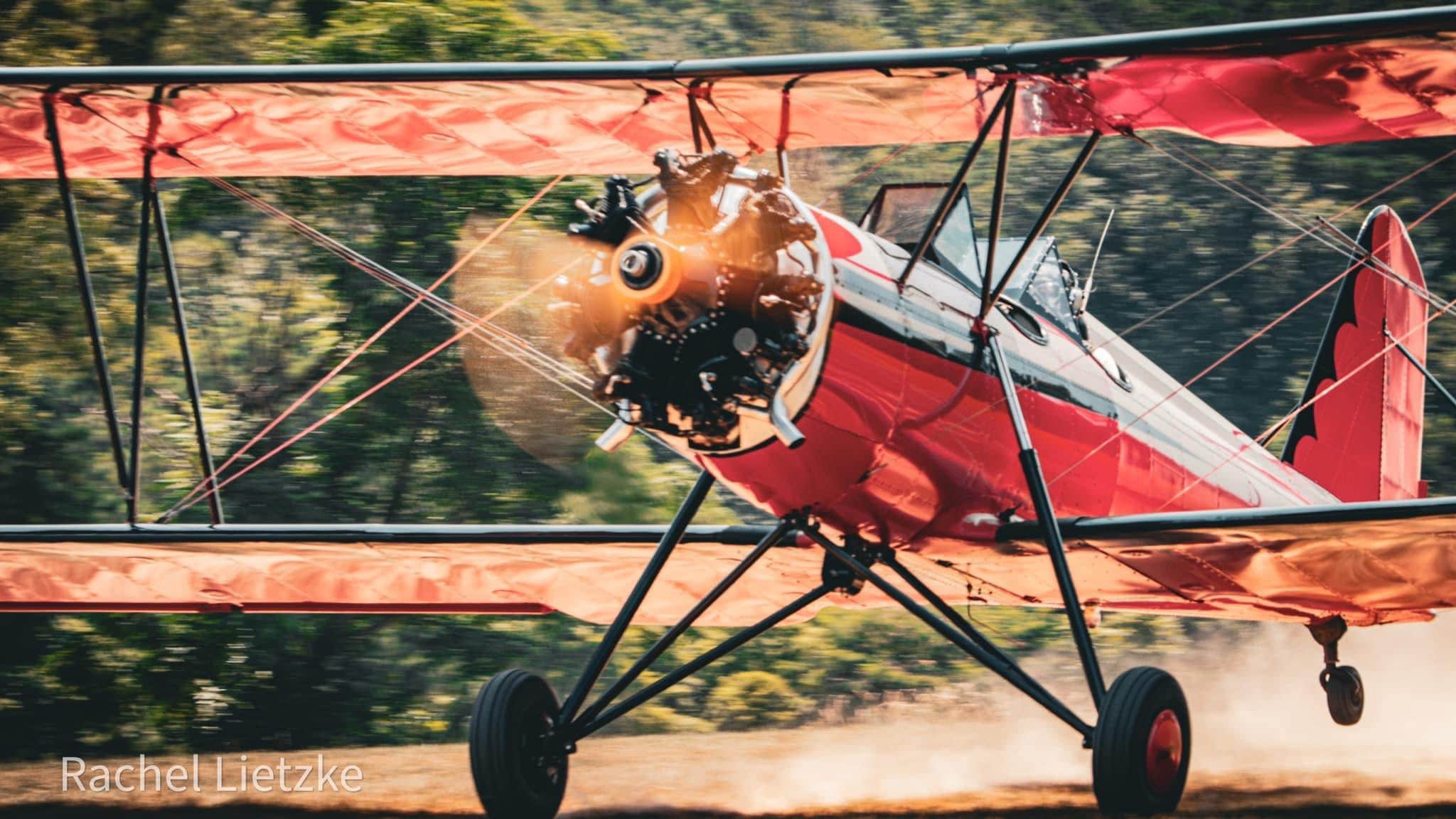
The treeline background also provides for some fantastic slow-shutter panning, allowing photogs to blur the backgrounds and give a sense of the speed of the aircraft.
Pilot timothy poole takes off in his SNJ-5, captured in this great slow-shutter panning shot by joshua krug
Elevated platforms are provided for those who want a higher view above the ground. Photogs have free rein to shoot where they want and move around, as long as they stay behind safety perimeters for taxi, takeoff and landings.
Thom richard showing off his p-40 warhawk “american dream” for photographers. Mike killian photo
The ranch is great for photography not only because of the close access, but the sun is to your back all afternoon to sunset. So the planes and background are well lit, as opposed to photogs having to shoot straight into the sun.
For certain maneuvers such as head-on passes, the photogs are directed into position where the pilots fly straight at them, before beginning their climb 1000’ away to 500’ altitude.
Roger milne coming in hot! Photo credit joshua krugOne of the organizers, professional photog ricardo von puttkammer, captures tico lacerda airshows on a head-on pass
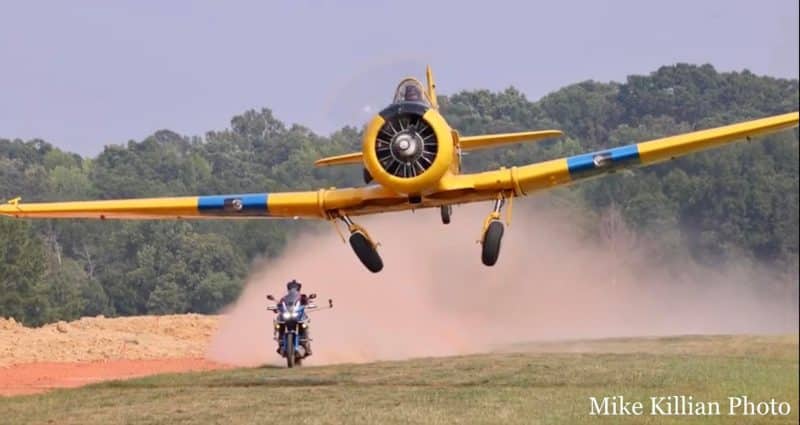
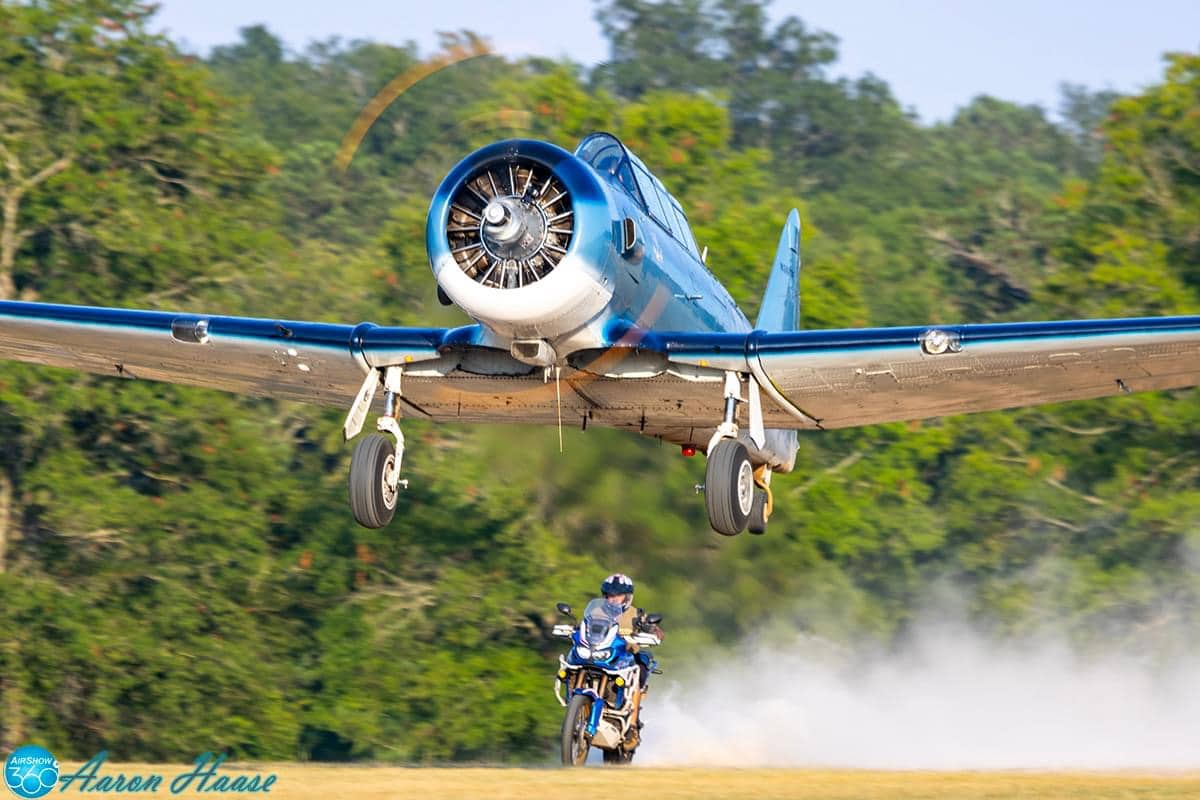
Warbird Adventures Chief Mechanic, Bryan Costa, also spices things up with his motorcycles, racing warbirds on takeoff down the dirt runway. An easy crowd favorite.
Photographer aaron haase captured this cool shot of mechanic bryan costa racing timothy poole down the runwayGreat shot by rachel lietzke
In the future we are hoping to bring horses out to the ranch, for some cool photography of them with the warbirds.
Drone are allowed as well, with prior approval, and as long as they do not interfere with other photographers. If you’re good enough, Richard will even allow you to takeoff with him.
Aerial photo shoots are available to purchase, or maybe you’ll get lucky and win a raffle
A raffle is held too, for one lucky photog to fly an aerial photo shoot with a P-40. There are not many who can say they have flown photo missions with WWII fighters. Even the pilots want the honor just to fly the photo ship. It’s definitely bragging rights among their buddies.
Aerial shoots are also for sale with the various aircraft in attendance.
photographer bob leclair captured this spectacular sunset image of p-40 warhawk “american dream” at the june 2024 shootout event at the american dream skyranch
Engine runs, bonfires, fireworks and night sky photography over historic aircraft
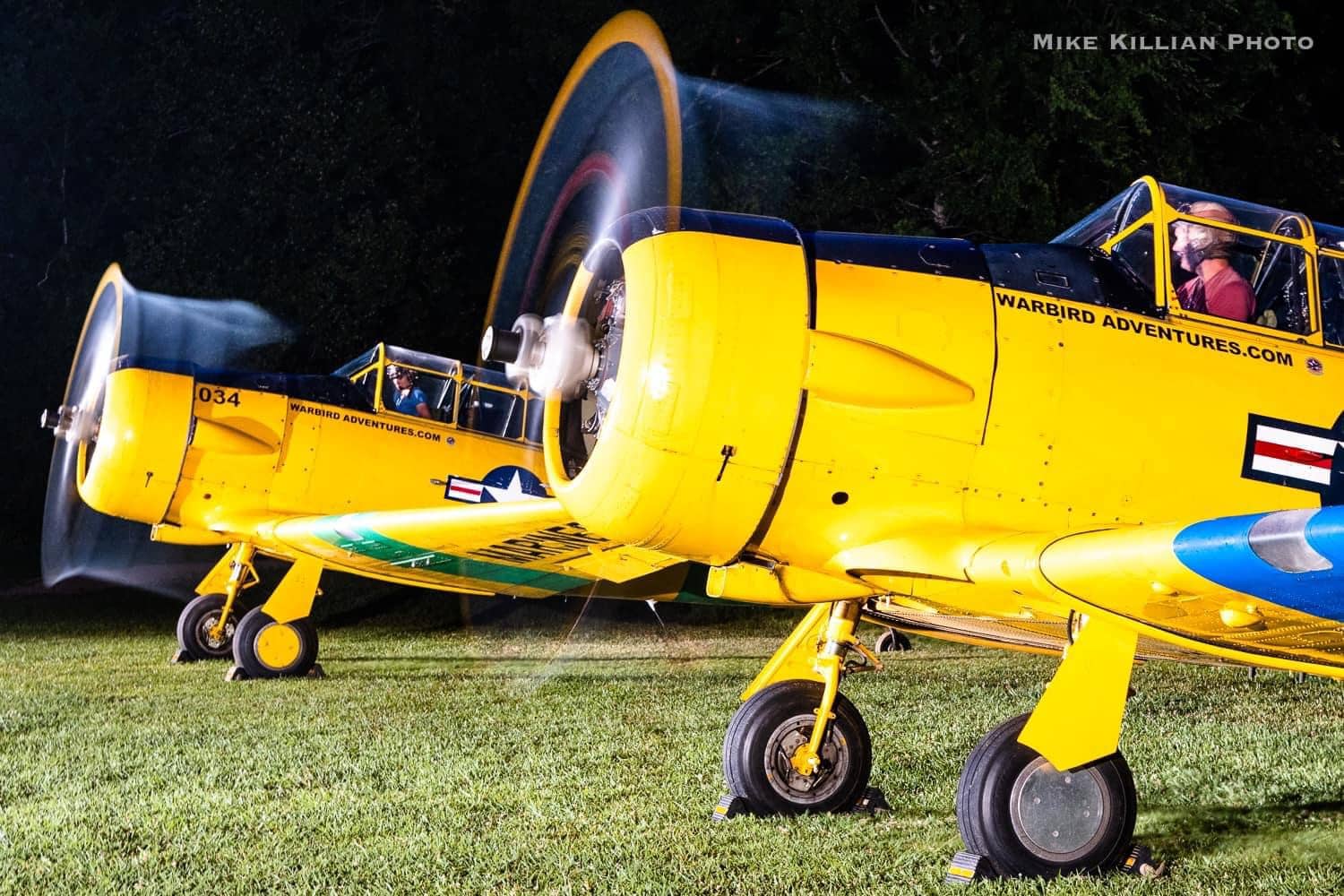
Planes are also staged for static photo ops day and night, including sunset and nighttime engine runs with various backgrounds.
Organizers have also started incorporating a fireworks shoot over the planes, thanks to the pyro expertise of Aaron Haase and Harrison Frey.
Photog brett wilburn captured this great shot of the fireworks over p-40 warhawk american dream
The photographers are not just told what to do and where to go either. Many air shows are a turnoff to photographers because they are very limited in what they can do and where they can go.
That’s not the case at the Skyranch. Their feedback and ideas are a vital part of the event’s success. Everything is tailored to what they want, as long as it can be done safely. Safety is the absolute top priority.
Wwii T-6 pilot makers running their engines under professional lighting at the first skyranch photo shootout in 2023 (mike killian photo)
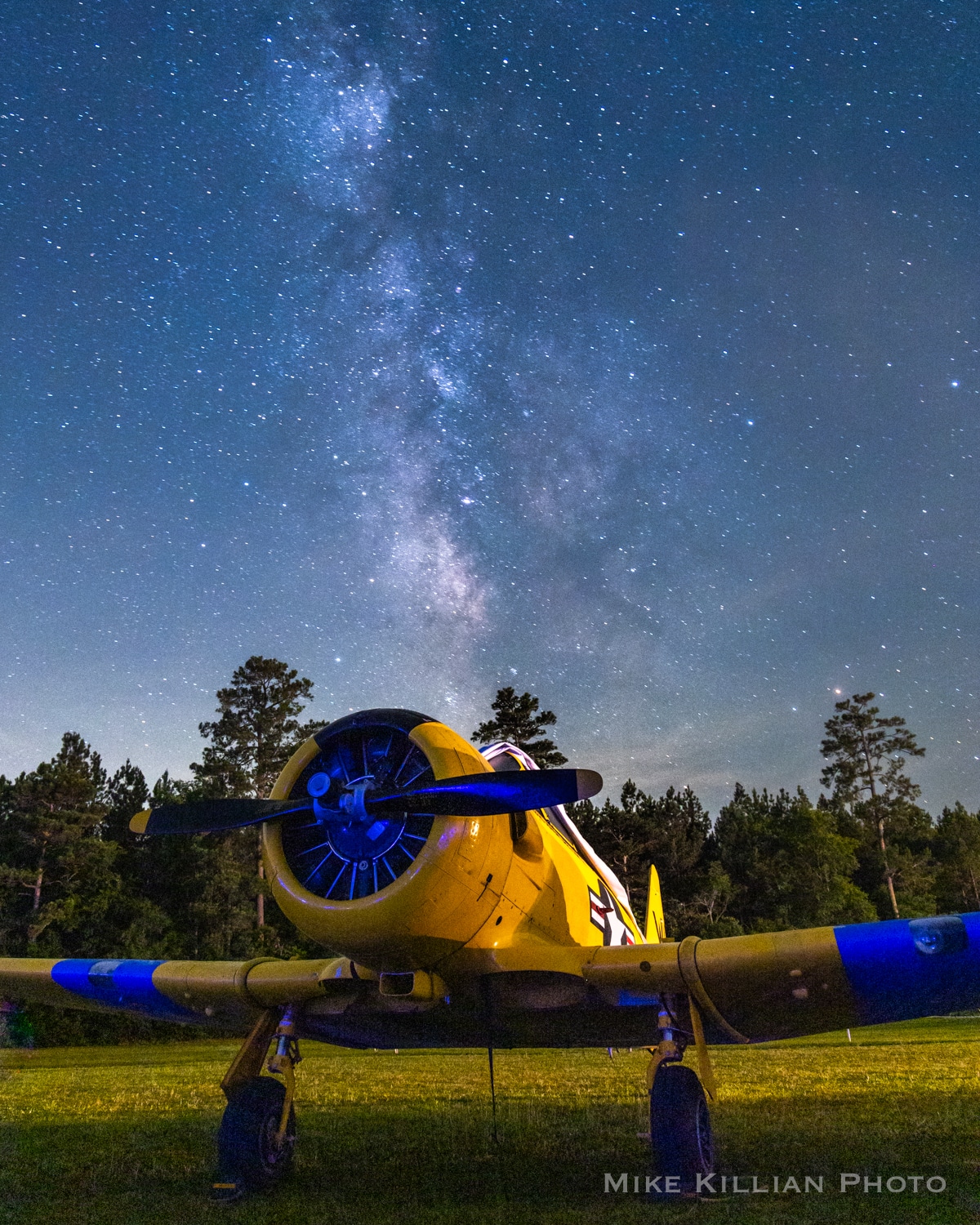
You can even do some astrophotography over the planes
It’s a special location, with skies dark enough to see the Milky Way with your naked eye. Photographers cannot capture the night sky at most airports due to light pollution.
The ranch, however, is rural. Far enough from city lights to produce some amazing results.
Photo by mike killianStar trails by photographer jason cober at the american dream skyranch photo shootout
The planes are also positioned at different locations each night to allow photographers to capture the galaxy above the planes.
If photogs need instruction on how to shoot something, or how to edit and process their work, they are given 1-on-1 expert instruction.
It does not matter if you’re a seasoned pro, brand new to photography, or somewhere in between. Everyone is welcome, and everyone supports, helps and encourages each other.
An aerobatic training camp is also held for pilots
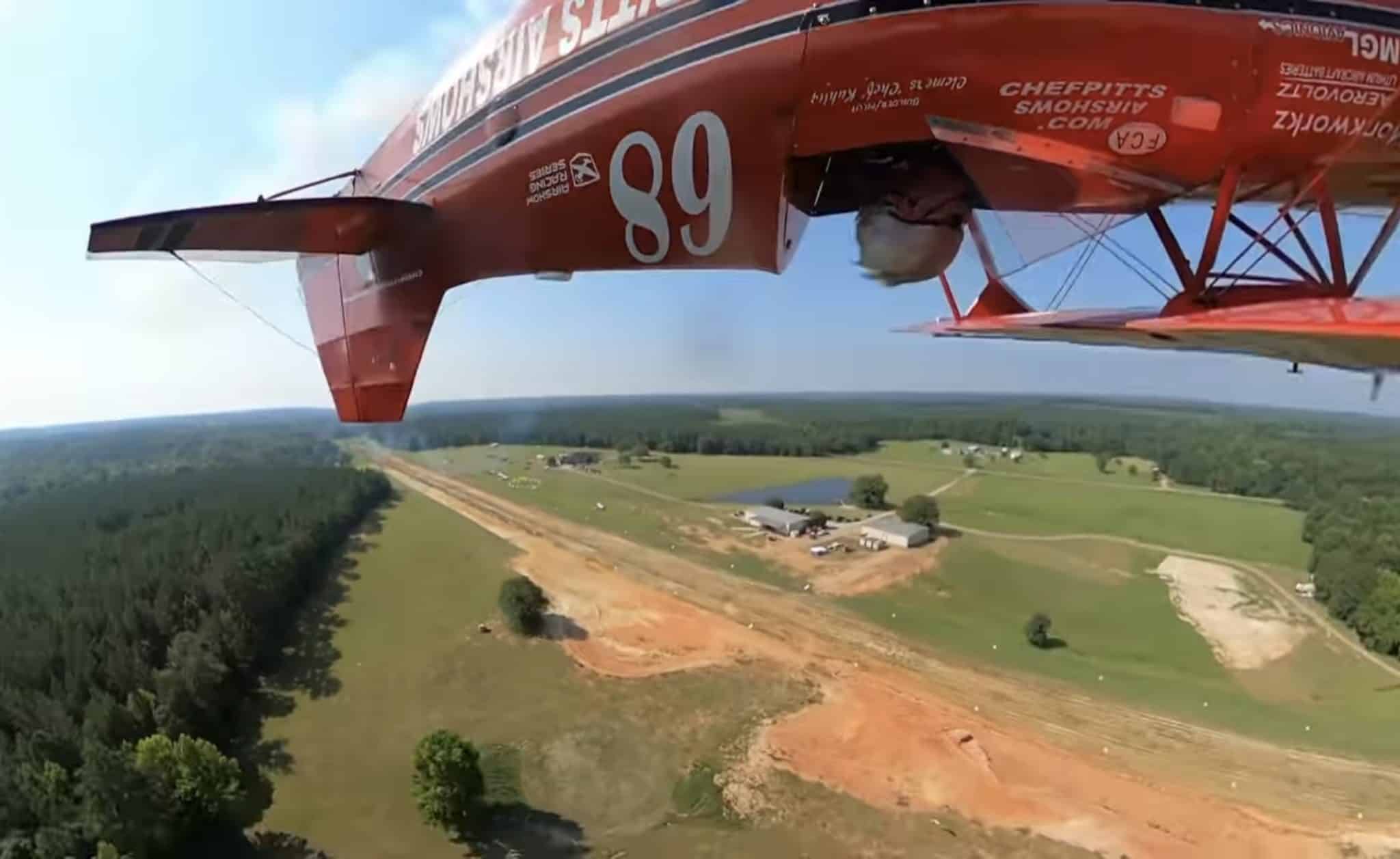
We have started incorporating an aerobatic training camp for pilots, with a focus on starting air shows. Several highly experienced and respected air show pilots attend as instructors, including representatives from the International Council of Air Shows (ICAS).
Greg Koontz, Scott Yoak, Clemens Kuhlig and Gary Ward are just a few of those who provide expert instruction for pilots learning aerobatics.
It’s a place where pilots can hone their skills, learn from the very best, and overall become better pilots. Plus they get some of the best photos of them flying that they could ask for.
Photo by scott skurzewski
“Warbird Pinup” photography
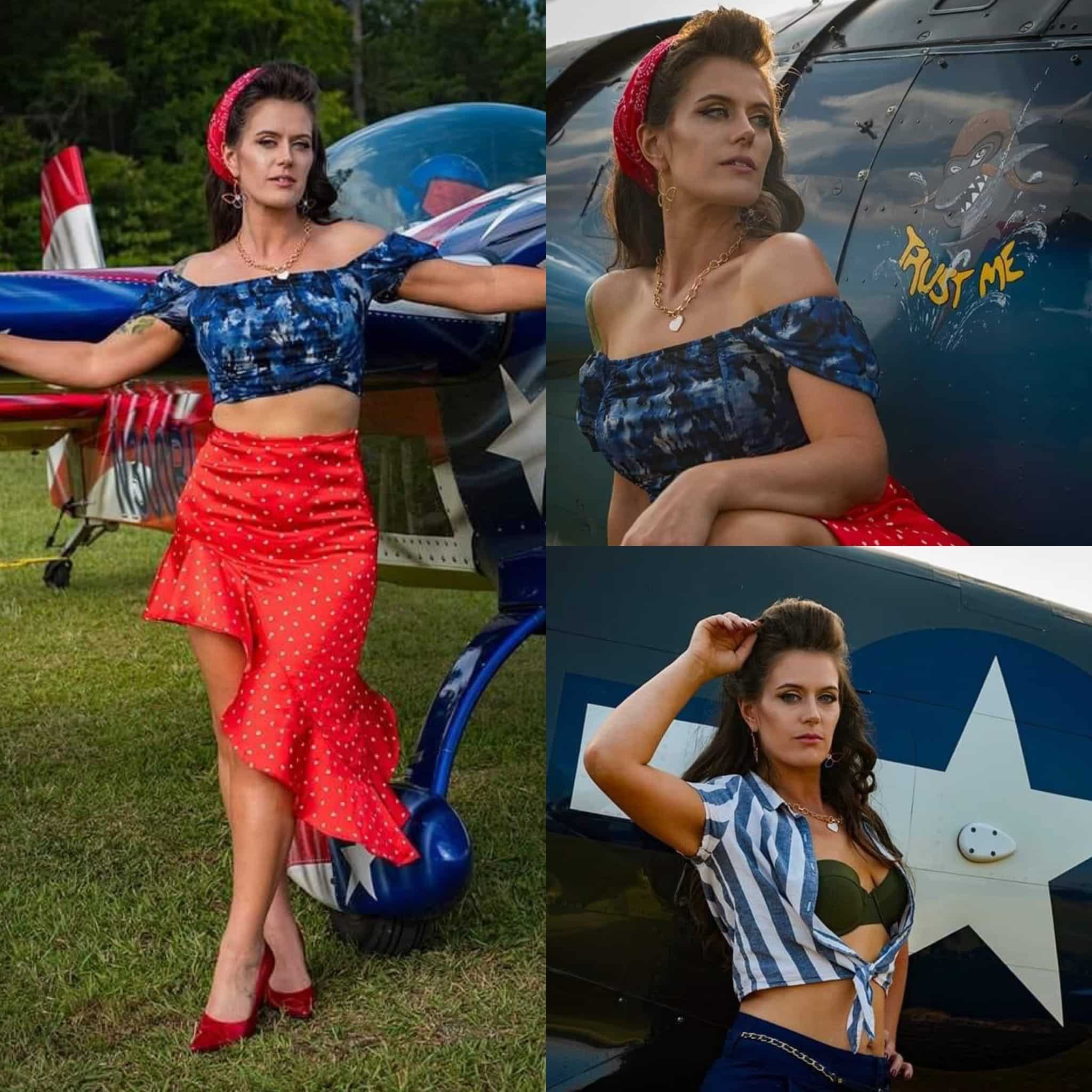
Photographer Chris Eccles brought model Samantha Walters to the last event, for some sunrise work with several of the planes. Tasteful and classy.
This Photo Event at the American Dream Skyranch is Incredible 78
It worked out very well, and so we will be doing more of these as a formal shoot in the future, to give photographers another cool opportunity that will be a win-win for all involved.
Future air show plans
For now the American Dream Skyranch Photo Shootout is a private event, only for paying content creators who register. The cost is $250 each. They are allowed to bring guests for a smaller fee.
Photo by rachel lietzke
Plans are however in works to hold an air show open to the public in the future. The photo event would be the kickoff. Small at first, but growing bigger over time, with a focus on historic warbirds and aerobatics.
Want to stay up to date? Or attend a future event? The next will be held Sep 27-29, 2024. Join our private Facebook group, where we will provide updates.
George A Davis Was a Natural Leader Who Scored Kills in Bunches
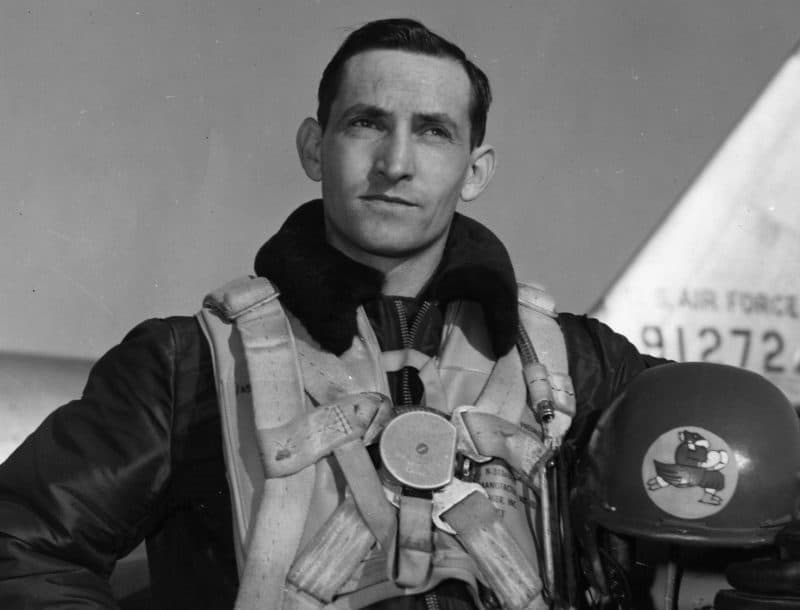
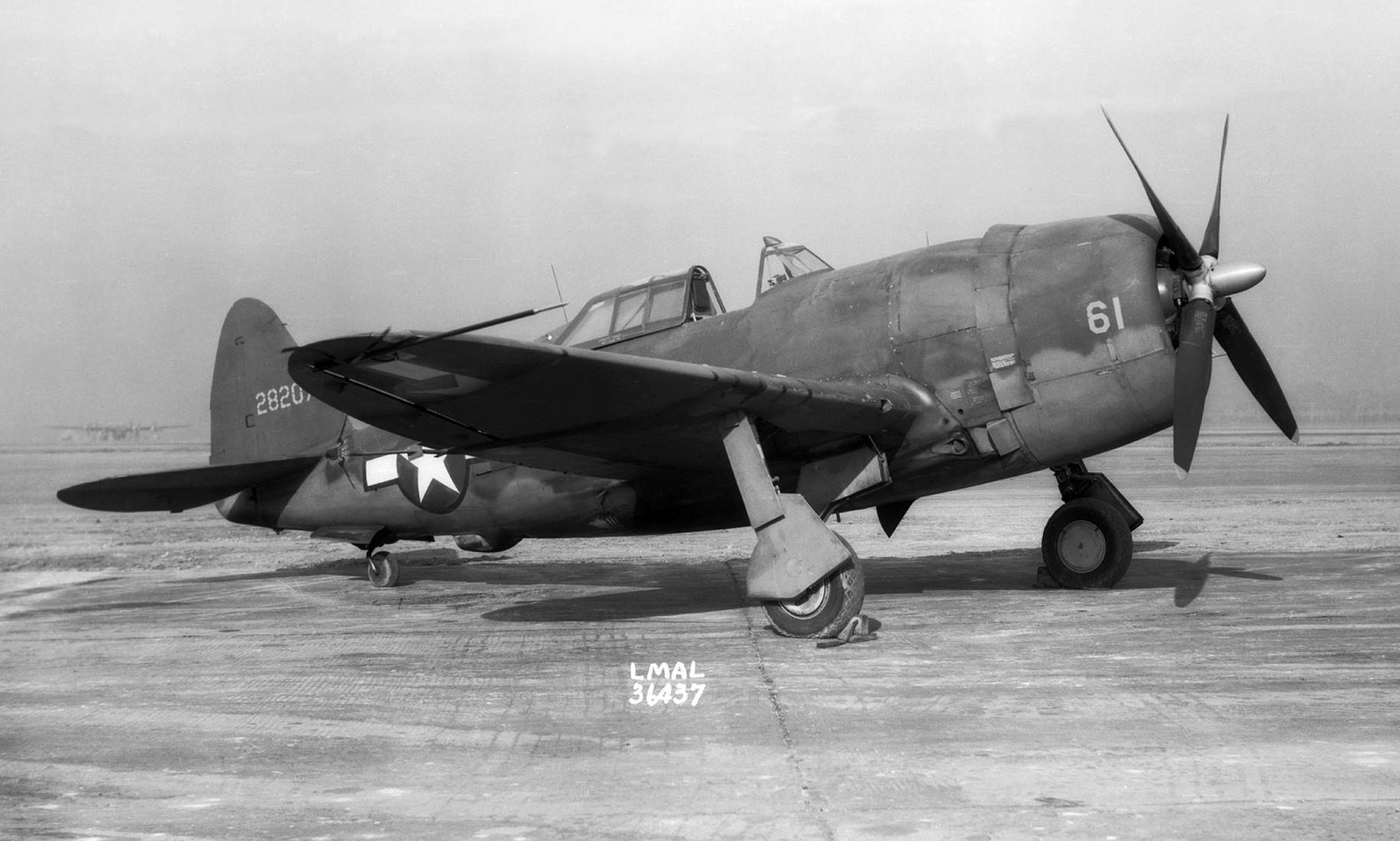
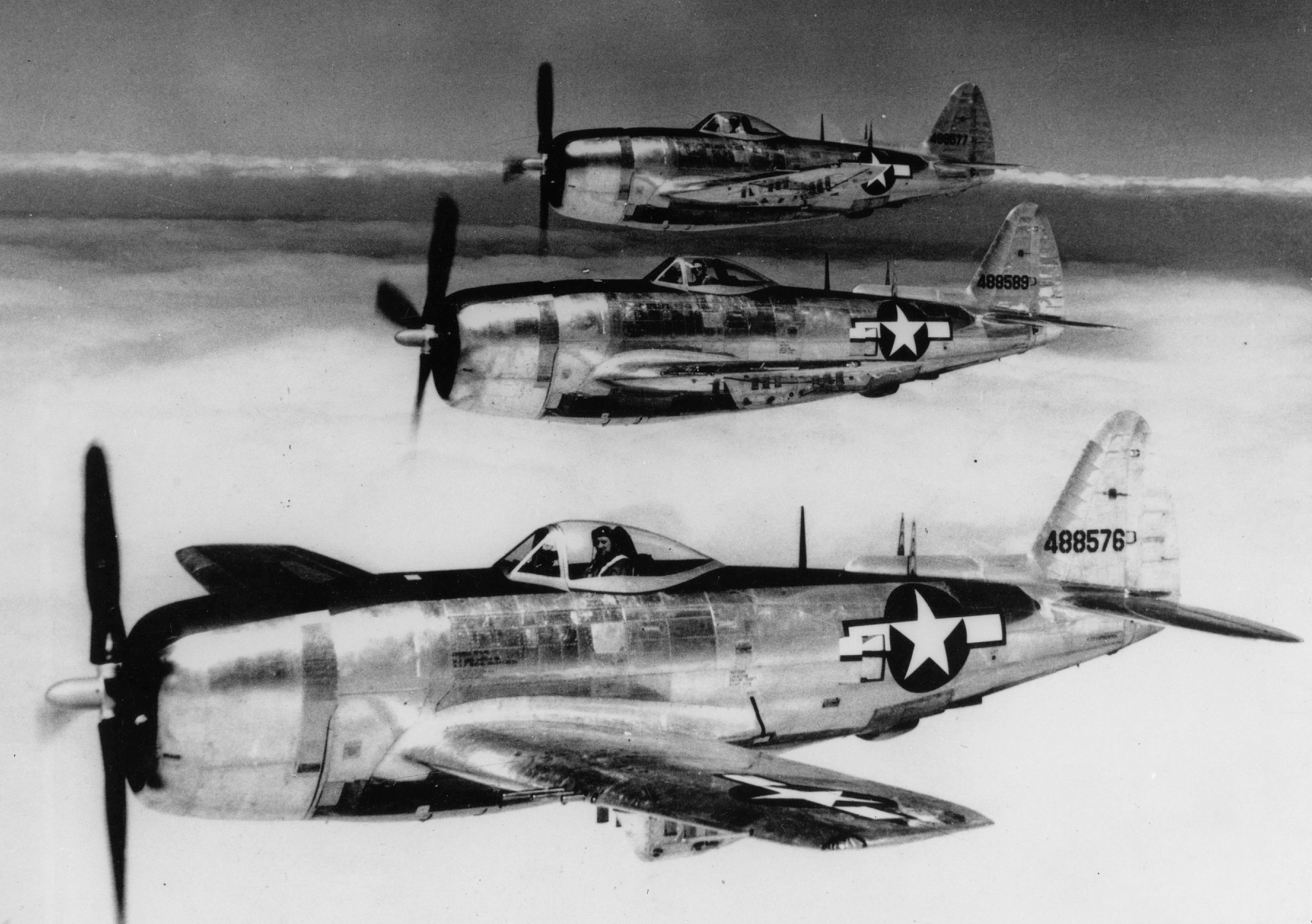
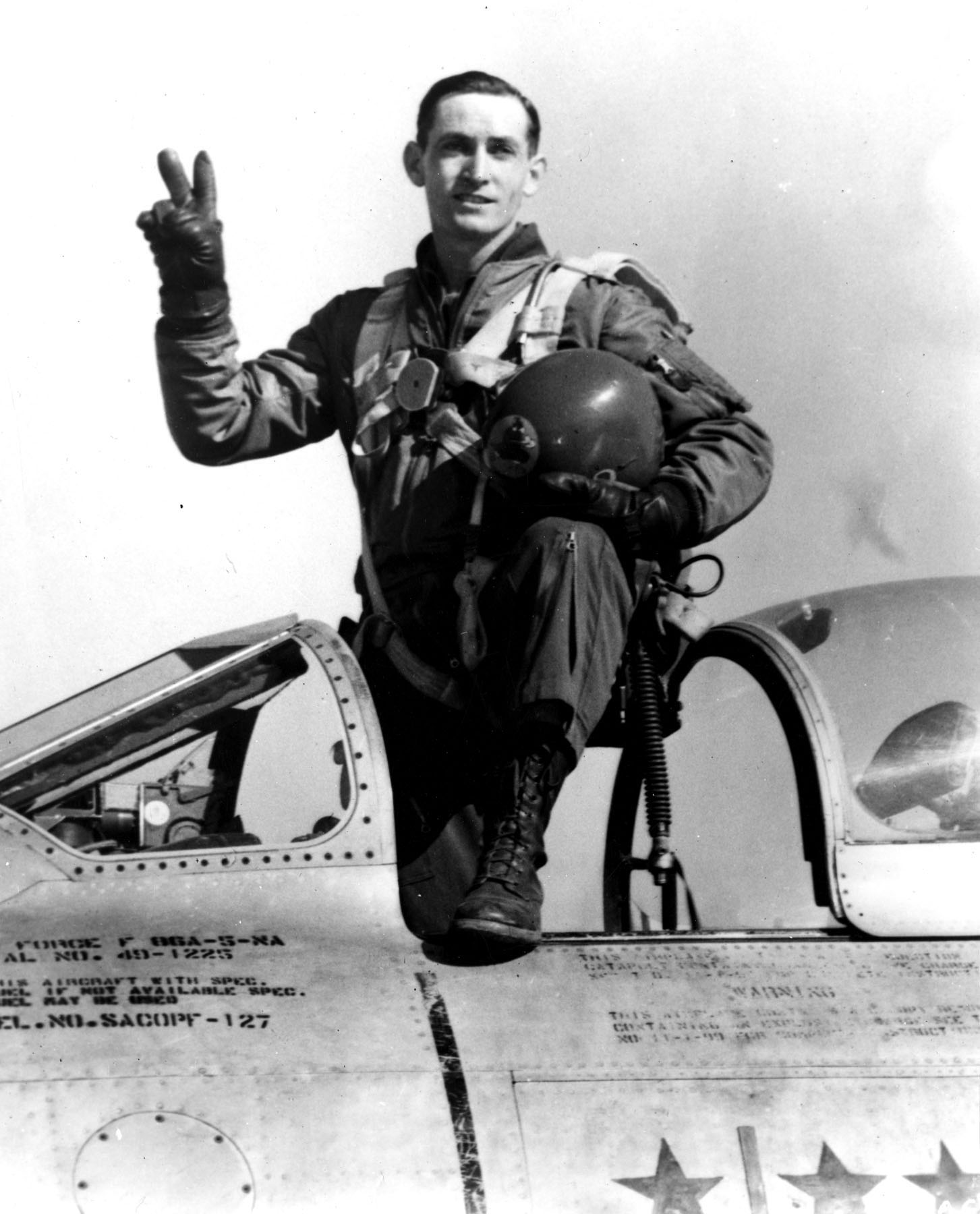
Born in Dublin, Texas, on 1 December 1920, George Andrew Davis Junior joined the US Army Air Corps (USAAC) in March 1942. After his primary and basic flight training, as well as his initial type training in Curtiss P-40 Warhawks, were complete, he was sent to the Pacific Theater and assigned to fly Republic P-47 Thunderbolts with the 342nd Fighter Squadron, 348th Fighter Group of the Fifth Air Force. Davis’s squadron fought primarily in the New Guinea and Philippines campaigns.
George A Davis was assigned to fly Republic P-47 Thunderbolts with the 342nd Fighter Squadron, 348th Fighter Group of the Fifth Air Force. | Image via NACA/NASA
Final Tally
Davis achieved ace status by shooting down seven Japanese aircraft. His aerial gunnery was superior, and his ability to fly his P-47 to the limits of its capabilities was impressive. Davis flew a total of 266 combat missions against the Japanese.
Like many of his fellow combat aces, Davis was eventually assigned to train new pilots back in the United States. By the time the war ended in 1945, he had been awarded the Silver Star, two Distinguished Flying Crosses, and nine Air Medals for his prowess in aerial combat.
Between Wars
After the war, Davis was assigned to several administrative positions in the United States Army Air Forces (USAAF). Still, he maintained his current flight proficiency by flying with one of the first USAAF aerial demonstration teams. When the United States Air Force (USAF) was born in 1947, Davis was commissioned as a Captain in the fledgling service.
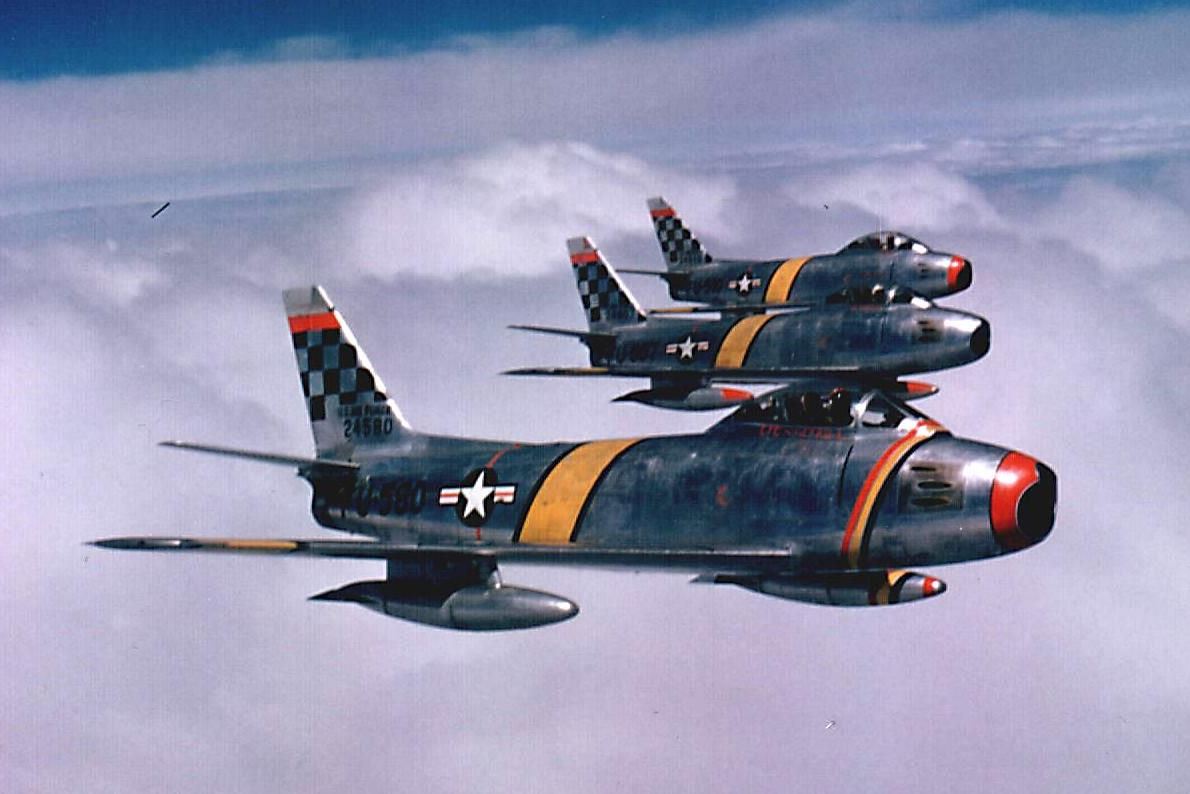
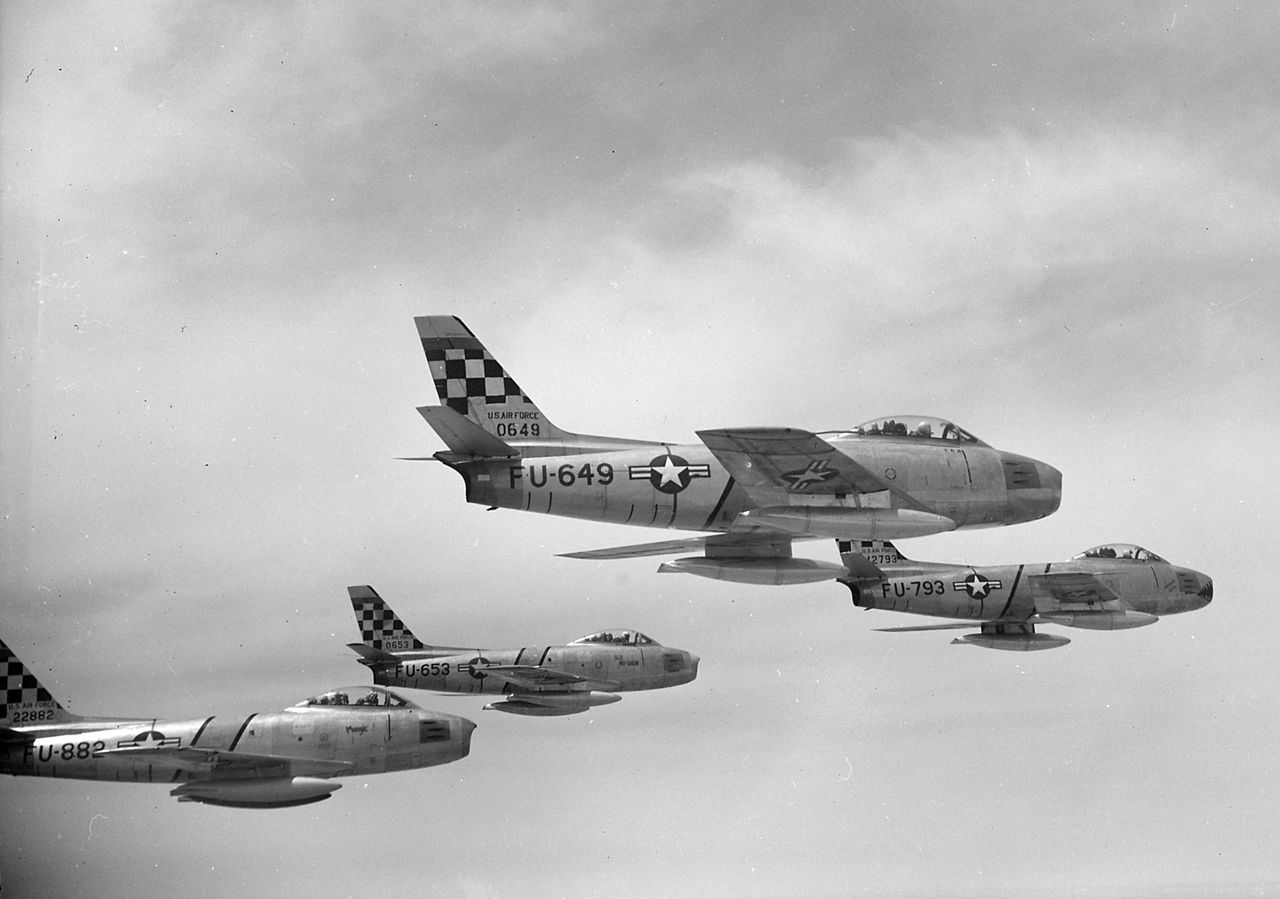
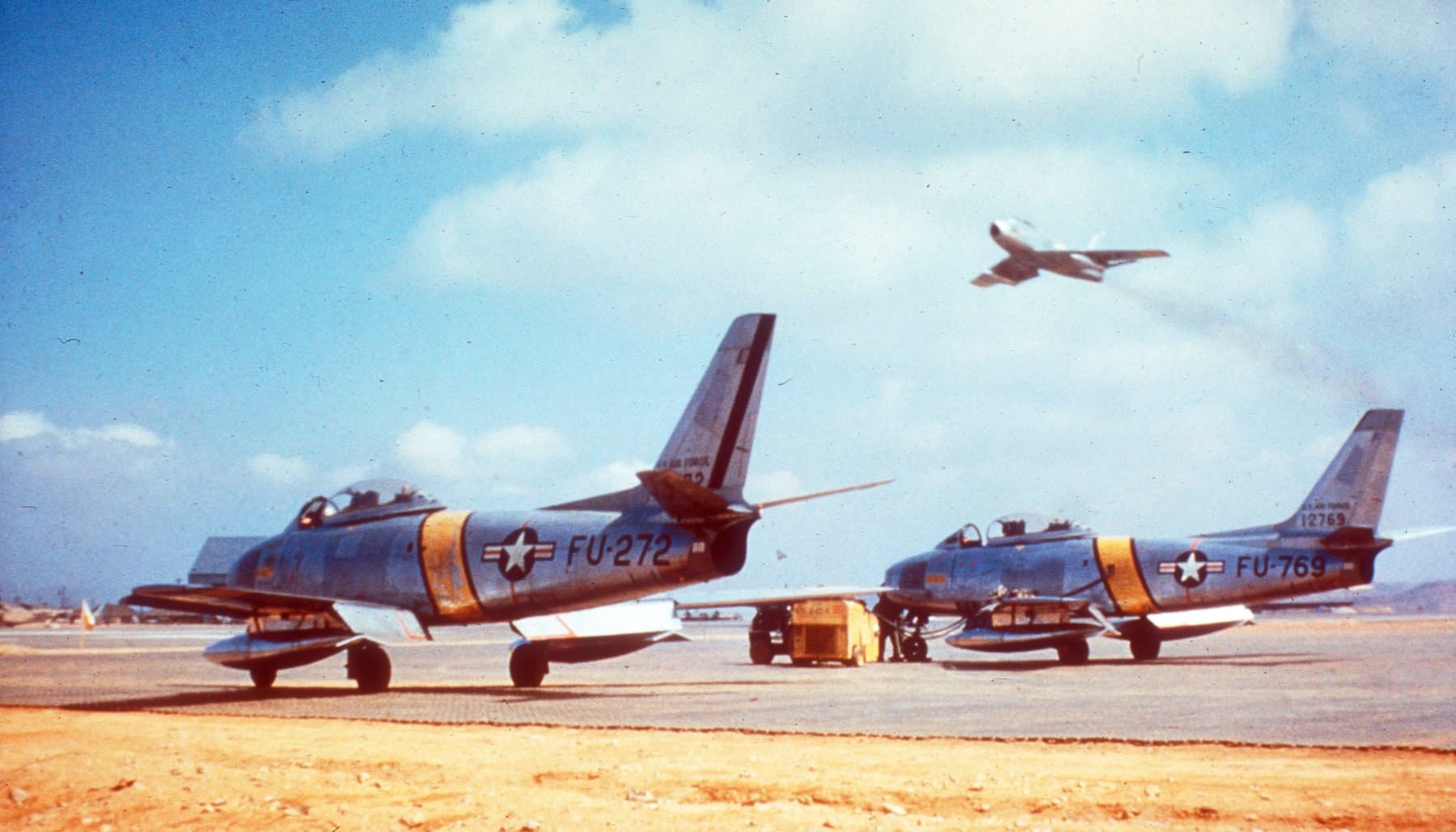
By the time war came to Korea in 1950, Davis had built up experience by flying as a flight commander. In early 1951, Davis was promoted to Major and began training on the North American F-86 Sabre. When his training was complete in October 1951, Davis was transferred to the 334th Fighter Interceptor Squadron, 8th Fighter Interceptor Group, 4th Fighter Interceptor Wing to fly Sabres in Korea.
Image via National Museum of the US Air Force
Picking Up Where He Left Off
Major George A Davis entered aerial combat in Korea quickly and effectively, scoring multiple kills against MiGs on several missions. In November 1951, the Major was given command of the 334th Fighter Interceptor Squadron. The 334th was relocated to Kimpo Airfield, near the fabled “MiG Alley” area near the North Korean border.
Davis’ prior experience in training new and inexperienced pilots enabled him to effectively train the pilots entering the war in Korea in current tactics and doctrine, improving their life expectancy in aerial combat and earning Davis wide-ranging respect from his peers and rivals alike.
Final Flight
On 10 February 1952, while flying his 59th and last combat mission of the Korean War in a F-86E Sabre (tail number 51-2752) and leading a flight of four F-86s on a patrol near the Yalu River along the Manchurian border, Major George A Davis was shot down and killed.
Controversy over Davis’ final mission has ranged from why he attacked the numerically superior force of 12 MiG-15s to exactly who shot Davis down. Davis most likely attacked because of his confidently aggressive nature. He was also likely concerned about the USAF Republic F-84 Thunderjets attacking ground targets nearby, and that they were unaware of the presence of the MiGs above them.
Image via Department of Defense
Discoveries
Davis’ wingman reported that he did not see Davis bail out of his stricken aircraft. Davis was declared missing in action and presumed killed. Intense aerial searches of the area later revealed no evidence that Davis had survived the crash.
It was only discovered many years later that a week after the incident, the Chinese military searched the region and recovered Davis’ body, still in the crashed aircraft. Major George A Davis’ body was never returned to the United States. Davis was posthumously promoted to the rank of Lieutenant Colonel, USAF.
Image via National Museum of the US Air Force
Controversy
Davis’ death generated controversy between China and Russia because both Chinese MiG pilot Zhang Jihui and Soviet MiG pilot Mikhail A. Averin claimed to have shot Davis down. Even though the Chinese credited Zhang for shooting down Davis’ F-86, Russian sources disputed his claim some 40 years later by raising the possibility that the Russian Averin was the MiG pilot who had shot down Davis’ aircraft.
Official US Air Force Photograph
Firsts and Onlys
Lieutenant Colonel George A Davis compiled an impressive list of accomplishments:
Davis scored 14 confirmed victories, one probable victory, and two aircraft damaged, bringing his career total aerial victory count to 21.
Davis was one of only 30 US pilots to compile more than 20 confirmed victories over their careers.
Davis was one of 1,297 World War II aces from the United States, with seven confirmed kills during that war.
Davis was one of 41 Korean War aces from the United States.
Davis shot down four Chinese aircraft on 30 November 1951, which was the most kills achieved in a single day by any United Nations (UN) pilot in the Korean War.
Davis took the shortest time to become a double ace- just 17 days in Korea.
Davis was one of only six US Air Force pilots and seven US pilots overall who achieved ace status flying piston-engine planes in World War II and jets in a later conflict.
At the time of his death, Davis was the top-scoring fighter ace from the UN forces, making him the Ace of Aces in Korea.
When the war ended, Davis was ranked fourth in aerial victories among pilots, surpassed only by fellow USAF Sabre pilots Joseph C. McConnell, James Jabara, and Manuel J. Fernandez.
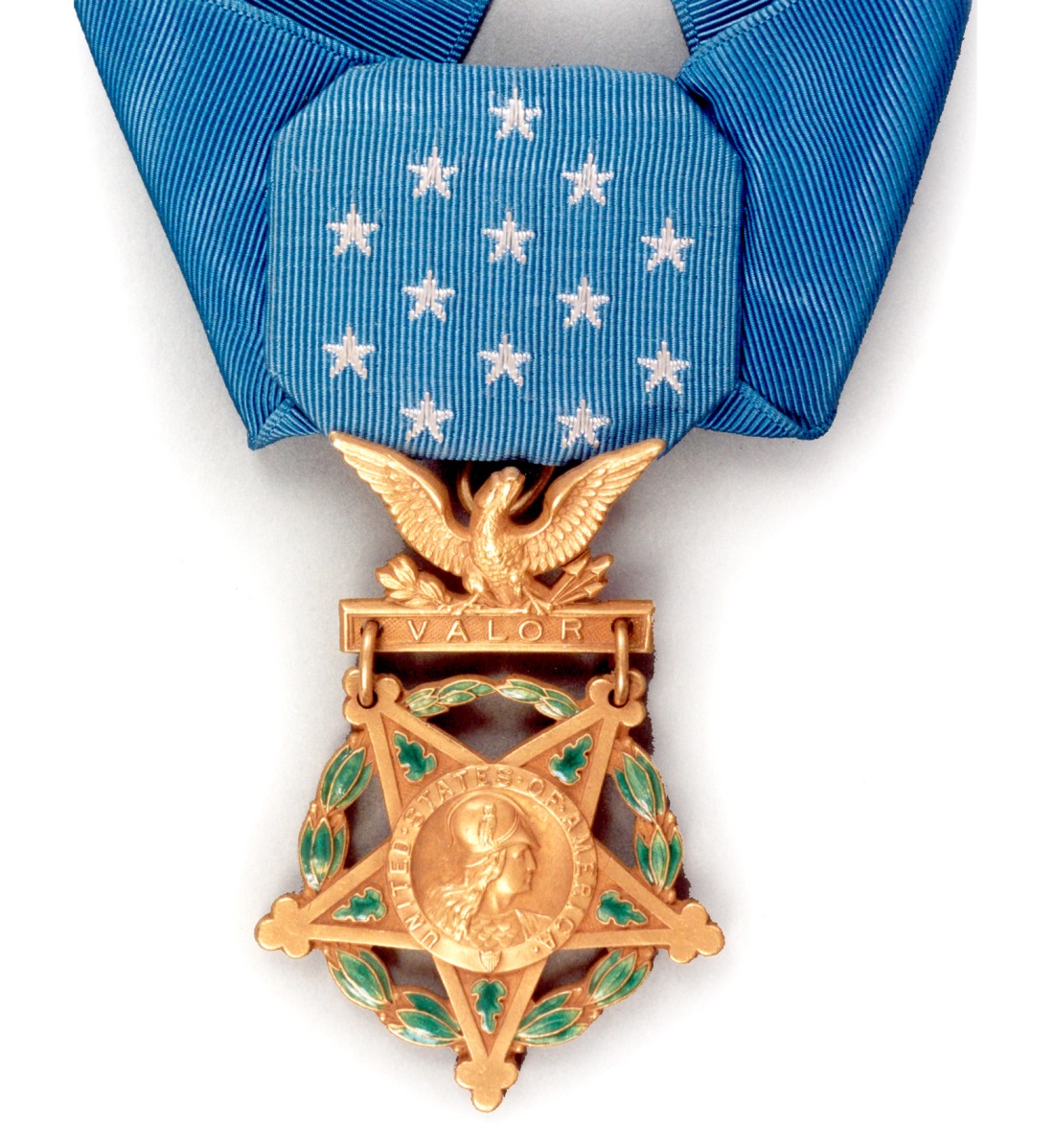
Davis was the third of four members of the US Air Force to be awarded the Medal of Honor in the Korean War. All four Air Force recipients were pilots who were killed in action. Davis was also the only USAF service member to be awarded the Army version of the MOH.
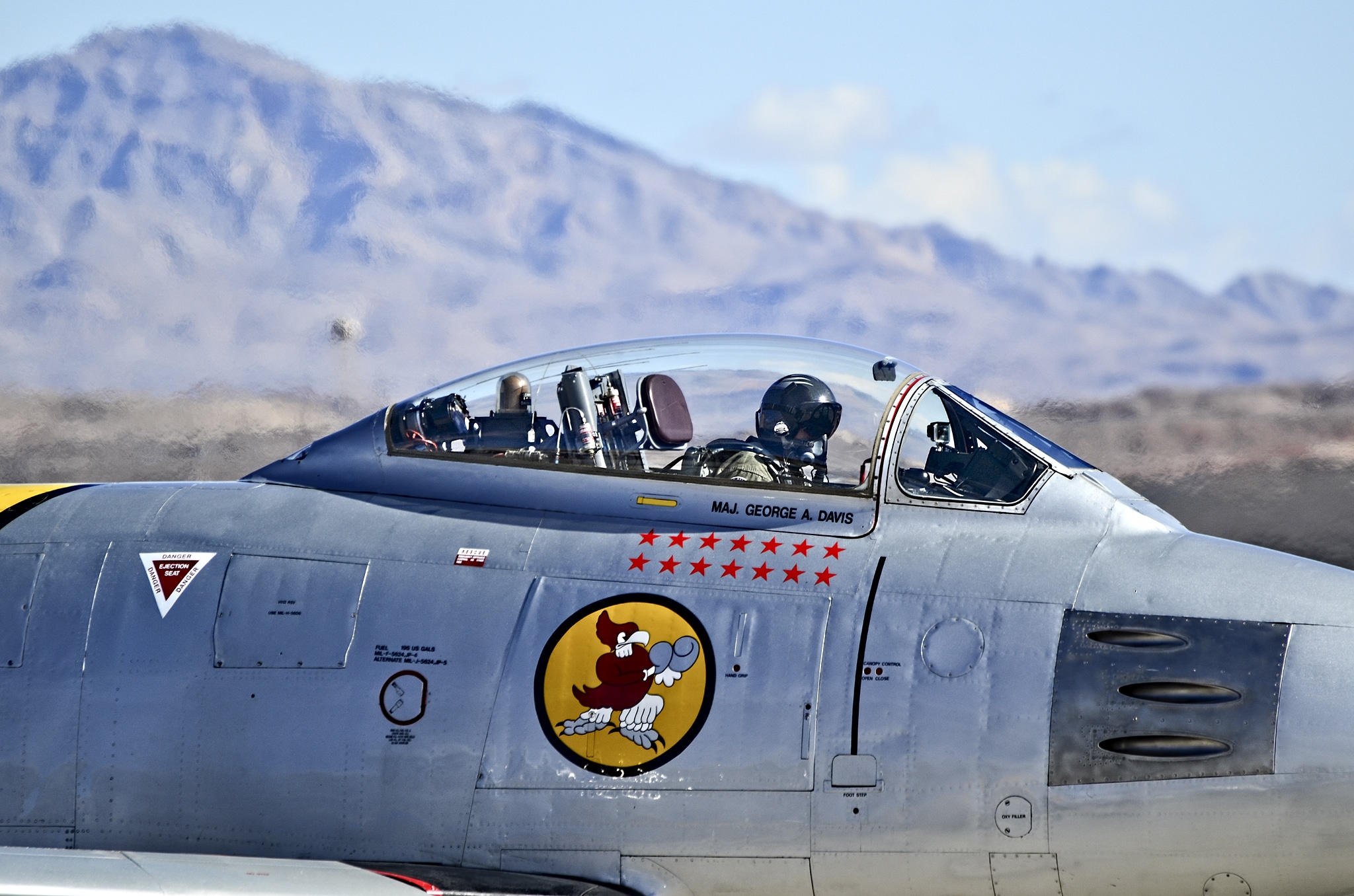
Warbird F-86 painted in Davis’ colors. Image via Tomas Del Coro
Medal of Honor Citation for Maj. George A Davis
“Maj. Davis distinguished himself by conspicuous gallantry and intrepidity at the risk of his life above and beyond the call of duty. While leading a flight of four F-86 Saberjets on a combat aerial patrol mission near the Manchurian border, Maj. Davis’ element leader ran out of oxygen and was forced to retire from the flight with his wingman accompanying him.
Maj. Davis and the remaining F-86s continued the mission and sighted a formation of approximately 12 enemy MIG-15 aircraft speeding southward toward an area where friendly fighter-bombers were conducting low-level operations against the Communist lines of communcations.
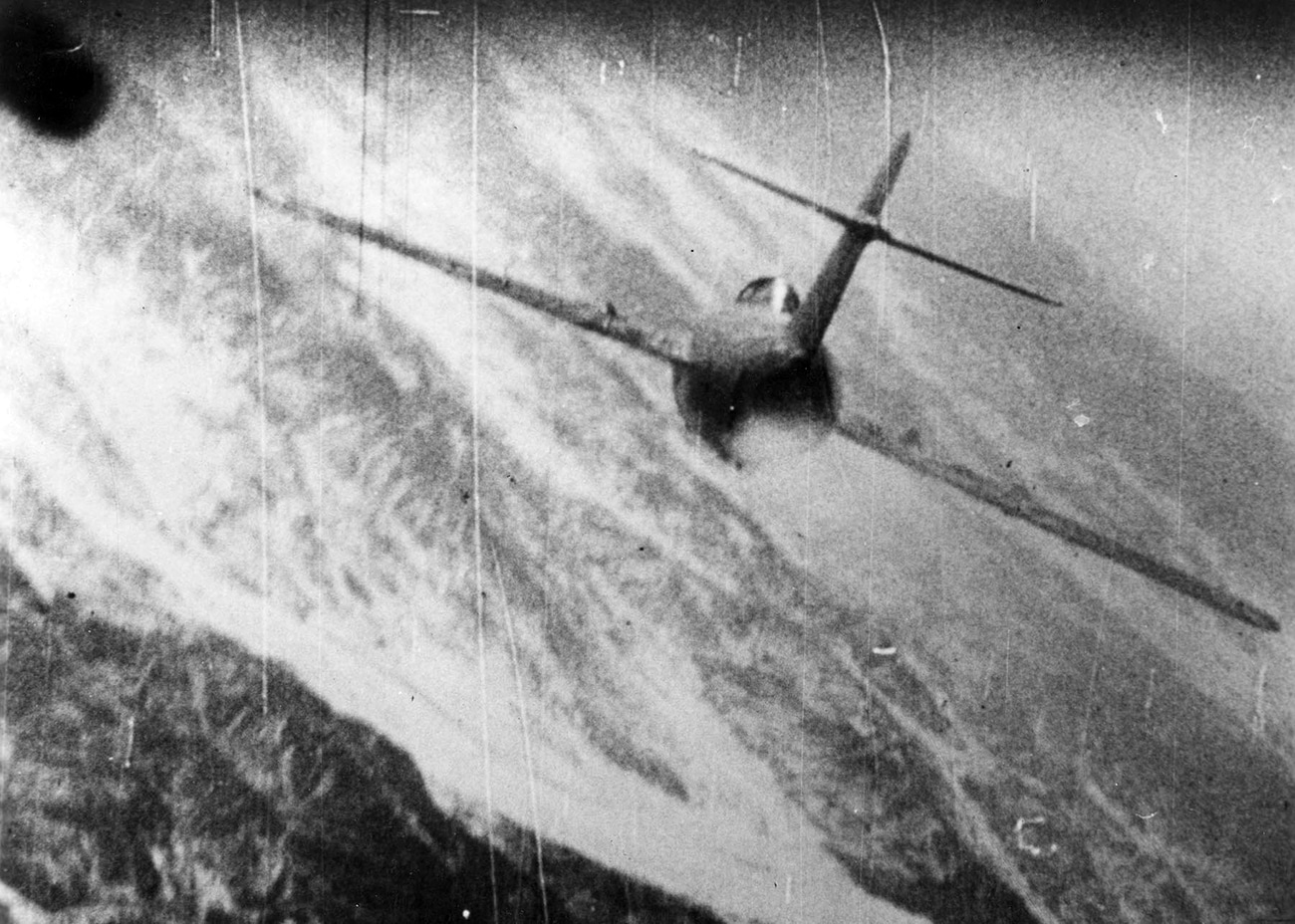
With selfless disregard for the numerical superiority of the enemy, Maj. Davis positioned his two aircraft, then dove at the MIG formation. While speeding through the formation from the rear, he singled out a MIG-15 and destroyed it with a concentrated burst of fire. Although he was now under continuous fire from the enemy fighters to his rear, Maj. Davis sustained his attack.
He fired at another MIG-15 which, bursting into smoke and flames, went into a vertical dive. Rather than maintain his superior speed and evade the enemy fire being concentrated on him, he elected to reduce his speed and sought out still a third MIG-15. During this latest attack his aircraft sustained a direct hit, went out of control, then crashed into a mountain 30 miles south of the Yalu River.
Maj. Davis’ bold attack completely disrupted the enemy formation, permitting the friendly fighter-bombers to successfully complete their interdiction mission. Maj. Davis, by his indomitable fighting spirit, heroic aggressiveness, and superb courage in engaging the enemy against formidable odds exemplified valor at its highest.”
MOH awarded posthumously on 14 May 1954 at Reese Air Force Base, Texas. Presented by Gen. Nathan F. Twining to his Widow, Mrs. Doris L. Davis.
In the United States Air Forces Europe (USAFE) training film “No Sweat”, one incredibly fortunate blue-suiter does so many different things to put himself in potential danger that it had to be quite a trick to write so many of them into the script.
The pilot’s problems started the night before his flight when he got a little bit too well-oiled on that wonderful German beer. The next day, his problems started with a lack of crew rest.
Or, he failed to sleep it off.
He didn’t check the Notices To Airmen (NOTAMS), for if he had, he would have realized the Direction Finding (DF) freq at his destination had changed. He didn’t hack the weather check and made a bad assumption about en route and destination WX conditions.
He knew his North American F-86D Sabre Dog jet had a gripe about a cabin pressure seal, and on top of that, he had used up all of his available oxygen trying to work off his hangover.
Official US Air Force Photograph
Forced to wake up and smell the hypoxia, our still-lucky knucklehead is forced to fly at low altitude where he can breathe. Which, inevitably, creates a fuel problem. As in using it up too quickly. Which is exacerbated when he realizes his use of an incorrect DF frequency has pushed him off course.
What else?
Well, the lack of attention to weather comes back to haunt him (as it usually does) when his destination is socked in. He is forced to divert, and his low-altitude transit to the divert uses up most of his fuel. Then he tries to pull off a Class-A mishap one last time when he fails to operate his emergency landing gear release system correctly, which nearly results in a nose-gear-and-drop tanks-only landing.
To add final insult to miraculous lack of injury, he flames out on the taxiway…due to fuel starvation.
Official US Air Force Photograph
The film really is entertaining in a cringeworthy, shaking-your-head sort of way. Examples of mishaps experienced by USAFE are used to make the film’s point even before the blue-suiter arrives for his day in the box.
And let’s face it- many of us have been bitten by overlooking a thing or two in preflight. This guy’s whole flight was doing its best to kill him. There’s a lot of nice Sabre Dog footage in there, though.
Here’s a piece of trivia for you: The jet he flies in the film, a North American F-86D-45-NA with serial number 52-4129, was operated by USAFE beginning in 1954 and used in NATO countries until 1961, when it was transferred to the Yugoslavian Air Force.
Hopefully, their pilots flew it better than the “pilot” in the film. Enjoy “No Sweat” uploaded to YouTube by ZenosWarbirds.
When McDonnell Made This Promo Philm During the Early 60s the Phantom II Was Already Phantastic
When the McDonnell Aircraft Company produced the film “The Free World’s Phantom II” during the early 1960s, the F-4 had just gone to sea aboard Forrestal-class aircraft carriers and the Tactical Air Command was putting the jet through a rigorous evaluation program. Nonetheless the soon-to-be-legendary do-it-all fighter was already recognized as one of the most versatile and capable aircraft in the world. McDonnell built 5,175 of them between 1958 and 1981. So sit back and enjoy this Phantom II Lovephest uploaded to YouTube by Periscope Film.
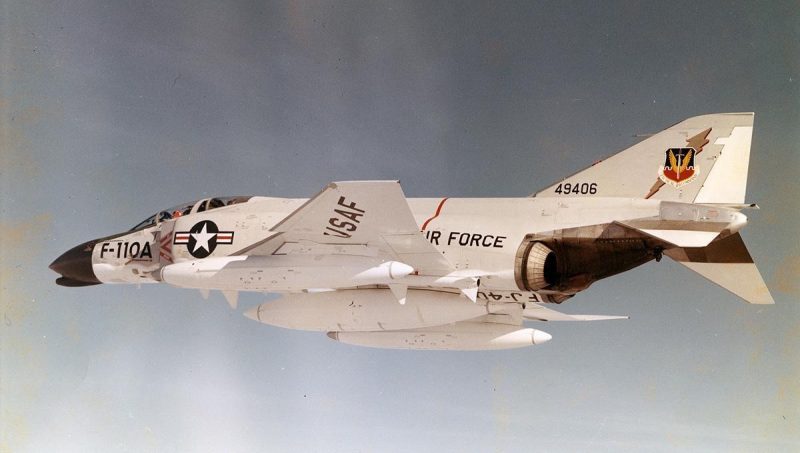
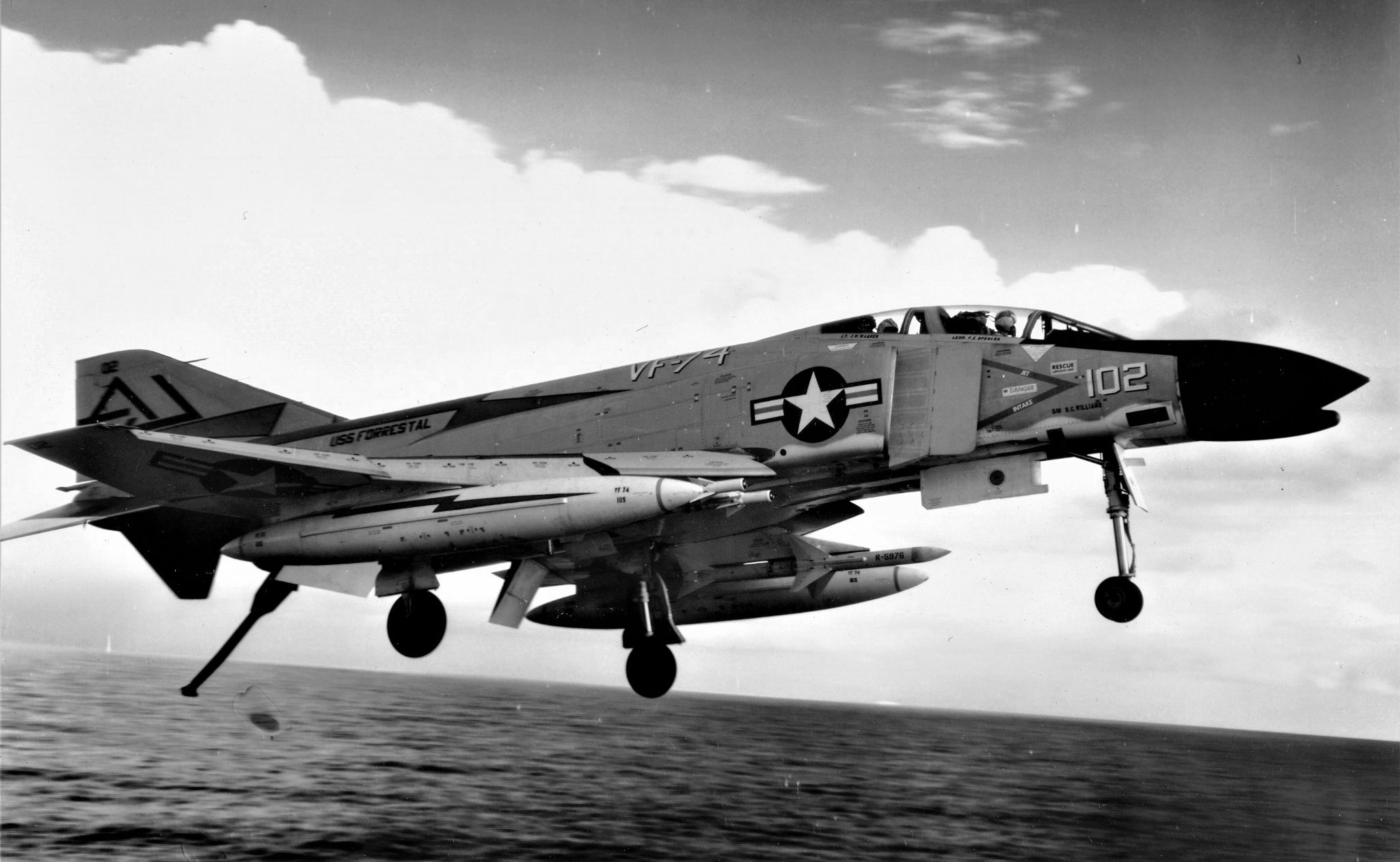
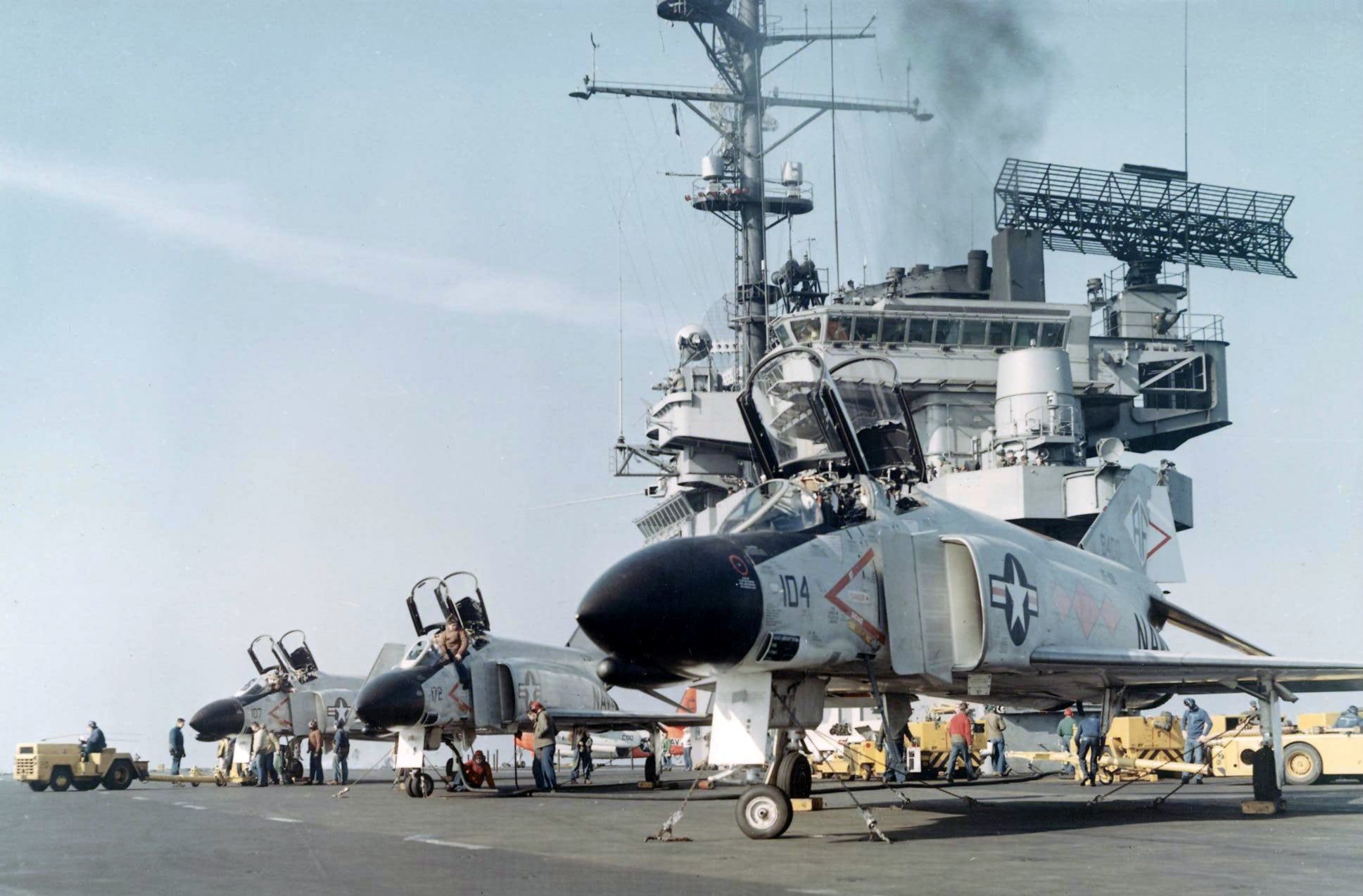
Navy and Marine Corps F-4B operators appearing the film include VF-74 Bedevilers, VF-101 Grim Reapers, VMF(AW)-531 Grey Ghosts, and VF-102 Diamondbacks. Aircraft carriers USS Forrestal (CV-59) and USS Independence (CV-62) are shown shooting and recovering the jets, along with glimpses of other CVW-8 aircraft aboard Forrestal. Also prominently featured in the film are the first two F-4B Phantom IIs evaluated by the US Air Force, both of which were McDonnell F-4B-9i’s (F4H-1s) originally built for the Navy. Navy BuNo 149405 (F-110A FJ-405) became F-4C USAF serial 62-12168. BuNo 149406 (F-110A FJ-406) became F-4C serial 62-12169.
VF-74 F-4B image via National Naval Aviaiton Museum
Phree World Phighter Indeed
Projects Top Flight, High Jump, Sageburner, and Skyburner are all highlighted in the film. The Phantom II was indeed the “free world’s fighter.” Operated currently by Greece, Iran, and Turkey, F-4s also flew for Australia, Egypt, Germany, Israel, Japan, South Korea, Spain, the United Kingdom (Fleet Air Arm and Royal Air Force), and of course United States Air Force, Marines, and Navy. Even NASA operated a couple of Phantom IIs back in the day.
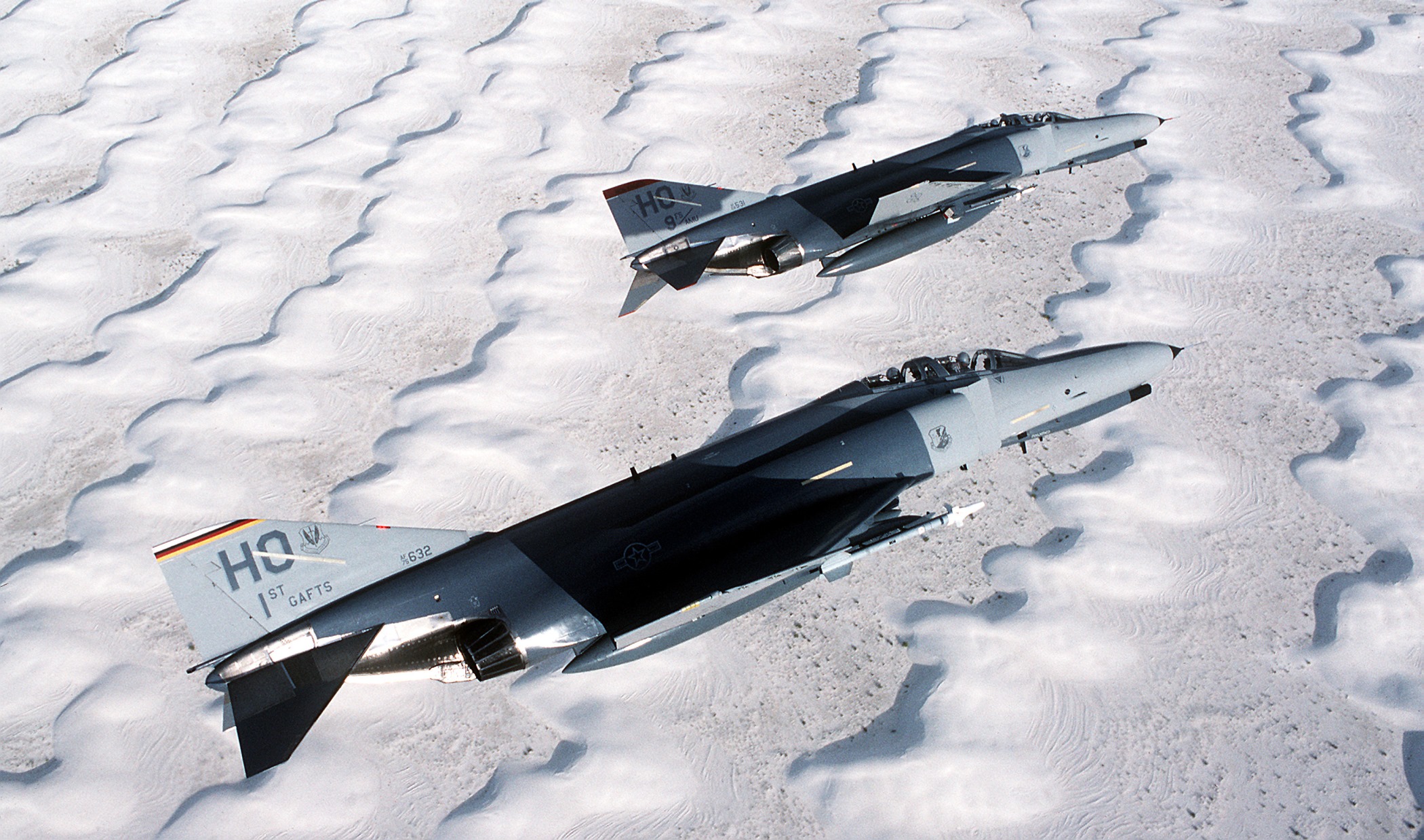
A pair of F-4E Phantom II aircraft, one from the 1st German Air Force Training Squadron and one from the 9th Fighter Squadron, bank to the left during a training mission near Holloman Air Force Base. Image via US Air Force / DVIDS
By Any Other Name
Nicknames for aircraft often border on the obscene, or at least are built with a heavy dose of sarcasm. The Phantom has had some classic nicknames over the years. Some of these names included “Air Defense Diesel” (Luftverteidigungsdiesel by the Luftwaffe), “Big Iron Sled”, “Bug Smasher”, “Double Ugly”, “Flying Anvil”, “Flying Brick” (Fliegender Ziegelstein by the Luftwaffe), “Flying Footlocker”, “Grey Goose”, “Iron Pig” (Eisenschwein by the Luftwaffe), “Jeasel”, “Lead Sled”, “Old Smokey”, “Rhino”, “Snoopy”, “St Louis Slugger”, “Toom” (by the RAF), “Warped Wing”, and perhaps its most respectful moniker of all- “The World’s Leading Distributor of MiG Parts.”
VF-102 F-4B Phantom IIs image via national naval aviation museum
Universal Lovephest
It has been said that the Phantom II was “proof that with enough thrust anything can fly” and that the jet “was a triumph of thrust over aerodynamics.” No matter what it was dubbed by its crews or its maintainers, or how its unique combination of appearance, performance, and toughness under fire were evaluated, the fact is nobody doesn’t love the Phabulous Phantom II.
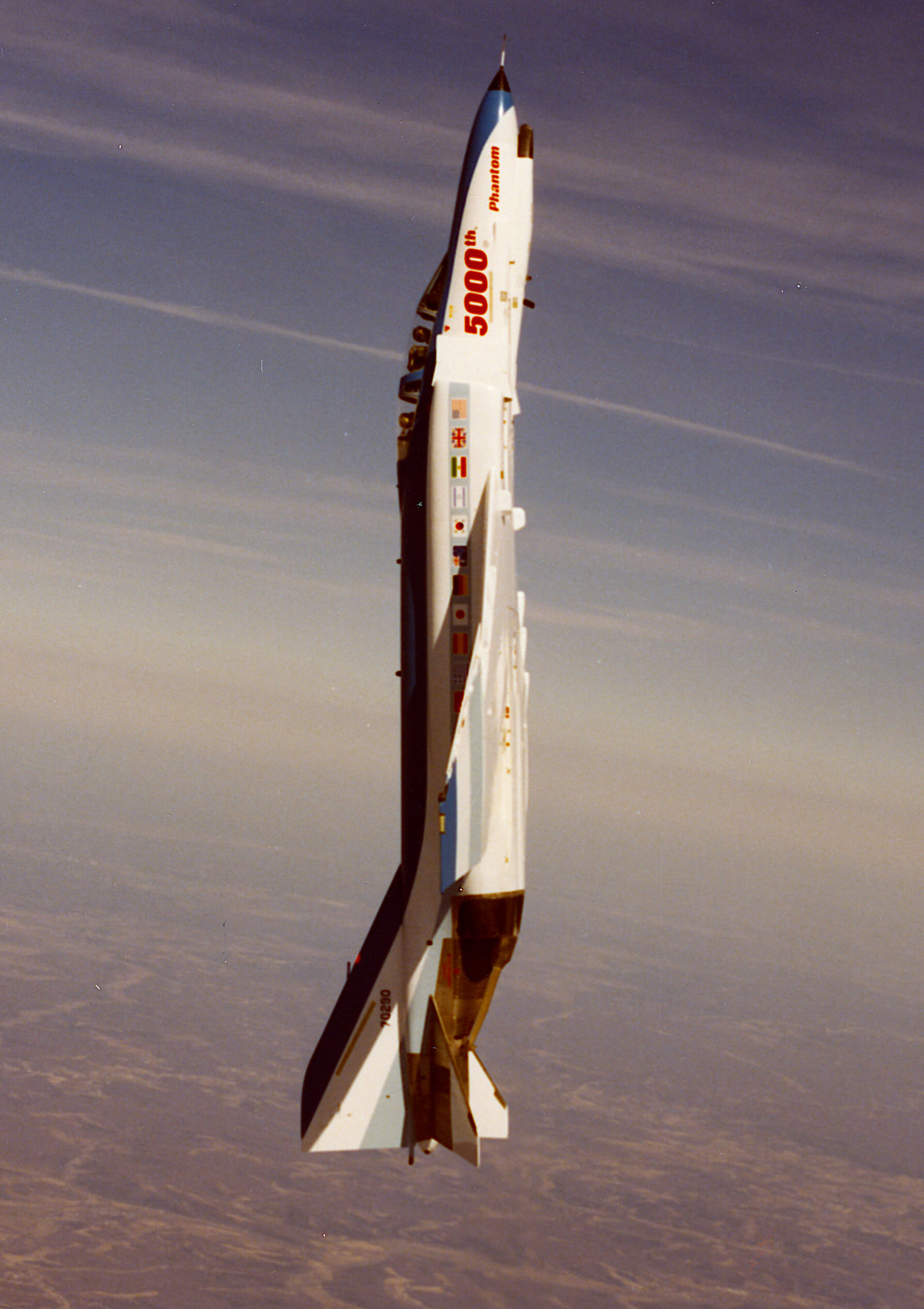
F-4E Phantom II #5,000 image via National Archives / NARA
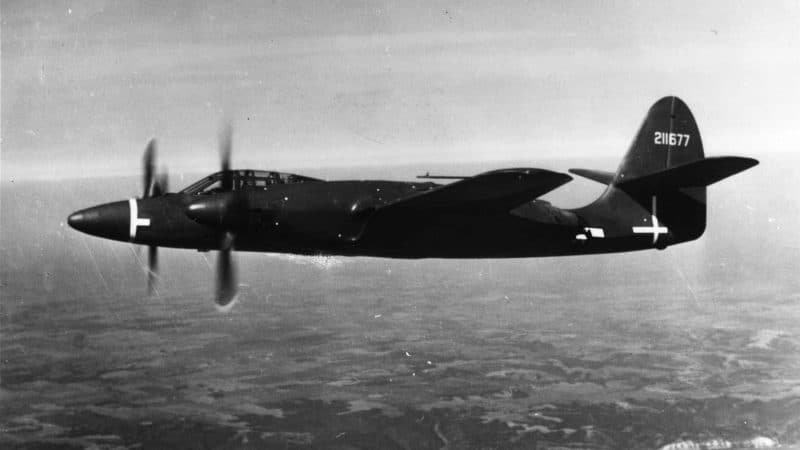
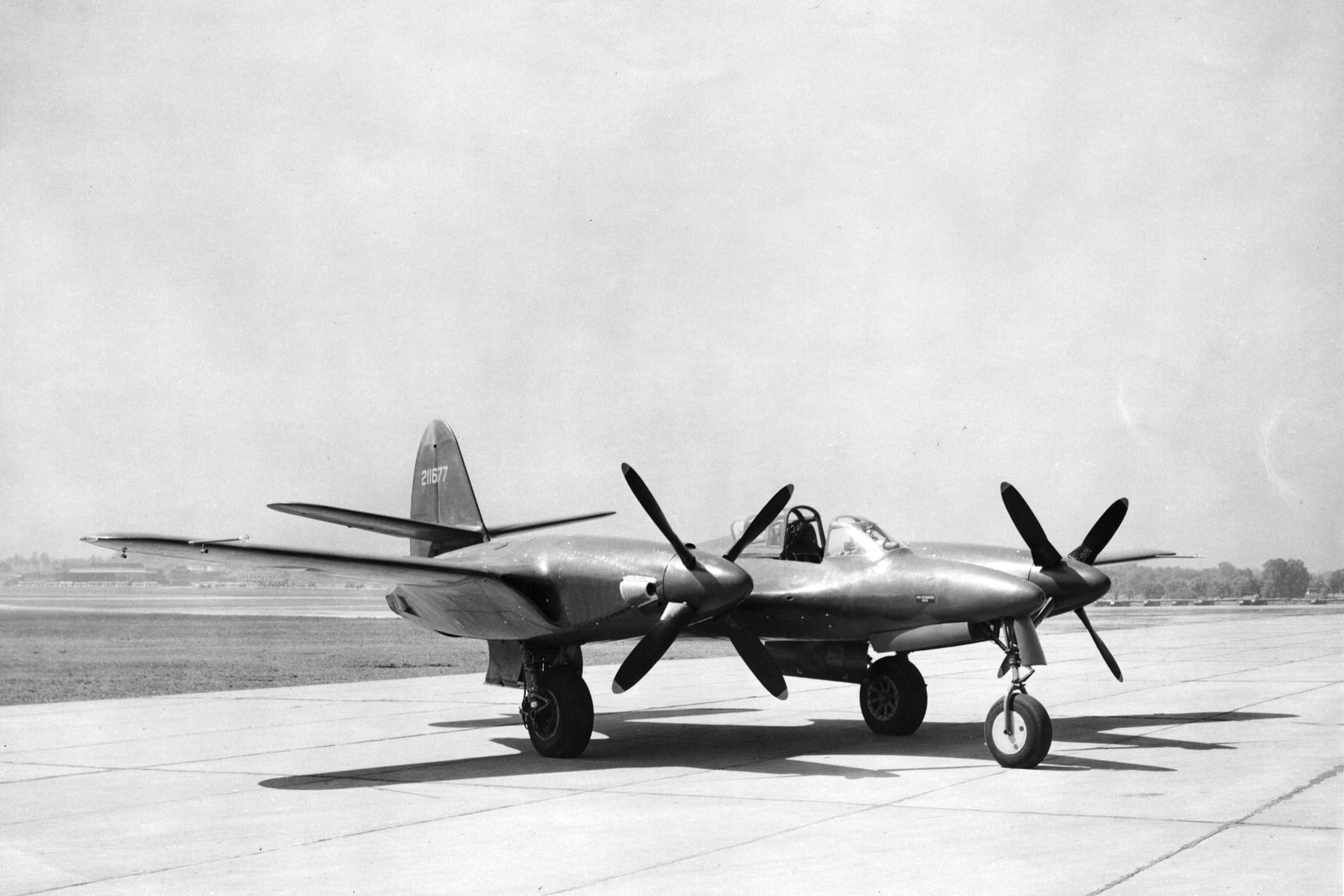
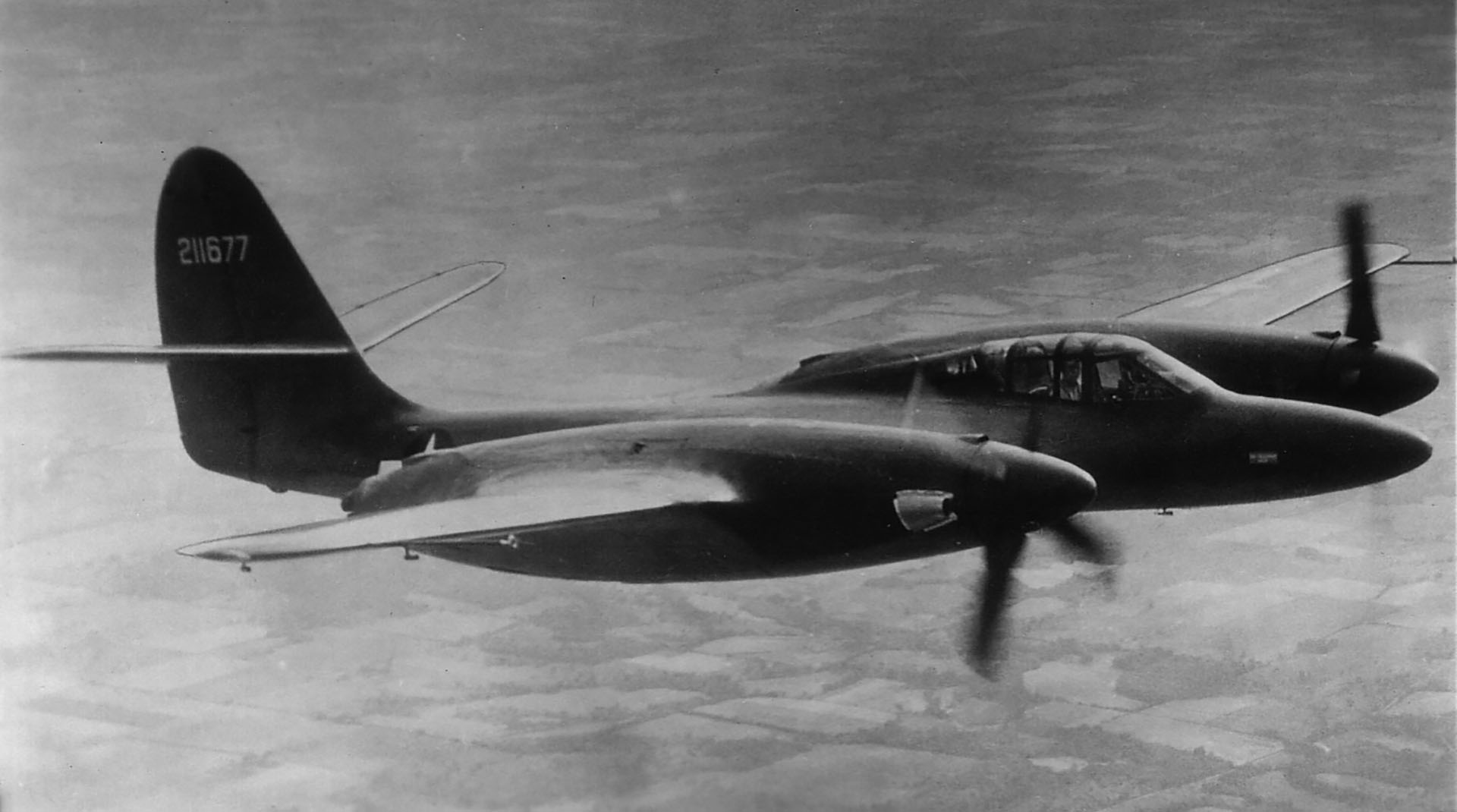
During the late 1930s and early 1940s, many prototype aircraft were dreamed up, drawn up, built up, and shot down by the United States Army Air Corps (USAAC). Sandwiched between the unremarkable Vultee XP-66 Vanguard and the equally unremarkable Vultee XP-68 Tornado was the McDonnell XP-67 “Bat” or “Moonbat.”
The XP-67 was the very first McDonnell Aircraft Company prototype. The Moonbat was a twin-engine, long-range, single-seat interceptor design intended for use by the USAAC (later the United States Army Air Forces—USAAF). However, the problems with this futuristic-looking aircraft started and ended mainly with its engines. And that’s a real shame!
McDonnell Gets Into the Game
The USAAC issued Request for Proposal R-40C, requesting designs for a high-speed, long-range, high-altitude interceptor intended to destroy enemy bombers, in 1940. The specifications bordered on impossible to meet, and they forced each manufacturer to design and build a radical aircraft that would outperform anything in the air at the time. McDonnell was building parts for other manufacturers then and wanted to get into the manufacturing game. They would go on to design and build some of the most famous aircraft the world has ever seen, but their beginnings were humble indeed.
Unconventional Power
The McDonnell Model 1 was initially designed to be powered by an unusual geared drive train with a single Allison V-3420 engine buried in the fuselage, powering twin wing-mounted pusher propellers in the wings via twin 90-degree extension shafts. Aside from the complicated mechanical challenges associated with this configuration, there was competition from 22 other manufacturers who issued proposals to meet the Army’s request. Because the McDonnell Model 1 would not be expected to perform as well as many of the other designs, it was judged to be 21st out of 23 total proposals. But McDonnell was granted a contract to go back and try it again. Try it again, they did.
That Blended Design Thing
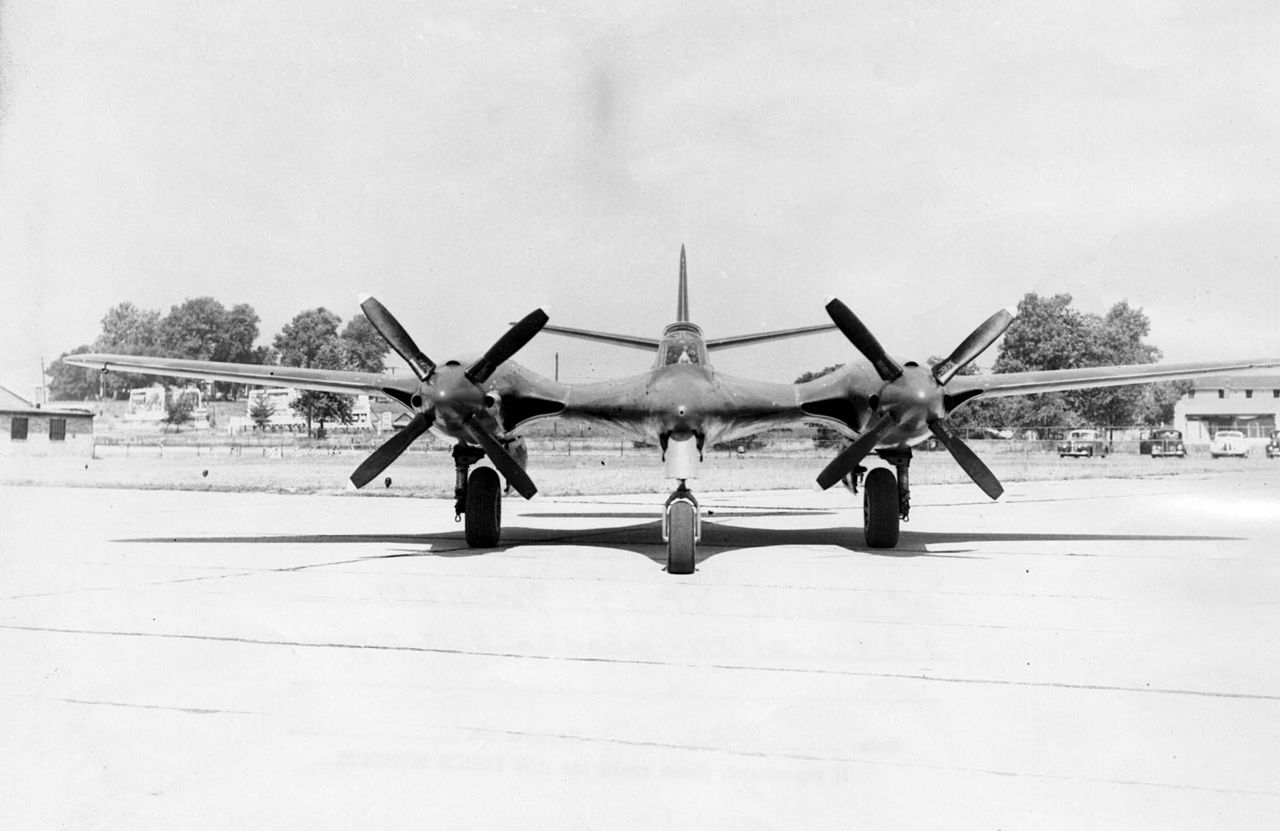
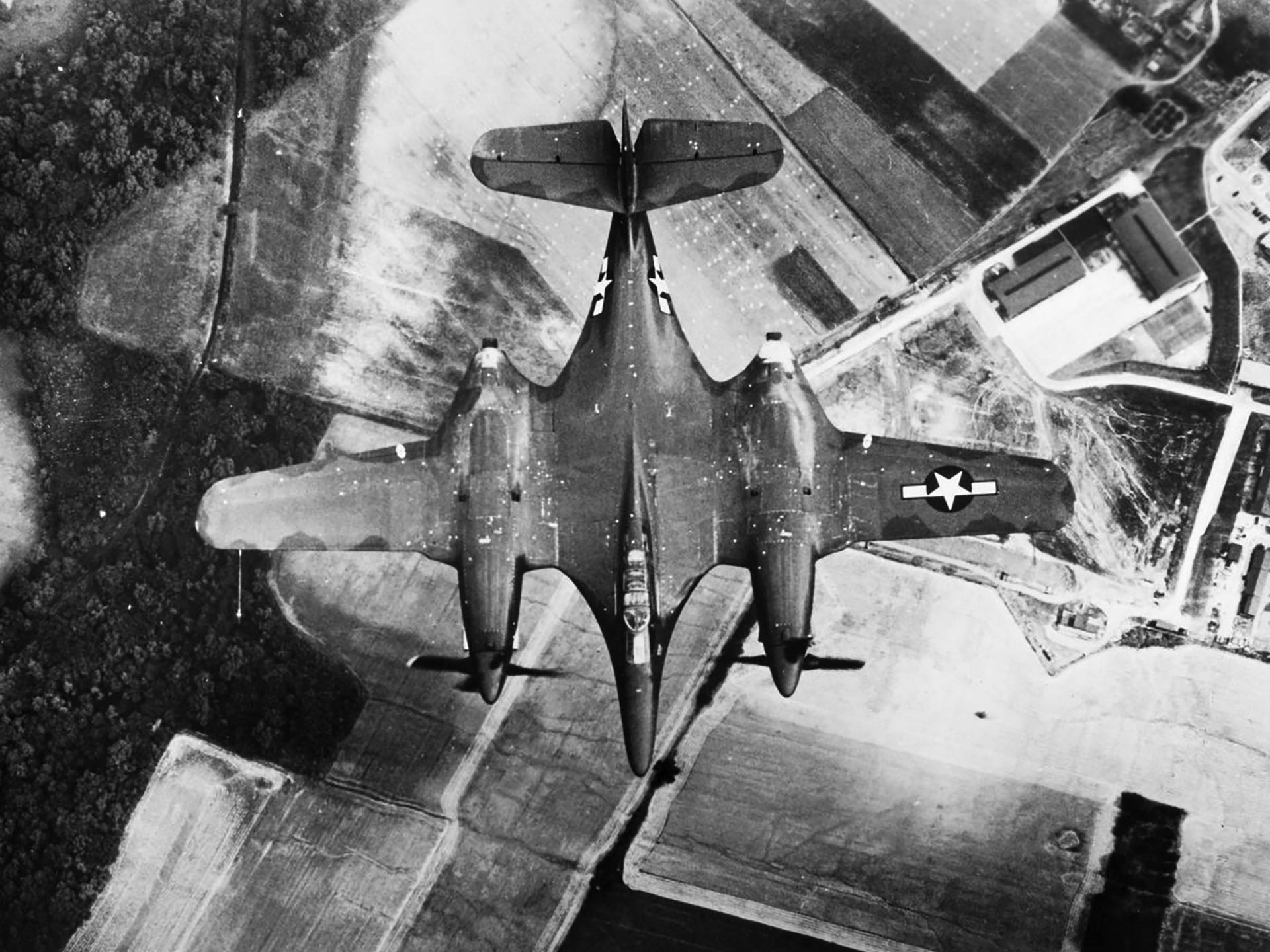
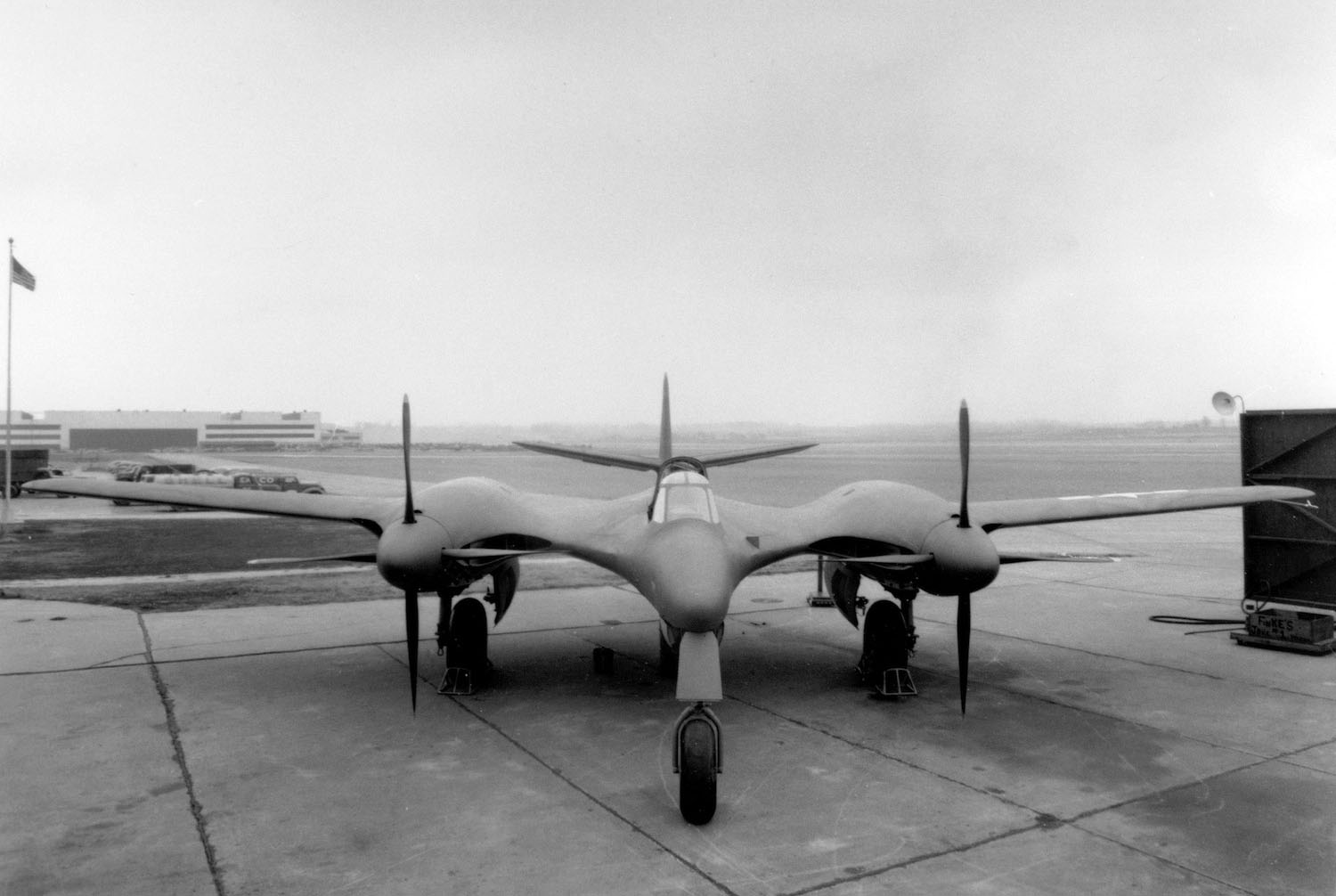
McDonnell engineers presented the Model 2 on 30 June 1941. The Model 2 was also considered a nag, but McDonnell reworked the design again, yielding the Model 2a on 24 April 1942. The 2a was to be powered by twin engines driving a four-bladed propeller each and mounted in nacelles on the wings. However, the design was aerodynamically advanced, with laminar flow airfoils, blended shaping and contours, and low drag joins between the wings, fuselage, and nacelles and wings.
The 2a was also to have one of the first pressurized cockpits ever used in a fighter aircraft. In a word, the design was futuristic. In other words, it just looked cool.
Contracted BEFORE Pearl Harbor?
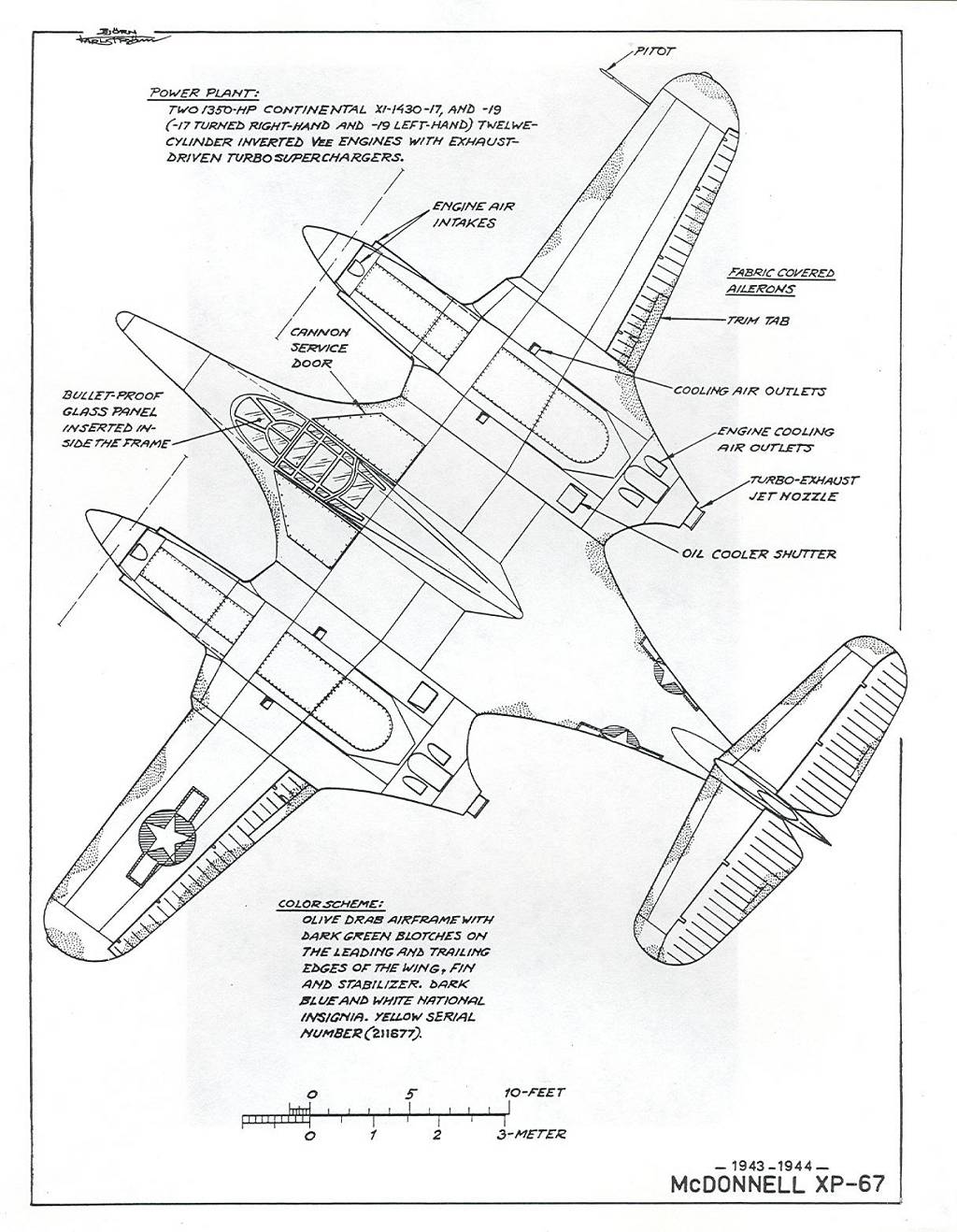
McDonnell engineers and designers predicted a top speed of 472 miles per hour and a gross weight of roughly 20,000 pounds for the 2a. Although several armament configurations were considered, production 2a aircraft were to be fitted with six 37 millimeter cannons. Power for the aircraft was provided by two 1932-vintage Continental XIV-1430-1 inverted V-12 engines, each connected to a turbo supercharger that would enable the engine exhausts to actually augment thrust from the engines. On 30 September 1941, the USAAF granted McDonnell a contract for two prototypes, a wind tunnel model, associated engineering data, and designated the design XP-67.
Another Design Throttled by Engine Technology
The radical design of the XP-67 Moonbat would require extensive wind tunnel testing, and that testing revealed engine cooling airflow problems, which were never really resolved. Super-smooth surfaces presented challenges to any manufacturer- especially one building its first complete aircraft design. But the biggest challenge was acquiring the engines.
The Continental power plants to be used were simply not available for large portions of the XP-67 development program. Even getting wind tunnel testing time was a challenge. There were lots of experimental military aircraft during the war, and the National Advisory Committee for Aeronautics (NACA) wind tunnel was booked solid for what seemed like the rest of the decade.
En Fuego
XP-67 Moonbat prototype number one, 42-11677, began ground trials on 1 December 1943, even though the airframe was not ready to be flown. A week later, the XP-67 was damaged by fires in both engine nacelles while taxying. Just under a month later, damage was repaired, and the XP-67 made its first flight, which lasted for six minutes. Engine problems experienced again. Engine installation modifications made. Two flights later, the engine bearings burned out. See a pattern yet?
The Continental engines were only putting out about ¾ of their rated output anyway—and were still almost impossible to get. McDonnell wanted to try the widely used Rolls-Royce Merlin or Allison piston engines with small turbojets installed in the nacelles. The USAAF said no because they wanted more test time with the original design.
What Could Have Been Turned to Never Was
And therein lies the rub. Had the Moonbat been powered by better engines (even without the jet power augmentation), the design of the aircraft might still have been too radical for its time, but at least we would have found out whether or not it was as fast as it looked. As it turned out, the USAAF finally did fly the XP-67 in March of 1944, and not surprisingly, found the advanced design to be advanced but needing some refinement, and the aircraft to be woefully under-powered.
While some issues were addressed by engineers at McDonnell, the engines were still crippling the plane. The top speed seen by its pilots was 405 miles per hour – considered mundane in 1944 compared to other fighters already fighting the war.
A September 1944 test flight ended with the total loss of XP-67 number one after an in-flight fire in the starboard engine and subsequent emergency landing.
A Fertile Garden for Outstanding Future Aircraft
Prototype number two was only 15 percent complete when prototype one was destroyed. The design was evaluated by the USAAF one more time as a formality, but when prototype one was destroyed, McDonnell’s first aircraft design was destroyed along with it. Of course, McDonnell’s next military airplane was the twin-jet FH-1 Phantom, followed by the F2H Banshee, the F3H Demon, the F-101 Voodoo, and ultimately the F-4 Phantom II. The merger of McDonnell and Douglas in 1967 produced the DC-10 airliner, F-15 Eagle, and the F/A-18 Hornet, among others. But the McDonnell design that started it all was the futuristic but ill-fated Moonbat.
The C-46 Commando by Curtiss-Wright during World War II was an aircraft that looked ahead of its time.
The aircraft was initially designed as a sleek commercial airliner. And like most airliners during this era, it was overbuilt and easily able to handle cargo, too. However, it turned out to be a flop compared to its competition of the day, the Douglas C-47 Skytrain. particularly during World War II.
Design Challenges Held It Back
“China Doll” Image: Kevin from Alameda, California, USA, CC BY 2.0
The Curtiss C-46 Commando is a perfect example of an aircraft that tried to incorporate too many technical advancements into a single iteration. Curtis faced numerous design and development issues that hurt its operational performance.
First flown on 26 March 1940, Curtis initially promised to deliver a pressurized airliner that could cruise comfortably above other competitors of the day. The challenges became more apparent, though, as it was adapted for military use.
The C-46’s intricate design, gear problems, and Pratt & Whitney R-2800 engines made it difficult to repair, and its bulky structure (required for pressurization) limited its cargo-carrying capacity.
Operations In Combat Struggled
The aircraft was initially envisioned as one that would excel in the Pacific, particularly in mountainous regions where the benefits of pressurization could be more fully exploited.
That theory was tested during resupply operations between China and India, aka “The Hump.” Martin Caidin wrote in his book The Hump: The Great Military Airlift of World War II that while the aircraft’s higher payload capacity compared to the C-47 was helpful, its mechanical reliability in rugged terrain and unimproved fields made operations difficult.
While the aircraft’s range did prove useful, it was never an easy plane to maintain, load, or operate.
The C-46 remained in use after WWII, supporting our Asian allies against communism. It never did shake its maintenance heavy image. Image: New Zealand Railways Corporation, Head Office holdings.
C-46 vs. C-47 wasn’t even a close contest, except for range
While a betting man before the war might have put his money on the more advanced C-46, it would have resulted in massive losses.
The C-46 struggled compared to the simpler and more rugged C-47. The C-47 proved its mettle in the European theater with its notable ability to take battle damage and its repeated use on unimproved fields. The C-46 did have a notable advantage in range, nearly double that of the C-47.
Despite all of its shortcomings, its range was its primary asset. The C-46 could fly almost 2,800 nm without refueling. This was nearly double the range of the C-47, which topped out at 1,500 nm.
On the other hand, the C-47 was loved by nearly everyone who used it. The pilots appreciated its simplicity and sturdiness. Maintenance appreciated how relatively easy it was to repair and maintain, planners liked its dependability and versatility, and bean counters appreciated its lower maintenance costs and resource outlay.
After The War
Despite all its shortcomings, the C-46 still remained operational for quite a while. The C-46 had a limited role in the Korean War, and a few civilian operators kept the plane in use afterwards.
Why Was The C-46 Commando Not As Popular As The C-47? 105
Out of the nearly 3,200 airframes built between 1940 and 1945, very few remain airworthy today. Alaskan operator Everts Air, a Part 135 operator out of Fairbanks, Alaska, operates two of the type.
There are a few others still in use around the world, too. N78774 also still occasionally flies in full military colors.
Why Was The C-46 Commando Not As Popular As The C-47? 106
The legacy of the C-46 is complex. It was a significant contributor to the Allies’ war effort. However, it was held back by several shortcomings. Most would call it a weak design, but calling it a failure would be way too harsh.
On 16 May 2024, President Joe Biden signed into law the bipartisan FAA Reauthorization Bill of 2024. The legislation promises to make American airspace safer and introduce robust protections for passengers and airline employees alike.
Stemming from the turbulence in the aviation industry post-COVID-19, this legislation addresses various issues plaguing passengers, airlines, and regulatory bodies.
Among its many provisions, the decision not to raise the mandatory retirement age for pilots stands out as one of the most contentious and discussed outcomes.
Origins and Key Provisions of the FAA Reauthorization Bill
IMAGE: FAA
The FAA Reauthorization Bill’s origins date back to the chaotic post-pandemic period. In 2022, passengers faced significant issues with refunds amidst widespread travel disruptions. The new law empowers passengers by ensuring automatic refunds if they decline an airline’s booking request or fail to respond. This provision is part of President Biden’s broader campaign against “junk fees.”
Key highlights of the bill include:
Prohibition of airlines from charging families to sit together
Introduction of 25-hour cockpit recording devices
Raising the maximum civil penalties for airline consumer violations from $25,000 to $75,000 per violation
Increased oversight on aircraft production, enhancing factory inspections and FAA safety standards
Allocation of funds to hire and train FAA air traffic controllers, addressing a current shortage of 3,000 positions
Strengthening airport infrastructure at medium to large hub airports to mitigate near-collisions on runways
Reauthorization of over $105 billion in funding for the FAA and $738 million for the National Transportation Safety Board (NTSB) through 2028
Allowance for an increase of five additional roundtrip slots for long-distance flights (>1,250 miles) at Ronald Reagan Washington National Airport (DCA)
Postponement of environmental efficiency rules for Boeing’s 767F production until 2033
President Biden hailed the bill as a significant (and rare) bipartisan victory.
“The bipartisan Federal Aviation Administration reauthorization is a big win for travelers, the aviation workforce, and our economy,” said Biden. “It will expand critical protections for air travelers, strengthen safety standards, and support pilots, flight attendants, and air traffic controllers.”
The Debate Over Pilot Retirement Age
Two pilots in the flight deck | IMAGE: Photo by Freddie on Unsplash
One of the bill’s most significant and hotly debated outcomes is the decision not to increase the mandatory retirement age for pilots from 65 to 67. This decision follows years of intense debate over the benefits and drawbacks of raising the age limit.
The current retirement age of 65, established in 2007 after being raised from 60, aligns with international standards. The Air Line Pilots Association (ALPA), representing 77,000 pilots across 43 U.S. and Canadian airlines, staunchly opposed the increase. It argued that raising the retirement age would introduce unnecessary logistical challenges and safety risks.
“This legislation is a solution in search of a problem. Raising the retirement age would only increase costs for airlines, worsen the post-COVID training backlog by using much-needed training cycles to train pilots over 65 who would be limited to domestic operations, and introduce unnecessary risks to passengers and crew alike. That’s why major airlines and a significant majority of pilots and passengers oppose this move. We are disappointed by the introduction of this misbegotten bill that betrays an understanding of how the airline industry works and will create more problems for air travel.”
As recently as 2022, ALPA adopted a resolution opposing any future attempts to increase the retirement age for airline pilots.
Regarding the passage of the Reauthorization Bill, ALPA President, Capt. Jason Ambrosi, praised the decision, stating, “We are grateful for the overwhelming bipartisan support in the House and Senate, and for the thousands of ALPA members who worked tirelessly to ensure this deal maintains our world-leading pilot-training standards and rejects attempts to arbitrarily raise the pilot retirement age, which would have introduced uncertainty into the U.S. aviation system and interfered with collectively bargained agreements.”
The 1,500-Hour Requirement Stays Intact
At 150 feet tall, Chicago O’Hare International Airport’s control tower is a prototype of IM Pei’s mid-century FAA control tower design | IMAGE: Photo by Miguel Ángel Sanz on Unsplash
Safety concerns have been central to the debate on pilot retirement age. Following the 2009 crash of Colgan Air Flight 3407 near Buffalo, which resulted in the deaths of 50 people, the FAA enacted more stringent pilot training requirements. These include a controversial 1,500-hour flight training requirement for pilots, a standard that remains in place with the new legislation.
The bill also maintains other critical safety measures, such as enhancing runway and airport alerting systems, establishing secondary barriers for existing passenger aircraft, and creating a standardized system for reporting smoke and fume events.
Addressing the Pilot Shortage Debate
Scrapped Delta Connection CRJs at Kingman, Arizona (IGM)
The issue of pilot shortages has been a contentious point in discussions about raising the retirement age. ALPA has clashed with the Regional Airline Association (RAA) over the issue of pilot shortages in the United States. ALPA asserts that there is no current shortage of pilots and argues that “special interest groups” like the RAA are compromising safety by pushing for an increase in the retirement age. They cite FAA data, showing that 11,225 airline pilot certificates were issued in 2023, surpassing any forecasts and meeting demand.
In response, the RAA accused ALPA of cherry-picking data, pointing out that while the FAA did, in fact, certify 11,225 pilots in 2023, major airlines hired 12,193 pilots, resulting in a shortfall of 968 pilots. The RAA emphasized that this shortfall follows an even more significant gap in 2022 when major airlines hired 13,128 pilots, but only 9,491 new pilots were qualified. Consequently, the shortage of at least 4,605 pilots led to the grounding of over 400 aircraft and 317 U.S. airports losing an average of 25% of their flights, with more than 40 airports losing over half their flights and 12 airports losing all air service1.
Ambrosi questioned the RAA’s motives, noting that raising the retirement age would have minimal impact on regional airlines.
“Maybe fifty pilots at the regionals would be able to continue flying,” he told Forbes in February.
Historical Context of Pilot Retirement Age
The debate over the mandatory pilot retirement age continues | IMAGE: Photo by Karen Grigorean on Unsplash
The regulation of pilot retirement age has a long history.
The first age limit of 45 years was set in 1919 by the International Commission for Air Navigation. This restriction was lifted in 1947 when the International Civil Aviation Organization (ICAO) took over regulatory responsibilities.
In the 1950s, U.S. airlines pushed for a mandatory retirement age, which was set at 60 in 1959. This was one year after the FAA’s creation. The International Air Transport Association (IATA) also adopted the age 60 retirement rule in 1963.
In 2006, the ICAO raised the retirement age to 65 for multi-crew operations. The caveat was that the second crewmember must be under 60. The U.S. adopted this standard in 2007.
Although Settled For Now, the Debate Will Continue On
The FAA Reauthorization Bill of 2024 represents a comprehensive effort to enhance aviation safety, protect passengers, and address workforce challenges in the aviation industry. By maintaining the current retirement age for pilots, the bill preserves international standards and avoids potential disruptions and safety concerns raised by ALPA and other stakeholders.
As the aviation industry continues to recover from the impacts of the COVID-19 pandemic, the provisions in this bill will play a crucial role in ensuring the safety, efficiency, and reliability of air travel in the United States. The decision to keep the pilot retirement age at 65 reflects a commitment to maintaining high safety standards and addressing the industry’s nuanced challenges.
While the decision not to raise the pilot retirement age was controversial, proponents believe it underscores the importance of maintaining rigorous safety standards and avoiding unnecessary risks.
Most importantly, they say, it solidifies the United States’ position as the global leader in aviation safety.
What do you think? Do you agree with the decision to keep the mandatory pilot retirement age at 65? Let us know. We would love to hear your thoughts!
1. Data courtesy of Future & Active Pilot Advisors (fapa.aero)
The Unducted Fan (UDF) engine, developed by General Electric, should have been more than a great trivia question.
(Welcome to Avgeekery Jeopardy.)
“Alex, I’ll take Dismissed Aircraft Technology for one hundred.”
Answer: “This fuel-efficient engine type was developed for the proposed Boeing 7J7.”
“What is the Unducted Fan?”
Correct.
In 1985, at the Paris Airshow, Boeing announced a General Electric Unducted Fan prop-fan engine that would power its new 7J7. The 150-seat aircraft, equipped with the two ground-breaking engines, would use half the fuel that the Airbus A320, which was close to coming online.
Three years later, the first plane equipped with a UDF flew, but by then, both the 7J7 and the Unducted Fan were scrapped projects.
After the 1973 Yom Kippur War, an oil embargo was put in place, impacting the United States, Europe, and Japan. Long gas lines for automobiles were one pressing issue, while higher fuel prices were wrecking airlines’ bottom lines (sound familiar?).
NASA’s Lewis Research Center in Cleveland conducted research to find the sweet spot between a propeller-driven engine that would be fuel-efficient but still deliver speeds so that a New York-to-Los Angeles flight wouldn’t take eight hours.
Originally called a “turboprop,” that term had to be changed to “prop-fan.” A survey of potential passengers rejected the first term because apparently it referenced propeller-driven aircraft, but half of those surveyed were OK with the “prop-fan” term. Go figure.
GE began developing the technology in the late 1970s, amid rumors that its CFM56 turbofan was about to be surpassed by a competitor. The UDF engine nacelle was egg-shaped. At the narrow end were two rows of 12-foot-diameter propeller blades made from carbon fiber composite materials. It was larger and more powerful than the engine that NASA had developed.
The GE engine’s twin propellers spun in opposite directions to reduce losses due to “swirl” – energy wasted in imparting spin to the air behind the airplane. The UDF blades were directly and gearlessly powered by a turbine driven by hot gas from the engine. The two rows of propeller blades were each anchored to multiple rows of turbine blades.
For the 7J7, the engines would be mounted near the tail to allow clearance for the propellers and to reduce cabin noise.
But what sparked the interest in developing a fuel-efficient engine and aircraft became the demise of the UDF and the 7J7. The end of the oil embargo led to cheaper fuel prices. The 737 remained a workhorse for short- to mid-range flights, while the Airbus A320 offered even better performance.
Developing and selling another 150-seat with radically different engines didn’t prove financially feasible in the late 80’s. Plus, the radical engine design – those darn propellers – led to scrapping both the 7J7 and the UDF for commercial use.
People loved jet engines, but the UDF design, along with some noise issues, led to the postponement and eventual cancellation of any follow-on test program or adoption.
This Team of Southwest Airlines Pros Flew a Grieving Mother From PHX to LAX With Abundant Compassion- and Plenty of Support
These days we often hear about negative experiences (or worse) when it comes to airline travel. From doors falling off jets and poor headwork in the cockpit (both on the ground and in the air) to unruly passengers and their antics, travel by air holds less and less appeal these days. It seems only the bad news makes it to your feed or the “news”, but good things happen too. The following story was written by David Dale, who is a retired US Air Force Lieutenant Colonel, a Captain with Southwest Airlines, and a contributor here at Avgeekery.com.
Southwest 737-700. image via eddie maloney
Did You See That Lady Crying?
“Did you see the lady in the wheelchair crying when you came down the jetway?” my first officer (FO) asked as I slid my black roller bag under the cockpit jumpseat.
“Yeah, I did. There were people comforting her. What was going on?” I asked.
“She just found out her daughters were shot in Milwaukee last night.”
It Was a Day Like Any Other Out West…At First
Our scheduled trip in early January, 2015, had a minor schedule change as we passed through Phoenix Sky Harbor Airport on the way to Los Angeles. Instead of keeping the plane we just brought in, we had to give up our plane for an “unscheduled tail swap” and fly a different Boeing 737 to California. Sometimes this is required for routine maintenance or perhaps the weather conditions, such as forecasted icing or thunderstorms, meant that a crew needed our plane if theirs had a deficient aircraft system that we wouldn’t need in the sunny southwest. In any case, my First Officer Brett and I now had to quickly perform a Bag Drag, gathering up our flying gear and luggage and hustling from the C Terminal to the D Terminal in the hopes of departing on time in the next 45 minutes.
I sent Brett on ahead to begin his preflight as I spoke to the crew taking over our jet, telling them that the plane was performing fine and that they would encounter a few bumps during their climb out over the desert. The captain would pass this information along to the flight attendants so they would know to stay seated for their safety until the ride smoothed out. Once the handoff was complete I headed up the jetway and hurried over to the moving sidewalk to speed up my trek to the new gate.
Southwest 737s at KPHX. image via usa today
A Passenger in Distress, But In Good Hands
As I approached the operations agent at the open door of the jetway, I saw a middle-aged African American lady sitting in a wheelchair, wearing a blue denim jacket and black pants. Her forehead rested in her left hand as she sobbed uncontrollably. A Southwest gate agent and a lady pilot in a white short-sleeve shirt and black tie knelt on either side of her chair, patting her arm and offering her tissues. I didn’t stop to ask about the situation, 1) because she was being tended to, and 2) we were supposed to Load and Go as quickly as possible.
I walked onto the airplane and introduced myself to the lead or “A” flight attendant, then turned to place my luggage in the cockpit when my FO told me about the horrific incident.
Introductions and Assurances
After stowing my gear, I got back out of the cockpit and met the grieving mother in the jetway with the young blonde lady pilot holding onto the wheelchair behind her. I bent down and told the mother, “I am so sorry to hear about what happened, ma’am. We will do our best to get you to Los Angeles as quickly and safely as possible.” She sobbed, clutching her tissues and whispered, “Thank you.”
The young lady acting as her escort was a United Airlines first officer, Kristina, going to LAX for a trip later that evening. She graciously agreed to sit with the despondent mother during the planned one hour flight.
Our operations agent joined me in the cockpit and said that lady was called earlier this morning with the news that her two daughters were shot at around 2:00 AM and this flight to LAX was the quickest way to get her up to Milwaukee.
737-700 cockpit. image via marcela
Still Have to Check the Boxes
Brett and I competed our preflight activities, loading the flight plan in the computer and making sure the systems were set for engine start and takeoff. It would be “my leg” since he had just landed the previous flight into Phoenix. I briefed him on the planned departure procedure and what actions we would take if there was an engine failure during takeoff. This is standard procedure so that all aircrews are mentally prepared for that emergency. Plan for the worst. Hope for the best.
With our Boeing 737-700 now loaded with passengers and their luggage, the ground crew pushed the plane off the gate with their blue four-wheeled “tug” as the FO started both engines, first the #2 engine on our right wing, then the #1 engine on our left wing.
Once the ground crew completed the pushback, they disconnected the tug and waved goodbye as Brett extended our flaps to the takeoff position. He then configured the electrical, hydraulic, and air conditioning system for takeoff. Next, Brett coordinated our taxi instructions with Phoenix Ground Control as I taxied westbound along the two-mile long runway for an eastbound takeoff, before an eventual turn westward toward LA. Runways are assigned by the airport and dependent upon prevailing windings to strive for a headwind.
Southwest 737-700 pushing back. image via planespottera320
The Magic Words Get Immediate Attention
With the grieving mother in mind, I taxied at 35 miles per hour (pretty fast for a large jet on the taxiway), hoping to get airborne as soon as possible. With about a half mile to go to the end of the runway, the Tower controller advised us, “Southwest 467, due to flow (airspace congestion) into LA your takeoff time will be 0940, 13 minutes from now.”
This can be a normal circumstance flying into busy airports but it is definitely not what I wanted today. I could not imagine being that mother as we sat for 13 minutes at the end of the runway waiting for takeoff clearance.
I told the FO, “Call up Clearance Delivery on Radio #2 and tell them we have a family emergency onboard.” This was an unusual radio call but I hoped the information might decrease our planned delay.
It must have worked. While Brett was still listening for a reply Radio 2, Tower announced on Radio 1, “Southwest 467, cleared for takeoff, Runway 7 Left.”
I tapped Brett’s arm, pointing to Radio 1 and told him, “We are cleared for takeoff.” Then replied to Tower, “Southwest 467, Cleared for takeoff, 7 Left.”
I rang the cabin bell, signaling to the flight attendants that we were about to takeoff. Brett read off the items of the Before Takeoff checklist and I responded to each item, verifying that the aircraft was configured for takeoff as we rounded the corner, pointing down Runway 7 Left as I increased power to Takeoff Thrust.
Within 7000 feet we were airborne, the First Officer raising the landing gear handle as we accelerated to Flap Retraction speed.
southwest 737-700 depart PHX. image via nick young
More Support from the Ground Enroute
In a normal flight, our flight management system (FMS) would navigate us to the series of about six waypoints of the Standard Instrument Departure (SID) followed by about 20 enroute waypoints before joining the Standard Instrument Arrival (STAR) guiding us to the approach for a westbound landing into LAX on Runway 24 Right. That didn’t happen this day.
Our loving mom in back will never know the behind-the-scenes work that took place to speed her journey to LA for a connecting flight up north. Without us requesting, Phoenix Departure Control cleared us to the final furthest westerly point of the SID. Once we contacted Los Angeles Center we were cleared to a point at the beginning of the STAR. My FO did not request these shortcuts but when you say “Family Emergency” it triggered priority handling. I only wanted to avoid a 13 minute delay but received gracious handling from the air traffic controllers.
Runway 24 Right is the furthest runway north of the LAX terminal. Normal procedure is to land on this outside runway and takeoff from the close-in Runway 24 Left. Again, without our request or declaration of an aircraft emergency, Los Angeles Approach Control cleared us for a visual approach to Runway 24 Left, shaving off more time on this expedited flight. As I touched down and decelerated, we noticed a lot of aircraft stopped on the taxiway to our left. I turned left off the runway and, with other airliners giving way, we were cleared for a direct taxi to our gate.
Southwest 737-700 at LAX. Image via AeroIcarus
It Always Feels Great to Help Those In Need
We landed on time and Kristi and our flight attendants continued to help the grieving mother with her luggage to a waiting wheelchair for her next flight.
As the excitement came to a close and silence set in at the gate, Brett pulled out his phone to text his wife about this unexpected humanitarian flight. All that we knew in Phoenix was that a mother’s two daughters had been shot at a party long after midnight. We assumed that meant shot and killed. The first officer’s wife relayed the news that one daughter had been seriously injured by the gunfire but both girls were thankfully alive.
The teamwork, compassion, and graciousness provided that January, 2015 day by all aviation personnel, including the Southwest flight attendants, operations agents, air traffic controllers, and Kristi, the off-duty United pilot, is something I will always remember.
-David Dale
Lieutenant Colonel, USAF, Retired
Captain, Southwest Airlines
Ready For Takeoff – Stories from an Air Force Pilot
Apollo 8 astronaut Bill Anders has been killed in a tragic plane crash. Anders captured one of the most iconic photographs in history when he flew around the moon on Apollo 8.
Anders had always said they went to explore the moon, and instead found the Earth. His famous photo of the Earth rising over the lunar surface put things in perspective in a way the world had never seen before.
Anders crashed near Seattle in a small plane
The 90-year old former USAF combat fighter pilot was the only soul onboard the Beech A45 he was flying Friday near Seattle, WA.
Witnesses on the ground reported him going down about 80 miles north of the city, sinking between some islands. Videos have been circulating online from eyewitnesses. In the footages, the plane looped inverted. Anders appeared to try and pull up, before hitting the water.
In 1968, during Apollo 8, Bill Anders offered to humanity among the deepest of gifts an astronaut can give. He traveled to the threshold of the Moon and helped all of us see something else: ourselves. He embodied the lessons and the purpose of exploration. We will miss him. pic.twitter.com/wuCmfHpu3g
According to the NTSB, Anders hit the water about 80 feet offshore of Jones Island. Once recovered, they will send the plane off for investigators to examine. NTSB will release a preliminary report within 30 days. The final report will be available in 1-2 years.
“The family is devastated,” said Anders’ son, Greg Anders. “He was a great pilot and we will miss him terribly.”
Anders was a Major General, before becoming an astronaut
Apollo 8 Astronaut Bill Anders Killed in Plane Crash 125
Anders came from a military family. After graduating high school in Southern California, he attended the US Naval Academy, graduating in 1955. He commissioned into the USAF and earned his wings in 1956.
Shortly after he began flying the F-89 “Scorpion”. He spent a year in Iceland with several intercepts of Russian Bear Bombers. He later transitioned to the F-101 “Voodoo”.
On to space
Apollo 8 Astronaut Bill Anders Killed in Plane Crash 126
Anders was selected by NASA in 1963, and soon found himself assigned to the backup crew for Gemini 11. Later he would also be assigned to the backup for Apollo 11.
He was one of the first to pilot the Lunar Landing Training Vehicle, which earning him a spot as the Lunar Module Pilot on Apollo 8 with Jim Lovell and Frank Borman.
Apollo 8 (nasa photos)
Their launch was a significant one, possibly as much or more than Apollo 11. It marked many firsts as they thundered off the Earth December 21, 1968.
It was the first crewed flight of the mighty Saturn V rocket. the first time that humans left Earth’s gravity, and Apollo 8 became the first humans to travel to the moon.
Earthrise
The famous photo of the Earth rising kind of happened by accident. They were shooting mostly black and white images of locations for future missions to possibly land. The only reason they saw the Earth when they did was because Borman was rotating the spacecraft, pointing nose-down at the moon.
It was pure coincidence that, as they came around, Anders could see the Earth in his window. There had already been 3 Earth rises. They just couldn’t see it until now.
Anders looking out of a window on apollo 8 (nasa photo)
”When the Earth came up, I didn’t even have a light meter,” recalled Anders in the years after. “I just started clicking away and changing the F-stops and, fortunately, one of the pictures came out.
In recorded audio the crew’s surprise and rush to capture it was evident. “Oh, my God, look at that picture over there,” said Anders. “There’s the Earth coming up. Wow, is that pretty!”
Anders (to Lovell): “You got a color film, Jim? Hand me a roll of color, quick, would you?”
The crew at the rollout of their saturn v moon rocket for apollo 8 (nasa photo)
Lovell: “Oh, man, that’s great! Where is it?”
Anders: “Hurry. Quick.”
Lovell: “Down here?”
Anders: “Just grab me a color. A color exterior. Hurry up. Got one?”
Lovell: “Yeah, I’m lookin’ for one. C368.”
Anders: “Anything quick.”
Lovell handed him the film just as Anders is heard saying, “I think we missed it.”
Lovell saw the shot again in another window. He asks for the camera from Anders, who got a bit defensive (and I as a photographer don’t blame him).
Anders: “Wait a minute, just let me get the right setting here now, just calm down. Calm down, Lovell!”
The rest, as they say, is history.
Borman, Lovell and Anders were named Time Magazine’s Men of the Year for 1968. Anders’ famous “Earthrise” was chosen by Life Magazine as one of the “100 Photographs that Changed the World”.
Lot of questions about what happened to cause Anders to crash
Right now there’s no information at all as to what could have possibly happened Friday that caused the fatal plane crash.
As noted earlier, the NTSB recovery of the plane and investigation are underway.
With the world’s two dominant OEMs booked up through the end of the decade, is there room for a new competitor?
As the demand for commercial jetliners continues to jam up assembly lines at Boeing and Airbus, a new competitor threatens to break up the duopoly.
The Commercial Aircraft Corporation of China, or COMAC, represents a bold initiative by the Chinese government to establish a competitive presence in the global aerospace market. Founded in 2008, the Shanghai-based manufacturer aims to reduce China’s reliance on Western aircraft manufacturers.
Although still in its infancy, COMAC has made significant strides through its ambitious aircraft programs, including the ARJ21, C919, and the upcoming C929 and C939. Each of these projects underscores China’s determination to become a leading player in the global aerospace industry.
But just how much of a threat is COMAC?
The short answer is not much—at least for now. At present, COMAC has a relatively modest presence in the skies of China with minimal exposure elsewhere. Two of its products, the ARJ21 regional jet and the C919 short- to medium-range airliner, are currently being produced at a snail’s pace. Two widebody products – the C929 and C939 – are in the design phase.
The ARJ21: The Chinese Regional Jet
A trio of COMAC ARJ21-700s | IMAGE: COMAC
The ARJ21 marks COMAC’s initial foray into the commercial aircraft market. The ARJ21 (ARJ stands for “Advanced Regional Jet”) serves short-range routes, seating between 70 to 105 passengers in a 2-3 configuration. The development of this twin-engine, single-aisle jet began in 2002, aiming to compete directly with established regional jets like the Bombardier CRJ and Embraer E-Jets.
The type’s journey from concept to commercial service was fraught with challenges. Originally, COMAC planned for the maiden flight in 2005 and commercial service by mid-2006. However, the program experienced significant delays, with the prototype unveiled only in 2007 and the maiden flight occurring on 28 November 2008. These setbacks, primarily due to design and certification issues, postponed the aircraft’s entry into service until 28 June 2016, when Chengdu Airlines operated the first revenue flight.
Questioning the Originality of the ARJ21
Jiangxi Airlines receives the first ARJ21 aircraft | IMAGE: COMAC
The ARJ21 features wings designed by Antonov and is powered by two General Electric CF34 engines mounted at the rear. The aircraft’s design, which some critics liken to the CRJ or the Boeing 717, is claimed by COMAC to be entirely original. The ARJ21-700 is the standard model, with a seating capacity of 70-95 passengers, while the ARJ21-900, a stretched variant similar to the Bombardier CRJ900 or Embraer 175-E2, will accommodate 95-105 passengers. Additional variants include freighter and executive versions, dubbed the ARJ21F and ARJ21B, respectively.
Certified in January 2023, the ARJ21CCF (Comac Converted Freighter) boasts a maximum payload capacity of 22,377 pounds and a range of 1,726 miles. Chengdu Airlines took delivery of the first two converted freighters in October 2023.
The ARJ21B is expected to seat 20 passengers in a one-class configuration.
International Reach and Future Prospects
Chengdu Airlines’ ARJ21 at Shanghai Hongqiao International Airport in 2019 | IMAGE: N509FZ, CC BY-SA 4.0 , via Wikimedia Commons
While the ARJ21 predominantly serves domestic routes within mainland China, Indonesian airline TransNusa became the first international customer of the type in 2022. The carrier currently operates two ARJ21-700s with an additional 28 on order.
Brunei’s Gallop Air placed an order for 15 ARJ21s in September 2023. There are also reports that the Republic of Congo’s national carrier, ECAir, is considering acquiring three ARJ21s.
Today, 146 ARJ21 airframes are operating, with more coming online slowly but steadily. The type also recently carried its ten millionth passenger.
The C919: China’s Challenger to the A320 and 737 MAX
A COMAC C919 lifts off | IMAGE: COMAC
The C919 represents COMAC’s most significant effort to date in challenging the Airbus-Boeing duopoly in the single-aisle jet market. Designed to accommodate 150-190 passengers, it targets short- to medium-range routes, directly competing with the more efficient Airbus A320neo and Boeing 737 MAX families.
The development of the C919 began in 2008, with the first flight taking place on 5 May 2017. After extensive testing and certification processes, launch customer China Eastern Airlines took delivery of the first C919 on 28 May 2023.
COMAC Will Produce Shortened and Stretched Variants of the C919
Dongfang 7801 from Shanghai-Hongqiao, landing at 36R as part of its 100-hour validation | IMAGE: N509FZ, CC BY-SA 4.0 , via Wikimedia Commons
Powered by two CFM International LEAP (Leading Edge Aviation Propulsion) engines, the C919 shares many design characteristics with the Airbus A320, including similar wingspan and fuselage dimensions. COMAC is developing shortened and stretched variants of the C919 to enhance its market appeal, with capacities ranging from 130 to 240 passengers and a maximum range of 3,500 miles.
The shortened variant will focus on high-altitude destinations within 2,500 miles, while the extended variant will have a range of up to 3,500 miles.
C919 Production and Market Reception
The second C919 prototype lifts off for its maiden flight on 17 December 2017 | IMAGE: Ken Chen, CC BY-SA 4.0 , via Wikimedia Commons
With over 1,500 orders for the C919 on the books, reception to the type has been far more robust than that of the ARJ21. Production is progressing slowly, however, with COMAC aiming to achieve an annual output of 150 aircraft by 2028. Notable international orders include US-based aircraft lessor GE Capital Aviation Services and AerCap, an Irish aviation leasing company. Tibet Airlines has ordered 40 shortened-variant C919s to operate in the Himalayan Plateau region. Air China and China Southern have also ordered 100 C919s each.
China Eastern is currently the sole operator of the type, with six C919-100s in service and an additional 100 on order. The airline anticipates having ten C919s in its fleet by the end of 2024.
Despite the slow start, the future of the C919 looks promising – at least domestically – as COMAC works to ramp up production.
Chinese officials hope to receive European approval sometime in 2025, which would allow for expanded international operations. However, industry experts say that is unlikely.
The C929: A Long-Range Vision
A mockup of the COMAC C929 at the 2017 Paris Air Show | IMAGE: Marc Lacoste, CC BY-SA 4.0 , via Wikimedia Commons
The C929 is COMAC’s ambitious project to penetrate the long-range widebody market, competing with the Airbus A330 and Boeing 787.
At its onset, the project was a joint Chinese-Russian venture to replace the Ilyushin Il-96 under the banner of the China-Russia Commercial Aircraft International Corporation (CRAIC). Dubbed the CRAIC CR (China-Russia) 929, its maiden flight was slated to occur between 2025 and 2028. However, the project faced setbacks due to geopolitical tensions and sanctions following Russia’s invasion of Ukraine in 2022.
In 2023, COMAC announced it would continue the venture independently, thus renaming the project C929.
Design, Development, and Future Prospects for the C929
A rendering of the COMAC C929 Interior | IMAGE: By Marc Lacoste – Own work, CC BY-SA 4.0, https://commons.wikimedia.org/w/index.php?curid=60410188
Currently in the detailed design phase, the C929 is planned to offer three variants with varying capacities and ranges. The -500 variant will seat 250 passengers and feature a range of 8,700 miles, while the -600 and -700 variants will accommodate 280 and 320 passengers and feature a range of 7,500 and 6,200 miles, respectively. An all-economy configuration could potentially seat up to 440 passengers.
By comparison, the Airbus A350 has a range of 9,600 miles, while the Boeing 787-8 has a range of 8,500 miles.
Any final specifications are subject to the final design and materials.
The final choice for the C929 powerplants is yet to be determined, but initial production will likely have to rely on engines from Western manufacturers like Rolls-Royce or General Electric. Despite the breakdown of the China-Russia venture, COMAC aims to deliver the first fuselage by September 2027, though test flights are unlikely before 2030.
The C939: Just Announced
Exterior of Shanghai Hongqiao International Airport | IMAGE: shimin (GFDL 1.2 or GFDL 1.2 ), via Wikimedia Commons
The C929 evidently won’t be the only widebody jetliner produced by COMAC.
Earlier this month, Chinese media reported that COMAC had begun preliminary design work on the C939, another twin-aisle widebody jet.
The type, which will compete with the Boeing 777 (including the 777X) and Airbus A350, will reportedly feature a capacity of up to 400 passengers.
While not much else is public knowledge at the moment, the C939 signifies COMAC’s intent to challenge the dominance of the world’s leading OEMs in the long-haul segment.
The Road Ahead: Challenges and Opportunities
B-3388, one of the first two aircraft converted to ARJ21P2F, in Air Central livery at the 2024 Singapore Airshow
| IMAGE: By S5A-0043 – Own work, CC BY-SA 4.0, https://commons.wikimedia.org/w/index.php?curid=145796643
However, this is still years – perhaps more than a decade – down the road. And much can happen between now and then. So, for now, the Airbus-Boeing duopoly is safe. But it’s hard to imagine what the world could look like a decade from now. If the last decade has taught us anything, so much can change so quickly.
COMAC’s journey from the ARJ21 to the C939 illustrates China’s growing capabilities and ambitions in aerospace manufacturing. However, becoming a global aerospace player is a long road. COMAC’s production capacity remains severely limited, and significant efforts are needed to scale up to meet demand.
The company aims to produce 150 aircraft annually by 2028, but reaching Airbus and Boeing’s production efficiency and technical support levels by 2035 will require substantial advancements.
The global aerospace industry is rapidly evolving, with China poised to surpass the United States as the world’s largest aviation market in the next few years. This shift presents both opportunities and challenges for COMAC. While the company benefits from robust domestic demand, gaining a foothold internationally will require overcoming technical, regulatory, and geopolitical hurdles.
Everyone knows that Texas is big – 268,596 square miles according to the Texas Almanac – bigger than all of the New England and the Mid-Atlantic states put together. So, it is little wonder that, when the Civil Aeronautics Board (CAB) was issuing certificates for the newly-conceived feeder airlines in the late 1940s, Texas got an airline all its own. The company, called Aviation Enterprises, was certified to serve 28 airports over a 1,906-mile route system, all within the Lone Star State.
TTA’s original system covered 28 airports serving 34 Texas cities. David H. Stringer Collection
Founded in 1940 by R. Earl McKaughan, Aviation Enterprises was a fixed base operator (FBO) at Houston’s Municipal Airport (later renamed William P. Hobby Airport) offering maintenance services, flight instruction, and aircraft charters. During World War II, the company performed exceptional work for the government by training hundreds of ferry pilots for the Women Air Force Service Pilots (WASP) program at Avenger Field in Sweetwater, Texas.
A more suitable name was needed now, one that would catch the public’s attention. The perfect moniker was chosen in June 1947, several months before the first flight took off, when the bland-sounding Aviation Enterprises, Inc. officially became Trans-Texas Airways (TTA).
A Trans-Texas Airways DC-3 photographed at Dallas Love Field in 1950 by Bill Proctor. Jon Proctor Collection
THE ORIGINAL TRANS-TEXAS AIRWAYS NETWORK
Five routes had been awarded to the company. They stretched from Houston to Dallas, Houston to San Antonio, from San Antonio to El Paso, and from Dallas to Ft Stockton. A branch also extended south along the Rio Grande from Eagle Pass to Brownsville. Each route served several intermediate cities, which was the purpose of the new feeder carriers: to bring air service to smaller cities and isolated communities.
Back in 1942, a song entitled “Deep in the Heart of Texas” had risen to the top of the chart on America’s favorite radio music program, “Your Hit Parade”. The lyrics stated that “The stars at night are big and bright deep in the heart of Texas”. Whether or not the song influenced TTA’s managers is unknown, but the new airline of the Lone Star State dubbed its DC-3s “Starliners” when they took to the air and they would be referred to as such for years to come.
TTA’s first stewardess class, 1947. David H. Stringer Collection
TRANS-TEXAS AIRWAYS SERVICE BEGINS
Two DC-3s began serving eight Texas cities on 11 October 1947, and the entire statewide network was in operation by June 1948.
Trans-Texas Airways’ first flights were attended by stewards, but the company quickly transitioned to an all-female cabin staff, a corps that would become the talk of the industry because of their uniforms. Decked out in western boots, vest, neck scarf, traditional hat, blouse, and skirt, TTA’s ‘cowgirls’ sported the most unique uniform in the ‘Lower 48’ continental United States. The airline’s female flight attendants would continue to wear updated versions of the cowgirl uniform well into the 1960s.
A Trans-Texas Airways ‘Cowgirl’ hostess (stewardess) greets you from the cover of this March 1950 system timetable. David H. Stringer Collection
TRANS-TEXAS AIRWAYS NEARLY DIES
From January through November 1948, TTA’s average revenue passenger load per flight was a dismal 2.81. Like the other local service carriers, Trans-Texas relied heavily on government subsidies to cover losses incurred from providing service to small cities. However, for TTA, the average passenger journey represented an operating cost of $38.61, of which the passenger paid only $10.86. The government made up the difference.
Because of such disappointing statistics, on 4 April 1949, the CAB issued an order directing Trans-Texas Airways to show cause why its operating certificate should not be allowed to expire.
Trans-Texas Airways existed for the purpose of transporting passengers from small cities and towns to big city airports, and vice versa. Here is a typical scene from a day in the life of a TTA DC-3 in the early years. David H. Stringer Collection
Fortunately, the airline had hired former Texas Governor Charles V. Allred to serve as TTA’s Vice-President and General Counsel. Allred got to work reaching out to friends statewide. No fewer than 69 members of the chambers of commerce and the local governments of cities served by Trans-Texas, as well as representatives of companies reliant upon TTA service, appeared before the CAB, along with six state Congressmen. The evidence presented and the testimonials given at the hearings to determine the company’s fate were successful. With minor adjustments to its route system, including the elimination of some cities and the addition of a couple of new destinations, TTA’s certificate was renewed by the Board on 5 February 1951 for an additional three years.
TTA was saved partly through the efforts of its vice-president and general counsel, former Texas governor Charles V. Allred. The company adopted a more modern image in the early 1950s, as reflected in this baggage label. David H. Stringer Collection
ONE GOVERNOR IS REPLACED BY ANOTHER
Former Governor James V. Allred left TTA’s employ in 1949 when he was appointed to a federal judgeship by President Harry S. Truman. He was replaced in his position as General Counsel for TTA by a future Governor of Texas, John B. Connally, the man who would achieve notoriety as being the other person shot while riding in President Kennedy’s limousine in Dallas in 1963.
TTA’s first major route expansion took place in 1953, when the airline’s network finally stretched beyond the borders of Texas. David H. Stringer Collection
ROUTE EXPANSION
TTA finally received authority to expand beyond the borders of Texas in 1953. Service was inaugurated to nine airports in Arkansas, Shreveport, Louisiana, and Memphis, Tennessee. Six new stations in Texas, including Austin, the state capital, were also added to TTA’s route map, while the airline was allowed to suspend operations at the underperforming cities of Alice, Nacogdoches, and McCamey.
‘Cowgirl’ hostesses still welcomed you aboard Trans-Texas Airways. David H. Stringer Collection
On 1 January 1956, TTA expanded further by linking Laredo with San Antonio, Austin, Fort Worth, and Dallas, a major route across Texas touching five of the state’s important cities. On 22 January, the airline also inaugurated service to Lake Charles and Lafayette, Louisiana.
A modification program undertaken in 1957 improved the performance of TTA’s time-tested Douglas DC-3’s. The retrofitted aircraft were now referred to as Super Starliners. David H. Stringer Collection
STARLINERS BECOME SUPER STARLINERS
In 1957, the company announced an upgrade program to enhance the performance of each of its DC-3s. The retrofit program included the installation of wheel-well doors, a redesigned engine cowling and oil cooler package, a tail wheel-well enclosure, and what was referred to as a Siamese exhaust system. Cruising speed, range, and payload were all increased because of the improvements. The DC-3 upgrade program was announced at the company’s Houston headquarters by Earl McKaughan’s son, R.E. “Dick” McKaughan, Jr., the company’s Director of Flight Operations. The airline’s 20 revamped DC-3s would henceforth be known as TTA ‘Super Starliners’.
Super Starliner modifications included the addition of wheel well doors. Paul Zogg Collection (Zoggavia)
MORE GROWTH
In 1959, the CAB gave TTA another boost: 1,200 new miles and seven new cities were added to the airline’s map: Alexandria, De Ridder, Monroe, Morgan City, New Orleans, Louisiana, and Natchez and Jackson in Mississippi.
More route development took place in 1959 as Trans-Texas began offering non-stop flights from both Houston and San Antonio to the Rio Grande Valley (Harlingen, Texas). At the other end of the state, Midland / Odessa received TTA service for the first time.
By 1960, TTA’s route system reached eastward to Memphis, Jackson, and New Orleans. David H. Stringer Collection
CONVAIRS
Even though its DC-3s had been reconditioned, TTA now required larger and more modern aircraft to serve its expanding route system. The company signed a deal with American Airlines to acquire 25 of that airline’s Convair 240s as they were retired from the larger carrier over the course of the next seven years.
TTA Convair 240 photographed at Dallas Love Field by Mel Lawrence.
The 40-passenger Convairs could hardly be called ‘new’ airliners, although they were of postwar design, not pre-war like the DC-3s. Having initially entered service with American Airlines in 1948, the Convair 240 brought several advancements to TTA passengers. Most importantly, it was both pressurized and air-conditioned. Its tricycle landing gear meant that passengers didn’t have to climb uphill as they did when boarding a DC-3. The aircraft also offered carry-on luggage racks for customers.
Airline P.r. departments always had photographers on the scene when a famous person boarded one of the company’s flights. TTA was no exception. First Lady Ladybird Johnson is pictured on the front page of the company newspaper, appropriately called ‘The Starliner’. David H. Stringer Collection
The first of TTA’s Convairs entered service on 1 April 1961.
THE COWGIRL UNIFORM GETS AN UPGRADE
Along with the new aircraft came new flight attendant uniforms. In keeping with the tradition of dressing hostesses (as TTA referred to its cabin staff) in a Texas-themed wardrobe, new outfits from Dallas-based Neiman-Marcus were introduced. The uniform included ‘Convair red’ coats and western-style ties. A modern version of the cowgirl hat and vest was still part of the ensemble.
A TTA Convair 240 awaits its next assignment at Dallas Love Field. Proctor-Livesey-Thomas Collection
MORE ROUTE EXPANSION
In 1963, TTA gained access to 13 new stations in Texas and New Mexico, primarily by replacing Continental Airlines’ service previously offered to these communities. The cities that became new destinations for Trans-Texas included Abilene and Big Spring in Texas and Hobbs and Carlsbad in New Mexico. In this same CAB case, the Board also allowed more liberalized operating authority over TTA’s existing system, permitting non-stop service over several important routes, most notably Dallas—Houston.
TTA re-engined its fleet of piston-engine Convair 240s with Rolls-Royce Dart turboprop power plants. This converted them into Convair 600’s, which the company referred to as Silver Cloud 600’s. Mel Lawrence Photo
TURBOPROPS
TTA management decided to convert the entire fleet of Convairs to prop-jets. The Convair twins were well-suited for turboprop conversion.
The Convair Division of General Dynamics developed a conversion for the 240 using Rolls-Royce Dart engines. The resulting airliner was dubbed the Convair 600. Trans-Texas chose to perform all of its conversions ‘in-house’ using kits supplied by Convair. Introduced into service on 1 March 1966, TTA referred to its jet-prop Convairs as ‘Silver Cloud 600s’.
TTA Douglas DC-9 N1301T awaits passengers at San Antonio. Note the Pamper Jet branding on the engine. Also note that only the initials TTA appear on the aircraft. The full company name, Trans-Texas Airways, is no longer displayed. Proctor-Livesey-Thomas Collection
PAMPER JETS
Trans-Texas ordered seven Douglas DC-9s (DC-9-14s and DC-9-15MCs – ‘Minimum Change’ for conversion to cargo aircraft) and called them ‘Pamper Jets’. The airline’s first DC-9s entered service on 30 October 1966.
TTA’s next step forward was formalized on 18 July 1966, when President Lyndon Johnson approved the airline’s becoming an international US flag carrier. Permission was granted for Trans-Texas Airways to operate between Mission / McAllen / Edinburg, Texas, and Monterrey, Mexico, and to serve Tampico and Veracruz from Harlingen.
The 1969 name change to Texas International Airlines was accompanied by new corporate colors of purple, white, and gray. Proctor-Livesey-Thomas Collection
TEXAS INTERNATIONAL – TI
Earl McKaughan had founded Trans-Texas Airways in the 1940s and nurtured the company through two decades before turning command over to his son. Now, after more than twenty years at the helm, the McKaughans accepted an offer made by Carl Pohlad and Minnesota Enterprises, Inc. to purchase TTA. The deal was finalized in 1968.
Trans-Texas had been an excellent name for a local service airline serving routes primarily within Texas and its neighboring states. But TTA was now flying jets, and it was the US-designated flag carrier to 3 destinations in Mexico. Because management had marketed the airline by its initials, TTA, some wisecracking members of the public had begun referring to the company as ‘Tree Top Airways’ or ‘Tinker Toy Airlines’.
A DC-9 wearing the purple, white, and gray livery was photographed at Memphis by Mel Lawrence.
In a move to keep identification with the State of Texas alive while embracing the broader market being served, TTA shareholders agreed to change the company’s name to Texas International Airlines, to be referred to by its initials, TI. The name change took place on 1 April 1969, and with it came new corporate colors of purple, white, and gray, which were applied to the aircraft fleet.
When Frank Lorenzo took over the company, another new livery was introduced. The Texas state Lone Star once again graced aircraft tails. Proctor-Livesey-Thomas Collection
THE FRANK LORENZO ERA
Despite new routes intended to boost revenue, the company was in desperate financial trouble. A new name and new branding were of little help in stopping the airline’s rapid descent towards bankruptcy. With a $6 million per year loss recorded since 1968, and past debts due of $20 million, a new savior had to be found.
Jet Capital Corporation, owned by Francisco “Frank” Lorenzo and Robert J. Carney, purchased Texas International Airlines in 1972 and began the process of reviving it.
A DC-9 wears the company’s final livery. Bill Rys Collection
Another new paint scheme was applied to the company’s fleet. This one once again honored the airline’s Texas heritage with a red, white, and blue livery and the state’s ‘lone star’ painted on aircraft tails.
Frank Lorenzo implemented changes that focused the airline’s routes on its hubs in Houston and Dallas / Fort Worth. He was helped immensely by the sudden ‘sunbelt’ growth boom, with Houston at its center, after the Arab oil embargo of 1973. In 1976, the company posted a profit of $3.2 million, quite a turnaround from the dark days of 1972.
Douglas DC-9-32 N3509T is shown in this Douglas Aircraft Company photo. Proctor-Livesey-Thomas Collection
PEANUTS FARES
Texas International Airlines was competing head-to-head with the new, low-cost carrier Southwest Airlines. Lorenzo successfully petitioned the CAB to allow TI the flexibility of offering reduced fares on major routes. Dubbed ‘Peanuts Fares’, Texas International made itself known in the U.S. domestic airline market with the introduction of these lower rates in 1977. By August of that year, TI’s load factor reached 63.1%, the highest among any of the airlines that were still labeled as local service carriers.
Under deregulation, which came into effect in 1978, Lorenzo was able to realign TI’s system with two hub-and-spoke terminals: DFW (red lines), and Houston (blue lines). David H. Stringer Collection
TEXAS AIR CORPORATION
President Jimmy Carter signed the bill, deregulating the US airline industry law, on 24 October 1978.
Frank Lorenzo became the poster boy for airline leaders making the most of the new business environment. In 1980, he created Texas Air Corporation as a holding company under the umbrella of Texas International Airlines.
CONTINENTAL AIRLINES
In 1982, Texas Air Corporation purchased Continental Airlines, one of several carriers that had not fared well in the deregulated environment. Lorenzo then merged Texas International with Continental, and although TI was technically the surviving carrier, Continental’s name was retained. On 1 June 1982, the Texas International name was retired, bringing an end to the 35-year history of the Lone Star state’s own airline.