Home Blog Page 52

Avelo Airlines Ramps Up East Coast Expansion

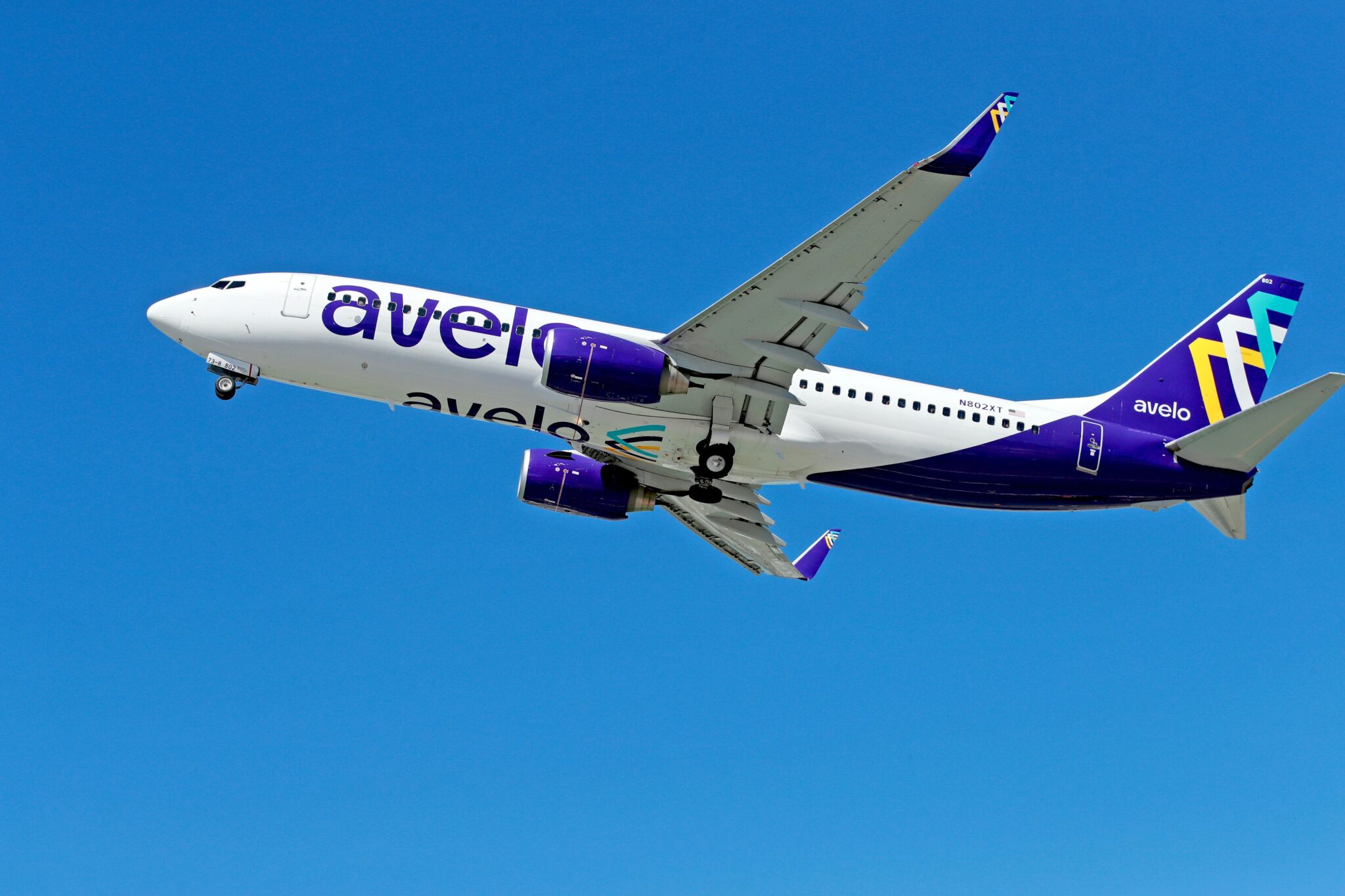
More American cities are saying “hello” to Avelo as the Houston-based carrier continues an aggressive expansion along the East Coast. 

In just the past seven days, Avelo announced four new cities and seven new routes. The new flights, set to launch this fall, will add the following cities to Avelo’s expanding route map:

  • Capital Region International Airport – Lansing, Michigan (LAN)
  • Kalamazoo/Battle Creek International Airport, Michigan (AZO)
  • Newport News/Williamsburg International Airport, Virginia (PHF)
  • Blue Grass Airport – Lexington, Kentucky (LEX)

The airline is also beefing up its presence in Wilmington, North Carolina (ILM), with new service to Fort Lauderdale (FLL) set to begin in November. Fort Lauderdale will be the fourth destination Avelo serves out of Wilmington, which already has service to Orlando (MCO), Baltimore/Washington (BWI), and Tweed New Haven Airport (HVN) in Connecticut.

1315025359
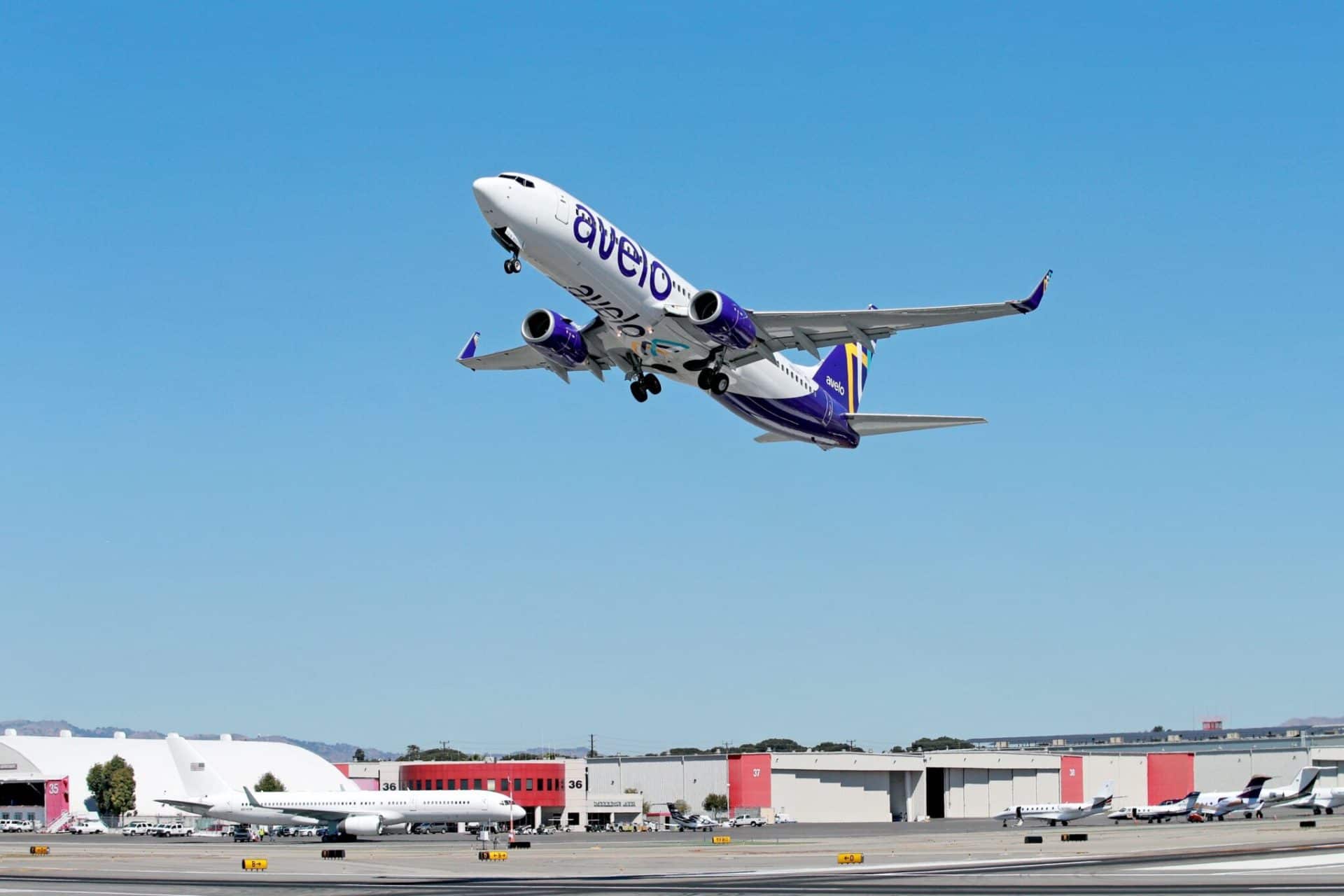
BURBANK, CALIFORNIA – APRIL 28: Avelo Airlines takes off with first flight between Burbank and Santa Rosa at Hollywood Burbank Airport on April 28, 2021 in Burbank, California. (Photo by Joe Scarnici/Getty Images for Avelo Air)

Betting Heavily on the Sunshine State

Of the seven new routes announced last week, all are for flights to and from Florida.

ROUTESERVICE FREQUENCY
PHF-MCO • Thu/Sun beginning 19 October
• Tue/Thu/Sun beginning 10 November
PHF-FLL • Thu/Sun beginning 20 October
• Tue/Thu/Sun beginning 10 November
LAN-MCO• Thu/Sun beginning 26 October
ILM-FLL• Mon/Fri beginning 11 November
LEX-MCO• Thu/Sun beginning 19 October
• Wed/Sat beginning 26 October
LEX-TPA• Wed/Sat beginning 12 November 

The Florida expansion comes on the heels of the June opening of Avelo’s newest base at MCO.  Orlando is Avelo’s third base, with the others located at southern Connecticut’s Tweed New Haven Airport (HVN) on the East Coast and Hollywood Burbank Airport (BUR), just outside Los Angeles on the West Coast. 

Avelo’s CEO is bullish on growth even in the midst of a recession

Avelo Airlines Chairman and CEO Andrew Levy says the new Orlando base will lead to a significant economic impact in Central Florida. The airline expects to create 150 jobs at MCO over the next year. As new routes and aircraft are added over the next five years, Avelo says it expects that number to increase to 500.

Avelo is also moving its pilot and flight attendant training to Orlando. Avenger Flight Group (AFG), the world’s largest privately owned commercial aviation training and simulation company, will train crewmembers at a new facility currently under construction at MCO. The training center is on track to be fully open by next spring.

The addition of LAN, PHF, AZO, and LEX to Avelo’s Orlando flight schedule this fall will complement existing service to three cities: New Haven, Connecticut (HVN), Baltimore/Washington International Thurgood Marshall Airport (BWI), and Wilmington, North Carolina (ILM). By summer 2023, Avelo says it plans to serve 15 destinations from MCO and as many as 50 destinations by 2027. 

In addition to Orlando, Tampa, and Fort Lauderdale, Avelo also serves Sarasota/Bradenton (SRQ), Fort Myers (RSW), and West Palm Beach (PBI). 

Northeast Success

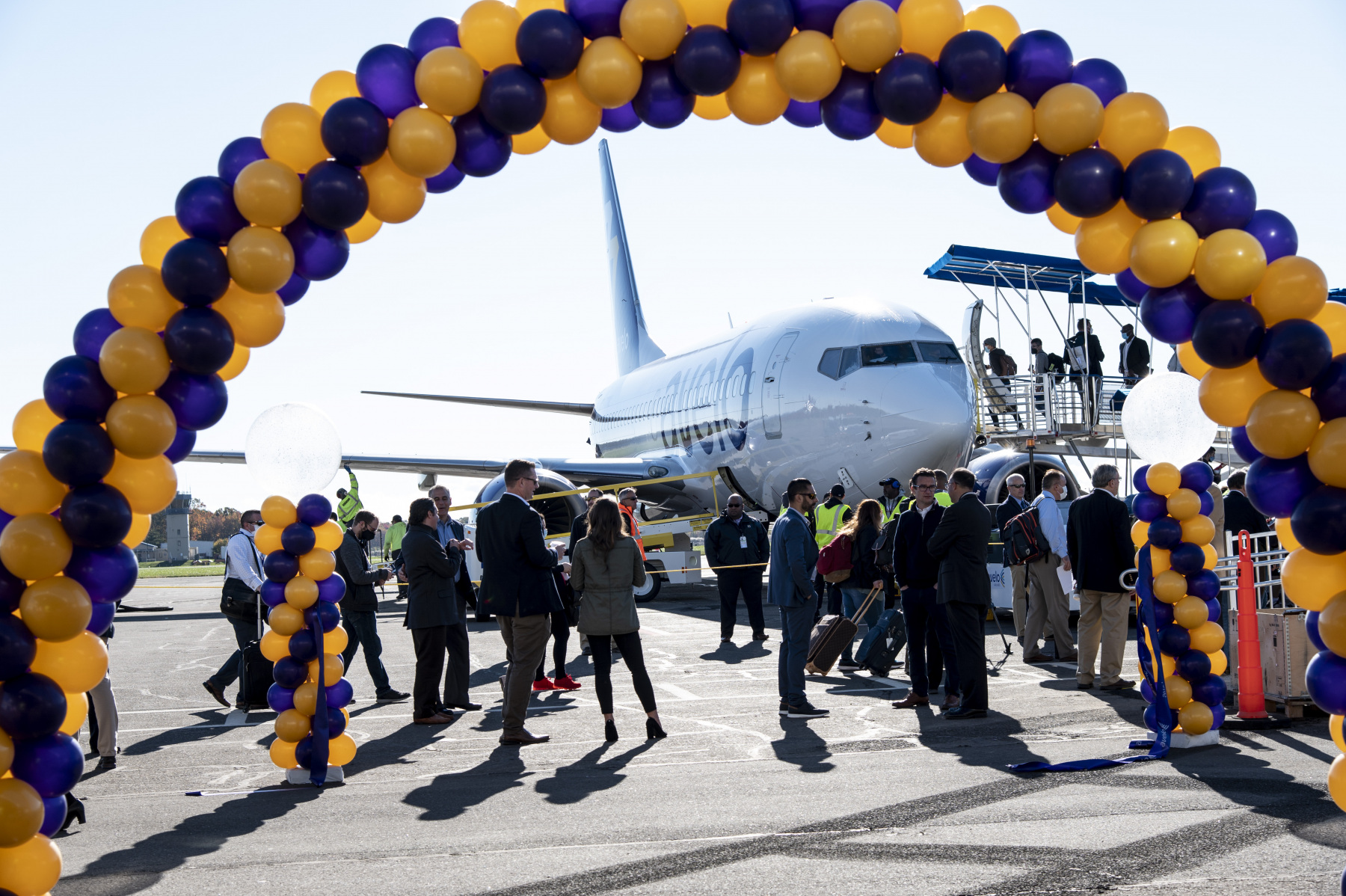
Celebrating the inaugural Avelo Airlines flight at HVN
Celebrating the inaugural Avelo Airlines flight from HVN on 3 November 2021 | IMAGE: AVELOAIR.COM

Tweed New Haven Airport, located in southern Connecticut about an hour south of Hartford’s Bradley International Airport, and just over two hours northeast of Manhattan, is also experiencing sustained growth.

Avelo currently serves 14 destinations from HVN, which is rather remarkable considering the airport was left without any scheduled airline service in September 2021 after American Eagle suspended service to Philadelphia (PHL). 

The inaugural flight from New Haven took off to Orlando – with much fanfare – on 3 November 2021. Shortly after HVN-MCO service began, Avelo launched service to five other Florida cities including Fort Lauderdale (FLL), Fort Myers (RSW), West Palm Beach (PBI), Sarasota/Bradenton (SRQ), and Tampa (TPA). 

In addition to the Florida destinations, Avelo now offers nonstop flights from New Haven to the following cities: 

  • Chicago Midway (MDW) 
  • Nashville (BNA) 
  • Raleigh/Durham (RDU) 
  • Charleston, SC (CHS) 
  • Myrtle Beach (MYR) 
  • Savannah/Hilton Head (SAV) 
  • Baltimore/Washington (BWI) 
  • Wilmington, NC (ILM) 

The airline says 150 crewmembers and five Boeing 737-700 aircraft are currently based at HVN. The airport is also undergoing a $70 million expansion project due largely to the success of Avelo. 

Burbank Works it Out 

1315025361 1
BURBANK, CALIFORNIA – APRIL 28: Avelo Airlines takes off with first flight between Burbank and Santa Rosa at Hollywood Burbank Airport on April 28, 2021 in Burbank, California. (Photo by Joe Scarnici/Getty Images for Avelo Air)

Avelo Airlines’ first base – Hollywood Burbank Airport (BUR), located 16 miles northwest of downtown Los Angeles – continues to fine-tune its operation. 

At launch, Avelo offered service from Burbank to eleven cities, including: 

  • Arcata/Eureka, California (ACV) 
  • Bend/Redmond, Oregon (RDM) 
  • Bozeman, Montana (BZN) 
  • Eugene, Oregon (EUG) 
  • Grand Junction, Colorado (GJT) 
  • Medford, Oregon (MFR) 
  • Mesa/Phoenix, Arizona (AZA) 
  • Ogden, Utah (OGD) 
  • Pasco, Washington (PSC) 
  • Redding, California (RDD) 
  • Santa Rosa, California (STS) 

Three months after the inaugural flight from Burbank to Santa Rosa on 28 April 2021, Avelo announced three new cities: Monterey, California (MRY), St. George (SGU) and Provo (PVU), Utah, and Fort Collins-Loveland, Colorado (FNL). 

Things then began to get a bit turbulent for the new carrier. 

Monterey, St. George, and Provo flights were suspended before they even began. Around the same time, Avelo pulled out of Mesa/Phoenix, Grand Junction, and Bozeman. A second attempt into Arizona – this time to Tuscon (TUS) – was halted after just one month of service. Fort Collins-Loveland flights ended in June of this year. 

It wasn’t all bad news for Avelo, as the airline added flights from Burbank to Boise, Idaho (BOI) in May. 

Avelo currently flies to eight cities from Burbank.

Interestingly, Avelo also flies to Las Vegas (LAS) from Santa Rosa and Redding. These are the only flights in Avelo’s western operation that don’t go through Burbank. 

A Unique Business Model 

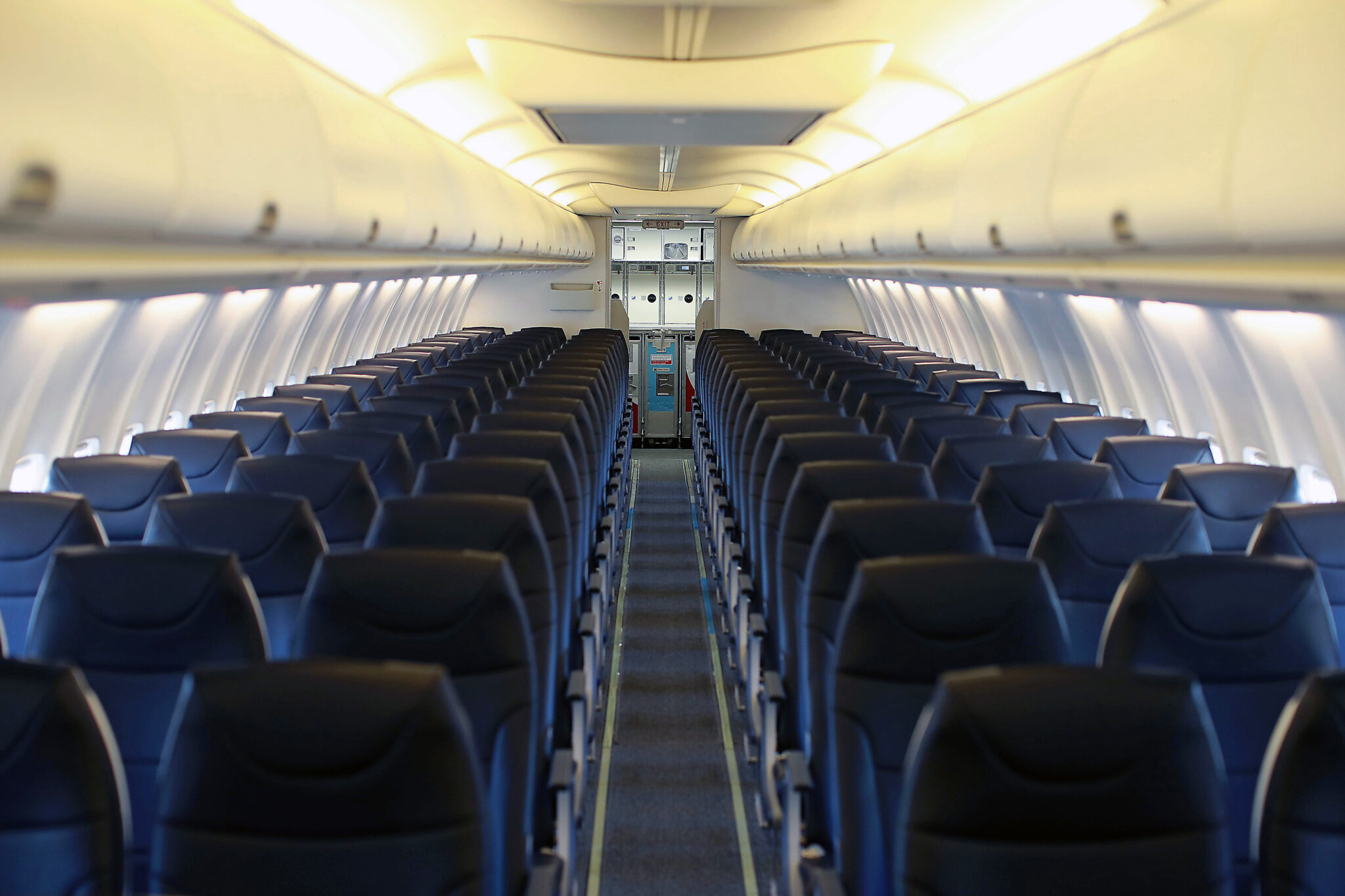
Interior of Avelo Airlines Boeing 737, looking aftward down center aisle.
BURBANK, CALIFORNIA – APRIL 07: The Avelo aircraft is seen at Hollywood Burbank Airport on April 07, 2021 in Burbank, California. (Photo by Joe Scarnici/Getty Images for Avelo)

Like other ultra low-cost carriers (ULCC), Avelo Airlines offers no-frills service at exceedingly low fares. Customers will not find amenities such as seatback TVs, Wi-Fi, or power outlets. A fee model similar to other ULCC’s enables customers to pay for the services they would like, including priority boarding ($15) and preferred seating ($11+, window/aisle/seats with additional leg room). Both carry-ons and checked baggage will cost you $40 each at the time of booking ($50 at the airport). 

Despite the fees many ULCC flyers have become accustomed to, Avelo’s relatively simple operation does have some unique advantages. The airline serves primarily underserved small markets and bypasses huge hubs, leading to fewer delays and cancellations compared to traditional hub-and-spoke carriers. Another advantage of not having to connect via a hub airport is that the chance of a bag getting lost or delayed is drastically reduced. 

Crewmembers also appreciate the non-hub setup. All of Avelo’s flights begin and end the day at one of its three bases. This means crews can go home at the end of each day, and overnight hotel stays are not required. 

While aircraft are parked at the bases overnight, Avelo’s maintenance crew can address any mechanical issues on the modern, all-Boeing fleet. Avelo has ten aircraft in its fleet, including six 147-seat 737-700s and four 189-seat 737-800s. Five more aircraft will join the fleet by early 2023.

Avelo boasts an impressive performance track record with enviable on-time reliability. Fewer than one percent of its flights have been canceled (not including weather or air traffic control delays). 

A Bright Future

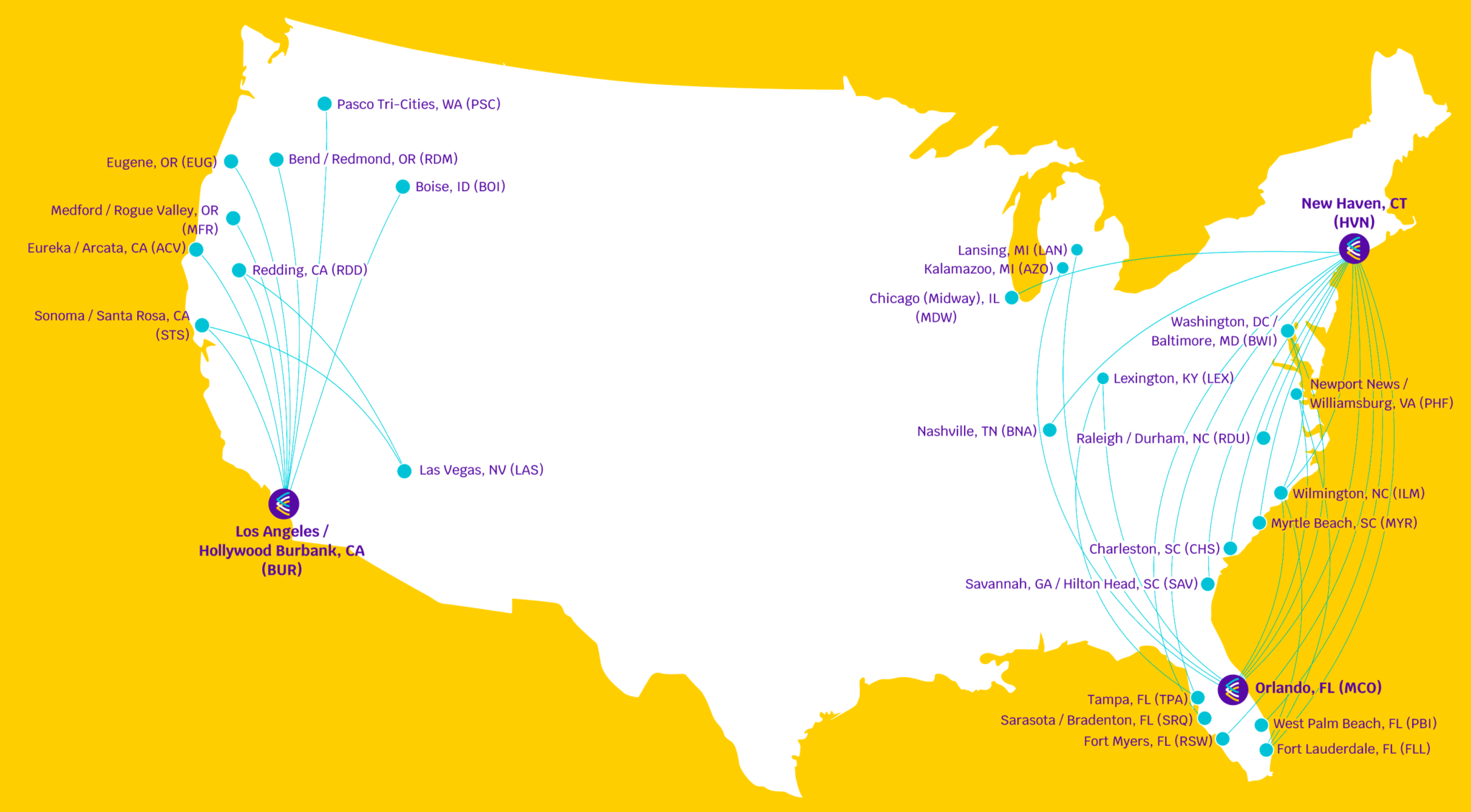
Route Map 7 28 22
Avelo Airlines route map as of 28 July 2022 | Image: AveloAir.COM

When Avelo Airlines launched last year, it was the first new U.S. airline to take the skies since Virgin America in 2007. Ironically, not even a month after Avelo’s first flight, Breeze Airways’ inaugural flight took off from Tampa.

With the looming merger of JetBlue and Spirit, does Avelo have what it takes to fill the void that will be left by ULCC competitor Spirit Airlines? Only time will tell.

Like any fledgling business, startup airlines often take time to find their footing. Avelo Airlines is no exception.

However, if the aggressive expansion rate over the last few weeks indicates where Avelo is headed, it seems they have a very bright future indeed. 

Ex-Eastern: Some Planes Are Still Flying

1

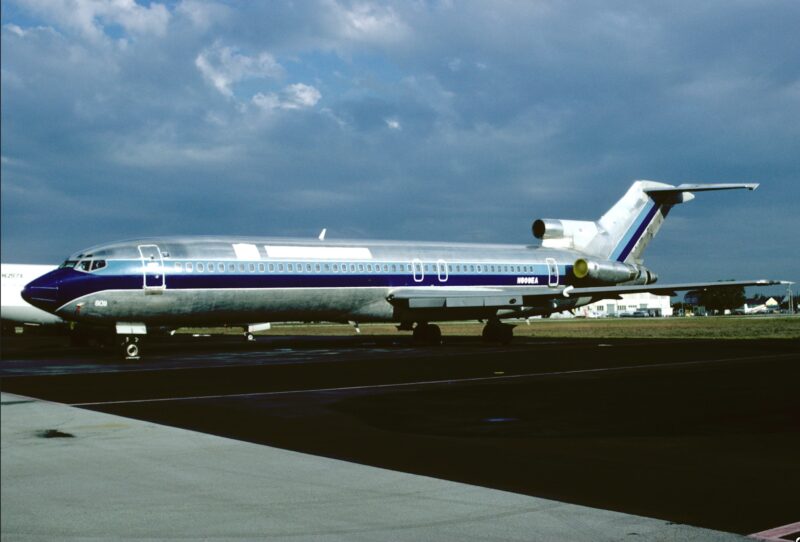
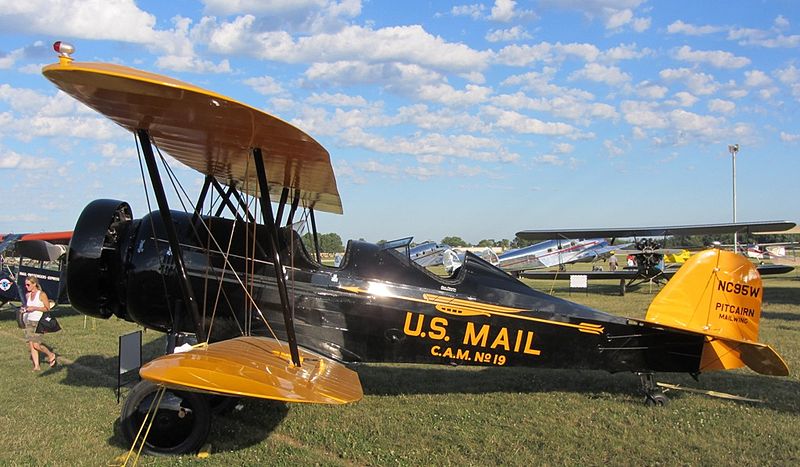
The original Eastern Airlines (EAL/EA) operated for 65 years from 1926 to 1991 and flew 23 different types of planes. Throughout these years Eastern grew to fly 830+ planes which all started with a single engine Pitcairn Mailwing with service from New York to Atlanta.

PA-7S Mailwing
Pitcairn Mailwing PA-7S – First Plane that Flew with EASTERN

Over the years the airline grew and became more of a household name. The airline focused mainly on North and South American but also ventured into Europe. The Eastern name remained true since the majority of their routes were in the eastern-half of the United States. During these years of growth Eastern built hubs in Miami, Atlanta and New York. But unfortunately due to mis-managment and labor issues the airline shut its doors on January 19th, 1991.

Since 1991 there have been two spinoffs of Eastern, including: Eastern Air Lines (2015-2017) and Eastern Airlines, LLC (rebranded from Dynamic Airways) after Eastern obtained intellectual rights to the brand. Like many large airlines of the past there are still a handful of the original Eastern planes still flying or preserved so you can see them.

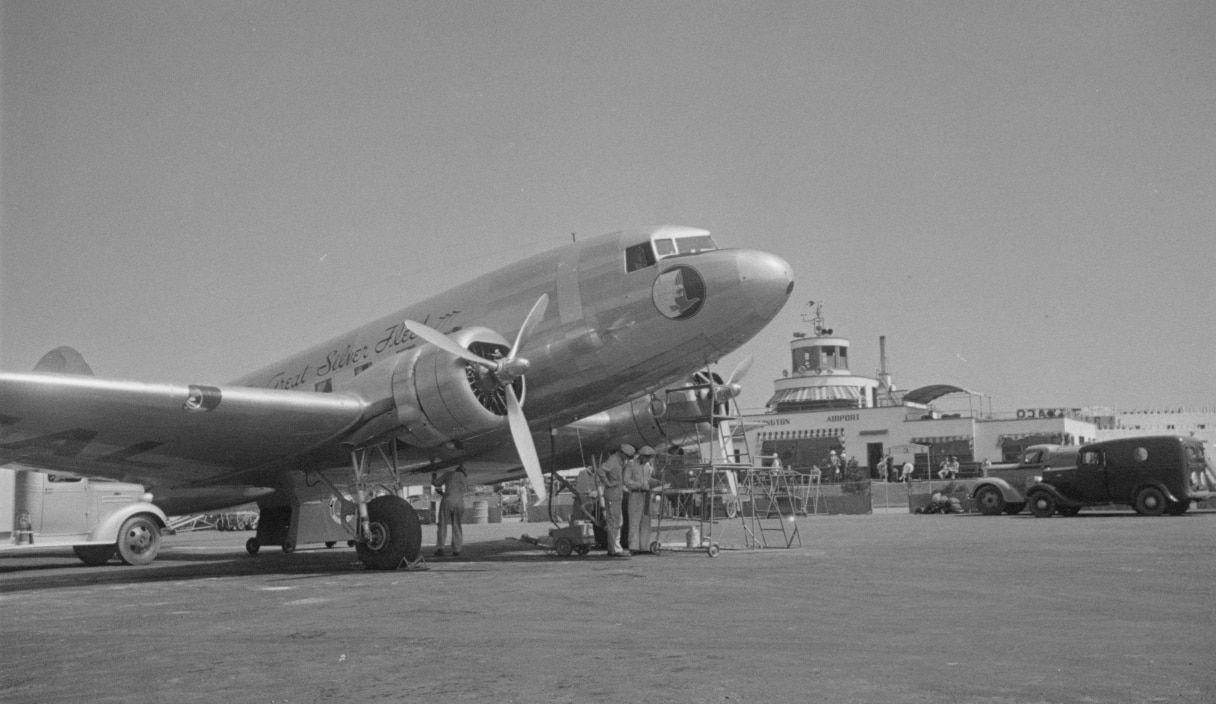
Through extensive research we were able to find 11 of the original Eastern Airlines planes that are still flying. Starting back in the late 1930’s we found three DC-3s that are still in service.

Douglas DC-3

DC3
Douglas DC-3 (Wikipedia Commons)
  • N18121 1937 Douglas DC-3A (#1997) Blue Skies Air (was NC18121)
  • C-GDAK 1939 Douglas DC-3-201B (#2141) Canadian Warplane Heritage (was NC21729)
  • N4089T 1941 Douglas DC-3-201F (#4089) WWII Airborne Demo Team (was NC28381)

Lockheed L-188A Electra

  • C-GZVM 1959 Lockheed L-188A Electra (#1036) Air Spray (was N5524)
  • C-GOIZ 1959 Lockheed L-188AF Electra (#1053) Air Spray (was N5530)
  • C-FZCS 1959 Lockheed L-188A Electra (#1060) Air Spray (was N5532)

Other Eastern Airlines Planes

aero
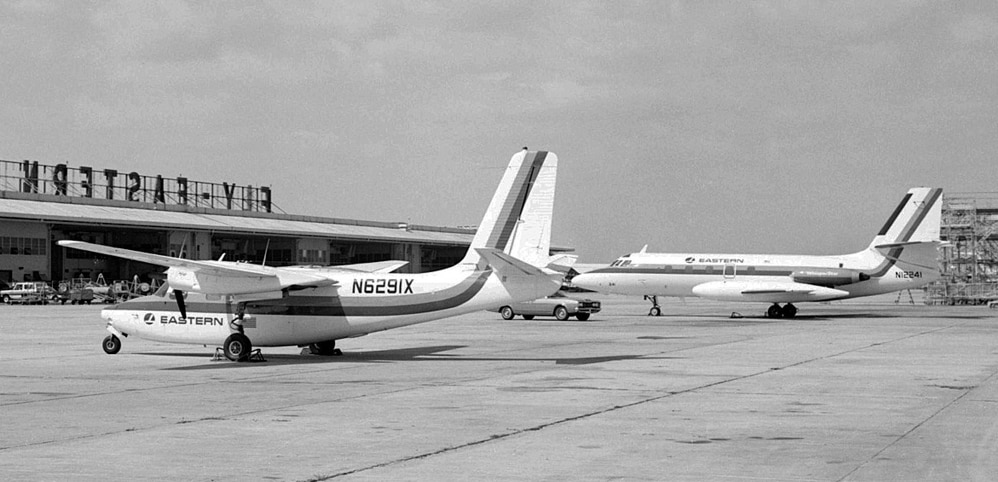
Aero Commander 500B (N6291X @MIA) (Wikipedia Commons) Lockheed L-1329-23E in the background
  • N411PT 1962 Aero Commander 500B (#500B-1207-99) Central Airlines (was N6291X)
  • N724CK 1970 Boeing 727-225 (#20383) Kalitta Charters II (was N8840E)
  • N757HW 1982 Boeing 757-225 (#22194) Honeywell International (engine testing) (was N504EA)
  • YV560T 1983 Airbus A300B4-203 (#261) Transcarga International Airways (was N233EA)
  • N942FD 1986 Boeing 757-225 (#22612) FedEx Express (was N523EA)

Preserved Eastern Airlines Planes

These planes are no longer flying by you can see them around the world preserved in various ways.

  • NC18124 1937 Douglas DC-3-201 (#2000) National Air and Space Museum
  • N21728 1939 Douglas DC-3-201B (#2144) stored at the Henry Ford Museum
  • NC21798 1940 Douglas DC-3-227B (#2202) “Flagship Knoxville” (was N21798) C R Smith Aviation Museum Foundation Fort Worth TX
  • N836D 1957 Douglas DC-7B (#45345) Carolinas Aviation Museum (KCLT)
  • VR-HOI 1973 Lockheed L1011-1 TriStar (#1039) Cathay Pacific coffee shop in Daegu, South Korea
  • N675MC 1975 Douglas DC-9-51 (#47651) Delta Airlines Museum (ATL)
  • TC-ACE 1981 Airbus A300B4-203 (#154) AUcak Park Restaurant (was N223EA)

Realtime view of the planes mentioned: https://globe.adsbexchange.com/…

Co-Pilot Dies After Falling from Plane Making Emergency Landing at RDU

0

There Are Still More Questions Than Answers After This Unusual Accident

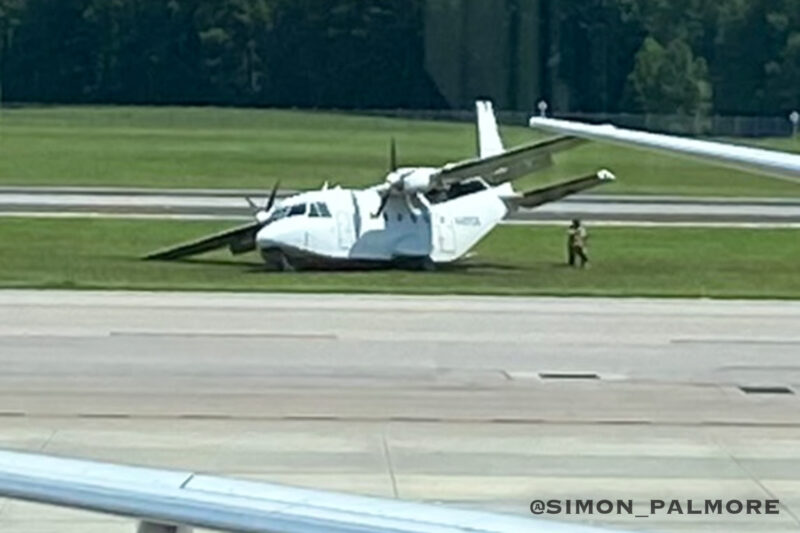
A man is dead following an incident yesterday (July 29, 2022) where he fell from a twin-engine CASA CN-212 Aviocar as it approached Raleigh-Durham International Airport in North Carolina.

The aircraft was making an emergency landing after losing its right wheel. Two souls were onboard, but while approaching RDU the co-pilot fell from the aircraft, which at the time was about 15 miles to the southwest of the airport over the town of Fuquay-Varina.

https://twitter.com/simon_palmore/status/1553097170269736960?s=21&t=5yDoFEJLXVa04ou41Wge_A

The local police department identified the man as 23 year old Charles Hew Crooks (next of kin were notified first). His body was located in someone’s backyard after a resident flagged down first responders already searching the area, reporting that they heard an unusual noise and saw broken tree branches.

In a press conference last night, authorities said Crooks fell from around 3,500 feet and landed 30-40 feet away from a house. He was not wearing a parachute.

Photo Jul 30 12 34 40 PM 2
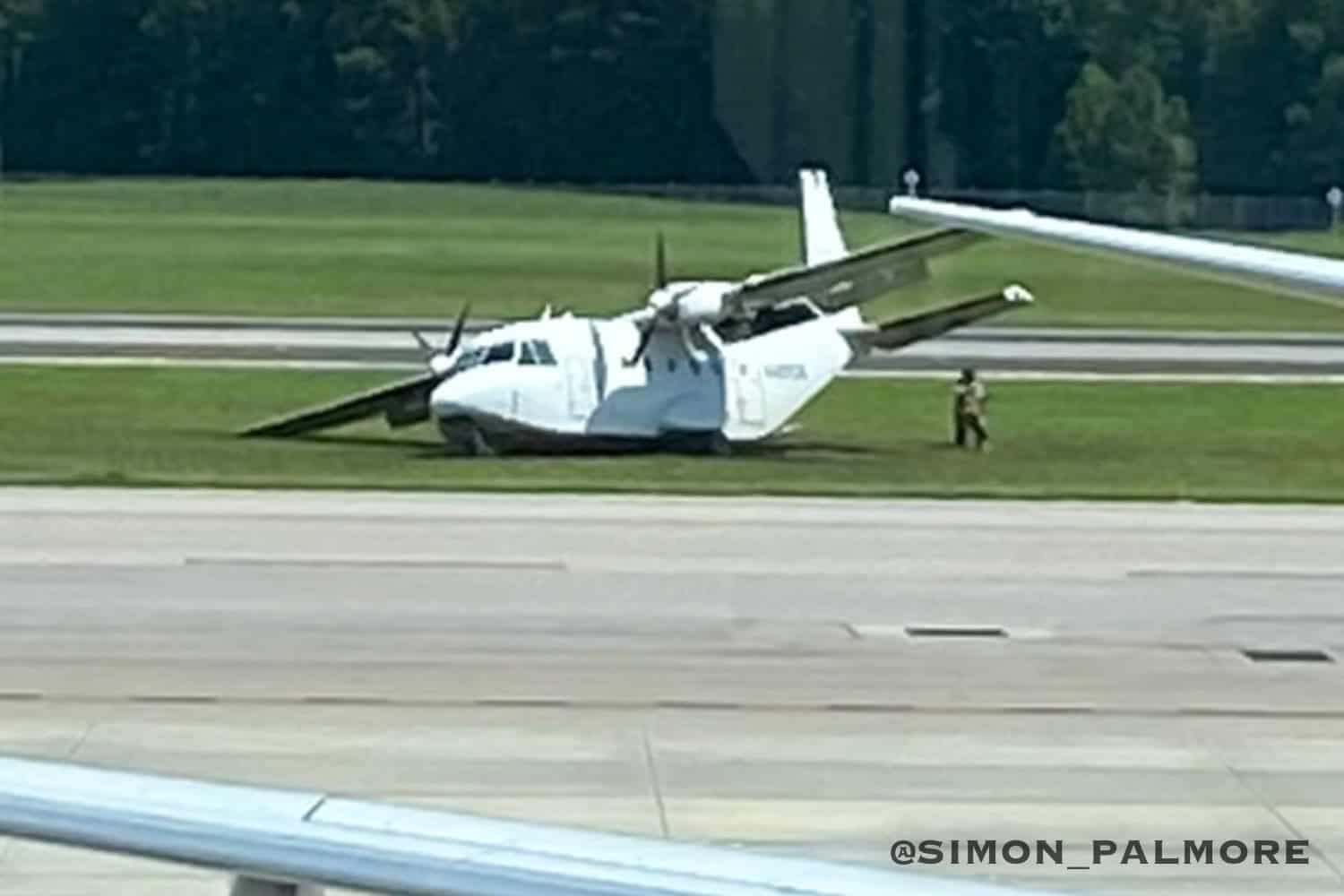
a twin-engine CASA CN-212 Aviocar at Raleigh-Durham International Airport on july 29, 2022 after making an emergency landing. photo credit: @Simon_Palmore via Twitter (used with permission)

The pilot, who has not been identified, landed the plane at RDU before skidding onto some grass and partially spinning to a stop, suffering only minor injuries.

The National Transportation Safety Board (NTSB) and FAA are leading the investigation, and expected to question the pilot today since he was released from a local hospital last night. It is unclear if Crooks jumped from the plane, fell out by accident (perhaps trying to visually confirm the tire working or not), or was the victim of a criminal act.

USAF, Navy Ground F-35s and Other Jets for Ejection Seat Defect

0

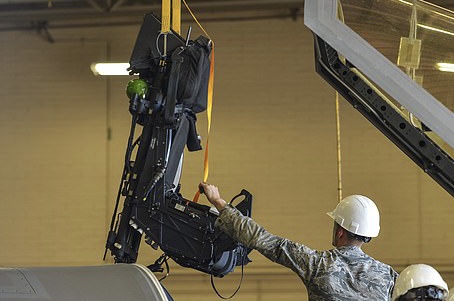
The U.S. Air Force is standing-down and inspecting their F-35A Lightning II stealth fighters over concerns about a defect in the jet’s explosive ejection seat cartridges, following a discovery of the problem by the manufacturer, Martin-Baker.

Air Combat Command (ACC) spokeswoman Alexi Worley confirmed the stand-down in response to inquiries by Breaking Defense, who first broke the story.

026D2D43 12C1 4678 B4BD 7FD76DF51CBB
A F-35A Martin-Baker ejection seat (photo credit: USAF)

According to Worley via Breaking Defense, ACC began a Time Compliance Technical Directive on July 19 to inspect all of the cartridges on the ejection seats within 90 days, and started the stand-down of the F-35A fleet today to expedite the inspection process.

571BD1CD 5911 4A74 8915 B032CD599E39
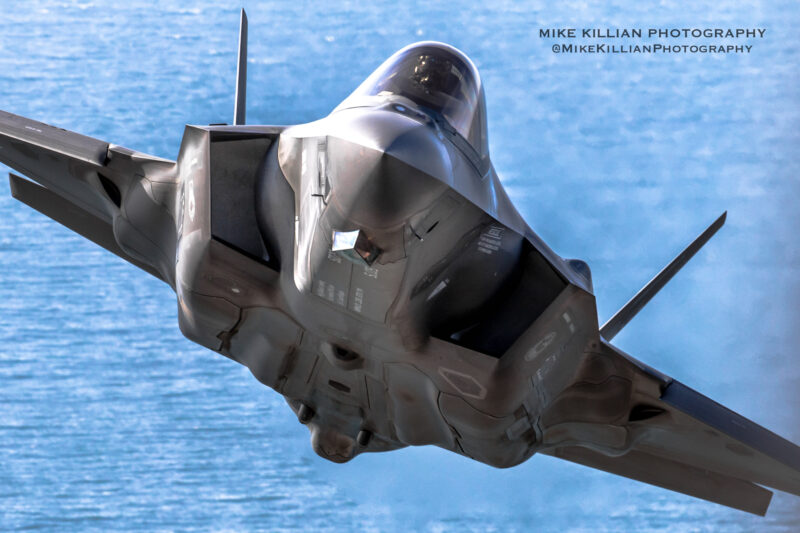
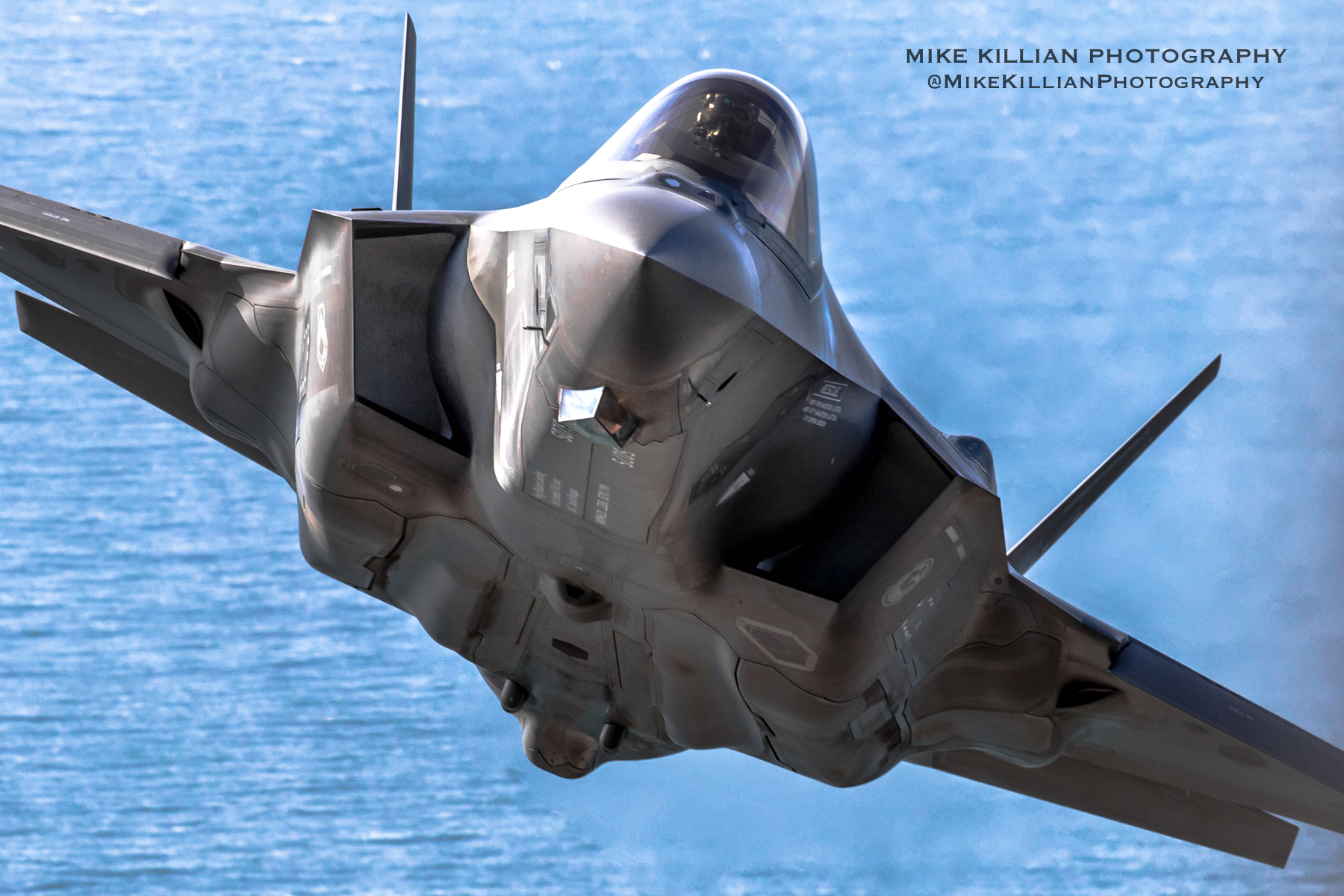
U.S. Air Force F-35A Lightning II (photo credit: Mike Killian / AvGeekery.com)

Air Force Air Education and Training Command has also grounded some 300 jet trainers for the same concerns and inspections, which include T-38Cs and T-6 Texan IIs (ACC T-38s use A and B models with different ejection seats, so they are unaffected).

Specific aircraft will return to service as maintainers confirm their ejection seats are fully functional, or replace any defective cartridge actuated devices that they find. The devices are used to launch a pilot out of the aircraft in case of an emergency.

4D1B75BF A971 4D30 8FC9 BDDC5775AEE8
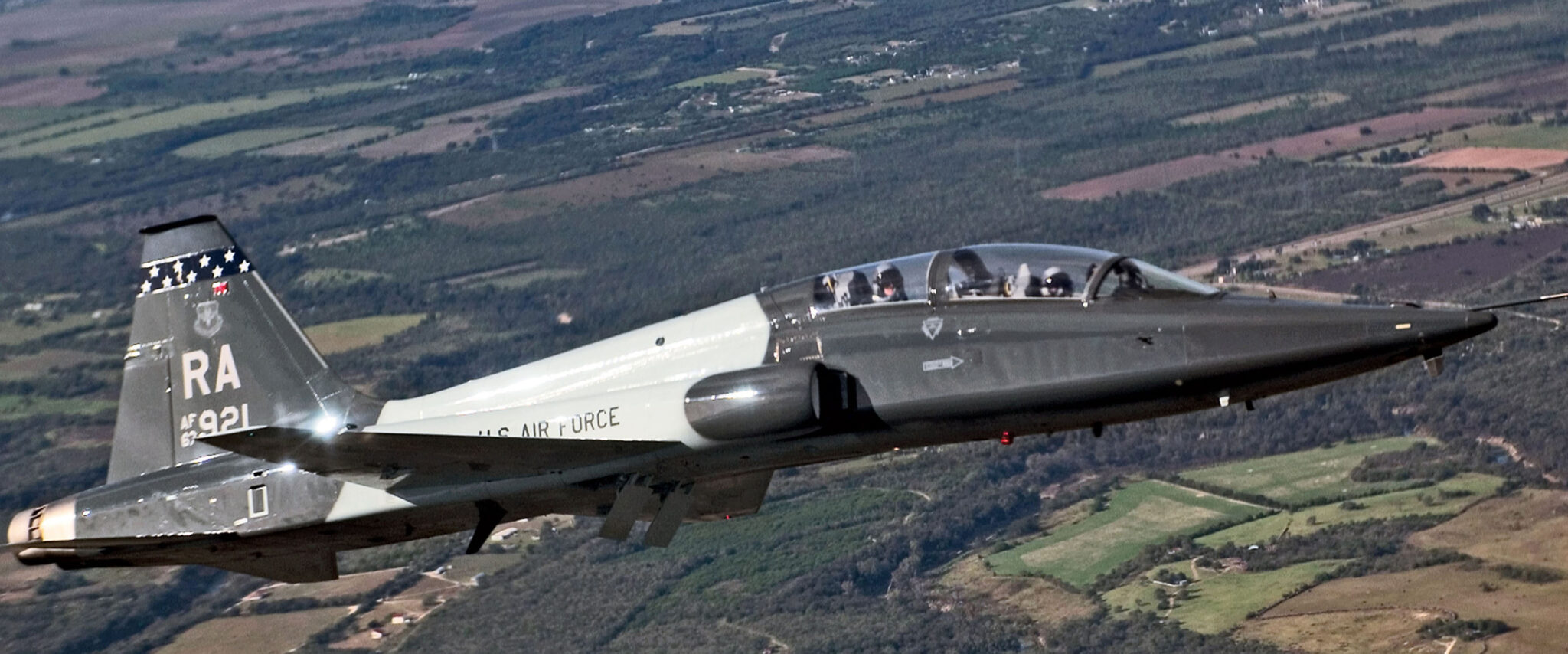
T-38C TRainer (photo credit: USAF)

The U.S. Navy has been doing the same with an undisclosed number of their jets as well, grounding F/A-18 Hornets, Super Hornets, E/A-18G Growlers, and T-45 Goshawk, and F-5 Tiger II trainers.

According to a press release by Naval Air Systems Command, the problem “only affects aircraft equipped with [cartridge actuated devices] within a limited range of lot numbers.”

C00D7B74 D126 458D A8AD 1026AAF12F7A
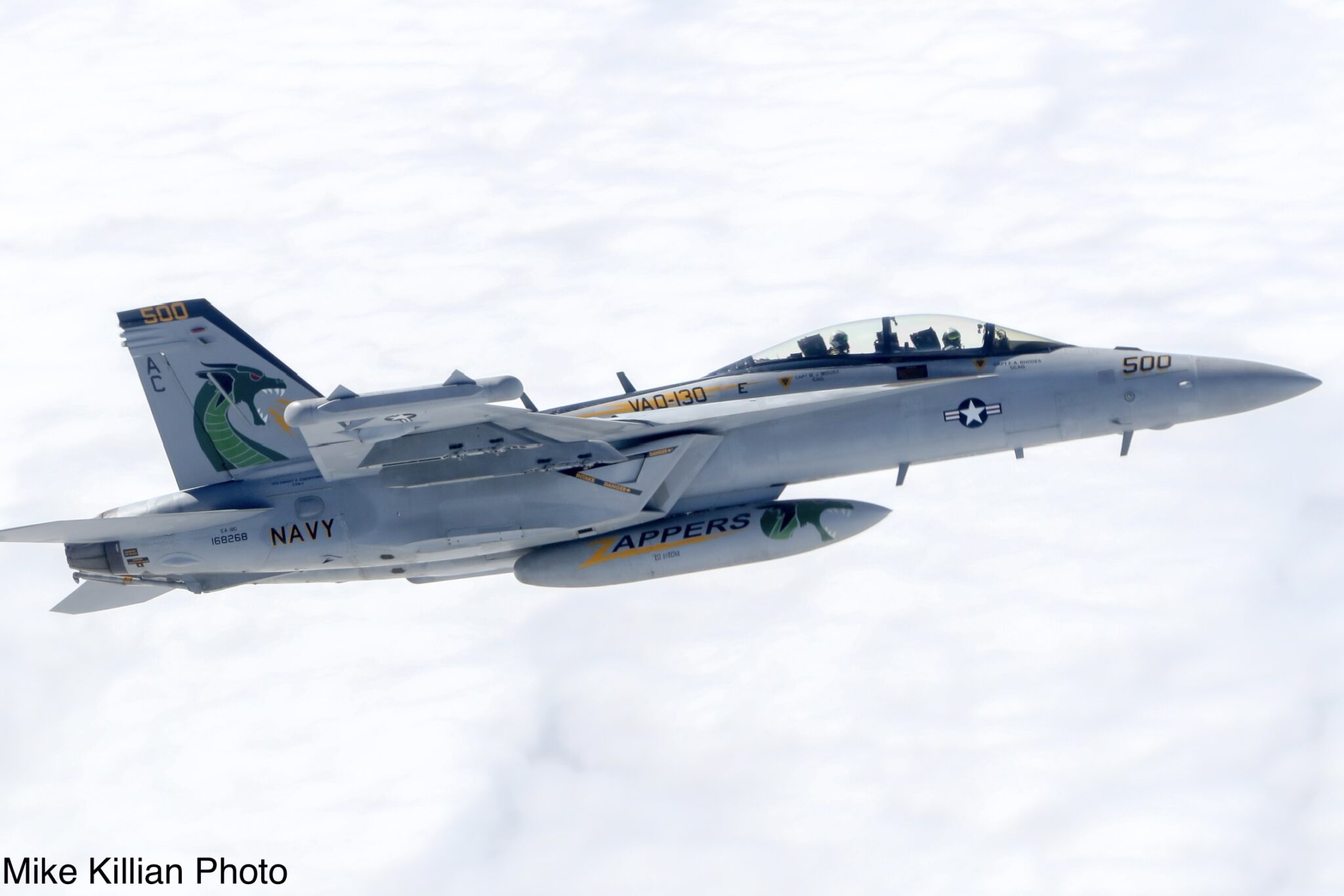
U.S. Navy E/A-18G Growler from electronic attack squadron vaq-130 (photo credit: Mike Killian / AVGeekery.com)

The Navy will not elaborate on numbers of aircraft standing-down, due to operational security reasons.

The Naval Surface Warfare Center Indian Head Division (NSWC IHD) supplies the part in question to the Army, Navy, USMC and USAF, and are using “validated radiography procedures” to scan their inventory for properly manufactured parts to send to fleet maintenance centers.

My Fighter Career: Getting Ready For My Skyraider Deployment

My Fighter Career” is a limited series of articles by Byron Hukee. He’s a humble, bad ass, retired USAF pilot who flew everything from the F-100 to the F-16. You can read his previous posts here:

Part 1: “I Wasn’t Born to Fly”

Part 2: The F-100 Super Sabre Is My New Ride

Part 3: Flying the A1-H Skyraider

After getting my wife and small son settled in Minnesota in a small town not too far from my parents, I was off to Southeast Asia (SEA) for my Skyraider combat tour. I would be assigned to the last remaining A-1 squadron at Nakhon Phanom (NKP) Royal Thai Air Force Base in Thailand. The squadron was the 1st Special Operations Squadron (SOS) and coincidentally it was also the first USAF A-1 squadron. In 1964 it was the 1st Air Commando Squadron and its initial role was to provide training to the fledgling Vietnamese Air Force (VNAF). The first USAF Skyraiders had VNAF markings since thy were ostensibly providing training for young VNAF pilots. It wasn’t long before the markings were changed to the red, white, and blue of the USA.

Departure Date Looms

Slide0347
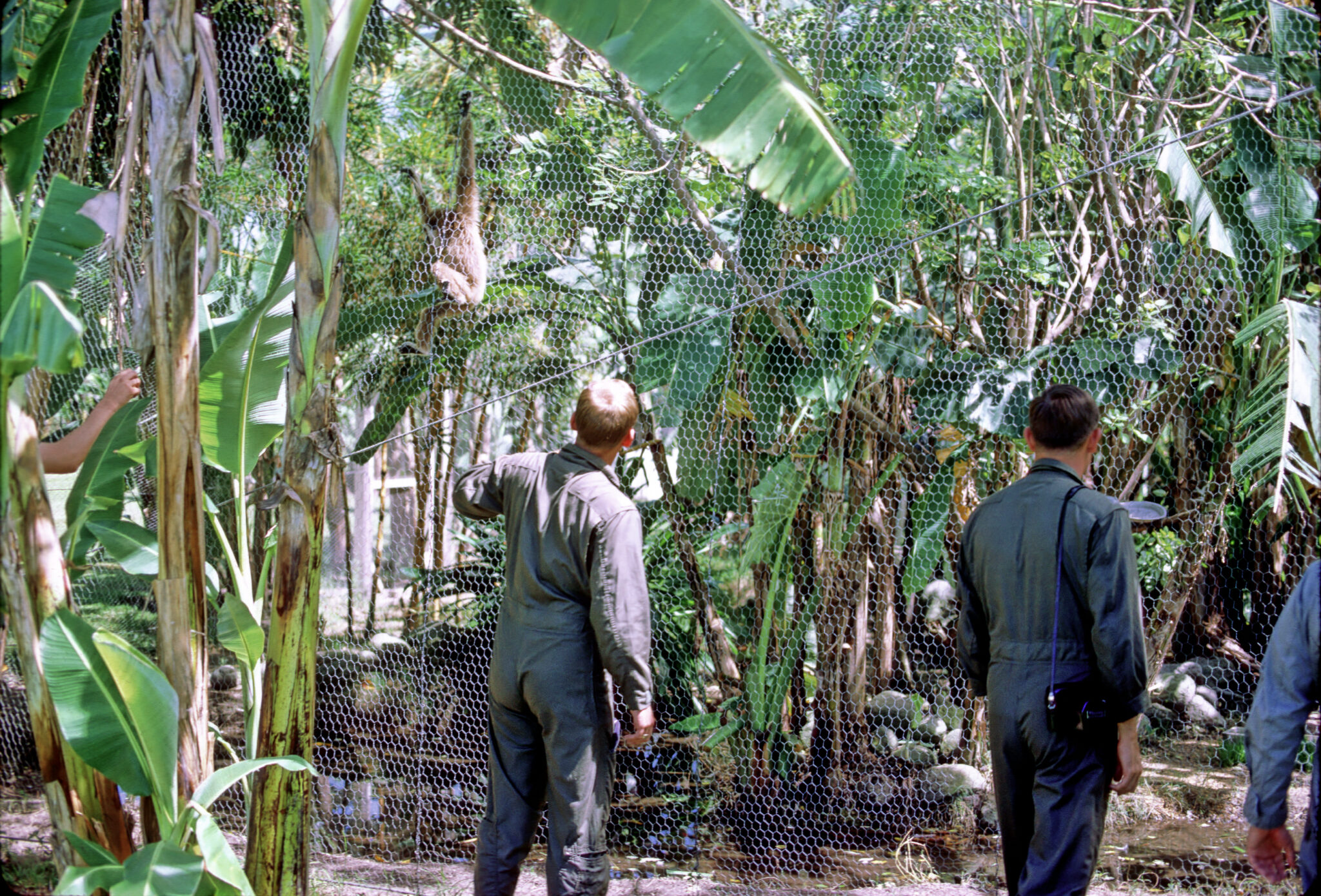
Petting Zoo at USAF Jungle Survival School

My port call was on 13 October 1971 and I departed from Travis AFB on a World Airways contract charter Boeing 707. Traveling with me in addition to the several other GIs headed for the war were three other Skyraider pilots I had trained with, one of whom was also in my pilot training class at Webb AFB and in my F-100 training class at Luke, Captain Ross “Buck” Buchanan. Buck was a “retread” nav who had already spent time in SEA on both the C-130 and the KC-135. The others I knew were two OV-10 pilots who also had trained at Hurlburt. Both were also in my F-100 class at Luke. After a refueling stop at Hickam AFB in Hawaii, we continued on to land at our first destination of Clark AB in the Philippines.

Slide0374
My overnight accommodations in the Philippine jungle

Our task there was to complete the USAF Jungle Survival Training course in the jungles in the vicinity of Clark AB. After a couple of days of classroom training and a visit to the “petting zoo” where we were introduced to all the caged creatures in the jungle that wanted to eat you, we were taken outdoors to learn how to survive in the jungle. Our graduation exercise was to play hide and seek with the local Negrito villagers. We were all given a chit that we had to surrender to the hunters when were found.  Their reward for every chit they collected was the equivalent of about two days of food that they normally had to harvest or catch, so they were motivated to say the least.

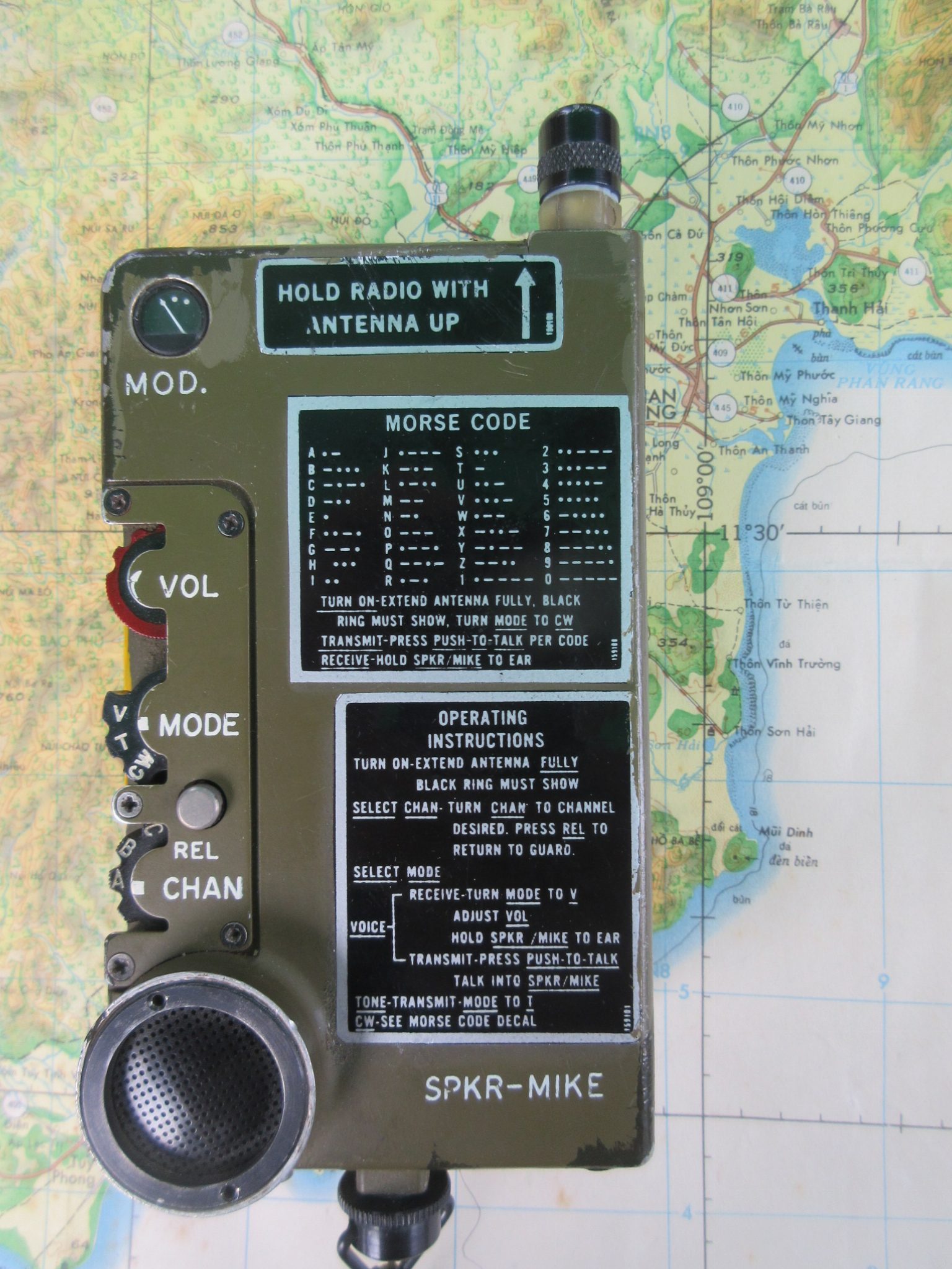
URC 64
The 4-channel URC-64 was the survival radio carried by all aircrew in SEA

Survival training was difficult to say the least

For most of us, it was indeed when we were found, not if we were found. We were given about 10 minutes to disperse and find a place to hide before an air horn sounded meaning the hunt was on. Based on my training at Hurlburt and getting “indoctrinated” about what to do if we were forced to extract from our Skyraider, I knew the stakes were high once we “arrived” in the jungle via a “nylon letdown.” 

Slide0611
Large snake at petting zoo

I put away my innate fear of snakes and decided I would not be found. a mass of vines and jungle vegetation just beside one of the trails looked like it would work to keep me hidden. I cleared my tracks from the trail and moved cautiously to the side of the entangled vines and spotted a small opening that I crawled into. There, I was able to conceal my entry point with vegetation and moved further into the thicket. Then I tried to relax and listen. When other students were found, a whistle would be sounded. I heard several nearby and some further in the distance. I could hear barefooted footsteps not so far away, but they went right on by. After the prearranged period of time, the airhorn sounded again and I eased my way out of my hide and walked back to our muster point and handed my chit to one of the instructors. I believe I was one of three others out of about 50 students who were not found!

Slide0388
1Lt Hukee at end of Jungle Survival school San Miguel and diploma in hand

The Long, Slow (And Somewhat Fun) Ride To Combat

The next day we were loaded on a C-130 and headed to Bangkok. I checked in with our new squadron and were told to “chill” in Bangkok and to enjoy ourselves. We checked into the Siam Intercontinental Hotel and did indeed enjoy our selves! We all were anxious to get to NKP and renew acquaintances with some other pilots who had already arrived at NKP. While at Luke AFB during F-100 training, I met two other pilots who also were switched to Skyraiders when their F-100 assignments to Vietnam were also changed to A-1s. Capt Ramsay Vincent and Maj Esequiel Encinas were a class ahead of me at Luke and had arrived in Vietnam in mid September. It would be great to meet up with them again.

Slide0011
Hot pants! Hukee in Bangkok

For the Rest of the Story Bang NEXT PAGE Below

F-22 Raptors Deploy to Poland as Russia Threatens “Tougher Actions” for Arming Ukraine

0

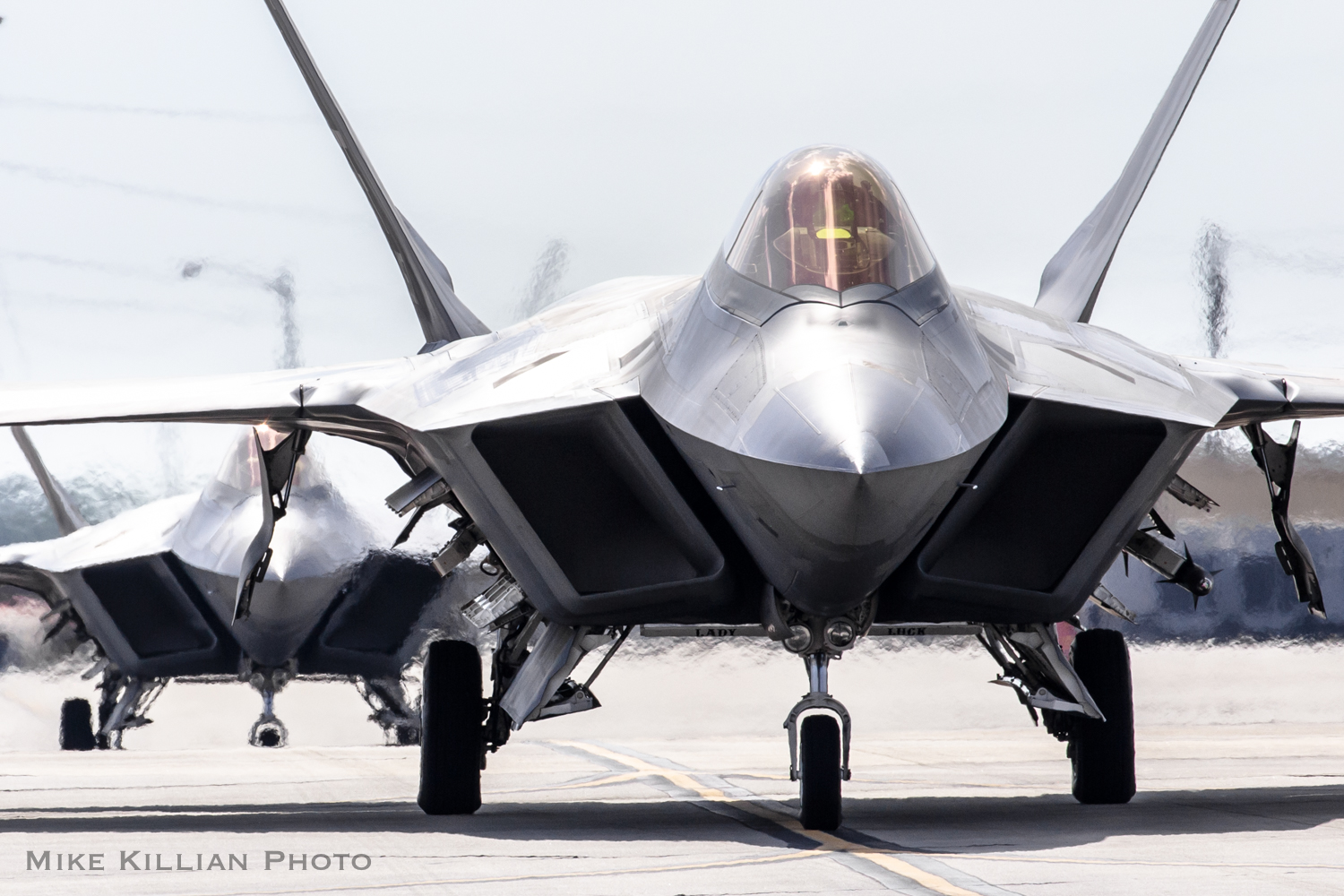
The U.S. Air Force has deployed an Alaska-based squadron of the most lethal fighter jets in the world to Poland, in an obvious signal to Russia following threats of tougher actions if the western world continues arming Ukraine.

IMG 8886
f-22 raptors taxi on the flight line for a training mission (photo: mike killian / avgeekery.com)

F-22 Raptors from Joint Base Elmendorf-Richardson’s 90th Fighter Squadron, 3rd Wing, have been sent to the 32nd Tactical Air Base in Łask, Poland to support NATO Air Shielding missions across Eastern Europe, according to a press release issued on July 27.

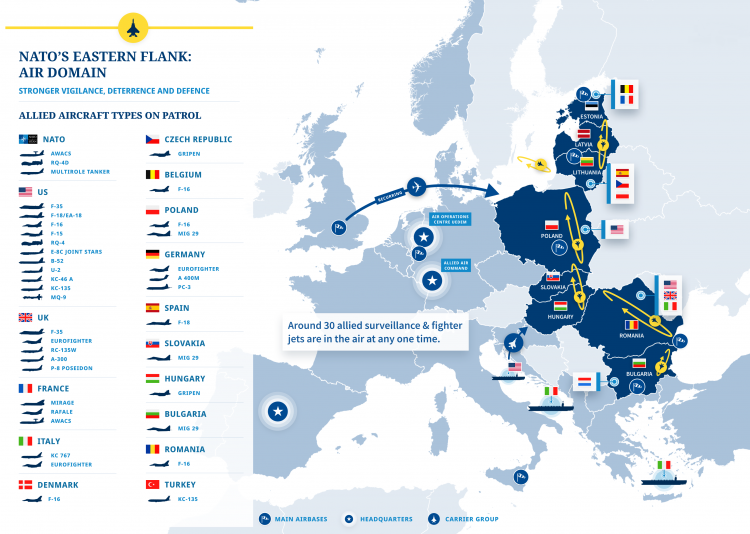
NATO and Allied Air Forces contribution to the Alliances enhanced Vigilance Activities bolstering alliances eastern flank 100522 CREDIT NATO HEADQUARTERS.png
map of nato aircraft supporting europe’s eastern flank against russia (credit: nato hq)

“The NATO Air Shielding mission integrates Allied Air and Surface Based Air and Missile Defence units into the NATO Integrated Air and Missile Defence system under NATO Command and Control,” says the USAF. “It will provide a near seamless shield, ensuring NATO Allies are better able to safeguard and protect Alliance territory, populations and forces from air and missile threat.

The Raptors will now operate as the 90th Expeditionary Fighter Squadron, joining other U.S. military aircraft and allied nations in patrolling the region’s skies 24/7 to deter and protect NATO against any Russian aggression.

IMG 9836 2
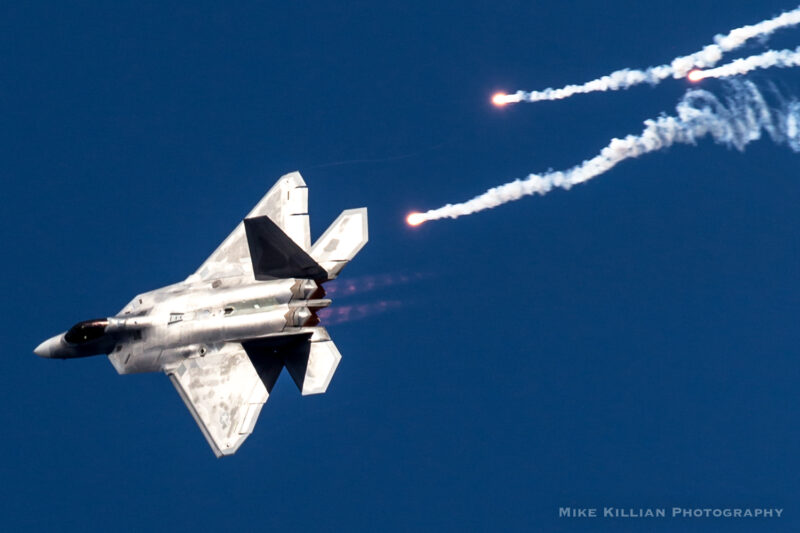
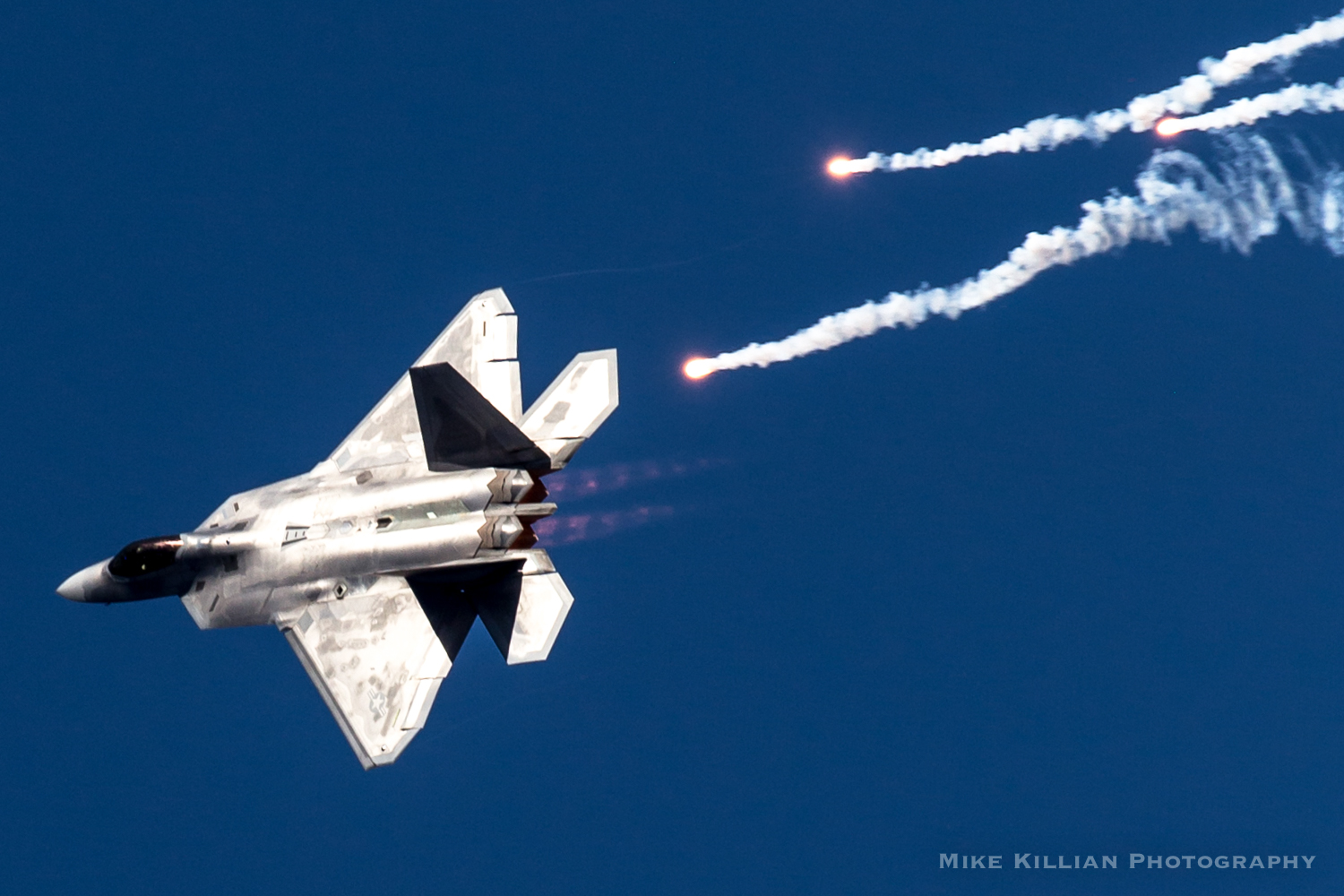
a usaf f-22 raptor popping flares as counter-measures against enemy fire (photo: mike killian / avgeekery.com)

F-22s not only employ stealth design and technology, but can also execute both air-to-air and air-to-ground attacks. Simply put, they can wipe an adversary out of existence without even being noticed, and their vector-thrust engines means they can maneuver and fly in ways that most other aircraft cannot (especially with the best trained pilots in the world at the controls).

“The Raptor is a critical component of the global strike Task Force, and designed to project air dominance, rapidly and at great distances to defeat threats,” says the USAF. “It cannot be matched by any known or projected fighter aircraft.This is a clear expression of NATO’s commitment to readiness which promotes regional security and stability.”

BREAKING: Southwest Airlines Shares Down 8% in Spite of Record Quarterly Income

0

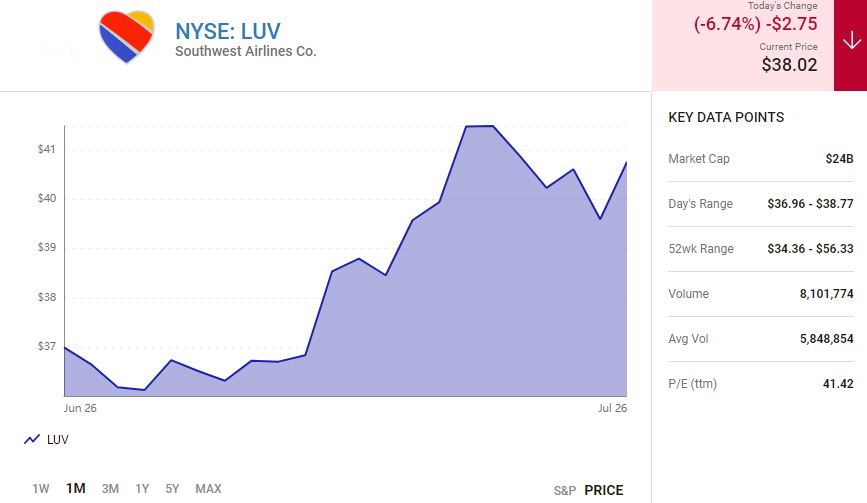
Southwest Airlines reported record quarterly net income today. Second-quarter earnings exceeded analyst consensus. However, second-half guidance was a disappointment to investors due to rising cost expectations, sending shares down 8%.

Southwest Q2 2022 Earnings at a Glance

SWA
BREAKING: Southwest Airlines Shares Down 8% in Spite of Record Quarterly Income 25
  • Record quarterly net income (excluding special items) of $825 million
  • Record quarterly operating revenue of $6.7 billion
  • Q2 2022 adjusted earnings of $1.30 per share
  • Capacity for Q3 is expected to be in a similar range as pre-pandemic levels reported in Q3 2019
  • Forecast for Q3 revenue is up 8% to 12%
  • Non-fuel costs are expected to increase by 12% to 15% amidst unstable fuel costs

CEO Bob Jordan said the record results are a significant milestone for Southwest in the airline’s pandemic recovery. Southwest has historically been very stable and has been resilient throughout the pandemic. But, like other airlines, it faces headwinds because of the macroeconomic environment which led to today’s downward tick.

For more than a year, air travel was drastically down and although the summer travel season was robust, the possibility of an economic recession and higher costs are expected to take a toll on profitability heading into the third quarter. The main factors affecting profitability include:

  • Higher Fuel Costs—Even though they’ve moderated somewhat recently, higher jet fuel prices have plagued the entire industry. But to counter this, Southwest has a massive fuel hedge that provides protection against unstable prices.
  • Aircraft Delivery Delays—Sixty-six deliveries are expected in 2022 versus the 114 that were previously expected. The delays are due to Boeing’s supply chain shortages. During today’s earnings conference call, Jordan said the aircraft will be delivered in 2023 and despite the delays, he’s confident that Southwest will keep flight schedules on plan.
  • Hiring—The airline plans to continue to hire pilots and will hire about 2,200 pilots next year, according to Jordan. In other departments, staffing levels were intentionally ramped up ahead of demand but hiring will moderate in those departments for the foreseeable future to tamp down costs and return to historical efficiency.
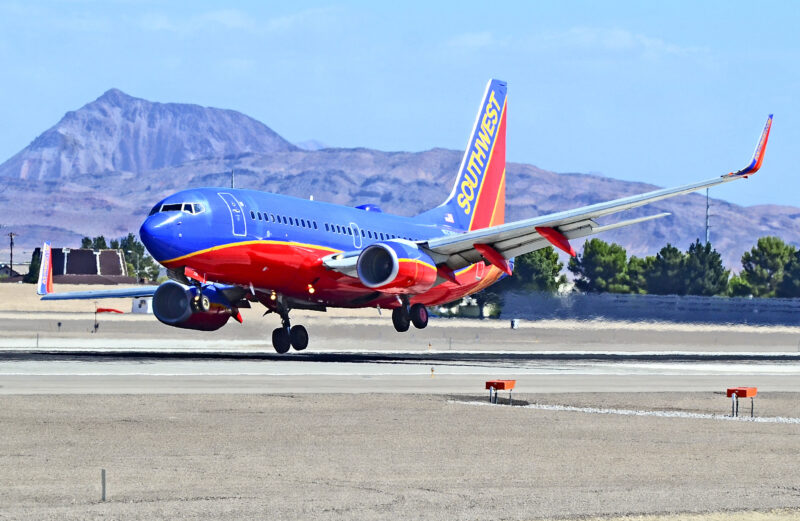
N8662F Southwest Airlines 2015 Boeing 737 8H4 cn 36936 5309 17422978248 Tomas Del Coroa
image via tomas del coro

Southwest Recovery Plans Continue

Southwest’s recovery strategy includes more investment into the Southwest Customer Experience. A new program, ‘flight credits don’t expire,’ has been launched. Customers are looking for more flexibility and the program is expected to increase customer loyalty, according to Southwest Chief Marketing Officer Ryan Green. The program is expected to have a one-time negative financial impact on earnings in Q3.

Southwest has also been expanding routes. In 2021, a major expansion in Hawaii with three new gateways and 15 new routes has proven to be a successful strategy. More route expansions are planned as a way to boost revenue.

At the end of the day, most industry watchers say long-term shareholders shouldn’t panic even though the short-term horizon could get somewhat choppy, depending on macro conditions.

JetBlue and Spirit are Merging in a $3.8 Billion Deal to Create the 5th Largest U.S. Airline

0

If you like flying with the two companies who ranked last in The Wall Street Journal’s annual ranking of U.S. airlines last year, then you’ll be happy to know they are now merging together. JetBlue is buying Spirit in a $3.8 billion deal announced today, just hours after Spirit shareholders voted against merging with Frontier airlines for a billion dollars less.

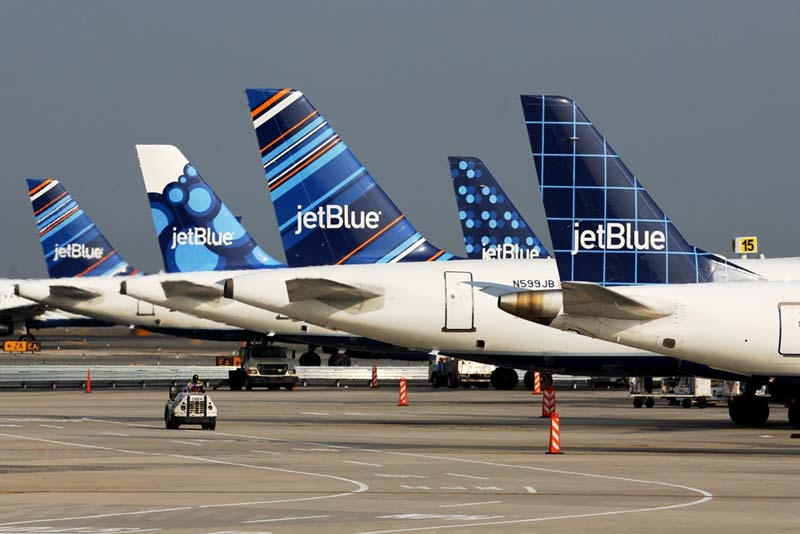
jetblue tailfins blueberries
photo: jetblue

“We are excited to deliver this compelling combination that turbocharges our strategic growth, enabling JetBlue to bring our unique blend of low fares and exceptional service to more customers, on more routes,” said Robin Hayes, JetBlue’s chief executive officer, in a press release. “We look forward to creating a customer-centric, fifth-largest carrier in the United States. Spirit and JetBlue will continue to advance our shared goal of disrupting the industry to bring down fares from the Big Four airlines. This combination is an exciting opportunity to diversify and expand our network, add jobs and new possibilities for Crewmembers, and expand our platform for profitable growth.”

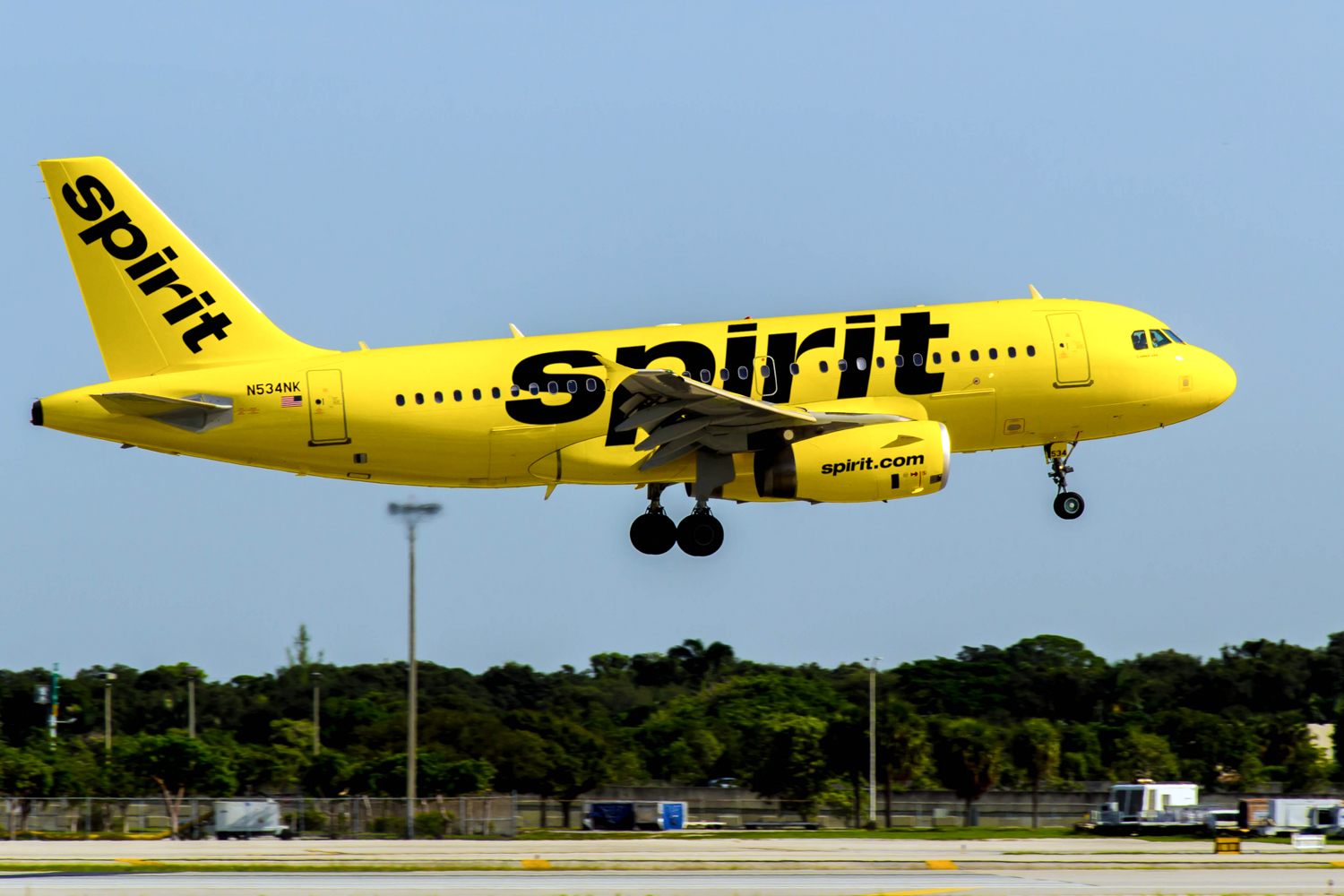
Spirit A319 Exterior 1 NewLivery 2
photo credit: spirit

The merger is still subject to regulatory approval in Washington D.C., but expected to close by early 2024. Both airlines will keep operating independently until the merger is officially closed. Assuming the deal is approved, JetBlue’s fleet will grow to 458 aircraft, flying to more than 125 destinations in 30 countries and giving them a stronger foothold in key markets like Orlando and Fort Lauderdale, where JetBlue will retain a support center.

The Spirit brand would disappear, while the new JetBlue remains headquartered in New York. It would become America’s 5th-largest airline after American, Delta, United and Southwest, who control 80% of the domestic market.

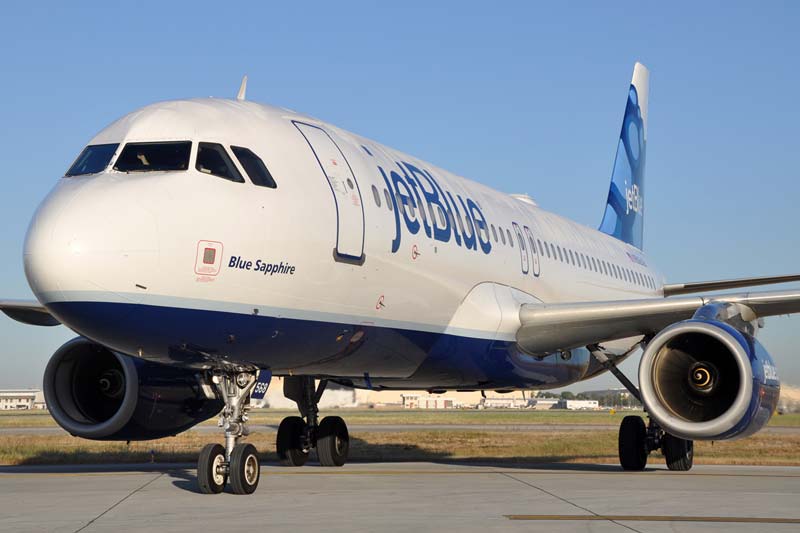
JetBlue blue sapphire
photo: jetblue

“We are thrilled to unite with JetBlue through our improved agreement to create the most compelling national low-fare challenger to the dominant U.S. carriers, and we look forward to working with JetBlue to complete the transaction,” says Spirit’s president and chief executive officer, Ted Christie. “Bringing our two airlines together will be a game changer, and we are confident that JetBlue will deliver opportunities for our Guests and Team Members with JetBlue’s unique blend of low fares and award-winning service.”

NTSB Report: AA Flight 300’s Near Crash at JFK Revealed the Human Side of Fly-by-Wire

0

Learning From a Close Call that Could Have Been Avoided

On April 10, 2019 an American Airlines A321T registered as N114NN was substantially damaged following a wingtip strike during takeoff from New York City’s JFK airport. Though no one was injured, the five year-old aircraft would ultimately be deemed a total loss after the struck wing was found permanently deformed.

https://twitter.com/jtahler/status/1116172461131931648

In the aftermath, the crew – both highly experienced with a combined total of almost 5000 hours in the Airbus A320 series – reported surprise at the sudden left roll during rotation. Initial speculation focused on the Airbus’s fly-by-wire (FBW) flight controls, but the recently released NTSB final report would ultimately reveal a much more simple cause. The event is a model study on human factors.

Fly-by-Wire Primer

In an Airbus A321, the primary flight controls are managed by a series of seven redundant flight control computers, all operating under multiple sets of “laws” depending on the phase of flight. The FBW system takes pilot or autopilot requests – such as moving a side stick aft to climb – and produces appropriate flight control responses to achieve the end result. Though the ailerons and elevators feature no physical connections to their side stick controllers, the rudder pedals are mechanically linked with the rudder itself. While the architecture may be complicated, the end result for pilots is identical to a traditional airplane, with full control authority combined with built in protections.

Crosswind Takeoff That Should Have Been Fairly Routine

During the takeoff roll, a 15 knot crosswind from the right of the aircraft was present. Like any airplane, this would require the flying pilot (the Captain, on this leg) to utilize left rudder to track straight down the runway. Airbus specifically cautions against using any unnecessary aileron into the wind. During the takeoff, the rudder pedal input varied from neutral to about half left input, but as the aircraft reached its 156 knot rotation speed the Captain increased rudder input to its maximum left deflection. As the aircraft rotated the Captain input side stick commands for roll, first right, then left, then right again. The right wing left the ground first, and both pilots applied full right side stick leading to an aural “dual input” alert. The left wingtip struck the ground before the rudder was alternated to the right then released to neutral as the crew stabilized the aircraft and climbed away. They returned to JFK about 30 minutes later, with the First Officer flying the wounded Airbus.

The Power of Certification

Like all Transport Category aircraft, the A321 is certified to be fully controllable with an engine inoperative and the remaining engine at maximum thrust. Doing this requires a powerful rudder, with a large surface area and substantial deflection. Comparatively, the ailerons are small surfaces with relatively little power of their own, assisted by roll control spoilers on top of the wing.

Looking back to Private Pilot aircraft training, we all learned that providing a yaw input with the rudder will cause one wing to ‘lead’ the other, producing a rolling moment alongside the yaw. In the case of the accident Airbus, the large amount of rudder deflection alone may have been managed on the ground, but as the aircraft rotated and lift increased, it allowed the right wing to leave the runway first and ultimately caused the left wingtip to strike the runway surface.

Human Factors Were At Play

As mentioned above, the crew was very well qualified in the Airbus series. However, we are able to see a breakdown in basic airmanship with the over-controlling of the rudder followed by wild side stick inputs including full nose up as well as full roll deflection alternating between left and right.

Finally, during the initial roll to the left both pilots input full right sidestick, leading to the “dual input” aural alert. While it is understandable that the pilots would provide a quick resolution to an unexpected roll, there is no situation that calls for two pilots to be flying at once. The Airbus flight control logic uses a sum of the inputs in a “dual input” situation, so if the First Officer was providing the proper full right aileron and the Captain applied full left, the airplane would sum those as zero deflection, allowing the rudder to continue the yawing and rolling unabated.

It was dark at the time of the accident, so it’s unlikely the First Officer could see the rudder pedals near his feet. However, the Airbus has a takeover button on both side sticks, allowing a pilot to take control at any time. While it’s easy to say with 20/20 hindsight, standard operating procedure in this case would be for the pilot monitoring to state “I have control,” press their takeover button for the side stick, and manually take rudder and thrust control.

The Big Picture: It Took Time to Fully Understand What Happened

In the aftermath of the accident, American Airlines did a data study of 13 months of company A321 takeoffs (totaling 270,000 flights). In these flights, no other departure exhibited the same amount of rudder deflection or duration of deflection during takeoff rotation.

Though the Airbus is deservedly celebrated for its flight control architecture and the protections it’s fly-by-wire system provides, this accident unfortunately came down to a simple bit of aerodynamics, certification standards, and human factors.

In the end, a few seconds of over-controlling on a relatively light wind day ultimately led to the loss of a nearly hundred million dollar airplane. Fortunately, the human cost was zero and the interaction between pilot and aircraft is a situation we can all learn from.

Opinion: Recession Doesn’t Necessarily Spell Doom For Aviation Industry

0

The word ‘recession’ surfaces in conversation and one’s initial thoughts are doom and gloom reside on the horizon.  That depends.  Is the U.S. economy looking at a mild recession or a replay of the Global Recession in 2008 when the world fell apart?

The headwinds and pressures that were prevalent in 2008 are not around en masse as the world saunters into the second half of 2022.  Now, terms, such as, ‘supply chain disruption,’ ‘pandemic,’ ‘new normal,’ and ‘the great resignation’ abound.  As ominous as those words have been over the past two-years the economy is still in a much better position as compared to 2008 – not as many ugly credit derivative swaps lingering now.

What Does All of This Talk of a Recession Mean for Aviation? 

Let’s start with what constitutes a recession.  According to the gold old reliable Oxford Dictionary a recession is two consecutive quarters of a fall in Gross Domestic Product (GDP).  However, the National Bureau of Economic Research states it “involves a significant decline in economic activity that is spread across the economy and last more than a few months.”  Where does the economy stand now?

According to Dr. Bill Conerly, economist and Forbes contributor, Real GDP dropped 1.6% in 1Q 2022 and the Atlanta Fed is calling for a 1.7% decline for 2Q 2022, so that would meet the two-quarter drop definition.  Now…back to the aviation conundrum.  A recession as the economy is moving would not detrimentally shock aviation.      

Why Would Aviation Not Suffer? 

Airbus A 350 XWB F WWYB cockpit view
Airbus A350 cockpit (Photo by Joao Carlos Medau).

After all interest rates continue to rise, thus, it will be more expensive to conduct business, and inflation is as high as it’s been in some decades.  And, in the event you may have been isolating in a cave the past two and half years the airlines still cannot hire enough pilots, which was a pervasive quandary prior to the pandemic.  In fact, previously mentioned quandary has only exacerbated since the late 2000 teens. 

To put the pilot shortage into perspective Auburn University School of Aviation Assistant Professor and Chair, Aviation Management Program stated “about 50% of all Air Transport Pilot (ATP) certificate holders will reach the mandatory retirement age of 65 within 15 years, meaning half of the current pilot workforce will need to be replaced over the next 15 years.

Again, Why Would Aviation Not Suffer During a Recession?

 Read this next statistic, read it again because the numbers are astronomical, and spend a brief moment pondering the implications.  In an interview with The Harvard Gazette on May 11 of this year Jason Furman, Aetna Professor of the Practice of Economic Policy at Harvard Kennedy School said “I’m relatively unworried about a recession over the next year because consumer spending has continued to be very strong, and consumers have about $2.3 trillion of excess saving that they accumulated during the pandemic that could still spend over the next couple of years.” 

Wow.  That is a metric boat ton of money, and metric boat ton is an official measurement, so go look it up.  No, don’t go look it up.  This author made it up, but one gets the point.  Savings are plentiful, the world is opening up, and people are ready to fly the coop…literally.  So, go travel and do not be afraid to ask the Flight Attendant for the full can of Coke on your next flight. 

Could there be an unseen economic shock lurking over the horizon that makes matters worse?  Sure there could.  It will be fun watching how the economy shakes loose in the next 12 to 18 months.      

Disney Plans Around the World Luxury Jet Adventure

0

Disney is synonymous with magical experiences and unforgettable adventures. True to form, the company is offering what is perhaps its most over-the-top and unique adventure yet.

Next summer, the mouse-centric entertainment company will offer a once-in-a-lifetime opportunity for 75 people to fly around the world on a quest to visit all 12 of its theme parks. The Disney Parks Around the World – A Private Jet Adventure promises to wow its guests and provide them with a luxury experience that only Disney can dream up.

A VIP-configured Boeing 757-200, operated by Icelandair, will transport guests from continent to continent in style. The trip will include stops in six countries, all 12 Disney theme parks, and special excursions to three of the world’s most iconic landmarks: the Taj Mahal, the Pyramids of Giza, and the Eiffel Tower. 

Where You’ll Fly If You Pony Up Over $100k

The adventure begins in Southern California, where guests will spend three days enjoying VIP tours of Walt Disney Studios, Disneyland, and Disney California Adventure Park. Next, guests will fly to the Bay Area, where they will visit the Walt Disney Family Museum, take a VIP tour of the Lucasfilm campus, and stay overnight at the Summit Skywalker Ranch. Additional stops on the adventure include Tokyo, Shanghai, Agra (India), Cairo, Paris, and Orlando. 

The onboard experience promises to be every bit as spectacular as the sights and attractions along the journey. 

A Disney Luxury Jet 757 Awaits You

The specially-configured Boeing 757-200’s extended-range capabilities will allow direct flights between stops. According to Disney, this feature will enable guests to maximize their time at each destination. 

On board, guests will enjoy a customized interior with 75 spacious leather seats in a 2 x 2 configuration. Each seat will have a footrest, a USB port, and a standard U.S. power outlet.

The flight crew will include a lead captain, a second captain, a first officer, eight flight attendants, a chef, an assistant chef, and a flight engineer. Guests will also have access to a physician. Additionally, Disney will have several experts on board to provide information before each stop. An audiovisual system will be available on board the aircraft for presentations. The Disney crew will include three adventure guides, Disney VIPs, Imagineers, and cultural experts. 

Here’s The Proposed Itinerary

Mickey
Image: Wally Gobetz (CC 2.0 from Flickr)

Guests will arrive in Los Angeles for their globetrotting adventure on July 9, 2023. The flight itinerary includes the following segments: 

  • Orange County (SNA) – Oakland (OAK) 
  • OAK – Tokyo Narita (NRT) via Anchorage (ANC) 
  • NRT – Shanghai (PVG)
  • PVG – Shenzhen, China (SZX) 
  • SZX – Agra, India (AGR) 
  • AGR – Giza, Egypt (SPX) 
  • SPX – Paris (CDG) 
  • CDG – Orlando (MCO) via Halifax, Canada (YHZ) 

If you’re wondering what something like this may cost, it will undoubtedly come as no surprise that this luxury experience carries a luxury price tag. Fares start at $109,995 (USD) and include: 

  • Airport transfers at arrival and departure 
  • Flights
  • VIP accommodations 
  • All 68 meals 
  • Daily activities, excursions, options, and special events
  • Admission to all 12 Disney parks
  • All beverages, including alcohol
  • $50,000 (USD) medical evacuation insurance and services of the onboard physician 
  • Gratuities 
  • Laundry service

If you’re contemplating dropping nearly $110K on this adventure of a lifetime, you can hold on to your money – for now. According to the Adventures by Disney website, the flight is completely sold out. 

Perhaps those Magic Kingdom ticket prices don’t look so bad, after all. 

Lawmakers Propose Raising Airline Pilot Retirement Age to 67

0

The Proposal is Meant to Increase Pilot Availability During the Current Shortage

In an effort to help ease the airline pilot shortage and keep healthy experienced pilots in the cockpit, U.S. Senator Lindsey Graham (R-South Carolina) and Representative Chip Roy (R-Texas) introduced legislation yesterday (July 25) to raise the mandatory commercial pilot retirement age from 65 to 67 years old.

“In the next two years, 5,000 pilots will be aged out, and over the next five years 14,000 pilots are going to be taken out of the cockpit because they turn 65. Not because they’re unsafe, but just simply because they reached 65,” said Graham in a press conference about his proposal.

watch the full press conference

The last time we adjusted the age was in 2007. The sky did not fall while adjusting the age from 60 to 65, and it won’t fall by going to 67,” said Graham. “What will happen is we’ll give an opportunity to thousands of pilots if they choose to stay in the cockpit which makes it better for all of us depending on air travel.”

Other Senators backing the proposal include John Thune (R-South Dakota), Deb Fischer (R-Nebraska), Chuck Grassley (R-Iowa), Cynthia Lummis (R-Wyoming), and Marsha Blackburn (R-Tennessee). House cosponsors include Reps Clay Higgins (LA), Dusty Johnson (SD), Mary Miller (IL), Adrian Smith (NE), and Lauren Boebert (CO).

Alaska Airlines Star Wars
Photo: Alaska Airlines

Transportation Secretary Pete Buttigieg, however, is opposed to the new idea due to safety concerns, along with pilot unions. Organizations such as the National Air Carrier Association, the Regional Airline Association, and the San Antonio International Airport however support new legislation.

Americans are now experiencing flight delays and cancellations on an unacceptable scale due to a worsening pilot shortage,” says Rep. Roy. “A key factor is a government-mandated retirement age that forces out thousands of our most qualified pilots every year.”

Rep. Roy is expected to introduce the House bill in Congress today, which you can see HERE.

777 300ER 2
777-300ER (credit: United Airlines)

Some key points in the legislation:

  • Requires that pilots over the age of 65 maintain a first-class medical certification, which must be renewed every six months.
  • Requires air carriers to continue using pilot training and qualification programs approved by the Federal Aviation Administration (FAA).
  • Does not change or alter any other qualification – beyond age – to become a commercial airline pilot.

The airlines themselves have been taking their own avenues to address the growing pilot shortage, such as offering more pay and bonuses and eliminating mandatory requirements for 4-year degrees. Others are offering scholarships for flight training, or even teaching student pilots themselves and helping financially as they progress (costs are the most prohibitive reason why people don’t train to be career pilots).

Others, like Republic Airways, have even petitioned the federal government to let them hire pilots with only 750 flight hours, half what is required now, if those pilots go through the company’s own training program.

“The traveling public deserves better than what they are currently getting,” says Sen. Graham. “Our bill moves the needle in the right direction. Without this change, it (the pilot shortage and cancellations because of it) is only going to get worse.”

NASA Sets August 29 for the First Launch Back to the Moon with Artemis-I Mission

Artemis-I Will Test the Spaceflight System Designed to Carry Astronauts to the Moon and Back

America is going back to the moon, and this week NASA confirmed they are targeting August 29, 2022 to launch the first mission. The announcement came on the 53rd anniversary of the first moon landing with Apollo 11, and will kick off a new era of human space exploration to establish a permanent lunar presence.

NASA has named the new program Artemis, after Apollo’s twin sister and Goddess of the Moon in Greek mythology. This first mission is called Artemis-1, and will mark the first launch of the most powerful rocket in the world, the Space Launch System (SLS), to send a new spacecraft developed by Lockheed called the Orion crew capsule farther than any spacecraft built for humans has ever gone before.

meet nasa’s artemis program and the sls moon rocket and orion spacecraft, with overview of the first upcoming mission. credit: nasa

Artemis-I will be an un-crewed flight test of the entire integrated system, from the ground support, to launch of the SLS, to checkouts of the spacecraft, flight to lunar orbit, and return to Earth. NASA wants to validate that everything works as designed, before launching the first astronauts on Artemis-II.

C141B894 FEB6 4B83 8428 692779D2D32D
Nasa’s first moon rocket of The artemis program, called The space launch system (sls), rolling out from the iconic vehicle assembly building at kennedy space center to launch pad 39B with the orion sPacecraft for a launch wet Dress reheArsal earlier this year. photo: mike killian / americaspace.com

The SLS and Orion may look like its Apollo predecessors, but the similarities end there. The 322-ft tall stack is taller than the Statue of Liberty, and more powerful than Apollo’s Saturn V moon rockets. NASA went with a similar design for Artemis because putting a crew on top of a rocket is the safest way to launch them.

IMG 1296
nasa’s sls rocket and orion crew capsule (photo: Mike killian / americaspace.com)

Both space shuttles Challenger and Columbia were lost due to damage on launch, killing 14 astronauts (the damage to Columbia occurred on launch, but did not kill the crew until their re-entry). A capsule allows for an abort shot away from a failing rocket, and a capsule is also the safest way to bring them home. You can read about Orion’s Abort System HERE, and watch an actual Orion abort test HERE.

Even Elon and SpaceX know that, which is why they also fly astronauts on capsules (their existence is only thanks to NASA contracts by the way, which seeded their entire development).

apollo 17 artemis
On the left is the Apollo 17 rocket and spacecraft on launch pad 39A at kennedy space center, the last mission to send people to the moon on Dec. 7, 1972. on the right is the artemis-1 stack with the sls rocket and its orion spacecraft atop launch pad 39b for a wet dress rehearsal earlier this year. photos credit: nasa

Artemis not only builds on Apollo, but also incorporates heritage space shuttle hardware, namely four former space shuttle main engines (RS-25s) and twin solid rocket boosters (SRBs), to launch the mammoth booster with enough force to send a crew to the moon. Combined, the engines and SRBs will produce nearly 9 million lbs of thrust, 15% more than the Saturn V and more than 31 times the thrust of a 747 jumbo jet.

The RS-25s are all veterans of numerous space shuttle missions, but have been modified and upgraded to produce more power, adapted to the new SLS performance requirements and hotter, more violent operating environments. They all have new controllers too (brains), and additional insulation to protect them.

rs 25 engine test 2 1
Four RS-25 engines, like the one pictured here undergoing a hot-fire test, will power the core stage of NASA’s Space Launch System (SLS). photo credit: Aerojet Rocketdyne

NASA has conducted many tests on the engine mods for several years at Stennis Space Center near New Orleans, to validate the upgrades and certify the engines for their new mission.

A full Green Run test campaign was done last year too, where engineers evaluated the integrated functionality and performance of the rocket’s core stage’s avionics, propulsion and hydraulic systems, culminating in a full-duration test fire of all four RS-25 engines. The vehicle believed it was launching, with everything doing exactly what it will on launch day, while in reality the core was strapped down to an enormous test stand.

watch nasa test fire the sls core stage with all 4 main engines for a full-duration launch (nasa footage uploaded courtesy of americaspace.com)

Those engines, developed by Aerojet Rocketdyne, were arguably the best ever made – reusable, reliable and powerful. But their final flights will be on SLS, as they will go to the bottom of the Atlantic with the rocket’s core stage once its fuel is spent. NASA has enough engines for the first 4 missions, with non-reusable RS-25 versions being manufactured for missions beyond that.

The SRBs too have been modified and lengthened over their prior space shuttle design. Northrop Grumman, who manufactures them, also added new avionics, propellant grain design, case insulation, eliminated the recovery parachutes, and have tested the new SRBs several times at their facility in Promontory, Utah (just this week they did another test). The SRBs are even painted with a throwback NASA worm logo for Artemis-I, paying tribute those who came before, on which the new Artemis era is built on.

IMG 1428
a view of the artemis-1 stack with one of its twin solid rocket boosters. photo credit: mike killian / americaspace.com
watch the most recent test fire of an artemis srb (credit: NASA)

Each SRB is 17 stories tall, and combined, they will provide more than 75% of the SLS rocket’s thrust during the first two minutes of flight.

The Orion spacecraft itself is far more advanced then the Apollo’s command module, and builds on all of NASA’s cumulative knowledge gained from human spaceflight ever since. It is 30% larger, will utilize solar panels for power, and comes with massive advances in computing power and electronics over technology dating from half-a-century ago.

tour onboard the orion trainer at johnson space center with astronaut karen nyberg. credit nasa (uploaded by space.com)
Photo Mar 14 10 44 12 AM
The Artemis I Orion spacecraft iafter comlpeting environmental tests at NASA’s Plum Brook Station in Sandusky, Ohio (photo: Mike killian / americaspace.com)

Glass cockpit displays with flatscreens and computers have replaced hundreds of switches, gauges and dials, and it can carry more crew on longer missions – up to 4 astronauts for up to 3 weeks (you can read more in-depth about the new spacecraft HERE from NASA).

A new AI and videoconferencing technology will be tested on the mission as well, called Callisto, which will feature Amazon’s Alexa and screens that display Webex by Cisco.

You can read all about it HERE, but basically the idea is much like Captain Kirk talking to his ship’s computer in Star Trek. Future crews may be able to ask Alexa about their spacecraft, mission, subsystems, telemetry and more, while also being able to share information over a screen with other crews and people on Earth, much like a Zoom call now. Current users of Alexa-enabled devices at home will even be able to command “Alexa, take me to the Moon,” to get live updates throughout the Artemis-I mission.

Orion, however, is only the ride to and from the moon. NASA and industry partners are working on putting a lunar gateway into orbit, where Orion will dock and astronauts can stage their surface missions from. Click HERE to read more from NASA about the gateway.

original.jpg
spacex starship prototype testing in texas. photo credit: spacex

NASA has awarded SpaceX a contract to use their Starships for Artemis landing missions, which is currently under development in Texas (click HERE for more info). The first landing is, for now, planned on the Artemis III mission in the later half of the 2020s, which will see the first woman and person of color, as well as probably the first non-American, to walk on the moon.

For now though, let’s get back to Artemis-I, where it will all soon begin. The rocket and spacecraft are currently undergoing final flight preparations in NASA’s iconic Vehicle Assembly Building at Kennedy Space Center in FL, and will roll out to the launch pad some time in mid-August, carried atop a behemoth Crawler Transporter that is itself larger than a Major League Baseball infield.

The whole four-mile journey will move at just 0.8 mph, and take about 11 hours to move. In total, the gigantic crawler will be moving 21 million pounds of hardware to launch pad 39B (including its own weight of 6.6 million pounds).

A mannequin has been installed in Orion’s Commander seat, wearing a full first-generation Orion Crew Survival System spacesuit, outfitted with various sensors to provide data on what crews will physically experience. His seat is also instrumented, to record acceleration and vibration data. Engineers will compare the flight data with ground-based vibration tests done with the same manikin, and humans, to correlate performance prior to the first crewed flight on Artemis II.

manikin image
nasa manikin flyng on artemis-1. photo credit: nasa

Two other mannequin torsos will be onboard too, measuring radiation exposure and testing out new radiation-shielding vests, which you can read more about HERE.

The first opportunity for NASA to launch Artemis-I is August 29, 2022 at 8:33 a.m. EDT, with a 2-hour launch window available. But they have two other opportunities currently available as well, which are September 2, 2022 at 12:48 p.m. EDT and September 5, 2022 at 5:12 p.m. EDT.

IMG 1326
artemis-1 rolling out for a launch wet dress rehearsal as the moon rises. photo credit: Mike killian / americaspace.com

Once launched, Orion will fly some 280,000 miles from Earth and thousands of miles beyond the Moon on a mission lasting 4-6 weeks. Upon arriving at the moon, it will fly 62 miles above the surface, and then use the Moon’s gravity to propel it into a deep retrograde orbit 40,000 miles above the surface, where it will fly and test for 6 days. Orion will then descend back into a low orbit and brush past the surface again at 60 miles to perform its engine firing to break away from the moon’s gravity, and then head back to Earth. 

Orion will stay in space longer than any ship for astronauts has ever done without docking to a space station, and will return home faster and hotter than any before it.

artemis i 3 28 22 1
artemis-1 mission (credit: NASA)

On re-entry, the spacecraft will slam into the atmosphere at 25,000 mph, before parachuting gently into the Pacific Ocean 60 miles off the coast of Southern California, where a U.S. Navy San Antonio-class LPD amphibious transport dock ship (LPD) from San Diego will be waiting.

Such ships, like the USS Anchorage (LPD-23), have a well deck at the waterline to allow other boats to dock. Or in this case, a spacecraft. Helicopter crews will monitor Orion as it descends and slowly splashes down, while Navy divers and NASA personnel in inflatable boats maneuver alongside it to attach a winch line and other lines, then pull it into a specially designed cradle inside the ship’s well deck.

Such capability means future crews can be recovered directly from Orion in open-water, or remain onboard in rougher seas as the capsule is pulled straight into the ship.

The ships also provide immediate medical care if needed, and helicopters can fly crew to shore. Recovery teams have conducted many tests over the last several years, both in NASA’s giant pool at Johnson Space Center learning to secure Orion and crews, and in the open ocean recovering flown test articles and mock capsules, day or night.

image asset
NASA astronauts practice Orion exit procedures in the Gulf of Mexico. Photo: NASA/Josh Valcarcel

Click HERE to read more in-depth about the recovery operations.

Data from Artemis-I will allow NASA to fine-tune operations for the first crewed mission on Artemis-II, currently slated to launch in 2025.

AvGeekery will share the launch LIVE on launch day, stay tuned for updates as NASA prepares over the coming weeks.

EAA AirVenture 2022 to Feature Everything an AvGeek Could Want

0

Here’s Your Oshkosh Playbook and Lineup Card for 2022

The 69th edition of the Experimental Aircraft Association (EAA) AirVenture will be held July 25-31, 2022 at Wittman Regional Airport (KOSH) in Oshkosh, Wisconsin.

200814 F PV484 9332a
200814-F-PV484-1332 image via us air force

US Air Force 75th Anniversary

This year’s special focus will be the 75th anniversary of the United States Air Force. Rick Larsen, EAA Vice President of Communities and Member Programming, previewed AirVenture 2022, “At Oshkosh in 2022, we aim to showcase the memorable history of the Air Force, from its initial post-World War II era to the impressive personal, aircraft, and technology of today.“  Larsen added that the Air Force’s history will be celebrated with fly-bys, static displays, and presentations.

145481555 10159609072893623 1745504477109068628 o EAA
image via EAA

Other Anniversaries and Showcases

In addition to the Air Force anniversary and the usual celebration of homebuilt (experimental) aircraft and their builders, AirVenture will also be celebrating several aircraft anniversaries, such as the 75th of the Beechcraft Bonanza.

The EAA will also showcase its recently constructed Aviation Center, which includes its new Pilot Proficiency Center. It’s located next to the EAA Aviation Museum.

Daily Schedule

There will be many activities, fly-bys, forums and presentations at AirVenture this year—far too many to list here. Daily schedules can be accessed in the AirVenture Mobile App in both Google Play and the Apple App Store.  Activities can also be reviewed at the EAA AirVenture Oshkosh 2022 web portal.

Mass Arrival Flickr Beige Alert
image via eaa

Air Shows

The highlight of each day is the spectacular airshow that takes place Monday through Saturday, starting at 2:30pm. The evening show begins at 8:00pm on Wednesday and Saturday evenings. The final show of the week happens on Sunday at 1:00pm.

Here is just a partial list of this year’s AirVenture airshow performers, along with the aircraft they will be flying—

  •                 Aero Shell Aerobatic Team (T-6 Texan trainers)
  •                 David Martin (Beechcraft Baron)
  •                 Flight of the Cats (Various Grumman Cats)
  •                 Greg Koontz (Decathlon)
  •                 Mike Goulian (Extra 330-C)
  •                 USAF C-17 Demo Team
  •                 USMC MV-22 Demo Team
  •                 Vicky Benzing (Stearman)
  •                 Patty Wagstaff (Extra 300s)
  •                 Red Bull Air Force (multiple aircraft)
  •                 Delta A330-900 airliner
  •                 Philipp Steinbach (Gamebird)
67190304 1360241930794653 3780639168393117696 o
image via eaa

Flying into KOSH for AirVenture 2022

The EAA AirVenture 2022 Notice (formerly known as a NOTAM—Notice to Air Missions) has some important updates compared to previous years, particularly—

  • Two VORs have been decommissioned (RFD and MBL)
  • Several IFR routings have been changed
  • Aircraft camping is no longer allowed at Appleton International Airport (KATW)

Sean Elliot, EAA Vice President of Advocacy and Safety, offered important reminders—                              

“The most essential information for any pilot flying to Oshkosh involves reading and thoroughly understanding the 2022 AirVenture Notice to ensure safe operations on arrival and departure. We also urge all pilots to log appropriate cross-country time prior to trip to Oshkosh so they have the proficiency and confidence to fly safely.”               

117687835 10159113653448623 7264415237335298615 o EAA
image via eaa

EAA Divisions

The EAA has 3 divisions—

The Warbirds of America area has always been wildly popular with Word War II airplane aficionados. The Warbirds slogan is “Keep ‘em Flying!’

Everyone likes to visit the Red Barn of the Vintage Aircraft Association. Aircraft in the Vintage area must have been constructed prior to December 31, 1970.

The International Aerobatic Club has 2 European aerobatic aircraft manufacturers as sponsors 4open to the public on aerobatic flying as well as a meet n’ greet with Mike Goulian and Kirby Chambliss.

Aircraft Rides

For those who would like to experience living history, aircraft rides are available at AirVenture on these aircraft and more:

  •                 B-25 Berlin Express
  •                 B-17 Yankee Lady (out of Appleton International Airport [formerly Outagamie County Regional] (KATW)
  •                 Bell 47 Helicopter (made famous by the TV show M*A*S*H)
OSH overhead
image via eaa

Other Exciting Activities

  • A One Week Wonder aircraft will be constructed during AirVenture this year. It’s a Sonex Waiex with a Rotax engine.
  • American Airlines will sponsor an Honor Flight to Washington, DC
  • Camping is available at the EAA’s Camp Scholler. Many EAA enthusiasts also camp by their airplanes that they flew in for the festivities.

All in all, EAA’s AirVenture is a dream come true for aviation enthusiasts. In addition to all the activities, dozens of vendors will be available to share the newest aviation technology. The memories of attending AirVenture last a lifetime!

Blue Angels Select First Woman to Fly Team’s Jet Demo Starting Next Year

For the First Time in Over 7 Decades, the U.S. Navy’s Blue Angels Have Selected a Woman to Fly One of the Six Jets in the Team’s World-Famous Aerial Demonstrations.

LT Amanda Lee, call sign STALIN, is no stranger to the air show industry either. She is currently assigned to the “Gladiators” of Strike Fighter Squadron VFA-106, training fleet replacement aviators and flying the F/A-18 Super Hornet at air shows with the Navy’s Rhino Demo Team, promoting naval aviation and engaging the public at venues where the Blue Angels are not scheduled to appear.

5BF4C7E6 CD1A 426E 9877 6E9C32B79F2F
Usn LT Amanda Lee, call sign ‘STALIN’, has BeCome the first wOman ever selected by the Blue Angels to fly one of team’s six jets in tHeir aerial demos starting in 2023. photo credit: usn

Lee is one of six new officers selected to join the 2023 Blues. Joining her is another Super Hornet pilot, LCDR Thomas Zimmerman, and new “Fat Albert” pilot, Marine Corps CAPT Samuel Petko flying the team’s C-130J Super Hercules. Others include LCDR Brian Vaught as the team’s Events Coordinator, LCDR Greg Jones as Maintenance Officer, and LT Philippe Warren as the new Flight Surgeon. 

“We had an overwhelming number of applicants from all over the globe this year,” said CAPT Brian Kesselring, commanding officer and flight leader of the Blue Angels. “We look forward to training our fantastic new team members, passing on the torch, and watching the incredible things this team will accomplish in 2023.”  

311FE69D 0DB3 4AA4 ABEC ED675B936C9E
The blue angeLs Flying the team’s F/A-18 Super Hornets in Their signature 6-ship delta formation. photo credit: mike killian

Hundreds of women have served with the Blue Angels over the years in other roles, responsible for everything from critical aircraft maintenance, to Public Affairs, Flight Surgeon, and even flying Fat Albert. But Lee is the first ever to be selected for the jet demonstration.

And while many women fly in the Navy as it is, and have now for many years, in the bigger picture, only a small percentage of military pilots are women. Less than 10% actually, and half that for women fighter pilots. Those numbers, however, are growing. Over 15% of the students training as naval aviators this year are women, and Lee will no doubt inspire a new generation of women aviators when she starts flying with the Blue Angels next year. 

7E4DF405 1595 47C7 BA0A 5434118956C0
Credit: usn blue angels

The team selects new officers and pilots based on their qualifications, experience, and how well their personalities mix with the rest of the team. It’s all volunteer, there is no extra pay to be a Blue, and selections must be unanimous from the team members making the selections. 

The Blue Angels are by far the biggest recruiting tool the Navy has, and the face of Naval and Marine Corps aviation to the general public. They have performed in front of over a half billion spectators since the team was formed back in 1946.

C70A9446 74BB 4424 89C1 D3BB5967C0FC
Photo cRedit: mike killian

Lee and the other new officers will report to the team this fall for a two-month turnover period as the Blues wrap up their 2022 season. They’ll conduct a five month training program at the team’s home base at NAS Pensacola, before heading to California for winter training at NAF El Centro, where Lee and Zimmerman will learn to fly the demanding demo maneuvers and close formations that have made the Blue Angels the most famous aviation demonstration team in history. 

Their first public air show will take place at NAF El Centro, Calif. on March 11, 2023, followed by NAS Point Mugu, Calif. March 18-19. 

A Dream on a Cocktail Napkin: The Birth of Southwest Airlines

It has become a legendary tale that Rollin King and Herb Kelleher, fueled by several alcoholic beverages, mapped out their plans for a new intrastate airline to connect the three largest cities in Texas – Houston, Dallas, and San Antonio – on a cocktail napkin at San Antonio’s St. Anthony Club, located in the St. Anthony Hotel, in late 1966.

The new carrier was to be called Air Southwest, and it was not the first airline venture in the Lone Star State for Mr. King.

2 Cocktail Napkin WN PHOTO
A REPRODUCTION OF THE NAPKIN USED BY ROLLIN KING AND HERB KELLEHER TO SKETCH OUT AIR SOUTHWEST’S PLANNED ROUTES. (IMAGE: SOUTHWEST AIRLINES)

Interstate VS Intrastate

During the regulated era of commercial aviation in the United States (1938 – 1978), a company that wished to operate scheduled service across state lines – an interstate operation – needed a Certificate of Public Convenience and Necessity from the Civil Aeronautics Board (CAB) to do so. The CAB’s requirements were stringent but, if a certificate was acquired, it granted the authority to transport passengers, freight, and mail, and it guaranteed protection from excess competition while enabling the ability to interline traffic with other certificated carriers.

The Civil Aeronautics Board also regulated fare structures. All CAB-certificated airlines had to charge the same rate for the same class of service and any special or promotional fares had to be approved by the Board.

But the CAB had not issued a Certificate of Public Convenience and Necessity to a brand-new airline – one that had not already been operating in some other capacity – since 1950.

1 1971 June 737 200 K20115 N20SW from Boeing WN PHOTO 1
BOEING 737-200 N20SW IN SOUTHWEST’S ORIGINAL LIVERY (PHOTO: SOUTHWEST AIRLINES)

The rules were different for an outfit that wanted to limit itself to airports totally within the borders of a single state – an intrastate operation. In that situation, regulatory oversight was conducted by the state’s licensing authority and not by the CAB. Alaska and Hawaii were exceptions; the CAB kept watch over airlines operating totally within those two states.

Individual states were much more lenient in granting permission to airline managers who wanted to operate totally within their jurisdiction. The economic benefit of having a company that moved passengers quickly among the cities in your state was obvious. And intrastate airlines were still subject to the safety oversight of the Federal Aviation Administration (FAA). Thus, it was a win-win: the airline entrepreneur was able to get his airline off the ground with less red tape than he would encounter dealing with the federal agency (the CAB), and the state benefited from having an airline connecting the cities within its borders.

The most successful of the intrastate airlines at the time was PSA (Pacific Southwest Airlines), which operated totally within the State of California. Regulated by the California Public Utilities Commission, PSA connected three airports in the metro Los Angeles area with three airports in the San Francisco Bay area, plus it served San Diego and Sacramento. The airline was very popular and enjoyed a loyal clientele.

If you wanted to operate a successful intrastate airline, PSA was the model you studied.

4 Rollin King SWA photo
ROLLIN KING (PHOTO: SOUTHWEST AIRLINES)

A Man From Ohio Who Buys a Wild Goose

West Texas, particularly the area between San Antonio and the Mexican border, was probably not the best place for an intrastate airline to make a go of it. Trans-Texas Airways (TTA), the CAB-certificated local service carrier most closely associated with air travel in the state, had served Uvalde, Eagle Pass, and Del Rio from San Antonio for several years in the late 1940s and early ‘50s, before the CAB allowed it to drop the route due to a lack of traffic.

Stagecoach Airlines, an intrastate carrier, attempted to serve the same cities in 1961 and 1962, but sustained losses that forced the little company out of business.

Undaunted by those failures, Wild Goose Airlines, an intrastate carrier operating as a division of Wild Goose Flying Service, owned by the H.H. Phillips Corporation, began serving the same West Texas stations—Uvalde, Del Rio, and Eagle Pass—from San Antonio in December 1963.

On July 20, 1964, Wild Goose Airlines officially changed its name to Southwest Airlines, and the company soon had a new owner: Rollin W. King.

King, a native of Cleveland, Ohio, an alumnus of both Case Western Reserve and Harvard universities, and a licensed pilot, had relocated to Texas in his capacity as an investment counselor. But, like so many others, he dreamed of entering the airline business. He purchased Wild Goose Flying Service and its associated Southwest Airlines.

 It wasn’t long before he was consulting his attorney about liquidating the struggling company.       

Rollin King was dissolving his little Wild Goose/Southwest operation, which had experimented with intrastate service by operating eight-passenger Beech D-18s between San Antonio and those small cities in West Texas. The amount of traffic among those places was not enough to sustain a commercial air transportation company. But he still wanted to be in the airline business, only in a bigger way.

3 airsouthwest electra WN PHOTO
AIR SOUTHWEST’S PROPOSED LIVERY DISPLAYED ON A LOCKHEED L-188 ELECTRA AIRCRAFT MODEL. (PHOTO: SOUTHWEST AIRLINES)

Rollin and Herb: Co-Founders

Rollin King’s lawyer was a gentleman named Herb D. Kelleher. Their collaboration that evening in San Antonio’s St. Anthony Club produced an idea that became a reality. Today, the result of that idea is one of the largest airlines in North America.
Air Southwest was incorporated on March 15, 1967, and filed its application to operate an intrastate airline between Houston, Dallas, and San Antonio with the Texas Aeronautics Commission (TAC) on November 27. Instead of reusing the Southwest Airlines name from the business that had just been dissolved, King and Kelleher called their new company Air Southwest.  Their choice of aircraft type was Lockheed L-188 Electras, which could be purchased second-hand from American Airlines.

On February 20, 1968, the TAC voted unanimously to grant the new company a certificate to serve the three Texas cities. It seemed that Air Southwest was well on its way to becoming an operating airline.

6 Herb Kelleher SWA photo
HERB KELLEHER (PHOTO: SOUTHWEST AIRLINES)

For the more of the story bang NEXT PAGE below

Red 6: The Future of Combat Pilot Training in Augmented Reality

Making Simulation More Immersive and Training More Valuable

For decades now, training combat pilots to fly, fight and win has been done in ground simulators and in the air actually flying (think of the movie Top Gun). But such flying is very expensive. The truth is, training against 20+ year old jets just doesn’t replicate modern day threats like China’s J-20 or Russia’s Su-57, and USAF leadership knows it – despite the expertise and modernized avionics that private Red Air contractors and pilots fly with.

Cutting Edge Technology

That’s why both the DOD and Lockheed’s Skunk Works are backing a company developing a new technology to better train combat pilots, taking the simulation into the sky on real missions. Until recently, such tech was not possible, but that has now changed.

BD842E4D F1EE 4B14 92C7 0397F9285C72
Red 6 ceo dan robinson flying in one of the company’s berkuts, their platform of choice to develop augmented reality flight training for the usaf. photo courtesy red 6

“For us to train against those threats, we need to be able to simulate them, and we just can’t do it. If we’re not scared of that, we should be,” says RED 6 CEO Daniel Robinson, who co-founded the Florida-based defense tech company in 2018. He knows a thing or three about the subject, being a former RAF Tornado pilot and the first foreign national ever to fly the F-22. He’s also a graduate from both the UK and USAF Fighter Weapons Schools. 

“Everyone realizes the limitations to providing Red Air, there’s a chronic under-supply, and even with all the private contractors and the billions of dollars allocated to it, there’s still about a 75% demand gap,” says Robinson. “The USAF alone is 2,000 pilots short, and spending over $1 billion per year for adversary air that can’t simulate modern near peer adversaries.”

Overview of red 6 and flying with the tech (credit mike killian)

Synthetic Peers and Adversaries in AR

RED 6 believes the answer is with Augmented Reality (AR), which is different than VR (Virtual Reality) in that VR is a completely made up environment; you can’t see the real world. But in AR you can see everything in the real world, and can add synthetic objects (such as aircraft) into it.

Previously, the biggest problem with AR was that it didn’t work outdoors. It wasn’t bright enough, and couldn’t track properly. If you added a synthetic object and it’s floating in mid-air, and you move, the object would stay there. In order for a computer to pretend the object is real, it needs to know exactly where your head is and which way it’s turned and which way your eyes are pointing, because as your head and eyes move around it needs to constantly re-draw the object. That’s the key issue RED 6 has solved, developing what they call the Airborne Tactical Augmented Reality System, or ATARS.

4D0D3952 39BC 445F AA97 B83BA2DE6629
Lift Aviation’s Next Gen Helmet with Red 6’s AR Technology System Integrated into the Visor. Photo courtesy, red 6
https://www.instagram.com/tv/CbCN7yulnG8/?igshid=YmMyMTA2M2Y=
Watch The video above for a more recent experience of atars in action (courtesy red 6)

It Feels Like The Real Thing

With ATARS a pilot can takeoff, look out the canopy and see other aircraft in wide-field of view, in full color and high resolution, which can maneuver against them and them against it. It’s a highly accurate, high-fidelity simulation to enhance training capabilities and allow pilots and ground operators to see synthetic threats in real-time, outdoors, and critically, in high-speed environments, blending AR and artificial intelligence.

For the first time ever, the USAF is currently operating under capacity and is under-prepared for a potential conflict with Russia or China. America cannot assume winning a conflict in the same way it has for decades. The USAF cannot retain their pilots, nor do they have sufficient aircraft, and most importantly, they’re not able to train against what they would actually see in a modern conflict with Russia or China.

7ABE40F8 F9F8 4349 9058 D59A24FA6BBB
An f-22 raptor deploying flares as a counter-measure against Enemy Missiles (photo credit mike killian)

“If we do not innovate, we are going to lose, period,” said Col Randel “Laz” Gordon, Vice Commander of the 412th Test Wing at Edwards AFB in southern CA. “We were familiar with the dream and the concept (AR in-flight training), but we were always told that was years away. And then we walk in and actually realize, no, it’s today.”

“The beauty of AR is, if we have the intel on the platforms, which we do, then it’s just a simple matter of code, and we can code anything, so you can go up and train against anything,” says Robinson. Any computer-generated images can be flown by either AI or a real pilot on the ground.

BA3C7533 5BAF 4249 945C 29F8F246BBE3
Robinson flying one of the company’s berkut 540s to develop atars for use In combat pilot training for the usaf (photo credit mike killian)

RED 6 is developing ATARS with two experimental piston-powered Berkuts. Four different modules are integrated into the planes; one to track the aircraft, one to track the head, one to create the wide-view AR which draws the image for the pilot of whatever scenario is being flown, and one which is the main brain of everything.

The cockpit is extremely modern; there’s not a traditional dial or “steam-powered” flight instrument in it. A simulated tactical display similar to an F-22 or F-35 is mounted below the main instrument panel, providing info on position relative to the bulls-eye, and Robinson can cycle from looking at things in front of him to things around him. When a target appears, he can move a cursor over the target and click on it to see it’s information such as speed, altitude, distance and bearing. Once the target is selected it appears in the visor as a green circle target designation (watch the above videos to see).

55DBFCF4 2F51 4DEB 85BD A292FE905212
Photo credit mike killian

For the rest of the story band NEXT PAGE below

My Fighter Career: I’m Assigned to Fly a Prop Job- the A-1H Skyraider

My Fighter Career” is a limited series of articles by Byron Hukee. He’s a humble, bad ass, retired USAF pilot who flew everything from the F-100 to the F-16. You can read his previous posts here:

Part 1: “I Wasn’t Born to Fly”

Part 2: The F-100 Super Sabre Is My New Ride

Ready for My New Jet…I Mean Prop

In early July 1971, following my basic survival training course at Fairchild Air Force Base (AFB) and water survival training at Homestead AFB, I headed to Hurlburt Field, Florida for Douglas A-1 Skyraider training. I had also been given a port call date of 13 October for my remote overseas assignment to Nahkon Phanom Royal Thai Air Force Base (RTAFB) with the 1st Special Operations Squadron (SOS).

The Skyraider had already been in service with the USAF since 1964 in Southeast Asia. Since that time, it was also operated by the US Navy from their carriers in the Tonkin Gulf and by the Vietnamese Air Force (VNAF). The Vietnamese had seven fighter squadrons at five air bases in South Vietnam. In fact VNAF pilots were also being trained in the Skyraider at Hurlburt Field while I was there.

The Skyraider was a magnificent beast and was powered by the Wright Cyclone R-3350 18-cylinder radial engine. This made the Skyraider the largest single engine operational attack aircraft ever built. (the Martin AM Mauler was larger with its R-4360,  but only 131 were built and it served only between 1948-1953).

Our flying training program consisted of 45 sorties and 60 hours of flying time. My logbook shows 41 sorties and 68 hours. 95 hours of academic training were mixed in with flying training. We were kept busy every day of our three-month training program.

A 1H 37593 56th SOW SEA G Merritt
image via national archives

Switching Aircraft Isn’t Easy

Converting from one aircraft to another is difficult enough, but converting from a single-engine jet fighter to a single-engine recip attack tail-dragger is quite another thing. New words and terms that were previously unfamiliar to me were like learning a foreign language. Here is a sampling of new terms we were faced with:

‘Torque Meter’, ‘Cylinder Head Temperature’, ‘Prop Pitch Control’, ‘Mixture Control’, ‘Oil Cooler Door’, ‘Cowl Flaps’, ‘Fuel Boost Pump’, ‘Carburetor Air’, ‘Supercharger Control’, ‘Tailwheel Lock’, ‘Dive Brake’, ‘Windshield Degreaser’, ‘Manifold Pressure’, ‘Windshield Wiper’… Wow!

Admittedly, most of these terms relate to the engine and not the airframe. It did boggle my mind though for quite a bit. Before we were scheduled for our first flight in the A-1, we had to get cockpit time on aircraft sitting on the ramp to become familiar with the location of all the controls in the cockpit. We then had to pass a “blindfold cockpit” test in order to be cleared to fly. We literally had to put on a blindfold and then touch the control lever or handle that the instructor called out. Eventually I completed this to the satisfaction of the instructors and we went out for my first orientation ride in the right seat of the A-1E.

mmNklqBw
A-1E Skyriaders. Image: Byron Hukee

I Learned From the Best

As in the F-100 program, the A-1 instructors were all combat veterans of at least one combat tour. My Instructor Pilot (IP) had served a tour at Pleiku in the 6th Air Commando Squadron . He went by the nickname of “Stretch” for obvious reasons. Stench was 6’ 5’ and weighed maybe 185 pounds. Stretch was my idea of a perfect IP, demanding, but not too demanding. He was patient and worked with me to get through what for me was the toughest part of the checkout. the first part was the hardest, consisting mostly of basic aircraft handling and takeoffs and landings. The first thing my IP said when I started to climb in the right cockpit for my “dollar ride” in the was be extremely careful climbing up on to the wing because it is slick as snot because oil from the engine works its way down the engine cowl and coats the right wing root with lots of it. He was right, I nearly busted my ass getting out of the cockpit and down the wing after the mission!

79411856 2582058955175372 2151100616053620736 o Byron Hukee
image via author

Flying this Beast was Difficult!

Flying this aircraft with the big 13’ 6” diameter 4-bladed prop powered by a 2,700 horsepower reciprocating radial engine meant that there was lots of torque. That torque continually made the aircraft yaw right on the ground during takeoff, and roll and yaw right in flight with high power settings. This of course had to be countered with left stick and left rudder. It took quite a bit of time before I got the hang of it when doing relatively simple maneuvers such as a chandelle or barrel roll. Unlike a jet powered aircraft, different amounts of control input were required depending on the direction of the turn or roll. The chandelle was the most difficult. It seemed to me that despite my best efforts, in the beginning, I seemed always to guess wrong. Eventually I got the hang of it.

245978614 3051061021832903 156699833130866649 n Scott Slocum
Image via Scott Slocum

Once I Learned How to Fly the Thing, Then the Fun Began

Once basic aircraft operation became less of a concern, we moved on to air-to ground weapons delivery both in a controlled box-pattern environment and later in a tactical less structured environment on the tactical range. Bombing on the scrabble range was a piece of cake compared to what I had just experienced in the F-100. In the A-1, we were going about half as fast in the F-100. We were dropping ordnance from much lower altitudes so I found this relatively easy and scored well.

For example, in the F-100 we had a 2,000 foot foul line for low angle strafe with a minimum (foul) altitude of 1,000. In the A-1, the foul line was 1,200 feet and the minimum (foul) altitude was 100 feet!  Since the rate of fire for the 20 mm cannons in the A-1 was about 12 rounds per second (as opposed to 100 rounds per second for the M-61 gatling) it was possible to fire a 2 round sighter burst with both loaded guns armed, one round out of each barrel! The tricky part with ordnance delivery was having the ball centered (yaw) at release or you would probably have left or right error. We would typically “trim” the ball out to the left in the pattern so that as we accelerated to release airspeed, the ball would likely be centered.

Dive bombing was also greatly simplified as compared to the faster F-100. Our pattern airspeed was 150 Knots Indicated Airspeed (KIAS) at an altitude of 5,000 Above Ground Level (AGL). Release altitude for a Mk-82 (500 pound General Purpose [GP] bomb) was 2,300 feet AGL at 270 KIAS in a 40° dive angle. This allowed ample safe separation to escape the frag pattern of the ordnance with a 4 second fuse setting.

A 1H 56th SOW
image via national archives

Quarterback of the Skies

During our ground attack training, we were also trained on how to control airstrikes from other aircraft. We were directing airstrikes as we later would do in combat as a Sandy during a SAR mission. This training became very important as I would soon find out once I left the states and my family behind for my one year combat tour in the A-1 Skyraider. At our class get-together following completion of our training, Stretch pulled me aside and gave me two pieces of advice. He said, “Don’t ever duel with Anti Aircraft Artillery (AAA) guns, and there is nothing over there worth dying for.” I understood loud and clear the first advice, but was somewhat puzzled about the second. Weren’t we fighting to protect the interests of the US? Much later, I realized he was indirectly commenting on the political nature of the Vietnam War.

After completion of this training, my family and I went back to Minnesota. My wife and young son lived there during my one-year combat tour.

WATCH: Fireworks From the Air Are Even More Impressive

These Airborne HD Videos Will Give You a New Appreciation for the Art and Science of Fireworks Displays

Everybody loves fireworks. Well, animals and some folks maybe not so much, but they do entertain and enthrall us. Invented thousands of years ago in China, fireworks today often highlight events celebrating Independence Day and New Year’s Eve in the United States as well as other national events around the world. The sophisticated chemistry involved in making the different colors and explosive behaviors of fireworks are seldom appreciated by the “ooh aah” crowds attending the displays, but suffice it to say that if you know, you know, and if you don’t, the show will still be impressive. However, fireworks can be even more impressive when viewed from above, or level with, the “bombs bursting in air.” Enjoy these looks at fireworks displays as seen from the Avgeek’s perspective.

6723057
210704-A-AD638-0001 imagevia us air force

Fireworks Filmed With a Drone

Perhaps a little bit too close for comfort- think colorful flak or AAA! The video was uploaded to YouTube by AlteredStates.

[youtube id=”a9KZ3jgbbmI” width=”800″ height=”454″ position=”left”]

4th of July Fireworks From the Air

Shot with a drone and uploaded to YouTube by Model Railroad IMRROcom.

[youtube id=”FUpnu7nammE” width=”800″ height=”454″ position=”left”]

4th of July 2020 – Bay Area Night Flight/Fireworks View

San Francisco Bay area grand tour shot from a light plane and uploaded to YouTube by Ryan Baillie.

[youtube id=”X5Kqw_rpqdA” width=”800″ height=”454″ position=”left”]

2022 Detroit Ford Fireworks Along the Detroit River

Shot from a news ‘copter and uploaded to YouTube by Local 4 WDIV.

[youtube id=”dso7UY8sa1E” width=”800″ height=”454″ position=”left”]

More 4th of July Fireworks From the Air

Shot from a Cessna and uploaded to YouTube by Johanns Media.

[youtube id=”M3Xx5HGj-mM” width=”800″ height=”454″ position=”left”]

DJI Air 2s Patterson Fireworks 4K 60 fps

Short but sweet and entirely awesome. This video was uploaded to YouTube by mrc88588.

[youtube id=”9tSlJlhlIqk” width=”800″ height=”454″ position=”left”]

Insane Fireworks over Los Angeles Fourth of July 2020

Looks like my neighborhood in Texas! This video was uploaded to YouTube by Attractions 360°.

[youtube id=”tIvdcdogC6k” width=”800″ height=”454″ position=”left”]

Ex-Braniff: A Few Former Braniff Planes Are Still Flying

0

Like many iconic airlines of the past Braniff is one I really wish was still around. Braniff started its journey in 1928 by a (World War I) aviator named Paul Braniff and his brother Thomas Braniff. Their first route was between Oklahoma City and Tulsa operating a Stinson SB-1 Detroiter, that only carried 5 passengers.

stinson detroiter monoplane
Stinson SB-1 Detroiter – used to fly between tulsa and oklahoma city, ok

The airline continued to grow, re-organize and acquire other airlines until its unfortunate shutdown in November 1989. During its 60 years Braniff flew over 420 planes consisting of 23 different types. Still today there are some ex-Braniff aircraft flying around the globe.

Starting with the oldest currently in service the Douglas DC-3 tops the list. Braniff had a fleet of 54 Douglas DC-3 (C-47) aircraft. During WWII Braniff used the majority of these for transporting troops and cargo. After the war many of these were returned to service with Braniff and became a workhorse of their fleet.

Braniff DC-3
Braniff Douglas DC3 – Chicago Midway Airport (1949) (source Wikipedia Commons)

Sadly, today there appears to be only one airworthy ex-Braniff DC-3 and it was last seen flying in 2019 around Cape Cod, Massachusetts.

  • Douglas DC-3A (1940) currently N61981 (#2216) Braniff = N25685

The Jet Age

Next up is the Douglas DC-8 (quad-jet). Braniff had 21 of these planes and used them mostly for long-haul routes into South America.

Douglas DC8
Braniff Douglas DC-8 (Source Wikipedia Commons)

Currently the only ex-Braniff DC-8 still flying is owned by NASA and regularly flies out of Palmdale, California.

  • Douglas DC-8-72 (1969) currently N817NA (#46082) Braniff = N801BN

Braniff flew 19 Boeing 707s but there is only one of these still flying. The one remaining is the infamous 707 that was purchased in 1989 by John Travolta and named Jett Clipper Ella after his children with a nod to Pan Am.

image 3
Boeing 707-138B (Source Wikipedia Commons)

In 2017 this airplane was donated to the Historical Aircraft Restoration Society and is currently stored in Georgia (KBQK). There are plans to return this airplane to Australia but COVID and other things have delayed this from happening.

  • Boeing 707-138B (1964) currently N707JT (#18740) Braniff = N108BN

Braniff also operated the popular Boeing 727 and at its peak had around 130 of these aircraft. They flew both the 100 and 200 series, as well as a combo cargo version.

image 2
Braniff Boeing 727 (Source Wikipedia Commons)

There are currently two known ex-Braniff 727s that are still flying.

  • Boeing 727-227 (1973) currently N422BN (#20735)
  • Boeing 727-227 (1976) currently N794AJ (#21243) Braniff  = N442BN

After Braniff closed its doors most of the Braniff 727 were transferred to FedEx for cargo operations. But there were some others that flew for the airlines including with American Airlines and Delta Airlines. Those aircraft have all been retired.

Braniff III: A Couple Jets Soldier On

Braniff III was the final attempt to restart the iconic airline’s name. It was riddled with issues and did not succeed. Before their shutdown in 1989 Braniff took delivery of 5 (brand new) Airbus A320s.

image 4
Braniff Airbus A320 (Source Wikipedia Commons)

These A320s were all transferred to America West Airlines (AWE) and 2 are currently still in service with Lift Airlines (GBB) in South Africa. 

  • Airbus A320-231 (1989) currently ZS-GAR (#053) Braniff = N901BN
  • Airbus A320-231 (1989) currently ZS-GAL (#064) Braniff = N905BN

Other Notables

This article would not be complete if it did not mention some of the other cool aircraft that Braniff flew over its year. Some of them have been preserved so you can still see them.

Braniff became part The “Super Sonic” Transport (SST) days with an arrangement they made with Air France and British Airways offering Concorde service from Dallas to Washington DC. For about 1 year, they flew 9 of these aircraft, but were limited to subsonic speeds (below Mach 1) while transiting the United States. Today, there are 8 of these aircraft preserved at various locations around the globe.

Braniff also flew the Boeing 747 (100, 200 and SP series) currently none appear to be flying they are stored and still intact. They include: N747A (#21992) and A4O-SO (#21785)

image 5
Braniff Boeing 747 (Source Wikipedia Commons)

Although Braniff is sadly not flying anymore there are lots of fans and memorabilia to keep the airline alive. One place to go back in time is the Braniff International website. Also, on Twitter checkout the https://twitter.com/BraniffIntl account for a great collections of photos. Last, but not least there are also lots of cool collectibles to be found on the internet and a dedicated Braniff Boutique to purchase Braniff items!

Realtime view of the planes mentioned: https://globe.adsbexchange.com/…