Home Blog Page 56

Blue Angels Winter Training Underway at NAF El Centro

PENSACOLA, Fla. — The U.S. Navy Blue Angels have kicked off their winter training season in southern California eager to sharpen their flying skills during an exhausting ten week period.

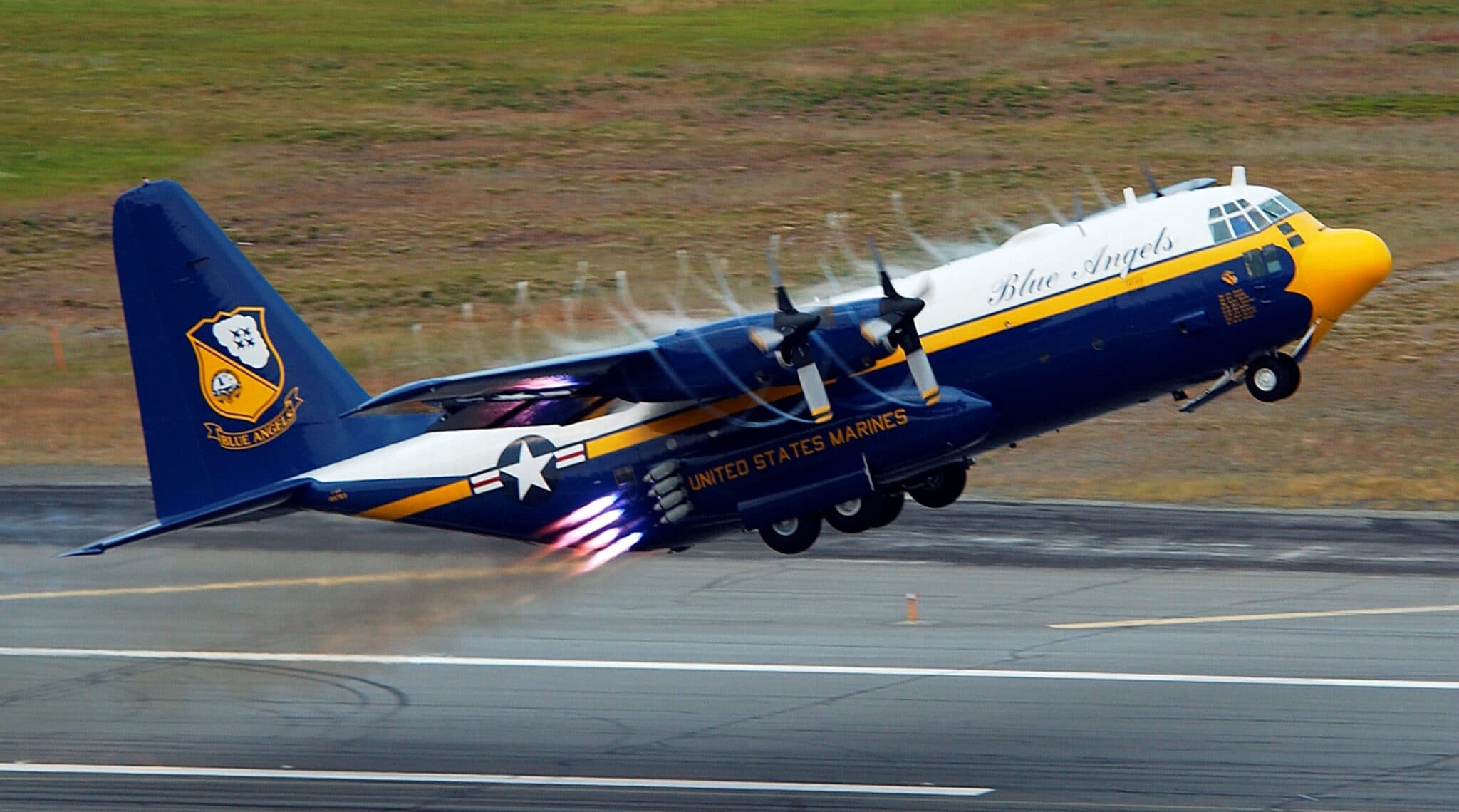
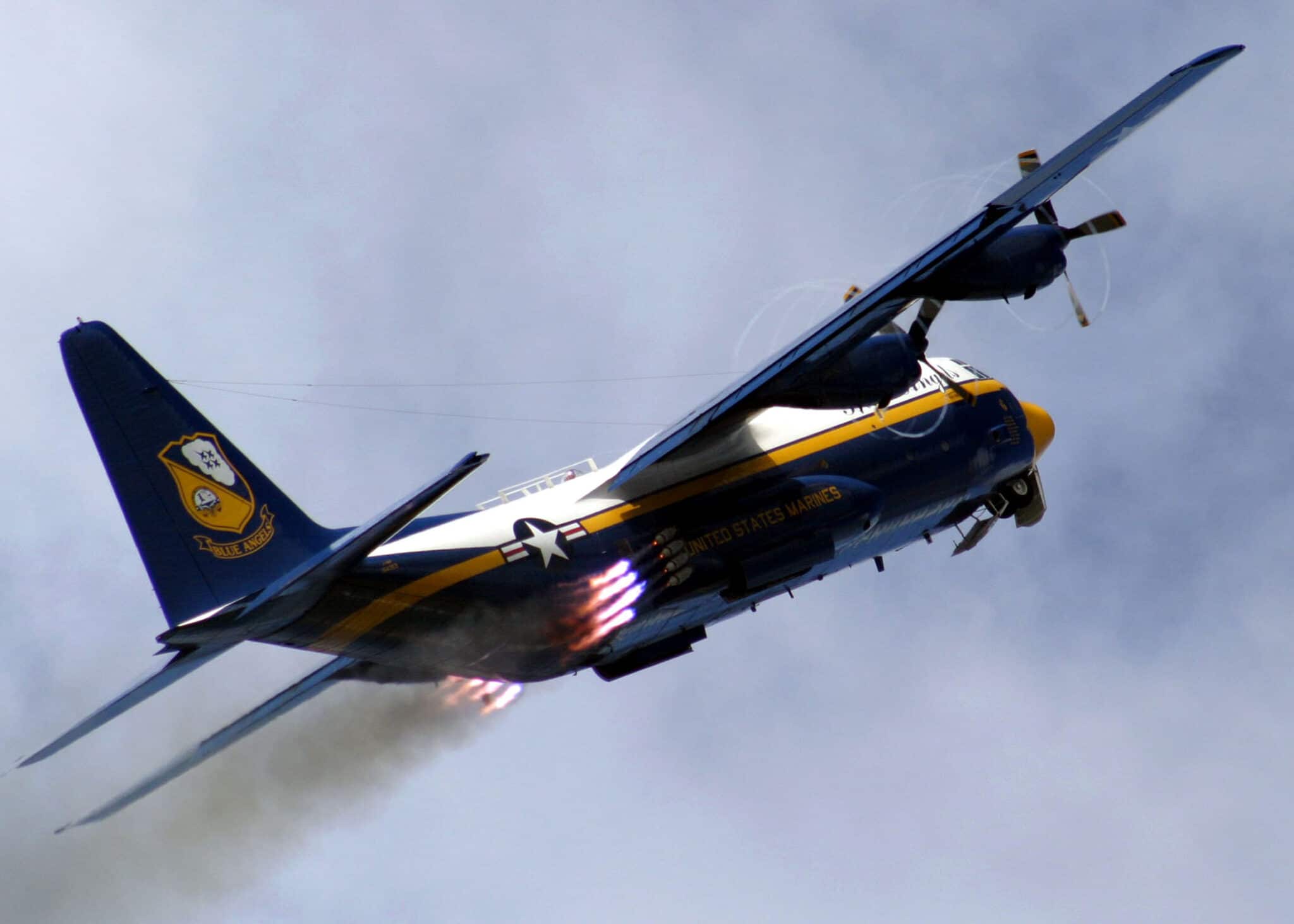
The squadron of F/A-18 E/F Super Hornets and a C-130J Super Hercules departed their home base at NAS Pensacola January 3 on a cross country flight. Their training base at NAF El Centro is located near the desert town of the same name.

Of the squadron’s six pilots, three have never flown a Blue Angels demonstration. Their time in the Imperial Valley will provide the pilots and support crews the time necessary to train prior to their first show.
6538422
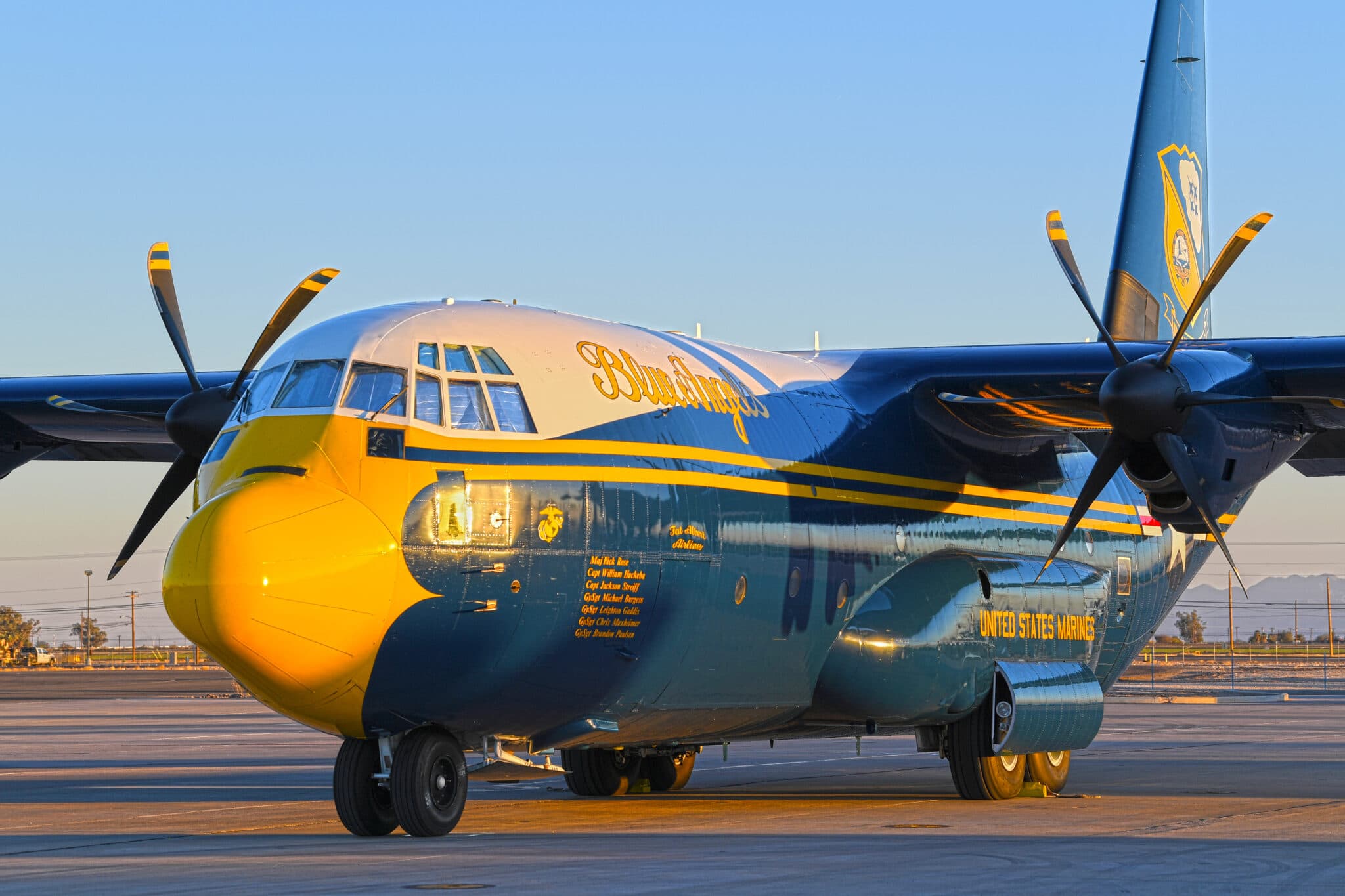
The C-130J Super Hercules ‘Fat Albert’ sits parked on the apron at Naval Air Facility El Centro. (U.S. Navy)

“We’ve been training in Imperial Valley for over 50 years, and this is where the Blue Angles cut their teeth and where the show is made,” Blue Angels lead pilot Cmdr. Brian Kesselring said.

Pilots, Support Personnel Prepare for 76th Anniversary Season

Most of Blue Angels pilots, maintainers, and logistics personnel from last year are returning in 2022. For a few, this season will mark their third year with the historic flight demonstration squadron.

Navy Capt. Kesselring returns as Boss and Angel 1 for a third season. Pilots Lt. Christopher Kapuschansky, Lt. Scott Goossens, and Maj. Frank Zastoupil will fly as the diamond team. The twin solo pilots this season include Lcdr Cary Rickoff and Lcdr Julius Bratton.

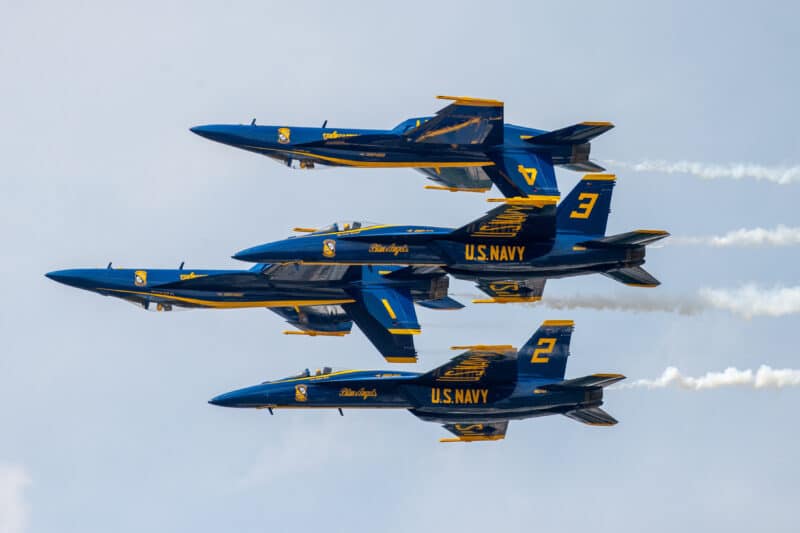
During six straight days each week, the pilots will fly three times a day for ten weeks. They will practice each maneuver — both in the air and during their morning brief.

It will be the job of Maj. Zastoupil to study the formation during flight training. He alone will critique how the new pilots Lt. Kapuschansky and Lt. Goossens are handling the training.

Using daily cockpit and ground video, Zastoupil will show the pilots how they can improve upon each maneuver. These closed door briefs are designed to give the diamond formation a tight precision formation of nearly 18-inches wing tip to canopy.

On the ground, the Blues’ newest advance pilot and show narrator is preparing for the season. Lt. Griffin Stangel is memorizing his loud speaker narration he will provide during each air show visit.

The team’s first air show performance will come at the conclusion of their winter training. NAF El Centro will host an afternoon performance and the first true public demonstration on March 12.

“For a team that spends over 300 days travelling, this is like home because we spend more consecutive days in the Imperial Valley then anywhere else,” Capt. Kesselring explained. “The Imperial Valley and NAF El Centro has a special place in our hearts, and we appreciate the support we receive year in and year out.”
6555067
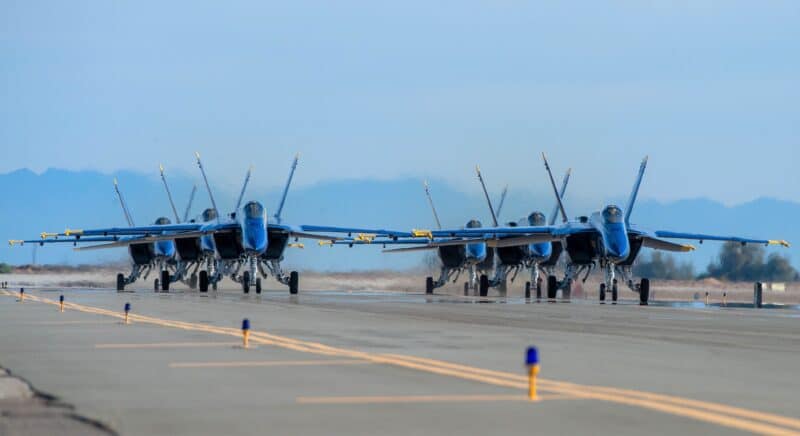
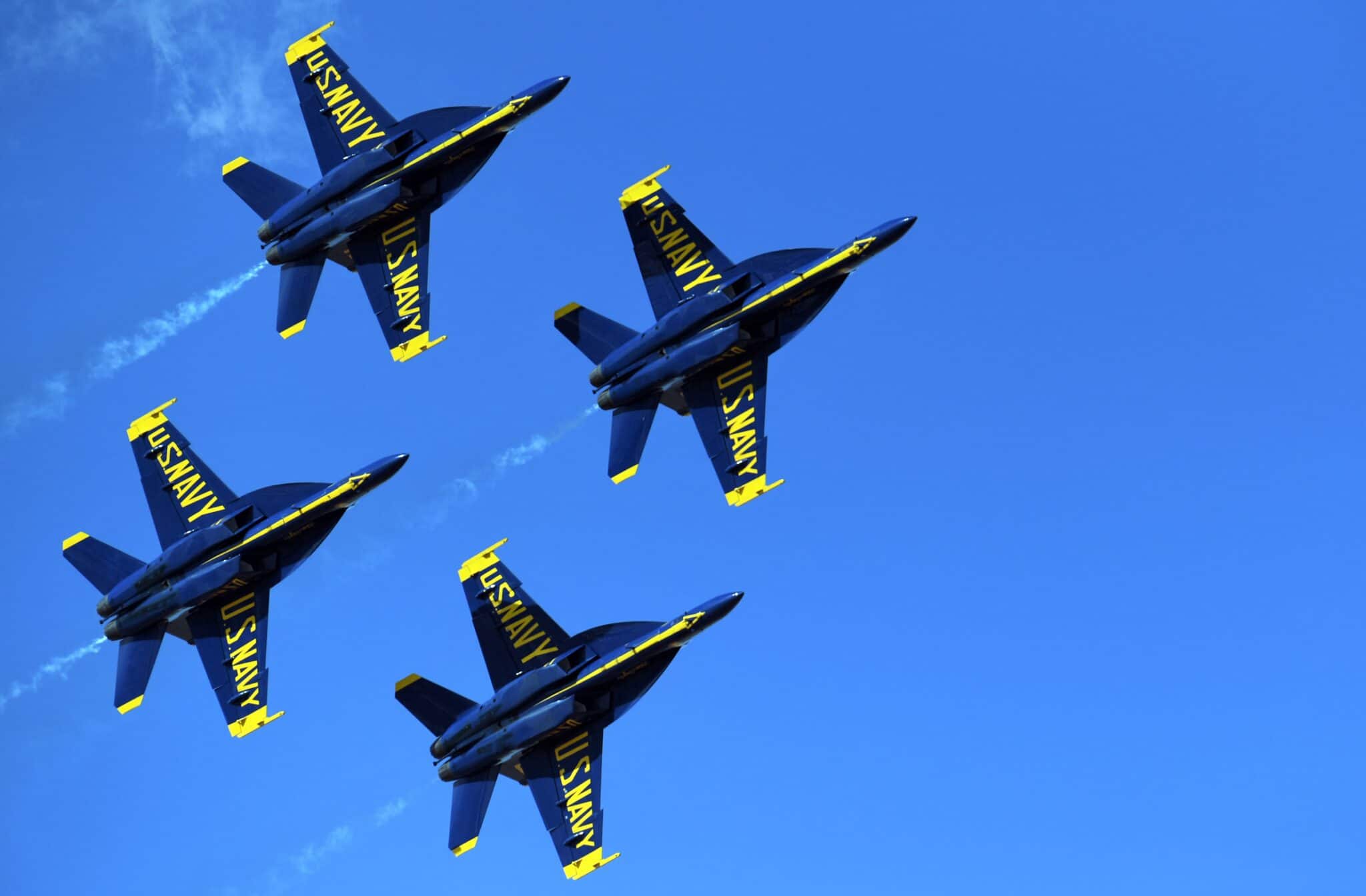
NAF El Centro supports combat training and readiness, including air operations support to operational fleet and training squadrons such as the Blue Angels. (U.S. Navy)

Their training does not stop once they leave El Centro. The Blues normally conduct training flights over NAS Pensacola on Tuesday’s and Wednesday’s before departing to their show site on Thursday.

After packing up their gear and loading their hulking C-130J, the team is scheduled to return home to Pensacola a few days later. The Blue Angels will close out March with weekend visits to New Orleans and Tampa.

In all, the squadron will perform at 31 locations across the United States between March and November. The spirit of their 76th season will include visits to Michigan, Hawai’i, and Atlanta.

(Charles A Atkeison reports on aerospace and technology. Follow his updates via social media @Military_Flight.)

WATCH: This is How the Navy Showed Aviators How to Operate the New A-7A Corsair II

0

The SLUF Still Had That New Jet Smell When They Made This Familiarization Film

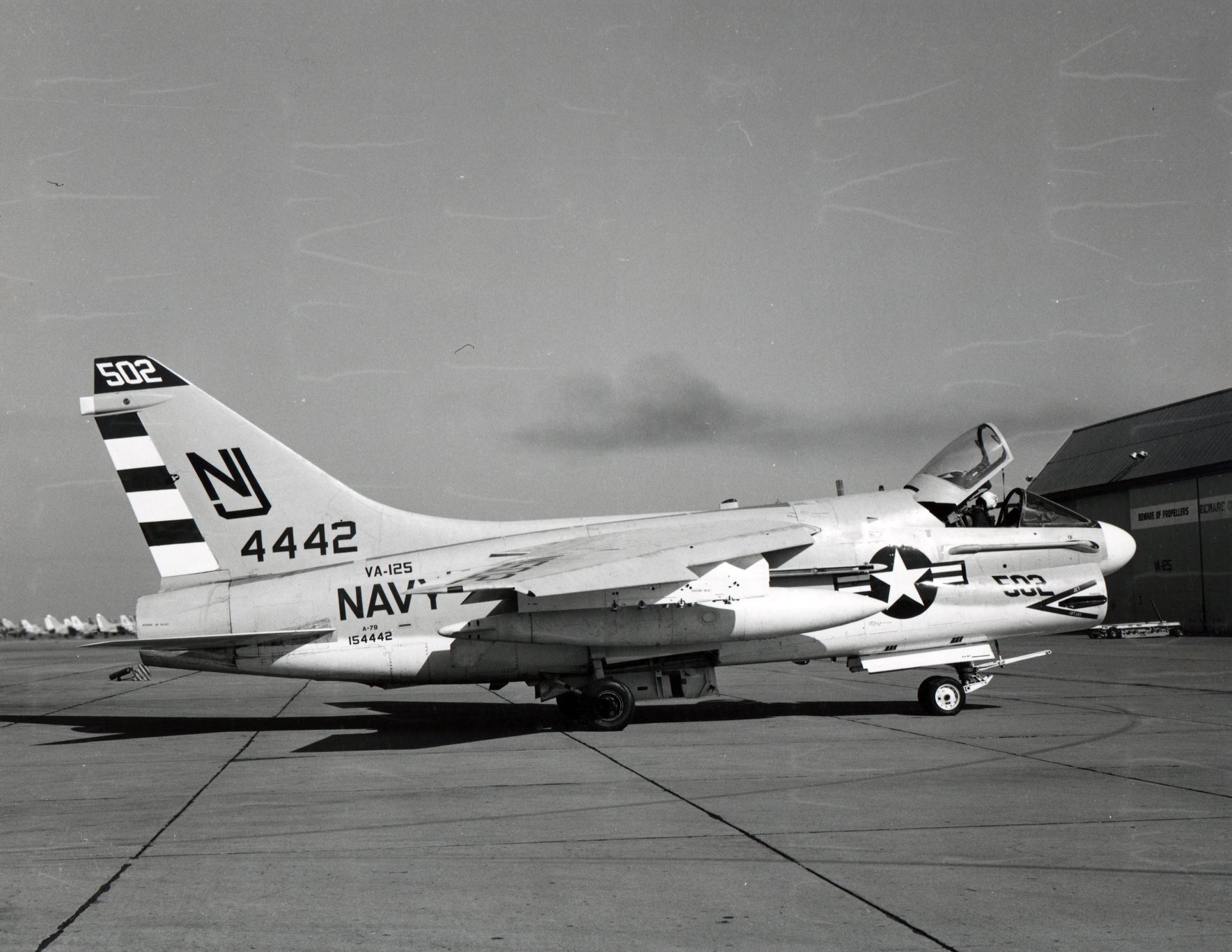
When the Ling Temco Vought A-7A Corsair II deployed to WestPac with VA-147 Argonauts as part of Carrier Air Wing TWO (CVW-2) aboard the USS Ranger (CVA-61) in late 1967, fleet replacement training squadrons like VA-122 Flying Eagles (and later VA-125 Rough Raiders) were already in the business of training and qualifying Corsair II pilots in the intricacies of flying the Short Little Ugly “Fellow” (SLUF) around the boat. Vought had plenty of history building great Naval aircraft. The film “A-7 Familiarization” was produced by the Navy to help ensure Naval Aviators had their A-7A Corsair II procedures on lock. The film was uploaded to YouTube by Periscope Film.

[youtube id=”-je2fF1PURs” width=”800″ height=”454″ position=”left”]

a279241a4c0e5d615481eee6c50153b5a
image via national naval aviation museum (NNAM)

Shot Aboard the Mighty O

The footage for the film as all shot aboard the Essex-class aircraft carrier USS Oriskany (CVA-34). The VA-122 and VA-125 jets appearing in the film all have histories. For instance, A-7A 153189 started off with VA-125. She went to VA-153 Blue Tail Flies in 1970 and then went to Vietnam. On 1 November 1971 3189’s nose gear collapsed during launch from USS Oriskany (CVA-34) and the jet ditched in the Gulf of Tonkin in front of the carrier. The pilot, CDR Thomas Frank, did not survive the mishap.

116134107 10157785533589585 2492084028090616955 o
image via nnam

The Longest Serving Jet Appearing in the Film?

A-7B 154400 went to VA-122 in 1969. From there 4400 went to VA-125 in 1973 and then to VA-153 in 1977. On 10 March 1977 the jet was heavily damaged in a mishap aboard the Midway-class aircraft carrier USS Franklin D Roosevelt (CVA-42). After repairs were made 4400 continued her career with VA-153 until 1983.

115958999 10157785535244585 2273632267969895614 o
image via nnam

Portuguese SLUF

A-7A 153227 initially went to VA-125. Between 1967 and 1969 the jet was assigned to VA-147 and went to Vietnam. The aircraft returned and went to the Naval Air Training Center in 1977. In 1978 3227 went to the boneyard for a spell before being sold to the Portuguese Air Force. After refurbishment to A-7P specifications the jet joined the Força Aérea Portuguesa’s 302 Esquadra in 1984. On 9 March 1989 the jet was ditched at sea off Peniche after a birdstrike.

Portuguese A 7P Corsair II in flight c1984
A-7P image via NNAM

More Portuguese Duty

A-7A 154349 went to VA-125 in 1969. Between 1975 and 1978 the jet served with VA-303 Golden Hawks. 4349 went to the boneyard in January of 1978. 78: In August of 1983 the jet was sold to Portugal and went into service with the Força Aérea Portuguesa’s 302 Esquadra as an A-7P in 1984. On 27 March 1987 the jet was lost in a mishap near Perto de Boticas.

A-7B 154394 went to VA-122 in 1969 and was reassigned to VA-125 in 1970. On 8 March 1970 4394 was written off.

79130784 10213937199057962 2925122184571518976 o Michael Grove
image via nnam

The Final Tally

A-7A 154357 went to VA-125 in 1969. Between 1969 and 1970 the jet served with VA-97 Warhawks. On 2 October 1970 the jet was struck off charge.

A-7B 154393 went to VA-122 in 1969. The jet was then assigned to VA-93 Blue Blazers for their first Vietnam deployment in 1971. On 7 September 1972 4393 crashed into the sea off Hon Nieu Island/Vihn, North Vietnam due to battle damage. The pilot did not survive the mishap.

116271996 10157785535369585 5704738803983626420 o
image via nnam

SLUFs Served For More Than 40 Years!

Sea stories about the SLUF are many and varied– they served in every firefight between Vietnam and the Gulf War. The last Navy A-7s were retired by the last fleet operational squadrons (VA-46 and VA-72) in May 1991 shortly after their return from Operation Desert Storm. Corsair IIs were also operated by Greece as the A-7H and TA-7H (retired in 2014), Portugal as the A-7P and TA-7P (retired in 1999), and Thailand (retired in 2007) The Corsair II served for more than 40 years. The Luftwaffe looked at purchasing the A-7D, as did Switzerland (with enough interest to have the designation A-7G dedicated to potential Swiss SLUFs).

42636061 1106795299479544 1204394119258963968 o
image via nnam

WATCH: Panthers, Able Dogs, and Corsairs Flying and Fighting in Korea

The USS Leyte’s Only Combat Deployment Was Memorable for a Variety of Compelling Reasons

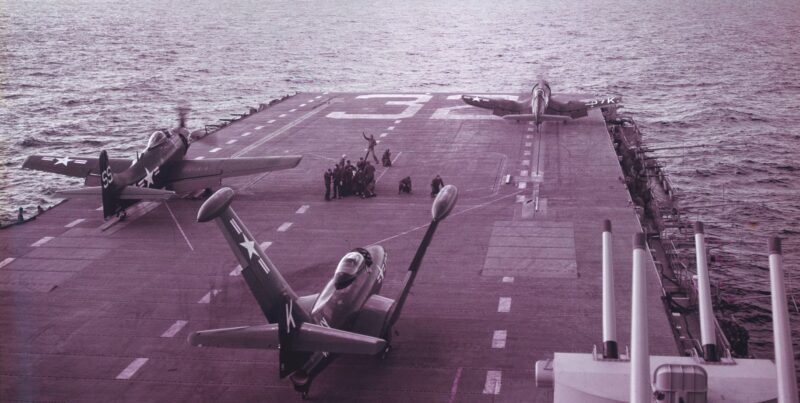
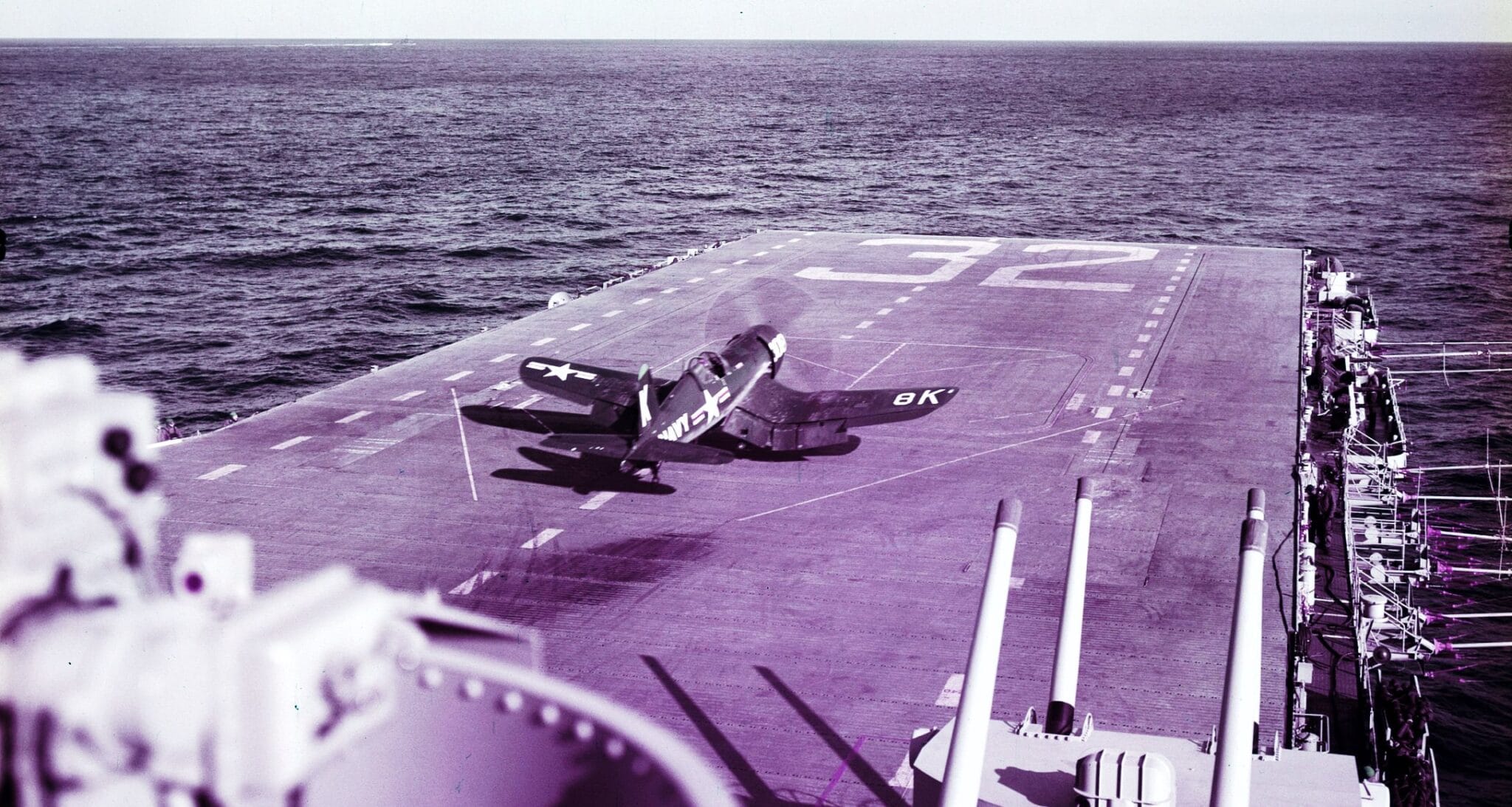
When the Essex-class aircraft carrier USS Leyte (CV-32) sailed for the Western Pacific in 1950, Carrier Air Group THREE (CVG-3) was her embarked air wing. The Leyte was destined to spend the fall of 1950 off the coast of South Korea, launching airstrikes against North Korean and Chinese targets as ordered by Commander, Task Force 77 and the Allied leadership in the region. This great video of the CVG-3 operating from the Leyte was uploaded to YouTube by airailimages.

[youtube id=”9HvVlWJT2Qw” width=”800″ height=”454″ position=”left”]

Vought F4U 4 Corsair of VF 33 is launched from USS Leyte CV 32 off Korea circa in 1950 80 G K 11815a
VF-33 F4U-4 taking off from leyte. image via national archives

CVG-3 Starting Lineup

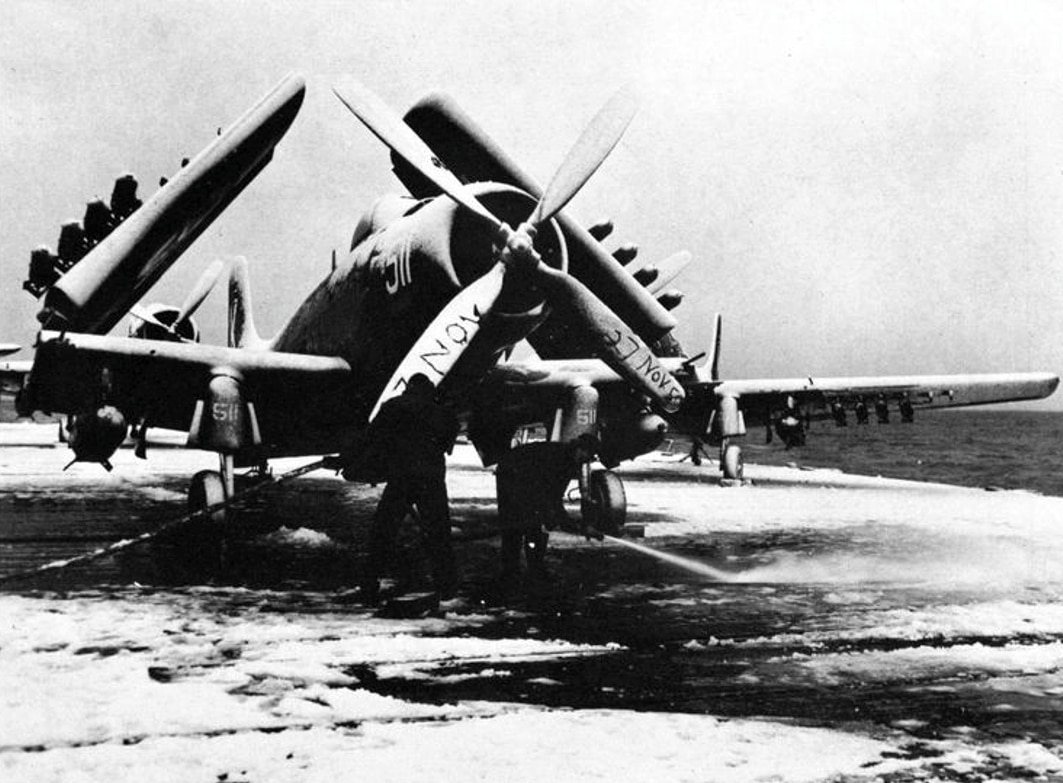
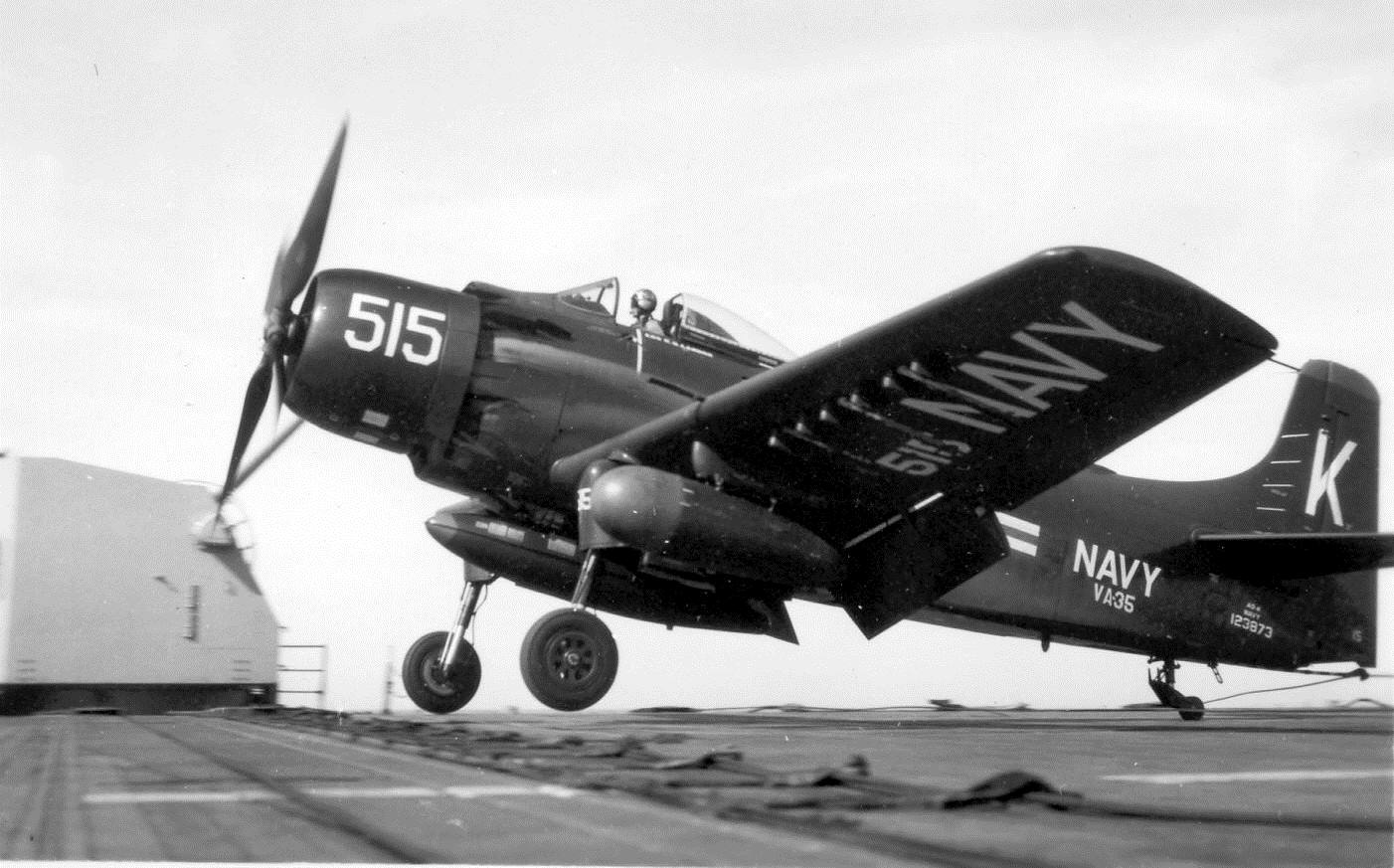
Embarked aboard the Leyte for her only combat deployment were VF-31 Tomcatters flying the Grumman F9F-2 Panther, VF-32 Swordsmen  and VF-33 Tarsiers flying the Vought F4U-4 Corsair, VA-35 Black Panthers Flying the Douglas AD-3 and AD-4 Skyraider, Detachment 3 from VC-4 Night Cappers flying the Vought F4U-5N Corsair, Detachment 3 from VC-62 Fighting Photos flying the Vought F4U-5P Corsair, Detachment 3 from VC-33 Night Hawks flying the Douglas AD-4N Skyraider, Detachment 3 from VC-12 Bats flying the Douglas AD-3W Skyraider, and Detachment 3 from HU-2 Fleet Angels flying the Sikorsky HO3S-1 Dragonfly.

Douglas AD Skyraider of VA 35 aboard USS Leyte CV 32 off Korea on 27 November 1950
korean weather. image via national archives

Combat and Loss

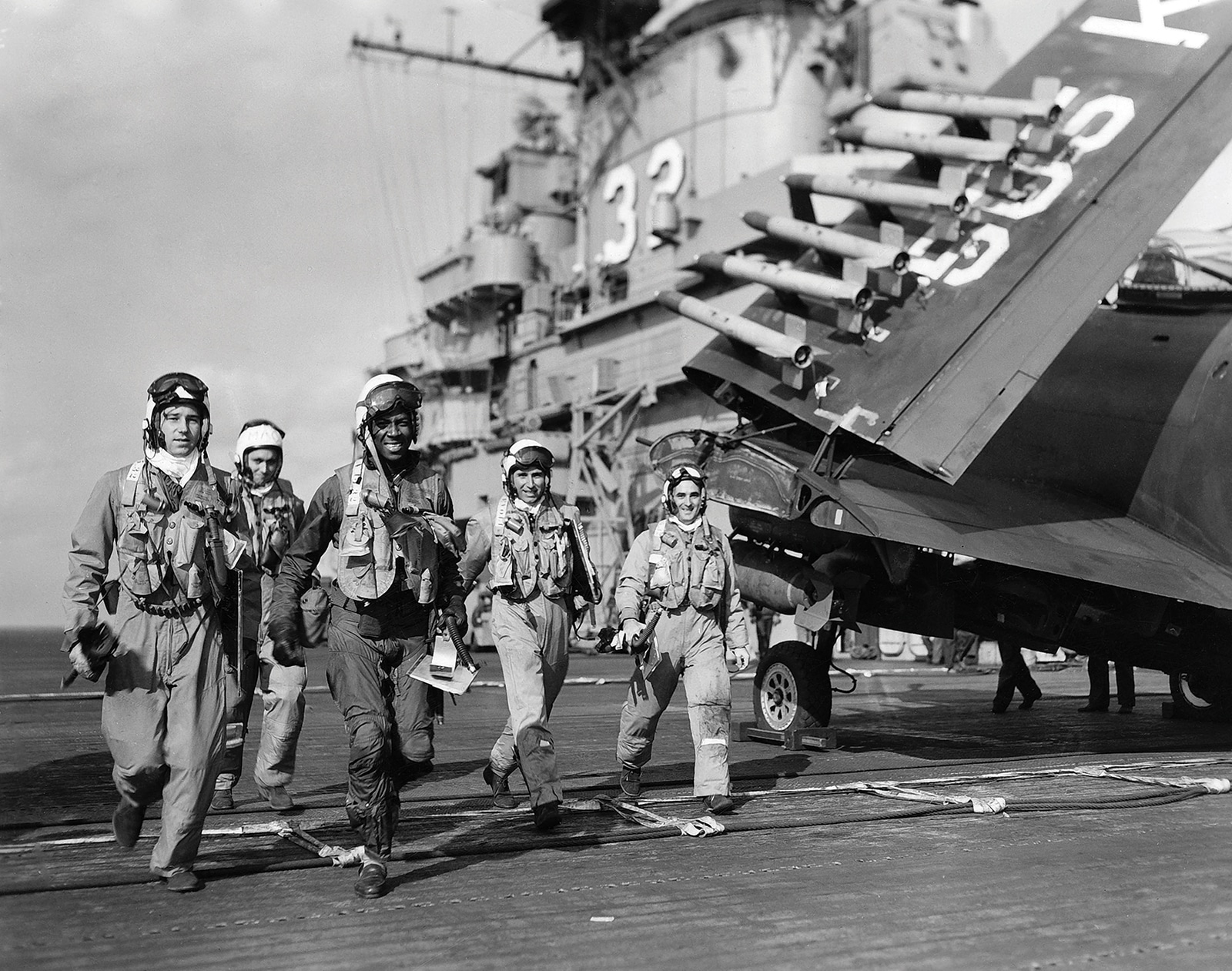
The Leyte arrived at Sasebo in Japan on 8 October and wasted no time before getting into action. From 9 October until 19 January 1951 the Leyte was at sea for 92 days- many of them while hampered by the atrocious weather in the region at that time of the year. Despite the weather CVG-3 logged over 11,000 hours during 3,933 sorties flown against enemy forces while inflicting massive damage upon enemy positions, supplies, transportation, and communications. The first African-American Naval Aviator, Ensign Jesse LeRoy Brown, was killed in action while defending Marines embroiled in the fight at the Chosin reservoir while flying from the Leyte on 4 December 1950.

Brown Hudner Cevoli USS Leyte November 1950
Ensign Jesse L. Brown, first African-American Naval Aviator aboard Leyte. image via national archives

The Rest of the Leyte Story

The Leyte returned to Norfolk for overhaul 25 February 1951 and was redesignated CVA-32 on 1 October 1952. This was the Leyte’s only deployment to the Pacific. After her initial cruise to the Caribbean and Eastern Pacific, she deployed to the Mediterranean and/or the North Atlantic seven times before being taken out of service as an attack carrier and converted to an antisubmarine aircraft carrier and redesignated CVS-32 on 8 August 1953. The ship spent several years working antisubmarine duty before being redesignated AVT-10 and was deactivated in 1959. She was scrapped in 1970.

AD 4 VA 35 CV 32 1952
VA-35 Able dog comes aboard. image via national naval aviation museum

WATCH: Apaches Bring the Rain to the Range As Only They Can

0

The Apache Has Been in Service for Nearly 40 Years, But It’s Still Absolutely Lethal

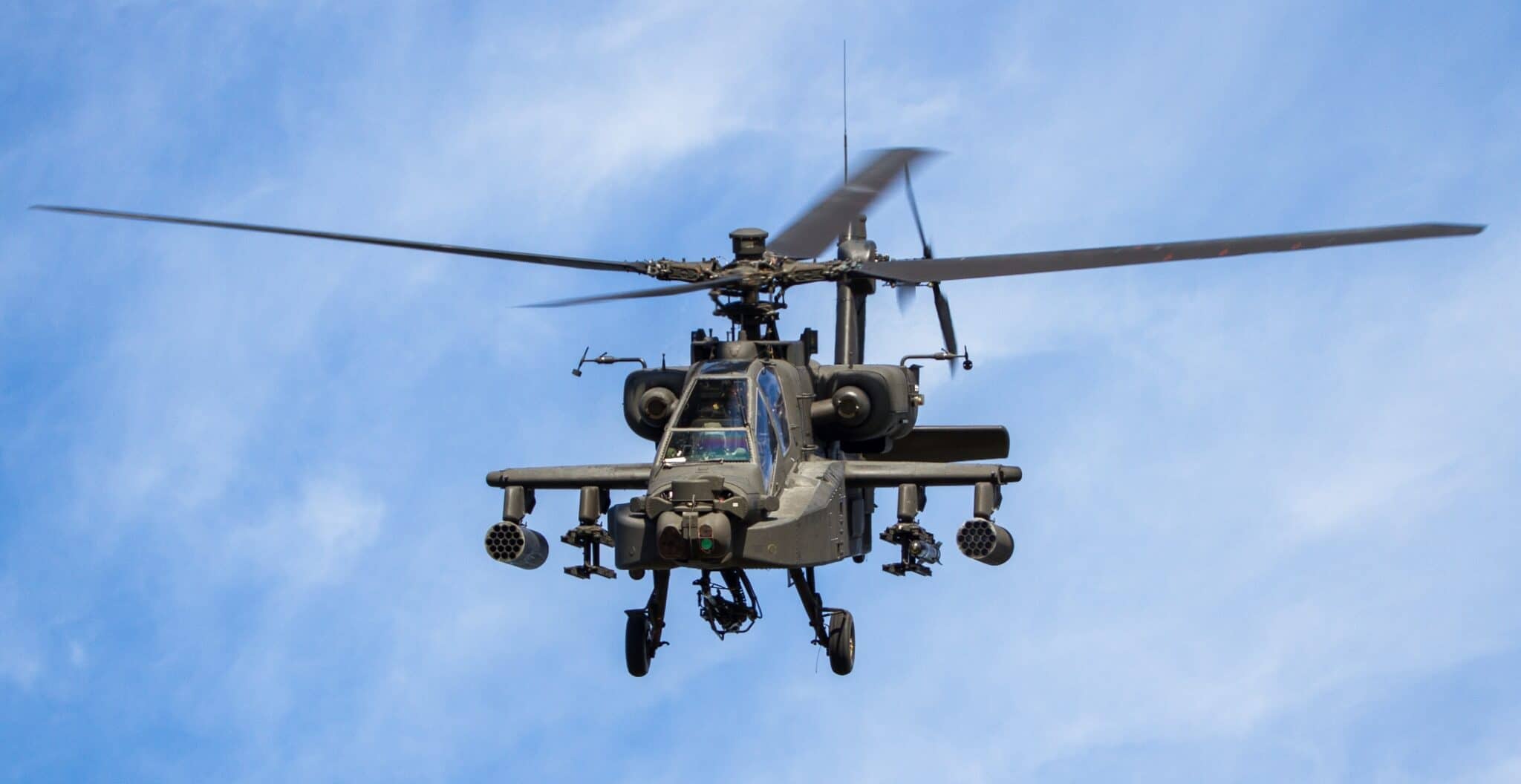
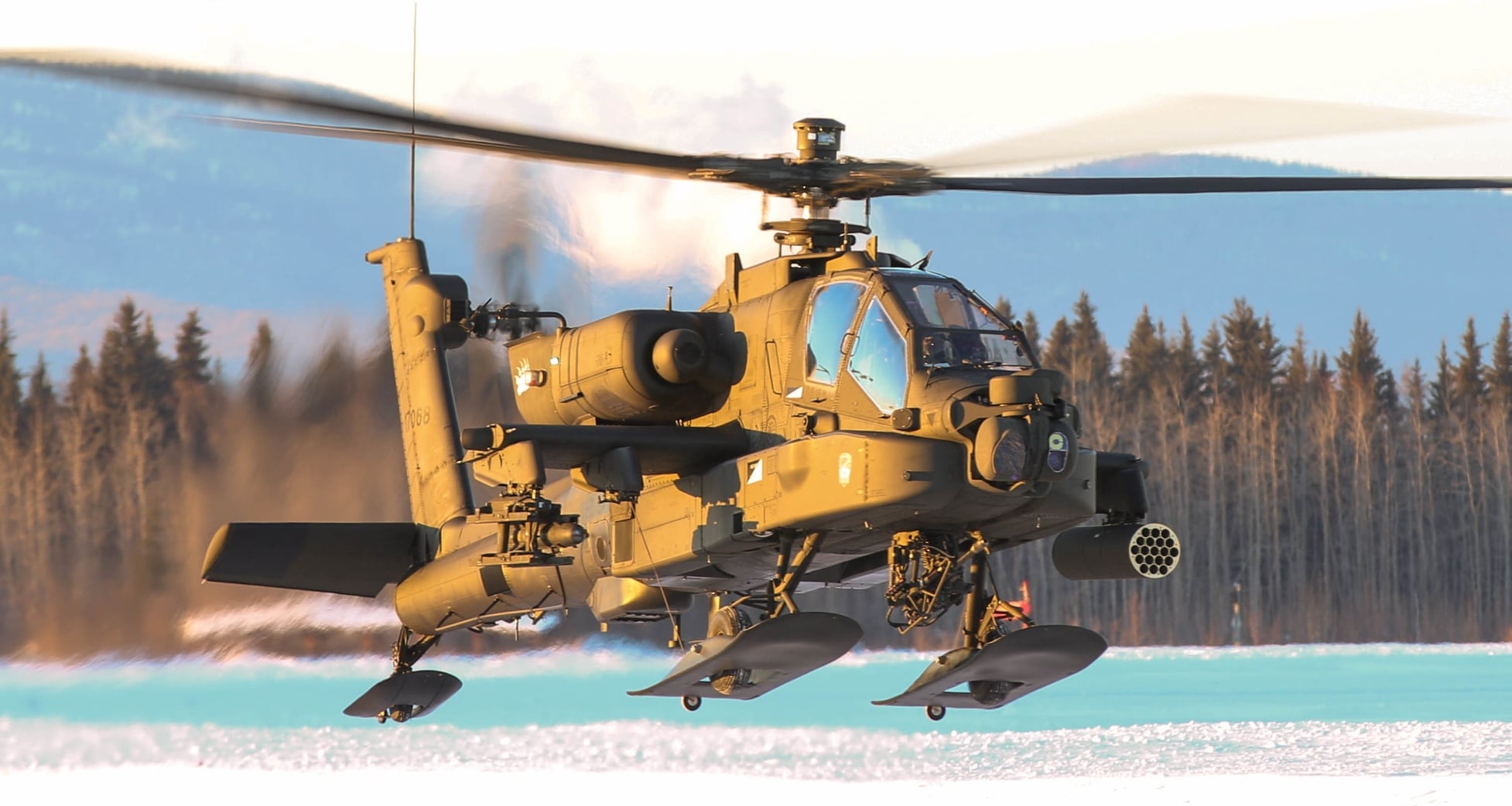
The Boeing AH-64 Apache began as the Hughes Helicopters Model 77. The rotorcraft was developed to compete for the United States Army’s Advanced Attack Helicopter program to replace the AH-1 Cobra.

On 30 September 1975, the prototype YAH-64 flew for the first time. The US Army selected the YAH-64 over the Bell YAH-63 in 1976 and approved full production of the Apache in 1982. McDonnell Douglas purchased Hughes Helicopters in 1984 and continued production and development of the AH-64.

The Apache entered service with the US Army in April 1986, with the AH-64D Apache Longbow following in 1997. Today’s AH-64E is still one badass chopper that still remains absolutely lethal.

Enjoy this video of Apaches in action uploaded to YouTube by Military Archive.

[youtube id=”anfXNWLXLas” width=”800″ height=”454″ position=”left”]

Video credits: U.S. Army videos by Erich Backes, Specialist Alaura Lucas, Corporal Max Elliott, Staff Sergeant Jennifer Reynolds, Major Robert Fellingham, and Gertrud Zach

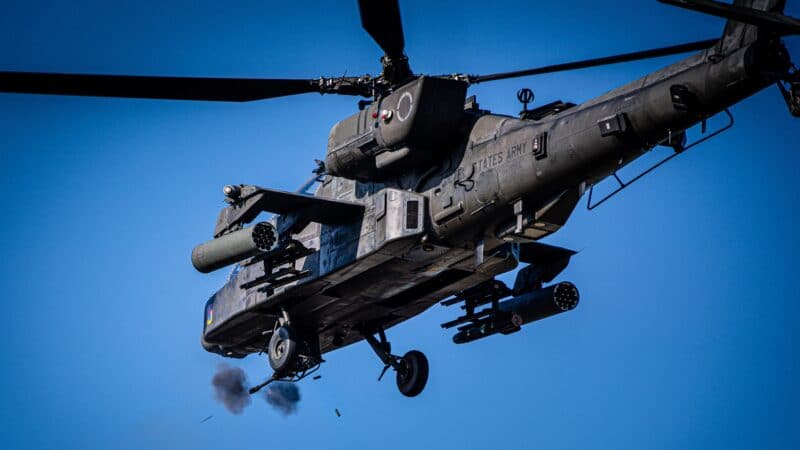
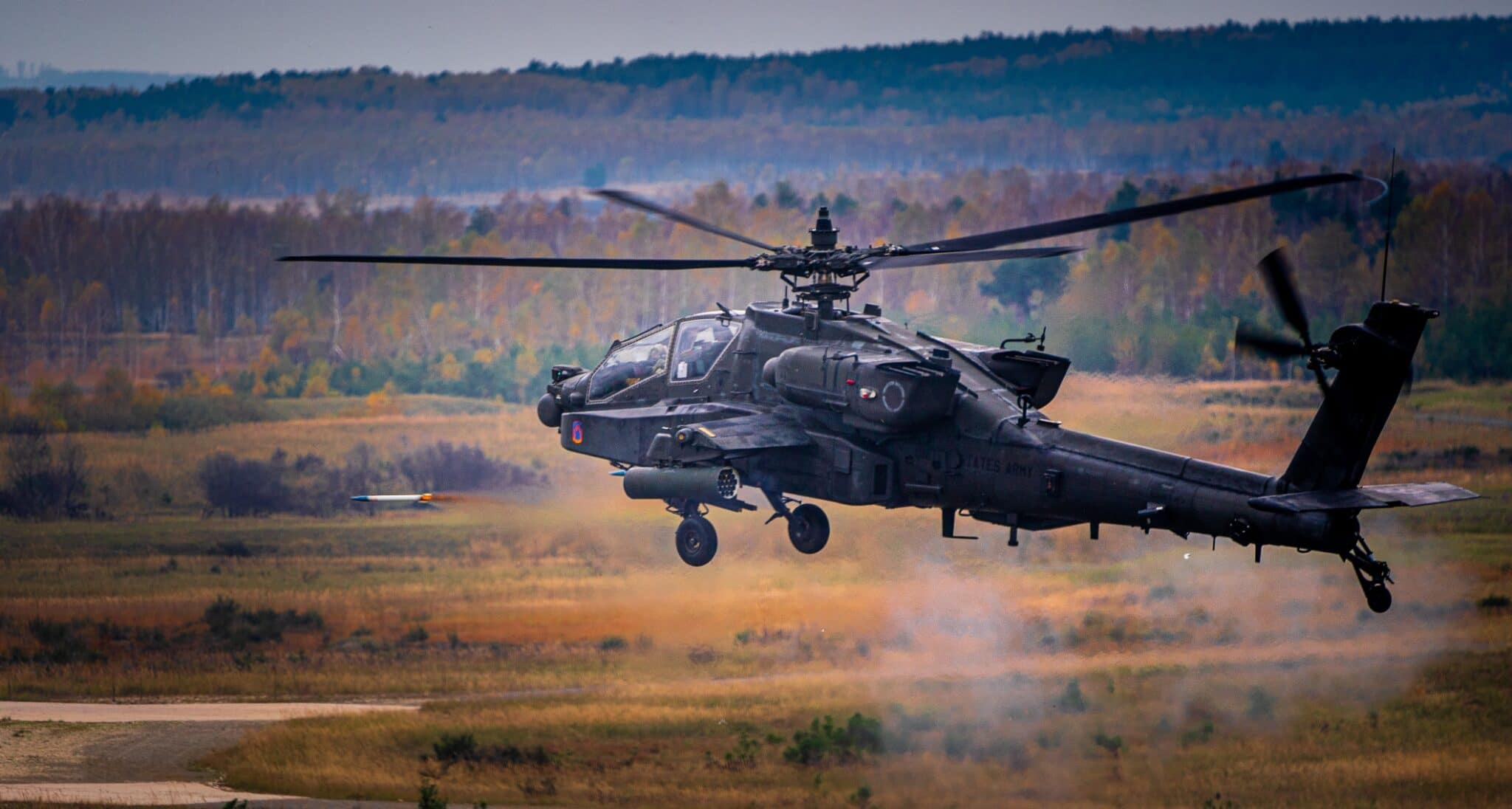
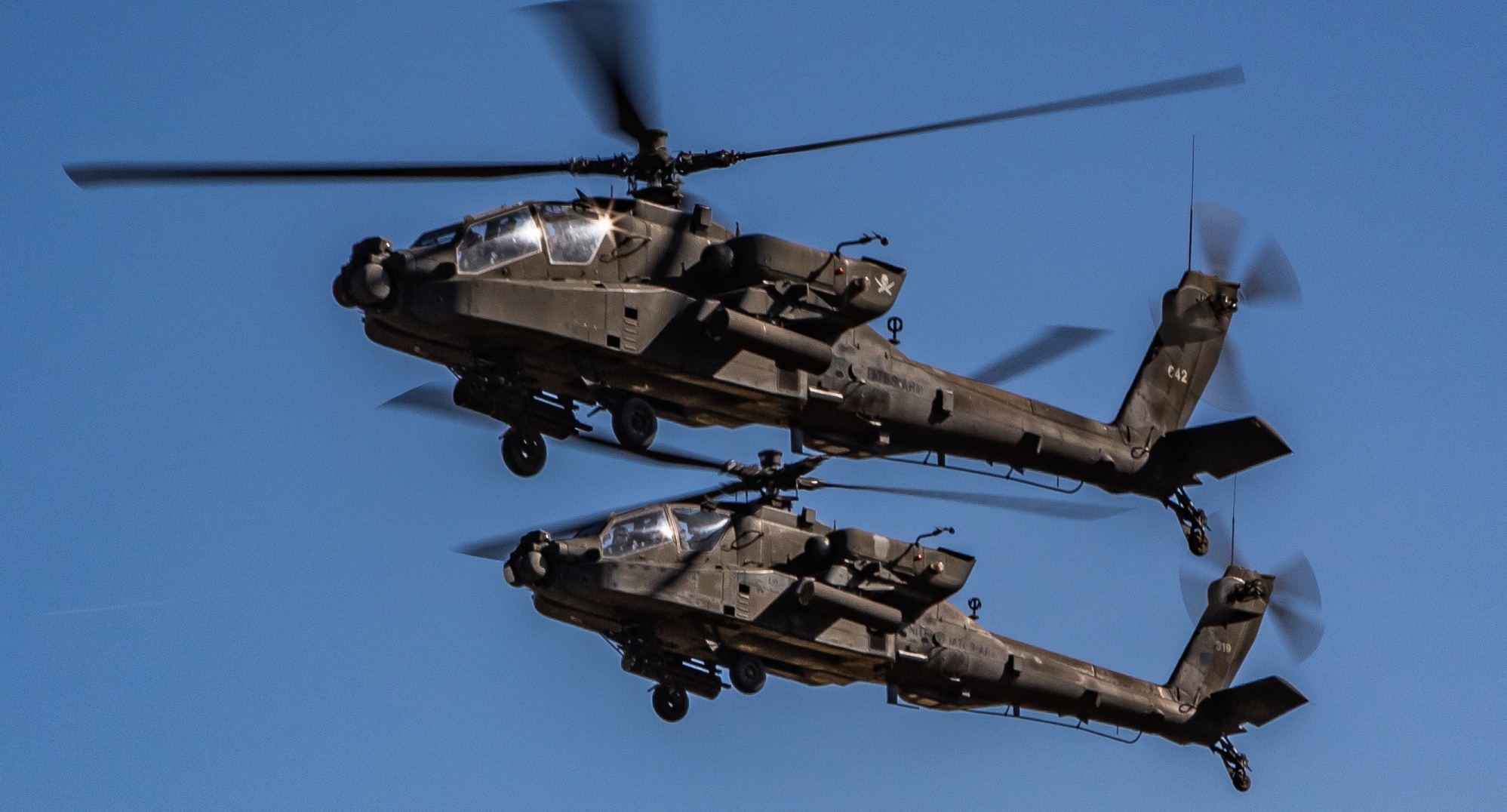
AH-64 Apache
191029-A-KM584-162 image via DVIDS

Still Making Rotary-Wing Badassery

Boeing Defense, Space & Security now produces the AH-64. More than 2,400 AH-64s have rolled off the assembly lines. With more than 1,200 aircraft in operation, accumulating over 4 million flight hours, including 1.3 million in combat, the AH-64 Apache represents the backbone of the US Army’s attack helicopter fleet and a growing number of international defense forces.

According to Boeing DS&S, the AH-64E will be in production until at least 2028. According to Boeing, the total number of flight hours for US Army Apaches stands at more than 4.8 million ( ! ) with 1.3 million hours of combat hours ( ! ! ).

5751311a
190914-Z-MA638-0034 image via dvids

Scoring an A on the Test of Time

“The Apache will serve the U.S. Army and its partner nations as the world’s primary attack helicopter into the 2060s. As Boeing and the U.S. Army continue to invest in next generation technologies, the Apache brings affordable Modular Open Systems Architecture capability to serve as a centerpiece in the Multi-Domain Operations (MDO) battlefield for decades to come.” Boeing produced 937 AH-64A Apaches between 1984 and 1997. Some remain in service today. Apaches have been exported to a number of countries, including Egypt, Greece, Israel, India, Singapore, the Netherlands, Japan, Saudi Arabia, Qatar, the United Arab Emirates (UAE), and the UK.

16th CAB sustainers participate in Bellator Stakes 2016 160512 A PG801 003b
160512-A-PG801-003 image via dvids

Not Your Father’s Apache- Just Better

“With the AH-64E in production until at least 2028, the Apache will serve the US Army and its partner nations as the world’s primary attack helicopter into the 2060s. As Boeing and the US Army continue to invest in next-generation technologies, the Apache brings affordable Modular Open Systems Architecture capability to serve as a centerpiece in the Multi-Domain Operations (MDO) battlefield for decades to come. The AH-64E Version 6 is the most modern configuration of the Apache and is ready for the MDO battlefield. A network-centric, fully integrated weapon system specifically built to dominate in highly contested and complex battle space, the Version 6 Apache includes multiple enhancements to the aircraft’s sensors, software, and weapons performance.”

2193249a
092115-A-TU438-002 image via dvids

Better Parts = a Better Attack Helicopter

The AH-64E Apache is the most advanced multi-role combat helicopter in the US Army’s arsenal and is also used by a growing number of global defense forces. To date, more than 500 AH-64E model Apaches have been delivered worldwide. The AH-64E features Advanced digital connectivity. Joint Tactical Information Distribution System, more powerful T700-GE-701D engines with upgraded face gear transmission to accommodate more power, capability to control unmanned aerial vehicles (UAVs), and new composite main rotor blades.

AH 64 Apache conducting pilot certification training Fort Wainwrighta
160120-A-MI003-839 image via dvids

WATCH: The Bounty Hunters Take the Tomcat to Sea for the First Time

The Big E Took Two Squadrons of the New Fleet Defenders to the Tonkin Gulf in 1974

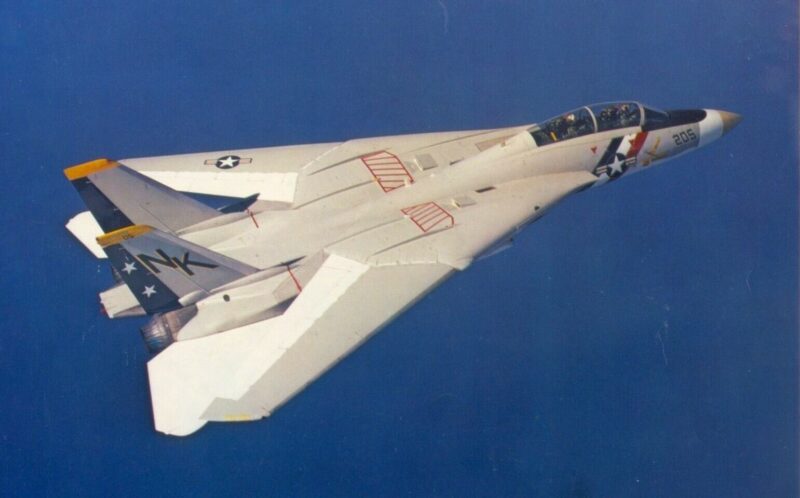
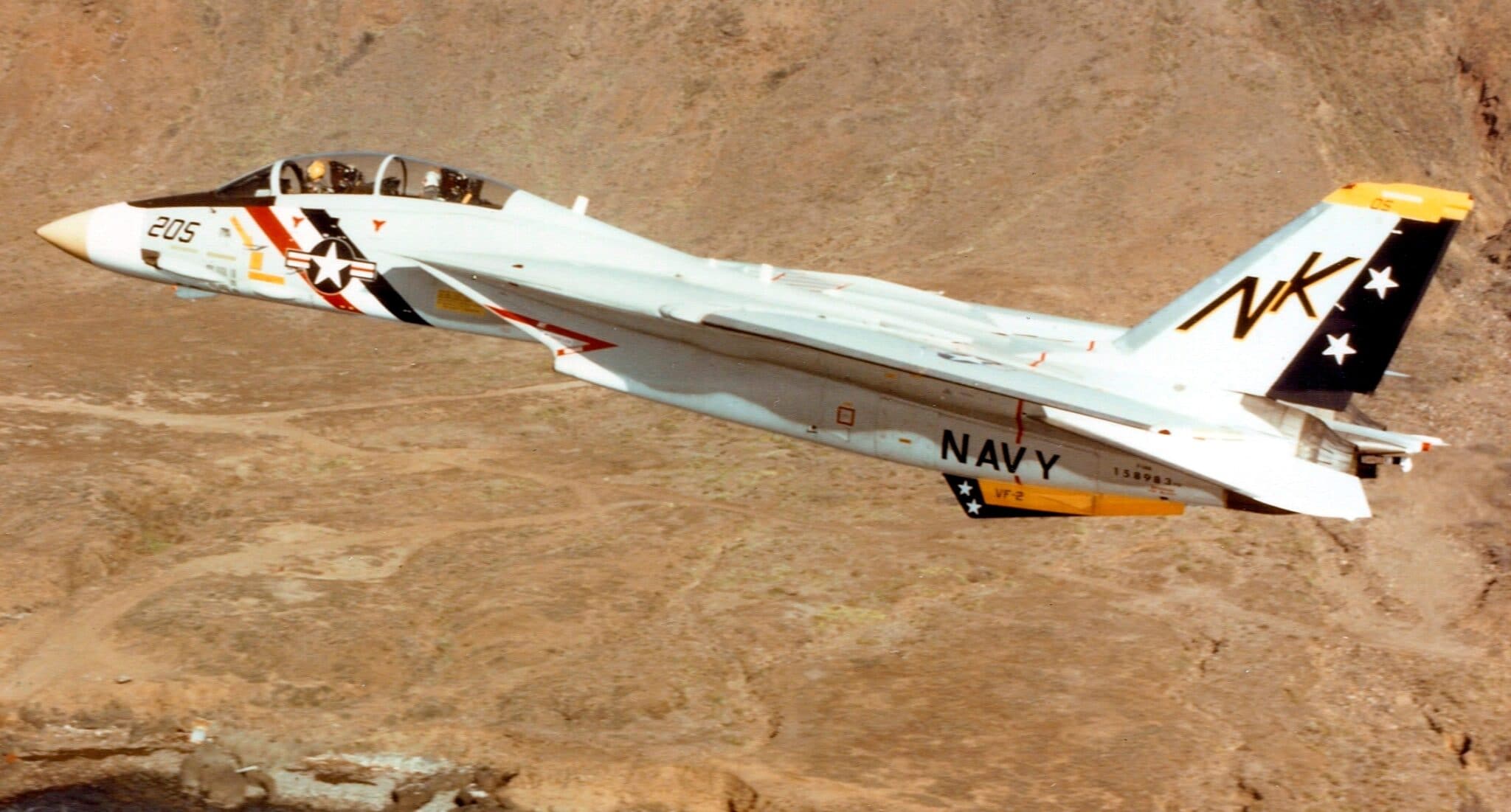
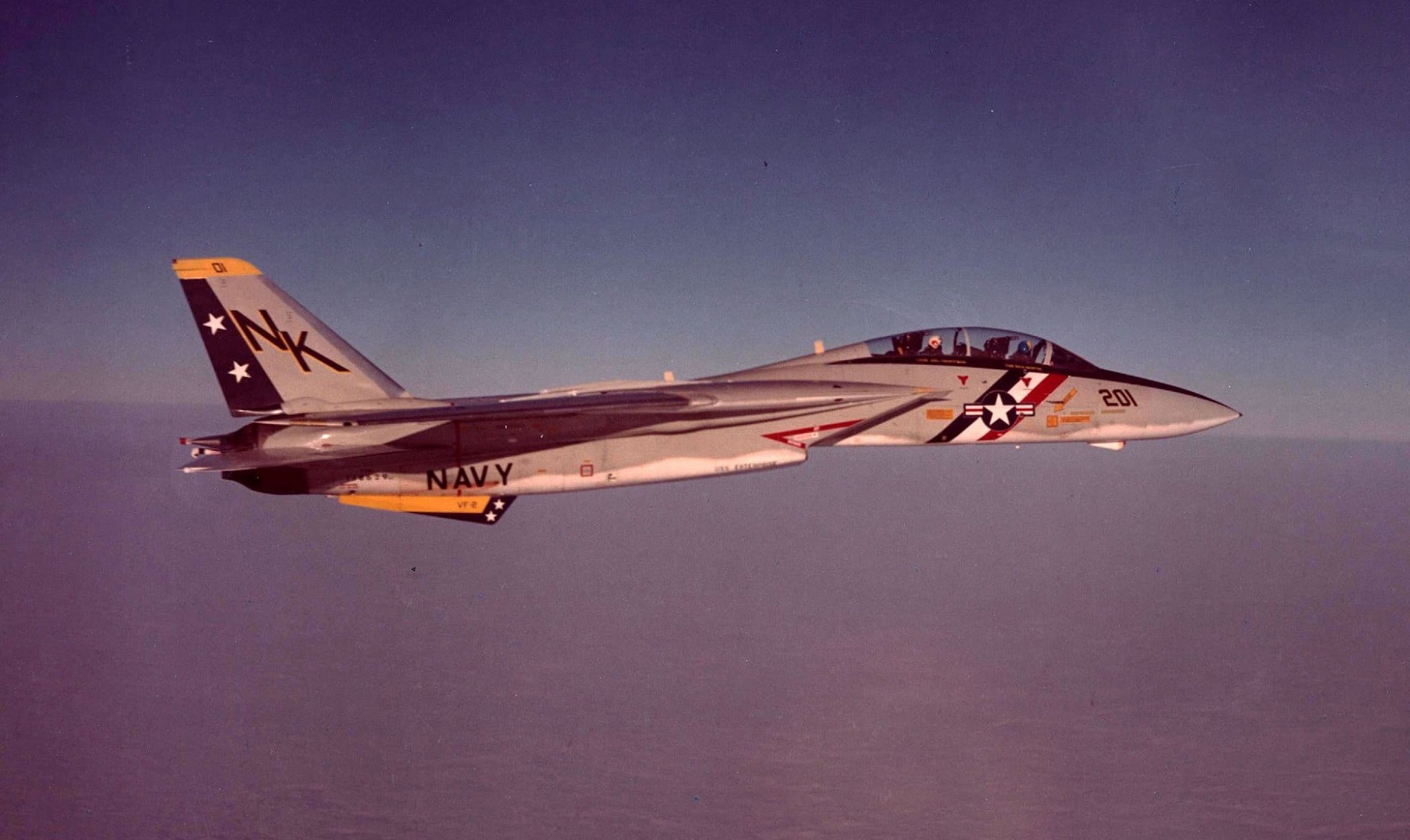
When the nuclear-powered aircraft carrier USS Enterprise (CVAN-65) deployed to the Western Pacific (WestPac) in 1974, her air group included the very first Grumman F-14A Tomcats to go to sea. VF-1 Wolfpack and VF-2 Bounty Hunters were flying the new Fleet Defenders. Carrier Air Wing ONE FOUR (CVW-14) was deployed aboard the Big E from 17 September 1974 until 20 May 1975.

The Air Group flew cover for Operation Frequent Wind—the evacuation of US personnel from South Vietnam. This great video of VF-2 in action was uploaded to YouTube by Aviation videos archives part 4 1975-2015.

VF-2 F-14A, one of the Bounty Hunters
VF-2 F-14A image via the National Archives

It Took an Entire Air Wing

During their 1974-1975 deployment aboard the Big E, Carrier Air Wing ONE FOUR (CVW-14) consisted of VF-1 Wolfpack and VF-2 Bounty Hunters flying the Grumman F-14A Tomcat, VA-27 Royal Maces and VA-97 Warhawks flying the Ling Temco Vought A-7E Corsair II, VA-196 Main Battery flying the Grumman A-6A and KA-6D Intruder, VAQ-137 Rooks flying the Grumman EA-6B Prowler, VAW-113 flying the Grumman E-2B Hawkeye, RVAH-12 Speartips flying the North American RA-5C Vigilante, Detachment 65 from VQ-1 World Watchers flying the Douglas EA-3B Skywarrior, and HS-2 Golden Falcons flying the Sikorsky SH-2D Sea King.

One of the VF-2 F-14A Bounty Hunters in flight
VF-2 F-14A image via the National Archives

Not the Only New Trick In Town

VF-2 made three WestPac deployments aboard Big E between 1974 and 1978. Those VAQ-137 EA-6Bs had just gone into service themselves, with VAQ-132 Rooks deploying aboard the USS America (CVA-66) for the first time during June of 1972, followed by VAQ-131 Lancers aboard the Enterprise and VAQ-134 Garudas aboard the Constellation (CVA-64).

During her 1974-1975 WestPac deployment, the Enterprise visited Pearl Harbor, Hawaii; Cubi Point, Philippines; Hong Kong; Subic Bay, Philippines; Mombasa, Kenya; Port Louis, Mauritius; and Singapore.

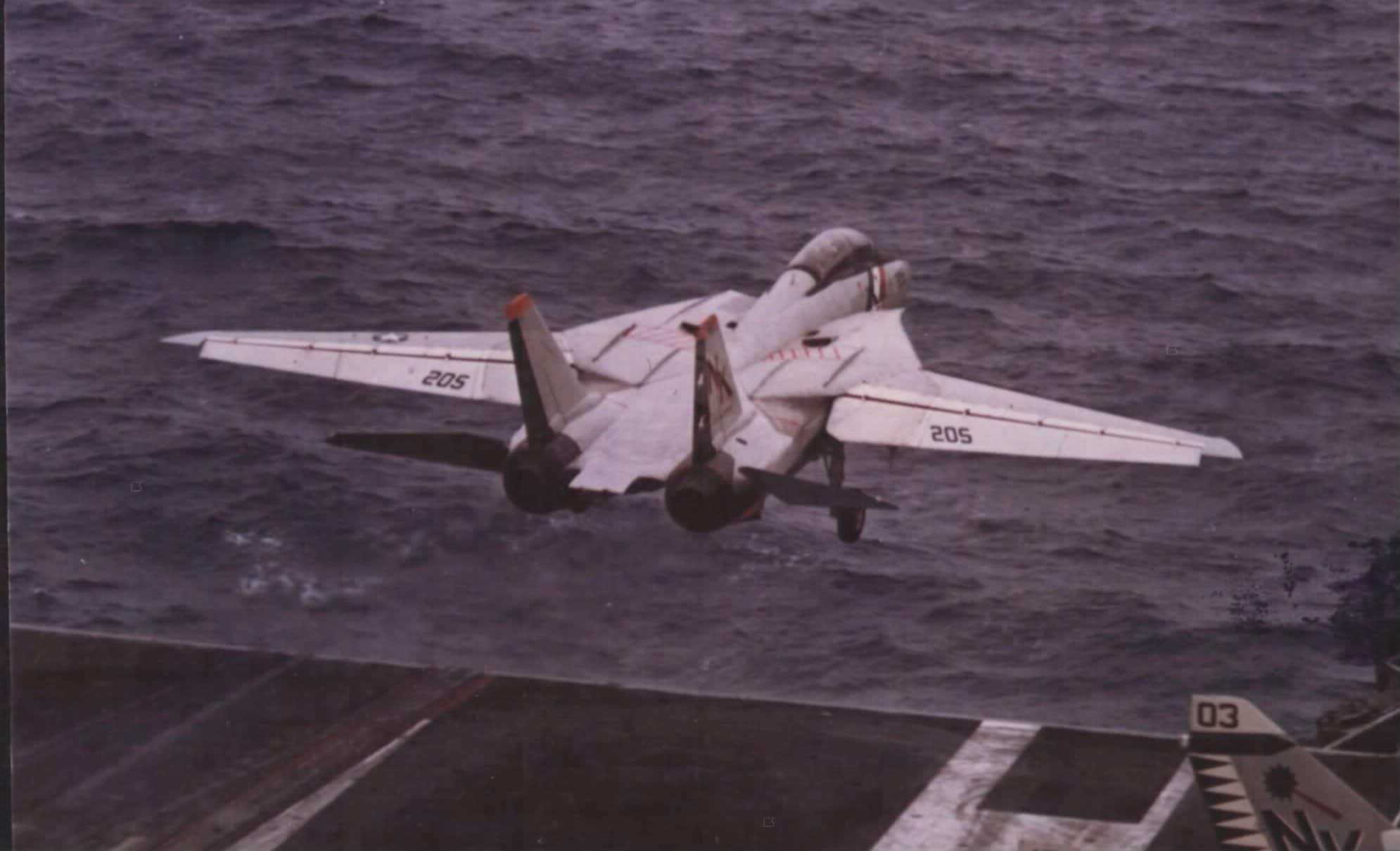
VF-2 F-14A leaving a carrier deck at sea
VF-2 F-14A image via the National Archives

Top Ten (or Eleven) Aviation-Related Memes Part 1

0

These Gems Are Guaranteed to Put a Smile On Your Face

There’s simply no getting around it. We’ve had a few tough years. From the politics to the biased media to the it-just-won’t-go-away ‘Rona, it’s been enough to make you want to roll your eyes, shake your head, and wonder what the H E double hockey sticks the NEXT few years will throw at us. Probably more of the same, but at least you can say you had a few minutes of light humor before the end of this particular trip around the sun. So enjoy! And Happy New Year Avgeekery Nation!

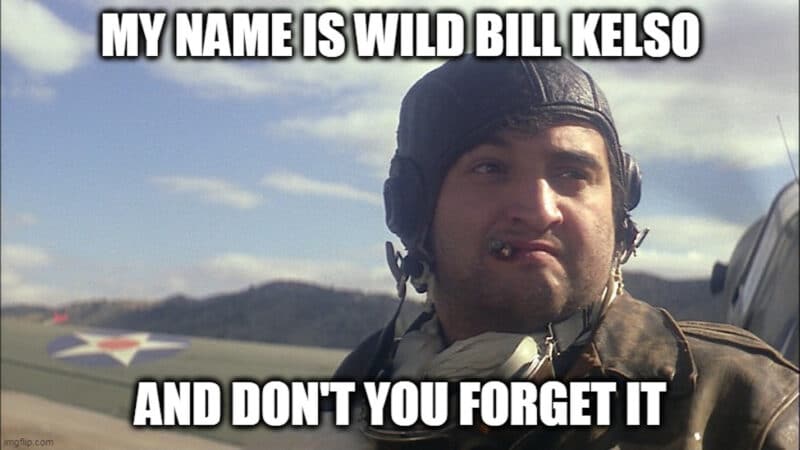
11a. McCroskey and Kramer Ponder the Problem

The 1980 movie Airplane! has been providing one liners and quips ever since it was released.

Cards
Top Ten (or Eleven) Aviation-Related Memes Part 1 29

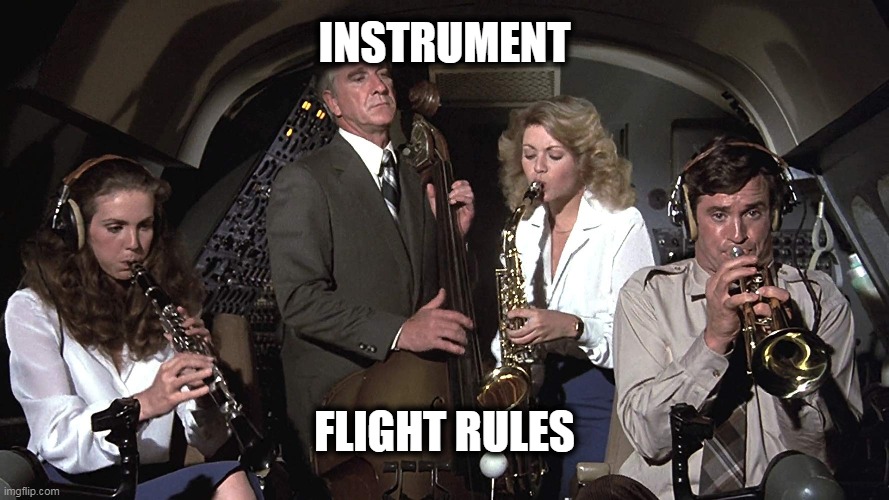
11b. IFR Indeed

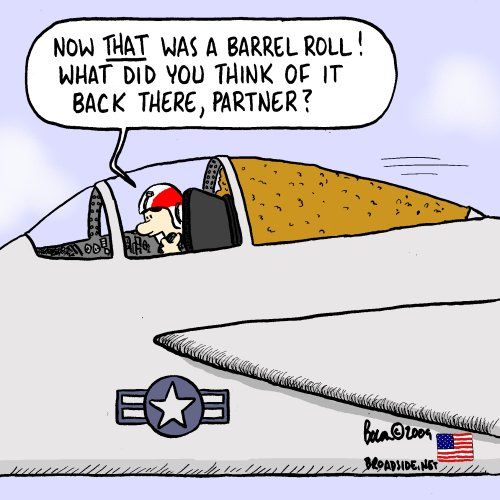
There was no way we could do just one from Airplane!

IFR
Top Ten (or Eleven) Aviation-Related Memes Part 1 30

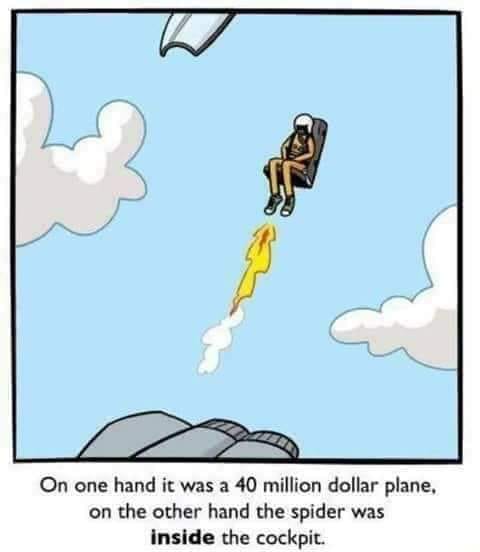
10. Joining the Martin-Baker Club

Sometimes you just have to pull those handles!

44677287 1621776107926719 3496202773077164032 n
Top Ten (or Eleven) Aviation-Related Memes Part 1 31

9. It Can Happen to the Best of Us

Looks like the backseater didn’t get to the airsick bag in time!

Pity the poor plane captain that has to clean the…
Top Ten (or Eleven) Aviation-Related Memes Part 1 32

8. Everyone Can Relate to This One

Before a couple of years ago this caption definitely wouldn’t have worked. Now it works perfectly.

130587490 3929182113767929 5695672455866892953 n
Top Ten (or Eleven) Aviation-Related Memes Part 1 33

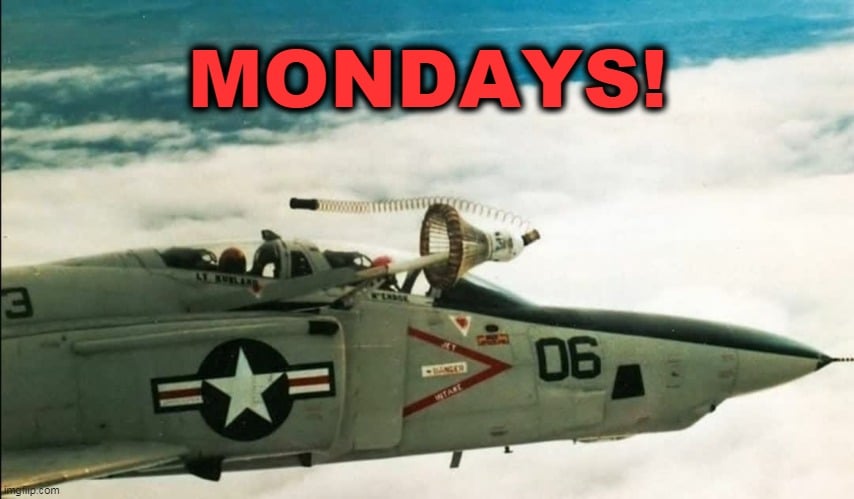
7. Everybody Deals With Mondays

We’ve been doing the Mondays! series for a while, but this one definitely hit home.

5hwq8q
Top Ten (or Eleven) Aviation-Related Memes Part 1 34

6. Terrain Avoidance Malfunction

Any air-to-ground collision you can fly away from…

4ztsop
Top Ten (or Eleven) Aviation-Related Memes Part 1 35

For the Top Five Bang NEXT PAGE Below

Twelve (or so) of the Very Best Aviation Books You So Need to Read

0

A Non-Fiction Reading List Guaranteed to Include Something for Every Avgeek

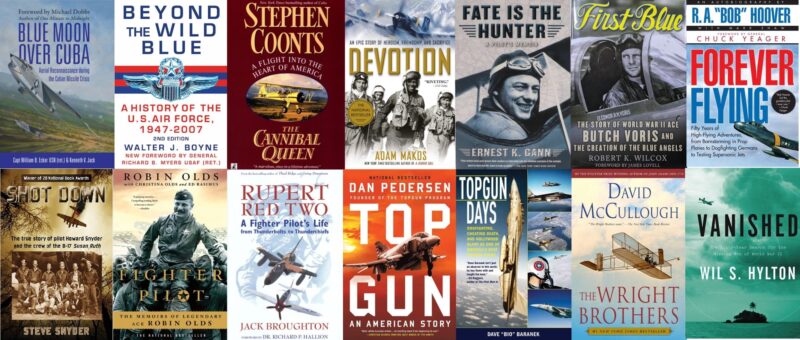
When we published our (first) list of aviation-related novels you so need to read we received lots of feedback. Some of it was welcome, some wasn’t. That’s the nature of social media. This piece is comprised strictly of non-fiction works. They’re listed in alphabetical order by title. If you’re an avid reader you probably own some or perhaps all of these pubs, but if you don’t we think you can’t go wrong with any of them. Therefore, on to the list!

BTWB2
Image via amazon

Beyond the Wild Blue:  A History of the U.S. Air Force, 1947-2007 by Walter J Boyne

A noted aviation historian and prolific author, the late Walter J. Boyne wrote hundreds of books and articles about our subject. He actually released two versions of Beyond the Wild Blue, the second of which was expanded to include the tumultuous ten years between 1997 and 2007. We recommend the Second Edition, but both of them, like the vast majority of Boyne’s works, are great reads. Published by Thomas Dunne Books in 2007. ISBN-13:  9780312358112

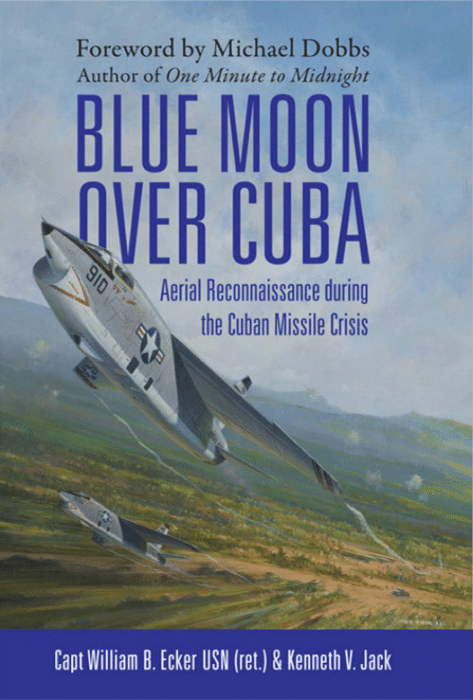
BMOC
Image via amazon

Blue Moon Over Cuba:  Aerial Reconnaissance during the Cuban Missile Crisis by William B. Ecker & Kenneth V. Jack

During the Cuban Missile Crisis, author Ecker was Commanding Officer of VFP-62. His book about the Fighting Photos and their critically important photographic reconnaissance missions over Cuba at the height of the crisis that brought the world to the brink is required reading for fans of the Crusader and Naval Aviation in general. Published by Osprey Publishing in 2012. ISBN-13:  9781780960715

CQ
Image via amazon

The Cannibal Queen by Stephen Coonts

Stephen Coonts is a former A-6 Intruder bombardier-navigator and a prolific writer of well-received novels, with several bestsellers under his belt- including Flight of the Intruder. During the summer of 1991 he took off in a Stearman biplane (The Cannibal Queen) with the goal of visiting all of the lower 48 States. His stories of the places he visited and the people he encountered during his open-cockpit odyssey are as entertaining as they are reveling. Published by Atria Books in 1992. ISBN-13:  9780671748845  

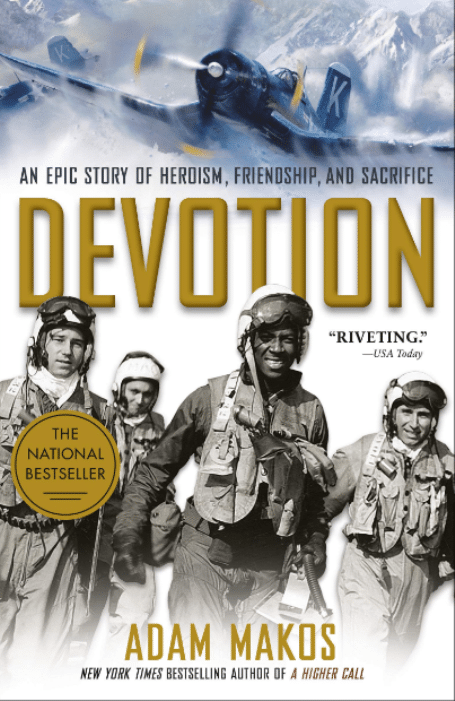
DEV
Image via amazon

Devotion:  An Epic Story of Heroism, Friendship, and Sacrifice by Adam Makos

Devotion is the story of two Naval Aviators who became unlikely friends and were literally willing to die for each other. If you’re familiar with the story of Ensign Jesse Brown and the lengths to which Lieutenant Thomas Hudner went in order to try and save him you know how the story ended, but the level of detail author Makos includes in the book and the friendship between the two men makes the book required reading for our times as well. Published by Random House in 2015. ISBN-13:  9780804176583

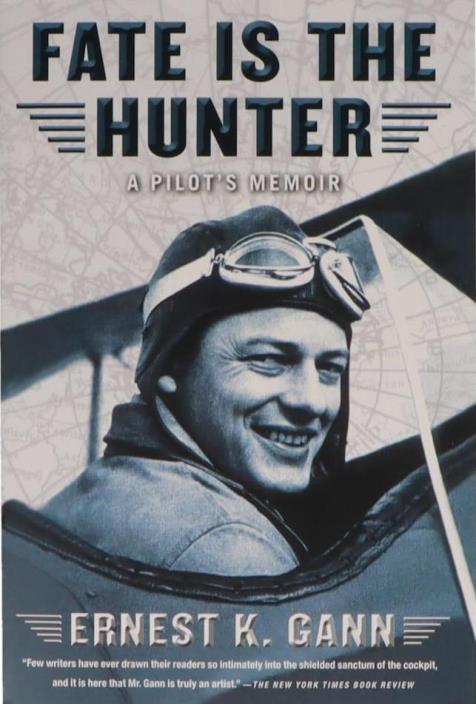
FATE
Image via amazon

Fate is the Hunter- A Pilot’s Memoir by Ernest K. Gann

When we published first aviation-related novels list we left Fate is the Hunter off that list because it’s not a novel. Rather, the book is autobiographical (as many of the great aviation books are) and Gann, with over 10,000 hours of flight time, many of them as a pilot with Air Transport Command, had a great many stories to tell. He told them exceedingly well, and his book withstands the test of time better than most. Published by Simon & Schuster 1961. ISBN-13:  9781416534075

For More Great Reads Bang NEXT PAGE Below

WATCH: SLUFs, BUFFs, and Warthogs Go Hog Wild Over Wisconsin

0

These Videos Capture Air National Guard Units Beating Up a Wisconsin Target Range

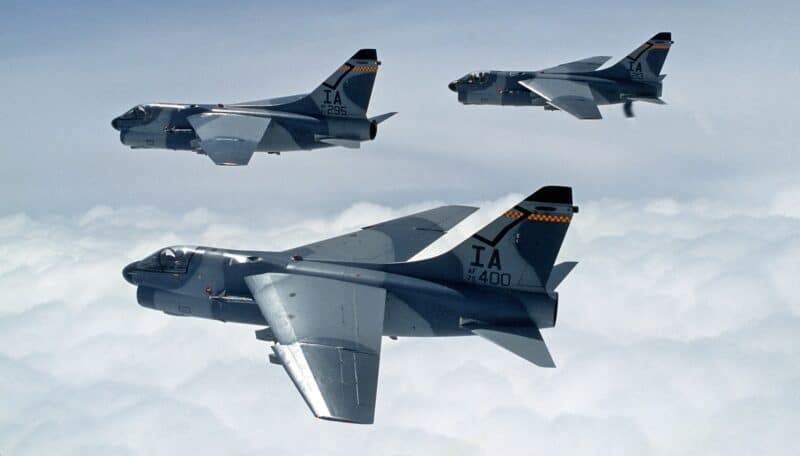
Hardwood Air-to-Ground Weapons Range (R-6904), near Finley, WI is one of fourteen Air National Guard (ANG) bombing ranges located throughout the United States. The entire facility is under the operational control of the Air National Guard as part of the Volk Field Combat Readiness Training Center located near Camp Douglas, Wisconsin. This footage, shot during at the range during 1992, captured 124th Tactical Fighter Squadron (TFS) of the Iowa Air National Guard (ANG) Ling-Temco-Vought A-7D and A-7K Corsair IIs based at Des Moines Air National Guard Base (ANGB). The video was uploaded to YouTube by At The Fence 111. Listen for the brrrrttttt!

Part 1

[youtube id=”QsuM2DfrW4M” width=”800″ height=”454″ position=”left”]

The mission of Hardwood Range is to provide air-to-ground weapons delivery and threat awareness training for combat aircrews through the presentation of a variety of realistic target arrays and use of several types of threat emitter systems. In this second video, also uploaded by At The Fence 111, captured 110th Tactical Fighter Group (TFG) Fairchild Republic A-10A and OA-10A Warthogs of the Michigan ANG based at Battle Creek ANGB in Michigan, 115th Fighter Wing (FW) F-16s of the Wisconsin ANG based at Truax Field ANGB, more A-7Ds from the Iowa ANG, and even some Boeing B-52G Stratofortresses from the 410th Bombardment Wing (BW) out of K.I. Sawyer AFB in Michigan. More bbbbrrrrrrttt!

Part 2

[youtube id=”4OnPeKFyRnM” width=”800″ height=”454″ position=”left”]

The third video from At The Fence 111 was shot during August of 1992 and features A-10s from the 442nd FW of the Missouri ANG out of Richards-Gebaur AFB, A-7Ds from the 185th FW of the South Dakota ANG based at Sioux City ANGB, and 175th FS of the 114th FW F-16s of the South Dakota ANG based at Joe Foss Field ANG Station near Sioux Falls. Even more BRRRRRRTTTTT!

Part 3

[youtube id=”7Y2Rna83kqY” width=”800″ height=”454″ position=”left”]

History of the Range

According to the Air National Guard, construction for the range began in 1954 and the first aircraft began using the range in 1955. Since that time, Hardwood has continued to expand to meet the flying requirements of the ANG. Its day-to-day users include ANG units from Illinois, Iowa, Minnesota, South Dakota, Michigan, and Wisconsin, as well as Air Force Reserve units from Indiana, Illinois, Minnesota and Wisconsin. Active Duty Air Force bomber units from throughout the United States also use Hardwood Range, as do Army, Army National Guard and Reserve, Navy, Marine Corps, and occasionally Canadian Forces aircraft. The range is used on a priority basis by flying units deployed to Volk Field for training. Special testing for the F-15E “Strike Eagle” fighter, plus a special Department of Defense Joint Camouflage, Concealment and Deception (JCCD) evaluation were conducted at Hardwood Range. The facility has also been used for Operational Test and Evaluation of the F-15K (used by South Korea) and F-15SG (used by Singapore.)

Hardwood Range
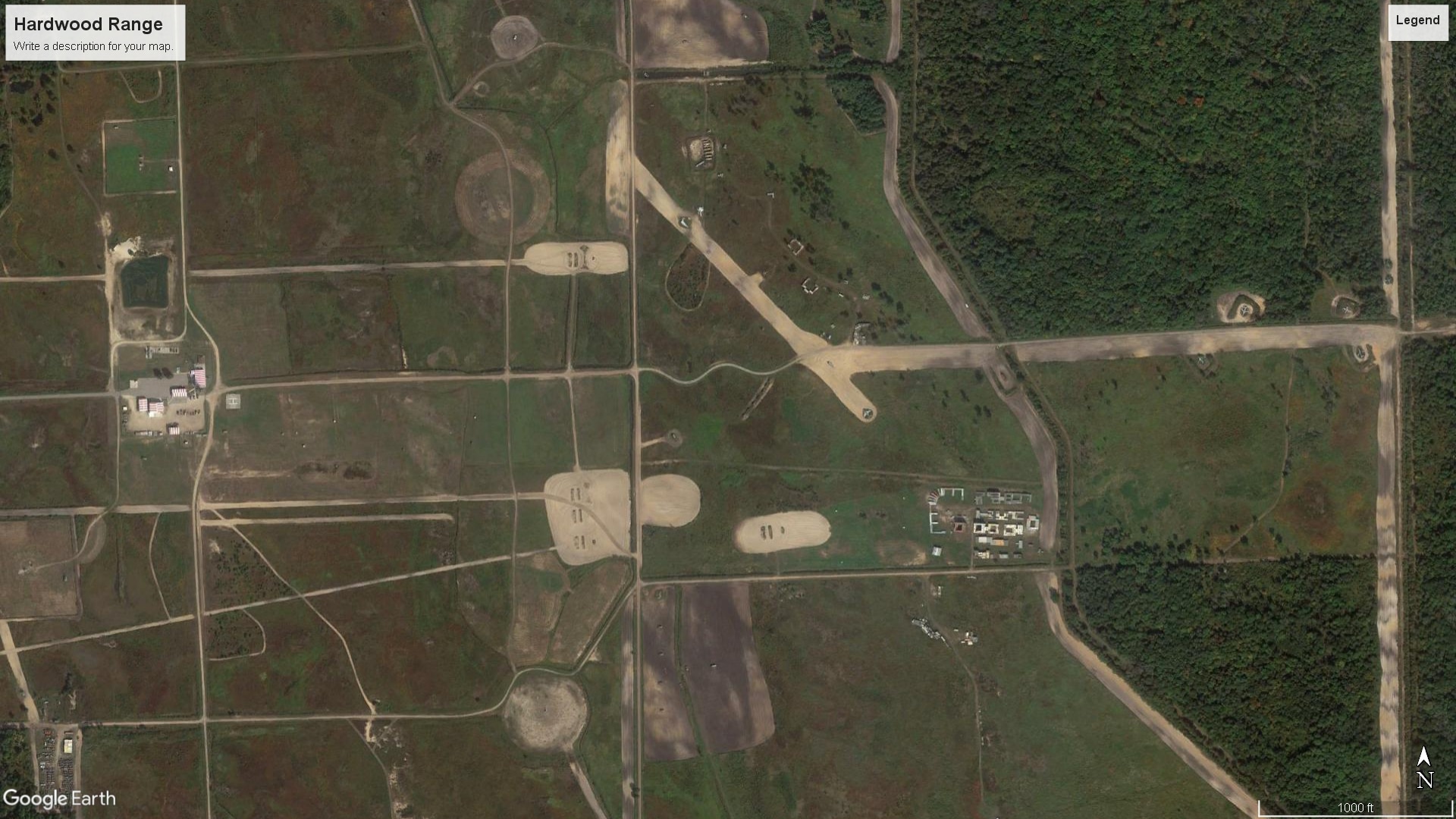
Hardwood range. image via google earth

Target Complex Composition

The targets are arranged in three areas north, south and east of the support facilities. In addition to  conventional bomb circle targets, simulated tactical targets include vehicle convoys, a SCUD missile launcher, aircraft in revetments and on runways, a mobile command post, fuel storage tanks, main battle tanks, bridge, radar installations, anti-aircraft sites (including a Soviet-style six-pointed star-shaped surface –to-air missile target), and a tank approved for inert LGB deliveries. In addition, an urban target complex is available and has proven very effective at supporting both Joint Terminal Attack Controller and aircrew Close Air Support training.

12
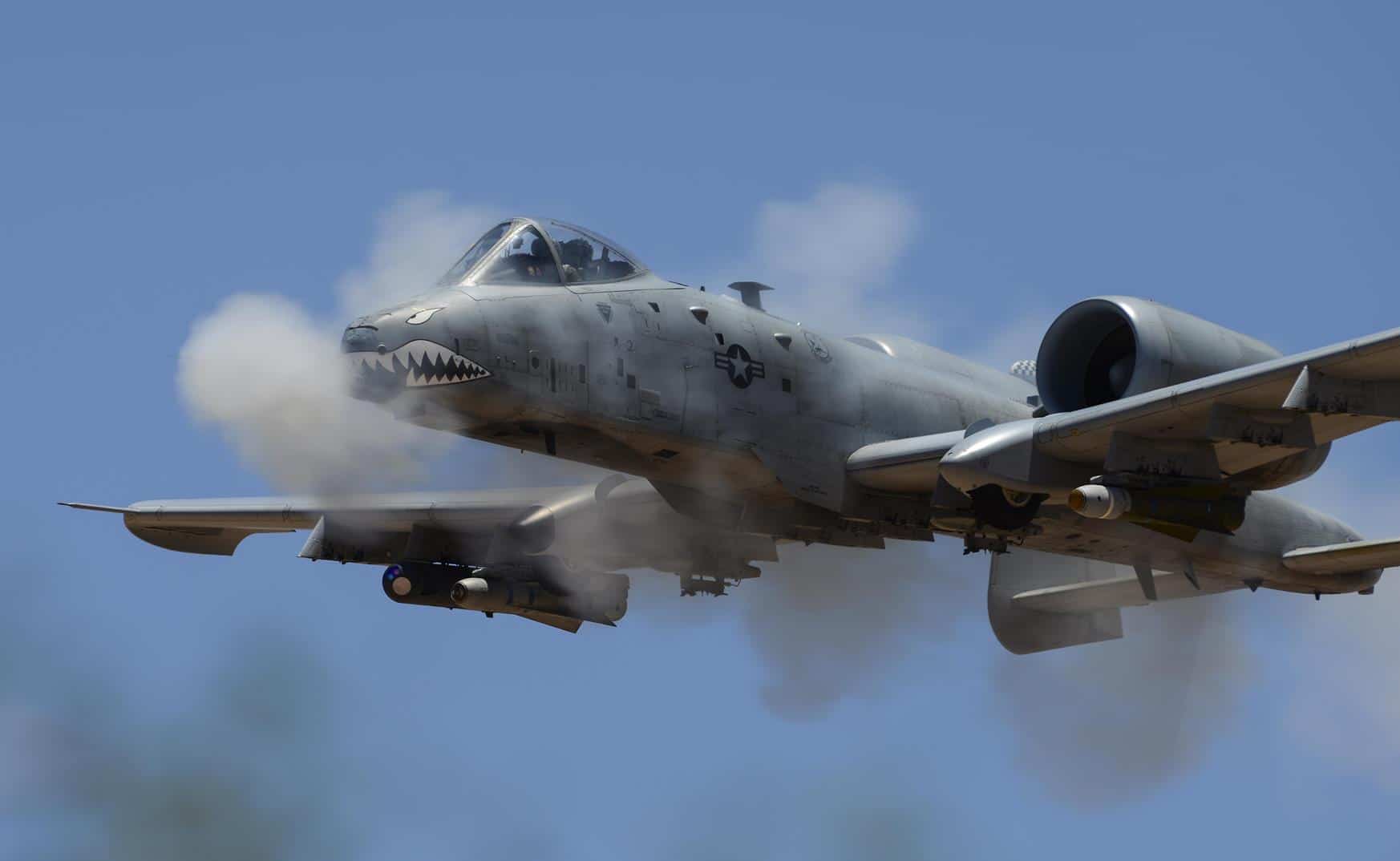
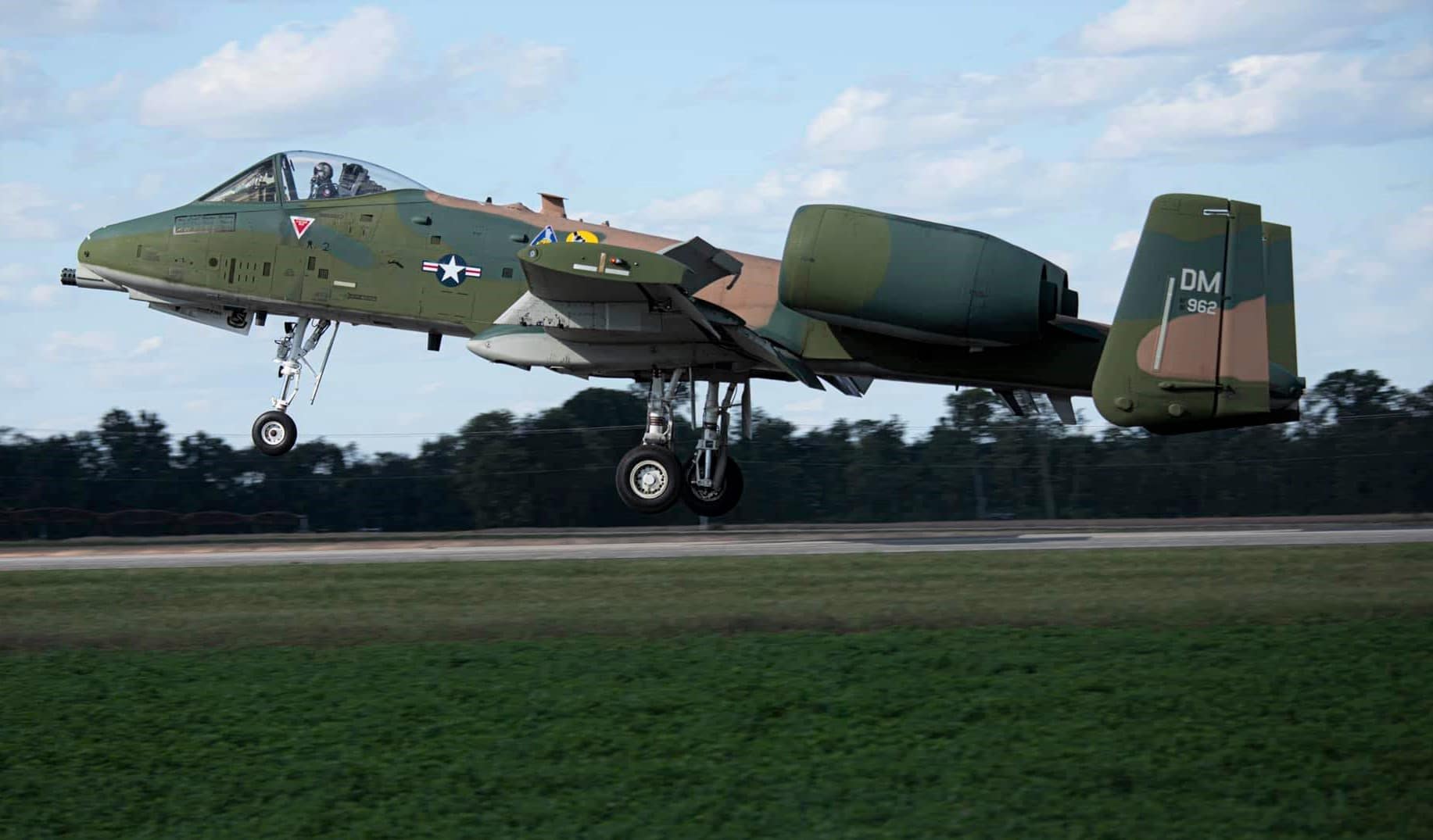
A-10 doing the brrrrrrtttt thing. image via US Air Force

Things That Go Boom

Munitions employed at the range are inert or practice ordnance. High explosive and white phosphorous munitions are not authorized. Practice ordnance includes 25-pound BDU-33 or BDU-48 bombs that have a spotting charge which releases a cloud of smoke on impact. Mk-82/BDU-50, 500-pound and Mk-84, 2,000-pound bombs are also used on some targets. These inert bombs are dropped either in Snakeye or Slick configurations. In either case, their weight creates enough splash (dirt spray) to be easily spotted without using an explosive charge. The addition of a LGB target allows inert GBU 10/12 drops for laser guided bomb employment.

DF ST 89 06351a
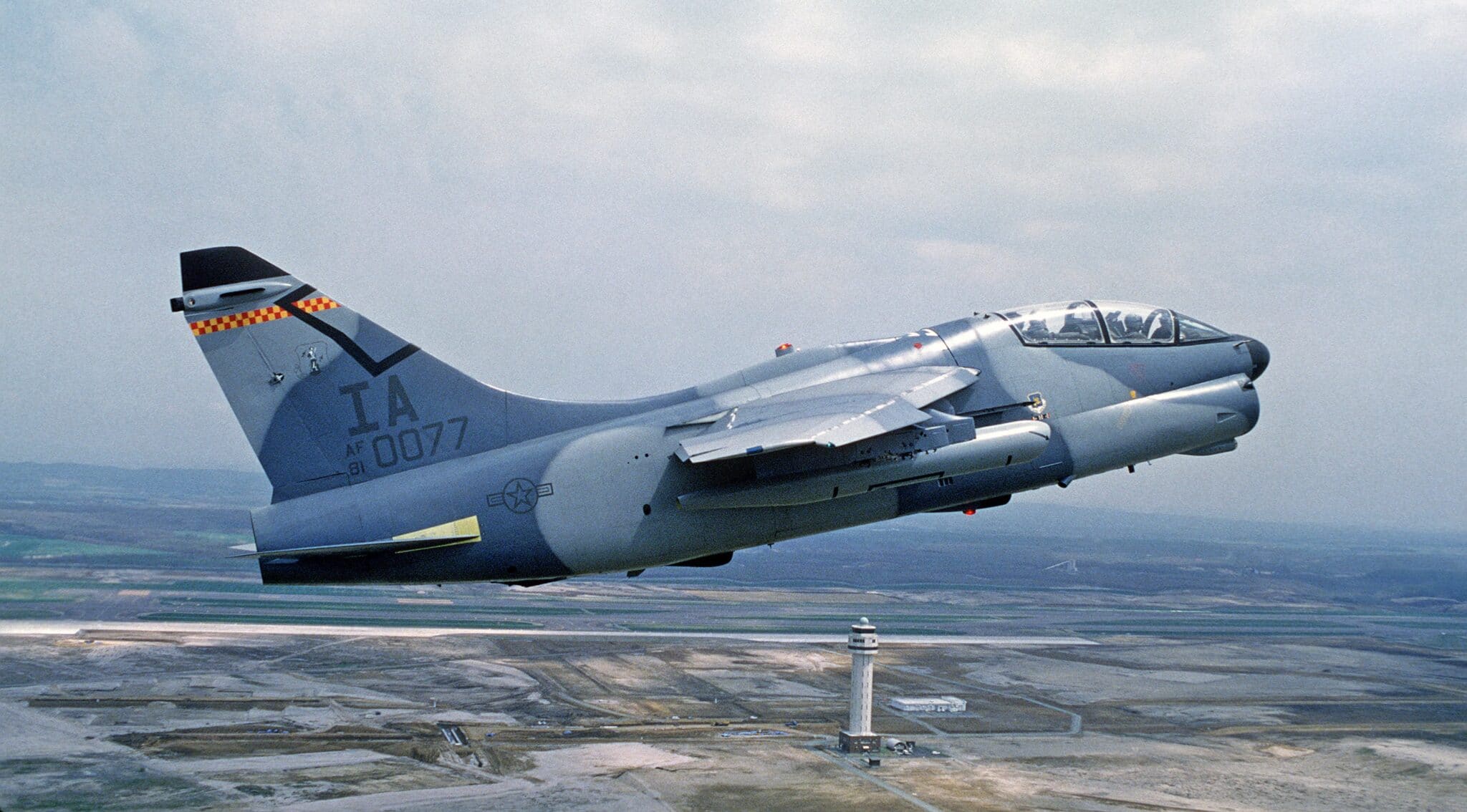
Iowa ANG A-7K. Image via us air force

Things That Go BRRRTTT!

Bombs and rockets are scored visually using spotting scopes located in the flank and main towers. The flank tower observers relay the observed scores to main tower where the coordinates are entered into the computer and the score calculated in meters and degrees from the target. The score is relayed to the pilot for immediate reference and recorded for delivery to the pilot’s unit. Forward-firing ordnance from aircraft includes 7.62mm and .50 Cal. machine guns and 20mm or 30mm cannons. These may be scored optically or acoustically. All use non-explosive ammunition. Depleted uranium rounds are not authorized for use on the range.

Hardwood SAM Target
Hardwood SAM target. image via google earth

Threat Simulation on the Range

 Hardwood Range is capable of providing a range of simulated threats to aircrews. The range has small, tactical threat emitters that look like a small radar dish. They emit electronic signals simulating different threats such as surface-to-air missiles, anti-aircraft artillery, and radar tracking devices. Two Smoky Sam simulators are also available. These are launch platforms for Styrofoam rockets, which give a visual indication of a surface-to-air missile fired at the aircraft. The range also has three Unmanned Threat Emitters Systems (UMTES). The UMTES are controlled at Volk Field and provide realistic threat signaling and tracking of a variety of radar-guided threats.

DF ST 85 12451
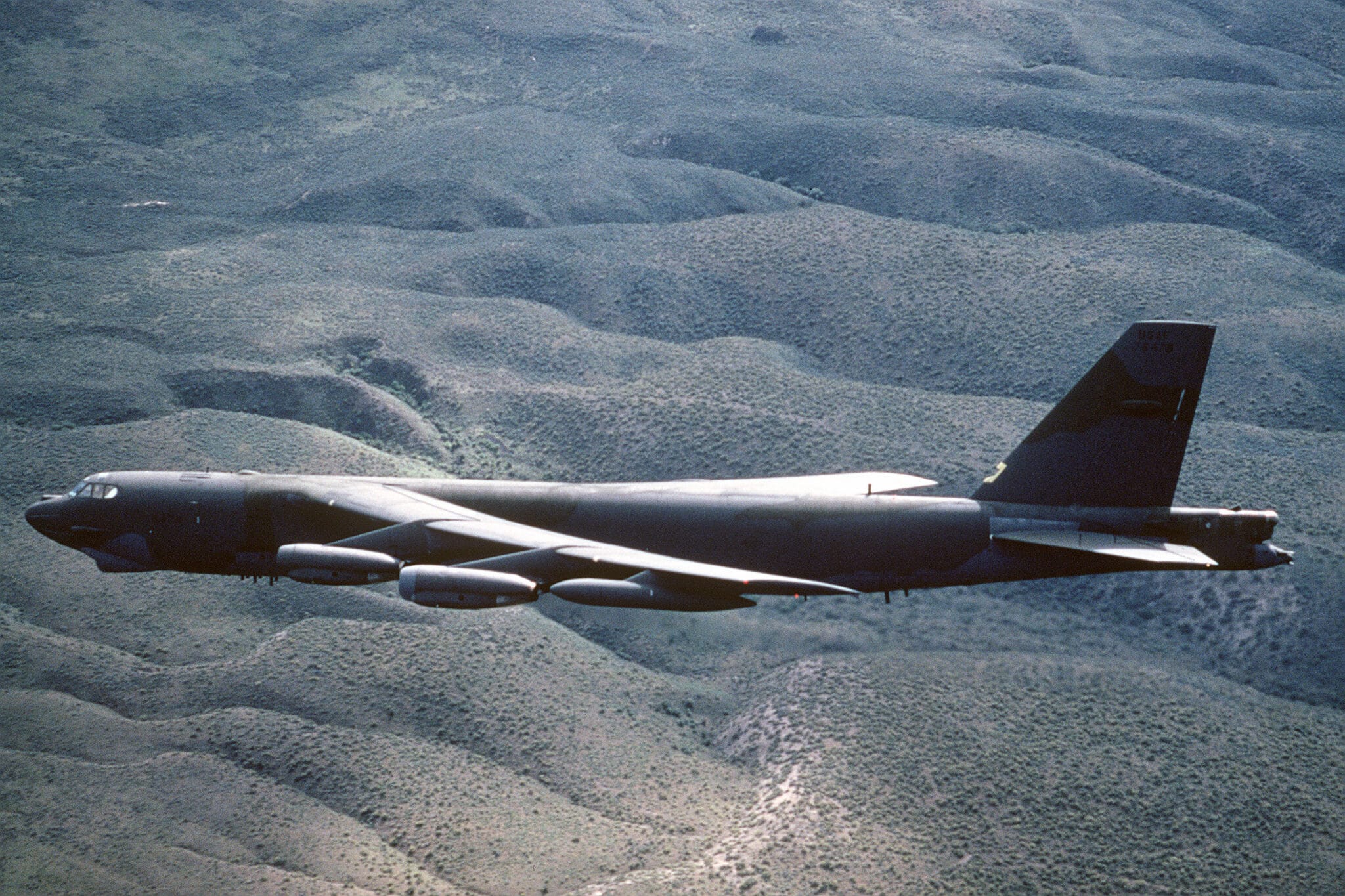
B-52G. image via us air force

Doing the Night Thing

For night missions, the conventional bomb circle on the south portion of the range may be illuminated. The range also has night vision equipment for covert night operations. A new Special Operations Forces Laser Acquisition Marker (SOFLAM) laser system allows ground laser designation on approved Hardwood range targets.

220707466 10159391269797378 1308327761853749450 n
Wisconsin ANG F-16s. image via us air force

WATCH: Fat Albert Rockets Into Airshow Skies

JATO Takeoffs Were Both Awesome to Behold and to Experience

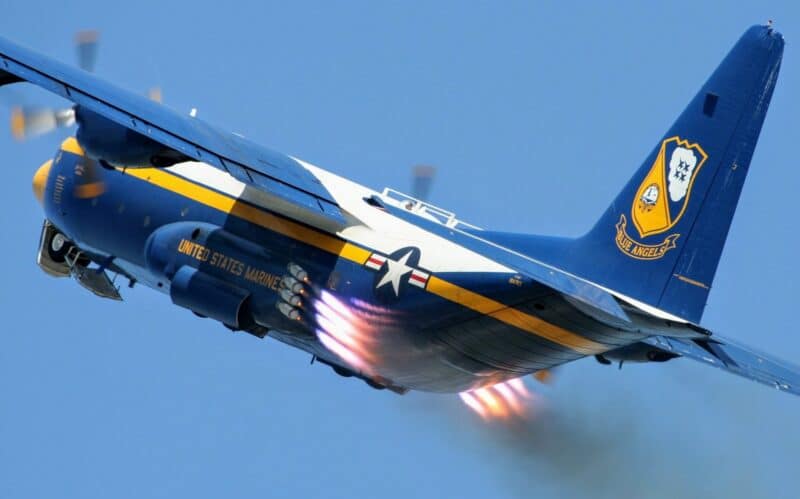
The Blue Angels retired their long-serving Lockheed Martin C-130T Hercules, AKA Fat Albert, AKA C-130T Bureau Number (BuNo) 164763 and CN 382-5258) in May of 2019 after 30,000 hours of flight time and countless airshow performances. The airframe is now located at Naval Air Station Joint Reserve Base (NASJRB) Fort Worth in Texas, where it is used for instructing maintainers of the several hundred C-130s still in service. One Fat Albert airshow favorite was the Jet Assisted Takeoff (JATO) demonstration. After 2009 JATO bottles were nearly extinct so that part of Fat Albert’s airshow routine was axed. So It’s a good thing there were plenty of video cameras in operation while the JATO takeoffs were still going on. Enjoy!

US Navy 040627 N 7559C 001 The U.S. Marine Corps C 130 Herculesa 1
Image via US Navy/National ARchives

Scorching Takeoff at Miramar

Captured at MCAS Miramar in 2009 and uploaded to YouTube by The Nellis Spotter.

[youtube id=”1A3AeYagLqg” width=”800″ height=”454″ position=”left”]

2560px Lockheed C 130T Fat Albert
Image via US Navy/National ARchives

Another Scorcher

Captured at an undisclosed location and date but uploaded to YouTube by sleepingdogtv.

[youtube id=”zWSultjYpSU” width=”800″ height=”454″ position=”left”]

2560px thumbnail
Image via US Navy/National ARchives

Miramar Blast

Captured at the 2009 MCAS Miramar Twilight Show and uploaded to YouTube by spencerhughes2255.

[youtube id=”VHOvoO-6nWQ” width=”800″ height=”454″ position=”left”]

041009 N 0879R 004
Image via US Navy/National ARchives

East Coast Kick in the Tail

Captured at an NAS Oceana Airshow (unknown date) and uploaded to YouTube by thefightercommunity.

[youtube id=”1HiLxMSNZLA” width=”800″ height=”454″ position=”left”]

4062371323 fe463e485c k
Image via US Navy/National ARchives

Ride Along in Style

Captured at NAS Oceana, this ride along in the cargo bay of Fat Albert was uploaded to YouTube by ordieao2f18. Language warning!

[youtube id=”w0Io07EAX1s” width=”800″ height=”454″ position=”left”]

US Navy 050931 N 9769P 002 The U.S. Marine Corps C 130 Hercules Fat Albert assigned to the U.S. Navy Blue Angels flight demonstration team uses Jet Assisted Tak
Image via US Navy/National ARchives

For More Fat Albert JATO Takeoffs Bang NEXT PAGE Below

WATCH: The Challengers Go Air-to-Air in Their TA-4J Skyhawks

0

VC-10 Flew an Amazing Array of Aircraft Over Nearly 50 Years of History

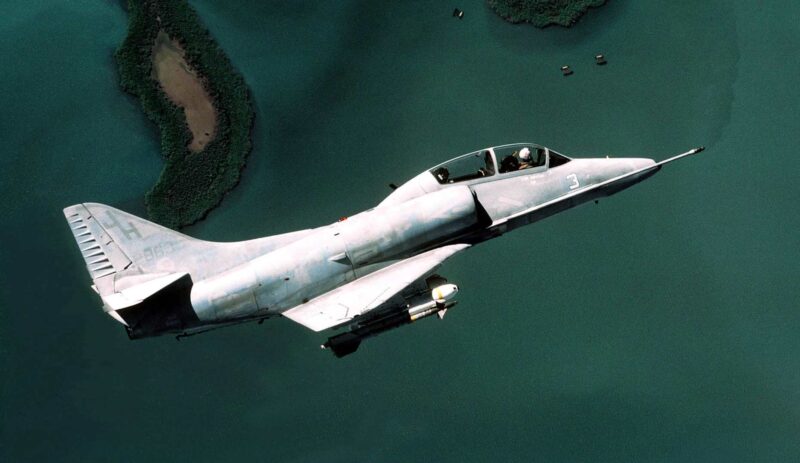
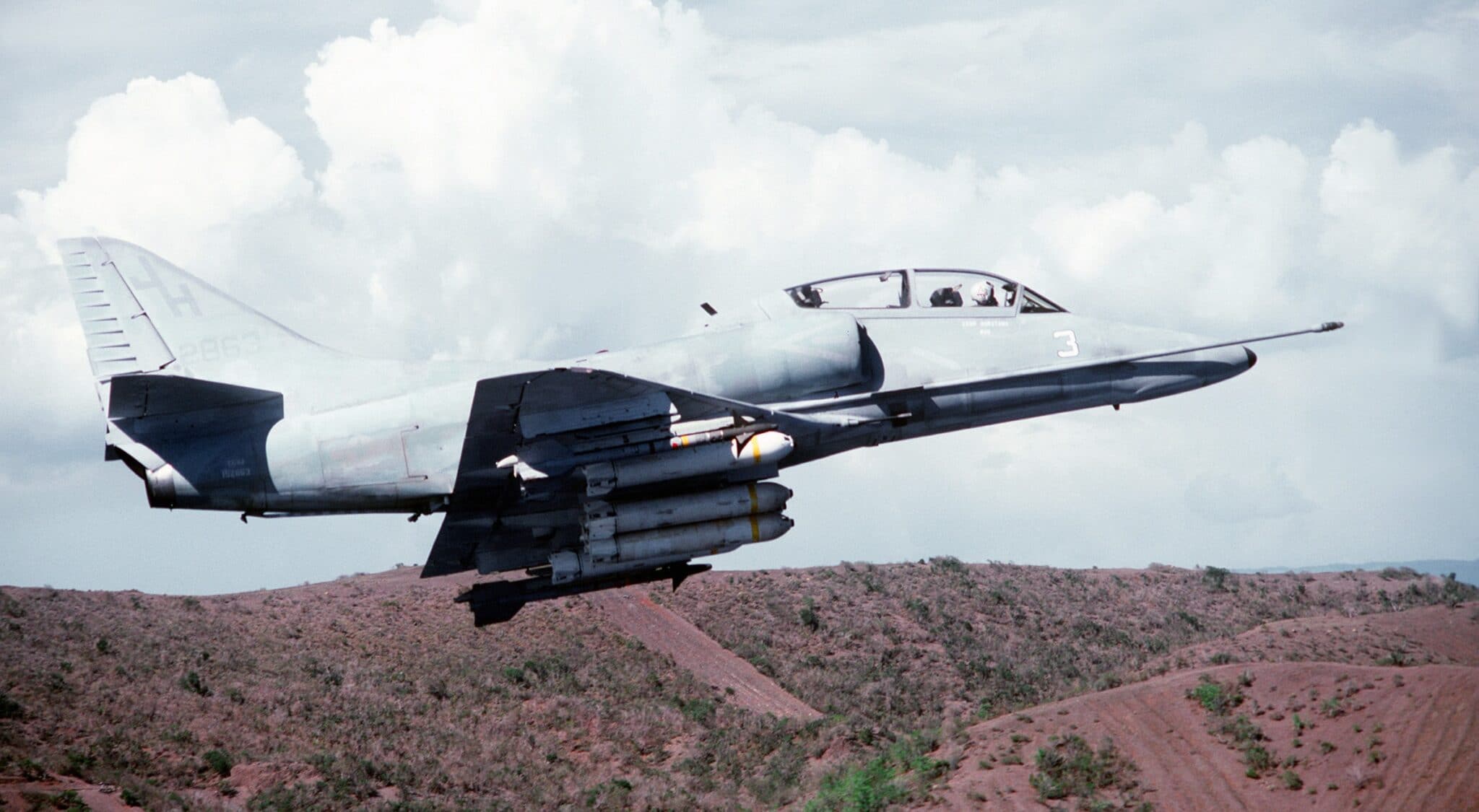
Fleet Composite Squadron TEN (VC-10) flew McDonnell Douglas TA-4J Skyhawks modified to carry air-to-ground ordnance and AIM-9 Sidewinder air-to-air missiles. VC-10 also flew one of the 4 EA-4F Skyhawks (converted from TA-4Fs) for a time during the late 1980s. The video of VC-10 in action was filmed in October of 1978 and includes the launch and recovery of two TA-4J aircraft from VC-10, along with some formation flying and some 1-v-1 maneuver training.  According to the uploader of the video, it was converted from Super-8 movie film. The first third of the video is silent. The pilot-in-command was LCDR Chapman, lead aircraft was LCDR Noonan. The video was uploaded to YouTube by Pete O. Enjoy!

[youtube id=”mKOiG1px7cQ” width=”800″ height=”454″ position=”left”]

The First VC-10 Was Formed in 1943

The first squadron to be designated VC-10 was established as Composite Squadron TEN (VC-10) on 23 September 1943 at Naval Air Station (NAS) Seattle (Sand Point). VC-10 operated both Grumman FM-2 Wildcat fighters and General Motors TBM Avenger torpedo bombers. The escort carrier USS Gambier Bay (CVE-73) sailed with VC-10 embarked on 1 May 1944. VC-10 participated in battles in the Marianas and Peleliu before the Gambier Bay was sunk during the Battle off Samar. The remnants of the squadron operated from Leyte for a time. In January 1945 the squadron was reconstituted at Naval Auxiliary Air Station (NAAS) Ventura County Airport in California. The squadron spent the remainder the war training in preparation for redeployment, which did not take place. VC-10 was disestablished at the conclusion of World War II.

lossy page1 2822px F4F Wildcat in formation
Wildcats. image via national naval aviation museum

The Second VC-10 Was Also Formed in 1943- Just Not as VC-10

Utility Squadron SIXTEEN (VJ-16) Mallards was established on 1 December 1943 at NAS Isla Grande in San Juan, Puerto Rico. VJ-16 flew Grumman J2F-5/6 Ducks, Consolidated PBY-5/5A Catalinas, Grumman TBF-1 Avengers, Douglas SBD-5 Dauntlesses, and North American SNJ-4 trainers while providing gunnery target towing services, radar tracking, search and rescue (SAR), and photographic services to ships and aircraft in the Caribbean area. After spending April of 1944 at NAAF Roosevelt Roads in Puerto Rico, VJ-16 moved to NAS Miami, Florida in May 1944. While operating from NAS Miami, VJ-16 flew Martin JM-1/2 Marauders, Grumman F6F-5 Hellcats, General Motors FM-2 Wildcats and Grumman TBM-1J/3J Avengers.

US Navy Martin B 26 JM 1
JM-1 marauder. image via national naval aviation museum

Seeing the World

VJ-16 also operated detachments in Florida, Louisiana, Texas, Brazil, Cuba, Panama and Trinidad. VJ-16 then converged at NAS Guantanamo Bay/McCalla Field in Cuba in April of 1945. On 15 November 1945 VJ-16 was redesignated Utility Squadron TEN (VU-10). For the next 15 years VU-10 operated Martin JD-1 Marauders, Grumman UF-1 Albatrosses, Martin PBM-5A Mariners, Consolidated PBY-6A Catalinas, Douglas R4D-5 Skytains, and Beechcraft SNB-5s. Drone controller aircraft assigned to VU-10 included Grumman F6F-5D Hellcats, Grumman F7F-2D Tigercats, Grumman F8F-2D Bearcats, Grumman F9F-6D Panthers, Grumman F9F-8D Cougars, and North American FJ-3D2 Furies. VU-10 also flew Grumman F6F-5K Hellcat, Culver TD2C, and Radioplane KD2R-5 target drones.

Picture n mod
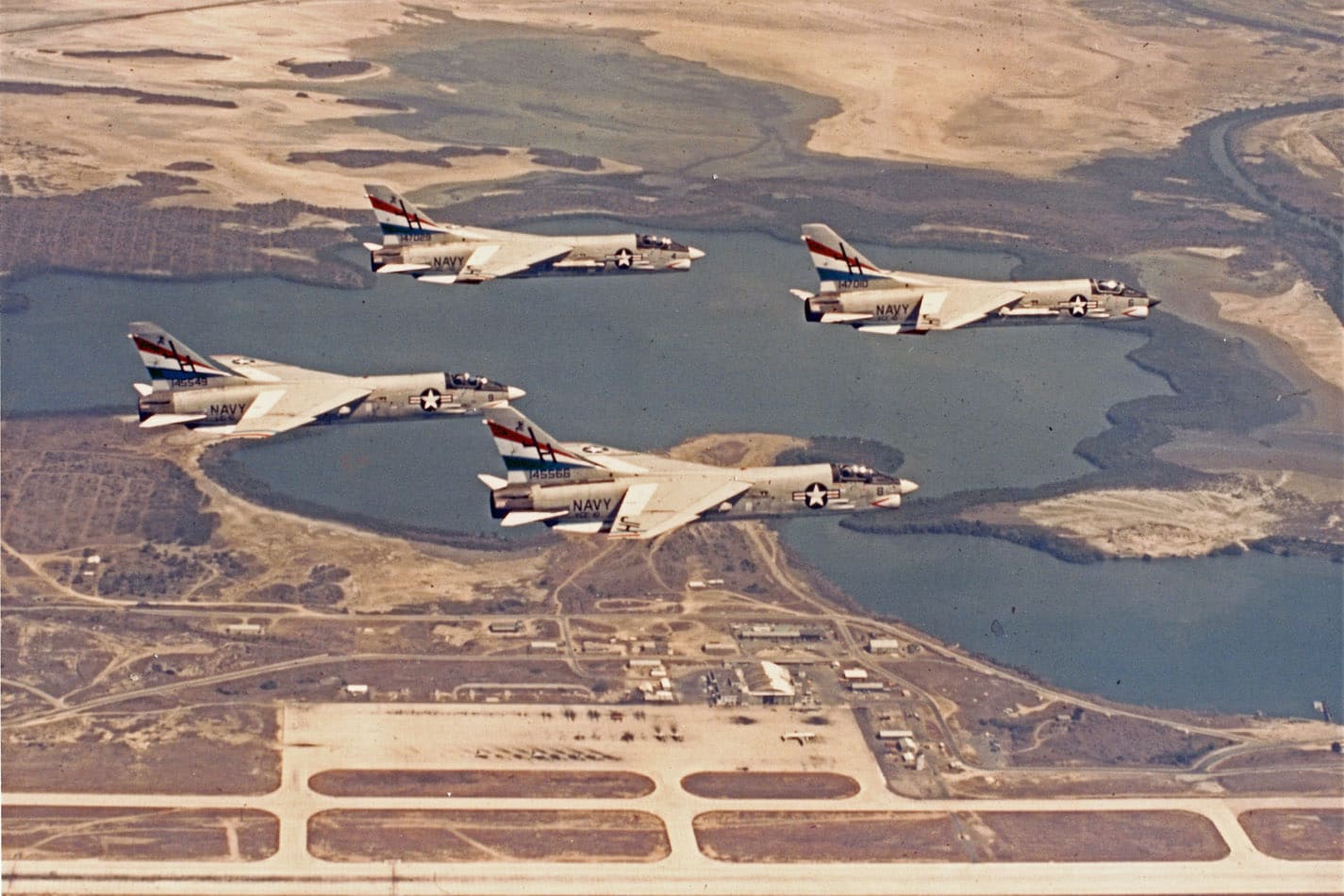
VC-10 F-8 Crusaders. image via national archives

Gitmo

VU-10, by then named the Challengers, moved across the bay to NAS Guantanamo Bay/Leeward Point Field in January 1960. VU-10 defended Gitmo during the Cuban Revolution and was tasked with offensive missions during the October 1962 Cuban Missile Crisis had they taken place. On 1 July 1965 VU-10 was redesignated Fleet Composite Squadron TEN (VC-10). At the time VC-10 was flying Grumman US-2C Trackers and Vought F-8B/D/A/C/K Crusaders. By the time TA-4F and TA-4J Skyhawks arrived in 1975, VC-10 was often referred to as the Proud Pelicans. The Scooters replaced the last of the Crusaders by 1976. VC-10 continued to provide aerial target towing services for fleet training and Dissimilar Air Combat Maneuver Training (DACT) for Atlantic Fleet Carrier Air Wings during pre-deployment work-ups until 14 August 1993, when VC-10 was disestablished at Naval Station Guantanamo Bay.

DN ST 93 02568a
VC-10 TA-4J skyhawk. Image via national archives

WATCH: Day and Night Flight Operations Aboard the Kennedy

The Big John and CVW-3 Star In These Up Close and Personal Videos

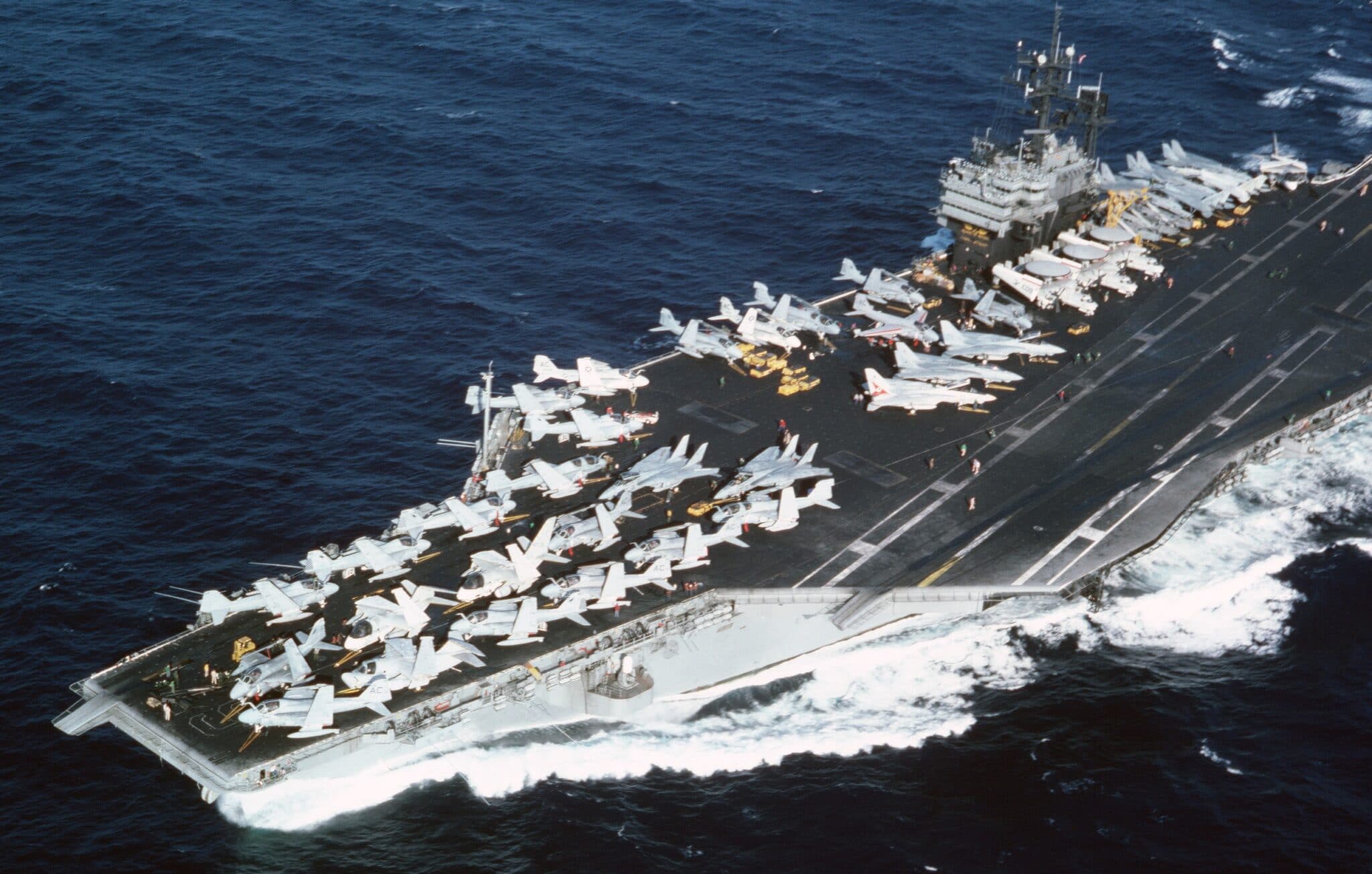
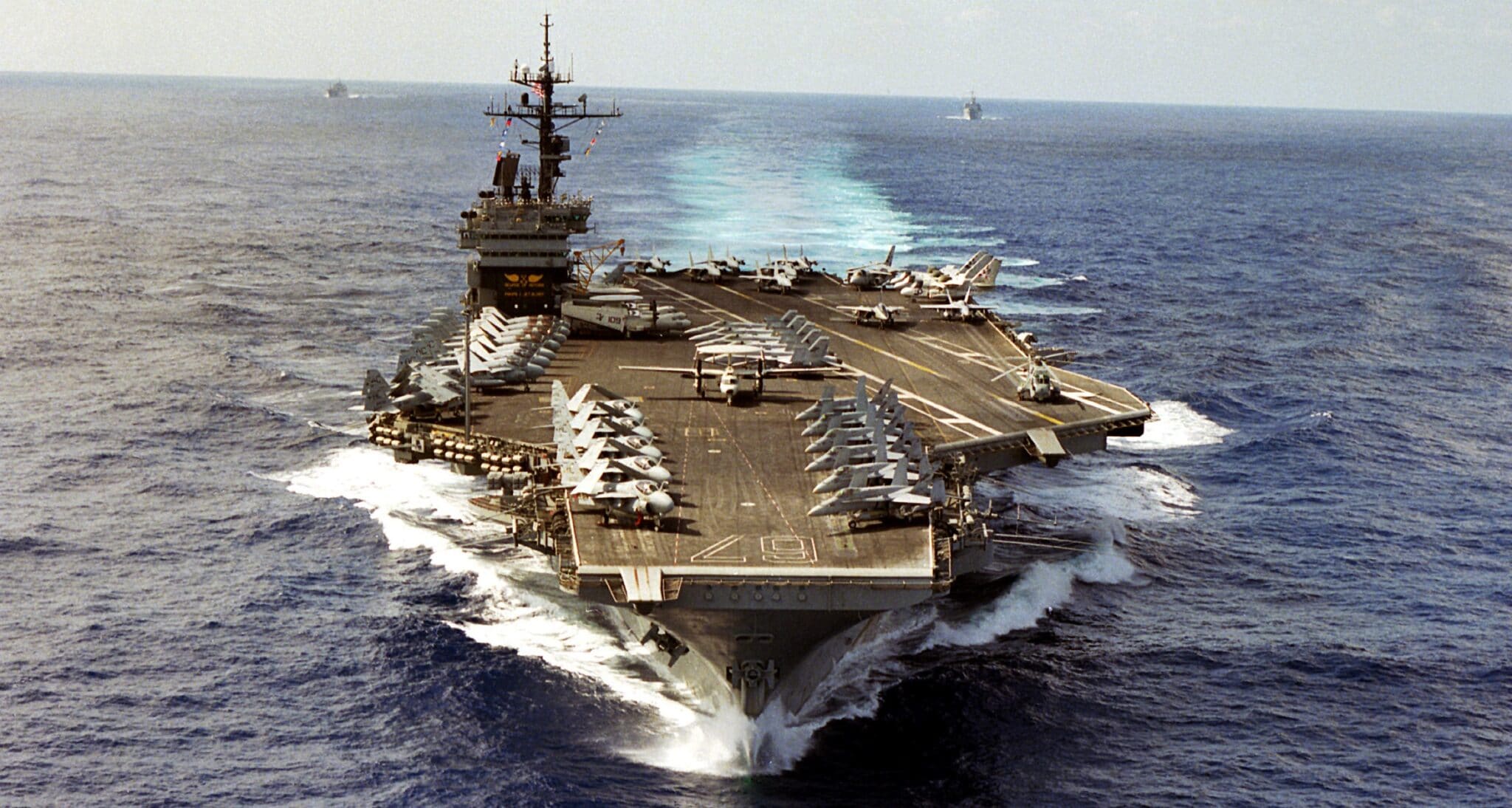
When the aircraft carrier USS John F Kennedy (CVA-67) deployed to the Mediterranean Sea for Operation Provide Promise in 1992, Carrier Air Wing THREE (CVW-3) was embarked aboard the Big John. Operation Provide Promise was the humanitarian relief effort in Bosnia and Herzegovina that occurred during the Yugoslav Wars, from 2 July 1992 until 9 January 1996, which made it the longest running humanitarian airlift in history. Enjoy these videos of CVW-3 in action aboard Big John, all four of which were uploaded to YouTube by David B Cross.

Flight Deck action

[youtube id=”e_IDKj_MkU4″ width=”800″ height=”454″ position=”left”]

Carrier Air Wing THREE Arriving

DN ST 89 02161
CVW-3 aboard the kennedy. image via national archives

While embarked aboard the Big John for her Mediterranean Sea deployment (7 October 1992 to 7 April 1993), CVW-3 consisted of VF-14 Tophatters and VF-32 Swordsmen flying the Grumman F-14A Tomcat, VFA-37 Ragin’ Bulls and VFA-105 Gunslingers flying the McDonnell Douglas F/A-18C Hornet, VA-75 Sunday Punchers flying the Grumman A-6E Intruder, VAW-126 Seahawks flying the Grumman E-2C Hawkeye, VAQ-130 Zappers flying the Grumman EA-6B Prowler, VS-22 Checkmates flying the Lockheed S-3B Viking, HS-7 Dusty Dogs flying the Sikorsky SH-2H Sea King, and Detachment 1 from VRC-40 Rawhides flying the Grumman C-2A Greyhound. This was the last deployment aboard the ship for CVW-3.

Flight Deck Action- Starboard Quarter View

[youtube id=”yTb–RiaIZI” width=”800″ height=”454″ position=”left”]

It Takes a Carrier Strike Group

DN SC 93 00851
Kennedy strike group. image via national archives

Accompanying the Kennedy during her 1992-1993 cruise were the Ticonderoga-class guided missile cruisers USS Gettysburg (CG-64) and USS Leyte Gulf (CG-55), the Belknap-class guided missile cruiser USS  Wainwright (CG-28), the Spruance-class destroyer USS Caron (DD-970), the Knox-class frigate USS Capodanno (FF-1093), the Perry-class guided missile frigates USS Halyburton (FFG-40) and USS McInerney (FFG-8), the Los Angeles-class attack submarine USS Albuquerque (SSN-706), the Sturgeon-class attack submarine USS Seahorse (SSN-669), the Kilauea-class ammunition ship USS Santa Barbara (AE-28), and the Wichita-class replenishment oiler USS Kalamazoo (AOR-6).

Night Ops

[youtube id=”vnXVb6d9mSo” width=”800″ height=”454″ position=”left”]

The Kennedy Story

DN SC 93 00853a
kennedy with CVW-3 embarked. image via national archives

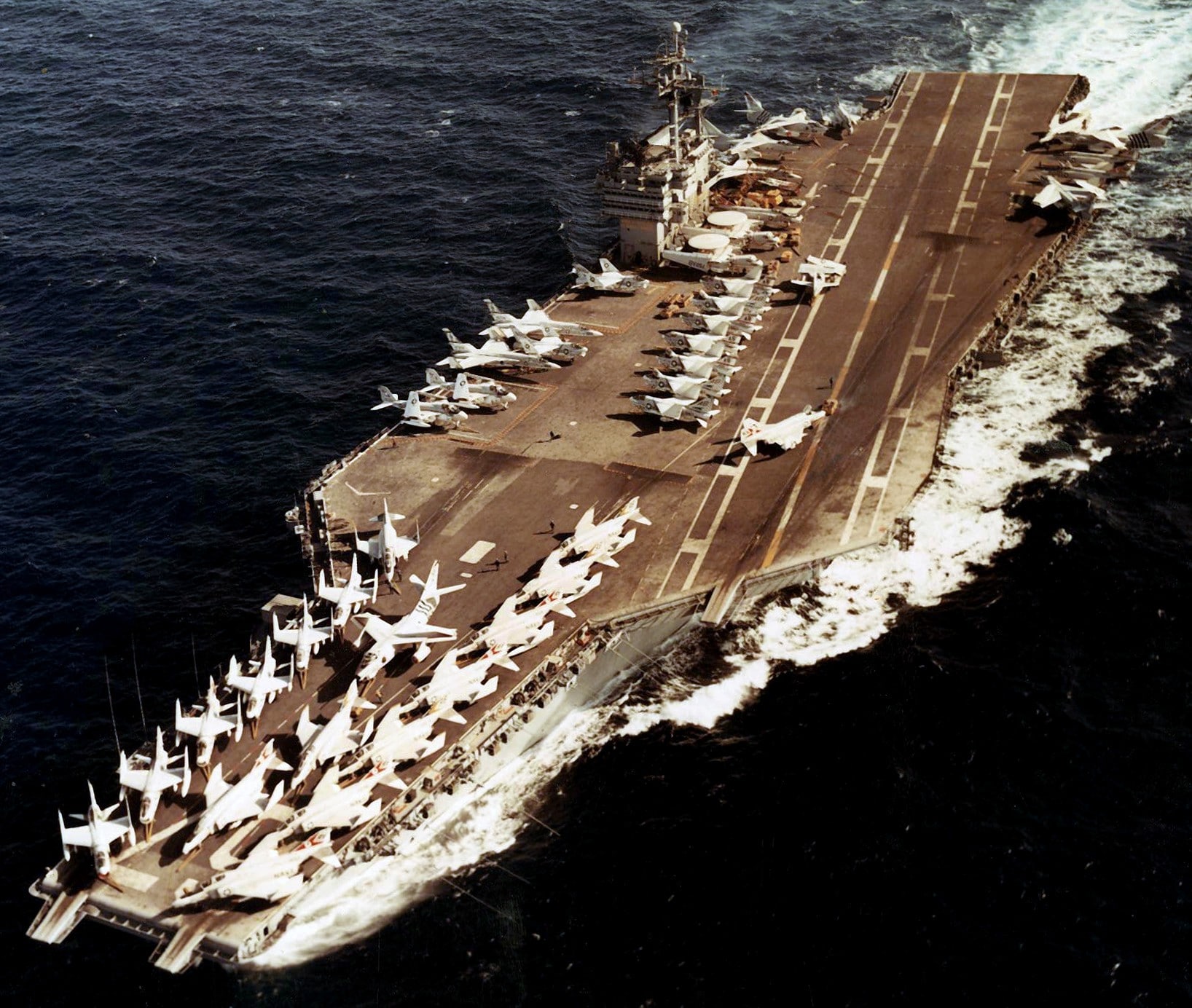
The contract to build the USS John F Kennedy awarded to Newport News Shipbuilding on 30 April 1964. The carrier’s keel was laid down on 22 October 1964 and she was launched after being christened by Caroline Kennedy on 27 May 1967. The ship was commissioned on 7 September 1968. Kennedy deployed a total of 18 times- always to the Mediterranean, the Atlantic, the Red Sea, or the Persian Gulf. For her first eight deployments CVW-1 was embarked. The next six deployments saw CVW-3 embarked. CVW-1 deployed one more time, with CVW-8, CVW-7, and CVW-17 each deploying once aboard the Kennedy.

Documentary

This documentary was shot aboard the Kennedy during her 1992-1993 deployment. Enjoy!

[youtube id=”CnHdUfPQkbQ” width=”800″ height=”454″ position=”left”]

The End for the Big John

CV 67 photo 093
Kennedy with CVW-1 embarked. image via national archives

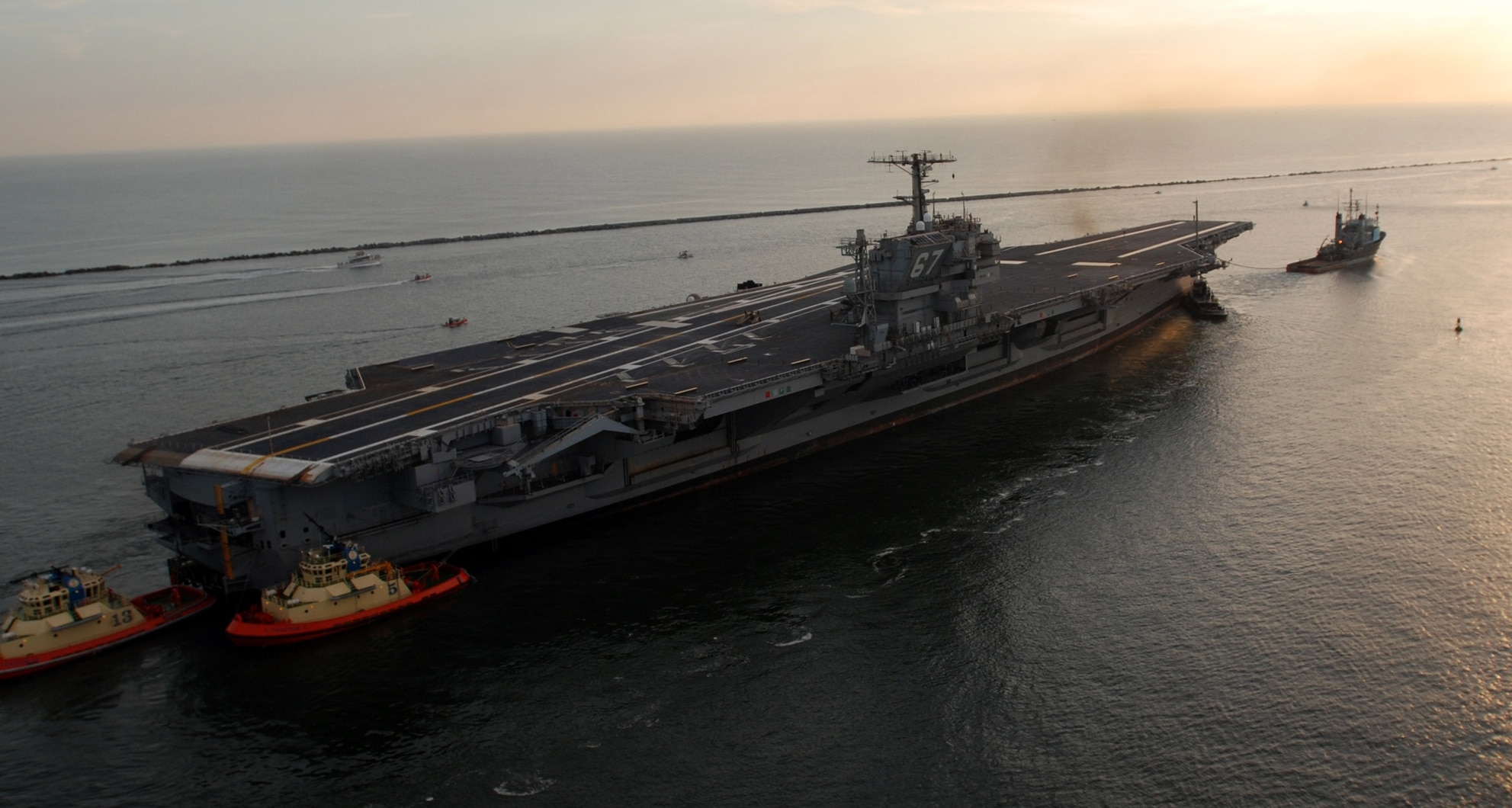
The USS John F Kennedy’s motto was Date Nolite Rogare, which is Latin for “Give, do not ask”, or, in the immortal words of President Kennedy, “Ask not what your country can do for you; ask what you can do for your country”. Nicknames for the Kennedy included “Big John”, “Bldg 67”, “Can Opener”, and “Jack the Tin Can Killer”). The Kennedy returned from her final deployment on 13 December 2004. The Big John was decommissioned on 23 March 2007 and stricken from the Naval Register on 16 October 2009.

US Navy 070726 N 4565G 006 Decommissioned aircraft carrier John F. Kennedy CV 67 departs Naval Station Mayport en route to Norfolk Va
USS John F Kennedy under tow. image via national archives

The Tigers Demonstrate Air Dominance in Their F-16s

0

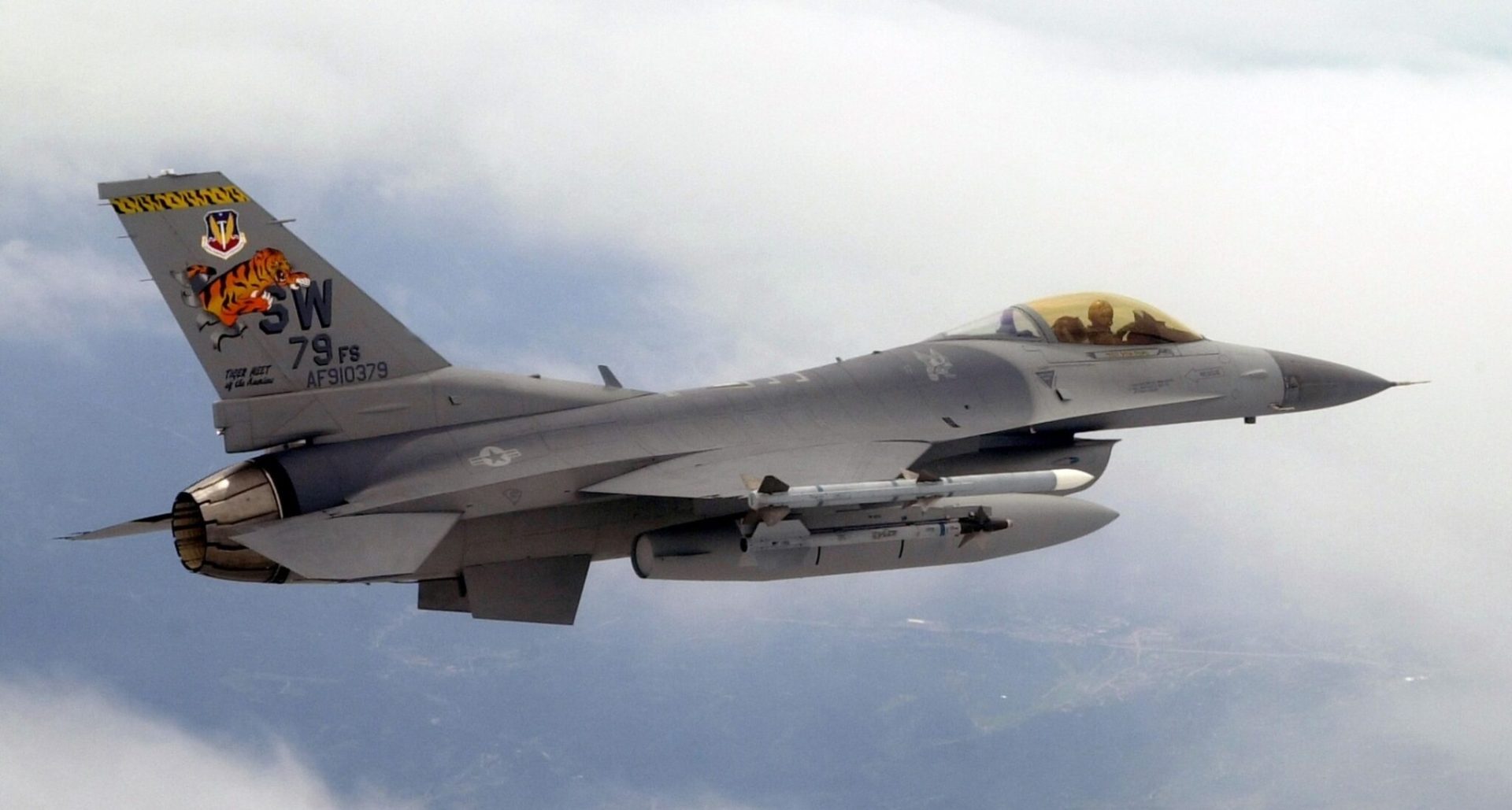
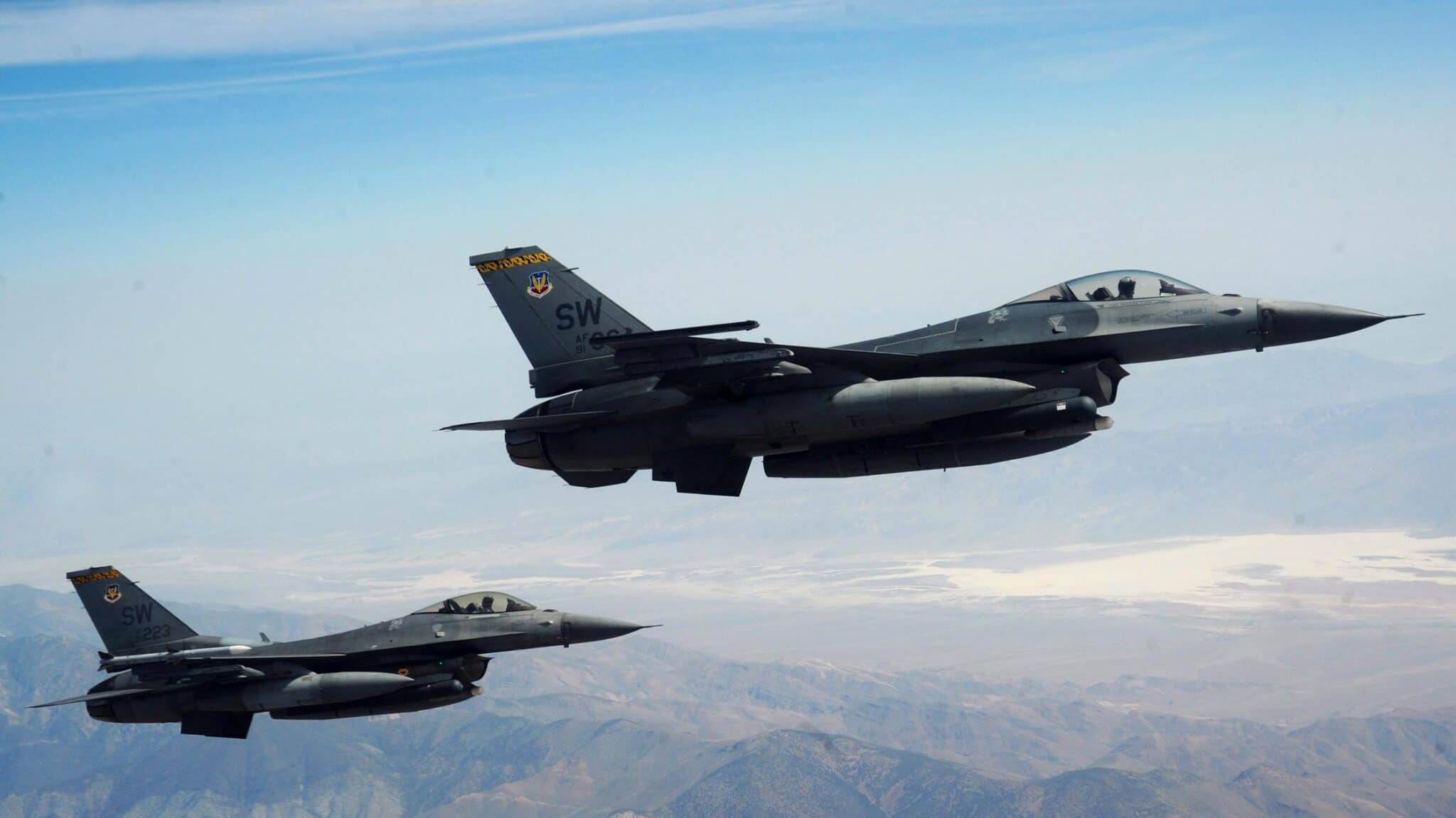
The 79th Fighter Squadron Took Home the Raytheon Trophy for 2020.

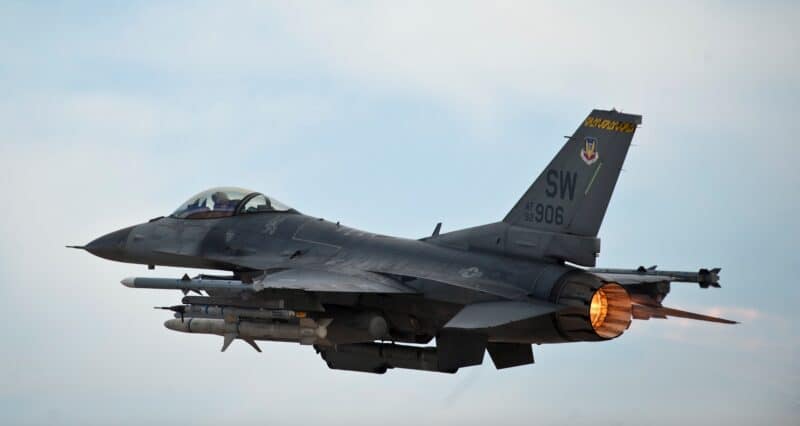
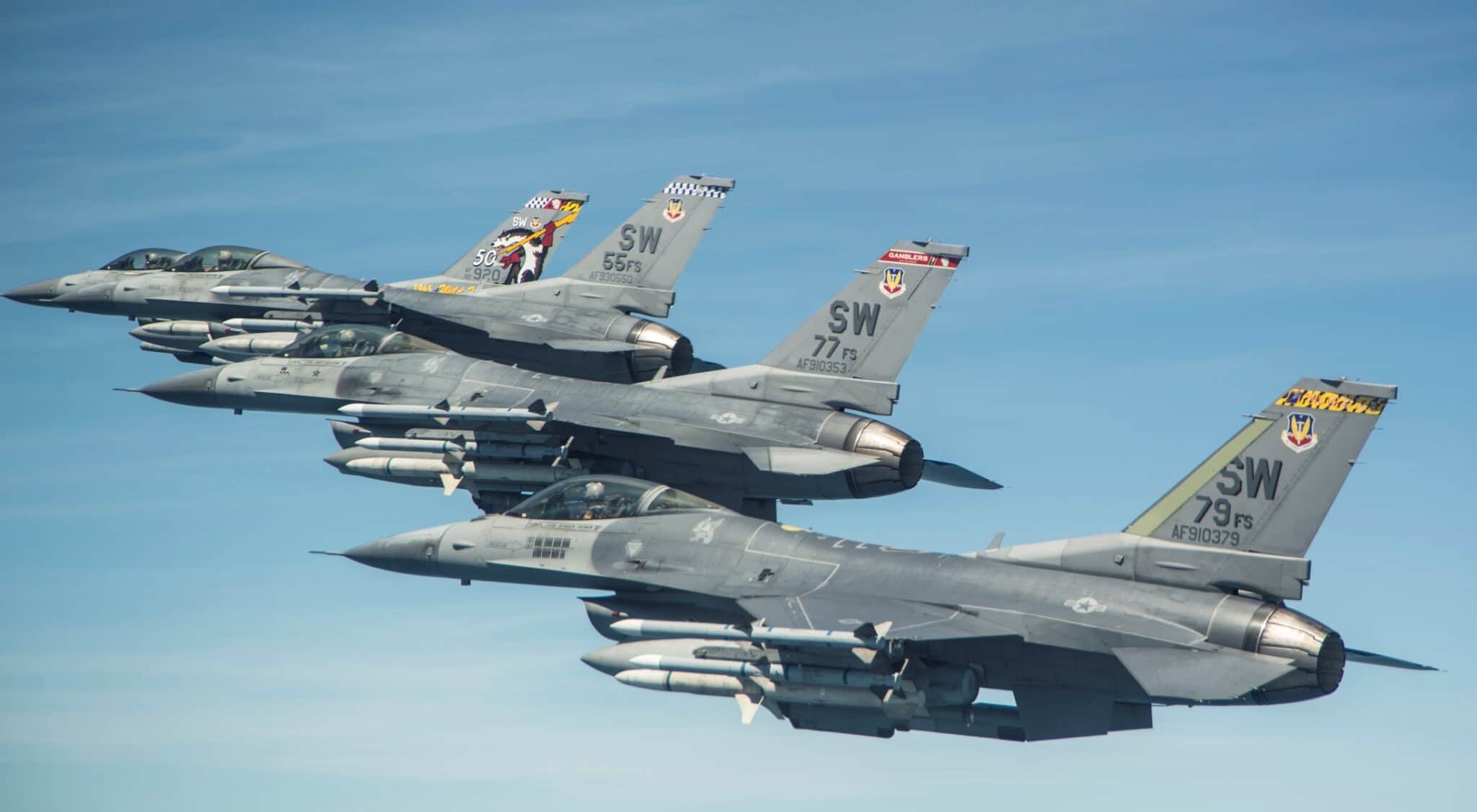
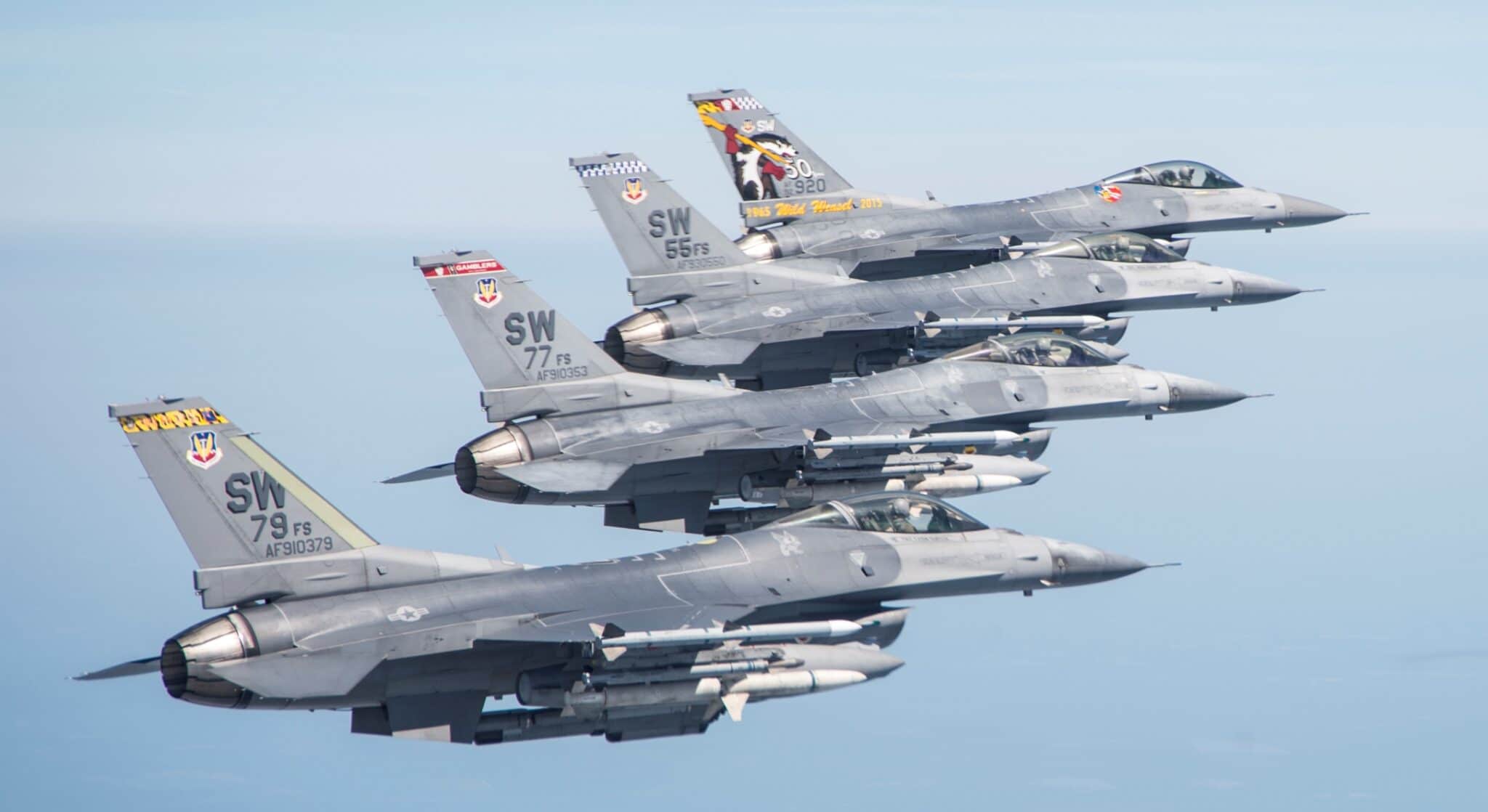
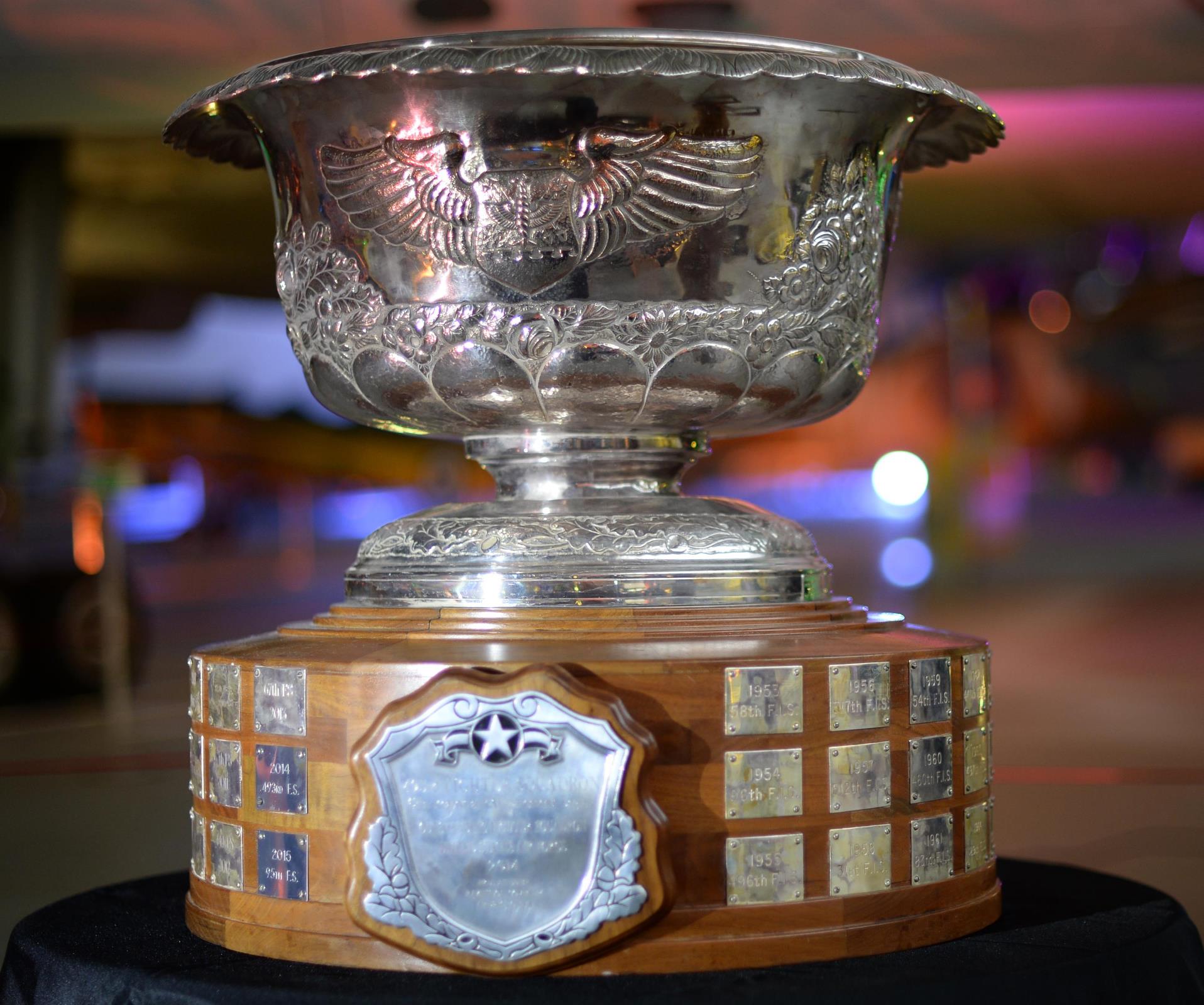
On 28 August 2021, the US Air Force’s 79th Fighter Squadron Tigers took home the 2020 Raytheon Trophy after they demonstrated air dominance during five combat operations and two exercises during fiscal year 2020. The Tigers are the first active duty F-16 Viper squadron to win the Raytheon Trophy, and one of only three F-16 squadrons to take the trophy home since its inception in 1953. Enjoy this video of the Tigers in action uploaded to YouTube by MPC Productions.

[youtube id=”_Stevja1_OM” width=”800″ height=”454″ position=”left”]

From the Top Tiger

“Our squadron was tasked with some pretty extraordinary things in 2020 and our Tigers stepped up to the challenge and proved they can answer the call,” said Lt. Col. Adam Thornton, then 79th FS commander. “We took pride in integrating with our coalition and regional partners to enhance regional stability while never losing a line of combat air power.”

20th FW F-16s. image via us air force

More Praise From the CO

“This is a Wing win; we could not have accomplished this on our own,” said Thornton. “I am thankful to the fantastic fighter generation squadron next door, along with logistics, medical, and the rest of Team Shaw Airmen who exemplify how a multi-role fighter platform brings the fight to America’s enemies in the truest sense of the Tigers’ battle cry: ‘All for Freedom!’”


20TH FW F-16S. IMAGE VIA US AIR FORCE)

According to the Man, Commander of the F-16 Tigers

“Our steadfast commitment to the defense of the United States, our partners and allies during unprecedented times showed how truly important our focus on innovation, training and support systems are to mission success.” said Lt. Col. Lawson Cass, current 79th FS commander.

“We are stronger, healthier and more capable because we work together to maximize our abilities for the betterment of the team, our families and the community we serve.”

raytheon trophy. image via us air force

Only the Best Take Home the Trophy

Originally started by the Hughes Aircraft Company in 1953, the Raytheon Trophy is awarded to the most outstanding air superiority squadron based on operational mission performance, exercise participation and inspection results, as well as unit and individual achievements.

79th FS Color Jet. Image via US Air Force

Rich History of the Tigers

The 79th Fighter Squadron is part of the 20th Fighter Wing based at Shaw Air Force Base (AFB) in South Carolina. The 79th can trace its lineage all the way back to 22 February 1918, when they were organized as the 79th Aero Squadron at Rich Field in Waco Texas as a pilot training Squadron during World War I- making it one of the oldest squadrons in the United States Air Force. The squadron saw combat during World War II and later became part of the United States Air Forces in Europe (USAFE) during the Cold War.

79TH FS F-16S. IMAGE VIA US AIR FORCE

What Haven’t They Flown? Not Much!

As you might expect the 79th has flown a plethora of aircraft, including Curtiss JN-4 and JN-6 Jennies, Boeing P-12 Peashooters, Curtiss P-36 Hawks, Curtiss P-40 Warhawks, Bell P-39 Airacobras, Lockheed P-38 Lightnings, North American P-51 Mustangs, Republic F-84 Thunderjets, North American F-100 Super Sabres, General Dynamics F-111 Aardvarks, and currently General Dynamics F-16 Fighting Falcons.

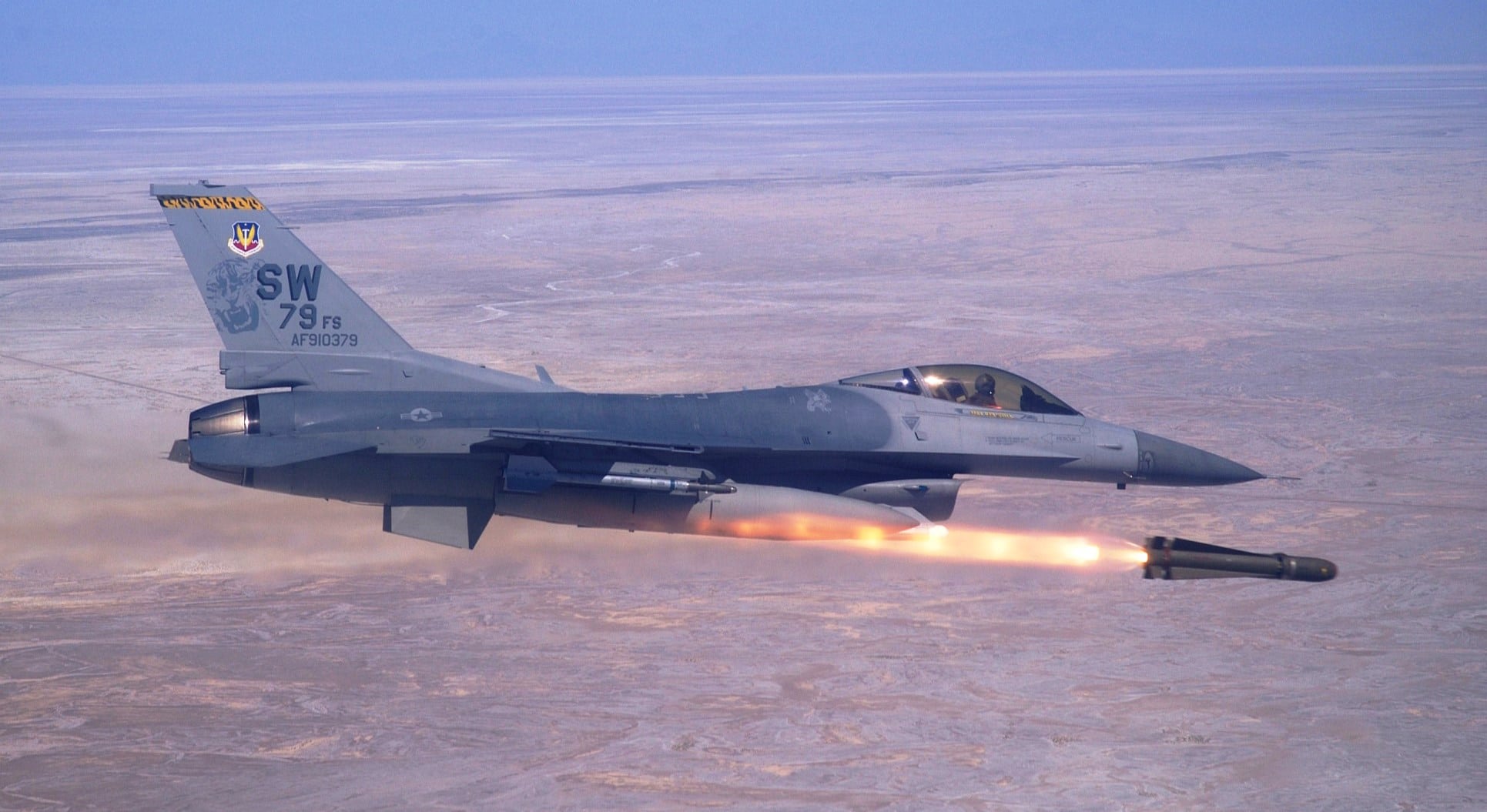
F-16 launches its weapon.
IMAGE VIA US AIR FORCE
F-16 launches its weapon. IMAGE VIA US AIR FORCE

WATCH: The Blue Angels Up Their Sneak Pass Game

0

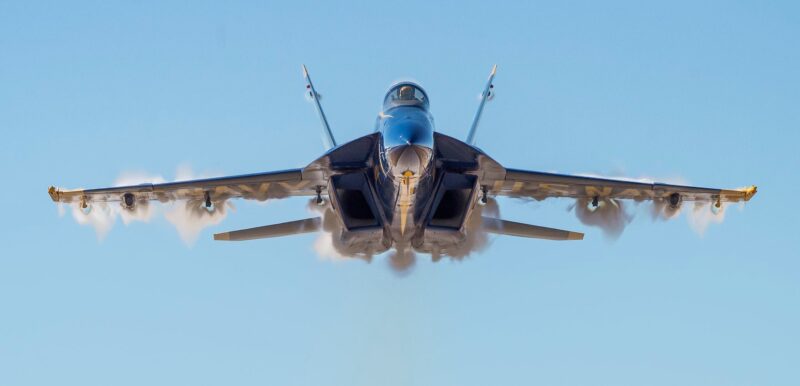
The Blues Made the Most of the Super Hornet’s Presence for Crowds Across the Country

The US Navy’s flight demonstration team, The Blue Angels, re-equipped with Boeing F/A-18E and F/A-18F Super Hornets after their final show of the 2020 airshow season. Their “new” Super Hornet jets (which are actually the oldest of their kind) make for exciting and powerful airshow performances. Enjoy these videos of sneak passes and a couple of full shows as well.

Up First

This sneak pass was captured at Pensacola Beach on 6 November 2021. It was uploaded to YouTube by AviationFreak#1.

[youtube id=”nL4D-SyfdLI” width=”800″ height=”454″ position=”left”]

On the Beach

This sneak pass was also captured at Pensacola Beach on 6 November 2021. It was uploaded to YouTube by M E R L I N.

[youtube id=”s3zt6M__X8I” width=”800″ height=”454″ position=”left”]

A Great Place for a Show

Another sneak pass captured at Pensacola Beach on 10 July 2021. This one was uploaded to YouTube by Steve Thigpen.

[youtube id=”wjJdjlDq4kI” width=”800″ height=”454″ position=”left”]

Heading to the Heartland

This powerful over-water sneak pass was recorded at Owensboro KY on 15 August 2021. It was uploaded to YouTube by Zone 5 Photos.

[youtube id=”lYgL-O791NE” width=”800″ height=”454″ position=”left”]

Windy City Three-Peat

These sneak passes were captured over set of three performances (one practice and two shows) that took place in Chicago on 21-22 August 2021. The video was uploaded to YouTube by Zay Toven.

[youtube id=”CV1aCZDBu4k” width=”800″ height=”454″ position=”left”]

For More Bang NEXT PAGE Below

WATCH: C-141 Starlifters Served All Over the World

Lockheed’s Versatile Airlifter Was Flown to Vietnam and Beyond- Often by Reservists

The Lockheed C-141A Starlifter was first flown on 17 December 1963. Starlifters, AKA Tube of Pain, served with the United States Air Force (USAF) Military Air Transport Service (MATS) and later the Military Airlift Command (MAC) and later still Air Mobility Command (AMC). Relatively early in the C-141’s service with the Air Force, the airlifter was also operated by the Air Force Reserve Command (AFRC) as part of the Air Reserve Component (ARC) of the USAF. Enjoy this look at C-141A Starlifters doing their thing in far-away places uploaded to YouTube by Periscope Film.

[youtube id=”UY4cRCiHKRE” width=”800″ height=”454″ position=”left”]

The Beginning of a Beautiful Relationship

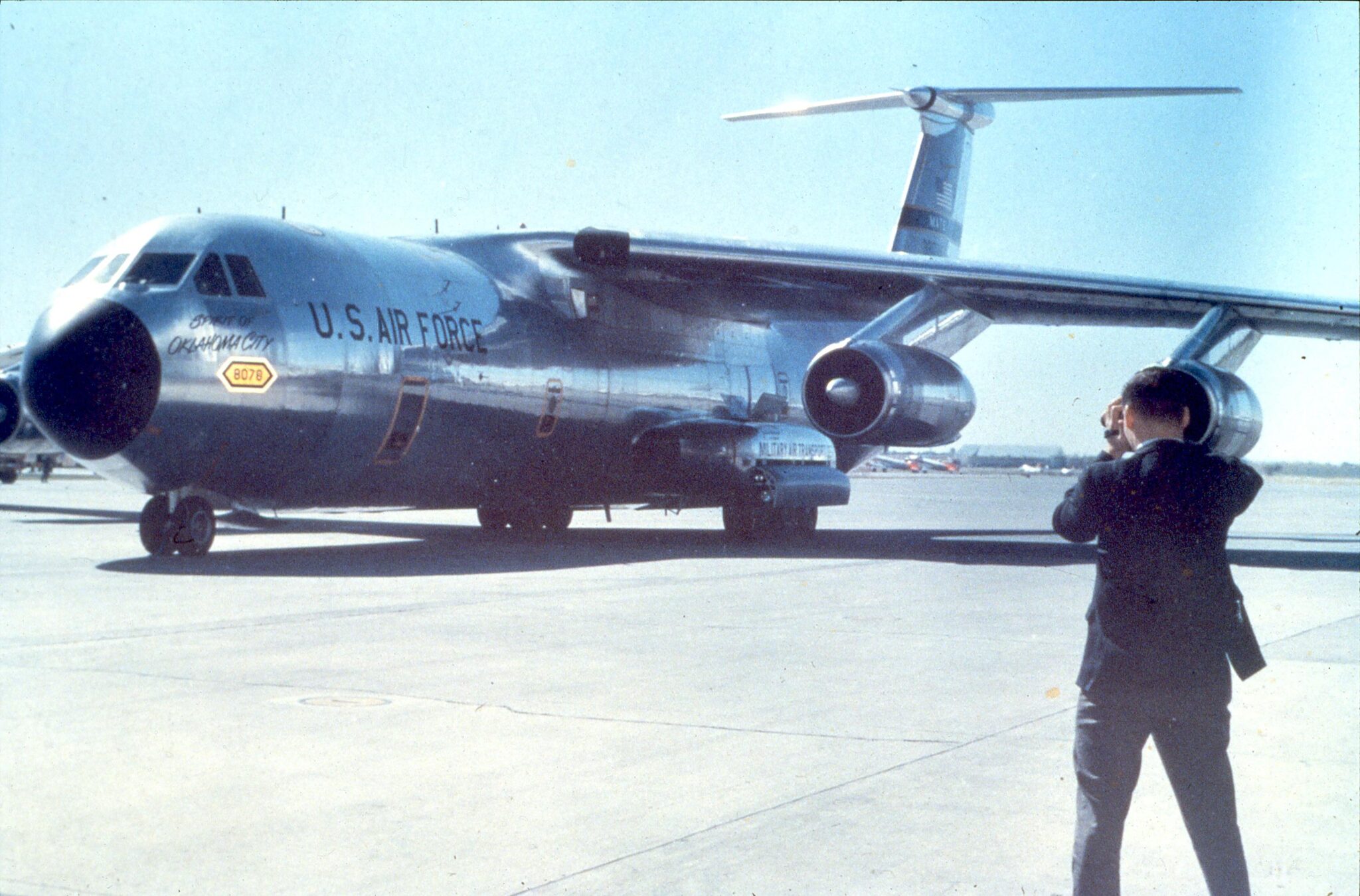
The first C-141A to be delivered to MATS (63-8078) arrived at the 1707th Air Transport Wing, Heavy (Training) at Tinker Air Force Base (AFB) on 19 October 1964. The Federal Aviation Administration (FAA) granted the C-141A a type certificate on 29 January 1965. C-141A Air Force serial number 63-8088 became the first Starlifter into service when, on 23 April 1965, the jet arrived at Travis AFB and went to work with the 44th Air Transport Squadron of the 1501st Air Transport Wing. C-141As, Douglas C-124 Globemaster IIs, and Douglas C-133 Cargomasters became the primary long-reach airlifters supplying American forces in South Vietnam and Southeast Asia.

171027 F ZZ999 1201
63-8078 arriving at tinker. us air force photo

Soldiering on for More Than 40 Years

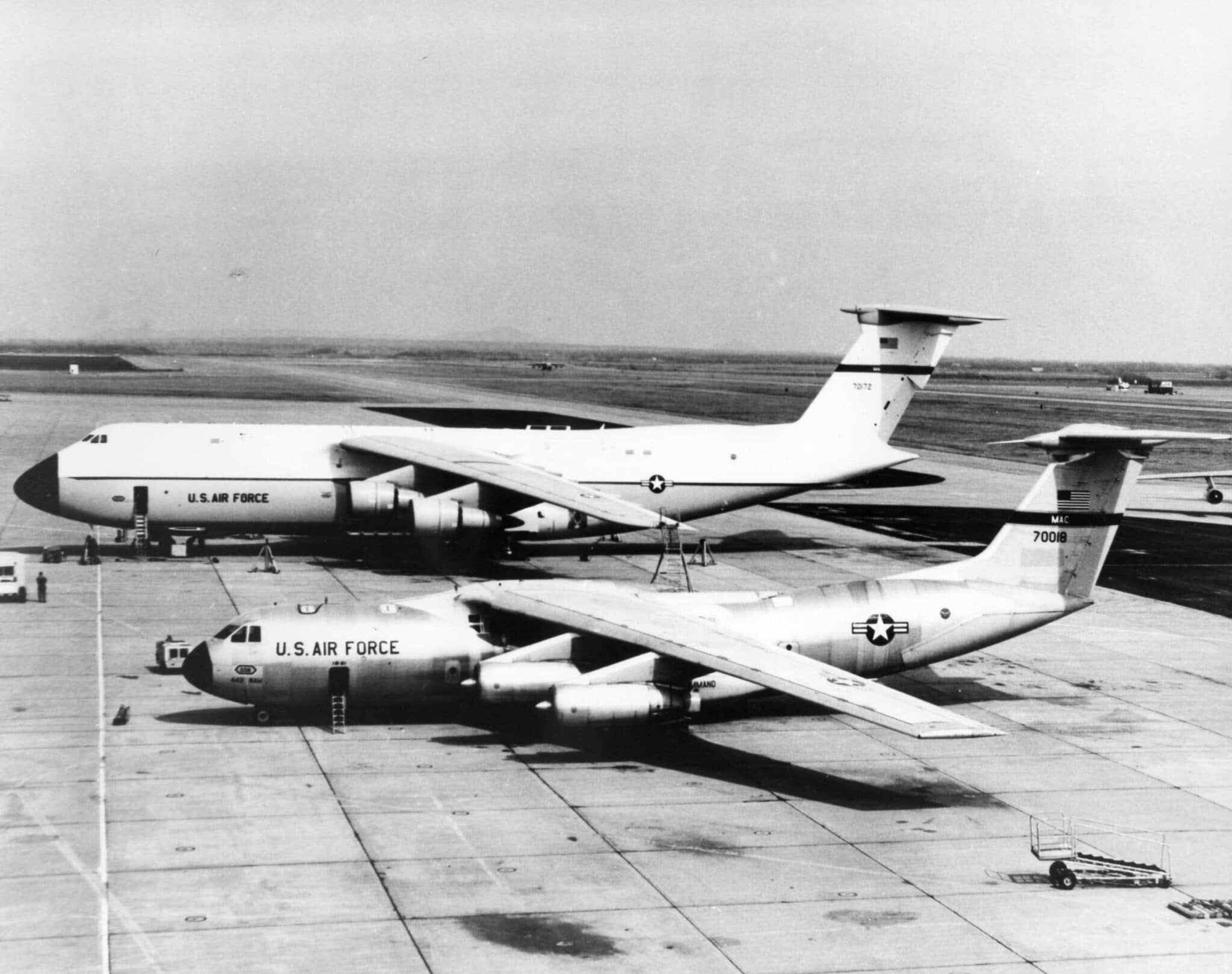
C-141As continued flying material and personnel to the region for the duration of America’s involvement in the region, including the repatriation flights bringing American POWs home to the world. Starlifters could be observed on ramps just about anywhere in the world, from the Antarctic to the desert and beyond. When Lockheed engineered the inflight-refuelable stretched C-141B variant of the Starlifter, the versatile jets got a new lease on life. Working in combination with Lockheed’s C-5A Galaxy, Starlifters continued in service for 41 years.

USAF Lockheed C 141B Starlifter 70018 and C 5A Galaxy 70172
C-141A and C-5A. us air force photo

NTSB Video Shows Recovery Of Cargo 737 That Ditched In Hawaiian Waters

0

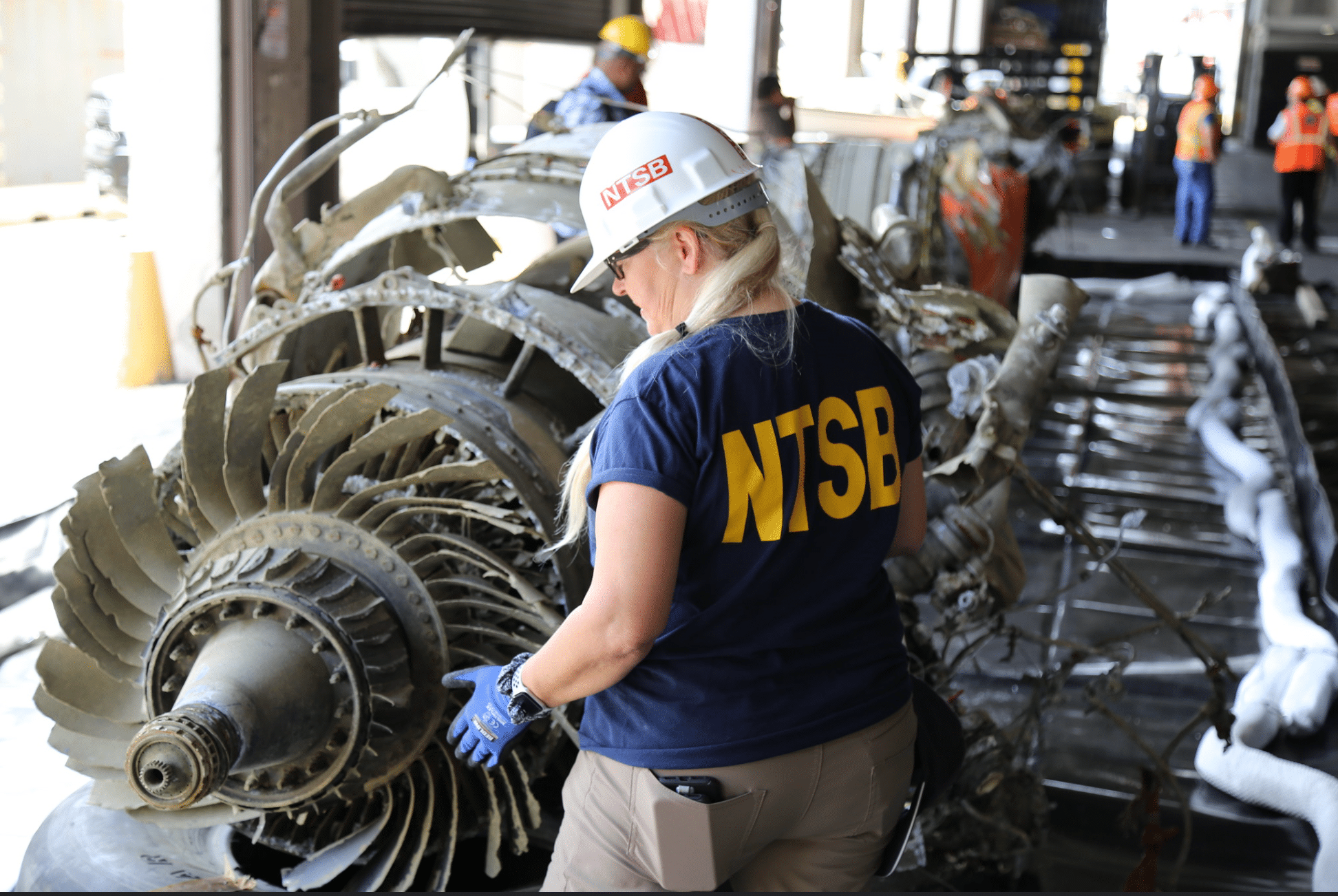
The NTSB released video today that showed the recovery of the wreckage from Transair flight 810.

Flight 810, a Boeing 737-200 jet, departed on a routine cargo flight from Honolulu International Airport. It was supposed to arrive at Maui’s Kahului International Airport just 43 minutes later. Early in the departure, the pilots requested a return to the airport due to the loss of an engine. On the turn back towards the airport, the pilot reported that the aircraft lost thrust on its remaining engine.

ta2
NTSB Video Shows Recovery Of Cargo 737 That Ditched In Hawaiian Waters 75

The crew had no choice but to ditch off the coast of Oahu, just 4 miles from Honolulu International airport.Before they ditched, they made a mayday call and requested Coast Guard assistance. The Coast Guard arrived within the hour to begin rescue operations. Both pilot and co-pilot survived the unpowered ditching in the dark ocean but sustained injuries in the process. No small feat.

NTSB successfully recovers the jet

ta0
NTSB Video Shows Recovery Of Cargo 737 That Ditched In Hawaiian Waters 76

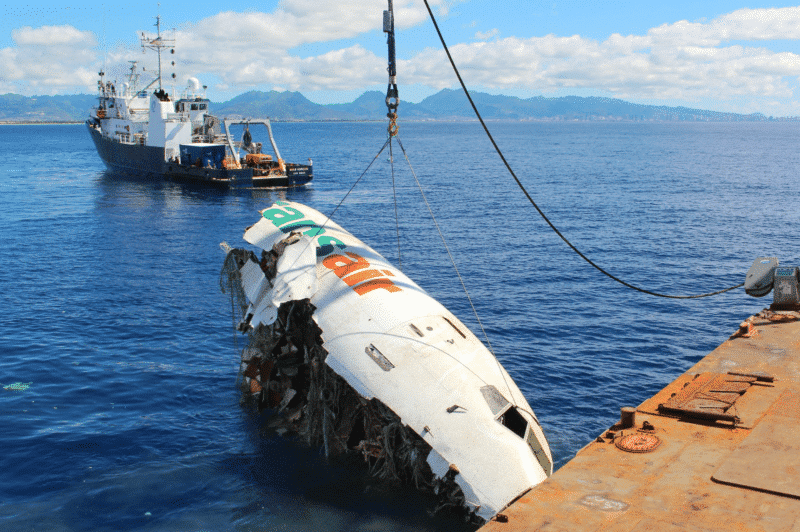
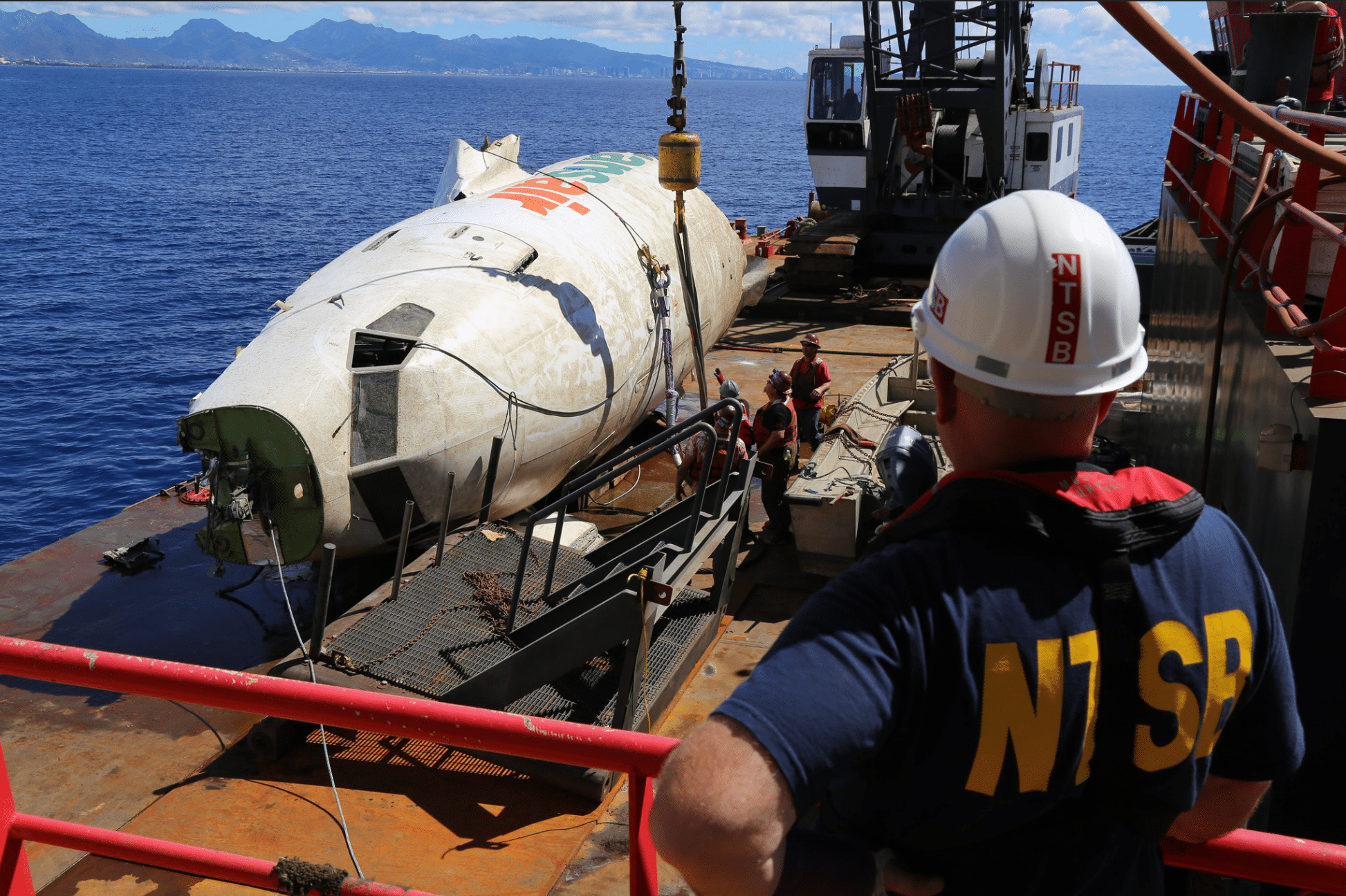
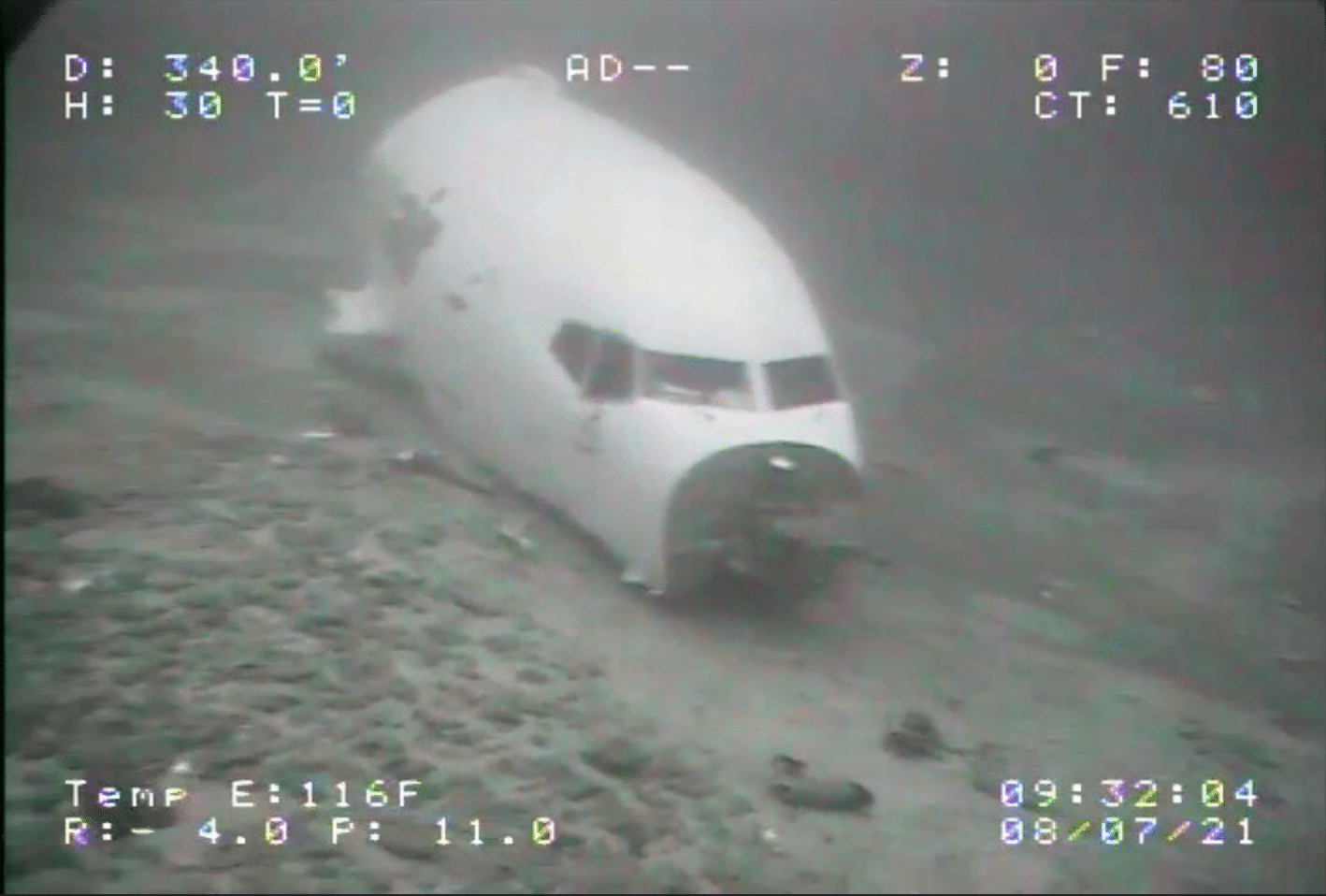
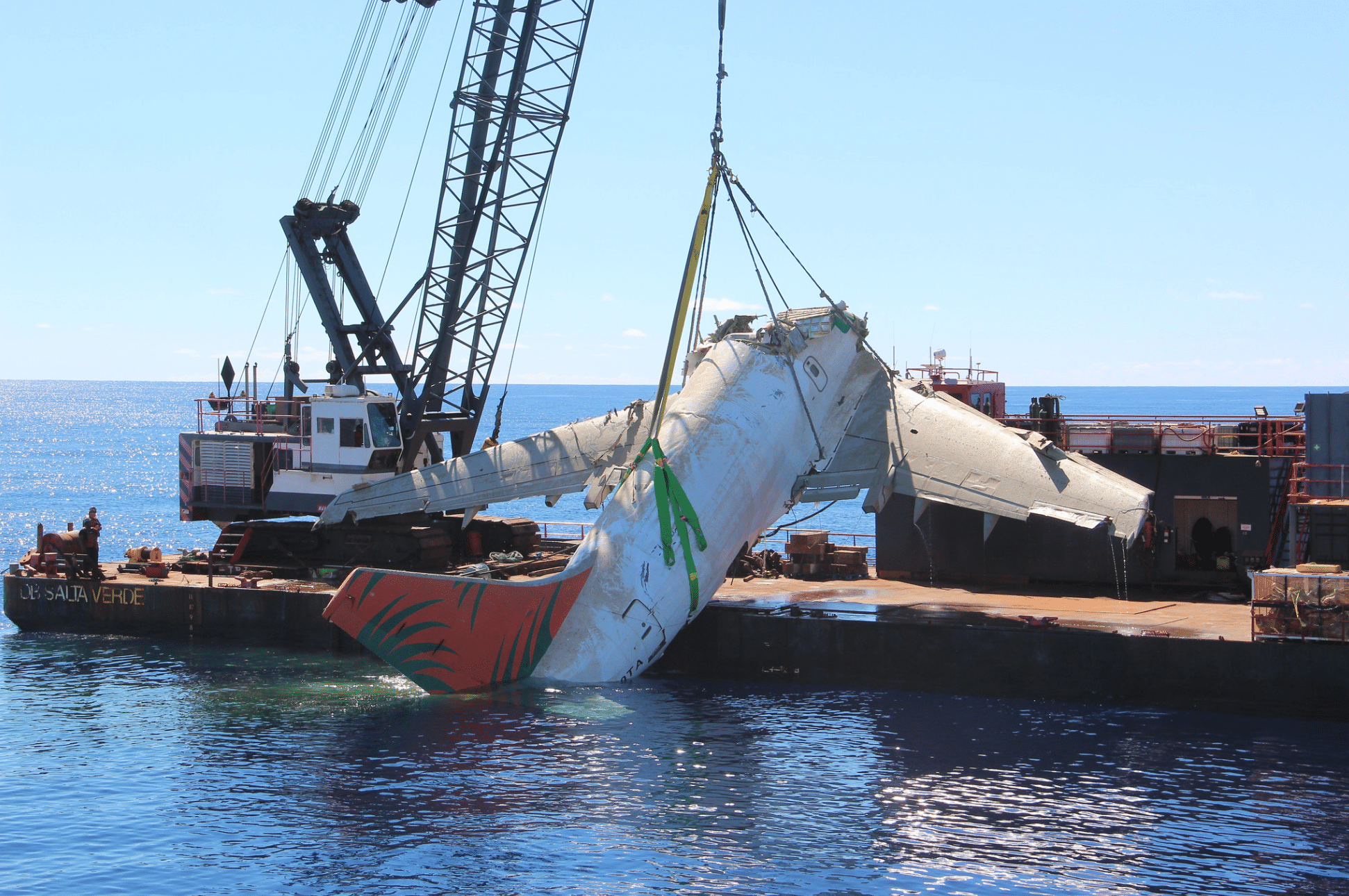
After four months of preparation, the NTSB successfully raised the aircraft off the ocean floor. This was no small feat as the aircraft rested over 800 feet below the water’s surface. Months of preparation were required to obtain the correct equipment and devise a plan to recover the downed aircraft. A crane capable of raising over 60k pounds of jet was required for the task.

ta8
NTSB Video Shows Recovery Of Cargo 737 That Ditched In Hawaiian Waters 77

Remarkably, the 46 year-old jet was largely intact as you can see in the photos. The aircraft broke apart into two major pieces with a separation occurring at approximately one-third the length of the aircraft. The underside of the aircraft was shredded which likely occurred as a result of landing in 4′ to 8 feet swell conditions with potential additional damage as it landed on the sea bed. Both engines separated from the aircraft.

ta4
NTSB Video Shows Recovery Of Cargo 737 That Ditched In Hawaiian Waters 78

Damage on one engine in the photo showed rotational shearing that could indicate that the engine was still spinning (but note it may have not been producing thrust) at the point of impact.

ta6
NTSB Video Shows Recovery Of Cargo 737 That Ditched In Hawaiian Waters 79

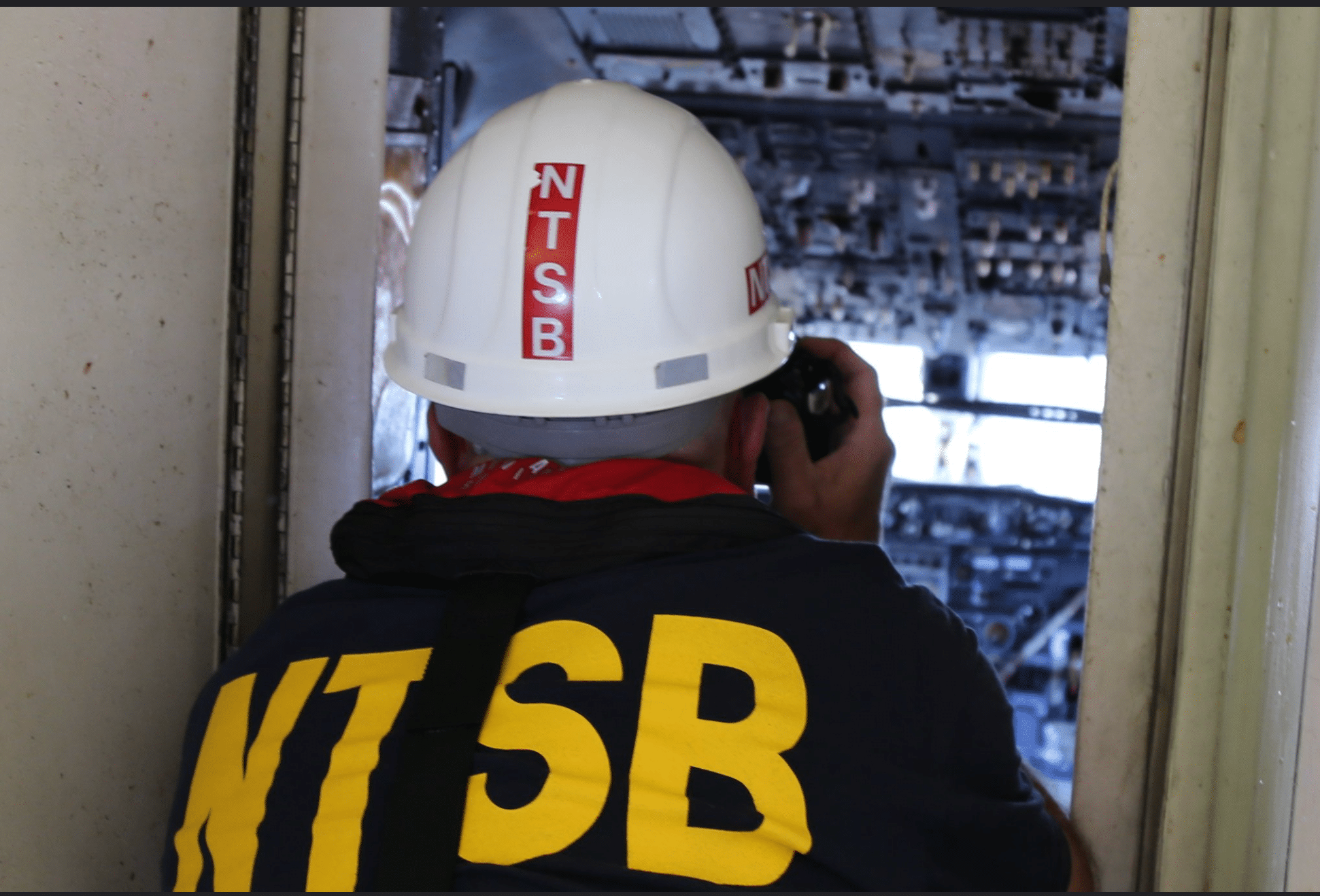
In the video below (released by the NTSB), you can see the cockpit intact with the co-pilot’s window open.

The investigation on the accident continues. A final report on the incident is expected sometime within the next year.

Note: All photos provided by the NTSB. The full Flickr album is located here.

Blue Angels Arrive for Halloween Airshow in North Georgia

ROME, Ga. — The penultimate air show of the Blue Angels’ 75th anniversary season is underway as they arrived Thursday to perform during the Wings Over North Georgia air show.

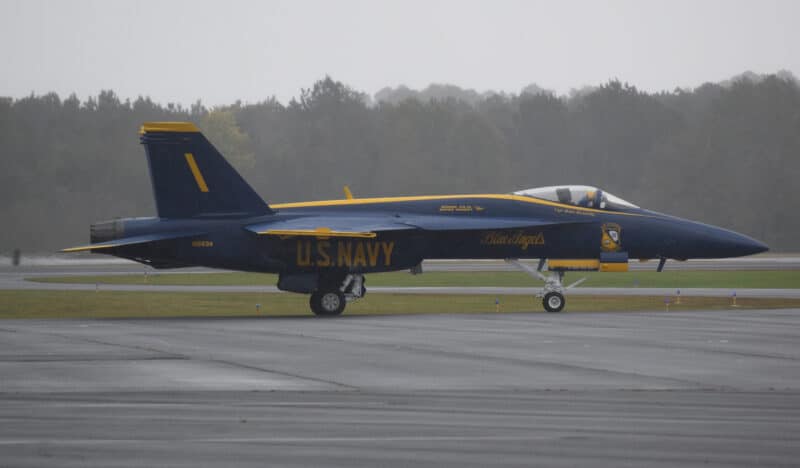
Their blue and gold jets thundered across northwest Georgia arriving over the Richard Russell Regional Airport at 10:15 a.m. The squadron’s Super Hornets arrived in pairs, touching down on the concrete runway during a rain swept morning.

The ninth edition of the Rome air show is sold out on Saturday with tickets available for Sunday. The Air Force A-10C Warthog, the C-17 Globemaster II, and top civilian aerobatic pilots are also set to perform each afternoon.

“We’re super excited to be in Rome this weekend,” Blue Angels Boss Capt. Brian C. Kesselring told AvGeekery.com minutes after parking his aircraft. “To be able to close out our road show here in Rome where we haven’t been in a couple of years is going to be absolutely fantastic for us.”

This is Capt. Kesselring’s second season with the Navy’s flight demonstration squadron. He will return with the team to begin another season as their flight leader in March.

“What the Blue Angels are about is not the max performance or any particular maneuver,” Kesselring said. “It’s about six aircraft flying as one — much like our Navy and Marine Corp. across the fleet.”

51636523373 b346b55c6d k
Capt. Brian Kesselring pauses Thursday upon arriving at the north Georgia airshow. (Charles A Atkeison)

The north Georgia air show will have drive-in format as each ticket will allow a vehicle of guests to park near the runway. Coolers and lawn chairs can be placed outside the vehicle during the family-fun aerial events.

Gates for the first vehicles open at 9 a.m. and the first performances are scheduled to begin at about 10 a.m. Guests can also participate in helicopter flights during the day.

(Charles A Atkeison reports on aerospace and technology. Follow his updates via social media @Military_Flight.)
WATCH: F-16 Demo Team Viper Performs in the Heartland

0

A Viper Demo Team Video with No Narration? Yes Please!

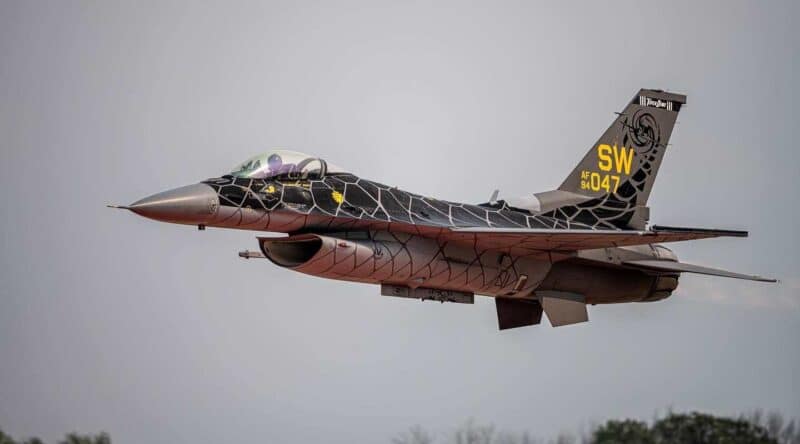
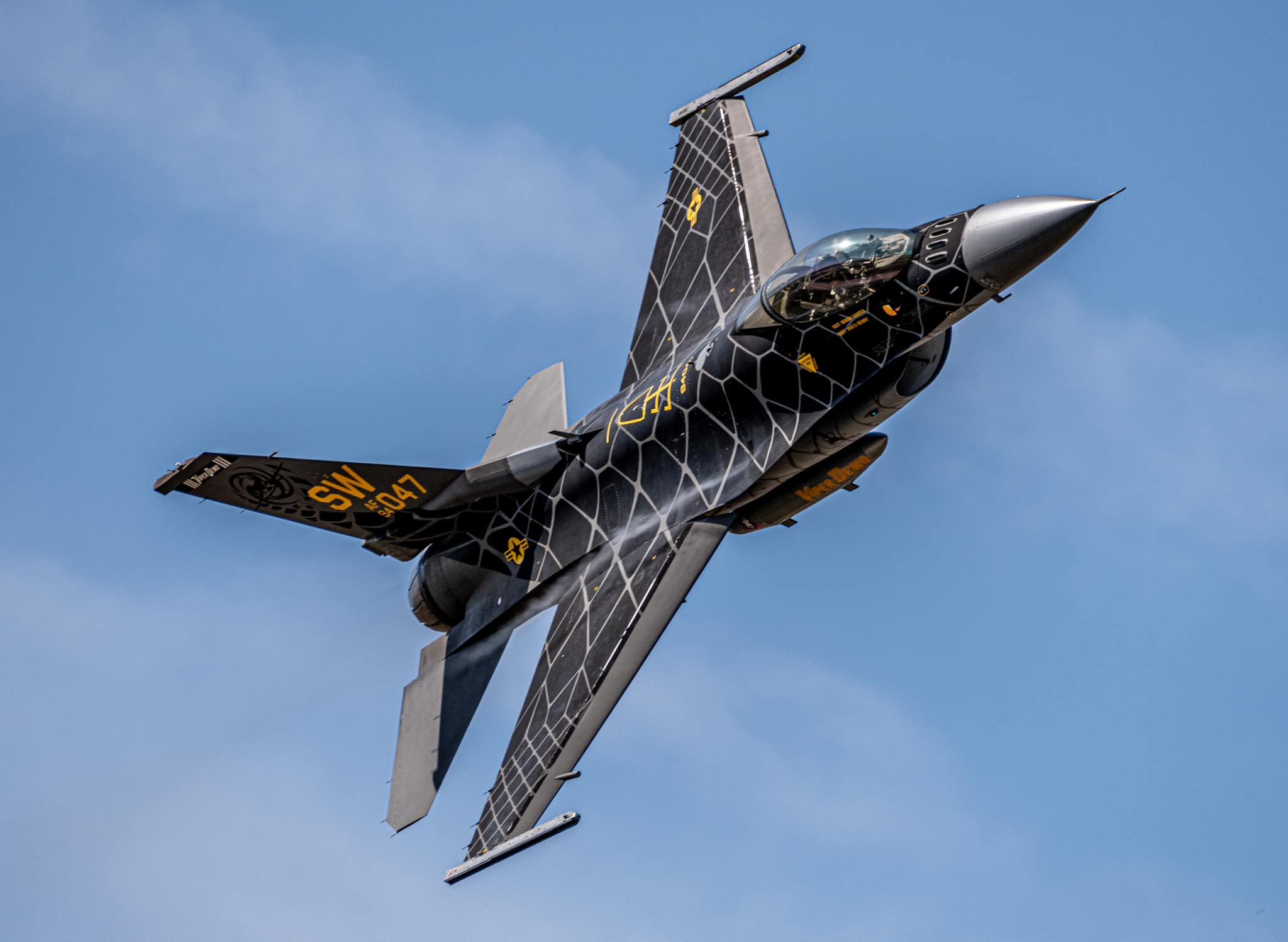
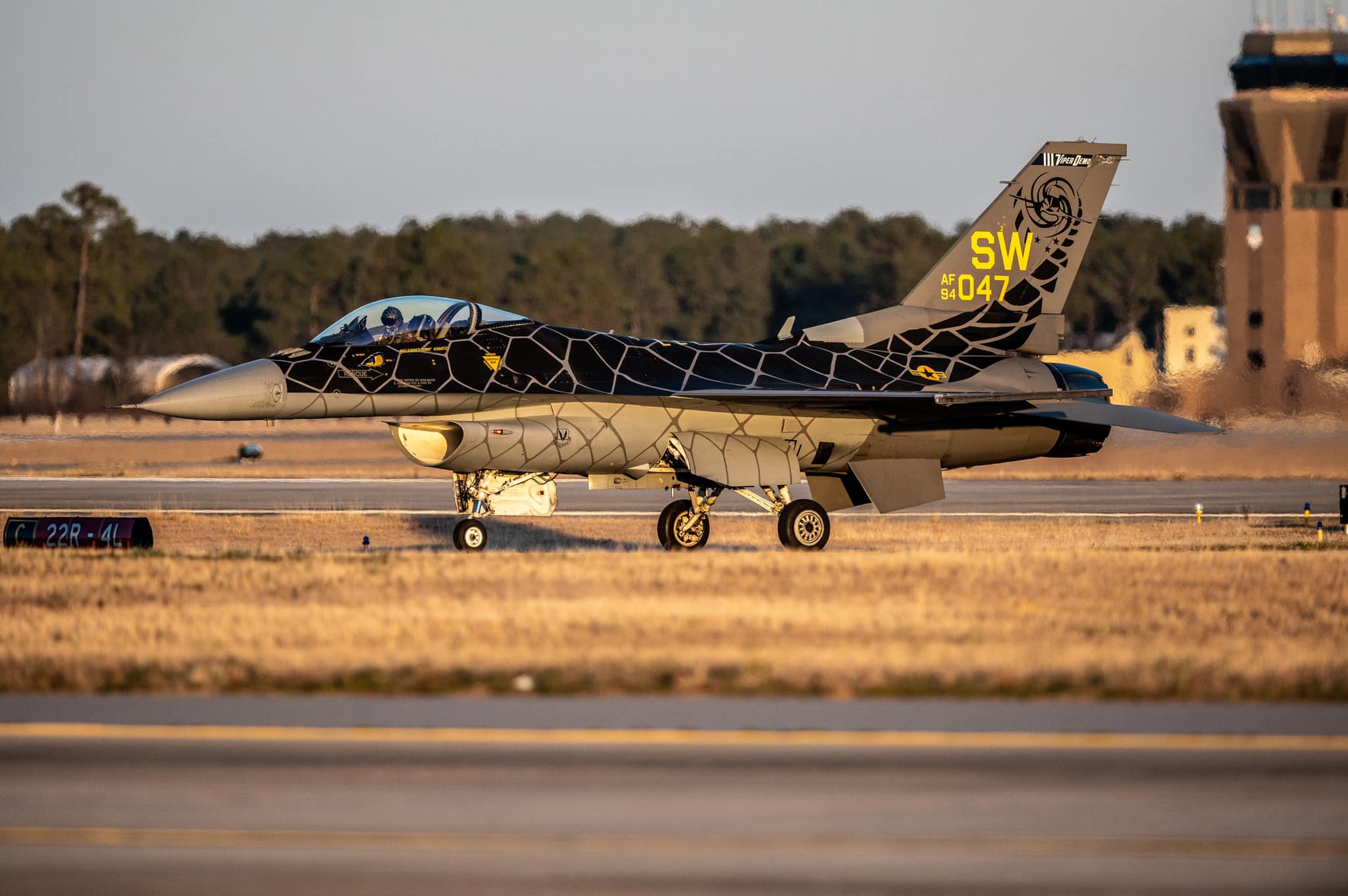
The US Air Force F-16 Fighting Falcon Demonstration Team performed at the 2021 Thunder Over the Heartland airshow in Topeka, Kansas. Our friends at AirshowStuff were there and captured the performance in HD video with ear-splitting sound- and no narration! F-16C Air Force serial number 94-0047 has worn a special paint scheme called Viper (the F-16’s semi-official nickname) since May of 2020. More about the jet itself and its interesting history after the video, which was uploaded to YouTube by AirshowStuffVideos. Turn that audio up!
[youtube id=”ryw0tTY–e8″ width=”800″ height=”454″ position=”left”]

Going to Work with the Tigers

F-16C Air Force serial number 94-0047 is a Block 50 Wild Weasel Plus specification jet accepted by the US Air Force on 27 November 1996. The jet was assigned to the 79th Fighter Squadron (FS) Tigers of the 20th Fighter Wing (FW), Fifteenth Air Force based at Shaw Air Force Base (AFB) near the town of Sumter in South Carolina during April of 1997. During its time with the Tigers the jet wore a special commemorative 79th Anniversary tail color scheme (1918-1997) applied during October of 1997. 047 also wore a special paint scheme for the 2001 Tiger Meet. The jet was assigned to the Tigers until April of 2006, when it was reassigned to the 77th FS Gamblers of the same 20th FW, Fifteenth Air Force, Air Combat Command, at Shaw AFB.

246764094 4731470420239132 699141424424697142 n
image via us air force

Becoming a Gambler

Not long after being assigned to the Gamblers, the jet experienced an exhaust fire during departure from Shaw AFB which resulted in the drop tanks being jettisoned (over surrounding uncontrolled land) prior to the jet’s return to Shaw and successful recovery. 047 was then repaired and subsequently returned to duty. For the next several years 047 flew with the Gamblers as a Fighting Falcon Demonstration Team mount. On 8 May 2020 the jet emerged from the paint shop wearing its unique (and very cool) Viper paint job. Air Force Major Garret “Toro” Schmitz is both commander of the F-16C Viper Demo Team and the pilot of the Viper.

143867655 3910493422336840 7920460768086757962 o
image via us air force

WATCH- The Tomcat Bows Out During the New Millennium

0

These “Fighter Fling” Videos Were the Last and Best Looks at F-14s in the Fleet

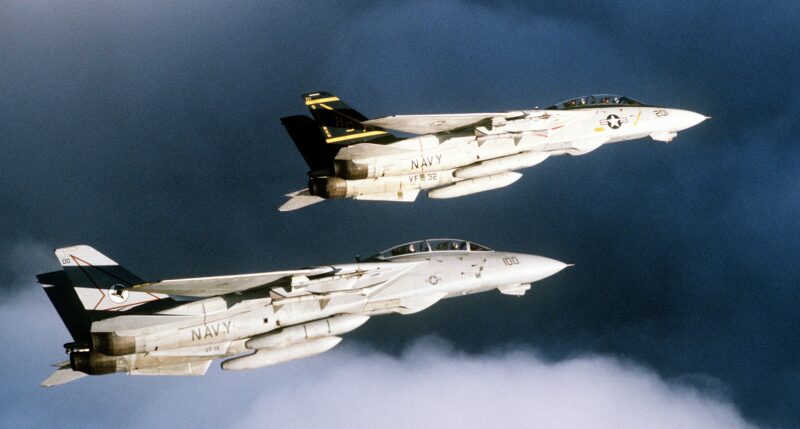
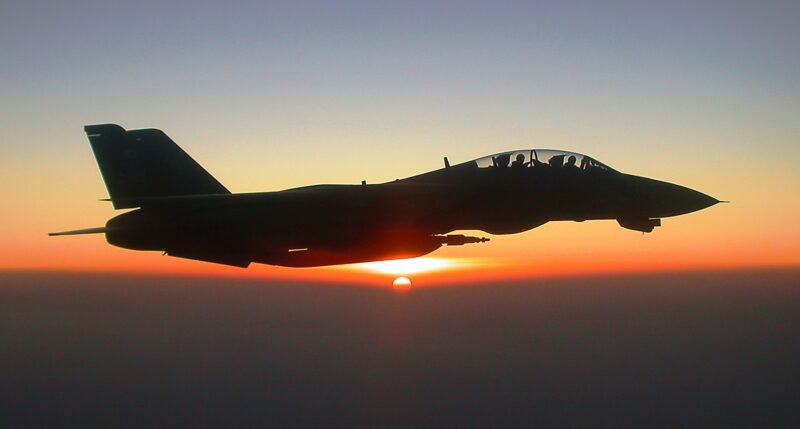
“Fighter Fling” videos were created to highlight the squadrons operating the Grumman F-14 Tomcat. These five videos were created for each of the last few years the Tomcat was operated by the Navy. From 2001 through through 2006, one fighter (VF) squadron after another was re-equipped with either the Boeing F/A-18E or the F/A-18F Super Hornet and redesignated as a fighter-attack (VFA) squadron. Quite a few of them were disestablished entirely. You’ll see references to how the Tomcat crews and maintainers felt about the switch from the revered if aging Tomcat to the Super Bug. The videos were uploaded to YouTube by Triple Nickel.

2000 Fighter Fling- a New Millennium

[youtube id=”Wpp16-Lpfwk” width=”800″ height=”454″ position=”left”]

2001 Fighter Fling- Payback

[youtube id=”ACF0YfdY5dg” width=”800″ height=”454″ position=”left”]

2002 Fighter Fling- Combat

[youtube id=”nON3iuINRag” width=”800″ height=”454″ position=”left”]

2003 Fighter Fling- And Then There Were Fewer

[youtube id=”lIO_d4mEinE” width=”800″ height=”454″ position=”left”]

2004 Fighter Fling- the Last Ride

[youtube id=”TltAz5COUZI” width=”800″ height=”454″ position=”left”]

For More Tomcat Tales Bang NEXT PAGE Below

The Jetson ONE- A High-Tech Personal eVTOL for the Masses

There Are Plenty of Similar Vehicles in Development But Jetson is Ahead of the Pack

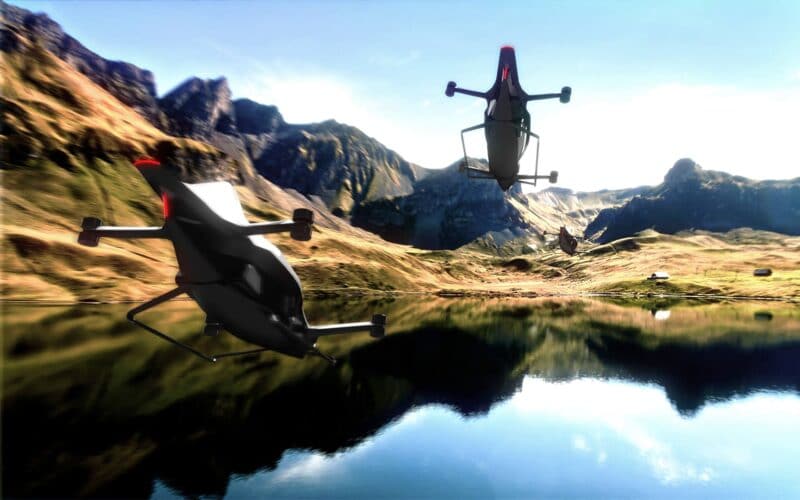
The aptly-named company Jetson was co-founded by Peter Thernstrom and Tomasz Patan in 2017. The two Swedes created a prototype eVTOL vehicle during the Spring of 2018. Three years later, the company has just introduced the Jetson ONE, billed by the company as, “a commercially available personal electric aerial vehicle that anyone can own and fly. Our mission is to make flight available to everyone. We intend to make everyone a pilot.” Here’s a video of the Jetson ONE in action uploaded to YouTube by Jetson.

[youtube id=”FzhREYOK0oo” width=”800″ height=”454″ position=”left”]

Technology Included

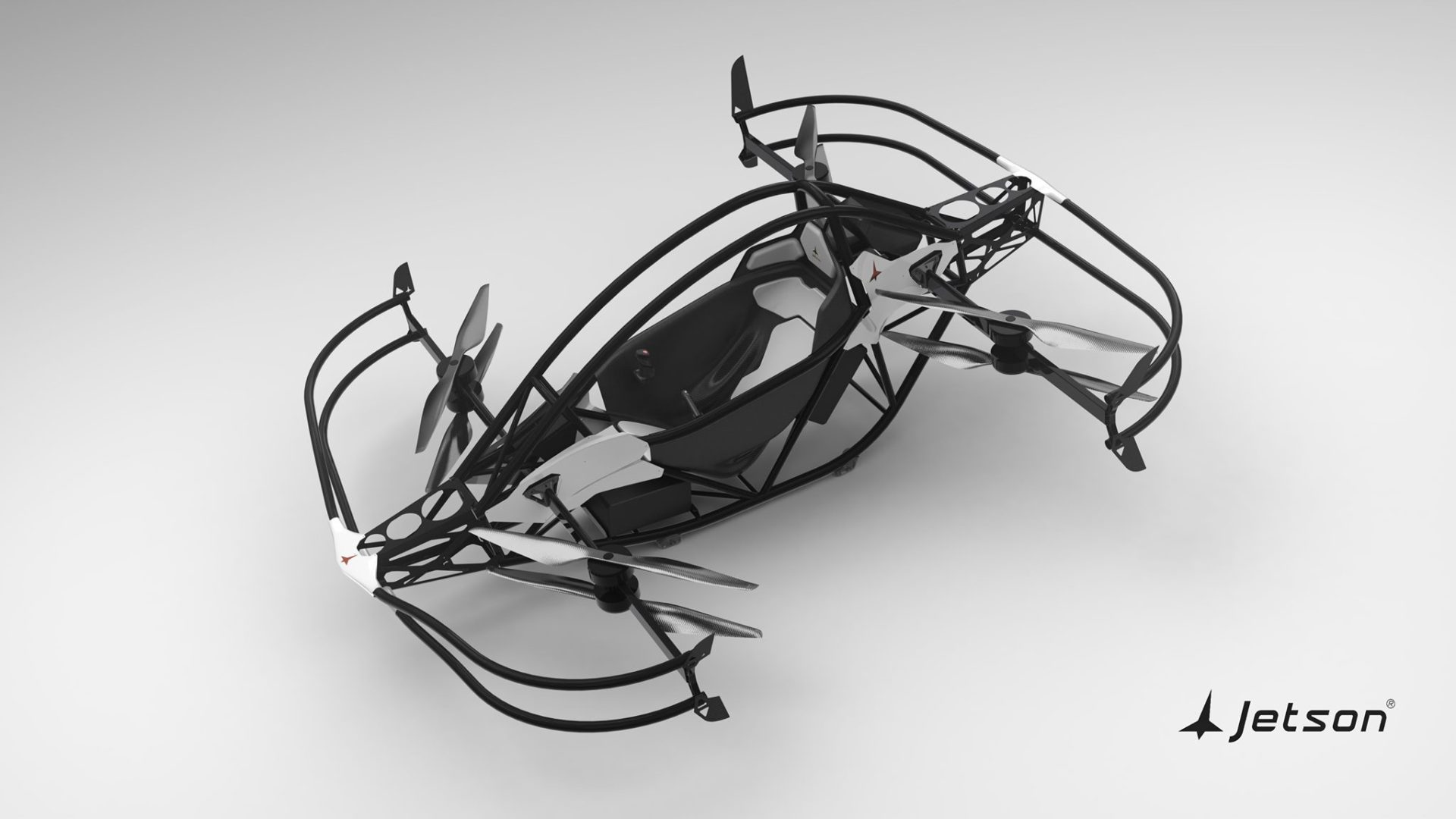
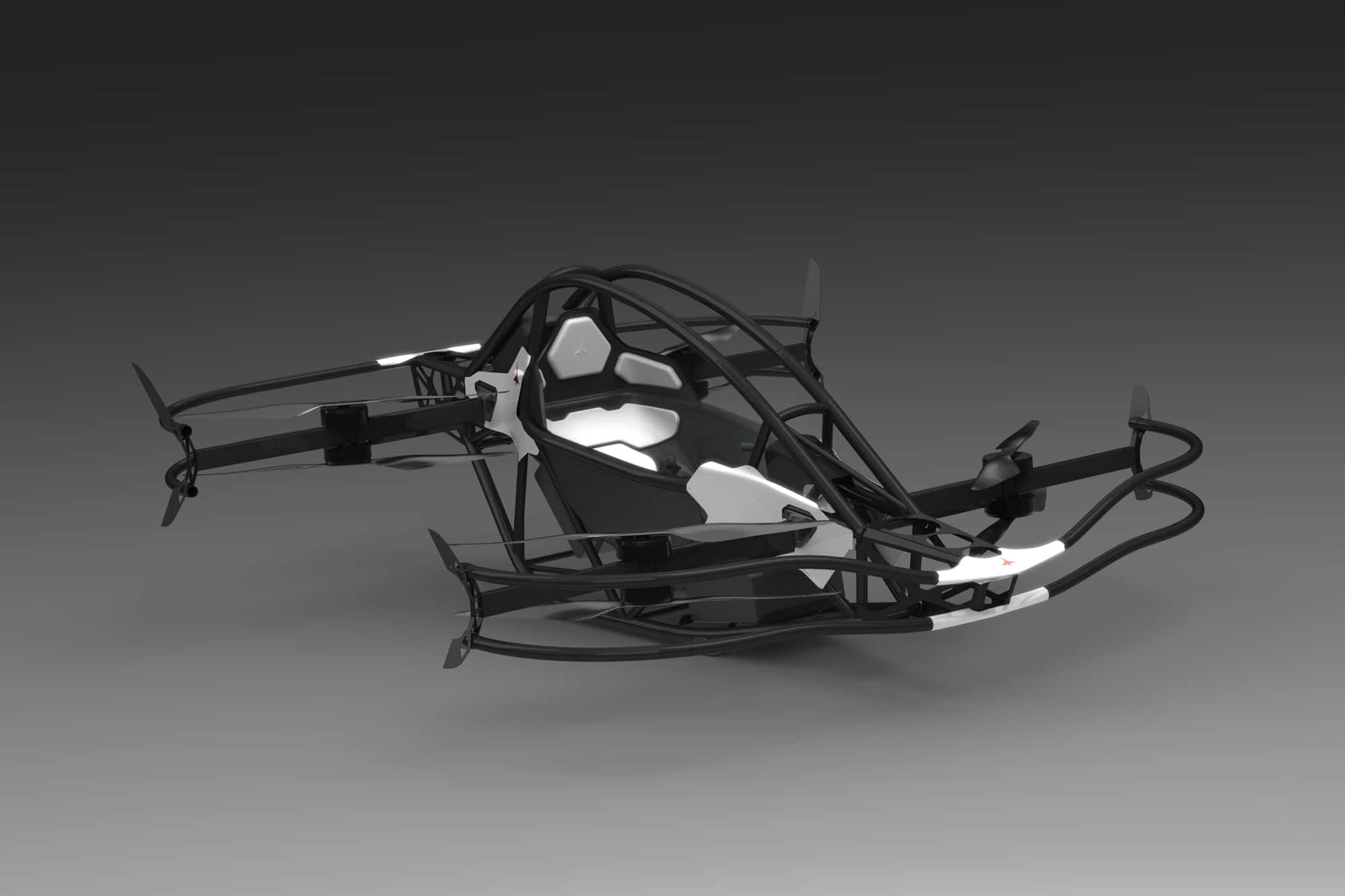
According to Jetson, the eVTOL craft features a race car-inspired “Spaceframe” safety cell design. The craft can safely fly even after the loss of any one of its eight motors. Hands free hover and emergency functions are built into the triple redundant flight computer/control system. A rapid-deployment emergency ballistic parachute is standard, as is Light Detection and Ranging (LIDAR) sensor-driven terrain tracking and obstacle avoidance.

120569793 779533189556713 4552874880831775608 n
Image via jetson

Marketing Spiel

According to Tomasz Pazan from Jetson, “The Jetson ONE is built around a rigid aluminum spaceframe with eight powerful electric motors.  It utilizes composite carbon fiber and cutting-edge 3D printed components, making it an extremely lightweight design.  It is also equipped with many safety features including a redundant propulsion system and a ballistic parachute.  It is a dream to fly.” Here’s another video of Jetson ONE testing uploaded to YouTube by Jetson.

[youtube id=”5lvOxweVAiY” width=”800″ height=”454″ position=”left”]

Just How Small Is It Anyway?

The aluminum-framed Jetson ONE weighs in at 190 pounds. Maximum pilot weight is 210 pounds. When ready for flight the craft measures 9.3 feet in length by 7.8 feet in width by 3.4 feet tall. When folded up for storage the ONE measures less than 3 feet in width. The high-discharge lithium-ion batteries can put out a maximum of 88KW to the ONE’s eight brushless outrunner motors. All that electrical activity yields a flight time of about 20 minutes (assuming a pilot weight of 187 pounds). For you speed junkies the top level-flight speed of the ONE is software-limited to 63 miles per hour. Flight controls consist of a starboard side-mounted three-axis joystick and a port side-mounted throttle lever.

Jetson ONE front
image via jetson

Delayed Gratification

If you’re already sold on a Jetson ONE you’ll need to invest $92,000 US. For that sum you’ll receive a partially-assembled kit you can finish building at home or in your hangar. Jetson says everything you’ll need, from the aluminum frame to the motors, propellers, and control system, along with detailed assembly instructions, is included. A $22,000 US deposit will get you in the queue for a ONE, but the earliest you’ll receive your kit will be sometime in 2023. All twelve of the 2022 model ONEs are already spoken for- they’ll be showing up in the United States, Mexico, Germany, Spain, and elsewhere. There are (as of now) chassis reservations open for 2023. Callsign ELROY!

Jetson ONE rear view
image via jetson

Blue Angels, A-10 Warthog to Headline North Georgia Airshow

ROME, Ga. — The southeast’s largest air show of autumn will host the U.S. Navy Blue Angels and the Air Force A-10C Warthog next weekend during the Wings Over North Georgia air show.

Top civilian aerobatics and military aircraft are scheduled to perform October 30-31 from Russell Regional Airport. Tickets for this drive-in formatted air show remain available for each day.

Pre-show activities will begin about 10 a.m. each day. A Dobbins Air Reserve Base C-130H and the Georgia State Patrol SWAT helicopter unit will kick-off the excitement.

“Each year, we have incorporated improvements and enhancements to continue to offer one of the top air show experiences,” JLC AirShow Management President John Cowman said. “Our ninth annual air show promises to be our best yet.”

Blue Angels’ Super Hornets to Dominate Weekend Excitement

Celebrating their 75th anniversary season, the Blue Angels are scheduled to arrive next Thursday to prepare for the two-day show. The team’s new C-130J Super Hercules Fat Albert will also arrive loaded with equipment and personnel.

“This is a gigantic year with the brand new Super Hornets and the C-130J,” Blue Angels executive officer CDR Todd Royles told AvGeekery.com. “What a major milestone, 75 years of this historic and a national treasure of an organization.”

LCDR Cary Rickoff is the Blue Angels opposing solo, piloting the number six jet. Rickoff is a native of Atlanta and is excited to return to his hometown to showcase his flying.

“I do my best to oppose the lead solo pilot, he makes sure the timing looks good and I’ll make sure the sets and the crosses happen nicely,” LCDR Rickoff explained to AvGeekery.com. “At the vey end we’ll join up with delta (formation) and assemble the six plane formation.”

Brrrt! Warthog to Thunder Over Rome Airport

Capt. Haden “Gator” Fullam is both the commander and pilot of the A-10C Thunderbolt II Demo Team. A native of nearby Rising Fawn, Fullam is a career A-10C pilot who joined the Air Force to honor his two grandfathers.

Both had served as combat pilots during the Vietnam War. This year, the A-10C Demo aircraft was painted to honor Vietnam soldiers held as POWs or who never made it home.

245569365 198058295767468 8408959960826440834 n
U.S. Air Force Capt. Haden “Gator” Fullam takes off to begin a recent practice flight. (USAF)

“The opportunity to fly an aircraft with a Vietnam War-era paint scheme is one I never thought I would have,” Capt. Fullam said. “Every time I fly that aircraft it will have a special meaning to me.”

Championship aerobatic pilots will include Scott Farnsworth, Michael Goulian, Mike Wiskus, and Greg Koontz. Historic warbirds scheduled to appear include B-25 Mitchel bomber, P-51D Mustand, and more.

Voted USA Today’s No. 7 fan favorite airshow this year, Wings Over North Georgia is designed as a drive-in air show. The success of last year’s drive-in show allows guests to tailgate near the flight line.

“A general airfield parking ticket will receive a 10-by-20-foot spot for a vehicle with an adjacent 10-by-20-foot space for enjoying the air show in a tail-gate fashion,” Wings Over North Georgia spokesperson Brenda Little said. “The premium ticket covers the cost of admission for the carload of guests.”

Air show officials add that the number of people per carload is based on the number of manufacturer-installed seatbelts. Tickets for the Drive-In Air Show are advance purchase only and will not be sold at the gates.

(Charles A Atkeison reports on aerospace and technology. Follow his updates via social media @Military_Flight.)