Home Blog Page 57

Profiles in Aviation: Nathan Gordon Rescued 15 Men Against All Odds

0

PBY Pilot Gordon and His Crew Snatched Downed Bomber Crews From Under Japanese Noses

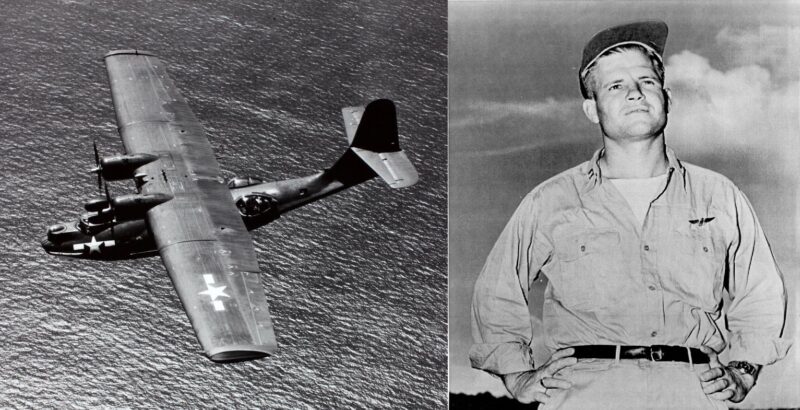
Nathan Green Gordon was born in Morrilton in Arkansas on 4 September 1916. His education began in public schools until his junior year in high school, after which he attended Columbia Military Academy in Columbia, Tennessee for his final two years of high school. After graduating as class Salutatorian in 1933, Gordon attended Arkansas Polytechnic College in Russellville, Arkansas. While in college Gordon enlisted in the Arkansas Army National Guard. After graduating from Arkansas Poly, Gordon went to the University of Arkansas Law School. He graduated in 1939 with a Juris Doctor Law degree in 1939.
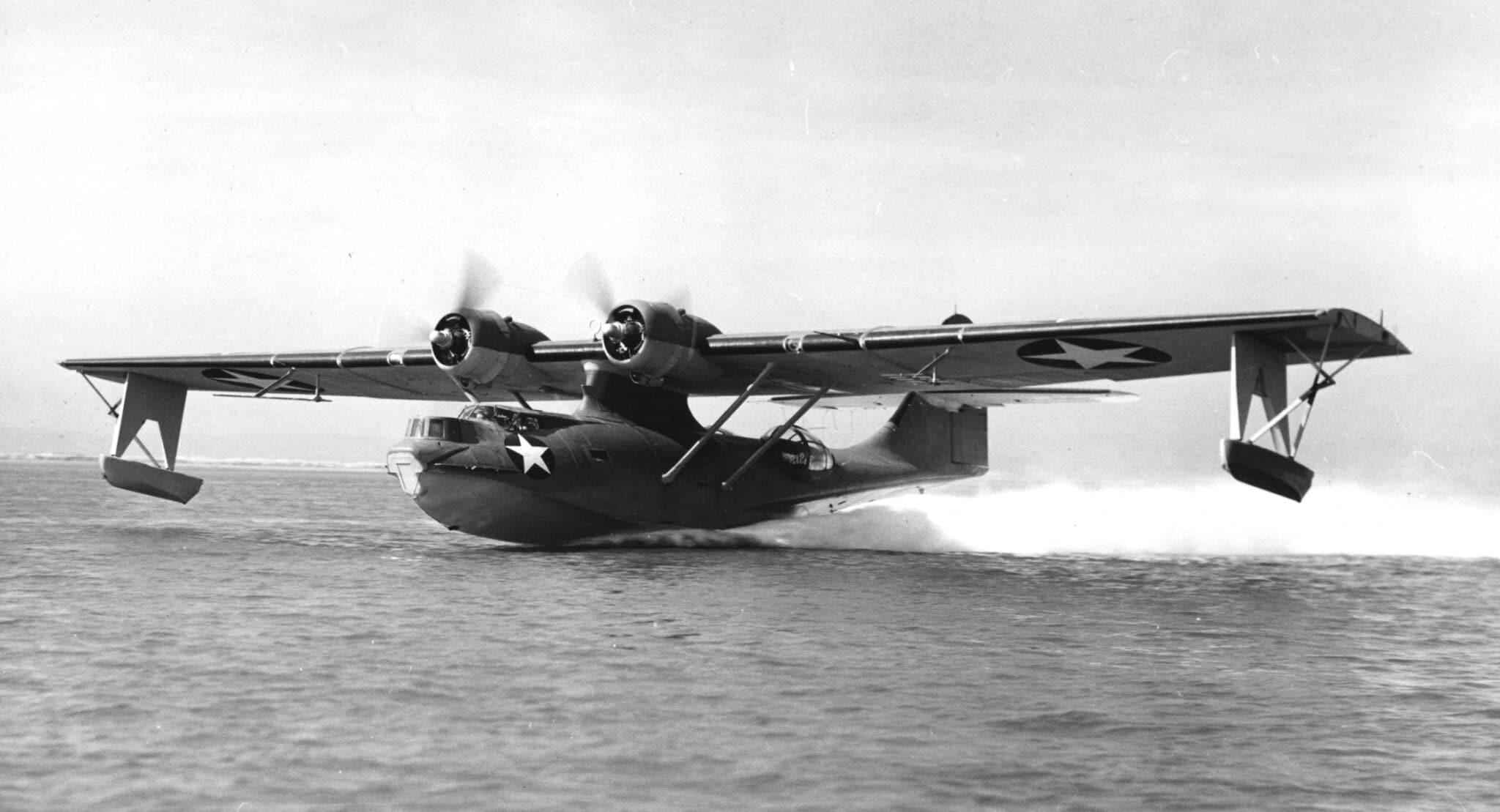
PBY 5 Catalina taking off in 1943b
PBY catalina image via national naval aviation museum (nnam)

Learning to Fly the PBY

Gordon actually practiced law for a couple of years before enlisting in the Navy in May of 1941. Gordon went to Naval Air Station (NAS) Jacksonville to learn to fly. He was there when the Japanese attacked Pearl Harbor. Gordon then went to NAS Norfolk where he completed his training and was assigned to Patrol Squadron THREE FOUR (VP-34) Black Cats flying Consolidated PBY Catalina flying boats. VP-34 was soon sent to the Caribbean to hunt Kriegsmarine U-Boats. Gordon and VP-34 never saw any U-Boats while flying surface search missions from such places as NAS Guantanamo Bay in Cuba, Kingston in Jamaica, and Trujillo in Honduras.

PBY 5A VP 52 Black Cat Dec 1943a
black cat pbys image via nnam

Heading West to War

On 7 June 1943, VP-34 was reassigned to NAS North Island in San Diego, where the squadron was re-equipped with PBY-5 model Catalinas wearing all-black camouflage. The squadron then proceeded west to Hawaii. Gordon spent six weeks based on Midway flying anti-shipping and antisubmarine patrols before moving to Funafuti Atoll in August of 1943. Gordon flew a reconnaissance mission over Tarawa the day before the start of Operation Galvanic- the invasion of Tarawa and the Gilbert Islands. VP-34 then moved to a seaplane base near Perth in Western Australia until December of 1943, when the globetrotting Black Cats made their way to Samarai Island near Milne Bay, at the extreme eastern tip of New Guinea, in January of 1944.
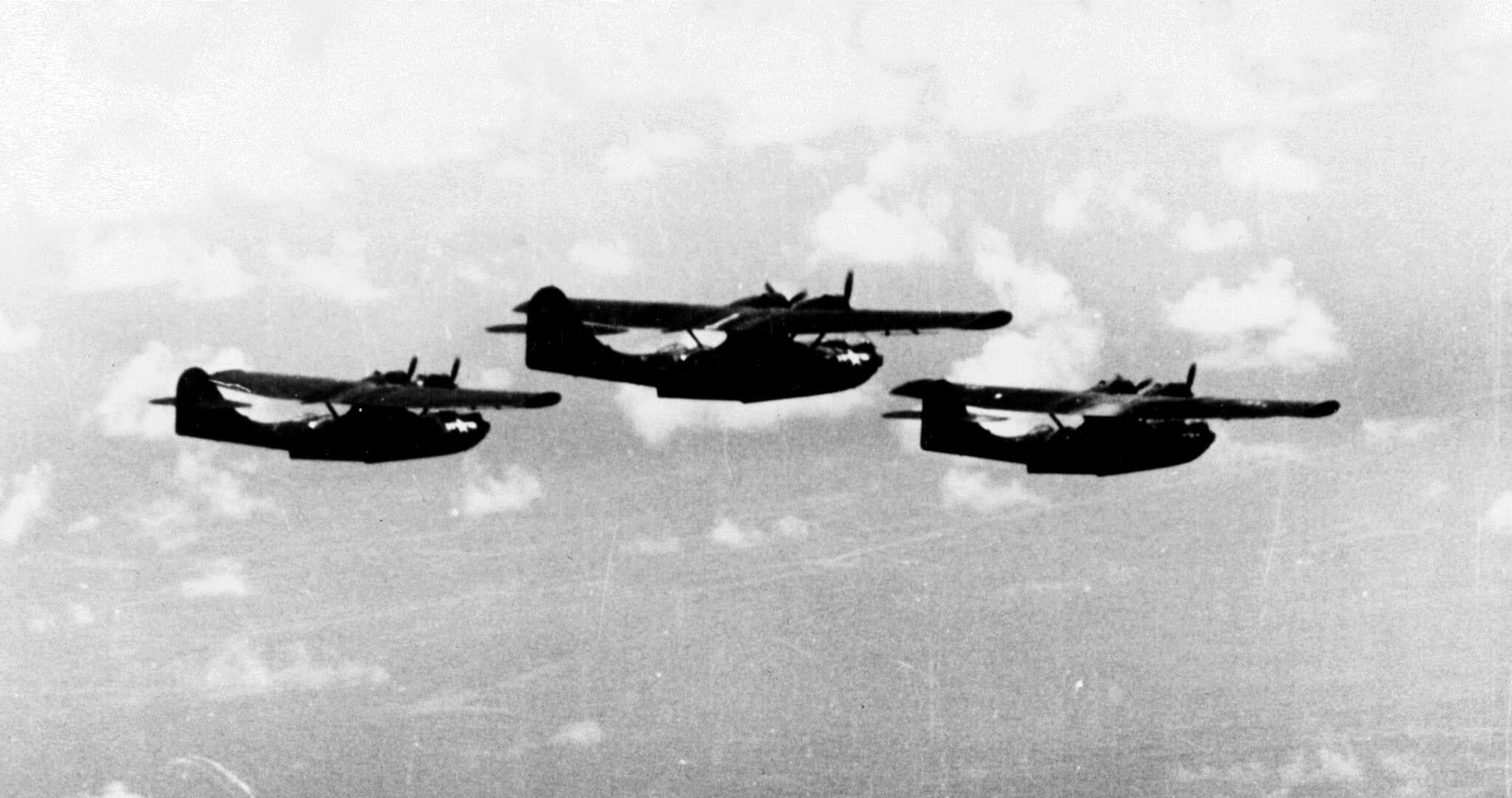
PBY 5 Catalinas from VP 52 in flight in February 1944a
black cat pbys image via nnam

Arkansas Traveler and Her Crew

LTJG Gordon was the aircraft commander of VP-34 PBY-5 Catalina Bureau Number (BuNo) 08139 tail number 71. The aircraft was named Arkansas Traveler. Gordon’s crew consisted of First Pilot Ensign John “Jack” A. Kelly, Second Pilot Ensign Walter L. Patrick, Third Pilot Ensign Leurelle R. Fulmer, Jr., First Radioman ARM1c Aleck G. Alexander, Second Radioman ARM3c Robert Murch, Plane Captain and First Mechanic AMM1c Wiley R. Routon, Jr., Second Mechanic Joseph “Joe” P. Germeau, Third Mechanic AMM3c John Brately, and Ordnanceman/Gunner AOM2c Paul J. Wodnick.
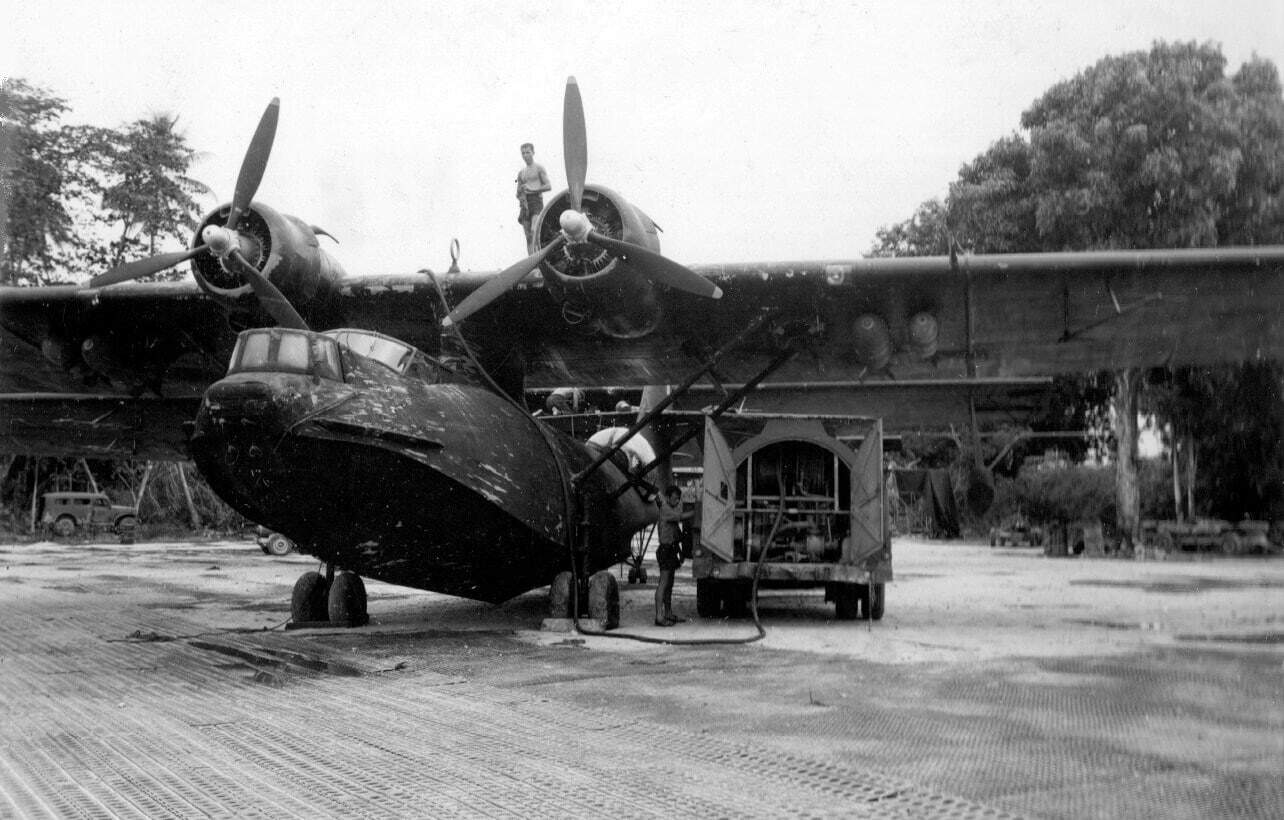
6828810991 9f04517930 o
PBY on beaching gear fueling up. image via nnam

Tough Crews Attacking a Tough Target

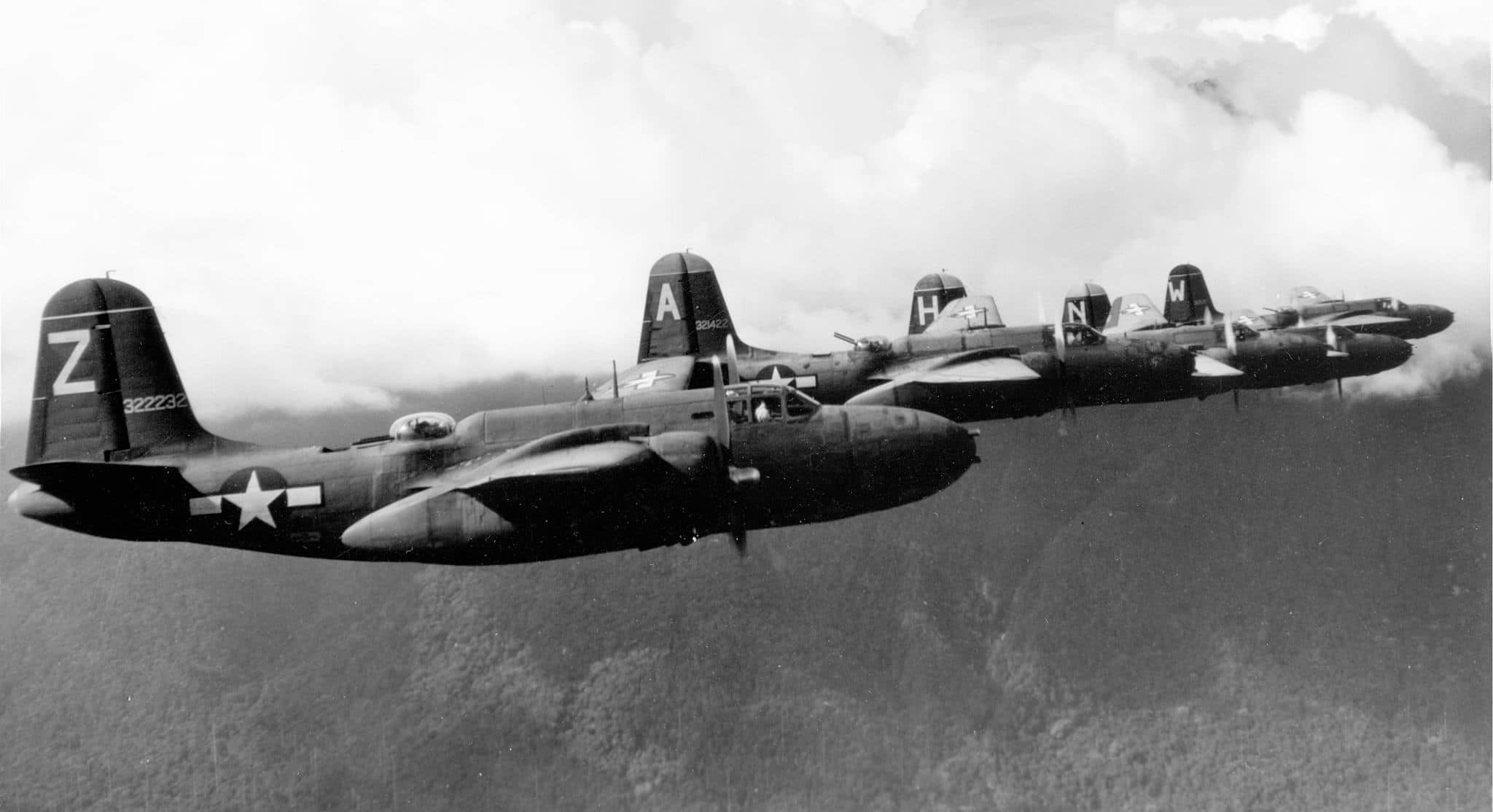
Assigned to air alert/rescue duty (Dumbo) with the code name Gardenia Six, Arkansas Traveler departed Samarai on 15 February 1944 bound for a rendezvous near the Vitu Islands with four white-tailed Republic P-47D Thunderbolts from Neel Kearby’s 348th Fighter Group (FG) out of Finschafen to provide escort for the lumbering and vulnerable Catalina. Kavieng is a port city located at the far western tip of New Ireland. Firth Air Force mission 46D-1 called for four squadrons of Douglas A-20 Havoc strafers from the 3rd Bombardment Group (BG) Grim Reapers to attack shipping targets in the harbor. Seven squadrons of North American B-25 Mitchell strafers from the 38th BG Sun Setters and 345th BG Air Apaches were to attack the facilities supporting the harbor at Kavieng.
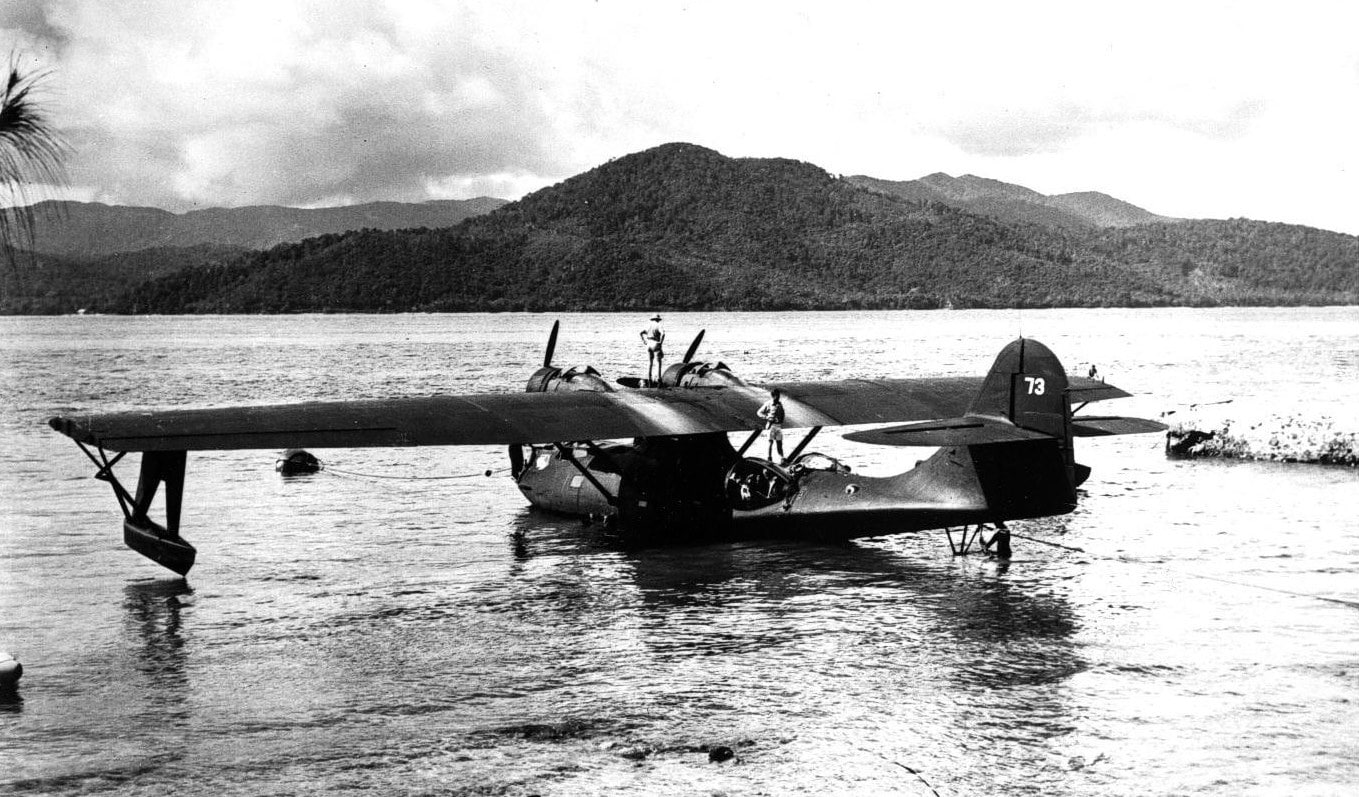
5104c3bacf66e
black cat pby image via national archives

The Guts to Try

Heavily-defended Kavieng lived up to its reputation that day. The first rescue call came in at about 1100 local time after A-20G Havoc SN 42-86616 assigned to the 13th Bomb Squadron (BS) of the 3rd BG crewed by pilot 1st LT William T. Pearson and gunner MSgt Donald N. Gamage, was shot down and crashed about 35 miles southwest of Kavieng. Gordon and his crew could not tell from the air whether or not the crew of the A-20G was alive so they power-stalled the flying boat on the rough seas between the fifteen-foot high swells. A search of the debris did not yield any survivors and Arkansas Traveler took off again. The crew reported that the open-water landing had sprung rivets and split seams in the bottom of the hull. The crew broke pencils off in the worst of the popped rivet holes and broke out the buckets. After taking off again the PBY-5 waited for more business. It didn’t take long.
136346387 3591074974316396 2589342912846848191 oa
A-20G strafers. image via national archives

For the Rest of the Story Bang NEXT PAGE Below

WATCH: Strategic Air Command Goes Hollywood

The Film “Tall Man Five Five” Was a Tour de Force for SAC and the B-58

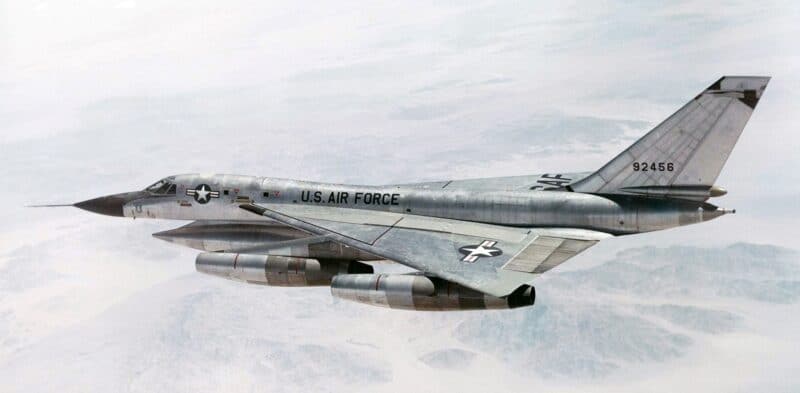
Produced for Convair and General Electric by Herschensohn Productions of Hollywood, with aerial photography by Convair and narration by none other than Chet Huntley, the film Tall Man Five Five was produced during the early 1960s to promote Convair’s B-58 Hustler supersonic bomber. The B-58 did come with a built-in calling card- the mysterious and always attention-grabbing sonic boom. The film does its level best to allay any concerns among its audience about the booms. The film was uploaded to YouTube by PeriscopeFilm.

[youtube id=”qjLaUYxdGuc” width=”800″ height=”454″ position=”left”]

Operation Heat Rise

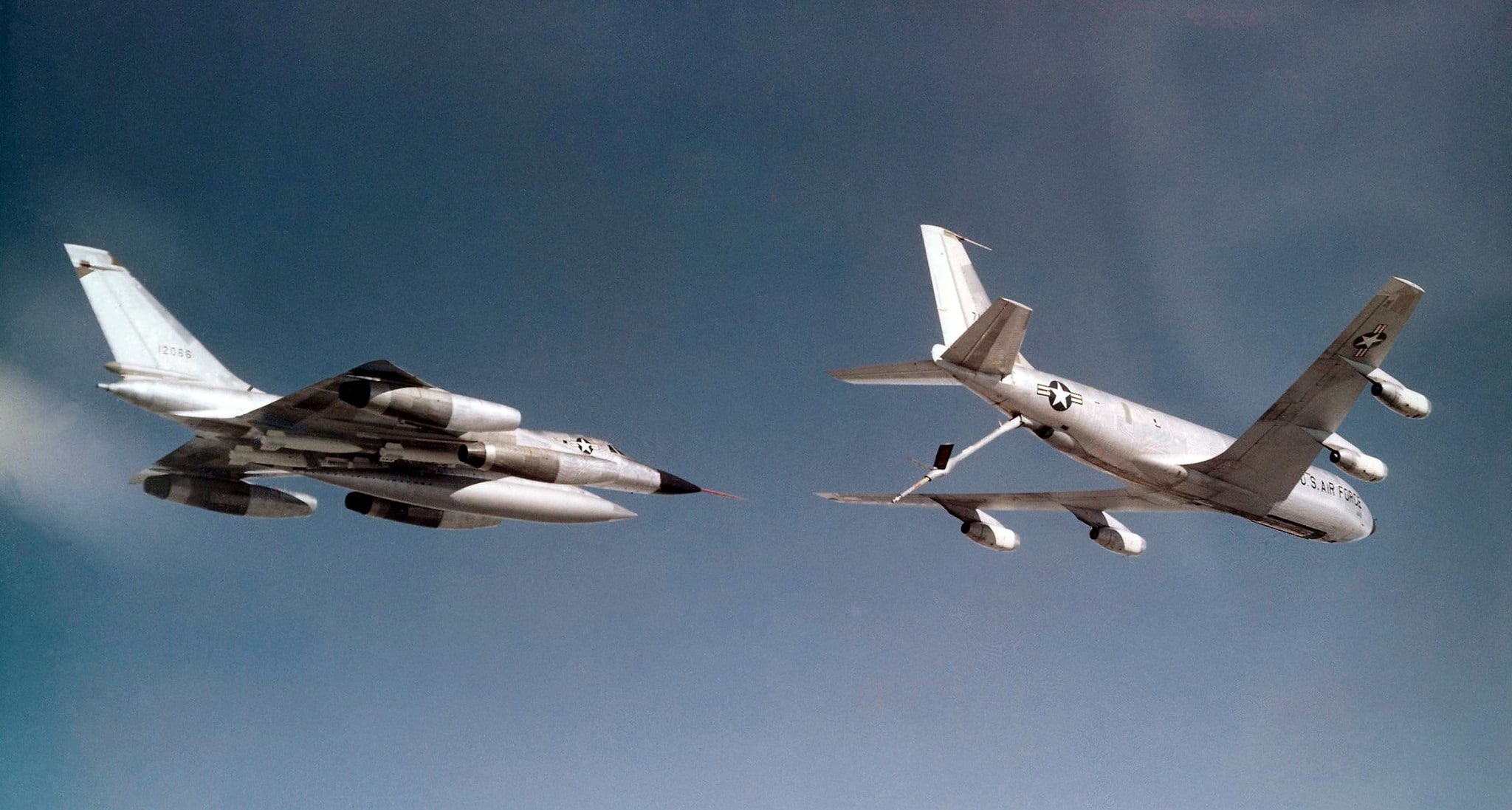
On 5 March 1962 a pair of B-58s from the 65th Bombardment Squadron of the 43rd Bombardment Wing based at Carswell Air Force Base (AFB) in Fort Worth, TX, took off and departed the area westbound. After the B-58s were off the west coast they were refueled by Boeing KC-135A Stratoankers. Then the lead aircraft, 59-2458, Cowtown Hustler, callsign Tall Man Five Five, flew from Los Angeles to New York in a new world-record time of 2 hours and 56.8 seconds. According to the Air Force the flight generated more than 10,000 damage claims (mostly for broken windows) due to sonic booms caused by the two Hustlers during their historic round trip from LA to the Big Apple and back.

67680914 10219515129539910 535462136957108224 o
B-58 refueling from a KC-135. image via national archives

DFCs for the Crew of Cowtown Hustler

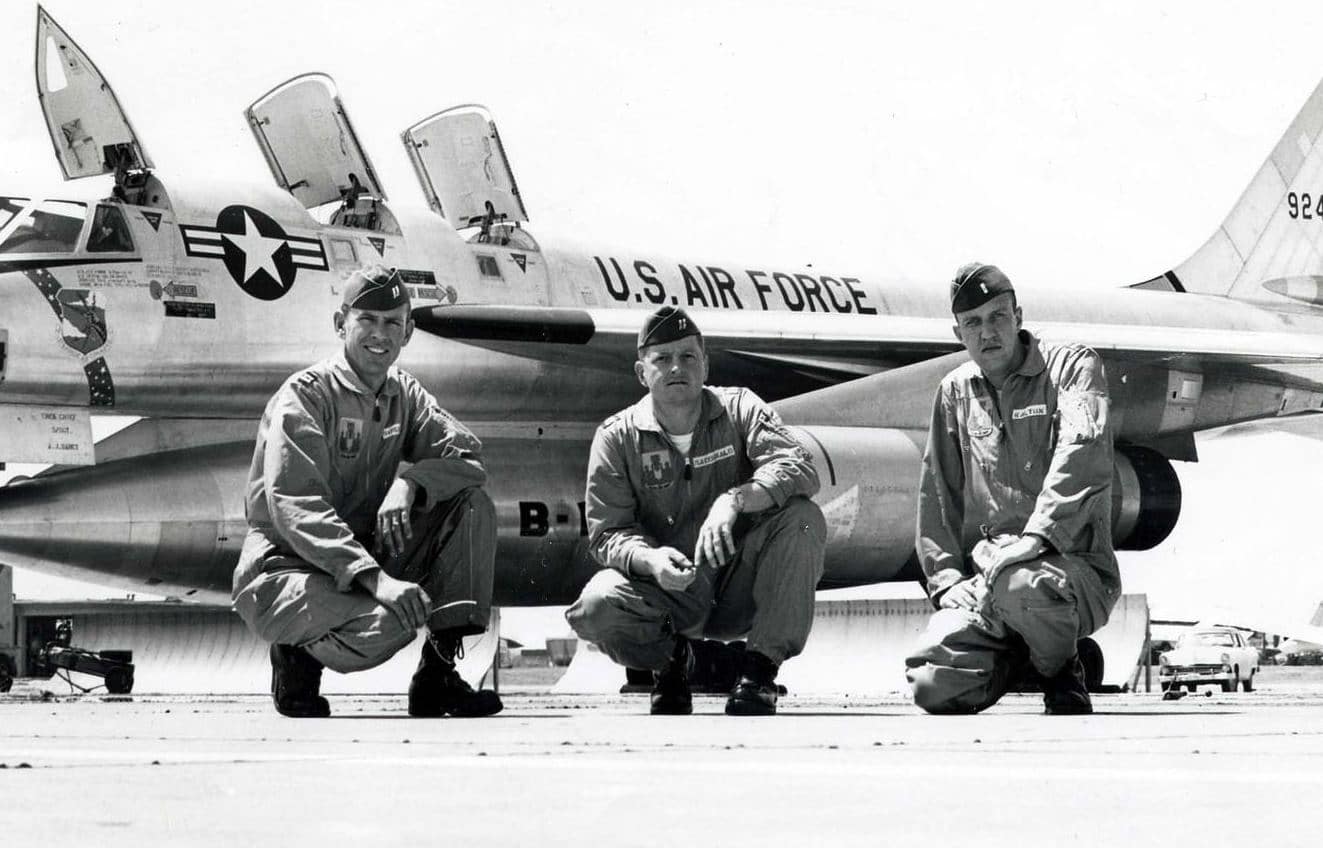
Average speed of the B-58 was 1,214.17 miles per hour. The second B-58, Tall Man Five Six, was a minute behind Tall Man Five Five. During their return flight they broke the records for flight from New York to Los Angeles and the record for a round trip between the two cities as well. The crew, USAF Captains Robert G. Sowers (pilot) Robert MacDonald (navigator) and 1st Lieutenant John T. Walton (defensive systems operator) received Distinguished Flying Crosses along with the Bendix and Mackay Trophies for their feats. The B-58 they flew, B-58A-10-CF AF SN 59-2458, Cowtown Hustler, is now enshrined at the National Museum of the US Air Force in Dayton, OH.

Operation Heat Rise crew Sowers MacDonald and Walton with another B 58A 10 CF 59 2447
The record-breaking crew of cowtown hustler. image via US Air FOrce

Supporting Cast

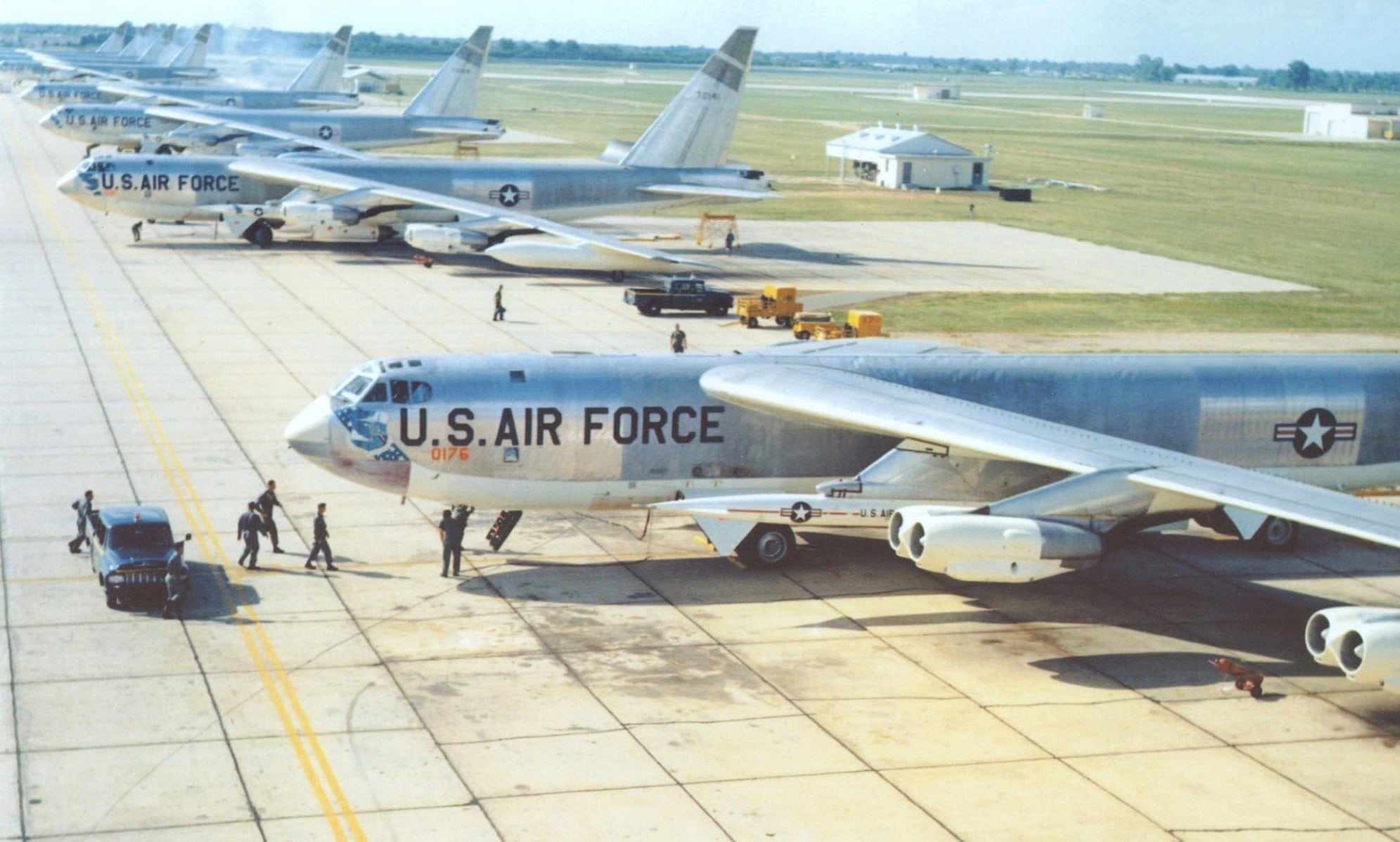
The film features the Convair B-58 Hustler along with the Boeing B-52F Stratofortresses and the Convair SM-65 Atlas Intercontinental Ballistic Missile (ICBM). The sharp-eyed among us may notice a passing appearance by a Convair TF-102A Delta Dagger along with a Boeing KC-135 Stratotanker and a Douglas C-133 Cargomaster swallowing an SM-65.

221920545 2976870355923709 1946500506980322055 na
B-52 flightline image via national archives

Hustler’s Lament

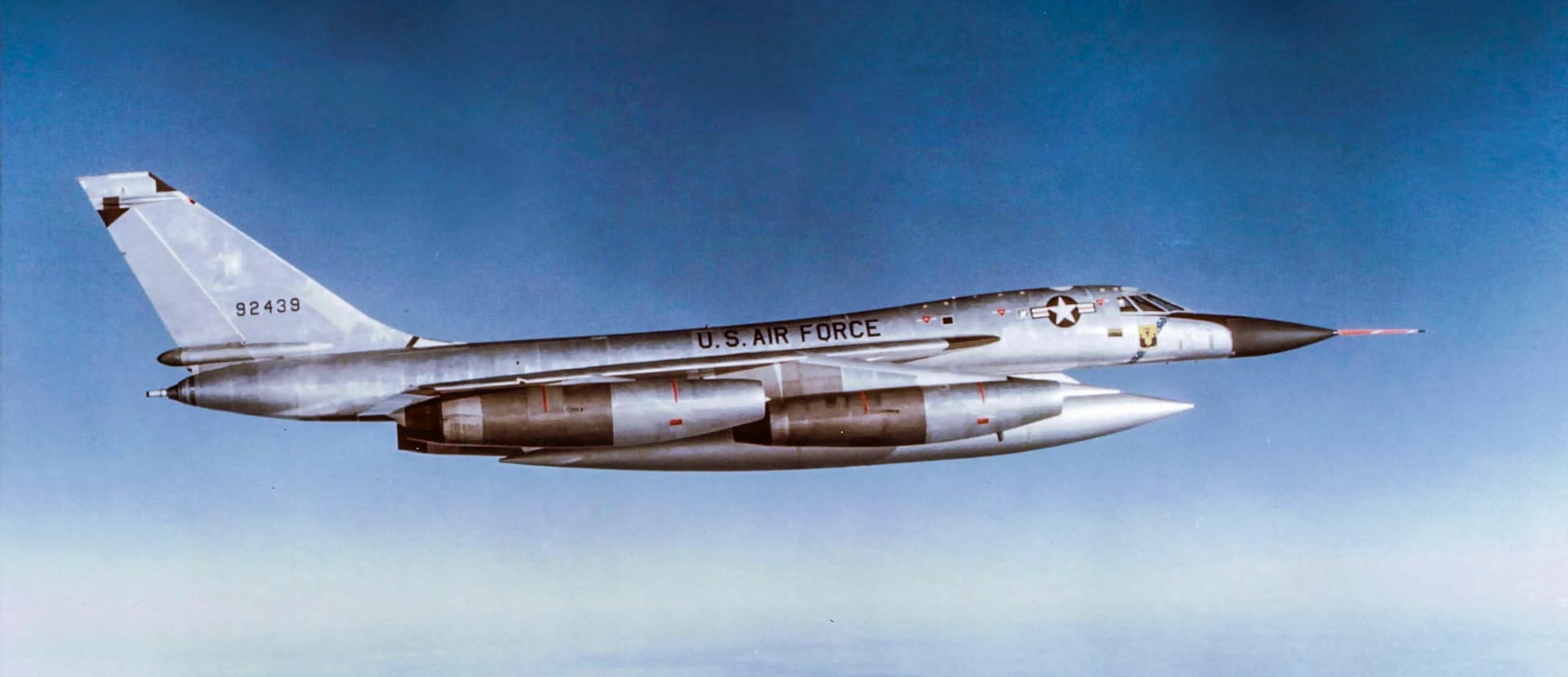
The B-58 largely replaced the Boeing B-47 Stratojet as a strategic bomber, but the B-58 itself didn’t last very long in the role either. When the Soviets demonstrated their newest surface-to-air missiles (SAMs) could take out high and fast-flying bombers like the Hustler the jet became a low-level penetration bomber instead- a role for which the B-58 was neither suited nor designed. Eventually the B-58 was itself replaced in the low-level penetration bomber role by the General Dynamics FB-111A.

109937114 10207472644691581 151025252939997185 a 1
B-58 image via NMUSAF

WATCH: Vietnam-Era Footage Captured Viggies in Action

0

Go Aboard the Ranger with RVAH-6 and Watch RA-5C Vigilantes Do Their Thing

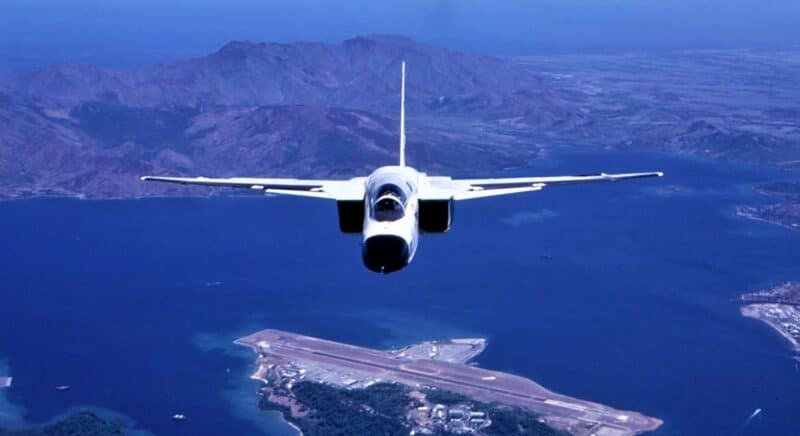
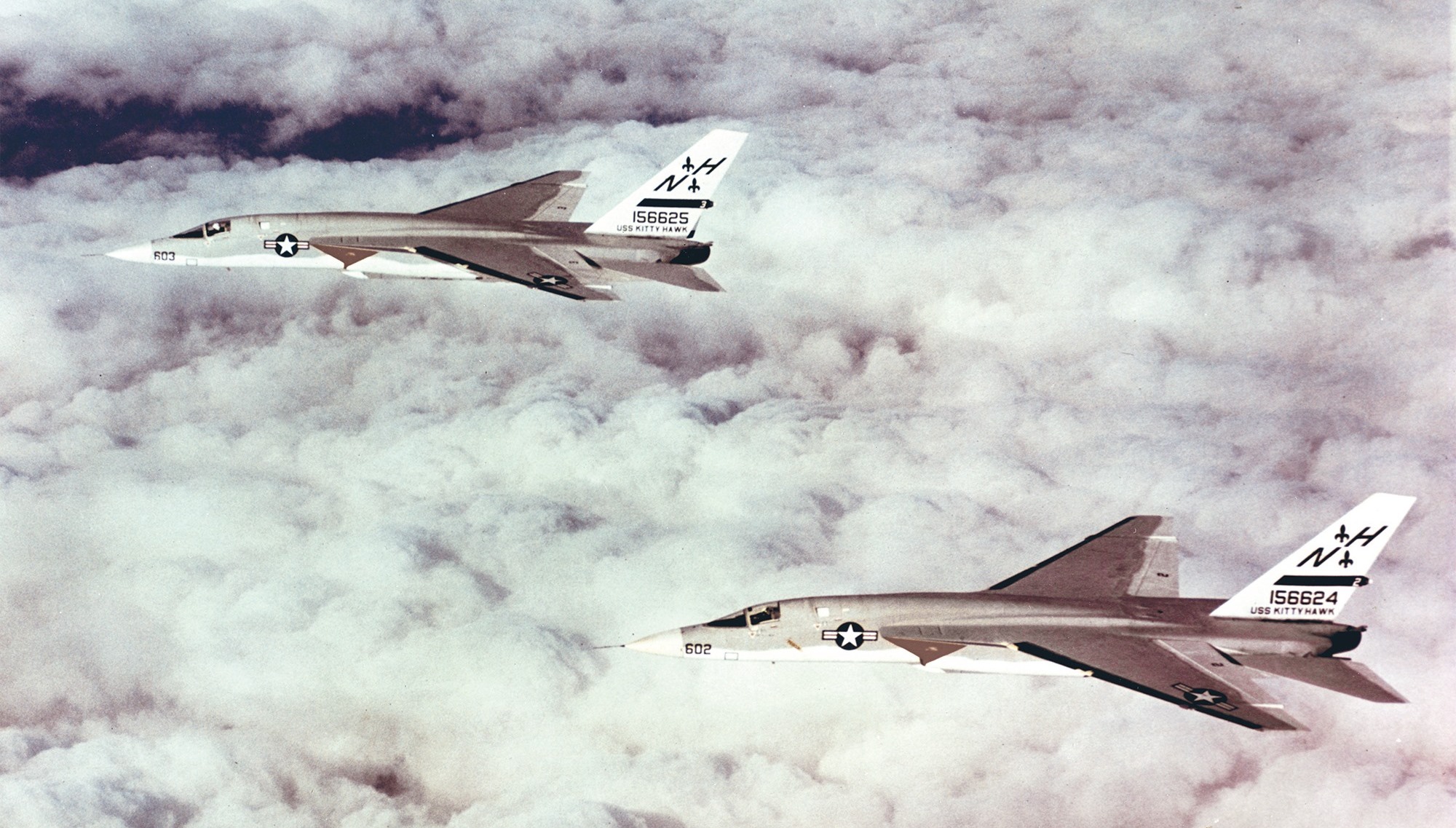
Reconnaissance Attack (Heavy) Squadron SIX (RVAH-6) Fleurs was embarked aboard the Forrestal-class aircraft carrier Ranger (CVA-61) in May of 1968 when a Navy film crew captured some excellent footage of their RA-5C Vigilantes operating from the Ranger. The footage is silent, but it provides some of the best visuals of Viggies flying from carrier decks. The video was uploaded to YouTube by Periscope Film. Enjoy!

[youtube id=”GzCzHdHC_CM” width=”800″ height=”454″ position=”left”]

The Rest of the Cast

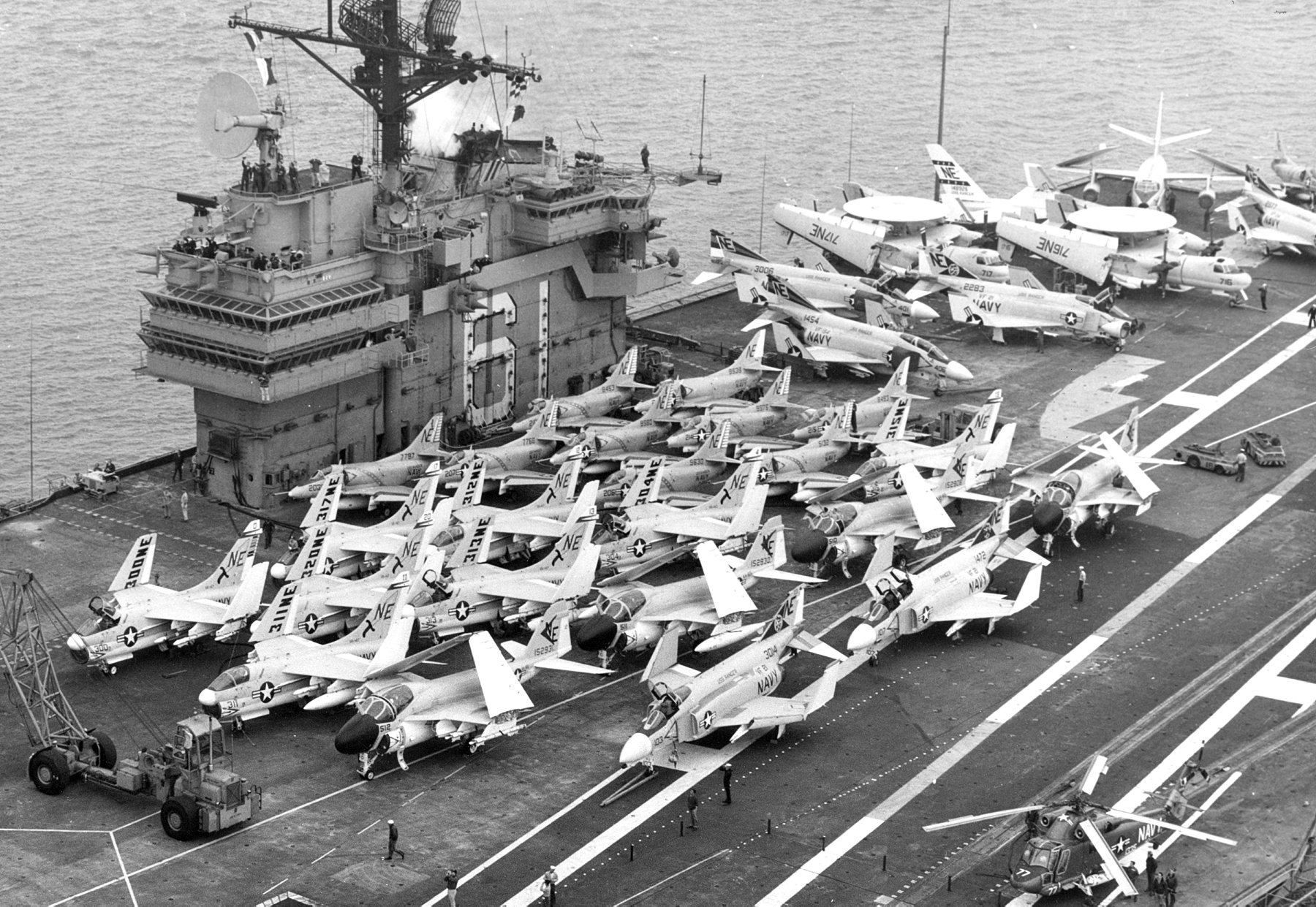
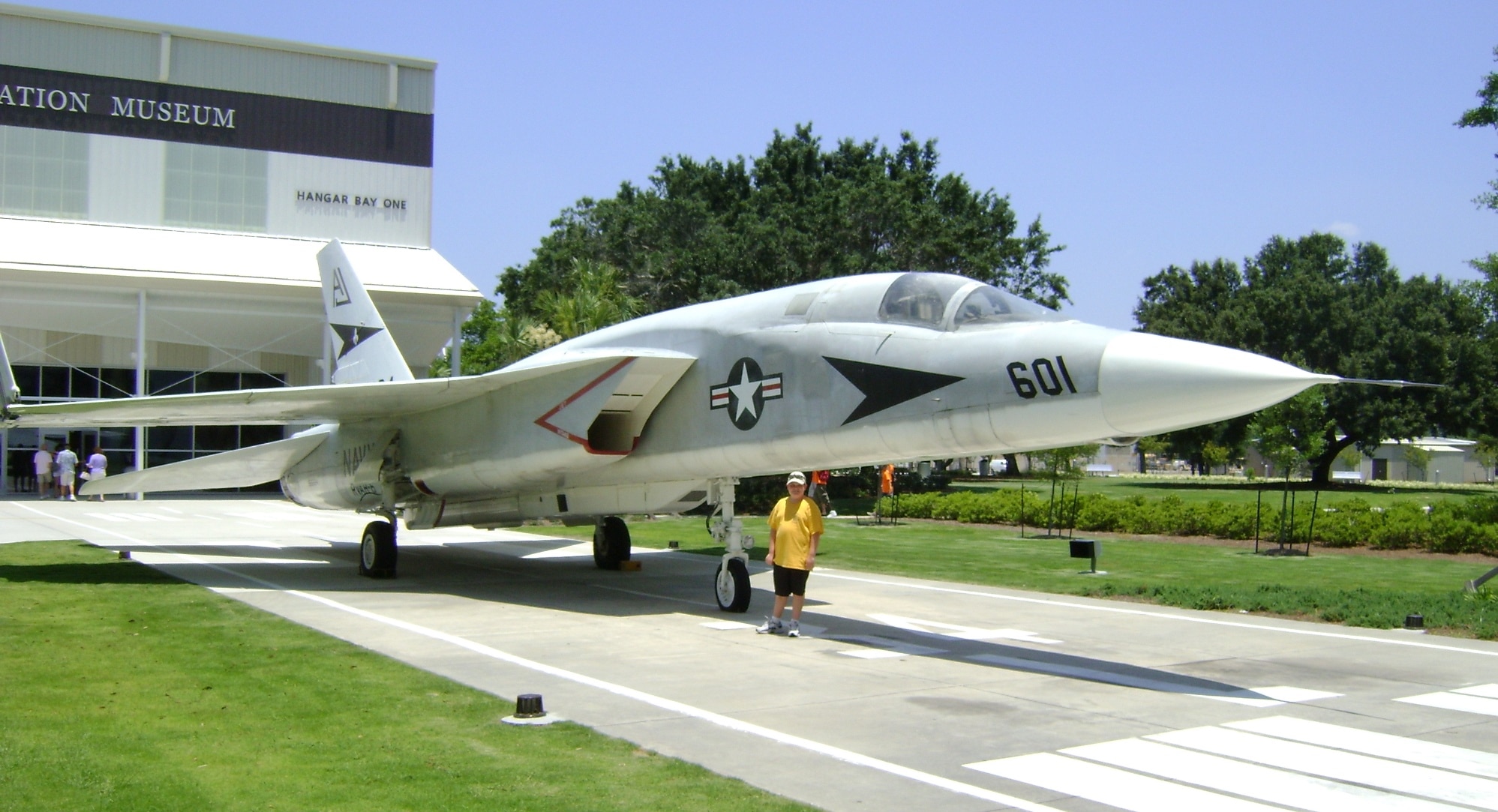
During CVW-2’s 1967-1968 WestPac deployment (4 November 1967 – 25 May 1968) aboard the Ranger, the Air Wing consisted of VF-154 Black Knights and VF-21 Freelancers flying the McDonnell Douglas F-4B Phantom II, VA-22 Fighting Redcocks flying the Douglas A-4C Skyhawk, VA-165 Boomers flying the Grumman A-6A Intruder, VA-147 Argonauts flying the Ling Temco Vought A-7A Corsair II, RVAH-6 Fleurs flying the North American RA-5C Vigilante, VAW-115 Liberty Bells flying the Grumman E-2A Hawkeye, Detachment 61 of VAH-2 Royal Rampants flying the Douglas KA-3B Skywarrior, Detachment 61 of VAW-13 Zappers flying the EKA-3B variant of the Skywarrior, Detachment 61 of VAP-61 World Recorders flying the RA-3B Skywarrior, and Detachment 61 of HC-1 Pacific Fleet Angels flying the Kaman UH-2A and UH-2C Seasprite.

51528690 10218786709083470 8990342255428501504 o
CVW-2 aboard the ranger image via nnam

Born for Doomsday

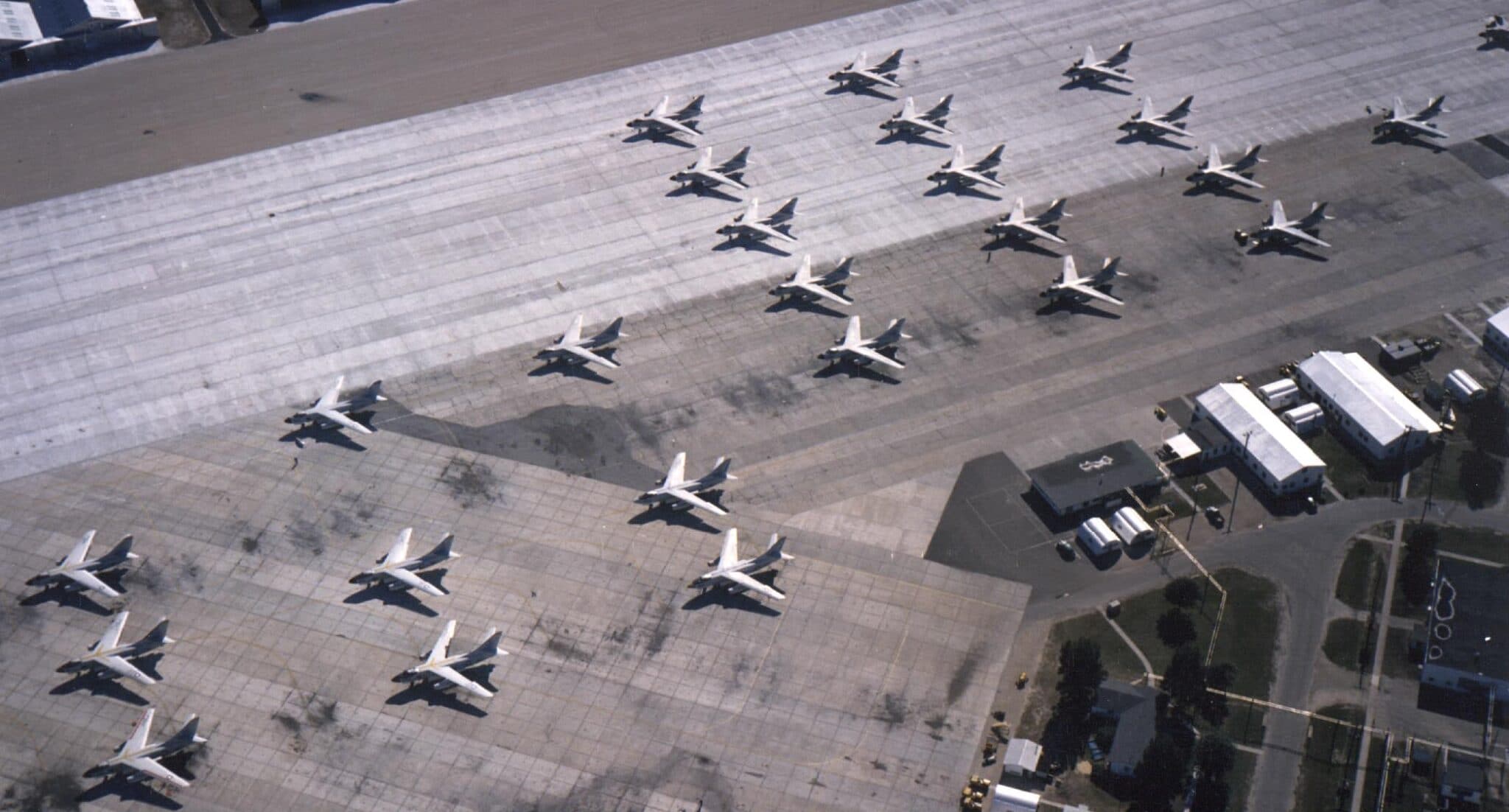
RVAH-6 dates back to 6 January 1950 when VC-6 was established at Naval Air Station (NAS) Moffett in California as the Navy’s second nuclear attack squadron. At the time VC-6 was flying the Lockheed P2V Neptune. VC-6 then operated the North American AJ Savage before moving south to NAS North Island and being redesignated Heavy Attack Squadron SIX (VAH-6) in 1956. A couple of years later VAH-6 moved up to NAS Whidbey Island in Washington. VAH-6 began flying the Douglas A3D-2 Skywarrior in 1958 and deployed several times aboard the Ranger and the Forrestal (CVA-59). The A3D-2s VAH-6 was flying became A-3Bs in September of 1962 thanks to the Tri-Service Aircraft Designation System.

A3D Skywarriors on the flight line at NAS Sanford c1960
Whales on the ramp at NAS Sanford image via national archives

Moving Across Country and Going Supersonic

VAH-6 moved across the country to NAS Sanford in Florida in 1965. Later that year the Fleurs traded in their aging Whales for spanking new North American RA-5C Vigilantes and picked up the RVAH-6 designation. RVAH-6 deployed to the West Pac and Vietnam twice aboard the USS Constellation (CVA-64). The deployment aboard Ranger was the squadron’s third trip to Yankee Station. After their deployment aboard the Ranger RVAH-6 returned to Yankee Station three times- once each aboard the carriers USS Enterprise (CVN-65), USS Kitty Hawk (CVA-63), and finally aboard USS America (CVA-66).

240436777 4278490868855494 3628940590769253602 na
RVAH-6 RA-5Cs image via NNAM

After Vietnam…

After the Vietnam War, RVAH-6 deployed a single time aboard the carriers Forrestal, Kitty Hawk, and USS Nimitz (CVN-68). When it came time to replace the Viggie aboard carriers the Vought RF-8G Crusader picked up where the RA-5Cs left off- at least until they were in turn replaced by the Grumman F-14A Tomcat/Tactical Air Reconnaissance Pod System (TARPS) combination aboard aircraft carriers. After the conclusion of their last deployment in July 1978, after 28 years of active service, RVAH-6 was inactivated at NAS Key West on 20 October 1978.

DSC09443a
RVAH-6 RA-5C vigilante on display at the nnam. image via author

BREAKING: Rolls-Royce F130 Engines Will Power Up the B-52H Fleet

0

The Program Will Provide New Engines and Other Updates to Keep BUFF Flying Through the 2050s

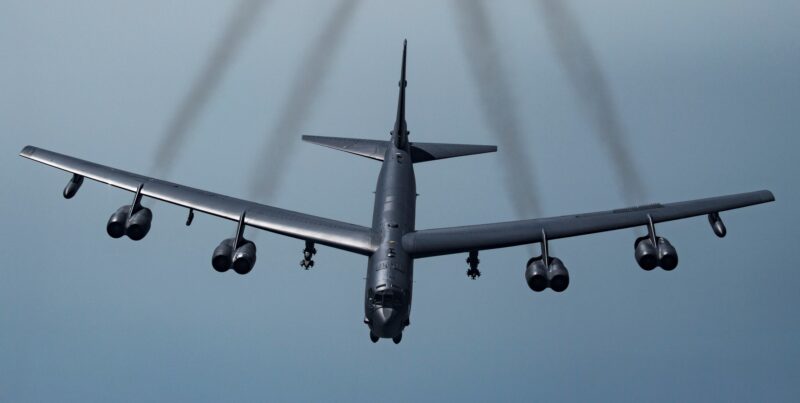
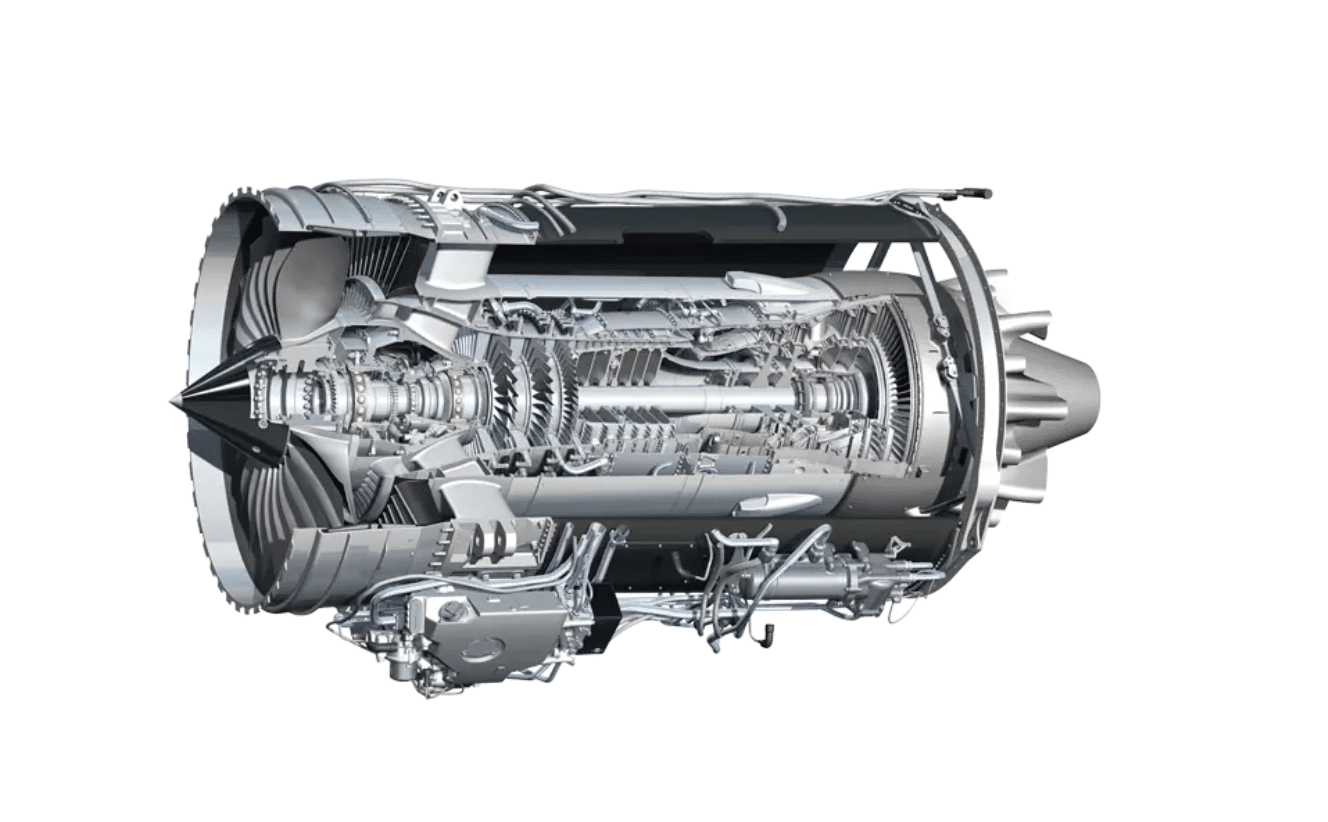
According to the US Air Force, “The Department of the Air Force has awarded a $2,604,329,361 contract to Rolls-Royce Corporation, Indianapolis, Indiana, for B-52H Stratofortress military derivative commercial engines. The competitive single award contract provides for 608 military derivative commercial engines, plus spare engines, associated support equipment and commercial engineering data, to include sustainment activities, to be used on the B-52H bomber fleet.”

Screen Shot 2021 09 24 at 6.51.58 PM
Image via Rolls-Royce

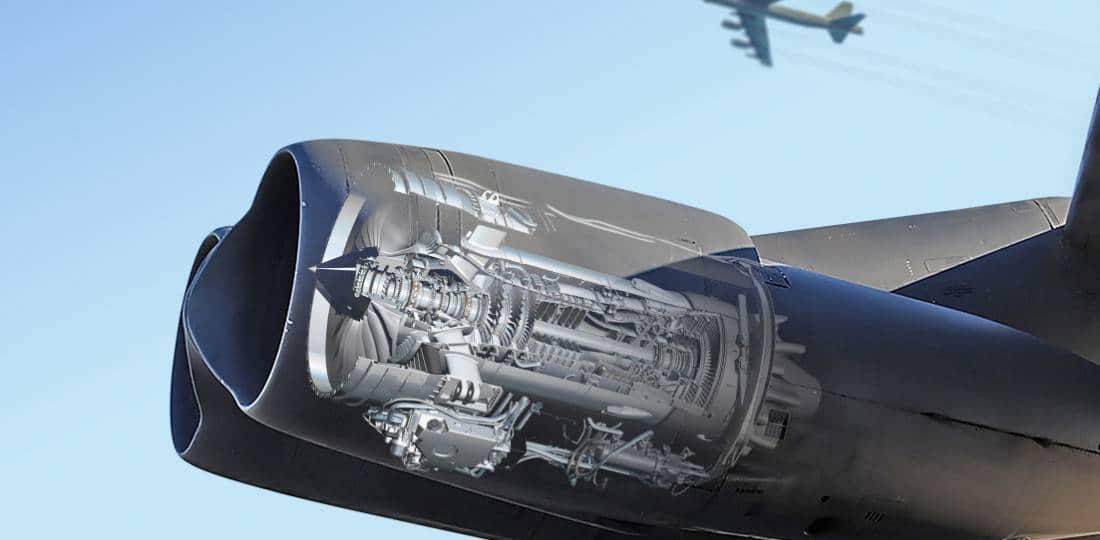
“The Rolls-Royce F130 engine will replace the TF33-PW-103, which has powered the B-52 since the 1960s, and is projected to no longer be supportable beyond 2030. The B-52 original equipment manufacturer, Boeing, is responsible for integrating the engines onto the aircraft. The Air Force plans to finalize integration activities and deliver the first lot of B-52H modified aircraft by the end of 2028.”

f130 b 52
image via rolls-royce

“The B-52 Commercial Engine Replacement Program (CERP) is a complex upgrade that not only updates the aircraft with new engines, but updates the flight deck area, struts and nacelles,” said Brig. Gen. John Newberry, Air Force bombers program executive officer. Our current virtual digital prototyping efforts are giving us an opportunity to integrate the engines and other changes to the B-52 before doing any physical modifications. This has allowed us to develop the most cost-efficient solution while reducing the time from concept to production.”

6634414
image via US Air force

“The new engines on the B-52s are expected to remain on the B-52H through at least 2050, increase fuel efficiency, increase range, reduce emissions in unburned hydrocarbons, and significantly reduce maintenance costs.”

“The B-52 CERP is the most important and comprehensive upgrade to the B-52 in over half a century,” said Maj. Gen. Jason Armagost, director of Strategic Plans, Programs and Requirements at Headquarters Air Force Global Strike Command, Barksdale Air Force Base, Louisiana. “The B-52 is the workhorse of the nation’s bomber force and this modification will allow the B-52 to continue its critical conventional and standoff mission into 2050’s.”

180503 F CJ989 901a
image via us air force

The first two fully modified B-52s are projected to deliver by the end of 2025 and will undergo ground and flight testing. The first lot of operational B-52s with the new engines is projected to deliver by the end of 2028 with the entire fleet modified by 2035.
According to Rolls-Royce North America, “The F130 and its commercial family of engines have accumulated more than 27 million engine flight hours. The F130 is the perfect fit for the B-52 with proven reliability, superb life cycle cost, and low integration risk. A variant of the Rolls-Royce engine selected to power the iconic B-52 is already in service with the USAF around the world, powering both the C-37 (G550) and E-11 BACN (Battlefield Airborne Communications Node) aircraft.”

170413 F GH858 192
A C-37A Gulfstream aircraft sits on the flightline at MacDill Air Force Base, Fla., April 13, 2017. The aircraft assigned to the 310th Airlift Squadron, which provides worldwide air missions for high ranking government and military officials. (U.S. Air Force photo by Airman 1st Class Mariette Adams)

For More Bang NEXT PAGE Below

Seasprite: Kaman’s Little Utility Helicopter Made a Big Impact

The SH-2 Seasprite Served In Peace and War with Distinction for Nearly 40 Years

The Kaman SH-2 Seasprite was designed in response to a 1956 US Navy requirement for a compact, all-weather flight capable, multipurpose naval helicopter. Kaman’s proposal, internally designated K-20, was a largely conventional helicopter design powered by a single General Electric T58-GE-8F turboshaft engine turning a 44-foot four-bladed main rotor and a three-bladed anti-torque tail rotor.

The Navy awarded a contract to Kaman for four prototypes designated YHU2K-1 and an initial batch of 12 production rotorcraft designated HU2K-1 in late 1957.

cva43EW19666987 2 blue
HC-1 UH-2A Image via National Naval aviation museum (NNAM)

Working Out the Bugs

Although the first prototype took to the skies on 2 July 1959, it took several years for Kaman and the Navy to work the kinks out of the prototypes and the initial production machines. In fact, over the course of their lifetimes nearly every Seasprite was remanufactured at least once.

When in September of 1962 the Navy adopted the Tri-Service Aircraft Designation system the HU2K-1 became the UH-2A and the HU2K-1U became the UH-2B. But the nickname “Hooky Took” stuck with the Seasprite.

UH 2A of HC 1 takes off from USS Forrestal CVA 59 in 1967
HC-1 UH-2A image via NNAM

Small But Quite Capable

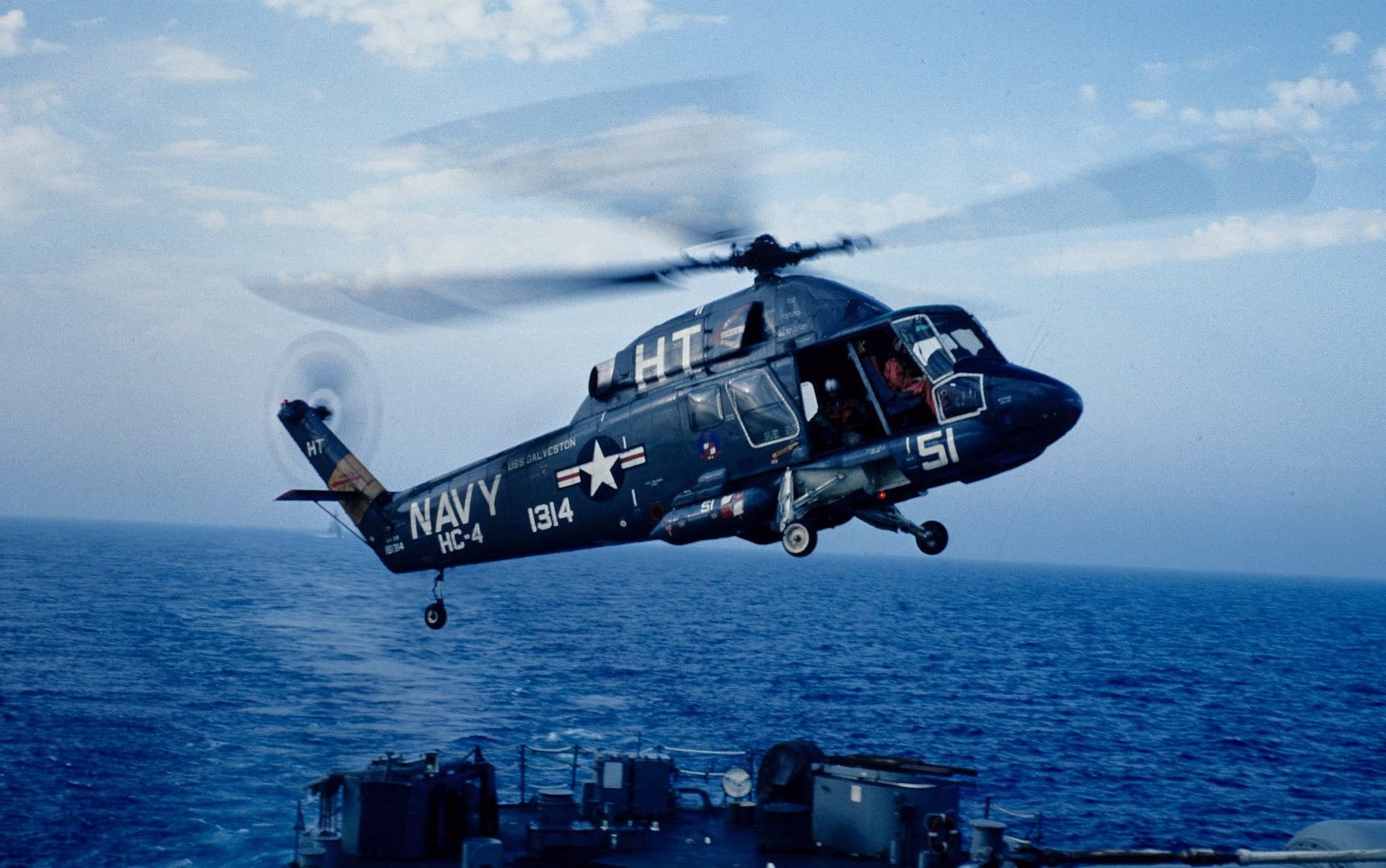
Diminutive in size compared to many of its contemporaries, the Seasprite was a shade over 38 feet long with blades folded. Its 44-foot main rotor diameter and 52 foot overall length allowed it to operate from even the smallest of helicopter flight decks aboard escort ships. Maximum takeoff weight was 12,500 pounds and range was 422 miles with maximum fuel load.

Movable flaps on the trailing edges of the main rotor blades were controlled by the pilot, which reduced the amount of hydraulic power required to control the blades. UH-2s were equipped with sliding doors on both sides of the fuselage and the ability to carry auxiliary fuel tanks. But that single turboshaft engine eventually became a liability.

75594487 10218379282451007 6787233824553041920 o Joe Kavale
HC-4 UH-2A image via NNAM

More Power for the Hooky Took

Single-engine UH-2A Seasprites entered US Navy service with HU-2 Fleet Angels in December of 1962 and the type first went to sea aboard the aircraft carrier USS Independence (CV-62) in June 1963. The UH‑2B went to sea aboard the guided missile cruiser USS Albany (CG-10) in August of 1963.

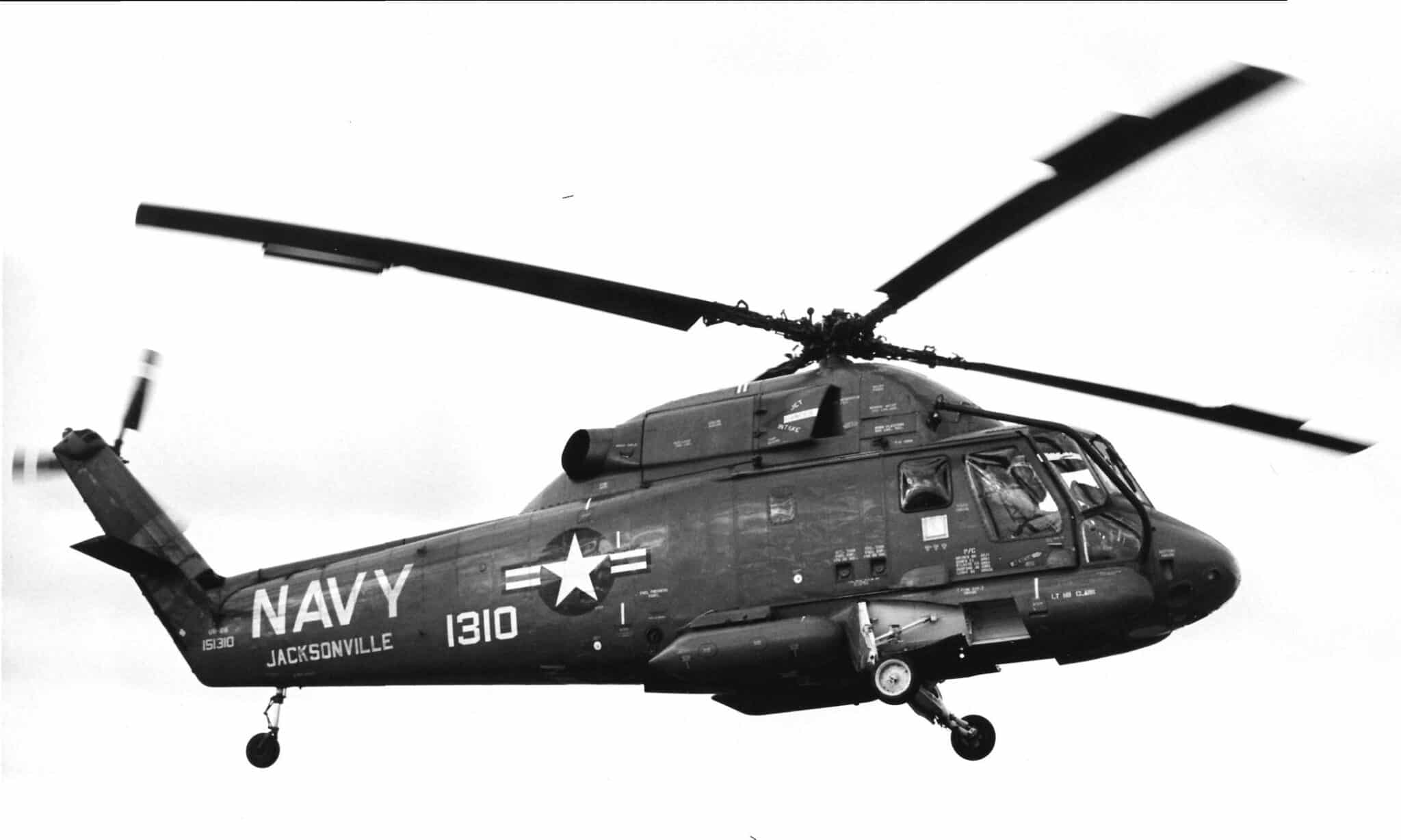
But the Navy quickly determined that the helo would be a far more capable machine if it were powered by a pair of engines.  Kaman remanufactured 40 single-engine UH-2As and UH-2Bs to the UH-2C specification beginning in August of 1967. The Charlies were powered by two T58-GE-8B turboshaft engines turning the same main and tail rotor system. HH-2Cs, HH-2Ds, and all subsequent Seasprites were equipped with a four-bladed anti-torque tail rotor.

UH 2Bnas jax helo 1968
UH-2B image via nnam

Utility Infielder

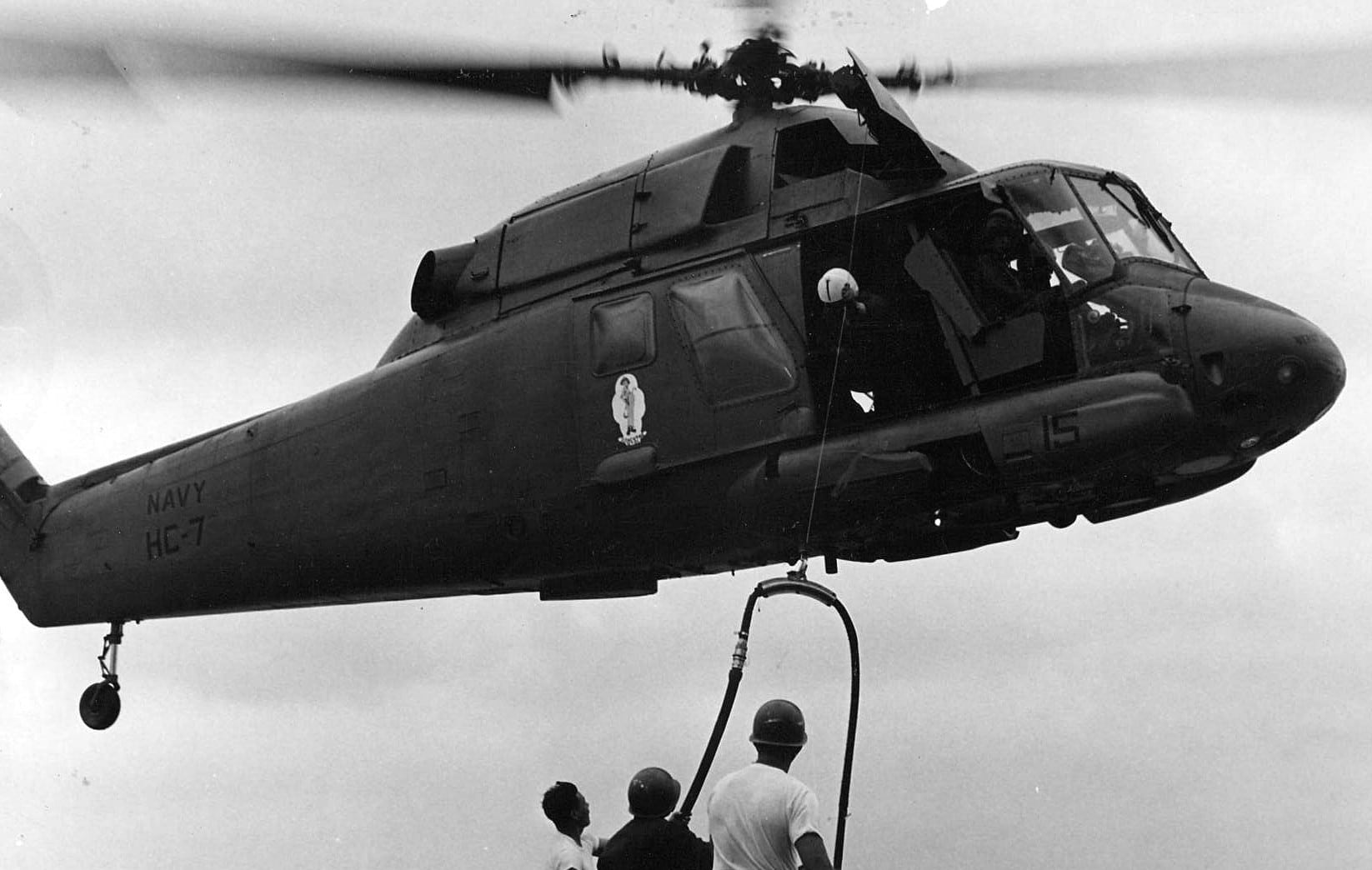
The Seasprites largely replaced earlier generations of piston engined rotorcraft and were utilized for a variety of missions, including supply, communications, ship-to-shore and ship-to-ship transport, reconnaissance, supply, casualty evacuation, and plane guard duties, but the early Seasprites became perhaps best known for search and rescue (SAR) work.

Initially crewed by two, the UH-2s could stuff up to 11 passengers or four stretcher cases inside the cabin. The fuselage was watertight to facilitate landings in calm water and equipped with retractable main landing gear.

HC 7 Seadevils photo 003
HC-7 UH-2B image via nnam

For More Hooky Took Tales Bang NEXT PAGE Below

Blue Angels to Highlight MCAS Cherry Point Airshow

0

JACKSONVILLE, N.C. — High speed maneuvers by the Navy’s Blue Angels and Air Force F-22 Raptor will headline the MCAS Cherry Point air show this weekend.

The biannual air show will celebrate the Marine Corps Air Station’s 80th anniversary. The family fun event is free to the public.

The popular air show was forced to cancel in 2020 due to the rise of Covid. An open weekend in the Blue Angels schedule allowed show organizers in July to approve the weekend long event.

“The schedule of the Blue Angels opened up and we jumped on it,” Cherry Point Commanding Officer Col. Mikel Huber explained. “We are really excited to be able to put the air show together and host the public here aboard the air station.”

This year also marks the Blue Angels 75th anniversary season. A year which has seen the squadron perform high performance maneuvers aboard the new Super Hornet jets.

Their six pilots arrived in their blue and gold jets Thursday, crossing overcast skies and landing onto a wet runway. This weekend’s weather is forecast to be sunny and pleasant.

“I like the low-break cross,” Blue Angels left wing pilot Maj. Frank Zastoupil told AvGeekery. “That is a maneuver when the diamond comes from behind the crowd; we then break out in four separate directions, cross in front of the crowd and then comeback and meet at center point, and then do two max afterburner turns right in front.”

6549022
F-22 Raptor pilot Maj. Josh Gunderson will provide the thrust over North Carolina this weekend. (USAF)

Col. Huber received news Tuesday that the F-22A Raptor demonstration team has been added to the performers line up. The Marine Air Ground Task Force, F-35B Lightning II, F/A-18 Hornet, and and AV-8B are also scheduled to fly.

Civilian aerobatic performers scheduled include Randy Ball piloting his MiG aircraft, Tom Larkin and Stephen Covington. The crowd favorite Wall of Fire will also take part during the Marine Air and Ground Task Force Demonstration.

Gates open each day at 8 a.m. and the flying will begin about 10:30 a.m. Parking and gate admission is free to the public.

(Charles A Atkeison reports on aerospace and technology. Follow his updates via social media @Military_Flight.)

LMXT: Lockheed’s Newest Tanker Proposal Built on the A330 MRTT

0

Replace the KC-135? Better Bring Your A Game

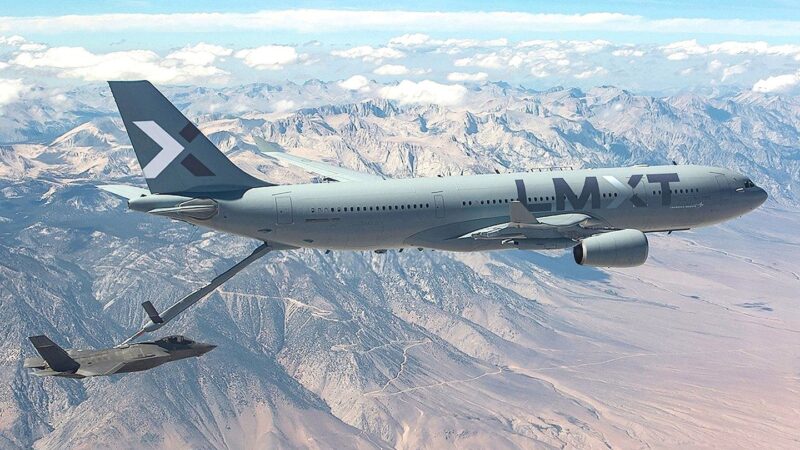
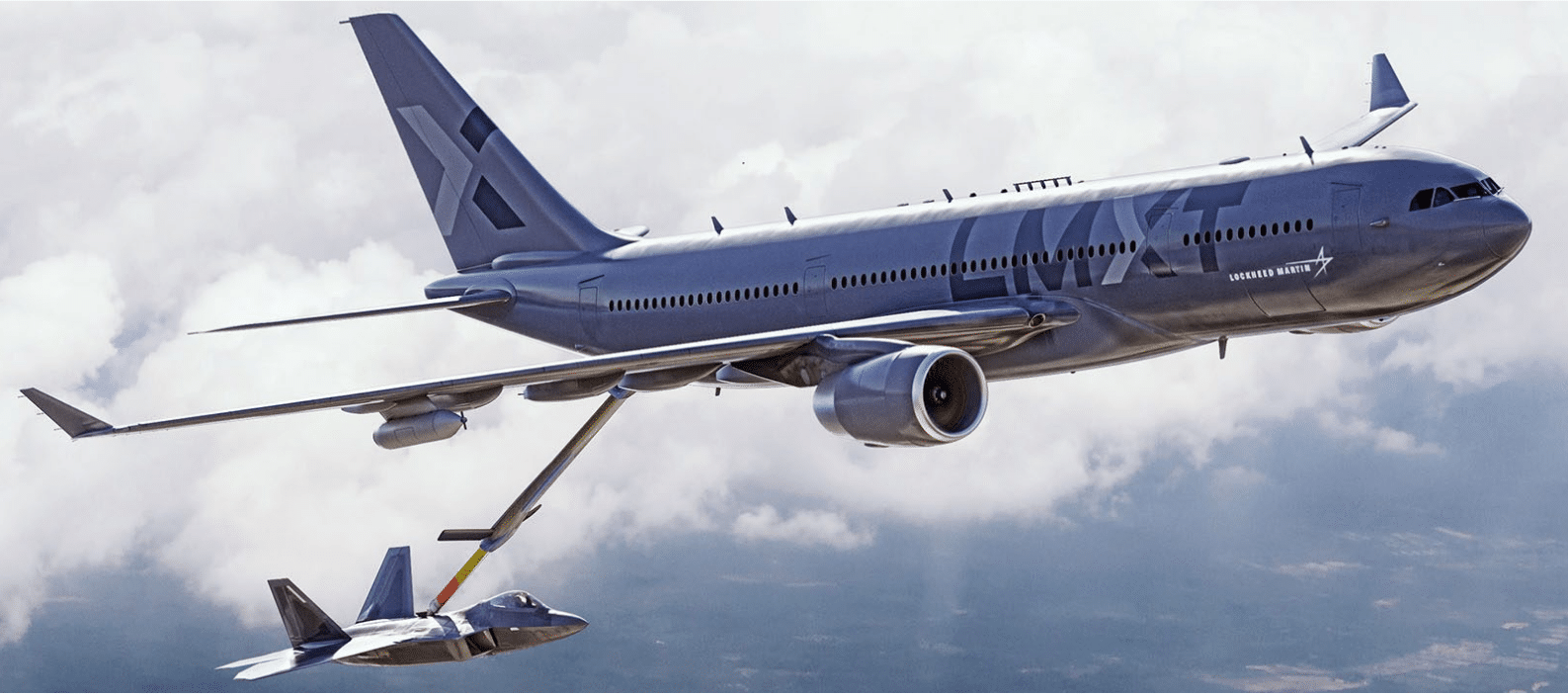
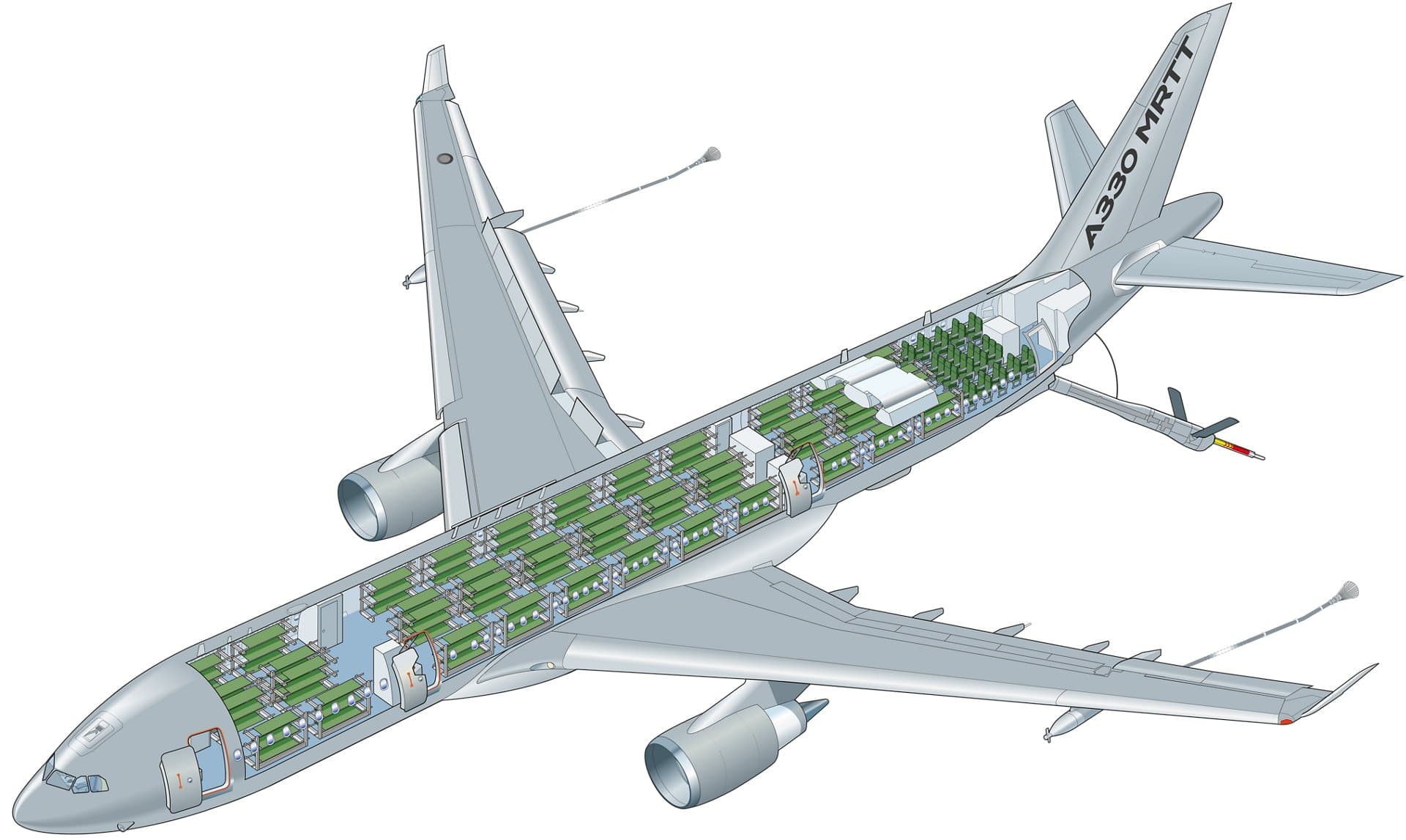
Lockheed Martin introduced their new LMXT on 17 September 2021. The aircraft is based on the Airbus A330 Multi Role Tanker Transport (MRTT), which is itself based on the A330-200. According to Lockheed Martin the LMXT is “America’s next strategic tanker ― built in America by Americans for Americans. Offered in response to the U.S. Air Force’s KC-Y Program, the LMXT represents the newest chapter in Lockheed Martin’s 60+ year history of producing and delivering tanker and cargo aircraft for the U.S. Air Force, U.S. Marine Corps, U.S. Navy, and multiple operators around the world.” Here’s a short video uploaded to YouTube by Lockheed Martin.

[youtube id=”EuFTr53cer0″ width=”800″ height=”454″ position=”left”]

Marketing Blurbs-a-Plenty

More from Lockheed Martin:  “The LMXT complements the U.S. Air Force’s tanker capabilities by providing the most advanced aerial refueler to meet America’s immediate and long-term mission requirements. The LMXT strengthens and expands the U.S. aerospace industrial base by working with existing and new American suppliers. The LMXT also cultivates and sustains high-tech, high-skill American manufacturing jobs.”

2021 09 18 12 05 33 LMXT Americas Next Strategic Tanker Lockheed Martin
LMXT image via lockheed martin

Big Picture Thinking

“Lockheed Martin has a long and successful track record of producing aircraft for the U.S. Air Force, and we understand the critical role tankers play in ensuring America’s total mission success,” said Greg Ulmer, executive vice president, Lockheed Martin Aeronautics. “The LMXT combines proven performance and operator-specific capabilities to meet the Air Force’s refueling requirements in support of America’s National Defense Strategy.”

LMXT Specs2.jpg.pc adaptive.1920.medium
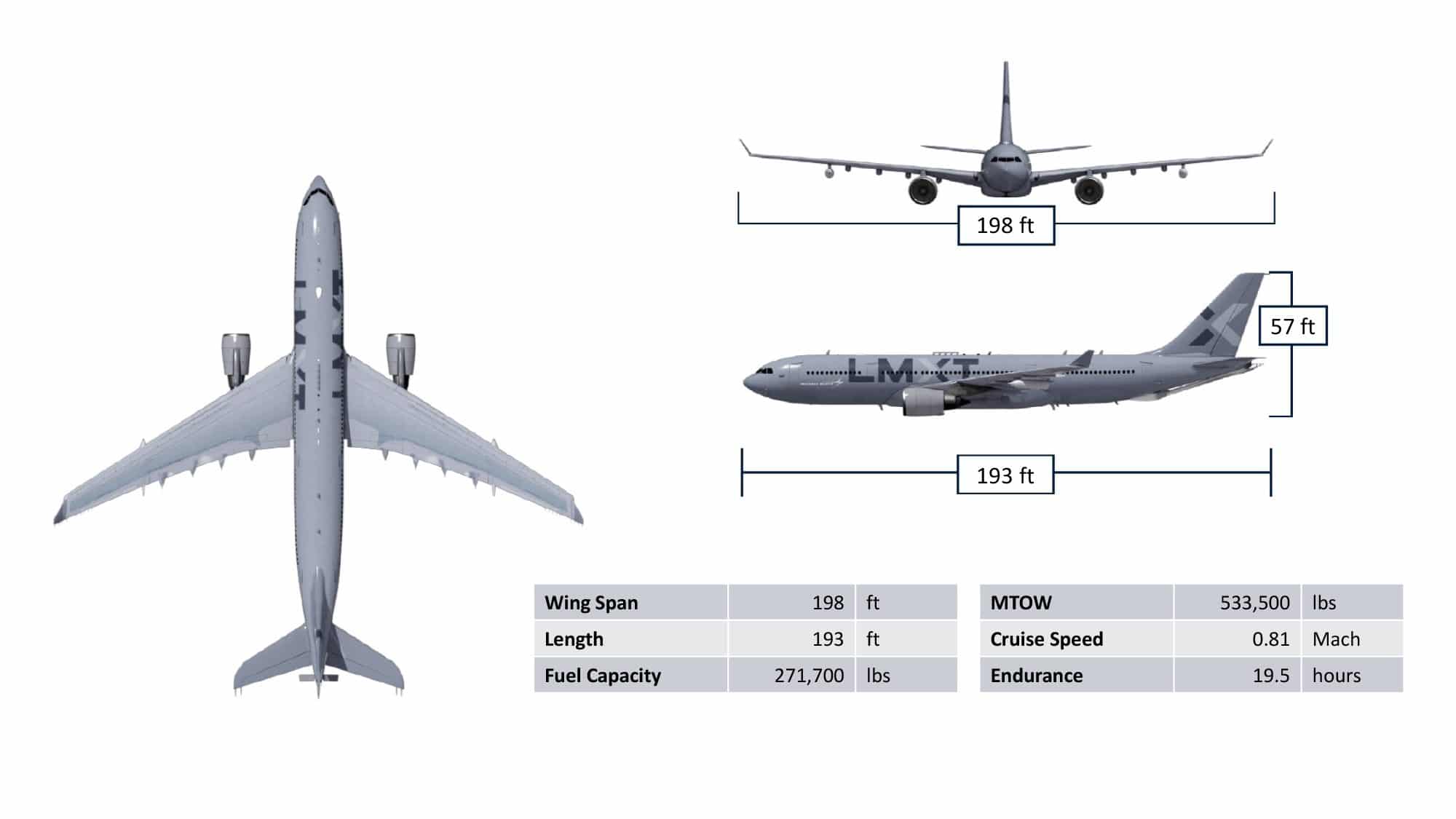
image of LMXT via Lockheed martin

The Networked Tanker

“The LMXT offers a proven airframe with distinct U.S. Air Force-only capabilities designed to meet operator requirements, with advantages that include:

  • Significantly improved range and fuel offload capacity
  • A proven fly-by-wire boom currently certified and used by allies to refuel U.S. Air Force receiver aircraft in operations around the world
  • The world’s first fully automatic boom/air-to-air refueling (A3R) system
  • Operational and combat proven advanced camera and vision system
  • Open system architecture JADC2 systems
  • A multi-domain operations node that connects the LMXT to the larger battlespace, increasing onboard situational awareness to provide resilient communications and datalink for assets across the force.”
web.mrtt .large .14
image of A330 MRTT via airbus

Customized by Lockheed

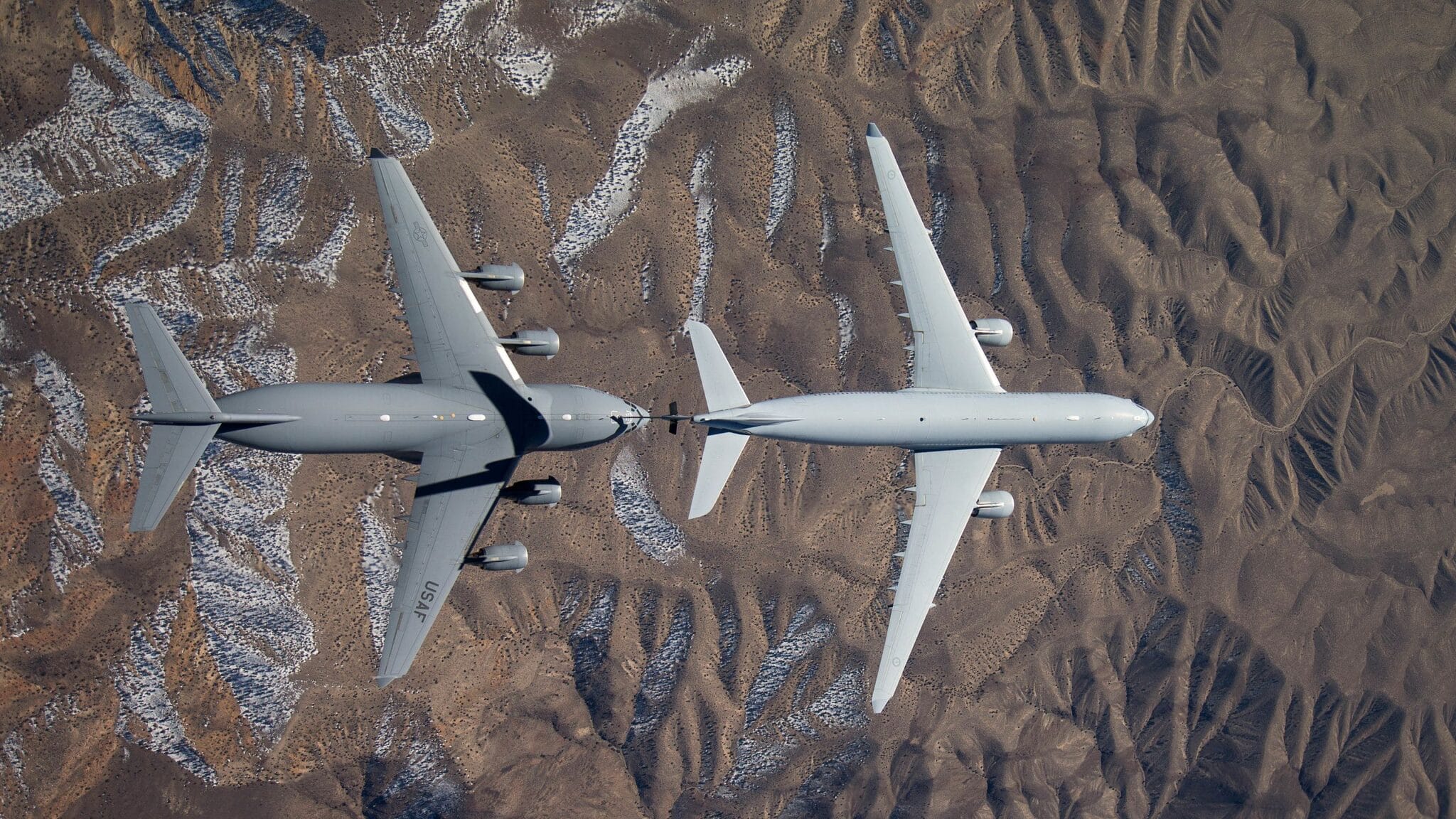
“The Lockheed Martin strategic tanker builds on the combat-proven design of the Airbus A330 MRTT. As the prime contractor, Lockheed Martin works directly to implement U.S. Air Force-specific requirements within the LMXT. As the strategic tanker of choice for 13 nations, the MRTT has logged more than 250,000 flight hours refueling U.S. and allied fighter, transport and maritime patrol aircraft in combat theater environments.”

Overhead view of a Royal Australian Air Force KC 30A multirole tanker connecting with a U.S. Air Force C 17 Globemaster III
RAAF KC-30A refueling USAF C-17. image via US air Force

For the Rest of the LMXT Story Bang NEXT PAGE Below

20 Years After September 11th, We Remember

1

We’ll Never Forget the Events of That Infamous Day

It’s hard to believe that it’s been two decades since the United States experienced the horror of 9/11. We woke up on a beautiful fall Tuesday morning, only to end the day with more than 3,000 dead, a nation in shock, four airliners down, and three symbols of American might in ruin.

FAA and NORAD Tapes as 9/11 Unfolded

We recently came across this sobering two hour ATC transcript for 9/11. It’s both painful to listen to and shows the herculean effort of ATC to sort out the situation in real time amidst the confusion and chaos of the day. They were simultaneously coordinating the safe return of thousands of other jets while also requesting military support. The coordinated efforts between the pilots, ATC, and the military highlights the tremendous effort to generate a response. Keep in mind as you listen that the situation unfolding was something never rehearsed or practiced before. It was a real-life nightmare transpiring at command centers and air traffic control centers across the nation.

On this day, we remember the heroes that died and a world that changed forever. This video transcript is raw but worth listening to on this solemn day.

May we never forget.

Here’s What Happened to Those Allegiant Air 757s

0

The Carrier Operated Flying Pencils Between the Mainland and Paradise

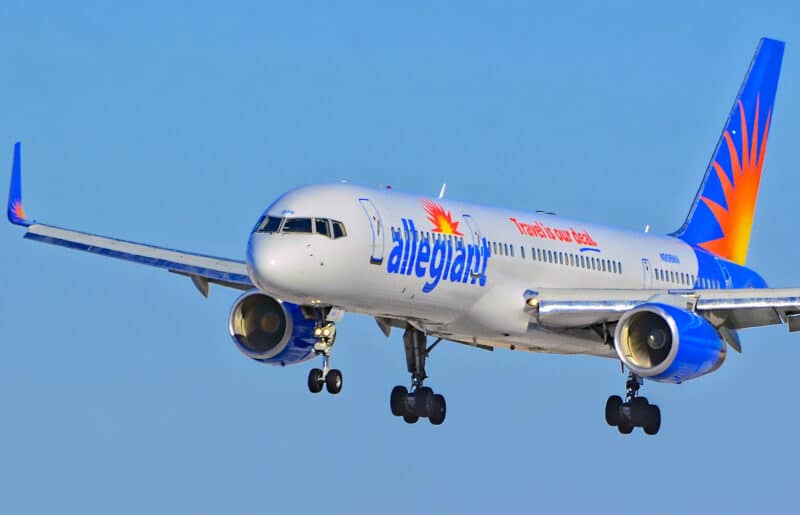
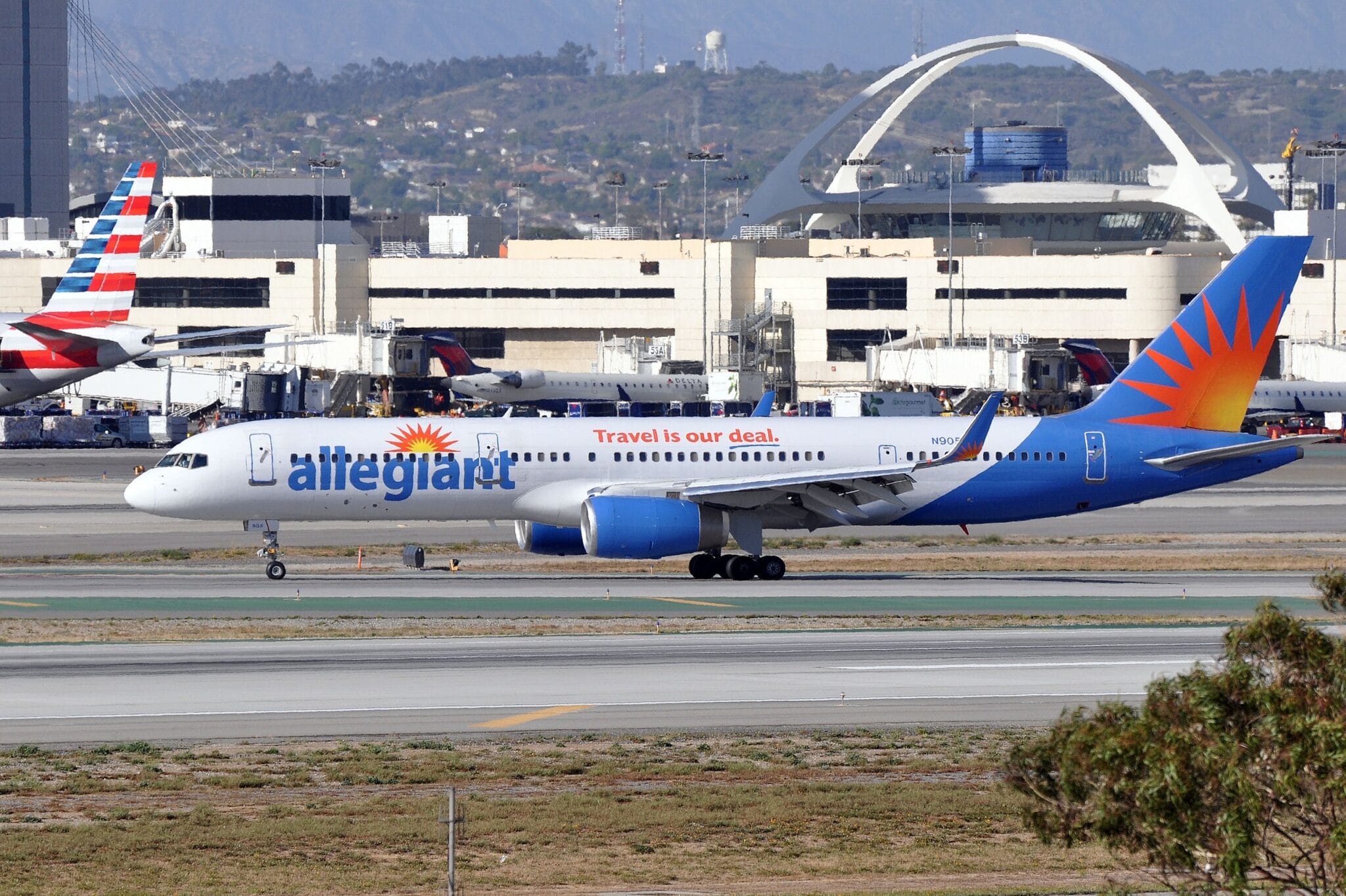
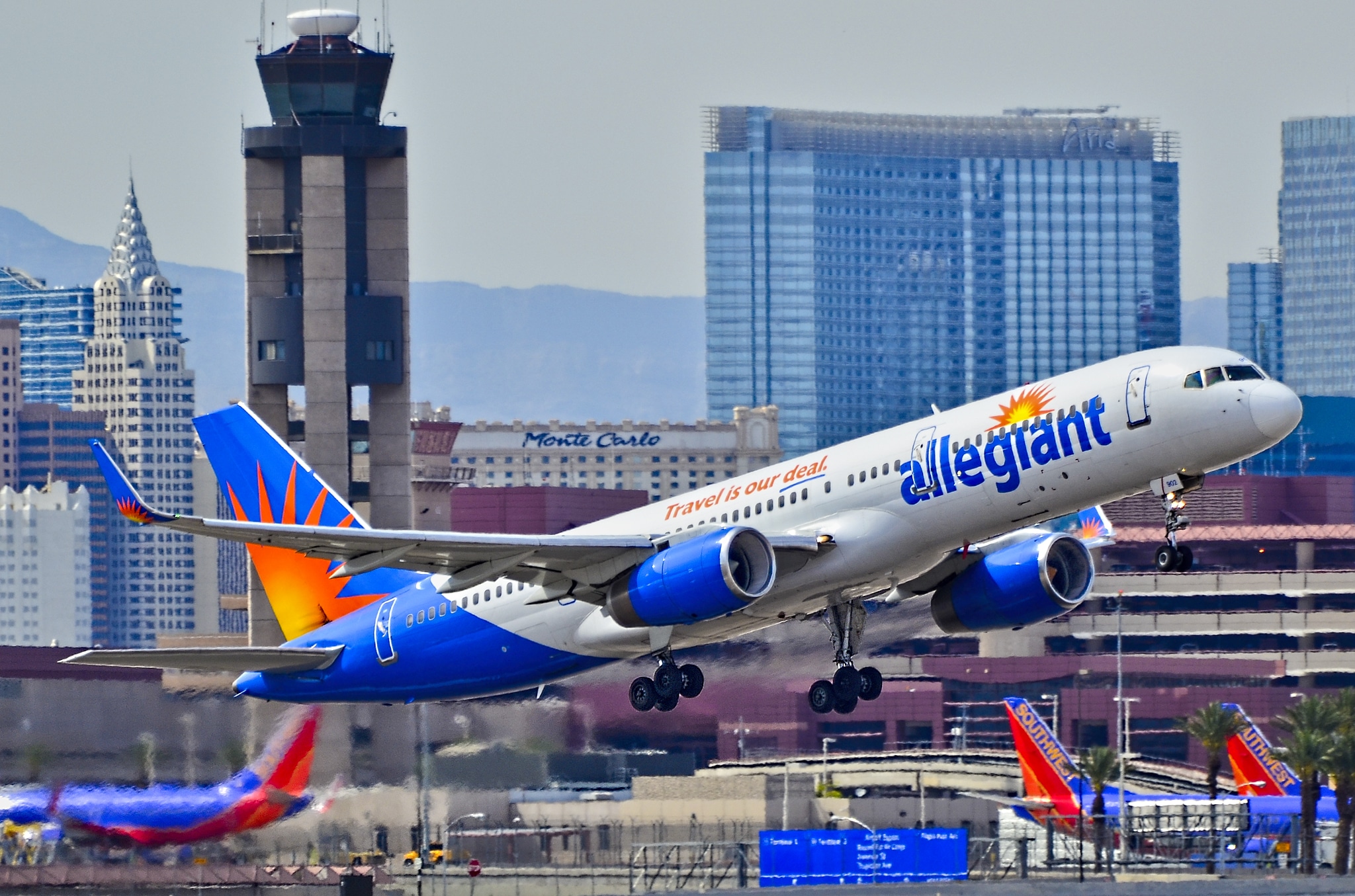
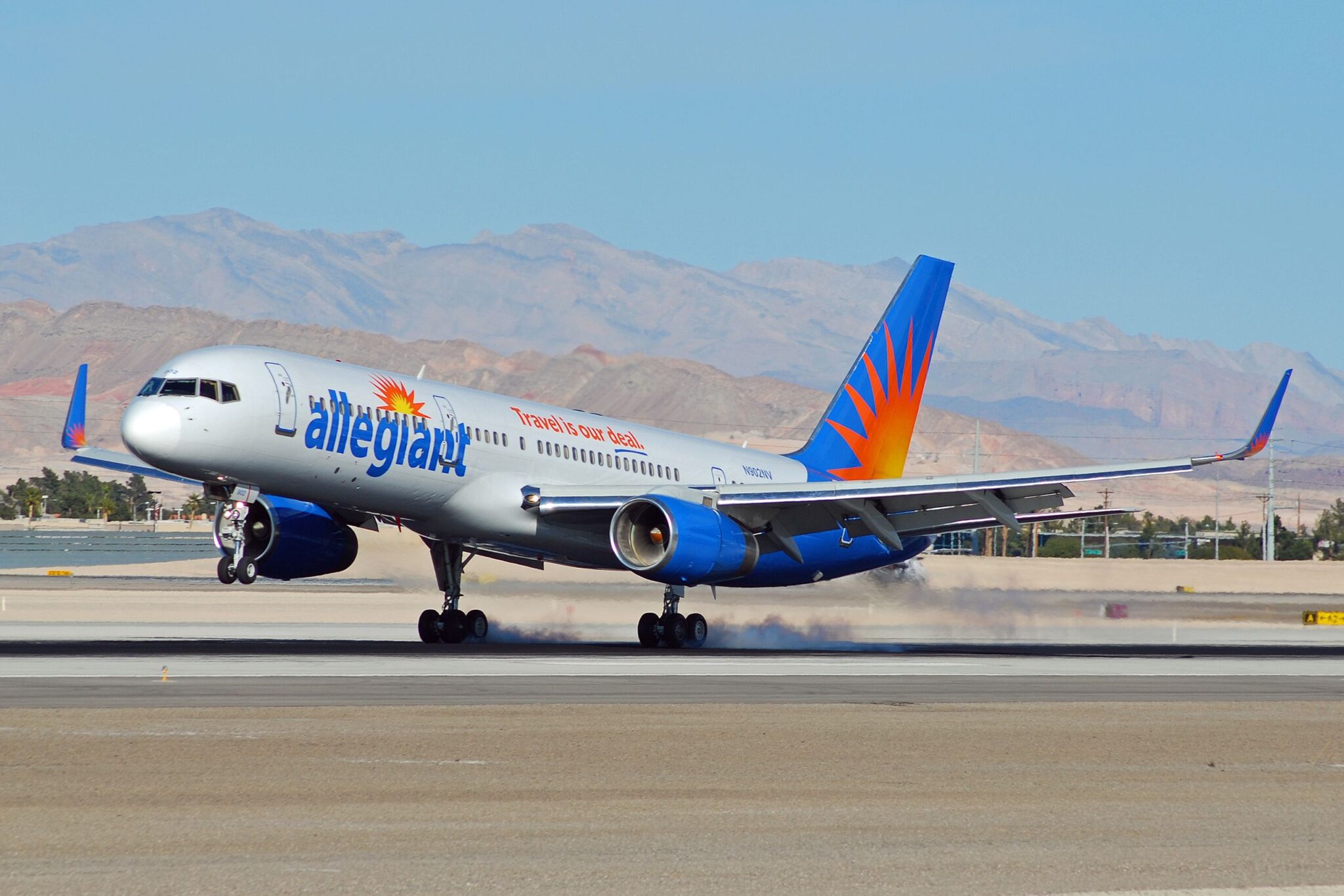
Allegiant Air has operated DC-9-21s, DC-9-51s, MD-81s, MD-82s, MD-83s, MD-87s, and MD-88s in the past. Today they operate only Airbus A319-100s and A320-200s. But there was a time that Allegiant operated Boeing jetliners too- 757-204s to be precise. The jets were acquired in March of 2010 and joined the Allegiant fleet in early 2012. The airline acquired the 757s in order to fly routes to Hawaii. But it would take some doing to operate the Atari Ferrari between the mainland and Honolulu.

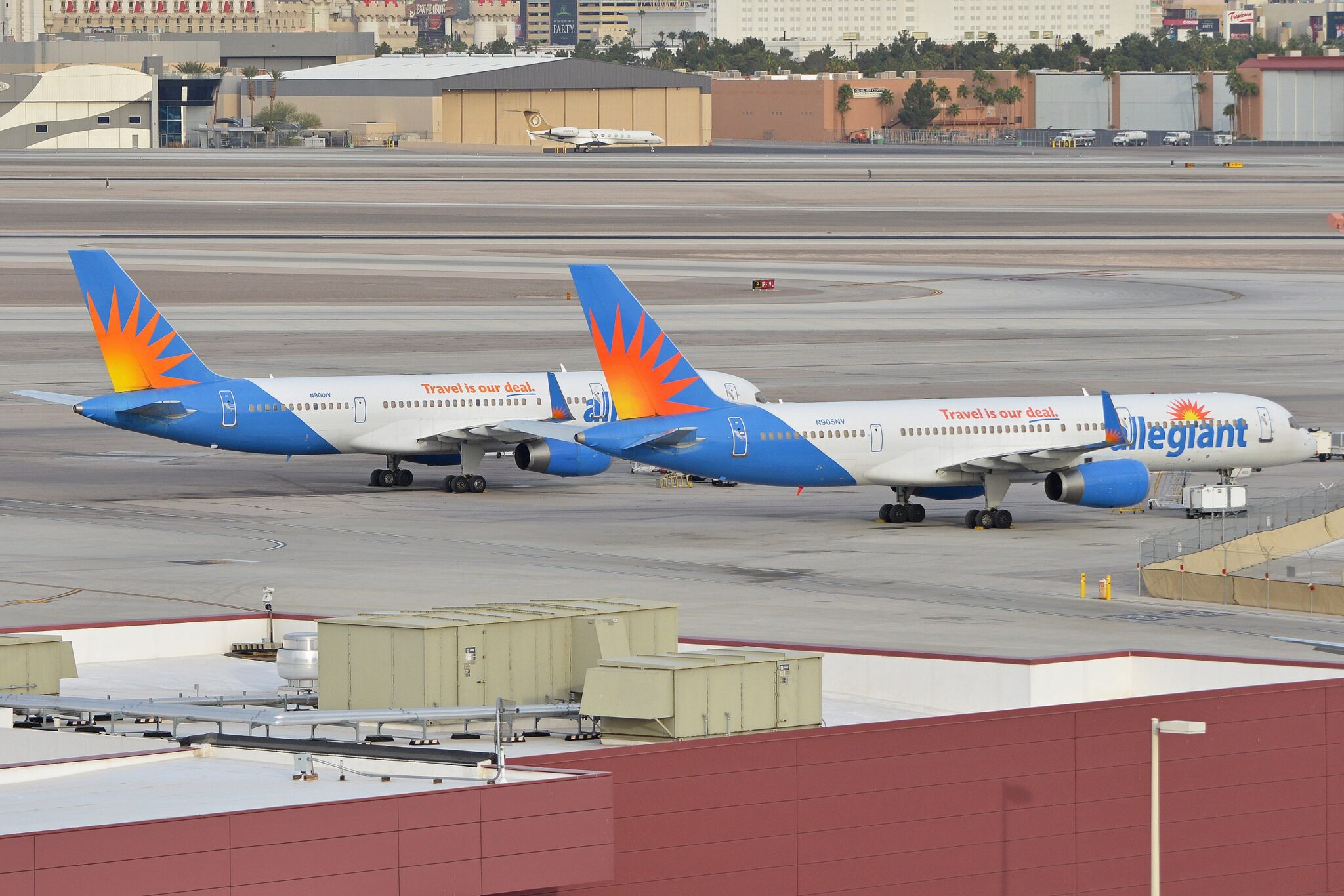
2560px Allegiant Boeing 757 204w ‘N901NV and ‘N905NV 28614300010 Alan Wilson
N905NV and N901NV. image via alan wilson

So Let’s Go to Hawaii

In order to do so the carrier was required to, and did, obtain, both Extended-range Twin-engine Operational Performance Standards 180 (ETOPS) certification and Flag Carrier status from the FAA for the 757-200. Allegiant configured their 757-204s to carry a maximum of 217 passengers in a single-class, three-by-three seat configuration.

2560px Allegiant Air Boeing 757 204WL N905NV LAX 22176639939 Eric Salard
N905NV image via eric salard

From Mainland to Paradise

Allegiant Air introduced the 757 into service from their main hub in Las Vegas (KLAS) in September of 2011. Inaugural 757 flights were between Fresno (KFAT) and Las Vegas. Nonstop service to Honolulu (KHNL) was later added from Bellingham (KBLI), Boise (KBOI), Eugene (KEUG), Phoenix Mesa Gateway (KIWA), Santa Maria (KSMX), Spokane (KGEG), Stockton (KSCK), and Monterey (KMRY-planned but not implemented). But rather than perform the costly comprehensive D checks on their aging 757s, Allegiant began reducing service to Hawaii and retiring their Boeing jetliners. Allegiant Air finally ended service to Hawaii with a flight from Honolulu to Las Vegas on 28 October 2017- Flight G4 571, which landed at KLAS at 2216 local time.

N901NV Allegiant Air 1992 Boeing 757 204WL cn 26963 450 7417410182 TDC
N901NV image via tomas del coro

N901NV

Boeing 757-204 construction number 26963 / serial number 450 entered service with Britannia Airways in 1992 registered as G-BYAD. The jetliner was operated by Thomsonfly between 2005 and 2009 retaining the G-BYAD registration. The jet was briefly operated by Allegiant Air between 2010 and 2011 as N901NV. Then Air Finland flew the jet between 2011 and 2012. Allegiant Air again operated N901NV between 2012 and 2016 on its Hawaiian route. After being removed from service the jet was flown to Stuttgart Municipal Airport (KSGT- formerly Stuttgart Army Airfield [AAF]) in Arkansas on 31 August 2016, where the aircraft was broken up during February of 2019.

Stuttgart Municipal Boneyard
image via google earth
N902NV 6913265593 Eddie Maloney
N902NV image via eddie Maloney

N902NV

Boeing 757-204 construction number 26964 / serial number 452 entered service with Britannia Airways in 1992 registered as G-BYAE. Icelandair operated the jet between 1994 and 1995 using the same registration number. Britannia then flew the jetliner again between 1995 and 2005 still registered as G-BYAE. Thomsonfly flew the 757 between 2005 and 2009 as G-BYAE. Allegiant Air took delivery of the jet, registered it as N902NV, and flew the jet between 2010 and 2017. On 10 March 2017 the jet was stored at Southern California Logistics Airport (KVCV in Victorville- formerly George Air Force Base [AFB]). The airframe remains there today.

Victorville Boneyard
image via google earth
N903NV Allegiant Air 1993 Boeing 757 204 cn 26966 520 23326651842 TDC
N903NV image via tomas del coro

N903NV

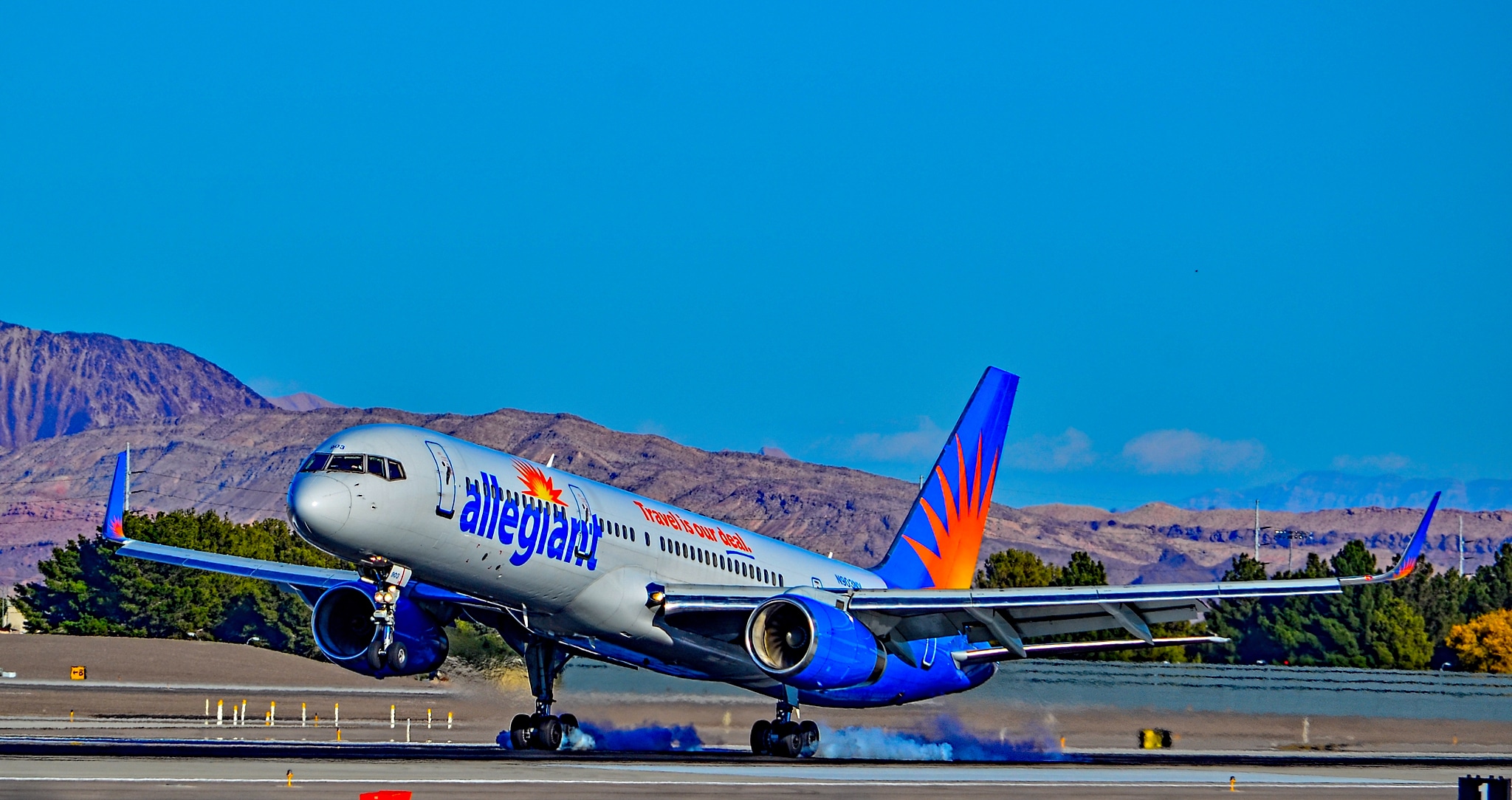
Boeing 757-204 construction number 26966 / serial number 520 entered service with Britannia Airways in 1993 registered as G-BYAH. They operated the jet until Thomsonfly took it over in 2004 still registered as G-BYAH. Thomson Airways flew the jet between 2009 and 2010 registered as G-BYAH. Between 2010 and 2012 Jet2.com operated the jet registered as G-LSAM. Beginning in 2012 Allegiant Air operated the aircraft registered as N903NV. After retirement in 2017 the jet was stored at KVCV on 10 March 2017. The airframe remains there today.

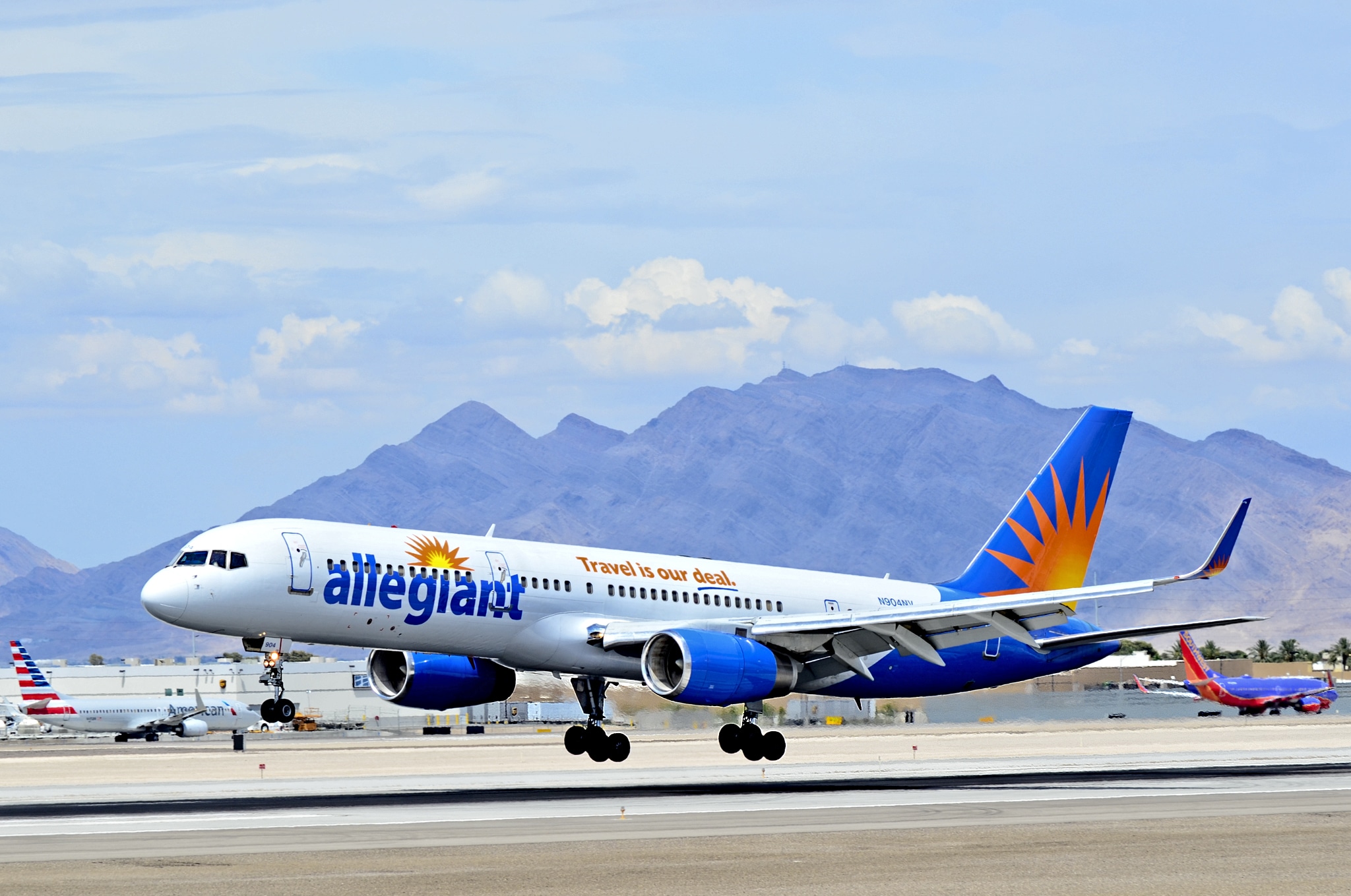
N904NV Allegiant Air 1993 Boeing 757 204 cn 26967 522 9319852600 TDC
N904NV image via tomas del coro

N904NV

Boeing 757-204 construction number 26967 / serial number 522 began service with Britannia Airways in 1993 registered as G-BYAI. In 2004 the jet began flying with Thomsonfly still registered as G-BYAI. Thomson Airways began flying the aircraft in 2009 again registered as G-BYAI. When Jet2.com flew the jetliner between 2011 and 201s it was registered as G-LSAL. Allegiant only operated this 757 between 2012 and 2015. The aircraft was flown to KSGT on 4 November 2015 and broken up there during January of 2017.

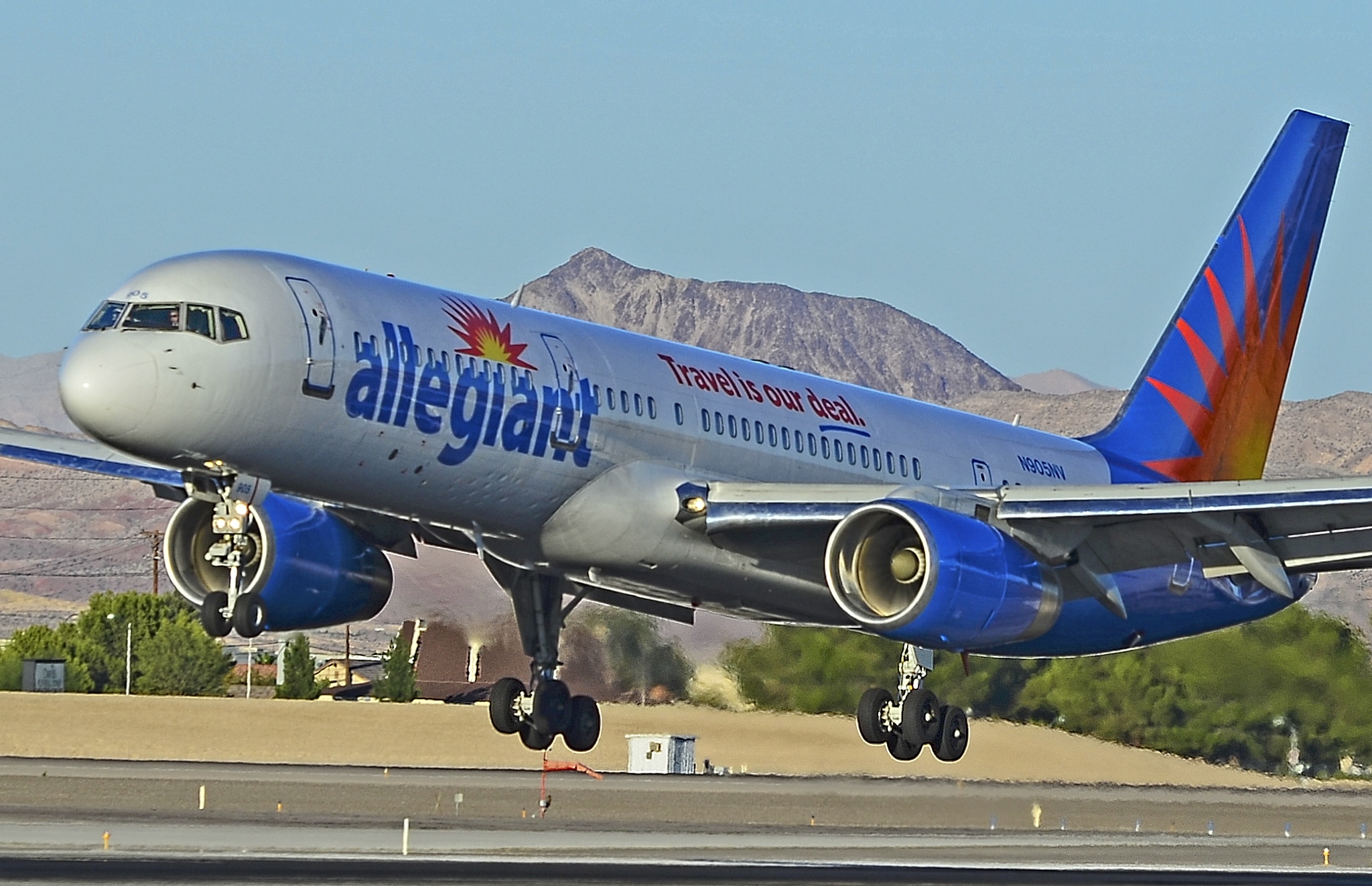
N905NV Allegiant Air Boeing 757 204 cn 27235 ln 598 10065886003 TDC
N905NV image via tomas del coro

N905NV

Boeing 757-204 construction number 27235 / serial number 598 entered service with Britannia Airways in 1994 registered as G-BYAO. Thomsonfly began operating the aircraft in 2004 as G-BYAO. Thomson Airways flew the jetliner between 2009 and 2011 still registered as G-BYAO. When Allegiant Air began operating the jet in 2012 the jet was registered as N905NV. On 31 October 2017 N905NV flew a military charter on October 31, 2017 from Fort Hood in Killeen TX to March AFB in Riverside CA. Later the same day the jet was flown to KVCV and placed in storage. The airframe remains there today.

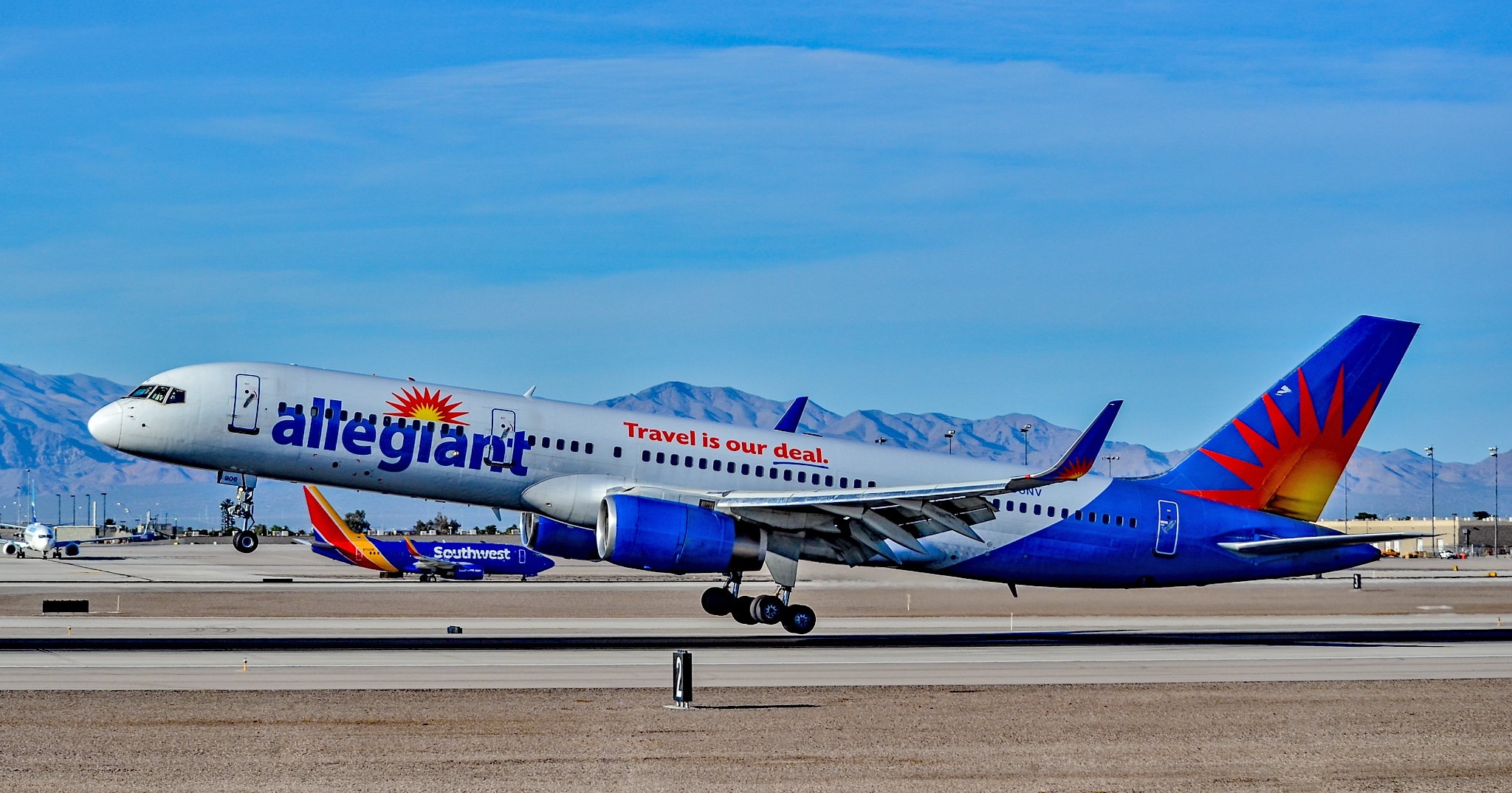
N906NV Allegiant Air 1994 Boeing 757 204 cn 27236 ln 600 33124891754 TDC
N906NV image via Tomas del coro

N906NV

Boeing 757-204 construction number 27236 / serial number 600 went into service with Britannia Airways in 1994 registered as G-BYAP. When Thomsonfly began operating the aircraft in 2004 it retained the G-BYAP registration, as it did when operated by Thomson Airways between 2009 and 2012. When Allegiant Air operated the aircraft between 2012 and 2017 it was registered as N906NV. Other than the Hawaii routes, N906NV flew a Cincinnati to Las Vegas route on 29 October 2017. On 31 October N906NV was flown to KVCV and placed in storage. The airframe remains there today.

Allegiant Air N902NV 1992 Boeing 757 204 C N 26964 13910001166 TDC
N902NV inage via Tomas del coro

Aviation Day Celebrates America’s Achievements of Flight

ATLANTA — A national day to honor and celebrate aviation in the United States is inspiring individuals into aviation related careers and increasing the popularity of local air shows each year.

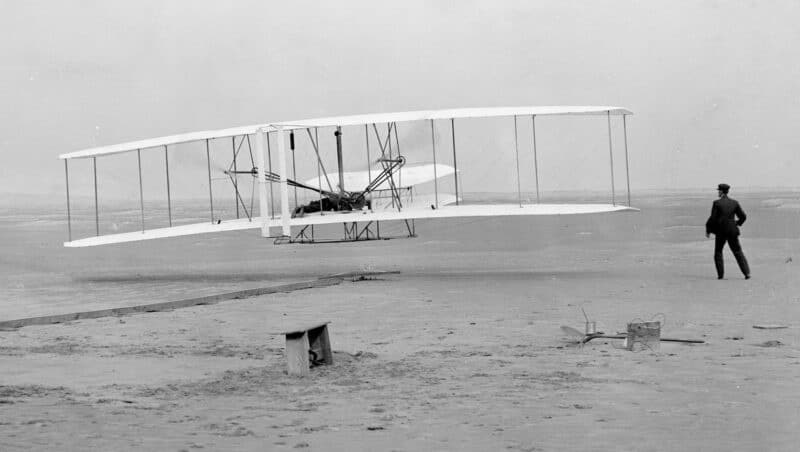
National Aviation Day is celebrated each year on August 19, beginning with the signing of a proclamation in 1939 by President Franklin Roosevelt. The date was chosen to honor the birthday of Orville Wright, the first to pilot a powered aircraft.

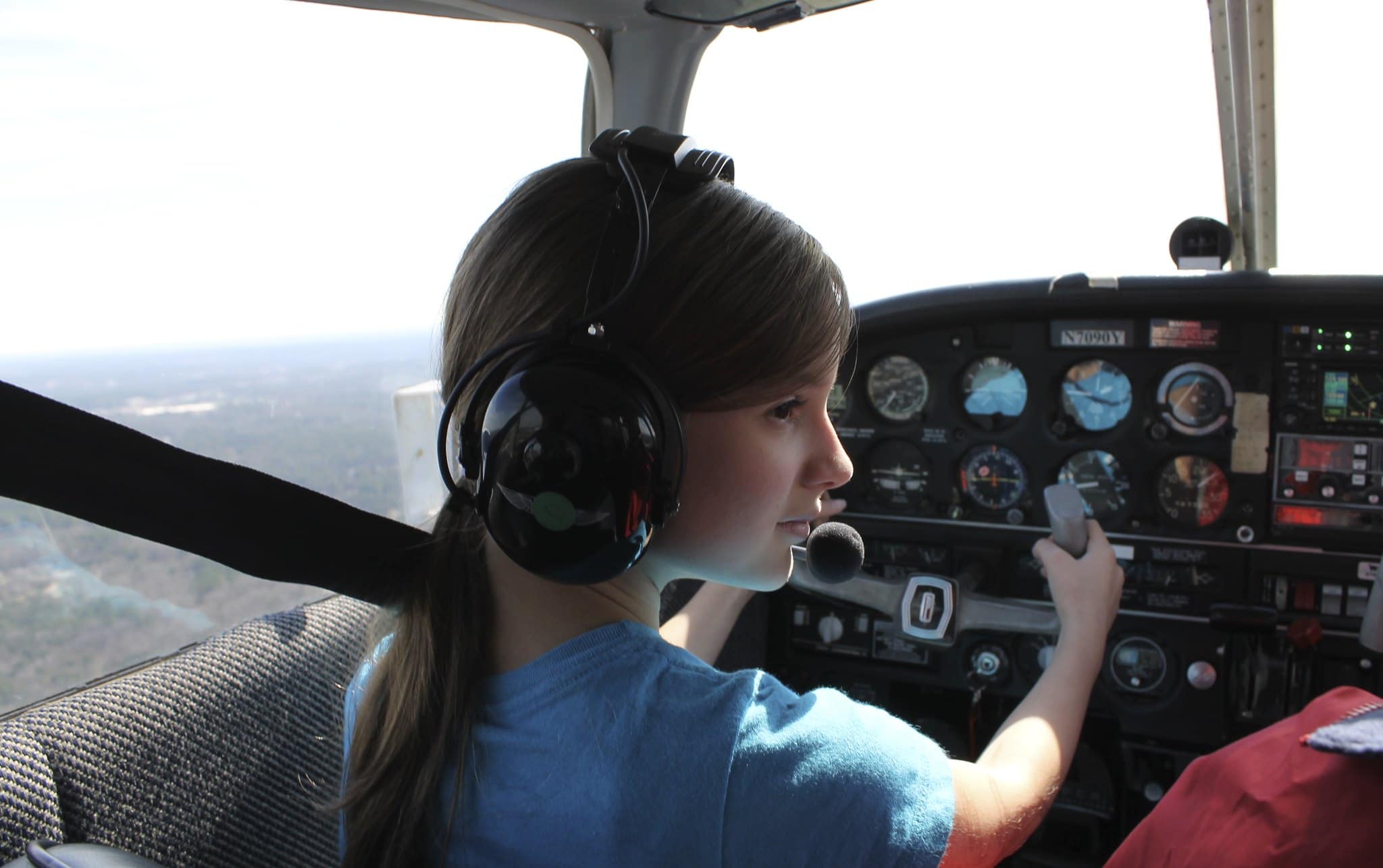
Since the early days of aviation, the growth of personal flight across the nation has proven to be safer, more affordable, and at an all time high. Many of today’s young civilian pilots and engineers will aim for a career in commercial or military aviation.

8487925488 add99bd8ec k 1
Teenagers across America are taking to the skies to learn if they have the right stuff. (Atkeison)

“As an aerial demonstration team, we celebrate aviation all year round,” Air Force Capt. Kip Sumner of the F-35A Demonstration Team told AvGeekery.com. “To be able to showcase our Airmen and fly the world’s most advanced 5th-generation fighter for the American public is a privilege and an honor.”

Air shows have witnessed an upswing in popularity with the growth of live streaming apps. Social media accounts of various military and civilian demonstration teams have grown in the last five years.

“We hope Aviation Day inspires people to pursue their passions, and enjoy what we love doing everyday,” Sumner added. “Anyone can be interested in aviation. Even if they don’t fly, and we can’t wait to see what the next generation of aviation enthusiasts are capable of.”

51389371445 31d1f63fc9 k
The Navy’s Blue Angels perform during an air show, inspiring new aviation enthusiasts. (Charles Atkeison)

Attendance at air shows across America continue to grow with the addition of new show sites each year. Most who attend the weekend events are drawn by the family-friendly atmosphere and the value of an air show.

The Navy’s Blue Angels and Air Force Thunderbirds arrive today at Chicago and Long Pond, Penn., respectively, for their air shows. Four major air shows are scheduled for this weekend across America.

The National Aeronautics and Space Administration (NASA) will promote aviation across the globe. NASA is encouraging the public to “spread your wings” and share photographs via social media taken at an airport or aboard an aircraft to celebrate the day.

“Aviation is more than just a mode of transportation,” said AvGeekery.com founder Jeff Gilmore, a pilot himself who has logged over 3,700 hours of flying time. “It’s the realization of a dream that every human has had which connects societies and powers economies at a scale we’ve never seen before.”

Since the first untethered hot air balloon flight by two French men in November 1783; the Wright Brothers first powered aircraft flight in December 1903; and the first landing on the Moon by Armstrong and Aldrin in 1969, humankind continues to look skyward to travel.

(Charles A Atkeison reports on aerospace and technology. Follow his updates via social media @Military_Flight.)

F-16 Viper Demo Pilot Seriously Injured During Bike Accident

COLUMBIA, S.C. — The pilot of the U.S. Air Force F-16 Viper Demonstration Team was seriously injured during a mountain bike accident last week forcing him to be grounded until October.

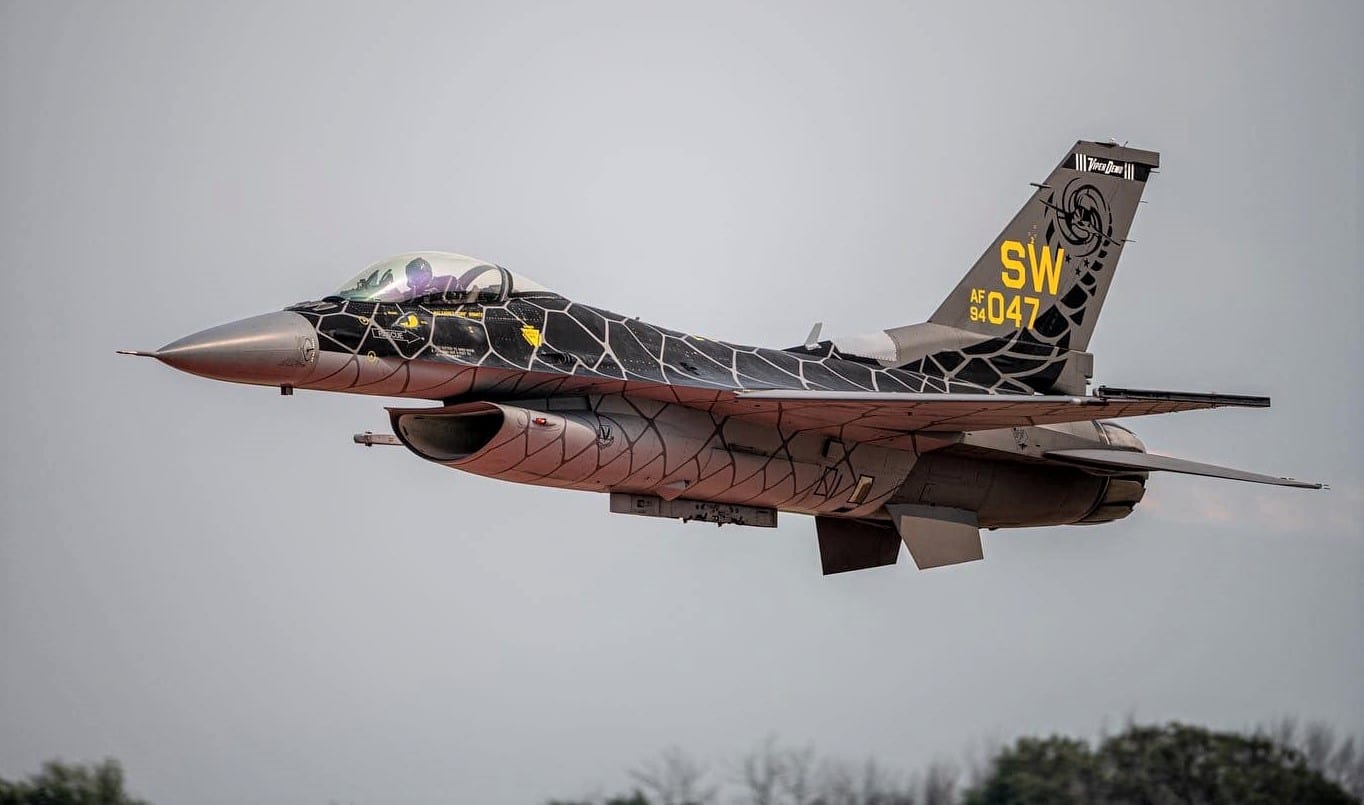
Maj. Garret “Toro” Schmitz, commander and pilot of the F-16C Viper Demo Team, broke the news of the accident on Tuesday. The injuries, while not life threatening, will force the team to cancel upcoming air shows in Canada and California.

236992510 4503935902992586 2663504664528217005 n
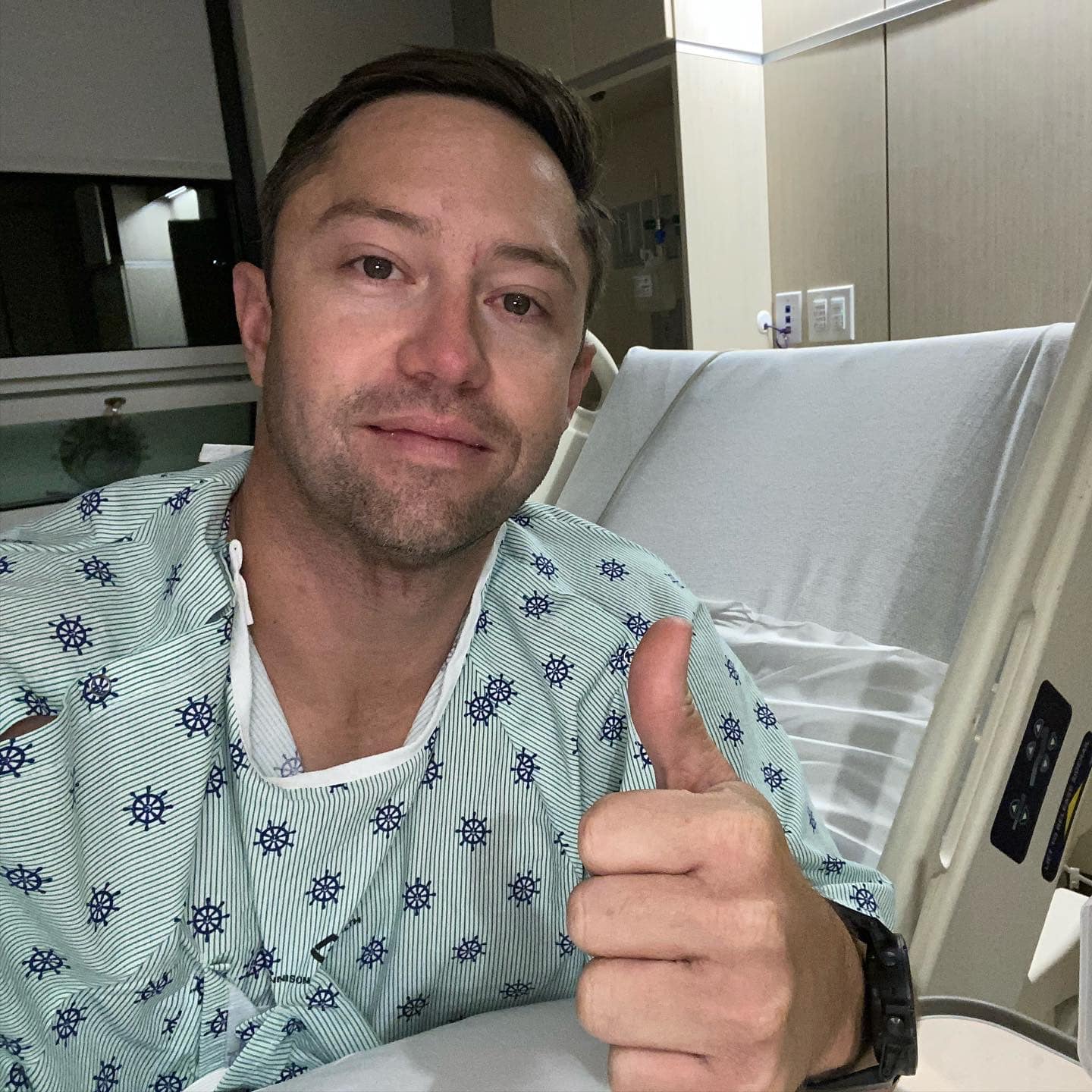
Maj. Garret Schmitz is seen from his hospital room recently as he recovers from injuries sustained a mountain bike accident last week. (Schmitz)

“I got in a fairly serious accident last week while mountain biking,” Toro Schmitz began in a statement released on Tuesday. “I had a front wheel catch while on a downhill trail, flipped over the front of my handle bars, and flew into a couple trees.”

Maj. Schmitz is in the final months of his command with the demo team. The Utah native began his service with the team in May 2019.

“Some minor fractures in my back, a few fractured ribs, and a bunch of scrapes and bruises,” Maj. Schmitz added. “The back fractures won’t have any lasting affect other than being painful for the next few weeks.”

He continued by saying, “I’ve had plenty of fractured ribs, so I’m familiar with how bad those suck.”

Maj. Schmitz is the only pilot certified by U.S. Air Combat Command to perform the flight demonstration. The team hopes he can return to flying by early October.

In a separate statement, the Viper Demo Team said Tuesday they are working with Air Combat Command to ensure their upcoming performances “are supported with ACC assets”. This means another Air Force team may fill the void at air shows in Ontario and Quebec, Canada, and San Francisco.

229345146 4466284093424434 1242837124475566092 n
Maj. Schmitz performs one week prior to his accident at EAA AirVenture in Oshkosh in late-July. (USAF)

Last week’s accident occurred a few days following his performance during EAA AirVenture in Oshkosh.

Schmitz thanked his family, friends, and the medical staff treating him, including his own wife, Aubrey. She serves as a medical doctor at the local hospital.

Toro expects to make a full recovery and conclude the season with the Viper Demo Team. “I’m very grateful and fortunate to come out of such a bad accident with no permanent injuries,” he expressed.

(Charles A. Atkeison reports on aerospace and technology. Follow his updates via social media @Military_Flight.)

WATCH: Thirteen B-25s Grace the Skies Over Michigan

0

Thunder Rolls as a Rare Gathering of B-25 Mitchell Bombers Shakes the Ground

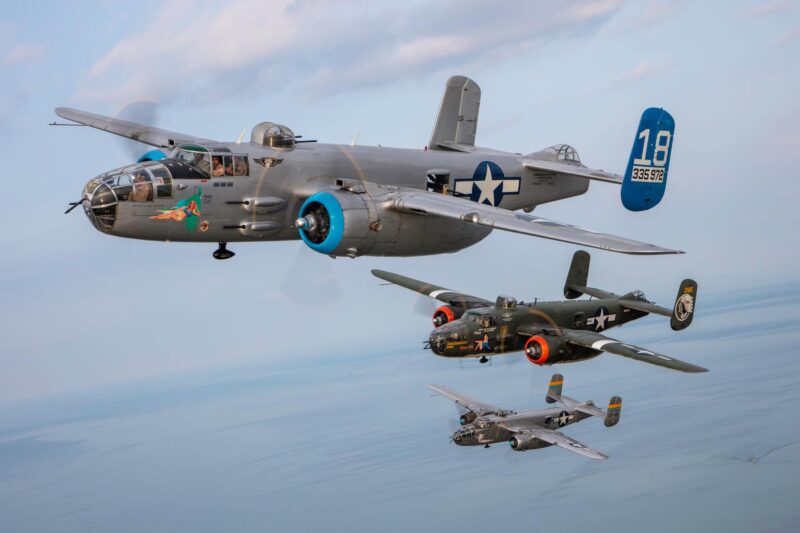
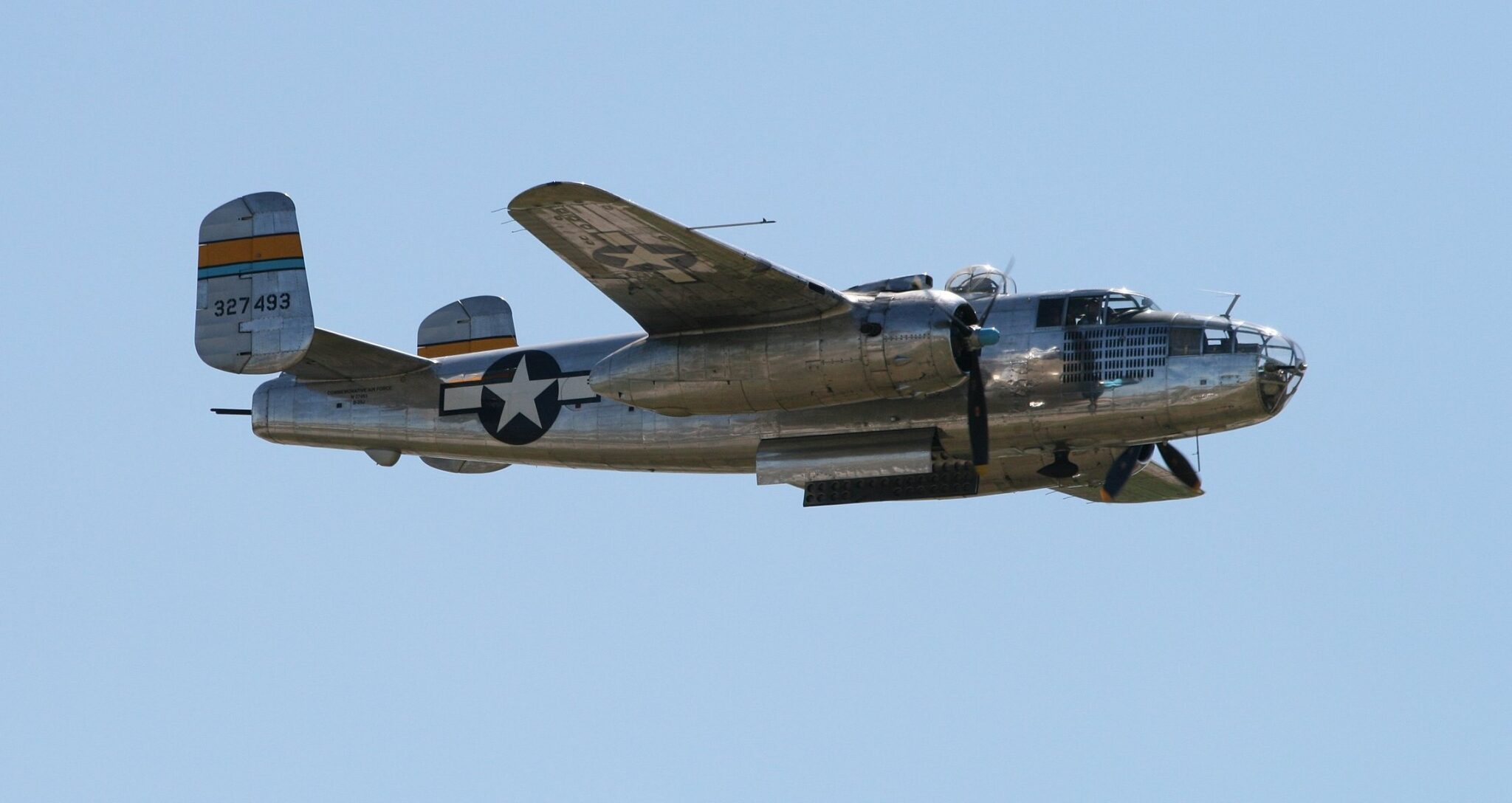
From our friends at AirshowStuff comes this awesome B-25 video! The 2021 Thunder Over Michigan airshow hosted an impressive gathering of North American B-25 Mitchell bombers. Fourteen B-25s attended the show. This video combines footage from the Saturday afternoon and Sunday shows, when 13 B-25s started in unison, ran their engines up together, then took off for low solo flybys. After the flybys, eight of the B-25s joined together for a formation flyover before landing. The video was uploaded to YouTube by AirshowStuffVideos.

[youtube id=”ROktE7I35KA” width=”800″ height=”454″ position=”left”]

A Michigan Tradition

The Thunder Over Michigan airshow is held annually at Willow Run airport near Detroit, Michigan as a fundraiser for the Yankee Air Museum. The 2021 show also hosted both the US Navy Blue Angels and the USAF Thunderbirds at the same very memorable event!

2560px B 25 Miss Mitchell 2783278702 2 RAF YYC 1
image via RAF_YYC

The Stars

North American B-25D-35-NC Mitchell 43-3634 “Rosie’s Reply” (completed 15 December 1943) – Yankee Air Museum.

North American B-25J-35-NC Mitchell 45-8898 “Yankee Doodle” (completed 29 October 1945) – Tri-State Warbird Museum.

North American B-25J-25-NC Mitchell 44-30832 “Take-Off Time” (completed 1 March 1945) – Tom Duffy.

North American B-25J-10-NC Mitchell 43-35972 “Maid in the Shade” (completed 8 June 1944) – Commemorative Air Force (Air Base Arizona).

North American B-25J-15-NC Mitchell 44-28866 “Champaign Gal” (completed 25 July 1944) – Champaign Aviation Museum.

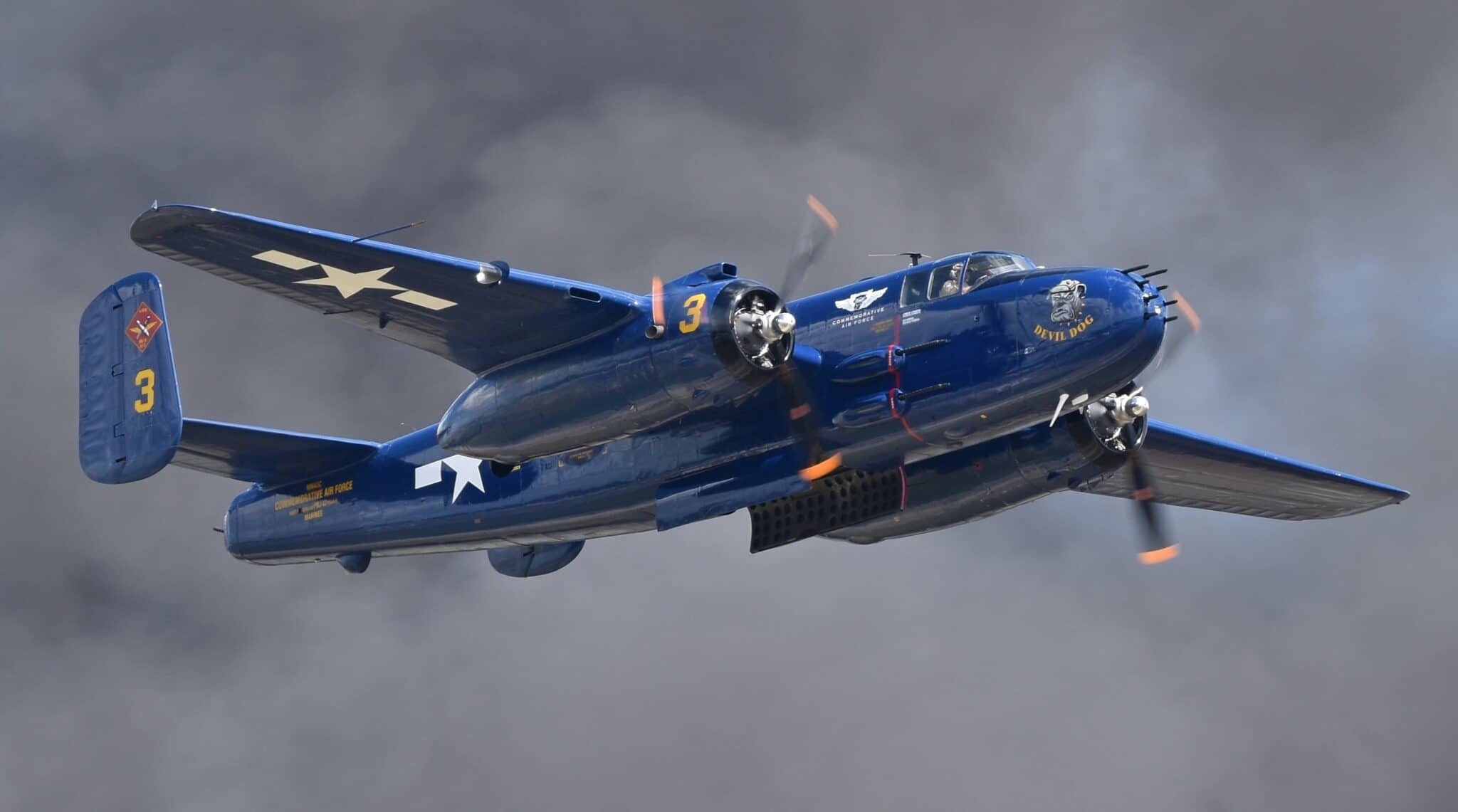
North American TB 25K Mitchell ‘3 3 Devil Dog N9643C 50654350261 Alan Wilson
image via alan wilson

More Stars

North American B-25J-30-NC Mitchell 44-30988 (PBJ-1J BuNo 35857) “Semper Fi” (completed 20 March 1945) – Commemorative Air Force (Southern California Wing).

North American B-25J-25-NC Mitchell 44-30129 “Wild Cargo” (completed 14 December 1944) – Military Aviation Museum.

North American B-25J-30-NC Mitchell 44-86777 “Georgie’s Gal” (completed 29 June 1945) – Liberty Aviation Museum.

North American B-25J-30-NC Mitchell 44-86758 “Devil Dog” (completed 26 June 1945) – Commemorative Air Force (Devil Dog Squadron- Texas).

North American B-25J-30-NC Mitchell 44-31385 “Show Me!” (completed 7 June 1945) – Commemorative Air Force (Missouri Wing).

bomber1ws 1920fx Doug Fisher
image via doug fisher

Co-starring

North American B-25J-20-NC Mitchell 44-29869 “Miss Mitchell” (completed 9 November 1944) – Commemorative Air Force (Minnesota Wing).

North American B-25J-30-NC Mitchell 44-86697 “Killer B” (completed 14 June 1945) – Tom Reilly.

North American B-25J-35-NC Mitchell 45-8884 “Lady Luck” (completed 14 October 1945) – Lady Luck LLC.

North American B-25J-30-NC Mitchell 44-86785 “Georgia Mae” (completed 2 July 1945) – Wiley Sanders. (Unfortunately Georgia Mae had a mechanical issue after the Saturday morning show and remained grounded for the rest of the weekend).

96080540 2632016020376431 1702400542212358144 o MPK
image via Michael P kopack

A-10 Warthogs Operate From Closed Michigan Highway

There’s A First Time For Everything- Even for the Warthog

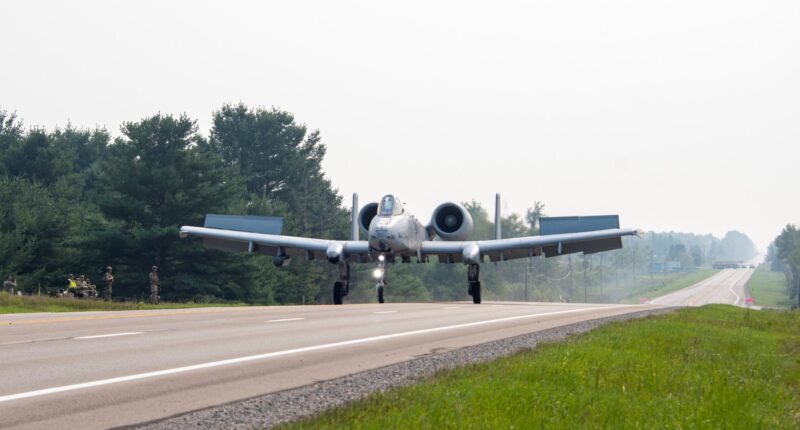
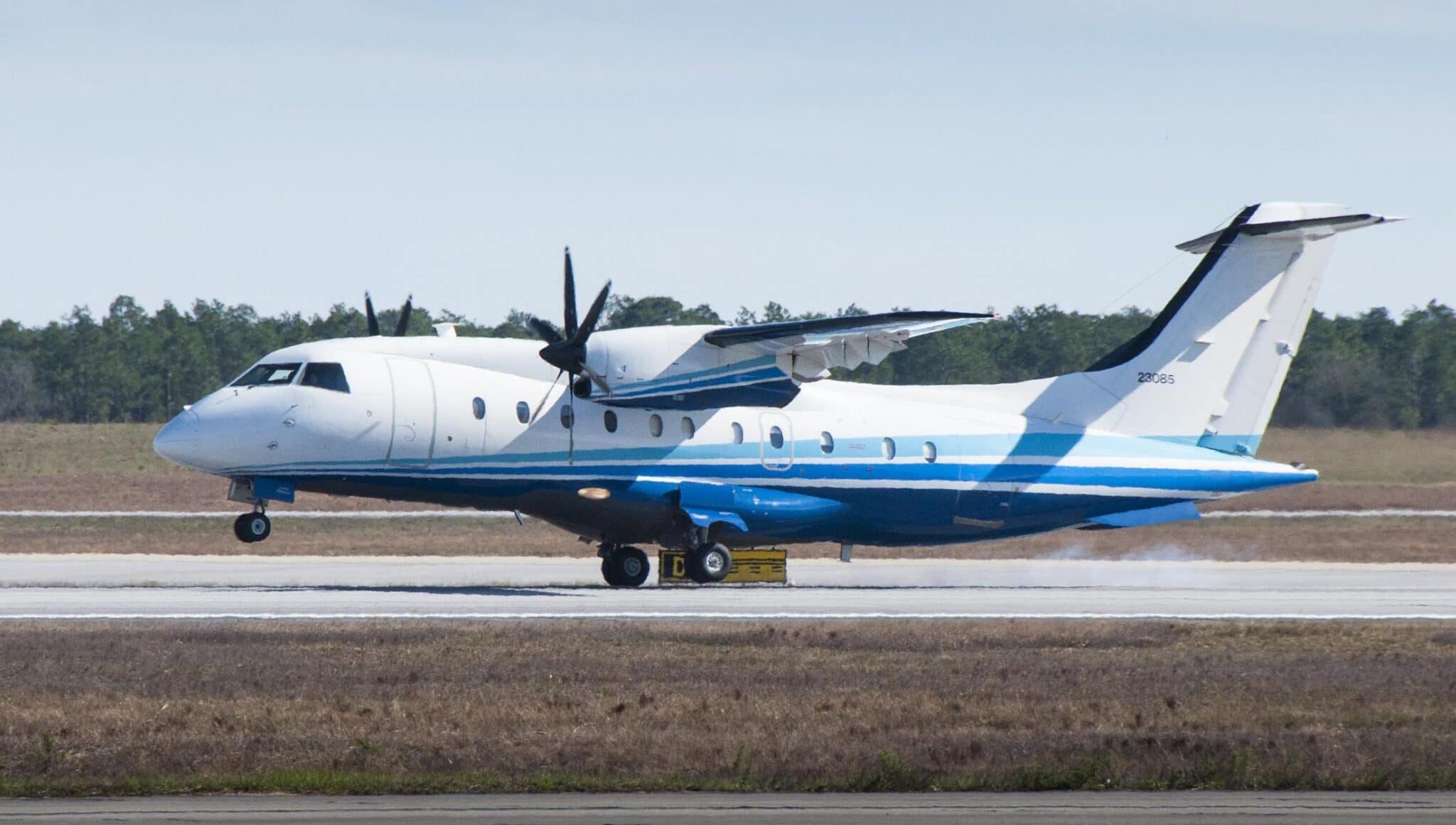
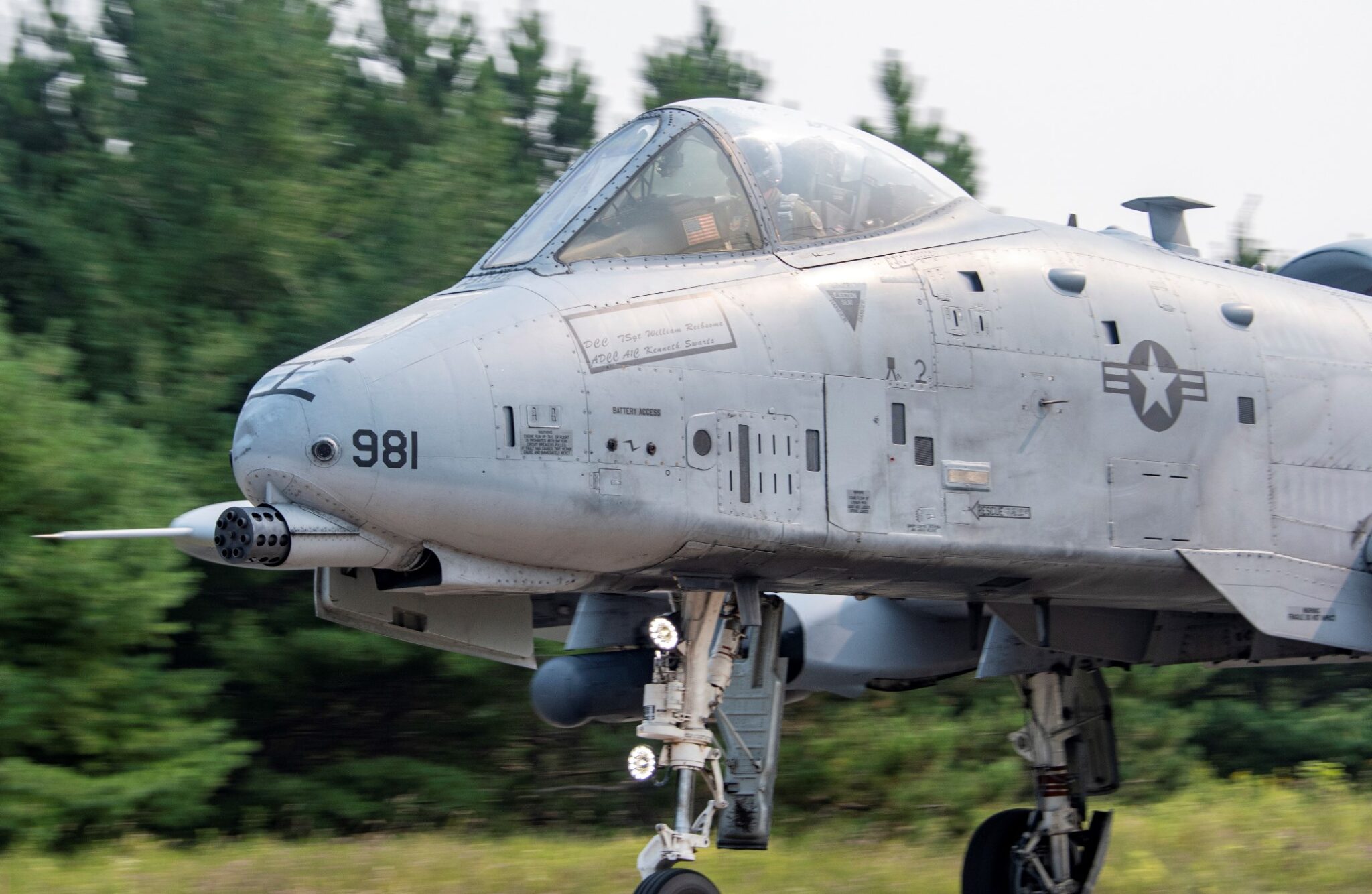
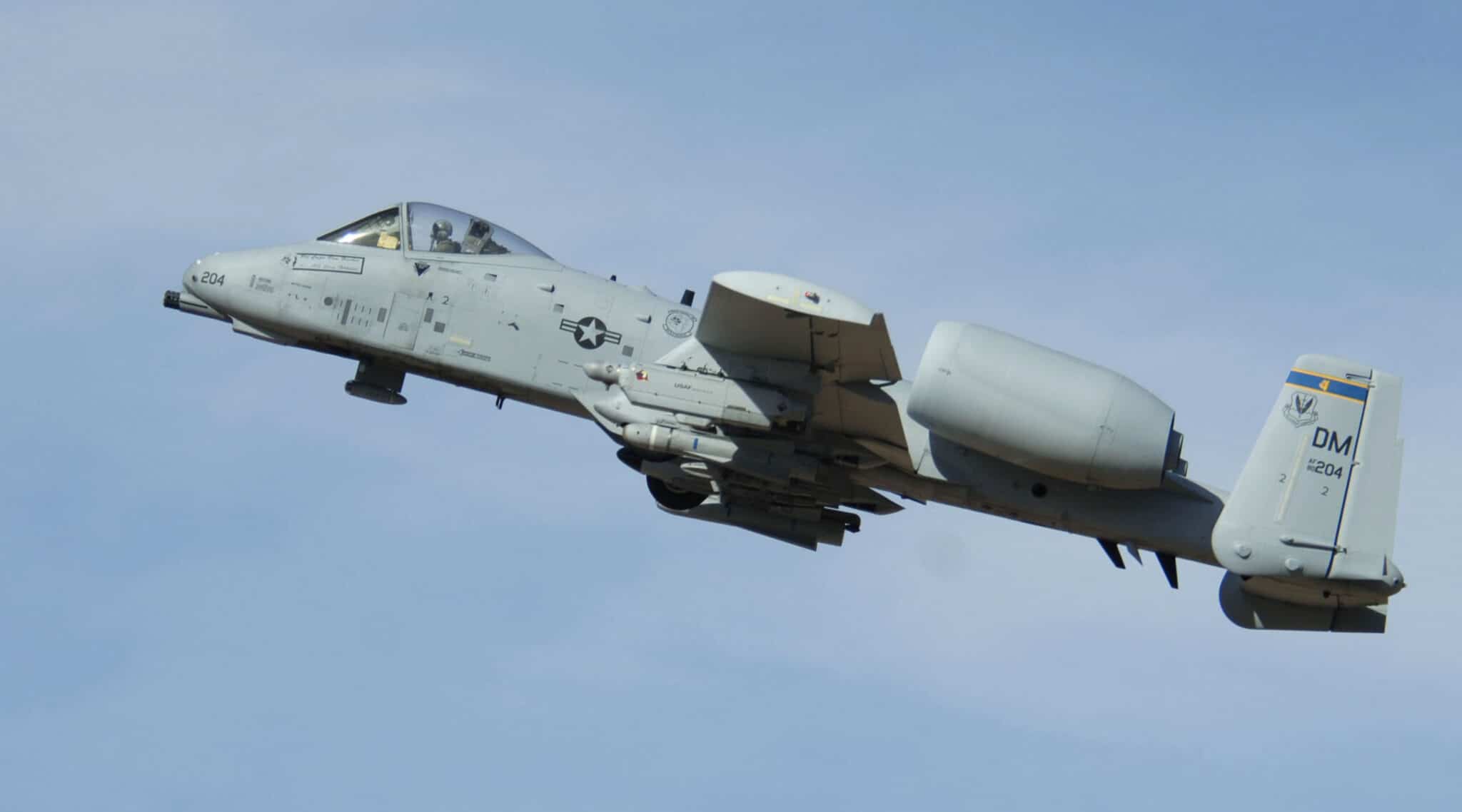
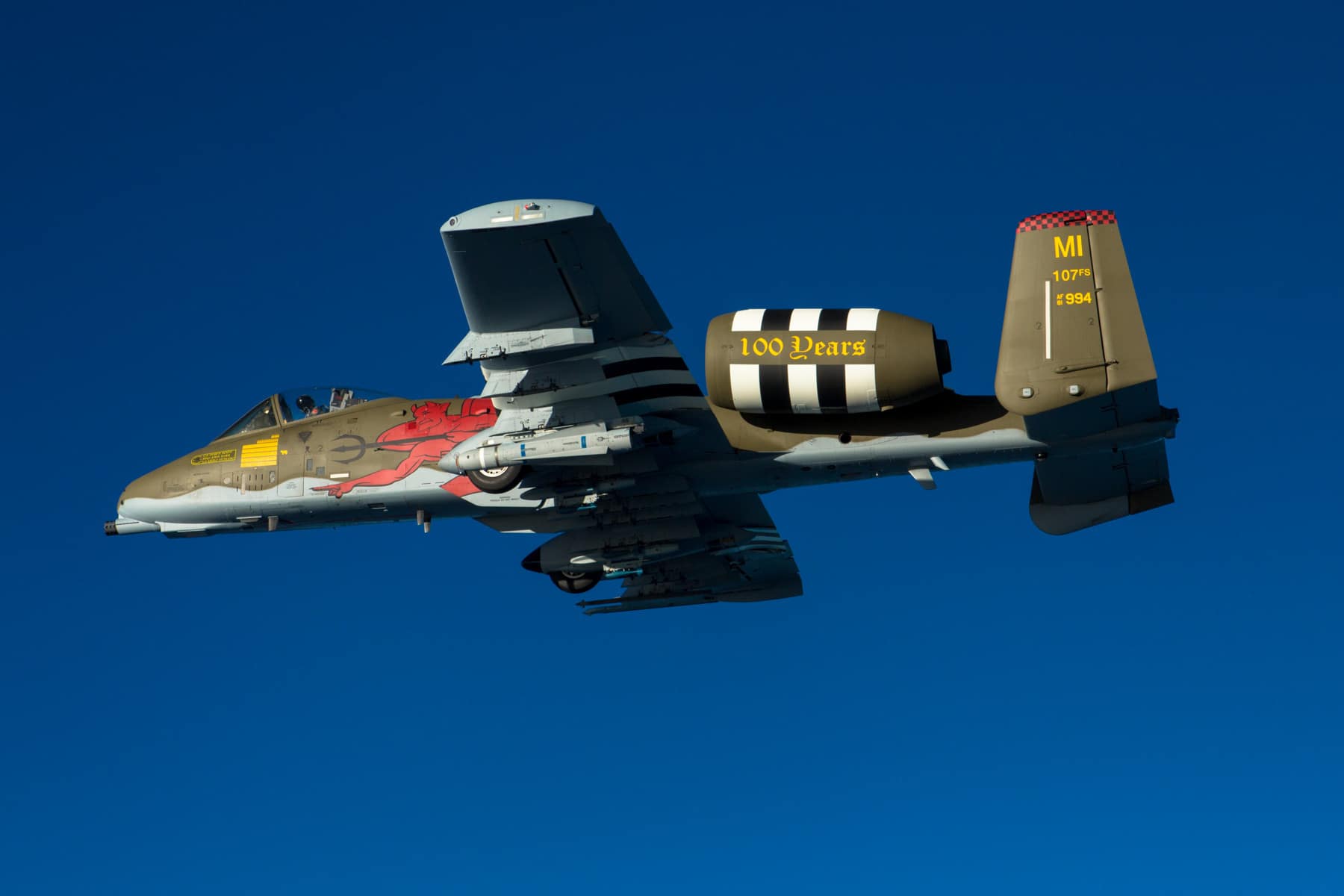
Four A-10 Thunderbolt IIs and a pair of C-146 Wolfhound airlifters operated from a closed stretch of Michigan Highway M-32 near Alpena on 5 August 2021. The aircraft were involved in Northern Strike 21, which the Air Force bills as a large-scale training exercise. Two of the Warthogs were assigned to the 354th Fighter Squadron (FS) Bulldogs out of Davis-Monthan Air Force Base (AFB) in Arizona. The other two jets were assigned to the 107th FS Red Devils, Michigan Air National Guard (ANG) out of Selfridge Air National Guard Base (ANGB).

160105 F AU132 003a
C-146A Wolfhound. Image via US Air Force

To the Video

Here’s a video of the Warthogs and Wolfhounds operating from M-32 uploaded to YouTube by MOTORIZADO. WARNING: The audio was recorded in extremely close proximity to these aircraft.

[youtube id=”RalQMp4c6UI” width=”800″ height=”454″ position=”left”]

Wolfhounds

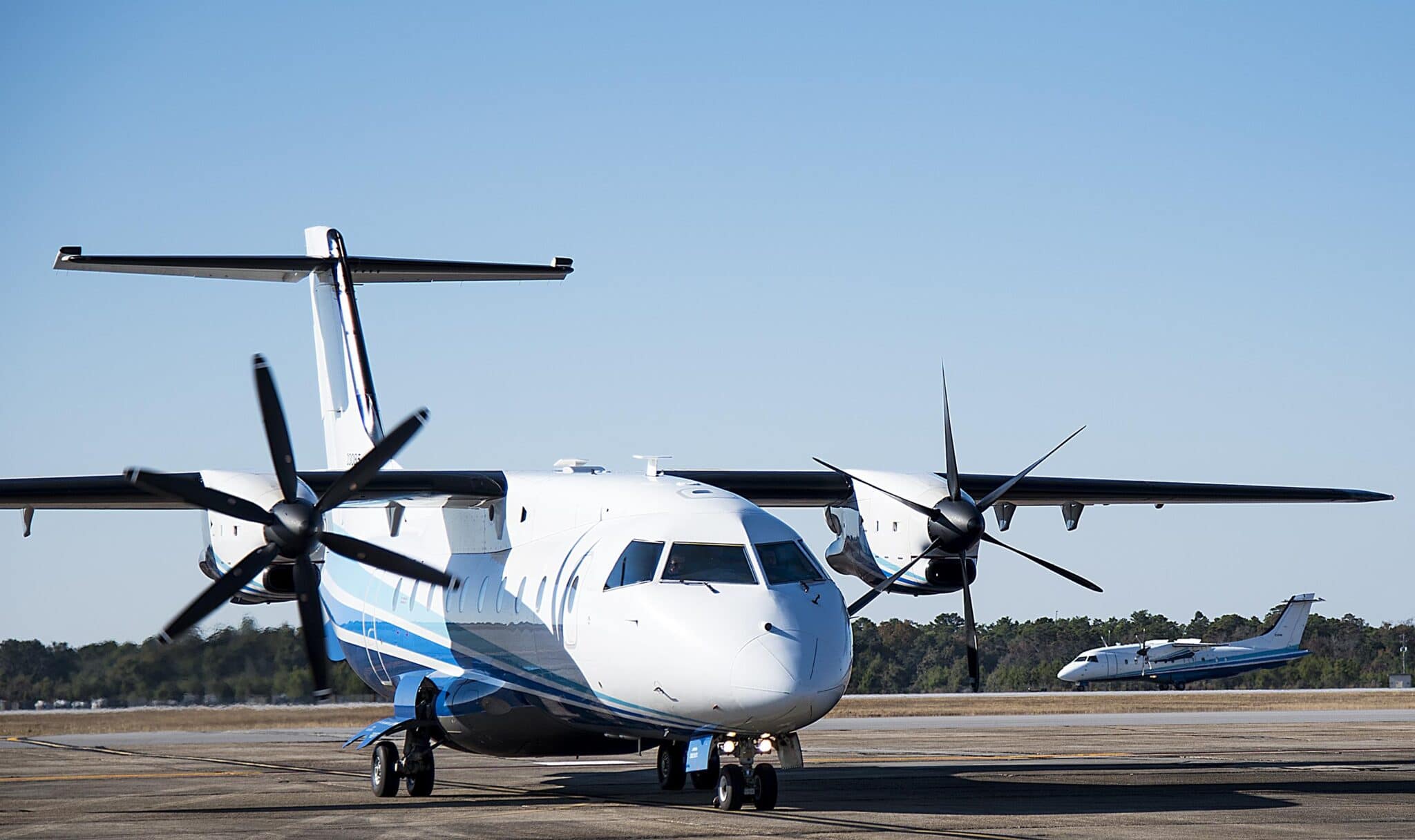
The C-146A Wolfhound airlifters were assigned to the 524th Special Operations Squadron (SOS) of the Air Force Special Operations Command (AFSOC) at Duke Field (part of the Eglin AFB complex) in Florida. The C-146A is used to conduct infiltration, exfiltration, cargo resupply, airlift and other military missions in prepared and semi-prepared airfields across the globe. C-146As are essentially Dornier 328s with mission-specific modifications

1
image via us air force

A First for Both Aircraft Types

This is the first time in history that the Air Force has purposely landed modern aircraft on a civilian roadway in the United States. But A-10s, including Michigan ANG Red Devil jets, have operated from highways and abandoned/austere strips in Europe at times for many years. According to the Air Force, “This proof of concept proves that we can land on any highway and continue to operate,” said U.S. Air Force Capt. John Renner, 354th FS flight commander and one of the pilots who participated in the highway landing. “The A-10 allows us to land a lot more places to get fuel, weapons and other armament so we can operate anywhere, anytime. This will allow us to get away from using built-up bases that our adversaries can target by moving much more rapidly.”

060323 F 8769P 011
image via us air force

The Air Force Had Some More Things to Say…

“This is a small step toward increasing our confidence in operating from austere locations,” said U.S. Air Force Lt. Col. Gary Glojek, 354th FS commander. “We are increasing the number of areas we can operate from to generate and deliver attack airpower by operating from dirt and pavement runways. Accelerating change is all about seizing every opportunity to move forward to increase your readiness.”

“We are ready to get within striking range, and we are ready to go generate and deliver attack airpower from thousands of locations across the world,” Glojek said. “We are going to continue to get lighter, faster, more maneuverable and more flexible as we do that.”

3894289
image via us air force

Safety First

The closure of the highway lasted for roughly five hours. Officials from local fire departments and law enforcement were involved in the exercise. Some power lines were reconfigured to allow the aircraft to safely operate from the two-lane road. While the aircraft were flying from the roadway power was disconnected to homes in the immediate area as a safety precaution, but there were no incidents and power was reconnected soon after the exercise concluded.

161117 F OC707 250
image via us air force

U.S. Navy Curtiss Seaplane was First to Complete Transatlantic Flight

BOSTON — The U.S. Navy pushed the limits of aviation a century ago to achieve what many then considered impossible by becoming the first to cross the Atlantic Ocean by aircraft.

Before Lindberg’s historic non-stop solo flight, a group of three naval seaplanes set out to fly a truly historic route. A transatlantic journey which laid out the flight path future air travelers would follow.

In 1917, the Navy began construction of a new version of aircraft which could operate over the North Atlantic waters. The Navy needed a long-range plane to combat German U-Boats during World War I.

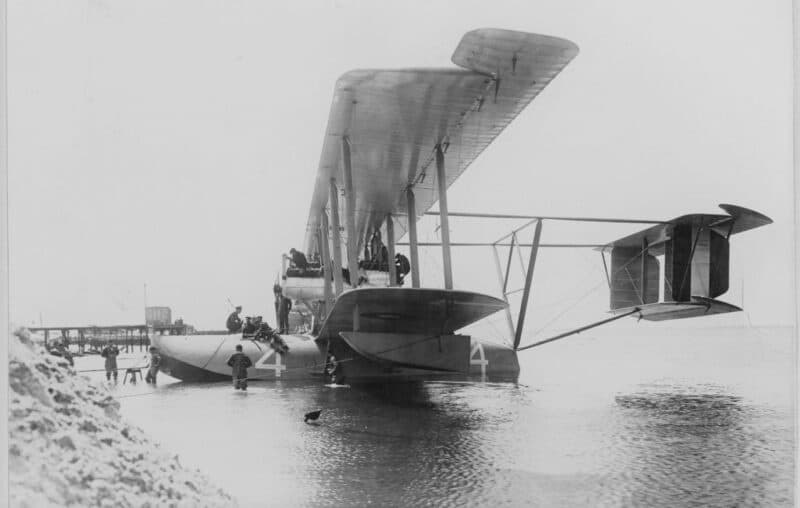
The Navy Curtiss (NC) seaplane sporting a huge floating hull, long wings, and four engines was the answer. By the time the first aircraft was completed in November of 1918, the First World War was over.

The National geographic magazine Page 516 BHL40563513 cropped
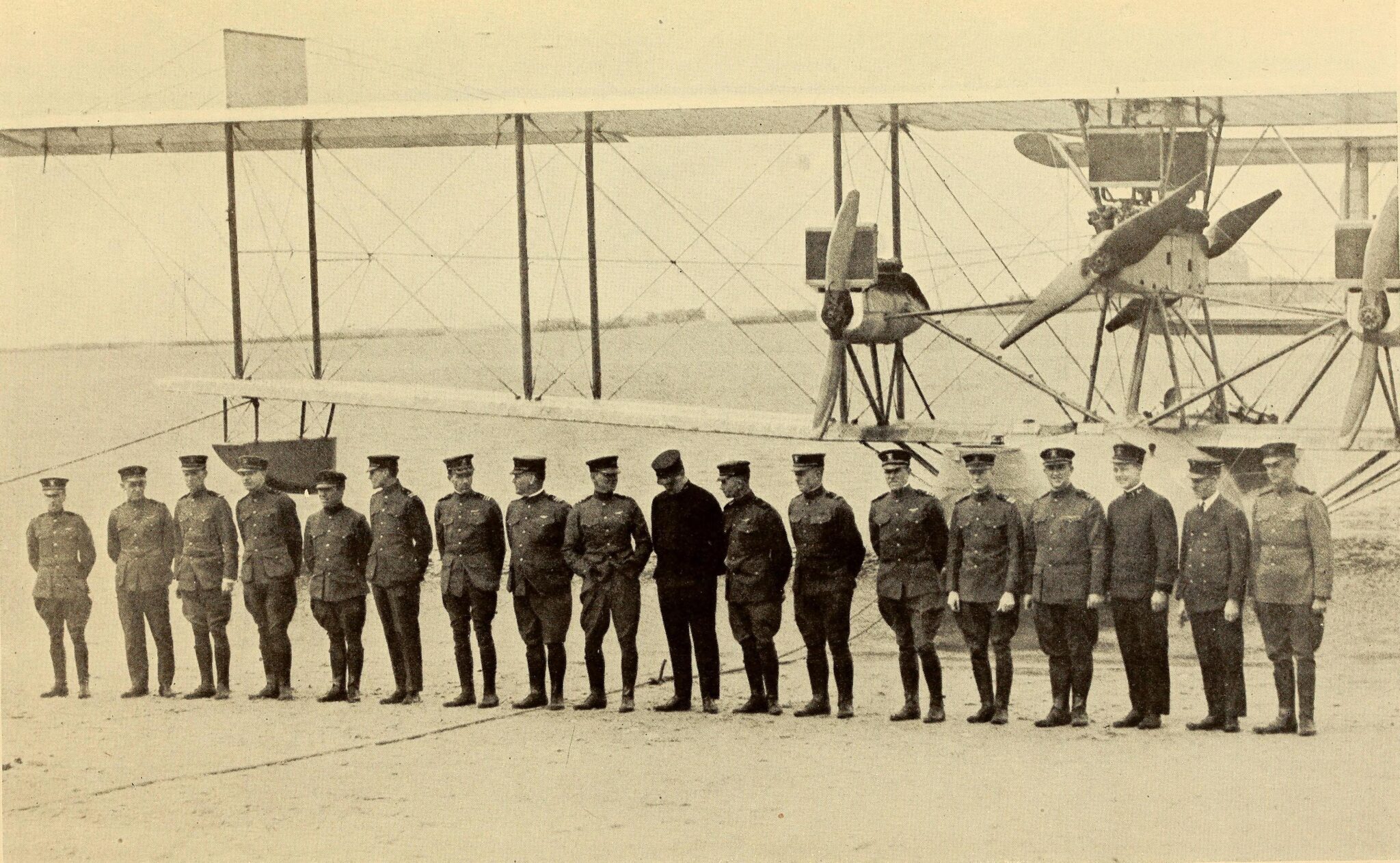
The three crews of the Navy Curtiss seaplanes pose together prior to their historic flights. (U.S. Navy)

The Navy turned its focus on using the new aircraft to tackle the unknowns of crossing the Atlantic by air. Their wooden hull supported six compartments with a passageway for movement by the crew.

Each Nancy, as they were nicknamed, featured four 400 hp Liberty L-12 engines. Her cruising airspeed averaged 84 knots, with a range of nearly 1300 nautical miles.

The NC Seaplane Division One, lead by CDR John H. Towers, featured three of these new seaplanes. On May 8, 1919, NC-1, 3, and 4 each carried a commander and a crew of five, departed upon their historic voyage to Europe.

LCDR Patrick Bellinger commanded the NC‑1. While CDR Towers commanded NC-3 and LCDR Albert C. Read lead the NC-4.

Each aircraft carried two radios to communicate with another Nancy and naval ships supporting their flights. The Navy had anchored 53 ships fifty miles apart across the vast ocean.

Screenshot 378
The transatlantic route flown by the seaplanes in 1919. NC-4 successfully arrived in Lisbon. (U.S. Navy)

“The radio operator had access to 75 mile short range and 300 mile long range radio sets,” U.S. Navy stated in a post-flight report. “There was an intercom system allowing the crew to speak with one another and even allowed the commander to speak over the radio.”

The three planes departed Rockaway Beach on Long Island, New York and flew up to Halifax, Nova Scotia and then to Trepassey, Newfoundland. NC-1 and NC-3 arrived, however NC-4 arrived later after making an unscheduled stop due to engine trouble.

All three aircraft then departed Newfoundland at sunset on May 16, beginning a nearly 1400 n.m. direct route from Trepassey to the Azores. As the Nancies neared the Azores the next day, the weather had turned bad with low visibility.

NC-1 and NC-3 elected to land in the weather that afternoon to determine their location and save on fuel. NC-1 landed about 100 nm from Flores, and NC-3 landed about 200 nm from Ponta Delgada, each in the Azores.

Each aircraft was damaged due to rough seas and could not take-off again. The crew of NC-1 was picked up by the cargo freighter SS Ionia from Greece. While towing the stricken aircraft, the tow lines snapped and the first Nancy was lost at sea.

Nancy 3 safely landed on the ocean and floated, her tail partially sunk. Her crew did not sleep that night as their craft battled nearly 40-foot waves driven by gale force winds.

Tower’s crew unsuccessfully tried to communicate by radio with nearby ships and the Nancies. Days later, their seaplane arrive at Ponta Delgada following a 200 mile cruise. A U.S. Navy ship greeted the craft and towed them into port.

As the Navy points out, LCDR Read in NC-4 spotted the coastline of Horta and safely landed there on May 16. They spent a few days to wait out the weather.

NC-4 then departed the Azores on May 20, to continue the flight to Lisbon, Portugal. However, after having only flown 148 miles, the aircraft was forced to land at São Miguel Island due to equipment problems.

One week later, NC-4 was repaired with new parts and took off again bound for Portugal. Nearly ten hours later, on May 27, 1919, NC-4 and her crew arrived in Lisbon Harbor and into the history books.

According to the Navy, this marked the first time in history that an ocean of the Earth was crossed by aircraft. Nancy 4 covered 3,936 nautical miles and flew 52 hours and 31 minutes over the course of 19 days.

“Lisbon would not be the final port,” the Navy report added. “(NC-4) would continue to Plymouth, England from where the Pilgrims left for the North American continent nearly 300 years earlier.”

1920px Curtiss NC 4 four engine configuration detail
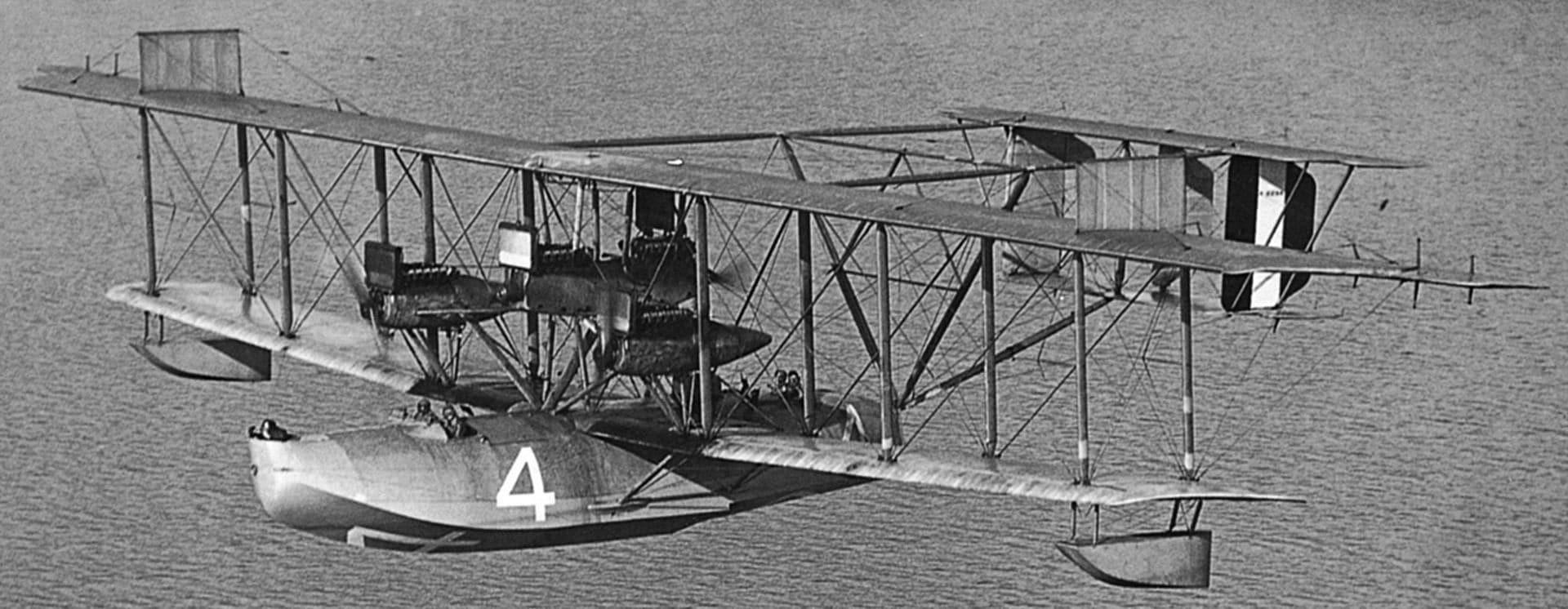
The Navy Curtiss 4 seaplane with the navigator at the nose and two pilots behind him. (U.S. Navy)

America had won the race to cross the ocean by air. The flight paved the way for future aviators, including Charles A. Lindberg’s non-stop flight from New York to Paris eight years later.

“It soon will be possible to drive an airplane around the world at a height of 60,000 feet and 1,000 miles per hour,” LCDR Read exclaimed following his historic flight.

In 1961, Triumph: The Incredible Saga of the First Transatlantic Flight was published by Harper & Row. The hardcover book can be found on Amazon.

Today, the original NC-4 can be viewed on display at the Naval Aviation Museum at NAS Pensacola, Fla. The Navy Curtiss seaplanes remain as a testament to the early days of naval aviation.

(Charles A. Atkeison reports on aerospace and technology. Follow his updates via social media @Military_Flight.)

GEICO Skytypers Airshow Team Discuss Aviation with Civil Air Patrol

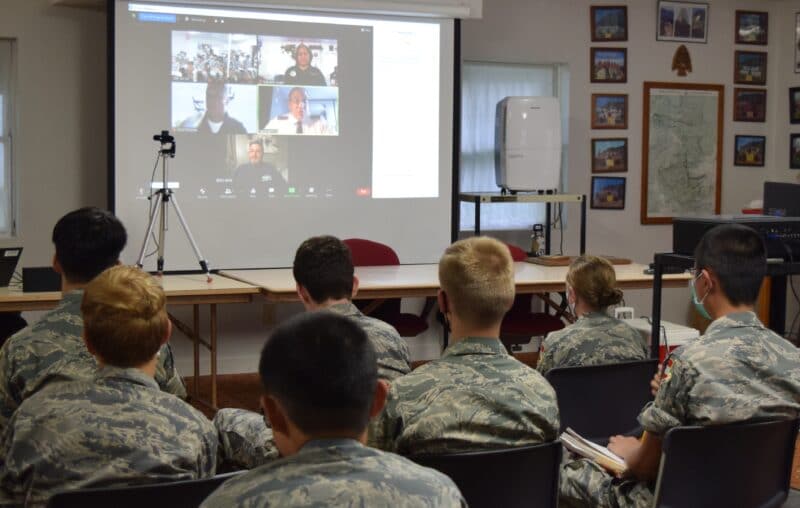
ATLANTA — The GEICO Skytypers Airshow Team discussed education and flying with the cadets of the Civil Air Patrol on Thursday to educate and inspire the next generation of aviators and engineers.

As an extension of the U.S. Air Force, the Civil Air Patrol provides local communities with volunteer services. They offer aide to search and rescue aircrews, disaster relief, and volunteer with humanitarian services.

The cadets are teenagers who learn the disciplines of the Air Force. Each carries a strong interest in an aeronautical career in the military or as a civilian.

GEICOSkytypers photo CharlesAtkeison
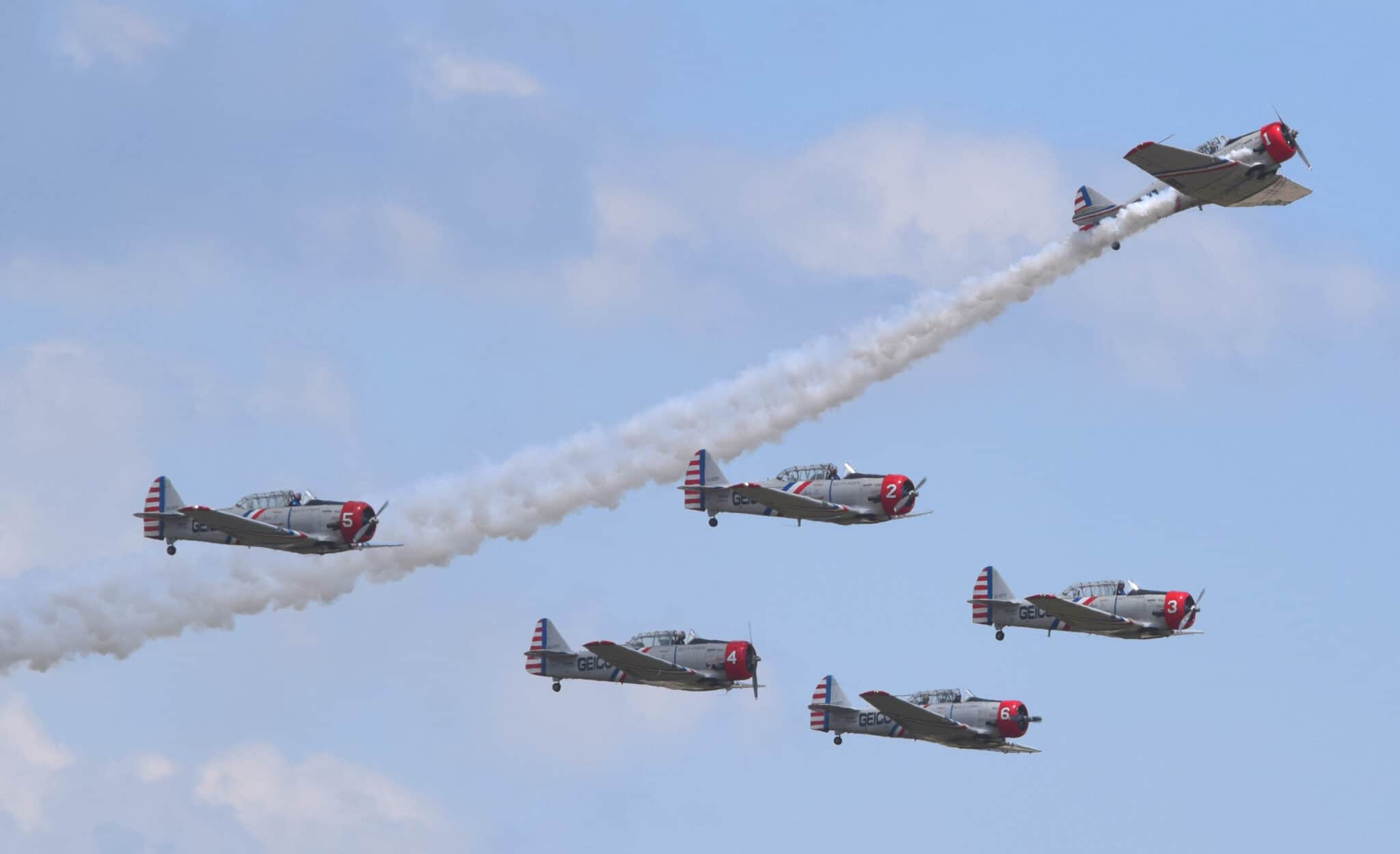
tHE SIX snj-2 PLANES OF THE GEICO Skytypers perform low-level maneuvers AT AIR SHOWS. (Charles aTKEISON)

GEICO Skytyper pilots Chris Thomas and Steve Salmirs, along with the director of maintenance Frank Ateria, addressed the cadets of north Atlanta. The three provided insight of a strong education and the value of teamwork in their career.

Education and Teamwork in Aviation

“I began flying when I was 17 years-old and my dad was my instructor,” GEICO Skytypers right wing pilot Chris Thomas explained. “I love our aircraft, it’s a big aircraft, it’s loud and rumbly.”

“We fly with the canopy open and you smell like gas and oil when you get done flying.”

The GEICO Skytypers showcase low level maneuvers and create huge sky-typed messages over an air show. The civilian squadron’s history dates back to the 1970s, and 15 years as the GEICO Skytypers.

Their flight demonstrations highlight their Navy SNJ-2 aircraft as the pilots tell the story of an age before the jet engine. A flight trainer in the 1940’s, the SNJ was known among the U.S. Army’s aviators as the pilot maker.

Lead maintainer Frank Atria enjoys his full time career with the Skytypers. Atria carries a passion for aviation, especially working on the six 80 year-old warbirds.

“The plane’s engines are like a swiss clock with everything just perfect, and to think they were designed before computers with slide rulers and old school technology,” Atria explained. “The engine’s were designed in the late-1920s, so for them to perform as well as they do is amazing.”

For Thomas, who has logged over 19,050 hours of flight time in 100 different aircraft, he enjoyed the high-schoolers interest. The cadets offer insightful questions related to the operations of the aircraft.

“How many of you have taken geometry so far?” Thomas asked the cadets as he discussed the usefulness of math. “Flying in formation is geometry. How I would follow Steve and get back on his wing tip is geometry.”

Steven Salmirs launched his career at the Kennedy Space Center as a space shuttle ground and flight equipment engineer. Two years later, Steve entered the U.S. Air Force becoming an F-16 Viper pilot.

The GEICO Skytypers are scheduled to perform at the largest air show of the year this week. The squadron will take to the air this week at EAA AirVenture in Oshkosh, Wisconsin.

“Everybody on the squadron wakes up in the morning excited to do what we’re doing,” Thomas added. “It’s a team as Frank’s not a pilot, but I’m not a mechanic, but we all have the same goal and we all work together.”

(Charles A Atkeison reports on aerospace and technology. Follow his updates via social media @Military_Flight.)

EAA AirVenture Returns to Oshkosh

OSHKOSH, WI — The newest aircraft of the U.S. Air Force and Navy will headline America’s largest aviation event this week with the return of EAA AirVenture.

A week long aviation experience kicks-off Monday, July 26, and continues through Sunday. Educational events and a huge air show will highlight AirVenture from Wittman Regional Airport.

The GEICO Skytypers Airshow Team, AeroShell Aerobatic Team, and civilian aerobatics are scheduled to perform. Patty Wagstaff piloting her Extra 300LX, Mike Goulian, Rob Holland, and Skip Stewart are a few of the pilots who will showcase a dizzying array of maneuvers.

“This is already an outstanding all-star air show lineup and we’re just getting started,” EAA’s vice president and Airshow coordinator Rick Larsen expressed. “There is a high energy among the air show community to get back to Oshkosh, whether it’s returning performers (or) new air show acts.”

EAA AirVenture Performers, Events, and Fly-in

AirVenture is more than just the air show, it is built around networking and education. Fellow aviators can attend forums and workshops to discuss commercial and private aviation and spaceflight.

The Air Force will be represented as the F-16C Viper Demo and a few A-10C Warthogs perform. A Lockheed U2 Spirit stealth bomber is also scheduled flyover the airfield.

6549031 1
The F-16C Viper Demonstration Team will headline the 2021 EAA AirVenture air show. (U.S. Air Force)

“Viper Demo Team is always a popular attraction at air shows across the country, and we’re very excited to welcome it back to Oshkosh,” AirVenture air show director of operations Dennis Dunbar said. “The F-16 has been an important piece of the U.S. Air Force arsenal for over 40 years and is still an impressive aircraft to watch.”

Two popular jet aircraft of the Navy will perform, including a joint Legacy Flight. The F/A-18E/F Super Hornets and E/A-18G Growlers will fly high speed flat passes and thunderous maneuvers.

Six World War II-era aircraft flown by the GEICO Skytypers will perform aerobatic precision flying. The warbirds perform low-level maneuvers and type huge dot matrix messages across the sky.

3ship esh
The warbirds of Tora! Tora! Tora! will scream across AirVenture this week to recreate the attack on Pearl Harbor attack. A historic narration and music will help tell the story. (Tora! Tora! Tora!)

“We’re especially excited to perform during EAA AirVenture Oshkosh,” GEICO Skytypers flight leader Larry Arken told AvGeekery. “We utilize six WWII-era training aircraft to conduct our flying demonstration. It’s an honor to demonstrate the amazing abilities of our vintage warbirds.”

Air shows are schedule to begin at 2:30 p.m. Monday thru Saturday, and 1 p.m. on Sunday. Featured static aircraft include F-15E Strike Eagle, C-17 Globemaster, and a KC-135 Stratotanker.

Guests can fly aboard a few historic aircraft, including a Ford Tri Motor, or the B-25 Mitchell Berlin Express. Located at the Warbirds Experience, flights are available for purchase on a first come bases.

(Charles A Atkeison reports on aerospace and technology. Follow his updates via social media @Military_Flight.)

Air Force Thunderbirds Select New Pilots for 2022

LAS VEGAS, NV — The Air Force Thunderbirds this week selected new officers and pilots who will join the squadron in September for the 2022 and 2023 air show seasons.

The officers include two new formation pilots, an advance pilot/ narrator, a flight surgeon, and a maintenance lead. They will join the Thunderbirds with the previously announced new team commander, Lt. Col. Justin Elliot.

“This year’s applicant pool featured some of the very finest Air Force leaders who showcased a remarkable level of skill and motivation,” Thunderbirds current commander and flight leader Col. John Caldwell said. “This was an incredibly difficult choice, but I’m confident we chose the right team to carry on the Thunderbird mission and showcase America’s Air Force.”

New Thunderbird Officers Announced for 2022

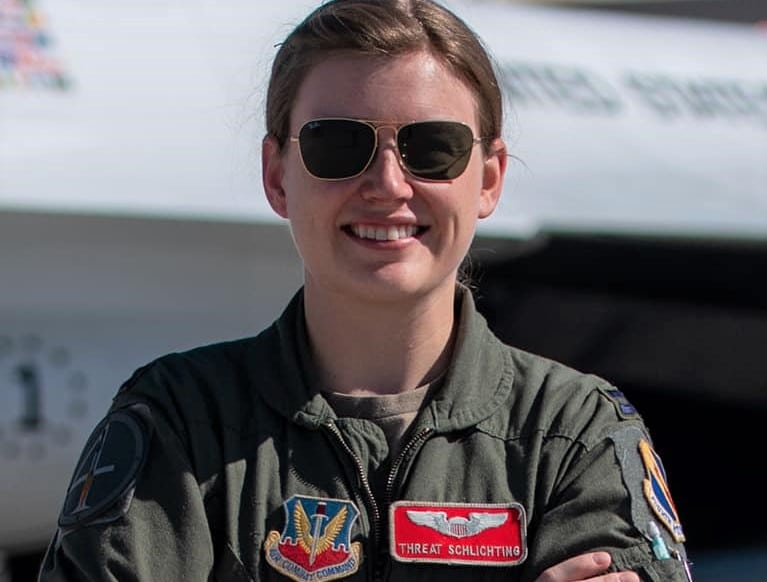
Capt. Lauren Schlichting will begin training in November as the new Thunderbird 3. She becomes only the sixth female pilot to fly with the U.S. Air Force Air Demonstration Squadron in their 69 year history.

As the right wing pilot, Capt. Schlichting will perform as part of the diamond formation flying only 18-inches from the lead Thunderbird jet. She will replace current right wing pilot Maj. Zane Taylor. He will move to the slot position in 2022.

216123693 10159225917039246 6065190963516117993 n
Capt. Lauren Schlichting has been selected as the Thunderbirds new right wing pilot for 2022. (USAF)

Capt. Lauren Schlichting, whose pilot call sign is “Threat”, was promoted to the rank of Captain in January 2016. Most recently, she served as an F-15E Strike Eagle pilot with the 4th Fighter Wing at Seymour Johnson AFB, N.C.

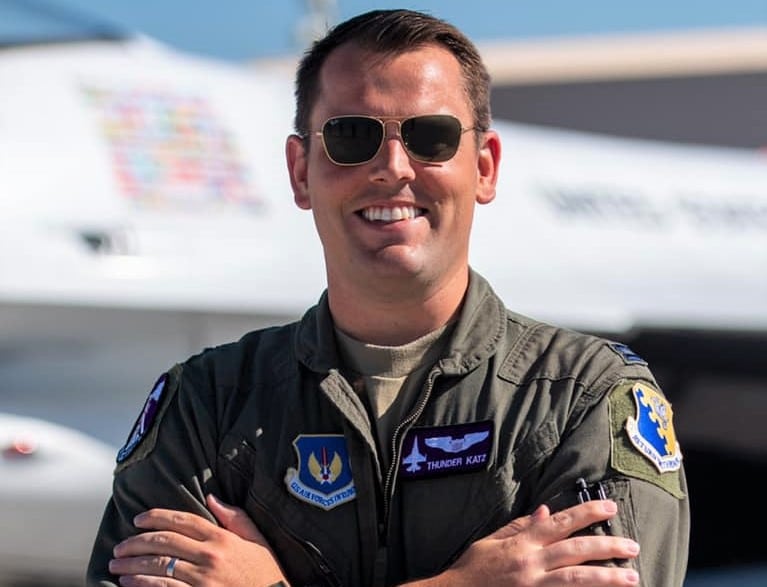
A new Thunderbird 6 will continue the legacy of the high speed solo aircraft next season. Capt. Daniel Katz joins as the team as the new opposing solo pilot.

Current Thunderbird 6 pilot Maj. Kyle Oliver will move up as lead solo for 2022. The twin solo pilots demonstrate high speed maneuvers at air shows showcasing the maximum capabilities of the F-16.

Capt. Katz recently served as an F-16C Fighting Falcon pilot with the 510th Fighter Squadron at Aviano Air Base in Italy. As a pilot with the 510th “Fightin’ Buzzards”, he performed both U.S. and NATO national security flights over Europe.

214612137 10159225917354246 2572299208348718816 n
Air Force Capt. Daniel Katz has been selected as the Thunderbirds opposing solo pilot for 2022. (USAF)

The Thunderbirds new advance pilot and air show narrator is Capt. Jacob Impellizzeri. Currently serving as an F-16C Viper pilot at Shaw AFB in South Carolina, he has flown the F-16 during an already storied military career.

Capt. Impellizzeri, call sign “Primo”, will become the voice of the Thunderbirds during air show flight demonstrations. As advance pilot, he will meet with air show leaders beginning in November to organize the squadron’s logistics at the show site.

Primo grew up attending air shows with his entire family during his youth. During high school, he earned his private pilot license.

5818164
F-16 Fighting Falcon Demo Team pilot Capt. Jacob “Primo” Impellizzeri, of the Pacific Air Forces F-16 Fighting Falcon Demonstration Team, performs at Komatsu Air Base, Japan in September 2019. (USAF)

Last March, Capt. Impellizzeri concluded two years as the Pacific Air Forces’ F-16 Demonstration Team commander and pilot. After one year of service at Shaw AFB, Primo moves on to his new assignment at Nellis AFB.

“I want to fly for as long as I possibly can,” Capt. Impellizzeri expressed in a recent Air Force interview. “Not only do I have the opportunity to fly the F-16 to its maximum potential, but I get to show people all around the world just how incredible the airframe is.”

The Thunderbirds announced their new flight surgeon, Capt. Travis Grindstaff, and maintenance officer, Capt. Robert Gulla. Each will also report to Nellis in September to begin two years with America’s Ambassadors in Blue.

(Charles A. Atkeison reports on aerospace and technology. Follow his updates via social media @Military_Flight.)

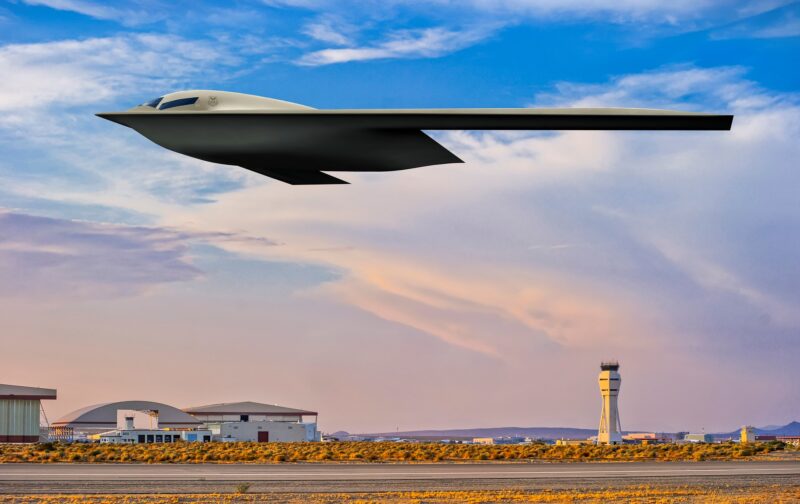
U.S. Air Force B-21 Stealth Bomber to Debut in 2022

WASHINGTON — Development of the U.S. Air Force’s newest long range bomber received a lift this week with the release of new background details and a target time for its first test flight.

The future stealth heavy bomber is the B-21 Raider with a mission to replace the Air Force’s aging bomber fleet in a few years. The aircraft will serve as a replacement for the B-1 Lancer and the B-2 Spirit bombers.

The first two B-21 test aircraft are in production at Northrop Grumman’s manufacturing facility in Palmdale, Calif. They are expected to be completed for testing during 2022.

The first test flight of B-21 number 1 is expected to fly before autumn of next year. The program is expected to be operational by 2026.

Named to honor the historic Doolittle Raiders of World War II, the B-21 Raider will perform long range conventional and nuclear missions. The newest bat wing aircraft will also perform intelligence, surveillance, and reconnaissance missions.

“Nuclear modernization is a top priority for the Department of Defense and the Air Force, and B-21 is key to that plan,” Air Force Rapid Capabilities Office director Randall Walden said. “The built-in feature of open systems architecture on the B-21 makes the bomber effective as the threat environment evolves.”

B-21 Raider Moving Toward First Test Flight

Former U.S. Secretary of Defense Robert Gates directed the B-21 program to complete no fewer than 100 aircraft. Northrop Grumman believes funding for nearly 200 B-21s may see the light of day before the factory is closed.

According to the Air Force, the average unit procurement cost is $639 million (2019 base). The FY 2021 defense appropriations bill gave the B-21 program $2.84 billion. The current FY 2022 budget request is for nearly $3 billion.

Screenshot 347

California’s Edwards AFB’s 420th Flight Test Squadron will serve as center stage for ground and flight testing of each B-21. The 420th is actively preparing to support the first test flight next summer.

“The second (B-21 built) is really more about structures, and the overall structural capability,” Walden added. “We’ll go in and bend it, we’ll test it to its limits, make sure that the design and the manufacturing and the production line make sense.”

In June, the Air Force selected the 28th Bomb Wing at Ellsworth Air Force Base in South Dakota to receive the first operational B-21. Ellsworth will also serve as a formal training unit for the aircraft’s pilots and maintainers.

“We are excited to be selected as the first B-21 main operating base,” 28th Bomb Wing commander Col. David Doss expressed. “Our selection is a testament to the strategic role the base continues to play in the defense of our nation coupled with the robust relationship we have with our community stakeholders and neighbors.”

Following Ellsworth, Whiteman AFB in Missouri and Dyess AFB in Texas will then begin to receive the new bomber.

B-21s will be crewed during the first years of operation. The Air Force hopes to fly an uncrewed B-21 by 2030 — based on the current operational timeline.

(Charles A. Atkeison reports on aerospace and technology. Follow his updates via social media @Military_Flight.)

Pensacola Beach Airshow to Celebrate Blue Angels 75th Anniversary

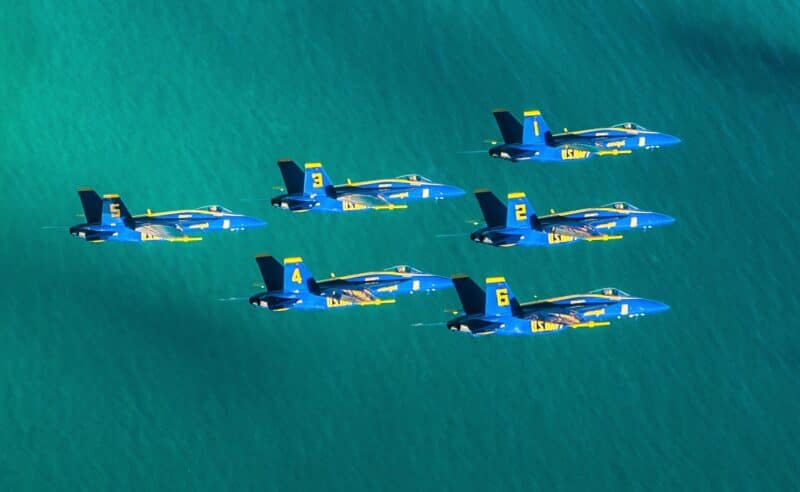
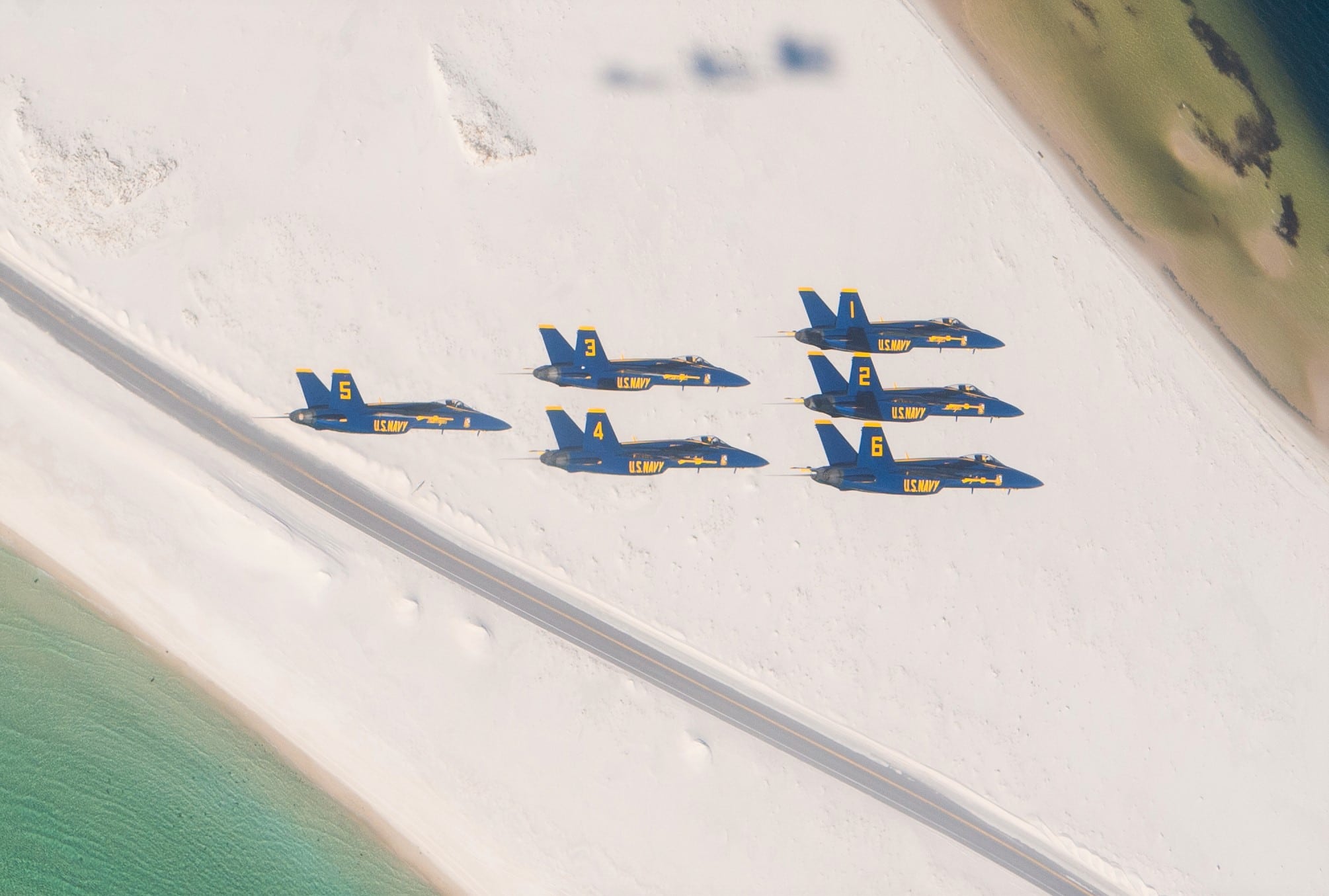
PENSACOLA BEACH, Fla. — Beach-goers along the Emerald Coast will pause this week as the U.S. Navy Blue Angels take to the skies to perform before their hometown during the Red, White, and Blues Beach Airshow.

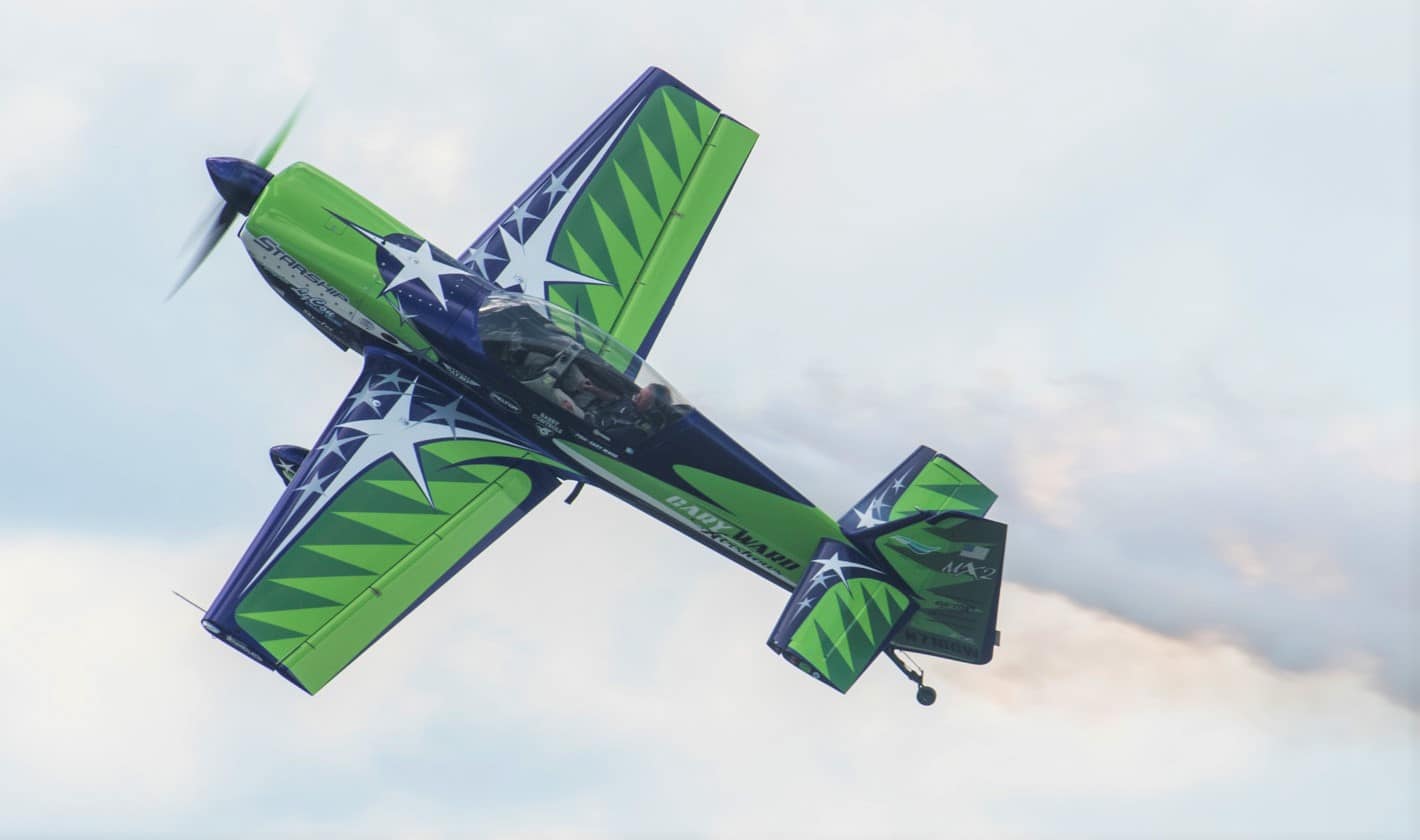
Top civilian aerobatic pilots will join the Blue Angels on July 9 and 10, for the return of the Pensacola Beach air show. Pilots Gary Ward, Kevin Coleman, Skip Stewart, and the World War I-era aircraft of Veterans Flight are scheduled to perform off Casino Beach.

Chasing the Blue Angels Super Hornets over Pensacola. (Video and Images U.S. Navy PO2C Cody Hendrix)

“The Blue Angels are extremely excited to have the opportunity to perform over Pensacola Beach,” Blue Angels Boss CDR Brian C. Kesselring expressed. “Our primary focus after months of preparation and training is to demonstrate the teamwork, professionalism, and precision of Navy and Marine Corps aviation to the members of (the) community.”

Red, White, and Blues Airshow Week Schedule

Civilian aerobatic aircraft will fly on Friday and Saturday beginning at 11:30 a.m. The Super Hornets of the Blue Angels will perform at about 2 p.m.

The beauty of this air show comes with a price — traffic. Expect longer delays crossing the bridge to Santa Rosa Island each day.

4733052
Gary Ward, who pilots an MX2, has been performing at Air Shows since 1998. (U.S. Air National Guard)

Area officials ask the public to arrive early as traffic traveling over the bridge will take hours by late morning. The Casino Beach parking lot will likely fill up by 7 a.m. on Friday and Saturday.

“There is simply just something extra special about watching your hometown heroes perform over the most beautiful place in the world, Pensacola Beach,” Santa Rosa Island Authority Director Robbie Schrock said. “It doesn’t matter how many times I have seen them perform, I literally still get chills watching them.”

An aircraft performance box lies along the beach line and swimmers will need to exit the Gulf waters prior to each performance. A boat anchored a mile off Casino Beach east of the pier will serve as air show center.

6534965
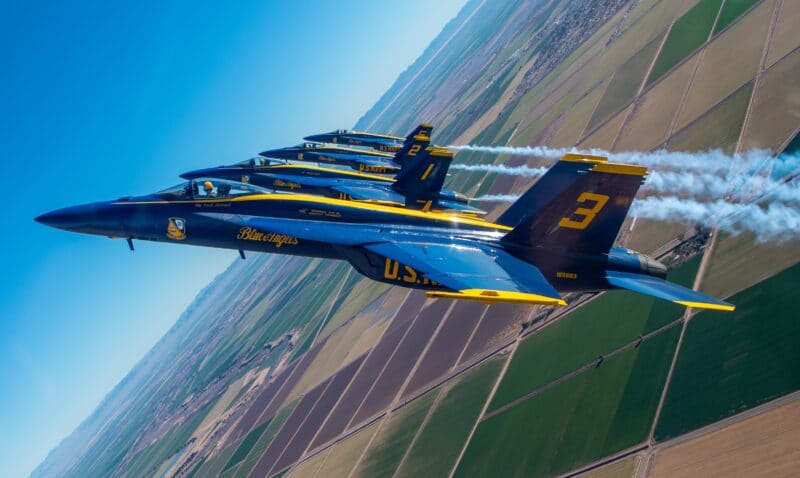
2021 marks the 75th anniversary of the Blue Angels and their first flying the Super Hornets. (U.S Navy)

The Blue Angels are scheduled to practice over the beachline on Wednesday at 8:00 a.m. during Breakfast with the Blues. They will perform practice flights on Thursday and Friday, both at 2:00 p.m., prior to Saturday’s official airshow.

The squadron’s new C-130J Super Hercules known as Fat Albert is also scheduled to fly. The six blue and gold jets will demonstrate close formation flying and high speed passes.

Standing on the sugar beach Schrock smiled and added, “If you ever have the opportunity to watch the Blue Angels over Pensacola Beach, I can assure you it will be your new favorite holiday.”

(Charles A. Atkeison reports on aerospace and technology. Follow his updates via social media @Military_Flight.)

Blue Angels, Thunderbirds to Highlight Kansas City Airshow

KANSAS CITY, Mo. — Independence Day celebrations over middle America will be monumental this weekend as the nation’s two favorite military jet demonstration teams add to the flash of fireworks.

The Air Force Thunderbirds have been added to the Kansas City Airshow, joining the Navy’s Blue Angels and GEICO Skytypers Airshow Team. The huge two-day event will be held at the New Century Air Center southwest of the city.

“This is an incredibly rare opportunity to see both of these elite aerobatic teams fly at the same civilian air show,” KC Air Show Director Kerry Floyd said on Monday. “And, the first time ever this has happened in the Kansas City metro area.”

51281433764 814e98c891 k
The Blue Angels’ Super Hornets are a highlight of the team’s 75th anniversary season. (Charles Atkeison)

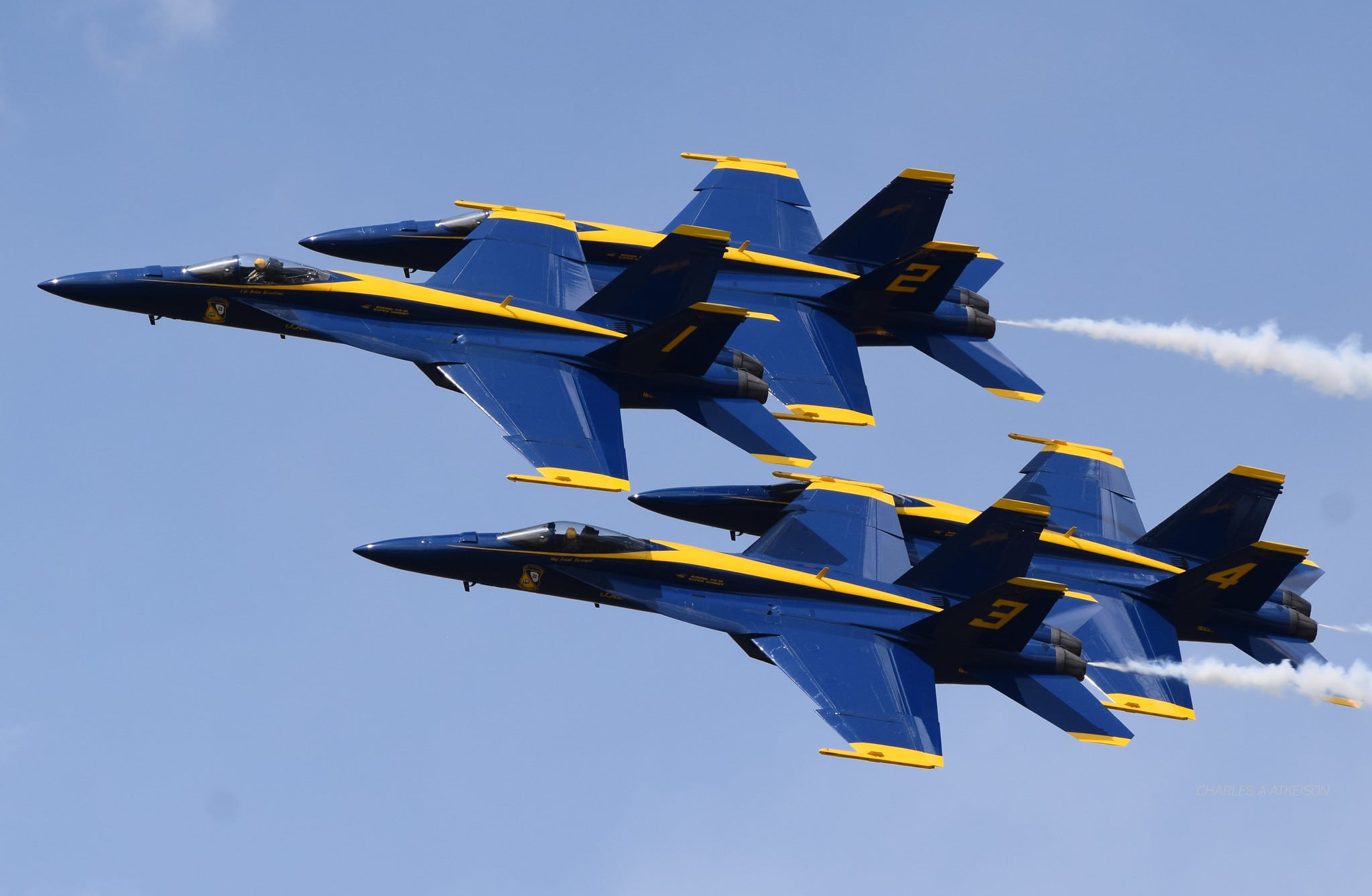
Air show attendees will see the Blue Angels perform high speed maneuvers and slower formation flying in new jets. This season marks the teams first with their upgraded F/A-18 E/F Super Hornets.

“The jets will look a new shiny blue and the delta formation will look a little bit bigger,” Blue Angels opposing solo pilot LCDR Cary Rickoff explained to AvGeekery.com. “You will notice about a 30 percent size increase — the jet is bigger.”

The Thunderbirds have overhauled their entire flight demonstration in time for 2021. The squadron has added a series of new maneuvers and dropped a few the team considered were redundant.

6687688
The Thunderbirds diamond races across the skies of Tennessee in June 2021. (USAF/SSgt. Andrew Sarver)

Near the close of their 30 minute demonstration, the Thunderbirds will move to their patriotic pride and teamwork phase with all six aircraft. As guests look up, beautiful cascading maneuvers will highlight their show.

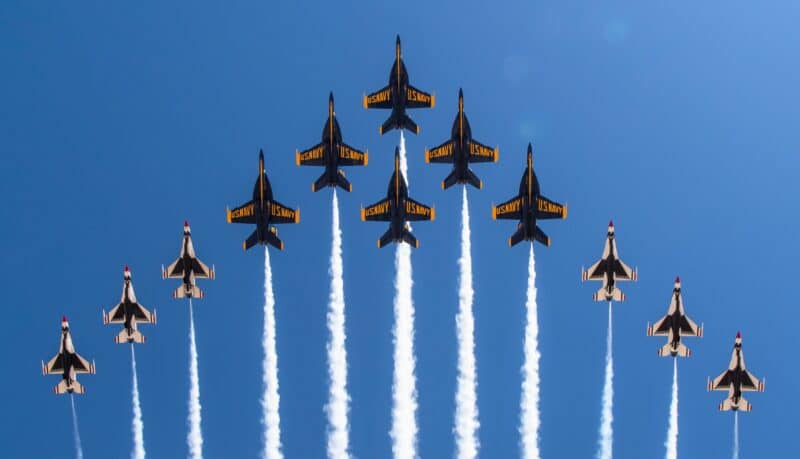
Last January, the Thunderbirds and Blue Angels created and practiced a new single formation flyover. Known as the Super Delta, the formation includes six F-16C Fighting Falcons and six Super Hornets.

Floyd could not confirm if air show guests will witness the first public Super Delta flyover.

Civilian Aircraft to Provide Dizzying Aerobatics

A third six-plane formation team is also scheduled to perform Saturday and Sunday. The GEICO Skytypers Airshow Team’s Navy SNJ-2 aircraft will showcase World War II-era aerial battle maneuvers.

“We’re excited to perform for the first time for air show spectators attending the Kansas City Air Show,” Skytypers flight leader Larry Arken said on Tuesday. “We consider it an honor to demonstrate the amazing abilities of these vintage warbirds on behalf of our sponsor, GEICO, while sharing a bit of aviation history.”

Fourth of July festivities over the air show will also include performances by the U.S. Army Golden Knights Parachute team. The Golden Knights are scheduled to jump with a huge U.S. Flag during an opening ceremony each day.

Civilian aerobatic pilots will take to the skies to perform dizzying maneuvers and corkscrew turns. Pilots Matt Younkin, Mike Goulian, Chuck Aaron, and Skip Stewart are just a few of the air show favorites performing.

“The best is to be on the air show line, feeling the thunder in your chest, hearing the jets roar by,” Thunderbird commander Col. John Caldwell said. “Seeing the speed and motion, and seeing the heights that this demo team can fly for the American public.”

(Charles A. Atkeison reports on aerospace and technology. Follow his updates via social media @Military_Flight.)