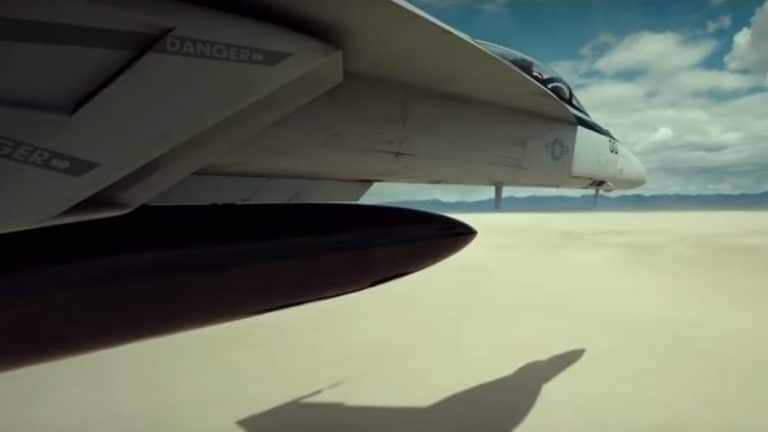
PENSACOLA, Fla. — The U.S. Navy’s Super Hornet demonstration team cancelled the remainder of their 2019 air show schedule on Wednesday due to extra time needed to train new pilots.
The Navy Tactical Demonstration (TACDEMO) Team is made up of F/A-18 Super Hornet instructors who train new students. Known as VFA-106, their mission is to also demonstrate the F/A-18 Hornet and Super Hornet for air show crowds located on the eastern half of North America.
“The mission of VFA-106 is to provide the fleet with superbly trained replacement aircrew to support fleet readiness,” VFA-106 Commander Brandon M. Scott said on Wednesday. “This mission will always take priority over displaying the remarkable Super Hornet across the country.”
The Navy’s VFA-106 TacDemo Team perform at air shows across the eastern United States. (Charles Atkeison)
Nicknamed the Gladiators, the TacDemo Team had five air show dates remaining. They were scheduled to arrive on Thursday into Traverse City, Michigan, for the popular Cherry Festival Airshow.
“Our dedicated, volunteer air crew and maintainers must focus their efforts on training the next generation of Super Hornet aviators and flight officers,” Cmdr. Scott added. “We appreciate all the support that you have shown us this year.”
The West Coast’s VFA-122 Tailhok Legacy Flight will continue to perform this season. The Navy Tac Demo Team said they are optimistic they will return to performing next season.
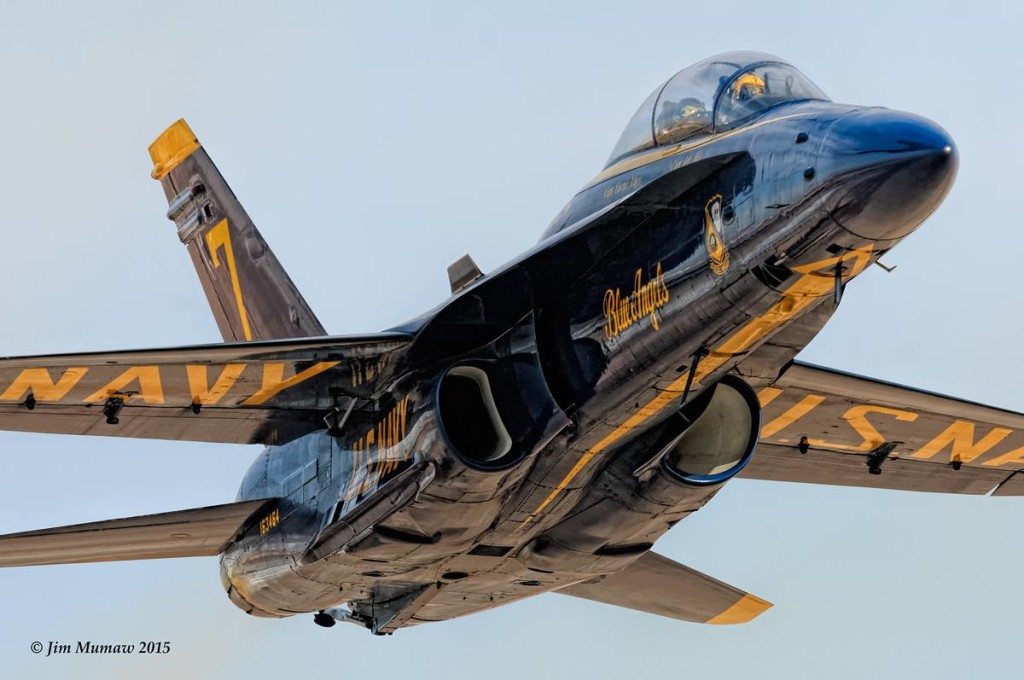
The announcement, although unrelated, comes as the Navy is preparing the Blue Angels for their own Super Hornets next autumn. The Blues will perform a shortened air show season in 2021 as they move from the current Legacy Hornet to the Super Hornet.
(Charles A Atkeison reports on aerospace and technology. Follow his updates via social media @Military_Flight.)
PENSACOLA, Fla. — The U.S. Naval Air Systems Command announced on Monday that it was awarded a replacement logistics C-130 aircraft to support the Navy’s Flight Demonstration Squadron beginning in 2020.
The United Kingdom’s Ministry of Defence said in March that the Navy asked to purchase one of their C-130J Hercules to replace the Blue Angels aging C-130T, known as Fat Albert. The replacement logistics aircraft is scheduled to be handed over to the Blue Angels in April 2020.
“The (American) government requires a suitable replacement aircraft, which must be delivered in an expeditious manner, to avoid a gap in logistical support of the Blue Angels flight demonstration squadron,” The Ministry said in March. “The aircraft being procured from the UK MOD has the requisite amount of life and technical capability to support the Blue Angels mission.”
The Blue Angels C-130 known as Fat Albert sits poised during a 2015 air show. (Charles Atkeison)
The purchase by America’s Naval Air Systems Command PMA-207 creates a savings of nearly $50 million versus the construction of a new C-130J. The price tag for the used C-130J is $29.7 million.
“This is a win-win for the U.S. Navy and the United Kingdom Ministry of Defence,” Capt. Steven Nassau, PMA-207 program manager, said on Monday. “Just as the Navy recognized the imminent need to replace the Fat Albert aircraft, the UK MOD was divesting of an American made C-130J aircraft, allowing us to acquire a suitable replacement aircraft at a major cost savings.”
PMA-207 is the Tactical Airlift Program Office responsible for procurement of specialized military aircraft. The new C-130J will become the fourth Fat Albert Airlines since 1970.
The pilot’s cockpit display of the Blue Angels C-130 Fat Albert in 2016. (Charles A Atkeison)
Bert’s all-Marine crew flies the C-130 to air show sites loaded with spare parts and personnel. The hulking aircraft is also a crowd favorite during shows as it traditionally flies the first 12 minutes prior to the the Blue Angels’ six jet performance.
The most recent Fat Albert was officially retired in May, after 17 years and over 30,000 flight hours with the squadron. The second Bert, known as C-130 891, is parked behind the Naval Aviation Museum, located next door to the home of the Blue Angels at NAS Pensacola.
“Fat Albert is a nickname given to the plane by the Marine Corps Blue Angel pilots in the 1970s because of its size and shape,” Blue Angels spokesperson “It is a reference to the popular children’s cartoon of the same era.”
(Charles A Atkeison reports on aerospace and technology. Follow his updates via social media @Military_Flight.)
OCEAN CITY, MD — The Air Force’s popular F-16 Viper jet unleashed the thunder and the thrust on Saturday as it performed over the crowded beaches during the Ocean City Air Show.
Unlike other clean jet demonstration teams, this Viper jet is here direct from Shaw Air Force Base in South Carolina. It can be turned around for combat operations within minutes if necessary.
Ocean City’s two-day air show will mark the Viper Demonstration Team’s sixth air show of the young season. They are scheduled to perform at 21 locations across North America this year.
F-16 Viper Demo pilot Major Garett “Toro” Schmitz performs over Ocean City, Maryland on Saturday. (USAF)
“We go around the nation to demonstrate the combat capabilities of the F-16 Viper,” Viper Demo Team pilot Major Garett “Toro” Schmitz said from NASA Wallops Flight Facility on Thursday. “It’s gonna be a low show, a high show, it’s gonna be fast, it’s gonna be loud as we show the public the capabilities of the F-16.”
During the flight over the runway, air show guests will witness several close-up low passes followed by may dizzying rolls and high speed climbs. One maneuver known as the triple roll has Toro roll the aircraft 360-degrees three times in succession. The Block 50 F-16 and its pilot will push nine G’s about 20 times during its brief performance.
He then follows this up by quickly performing a tight 9-G turn to demonstrate the tights turns the viper can perform. Nine Gs is equal to nine times his body weight of pressure upon his body as he works to stay conscious during the turn. It is at these maximum Gs a pilot can black-out as blood flow leaves his head.
“The whole reason I got into being a fight pilot is because the Viper Demo Team ,” Toro began as a smile filled his face. “I saw them perform when I was 10, and remember seeing the pilot do the max performance climb, disappear and spiral into oblivion, and that made me do what I’m doing now.”
The F-16 Viper does not perform with its external fuel tanks during an air show. (Charles Atkeison)
Midway through Maj. Schmitz 12-minute flight, he teases the sound barrier by piloting the Viper to a speed of nearly Mach 1. As he dives down toward the runway at 300 m.p.h. and levels off, Toro accelerates to nearly 950-feet per second or a crossing speed of three football fields per second.
During each show, Toro will join his F-16 with a classic Air Force aircraft to form the Heritage Flight. On Saturday, it was a P-51 Mustang. The Heritage Flight has become a crowd favorite during its 22 year history.
“It’s to commemorate the past and the present, and it’s really cool to get the modern and old warbirds together,” Maj. Schmitz added. “They’re priceless warbirds.”
(Charles A Atkeison reports on aerospace and technology. Follow his updates via social media @Military_Flight.)
As one of the best East Coast air shows, this year’s show at Joint Base Andrews did not disappoint. Located just outside of Washington D.C., it took place on May 10-12.
Advertised as the Joint Base Andrews Air Show: America’s Air & Space Expo, “Legends in Flight”, the show is held every other year. In the past, it was an annual event, but because of budget cuts and costing over $2 million per event it is now held every other year. Friday’s show was reserved for distinguished visitors, military personnel, their families and retirees. The general public was allowed to attend Saturday and Sunday, though because of heavy rain the Sunday flying portion was cancelled.
Photo Essay: My Weekend at The Andrews AFB Air Show 12
The most unique aspect of the 2019 show was aerial demonstrations by both the Air Force Thunderbirds and the Navy Blue Angels. Because of Department of Defense policy and stated recruiting missions, the Blues and Thunderbirds do not normally fly within 150 miles of one another.
Prior to the flying portion of the show, attendees could walk around and take in the forty plus aircraft on static display. Besides the huge C-5 Galaxy and other military aircraft, there were plenty of civilian planes and especially warbirds from the Second World War.
The United States Army Golden Knights parachute team kicked off the show with an impressive precision drop before the audience. Civilian aerobatics were carried out by: the Geico Skytypers, Team Oracle, and three time U.S. national aerobatic champion Patty Wagstaff.
The warbirds were on hand to provide a historical perspective. On static display the crowd could enjoy seeing the: Navy’s TBM Avenger, C-47 Skytrain, and the B-17 Flying Fortress. While flying demonstrations were carried out by a B-25 Mitchell, F4U Corsair and two P-51 Mustangs.
Photo Essay: My Weekend at The Andrews AFB Air Show 13
Transitioning to more modern times, the Air Forces A-10C Thunderbolt II, aka Warthog, took to the sky. As the lead element of the Air Combat Command’s A-10C Demonstration Team, the audience was thrilled with the plane’s extreme maneuverability and simulated strafing runs. Still the A-10 only served to warmup everyone for the main event.
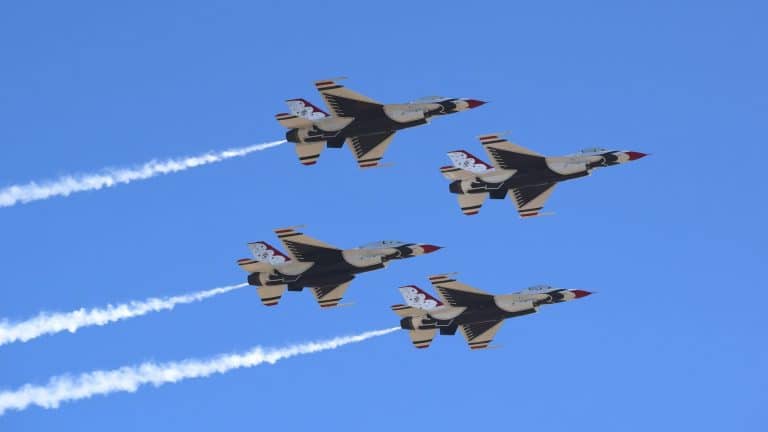
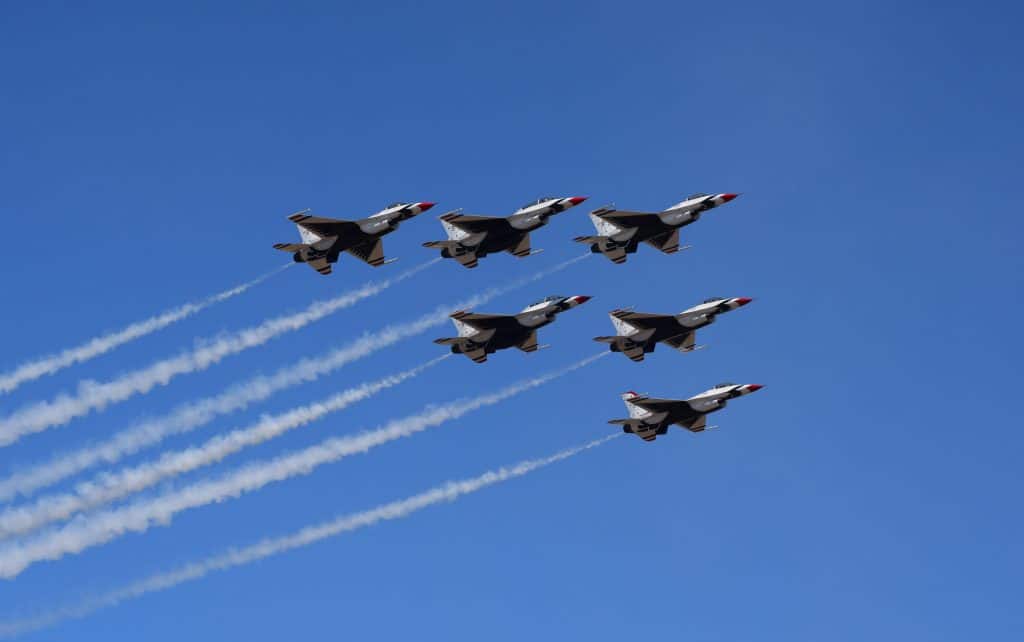
First off was the Air Force Thunderbirds. Lt. Col. John Caldwell, the Thunderbirds commanding officer, started the performance by leading the four aircraft diamond formation takeoff. Immediately after, they were joined by the two opposing solo pilots. The Thunderbirds stunned one and all, by combining various loops and rolls, through solo maneuvers or with four and six ship formations.
Photo Essay: My Weekend at The Andrews AFB Air Show 14
The weather worsened a bit as the Blue Angels prepared to take flight. As CAPT Eric Doyle led the Blues diamond formation on takeoff, they quickly disappeared into the cloud cover. Because of the marginal weather and mandated safety restrictions, the Blue Angels flew their “low” show. Still the combination of the opposing solo aviators with the diamond and delta formations was incredible to be seen.
Photo Essay: My Weekend at The Andrews AFB Air Show 15
The next Andrews Air Show will be held in 2021, though the date is to be determined. Keep a look out for this incredible show not to be missed.
Photo Essay: My Weekend at The Andrews AFB Air Show 16
SMYRNA, Tenn. — Periods of rainfall did not stop the heartbeat of The Great Tennessee Airshow as large numbers of guests turned out and pilots navigated a wet airport runway to keep the show on course this weekend.
Periods of rain did not dampen the guests enthusiasm for watching up close top military and civilian aircraft. The performers did not disappoint either as vapor clouds enveloped along many of the aircraft thanks in part to the high humidity.
Meteorologists and airport officials aided the Air Show Boss with keeping the two-day event on schedule.
The GEICO Skytypers soar in their 4v2 maneuver. (Charles Atkeison)
The Navy’s Blue Angels created vapor during the Great Tennessee Airshow. (Charles Atkeison)
The F-16 Viper Demo performs over Smyrna, Tennessee. (Charles A Atkeison)
Rain showers did not stop the Great Tennessee Airshow for long on Saturday. (Charles Atkeison)
The Blue Angels begin their taxi out to perform on Saturday. (Charles Atkeison)
The DC-3 performed during the Great Tennessee Airshow. (Charles Atkeison)
Photographers and crowds alike gasped in awe as the aircraft wing tips created long vapor trails. The humidity also caused at times huge vapor clouds over the wings and fuselage.
Blue Angels officials explained on Sunday, “Those vapor trails around our jets are caused by a rapid drop in air pressure and temperature around the wing and flight surfaces. This causes the water molecules in the air to quickly condense into vapor.”
The Navy’s Blue Angels and the F-16 Viper demonstration team provided the high speed turns and climbs each day. Civilian performers included the GEICO Skytypers, Rob Holland, Sean Tucker, and Mike Wiskus performing aerobatics across a cloudy sky.
“We can fly all the way down to a thousand feet ceiling and three miles visibility,” Blue Angels slot pilot Major Jeff Mullins said prior to Saturday’s show. “We will always try to push to make a show happen, as long as we do so safely.”
(Charles A Atkeison reports on aerospace and technology. Follow his updates via social media @Military_Flight.)
SMYRNA, Tenn. — The thundering sound of the Blue Angels’ jets heralded their arrival over middle Tennessee on Thursday, announcing that the squadron is back for The Great Tennessee Air Show.
As the Navy’s Flight Demonstration Team arrived in a delta formation, the six pilots provided a smoke-on salute to the town of Smyrna. The community demonstrated an outpouring of support for the Blue Angels during the last three years when the team need it the most.
The military aircraft touched down at 10:30 a.m. into Smyrna-Rutherford County Airport, site of this weekend’s two-day air show. Moments later, the Navy’s Flight Demonstration Squadron’s aircraft maintainers went to work to turn their F/A-18C Hornets around for two practice flights that afternoon.
Memphis native Major Jeff Mullins loves returning home to Tennessee. (Charles A Atkeison)
The team’s arrival coincided with the 75th anniversary of the Allied invasion of northern France during an event known as D-Day. The historic aerial and water landing surrounding Normandy Beach quicken the end of the Second World War on June 6, 1944.
The Blue Angels number 4 pilot Major Jeff Mullins, himself a United States Marine, discussed his thoughts on the special anniversary. The Memphis native feels a special relationship with those who fought during the Longest Day.
“D-Day is the epitome of what happens when not just our young men and women who serve our country, including our allies, come together to work toward a common goal can accomplish,” Maj. Mullins said from the Smyrna flightline on Thursday. “All we can do is put these jets in the sky and give some sort of legacy to what they did on D-Day 75 years ago.”
Navy logistics specialist and crew coordinator LS1 Derrious Austin carries a strong sense of pride in teamwork everyday. He is one of only two Blue Angels coordinators who’s job it is to make sure the aircraft maintainers and support teams stay on schedule.
“It’s a privilege for me, and I take a lot of pride in it, because I know this team represents the Navy Sailors and Marines that we have throughout the world,” Austin said. “To be able to lead a group of Sailors and Marines that carry that weight on their shoulders is awesome.”
Blue Angels Derrious Austin says the team is excited to perform in Smyrna this weekend. (Charles A Atkeison)
The Blue Angels were all smiles as they arrived into middle Tennessee, including Austin. The team continues to train and prepare for each show six-days a week.
“We take a lot of pride in coming back to Smyrna to put on an awesome air show,” Austin added as we walked past those blue and gold jets. “We would really appreciate it if everyone would come on out and experience it.”
(Charles A Atkeison reports on aerospace and technology. Follow his updates via social media @Military_Flight.)
Nearly 50 World War II-era aircraft on Wednesday will retrace the route many of those same aircraft flew 75 years earlier as they soared into the history books of an important moment known as D-Day.
A fleet of around 32 American and European C-47 Skytrains and Dakotas, and several fighter aircraft will depart Duxford, England and follow the path flown to Normandy, France, on June 5. The massive tandem flight will be flown beginning at 1:40 p.m. local time (8:40 a.m. EDT).
As the aircraft head south to the English Channel, the flight path will cross over Colchester, Southend-on-Sea, Maidstone, and Eastbourne. The fleet of warbirds are scheduled to arrive over Sannerville, France nearly three hours into the flight.
The American C-47 Rendezvous with Destiny arrived at Duxford, England on Friday. (Dax Over Normandy)
Hundreds of Paratroopers to Descend on Normandy
It is over Sannerville that the United Kingdom released several waves of paratroopers jumping from C-47s into a dark unknown exactly 75 years earlier. A recreation of the historic event will occur at about 4:40 p.m. (local) as the skies will be filled again by round army parachutes descending upon the coastal town.
The American D-Day Squadron will have their mighty 15 of C-47s/ DC-3s fly in a joint formation with their European counterparts known as Daks over Normandy. Many of them will carry volunteer paratroopers on board for the symbolic drop above France.
Prior to sunrise on June 6, 1944, several waves of paratroopers and supplies dropped beyond Normandy Beach to help clear a path for the surviving soldiers arriving via water craft.
“(The aircraft) will drop more than 200 paratroopers over the original 1944 drop zones in Normandy commemorating the 75th anniversary of D-Day,” Moreno Aguiari, executive director of the D-Day Squadron, said on Sunday. “The event will honor the citizen soldiers of the war, whose bravery led the Allies to the liberation of France, and then to an end of the devastating war in Europe.”
Aguiari broke down the numbers of June 6, 1944, this way: 13,000 paratroopers were dropped behind enemy lines, prior to and as 156,000 troops stormed five Normandy Beaches. And, of the 11,000 aircraft used for aircover (of the transports) and support, 925 were C-47s.
Paratroopers drop from the American C-47A Skytrain That’s All – Brother! in May. (Charles A Atkeison)
“Few veterans of D-Day are still with us, and this celebration may be our last chance to honor these brave war heroes,” Aguiari added. “We are committed to ensuring their significance and sacrifice is fully appreciated for generations to come, and are developing an education program to honor these citizen soldiers and their impact on D-Day, and ultimately the Allied victory in World War II.”
Several of these World War II-era aircraft, including C-47A Skytrains That’s All — Brother! and Placid Lassie, make frequent visits to American air shows and events each year. You can follow their journeys, and their sister-ships flights this week, Live via their social media.
(Charles A Atkeison reports on aerospace and technology. Follow his updates via social media @Military_Flight.)
CHATTANOOGA, Tenn. — A squadron of World War II-era aircraft began touring the United States this week as a B-29 Superfortress and a B-24 Liberator travel to select cities offering tours and flights to the public.
Owned by the Commemorative Air Force, the two bombers began a 27-city tour on May 16 stopping in Montgomery before arriving in Chattanooga. Popular smaller warbirds are scheduled to join the B-29A Superfortress known as FiFi and the B-24 Liberator nicknamed Diamond Lil.
“Our mission is to bring history to the people — we are a flying museum,” CAF spokesperson Don Boccaccio said as we stood on the flightline of Chattanooga’s Lovell Airport on Sunday. “Most of the time we get veterans at our stops who flew on them or worked on them. We have alot of good veteran stories of how they return to fly with us after 75 years.”
The B-29A Superfortress known as “FiFi” arrives back following a visitor flight on Sunday. (Charles A Atkeison)
These “flying museums” allow both young and old to get up close with the aircraft and even go inside. For family members of fallen World War II veterans, the tour has given them a since of closure for those who never made it back home.
“We had a woman who’s dad was the B-29 pilot for Straight Flush, which was the lead weather B-29 for the dropping of the atomic bomb,” Boccaccio continued. “So she flew in FiFi with us, she was very emotional, crying as she sat in the navigator’s seat.”
The public can purchase flights aboard one or both aircraft during each city visit. The flight fee covers the great fuel consumption associated with the multi-engine, 75 year-old hulking aircraft.
“FiFi costs us over 10 thousand dollars an hour to run”, Boccaccio added. “It uses 400 gallons of gasoline an hour and 1.5 gallons of oil per engine an hour.” In other words, that’s six milk jugs of oil each hour.
The B-24 Liberator “Diamond Lil” departs Chattanooga on a visitor flight Sunday. (Charles A Atkeison)
Memorial Day weekend saw huge turnouts to witness the rare sight of a B-29 and B-24 aircraft take-off and land. Veterans attending were recognized and allowed to board the aircraft first to honor their past service.
“Memorial Day is very emotional to us,” Boccaccio noted. “A lot of veterans came today because it’s Memorial Day. And, we chose to come early to Chattanooga to thank our veterans this week.”
The CAF B-29/B-24 Squadron Tour Continues
Tri-Cities – Bristol, Kingsport, and Johnson City, Tenn… May 29 – June 2
Salisbury, Maryland… June 3-5
Reading, Pennsylvania… June 7-9
Baltimore, Maryland… June 12-16
Lexington, Kentucky… June 19-23
Click here for their full tour schedule including links to the local airport’s web sites. CAF is looking for volunteers during each city stop. Click here to help out at a location near you, or to donate and shop to keep these aircraft flying.
(Charles A Atkeison reports on aerospace and technology. Follow his updates via social media @Military_Flight.)
OXFORD, Conn. — A fleet of American Douglas C-47 Skytrains are en route to the United Kingdom today to join up with their European counterparts to honor and remember the 75th anniversary of D-Day.
These cargo and troop support aircraft took part in the first and second waves of the Allied invasion of northern France on June 6, 1944. This week, they launched on a new mission beginning a multi-day flight across the north Atlantic Ocean en route to the United Kingdom.
Known as the Spruce Goose route, these twin-engine aircraft will travel the same route as they did 75 years earlier. The C-47s include That’s All — Brother!, which led the first wave over the English Channel in 1944 to Normandy Beach, France; Miss Virginia, Placid Lassie, Spirit of Benovia, Legend Airways, Betsy’s Biscuit Bomber, and Miss Montana.
The complete North Atlantic track known as Spruce Goose to Europe. (D-Day Squadron)
“After their departure on Sunday, the C-47s stopped to refuel in Goose Bay Airport in Newfoundland, Canada; Narsarsuaq Airport in southern Greenland; Reykjavik Airport in Iceland; and will refuel a final time at Prestwick Airport on the Western coast of Scotland before making the final leg to Duxford Airfield north of London,” Moreno Aguiari, Director of Marketing and Public Relations for the D-Day Squadron, said on Tuesday.
The first C-47 to arrive in Scotland was also the lead aircraft during the early morning hours of D-Day, 1944. That’s All — Brother! completed her oceanic crossing on Wednesday afternoon.
During the next few days, seven more C-47s will begin to arrive in the UK for the huge anniversary event. On June 4, 5, and 7, they will all join a fleet of European-based C-47s to create a large formation flight in recognition of D-Day.
Lead C-47A Skytrain “That’s All – Brother!” arrived in Scotland on Wednesday. (Ray Clausen, TAB Crewmember)
Last Monday, the first wave of aircraft resumed their journey as they flew to their next destination in Narsarsuaq on the southern tip of Greenland. After refueling the long travel day ended in Iceland.
“It was a long, but beautiful (Monday),” That’s All – Brother! Navigator Ray Clausen said on Tuesday from Reykjavik. “Breakfast at 0600 in Goose Bay, at the hotel at 0100 in Reykjavik, with a fuel stop in Narsarsuaq. We really were fortunate on the weather, with clear skies and light winds in Narsarsuaq.”
“Flying over, we could only imagine the difficulties faced 75 years ago for the planes that made the Northern crossing with celestial navigation and far more limited weather forecasting,” Clausen added.
The 75th anniversary flights are significant as several D-Day veterans have recently flown aboard or will soon fly of these historic aircraft. And for many, it will be their first flight aboard a C-47 since the second World War. Surviving soldiers from the war range in age from 93 to 105 years.
D-Day veteran aircraft “Placid Lassie” will take part in the 75th anniversary events. (Charles A. Atkeison)
“It’s very likely we’ll never see an event like this again,” Aguiari noted. “There are only a few members of the Greatest Generation still with us, so we wanted to put together the most significant tributes we could to honor their sacrifice and commitment.”
Upcoming:
June 4-5: Daks over Normandy event at Duxford, England.
June 5: Cross-Channel Flight and Paratroop Drop
June 7-8: Daks over Normandy event at Caen, France.
[Note: If you would like to help these aircraft fly, please consider donating to help cover fuel and logistics costs.]
(Charles A Atkeison reports on aerospace and technology. Follow his updates via social media @Military_Flight.)
ATLANTA — Lt. Gen. Charles “Buck” Pattillo, a co-founder and one of the first pilots of the Air Force Thunderbirds, passed away on Monday. He was two-weeks shy of his 95th birthday.
In November 1942, an 18-year-old Pattillo and his twin brother, Bill, joined the U.S. Army Air Corps. They fought during the second World War together, and came together again to form a European flight team for the Air Force.
Buck Pattilo served during World War II, the Korean War, and the Vietnam War. He earned his pilots wings in 1944, and began flying the P-40 aircraft. He later flew the P-47 aircraft, moving up to the P-51D Mustang — nicknamed Little Rebel — the following year.
In January 1949, the young pilot was assigned to Fürstenfeldbruck Air Base, Germany. There, Buck and Bill helped organize The Skyblazers — the aerial demonstration team for the U.S. Air Forces in Europe. Beginning with the F-80 Shooting Star and F-84s, The Skyblazers flew in over 250 air shows across Europe and North Africa.
Buck Pattillo (right) and his brother, Bill (left) began the Air Force’s European aerial demonstration team, The Skyblazers, in 1949. (USAF)
Buck Pattillo’s experience with an air demonstration team moved him to create the Thunderbirds in 1952 while stationed at Luke Air Force Base in Arizona. Just as he did with the Skyblazers, Pattillo flew as the team’s left wing pilot, while brother Bill flew as the right wing pilot.
Led by Maj. Richard “Dick” Catledge, the Thunderbirds first year included Buck, Bill, and four fellow officers, plus 22 enlisted maintainers and logistics members. The Thunderbirds were activated on May 25, 1953, and flew the F-84G Thunderjet as a four-ship formation, according to the Thunderbirds. The T-33 Shooting Star, a tandem seat aircraft, served as the narrator’s plane for media and VIP flights.
In 2000, both Buck and Bill were inducted into the Georgia Aviation Hall of Fame. The twins, each who rose to rank of General, had accomplished nearly everything together.
Buck and Bill continued to stay active into the 2000s, including attending air shows and public events. In 2009, they both attended the Oshkosh air show. It marked the first time since 1945 in which Buck visited the restored P-51 Little Rebel. He was all smiles.
Bill died in 2014.
(Charles A Atkeison reports on aerospace and technology. Follow his updates via social media @Military_Flight.)
Before DFW’s rise, Dallas Love Field was North Texas’s main gateway, hosting Braniff, Delta, and American Airlines. In 1971, Southwest Airlines made Dallas Love Field its home. This video by YouTube user Starboard76 shows unique footage of Southwest’s early days, including the rare Southwest Airlines 727.
In the early 1970s, Southwest Airlines served intrastate flights from Dallas Love Field. The footage captures Southwest’s 737-200s and the rare Southwest Airlines 727. The story of the Southwest Airlines 727 is intriguing. Southwest, now known for its 737 fleet, briefly operated the 727-200 twice.
The first instance involved a late 1970s settlement with Braniff, allowing Southwest to use the 727-200 briefly. The second instance had Southwest leasing 727-200s from PSA for west coast expansion until more 737-300s arrived.
Southwest’s early operations at Dallas Love Field show its innovative spirit. The Southwest Airlines 727 highlights a unique chapter in the airline’s history and its commitment to growth. As Southwest Airlines continues to soar, its early days at Dallas Love Field remain essential, enriched by rare footage like Starboard76’s video.
Southwest Airlines Operated a Boeing 727-200?
Yep! Twice actually! Southwest is known for their large fleet of 737s, They’ve flow the jet since their founding in 1971. As part of a settlement with Braniff, Southwest operated a Boeing 727-200 for a short period in the late ’70s. Southwest also operated a small subfleet leased from PSA to augment west coast expansion before a sufficient fleet of Boeing 737-300s could be delivered.
Interested in more about the history of Dallas Love?
Be sure to check out this article below highlighting Braniff’s failed gondola experiment.
SHAW AFB, S.C. — The U.S. Air Force F-16 Viper Demonstration Team announced on Thursday their new commander and pilot for the 2019 and 2020 air show seasons.
Major Garret “Toro” Schmitz will both lead the team and pilot the F-16 Viper jet at select air show across the United States for the next two seasons. His first public performance is scheduled for the Westmoreland County Air Show in Latrobe, Penn. next weekend.
New F-16 Viper Demo pilot Major Garret Schmitz will perform in Latrobe, Pa. in two weeks. (USAF)
“After 22 training flights and more than 45 hours of study, Maj. Garret Schmitz has completed his fourth certification and earned the privilege of leading us as we inspire the next generation of pilots, maintainers, and Airmen,” JB Langley spokesperson Kathryn Reaves said.
The Utah native and the demo team arrived at JB Langley, Virginia, on Wednesday for Maj. Schmitz final certification flight. Each Air Combat Command pilot has to complete a rigorous training course to receive the high certification from the four levels of leadership within the Air Force, Reaves confirmed.
Maj. Schmitz is scheduled to perform at about 39 shows during the next two seasons. Following Latrobe, his team will travel to Tinker, AFB in Oklahoma, followed by Smyrna, Tennessee in June.
The updated 2019 F-16 Viper Demo Team Schedule. (USAF)
The Lockheed-Martin F-16C is a multi-role fighter aircraft — highly maneuverable and mission proven in over 30 years of operations including air-to-air combat and air-to-surface attack. It provides a relatively low-cost, high-performance weapon system for the United States and 25 friendly nations, the Air Force said in a recent statement.
Outgoing Viper Demo pilot Major John “Rain” Waters, who has led the team for over two years, will perform one final flight on May 26. Waters will perform a flyover of the 103rd running of the Indianapolis 500 race prior to the drop of the green flag.
(Charles A Atkeison reports on aerospace and technology. Follow his updates via social media @Military_Flight.)
SMYRNA, Tenn. — The largest air show in the middle south will see the return of the Navy’s Blue Angels, as civilian aerobatic pilots and military aircraft perform in June at the Great Tennessee Air Show.
Tennessee’s highest-rated air show returns the weekend of June 8 and 9 to the Smyrna Airport. The family-friendly event will include static aircraft displays and a special Kids Zone jump area.
“Once again, we are privileged and honored to be hosting the U.S. Navy Blue Angels at this premier Middle Tennessee event,” John Black, Executive Director of the Smyrna/Rutherford County Airport Authority, said on Friday. “With this year’s stellar lineup, the Great Tennessee Air Show is poised to present one of the strongest airshow lineups anywhere in North America.”
The GEICO Skytypers six Navy SNJ-2 aircraft are beautiful and dynamic in flight. (Skytypers)
The Air Force F-16 Viper Demo Team and the World War II-era flying of the GEICO Skytypers Airshow Team will co-headline the event. Each, an air show favorite, will perform a 15-minute demonstration both days.
The Blue Angels Return to Smyrna
The Blue Angels only appearance in the middle south will occur three years to the week of their last visit to Smyrna. A shortened visit which saw the Blue Angels loose their opposing solo Capt. Jeff Kuss in a jet crash as he began a practice flight with the team.
The city of Smyrna dedicated a beautiful memorial to the fallen pilot last June near the runway he last flew from. As the air show community and local residents reflect upon his legacy, this season’s show will move forward without looking back — and that is the wish of Kuss’ family.
“The best tribute to Jeff Kuss was building the memorial on Sam Ridley Parkway,” Black said. “That offered closure for the family and the team. It is their wish that the show celebrate the 2019 team, so there will not be any tribute at the air show.”
Capt. Jeff Kuss USMC Memorial in Smyrna honors the late-Blue Angels pilot. (Charles Atkeison)
Black added that the community can honor his legacy during the inaugural Capt. Jeff Kuss Memorial 6K Top Gun Run on May 31. The 3.7 mile course from the airport to the golf course will then finish at the memorial.
Top Civilian Aerobatic Pilots to Perform
Aerobatic champion pilots Patty Wagstaff, Rob Holland, and Mike Wiskus will perform their dizzying displays of flight. Aerobatic pilots Sean D. Tucker and Jesse Panzer will fly together in tandem as Team Oracle’s Two Ship Act.
The World War II-era P-51D Mustang “Quicksilver” will fly each afternoon piloted by Scott “Scooter” Yoak in a celebration to America’s armed forces. The aircraft is decorated with black and white stripes on her wings to honor the 75th anniversary of the Allied D-Day invasion at Normandy, France.
The beauty of the the military jet teams and the civilian pilots are best appreciated from around air show center along the show’s crowd line. To witness and photograph these precision aircraft at the closest point inside the gates is the heartbeat of every air show guest.
Air Force F-16 Viper Demo Team’s new pilot Maj. Garret Schmitz will perform each day at Smyrna. (USAF)
Air show tickets and VIP parking passes, including group ticket packages, are available online only. Black added that general parking is free to the public and will be available both days on a first come, first served basis.
(Charles A Atkeison reports on aerospace and technology. Follow his updates via social media @Military_Flight.)
BILOXI, Miss. — Keesler Air Force Base and the city of Biloxi will host a rare two-stage air show event this weekend as they work together for the Thunder Over the Sound Air & Space Show.
The joint-event air show will begin with gates opening at 7:30 a.m. on Saturday and Sunday, followed by on-base aerial demonstrations one hour later. Guests can enjoy breakfast as they watch Aeroshell Aerobatic Team, Trojan Thunder, and popular warbirds perform all morning.
As Smoke-n-Thunder Jet Truck concludes about noon, the air show will then move to the sugar beaches of the Mississippi Gulf Coast. Exact air show center is located at Beach Blvd. and White Ave.
Aeroshell Aerobatic Team will perform over Keesler AFB and Biloxi beach. (Charles Atkeison)
“We’re really excited to bring the Thunderbirds back to the Gulf Coast, and are happy to partner with the city of Biloxi to bring what will hopefully be an outstanding show to one and all,” Col. Lance Burnett, vice commander of the 81st Training Wing, said on Thursday. “This is the first air show of its kind to involve a joint effort between a city and a military base — taking place in two different locations.”
The beach show opens at 1 p.m. with the re-flights of the performers who flew a few hours earlier. The excitement of the day will increase as the Air Force Thunderbirds take to the skies beginning about 4 p.m.
The Thunderbirds are scheduled to perform a nearly 45-minute flight demonstration showcasing the power and beauty of the F-16 Fighting Falcon. Their four-aircraft diamond formations plus the high speed passes by the two solo ships will bring chills to visitors on the warm beach.
“We are really just getting started for our show season, and we are super excited to begin at a unique over-the-water beach show here on the Gulf Coast,” Thunderbird 6 opposing solo Capt. Michelle “Mace” Curran said following her team’s arrival on Thursday. “This show allows our crowd to see various unique perspectives of the performance that our crowds don’t normally see when they are confined to an airfield. This is a great air show to come out and see over the weekend.”
Keesler AFB notes that only handicap guests and those carrying a DoD-ID will be allowed to park on the base. There will be several locations outside of Keesler for public parking on both days. A public shuttle service will run all day from the parking lots to both the air base and the beach.
(Charles A Atkeison reports on aerospace and technology. Follow his updates via social media @Military_Flight.)
Staring down a Tulsa Viper F-16 from the 138th Fighter Wing’s 125th Fighter Squadron / Oklahoma Air National Guard, somewhere over Kansas on April 25, 2019, as they topped off their fuel thanks to the 507th ARW OKIES KC-135 crew from Oklahoma City. Photo: Mike Killian
U.S. global air superiority comes thanks, in large part, to aerial refuelers, such as KC-135 Stratotankers and their crews at the Oklahoma Air National Guard’s 507th Air Refueling Wing. Everything from fighters to bombers and reconnaissance aircraft, to the Blue Angels and Thunderbirds being able to get around America to perform in front of millions of people, all rely on the KC-135 and their crews.
Based in Oklahoma City and the heart of Tornado Alley, the ‘OKIES’ of Tinker Air Force Base are the largest Air Force Reserve Command flying unit in Oklahoma. They are responsible for organizing, fully training and equipping Combat-Ready Citizen Airmen to provide strategic deterrence and global capabilities, all while empowering, inspiring and developing them to shape the future.
Two U.S. Air Force F-35A Lightning II jets performed an air strike over Iraq on Tuesday marking the first use of an F-35A in a combat mission.
Based at Hill Air Force Base, Utah, the twin F-35As performed a munition strike at an entrenched tunnel network which supported a large weapons cache in the Hamrin Mountains. The Air Force’s fifth generation multi-role fighters arrived in Al Dhafra Air Base, UAE on April 15 for its first deployment in the Middle East.
Tuesday’s display is one step closer for the Air Force in replacing their aging fleet of F-16 Fighting Falcons and the A-10 Thunderbolt II. The Marines (F-35B) and the Navy (F-35C) also look to the jet to replace their aircraft, including the F/A-18 Hornet and AV-8B Harriers.
An Air Force KC-10 Extender refuels an F-35A Lightning II on April 30, prior to the F-35As first air interdiction. (USAF)
“The F-35A provides our nation air dominance in any threat,” Gen. David L. Goldfein, Chief of Staff of the Air Force, said. “When it comes to having a ‘quarterback’ for the coalition joint force, the inter-operable F-35A is clearly the aircraft for the leadership role.”
The F-35As air interdiction was in support of Combined Joint Task Force’s Operation Inherent Resolve. The newly arrived F-35As are working with U.S. aircraft stationed at Al Dhafra.
“The F-35A has sensors everywhere, it has advanced radar, and it is gathering and fusing all this information from the battlespace in real time,” Lt. Col. Yosef Morris, an F-35A pilot and commander of the 4th Fighter Squadron, said on Tuesday. “Now it has the ability to take that information and share it with other F-35s or even other fourth generation aircraft in the same package that can also see the integrated picture.”
A U.S. Air Force F-35A begins its first air combat mission to Iraq on April 30, 2019. (USAF)
In the United States, the Air Force’s F-35A Demonstration Team isperforming at air shows this year through November. Capt. Andrew “Dojo” Olson will pilot the aircraft through top maneuvers during a fifteen minute display.
(Charles A Atkeison reports on aerospace and technology. Follow his updates via social media @Military_Flight.)
ATLANTA — Huge crowds enjoyed the sights and sounds of World War II during the weekend as historic aircraft flew and two popular jump teams dropped from the skies to highlight the WWII Heritage Days.
The popular weekend turnout allowed guests to witness living history. Re-enactments of Allied and Axis soldiers around encampments as popular Big Band music added to the sound of aircraft thunder.
U.S. Army Golden Knights pause on Saturday during WWII Heritage Days. (Charles Atkeison)
The U.S. Army Golden Knights followed by the Liberty Jump Team flew each day. Each precisely flew over the jump zone at Falcon Field and gave the go for their paratroopers to jump.
“World War II Heritage Days is a great event not only for our city but our country,” Peachtree City Mayor Vanessa Fleisch said on Sunday. “We are excited to have these veterans and the crew of That’s all Brother at our airfield today. Peachtree City is honored to be a part of this 75th anniversary commemoration of D-Day.”
Liberty Jump Team paratroopers depart “That’s All – Brother!” on Saturday, to commemorate the 75th anniversary of D-Day. (Charles Atkeison)
Three Douglas C-47A Skytrain aircraft, which flew missions during the Allied invasion of Normandy Beach, France in 1944, stood static on display. One C-47 which led the main aerial invasion was That’s All — Brother!, and guests had the opportunity to watch her fly and fly aboard.
Known as D-Day, the C-47s were an unsung hero on June 6, 1944, as nearly 800 from the United States and Europe carried paratroopers and supplies for the amphibious landing. That’s All — Brother! will join over 20 other C-47s to commemorate the 75th anniversary of D-Day in June.
“It’s a privilege to be able to fly this airplane,” Joe Enzminger, Wing Leader pilot of the Central Texas Wing for the Commemorative Air Force, said on Sunday. “That’s All – Brother! lead the main invasion force, and when the order came to go, they launched and dropped their paratroopers in France.”
Douglas C-47s “That’s All Brother!” and one unnamed, during WWII Heritage Days. (Charles Atkeison)
Enzminger and his crew will pilot the aircraft to the UK in May via the north Atlantic route. The sister C-47 Placid Lassie also attended WWII Heritage Days, and will make the journey to honor the Allied forces. Both aircraft will join nearly 30 other C-47s for the June 6 flight over Normandy.
“Everytime we fly this airplane — everytime I stand in it — it’s hard not to think about what happened here,” “And the guys sitting inside that in the dead of night they got up, stepped out that door and jumped into France. It’s always in the back of our mind.”
(Charles A Atkeison reports on aerospace and technology. Follow his updates via social media @Military_Flight.)
BEAUFORT, S.C. — Top military and civilian aircraft, including the Navy’s Blue Angels, will thunder over Marine Corps. Air Station Beaufort this weekend during the base’s popular Open House and Airshow.
Fightertown U.S.A. East will host an incredible military line-up as the U.S. Navy Blue Angels, and the Air Force’s F-22 Raptor and the F-35 Lightning II, perform during a five hour window on April 27 and 28. Top civilian aerobatic pilots are scheduled to the skies each day including Jim Tobul, Julie Clark, Gary Ward, and Rob Holland.
The Beaufort Air Show will provide a rare treat as they allow guests an up close static view, and the chance to witness a rare flight demonstration of the Marines F-35B Lightning II aircraft. The United States military’s latest defense support fighter carries unique features such a rear stealth mode and can hover prior to landing on land or an aircraft carrier.
Beaufort is the home to day-to-day training of new F-35 pilots and ground maintainers. The base’s VMFAT 501 continues to add to the growing number of qualified Navy and Marine pilots.
The Blue Angels six blue and gold F/A-18 Hornets command a crowd-favorite performance as the airshow headliner. Their nearly 42-minute flight demonstration each will see the four-jet diamond team perform several slow passes defying maneuvers. The high performance low passes by the two solo jets will come screaming across the runway’s center point at speeds of nearly 400 m.p.h. once the diamond had cleared.
Air Force F-22 Raptor Demo Team pilot Major Paul “Loco” Lopez will perform this weekend over MCAS Beaufort, S.C. This is Loco’s second season with the team. (Charles Atkeison)
The Air Force’s popular F-22 Raptor will demonstrate high thrust maneuvers and tight turns each day. Pilot Major Paul “Loco” Lopez will perform a nearly 15-minute flight demonstration before joining up with a P-51 Mustang for the Heritage Flight.
“The Heritage Flight is a living memorial pairing up a modern fighter with a World War II or Korean-era airplane flying in formation,” Maj. Lopez said to this aerospace journalist. “Paired with great narration and great music, it captures that feeling of how import the Air Force legacy is in the military.”
Six World War II-era aircraft of the GEICO Skytypers Airshow Team’s Navy SNJ-2 planes will give visitors the same thrills and gasps as the military jets. Their silver single prop aircraft will simulate actual aerial combat maneuvers used during the second World War.
The GEICO Skytypers Airshow Team will demonstrate World War II aircraft maneuvers aboard their Navy SNJ-2 aircraft over MCAS Beaufort. (Charles Atkeison)
Popular civilian aerobatic aircraft also highlighted the Beaufort airshow. Tobul and his F-4U Corsair, nicknamed “The Korean War Hero”, will perform. Pilot Scott Yoak’s P-51D Mustang Quicksilver is a shining example of another warbird of the Korean War turned aerobatic.
Air show admission and parking are free to the public. Gates open at 9 a.m. and the opening ceremony is set for 11:30 a.m.
(Charles A Atkeison reports on aerospace and technology. Follow his updates via social media @Military_Flight.)
ATLANTA — The 75th anniversary of the D-Day invasion of Europe will be commemorated next weekend as historic warbirds, including three D-Day veteran aircraft highlight the WWII Heritage Days in Peachtree City.
The Commemorative Air Force Dixie Wing will host the 16th annual event on April 27 and 28. Warbird aircraft (the public can purchase to fly aboard), vintage cars, and live music from the Big Band era will pay tribute to the heroes of D-Day.
One of the unsung heroes of the Allied invasion of Normandy Beach was the Douglas C-47 Skytrain, which carried in paratroopers and supplies in the early morning hours of June 6, 1944. Two C-47s affectionately named Placid Lassie and That’s All — Brother! will join an unnamed third C-47A during Heritage Days.
Allied paratroopers depart a C-47 Skytrain over northern France on June 6, 1944. (US Army)
All three aircraft have been refurbished to their 1944 configuration. Heritage Days will mark the largest collection in the United States of flying C-47s prior to June.
“D-Day invasion really was the massive push to the liberation of Europe,” Chief Pilot of the D-Day Squadron recreation Eric Zipkin said from the flight line. “It was one of the first large scale airborne invasion efforts.”
This June, Zipkin will pilot Placid Lassie as the aircraft leads over 20 fellow C-47s from the United States loaded with dozens of paratroopers. The morning of the 75th anniversary, these aircraft will join many European C-47s as they fly from England to France to replicate D-Day.
C-47 Placid Lassie flew several missions with cargo and paratroopers during D-Day. (John Willhoff)
Known as Daks Over Normandy, the massive squadron formation of aircraft will honor the nearly 800 C-47s which carried about 24,000 paratroopers over the English Channel and into France. “The C-47 formed the backbone of the D-Day invasion, the initial waves, preparing the area for those brave soldiers who stormed the beaches,” Zipkin added.
“WWII Heritage Days is an immersion experience, and these aircraft, combined with the appearance of the Liberty Jump Team, will inspire people of all ages and walks of life to connect with the legacy of The Greatest Generation,” Dixie Wing Education Officer Rick Ector said on Wednesday.
The Liberty Jump Team, a group of veteran and current service members, will honor all veterans as they don historic army uniforms to commemorate the early airborne operations. Weather permitting, they will perform a jump each day just as they will do over Normandy in June.
Located at Falcon Field just south of Atlanta, the event is free to the public. Parking is $20 and will be available at Eaton’s Cooper Lighting. World War II veterans and the handicapped can be dropped off at the gate.
(Charles A Atkeison reports on aerospace and technology. Follow his updates via social media @Military_Flight.)
I’m getting to the end of my airline career. Oh, I’m not quite there yet, but I am close to the final turn and the PAPIs will soon be in sight. The FAA mandated retirement age is currently 65, and I’ll be turning 60 next year. The retirement age was adjusted from 60 to 65 in 2007 and there are rumors that as the pilot shortage worsens, industry lobbyists will push to have the age adjusted to something like 67. Either way, I don’t see myself schlepping my roll-aboard through the south-side ‘hood to the crash pad into my dotage. 65 will be it for me assuming I pass a medical until then.
People often ask why I don’t retire now. These are usually pilots junior to me, but it’s a fair question. The reason I give is that the airline is a great part-time job. I generally fly only three days a week and rarely pick up flying. And if I wasn’t flying, I’d probably just find a local cigar bar or doctor’s waiting room to spend time chatting up other retirees on how good the old days were or how the darn kids are screwing everything up.
So with (much) more of my flying career behind rather than in front of me, I am able to look back and assess how things have turned out, and perhaps to give some perspective or advice to those who might be just starting out.
Without a doubt, I have had a blessed and charmed flying career. Starting in 1982 as a second lieutenant in the Air Force, and having never touched an airplane, I’ve spent every year since then at the controls of a jet aircraft. Hired by my airline at age 30, I found myself in the left seat of a 737 four years to the month of being hired. I now find myself close to the top ten in the seniority list in my domicile. With about 600 captains below me, this means I usually get the schedule I want assuming the company publishes it and Charlie C. doesn’t take the line I want. C’mon Charlie, retire already!
There are some things, though, that I won’t get to do. I won’t ever be a wide-body captain because my airline doesn’t fly them. That means that I won’t get to enjoy the over-water wide-body lifestyle of 30 hour layovers touring in some exotic foreign locale or on a white sand beach. I also won’t get the downside of back side of the clock flying nor the several day recovery period adjusting back to local time. (I did spend over a decade flying jumbos for Uncle Sam so I have that t-shirt.) Trade off? That depends on what you’re looking for.
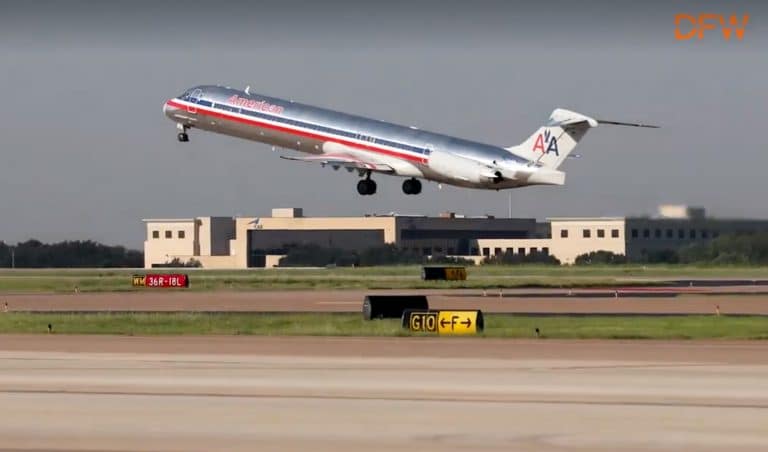
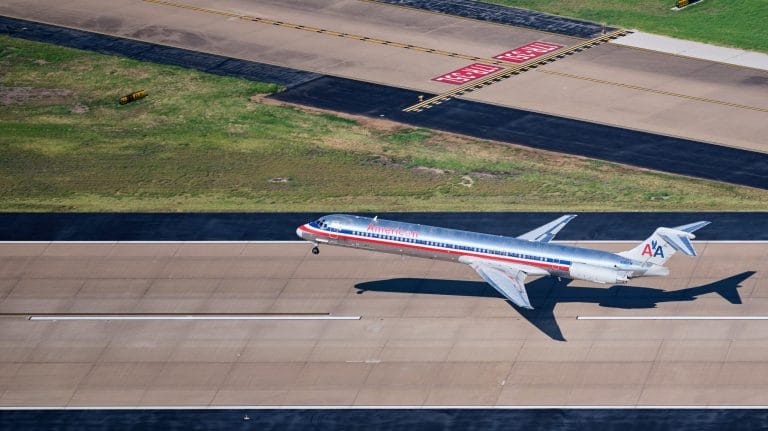
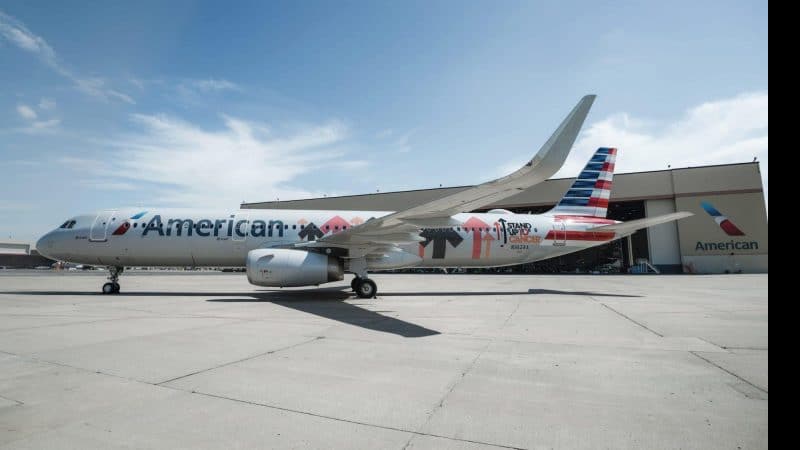
Photo: American Airlines
Which is the Best Airline to Work For?
This question gets asked quite often, and I’ve always maintained that the best airline is the one that hires you. But beyond that pithy answer, the best airline will be the one that gives you the things you value the most; the things you want out of a flying career. That answer will necessarily be different for just about everyone.
Do you want to upgrade to captain quickly? At all? Is wide-body flying on your list? Where will you make the most money? Does money matter, or is job security more important? If your spouse is a surgeon or other professional, maybe job security isn’t as much of a concern. If you are the sole breadwinner, perhaps it’s higher on the list. Where do you want to live? Does your chosen airline have a domicile there or are you willing to commute? Do you want to be home when your kids are awake? How about being able to bid vacation when they’re on summer break?
All these are questions that you have to ask yourself, and many times you may not get a choice, but end up taking what is offered. If another offer comes along you’ll then have a choice. Leaving an airline that hired you for another is a tough call, but it only gets tougher as you gain seniority. I’ve flown with profoundly unhappy pilots who wish that they’d jumped early on in their career but are not willing to give up the seniority they have to start again. This is a bit of the “sunk costs” fallacy, but you are only issued one life and have to make the most of it.
Keep Your Priorities in Order
I also flew with a young pilot some years ago who, at the end of our month together, announced that he was quitting to go to another carrier. He was a senior first officer looking at a captain class in a few months. He didn’t dislike where he was, but rather was entranced by the thought of flying wide-bodies for another airline. In fact, he said that the toughest part about leaving was he really did like the people where he was.
That was in the spring of 2001. After 9/11 he was quickly furloughed by his new airline and probably spent years getting back into a cockpit. Was it worth it for him? We lost contact, so I don’t know. Perhaps. Will there be another lost decade like the one that followed 9/11? Which airlines are best positioned to weather another storm like that?
A Perspective
I started looking for an airline job after leaving the active duty Air Force with just north of 2500 total hours, all of it in jet aircraft. I applied to all the major passenger and cargo airlines and a few of the minor ones. I got a job offer from only one, a minor regional airline, and the one with which I’m still employed nearly 30 years later.
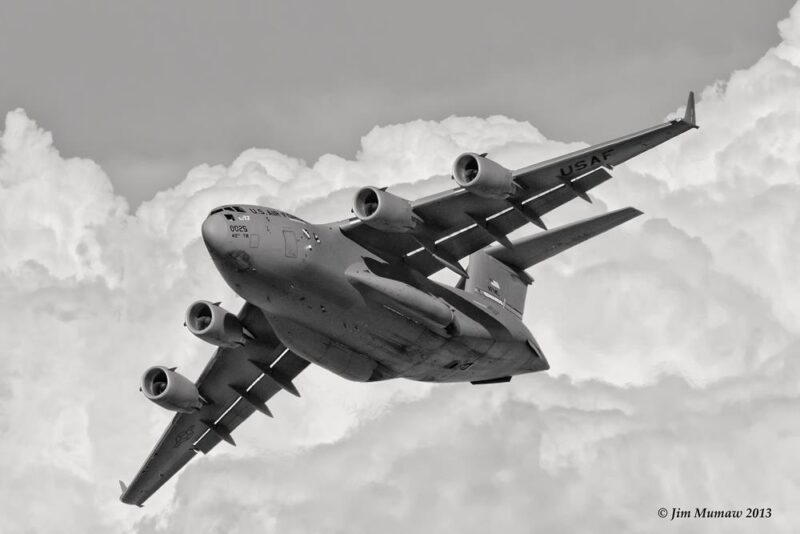
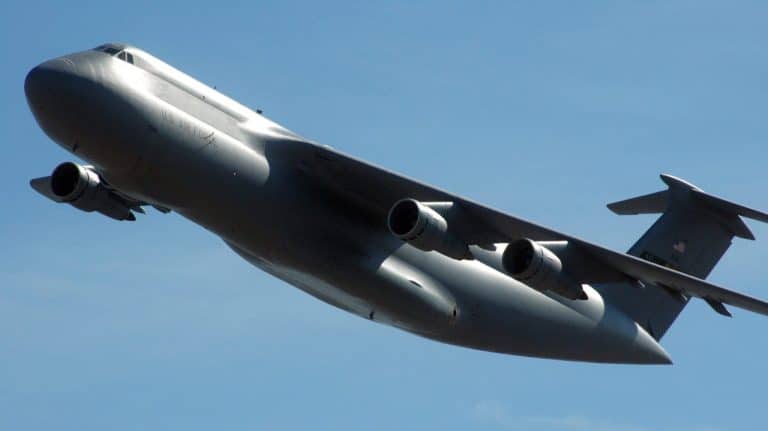
A C-5 Galaxy departs.
Shortly after being hired in the early 90s, there was a Mideast war and a bit of a recession. Most of the airlines with which I’d interviewed quickly started furloughing pilots, including many pilots I knew. Taking a job with a guard or reserve unit was considered furlough insurance so that’s what I did as well. I never had to use that insurance policy, but knew many who did.
The quickest way to gain seniority is to find an airline with either lots of upcoming retirements, or lots of growth. My airline had virtually none of the former but lots of the latter. This allowed for a very fast four year upgrade to captain. It was, though, the last formal schoolhouse course I would take.
Even though my pay rate was not quite as good at times as some other major airlines, the time value of making that money for longer more than made up the gap. As a general rule, wide-body first officer pay is roughly equivalent to narrow body captain pay, so when comparing airlines, look at your time to either wide-body first officer or narrow body captain.
Consider also in your choice schedule flexibility and the ability to pick up flying. This varies greatly between airlines, but can significantly enhance your quality of life and pay. I don’t pick up much flying, but we have some enterprising pilots who can routinely top 150 hours of monthly pay by working their schedules and taking advantage of premium pay rules.
The Lost Decade
It is difficult to convey the disaster in the commercial aviation community in the years following 9/11, unless, of course, you lived through it. Then you know all too well of the furloughs, bankruptcies, career stagnation and reversals that were emblematic of that dark time. It was also the time when mainline contract loopholes were exploited allowing an explosion of regional jet flying with pay so low that some pilots qualified for food stamp programs.
My airline was relatively unscathed by the carnage of that time, so while job security wasn’t a huge concern, there were no significant raises coming either. A comparison with my wife’s career is instructive here. She took a job with a major airline shortly after I got hired at my airline.
A Career Comparison
For a short while prior to 9/11, she out earned me in the right seat of a 75/767 by a significant amount. That didn’t last. A few short years later, while she was in the right seat of a 747, I out earned not only her, but also the captains with which she was flying. Her line guarantee had also been slashed to the low 60s after the bankruptcy while my guarantee was at 85 hours, but my line flying was almost always above that number.
The tear in the fabric of universe has mostly healed since then, and our pay is roughly equivalent again with her holding down a senior 777 F/O seat. She’ll lap me in pay once she takes a wide-body left seat which is almost attainable for her, but it will be back to working weekends and holidays for awhile albeit for a lot more money. It will be her first left seat job after 25+ years of commercial flying.
Who won? That’s a tough call. I’m jealous of her 30 hr HKG layovers and license with type ratings of all the Boeings save for the 717 and 787. We sure were thankful, though, to not have to worry about a furlough or bankruptcy after 9/11. I’ve also never flown a red-eye from SFO to EWR for an eight hour layover, or any red-eye for that matter. Twenty five years in the left seat of a Boeing has to count for something as well. Judging by the 401s (she lost her pension with the bankruptcy of her airline) the money will probably end up being close to equal.
In Conclusion
As I mentioned at the start of this essay, I’ve had a charmed aviation career. I’d like to say I was smart about it all, but plain dumb luck probably played a larger part than I’d like to admit. That said, if you’re just starting out, take a few moments of serious reflection to decide what is most important to you, and then make your decision of how to structure your career. Good luck! I’m here for you.
Captain Rob Graves is a veteran airline pilot and retired Air Force officer. He currently flies a Boeing 737 for a major American airline where he has over 25 years of experience. His Air Force career included instructing future USAF pilots in the T-37 primary jet trainer, aerial refueling in the KC-135 Stratotanker, and conducting worldwide logistics in the C-5 Galaxy cargo aircraft. He is the author of This is Your Captain Speaking, an aviation blog. It can be found at robertgraves.com. He also writes for Avgeekery.com.