Home Blog Page 91

Valions Tribute: Tac Demo Gladiators Honor VFA-15 with Retro F-18

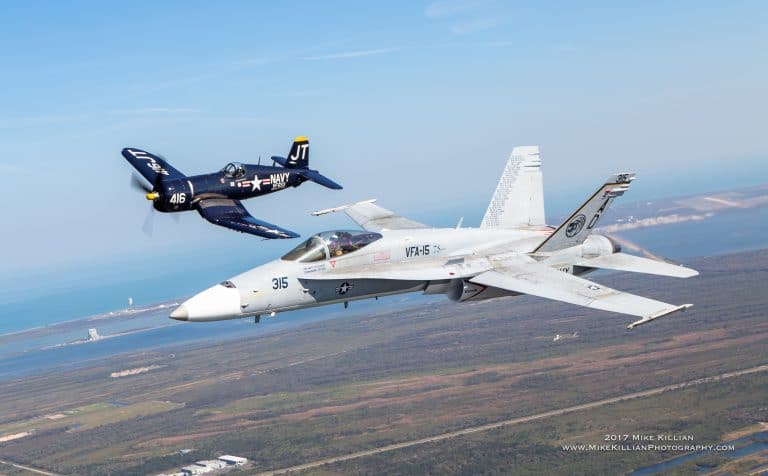
The 2017 airshow season is almost a wrap across the United States, and one of the crowd favorites, the NAVY Tac Demo “GLADIATORS” from VFA-106, paid tribute to the storied career and rich heritage of VFA15, the “VALIONS”, by flying a specially painted F-18 legacy Hornet at select show sites to honor the squadron’s retirement.

The Valions were decommissioned earlier this year after 75 years of service.

Born on Jan. 10, 1942 as Torpedo Squadron Four (VT-4) aboard the USS Ranger at Grassy Bay, Bermuda, just one month after the attack on Pearl Harbor, the VALIONS flew six different aircraft, operated from fifteen aircraft carriers and made 36 major deployments around the world.
17038551 10212461094861638 7561761790942235315 o
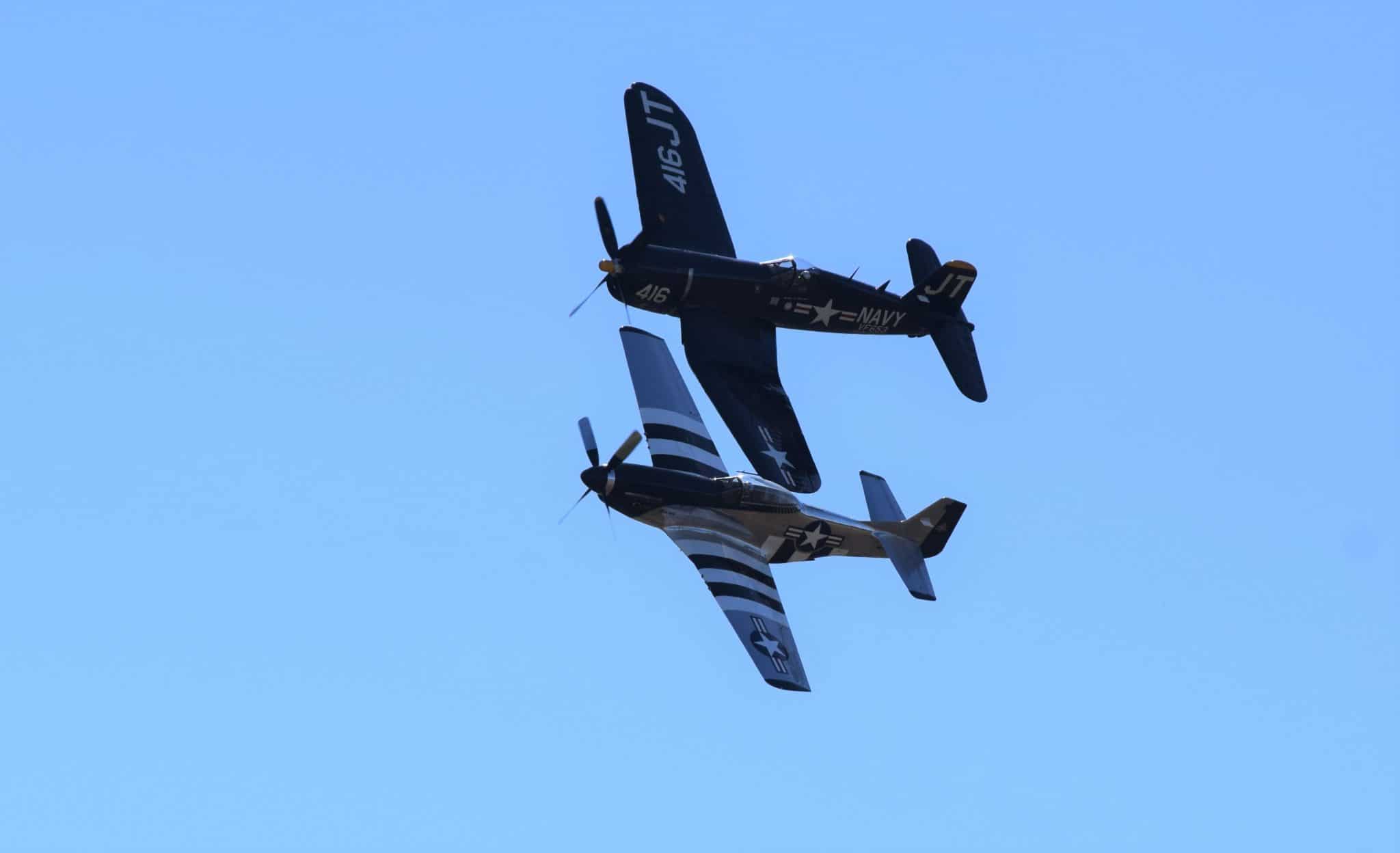
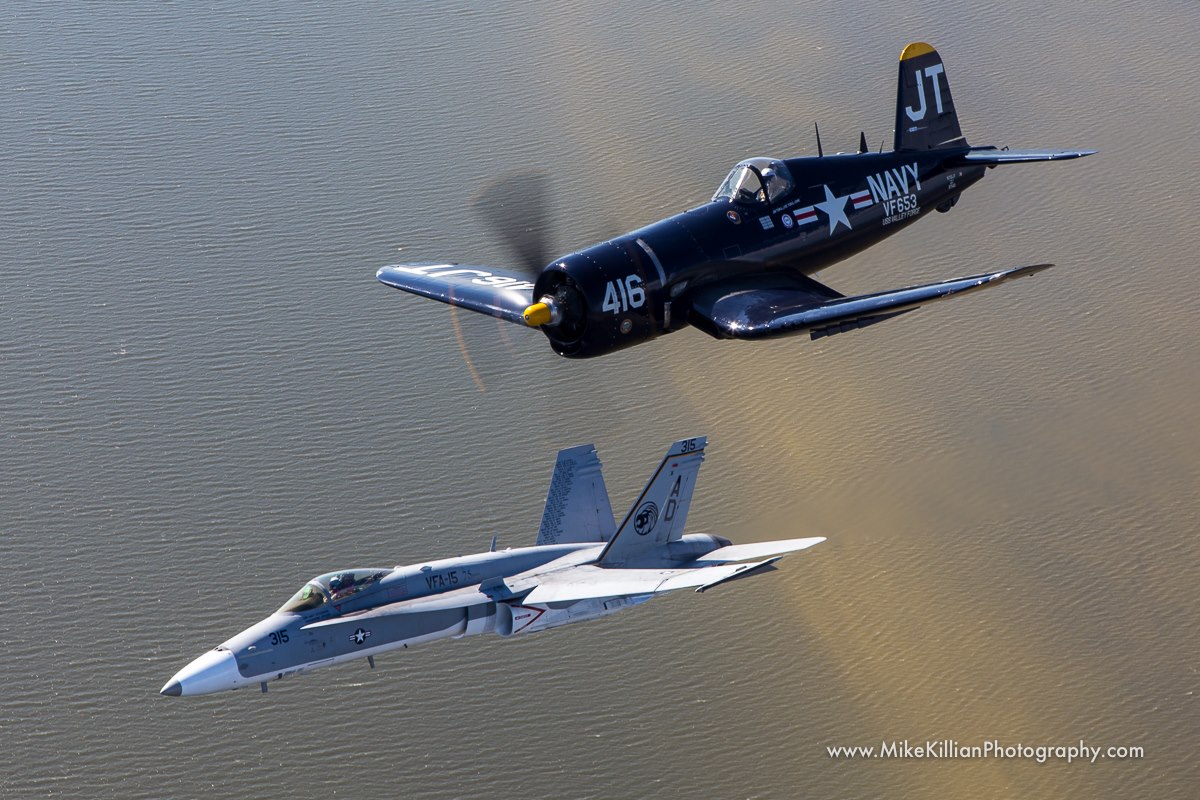
A VFA-106 F/A-18 Hornet in formation with Jim Tobul piloting his F4-U Corsair “Korean War Hero” at the 2017 TICO Warbird Air Show in Titusville, FL. Photo: Mike Killian (Team Aeroshell photo pilot)

They began service flying the TBD Devastator, followed soon after by the TBM Avenger, protecting the sea-lanes between Bermuda and Newfoundland before transitioning to the AD-4 Skyraider in March 1949. They were aboard the USS Ranger when it escorted British Prime Minister Winston Churchill and HMS Queen Mary to the Quebec Conference in 1943, where the Allies discussed plans for invading Italy and France.

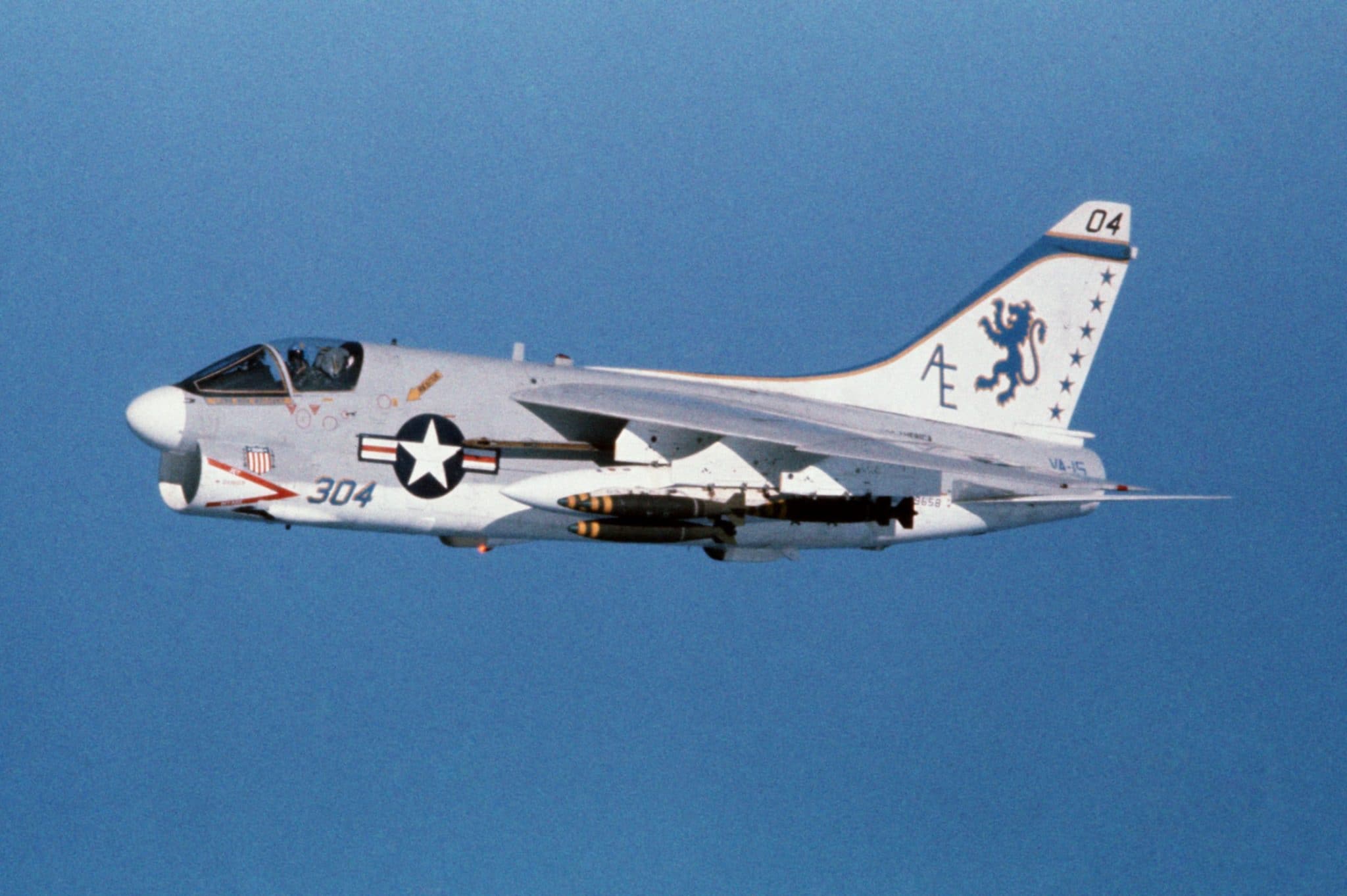
Sixteen years later they transitioned to the A-4 Skyhawk, before flying the A-7E Corsair II.

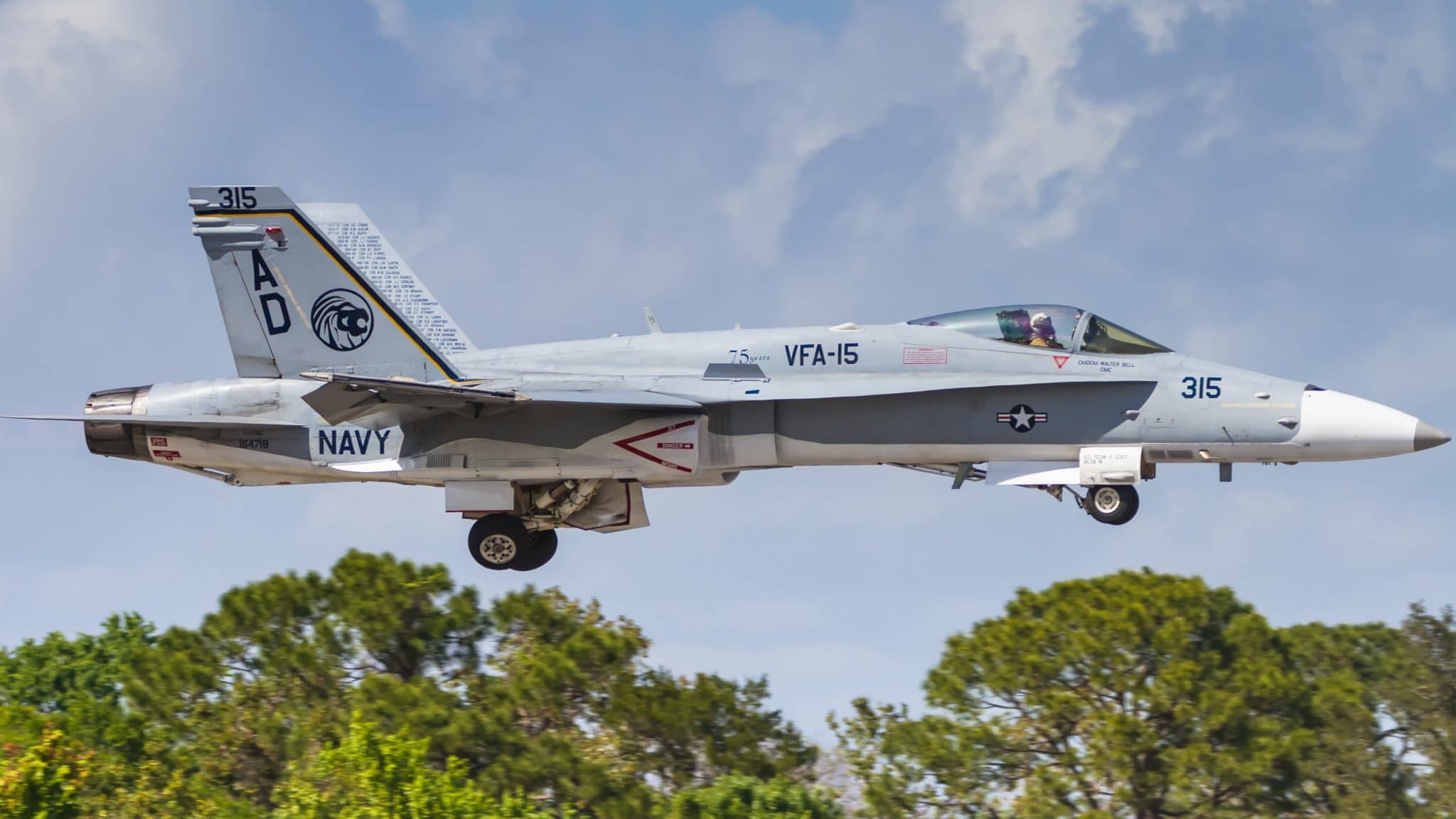
Sporting a retro “Seagull” paint job, the F/A-18C Legacy Hornet flown by the VFA-106 demo team this year paid tribute to that Corsair, which the VALIONS flew until 1987 when they transitioned to the F/A-18 and were re-designated from VA-15 to Strike Fighter Squadron Fifteen (VFA15).

“It’s incredible, it’s an honor and a privilege to fly this and perform in front of people,” said VFA-106 demo pilot Lt. Scott “MacGruber” Lindahl.

VALIONS flew over 2,600 sorties over North Vietnam in the late 60s, and were in the Arabian Gulf in 1980 when Iran released American embassy hostages. They flew some of the first sorties in support of DESERT STORM on Jan. 19, 1991, and carried out strike missions until the suspension of hostilities was ordered a month later.

In the years that followed, they flew over 300 sorties in support of operation ALLIED FORCE, cruised the Northern Arabian Gulf in support of Operation SOUTHERN WATCH, and put bombs on target while patrolling the skies of southern Iraq.
A 7E VA 15 with bombs 1976
A-7E Corsair II (BuNo 159658) from attack squadron VA-15 Valions on 1 June 1976, armed with ten 227 kg (500 lb) Mk 82 bombs. VA-15 was assigned to Carrier Air Wing 6 (CVW-6) aboard the aircraft carrier USS America (CV-66) for a deployment to the Mediterranean Sea from 15 April to 25 October 1976. Photo: USN

The squadron was on their way home aboard the USS Enterprise when they watched terrorists attack the homeland on Sep. 11, 2001. They immediately turned around for the Northern Indian Ocean, and helped bring the tip of the spear into Afghanistan in support of Operation ENDURING FREEDOM, flying 185 sorties and dropping 232,000 pounds of firepower.

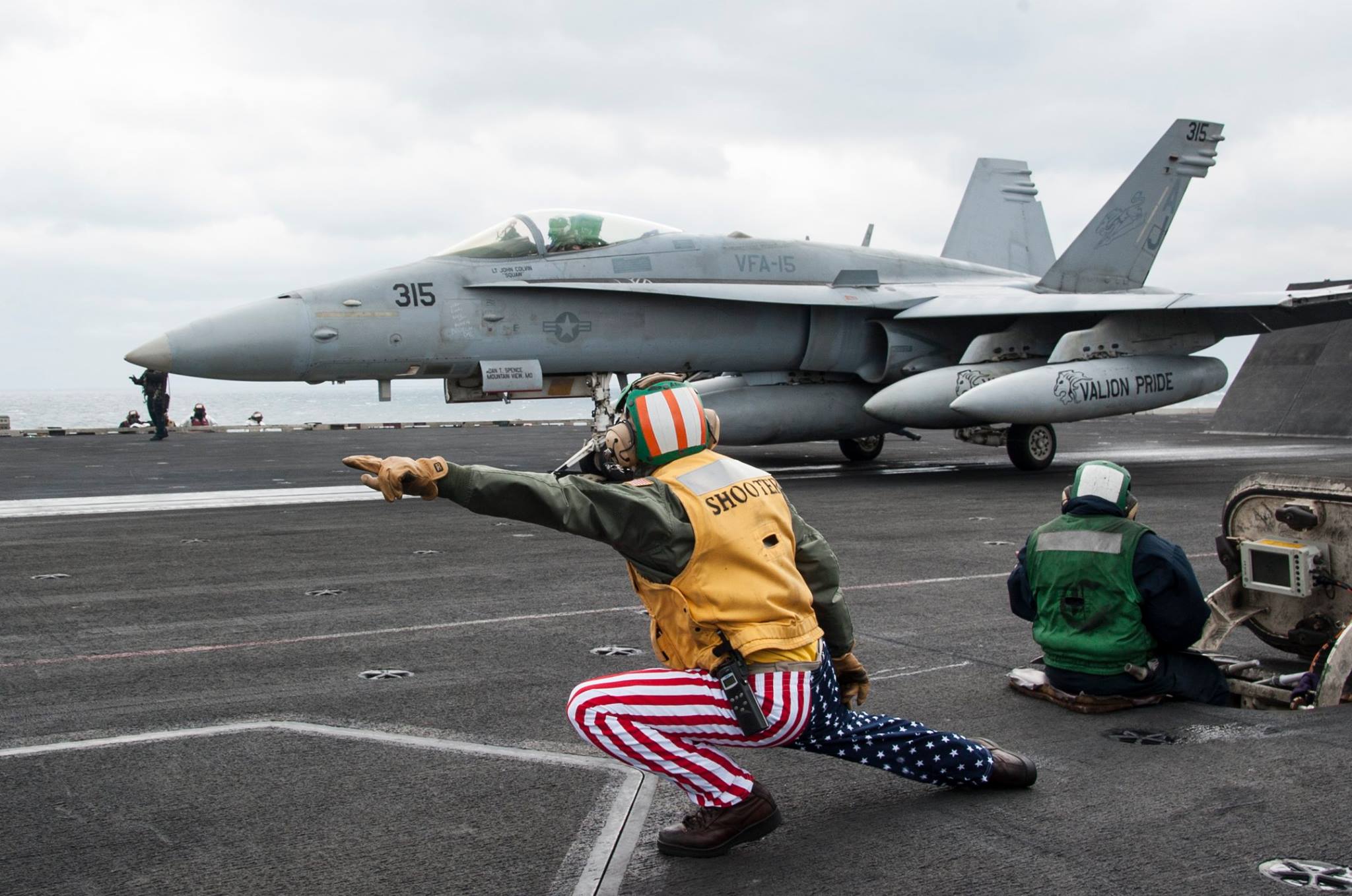
Operations after that focused mainly in support of the wars in Afghanistan and Iraq, as well as searching for pirates off the Horn of Africa in 2006. Close to 2,000 combat sorties were flown up until December 2011, when VALIONS were deployed aboard the USS George H. W. Bush and maintained a 100% combat sortie completion rate in support of Operations ENDURING FREEDOM and NEW DAWN.
iAqOTSR
A VALIONS F/A-18C Hornet launches from the flight deck of the aircraft carrier USS George H.W. Bush (CVN 77). Photo: USN

The loss of VFA15 comes as a victim of the 2017 National Defense Authorization Act, with the Navy eliminating three squadrons and reducing Carrier Air Wings to nine until the number of deployable carriers can fully support a 10th wing, or until Oct 1, 2025 (whichever comes first), at which time the Navy will return to a strength of 10 Carrier Air Wings.

Carrier Airborne Early Warning Squadron 112 (VAW-112), an E-2C squadron based at NAS Point Mugu, Calif., and Helicopter Sea Combat Squadron 15 (HSC-15), an MH-60S squadron based at NAS North Island, Calif., are also being deactivated.
IMG 7797
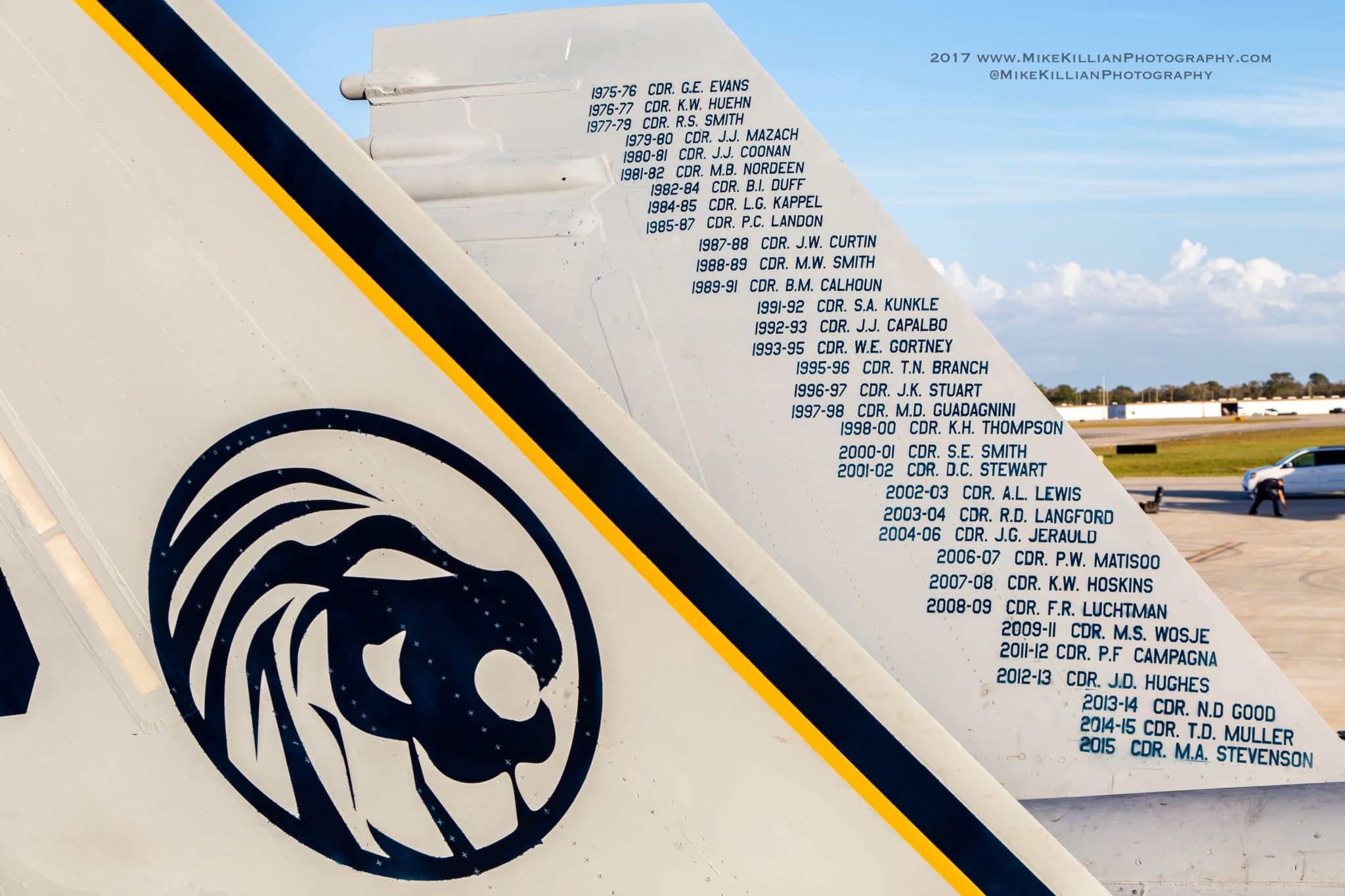
The names of every VFA-15 commander were on the demo jet. Photo: Mike Killian

“Inside both tails, those are the names of every single commanding officer that has ever commanded VFA15”, pointed MacGruber as he brought me out to see his demo jet.

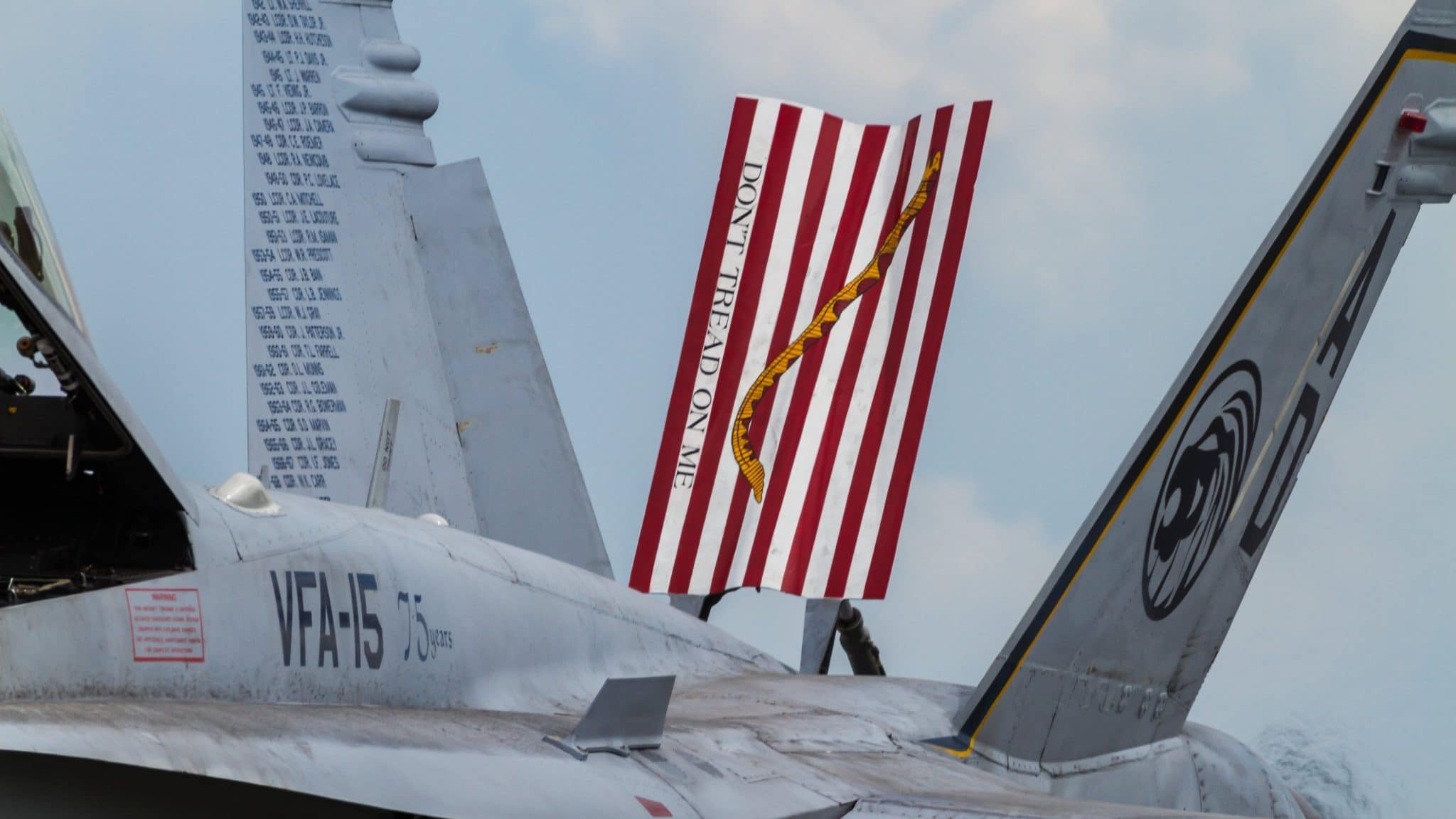
A “Don’t Tread On Me” flag is painted on the air brake too, showing nicely when the jet makes its signature “photo pass” for spectators.

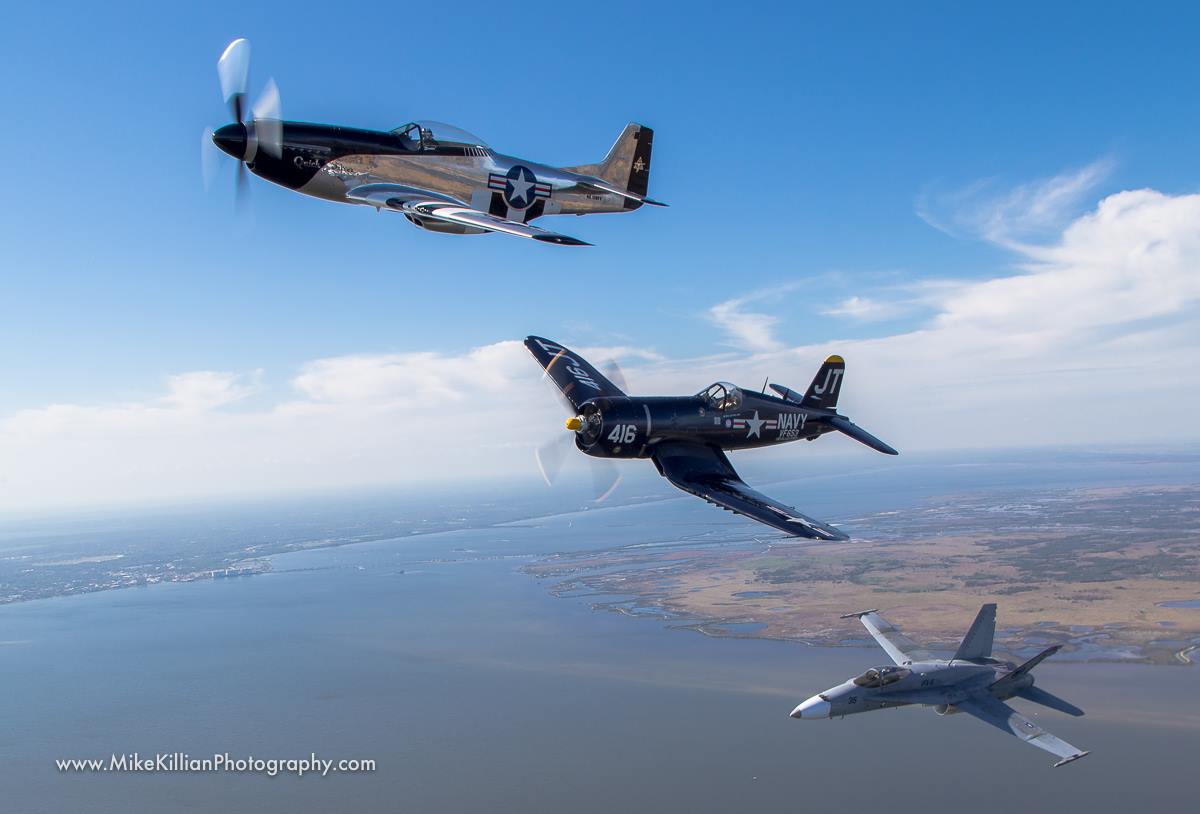
To mark the occasion and beginning of the show year, the Navy and Tac Demo VFA-106 team agreed to fly a one-of-a-kind photo shoot that had never been done before, joining formation with the F4-U Corsair “Korean War Hero” and P-51D Mustang “Quick Silver” (piloted by Jim “Torc” Tobul and Scott “Scooter” Yoak).
20170312 IMG 7087
The VFA-106 demo Hornet’s specially painted “Don’t Tread on Me” airbrake. Photo Credit: Pring Photography

After a through briefing (two actually), we held on the runway until the end of MacGruber’s rehearsal, and proceeded immediately to takeoff heading east towards NASA’s Kennedy Space Center. It doesn’t take long for an F/18 to catch up, and before we knew it MacGruber was in formation and the photo shoot began.

Time is short and so is fuel; in total we had under six minutes to produce images before heading back so another demo could take the airspace.
17240652 10212451783508860 6522801233034020373 o
Navy Legacy formation and tribute to VFA-15, joined by Scott York in his P-51 Mustang “Quick Silver” and Jim Tobul in his F4-U Corsair “Korean War Hero” at the 2017 TICO Warbird Airshow. Photo: Mike Killian (Team Aeroshell photo pilot)

“We were honored to be a part of it, one of my top favorite flights for sure”, said MacGruber. “For me personally, that was the first time I ever joined up with a P-51 or F4-U, and it was incredible. Both of those aircraft I grew up watching at airshows, and that’s really what inspired me not only to be a pilot, but to apply to be a demo pilot as well.”

The VALIONS officially deactivated this past spring, with a ceremony marking the occasion scheduled for May 31 at NAS Oceana, VA. The squadron gave up its last aircraft in December 2016.

“It has been my distinct honor and privilege to be the final (but hopefully not last) commanding officer of the best Strike Fighter Squadron in the Navy”, said VFA15 CDR Matt “Disney” Stevenson in a recent statement.
20170311 IMG 5217 Edit
The VFA-106 demo Hornet’s specially painted “Don’t Tread on Me” airbrake. Photo Credit: Pring Photography

“They earned the 2016 Retention Excellence Award, the 2016 EAWS Pennant and the 2016 Blue Medical “M”, all while supporting eight detachments in the last year”, he added. “These Sailors have been the epitomy of accomplishing so much with so little and I could not be more proud.”

“They have handled the deactivation and the stormy seas that have come as part of that process with grace and dignity and they continue to produce Full Mission Capable aircraft even today as we help VFA-106 with their maintenance efforts,” he added. “They have humbled me and taught me more than they will ever know.”

ABOVE: Watch the Navy TAC DEMO in action with the tribute F-18 demo jet at the 2017 TICO Air Show on Florida’s ‘Space Coast’.

VALIONS were also ten-time winners of the COMNAVAIRLANT “E” for Battle Efficiency: 1953, 1961, 1962, 1978, 1980, 1983, 1988, 1991, 1999 and 2001; and the Estocin Award winner in 1999, given to the finest strike fighter squadron in the Navy.

“None Finer”

 – With thanks to Greg McNeely and Aeroshell Aerobatic Team for flying photo ship

 – Shoutout to Pring Photography for providing some of their work for this story, give them a LIKE on Facebook!

Follow Mike Killian on Instagram and Facebook, @MikeKillianPhotography 
.

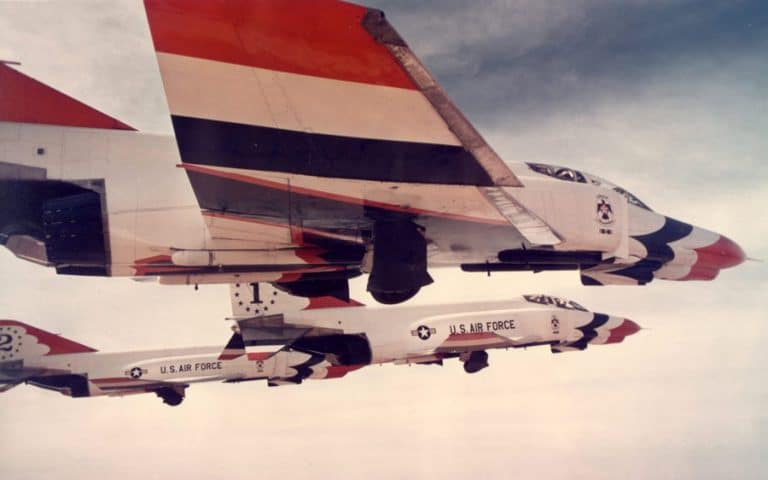
WATCH: Thunderbirds Crush Routine In F-4E Phabulous Phantoms

3

The Film “Once a Thunderbird” Captures the Team’s Days of Maximum Thunder and Power

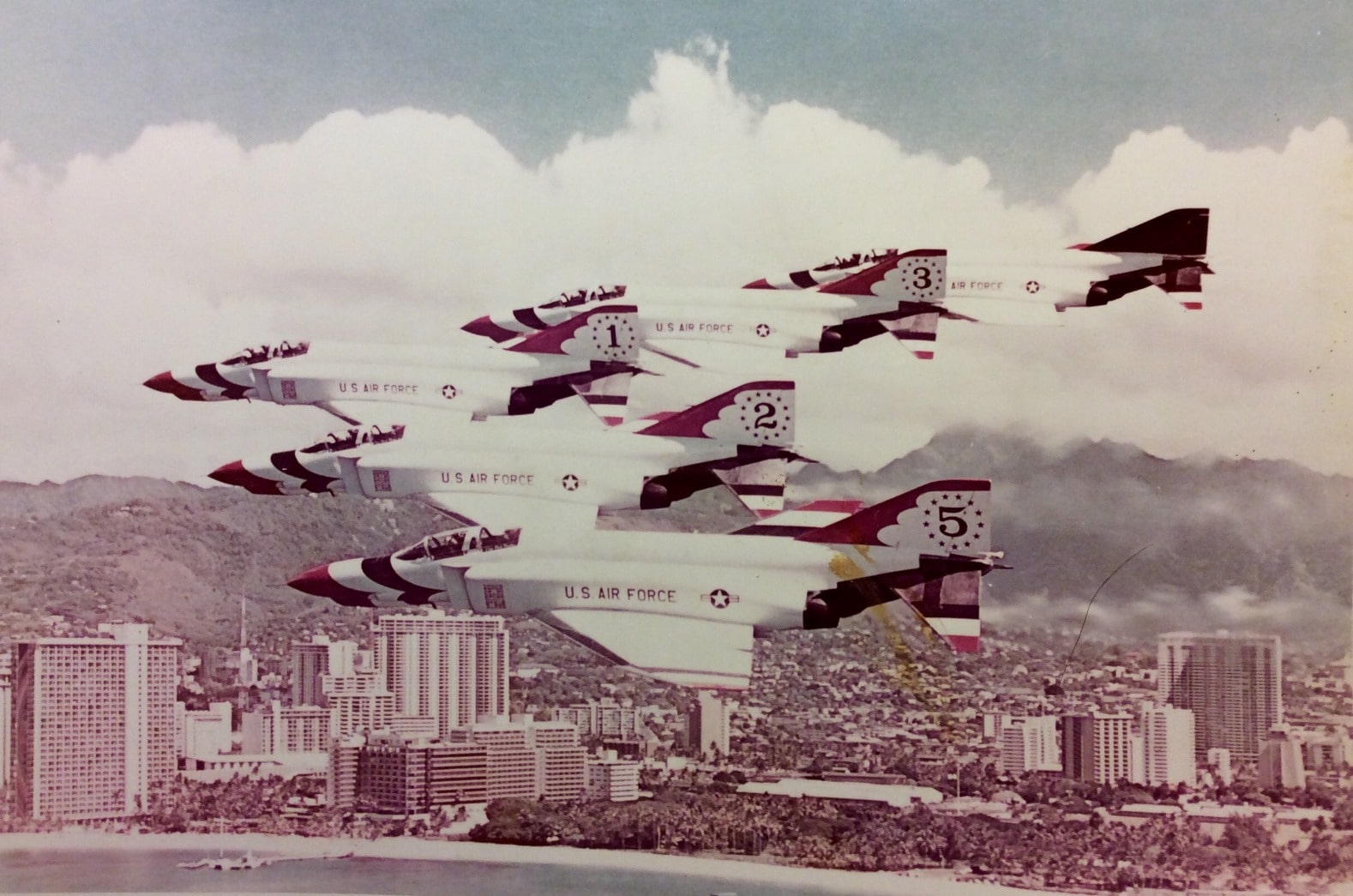
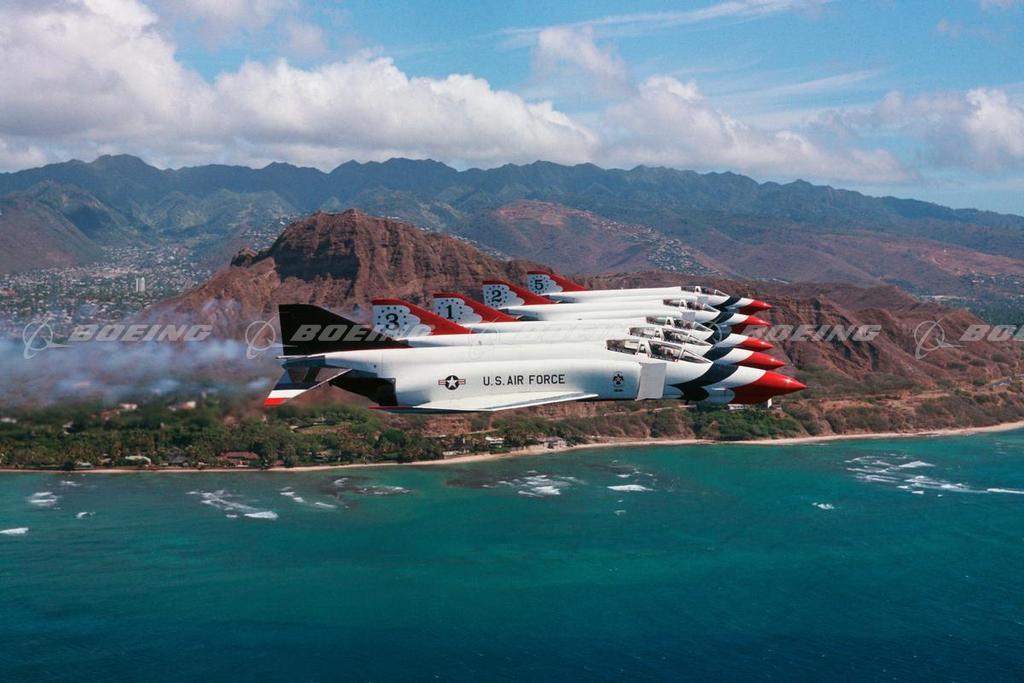
McDonnell Douglas and the United States Air Force (USAF) produced the film “Once a Thunderbird” during the early 1970s, when the team was flying the Phabulous McDonnell Douglas F-4E Phantom II. When The Thunderbirds transitioned to the F-4E in 1969 changes to the show routine were required to keep the performance close to show center because the F-4Es were so much more powerful than the Team’s previous mount, the North American F-100D Super Saber. White polyurethane paint was adopted in order to give the F-4Es an appealing, uniform color. Enjoy this look at the power of The Thunderbirds Phlying their F-4E Phantom IIs uploaded to YouTube by PeriscopeFilm.

[youtube id=”gDgTdyx8q1M” width=”800″ height=”454″ position=”left”]

aa4bea3db70375cb6866b35c5f29f724
Official US Air Force Photograph

Thunderbirds F-4s were short-lived

The Thunderbirds only flew the F-4E for four seasons between 1969 and 1973. They transitioned to the Northrop T-38 Talon next. The team first flew straight-winged Republic F-84G Thunderjets, followed by swept-winged Republic F-84F Thunderstreaks. North American F-100C Super Sabers were the Team’s next jets, followed by a short stint in Republic F-105B Thunderchiefs before switching back to F-100s, albeit the D model. After their days in the F-4E and T-38 the team transitioned to the General Dynamics F-16 Fighting Falcon, which they still fly today.

BI2694
Photo courtesy Boeing

TWA Lives! Quite A Few TWA Planes Still Exist

For over seven decades TWA was a household name, but poor management beginning in the 1980s, multiple bankruptcies in the 90s and the tragic loss of Flight 800 and its 230 people onboard in 1996, all contributed to the eventual demise of the company in 2001.

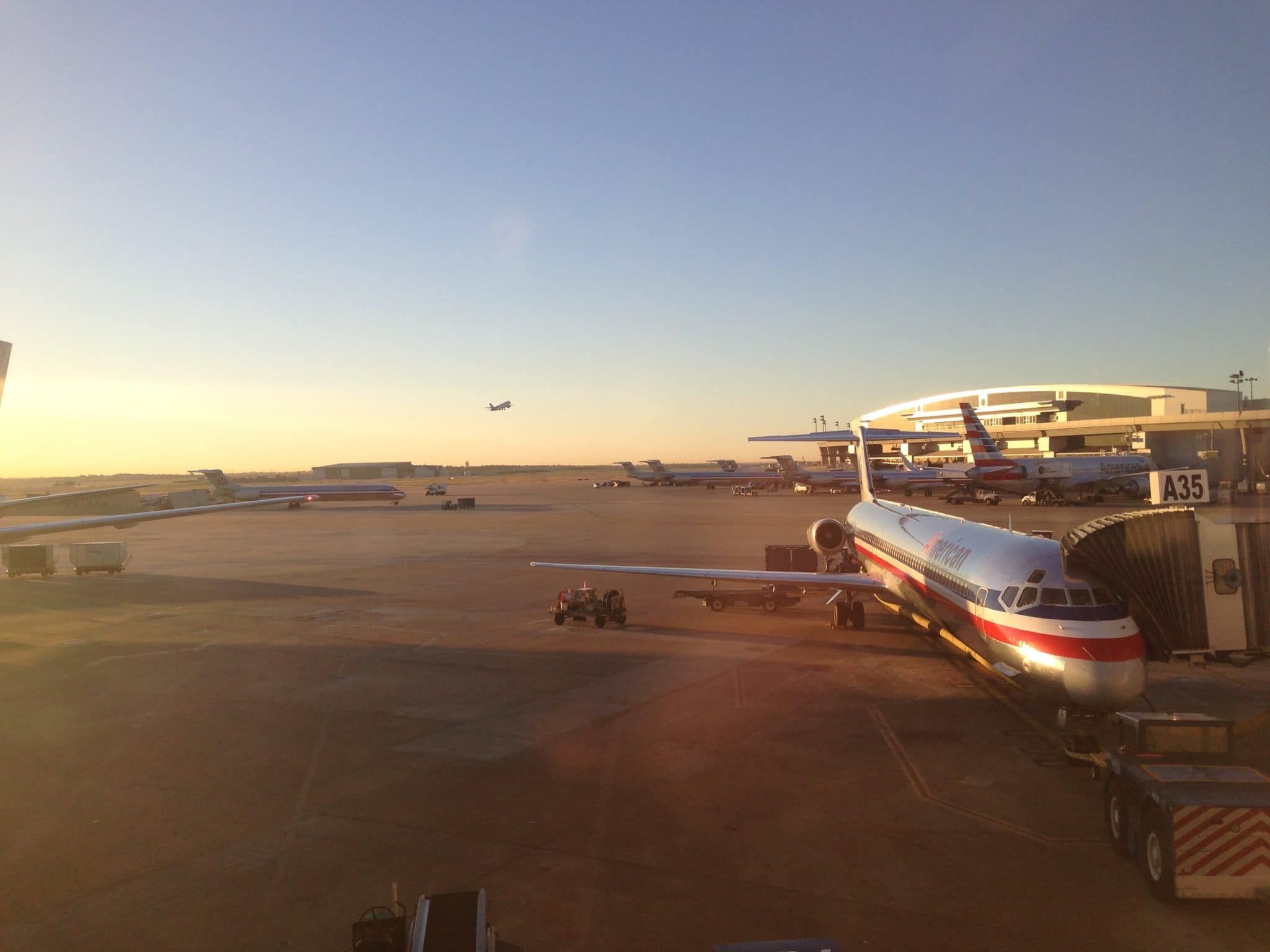
It was sold to American Airlines (AA), and over time TWA’s fleet of planes vanished into history, but a few still remain.

AA took on a bunch of TWA’s MD-80s when they took over the company. A total of 34 still remain in active service, some of the youngest in AA’s currently active fleet of 46, but the fleet is fading into history, with AA expected to retire the last of their MD-80s in 2019, to be replaced by Boeing 737s. Most TWA MD-80s have tail numbers that end in TW.

2013 10 08 07.52.39

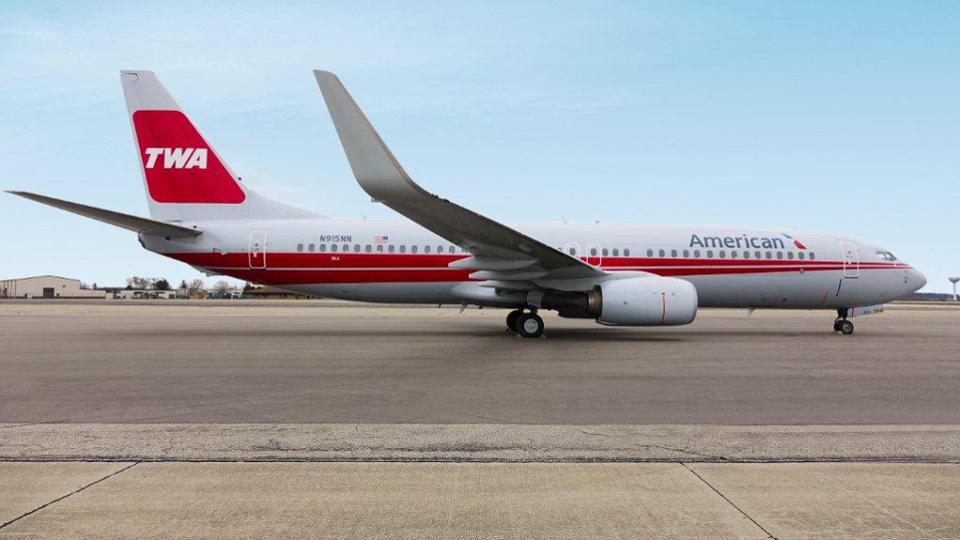
AA also rolled out a special heritage 737-800 painted in the colors of TWA in 2015, in tribute to TWA’s long history in aviation.

NEW dsc00056 original
American’s TWA heritage 737-800 rolls out of a paint factory in Peru, Indiana, on Nov 16, 2015. Credit: American Airlines

Former TWA jets are also flying with Delta Air Lines.  After TWA’s merger with American, American sold the Pratt & Whitney powered 757s to Delta.  American also disposed of TWA’s growing 717 fleet.  Most of the fleet ended up with AirTran.  When AirTran merged with Southwest, the 717s were leased to Delta where they still fly today.

TWA museum pieces…some are flight-worthy!

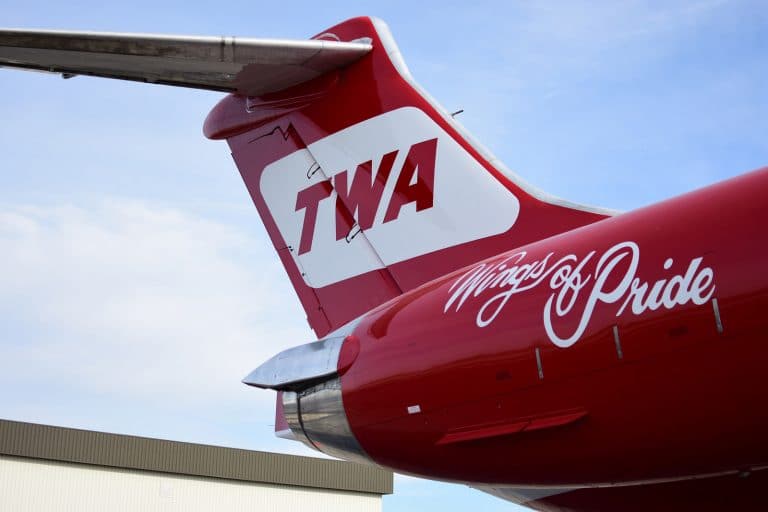
An MD-83 (SN 49575/LN 1414) known as TWA’s “Wings of Pride” still exists, which was painted in TWA’s often referred to “final livery” for a brief time; a retro white plane with double red stripes along its fuselage.

But the plane would take on a special paint job for the rest of its career with TWA, in an effort to symbolize reinventing the airline. The company flipped the original paint scheme to a red plane with double white stripes, and the aircraft flew TWA’s ceremonial final flight, Flight 220, on December 1, 2001.

AA then stripped the jet’s special livery for their standard scheme as part of their “Super 80” fleet, but was salvaged in 2014 in an effort between American, TriStar History, and a number of sponsors, to bring it back to its memorable final paint job with TWA. It’s now based at the TWA museum.  The jet is flyable and is used to support STEM education initiatives.

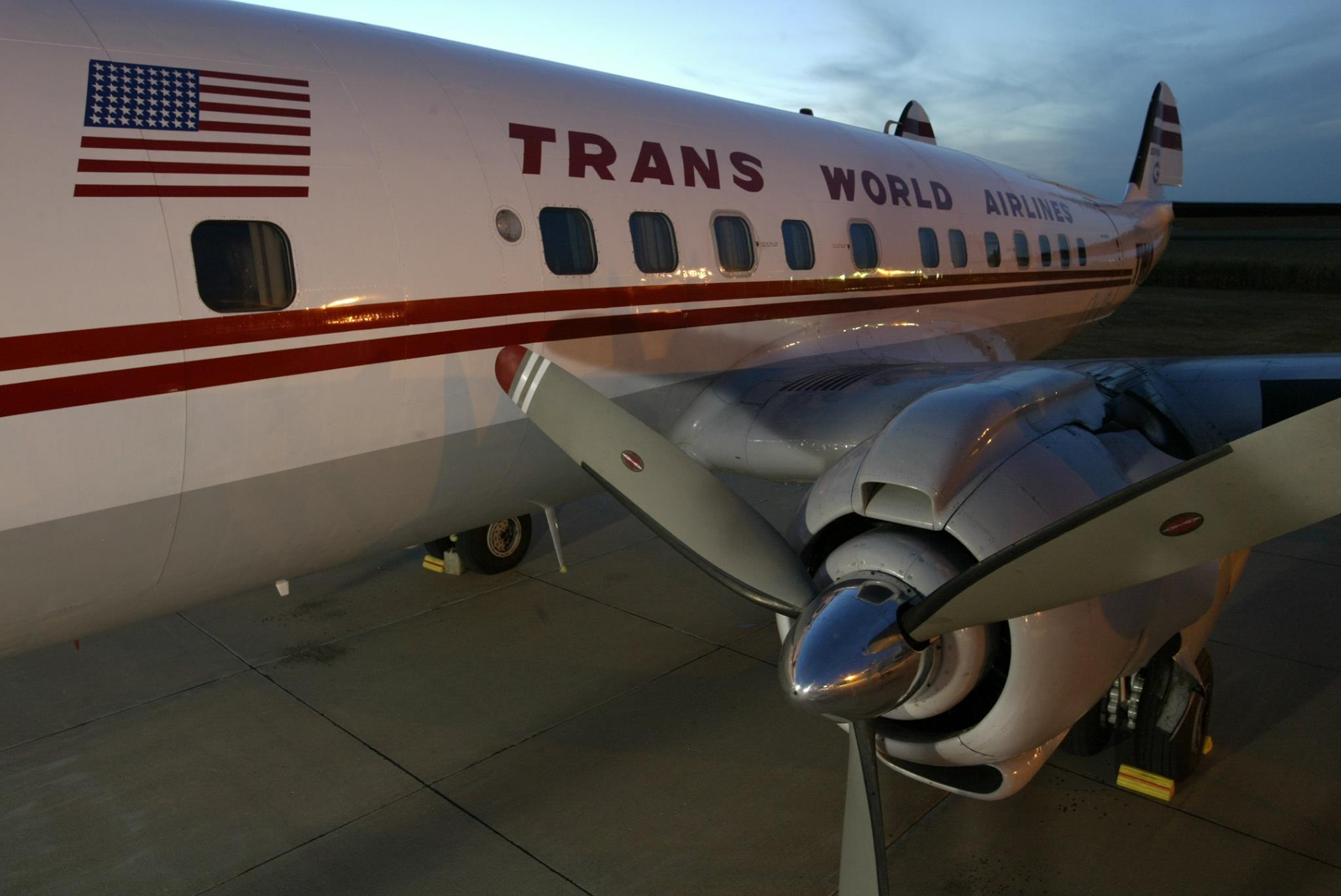
There is another active TWA aircraft that is housed at a museum. The National Airline History Museum also hosts TWA Constellation (Super Connie) and a DC-3.  The Connie was on the airshow circuit for 20 years but is now undergoing heavy maintenance.

connie
Photo by Airline History Museum.

The DC-3, number NC1945 first flew in 1941.  It flew with TWA until 1952.  The aircraft then had a number of owners and operators until it was purchased by a museum in Denver and was eventually transferred to the Kansas City museum in the late 1990s.  The DC-3 has undergone a complete restoration but has not flown yet.

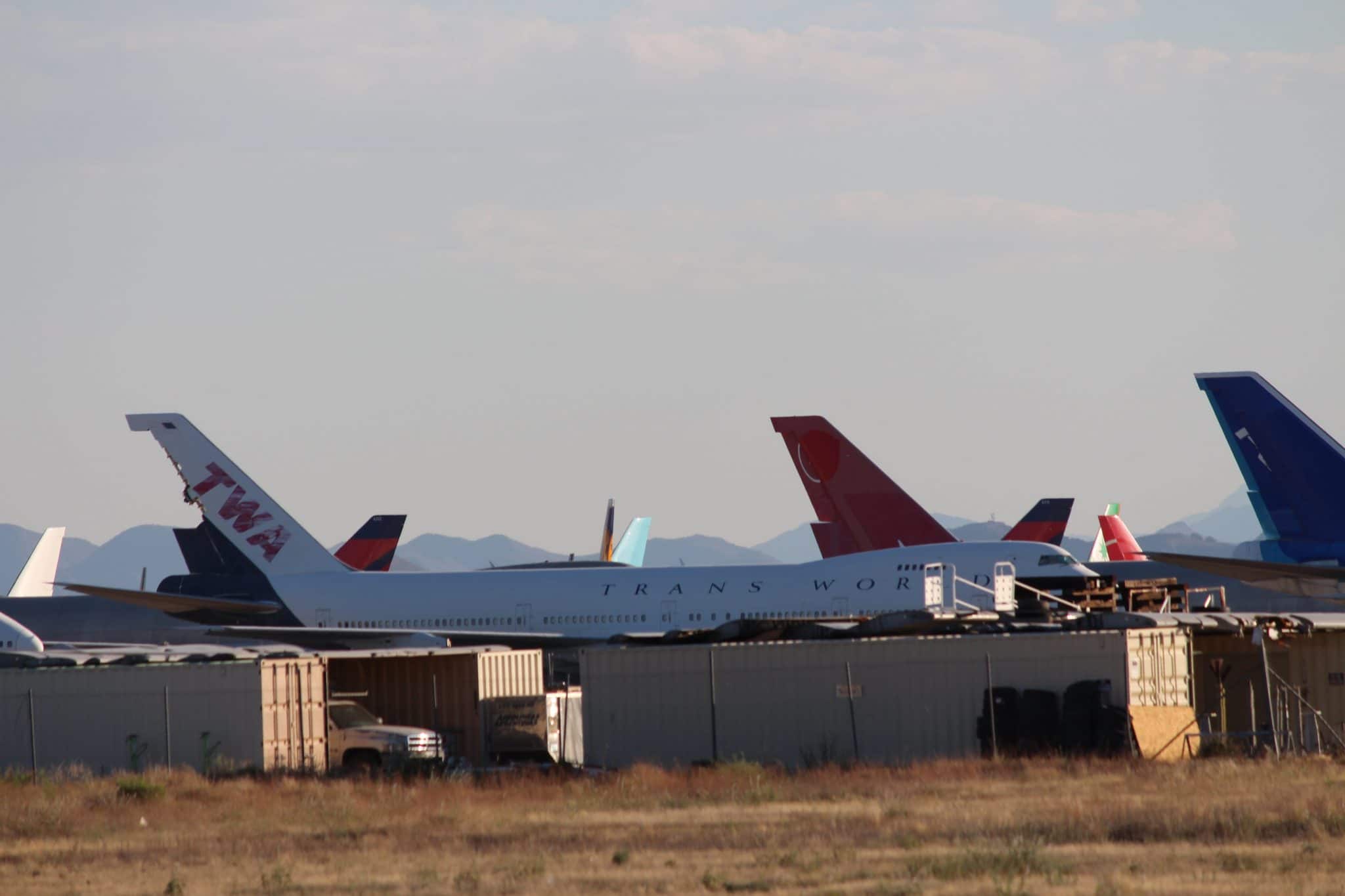
One classic TWA 747 rotting in the desert

As far as we can tell, this is only one intact TWA jet remaining.  That aircraft is a Boeing 747-100 in experimental TWA colors.  The jet was retired in 1997 and with the exception of its engines, the aircraft is largely intact. An interior Instagram video by “DiecastJames”.

IMG 1242
Photo by Jeff Gilmore

.

Follow Mike Killian on Instagram and Facebook, @MikeKillianPhotography 
.

Watch: The B-29 May Have Been The Arsenal of Democracy’s Greatest Achievement

The Superfortress Brought The War Back to Japan, But It Took a Herculean Effort to Get It Done

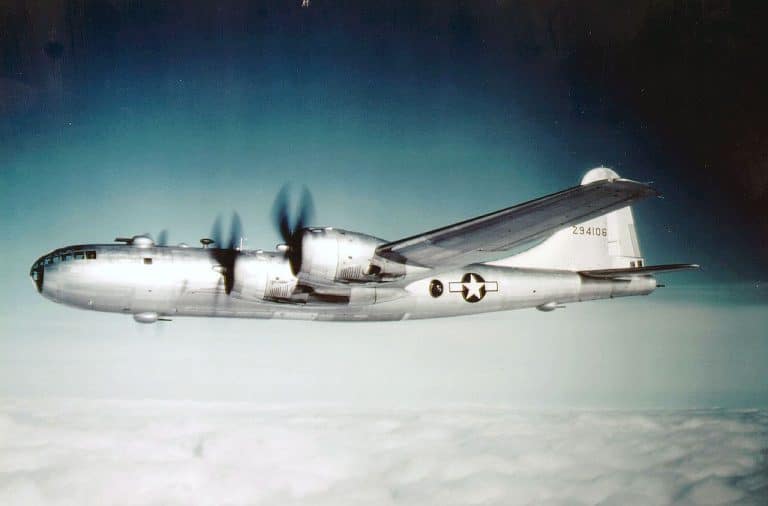
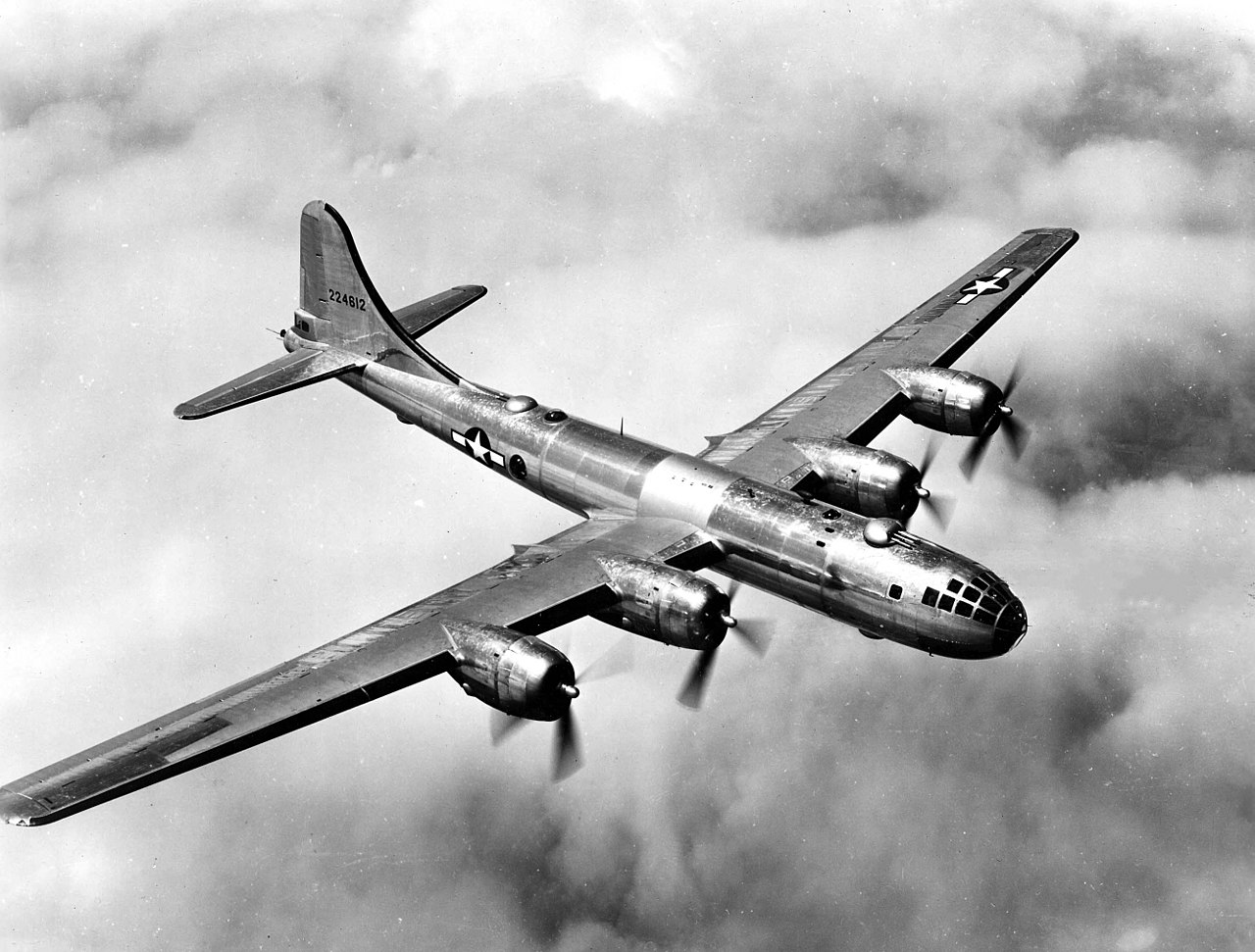
When the United States was at war with Japan the propaganda films of the time were often shown in movie theaters to audiences who had husbands, sons, nephews, and cousins- some their entire families, waging that war. The film “The Birth of the B-29” was produced in 1945 and labeled “War Film 30” by the US War Department. Millions saw it during wartime. Starring the Boeing B-29 Superfortress bomber and a supporting cast of the thousands who designed and built them, the film reveals the massive effort necessary to bring the most advanced bomber in the arsenal into service. The film was uploaded to YouTube by PeriscopeFilm.

[youtube id=”0LJJpe00log” width=”800″ height=”454″ position=”left”]

Engineering the B-29 Was a Massive Undertaking

B-29s were assembled in no less than four main factories and hundreds of sub-assembly facilities. Boeing built B-29s at their primary facility in Renton, Washington and at a second factory in Wichita, Kansas. Bell built B-29s at their facility in Marietta, Georgia, and Martin built Superfortresses at their facility in Omaha, Nebraska. Between them these main assembly plants built 3,970 of the bombers.

1280px B 29 in flight
Official US Air Force Photograph

A Versatile Airframe Adapted Nearly Endlessly

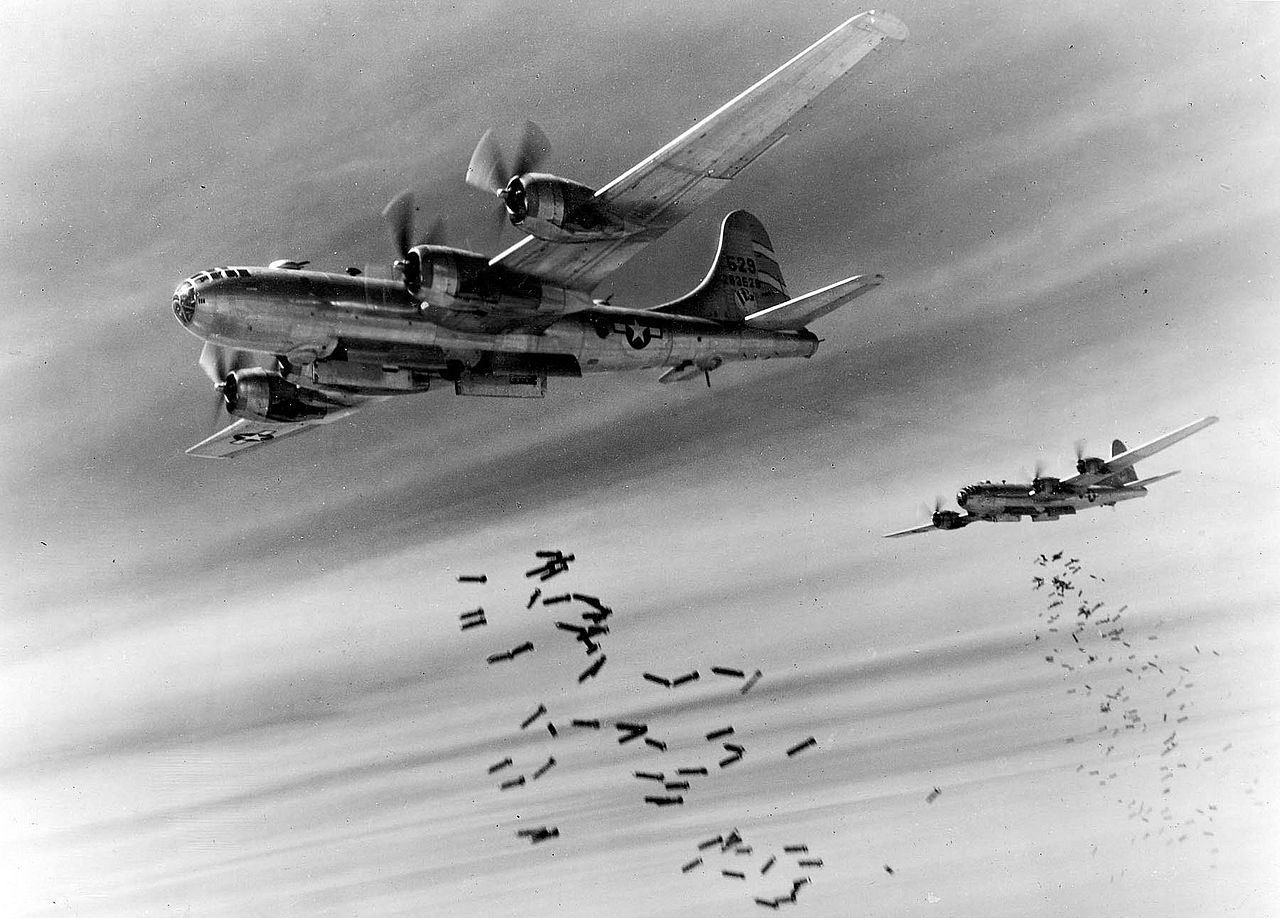
B-29s were also experimentally converted to use Allison V-3420-17 liquid-cooled W24 (twin-V12, common crankcase) inline engines (XB-39), and Pratt & Whitney R-4360-33 radial engines (XB-44), which became the basis for the B-50. In the early days of aerial refueling the KB-29M (drogue) and KB-29P (rigid boom) tankers passed some of the first gas to Strategic Air Command (SAC) bombers. SB-29 Super Dumbos flew air rescue missions with underslung radar and air-droppable lifeboats.

1280px Bell Atlanta B 29 25 BA Superfortress 42 63526 497th BG 871 BS
Official US Air Force Photograph

China’s Giant Cargo Drone Makes Maiden Flight

1

China’s heaviest cargo drone with a maximum take-off weight of 3.4 tonnes and 1.5 tonne payload took its first test flight this weekend at Neifu Airport in Pucheng. The AT-200 is one of the most powerful drones ever to be used in a commerical application. The Institute of Engineering Thermophysics says it was in the air for 26 minutes and completes automatic take-off and landing within 200 meters. The aircraft is being developed on a P750XL utility aircraft platform. It will reach speeds up to 313 km per hour and have a flight range of 2,183 kilometers and 6,098-meter service ceiling.

JD.com, a Chinese e-commerce retailer, is developing the UAV (unmanned aerial vehicle or drone) along with a consortium of research institutes and companies. According to Recode, the AT-200 could be operating in China within the next several years.

To put its sheer size in persective, until recently drones were only considered for carrying small shipments, i.e., a product delivery placed online to a customer’s home. But at some point in the not too distant future, the AT-2000 drone could be delivering literally a ton of cargo to Chinese cities from rural areas.

The way China uses drones is markedly different from how they are used in the U.S. These new drones are going to be essentially miniature groupage operators, according to JD.com CEO Richard Liu. He explains, “instead of the drone delivering directly to customers’ doorsteps, a local delivery person retrieves the cargo from the drone, which may carry between eight and 15 packages that were ordered by people in the village. The delivery person then brings the packages to people’s doors.”

In contrast, in the U.S., Amazon is studing how drones can be used for home deliveries which are usually small amounts of merchandise delivered from a local warehouse. Drones are also used domestically for photography, reconnaisance and some agricultural and construction applications such as roof and solar panel inspections.

In China however, JD.com reportedly has plans in the works to open a 30-acre testing and R&D center with the Xi’an National Civil Aerospace Industrial Base. The company is already flying five different types of drones. Various sizes are used for delivery, depending on the size and weight of the cargo. JD.com spokespersons note that using drones for deliveries is about 70 percent cheaper than using trucks.

Clearly the U.S. is not embracing drone technology as quickly as the Chinese. Regulatory agencies like the FAA are still formulating the rules for a nationwide low-altitude air traffic control system that is not expected to come to fruition until at least 2020. After that, it remains to be seen if drones of gargantuan propotions capable of carrying a ton of freight like AT-2000 will ever be introduced in America.

Even so, Friday morning quarterbacks are closely watching China’s UAV program, wondering if safety and efficacy parameters will pan out. If the country’s pilot program is successful, the AT-200 and other extra-large size drones could prove to be a game changer for aerial deliveries in the years and decades to come.


When KLM Retired the Fokker 70 and Closed a 97-Year Chapter

0

EDITOR’S NOTE: This story was originally published on 30 October 2017, but was updated in April 2026 with the latest F70 fleet information.

On 29 October 2017, the remarkable 97-year history of KLM and Fokker came to an end. On this day, KLM retired the Fokker 70 after 21 years of service.

The final four Fokker 70s departed on a stormy, but beautiful, sunny Sunday morning from Amsterdam Schiphol Airport (AMS) to Norwich Airport (NWI) in England, to receive new liveries before being delivered to new owners in Africa, Asia, and South America.

Many planespotters gathered near Runway 04-22, also known as the Oostbaan at East-Schiphol, where they watched the last four Fokker 70s taxi to the runway, take off, and return for a memorable flyby, saying goodbye to their home base airport and the people of Holland.

In honour of the special bond between the two Dutch aviation companies, a Fokker monument was revealed to the public in 2017 in the shape of the characteristic Fokker 70 Tail.

Last Landing Ever, 28 October 2017: This amazing video from Jerry Taha Productions shows the last landing of the KLM Fokker 70.

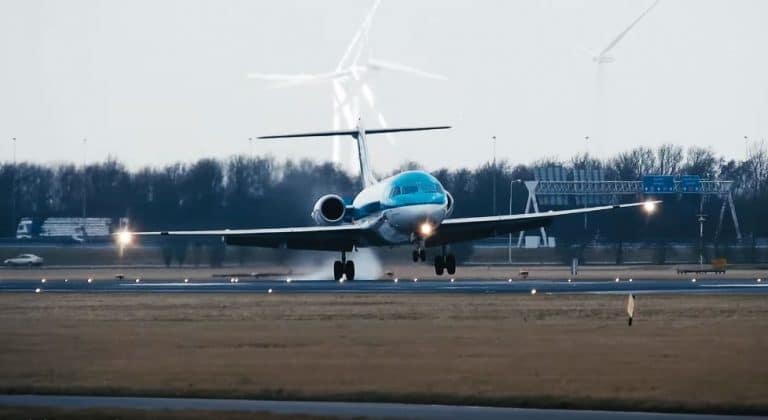
On the evening of 28 October 2017, the last four Fokkers returned from their final official flight and landed at Amsterdam Airport Schiphol for the last time. The stormy wind was raging over the Schiphol runways with some furious gusts, as if it wanted to challenge the small Fokker 70s during their final touchdown on Dutch ground.

This wasn’t anything new for the baby Fokker jets. The Fokker 70s endured many storms on their return to their home base over the course of 24 years. Schiphol is famous for its stormy weather. The Fokker 70 proved to be capable of handling any condition.

A total of 47 Fokker 70s were built.  Today, just 28 remain in service worldwide. And of those, just 20 are active.

The Fokker 70 was a reliable jet… even a king flew it!

There was only one incident involving a Fokker 70 throughout its history. In 2004, an Austrian Airlines Fokker 70 had to make an emergency landing on a field after ice ingestion, resulting in engine failure on both engines. All passengers survived the crash. The jet was repaired and eventually returned to service. 

The former Dutch Queen Beatrix and the present King Willem-Alexander also used the Fokker 70 as their government plane. King Willem-Alexander often flew the plane himself to maintain currency. Many passengers never knew that the Prince, later their King, was flying them to their destinations in Europe or back to the Netherlands. 

As of early 2026, the following airlines operate the Fokker 70:

AirlineCountry# in Fleet# Currently Active
Alliance AirlinesAustralia 🇦🇺129
Air NiuginiPapua New Guinea 🇵🇬41
Skyward AirlinesKenya 🇰🇪33
Myanmar Air ForceMyanmar 🇲🇲33
Fly All WaysSuriname 🇸🇷31
I-Fly AirKenya 🇰🇪22
Salaam Air ExpressSomalia 🇸🇴11
2820
Fokker 70 operators as of April 2026 | SOURCE: Planespotters.net

Video Farewell Fokker: This amazing video comes from Schipholhotspot

The Fokker F70, better known as the Fokker 70, is a narrowbody, two-engined airliner for 80 passengers. It was developed as a smaller model of the Fokker 100, which was a better model of the Fokker F28.

The first F70 entered service in 1993. Between 1992 and 1997, Fokker manufactured 48 aircraft of the type (one included the prototype). The Fokker 70 entered service with KLM in 1996. At one time, KLM operated 26 F70s.

Maintenance costs for the aging jets kept rising, especially after Fokker went out of business. As major inspections neared, KLM slowly replaced the Fokkers with the newer, more modern Brazilian Embraer E175 (88 passengers) and E190 (100 passengers). They are cheaper to maintain, use 20% less fuel, and can carry 20% more passengers.

The Fokker 70 was the last aircraft built by Fokker before it went bankrupt in 1996.

A storied history between KLM and Fokker

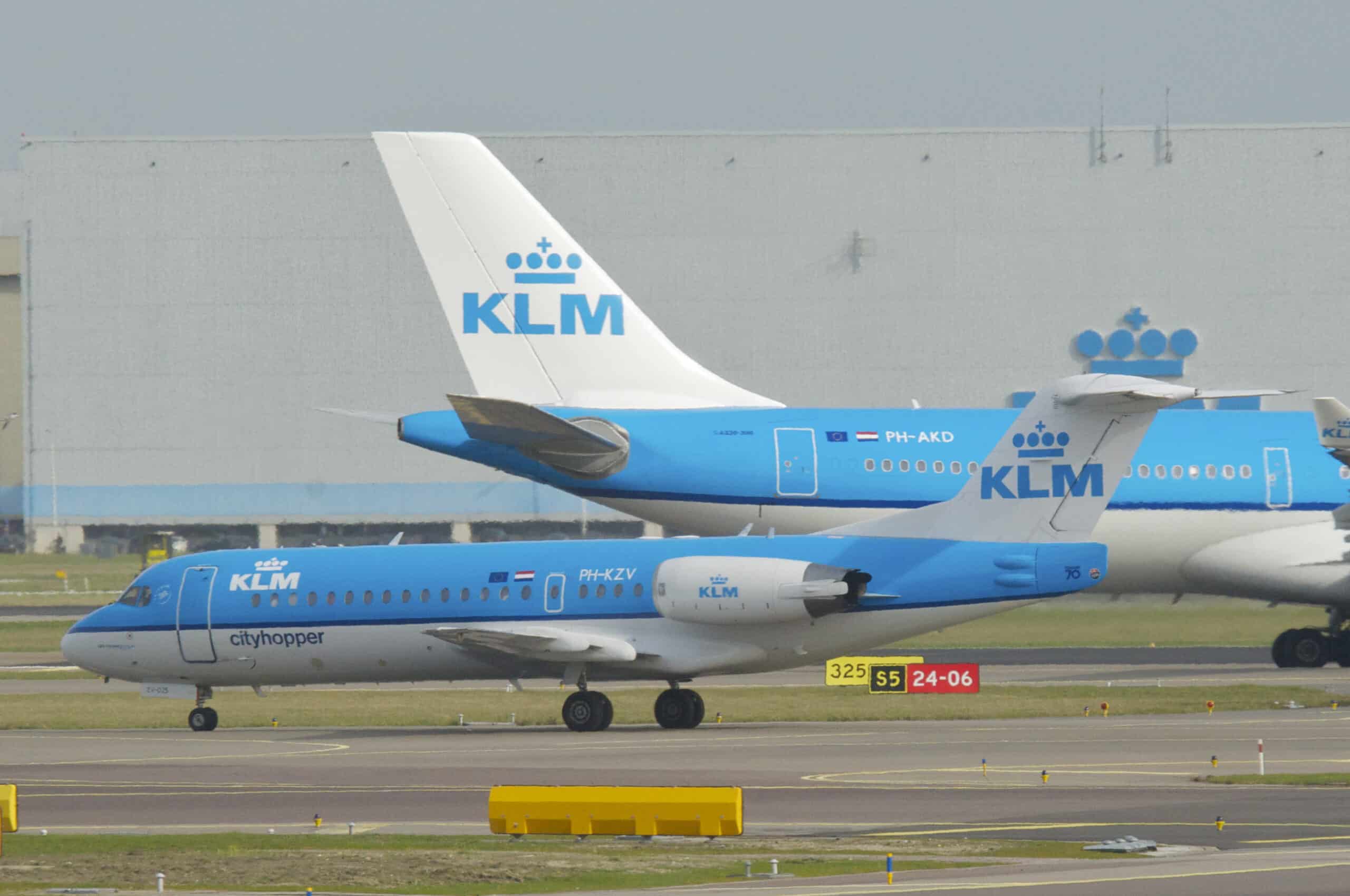
KLM Cityhopper Fokker 70
A KLM Cityhopper Fokker 70 at AMS in 2013 | IMAGE: Aero Icarus from Zürich, Switzerland, CC BY-SA 2.0 , via Wikimedia Commons

Dutch aviation pioneer Anthony Fokker (1890-1939) founded the Fokker aircraft company. He became famous when he flew over the city of Haarlem in 1911 in his own Fokker Spin, which he built in Germany in 1910. At that time, before World War I, Germany was emerging as the center of aviation in Europe.

During the First World War, the Fokker planes became famous.  Fokker was friends with Manfred von Richthofen, also known as The Red Baron. He flew the famous Triple Wing fighter plane, the Fokker Dr.I. The D.VII would become the best fighter plane of World War I.

After the war, Fokker needed to find a new market to sell its planes.  It emerged as one of the first companies to sell passenger aircraft. KLM was one of their first customers. KLM’s 97-year relationship with Fokker began in 1920, one year after KLM was born. KLM initially operated converted military planes, but in 1920 it bought two Fokker F.II.s (4 passengers) and then the Fokker F.III. (5 passengers).

The 20s would become the Golden Years for Fokker. KLM operated 18 different Fokker aircraft types between 1920 and World War II. One aircraft in particular stood out. The Fokker F.VII.(8-12 passengers) would become Fokker’s first highly successful airliner. It was utilized by a variety of European airlines. Other companies also produced the aircraft under license.

The 1930s were more challenging for Fokker. American companies (like Douglas) would make great advances in commercial aviation. The DC-2 and DC-3 were more advanced than Fokker aircraft. They were manufactured out of aluminum vs. Fokker’s wood and steel construction. This put Fokker at a disadvantage to its American rivals. Airlines like KLM, previously a Fokker operator, chose the DC-2 and the DC-3. Anthony Fokker, the company’s founder, also passed away just before the Second World War began.

Fokker thrived after the war…for a while

During World War II and the recovery period, Fokker would not regain its footing until the 1950s. The F-27 Friendship was their first post-war success. It would become the most successful aircraft that Fokker built. 786 of the type were manufactured. 

KLM was a big fan of the F-27.  They operated the F-27 Friendship until the early 1990s.

Fokker’s first jet was the F-28 Fellowship, which launched in the late 60s.  They built 241 F-28s. KLM was a dedicated user of the type. The F-28 would eventually evolve into the F-100 and Fokker 70 aircraft.

Fokker returned to its roots in the late 1980s, rehashing its previous successes.  They developed the Fokker 50, based on the successful F-27. KLM also flew the Fokker propliner to regional destinations. KLM operated the Fokker 50 from 1990 until 2010.  Fokker also evolved the F-28 into the Fokker 100, the largest aircraft it ever built.  Fokker made 283 of the type. KLM flew the Fokker 100 from 1989 until 2009.

Fokker F70s Battling against Extreme Crosswinds: This video of Fokker F70s in Full Action comes from Jerry Taha Productions

Truly the end of an era

Fokker’s last production aircraft was the Fokker 70.  While the aircraft has become decidedly rarer in recent years, it is still flying today in countries around the world.  Several of KLM’s Fokker 70s ended up with other operators.

For Dutch aviation lovers and avgeeks, it’s reassuring to know that some of the last Fokker 70s are still flying in other parts of the world, rather than ending up in a desert or a museum. The end of Fokkers at KLM was a sad day, but we are very proud of this great pioneer and what a man named Fokker did for aviation.

It’s amazing to think that such a small country as the Netherlands could create such a proud legacy in aviation. Anthony Fokker, a brave innovator, followed his dream of flight and turned it into a business that lasted almost 80 years.

KLM’s days of flying Fokkers have ended, but the legacy of the aviation firm lives on.

Special thanks to Jerry Taha for the story and videos.

Atlas Air Contract Dispute With Pilots Simmers Weeks Before Holiday Shipping Season

0

The gloves are coming off in Atlas Air’s contract negotiations with the pilots’ union. The air cargo carrier accused pilots last month of intentionally slowing down work in an effort to gain an upper hand in contract discussions. The company filed a federal complaint alleging the pilots were intentionally calling in sick and refusing to put in overtime.

Whether the accusations of bad pilot behavior are true or not, Atlas has felt the effects of labor strife. According to marketwatch.com, the airline has had an 83% increase in flight delays lasting over 6 hours since December of last year. The airline subsidiaries deliver cargo for Amazon, FedEx, Deutsche Post AG’s DHL and UPS. Associated unions include the International Brotherhood of Teamsters (IBT), its Airline Professionals’ Association and its Airline division.

You may be wondering, well, what has these pilots so angry? To answer that question, let’s go back to April 2016 when Atlas acquired Southern Air.

Southern Air acquisition: Potentially great deal for Atlas. Not such a great deal for pilots….

The Southern Air acquisition made Atlas Air Worldwide Holdings (AAWW) one of the leading providers of aircraft operating services on earth. However, in spite of rising profits, the Teamsters say the airline refuses to negotiate contracts on fair terms.

Before the merger, Atlas pilots had hoped for a contract that put them in line with other heavy-cargo pilots flying 747s, 767s, and 777s. AAWW and its affiliates filed legal proceedings in February in an attempt to force pilots, many of them former military, to merge the now defunct Atlas Air contract with Southern Air’s existing contract.  The problem was that the Southern Air contract was originally negotiated during bankruptcy when pilots had no choice but to accept big wage, benefit and work rule concessions while the company was facing potential liquidation.

Atlas Air 1
Atlas Air Worldwide Holdings, Inc. freighter (OTRS wikimedia commons)

Pilots say they are over tired, over worked, and underpaid. They point to requirements that have them flying cargo around the globe for a fraction of their previous pay, under what has been called exhausting and dangerous flight and duty time standards. The APA website reports that some have reported having to operate aircraft for as long as 30 hours in one stretch without being allowed to rest.

The union did a comparison study that found that AAWW pilots are paid less and work many more hours than peers who fly for FedEx or UPS. Post the Southern acquisition and merger, the Atlas Air contract as it currently stands is at 50 to 60 percent below the rest of the industry.

In defense, AAWW CEO William J. Flynn says the cargo carrier’s goal is to merge the two contracts through binding arbitration. This would, of course, circumvent the standard process of direct pilot negotiations but according to Flynn, is in line with rules laid out by the Railway Labor Act. Both airlines and railroads operate under these rules which include mandatory federal mediation if the two parties cannot reach an agreement

Pilots say that while legal, AAWW’s push for arbitration is part of a plan to cut wages, get rid of as many pilot protections as possible and ruins the quality of life for pilots and their families. They have also expressed fears that the lower standards will affect the industry as a whole.

AAWW CEO Flynn responded to the comments by citing the company’s commitment to customer service, saying Atlas “must protect the service quality we provide to our customers,” defending the recently filed complaint as an effort to minimize service disruptions.

Atlas also said that, “Atlas values the contributions of its pilots. The Company will continue to negotiate with the IBT for a joint contract for Atlas and Southern Air crewmembers in connection with the pending merger. The Company remains committed to completing the bargaining process in a timely manner and in the best interests of all parties.”

But is the lack of an industry-standard contract what is best for customers?

The Seeds of Unrest: Pilots Protest in Times Square

Marking the beginning of the turmoil, apparently fed up with AAWW’s inability or unwillingness to negotiate what they think are fair terms, the Teamsters took to the Street and protested on the steps of NASDAQ during the Atlas Investor Day in June 2016. This was the start of a long struggle and foreshadowed the ensuing tumultuous contract dispute.

For the first time in American history, picketers wearing pilot uniforms held signs on the NASDAQ MarketSite steps that read, “Atlas Air Worldwide Holdings Pilots Ready to Strike,” “Americans Deserve a Fair Deal from DHL” and “Our Families Deserve Better.”

Pilots striking
Atlas Pilots picket in front of NASDAQ Photo atlasfacts.org

AAWW and DHL have both seen rising profits. DHL reported $66.7 billion in increased consolidated revenue this past year. AAWW reported revenues totaling about $1.8 billion.

Air freighter pilot Captain Robert Kirchner pointed out that, “The operation at Atlas is falling apart because of chronic mismanagement, a shortage of pilots, and a lack of other key operational personnel.”

In spite of reported delays, an Atlas spokeswoman told CNBC in an email that the company intends to meet all its customer commitments, saying, “We remain committed to negotiating a competitive, single-collective-bargaining agreement in accordance with the terms of our existing labor agreements, which recognizes our pilots’ valued contributions.”

It seems as if more than a few pilots do not feel valued by the corporate giant, however. Many experienced pilots have recently left the airline for more lucrative cargo and airline flying with other carriers. The union is vowing to keep an oath of solidarity to fight the air cargo carrier for what it considers fair treatment. Meantime, AAWW waits for the courts to decide its fate. The lawsuit is ongoing in the United States District Court for Southern New York and could advance at any moment, only a few short months away from the peak holiday shipping season.

Two odd incidents for Atlas-crewed 747s this year

Near miss of terrain after wrong turn on departure from Hong Kong Airport

800px HK Lantau Island sunrise
Lantau Peak Photo By Flickr user: 29cm. An Atlas Air 747 missed this peak by less than 1000 feet after a wrong turn. (https://flickr.com/people/29cm/ – Flickr: https://flickr.com/photos/29cm/535760385/, CC BY-SA 2.0, https://commons.wikimedia.org/w/index.php?curid=22539533)

September 24, 2017 an Atlas Air Boeing 747-8 Freighter nearly crashed into a mountain after take-off from Hong Kong International Airport. Hong Kong’s Civil Aviation Department (CAD) says after departing from runway 07R, the N856GT aircraft swayed right and deviated from its track, heading straight toward the mountains of Lo Fu Tau on Lantau Island. The air traffic control tower radioed the crew, telling them to turn left to resume standard instrument departure and “expedite the climb to 5,000ft.”

When the cargo plane reached 2,000ft, the Enhanced Ground Proximity Warning system went off. The pilot responded, turned the aircraft and ascended to higher ground … in the nick of time. A CAD spokesperson said, “the aircraft evaded the high ground by approximately 670 feet. Subsequently, the aircraft re-established the SID (standard instrument departure) track at approximately 15:46 and continued without further incident. There was neither injury to personnel nor damage to the aircraft involved and no other air traffic was affected.”

Was weather the culprit? Not according to meteorological data, which shows that on September 24 at that particular time, visibility was 10 kilometers, with just a few scattered clouds at 1,500 and 2,800 ft. There was also no sign of turbulence or wind shear. Was the pilot inexperienced or so fatigued that he failed to notice a mountain looming in front of him? You decide.

Runway Overrun at Tokyo Due to Incorrect Thrust Setting

Another serious incident July 15, 2017 involved a Polar Air Cargo Boeing 747-8F operated by Atlas Air. Less than 20 minutes before curfew, Flight PAC/PO213A was taking off from runway 16L at Tokyo/Narita., headed to Shanghai Pudong International Airport. The runway is 8,200 ft long, but the cargo plane became airborne at just 279 ft from the departure end. The pilot fell short of achieving a safe altitude which ideally would have been 10.7 m/35 ft at 326 m/1070 ft (15% length margin) from the departure end. A nearby resident under the departure course reported that household items were blown away by the plane and a fence near the end of the runway was damaged by engine exhaust.

JSTB launched an investigation similar to those conducted in overrun accidents. Polar Air Cargo admitted the incident was because of an incorrect thrust setting on takeoff. Fortunately, no injuries were reported but again in this case, it is unknown if the pilot was fatigued or lacked training and/or experience.


Air Force Thunderbirds, A-10 Warthog to Headline Thunder Over South Georgia

VALDOSTA, Ga. — The Air Force Thunderbirds and the crowd favorite A-10 Warthog will headline this weekend’s Thunder Over South Georgia air and space expo from Moody, Air Force Base.

As the Air Force celebrates it’s 70th anniversary, much of the aircraft flying and on static display are air force aircraft — both past and present. From the F-16 Viper to the P-51D Mustang, and including the hulking C-17 Globemaster III, the Moody airshow will be packed with aviation excitement and family friendly events.

Home to the 23rd Wing, nicknamed the Flying Tigers, Moody prepares and trains some 5,400 military and civilian personnel.  It is also home to the A-10C, C-130J, and HH-60G Pave Hawk helicopter which are combat ready.

“This event is free and open to the public and features acts from the U.S. Air Force Academy’s Wings of Blue to the U.S. Air Force Thunderbirds and will also host more than 15 static displays,” said Tech Sgt. Zachary Wolf of the 23rd Wing.


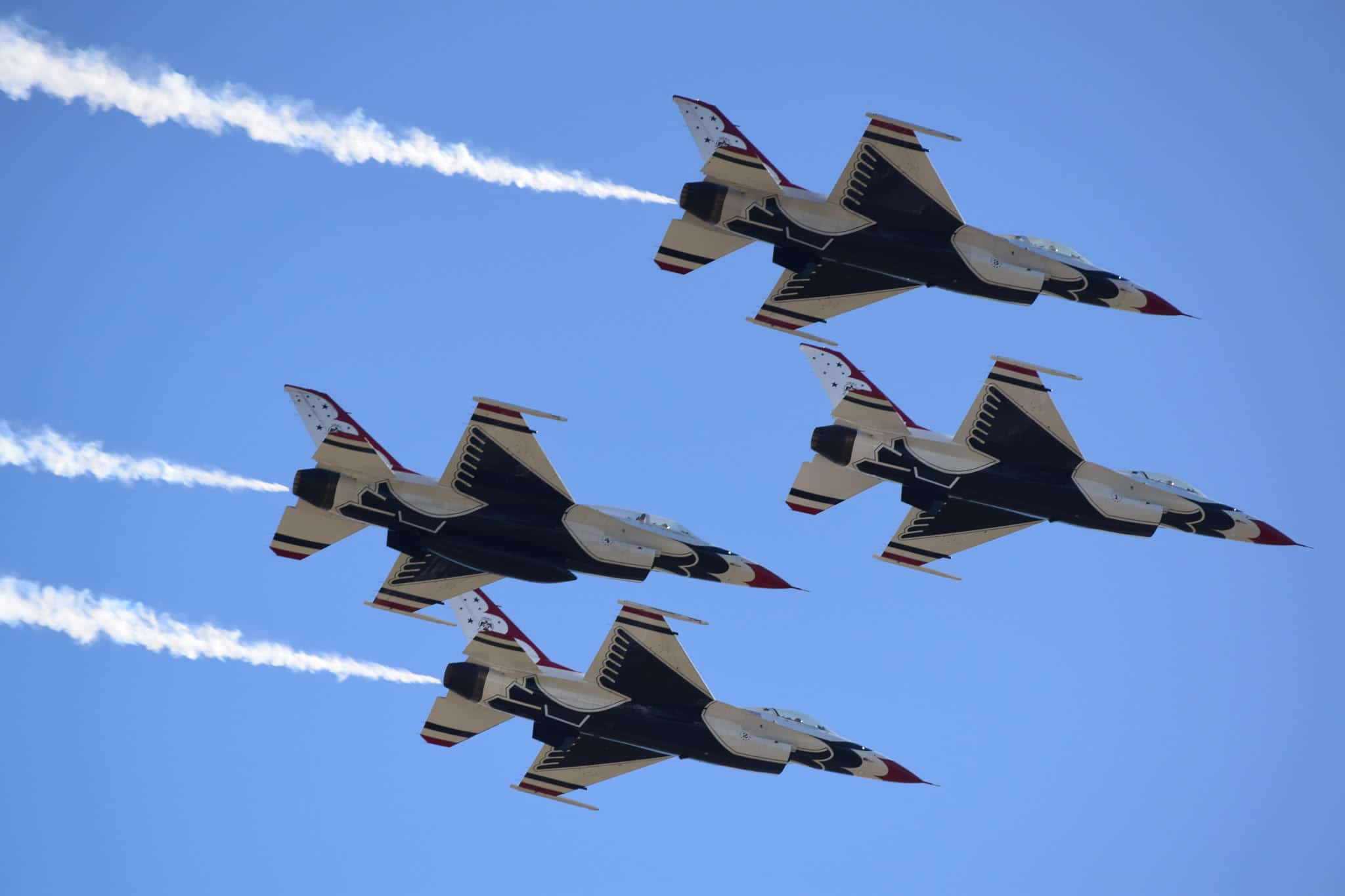
The top draw of this airshow will be America’s Ambassadors in Blue known by the public as the Thunderbirds. Performing dynamic aerial maneuvers in close formation or as solos, the squadron’s six pilots demonstrate the handling characteristics of the F-16 Fighting Falcon.

Lead by LT. Col. Jason Heard piloting the Thunderbird 1 jet. The six demonstration pilots include left wing pilot Major Ryan Bodenheimer aboard Thunderbird 2, Thunderbird 3 right wing Major Nate Hoffman, slot pilot Major Nick Krajicek in jet 4, and Major Alex Turner and Major Whit Collins performing as lead and opposing solos in jets 5 and 6.

tb2
Photo by: Charles A. Atkeison

On Thursday afternoon, eight Thunderbirds F-16 jets arrived at Moody followed by two C-130 Hercules loaded with supplies and spare parts for the red, white, and blue jets. About 65 Thunderbirds maintainers and support personnel also arrived aboard the C-130s.

“We’re at the culmination of the end of our season,” said Thunderbird 4 pilot Maj. Krajicek on Thursday from the flightline. “We’re a team of 120 individuals who have come together, and it’s an incredible team, and it somewhat becomes your family as we’re on the road 220 to 240 days a year.”

Major Collins, the Thunderbirds opposing solo pilot and Georgia native, expressed his love for waving out at the airshow crowds as he flies. Collins is wrapping up his first season with the team, and will move up to lead solo in 2018.

“As a soloist, since I’m flying by myself most of the time, during my repositions, I fly with my right hand and my left hand’s power, I’ll reach up and wave to people all the time,” Maj. Collins exclaimed with a grin on Thursday. “My hope is they are at work the next day telling people, ‘I swear he was waving at me’. But, if you’re out there, I really do wave.”

Collins, who grew up in an Air Force family, was further inspired to become a pilot at age 10. “I went to an airshow at Warner Robbins, Georgia, there I met a Thunderbird. I told him I wanted to grow up to fly airplanes, and he looked at me and he said, ‘you’ll grow up and be a great pilot one day’. And, that really lite a fire to me. So, when it came time when I was an air force pilot, I have the opportunity where I can give that back, and to tell the youth of America they can do anything thy put their minds to it.”

Tuskegee Exhibit will be featured

tb3
Photo by: Charles A. Atkeison

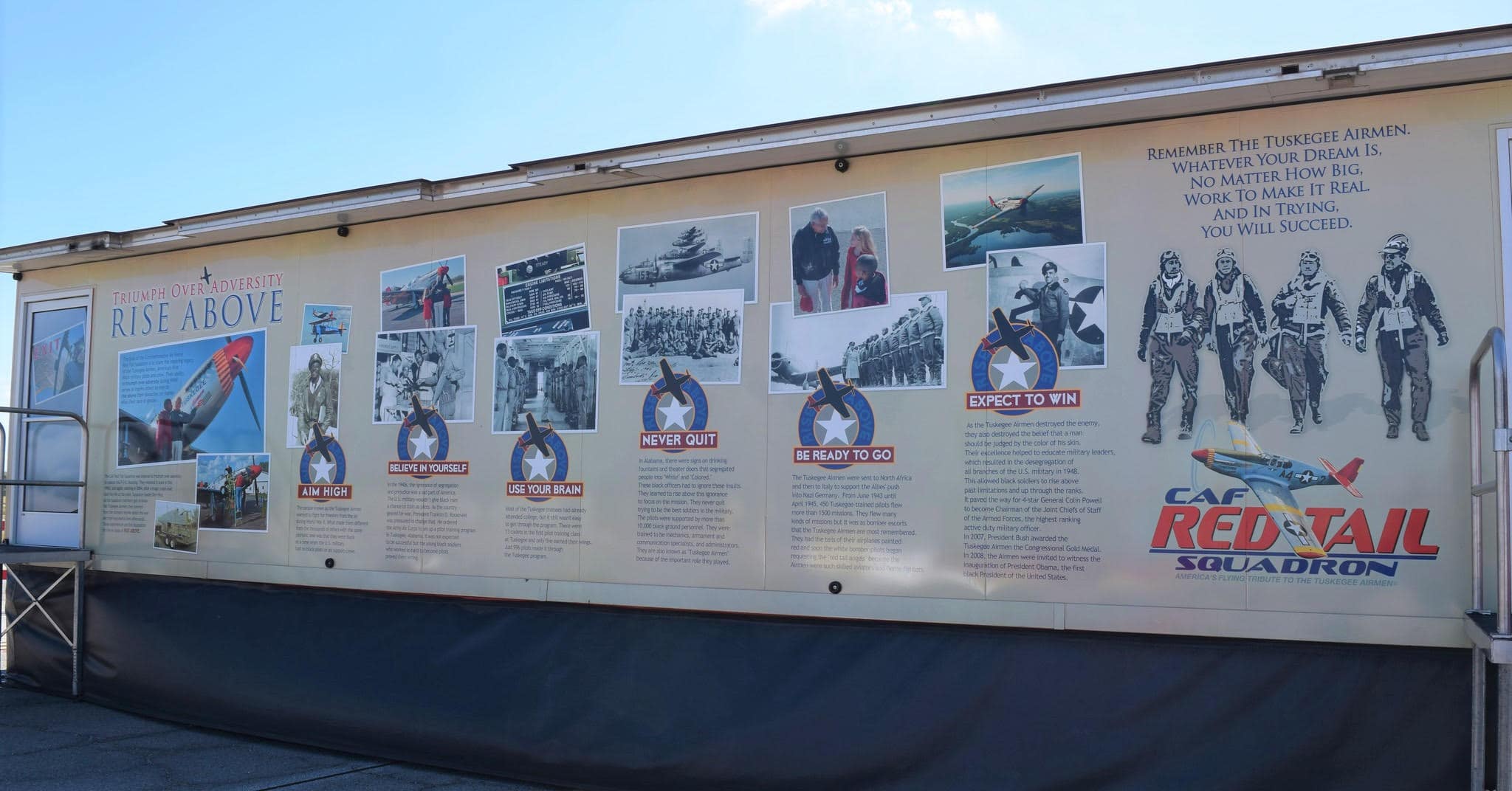
The Tuskegee Airmen exhibit will be on display both days. It highlights the historic contributions of the first African-American military pilots during World War II. The Commemorative Air Force supports the traveling exhibit.

“World War II and the service of these American heroes may be slipping farther into the past, but the lessons to be learned from the Tuskegee Airmen are timeless,” said Bill Shepard. Bill is a CAF Red Tail Squadron P-51C Mustang pilot and CAF Vice President of Education. “We know there are so many people who are passionate about the legacy of the Tuskegee Airmen.”

Gates will open at 9:00 a.m. each day, and the opening ceremonies will begin at about 11:30 a.m. with the Wings of Blue parachute team. Both admission and parking are free.

(Charles A. Atkeison reports on aerospace and technology. Follow his updates via social media @Military_Flight.)

Hardware from the Boeing 747-400 Being Auctioned Off | Take Home a Piece of United Airlines History

0

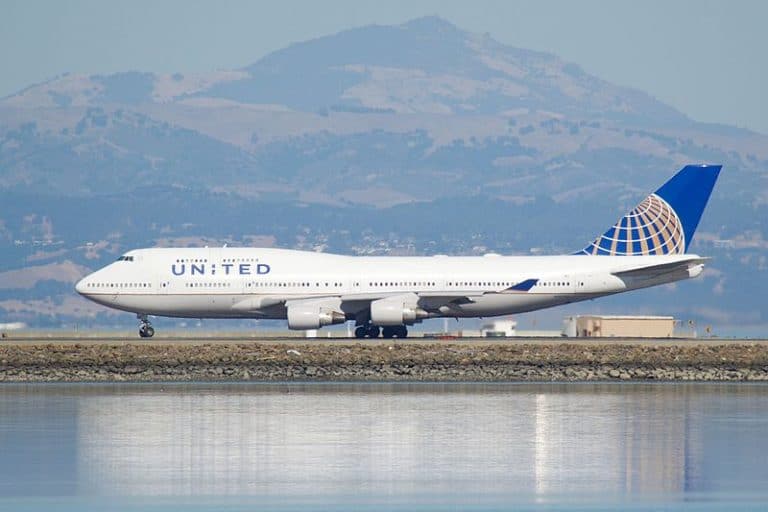
Don’t miss your chance to own a piece of aviation history! Literally speaking, a piece of the infamous Boeing 747 fleet from United Airlines can be in your living room. To celebrate the aircraft’s retirement from the fleet, MileagePlus Exclusives is offering passengers with accumulated award miles a once-in-a-lifetime opportunity to exchange award points for parts of the airplane.

Special items will be up for auction throughout the event which runs until November 7, 2017. Check the site often to make sure you don’t miss out on unique items going up for bid:

See the auction here

img 3522

Items that you can get your hands on in exchange for your award miles include tail number cut-outs, airspeed indicators, double or triple passenger seats, livery panels and window cuts, and even a 747-400 aluminum cut-out which goes up for bid October 30. These one of a kind pieces of aviation hardware can’t be found anywhere else. Redeem your miles and grab a piece of the plane for yourself or your favorite aviation enthusiast. Perfect for gift giving!

In doing so, you will be joining other Avgeeks as we celebrate United’s final send-off of the Boeing 747-400, the “Queen of the Skies.”

Own a piece of hardware from the aircraft and help a great cause, too. All profits from the auctions on MileagePlus Exclusives go to to support Air Camp, an interactive educational aviation and aeronautics program that helps students in STEM-related fields across the country achieve their goals. Log on today, claim your piece of the famed Boeing 747 and help young people make their dreams of a career in aviation come true.

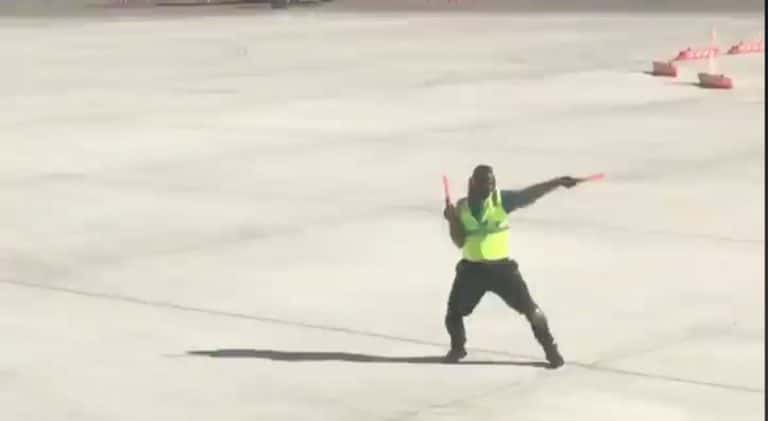
Ramp Worker’s Funky Dance Moves Go Viral

0

Working the ramp isn’t a particularly glamorous job. It involves a ton of physical exertion and you are at the mercy of the elements. As a ramp agent, the outside is your office. Heat, rain, snow, and sleet, are common. You are measured by your ability to ensure that the flights depart on-time. Passengers hardly ever see you long enough to say ‘thanks’ for loading my bags and ensuring that my flight departed on-time.

Kyran Ashford is employed by JetStream Ground who contracts with Southwest Airlines for ground operations. He sets the standard for service with a smile. Earlier this week, country artist Terry McBride posted a video showing a ramp agent whose wing walking was over the top. Terry was impressed. His moves were so fantastic, and his smile so infectious that the video of him ‘just’ doing his job have now been seen by over 6.5 million people. It’s safe to say that he might be the first person in aviation history whose wing-walking skills have gone viral!

Avgeekery salutes Kyran and appreciates his passion. We also hope that his skills serve as a great resume builder to get hired as a station manager or better for Southwest Airlines in Rochester. The world needs people with passion like his. Any airline would be lucky to have him.

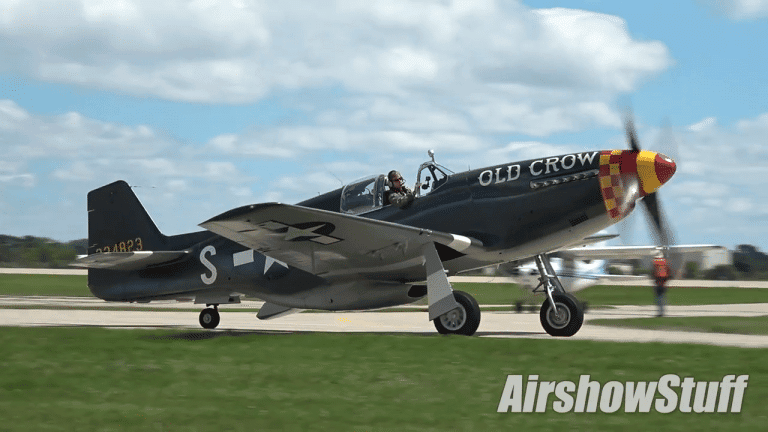
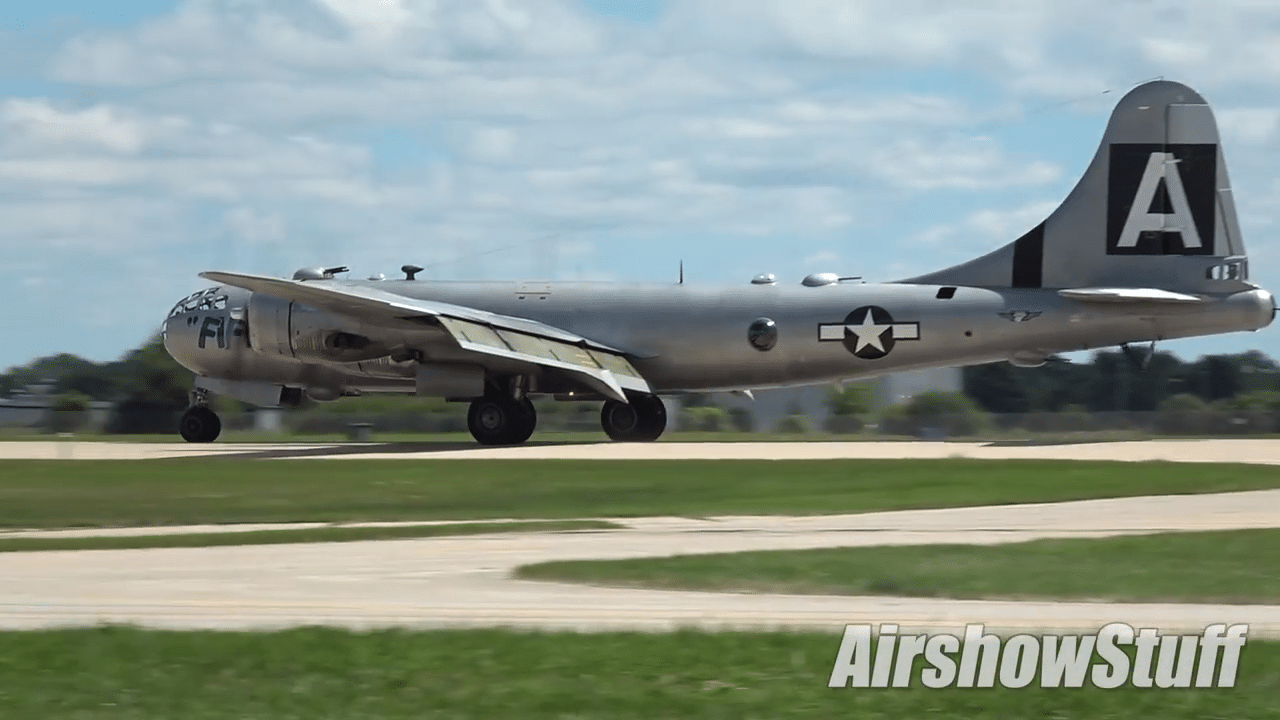
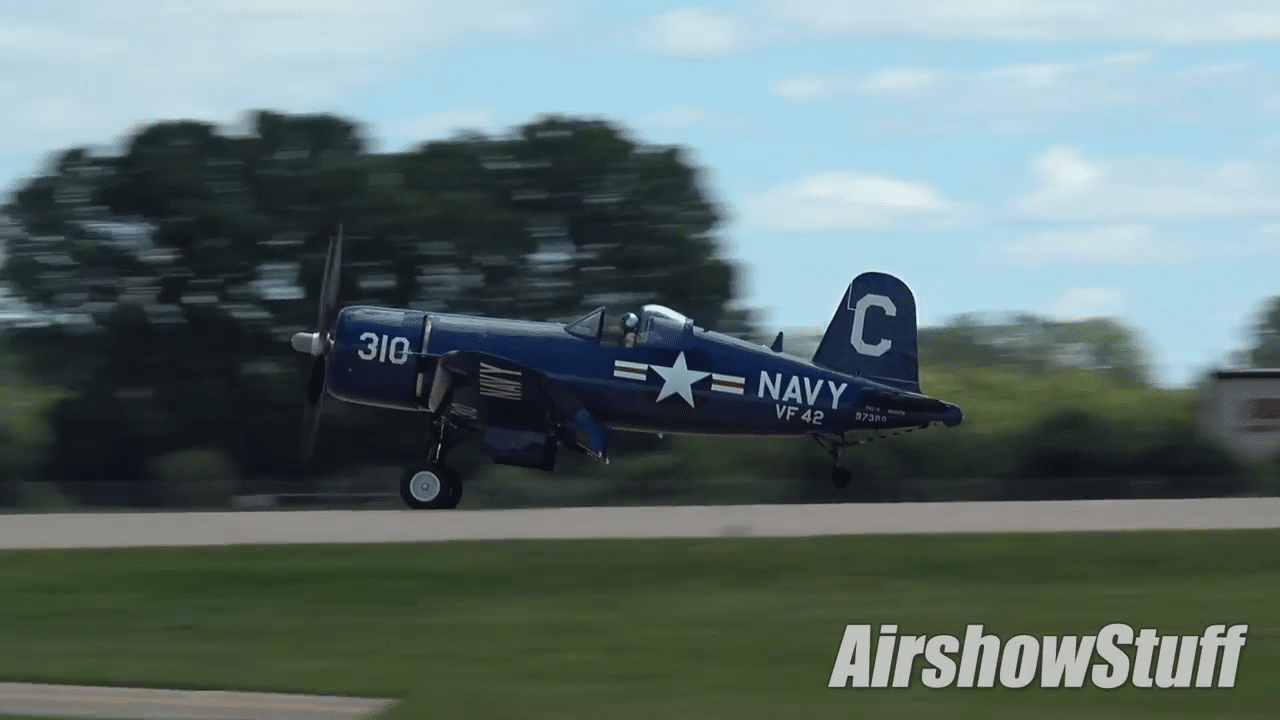
WATCH: Sweet-Sounding Warbird Sounds From EAA Airventure 2017

We’re heading headlong into the winter months and that means airshows and gatherings of warbirds will be few and far between. We know Avgeekery Nation enjoys great warbird action and Oshkosh had some of the best ever seen there this year. From our good friends at AirshowStuffVideos comes this awesome action video shot during the 2017 Experimental Aircraft Association (EAA) AirExpo in Oshkosh. The action is in HD and the audio is great with only minimal radio chatter. Turn those speakers up and enjoy!

download 2 1

The action was recorded adjacent to runway 36 and includes departures, arrivals, and taxiing aircraft of many types including a plethora of North American P-51 Mustang fighters (and those sweet-sounding Merlin engines!) including an ultra-rare P-51B model, the Commemorative Air Force B-29 Superfortress bomber Fifi, a Vought F4U-4 Corsair, a North American B-25H Mitchell medium bomber, a Beech T-34B Mentor trainer, a Beech C-45 Expeditor, a gaggle of North American T-6 / SNJ / Harvard trainers, a CJ-6 Nanchang trainer, and a Grumman (General Motors) TBM-3E Avenger. There’s even a beautifully restored TA-4J Skyhawk trainer wearing Marine Corps Harrier-esque camo.

download 3 1

Watch: Spanking New F-14A Tomcat Gets Prepped For Service

When Grumman and the Navy teamed up to produce the F-14 Tomcat Progress Report films during the early 1970s the new jet was being tested and evaluated by multiple squadrons at several Naval Air Stations (NASs) and facilities. The Tomcat would go on to serve the Navy for 32 years, but at this point there was still a whole lot to learn about the complex F-14A.

The process of testing, training, and getting a brand new weapons system ready for its first combat deployment was complicated indeed. This film, “Progress Report #5:  The Operational Tomcat” uploaded by YouTuber PeriscopeFilm with excellent image and sound quality, is a must-see for every Tomcat aficionado. Boola Boola anyone?

[youtube id=”G-mrFcsw-Ew” width=”800″ height=”454″ position=”left”]

F 14A Tomcat of VF 2 in flight c1973
Official US Navy Photograph

Carrier Air Wing FOURTEEN (CVW-14) was preparing for their next WestPac deployment aboard the carrier USS Enterprise (CVN-65) when the film was shot. Fighter Squadron ONE (VF-1) Wolfpack and VF-2 Bounty Hunters had just been formed at NAS Miramar in mid-October 1972. Both squadrons were gearing up for their first deployment with the new Tomcat.

Note the flamboyant far-from-low-viz colors on the VF-1 and VF-2 Tomcats in the film. Those are classic 1970s Navy squadron schemes! Testing and evaluation of just about every kind can be seen in this time capsule of a film.

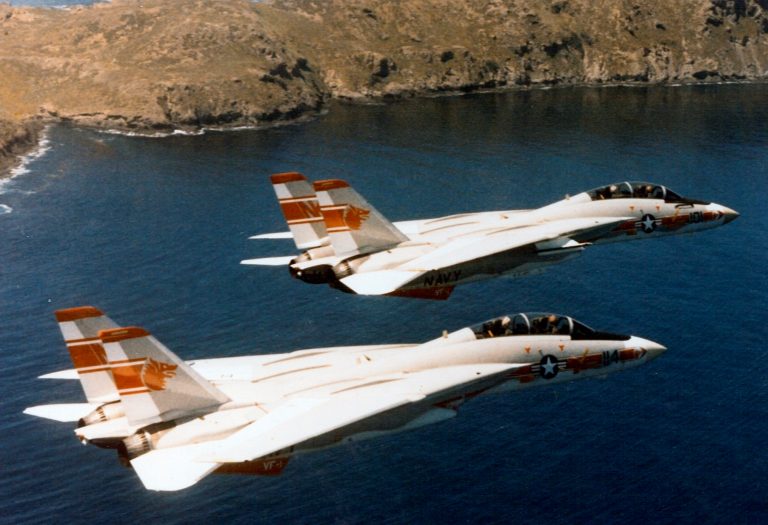
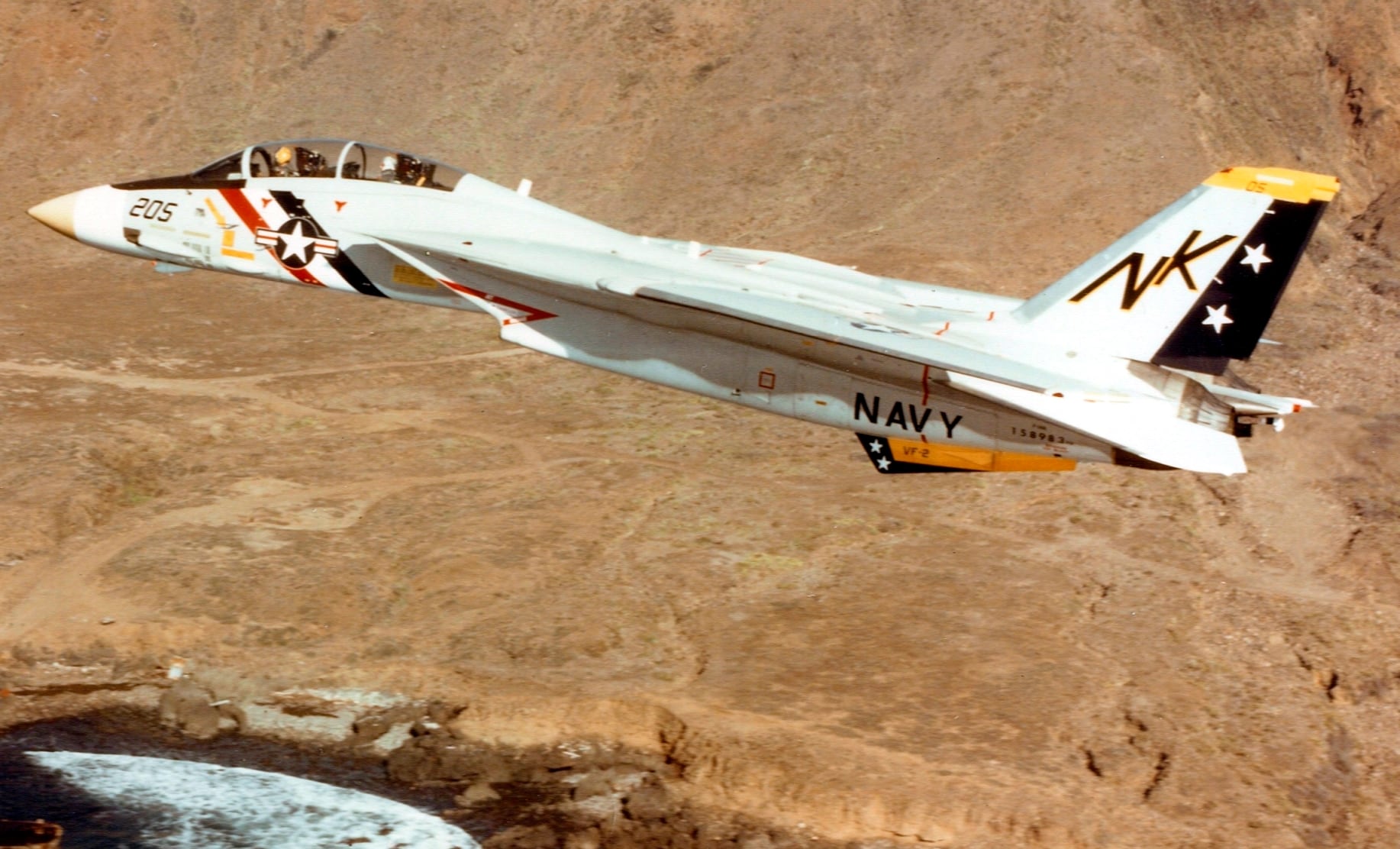
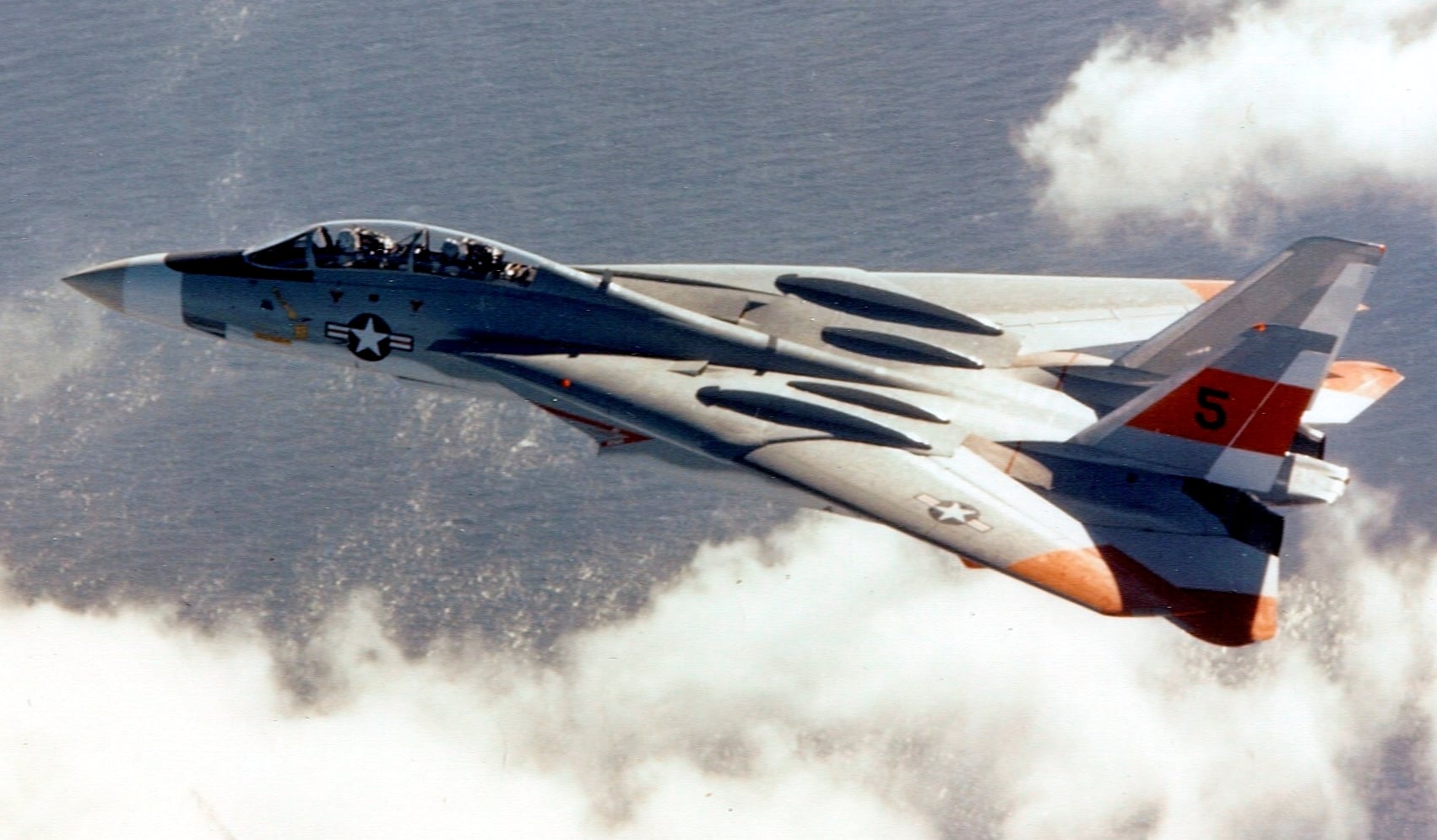
Tomcat pictured in flight.
Official US Navy Photograph

Georgia Man Angry Over Missing Air Show Opens Fire Into Traffic

0

In a bizarre story out of Rome, GA, a 73 year old man was arrested this past weekend after opening fire into traffic after being angry that he missed the Wings Over North Georgia Air Show.

In a story first reported by the local Rome News-Tribune, Jerome Benesh was jailed in Floyd County on two counts of aggravated assault, three counts of felony obstruction of an officer, one count of cruelty to children in the first degree, and two counts of possession of a firearm during the commission of a crime.

17097279 1216486125139240 224785715344535354 o
The Blue Angels were the headline act at this past weekend’s Wings Over North Georgia Air Show. Photo: Mike Killian

“He thought it started at 5 p.m. but it was closing, and then he got stuck in traffic,” said Floyd police Capt. Chad Johnson. “We had multiple witnesses saying he was going in and out of traffic, firing off rounds.”

When confronted by police Benesh decided to try fleeing, but didn’t get far.

No injuries were reported, nor was any damage or bullet holes found on any of the roughly 100 vehicles on the road at the time Benesh threw his temper tantrum.

Over 80,000 spectators came out to the show Oct 21 and 22, the show’s largest crowd in six years.

He’s also facing many misdemeanor charges as well, including reckless conduct, reckless driving, and fleeing a law enforcement officer – among many others.

.– Follow Mike Killian on Instagram and Facebook, @MikeKillianPhotography 
.

Air Attack Fleet And Pilots Made A Big Difference In CA Wildfires

0

Air attack pilots deployed to support firefighting operations in Napa and Sonoma counties. They have employed a variety of equipment necessary to fight these massive fires that have killed over 40 people. We take a look at the planes and the requirements to fly these demanding missions.

You Can’t Drop If You Can’t See The Target–Decent Visibility Is Critical

Smoke and thick haze created very low visibility in an area of rough and high terrain making it extremely risky to coordinate the drops at a low enough altitude for them to be effective.  For the early parts of the blazes most of the tanker pilots were required to wait out the weather for conditions to improve.

Without the effort of a relentless air attack the Nuns fire merged with the Adobe, Norbbom, Patrick and Pressley fires producing an inferno that has scorched over 54,000 acres.  Today that fire is mostly contained, due in no small part to the efforts of aerial firefighting.

CAL FIRE has led the effort in coordinating a massive statewide effort fighting over 13 large wildfires currently burning that have consumed over 210,000 acres.  They are employing multiple aerial assets in the effort to contain these fires including helicopters, scout aircraft, air tankers and military drone aircraft.  The civilian deployment includes 37 helicopters and 36 planes which have been assigned to the fires in Sonoma, Napa, Lake and Mendocino Counties.

The Tools of Their Fleet

Helicopter Drops

Helo bucket over fire
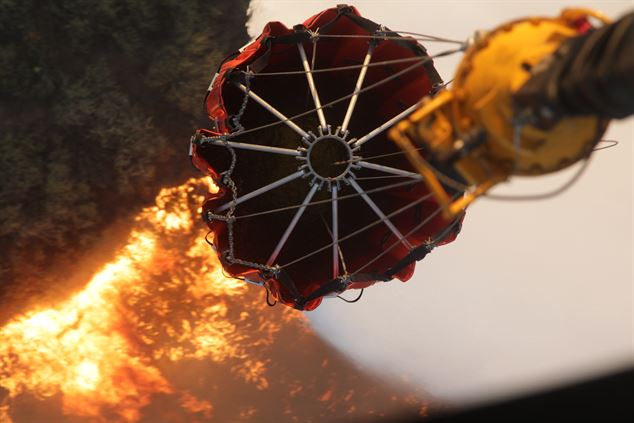
A U.S. Marine Corps CH-53E Super Stallion helicopter, Marine Heavy Helicopter Squadron 462 (HMH-462), Marine Aircraft Group 16, 3rd Marine Aircraft Wing (MAW) collects water in a bambi bucket during aerial firefighting efforts, May 14, 2014. 3rd MAW aircraft partnered with the California Department of Forestry and Fire Protection to conduct aerial firefighting against several wildfires ablaze in San Diego County. (U.S. Marine Corps photo by Staff Sgt. Carl Atherton 3d MAW COMCAM/RELEASED)

Aerial firefighting pilots launched throughout the day to attack these fires from the air, and went all in to fight these fires.  Military style Hueys UH-60s and chinooks CH-47, could be seen visibly dropping water on fires over the ridges above the vineyards.  Smaller helos were sighted filling their buckets at lakes near wineries in the region.

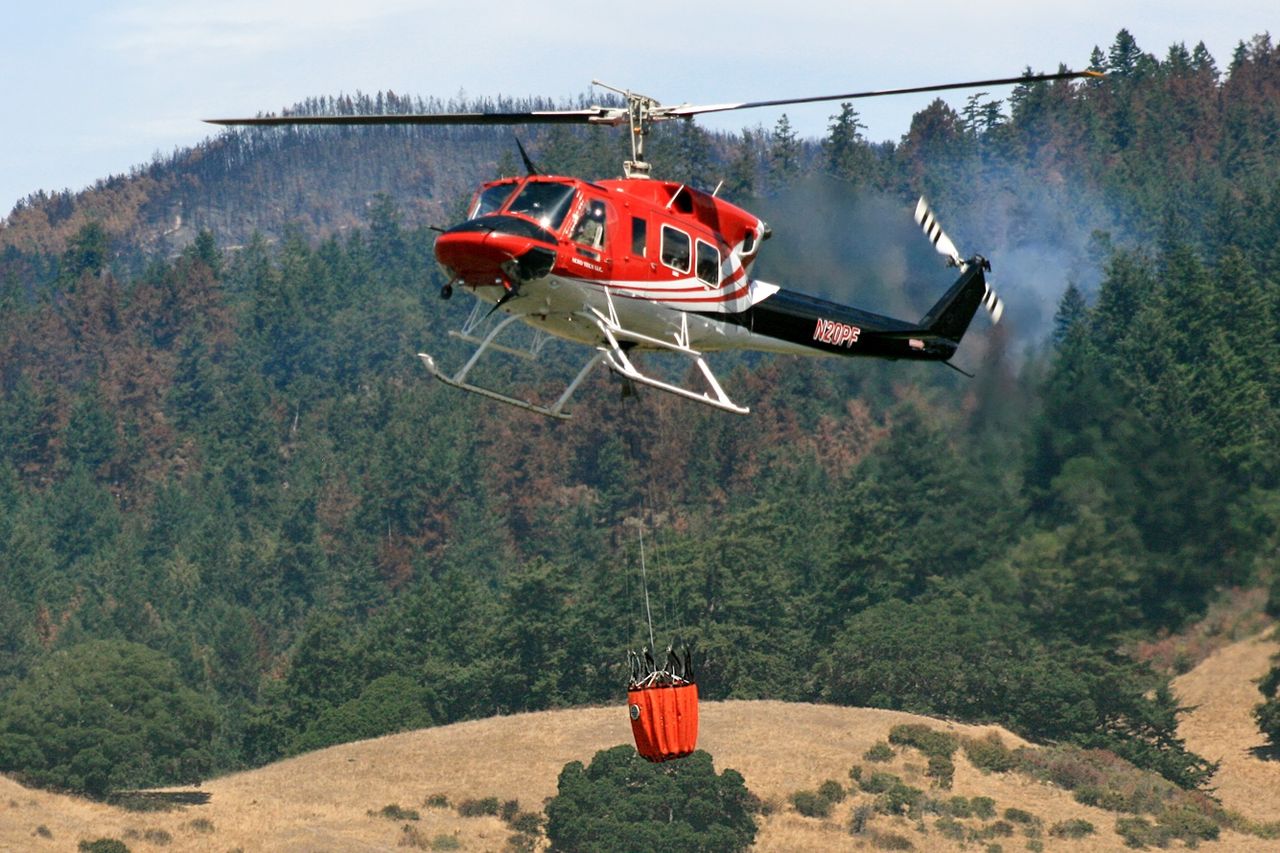
A fire helicopter with helicopter bucket
A Bell 212 with a helicopter bucket. (Wikipedia)

Command & Control Scout Planes

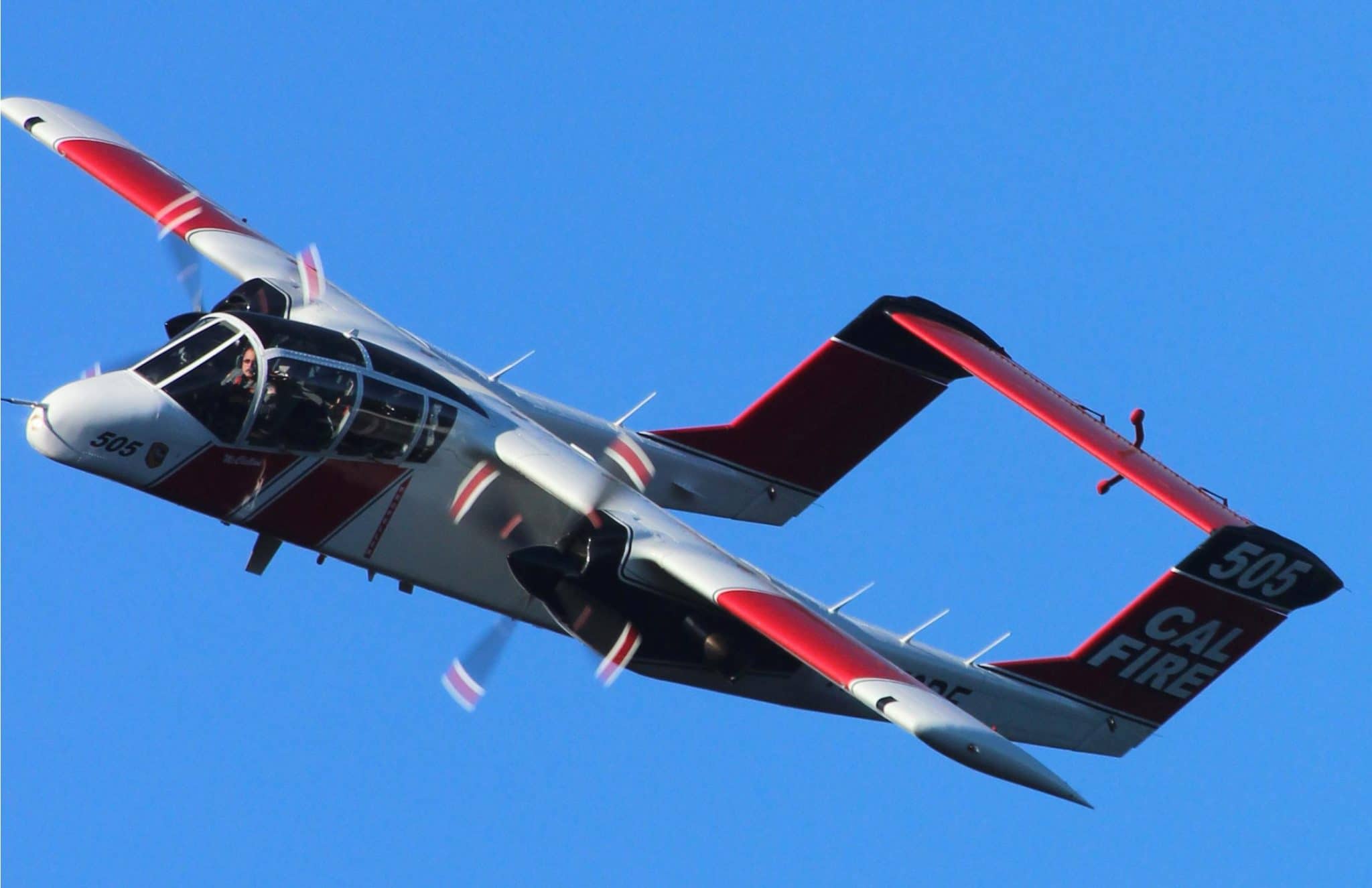
The CAL FIRE scout OV-10A is a light attack plane operated out of Chico, CA that orbits over the fire area for hours searching for hot spots and coordinating the fire retardant and water drops to maximize the impact of the air attack, giving firefighters on the ground the best shot at saving lives and protecting property.

OV 10A
An OV-10 lead plane flies with a crew of two, a contract pilot and the California Fire Air Tactical Group (CAL FIRE ATGS) Supervisor, whose job it is to coordinate all aerial assets on a fire with the Incident Commander on the ground. The OV-10 also leads firefighting air tankers through their intended flight path photo by Mike McMillan. (Wikipedia Commons)

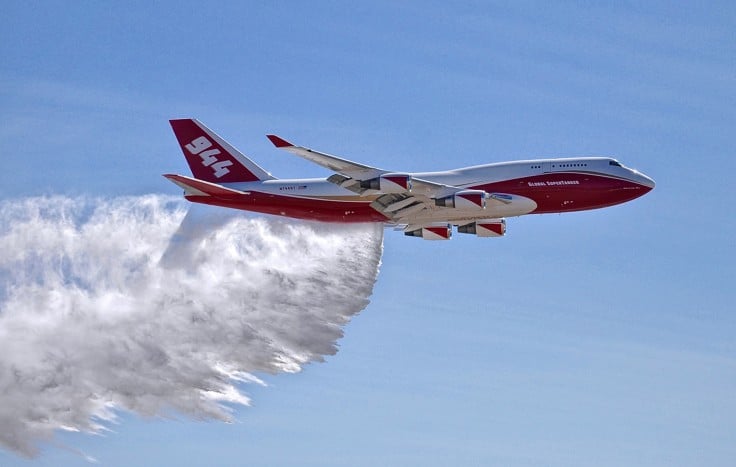
The Global SuperTanker

Air Tankers DC-10s, C-130s and now a 747 are flying drop missions with full loads out of McClellan Air park in Sacramento and Charles M. Schultz-Sonoma County airport. There was one highly publicized air tanker drop on Monday 9 October a Jumbo jet was sent in by CA Department of Emergency Services over the fire area in Sonoma County.

The 747 Global Supertanker commenced its service in the United States just last month over the Railroad Fire near Yosemite National Park.  Nationally the operator Global Supertanker LLC only has contracts to operate within the state of California. However, the aircraft was used to fight fires in Chile and Santo Domingo.  In late September the Global Supertanker was employed over Butte County, Madera County and Los Angeles County.

Global Supertanker 1
The converted B747-400, based in Colorado Springs, can be dispatched at speeds of 600 mph carrying nearly 20,000 gallons of water or fire retardant and can respond to wild fires anywhere in the western U.S. within three hours, according to Global SuperTanker Services. The Peterson Air Force Base Fire Department will provide emergency response services for the aircraft. (U.S. Air Force photo by Robb Lingley)U.S. Air Force photo by Robb Lingley

The Global SuperTanker is CAL FIRE’s largest weapon in the fight it carries over 19,000 gallons and can drop a line of retardant that is mile & half long. In its first week of service the 747 put up some very impressive numbers.  7 Days, 13 trips, 21 drops, 219,470 gallons.  It carries twice the amount of water/retardant than the DC-10 the next largest air tanker in the CAL FIRE arsenal.

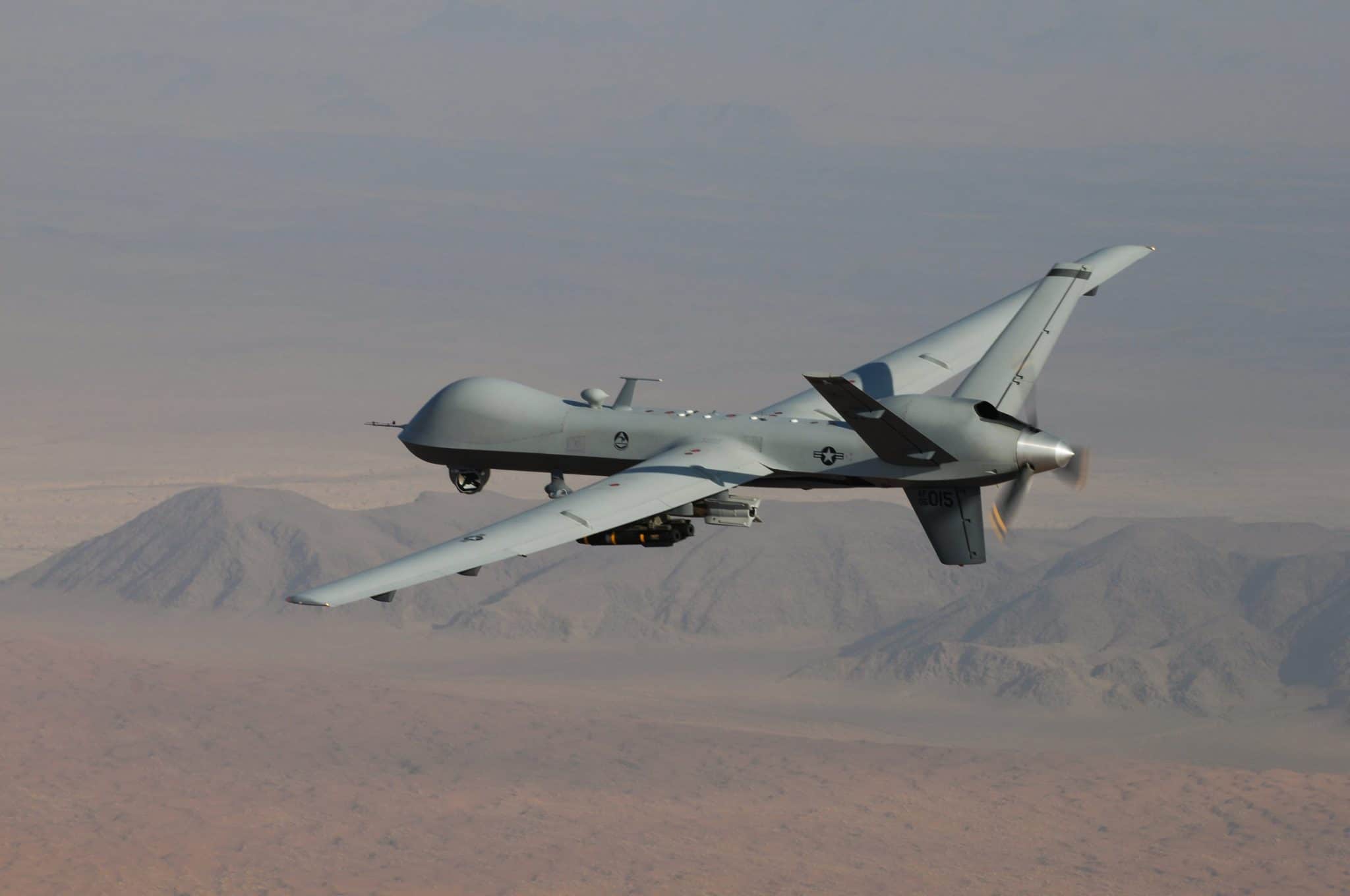
MQ-9 Reapers

MQ 9
Two MQ-9 Reapers were activated to support CA state firefighting efforts. Photo courtesy of the U.S. Air Force

Airmen from the CA Air National Guard 163rd attack wing and two MQ-9 Reapers at March Air Reserve Base were activated the week of Oct 12 Oct to fight the fires.  The Reaper’s infrared sensor was used to map the fire region and provide “mission critical thermal imagery on the afflicted area in real time to CAL FIRE and the CA Governor’s Office of Emergency Services.”  The reapers were deployed over the Nuns and Atlas fires.

CAL FIRE Team Effort

When other planes fly out these planes fly in.  It takes a team effort with coordination between the firefighters on the ground and in the air to deliver an effective counterpunch at just the right spot and aid in containment these wildfires.  Avgeekery proudly salutes the efforts of these aerial firefighters.

CAL FIRE

Additional Resources:

CAL FIRE – Incident Page
http://www.fire.ca.gov/current_incidents/?page=1

Video – aerial fire attack – cool scenes of air attack aircraft drops

Video – Air Tanker Tracking

Culpepper Air Fest Gave DC Area Avgeeks Many Reasons To Smile

0

The 19th annual Culpeper Air Fest provided a day of entertainment for the assembled crowd. Located just ninety minutes from either Washington D.C. or Richmond, the location is an easy drive. The show is the City of Culpeper’s largest event, and is free to attend, plus offers free parking with bus service from local high schools.

Held at the Culpeper Regional Airport, the field boosts a 5,000 foot runway that can accommodate light jets and larger twin engine propeller aircraft. Also located at the airport is the Capital Wing of the Commemorative Air Force. This explains the good turnout of warbirds at the show, plus the chance to go on a warbird ride for a price.

DSC 0032

The airport also lies within the area where the Civil War’s largest cavalry battle took place, that being the Battle of Brandy Station. This site and other nearby battlefields offer the history buff additional attractions to visit.

The weather cooperated as the solid overcast started to breakup when the Air Fest started at noon. The crowd had much more a sense of community with maybe 4,000 in attendance, as compared to tens of thousands at larger shows. The show started off with a parachute drop featuring the flag and the singing of our national anthem.

DSC 0547 2

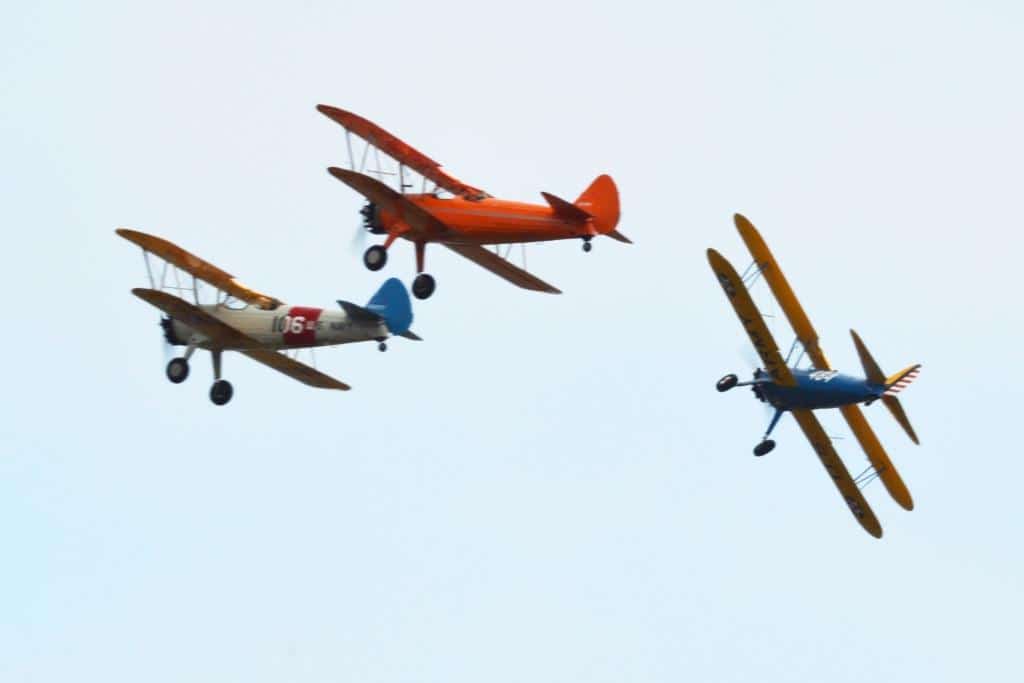
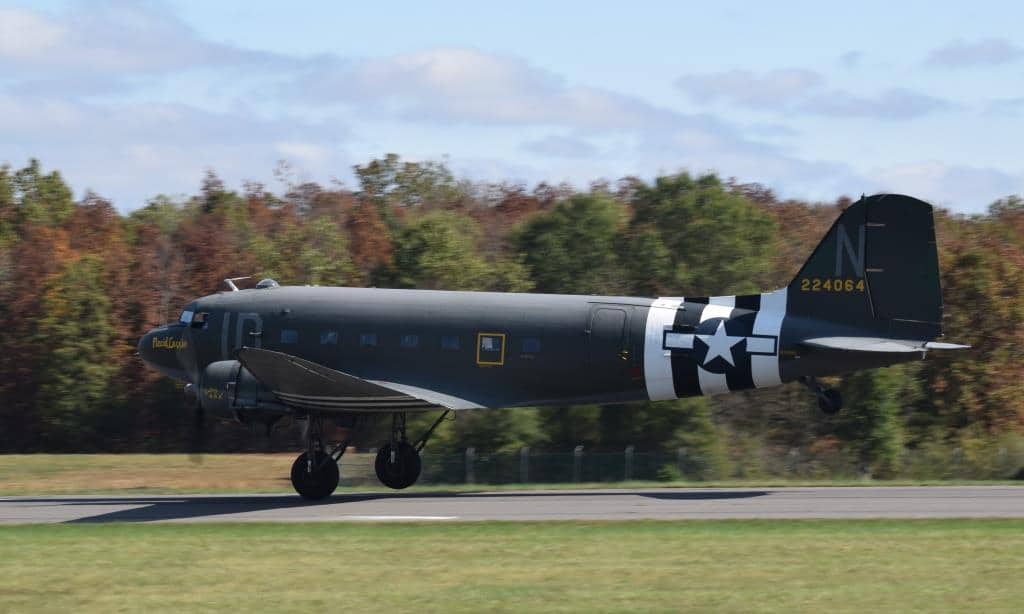
The Grumman TBM Avenger battled with the replica Japanese Aichi “Val”. This performance accompanied by a pyrotechnics display which was a first for the show. Various vintage trainers, liaison, and spotter aircraft flew throughout the day. The C-47 “Placid Lassie” was a special treat, as she is the only flyable Dakota that actually took part in the D-Day drops of June 6, 1944.

DSC 0711

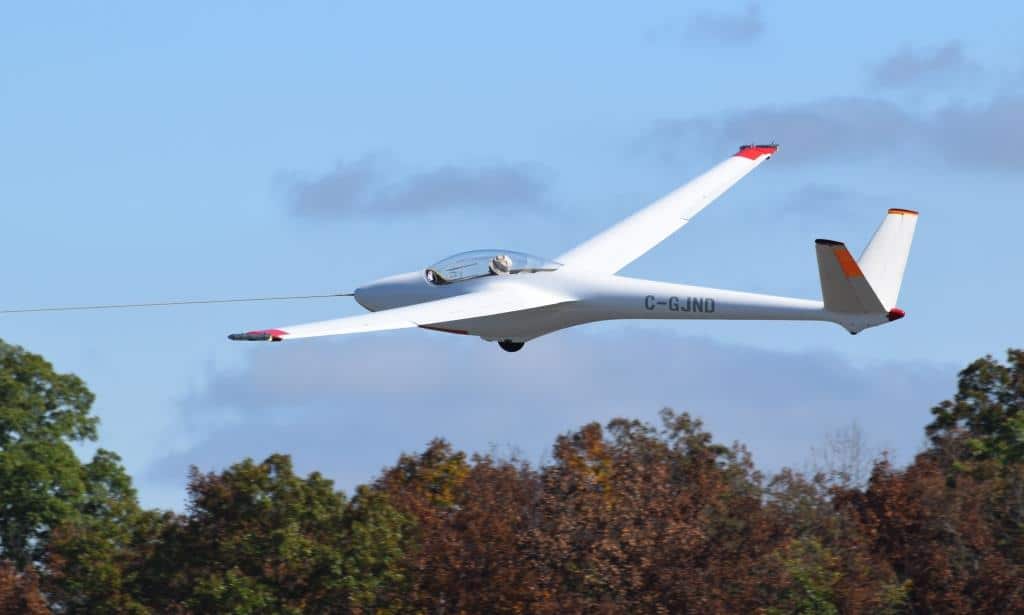
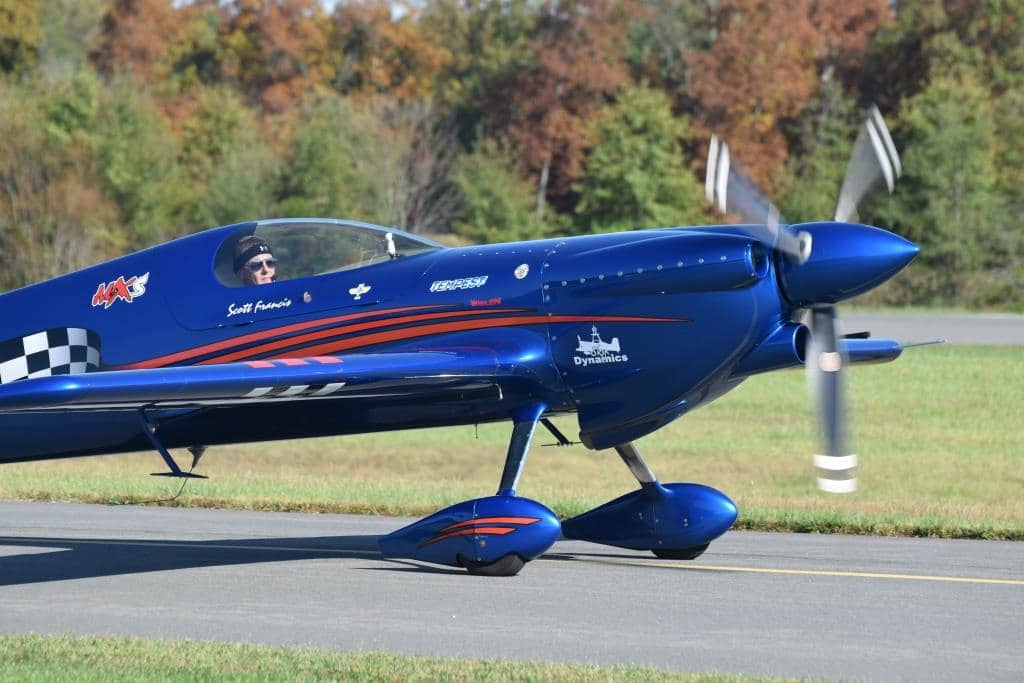
Several stunning acrobatic demonstrations were carried out by several powered aircraft. Though for myself, the most interesting flight of the day was performed by Manfred Radius in his aerobatic rated sailplane. His skill in maximizing the energy management capabilities of his Salto glider was both graceful and fascinating.

DSC 0298 2

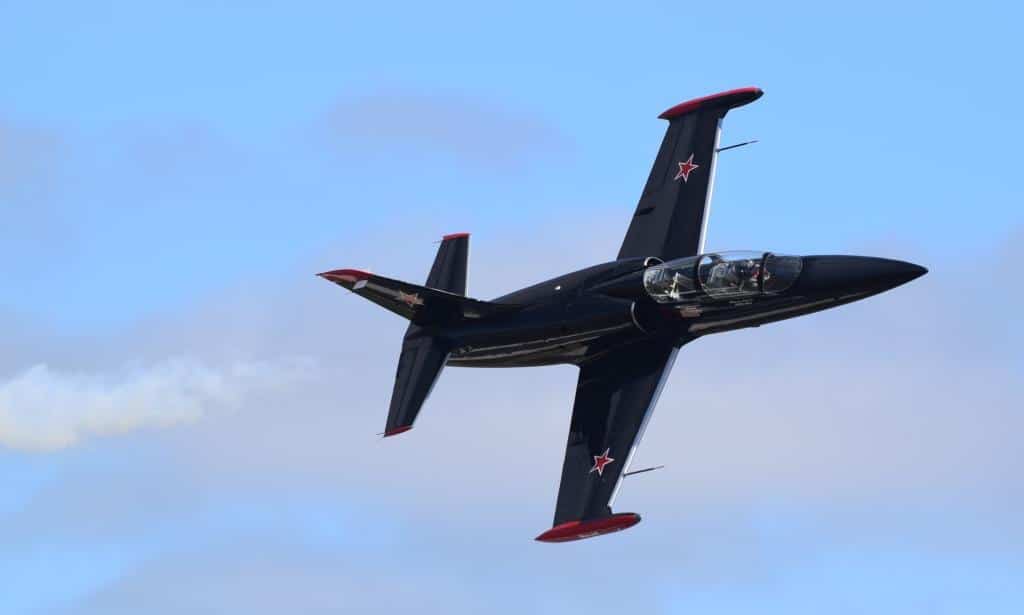
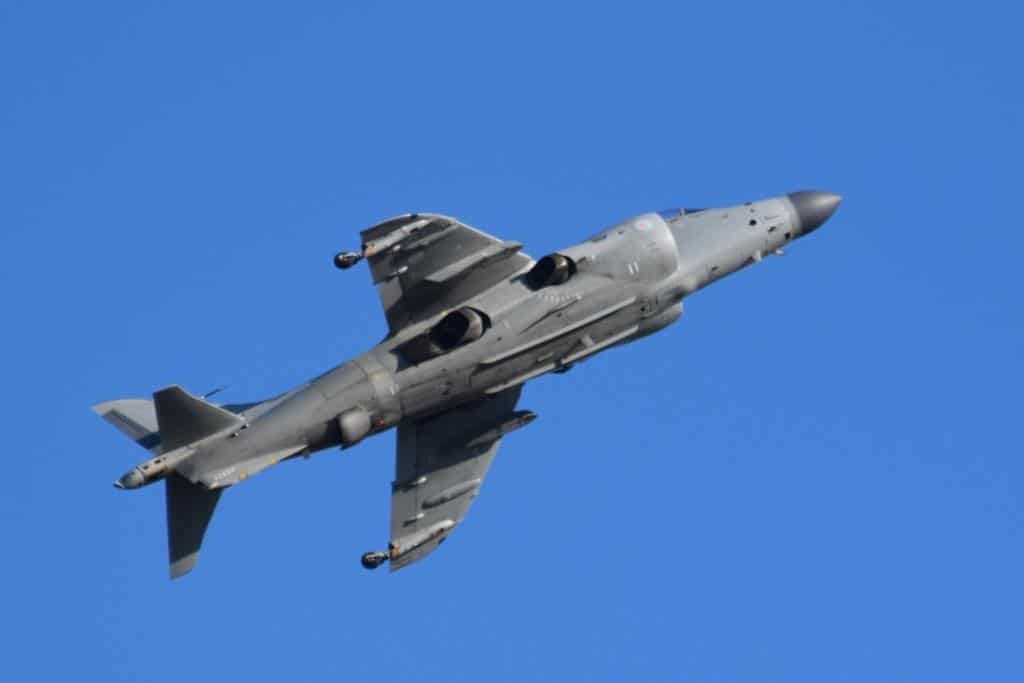
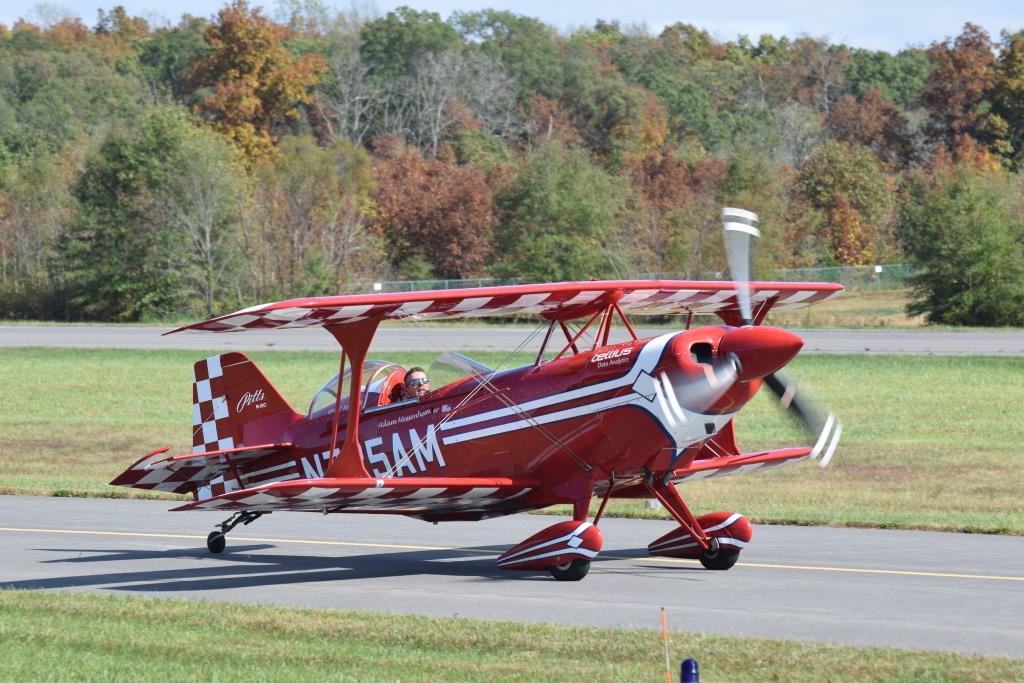
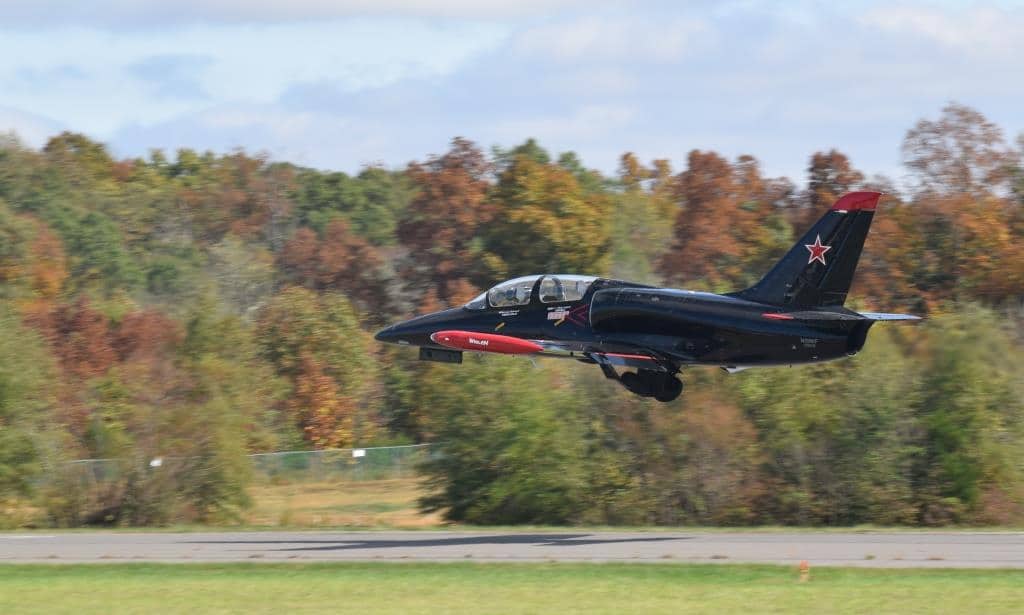
The show featured a couple of fast movers, those being the Czech built L-39 and the only privately owned British Sea Harrier. Both aircraft are owned by Art Nalls, who showed off the unique capabilities of each plane. Hopefully next year he will have his other Harrier, a two seat model, flying at the show.

DSC 0945

The Culpeper Air Fest is truly a unique air show. With its location at a relatively small airport, it gives the audience a closer view of these stunning aircraft as compared to shows at larger airports or air bases. It also has a fairly large and varied collection of aircraft taking part. So if you are within driving distance of Culpeper next fall, I highly recommend attending this show.

DSC 0877 1DSC 0418 2

DSC 0293 2

Watch: This Vought A-7 Corsair II Promo Film Attempted To Make Mighty SLUF Sexy

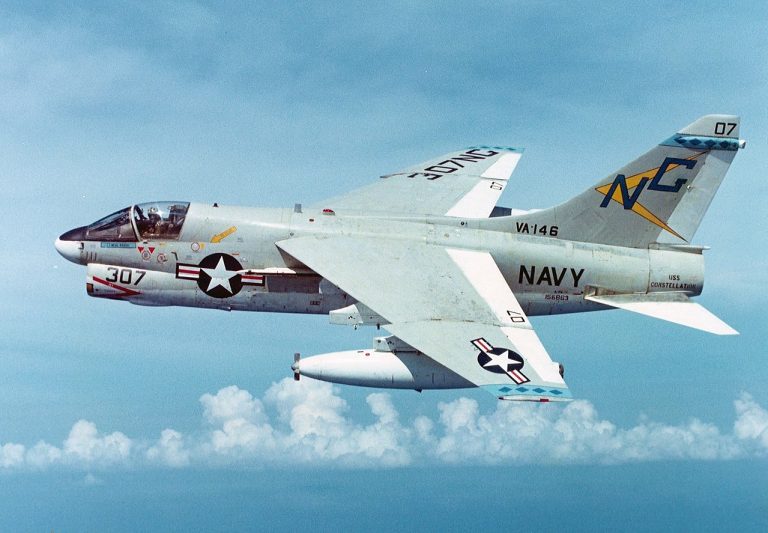
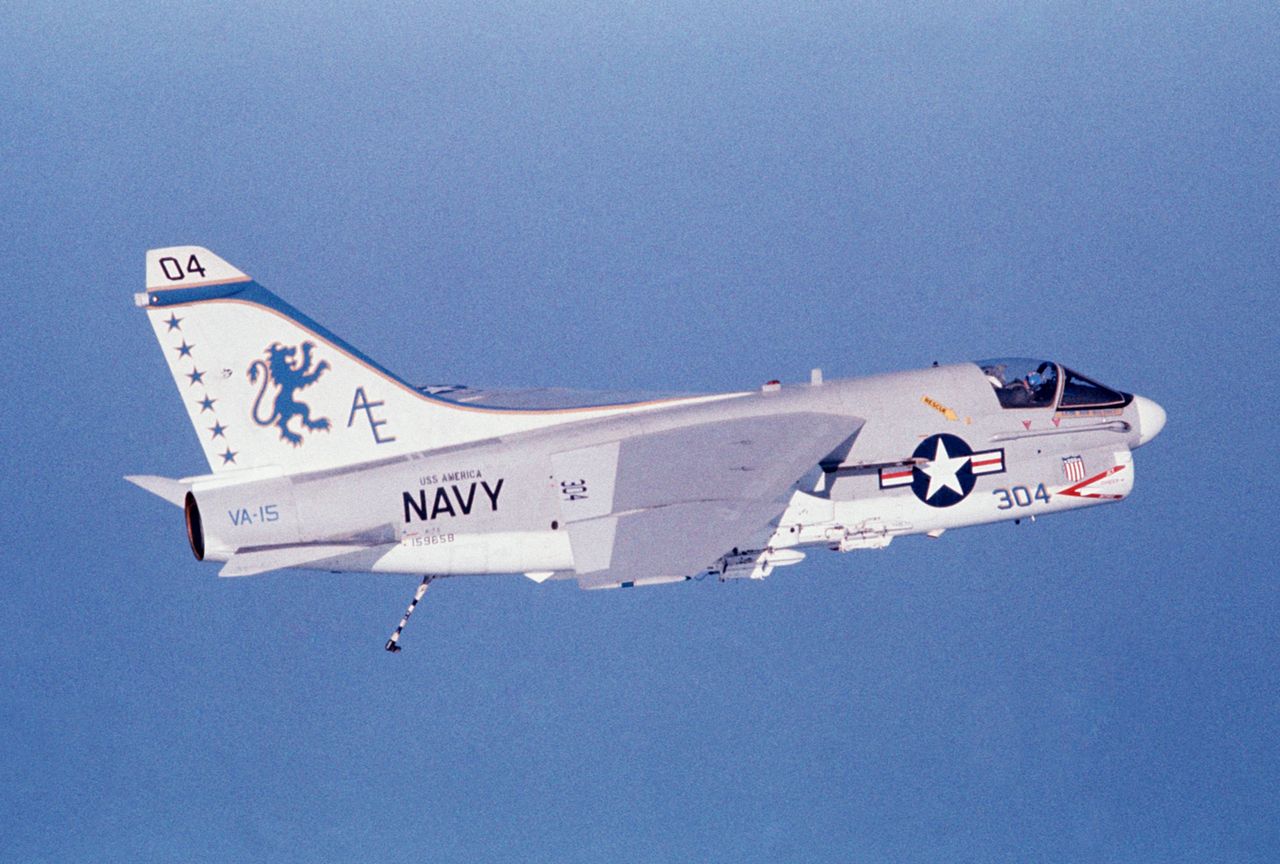
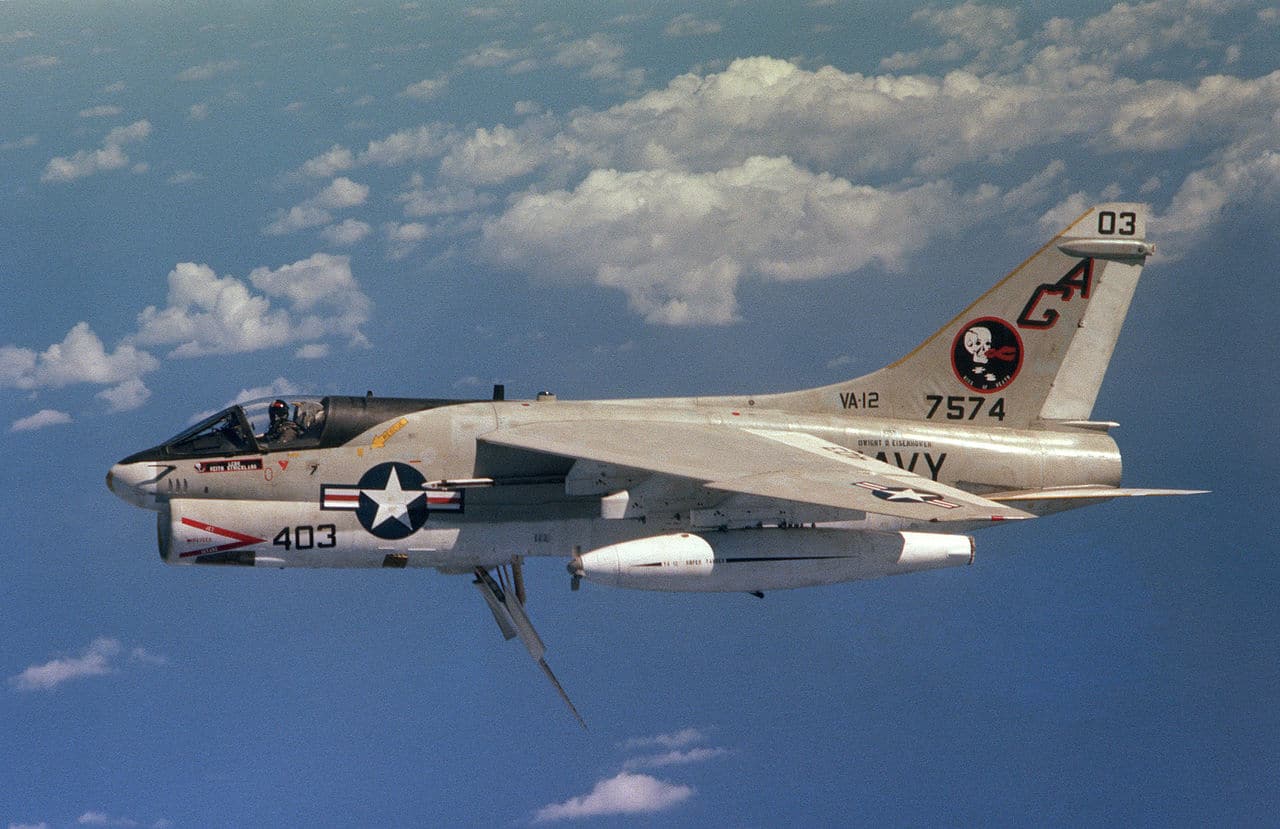
During the 1960s and 1970s military aerospace companies like Vought, or Ling-Temco-Vought, or Douglas, or McDonnell-Douglas…well let’s just say the companies that built military aircraft produced promotional films for their products. Some of these films were impressive and many were outstanding- especially those that featured aircraft that could “sell” themselves. We’ve brought you a few films like these before. Vought produced their promo film, “In Corsair Tradition”, when their latest A-7E Corsair II had recently entered service. The film was uploaded to YouTube by PeriscopeFilm and features Vought’s Short Little Ugly…Fellow. SLUF for short.

[youtube id=”oX4rxuPeuf0″ width=”800″ height=”454″ position=”left”]

1280px A 7E VA 15 in flight June 1976
Official US Navy Photograph

Owing some of their design characteristics to Vought’s F-8 Crusader series of supersonic carrier-based air superiority fighters, Navy SLUFs served for about 24 years. From Vietnam to Desert Storm they were in the thick of every one of the Navy’s engagements during their service. The A-7E was powered by the more powerful Rolls-Royce Spey (license-built by Allison as the TF-41) engine used in the United States Air Force’s (USAF’s) A-7D variant. The E also benefitted from improved avionics and targeting systems as well as increased firepower thanks to the adoption of the same M61 Vulcan 20 millimeter six barrel rotary cannon as the one present in the A-7D.

1280px A 7E VA
Official US Navy Phjotograph

BREAKING: Another Close Call for Air Canada at SFO As They Ignore “Go Around” Instructions

0

“Possible pilot deviation, I have a number for you when you’re ready.” — Words you don’t want to hear from a controller.

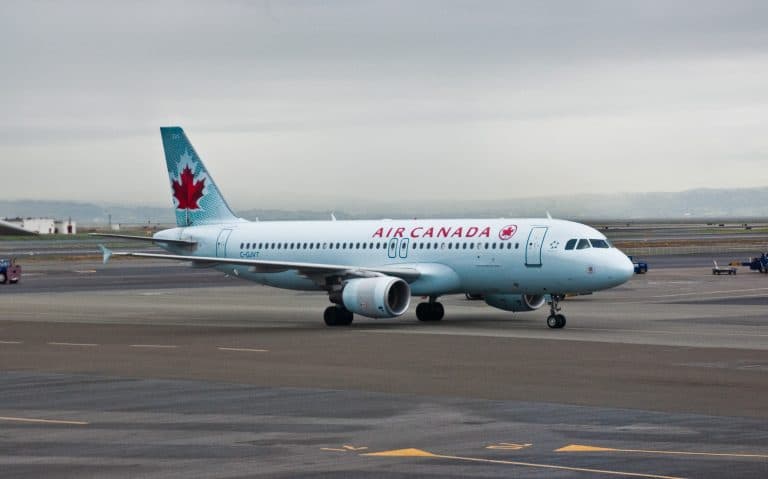
An Air Canada flight inbound to San Francisco International Airport (SFO) Sunday night lucked out and avoided a potential disaster, just months after another Air Canada flight mistakenly lined up to land on a taxiway instead of the active runway at the same airport.

The FAA confirmed the aircraft involved in Sunday’s close call as Air Canada flight 781, an A320, the same type involved in the near miss earlier this year.


SFO air traffic control initially gave flight 781 approval to land on the busy airport’s runway 28R, roughly six miles or so from touchdown.  The controller then called a Go-Around and repeated the order five times without a response.

12
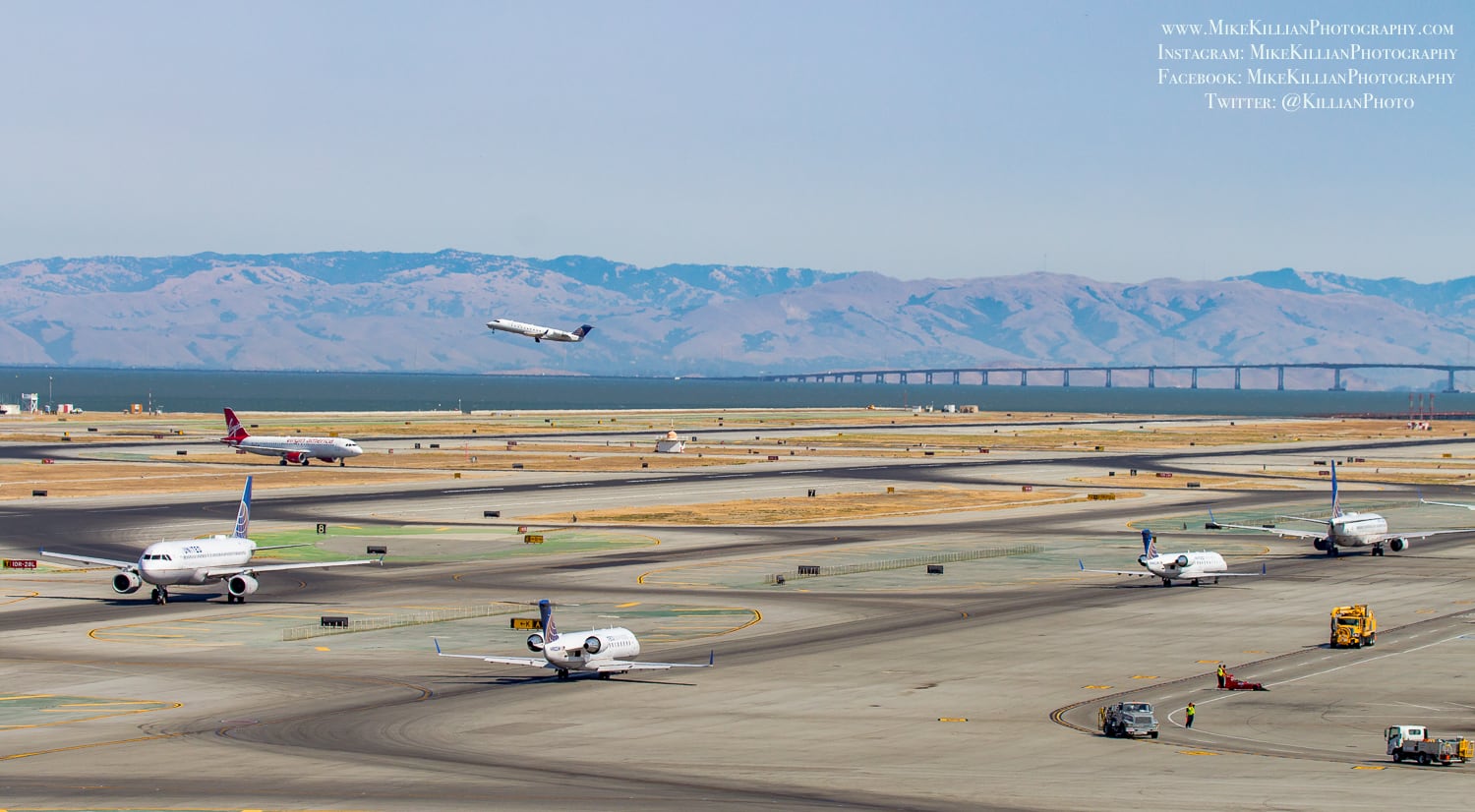
A view out towards SFO’s runways. Credit: Mike Killian

After giving the landing clearance, an aircraft on the rollout ahead of the Air Canada flight was vacating the runway slower than expected. The controller sensing an issue stated for Air Canada 781 to “go around”. Flight 781 was ordered multiple times to abort their landing.

But the flight crew never acknowledged any of the instructions, even after controllers started flashing the crew with a red light gun to give a visual signal of the go-around, which is standard protocol when a crew is not responding to radio coms.

Flight 781 landed shortly before 9:30pm local time, and fortunately, the plane on the ground was able to move in time, avoiding what could have been a disaster.

Not the first time Air Canada has had issues at SFO

ac7591
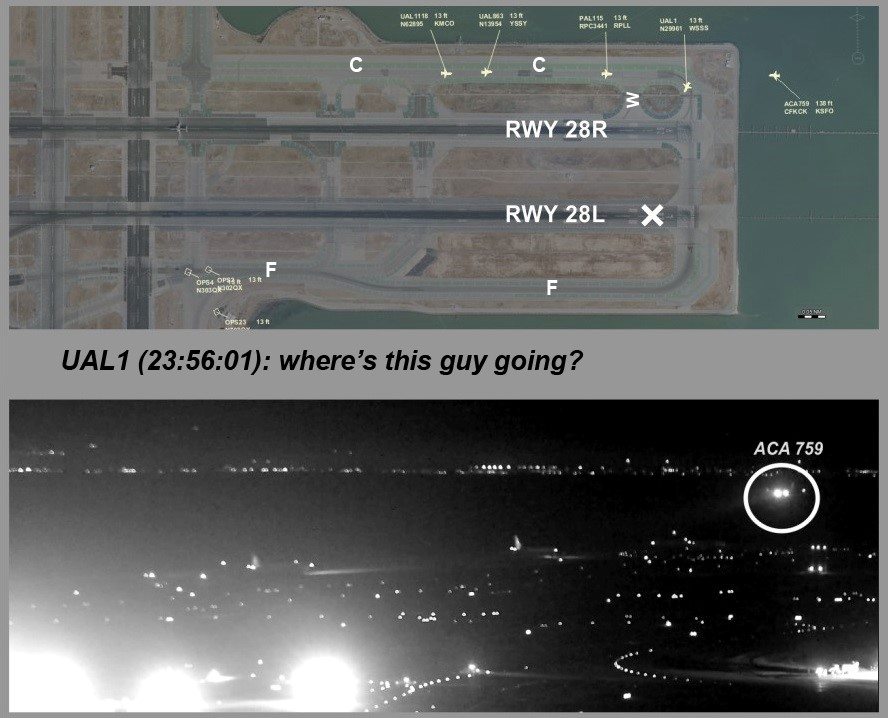
On July 7, 2017, AC flight 759 appears to fly directly overhead United flight 1. At this time, the United pilot openly queries tower saying “Where’s this guy going?”

This isn’t the first time that Air Canada has had issues at SFO. The first incident, which occurred on July 7, could have been the worst aviation disaster in history, with four planes on the taxiway as the Air Canada flight nearly landed right on top of them. Some 1,000 souls could have been killed in that case.

In the July 7 close call, the flight crew came within just 59 feet of disaster, saying later that they simply mistook the taxiway for the runway, but also acknowledged that “something did not look right”. Had it not been for the pilots on the ground signaling with their lights, the Air Canada crew likely would have landed on top of them.

As for this past weekend’s incident, the FAA is currently investigating. The Air Canada crew blames a radio problem, but that doesn’t explain why they ignored (or just didn’t see) the red light from the tower giving a visual signal to go-around.

We’ve reached out to Air Canada for further comment, and will update as soon as they provide further information.

Follow Mike Killian on Instagram and Facebook, @MikeKillianPhotography 
.

WATCH: The Ravens and Their T-28D Nomads Waged a Savage Secret War in Laos

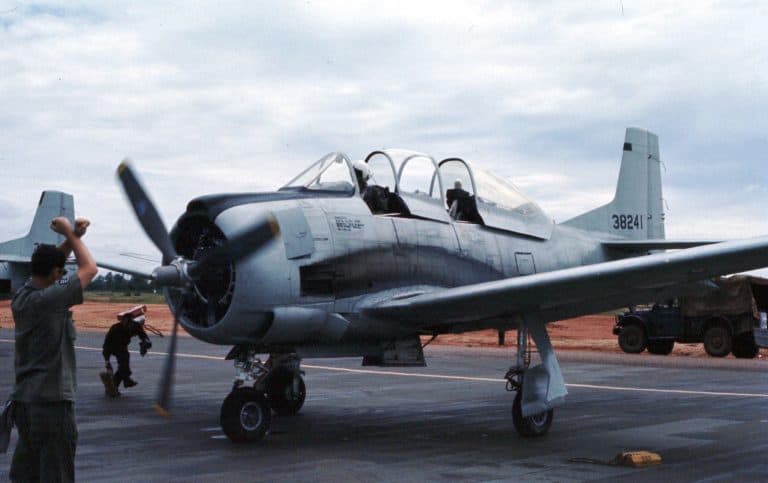
T-28s Made Excellent COIN Conversions

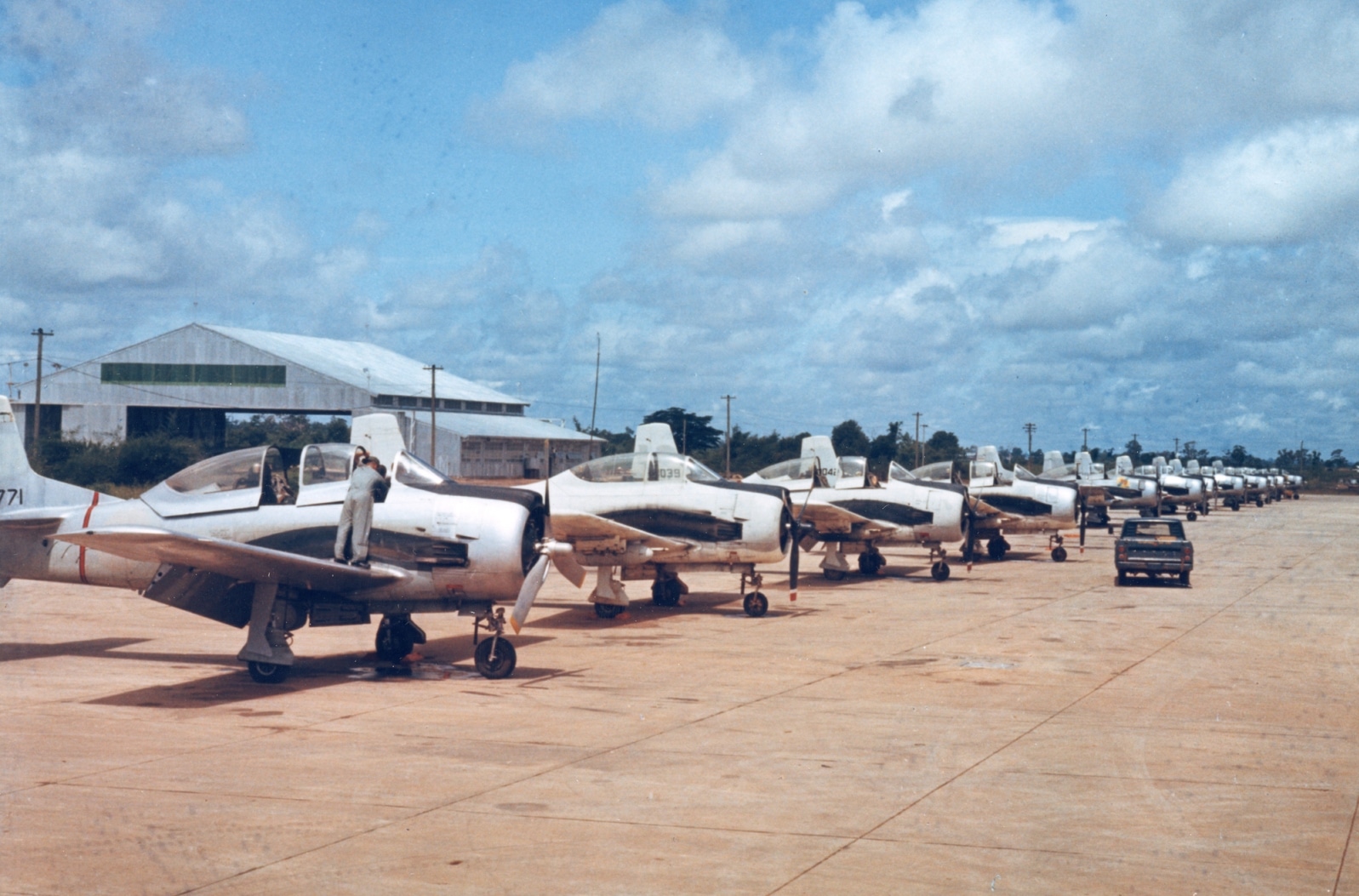
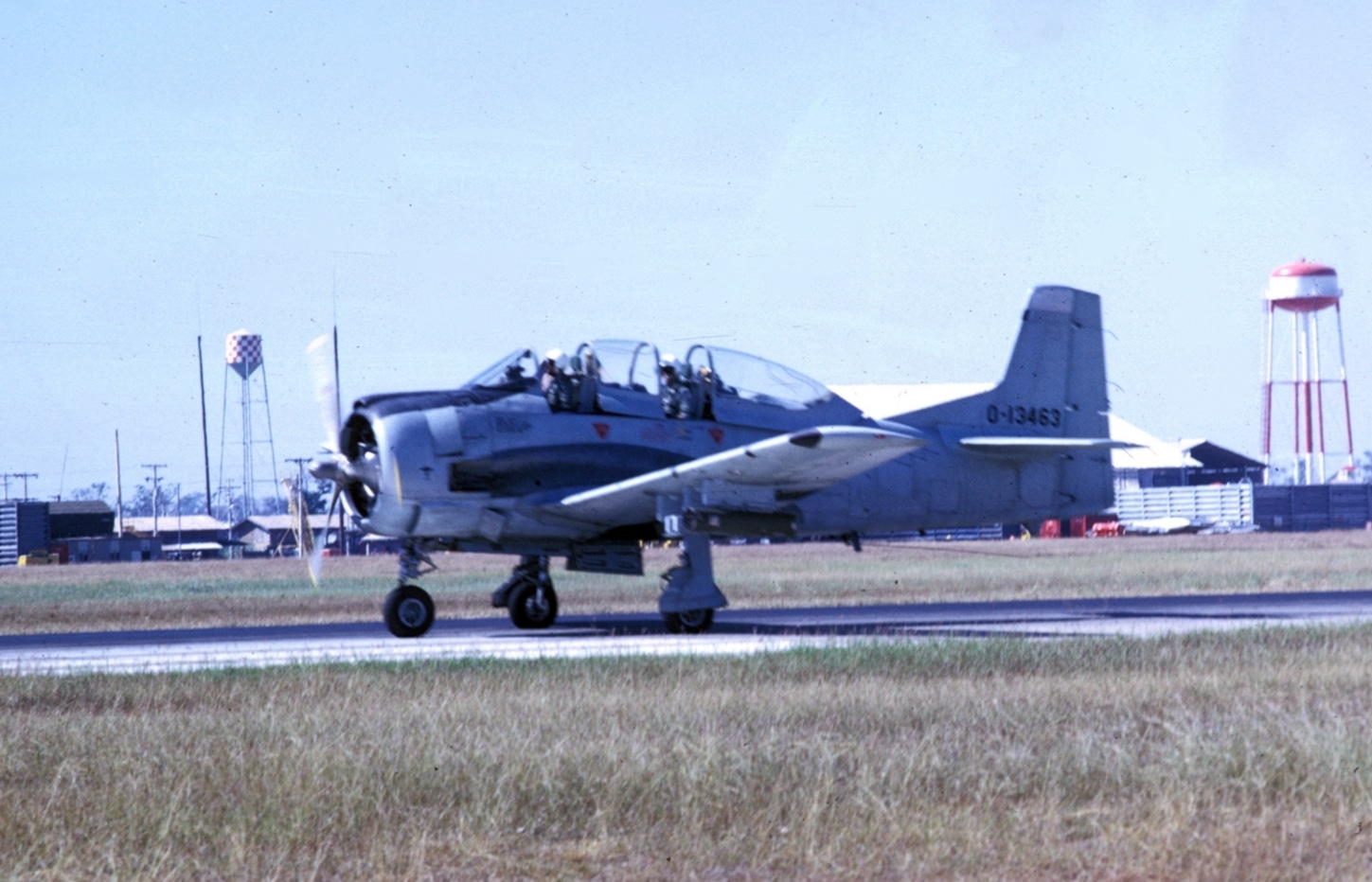
North American’s iconic radial-engine trainer, the T-28 Trojan, trained thousands of Navy, Marine Corps, and Air Force pilots. Many of them fought in the skies above Vietnam and Southeast Asia. T-28s were also flown as forward air control (FAC) platforms and even as counter-insurgency (COIN) ground attack aircraft- not just by American and South Vietnamese pilots but in other wars by other countries as well. The Central Intelligence Agency (CIA) waged a war of their own in Laos, and they used T-28D Nomads for FAC and COIN missions there. This video, transferred from Super-8 millimeter film and uploaded to YouTube by PeriscopeFilm, was shot by the Ravens themselves.
[youtube id=”W-aku3Bgbgw” width=”800″ height=”454″ position=”left”]

110329 F XN622 001
Official US Air Force Photograph via US Air Force Museum

War on the Down Low for the Ravens

Ravens were American fighter pilots who flew largely covert and “deniable” missions against the communist Pathet Lao and North Vietnamese in Laos. Often operating from austere facilities such as Pakse (where the ground footage was shot), the Raven T-28Ds were modified with modern gunsights, pod-mounted guns, and were capable of dropping bombs, napalm, cluster bomb units (CBUs), firing rockets, and in general throwing whatever ordnance was available to them at their targets. When they needed more firepower they called in airstrikes by other Air Force, Navy, or Marine Corps aircraft. The footage reveals some little-known aspects of the Ravens at war.  Notice the lack of national insignia on their T-28Ds.

Ravens on the runway.
Official US Air Force Photograph

Wings Over North Georgia Weekend Draws 83,000 Attendees

ROME, Ga. — The Navy’s Blue Angels and a strong performer line-up drew over 83,000 guests through the gates of the Wings Over North Georgia Airshow over the weekend.

The October 21st and 22nd airshow was highlighted by the inclusion of not only the Blue Angels, but seven-time champion aerobatic pilot Rob Holland; the AeroShell Aerobatic Team, the Smoke-and-Thunder Jet Car and jet truck, and the US SOCCOM Para-Commandos who kicked off the airshow.

ga4
Photo by: Charles A. Atkeison

“While great weather certainly attributed to the growth, the involvement of leading world-class performers and air show headliners, the U.S. Navy Blue Angels generated even broader regional interest than past events,” JLC Airshows Management President John Cowman said late on Sunday. “The Rome, GA-based show was one of four remaining performances for the elite naval air demonstration team’s 2017 schedule.”

Video by Sean Bowen.

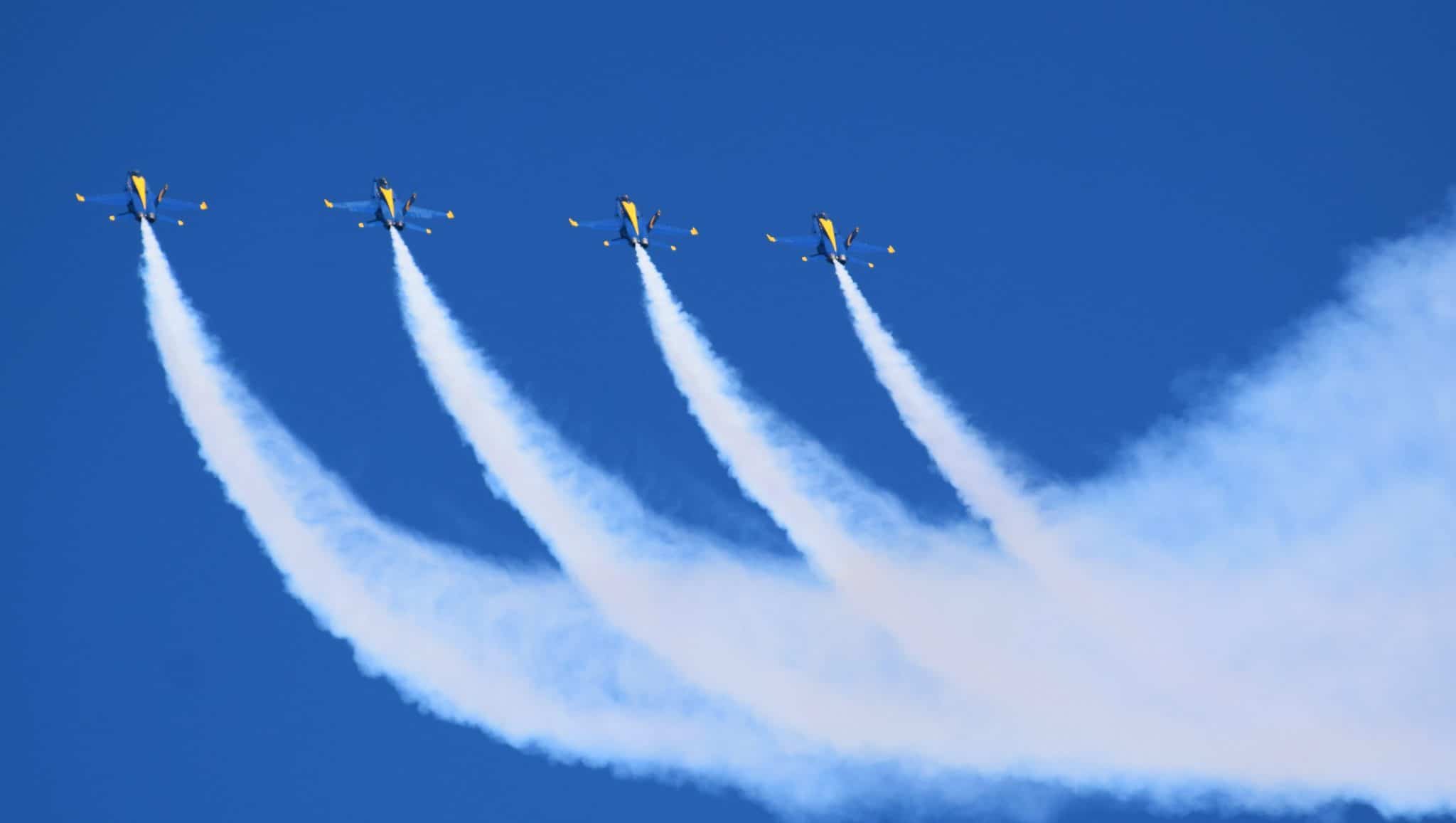
As the engines of the six blue and yellow jets of the Navy’s elite Flight Demonstration Squadron roared to life, time stood still along the crowd line as each attendee paused for their forty-minute flight demonstration. The popularity of the Blue Angels combined with great weather gave the Wings Over North Georgia their largest attendance days in six years.

And for the Blue Angels, the north Georgia event was a top show site on their busy schedule.

“If we were to attend the big shows every year, such as San Francisco or New York, we would get almost the same people every year,” said Blue Angels Commander Frank Weisser . “So it’s very important to us that we spread the wealth, and take naval aviation to places that do not have a big naval aviation experience or community.”

ga1
Photo by: Charles A. Atkeison

CDR Weisser enjoys the smaller shows, such as north Georgia, because of the crowds unfimilar with the Blue Angels. “It’s important to us to get to the north west, the mid west, and the plains, because there are a lot of kids there who don’t think they can join the navy and fly airplanes, they think they have to join the air force.”

Aerobatic pilot Rob Holland, who can make his MXS-RH aircraft dance across the sky and then perform jaw-dropping gravity defying loops and turns, performed each afternoon above the Richard Russell airfield. Of his aircraft, Holland exclaimed, “I put it on like a pair of pants, and take it with me.”

ga2
Photo by: Charles A. Atkeison

“I have a few maneuvers I like, like tumbling end-over-end, but it’s really about the whole performance,” Holland said on Friday as he stood poised near his red and black aircraft. “Putting together a good show from start to finish and making it all work. That’s what gets me excited.”

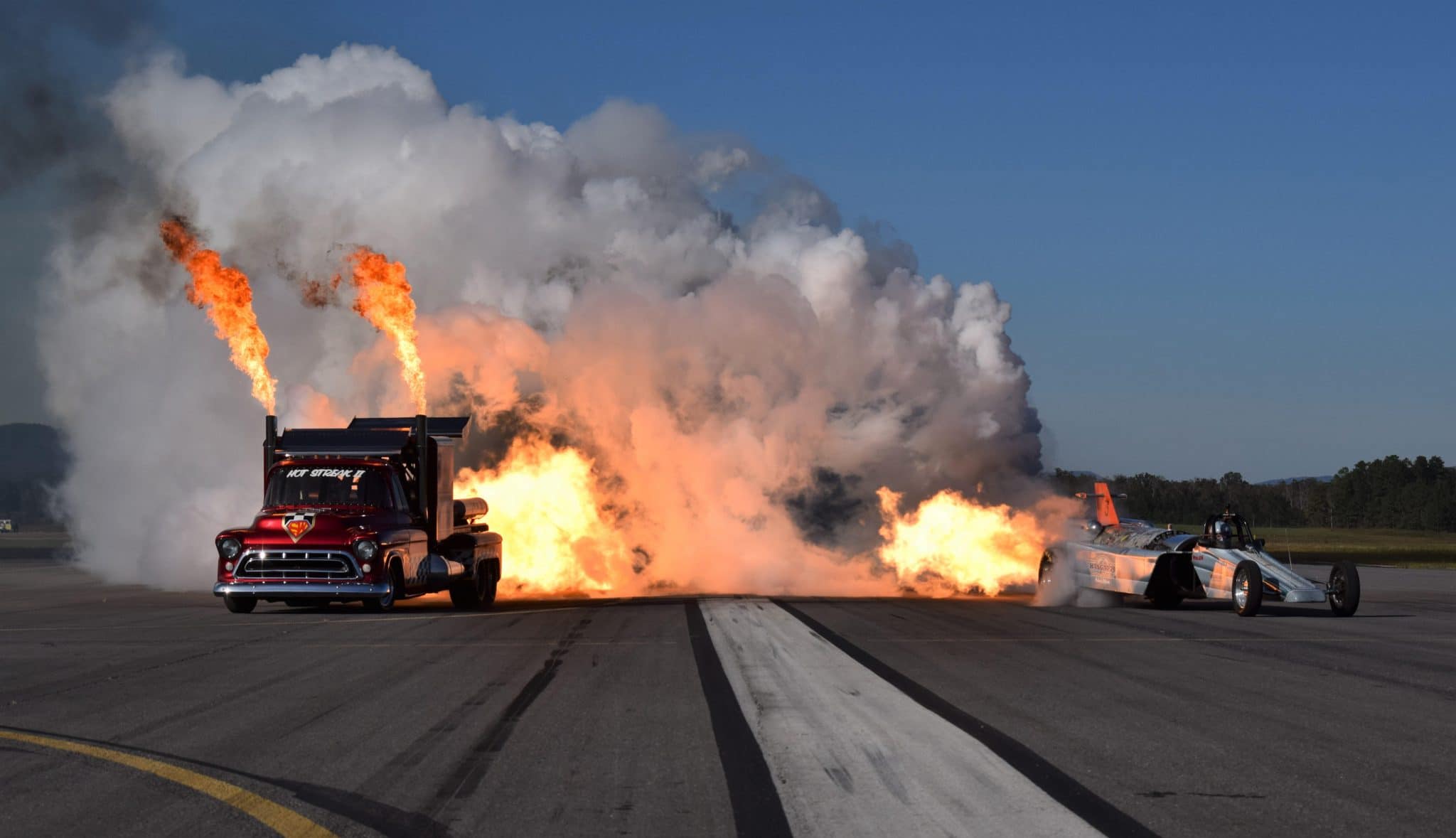
Smoke-n-Thunder Jet Car introduced their new Jet Truck to airshow attendees over the late-October weekend. Each performed with the thunder and flames produced by jet engines as they raced down the runway.

ga3
Photo by: Charles A. Atkeison

Cowman and his staff will soon turn their focus toward planning the seventh annual north Georgia airshow. A tentative weekend date of October 13-14, 2018, will be firmed up in the coming months; and several headline performers will be announced following December’s airshow performer and officials meeting in Las Vegas.

(Charles A. Atkeison reports on aerospace and technology. Follow his updates via social media @Military_Flight.)

Ejection Seats in Action: The USAF’s Gripping Training Story

When the Defense Audiovisual Agency (DAVA) and the United States Air Force (USAF) produced the film “Ejection Decision- A Second Too Late” in 1981 the services had been through a war (Vietnam) and years of operational experience with ejection seats.

The film was made as a training film for aircrews to ingrain proper decision making about ejection seat use, and the timing thereof. It’s an eye-opening piece of work that features pilots and crews who had to “punch out” and in so doing joined the Martin-Baker Ejection Tie Club when their aircraft were no longer in controlled flight. Thanks to YouTuber PeriscopeFilm for uploading it.

[youtube id=”dyjYp6WT7ww” width=”800″ height=”454″ position=”left”]

1280px US Navy ejection seat test with JD 1 1951
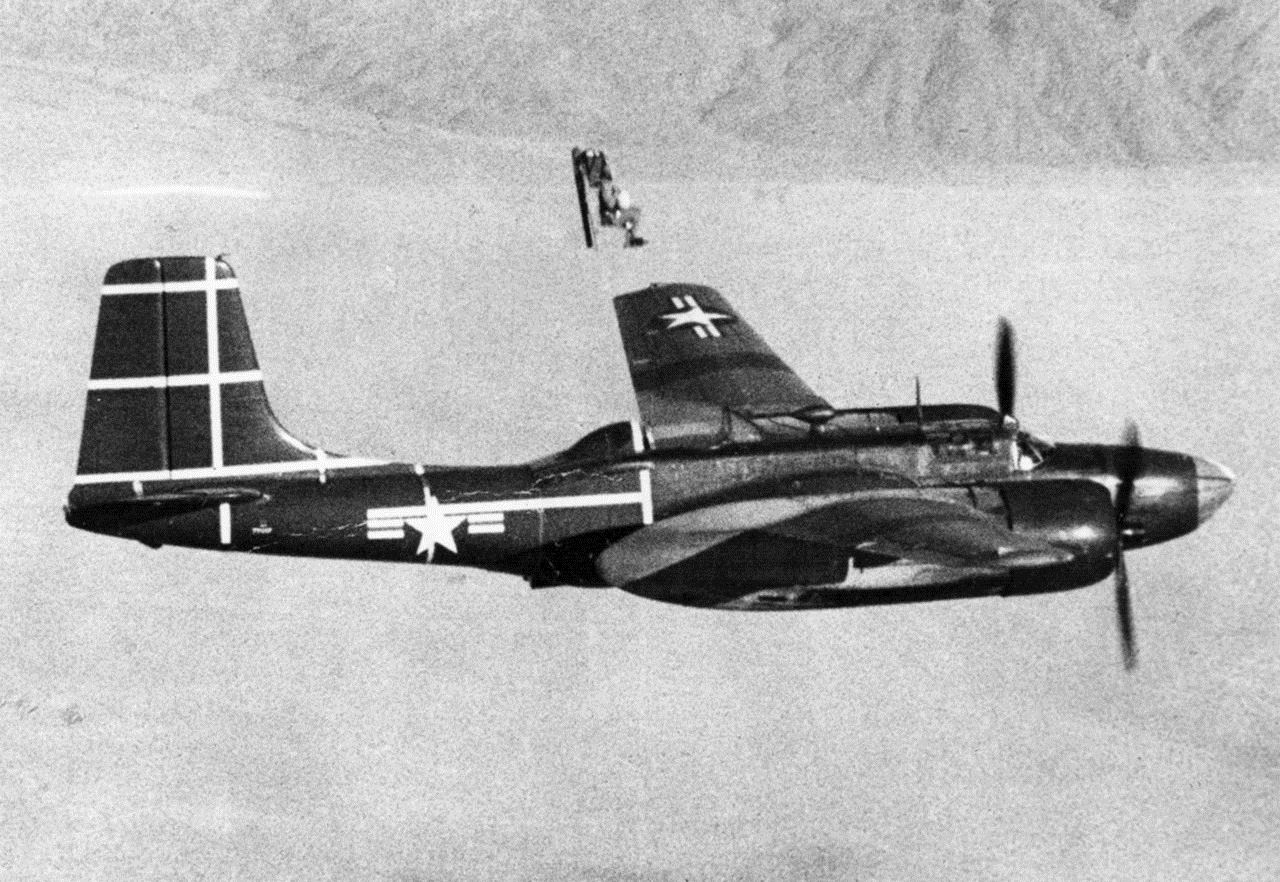
Ejection seat testing utilizing a Douglas JD-1 Invader aircraft. Official US Navy Photograph

Ejection Seats Were a Game Changer

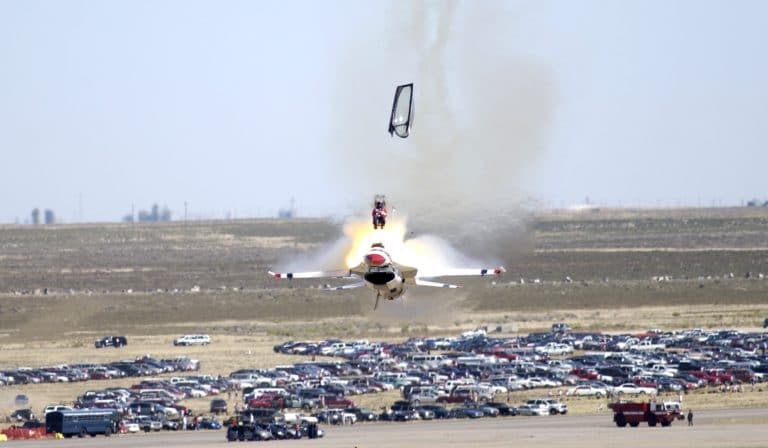
Ejection seat technology was pioneered by the Germans and the Swedes. The first operational aircraft with an ejection seat was the German Heinkel He 162A Spatz jet. Ejection seats first appeared in American aircraft when prototype jets began to appear during the mid-1940s. These initial ejection seats were manufactured by the Martin-Baker company. Convair’s F-102 Delta Dagger was the first aircraft to be equipped with a rocket-propelled ejection seat.

Ejection seat test at China Lake with F 4B cockpit 1967
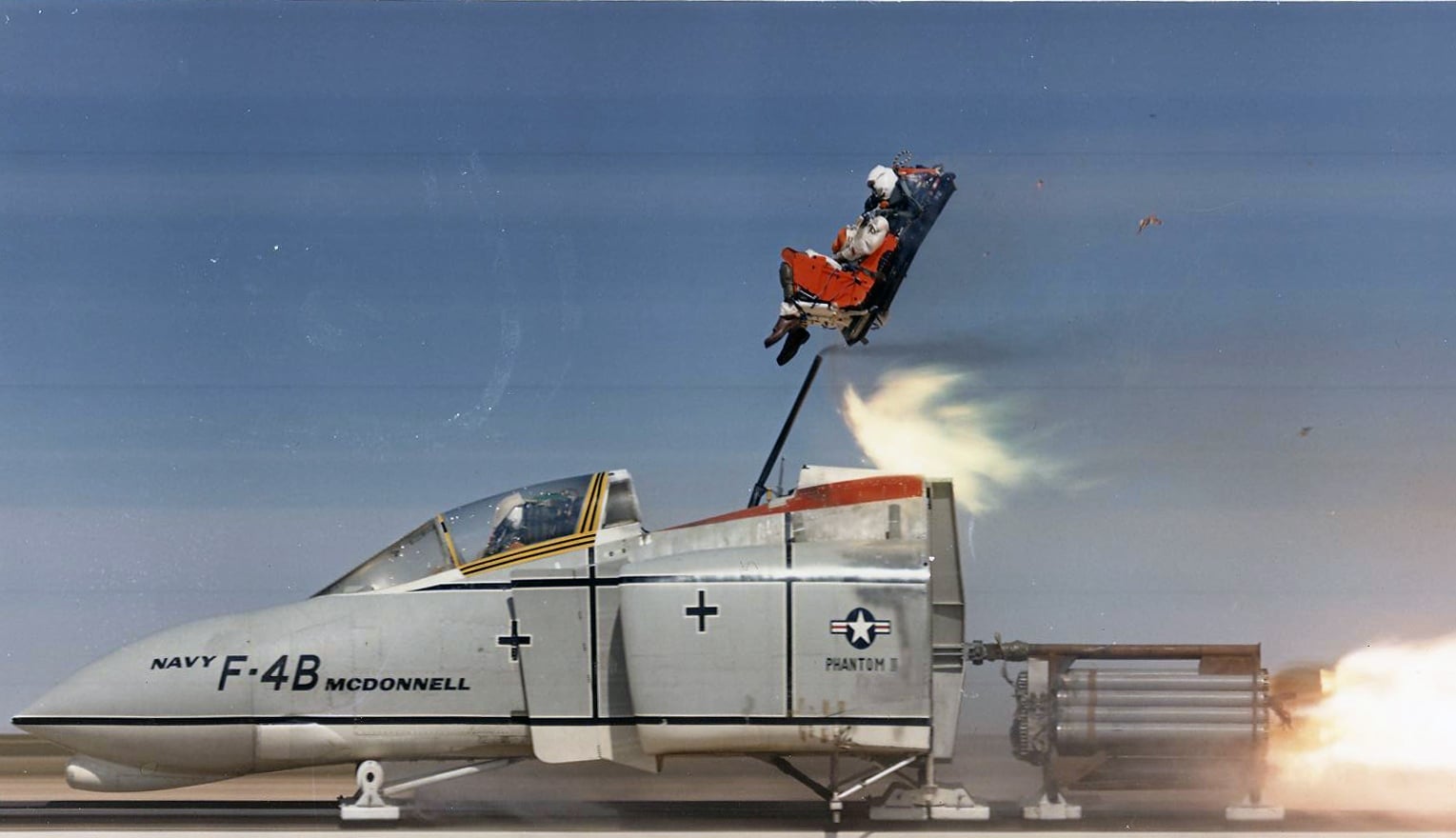
Ejection seat testing using a F-4B Phantom II cockpit. Official US Navy Photograph

Since that time the rocket-propelled ejection seat has become standard equipment on the majority of jet-propelled aircraft. In the film the Fairchild-Republic A-10 Thunderbolt II, McDonnell Douglas F-4 Phantom II, General Dynamics F-111, McDonnell Douglas (Boeing) F-15 Eagle, and General Dynamics F-16 Fighting Falcon jets are all featured as aircraft from which ejection in a timely manner was the correct decision.

F 4S Phantom ejection seat test 1985
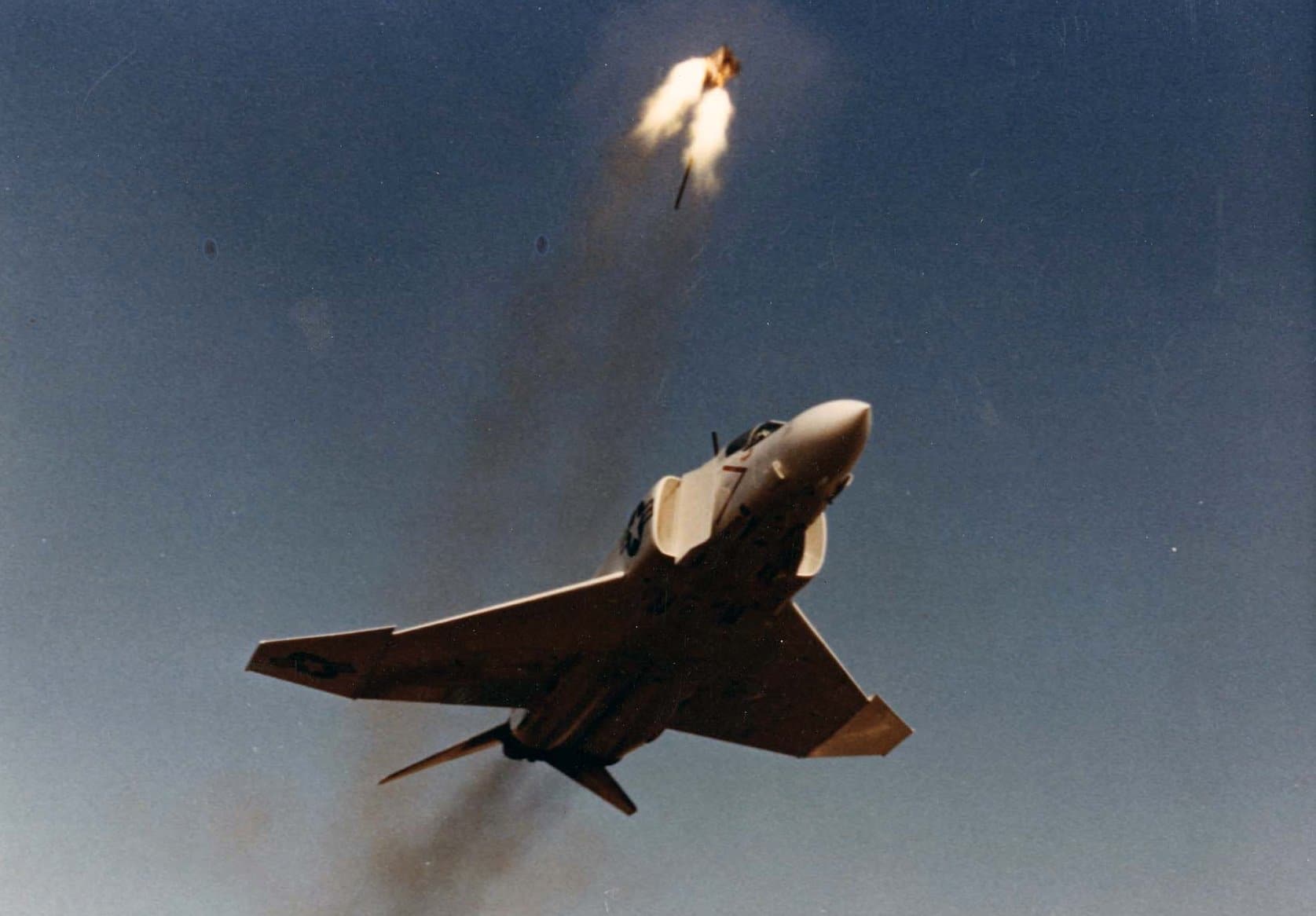
Ejection seat testing utilizing a F-4S Phantom II aircraft. Official US Navy Photograph